Tag: creativity

  • The Power of Imperfect Work in an AI-Driven, Perfection-Obsessed World

    The Power of Imperfect Work in an AI-Driven, Perfection-Obsessed World

    “Have no fear of perfection—you’ll never reach it.” ~Salvador Dalí

    We live in a world that worships polish.

    Perfect photos on Instagram. Seamless podcasts with no awkward pauses. Articles that read like they’ve passed through a dozen editors.

    And now, with AI tools that can produce mistake-free writing in seconds, the bar feels even higher. Machines can generate flawless sentences, perfect grammar, and shiny ideas on demand. Meanwhile, I’m over here second-guessing a paragraph, rewriting the same sentence six different ways, and still wondering if “Best” or “Warmly” is the less awkward email sign-off.

    It’s easy to feel like our messy, human work doesn’t measure up.

    I’ve fallen into that trap plenty of times. I’ve delayed publishing because “it’s not ready.” I’ve rerecorded podcasts because I stumbled on a word. I’ve tweaked and reformatted things no one else would even notice.

    Perfectionism whispers: If it isn’t flawless, don’t share it.

    But over time, I’ve learned something else: imperfection is not a liability. It’s the whole point.

    A Table Full of Flaws

    One of the best lessons I’ve ever learned about imperfection came not from writing or technology, but from woodworking.

    About a decade ago, I decided to build a dining table. I spent hours measuring, cutting, sanding, and staining. I wanted it to be perfect.

    But here’s the truth about woodworking: nothing ever turns out perfect. Ever.

    That table looks solid from across the room. But if you step closer, you’ll notice the flaws. The board I mismeasured by a quarter inch. The corner I over-sanded. The stain that didn’t set evenly.

    At first, I saw those flaws as failures. Proof that I wasn’t skilled enough, patient enough, or careful enough.

    But then something surprising happened. My wife walked into the room, saw the finished table, and said she loved it. She didn’t see the mistakes. She saw something that had been made with love and care.

    And slowly, I began to see it that way, too.

    That table isn’t just furniture. It’s proof of effort, process, and patience. It carries my fingerprints, my sweat, and my imperfect humanity.

    And here’s the kicker: it’s way more fulfilling than anything mass-produced or manufactured as machine-perfect.

    Why Imperfection Connects Us

    That table taught me something AI never could: flaws tell a story.

    Machines can produce flawless outputs, but they can’t create meaning. They can’t replicate the pride of sanding wood with your own hands or the laughter around a table that wobbled for the first month.

    Imperfections are what make something ours. They carry our fingerprints, quirks, and lived experiences.

    In contrast, perfection is sterile. It might be impressive, but it rarely feels alive.

    Think about the things that move us most—a friend’s vulnerable story, a laugh that turns into a snort, a talk where the speaker loses their train of thought but recovers with honesty. When was the last time you felt closest to someone? Chances are, it wasn’t when they were polished, it was when they were real. Those moments connect us precisely because they are imperfect.

    They remind us we’re not alone in our flaws.

    The AI Contrast

    AI dazzles us because it never stutters. It never doubts. It never sends an awkward text or spills coffee on its keyboard. AI can do flawless. But flawless isn’t the same as meaningful.

    But here’s what it doesn’t do:

    • It doesn’t feel the mix of pride and embarrassment in showing someone your wobbly table.
    • It doesn’t understand the joy of cooking a meal that didn’t go exactly to plan.
    • It doesn’t know what it’s like to hit “publish” while your stomach churns with nerves, only to get a message later that says, “This made me feel less alone.”

    Flawlessness might be a machine’s strength. But humanity is ours.

    The very things I used to try to hide—the quirks, the rough edges, the imperfections—are the things that make my work worth sharing.

    A Different Kind of Readiness

    I used to think I needed to wait until something was “ready.” The blog post polished just right. The podcast that’s perfectly edited. The message refined until it couldn’t possibly be criticized.

    But I’ve learned that readiness is a mirage. It’s often just perfectionism in disguise.

    The truth is, most of the things that resonated most with people—my most-downloaded podcast episode, the articles that readers emailed me about months later—were the ones I almost didn’t share. The ones that felt too messy, too vulnerable, too real.

    And yet, those are the ones people said, “This is exactly what I needed to hear.”

    Not the flawless ones. The human ones.

    How We Can Embrace Imperfection

    I’m not saying it’s easy. Perfectionism is sneaky. It wears the disguise of “high standards” or “being thorough.”

    Here’s what I’ve found helps me. Not rules, but reminders I keep returning to:

    Share before you feel ready.If it feels 80% good enough, release it. The last 20% is often just endless polishing.

    Reframe mistakes as stories.My table’s flaws? Now they’re conversation starters. What mistakes of yours might carry meaning, too?

    Notice where imperfection builds connection.The things that make people feel closer to you usually aren’t the shiny parts. They’re the honest ones.

    The Bigger Picture

    We live in a culture obsessed with speed, optimization, and polish. AI accelerates that pressure. It tempts us to compete on machine terms: flawless, instant, infinite.

    But that’s not the game we’re meant to play.

    Our advantage—our only real advantage—is that we’re human. We bring nuance, empathy, humor, vulnerability, and lived experience.

    Robots don’t laugh until they snort. They don’t ugly cry during Pixar movies. They don’t mismeasure wood or forget to use the wood glue and build a table that their partner loves anyway.

    You do. I do. That’s the point.

    So maybe we don’t need to sand down every rough edge. Perhaps we don’t need to hide every flaw.

    Because when the world is flooded with flawless, machine-polished work, the imperfect, human things will stand out.

    And those are the things people will remember.
  • Beyond the Yips: How to Reclaim Your Creative Confidence

    Beyond the Yips: How to Reclaim Your Creative Confidence

    “You gain strength, courage and confidence by every experience in which you really stop to look fear in the face.” ~Eleanor Roosevelt

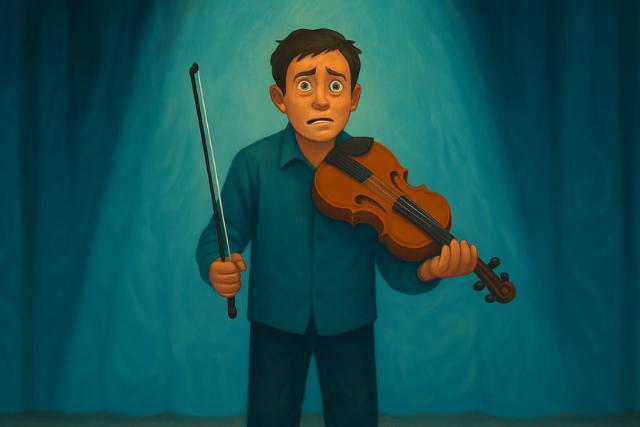
    There’s a quiet moment before the spotlight hits when everything in your body wants to run.

    Your hands tremble. Your voice tightens. Your breath shortens, even though the room is still. You love what you do—you’ve trained, practiced, prepared—but suddenly, it’s like someone else is in your body. Your skills vanish. Your confidence implodes.

    That’s the yips.

    And if you’re an artist, musician, writer, teacher—anyone whose work lives in public view—you’ve probably met them too.

    The First Collapse

    For me, the first time the yips showed up, I was about ten years old, standing on a Little League pitcher’s mound. I had a strong arm and a real love for the game, so they made me the pitcher.

    It felt like an honor—until it became a nightmare.

    I couldn’t throw a strike. Not one. I walked batter after batter. The harder I tried, the worse it got. My coaches shouted. My teammates rolled their eyes. And worst of all, I didn’t know why it was happening. I knew how to pitch. I wanted to pitch. But my body wouldn’t cooperate.

    My confidence didn’t just erode—it imploded.

    That experience carved something into me, and years later, it returned in a different form—on stage, with a viola in my hands.

    But I eventually learned the yips aren’t just nerves. They’re the clash between who we believe we are and what’s happening in the moment.

    The Yips in Music

    I had taken up guitar earlier and played in public a few times. A little nerves, sure, but nothing overwhelming. But the viola was different.

    The viola wasn’t just an instrument—it was a commitment. I loved the sound, the subtlety, the range. But the moment I sat down to play chamber music or solo pieces—especially in front of discerning classical audiences—I froze.

    My bow hand would shake uncontrollably. My tone would collapse. My breath shortened. My fingers, steady in rehearsal, betrayed me under pressure. It wasn’t just a little stage fright. It was full-body paralysis. And I wasn’t just nervous—I was ashamed.

    I could feel the others around me adjusting their playing, trying to stay in sync, politely pretending not to notice the scraping sound of my trembling bow. I wasn’t just failing myself—I felt like I was slowly unraveling something beautiful we had built together.

    That shame lasted longer than any applause ever could.

    Eventually, I stopped performing. It hurt too much.

    But Then, a Different Tune

    What’s strange is that I can still play old-time fiddle music in public. Ozark waltzes, hoedowns, reels—I can play those in front of a crowd with energy and joy.

    Why?

    Because people are moving. They’re dancing. They’re smiling. There’s an exchange happening—call and response, energy to energy. No one’s looking to critique every phrase. They just want to feel alive.

    That shift—from judgment to participation—made all the difference.

    It was my first clue that the problem wasn’t just about nerves. It was about dissonance.

    When Belief and Experience Clash

    What I didn’t understand as a kid—but see now in myself, my students, and even my own children—is that the yips aren’t just performance anxiety. They’re the outward symptoms of cognitive dissonance: the mental and emotional strain that happens when who we believe we are doesn’t match what we’re experiencing.

    This dissonance doesn’t just trip us up. It can make us doubt the very core of our identity. And in creative work, that doubt can be devastating.

    Common Creative Cognitive Dissonances

    Over the years—as a filmmaker, teacher, and musician—I’ve seen these patterns again and again:

    1. “I’m passionate and skilled” vs. “I just froze in front of everyone.”

    You know you’re good. But in that crucial moment, something inside shuts down. The disconnect feels like failure, even if it’s just fear.

    2. “I believe in creative freedom” vs. “I censor myself when others are watching.”

    We crave authenticity. But the moment we feel observed, we retreat into safe ideas and bland choices.

    3. “I want to create something meaningful” vs. “No one will care about this.”

    You believe in the work, but a voice in your head tells you it’s not important. That voice keeps you from finishing—or from starting at all.

    4. “I value growth” vs. “I should already be good at this.”

    Even lifelong learners fall into this trap. Especially those of us with experience. We forget how to be beginners again.

    5. “I’m a creative person” vs. “I can’t seem to finish anything.”

    The inner identity and the outer reality don’t match. That gap becomes shame—and shame leads to silence.

    How to Work with the Yips, Not Against Them

    Here’s what I’ve learned after a lifetime of living with this pattern: You don’t conquer the yips by trying harder. You heal them by listening deeper.

    That means meeting the fear—not with force, but with care.

    Here’s how I begin again, every time:

    1. Lead with compassion.

    That part of you that’s scared? It’s also the part that loves what you’re doing. Be gentle. Speak kindly to yourself.

    2. Accept the body’s message.

    Trembling hands, dry mouth, racing thoughts—these are just signs that you care. Breathe through them. Don’t resist them. Let them pass like weather.

    3. Reframe the story.

    Not: “I choked.”
    But: “I hit a growth edge.” Or: “I’m learning to stay present when it matters.” That shift matters.

    4. Find reciprocal environments.

    Play for dancers. Share writing with friends. Teach in spaces where people reflect, nod, laugh, respond. It’s hard to heal in front of a wall of silence.

    5. Focus on presence, not perfection.

    When I play fiddle now, I don’t aim to impress. I aim to connect. That intention rewires everything.

    6. Return to joy.

    What first drew you to your work? The sound? The rhythm? The curiosity? The spark? Go back there. That’s where your real voice lives.

    A Life Beyond the Yips

    These days, I still feel the yips. Sometimes when I teach. Sometimes when I perform. Sometimes when I write something that matters to me.

    But now, I recognize them for what they are: a signal that I’m doing something vulnerable and real.

    If you’re an artist, musician, teacher, maker—and you’ve gotten stuck—you’re not alone. And you’re not broken.

    You’re simply standing at the edge of the gap between who you were and who you’re becoming.

    The work is to stay in the room. Gently. Bravely. Again and again.

    And little by little, you’ll find your way back—not to where you started, but to something deeper.

    To a self that trusts its voice again. To a body that remembers how to move. To a joy that doesn’t depend on perfection.

    To the quiet truth that you were never really lost at all.

    The yips may still show up—but so will your music, your words, and your true self.

  • How to Reconnect with What You’re Hungry For

    How to Reconnect with What You’re Hungry For

    “And the day came when the risk to remain tight in a bud was more painful than the risk it took to blossom.” ~Anaïs Nin

    What is it about us that makes us wait for permission? To do what we want. To be who we are. We wait until we’ve “earned” it, until we’re thinner, smarter, more talented. Until we’re finally good enough.

    Everyone has dreams, right? Some want to travel. Some want to write a book. Others dream of running a marathon. Or something smaller: a bold haircut. Or something bigger: quitting a job that drains you.

    And still, we wait.

    We wait for someone to say, “You’d look amazing with short hair.” Or for someone to nod at our resignation plans and say, “Yes, you should go for it.” That’s when we feel allowed. That’s when we move.

    I know that waiting. I’ve lived it.

    Finding My Voice

    As a kid, I sang constantly. But no one praised it. My family was mostly annoyed. So I stopped. I only sang when I was alone. Later, in a shared student flat, I stopped altogether, afraid of bothering others again. It never occurred to me that I could choose it for myself.

    Only last year, at twenty-eight, did I realize that I still loved singing. Deeply. I didn’t need a record deal or an audience. I just needed to sing. So I signed up for lessons.

    And something shifted.

    The envy I used to feel toward other singers disappeared. I no longer needed to watch from the outside, admiring those who gave themselves permission to take up space. I was finally doing the thing I had always wanted to do.

    The Power of Permission

    That small, seemingly impractical thing changed how I saw everything. Because it wasn’t about singing, really. It was about permission. It was about allowing myself to follow what lit me up, even if no one else understood it, even if it didn’t look productive or impressive.

    The more I sang, the more I felt connected to myself. Singing wasn’t just a hobby. It became a practice of self-connection. A form of expression that didn’t require explanation. A way to feel my emotions directly. A space where I didn’t have to be “good,” just real.

    I kept thinking: Why did I wait so long? Why did I assume I needed someone else’s approval to do something that made me feel so alive?

    And that made me wonder: What else are we not doing because we don’t think we’re allowed to? What are we hungry for—not in our stomachs, but in our souls?

    From Productivity to Presence

    The world is full of beauty. There’s so much to explore, to feel, to create. Colors to wear, places to visit, ideas to follow. And yet, so often, we’re taught to value productivity over presence. We’re encouraged to measure our worth by how much we do, not how deeply we live. Even joy is shaped by consumption—buying more, doing more—rather than simply being with ourselves.

    As an empathic child, I learned to listen closely. I became good at being helpful, at making others feel better. I was insecure and eager to be liked, especially by the louder kids, the ones who seemed confident and sure of themselves. I felt like a shadow, orbiting them like a small planet around a bright sun.

    Without realizing it, I gave others a lot of power. Their approval made me feel like I belonged. But I wasn’t truly seen, because I only said what I thought I was supposed to say. I adjusted, adapted, and slowly drifted away from myself.

    Now, as I reconnect with who I really am, I notice how strong and steady my voice feels. It’s warm and grounded. And the more rooted I am in myself, the more I want to reach out to others—not to prove anything, but to share something honest. From a place that feels real.

    Becoming My Own Sun

    Singing, writing, exploring my inner world—these practices make me glow. As strange as it sounds, they help me see who I am. They help me ask: Who am I circling? Who am I waiting for?

    Or maybe, just maybe, I’m no longer circling anyone. Maybe I’ve become my own sun.

    A few years ago, I didn’t know I could feel this steady, this full. That it could all be sparked by something as ancient and simple as using my voice is nothing short of awe-inspiring.

    Why It Matters

    For a while, I wondered, why is it so important that I feel good? Why does it matter that I sing, that I write, that I want to be heard? Isn’t that selfish? Isn’t it enough to live quietly and be kind?

    I struggled with that. But I’ve come to believe this: when we’re connected to ourselves—truly, deeply—we show up differently. More honestly. More gently. More powerfully. Not just for ourselves, but for others. Using your voice, in whatever form it takes, isn’t just about being seen. It’s about being aligned. And from that place, it’s easier to love, to give, to create something real.

    I’ve also noticed how much I admire expressive people. I love watching them, listening to them, the ones who dare to use their voices and share their insights. Through them, I see myself more clearly. I understand life better. Not just through psychology or theory or polished words, but through colors, soft fabrics, melodies, laughter, and tears.

    I never imagined I could be one of those people. Someone who creates something raw and real from lived experience. Someone who turns ache and wonder into something that touches others.

    I didn’t think I was talented enough. I didn’t think anyone would care. I didn’t think I had permission. But now I know: I have to try. Because when I don’t, I feel numb. A little lost. It’s like the light dims—not completely, but just enough that I start to question who I am and what I’m meant to do in this world.

    An Invitation

    I’m deeply grateful if my work resonates with anyone. But more than anything, I hope it encourages others to tune into themselves too—to share what’s on their minds, vulnerably and tenderly, as artists, as friends, as strangers, as humans.

    Because I believe this now: when we find and express our true voice, we open the door to real connection. That’s what I’m hungry for. Not just to shine, but to sit beside you in the light and in the dark.

    So let me ask you:

    What are you hungry for, not in your stomach, but in your spirit? What’s calling to you quietly, again and again?

    When I talk to friends or clients, I often notice that many can’t answer this question right away. When our wishes, desires, and creative longings have been ignored or even shamed for years, they tend to go quiet.

    But that doesn’t mean they’re gone.

    Ways to Reconnect with What You’re Hungry For

    Here are a few gentle ways to rediscover what you might be craving, deep down:

    Look back at your childhood.

    What did you love to do, naturally and freely? What made you lose track of time?

    Notice what you do when you’re procrastinating.

    What are you actually drawn toward? I used to hum and sing unconsciously while avoiding tasks. Now I see that as my creative energy trying to reach me. What’s tugging at your sleeve?

    Pay attention to envy.

    Who do you envy, and why? Envy can be a compass, pointing you toward a part of yourself that’s longing to be seen or expressed.

    Try something unexpected.

    Take a class you never thought you’d sign up for. Explore a new hobby that feels exciting or strange or slightly scary.

    Follow what feels warm, light, alive.

    It doesn’t have to be big. A color that makes you smile. A conversation that lights you up. A song you keep playing on repeat. That spark matters.

    You don’t need permission to begin.

    You just need curiosity. And the courage to listen to the quiet, persistent part of you that’s been whispering all along.

  • The Value of Doing Nothing in a Hyperproductive World

    The Value of Doing Nothing in a Hyperproductive World

    “Allow yourself to be bored a little. In our world full of distractions, create some space for nothingness.” ~Unknown

    My roommate sat in the kitchen, eating his late home-cooked dinner, and commented with a half-mocking smile, “Ah, you’re still living.”

    The words hung in the air, awkwardly playful but sharp enough to sting. They echoed something larger: the subtle judgment that creeps into our culture of relentless productivity.

    Confusion bubbled up inside me, followed quickly by shame. My cheeks turned red. I had spent most of this sunny Saturday alone in my room—reading books, listening to music, writing a little, and, to be honest, staring out the window, feeling restless.

    “What do you do all day?” he asked, genuinely curious.

    Yes, what I felt was definitely shame. In a world that glorifies busyness, I often feel like a criminal for spending an entire day at home, or for strolling through the city without real plans. The implicit expectation to do something, to make the day “count,” feels suffocating.

    “Reading and writing,” I replied, suppressing the urge to explain myself.

    He looked puzzled. “You can’t fill a whole day with writing, can you? Isn’t that boring?”

    Here it was: the quintessential clash between introversion and extroversion. He didn’t understand me, though, in fairness, I think he wanted to. I was tempted to agree, to downplay my day and say, “Yes, it’s boring sometimes.” But I stopped myself.

    Because recently, I’ve realized something important: I need that stillness.

    The Shame of “Doing Nothing”

    His confusion wasn’t just personal; it felt like a question society constantly asks people like me: What are you doing with your time? In a culture that glorifies constant productivity, the idea of having unstructured time is almost heretical. If you’re not ticking off items on a to-do list or working toward a measurable goal, then what exactly are you contributing?

    This shame runs deeper than personal insecurity—it’s rooted in a culture that values productivity above all else. The industrial revolution reinforced the belief that time is money, a resource to be maximized. Today, even our leisure activities are judged: hobbies are monetized, vacations become opportunities for curated Instagram posts, and relaxation feels like something we must earn.

    For me, this shame shows up in subtle ways. If I spend an afternoon reading or writing without a clear goal, I catch myself justifying it: It’s practice for my craft. When a friend asks how my weekend went, I feel compelled to list the “productive” things I did—chores, errands, something quantifiable—before admitting that I spent hours simply being. It’s as though I need permission to slow down, even from myself.

    But this obsession with busyness comes at a cost. It fuels burnout, anxiety, and a relentless sense of inadequacy. It leaves us disconnected from ourselves and the quiet, unstructured moments that bring clarity and peace. What happens when we’re always striving to prove our worth through what we achieve? We lose the ability to simply be.

    Stillness as a Portal to Creativity

    What I’ve come to understand is that restlessness isn’t the enemy. It’s the hum beneath the surface where creativity brews. When I sit still or let myself feel bored, something unexpected arises: a fleeting thought, a fresh perspective, or a spark of an idea. Those unhurried moments, I’ve learned, are where the magic happens.

    Our culture teaches us to fear downtime, to see it as wasted hours. However, it’s often in those “empty” moments that our most meaningful insights emerge. I’ve had some of my best ideas while folding laundry or lying on the couch doing nothing in particular.

    As Julia Cameron writes in The Artist’s Way, creativity requires spaciousness. She even prescribes a full week of media deprivation—no social media, no podcasts, no books—to help artists reconnect with their inner world. By removing distractions, she argues, we create the room to truly sit with our feelings and thoughts.

    In my own life, I’ve noticed this truth. Some of my favorite moments are not grand or planned—they’re the small, unexpected joys that arise during quiet days. When I’m doing dishes, I’ll start humming, then singing, and maybe even dancing. What felt like a mundane chore transforms into a moment of aliveness.

    Why We Need Unstructured Days

    The irony is that the days I spend without clear plans often end up being the most productive—not in a traditional sense, but in the way they nurture my inner world. These are the days when my thoughts settle, untangle, and expand. They’re not lazy days; they’re spacious ones.

    In fact, I’ve started to see quiet time as a quiet rebellion against a world that demands constant output. When I allow myself to slow down, to let go of the need to perform or produce, I’m pushing back against a culture that equates worth with busyness.

    But this isn’t easy. Society tells us to fear idleness, to run from it with endless distractions: a scroll through Instagram, a new TV series, a side hustle. Slowing down feels countercultural, even indulgent. But I believe it’s necessary.

    The next time someone questions how you spend your time—or when you catch yourself feeling guilty for slowing down—try reframing the question. What if restlessness isn’t wasted time, but the soil where creativity and self-discovery take root?

    A New Definition of Productivity

    So, was my roommate right? Is it boring? Sure, sometimes. But that quietness isn’t a problem; it’s a gift. It’s the pause between notes in a symphony, the blank page before a story. It’s not laziness; it’s space where something always stirs.

    What if we saw stillness differently—not as something to avoid, but as a doorway to clarity, creativity, and reflection?

    Maybe it’s time for your own experiment. Turn off the noise, let yourself stare out the window, and see what stirs in the quiet. You might be surprised at what emerges.

    What about you? How do you feel about unstructured time? Is it something you avoid, or have you discovered its unexpected value? I’d love to hear your thoughts.

  • Join the Writers Rising Retreat – 10% Off for Tiny Buddha Readers!

    Join the Writers Rising Retreat – 10% Off for Tiny Buddha Readers!

    I believe that most, if not all, of us want the same things in life.

    We want to feel seen. Want to be heard. We want to own our truth and express ourselves. And we want to believe we’re making a positive impact—to feel like we matter and that we’re leaving an indelible mark on the people around us in our short time here on this earth.

    That’s what writing has done for me, and I’m guessing for many of you too.

    But whether you’re creatively blocked or just full of self-doubt, it’s not easy to write consistently.

    Instead of creating the worlds we envision or sharing the wisdom we want to impart, we can easily end up spending all our time writing mental lists of why we shouldn’t. I know I’ve been there.

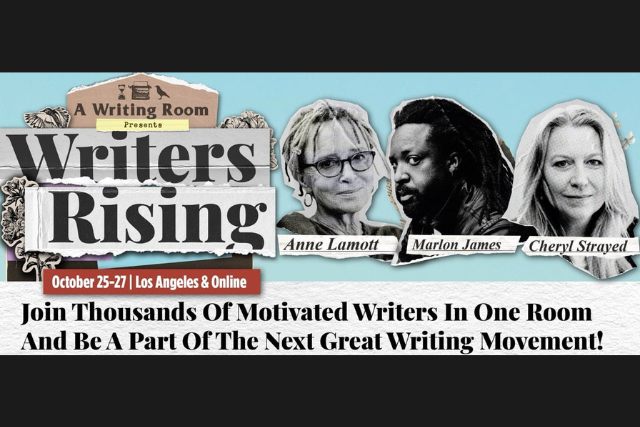
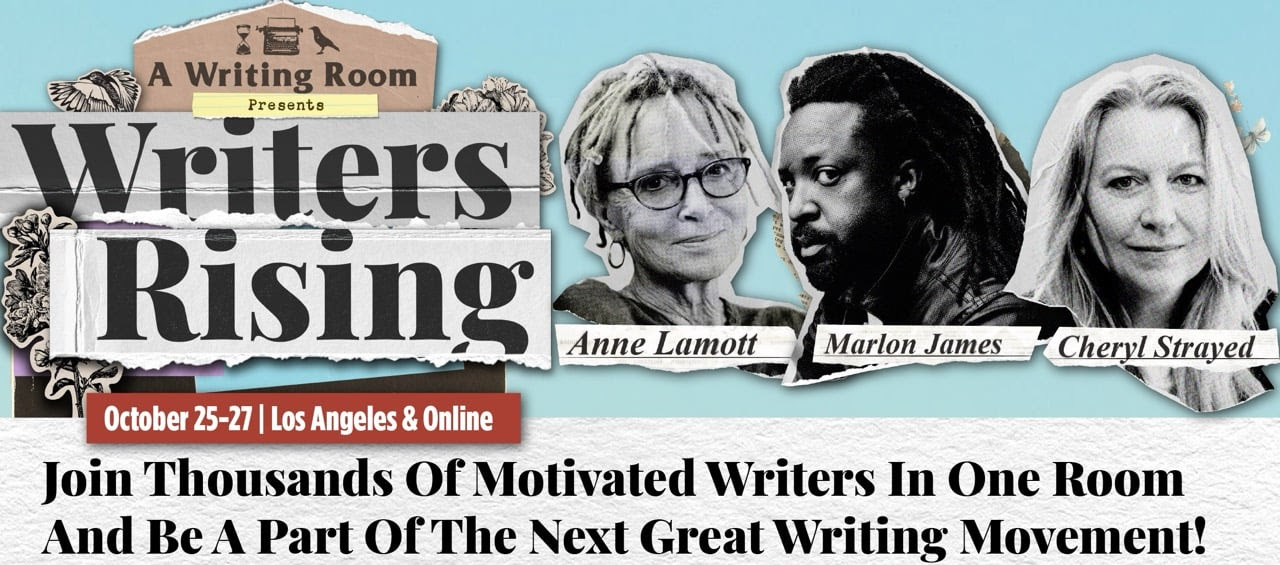
    If you get the struggle, or you’re just looking for support to help you do your most meaningful, inspired work, I highly recommend Writers Rising 2024, a retreat running from October 25th through 27th.

    With a truly stellar lineup of seasoned writers, Writers Rising can offer you a supportive and inspiring environment where you can explore your voice, express your truth, and tap into your inner wisdom.

    Keynote speakers such as Anne Lamott, Cheryl Strayed, Gay and Katie Hendricks, Jen Pastiloff, HeatherAsh Amara, and other luminaries in the world of writing and self-development.

    Here’s a glimpse of what you can expect during this weekend filled with insight, inspiration, and connection:

    • Experiential keynote workshops with renowned authors and thought leaders
    • Silent writing sessions to dive deep into your creative flow
    • Open mic readings where you can share your work and connect with fellow writers
    • Workshops and breakout sessions covering a range of topics, including overcoming writer’s block, finding your authentic voice, and harnessing the power of storytelling
    • Opportunities for group coaching and feedback on your writing
    • Fun social gatherings to connect with like-minded individuals

    Unable to attend the live event in Hollywood? Writers Rising has you covered! Wherever you are in the world, you can join the live stream for an affordable rate, so you can participate from the comfort of your home.

    Whether you’re seeking inspiration for your next writing project, looking to heal and grow through the power of storytelling, or simply craving a weekend of self-discovery and connection with fellow writers, Writers Rising has something extraordinary to offer you.

    And you can get 10% off any retreat pass (or Writing Room membership) using this code when checking out:

    tiny10

    Here’s what some of last year’s participants had to say about the experience:

    If you’re ready to grow as a writer and connect with other passionate (and published!) creatives, register for Writers Rising here​.

  • Join the Writers Rising Retreat – with Anne Lamott, Cheryl Strayed & others!

    Join the Writers Rising Retreat – with Anne Lamott, Cheryl Strayed & others!

    If you’re a fellow or aspiring writer, today’s post is for you!

    The people behind the Writer’s Room have organized a pretty amazing retreat that you won’t want to miss.

    Writers Rising 2024 , running from October 25th through 27th, is sure to be an unforgettable experience that will ignite your creativity, nourish your spirit, and deepen your connection to yourself and others.

    I do what I do for all these reasons, and because I believe that writing heals. It helps us process our emotions, identify lessons from our experiences, and feel a greater sense of clarity and control in our highly uncertain world.

    It can also enable us to take a break from consuming and get lost in the magic of creating, pushing us deeper and deeper into that blissful state of flow where time stands still for a while.

    Whether you’re an experienced writer or just starting out,  Writers Rising  can offer you a supportive and inspiring environment where you can explore your voice, express your truth, and tap into your inner wisdom.

    Featuring keynote speakers such as Anne Lamott, Cheryl Strayed, Gay and Katie Hendricks, Jen Pastiloff, HeatherAsh Amara, and other luminaries in the world of writing and self-development, Writing Rising promises to be a weekend filled with insight, inspiration, and connection.

    Here’s a glimpse of what you can expect:

    • Experiential keynote workshops with renowned authors and thought leaders
    • Silent writing sessions to dive deep into your creative flow
    • Open mic readings where you can share your work and connect with fellow writers
    • Workshops and breakout sessions covering a range of topics including overcoming writer’s block, finding your authentic voice, and harnessing the power of storytelling
    • Opportunities for group coaching and feedback on your writing
    • Fun social gatherings to connect with like-minded individuals

    Plus, if you’re unable to attend in person, you can join in the live stream for an affordable rate so you can participate in the retreat from the comfort of your own home—anywhere in the world!

    Whether you’re seeking inspiration for your next writing project, looking to heal and grow through the power of storytelling, or simply craving a weekend of self-discovery and connection with fellow writers, Writers Rising  has something extraordinary to offer you.

    Early Bird tickets expire on May 31 and spaces are limited, so I highly suggest you secure your spot ASAP if youre interested!

    Here’s what last year’s attendees had to say about the experience.

    You can register for Writers Rising here.

  • How To Make Peace with Regrets: 4 Steps That Help Me Let Go

    How To Make Peace with Regrets: 4 Steps That Help Me Let Go

    “Under any circumstance, simply do your best, and you will avoid self-judgment, self-abuse and regret.” ~Don Miguel Ruiz

    The other day, I told my adult niece that I regretted selling my downtown condo several years ago.

    “On no,” she said. “You told me back then that you were finding the lack of light was getting to you. You weren’t happy there.”

    I had no memory of that until she reminded me. And surprisingly, it lifted a great deal of my painful regret around it. It helped me change from regret to recognition that I’d made the right decision.

    That got me thinking about other things I regretted. Am I remembering them correctly, or am I revising history? In other words, am I suffering needlessly?

    Memory is a funny thing. We don’t usually remember all the details of a situation. We pick and choose.

    For example, my regret around selling my condo focused on missing its cool location, being aware of how the value had increased, and reflecting on the many fun times I had with friends and family there.

    My memory did not include how much construction has been going on in that location these past years, how my two favorite restaurants closed, and how the best neighborhood coffee shop in the world went out of business.

    My regret, my emotional pain, was based on very limited data, some that isn’t even relevant anymore.

    Isn’t that interesting?

    Is it possible that all our regrets don’t take into account enough information to help us feel more at peace with these painful situations?

    I decided to sit and reflect on some of my other regrets. Would it be possible to alleviate some of my suffering by broadening my perspective on them?

    Here’s how I made peace with my regrets:

    Step One: I reviewed the regret and thought about all the things that were going on at the time of the disappointment.

    For example, let’s take my early career as a singer/songwriter. When I looked back on it, I felt regret, deep emotional pain over never recording an album of my songs.

    There was a lot going on in those years surrounding my career. Specifically, I was never totally happy. I spent more time reading self-help and spiritual books than practicing my craft.

    I had a hard time relating to other musicians. And I really had a terrible time with the record company executives and producers. I didn’t like how they treated me.

    I even had my manager ghost me. And that was way before we even knew what ghosting was.

    In addition, I was on the road a lot, playing in smokey bars, which was really challenging given that I neither smoked nor drank.

    And because I spent a lot of time as a solo performer with just me and my guitar, I spent way too many days, nights, and weeks alone in strange communities, eating in bad restaurants, because that was all I could afford.

    Hah! You see how remembering the details around the regret can be so eye-opening? Until I did this exercise, I honestly had forgotten about all of that.

    Step Two: I reflected on how this bigger picture influenced the outcome that I was currently regretting.

    There was nothing very inspiring or exciting about the day-to-day grind of being a musician on the road for me.

    Everything seemed very hard. Finding places to play, driving long distances, meeting with executives who were judging me and my music, dealing with agents and other musicians, and missing my family.

    It was all hard. And I didn’t like it.

    I dreamed of finding colleagues who would help me to fulfill my potential as an artist. Except for a small handful, the ones I worked with seemed much more interested in furthering themselves.

    I felt used.

    Ugh!

    And although I enjoyed the time I spent living and working in New York City and Los Angeles, I was a Canadian citizen and unable to obtain a proper work visa.

    That meant I would go back and forth across the border often, keeping my fingers crossed that I wouldn’t get caught!

    Step Three: I explored another way to look at the situation, often called “reframing.”

    Reframing is exactly what it sounds like. If you had a frame, maybe 24” x 24”, and you placed it on a very large painting, you would be focused on the section of the painting within the frame.

    But what about the huge picture all around it? If you moved the frame, you’d see another piece of the picture.

    And if you expanded the frame to be the full size of the entire canvas? Now you’d see a very different picture.

    We can reframe situations in our life this way. By moving the frame around, and especially by expanding it, we simply see a different picture of reality.

    As I reflected on all the things that were going on with my early musical career, I began to see the bigger picture. And guess what? I felt the pain of regret lift from my heart.

    Of course I quit that career!

    Of course I was unhappy!

    Of course I didn’t get to fulfill my goal of creating an album. The situation was not going to support that, no matter how hard I tried.

    Step Four: I made peace with what was once a regret.

    Certainly, sitting here now with an MP3 of my songs in album form seems like a great thing.

    But there was always a good chance that it was not going to be something I was proud of. I didn’t have the support structure to make that happen.

    And what happened instead of sticking with my music career?

    I came back home to my family, went back to school, and had the best time learning, writing, and studying topics that I found inspiring and fascinating.

    Coming back to school gave me the chance, as an adult, to explore who I really was, find my true passions, and commit to how I might share those passions with the world.

    University was the best time of my life.

    Conclusion

    This exercise has helped me heal. I no longer have emotional pain around what I used to see as a disappointment for my life.

    I have insight now that leads me to believe that the music business was not my passion, not my purpose, and would never have made me happy.

    This great insight provides me with great relief. I have found peace where once there was the emotional pain of regret.

    I hope you try these steps for yourself and learn how to make peace with your regrets.

  • How Embodiment Can Make You Feel More Alive (and 5 Ways to Do It)

    How Embodiment Can Make You Feel More Alive (and 5 Ways to Do It)

    “Embodiment is living within, being present within the internal space of the body.” ~Judith Blackstone

    When I was a little boy, I would dance whenever I heard a catchy pop song on the radio. There are photos of me throwing down dance moves, exuding joy and vitality. At some point, though, I lost my ability to dance.

    If I were to guess what happened, I would say that I stopped dancing when I became self-conscious. I was no longer just being; suddenly, I became aware of being someone with a body.

    So a long and complicated relationship with my body began. As a teenager, friends and family teased me for being unusually tall and gangly. As a young man struggling with my queer identity, I objectified my body; I felt ashamed of how ‘it’ strayed so far from the perceived masculine ideal. To make matters worse, one day my lungs spontaneously collapsed.

    Over the course of two years or so, I was in and out of hospitals as doctors struggled to fix my leaky lungs. Undergoing multiple painful surgical procedures, I experienced my body as a source of great emotional and physical pain.

    Life presented other challenges. In time, I concluded that being in a body in this world is inherently painful. I thought that in order to find peace, I had to become free of pain. To achieve this, my mind had to separate itself from bodily experience.

    Seeking a Way Out

    In my early twenties, I was already weary of life. Feeling alienated, I retreated into my inner world of ideas and concepts, where I could indulge in fantasy and philosophy through reading. Most of the time, I was just a head in front of a screen, browsing the internet—there was little sense of having a body.

    I also tried many things to minimize my exposure to pain and fear. Evading social interactions to evade the possibility of experiencing shame was a common strategy of mine. I was deathly afraid of feeling difficult emotions. Being a highly sensitive person, powerful emotions like shame would shut me down, leaving me incapacitated.

    Later, I embarked on a spiritual journey and became drawn to teachings that promised an end to suffering. I poured myself into meditation and became somewhat relieved by a growing sense of detachment. I thought it was a mark of progress, but actually, I was becoming more apathetic. Increasingly, I had difficulty engaging with life and other people.

    Recovering Authenticity and Aliveness

    Living inside my head, I became an observer of life—like an armchair anthropologist. Sure, I participated in the activities that society expected of me, but I always did so at a distance.

    We all come into this world as embodied consciousness. With our body we experience ourselves and contact our environment: we move, communicate, relate, and create worlds. We experience the world’s colors, melodies, temperatures, pulsations, and textures. And it is through our body that we feel joy, sadness, anger, fear, comfort, and love. Through tasting this smorgasbord of sensations, we also discover and bring out our unique expression into the world.

    Life with limited sensation and feeling is like experiencing the world in one dimension only. So, the work I had to do to find myself again involved coming home to my body.

    In a world that sometimes tries to erase or suppress our embodied, authentic expression, coming home to ourselves requires courage and a lot of support. By reclaiming our body, we can rediscover a sense of belonging in ourselves and in this world.

    5 Ways to Begin Coming Home to Your Body

    There are many approaches that can help us come home to our body and feel more alive. If you’ve experienced deep trauma, please find a trained somatic practitioner who can work with you. Here, I’ll just share a few simple things you can try doing more of to become a little more embodied. Make sure to listen to your body in order to discern whether these activities feel right for you.

    1. Breathe deeply.

    Proper breathing is essential to becoming more embodied.

    I learned from a bodyworker that I wasn’t breathing fully most of the time. My Zen practice taught me to breathe into my belly, but now, I wasn’t breathing into my chest much.

    To breathe more fully, breathe in deeply, filling the space in your abdomen as if you were pouring water into a jug. The air rises up to the chest as water rises up a jug. Breathing out, the air releases from the chest and from the belly.

    2. Touch the earth.

    Recently, my painting teacher offered to teach me how to garden. There’s something very healing about touching the soil with my hands. When we touch the earth, we connect with our larger body, which helps us recognize our individual small body.

    Today, so many of us, including myself, spend our days sitting in front of a computer. So I think it’s important to find activities where we can touch the earth. I remember the first time I walked on a beach with my bare feet, I thought to myself, “Wow! I can really feel my legs and feet… I feel so alive.”

    3. Nourish with quality food.

    One of the healers I worked with taught me that what we eat has enormous effects on our psychosomatic system on multiple levels. I’m not a specialist in this area, but from my experience, switching to a healthier diet was a game changer.

    It’s not just what we eat, but how we eat, too. By expressing gratitude for what I am eating and savoring the delicious sensations on my tongue, I celebrate the experience of being embodied.

    4. Move freely.

    Through practice, I’m becoming more aware of how I inhabit my body based on the way I respond to my environment. I may prop myself up to gain respect or walk briskly to keep up with the hustle. Giving ourselves space during our day to move more freely, in an uncontrived manner, can help us discover an authenticity that seems to flow with nature.

    5. Make art.

    When I reflect on the moments where I felt most alive, many of those moments involved expressing myself through art.

    Whether through painting, sculpting, playing an instrument, or dancing, we engage the whole of our being in the art-making process. It is not merely an intellectual exercise but a visceral engagement of our soul with the physical world. In artmaking, we allow our body to express its wisdom, a wisdom that moves us by touching the beauty that lies within.

    Learning to become more embodied is a beautiful process of self-discovery. There never was any separation between mind and body—they are one. By reclaiming the space in my body, and reestablishing myself inside the temple of my soul, I’m learning to dance with life again.

  • Why My Boyfriend and I Play Like Kids and Are Happier for It

    Why My Boyfriend and I Play Like Kids and Are Happier for It

    “Play is the foundation of learning, creativity, self-expression, and constructive problem-solving. It’s how children wrestle with life to make it meaningful.” ~Susan Linn, Psychiatrist

    We met at a job interview for a summer camp. At the time, I was twenty-two years old and pursuing a bachelor’s degree in English literature and psychology at UBC. On the other hand, H was attending college in the hopes of one day becoming a high school history teacher. He also “liked to promote and support the development of children.”

    During our first date, we grabbed coffee and spent some time at Indigo Books & Music. I was impressed. I had not only found a boy who was willing to tolerate my endless browsing, but genuinely seemed to enjoy it.

    H was funny, dressed nicely, and most importantly, didn’t know much about me. Later, he would learn that I’d grown up a perfectionist, that I became overwhelmed easily, and that I always took life too seriously. I valued the art of productivity and felt self-conscious when acting silly.

    In our early days, we enjoyed sunbathing at the beach and went “playground hopping,” a term coined after spending an entire afternoon going from playground to playground, sitting on the swings, flirting. We climbed the various structures and found out we could no longer get across the monkey bars.

    We had a typical “summer romance.” We sent each other flirty texts at work, and I chased him around the jungle gym during one of our outings with the kids. We played Connect 4 instead of strip poker and went to the candy store to buy samples of all our favorite childhood treats. He loved to make blanket forts and was always to blame for the ensuing pillow fight. We put on music and danced in our underwear in my bedroom late at night.

    He brought out my inner child. We played handshake games while waiting for the bus without caring about the other commuters’ glances. We painted cheap wooden frames from the dollar store and bought a puzzle at Toys R Us. We went to the kid’s arcade and had a playful Skee-Ball competition.

    After a few months of dating, and as a result of my interest into Acceptance and Commitment Therapy (ACT), H and I sat down and made a list of what would become our Common Core Values. Out of sixty values, we picked about a dozen. Then, we talked about them.

    Connecting with our values adds meaning to our lives, but clarifying values can be challenging, because most values are words that are vague. Take, for example, the value of respect. Most people I know value respect. But what does it look like? And what does respect look like specifically in a romantic relationship? We recorded our choices in our newly bought couple’s journal.

    Our values included words such as connection (physical, emotional), equality, boundaries, safety, teamwork, gratitude, humility, and kindness, as well as trust, courage, and vulnerability.

    The value that stood out to me the most, though, was play.

    Play has been one of the core tenets of our relationship. When we first met, he had no idea that I was heavily involved in the mental health community.

    I worked at the hospital where I did peer support work and supported children as well as their families navigate the (highly complex) mental health system. I heard devastating stories of families trying to access care.

    I sat on the board of a non-profit organization that held support groups for students every week and spent a lot of my time holding space for others, while at the same time admiring their resilience. Outside of that, I was busy taking classes, and trying my best to care for my own mental health.

    A few years ago, when I fell in love with Brené Brown’s The Gifts of Imperfection, the chapter that stood out the most to me was: “Wholehearted Living Guidepost 7: Cultivating Rest and Play.”

    In the chapter, she introduced Dr. Stuart Brown, a psychiatrist who has studied play. He explained that play is time spent without purpose and can include a variety of “frivolous activities.”

    As a young adult, overachiever, and university student, I spend most of my time working hard, trying to achieve the definition of “success” society has defined for me. At times, there are sleepless nights, two cups of coffee, and skipped breakfasts.

    When H and I play, we lose track of time. We become immersed in our decorating of gratitude jars, tickle fights, and me chasing him down with an ice cream cone.

    My relationship with H has given me one of the greatest gifts: the ability to lose myself in laughter, and permission to focus on leisure without feeling guilt or anxiety. In the words of Brené Brown, it is all about “letting go of exhaustion as a status symbol and productivity as self-worth.”

    I like to refer to H as “Mr. Fun” because it’s the part I love most about him. If it wasn’t for him, I would rarely allow myself to play. I often feel self-conscious and judge myself harshly whenever I feel the urge to do something “childish,” like coloring. I tell myself, “Don’t be ridiculous. Grow up. You’re not a child anymore.”

    At the time of our discovering our common core values, we had only been dating for three months. Since then, we’ve grown enormously as a couple. The wonderful thing about our common core values is that we now have a silent agreement. We have both committed to living by those values, so we refer to them as needed, especially during a conflict. When we make mistakes, we refer to the value of forgiveness. It lessens the guilt and shame while still holding us accountable.

    Essentially, play encourages self-enquiry, social connection, and being curious about the world.

    Play has allowed us to cultivate a relationship that is based on vulnerability and helps us cope with the uncertainty of the world. It has enhanced our intimacy and helped us relax during stressful times. After all, we are realistic, and understand that our relationship will encounter many obstacles in the future, including having to cope with economic and political instability.

    From an outsider perspective, I am described as responsible, punctual, and can be found balancing my budget with an Excel sheet, every month. You are more likely to find me writing professional emails than singing in the shower or expressing my creativity.

    Sometimes H and I argue about the pros and cons of having carpet in our future dream home and sometimes we make lists of supplies to buy, like Play-Doh, or Legos. Sometimes we discuss Canadian politics while drinking apple juice in plastic cups. We eat Kraft Dinner as a snack and calculate the cost of a one-bedroom apartment. We are both children at heart and young adults trying to navigate the world.

    And not too long ago, H surprised me with a heart shape made of colourful melted beads.

  • How I’m Honoring My Values Even Though I Have Conflicting Priorities

    How I’m Honoring My Values Even Though I Have Conflicting Priorities

    “No matter what kind of stuff you tell the world, or tell yourself, your actions reveal your real values. Your actions show you what you actually want.” ~Derek Sivers

    I need to be a productivity rockstar if I stand a chance of accomplishing everything important to me.

    There’s a book I want to write, a course I want to create, and a chance to work with an award-winning author that has given me endless projects I want to pursue.

    These are exciting, but they’re creating a ton of anxiety in my life.

    Why?

    Because they’re at odds with being the kind of dad I want to be.

    Time is your most valuable resource as an entrepreneur.

    Time is also your most valuable resource as a present, attentive, and loving parent.

    When I look at the progress I’m making on my work projects, I can’t help but feel like a failure at the end of the week.

    It feels like I’m slacking.

    It feels like I’m being lazy.

    I’ve worked my ass off to get to this point, and now I’m letting it slip through my fingers.

    But what’s most important to me?

    My daughter, Willow.

    It’s a harsh realization to wrestle with because I find my work meaningful. My work gives me purpose. I don’t have some bullshit job I don’t care about anymore. I wake up feeling like I have something to offer the world. That feels light years away from the guy who didn’t care if he lived or died in his twenties.

    I’m not failing to get things done because I’m lazy. I say this, but holy hell, is it ever hard for me to internalize. I feel like a failure for not making progress on opportunities I would have killed for a few years ago.

    Except I’m not experiencing failure, am I?

    I’m experiencing what it means to battle with the beast that is priorities.

    I might not be crushing it as an entrepreneur, but I’m damn proud of the dad I am.

    And even though I feel like I “should” be doing more with my business, it’s not predictive of what I’ll be able to do in the future.

    Willow won’t be a kid forever.

    Whenever I read a particular Cherokee proverb, it stings with the bite of a rattlesnake because it serves as a reminder of what steals my happiness: “Don’t let yesterday eat up too much of today.” It speaks to where I find myself when I drift back into feeling like I’ll never be productive again.

    Whenever I start thinking about what I was able to accomplish in the past and how little it feels like I’ve done since becoming a father, it reminds me that my priorities are different now. But it’s also bringing about a shift in what I think it means to accomplish something with my day.

    Every day we go in and out of emotions based on the thoughts consuming us. Focusing on what we can’t do creates hopelessness; when we focus on what we can do, it creates motivation and a sense that the world is full of possibility. This is why our emotions are such a rollercoaster.

    It wasn’t until I noticed that I was putting entrepreneurship and being a dad at odds that I recognized I was the one creating the painful emotions I was struggling with.

    The better I can learn to manage my fears rather than react to what scares me, the better I can handle these moments when I feel feel like I’m a failure.

    My fear is justified. It makes sense that I’m fearful that I won’t be able to support my family if the business disappears.

    But is the fear based on fact? Not at all.

    All of my clients have expressed that they love working with me. The author I mentioned before said one of the things she admires about me most is my willingness to live true to my values.

    It’s okay to be fearful. It’s a natural part of life that keeps us alive. But if we don’t bring awareness to our fearful thought patterns, they will continue to haunt us.

    If I don’t admit that I have competing priorities, I can’t possibly expect to experience peace of mind in either area of my life. And calmness is the elixir that makes me a creative, innovative entrepreneur and a present and engaged dad. A far cry from the stress case focused on expectations and outcomes, putting me in a position to base my worth on how busy I am.

    We’re all farmers in the business of planting seeds. The more pressure we put on growth, the less we’ll see development because we’ll be too anxious to do anything effectively—and we also won’t enjoy any of it. We’ll be so busy worrying about our wants for the future that it will be impossible to appreciate what we have in the present.

    It’s a life-changing approach for work and an even more powerful way to parent when we remove the pressure of outcomes tied to a timeline. The results you experience in either area are far less important than the commitment to fully showing up, aligned with what you value. Then we’re not racing and stressing but creating a sustainable approach that honors all the things that give us a meaningful life.

  • Mindfulness, Creativity, and Nature: A Healing Trifecta for Lasting Peace

    Mindfulness, Creativity, and Nature: A Healing Trifecta for Lasting Peace

    “It is the marriage of the soul with nature that gives birth to imagination.” ~Henry David Thoreau

    Before my accident, before we had kids, after we divorced, after my father died from Covid, before the pandemic…

    We tend to divide our lives into the before and afters that define our world, whether personally or on a grand scale. These divisions offer context, providing a kind of roadmap that supports us in reflecting on the beauty and darkness, the decisions we made, and who we might be if certain things had never occurred.

    I have always believed that the only reason to look back is to learn. Still, I can’t help but wonder: What if, when my marriage ended, I already had mindfulness skills in place? What if I had known the infinite ways nature could soothe my soul? Would my life have been different if I had consciously known that creativity was the safest place to process my emotions?

    Perhaps I would not have been paralyzed in grief and sorrow. Maybe my children would have been spared a terrible custody battle. I suppose there is a chance I would not have gone bankrupt. I wonder if I would have ever gotten divorced at all.

    Here’s the biggest question: Would I change any of it now?

    Not a chance.

    As difficult as it all was, I learned that every tool I needed to survive and thrive was right in front of me, and always will be.

    My journey led me to a path of sharing what I am most passionate about: helping others find their way, through what I called a “spiritual toolbox”—a personal supply of healthy actions and practices to choose from or combine when things become difficult.

    Your spiritual toolbox can hold things like creativity and gratitude practices, exercise, meditation, time in nature, and journaling; a hug, the love of a pet, a hot bath, and even an occasional glass of wine. It’s wonderful to open in the moment, and it’s even better to use as preventative medicine (the toolbox, not the wine).

    My “aha” spiritual-toolbox moment came when I accidently discovered the transformative power of combining three tools specifically, as a trifecta. These were: creativity, meditation, and time in nature. 

    This trifecta insight divided my life into two parts: asleep and awakened.

    The first part is quite literal: at age nineteen, I fell asleep while driving and didn’t walk for nearly a year afterward. My accident was the synopsis and ending of a carefree childhood and adolescence, where I suffered no hardship that would have “awakened” me to anything beyond plans for the next evening.

    However, while I physically woke up pinned under the tire of my car, I also woke up spiritually: I was alive, and my two best friends who were with me, were uninjured. I was officially “awake” on infinite levels, primarily to the deepest sense of gratitude. And, while I metaphorically “went to sleep” later in other areas of my life, the trifecta was always there to support my awakenings.

    From the time I could crawl, my preference was to do it outside. My imagination was my best friend, and my mother could more easily find me digging mud from the creek behind our house rather than playing next door. I made togas from my curtains, spoke in my own language, and told everyone I was “Elizabeth from another land.”

    Obviously, I had no way of knowing about the robust and ever-growing body of research indicating that artmaking and creativity have been shown to increase positive emotions, decrease depression and anxiety, reduce stress, and even boost the immune system. That art therapy could boost the memory of Alzheimer’s patients, or reduce the side-effects of chemotherapy.

    I didn’t know that indulging creatively literally creates a “cascade of endorphins, serotonin and dopamine, the brain chemicals that affect our well-being,” increasing feelings of joy and contentment.

    I hadn’t yet wrapped my head around the fact that everyone is creative, and the benefits have nothing to do with artistic skill. I simply knew that I was happiest when I was being creative, and that artmaking could pull me out of almost any funk.

    I was intuitively awakened to creativity.

    Then, at age forty, my marriage collapsed. I collapsed with it, down a slippery and medicated slope, into what was later diagnosed as “brief psychosis disorder.” I struggled with insomnia, bankruptcy, a custody battle, losing my home, and losing my business, all at once. 

    And, while I am a believer in whatever prescribed medications are necessary and helpful, mine were not properly prescribed, so my body and mind simply gave up.

    Thankfully, I had recently awakened to meditation.

    You can quote me that meditation and mindfulness are the most powerful tools you will ever discover on your path to well-being, in every single aspect of your life. The research on this topic goes back thousands of years.

    But here’s where it gets interesting: The brain responds to meditation and mindfulness in a similar way to how it responds to creativity—in both cases, external stimuli is blocked out, and the front of our brain, the prefrontal cortex, quiets down. The pre-frontal cortex, AKA the “gatekeeper,” is like a control center, and is very much involved in emotional regulation, decision making, planning and attention, and self-monitoring.

    In other words, dialing back the “gatekeeper” can free us up from planning, worry, projecting, and ruminating. Who wouldn’t feel happier as a result? 

    Armed with the foundations for my spiritual toolbox, I soldiered on, raising two boys on my own, supporting myself in various marketing and PR endeavors, discovering my inner advocate through non-profit work, writing two books, and facilitating creativity retreats. My love for the outdoors had evolved, and my first choice of exercise was hiking.

    I did not know that studies had linked time outside to reduced anxiety and depression, or even that nature inspired creativity. I had no context for nature therapy, where nature is literally characterized as a therapeutic environment.

    I hadn’t read the Time Magazine research about how spending time in nature can lower levels of cortisol, improve heart health, promote cancer-fighting cells, help with depression and anxiety, inspire awe, and increase overall well-being. All I knew was that for me, outside was better than inside.

    I had awakened to the healing powers of nature.

    I began meditating outside, tuning into the natural world. I practiced walking meditation and was awestruck by the beauty and felt sense of connectedness. I was present in a way I had never experienced.

    Before long, I began gathering materials from nature and making art with them. I realized that I was more at peace than I had ever been—and there was a definite “carry-over” of calm, peace, and joy into my overall functioning. 

    I can’t recall if I was on top of a rock in Nevada or in a California canyon, but then came the moment: It was the trifecta of nature, creativity, and mindfulness that was changing my life. When I used these tools together, my depression lifted and my fears dissolved. For the first time in a long time, I experienced hope.

    Slowly but surely, my spirit began to heal. I had a safe, accessible, and powerful way to safely process my experience, build resilience, and move forward, joyfully.

    Since that time, I have awakened to many other tools that go inside my spiritual toolbox. For now, as an emerging art therapist, meditation junkie, and nature lover, it is my honor to awaken you to simple practices that support you in the most powerful trifecta I know.

    Creating Peace on Earth

    The peace sign is a powerful symbol that is universally recognized. It connects us, consciously and unconsciously, in something positive. It’s also simple to make, right outside, on the earth, implementing the spiritual toolbox trifecta of creativity, mindfulness, and nature. Here’s how:

    Head outside alone or with a friend or loved one. Kids will also enjoy this practice!

    Breathe deeply and move more slowly than you normally would, taking in the sights, sounds, and sensations of nature. Pause and let this experience sink in.

    Let objects in nature call you: Begin gathering stones, branches, leaves, or wildflowers. Observe how each object looks, feels, and smells as you touch it with your hands. If you are with someone, share your observations with them.

    Find the right spot and create your peace symbol. This could be in your own yard or in a public place, like a park or beach, where other people can see and enjoy it.

    Have fun, indulge, and witness. No one is looking! Sink into your experiences and senses for this brief time. Take a few long, deep breaths, feeling and smelling the earth.

    Reflect on the peace symbol. What does it mean to you? What memories or sensations arise in your body as you reflect on this powerful symbol?

    Set an intention to bring forward any feelings of peace and wellness that you have experienced in this practice.

    Be patient and honor your journey. Wellness and healing are lifelong endeavors. Stepping into intentional self-care is an act of compassion, for yourself and the world.

    Be grateful. By creating “peace on earth,” you are implementing the healing trifecta while sharing a powerful message that others might see and experience on their own nature walk. You are also awakening to peace, within yourself.

  • No One Starts Off at Their Best – Why We Need to Keep Going Anyway

    No One Starts Off at Their Best – Why We Need to Keep Going Anyway

    “Others have seen what is and asked why. I have seen what could be and asked why not.” ~Pablo Picasso

    This article is about the day I realized Picasso wasn’t born Picasso.

    If you’re already opening Google to find what his name was at birth, I’ll save you the typing and tell you here…

    He was born Pablo Ruiz Picasso. (His baptized name is wayyyy longer, but you get the point.)

    Okay, so he was always a Picasso.

    But he wasn’t always the Picasso.

    Let me explain by rewinding a few years back…

    I was in Spain for one of my best friend’s weddings, and I decided to spend an extra couple of weeks exploring the country.

    Of course, exploring the narrow winding streets and cultural history of Barcelona was high on my priority list (as well as eating endless tapas and indulging in delicious goblets of the most refreshing gin drinks to ever hit my lips haha).

    So many of the Great Creatives originated from Spain or left their mark in this beautifully complex country in one way or another.

    Put simply, I was in Heaven.

    I still remember the day I stepped foot in the Picasso Museum. With much anticipation I made my way up the stairs, one step at a time, until I was finally beginning my stroll down Picasso Memory Lane.

    Let me tell you… It was NOT what I was expecting.

    Confusion hit me first.

    “Wait, what? THIS is Picasso? Am I in the wrong place? Am I supposed to think these are incredible works of art?”

    Along with confusion, I was questioning my previous knowledge and what I thought I knew of this famous artist.

    I’m no art buff, but I’d like to think I know a thing or two about a thing or two.

    I weaved in and out of many more rooms, continuing to feel confused, kind of let down, and like there might be something wrong with me and my memory.

    I walked into the next room, almost feeling bored but trying to put on a super interested face by slightly tilting my head and nodding slowly as I took everything in.

    Then BOOM.

    There it was.

    The classic Picasso style we all know. The famous cube-like strokes and surrealistic images he was known for.

    I remember standing there in complete awe. It was a jaw-dropping moment for me, but it wasn’t because of the famous art I was staring at.

    It was because of all the not-so-famous art I had wandered past to get here.

    That’s when it hit me.

    PICASSO wasn’t born Picasso.

    He didn’t come out of the womb a world-famous painter, forging the way into a new era of art. He worked for it. Every. Single. Day.

    He was dedicated to his art.

    He was dedicated to the process, to the doing, to the journey of becoming the artist we all know today.

    In that instant, my perspective on the previous rooms and walls of art suddenly changed. I now saw those previous works of art as badges of honor. Of hours upon hours of self-exploration… Learning new techniques, putting images to thoughts, feelings, experiences, and words.

    Those paintings were a testament to his will and dedication not only to his art, but to himself.

    He didn’t give up just because he wasn’t acknowledged or celebrated right away.

    In fact, there were almost as many years of his work not being put on a pedestal as there were of his glory years.

    As a self-proclaimed perfectionist who has been afraid of “getting it wrong” or not being “good enough,” I’m letting go of the need to get it right.

    Yup, I’m doing it right now as I type. Eeks!

    This is a pivotal moment for me.

    I’ve realized I’ll never have the opportunity to “get it right” if I’m not willing to be okay with “getting it wrong.”

    And let’s be honest, the whole concept of “getting it right” is something that we all need to throw out the door ASAP.

    Let the “getting it wrong” begin and cheers to all of the ugly badges of honor I’ll create along the way.

    I’m realizing more than ever that like art, the exploration of self and quite simply, just living our lives, should be focused on what fuels our souls, what makes our heart sing, what makes us feel good, what makes us glow from the inside out—not how we’ll be received.

    Focusing on what feels good and true for us should be our number one priority.

    Of course, life comes with challenges, and there will always be tough times we need to wade through, but just imagine how much easier it would be to move through these times if we stayed committed to doing what brings us joy while we figure out the rest?

    This is what I think Picasso did.

    No matter what he was experiencing, he took paint to brush and brush to paper. It was his exploration, his self-expression, his therapy.

    He was the painter of his life, and he never stopped painting.

    I’m moving forward with a re-ignited, deepened knowing that while I may not be a painter, I am still the painter or rather, the creator, of my life.

    I get to paint the next picture, and there’s something very liberating and exciting about this.

    So, my question to you is simple….

    What’s the next picture you want to paint? And what would you try if you stopped worrying about doing your best work and simply followed your heart

  • Creative Meditation? This Art Subscription Box Incorporates Mindfulness

    Creative Meditation? This Art Subscription Box Incorporates Mindfulness

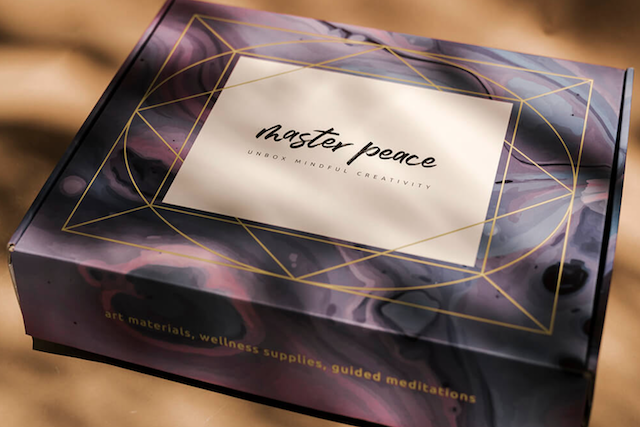
    Get into the feel-good flow of creating with the new and improved Master Peace Box, now only $39.

    Anyone who knows me knows I’m passionate about creating. For me, it’s a form of therapy. It’s a chance to get out of my head and into a state of flow, freeing myself from my obsessive thoughts while pouring all my feelings onto the page, or the canvas, or even the pot. (Though to be fair, not often the pot. I’m a horrible, infrequent cook!)

    Creativity is healing, energizing, and rejuvenating, and it’s also a fun, easy way to be mindful—to be fully immersed in the present moment, free from pressures, worries, and regrets.

    It also enables you to create something you can feel proud of. It doesn’t have to be perfect or professional; regardless of what you make, it’s yours. Your heart. Your soul. Your vision. A piece of you, and all your complex beauty. And there’s something empowering about that.

    If you also appreciate the healing benefits of art and enjoy accessing the feel-good state creativity evokes, I think you’ll love the Master Peace Box!

    What Is the Master Peace Box?

    This art subscription box sends a monthly art supply kit that pairs with a guided virtual workshop. The classes incorporate meditation, helping you foster mindfulness through creativity every month, on your own or as a fun date night activity.

    You’ll receive everything you need to craft something beautiful, with expert guidance from professional artists over Zoom.

    Each month, you’ll explore a new artistic and healing experience.

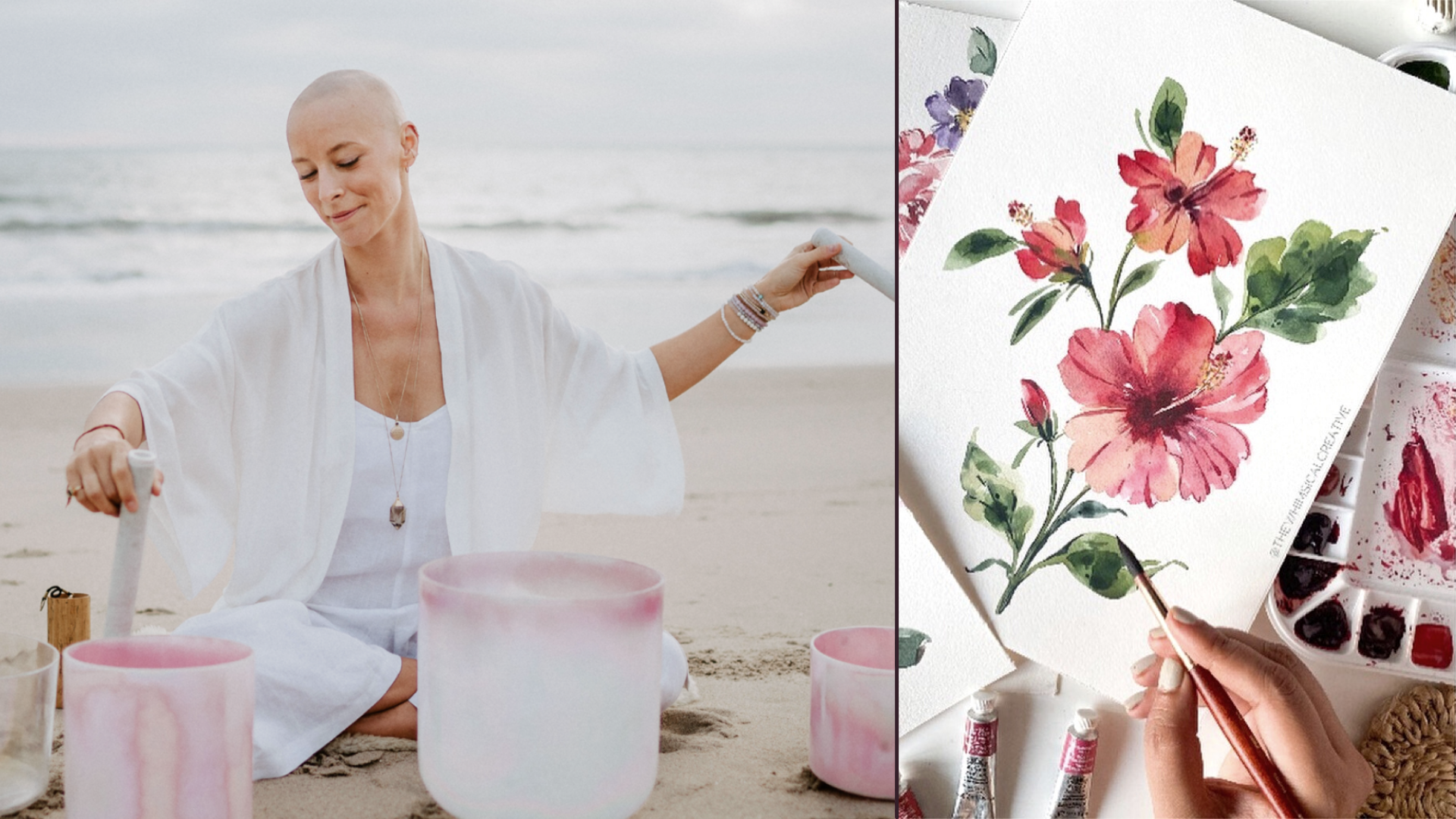
    This month, the Master Peace Box takes on watercolors and sound healing. You’ll get into a relaxing, soothing flow state with a sound healing practice, led by Susy Shieffelin, founder of The Copper Vessel and sound healing training guide. Then, you’ll dive into the painting lesson, creating a watercolor piece with The Whimsical Creative.

    The event goes live on March 28th, at 10am PST, but if you can’t make the live Zoom workshop, no worries! You’ll have three weeks to access a recording of the event, so you can find the perfect time to unwind and enjoy a little relaxation and imagination.

    Create More, Stress Less (in 3 Easy Steps)

    Want to give the Master Peace Box a try?

    1. Get the Box.

    After you sign up here, you’ll receive a box full of art supplies for the paired virtual workshop.

    2. Join the Workshop.

    Get access to live art classes from professional and renowned artists. If quarantine has made life feel a little grey, this is a great way to add some color!

    3. Feel Good.

    The Master Peace Box team holds space for you and your creative journey. Who knew feeling good was so easy? Art knew. Art knew all along.

    The Master Peace Box was created by life coach Michael Gallagher. His intention was to share the practices that helped him heal—meditation and self-expression—in one easy and approachable setting.

    To dive deeper into the worlds of creativity and spirituality, follow him on Clubhouse @masterpeacebox.

    Maybe you’re like me and you relish the opportunity to express yourself while feeling free and childlike, or maybe you’re new to art but love the idea of feeling alive, excited, and inspired. Either way, the Master Peace Box can take you on a journey to calm and creative bliss. I hope you enjoy the sound healing and workshop—and I’d love to see your painting if you want to email it to me after the event!

    **Though this is a sponsored post, you can trust I only promote products I love and can easily personally recommend!

  • Easing Anxiety: How Painting Helps Me Stop Worrying

    Easing Anxiety: How Painting Helps Me Stop Worrying

    “Our anxiety does not come from thinking about the future, but from wanting to control it.” ~Kahlil Gibran

    Anxiety has followed me around like a lost dog looking for a bone for years now.

    I feel it the most acutely when I’m worried about my health or my daughter’s health. I notice a strange rash or feel an unusual sensation and all of a sudden: panic!

    My worries are not limited to health concerns though, and my ruminations go in the direction of dread about the future of the world, worries about my finances, and fears that I’m not good enough.

    Is my anxiety warranted? My mind tells me it is.

    “Remember how you had that bad reaction to a medication? It could happen again!”

    “You know how your daughter had that febrile seizure two years ago? You never know what could happen next!”

    “Think back to that time you and your family had a slow winter and were extremely worried about money. That could be just around the corner!”

    And on and on my mind goes. I know I shouldn’t believe what it tells me, but sometimes I get sucked under and can’t help it.

    I don’t think I was anxious like this when I was a kid. I think these underpinnings of nervousness started when I was older, probably my late twenties. I suppose by then I’d lived enough life to know that things can and do go wrong.

    I don’t like feeling anxious. I don’t like the way my body feels jangly and my mind races. I don’t like it when I can’t focus on the thing I’m supposed to be doing.

    But this is not a sad story, it’s a story of tiny improvements and little steps forward. It’s a journey of finding peace in the middle of a storm.

    For me that peace began with painting.

    Let me go back a few decades, back to when anxiety wasn’t part of my life. When I was a child, I loved art. I drew, I colored, I took extra art classes on the weekends because that’s what I enjoyed.

    I went to college to become an art teacher, switching to a graphic design track later. When I finished school in May of 2001, I had a part-time design job, and after the events of September 2001, I knew I needed to travel, to get out of the safe life I was living in my hometown.

    That’s when my creative practices fell by the wayside. I would never give up those years of travel and camping and working random jobs, but when I look back, I see this is where I stopped making art.

    Luckily, after the birth of my daughter in 2014, the desire to create came roaring back. At first, I was using a tiny corner of a bedroom in our small mountaintop rental house to paint. Eventually we bought a house, and I had the space to spread out, to keep my supplies on top of my desk, ready to paint whenever the urge struck.

    That’s when I started noticing something important: Painting stilled me in a way that nothing else did. It eased my fears and anxieties in a way other practices (deep breathing, meditating) did not, at least not as consistently.

    Painting is my peaceful place. Painting brings me directly into the moment, quickly and easily. You know how you’re supposed to stay mindful and present? That’s what painting does for me, no tips or tricks or timers or mantras needed.

    Yes, I use other methods to quell my anxiety, but painting is my absolute favorite. I get to bring forth something new. I get to flow with wherever the brush takes me. I get to be still inside while the rest of the world drops away, all while allowing something beautiful to emerge.

    When anxious thoughts start to swirl, I know what to do. I head into my studio, grab some materials, and start creating. Soon enough, the spiraling worries are gone and instead my mind is quiet.

    Even if you aren’t artistic, even if you don’t have a creative bone in your body, I still think you can achieve the stillness I achieve when painting. You might not have a brush in your hand, though!

    First things first: If you struggle with anxiety, you should seek the help of a licensed professional. As helpful as painting is, I also see a counselor, and the tools she’s given me are absolutely priceless.

    Now that we’ve gotten that out of the way, here are the other ways I think stillness and peace can be found, even if you’re not meditating or breathing deeply while counting to ten.

    Think back to what brought you joy and the feeling of flow when you were a child. Maybe for you it was playing sports or a musical instrument; writing your own sketches or training your dog to roll over. Whatever it was, look for ways to add more of it back into your life now.

    Start paying attention to your life as an adult and what activities make you forget about the time. When are you fully immersed? When do you fully let go? Maybe it’s during a yoga or meditation class, but maybe it’s when you’re preparing a meal for your family or writing up a budget for work.

    Still your mind any time you remember. I do this now, especially when I’m not painting. I know that a still mind releases my anxiety, and I also know I can’t paint all hours of the day. Simply noticing the feeling of my body on the chair below me or listening to the sounds in the room around me helps my mind to quiet.
    I think the reason painting is so helpful for my anxiety is that, in order for me to be anxious, I have to be worrying about the future and what it holds. When I’m doing an activity that requires my full concentration, I have to be in the moment; there is no other choice.

    All of the practices that we can use to find calm, whether it’s changing our thoughts, following our breath, repeating a prayer or mantra, they all rely on the same thing: bringing our presence to the now.

    What activity brings you into the now? What makes you feel fully alive and entwined with the moment? It doesn’t matter if you’re artistic. It doesn’t matter if you like making things. The only thing that matters is finding a way to be here, in the now, instead of in the unknowable future.

    **Artwork by the author, Jen Picicci

  • If You Think You’re Not Good Enough to Pursue Your Passion

    If You Think You’re Not Good Enough to Pursue Your Passion

    “I think something people need to understand is that others disliking you is not a bad thing. When you are embodying your true authentic self, it creates fear in people who still operate from the ego. If you want to grow, heal, and evolve you have to let go of wanting to be liked.” ~Audrey Kitching

    Since I was a child, I have always felt a huge need to express myself and let my inspiration flow. I was a creative and playful kid, with a vivid imagination and an enormous passion for writing.

    As a teenager, I became interested in music and wanted to be a drummer. It was a spontaneous decision—my intuition suggested to me that, behind those rhythmic patterns that fascinated me, there was something more.

    Something meaningful, spiritual, something that was calling me so strongly that my soul wanted to resonate with it.

    Knowing that, I asked my parents to take drum lessons, but they eventually convinced me that I was dreaming too big. I began to think that it was too late to start, I would never be good at it, and that playing the drums was something that only privileged people, perhaps with a big soundproofed room, and the right amount of talent, could do.

    I gave up on my aspiration and decided to follow my father’s suggestion to take guitar lessons, which would have been more practical and easier to afford.

    I thought it could be an opportunity to learn how to play the songs I loved the most, but after a few months of early excitement, my interest started to decrease because I spent most of the time doing arpeggios and playing sheet music without feeling it.

    After almost two years taking classes, I realized something astonishingly simple, yet powerful: I was following a path someone else had chosen for me! How could this have led me to joy and fulfillment?

    Immediately after that, I gave up on the lessons. Since then, I have played sporadically, mostly alone. Thanks to video tutorials and the right amount of effort, I’ve managed to get a good technique and to play my favorite music. But, several times, a thought snuck into my mind.

    You’re not good at music.

    The cheerful kid had been replaced by an insecure teenager trapped in the painful process of growing up. I was pulled down by what the others were thinking about me.

    For some years I was verbally bullied and mocked from peers and schoolmates, for no apparent reason—I was just trying to be myself. This created emotional and psychological pain and made me believe that I was different and didn’t fit with what others expected me to be.

    I went through dark times and repressed my creativity, thinking that I couldn’t give birth to anything valuable or worth being enjoyed. I subconsciously believed that I would have never been as good as others.

    With the support of the right people, and through a long and painful introspective journey, I eventually realized that what made me repress myself were sneaky and dangerous limiting thoughts.

    More than ten years later, I had the first glimpse of what I could have become if I’d connected to my innermost passions.

    After moving to live in Spain I met some guys who owned a rehearsal room. When I first entered the room, my instinct immediately led me to the drum kit. Before that night, I had played the drums only once, but the idea was still fascinating to me.

    Soon after, a thought popped up. When I was twelve I really wanted to become a drummer, what became of that dream? After many years spent denying my passion, it was time to become the architect of my own life, as I knew that I’m the only one responsible for my happiness.

    A few weeks later, I was able to find a teacher and start taking lessons. The first time I stepped into the classroom I was a bit nervous because an unpleasant dialogue was taking place in my mind.

    What if he notices that I don’t have a musical ear?

    My level of Spanish is not that high. How could I understand him?

    Will I ever be able to continue my lessons, or will I be kicked out on the first day because I am hopeless?

    As soon as I started playing, my fears simply dissolved. My heart felt light and joyful. When the lesson was over and the teacher smiled at me, the negative rush of thoughts was replaced by shining and optimistic affirmations.

    I may not have a good musical ear, but I have an amazing sense of rhythm.

    I could understand everything he told me; my Spanish is good, after all.

    I am not that bad, and I’m sure the next time will be better.

    That happened four years ago. Since then, I’ve never stopped drumming. Here are some of the most meaningful lessons I have learned in that time.

    Talent is not something we are born with.

    Better said, talent is something that very few people are born with.

    My timid attempts at learning guitar made me believe that I should give up on music because it wasn’t my thing.

    Similarly, when I decided to take drums lessons, I thought I could never improve, because it was too late. I was told that all the good drummers started learning when they were children, that becoming good at drums takes way too long to start when you’re an adult.

    Time proved to me that my opinions were wrong. I spent the initial months practicing however I could, doing my homework on pillows, in the office, during my lunch breaks. A few months later, I was rewarded with one of the most amazing gifts I ever received—a friend of mine asked me to join a band.

    Like many times in my life, the negative self-talk was about to tell me I was not talented enough to play with other people.

    It was time to stop that destructive inner dialogue that had been pulling me down for a long time.

    I was mature enough to understand that no one was restraining me but myself: I was creating boundaries that didn’t exist.

    I joined the band for about five months and had a great time, mostly because, for the first time in my life, I was playing with other people.

    Thanks to this opportunity, the idea of being bad at music was replaced by a genuine sense of self-confidence.

    Learning doesn’t require us to be a specific age; we just have to be in the right mindset. The world is full of sprightly and passionate people who realize they have a huge enthusiasm for something later in life and want to enjoy this passion. They know they’d have regrets if they didn’t, so they just start doing it.

    We tend to think that if someone is successful, it’s because they were born with a unique talent that we will be never able to develop.

    We try to escape introspection, avoid analyzing our resistances, and justify our lack of attempts and passive behavior by thinking that we’re not as lucky as the successful people we admire. That might look like self-defense, but that’s actually self-sabotage. We have to be brave enough to understand and overcome whatever is pulling us down.

    My negative self-talk was keeping me away from trying something new: I’m not talented. I will never learn how to play because I’m not able to recognize and sing the notes. I am not creative; I can’t make music.

    Those limiting thoughts, coming from my past experience of being verbally abused, had been with me for a very long time, and I was almost convinced that they were true. I never considered the possibility that they were just thoughts.

    At one point, I felt exhausted, my energy was drained, and I could not move forward.

    I started observing my inner dialogue as if I was a spectator and my thoughts were part of a movie, together with sounds and people that surrounded me. I imagined them coming and going, like trains in a station. I finally came to realize that they didn’t define me—my thoughts are part of me, that’s for sure, but they don’t define me. The difference is huge.

    Thanks to consistent practice, I became aware that my mind was tricking me. I was not less creative than others; I had just believed it was true.

    To live in the present moment is to really live.

    For many years, I struggled with anxiety and overthinking. My mind constantly wandered somewhere between my painful past and a scary future. Then I developed yoga and mindfulness practices, which helped me significantly. For the first time in my life, I was able to connect to my emotions and feel a peaceful relaxation of body and mind.

    But it was when I first experienced a strong sense of aliveness and a deep awareness of the present moment that I realized that my whole life I’d been living on autopilot.

    The first time this happened was during a jam session with my band. I was sweating, my hands were shaking, and my legs were tired, but my whole body was flooded with endorphins.

    I was feeling good, my mind was focused and not involved in that hectic monkey dance that kept it busy all the time. My movements were fluid, gentle, and meaningful. And, the most surprising thing of all, I was not thinking any thoughts!

    For a moment that could have lasted ten seconds, a minute, or even more, I felt eternal. I was not aware of time. I was simply living.

    Sometimes, this wonderful sensation comes in unexpected ways—I never thought I would achieve this enlightened state in the middle of a jam session, with loud noise all around me!

    This happened because my whole self wanted to be absorbed into the process of doing something it really resonated with.

    If you are feeling lost or purposeless, take some time to talk gently to yourself. Listen to your soul and explore your most genuine passions and desires so you can connect with them, start doing what you love, and experience this enlightened sensation.

    To me, this feeling is one of the things that make life worth living.

    Follow your intuition, and this will lead you to happiness.

    When I stepped into that rehearsal room, sat behind the drum kit, and started to play, I felt like I had been playing all my life.

    My desire had been pawing behind the surface for a long time. When I finally became conscious of it, I couldn’t wait a second more. I had to give myself permission to be creative.

    Playing music increased my self-confidence. I stopped comparing myself to others and began to get to know and love myself. We can’t express ourselves if we don’t know who we are. My raised inspiration led me to write more regularly, and with a higher purpose. My light started to shine so brightly and inspire the people around me.

    Being a drummer made me cherish everything done with love, passion, and effort.

    We all are unique, and the way to fully express ourselves is to open our hearts and souls and let creativity flow through our bodies.  

    It could be through music, poetry, painting… anything. Don’t limit your creative process. Expand yourself. Express yourself.

    If there’s something you want to do that you’ve postponed for a long time, don’t wait any longer. Don’t let the fear of failing and judgment define you. Negative self-talk is ego-driven. Don’t trust it. Dig down below the surface, listen to your primal instinct, and practice positive thinking.

    Be receptive, stay open to new experiences, and never say no to the opportunities that may develop your potential, as you never know which one could lead to an important turning point in your life.

    Trust your intuition and follow your heart, and everything will flow in the direction of your happiness.

  • The 11 Most Common Myths About Highly Sensitive People

    The 11 Most Common Myths About Highly Sensitive People

    “I used to dislike being sensitive. I thought it made me weak. But take away that single trait, and you take away the very essence of who I am. You take away my conscience, my ability to empathize, my intuition, my creativity, my deep appreciation of the little things, my vivid inner life, my keen awareness of others pain and my passion for it all.” ~Caitlin Jap

    Unsurprisingly, given my sensitivity, I struggled to fit in when I was growing up in the loud and vibrant 1970s, a decade not known for its subtlety.

    I was unbearably sensitive and relentlessly teased for crying or overreacting to things.

    If I didn’t understand something the teacher was trying to tell me, I would start to cry. If friends didn’t want to play with me, I would cry some more. I would obsess over every single thing anyone said to me. Hardly surprising then that I was a lonely and friendless child as everybody must have felt they had to walk on eggshells around me.

    There were countless anxious school lunchtimes when I clutched my plastic blue tray and agonized about whether or not anyone would sit with me. They rarely did.

    PE sessions were another torture as, of course, the team leaders picked everyone but me for their team. I don’t blame them. I didn’t have the competitive and confident streak needed to win. My lessons were mostly spent sitting on a table alone, and break times were largely spent hiding from my exuberant peers.

    I lived life through the lens of my heart. I couldn’t separate myself from anyone or anything. Lacking the ability to set boundaries, I didn’t know where I ended and other people began.

    This theme of not fitting in continued into my adult life. If only I had understood earlier that I needed to stop trying to fit in. I needed to educate myself about what it really means to be a sensitive soul. Someone who notices things, reflects deeply, and cares about others and how they are feeling.

    Dig deep enough and there are stacks of research out there to show being sensitive, feeling your way through life, is a strength. You understand that your empathy and intuition have healing and transformative powers and are a source of connection and creativity.

    If you think being sensitive means being a shy ‘cry baby’ you have seriously got this wrong (though, yes, many sensitive people cry a lot). It’s just one of several common and frustrating misconceptions about sensitivity:

    1. Sensitive people are all shy and introverted.

    There are sensitive extroverts, too—about 30% of sensitives are extroverts. Sensitive people tend to need alone time to recharge after being in overstimulating environments, much like introverts, but they may still get energy from being around other people. Which means they need to find the right balance between social time and downtime so that they feel connected but not drained.

    2. Sensitives are fragile, ineffective ‘snowflakes.’

    Many defining characteristics of sensitive people, such as their empathy, passion, and creativity, make them exceptional business leaders or influencers on the world stage, for example, Walt Disney, Jacinda Arden, John Lennon, and Princess Diana to name but a few.

    3. Sensitive people are pushovers who have no firm convictions of their own.

    Empathy is a defining characteristic of sensitives, but it is not an endorsement of another person’s viewpoint; rather it’s simply respecting and listening to that viewpoint. You can validate and respect someone’s perspective and still choose to live by your own principles.

    5. Sensitivity is a women’s issue.

    Up to 50% of sensitives are men. Boys and men are often taught to suppress their emotions to appear tough, strong, and masculine, but this often causes depression, anxiety, and low self-esteem—because no one can choose not to be sensitive. They feel ashamed of their sensitivity but need to understand that real men do cry.

    6. Gay men are prone to being sensitive.

    This is a social stereotype that equates being gay with being more feminine and, as stated above, sensitivity is not a feminine issue.

    7. Highly sensitive people are prone to depression and anxiety.

    There may be an increased risk of anxiety, but depression is a medical condition that needs treatment and many factors contribute to the likelihood of experiencing it. Lack of self-awareness and acceptance, whether a person is sensitive or not, can also increase the risk of depression.

    8. There is a strong link between hypersensitivity and autism.

    Those with autism may well have sensory issues, for example, finding things like bright lights or loud noises overwhelming, but this does not mean that everyone with sensory issues has autism. There are major differences between high sensitivity and autism, but chiefly autism comes with ‘social deficits’ (less response in brain areas associated with empathy) and high sensitivity does not.

    9. Sensitive people are too weak and self-doubting to become effective leaders, stand up to narcissists, or succeed in a harsh and critical world.

    Not so. Once they are armed with self-awareness and the tools and techniques to turn their gentleness into a strength, sensitive people are an unbeatable force.

    10. All empaths are sensitive.

    Sensitive people are empaths because they feel what others feel. But not all empaths are sensitive, i.e. they soak up emotions but not all the other stimuli from an environment as sensitives tend to do.

    11. Sensitive people need to ‘toughen up.’

    They can’t, because being sensitive is who they are. They are born that way.

    I used to buy into all these negative associations, especially the notion that a sensitive person needs to ‘toughen up.’ They simply can’t. It’s like telling someone who is taller than average that they should be shorter. Just as being tall is not a flaw, being sensitive is not a flaw. It is not an illness, or a choice people make, either. It is how they are born.

    According to experts, it is an innate trait with research indicating that at least three sets of genes may contribute to it. Some highly sensitive people may have all or some of these ‘sensitive’ genes, and intriguingly all three impact the brain and nervous system in some way.

    Sensitive people are born to be gentle and to experience life on high alert through the lens of their feelings and senses. They are not better or worse than anyone else, just different.

    Although they may have traits in common, they are not all the same. Every sensitive person is unique, just as every person who is taller than average is unique.

    Indeed, the fact that the genetic coding for sensitivity continues to survive natural selection suggests that for evolutionary reasons, for the survival of the human race, it is beneficial that some people can see, feel, and sense things others cannot. It offers an evolutionary advantage and exists, and will continue to exist, because it is the one true force that drives humanity toward greater connection.

    Empathy, intuition, creativity, gentleness, and compassion are personality traits that unite rather than divide, and they are all defining traits of the highly sensitive individual.

    In a nutshell, we are all born with a unique genetic code. The key to a fulfilling life is not to repress, deny, or try to hide our uniqueness but to make the most of what life has given us. If you are sensitive, it is essential that you understand this is not a weakness. Rather, it is a strength, and a potentially healing gift both for yourself and for the human race.

  • Master Peace Box: Meditation-Infused Art Classes, Delivered Monthly

    Master Peace Box: Meditation-Infused Art Classes, Delivered Monthly

    Do you ever read about other people’s creative hobbies and think, “Man, that sounds like a lot of fun”? Do you ever look through creative Pinterest pages and think, “You know, I bet I could do that”?

    There’s something about art that instantly evokes a feeling of joy and relaxation—or at least it does for me. Maybe it’s memories of carefree childhood afternoons spent creating Lego houses and playdough sculptures. Or maybe it’s the fantasy of being an artsy kind of person—eccentric, free-spirited, and driven by passion and awe.

    Whatever your personal draw, there’s one thing we have in common, us aspiring amateur artists: We love the idea of being creatively zenned out, and we’re always excited for an opportunity to get lost in a state of fun and flow.

    If this sounds like you, you’re gonna love the Master Peace Box. I know I do! What is this box I speak of?

    The Master Peace Box

    Each month, you’ll receive a box of supplies that pairs with their monthly art and meditation classes. You’ll learn from expert artists, work with different curated mediums, and enjoy a moment of closing bliss from a renowned mediation guide. All skill levels are welcome! As a bonus, all boxes come with self-care products to enhance our holistic wellness and mindful living beyond the monthly event.

    “It’s like MasterClass and Headspace somehow gave birth to an art studio… l love it so much!” 

    Their August box launch event will be an acrylic class to teach you the fundamentals of painting a human eye, taught by LA portrait artist Devin Wesley.

    Devin works with black and white paint only, so you’ll learn shading techniques and more acrylic best practices without diving into color theory (great for any experience level).

    This class will incorporate a guided meditation on balancing energy/ yin & yang by certified meditation teacher Laurasia Mattingly. Bonus self-care products include: a gratitude journal, candle, palo santo, crystal infused bath bomb, and more.

    The Master Peace Box Mission

    Their mission is to inspire joy and peace through creativity, insight, and community.

    They connect like-minded conscious creatives to experts (via classes), themselves (via meditation), and others (via Zoom opportunities to meet, chat, or share creations with other attendees in a no-pressure environment).

    How Master Peace Box Came to Be

    Founder Michael Gallagher was always drawn to art and felt a strong pull to meditation, which particularly helped him through his deepest difficulties. He started to realize that when he created art, the chaos of the world and of his mind (his biggest challenge) always seemed to still, even if just a little bit. He wanted to create something to share this feel-good hack with others, all while learning to reconnect with his love of art in the process.

    “When we create, we can hear our inner critic a little more easily. We, therefore, can practice redirecting the judging or evaluating energy that pulls us out of the moment. When we do this, we start to come more fully into the now, and into a deeper experiential awareness that thoughts just come into our mind. This realization helps us to separate from our thinking in order to get to our deeper, more enduring self. The benefits extend beyond creating; we learn to appreciate our unique expressions and qualities, to detach from criticism (and praise), and to come to peace with what is.”

    I think that’s what we’re all looking for—a break from the constant chatter in our minds and a chance to feel fully present and alive. Creativity can be the path to that kind of bliss and peace, regardless of our skill level. And the beautiful thing is that we can create anywhere, at any time with a little guidance and the right supplies.

    How to Get the Master Peace Box

    You have multiple options to get started with Master Peace Box:

    1. Join for a monthly box
    2. Try a one-time class with all supplies and bonus products
    3. Try a class for two (date night)
    4. Drop-in to the Zoom class with your own art supplies (link access only)

    As an extra bonus, monthly subscribers get additional access to exclusive virtual wellness events and giveaways.

    The first 15 people to redeem this coupon code (good till August 7th) will get 15% off:

    TB15

    If you’re reading this after those codes have been redeemed, no worries! You can still get 10% off (also good till August 7th) using this unlimited coupon code:

    TB10

    I don’t know about you, but I’m happiest when I think less and do more—when I stop making excuses to keep doing what I’ve always done and say yes to the things I’ve always wanted to try.

    If you too want to get out of your head and get into your heart—and get a little paint on your hands in the process—I highly recommended giving Master Peace Box a try. You can sign up just for August or jump right in to the monthly membership. Either way, I have a feeling you’re gonna love it!


    *Learn more about this month’s instructors, Devin and Laurasia.

    **Though this is a sponsored post, you can trust I only promote products I love and can easily personally recommend!

  • What Helped Me Reclaim the Creativity I Loved as a Kid

    What Helped Me Reclaim the Creativity I Loved as a Kid

    “Absolute attention is an act of generosity.” ~Simone Weil

    When I was a child, I used to write poems as presents for my parents on birthdays and holidays.

    I’d sit quietly and think of what I wanted to say. Then I’d try to turn that into musical language. I’d write those words on the page, and then I’d draw a picture to go with it.

    It didn’t occur to me to even ask whether my parents would like my poem or not; I just assumed they would.

    Then I got older. I stopped giving my parents poems for presents. I stopped writing poems.

    I didn’t write poetry again until I was in college, and then I began to wonder whether my poetry was “good.” Were my poems “good enough” to get me into the advanced poetry workshop? Would they dazzle the teacher? Would the other students like them?

    I paid more attention to the way the words sounded on the page than to what I actually was saying. The depth was covered up by surface. And after all, I wasn’t sure I wanted to really bring my depth to the surface for other people to see.

    I didn’t write poetry very much again until I was pregnant with my first child. Then what was inside me—literally—was calling my attention. I started to put it on the page.

    But there was still this concern about whether what I was creating was “good enough.”

    I’ve been dancing with that “good enough” question for many years. I see now that that question is not just about my writing, but about myself, about my own interior life, and about the relationship between that interior life and my external life: Can my depth come out on the surface? Is my surface appropriate for my depth? Will I be seen, appreciated, understood? And how can I develop myself to the best of my potential, showing up and not shying away from who I am and want to be?

    Now, many years later, I’m a creative writer and a creative writing teacher, and I see my students similarly worry about whether their work is “good enough.”

    I often tell them that their concern, that comes out in relation to their writing, is really a deeper question of how they approach themselves.

    I tell them that, yes, the writing for so many of us brings out these insecurities, uncertainties, and learned patterns of thinking about ourselves that otherwise would lie buried. But that the writing doesn’t create those insecurities, uncertainties, or learned patterns. They’re there within us—and all around us.

    From the time we’re little, we’re given messages about what it means to be a worthwhile person: people are expected to act a certain way, to look a certain way, to speak a certain way.

    For women, our bodies often bear the brunt of these expectations about our physical selves: are our bodies “good” enough, thin enough, pretty enough, light enough, curvy enough, straight enough…

    And for women and men, our writing often comes to be the place where our intellect is valued: our writing is judged in schools; our expression is given grades. We measure ourselves against others.

    But if we’re always being judged—in body and mind—there is no space to be and to become.

    The question of whether we are “good enough” comes from feeling judged, and this restricts us. We experience ourselves as lacking, and a sense of lack leads in turn to our not being able to inhabit our full selves, to our making poor decisions and to living in constricted ways.

    So what happens when we put aside our judgment and allow ourselves to be with ourselves and with our creative voices?

    What helped me overcome my worry about being “good enough” (or mostly overcome it) is being a mother and seeing what it’s like to love my children unconditionally.

    When I am with my children, it never occurs to me to ask whether they are “good” or “good enough.” Those questions seem absurd and meaningless.

    I know that my children were born—as I believe all children are born—as wonderful light beings, miracles with unimaginable potential and unique personalities and gifts. They are, like all people, uniquely themselves.

    I also know that my children were born with the capacity to grow in countless ways. And this potential to grow and learn never stops.

    My children are “good” but that does not mean that they were born good at walking. They needed to learn, as we all do, how to walk. They needed to crawl and then learn how to pull themselves up, needed to learn how to take one step and fall down and then another. At times, also, my children, like all of us, learned how to be more self-aware, how to say they were sorry, how to think about how their actions impacted others.

    We all have room for growth—throughout our lives. We all have room for greater awareness and more skill. But as we mature and grow as people, our essential “goodness” does not change.

    I try to take the same attitude towards our creative acts: of course, we can learn how to be more skillful writers. But each of us is also born a creative being with a unique creative voice, and more skills will enhance the voice, but won’t essentially change what it has to express. Furthermore, our work is an expression of that voice that is appropriate for who and where we are at the moment that we create.

    As a poet, I needed to learn the skills to take my inner world and put it more effectively on paper. I learned from reading others and from having others read and comment on my poems.

    As I wrote more poems, my poems got more understandable, more moving, more skillful. But I don’t think I was ever asking the right question when I was asking whether my poems were “good” or “good enough.” Because that question was like cutting the life force off that was full of life and growing

    Similarly, as a teacher, I can help my students have more skills. I can show them writing that inspires them and that they can learn from; I can give them tools to use in their pieces. But it’s never my job to judge them or to suggest that their creative expression isn’t worthy.

    We are all creative beings. Not everyone is given legs to walk, but everyone is given a unique story and a unique perspective and a unique voice. And who are we, any of us, to say that one story is “good enough” and another is not? Would we ever say that one birdsong is worthy and another is not?

    Perhaps some people will like my poems. I know some will.

    Perhaps some people will not like my poems. I know many won’t.

    But I don’t set myself up waiting breathlessly to be “liked” or not. I set myself up to do my best work and to accompany myself, whether I fall down or walk across the room.

    When my children were little, I delighted in the freedom with which they played, danced, drew, sang. I want them to be able to be themselves as fully as adults, and to love themselves in the process.

    And I want that for all of us, even for myself. For I know that if I want something for my children, then I need to be able to at least try to model it, otherwise what message am I really sending?

    I tell my students: you might not write your most captivating poem this time around, but if you cut off your breath, then you will never will write at your full potential. So take a risk: go for it, and keep trying. Read, write, learn from what you love and engage fully, and keep listening inside and allowing the process to move from the inner to the outer without judgment.

    I started writing as a gift to my parents, but now I write as a gift to myself—and to the world.

    For me, poetry is an act of love, attention, and presence. When I show up fully and listen, then I can create a passage from what is larger than me through my interior self and then out onto the page.

    Absolute attention is an act of generosity,” the philosopher Simone Weil wrote. When I pay attention to the world around and within me and to the language that I use that is an act of generosity and grace—to myself and to the world and perhaps, also, I can hope, to some of my readers.

  • A New Podcast for Creative People, From Tiny Buddha Productions

    A New Podcast for Creative People, From Tiny Buddha Productions

    Hi friends! Lori here. As you may know if you read my blog post from this Monday—How to Keep Going When You’re Not Good at Something New—I recently helped launch a new podcast called Next Creator Up.

    Hosted by Ehren Prudhel, my partner in life and many things, this podcast means a lot to me personally, and of course, to Ehren as well.

    First, a little about what this podcast is and who it’s for, and then I’ll elaborate on why we decided to co-produce this together.

    What Next Creator Up Is All About

    Next Creator Up is a weekly show that features established and emerging creators in various creative fields—music, screenwriting, and blogging, to name a few.

    The goal is to learn about their work and process and uncover the tools, lessons, and insights that have helped them overcome their internal and external blocks.

    Blocks like:

    • Life responsibilities
    • Time limitations
    • Competing desires
    • Doubts
    • Fears
    • Insecurities

    We hope that each episode will provide both inspiration and motivation to help you get out of your own way and create what you want to create.

    Who This Podcast Is For

    Next Creator Up is for you if:

    • You’ve fantasized about creating something of your own—a book, a blog, a podcast, an album, a cooking vlog, or a jewelry line, for example
    • You’re currently working on your own project, but need a little help staying on track
    • You enjoy hearing from creative people who are doing inspiring things
    • You need help sparking your imagination and triggering new ideas

    Why This Podcast Means So Much to Us

    Ehren and I are both creative souls who know what it’s like to get in your own way. We also know the unique frustration that comes from wanting to do something, but feeling either powerless or clueless as to how to make it happen.

    We live in LA and have fantasized about filmmaking for years—and even have a completed screenplay we’d like to produce together—but we’ve struggled because we have limited time, resources, energy, and knowledge.

    We’re both juggling a lot professionally and personally, and have a new baby—our first—coming into the world this Monday.

    We’ve doubted our talents, our efforts, and our potential, and we’ve felt overwhelmed by everything competing for our attention.

    We are two artists who’ve long lived without the palettes we’ve most craved, but we’re now on a mission to change that.

    We’re on a mission to do what we can, with the time we have, to create what we want to create and be the people we want to be.

    We know we can’t do everything all at once. We know we’ll continue to have setbacks. We know we’ll have to make choices and compromises, and adapt our plans as we move forward and make decisions that best support our growing family.

    But in spite of that, we are going to create. We are going to create podcast episodes. We are going to create blog posts. We are going to create new offerings together to share through Tiny Buddha. And we’ll continue to learn about filmmaking and producing, with the goal of one day seeing our screenplay come to life.

    As we do all these things, we’re going to need continued motivation, inspiration, and encouragement—which we’ve both gotten in spades from the dozen interviews Ehren has already completed for season one of Next Creator Up.

    To be honest, I wasn’t sure what kind of interest we’d get from the Tiny Buddha community.

    I haven’t focused much on creativity over the years, mostly because I assumed you, the readers, were more interested in personal development topics—posts related to self-love, healing, relationships, anxiety, depression, and the issues that threaten our peace of mind.

    But I believe creativity is a vehicle to improve everything else in our lives.

    When we create something bigger than ourselves, it helps us:

    • Get out of our own heads
    • Connect and collaborate with other people
    • Feel proud of the difference we’re making in the world
    • Feel seen, heard, and valued
    • Heal pains from the past
    • Recycle that pain into something useful for others
    • Grow and learn about ourselves and what we need to feel fulfilled and at peace
    • Shift from mindless consuming (which usually just exacerbates the emptiness inside us) to active creating (which fills that void with a sense of pride, passion, and purpose)

    I hope this podcast can help you create something that will provide you with all these benefits, and more.

    You can find the first episode, with folk singer/songwriter Kelley McRae, here. In this episode, Kelley talks about her music, her creative process, and the healing power of sharing our stories through songs.

    And now, I ask a favor of you. Since this is a new podcast, we could use all the support we could get. If you enjoy the first episode, would you please rate and review on iTunes? You don’t need to write anything lengthy—just a sentence would do the trick!

    And if you have any recommendations for the show—perhaps a guest suggestion for Season 2—we welcome that!

    Feel free to contact me at email(AT)tinybuddha(DOT)com, and I’ll write back ASAP… assuming I don’t go into early labor, in which case I will read your email from my iPhone and then fight to get it back from Ehren as he reminds to shut off from work every now and then.

    Thank you for being part of the community, thank you for tuning in, and thank you for your support!