Tag: creative

  • How Using Your Hands Creatively Can Reduce Stress and Anxiety

    How Using Your Hands Creatively Can Reduce Stress and Anxiety

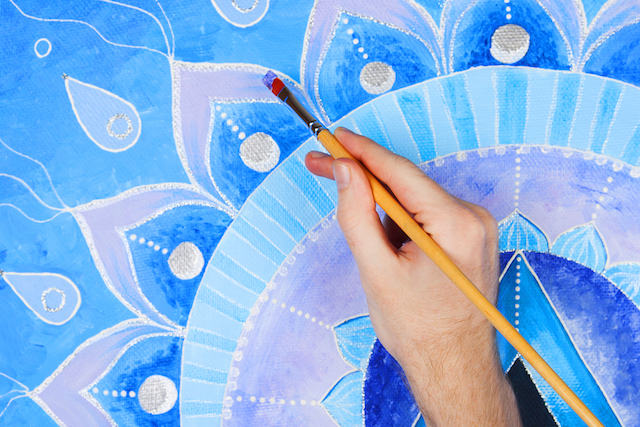
    Painting

    “Making something, even imperfectly is empowering because it’s an expression of the self.” ~Alton & Carrie Barron MD

    Do you ever suffer from stress or anxiety?

    If so, you’ve probably tried to find relief, but finding something that works for you can be quite hard. We all react differently to different remedies, and what works for one person may not be the best remedy for you.

    I used to suffer from stress and anxiety a lot. After trying lots of different remedies, I finally found relief in an activity I never considered would help.

    I was locked into a life dependent on templates for everything that wasn’t basic living. Without clear instructions, clear steps, and a clear understanding of the desired end, I couldn’t get myself to start a project, journey, or activity, no matter how big or small.

    At every seminar or webinar, I asked a million questions. I needed to know everything in excruciating detail. The thought of missing or misunderstanding something would send me into a panic.

    Just the thought of doing anything without knowing every step in advance caused me tremendous stress and anxiety. Even in something as innocuous sounding as in creating art.

    I always loved art. Art materials always made me salivate, but I never made the time for it because I didn’t know what to do with those gorgeous materials.

    Years ago when I was a kindergarten teacher, I used to love watching how the kids expressed themselves creatively in their art. It brought me so much joy that I eventually became an art teacher.

    This got me involved in reading any and every book on art and creativity I could find.

    How I First Heard of This Unlikely Cure for Anxiety and Stress

    Not until I started reading voraciously about all kinds of creative art for adults and how healing it was did I discover the connection between stress, anxiety, and using your hands to create.

    If I could bottle its effects, I would make a fortune.

    I read a wonderful book called Painting Your Way out of a Corner about the amazing meditative effects of different types of unplanned and improvisational art.

    Then I read The Creativity Cure by Alton and Carrie Barron, both doctors who talk about how healing creative hand use is, which is the act of using your hands along with your imagination to create something new.

    From those books, I learned that creative hand use that focuses on process rather than result can relieve anxiety and stress. I also learned that the creative activity couldn’t rely on following a template.

    Creative hand use is supposed to help you by expressing yourself. When you follow a template, you are not expressing yourself; you are expressing the person who designed the template.

    When we make something, even imperfectly, especially imperfectly, we are truly expressing ourselves, which is what helps us relieve our stress and anxiety. This is why art that focuses on the process as opposed to the product is so much better.

    According to the books, creative hand use, when done right, could relieve anxiety and stress in the following ways:

    You gain more self-awareness.

    Painting and doing art from imagination evokes thoughts, feelings, and behaviors that block us in normal day-to-day experience. It loosens up our thinking and leads to notice how we make decisions.

    Do we hide from our mistakes or try to cover them up? Can we let go and be responsive to the moment or do we need stay in control? Are we scared of making a mess, looking silly, not being good enough? All of these things come into play as we create without preconceived ideas and embrace the results.

    Once you have this new awareness, you can use it to make better choices and be more effective. This will help clear up your anxieties thus making you happier and less stressed.

    You become more resilient.

    As you create, you might find that sometimes you try something that doesn’t work out quite as you thought it would. You learn to accept this and simply continue with the process. You continue and try to make the best of what you’ve got. After a while, you’ll notice that when things in your life don’t go as planned or when you’ve made a mistake, you can more quickly recover and move on.

    You become more confident in your decisions.

    By valuing the process of what you are doing, you learn how you make decisions. Simple projects need many small decisions that lead to larger ones. As you make decisions and notice that you can deal with any of their outcomes, you begin to have less anxiety and more confidence in your decision-making.

    You experience peace of mind, tranquility, and sense of well-being.

    Certain types of creative work put you into a meditative state as you focus on what you are doing by being strictly in the moment. This will also give you all the benefits that meditation promises, like peace of mind, tranquility, and a sense of well-being that leads to a less stressful life.

    So Did Creative Hand Use Heal My Stress and Anxiety?

    I had to see for myself if it was true.

    I chose mixed media as my creative activity because it seemed to fit the criteria the best; you need no skill or template to do it. It uses a combination of painting, doodling, pasting, stamping, and stenciling, and there is no wrong way to do any of it.

    Creating without some guidelines can lead to chaos and anxiety, so to begin, I gathered the most exciting project ideas that I found from all of my notes, bought some materials, and then started a small class in mixed media art with some neighbors.

    As we started, I quickly realized that I needed everything to be perfect even before we got started. I needed to check my materials and my notes to see if we had everything I might need; just beginning was quite a hurdle for me to overcome.

    When I began, a refrain would run through my mind, “It’s not perfect, but it doesn’t have to be,” over and over again as I struggled with things not being exact.

    Only as I continued with the art did my anxieties start to resolve over time.

    What a freeing, relaxing feeling.

    Over time, I also noticed I had fewer problems with my stress and anxieties in everyday life. I noticed I could start projects earlier without obsessing over every little detail. I found that I wasn’t as anxious in the face of big decisions. I discovered that, in general, I felt more calm, relaxed, and at ease.

    Get Rid of Your Stress and Anxiety Once and for All

    Just because I chose mixed media art to be my art vehicle does not mean that you cannot get the same benefits with other forms of creative hand use as well.

    Unplanned watercolor painting (as discussed in the book Painting Your Way Out of a Corner), sculpting, or clay work can give you the same benefits.

    If art is not your thing, then other types of creative hand use are available such as gardening, crocheting, knitting, woodworking, or even cooking.

    You will express yourself, and you will become more self-reliant, productive, stress-free, and happier as you get absorbed in something greater than yourself—your creative handiwork.

    The important thing is to choose one of these creative activities that you feel drawn to and then to make serious time for it.

    Once you get hooked, you won’t know how you handled your stress before you got creative.

    And a wonderful new world will open before you.

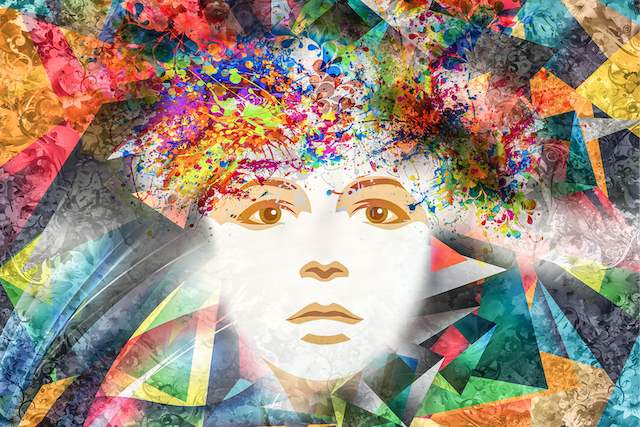
    Painting image via Shutterstock

  • 10 Ways Creativity Can Completely Change Your Life

    10 Ways Creativity Can Completely Change Your Life

    “Life is a great big canvas. Throw all the paint you can on it.” ~Danny Kaye

    I’ve had those days when I felt like my life was in the doldrums. When I felt stuck in the same-old, same-old and wondered how to get a pick me up. When I wished I had more passion or purpose or maybe just a jolt of joy to shake things up.

    Sometimes there were things I thought might make me happy, but I couldn’t have them just because I wanted them. Like, I couldn’t just snap my fingers and meet the man who sweeps me off my feet or become a kazillionaire.

    But there is something that’s always at my (and your) fingertips. Something we always have that will instantaneously make us happy, right now in this moment.

    And that is (drum roll please…) our creativity.

    Creativity is not just for artists or making art. Creativity is life making. It’s anything we do that turns us on, invigorates us, or offers a simple moment of pure merriment.

    For me, I love to paint and write. I knit while watching my favorite movies. I have a blast cooking and sharing my recipes. I let myself go wild in dance class.

    All of us have something we enjoy doing. Or something we think we would enjoy but don’t do because the bigger, more major things in our daily lives take priority. We just don’t make the time for it.

    Or we judge it as “a little hobby” (like crafting, kickball, or learning magic tricks).

    Or we think it will never become something significant or important (like changing the world.)

    Or we deem it as just plain silly. (Why pick up singing when we don’t even know how to stay in harmony?)

    But the things we enjoy are far more important than we could ever realize and can make a significant impact on our lives.

    Here are ten reasons why (and there are so many more):

    1. Creativity makes us present.

    Because we’re doing something we like to do, we’re engaged in the moment. Time passes in an instant ‘cause we’re just having some good ol’ fun.

    When I paint, write, knit, dance, or cook it’s like active meditation. Being present with myself dials up my knob of attention and wakes me up.

    Creativity stimulates us to be more mindfully in tune with our overall lives. It also calms our nervous system, decreases anxiety, and helps restore balance.

    2. We better our relationships.

    Simply because we enjoy doing something we love, we connect to ourselves more intimately. We develop a profound relationship with our inner selves.

    The more we connect to ourselves, the more we’re able to connect to others and deepen all of our relationships. This secures healthier bonds.

    And because we’re more fulfilled, the less we need others to fulfill us and the more we have to share. Our happiness expands and others feel it too and want to spend more time with us.

    3. We’re playing again.

    As kids we could create anything and have fun with it without worrying about what other people thought.

    We could sing out loud in the car, turn a mud-pie into a monster, or let our stuffed animals have conversations. We were all free in one-way or another.

    Creativity returns us to the innocence of our childhoods. And giving ourselves a break from the pressures of adult responsibility, we become lighter and increase our sense of humor as we delight in the pleasure of our amusements.

    4. We’re led to new wonderful opportunities.

    The current of creativity is like a river finding its sea. It always leads us to bigger waters. So even a small creative project might open us to whole new possibilities. We never know where it might lead.

    On a whim I got this idea to make a board game. My friends loved to play it and soon, I was hosting game parties once a month at my house for up to thirty people. It became such a wonderful way to bring people together, a publisher picked it up and today everyone can play it.

    But we don’t do it for product. We do it for pure joy and interest.

    For sure with any kind of project, as our creative juices get flowing, there’s an infinite pool to draw from to keep our inventiveness growing.

    5. Depression is lifted.

    While doing the things we enjoy, even if it seems small or easy, the self-judgments we make (like we’re not enough, or bad, or we don’t matter) are suspended. We do it just because of the sheer delight of doing it.

    It’s the permission we give to ourselves to do what we love that makes us forget we’re in the slumps. The more we engage, the more our spirits fly.

    Doing something that is not demanding or to win is the antidote to any dreariness or blahs. My mood always uplifts when I’m creating something just for my own gratification.

    6. It’s always new.

    Every time we make stuff we’re embarking on fresh, unknown territory. Each time we begin and as we continue, we’re traversing on a new adventure.

    Creativity has this awesome way of always changing things up. Even if it seems “mundane” like stirring a soup, or knitting a loop, or moving my body, it always brings a different experience.

    A plus is it also initiates new perspectives.

    7. We get out of our own way.

    When doing something we enjoy, we’re focused on the act of doing it rather than self-ruminating. It immediately gets us out of our head.

    So much of our unhappiness is bred from being fixed and consumed by our thoughts and behaviors. We tend to observe our feelings, words, and actions far too often.

    But when we’re engaged creatively, we’re freed from any internal traps that say something about us, especially because it doesn’t have to be so serious.

    It’s also the #1 best replacement for any addictions.

    8. We become amazed by our intuition.

    We may wonder what gives us pleasure when we feel stuck. But there’s always something whispering to us.

    That’s the beauty of creativity. It might be telling us to take a pottery class, or sign up for a book club, or learn a new spiritual practice because it knows this will add some sparkle and enliven us.

    When we listen, we realize that we’re being led by something much greater than us. The more we listen, the more astounded we are by what lives inside us.

    9. We build character.

    As we attend to our creativity, we feel better about ourselves. This simple act of showing up serves our self-respect and confidence.

    The more we make pleasurable, creative acts a priority, the more we rejuvenate, strengthen, and grow.

    Each time I sit down to write and my fingers get moving, I feel proud of myself for meeting the blank page head on.

    The overall gain is a greater sense of gratitude.

    10. Love begets love.

    The more we cultivate what we love, the more love we accumulate. Our cup flows over.

    Clearly there are days we may show up to do something we enjoy and it isn’t always enjoyable. Sometimes the cake doesn’t rise, the paint spills, or my muscles are sore. But finding creative ways to solve the problems can be fun if we continue.

    When we don’t worry about how it turns out and we do it simply for the wonder of exploration, our heart expands and love abounds. And this spreads out into our entire life.

    So, what’s compelling you to create? What might creativity be telling you to do because it’s sure you’ll gain from it? What if you just said yes to your freedom, fun, and happiness?

  • What the Holidays Would Look Like if Kids Were in Charge

    What the Holidays Would Look Like if Kids Were in Charge

    Kids are so creative, and thinking outside the box comes naturally to them. (They’d much rather use the box as a dollhouse than think inside it!)

    In this joyful little video, SoulPancake asked kids at a Boys & Girls Club to draw a picture of what the holidays would look like if they were in charge—and then they brought their holiday dreams to life.

  • 9 Mostly Free Ways to Spark Creativity and Fun

    9 Mostly Free Ways to Spark Creativity and Fun

    “People want to be creatively satisfied, and having fun is such an important part of that.” ~John Lasseter

    I stopped having fun when my mother was diagnosed with dementia.

    I didn’t have time for fun because I had to spend every spare moment thinking about Mom, wondering how I could help her, talking to my dad, wondering how I could help him, and worrying about the future, including fretting over whether I, too, was losing my mind.

    Then one day, I asked my mother what it was like, living in such confusion.

    “I can’t worry over it too much,” she told me. “When I lose a thought or a word, I try to laugh and let it go.”

    I realized that’s what I needed to do: acknowledge that Mom had dementia, appreciate her, and then laugh and let go.

    To help myself with the surrender and laughter aspects, I made a list of quick ways to inspire my own sense of creativity and playfulness. I’m still using this list.

     1. Give yourself a picture.

    Create a visual image for your week. This is a great thing to do on Sunday night or Monday morning. Think of how you want the week to feel and look and how you want to be.

    Do you want to live the week with the abandon of a boy stepping off the high dive? Do you want to roller skate through the week, listening to great music? Do you want to drive around with a “Get out of Jail” free card so you can have a little extra wildness and still not be in trouble?

    Draw a picture or cut out a photo from a magazine. Working with an image helps you create your ideal week.

     2. Get literal with down time.

    Each time you come into your home, make a point of putting something down, such as a purse, a sack of groceries, or a briefcase. Say to yourself, “When I put down this sack of groceries, I put down all the things that keep me from enjoying being here in my home.”

    Saying this simple line helps you release grouchiness (well, you did have a very hard day), tiredness, or other stuff that’s bugging you.

    3. Give someone a delightful surprise.

    Think of someone you know who could use a little boost. Maybe it’s your child, your spouse, your mom, or a co-worker. Think of an easy and unexpected way you can cheer them on.

    Maybe your child needs a dollar under his pillow, regardless of the status of his teeth. Maybe your spouse needs a love note tucked into her briefcase. Maybe a co-worker needs a bagel waiting on his desk.

     4. Make instant art.

    Create a three-minute collage. Think of something you’d like to do or someplace you’d like to visit. Then get an old catalog or magazine, tear out appropriate pictures or words, and tape them on paper to make a mini collage.

    Stick this collage someplace where you will see it often. Or put it in a self-addressed stamped envelope and ask a friend to mail it to you within the next two months. Mini-collages also make lovely birthday cards for friends.

     5. Leave loose change for others to find.

    Walk down the street and every block or two, drop a dime, a nickel, or a quarter on the sidewalk. Imagine how people will smile and feel lucky when they discover these small treasures.

     6. Trigger your reality.

    Think of what you want more of in your life, such as a sense of surrender, more time for creative exploration, or more serenity. Then create visual cues that remind you of your quest.

    A small white flag in tucked into the corner of your desk signals you don’t have to fight so often. For a creative jolt, make a cardboard letter B, attach it on a spring to your wall, reminding you to “B off the wall.” A piece from an old puzzle taped to a map of your state reminds you to live in a “state” of peace.

    7. Swing your feet.

    Sit somewhere high, stare into space, and swing your feet. You’ll get a delightful sense of freedom and irresponsibility. It’s a relief, not always having your feet on the ground.

    8. Bat a balloon.

    Blow up a brightly colored balloon and bat it around. This is a great way to lighten up the energy. Do this alone in your office for a few minutes during that late afternoon draggy period. Or invite in a simpatico co-worker and see how long you can keep the balloon up in the air.

    9. Coax out your creativity.

    Make a list of ten fun and creative things you really want to do. Plan to do at least one of them.

    Writing this article was on my “fun and creative” list. What’s on yours?

  • How to Get Through Hard Times by Throwing Yourself into a Hobby

    How to Get Through Hard Times by Throwing Yourself into a Hobby

    “Almost everything comes from nothing.” ~Henri F. Amiel

    There are uncountable ways to deal with difficult times in life. Some people turn to prayer or meditation, others open their hearts in therapy or to friends, and many choose to hide from the pain by eating their weight in chocolate or purchasing expensive bags; to each their own. I have a different approach: crafting.

    When I’ve gone through difficult times in life—depression, unemployment, relationship problems—I have often turned to craft projects. For a long time, I didn’t think much about it, but eventually I realized how much it has honestly helped me.

    When I went through a serious bout of depression, combined with unemployment, I started to participate in craft swaps on an Internet forum.

    Part of what helped was certainly the communication and fellowship with my swap partners. Isolation breeds unhappiness, and making things to another person’s tastes requires getting to know them, which is an effective antidote to isolation.

    But a lot of what helped was the crafting itself—making things with my own two hands, planning projects, and so on.

    When I was at my lowest and most frustrated, when I was writing yet another cover letter for a job I wasn’t quite sure I even wanted, the promise and plans of creation got me out of bed and into my day. It was something to look forward to when I did not have much else going for me.

    But honestly, that’s something I could have gotten from almost any hobby or activity. Hell, a television show with eight seasons on Netflix can give me something to look forward to. Crafting gave me something more: healing.

    How the heck did crafting heal me?

    It gave me something else to think about. Rather than focusing on my own feelings and situation, I focused on picking patterns, selecting supplies from my stash, and then making things.

    It was productive. There is something healing about creating something from raw materials—wool into felt, yarn into crochet, fabric into quilted bags.

    It brought a confidence boost. When I felt like crap, it was easy to feel like I had no control over anything, but making something proves that, at the very least, I have control over craft supplies. It may not sound like much, but it’s a start.

    It’s a sort of movement meditation. The repetitive actions of certain crafts can bring about a sort of clarity and calm, which is certainly helpful under any stressful circumstances.

    It got creativity going again. When I was going through a crappy patch, I needed out of the box thinking in order to get through it. That means creativity, and crocheting vampires and embroidering pumpkins can be the first step to loosening the neural pathways.

    So how can this help you?

    Is there anything you enjoy doing with your hands? Whether it’s painting, sewing, crochet, embroidery, fishing, origami, woodworking, painting miniatures, or any other handicraft, it’s worth re-introducing it into your life.

    If you’ve never had a hands-on hobby like that, pick something interesting and try it out. Wander around a craft store until you see something you like, or search for how-to kits on Etsy. Ask that friend who’s obsessed with Robin Hood to take you with next time he goes to the archery range, or see if your local community center offers a shop class.

    Learning something new can be even more absorbing than doing something you already know. The only limit I suggest is that you find something with a physical component. While I adore cerebral activities like writing, they have a different set of benefits.

    Let yourself be absorbed by it. It’s okay to become obsessed, to spend your lunch breaks and your after-work time pondering and planning for the next time you can pick up your project. In fact, that is part of the point.

    If you’re fixated on making a sweater or tying a fishing lure, then you are not obsessing over everything that is wrong with your life.

    Chasing those same thoughts around in circles will not help you solve anything, but breaking out of them to do something else can provide a much needed change of perspective. That change of perspective may well show you the way out (and even if it doesn’t, it’s less time that you’ve spent being miserable).

    As coping mechanisms go, hobbies are a healthy one. They are inherently creative, never destructive (even fishing creates something: dinner). When you’re in a tough spot, you need to build a new life, not tear yourself down.

  • Using Your Monkey Mind to Redirect Negative Thoughts

    Using Your Monkey Mind to Redirect Negative Thoughts

    Monkey Mind

    “I know but one freedom and that is the freedom of the mind.” ~Antoine de Saint-Exupery

    I grew up in what I like to call The Box of Daughter: a rigid structure of rules about values, beliefs, thinking, feeling, and behaving, set forth for me by super-religious parents who grew up in boxes of their own.

    For a large part of my life, my thinking bounced around within the confines of that box—worrying the old worries, thinking the old thoughts, feeling the old pain, and acting out pretty much the same compulsions time after time—stuck in ever-repeating loops of monkey mind.

    I’ve always loved reading about quantum physics and marveling at the infinite possibilities in the universe. But I couldn’t seem to get many of those wonderful possibilities to happen in my life because I was stuck in that old structure, the childhood voices bulldozing their doubts, fears, and negative mumblings right over what I was trying to create.

    As I’ve endeavored over the years to deepen and expand my spirituality, I’ve connected more and more with the divine creative force, the constant, growth-oriented creative energy of life. “This is how I’m meant to live,” I would think, and then I’d go right back to monkey mind.

    I’ve come to believe that there must be a purpose for monkey mind—that nature intended for us to do something with it, that it’s not simply an aberration that evolved in us as life got more complicated.

    One night in the bathtub (which is where I do my best creative thinking), I noticed a correlation between the constant flow of creative energy in the Universe and monkey mind, which is a also constant flow of energy—but in my case, energy that’s ricocheting off the inside walls of the mental box I grew up in.

    After my bath, a hypothesis bloomed in my mind that monkey mind might be a twisted form of what nature originally intended to be constant creative thought.

    My mind turned to one of my favorite pastimes, puttering. When I’m puttering, my mind often flows from one thing to another, seemingly at random, and I usually feel like I’m smack in the now—dealing with one task, then another, in any order I choose to. It may not necessarily be truly creative, but there is a forward flow that I don’t experience with monkey mind.

    When I’m in monkey mind, there are usually only a few selected thoughts going through my mind, circling around and around, bumping up against each other in their rush to be first. There’s no forward movement. I suppose it’s a form of creativity; however, I’m a little fearful of what I create when I’m in monkey mind.

    I’ve been tinkering with different possibilities for manifesting what I want in my life, and that’s led me to discover a way to get out of monkey mind and into creative mind, which not only brings me right into the now, but opens my mind to more and more and more possibilities.

    It’s sort of like the same type of circling thought, but it never returns to the starting place on the circle. The thoughts do not repeat themselves—they curve around from one possibility to the next, to another idea, another way, another dream….

    When I’m working on a task that I hope will encourage something I want to manifest, if I let my creative mind jump from possibility to possibility (“…and then what? And then what happens? And what else?”), I’m able to keep jumping over that little doubting voice that used to create most of my reality (“…it’s not happening, it’s not going to happen, it won’t happen.”)

    As long as I stay in that creative mind, jumping from one possibility to the next like the image I have of a fractal (winding out into more designs and spirals of possibility), that little doubting voice doesn’t have a chance to interject its repetitive thoughts.

    As long as I don’t go back to square one, monkey mind doesn’t get me.

    I’m sure the divine creative force is out there saying to itself, “And what else can I create? What does this make me think of? And what other possibilities might there be?”

    That’s how I think nature intended us to use monkey mind. I can’t imagine It thinking, “Wait, I have to go back and check that flower…Whoops, that tree isn’t quite tall enough… Maybe I shouldn’t have created that volcano…”

    Creative mind is similar to the way I remember thinking as a child: “Why do bumblebees buzz? What do they feel like? Ouch!!”

    But once we get into school, we’re essentially trained to think in monkey mind: reciting facts over and over to commit them to memory, learning the rules of English and using them every time we write (even when we’re writing creatively), and even sometimes having our physical play at recess structured into games full of rigid rules.

    It’s no wonder we learn to think in circles (or in my case, squares) instead of fractally. We learn how to do monkey mind in school, just like we learn how to do everything else.

    So here are a few tips for getting out of monkey mind and learning what creative mind might feel like inside your head:

    1. When doing a repetitive task like washing the dishes, try enumerating to yourself in your mind every step that you’re taking, and start inserting new thoughts.

    “Putting soap on the sponge, rinsing the plate, I wonder who made this plate, rubbing the sponge in a circular motion, and could I rub it the other direction? I wonder what country this sponge was made in, and how are sponges made anyway?” Keep pushing yourself to come up with new thoughts. Don’t let old familiar ones edge their way in.

    2. When you’re making efforts to manifest something in your life, don’t stop with the first picture you get. Keep expanding it.

    “And then what? And what would that mean? And what could I do with that?” Draw other things into the visualization or energy output that aren’t necessarily related in order to keep expanding your vision: “And maybe a surprise would happen, and my health could be better, and I might live somewhere else…”

    I find when I’m trying to manifest that if I try to hold a particular vision for very long, that little doubter elbows its way in and starts telling me how it’s not going to happen. That’s because trying to hold the vision means I’m fixating—same thing as my monkey mind going around in a circle.

    I have to keep changing the vision slightly (preferably growing it) in order to stop fixating, and that prevents the doubter from getting a handhold.

    3. Go for a walk and talk silently to yourself about what you see.

    “That tree’s a little crooked. It’s taller than the others. I saw a bird go by—wonder what kind it is? Sure are a lot of weeds here. I wouldn’t be driving that fast on this curvy road. I can feel my knees every time I take a step…”

    Keep your focus moving, so it doesn’t settle inside your mind. Getting into your body is a great way to get into the now.

    4. When you’ve got the feeling, try it with creating.

    “How would I change that tree so I’d like it better? Can I walk more gently so my knees don’t hurt? If I could change the color of the sky for one day, what would I change it to? What would I put there if there wasn’t a sky?”

    Ever notice how, when children are creating, they say, “And then… And then… And then…”? That’s creative mind: coming up with another possibility, another idea, another option, another dream, like constant brainstorming.

    It’s a little tiring the first few times you get into it, but it “uses up” that monkey mind energy so you can rest afterwards. It does take practice. But I believe from the bottom of my heart that it puts us into powerful alignment with the divine creative force.

    It’s so much easier to keep the mind moving along a creative path than it is to try and shut out negative thoughts. Who knows what you’ll come up with? See if you can get into creative mind, and you won’t have to not think about that elephant that’s not in the room.

    Photo by Hartwig HKD

  • The Gap by Ira Glass: Inspiration for Creative People

    The Gap by Ira Glass: Inspiration for Creative People

    Feeling disappointed by the gap between your taste and your creative abilities? This short video offers an inspiring message to help you keep creating, even if you’re not yet fully satisfied with your work.

  • 8 Ways We Block Our Creativity and Keep Ourselves Stuck

    8 Ways We Block Our Creativity and Keep Ourselves Stuck

    “Accept your past without regret, handle your present with confidence, and face your future without fear.” ~Unknown

    I have always considered myself a creative person, and formerly, I didn’t put much attention or energy into where  inspiration came from.

    There was a time when I had just started writing copy, designing, printing, and hand-painting T-shirts. Having worked on a few creative ventures before then, I felt that this time things were different.

    I urgently and passionately worked into the early mornings, designing and putting ideas and concepts on paper, afraid that I would lose the inspiration. Dramatic as it may sound, this was my first brush with raw creative inspiration and the waves of delight and despair it makes you ride.

    Fast-forward many years later, I had gotten myself gradually into a non-creative nine-to-five job. I began wondering why I didn’t feel as inspired to create.

    These last few years have been an attempt to reconnect with creative inspiration. I have always been interested in writing and the power and magic of words. I strongly feel like there is a writer within me who is waiting to unleash his creativity.

    As I turn the clock back, I reflect over how I blocked my own creativity—what thoughts, beliefs, and excuses got in the way. If you’re also feeling stuck, some of these may be holding you back:

    1. I am not an expert and I don’t feel ready.

    This is the most fundamental level at which we block ourselves from using our creative powers. We tell ourselves that we’re not ready, and we believe we need to learn more before we can begin.

    We may never feel completely ready, but we’ll feel a lot better and a lot more confident after we allow ourselves to take action.

    2. I don’t believe in myself.

    Have you ever met someone who was talented but chose to remain a wallflower in their own life because they didn’t believe they were?

    I remember the time I stood in front of fifty students to teach biology. Before the class, I’d looked at myself in the mirror, nervous and unsure if I would be received well. I looked squarely into my eyes and reconnected with a sense of deep belief that I was good enough for the task.

    As a result, I felt authentic and allowed myself to be a vehicle of expression to others.

    Since that day, I’ve incorporated many creative techniques in my teaching methods. Instead of just lecturing, I tell stories, use models, and engage my students in hands-on activities.

    3. It’s not the right time.

    Time is a wonderful excuse to put off that dream project because we always think we’ll be better prepared or have more time later. But every time I’ve asked myself if I could carve out some time for my creative dreams, the answer has been a resounding “yes,” because I know it’s a worthy, fulfilling, and rewarding experience, and that I need to make time.

    4. It’s not perfect: analysis paralysis.

    Perfectionism can kill creativity. You wear yourself thin by assuming something isn’t good enough, and you get stuck in analysis.

    I have endlessly analyzed the merits and demerits of a creative venture, never quite going past that stage—never taking any real action to make it happen.

    We create standards for perfectionism based on our beliefs, and think that we don’t measure up. This becomes a self-limiting experience. When we realize we’re the ones setting the high standards, we have the choice to accept imperfection and become free to express our creativity.

    5. I feel overwhelmed.

    Having too much on your plate can push you into overwhelm mode, and everything feels like a crisis. How can you create if you don’t know where to begin?

    Whenever I feel like this, I take the time to unwind, breathe, and slow down. I clean my space, de-clutter my surroundings, and put things back to where they belong. I allow myself to take a break, relax, and do what I enjoy.

    I’ve realized that we were not designed to be on “go” mode all the time; doing too much makes us feel like hamsters spinning on a wheel. I’ve made the choice to step off. The solution is to take small steps!

    6. I’m afraid of failure.

    As a society, we are mortally afraid of failing and looking bad. Success and the quest for the better life are deeply programmed in us. We don’t always learn to fail, brush off, and move on, and we don’t accept that failure is not only probable, but also inevitable.

    I learned the lesson of failure when I began working in a laboratory setting. In science research, much of what you do on a daily basis fails. These failures become stepping stones for what finally works.

    7. I feel uncertain and don’t know what to do next.

    How many times have you felt uncertain and unwilling to do something new, and therefore became stuck?

    When we realize that uncertainty is just a step in the creative process, we can begin to feel at ease with it and focus on moving forward.

    8. I’m dwelling on the past and blocking my creative energy in the present.

    When I was angry, I told myself stories about how everyone else was to blame for my problems—how I had it difficult and why no one understood or cared.

    Now I realize that by being caught up in my stories, I stunted my creative growth. Instead of using the energy of anger and my stories as an impetus to create more, I just let it waste away.

    When ancient stories and programs bubble up, I do some acceptance and forgiveness work. I allow the emotions to come up and then I thank them and ask what can I learn from them. I then choose to forgive and let go. This frees up my energy to create more in my present.

    What blocks your creativity, and are you ready to get unblocked?

  • We Are All Creative: Slow Down to Connect with Yourself

    We Are All Creative: Slow Down to Connect with Yourself

    Screen shot 2013-01-05 at 5.25.06 PM

    “Beware the barrenness of a busy life.”  ~Socrates

    As a people, we are busy. Busy is our mantra. Busy equals successful. Busy equals value. Sometimes all busy really equals is busy.

    It’s important to be engaged, and we need to do what it takes to survive and thrive, but sometimes what we are seeking has less to do with being busy and more to do with just being.

    Most of us experience an over-scheduled, hypercompetitive world. We’re constantly bombarded by images and messages that mold our thoughts, minds, and ultimately the way we live our lives. 

    This can make it difficult to cultivate our own thoughts and create from our inner selves. We get so wrapped up in the messages, ideas, and perspectives presented to us that we may become disconnected from our own source of original thought and creativity.

    It’s easy to fall into the habit of being a consumer of what already exists rather than becoming the source of our own creative ideas and beliefs.

    We need to unplug from the vast network of what already exists and tap into our inner source and creative well.

    It’s wonderful to engage in the outer world and absorb what others have already created, but that is only a part of the whole experience. Absorbing and learning from what exists and combining it with our own creative thought is a powerfully dynamic interaction.

    Socrates was a classical Greek philosopher who spent countless hours in deep reflective thought. It was from this quiet space of universal creativity and deep thought that he brought forth some of the most fundamental philosophical contributions to society.

    He engaged in, observed, and absorbed the outer world in which he lived and then tapped into his own creative inner workings. If Socrates were always on the go, the world would never have received his unique creative gifts. 

    During a period of time in my life, I was going to graduate school, working, settling into my new role of being a mom and a wife, taking care of a home, and running around try to keep pace with my busy schedule. (more…)

  • How to Make Time and Space for Creativity

    How to Make Time and Space for Creativity

    “The grass is always greener where you water it.” ~Unknown

    I’ve had this theory about life for a while now, ever since I embraced simplicity three years ago.

    Life, a good life, a life well-lived, is about maintenance. It isn’t chance or luck or fate (though I believe in those things, and in magic too); it’s about doing the work to create the life you want, and doing it over and over and over again.

    Not that long ago, my writing life resembled un-watered grass. I let the passion I have for writing and words get away from me in my quest for an adult life. I begrudged anyone who had ever done anything creative—they must have more time, more money, more luck, the right connections, or something, anything, I didn’t have.

    All my unused creativity turned into bitterness. I’m not one for jealousy or envy, because I know the value of living a happy, grateful life.

    Still, all that unused creativity made me feel like I had no purpose in life—looking around I saw dried up, brown grass. What I should have been tending to, lay fallow and ignored.

    By mere chance, I picked up a book on simple living at the library. It was spring, and while everything came to life around me, I felt—well, in retrospect, I think I felt nothing. A sort of apathy had taken over. Sitting on the back steps of my patio, flipping through that book, something clicked.

    For me, simplicity and creativity go hand in hand. I spent over a year simplifying my life—decluttering, meditating, and becoming very purposeful about what I wanted and needed, and how those two things are different.

    Then, one day, I sat down and started writing. Writing so much, in fact, that I finished the first draft of a novel.

    Writing (and all creativity) needs space. It needs intention and purpose. Like grass, it needs to be watered, and how can you water it if you’re so busy attending to all the other “things” in your life?

    Finding your simplicity edge can take some time and energy. There will be lots of sorting and deciding and donating and throwing away. Making space—physical space—can make a huge difference in your life; it is worth every minute decluttering. (more…)

  • 6 Commitments to Maintain Momentum with New Projects

    6 Commitments to Maintain Momentum with New Projects

    “When you begin to touch your heart or let your heart be touched, you begin to discover that it’s bottomless.” ~Pema Chodron

    I always wanted to travel to exotic places. When I received an all-expenses-paid invitation to Bangkok after a conference accepted a paper I wrote, I jumped at the chance to go.

    I brought my camera and lugged it around in an oversize fanny back worn backwards. Looking like a dork is a small price for the opportunity to catch the wonder of a moment.

    The conference became a yearly event, and the overseas flights provided time to reread the Canon manual for umpteenth time. My mind is a sieve for numbers and buttons that require complex mathematical equations performed in an instant. I’m lucky to catch a great shot one-tenth of the time.

    Most times I stick to photographing sumptuous statues of Buddhas and Bodhisattvas. I am willing to wait hours for a shaft of light to strike them just so. Then I take a ridiculous numbers of shots just in case.

    I’m not a techie, but this pursuit keeps butting me up against long lists of directions on computer screens with hieroglyphics that could make decoding an Egyptian tomb look easy.

    While compiling my first photographic book I vowed to keep my cool at the computer. No ranting or raving at the keyboard; none of the usual expletives or threats to decimate the motherboard. I got more done than I ever could have imagined.

    Now the ante has been upped with my second book on Guanyin, a female deity capable of the greatest love under the direst circumstances. But has she ever faced the endless void of interminable options on the Internet without the hope of a human touch?

    In a moment’s notice, she can shift shapes to lift us out of a tough situation and firmly plant our feet on the road to enlightenment—or Kansas if necessary.

    Guanyin inspired me to make a second promise to myself: to be kind to every person I encounter—even after days of questing for a techie to solve problems that I’m incapable of describing without using phrases like “what-cha-ma-call-it” or “thing-a-ma-jig.”

    I knew that I could occasionally come across as brash when I asserted myself. That made this second commitment essential for my effectiveness. (more…)

  • Creative Types: How to Stop Comparing Yourself to Others

    Creative Types: How to Stop Comparing Yourself to Others

    “Just as much as we see in others, we have in ourselves.” ~William Hazlitt

    Most days I am a dedicated writer and artist, focused and working away with my oh-so-happy hands.

    Most days I feel inspired to share adventures and insights from living in Paris for over two years while going to graduate school. Or referencing the intense spiritual work and personal growth I’ve experienced in recent years. Or describing how I quit the unfulfilling rat-race to focus on my passion and my life dreams.

    Most days I have confidence and pride in my personal creations and feel pretty darn good about my creative ideas. Most days I am on a roll.

    Then there are the other days.

    The days where I spend too much time on the Internet looking at what other people are doing and comparing their brilliance to my efforts. The days where I find myself at a library staring down the rows of books, wondering if my writing is enough. The days where I count numbers and look at blog data that isn’t quite impressive yet.

    So many people are already acclaimed writers, bloggers, artists, and creative experts. Is there even room for one more?

    On those days, my head gets spinning in creative comparison, and I can’t get out of it. My energy plummets down, down, down, as if sinking to the ocean floor. (more…)

  • 50 Creative Questions To Create The Life You Really Want

    50 Creative Questions To Create The Life You Really Want

    “If you focus on results, you will never change. If you focus on change, you will get results.” ~Jack Dixon

    The first time I picked up a brush to paint I was 28 years old. I had never painted before, not even as a child. I couldn’t draw (except lousy little doodles) and never even thought I would enjoy painting.

    A friend of mine encouraged me to take a workshop about painting for process. Since she pushed so hard, I went.

    My world exploded open.

    On the first day, we stood next to a long table where cups of colorful bright thick Tempra paint laid in rows with one brush and a cup of water next to each of them.

    The instructors told us to simply choose the color that called to us in the moment without thinking, pick up the brush, dip it into the paint, and bring it to our white paper pinned against a wall. Then we were supposed to do only one thing: PLAY!

    Painting for process is not about having a cathartic experience, throwing paint onto the paper a la Jackson Pollack. It’s about being respectful of the process, holding the brush carefully like a pencil, and being present when connecting the brush to paper.

    The key to the creative process is to let go of the concept of “product.”

    The instructors encouraged us to avoid standing back to look at what we were doing. This would trigger analysis, judgment, and self-consciousness. We were supposed to paint freely, like children, and forget about the demon of outcome.

    If judgments came forward like “My painting is bad,” or “It doesn’t look like I want it to,” or like in my case, “It looks like a cartoon,” we were to ask ourselves three simple questions:

    • What if it could be bad?
    • What if you let go of preference?
    • What if it didn’t matter if it looked like a cartoon or not?

    Keep painting!” my teachers encouraged. “Keep going to a color and bring the brush to the white page.”

    And when I got stuck (and sometimes wanted to curl up in a ball and cry) my kind teachers came over and gently nudged me to keep meeting myself head on. (more…)