Tag: Courage

  • The Invisible Prison Shyness Builds and What Helped Me Walk Free

    The Invisible Prison Shyness Builds and What Helped Me Walk Free

    “Life shrinks or expands in proportion to one’s courage.” ~Anaïs Nin

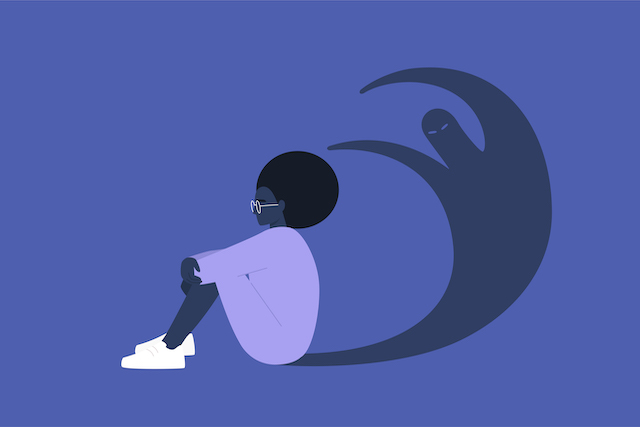
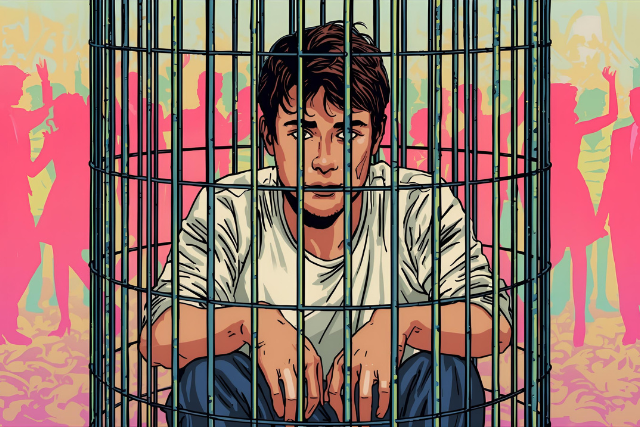
    When I think back on my life, shyness feels like an inner prison I carried with me for years. Not a prison with bars and guards, but a quieter kind—made of hesitation, fear, and silence. It kept me standing still while life moved forward around me.

    One memory stays with me: my eighth-grade dance. The gym was alive with music, kids moving awkwardly but freely on the floor, laughing, bumping into one another, having fun. And there I was in the corner, figuratively stomping paper cups.

    That’s how I remember it—like I was crushing cardboard instead of stepping into life. I can even smile at the image now, but at the time it wasn’t funny. I noticed another girl across the room, also standing alone. She was beautiful. Maybe she was waiting for someone to walk over. But in my mind, she was “out of reach.” My shyness locked me in place, and I never moved.

    It wasn’t a dramatic heartbreak—just another reminder of how many moments slipped by.

    The Pattern of Missed Chances

    That night was only one of many. Over the years I missed far more opportunities than I embraced: the conversations I didn’t start, the invitations I quietly avoided, the women I admired from a distance but never approached.

    Shyness never really served me. I hated it, but it was powerful. I carried it into my adult years, and though I fought hard to loosen its grip, it shaped how I lived and related. Over time I changed; I’d call myself “reserved” now rather than painfully shy. But the shadow is still there.

    Shyness as a Prison

    Shyness isn’t just being quiet. It’s a whole system of fear and self-consciousness: fear in the body, doubt in the mind, and inaction in the world. It feels like safety, but it’s really confinement. It builds walls between you and the very connections you long for.

    I’ve come to see shyness as a kind of “social yips.” Just as an athlete suddenly freezes when overthinking the simplest movement, I froze in moments of connection. I knew what I wanted to do, but my body wouldn’t follow. And like the yips, the more I thought about it, the worse it became. Buddhism later helped me see that the way through wasn’t forcing myself harder but loosening my grip—letting go of self-judgment and stepping into presence.

    Zorba and the Choice to Say Yes

    As I look back, I know not every missed chance would have been good for me. Sometimes the lure of conquest was more about ego than true connection, and saying no spared me mistakes.

    But there’s another kind of moment that still stings. In Zorba the Greek, Kazantzakis has Zorba say, “The worst sin a man can commit is to reject a woman who is beckoning.”

    The point isn’t about conquest—it’s about clinging. If you say yes when life beckons, you can walk away later without wondering forever. You’ve lived it, and it’s complete. But if you turn away, you carry the ghost of what might have been. That ghost clings to you.

    I know that ghost well—the ache of silence, the memory of walking away when I might have stepped forward. Those are the regrets that linger.

    A Buddhist Lens on Shyness

    Buddhism has helped me understand this prison in a new way. The Buddha taught that suffering arises not from life itself but from how we cling to it. My shyness was stitched together from craving, aversion, and delusion.

    The walls of my prison looked solid, but they weren’t. They were only habits of thought.

    Buddhism also teaches dependent origination: everything arises from causes and conditions. My shyness wasn’t my identity. It was the product of temperament, upbringing, culture, and adolescence. If it arose from conditions, it could also fade as conditions changed. It was never “me”—just a pattern I carried.

    And at the heart of it all was attachment to self-image. I was afraid of being judged, of looking foolish, of failing. But meditation taught me that the “self” I was defending was never solid. Thoughts pass, feelings change, identity shifts. When there’s no fixed self to protect, the fear loses its grip.

    Regret Without Clinging

    The memories of shyness still emerge from time to time. They’re not paralyzing anymore—I don’t live locked in that cell—but when they rise, they sting. They make me feel foolish, like a prisoner might feel when looking back on wasted years, replaying choices that can’t be undone.

    What I try to do now is not cling to them. I can see them for what they are: moderately unresolved regrets. They will probably always flicker in my memory. But instead of treating them like permanent failures, I let them pass through. They remind me I am human, that I once hesitated when I longed to act, and that I don’t have to make the same choice now.

    Regret, I’ve learned, can also be a teacher. It shows me what I value most: presence, intimacy, connection. It reminds me not to keep living behind walls of hesitation.

    Buddhism teaches that memory—whether sweet or painful—is something the mind clings to. But the door of the prison has always been unlocked. Freedom comes when we stop pacing the cell and step into the present.

    Saying Yes

    One memory from later in life stands out. I was in my twenties, still shy but trying to push past it. Someone I admired invited me to join a small group heading out after class. Everything in me wanted to retreat, to say no. But that time, I said yes.

    It wasn’t a great romance or life-changing event. We just shared coffee, talked, laughed a little. But what mattered was that I had stepped forward. For once, I wasn’t left haunted by what if. I walked away lighter, without clinging. That small yes gave me a glimpse of freedom.

    I’m still not outgoing. But I am no longer the boy in the corner, stomping cups while everyone else dances. I can step forward, even when my voice shakes. I can risk connection without assuming others are out of reach.

    Shyness may still whisper in my ear, but it no longer holds the keys.

    What I’ve Learned

    • Shyness was my inner prison, but the bars were made of thought, not stone.
    • Not every conquest would have served me—but turning away from true openness creates the sharpest regret.
    • Regret is painful, but it can teach us what matters most.
    • Memories of missed chances still surface, but I don’t have to cling to them.
    • Freedom doesn’t come from rewriting the past, but from choosing differently now.

    I still carry the memory of that eighth-grade dance, the girl across the room, the echo of other missed chances. But I don’t cling to them anymore. They remind me that presence is always possible—because freedom isn’t found in “what if.”

    It’s found in saying yes when life beckons and in stepping out of the prison of hesitation, here and now.

    To anyone reading this who has ever stood in the corner of their own life: the prison you feel around you was never locked. You can step forward, however awkwardly, and find freedom in the present moment.
  • My Daughter Needed Me to Choose Better, So I Did

    My Daughter Needed Me to Choose Better, So I Did

    “Children learn more from what you are than what you teach.” ~W.E.B. Du Bois

    I was standing at the service bar, waiting for my drink order to be ready. The scent of steak fat clinging to my apron and infusing itself into my bra, while twenty-something servers around me whined about working on Mother’s Day… yet I was the only mother working that night.

    I’d barely slept because I’d closed the restaurant the night before.

    My nine-year-old daughter had just told me she wished she were dead.

    And here I was, pretending to care about side plates and drink refills when all I wanted was to be home holding her, telling her she mattered. Instead, I snapped—righteous and broken all at once—and stormed out to the alley behind the kitchen where I could cry without making a scene.

    That was the moment I knew: something had to change. Not for me. For her. Because if I stayed in this life, this marriage, this pattern, she would learn it too.

    Up until then, I thought I was protecting her. I fooled myself into thinking that there wasn’t too much harm, because the yelling wasn’t directed at her. That I could absorb the blows. That love was sacrifice. But kids don’t learn from what you say. They learn from what you model. And I was modeling self-betrayal.

    Her stepfather’s cruelty wasn’t new. Neither was the exhaustion I carried in my bones from trying to patch over the cracks with routine and denial. But watching her crumble under the same pressure I had normalized? That shattered something in me that couldn’t be glued back together.

    I married him because I saw a wonderful father for my daughter. I saw him get down to her level and play with her. They would giggle together. Be silly together. Be kids together.

    Well, that was all fine and dandy when she was three, four, five years old, but at some point, she began to outgrow him. While he sat stuck in his trauma, she matured. She was growing to be a strong little lady.

    He didn’t like that. So, when I wasn’t around, he would lash out and treat her like a slave, a whipping boy, but also whined and threw temper tantrums. She had now become the surrogate mother of a petulant child.

    She was nine. She should have been thinking about art projects or bike rides, not death.

    When I confronted my husband about how he spoke to her, it only made things worse. So she begged me never to mention it to him again and informed me that she would no longer confide in me. I hated myself for letting that happen. The very moment I thought I was being strong and standing up for my little girl, I was actually just prolonging her punishment.

    I was staying for stability, for financial security, for some misguided sense of loyalty. Those were the moments that provided her with a blueprint for her own suffering.

    There’s this narrative that mothers must be martyrs. That our suffering is noble, even necessary. But I don’t buy it anymore. Because what good is a self-sacrificing mother if all her child learns is how to silence themselves in order to survive?

    Leaving wasn’t brave. It was survival. I packed us up, found a small apartment, and started over with debt, doubt, and one hell of a broken heart. Not just from the marriage but from the years I’d spent disconnected from myself. My daughter didn’t need a perfect mother. She needed a peaceful one.

    It wasn’t a clean break. I cried in closets and called him at 2 a.m. and hated myself for the longing. I felt like I’d lost my mind. But I was beginning to find my voice. And slowly, she started to smile again. Her shoulders relaxed. We giggled like two girlfriends. We reinvigorated our “‘nuggling” tradition—Saturday nights with a big bowl of popcorn, snuggled up under a blanket together, watching a silly movie. Just the two of us. Just like it used to be. I knew we were going to be okay.

    Healing didn’t come in grand epiphanies or social media-worthy quotes. It came in late-night sobs and morning coffee. In resisting the urge to explain myself to people who would never get it. In learning to sit with discomfort instead of racing to fix it.

    I had to undo decades of believing that silence was safety. That if I didn’t rock the boat, we wouldn’t drown. But we were already drowning. And pretending otherwise was only teaching her how to hold her breath longer.

    I had to unlearn the idea that being needed was the same as being loved. That caretaking and contorting myself for approval was noble.

    I started showing her what boundaries look like. I started apologizing when I got it wrong. I started asking myself what I needed, not just what everyone else wanted from me.

    I also had to let go of the fantasy that he would change. That if I just loved him better, communicated differently, forgave more quickly, then things would improve. That fantasy had a chokehold on me for years. It’s humbling—and liberating—to realize you can love someone and still not be safe with them.

    Sometimes I wanted to go back, not because I believed things would be different, but because being alone with my thoughts was terrifying. I had to rebuild a relationship with myself that I didn’t even know was fractured.

    I started journaling, walking, making playlists that made me cry and heal in the same breath. I was slowly, painfully learning to mother myself.

    I watched her blossom with every ounce of peace we created. She didn’t flinch as much. She stopped asking me if something was wrong when I was having a moment of silence. She acted like a child again. I knew then that the mess I was wading through was already doing its work—not just in me, but in her.

    We learned new rituals. Morning cuddles before school. Singing in the car. Cooking meals together and dancing in the kitchen while things simmered on the stove. It wasn’t just healing. It was joy. Honest, simple, borrowed-from-the-mundane joy.

    I realized I didn’t have to keep waiting to feel safe. I could create it.

    And in every small moment, I chose something different. I chose gentleness. I chose boundaries. I chose to believe that we were worthy of more.

    There were still days I missed the chaos. That part of me that equated drama with passion, unpredictability with depth. But then I’d hear her talking to her stuffed animals in the next room or see her curled up in bed with her cat and remember: calm is not boring. It’s safe. And we deserve safe.

    Eventually, the grief became quieter. The ache dulled. I stopped needing to explain the past to anyone, including myself. And I started dreaming again—not just for her but for me. I wanted her to grow up seeing her mother whole, not just holding it together.

    Because one day, she would hit a wall of her own. She’d sit in a bathroom or an alley or a car, and she’d wonder how she got there. And I wanted her to remember that change is possible. That discomfort isn’t failure. That sometimes, being your own hero means walking away before the fire consumes you.

    Some days, I still think about standing in the doorway of her room, unable to move—but needing to leave—looking at my sweet little girl who just told me she wished she’d never been born. The day I realized that being a mother wasn’t just about protecting my child from harm. It was about protecting her from becoming the kind of woman who thought harm was normal.

    She didn’t need me to be unbreakable. She needed to see me break and still get up. So that’s what I did.

  • How I Stopped Worrying About What Others Think of Me

    How I Stopped Worrying About What Others Think of Me

    “Live your life for you not for anyone else. Don’t let the fear of being judged, rejected or disliked stop you from being yourself.” ~Sonya Parker

    On August 4, 2022, I buzzed off my long, thick, luscious hair.

    I marched up Sandy Boulevard in Portland, Oregon, walked into Take Pride Barbershop, and sat in the chair with the most badass barber. She quelled my last-minute fears and boldly took the clippers to my never-shorter-than-shoulder-length hair.

    It was instant liberation.

    I had finally worked up the courage to do so after four years of internal debate and worry, which went something like: What will people think? Will people think I’m a man? Will people treat me differently? What if I’m actually ugly and my ugliness will be revealed? What if my head is oddly shaped? Will I have to wear a bunch of makeup?

    My worries and thoughts were clearly steeped deep in societal conditioning about beauty and femininity. We are told that long hair is feminine and beautiful. We are told that young women aren’t supposed to have short hair. We are told that if you are a woman with short hair, be sure to wear makeup and jewelry so you look feminine.

    But I finally stopped all the thinking, broke free from those norms, and I just did it. I said, “Off with the hair!”

    And now I feel free-er, sexier, and prettier.

    I feel more like me.

    It’s as if I shed layers that were actually hiding my true essence. My true essence as an adventurous, empathic, sensual being who sometimes feels soft and tender, and other times feels bold and badass. My true essence as someone who is wary of rules and authority.

    It’s also as if I shed layers of my ego. Because whether I like to admit it or not, my hair was a significant piece of my identity as a woman. Hair is an expert communicator, with the ability to send so many messages through a single glance. Hair communicates gender, sexuality, wealth, age, health, and parts of our personality.

    Now that I have shed my long hair, I think the only part of me that is still communicated via my hair is my personality. For one can no longer look at me and quickly deduce my gender, sexuality, wealth, age, or health. (I do have very toned muscles and glowing skin, so people should be able to make an assumption about my health, but some people only see the short hair and assume I have cancer).

    What is communicated boldly is that I create and live by my own rules. And if people know one thing about me, THAT is exactly what I want them to know. 

    My buzzed hair also lends an air of mystery, as people wonder about all of those other little check boxes (gender, wealth, age, etc.) that are usually communicated via hair.

    While I did shed some layers of my ego, my buzzed head also makes a pretty strong statement, and in full transparency, I get a lot of attention. This attention comes in all forms.

    Sometimes it’s “Excuse me sir…oh! I mean ma’am.”

    Sometimes it’s “You need to wear lipstick to look more feminine.” (Who said I wanted to look more feminine?!)

    Other times it’s “Omg, you’re so beautiful” or “I LOVE your hair.”

    Sometimes I get free guac.

    I get a lot of smiles from passersby on the sidewalk.

    I get a lot of lingering looks at the post office, the coffee shop, and the dance floor.

    And while I do love to be called beautiful (who doesn’t?!), I don’t attach myself to the praise or the criticism because I have decided for myself that I am strong, radiant, and beautiful, from the inside out. I no longer care if people think I look masculine or feminine, ugly, or beautiful. I don’t care if people in Idaho think I have cancer. I don’t care if people think I look like a skinny boy without makeup on. (What’s wrong with looking like a skinny boy?!)

    This level of not caring, of being so confident in who I am, is the ultimate freedom. 

    Plus, I know that when people react one way or the other, it is not really about me and my hair. Their reaction means that I activated something within them. I activated their desire to be free and to stop following the rules that someone else laid out for them.

    In the best cases, I offer others a little permission slip to step into their own boldness. Which is one of my favorite parts of buzzed life—when women tell me I’ve inspired them to buzz their long hair! That they were so worried about what people would think, but after seeing me do it, they now have the courage too. That is powerful.

    So while the hairstyle of one woman may seem like a simple and insignificant thing, it actually plays a small but important role in the liberation and empowerment of women.

    For when a woman has the courage to push back against beauty standards, that courage is ignited, and she also develops the courage to choose freedom in other facets of her life as well. 

    For me, that has looked like more sexual freedom—making me more playful in bed and bolder in sharing my desires—and more confidence in all areas of my life.

    Buzzing my hair has also created more time in my life, as I spend less time getting ready. It’s created more mental space, as I no longer spend inordinate amounts of time thinking about how to style my hair, when to wash it, and whether or not to get it highlighted.

    It has also freed up more money because I no longer spend hundreds of dollars on highlights and cuts. My fiancé buzzes my hair at home and, occasionally, I bleach it myself.

    It’s also led to freedom in how I dress. Sometimes I like to dress to express my femininity. Other times, I dress to express my masculinity. As someone who used to be deeply insecure about her tomboy-ish-ness and lack of desire to wear makeup, I have reclaimed the masculine parts of me with pride, which has been an integral part of my healing and expansion journey.

    It has also deepened my sensuality. In the shower, the water massages my head more intimately. On a summer day, the sun kisses me deeply. On a breezy morning, the wind and I dance a graceful dance. On the dance floor, the softness of my fiancé’s lips activates my crown chakra. I feel less separation between the world and me. I am more integrated. I am more aware of my oneness with the natural world.

    Yes, all of this because of my buzzed hair!

    So I’ll leave you with a few parting words of wisdom:

    1. People are going to talk and have an opinion about you no matter what, so you might as well do what you want and be who you want.

    2. Others’ opinions of you really have more to do with them than they do with you, so don’t take stuff too personally and concern yourself first and foremost with your opinion of yourself.

    3. If you want to buzz your head, do it. If you don’t like it, it’ll grow back. But I bet you will like it!

    So here’s to taking action to live as a more free, wild, and confident you!

  • I Cheated on Him with My Higher Self (and We’re Still Going Strong)

    I Cheated on Him with My Higher Self (and We’re Still Going Strong)

    “It’s okay to let go of those who couldn’t love you. Those who didn’t know how to. Those who failed to even try. It’s okay to outgrow them, because that means you filled the empty space in you with self-love instead. You’re outgrowing them because you’re growing into you. And that’s more than okay, that’s something to celebrate.” ~Angelica Moone

    “How could you do this to me? It’s obvious you’re with someone else.”

    That was the third and final message I received from my partner of nearly three years, several weeks after we had finally decided to break up. I say “we” because initially it seemed that the decision was mutual, although it would later be revealed that it was me who wanted out.

    He was right, by the way. I had left him for someone else.

    No, not the lover that he had conjured up for me in his own mind. In fact, what had pulled me away was much more powerful and seductive than that. I had cheated on him with my higher self. And she had been trying to win me over for quite some time.

    My higher self: AKA my intuition, AKA my inner badass that will never be ignored. Yep, she’s the one I had left him for.

    Much like when I was nearing the end of my marriage, she had started off with a gentle nudge, a tap on the shoulder every now and again. I’ve noticed throughout my life that if I don’t stop what I’m doing, these attempts to get my attention will become more consistent, until what was once a whisper finally becomes a roar.

    Such was the case three years ago when she decided that I should shave my head. At that point, I had invested a lot of money turning my naturally dark brown hair into a platinum blond mane. This was before the pandemic, when I couldn’t imagine anything coming between me and my monthly visits to the salon.

    As with most suggestions that come from my higher self, my ego was not impressed.

    If the two of them had been sitting across from one another, the conversation would have gone something like . .

    “You want to do whaaaat??”

    “Shave it.”

    “Excuse me?”

    “Take it all off.”

    “All of it?”

    “All. Of. It.”

    So I attempted a compromise by shaving a bit off the side. I knew I was kidding myself when I thought that would be the end, but at least it was a start. Over the course of the next twelve months, I felt equal parts admiration and jealousy whenever I caught a glimpse of someone with a shaved head. This peculiar mix was familiar to me, and it signaled what was destined to happen next.

    When I had finally made the decision, it was a random Tuesday morning, and it made absolutely no sense to my logical mind. Unlike the ego that thrives on being booked and busy, the higher self loves white space. When we give ourselves the opportunity to tune out and tune in, our deepest desires have a funny way of being revealed.

    That fateful day I had decided to take an extra long walk with my dog through one of the parks here in Barcelona. There’s nothing like nature, movement, and a bit of solitude to help you cut through the noise and get to the heart of what you really want. Instead of returning to my apartment, we headed to the salon.

    As I took a seat at my hairdresser’s station and looked at myself in the mirror, my ego had a full-blown tantrum while my higher self popped open the proverbial champagne.

    In those moments of feeling the clippers pass over my scalp, watching my shoulder-length hair fall to the floor, I finally felt free. Whether it’s our hair, our jobs, or a relationship we’ve long outgrown, the higher self seeks our liberation, no matter what the cost.

    That day when I told my then partner what I had done, the conversation didn’t go as I had hoped but exactly like I had imagined.

    “You’re bald.”

    While this was indeed a fact, the tone made it feel like a personal attack. He asked me why someone so beautiful would intentionally make herself so ugly. For once in my life, being “pretty” hadn’t been the deciding factor. I wasn’t so concerned with how I wanted to look but rather how I wanted to feel. As I’ve come to learn since, life really changes when this perspective starts to shift.

    If his thoughts and feelings were any indication, I was no longer much to look at when it came to the male gaze. Ironically, all he could see was “a weirdo” while the person I saw with my own eyes was a queen. 

    While my ex couldn’t get past my shaved head, I couldn’t get over the luminosity and the brilliance that could fully shine through. As he continued to fixate on what I had lost, I knew the truth of what I had gained: freedom, courage, and beauty on my own terms.

    Perhaps I always knew that he would leave me over a haircut. No one likes to think that the future of their relationship comes down to the length of their hair, but he had told me from the beginning that shaving my head was the one thing I should never do. Funny the rules we’ll follow in an attempt to belong to other people while we strategically abandon ourselves.

    I had spent nearly four decades of my life searching for safety in the fulfillment of everyone’s expectations. I used to be an expert at figuring out what they wanted and becoming exactly that. Until one cold, cloudy morning in February 2021, when I decided I was done. Done with the pretending. Done with the pleasing. Done with the denial of what I knew to be true.

    I was finally ready for a different kind of love. And this time it was all my own.

    You could say that I cheated on my ex with my higher self, or maybe she was the one I was meant for all along. Either way, I’ve chosen to be faithful to my inner wisdom. And from what I can tell, we’re still going strong.

  • A Simple Plan to Overcome Self-Doubt and Do What You Want to Do

    A Simple Plan to Overcome Self-Doubt and Do What You Want to Do

    “Don’t let others tell you what you can’t do. Don’t let the limitations of others limit your vision. If you can remove your self-doubt and believe in yourself, you can achieve what you never thought possible.” ~Roy T. Bennett

    Ahh yes, self-doubt. Something that affects every single one of us at different times and at different magnitudes—even those that seem supremely confident.

    Why do so many of us experience self-doubt, and how can we overcome it?

    On a personal note, I can tell you my self-doubt comes any time I am trying something new. I’ve learned over the years where this stems from, and it may be similar for you. It comes from my parents.

    Although my parents were always encouraging, they’d also say things like, “Are you sure this is the right move?”, “Are you sure you want to do this?”, and “Be careful.” In fact, every time I left the house, that’s what my dad would say: “Be careful.” “Drive safe.” Not, “Have fun,” “Have a fantastic time,” or something along these lines.

    In my twenties I realized that it had been ingrained in me to always be cautious, which then led to me doubting myself in certain scenarios, though I’ve never been someone who shies away from challenges or holds myself back. Over the years, I learned to identify what contributes to my self-doubt and then push through it.

    Now, this isn’t the case for everyone. Other things that contribute to self-doubt are comparing ourselves to others; feeling a lack of means, intelligence, or other things we think we need to succeed; past experiences; possibly being criticized; and the natural fear that we feel when attempting something new.

    When we doubt our ability, we are allowing fear to settle in and hold us back from forging forward and taking a leap. Without trying, we are feeding the self-doubt, which means it will likely compound the feeling the next time we are faced with or offered a similar opportunity.

    So how can we detach from self-doubt and make sure we are not missing out on what could be an amazing opportunity or journey for ourselves?

    First, we need CLARITY.

    We need to first get clear on where this self-doubt is coming from.

    What is striking this feeling within you that makes you think you shouldn’t try it or you can’t make something happen? Is it the fear of the unknown, or is it the feeling of not having the ability, or something else you think you need to succeed? Are you comparing yourself to someone else in the process? Or do you think you couldn’t handle it if you failed?

    Second, we need to recognize the FACTS.

    What do you know to be true? For example, what do you know about yourself that can help prove that you can attempt or accomplish this? Have you had any similar experiences that prove you can do this?

    If you’re comparing yourself to someone else, what are the facts in this? Meaning, are you comparing yourself to someone who has already succeeded? Or are you comparing yourself to someone who is at the same stage you are? Nobody gets from A to B without experience, practice, and even failure. So, try not to compare yourself to others, as you may not know the complete story to their success.

    There was a time when I was contemplating which direction to take my business degree. I’d majored in marketing because it’s a creative field that allows for variety, which aligns with my values. But as I was working in my first couple of “corporate” jobs, I was enticed by sales.

    My father wanted to steer me away from sales. He said that it’s a hard career, it’s mostly male-driven, and it’s extremely stressful and unpredictable. But what I saw was the fun interaction sales teams had with their clients and prospects. How they were able to basically chat on the phone 80% of the time and attend fun events.

    It was a fact that sales is stressful, unpredictable, and male-dominated, but I knew myself. I knew I was different than my father. I knew I was up for a challenge and taking risks, whereas he was risk adverse. I knew if it didn’t work out, I always had marketing to step into or maybe other options, whereas my father was opposed to change.

    I had to recognize that he was from a different generation. That although what he expressed was true, there were other factors to consider. If I compared myself to the majority of people occupying these roles I likely wouldn’t have attempted it and enjoyed a fifteen-year-plus career in sales and business development.

    Finally, GO FOR IT!

    The best way to conquer self-doubt is to put yourself out there, take action, and see what happens. No success comes without failure. If it works out, you’ll be glad you did it, and if it fails you’ll learn and can progress.

    Without acting on it you will never know. At least if you push through the doubt and try you will understand yourself and your ability a lot more.

    There was a time when I was considering making a big move that I had dreamt of for so long. I loved my friends and family, but I didn’t love where I was living or the lifestyle I was caught up in. When the timing was right I decided to take the leap and move to the other side of the county alone, without a job.

    I heard things like: “Do you really want to go?” “It’s so expensive out there. How will you afford it?” And “It rains so much there, and people get depressed.”.

    If I had listened to others’ fear and angst about the move I would’ve likely lived in a miserable cycle. Instead, seventeen years later, I still feel this was the best thing I’ve ever done for myself, for my life, for my soul.

    The move brought me an even greater awareness of how resilient we are when faced with change.

    And if it hadn’t worked out, I would have had an adventure, and who knows where it may have taken me? Maybe it would have led me to something else I didn’t even know I wanted until I opened myself up to new possibilities. New possibilities I would never have known about had I limited myself based on other people’s fears.

    Don’t let others’ doubt or success deter you from going after what you want or trying something new. Recognize that you can either let your doubt leave you with regret or feel the satisfaction of taking action. Who knows, your action might actually inspire others to ditch their doubt and take a leap into a life they’ll love.

  • How My Trauma Led Me to the Sex Industry and What’s Helping Me Heal

    How My Trauma Led Me to the Sex Industry and What’s Helping Me Heal

    “The wound is the place where the Light enters you.” ~Rumi

    The hardest battle I’ve fought is an ongoing one. It’s an all-consuming shadow of dread that never leaves, only resting long enough for me to catch my breath.

    I know what it feels like to be depressed. I know the feeling of pain and hopelessness so well it almost feels like home.

    I remember being around eleven years old and thinking, wow, this all seems so meaningless. I had become awakened by my consciousness and overwhelmed by emptiness. I knew then that there was more to life than what I was perceiving. These moments were brief but continuous.

    I grew up in an unstable family and took turns living with each and every family member. Everything was temporary and nothing made sense. As I grew older, my depression grew stronger. I did not experience love or security, and I felt like a burden to everyone around me. Each day I was disgusted with myself for still existing.

    How It All Began

    I was drawn to the sex industry because I was part of the wrong crowd, and by the time I hit my early twenties I had completely lost all will to live. I had no desire to even try to function in society as a “normal person” should. It was a place where I could indulge my self-hatred by abusing drugs, alcohol, and my body.

    The pain I carried with me was heavy and overwhelming. I wanted to be around people who I could relate to. People who had also given up on life. Although we had no direction, we had a sense of belonging and a feeling of home, which was something we craved. Our pain had brought us together, and that was all that mattered.

    We were bound by our trauma and our secrets. It was a place where it was acceptable to be angry at the world. It was my home, and these were my people.

    There is a great myth that women enjoy being sex workers. The pay is incredible, the hours are short, and sometimes it’s just one big party. I can’t speak for others, but from my experience I can tell you it is nothing like Pretty Woman. There is no one coming to save you.

    No little girl ever dreamed of growing up to be a sex worker. Most women working as escorts were victims of some form of sexual abuse as a child, including myself.

    I know you’re probably wondering why I would do something so extreme and thinking that surely I had other options. My depression was paralyzing, so this seemed like the ideal option for me. I was the ideal candidate. I couldn’t get the help I needed, and keeping a job or getting out of bed was almost impossible.

    I believed for so long that I was lazy; I was useless and good for nothing else. Gosh, I could hardly pull off being a decent prostitute!

    We don’t do this because we love sex or for that matter even like it; we do this because we feel trapped financially, or we’re desperate to survive our addictions and mental state.

    And sometimes we’re so consumed by our desperation that we’re oblivious to the dangers of being raped, attacked, or even murdered—and the worst part is that we don’t even care. We have been brainwashed to believe that no one cares.

    How I Changed My Mindset and Found My Purpose

    When I felt alone and had no one to call, I began to write and uncover my creative spirit. Writing was no longer just a form of cheap therapy but a way home to myself. It was a safe space that wasn’t invaded. It was a space where I could process the thoughts and emotions that had consumed me.

    I wrote about how ashamed, unworthy, and unlovable I felt. I thought no one would love me after the dark life I’d lived. And worse, I thought I deserved to be treated badly after everything I’d done.

    I wrote about feeling abandoned, alone, and rejected and desperately wanting to be normal and live a normal life.

    I could no longer continue to run from myself or sit back and watch as my life fell apart. I had hit rock bottom, and my suicide attempts had been endless. Something had to change, and that was my mind.

    I began reading books and listening to podcasts about who I wanted to be, as well as anything self-help related.

    I stopped abusing substances and started to see a little more clearly. It was the hardest thing I’d ever done, especially without any professional help, but I did it.

    I learned that I’d made the choices I’d made based on how I viewed myself, so that had to change.

    I forced myself into a healthy routine and began meditating and practicing gratitude to start reprogramming my brain.

    I also forced myself to cry, which I’d hardly ever done because I’d been so numb.

    I removed everything from my life that was doing me harm and didn’t serve the future I was trying to create.

    I started taking better care of my body by getting more sleep, eating better, exercising, and even pampering myself.

    I learned to be grateful for my experiences and I gave myself permission to heal.

    After doing all these things consistently for a while, I started experiencing little bits of joy, and that was what kept me going. I now listen to my body and observe my mind. When negative thoughts pop up, I send them away.

    I stopped fighting the world and running from my trauma, took a deep breath, and realized that the world wasn’t out to get me. It was me all along; I was my own worst enemy. I had to accept that I deserved to be alive and embrace being human, in all its beauty and ugliness combined.

    I know that it won’t be completely smooth sailing from here, but I know now that, despite everything, I am worthy.

    Being in such a dark industry I’ve always had to fight. Fight for my voice to be heard, fight for my safety, fight to survive, and fight to be seen as a human being. I no longer need to fight; I can just be.

    I now believe that my suffering was my spiritual teacher, and these experiences happened for a reason—so I could help others somehow, even if just one person.

    The real cure to trauma is courage, and the opposite of depression is expression.

    So here I am, brave enough to not only own up to my past but tell my story. By doing so I let the light in, the light that I can now share with you.

  • The Secret to Eternal Youth: How to Feel Excited About Life Again

    The Secret to Eternal Youth: How to Feel Excited About Life Again

    “To be fully alive, fully human, and completely awake is to be continually thrown out of the nest. To live fully is to be always in no-man’s-land, to experience each moment as completely new and fresh. To live is to be willing to die over and over again. ” ~Pema Chödrön, When Things Fall Apart

    I am forty-nine years old, and I’ve never felt so young in my life. Many people my age feel old. Many people younger than I am feel old, while many people who are older than I am still feel young.

    What makes someone feel young? I can assure you it has nothing to do with how many wrinkles you have. It is something much deeper than that and yet something very simple.

    Most of us get serious about life around the time we are thirty. We devote ourselves to building our career, building our family, or both. From young people who care mostly about having fun, we become responsible adults. We need to prove ourselves, to make money, to buy a house, and to secure our future.

    “Along the way, I forgot to get excited about things. Everything became a project, something I had to deal with,” a friend told me when I asked her if she was thrilled about buying a new house.

    When we build our home, our career, our family, and our reputation, there is a part of us that we leave behind. When we enter the world of mortgages, insurance, and pension funds, fun goes out the window. And when that happens, we lose our fire.

    Fire is fun; it’s freedom, it’s joy. Fire is courage and boldness. Fire is passion and excitement. Fire is being spontaneous, taking risks, and saying your truth. Fire is exercising and moving energy.

    Fire is fighting for what you believe in. Fire is believing in yourself, believing in life, believing that you deserve to fulfill your wildest dreams. Fire is having wild dreams. Fire is learning new things and teaching them to others. It’s being inspired and inspiring.

    So often we are overwhelmed with life’s demands, and we forget to have fun; we forget to keep our fire alive, and we lose our mojo. Some of us got burnt by our fire when we were younger. Fun led to addictions and other destructive behaviors. We have learned to fear our fire and avoid it at all costs.

    During a few wild years when I lived in New York City, a friend once said to me, “In our twenties we have to do crazy things so that we have something to talk about in our thirties.”

    This is how we live, feeling that from this point onward, life is going downhill toward decay. We feel like our prime years were left behind. We try to reduce the signs of aging to feel better when we look in the mirror or at pictures of ourselves. But no matter what we do, we won’t look like we did in our twenties.

    About three years ago, I started feeling old. I’d always looked younger than my age, but I lost in the Botox race, as I did not do any. I lost my passion; I lost my desire to have fun and enjoy myself; everything was very serious.

    I hated looking at my pictures. All I saw was the lack of charm and beauty that I once possessed. I tried to convince myself that these were external, irrelevant, and unimportant concerns, but they were not; they reflected something deep that was going on in my life.

    Don’t get me wrong. During this time, I was already working at something I loved with all my heart. I loved mothering my son more than anything in the world. I loved my husband and was very grateful for our marriage. But except for my work and my family role, I didn’t care about anything. There was absolutely no time or ability to enjoy life.

    Then things got even worse. I got sick and was forced to constantly deal with my health and nutrition. My diet became more limited than it ever was; I could not enjoy food anymore. I thought I was going to die. I was already older than my mother when she passed away at the age of forty-four, and it just made sense that I would follow in her footsteps to heaven.

    But I was also lucky. I was lucky because there was something inside of me that was stronger than all of this. An inner voice told me that I was still alive and that I should not take it for granted. Every day I got to live was a gift. What was I going to do with this?

    Was I going to look back and cry for not being as beautiful as I once was? Or was I going to look forward and make my life the way I wanted it to be? I realized that it was all up to me. I could continue sinking down into my dietary limitations, my homework struggles, and my aging looks, or I could ignite my fire.

    I decided that it was time to make a big move, from Israel to the US, where I’ve always wanted to live. In order to be fully alive, I had to throw myself out of the nest.

    Even though my husband had no desire to make this move, I knew it was a matter of life and death for me and that I had to take the lead. It was my truth, and it required taking a huge risk.

    During the pandemic we could not even make a preliminary visit, nor could we know for sure if our son would be accepted to school, but we had to take our chances.

    Once we settled in Asheville, NC, I bought new colorful clothes. After years of wearing black bamboo jumpsuits, I added some flair to my wardrobe.

    I took some courses with great teachers who inspired me. I got back to practicing yoga and became a part of the local yoga community. I got back to listening to music that made me want to dance.

    I started writing and publishing my work. I started telling my truth more often. I had some big talks with important people in my life. I said some things I’d never dared say before. What did I have to lose? What does anyone have to lose?

    That’s the beauty of being older. You are wiser, more experienced, you know yourself, and you understand life better than ever before. You are mature enough to deal with your fire in a healthy way.

    You already know that there is no point in pretending or hiding. You can live your truth, you can be who you really are, and you can work toward the fulfillment of your dreams. And it’s rejuvenating, so rejuvenating, despite the wrinkles and the fact that your body is no longer in its prime.

    You can live like you’ve died and come back to life. What will you do differently? Do it. Do it today. Don’t wait.

    If your life does not excite you, make it exciting. If life is not fun, make it fun. Obviously, you can’t control everything. The human experience is not always fun, but no matter what your circumstances are, you can always make things better for yourself, even if it’s just a change of attitude.

    People, especially those on the spiritual path, dismiss fun, and I am the first one to admit that I do this. There are always more important things to do. It’s so hard to find time to mother, to be a partner, to work, to cook, to write, to meditate, to practice. Alcohol is bad, drugs are bad, and sugar is bad. All the things you used to have fun with in your twenties are bad.

    For years I prepared all of my family’s meals. When you eat out, the food does not have your loving energy and is not made with the same organic, local, and fresh ingredients. This is all true, but the pressure to constantly cook had a counterproductive effect on my health.

    Today, sometimes I eat out or order in, and it makes me so happy. I am more flexible, more open, and I am much healthier. It’s all about finding the middle path. If your path puts out your fire, it means that something is wrong.

    It’s not that igniting my fire has solved all my problems. The human experience is still hard. I am still facing many challenges, in some ways even more challenges. When you change, or say your truth, it’s usually not so easy for the people around you to deal with. But I am empowered to deal with my problems. I feel fully alive and beautiful.

    Today I love the way I look. I love the way inspiring aging women and men look. When you live out of passion, courage, and truth, you radiate beauty.

    If you are willing to look beyond the anti-aging ads, you can see that aging is a beautiful process. I’m excited to age. I want to get old. My mother did not have the chance to be old. I have so many dreams to fulfill, and I am grateful for every moment given to me to fulfill them.

    One thing is for sure: I will never lose my healthy fire again.

  • How to Release the Fear That Holds You Back and Keeps You Small

    How to Release the Fear That Holds You Back and Keeps You Small

    “The purpose of fear is to raise your awareness, not to stop your progress.” ~Steve Maraboli

    I used to hate my fear because it scared me. It terrified me that when fear arose, it often felt like it was driving me at full speed toward the edge of a cliff.

    And if I were driven off a cliff, I would lose all control, all function, perhaps I would collapse, perhaps I would shatter into a million pieces. I was never totally clear on the details of what would happen if I let the fear get out of control. That’s because I spent most of my life trying to control it.

    It’s why, when things don’t go according to plan, when I am running late or things change at the last minute, I can get snappy and sound angry. I feel rage when people come along and do things that seem to amplify my fear—like my husband using the bathroom three minutes before the train is leaving, or not locking the front door at night with all its three locks.

    Oh, I had so much judgment around this fear. I hated it, but I hated even more that I seemed to be an overly fearful person. I felt disgusted and full of shame for not wanting to do things that other people seemed to find easy, like flying, or for freaking out when I was sick, thinking I was dying.

    I carried the shame of fear around with me, hoping I didn’t have to reveal it, and if I did, if I had to show people how terrified life made me, I would be horribly self-deprecating.

    Because I had this sense that I shouldn’t be like this. It wasn’t normal. So I blamed it on myself as a character default.

    That’s why I wouldn’t want to walk toward scary things. That’s why I avoided things that brought up the fear because if I didn’t, it would have driven me off the cliff so freaking quickly, and I’d think, how stupid could I have been to allow it?

    I see now that my fear lived at such a low-level frequency in my body that I didn’t notice it was there. It was on a low buzz all the time, like a refrigerator noise—not really in my awareness but controlling how I made decisions.

    I know this because, when I was really paying attention, I realized I was always trying to pick the least scary option. But when I kept choosing the least scary option, the least challenging to me, my life got smaller and smaller.

    I was not even really aware that I was doing this. It just felt like I was being sensible.

    But sometimes I would get this glimmer of another world where I did the most interesting and exciting things, like exploring alone somewhere new or taking a belly dancing class. Where I lived unleashed and unbounded by fear. I said what I meant, I did what I wanted, and I didn’t worry all the time about terrible things happening to my loved ones.

    Living a life immersed in fear felt like being bound with invisible rope that no one could see. And because people couldn’t see this rope, they would ask me to do things that I couldn’t possibly say yes to.

    Things started to change when I didn’t just ask how I could get the fear to stop, but I started to learn why there was so much fear in my body, where it came from, and how it was affecting how I experience life. So much of my fear came from a lack of emotional safety, and sometimes physical safety, as a child and young woman.

    When I learned to start being curious about the fear that confined me and not judge it as a character defect, I started unraveling it. This, along with some powerful emotional processing and nervous system regulation, transformed how I now experienced fear in my life.

    Here’s the thing: We don’t intentionally create bodies that can’t handle emotions like fear. We don’t intentionally create nervous systems that are jumpy and hyper-vigilant. We don’t create sensations of immense doom for pleasure.

    How we were taught to be with emotions, how we were taught to allow or not allow them, how we were cared for when we were in the midst of emotions—this all informs how we now deal with fear.

    It makes sense that fear feels too much for our bodies to handle when we have lived with too much fear; when we haven’t had enough emotional support of someone helping us hold that fear; when we’ve had experiences that have terrified us down to our very bones, that have stayed trapped in our bodies; when our lives have been rocked by tragedy; when sudden life-changing events shake any sense of stability from us; when fear has just been too much for too long.

    We need to learn how to provide deep emotional support, a sense of safety, love, empathy, and validation, to our bodies that have held so much pain and discomfort. We need to learn how to tend to and meet our needs.

    Emotions need to be seen, felt, and heard. When we haven’t learned how to do that, how to hold emotions and really be with them, we get pushed into a part of our brains where things feel deeply overwhelming and urgent—our survival reactions.

    It’s a part of our brain that uses primal methods for dealing with emotion—meant to be utilized in emergencies and when our survival is under threat, but too commonly used to discharge uncomfortable emotions. And none of these survival reactions feel good.

    When we are in our survival reactivity, we can feel doomed and trapped; we can feel like there are no options; we can feel the red mists of rage or a deep-freezing panic. We can go into overdrive doing too much, or sometimes we just slow down and shut off. Everything feels like too much.

    That’s why we feel we could go over the edge. That’s why we don’t feel safe. That’s why we desperately try to stay in control. Because we have this sense of an unknown, dark, and terrifying force in our bodies that feels like something beyond what we can handle.

    We don’t know how to deal with this part of our brain, these survival reactions, so we spend our lives attempting to control our fear, hoping that it won’t rear up and push us over the cliff edge.

    But there is another way. And it’s not by feeling the fear and doing it anyway. I couldn’t dislike that piece of advice more because of how wildly misunderstood it is. You can only feel the fear and do it anyway if you have a comfortable relationship with fear and it doesn’t push your nervous system into overwhelm and survival reactivity—where you feel like you are actually fearing for your life.

    If you are in survival mode, you don’t want to be pushing through anything.

    In fact, quite the opposite.

    You want to be doing everything to reassure yourself that you are physically safe, that there is no emergency, that all is well.

    And that is step number one. That’s the first place I go to when I feel the escalating sensations of fear.

    It’s learning to look after yourself and meet your needs in ways that maybe you have never done before. You learn to build your own safety, and to repair all the damage that has been done to that solid feeling of protection that others seem to have but you sense you deeply lack.

    There are several things you can do for this..

    1. Stop the overwhelm.

    My first suggestion is an exercise you can do when you feel you have entered that survival mode of things feeling like way too much—when you are overwhelmed, feeling doomed or trapped. This is an exercise called regulating breath. The aim is to activate your parasympathetic nervous system, which is where you are “resting and digesting.”

    It’s super simple—short, quick inhale, long exhale. Then repeat this until you are moving away from that deep overwhelm. It’s a signal to the brain that you aren’t unsafe; this isn’t an emergency; you are safe to move out of survival mode and back into your body. I use this breath daily to keep my nervous system regulated and feel a sense of physical safety.

    2. Be curious about why the fear is here.

    The fear didn’t just show up unannounced today. If the fear feels like too much, there is definitely a history that you can trace back. And when you know your history, it can help you drop a lot of the judgment that you feel about it.

    Ask your fear: Where have you been showing up in my life, and how far does this go back?

    3. Ask your fear what it needs.

    Uncomfortable emotions like fear are expressions of needs that have been unmet perhaps for all of your life. Needs like clarity, structure, peace, or consistency. When you can learn to really connect with your emotions and hear what they have to tell you, you can then start meeting those needs.

    I love to talk to my fear. I ask it questions on a regular basis. I ask my fear: What do you need? Why are you here? What are you trying to tell me?

    When I am able to really sit with the fear and hold it in my body, it will tell me things like: I’m just trying to keep you safe. I just want you to be protected. I don’t want you to do unsafe things!

    When I know that the fear just wants to keep me safe, I can then reassure it, and myself, that I can provide the safety that I need. That I know how to make good choices; I know, as an adult, how to look after myself.

    4. Offer empathy and validation.

    Give yourself the deeply nourishing support of validation and empathy. Fear is a normal emotion that manifests as physical reactions in the body because of how we’ve learned to be with emotion, or due to the limited support we have received around big, challenging experiences.

    When you recognize this, you can start to not judge your reactions. You can say to yourself: It makes sense that you feel like this. It’s okay, I’ll stay with you. I will support you through this. 

    You can give yourself the tender validation and empathy you would offer to someone you deeply love—your child, a friend, your partner. You can treat yourself as someone deserving of being wrapped in beautiful, loving empathy.

    When you do things like double-check the locks at night or keep checking your phone to see if your teenager has messaged, when you are asked to take a trip to a place you haven’t been to before, instead of getting lost in the fear or loading yourself down with shame about it, offer empathy and validation instead.

    “You know what? This is bringing up a lot of fear. And it’s understandable that I have fear around this; it’s completely okay. So I am going to support myself through this feeling. I am going to tend to my needs around this feeling. And I am only going to do what feels best for me. What feels right for my body right now.”

    By meeting the needs your emotions are expressing we start to change our relationship with the emotions we find most uncomfortable. When we try to white-knuckle through, we often end up more rattled, more exhausted, more overwhelmed, and sometimes with more trauma than if we had actually taken tender, gentle care of ourselves.

    And by taking loving care of ourselves, by showing up and giving our feelings—and our sense of overwhelm—attention, we can end up naturally starting to want to do those things that maybe we were too scared to do before.

    By giving ourselves the empathy that our emotions so yearn for, we create a much deeper, more loving and trusting connection with ourselves. When we know how to emotionally support ourselves then we can learn how to emotionally support other people.

    My relationship with fear is a work in progress. Sometimes it slips out of my grasp and escalates before I have the chance to process it. But I know now that I can always bring myself back from that edge. I can always bring my nervous system back into regulation, even when it feels a bit messy.

    When we know that we can handle any emotion that comes our way, we have so much more freedom in our lives to make the choices we want to make instead of just choosing the least scary thing.

    Fear is a normal part of life. It’s there to help us stay safe and protected and make good choices. But sometimes, when we have had experiences that have intensified our fear, we can end up keeping ourselves small. Changing how we take care of ourselves to support ourselves in these big emotions is a great first step to living a more exciting, fulfilling life. I hope these tips have been helpful.

  • The One Thing You Need to Make the Best Decisions for You

    The One Thing You Need to Make the Best Decisions for You

    “If you are not living your truth, you are living a lie.” ~Joseph Curiale

    Her sobs break my heart. We have all been there. When the relationship starts feeling like a war-torn city as opposed to home.

    I close in for a hug. “You can’t go on like this,” I whisper.

    “Well, I don’t know what to do. Please don’t tell me to break up,” she looks up pleadingly. “I can’t do it. I won’t be able to bear it. I am not as strong as you.”

    A familiar musical refrain from Tina Turner comes to mind albeit with a slight word twist…

    “What’s strength got to do, got to do with it?

    The Oxford Dictionary defines strength as “the emotional and mental qualities necessary in dealing with difficult or distressing situations.” It almost seems as if these set of qualities are innate—something you are born with, like blue eyes or curly hair.

    Those in possession of strength flit about larger than life, surmounting all obstacles without a strand of bother, achieving Herculean glory. They can do just about anything, bear just about anything. Nothing stands in their way.

    That was my assumption as well until I realized some people actually considered me part of this mythical group. My response to that? Utter incredulity.

    I am scared of literally everything. I am scared of public speaking. I am scared of the dark. I am scared of ants. I am scared of meeting new people (I have been known to hide behind bookshelves at loud parties). Most of the time before I start something new or need to do something confrontational, I spend hours under my duvet or eating an entire chocolate fudge cake from Sainsbury’s to soothe my nerves.

    If anything, fear has been my faithful partner since Day One. Yet, despite this, I have made what can be considered difficult decisions; taken risks, explored the paths less traveled, moved myself out of comfort zones, acted contrary to advice from friends and family, etc. And that’s not because I am strong. But it is because I choose courage.

    And courage, my friend, is not strength.

    Courage is Simply Your Truth

    According to American author and professor Brené Brown, an early definition of courage is “To speak one’s mind by telling all, one’s heart.”

    The root word of courage offers a telling clue. “Cor” in Latin or “coeur” in French means—the heart. So being courageous is nothing more than being true to your heart, or in other words, telling your truth.

    But speaking your truth is tough since most of the time, we often aren’t on good terms with our own truths. We get caught up with keeping up appearances, where or who we ought to be, what others expect of us, what is socially acceptable, what is convenient, etc. Our truths wander lost amongst this crowded landscape.

    A long, long time ago, when I was still in the corporate world, my then-boss asked me where I saw myself in a year’s time. I knew he was keen to promote me. And I was convinced I wanted to be promoted as well. After all, I was due one, and well, who says no to a promotion? All I had to do was give the ‘right’ answer—something about wanting to grow further, taking on more responsibilities, I was ready, etc.

    Yet that afternoon sitting across from him, an unanticipated response sprung to my mind instead—“Anywhere but here.

    That floored me. Until that point, it never had dawned on me that I was that dissatisfied at work. I mean, was I deliriously fulfilled? No, but I wasn’t never expecting fulfillment.

    I was comfortable, I loved my colleagues; the money was good and enough to support a lifestyle that I loved. I thought that I had struck a sweet spot; a happy compromise I was willing to put up with for the rest of my life. But my heart apparently seemed to disagree. This sweet compromise started to feel like a huge mistake—as if I was on the wrong train.

    Sometimes when faced with an inconvenient truth, our first reaction is to will it away. And that’s exactly the strategy I adopted. I pleaded with this feeling; tried to cajole it into disappearing. But it never did. It stood, simple and unwavering in the deep cave of my being.

    And that’s what you will realize about The Truth. It comes from the reservoir of wisdom, and like everything from those parts, it never shouts or screams. Your fears do. Your ego will screech. Panic attacks will roll like devastating hurricanes through you. But your truth is like a meditating monk, sitting quietly, waiting for you to catch up with it. A steadfast signal for your life.

    Courage is a Navigation System

    Courage is not a set of qualities. You don’t pursue courage. Courage beckons you. It is your life sat nav or true north (to use a Martha Beck term). A lighthouse that guides you through the sea that is your life.

    It is true what they say, you cannot serve two masters. When you orient your decision-making around what is true to you, fear stops factoring in. It doesn’t disappear from the landscape completely, but it gets more muted in the distinct light of your truth. You will stop moving to whirlwinds of opinions and projected futures. Your life will instead be propelled by your unique, sacred truths.

    I hate having my writing read by other people. It feels like someone has peeled off all the skin on my body, and I stand facing the world with nothing to protect me. Yet I continue to write despite my fear of the cauldron pot of criticism, judgments, and embarrassment because that’s what my heart wants. Writing is what I have do to fully inhabit myself. It is more necessity than a want. Everything else such as my fear and shame fades in significance.

    The Path of Courage

    The path of courage is usually not one of grand feats; it is woefully undramatic. It will never demand you break up today, or else. Instead, it will guide you to go and sleep, sign up for a retreat, dance to Kate Bush, sit quietly to watch the clouds, or even watch a particular YouTube video.

    The path is gentle because your heart is all about love, and gentleness is the language of love. Unsurprisingly, walking the path of courage will also soften you and make you gentler.

    The path of courage is also utterly simplifying. When I centered my life around my heart, I stopped hankering after certain things I had previously assumed I liked or would make me happy like learning a new language, doing tango, traveling, going out with friends, etc.

    It became easier to admit that these activities never actually fed me, and I wasn’t really enjoying them that much. With clarity, no became an easier word to articulate. So did my needs.

    There is no guarantee that the path of courage will lead you to a happily-ever-after. Oftentimes, it will lead you to situations where you will struggle to find meaning. It will drag you through the mud, tempt you to promising roads, and then fling you against a dead-end. But I promise, even when you wander with no map in sight, you will never feel led astray. Or that you are on the wrong train.

    What is courage calling on you to do right now?

  • How I Recognized My Fear of Failure and How I’m Mindfully Overcoming It

    How I Recognized My Fear of Failure and How I’m Mindfully Overcoming It

    “The only way to ease our fear and be truly happy is to acknowledge our fear and look deeply at its source. Instead of trying to escape from our fear, we can invite it up to our awareness and look at it clearly and deeply.” ~Thich Nhat Hanh

    My daughter began taking tumbling classes a week before her eighth birthday. She had been dancing since the age of three, and those classes included instructions for cartwheels and roundoffs. The harder stuff, like the back walkover, required tumbling or gymnastics classes, and she wanted the chance to be able to show off those moves during the annual dance recital.

    My wife wasn’t interested in watching our daughter repeatedly and blindly dive backward in a bendy arch, each time hoping her hands met the ground firmly enough to slow down the momentum of her trailing head and torso. But I was interested.

    Her dancing wasn’t exciting to me at that point because the skills involved weren’t physically challenging yet. That would come later. But each back walkover was a potential catastrophe, and that made them fun to watch.

    Tumbling classes aren’t cheap, and it was apparent to me that a single class a week was a slow way to acquire a skill. So we came to an agreement that we would try to spend at least a little time each day practicing things she was learning in class. This would be like quality father-daughter coaching time except I had no background in tumbling, coaching athletics, or not being an overbearing control freak. I would be the one doing most of the learning.

    A YouTube Tumbling Coach

    Obviously, there’s no technical challenge too complex that it cannot be mastered by watching two or three related YouTube videos by experts whose credentials you have not bothered to verify and are not qualified to assess.

    That’s where my training began—with good intentions and numerous short videos of young girls in leotards plunging backward into smooth backbends while their lead legs fluttered up and over their bodies and their trailing legs followed seamlessly after in a graceful full-body hinge.

    The cheaply produced clips became a source of embarrassment when my YouTube account synched with my work laptop. I remember stammering through an explanation to my students for the video recommendations that followed a TED Talk I had shown them on a classroom projector. They collectively grimaced.

    Not being aware of any of the finer points of the movements only fueled my coaching confidence and my daughter was soon mastering bridge kickovers, then backbend kickovers, and then, a short time later, the back walkover. She would appear at her weekly class suddenly able to easily perform a skill that was out of reach the week before. I loved that.

    Within months, I had assembled a trampoline in the yard without consulting my wife or daughter first.

    The basement’s piles of assorted clutter were repositioned to make room for a large gymnastics tumbling mat. A smaller one was added later as some of the clutter was donated to area charities. A third would eventually stretch the combined mats the length of the room diagonally with the last section rising vertically against the far wall as a protective barrier against my daughter’s growing gymnastics awesomeness.

    With the basement a de facto shrine to her hobby, I was emboldened to live vicariously through my only child’s growing list of technical accomplishments. Which I’m to understand is always completely healthy and never a problem…except when it is.

    Mindful of Being Way Too Much

    Relatively early in our collaboration, I treated my daughter to the sort of pep talk that makes eight-year-olds cry and not want to learn anything from you. It would not be the last.

    She kept working with me though. Even if I occasionally barked at her about her attitude like a stereotypical high school football coach, she still wanted to practice and improve. That willingness to endure my nonsense quickly became important.

    The back handspring was not conquered as easily as the previous dozen or so skills, and that was frustrating for the both of us. We tread water for months, her arms refusing to support the weight of her backward springing body, and she seemed to enjoy our practice time less than before. That was true for me as well.

    It was great being a successful inexperienced, unqualified tumbling coach. The less successful version just felt painfully aware that he wasn’t experienced or qualified to know how to address a repetitive breakdown in form. Do I yell at her arms? Can you motivate an appendage like a drill sergeant? It was a mystery.

    I cannot recall how many YouTube clips, message board recommendations, poorly described alignment changes, and conditioning drills I subjected her to over that time. It was too many and our shared frustration made me harder to be around. But I was confronting the reality of my coaching limitations one failed experiment after the other.

    With hindsight, this was the most important period for our collaboration and my growth as her coach. Nothing was working, progress was invisible, and the only thing I could do was to behave in a way that encouraged her to continue.

    Thankfully, my mindfulness practice was helping me develop my own skills. And those mindfulness skills would help me recognize the detrimental role fear was playing in my coaching.

    Noticing the Fear of Failure Is a Win

    Our time in the basement became a laboratory for my own mindfulness practice. Barely six months after beginning our collaboration, my daughter had lost faith in herself and the process. Just bringing my full presence to her in that atmosphere was a challenging spiritual exercise—especially when I assisted her with repetition after repetition of back handsprings and every part of me wanted to shout at her bending elbows for failing us both.

    The first move for this practice was to go into the basement with the intention to practice mindfulness.

    Yes, if you are a mindfulness maximalist like me you are usually trying to practice bringing a deeper level of attention to whatever you are doing. But more challenging situations can benefit from clearer intentions.

    My next move was to deconstruct the reactions I was experiencing.

    Those reactions consisted of mental images, mental talk, and emotional body sensations. Noticing the sensations that arise when I am frustrated gives me a handhold for dealing with the reaction skillfully.

    The third move was to bring my attention to prominent sensations.

    In those practices, thinking is a sensation, and I would try to get a clear sense of my inner chatter and visuals. Fixing a reactive sensation in attention while supporting your daughter’s lower back as she leaps backward is a bad idea, so I would consciously pause between repetitions.

    The frustrated thoughts and emotions expressed by the body could be embarrassingly dramatic. I was occasionally angry at reality for not honoring my efforts. Did reality not understand how much time I had spent on YouTube?

    Importantly, I didn’t dismiss or dispute the content of my thoughts. I practiced acceptance and non-engagement. The assumption here is that resisting your emotional resistance only creates more resistance, like trying to smother a brush fire with dried leaves.

    That was my fourth move: to have equanimity with what I was feeling.

    Except when I couldn’t. Then I tried to have equanimity with my inability to have equanimity with what I was feeling. Failing that, I tried to have equanimity with my failure to have equanimity with my lack of equanimity. It was equanimity all the way down.

    My fifth and final move was to recognize insight.

    It is easy to dismiss some insights as common sense or something you should have already known about yourself. But that might lead to a missed opportunity to learn and grow, especially if you are already experiencing emotionally immature reactions in response to reality being mean to you.

    The insight that emerged from my mindfulness practice during that period of stagnation was that I was afraid of failure.

    I was afraid that I would fail as a coach and my daughter would fail as a gymnast. And there was nothing I could yell at her elbows to change that.

    I was maybe most afraid that I was teaching an eight-year-old hard work doesn’t always pay off, your best isn’t always good enough, and it isn’t always worth the time and effort to learn how to do hard things.

    Those lessons aren’t entirely wrong, they’re just beside the point. My greatest fear should have been for her to no longer enjoy doing something she wants to do…because of me.

    I knew from the season I ineptly YouTube coached her soccer team a couple years earlier that young children have an incredible ability to still enjoy the things well-meaning adults are accidentally making less fun. But this was different.

    My fears weren’t just making me less effective as a coach; they were sending the message that our time together could only be enjoyable if she was making clear progress. I didn’t believe that and didn’t want her to believe it either. I committed to change my approach.  

    By the time the back handspring became another easy skill, coaching had become a deliberate practice of being present with my daughter. I would encourage her to explore her boundaries and to celebrate her efforts even when they did not represent visible progress.

    Several years later, I still offer myself the same encouragement when my own practice of being present falls short of my expectations, as it often does. To be fully present for the other, even for a moment, we cannot habitually neglect to offer the same openness to our own difficult features. And fear can make those features particularly hard to view with compassion.

    Each time we descend the stairs to the basement, we do so as different versions of ourselves. It is wise to be generous and assume the well-meaning tumbling coaches in all of us are trying their best. There is nothing broken in us that patience, consistency, and the right YouTube video cannot fix.

  • How I Find the Courage to Keep Jumping (Even Though the Net Never Catches Me)

    How I Find the Courage to Keep Jumping (Even Though the Net Never Catches Me)

    “The future never comes. Life is always now.” ~Eckhart Tolle

    “Jump, and the net will catch you.” “Leap, and the net will appear.”

    This piece of writing is to make a case for the following argument: there is NO net.

    Before I put forward my reasoning, please bear with me for a moment while my ego rattles off the times I have jumped (but the net never appeared).

    1. I quit my well-paid marketing role and traveled across the world to pursue a humanitarian dream job. I failed at the job interview and was jobless and in despair in a foreign land.
    2. I invested some of my savings into launching an online e-commerce site selling organic products but was diagnosed with blood cancer shortly after launch and had to give it up.
    3. I threw myself into the wellness industry in an attempt to heal my cancer. Nothing worked, and I ended up on the medication I was desperately trying to avoid.
    4. I poured my heart and soul into a memoir but have, so far, only received nice rejections from the publishing industry.

    Okay, I’m glad that is off my chest.

    Point number 4, my current life situation, has got me thinking about “the net.”

    The writing of my memoir felt different to points 1, 2 and 3. The writing process was one in which there was no outcome attached to it. I simply sat down to write the longings and yearnings and realizations that came from within. Four years of writing from that place flowed, quite naturally, into a book. There was no thought of a net. I just had to write.

    The net came later.

    The net came when I had finished my memoir, and people told me to publish it.

    The net came when I started researching the publishing industry and the how-tos and what-not-to-dos.

    My research began to form a perception. That perception started to develop a belief. A belief that said: to be signed by a literary agent and traditional publisher means you “have made it.” You are literary success. That belief grew stronger with every industry blog I read and podcast I listened to. The ropes of belief grew thicker and intertwined and formed what I perceived to be a net. A net in the form of a book deal from one of the top five publishers.

    My mind whirled and looped with the following thought: If I’m brave enough to share my story, if I jump, the net will catch me, I will get a book deal.

    I believed that thought. And I was brave. I put myself out there. I jumped.

    But, as I write, I have yet to be caught by any net.

    My ego looks back up at points 1 to 4 and screams, “FAILURE! The net never catches me. Stay small!”

    It is easy to get stuck in that stream of thought. That place is familiar. The is an almost comfort there. The ego blankets me with perceived safety—safety in the form of remaining small and quiet.

    But then I remember there is another aspect of myself. A place beyond the ego and beyond even thought. It is my core. My essence. The truest, most authentic part of me. When I carve out time for silence, I remember that place. I bring awareness into the present (without hanging on the past or projecting into the future) and get still. When I do that, the thought of a net dissipates.

    From this place, I see that the net was only a future concept. It was no more than a thought about something great that would happen in some distant time. The net was always only a thought about what success should look like: saving the world, a thriving business, healing from an incurable disease, and now a bestselling book.

    But freedom was found beyond the thoughts about how life should be. And every day, I come home to that place, home to myself. I get pulled into ego. I come back. I get pulled into thought. I remember.

    When my true nature aligns with the present moment, there is clarity in knowing what to do.

    Some moments my children want to play. And sometimes, I feel called to send a pitch off to a literary agent. There is a sense of surrendering to whatever is in front of me. When I’m flowing with life, there is no net. Or more, the net is no longer a result but rather a deep trust that everything will happen as it should.

    I have no idea how my book will be published. All I know is that if I keep coming back to the present moment, those seemingly minuscule steps pave the way for my soul to live out its true purpose: to bring awareness into the present and live life from that place.

    There is no net. There are only small awakened steps. Some steps are ordinary. Some ask us to be excruciatingly vulnerable. It is the latter that can feel like a leap of faith into the ether. But I no longer see those moments as a leap.

    Looking back, it was only ever one step, a simple stride on the path home to myself. Inch by vulnerable inch, moment by conscious moment, that is how I have come to feel whole. It is all perfect, even with a rejection letter to boot.

  • It’s Okay to Feel Scared: How to Stand Up to Fear by Standing Down

    It’s Okay to Feel Scared: How to Stand Up to Fear by Standing Down

    “It’s okay to be scared. Being scared means you’re about to do something really, really brave.” ~Mandy Hale

    When it comes to plane travel, I frequently quip: “I’m not a nervous flier, but my bladder is.”

    In a way, this is true. Aside from brief freak-out moments when there’s a patch of turbulence or when a flash from my catalog of gruesome “what-if” scenarios forces its way into my mind’s eye, I remain blissfully disconnected from my fear. Meanwhile, my bladder takes the brunt of it, with hourly pit-stops to the lavatory alongside a persistent, dull ache.

    While this is physically annoying, my strategy has its utility: it conveniently shifts the blame and shame for my irrational fear onto my bladder so that I don’t have to face up to it. (Otherwise known as somatizing my emotions, if you or my therapist want to get technical.)

    So, as you might imagine, when I recently boarded my first plane flight in two years amidst a still-very-present Covid pandemic, my bladder felt even twitchier than usual. Especially at the abrupt jolt of going from socializing at a distance to being packed like sardines into a confined space with a bunch of breathing, coughing, possibly infectious humans.

    At least, that is, until a little boy said something heart-stopping.

    A Cry for Help

    No more than six years old, the slender boy with a mop of golden-blonde hair had just clambered into the window seat of the empty row in front of me, trailing his white satin-trimmed fleece pillow and blanket.

    While the boy fiddled with his seat belt, I noticed that his mother and grandmother—each equally youngish-looking with lemony hair and tanned skin—were still lingering in the aisle, conversing in hushed tones. As I casually eavesdropped, I learned that they were debating which of them would sit with the boy versus with the rest of the family located several rows up.

    At first, I cursed my luck to be seated right behind a kid too young to be vaccinated or keep his mask up. Thanks a lot, universe, I grumbled internally.

    But as his mother began walking away to sit with her younger child (presumably expecting that her older son was in good hands with his grandmother), the boy wriggled upward in his seat, shoulders tensed, assessing the situation. Then, he called out quite loudly, without a hint of self-consciousness or shame: “Mom, I want you to sit here with me, because I’m scared and I need you.”

    Instantly, the radius of chatter around Row ten fell mute.

    Like a silent lightening strike, the boy’s words charged the atmosphere with an almost electric energy. For two long seconds, they hung there in the air above us, almost too sacred to desecrate with sound. During that time, I swear, you could practically feel our collective hearts opening. Then, a sincere chorus of “Awww”s and “Bless his heart”s rang out, cushioning the silence.

    A Permission Slip

    As I marveled at what had just transpired, I realized that, in one simple sentence, this young boy had done something remarkable: he’d given us permission to be human.

    After all, how many times had many of us felt just as fearful in life yet pretended we didn’t? How many times had we wanted to cry in the midst of overwhelm (if not wail like hell for our mommies), yet told ourselves to “buck up” or “be an adult”? And how many times had we rushed to the side of a friend in need yet readily denied ourselves this small grace?

    Perhaps the reason the little boy’s words stirred us so deeply, it struck me, was that he reminded us of what we already knew yet stubbornly denied: Of the power in vulnerability. Of the courage in asking for support. Of the importance of honoring our feelings, especially our fear—meeting it with acceptance, rather than my preferred method of hastily swatting it away like a poisonous wasp.

    Meeting Fear with Acceptance

    Fortunately, the boy’s mother was much more adept at dealing with fear than me.

    Making a beeline back to her son’s side, she enveloped him in a warm embrace, murmuring, “I’m so sorry, honey. It’s okay, I’m here for you,” (a relational repair that was powerful in itself).

    Spying through the narrow slat between our seats, I watched as the boy’s shoulders immediately unknotted. Seconds later, he began chattering to his mother about the character on his video game player—his fear a seemingly distant memory.

    It was then that I realized something even more remarkable: to the boy, the preceding moment was likely just an ordinary moment.
    Too young to be fully conditioned by our cultural garbage around fear or gender “norms,” he had no idea that he’d done anything profound, much less impacted a plane full of people much older and “wiser” than him. He was simply acknowledging his fear and taking care of himself.

    Okay, Lisa, I told myself. If that little boy can unabashedly proclaim for all to hear that he’s scared, then the least I can do is acknowledge my own fear to myself.

    Especially considering that, the very day before, a beloved teacher of mine had providentially reminded me about the power of acknowledgement. How, oftentimes, just acknowledging our feelings can considerably ease our unease. And sometimes, she claimed, it’s the only thing we need to do.

    Huh, I realized with a wink to the universe. You’re giving me an opportunity to practice this right now, aren’t you?

    And so, I did. Closing my eyes as the plane taxied down the runway, I felt into my fear and whispered: Okay, fear. I see you. I hear you. And it’s okay that you’re here. In fact, it would probably be abnormal not to feel you on my first post-pandemic plane ride after two years of semi-hermitude.

    From there, I stayed quiet and present in my body. I didn’t try to do anything with the fear, other than “stand down” so that its stifled energy could move through me.

    A minute or so later, wouldn’t you know it, the tight ball of yarn that was my bladder muscle magically slackened. Even my abdomen, I noted, no longer bloated out like I was carrying a small fetus. My entire body felt lighter too, as if I’d released a leaden weight I didn’t know I was carrying. Holy moly! I boggled, gazing down at my body in both awe and glee.

    “Alrighty, folks,” the captain’s disembodied voice announced over the PA system just then. “We’re about to head out, so sit back, relax, and enjoy the flight.”

    Grinning to myself, I silently replied in my head: You know what? I think I will.

    *A Magical Postscript*

    Incredibly, the story doesn’t end there.

    Toward the end of the flight, I tentatively caught the attention of the boy’s grandmother, whose name I’d soon learn was Beverly.

    “Um, pardon me,” I started, “but I’m a writer, and I was so inspired by what your grandson said before the flight that I actually just wrote an article about it!”

    “Oh, really?” Beverly replied in surprise, my unanticipated admission taking a few seconds to sink in. Then, her surprise gave way to delight, as her eyes crinkled into a smile above her mask and she added, “Wow, that’s so wonderful!”

    “I’m happy to email it to you if you like,” I continued, “but I really just wanted to thank your family. For providing such a powerful moment for me—as I’m sure it was for many others.”

    “Well, let me tell you something,” Beverly responded, leaning toward me with an unanticipated admission of her own. “That moment was a bigger deal than you know. You see, my grandson has autism, and for him it was a very big deal to express his feelings like that.”

    Straightaway, goosebumps traveled up and down my arms. Of course, the writer in me couldn’t help but be tickled by the added significance to the story. But the real eye-opener for me was the extent of my own ignorance. That I assumed the moment was important to everyone but the boy. That I assumed there was only one “giver” and one “receiver” in the equation. As if the universe ever worked that way.

    When the plane touched down soon after, tears sprang to my eyes as the full-circle nature of the experience hit me.

    Thank you, universe, I humbly mouthed—this time meaning it.

  • Why I Gave Myself Permission to Suck at New Things

    Why I Gave Myself Permission to Suck at New Things

    “Never be afraid to try new things and make some mistakes. It’s all part of life and learning.” ~Unknown

    A few months ago, I was warming up for a dance class. It was a beginners’ class, but the instructor was one of those people who have been dancing all their life, so movement came easy to her. This was the ninth week of a ten-week term, and we’d been working on a choreography for a while now.

    Then, the reception girl came in with a new student. She introduced the new girl to the instructor. “Hey B. This is Nat. She is new to the studio, and I offered her a trial class. Do you think you can take care of her?”

    “Of course. Hi Nat. We have been working on this “coreo” for a while, but I’ll explain each move as we go. I promise I’ll go really slow. Besides, everyone here is a beginner.”

    A little uncertain, Nat came in and took a spot at the back of the class. You could see she wasn’t very comfortable. But everyone encouraged her to stay, so she did.

    The truth is that the cues were confusing and the moves were hard to perform. Even though we were all beginners at that particular class, many of us had taken other classes before. Besides, we have been working on this choreography for eight weeks.

    Unable to follow the class, Nat burst out of the room in tears after only ten minutes. And on her way out, she said, “I’m sorry. I can’t do this. I’m clearly not good enough.”

    Have you ever been through anything like that? Feeling out of place and inadequate?

    I know I have. You see, I’ve never been what you call an athletic kid. Mostly because I never had the opportunity to become one.

    In my school, during PE classes, only the talented kids were chosen to play. Everyone else stayed in the sidelines. Watching.

    Also, I never participated in extra-curricular sports activities because my parents couldn’t afford it. So I grew up believing that I was not good with sports. Just a scrawny girl, uncoordinated and awkward.

    And that was my belief until my late twenties. But then, something happened.

    When I was twenty-eight, I decided to give the gym another try. Because I had no previous experience, I carefully chose classes that I believed I could follow. But apparently, the universe has a sense of humor.

    Through a mistake on the timetable printout, I ended up on an Advanced Step class.  Oh my. I’ve never been so embarrassed in my whole life. I was so bad at it that one of the ladies stopped following the class to try teaching me how to do the basic moves. I was mortified, but… I stayed until the end.

    At the end of the class, many of the ladies came to talk to me. I explained how I ended up in that class and was repeatedly apologizing for my lack of coordination. But the truth was that no one cared about my inability to perform the moves.

    I was welcomed into their group and encouraged to come again. They assured me that it would become easier with practice.

    Long story short, I was the one doing all the judging and criticizing. Nobody else. I was feeling inadequate because I believed that making mistakes would make me look bad in front of people. As if I was only allowed to do things that I could do well.

    But hey! You only learn through practice, right? And before you become good at something, chances are that you will suck at first. Or were you born knowing how to ride a bicycle?

    Anyway, that experience changed my life. Even though, it was “traumatic” in some ways (I still blush when I think of it), I learned so much from it.

    Before, I thought that I needed to be perfect at everything that I did. I had this belief that making mistakes was shameful and that people would think that I wasn’t good enough. Consequently, I shied away from trying new things, just in case I, well, “sucked.”

    The truth was that this misbelief was holding me back big time. If I wasn’t allowed to make mistakes, that meant that I was stuck with whatever I’d learned when I was a child. But I haven’t learned everything I wanted just yet, have I?

    No. I wanted to learn more, to become better, to grow. I was curious about lots of things but at the same time afraid to fail. Can you relate?

    I was at a crossroad. Be perfect but still, or imperfect but moving. So I chose growth. I chose to see mistakes as part of the process of learning. I chose to live a life of discovery and excitement rather than perfection and dullness. 

    The experience at the group class showed me that I was my worst critic, not others. And if I could be kinder to myself, I would find much easier to navigate the world.

    When I stopped taking myself too seriously, I started enjoying life more. Taking more risks and getting bigger rewards.

    Because of these learnings, I had the courage to continue my fitness path and become a personal trainer. Even though I was never an athletic kid. And despite my lack of coordination. (Which got better, by the way. With practice.)

    To remind myself what is to be a beginner, I often take classes that push me way out of my comfort zone. I call them my “vulnerability” classes. I step into these classes with no expectations to perform. In fact, I give myself full permission to “suck.” To look lost, to feel goofy, to not understand the instructor’s cues.

    It’s my way of being comfortable with feeling uncomfortable. The more I challenge myself, the stronger I get. This works not only for the body but also for the mind.

    So go ahead. Give yourself permission to “suck” and jump into that Zumba class you’ve always wanted to try. There is nothing shameful in being a beginner. No matter how old you are.

  • Why the Right Choice for You Isn’t Always an Immediate “Hell Yes”

    Why the Right Choice for You Isn’t Always an Immediate “Hell Yes”

    “If our hearts and minds are so unreliable, maybe we should be questioning our own intentions and motivations more. If we’re all wrong, all the time, then isn’t self-skepticism and the rigorous challenging of our own beliefs and assumptions the only logical route to progress?” ~Mark Manson

    I often hear people encourage others with the following advice: “If it’s not a hell yes, it’s a no.”

    Don’t get me wrong: I see where they’re coming from when they say it. Far too often we are dissuaded from listening to our gut feelings. Often, we follow the tyranny of shoulds. We compromise on our true needs and desires. We talk the inner voice away in favor of what’s expected of us.

    And yet I also see how this well-intended nugget of wisdom eliminates grey area. The more black-and-white view of the world that it inadvertently espouses may not be entirely helpful to everyone, especially those who struggle with depression or anxiety.

    Sometimes a maybe or an underwhelmed response means I don’t really want to do this. Other times it can mean I’m having complicated feelings that are worth unpacking and investigating.

    We often feel ambivalent about taking part in experiences that are outside of our comfort zones, even if those experiences may help us to grow. Our moods or current struggles can affect our commitment to activities we might ordinarily enjoy.

    Back in college when I was in the throes of a serious depression, for instance, I felt no pull to do anything—not even hobbies that I used to love. I said no to jogging and running. No to preparing nutritious meals. No to any experience that might bring me outside of my safe cocoon.

    The only activities I said hell yes to were invitations to go out and get wasted at house parties with friends—which, needless to say, made my depression even worse and perpetuated a vicious cycle.

    I wasn’t hell yes about healthy things. Drinking and escaping my pain were the only activities that elicited anything close to a passionate response from me.

    If I had misapplied the above advice, I might still be drinking in problematic ways and eschewing more mindful activities that align with my values, simply because I don’t always feel hell yes about doing them.

    Another example: a friend of mine told me there are weeks when she reads an hour before bed, and that the experience is lovely. When she becomes embroiled in a Netflix show, though, that habit dissolves. The thought of reading loses its appeal. Does this mean she doesn’t like reading? Is it a sign that she inherently prefers TV?

    I don’t think it is. What I do think it means is that activities involving passive consumption often have addictive properties.

    As David Foster Wallace wrote: “Television’s biggest minute by minute appeal is that it engages without demanding. One can rest while undergoing stimulation. Receive without giving.”

    Other examples: I’m drawn to sugar. Consuming it “feels right.” Picking up a celery stick feels more difficult. It doesn’t come as naturally.

    At certain points back in 2012 (before I moved to Uruguay), I wavered in my decision to teach abroad in South America.

    In 2019, when I considered the work and planning involved (as well as the money it would require), I even felt hesitant to take a vacation to Mexico City. Doubts and conflicting feelings dampened my “hell yes” into a “I don’t know, maybe….” shortly after my friend invited me.

    Did I still go, though? Yes! Did I have an amazing time? Also yes. Do I wish I could go back? One hundred percent.

    My point is this: don’t let ambivalence or a lack of “hell yes” convince you that you must just not really want to do something.

    It’s important to develop trust in our inner knowing; however, it’s also important to remember that our not always benevolent impulses sometimes masquerade as wise intuition.

    Even though we might pick up on a bad feeling, we never know what that bad feeling means. It could mean so many things. Instincts never come with clear instructions.

    That’s why it’s so hard to “just listen to them.” Listen to what? What action do we take in response to “this feels bad”?

    As for the hell yeses: especially for those of us with mental health struggles, immediate impulses and strong instantaneous reactions at times warrant further unpacking before being acted upon or blindly obeyed. It’s just not always true that they unequivocally have our best long-term interests in mind.

    A lack of an instant “hell yes” doesn’t necessarily signify that something isn’t right for us. It’s important that we allow room in our lives for the grey area, so as to ultimately act in alignment with our highest selves.

  • The Wind That Shakes Us: Why We Need Hard Times

    The Wind That Shakes Us: Why We Need Hard Times

    “The pessimist complains about the wind; the optimist expects it to change; the realist adjusts the sails.” ~William Arthur Ward

    I live in the windiest city in the world—Wellington, New Zealand. Perched between the North and South Island, this colorful little city gets hammered by wind. The winds from the south bring cold, and the winds from the northwest seem to blow forever. My body is regularly under assault. But amid all that blustering lies the answer to one of life’s great questions: How do we feel at home in the wind? Or better phrased, how do we live with the hard things that blow our way?

    This research can shed some light.

    The Biosphere 2 was a scientific experiment in the Arizona desert conducted in the eighties and nineties. A vast (and I mean massive) glass dome housed flora and fauna in a perfectly controlled environment. It held all of nature: trees, wetlands, deserts, rainforests. Animals, plants and people co-existed in what scientists thought was the perfect, optimal environment for life—purified air, purified water, healthy soil, filtered light.

    Everything thrived for a while.

    But after some time, the trees began to topple over. When the trees reached a certain height, they fell to the ground.

    This baffled the scientists at first. That is until they realized that their perfect environment had no wind, no stormy torrential weather. The trees had no resistance. The trees had no adversity.

    The scientists concluded that wind was needed to strengthen the trees’ roots, which in turn supported growth. The wind was the missing element—an essential component in the creation of tall, solid, and mighty trees.

    What can this science experiment teach us about real life?

    Everything.

    A life without storms is like the Biosphere 2. Sure, it sounds idyllic. But that’s just a perception. And I fell for it hook, line, and sinker.

    I thought a perfect life would make me happy. And it did, for a while. Good job, great husband, lovely home. But I knew deep down that something was missing. I always had a sense that life was incomplete. I longed for something; I just didn’t know what. It baffled me, just like it baffled the scientists.

    Without knowing it, I, too, had placed a biosphere around my heart. If any pain, any resistance, blew my way, my biosphere stopped it from penetrating. That is until I was diagnosed with blood cancer, and things began to crack. 

    Sitting in the office of a psychotherapist a few months after my diagnosis, nervously hunched and with hands under my thighs, I simply said, “I am really scared about my cancer.”

    That moment that I assumed was weakness turned out to be the exact moment my biosphere, my armor, began to crack.

    My diagnosis, my adversity, was nothing more than an opportunity to step outside of comfort and tell someone I’m scared. It jolted me enough to put me on an unexpected path of inner enquiry.

    Was it scary to open up? Hell yes! I wanted to stay in the biosphere. I really did. I kept searching for comfort within it, but I was unsatiated, and the wind crept in anyway and just grew stronger: I lost someone I loved to cancer, a close friend backstabbed me, my postpartum body broke, more wind, more pain, all while dripping in very small children. Just like those felled trees, I, too, toppled to the ground.

    When I could no longer withhold the wind, when I had to step out of the comfort of my biosphere and talk about my fears and look at my darkness, only then did I grow tall enough to find what I was looking for: I was longing to know the fullness of myself.

    I knew my old habits of perfecting and controlling life to avoid pain, numbing pain, or distracting myself from pain no longer worked. Those strategies did not lead me to the thing I wanted most: completeness. I had to go through the pain. Sit in it. Let it wash over and into me. I had to feel what it’s like to have cancer, be lonely, get hurt, lose someone I love, have a broken body. Only by going through it did I realize I could transcend it.

    Liberation was on the other side of pain. It existed outside of my biosphere. One therapy session at a time, one book at a time, one podcast at a time, one meditation at a time, one hard conversation at a time, slowly, things began to crack. Inch by vulnerable inch, eventually (like, years later), my biosphere crumbled to the ground.

    Brené Brown calls life outside the biosphere “living in the arena.” She said, “When we spend our lives waiting until we’re perfect or bulletproof before we walk into the arena, we ultimately sacrifice relationships and opportunities that may not be recoverable.”

    She also said, “I want to be in the arena. I want to be brave with my life. And when we make the choice to dare greatly, we sign up to get our asses kicked. We can choose courage or we can choose comfort, but we can’t have both. Not at the same time.”

    The courage to be vulnerable is the springboard out of the biosphere.

    If you’re in adversity right now—in lockdown, or the doctor’s office, or separated from a loved one— perhaps your biosphere, too, can no longer protect you from pain. COVID-19 has cracked open our collective armor and shown us how little control we have. It’s hard. It’s painful. But it is also an opportunity. When the outside world is crumbling, the only way is inward.

    When I look back, I see that pain or resistance only ever asked one thing of me—to look at it. It was a nudge (or a shove in my case) to look inward, get vulnerable, talk about my feelings, unpack my darkness, cry, unearth, read, listen, meditate, move forward in my awareness, expand my consciousness.

    And with time, I grew beyond the safety of the biosphere to a height that was inconceivable while I was in it. Without the wind, I would never have seen the height I could reach.   

    This process of unearthing all my fears and darkness eventually lead to a place of power. Now I have the awareness and power to choose when to act from fear and when to ignore it. The wind no longer rules me. I am at home in it—figuratively and literally.

    Living in the middle of Middle Earth has proven one thing: the wind is constant. We can’t avoid hardship any more than we can avoid day turning into night. The hard things in our life will keep on coming—more lockdowns, more sickness, more hurt—and the only way to be at home in the wind is not to fight it, to learn to live with it.

    We have a saying here in Wellington: You can’t beat Wellington on a good day. It’s true. When the sun is shining, Wellington is the most glorious city on earth. The wind has blown away the cobwebs, and majesty remains. The craggy coastlines glitter and the city’s heartbeat thumps and vibrates and enters the hearts of all who live here. On these days, the thrashing wind is forgiven, and we fall in love with our city again. And again. And again.

    Without the wind, there’d be nothing to forgive. There’d be no falling in love process. Life would exist on a flatline. Yes, there would be no gale. But we’d also miss out on awe. Life is both wind and sun, pain and beauty. By staying in the biosphere, we risk missing the magic that sits outside of it.

    I’m so glad I took that first vulnerable leap of faith all those years ago. Life outside the biosphere isn’t scary like I imagined. I didn’t remain on the ground like a rotting felled tree. I grew.

    I grew to a place where the air is clearer. I can breathe. Frustration or hurt or pain isn’t held onto for any sustained length of time. The waves of emotions come in, then go out. I observe it all without a sense of lasting entanglement. Fear is in the backseat. Pain is softened. Beauty is heightened. Love is everywhere, even in the wind.

    Deepak Chopra said, “The best way to get rid of the pain is to feel the pain. And when you feel the pain and go beyond it, you’ll see there’s a very intense love that is wanting to awaken itself.”

    That’s what is waiting for you outside the biosphere.

  • What I Really Mean When I Say I’m Fine (Spoiler: I’m Not)

    What I Really Mean When I Say I’m Fine (Spoiler: I’m Not)

    “Tears are words that need to be written.” ~Paulo Coelho

    It was lovely to see you today. I haven’t seen you in such a long time. So much has happened since the last time we saw each other.

    You asked me how I was. I politely replied, “I’m fine” and forced a smile that I hoped would be believable. It must have worked. You smiled back and said, “I’m so glad to hear that. You look great.”

    But I’m not really fine. I haven’t been fine for a very long time, and I wonder if I will ever know what “fine” actually feels like again.

    Some days are good, some not so good. I’m doing my best to stay optimistic and to keep faith that tomorrow will be better. Sometimes it is, sometimes it’s worse. I’m never prepared for either outcome.

    I’m doing my best to pretend I’m fine.

    The mask I wear hides my pain very well. I’ve been wearing it for so long now that no one can see through it anymore. It’s my new face, and it smiles on demand.

    Some days I wish I didn’t have to pretend to smile. I long for the day when it will come naturally, sincerely, and genuinely.

    When I say I’m fine this is what I really mean…

    I’m sad. I’m really having a hard time right now. I wish I could tell you. I’d like to think that you might even care. And maybe you do truly care. But I don’t want to tell you. I don’t want to bother or burden anyone with my troubles.

    My troubles are big and ugly. I can’t burden you with them. You are facing demons of your own. You don’t need to be exposed to mine. That would be so selfish of me. To think that your demons are not as important or debilitating as mine.

    So I just tell you I’m fine. I’m protecting you when I say I’m fine. Because I’m afraid my pain is just more toxicity.

    I want to tell you my troubles. I want you to take them away. I wish someone could fix everything that hurts, though I no one else can do that for me. Still, I wonder, does anyone have all the answers to these questions that are pounding in my head and causing me grief and anxiety?

    Anyone?

    There’s a tightness in my chest that won’t go away. There’s a darkness in the pit of my stomach that makes me nauseous. My shoulders feel weighted and my arms long for human touch. A body to wrap around tightly to comfort me and ensure me that everything will be okay.

    My troubles have completely consumed my life.

    Inside, I’m crying all the time. My soul is crushed, and my heart is full of holes that I’m desperately trying to patch up as best I can.

    I’m full of anxiety inside, and no matter how hard I try to find peace, it eludes me. I feel there are a million demons inside of me, and I don’t know which one needs my attention the most.

    So I ignore them all. It’s too much for me to bear most days.

    When I say I’m fine I really wish you could hear my inner voice screaming, “I’m not fine, and I need help. Please stay and talk to me, comfort me, help make this overwhelming pain stop.” I want to say this to you. But I open my mouth, and “I’m fine” comes out instead.

    I’m not really fine. I’m not sure how to handle today, and I fear what tomorrow may bring. It’s constant anxiety. I wish it would go away if only for a day.

    I want to be fine, honest I do.

    One day I would love to sincerely tell you how fine I am. That all my anxieties, worries, and fears are gone, or at least less overpowering. That I walk with a skip in my step and a song in my heart. I want to feel that. I may have felt this once before a long time ago, but I don’t really remember it.

    Every day I’m doing my best to smile and make the day better. I’m thinking positively, I’m taking big deep breaths when I need to. I’m reading inspirational blogs and quotes. I’m even listening to guided meditations.

    Today I went shopping and bought myself something nice. I know, a temporary fix. But it worked.

    It all works. For the moment. And then the moment is gone, and it all comes flooding back. All the turmoil, the anguish, the anxiety, the pain. I breathe deeply again. And I’m okay for a few more minutes.
    But for now, I’m doing my best. I know that everything in life is temporary. The good, the bad. Even life. It’s all temporary. If I can just get through today, I’ll be fine.

    I’m doing my best to see the bright side. I can see it some days. But it doesn’t take away the turmoil brewing inside of me. It only masks it with a Band-Aid. A temporary fix.

    Everything is just a temporary fix until I finally become brave enough to get to the bottom of my demons. I need to face them one at a time. I need to bring them to the surface, dust them off, address them, heal from them, and then let them go.

    This I know. But it’s such a daunting task. Just thinking about doing that is overwhelming and causes me a great deal of anxiety. I know it’s up to me to be able to say, “I’m fine” and really mean it.

    One day I will. When I feel strong enough to do so. Until then, I may say I’m fine when I’m really not. But I will try to find the courage to say, “Actually, I’m sad,” even though I know you don’t have a magic wand to take all my troubles away.

    Maybe just opening up and letting you support me will help. Maybe if I stop painting a smile on my face and telling you “I’m fine, really I am,” one day soon I will be.

  • How a Numb, Phony Zombie Started Singing Her Own Song

    How a Numb, Phony Zombie Started Singing Her Own Song

    “Alas for those that never sing, but die with all their music in them!” ~Oliver Wendell Holmes

    Six years ago, I came across a line from an old poem that punctured my present moment so profoundly it seemed to stop time.

    On an average Tuesday, there I was, sitting at my desk, ignoring the stack of papers I was responsible for inputting into a spreadsheet and procrastinating as usual on the Internet instead.

    At this particular time, Pinterest was my drug of choice—anyone else?

    As I was aimlessly scrolling through wacky theme party ideas and spicy margarita recipes, suddenly, here came this old-school poet Oliver Wendell Holmes with these words that leapt off of my laptop screen and stung me like fourteen different bee stings to the heart:

    “Alas for those that never sing, but die with all their music in them!”

    I was floored. It was as if Oliver’s invisible hand had reached into my day and popped the protective bubble of my well-established comfort zone, sending me crashing down to the ground of an uncertain reality that I had so expertly managed to hover above for years.

    When I landed inside of the truth of my life for the first time in a long time, here’s what I saw:

    A recent college grad whose dad had died in the first few weeks of her “adulthood,” who took a job in the marketing department of a reputable company because it “looked good,” who spent her time outrunning looming fears of growing up and grief by seeking refuge in extraneous purchases, greasy slices of pizza, late nights under laser lights, and the bottoms of bottles of wine.

    A numb, phony zombie in red lipstick who had forgotten her own song.

    As a little girl, effortless music oozed from my pores. I could laugh, cry, dream, question, create, and believe in magic, and other people, and myself, with such abandon; it was like I was a tiny conductor leading a spontaneous orchestra of full self-expression, always unrehearsed and totally freestyle.

    And I didn’t just speak, I SANG! And I didn’t just walk, I DANCED!

    Had I put no soundproof walls up around my being then? I could recall what it was like to feel that free. But the memory of my smaller, wilder self marching proudly to the beat of her own drum felt so distant from where and how I was living.

    So instead of continuing on with the endless spreadsheet that I was responsible for completing that afternoon, I decided to take a break. A long break. I found a sunny bench outside of my building where I could go to sit and think.

    Then suddenly, The Little Mermaid swam right into my stream of thought. I closed my eyes and saw the scene where Ariel trades in her powerful voice to the evil sea witch, Ursula, for a pair of legs. She is so certain that becoming a part of the human world is more important to her than speaking her own truth and singing her own song. And I wondered…

    In what ways am I living at the expense of my own inner music? 

    I began to examine the situations in my life where I found myself exchanging an authentic piece of who I was out of fear, in order to achieve a particular outcome in the world. Here are just a few places in my life where I discovered this was so:

    I’d sacrificed my passion, by accepting a job I merely tolerated, because I was afraid of failing and wanted to give the appearance of being successful.

    I’d pushed down my grief, numbing it with shopping, food, and alcohol, because I was afraid of breaking down and wanted to give the appearance of being “fine.”

    I’d sacrificed authentic connection for toxic friendships because I was afraid of being lonely while I found the right friends and wanted to give the appearance of being liked.

    I’d sacrificed my authenticity and ended up living a small life because I was afraid of vulnerability and wanted to give the appearance of being in control.

    That was the moment when I decided I was ready to ditch the legs—everything that was just about appearances—and dive deeply into my own true passion, grief, and longings for connection and authenticity.

    I quit my job and enrolled in a spiritual studies certification and celebrant ordination program.

    I hired a therapist to help me heal and a coach to help me dream; these two women would become some of the fiercest advocates for me and my inner music that I’d ever meet.

    I started taking courses in personal development, joined a business mastermind, and got myself into as many meditation circles and yoga classes as I could.

    I began to play around with my expression again, belting my favorite songs from my childhood, wearing colors that sparked aliveness in me, scribbling lines of poetry till I fell in love with my own heart’s language again, and dipping my fingers in rainbows of paint without a plan.

    It felt so good to seek for the sake of seeking, and to create for the sake of creating!

    I finally started to let some of the people that I loved and trusted in enough to really see, hear, and hold me.

    And I got present, like really, really present, slowing down for long enough to fully inhabit whatever moment I was in. From that place, it became so natural to tap into the very real magic that had always existed within and around me.

    I recognized the miraculousness of my two feet on the ground, the blessing of my breath, and the rhythm of my heartbeat. I started to notice the sound and sensation of my full-body NO and YES. This new level of awareness polished my lens of perception, allowing me to see my life through my child self’s eyes once again—from a place of curiosity, excitement, imagination, and hope!

    My dive has brought me to terrifying places where I’ve wanted to sell myself out to the sea-witch over and over again, but still, I keep on swimming.

    For my song cannot be silenced, and neither can yours, though both of us will spend months, if not years living in fear of what it will take to truly sing.

    There is so much music inside of you and me. And to be the highest expression of who we are here to be, we’ve gotta sing our songs and sing em’ loud! But to live like that, we’re going to have to give ourselves permission to feel, say, and do what’s true.

    So, maybe owning your truth doesn’t look like finally quitting a job or grieving the loss of a loved one. But I challenge you to really take some time to stop and scan through your life with no judgment, just wide-open eyes and a loving heart, and ask yourself:

    What do I desire? What fear arises in the face of my desire? Where am I selling myself out to run/hide from my fear? And what must I do to express the full potential and possibility of achieving my desire?

    Do you remember the fierce and fearless drive that you had as a child to learn and grow? Can you imagine how many times the little you tried and failed and tried again at mastering the skills you needed to really engage with life—walking, reading, writing, using your words to ask for what you want, feeding yourself, tying your shoes, wiping your own bum, etc.? Where does that invincible tenacity go?

    The answer is: YOU’VE STILL GOT IT!

    It has been and always will be within you. You and I have the capacity to thrive in any and all areas of our lives. How? By becoming brave enough to stop and listen to our own music, then allowing ourselves to be truly guided by it as we go!

    Belt out your song like your life and the lives of future generations depend on it, because they do. And if you miss a beat or sing a note or two out of tune, don’t be afraid to own it. It’s all just a part of the dance. 

    If you’re looking for me, I’ll be here, diving deep into the depths of my being, tuning into my own music, swimming through fear, and daring myself to sing. Over and over and over again until my very last breath.

    And you? It is my hope that you will have the courage and the willingness to go deep and begin unleashing the divine music that only you were born to sing.

  • Where Our Strength Comes from and What It Means to Be Strong

    Where Our Strength Comes from and What It Means to Be Strong

    “Strength doesn’t come from what you can do. It comes from overcoming the things you thought you couldn’t.” ~Rikki Rogers

    A friend recently asked me: Andi, where does your strength come from?

    It took me a while before I had a good enough answer for her. I sat contemplating the many roads I’ve traveled, through my own transformational journey and the inspirational journeys of all my clients who demonstrate incredible strength for me.

    I moved to a different country, alone, at eighteen years old and have changed careers, battled a complex pain diagnosis with my child, and lost loved ones. I am now living through a global pandemic, like all of us, and most recently, I am recovering from a traumatic, unexpected surgery. Life has many surprises for us, indeed.

    So where does strength really come from?

    I wish I knew the precise answer to this question so that I could share the secret sauce with you right now, and you could have full access to all the strength you’ll ever need to achieve whatever it is that you really want. (Even the deeply challenging stuff and the tremendously scary stuff. All of it.)
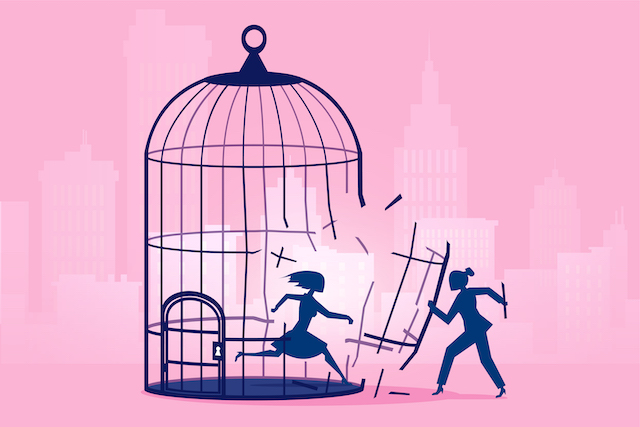
    I do know this:

    Strength is a personal measurement for a truly unique, subjective experience. It’s entirely up to you to decide what strong means for you.

    And I also know this…

    Strength comes from doing hard things. It comes from showing up despite the pain or fear and going through the struggle, the endurance, and then building on that, to keep going forward and upward.

    Strength comes from taking the time to notice and acknowledge what you have managed to do and accomplish until now. So much of the time we go through things without realizing what massive effort something took, and we minimize the entire experience because we only focus on the end result and not the process.

    Strength comes from paying close attention to the small but significant steps and wins and incremental gains along the way. Strength comes from tracking progress and celebrating it one tiny bit at a time.

    Strength comes from within—from moments of activating your highest faith and belief. Knowing why you do what you do, even when it’s not easy.

    Strength comes from aligning with your core values and living with integrity even when no one is watching, and you aren’t in the mood. When we connect to what truly matters to us, we are stronger. When we believe there is a bigger plan and are hopeful about an outcome, we feel stronger. Even if we don’t know why.

    Strength comes from without—by surrounding ourselves with people who lift us up and see our worth, even when we sometimes forget. It comes from choosing to envelop yourself with kindness, inspiration, motivation, and gratitude. It comes from selecting role models and learning from them. It comes from seeing ourselves through others’ eyes—especially those who see our greatness and light when all we see is our flaws, weaknesses, and shortcomings.
    Strength comes from grabbing lessons and blessings, often dressed up as awful mistakes and painful failures.

    Strength comes from collecting moments you are genuinely proud of and taking the time to truly recognize these events for what they are and what they enabled you to accomplish. Don’t overlook them. You get to use these strengths in countless ways and in other areas of your life as much as you want to.

    Strength comes from knowing yourself. As you begin to discover and unmask more of you, you get to make choices that honor more of you, and you get to live your purpose and be more of who you really are. When we know better, we do better.

    The strongest people I know have had insurmountable trials. They know what to say yes to and how to say no. They know how to be proud of themselves with humility and honesty. They know how to pick their circles wisely and accept help, compliments, and advice.

    The strongest people I know cry a lot and feel everything.

    The strongest people I know are the kindest.

    The strongest people I know have wells of inner resources that are invisible to the naked eye.

    The strongest people I know can say sorry and forgive others.

    The strongest people I know can forgive themselves.

    The strongest people I know fall down hard, and slowly, with every ounce of courage, bravery, and might, find a way to get back up again, battered, bruised, and aching.

    The strongest people I know have incredible hearts that expand wider with each hurdle.

    The strongest people I know have endured so much and yet still find their smile to light up the world for others.

    The strongest people I know teach me every single day how to try and be just a little bit stronger myself.

  • The Cages We Live In and What It Means to Be Free

    The Cages We Live In and What It Means to Be Free

    “Cages aren’t made or iron, they’re made of thoughts.” ~Unknown

    I recently read Glennon Doyle’s Untamed, and like many who have read it, I felt as if it had changed my life—but not because it made me think of all the things I was capable of (as was the case with many of friends who read it), but because it made me realize how capable I had already been.

    The book on the whole is beautiful and inspiring, but the part that stuck with me the most was the story about Tabitha, a beautiful cheetah that Glennon and her kids saw at a safari park and a lab named Minnie that had been raised alongside Tabitha, as her best friend, to help tame Tabitha.

    Glennon watched as Minnie sprinted out of her cage and chased a dirt pink bunny that was tied to a jeep.  Shortly after, Tabitha, who had been watching Minnie, ran out of her cage and chased the “dirty pink bunny” just like her best friend had just done.

    Born as a magnificent, wild beast, Tabitha had lost her wild by being caged. She had forgotten her own power, her own strength, her own identity, and had become tamed by watching her best friend. But remnants of Tabitha’s inner wild came back to life when she walked away from the pink bunny toward the perimeter of the fence that was keeping her caged in. The closer she was to the perimeter, the more fierce and regal Tabitha became.

    Glennon insightfully notes in the book that if a wild animal like a “cheetah can be tamed to forget her wild, certainly a woman can too.” And that’s when I wondered, had I also forgotten my own inner wild?  Was I spending my time trapped inside a cage when I could be pacing the perimeter instead?

    I beat myself up over that story for days while desperately trying to think of how I could break free of my metaphorical cage so I could find my way to the seemingly elusive perimeter that others seemed to have easily found and were already pacing.

    I questioned why I hadn’t worked harder, pushed further, and done more to create the life I truly wanted, especially when it became painfully clear that the one I was living didn’t fit that description.  And that’s when it suddenly hit me. Like a ton of bricks falling on me out of nowhere:

    I didn’t need to make my way to the perimeter. I was already there. Truth be told, I had been there for most of my life, and it was so familiar to me that I didn’t even notice it anymore.

    As I sat there in the midst of this comprehension, I looked back on my life and suddenly the steps to the perimeter all seemed to fall in place.

    When I fell in a bucket of boiling water at two years old and put aside my own discomfort to comfort my mother who had broken down at the sight of my burned body, I took a step towards the perimeter.

    When I moved to America at the age of seven and couldn’t understand the language and was instantly labeled as “stupid” but kept going anyway, refusing to let them define who I was, I took another step towards that perimeter.

    When I watched my younger sister die of an incurable illness and kept her light alive inside of me by recognizing the beauty of her life and not just the heartache of her death, I moved closer to the perimeter.

    When I said no to becoming a teacher or a doctor—an unfathomable and disgraceful choice for women of my culture during those times—I took another step toward the perimeter.

    When I refused an arranged marriage, again disgracing my family in the process, the perimeter was directly in my sight.

    By the time I took off for law school (much to my parents’ continuing dismay), the perimeter and I were practically face to face.

    For a while I stayed at the perimeter, quietly stalking my surroundings with the same pride and inner fierceness as the cheetah who inspired these ramblings. But I now realize I was never meant to stay at the perimeter—I was always meant to go beyond it.

    Until I did, I would remain trapped inside my own inner chaos. And the calm I was so desperately seeking would continue to evade me. That inner restlessness that just wouldn’t go away, that indescribable lack of fulfillment and the hollow feeling in the pit of my stomach… those were all signs that I was ready to move beyond the perimeter. I was ready to uncage more than just myself—I was ready to uncage my soul.

    That’s why I was repeatedly drawn back to certain people, programs, and even books. I was ready to free myself of all restrictions and for that matter, all perimeters.

    The process hasn’t been easy. And at times, it has been beyond lonely. But it has also been rewarding, deeply healing, and transformative at the same time. And perhaps most importantly of all, it has allowed me to understand that in one way or another, we are all here to break free of the cages that have encased most of us for the majority of our life.

    Some cages are imposed upon us by the thoughts and ideas of those around us, and other times we put ourselves into them, willingly. So we can avoid discomfort, pain, suffering, change, growth, and our own rebirth.

    Sometimes they can even be helpful, but other times they do nothing but hold us back. The steel cages often tell us who to be, where to live, what we “should” do for a living, how to behave, and even who to like or dislike.

    Often, the cages come in different colors, shapes, and sizes. Some are made of gold and filled with expensive toys and bribes to keep us from going outside of them.  Their allure is simply too hard to resist for some people, even though they are often accompanied by gold shackles.

    Others are sparkly and filled with all that glitters. The shine is so intense that their occupants don’t even know they’re in a cage. They’re so fixated with the glitter that they spend their entire lives confined inside and never even realize they’re no freer than the people they’ve been looking down on as being “trapped.”

    And of course, there are some who live in small, dark, and dingy cages that they desperately want to escape but dare not try to because they’re so convinced that it’s safer, easier, and more comfortable to just stay.

    Those are the people that are so afraid of their own power and the taste of true freedom that they probably wouldn’t leave even if the cage door was opened for them.

    And then there are the brave. Those that are truly courageous and have no desire to be confined by any cage or any limits. Those are the people who will do whatever it takes to break the cage so they can set themselves and all of humanity free.

    Those are the people who are roaming beyond the perimeter and have uncaged far more than their physical body—they have uncaged their very soul, and along with it, the many lifetimes of memories, wisdom, and truth it holds inside.

    Those are the people I want to run with. Those are the people I want to call my tribe. Those are the people that, when I meet them, I’ll know I have found my home.