Tag: control

  • The God I Lost, the One I Found, and the Faith That Changed Me

    The God I Lost, the One I Found, and the Faith That Changed Me

    “I searched for God and found only myself. I searched for myself and found only God.” ~Rumi

    There’s a particular kind of heartbreak that happens when you realize some of your prayers are going nowhere.

    There’s a painful silence that follows unanswered calls. Yet, despite the ache, I can still feel the pull to pray to the God outside of myself—that old reflex to place faith in something bigger, some invisible force in the sky, who, apparently, can make things happen magically here on Earth.

    But it doesn’t always go that way, does it?

    I prayed my cancer would go away. It didn’t.

    I prayed the world would heal from climate change. It didn’t.

    I prayed my business would make enough to live on. It didn’t.

    I prayed my book would reach thousands. Still hasn’t.

    I prayed for peace in the world. It’s getting worse.

    So, I stopped. Stopped praying. Stopped hoping in that way where my heart is wide open and a little desperate.

    It didn’t feel brave. It felt hollow. But in the silence that followed, something shifted within me. When the noise of asking subsided, a quieter truth emerged.

    For a long time, I thought my discomfort came from out there. From God. From other people. From difficult situations. Blaming something outside myself gave me a sense of control—a story to hold onto. But no matter how convincing that story was, the ache inside remained.

    It took time, but eventually I saw it: the root of my suffering wasn’t external at all. It was internal.

    When I finally stopped waiting for life to bend to my will and turned inward, I came face-to-face with something uncomfortable—my attachment to control.

    What I discovered was a mind conditioned to grasp, to fix, to be right, to judge, to compare, to push. And most of the time, that’s where the struggle began—when reality didn’t match my expectations. I’d get caught in loops of thought, unable to see clearly, tangled in ego and forgetting the essence of my being—my heart.

    The heart is where our whole, compassionate selves live. We feel it. We recognize what Howard Thurman called the sound of the genuine. That’s who we are—at our core.

    So, it’s not that I lost faith entirely. It’s that I relocated it. I remembered the genuine within.

    Now, I have faith that life will unfold as it will, and sometimes, that’s painful. Life doesn’t often match the visions we hold. It burns plans to the ground. It humbles. It disappoints.

    And still, I have faith.

    I have faith in the goodness of the human heart. I have faith that we can hold grief in one hand—the image of the life we imagined—and, with the other, steady ourselves enough to rise and take the next step forward.

    I have faith in our ability to choose compassion over entitlement. To sit with discomfort and still reach for the just response. To place our hand on our chest, close our eyes and choose to respond—not from the head, but from the heart.

    And maybe, just maybe, that’s what God actually is.

    Not some white-bearded man in the sky. Not a distant savior. But the part of us that knows how to return—not to the mind’s spirals, but to the body. To the breath. To the quiet pulse of the heart.

    What if we—all of us, even world leaders—stopped looking to the God outside and, instead, returned to the one within?

    Because the God within doesn’t need to be right. The God within doesn’t dominate or divide. The God within creates peace. Is peace.

    And maybe that’s the kind of faith we need now.

    Because when faith in something outside of us falls away, what’s left?

    We are.

  • The Power I Now Carry Because of My Illness

    The Power I Now Carry Because of My Illness

    “Whatever the present moment contains, accept it as if you had chosen it. Always work with it, not against it.” ~Eckhart Tolle

    For years, I thought strength meant pushing through. Getting on with it. Holding it together no matter what. Not showing weakness. Not needing help. Not slowing down.

    Even when I was diagnosed with a chronic illness, I wore that mindset like armor. I was determined not to let it define me—let alone derail me.

    But eventually, it did. Not because I was weak. But because I was human. And that was the beginning of a different kind of strength.

    The Diagnosis That Didn’t Fit My Story

    I was thirty-two when I was diagnosed with Crohn’s Disease. It’s a chronic inflammatory condition that can be painful, unpredictable, and exhausting. There is no cure.

    At the time, I had three young kids and a to-do list longer than my arm. I was busy, stretched thin, and moving fast—chasing achievement like it could protect me from everything uncertain.

    The diagnosis didn’t land like a crisis. It landed more like an inconvenience. I had no time for illness. No space for it. No story in which it belonged.

    I started medication, but the side effects were rough, and the results were inconsistent. I quickly became obsessed with finding the “right” diet, the “right” routine, the “right” alternative therapy to manage it all myself.

    Strength, Control, and the Problem with Hyper-Independence

    Looking back, I can see that control was my coping mechanism. Control over my body. Control over the narrative.

    I didn’t want to be “someone with a chronic illness.” I wanted to be someone who could handle a chronic illness and still perform at a high level. Someone who could live life on her own terms—without needing medication, or help, or rest.

    So when things stabilized a little, I made a quiet decision: I’d stop the medication.

    I told myself I could manage it naturally. I adjusted my diet, doubled down on my routines, tried to control every variable. But inevitably, flare-ups would return. And when they did, I’d end up back on steroids. They worked—but made me manic. So I’d taper off. The cycle continued.

    Somewhere in the midst of this, we moved countries for my husband’s job. I left behind my career ambitions, my social network, and my medical team. I started to quietly adapt to a life of background symptoms: pain, exhaustion, urgency.

    I didn’t talk about it. I didn’t cancel things unless I absolutely had to. And when I did, I worried people thought I was flaky or rude or just didn’t care.

    In truth, I was trying so hard to be “fine” that I was hurting myself.

    The Turning Point: Meditation & Stillness

    Eventually, I got tired.

    Not just physically—but emotionally, spiritually, existentially. Tired of the constant vigilance. Tired of trying to outrun my own body. Tired of believing that if I just tried harder, I could conquer this thing on sheer willpower.

    I had built an identity around being capable, reliable, strong. Hyper-independent. I didn’t ask for help. I didn’t want to need anyone—or anything, especially not medication. Illness felt like weakness. And weakness was unacceptable.

    But that relentless self-sufficiency didn’t save me. It wore me down.

    That’s when I found mindfulness. Not as a fix—but as a kind of quiet company. A way of softening the grip I had on control. A way of meeting myself as I actually was, not as I thought I should be.

    At first, I treated mindfulness the way I treated everything else: as something to master. But over time, the practice worked on me. It started dismantling the war I had declared on my body. I began to see: my body wasn’t failing me. It was in conversation with me. And I had never truly listened.

    That changed everything.

    Mindfulness helped me stop seeing my illness as something to battle and started teaching me how to respond—with self-compassion instead of control. With care instead of critique.

    The diagnosis was still there. The symptoms came and went. But something in me had started to soften. I was no longer treating every flare-up as a personal failure or a crisis to conquer. The illness was real, but maybe it didn’t have to be a war. I wasn’t fully at peace, but I was learning to pay attention. And then came the call that changed everything.

    The Wake-Up Call That Brought It All Home

    It had been more than five years since my last colonoscopy, and based on my medical history, my primary care doctor recommended I schedule one. I agreed, of course. I felt fine—strong, even. I was training on the treadmill at home for an upcoming marathon, proud of what my body could still do.

    The procedure itself felt routine. But one evening shortly afterward, around 8 p.m., the phone rang.

    It was the doctor who had performed the colonoscopy—calling me personally.

    He didn’t sound casual.

    He told me I was in trouble.

    If I didn’t get on medication right away, my condition could worsen dramatically—and start impacting other systems in my body, even my eyesight.

    I was horrified. And humbled.

    This wasn’t something I could outrun. This wasn’t something I could discipline away. This was my body, urgently asking to be heard.

    Letting Illness Be a Messenger, not a Failure

    I got back on medication. This time, the right kind. And I committed to it—not from a place of defeat, but from a deeper alignment with care.

    That was almost two years ago. Since then, my body has slowly begun to heal. My most recent colonoscopy—early this year—showed dramatic improvement. The inflammation is down. The symptoms are manageable. I’m tolerating the medication well, even with the added complexity of reactivated TB, a side effect of the immunosuppression that I’m now treating with another course of medication.

    It’s not perfect. It’s not linear. But it’s honest. It’s mine.

    And most importantly, I’m no longer at war with my body. I’ve stopped bracing against what is and started responding with care, clarity, and compassion.

    Because real strength isn’t pushing through at all costs.

    It’s listening. It’s allowing. It’s staying with yourself, even when it’s hard.

    Mindfulness didn’t fix everything. But it became an ally—steady and unshakable.

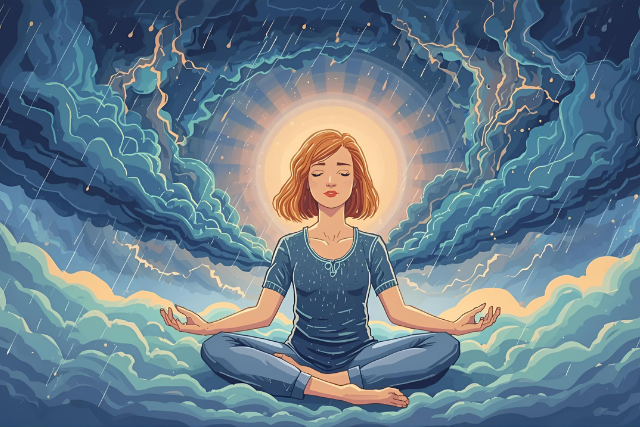
    It taught me I can’t control the storm, but I can anchor myself within it. And in that anchoring, I found something I never expected: power.

    Not the power of force, but the quiet, unwavering power of presence. Of meeting life on its terms.
    Of knowing I can be with whatever comes—and still be whole.

    That’s the power I carry now. Not in spite of illness. But shaped by it.

  • When You Stop Forcing, Life Flows

    When You Stop Forcing, Life Flows

    “You don’t have to force the flow—sometimes your only job is to soften and let go.” ~Unknown

    For most of my life, I was obsessed with getting everything right. Planning. Controlling. Anticipating every outcome so I wouldn’t be caught off guard. I saw life as a kind of puzzle: if I just made the right moves in the right order, I’d get what I wanted. Peace, success, love.

    But life doesn’t work that way.

    The more I tried to control it, the more I felt out of alignment. I would burn out trying to make things happen. When something went wrong, I blamed myself for not anticipating it. I couldn’t relax because I was always tightening the reins, trying to steer the unknown.

    Then one day, something cracked.

    It was the winter of 2021. I was staying in a quiet village in southern Portugal, trying to piece my life back together after a painful breakup and the collapse of a startup I had poured years into. I’d gone there thinking solitude and fresh air would help me reset.

    But nothing felt right.

    I couldn’t focus. I couldn’t meditate. I couldn’t even enjoy the ocean—something that once brought me pure joy. Instead of peace, I felt stuck and overwhelmed. My mind replayed every decision I’d made over the past few years like a courtroom drama. “If only you’d done this.” “You should have seen that coming.” “You’ve ruined your shot.”

    I sat on the beach one evening as the sun went down, feeling completely defeated. I remember watching the waves crash rhythmically against the rocks. They didn’t care about me or my mistakes. They weren’t rushing or apologizing. They were just… doing their thing.

    That’s when it hit me.

    Nature doesn’t force anything. A wave doesn’t strive to be taller. A tree doesn’t try to grow faster. They exist in a kind of trust—a natural cooperation with life. And somehow, despite all that ease, they thrive.

    What if I’m the one disrupting my own flow by trying to control everything?

    It wasn’t a lightning bolt. It was more like a soft whisper inside. But something shifted.

    I started asking myself a new question each morning: “What would happen today if I didn’t try to control anything?”

    I didn’t have to force myself to do nothing. I still worked, moved, made decisions. But I tried to stay present rather than five steps ahead. I let myself feel uncertain without reaching for solutions right away. I listened more—to myself, to life, to the quiet.

    And over time, I noticed something strange. My anxiety started to fade—not all at once, but like a fog lifting. I stopped catastrophizing every decision. I felt a little more at peace, even if nothing around me had changed.

    That’s when I began learning what I now call divine flow.

    To me, divine flow is the current of life that we can either resist or surrender to. It’s not passive. It’s not about “doing nothing” or abandoning effort. It’s about cooperating with something deeper—something beyond just logic or planning.

    It’s learning to recognize that there are seasons for pushing and seasons for resting. That sometimes what looks like a setback is actually an invitation to realign. That clarity often comes when you stop chasing it.

    There’s a trust that builds when you live this way.

    You realize you don’t need to have everything figured out. You can still move forward with intention—but without gripping so tightly.

    Since then, I’ve built a life more aligned with who I am. I started creating wellness events focused on community and connection rather than perfection. I met people who inspired me simply by being themselves. I even learned to show up vulnerably, like I’m doing now, without needing everything to be polished or impressive.

    I still have moments where I fall back into old habits—where I try to force outcomes or fix everything too quickly. But I catch myself faster now. I’ve learned that tension is usually a sign that I’m out of the flow.

    If you’re in a space where things feel hard or disconnected, here are a few gentle invitations that helped me reconnect with the flow:

    • Let yourself feel lost. You don’t need to rush to “figure it out.” Sometimes the most fertile growth happens in the spaces where we allow ourselves to feel confused and uncertain.
    • Listen more than you analyze. Instead of trying to force answers, sit with your questions. Journal. Walk. Let thoughts come without needing to trap them.
    • Release the timeline. Things don’t have to happen on your schedule. You’re not late. You’re not behind. You’re just unfolding.
    • Ask for signs—but don’t cling to them. Sometimes life will whisper directions when you’re quiet enough to hear. But the key is to listen without expectation or pressure.
    • Come back to your breath. When your mind spirals, anchor into the present. One breath. One step. One moment.

    We can’t always choose what happens to us, but we can choose how we meet life. With resistance—or with curiosity. With fear—or with trust.

    These days, I still sit by the ocean when I can. I still watch the waves. I remind myself that there’s a rhythm beneath everything—and that my only real job is to stay soft enough to feel it.

    Maybe that’s all we ever needed to do.

  • Why Holding Space Is Better Than Gripping for Control

    Why Holding Space Is Better Than Gripping for Control

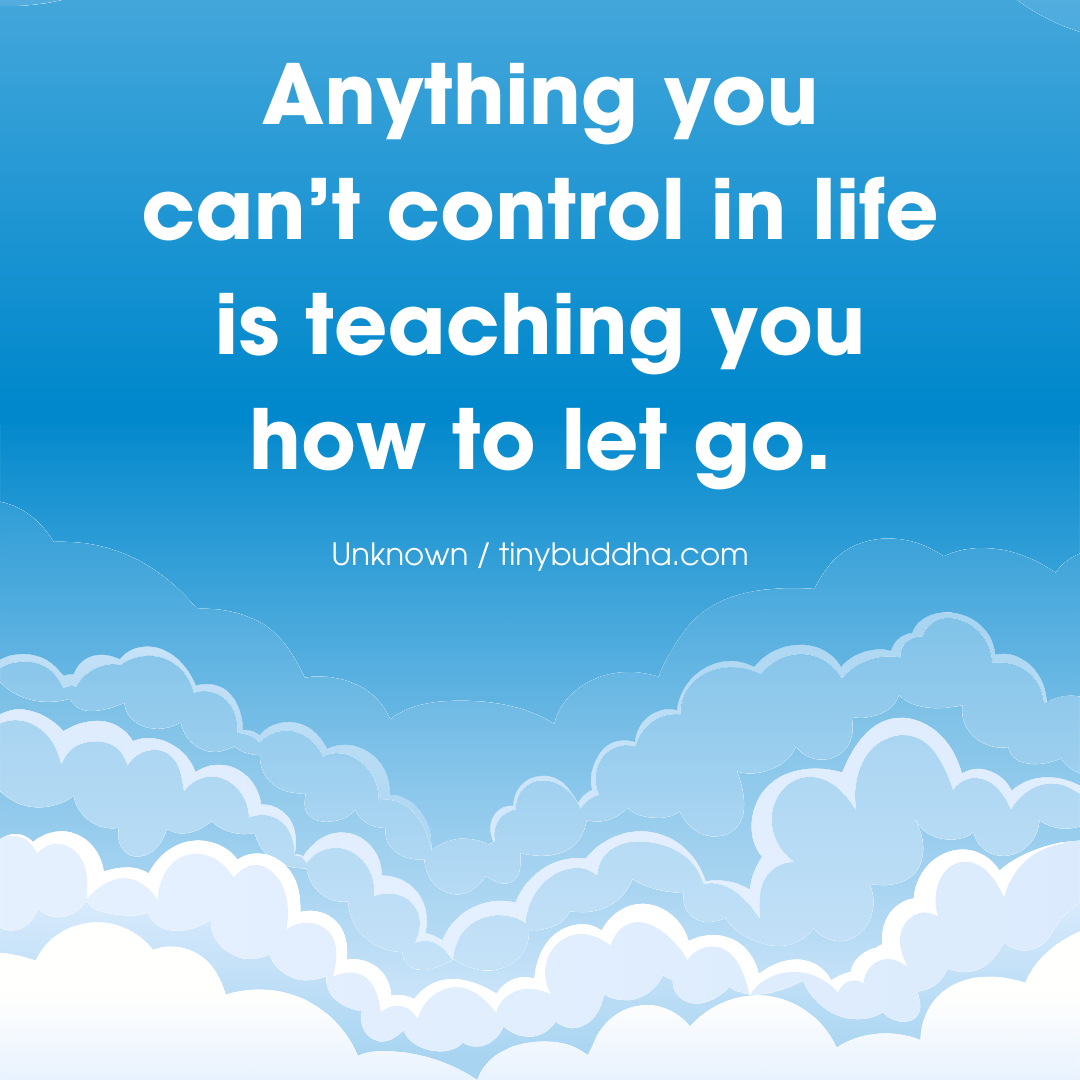
    “Anything you can’t control is teaching you how to to let go.” ~Unknown

    There’s a story I read to my children, an old piece of African folklore. In the tale, a clever jackal outwits a mighty lion by convincing him that the rock ledge above them is about to collapse. The lion, believing the jackal’s warning, uses all his strength to push up against the rock, holding it in place.

    The jackal promises to return with a branch to support the ledge, but instead, he makes his escape. Hours later, exhausted, the lion finally collapses, throwing his paws over his head in fear—only to realize the rock was never going to fall. It had been holding itself up all along.

    By believing the jackal’s story, the lion not only lost his chance at a meal but also drained himself completely. His muscles trembled, his breath came ragged, his energy was spent. The rock had never needed his strength at all.

    I thought about this story the other day—not while reading to my children, but in a moment of quiet realization. A wave of exhaustion and relief hit me. I could feel the weight dropping from my shoulders, as if I were lowering my own arms from the rock ledge, only just realizing it had never needed my help.

    For years, I have tried to hold up things that were never mine to carry—relationships, outcomes, even the way the world moves. Intellectually, I’ve known for a while that control and perfectionism are two traits I need to release in order to heal and move forward. And yet, the need for control is so deeply ingrained that it slips in sideways, undetected, just when I think I’ve cracked the code.

    Take my writing, for example. It has always been driven by twin needs: first, to express myself, to shape my creativity and voice; but second, to make a difference—to shift the broader story unfolding on the global stage. Underpinning this is the belief that if I work hard enough, craft my words carefully enough, maybe I can influence something bigger than myself.

    But as I pictured the lion straining against the rock, I saw myself in him—struggling to change the world, to make an impact. And just like the rock ledge, the world moves as it always has, with or without my effort. No amount of willpower will shift it.

    At first, this realization felt disheartening. But then I saw it for what it was: an opportunity. A chance to redirect my energy toward what I can control—my own choices, my own growth—rather than exhausting myself trying to push against something that will never move.

    The same is true in my relationships. When I see family or friends struggle, my first impulse is to jump in and fix it for them. If I can’t fix it, I tell them how they should fix it. And when they don’t, I wait impatiently for them to act on my plan.

    Acceptance has always felt like forfeit, like giving in. But real love isn’t about control. It isn’t about making someone else change. If anything, my pushing only gave others something to resist—an excuse to avoid looking inward and making the change themselves.

    Just the other day, my son James banged his head. What followed was typical for him—rather than running to me for comfort like his sisters, he ran away crying, shouting, “Go away!” when I approached. It broke my heart.

    I didn’t listen. I inched closer, swatting away his flailing limbs, trying to soothe, trying to help, trying to fix. But the more I reached for him, the more he recoiled. My love felt like pursuit—like pushing, pulling, prodding. I was trying to make things better when what he needed was for me to simply be there, steady and patient, until he was ready to come back on his own.

    It’s hard to let go. Hard to accept that I can’t protect, guide, and mold everything as a parent, a partner, a daughter, a friend. But even a four-year-old sometimes needs the space to find his own way through. Sometimes, the best—the only—thing I can do is stop pushing and hold the space for him to find himself.

    Surrender is not passivity. Letting go of control doesn’t mean doing nothing—it means shifting my focus inward, toward what I can change: myself, my choices, my own growth. It means holding space for those I love, trusting that they will find their own way.

    The message was driven home again in the quiet of my dreams. I saw a large and beautiful rainbow-colored ring—bold, unconventional, unlike the traditional platinum engagement band. It shimmered with something deeper: a different kind of love, one unconstrained by rigid expectations.

    The next morning, as if to affirm the message, James’ tiny hand slipped into mine in the kitchen. With a delighted giggle, he rolled a bright, multi-colored playdough ring onto my finger.

    I looked at him, at his joy, at his offering. And I understood.

    Love isn’t about clinging, controlling, or shaping something into what we think it should be. Love is flexible. Love is colorful. Love is personal. And sometimes, love simply holds space, waiting patiently for the moment we are ready to return to it.

    This realization carries a tinge of sadness. How many years have I spent striving to move boulders that were never mine to shift?

    But beyond the sadness, there is also joy—deep, unshakable joy—in realizing I am free. Relief in knowing I don’t have to hold up the world, my friends, or my family.

    And peace—at last, within reach—in trusting that life is unfolding exactly as it’s meant to, as I slowly, gently, let go.

  • The Silent Struggle: When Saying “No” Is Not That Simple

    The Silent Struggle: When Saying “No” Is Not That Simple

    “The first step toward change is awareness. The second step is acceptance.” ~Nathaniel Branden

    I vividly recall a morning when my son was just five years old. My husband wanted to leave the country we were living in again, this time to escape what he believed was the imminent collapse of society due to COVID.

    After years of constant relocations, I had finally started to build a community of friends, my son was settled in school, and I was beginning to feel some sense of normalcy. But he couldn’t stand it. My growing independence seemed to threaten him, and I could sense his unease.

    His anxiety about the constantly shifting COVID situation only seemed to intensify his need for control. Approaching me in the kitchen with an intense expression, he declared, “We need to leave the country now, before they close the borders for good,” his voice sharp and urgent. I knew that his desire to relocate us to a non-English-speaking country would not only deepen my isolation but also render me wholly dependent on him once more.

    “No, I don’t want to move again,” I responded cautiously. My heart raced as I braced for his reaction. I had experienced this countless times before, moments where a simple “no” would set off a storm.

    Sure enough, the guilt-tripping began immediately. “You care more about your friends than your own family,” he snarled, his words filled with contempt. “You’re just selfish, and you’re too scared to see the truth.” He knew exactly how to manipulate my emotions and to make me feel small.

    For weeks, he harassed me about the move, following me around the house and bombarding me with articles on “government control.” Eventually, he involved our son in the manipulation. “Wouldn’t you love to move to a warmer country with lots of beaches?” he asked our child. “Tell Mummy how much you want to go.”

    The High Cost of “No”

    The cost of saying “no” was always too high. It wasn’t just the exhaustion of defending my decisions, but the way he would target my self-worth. He accused me of being weak and too scared to live a full life, and of harming our son by denying him the experiences he deemed essential for his development.

    “If you don’t agree, I’ll take our son and go without you,” he threatened, leaving me feeling cornered. There was no room for compromise—only submission.

    In these moments, my identity became tied to his criticisms, and I began to internalize the belief that my needs and desires were unworthy of consideration. My self-worth eroded with every encounter, and I started to question whether I deserved the stability and independence I longed for.

    The Silent Battle of Coercive Control

    At the time, I didn’t realize I was living in a situation defined by coercive control. This form of abuse is often subtle, insidious, and far-reaching, characterized by patterns of manipulation designed to strip away a victim’s autonomy and self-worth.

    Coercive control doesn’t always manifest through physical violence, making it difficult for victims to recognize it as abuse. Instead, it erodes your personal freedom, your ability to make decisions, and ultimately, your sense of self.

    Saying “no” in a coercive relationship feels like striking a match near gasoline. The abuser thrives on control, and when that control is threatened, they will go to any lengths to regain it. For me, that meant enduring relentless verbal abuse, where my husband attacked my intelligence, character, and mothering.

    When insults didn’t work, he turned to emotional manipulation, saying things like, “I just want what’s best for our family. Why are you so against that?” When emotional appeals failed, he reminded me of his financial power, ensuring I was aware of my complete dependence on him.

    I used to think if I could just explain my reasoning clearly enough, he would understand. But abusers don’t operate on logic or empathy—they operate on power and control. My refusal wasn’t just an inconvenience to him; it was a direct challenge to his authority.

    When “No” Feels Impossible

    What many don’t understand is that saying “no” to an abuser isn’t just difficult—it’s dangerous. While my husband never physically harmed me, the psychological torment was equally devastating. Saying “no” was never worth the emotional fallout—the days of walking on eggshells, the cold stares, and the endless nights of lectures designed to break me down.

    As domestic abuse expert Evan Stark explains, “Coercive control is the perpetrator establishing in the mind of the victim the price of her resistance.” In my case, every “no” brought with it a whirlwind of accusations, guilt, and threats. His constant barrage of manipulation made defiance feel like an insurmountable risk, leading me to internalize the belief that my resistance would only result in greater harm.

    Reclaiming My Power

    It took me years to understand that saying “no” in a coercive relationship is never just about a single decision—it’s about power. Every time I caved, I surrendered a little more of my autonomy. But everything shifted when I faced the prospect of moving countries again. Something clicked. I began reaching out to friends and family—something I had been too afraid to do before. I started to recognize the patterns of abuse that had controlled my life.

    The turning point came when I started seeing a therapist. She helped me untangle the manipulation I had been living under and see my situation for what it was. For the first time, I understood the depth of the emotional toll it was taking on me. It became increasingly clear that I couldn’t continue in an environment where my needs were consistently disregarded and my well-being compromised.

    Ultimately, I made the decision to leave my abusive marriage. It wasn’t easy, but I realized that leaving was the only way to prioritize my safety and reclaim my life. The thought of remaining in a situation that perpetuated my isolation and dependence became unbearable, and I knew that reclaiming my freedom would start with that crucial decision.

    Lessons for Those Still in the Fight

    I remember the countless times I thought, “If I just avoid confrontation, things will be okay.” I often complied quietly, not because I agreed but because it felt safer to maintain the peace. But over time, I realized that this approach wasn’t just eroding my autonomy—it was eroding my self-worth. If you find yourself in a similar situation, know that taking small steps toward regaining your autonomy is possible.

    Cultivating internal resilience is one of the first ways to begin. Even if saying “no” out loud feels too dangerous, you can start by protecting yourself emotionally. When my husband belittled me, I would mentally counter his words by affirming my worth, telling myself, “I know my value, and this isn’t true.” Over time, I began separating his harmful words from my inner truth and reclaiming my sense of self from within.

    You might also consider setting small, manageable boundaries. Look for moments where you can say “no” to minor requests that are unlikely to provoke a major reaction. It doesn’t have to be about asserting yourself in every situation. Start with boundaries that feel comfortable and build from there. It’s not about winning every battle—it’s about taking back the power that’s been taken from you, one step at a time.

    When It Becomes a Matter of Survival

    The truth is, when saying “no” feels unsafe, it may be time to question whether staying in the relationship is truly an option. If asserting even the smallest boundaries leads to verbal attacks or threats, your emotional and psychological safety may be at risk. I know how easy it is to convince yourself that the abuse is manageable—that by avoiding certain triggers, you can keep the peace. But here’s what I learned: When you can’t safely say “no,” it’s not about conflict anymore—it’s about survival.

    If you find yourself feeling increasingly anxious or afraid, it might be time to consider leaving. I know the decision to leave can feel overwhelming, but reclaiming your autonomy is vital to protecting your mental health. Sometimes, leaving isn’t an immediate, all-or-nothing decision—it’s a gradual process. Gathering resources, building a support network, and planning your exit carefully can be small but essential acts of self-care.

    Ultimately, the journey to reclaim your freedom starts with recognizing your worth. The first step is acknowledging that you deserve more than a life lived in fear or doubt. For me, it wasn’t about trying to fix the relationship or hoping my husband would change. It was about prioritizing myself and my child.

    You deserve to feel safe, valued, and loved—by yourself and by others. This realization may not come overnight, but accepting the reality of your situation, even when it’s painful, is the beginning of true freedom and self-worth.

  • How I Turned My Pain and Anxiety into Personal Growth

    How I Turned My Pain and Anxiety into Personal Growth

    “The only way out is through.” ~Robert Frost

    When I reflect on the past fifteen years of my life, I sometimes joke about my struggles to lighten the weight of what I’ve endured. “What struggle don’t I have?” I’d say, laughing, but beneath that humor is a real story of pain, burnout, and learning to rebuild myself, piece by piece.

    I faced chronic pain, anxiety, emotional abuse, two burnouts, long COVID, and emotional eating—all before I hit my thirties. It’s been a long journey, and while I still have days where I’m not as happy as I want to be, I’m getting better every day.

    I was born and raised in the Netherlands, quite literally in the home where I was born. I’m now twenty-seven and have spent most of my life in this same place.

    Growing up, I had what you’d call a “normal” childhood until I turned twelve and began experiencing chronic pain—a constant burning sensation in my abdomen that no doctor could initially explain. For years, I pushed through it, unwilling to be the person people pitied or labeled as “sick.”

    This pain was eventually diagnosed as ACNES (Anterior Cutaneous Nerve Entrapment Syndrome), a condition where a nerve in my stomach was trapped, causing me constant pain. For years, it was a mystery, and it wasn’t until I was seventeen that an injection finally brought me relief, almost like a miracle. But while this should have been a breakthrough, the universe had other plans.

    Around the same time, I developed severe anxiety and panic attacks, triggered by an emotionally unhealthy relationship I’d been in since I was fourteen. The boy who had once been my best friend slowly became someone who contributed to my anxiety, often leaving me stranded when I needed support most.

    By the time I was nineteen, I had burned out completely. My anxiety was overwhelming. I was juggling a full-time internship and school while trying to please a boyfriend who didn’t understand or care about my emotional needs. My body gave in. I had to quit my internship, forcing me to repeat a year of school. This felt like an enormous failure, especially since all my friends had moved on without me.

    At my lowest, I often wondered if I could keep going. I cried endlessly, I felt isolated, and I was consumed by anxiety. My parents were my lifeline, but even they couldn’t fully pull me out of the depths of what I was feeling.

    For years, I stayed in that relationship, convinced that my unhappiness was somehow my fault. But eventually, I became numb to the chaos. When we finally broke up, I felt a wave of relief I hadn’t known was possible.

    Yet, the struggle didn’t end there. I managed to graduate with my HR degree and even found a job I enjoyed. Then ACNES returned with a vengeance.

    I spent two years practically bedridden, unable to work, exercise, or socialize. I turned to food for comfort, which led to weight gain, further chipping away at my self-esteem. And just when I thought it couldn’t get worse, I caught COVID at the end of 2020. Long COVID added brain fog, exhaustion, and concentration problems to my list of challenges.

    But in the midst of all this, there was a turning point. About two years ago, during a particularly rough throat infection, I broke down. I couldn’t take the suffering anymore. As I cried, a realization hit me: I couldn’t control what was happening to me, but I could control how I responded.

    That moment sparked a change in me. I began taking small steps to regain control over my life, starting with my mindset.

    I began reading more about mindset and habit change. Books like Atomic Habits by James Clear and Good Vibes, Good Life by Vex King helped me see that I had the power to shape my own reality through my thoughts and actions.

    I sought out therapy and started working with a therapist who reinforced that I was the only one responsible for my happiness.

    I began making conscious decisions to take care of myself, even in small ways.

    I also started implementing routines that helped anchor me. Each morning, I wake up at the same time, make my bed, do some light skincare, and journal. It sounds simple, but these small habits have helped me feel more in control, even when my health is unpredictable.

    That said, I’m not here to advocate for any one-size-fits-all solution. I tried antidepressants when my anxiety was at its worst, and it was a good decision for me at the time. But what works for one person may not work for another. The key is to stay open to your options and trust your instincts.

    Long COVID, ACNES, and anxiety are still part of my life, and I’m still working on losing the weight I gained during those difficult years. But I’m learning to be kinder to myself and take things one step at a time. I’ve learned that there’s no quick fix for deep-seated pain—physical or emotional—but there are ways to make life more manageable.

    One of the most important lessons I’ve learned is the value of self-worth. For years, I didn’t believe I deserved better than what I had, whether that was in relationships, my career, or how I treated myself. I had to remind myself daily that I was worthy of love, respect, and happiness. I used affirmations on sticky notes, mood boards, and even as my phone background—anything that would remind me of my worth when I felt down.

    I also learned to prioritize rest and recognize when I needed a break. Especially with long COVID, I’ve had to listen to my body and respect its limits. I created a list of small, manageable tasks I could do when my energy was low, like organizing a drawer or dusting a room. These small actions helped me feel productive, even on days when I couldn’t do much.

    It’s also worth mentioning that having a solid support system can make all the difference. I’m fortunate to have incredibly supportive parents and two close friends who I can open up to without fear of judgment. Sharing my struggles with them has been healing in itself, even though I still hesitate to be vulnerable with others.

    If I could leave you with one piece of advice, it would be this: You are your greatest advocate. You are responsible for your well-being, and that means setting boundaries, prioritizing your mental and physical health, and not settling for less than you deserve. You’re worth the effort it takes to care for yourself properly.

    As I continue to rebuild my life, I’ve started to share more of my experiences online through my personal growth site. I was once hesitant to be so open, but now I see the value in sharing my story. If my journey can help even one person feel less alone or inspire them to take action in their own life, then it’s worth it.

    Ultimately, life will always throw challenges our way. We can’t control everything, but we can control how we respond. And sometimes, that’s enough.

  • The Subtle (Yet Huge) Perspective Shift That Changed My Life

    The Subtle (Yet Huge) Perspective Shift That Changed My Life

    “Dear self: Don’t get so worked up over things you can’t change or people you can’t change. It’s not worth the anger buildup or the heartache. Control only what you can. Let go. Love me.” ~Unknown

    When I was furloughed from work back in the early months of 2020, I suddenly found myself with more time on my hands than I knew what to do with. I realized it was the freest time I’d had since I was a child on my summer holidays.

    But that Covid-related break was much longer than six weeks; it was three long months. The world felt as if it were in limbo. What was going to happen? Was everything going to change forever? Would I go back to work at my desk like before?

    I had no idea. Everything ground to a halt.

    After the first few days of distracting myself by binge-watching TV shows and playing video games, I was suddenly left with my thoughts and far more time to think than I was comfortable with.

    The sudden stop in momentum forced me to think about where I was in life. I’d been riding that wave momentum for fifteen years, never really feeling as if I’d ever stopped to face where I was in my life or where I was going.

    I looked around me and noticed I’d been stressed for a long time, and I’d put on twenty-two pounds of weight. I’d stopped exercising, and my diet was making me feel sluggish and tired. My life had become working, sitting, and eating junk.

    It hadn’t always been that way, though. Between the ages of fourteen and twenty-three, I was active in the gym, I watched what I ate, and I looked after myself.

    The years had taken their toll on me. I had become someone I didn’t recognize.

    I was suddenly so anxious about the future, worrying about my health and money and whether I would ever be able to own my own place or reach the heights in my career that would make me proud of myself.

    I felt trapped, as if suddenly seeing my true position in life for the first time, and that made me feel depressed.

    This period in my life taught me that too much thinking isn’t good. It’s not particularly helpful. What does help? Action, movement, and forward momentum.

    But I didn’t want to go back to the old momentum; I wanted a more mindful one, one that I felt more in control of. I learned that if you don’t happen to life, life will happen to you.

    My Lightbulb Moment

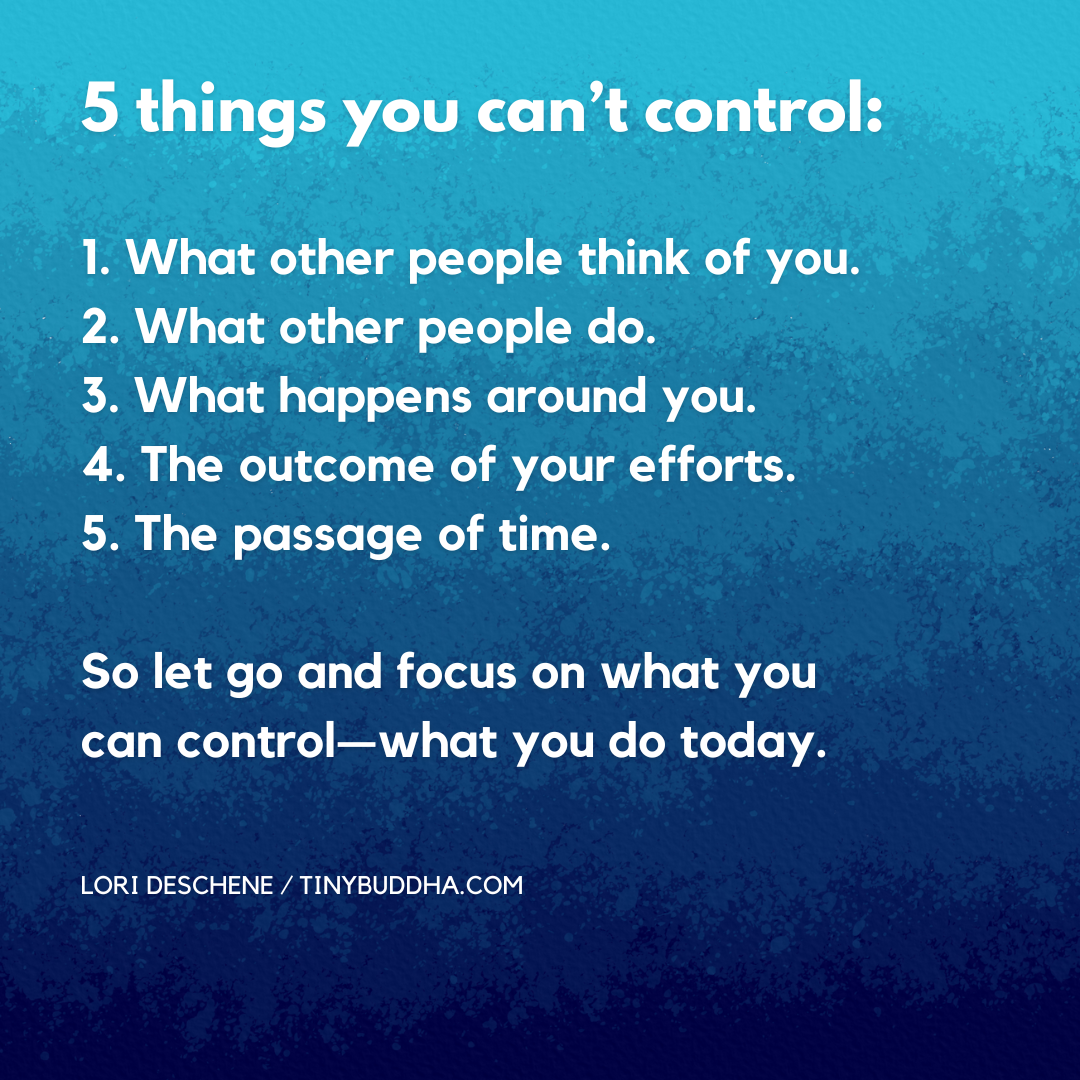
    The one subtle (yet huge) perspective shift was this: There are things within my control and things that are not. I can influence the things out of my control somewhat, but my time is much better spent focusing on the things I am in control of.

    I am not in control of everything that happens. There are simply too many variables at play in my life.

    I realized that much of my anxiety was tied to things I couldn’t control at all. And the time spent worrying was stealing from what I could actually change and control.

    So I began to outline the things that I could control, and I think this is a healthy exercise for anyone.

    It went something like this:

    • How much I exercise
    • The type of exercise I do
    • What I eat
    • When I eat
    • What time I go to bed
    • What information I allow myself to consume
    • How much time I spend watching TV
    • The people I spend my time with
    • How I decide to react to something

    The things I could not control were:

    • How long the pandemic would last
    • What other people think of me
    • My genetics
    • If something happens to someone I love
    • The rainy days that make me feel low
    • How others behave and act

    And the list went on and on. The things that were in my circle of control were the small yet important habits I had each day. These were things I could change.

    So I began to think about what I could do myself to improve my life, one tiny step at a time.

    I was fortunate enough to have access to fresh foods, so I looked up some healthy recipes for lunches and dinners. I made those meals over and over again for weeks. I felt lighter, lost a few pounds, and had more energy, along with a new appreciation for nutrition.

    I bought a cheap exercise bike from a seller online. I rode that thing consistently, three times a week for months, and felt my legs become stronger. I also learned to enjoy the sensation of my heart pumping faster as I worked harder.

    I began to write more about my experiences and reached out to others. I found likeminded people who were feeling the same as me, and it reminded me that I wasn’t on my own.

    I stopped watching the news as much to give myself a break from the chaos of the outside world so I could focus on my own world.

    I eventually stopped going on social media and spent that time researching and listening to mind-expanding podcasts that offered me new perspectives.

    All of these lifestyle changes made me feel good. They made me feel much better in my body and mind.

    Making These Habits Stick

    These habits and routines changed my life. But I had all the time in the world to keep them up. After all, I had nothing else to do with my time except spend it with my family or stare at the walls. The real change would be making them a habit over time.

    And sure enough, the world began to head back to the way it was before.

    Before I knew it, I was asked to work from home. My work gave me a laptop and told me I would be working Monday to Friday once again from the comfort of my kitchen table. This, in itself, was anxiety-inducing.

    I felt blessed to still have a job, yet I had gotten so used to my new healthy habits that I also suddenly felt that dedicated time was threatened.

    Would I be able to keep my healthy lifestyle going while working a traditional job?

    And then it dawned on me that the real challenge we all have is making the most of the things we can control while we are preoccupied and sometimes overwhelmed by the daily hustle and bustle of life.

    We all know what is good for us, but there are so many things that we have to deal with and think about that it doesn’t take much to tip us back into bad habits.

    One stressful day can cause us to go home and binge on junk food. One stressful morning can cause us to go and grab a ready meal instead of packing our healthy lunch. One hectic week makes us feel too tired to exercise.

    Fast-forward three years, and I’m back in the office, back to getting up at 6.30 a.m. and sitting in traffic. Back to having less money and back to being tired after work and not so motivated to exercise.

    This was the real challenge—keeping perspective and a firm hand on what I could control among the increased noise of life.

    But it’s okay to have less time. You and I have to work, and many of us have family to take care of. We have responsibilities and things we cannot control, but we should never forget about ourselves amongst it all.

    Take care of yourself. Make a list of what you can control and what you can’t. Figure out the gaps in your day—the free time where you can do things that nudge you closer to where you want to be.

    Start small; go for a ten-minute walk once a week before you head off to work.

    Change one meal a week for something new when you have half an hour to cook something healthy.

    Look at your daily screen time and become mindful of how much time you spend scrolling. Cut that back and do something else.

    Do ten push-ups in the evenings. Notice over time if you feel stronger.

    Write 1,000 words once a week.

    Practice mindfulness when you’re feeling stressed.

    Notice how capable you are of changing your life through small, regular actions. You truly are more capable than you realize as you sit here reading this.

    You likely won’t see much change at first, but that’s okay. Changing things in your life is difficult, and it requires a certain degree of trust in the process until you see results.

    Although life is pretty much back to how it was five years ago, I’ve learned a lot. A difficult situation that made me feel anxious and depressed at first gradually helped me grow. It helped me realize that I am worth taking care of. I don’t need to mindlessly stumble through life if I choose not to.

    While life can be hectic, some things will always be within my control if I deem them important enough.

    I can intervene when I need to. I can make the things I can control positive. And when I let go of the things I can’t control, I have more space to grow.

  • How to Embrace the Glorious Mess of Everyday Life

    How to Embrace the Glorious Mess of Everyday Life

    “Embrace the glorious mess that you are.” ~Elizabeth Gilbert

    Let’s begin with a simple fact: life is inherently messy. Despite our best efforts to organize, control, and perfect, life has a way of surprising us and tossing our neatly folded plans into disarray. I used to think that if I worked hard enough, if I was good enough, if I did everything right, I could keep the chaos at bay. But life, as it turns out, doesn’t work that way.

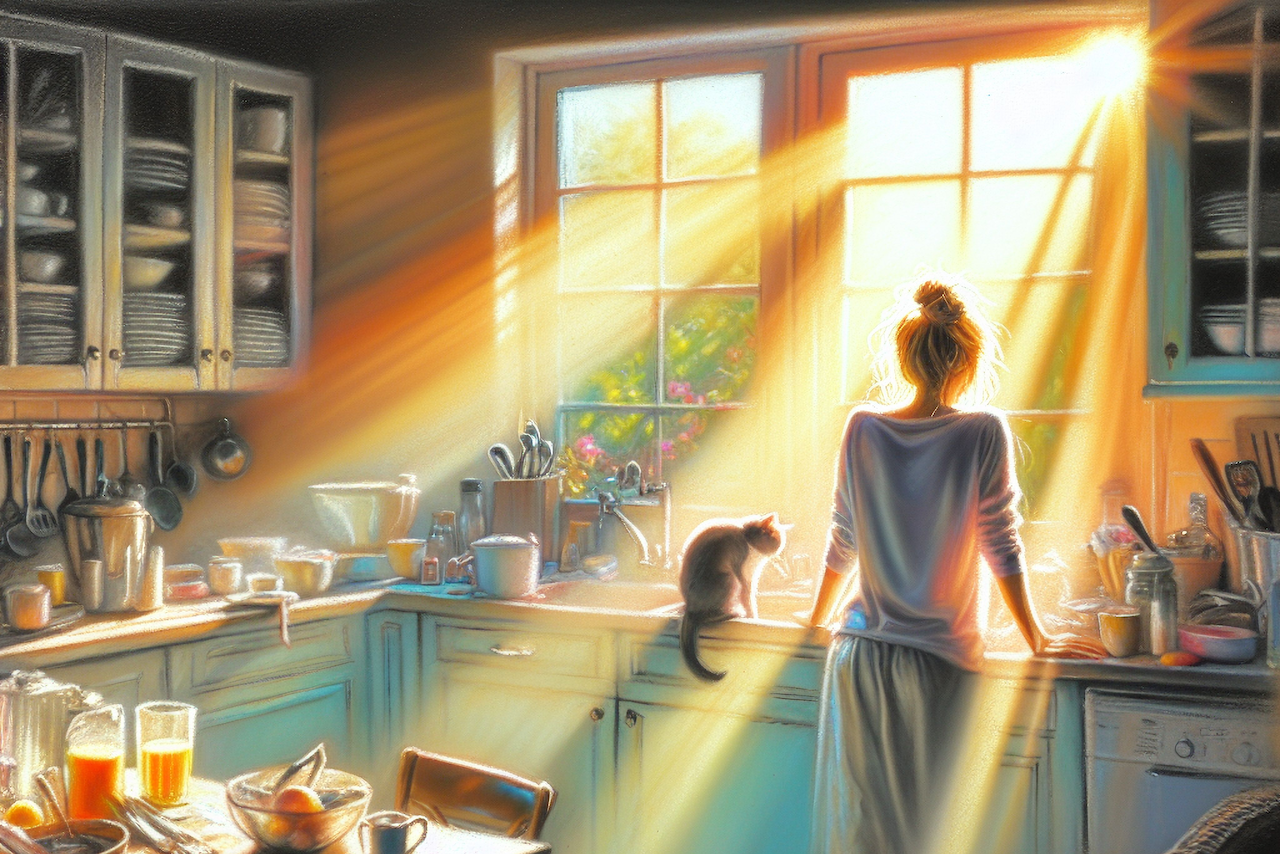
    My kitchen, for instance, is a testament to the beautiful chaos of daily living. There are dishes in the sink, crumbs on the counter, and perpetually sticky spots on the floor from toddler and puppy splashes.

    For the longest time, I let these imperfections bother me, believing they were reflections of my failure to maintain control. A sign I was falling short as a mother, a wife, a homeowner, a professional person, an adult. Then one day, I was relieved by a revelation. This mess is not a sign of failure but of life being lived. The chaos is evidence that I am showing up, day after day, doing my best, and this is more than enough.

    The Beauty of Showing Up

    Showing up, as it turns out, is half the battle. We often get so caught up in the pursuit of perfection that we forget the importance of simply being present.

    I have learned that life isn’t a quest for perfection, but a journey of embracing the mess and the inevitable chaos. True beauty lies in finding grace in the everyday moments, those uncelebrated instances that may never make it to Instagram but form the very fabric of our existence.

    For me, this realization came during a particularly difficult period in my life. I was dealing with a career transition, an injury that stopped me from participating in my beloved outlet—running, family issues, and a general sense of being utterly overwhelmed.

    I felt like I was drowning in a sea of responsibilities, unable to keep my head above water. Then, one day, a wise friend gave me a piece of advice that changed everything: “Just show up,” she said. “Show up and do your best. That’s all you can do.”

    Lessons from the Mess

    Embrace Imperfection

    We live in a world that glorifies perfection, but the truth is, perfection is an illusion. Embrace your imperfections, your mistakes, and your failures. They are part of your story and make you who you are.

    The Japanese concept of wabi-sabi, which finds beauty in imperfection, inspires me to accept my flaws and see them as unique marks of my journey. A cracked bowl is repaired with gold and revered for the richness of the story and life it represents. Its imperfections set it apart in beauty, just as yours do.

    Find Beauty in the Ordinary

    Life is made up of small, ordinary moments. Find beauty in these moments, whether it’s the warming way light filters through your kitchen window in the morning or the delightful screech of your child’s laughter. This is what matters.

    One of my most cherished memories is of a simple evening spent baking cookies with my two-year-old son. Flour was everywhere, the cookies were slightly burnt, and my shirt was blotched with butter, but when I let go of my ideal of cleanliness and order, I tapped into a priceless and memorable joy.

    Be Kind to Yourself

    We are often our own harshest critics. Practice self-compassion and be kind to yourself. Acknowledge your efforts and give yourself credit for showing up, even when things are difficult.

    During this tough period, I started a habit of writing myself small notes of encouragement: “You can handle this. You are a good mom. A caring therapist. A worthy person.” It felt awkward at first, but over time, it became a powerful tool for self-kindness.

    Let Go of Control

    Trying to control everything is exhausting and ultimately futile. Let go of the need to control and learn to go with the flow. Trust that things will work out, even if it’s not in the way you expected.

    I used to plan every detail of family vacations, but the most memorable trips were the spontaneous ones, where we let go, embraced the adventure, and followed our curiosities as they surfaced.

    Practical Tips for Embracing the Mess

    Practice Mindfulness

    Mindfulness involves being present in the moment and accepting it without judgment. When you find yourself overwhelmed by the chaos, take a few deep breaths and focus on the present moment. Notice the sights, sounds, and smells around you.

    I started a daily mindfulness practice, spending just two minutes each morning in quiet reflection. That’s right—two! That’s all I can manage before I hear “Mommy, Mommy,” but it makes a marked difference in my ability to be present and receptive. This simple act has transformed how I approach my day.

    Set Realistic Expectations

    It’s easy to get caught up in unrealistic expectations, both for yourself and for others. Set realistic goals and be flexible when things don’t go as planned.

    I learned this lesson the hard way when I tried to juggle my counseling practice, family responsibilities, and my new exercise and rehab routine. It was only when I scaled back, created a list of true priorities, and focused on one meaningful task at a time that I found a sustainable balance.

    Celebrate Small Victories

    Acknowledge and celebrate your achievements, no matter how small they may seem. Every step forward is progress, and it’s important to recognize and appreciate your efforts.

    My husband and I have created a gratitude practice at the end of the day where we share even the smallest victories, like finishing a task or having a good conversation. It helps us rise above the inevitable frustrations and disappointments of the day and reminds us of our blessings and progress.

    Learn to Say No

    It’s okay to say no to things that don’t serve you or that you don’t have the capacity for. Prioritize your well-being and focus on what truly matters to you. I used to say yes to every request, stretching myself thin. Learning to say no was liberating and allowed me to invest my energy in what truly mattered.

    Moving Forward with Grace

    As I stand in my kitchen, surrounded by the beautiful chaos of daily life, I am reminded of the profound lessons that come from embracing the mess. The crumbs on the counter and the sticky spots on the floor are not symbols of failure but of life being fully lived. They show that I am present, day after day, doing my best.

    Life’s messiness is where we find our true selves—where we learn to embrace imperfection, find beauty in the ordinary, and show kindness to ourselves. It’s where we let go of control and learn to go with the flow, trusting that things will work out, even if it’s not in the way we expected.

    Embracing change and the chaos that comes with it has taught me that the most beautiful moments often arise from the most unexpected places. It has shown me that resilience, adaptability, and strength are born from facing our fears and stepping into the unknown.

    Recently, a wise friend gifted me a fridge magnet that reads, “A clean house is a sign of a wasted life.” There was a time when I might have felt defeated or even insulted by this message. Instead, I now see it as a gentle reminder to exhale and accept myself and my messy life as they are—worthy, unique, and filled with rich lessons and avenues for growth.

    If you find yourself struggling with the messiness of life, I encourage you to look for the grace in the chaos. Embrace the imperfections, show up, and do your best. Remember that you are enough, just as you are. Life doesn’t have to be perfect to be beautiful.

    So, the next time you find yourself overwhelmed by the crumbs on the counter or the sticky spots on the floor, take a moment to breathe and appreciate the life being lived in those messy, imperfect spaces. Show up, do your best, and trust that this is more than enough.

  • How to Feel More in Control in Life in Four Steps

    How to Feel More in Control in Life in Four Steps

    “You may not be able to control every situation and its outcome, but you can control how you deal with it.” ~Unknown

    Life is often crazy and rushed. Sometimes it’s difficult to feel a sense of control. It can be utterly chaotic and leave us feeling lost.

    This is exactly where I was two years ago. I had no idea what I wanted to do with my life. I felt hopeless, directionless, and completely lost pretty much every day.

    I didn’t feel like I had a grip on anything in my life, including my thoughts, emotions, and actions.

    I had just returned from the local doctor, a prescription of antidepressants in hand and the first pill on its way down my throat, when something dawned on me.

    I realized that this was not the answer. I realized that thinking a drug would fix all of my issues was not only a false fantasy, but it was also extremely ironic. Because by taking them, I was actively choosing to worsen the cause of my issues.

    By taking the drug, I’d be sacrificing even more of my freedom and control. I’d essentially be putting the fate of my future into the hands of a daily dose of pills.

    I am not saying antidepressants are bad, nor am I suggesting that anyone should stop taking them, as they can be beneficial to many people’s mental health. They were simply something I realized I could avoid taking by instead addressing my problem in an alternative way.

    I believe it was at this very moment that everything changed for me. It was then that I realized that I was the cause of my problems, and only I could be the solution, so the journey began.

    Since then, I’ve been the happiest I have ever been, with a newfound sense of control and an unshakable feeling of self-belief.

    These are the four ways I managed to obtain this sense of control. I hope these steps can help you do the same.

    1. Taking Responsibility

    Taking responsibility is one of the most important things a person can do, but it might not be what you think. What was the first thing that came to mind when thinking about taking responsibility? Is it owning up to your negative behavior? Is it admitting when you’ve done wrong?

    I’d like to instead focus instead on the things that are not your fault.

    This might leave you confused at first. You might be wondering why anyone would take responsibility for things they haven’t caused.

    Just because something isn’t directly your fault, it doesn’t mean you can’t take responsibility for it. In my case, I was blaming my childhood and upbringing for the way I felt. I thought that because certain things had happened to me, and they were not my fault, I was somehow entitled to stew in my feelings and react negatively to them.

    But who does this type of mentality benefit? It certainly didn’t benefit me. In order to get better, I had to take responsibility for the way I was. Only then could any meaningful change occur.

    I’m not saying you should blame yourself. This actually eliminates blame altogether, because it doesn’t matter who’s at fault. If you’re the one suffering the consequences, you’re also the one who needs to take responsibility for them.

    The moment something negative has happened, it is done; it can’t be changed. Thus, the only thing left for you to do is deal with the consequences the best you can. Refuse to be left bitter and resentful and, instead, learn and grow.

    The next time something negative happens in your life, ask yourself, “Am I dealing with this in the best possible way?”

    2. Doing Hard Things

    The moment I started doing hard things, my life started to change for the better.

    Life is difficult, and as far as I’m aware, it’s always going to be. Have you ever met or heard of someone who has been through some extremely tough times throughout their life? These people are always very mentally strong, and less affected by tough times.

    The bad news is we can’t fake these sorts of tough times, nor can we recreate them. But we can raise our standard of difficulty in other ways. I mean, people have literally built a building and put a bunch of heavy metal things in it for others to come to pay and lift them.

    I’m not saying you have to go to the gym; I’m simply saying that to become less affected by life’s inevitable attacks, we can actively increase our tolerance for discomfort so that when they do come, we are much less affected.

    This gives us control, as we can’t prevent life from hurting us, but we can actively choose to reduce the pain it causes.

    Some examples of hard things I started to do included running, taking cold showers and ice baths, and following a healthier diet.

    Start implementing daily hard things into your routine, and you’ll notice the difference.

    3. All Wins Are The Same 

    When pursuing a goal, it’s very easy to get caught up thinking about achieving it, but this only results in an overwhelming sense of distance between you and the goal. You’d be much better off focusing smaller. Instead of comparing who you are now with your ideal self, focus on the very next thing that will move you closer to the person you want to be.

    Doing this not only removes that feeling of distance, but it will also constantly make you feel like a winner. And trust me, all wins are the same, so you might as well celebrate them all.

    What do I mean by all wins are the same?

    There is a concept I have recently been interested in, which is the hedonic treadmill.

    According to Wikipedia, “The hedonic treadmill, also known as hedonic adaptation, is the observed tendency of humans to quickly return to a relatively stable level of happiness despite major positive or negative events or life changes.”

    This means we get used to things very quickly. So let’s say your goal is to lose fifty pounds. Losing the first pound is the same as losing the fiftieth.

    Equally, it’s the same if your goal is to reach a million subscribers or to earn your first one million pounds (or dollars).

    To lose fifty pounds, you must have already lost forty-nine. To reach one million subscribers or your first one million pounds/dollars, you must at some point be at the number 999,999.

    I’m not underestimating these achievements—not at all. And I’m also not saying you shouldn’t have big goals.

    But I’m saying the value that comes from them only comes from the context that is applied to them. People fail to understand that the value attached to the goal was given by a past version of themselves, whereas a completely different version has experienced them, so essentially, the value has gone.

    The version of you that sets the target and the version of you that reaches it are used to two completely different standards. By being able to reach your goal, you have subsequently removed all value from it.

    The difference between 999,999 and 1 million is 0.0001%, yet quite literally no one celebrates reaching the former.

    This is the reason why people feel so empty when they finally reach their goals.

    To avoid this, and to constantly feel like a winner, you should focus on the very next step and celebrate every win.

    4. Discipline = Freedom 

    You’ve probably heard of discipline and all of its benefits many times before, as it is a crucial thing to adopt if you want to be successful at anything in life. However, I’m going to be talking about a positive aspect of discipline that no one knows or talks about.

    And that’s the sense of freedom that comes with it.

    There is an obvious way that discipline leads to freedom: By avoiding procrastination and getting tasks done immediately, we end up having more time.

    But there is a more profound sense of freedom that discipline gives us.

    As I have already mentioned, we’ll all inevitably experience feelings of discomfort in life, often from things completely out of our control.

    Now, let’s say you let these feelings stop you from doing what you know you should do. You’re letting external circumstances dictate how and where your life goes.

    Having the discipline to continue doing what needs to be done regardless of external situations or the feelings that might ensue will give you the most profound sense of freedom.

    Without discipline in these situations, you’re essentially losing all sense of control.

    One of the biggest things I felt when I started to build discipline, although I didn’t know it at the time, was a wave of freedom I had never felt before.

    Externally, everything in my life was exactly the same—nothing on the outside had changed. Yet everything on the inside had. I felt free. Being in control of your life means everything suddenly no longer feels permanent and you no longer feel helpless.

    As mentioned above, doing hard things is a great way to build discipline, as you’ll most likely feel like doing these the least. But discipline can also be built by the smaller and more mundane things, like waking up earlier or refusing to snooze, starting a daily meditation practice, or replacing endless scrolling with learning a language.

    These are some of the small things I used to build more discipline. Yours could look completely different. The trick is to find something productive that’s a challenge to be persistent with—then a sense of control and a feeling of freedom will follow.
  • How I Found the Good Within the Difficult

    How I Found the Good Within the Difficult

    “Inner strengths are the supplies you’ve got in your pack as you make your way down the twisting and often hard road of life.” ~Rick Hanson

    “I had a rough day. Can we talk?” I asked my husband in 2015 after coming home from work. He nodded, and we sat down on the couch.

    I continued: “I got really challenging performance feedback from my manager today. It was hard to hear because I know it’s true.”

    It was the most significant critical feedback I had received at once. All afternoon, I’d ruminated on the conversation. I had sat in the meeting speechless, with my heart pounding, as my manager, kind as he could, gave examples of ineffective ways I had been showing up.

    While we discussed what I was doing well too, I couldn’t stop thinking about the opportunities to improve. All I remember being able to say at the end is: “I need time to process what you’ve shared.”

    I hadn’t realized until that conversation how much what I was feeling on the inside translated to how I behaved.

    Inside, I constantly felt frustrated, stressed out, and overwhelmed. And that was the basis for how I interacted with others. I often reacted poorly when things didn’t go smoothly. I repeatedly interrupted others, not fully listening in the first place. I complained a lot in and outside of work. It felt so far from what I knew I was capable of.

    Underneath, I was in pain, and I had just become aware that I was taking it out on myself and others.

    I had recently been diagnosed with “unexplained infertility” and was preparing to start fertility treatment.

    I was having a difficult time coping: I blamed everyone and everything, including myself; I was so self-critical and beat myself up; I felt deeply ashamed; I tried to resist my painful feelings.

    When I look back, I have a lot of self-compassion for my past self throughout this experience. I didn’t yet know how I could cope better, and it was incredibly hard.

    I shared the feedback I received with him and went onto say, “What happened to me? I used to show up better: calmer, kinder, more approachable. I know I’m capable of showing up like that again. I want to try to improve. I want to learn how to meditate. I think it will help.”

    This was my moment of noticing.

    In the noticing, I had a choice. I could choose to take responsibility for my behavior. I could choose to try to improve.

    I had tried meditating previously and thought I was a “bad meditator.” My husband, on the other hand, meditated daily and taught meditation workshops. He had exposed it to me for years. I had seen how he had benefited from it. However, I had thought meditation wasn’t for me. Until now. I was at a point where I knew I couldn’t keep operating the same way. So I figured, why not try again?
    In the few months prior, we had started listening to podcasts and Dharma talks focused on mindfulness that resonated with me. It helped me realize mediation could benefit me.

    Taking in the Good

    One of the first things I did was to look at psychologist and best-selling author Rick Hanson’s book Hardwiring Happiness. I learned about what Hanson calls the brain’s red and green zones.

    The red zone, Hanson explains, is the brain’s reactive mode, where you go into fight, flight, or freeze. It’s when your mind focuses on fear, frustration, and heartache. It serves an important function when there is a threat, but it’s supposed to come in brief spurts.

    Unfortunately, Hanson shares, in modern life, the reactive mode has become a new normal for many people. I suddenly realized: it had become too common for me. I felt like my brain was in the red zone much of the day.

    The green zone, in contrast, is the home base of the brain, according to Hanson. The brain’s responsive mode. Your mind in this mode experiences peace, contentment, and love. When you are in this state, you can respond to life’s challenges without getting overwhelmed by the stress of them.

    Through Hanson, I discovered there is a lot we can do to strengthen our responsive mode by taking in the good, no matter what is going on in our lives.

    And that’s what I wanted to start doing. I would need to be intentional to take in the good, I learned, since the brain has a negativity bias.

    I wanted to take in more contentment—the antidote to frustration. I started with committing to thirty-day daily lovingkindness and gratitude practices.

    In the morning, I did a ten-minute lovingkindness meditation. In the evening, my husband and I would say three things we were grateful for, really soaking them in.

    At the end of the thirty days, I did feel more contentment toward myself and others. I felt less frustrated. I became more aware of when I was getting triggered. And sometimes, I would remember to pause and give myself space before responding. Other times, I would catch myself after reacting negatively and apologize. It was a start.

    I was surprised that there was so much I could do to change internally without changing my circumstances. Did I suddenly become monk-like, where nothing fazed me? No. And that was not my aim nor is it realistic.

    Dan Harris, a former ABC News anchor and prior meditation skeptic turned advocate, asserts in his book 10% Happier that practicing mindfulness and meditation will make you at least 10% happier. That was something I could attain.

    Perhaps I was 20% less frustrated after a month. Perhaps I had 10% more awareness of my triggers and reacted that much less.

    Whatever the exact amount, the changes made a noticeable difference to me. And, over time, I heard positive feedback at work that I was “showing up better.”

    The thing with practices is once you start them, to maintain the benefits, you need to keep them a part of your life. In my case, I kept taking action to build upon what I was learning.

    Next, I began a daily mindfulness meditation practice, which I continue today. Jon Kabat-Zinn, the founder of Mindfulness-Based Stress Reduction, defines mindfulness as: “awareness that arises through paying attention, on purpose, in the present moment, non-judgmentally… in the service of self-understanding and wisdom.”

    Three months later, I attended the “Search Inside Yourself” mindfulness and emotional intelligence two-day program. As the name suggests, I learned tools and did exercises to grow inner resources for accessing my own self-awareness, empathy, wisdom, and resilience—the me in the green zone. It was the spark that catalyzed more deeply nurturing my well-being.

    That was the start of me taking ownership of my experience to improve my well-being. What began as wanting to show up better became so much more than that.

    Reflections on the Noticing

    Those examples of actions, along with many others over time, transformed my relationship with myself and my life.

    They were the first steps for me to develop a more nourishing relationship to myself—one that was more self-compassionate, kind, and loving; one where I could be present enough to take in and enjoy the good; one where I allowed myself to experience the difficult emotions I was facing without judgment.

    It was from this place that I could then show up more whole, responsive, and kind.

    Within a year period, I grew more than I had in the previous five years combined. This experience of profound growth gave me something positive and exciting to focus on. Something I did have agency over, during an incredibly challenging time in my life. Where much felt out of my control. And it gave me greater skills to get through the hardships that I would continue to face, including burnout and fertility challenges.

    I’ve reflected on this time as one that woke me up. It was when I stopped acting like a victim to my circumstances, became more aware, and started doing inner work to grow. Choosing this path was a gift I gave myself.
    While my experience with career burnout was complicated and would continue to have ups and downs, it became more manageable after the noticing. It was another two years before I became pregnant naturally, after choosing to stop fertility treatments when it no longer felt right following failed IUIs.

    I don’t want to know what those years would have looked like without my focus on inner work. It taught me how to cope. It enabled me to focus on what I could control, which made it all the more endurable. It showed me how to experience goodness—peace, contentment, and love—daily, no matter what was going on. Most of all, it gave me something meaningful to focus on.

    I did not wait until I had a child for the next phase of my life to begin, my original mindset when we started trying to get pregnant. I lived more fully than before the noticing. I learned how to experience the beauty along with the brokenness.

    It was the moment of noticing that started me on a path that would significantly transform my life. And it would set me up for creating a life and career more on my terms, with well-being at the center, in the next phase of my life.

  • How I Am Learning to Trust My Body More and Control It Less

    How I Am Learning to Trust My Body More and Control It Less

    “I’m a beautiful mess of contradiction, a chaotic display of imperfection.” ~Sai Marie Johnson

    I don’t identify as having an eating disorder. I don’t struggle with anorexia, bulimia, or binge eating.  Yet I exercise precise control of my weight, down to the pound. If I gain a mere two pounds, I can feel it. First in my stomach. Then in my face.

    That’s when the self-loathing kicks in.

    I beat myself up for gaining those two pounds.

    I wear a shirt to sleep at night, instead of being naked like I am when I am two pounds lighter.

    I leave the towel wrapped around me when I get out of the shower, to avoid having to look at my naked body in the mirror.

    I eat only a smoothie for breakfast.

    I go to bed hungry.

    I don’t want to have sex because I don’t feel good in my body.

    I restrict myself from food and pleasure until I lose those two pounds.

    What’s worse is that I desire to lose even more weight.

    Sometimes I google “BMI calculator” and enter my height and weight in the tool. The tool tells me I am a normal weight. I enter a weight several pounds below my actual weight to see what weight I would need to be to be underweight. That weight is 133 pounds.

    I secretly crave to be underweight. Which is why I was so happy when I got food poisoning a few weeks ago and weighed 133 pounds for four days.

    I am disgusted with myself for being happy about this. I was throwing up for two days, was only eating toast, and was extremely weak. Yet I felt happy because I was smaller.

    I didn’t want to return to my normal weight. I wanted to remain small.

    I did slowly regain that weight. I hopped on the scale at the gym yesterday and I weigh 136.8 pounds. “Shit,” I thought. I want to be down to 135 before my wedding in three weeks. I quickly started calculating and felt relieved, knowing it would be easy to lose less than two pounds in three weeks. No problem.

    I’m also disgusted with myself about the amount of time I spend thinking about food and my weight. What did I eat today? Did I have too many pretzels? What will I eat for dinner? Today was my rest day, so I have to eat less. 

    I am slowly becoming aware of how much brain space food and weight take up. I wonder what creativity I could unleash if I devoted less time to thinking about food and more time to brainstorming, dreaming, and problem-solving.

    In addition to all this thinking, I also snack incessantly. Yesterday I counted and I went to the kitchen twelve times to get a tiny snack. A couple of pretzels, a mandarin, a handful of granola, a bite of chocolate, a few blueberries.

    I’m not sure if my constant snacking is due to actual hunger or if it’s connected to a more general anxiety and inability to relax.

    I think it’s both. When I eat a bigger breakfast, I have less desire to snack throughout the day. But I also think there’s an element of anxiety, because I find a moment of calm through the action of putting a bite of something in my mouth. For me this doesn’t show up as over-eating when I’m stressed, it’s more of a daily anxious habit. Perhaps some sort of desire for oral fixation.

    I could go even deeper to say that perhaps I feel like I am missing something in my life and, therefore, try to fill that void with snacks. I’m not sure if that’s the case, because mostly I am pretty happy and content. Yet my snacking behavior could suggest otherwise. Perhaps both things can be true. I can be happy in some ways and still yearn for more.

    I am also assessing my other eating habits. I don’t severely restrict myself from treats. I eat cake when I want to. I eat McDonald’s at the end of a long backpacking trip. I treat myself to an occasional burger. But I don’t enjoy these less healthy foods guilt-free. If I have cake one night, I’ll work out extra hard the next morning. It’s almost like I punish myself for indulging in a treat.

    I’m not sure what’s under my desire to be small. I know some of it comes from messages from society that thin is beautiful, and the insidious design of our culture to distract women with matters of physical appearance, so we have less brain capacity to think about things that really matter. I think it also comes from the positive feedback I receive about how fit I am. As if I’m a better person because I’m thin. I’m not.

    To this last point, I’m making an effort to give more non-appearance compliments to other people. My favorite one to give (and to receive) is: “I love your energy.” Let’s attune more to people’s energy than the size of their waist or definition of their brows or shape of their butt.

    I also know I have perpetuated these unfair beauty standards. I do it under the guise of: “I want people to be healthy.” But I know that thin does not necessarily mean healthy. I know that bigger does not necessarily mean unhealthy. Also, who decided that being healthy is something to strive for?

    Sure, we have a survival instinct, and being strong, mobile, and able to endure will help us survive. But I’m not sure that being healthy is some kind of moral standard. I strive for it for myself, but just like anything else, it’s an individual person’s decision if they want to be healthy, and what healthy means to them.

    Yes, I’m seeing the contradiction here, because I say I strive to be healthy, yet my desire to be underweight doesn’t seem mentally (or physically) healthy. The amount of time I spend thinking about food doesn’t seem healthy either. Which means I am going along with the lie that has been shoved down my throat my entire life: the lie that thin and small is beautiful.

    Of course I know that is not true. Of course I know that a person’s soul is what makes them beautiful. Of course I know that being weak and underweight is not healthy. Yet in some areas of my life, I act as if I don’t know these things.

    I would like to get to a place of trusting and listening to my body. Trusting it when it wants to eat a big burger after a long hike. Trusting it when it wants a piece of cake on a random night. Trusting it when it craves fruits and vegetables. Trusting it when my stomach feels jittery and empty and wants more fuel.

    I would also like to get to a place of not beating myself up if I gain two, three, four, or more pounds. I want to actually believe that I am still beautiful and worthy, no matter what my weight is.

    Wow. It’s weird to write this. Normally I write about my challenges once I’m on the other side of them. After I have unpacked them. But this time I am writing about a challenge right as I am becoming aware of it. Which means I don’t yet have much wisdom for you. But here’s what I do know:

    1. Exercise should be something we do because we love our bodies, not because we want to control them and keep them small.

    Sometimes I do have this relationship with exercise.

    I love being alive, and I do strength and cardio training because I want to be strong and mobile when I’m old. I want to be on this journey of life as long as possible. I do lunges because I want to be able to climb up a mountain and be stopped in my tracks at the beauty of our planet. I run because those endorphins make me feel good.

    Other times, I crank up the incline on the treadmill to punish myself for eating too much popcorn at the movies the night before. Or I try to do all the squats and deadlifts to make my butt rounder. My goal is to release those latter motivations, because those are grounded in control and inadequacy, not love.

    2. Your worth is not connected to your weight.  

    Read that one again. You are talented, strong, and beautiful no matter what your weight is. You can desire to lose weight or gain muscle or strengthen your heart, but doing so gets to be an act of love.

    3. We should stop thinking of indulging as a bad thing.

    To indulge is to allow oneself to enjoy the pleasures of life—eating a sweet fig in June, eating a chocolate croissant just because it tastes good, hugging your partner after being apart for a few days, driving through your neighborhood listening to your favorite song, sitting outside in the sun on a summer day, and sipping your coffee in the morning.

    Life should be pleasurable, and I want us all to indulge more, without guilt.

    4. Get to know your body.

    What I mean by that is not just getting to know how your body looks, but how your body functions.

    One of the most empowering and transformative things for me in the last few years has been learning about my menstrual cycle. Through reading, coaching, talking to my doctor, and being aware of my own body, I know what is happening hormonally each day of my cycle. I am able to pinpoint the day, how I will feel, and what my body will need. And then I (try to) honor what she needs.

    For example, on day seventeen of my cycle I am usually cranky, tired, and hungry. I clear my schedule, sleep more, and eat what I want.

    5. Your relationship with your body might not be black and white.  

    In some ways, I have a healthy relationship with my body. In other ways (as described above), I do not. Both things can be true. I think the goal is to shift toward a place of love and acceptance, and to spend less time thinking about what you look like and more time being aware of how you feel, how you live in alignment with your values, and how you show up for others.

    6. People’s struggles with confidence and self-esteem manifest in many different ways.

    Some people close to me might be surprised to hear about my inner dialogue and complex relationship with food because I look healthy. (And mostly, I think I am healthy.) But it doesn’t mean I don’t fall prey to the social pressures to look a certain way. We all do in some way or another.

    So let’s have grace, empathy, and understanding for each other, and know that we’re all going through stuff, whether it’s visible or not.

  • How I Finally Starved the Disorder That Was Eating Me Alive

    How I Finally Starved the Disorder That Was Eating Me Alive

    “If we are ready to tear down the walls that confine us, break the cage that imprisons us, we will discover what our wings are for.” ~Michael Meegan

    It’s weird, isn’t it? One day you’re playing hide and seek with friends without a worry beyond the playdate you’re having or dinner options for that night. But in a blink, those carefree days vanish. That’s what happened to me, and my teenage years started ticking away right in front of my eyes. Eleven, thirteen, fifteen, seventeen, nineteen…

    And a realization hit me: “It’s still eating me alive.”

    Maybe it wasn’t as severe as it was before, and I wasn’t underweight anymore, but I still needed control.

    Let me give you a little background about myself to provide you with some context. At the age of ten, I moved to the United States with my family. These big changes caused a lot of insecurity, impostor syndrome, and anxiety within me. I needed a way to become “better,” to “fit in,” and to control what was happening.

    It was impossible for me to suddenly turn into a cute, fun, skinny, blonde cheerleader. So I innocently turned to something that made me feel in control. If I could start “eating healthier” and “becoming the best version of myself,” I thought, I would finally fit in. Little did I know that this decision would haunt me for a long time to come.

    I was diagnosed with anorexia nervosa at twelve. I turned thirteen in the hospital. I even refused to eat my own birthday cake. I moved on to residential treatment, a partial hospitalization program, and then outpatient.

    After a year of treatment, I had checked all the boxes and jumped through all the hoops, and I was finally “recovered.”

    On the outside, I was a success story—weight restored, eating again, and out of treatment. But inside, the disorder still maintained a relentless grip in subtle ways I couldn’t ignore.

    No, I wasn’t crying over a handful of cashews, but I was counting exactly how many went into my mouth. I would go on midnight ice cream runs with my friends, but quickly search for nutritional information and get the flavor with the lowest calories.

    Even though I didn’t want sorbet, I got it. Even though I wanted a medium, I got a small. Even though I wanted sprinkles like everyone else, I wouldn’t get them.

    You get the point. The carefree joy of picking a flavor based on taste and intuition was gone.

    At times I’d think that maybe I was still not fully recovered… then a voice would interrupt, “SNAP OUT OF IT. You are fine. You ate ice cream, so you couldn’t possibly be sick. You are just practicing self-control.”

    And just like that, I’d be back in this hypnotic state. I’d repeat the cycle over and over again. Once again, the disorder would take a bite into my enjoyment and precious memories.

    I eventually realized that this disorder doesn’t care about what type of hold it has on you. As long as it is still alive and gripping onto you in some manner, it is happy.

    Every single time I give in, YOU give in, the disorder is fed and empowered.

    Whether that means not putting on the extra bit of sauce you want because it “isn’t necessary” or intermittent fasting because of “digestive issues,” it doesn’t care.

    I believe there are so many relapses in recovery for this exact reason. Because it is hard to completely let go.

    In time, I became aware of all the different little ways the disorder could manifest itself. I realized that this disease I thought had lasted five years was still present and would continue leeching off me for life if I didn’t do something about it.

    I’m going to share with you the process that helped me starve my eating disorder and loosen its grip on every aspect of my life.

    If we don’t fully let go and don’t resist all those little temptations we give in to, they start compounding and, like a virus, the disorder spreads and grows.

    So how did I finally starve it?

    This is the process I followed daily.

    1. Reflect

    Take time to reflect on your past and recognize all the small ways the disorder has shown up in your life. I suggest writing everything that comes to mind. You’ll likely identify scenarios you hadn’t thought twice about at the moment and in hindsight realize the disorder was controlling you. Identifying all the ways it sneaks in will help you recognize the patterns while they are happening.

    Write everything down. Even if it seems insignificant. From not adding extra cheese to your spaghetti to ignoring hunger in the morning, write it all down.

    One thing that helped me was comparing my present behaviors to my younger self’s. “Would younger Sophi add extra cheese to her pasta?” If she would, then so do I. Sounds silly, but try it out.

    Also, reflect on times you may have used food restriction or bingeing behaviors to avoid or “stuff down” difficult emotions like loneliness, anxiety, shame, or disappointment. Instead of facing those feelings, the disorder offered an unhealthy coping mechanism. Now that you have awareness, you can work on identifying the core issues or needs beneath those emotions so you can address them in a healthy manner. Rather than stuffing feelings down or starving yourself, get to the root and nurture yourself properly.

    2. Redirect

    Now that you are conscious of the behaviors, I want you to do something. Each time you recognize the disorder sneaking in, ask yourself “Am I going to feed it? Or myself?” You can’t do both. They are literal opposites.

    If you ask this question, it creates friction. Friction gives you the chance to decide consciously rather than engaging in the automatic behavior you are used to.

    Keep in mind that feeding yourself may be in a physical and literal way. But other times it simply means choosing to feed a hobby you enjoy, a relationship you want to develop, or a goal you want to achieve. This disorder drains your energy and sucks the life out of you. Energy and life you could be pouring into YOURSELF.

    You get to choose. Are you going to engage in conversations with your loved ones? Or think about how you are going to compensate for the dinner you ate?

    3. Repeat

    As much as I would love to tell you this is a one-time thing, it isn’t. You have to constantly repeat this process and not beat yourself up because of slip-ups.

    This is like any other habit. If you have been practicing it for years, it is a neuropathway in your brain. So you have to forge another healthy and helpful pathway, which is done through repetition and consistency. Years of reinforcing behavior will take time to change, so be kind to yourself.

    While completely eliminating behaviors associated with your disorder may seem impossible, consistently choosing recovery over disorder is the goal. Even if you experience setbacks, make the choice to feed your true self rather than the disorder as often as possible. Keep being resilient and trying again. With time and practice, choosing yourself will become more natural. But you have to keep making that choice, even when it’s difficult. Feed your spirit, feed your dreams, feed your life.

    Just like one of my dietitians told me, “Your eating disorder will stay alive as long as you let it.” I know it doesn’t seem like it sometimes, but you are actively choosing. I invite you to choose FULL recovery and destruction of your eating disorder.

    I don’t mean to learn how to function and co-exist with it, but to destroy it.

    Enjoying every ice cream outing with friends, saying yes to a coffee run, and letting yourself be intuitive and authentic.

    I knew a friend years ago whose mom struggled with an eating disorder when she was younger. At the time, the family felt she was recovered like she had overcome the beast. Looking back now, I realize the eating disorder still gripped her life in subtle ways.

    She skipped family dinners because cooking made her “full.” She viewed extreme dieting as a hobby, not the unhealthy compulsion it was. All this to say, now I realize, years later, she was still controlled.

    Without intentional healing, those ingrained patterns persisted, slowly impacting her family as well.

    For example, her daughter began mimicking her mother’s disordered eating habits and extreme dieting rules, developing body image issues and an unhealthy relationship with food at a young age. The mother’s fixation on calorie counting and skipping family meals also disrupted bonding time, as she isolated herself and couldn’t enjoy family dinners or holidays.

    I encourage you to write your “why” lists. Why is recovery worth fighting for? What makes you want this? Is it your future family or your goals, or are you simply sick of living under the rules of the disorder?

    It takes energy and strength to constantly fight it, but the less you feed it, the weaker it becomes. The weaker it gets, the fuller your life becomes and the stronger and happier you get. You deserve to live freely and fully, without shame or restrictions holding you back.

    I believe in you!

  • Overcoming Codependency: Breaking the Cycle of Unhealthy Relationships

    Overcoming Codependency: Breaking the Cycle of Unhealthy Relationships

    “A codependent person is one who has let another person’s behavior affect him or her and who is obsessed with controlling that person’s behavior.” ~Melody Beattie

    From a young age, I felt insecure in my own skin. I was a highly sensitive child and, subsequently, struggled with low self-worth for most of my life.

    Although I had many friends and a good family, I consistently looked for approval outside of myself. I grew up believing that the opinions of others were the only accurate representations of my core worth.

    As a teenager, I witnessed the crumbling and eventual demise of my parents’ marriage. During these years, I felt a lot like an island.

    I was often plagued with a dark, mysterious unhappiness. The standard teenage growing pains conglomerated with the trauma of losing my familial identity. In a desperate attempt to counter these negative feelings, I sought the approval of others; when it was not provided, I felt like a failure.

    I was caught up in vicious cycle of seeking outside confirmation that I was good enough.

    At school, I adopted the role of boy-crazy-funny-girl. I wanted to be adored and nurtured and cherished.

    I kept a list of all the cute boys at my school and spent hours daydreaming about a blissful, fairy tale love.

    I consistently focused on seeking happiness outside of myself. This habitual practice, over time, led to an inability to be content unless something or someone was providing validation. Most of the time, I felt like I was not good enough.

    This falsely instilled belief led me into a decade-long struggle with codependency.

    The first codependent relationship I was involved in began when I was nineteen. He was ten years older than I was, and, unbeknownst to me at the time, a cocaine addict.

    Our routine was unhealthy and unproductive. We would spend our weekends drinking and gambling at a local pool hall. More often than not, I spent my entire weekly paycheck by the end of Saturday night.

    He belittled me, called me names, and consistently criticized my appearance and weight. He compared me to his previous girlfriends. I began to see myself as an incomplete person, one who was in need of major repairs and upgrades. I was so emotionally fragile that the wind could’ve knocked me over.

    In a frantic effort to self-preserve, I adopted several fear-based behaviors. I became obsessed with him. I was controlling and jealous. I needed to know everything about his past. I wanted desperately for him to accept me.

    Over the ten months we spent together, I neglected my body and mind. My weight dropped a staggering thirty pounds. I was completely disconnected from my family and friends. I developed severe anxiety and suffered crippling panic attacks. I knew something had to change, so I gathered the courage and left him behind.

    I thought that I was rid of this unhealthy and unsatisfying lifestyle, but the bad habits carried into my next two relationships.

    I spent four years with a person that I loved very much; however, his alcohol dependency brought all of my insecurities and controlling behavior back into play.

    We spent four years flip-flopping between wonderful loving moments and horrific physical fights that left us both numb and depressed.

    When this relationship ended, I sought comfort in yet another unavailable partner, one that could not provide me with the stability that I so badly needed.

    Such is the nature of the codependent person. We seek out what is familiar to us, but not necessarily what is good for us.

    After logging close to a decade-worth of codependent hours, I finally faced myself. I knew that if I didn’t make significant changes, I would be forever trapped in a life that was unconducive to my spiritual and emotional growth.

    In a scene eerily similar to Elizabeth Gilbert’s Eat, Pray, Love bathroom breakdown, I faced the music. I got myself a small apartment and started my recovery.

    The first few days spent alone were absolutely torturous. I cried and cried. I had trouble doing basic tasks, like walking my dog or getting groceries. I had completely turned inward, nurturing my turmoil like an old friend. Anxiety-ridden and lonely, I did the only thing I could think of: I asked for help.

    The first step I took was ordering Melody Beattie’s book Codependent No More. This is probably the most significant self-improvement book I have ever read. I felt a weight being lifted as I read, page by page.

    Finally, I was able to understand all of the behaviors, feelings, and emotions I had struggled with for so long. I was a textbook case, my highlighter affirmed as I completed the “codependency checklist.” Perhaps some of these questions will speak to you, as well.

    • Do you feel responsible for other people—their feelings, thoughts, actions, choices, wants, needs, well-being, and destiny?
    • Do you feel compelled to help people solve their problems or try to take care of their feelings?
    • Do you find it easier to feel and express anger about injustices done to others than about injustices done to you?
    • Do you feel safest and most comfortable when you are giving to others?
    • Do you feel insecure and guilty when someone gives to you?
    • Do you feel empty, bored, and worthless if you don’t have someone else to take care of, a problem to solve, or a crisis to deal with?
    • Are you often unable to stop talking, thinking, and worrying about other people and their problems?
    • Do you lose interest in your own life when you are in love?
    • Do you stay in relationships that don’t work and tolerate abuse in order to keep people loving you?
    • Do you leave bad relationships only to form new ones that don’t work, either?

    (You can read more about the habits and patterns of codependent people here.)

    After acknowleding my codependency, I connected with an online support group for family members of addicts/alcoholics. This gave me a platform to share my story, without judgment, and little by little, I healed my aching heart.

    The most significant things I learned on this journey are:

    1. Without change, nothing changes.

    This is such a simple yet profound truth. It’s reminiscent of Einstein’s definition of insanity: doing the same thing over and over and expecting different results. The cycle of codependency can only be overcome by establishing and nurturing a super-loving relationship with yourself. Otherwise, you will continually find yourself in unhealthy, codependent relationships.

    2. We can’t control others, and it is not our job to do so.

    Over the years, I was constantly trying to control and micromanage other people’s behavior, in an effort to escape my own negative feelings.

    I chose partners with alcohol and drug dependencies. Often, I chose angry and avoidant men. By focusing on what was wrong with them, I could ignore what was empty and unfulfilled in me.

    I thought, naively, that this would give me a feeling of stability. In fact, it did the opposite. Surrendering the need to control other people provides us the necessary space to connect with ourselves.

    3. Love and obsessions are not the same.

    I falsely believed for many years that love and obsession were one and the same. I gave so much of myself to my partners, naively thinking that this was the road to happiness.

    I’ve learned that healthy love requires both partners to have unique, individual identities outside of the romantic relationship. Time alone, time with friends, and time to work on personal projects allows you to really connect when you are together, without feeling suffocated. We build trust when we afford ourselves, and our partners, some breathing room.

    For many years I neglected my own needs. I now prioritize personal time to do individual activities: reading, writing, walking, reflecting. I started to heal once I learned to incorporate self-love rituals into my life. One of my favorite things to do is spend the evening in a warm bubble bath, light some candles and listen to Alan Watts lectures.

    4. Life is not an emergency.

    This is a biggie! I consistently lived in a high-stress vortex—terrified of people, abandonment, and life itself.

    I worried so much about all of the things that were outside of my control—often, other people. I realize now that life is meant to be enjoyed and savored. Good and bad things will happen, but with a centered and balanced heart, we can get over any obstacles.

    The key to balance, for me, is to live fully in every moment, accepting life for what it is. Even when I’m feeling down, I know that the Universe has my back and everything in life is unfolding as it should.

    If you don’t hold this belief, it might help to remember that you have your own back, and you can handle whatever is coming. When you trust in yourself, and focus on yourself instead of others, it’s much easier to enjoy life and stop living in fear.

    I have assembled a group of super-hero coaches and teachers that have helped me significantly over the years in my quest for self-improvement. I have loving support and encouragement from so many sources. It’s my dream to be able to give some of that back to the world. I hope I have done that with this post.

  • 5 Ways to Heal from a Highly Critical, Controlling Parent

    5 Ways to Heal from a Highly Critical, Controlling Parent

    “You’ve been criticizing yourself for years and it hasn’t worked. Try approving of yourself and see what happens.” ~Louise Hay

    When I was growing up, it felt like nothing was good enough for my dad. And all I longed for was his acceptance and love.

    He had this temper that would blow up, and he’d blame me for how he felt. He would outright tell me his behavior was my fault. That if I’d behaved better, he wouldn’t have had an outburst.

    When he told me I wasn’t enough or worthy, I believed him. I was constantly walking on eggshells around him, trying to not annoy him, as his angry words would really hurt.

    The confusing thing about my dad was that he wasn’t like this all the time. Sometimes he was loving, affectionate, and warm, and then in a moment he would switch to cold, controlling, and cruel.

    As a child, I believed to my core that I was the problem. The only way I thought I could keep myself safe was to try and please him and be the perfect daughter.

    I became obsessed with achievement. It started first with my grades and school, and then it was getting the job he wanted me to have. Because sometimes an achievement would get me a crumb of love from him. I would push myself as a child, forsaking rest and hydration at times, so he would see how hard I’d worked.

    But it was never enough for him. He would lose his temper on the one day that I was taking a break, telling me that I would never amount to anything.

    He would even tell other people how awful his family was when he was drunk. It was beyond humiliating.

    Now, at forty-one, these memories with my dad are in the past, but they still haunt me. He has since passed—he took his life fifteen years ago. Turns out my dad wasn’t okay and was struggling with the impact of his own childhood trauma.

    But rather than seeking help, he took it out on his family and himself through addiction and, ultimately, his suicide.

    His controlling, critical voice still lives in my subconscious mind. It’s his voice that tells me to work harder or that I am not good enough, or questions, “Who do you think you are?”

    Even though I consciously know now, as a trauma transformation coach, that his behavior was due to his pain and his words were not the truth, the younger parts of me still believe him. Because those younger parts still feel blamed, shamed, and not enough.

    After his passing, I found myself in relationships where others would criticize, control, and deny my reality, and found myself powerless again, just as I’d felt as a little girl.

    But by investing in various safe spaces, like support groups, therapy, and coaching, I have been able to step away from these relationships or maintain boundaries so that my younger self is no longer triggered by the pain of the past. This has created space for kinder, more loving relationships to come in.

    However, more recently I noticed that even though I’d stepped away from toxic relationships, I had become him to myself. I would speak to myself critically and put myself down. Nothing was good enough, and I would push myself to achieve at any cost, going through cycles of overworking and burnout.

    I would push myself to have the ‘perfect body’ with extreme exercise and diet. But then my inner rebel would push back and sabotage the diet and my health through emotional eating.

    Constantly pushing myself to be better, I realized, unconsciously, I was still chasing his love. His acceptance even though he wasn’t here.

    I had become the controlling critical parent to myself. It was time for me to become the parent I’d longed for and not the parent I’d had.

    Here are the five practices that are helping me to heal from my controlling, critical parent—practices that could help you too.

    1. I ask myself: Am I being kind to myself?

    I have created a pattern interrupter by asking myself, at least three times a day, if I am being kind to myself and, if not, how I can be. I notice my behaviors and inner dialogue and explore how I can shift into kindness.

    For example, if I don’t sleep well, is it kind to push myself with a cardio workout and long day of work, or would it be better to go for a walk in nature and take a slower pace?

    Or, if I am speaking to myself without self-compassion, is there a more loving way to communicate with myself rather than being nasty?

    Each day I make a conscious choice to step into that kind energy. I treat myself how I wish he had treated me.

    2. I celebrate myself weekly.

    Each Sunday, I reflect on what I am proud of and celebrate myself, even if I’ve done something small, like being consistently kind to myself. I become the cheerleading parent I longed for, and this builds self-esteem.

    3. I use affirmations.

    I affirm throughout the day that I am safe and enough. That I don’t have to prove my worth or people-please. I can just be me. This helps soothe the critical voice that goes into past fear stories.

    I use affirmations to say I love and care for myself. That I am my biggest priority.

    4. I listen to my body and choose to take care of it.

    Instead of pushing myself physically, I ask myself: How should I nourish myself? Or how should I move my body? What shouldn’t I put into it out of love? I check in with myself if I need rest or if a certain relationship or situation is causing me physical and mental stress. I speak kindly about my body rather than shaming it for not being enough.

    5. I reparent the parts of me that are in pain from the past.

    My dad will always be part of my story. I can’t change the past, but I can take care of the different parts of me that were hurt. I can show those parts kindness and love through reparenting and inner-child work.

    My favorite practice is going back in time to visit my younger self. I give her a hug, ask her how she feels, and then do whatever I can to fulfill her needs. I soothe the hurting parts of her rather than getting her to perform and achieve.

    Some days my old behaviors come out, but I use the question “Am I being kind to myself?” to get myself back on track. I also practice self-compassion and forgiveness, as I would never say the things I have said to myself to others.

    If you can relate to what I wrote because you had a similar parent, step into being the parent you wished for yourself. Because a happy, loved, affirmed child is better able to live a happy, healthy life than a bullied child that hates herself. Give yourself the gift of love and kindness and watch your story transform.

  • Anxiety Sucks, But It Taught Me These 7 Important Things

    Anxiety Sucks, But It Taught Me These 7 Important Things

    “Anxiety is the dizziness of freedom.” ~Soren Kierkegaard

    Let’s be clear:

    This isn’t an article about positive thinking.

    This isn’t an article about how silver linings make everything okay.

    This isn’t an article about how your perspective on anxiety is all wrong.

    The kids call those things “toxic positivity.”

    No toxic positivity here.

    This is an article about my lifelong relationship with anxiety and what I’ve learned from something that won’t go away. At times the anxiety spikes and feels almost crippling. I have a hard time appreciating the learning at those times, but it’s still there.

    That is what this article is all about.

    Please do not confuse me learning things from something that won’t go away with me endorsing that thing or saying it’s a good thing. I would trade everything I’ve learned from anxiety for less anxiety. I don’t even like writing about it because focusing on it this much gives me anxiety. But I want to write things that help people.

    How a Bare Butt Sparked My Anxiety

    Stranger Things has shown how cool the eighties were. For the most part, this is true. I miss arcades and the music. I miss the freedom I had as a kid that I don’t see kids having these days. I miss some of the fashion. I don’t miss people not knowing anything about mental health.

    We used to play football every day after school at a baseball field/park in our little town. This was unsupervised tackle football with kids a lot older than me.

    I remember one time a guy broke his finger. It was pointing back at him at a ninety-degree angle. He took off sprinting toward his house. One of the older kids said, “He’s running home to mommy!” and we all went back to playing.

    Oddly enough, possibly breaking my finger didn’t worry me. What did worry me was one day when a kid was running for a touchdown, and another kid dove to stop him. He only caught the top of his pants, pulling them down and exposing his bare butt. He made the touchdown anyway, but while everyone else thought it was hilarious, it scared me to death.

    What if that happens to me?

    I started tying my pants up with a string every day, pulling it tight enough to make my stomach hurt (remember, this was the eighties—I was wearing those neon-colored pajama-pant-looking things). I started to feel sick before we played football, before school, and before everything.

    You would think it was obvious that I was dealing with anxiety, but you have to remember that in the eighties and nineties, we did not talk about mental health like we do now. We didn’t throw around terms like anxiety and depression. I was just the weird kid that threw up before he went to school.

    The anxiety has gotten a little more noticeable over the past few years. It seems to have gotten worse since having COVID in 2020 and 2021. I don’t know if that’s a thing, but it feels like it is. It has forced me to deal with it mindfully and with more intention. It’s never pleasant, but I’ve learned a few things.

    1. Anxiety has taught me to be present.

    The crushing presence of high anxiety forces me to be exactly where I am at that moment. I’m not able to read or write. I cannot play a video game or watch a movie with any kind of enjoyment. There’s nothing I can do.

    This roots me in the moment in a very intense, authentic way. That might seem bad since I’m anxious, but there’s another layer to it. When I can be completely present with the physiological sensations of anxiety, I recognize that they are energy in the body. When I’m super present, I can see how my mind is turning those sensations into the emotion we call anxiety, and that’s where my suffering comes from.

    2. Anxiety has taught me about control.

    I’ve been told that my hyper-independence and need to be prepared for anything is a trauma response. I was a therapist for ten years, and I still don’t know what to do with this information. I do know that anxiety gives me a crash course in what I can control and what I cannot control.

    The bad news is that I can’t control any of the things that I think are creating anxiety. The good news is that I can control my response to all those things. Anxiety forces me to do this in a very intentional way.

    Anxiety also puts my mind firmly on something bigger than myself. Maybe it’s that higher power we hear about in AA meetings and on award shows. It’s good for me to get outside my head and remember that I’m not in charge of anything. It’s helpful to only box within my weight class.

    3. Anxiety teaches me to have good habits and boundaries.

    I’m bad about allowing my habits and boundaries to slip when times are good. I start eating poorly, I stop exercising, I stay up too late, and I watch a bunch of shows and movies that beam darkness and distraction directly into my head.

    I also start to allow unhealthy and even toxic people to have a more prominent role in my life. This is all under the guise of helping them because people reach out to me a lot. Over the years, I’ve learned I have to limit how close I let the most toxic people get to me, no matter how much help they need.

    When I’m feeling good, I start thinking I can handle anything, and my boundaries slip. Anxiety is always a reminder that the unhealthiness in my life has consequences, and I clean house when it spikes.

    4. Anxiety reminds me how important growth is.

    Once I clean house, I start looking at new projects and things I can do to feel better. I start taking the next step in who I want to be. This has been difficult over the past three years because the waves of anxiety have been so intense, but I see the light at the end of the tunnel as the good habits I put in place and the new projects and things I started are beginning to come to fruition.

    I chose to let my counseling license go inactive and focus on life coaching because it’s less stressful, and I’m better at it. This would not have happened without anxiety. I have changed my diet and exercise in response to blood pressure and anxiety, and these are good habits to have whether I am anxious or not.

    5. Anxiety taught me to be gentle.

    I’ve written and spoken a lot about my desire to be gentler with people. I’m not unkind, and I have a lot of compassion for people, but this is often expressed gruffly or too directly. It’s how I was raised, and I often feel like I am patronizing people if I walk in verbal circles when I’m trying to help them with something.

    When I’m experiencing high anxiety I feel fragile, which helps me understand how other people might feel in the face of my bluntness. I started working on being gentler around 2018, and I was disappointed in my progress.

    It was also around that year that anxiety began to become a fixture in my life again. As I look back now, I can recognize that I am a lot gentler with everyone around me when I’m anxious. Being a little fragile helps me treat everybody else with a little more care.

    6. Anxiety taught me to slow down and ask for help.

    When I started experiencing increased anxiety, it led me to make quick decisions and change things to try to deal with it. This makes sense. Evolutionarily, anxiety is meant to prompt us to action.

    The problem was that these decisions rarely turned out to be my best ones and often led to other consequences I had to deal with down the line. Because of this, I’ve learned that an anxiety spike is not the time to make big decisions.

    If I have to make a decision about something, I slow down and try to be very intentional about it. I’ve also learned I need to talk it out with somebody else, something I’ve never been inclined to do. Asking for help is a good thing.

    7. Anxiety helps me speed up.

    Yeah, yeah, yeah, this is the opposite of what I just said.

    Let me clarify.

    One of the most important quotes I’ve ever read came from the folk singer Joan Baez: “Action is the antidote to anxiety.” (Years later, I learned she might have said despair instead of anxiety, but I heard it the first way).

    Some tasks bring anxiety that I do not want to deal with. These usually involve phone calls or emails to bureaucratic organizations or errands that I find unpleasant and anxiety-inducing (avoiding these also makes sense—our evolutionary legacy cannot understand why we would do something that may feel dangerous).

    Over the years, I’ve learned that anxiety diminishes if I take the steps I need to take to address these tasks. The cool thing is that this has translated over to many of my day-to-day tasks.

    By acting in the face of anxiety, I’ve gotten pretty good about doing things when they need to be done. I mow the lawn when it needs to be mowed, take out the trash when it needs to be taken out, put the laundry up when it needs to be put up, and get the oil changed in my truck when it needs to be changed.

    Once we start addressing tasks immediately, it becomes a habit. Anxiety helped me do this.

    Anxiety Still Sucks

    So there you go. Seven things anxiety has taught me. I’m grateful for these lessons, but they don’t make anxiety any less difficult in the moment.

    Anxiety is meant to suck. It’s meant to make things difficult and uncomfortable for us until we do something to address the problem. The problem, unfortunately, is often un-addressable these days.

    We worry about things like losing our job, not having enough money, divorce, and the general state of the world. Anxiety did not develop to address any of these things, so sometimes being comfortable with discomfort is the best we can offer ourselves.

    Maybe that’s the last thing anxiety is teaching me.

  • How I Learned to Let Go of Attachment to Things I Want

    How I Learned to Let Go of Attachment to Things I Want

    “The happiness we seek cannot be found through grasping, trying to hold on to things. It cannot be found through getting serious and uptight about wanting things to go in the direction we think will bring happiness.” ~Pema Chodron

    When I was a kid, my parents used to take me and my younger brother  fishing during the summer with some family friends. Sitting in the backseat of the car as we drove through the countryside, I had no worries about the future. It was a time of innocence.

    On this particular trip, which stands out in my memory, I would try fishing for the first time. I thought attaching a worm onto a hook was gross, but I was excited to do something adults do. Little did I know that I would learn a few important life lessons on this trip.

    When we arrived at the fishing dock, my dad offered me a small fishing rod, one that was suitable for a small child. I was thrilled. While the adults busied themselves, I ran off with my fishing rod, looking for a spot to catch a fish.

    Moments later, I had my fishing line down an eye-shaped hole that opened up between two boards on the dock. It was perfect: a small hole for a small child to catch a small fish. I crouched beside the hole and peered into the shadowy water beneath the dock.

    Nothing happened for some time. Suddenly, I felt a tug on the line, jolting me alert. I had caught something. I was ecstatic! I drew my line up and saw that I had caught a small fish. Unfortunately, the hole in the dock was even smaller. Yet, I didn’t want to lose my catch.

    I called out to the adults for help. One by one, the grownups around me gathered to help get this small fish through a slightly smaller hole. I implored the adults to try harder as they struggled. As we all tried to pull the fish through the hole, it thrashed in defiance with all its might.

    After some time, we managed to force the fish through the hole. However, we all looked down on the fish before our feet, its outer flesh scarred, now barely alive. A sense of sadness and regret came over me. I realized that I had done something terribly wrong. 

    “It’s no good now. We can’t keep it,” said one of the adults flatly. We threw the fish back into the water in its mutilated state. The crowd dispersed as if nothing of significance had happened. I was left alone, dazed by the experience. I didn’t feel like fishing anymore.

    The memory of the fish has stayed with me through the years. What torment had I put the fish and everyone else through that day? I thought the fish belonged to me, and I refused to let go of what I thought was mine. Of course, I was only a child—I didn’t know any better. Yet, I’m left with this sense of guilt.

    What do we own in life? If we acquire something, whether through our efforts or by chance, do we truly own it? Is it ours to keep? How do we know when it is appropriate to relax our single-mindedness?

    That day, the fish taught me about letting go. When I’m caught in the trap of attachment, other people fall away, and all that remains is me, my concerns, and my one object of desire. When that happens, I contract into a smaller version of myself that fails to see the larger picture.

    The fish also taught me the lesson of harmlessness. If my actions, no matter how justified I believe they are to be, are causing others harm, then it would be wise to stop. What do I truly value, and what are other ways that I can get what I really need?

    Reflecting more deeply, I see that my younger self wanted to hold onto a sense of achievement in that scenario. And if I could keep that sense of achievement, I would gain self-esteem. By having self-esteem, I would experience a kind of love for myself. It wasn’t really about the fish at all. 

    Since that event, the fish has revisited me in many different forms. Sometimes it appears as a person, sometimes a project or job, and other times an identity.

    Recently, I felt close to losing a business opportunity I had worked hard to secure. While I experienced deep disappointment, I managed to step back and make peace with the potential loss. I reminded myself that I was enough, and that my work doesn’t define who I am—even if what I do provides me with a sense of meaning and purpose.

    In life, success and failure are two sides of the same coin. In order to know success, we must also know failure. In order to know failure, we must also know success.

    I now know that whether I fail or succeed, I can still find my self-esteem intact. My self-esteem stems partly from knowing I will inevitably grow from both success and failure. Practicing letting go allows me to continue moving toward growth and wholeness.

    There is one more lesson that I learned from this fishing trip, and that’s the lesson of forgiveness. In writing this reflection, I forgive myself for the harm I’ve done in the past out of ignorance. I free myself of the guilt I’ve been carrying and choose to lead a more conscious life.

    It’s incredible how a tiny fish can give a small child such big lessons; ones that he can only fully integrate as an adult.