Tag: content

  • The Changes I’m Making to Stop Wasting My Limited Time

    The Changes I’m Making to Stop Wasting My Limited Time

    “Contentment has more to do with a heart of joy as life unfolds than it ever will with a life filled with stuff.” ~Kate Summers

    Recently, an older friend who was no longer able to attend to life without assistance was placed in a senior care facility. From my observance, she seemed content, and her relatives confirmed that when they visit, they find her awake and alert, propped up in bed or sitting in a chair, peacefully gazing out her window.

    One of my immediate thoughts when reflecting on my visit was, we should all be so lucky to enter our final years in a mind space of inner peace and contentment.

    The hope to be content in the final years of life is not a new concept, but the idea of a “bucket list” and the quest to achieve it is. The term bucket list was introduced in 1999 and solidified into pop culture with the subsequent release of a movie.

    For those who are unfamiliar with the expression, a bucket list consists of a catalog of experiences and adventures that someone wants to have before they kick the bucket, meaning die. The idea is that if someone checks off all the items on their bucket list, their final stage of life will be bearable because they will be satisfied with how they spent their time.

    The visit to see my friend put the time I have remaining into perspective. As I approach sixty years old, the truth that in twenty-five years I will be eighty-five is inescapable. The fact that the twenty-five years between thirty-five and sixty had gone by in the relative blink of an eye caused me to pause and think.

    What did I want to do and experience before my final stage was upon me?

    My mind went immediately to my hobbies and interests, and although I could think of many goals to strive for, nothing seemed important or compelling enough to be considered for my bucket list.

    As examples, I enjoy traveling and have a desire to see all the magnificent natural wonders across the globe and walk in the footsteps of ancient cultures, but I do not see myself in my final years upset because I never made it to Victoria Falls or knelt before the Moai of Easter Island. And I thrive on learning, but earning a master’s degree or PhD will not bring me contentment on my deathbed.

    And what about my friend? I don’t recall her speaking of a list of experiences she desired to have or tangible targets that she strove to hit before her life was over. Yet, as I witnessed, she had entered her final phase of life with an air of inner peace and contentment.

    Throughout our friendship, I observed my friend actively focusing on seeing the glass as half full and consciously concentrating her focus on the bright side of events. She did not cultivate drama within herself, and consequently, she repelled it when others brought it around. And she fostered love for herself and others.

    When the realities of individual agendas and manufactured circumstances triggered a need to respond in a heavy-handed way, she delivered the reprimand swiftly and, as best as she could, without the emotion of hate and thoughts of judgement.

    And the rare time when she fell completely short of her behavioral standards with her thoughts and emotions sinking deep into a dark muck, I observed her climb out, find her light, and move on. She never berated herself for what she referred to as a “little dip.”

    Many times, I asked her how she could rise above the fray of office politics, for example, or shift her focus to what was hopeful and good in an otherwise dreary situation. Her response was unfailingly along the lines of “Why waste time dwelling on unpleasantness?”

    Her words came back to me as I pondered what I wanted to experience and accomplish in the next twenty-five years. How could I spend my time in a way that would leave me content in the final stage of my life?

    Having already run through my goals and desired escapades and determined they were not the answer to what had become a nagging question for me, I reversed the query and asked, “In what ways is my time wasted?”

    My answer came to me the next day. I had just hung up the phone after completing a conversation with a member of my greater social network. Having too little in common to consider her a friend, I find our interactions to be tedious, and we rarely see eye-to-eye.

    She views herself as the victim in all situations and thrives on stress and drama. In this conversation, she expressed that she was feeling left out because a group dinner was scheduled for a night on which she was not available.

    I spent twenty minutes attempting to reassure her the chosen date was not intended to exclude her, that she was a valued member of the group, and similar proclamations. All of them landing on the unfertile soil of her negative self-image. Nothing short of changing the date could convince her the decision was not personal.

    As I terminated the call, I heard myself say, “Well, that was a waste of time.”

    A few days later, I found myself involved in an interaction with a co-worker with whom exchanges typically left me feeling shaken and upset. The pace and tone of that afternoon’s conversation were especially triggering. Once at home, even with the co-worker nowhere near me and the interaction several hours in the past, simply thinking about what had transpired caused my body’s fight-or-flight response system to kick in.

    With limbs ready to spring into action and breath quick and shallow, I hung suspended in a state of physical limbo, waiting to fight a battle perceived and conceived in my head. It took me close to an hour to calm myself down, and afterward the sense of time wasted was palpable.

    At that moment, I committed to not wasting time feeding the unpleasantness created by others and to take responsibility for ways in which I cultivated upset within myself.

    After a bit of reflection, I realized that I disrupted my peace of mind and contentment by:

    • Taking things personally
    • Needing to be right
    • Overreacting by magnifying small issues into major problems
    • Continuing unproductive conversations in my head with others long after they have concluded in real time

    While commitment is the initial action needed for instigating change, practice is the many small steps taken to solidify the habit.

    Over time, I developed a practice that involved morning meditation, journaling, and body awareness.

    • Meditation cultivates a calm mindset, allowing for heightened self-awareness and control of my thoughts and emotions.
    • Journaling gives tangibility to my unpleasant thoughts. By making them visible, I am able to challenge their validity and shift them towards ones that uplift me.
    • Body awareness gives way to enhanced intuition. By paying attention to sensations in my gut and noticing the pace of my heart and breath, I can quickly sense when I am shifting from a responsive, cooperative mode to a reactive, fight/flight approach to a person or situation.

    If you are interested in cultivating a mindset that brings you inner peace and contentment, below are a few tips to get started.

    1. Find a meditation style that works for you.

    My practice utilizes mindfulness, focused, and loving-kindness styles of meditation. Mindfulness meditation allows greater access to my thoughts, focused meditation sharpens my ability to keep my brain from wandering, and loving-kindness meditation cultivates compassion and patience for my ego struggles and those of others.

    Here is a list of the nine most common forms of meditation. A definition of each can be found here.

    • Mindfulness meditation
    • Spiritual meditation
    • Focused meditation
    • Movement meditation
    • Mantra meditation
    • Transcendental meditation
    • Progressive relaxation
    • Loving-kindness meditation
    • Visualization meditation

    2. Write down thoughts and feelings that you struggle with.

    My journal is a loose compilation of thoughts and the emotional responses they trigger. By writing them down, I am able to distance myself from my thoughts and see them from an objective point of view. I am then able to explore alternative thoughts and assess their capacity for cultivating pleasant feelings.

    According to this article, the benefits of journaling include:

    • Stress reduction
    • Increased sense of well-being
    • Distance from negative thoughts
    • Avenue for processing emotions
    • Space to figure out your next step
    • Opportunity for self-discovery

    3. Get in touch with your body.

    Whenever I feel my shoulders creeping toward my ears, my breath becoming shallow, or my digestion being disrupted, I take it as a signal to check in with my brain. A quick scan reveals thoughts and conversations happening in the background that might otherwise have gone unnoticed until they transitioned into action.

    I achieve and maintain my mind/body connection through a combination of contemplative running and intentional stretching. Both of these allow me to focus on my body and become aware of areas where I am holding tension.

    While I chose running and stretching, there are many other methods, such as:

    • Yoga
    • Tai Chi
    • Qi Gong
    • Solo Dance
    • Intentional cleaning

    Above are the ways that I chose to strengthen my commitment to not wasting time wrapped up in someone else’s drama or creating unnecessary turmoil in myself.

    I am far from perfect in this practice. I still catch myself rallying against what I view as someone’s agenda or reacting to what I consider a personal affront, but I am able to quickly identify the thoughts, feelings, and behaviors in real-time and mitigate the damage to my sense of well-being.

    When it comes down to it, the only goal for my life is to cultivate inner peace and contentment. And along the way, connect with and encourage those who, like me, are actively seeking to heal, grow, and live in a space of positivity and love.

  • The Beauty of Being Ordinary: Getting Past Society’s Obsession with Success

    The Beauty of Being Ordinary: Getting Past Society’s Obsession with Success

    “I’ve found beauty in the whimsically ordinary.” ~Elissa Gregoire

    The pervasive message of our time asserts that success is essential in every facet of life, be it education, career, friendships, or relationships. In the relentless pursuit of success, many of us toil ceaselessly, ingrained with the belief that triumph is the gateway to happiness.

    Rewind three decades to when I was ten, and the emphasis was on excelling in school. Family, teachers, and even movies emphasized the narrative that good grades equated to happiness.

    The equation was simple: good grades led to a good job, financial stability, a great partner, and happiness. I clung to this formula, except for a temporarily rebellious phase in college when momentary fun felt more important than grades. Soon enough, I recalibrated my focus.

    Reflecting back, I wish I could have advised my younger self that straight A’s don’t guarantee success or an immediate stellar job but, more importantly, a content life.

    I don’t harbor regrets about discovering this later; however, I would have spared myself unnecessary stress over a single B-, thinking it signaled the demise of my promising future.

    I secured a decent job as a social worker in my professional life. While the financial rewards were modest, I was helping people, which I always wanted to do.

    I gained happiness from helping people, as evidenced by glowing yearly evaluations from my supervisors. Yet, the reality of working with adults grappling with mental health and substance abuse issues challenged the conventional markers of success. The transformation I envisioned for my clients didn’t materialize on a broad scale. Only two clients graduated from high schools and found jobs in my three years, a relatively meager success rate by my grading standards.

    Following my brief period as a social worker, I delved into my passion for writing. This endeavor proved to be one of the most disheartening professional experiences. Rejections outnumbered any I had faced previously.

    Despite the setbacks, I stayed resilient, recognizing that success in writing often hinges on probability and luck. I am determined not to abandon my pursuit of writing because I feel confident that perseverance will eventually tilt the odds in my favor. It is just a matter of time.

    While higher-ups may have expressed dissatisfaction, getting published drew praise. The dichotomy of rejection versus acceptance raises the question of whether one success outweighs numerous failures. Does public recognition invalidate personal setbacks?

    Friendships thrived until my late thirties, but they underwent a shift when I moved to Indiana. Prior successes in maintaining a diverse group of friends diminished, leaving me with acquaintances but no deep connections I craved. Whether due to the pandemic, my age, or the location, I encountered my first failure in forming meaningful friendships.

    Looking at all spheres of my life, I’ve walked a path of moderate success.

    I’ve hovered between not excelling and not faltering massively, settling into a comfortable averageness. The pressure to outperform those around me is always present, but I’ve realized the futility of never-ending comparison. Striving for greatness is admirable but invites overwhelming stress and overwork.

    Being okay with being average doesn’t mean I’m lazy or have no goals. I know some people will always be better than me, and some will be less skilled. But trying to be the best doesn’t have to mean I’m always stressed.

    Ultimately, my journey has been one of navigating the middle ground and avoiding extremes. I haven’t soared to great heights, but I’ve found contentment in averageness. Whether it’s education, career, friendships, or writing, pursuing excellence should coexist with accepting personal authenticity and avoiding the trap of incessant comparison and overbearing expectations.

    Contrary to societal conditioning, being average isn’t undesirable. The happiest people often live everyday lives, enjoying time with family and friends without constantly chasing fame or fortune.

    Choosing a simpler life instead of constantly competing has made me much happier.

    There’s something extraordinary about just being ordinary and having peace of mind. But it seems like everyone’s always pushing for “more.” Why, when true happiness comes from appreciating what we have and ignoring the pressure to always strive for something bigger?

    Is there ever a conclusion to the ceaseless pursuit of outperforming others? I don’t think so.

    After four decades, I’ve become content with who I am and where I stand. No longer entangled in the web of comparison or the pursuit of outdoing others, I find joy in simply existing where I am.

    I used to feel like I had to be better than everyone else, but that pressure is gone now. I’m much more relaxed and at peace, something I never felt when constantly trying to be the best. I’m happy with where I am now, and I’m enjoying learning about things that interest me. I love this new feeling of calm and am grateful for the experiences that helped me finally accept myself. I am finally at a place of genuine self-acceptance.

  • The Areas of Our Lives We Need to Balance to Find Peace and Contentment

    The Areas of Our Lives We Need to Balance to Find Peace and Contentment

    “Happiness is not a matter of intensity but of balance, order, rhythm and harmony.” ~Thomas Merton

    Balance is everything and is really what we are striving to find in life. Balancing work and play. Balancing food and exercise. Balancing a social life and solitude. Balancing being and doing. Finding balance is finding freedom.

    Once I was truly able to comprehend this it was a game changer on my healing journey. Any suffering you experience in life can be attributed to a lack of balance.

    What is balance? The ancient Chinese philosopher Lao Tzu speaks of The Dao, which means “the way.” It is essentially the balance of the yin and yang energies. The masculine and the feminine. The dark and the light.

    Everything has two extremes, and the Dao lies in the middle. It is where there is no energy pushing in either direction. It is where harmony lies. The only thing we are doing wrong in life is doing too much of one thing and not enough of something else. It takes all your energy to do the extremes.

    “The inefficiency of your actions is determined by how many degrees off center you are. You will be that much less able to use your energy for living life because you are using it to adjust to the pendulum swings.” ~Michael Singer

    Balance. That’s it. That is the key.

    Food, exercise, and relationships are core areas where I have spent many years living off balanced. You may be able to relate.

    Food. I’ve wasted an incredible amount of energy with my pendulum falling to the extremes when it comes to food. What to eat, when to eat, how much to eat… all comes back to balance.

    I spent years swinging to the extremes of excess or deprivation. Overeating and binging to starving and fasting. Eating a sh*t ton one day to eating nothing the next. Eating too much junk food to only eating healthy food. Neither of which are necessary.

    I wasted an exorbitant amount of energy living in these extremes.

    When I was overeating, my body was having to spend all its energy digesting large amounts of unnecessary food, robbing me of precious energy I could have used elsewhere like developing a passion and connecting deeper with others, which I came to realize were the underlying reasons as to why I was overeating. I was off balance with my personal connections and was using food as a replacement for the nourishment and love I really needed from other humans.

    Remember that every single thing we do takes energy, and we only have so many energy units in a day, so it’s imperative to become conscious of where you are using up energy in order to make sure you are using it wisely.

    Another predominant area that I found myself living purely in the extremes was with exercise. Unlike food, where I consciously knew that eating too much and starving myself wasn’t good for me or what I needed, it remained unconscious for quite some time that too much exercise is most definitely a thing.

    I spend many years chronically exercising with extreme HIIT workouts, running, intense vinyasa yoga classes, and weight training. The endorphin rushes I got post-workout felt too good to be bad for me, plus we are told again and again how important exercise is, so I sincerely didn’t see anything wrong with my relationship to exercise. However, I lived in a state of complete exhaustion unconsciously, not realizing the balance needed between exercise and rest.

    If you are doing extreme workouts, you must also create space for recovery.

    I was holding onto an extreme amount of stress in my body due to this lack of balance, which impacted my sleep. It took me many years to become conscious of this habit and realize that me not sleeping was directly correlated to me overexercising. I was addicted to exercise without realizing it.

    Once I stopped working out six days a week and started incorporating gentler exercises like yin yoga and walking instead of running, my body was able to let go of the chronic stress hormones it was addicted to, and I was finally able to find rest.

    So yes, exercise is a good thing, but you can definitely overdo it. Many people live in the other extreme of never exercising, which is equally as unhealthy and depleting of your energy. Balance, it’s all about balance.

    The last predominant area where balance is essential is in our relationships.

    Are you spending too much time with your boyfriend and not enough time with friends? Or maybe you have too many surface friendships and not enough deep connections with the same people. Maybe you don’t have enough relationships at all and it’s keeping you in a state of chronic loneliness. Or living in the other extreme and don’t have enough alone time to recollect your energy, as solitude is also essential to our health.

    Furthermore, you can lack balance inside relationships themselves. Too much sex, not enough sex. Too much giving, not enough receiving. Too much talking, not enough communication… Where do you lack balance in your relationships?

    The examples of where you can be off center can be applied to every single area of your life, the list is endless. Not spending enough time in nature vs. spending too much time in the sunshine and getting sun damage. Not spending enough time engaging in self-care vs. obsessing about self-care and not using your energy elsewhere. Not taking enough time off from work to relax and enjoy life vs. not working at all and giving back to humanity in some way, which leads to a lack of fulfilment and purpose in life.

    The tricky thing about balance is that it differs for everyone. There is no exact formula that everyone must follow in order to find the balance they need. It’s really just about tuning into your body and listening to what needs aren’t being met in your life and where you are hurting yourself by engaging in an extreme.

    So stop and ask yourself: Where in my life do I lack balance? How can I create more balance in order to find a place of beautiful harmony and flow in my life?

    Confucius said that balance feels like the perfect state of still water. Let’s settle our water and find a level of deep peace and contentment that will naturally arise as a result.

  • How to Be Successfully Content with Your Life

    How to Be Successfully Content with Your Life

    “Success is liking yourself, liking what you do, and liking how you do it.” ~Maya Angelou

    Color within the lines. Math, physics and chemistry—there’s absolutely no point in taking drama. A main meal of straight A’s and a side order of volunteer work. A four-year degree with a “safe” major from a reputable college. Then comes the corner cubicle career at a listed company. What about the four-bedroom house and the annual holidays abroad? We can’t possibly forget about those things

    All through life, from infancy to adulthood, we are told what it means to be successful. We are given a textbook definition, based purely on societal constructs that have existed for far too long without critical questioning, and then expected to attain this success without any consideration given to individualism—a core characteristic of what it means to be human.

    Not so long ago, I would have happily been the poster child for a successful young adult who was on a clear trajectory toward even more success.

    I colored only in my coloring book in a demure manner, using colors that were realistic and often leaving some of the more obscure colors completely untouched, while my younger brother scribbled unhinged and feverishly on just about every reachable surface with absolutely all the colors in his crayon box.

    When I got to high school, I swapped writing and performing in plays for physics and chemistry because I needed something more credible for my college applications. I was rewarded for this choice by being accepted into one of the most revered schools in the country, while some of my peers failed to even graduate from high school.

    And so, I continued with this mindset into university where I spent countless all-nighters studying in lieu of socializing and well, to be quite honest, actually living my life.

    I distinctly remember one night in particular when an old love interest called me up to say that he’d like nothing more than to pick me up and take me out just like he’d done dozens of times before.

    I recall heartily laughing at his admission mostly because of that fact that he’d recently moved across the country. I also vividly recall his excitement as he explained that he was on a surprise trip back in the city. The excitement, however, was short-lived as I insisted on staying indoors to study for a test and in doing so rejected what was one of the most grand and sincerest gestures that has ever been extended to me.

    Once again, my one-track minded behavior was rewarded, and I graduated summa cum laude.

    I entered the workforce with the same vigor and intention to excel that I’d now been wholly ingrained with. I worked long hours, traveled extensively, and missed out on everything from birthdays to bachelorettes. The most horrifying part was that I barely felt a shred of remorse because—you guessed it—my absenteeism was rewarded with more perks and more promotions.

    Everything was going swimmingly. According to my bank account, my LinkedIn profile, and the suburb I lived in, I was successful. And just think, there was even more yet to come.

    Now, I don’t know if you’ve ever been thrown a curveball, but it’s something completely and utterly unexpected. One day you’re casually walking down the street, daydreaming about the perfect outfit for tomorrow’s not at all planned “run-in” with the office building cutie, when a tiny unknown object flies straight into your eye leaving you with the distinct feeling that you’re going to be left permanently blind.

    If you think that this sounds a little too detailed in description to be just a vague and random example, you’re right. Unfortunately, this is exactly what happened to me one bright and sunny spring day on my way back to the office from a quick lunch.

    What I remember most was not so much the excruciating pain but the fear of what was going to happen to my eye as an endless stream of tears cascaded down my face. I walked briskly into the bathroom and tried my best to wash out any debris that may have been the source of my painful discomfort and profound anxiety.

    I looked up at the mirror and anxiously inspected my eye. Never mind bloodshot and red, my eye was an almond-shaped pool of scarlet with absolutely no remnants of any white sclera. No matter what I did, the tears just wouldn’t stop.

    Never one to be a loud alarmist, I made my way into the office and calmly informed my co-workers of what my innocent casual stroll down the road had resulted in. Expecting a rush of panic and swift assistance, I was instead met with questions around my month-end numbers that were needed to compile the final monthly report. Not even the gesture of fetching the first-aid kit which I knew was stowed in a nearby filing cabinet had been made.

    As fiercely independent as I am, throughout my life I have always been, and gratefully still am, surrounded by exceptionally caring friends and family who have always readily come to my aid when the situation demanded it. I was, therefore, seriously shell-shocked by my co-workers’ demeanor of being blatantly unbothered by my medical emergency.

    After the stunned realization had passed, I provided my month-end numbers, grabbed my car keys and announced that I’d be leaving to seek medical attention. I was still deathly scared, but I knew that it was solely up to me to remedy this awful situation.

    I was, thankfully, able to find a nearby medical center, and I hastily made my way into the emergency room. Compared to the cold reception of my coworkers, the staff at the medical center were an absolute Godsend. They warmly talked me through the procedure of needing to flush out my eye with an orange fluorescein dye that would be used to detect any foreign bodies.

    It’s an eerie and especially frightening feeling being all alone on a medical bed with bright lights shining directly on your face while unknown medical professionals try to ascertain your fate. After what felt like hours, the attending doctor confidently announced that my eye was in fact free of any foreign particles and that I was most likely still experiencing the abrasion that the particle had left.

    She prescribed some antibacterial serum and sent me home with a very pirate-esque eye patch. Still visibly shaken and somewhat skeptical of the good doctor’s diagnosis, I slowly drove home all the while continuously trying to calm myself down.

    Just as I got home, I received several messages from work with the main inquiry not centered around my well-being, but rather around the need for me to be at a very important client meeting that afternoon, as I was the only one with the on-the-ground knowledge needed to chair the meeting.

    An incredulous wave of confusion swept over me as I struggled to comprehend my reality. My mom, who had serendipitously been visiting me, expertly comforted and soothed me. After washing my face and changing my clothes, I felt a little more clear-headed and decided to attend the client meeting.

    With an eye-patch and an emptiness I’ll never be able to fully articulate, I drove to the client meeting with a firm resolve that today would be the day I start defining what success means to me, because it surely couldn’t be what I’d experienced earlier that day.

    From here I started, and in many ways, I’m still continuing, my journey of carving out a definition of success—one that truly and indisputably aligns with my authentic self.

    I took the decision to re-evaluate all that I’d been told my entire life about what it means to be successful, all that I’d done so far and all that I wanted for my future.

    I have since cast away the stifling societal definition of what it means to be successful and replaced it with one that better suits my values and true ambitions, which have very little to do with the heftiness of my bank balance or the grand title that I bear as a professional.

    To me, success is consistently showing up for my loved ones and spending meaningful time nurturing the relationships that bring me irrefutable joy, by being truly present and engaging, and not sending a last-minute apology text for missing a date or a pricey present for forgetting a birthday, as I’ve done so many times in the past.

    Success means being healthy. And I don’t mean the “I can hike up that mountain in under an hour” kind of healthy. Well, that would be quite nice, but what I’m referring to goes beyond just physical health. In my mind, being healthy also includes my mental, emotional, and spiritual health and well-being in addition to whether or not I can keep up with my Pilates instructor.

    Success is also my tangible contribution to the world I live in. Not the taxes that I pay or the sporadic donations that I make toward charities with beneficiaries that far outweigh the aid that they receive, but rather the direct impact that my actions have on another human life.

    In practice, my new and still evolving definition of success means that I no longer prioritize work over my loved ones or my health.

    My sense of urgency around deadlines and work commitments has been tempered with the realization that there will always be a fire to put out or a contract to win. I liken the working world to the scene of a rowdy morning fish market with countless fishmongers vying for your attention as you race from one deadline to the next, so it falls upon you to be deliberate about how you expend your energy at work.

    I am also more mindful of switching off from work when I virtually log off or physically leave the office. I can happily admit that I am far more than content to step away from my job should something more pressing in my personal life demand my attention.

    This is not to say that I have resigned myself to a B-grade performance—I honestly think that there is something in my DNA that prevents me from not being the meticulous individual that I am. It’s more the case that I do not spend ludicrous amounts of time perfecting a report and I no longer agree to take on far more than what my capacity allows simply for the sake of wanting to appease my superiors. I continuously strive to maintain my commitment to delivering excellence; however, it is no longer at the expense of my personal happiness and well-being.

    I have also started paying more attention to my mind, spirit, and body.

    If I am anxious about unpleasant thoughts, I spend a few minutes calmly doing some deep breathing.

    If I am disheartened by the actions of the world, I gently remind myself that in the midst of darkness and injustice there are precious slivers of light and goodness that will always prevail.

    If I am tired, I hang up the phone and sleep.

    If I am hungry, I stop what I’m doing and find something to nourish my body.

    All obvious cues that I had once upon a time either been utterly oblivious to or blatantly ignored.

    Most importantly, I have opted to dedicate more of my time—and not merely my careless money—toward aiding causes that resonate with my desire to bridge disparity gaps and advocate for accessible education.

    By far, this has been the most rewarding aspect of the change in direction of my life journey, which I would undoubtedly attribute to my willingness to redefine what success means to me. And sure, there are times when I revert back to old habits, but I am much kinder to myself these days, and so I get up the next day and just try again.

    We’re not often told this, but your definition of success is exactly that—yours.

    We’ve unquestioningly taken the standard societal definition of success, which has left many of us running helter-skelter chasing our own tails trying to win a race we never even signed up for.

    Defining what success means to you may just be the first step in seeking the peace and contentment that we all so desperately desire.

  • If You Think Contentment Will Make You Lazy and Unproductive

    If You Think Contentment Will Make You Lazy and Unproductive

    “To be content doesn’t mean you don’t desire more, it means you’re thankful for what you have and patient for what’s to come.” ~Tony Gaskins

    There’s a thought I want to share with you that used to keep me up at night.

    It’s a toxic idea that caused me stress and burnout and actually got in the way of my productivity and creativity (and more importantly, my happiness).

    Nevertheless, I hung onto it, and eventually came to see that it wasn’t just me. It was actually prevalent in many developed societies.

    The thought went something like this: If I accept who I am, where I am, and what I have, then I will become unproductive and lazy.

    Unconsciously, it boiled down to the following misconception: acceptance = contentment = laziness.

    A few years ago, I may not have admitted to you that I believed this, but I certainty acted as if it were true. I was by no means lazy; I was self-motivating and self-employed, working day in and day out. But at the end of the day, no matter how much I had “achieved,” no matter how many things were crossed off the to-do list, I would still find myself sitting at home with two thoughts.

    1. I didn’t do enough today.

    2. I need to do more tomorrow.

    These thoughts never allowed me to truly relax, and this caused a cycle of anxiety and tension. At some point, like many of us, I came across the idea and practice of self-acceptance. But no matter how much I tried to tell myself that everything was okay, I simply couldn’t feel that this was true. I couldn’t shake the thoughts about not having done enough, not being enough, not being content with the moment.

    Unsurprisingly, this was terrible for my mental health.

    Finally, I was talking about this with a friend of mine, and they casually asked me the following question.

    “What would having done enough actually look like to you?”

    And then it dawned on me. I had absolutely no idea. In truth, there was no such thing as enough—it was a constantly moving target. “Having done enough” was just a vague notion I used to fuel this myth of anxious productivity that I’d bought into.

    I didn’t need to be anxious to be productive, I didn’t need to be productive to be content, and being content would not make me lazy.

    I even started to realize that the opposite was true. When I accepted whatever was happening, I would be more content, and when I was more content, I would have more energy and confidence, which translated to more productivity.

    Humans are creatures of habit, and it was ritual and routine—not fear and anxiety—that would determine what I achieved. The worry that had driven my life for years was a complete falsehood!

    I’ve learned it’s possible to be both content and productive—no anxiety required. Here’s how.

    5 Ways to Be Content and Productive

    1. Start small.

    If you’re stuck in the habit of feeling you never do enough, don’t try and challenge it all at once. Try letting go of your attachment to a couple of ideas and see where it gets you. For example, maybe you feel that relaxation is something you only deserve on days where you’ve completed your to-do list. You could reframe this so relaxation is something on your to-do list that is a priority rather than a bonus.

    2. Run an experiment.

    If you’re convinced that feeling content with some aspect of your life could be detrimental, why don’t you try it out?

    Why don’t you try a week where you don’t stress yourself out about eating clean, going to the gym, or working on some non-essential project. Record what you do anyway, then compare the difference in outcome between weeks where you are allowed to feel content regardless of whether you meet all your expectations, and weeks where you anxiously push yourself. You may find that you do more than you expected you would without the internal pressure.

    After a while you may also find that your sense of contentment doesn’t hinge upon your day-to-day achievements—but if it does, then maybe you need to look at reward-based motivations, rather than punishment-based motivations.

    3. Focus on the process and not the outcome.

    This is time-tested wisdom, but it’s not always easy to follow. Think about it as a value you have, rather than something you do or a skill you acquire. To value the process over the outcome is to place your attention on what you are doing rather than why you are doing it.

    Fixating on the end result or outcome makes it easy to get trapped in cycles of future-oriented rumination. This is not only unpleasant, but also takes up energy that you could devote to the task at hand. On the other hand, if you focus entirely on the immediate task—the what and not the why—then you are more likely to fall into the flow-state, and less likely to fall victim to worries and mental chatter.

     4. Less desire, more trust.

    There are two ways we can look at the idea of hope. One is the hope you have when you want or desire something. Like when you hope for a promotion or a bigger car. The other is a more general and vague sense of trust that you have. Like, I have hope that things will turn out okay.

    If you can reduce the first type of hope, the desire for something else, while increasing the second type of hope, trust that everything will be okay, then self-acceptance will become a habit, not just an ideal.

     5. Approach goals indirectly.

    Economist John Kay calls this process obliquity. Sometimes when we strive aggressively to achieve a goal, we can trip over our own feet. This is why some goals, such as happiness, are best achieved by taking an indirect route.

    For example, instead of saying, “This year I want to meet my soul mate,” you could say, “This year I’m going to meet more people and be curious about what they all have to say.” Instead of saying, “This year I want to be happier,” you could say, “This year I’m going to put aside thirty minutes a day for things I enjoy—like writing songs—and give 100% of my attention to those things for thirty minutes.”

    If you feel that you need to do more, but that feeling is never going away, maybe it’s time to try experimenting with the feeling that you can try and do less?

    How have you struggled with feelings of self-acceptance and the belief that you’ve never done enough? Let us know in the comments, we’d love to hear from you.

  • Active Contentment: 5 Tips to Have Both Peace and Ambition

    Active Contentment: 5 Tips to Have Both Peace and Ambition

    “Peace is not merely a distant goal we seek but a means by which we arrive at that goal.” ~Martin Luther King Jr.

    Stress equals success.

    I wholeheartedly believed this for many years. Who had led me so astray? I have only myself to blame.

    The concept of peace had no practical application in my life. Peace was something that was necessary in war-torn countries, not in my mind.

    This toxic belief began in college. The library often felt like a boxing ring where my fellow students and I competed to be the most stressed out.

    Who had the most papers to write, the most books to read, the most labs to complete? Who had stayed up the latest the night before? Who had gone the longest without sleep or food? Or a shower?

    If you were stressed out, you were respected. Accepted.

    “I’m stressed out, so that must mean I’m achieving something,” I’d think to myself on a regular basis. Then I graduated, and the stress continued.

    After six months of working a nine-to-five office job, I realized that I didn’t want to spend my life building someone else’s dream. I wanted to carve out a life of freedom for myself, so I decided to start my own business.

    At first, I felt completely liberated. I woke up excited to work every morning. Then guilt set in.

    Oh guilt, what a useless emotion.

    As I sat working from my home office in my favorite sweat pants, I watched the morning commuters. Most looked tired, frazzled, and unhappy. And a big part of me envied them. Envied? Yes.

    I no longer felt “accepted” in the rat race.

    “What did you do to deserve this great life?” said my subconscious mind. “If you want to be happy, you need to be stressed out first. Peace only comes after a life of hard work and huge success. Retirement—now that’s happiness!”

    I have no idea why these thoughts were so prevalent. Perhaps it was because I’d never known there was a different way of life out there.

    And so with this mindset, I set about attempting to becoming as stressed out as possible. I believed that if I wasn’t cramming as much into my day as possible and setting ridiculous goals for myself, I couldn’t truly call myself an entrepreneur.

    And then something happened. Something called yoga.

    I started doing yoga and meditating on a regular basis, and the practice slowly but surely seeped into me and began to unleash a peace I’d never thought possible. I started smiling more and caring less. I experienced fleeting moments of pure contentment.

    My relationships improved, and I learned how to handle stress in a healthy way. I no longer let it run my life.

    I also stopped thinking about the future as much.

    A few months after my turning point, I had coffee with a friend.

    “All I truly want to be in life is content,” I told him confidently. I was sure I had life figured out once and for all.

    “Great,” he replied, “but is content all you ever want to be? What about always aiming for something bigger? What about your desire to continually grow and learn and transform?”

    Sigh. I knew he was right. After almost burning out on creating stress, I had gone too far in the other direction. I had lost sight of my vision.

    I knew that if I gave up on my ambitions, I wouldn’t be content for a long. I had always been a big dreamer.

    Balance, balance, balance.

    Everything I was reading at the time told me to “live in the moment.” Yoga is all about being present in the here and now, and I couldn’t figure out how to factor this mentality into my budding business.

    “How the heck can I apply the concept of living in the moment in a practical way in my life?” I shouted at the universe.

    Finally, a tiny voice in my head answered me. There was no blare of trumpets, no fanfare. It was simple, beautiful:

    Seek active contentment.

    Active contentment. Such a liberating concept. It’s about being completely at peace with who you are and what you’re doing in the moment while simultaneously maintaining a vision for the future.

    The following are five ways to help cultivate an attitude of active contentment:

    1. Make time for downtime every day.

    Downtime could involve meditation, light exercise, listening to music, reading something for fun—anything that puts you at ease and allows you to check out for a while. The recharge time will help you become more receptive to new ideas and inspiration.

    2. Write a list of everything you’re grateful for right now.

    Read it often. Gratitude is powerful, and taking stock of everything you have right now can help ease the pressure in stressful times.

    3. Make two lists of goals: immediate goals for the week ahead and bigger-picture goals to work toward.

    Being able to check off smaller goals grounds you in the present and will help motivate you to keep working toward those bigger, future goals. Momentum is also powerful force.

    4. Celebrate small successes every day.

    The biggest achievements are often a result of multiple small ones. By learning to appreciate the little things, you open yourself up to a world of joy.

    5. Remember that in the end, there is nothing you have to do.

    It’s your life. Just breathe. It’s good to be motivated, but sometimes just taking the pressure off is the most effective way to accomplish a big goal.

    It’s a lesson that took me a long time to learn: just because you’re happy with where you’re at doesn’t mean you don’t want to be inspired or aim higher. Being at peace in the moment will only help you attract more success into your life.

    Peace isn’t some distant goal to work toward. It’s something that can be cultivated on a daily basis to help you achieve your goals in a health way.

    Active contentment is growth. It’s a state of mind that allows for ambition as well as peace. I challenge you to be actively content with your life. Namaste!

    Photo by missportilla

  • Interview and Giveaway: A Spiritual Renegade’s Guide to the Good Life

    Interview and Giveaway: A Spiritual Renegade’s Guide to the Good Life

    Note: The winners for this giveaway have already been chosen. Subscribe to Tiny Buddha for free daily or weekly emails and to learn about future giveaways!

    The Winners:

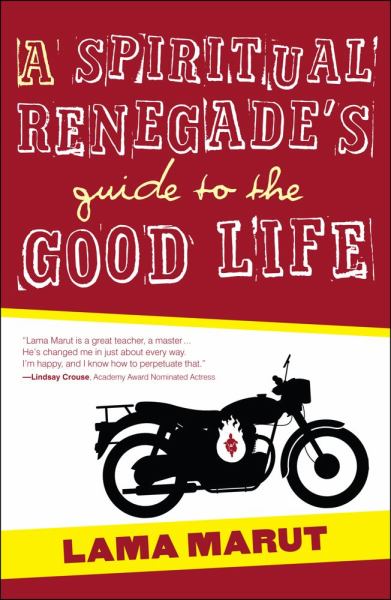
    Though we may all have varied goals and paths, ultimately, we all have the same objective: happiness. It’s with this in mind that Buddhist monk Lama Marut wrote A Spiritual Renegade’s Guide to the Good Life.

    Through a series of meditations, exercises, and insights, he helps us overcome suffering and create contentment—two essential prerequisites to happiness.

    Playful and entertaining, A Spiritual Renegade’s Guide to the Good Life distills complex ideas into a light-hearted, easy-to-read manual for happiness and fulfillment.

    I’m grateful that Lama Marut took the time to answer some questions about the book, and also offered 5 books for Tiny Buddha readers.

    The Giveaway

    To enter to win 1 of 5 free copies of A Spiritual Renegade’s Guide to the Good Life:

    • Leave a comment below
    • Tweet: RT @tinybuddha Book GIVEAWAY & Interview: A Spiritual Renegade’s Guide to the Good Life http://bit.ly/TuAGfP

    If you don’t have a Twitter account, you can still enter by completing the first step. You can enter until midnight PST on Tuesday, December 4th.

    The Interview

    1. What inspired you to write A Spiritual Renegade’s Guide to the Good Life?

    I wanted to try to summarize—in ordinary, non-technical language—what I had learned over the years about living a life conducive to happiness. We are all driven by the desire to be happy, but I know in my own case that I spent a lot of time barking up many wrong trees before I found a method that really worked! (more…)

  • Refill Your Glass: A Simple Way to Make the Most of Yourself

    Refill Your Glass: A Simple Way to Make the Most of Yourself

    “Make the most of yourself, because that’s all there is of you.” ~Ralph Waldo Emerson

    Twelve years ago, my husband and I were preparing to adopt our son. As part of the process we were required to take parenting classes.

    One of the classes was about taking care of ourselves so that we could take care of others. Given the difficult journey that parenting can be, the instructor encouraged us to “refill our glass.”

    Honestly, I couldn’t relate to what he meant. I was young and excited about having a family. Silently I dismissed his suggestion that parenting or anything in my life, for that matter, would challenge me so much that I would need to “refill my glass.”

    Eventually I figured out what he meant—and it isn’t just for parents. All of us need to refill our glass so that we can live happy and fulfilling lives.

    Refilling my glass is taking those mindful, deliberate actions to improve my mental state and attitude—to lift myself up so that I can continue on a positive path with energy and good intention. I found that by refilling my glass, I could be happy despite the ups and downs that life presents.

    Sometimes it’s hard to take the time to figure what we need and why. And it’s easy to feel like a victim.  

    In fact, there have been times in my life it when I have preferred to be a victim to my circumstances. When that happens my glass is dry. Thanks to my husband, friends, and websites like Tiny Buddha, I’ve learned how much I can benefit by making the effort to refill my glass.

    I’d like to share some simple ideas that helped me:

    Watch.

    When I was dealing with a lot stress last year, I felt down and lacked energy. I was going through life in a robotic way. No excitement, no fulfillment. While I didn’t know it, this was a sign that my glass needed refilling. (more…)

  • 5 Simple but Powerful Choices for Pure Peace and Contentment

    5 Simple but Powerful Choices for Pure Peace and Contentment

    “Until you make peace with who you are, you will never be content with what you have.” ~Doris Mortman

    Every day I chat with a friend and he always asks, “How are you?” This isn’t the superficial greeting we often give to an acquaintance in passing. He really wants to know, and I usually oblige with an honest snapshot of how my life is at the moment.

    I began to notice that my answers contained words like “quiet,” “peaceful,” and “content.” Could this be the elusive happiness that I spend so much energy and time to achieve? And could it have settled subtly on my shoulder like a shy butterfly while I was busy with my life?

    I am constantly reading and analyzing how I can make my short time on earth better. In general, life is good. But like many people, I often fall into the trap of trying to do too much, be too much, and painstakingly pick myself apart for being human.

    I took some time to reflect what changes I had made over the last few months that would have opened me to a feeling of pure contentment. By contentment, I simply mean I feel fine and secure with what I have, what I am, and where I am going right at this moment.  I know things can change, but I feel now is perfect.

    Here are the five things I identified that led me to find a harmony within, however fleeting.

    1. Show humility.

    I live in Florida, where the housing market is especially broken. The loss of tourism, the NASA space program, and other economic hardships here have caused many friends to lose their homes to foreclosure. I am reminded everyday to be grateful for things such as a house I love and the ability to share with my children.

    When I sweep my floors, I think, “I feel thankful to have what I have and the joy to taking care of it.” It sounds funny, but many boring household chores are what others would wish for. These chores are a service to my family and a healthy dose of humbleness for my soul.

    2. Recognize enough.

    With practice, and gentle reminders from those I respect, I have finally accepted my true life is happening right now. I celebrate the accomplishments and good things as they happen and avoid looking ahead too far for more of the same.

    Going slowly and enjoying the journey is “life.” Rushing the moment can take such fun out of the anticipation. Expectations can lead to disappointment, but accepting what I have been given now is contentment.

    If right now is painful for you, try thinking, “I’m growing,” instead of “I’m hurting.” It’s pain and discomfort that causes us to move. Sometimes the move is necessary and beneficial overall.

    I repeat the mantra “I have what I need” often to remind me that now is not just enough, but a blessing.

    3. Simplify life.

    Give up what you don’t need and be glad you did. So many things can fall into this category. Material things take space and energy to maintain. Toxic relationships tax our positivism and peacefulness. Worry and despair over things we cannot change rob our sense of well being.

    Very few things in life are a real crisis. Those that are cannot be solved by worry but by deliberate and thoughtful actions. Take decisive action to cut out the things that complicate and thus rob you of true contentment.

    I’ve begun to clear whole days on my calendar of planned events. These are free days that I can spend with my family spontaneously.

    4. Have real fun.

    Regret can be a mood killer. We often take the serious and over-analyzed road when making decisions. It’s good to be responsible; it’s also good to take a chance even if it entails a big mistake.

    I went to Las Vegas once and really wanted to try a live poker tournament. I chickened out and instead watched a friend try it. It is something I still wish I had pushed myself to do.

    Is a card game a life or death situation? No. But I should have allowed myself the fun, and if the chance arises again, I’m on it! Respect your boundaries, but be open to experiences and challenges that offer a sense of peace.

    5. Make room for quiet.

    Whether you pray, meditate, listen to nature, or even just be, allow yourself to hear what’s in your heart. Connecting with what is inside better prepares you to deal with the exterior world with calmness and peace. Give up control and release yourself to thoughts and emotions that can heal, strengthen, and even surprise you.

    Your inner voice often has something to say. You can best recognize that gut feeling that can act as a reliable compass once you turn off all the noisy, messy distracting sounds of life. I describe it as being “plugged in” to the positivity around me.

    I am not all calmness and peace all the time. I have a full and often chaotic life with children and a job. But, with a few mindful adjustments, I have found a season of contentment, and for that my thankfulness abounds!

  • 4 Key Questions to Feel Fully Fulfilled and Content

    4 Key Questions to Feel Fully Fulfilled and Content

    “The person who lives life fully, glowing with life’s energy, is the person who lives a successful life.” ~Daisaku Ikeda

    More often than not when we want to create something new or different in our lives, our true yearning is not about what we want to do on the outside that will make us feel fulfilled and content, but a certain way we want to feel in ourselves.

    That fancy car might give us a feeling of power, or esteem, or pride. That successful business might make us feel like we “arrived” or we are recognized. That trip to Nepal might make us feel like a world-class adventurer. Losing 10 pounds might make us feel more desired.

    But ultimately what we are really searching for is a certain experience we want to have on the inside.

    When I was younger, I wanted to be an actress. I wanted nothing more than to express my emotions on stage.

    Looking back, I realize I was trying to gain self-esteem through receiving applause. But inside, I really felt I didn’t matter. My true inner calling was to be able to freely express my feelings. Acting gave me a safe container to do just that.

    When I became a psychologist, I had a desire to help others through their emotional strife.

    The truth is I got a Counseling Psychology Masters degree to know myself more and understand the makings of my own psychology. I was able to help others and learn more about myself.

    The point is there is always an underlying reason why we want something. And the key to feeling fulfilled is to become aware of why we want that something in the first place.

    What are you really looking for? Meaning, what is the way you want to experience your being within? (more…)