Tag: consistency

  • How I Learned to Trust Myself One Small, Simple Step at a Time

    How I Learned to Trust Myself One Small, Simple Step at a Time

    “Sometimes, the hardest person to trust is ourselves. But when we do, everything changes.” ~Unknown

    For a long time, I thought the key to changing my life was out there—somewhere.

    I thought that if I just found the right program, the perfect plan, or the expert with all the answers, then I’d finally feel in control and like I was doing it “right.”

    So, I chased every plan, bought the books, signed up for the courses, and followed all the steps.

    And for a while, it felt good—safe, even. But deep down, I still didn’t trust myself. Because no matter how much I followed, I was still outsourcing my power. I didn’t believe I could create lasting change without someone else telling me how.

    It wasn’t until I hit a moment of pause—when life got quiet and the excuses disappeared—that I finally asked myself: What do I actually want? And can I trust myself to go after it?

    The honest answer? I didn’t know. I’d been listening to everyone else for so long, I’d lost the sound of my own voice.

    And that realization was equal parts terrifying and freeing.

    Because if I didn’t know what I wanted, I had to figure it out for myself—and that meant letting go of what everyone else thought I should be doing. It meant tuning out the noise and tuning in to something I hadn’t prioritized in years: me.

    Self-Trust Doesn’t Come from Thinking; It Comes from Doing

    That was the turning point.

    I realized that self-trust isn’t something you just wake up with. It’s something you build. And for me, that started with the smallest steps.

    I began showing up for myself in tiny ways—drinking water first thing in the morning, walking for ten minutes, writing for just a few minutes a day. Nothing fancy. But they were promises I made to myself—and kept.

    Each small habit became a tiny brick in the foundation of self-trust.

    And slowly, those micro-wins turned into momentum. I didn’t need a full plan anymore. I didn’t need someone to tell me what came next. I was proving to myself, day by day, that I could count on me.

    When I first committed to writing ten minutes a day, it didn’t feel like a big deal. But doing it every day—even when I was tired, or uninspired, or unsure—was quietly revolutionary. It wasn’t about how good the writing was. It was about showing up for myself and keeping a promise. That shift became a building block not just for my creativity but also for my confidence.

    That consistency created a ripple effect. If I could trust myself to write, I could trust myself to move my body. If I could move my body, I could nourish it better. If I could nourish my body, I could speak more kindly to myself. Each action reinforced the belief that I could do this—that I didn’t need to be fixed; I just needed to believe.

    And let’s be honest—it wasn’t always easy. There were days when I didn’t feel like doing any of it. Days I wanted to hide, to go back to following someone else’s checklist. But I reminded myself that this time, I was building something that belonged to me.

    Consistency Builds Confidence

    It wasn’t perfection that changed me. It was consistency.

    Every time I kept a promise to myself—even something as small as sitting in silence for two minutes instead of reaching for my phone—I sent a powerful message: I’ve got you.

    And the more I showed up, the more my mindset shifted. I stopped asking, “What should I do?” and started asking, “What feels right for me?”

    That’s when everything changed. Not in a dramatic, fireworks kind of way. But in a grounded, real way.

    And that realness is what made the change last.

    I wasn’t becoming someone new—I was returning to myself. And it felt like coming home.

    You Don’t Need Another Plan; You Need to Believe in Yourself

    We live in a world that constantly tells us we need to be fixed. That someone out there knows better. That the answers are just one step away—if only we buy the next thing, follow the next leader, or change just a little more.

    But here’s what I’ve learned:

    You don’t need more noise. You need more trust.

    You need to know that you already have wisdom inside you. You just have to give it room to speak—and find the courage to act on it.

    And that starts with showing up for yourself in small, meaningful ways. Not perfectly. Just consistently.

    When you build a solid relationship with yourself—when you become someone who keeps promises to yourself—that’s where the shift happens. Not because you’ve mastered some fancy process, but because you’ve started living in integrity with the person you’re becoming.

    And in doing so, you step into a quiet kind of power—one that doesn’t need to prove itself to anyone.

    Start Small, Stay Honest, and Keep Going

    If you’re in a season of doubt, or if you’ve forgotten what your own voice sounds like, you’re not alone.

    Start with one tiny habit that reflects the person you want to become. Let that be your anchor. Let that be your proof.

    Because self-trust isn’t a lightning bolt. It’s a quiet build. And one small shift at a time, you’ll hear your voice again—and this time, you’ll believe it.

    And when you do, you’ll find something even better than the perfect plan—you’ll find your power.

    And that’s where real change begins.
  • The 5 Qualities You Need to Change Your Life

    The 5 Qualities You Need to Change Your Life

    “In any given moment we have two options: to step forward into growth or step back into safety.” ~Abraham Maslow

    Have you ever wondered what true personal development requires? What it truly takes to change your life?

    I have, and it’s a question I have been asking myself for years.

    As someone who was on a journey that could better be described as personal decline than personal development, I felt stuck living a life I hated.

    Around two years later, after having improved or completely changed every aspect of myself that I didn’t like, I can honestly say I am a totally different person.

    My confidence went from not being able to go to my local supermarket to speaking to hundreds of people every day.

    My self-belief went from thinking I’d never leave the job I hated to believing and striving for financial freedom.

    My discipline went from being unable to stick to any exercise routines and diets to being in the best shape of my life.

    I don’t share all this to brag—I share it to inspire anyone who feels stuck to finally become the person they know, deep down, they can be.

    It’s not only from personal experience that this obsession of mine has grown but also from seeing people around me who are always attempting to change for the better but just can’t seem to make it last.

    From my own experience and observations of others, I’ve learned that certain qualities are essential for lasting change.

    Having all five will not guarantee you’ll be successful, but not having all of them guarantees won’t succeed.

    Without further delay, here are five things you’ll need to finally become the person you want to be.

    1. Responsibility

    Without the ability to take responsibility, all other principles are useless.

    By not taking responsibility for your situation, you give all your power to the external factors or people that you blame, leaving yourself helpless.

    If you can’t take responsibility for something, you can’t change it.

    Taking responsibility isn’t blaming yourself; it’s taking accountability for whatever situation you find yourself in now, regardless of how you got there.

    I used to blame my childhood for who I was, but how does this help me in any way? It didn’t. Instead, it kept me the same—a person I wasn’t proud of.

    I didn’t blame myself for it, but I took responsibility for how I was going to deal with it moving forward. This allowed me to finally take action, and my life improved greatly as a result.

    2. Self-belief

    If you don’t believe you can change, are you even going to try?

    That’s why, to grow, you must first believe you’re capable of it, and to do this, you have to take action.

    If you’re anything like I used to be, doubting your ability to break free from your situation and tired of endlessly repeating affirmations to yourself in the mirror, it’s time to get some evidence.

    This teaches the brain that really you are capable of achieving the goals you set. Without evidence, you’ll never truly believe that anything has changed, because without it, what makes this time any different from the last?

    But how do we get that evidence?

    This is all about starting small. It’s setting smaller goals or challenges, ones that you may even doubt you can achieve, and then working diligently until you succeed.

    This could be anything from waking up an hour earlier every day to taking daily cold showers. Whatever it may be, do it until you’ve gained irrefutable evidence that you’ve succeeded at something you didn’t think you could do.

    From here, you set slightly bigger goals, achieve them, and repeat.

    Eventually, you’ll prove yourself wrong so many times, you’ll have no choice but to believe you can do anything.

    3. Discipline

    Personal development is hard, and if you quit when things get hard, you’ll never succeed.

    As I said, my levels of discipline used to let me down constantly. Whenever something got difficult, I’d let the uncomfortable feelings overwhelm me until I’d quit altogether.

    With anything worth pursuing, there will come a time when continuing feels challenging. This is unavoidable. Therefore, being successful with personal development requires the ability to feel uncomfortable but keep going anyway.

    Discipline allows you to do just that; it frees you from the prison of discomfort.

    Just like self-belief, you can build discipline by starting small and working your way up.

    Choose something difficult, something uncomfortable, and do it anyway.

    You can kill two birds with one stone here by using something like a daily cold plunge or exercise to grow your self-belief and build discipline simultaneously.

    Discipline is like a muscle; it can grow, and the bigger it gets, the more it can handle.

    4. Consistency

    Without consistency, your chances of creating meaningful results are slim.

    I used to expect results instantly. I wanted results the moment I began something. This was not only unrealistic but often impossible.

    It was the lack of discipline and the inability to remain consistent that contributed to most of my quitting.

    Over time, I realized it wasn’t the luckiest, smartest, or even most talented people who were the successful ones. The people who showed up every single day and refused to quit were the ones with all the success.

    One single water drop hitting a rock does absolutely nothing, but eventually, it carves and shapes the rock. The same can be said for going to the gym or anything else in life; it’s the consistent effort over time that gets you in shape.

    And so, I applied it to my own life and finally started seeing the results I desired.

    If you want change, you have to trust the process and show up every single day. Once you see the results that consistency gets you, you’ll no longer be relying on faith but on concrete evidence, making it much easier to show up when you least feel like it.

    5. Focus 

    In today’s world, it has become extremely difficult to avoid all the noise. With a pocket full of distractions, remaining focused has never been so hard.

    With social media, endless notifications, and more content than we could ever possibly consume, it’s enough to derail even the most focused among us. This is why it’s essential to ensure your thoughts and actions align with your goals.

    If you’re easily distracted, you’ll find yourself buying into new shiny opportunities over and over again, keeping yourself at the starting line.

    You’ll either be too distracted watching useless content or too easily influenced to stick to one thing at a time—and both will keep you from succeeding.

    The longer I spent doing just that, the more I realized that every path is hard, and for every path come hundreds of differing opinions on which way is best. Only when I stuck to one thing and focused on doing it well did I finally see results.

    So, if you want to finally become the best version of yourself and achieve your goals, you’ll need to limit distractions, stay committed to your journey, and focus on mastering one thing at a time.

    So there you have it, the five fundamentals of personal development. It’s time to go take action and become your best self, one small step at a time.

  • 6 Lessons from Nature on Living a Peaceful, Fulfilling Life

    6 Lessons from Nature on Living a Peaceful, Fulfilling Life

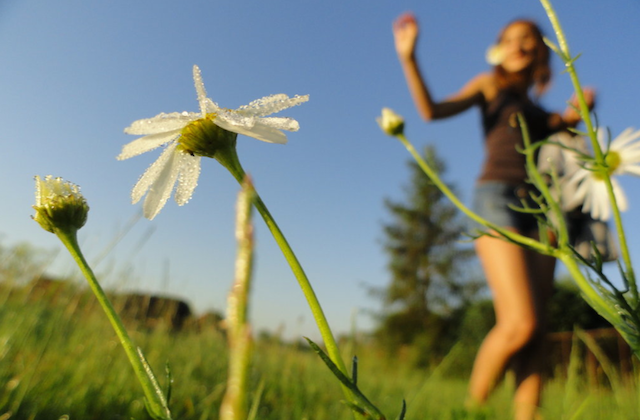
    Dancing in a Field of Flowers

    “Nature does not hurry, yet everything is accomplished.” ~Lao Tzu

    Five years ago, I was feeling really stressed (like millions of other people in the world). I was working full time in a job that was draining me of every single ounce of energy I had.

    I had nothing left to give to myself or those I loved at the end of each working day; life had turned into an incessant cycle of getting up, going to work, coming home, working, and going to bed.

    During this time, I read about so many people who were also unhappy with their lives. People who had reflected upon their existence and realized that this was not harmonious with who they were.

    I read about these people who inspired me with awe yet at the same time felt a sense of desperation. That could never, would never, be me, I thought. And while these conflicting thoughts existed, I became increasingly stressed out and more and more unhappy.

    There were things I enjoyed about my job (and still do). I became a teacher because I felt fortunate in having had such amazing support throughout my own education and wanted to offer young people that same help and guidance in return.

    But at the same time, I was changing as a person and I wasn’t the same being I had been six years previously when I had chosen that path. For my own sanity, health, happiness, and the happiness of those I loved, I knew something had to change.

    And then it did. My partner and I decided to move to a rural area of Herefordshire and buy a hundred-year-old cottage.

    There is no quick fix for happiness and I realized that the most important way to become less stressed was to change my way of thinking. But living in the countryside has undoubtedly contributed to my increased levels of calm.

    There is nothing like walking down a tranquil country lane, whatever the season, and just observing the sounds, smells, and landscape.

    I walk the same route regularly but this never bores me. With every single day, let alone season, something has changed and yet there is also a sense of constancy in nature, which I find incredibly comforting.

    The Lao Tzu quote about nature not hurrying embodies something I find I’m continually trying to work on—slowing down my daily pace. All too often we rush through our days, anxious to get things done at the fastest speed.

    When I’m aware that this is happening, I make myself stop and think: Why am I doing this?

    The pace of our world is frantic and seems to be constantly increasing. Despite this, I support the belief that life is not a race. 

    Going faster doesn’t necessarily equate with accomplishing more or better. In actual fact, the opposite is usually true. If you slow down, you make fewer mistakes, are able to think more clearly, and act with purpose.

    For me, this also results in feeling calmer and being more aware of my surroundings and those around me. This can only be a good thing.

    Frequently, we might tell ourselves that we must do such and such but in most cases, this feeling of having to do something is only a result of pressure from within.

    I personally believe that it’s important for our own sanity and health to slow down (and I apply this to driving, walking, and breathing on a regular basis).

    So this quote got me thinking about what we can learn from nature…

    1. Determination

    Nature is pretty hard to stop. Weeds and grass grow with dogged determination (much to the frustration of the lazy or time-pressed gardener). Many baby birds and other young offspring grow up against a huge number of odds; they are determined to survive.

    With determination, it doesn’t matter how fast (or slowly) you move through life. If you are determined, if you have a goal and a plan to reach that goal, you’re already a long way toward it.

    2. Strength in adversity

    Have you ever pruned or cut back a plant only to wonder whether you ever actually did, because now the greenery has exploded into an amazing array? I used to be reluctant to cut any plants back until someone told me that they actually ‘like’ it.

    I suppose it’s nature’s fight for survival; you cut it so it puts even greater energy into growing more.

    Nature could decide to give in and plants could just shrivel up and die. But they don’t. In life, when things seem tough, we usually have two choices: give in or give more.

    Choose to mirror nature and decide to face problems rather than run from them.

    3. Adaptability

    Nature can be incredibly adaptable. Just think about the four seasons. Animals and plants alike adjust to cope with the changes in climate and meteorological factors.

    Humans are no different. We put on an extra sweater or two in the winter but can be less adept at managing with changing circumstances. Since change is one of the only certain things in life, try to accept this and see it as a positive thing as far as possible.

    You might not be able to control life events, but what you can control is how you respond to them.

    4. Storing inner strength

    When autumn arrives, nature seemingly goes into shut down. But actually, wonderful things are going on, ready for when the plant and animal kingdom come into full swing once more.

    Take a leaf out of nature’s book and nurture inner strength when times seem sunny so that when the clouds appear, you don’t give in.

    5. Collaboration

    One thing nature does really well is working together. Bees and flowers are just one of the many examples of this. Bees collect nectar from flowers to make their honey while the flowers get a good deal out of it by their pollen being spread by their furry winged companions.

    You might be a real people person or perhaps you prefer your own space. Either way, the world is one huge partnership of human beings.

    There are so many things that we simply could not do without the help of others. Look around you; everything you see has been thought of by a human, designed by a human, made by a human (okay, perhaps with the help of a machine, but still). I find that thought pretty amazing.

    I’ll never meet most of the people who somehow are connected to my life, but knowing that every single thing I do I am able to do because of someone else is pretty awe-inspiring. In so far as you can, see people as teammates rather than competitors or adversaries.

    6. Consistency

    With the exception of an extreme weather occurrence, nature is pretty darn consistent. Want to be a super fit runner? Jogging every three months isn’t going to get you there; try to stick to a once weekly routine.

    It doesn’t matter if the day or time has to change as long as you hit that road/treadmill/country lane once a week. Maybe you want your garden to look pristine and something to be proud of. Again, get out there regularly rather than spend five hours slogging away once a month.

    Whatever your thing, be consistent.

    Whether you live in a rural area, town, or city, nature is all around us. Harness the power of nature to live your life and slowly accomplish your dreams.

    Photo by Mint-Flower