
Tag: connections

  • 11 Simple Ways to Nurture Meaningful Connections Offline

    11 Simple Ways to Nurture Meaningful Connections Offline

    “Turn off your email; turn off your phone; disconnect from the Internet; figure out a way to set limits so you can concentrate when you need to and disengage when you need to. Technology is a good servant but a bad master.” ~Gretchen Rubin

    We live in truly extraordinary times. Where once letters and telegrams took days to reach the other side of the world, we can now send messages and emails at the push of a button; and social media has allowed us to connect with people from diverse backgrounds, helping us learn, grow, and aim for the stars.

    The advancements in technology and science have afforded us such a vast array of benefits that it’s hard to argue with their cons. Yet our relationships, the very fabric of human existence, have deteriorated proportionately with the rise of technology and its increasing usage in daily life.

    We now need reminders to disconnect ourselves from smart phones, tablets, PCs, and all sorts of gadgetry in order to just make time for ourselves to rest and tune out from the information overload.

    Photographs of families gathered around the dining table, intently looking into their smart phones, might make for amusing viewing (and a fantastic photo essay), but they paint a picture that is not far from reality.

    We’re so tuned into our virtual world these days that parents and children often have chats over DMs, SMS, or social media, even if they’re sitting in the next room, and sometimes right next to each other.

    People have the time to ‘Instagram’ their fancy dinners or take quick selfies, as if it were second nature, but no one seems to have the time, patience, or inclination to reach out to those who’ve been with us all along, through our highs and lows.

    It could be the parents who we’ve left behind in our small towns in pursuit of our dream career; it could be friends we’ve known since childhood but haven’t bothered asking about, simply because we fell out of touch; it could be that neighbor or teacher at school who always looked out for us; it could be someone going through a struggle in their life who needs our support, though they haven’t voiced it, because we’re captivated no longer by people present around us but by technology.

    When I was growing up, both my parents were working, as was the case in most working-class households; my time was spent between a daycare center, school, and home, where quality time with my parents was at a premium.

    However, the early nineties were relatively gadget-free. There were no phone calls after work and no email checking all the time; nine-to-five shifts seemed quite productive, and no one was carrying work back home on a laptop. So, when we gathered together around the table at dinnertime, we were very much present; distractions were far fewer, and no one was posing with a phone to photograph our food or post it online.

    We didn’t fret over the possibility of presidents and leaders starting a WW3 on Twitter or spend time researching which crazy selfie pose would garner us more Facebook likes. I remember sending handwritten letters to my cousins just to stay in touch and waiting expectantly for Christmas cards during the holidays. There were simple joys to be had, even in the mundane.

    We share so much over social media—our favorite foods, brands, clothes, and lifestyle choices—and there’s so much visual information overload that we end up believing everything we see and read in the media.

    We live in the era of fake news; we’re slowly but surely losing our ability to stay in touch with reality and discern what’s true and not. What we see online about other people’s lives becomes our unconscious standard for how things should be in our own lives.

    We’re losing touch with ourselves and our truth. You don’t have to keep up with the Kardashians; you have to keep up with your own inner circle of loved ones.

    The virtual world is fascinating; you can choose to be who you want to be, and people are going to believe what you put out there even if you do not bear any resemblance to your online persona in real life. The communication is often impersonal—surface conversations that spare you the hassle of emotions, of feeling deeply. It’s easier to be lost in virtual space than to confront harsh realities.

    Two hundred thousand followers on Twitter or a million subscribers to a website do not necessarily translate into the same number of trustworthy relationships you can bank on. Sure, you can campaign successfully for a social good fundraiser with that many followers, but can you count on them during a time of personal crisis?

    Many people view the virtual space as an escape from reality, which is not only damaging our emotional development but is also detrimental to our relationships in the real world. While there is that resounding minority that has managed to forge meaningful friendships online and has benefited from professional associations through networking, personal relationships have undergone a transformation of sorts. The online world has become our confessional, our confidante, and our record keeper.

    Isn’t it ironic then that, despite having everything at the click of a mouse or an app, we’re hardly able to communicate, share, and confide openly within our own families? When was the last time you had a heart-to-heart with your own spouse, kids, siblings, or parents? Does connecting with them deeply have to wait till Thanksgiving, Christmas, date nights, or summer holidays when you can do this just as easily every day?

    Sometimes, you may not even have anything new to share, but those are the times you can let them know how much they mean to you. When it comes down to needing an encouraging hug, you still need a human in your non-virtual reality.

    We should be living in a way that doesn’t make relationships with our loved ones subject to our busy schedules. We shouldn’t need reminders to make time for those closest to us, be they members of our household, parents, siblings, or friends.

    Most of us have the time (or can make the time!) to engage in friendly banter and entertain ourselves with every piece of media, news, or gossip online; however, we find it challenging to direct this enthusiasm to our relationships at home or with those we’re emotionally close with that physically live far from us.

    This is part of the reason why more and more people are looking online for ways to cope with personal struggles—because there’s no one at home or in their immediate environment who has time to hear them out.

    There’s no doubt that the interconnectedness and shared information we have access to in the virtual space is a boon and that social media and networking have afforded us amazing connections as we walk forward with a collective consciousness. But let’s not lose sight of the people and relationships we’ve built our lives’ foundations with. No one’s too busy to make time for another.

    Make time for your loved ones by disconnecting from your virtual world.

    Your smartphone isn’t going to die if it doesn’t hear from you. But your parents may be disheartened that they no longer receive a phone call from their beloved child except on a major holiday; and your kids and spouse may miss telling you the things they so badly want to share because you’re too busy scrolling on your phone.

    Though we can absolutely forge deep bonds online, it’s crucial that we don’t lose our connection to the people right in front of us.

    Here are a few steps to help you connect meaningfully with the people in your life more often.

    1. If you’re on multiple social media platforms, streamline and bring the number of platforms you actively use down to three. If you’re super crunched for time, use these platforms alternatively throughout the week. Schedule time for social media but cut out unnecessary browsing.

    2. Clear out unwanted apps from your smartphone so that you have fewer things to distract you. Call it an app spring cleaning.

    3. Read up on productivity-boosting tips or time management so that you’re better equipped to give everyone in your family your undivided attention.

    4. Have your dinner with the television off, disconnected from the Internet. If that’s the only time you and your family have together, make the most of it.

    5. Make time for some sort of spiritual practice that you and your family can engage in before you retire for the night. It could be praying, meditating, reading/sharing a reflection, or reciting a positive affirmation or an expression of gratitude for the day. You do not have to be religious to be engaged in a spiritual practice!

    6. Volunteer for a social good project in your local community with your friends, siblings, or family.

    7. Take up any group hobby that doesn’t require staying online—like cooking, painting, or dancing… the list can go on.

    8. Plan a picnic and get together regularly in an outdoor environment close to nature. Spending more time in nature is known to be soothing and relaxing, and it makes it easier to switch off your phone!

    9. Lost touch with friends living far away? Don’t succumb to the easy route by sending a message over SMS, Whatsapp, or email. Jot down your favorite memory and send a postcard. Or, if you have more time on your hands, an old-fashioned letter would be absolutely delightful.

    10. Flowers have a way of conveying a whole lot of things without saying much—even a hand-tied bunch of wildflowers. And they’re known to perk up even the most insipid of days. If you feel anyone is in need of a gesture like that, send them a bunch and make them smile!

    11. Return to the joys of simple living with people you love: wake up early to watch the sunrise; walk on wet grass or the sandy shorelines of a beach; inhale the aroma of freshly baked bread or the scent of flowers in a vase; write ‘thank you’ notes often; be mesmerized by the skies at night—look for the constellations, the shooting stars, and the moon. There’s a lot of joy to be had when you disconnect from technology!

    For our relationships to thrive, we must learn to prioritize both our own well-being and that of our loved ones. When you’re giving them the time and attention they need, they’ll feel more loved and confident about themselves, something no one can get through technology alone.

    We need to return to the basics of human loving, caring, and sharing. Unplug from your devices and plug yourself into the healing power of stronger, deeper relationships.
  • True Connection Happens When We Release Cynicism and Judgment

    True Connection Happens When We Release Cynicism and Judgment

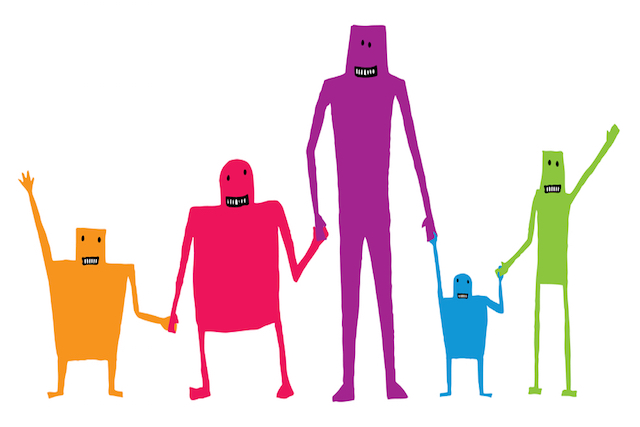
    Cartoon teamwork holding hands / happy cooperation

    “Everyone you will ever meet knows something you don’t.” ~Bill Nye

    It’s cool to be a little cynical, right? We’ve all seen the movies; we know an air of ennui and a well-cultivated sneer is all a person needs to get by.

    When I was in my early twenties I used to archly describe myself as an “optimistic cynic.” To me, it sounded cool. I was playing in bands, and I’d decided this was how I wanted to show up to the world.

    Back then I responded to everything, whether good or bad, exciting or not, through a filter of sarcasm. (And for those who don’t know me, I’m talking British sarcasm here too. The strongest kind.)

    Thankfully, though, after years of deep work on myself, I eventually realized that really, in being so cynical, I was just hiding behind a façade, a front. The cynicism was a barrier to protect myself, and ultimately, it halted me making real connections with others, and myself.

    I think I first realized this while at university. There was a guy who lived on my floor who was just a really good person.

    Andy was happy, friendly, well-liked by everyone. The source of good emotions wherever he went.

    At the time, of course, I dismissed his demeanor as an act to be liked, which, as I write this now, I realize was me projecting my own issues on him.

    But even then a part of me knew Andy was doing something right. When he’d invite me to things (and I of course turned him down with a sarcastic aside) I felt a little silly, a little humbled by his great outlook and energy, which contrasted so greatly with my self-defeating ‘cool.’

    You see, deep down I knew I wanted to do all the things he was doing. I wanted to live my honest truth like he was, but for whatever reason I couldn’t bring myself to let go and just be myself. Andy held a mirror up to my sneer, and I didn’t like what I saw.

    I’m glad to say I’m not like that anymore. But it’s still in me on occasion, and I think in all of us if we aren’t careful. It seems more and more, cynicism is becoming the default setting for our collective consciousness. It’s the way to be now in this post-modern world.

    Don’t trust people. Don’t show your feelings. Don’t give a damn, frankly.

    We live in very uncertain times, so it’s understandable, then, that we’ve learned to question people’s motives. But where this once still bordered on liberal curiosity, it is fast turning to simple mistrust, disconnection, and in many cases, actual fear of others.

    It’s a sad situation, and something I feel we all need to be aware of. More so, we need to actively fight against this cynicism and learn to connect with each other again.

    A study at Harvard that was conducted over a staggering seventy-five years has proven beyond any doubt that that when it comes to being happier in every way, it’s all about making real connections:

    “The more areas in your life you can make connection the better…The study’s most important finding is that the only thing that matters in life is relationships…Happiness is love. Full stop.”

    But before we can make powerful connections with others, there’s someone else we need to connect with—ourselves.

    When we are disconnected from ourselves, we lose our power and our confidence in our abilities; thus, our ability to trust ourselves diminishes. And if we can’t trust ourselves, how can we trust others?

    So, we need to take the time to discover our own wants and desires and to connect fully with our core values. When we have this self-knowledge a lot of other things quickly fall into place.

    You can practice this in small ways too. Take time throughout the day to engage in a tech-free walk in nature and get your peripatetic system working. You’ll be surprised how quickly you connect with your truth when you’re completely alone with no distractions of any kind.

    Meditation, too, is a great way of just being with yourself fully. You’ll often find you have great insights once you actively create some silence for a short period and calibrate yourself. In this way, we can quickly become a person who is so focused on their path that cynicism never even gets a look in.

    When we connect with the vision we have for ourselves, we gain clarity and can then relax, become more comfortable, and begin to create real connections with the world outside.

    When you take the time to do this, you make peace with yourself, and it is from this position of power that you can create powerful moments with other people and become the source of good energy wherever you go.

    You can start this today: Practice actively connecting with people on a deep, powerful level. Look into their eyes just that extra second longer; give a hug that has real emotion behind it, a handshake that lasts a little longer than normal, or a comment that hits just right.

    With every person you talk to from now on, make a connection. Create a moment. Turn off the rest of the world and just, warmly, be with them.

    Do this right and it’ll feel like you’ve made time stand still. You’ll soon realize how great you not only make others feel, but how great you feel yourself as your connection and empathy for the world grows.

    Because flip back to the “cynical optimist” version of me you met at the start, and you’d see someone who regularly reacted badly to others, who got annoyed easily.

    I’m sure we all have had those times when other people have riled us—the man on the street walking too slowly in front of us or too close behind us, the rude checkout girl who can’t raise a smile, the work colleague who makes bad jokes or talks too much.

    We know that getting annoyed only ultimately harms ourselves. If something annoys you, that’s on you. And while we might think we’re displaying dominance and superiority by getting annoyed, really, all we’re doing is giving away our power and becoming disconnected to others and our true, better selves.

    Researchers have dubbed this fundamental attribution error, which states that we tend to give too much weight to someone’s personality or disposition in explaining their behavior in a given situation.

    In other words, we all too often take one single thing that someone does and use it to make a judgment on their entire persona. I’m sure you can agree that this does not help at all in creating honest connections with our fellow humans.

    We need to combat this bias whenever we can. A great technique I found, that immediately helps us feel more present and connected with others, is to consciously reframe the event.

    When you feel yourself getting a little antsy, rather than stewing on it and becoming disconnected and wound up, simply change the story.

    That man walking too fast behind you? He’s late for his new job and is a little worried about what his new boss will say.

    The sulky checkout assistant? They’ve just split up with their partner and feel heartbroken.

    If someone annoys you, tell yourself a story about why they are doing what they’re doing, and reframe it in a way that you can relate to.

    In this way we can all learn to be a little more empathetic, a little more connected, a little nicer even.

    And like I say, living this way really is a win/win situation all round; as you grow more connected with yourself and your environment, your own power and confidence will grow as a result. So create moments, reframe the stories you tell yourself about others, and show up in the world as a source of great emotions.

    That’s something we can all connect with.

  • A Simple Shift in Perspective That Can Improve Your Relationships

    A Simple Shift in Perspective That Can Improve Your Relationships

    Friends Holding Hands

    “I would rather have a mind opened by wonder than one closed by belief.” ~Gary Spence

    Right after college, I joined AmeriCorps. Not really knowing what I wanted to do with my life, I decided to apply for a program teaching classes on HIV/AIDS. I knew a little about the subject, but I have family members affected by the disease.

    A couple of cities hosted the program, and I was accepted into the Chicago one. I’m from a small town in Colorado and, to me, Chicago was a huge city. Well, it is the third largest city in the US, but as people will tell you, it’s no New York City.

    After receiving extensive training and settling in, I was assigned to a drug and alcohol rehabilitation center mostly serving low-income minorities. I was a part of the health education unit.

    One of my first classes was to teach a group of incarcerated men transitioning back into society. I was going to teach them about HIV/AIDS and sexually transmitted diseases.

    Admittedly, I was nervous. Why would any of these guys pay attention to me? Are they even going to like me? These thoughts were racing through my head. 

    I remember walking into the classroom for the first time. It’s one of those moments you can vividly remember every detail of. Imagine a young white kid, plaid shirt tucked in, walking into a room of mostly African American men from poor Chicago neighborhoods.

    As I awkwardly walked into the room, everyone went silent. Perhaps it was my perception of that moment, but I have a distinct memory of the room falling silent and heads turning toward me. As a quiet guy, it was not something I reveled in.

    I can only imagine who they thought this nerdy looking guy was and what he was doing there. In that moment, I asked myself the same question. I was scared.

    As I made some small talk and introduced myself individually to them, the class started. Talking to people I didn’t know was hard enough, so this was a huge step for me.

    As I took a deep breath and tried to fully immerse myself in that moment, I said something that, looking back, would set the tone for the entire duration of the class.

    I said something like this: “As you now know, I’m going to be teaching you all about your health. But, it’s not about me teaching you. You all know a lot more than I do, and I want to let you know that I’m also here to learn from you.”

    The room fell silent for a couple of seconds. Then, one of the guys in the back of the room yelled, “Shawn, that’s not a problem. After I get out, I’ll give you a tour of the South Side. You’ll learn a lot real quick!”

    Other guys starting chiming in and laughing. I didn’t know if they were laughing at me or with me. But then, another guy reassured me and said, “Shawn, you’re going to do just fine. You’ll fit right in.” They welcomed me in and I felt at ease, like a weight was lifted off.

    Through this experience, I learned an important lesson about the human condition and personal relationships.

    I could have taught them all the facts in the world about HIV/AIDS and what they should and should not be doing. Anyone can do that. But to connect on a deeper level, to truly understand them, I had to remove my own biases.

    It was the first time I actually had to put myself in someone else’s shoes. I had to see things from their perspective before I could teach them anything. I had to truly understand where they were coming from. I had to understand their struggles, triumphs, and wisdom.

    There is a great story about a professor visiting a Japanese Zen Master. The professor wants to learn about Zen. He arrives and the Master begins pouring him a cup of tea.

    As the cup fills up, the Master continues to pour until the cup is overflowing. Astonished, the professor exclaims, “The tea cup is full. Why do you keep pouring?!”

    The Zen Master says, “You are full of knowledge. But before you learn Zen, you must first empty your tea cup.”

    For many years, I didn’t truly understand this lesson. Intellectually, I thought I understood the concept. But in that moment in Chicago, I experienced it. Looking back, I didn’t connect the lesson to that moment. It just felt like the right thing to do.

    To connect with people on a deeper level, you have to empty your own tea cup. Whether you are a son, daughter, mother, father, partner, spouse, teacher, student, mentor, coach, or supervisor, you have to be open to the wisdom of other people rather than intellectually try to figure them out.

    Over the next couple of months, we all grew closer together and they taught me more than I could have ever taught them.

    They had the experiential knowledge and the real world experience. They were open to learning the intellectual knowledge, but if I hadn’t let them know I was open to them, it could have easily become one-sided.

    I could have talked at them instead of with them.

    On the last day of class, we had some fun and talked about what we all learned in the class.

    At the end of class, the same guy on the first day of class spoke up again. “Shawn, don’t forget about our tour of the South Side.”

    We all laughed. We wished each other well and parted ways.

    Some of those guys I would see again in the building, and I often stopped by to say hello. I hoped the best for them, even though many of them (as they informed me) would end up back in the system.

    I never did see the man who offered me a tour. I frequently wonder if he ever made it. I may have taken him up on his offer.

    Those guys probably don’t remember me now, but I will never forget that experience and the wisdom they shared.

    We all connected on a deeper level, and a room full of strangers became some of my greatest teachers.

    Friends holding hands image via Shutterstock

  • Why Being Real Matters More Than Being the Best

    Why Being Real Matters More Than Being the Best

    Friends

    “We have to dare to be ourselves, however frightening or strange that self may prove to be.” ~May Sarton

    Have you ever compared yourself to others on social media?

    You’re not alone if you have. It’s human nature to compare, compete, and seek value in the opinions of others. To aspire to the heights others seem to have attained.

    But how real are those people we compare ourselves to really being? The ones who seem to have it all together? Perfect family, ideal job, loving relationship?

    I would venture to guess they’re not being very real at all.

    It’s true they may have a great partner, a great job, and well-behaved kids—some of the time. But like everyone else, they fall, they fight, and they make mistakes. They just don’t talk about it on Facebook.

    That’s where online relationships let us down; they fail to tell the whole story.

    I’m as guilty as the next person. I post pictures of my kids baking cakes, running along the beach, and acing the soccer game on a Sunday. But I neglect to mention how much I yelled at them for their attitude or constant fighting.

    I talk about date night with my husband but don’t mention how we argued all the way home.

    And I post pictures of inspirational life quotes, such as, “Only a life lived for others is a life worthwhile” (Einstein) as though I’m living them every day.

    Because I, like everyone else, want to show the best side of myself. I have an inherent need to be liked and to belong. It’s human nature.

    But what if being liked and belonging is more about being authentic than being the best or getting ahead? What if in sharing who we really are, we are more able to find the connection we crave?

    A few years ago I attended a weekend retreat and workshop for personal development along with about thirty others. Not knowing anyone, I was nervous.

    We met for the introductory session in a large room and had to mingle for about twenty minutes or so before the facilitators arrived.

    What I experienced in that time was eye-opening to me. I watched as eyes darted around the room, each person looking for someone like themselves to identify with, be it through age, appearance, personality type (introverts, extroverts), or physical attraction.

    In this vulnerable state, where each of us was seeking to find favor with the other, we all were quick to disguise our true selves and to judge everyone in the room on appearances and first words.

    And for the first day of that workshop judgment remained, until the facilitators were able to break down our walls and encourage us to see the value in being who we really were—in talking honestly and not trying to be better than the next person.

    To do so required being vulnerable. But once one person began to speak honestly about their fears and their struggles, it gave the next person permission to do the same. This continued until we all let down our guards and spoke honestly about our struggles and fears.

    The result was incredible. The connections I made that weekend were real, honest, and close.

    Once I saw my fellow participants for who they really were, all judgment fell away and I felt nothing but genuine love for them. Because when we see one another in our true light, it doesn’t make us weak; it makes us the same. We see how we are all human and in this thing called life together.

    It’s not being the best or getting ahead that meets our true desires; it’s being real and doing life together.

    What if we were to share our truth on social media? To talk about a bad day instead of always trying to be great?

    And what if instead of saying “I’m fine” to the next friend who asks, “How are you doing?” we could instead respond with “I’ve had a hard time lately”?

    Sometimes that leap of faith in the response is the first step toward living an authentic life and being true to ourselves. Because being anything less than who we really are just isn’t worth it.

    Friends image via Shutterstock

  • Finding Kindred Spirits by Honoring Your Inner Misfit

    Finding Kindred Spirits by Honoring Your Inner Misfit

    Friends

    “The thing that is really hard, and really amazing, is giving up on being perfect and beginning the work of becoming yourself.” ~Anna Quindlen

    It should theoretically be simple but being authentic is not easy. It takes gumption to assert with courageous conviction “This is me!” and grace to accept what comes after.

    From my first discordant bear cry in a nursery full of normally crying babies, I was different, quirky. My own way of doing things—dresses over jeans, art over sports—made me an early outcast. Nothing I naturally did fit me within my particular society.

    For a while, during a specific section of years, in order not to be misfit, I conformed completely. I lost not only the misfit but also myself, and with each false friendship, however popular, my spirit gradually disintegrated.

    I forgot the organic, things that for me bring me into alignment—nature, certain family members, words, a childhood best friend—while weekend hazes fizzled my concept of identity. In a fog of boozy, belligerent moments, I grasped for something substantial, some shred of tenderness, but nothing was there.

    Various events cleared the fog enough so I could see the way out—alternative schooling, a trip abroad, college. And out I ran. In the clearing of my twenties I realized popularity was the false idol of an insecure twelve year old. Older, I felt free to reject others and accept myself.

    I have devoted this decade to the integration of all my fractured shards. The process of authentic self-resurrection is like solving a puzzling mystery—examine the evidence, look for clues, decipher what is real and what has falsely been accepted to cover up excruciating truths, reach a conclusion.

    My conclusion is that I am most decidedly a misfit. I have not, do not, will not fit.

    I want winnowed “friend” lists, not 1,000+ and counting, a core group of loved ones, where reciprocity is the foundation—of kindness, respect, intimacy, and sharing. I want Saturday night curled up on a chaise with a stack of board games and a bowl of pasta, Sunday brunch with the seagulls.    

    I am an adult who likes stickers, who prefers a bird call to the drone of a machine. I am more comfortable in the company of older people, Disney still makes me smile, and I never feel more alive than when I am dancing with the wind.

    Energy and time are precious gifts. We do not all get a hundred years; some of us die before we take our first breath, others at six, twelve, thirty-one, fifty-eight, or seventy-four. I have bargained with Death during decades of ill health, so I know how precarious Life is. How brief.

    I do not want to misspend on dangerous entanglements what little time I have, to invest where there is little or no reciprocity, or where I feel unsafe. There are enough worthy recipients; I have especially learned that this year, so it is on these nourishing relationships that I focus.

    During a crippling period of sickness, one where I was completely dependent on others—for a bath, or a sandwich—I was humbled. It is easy to take for granted the use of legs, that we have twenty-eight teeth and five senses.

    I have learned this lesson repeatedly but when I literally could not move without collapsing, my days spent almost entirely alone, inside, I had little else I could to but consider not only the why my circumstances were such but also the who, as it was me I had for company.

    What helped me clarify my authentic self during this time of healing? A notepad and pen. These household items helped me synthesize into simple lists decades of self-examination:

    • Who unyieldingly matters to me?
    • Who do I feel cares deeply about me (during the light and shadow times, when I am healthy and sick)?
    • What do I most and least enjoy?
    • What dreams am I passionate about enough to pursue?
    • What are my flaws?
    • What are my strengths?
    • If this were my last day, moment, would I be sad or happy with my choices?

    The lists, because they were succinct, showed me essential truths.

    I saw someone who dreams sometimes more than they act, who around certain types of people gets weak, someone who can be melancholy, who agonizes, who needs to laugh more. But I also saw empathy, intelligence, a free spirit, a musical, imaginative, loving explorer.

    I saw real—shadowy and flawed, light and strong. I saw popular—with myself.

    I also saw a letter writer. Since I’m an old-fashioned soul, who still listens to records, who prefers the twitter of birds, it is no surprise the unfettered scrawl of my pen to an eager recipient excites and nourishes me. Others say this is a flaw; that I need to catch up with modern culture. I say not.

    Before last year this desire was dormant. I had stashes of stationary stored high on closet shelves, stickers and stamps collected and unused, scattered in drawers and stuffed into boxes. I feel more complete since owning and passionately pursuing this previously invalidated aspect of myself.

    Because I prioritized reflection, and went within to my most gnarly corners, I found something hidden, something incandescent, a forgotten romance, a creative reservoir for deep connection.

    My lists showed me the way to myself, then to a community of like-spirited souls. I listened with my pen, I recorded the words, and I heeded their wisdom. Via Interpals and the Letter Writer’s Alliance, I found in places as diverse as England, New Zealand, Russia, Austria, Slovenia, Canada, and Denmark, others who wanted authentic connection.

    These snail mail relationships are based on reciprocity, on honest, open exchanges. To with the hand intimate the what, where, why, when, and how, to take the time to stamp into an envelope a careful selection of thoughts, sorrows, and hopes, is not only to harken back to a time when this practice was regular, but to decipher profoundly what it means to live, and to connect.

    The status of a person cannot be confined to a certain number of words on a briefly scanned page. We are more complex than that. We deserve more attention, and to attend more thoroughly to others.

    Letters taken seriously are generous that way. We ask questions in letters, and lazy words like “I don’t know,” “Anyways,” “It is what it is,” and “Fine” do not merit a stamp, nor do they fill a page.

    My friend asks me to sum myself up in one word and I have to stop and consider not only the genesis and evolution of my story, but the magnificent supply of words I have to choose from. When “quirky” proudly surfaces it fits. And I am no longer misfit in her company.

    My grandpa said we should consider ourselves lucky if, at the end of our lives, we can count on one hand our genuine relationships. These are soul-level authentic connections, those we can be imperfect and honest with, the people who do not want our tears hidden or our smiles false.

    Use your imagination to honor the misfit within. List your truths, make them visible, and see what parts of your honest identity you have stashed away on high shelves. I might be a quirky letter writer, you an eccentric dancer, but as long as we are real with ourselves and others, how can we be wrong?

    Happy people dancing image via Shutterstock

  • Simple Reminders to Focus on What Matters in Life

    Simple Reminders to Focus on What Matters in Life

    “Before someone’s tomorrow has been taken away, cherish those you love, appreciate them today.” ~Michelle C. Ustaszeski

    As tough as it sometimes feels, change and loss are woven into life. We cannot live a full life without them.

    Although both can be painful, they push us into a greater understanding of what matters in life, and they can help us become clearer about who we are since they provide a platform for substantial growth.

    Over the past couple of years I’ve experienced many changes as I’ve transitioned from one chapter to the next. The one constant through all of that change has been my right hand man, my best friend: my dog Tucker.

    My 80-pound golden retriever buddy came to me at the darkest period of my life. I adopted him when I was suffocating in a deep depression, and he became my earth angel that helped pull me out.

    He has been by my side through all the failed romantic relationships, horrible bosses, and seemingly wrong turns in life. Through all the chaos he’s calmed me down and kept me grounded.

    After a series of layoffs, a break up, and overcoming drug and food addictions, I thought everything would be fine because Tucker and I had made it through the darkness—until a couple weeks ago, when a veterinarian found a tumor in his nose attached to his brain. The likelihood of it being cancerous was extremely high.

    Although Tucker is sick, we still have time together. Through this experience, I’ve learned a lot about what matters in life.

    Here are some of the top lessons I’ve learned from Tucker:

    Make Your Time Count

    I spent so much time trying to be somewhere else—in another job, another relationship, another place. In my effortless pursuit to get to the greener grass, I was missing life. It wasn’t until my best friend was diagnosed with a life threatening disease that I saw the grass I’m standing on just needs a little water.

    I realize now that I have been sleepwalking through life. I was awake but always looking ahead to feel fulfillment. I couldn’t be happy with where I was, whether it was with boyfriends, my job, or where I choose to live. (more…)

  • Get Connected: How to Expand Your Offline Social Network

    Get Connected: How to Expand Your Offline Social Network

    “Strangers are friends you have yet to meet.” ~Unknown

    We are living in times of massive change.

    Looking at some of the problems we are facing—the crumbling economy, environmental pollution, wars over scarce resources—sometimes the idea of moving far away to a remote mountain top seems very attractive. Or hiding in that small space behind the computer screen. Anything that helps us avoid real life and all its challenges.

    But of course, if everybody thought that way, who would actually get up and do something about our situation? And is it enough to receive words of comfort through an email? We also need a smile and a good hug.

    Shouldn’t we move closer together in times of hardship?

    Despite accelerating globalization, which is connecting everybody and everything in an ever-growing web, there is a worrying development: People are feeling more and more isolated.

    We have hundreds of friends on Facebook, but hardly anybody knows the names of their neighbors. All the social online sites are great, no doubt about it. But does the exchange happening there provide the human warmth we so desperately need?

    Recently there was a fire in the head office of my internet provider. Over 100,000 customers went involuntarily offline for three days. Lots of people complained, many panicked, and almost everybody suffered from some kind of withdrawal symptoms within the first day.

    Imagine you were suddenly without Internet for a week. No email, no Facebook, and no chat rooms. An important question arises: Do you have enough friends left who live nearby? (more…)

  • 7 Creative Ways to Turn Everyday Situations into Opportunities

    7 Creative Ways to Turn Everyday Situations into Opportunities

    Open Door

    “If opportunity doesn’t knock, build a door.” -Milton Berle

    The people who are the most successful in life are the ones who create their own opportunities. Since I’m a work-from-home freelance writer who prefers beadworking to networking, I have to be ultra creative.

    I’ve identified seven simple ways to find opportunities in everyday situations. Here’s what I got:

    1. Wear your resume while running errands.

    Last year I read an article about a woman named Kelly Kinney who printed her resume on a T-shirt. What a brilliant idea! I always notice words on shirts; I’ve even been known to ask strangers to hold still so I can get a better look (far less awkward when the wearer is a man).

    You can order a similar one at ResumeShirts.com for under $20–well worth the investment if it lands you the job of your dreams! (more…)