Tag: connection

  • 5 Ways to Find Your People (The Ones Who Really Get You)

    5 Ways to Find Your People (The Ones Who Really Get You)

    Friends

    “Above all, be true to yourself, and if you cannot put your heart in it, take yourself out of it.” ~Unknown

    For probably over thirty years—since I was old enough to know I needed them—I’ve been looking for my people.

    You know the ones—the people who get you, somehow; who are on the same wavelength. Some might even say the people who share the same brand of quirky, crazy, or oddness that you do. The ones who understand why you do what you do, or if they don’t understand, they either ask or they just accept, and either way is fine.

    It’s not that there was anything wrong with my family or my school or the few friends I had, or my neighborhood—not at all. We all had our ups and downs, but we moved on and through it and had good times and bad. But I just felt a deep sense that the people around me were aliens. Or I was.

    At one point during childhood I even made up a story in my head about how I had been placed with my family as an experiment to see how someone would grow up with people who barely even shared the same language. I’m sure a lot of kids had similar thoughts.

    As I grew up, I continued feeling this odd sense of never being at home, safe, or comfortable.

    Sure, I had friends and close family, and ended up successful in my career, but there was a kind of connection I was missing. Something where my particular gifts were treasured, and my particular sort of oddness was accepted and cherished; and where I felt safe enough to cherish and embrace the odd gifts of those around me.

    I looked for safety and comfort in lots of ways: in relationships, in books, in short-lived hobbies, in TV, in long nature hikes, in workshops on “finding your purpose” or “finding the love of your life,” in meditation, in yoga, in spontaneous road trips. And there’s nothing inherently wrong with any of those, but it was when I got out of my comfort zone that I finally found what I had been looking for.

    It happened when I followed my heart into the places that interested me.

    At first, I joined a group of people that I wanted very much to like me. I tried to be likeable, to support them and to do the work that was required to make our projects successful, to help out when I could, and I attended every party and event. But something wasn’t right.

    Though we shared a lot of interests, I felt like they never truly accepted me for who I was. There was a sense that they wanted me there to work and to even admire them, but few people seemed to be curious about me or to allow me in to become closer to them when I tried to become friends.

    There was an odd sense of people always keeping me at arms’ length. For several years, I decided that there was something wrong with me, which was why they didn’t seem to truly accept me.

    But one day, after camping with this group and feeling, again, that sense of not-belonging, I decided that it was neither me nor them. We simply weren’t a good match.

    I kept looking, following my heart into another group within the same larger community. This time, they seemed to genuinely accept me, to like me, to respond to me, to open up to me, and to both value me and appreciate that I valued them. And I did value them—I do. They’re a bunch of amazing creative, smart, motivated, fun, and genuine people. And it was like night and day.

    It’s not that everything’s perfect and that there are no conflicts or awkwardness, that everyone always gets along or that there aren’t moments of ambivalence where dynamics seem to shift.

    But the people I’ve found more recently, after allowing the ones that didn’t seem to click to move out of my life, seem like they’re going to stick around. And I feel like making the effort to make sure that my friendship and support will keep these people in my life for a long time.

    Here are some steps to finding those people who will love, support, challenge, and accept you:

    1. Do what you like to do.

    It doesn’t matter if you do it for work or do it for play, but do what you like to do. Sports, hobbies, hiking alone, travel, reading, collecting cigars, whatever it is, do it. You don’t even have to be super passionate about it, but if you enjoy it, do it.

    For years I thought nothing was worth doing if I wasn’t Passionate-with-a-capital-P about it. But just enjoyment is enough. And spend the amount of time doing that thing that feel right to you.

    2. Learn how to talk to strangers.

    Every stranger is a potential friend, as they say. I’ve always been really shy, but when I focused on doing the things I enjoy, I started to get less shy, at least about those things.

    It’s okay if you’re shy or feel like nobody understands you; just practice when you can. Learn that sometimes people don’t respond, and that’s okay. And sometimes you say something weird, and that’s okay. It really is.

    3. Find other people who do what you like to do.

    These days, with online social media and the Internet, you can pretty much find people who like to do anything you like to do. From knitting hats for cats to collecting particular kinds of rock, from listening to any kind of music to reading the collected works of obscure Romanian poets. If you like it, someone else likes it, I can almost guarantee it.

    Find them, and introduce yourself. There is no rule that says “your people” have to live in the same town as you.

    4. Participate, even if It’s scary.

    Just because some people like what you like doesn’t mean they’re “your people.” You may have to keep exploring your interests for awhile, and keep exploring groups who share those interests. But when you find people who seem like they can handle you, step in and help out.

    If it’s a group that meets in real life, volunteer your home for a meeting or offer to help out at an event; if it’s one person, invite him or her out to partake in the interest you share. You may feel awkward, but that’s okay. Awkward just means you’re stretching yourself.

    5. Be honest and present.

    Once you’ve met people that you feel you want to connect to, practice being brave enough to be open about that with them.

    One of the first groups I thought were “my people” actually kind of intimidated me, and I never got up the nerve to be honest with people in the group about that. I ended up finding a related group that didn’t intimidate me as much, but I still wonder, if I had been willing to share my vulnerability with that earlier group, if I could have been able to connect with them more deeply.

    Take up space with the people you think might be “your” people. Practice being open, saying what you feel, and being present with them. See how they react. The ones who stay with you in those moments of vulnerability, not judging you or criticizing you, are truly your people.

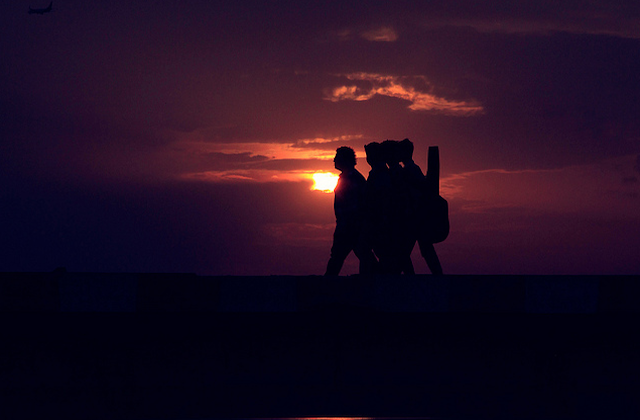
    Photo by Vinoth Chandar
  • How to Use Comparisons for Growth Instead of Feeling Inferior

    How to Use Comparisons for Growth Instead of Feeling Inferior

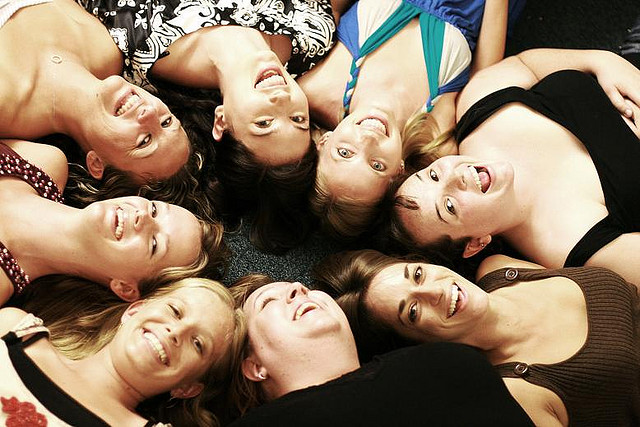
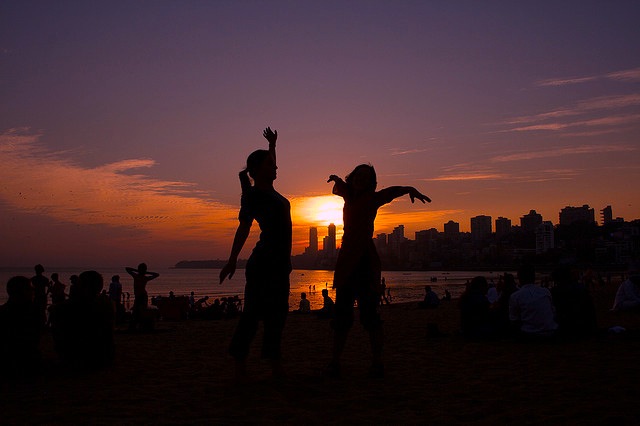
    Two Dancing Girls

    “The heart is like a garden: it can grow compassion or fear, resentment or love. What seeds will you plant there?” ~Jack Kornfield

    Comparison is something we all struggle with at one point or another. Although it’s something that conventional self-help wisdom urges us to avoid, it’s also a way of gauging where we fit in the world.

    Usually, when we engage in comparison, we do so from an ego-based perspective and find ourselves (or others) lacking. This approach doesn’t benefit anyone involved, but, until recently, this was my predominant experience of comparison.

    I also had the belief that healthy people don’t compare themselves to other people, so I would judge myself harshly when I noticed I was doing so.

    So I struggled, first to stop comparing myself to other people, then, as I shifted my focus to self-acceptance and self-kindness, to accept the fact that this is something I do and that judging myself for this doesn’t help.

    Are you focusing on the facts, or the meanings you attach to the facts?

    Through my experiences, I’ve realized that it’s not so much the comparison itself that is unhelpful, but how I approach it. The act of comparison isn’t the problem; it’s the meaning we attach to what we find.

    When I notice that I’m comparing myself to other people, I have a choice: do I use this comparison as a tool for positive change, or a tool for self-destruction?

    Comparison as a Tool for Growth and Inspiration

    This question came up recently when I was talking with a couple of friends about how things were going in our respective businesses. One of them shared that she had just had her best month yet and earned more than ever before. In that moment, I was simultaneously happy for her and deeply envious.

    I had been working really hard and, although I felt good about how things were going, I compared how much I was earning to how much she was earning and found myself falling seriously short.

    On an intellectual level, I rationalized that money wasn’t everything, but on an emotional level I entered a comparison-based downward spiral. I started questioning what I was doing wrong, feeling self-doubt, and digging myself into a pit that left me with a general sense that I wasn’t “enough.”

    I recognized that this wasn’t serving me and spoke to my coach about the experience. When I explained that I couldn’t even imagine making that much and that I was wondering how she had done that herself, he asked, “Did you ask her?”

    As soon as he asked the question, it seemed like such an obvious thing to do. But I hadn’t—because I had felt ashamed. In that moment, my ego-based comparison had robbed me of the opportunity to learn, to be inspired, and to grow.

    And that, I’ve realized, is the choice we face. When we compare ourselves to others, it’s usually because they have something, are doing something, or being something that we want to have, do, or be.

    When we notice that, and notice that uncomfortable feeling of envy arising, we have a decision to make: We can beat ourselves up over the gap between where we are and where they are, or we can ask ourselves: “What is this comparison telling me about what I’m wanting/needing right now?” and “What can I learn from this person to get myself closer to where I want to be?”

    One of these options is based on ego gratification and external validation; the other is based on self-compassion and a desire to live the best life we can.

    Making this choice isn’t necessarily easy to do in the moment, but it is possible.

    Viewing comparison as an opportunity is an act of self-kindness. It lifts the burden of “not enough” and provides a chance for growth and connection—especially if the person you’re comparing yourself to is someone you can reach out to and ask, “Hey, I’d love to be able to do that; do you have any advice to share?”

    Perhaps one day I will realize that I no longer compare myself to other people. In the meantime, however, I’m learning to accept that this is something I do and finding ways to use is as a force for positive change.

    How do you deal with comparison in your life?

    Photo by Christian Haugen

  • Identity Crisis: When You Aren’t Sure Who You Are or How You Fit In

    Identity Crisis: When You Aren’t Sure Who You Are or How You Fit In

    “Waking up to who you are requires letting go of who you imagine yourself to be.” ~Alan Watts

    In another life, not too long ago, I was an actress.

    I fell into acting when a catalogue showed up on my doorstep for UCLA Extension summer classes, and in my boredom I started flipping through it to see what was on offer. For whatever reason (synchronicity? my intuition?), the Acting 101 class jumped out at me, and something in me said yes.

    At the time, I was living in West Los Angeles, only a few years out of college after graduating from Pepperdine with a degree in business; working in the travel industry; and quite frankly, not entirely sure how I really wanted to spend my life.

    My identity as college grad with a business degree didn’t mesh well with this newly emerging identity as an actress, but that little “yes” that signed me up for the class quickly became a louder “yes” as I fell in love with acting.

    Even though I was a performer at heart (dance was my medium of choice for thirteen years in my youth), acting was only something I did occasionally in a school play here and there. But this, Acting 101, this was something new.

    This was my chance to become not just one aspect but all aspects of who I imagined myself to be, as I brought words to life, I embodied amazing roles, I hobnobbed with the stars…okay, that last bit might be stretching the truth. (As an “indie film” actress, most of my hobnobbing was with other talent from the independent film and local theatre scene.)

    But no matter who I was hobnobbing with, I always found myself comparing and falling short—reaching for my new identity as a “successful actress.”

    Not pretty enough.

    Not skinny enough.

    Not put together enough.

    I remember thinking “if only” time and again; if only I were (fill in the blank), people would accept me, understand me, love me.

    Life is hard when you don’t know who you are.

    Or so I thought—until I met and fell in love with an actor who was actually doing those things I wanted to do, and yet still had many moments feeling as lost and disconnected as I did.

    I began to awaken to the possibility that no one is immune to this identity crisis; even those who seem to have everything together question who they are and why they’re here.

    This identity crisis, fueled with my desire to help others in a more direct way, set me off on my current journey as a healer and coach. I was seeking to understand who we are at a deeper level rather than try to simply “fit in.”

    Yet even as a coach, I found myself holding tight to the role I played as my identity. I wanted to be like other coaches—successful coaches—and I wanted to look and feel the way they did, fit into the mold that was shaped for my occupation.

    But the harder I tried, the more I realized that I didn’t fit in. Not because I was doing anything wrong but because the truth is, “fitting in” is an illusion.

    We are more than just our personalities, our likes, and dislikes.

    We’re more than our gifts, talents, and skills.

    We’re more than what we do, and we’re most certainly more than our bank accounts (or lack thereof).

    In truth, I believe our real identity actually brings us closer together rather than further apart, and it’s less about “fitting in” and more about truly connecting with one another.

    I began to shift the story from lonely outsider to a small but very important part of the whole. 

    This changed not only how I felt, but also how I showed up in the world.

    If we listen to our ego, we only see the differences between us and other people, but if we listen to our intuition, we see the overlaps, similarities, and connections.

    I began to ask the deeper questions—not who am I, but who are we? And more importantly, what are we, collectively, here for?

    The answer that came through for me was so simple, yet so profound.

    Love.

    We seek love because we are love. That is our identity.

    When we remember how alike we are at the core, it makes figuring out who we are on the surface simply a secondary gain.

    You may be questioning who you are, why you’re here, and what your real identity is; after all, we all do.

    Who you are is always evolving, so rather than get stuck turning inward to figure it out, I challenge you to shift your focus.

    Just for today, try this:

    Every time you connect with another person, whether it’s a stranger, colleague, loved one, or even someone who rubs you the wrong way (actually, especially if it’s someone who rubs you the wrong way), ask yourself this question:

    How are we alike?

    Maybe it’s as simple as the fact that you both read the same books. Or have the same views on an area of life. Or perhaps you both just love the color purple.

    Or maybe you can feel deeper into it and sense that they are seeking, like you, even if they seem to have it all figured it out. Or that they want to be seen the way you do, even if they are going about it a different way. Or that they could use a kind word or gesture, even if they didn’t reach out and ask for it.

    In that split second, think to yourself “I get you, because you’re like me.”

    This thought, consciously chosen in that moment of connection, can powerfully change your perception of “who you are” in this world and ultimately transform your identity crisis to an identity awakening.

  • Why Giving to Others Is Also Giving to Ourselves

    Why Giving to Others Is Also Giving to Ourselves

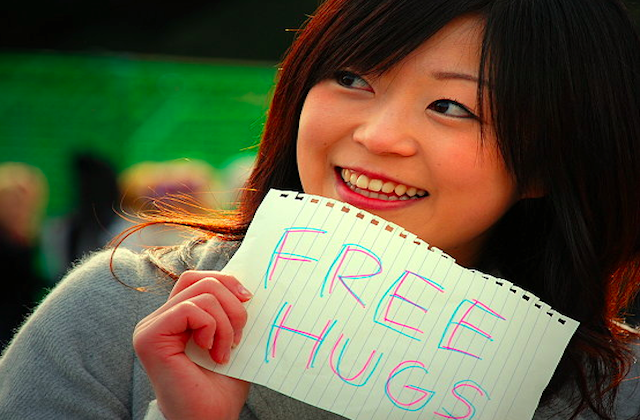
    Free Hugs

    “Don’t wait for extraordinary opportunities.  Seize common occasions and make them great.” ~Orison Swett Marde

    I stood at the library counter waiting to check out a stack of books when I overheard an overworked woman explain to the librarian why her books were late.

    “My boss has me running his errands after hours. It’s a miracle I made it on time to pick up my daughter from daycare,” she said.

    “Are you a personal assistant?” the librarian asked.

    “No, I’m a paralegal,” the woman explained. “But staffing is tight, and if I don’t take on the extra tasks I might lose my job. I can’t be picky in this economy.”

    I understood the woman. Years ago, when my children were younger, I took on extra tasks both because I needed money and because I could not say no. I connected with her story and wanted to do something to let her know she was not alone.

    But what could I offer her?

    The desire to give to others spontaneously was as reflexive as smiling. I had learned it over the years by watching others give to me when I was in no position to give back to them.

    I rummaged in my purse and found two tickets to the movies I had earned from working overtime. I abandoned my books at the counter and followed the woman and her child outside.

    “Excuse me,” I said. “I couldn’t help overhear your conversation about work. I understand what you’re going through because I’ve gone through it myself, and I want you to know I appreciate you even if your boss doesn’t.”

    I handed her the tickets. “Take your daughter to a movie,” I said.

    Her eyes widened and filled with tears. “Thank you,” she said. “You’ve just made my week.”

    That small gesture of solidarity, understanding, and generosity made me feel as close to the woman as I could get to my twenty-two-year old self who worked too many ungrateful hours for too many ungrateful bosses just to help my family survive.

    PBS’s special, “This Emotional Life,” explores the healing power of giving through volunteerism and philanthropy.

    Research shows that once people have enough to meet their needs, additional money and time do not increase their happiness. It’s only when the donor gives away the additional money and time that the donor’s happiness is increased.

    According to Emma M. Seppala, Ph.D., people benefit from giving by connecting with others.

    Humans have a built-in need to relate, resonate, and mirror each other. In a world increasingly dependent on technology, the gift of giving of oneself increases intimacy and reduces the likelihood of loneliness.

    Giving ripples out in waves like a stone plunked into still waters. It connects us in a tangible way. It makes us realize we are not alone.

    Giving doesn’t have to be complicated or grand. It can be an encouraging smile or a gentle hug. Fifteen minutes of attentive listening can be as valuable as a one-hour massage.

    After all, it’s not how much we give, but how we give.

    If we give from the heart, in a desire to connect, then we seize a common occasion and make it special, which is much different than if we give to a great cause out of obligation or self-importance.

    You also don’t have to have a structured system of volunteering and philanthropy to enjoy the benefits of giving. It can become a habit you develop over time until it becomes an integral part of your life.

    Start by paying closer attention to the people you encounter during the day. Soon you will recognize an opportunity to give.

    If you’re leaving a crowded parking lot and notice someone driving around looking for a spot, you can signal for the person to take your parking spot.

    If you see an overwhelmed waitress struggling to keep up with your table’s demands, you can leave a larger tip to show your appreciation. If you notice someone walking around with a permanent frown, you can flash your comforting smile and shine a tiny light on that person’s dark heart.

    Generosity isn’t only for strangers. You can weed a neighbor’s garden, cook a meal for your parents, or pay a visit to someone you haven’t seen in a while. Giving to those you know and love the most prevents you from taking them for granted.

    An odd by-product of giving freely out of compassion and love is how it makes the giver feel. The more you give from a place of unconditional generosity, the more joy you feel. Giving makes you realize how much power you have to make others feel better about themselves and their lives.

    Go out and give whatever you have to whoever needs it. Seek ordinary moments and make them extraordinary. Life truly is a special occasion.

    Photo by Jesslee Cuizon

  • What Makes Life Worth Living: Create Tiny Epic Moments

    What Makes Life Worth Living: Create Tiny Epic Moments

    Happy Together

    “One day your life will flash before your eyes. Make sure it’s worth watching.” ~Unknown

    What do you think you’ll see as you lie dying?

    Upon first reading this quote, I thought “Unknown” was talking about living life large. Filling days with great achievements and big moments. Going for it. Having no regrets.

    I lived much of my life to create those major moments.

    And maybe that is what “Unknown” was talking about.

    But it’s no longer what I’m talking about when I think about the worth of my life.

    High school English teacher Monique Cassidy wrote about a short story she had her students read called “Bullet in the Brain” by Tobias Wolff. In it, a man was shot in the head and dying.

    I don’t want to ruin the story for you, but this man’s last thoughts were not the biggies.

    His last thoughts were the small, visceral moments. In particular, playing baseball in a field when he was a child.

    Cassidy asked her students to write about the significant moments in their lives. One student, who has traveled to Paris, did not write about climbing the Eiffel Tour. She wrote about trading bread with a friend at breakfast that morning in the hotel, swapping her croissant for a baguette.

    Last week, my coach asked me what I’d done so far that morning. Actually she wanted me to write a poem about it to spur creativity.

    “I don’t want to write about it,” I said. “I haven’t done anything worth writing about.”

    My list of activities so far included folding laundry, making breakfast, and returning books to the library.

    “Good,” she said. :”Write about that. That is life.”

    We all have a few unforgettable moments in life. The big ones. When your mate dropped to one knee. Scoring the winning goal. You can probably short-list yours.

    But today, I want to celebrate the unheralded yumminess of the teeny-tiny moments that make up your life. Because my coach was right. Those are the moments that cumulatively create a life well-lived.

    While I can’t begin to guess what will run through my mind when I die, I hope it is a moment like this:

    When my daughter was maybe two or three, we were visiting my in-laws on Lake Michigan, staying in a lakefront A-Frame cabin they call the chalet.

    We came in from the beach one hot afternoon and my daughter and I went upstairs, turned on the window air conditioner, and fell asleep on the cool white sheets to the hum of the A/C.

    While we napped, we must have turned to face one another and a couple of hours later we opened our eyes simultaneously.

    In that moment, in the cool room on a hot day, I looked into her gigantic chocolate eyes and felt I could see into her soul, so trusting, so loving. I really saw her. And I felt seen and loved.

    We’ve had many big moments in our family. Traveling to China to pick up my daughter. Paris for my 40th birthday. Buying our dream house on my daughter’s first day of first grade.

    But I hope it will be the teeny tiny moments like napping with my daughter that will flash before my eyes. For in that moment, there was nothing but love.

    When it comes to the end, isn’t that all there is?

    I invite you to reflect back about those teeny tiny significant moments that have made up your life.

    To try to jog your memory, think about when you have felt trusting or content or seen, really seen. What was happening in that moment? Who was present? Try to engage all your senses. What did you see? Hear? Feel?

    How could you create more of those moments? Start by being present. Really see people. Look into their eyes and see them. Recognize love is all around.

    Celebrate those moments.

    Because while climbing to the top of the Eiffel Tour is epic, trading bread with a friend is loving.

    While vacationing on the lake is fun, looking into my daughter’s deep brown eyes and seeing her soul makes life worthwhile.

    Thank you for the reminder, “Unknown.”

    Photo by Edward Lim

  • Why We Need Disconnected Alone Time (Without Social Media)

    Why We Need Disconnected Alone Time (Without Social Media)

    “Do not rely completely on any other human being, however dear. We meet all life’s greatest tests alone.” ~Agnes Macphail 

    I have found that the more time I spend alone, the more comfortable I become in my own skin because I can truly get to know myself. This provides me with more patience to accept myself as I am, wherever I am in my journey, on a daily basis.

    This lesson was something I learned after spending a summer alone in Italy with a family friend.

    I embarked on the journey, turning off my phone for the first time, well, probably ever. I would be jetting all over America then landing in a country with a family basically unknown to me.

    It wasn’t until two years after I returned that I wished I had spent more time living in the moment while experiencing the greatest adventure of my life. I was not comfortable enough in my own skin to truly be present in the magical moments presenting themselves in a foreign country.

    My mind stayed distracted as I wondered what people were thinking of me, and what I would post online to my friends back home.

    At nineteen years old, it seemed much more important to capture photos to upload to social media. The Internet was a crutch for me to not feel so alone in an unknown territory. As brave as I was to be completely alone in my adventure, I had a thousand people to “connect” with on my lonely nights!

    Two years later I realized that I could have filled my days with activities for growth.

    I now wish I had traveled to nearby cities, spent my days reading in a cafe, tried acupuncture—anything out of the ordinary.

    The truth was I didn’t have the hobbies I have now. The trip did help me grow, but I regret that I could not simply enjoy the moments instead of wanting thousands of others to see I was enjoying them.

    I discovered that if I want to be happy, it would be my own doing. Happiness is an interior process and comes without validation from others.

    This is something that is a lesson to be relearned each day.

    Spending small moments of time alone—sans phone, tablet, laptop, TV, and radio—allows one to really tune in. We need to ask ourselves things like: What is my body telling me today? How do I feel today?

    There are all kinds of things we can do to enjoy our alone time, some of them very simple. I enjoy my shower, my yoga practice, and the scenic drive home, all without communication to the exterior world. This helps me to really absorb my practice and just “be.” I find it helpful to journal, old fashion style, with a pen and paper after this little escape.

    To figure out if you are relying on others, ask yourself: What have I done today, only for myself? Do I need to have my cell phone? Or can I stow it away and just be?

    You may also want to ask yourself: Am I taking a photo so I can remember this occasion, or so others can see how I spent my hour? Am I updating my social media because I want to, or because I need validation through likes and posts to be happy?

    Lastly, ask: What would happen if I stopped seeking the opinions of others to fuel my happiness? Would the world still accept me if I spent less time trying to win their approval?

    The only one keeping you away from your true self is you.

    Practice spending an hour a day doing something just for you and keep it a secret. Relish in the fact that this activity is just for you.

    Once you grow fond of spending time alone, you can start to increase the amount of time you spend on your “secret” activities. Eventually, your presence in the moment will grow as you stop seeking approval and recognition from others.

    I find that when I take a day off and unplug, I emerge fully ready to engage with others with more energy and enjoyment.

    When your brain stops worrying about what others think of you, what you should have said or done, you can truly listen to your friends and provide feedback and attention.

    Trust in yourself and feel powerful in the fact you are taking your happiness into your own hands.

  • How to Recognize and Help When Someone Needs Support

    How to Recognize and Help When Someone Needs Support

    “When we get too caught up in the busyness of the world, we lose connection with one another-and ourselves.” ~Jack Kornfield

    After planning the next three months of my life in my head, trying to focus on my breath and recounting the plans for tomorrow, I decided my battle with insomnia was going to win. I got up, careful not to wake my husband, and decided to start reading.

    Nestling into the lines of my latest library book well after midnight, my phone began to beep.

    Even in the most quiet of the night, are we ever really alone?

    I thought to myself, who else could be awake at this hour? It was my twin sister all the way across the country, struggling with insomnia herself. Ready to share my latest updates with her, something in me encouraged me to ask how she was doing and why she was still awake.

    It was in the stillness of the evening that I slowed down to think of someone other than myself.

    I wondered, if the sun was brightly shining and I was carrying on with my own busyness, would I have answered her text message? If I were rushing through the day, would I have noticed her hint of sadness?

    She recounted the daily stressors and recent disagreement with a friend. In her written words, I sensed an echo of loneliness, a tinge of yearning for connection.

    So often in the busyness of our own self-absorbed lives we fail to notice when others are in need of connection. If we are in need, can’t we recognize that others are too?

    So many of us feel alone in our day-to-day trials, but as I remember learning as a young girl, when we focus our love on others, it betters our own hearts too.   

    How to take a few minutes out of your busy day for others:

    1. Do not hesitate to make the call.

    My sister-in-law started a movement within our family. Nonchalantly one night, she mentioned on my voicemail, “I decided if I’m thinking of someone to call right in that moment—and so I’m calling you,” she said.

    It does not take too much time just to say hi. Even if you cannot talk long, the gesture of your voice might be the song someone needs to hear.

    2. Write it out the old fashioned way.

    I’m a lover of stationary and stickers—the Internet’s nemeses. Nowadays, our mailboxes overflow with countless bills, excessive ads, and unwanted insurance offers.

    Be daring and surprise someone with a note, even if it’s just a few short sentences. You’ll only spend a few cents on postage, but your thought and care will be that bright treasure amongst the gloomy pile of trash.

    3. Imagine if it were you.

    When we hear about others’ problems, often times our objectivity offers a healthy perspective. Other times, however, it distances us from the emotional heartache and pain of those in need.

    When you hear the weakened voice of a loved one or look into fading eyes, try to open yourself wider and truly see the situation from their perspective. Genuinely saying, “I hear you” creates understanding and connection.

    4. Listen.

    I’m a talker and a fixer. When I hear someone’s problems, halfway through the story I want to rattle off my suggestions. But sometimes, we just need to vent. We need the ear of another to soak up the words of our wounds.

    I am learning this more and more each time I need to cry out and am not heard. We all have so much to say so often, so many times silence and a gentle nod of acceptance is what we really need.

    5. Think of your mother.

    What did we need when we were younger? Our mothers. No matter how diverse or painful our relationships were with our mothers or if they are no longer with us, we can all become that wise-feminine soul to stabilize the masculine vigor of our modern world.

    While action, goal setting, and swiftness are much needed, so are vulnerability, softness, and nurturing elements.

    6. Become a comedian.

    We hear about the positive biological impact of laughter. Be an advocate yourself. If you have offered time and encouragement, lighten the setting with a little laughter. Be sure to gauge your joke as not to offend but rather soothe.

    As my sister and I completed our novel length texts back and forth, she appreciated the words we shared and I saw our conversation as a compliment of her trust in me.

    We may not all have those two o’clock in the morning bonding opportunities with our siblings as the rest of the world dreams, but we all have twenty-four hours to seek out a wounded soul in need of our light.


  • How Death Teaches Us to Live Fully: 7 Enlightening Lessons

    How Death Teaches Us to Live Fully: 7 Enlightening Lessons

    “We meet but briefly in life, if we touch each other with stardust, that is everything.”  ~Unknown

    We had baked chicken and mashed potatoes with gravy that evening. It was the kind of hearty meal that warms you up on a damp March night.

    As I said goodnight, I couldn’t have imagined that in just a few hours I would return to my parents’ house and everything would be changed forever.

    But so it goes. Nothing in life is permanent.

    I’ll never forget that phone call. I felt everything drain out of me and then it seemed as though everything stopped. My mind couldn’t seem to absorb that my father had died.

    I kept saying, “But we just had dinner.” “He was getting better.” And,  “Everything was okay”

    When I arrived back at my parents’ house, it was surreal.

    The quiet conversation and enjoyable meal we’d enjoyed only a few hours ago had been replaced by a chaotic, confusing scene.

    I remember flashing lights, lots of people running around, the sad scared faces of those I loved, and tears, lots of tears.

    I was a wreck at the funeral and not sure if I could speak, but as I stood at the podium, a strange peaceful feeling come over me. A sort of clarity and profound realization. A deep connection to life that I’d never felt before.

    Nothing helps you understand the fleeting beauty of life more than death. Nothing helps you understand what is important in life more than death.

    And most important are the people in our lives. The connection, the bond, the love, the nurturing, the stories, and the memories that we share.

    These are the great gifts of life, and death teaches us to grab hold of them, because we know they won’t last forever.

    I thought I knew life but I didn’t, until that day.

    Enlightening lessons death can teach you about life:

    1. The power of love

    A few months after my father died, I found myself stuck. I was angry that he died and angry that I couldn’t do more to help him. With the loving support of the people in my life, I was able to move past the anger and start to focus on the time we had together.

    The power of love saw me through those dark days.

    If you’re struggling after the death of a loved one, reach out for support and pay homage to your loss by letting your love shine. Although they are no longer with us, our loved ones live on in our hearts, our minds, and our dreams.

    Love is universal and transcendent; it knows no boundaries and reaches far beyond the physicality of this world.

    2. The power of impermanence

    Have you ever experienced a loss and felt like you were losing control? You desperately try to pull in the reigns, but you can’t.

    We all like to have a sense of control, and a certain degree is important in terms of our survival. If we don’t organize our lives, follow rules, and work within the structure of society, we’ll find ourselves in a state of chaos.

    When someone dies, you realize that life is not permanent and that nothing will last forever no matter how much control you try to exert. This is actually what makes it so profound.

    Life is like a rainbow. The light and rain form its beauty, and then it fades. The gold is the shared journey and the profound expression of our lives.

    3. The power of acceptance 

    The grieving process is difficult.

    I remember being in denial and saying things like, “I can’t believe it’s true.” I spent a lot of time being mad at the world and myself.

    I bargained by thinking, “If only I’d done this” and “I should have done that.” The void of depression took the form of, “I am so sad; I’ll never get past this.”

    And finally, I accepted that he was gone and I needed to move forward.

    During this process I resisted the reality of my loss. The stages of grief gave me time to come to grips and handle what had happened.

    Ultimately, the resistance melted and I was able to lean into life again. You can’t move forward without acceptance. 

    4. The power of transformation 

    Loss and struggle hold the seeds of transformation. I don’t think anybody wants to experience pain. I know I sure don’t.

    But as I have experienced loss and struggle in my life, I have noticed a pattern: I get stronger, and the seeds of that struggle result in growth.

    Life is a continual process of struggle, transformation, and growth. Although it may not always seem obvious, if you look at growth you can always trace it back to the struggle that preceded it.

    You may be hurting now but something good is on the horizon.

    5. The power of awareness

    It is possible to go through long periods of life without ever expanding our consciousness.

    Prior to my father’s death, my conscious awareness was limited. I was in a safe, secure bubble, casually going about my life.

    I didn’t question life and I didn’t question the choices I made. I was not fully aware; I was not on purpose. I did not have a sense that my time was limited, nor did I get that life was a gift.

    Death can initiate the process of expanding your awareness, because it challenges you to question your view of life itself and what you do with yours.

    6. The power of presence

    So much of life is consumed by the struggle to survive and compete.

    I spend most of my time trying to cover my family’s basic needs, striving to succeed, and wading through the bombardment of materialism.

    When I find myself getting distracted by the “stuff” in my life, I try to take a step back and focus on the warmer, more soulful parts of me that make me feel alive and present. I take time to get away from the noise and distractions, and focus on spending time with the people in my life.

    The paradox of death is that it points to what it means to be alive. Aliveness has to do with experience, connection, and full expression. What makes your feel alive and present? 

    7. The power of connection

    Have you ever stepped outside your ego and connected to something bigger than you?

    When you’re on purpose or following your calling, you are guided internally, and yet you are also connecting to something beyond you.

    This is the experience I think most of us would like to have, but we get stuck in our ego-based thinking.

    Life events like death humble us and open us up to the possibility of waking up and stepping outside our ego. This gives us a chance to connect to something bigger than ourselves and do what is truly important.

    Death is powerfully enlightening, but you don’t have to wait for someone to die to change the way you live.

    Each day you have an opportunity to create a life with purpose and meaning. Commit to being fully alive and expressing your highest self.

    Life is brief. Use it to spread a little stardust.

  • We Belong When We Connect with Each Other

    We Belong When We Connect with Each Other

    “When you live on a round planet, there’s no choosing sides.” ~Wayne Dyer 

    Te holiday season is a time to connect with others, to celebrate our common humanity, even if the holidays we celebrate are different.

    Instead sadly people all over the world are still taking sides. They seek to identify with one “side” or another (tribe, culture, religion, politics, nationality). They seek to belong by being distinct from others.

    They seek to belong by hating the other side, sometimes by killing the other side.

    But finding identity in reinforcing our differences will never give us a true sense of belonging, a real sense of connection. We are already connected; we are already one. We are all just individual expressions of the same universal energy.

    We need to work out how to stay united—connected in our diversity, rather than divided by our differences.

    When my husband and I were suffering infertility (infertility is still there, we just choose not to suffer anymore), I desperately wanted to belong to the Mother’s club.

    But instead of reaching out to friends and colleagues who were mothers (every woman around me, it seemed) I chose to disconnect. I let my insane jealousy drive a wedge in friendships, and my mom friends walked on eggshells around me.

    As I put distance between us, it was easy for them to drift away.

    We embarked on a long and arduous (and ultimately unsuccessful) IVF journey, and I remember walking out of our first information session feeling like I was already branded—infertile, guilty as charged.

    I stared into the faces of the other couples in the room, but I chose not to see them. I didn’t want to identify with them. I didn’t want to join the IVF patients club.

    So we became patients, but didn’t seek connection with other couples. We didn’t offer them compassion, nor seek solace in our own struggles. And running away from the shared sense of consolation we might have had only left us alone.  (more…)

  • Feeling Gratitude for All the People We Sleep With

    Feeling Gratitude for All the People We Sleep With

    “We are all connected in ways we cannot even begin to fathom. Our lives unfold through each other and within each other.” ~David Rhodes

    I can’t help myself—I love sleeping with people.

    The more the better!

    There’s nothing like crawling between the sheets with a lot of people. Female. Male. An armload of ethnicities. It’s all good!

    Hey, don’t look at me like I should be ashamed of myself, because I’m not!

    Besides, I know you do it, too.  And you probably love it just as much as I do.

    You think you know what I’m talking about, but I guarantee you’re wrong. (Quick lesson: assumptions are not good!)

    See, what I’m talking about is the thousands (yes, thousands) of people it takes to create the beds we sleep in.

    There are the people who extract the iron ore from the earth and…

    …the people who ship the ore to…

    …the mill workers who separate the iron from the slag and then make the angle iron for the bed frame.

    There are the people who grow the cotton that will eventually be made into sheets and pillowcases.

    There are the people who make dyes, who in turn rely on…

    …the people who create the proper chemicals with petroleum or coal which, of course, is the fruit of…

    …the labor of people who drill for oil or mine for coal.

    There are the loggers who cut the trees that will become headboards and footboards…

    I could go on and on and on!

    And all those people represent only a few of the bed’s components! (more…)

  • More Peace and Connection: Recreating a Simpler Time

    More Peace and Connection: Recreating a Simpler Time

    “Enjoy the little things, for one day you may look back and realize they were the big things.” ~Robert Brault

    Yesterday, as my boyfriend and I were driving home from a quick trip to Vegas, we saw a sign for a ghost town and decided to do some exploring.

    I’ve always loved the idea of a ghost town—a place left untouched for years, still reflecting the people who once inhabited it, as if they’d just picked up and left mere moments ago.

    Though aged with cobwebs, marred by neglect, and long since deprived of life and laughter, it would seem like time had stood still. I imagined it would feel a lot like Thoreau’s cabin in the woods: minimal, modest, and quaint.

    In our high-tech, fast-paced world, very little feels simple. And while I love my home and environment in Los Angeles, I often long to find places that feel charming and uncomplicated.

    We quickly found it wasn’t a village left untouched for exploring, though much of it looked how it once did; it was a small slice of the land commercialized with little tiny shops, as is the American way.

    Still, I enjoyed roaming through the surrounding mountains and seeing nostalgic pieces within and outside the cottages—a few wooden carriages, an oil burning stove, and a deep claw foot tub.

    While walking around, I asked my boyfriend if he’d ever fantasized about living in a small village, with a self-contained community of people who all knew and supported each other.

    It’s something I’ve always romanticized. Instead of living in the hustle and bustle of our modern world, always consuming and pushing for the next big thing, we’d create with our hands and spend more time enjoying life’s simple pleasures together.

    We’d have access to everything we need within close proximity, and the vast world made seemingly larger through the web would shrink in feel and yet expand in possibilities.

    Not possibilities for earning money and succeeding professionally; possibilities for childlike joy and meaningful connection—the human wealth our tribal ancestors once enjoyed, before everything got bigger, faster, and automated. (more…)

  • A Few Less Steps to Bliss

    A Few Less Steps to Bliss

    “Don’t use a lot where a little will do.” ~Proverb

    My fears around becoming a mother for the first time were validated. Giving birth did hurt, though in an empowering, “hear me roar” kind of way.

    There is stiff competition now for my husband’s attention, but mine is captivated as well. And our spontaneous, hedonistic, freewheeling lifestyle is permanently cramped—but into this cozy fetal position of child-friendly rhythm and routine.

    Though we have been pacified into a relatively mundane existence, my morphing into a mama bear that’s hell bent on protecting her cubs from excess has helped keep things spicy. Excess in the form of stuff, noise, and activities that attempt to encroach on our home and our time to connect, distancing us from our core values.

    There is a therapeutic benefit to this extreme nesting to the kids and adults in our family alike.  My kids are imaginative, calm, and pleasant to hang out with, and I find myself with more energy, creativity, and overall bliss than I have ever experienced before.

    With this keen selectivity of what is enough, we gift our minds and hearts the room to expand, explore, then retreat again for restorative contemplation and rest.

    Less leads us closer to more bliss and here are just three ways to get there:

    Step One: Less Stuff

    Take for instance the visual pollution surrounding us. Coming into a space that is clear of clutter can release us from the immediate but subtle sense of anxiety we feel due to the responsibility of ownership—the need to repair, organize, share, and account for.

    With kids in the house, we’ve found it necessary to do a seasonal or at least twice yearly purge of items that no longer serve us. Since we have limited storage space, we need to clear out the many quickly outgrown clothes, toys, and the occasional toddler toilet paraphernalia. (more…)

  • Are You Shut Down and Disconnected?

    Are You Shut Down and Disconnected?

    “When we get too caught up in the busyness of the world, we lose connection with one another—and ourselves.” ~Jack Kornfield

    I had to work on Easter at my job in a coffee shop. I missed out on my family’s big holiday party, and I struggled with quite a bit of resentment about the whole deal. I could have gotten someone to cover for me, but because I’m one of the more experienced employees and we were short-staffed, I was told that I needed to work.

    I wasn’t too terribly happy. I came in to work and immediately launched into the craziness of Easter in a coffee shop, sliding Americanos to travelers across the counter with a stone face.

    I was amazed at how unforgiving people were. I thought that Easter would bring out the best in people, but it seemed to make some act grumpier and more disconnected. Many of them weren’t happy for the same reason that people are grumpy at Christmas: They hate spending extended time with family.

    So I slogged through the day, helping grumpy people stay awake on the road to a place where they didn’t want to go, when suddenly a single interaction changed the course of my day: A man came in, greeted us warmly while he ordered his coffee, and then apologized.

    “I’m sorry that you have to work so that schmucks like me can have their coffee.”

    This one sentence transformed my whole day. This guy had gone out of his way to connect with us, and made made me feel both happy and ashamed—happy that there was someone out there who didn’t get too caught up in his own troubles to connect; ashamed that I had fallen into that very trap myself. (more…)

  • Better Together: We Are Not Alone

    Better Together: We Are Not Alone

    “Alone we can do so little; together we can do so much.” ~Helen Keller

    My patient, John Done, rolled in by ambulance from his home in rural Oregon. As his story unfolded I understood why the nurses and ER doctors in the room were slack-jawed and shaking their heads, and I understood why I had been called to see what the nurse called a “DIY’er.”

    I have been a surgeon for over ten years and had never been consulted for a case of do it yourself surgery. John had had a belly button hernia sticking out a couple of inches for many years. It started hurting a few days before I ended up seeing him.

    Somehow, John convinced himself that the hernia had turned in to an abscess, even though it had been there for, as I said, many years. The pain changed his mind about an obvious reality. Once he decided it was an abscess, it made sense to lance it.

    John was not fond of going to the doctor and usually took care of his own medical care.  He opened up his Korean War medic kit and found his sterile scalpel…

    When I got to John he had two stab wounds in his abdomen and was leaking intestinal contents onto the dressings. We took him to surgery, took out a segment of his bowel, and repaired his hernia.

    He did well and was very happy to be free of the hernia. He agreed to call me prior to embarking on another DIY operation.

    Although it seems unbelievable that lancing a hernia could happen, understanding the chain of events is instructive. (more…)