Tag: connect

  • 11 Simple Ways to Nurture Meaningful Connections Offline

    11 Simple Ways to Nurture Meaningful Connections Offline

    “Turn off your email; turn off your phone; disconnect from the Internet; figure out a way to set limits so you can concentrate when you need to and disengage when you need to. Technology is a good servant but a bad master.” ~Gretchen Rubin

    We live in truly extraordinary times. Where once letters and telegrams took days to reach the other side of the world, we can now send messages and emails at the push of a button; and social media has allowed us to connect with people from diverse backgrounds, helping us learn, grow, and aim for the stars.

    The advancements in technology and science have afforded us such a vast array of benefits that it’s hard to argue with their cons. Yet our relationships, the very fabric of human existence, have deteriorated proportionately with the rise of technology and its increasing usage in daily life.

    We now need reminders to disconnect ourselves from smart phones, tablets, PCs, and all sorts of gadgetry in order to just make time for ourselves to rest and tune out from the information overload.

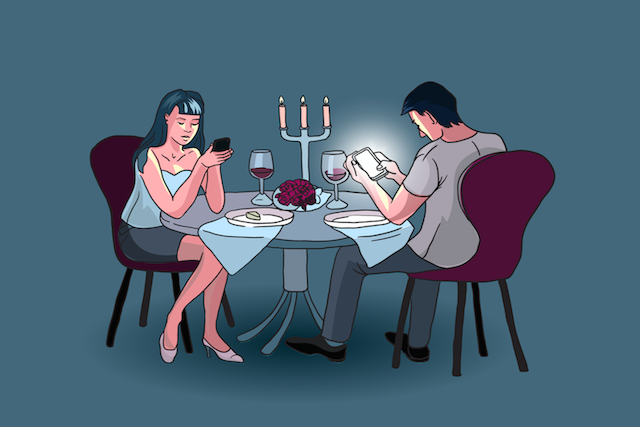
    Photographs of families gathered around the dining table, intently looking into their smart phones, might make for amusing viewing (and a fantastic photo essay), but they paint a picture that is not far from reality.

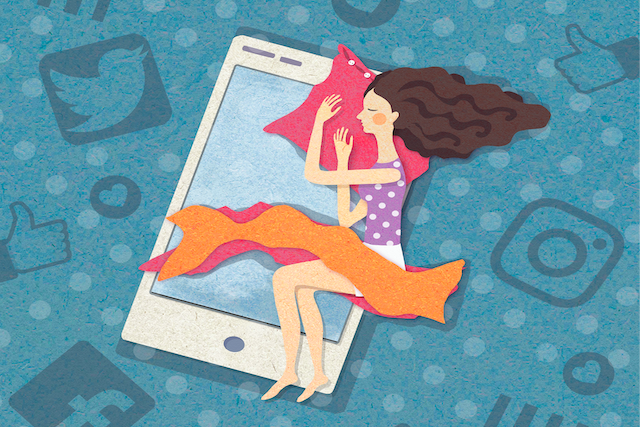
    We’re so tuned into our virtual world these days that parents and children often have chats over DMs, SMS, or social media, even if they’re sitting in the next room, and sometimes right next to each other.

    People have the time to ‘Instagram’ their fancy dinners or take quick selfies, as if it were second nature, but no one seems to have the time, patience, or inclination to reach out to those who’ve been with us all along, through our highs and lows.

    It could be the parents who we’ve left behind in our small towns in pursuit of our dream career; it could be friends we’ve known since childhood but haven’t bothered asking about, simply because we fell out of touch; it could be that neighbor or teacher at school who always looked out for us; it could be someone going through a struggle in their life who needs our support, though they haven’t voiced it, because we’re captivated no longer by people present around us but by technology.

    When I was growing up, both my parents were working, as was the case in most working-class households; my time was spent between a daycare center, school, and home, where quality time with my parents was at a premium.

    However, the early nineties were relatively gadget-free. There were no phone calls after work and no email checking all the time; nine-to-five shifts seemed quite productive, and no one was carrying work back home on a laptop. So, when we gathered together around the table at dinnertime, we were very much present; distractions were far fewer, and no one was posing with a phone to photograph our food or post it online.

    We didn’t fret over the possibility of presidents and leaders starting a WW3 on Twitter or spend time researching which crazy selfie pose would garner us more Facebook likes. I remember sending handwritten letters to my cousins just to stay in touch and waiting expectantly for Christmas cards during the holidays. There were simple joys to be had, even in the mundane.

    We share so much over social media—our favorite foods, brands, clothes, and lifestyle choices—and there’s so much visual information overload that we end up believing everything we see and read in the media.

    We live in the era of fake news; we’re slowly but surely losing our ability to stay in touch with reality and discern what’s true and not. What we see online about other people’s lives becomes our unconscious standard for how things should be in our own lives.

    We’re losing touch with ourselves and our truth. You don’t have to keep up with the Kardashians; you have to keep up with your own inner circle of loved ones.

    The virtual world is fascinating; you can choose to be who you want to be, and people are going to believe what you put out there even if you do not bear any resemblance to your online persona in real life. The communication is often impersonal—surface conversations that spare you the hassle of emotions, of feeling deeply. It’s easier to be lost in virtual space than to confront harsh realities.

    Two hundred thousand followers on Twitter or a million subscribers to a website do not necessarily translate into the same number of trustworthy relationships you can bank on. Sure, you can campaign successfully for a social good fundraiser with that many followers, but can you count on them during a time of personal crisis?

    Many people view the virtual space as an escape from reality, which is not only damaging our emotional development but is also detrimental to our relationships in the real world. While there is that resounding minority that has managed to forge meaningful friendships online and has benefited from professional associations through networking, personal relationships have undergone a transformation of sorts. The online world has become our confessional, our confidante, and our record keeper.

    Isn’t it ironic then that, despite having everything at the click of a mouse or an app, we’re hardly able to communicate, share, and confide openly within our own families? When was the last time you had a heart-to-heart with your own spouse, kids, siblings, or parents? Does connecting with them deeply have to wait till Thanksgiving, Christmas, date nights, or summer holidays when you can do this just as easily every day?

    Sometimes, you may not even have anything new to share, but those are the times you can let them know how much they mean to you. When it comes down to needing an encouraging hug, you still need a human in your non-virtual reality.

    We should be living in a way that doesn’t make relationships with our loved ones subject to our busy schedules. We shouldn’t need reminders to make time for those closest to us, be they members of our household, parents, siblings, or friends.

    Most of us have the time (or can make the time!) to engage in friendly banter and entertain ourselves with every piece of media, news, or gossip online; however, we find it challenging to direct this enthusiasm to our relationships at home or with those we’re emotionally close with that physically live far from us.

    This is part of the reason why more and more people are looking online for ways to cope with personal struggles—because there’s no one at home or in their immediate environment who has time to hear them out.

    There’s no doubt that the interconnectedness and shared information we have access to in the virtual space is a boon and that social media and networking have afforded us amazing connections as we walk forward with a collective consciousness. But let’s not lose sight of the people and relationships we’ve built our lives’ foundations with. No one’s too busy to make time for another.

    Make time for your loved ones by disconnecting from your virtual world.

    Your smartphone isn’t going to die if it doesn’t hear from you. But your parents may be disheartened that they no longer receive a phone call from their beloved child except on a major holiday; and your kids and spouse may miss telling you the things they so badly want to share because you’re too busy scrolling on your phone.

    Though we can absolutely forge deep bonds online, it’s crucial that we don’t lose our connection to the people right in front of us.

    Here are a few steps to help you connect meaningfully with the people in your life more often.

    1. If you’re on multiple social media platforms, streamline and bring the number of platforms you actively use down to three. If you’re super crunched for time, use these platforms alternatively throughout the week. Schedule time for social media but cut out unnecessary browsing.

    2. Clear out unwanted apps from your smartphone so that you have fewer things to distract you. Call it an app spring cleaning.

    3. Read up on productivity-boosting tips or time management so that you’re better equipped to give everyone in your family your undivided attention.

    4. Have your dinner with the television off, disconnected from the Internet. If that’s the only time you and your family have together, make the most of it.

    5. Make time for some sort of spiritual practice that you and your family can engage in before you retire for the night. It could be praying, meditating, reading/sharing a reflection, or reciting a positive affirmation or an expression of gratitude for the day. You do not have to be religious to be engaged in a spiritual practice!

    6. Volunteer for a social good project in your local community with your friends, siblings, or family.

    7. Take up any group hobby that doesn’t require staying online—like cooking, painting, or dancing… the list can go on.

    8. Plan a picnic and get together regularly in an outdoor environment close to nature. Spending more time in nature is known to be soothing and relaxing, and it makes it easier to switch off your phone!

    9. Lost touch with friends living far away? Don’t succumb to the easy route by sending a message over SMS, Whatsapp, or email. Jot down your favorite memory and send a postcard. Or, if you have more time on your hands, an old-fashioned letter would be absolutely delightful.

    10. Flowers have a way of conveying a whole lot of things without saying much—even a hand-tied bunch of wildflowers. And they’re known to perk up even the most insipid of days. If you feel anyone is in need of a gesture like that, send them a bunch and make them smile!

    11. Return to the joys of simple living with people you love: wake up early to watch the sunrise; walk on wet grass or the sandy shorelines of a beach; inhale the aroma of freshly baked bread or the scent of flowers in a vase; write ‘thank you’ notes often; be mesmerized by the skies at night—look for the constellations, the shooting stars, and the moon. There’s a lot of joy to be had when you disconnect from technology!

    For our relationships to thrive, we must learn to prioritize both our own well-being and that of our loved ones. When you’re giving them the time and attention they need, they’ll feel more loved and confident about themselves, something no one can get through technology alone.

    We need to return to the basics of human loving, caring, and sharing. Unplug from your devices and plug yourself into the healing power of stronger, deeper relationships.

  • How Illness Can Be Lonely and What to Do About It

    How Illness Can Be Lonely and What to Do About It

    “I wish I could show you, when you are lonely or in darkness, the astonishing light of your own being.” ~ Hafiz of Shiraz

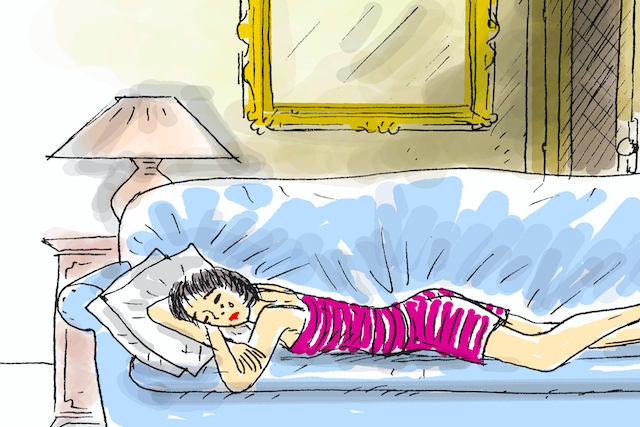
    When we think of illness, we don’t usually equate it with loneliness; however, there seems to be a huge connection between the two conditions.

    The fact is, when dealing with health challenges, we are most connected to our bodies: we are one with ourselves. Even when we have thoughtful and caring loved ones in our inner circles, these individuals can never truly understand what we’re experiencing on a physical, psychological, and spiritual level.

    Illness is lonely, but loneliness is not just about being alone; it is a state of mind. Being lonely is about feeling disconnected from those around you, whether from an interpersonal or universal standpoint. Those who are lonely feel empty and drained.

    For years, I’ve pondered the connection between loneliness and illness. My musings began in 2001 at the age of forty-seven with my first bout of cancer.

    While raising three teenagers, and after having a routine mammogram, I learned that I had an early-stage form of breast cancer called DCIS. I was given the option to receive radiation, which would result in a severely deformed breast, or to have a mastectomy. I chose the latter. I thought it would be better living without a breast than being grossly deformed.

    The shock of the diagnosis magnified my already complicated feelings about being an only child. My loneliness grew deeper because my surgery was the week of 9/11. While the country was mourning the horrific terrorist events, I mourned the loss of my breast. The presence of both internal and external mourning magnified my already intense feelings of loneliness.

    I chose the best surgeons in the country, and my post-op recovery went extremely well; however, I struggled emotionally. No matter how many hugs my husband gave me, telling me how beautiful I was, I couldn’t shake the idea that part of my womanhood had been removed—the part of me that nourished my three amazing children.

    In spite of all the love around me, I felt a deep sense of loneliness that I was unable to adequately describe or shake. What helped me most was tapping into my lifelong journaling practice. My journal had always been my confidant and best friend, and its role became more vital during this time.

    Fast-forward to the present. I’m thinking about a good friend’s experience with loneliness as she navigates her health challenge (she has stage 3 lung cancer). If you met her, you’d think, I want to be this woman—she has it all: a wonderfully devoted husband; many friends; a successful interior-design business; and what appears to be a full, deeply spiritual life.

    Working primarily in an upscale California community, she brings magic and joy into the homes of some of America’s most beautiful estates. Because she has such a magnetic personality, many people turn to her for love and support, but sometimes when life shifts in ways beyond our control, we can no longer offer that type of support, and we can only try to help ourselves stay afloat.

    We all know how life can shift from one day to the next. What happened to my friend over the course of two years was horrific.

    In the early-morning hours of January 2018, she lost her beautiful home in the Montecito mudslide disaster. The following year, she watched her mother’s slow death from lung cancer. After being knocked down by those two events, she picked herself up and continued with her design projects.

    Just when she thought there could be no more horrible news, she was asked to deal with one more life challenge—a cancer battle.

    It all began at the end of her workday, when she came home and told her husband that she felt weird but couldn’t identify why. They decided to pay a visit to the local emergency room where an EKG was done. The doctors found that the lower part of her heart wasn’t working.

    The end result was that she was told she needed a pacemaker, but in preparation, she had a chest X-ray, which showed a large mass on one of her lungs. The first priority was to manage her heart issue, and then deal with the lung mass, which surgical intervention showed to be malignant. This was followed by chemotherapy and radiation.

    Under normal circumstances, this story is terrifying, but in this particular case, the terror was magnified by her mother’s recent passing from the same disease and being in the midst of a pandemic. My friend’s own health status triggered memories of her mom’s last months of life, and her slow deterioration in hospice care.

    Like myself and others who have navigated a cancer journey, my friend contemplates the fragility of her life—but as she does so, a deep sense of loneliness and sadness often overwhelms her.

    It’s been said that there is a “cancer personality.” Those who are generous, loving, and have a tendency to keep their emotions locked inside are more prone to the disease. My friend asked me if I had been scared when I received my breast-cancer diagnosis. I told her there was fear, but my overwhelming feelings were those of loneliness.

    “Having cancer was the loneliest experience of my life,” I told her.

    “Oh, thank you for telling me that,” she said. “I was feeling that myself, and I wondered if it was normal. It brings me relief to hear that you felt the same way.”

    Learning of my friend’s health challenges, I was once again reminded of how lonely illness can be.

    I thought back to the day of my breast-cancer diagnosis. The news was given to me on a speakerphone in the office my husband and I shared, as we sat side by side. He hugged me close as I glanced at the black-and-white photos of my three children on the wall, wondering how their lives would change if they lost their mother.

    I was glad that my husband listened attentively to the doctor’s words, as I was alone in my thoughts—thoughts that I couldn’t express except in puddles of tears. A deep sense of sadness permeated my being. Knowing that something cancerous is growing inside your body is daunting.

    No matter how many hugs my husband and kids gave me, I was unable to shake my profound sense of being alone. Even as I write this article, I feel alone. I never wanted to join cancer groups, which might have helped dissipate my feelings of loneliness. I felt that absorbing other people’s narratives could be exhausting. As an empath, it would drain me, and I needed space for my own healing.

    The fact is, that even without having to deal with illness, we’re living during very lonely times. Social media and video calls have now taken the place of direct human interaction, and in many ways, loneliness has become an even more prevalent epidemic, even for those not battling cancer.

    Whether dealing with health challenges or the isolation associated with being quarantined as a result of the pandemic, loneliness is a serious mental-health concern. Studies have shown that loneliness can decrease your lifespan by 26%, make you more prone to depression, result in decreased immune-system function, and cause stress to the cardiovascular system.

    According to Mayra Mendez, a psychologist in Santa Monica, California, the most helpful thing to know about loneliness is that it isn’t something that happens to you; it’s something you can control. She says that it’s important to find new and creative ways to deal with loneliness and to connect with others by whatever means available to you.

    Ways to Deal with Loneliness 

    • Video chat with friends or loved ones, who may feel lonely too, but might feel too scared to admit it.
    • Write a letter to someone you care about, opening up about what you’re going through, sharing your feelings, and asking them what’s going in their lives.
    • Take up a new hobby so you can meet likeminded people. It’s much easier to form a deep bond when we connect over shared passions.
    • Take an online course so you can interact with people with similar interests.
    • Learn a new language so you can connect with even more people.
    • Play digital word games with new friends. We don’t always need to have deep conversations to ease our loneliness. Sometimes it helps just to do something fun with someone else.
    • Make friends with a book.

    Let’s never forget: We’re born alone and we die alone. But there’s a lot we can do in between to nurture our souls.

  • Accepting My Autistic Self: Why I’m Done Trying to Fit In

    Accepting My Autistic Self: Why I’m Done Trying to Fit In

    I care for myself. The more solitary, the more friendless, the more unsustained I am, the more I will respect myself.” ~Charlotte Brontë, Jane Eyre

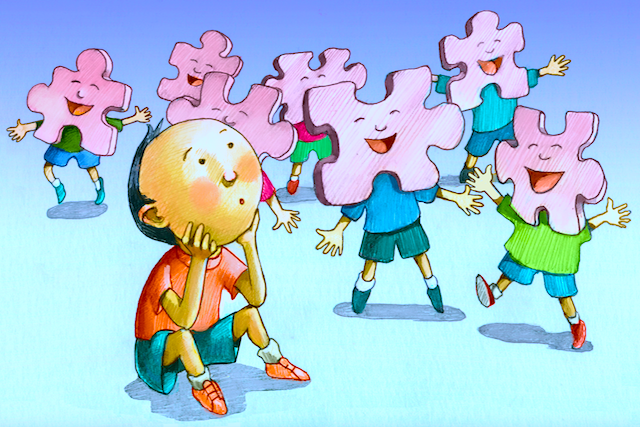
    A common misconception about autistic people is that we don’t care if we’re alone. Of course this varies with each person, but on the whole, it’s untrue. We want to feel included, it’s just not easy for us to fit in. There are other days when I feel autism has separated me so fully from other people that I am functioning on a different plane of existence, not just with a different brain structure.

    I attended a child’s birthday party recently, and it was a sensory nightmare. Children screaming, rain pouring, karaoke, a pinata, one incredibly friendly, one-ish looking, adorable baby boy who used me as a jungle gym. Before all of this was simultaneously happening, my family had arrived a few minutes early to secure a good parking spot.

    The five of us unloaded from our van and went inside. There was mostly family there, no one unknown yet, only a half dozen people, still pretty quiet and cozy. My sister-in-laws were doing rounds with the multiple sets of in-laws and close friends everyone knows.

    Recently diagnosed, I’ve been making more of an effort to put aside my discomforts and reach out in different ways to form stronger family bonds for my children. I usually retreat to my phone during children’s parties that are not my own children’s, but this time I attempted to mimic my sisters-in-law. I put my purse away and went in turns attempting to make conversation with my family.

    The same experience happened with five different people. They would say something and I would reply with something in return. After each time I spoke it was as if I’d said nothing; they would speak after my comments as if I had interrupted them, despite me answering direct questions or comments.

    I gave up on conversation when things started getting busy, and switched to attempting to give my niece the blanket I’d been crocheting for eighteen months. My niece is only almost one, so I gave it to her mom to open. She did not take it from my outstretched hand, nor did she show interest in it while I was there.

    When all our kids were settled in the car and my husband was driving home, it began. Anxiety, guilt, self-doubt. What do I do wrong? Why can I not think of things to say that spur conversation? I’ve spent a large amount of time trying to understand facial expressions I was not built to read. Did I not read them well? And how could I still be failing at talking about the weather?

    I asked my husband, what am I doing so wrong? I did all the same things that my neurotypical sisters-in-law did. Why did they not chat with me for fifteen minutes like they all did with everyone else? I showed interest in their lives, taking care to avoid my special interests.

    I stewed over it, I cried and called myself a failure because I can’t seem to connect with people and can’t pass for normal, even though I now know why, after thirty years.

    I was crushed that knowing why I was different made no impact when it came to bridging the difference. As I continued to think about this I eventually concluded that not knowing my diagnosis, or if I even had one, gave no one an excuse to treat me poorly.

    Then I realized there was nothing wrong with how I attempted to connect. The problem wasn’t me; it was the people I was trying to interact with. I asked myself, who and what was I failing? People who wouldn’t even talk to me.

    I then remembered that I get to choose how I react. I get to choose to feel bad or move on, and I needed to ask myself what I wanted to feel—and what I deserved to feel. So I decided right then I don’t want to be affected by people who simply don’t care for me.

    I will probably never connect with my sister-in-laws, not one of the four. I’ve put in a lot of effort trying and failing. The way I choose to see it now, I was born with the ability to weed out shallow relationships.

    I didn’t do anything wrong besides not be my true self. The traits I was born with should not determine other people’s treatment of me, just as my treatment of others is not dependent on them, just myself.

    I will never pass for your typical wife or mother. I didn’t for the first thirty years of my life when I didn’t know I was autistic. I doubt I will in the next thirty years with an explanation for my traits and behavior. I am learning that is not just okay, but great.

    I choose now to live like it’s not my job to sacrifice my comfort because I socialize differently. I don’t owe anyone “normalcy.” I don’t need to try to mask my autism by copying a seemingly normal routine. By attempting this I stole the joy out of my own experience. I felt anxious and frustrated and ultimately like a failure.

    I still crave company, but good company will come on its own. They won’t expect me to fake anything, mimic anyone, or wonder or ask why I seem different. They will just be with me and accept me as I am.

    Being autistic has impacted my entire life, and for most of my life I never understood what was happening. I got blessed with an extra set of challenges I had no choice over. But I do get to choose how strong those challenges make me.

    I choose to get stronger every day. I choose to be my own hero. Every day, I choose to let go of my self-doubt and hold on to my true self.

  • 3 Healing Practices to Connect with Yourself and Release Your Pain

    3 Healing Practices to Connect with Yourself and Release Your Pain

    “Our practice rather than being about killing the ego is about simply discovering our true nature.” ~Sharon Salzberg

    One of the symptoms of living in today’s fast-paced world is the underlying feeling of loneliness, overwhelm, and disconnection. Chronically stressed and under financial and familial pressures, we often feel alone in the world, out of touch with others, overwhelmed by our emotions, and disconnected from our own bodies and ourselves.

    Our world is ego-driven. We constantly compare ourselves to others, judge our performance (usually harshly), define our worth by our financial and career achievements, and criticize ourselves for failure.

    This ego-based drive for success and happiness is of course ineffective. We keep wanting more, never feeling quite satisfied. And that’s because our definition of happiness as something that can be obtained externally is fundamentally misguided.

    It’s a good thing to achieve external success and take pride in what we’ve accomplished through hard work. However, happiness comes when we feel fulfilled, and in order to feel fulfilled we need more than material possessions and accolades—we need to feel loved and that we belong.

    This feeling was always fleeting for me growing up. A difficult childhood and my highly sensitive personality meant I grew up believing that there was something wrong with me. Feeling deeply insecure, and without an anchor at home, I had a hard time making friends and felt mostly misunderstood, hurt, and alone.

    Eventually, chaos at home and bullies at school led me to disconnect, both from my body and myself. I didn’t feel like I belonged anywhere, so I made myself small, almost disappearing behind a veil of hurt, fear, and shame.

    I associated my body with pain, and love with getting hurt. Living in my head was safe, and so I put up big walls around my heart and decided to make the best of what I was given.

    I compensated for internal pain and emptiness with external validation: straight A’s, degrees, a career in high tech, people pleasing, perfecting, performing, putting on a mask to make myself look better than I felt. Eventually, I found love and friends, but the internal angst was still there, unexamined.

    Unbeknownst to me, my ego was in control and the driving force behind my constant search for approval and validation. This perpetual state of searching for contentment kept me feeling empty, unhappy, and alone.

    Running from yourself can only work for so long. Eventually, the walls I built became my prison.

    I had to face my pain, confront my fears, and unleash the chains I’d built around my heart so that I could go on living, not just functioning.

    If I wanted a fulfilled life, I had to look inside and find love there first. I had to undo years of disconnect and pain, and reconnect with my body and my heart. I had to recalibrate my life toward inner peace and joy, and away from self-focus, fear, and my perceived brokenness and separateness.

    Over the years I spent healing and getting back to myself, I discovered that some practices can help us drop the swelled up ego just enough so that we can embrace our life with love. Those practices include…

    Reconnecting with Our Body

    At some point in our lives, most of us went through a traumatic experience that left us feeling disconnected from our body. Childhood abuse, sexual trauma, a car accident—all those experiences can lead to disembodiment.

    Even if we were lucky enough to avoid trauma, we live in a world of chronic stress and overwhelm, which puts a lot of strain on our bodies. We often operate in “survival mode” and experience chronic muscle tension, fatigue, and pain.

    When our body has been the source of pain, we might want to disconnect and numb out in order to protect ourselves from the hurt. We end up living in our head, often completely unaware of what is going on in our body.

    Getting back in touch with our body is the first step in healing our soul, opening our heart, and dropping our ego. And yoga is a perfect tool here.

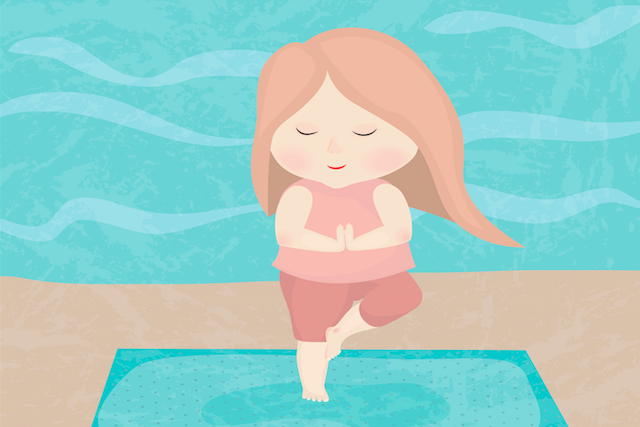
    Yoga is a gentle practice that can help us reconnect with our body. Yoga means unity, between the body and mind. With breath as an anchor, flowing through poses while holding ourselves gently, we center and reconnect with ourselves in the present moment.

    We get out of our head (and our ego-based identity), and back to our body and our true self. We quiet the mind, softening its grip as we turn to movement, being fully present and aware.

    As we tune into each pose, we begin to feel every part of our body. We start cultivating a close relationship with ourselves, exploring our own feelings, thoughts, and relationships to the poses. Yoga becomes an intimate practice for self-exploration and self-acceptance. And it slowly dissolves the ego as your heart takes center stage.

    Certain poses are particularly good for grounding and centering , like child’s pose, tree pose, and warrior poses. There are also many heart-opening poses—like camel, bow, or bridge poses—most of which focus on rotating our shoulders, opening our ribs, and doing backbends, which release muscle tension and unlock sensation in the heart center (also great for anxiety relief).

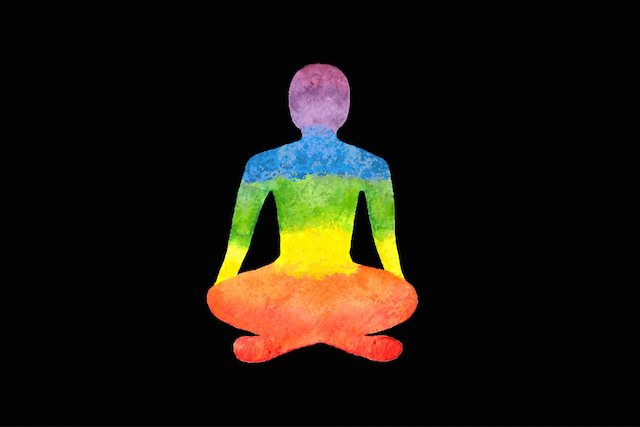
    Kundalini yoga is another practice for awakening and healing our energy body and releasing trauma/blocks, whether in our heart center, root center, or elsewhere.

    The important thing is to focus less on the “exercise” component of it and more on the mind-body-heart connection that happens when you slow down and become really present in your practice.

    Befriending and Taming our Mind

    Once we’ve reconnected with our bodies, we need to befriend our mind, which can easily be overwhelmed by fears, worries, doubts, self-criticism, and obsessive thoughts. We can do that through meditation.

    Mindfulness meditation specifically helps us cultivate a sense of awareness and teaches us to look inward, observe our experience, and learn to let go. It brings to our attention the impermanence of life—as our thoughts and sensations change constantly, so does our experience. This means we can let go of our grip and take life as is, moment by moment.

    With the breath anchoring us in the present moment, we gain a sense of freedom from our past troubles and future worries. Our fears fall away and freedom sets in—freedom to choose how we experience life that’s in front of us.

    With practice, we learn to notice feelings, and emotions underneath those feeling, and the thoughts underneath those. There’s a freedom in that too—freedom to choose to not buy into those thoughts, to let go of them and choose differently. We learn to respond wisely to what’s in front of us, choosing love instead of reacting from our unconscious programming and out of learned fear.

    By observing our thoughts and sensations we learn to recognize when we are afraid, hurt, angry, or ashamed, and that awareness is what allows our ego to fall away.

    We begin to understand the meaning behind our experience and surround ourselves with compassion for our pain, holding ourselves with tenderness and care. We learn to drop our fears and our beliefs about ourselves and the world, and begin to live from our heart, our authentic self.

    When we meditate, we start to gain a better understanding of ourselves, and our way of being starts to shift. We come into wholeness, the realization that our lives are both joyful and painful, and no, we are not damaged, we’re simply human. And the best thing we can do is to love ourselves in this moment, to offer ourselves the care and compassion we need in order to feel soothed and safe. And then we can extend that love and care to others as well. We all suffer and have moments of struggle; this simple acknowledgement can open our heart and connect us all.

    In moments of chaos or anxiety, when our mind is restless or overwhelmed, we can do simple practices that will calm our mind and tame our inner dialogue. A particularly nourishing practice is Tara Brach’s RAIN of self-compassion meditation. By observing our thoughts and feelings without judgment—the core of mindfulness meditation—we can shift from pain to compassion in a gentle way.

    Another practice to try is loving-kindness meditation popularized by Sharon Salzberg.

    And if sitting meditation is too hard for us, we can tap into a meditative state through movement. Rhythmic exercises such as walking, swimming, or dancing can help integrate our body-mind and reset the nervous system through the rhythmic flow of movements that will relax and soothe our mind. These will ground us in the present moment so that we can be there for ourselves, and others.

    Accepting and Rewriting our Story

    If we’ve been running from our pain for a long time, as I once did, this pain becomes our story; our ego is entangled in it. It’s time to untangle and release it so that we can make a new ending. It’s time to rewrite our story.

    I’ve found journaling to be particularly helpful because it allows me to explore my thoughts and feelings without worrying about being judged, criticized, or rejected for who I really am.

    Through journaling, we can uncover our inner pain and suffering and bring to the conscious our fears of feeling not good enough, unlovable, and ultimately alone.

    As we explore our deepest thoughts and try to make sense of our experience, we begin to discern our true feelings from adaptations and programming that we’ve accumulated over our lifetime—messages we received from our family, peers, and society as a whole. We tap into our inner wisdom and intuition, and gain a new perspective on ourselves and the events in our lives.

    Writing is like having a deep conversation with ourselves. Faced with our shame, grief, and the sheer depth of our pain, we learn to offer ourselves the compassion and care we’ve been searching for outside of ourselves. Tending to the wounds we’ve been avoiding, we develop empathy for ourselves as a vulnerable and wounded person.

    Journaling is the ultimate release; we can drop our masks and explore our hang-ups and limitations head on. We slowly unpack our deep-seated beliefs, bringing them to light. This deepens our inner knowing, helping us examine and change our beliefs about ourselves and the world. As we release the pain we’ve been holding onto our whole life, our hearts begin to soften, our armor drops, and our story changes.

    There are two main ways you can journal to heal: expressive writing and prompt-based writing.

    To begin expressive writing, relax your body and close your eyes. Look inward and wait for thoughts to arrive. Begin writing them down without censoring yourself. Spill it all out onto paper, letting your unconscious step forward, giving it a voice. Bring up your real feelings about yourself and the world—and not just what you’ve been conditioned to believe.

    Prompt-based writing can help you think about how your family history, your cultural background, and your religion have all played roles in why you are the way you are.

    For example:

    • How did your family of origin show (or withhold) love?
    • What are you most ashamed about regarding your family?
    • What did you not get as a child that you are now seeking as an adult?
    • How was anger expressed or repressed in your family growing up?

    By examining your past and what shaped you, you can shed a light on your unconscious patterns and the beliefs that you accepted as truths. This is the first step in changing them and rewriting your story.

    These three practices—yoga, mindfulness, and journaling—helped me heal, reconnect with myself, and learn to love myself, and self-love is a prerequisite to feeling the love and belonging that leads to happiness.

    Whether you’ve experienced some sort of trauma or you’ve disconnected from yourself as a consequence of living in our stressed out, achievement-focused world, these practices can help you too.

    By making a little time to reconnect with your body, befriend your mind, and rewrite old stories that no longer serve you, you’ll soon stop being a slave to your ego and start living a freer, happier, more authentic life.

  • How to Connect with Yourself in a World Designed to Distract You

    How to Connect with Yourself in a World Designed to Distract You

    “The mind is not a vessel to be filled but a fire to be kindled.” ~Plutarch

    We live in an age of information overload. Our televisions and the Internet are flooding our senses with a myriad of things.

    Researchers carefully craft all the advertisements we watch and all the magazines we read to prime us to think certain thoughts and take certain actions. A particular color, a special tone in the voice, a slight gesture with the eyes—all are designed to do one thing and one thing alone: influence our minds.

    They affect us just enough that the subsequent thoughts we may have seem like our own, and the decisions we make based on those thoughts seem rational.

    On a daily basis, we are ‘primed’ to spend our time or money on something we may not need. A thought is planted in us so carefully that suppressing it feels like denying our most basic instincts. And why not? It stirs our primal desires of power, sex, and influence. The results are obvious, and all around us.

    We are always looking forward to the next gadget to purchase, the next movie to watch, or the next television series to binge on. We are consuming information and material possessions at a startling rate, and we don’t seem to mind. We feel that when it comes to entertainment and information, there is no such thing as too much.

    We also engage in the use of social media as a means of connecting with people. We want to share everything from pictures of our family to the latest meals we cooked.

    Sending out that daily status update makes us feel a certain kind of security about who we are. We know we are living a good life when someone confirms it with a “like” on the Internet. It’s a form of social validation that encourages sharing, often at the expense of true feeling.

    This constant outward search for approval is often the reason why we don’t look for an internal source of approval. We get used to asking others about who we are and become unable to see the reality for ourselves. If they tell us we are doing the right thing, then we must be; otherwise, we are not that sure.

    The result of this trend is we have no time left to reflect or ponder. If, on occasion, we do look inward, we feel a sense of emptiness and fear. Not knowing what to do with it, we try to fill that emptiness with some external source of gratification.

    That emptiness is important. It is telling us that we are disconnected from who we are. This disconnect is one of the main reasons why we end up in painful life situations.

    A few years ago, I was about to graduate from a US university. The job market was tough, and I needed all the help I could get to find decent work. At the time, a professional contact who I greatly admired became my mentor. He seemed to know it all, and I always looked forward to his advice.

    He believed that a person in my field would not find a job easily out of college, especially because I was an international student and would require a work permit.

    He thought that in order to survive, I needed to get certified as a programmer in a particular high-end software. Although it would be tough to get, the effort would be well worth it. And if I still couldn’t find a job, he would get me in touch with the right people himself. And so, it was decided.

    Over the next six months, I spent thousands of dollars on books, coaching, and commuting in order to get certified in a computer language that I struggled to develop any liking for. I was jobless for six months and couldn’t even afford to pay my rent. I lived with friends who were kind enough to let me sleep on their couch and study for twelve-plus hours every day.

    The day after the exam, I had to go to the ER for severe dehydration. It turned out that I had lost close to twenty pounds over the previous few weeks and weighed only 125 pounds. Obviously, I could not afford health insurance at that time and got hospital bills that took me two years to pay off in installments.

    When my mentor found out how terribly I had performed in the exam, he told me my chances weren’t looking good and he wouldn’t be able to do anything for me. I never heard from him again. After a month, I got the result that I did manage to barely clear the passing mark, but it was too late. I had already accepted a job that would let me pay the bills.

    Over the next few years my self-esteem continued to erode. It ended with me leaving the country and heading back to India after four years of struggle in the United States.

    Looking back at why I placed my trust in someone so blindly and continued to face self-esteem issues, I realized that I was totally disconnected from who I was as an individual.

    I knew that I did not like computer languages to begin with, but while making that fateful decision, I ignored all the self-knowledge I had until that point. I put more trust in someone else’s belief about who I was, just because I needed their approval.

    I suffered, not because someone gave me bad advice, but because I was unable to reject it. I kept ignoring my instincts because I thought they didn’t matter.

    A good sign of having lost connection with yourself is that your true instincts feel like distractions, and distractions feel like true instincts.

    When we are distracted, we feel bored, confused, and unmotivated. We become inclined to pick the easiest path from those available.

    The post-Internet world is designed to distract us, disconnect us from ourselves, and keep us that way. It gives us one novelty after another, just like giving a child one toy after another to keep her occupied. Otherwise, she might cry. But sometimes, a child needs to cry.

    We are afraid of crying, of getting hurt, of looking at ourselves as we are. So we prefer to be distracted and entertained, no matter what the cost.

    Is there a way to rediscover that connection with ourselves? To feel centered and confident about who we are; to understand our emotions, feelings, and desires clearly; to know our strengths and acknowledge our limitations?

    Can we know ourselves from moment to moment, every day, not with words or descriptions, but with an actual perception of our inner selves being intact, self-sufficient, and free from outside influence?

    I think there is a way. This three-step process has greatly helped me reconnect with myself. I hope it helps you too.

    1. See what you see.

    Take a moment to notice what you are seeing at the moment. Is it your phone or a computer on which you are reading this, and your surroundings? Or, are you also seeing, at some level, mental images?

    Most of the time, we are unconsciously seeing things, such as what happened at work today, or what our friend said to us, or some scenes from a favorite TV show. At other times, we are often seeing things that we want to happen, or fear might happen.

    The physical eye shows us one reality, which is often mundane, but the mind’s eye shows us a reality that can be quite interesting.

    We unconsciously or consciously visualize things that either give us pleasure or fear. We imagine negative outcomes and think of ways to protect ourselves in case they happen, or we imagine positive outcomes like enjoying an upcoming vacation. Yet, both outcomes exist only in the mind. The present reality contains no such thing.

    Visualization is a double-edged sword.

    As kids we are encouraged to imagine more and more in order to be creative. But creativity isn’t just visualization, is it? It is also about seeing the same reality as others, but differently. The key is being able to visualize when we need to and not when we don’t. Otherwise, our imagination becomes hyperactive and results in a constant stream of images in front of our eyes. As if we were dreaming while awake.

    If we can stop our visualization at will and only see what our physical eyes are showing us, then our mind becomes simplified. It relaxes and naturally draws our attention inwards, to our bodies. Our attention moves from things that exist in the mind to the things that exist in physical reality.

    Quick exercise: Look around the place you are currently sitting in. See all the things in your room, no matter how insignificant. Look at every shape, every color, every corner. Take time to notice it. Look at your own hands and examine them closely.

    Reality is full of physical sensations, not imagination.

    This brings us to the second step in the process.

    2. Feel what you feel.

    If someone were to ask me, “Can you describe exactly all the emotions you are having at the moment?” I would find it difficult to answer.

    We often experience multiple emotions at the same time. Sometimes we are angry but also sad because of our life situation. Sometimes we are at peace with the world but also feel a longing for something better. Sometimes we are full of gratitude, but not without a hint of pride. Our body responds to the emotions we are having through physical sensations.

    When our palms sweat, we know we are nervous, and when our heart races, we know we are excited or afraid. When we are worried, our breathing becomes shallow and our muscles and nerves tense up. When we are happy, we breathe easy, and our body relaxes. The reason is, our mind is telling the body what to feel, based on what the mind is thinking.

    We are so used to living this way that we pay no attention to what the body is feeling without this input from the mind. As a habit, our body obeys our mind, not the other way around.

    For example, what are you feeling in the little toe of your left foot?

    Can you distinguish the sensation in each one of your toes? It’s not that easy, because our mind has never paid attention to it before.

    Quick exercise: Close your eyes and try to discern the shape of your hand by feeling the electrical impulses on the skin and the gentle blood flow in the veins. If you are able to discern only the index finger or just the thumb, then become more sensitive to what you are feeling until you can feel your entire hand. Within two to five minutes you will feel your heartbeat and its rhythm pulsating through your hands. It has always been there.

    Repeating this exercise with our entire body can help us develop a full-body awareness. In my experience, this is a very powerful way of connecting with ourselves.

    The only thing you have to watch out for is what you think about those sensations. For instance, if you find a source of pain, you might hear your own voice say, “Here is that bothersome pain again. What do I do with it?”

    If you hear negative self-talk such as this, it is okay. Listen to it calmly.

    This self-talk points us to the next stage of connecting with ourselves, which is listening.

    3. Hear what you hear.

    Whose voice do we hear when we talk to ourselves? It’s our own voice, or at least how we want ourselves to sound, right? The person who speaks inside our mind is the “I,” and the person who listens is “myself.”

    Boy, do they love to talk!

    The “I” is always telling “myself” things to do, and things to avoid. Even if we go on a solitary hike on a mountain to spend some time in nature, we can still hear the “I” talking.

    But why are there two of us? Commonsense dictates that there should only be one, right?

    Of course there is only one individual, and we can all experience it this way.

    Quick exercise: Close your eyes, and pay close attention to whatever sounds there may be around you. For thirty seconds, listen to every detail you can hear. Then open your eyes.

    While you were listening, was there an “I” talking to a “myself”? Or was there only the experience of listening?

    When you were having that experience, there was no division between “I” and “myself.” They were one! That state of pure listening, feeling, or hearing is the state of connection.

    When we are fully connected, we become whole.

    What happens when we find the connection?

    When we are connected, it is possible to know our pleasures, desires, fears, ambitions, and anxieties for what they actually are. We perceive them with clarity and without any internal conflict.

    For example, if fear arises, we notice a few things about it.

    1. We realize that there is nothing dangerous actually taking place, except in our minds.

    2. That our heart rate changes, and muscles tense up as the fearful thought arises.

    3. That the “I” is talking to us and telling us to be afraid.

    Knowing these things, we are already one step ahead of fear. The next time it arises, we can predict its pattern. Without worrying or overthinking, now we can solve the real problem at hand, if one exists at all!

    When we are connected, our instincts also become stronger, and we understand what is right and wrong for us. We can make big decisions easily and have no regrets later.

    Four years ago, I had a persistent feeling that I should adopt a dog. Despite having no experience raising a puppy, my instincts kept telling me I needed to do it. My parents and a few of my friends advised against it. They said, “You don’t know what you’re doing. You will end up returning the poor animal the very next day.”

    This time, I listened to myself. I went through the learning curve that comes with taking care of a furry friend but never regretted my decision. Today, our life is unthinkable without our dog, and I am a much better person because of him.

    A strong connection is sometimes all we need, and in some cases, all we have, to keep us sane in this evolving world.

  • How Our Smartphones Are Disconnecting Us and What to Do About It

    How Our Smartphones Are Disconnecting Us and What to Do About It

    “These days, whether you are online or not, it is easy for people to end up unsure if they are closer together or further apart.” ~Sherry Turkle, Alone Together

    There was rarely a time when my partner didn’t have her phone in her hand or, at the very least, in a place she could quickly grab it.

    We’d go out for a meal and it’d be there by her plate, positioned so she could dip in and out at any lull in the conversation.

    We’d take a walk and she’d have me in one hand and it in the other, ready to take a photo or catch the next Facebook notification.

    Even when we were in bed, if it wasn’t glued to her face, it’d be right by her side, lying between us like a small child who’d snuggled in for the night and ruined any chance of intimacy.

    It wasn’t good for our relationship, to say the least. Especially considering that, however unhealthy her relationship with her phone was, mine was worse.

    I didn’t realize it at the time. But in hindsight, I can see that most the time she retreated into her phone was when I’d long zoned out and been absorbed by mine: some random article or new app I’d downloaded, updates on the game, or a group chat with work colleagues.

    In that sense, we were perfect for each other. And looking around us, there didn’t seem anything too strange or excessive about our behavior. All our friends and the couples around us were also interacting with each other from beyond their screens, and they seemed perfectly happy—at least according to their Instagram posts.

    But something wasn’t right. Sure, we had our problems, I knew that. But it was something more than that: we were missing that deep feeling of connection. You know, that feeling you get when your partner understands you, without having to say a word. Or the fulfillment of being alone together and feeling like you’re the only two people in the world.

    Surely this fundamental pillar of how you feel about someone had nothing to do with our little glowing screens. So, none the wiser to what was going on, things gradually got worse and, eventually, we broke up.

    I wasn’t blind enough to see our phones had something to do with it, though. I mean, not being able to talk for two minutes without one of us phubbing the other was clearly an issue. And the non-stop messaging whenever we were apart couldn’t have been good for us.

    So when a similar thing started to happen with my current partner—both of us spending more time with our devices than each other and a feeling of disconnection growing between us—I knew there was something going on. And if one thing was for sure, whatever it was, I wasn’t prepared to let it ruin another relationship.

    I started to look more closely at our phone use and put it under the microscope: Why was it happening? Why did I prefer Candy Crush over spending time together? Why did we talk more via text than real life?

    What I found completely changed our relationship. Not only that, it changed my relationships with friends, family, and everyone I meet. And what’s best about it, I haven’t had to disconnect from social media or give up any of my beloved devices.

    I discovered the real issue wasn’t the physical presence of the phone, but rather how it had changed our idea of communication and influenced how we interact together.

    A prime example of this is phubbing—when your partner uses their phone while you’re talking.

    This was an everyday occurrence in my relationship. My partner would often ask me, “How was your day?” and start phubbing the hell out of me just moments into my response. I always thought she just wasn’t interested and was just being rude, but that wasn’t half the story.

    Because instant messaging was now our primary mode of communication, we’d trained ourselves to take words solely on face value—like you would a text or email.

    And so we would never stop to look beyond what was being laid out on the surface and consider all the other information-rich signals that make up the majority of communication—facial gestures, eye contact, tone, body language, and the emotions driving them all.

    Whenever we spoke, it was more like a means to an end. Something we did because we had to. Conversation was a chore that consisted of generic, predetermined questions and equally humdrum answers. All delivered in a way that was monotonous and unappreciative of the other’s attention and contributions.

    So it’ll be no surprise to hear our conversations were never stimulating and meaningful. And because of this, we robbing ourselves the chance to foster that deep sense of connection and understanding that’s so vital to a healthy relationship.

    Phubbing was only the tip of the iceberg. But it was enough to realize the fundamental effects phones were having on my relationships and wake me up to how they were undermining my ability to connect with people.

    Today, by simply being more aware of how we use our devices, me and my partner are closer than ever.

    What’s more, now we don’t use our phones as much as the average couple, but it’s not because we’re following orders from a couples therapist or because some rule from a relationship handbook told us to. We do it because we stay up all night talking and forget about them. Or because we go on a long walk and accidentally leave them at home.

    We do it because we’ve got back in touch with those deep, visceral feelings that nothing on Twitter or Facebook could ever come close to. And because there’s no way we’re going to let them fade away again.

  • How to Connect with Others and Feel Less Alone in the World

    How to Connect with Others and Feel Less Alone in the World

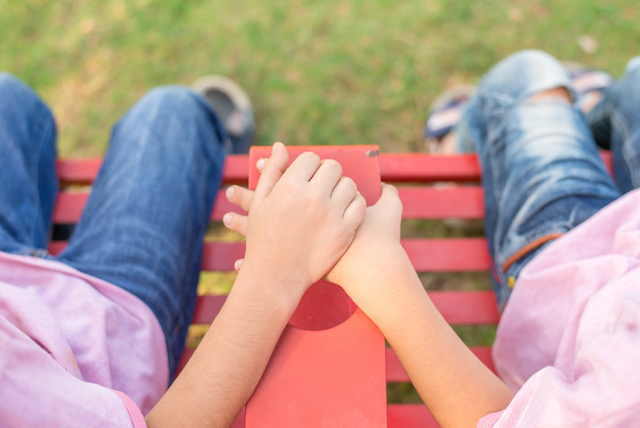
    Friends holding hands

    “Vulnerability is the birthplace of connection and the path to the feeling of worthiness. If it doesn’t feel vulnerable, the sharing is probably not constructive.” ~Brené Brown

    There is very little in life (if anything) more important than our relationships. How connected we feel to others is a strong predictor of our happiness and our feelings of self-worth.

    From a neurobiological standpoint, we are wired for connection. Our deeply connected relationships can ultimately give us true meaning and purpose.

    But, if we’re feeling disconnected, alone, and segregated from those around us, how can we become more connected? Why does it seem so easy for some to create deep connections while it’s hard for others?

    My Struggle for Connection

    My struggle for connection came after I broke up with my then-best friend in college. Without that deep connection that I had once shared with her, I realized that my other relationships were pretty shallow. I didn’t have anyone in whom I could confide. There wasn’t anyone to whom I could reveal my true self. As a result, I had never felt more alone.

    At the same time, I was surrounded by people. By “friends.” I had cultivated many relationships, but somehow none of them were truly genuine.

    As I struggled with my loneliness, I realized that my lack of connection stemmed from my unwillingness to be vulnerable.

    I had an intense fear of being rejected, or of being seen as unworthy—unworthy of love, and unworthy of belonging. As a result, I would change myself to fit the situation and person or group I was with.

    I would hide parts of myself I felt were controversial or might be frowned upon in some way. I was desperately seeking connection, and changing myself in order to be closer to others without being rejected, but as a result I was feeling less connected than ever.

    In short, what it boiled down to was that I was ashamed of being myself, because I didn’t feel that I was good enough.

    It took a long time (more than a year) for me to work through my feelings of inadequacy and lack of self-worth. Through that, I learned many things about connecting with people in a deep and meaningful way.

    1. Be authentic.

    It took a considerable amount of courage, but I learned to tell everyone who I really was at all times.

    I started telling others all about what I have been through, about my failures and what I have learned. I wasn’t able to be friends with everyone as a result of sharing myself so openly, but the relationships I did form through doing this were much more fulfilling.

    Sure, I felt uncomfortable at times, and sometimes I felt rejected by people. But, I also felt honest, and proud of being true to myself.

    Be imperfect. Your imperfections are what make you beautiful and interesting!

    2. Show yourself compassion.

    I had to learn to be kind to myself. I had to stop putting aspects of myself down. Previously, I felt insecure because I didn’t think I was funny, and I hated my facial expressions, but i had to stop believing that certain parts of me were unworthy of being. I had to truly believe that I was worthy of love and belonging.

    I allowed myself to make mistakes. I allowed myself to take care of my own needs. I started treating myself how I believed everyone should be treated.

    You must learn to show yourself compassion before you can truly be compassionate to others.

    3. Embrace vulnerability.

    I cultivated an awareness of my fear of vulnerability, including when I would run from it, and instead forced myself to face my fear.

    I invested in relationships even though there were no guarantees. I showed when I was hurt. I told people how I felt, regardless of how it would be perceived. I opened myself up to the possibility of rejection and thus became truly vulnerable.

    Opening up to vulnerability was difficult, and this process took a long time. Try and be aware of when you run from vulnerability and push through it. In the longrun, you will be so glad that you did.

    Vulnerability isn’t just essential for creating deep and lasting connections with people, it is also the birthplace of joy, creativity, and a sense of belonging and of love.

    The willingness to be completely vulnerable is necessary to feel worthy. If you’re not vulnerable, and you never put your true self out there, you will never know that you are worthy of connection. We all are.

    4. Don’t numb emotions.

    I was lucky enough not to do this, but I’ve learned (and there is lots of psychology research to back this up) that we cannot selectively numb emotions.

    You can’t say, “I don’t want to feel anger or jealousy or vulnerability. Let’s leave those out, and I’ll just take a dose of happiness instead.” Unfortunately, it doesn’t work like that. If you try to numb the negative emotions, you’ll end up numbing everything.

    If you numb everything, you no longer feel happiness, joy, or love.

    5. Don’t mistake vulnerability for weakness.

    Our willingness and ability to be vulnerable, to put ourselves in a state of emotional risk, exposure, and uncertainty, is our most accurate measurement of courage. It is absolutely not weak to expose yourself.

    Show me a man or a woman who tells someone, “I love you,” for the first time, without any certainty of reciprocation, and you will have shown me one of the most courageous human beings in the world.

    If we want to connect with people, we absolutely have to get over this idea that being vulnerable is synonymous with being weak.

    This also ties back into compassion—we must be compassionate to those who show us vulnerability. Do not judge them, or make them feel weak for having done so. Look upon them as the truly courageous people they are, and applaud them for that.

    Friends holding hands image via Shutterstock

  • How I Used My Phone as a Crutch and What I Know Now

    How I Used My Phone as a Crutch and What I Know Now

    “People are lonely because they build walls instead of bridges.” ~Joseph F Newton

    Can you imagine your life without a cell phone?

    It’s hard, right?

    For most of us, we use our phones every day, whether it’s for talking with others, looking up information, or entertaining ourselves during those lulls in the day.

    A short while back, my phone contract expired and I was left without a cell phone. It felt strange at first, since my phone was something that was beside me almost every second of the day.

    But a thought came up: What would my life be like without relying on a cell phone all the time?

    I decided to run an experiment to see how it impacted me. And what I learned surprised me.

    When my eyes weren’t glued to my phone, I was able to look up and notice different things around me. I became more aware of how people used their phones, especially when there weren’t any other electronic devices around to engage them.

    One day, I went to a restaurant for a meal and noticed a family of four sitting beside me. Two adults and two preteen children were seated in a cozy corner, gazing at their menus.

    It looked like they were out having an enjoyable meal as a family. Wasn’t it the perfect time for them to reconnect with one another and share what was happening in their lives?

    But as soon as the orders were given and menus were taken, the dad whipped out his cell phone and began browsing away. The mom followed suit and pulled out her phone as well.

    The little chatter that happened over the table died out, and the two children each pulled out their phones to play with the apps on their phones.

    A while later, the meals arrived.

    Everyone put down their phones to admire their dishes. A few comments were made before digging in. A sip here, a bite there, and soon they went back to staring at their phones again during the meal.

    As the meal progressed the table was silent, save the occasional clink of utensils against plates.

    Ironic, isn’t it? A device that was made to ease communications can end up being a hindrance to talking with others in real life.

    After I left the restaurant, I thought about what happened and couldn’t help but cringe. Not for them, but for its reminder of how I used my phone in the past.

    I would use my phone on the subway, at work, during meals, and almost every other spot in between.

    My phone usage was especially obvious at social gatherings. When the conversation died down and the silence became uncomfortable, it was easy to flip through my phone as a distraction. It was my way of trying to say: “It’s not that I can’t stand the silence—it’s just that I need to check my phone right now.”

    Which, of course, wasn’t true. But it took not having my phone on hand to realize the way I had been using my phone as a crutch. It protected me from uncomfortable situations, from looking bored, and from being unproductive.

    Or so I thought.

    When I didn’t rely on my phone, I shared conversations more easily, became more conscious of my surroundings, and found more meaning in my actions. There are four big realizations I’ve come to about phones—and by extension, a lot of the technology that we rely on today.

    1. You don’t need to be available every second of the day.

    The vast majority of us are in positions that allow us to turn off our phones from time to time. Unless you’re in a job that requires being on call, you can step away and give yourself time off from electronic devices.

    I used to worry that if I didn’t reply to someone’s instant message or email right away, the person would become impatient or I would miss out on an opportunity. I felt myself getting stressed when I forced myself to constantly check for updates.

    But now I know that if I wait to get back to someone, it isn’t the end of the world. It can actually help me develop clarity in how to respond and also gives me peace of mind.

    I’ve learned to appreciate the present moment more now.

    2. Phones are made for communicating with people, not avoiding them.

    Have you ever tried speaking with someone, only for the person to mumble a response while staring at a phone or laptop? Or, maybe you found yourself so preoccupied with your phone that you didn’t notice anyone around you?

    It’s interesting how the urge to fiddle with our phones strikes us when we’re put in a strange situation. Like being in a room with new people. Or running into someone we haven’t seen for a while.

    If you find an urge to use your phone during these situations, stop for a second. Ask yourself, why do you feel more comfortable using your phone at certain moments? Does it have to do with something urgent popping up on your phone, or an effort to avoid feelings of discomfort?

    Not all discomfort is bad. Discomfort can be a sign of growth. It’s an opportunity for you to connect with others and learn something new.

    3. A phone is not a substitute for companionship.

    I have a friend who enjoys spending his time messaging acquaintances and friends that he hasn’t seen for at least several months. When I asked why he didn’t see them even though they lived nearby, he said, “Why should I? I already message them all the time.”

    I admit, I laughed at the response. I believe (and I think you’ll agree) that nothing beats meeting someone in person. Even if we spend months, or years, communicating with someone online or through a phone, we don’t feel like we truly know the person until we’ve met.

    I like to keep a mindful balance between the time I’m using an electronic device and the time that I spend with people. If you’ve been staring at something for most of the day, it’s probably time to put everything down and take a break.

    4. Phones are useful, but use them wisely.

    If you’re thinking about what to do with your phone right now, don’t worry. There’s no need to chuck it in the garbage!

    Phones are great for many things, I can attest to that. They’ve helped me reschedule meetings, get access to information instantly, and choose a wonderful restaurant from time to time.

    Keep in mind, though: phones, laptops, tablets, and other electronics are made to help your life, not consume it. If we set boundaries between technology and our lives, we can use these gadgets to get even more out of our experiences in everyday activities.

    So whatever you choose to do, remember that phones cannot replace the joy of laughing with a loved one, of discovering new places, or the sense of content you feel after making a positive contribution to the world. But if used properly, they can help you get one step closer to achieving those things.

  • How to Feel at Home Wherever You Are

    How to Feel at Home Wherever You Are

    At Home

    “Every day is a journey, and the journey itself is home.” ~Basho

    For over three years, I’ve been living out of a suitcase and traveling around the world doing a combination of volunteering, housesitting, and couch surfing.

    This journey started after I decided to drastically change my life. In the span of a week, I filed for divorce, quit my high-paying job in New York, left my PhD program at an Ivy League school, sold all my stuff, and flew to South America.

    After spending six months volunteering in Brazil, I began to realize that, while I was born and raised in New York, it never really felt like home.

    While I always knew I struggled with many aspects of the external environment, it was how I felt internally when I returned from South America that really made me realize how misunderstood and unhappy I was when I was there.

    So flying to South America turned out to be the first stop on a long quest to find a new home. Since then, I’ve driven to over thirty states in the US and have been welcomed into so many homes, I’ve lost count. I’ve viewed each of these experiences as an opportunity to learn how other people have created a sense of home for themselves.

    Here are five ways I’ve learned to develop a sense of home, and how you can too:

    1. Seek safety.

    Feeling safe is a basic human need and part of the foundation that allows us to relax and open up to the world around us. Feeling safe isn’t just a sense of physical well-being; it’s a sense of emotional and psychological well-being, as well.

    Many things can make a space feel unsafe, everything from unsettled relationships, to unfamiliar surroundings, to unsanitary living conditions. Growing up, there was a great deal of unspoken tension in the house, and when I got married, I never felt emotionally safe with my now ex-husband.

    As I’ve moved around over the last few years, I’ve confirmed that if we don’t feel safe, it’s impossible to feel at home. As a result, there have been places I thought I’d stay for weeks that I ended up leaving after a few hours, and there are places I thought I’d spend one night and ended up staying several months.

    Anyone or anything that disrupts your sense of safety will become an obstacle on your quest to feeling at home. Eliminate these obstacles by either moving on from unsettling situations or by developing healthy boundaries that help to maintain your safe space.

    2. Connect with people.

    While a physical space (home, apartment, condo) can provide a degree of structure and external stability, it’s the people we surround ourselves with that truly make or break a home. We all need a community of people in which we feel understood and supported.

    When I was living on Long Island, it appeared that I had a huge network of people surrounding me. But as I’ve traveled and found communities of like-minded individuals, I’ve realized just how misunderstood and disconnected I felt growing up. Once I experienced what it feels like to be embraced and accepted by those around me, it became impossible to settle for anything less.

    Connecting with others takes effort and time. Talk to those around you and really listen to what they’re saying. Notice how you feel when you’re with them; when you’re around those that feel like home, you’ll know. Keep searching until you find the community of people that feels right for you.

    3. Explore and try new things.

    It’s easy to take for granted everything that our environment has to offer. But chances are there is a great deal more going on than we realize. If we can learn to view life as though we are on an adventure, we’ll feel more inspired to explore that which is right in front of us.

    When I arrive at a new city, I have zero expectations about what I want to see or do; instead, I speak to the people in the community and ask them for advice. This is how I ended up on a river float in Missoula, Montana; learned salsa dancing in Boulder, Colorado; and explored artwork in a tiny park on the outskirts of St. Louis, Missouri.

    Bring a sense of enthusiasm into everything you do, as though you’re a child seeing everything for the first time. Be curious, ask questions, and learn details; every place and every person has a story. Be fearless and go out and explore; this exploration will help you build the deeper connection to the world around you that is needed to feel at home.

    4. Spend some time alone.

    Developing a sense of home is as much an internal discovery as it is an external one. Being present and aware of our feelings and intuitions will help guide us toward making the necessary changes needed to feel at home.

    Even though I’m moving around to different places, I still make time for myself every day. I wake up and do a yoga practice, go on long walks by myself, meditate, journal and spend long drives in silence as a way to clear my mind.

    Take some time alone each day and use this time to check in with your emotions. Inquire about how the people and environment make you feel. Journey within as much as you journey outward and ask yourself what you can do to make the space you’re in feel more like home.

    5. Slow down.

    It can be tempting to rush in and out of new environments, frantically trying to explore and connect. But to truly develop a sense of home, we must slow down long enough to really experience the people and places we find ourselves in; this same concept applies to environments that we’ve been living in our entire lives.

    There have been several moments over the past few years where I’ve found myself caught up in needing to see and do everything that every city has to offer. Not only is this impossible, but it’s also exhausting. Focusing on quality over quantity, in both my connections with others and in my experiences, has been far more powerful in creating a sense of home than having a laundry list of mediocre ones.

    Become an active participant in the world around you rather than sitting on the sidelines and observing life as it passes you by. Take the necessary time to fully process each and every experience and each and every person you meet along the way.

    Take one step today toward exploring your sense of home wherever you go.

    There are plenty of ways in which you can explore the world around you, but remember that you must also look inside yourself and let your gut be your guide.

    Home is where you feel safe, connected, understood, and loved. The more present and engaged you are with both yourself and the world around you, the easier it will be to feel at home anywhere.

    Photo by satemkemet

  • Introducing Tiny Buddha’s Community Forums!

    Introducing Tiny Buddha’s Community Forums!

    Tiny Buddha 2

    After much time and planning with Joshua Denney of Think Web Strategy, I’m thrilled to announce that Tiny Buddha now has a new responsive design and community forums!

    The new design enables for a better reading experience on mobile devices, and also gives you access to forum-related information right on the homepage.

    Why Join The Tiny Buddha Community Forums?

    The forums are a place to connect with the community, to share ideas, and to give and receive support. You’ll find topics related to:

    • Art
    • Crafts
    • Emotional Mastery
    • Fun
    • Health & Fitness
    • Parenting
    • Purpose
    • Relationships
    • Spirituality
    • Tough Times
    • Work

    Since site authors officially started using the forums two days ago, there are already quite a few conversations going on over there. I hope you’ll set up a free account to join one or start your own!

    To Set a Free Account on the Tiny Buddha Forums

    1. Click on the “Join the Forums” link at the top right-hand corner of the site.

    2. On the register page, enter a username, your name, your email address, and your password, and then hit “complete sign up.”

    3. You will receive a confirmation email to verify your account. Once you’ve done that…

    4. Login at http://www.tinybuddha.com/login

    Once you’re logged in, you can use the forum link in the main menu, at the top of the site, or check out on some of the popular forum conversations listed on the new homepage.

    Since this is a new site feature, there may be some bugs. If you notice any issues, please let us know in the technical support section, here: http://dev.tinybuddha.com/forum/site-feedback-support/technical-support/

    Thank you for being part of the Tiny Buddha community! 🙂