Tag: conflict

  • Do You Accept Your Partner’s Attempts to Repair?

    Do You Accept Your Partner’s Attempts to Repair?

    “I am not fully healed, I am not fully wise, I am still on my way. What matters is that I am moving forward.” ~Yung Pueblo

    According to Dr. John Gottman, PhD, successful repair attempts are a “happy couple’s secret weapon.”

    An attempt to repair is when our partner makes a mistake and then makes an attempt to fix it in their own way.

    Their attempt may look very different than what we may want, and we may be tempted to react negatively, but we have a choice to catch ourselves and consciously choose a different response.

    That’s part of our work in creating a loving partnership, releasing and surrendering the need to control. Allowing our partner to love and express love in their own way instead of demanding it our way only. Being open and strong on the inside so we can be soft and loving on the outside.

    I remember many times where my husband acted annoyed with me, or responded critically to something I said or did.

    He would at times catch himself and try to soften his language or “make up” for his knee-jerk reaction.

    I often wouldn’t get a direct apology.

    I would see, through his next actions, that he was aware of his tone, and that he was trying to self-adjust to come from a more loving place.

    That was often not good enough for me though.

    I wouldn’t accept his attempt to repair.

    I was so scared and insecure on the inside that I was overly strong and indignant on the outside.

    I would point out how critical or rude he was and make him bad or wrong.

    I would choose to feel right and justified over loved and happy.

    That’s because I wanted to be loved my way only.

    That meant he had to apologize using his words, often very specific words, in order for me to feel satisfied that he felt bad enough.

    I completely set him up to fail since I was so inflexible on what being loved had to look like for me.

    This will never lead to a loving, open, safe, and trusting relationship.

    If we can be open to our partner’s attempts at making repairs from the beginning, we are setting ourselves up to feel loved, connected, and trusted by them as things continue to move forward.

    If we are repairing a long-term relationship, as we start allowing them to love us and fix things in their own way, we are rebuilding a beautiful foundation.

    How To Accept Attempts At Repairing

    1. Notice your partner’s effort.

    Notice your partner’s attempt to right their wrong, and choose to put your focus there. If they did something that’s petty or not worth a lot of energy, gracefully move on.

    This means showing warmth and gratitude, and letting them know, through your words or body language, that you authentically appreciate their effort and self-adjustment.

    It means allowing yourself to accept and receive, while appreciating the way they tried to repair and do better. Your receptive energy then invites them to do more from a place of love.

    2. Show appreciation for their efforts.

    When we focus on what we want, and acknowledge it with gratitude, we generally attract more of it!

    The same principle applies in reverse: When we focus on what we don’t want, we often attract more of that.

    When I was healing my relationship with my husband, I started to really bring my attention to all of his attempts to diffuse and repair.

    There was an incident where we were preparing dinner together, and he snapped at me when I misunderstood something he said. He quickly caught himself and self-adjusted by stating in a kind and respectful tone what it was he wanted.

    Instead of staying focused on his first attempt, and choosing to make him bad or wrong, I brought my attention to his effort to repair. I thanked him for noticing this within himself and adjusting it. I let him know that I appreciated his effort and how he self-corrected to show up in a loving way.

    Shifting my focus in this way immediately puts me in a more loving space and softens me. It feels good to shift my focus to noticing that he’s trying in his own way. And when I say thank you instead of staying stuck in my anger or annoyance, this inspires him to step up and hear me in a way he wasn’t capable of before.

    3. Assume the best in your partner.

    If you just started dating, remember that a potential partner doesn’t need to earn your trust if they haven’t done anything wrong.

    If you’re repairing a broken relationship, you want to make sure you aren’t living in the past waiting for past disappointments and hurts to repeat themselves.

    When we assume the best in our partner, we tend to get the best of them.

    That’s because we’re energetically conveying trust.

    Oftentimes, the more our partner feels trusted, the more they hear and support us because they don’t want to betray our trust.

    If we convey that we don’t trust them, they’ll likely feel hurt and then shut down, and may even create a self-fulfilling prophecy by betraying our trust.

    4. Communicate what you need in a way they can hear.

    The other side of accepting our partners’ attempts to repair is communicating what helps us move forward after a “wrong.” It doesn’t have to be black and white. We can simultaneously appreciate their efforts and also let them know what helps us feel safe, valued, and respected.

    If we’ve acknowledged our partner’s attempts at repairing by responding with warmth instead of anger, they’ll likely be more open to hearing what we need because they won’t feel defensive. The opportunity for connection and intimacy deepens, even in times of conflict.

    The best way I’ve found to communicate our needs is by using “I” statements—after a heated moment has passed.

    If you appreciate direct acknowledgement after being snapped at, you might say, “I know everyone snaps in moments of stress. When I’m spoken to that way, I feel bad about myself and disconnected from you. I would love for us both to have awareness around this, so we can catch it, acknowledge it, and support each other better moving forward.”

    They may not always remember to do specifically what you’ve asked, and in those moments you can recognize and appreciate that they’re trying, in their own way, to make things right. But if you share your needs without undertones of accusation and defensiveness, without making them bad or wrong, they’re more likely to honor your needs as best as they know how.

    Really, what this all comes down to is consciously choosing love over the need to be right or have the final say, which is a powerful way to reconnect a relationship. I have seen the beauty in this act of surrender, as when we choose to love from this perspective, we inspire a deeper healing within the relationship.

  • How to Step Out of the Drama Triangle and Find Real Peace

    How to Step Out of the Drama Triangle and Find Real Peace

    “Keep your attention focused entirely on what is truly your own concern, and be clear that what belongs to others is their business and none of yours.” ~Epictetus

    Are you addicted to drama? I was, but I didn’t know it. I thought I was just responding to life, to what was happening. I really didn’t think I had a choice! The drama triangle is so pervasive, and can be so subtle, that it just seems normal. But it’s not, and there’s a much saner way to live, I found.

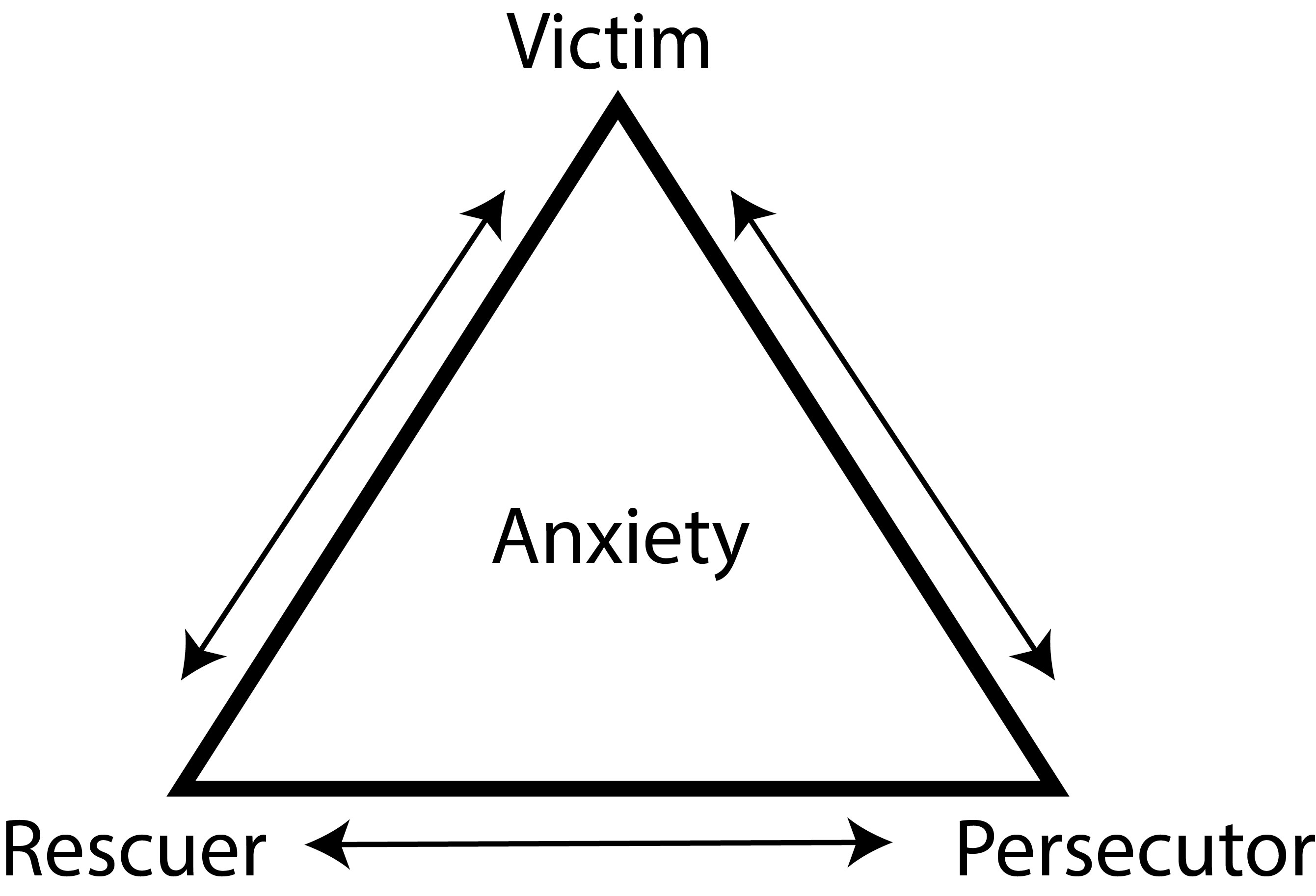
    Dr. Stephen Karpman first described the drama triangle in the 1960’s.

    All three of the roles—Victim, Rescuer, and Persecutor—are very fluid and can morph easily into one another. We all have a favorite (usually the role we assumed most often in childhood), but most of us are pretty good at all three of them, depending on the situation.

    My personal favorite was Rescuer, although I also did a very credible Victim from time to time. I was a Rescuer in my family of origin (middle children often are). I felt virtuous, strong, and necessary when other people turned to me for help or depended on me to take care of things.

    But there’s always a downside. Being a perpetual Rescuer led to chronic stress, as I constantly monitored how everyone else was doing and was never available to take care of my own needs.

    That’s when I’d slip into the Victim role: I’d feel sorry for myself, since no one seemed to appreciate how hard I was working to take care of them. Which made me feel angry and resentful, and before I knew it I’d find myself picking a fight with my husband or fuming at some unwitting clerk. (Yep, there’s the Persecutor.)

    See how the drama cycles from role to role? They all have their payoffs too. It feels good to be a Victim, at least for a while. We get a lot of attention. We don’t need to take responsibility for our actions and their consequences, because we can always find someone else to blame for them. Often people will help us (those nice Rescuers).

    And being the Persecutor can feel powerful, especially for someone who has never learned the skill of asking directly for their needs to be met. We get to “blow off steam.” We might even get to have our way for a while—but at what cost?

    It’s an exhausting way to live. All of the roles are driven by anxiety and the ways we have learned to “control” it in our lives. The drama keeps us absorbed, and it keeps us enmeshed (unhealthily) with others, but it leaves very little room for real peace and joy. And no room at all for a truly healthy relationship to form.

    But how do we step away from the drama triangle, when almost everyone we know is still playing the game?

    The first step is simply to be aware of the game, how it works, and what roles you play most frequently. What role did you play as a child? Can you identify the roles that others in your family played? Are they still playing them?

    The role of Rescuer may be the easiest to admit to, since it actually sounds praiseworthy or noble on the surface. This is not genuine philanthropy, however—it’s really about control and being in someone else’s business, thus neglecting your own.

    If you’re accustomed to being a Victim, on the other hand, you’ll find yourself often looking for someone or something outside of yourself to blame. (In fact, the hallmark of all the roles is that your attention is usually directed outward.)

    Finally, although no one likes to admit to being a Persecutor, if anger is your go-to emotion when things go wrong, you’re probably operating in that role. In reality, the anger is just a mask for underlying fear, shame, and powerlessness. Sadly, adult Persecutors were often Victims as children. In the drama triangle there are no good guys and bad guys—everyone loses.

    Once you’ve become aware of your patterns, it becomes much easier to recognize the game and, eventually, step out of it. Since the drama triangle is all about being in other people’s business, stepping out of it requires you to remain firmly in your own!

    What helped me with this was a concept I call the “zone of integrity.” Imagine a circle around yourself; this represents your business (your true responsibility). In the zone of integrity, you are responsible for being 100% honest, both with yourself and with others. This means acknowledging and honoring your own feelings and needs, and allowing others to be responsible for theirs.

    It also means taking responsibility for your own actions and their consequences, and letting others do the same. This might require some “tough love,” both toward yourself and others. You might not be the most popular person at the dance for a while. Codependence (which is essentially what the drama triangle describes) is a system. It requires multiple players to function, so people will probably be upset when you opt out. In fact, you can count on it.

    During my own withdrawal phase, I would regularly find myself getting sucked into the old dynamics, but it’s become easier and easier to spot when that happens and to use the “zone of integrity” concept to pull myself back into my own business.

    Recently my mother asked me to help smooth over a squabble between some of my siblings—exactly the sort of thing I have done all my life. Even in the act of saying yes I suddenly stopped and thought, “Is this really my business? Do I really have to take this on?” And then politely declined.

    It’s not always easy in the beginning to recognize whose business you’re in, especially when it involves your family of origin. These are the people who taught you most of what you know about the drama triangle, after all!

    For me, I feel a very familiar sense of obligation and guilt when those Rescuer urges start kicking in, which prompts me to pull back and look more closely at the situation. It took practice for me to hear and trust those feelings, but now they’re easy to spot.

    The zone of integrity, when I manage to stay there, feels so good. I still care about people, and help when it feels right, but I no longer feel obligated to rescue. That means that I don’t end up feeling victimized, or resentfully persecuting someone else in return. In the long run it’s much better for everyone involved.

    My life now has a lot less drama, it’s true. You might miss that sometimes, when people are trading war stories at Friday night happy hour. What you will have instead is true peace of mind, much healthier relationships and a passionate addiction to staying in your zone of integrity. It’s worth the trade-off.

  • What To Do When the Voices in Your Head Disagree

    What To Do When the Voices in Your Head Disagree

    “Ego says, ‘Once everything falls into place, I’ll feel peace. Spirit says, ‘Find your peace, and then everything will fall into place.” ~Marianne Williamson

    Muse: I’d love to get another job one day. One where I can feel inspired and give my best gifts to the world! One where they have a casual dress code and summer Fridays. Ah, I can just feel it now!

    Critic: What are you, crazy? You’re always talking about quitting and starting over. Do you remember how hard we worked to get the job we have? (That you’ve only been at for one year, may I remind you.) What do you think, you can just throw that all away?

    Muse: I don’t care. I don’t want to live my life for my resume. One year is a good amount of time. I’m ready to try something new. I want to start feeling satisfied at work, and you know we are not happy in our current situation.

    Critic: It’s not all about “happiness,” okay? Who do you even know that is happy? (And don’t show me their Instagram feed as evidence.) There’s more to life than just what you want, you have to be responsible.

    Muse: Responsible means “able to respond,” and with that ability I’m responding to feeling dead at work with the idea to do something new. Why are you always such a downer?

    Does this style of dialogue sound familiar? What’s fascinating is that this kind of banter goes on internally ad nauseam, and we barely even recognize that it’s happening.

    According to several different therapeutic modalities, these inner “parts” of us are perfectly natural, but it can cause distress when they are engaged in conflict and we remain unaware of the inner battle we are constantly fighting.

    When I first was introduced to “parts work,” it made so much sense to me. I quickly identified a little girl part, a writer part, a dreamer part, a victim part, a wise part, and many others that were at play within my psyche—running more or less amuck having been left unattended for years.

    Once I got to know these parts (from their names, to what they like to wear, to their age, to their qualities of being), I began to develop a relationship with them where they could show me deeper fears and desires that I was struggling with.

    At the time, I was most conflicted by the battle the Muse and Critic have so nicely illustrated above. I was concerned as to whether to follow a more traditional career path, or set out on my own as an entrepreneur.

    When I would listen to either side individually, each seemed to make a compelling case. In the Muse’s case, she seemed to have my back regarding my heart’s desires and what would be both fun and fulfilling. In the Critic’s case, he seemed to be protective of my well-being and trying to ensure that I would be able to succeed and not be doing something rash or impractical.

    The beauty of working with your parts is that each of them has their own unique perspective and wisdom for you.

    Too often we hear things that imply that we should silence or even banish the inner Critic. However, from my vantage point and experience, the Inner Critic is most often attempting to offer something of value. He’s trying to be helpful in the only way he knows how (through fear and thus behaving protectively).

    When I started listening to the Inner Critic instead of avoiding him, I was able to use his strategizing, focus, and love of structure and stability to help balance out the Muse’s go-all-in approach.

    Whereas I tended to favor the Muse because she is more colorful, upbeat, and fun-loving, it was an important process to see where she was blindsided by her aspirations and sometimes ignoring realities that the Critic rightly brought to my attention.

    In fact, the relationship between the Muse and Critic highlighted why they were so diametrically opposed—by being pitted against each other, each one grew more and more extreme.

    Through working with these parts and having them relate to each other, the Critic could become an “inner architect,” and the Muse could open up to his ideas for designing the life of her dreams without throwing caution to the wind.

    It gave structure and form to the wispy and grandiose ideas of the dreamer. I was able to launch my own business, while also balancing the realities of daily life.

    Most importantly, working with my parts helped me feel more peace and alignment inside myself. From there, the external aspects of life became easier to navigate because I could connect to the clarity and direction within.

    I fell so in love with the personal transformation that parts work has to offer that I now incorporate this methodology into my work with others. It has been amazing to see how similar and yet how unique every person’s inner parts (and their relationships to each other) can be!

    By working with one’s parts over time, you can see how and why they disagree and move closer and closer to a deeper understanding and harmony among them.

    Do you also have an internal struggle currently where you feel like there’s a Ping-Pong game of back and forth going on inside your brain? Are you feeling torn between “I want to” and “I shouldn’t”? Are you feeling split between “If only…” and “Impossible!”? Then, it’s possible that two sides of your own self are waging war trying to get to a solution that actually lies in the middle ground of what they both have to offer.

    To start getting to know your own parts, you might:

    1. Sit down and list any of your roles or personas—as many aspects of yourself that you can think of.

    Some examples include: Debbie the Downer or Suzy the Spunky One; Donald the Dreamer or Percy the Protector.

    Trust your first instinct on their gender, if applicable. Some may even be an animal or have an amorphous presence, like a pervasive mist or a dark blob. *Also note that parts are not fixed or stagnant, they can continually evolve and shift, just like us!

    2. Secondly, write a few descriptive adjectives beside each of them.

    Write down what arises for you when you imagine them and when you connect with their needs, fears, and desires. For bonus points, draw a picture of them! (Even stick figures count!)

    3. Then, pick the two parts that seem the most contradictory, and begin a dialogue.

    Start with the most eager and curious one asking the other, “How are you today?”

    At first, they may start out pretty opposed, but if you write for at least a page, they may come to understand each other. However, the only goal here is to witness their perspectives as they are, and let the rest unfold organically. Don’t force the process; rather follow your intuition and be open to letting the process lead you!

    Feel free to share below how this goes for you. I hope you at least have fun exploring. You might be surprised at what unfolds!

  • 4 Simple Sentences That Can Prevent Arguments and Resentment

    4 Simple Sentences That Can Prevent Arguments and Resentment

    Couple with dog

    “There are two sides to every argument, until you take one.” ~Unknown

    The phone rang. My partner and our daughter were away hiking and camping. I’d wanted to go with them, but my partner had discouraged me.

    My partner had a last-minute change of heart, but I’d remained firm. They hadn’t welcomed me, I said, so they could do without me.

    Now, after a day of hiking, our daughter phoned me. They wanted me to join them for dinner and then join them for the second day of the hike.

    How do you deal with feelings of disappointment, frustration, or resentment? How do you deal with differences, apart from arguing or sulking? How do you restore the spirit of love?

    We often feel embarrassed to share our unpleasant feelings. But we all have them. We’re all human.

    So what did I do, and what did I learn to do? It helps to understand why I’d wanted to go, and why I was so upset.

    We’ve traveled to many places as a family. I love the aura of mutual support and love that flourishes during our travels.

    It’s us against the challenges of the world. Each of us gets something done so that all of us can enjoy the trip more.

    For example, when we drove into the center of Melbourne at night, trying to find our hotel, one of our daughters was waiting on the sidewalk to flag us down. When we arrived one night in Matanzas, Cuba, by bus, she surprised us by appearing at the bus stop to take us to a specially prepared dinner.

    Such considerate efforts and little joys tend to nurture the spirit of love. So I look forward to our family adventures, even if it’s only a brief local outing.

    Now I was facing an unexpected situation. I was being discouraged from hiking with them. They said that my leisurely pace would slow them down.

    “Hardly the point,” I said. “It’s a family outing.”

    But they remained keen on walking as quickly as they could. I didn’t really fancy walking on my own.

    I felt rejected, but also angry at being rejected. I hadn’t sulked for some years, but I thought that I was now entitled to a big dose of sulking.

    Eventually, I tried to identify my unpleasant feelings. Finally, I found the exact word I was looking for: “ostracized.” That’s how I felt, I decided.

    People with disfigurements are sometimes ostracized. People with facial burns, or skin diseases, or congenital malformations, all face ostracism.

    I had no disfigurement. I merely tended to walk more slowly than they did. But I felt ostracized by my own partner.

    On the night before they left, I finally blurted it out to my partner: “I felt ostracized by the way you put things.”

    Back came the response, promptly: “I’m sorry for that. That’s not what I intended.”

    A little while later, this was followed by, “Please will you come with us?”

    That illustrates the power of simply stating your feelings. That’s the first lesson I learned.

    Unfortunately, my mind was stubbornly set. “I don’t waste my time where I’m not welcome,” I said. How delicious it is to be stubborn, and how self-defeating!

    They were off before I woke up in the morning. I decided to tackle the many tasks awaiting my attention.

    I embarked on a major project which had long been postponed. It was so absorbing and enjoyable that the hours flew by. Then the evening came, with the surprise phone call from my daughter.

    Would I drive over to join them for dinner? Would I join them for the rest of the hike? “No,” I said.

    But our daughter doesn’t give up easily. She kept talking, telling me about their day, describing where they were going for dinner, and said she’d phone again with directions. A few minutes later, she called again and gave me detailed directions, telling me at what time they expected to arrive at the restaurant.

    “It would be great if you joined us,” she said. The gentle tone of that suggestion lent it power. There was no lecturing, no “you should have,” no “you should,” no judgment.

    She hadn’t been at fault in this whole episode, I thought. So why punish her? I got changed and drove off.

    It turned out to be a charming restaurant, with delicious food. As we chatted, I forgot to stay resentful.

    By the end of the meal, my wish to punish anyone had evaporated. Still, my newly started project at home was far too engrossing. So I decided not to join them for the second day of the hike.

    The next evening, they returned, exhausted and sore from the very long hike. I was almost grateful to have been spared the blisters. I cooked them a nice dinner, to help build on the aura of collaboration and closeness.

    This episode reminded me of four powerful sentences that I’d once been advised to use. These sentences can help transform any argument into a conversation and collaboration. From now on, I hope I remember to use them in difficult situations.

    Here they are:

    1. “There’s some truth in what you’re saying.”
    2. “I feel [like this] when you [say or do] that.”
    3. “It seems as if you’re upset; tell me more about how you feel.”
    4. “It would be good if [this happened].”

    When expectations differ, these sentences enable mutual respect, kindness, and win-win solutions.

    You can insert your own appropriate words or phrases into the brackets.

    For example, here’s what I might have said to my partner:

    “There’s some truth in what you’re saying. I do tend to walk more slowly than you.”

    “But I feel ostracized when you say you want to go without me.”

    If my partner had seemed upset, I’d say: “It seems as if you’re upset. Tell me more about how you feel.”

    If I had a suggestion I’d say: “It would be good if we went together and did one day at my pace, then one day at yours.”

    These four sentences, appropriately modified, can be used by anyone. They can be used at home, at work, or in any difficult situation. They can be used together, or separately, as the situation requires.

    Unhelpful feelings often lead to self-defeating arguments or brooding resentment. Before a situation deteriorates, try using your own version of these four sentences. Use them and be prepared for argument and resentment to turn into collaborative problem-solving.

    Don’t omit listening to the other person. Also, be prepared graciously to accept good suggestions they may make.

    These sentences are simple, but powerful. They help solve problems while restoring the spirit of love. And love heals.

  • How to Confront Someone When You’re Afraid of Conflict

    How to Confront Someone When You’re Afraid of Conflict

    “Peace is not the absence of conflict, but the presence of creative alternatives for responding to conflict.” ~Dorothy Thompson

    I used to think that in order to live a completely peaceful existence, there could never be any conflict in my life, so I would do anything possible to avoid it.

    That included selling myself short, never sticking up for myself, and effectively compromising my value. That didn’t seem like the road to peace.

    The odd time I did say something, it still felt like a losing situation because I never felt I actually gained anything.

    Conflict scared me. It made me feel like I was a bad person or not spiritually evolved enough.

    About ten years ago, it became apparent that I simply couldn’t maintain a functional relationship with my in-laws, and I was devastated. The relationship became only about conflict, and it was simply too much for me.

    After saying goodbye to that dream of being part of one big happy family, I felt traumatized and fearful whenever I was faced with any sort of conflict.

    Despite always trying to do the right thing, I have had a falling out with a family member, an argument with a good friend, and a teeny, tiny disagreement with a colleague that became a much bigger drama than it should have.

    Each time I tried to learn from the previous situation and handle things differently; each time it didn’t work out for me. I was left wondering, what’s the best way to handle conflict?

    When someone does something to upset you, do you say how you feel? Do you ignore it and let it blow over? Is there another option?

    First, I decided to question my belief about conflict. Do I have to view conflict as a negative thing?

    It’s impossible to be perfectly aligned with everyone in our life so that no conflict ever arises. Expecting that is just going to result in disappointment, or, as in my case, feeling like I was lacking in some way when I couldn’t achieve that.

    Sometimes it doesn’t seem right to ignore things either.

    When someone is out of line, do we have a duty to make them aware of their impact on others? When someone is being unkind to you, isn’t it showing yourself kindness to put a stop to it? Is potential conflict your opportunity for growth?

    If you have a relationship in which you know that sharing your feelings is safe and the other person will respond positively, then you likely don’t even have to contemplate what you should do.

    It becomes difficult when you feel unsafe, so you start debating whether to ignore things or tell someone you’re hurt or angry.

    If we ignore it, we run the risk of the relationship with that person revolving around how we’re upset with them. We then look for any wrongdoings as evidence; that makes that story true and justified. Things can snowball, and then we can misinterpret everything they do or say in order to support what we believe.

    Telling people how we feel sometimes isn’t a good idea either. (Again, I should point out that I am talking about situations where conflict has the potential to increase—maybe with difficult family members, certain acquaintances, or challenging friends).

    If we tell people how we feel, there is an expectation for them to accept or at least acknowledge that we feel that way. That might not happen. The other person might not be capable of that, and things then escalate.

    Instead, they might go straight to defending themselves. Chances are, the other person did not intend to hurt you, and telling them will make them feel bad, intensifying the situation. This is not the foundation in which to resolve conflict.

    Fact and truth are different. Facts aren’t disputable. Truth is.

    There is your truth, and then there is what is true for the other person. Both truths are based on perception, which can be completely different.

    That doesn’t mean that one is right and the other is wrong. It means that truth can be different for everyone, because it’s influenced by one’s experiences, wisdom, and thoughts.

    We expect to feel better by telling someone how we feel and then can blame the other person if that doesn’t happen, making things worse.

    So, is there another option? Yes, yes there is. Instead, tell them what you need.

    Defining what you need requires a bit of self-reflection, and that allows you to work through what is your ‘stuff.’

    If you are angry with the other person and actually can’t whittle it down to being able to ask for something you need from them, then perhaps it is an internal conflict that the other person triggered, and you actually don’t need to involve them.

    Focusing on what you need removes “should” and “should not” from your internal dialogue –”they shouldn’t be so insensitive” or “they should be more respectful.” It isn’t true that they should or shouldn’t be a certain way; that’s just something you want.

    After determining how their behavior is affecting you, you can then discover what you need or would like to change.

    The intention of simply asking for what you need is not to elaborate, but if the other person seeks to understand the situation further, then they might ask questions that lead you to sharing your feelings.

    This becomes more of a conversation rather than a confrontation, because the person knows up front what is expected from them and they invited you to share your feelings; therefore, the dynamic in the discussion is different.

    Sometimes asking for what you need results in creating boundaries, which are useful and essential in life. (But remember that enforcing boundaries creates separation, which is kind of the point. But if you don’t seek to show your affection within those boundaries, the other person may just feel rejected.)

    There is no perfect approach to conflict; there is no surefire way that ensures both parties go through the process without being hurt or upset. And I certainly don’t think that we should never tell people how we feel.

    What I am suggesting is that sometimes, in some situations with certain people, it doesn’t help to voice our feelings (and it never accomplishes anything), so taking this approach to only ask for what you need might be more useful.

    Unfortunately for me, some of my conflict has resulted in me taking a major step back from certain people, which raises another important question: How do you know when enough is enough? What if there is continual conflict, or you don’t receive what you need?

    If grieving that relationship is a less painful option than having that person remain in your life, then that is something for you to consider, especially if it affects your self-worth.

    If I had asked my in-laws for what I needed, might things have turned out differently? Maybe.

    If I knew what they needed might it have changed things? Probably.

    If it didn’t conflict with my boundaries, then I would have accommodated their needs any way I could, had I known what they were.

    I know that things would have been very different with my family member if I had just said, “I need your support; I want us to be closer because you matter to me” instead of just feeling rejected, dismissed, and criticized.

    Or, if I had just said to my friend who would always cancel our plans at the last minute, “Can we only make arrangements if you are sure you won’t have to cancel, because I really want to see you.”

    Or, to my colleague, who I thought was being insensitive when a conflict of interest had arisen, “Maybe we should avoid talking about this topic until there is no conflict of interest, but I really enjoy talking to you, so let’s just focus on other things.”

    Asking for what you need, instead of focusing on the other person’s negative behavior and your feelings, is going to make it easier for them to respond to you, especially if you follow your request up with a positive statement.

    So, next time you are debating whether to ignore something or say when you have been upset, try asking yourself, “What do I need?”

  • How to Have a Peaceful Mother’s Day with a Difficult Mother

    How to Have a Peaceful Mother’s Day with a Difficult Mother

    Mother and Daughter

    “I’d rather be honest and authentic and disappoint some people than to exhaust myself trying to keep up the facade of perfection.” ~Crystal Paine

    “You’re the Best Mom Ever!”

    Nope.

    “You’ve always listened, loved, and let me lean on you.”

    Not really.

    For most of my adult life, every year before Mother’s Day I stood in front of a beautiful display of cards fairly bursting with love, and tried to find one that my authentic self would allow me to give my mother, and that my mother would be pleased enough with that the day would be calm and pleasant.

    Out of the corner of my eye, I saw other people browsing, smiling, choosing, and leaving, while I stood there desperately trying to find a verse that would honor my personal integrity.

    Eventually, I would find one that was close enough—usually one that expressed what a wonderful woman I thought she was. Because I did. Then I’d head to the checkout counter with a knot in my stomach.

    My mother was a narcissist, and most likely had borderline personality disorder.

    She was extremely intelligent, attractive, sometimes funny, and a real go-getter. Her creative output was truly amazing. But our relationship was fraught with competition from day one—a push/pull of my trying to satisfy her limitless needs while holding on to whatever threads of my inner self that I could.

    There wasn’t much room in her life for me, other than as an extension of herself.

    Over the years, I investigated and experimented with innumerable maneuvers to try and please her. But either she did not want to be pleased, or she did not care to grant me the satisfaction of having made her happy. I never knew which it was; I only knew that I never pleased her.

    Mother’s Day was one of the most difficult holidays in our family, because no matter what happened or how much attention we gave my mother, her bottomless need for attention remained unfulfilled at the end of the day.

    I finally learned that the only way to maintain my sense of self was to give what I comfortably could and let the result roll off my back. Of course, it took a few decades of off-and-on therapy before I could separate myself enough from the enmeshment with my mother that I could keep my own point of view in the forefront of my mind while I interacted with her.

    I’d like to share some things I learned in the hopes of helping others whose relationships are similarly entangled. This same advice could apply to your father, should you need this come June.

    1. Remember that in the real world, your needs are just as important as your mother’s.

    It may only look like hers are massively more important because that’s how she behaves. Do something nice for yourself on Mother’s Day if you can—especially if you’re a mother or father yourself.

    2. Try to hold on to your own point of view even while you’re interacting with your mother.

    For decades, I just dissociated and became the “Good Little Girl” whenever I was with my mother, but in doing that I caused myself several weeks’ worth of plummeting self-esteem after each visit.

    Even if you don’t speak your mind, you can hold on to your own beliefs and feelings about the relationship so you don’t totally lose yourself.

    3. Choose not to add fuel the fire.

    If your mother gets upset or tries to initiate a struggle, say something like, “This is your special day, Mom. Let’s not fight.”

    4. If you need space, take it.

    Use the bathroom, go for a walk, offer to get her a cup of coffee or a sweater so you can move to another room. If it works for you, ask a friend a few days before the event to give you a call at a certain time, then say, “Sorry, I have to take this,” and move into another room or outside.

    5. Photos can defuse a difficult situation.

    Have some photos of your kids, pets, friends, or landscapes on your phone, and whip it out if needed: “Hey, did I show you the new photo of Rover?” Also, this tactic turns your attention and hers from each other to a device.

    6. Refrain from mentioning any great news you have until a few days after Mother’s Day, unless it includes your mother.

    Some mothers are pleased to share the spotlight; some are not.

    7. Remember that you’re probably doing a great job of supporting and encouraging your mother, and you’re most likely an intelligent, talented, and worthy person.

    Don’t buy into whatever criticisms your mother might throw at you. Some people get a lift from criticizing—even when they’re just making something up.

    8. When you leave, leave it behind you.

    Move your thoughts to something you’re excited or happy about. Don’t run over the conversations in your head. They’re in the past, and you can accomplish so much more without bad movies replaying over and over in your mind.

    In spite of my lifelong difficulties with my mother, there were many things I loved about her. You might say I loved her soul—it was her personality that caused the difficulty.

    If you can remain aware of what you love about your mother, it may make your time together easier. And since what you focus on expands, it might even bring those qualities out in her behavior over time.

    I know on a very deep level how difficult it can be to move forward in life when a parent seems to do everything possible to hold you back. But it’s imperative to keep going, to build a life that fulfills you. One day your mother will be gone, and there will be much more space in your life for you and your needs and desires. Don’t let her “timing” dictate when you get to start living your life.

    In fact, I think there should be a “Celebrate Self Day” to go with all the other holidays. It may be what we all most need.

  • How to Respond to a Verbal Assault Without Losing Your Cool

    How to Respond to a Verbal Assault Without Losing Your Cool

    Two Angry Men

    “Often those that criticize others reveal what he himself lacks.” ~Shannon L. Adler

     I answer the phone.

    And then the yelling starts. The woman on the other end lets fly a barrage of abuse.

    She’s angry and upset and she’s taking it out on me. Because I haven’t sent her a text message for two days.

    She wants to know why I haven’t responded and what is wrong with me. She wants to know how I can be so mean.

    I don’t understand. I thought I was giving her space during a difficult time. I was also dealing with events in my own life.

    I’ve known her for five years, during which time she’s shown herself to be a powerful ally, a fierce supporter, and a generous friend.

    But her power has a flip side, as she’s also difficult and draining.

    Forceful and forthright, she’s an expert in getting people to do her bidding.

    This power had caused cracks in our friendship some time ago, and recently those cracks had become chasms.

    I knew she had a string of broken friendships that had erupted dramatically when she perceived a slight.

    And now it was my turn because I didn’t respond to her SMS.

    Normally I hate conflict. I turn to jelly, stutter and stumble over my words, and feel guilty as all hell. I take on more blame than I should—say it’s all my fault. I just want the conflict to stop.

    Actually, I want to run and hide until it all blows over.

    But there’s no hiding from this call. No running away from this angry torrent of questions and blame.

    And somehow I don’t turn to jelly this time. I find I have a strong inner core. A firm resolve that I can call on.

    I’m not quite sure how, but I managed that conflict effectively. Even elegantly.

    I didn’t necessarily manage it in the way that the other person wanted me to, but I managed it in such a way that I am proud of myself.

    I managed to draw on all the conflict resolution skills I read about, but never used.

    Here’s what I did.

    1. Take their side.

    One of the best things you can do to deflate a conflict is to empathize and agree with the other person, particularly if they’re really angry and emotional.

    By agreeing with at least some aspect of their argument, they have nothing to fight about.

    The goal isn’t just to placate them. You may find that by empathizing you recognize some truth in what they’re saying. When someone is emotional, it’s hard to recognize when they have valid points, but at times they do.

    If you simply can’t see eye to eye, you don’t have to agree with their whole argument, just agree with something. You can start by saying, “You have every right to feel that way.”

    What I said during that call was “I’m sorry you’re upset.” Because I was genuinely sorry that she was so distressed. Saying this allowed me to empathize with her, but not give away my own power or accept blame for the situation.

    2. Pretend it’s Groundhog Day.

    Remember Groundhog Day—when Bill Murray had to do the same thing over and over? Well, it’s often good to pretend it’s Groundhog Day when someone is angry.

    You see, when someone is really emotional and upset or angry it’s a little like they’re drunk. Adrenaline is coursing through their body. This sets off a series of events that triggers the release of hormones.

    In fact, some people use the term “adrenaline drunk” because when we’re in this state our ability to behave appropriately, listen to reason, and even control ourselves is vastly diminished.

    That old expression “I’m so angry I can’t see straight” is fairly accurate.

    So repeating your message is necessary. I kept repeating, “I’m sorry you’re upset, but I haven’t done anything wrong.”

    3. Channel Eeyore.

    If you keep your voice calm and soothing, it has a relaxing effect on both of you.

    Try channeling Eeyore. He’s the pessimistic grey donkey in Winnie the Pooh. Although he’s often a little gloomy, he’s completely unflappable.

    Nothing gets Eeyore riled or cranky. And he’s also empathetic, so channeling Eeyore can be really helpful when you’re caught in the crossfire of someone’s fury.

    During this call I managed to distance myself and remain calm. I didn’t raise my voice or get emotional. Everything I said was spoken in low tones, and I forced myself to speak slowly.

    It wasn’t easy, but I held it together until the end of the call. Using a soothing voice calmed me as much as it calmed her.

    4. Establish ownership.

    Get clear on who owns the problems or issues that come up. I know this is easier said than done, but doing this helps to separate the person from the problems.

    It also allows you to work on solutions, and to be clear on your own attachment to both the problem and the solution.

    If you can do this, you retain your personal power. This technique allows you to stay in control, and ensure that you don’t become involved in an emotional slanging match.

    During this call I listened to what the real problems were. It turned out that my friend had a lot of unwritten rules for our relationship.

    These were rules I didn’t know or understand, and rules she felt I’d disobeyed. She was upset that I’d violated these unspoken rules.

    I also realized that I wasn’t interested in keeping a friendship that was so complex and difficult. For me, the cost of this relationship suddenly looked far too high.

    5. Look after yourself.

    Above all else, make sure you take care of yourself.

    Sometimes you can’t reach a win-win solution, or even a win-lose solution. In my case, I had to agree to disagree because the underlying issues weren’t resolvable.

    One of the ways I looked after myself was to know that I’d done everything in my control to resolve the situation in a reasonable way. I tried my hardest but we couldn’t make it work.

    I was sad the friendship was over. But I was comfortable that I had stayed true to myself.

    I also knew that I had taken part in the conversation as an equal party. I had made a conscious decision not to apologize or ask forgiveness.

    I could easily have given in, accepted all the blame, and done whatever it took to patch things up. I could have let all her yelling and anger bully me into apologizing.

    But I put myself first, and that made a huge difference. Normally I focus on the hurt that the other person is feeling. This time I focused on myself.

    Respect is Everything

    Here’s the key takeaway I have for you: Respect is everything.

    Conflict is part of life, whether we like it or not. And the real key to any conflict is respect.

    It’s important to show respect for the other person’s thoughts and feelings, and you can do that by agreeing with some part of their argument.

    But you don’t have to agree with everything. And you don’t have to give in or turn to jelly.

    Because showing respect for other people’s thoughts and feelings is only half the story. Your feelings and thoughts are just as important as anyone else’s.

    You deserve to be heard and understood too.

    Your opinions and beliefs are valuable.

    Your message is just as valid as anyone else’s.

    You don’t have to shout from the rooftops. You just need to look after yourself.

    So the next time you find yourself involved in a conflict, keep yourself calm by speaking calmly.

    Breathe deeply and find your inner core.

    It’s there, just waiting for you.

    Two angry men image via Shutterstock

    Editor’s Note: This post has been expanded for clarification, and the title has been changed to better reflect the story and messages shared.

  • From Conflict to Compassion: Put Love Above Winning

    From Conflict to Compassion: Put Love Above Winning

    Angry Couple

    “Let go of your attachment to being right and suddenly your mind is more open.” ~Ralph Marston

    When we face a conflict we face an opportunity to learn from pain. It’s like putting your hand against a hot burner on the stove. The burn warns that you have to do something differently.

    You pull your hand back reflexively and you don’t touch the stove again. You’ve learned. As with the hot stove, if we get the lesson that is in front of us, we don’t need to keep repeating that particular pain.

    Inconveniently, our natural inclination when we feel the sting of conflict is to outsource the blame, making it impossible to get the lesson and move on.

    This is such a strong tendency that many of us live in a constant or re-occurring experience with conflict. We have conflicts with our co-workers, our boss, our neighbors, the guy in front of us in line at the coffee shop, our partners, children, and parents.

    It’s the same story running over and over. In its most basic form, the story is:

    I have been wronged by someone who does not see my value. They are self-centered and are not considering my point of view

    Oddly enough, that is also the story we are acting out. We are refusing to see the others’ point of view; maybe because it puts our own sense of self at risk.

    Who am I if I let go of my passionate perspective and wholly understand the others’ point of view? Will the world walk all over me if I don’t stand up for my rights?

    Fundamentally, this fear is about a loss of ego. My outrage at my neighbor because he continually lets his dog out at 5:30AM to bark is rooted in a desire to be right: to have my experience in the world validated.

    Of course, the pre-dawn barking disturbs my sleep. I don’t want to discount that impact. But if this were an event that I chose or knew I couldn’t control, I would accept it.

    For example, if I opted to live somewhere beautiful knowing that there would be a 5:30 siren every day, I would manage that in my life with earplugs or a different sleep pattern and not feel indignant about it. But when I feel disregarded by the neighbor, I experience the pain of conflict.

    When I am upset with my partner because he doesn’t do enough housework, it’s not because I’m in pain from doing too much housework. I’m in pain because I’m afraid he won’t see my value; that he will take me for granted and not recognize my worth. That is a fear of losing ego.

    What can we do with this need to win in order to be seen? This very need is central to our primary drivers and yet runs contrary to our best interests.

    As Leo Tolstoy wrote to Gandhi in 1908 in A Letter to a Hindu:

    “On the one side there is the consciousness of the beneficence of the law of love, and on the other the existing order of life which has for centuries occasioned an empty, anxious, restless, and troubled mode of life, conflicting as it does with the law of love and built on the use of violence. This contradiction must be faced.”

    It seems as though our very civilization is built on this tension between winning and loving.

    Tolstoy, optimistic about the resolution of this tension, believed love would rule eventually, if humans just got to the business of recognizing it and putting it at the forefront.

    I’m certainly not going to disagree with that lovely thought, but working with people in interpersonal conflict for many years has taught me that this is no small request.

    It’s all well and good to point a finger at terrorists or fundamentalists or the target du jour. It’s easy to see they need to lay down their arms and love one another.

    But when it comes to the feud with the neighbor, the lack of recognition from the boss, the unjust lawsuit, the cheating spouse, or any of the other truly personal forms of conflict in our day-to-day lives, we take umbrage.

    For those matters, it seems critical that we receive acknowledgement of our unique experience.

    I’m learning that transcending this desire for rightness requires that we build a pathway out and that we cultivate that pathway, tend it, and keep it free of stumbling blocks.

    Here are four not-so-simple steps to tend that path:

    Grow compassion.

    Let go of your perspective long enough to feel another person’s pain. Practice this every day with small matters like the person cutting in front of you in line, and increase to your miserable neighbor or needy mother. When you are annoyed by the screaming child on the plane, imagine what that parent must be feeling.

    Release the need to be right.

    Consider the notion that there is no right in this situation, just two perspectives. We tend to think that our perspective is the truth, but recognizing that our “rightness” is tied to our biased perspective helps get us past our ego.

    Take responsibility for yourself.

    Keep an eye out for what you bring to the situation that adds to the chaos. Overextending or having unclear expectations or boundaries can be as damaging as blaming or digging in your heals.

    Accept what is.

    When you’re in conflict with a person whose behaviors are unacceptable to you, you need to take care of yourself and let go of the desire for the other person to be different. You can’t change that person, but you can change your relationship. Staying engaged and wanting them to be better is like putting a hand back on the stove and wanting it to be cool.

    The opportunity to grow in conflict comes when we accept the other person’s limitations and take care of ourselves without feeling indignant, bitter, or self-righteous. If we can do that, we can broaden that path through the pain toward compassion.

    This post has been updated since it was first published. Angry couple image via Shutterstock

  • Why Conflict Isn’t Bad (And How to Make It Easier)

    Why Conflict Isn’t Bad (And How to Make It Easier)

    “Conflict is inevitable but combat is optional.” ~Max Lucade 

    I used to do everything I could to avoid having conversations that could potentially be challenging or difficult—even resorting to lying or obfuscation if I really felt backed into a corner.

    I didn’t have a good template for what healthy conflict looked like, so every challenging conversation felt like a minefield where I could be attacked, blamed, or shamed at any moment.

    As I got older, and especially as I started dating and getting involved in longer-term relationships, I realized that conflict was actually an inevitable, even necessary, part of co-existing with someone else.

    And, rather than being fraught, defensive, and filled with attack, conflicts could actually be an opportunity for greater intimacy and connection.

    Although I still feel anxiety around conflict and am still very much learning how to handle it in a healthy way, the number one shift that has had the biggest influence on how I show up in conflicts is my attitude toward them.

    When I went from avoiding challenging conversations and viewing them as “bad” to viewing them as an integral part of communication and necessary for a healthy relationship, I felt far less pressure to avoid them and started seeing how they actually could be helpful.

    Difficult conversations are a fact of life. As much as we might try to avoid them, there will inevitably be a time when we uncover a conflict of needs, values, or preferences in relation to someone else, and want to resolve that conflict.

    If you’re currently struggling with difficult conversations in your life, here are five things I’ve found helpful for turning conflicts into opportunities for connection.

    1. Have the conversation sooner rather than later.

    If you address the issue as soon as it comes up, you’re far more likely to have a productive, low-pressure conversation than if you wait until breaking point.

    Storing up our issues and grievances, and then unleashing them as a torrent on the other person (or waiting until the other person expresses an issue to share our own), is unfair and damages trust in the relationship.
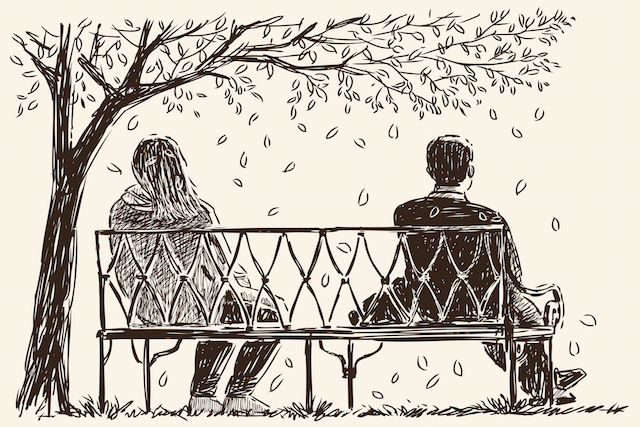
    Whether we’re talking with a friend, partner, or colleague, we’re going to foster a greater sense of security in the relationship if we’re able to discuss things when they come up rather than wait until they become a crisis.

    2. Use “I messages.”

    A big shift in my own communication came when I started using “I messages” and expressing myself in terms of my own feelings, needs, and requests rather than focusing on what I thought the other person had done wrong.

    Instead of starting with “I want you to do this/stop doing this,” explain your feelings—for example, “When it’s your turn to take out the trash and you don’t do it, I feel frustrated.”

    Also, make requests based on your needs—for example, “It’s really important for me to feel trust and respect. A part of that is knowing that you’re going to do what you say you’re going to do. Would you be willing to think of some ways you can remind yourself?”

    When we use “I messages,” we stop blaming other people and demanding that they change. Instead, we are simply stating how we feel, what we need, and making requests based on that.

    3. Stick to the facts.

    Most misunderstandings we have with other people arise from the fact that we react to the meaning we attach to the facts rather than the facts themselves.

    If I ask my partner a question and he doesn’t respond, I can jump to all kinds of conclusions about why he is “ignoring me.” Is he angry with me? Does he think it was a stupid question? Doesn’t he care about what I have to say?

    When it comes to difficult conversations, it’s important to stick to the facts and respond to the facts only.

    It’s natural for our minds to want to fill in the gaps and create an entire story from a few puzzle pieces here and there. When we do this, however, the pieces we create aren’t necessarily true, and we run the risk of adding far more tension to the situation than it otherwise deserves.

    4. Be specific.

    When emotions rise, it’s easy to start using generalizations like “always” and “never.” When we tell someone that they “always do X” or “never do Y,” however, we’re more likely to push the other person further away than to heal the conflict.

    Using the example above, if I said, “You never take out the trash when it’s your turn,” the other person’s focus is likely to shift to defending themselves and pointing out all the times when they have indeed taken out the trash instead of listening to what I’m saying and focusing on a resolution.

    Very few people “always” or “never” behave in a certain way, so make sure you take a deep breath and check your language before saying something that could escalate the conversation.

    5. Empathize with the other person.

    Empathy—understanding what it’s like to walk in someone else’s shoes—is incredibly effective at diffusing tension and breaking down defenses. When we feel hurt, frustrated, or annoyed by something someone else has done, we can forget that they probably had very good reasons for doing (or not doing) what they did.

    Approaching the conversation from a place of wanting mutual understanding and empathy rather than merely wanting the other person to change their behavior raises the chance that the conversation will bring you closer together rather than push you further apart.

    Difficult conversations may feel hard, but we can make them easier by following these steps and recognizing the opportunity for connection.

  • 5 Simple Ways to Quickly Resolve Conflict with Your Partner

    5 Simple Ways to Quickly Resolve Conflict with Your Partner

    “Don’t make a permanent decision for your temporary emotion.” ~Unknown

    You have a small disagreement with your partner, and before you know it, it escalates into a big fight. Sound familiar?

    You then get dreadfully grumpy. You stick your head in the ground like an ostrich and ignore your partner. You think that you have the right to be grumpy or even angry.

    You’re in “war” mode now, and you want to win the battle. You dig a trench, jump into it, and arm yourself with weapons.

    You barely listen to a word your partner says, and all you want is for him or her to say, “I’m so sorry, you’re right.”

    Perhaps this is something that you can relate to. Maybe you find yourself responding in this way at times. But I have to admit, this particular example is referring to myself.

    This was me on a lot of occasions when confronted by a small disagreement with my partner, and something that I still struggle with today.

    It became a bit of a habit. I would get offended quickly, and I’d turn what could have been something that was easily resolved into a big war.

    Why?

    Well, here goes… because I was proud. I didn’t want to admit that I was wrong.

    I have come to realize that not only was my response incredibly damaging for my relationship, it was not very loving or caring.

    It the heat of an argument, it’s easy to forget that and we let our pride get the best of us.

    Every time you give into your pride and start a war, you make a little crack in your relationship. It may not seem to have a big impact at first, but slowly, the crack will get bigger.

    You can compare it to a crack in the window of your car. If you don’t fix it, the crack will become bigger and bigger until it is so big, it can’t be repaired anymore.

    So, is it really worth it? For me, it’s an easy no. Holding onto my pride is not worth putting a crack in my relationship.
    More than anything, I want my relationship to be successful, fulfilling, and full of love.

    5 Ways to Quickly Resolve Conflict with Your Partner

    We all know that it’s not easy to turn off the “pride switch” when we are in the heat of an argument. We don’t want to give in.

    The key is to find tools and strategies to help you respond better when in the heat of the moment. Here are some simple but effective tools to help you have productive conflict, rather than destructive conflict.

    1. Stop in your tracks and choose your response.

    When you are just on the verge of having an argument, you need to make a decision. You need to decide: Am I going to choose to respond positively and productively, or am I going to let myself get angry and annoyed?

    Often, we get angry without even thinking about it. It’s our natural response when confronted with conflict. But once our body jumps into that fight or flight mode, it’s very difficult to turn back.

    The key is to get in the habit of asking yourself quickly, before you get angry: How am I going to choose to respond at this moment? Just challenging yourself quickly might be enough to push you in the other direction.

    2. Ask yourself these questions before you get angry.

    • When I wake up in the morning, will I agree with the way I responded?
    • Will I regret my response?
    • Would I want my partner to respond in the same way?

    These are all questions that can help you to make the choice to respond productively, rather than giving into your pride or anger.

    3. Acknowledge the other person’s feelings.

    A lot of the time when we have arguments, they seem to just go around in circles. 

    “Yes but, no but, yes but, okay but” are words that you tend to hear a lot!

    Acknowledging the other person rather than saying “but” after their every sentence will virtually guarantee that the conversion will make progress. This will also mean that you won’t go around in circles, and, therefore, get more frustrated and angry as the minutes and even hours go by.

    Acknowledging sounds pretty simple, but how do you actually do it?

    It’s more complicated than you think, because overtime we have programmed ourselves to defend ourselves, and not acknowledge the other person during an argument.

    Here’s an important truth to help you break away from that habit: Acknowledging the other person’s feelings does not mean that you agree with what they have done. It does not mean that you are giving in either.

    It simply involves saying something like “I can understand how you have come to feel that way,” not “You are right for feeling that way, and I am wrong.” 

    If you can learn the skill of acknowledgment, you will be amazed at how much less often a small disagreement will turn into a war.

    4. Avoid using rhetorical questions to get what you want.

    It will only aggravate the situation to ask rhetorical questions, such as “Why do you always do that?” or “Why can’t you just be more loving?” or “Why do you only ever think about yourself?”

    It’s not productive at all because it attacks the other person. Rather, you should be specific with what you want. For example, instead of saying,“Why do you always do that?” you could say, “I really don’t like it when you shout at me; can you please stop shouting?”

    Learning to have productive conflict is so important for a happy and successful relationship.

    5. Say sorry.

    Just do it!

    Chances are, during an argument, you are going to say or do things you shouldn’t have. Maybe you got angry, maybe you raised your voice, or maybe you said something nasty.

    The point is, no one is perfect.

    Apologizing for your part does not mean that you agree with the other person’s behavior; however, someone has got to say it first, right?

    So, maybe you can choose to be the person who just sucks it up and apologizes.

    Why? Because you would rather get over the conflict sooner, and enjoy your relationship with your partner.

    In my relationship, I have learned that apologizing more freely has led to significantly fewer arguments and very few fights.

    Rather than fighting with my partner, I can laugh with her, have fun with her, and enjoy her company. And we don’t have to worry that our day or night will be ruined by a silly little argument.

    Pride is a powerful thing that can wrap itself around you and suck you in. Once you’ve crossed that line and have gotten angry, it’s difficult to go back. To help you turn that around and have productive conflict with your partner, be sure to use these tools.

    They have helped me significantly in choosing a better response when at the verge of an argument, and my relationship is much better off for it.

  • The Most Powerful Way to Resolve Conflicts in Relationships

    The Most Powerful Way to Resolve Conflicts in Relationships

    “The heart is like a garden: it can grow compassion or fear, resentment or love. What seeds will you plant there?” ~Jack Kornfield

    I was all set to float effortlessly through life on a cloud of peace. I was trained mediator, had a Masters Degree in Peace Education, led workshops on constructively managing conflicts, and had a lifelong interest in creating interpersonal understanding. Yet, here I was, ready to wring his neck.

    I’ve found it’s always easier to help others solve their conflicts than it is to deal with your own—there’s none of that pesky “emotional intensity” or “personal baggage” getting in the way.

    People sought me out for help with their conflicts, but when I felt attacked or threatened, it was suddenly a whole other ball game.

    When we first started dating, I found that there were things that my husband would do or say that left me feeling really upset, and my responses definitely weren’t constructive. Embarrassingly, my go-to was “the silent treatment.” Sigh.

    Logically, I knew better. More importantly, I had spent years building the skills to do better. So, why wasn’t I using what I knew?

    Simple answer: I didn’t want to. All the skills, knowledge, and tools in the world mean nothing if I lacked the intention to use them.

    So, then the next obvious question is: Why didn’t I want to?

    In conflict literature, there’s a term called a “retaliatory spiral.” As humans, we have a tendency to retaliate to hostile behavior with an even higher level of hostility, thus escalating the conflict.

    Furthermore, even if neither person wants an escalation, each one feels entirely justified in their response, based on how they were treated. It’s the same principle as giving someone “a taste of their own medicine,” and it leads to conflicts that spiral out of control, becoming harder and harder to resolve.

    Clearly this kind of behavior is destructive, yet we’ve all done it at some point and have probably felt pretty justified in doing so.

    See, some kinds of conflict threaten our sense of self. The fact that another person seems to have the power to hurt us makes us feel weak, unstable, and unsafe.

    In order to defend this sense of self and feel stronger, we may attempt demonstrate our own power to hurt them back. Mature? No. Helpful? Definitely not. Kind of understandable? Yes.

    Personally, I hated how vulnerable I felt when my husband did something that hurt my feelings. I felt scared that he had the power to make me feel so upset.

    Giving him the cold shoulder felt like a way to hide this “weakness” and assert my own power to hurt him. It also was a way to protect my ego, because by not talking things out I could avoid challenging my current belief system, thus maintaining the belief that I was right and he was wrong.

    So even though I had all the hard-earned communication and conflict resolution skills I needed to work through the problem, create increased communication, and build understanding, I wasn’t going to use them; creating increased understanding and connection wasn’t my intention. My intention was to defend myself. So that’s exactly what I did.

    The problem was that by focusing on defending myself, I was basically putting all my energy into avoiding what I didn’t want—pain and suffering—instead of into creating what I actually did want. Deep down, I wanted way more than simply not getting hurt, but I wasn’t working toward it.

    What I desired was a relationship of trust, honesty, and openness; one where we each had the courage to share what we were really feeling, and would listen to one another with an intent to understand rather than judge. One where we would have compassion for each other’s failings and work to strengthen one another (even when we were upset) rather than tear each other down.

    This was the future I really wanted for us, and I knew that my current responses to our conflicts, while easy and comfortable, weren’t going to get us there.

    So I started to shift my intention. Instead of having it be about protecting myself in the moment, my intention became to respond to conflicts in a way that would set a foundation for the kind of beautiful future relationship I envisioned.

    It was only then that I was able to start putting all my conflict resolution knowledge and skills to use.

    That isn’t to say that it was easy. Actually, it was hard, especially in the beginning.

    It required me opening up when I felt most vulnerable. Moving toward, when I wanted to retreat. Taking responsibility for my part, when I wanted to dump the blame on him. Trying to listen with compassion when I felt frustrated or fed up. But, with a clear intention in mind, I did all these things and more.

    Now, looking back, I’m so glad I did.

    Today, one of the things my husband and I most prize about our relationship is the way we communicate with one another, especially during conflicts. We do all the things I had envisioned when I first set my intention, and I feel a huge sense of accomplishment in knowing that this was no accident, but something we consciously created.

    Intentions can be conscious or unconscious, but everything you say or do will be based on an intention.

    We all have a lower self that operates mainly from a place of fear, weakness, and limitations; and a higher self, one operating from a place of love, strength, and creativity. Before engaging in a conflict, I recommend setting a clear intention that is aligned with your values and the desires of your higher self.

    Here’s some questions I ask myself in order to do this. I call it the “Where, Who, What, How” model.

    Where is my focus? Is it short-term or long-term? Is it based in love or fear?

    Who do I want to be? What kinds of qualities do I want to embody?

    What do I want to create?

    How do I want others to perceive or describe me?

    What’s helped you work through conflict in your relationships?

  • How to Avoid Drama: Stop Taking Things Personally and Needing to Be Right

    How to Avoid Drama: Stop Taking Things Personally and Needing to Be Right

    “Concern yourself not with what is right and what is wrong but with what is important.” ~Unknown

    I remember quite distinctly the point where my rational self, less invested in the discussion, took a step back and pointed out that I was descending down the path of needing to prove that I was right.

    It was precisely when I started seeing the other commenter as needling my position and attacking the ideas as mine.

    What started out as an appeal to respect cultures that celebrate death as a normal part of life, turned into a mud-slinging event the moment I ceased to educate and instead went down the road of righteous anger.

    Even if we were to keep our social network to the closest friends and family members, there will inevitably come the time when, as we scroll through our Facebook feed, we encounter something that we disagree with.

    If we are not careful about the way we react or respond to these kinds of things, drama will arise.

    And oh, such drama it was! Despite not participating any further once some ganging up occurred and outright insults were being flung, I came away from the debacle more furious with myself than anyone else.

    In hindsight, it really was hilarious the way it quickly descended into a playground squabble where the crux of the matter was “I’m right, you’re wrong!”

    But unlike childhood fights where it is rare that full-blown grudges develop (notice how children make up and play together easily?), the issues that adults tend to have petty fights over are a bit more complicated, simply because we are way more invested in it.

    It isn’t over a fire truck belonging to us that can be easily shared with another child. It is occasionally belief systems and ideologies that we think define us, and so we do not take too easily to them being challenged.

    I later received a long message from the other person that was essentially an attempt at civility after the earlier descent into childishness. But while the absence of trolling was a nice welcome, here too was another invitation to engage further in another bout of drama.

    Ignoring the comments about my character and only clarifying issues I felt were relevant to the earlier discussion, I refused to bite.

    What I’m slowly learning, and I am quite a slow learner when it comes to social interactions, is that personal affronts are key to the development of drama, and how we choose to respond to what the other person doles out will determine our state of being.

    This isn’t something solely confined to social media interactions, either; Facebook, Twitter, and other sites like them are all just platforms where our interactions take place. Unnecessary drama and squabbles did not appear after the Internet but are simply magnified by it.

    If you decide earlier on that personal attacks will not hurt you and that you will not yourself fling insults, you’ll be much more likely to have a discussion that’s conducive for education and sharing of ideas.

    These attacks often come out innocuously enough. An adept practitioner of shade can fling one at you with much subtlety, so control is necessary in ensuring that you are always on the right road.

    Unfortunately, I have yet to be gracious enough to not throw shade myself, and thus the initial eruption of drama stemmed from my lack of control. We cannot control will perceive or retaliate with, but we can choose how we respond to them.

    The moment we choose to take the issues personally, we cease to participate in civil discourse as we insist upon the particular details that we feel attack our characters.

    We feel the need to yell that we are right rather than strive to seek and communicate truth.

    With that said, I am certainly not excusing those who choose to create conflict rather than communicate peacefully. Once you see things heading down that awful road, it’s best to simply disengage and leave because nothing fruitful will come out of it.

    What matters at this point, I feel, is how you resolve your position, and it isn’t about how you appear to other people who may be watching (or reading the thread), but how you now feel about your beliefs and ideas.

    Are ad hominem attacks ever conducive to the truth? The moment we associate ego and pride with our various ideologies, we miss the mark. 

    In a world of multivariate opinions, beliefs, and philosophies, friction is bound to occur when these ideas inevitably collide.

    There are certain fields more volatile than others, like politics and religion, and they require careful treading. When in the thick of drama, especially with drama-hungry spectators egging us on, we lose the point and indulge, instead, in a battle of wits over who can yell the loudest in being right.

    To keep drama at bay, it is necessary to maintain that, while ideas form much of what we think we are, they are merely constructs that only help us make sense of life and do not essentially form who we are.

    If someone attacks what we believe, they’re not attacking us. They’re disagreeing with our opinion because they hold a different point of view. And if they choose to attack us personally, it’s likely not about us, but rather reflective of their fear-based attachment to their beliefs.

    It is perhaps worth bearing this in mind whenever we feel the urge to take something personally.

  • Don’t Respond to Drama and Drama Won’t Come Back Around

    Don’t Respond to Drama and Drama Won’t Come Back Around

    “When you are not honoring the present moment by allowing it to be, you are creating drama.” – Eckhart Tolle

    One day several years ago, I was fraught with anxiety over with how to handle an uncomfortable personnel situation at work. I had an employee that was borderline explosive and insubordinate. I was a wreck over how to best handle the situation because before I was this employee’s manager, I was her friend.

    I found myself wanting to fix the problem by delving deeper into her drama, wanting to know why she felt a certain way, what I had done to contribute to it, and how we could work it out.

    Don’t get me wrong, I am all for conflict resolution and open communication. However, in this case, my employee was demonstrating signs of intense emotions that had the whirlwind energy of a cyclone.

    Her behavior and outbursts were unpredictable and inappropriate for the workplace.

    Her complaints, when listened to with close attention and discernment, were emotionally charged from unresolved personal wounds from the past. The drama— the whirlwind frenzy—was playing itself out in our present time employer/employee relationship, but it had nothing to do with me.

    I knew I needed to step back from this situation to calm my own reaction and fear. I too was becoming overly emotionally charged because of my own insecurities and unmet needs as a new manager.

    I was about to try to resolve her personal pain by bringing in my own whirlwind frenzy of emotions. Not a good idea.

    I needed to practice mindfulness and step into a space of neutrality. A space where my drama and baggage had a zero electrical charge. A space where her pain could not feed off of my pain.

    Was I successful? No.

    However, I did learn a big life lesson that I have been successful with practicing since this encounter: Don’t respond to drama and the drama won’t come back around.

    Drama loves more drama. Pain loves more pain. Negativity loves more negativity.

    With the practice of mindfulness it is possible to not respond to drama. If drama comes into contact with neutrality, it fizzles.

    How is it possible to not respond to drama? The first step is to recognize drama when it is in front of you. It is also critical to recognize if you are bringing the drama.

    Here are three ways to recognize signs of drama:

    You feel passion.

    Passion can be a wonderful experience. It can also fuel dysfunctional behavior and cause you to react without thinking.

    Signs that you are feeling passion include feeling a rush of energy pass through your body, a red face, an increased heart rate, butterflies in your stomach, flared nostrils, or shaky hands.

    Passion can also show up as emotionally charged thoughts and judgments. These include strong feelings of right or wrong, disbelief, blame, sadness, or a vehement desire for justice.

    The words spoken and behavior demonstrated don’t match.

    If someone is saying one thing and doing another, this is a sign of drama. Do not be fooled. What you see is exactly what it is.

    Be the witness of your experience and observe this discrepancy. If someone is telling you they do not mean to be rude, but proceed to offer a berating or condescending comment, trouble is in front of you.

    It feels urgent.

    Very few things in life are really urgent. Urgent qualifies as escaping from a burning building or swerving to miss an oncoming vehicle.

    Many times drama presents itself in the form of pressure that feels urgent. A false sense of urgency can be imprinted on you from another person’s frenzy of charged emotions. Urgency can also emerge from feelings that you are responsible for someone else’s situation.

    If something is not life threatening and you are told it needs to be done right now and you feel a sense of compression or fear, chances are, drama is in front of you.

    Once you practice recognizing drama, you are better equipped to not respond to it which in turn, allows drama to dissolve and stop in its tracks.

    Try these three practices to not respond to drama:

    Observe your body sensations, thoughts, and emotions.

    Mindfulness meditation teaches us to be the witness of our experience. It teaches us that we are not our bodies, not our thoughts, and not our emotions. It teaches us to develop a witness consciousness and be the third party observer of our experience.

    The more you are able to be the witness of your experience instead of identifying with the experience, the more easily you are able to discern the truth and make better choices.

    If you notice your heart rate increasing or your face flushing, let that be your cue to physically step away from the situation. Be present with your sensations and use your breath and mindfulness skills to bring you to a state of physical and emotional homeostasis where your muscles are relaxed and your breath is slow and even.

    Once the body, thoughts, and emotions are back to neutral, re-approach the situation from a grounded and centered place.

    Create a sense of spaciousness.

    Many times being around drama feels like compression, buzzing, or a whirlwind.

    You may notice you holding your breath as lots of people talk at once. You may notice drama feeding off of itself as voice speed, volume, and tone increase.

    Create space in these situations by softening your facial muscles, letting the jaw slightly part, gazing downward, and breathing slowly. Pay attention to the abdomen as your breath in and out to bring space to the body.

    By bringing space to the body, you bring more space to your thoughts and less opportunity to react. Your spaciousness also serves as an orientation point so the drama around you can loosen its grip. By loosening its grip, there is more opportunity for change.

    Sit with the discomfort.

    Not responding to drama is a practice. Not responding to drama means silence. It means not asking questions that take you deeper into the scenario. It means not agreeing or disagreeing, either with words or body language. Not responding means neutrality and not lending energy to the person or situation.

    This is a challenging practice. It feels uncomfortable.

    The most powerful thing you can do to remove drama from your life is sit with the discomfort of not responding.

    What you practice strengthens and gets easier with time.

    If drama comes into contact with neutrality, it fizzles.

    By not lending energy to something you do not want, you immediately create a closer connection to what you do want.

    If you want less drama in your life, drop your drama at the door. If you want more peace, be more peace.

    And remember…don’t respond to drama and drama won’t come back around.

    Peace to everyone and enjoy this practice!

  • People We Don’t Like: When Others Push Our Buttons

    People We Don’t Like: When Others Push Our Buttons

    I have a confession to make: there’s someone I know who I really don’t like.

    I know this isn’t exactly front-page news. It’s not like I’m the first person to ever dislike someone else. But this situation has brought me face to face with all my strongest relationship triggers.

    I find it incredibly difficult to do all the things I’ve written about when it comes to this person. Let’s call him Harry. (I’ve never in my life met a single person named Harry, but let’s just roll with it.)

    I regularly find myself wanting to judge Harry before giving him the benefit of the doubt—even though I know I’d want that courtesy if I did the things he did. But that line of thought brings me back to judgment, because I remind myself, “I would never do the things he does.”

    I find it easy to suspect him of poor intentions and conclude that maybe “he’s just a jerk,” even though I know that I get to decide what meaning to give his actions, and I also know that things are rarely black and white.

    In dealing with Harry—and perhaps more importantly, my reactions to him—I’ve found myself considering three important questions:

    • We’re always talking about letting go of judgments; is it possible that sometimes, someone is just a jerk?
    • Is it judgmental to decide someone’s actions are “wrong” when you feel strongly opposed to them?
    • Just because we know there are emotional triggers influencing our response to someone, does that mean they shouldn’t be accountable for their actions?

    I’ve decided to break these down, one by one, to see what there is to learn in this situation.

    We’re always talking about letting go of judgments; is it possible that sometimes, someone is just a jerk?

    I’ve wanted to use this label for Harry because of assumptions I’ve formed about his behavior: that he thinks he’s better than other people; that he’s really selfish, despite pretending to be caring and well-intentioned; and that all of this amounts to unfairness.

    When I break this down, I realize the “he thinks he’s better than me” assumption goes back to my childhood experiences with being bullied, when I felt inferior to most of my peers—and their actions seemed to reinforce that.

    The “he’s selfish” belief is a projection of my own fear that I’m actually a selfish person (something I’ve wrestled with all my life, no matter how giving I try to be).

    And the conclusion about “unfairness” relates to my life-long aversion to all things unjust—both a response to my childhood and a natural human reaction.

    When I pull it all apart like this, I realize I’m having a strong emotional reaction based on lots of things that aren’t solely related to him.

    So my desire to sum my feelings up with one harsh label isn’t only about his actions. It’s also about my past experience.

    And when I really think about it, whenever I’ve wanted to label anyone as a “jerk” (or something stronger), I’ve dealt with these same (and other related) triggers.

    That doesn’t mean no one has ever done anything to justify my anger. It’s just that usually, when I feel unable to access even a shred of understanding or compassion, it’s because there are strong layers of resistance, reinforced by years of my own pain, in the way.

    I suspect that’s true for most of us: the more tempting it feels to give someone one reductionist label, the deeper and more complex the triggers.

    This brings me to the next question…

    Is it judgmental to decide someone’s actions are “wrong” when you feel strongly opposed to them?

    While I realize there’s a lot more contributing to my feelings than his actions, that doesn’t change that I don’t agree with everything he says and does.

    Once I peel away the layers of my complex response to him, I can then objectively ask myself, “Which of the choices he makes don’t feel right for me?”

    This isn’t judgment—it’s discernment. It’s forming an assessment without the emotional weight behind it. And it’s essential to maintaining my own moral compass and forming boundaries within my relationships.

    That means I don’t need to label him anymore. Instead I can say, “I wouldn’t make the choices as he makes, and I don’t want someone in my life who makes them.”

    It’s not about me deciding he’s a “bad person” and, therefore, feeling better than him; it’s about me realizing he’s a bad match for a friendship and then feeling better about the situation.

    The positive consequence: I give him far less power over me and my emotions. He’s not wrong—just wrong for me.

    And then that brings me to the last question…

    Just because we know that someone’s actions trigger us, does that mean they shouldn’t be accountable for their actions?

    Now that I’ve accepted responsibility for my reaction to him, and acknowledged that his choices can make him “wrong” for a friendship with me without making him universally “wrong,” I no longer need to “hold him accountable.”

    But if I were to want to maintain a friendship with him, I’d have two choices: accept him as he is, or share my reactions to his choices and let him into my process.

    I know from past experience that people rarely respond well when they feel judged or attacked.

    But people sometimes surprise us when we explain how we feel in response to the things they do—not because they’re responsible for our feelings, but because they care about them.

    And if they don’t care, well, this brings us back to the first two parts: It doesn’t make them jerks. It just gives us a reason to be discerning about whether or not we want to care about them.

    So where has all this left me? I’m going to continue peeling away the layers of my issues around others “being better than me” and my fears of “being selfish.” And I’m going to silently thank Harry for reminding me to continue doing this work.

    Then I’m going to stop communicating with him. Because as much as I value the gifts he’s given me, I value myself enough to realize he’s given a lot more that I don’t want to receive.

    Have you ever felt a strong reaction to someone else and realized it had a lot to do with your own triggers?

  • Speaking Your Mind Without Being Hurtful

    Speaking Your Mind Without Being Hurtful

    Friends Talking

    “If you propose to speak, always ask yourself, is it true, is it necessary, is it kind.” ~Buddha

    Many of us allow other people’s opinions to dictate what we believe, value, or perceive. It’s not always easy to stand up for our beliefs and opinions when others, particularly those we care about, constantly bombard us with their views.

    You might be thinking, “No, not me! This never happens to me. I’m strong in voicing my beliefs.”

    At one point or another, we all conform our opinions, either to avoid confrontation or judgment or because we’re losing faith in what we feel is right.

    Ask yourself, “Do I often justify what I believe after engaging in conversations with others? Am I continuously second guessing myself?” If so, you may be losing yourself.

    I used to be someone who always avoided conflict with others at all costs. Needless to say, I was passive by nature, and I shied away from standing up for my beliefs.

    I would avoid and distance myself from any means of voicing my opinions. In turn, I became submissive and engaged in both romantic and platonic relationships with people who were more dominating in demeanor.

    While I lacked the willpower to express my own ideas, I found myself in a state of annoyance and frustration from allowing others to indirectly control my life. Feeling helpless and unaware of who I really was took a toll on my mental well-being.

    I longed for the ability to express my thoughts and opinions freely. I craved the feeling of acceptance by others, without judgments being passed.

    I deeply admired and looked up to my sister as a role model, one who possessed the internal strength to be truthful to herself and others, regardless of the consequences.

    Sometimes my sister would discuss her issues with her friends and seek my advice, perhaps to validate if she was doing the right thing. Sometimes she wasn’t sure if she was coming on too strong and pushing others away because of her honest and strong-minded nature.

    She’d often find herself in situations where she would lose friends. Perhaps her honest opinions were too much to handle.

    When she would come to me in full-blown tears, asking me, “Why do my friends keep leaving? Why don’t they understand that I am just trying to help them?” I would respond to her by saying, “They don’t want to hear the truth from you, because sometimes the truth hurts.”

    Friends who resent one’s openness and honesty are usually, in turn, not worthy of the friendship.

    Looking back at the way I used to be led me to a conclusion. It’s not what you say to others; it’s the manner in which you say it that truly matters.

    I finally realized that, although my sister and I had opposing approaches of maintaining our relationships, neither of us was necessarily wrong in the way we went about constructing them.

    We often want to give genuine advice or opinions. However, we also need to understand that it’s not always easy to accept the truth. We need to find the balance and set limitations in order to maintain positive relationships.

    While I had no problem in maintaining mine, I often felt repressed in terms of being expressive. In contrast, my sister’s strong-minded character eventually caused her relationships to slowly dissipate.

    Over the years, I have learned that using appropriate language, word choices, and tone is the key to flourishing relationships.

    Speaking constructively and delivering tactful criticism eliminates the chance to pass biases. This also creates a healthy environment and opportunity to grow.

    As I’ve matured, I’ve recognized that my opinions actually matter and have the right to be heard. Having said this, I have learned that it is more effective to give an opinion or advice when it is sought.

    When I engage in conversations, I always try my best to think before I speak. Then, I contemplate, “Is it worth saying? How will what I say make a difference to this person?”

    If I proceed to give my opinion, I then decide, “How can I say this in such as way that it comes across as genuine, yet constructive?”

    By nature, we all have the tendency to overreact; it’s important to choose our battles wisely and release the negative energy that surrounds us.

    Be real; tell the truth using kind and heartfelt words. Respect will follow.

    Even though telling the truth may be difficult for many people, it’s the approach that we take that allows us to earn the respect of others.

    Often enough, people are so preoccupied with verbally offending others that we end up feeling as though we need to “walk on egg shells.” We may also end up saying something we didn’t originally intend.

    When I was one of those people who worried about what others thought, I allowed my life to be dictated and controlled by someone else’s agenda.

    I always felt obligated to adopt the views of my partners and friends, in fear of disappointing and upsetting them. I struggled to find the courage and willpower to rid myself of this imprisonment, in search of a voice, love, and passion.

    Through some of my ongoing romantic relationships with over-bearing, possessive men, I have come to terms with the fact that telling the truth will not always yield a positive or expected outcome.

    Still, I think that it is most important to be true to yourself. You need to be happy first before you can make others happy, and that means not self-sacrificing for unappreciative, non-reciprocating individuals.

    Speaking up for what we believe and sharing our opinions can be helpful and beneficial—when it’s appropriate, kind, constructive, and consistent.

    Photo by Seniju

  • Releasing the Need for Approval and Making Peace with Yourself

    Releasing the Need for Approval and Making Peace with Yourself

    “Lean too much on other people’s approval and it becomes a bed of thorns.” ~Tehyi Hsieh

    In the face of a conflict with another, the wisdom that most often brings me peace is the reminder that the only thing I can change is how I react. Whatever or whoever else is a part of the conflict, that is outside of my control.

    While I certainly advocate using your excellent communication skills to work through problems with the ones you love, I am a firm believer in finding my own way to cope rather than being a victim of circumstances.

    These are three powerful tools on the road to doing just that:

    1. Realize that no one else is paying attention.

    Back in high school, I faced the typical struggles of being a teenage girl who was well outside of the in crowd. It was no fun to feel like such an obvious misfit, and I remember more than once worrying about what my peers would think of something or other that I’d done.

    It was then that my dad spoke one of the most liberating truths into my life, harsh as it may sound: “Who says they care enough about you to have an opinion in the first place?”

    And what a revelation it was. Humans of all kinds (even, and perhaps especially, teenage girls!) are obsessed with themselves. Each of us lives in a universe that revolves around me; you, if anything, are a mere blip on the radar.

    In my adult life, this same wisdom continues to guide me.

    Too often, I find myself thinking that I’ll do something to “prove” something to a person I’ve been in conflict with.

    I’ll think that by staying single and being obviously happy and fulfilled, those who’ve expressed sympathy or tried to set me up will realize that their efforts were unnecessary. I’ll be tempted to pursue a job or another degree because someone, somewhere will be impressed by it and maybe realize they underestimated me.

    And then I hear my dad’s words again, and I remember that no one is paying that much attention.

    No one but me cares that much about the direction my life takes, the principles I stand on, or the lines on my resume. Any fraction of this life lived for the approval of someone else is wasted; “they” will never notice, and I will be unfulfilled, waiting for something that will not happen.

    The only one whose opinion matters is the only one I have to look at in the mirror at the end of the day. If she is not okay with who I am and what I’m doing, then I have failed.

    2. Do what you can, and then let it go.

    In the last year, I met the first person who was really difficult for me to be around in a long time; probably since those troublesome teenage days. We didn’t get along, and so I avoided him. I was not unkind, but the feeling of dislike was unfamiliar, and not one I enjoyed.

    One day, I got the idea in my head that I should “make peace.” At a gathering for a mutual friend, I said the things I felt needed to be said, in the best way I could say it, and was disappointed that the result was not what I had intended. We did not become friends, but rather he continued to treat me in a way that made me uncomfortable and left me feeling disrespected.

    For a while after that interaction I wondered if I should try the conversation again with a different approach, hoping for a different result. I think even then I knew I was barking up the wrong tree, but I suppose it’s a part of human nature to want to be liked and understood.

    I then remembered another valuable image that helped me make peace with the matter. Everything we see or experience is filtered through our own unique personality and worldview. How can we say for certain that a color we see or a flavor we taste is the same for anyone else on the planet?

    The same was true for my conflict. No matter how many different ways I tried to send the same message, I could not control the way it would be received by this person. I had to trust that I’d done my part as best as I could, and if and when it was ready to be received it would be.

    No one likes to be nagged. I’ve found wisdom only makes sense when you’re ready to receive it, and the pushier the message-bearer, the more resistant the recipient. Do your part, say your piece, and leave it alone.

    3. Be kind to yourself.

    In all of this, we walk away from the need for the approval of others, focusing on finding our wholeness in ourselves. But this journey will not be a peaceful one if we step from the disapproving voices that surround us to a similarly unkind voice that comes from within.

    I’ve caught myself more than once berating myself for making a mistake. “You colossal screw-up! Way to go, moron!”

    Imagining someone else speaking to me that way opened my eyes. If a friend or coworker talked to me the way I was talking to myself, I’d walk away. I know without a shadow of a doubt that I do not deserve to be treated that way.

    So why would I treat myself that way?

    There is a quote attributed to Plato that I aspire to live by: “Be kind, for everyone you meet is fighting a hard battle.” If we are to give others the benefit of the doubt and treat them kindly regardless of their actions, should we not do the same to ourselves?

    I challenge anyone reading this, myself included, to tread carefully the next time you make a mistake. If someone you loved had done the same thing, wouldn’t you respond gently? “That’s alright; you’ll try again another time. No worries.”

    Let’s use that same voice the next time we talk to ourselves, whether we feel we deserve it or not.

  • Dealing with Disagreements with Loved Ones: 5 Helpful Tips

    Dealing with Disagreements with Loved Ones: 5 Helpful Tips

    Fighting couple

    “We find comfort among those who agree with us—growth among those who don’t.” ~Frank A. Clark

    This post is for anyone who has ever disagreed with the people they love the most, to remind them that these disagreements do not have to lead to regret.

    Indeed, they can lead to our deepest growth if we so choose.

    But I’m getting ahead of myself…

    Hi. My name is Sabrina, and despite my best intentions, I don’t always have the most harmonious conversations.

    When it comes to my family, especially my parents, my ego struggles with second-guessing their words, choices, and actions, and in turn, second-guessing my own.

    The truth is, I am no more “right” than they are; in fact, when it comes to making the best choice for oneself, I am a big believer in turning inward in one’s quest for answers.

    Yet I can still get triggered when we don’t see eye to eye, and that’s how I knew this was an area where I had an opportunity to grow.

    So I asked my higher self:

    How can I balance lovingly hearing my parents out without necessarily agreeing with the content of their message?

    And how can I bring loving awareness to the conversation, accepting with my heart while releasing the need to fully comprehend it in my head?

    Here is the answer that I received. (more…)

  • Create Peace by Imagining a World Beyond It

    Create Peace by Imagining a World Beyond It

    Buddha

    “We can never obtain peace in the outer world until we make peace with ourselves.” ~Dalai Lama

    What comes after peace? Have you ever stopped to think about this?

    We spend so much of our time and energy working to attain both inner and global peace, but have we ever stopped to think about what this really means?

    What is on the other side of peace?

    Twice in my life, I have broken a board with my bare hand.

    There is one simple rule to this technique. You must not focus on breaking the board but rather on breaking through the board. This means placing your attention not on breaking the board but on seeing your hand on the other side of the broken board.

    Perhaps we need to apply this technique to our quest for peace.

    Several years ago, when my son was eight years old, we were discussing the possibility of creating a video game that did not include war and violence.

    As the discussion moved into the possibility of world peace, my son in his infinite wisdom said:

    “People are not ready for that. Without conflict there would be no plot, and without a plot no one would know what to do.”

    I was speechless.

    My eight-year-old son had just summed up in one simple sentence why the world has continued this cycle of war and conflict since the beginning of time. I could not get this thought out of my head for weeks. (more…)

  • Choose Your Battles: Fighting Less in Relationships

    Choose Your Battles: Fighting Less in Relationships

    “A more peaceful way to live is to decide consciously which battles are worth fighting and which are better left alone.” ~Richard Carlson

    Have you ever been in a relationship that seemed more like work than fun? Where every day you seemed to have a new issue to discuss?

    Maybe it had to do with little miscommunications, or an ongoing dispute, or a difference of opinion that regularly complicated your daily interactions.

    Whatever it was, you always found yourself wanting to hash things out to get everything back to normal.

    Except that was normal—conflict, friction, and disagreement; you just held out hope that maybe it could change.

    I had a friendship like this a few years back. We really got each other, and that’s a big part of why we grew close.

    But we also got on each other’s nerves on a near-daily basis. In retrospect, I see that our two personalities came together to create something toxic.

    It was like the perfect storm of insecurities and and egos colliding; our collapse may have always been a matter of time. But I also realize we both created drama where it didn’t need to be.

    We made everything an issue.

    I’ve since learned that healthy relationships require a little discernment as to what’s a problem and what’s just small stuff; and that sometimes, the instinct to sweat all that small stuff is a sign of a bigger problem—that the relationship may just not be right.

    Not sure why so much annoys you? There could be any number of reasons. One of these problems may seem familiar, and one of these solutions may help.
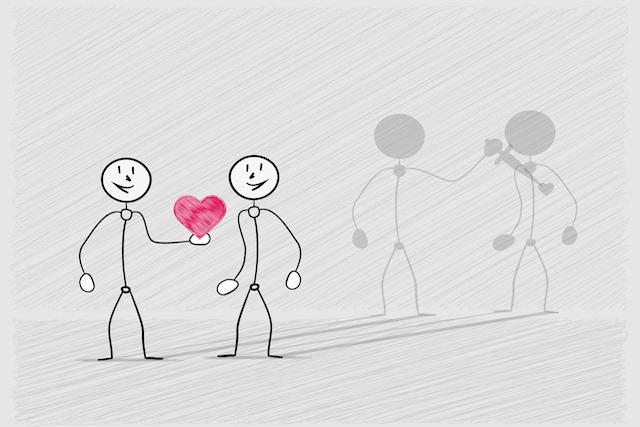
    Problem 1:

    You’re harboring resentment or anger, but instead of expressing what you really feel, you pick at the little things.

    The Solution:

    Take some time to get to the root of your feelings. What’s really bothering you? Sure, those unwashed dishes and slow email responses are annoying, but what’s the bigger issue? (more…)

  • 5 Signs You’re in a Toxic Relationship

    5 Signs You’re in a Toxic Relationship

    “Trust your own instinct. Your mistakes might as well be your own, instead of someone else’s.” ~Billy Wilder

    I’ve had my share of toxic relationships. Is it fair to say you have too? My guess is that we’ve all endured the company of people who weren’t rooting for our highest good.

    As for me, the relationships that were the most debilitating and unhealthy gave me the feeling that I wasn’t taking care of myself spiritually, mentally, or physically.

    I felt like less than myself, like I was compromising my life goals with each second I stayed around those people. Mind you, these were both friendships and romantic relationships.

    I call these relationships toxic because my authentic self withered away into someone I didn’t recognize as I denied all that was natural for me.

    The label “toxic” means something that drains life and energy. Before I knew it, I was weak and feeble, subject to the whim of the person to whom I’d given my power.

    I hung around those people too long in an effort to do what was supposedly right by societal standards—fighting to stay in a relationship instead of giving up “too soon.”

    Little did I know that my desire to be agreeable and accepted was suffocating what was right for me.

    Why did I have to sacrifice my happiness for what society says is right? I was living stifled in self-judgment and fear, and I’m sure society couldn’t have cared less!

    While some difficult relationships can open our eyes to new perspectives and expand our awareness, some obviously shut us in and hinder our development. Our intuition will alert us one way or the other. It tells us change and growth should feel good!

    When I was in my toxic relationships, I ignored my intuition in favor of my logical mind, which told me that losing that person was worse than having him/her around.

    But our intuition knows best. Unlike our mind, its only motive is our happiness. (more…)