Tag: conflict

  • How to Speak from the Heart: Let Your First Word Be a Breath

    How to Speak from the Heart: Let Your First Word Be a Breath

    “Mindfulness is a pause—the space between stimulus and response: that’s where choice lies.” ~Tara Brach

    We’ve all been there.

    A sharp reply. A snide remark. A moment when we said something that didn’t come from our heart but from somewhere else entirely—a need to be right, to sound smart, to prove a point, to stay in control, or simply to defend ourselves.

    What follows is the spinning. The knowing that what was said didn’t align with our soul. The overthinking, the replaying of the moment, the rumination, the regret, the tightening in the chest, the wish we could take it back.

    We justify, we rationalize—but deep down, we know those words weren’t true to who we really are. They weren’t true to the part of us that longs to connect.

    For many years, I lived in that loop.

    I prided myself on being kind, thoughtful, intelligent, articulate, in control. I made every effort to be so. But I was operating from a place filled with expectations and invisible scripts—needing to prove, impress, or protect. I was filling roles: the composed professional, the high achiever, the witty and loyal friend, the perfect daughter and sister, the confident partner, and the ideal mother.

    And so, although my words were often considered, they lacked something deeper and essential: heart.

    I thought being thoughtful meant thinking more. Planning my responses. Winning debates. But what I didn’t realize was that thinking without presence can become a wall, not a bridge.

    It wasn’t until I learned to pause—to breathe—to allow space between stimulus and response, and to use that space to connect within, that I began to understand a different kind of thoughtfulness. A deeper kind: heartfulness.

    This is wisdom—not intellectual but embodied. It lives not in the mind, but in the body. In the breath. In the heart.

    The Journey Back to the Heart

    This shift didn’t happen overnight.

    It came slowly as I gave myself permission to pause, to reflect, to grow. I started noticing how my words were shaping my relationships and my experience of life overall. I wanted to feel better. Calmer. More connected. Ruminate less. Regret less. Suffer less. Feel happier, more relaxed, more authentic.

    Mindfulness opened that door.

    Through meditation, self-inquiry, and contemplative reading, I began to understand the power of being impeccable with my words.

    Books like The Four Agreements by Don Miguel Ruiz—and its core teaching: be impeccable with your word—resonated deeply. So did the Buddhist teaching on Right Speech, which invites us to ask before speaking: Is this kind? Is this honest? Is this timely? Does it add value?

    These questions became my framework.

    I would repeat them silently each morning during meditation. I would return to them during conversations, especially the difficult ones. Eventually, they became part of me.

    And here’s what I realized: being impeccable with our words isn’t just about avoiding gossip or negativity.

    It’s about creating love.

    It’s about adding to the world rather than taking from it.

    It’s about using words to build, not break.

    That meant pausing before I spoke. Feeling into my body. Listening for what was true beneath the surface.

    And slowly, my words began to change.

    I began to feel the quiet power of responding instead of reacting. I was no longer using my energy to defend or ruminate.  Instead, I was using it to create connection and kindness.

    This was a new kind of power—not the kind that makes us feel “in control,” but the kind that offers space. Space to connect with who I really am. Space to choose love.

    A Simple, Yet Powerful Phrase to Remember

    Just a few weeks ago, I came across a podcast where Jefferson Fisher, a Texas trial lawyer who speaks often about emotional regulation and grounded communication was being interviewed.

    He suggested:

    “May your first word be a breath.”

    And in that moment, I felt the wisdom of the years of practice, reflection, and self-inquiry come together in one clear, simple, and practical sentence, something I could share with others to help implement and integrate the power of pausing before speaking.

    This quote offered the simplest reminder for the wisdom I have spent years cultivating.

    If there is one thing that you take away from this article, let it be this: “Let a breath be your first response” and see what happens.

    This phrase has become a kind of shorthand for me.

    A phrase I carry into parenting, relationships, conversations, and teaching.

    Because when your first word is a breath…

    You create space. You reconnect with the part of you that knows who you want to be. You return to the heart—before habitual reactivity takes over.

    Why This Matters

    Our brains are wired for efficiency. Most of us live and act from a place of patterned reactivity, what neuroscience calls the default mode network. This is the brain’s autopilot, built from years of conditioning and past experiences. It’s like mental autopilot: fast, familiar, and often defensive.

    The brain does not distinguish from good or bad, from positive or negative, from happier or unhappy. It doesn’t filter for what’s kind, truthful, or wise—it simply scans for what’s familiar and safe. It’s designed for survival, not fulfilment.

    And when we’re triggered—by stress, conflict, or fear—our nervous system kicks into fight-or-flight mode. In this state, we’re primed to protect, defend, or escape. Our field of vision narrows. Our breath shortens. Our first words are often fast, defensive, sharp—not because we’re unkind, but because we’re unsafe.

    This is why we say things we regret.

    It’s why we speak without consideration, even when we know better.

    It’s why our words can feel out of sync with who we truly are.

    But mindfulness interrupts that cycle.

    It invites us to pause. To observe. To breathe.

    And in that pause, we return to ourselves. We reconnect with the part of us that knows. And we get to choose again.

    This matters because when we give ourselves permission to pause, to check in, and to bring more heart into our lives, we begin to create something more meaningful.

    We stop living in reaction.

    We stop creating pain for ourselves and others.

    And instead, we begin to cultivate an inner peace that radiates outward, into our relationships, our work, and our presence in the world.

    Let This Be Your Invitation

    “May my first word be a breath.”

    Not because you have to believe in it, but because you can experience its benefits immediately.

    Try it the next time you’re in a difficult moment—before replying to that message. Before responding to your child’s cry. Before defending yourself in an argument.

    Pause. Feel your feet on the ground. Feel your body.

    Breathe in for two seconds. Hold for two seconds. Breathe out for two seconds.

    And ask yourself: What would my heart want to say here?

    The Life That Becomes Possible

    Imagine a life where your words feel true. Where your voice comes from clarity, not chaos. Where you speak, not to prove, impress, or control, but to connect.

    A life where your presence calms the room, not because you’ve mastered perfection, but because you’ve learned to pause.

    This is the life I live now.

    Not perfectly, but intentionally.

    It’s the life that opened up when I stopped performing and started pausing. When I chose presence over reactivity. When I let my heart lead instead of habit.

    It’s available to all of us.

    And it begins not with a plan, a list, or a big transformation. It begins with something much simpler.

    A breath.

    So if you’re looking for one practice to change your life—one small shift that creates ripples in how you speak, relate, and live—let it be this:

    May your first word be a breath.

  • I Thought I Was Protecting My Peace, But I Was Just Avoiding Conflict

    I Thought I Was Protecting My Peace, But I Was Just Avoiding Conflict

    “Embracing our vulnerabilities is risky, but not nearly as dangerous as giving up on love and belonging and joy—the experiences that make us the most vulnerable.” ~Brené Brown

    If the title of this post gets under your skin, don’t worry, it gets under mine, too. I have a fierce aversion to conflict. That doesn’t mean I won’t engage in it, but it does mean that I’m very open to any suggestion that might give me license to not engage in it.

    So, when I learned the phrase “protect your peace,” I found myself particularly drawn to it.

    The concept of protecting your peace is one of conflict avoidance. It connotes the idea that some arguments are not worth having, and some people are just not worth arguing with.

    Protecting your peace, in those cases, means choosing to disengage for the sake of your sanity. You end the conversation, block their number, and go no contact.

    And believe me when I say there are literally so many circumstances in which this is the correct and proper route to take. I refuse to waste my breath on someone who isn’t listening—particularly if they’re also committed to causing me pain. I have found protecting my peace in those cases to be a very effective tool that I wield generously.

    That said, l do sometimes wonder if the idea of protecting my peace has become an excuse to avoid any conflict—even the kind that I probably need to address head-on. It’s just so damn seductive to think of never having to tangle with other people. If someone hurts or disrespects me, I get to protect my peace!

    I can just walk away without acknowledging what they did. I can even feel good about it because I’m protecting my peace, after all.

    But what lesson am I teaching myself and others when I do that? What message does it send when I allow the idea of “protecting my peace” to turn me into a doormat for other people to step on? At what point does protecting my peace become disrespecting myself?

    Almost three years ago, my husband and I separated and were on the brink of divorce. Our marriage had been through too many hardships for one couple to bear, and the anger and resentment we’d built up toward each other was destroying the steady love we once shared. We weren’t sure if separating could save the marriage, but we decided to give it a try.

    During the six months we were separated, we both spent a lot of time in therapy confronting the ways we were both showing up negatively in the relationship. For me, it was stuffing my feelings and exploding later instead of speaking about them when they were still manageable.

    In the name of “keeping the peace” I was fostering resentment, hostility, and even fury. My refusal to communicate my needs and feelings was poisoning both me and my marriage from the inside out.

    What kept me silent was a simple yet devastating truth: I believed that speaking my needs and standing up for myself when things were difficult made me a cantankerous or difficult person. Perhaps, if I’m really honest, I didn’t think anyone would want to put up with me if I came with expectations—if I insisted on being treated the way I deserve.

    So, I gulped down the burning tonic of hurt and disappointment and called it “protecting my peace.” Doing otherwise would have meant stirring up “conflict,” and if I created conflict, then why would my husband (or anyone, really) want to put up with me? By avoiding conflict, I could carry on pretending like everything was fine while I built a wall of resentment, one brick at a time, between me and the person I loved most in the world.

    A very hard lesson I’ve only just begun learning is that sometimes standing up for myself is the route to peace. Sometimes holding people accountable for their behavior is how I teach them and myself what I’m worth. While avoiding conflict might feel good in the short term, in the long term it can have disastrous consequences for my self-esteem.

    I can attest firsthand that it already has.

    Not only that; extreme conflict avoidance can also affect my social well-being. Although conflict is never pleasant, conflict resolution can be very pleasant indeed. It’s what allows me to reclaim relationships, heal wounds, and grow together with the people I love instead of apart. If I let myself become too rigid in my conflict avoidance, I only stand to alienate ourselves from others. This is a lesson that, if I hadn’t begun learning sooner, would have cost me my marriage.

    I am learning, slowly but surely, how to articulate my difficult feelings. I’m finally summoning the courage to say the hard things, to speak up when I’m hurt or upset, and to clearly and kindly say what I need instead.

    In doing so, I am watching my relationships begin to thrive like never before. Most importantly, both through this work and the work my husband has done in his approach to our relationship, we have saved our marriage.

    It’s not always easy. In fact, sometimes speaking up creates more discomfort in the short term than stuffing things down like I used to. But for once, I am finally showing up fully and authentically.

    I have stopped swallowing poison and instead have begun giving myself the healing salve of self-expression. Despite the momentary discomfort that comes with allowing conflicts to come to the surface, the long-term joy of conflict resolution and mutual understanding always wins out.

    I guess, like most things, protecting our peace without avoiding healthy conflict and dialogue is about finding balance (which, I’m learning, is a skill we appear to be losing as a society). We have to learn when to protect our peace, when to stand our ground, and how to know the difference between the two. For now, I have a few questions I ask myself when deciding which path to take.

    This list of questions needs further thinking and perhaps some retooling, but here’s what I’ve got so far:

    1) Is this person someone I want to remain in a relationship with?

    2) Do I trust this person to listen to me if I share how they made me feel?

    3) Do I think there might be long-term damage to my self-esteem and self-image if I let this go unaddressed?

    4) Is it safe for me to engage in this conflict?

    If the answer to these questions is yes, I will summon the courage to engage in the conflict. I know that the conflict still might not be resolved, but at least I’ve done my best. If the answer to these questions is no, I am better off protecting my peace and walking away.

    Maybe I’ll schedule a phone call with a trusted friend or a session with my therapist to talk through my feelings about the situation. At least then I will get some validation and empathy, which will help me keep my self-esteem intact. I’m not saying it’s going to be easy, but with time, I do think having a system in place will help me find a balanced approach to handling conflict.

    I owe it to myself to try. And so do you, dear reader.

  • It Takes Two, but a Better Relationship Starts Right Now with You

    It Takes Two, but a Better Relationship Starts Right Now with You

    “Nobody can go back and start a new beginning, but anyone can start today and make a new ending.” ~Maria Robinson

    It can be tempting to think you need a new partner to create a better relationship, and for some that might be true. But many of us don’t need new relationships; we just need to start doing things differently in the ones we have.

    Perhaps your relationship isn’t feeling as fulfilling as it once did. Maybe you’re losing hope but also resisting the effort required to make it better. I’ve been there. Several years ago, many years into my long-term relationship, I began feeling worried. My husband and I were growing distant. It was easy to blame the usual suspects:

    • Him not doing enough around the house
    • Our different personalities
    • Stress from work, raising kids, and managing finances
    • The “usual culprits”—hormones, boredom, different libidos and desires

    As our disconnection deepened, I noticed that I was letting it turn into hurt. That hurt led me to withhold affection, which only created more distance.

    But still, it always felt like I was doing the hard emotional labor of the relationship. Whenever we needed to repair after an argument, it felt like I was the one to lead the way. I apologized first, suggested solutions, and took steps to improve things. Meanwhile, I wondered why he wasn’t doing the same.

    One day, in the midst of frustration and self-pity, I had an epiphany: Even though I was making efforts, I was doing so halfheartedly and with a heart full of hurt. Deep down, I was waiting for him to take the first steps to really feel more connected. In truth, my anger and disappointment were keeping us stuck. If I continued to wait, I might lose our marriage. And that was a price I wasn’t willing to pay.

    I cherished our relationship too much to let my hurt get in the way. So, I made a decision. Instead of waiting for him to act, I took control of what I could do. I applied everything I’d learned from life and counseling and focused it on us.

    The Power of Choosing Action

    Before that wake-up call, I was too overwhelmed to invest in saving the relationship. I kept asking myself, “Why am I always the one who has to do something? Why can’t he?” This mindset only deepened my frustration. It made me hyper-focused on his faults, ignoring my role in the problem.

    When I finally decided to take action, everything changed. Even the smallest efforts yielded exponential results. My sense of “poor me” began to fade, and our relationship started feeling connected, loving, and hopeful again.

    Many of us fall into the trap of thinking, “Why should I do the work when my partner isn’t?” But this mindset keeps us stuck in a victim mentality. It’s disempowering and prevents growth. The truth is, we have more control over our happiness than we think.

    You Are 50% of the Relationship

    Whatever dynamics or patterns exist in your relationship, you are 50% of it. Together, you and your partner create a web of interactions, habits, and experiences. It’s tempting to point fingers, but doing so overlooks your role in maintaining those patterns.

    Here’s the good news: Since you are half of the relationship, any change you make to your inner world will ripple outward. When you shift your 50%, the entire dynamic changes. In my experience, this can have a profound effect.

    It’s Your Life—It Affects You the Most

    It’s easy to tell yourself, “I’m not doing anything until they make a move.” But who does that attitude hurt in the long run? You. How you feel in your relationship affects your overall happiness. When things between my husband and me were strained, I felt stuck, resentful, and less positive about life in general.

    Waiting for your partner to change puts your well-being on hold. By taking action, you regain control over your emotional health and relationship satisfaction.

    You Know What You Want—Your Partner Doesn’t

    Many of us have this romantic notion that our partner should just *know* what we need. We expect them to be mind-readers, understanding our desires without clear communication. But this sets both of you up for frustration. Your partner can’t read your mind—they can only guess.

    The truth is, only you know what you truly need. Your job is to communicate those needs effectively. When you share your desires openly, you help your partner meet them without confusion.

    Ultimately, your relationship is worth the effort. You can always choose the best outcome by taking responsibility for your part, communicating openly, and prioritizing connection over resentment. Positive change starts with you.

    Ideas to Delete from Your Mindset

    To foster a healthier relationship, let go of the following limiting beliefs:

    • “It’s not fair if I have to do all the work.”
    • “My partner never initiates any change.”
    • “If I initiate, it makes the effort less meaningful.”
    • “I need to punish them for not caring enough.”

    Letting go of these toxic thoughts will help you step into a more empowered, loving mindset that benefits both you and your partner.

    Action Steps: What You Can Start Changing Today

    If you’re ready to improve your relationship, here are a few practical steps to help you get started:

    1. Reflect on what’s working.

    It’s easy to focus on what’s going wrong, but don’t forget to take stock of the things that are going right. What aspects of your relationship still bring you joy or connection? Acknowledging your strengths will motivate you to work on the areas that need improvement.

    2. Develop a partnership mindset.

    Stop thinking of relationship improvement as one person’s responsibility. Approach it as a team effort. Discuss your shared goals with your partner, focusing on how you can both contribute to a more fulfilling relationship. When you work together, it stops feeling like a burden and starts feeling like a partnership.

    3. Communicate clearly.

    Your partner can’t read your mind, and unclear communication leads to misunderstandings and unmet needs. Be open about what you desire, how you’re feeling, and what you need from your relationship. When you communicate with clarity and kindness, your partner will be more receptive and willing to meet you halfway.

    4. Prioritize connection.

    Set aside time each week to nurture your relationship. Whether it’s a dedicated date night, taking a walk together, or simply having a heartfelt conversation, make connection a priority. It doesn’t need to be grand gestures—consistent, small moments of connection can rebuild intimacy and trust over time.

    5. Consider professional help.

    If you feel like you and your partner are stuck in a negative pattern that you can’t break on your own, consider seeking help from a relationship therapist or coach. Sometimes, an outside perspective can guide you toward deeper understanding and better communication.

    Improving a relationship doesn’t mean waiting for the other person to change; it starts with you. By shifting your mindset, taking responsibility for your part, and communicating openly, you can transform not only your relationship but your entire sense of well-being.

    Your relationship is worth the effort. Let go of the limiting beliefs that hold you back and embrace the potential for growth and create your new ending. As you take action to improve your partnership, you’ll not only feel more connected and fulfilled but also discover a stronger, more resilient version of yourself.

  • 4 Fears That Create People-Pleasers and How to Ease Them

    4 Fears That Create People-Pleasers and How to Ease Them

    “It feels good to be accepted, loved, and approved of by others, but often the membership fee to belong to that club is far too high of a price to pay.” ~Dennis Merritt Jones

    Like a lot of people, I grew up putting others’ needs and wants first. I learned early that doing things for other people and accommodating their wishes gained me attention and approval. It was only in those moments that I felt good enough and deserving of love.

    As a child, I liked nothing more than feeling indispensable and being told I was a good and nice girl. This praise was incredibly important to me, as was making others happy. My own happiness did not come into the equation; I was happy because they were happy. I felt loved, safe, and appreciated, in the short term at least.

    As I got older, my people-pleasing went into overdrive. I continually tried to gain people’s approval, make them happy, and help them whenever needed.

    I hated to see loved ones hurt or upset and felt it was my responsibility to come to their rescue and ease their problems and pain. Before long, I became so hyper-aware of others’ feelings that I lost sight of where I ended and where other people began.

    For many years, I didn’t question why I felt I didn’t have the right to say no to people’s demands. I just assumed this was how my relationships were meant to be. By the time I was in my late teens, however, I often felt lost, drained, and empty.

    After a terrifying anxiety attack, I realized I’d been unhappy for years. Trying to please everyone had made me miserable and ill, and my relationships felt draining and one-sided.

    I took a long, hard look at myself and realized I’d become a people-pleaser not simply because I wanted to be a nice person or help others, but due to a specific emotion, an emotion I’d felt since early childhood: fear.

    I realized I’d given control over my life to other people out of fear. I’d let an emotion steal my life and well-being.

    When I examined my past behavior, it was obvious I’d been compelled to people-please due to a fear of certain situations stemming from my childhood. I believe these specific fears are the reason why many of us become people-pleasers.

    Fear of Rejection and Abandonment

    Inside every people-pleaser is a little child who never felt worthy of love and was afraid of being rejected and abandoned by his or her loved ones. Being good and nice and striving for approval is a way to try to suppress the fear.

    Children know instinctively that their survival depends on other people. As a child, I felt I had to be good all the time—one misdemeanor would be enough to make my loved ones reject me.

    That’s not to say my family didn’t love me; they absolutely did. But they were often emotionally distant, worried, stressed out, and very busy with other things. My strategy was to do my best to please them so I wouldn’t feel even more rejected than I already did.

    Many of us take this fear into our adult relationships too. People-pleasers usually believe they cannot disagree, not do as their loved ones want, or displease them in some way because their family or partner will stop loving them and leave. They don’t feel emotionally secure in their relationships.

    Yet how realistic is this belief? Would our loved ones really reject and abandon us if we displeased them? Is our position in their lives so uncertain and fragile that they would do this?

    People-pleasers tend to overestimate other people’s imagined negative reactions to what they do or say. They work hard to gain and keep love and friendship, but assume those ties are easily broken.

    Realistically, it’s highly unlikely your loved ones will reject you if you don’t do what they want. They might be disappointed or upset, but ultimately they’ll be able to cope with their expectations not being met. Regardless of their response, you aren’t responsible for their emotions or actions.

    When we know this, we can feel more secure about saying no to others. And that in turn helps them to respect our boundaries.

    Fear of Conflict and Anger

    People-pleasers try to avoid conflict and others’ anger at all costs and will do anything to defuse a confrontation or argument. This usually means backing down or not disagreeing, even if the other person is in the wrong. It means saying yes when we really want to say no.

    When you fear upsetting someone and causing an argument, you don’t speak up about what’s bothering or hurting you, and you don’t reveal your true feelings. You do all you can to keep the peace, believing mistakenly that conflict of any kind is bad for relationships.

    The truth is, our peacekeeping behavior builds a barrier to intimacy. It stops our relationships from growing and maturing. As a child I feared doing something wrong and being told off and punished, and as I got older I often felt lonely in many of my relationships. I also found trying to keep the peace exhausting.

    The harmony I worked so hard to maintain was nothing more than a false harmony; there was often an undercurrent of anxiety and frustration.

    Healthy relationships aren’t without disagreements because conflict and problems are inevitable in life. But the difference is that good, balanced relationships are able to handle conflict and problems constructively and use them as a way to deepen learning and understanding.

    As a people-pleaser, I wanted to find instant solutions to problems in order to minimize any potential conflict, regain harmony, and soothe any negative feelings. I rarely took my time to find an effective solution, and as a result, the problems were never fully resolved.

    I was also afraid of my own anger and repressed it or directed it at myself, and this no doubt contributed to my anxiety disorder. I mistakenly believed nice people didn’t get angry, not realizing that we cannot change our behavior for the better or improve our well-being unless we feel and recognize all our emotions.

    Fear of Criticism and Being Disliked

    No one likes to be criticized or disliked, especially a people-pleaser. We hold in high regard other people’s good opinions of us. We crave approval and think that accommodating everyone else will somehow protect us, but that’s rarely the case.

    I used to feel a sense of betrayal whenever someone criticized me. Didn’t they know how hard I tried to please them? How hard I tried to be good and nice all the time? Their criticism was like an arrow in the heart.

    When we fear others’ lack of approval and acceptance, we rarely show them who we really are and often live a life that does not feel authentic. We hide ourselves behind a mask of niceness and find it near impossible to separate our self-worth from our actions.

    Fearing others’ bad opinions of you makes you feel you cannot show you are fallible and flawed—basically, a normal human being.

    People-pleasers judge themselves very harshly and often set themselves unrealistic expectations. They feel they need to be perfect in order to be accepted or loved. They feel they cannot make mistakes or risk upsetting or disappointing people.

    If you don’t voice your opinions or needs, people will assume you’re happy to go along with what they want. They’ll also assume you’ll accept disrespectful behavior. Like many people-pleasers, I became an easy target for others’ dissatisfaction and nastiness.

    When we hand so much control over to other people, their criticism can be devastating, but this is only because we vastly overestimate the importance of what they think.

    In time, I realized that someone’s opinion of me is none of my business, and it’s impossible to control their thoughts about me, no matter what I do. It seemed crazy to let their opinions dictate how I lived my life because the only person I needed to seek approval from was myself.

    Fear of Losing Control and Not Being Needed

    People-pleasers need to be needed. It’s their automatic response to help others and try to make others happy, and they very often take other people’s actions, behavior, and emotions personally, believing they’re responsible for making others feel better.

    I grew up in an environment that was often anxious. Many of my loved ones did not handle their anxiety very well, due to their own upbringing. I became a confidante at a young age, before I had the maturity to handle certain problems or others’ anxiety. It was simply too burdensome for my young shoulders, but it didn’t stop me from trying to make things better.

    Because my sense of self was closely tied to how other people felt, I couldn’t bear to see loved ones hurting, and so I tried my hardest to ease any upset. Each time I succeeded, I felt needed and in control, but when I failed, I felt like I had let everyone down.

    I would become anxious if I couldn’t soothe or help someone else. I readily soaked up their negative emotions because I’d become so attuned to how they felt, placing their emotional well-being before my own. Because people-pleasers believe it’s their job to make others happy, they feel they need to control others’ anxiety and pain.

    But it’s not our role to make others happy or their lives problem-free; that’s their job. The sky won’t fall in if you cannot help someone. You can still be there for the people you love and empathize with them, but you don’t need to rush in and rescue them or lose yourself in their business. You don’t have to make their problems your own; you can instead trust them to solve their own issues.

    When I stopped hyper-focusing on other people, I saw that the only thing I needed to control was my half of my relationships. There’s no need to try to control others’ reactions because I’m not responsible for their thoughts or emotions.

    Many of our interactions with people don’t need to have the sort of emotional judgments people-pleasers attach to them. It’s okay to say no and not feel guilty. You aren’t betraying someone if you don’t do what they want or disagree with them. Just because someone doesn’t like you doesn’t mean you’re unlikeable. Just because you sometimes want to focus on yourself, it doesn’t mean you’re selfish.

    You gain this self-empowerment by easing the fear that’s caused your people-pleasing. While much of the fear comes from your childhood, as an adult you now have control over changing aspects of your behavior that don’t serve you.

    This doesn’t involve any self-blame, nor is it about blaming our loved ones. We’re all the products of our upbringing, and we all have scars. Most people try to do the best they can with what they have and know. By changing our behavior, we can often encourage positive change in others too.

    People-pleasing is always linked to self-worth. When you create a strong sense of self, you realize that you aren’t your past, your thoughts, or your emotions. You know your self-worth isn’t linked to another person.

    How to Ease the Fear

    Instead of looking for validation from other people and the outside world, we need to search inward. In order to ease our fear, it’s important to face it, no matter how painful it feels. Understanding our fear helps us to move forward.

    Because our people-pleasing and our fears usually stem from childhood, we need to revisit our child selves. Try this exercise:

    Find somewhere quiet to sit and relax. Close your eyes and take slow, deep, even breaths, and imagine in your mind a time when you felt rejected as a child. Replay the events as you remember them and feel the feelings you experienced at that time.

    Then imagine your present self holding your child self’s hand as they go through that moment of feeling rejected. Tell your child self how much you love them and care for them, and that there’s nothing to fear. Each time your younger self feels afraid or rejected, soothe them and let them know they’re in a safe place.

    Think about what you’d like to say to your child self and what advice you’d like to give them, knowing what you know now. You are now able to protect, support, and encourage your child self. Think about how you want to feel and be treated rather than focus on any negativity.

    When I did this exercise, I told my child self that she was worthy, valuable, and precious. I advised her that what she wanted and needed was valid and important, and she had the right to speak up and say no.

    I told her she would never be rejected because she had my unconditional love and support, and she didn’t need to strive for love from anyone because she was already lovable. I encouraged her to think about her dreams and goals and not stifle them because of others’ opinions. Most of all, I kept repeating that I loved her.

    When you feel ready to end the exercise, bring yourself back to the present moment and think about what the exercise has taught you. Do you understand your child self more and your reasons for people-pleasing? Do you think about those past events in a different way?

    You can do the exercise as many times as you wish. It gives you the time to focus on how you feel about past experiences, and as a result, it also helps you come to terms with what happened and to heal.

    When I stopped basing my identity on my relationships and the past, I stopped hiding myself behind people-pleasing behavior. I started to set boundaries, and as my self-love, self-acceptance, and self-respect grew, my relationships improved too. People soon adapted to my new behavior because I showed them how I wanted to be treated—with respect and consideration.

    Self-love is essential. It isn’t selfish to think about what you want and need. It isn’t selfish to make decisions about your life based on what you want and need rather than to merely please others.

    You owe it to yourself to put your people-pleasing ways behind you. You owe it to yourself to take care of yourself first, because that is the only real way you can truly help other people.

  • Share Your Truth: 4 Reasons to Stand Up for Yourself

    Share Your Truth: 4 Reasons to Stand Up for Yourself

    “If you want to live an authentic, meaningful life, you need to master the art of disappointing and upsetting others, hurting feelings, and living with the reality that some people just won’t like you. It may not be easy, but it’s essential if you want your life to reflect your deepest desires, values, and needs.” ~Cheryl Richardson

    Last week, I was at the studio where I teach, and one of the teachers was running late. Her students began arriving, so I came out of the office where I was working and started welcoming them, directing them into the room for practice.

    She came rushing, quickly stopped by the office, peeked in, and said, “I hope I am not stressing you out when I arrive late like this and you are accommodating people who came before me.”

    I smiled and said that it wasn’t a problem and that I had directed them into the room for practice. She said okay and disappeared, mingling and welcoming the students.

    And that was the moment when I betrayed myself.

    Why?

    Because inside, I wasn’t okay with her being late. I wasn’t okay with being interrupted while working. I wasn’t okay with the fact that she didn’t bother letting me know she was running late.

    But instead of being honest while kindly asking her to come in earlier or communicating with me if she was running late in the future, I chose the road of least resistance. I traded what I authentically felt for the comfort of fakeness. And it hurt.

    In the past, I would try to mask my frustration with thoughts like, “Come on, you can do this for her. What’s your problem? Stop making a big deal out of nothing. Just let it go.”

    But the truth was, I often didn’t let things go. Since I denied and ridiculed what I felt, my inner resentment and anger toward myself began to grow. Of course, I would direct it toward others, silently blaming them for their behavior while playing the victim card.

    When she and all the students went into the room, I was left in silence with my thoughts. Since I was aware of what I’d just done, I knew that I had to fix it. I knew that if I didn’t speak up, I would always choose the path of least resistance while remaining silent around things that I don’t like, don’t align with, or simply am not okay with.

    Therefore, I decided to communicate my thoughts with her and be honest about how I felt.

    After the session ended, I waited while everyone left and called her into the office. As I heard her approaching, I felt a pit in my stomach while finding it hard to swallow. She popped her head in and asked, “What’s up?”

    I went on to say, “I think you could come a few minutes earlier next time or at least text me if you are running late.”

    She immediately apologized and said she was sorry about it and that she wasn’t trying to take advantage of my being there.

    I continued further.

    “You know, I wasn’t honest when I said it’s okay. I was being nice, but I was fake, and I am working on not doing that anymore.”

    Ironically, at the end of our conversation, I felt even closer to her. We talked for another thirty minutes, sharing what was happening in our coaching businesses and listening to each other’s challenges while bouncing ideas off each other.

    Although we won’t get a positive result every time we speak our truth, I’ve learned there are four compelling reasons to stand up for ourselves.

    1. It builds self-respect. 

    I think we’ve all wondered at least once in our lives, “How can I love myself, and what does that even mean?”

    I’ve learned that the path to self-love is through self-respect. When we do things that honor our well-being, our relationship with ourselves will naturally improve.

    In his book The 5 Love Languages, Gary Chapman says that love is action. Although he applies this concept to relationships with others, doesn’t the same idea apply to our relationships with ourselves?

    We don’t build self-respect by thinking about how we should act, but by taking actions that show self-respect. And this often comes with some level of discomfort since we are shedding off our old people-pleasing tendencies or fear of rejection and judgment.

    Since we are not familiar with this new persona, we may take one step forward and then two steps back. But if we are willing to go through these growing pains, we’ll be well on our way to building healthy relationships while honoring our mental and emotional health.

    2. It makes us less resentful and angry. 

    When I lied to a teacher in the studio and pretended that I was okay with her being late, I felt a surge of anger and upset flooding my body. Although this feeling was quite subtle, I realized that every time I betrayed myself like this, it was there. I just chose to ignore it.

    Since I didn’t want to deal with the discomfort of having a conversation and standing up for myself, I denied it. This created a series of suppressed emotions over time.

    The truth is, we often know when we are betraying ourselves. If we stop for a moment when these situations happen and look at what we are truly feeling, we’ll see that we aren’t okay with half of the things we agree to.

    Maybe we do it out of fear of being judged or abandoned, or because we want to please others. Either way, the repercussions of self-betrayal are long-lasting.

    But when we find the courage to speak up, to have uncomfortable conversations, and to stand up for ourselves, we begin breaking the cycle of past conditioning and trauma and start rebuilding relationships with ourselves.

    Although I felt a pit in my stomach and difficulty swallowing my saliva before sharing my truth, I felt a sense of ease and respect toward myself because I knew I was standing up for myself. I wasn’t in denial (as I often was before), lying, or pretending; I was true to myself. The initial resentment and upset I felt when I faked my response were gone, and a huge relief washed over me.

    3. It heals the part of us that seeks approval and validation. 

    A while back, I had a session with a client, and we talked about her standing up for herself when interacting with her mother. She was so used to pleasing and agreeing that she didn’t even know who she was or what she wanted in life. This parent/child dynamic was getting to her, and she felt she couldn’t pretend anymore.

    During one of our sessions, she ironically asked, “Isn’t it just easier to keep things the way they are?”

    She was referring to pleasing her mother instead of having hard conversations with her and, rather, making up stories about why she couldn’t come over or didn’t pick up the phone.

    Keeping things as they are may bring immediate relief because we don’t have to feel the icky feeling of speaking our truth. But eventually, the resentment and anger build up and manifest either in angry outbursts or, worse, mental, emotional, and physical illness.

    When we start speaking up and setting boundaries, we begin healing the part of us that constantly seeks approval and validation. We trade the fear of not being included for deep inner healing and blissful growth.

    4. It helps us protect our relationships if we communicate clearly and kindly. 

    In the past, I feared that when I spoke up for myself or set a boundary, I would hurt people. Since I was angry and resentful because of the lack of boundaries, I couldn’t imagine kindness and directness in one conversation. Over time, I learned that setting boundaries isn’t about kicking people out but about keeping them in my life.

    Therefore, I always make sure when I’m having these conversations that I am rested, in the right frame of mind, and very conscious of my words. Especially when I communicate my boundaries to someone for the first time, I always remind myself that whatever I allowed was on me.

    Most of the time, a person isn’t aware of the emotions I masked with my silence and often receives what I say quite well. However, one of my friendships ended because I spoke my truth. This is something we can’t predict.

    I also learned that the saying “no is a complete sentence” isn’t always the most suitable approach. It all depends on the situation and the dynamic of the relationship I am handling. Saying no to a stranger in a grocery store is a complete sentence, while communication with one of my closest friends requires a little more if I care to deepen our relationship instead of leaving them puzzled with a sudden change in my behavior.

    Overall, I understand how unhealthy denying our truth is. Although I feel some fear around speaking my truth every time I do it, I’ve noticed that the inner resentment that sets in when remaining silent isn’t worth the validation and approval I sometimes seek.

    Therefore, I’ve decided to make a commitment to myself. When I notice that I want to take the route of least resistance, I pause, take a deep breath, and tell myself this simple affirmation: “My healing is non-negotiable.”

  • How to Be Brave and Speak up Early in the Conversation

    How to Be Brave and Speak up Early in the Conversation

    “Fear is a reaction. Courage is a decision.” ~Winston S. Churchill

    In a recent episode involving a field trip my daughter is taking, I found myself at a crossroads, grappling with the fear of expressing concerns early in a conversation. As a parent, I highly value my children’s growth but struggle with the balance of asserting my needs without risking relationships.

    The plans felt, on first reading, overly ambitious, so I wanted more information and I wanted to be able to express myself and feel heard. I highly value situations where my kids have opportunities to overcome challenges and build some confidence and resilience, but I also want to make sure they are actually capable of the challenges.

    I know that all sounds perfectly reasonable, and it is, except one thing: I’ve never really been good at presenting my needs early in a conversation. Usually I wait in fear of damaging the relationship and only come in confidently once there is really something to complain about.

    I’ve read books and taken courses that have taught me practical skills for having hard conversations, but the truth is, in the absence of something that has made me really angry, they have always terrified me.

    Now that I have done a lot of inner personal work, I can quite easily see and share that I was hesitant to express myself because I didn’t want to create a rift in the relationship. That person is quite an important figure in my child’s life. I was also hesitant because there was no anger present to fuel my courage.

    Yet, as a parent, I know my involvement and advocacy can contribute positively to my children’s development, but I’ve learned it needs a thoughtful approach. That is often much easier when there is space and time for building trust in those relationships with people, where tone, body language, and repeated successful interactions can go a long way.

    In this case, the person organizing the itinerary is generally not available for casual conversation because they are incredibly busy. Therefore, any questions are automatically more formal, as they have to be expressed in writing.

    The other dynamic going on for me, which is now much easier to see after years of personal work, is that this person has a tendency to be quite bossy and, with being so busy, I fear that any kind of concern raised will be deemed criticism and set off an angry or defensive response and rupture the relationship.

    This isn’t because I’ve experienced this with this particular person. It has far more to do with childhood patterning that has been reinforced through other experiences in adulthood.

    The fear I feel is an old one, trying to keep me safe. It’s my nervous system and neurobiology saying, “We know these warning signs. The bossy lady will broker no criticism and there will be trouble, and that isn’t good because her relationship is critical to your/your children’s survival.”

    Of course that isn’t true, and as an adult, when I look at it through this lens, I can see it’s not a mature response. But I can assure you, even with the knowledge that the inner nervous system responses and chemicals released that once kept me safe are now outdated, and the knowledge that then is not now, the panic still rises.

    I spent some time crafting what I wanted to say. I spent even more time revising it so it was balanced, concise, and rational (and thank goodness I now have ChatGPT to help me with this). I then sense-checked it with trusted friends to make sure it expressed my concerns in a balanced, respectful way.

    Despite all that, as I went to press the send button, I paused as panic rose. If I could put words to that panic, it would say, “Wait! This could break the relationship, and then you’ll be in trouble.” The implied meaning of “trouble” is unclear, but my nervous system clearly thinks it’s life or death.

    This journey to assertiveness then took an unexpected turn when an upsetting incident unfolded right outside my home just as my finger was hovering over the send key.

    A father and his two young kids stopped. The kids were maybe three or four years old, and the little girl was crying and protesting at going any further, clearly just wrung out. It was teatime, and the kids were on their little bikes.

    The dad, perhaps in his early thirties, was walking. He looked average height—though certainly, to his kids looking up at him from their bikes, he would look like a giant—and looked quite athletic in his build with his T-shirt and cap on.

    After a few minutes, the dad lost his temper. Rather than console and provide encouragement to his daughter, he yelled, “Shut up!” at her quite cruelly. He went on to rant and threaten never to bring them out again if this was the way the way they were going to behave. Then he turned to the little girl from his lofty position and pointed at her yelling, “You’re acting like a baby! Stop it!” several times.

    I froze, and then I thought, “Do I intervene here?” I knew I was witnessing a dad in his own trauma state, doing to his kids what had likely been done to him. As Dr. Gabor Maté says, “It is often not our children’s behavior but our inability to tolerate their negative responses that creates difficulties. The only thing the parent needs to gain control over is our own anxiety and lack of self-control.”

    If I were to intervene, the first thing I would have to do is help the dad regulate his nervous system, to feeler calmer and disarm him.

    For that, I would need to call upon my inner Christian Conte, author of Walking Through Anger: A New Design for Confronting Conflict in an Emotionally Charged World. Not at that advanced stage of my communicating journey, I decided to opt for physical presence and a friendly smile to reassure the kids as they continued on their journey around the corner. But when I stepped outside, they’d gone.

    I sat and reflected on what had just happened, my own nervous system in a state of flux from overhearing the interaction. I felt deeply upset and realized, as I sat down, I was a bit shaky. I listened as my heartbeat eventually slowed and hearing returned to my ears. I once again felt present and calm in my environment. Then I called a friend to talk it over.

    Eventually, as my thoughts turned back to what I’d been doing before that upsetting interruption, I turned back to my email.

    Knowing I’m not the helpless child listening to a misdirected outburst from an adult anymore, I did what I knew I had to do to assuage my own inner child and advocate for my daughter. I had to put my big girl pants on for real and be the rational adult. I knew I hadn’t written anything I’d regret. I knew I’d been balanced and clear. I pressed send.

    It’s worked out well. My concerns have been addressed, and I feel heard and more confident about the itinerary.

    In my fifties, I’m finally learning how to present my needs much earlier in the conversation. My life has been prompting me to learn that lesson over and over in every interaction that went sideward.

    I see it in my own children’s experiences in adolescence, the way they are drawn to certain people who are challenging them to learn how to assert themselves respectfully.

    It’s taken a while, and it’s taken me stepping back to understand my reactions more and to learn the skills I need to hear myself, calm myself, and be compassionate with myself.

    How do you navigate conversations that require assertiveness? What fears or patterns might be holding you back?

    Learning to speak up early in the conversation is not just a personal journey but a valuable skill that fosters healthy relationships and gives you the ability to advocate for yourself and your loved ones. And if not now, when?

  • How to Tend to the Garden Within and Help Create a More Peaceful World

    How to Tend to the Garden Within and Help Create a More Peaceful World

    “Until we transform ourselves, we are like mobs of angry people screaming for peace. In order to move the world, we must be able to stand still in it.” ~Yongey Mingyur Rinpoche

    It only happens about every ten years or so. The primal scream. It gets unleashed when things feel like too much.

    But it happened recently, to the dismay of my husband who was enjoying a rare moment of quiet in the house. I had just dropped our son off to basketball practice. The soup I’d picked up for dinner spilled in the car, and the lid to the boiling emotional pot that I had been diligently managing for months burst off.

    It had been a hell of a semester with unrelenting stress from a job that required more than I was willing to give. I exploded from the strain of responding lovingly to the confusion of a moody teenager managing peer pressures and media overload. And from the pain of caring deeply for our hurting, warring, grieving, angry, divisive, stubborn world.

    The impotence I felt was crushing. The complicated layers wound me into knots. Until I came undone.

    I sat for a while with the echoes of the scream in my ears, relieved to finally acknowledge that not all was well. And in the days to follow, as I meditated and re-centered and cared myself back into balance, I recognized that not all was lost either.

    My mindfulness practice has held me steady over the years, allowing me regular contact with my heart. I have learned to look inward, getting to know the pain, the uncertainty, the non-answers. I have become comfortable with letting the breath unknot the blockages of unprocessed emotions.

    I never know when they will break free or come out sideways. But as I have returned to the breath an infinite number of times, I have learned to trust that I can let whatever needs to arise speak.

    Sometimes it’s sadness. Sometimes it’s hopefulness. But other times, I have to let despair and grief step into the light.

    They say that what we resist persists. Our emotions have wisdom. Denying them now feels unkind.

    I’ve noticed over time that even while the pain inside can be confusing and disorienting, something continues to grow stronger, steadier within me. Something grows lighter. If I let it.

    I don’t limit my practice to one thing. Mindfulness meditation is my root teacher, my guide in this inward journey. But these times call for reinforcements, spirit allies, friends, prayers, and kindness.

    I lean on the wisdom of shamans, mystics, and sages who instruct us to dream the world into being. I know well that the power of our minds can both create the world we want to live in and destroy it. I recently added courageous dreaming to my list of reinforcements.

    The implications for my choices are not small as I watch my son navigate the shaky world he lives in. Checking the news. Asking hard questions.

    I tell him with confidence that there is beauty and good and joy. Even on dark days. In our world. And I believe that deeply because I see it. In my heart and in the heart of so many others. The ones who have learned how to sit still in the midst of it all.

    I navigate these times by tending to my inner garden. I know that when I nurture my inner world, I can be of wiser service to the world around me. I try to model this to my son who is too much in the throes of growing up to understand much of this directly, but I trust that the seeds are being planted.

    I am dreaming the world into being in my small but mighty sphere of influence. And I am accompanied by countless others—friends, teachers, fellow wisdom seekers—who are similarly invested in caring for the garden within so that they can be the caregivers, healers, and magic makers that our world needs. This, I believe, is the way of change.

    The pathway is simple but not easy. Mindfulness takes diligence and practice. But it can be the foundation for the steadiness, calm, and compassion required of us in these times.

    This is how we can get started.

    Develop a foundation for steadiness.

    To begin, allocate ten minutes a day where you won’t be interrupted. Start with an awareness of breath practice. Sit comfortably and notice the in and out breath without trying to make anything happen.

    When your mind wanders (which it will) bring it back to the breath, again and again. Be gentle with yourself and don’t expect radical change. Stick with the practice, gradually lengthening the time that you sit to develop concentration, trust, and stability.

    Strengthen your heart connection.

    Building on your awareness of breath practice, you can place your attention on your heart space. Breathe in and out of your heart noticing what arises when you pay attention. Is there aching, longing, tension, or joy?

    You may put your hand on your heart as you listen, staying open without judging. Whatever you notice, consider sending kindness to your heart. Continue breathing through your heart space, thanking your heart for protecting you and supporting you.

    Get curious about your emotions.

    It feels counterintuitive to lean into what makes us uncomfortable. Yet leaning into our emotions can be our gateway to freedom. This practice is called tending and befriending.

    Sitting quietly in meditation, you can notice what arises with kind curiosity. The emotion might arise from within the body; the belly, chest, and heart are the most common places where emotions are felt. Or you might just sense something in the background—anxiety, fear, anticipation.

    Give the emotion a neutral name, see if you can let it expand or contract as it needs to, and send it loving-kindness. We don’t need to sit long with the emotion. Just long enough to get to know it, open up space for it, and send it compassion.

    Instill gratitude.  

    My son noticed a butterfly the other day. We were taking a walk and he just stopped in his tracks. He wanted to capture its beauty in a picture.

    We talked about the transformation that butterflies go through in their lifetimes, and it reminded me of the profound and often overlooked beauty of nature. When we pay attention, these simple moments can be intensely healing. The more we touch into gratitude, the more we find ease.

    Gratitude is an antidote to anxiety, worry, and negativity. We can formally instill gratitude by committing to a daily practice of remembering or writing down three good things from the day. Then we soak those things into our body, savoring them, and holding them with loving intention.

    Envision the world you want to live in. 

    When we are deliberate about connecting with our breath, body, emotions, and heart, and receiving gratitude, we can more easily sense being part of a loving, compassionate world. We don’t only envision this world, but we live out all that we hope it entails. As Zen Master Thich Nhat Hanh said: “If we want peace, we have to be peace. Peace is a practice and not a hope.”

    We are at an inflection point in our world. A time of great change. We can decide first how we want to be. The rest will follow.

    May you practice with an open mind, heart, and spirit.

  • How to Transform Your Relationship by Feeling Your Feelings

    How to Transform Your Relationship by Feeling Your Feelings

    It was late at night, and my husband and I were having an argument about the same subject we’d been arguing about for two decades—cooking and cleaning.

    The argument seemed to come out of nowhere. We were having a nice evening together, the kids were asleep, we were watching a movie and chatting. And then all of a sudden, the conversation went off on a tangent, and it felt like the ground we were standing on suddenly split and a deep dark cavern opened up between us.

    Here we were now, standing on either side, an insurmountable ravine between us, throwing anger and pain and disappointment at each other. Trying to convince each other of our own rightness in the situation.

    For the whole of our marriage, the patterns have been that I cook and organize the kids, he cleans and takes instructions about the kids—which, on paper, might seem reasonable, but we were both holding deep amounts of resentment, bitterness, and anger about this arrangement.

    It was not an arrangement that had been discussed. It was an arrangement that just evolved, and for some reason it drove us both into wild flames of anger.

    For days after these arguments, we would retreat inside our emotional selves, like wounded animals tending to the emotional wounds we had suffered. After we both emerged, we wouldn’t discuss the argument; it felt like it had taken so much out of our lives that we just wanted to skip onto the next thing. If I am honest, I knew I didn’t have the tools to discuss it in a way in that wouldn’t ignite the argument again.

    Why open up the wound when it felt like it had healed?

    But, of course, it wouldn’t have healed, and it would just come up again a few weeks or months down the line.

    Cut to five years later and the arrangements haven’t actually changed much, but these arguments have disappeared. Not only have the arguments stopped, the deep old bitterness and resentment have gone. And instead, the discussions about cleaning, organizing the children, and cooking are now mostly along the lines of how can I help you with what’s on your plate today?

    How did this happen? What radical change did we instigate, or did we just swap partners to people who were kinder and more reasonable?

    No, in these five years I learned about how the brain processes and perceives emotions, and that unlocked a totally new way of being in my relationship.

    What felt so radical for me is that when I learned how to work with my emotions in a different way, it changed how my husband (and my kids) started dealing with their emotions.

    I didn’t need to explain or discuss anything with them. But by showing up differently, I changed the emotional patterns of my family, and that was the most empowering thing I’ve experienced in my whole life.

    Here are five of the realizations that made the biggest shifts for me.

    1. What we learned about emotions is usually wrong. 

    Humans are meant to have emotions, and to have the whole range of emotions—anger and fear, sadness and despair, love and joy. These are all natural. But many of us learned that some (or even all) emotions are somehow wrong and we shouldn’t have them.

    Emotions are not meant to be suppressed, avoided, ranted about, thrown at other people, or handled in any of the other ways most of us learned to deal with emotions.

    Emotions are meant to be seen, felt, and heard. I like to think of emotions being like clouds. They arrive, we feel them, and then they drift out.

    What causes so many problems for us is that most of us didn’t learn to feel them in this way. We didn’t grow up with the sense that emotions are manageable, and that it’s possible to hold them gently in our bodies, allowing them to drift in and then drift out.

    This is because our parents and caregivers (and their parents and caregivers) usually struggled with their emotions, so we now struggle with ours.

    For example, anger: What did your parents do when you were a child and felt anger? Most of us would have been banished to our rooms for saying things in anger. Or maybe our parents tried to jolly us out of feeling anger, made fun of us, or told us to just get over it. Or our anger was met with our parents’ anger, and we were punished.

    What that teaches our brain is that anger is wrong. We shouldn’t feel anger. So, when anger comes up and we don’t know how to hold it, we can end up throwing it at other people by arguing or shouting, or keep it locked inside where it might feel totally uncomfortable and painful. Or we end up having endless angry looping obsessive thoughts that we just can’t stop.

    Anger ends up feeling very uncontrollable for us, impossible to have in our bodies, and scary for us to witness in others, and it can become a destructive force in our lives.

    But there is a different way with emotions, and this is what emotions actually want. They want to be seen, felt, and heard.

    Not to throw the anger at others or keep it inside to feel like it’s destroying our being, but to learn how to feel safe with it. To know that we can feel more at ease experiencing anger, so the anger can come up into our bodies and then come out as we release it.

    2. When emotions are high, logic goes out the door.

    When emotions activate, it’s like a giant lens comes up and we start to see the world through the lens of that emotion. So, when we feel anger, we see the world through the lens of anger. Which makes it seem like there are so many upsetting things in the world.

    Or fear—we see the world through the lens of fear and it seems like so many things are scary or terrifying.

    But the thing to know here is that it’s simply the emotion that is coloring our vision. If we are able to work with the emotion, then we stop seeing so many scary-terrifying things and start to see the world as a more nuanced and relaxed experience.

    So if I am seeing anger activate in my husband, or fear or sadness or any emotion, I know that he is seeing the world through this lens and there are no ‘facts’ or ‘logic’ that will change that.

    I, therefore, am not going to engage in conversations about cooking and clearing when he is in his emotions. Or anything that feels important to me. I will wait to talk about things that feel important to me when he isn’t emotional.

    3. We shouldn’t listen to our thoughts when we are emotional.

    Similarly, when I am feeling anger, instead of allowing my mind to find 234 things to feel angry about and then accusing my husband of being the cause of all of them, I am going to recognize that I feel anger and I am going to work with that emotion instead of throwing my anger at him.

    My feelings are my feelings, and his feelings are his feelings. And although my brain wants to say, “He’s the reason I am feeling angry! He’s to blame!”, the anger I feel is actually bigger and older than him. Most of our emotions arrived way before our current situation, experience, or relationship—even though it doesn’t feel that way. 

    Most of our feelings are old because we never got to process them—to see, feel, and hear them—so they stay trapped inside of us. So maybe we feel some new anger about a situation, but it gets added to the decades-old pile of anger that we haven’t processed, and that’s why it feels so very big, so very significant. and so painful.

    Emotions are yearning to integrate; they want to be released from our bodies, and so they look for things to bring them up, in the hope we will finally allow them to be here and fully allow them to be seen, felt, and heard.

    4. My emotions are my emotions; your emotions are your emotions. 

    By taking responsibility for our feelings as our own, we can move through them much more quickly than trying to work through them together. We get to get out the other side. And if we want to have discussions with our partners—say about cleaning and cooking and kids and arrangements—it’s on the other side of our feelings that we want to do it.

    When the anger has released, when the lens has been wiped clean. When we are through that feeling.  Then we can have empathy, understanding, and a much more expanded vision of our lives and relationships.

    Once I worked through my piles of historical anger, rage, and sadness that had accumulated over the decades of my life, and the pains of disappointment I had felt but tried to run away from, I automatically started to see the relationship I had totally differently.

    I was then able to communicate with my husband how I saw experiences and situations in our relationship from a place of calm. When I wasn’t throwing resentment and anger at him, and not having conversations when he was emotional as well, our communication totally changed its texture. We started to negotiate our needs and find the space to support each other from a place of empathy.

    5. What do emotions need? To be seen, felt, and heard.

    Emotions are looking for these three simple things. The first is to be seen, to be acknowledged—not blamed or judged (or blaming other people for having emotions). A simple step is to just see them:

    Oh, I see some anger has activated here!

    I am feeling some fear.

    What am I feeling? Gosh, I think it’s some disappointment, and some sadness. 

    And what emotions want so very much is to be met with empathy, understanding, and compassion:

    I am feeling so much anger right now; gosh, this is a lot! It’s uncomfortable and hard to stay with this feeling, but I understand why anger is here. This has always been a hard emotion for me. 

    Fear is a lot! But I am going to offer some compassion as I hold this fear, to sit with myself in it, and give myself a lot of empathy. 

    Disappointment is a tricky emotion for me! Can I offer myself some understanding here? To acknowledge it’s not easy for me as I learn how to be with this emotion with more kindness and gentleness?

    We need to step away from our thoughts in this process, to see that the emotions we experience are actually held in our body, and it’s in our body that we get to fully feel them.

    It’s by fully feeling our feelings, rather than getting lost in our thoughts, that we get the chance to release the intensity of our feelings.

    Not by following along with the blaming and judging ourselves or others.

    The last part is to hear them. Emotions are incredible guides for us when we learn how to feel and release them. They always come with guidance around our unmet needs. They aren’t here to punish us, but instead show us where we can become more authentic, more in line with our values, and stronger in our boundaries.

    When we decide to give ourselves space and support through our emotional reactions, this is what changes the texture of our relationships.

    What could your relationship be like if you were able to move through those big, sticky feelings that arise, that may cause conflicts or make you react differently to how you want to react?

    It’s not just the case of intimate relationships with our partners, but also true of our relationships with anyone we love. When we speak to our parents or siblings, our extended family, or friends, and we have big difficult feelings about them, if we can work through those feelings our relationships will automatically change.

    When we can unblock our relationships from big piles of shame, fear, anger, or loneliness, we can move into spaces where much deeper intimacy, mutual empathy, and support live.

    It’s a wildly beautiful place to live, in trust and connection, knowing that we can still have feelings, we can still have conflict—but when we can work with our emotions, we don’t stay stuck in a place of raw, untended pain that arises and derails our lives and our relationships.

  • How to Overcome Relationship Conflict with the Internalized Other Practice

    How to Overcome Relationship Conflict with the Internalized Other Practice

    “You can only understand people if you feel them in yourself.” ~John Steinbeck

    In the early stages of my relationships, I spent a lot of time trying to figure out what the other person was thinking. Hours of pondering whether they liked me, over-analyzing every text message, and worrying that every fight meant it was over.

    Over time, in a good long-term relationship, these challenges settle down. While longevity is not the only marker of a successful relationship, feeling safe and comfortable with someone over a decent stretch of time is undoubtably lovely. All those fear-based worries and insecurities fade, that feeling of being ‘on your toes’ disappears, and you finally feel like you can settle into something.

    However, a few years into my current and most serious relationship, there was something that continued to be a struggle. That struggle is mirrored by clients in my work as a counselor and relationship coach today. And it’s probably the most important thing we can address, as a partner and human being.

    In order to truly understand and empathize, we need to put ourselves in someone else’s shoes.

    How many times have we heard these words? How many times have we said them?

    And yet, is it something we are genuinely capable of?

    If so, how do we do it?

    I know for myself, it’s much harder than it seems. If I’m honest, my desire to be understood can override a desire to understand my partner. Sometimes I’m mystified as to why they don’t see things as I do. Isn’t it obvious that I’d be upset if you don’t want to spend time with people I love? If I get stuck making all the plans for our next holiday? Frustrated when you don’t speak up? While some of this is just a normal part of being in relationships, we can get stuck in misunderstandings that spell the death of connection.

    For instance, we might actively avoid understanding the people we are closest to. In the early days when they’re speaking of past hurts, we can listen wholeheartedly because we are not implicated in these situations. But if we are the cause of the hurt, we tend to leap to explanations or even excuses before empathizing and accepting. We want to get past the hurt quickly so we don’t have to feel bad or vulnerable.

    I remember once making what I thought was a ‘joke’ comment to my partner, and when they told me how I’d hurt their feelings, I dismissed it because I didn’t perceive it as hurtful. Deep down, though, I knew this wasn’t an isolated incident. I felt ashamed, and for a time this yucky feeling got in the way of me wanting to truly understand.

    This shame I felt at hurting my partner ended up becoming a catalyst for change. I was able to reflect and eventually understand how and why my partner felt hurt, and it completely changed my response.

    I stopped feeling self-protective and was able to apologize from a meaningful place. More importantly, I went forward from there really considering how my words might affect this person I love. And while I don’t always get it right (no one’s perfect), things got much better and we are happily ensconced nine years later.

    I did this by holding an ‘internalized other’ interview with myself.

    When I came across the ‘Internalized Other’ exercise, from family therapist Karl Tomm and used in the narrative therapy sessions I do, I realized this practice could be a game-changer in my relationship as well as many other people’s.

    Because the reality is that understanding others takes practice. Even if you’re innately empathic, genuinely putting yourself in a particular someone’s shoes can be a challenge when you are directly involved with them.

    This is the practice of embodying the full lived experience of an internalized significant other. Internalizing another person for the duration of a deep conversation (with them or with oneself) can make it possible to get out of stuck places, increase empathy, and allow new perspectives to bloom.

    More commonly, it’s a powerful tool used in a relationship therapy/coaching conversation with your partner present. It’s undoubtedly easier to do with a third party interviewing you, but you can try it with your partner where both of you embody the other. This is also something you can do on your own with a journal. The main thing you need is a true desire to put yourself in someone else’s shoes.

    I should mention now, this is not for everyone and every relationship. It’s a challenging process. If you’re in a relationship where you are regularly being undermined or uncared for or things are generally toxic, this isn’t something you should do, and I recommend seeking professional help. But if your mental health and relationship communication is pretty good, then full steam ahead.

    The simplest description of an internalized other interview is that you answer a series of questions as if you are this significant person and not yourself. The questions tend to start light and get more personal and deep as you go on.

    It sounds easy, but it’s incredibly difficult. Most people slip into themselves fairly quickly, especially if we’re discussing a perceived injustice or a hurt. Stuck places hold us captive, but it’s vital we learn to break free from them.

    That’s why it’s important to not just think about the person but try to embody them. If you are doing this in conversation, get up and swap seats. If you’re alone, try sitting in their usual chair or on their side of the bed. Maybe have an item of importance to them in your hands or in your line of sight. You could even put on a favorite T-shirt if that’s not too silly.

    Then begin with some questions. Remember to use your partner’s name regularly to keep reminding yourself that you’re them. In this example, Charlie is trying to internalize Alex:

    1. The simple questions

    What’s your name? When’s your birthday, Alex? Where are you from and what do you like about your hometown? What do you dislike about it? Who’s your favorite musician? Where do you love going out for dinner, Alex? Are you a cat or a dog person and why? What makes you laugh?

    You can have a little fun here, before hitting the more serious stuff. If you slip up, slow it all down. It’s not a race to get everything ‘right.’ It’s about the energy you’re putting into the embodiment process. Take your time with step one. Wait until you start feeling a little more natural answering questions as this other person. This is the beginning of ‘internalizing’ the other.

    2. The personalized questions (that could stir a touch of conflict)

    Why do you keep that top with all the holes in it, Alex? What’s going through your mind when Charlie is cooking dinner? Why did you go out last Friday night even though you were tired?

    As you can see, some of the answers are going to be hard to come by. They might be questions you’ve wanted to ask your partner with genuine curiosity, so here’s your chance to try answer them. You aren’t just guessing though; this is still your interpretation of them. So focus less on getting it ‘right’ and more on the feeling you have of this internalized other person.

    Assume your partner isn’t motivated by selfishness or hurtfulness and go in with some real consideration and generosity of spirit. You’re spending time in their mind, in their heart, which is a privilege. Go back to step one if you’re really stuck here, and keep moving between step one and two until it feels more comfortable.

    3. The relational questions (getting to the heart of the matter)

    How do you feel about discussing this stuff today, Alex? What is your relationship to Charlie? How long have you been together? What drives you up the wall? What do you find most challenging about this relationship, Alex? What do you think the cause of these problems is? What happened last Friday? Can you describe it, Alex? How did you feel when this thing happened with Charlie? What did it get you thinking and wishing in regards to Charlie? What makes you feel more closed or more open with Charlie?

    As you can see, there’s a mix of questions here, ranging from broader relationship struggles and perspectives to more specific incidents. It’s up to you which direction you take this if you’re doing this on your own in your journal, or doing this as a couple without a therapist.

    Diving into something very specific (especially something that happens regularly) can be most helpful though, because these are the places we find ourselves most stuck and can even be the tipping point in whether a relationship continues. Be prepared for lots of emotions to arise here. You may need a hug or a cry, but don’t give up; this is also where the magic happens.

    4. More relational questions (with love and positivity, to wrap up)

    What do you like about being in a relationship with Charlie? What would you like Charlie to know that you appreciate most about them? What would be important for you to let Charlie know, Alex?

    This step is an invitation to bring things down and remember that the other person loves you (even if you’ve just been digging into the ways they’re struggling with the problems). Be kind to yourself. Internalized othering can be just as meaningful when exploring why we are uniquely loved by the other, so don’t stop at the problems.

    When I went through this process on my own, I found myself knocked for six. Intellectually I knew I had hurt my partner. But until I truly internalized their experience, I still believed that if they just understood I hadn’t meant anything by my comment, they would get over it. When I allowed myself to feel their feelings it was humbling. Only then was I able to change. As an added bonus, I find myself being curious all over again about this person on a daily basis.

    Internalizing another can be truly profound. You can solve a specific issue, you can look at a broader set of issues, and ultimately strengthen the flow of love between you. Even if you just do this process once with full commitment, the increase of empathy and ability to lay down defensiveness and become fascinated by someone you love (again) is nothing short of extraordinary.

  • When You’re Terrified of Conflict: Why True Intimacy Means Speaking Up

    When You’re Terrified of Conflict: Why True Intimacy Means Speaking Up

    “Conflict avoidance is not the hallmark of a good relationship. On the contrary, it is a symptom of serious problems and of poor communication.” ~Harriet B. Braiker

    I walk on eggshells in my relationship. I have for the past ten years.

    I try to design everything out of my mouth to lead to the least amount of friction between my wife and me. And you know what? It’s hurting our relationship.

    You see, I’m afraid of confrontation. For me, confrontation leads to tension and tension can lead to stress and angst.

    When I was a kid, tension, stress, and angst equaled punishment from my father, which usually came in the form of yelling and verbal abuse. As such, I learned to walk on eggshells around my dad.

    It was a defense mechanism. A way to survive my crazy, chaotic childhood.

    Unfortunately, I took this learned behavior out in the world as an adult and perfected it. I tip-toed around people out of fear of someone getting defensive or upset with me. It was exhausting, but in my mind, better than the alternative.

    With my wife, this behavior started innocently at first. For example, if she made a meal that I didn’t particularly like, I wouldn’t tell her the truth out of fear of her getting hurt or defensive about it.

    In my mind, if I was honest with her, she would get upset, and that was something I wasn’t willing to let happen. This seemingly innocent way of interacting led to the deeper core issue in our relationship—not being truthful with how I was really feeling.

    Instead, when I sensed that my wife was getting upset about something, I often shut down emotionally and hid. I was afraid of being my authentic self because I was certain it would lead to conflict, and conflict in my experience, like I said, leads to pain.

    As a child, whenever my dad and someone he was dating had a disagreement or a fight, the relationship would come to an end. Always.

    When one person would leave, another would show up and stay until there was a big fight. Then she would leave and another would be right around the corner and so on. This was the blueprint I witnessed as a child.

    Conflict = pain = endings

    He modeled a behavior for me, a way of being if you will, that I swore to avoid at all costs. Hence shutting down and emotionally hiding around my wife. I didn’t want a big blow up that ended our relationship.

    But here’s the thing, disagreements and conflict are a part of life. They happen over politics, money, and parenting.

    They happen in the workplace, over religion, and in schools. Disagreement and conflict are everywhere, and yes, they even happen in romantic relationships.

    But for those of us with any sort of childhood trauma, we hear a disagreement as a fight. And fights can lead to endings, which is something most of us don’t want. 

    That’s why I designed everything out of my mouth to lead to the least amount of disagreement with my wife. I didn’t want things to end. Little did I know, I was actually hurting things more than helping them.

    When we walk on eggshells in our relationships, we leak without knowing it. Leak meaning our insecurities and fears come out, and they can trigger the other person and give them reason to resent us.

    It’s counterintuitive. There’s no authenticity in it. There’s no connection or vulnerability.

    Intimacy, erroneously for many of us, is only viewed as closeness and feeling good, but that’s not accurate. Intimacy is also discomfort and disagreement and for people to be able to navigate that.

    Being intimate is sharing our reality and accepting the reality of another. When we walk on eggshells, we are not being intimate.

    Unfortunately, this realization is too little too late for me. My wife and I got recently divorced, and according to her this is one of the biggest reasons why. It’s sad and painful but something I felt necessary to share with you in the off chance of it helping someone else.

    The moral of the story? Bring to the relationship what you want your partner to bring to the relationship. Rise above your discomfort and be intimate.

    In tough moments I sometimes turn into a little child who doesn’t know how to articulate things, so I shut down and hide instead. But like I said, that’s not intimacy.

    Everyone is going to disagree or be disappointed in us at some point in time because they are human.  Our work is to be aware that others being disappointed with us does not equate to being in harm’s way.

    Knowing this is the difference between being a functional adult and being in our childhood trauma. It’s the difference between healthy adult pain and the wounded child pain.

    This is where my work is right now. Choosing intimacy and aliveness over people-pleasing and perceived safety. Slowing down in the moment and reminding myself that it’s okay to be scared and, even more so, to express it. The adaptive behavior of closing up and protecting myself doesn’t serve me anymore.

    I imagine there’s an immense freedom that comes with not being afraid of expressing or showing oneself to others. Moving forward, that’s my path (to the best of my ability, of course). Care to join me?

  • How I Found Peace After Feeling Disregarded and Disrespected

    How I Found Peace After Feeling Disregarded and Disrespected

    “Self-care is also not arguing with people who are committed to misunderstanding you.” ~Ayishat A. Akanbi⠀

    It was an early evening in late June of 2020. My housemate and I were eating sushi in our backyard while crickets tuned up for their nightly symphony around us.

    To our right loomed a voluminous green tree, imposing in height but with a texture (furry and cuddly like a Sesame Street character) that made it seem friendly.

    I could’ve really used a friendly creature right then.

    Hours earlier we’d found out that our housemate—who’d contracted COVID while on vacation with a fourth housemate—would be returning home the following day.

    I’d expressed my discomfort with this, in no uncertain terms; however, my housemates had dismissed me and maintained their plans to return home regardless.

    I considered my options. One would be to stay at home. Even if my housemates didn’t transmit the virus, the CDC had advised (when sharing a house with a COVID positive person) to quarantine. I’d pause my life for two weeks, foregoing my income (as a freelance Spanish interpreter my assignments had not yet been moved to Zoom) while living with the anxiety of potentially contracting the virus.

    *This was pre-vaccine, when knowledge of COVID and its long-term effects was minimal. People (younger ones included) were dying from the illness daily. I was experiencing mysterious health symptoms at the time, so my health felt especially fragile. Months later I’d discover the cause to have been Celiac disease.

    Option two would be to stay at motels. I’d spend some of my savings while continuing to pay rent on the apartment I was leaving behind—but my health would be spared. I’d also be able to continue working, which would help to cover these costs.

    I was leaning toward the latter and expressed my line of thinking to my housemate as we ate our meal out back.

    There was more nuance to the interaction than I’m able to capture here, but basically, the news of the uninvited COVID house guest hadn’t fazed this housemate, and she seemed visibly annoyed that their decision was causing me anxiety.

    Here was the gist of our exchange:

    “You could catch COVID from one of the hotel maids,” she said. “Hotels aren’t safe.”

    “Less safe than sharing a house with a COVID positive person?” I challenged.

    Sensing my frustration and incredulousness, her face hardened. “I don’t want to talk about this anymore,” she said firmly, her tone suddenly icy and sharp.

    A butterfly had just landed on my chopsticks. To keep calm, I focused my eyes on its gently fluttering orange wings. I continued focusing on them while my housemate stood up, picked up her sushi debris, and walked back toward the house.

    **

    After packing my belongings, leaving the house, and relocating, my emotions fluctuated throughout the week. An internal tug-of-war of, “Just accept the decision they made and let it go / No don’t, your needs and feelings are valid and that wasn’t okay,” played out various times.

    I’d have understood if either housemate had contracted COVID at work or the supermarket, or under any other circumstance that falls largely outside of one’s control. Or if they’d already been home, I would never have asked them to leave.

    That they’d gotten sick in another county though, despite CDC’s strong desperate plea for people to refrain from traveling—and had then knowingly brought it home—made all the difference.

    I brought these concerns up again during a video call with my housemates after I’d been gone for five days, only to be dismissed once more. My housemates suggested that if I didn’t like it, then maybe I should find another place to live (no matter that I’d been living there before them and had even chosen them as housemates).

    After our call ended, the room around me spun as I sat there processing that nowhere in my housemates’shared consciousness had there seemed to be any acknowledgment of my reality or validation of my perspective.

    Moving out indeed seemed like the most sensical and emotionally healthy option.

    I’d left a few weeks earlier feeling like I was fleeing a burning building. While gone, I realized that the fire would have continued blazing had I continued living with them—long after my housemate recovered and COVID ceased being a threat.

    It would be because my trust and emotional safety were broken for me now. When in place, these things provide light and warmth. When they’re broken, that light turns into flames. I felt like my options would have been to armor up indefinitely, or to leave the burning house behind.
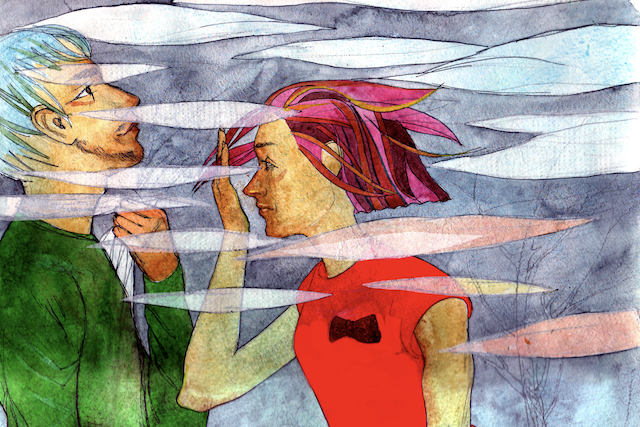
    Certain issues (when small enough) can be swept under the carpet. Some are mere annoyances best handled by simply letting go. I’d done that with some of my housemates’ prior behaviors that had bothered me.

    But this one felt too big to fit.

    **

    The day I returned to the house to pack up my belongings, I thought about how different things had been just a few months prior. How at the start of shelter in place, the four of us seemed to be getting along—becoming, if not friends, at the very least friendlier.

    How abruptly things had taken a turn.

    The emotionally stressful situation brought to light two important lessons for me.

    One was that we each have to be our own best protectors.

    My housemates had described their decision to come home as a boundary, which I suppose it technically was (in my opinion, a harmful and inconsiderate one). They were entitled to return, and I couldn’t physically stop them.

    And while they had a right to that boundary, I had a right to decide I wasn’t safe with people who’d feel okay with setting such a boundary despite the stated impact it would have on a person they were coexisting with. I had a right to decide that their boundary was incompatible with my receiving the care, respect, and consideration that I both need and provide in return.
    If others are disrespecting us or disregarding our well-being, we can decide our hearts aren’t safe with them. We can remove them from their reach.

    If they’re uninterested in considering your perspective, don’t try harder to explain it in a way they’ll understand. They don’t deserve the ego boost of having you chase their acceptance.

    We can’t and won’t change others’ behavior. We can only care for our own selves.

    I try now to spend less time attempting to prove the validity of my perspective to people who simply don’t want to hear it. I try to spend more time making decisions that are healthy for my mind, body, and spirit.

    More time on surrounding myself with people around whom I don’t even feel tempted to over-explain—because their care and consideration for me keep that impulse from activating to begin with.

    We all deserve people like this in our lives. But in order for them to surround us, we must remove ourselves from situations that are harming us.

    The second lesson I took was that people who harm us don’t deserve our time or mental energy.

    Following what happened, there was so much I wanted to say. There were comments I thought my former housemates deserved to hear. There were character evaluations I felt tempted to launch their way.

    Ultimately, though, I saved my energy, communicating only about practical matters such as getting back my deposit (which they initially attempted to withhold from me).

    After finding a new living situation, I poured my efforts into friendships; into long phone conversations and Zoom calls.

    I immersed myself in my interpreting work.

    I cooked healthy meals that nourished me.

    I pet the sweet cats who wandered through my backyard.

    I wrote, spent time with my nephew, processed what had happened with a therapist, devoured books, and did my best to heal from the emotional pain that the whole situation and its bitter ending had caused me.

    I also paid attention to moments of goodness—recalling how the morning I left for the motel, I’d approached my car, bags in hand, to find the back window shattered. The glass littering the surrounding pavement felt symbolic of what was happening with my living situation.

    A neighbor had asked if I needed help. Mask on, he came out with a broom and dustpan. He helped me sweep up the glass. Spikes of it still hung from the back window. We broke them off together so that I wouldn’t be driving around with the shards.

    A small audience of neighbors beheld the scene. Kids watched the glass shatter and land against the seats of my car. They watched it rain down onto the pavement.

    In short, I redirected energy I would have spent on vengeful thoughts onto improving my life.

    I want my energy. I want my equanimity and mental stillness. I don’t believe they deserve the satisfaction of taking those things from me.

    Because as Carolina de Robertis put it in her novel The President and the Frog:

    “Rancor and revenge could keep you mired in the past, a swamp of which he wished to be free; [her character] couldn’t afford that sort of thing, there was too much to do in the here and now.”

    Sometimes it’s better to choose peace over righteousness. Above all, it’s your own heart and mind that most stand to benefit.

  • The Hidden Reasons You’re Stuck (And What to Do When Conventional Advice Fails)

    The Hidden Reasons You’re Stuck (And What to Do When Conventional Advice Fails)

    “The truth is that our finest moments are most likely to occur when we are feeling deeply uncomfortable, unhappy, or unfulfilled. For it is only in such moments, propelled by our discomfort, that we are likely to step out of our ruts and start searching for different ways or truer answers.” ~M. Scott Peck

    Have you ever been in a situation or a stage in your life where you’ve felt physically stuck, as if you’ve fallen into some kind of invisible quicksand that you can’t get out of?

    Or maybe it’s felt more like you have a thick, invisible elastic band around your waist, and no matter how hard you push forward, it pulls against you, holding you in place? Or maybe it’s like a sky-high brick wall that you can’t find your way through, around, or over?

    Getting stuck in life can feel frustrating, annoying, upsetting, and confusing. And if you’ve been stuck for too long or at a time when you really need to move forward, you’ve probably found yourself panicking and feeling afraid because if you don’t take action, it may seem like your life will collapse—that you may end up financially destitute, homeless, alone, or a failure.

    The Place Where You Are Stuck is Your Growing Edge

    Everyone gets stuck at times. It tends to occur when you arrive on the threshold of a new direction, taking a risk, doing something new, or needing to leave something behind and launch yourself into the unknown.

    I’ve been stuck many times in my life, sometimes briefly and sometimes for longer periods when I’ve had to accept that I needed to make big changes to my life and along with them, make choices and difficult decisions or learn something deeply and powerfully.

    This place where you are stuck is your growing edge. It is the threshold between the known and the unknown, who you are and who you’re becoming.

    Sometimes you might have no idea why you’re stuck, only that you can’t move forward. It’s a place that you may consciously or unconsciously try to escape by either avoiding your stuckness or trying to get over your edge and out of the discomfort too quickly.

    Sometimes we get stuck unnecessarily for way too long because we keep hitting the edge and avoiding it or keep applying strategies to get unstuck that don’t address the real cause.

    We often think of getting stuck as a problem to solve, but in my experience, it usually holds a bounty of insight, gifts, power to reclaim, and healing. It can even serve the unfolding of your life by keeping you aligned with your destiny and soul’s callings (or greater purpose, if you don’t believe in those things).

    Why Conventional Advice Didn’t Help You Get Unstuck

    Much has been written about how to get unstuck, but I’ve found that a lot of the advice is based on unnamed assumptions about the reasons you are stuck.

    A common assumption is that it is a mindset issue, so a lot of the advice relates to changing your thoughts and conscious beliefs, cultivating different attitudes and positive mindsets, or using willpower to keep going and find the next step.

    If you have followed any of this type of advice but failed to get unstuck, you may feel like something is wrong with you. But I want to lovingly tell you that there isn’t anything wrong with you. The problem is in the solution that simply didn’t address the root of your stuckness.

    My Experience of Being Stuck

    My most recent bout of stuckness was pretty painful and at times frightening in the context of my life. After pushing hard over several days to write a heap of content for my business, I woke up the next morning feeling depleted, empty, and sad. And I couldn’t write again for weeks.

    If I was writing for fun, then maybe I could have just completely surrendered and waited for the words to return, but as a self-employed business owner, writing forms a large part of my work. I write all of my own website, blog, and marketing content. Not being able to write was scary because it put my business at risk.

    Initially, I tried all the usual things: surrender, acceptance, movement, doing something fun, positive self-talk and encouragement, believing in myself, and looking for the next small step I could take. While these things were helpful, especially in terms of alleviating stress, they didn’t help me get unstuck because when I came back to writing, I was still blocked.

    The Real Reasons I Was Stuck and How I Discovered Them

    When the usual things didn’t help me get unstuck, I sat down with my journal to start inquiring in a loving, gentle way about was happening in my experience and inside me.

    To begin, I did some slow, deep belly breathing with one hand on my heart and the other on my belly. This is a polyvagal breathing exercise that helps to bring your nervous system into a state of relaxation and increases your sense of safety.

    Then I sat with my experience of stuckness and the uncomfortable feelings that arose and noticed what was happening inside me. A conversation with my body and soul unfolded that continued on and off over many days.

    This is what I discovered about why I was stuck.

    1. I had become too immersed in masculine energy in my approach to my writing: linear, direct, and factual.

    I had made it a problem to be solved, a task to be completed. While I cared about writing well and my audience, I had disconnected from the deeper voice within me that held the poetry, beauty, and wisdom of what I truly wanted to say. I call this my soul voice. Essentially, I was trying to write from my head and not my heart.

    2. I was trying to write what I thought others wanted to know or read, in a way I thought I should do it, which wasn’t congruent with what my soul wanted to express through me.

    I believed that I had to write in a certain way to connect with people and be liked rather than just write as myself. I was trying to people-please, which is an old trauma response.

    3. Different parts of me were in conflict, and their conflict needed to be listened to and resolved.

    My sensitive parts didn’t like my overly practical approach to writing and were actively pushing against the “let’s get on with it” part that was trying to get it done. You could think of it like my heart pushing back against my head in opposition, saying “this isn’t the way to proceed.”

    4. Less obvious was an inner critic that redirected me to write from my head.

    Its voice was quiet, blended in my thoughts. It was trying to stop me from writing as my true self to protect me from the risk of criticism that a young innocent part of me would find devastating—an old trauma.

    Once I recognized and sat with all of my insights about why I was stuck, I was able to hear my deeper self and find my way back into writing by listening to what my heart and soul wanted to express, while reassuring my anxious parts.

    I shared little chunks of writing on social media that I felt inspired to share, not because I thought I should or wanted to please anyone but myself. This trickle eventually found its way to become a greater river. My writer’s block ceased. My stuckness was gone.

    The Hidden Reasons You’re Stuck

    The reason you’re stuck is not necessarily a result of your mindset, attitude, or willpower, or solely because of your beliefs. The reasons you are stuck are deeper than that.

    They’re often hidden, obscure, or unobvious because they’re hanging out in your unconscious where you haven’t looked or been able to see them. They can be entangled and intertwined.

    We get stuck because of deep inner conflicts between parts of ourselves that we aren’t aware of or listening to, limiting beliefs created and held by young parts of ourselves, and trauma that has been protectively pushed down but may surface.

    We get stuck when we try to ignore or avoid difficult feelings, or when we’re scared of going for the thing that we want or need to do that our nervous system perceives as dangerous, sending us into a fight, flight, freeze or even fawn response to try and make unworkable situations work.

    Your conscious mind might think you want what you say you want, but unconscious parts of you say no.

    You might have inner critical figures meanly berating you or quietly discouraging you in a way that seems helpful or loving but isn’t. You might not have enough inner or outer allies to help you take the step you want to take or cultivate the skills you need to cultivate.

    You can also get stuck when the thing you’re trying to do isn’t aligned with your destiny or soul’s calling and your stuckness is a symptom of higher intervention.

    How to Find the Hidden Reasons You’re Stuck

    1. Offer yourself love and compassion, coupled with gentle curiosity about your stuckness.

    This will help your body relax and feel safe. You won’t discover what you are looking for by being forceful or unfeeling toward yourself.

    2. Befriend it.

    Before you can get out of your stuckness you must be willing to be with it and relate to it. Even if you try to detour your way around it or avoid it, the lessons that lie within it will appear again at another time in your life because you’re here to learn and grow.

    Life lessons we need to learn repeat. What you learn will serve you for the rest of your life.

    3. If you feel stressed and anxious about your situation, try some polyvagal breathing exercises to bring your nervous system into a state of rest and digest so you’ll feel safer.

    It’s hard to think and see clearly if your body is very activated or stressed or even in a freeze or shutdown.

    4. Find time to consciously hang out with your stuckness, breathe with it, and if you are able to, tune into your body.

    Ask, listen, and see what bubbles up and what you notice is going on beneath the surface. For me, meditation and journaling worked, but they’re not for everyone. Maybe intentional walking, dancing, praying, or talking into your phone is better for you.

    Here, you must be kind, gentle, and welcoming. Digging for answers and clues, especially in a forceful or problem-solving way, can make your sensitive inner world and young parts freeze up and not reveal anything because they feel unsafe.

    5. Hang out and breathe with your insights so you feel safe.

    This can often be enough for your stuckness to unfreeze or for you to form insights about your next step.

    Other times you will need to do some work to process emotions, work through inner conflicts and limiting beliefs, and heal your young parts and traumas. You may need therapeutic support for this.

    6. If you’ve tried the above and you’re still stuck, seek the help of a therapeutic practitioner or safe, compassionately honest loved one.

    We all have blind spots where we can’t see things clearly about ourselves. It’s human nature.

    You may have painful experiences kept out of your conscious awareness that need healing.

    Sometimes you just need help and a safe space to discover what you can’t see and to be held safely with your experience and what arises.

  • How Sensitive People Can Stop Taking Things So Personally in Their Relationships

    How Sensitive People Can Stop Taking Things So Personally in Their Relationships

    “The truth is that the way other people see us isn’t about us—it’s about them and their own struggles, insecurities, and limitations. You don’t have to allow their judgment to become your truth.” ~Daniell Koepke

    As a child growing up with a highly sensitive mom, I often noticed her go quiet at the dinner table after my stepfather would make some little comment. Looking back, I know he was just tired and a bit grouchy from a long day at work, but my mom felt hurt by his words.

    Over the years, the comments didn’t lessen, but I noticed my mother being less and less bothered by them. They seemed to slide off of her like water off a duck’s back. As a result, my parents seemed to have a lot more fun, laughter, and ease together—and still, forty some years into their marriage, live happily side by side.

    Just like my mom did in the earlier days of her marriage, it’s so common for sensitive people to take things personally–both in our intimate relationships and in general–and for that to make the relationship more painful and less fulfilling.

    Up until seven or eight years ago, I, too, found myself getting easily hurt by things my husband did, or most often, the things he did not do.

    It stung when my husband didn’t seem to be listening when I was talking, when the scenery seemed to captivate his attention more than my heartfelt words, when he forgot to do the thing I’d asked him to do, or when he interrupted me when I was speaking—all of which happened (and still does) with regularity!

    One thing that felt especially hurtful then was when my husband would fall asleep while I was vulnerably sharing deep feelings about our relationship. I felt so hurt by his sleeping, like he didn’t really care about me.

    I’ve known many other sensitive people to take it personally and feel hurt when their partner doesn’t give them verbal appreciation when they do something nice or helpful, or when their partner isn’t as affectionate or openly enthusiastic about spending time with them.

    It is true that many partners do not always act with kindness or consideration. Yet, when we take it personally, the hurt we feel can show, often in how quiet we suddenly get, or in a slightly defensive reaction, or in outright tears.

    As we hold onto that hurt, over time, it takes a toll in our relationship and our emotional well-being.

    If you take things personally often in your relationship, it’s likely to build up some deep resentment and disappointment.

    It can also lead to defensive interactions with your partner, escalating arguments, and withdrawal or criticism from both sides—which only results in even more disconnection between you.

    Eventually, in my own marriage, I realized that taking things so personally was really rough on our relationship. Not only did it simply feel bad to me, but I also didn’t act how I really wanted to in my marriage. When I felt hurt, I would often retaliate with some criticism, like “Talking to you is like talking to a stone wall!”

    Needless to say, that led to more distance, discord, and deep unhappiness between my husband and me.

    So I looked to my mother and her wisdom. What she told me opened the door for me to the power of not taking things personally—and developing a whole arsenal of tricks to help me become someone who hardly ever takes anything personally anymore.

    What a blessing this has been in my marriage, and even in my career, allowing me to feel more confidence and calmness, and to love my hubby—and feel loved by him—more deeply than ever. (Yes, even if he spaces out—or falls asleep!—when I’m talking to him.)

    Not taking things so personally is possible for you, too, and it will allow you to have much more connection and loving intimacy in your relationship–which you were born for as a highly sensitive person.

    Here are six tips to help you, as sensitive person, become someone who no longer takes things so personally in your intimate relationship.

    1. Tend to your stress levels.

    As highly sensitive people, our nervous systems tend to get overloaded more quickly than non-HSPs, due to how deeply we process stimuli.

    This means you will feel more easily overwhelmed and stressed than non-HSPs if you are not attending to your nervous system regularly.

    Interestingly, research shows that when we have higher stress levels, we misinterpret neutral comments from others as criticism, or see their behaviors in a more threatening, negative light.

    In other words, unless you are regularly de-stressing, you are likely to see and experience everything your partner does or does not do in a much more negative way, take things more personally, and feel hurt a lot more.

    That hug your spouse resisted? If you were stressed, it may have seemed like he was actually snubbing you instead of just distracted by the kids. If you had been calm and centered, it would have been no biggy; maybe you would have even appreciated it that he was attending to the kids and taking some work off your hands.

    A huge part of our emotional well-being, and feeling connected instead of feeling hurt, depends on tending to our nervous systems regularly to keep our stress levels moderated.

    Some of my favorite ways of doing so include a medium-paced walk in nature, meditation, coherent breathing, yoga nidra, and dancing wildly or gently in my living room. There are many options. Find ones you like and add them—even just for a few minutes here and there—to your daily routine.

    2. Know your goodness.

    Other people’s words or actions cause a lot of pain when we think it means something about who we are and don’t keep our own good opinion of ourselves at the forefront. Because the hurt we feel from taking things personally actually comes from believing other people’s negative judgments of us.

    In other words, if we don’t feel great about ourselves, whenever anyone else isn’t caring or kind, we can more easily take it to indicate something bad about ourselves.

    When you can hold the clear knowledge of your own goodness in your awareness, you will have a much easier time separating other people’s confused thoughts from who you really are and letting them roll off you like water off a duck’s back. So make sure your opinion of yourself is a good, healthy one.

    For many HSPs this can be especially hard because we have been misunderstood and perhaps treated like something is wrong with us for much of our lives…which can convince us this is true and lower our self-esteem…which makes it even easier to feel hurt when someone says or does something that could indicate disapproval or lack of care about us.

    But as an HSP, you have so much to feel good about yourself for!

    So it’s well worth your energy to spend time actively seeing what you like and even love about yourself. What do you know about the goodness of who you really are? (Need some hints? This post will help.)

    Deeply knowing your goodness will prevent and ease the pain of taking things personally.

    3. Think about your thinking—both yours and your partner’s.

    Our own thinking is the biggest culprit of taking things personally as HSPs. This is great news because it means we can shift our thinking to minimize the pain of hurt feelings.

    As HSPs, we tend to be so conscientious, attentive, and attuned to those we care about, so we unconsciously expect the same from our partner. If it turns out that they aren’t as attuned and caring naturally, we think it means we aren’t as important to them as they are to us, that we aren’t loved, that we aren’t good enough, that we have done something wrong—or are wrong.

    I can’t tell you how many HSP women I know have told me that when their hubby says, in a tone, something like, “What, you can’t give me five minutes to get to xyz?!!” They think to themselves, “Oh no, I’ve done something wrong. I suck.”

    This is what I call a negative misinterpretation. And our HSP brains naturally do this a lot! This negative interpretation is where the pain of hurt feelings really comes from.

    Let’s get a quick understanding of this: For survival reasons, the human brain is wired by default to see and hear things negatively. We unconsciously focus on flaws, on what’s wrong, or missing. This is called the negativity bias of the brain. And HSPs, we have this even more strongly than non-HSPs.

    You can use this knowledge to help you observe when your brain tends to put a negative spin on things—and decide to stop drinking that Kool-Aid. Just because your brain thinks what it thinks, it doesn’t mean it’s true!!

    Can you see how in the above comment, one could have interpreted it to mean many things other than “I‘ve done something wrong. I suck.”? You could interpret it as He’s having a hard day,” or “He feels pressured.” Which is way closer to the truth than “I suck.

    Nowadays, when I’m sharing from my heart to my husband and his eyelids start getting heavy with sleep, I no longer interpret it to mean he doesn’t care about me. I see it for what it is: he’s tired after a full day of working to support our family.

    So, when you feel that familiar sting of hurt feelings, step back and notice what your negatively biased brain is interpreting the thing your partner said or did to mean. And get curious about what else might be going on that is closer to the truth.

    4. See it as their inner disconnection or their confusion about you.

    What if your significant other really does say something harsh about who you are—or does something truly mean or negligent?

    Remember, they have a flaw-seeking brain, too, that also sees in a negative way by default. And just because they may be having a negative thought about you doesn’t make it true!

    What’s really happening is they are having a moment of confusion about you, or they can’t see beyond their flaw-brain at the moment.

    The truth is, when someone sees bad in you, or treats you poorly, it is always a symptom of their own inner turmoil and distress. Unloading on you is just an unskillful way of trying to reduce their own inner turmoil. It means nothing about you.

    As my mom wisely said when I asked her the trick to not taking those dinner table comments personally,  “I remember that it’s just his stuff.”

    If you can remember this truth, you may even feel compassion for your partner instead of hurt—and let me tell you how much better that feels! I’ll take compassion over hurt feelings any day. Because it is from there that we are best able to effectively advocate for and create more caring interactions.

    5. Be your own zone of safety and love.

    As you learn to break the habit of taking things personally, you will want to be able to hold yourself through any hurt feelings that still arise with kindness and love.

    This means, instead of trying to avoid the feelings of hurt, learning to be with them in a loving way.

    When they come up, gently move your attention from the spinning thoughts in your mind to how the hurt actually feels in your body. Be curious about the sensations. And hold them with your gentle and compassionate attention the way you would hold a baby bird in your own soft hand—spaciously, with warmth and tenderness.

    It can help to place your hand over your heart area in a gesture of love and care for yourself, and imagine the sensations in your body are soaking up that kind attention.

    As awkward as it may feel at first, by being with your painful feelings in this way, you will move out of them more quickly, and experience much more peacefulness with them as you do. And even experience more love in your life.

    As I learned to make this kind of space for any hard feelings that come up, the most amazing thing began to happen: The hard feelings became a doorway to feeling a deep warmth and a loving intimacy with my own self, and a sense of inner safety I never before knew was possible.

    Now I no longer fear the harder feelings of life because I trust myself to always lovingly support myself through them. Which has made my relationship with myself so loving and strong—and my relationship with my husband much more peaceful and less reactive.

    6. Re-root in love.

    In our committed intimate relationships, what always soothes and heals is coming back to love. First and foremost, love for yourself, and of course, love for your significant other.

    To do so, simply ask yourself: “What is the most loving way to see this?” Or, “What might love’s wisdom want me to know right now?”

    Perhaps the answer will be a reminder of how amazing you are, or to remember your partner is doing the best they can with the skills and experiences they have had, or that the truth is your love for each other is strong enough to weather these less than harmonious moments. Or maybe the answer will be to set strong boundaries for yourself, or even end the relationship.

    But if you come back to love, these harsher moments will be like a tiny, whitecap in a big sea of love—and have very little power to rock you or the depth of you and your partner’s love for each other.

    Please don’t misunderstand that any of this means you should stay with someone who doesn’t care about you or treats you badly. You want to be able to discern whether you’re tolerating things you shouldn’t be and staying with someone who is not good for you or just taking things personally that you really don’t need to be.

    If you’re doing the latter, you can completely transform your relationship by putting these tips into practice. When you do, you not only remove much of what is dragging you down in your relationship, but you also allow yourself to start seeing and feeling more of the love that is already there, which will invite more of it to keep pouring in.

  • Freedom Is the Space Between Each Judgmental or Righteous Thought

    Freedom Is the Space Between Each Judgmental or Righteous Thought

    “It is inner stillness that will save and transform the world.” ~Eckhart Tolle

    Life is hard. Impenetrable at times. How can we use our spirituality to navigate through the density of life?

    That question inspired this piece of writing. And my navigation tool is almost effortless; I feel compelled to share it.

    When my mind is churning and burning with thoughts and fears and worries, I take myself off to a quiet place, get still, and watch my mind. I wait for the tiny gap between each thought. Bingo.

    That space, that little gap, is freedom in its truest, purest form. It is the birthplace of peace. And every time I enter that space, I am no longer at war with anything. Despite what madness may surround me, that place always remains untouched. It is like an infinite reservoir of strength and love—one that feels like, well, freedom.

    How I came to find that reservoir is a long and nuanced story (that’s why I wrote a whole book about it), but I’ll try and give you the nutshell version.

    Essentially, to even find it, I had to first get to the point where I was so disillusioned—with my cancer, with people, with the system, with the greed, with the house chores, with the destruction of the planet, with war, and with life full stop.

    Little did I know it then, but that disillusionment was freedom’s gateway.

    For so long, I looked to ‘the other’ as the source of my disillusionment.

    Sometimes ‘the other’ was a person, sometimes it was a situation—my cancer, the pandemic, the person who I believed had wronged me, the political party; anything or anyone that caused a disturbance to my happiness fell into this bucket.

    Of course, it felt good to blame cancer, that person, or the pandemic for my woes, at least on the surface. Yet the blaming was also the root of my suffering. The biggest wars I’ve had in my own life were when I was trying to get ‘the other’ to yield / change / admit they have it wrong so I could live in peace.

    But the true source of my disillusionment was never with them. When I stopped waiting for the situation to change and shifted my attention to my mind, I observed something that floored me at first: my own righteousness.

    Staring back in the mirror were my tendencies to be correct, envy, judge, complain, and win. That mirror revealed one simple truth: I was adding to the war I desperately wanted to end. I had arrived at the place where I was simply fed up—no longer fed up with life but rather fed up with the suffering caused by my very own mind.

    The challenges and hindrances of life may have taken you to a similar point—the point where you’ve had enough. Before freedom is even possible, this stage is necessary, essential even.

    The world is unsatisfying. So, now what? This is freedom’s front door. It is the opening to the very core of your being. When we have had enough of looking outside for contentment, only then do we look inward. This is where the rubber meets the road.

    But we have to go deeper—beyond the mind, beyond our thoughts about what is right vs. wrong, left vs. right—to our essential oneness.

    And, as a collective, I think we get there by asking ourselves one simple question: Do I want peace or war?

    If it is peace, we must start with the peace in our minds. In all the frenzy, it is possible to simply stop and enter into the space between every thought. Rest there for a few scared moments. Feel the ease wash over every cell of our being. Come home to that again and again. Life doesn’t need to be any different to enter that space.

    That space is freedom. And true freedom is not bound in any person or situation. Freedom is what sits underneath the war. It is found in the tiny gap between every righteous and non-righteous thought; it occurs through stillness.

    From this stillness, I’ve learned (yes, the hard way) that we can speak our truth, but now we speak it without the need to control any outcome.

    For example, rather than trying to force my husband to read a spiritual book instead of opting for Netflix—as if I know what’s right and best for him—I can respect him for where he is at in his inner journey. I still act. I still suggest books. But my happiness is not dependent on his choice.

    Instead of being angry at a friend who hurt me, I can step out of my righteousness and cultivate empathy for where she is at in her life. I still reach out. I still attempt resolution. But my peace is not dependent on her response.

    I throw my seeds of truth, dug up from the depths of my heart, out into my family and the world. Sometimes they land in the fertile soil of ‘the other,’ and sometimes they don’t. So be it. It is action without criticism, judgment, blame or control—without the war. I had found a place within where I could look at ‘the other’ and feel compassion and even love instead of anger and annoyance.

    Eckhart Tolle says, “It is inner stillness that will save and transform the world.”

    I couldn’t agree more. Because from that place, from the silent stillness within, war is not escalated but instead averted.

    So, to anyone feeling disenchanted, I want to honor you and say one thing: The freedom your soul is aching for is within arm’s reach. It is as close as your breath, as close as the space between each of your thoughts.

  • Dear Parent of an Estranged Adult: What Might Repair Your Relationship

    Dear Parent of an Estranged Adult: What Might Repair Your Relationship

    Dear estranged parent,

    I know it’s not easy to feel cut off from your child when you still feel love and maybe even remorse. I know you might feel confused about why your adult child is so upset, and you might even feel angry and wrongly accused.
    Perhaps there’s some truth to that. I don’t know why your child cut ties with you, but I can share a little of my own experience and then offer some tips that might help, regardless of your unique situation.

    So why did your son or daughter cut you out of their life?

    I can’t speak to the specifics of your situation, but I can offer you some insights from my own experience and I can talk about common themes expressed by my community of estranged adults.

    Before I go any further, I need to remind you that everyone remembers and experiences the same events differently. For example, you might remember the fun family trip to Disneyland where everyone was together and had a good time, but your son or daughter might remember getting yelled at or you and your spouse fighting.

    I’m not trying to invalidate your feelings but simply to remind you to be open to the possibility that your child may remember or may have experienced events differently.

    I tried to have a relationship with my parents for many years before I made the hard decision to cut them out of my life. I would seek validation for my academic accomplishments, but all they would notice were the mistakes I’d made, and they would repeatedly highlight them.

    I’m not saying I was perfect, but a little love and affirmation would have gone a long way. Each rejection left me feeling hurt. I questioned my self-worth and became depressed. Still, I tried to maintain a relationship with them, despite the fact that it took a toll on my health.

    I showed an interest in my mother’s life, and every time I came back to visit, I did my best to be helpful around the house and attend to their needs in any way I could.

    My parents would criticize me repeatedly, even in front of friends and family members, and I was left feeling smeared and demeaned. All of my actions were met with judgmental negativity.

    If I tried something new, my father would list all the reasons why he thought I was going to fail, while my mother would take sadistic joy in my failures. My parents never wanted anyone to see the good in me or even to allow me to see the good or the potential within myself. I was always a failure in their eyes—a common theme among estranged adults.

    My parents also repeatedly failed to respect my boundaries and at times would list off reasons why I could not have the ones I had set. They often guilted me for having boundaries or even basic needs.

    My parents never admitted the hurt they caused me. They never admitted the years of abuse and neglect. It was always somehow my fault. They were also unwilling to listen or allow me to have a productive conversation about my feelings. Again, I’m not saying I’m perfect, but I didn’t deserve to be treated in the manner I was during my formative years.

    Each time I would invite them to come visit me or take an interest in my life they gave me a list of reasons why they couldn’t come or why I was not good enough for them to bother caring.

    Each interaction cut me deeper, causing me to get depressed and shut down.

    When I got engaged, my father listed all the reasons why he thought my relationship would fail, and my mother expressed frustration at the thought of having to help me plan a wedding. I couldn’t force them to care, and the tremendous emotional effort I was making was taking a toll on me. I felt I had no choice but to accept that the relationship I so desperately wanted would never be and let go.

    For me, this was the right decision because it freed me from the bondage of hope that one day I might be good enough and it allowed me to live a meaningful and happy life.

    I must reiterate that there is a reason your son and daughter has cut you out of their life because no one would make this decision lightly.

    If you care about rebuilding a healthy relationship with your estranged child, these are some steps that you can take.

    Realize that people remember events differently and be open to seeing their perspective.

    Sometimes we remember things so differently that we’re inclined to deny the other person’s reality. Please don’t do this, as it will only create walls and cause them to recoil and pull away.

    If your child says they did not like it that you pushed them into doing sports and only cared about them winning games, don’t shut the conversation down by saying “You were good at sports.” If your child says that you always criticized them about their weight, don’t tell them that you were trying to help them lead a healthier lifestyle.

    Listen and try to understand their point of view. Simply allowing them space to share how they experienced their childhood can help them feel heard and respected.

    If it helps, keep communications in writing to start.

    Oftentimes, it’s hard to really hear what someone is saying when you feel attacked, accused, and emotional. If conversations are upsetting both parties, try communicating by e-mail so that you can read and reread what they have to say in order to digest the message being communicated. Try your best to understand their experiences and empathize with them whenever you can, and odds are they’ll be more willing to do the same for you.

    Avoid being critical.

    You may not agree with your child’s lifestyle or their actions, but repeatedly criticizing and voicing your disapproval will only cause them to pull away. Don’t call them names or make reference to their past failures. Work on being supportive and providing them with validation whenever possible.

    This might be hard to do if you feel they’re being critical of you. Criticism tends to shut people down—on both sides. But replacing criticism with validation can help heal old wounds.

    Be self-reflective.

    It can be hard for anyone to take a critical look at themselves and examine their actions in order to admit that they’ve harmed someone. This can be a painful process that forces you to see yourself in a new light. Sometimes, as painful as it is, it has to be done.

    This doesn’t mean that you are inherently bad. Most people parent as they were parented and repeat harmful patterns without realizing it.

    It takes tremendous courage to examine yourself and admit that you caused pain. Remember you don’t need to do this alone. Seeing a trained counselor or psychologist can help you understand yourself better.

    Take responsibility for your actions.

    Many estranged adults, myself included, never felt we got the apology we longed for. If you have wronged your adult child, even if you feel you were a good parent on the whole, own up to your mistakes and apologize. This simple act will go a long way toward rebuilding the relationship.

    Respect boundaries.

    It can be tough to honor a firm boundary when you feel an urget need to talk things out. But you can’t force someone to hear you until they’re ready. If your son or daughter has said that they don’t want to see you for the next month, don’t show up at their door. This will only leave them feeling intimidated and disrespected and cause them to pull away.

    Be willing to change your behavior.

    If your son or daughter has described behaviors of yours that bother them, make a conscious effort to change. Show them that you are capable of taking their constructive criticism and applying it. Listing off ways that you think you have changed isn’t enough. Your actions need to speak for themselves.

    This is, of course, a two-way street. Adult children are also capable of doing things that upset their parents. And in a perfect world, they’d hear you and make changes too, if necessary. But you can’t control their behavior—only your own.

    Understand that distance isn’t always permanent.

    Sometimes we need to take a break from family and friends in order to heal from childhood trauma and focus on our own health and well-being. This is a natural part of the healing process. If you have been asked to give your son or daughter space, honor their request.

    Never use guilt.

    As harsh as this might sound, your adult child doesn’t owe you anything. By inflicting guilt on them—telling them they should have a relationship with you because you’ve done and sacrificed so much—you invalidate their feelings and exert power and control that could cause them to pull away even further. It’s far better to create a new relationship from a foundation of mutual understanding than try to force one on a foundation of guilt and shame.

    Don’t try to buy them back.

    If your child asks you not to send gifts or give them money, don’t. You might think the gifts are a way to repair the relationship, but this never works and only breeds resentment. Estranged children can also see gifts as a means of exerting power and controlling, forcing us to feel obligated to have a relationship we do not feel comfortable having. Relationships can never be bought.

    Offer to go to therapy.

    This can feel intimidating at times, but your willingness to go will send a strong message that you’re open to rebuilding a healthy relationship. Many times it can be easier to talk about sensitive subjects in front of a trained neutral third party that can help us work through our emotions and misunderstandings. If your child declines your invitation to go to therapy, see a therapist on your own.

    Allow for growth and change.

    Some of the healthiest relationships we will ever have grow and change as we do. Don’t expect your child to like the same things or act the same way as they did before; this is simply not realistic. You must adapt and grow as they do and be open to the fact that the relationship may change.

    If all else fails, work on accepting the situation.

    Not every story has a happy Hollywood ending. Sometimes all we can do is accept the choices other people have made, let go, learn from the experience, and move on with our lives. If your child insists that they cannot have a relationship with you, respect their choices, as painful as this may be. Don’t contact them repeatedly. Remember that nothing in life can be forced, not even relationships.

    I’m not saying that parents are solely responsible for healing broken relationships with their children. We have to do our part too, but often we’ve tried for years only to feel invalidated, disrespected, and rejected.

    Had my own parents done any of these things it might have been possible to reconcile with them and work together to heal.

  • Don’t Wait to Open Your Heart: There Is Only Time For Love

    Don’t Wait to Open Your Heart: There Is Only Time For Love

    “Be soft. Do not let the world make you hard. Do not let the pain make you hate. Do not let the bitterness steal your sweetness.” ~Iain Thomas

    Looking back, my most cherished childhood memories can be traced back to my rosy mother.

    Intricate forts in the backyard with Spice Girls playing in the background. Sleepovers using Limited Too’s finest sparkly lotion, eyeshadow, and lip gloss. Rainy afternoons filled with friendship bracelets and Lisa Frank activity sheets. Children and teachers showing off their wild side at my mothers’ signature talent shows at the local theatre. Arts and crafts in a room surrounded by floral couches and mauve wallpaper. Flea market field trips to select the perfect charm bracelet. And, loads of buttery birthday cakes with the words Be With Your Dreams written all over them.

    Sadly, we grew apart during middle school when she abruptly uprooted our sunlit lives in exchange for a nomadic lifestyle. After traveling with her to two states, I grew tired of the “new kid” title and moved in with my father.

    With each of her subsequent moves, my resentment morphed into a towering boulder that blocked her love to seep through. Our tug-of-war relationship continued for six years into early adulthood.

    I still remember the day that everything changed.

    I was at a work conference when I received an unexpected call from her. I grudgingly called her back in a crowded hallway.

    What?!” I said in a pompous tone.

    She whispered, “I’m so sorry to hound you but I need to tell you something. I have cancer.

    What do you mean?” I said as my throat sealed.

    “I’ve been diagnosed with ovarian cancer—I am so sorry.”

    A few days later, I visited her home in Key West, Florida. I can still picture her galloping towards me as I exited the puddle-jumper. She had a mop of loose curls, a wide smile, torn army green cargo pants, and a swollen belly that resembled pregnancy.

    For the first time in years, we bonded without the heaviness of the future.

    We became giggly movie critics. We strolled the shoreline in search of magical conch shells. We frequented our favorite Cuban restaurant and oohed and aahed over zesty soup. We bought vintage aqua blue tea sets for future tea parties. We swapped stories that were once forgotten.

    Instead of cowering in embarrassment, I encouraged her roaring laugh in public. I embraced her hippy lifestyle as we basked in the sun, with Key Lime Pie sticks in hand. I co-directed one of her renowned talent shows featuring local YMCA kids. Her trailer became a treasure trove filled with wispy white pillows, the aroma of velvety hazelnut coffee, and new beginnings.

    With each day that passed, the towering boulder of resentment I once had dissipated into raw love.

    She didn’t have standard health insurance, but she saved black pilot whales in her free time. She didn’t have a steady job, but she made others smile as she sold handmade bottlecap jewelry at Mallory Square. You see—if you’re fixated on expectations of who someone should be according to your standards, you can’t love them for who they really are.

    My mother once wrote me:

    “Those stressful days are gone, and I don’t think I’ll ever see them again. I don’t have the meetings and high-powered days like I used to. I drift to work somehow gazing at the blazing sun, aqua blue ocean, hibiscus blossoms, and the marshmallow clouds. I wear island dresses in the endless cool breezes with my hair in a wet bun. Most of the time, I hide my bathing suit underneath it all so I can hit the beach right after.  I’m dreaming of my toes in the sand, laughing, giggling, and snoozing while listening to music and chirping birds. Remember, life is beautiful. You need to find your happy – promise?!

    My mother appreciated every moment, even if the highlight of her day was glancing through a window in a sterile hallway. She described the hospital’s cuisine as divine. Although she could barely walk, she somehow dragged her flimsy wheelchair through sand, just to inhale a whiff of the salty ocean air. And at every opportunity, she looked up at the clouds in awe of being alive.

    As her soft body turned into brittle bones, I learned the importance of her famous motto, Be With Your Dreams. She taught me how to live an idyllic life filled with nature, wonderment, and positivity. She proved that having a raw, openhearted approach to life was superior than any cookie-cutter mold I once envisioned for her.

    In my mother’s last days, she shared tenderly, “Britt, I think of how I left you behind sometimes. I know I wasn’t a perfect mother, but I’ve always loved you so much, baby girl.”

    I waited for that moment for fifteen years. And in that moment, I felt nothing. Zilch. Nada.

    Time was the only thing I longed for. As tears streamed down my face, I wondered how many more memories we would’ve had, had I learned to appreciate her for who she was years ago.

    Most of us wait to resolve our conflicts “later.” The unfortunate part is that minutes and days turn into months and years. There’s a good chance we’re missing out on a relationship right now that could change our entire lives. So…

    Open the door to your heart and choose love. Be kind instead of right. Remember the good times. Let go of pain disguised as indifference. Take responsibility for your part. Stop the judgment. Be the bigger person. Forgive the small things.

    For goodness sakes, say or do something! Pick up the phone. Write an apology letter. Drive to their house. Plan a trip. Text a nostalgic memory.

    Don’t you see… there’s only time for love. And, who knows—if you’re lucky enough, they might just show you how to Be With Your Dreams.

  • 10 Signs You’re in a Toxic, Unhealthy Relationship and How to Help Yourself

    10 Signs You’re in a Toxic, Unhealthy Relationship and How to Help Yourself

    “Love is never any better than the lover. Wicked people love wickedly, violent people love violently, weak people love weakly…the lover alone possesses his gift of love.” ~Toni Morrison

    Not all relationships are created equal. Some rage in like a storm and leave you far weaker than you were before. As you try to process the wreck that is now your reality, you wonder, how did I end up here?

    I found myself in a toxic and addicting relationship in my mid-late twenties. Now that some time has passed and allowed for reflection, I want to pass on some signs from my previous relationship that I should have paid more attention to, in hopes that this may help others who are in a similar situation.

    Signs a Relationship Has Become Unhealthy and Toxic

    1. You are putting in most of the effort, and your needs aren’t being met.

    Emotionally, I felt drained and exhausted. This frequently happened when I tried to communicate my wants and needs to my former partner. Most of the time, it felt like my efforts were in vain.

    2. You constantly feel like you are walking on eggshells.

    I never knew when I would say something that would be too much for my former partner to talk about and he would shut down emotionally. It made me nervous to bring up my concerns about the relationship, as I felt like he had a wall built around him that I just couldn’t knock down.

    3. You hang on because you think that’s what you are supposed to do when you love somebody.

    Blame it on Disney, romantic comedies, or countless love songs, but how many of us stay in unhealthy relationships because we feel like we owe it to that person to be there for them? But what do we owe ourselves?

    Looking back on my past relationship, I stayed in it for far too long because I thought that’s what you do when you love somebody. You stick with them when they are hurting. But what if it’s one-sided and it’s hurting you most of the time? Is that really love, or is it an unhealthy attachment to that person?

    4. You get addicted to the highs of the relationship.

    When things are bad, they are bad. But when they are good, you forget about the bad. The on-and-off-again pattern makes it passionate and addicting, almost like a game. It also makes it incredibly unstable. I felt like I was taking one step forward and two steps backward, constantly preparing for the next big crash.

    5. You are always giving in the relationship.

    I gave most of my time and energy to my previous relationship because I didn’t think I deserved to be on the receiving end of love. Now I know how wrong I was.

    6. You’re trying to solve problems that aren’t yours to solve.

    I tried too hard to solve my ex’s problems and didn’t focus on myself. I was overwhelmed by huge life transitions like moving and starting a new career, so it seemed easier to try to help him even though he didn’t ask me for help.

    This also allowed me to avoid admitting our relationship was deteriorating. It hurt too much to accept that our relationship was over and that I’d given 100% to someone who no longer cared about my feelings or well-being. After all, to admit is to acknowledge, and who wants to become aware that their relationship has become incredibly unhealthy?

    7. You get stonewalled.

    When I would be vulnerable and try to communicate how I felt, my former partner would go silent on me for long periods of time. This was pure mental torture. It was one of the most excruciating things I had ever experienced emotionally.

    Stonewalling was also incredibly confusing and traumatic. I would feel ignored, helpless, abandoned, and disrespected. This in turn would make me want to try to communicate more. Eventually we would start to talk again, and we got into an unhealthy cycle of me becoming anxious and him being avoidant.

    8. You lose a sense of who you are.

    At the end of the relationship, I felt broken and like a doormat that got stomped on incessantly. The person that I’d been before our relationship was no more, and all I was left with was a deep sense of shame for losing myself.

    I felt like I had fallen like Humpty Dumpty. No matter how much I tried, I couldn’t put all my pieces back together.

    It was hard to admit that I’d enabled my ex to treat me disrespectfully over and over again. I’d worried so much about him that I stopped focusing on myself and became entwined in trying to save a relationship that had fallen apart long ago. I didn’t want to accept that after all the years we were together this was the way that it would end.

    9. You feel like you are in limbo and things are out of your control.

    When my ex stonewalled me, I felt like I was waiting on someone else for my future to start. Everything got placed on pause. I gave him all of the power in the relationship, and I felt like I was waiting for answers that I’d likely never receive.

    10. You feel disrespected.

    My former partner stopped caring about my feelings the moment the stonewalling started. I felt so hurt, shocked, and betrayed. I think part of me stayed in the relationship so long because I couldn’t admit that this person who cared about me in the beginning had stopped showing concern for me and treated me without any kind of dignity.

    That loss of love, communication, and affection was really hard to face. His apathy and lack of compassion made me feel like I was a piece of garbage that he threw out. I felt invisible, degraded, and unheard.

    To get a clearer sense of how an unhealthy relationship is impacting you, ask yourself these questions: 

    • Why am I staying in this relationship? Am I staying because I am scared to be alone and deal with my own problems?
    • How much of the time do I initiate communicating? Am I the one putting in all the effort in the relationship?
    • Am I enabling the toxicity in the relationship by continuing to allow this person to treat me in a disrespectful way? Are there boundaries in the relationship for disrespectful and inappropriate behavior?
    • Am I trying to save my partner? Am I constantly worrying more about them than myself?
    • Why do I want to fix things in the relationship so badly? Do I feel like a failure for having the relationship end?
    • Am I trying to control something that has run its course? Do we both want different things?
    • Am I co-dependent? Am I staying in a one-sided relationship to help care for this person even when my needs are not being met?
    • Am I living the life I want to live? Does this relationship make me feel loved and fulfilled?

    Ending and walking away from a relationship that is unhealthy and toxic may be one of the hardest things that you ever do. Know that you are not alone and that you are worthy of being in a loving and healthy relationship. You deserve a relationship full of mutual respect, love, and healthy boundaries.

    Some activities and resources that have helped me on my journey to self-empowerment and growth have been:

    1. Express yourself; find your voice.

    Holding in all of the hurt from a toxic relationship isn’t going to make it go away. Talk openly to trusted loved ones or friends about what you’ve experienced. It may surprise you to hear that others have similar stories. Talking to a counselor, who can give you tools, strategies, and resources to help you navigate this difficult time, may also be helpful.

    Write in a journal or compose a mock letter to the person who hurt you, or to your past or future self. I wrote a letter to myself ten years into the future in hopes of where I wanted my life to be and found it to be inspiring and motivating.

    2. Educate yourself on codependency.

    I was familiar with the term codependency, but I didn’t truly understand what it was until I heard a podcaster mention the book Codependent No More by Melody Beattie. This book put words to everything that I felt during this turbulent relationship.

    It made me realize that I put all of my energy into a relationship that wasn’t mutual or healthy and lost myself on that journey. The book helped reinforce the notion that we only have control over our actions and not others. It motivated me to always be the driver of my life.

    3. Spend time alone.

    After things ended, I didn’t realize how addicted to the relationship I was and how challenging it would be to not reach out to my ex. It felt like I was going through withdrawal. It was intense and frustrating because, rationally, I knew it was for the best, but when I stopped contact, it was a visceral experience.

    I forgot how important it was to be alone, which is also the hardest and scariest thing. The healing truly began when I was able to sit with myself and all of my thoughts. Meditating and participating in yin yoga helped me recenter and decrease my anxiety while also decreasing built-up stress and tension in my body.

    4. Take responsibility for your part.

    I wasn’t just a victim in the relationship; I was also an enabler. I stayed in something that became incredibly unhealthy and allowed my ex to treat me in an inconsiderate and unkind way. I enabled this pattern to continue, which was the hardest thing to admit to myself.

    5. Be gentle with yourself.

    We are all human and are learning. Be patient and kind with yourself.

    When this relationship was finally over, I wanted to rush through all of my grief and uncertainty in order to move on because it hurt too much. It was too real.

    I knew deep down that this would take time to heal, and I wanted to fast-forward through that phase. Give yourself time and grace. Some days will be worse than others. Just know that eventually you will have many more good days than bad days.

    6. Forgive yourself.

    Initially, I wanted to forgive my ex and felt an urgency to do so because I thought it would stop the pain. However, the person that I was most upset with was myself. How did it take me so long to realize this relationship was unhealthy? Why did I allow someone to treat me so poorly emotionally?

    The person that I really needed to forgive was myself for allowing someone to walk all over my feelings for such a long amount of time. Once that process starts, everything gets easier. You may never get closure from your former partner after things end, but you can find it on your own.

    7. Use this experience as a lesson.

    Every relationship is a lesson. Even if it was a difficult time, learn what worked and what didn’t work. What you want and don’t want. Decide what are acceptable and unacceptable boundaries in a relationship so that the cycle doesn’t get repeated in the future.

    8. Take control of your life and be the author of your own story.

    Don’t wait for someone to change to start living your life. Hit the play button and start focusing on your goals and dreams and where you want to be in the future. You may not be able to put all of your broken pieces together in the same way they were before the relationship, but take time to figure out what person you want to become and rebuild yourself.

    9. Love and believe in yourself.

    Take good care of yourself because if you don’t, nobody will. Have high standards for what you deserve in a relationship and don’t accept less. Practice positive affirmations about your worth. How you perceive yourself will impact how others perceive you.

    We might not have control over others’ actions, but we do have control over our own. It’s time to empower ourselves to live the life we want to live.

    If we take time to truly understand why a relationship was unhealthy and toxic, we can vow to break the pattern and not allow it to happen again. We can love in a secure and healthy way and in turn attract partners who do the same. After all, we deserve to be in a healthy, fulfilling, and happy relationship, with ourselves and with others.

  • How My Anger Helped Me Learn to Speak Up About My Needs

    How My Anger Helped Me Learn to Speak Up About My Needs

    “If we are holding back from any part of our experience, if our heart shuts out any part of who we are and what we feel, we are fueling the fears and feelings of separation that sustain the trance of unworthiness.” ~Tara Brach

    This morning I received a WhatsApp message, and I found myself immediately blown into a state of fury. On the surface the message didn’t seem inflammatory or dramatic; it was a simple request from another parent asking me to do something that wasn’t convenient for me. On the surface it didn’t seem like this message warranted such rage.

    The anger exploded inside my body, and I immediately wanted to ring the person who had messaged me. I wanted to shout and scream at them. And I wanted to blame.

    I didn’t ring them. I hate the anger, but what I hate more is conflict. To ring someone up and start throwing blame and anger at them would be deeply terrifying to me.

    I also wanted to stomp and shout, “This isn’t fair! I hate you! Why are you so selfish?”

    I didn’t do that either because I felt so silly having this reaction to a small, insignificant message. The flood of judgment was quick to come: “Why should I, a grown woman, get so ridiculously upset over a small social arrangement organized over text message? What kind of stupid person am I?”

    Oh, how emotions can judge and belittle!

    In the back of my mind, in a small but annoyingly reasonable voice, someone was saying, “You’re angry. Even if you want to shout at that person, it wouldn’t help. The anger isn’t about them really, is it? You know that about emotion, don’t you? Don’t you…?!”

    The anger was so alive in my body, I would have loved to punch something, or scream, but I started pacing instead. I started ranting in a small, quiet, but persistent way, about how annoying and horrible this person was. I attempted to talk to my husband to get some relief from the pressure inside me, hoping he’d say, “Oh, they are awful! You’re right.”

    But he was working. And to be honest, I should have been too.

    But still, this anger that was in my body—so uncomfortable! So unpleasant! I find it so scary to have the energy in my body because to let it out feels so wildly dangerous. Yet to confine it inside me feels like a bull smashing a china shop to smithereens.

    After a while I settled into myself and started actually doing what I know to do with anger—feel it and work with it instead of trying to remove it from my body by complaining or ranting. I stopped focusing on the situation that activated the anger and instead started to notice how it was playing out in my body.

    What I know about anger, and all emotions, is that they are rarely caused by what’s happening in the present. The emotion is there before a situation activates it. If we don’t work to release it, it will be there after the situation, waiting for something else to activate it, on the off chance we’ll finally pay proper attention to it and release it in another way.

    No one is making us angry. That’s not to say people don’t do hurtful things sometimes, but they are not to blame for the unprocessed emotion that was already there. Not even the person who sent me the text message that screamed to me of selfishness.

    Emotions come up over and over, usually around the same frustrations and challenges in our lives. When we don’t know how to release an emotion, it gets stuck in our body and is activated again and again, because we don’t work deeply, at the very core, to release it.

    Emotions often get activated where there are unmet needs. Because this feeling of anger has come up again and again over this same issue, I know that on the other side of my anger, something is waiting to be attended to. There is a need that I have that I am not acknowledging or expressing.

    The anger was so physically uncomfortable that I stood up—I needed space to fidget and move around—and I tuned into the sensations in my body. I thought about how the anger was showing up.

    It felt like there were a thousand fires in my chest. All raging with big intense energy. Underneath the fires, it felt like a bottomless pit of fear and sadness.

    This was all so uncomfortable, so to help me stay with these sensations, to have the opportunity to work with this feeling, I started to hold myself and rub my arms. I gave myself a lot of tenderness, love, empathy, and comfort.

    “I’m here for you,” I said to myself. “This is really tough, Di. I totally get how uncomfortable this anger is in your body. I get how hard this situation is for you, how it brings up such big, deep, old feelings.”

    And as I was holding myself and giving myself love, the sensations started to shift. A little.

    I put my hand on my heart and allowed myself to be with it all. The horror of the anger. The deep, nauseating sensations of fear.

    All emotions want to be held; they want to be seen and heard. And they need to be felt. But in our society, feeling emotions is uncommon. When we tell a friend we are feeling sad, they try to cheer us up. When we feel upset, we might try and distract ourselves. When we hear our partners are upset, we might try to convince them out of it.

    Or we often blame and judge others: They made me upset! They irritated me! They scared me! We rant and complain. Or we suppress ourselves, ignore the emotions. Run far, far away from them.

    The truth of it, though, is that the feelings just want to be felt. They want us to say, “I see you! I’ll stay with you.” Emotions want to just be allowed to show up in our bodies and to move through them, like clouds in the sky. This is the really tricky, painful, or scary part for most of us—learning to be with those sensations that emotions bring.

    As I stayed with the feeling of anger and met it with love and patience instead of judgment, the intensity of it lessened.

    As the fires of the anger started to fade, I asked it what it was trying to tell me. And I heard that it was trying to tell me to stand up for myself, to say to the person who messaged me, “No, I am not happy with that arrangement.”

    I have learned that so often my anger is trying to give me the courage to say “no.”

    It wasn’t about blaming another person; it wasn’t about forcing someone to do what I want or disagreeing with their requests. There was nothing I could do about anyone expressing themselves, and that’s okay. My anger just wants me to state in a clear, strong voice, “No thanks, that doesn’t work for me.”

    My anger wanted me to be comfortable expressing what I wanted and needed. That’s what the anger was trying to help me do.

    I saw, though, that the reason I didn’t just say what I wanted and needed was because underneath the anger there was fear—fear of saying what I needed.

    I saw how much I wanted to say what I wanted, but how scary it felt in my body. But why would I feel scared about saying what I wanted? What I needed?

    Many of us, myself included, learned to deal with our emotions and needs in early childhood by not expressing what we wanted. We learned to defer to other people’s emotions and needs, to allow their  emotions to take up more space. It felt safer, and still feels safer, to think about other people’s needs and emotions rather than our own.

    But our emotions don’t want us to defer to others; they don’t want us to not express ourselves. They want us to be fully expressed humans who say what we need and who we are.

    And that is why anger kept showing up in my life over and over again when I was asked to do things for people—because my default would be to agree and do whatever anyone asked of me. And anger wanted me to say instead “NO!”

    Until I listened to the anger, until I started to say what I wanted, this anger around being asked to do things would keep going on repeat.

    I saw that I needed to spend time tending to myself, working with my emotions, and helping myself become more comfortable with saying what I deeply, truly wanted to say.

    To be all that I am in the midst of these emotions. Authentically me.

    I checked in with my body again and felt the anger had subsided somewhat; the flames were small now, just a little pile of glowing embers. There was a small pool of sadness and fear still near the fire, and I walked over and sat with it.

    I said, “Fear, I get it. I get why you feel like this. It’s hard. Thank you for trying to protect me. I get why you don’t want to say what I need. You’re afraid I will be rejected, right? Well, I really need to say what I need, even if there is the chance of rejection. Otherwise, I will feel angry again.”

    In this admission of what I needed to do, the fear and sadness seemed to breathe a sigh of relief, and all at once the emotions eased out of my body. The fire was gone, the nausea and bottomless pits. All gone.

    I sat with myself, put my hand on my heart, took a deep breath, and calmly and confidently replied to the message.

  • When You Strongly Disagree with Someone: How to Find Common Ground

    When You Strongly Disagree with Someone: How to Find Common Ground

    “The truth you believe and cling to makes you unavailable to hear anything new.” ~Pema Chodron

    I was recently having dinner with a group of friends, and I casually mentioned that I’ve been making more effort in my life to help prevent climate change.

    Across the table, someone looked straight at me and said, “You know human-induced climate change isn’t real, right?”

    I was shocked because I’ve known this person for years, and we’ve always agreed on important topics in the past. I immediately shot back with, “Umm, yes it is!” and proceeded to tell him exactly why he was so wrong.

    I’ll spare you the gory details, but let’s just say the rest of the conversation didn’t go well. It gradually got more and more heated until we were the only two people talking (read: yelling) at each other across the table.

    In the end, someone shut the argument down by saying, “You’ll just have to agree to disagree.” We both took the hint, retreated into our corners, and glared at each other for the rest of the evening.

    A few days later, I was relating the incident to another friend. In all honesty, I was looking for an ally who would help stoke my righteous indignation. But instead of nodding and agreeing with me, she said, “It sounds a lot like you were trying to force your beliefs on him and got mad when he wouldn’t back down.”

    This comment stuck with me, and over time I was forced to admit she was correct. I was so caught up in being right that I had refused to accept anyone could believe differently. Even worse, emotion had completely taken over, and I’d made no effort to find common ground or try and see things from a different perspective.

    In hindsight, I’ve realized I was missing the larger truth that we all believe we are seeing the world as it should be. Our entrenched beliefs become part of our identity because they help us make sense of the chaotic world we live in. And when someone holds a radically different view to our own, it shakes the foundation of our own beliefs and makes us feel off balance and insecure.

    But the good news is, no matter how differently you see the world from someone else, there’s always a way to find some common ground. Here are six tips I’ve learned to help have productive, respectful conversations and open your mind to different perspectives.

    1. Focus on the outcome.

    When you get bogged down arguing about specifics, take the argument up as many levels as you need until you find common ground.

    For example, in the case of climate change, we could have both easily agreed that the environment is important and we want to leave the world a better place for our kids. We just have different views on how to get there. This is a great way to reset the conversation because you’re focused on discussing the outcome rather than winning the argument.

    2. Understand their perspective.

    Learning the underlying reason why someone believes something can help you see a different side of the issue. It might not change your mind, but it will help you treat the other person with more empathy and give you fresh ideas to discuss.

    For example, someone’s refusal to accept climate change might be caused by concern about the negative effects it will have on their life. Maybe transitioning to renewable energy means they will lose their job or be forced to change their lifestyle in ways they don’t want to accept.

    If you can understand these underlying concerns, you’ll be much more likely to find common ground and have a productive discussion.

    3. Separate emotion from logic.

    A stressful argument can hijack the prefrontal cortex—the part of the brain responsible for critical thinking and decision-making. When this happens, you go into “fight or flight” mode and become more likely to react emotionally, think less creatively, and say things without thinking them through.

    The next time you find yourself getting angry or defensive in an argument, take a step back and try to de-escalate your emotions by acknowledging them. Once you’re feeling more logical and calm, you can start to look for common ground again.

    4. Practice active listening.

    Active listening is a communication technique that involves hearing, paraphrasing, and responding to what the other person is saying. It’s an essential skill for finding common ground because it shows that you’re genuinely interested in understanding their perspective.

    The next time you’re in an argument, try repeating back what the other person has said in different words to make sure you’ve understood them correctly. Then, add your perspective to what they’ve said. For example, “I can see why you feel that way, but I also think…”

    5. Be mindful of your own biases.

    We all have biases—it’s part of being human. We want to win arguments, be right, and be liked, so it’s easy to fall into the trap of only listening to information that supports our point of view.

    In this case, I was forced to admit that I haven’t actually read any of the climate change research myself. My beliefs are almost entirely based on existing in a bubble with other like-minded people who reinforce those beliefs.

    Exposing yourself to different perspectives—even if you don’t agree with them—can help you think more critically about your own beliefs. It might even help you find common ground where you thought there was none.

    6. Remember that differing views are important.

    If everyone agreed on everything, the world would be a pretty boring place. But even more importantly, differing ideas help to push society forward. They challenge us to think critically about our own beliefs and come up with new solutions to problems.

    So the next time you find yourself in an argument with someone, try to see it as an opportunity to learn and grow rather than a chance to prove your point. You might just be surprised at how much common ground you can find.