Tag: Confidence
-
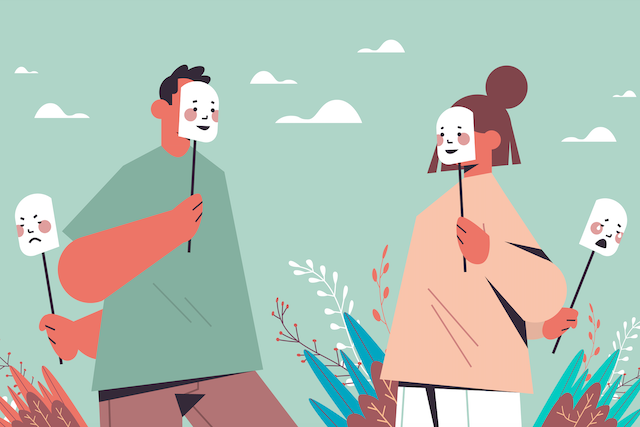
Why I’d Rather Be Vulnerable with People Than Pretend I’m Perfect
“Give up being perfect, for being authentic. Give up the need to be perfect, for the opportunity to be authentic. Be who you are. Love who you are. Others will too.” ~Hal Elrod
I’m not perfect. Not that this would come as any kind of surprise to anyone who knows me. But I often feel pushed in the direction of trying to represent myself as someone who has it all together. Especially because of the nature of my work as a coach and facilitator. What about you? Do you ever feel like you’re putting on a show for others?
The more I find myself trying to represent a perfectly put-together person, the less confident I feel in who I am because I know I am being inauthentic. It’s a big part of what took me off social media a few years ago.
I don’t like that social media has the ability to mold what you think about yourself by way of comparison and encourage posturing. It’s a slippery slope, as we’re hardwired to yearn for love and connection as part of our survival. For me, it didn’t feel like the kinda place I wanted my love and connection to come from.
Having the ability to talk about our flaws, what’s going wrong in our lives and where we’re getting stuck, is a huge part of human evolution that we often forget about. If we don’t have an environment to talk about our vulnerabilities, the wounds never get a chance to heal.
Before getting into therapy, my life was a bloody mess because I pretended like these wounds didn’t exist.
I don’t remember a period in my life without depression. Even as a teen it followed me around like a shadow.
I believed the world would be better without me. I felt worthless—like I shouldn’t even have a seat at the table with other humans. I should have been in an alley eating scraps of food with sewer rats. No matter what I did or how hard I tried, the shadow mocked me for dreaming of a better future. My unwillingness to unpack those thoughts meant the infection spread to all areas of my life.
I grew up in the nineties, when no one was talking about mental health. You struggled in silence.
I battled demons in high school. I only lasted till eleventh grade before dropping out. I couldn’t stand the thought of spending another day being somewhere that made my life hell—but really, hell was inside me.
The voice inside my head was (and still is at times) vicious. Every day it was like the Vikings raided and settled into my thoughts to destroy my existence. Those thoughts have left scars that would look like battle wounds of lobbed-off arms if you could see them.
The voice inside my head was a reminder that I sure as hell would never do anything my parents would be proud of. It was easier to do nothing so that nothing was expected of me. I didn’t feel stupid if I didn’t try, so it made my reality an easier pill to swallow.
I did graduate and made my way to university, but my life became increasingly dysfunctional. My love for being black-out drunk on Sailor Jerry rum became the perfect way to cope with a chaotic mind I didn’t understand.
This comes back to not treating open wounds. Everything I resisted continue to persist.
I had next to no insight into what I was going through because I wasn’t willing to share that I was struggling.
At the time, my problems took on the weight of the world because I didn’t let people stand by my side to support me. I burned through relationships like a brushfire. I had no idea how to be in an open and communicative relationship because I barely had a relationship with myself.
Once the wounds became visible through therapy, I could stop the infection from poisoning my ability to think and function. Vulnerability saved my life. I have no doubt that if I didn’t get that support, I would not be here today.
We forget that our survival depends on being vulnerable. Author Brad Stulberg talks about this in his book, The Practice of Groundedness. He writes, “Our ancestors who survived weren’t those who were the strongest by traditional measures, but those who were most effectively able to share their weaknesses with one another and work together to overcome them.”
If I didn’t share what I’ve been through, would you still be reading this? Probably not. It would be just another fluff piece on embracing your vulnerability.
Without openness, there is no love and connection.
Without openness, you and I wouldn’t be sharing this moment.
Without openness, you and I can’t heal and grow together.
The idea of being vulnerable scares the sh*t out of most of us. No one wants to be perceived as weak or admit they have flaws. We’re afraid that the lions of the world will sense our weaknesses and pick us off one by one.
Except I’ve never actually been mauled by a wild animal when I’ve asked for help, or taken responsibility for a mistake. It’s actually had the opposite effect. Through my writing and vulnerability, I’ve connected with people on every continent of earth.
It becomes impossible for me to pretend my vulnerabilities are mine alone if people from all over the world have said I’ve captured what they’re struggling with.
This idea is backed up by research from The University of Mannheim, in Germany, that Stulberg references in his book.
He writes, “They repeatedly found that the individual doing the sharing felt that their vulnerability would be perceived as weak, as a negative. But the person on the other end of the conversation, the listener, felt the exact opposite: the more vulnerable the sharer was, the more courageous they perceived him or her to be. The listener viewed vulnerability as an unambiguously positive trait.”
And I think this is why a lot of us continue to feel stuck. We’re so damn wrapped up in worrying about what others will think of us when we open up that we miss the chance to connect.
When we feel we need to be perfect, it becomes impossible to grow because we’re not being honest with ourselves about how we’re struggling and what would help. My life couldn’t move forward if I refused to see the reality that partying, substance abuse, and pleasure chasing was an attempt to escape depression.
When you choose the illusion of perfection over vulnerability, you become a stunted version of who you’re capable of becoming.
The first place you get to take the armor off is when you’re staring at the reflection you see in the mirror.
Are you willing to be vulnerable with the person staring back at you?
Are you willing to admit that life is not going the way you want it to?
Are you willing to put aside judgment so you can get the help and support you need?
We all want changes, but are we willing to make the choices that give us that change?
These questions have the potential to shake the core of your foundation free from all the bullsh*t that accumulates over the years. It’s bloody liberating to let go of stories that no longer serve you—stories about who you need to be and what you need to do or have in order to be happy and loved.
I didn’t need to achieve a promotion or drive a sports car to receive love from my parents. I didn’t have to do anything to show the world that I mattered. I needed to ground myself in vulnerability, rather than an image of perfection, so I could show up as my authentic self and make a difference for other people by being the real, imperfect me.
Pretending to be somebody you’re not is exhausting work. Not to mention it does the complete opposite of what you want it to do. If vulnerability gives you the power to connect, lead, and grow, that means the inverse is also true. A lack of vulnerability means you end up feeling disconnected, a fraud, forever stuck with a fragile version of what you’re capable of because your ego is afraid of getting hurt.
Putting a name to what you’re facing puts the power back in your hands. So recognize that you too may be pretending to be perfect to avoid admitting you’re struggling and feeling vulnerable. That single choice to embrace vulnerability could be the most important decision you ever make in your life. And it just may give you the confidence to know you can face anything and rise above it.
-

Why I Despised My Skin Color & 5 Strategies That Improved My Self-Image

“Beauty begins the moment you decide to be yourself.” ~Coco Chanel
I believed I was ugly and blamed it on my dark skin. I hated my skin color. Looking back, I realized it’s because I didn’t fit in with the white kids, nor did I fit in with the black kids.
I am mixed race. I have a black father and a white mother. Until I started school, I never considered myself different. My family and I were close, and I felt love and acceptance.
When I started second grade, I developed a crush on a boy, who never noticed me and fawned over the pretty blonde girl in class. She was beautiful, with springy blonde curls and a soft, feminine voice. She wore colorful dresses that enhanced her beauty. I felt drab and plain next to her. Thus, began my dislike of my dark, frizzy afro.
As I grew older, the name calling occurred. I was called zebra, Oreo, and n*gger. I spent a lot of my youth in tears.
I wish I could say that it got easier as I grew older. I grew envious of the blonde girls, who caught the boys’ attention. I even envied my two sisters. One had no trouble getting boys to like her, and the other had beautiful hair that fell naturally down her neck in wavy curls.
However, entering the seventh grade solidified my hatred of my skin color and frizzy hair.
I sat in the back of my math class working on my assignment, while passing notes to my friends. Exhibiting a form of bravery, I tossed a note to my secret crush named Mike. He wrote back which pleased me.
In one particular note, I asked him why he didn’t like me. As I handed it to him, I hoped with all my might that he’d tell me I was wrong. When he gave me the note back, he smiled, and I grew hopeful. I opened it and tears formed in my eyes. My heart plummeted to my stomach and bile rose to my throat. His words seared my brain as if he said them aloud.
“Because you’re ugly.”
Devastation enveloped me. I crumbled up the note, but the words couldn’t be as easily destroyed like the piece of paper. It sat in the back of my mind as an explanation to me why boys didn’t like me.
In ninth grade, I was called a dog and had spitballs spat at the back of my head. I left them there, too embarrassed to even rummage through my thick frizzy mass to find them.
“Why did you let them throw spitballs at you?” the substitute teacher asked me after class, as she removed the wet globs from my hair.
I shrugged and left the room thinking, “Why didn’t you stop them?”
By the time I graduated from high school, I pretty much gave up on finding somebody to love me for me. I did go on dates, but I had to do the asking. Even as I went out with them, I could tell that they’d have preferred to be anywhere else but with me.
I struggled with my self-esteem but hid it all behind a smile. I decided to just be myself, be friendly, be kind, and smile. In private, I would cry as I wrote my feelings in stories and journals.
Then one day at the college computer room, I met Rick. He spoke to me and showed an interest in me. When he asked me out, I accepted. Unfortunately, my life never went like I had hoped. I got pregnant. He left me.
Deciding to keep my baby, I raised him with the help of my parents and went back to college to get my degree. I decided then to focus on myself and my little boy. Naturally, obstacles surfaced, but I chose to be myself and incorporated five strategies that slowly helped me start liking myself.
1. I practiced self-care.
Although self-love needs to come from within, I knew I’d feel better about myself if I put more effort into my appearance, so I bought new clothes and changed my hairstyle. This reinforced that I was worth the effort. Wearing flattering clothes and makeup enhanced my skin tone and body shape.
I also took care of myself mentally by reading books that centered on personal growth and following steps to keep my thoughts positive, such as reciting positive affirmations and being more aware of my negative thoughts so I can reframe my thinking patterns.
Taking care of my mind and body really helped me see myself differently. When I felt more comfortable in my skin and more at ease in my own mind, my self-confidence grew.
2. I stopped worrying about what people thought.
I had always been shy and introverted, and I was afraid of being judged. Being in college helped me break out of that shell. I spoke up in class and asked questions. I stopped worrying what people would think about me because I knew this was holding me back. My entire focus centered on what I wanted to learn and get from the classes I took.
My best friend at the time told me that I should walk with my head up and back straight. She taught me that with my shoulders back and my head held high, I’d appear confident, and when I felt confident, no one’s opinions could hurt me. I adopted that form, and believe me, it felt great to walk with extremely good posture and feel the confidence exude from within me.
3. I focused on the positive.
Being positive had always been hard. I would wallow in self-pity and then wonder why I didn’t have many friends or couldn’t get a date. I changed my mindset and focused on the good things in my life and positive changes I wanted to make.
I spent a lot of time with my son and worked on my writing skills, because being a writer was very important to me, and still is! I learned everything I could about business management and continuously developed my skills. I also started hanging out with positive people with healthy self-esteem and emulated their free spirit and vivacious personalities. Spending time around people who see the world through a positive, empowering lens has helped switch my mindset and feel better about myself and life.
4. I started smiling more.
By smiling more, I felt positive and happy more often. I wanted people to view me as someone approachable and friendly, so I smiled and showed my courtesy to those around me. It’s amazing what a smile can do for yourself as well for others. Smiling at someone in passing could touch that person and ease whatever pain they’re enduring. It could brighten their day and, and in turn help you feel good about yourself.
When I was on my way to work one day, after picking up a hot chocolate at a nearby food court, I walked down a few steps toward the exit. An unkempt man entered and held the door open for me. I flashed him a smile and thanked him. He did a doubletake and then smiled hesitantly at me. It was then that I realized the power of a smile. It made me feel good to acknowledge this man because of a courteous gesture on his part.
By being kind and grateful, I shared a moment with a complete stranger and it felt good.
5. I found the courage to be myself.
After practicing the steps above, I was no longer afraid to be myself. I broke out of my comfort zone and even spoke in public at church and seminars I took. Being myself freed me from living in a shell, where the walls I had built at a young age came crashing down.
Today, my skin color no longer bothers me. I still hate my hair, but that’s beside the point. The fact is I realized that it wasn’t my skin color that was stopping me from making friends and finding love. It was me all along. I need to love and take care of myself first before anyone else could love me.
I now have a wonderful, gorgeous husband who treats me the way I’ve always wanted to be treated by a man. He values me and loves everything about me—flaws and all!
Exercising these five strategies created a life for me that I’m quite proud of. In retrospect, I wish I could tell my teenage self that life will get better, just be patient, and enjoy your naturally built-in tan.
I’m proud to be half black and white. It is a blend of both my parents, who I love very much. Without them, I wouldn’t be the woman I am today.
-

Why I Gave Myself Permission to Suck at New Things
“Never be afraid to try new things and make some mistakes. It’s all part of life and learning.” ~Unknown
A few months ago, I was warming up for a dance class. It was a beginners’ class, but the instructor was one of those people who have been dancing all their life, so movement came easy to her. This was the ninth week of a ten-week term, and we’d been working on a choreography for a while now.
Then, the reception girl came in with a new student. She introduced the new girl to the instructor. “Hey B. This is Nat. She is new to the studio, and I offered her a trial class. Do you think you can take care of her?”
“Of course. Hi Nat. We have been working on this “coreo” for a while, but I’ll explain each move as we go. I promise I’ll go really slow. Besides, everyone here is a beginner.”
A little uncertain, Nat came in and took a spot at the back of the class. You could see she wasn’t very comfortable. But everyone encouraged her to stay, so she did.
The truth is that the cues were confusing and the moves were hard to perform. Even though we were all beginners at that particular class, many of us had taken other classes before. Besides, we have been working on this choreography for eight weeks.
Unable to follow the class, Nat burst out of the room in tears after only ten minutes. And on her way out, she said, “I’m sorry. I can’t do this. I’m clearly not good enough.”
Have you ever been through anything like that? Feeling out of place and inadequate?
I know I have. You see, I’ve never been what you call an athletic kid. Mostly because I never had the opportunity to become one.
In my school, during PE classes, only the talented kids were chosen to play. Everyone else stayed in the sidelines. Watching.
Also, I never participated in extra-curricular sports activities because my parents couldn’t afford it. So I grew up believing that I was not good with sports. Just a scrawny girl, uncoordinated and awkward.
And that was my belief until my late twenties. But then, something happened.
When I was twenty-eight, I decided to give the gym another try. Because I had no previous experience, I carefully chose classes that I believed I could follow. But apparently, the universe has a sense of humor.
Through a mistake on the timetable printout, I ended up on an Advanced Step class. Oh my. I’ve never been so embarrassed in my whole life. I was so bad at it that one of the ladies stopped following the class to try teaching me how to do the basic moves. I was mortified, but… I stayed until the end.
At the end of the class, many of the ladies came to talk to me. I explained how I ended up in that class and was repeatedly apologizing for my lack of coordination. But the truth was that no one cared about my inability to perform the moves.
I was welcomed into their group and encouraged to come again. They assured me that it would become easier with practice.
Long story short, I was the one doing all the judging and criticizing. Nobody else. I was feeling inadequate because I believed that making mistakes would make me look bad in front of people. As if I was only allowed to do things that I could do well.
But hey! You only learn through practice, right? And before you become good at something, chances are that you will suck at first. Or were you born knowing how to ride a bicycle?
Anyway, that experience changed my life. Even though, it was “traumatic” in some ways (I still blush when I think of it), I learned so much from it.
Before, I thought that I needed to be perfect at everything that I did. I had this belief that making mistakes was shameful and that people would think that I wasn’t good enough. Consequently, I shied away from trying new things, just in case I, well, “sucked.”
The truth was that this misbelief was holding me back big time. If I wasn’t allowed to make mistakes, that meant that I was stuck with whatever I’d learned when I was a child. But I haven’t learned everything I wanted just yet, have I?
No. I wanted to learn more, to become better, to grow. I was curious about lots of things but at the same time afraid to fail. Can you relate?
I was at a crossroad. Be perfect but still, or imperfect but moving. So I chose growth. I chose to see mistakes as part of the process of learning. I chose to live a life of discovery and excitement rather than perfection and dullness.
The experience at the group class showed me that I was my worst critic, not others. And if I could be kinder to myself, I would find much easier to navigate the world.
When I stopped taking myself too seriously, I started enjoying life more. Taking more risks and getting bigger rewards.
Because of these learnings, I had the courage to continue my fitness path and become a personal trainer. Even though I was never an athletic kid. And despite my lack of coordination. (Which got better, by the way. With practice.)
To remind myself what is to be a beginner, I often take classes that push me way out of my comfort zone. I call them my “vulnerability” classes. I step into these classes with no expectations to perform. In fact, I give myself full permission to “suck.” To look lost, to feel goofy, to not understand the instructor’s cues.
It’s my way of being comfortable with feeling uncomfortable. The more I challenge myself, the stronger I get. This works not only for the body but also for the mind.
So go ahead. Give yourself permission to “suck” and jump into that Zumba class you’ve always wanted to try. There is nothing shameful in being a beginner. No matter how old you are.
-
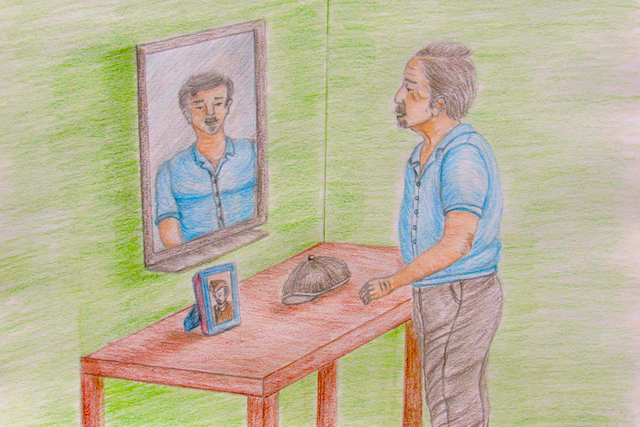
5 Life-Changing Pieces of Advice I Would Give to My Younger Self
“I’d go back to my younger self and say, ‘Lighten up. Take it easy. Relax. Don’t be so anxious about everything. Try not to have today stolen from you by anxiety about yesterday or tomorrow.’” ~Bill Nighy
I believe there is great power in looking back at our past to learn from our experiences, mistakes, and regrets.
The Spanish philosopher George Santayana remarked, “Those who do not learn history are doomed to repeat it.” I might add that the history we need to study the most is our personal history so that we don’t keep making the same mistakes over and over again in our lives.
If I had the option to go back to my past, this is the advice I would give my younger self.
1. Express yourself freely and work to overcome your shyness.
In the past, there were many opportunities that I didn’t take and many friendships that I failed to make because I was shy and often felt uncomfortable and self-conscious. Some people would interpret my shyness as rudeness, so it was crippling to me in many ways.
Advice to myself:
Make a conscious effort to interact and express yourself freely around others, no matter how uncomfortable it may make you feel in the moment. If you struggle, take deep breaths to relax yourself and calm your irrational thoughts.
Nobody is judging you and analyzing you as thoroughly as you may think. Everybody is too absorbed in their own world to spend time caring about every little thing you say and do.
Try to do the opposite of what a shy person would do in any given situation. Easier said than done, I know, but if you do that long enough, you’ll start creating a new identity for yourself in your mind. That’s really all you have to do to overcome being shy. The more you do it, the easier it gets and the more confident you’ll become, and soon it will feel natural.
2. Stop fighting your negative feelings.
For the longest time, I would try to resist and battle my negative emotions, like anxiety, hoping they would go away somehow. If I felt that familiar knot in my stomach and started thinking anxious thoughts, I’d tell myself I should be positive because our thoughts create our reality.
A couple of years ago, I finally realized that the way to free yourself of negative emotions, as counter-intuitive as it sounds, is to accept them.
The more we try to fight our feelings with the underlying thought “I shouldn’t be feeling this way,” the worse we feel. However, these feelings pass much faster when we allow ourselves to feel them without judging them or thinking that they shouldn’t be happening.
Advice to myself:
Let go of the need to try and fix your negative emotions with your mind.
Accept your unpleasant feelings and focus your attention fully on the sensations these emotions invoke instead of thinking thoughts like “I shouldn’t be feeling this way,” “This shouldn’t be happening.”
When you do this, you will find that the unpleasant feelings dissolve much more quickly, and you will stop making things worse by feeding them with more energy.
View your feelings as visitors, for they always come and go. Like most visitors, all they want is your attention and acknowledgement, and once you give them what they want, they will be on their way.
3. Embrace uncertainty.
In college, I spent a long time desperately trying to figure out my future, wishing for clarity on what I should be doing with my life.
Many of us have a compelling need to have our whole lives all figured out. We hate not knowing where life may take us, and we seek the comfort of knowing what the future has in store for us.
But no amount of mental analysis of our future can provide us with the answers. And that’s okay, because we don’t always need to know what we will be doing a year from now.
Sometimes the only thing you can do is trust in life. Because when we are not trusting, we automatically start worrying, because that’s our mind’s default tendency.
Advice to myself:
Know that it’s okay to be confused and not have all the answers. Learn to be okay with not knowing and make room for surprise and mystery, because that’s a big part of what makes life exciting and interesting.
Most of your fears and worries about the future, if you closely examine them, are nothing more than mental fabrications and do not exist anywhere else than in your mind. Most of the things you worry about won’t actually happen, and even if they do, you might learn and grow from those experiences. Hence there is no need to take your fears so seriously and get worked up over them.
4. Stop trying to run away from discomfort.
Our mind tends to prefer the known and comfortable and likes to seek out the easiest way to feel good.
We’re often hesitant to do things that require effort or make us feel uncomfortable, since our natural tendency is to avoid feeling any discomfort.
But many of the things that are beneficial for us and worth doing in life will require enduring some kind of discomfort. To run away from discomfort is to run away from growing and evolving as a person.
That’s exactly what I did for most of my life. I avoided meditating, exercising, journaling, and spending time alone without technology—habits that have all had a positive impact on my life—during the times when I would have benefited from them the most because I felt resistance whenever I tried to get started.
I also avoided being vulnerable with other people. But I’ve noticed over the last two years that if I stay with the discomfort of interacting with new people instead of running away, as I used to do, the interactions ultimately become rewarding and enjoyable.
This is true of most things—reward lies on the other side of discomfort, but first we have to push through.
Advice to myself:
The mind can be very persuasive and convincing and come up with an endless list of reasons to procrastinate or avoid feeling any discomfort. But don’t let your mind deceive you.
Discomfort often points toward what you should be doing, not what you should be avoiding. Be willing to dive deep into discomfort and learn to embrace it. It will help you more than you know.
5. Accept yourself and stop judging yourself.
When I was in college, I used to judge myself a lot because many of my interests, such as spirituality and metaphysics, were very different from all my friends’ interests.
It was a few years later that it finally dawned on me that I needed to stop looking outside for validation and permission to accept myself.
Once you learn to accept yourself, it doesn’t matter what others may or may not think. Other people’s opinions may bother you fleetingly, but you will need to live with what you think about yourself every day, so don’t make it hard by judging yourself.
Advice to myself:
You don’t need to judge yourself or feel embarrassed about wanting to spend your free time journaling, meditating, reading books, or enjoying spending time alone by yourself.
Don’t feel compelled to be like everyone else, and there is absolutely no reason to be apologetic for following and doing what lights you up.
Because the truth is, it’s okay to be different and unique. Imagine how boring the world would be if we were all the same.
—
If you could talk with your younger self, what would you say? What do you think you would have done differently? What advice would you have for them?
-

Why I Never Fit in Anywhere and the One Realization That’s Changed Everything

“Don’t force yourself to fit where you don’t belong.” ~Unknown
When I was young, I was a real daddy’s girl. He was so proud of me and took me everywhere with him.
When my parents got divorced and my dad moved away to start a new life with a new family, I didn’t understand why he left, as I was still a child. I thought that he didn’t love me anymore. I felt abandoned and rejected. Perhaps if I’d been better behaved, prettier, cleverer then he wouldn’t have left me?
Until recently, I didn’t realize the impact that this has had on my adult relationships.
Because I fear abandonment and rejection, I’ve struggled to fit in and make friends.
I had a relationship with an older man who was very similar to my dad. I hoped that he would provide me with the love and affection that I didn’t get from my father and would heal my wounds. However, while things started off great and I thought I had found the one, since the relationship felt like home and was so familiar, he was actually emotionally unavailable, just like my dad, and unable to commit.
When he started to pull away, this triggered my insecurity. This caused me to pursue him more, as I desperately wanted this relationship work.
I tried to change myself into what I thought he wanted. I became clingy and jealous, which only drove him further away. When the relationship finally ended and he found someone else, I couldn’t understand why he could love her but not me. What was wrong with me? It confirmed my greatest fear, that I was unlovable and unwanted.
This pattern continued to follow me in my relationships, which left me feeling more unloved and rejected.
So I threw myself into my career. I had done well academically, however, I struggled to fit in and make friends there too.
I was good at my job, but I didn’t feel valued or appreciated and I was often ignored, excluded, and ostracized by my fellow team members. My workplace became a toxic environment. I was bullied, which led to anxiety and depression, and I couldn’t face going into work. Eventually I was let go, as they said I could no longer do my job.
Since my identity was tied up with being a successful career woman, when I no longer had a career, I didn’t know who I was. What was my purpose in life now? I was at the halfway stage of my life with no family of my own and no job. I took everything that other people had said and done to me very personally.
I shut myself away at home. I didn’t go out or socialize. I was on medication for anxiety and depression, and I just wanted to stay in bed. What was the point of getting up? I was worthless, I had no value, no one wanted me, I didn’t fit in anywhere. I couldn’t love myself, as others didn’t love me. I had no self-esteem and no confidence to try to start again.
I had therapy, read lots of self-help books and articles, and did guided meditations. Although I could relate to everything, I struggled to apply the things I had learned to myself.
As I spent time alone, listening to relaxing music, I had a lightbulb moment. I couldn’t see straight before then because I was so emotional. However, I am naturally a very logical and analytical person, and good at solving problems, which is why I was good at my job.
The idea came to me that if I took the emotions out of my issues, then I could see them in a logical and rational way and try to solve them like any other puzzle.
And then I thought, what if I saw my whole life as a jigsaw puzzle? It’s a perfect analogy, really, since my lifelong struggle has been fitting in.
Visualizing Our Lives as Jigsaw Puzzles
Each of us start with just one piece—ourselves.
When we start the puzzle at birth, it is easiest to join the first two pieces together—ourselves and our family.
As we grow up, we try to find other pieces that fit—friends, romantic relationships, jobs. We may be lucky and find other pieces that fit perfectly straight away, but more often than not we struggle to find the right pieces, and in our frustration, we may even try to force two pieces together that don’t actually fit. However, if we do this, we find over time that none of the other pieces seem to work together.
No matter how much time we have already invested in this ill-fitting piece—be it an unhealthy relationship or a job that doesn’t align with our purpose and values—we will eventually realize that we have to accept reality and remove the piece that we tried to force to work. This is the only way to make room for a new piece that will fit perfectly into place. A piece we won’t even try to find if we’re too attached to the one that doesn’t fit.
This doesn’t mean there’s something wrong with us, or the other piece we tried to force to fit, which means we don’t need to blame ourselves or them. We simply need to recognize we don’t fit together, and then learn the lessons we need to learn to stop repeating the same patterns.
This also doesn’t mean that we made a mistake with the ill-fitting piece. Every time we try to make the “wrong” things fit, we learn the value of taking our time to find the right piece.
Sometimes we learn that we need to focus on another area of the puzzle first—if, for example, we realize we need to take a break from relationships so we can build up our self-esteem and learn to love ourselves first.
And sometimes when we’re having difficulty with one section of the puzzle, like love, we recognize that we need to focus on a different area instead, where it might be easier to find the right pieces—like our career or social life, for example.
When we connect with like-minded people who have similar hobbies or interests and enjoy our company, we feel better about ourselves and start to realize how great we truly are.
If we change jobs to something we love, that shows off our strengths and enables us to succeed, this improves our confidence and helps us realize that we’re good enough and we do add value.
Once we become happier with ourselves and other areas of our life, we’ll send out more positive vibes into the world and attract the right kind of people. And we’ll have enough self-worth to recognize people who are not right for us and not waste our time.
If we don’t do these things, we may complete the puzzle, with all the elements of our life neatly in place and find that we have a piece left over. That piece is you or me, and it doesn’t fit because it was in the wrong box and never meant for this puzzle.
That was why we struggled to fit in—we chose things in all areas of our lives that were never right for us. So the problem wasn’t us, it was where we trying to force ourselves to fit.
It may feel daunting to start over, but when we find the right puzzle we belong to, everything stops feeling like a struggle because we slot easily into place. We will end up with a different picture than we originally imagined, but it will feel much better, because our piece will finally fit.
Where Am I Now?
After spending half my life struggling to fit in and complete my jigsaw puzzle, I have realized that I am the piece left over, and it’s now time to start again and find the right puzzle that I belong to. This time, I’m starting with the most foundational pieces first—self-love, self-confidence, self-worth.
There was never anything wrong with me. I just needed to recognize my patterns so I could stop trying to force things that weren’t right. I know my pieces are out there. And so long as I let go of the wrong ones, I know, in time, I’ll find them.
-

7 Reasons I Was Scared to Take up Space and How I Boosted My Confidence
“You are allowed to take up space. Own who you are and what you want for yourself. Stop downplaying the things you care about, the hopes you have.” ~Bianca Sparacino
I deserve to take up more space. Plain and simple. By taking the space I deserve, I further build the confidence I need to live a rich life that resonates with who I truly am.
Over the past several years, I’ve had to navigate a new life after hard breakups, difficult career transitions, and moving back home. I’ve had to face the feeling that I’m not doing enough. That I am not enough. That I don’t deserve to take up space. To be seen, felt, and heard with all of the faults that scatter among all my strengths.
I know I owe it to myself to show up. I know I owe it to myself to be present as I am. I know I owe it to myself to finally come out from the back curtains and take center stage where my heart can shine.
I deserve to take more space in my presence around others and to be truly seen.
I deserve to take more space in my voice in a loud world and to be truly heard.
I deserve to take more space in my heart and take care of my needs first.
Because I know these things, I now try not to make my voice small when I want to speak so loudly that it hurts.
I try not to be apologetic for taking the time to express what I feel to others when the person I should be accommodating first is myself.
I try not to bottle up my emotions because the longer I do, the longer it will take to get past ignoring them.
After taking moments to pause and breathe, I gently remind myself again that I am enough. That I deserve to speak from the heart and to be heard. That my thoughts, opinions, and voice matter.
Over time, I’ve recognized the reasons why I lacked the confidence to take the space I deserved, and I’ve also identified what I need to do to change.
7 Reasons I Was Scared to Take up Space (And How I Changed)
1. I lacked confidence in my communication and overused apologetic terms, which minimized my opinions.
I used to say sorry a lot in my interactions, if I thought I’d made a mistake or I interrupted a conversation, for example.
Research shows that when you say sorry, people tend to think less of you. I may have thought that I was displaying myself as a nice and caring person, but I was actually sending the message that I lacked confidence.
“Sorry” isn’t the only word I needed to watch out for. These 25 limiting words diminished my statements. For example, with the word “just”—if I was “just wondering” or telling someone it will “just take me a minute.”
There’s no need to use minimizing words. My needs and opinions are as important as others’. I built more awareness and confidence by flipping the script and being firmer in my conversations. I started saying phrases like “Thanks for pointing that out” or “Here, let me get out of the way” or “It will be a minute.”
2. I thought it was unkind to say no, even if something didn’t align with my priorities.
By consciously saying no to one area, I am confidently saying yes to another more important one. I don’t want to give my space away without consideration of what the true cost is. I need to protect my time like it is my most valuable commodity.
Saying no is not a natural response for many of us, though. We often feel nervous about creating conflict with others and tend to value others’ needs more highly than our own.
At least for me, I have learned to please others by being kind and helping those who ask for it. I tend to say yes because I want to be seen as caring, selfless, and generous. I didn’t realize that the ability to say no is closely linked to self-esteem.
So how did I start to say no without feeling bad about it? I kept my responses simple and to the point. I learned how to strengthen my delivery and not over-apologize.
Sometimes, when I provide too many details, I get caught up in the why behind my decision to say no. I’ve learned that there’s no need to overanalyze, and that I have the right to say no as much as yes. I just need to remember that I’m not saying no to the person, I’m saying no to the request. Also, I’ve learned not to take someone else’s no personally. Sometimes their no means “no for now.”
3. I didn’t realize my thoughts can contribute to a richer conversation.
Sometimes, it’s been easier for me to keep quiet and listen to the entire conversation without saying a word. I’ve learned that I have a seat at the table, and with every word I speak, the more confidence I gain.
I know I have many valuable thoughts that could add a new perspective to the conversation at hand. Whether it’s in a work meeting or hanging out with friends, I consciously remind myself not to hold back my voice.
The world benefits when we all find our voice. Whether it’s to elevate good ideas or discuss alternatives to bad ones, speaking up is how we arrive at the best outcomes.
4. I struggled with being vulnerable because I worried about what people thought of me.
Vulnerability is consciously choosing not to hide your emotions and desires from others.
Being vulnerable with others is scary and uncomfortable for me because it’s letting go of what people think of me. When I’m not afraid of what other people think, that’s when true confidence begins to grow.
Vulnerability bridges connections and helps me build confidence in the relationships I am creating. Vulnerability frees me up to share personal stories that others can relate to. Vulnerability sparks conversations that allow me to move beyond fear to a place of shared experiences.
Connecting with others by being vulnerable—as opposed to overcompensating and trying to get everyone to like you—will result in some of the best interactions and relationships of your life.
5. I felt insecure about sharing my dreams and achievements along with my mistakes and failures.
I needed to let myself be excited and proud in order to build confidence in what I’ve accomplished. Sometimes I have to be my own cheerleader to keep the confidence going and be okay with that.
By sharing my successes, I hope to inspire others and kickstart them in a direction that helps them on their journey.
By sharing my failures, I accept the mistakes I’ve made along the way. I’ve built confidence by taking the lessons learned and continuing to strive toward my dreams.
6. I felt uncomfortable asking for help.
It’s hard to ask people for help. Like most people, I’ve been taught to carry all the weight on my own. To be independent. To be self-sufficient. When you ask for help, people may say no, but it doesn’t hurt to simply ask. Each ask will give you confidence for the next.
Most people like helping others by sharing their time, knowledge, and experiences. I realized I am in a village where others look to help me, which in turn helps the entire village.
Asking for help isn’t a sign of weakness, it’s a sign of strength. Asking for help is uncomfortable because it’s a behavior I wasn’t used to. But it gives me the confidence to know others are there along the way to support my dreams and goals.
7. I didn’t realize how much I have to offer.
There are times I thought I didn’t have much to offer to others, but I now know I do. I possess a wealth of experiences that can help others live a brighter, more confident life. Whether it’s sharing how I aced a job interview or how I created a fine-tuned budget, there are people out there seeking my help.
As I started to offer my knowledge to others, I was surprised by how many people I began to help. By being of service to others, I built confidence that I have more to give than I realized. I am a wealth of knowledge and experience that can help others build their own confidence.
—
I’ve learned that my thoughts and needs matter—that I matter. That I can speak up unapologetically, say no when I need to, share my successes and failures, ask for help when I need it, and make a real difference for other people. I just need to let myself take up space, knowing I deserve it, and the world is better off because of it.
-
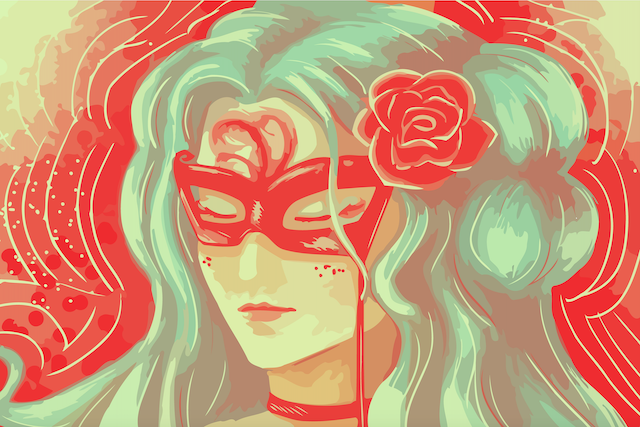
When You Struggle with Being Yourself, Remember This

“Make the most of yourself… for that is all there is of you.” ~Ralph Waldo Emerson
Every day, it was more or less the same. I presented an edited version of myself to the world. I felt a deep level of discomfort with the idea of letting myself go. Could I? Should I? The answer was “no” every time, even if it wasn’t always a conscious decision.
It felt wrong to be myself in a society where we’re conditioned to believe that we have to look and be a certain way to fit in. I believed that no one would accept me as I was. That it would result in my personality being mocked or criticized.
After all, how can anyone understand someone who’s both quiet and bubbly? The two aren’t said to go together. If you’re bubbly, it means you’re outgoing, fun, lively. On the other hand, a quiet person is likely to be just that—quiet, all the time. At least, that’s what most people think.
And if you’re both, then there’s something about you that isn’t quite right because you can’t be put into one box.
As for the side of me that likes to laugh, be silly, and squeal in delight at rainbows, how childish. I need to grow up. I should be more mature like everyone else; play less and get serious about life because that’s how it is as an adult. Less fun, more… boring.
Those thoughts held me back for years. The “shoulds” I imposed on myself were endless, and they rarely worked in my favor, so parts of me remained hidden like some shameful secret that could never be revealed. It felt like the biggest annoyance to not be able to show all sides of myself.
As time passed, I started to notice some things about the way I interacted with people. I noticed that on some occasions, I would feel completely relaxed in a person’s presence. Talking to them felt like talking to someone I had known for years.
There was no tension, no paranoia about what they might be thinking of me, and no unnecessary mind chatter trying to convince me that I looked stupid or weird.
The second form of interaction was the kind of encounter where I felt judged with every breath I took.
The vibe was off, a total mismatch, and the conversation was strained. Was it me, and was I the cause of this disconnect? Perhaps, at times, my obvious feelings of awkwardness or self-consciousness left the other person with a feeling of discomfort. Maybe they gave up after hitting the invisible wall I’d built around myself.
And then, there was and still is the third type of interaction. The kind where I’m happy to talk to someone, but I make a conscious decision to not show all of who I am. It’s not necessarily because I don’t like the person or that I have anything against them. It’s often because I don’t feel a connection with them where I would want to show other sides of myself.
Sometimes, but not always, I see myself as a prize. The more we get on, the more of me you win. The deeper connection I feel, the more of the prize you get to see, which may come across as pompous to a certain degree. But this isn’t about thinking that I’m better than anyone else or getting to choose someone’s level of deservability.
It’s the level of connection that matters the most. In my mind, it’s not necessary to show everything to everyone all the time just for the sake of it, and perhaps that’s the introvert in me speaking. But that’s what has helped me to feel more okay with being myself.
No pressure, no forcing. Just doing it my way and understanding that I get to choose: In interactions, I either reveal more of myself or I don’t. And if my holding back results in my missing out on establishing a deeper connection with someone because they took off due to seeing me as “hard work,” then that’s both of our loss. A loss, however, that won’t break us, unless we let it.
So, when you struggle to be yourself, remember, you too have a choice. Always. And you don’t need to feel guilty or bad about not being your true self around others, especially when you don’t even want to. Sometimes, it may not even be appropriate.
Showing up as your full-blown glorious self can feel terrifying, and that’s okay because you’re human. So obvious but so easy to forget.
As humans, we ride the waves of life every day. Some of the waves are far too tumultuous for us to bear, and we’re left feeling battered, bruised, and shaken.
We believe that what we’ve experienced is an unshared experience—no one will ever understand; we think that what we’ve done shouldn’t be revealed—people will think ill of us; we presume that what we’ve not done is going to be held against us. That may be the case in some instances, but the rest of the time, we’re safer than we realize.
Being yourself is important, but forcing yourself to make it happen isn’t. You’re allowed to practice. You’re allowed to take two steps forward and five steps back. You’re allowed to trip up multiple times. You’re allowed to be human.
So, be patient with yourself and focus on embracing your humanness because that, more than anything, is what we all share. And when we embrace it, we make it easier for ourselves to accept what, who, and how we are.
It’s the remembering that we’re human and the compassion that we have for ourselves that steer us closer to being ourselves. Trying to be yourself while ignoring your human tendencies and being hard on yourself only leads to more trying.
It’s time to stop trying, especially if you’ve been trying for years. Instead, spend more time noticing just how human you’re being today. Spend time noticing just how human others are being too. You may not always like what you see, but there’s no getting away from the fact that it all comes back to us being human. Multifaceted humans.
-
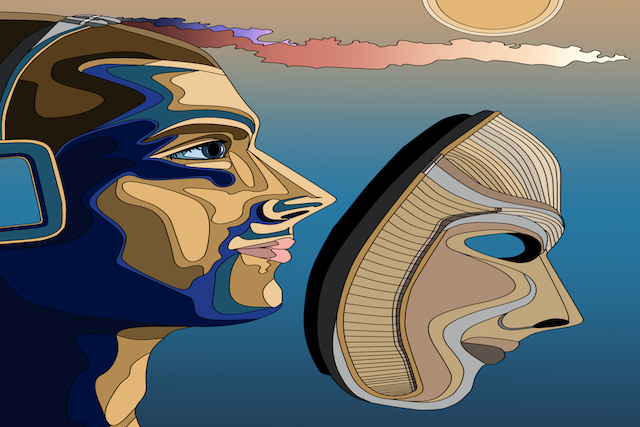
8 Ways to Stop Worrying About What Other People Think of You
“You can’t force anyone to value, respect, understand, or support you, but you can choose to spend your time around people who do.” ~Lori Deschene
It can be paralyzing.
The worry about what other people think about you, I mean. That worry can hinder you from pursuing your dreams. It can stop you from expressing your true nature and stand in the way of the life you so badly want to create.
This worry can easily get your mind wandering to dark places and trigger feelings of insecurity, anxiety, and self-doubt. When it has a grip on you, you do anything to avoid rejection, ridicule, and potential embarrassment. Better to be unseen than negatively judged, right?
You know that you shouldn’t worry about what others think of you. But that’s just easier said than done.
For a long time, I felt stuck because I was afraid of other people’s opinions. Due to this fear, I was terrified of pursuing a new career path. Eventually, I reached a point where I couldn’t take it anymore.
I knew I had to deal with the fear and worry of other people’s judgment, or I wouldn’t be able to live the life I wanted. And I was not willing to compromise on that—neither should you.
To help you move past the fear of other people’s opinions, I’ve put together a list of ideas that have helped me. Use this list as your go-to whenever your worries about what other people’s opinions get the best of you.
1. Know that you’re not a mind reader.
I used to assume that I knew what other people thought of me. But assumptions often lead to bad conclusions.
When I left my corporate job to travel and pursue my own entrepreneurial endeavor, I was afraid of ex-colleagues judging my decision. I thought they would see me as naive, reckless, or foolish for making that decision.
Turned out I couldn’t have been more wrong. During the following months and years, many of them became my greatest supporters! Some said I was brave for walking my own path, others opened up about their desires to do something similar. The takeaway here is: You never know what people think about you unless you give them a chance to speak.
2. Understand that it’s never about you.
This has been a game-changer for me! Hear this: Another person’s judgment about you is never about you—it’s about them. It’s a reflection of their fears, limitations, and perceptions.
One of the closest people in my life told me that I was making a mistake by quitting my corporate job to start my own business.
First, I felt that he judged me and didn’t support my decision. Later on, I realized that his reaction was a mirror of his beliefs, fears, and view on the world. For him, staying at a corporate job meant security, safety, and a good life.
When I realized that he always had my best interest at heart, I felt nothing but compassion and love for him. To make sure you navigate your choices right, ask yourself: What do I want? What is the right thing for me to do?
3. Stop judging yourself.
Many times, we’re so aware of what we find awkward about ourselves that we look for others to confirm our beliefs. So, the judgment we fear from others is really a reflection of what we judge ourselves for. Sneaky, right?
Be honest with yourself, what do you judge yourself for? It can be related to your health, career, relationship status, living situation, or looks. Then ask yourself why you judge yourself for this. What beliefs are driving the judgments? Do you believe it’s wrong to prioritize career over family? Do you believe it’s bad to be the center of attention?
Once you challenge these beliefs and stop judging yourself, you’ll be able to make peace with who you are and the choices you’ve made, good and bad. Once you’ve reached acceptance, you won’t fear the judgment of others because you stand behind yourself.
4. Stop judging others.
The more we judge others, the more we tend to believe that they judge us. It’s a vicious cycle. So, instead of judging others for their choices, character, religious views, ways to dress, or something else, choose to be curious about the differences and diversity.
Ask yourself what you can learn from this person? Why this person is in a certain way? Maybe there are reasons for it. As Wayne Dyer said, “When you judge another, you do not define them, you define yourself.”
5. Use your worry as guidance.
What is it that you worry other people will judge you for? Perhaps it’s your job position, living situation, relationship status, insecurities, looks, or intelligence. That worry tells you there’s either something you need to accept and make peace with or something you need to change.
For example, maybe you can start pursuing a new career path that feels more aligned with your values. Or maybe you can choose to view your situation today as a stepping stone to something better. When you approve of yourself and your life, other people’s opinions won’t matter as much.
6. Expect reactions from others.
Instead of trying to avoid getting reactions from others, expect them! If you try a new plant-based diet, change career paths, or decide to go all-in on that geeky hobby of yours, expect people to say something about it. And take it as a good sign because it means you’re doing what’s right for you, even though people will have opinions about it.
As Aristotle said, “There is only one way to avoid criticism: do nothing, say nothing, and be nothing.” And that’s not you, right? You are here to live to the fullest, follow what excites you, and be the incredible person that you are.
7. Focus on long-term happiness.
Judgment and criticism from others can hurt. But it will never hurt as much as regret. Do you know what most people regret on their deathbed? This: “I wish I’d had the courage to live a life true to myself, not the life others expected of me.”
Be willing to take judgment and criticism in the short term, in exchange for what will serve you long term. Focus on living life true to yourself and not on the life others expect of you.
8. Approve of yourself.
Acceptance of yourself is what it all comes down to, right? Once you approve of yourself, you stop worrying about other people’s opinions. You have the one approval that matters most: your own.
Look at your imperfections, flaws, and the choices you wish you had made differently and accept it all. Know that you are enough. Know that you’ve done the best you can, from where you once were. We all want you to be the person you are meant to be—including the quirks, flaws, and imperfections.
—
Living with the worry that other people will judge you is hard. It can keep you stuck, paralyzed, and separated from the life you want to live.
It’s time to take your power back. Use this list, choose one or two points that resonate, and practice them. Then, once you’re ready, come back to the list and choose another point.
Stop living in accordance with other people’s expectations and start living life true to yourself.
Now, go out and show the world what you’re made of. We are waiting eagerly.
-
14 Daily Happiness Habits to Adopt Right Now
“The biggest lie we’re told is ‘Be with someone who makes you happy.’ The truth is, happiness is something you create on your own. Be with someone who adds to it.” ~Unknown
That’s what we all strive for, right?
Happiness, I mean.
I used to think that happiness was about my external world. If things were going well for me (in my career, social life, relationships, etc.), then I was happy. If things weren’t going well, which things often weren’t in one area or another, I felt frustrated, angry, or defeated.
Later, I realized that long-term happiness isn’t about external events. It starts from within and most importantly, it’s a skill to be learned and developed.
To live your best life, you need to realize that happiness doesn’t happen to you—it happens because of you. That doesn’t mean if you do all the right things you’ll feel happy all the time. No one feels happy all the time. It just means your choices influence how you feel, and if you make healthy choices you’ll likely feel good more often than not.
To help you create a happier life, I’ve put together fourteen habits you can adopt right now. Read them, ponder them, and let them move in with you. Use this list to start building habits that will help you cultivate happiness, no matter your current situation.
1. Look for the silver lining.
It’s said that every cloud has a silver lining. Sometimes they’re hard to find, but in my experience, they’re always there.
When one of my friends passed away a few years ago, I had a hard time finding the silver lining. Life just seemed unfair and brutal.
After a few months I decided to channel all that frustration, anger, and sadness into making a life change. So I quit my job and went traveling for a year. What happened to her made me realize that life can be short, and I wanted to make the most out of mine. That was the silver lining for me.
2. Water your own grass.
It’s so easy to compare ourselves these days. Just by turning on the TV, opening social media, or by having a conversation we can fall into the trap of comparison. That’s not how we build a happy life. We do that by watering our own grass, not by looking to our neighbors’.
So, acknowledge what other people have and use that as inspiration to get to where you want to go. Keep your eyes on your lane and build, create, and nurture what you want more of.
3. Move the phone away from the bedroom.
For many people, the last thing they see before falling asleep is their phone. It’s also probably the first thing they see when they wake up. (Confession: I’m guilty as charged when it comes to this.)
By checking your phone first thing in the morning you allow other people, apps, and email notifications to dictate how you feel. You start the day being reactive instead of deciding for yourself what to focus on.
Get yourself an alarm that isn’t your phone (or at least put it on airplane mood). Then create a short bedtime and morning routine that makes you feel good. I like to spend a few minutes visualizing, meditating, or appreciating to set my attention straight.
4. Setup feel-good reminders on your phone.
Oh, this is something you have to do right now! Go to your phone calendar and set up one or two daily reminders to yourself. At 9am every morning I get the notification “I’m enough” to remind myself that no matter how I’m struggling or what other people think or say, I am enough!
At 1pm another affirmation pops up saying “I deserve the best and I always get it.” This one always makes my heart smile because it reinforces my worth and compels me to consider how my present circumstances might actually be in my best interest.
Treat your future self nicely by setting up at least one feel-good- daily reminder. It will help you to change course during the day, if needed.
5. Go for a walk in nature.
I’ve quite recently realized the power of connecting with nature. This is a place to reconnect and ground yourself.
Fun fact: Nature is said to have a natural frequency pulsation of 7.83 hertz on average (the so-called Schumann resonance).
This frequency (7.83 hertz) is supposedly also the brain’s average alpha frequency. The alpha state is where we feel relaxed and calm. Pretty epic, right? So, make it a daily habit to walk in nature and tune yourself into a happier and more relaxed version of yourself.
6. Take 100% responsibility.
This is always a game changer for me. I often avoid responsibility at first (much easier to turn to blame, criticism, or excuses, right?) But you can’t change a situation if you don’t first take 100% responsibility for it.
Look at any area in your life that you’re not fully satisfied with (your finances, health, career, love, social life, etc.). Then decide to take full responsibility for changing it. It might be true that someone else is to blame for a situation, but the only way you can change things is by taking responsibility for what’s within your control.
7. Stop complaining.
Oh, it’s so easy to complain. To look at what isn’t working or what other people are doing wrong and to criticize and condemn. But that doesn’t solve any problems.
If you don’t like something, change it. If you’re unable to change it, your only option is to change your attitude about it. Next time you feel like complaining, ask yourself what you can be grateful for in this situation. For example, if a bus driver is rude to you on the way to work, you can choose to focus and give thanks to the fact that you are able to ride the bus to work.
8. Communicate confidence through your body.
Our body reflects how we feel. If you are nervous and anxious, you can be sure that your body is mirroring that. You might flicker with your gaze, speak quietly, or hold a posture that signals insecurity.
The positive thing is that this mirroring also happens the other way around. So start communicating to your mind by using your body. Stand up tall and straight, look other people into the eyes, and speak up. Tell your mind, by using your body, that you’re safe, appreciated, and comfortable where you are.
9. Spend time on what matters.
If we want a happy life, we have to fill it with happy moments. This means spending time on things that matter and with people that matter.
What do you love doing? What brings you joy and happiness? Which people do you feel great being around? Make sure to carve out time every day for what brings you joy.
10. Spend less time on social media.
Oh, social media! Just by opening our phone, we can step into the lives of thousands of people.
Social media can be great in many ways. It can help us to get inspired, connect with people across the world, and share special moments. But it can also lead to feelings of lack, inadequacy, and exclusion.
Be conscious of your mood before engaging in social media. Ask yourself: Am I in a place where I can use it to my benefit? Or am I in a place where it can trigger me negatively? In short, make sure you control your social media experience, not the other way around.
11. Give yourself space during the day.
It’s so easy to get caught up in the busy-ness of life. To focus on efficiency, productivity and getting shit done. But not making space for yourself during the day will not only create a sense of stress and urgency, it will also stifle your creativity, intuition, and ability to reflect.
So, if possible, be smart about how you set up your day. Give yourself more time than needed to complete a task. Allow it to take an hour and a half instead of an hour. For me, not rushing through tasks has resulted in greater clarity, satisfaction, and (to my surprise!) productivity.
12. Become a master at shifting perspective.
This is my go-to, every day! Whenever I feel bad about a situation, I know there’s another, more beneficial perspective available. For example, if I have a hard time falling asleep, I can either focus on me losing sleep (oh, the horror!) or on the fact that I can handle a night with less sleep and that it’s not a big deal. (And yeah, that’s usually when I fall asleep).
In short, look at any challenging situation and try to find a better-feeling perspective. For example, did you get into conflict with someone? Then this might result in you understanding each other better next time. Do whatever you can to scout out the learnings, upsides, and positive aspects of any difficult situation.
13. Give the gift of allowing someone to help you.
When was the last time you asked someone for help? We tend to believe we have to be strong and independent all the time. But the truth is we’re not wired for independence—we’re wired for collaboration.
In general, people like helping other people. So, why not give someone the gift of allowing them to help you? Ask for their input, advice, or help to move forward. Not only will this add value for you both, you’ll also get closer by helping one another.
14. Turn contrast into clarity.
In life, we experience contrast and difficult situations on a daily basis. Here is the good news: Negative experiences are clues to what you want. A strict and rigid work schedule might tell you that you want more flexibility. Exercise that feels boring or overwhelming might tell you that it’s time to scout a new and fun workout routine.
Contrasts show us what we don’t like. Your job is to acknowledge the dislike and then to turn your head in the other direction. Ask yourself: What do I want instead? How can I make that happen?
Small Daily Steps Toward a Happier Life
It’s easy to get overwhelmed when it comes to making changes. So, set yourself up for success by taking action on one of the points I mentioned above. Choose one that makes you excited and once you’ve mastered it, move on to the next point.
Don’t leave your happiness in the hands of chance and external circumstances. Instead, take charge and cultivate happiness from the inside out.
Take small steps to develop habits of happiness and you’ll contribute to making this world a better place.
-
Perfectly Imperfect: How to Embrace Your Insecurities
“Cut yourself some slack. You’re doing better than you think.” ~Unknown
Your stomach is tied up in knots.
Another crisis has arrived, and everyone is looking to you to have the answers, to be the leader. You can’t blame them either because you think you should have all the answers. But you just don’t.
Though you look calm on the outside, inside you’re a tangle of nerves and anxiety, terrified someone will expose you as the fraud you feel you are.
In the past, you’ve been able to pull a rabbit out of a hat to save the day, but those were just flukes. It wasn’t because of anything special you did, things just happened to fall in place at the right time. Truth be told, you doubt you could pull off such a trick again.
Your shoulders are so tired from carrying the weight of everyone’s expectations that you’re sure everything will come crashing down at any moment. The thought of an impending doomsday gives you so much anxiety that it keeps you up at night.
Feeling like an imposter is something many of us know all too well. When we’re faced with a challenge or a new opportunity opens up, instead of rising to the task, our minds quickly fill up with anxious thoughts.
I remember being so filled with fear and anxiety that I would dread going to work on Monday, from the Thursday before. This, of course, completely ruined my weekend and kept me in a cycle of fear, self-doubt, and worry.
Being in this constant state of negative emotions brought on weekly migraines that would stay for two to three days. Living in fear was affecting my work/life balance and my health. After managing the situation for as long as I could, I decided that this wasn’t the way that I wanted to live my life.
If you’ve ever felt like your emotions were permanently stuck on negative and wished you could get off this cycle of anxiety, keep reading. I’ve got some tips for you.
Welcome to the Club
With negative emotions, you often feel alone, as if no one understands what you’re going through or why. This further makes you feel ashamed, on top of already feeling isolated and like a complete failure.
Have you ever noticed how one negative emotion brings more of the same, until you’re just one huge pile of sadness and depression?
For an unlucky few, you might even have someone in your life who seems to have it all together, bringing your failings into sharp focus.
According to a study conducted by psychologists Pauline Rose Clance and Gail Matthews, about 70% of the population experiences feeling like an imposter (aka Impostor Syndrome) at one point in their life.
That means right now, nearly everyone around you feels like they don’t know what they’re doing, like they don’t deserve their accomplishments, and they’re terrified that they’ll be exposed as frauds.
Doubting yourself is normal. Everyone battles the little voice in their head telling them “you’re not good enough.”
In fact, what’s odd is not feeling insecure.
A Dose of Insecurity is Good for the Soul
Everyone has areas of their life where they feel insecure. It’s a natural part of the human experience.
Which, as it turns out, might be a good thing as only about 1% of us has no fears or insecurities at all. The clinical term for people like that is “psychopath.”
A healthy dose (the small amount that doesn’t stop you from living and enjoying life) of self-doubt actually helps you to regulate yourself and your interactions with other people. Dr. Ellen Hendriksen, a clinical psychologist, posits that “we doubt ourselves in order to check ourselves.” Self-doubt helps us adjust our behavior in line with social norms.
Have you ever noticed that when you’re faced with a new situation, place, event, or people you feel a tad bit off kilter or insecure? It’s your body’s defense mechanism working to keep you out of danger in unfamiliar circumstances. This is a trait found in every organism that helps them stay safe and alive.
Self-doubt can even work to propel us to look inward and motivate us to do the necessary work to improve and change.
Self-doubt is not all bad. The key is to keep it down to a healthy level.
But what do you do if the self-doubt, fears, and anxiety you feel are more than doctors recommend? How do you stop from overdosing on these emotions?
1. Wallow in your feelings.
The first step is acknowledging your feelings.
Burying your emotions and hoping you’ll just snap out of it isn’t going to work. Never, in the history of ever, has ignoring emotions helped anyone. In fact, the exact opposite seems to be true.
Yet, out of shame or ignorance we continue to downplay and overlook our feelings. Since that’s not working, why not try something different? Why don’t you give yourself permission to feel your emotions?
What’s the worst that could happen?
Own up to your feelings and examine what is causing them. If you’re feeling inadequate, ask yourself why, what is causing that emotion. When you feel fear and self-doubt creeping in, ask where they’re coming from. What exactly are you afraid of?
Drill down to the root cause. Is it something someone said? Is it an unrealistic expectation you have of yourself? Is it an actual fear of something tangible? Is it a fear of something intangible? Perhaps the fear isn’t even yours, but something projected onto you by a well-meaning “friend.”
By breaking down your emotions this way, you find the cause. And once you’ve found the cause of the problem, it becomes so much easier to find a solution.
2. Check your pride at the door.
This next step requires a bit of humility.
After drilling down to the root cause of your negative feelings, try to figure out how you contribute to feeling this way and what can you do to change the situation.
It’s easy to blame all our problems on someone or something else. While it lets us off the hook, it also puts us in the victim mind space, where things happen to us and we’re powerless to do anything about it.
The truth is, sometimes the fault lies with us.
For example, you’ve realized you’re feeling inadequate at work because your boss keeps belittling the reports that you send Is it possible that your boss might be right, and your reports do actually need work?
Or perhaps the reason you’re terrified of being exposed as a fraud is because you have a skill or knowledge gap?
If you feel inadequate in a particular area, is there a valid reason you do? Look at the situation objectively, can you improve in any way?
Now don’t get me wrong. It’s not in every scenario that you cause your own self-doubt. There are some people who take joy out of ripping the self-confidence of others to shreds.
However, I’ve found that more often than not, if I can do (or not do) something just a little differently, the circumstances surrounding my negative emotions will improve.
3. Dear diary ain’t gonna cut it.
I’m all for writing in a journal. It’s a great practice that helps me get out of my head. After a stressful day at work, nothing feels better than coming home to do a brain dump in my journal. I write the good, bad, and the ugly, with no filter. And no judgment.
Studies have shown journaling to help patients suffering from depression and anxiety disorders. It even helps with stress management. Journaling is great at helping to identify negative thought patterns and in gaining self-awareness. Writing in a journal is a great way of releasing pent-up feelings. Who doesn’t want that?
If it’s so great, then what’s the problem?
Many of us stop at just writing about our fears or the crappy day we’ve had. But we need to go deeper to actually develop a plan that addresses our insecurities. Journaling helps you to figure out what (or who) triggers your negative thought process. After you’ve drilled down to the triggers, go deeper into figuring out how to get rid of them.
Maybe I just love putting together a good plan, but any time I do, I find that my mood improves. I believe it’s because I can see the light at the end of the tunnel, and I know the end is in in sight rather than just stumbling about, hoping for things to just magically change.
4. Stop broadcasting your inadequacies.
I had a friend who felt quite insecure about his lack of education. He once asked me if I was ashamed of the fact that he wasn’t very intelligent.
I was taken aback because his question came out of the blue. I had found him to be intelligent and well-spoken. I’d never even noticed his lack of education. We’d had great conversations and he taught me about things I hadn’t been exposed to before. I honestly didn’t know where his insecurities were coming from.
But do you know what happened after that? I started to see where the cracks were. Truthfully, I probably wouldn’t have noticed if he hadn’t pointed them out.
Everyone is worrying about their own problems and inadequacies. They’re probably not even aware of what you see as your glaring shortcomings. And if they don’t see them, why tell them about them?
What is the purpose of sharing your shortcomings? What do you hope to gain by doing so? Are you trying to undermine yourself?
If you’re looking for reassurance or support, then by all means share. But if you’re only pointing out your inadequacies because you assume they’re obvious to other people, think again.
5. Just be yourself.
You’re not perfect, you don’t know everything, and you don’t have all the answers. But let me let you in on a little secret, no one expects you to, either.
We all battle our self-doubt and fear. We all have our shortcomings. Cut yourself some slack. You’re not the worst (insert whatever fits) to walk the face of the earth.
The only thing you can do is keep trying to improve and better yourself.
Even that one person that looks like they’ve got it all together is working through some stuff. They have some areas where they falter. In fact, they’d probably have a good laugh at you for thinking they’ve got everything figured out.
Just like you’re not the worst (insert whatever fits) to walk the face of the earth, struggling to be the best (insert whatever fits) can be just as damaging to your psyche. It’s a goal one can never reach. And if by some stroke of magic you manage to attain that impossibly high bar, staying there for any length of time is unlikely.
By setting the bar so high and continually missing the unrealistic standards that you’ve set for yourself, you’re continuously chipping away at your self-confidence and self-worth.
In order for you to maintain your mental health, you need to make peace with being happy by being yourself.
You’re perfectly imperfect.
“You alone are enough. You have nothing to prove to anybody.” ~Maya Angelou
Feelings of inadequacy and self-doubt creep up to overwhelm us at critical moments, whether it be when we step into a new role at work or when we witness the birth of our child or when we’re faced with a new challenge or opportunity.
In these moments we are bound to feel like we don’t measure up, either to our own high standards or the standards of those around us.
The trick is to not let these feelings fester, grow, and rob us of our inner peace and self-confidence.
When thoughts of self-doubt and inadequacy start running through your mind, try any of the techniques mentioned above to remind yourself that you are enough and to get yourself on track to handling any challenge that arises.
-
I Will No Longer Allow My Doubt to Convince Me I’m Not Good Enough
“Whether you think you can, or you think you can’t, you’re right.” ~Henry Ford
Self-doubt is a killer. It may start off quietly in the back of your mind when you’re a kid. You may not even notice its presence, but if you let it, it can keep growing bigger and bigger like a balloon that never pops.
“Did I make the right decision?”
“Should I have said that out loud?”
“Should I apply for that job?”
“Am I good enough?”
For most (including myself), it’s that last question that haunts you no matter what you’re trying to do.
Growing up, my self-doubt tiptoed into my mind by silently questioning my dancing. After I satisfied my inner critic by quitting dance practice, it moved on to question my grades, my personality, and everything else about myself.
Fast-forward to my mid-twenties, and my self-doubt grew considerably in size. Amped with a larger space in my mind, my self-doubt attacked my writing and my job as a writer and questioned if my articles were even worth reading.
The belief that I wasn’t good enough stopped me from sharing any of my work with my friends and family. It stopped me from even looking at my own articles.
Over the next few months, I went on to write about twenty opinion pieces on global politics, none of which were a source of pride for me, because that is what I told myself.
A few months after I quit my job to focus on personal health issues, I decided to go back to the website that published my work. “Maybe I can look at my writing with a fresher perspective,” I thought.
Unfortunately for me, the company that I’d worked for decided to change their business model and redirect their efforts to create an app. All my articles had been wiped clean. Months of hard work, research, and slaving away over 700-word articles vanished at the click of a button.
“Why didn’t I save any of this?” I asked myself. Because my self-doubt told me it wasn’t worth saving.
It was only then that I realized, every hobby, passion, or profession I’d tried had been stunted by my own debilitating inner monologue. Moreover, I had failed to recognize that even if my articles weren’t “good enough” by someone else’s standards, they were still mine. They were still a product of my mind and tangible proof that I had ability to create something despite the obnoxious voice in my head.
At first I thought, “What am I doing that keeps making that bubble grow bigger?” But I already knew the answer. I was feeding it. Right from the moment I quit dancing, my doubt bubble began growing bigger and bigger till it became the only thing I knew.
I’m currently in the process of restarting my work, hobbies, and passions, with a different mindset. Here are some of the things that have immensely helped me change the way I perceive myself and my work.
1. Keep showing up.
Your doubt grows bigger every time you let it win. Every passion you give up, every offer you decline because you think you’re not equipped to handle it, only fuels the machine that produces more self-doubt.
Stop yourself from going round and round the vicious cycle by understanding that even if you’re not good at something today, that does not mean that you will not be good at it tomorrow. I can’t stress enough the importance of keeping at something every day. No one starts at their best; they build to it. So show up, do it again, then do it again, and your defeatist inner voice will quiet over time. Nothing slows down that inner monologue faster than being aware of its presence and choosing to ignore it.
2. Focus on your successes, not your failures.
Many of us fail to see all we’ve accomplished in our lifetime because we let our failures eclipse our achievements. For me, my mind would shine a light on the missteps in my dance practice, the mistakes in my writing, pinpointing and ridiculing even the smallest of grammatical errors.
Only upon closer inspection of my own thoughts did I begin to notice the pattern of ‘selective memory,’ where the humiliating, humbling, and haunting memories of failure and shame were constantly at the forefront of my brain.
Now, I consciously and purposefully shine a light on the hours of effort, focus, and perseverance it took me to even get this far. I remember that, good or bad, I didn’t give up. Like everything else, it takes a bit of practice. The reward? The warmth of the realization that you are not your mistakes.
Instead of reminding yourself over and over how you’ve fallen short, hold on tightly to the things you’re proud of. Keep reminding yourself of the things you’ve excelled at, because your focus will guide your choices.
If you berate yourself for your failures you’ll feel too scared to try anything new. If you celebrate your successes you’ll feel empowered to keep doing your best.
3. Trust the journey.
For me, comparison has always been the biggest killer of ambition. When I think I’m not good enough, it’s often because I’m comparing myself to someone who’s made strides in their own journey.
What I fail to realize, every single time, is that everyone’s journey is different. You don’t know where someone’s been and you also don’t know where they’re going. You don’t know how many ‘failures’ came before their success, or if they even feel successful in the life they’re living now.
As cliché as it sounds, trusting your journey (failures and all) is an integral part of dissolving self-doubt. All you need to do is focus on moving forward in your own journey, trusting that you’re always where you need to be, moving at the best pace for you, learning the lessons essential for your own growth.
If you stop yourself from moving just because someone else seems to have gone further, you will never know how far you can go.
—
I lost my articles because I didn’t see the value in my work, because I thought it wasn’t good enough. I now know that they were proof I was trying—which is the only way to learn and grow. And realizing I’m learning and growing helps me move forward in spite of my doubt.
-

What’s Helped Me Get Out of My Head and Do Things That Scare Me
“Don’t let the fear of what could happen make nothing happen.” ~Unknown
I knew it was coming.
But as I sat there on the first day of the seminar, my stomach still did a little turn when the trainer announced the exercise we’d be doing over our lunch break:
The dreaded pizza walk!
I knew this was the trainer’s wry (but equally as unnerving) riposte to Tony Robbins’ famous fire walks. But right then, I would have much rather taken my chances with the coals.
The idea is simple: Go into a shop, restaurant, or other public establishment and make an absurd and bold request; for example, walk into a hardware store and ask for a pizza.
Easy? Maybe.
As we broke for dinner there was lots of nervous chatter amongst the trainees, but I chose not to engage with the others. I wanted to get out there and face these pizza demons as soon as possible.
Now, the aim of the exercise on one level seemed obvious: to teach us to be more forthright, in businesses, in our relationships, in life.
The bolder the requests we make, the less ridiculous they’ll seem, and the easier it will be to make other bold requests. Thus we can go home and feel more comfortable speaking our truth, asking for what we want, and generally showing up in life more confidently.
Or so I thought. Because what I actually learned from this exercise was much more powerful.
After leaving the building where we’d been, I walked down the main street, which was in fact the Baker Street.
So, as I passed Sherlock’s ‘house’ and the eager tourists queuing outside, I began looking around for my target.
There were a few souvenir shops I could pick. A Subway restaurant (of course!), a few bars, but nothing that really took my fancy.
(Or rather, if I’m honest, I knew I had an hour to do this and it all felt too edgy and I wanted to put it off as long as possible.)
So I ducked into a Nando’s Restaurant and had some chicken. (Oh, the irony!)
As I ate my half Piri Piri chicken (medium-hot with rice, if you’re interested), I contemplated my task.
It felt silly to be so up in my head and nervous about this simple, innocuous exercise.
What was the worst that would happen? Perhaps a bemused stare from the shop worker at best.
So why was I shaking just thinking about it?
If you’re thinking I’m being daft and wussy as you read this, I encourage you to try this for yourself. It’s not as easy as it seems. In fact, making that bold request can feel pretty scary.
But then again, is that really true?
Because the insight I had next changed a lot of things for me.
You see, I realized that what the trainer actually wanted us to learn from this experience was something completely different from my original notion.
As the clock ticked away and I saw that we were due back in ten minutes, I knew it was now or never. I had to make my absurd request. I had to do the pizza walk.
I also knew that I had to just get it done, to stop waiting to feel ready and just get to it. Action was key.
So as I passed the next shop, a newsagent, I went in. I strolled up to the counter, looked the guy straight in the eyes, and, poker-faced, said:
“Can I have a cheeseburger and large fries please?”
And it was weird.
My immediate feeling in that moment was actually one of real elation. I felt dizzy but happy, like I’d just nervously jumped out of a plane and now found that my parachute had opened and I could enjoy the float to earth.
Of course, the man behind the counter didn’t appear to be experiencing any of this. He just looked a little confused and taken aback.
Yet I also felt there was something else present in him. Compassion maybe? Concern?
I’d jarred us both out of our day-to-day reality and allowed us to be supremely present with each other. We connected on a deeper level.
In that moment, we dropped out of being on autopilot and a more profound interaction could take place.
(Again, I’m not sure that the man behind the counter assessed it all this way, but I felt it!)
Next he kind of stuttered something about having some sandwiches in the chiller, and I was suddenly overcome with warmth toward him—that even in this bizarre situation he was trying to help this strange man at his counter.
From nowhere I heard myself say:
“It doesn’t matter about the cheeseburger actually. I’ll have a Lotto scratchcard, but can you make sure it’s the winning one?”
I was having fun now. Still totally present and enjoying this interaction.
Thankfully. I think my new friend was beginning to enjoy it too, as he play acted choosing the right scratchcard, which he assured me was the winning one.
I thanked him, paid, and left. As I stepped outside onto that cold February afternoon I saw something I’d not truly, insight-fully seen up to now.
You see, I’d spent the last hour stuck in my head worrying about this event.
I’d been living in an imagined future where the event went really bad, where I felt silly, where I was ridiculed. And these thoughts had made me really fearful of making this silly request. My confidence had dropped and it had almost stopped me from taking part.
But what actually happened was that when I did make the request I was truly in the moment. I was living in real life, not in my imagination about what this might look like.
And more importantly, in the moment I was so much more resilient, confident, creative, and connected than I’d given myself credit for. So much so that I forgot all about that imagined reality and just lived in actual reality.
This insight was massive for me because that’s how we can all be, quite a lot of the time.
This is how we can show up with our careers, in our relationships, in life.
We get so stuck in our thinking that we can almost talk ourselves out of doing things we want to do.
We second-guess ourselves, we make stuff up about what people might think about us, and then we sit with those thoughts and go over and over them until they start to look real. In that process we always underestimate our resilience and our moment-to-moment creativity.
What I really saw that day was that it’s never the future event we fear. It’s only ever our thinking about that future event.
And if it’s just our own thinking—and not the imagined, self-created ‘event’—then why do we give it so much attention?
I see now that there have been loads of times in the past when I’ve worried and stressed about things, only for them to be fine, even enjoyable when they actually happened.
I’m sure you’ve got lots of examples you can recall right now as you think about your own life.
The more we can explore this and shine a light on what’s going on, the more grounded and confident we become.
What would it mean to you if you could use all this anxious energy for good use?
What would it mean if you could quickly drop out of worrying about future events and stay present?
Let’s be clear here, we are only ever able to do anything right now, in this moment. When we live in that scary future world we have no power. We don’t exist there except in our thinking.
By exploring this deeper, I know it’s allowed me to be calmer, more confident, and more productive in my work. A better human being even.
I don’t take things so personally any more. I don’t spend needless hours and days worrying about what might happen.
I stay more in the moment, which means when I’m at work I’m no longer in my head wondering if people will want to hire me, or what they think of me, or if I’m going to be able to get them the results they want. When I’m with friends and loved ones I’m not living in my thinking about what’s going on; I’m enjoying being present and in the now with them.
This frees up my attention to really listen to what they’re saying, to connect with them on a deeper level. And in doing so I can have so much more impact than if I was trying to second-guess the situation or worrying about what will happen next.
How do you stay more present?
Remind yourself that, no matter how real the future event looks in your mind, your feelings don’t indicate anything about the outcome of that event; they are just a response to your thoughts in that moment.
Your feelings have no idea what will happen in the future.
Like me, you might just find that what, in your imagination, seems really scary is actually incredibly liberating and enjoyable when it actually happens.
So next time you catch yourself stuck in your head, simply take a moment to step back and notice where your attention is.
Is it in your thinking, or in life?
In asking yourself this you’ll automatically drop back into life, where you have everything you need to really connect with the person in front of you.
And if you were wondering, it wasn’t the winning scatchcard.
You can’t win ’em all!
-

How Surfing Helped Me Turn Fear and Anxiety into Confidence
“If you want to conquer fear, don’t sit home and think about it. Go out and get busy.” ~Dale Carnegie
Not too long ago I went through an extremely chaotic and emotional two-week period. Anything that could go wrong or be difficult did and was. I thought it would never end.
When it began, the little hiccups were easy to let roll off my shoulders. After about a week, I was feeling pretty worn down and was in tears daily. At the end, I felt numb, and when things kept going wrong I would say to myself “Sure… Okay …what’s next?”
These two weeks were filled with miscommunications, the realities of parenting a teenager, negative art critiques, the end of a three-year business relationship, technical difficulties with my social media accounts, a shoulder injury, and an art block, and none of my efforts seemed to put any of the proverbial fires out.
Not to mention that we were surrounded by literal fires here in Southern Oregon, which brought oppressive smoke and stress.
I was tired, scared, tired, hurt, tired, irritable, and physically taxed. And did I say tired? Usually getting into the art studio and painting is the best way to bring me back around, but that wasn’t working either. I would stare at my painting and just not know what to do, so I would do nothing.
About a week in, I drove myself to the coast to surf for the day, thinking that getting out of the smoke and into the ocean would wash away the negativity. But the conditions were not in my favor, and the day was frustrating as I paddled my way from one side of the beach to the other searching for waves. I drove back into the smoke feeling defeated, complacency of the crapolicious period of time setting in.
The next week, I decided that there was nothing left to do but treat myself with some kindness and compassion. I rested, ate a carton of ice cream, and watched schlocky movies. I thought that maybe by just not fighting it anymore, the procession of poop would lift. But no, the hits just kept coming.
I felt the depression creeping in as it has a tendency to do after anxiety has beat me into submission.
For me, anxiety and depression have a way of cultivating more anxiety and depression. As the challenges arose in continuum, seeing the positive became harder and harder. The negativity took the lead and thus started a downward spiral of adversity and uncertainly. It is a horribly stagnant and uncomfortable place to live.
So, I decided to participate in a surfing competition. Wait… wha?
I had actually planned to compete months before. It was not something that I had ever done prior, and it is generally an activity that I would consider completely out of my comfort zone.
I’ve never been interested in competitive sports; I’m nervous when put on the spot and I am not comfortable being the center of attention. A friend who competes annually told me it would be casual fun, but it didn’t necessarily sound like a good time to me. It sounded nerve racking.
Nevertheless, I had registered to compete. The timing couldn’t have been worse. I already felt like I had been hit by an emotional mac truck, and the physical ailments were tagging along like uninvited hitchhikers.
I decided that I would go, but if I wasn’t feeling it, I would back out and just be there to enjoy the beach and support my husband and our friends. And so, we prepared for a long weekend at the coast.
The day before our departure my husband got a cold and I could feel one coming on. The morning we left I woke with a migraine.
“Oh, this is starting out fantastic,” I thought to myself, but I kept my snarky remarks to myself, climbed into the van, and off we went. Hubbie sniffing and sneezing and me unable to keep my eyes open for very long.
I have to admit that I was glad to get out of my art studio. Staring at my painting that I was stuck on had been a source of irritation that I was relieved to take a vacation from.
We arrived at the beach to find almost non-existent waves, which would make a surf competition pretty difficult. Then, I received a not such fantastic report from a friend whose father is in poor health and I realized that my parents had missed my daughter’s volleyball game because I had told them the wrong time. And my shoulder was killing me. Would it ever end?
The more it came, the more indifferent I felt. The apathy was only interrupted by sporadic bursts of tears followed by the need to collapse and sleep.
I swear the sole reason that I didn’t back out of the competition was simply because I just couldn’t walk back up the beach one more time to get to the registration table again. Plus, I started to question if I would be disappointed in myself and regret it if I surrendered.
So, I went on. My heat was at 11:40 the next morning. I would have twenty minutes to catch as many waves as I could, only two of which would count toward my score. The waves were ankle height. How on earth was this going to work? I ate some chocolate and went to bed.
The morning of the competition, I woke with small butterfly flutters in my stomach that in the hours leading up to 11:40am turned into a swarm. I was nauseous, shaky, and terrified. At least I had seemed to have beaten the sickness and my migraine was gone. Focus on the positive, right?
I paddled out in to the water with my six competitors and sat for what seemed to be an eternity. Then the horn blew and my twenty minutes began. I caught as many waves as I could and it was actually going okay.
The horn blew again ending my heat and I came out the water with the biggest smile on my face. I had done it. I was happy with how I had surfed but mostly, I was just psyched that I had gotten out there. All of the crap from the previous two weeks melted away and all of a sudden, my problems didn’t seem like such a big deal.
“Look what I just did!” I exclaimed. I felt proud and accomplished, the sky seemed bluer, and the world brighter. I felt ready to tackle anything. I found out that I came in dead last in my heat but it didn’t matter. I had gone through with it.
I brought that feeling home and immediately was able to resolve the painting I had been stuck on. The technical problems I was having got fixed, and harmony seemed to be on its way to restoration. I, once again, felt I could take on the world.
I am a highly sensitive person who struggles with anxiety. When things are going well, it feels like the good will never end. When life is not working in my favor, I feel as though I’ve been sucker punched and then repeatedly kicked when down. Like all of the warranties have just expired. Like I’m making all the wrong choices and doing all the wrong things.
It can be hard to stand back up again when I’m questioning every option. The fear is overwhelming and paralyzing. But I now realize one way to effectively shake off these negative cycles, which are inevitable: I can turn fear on itself by doing something that intimidates me.
I can fight fear with action.
During this particularly bad negative cycle, I became scared of everything and it was hard for me to move forward, as I was petrified by all of the possible outcomes. It destroyed my confidence.
My everyday coping methods of dealing with anxiety were not working. But by doing something that scared the crap out of me, something completely out of my comfort zone, I showed myself that I am strong.
Also, I am aware that surfing, skiing, hiking, and mountain biking are all activities that force me to engage with the present. I can’t think about what’s happening in other areas of my life when I’m dropping into a wave or flying down the side of a mountain. It’s like jet-fueled mindfulness. I am reminded that there are things that I cannot control, and I become aware of the smallness of my problems.
In this particular instance, I was so lost in doubt and confusion that merely going to the coast for a surf didn’t boost me. However, by surfing in a competition, something that was completely foreign to me, I was able to not only get outside myself for a minute through the physical act of surfing, but I was also able to prove to myself that I can accomplish things that I interpret as out of my reach.
Sure, I may not have ended up on the winners’ podium, but in non-existent surf and with every eye on the beach watching, I competed. And when I walked out the water, I was cheered.
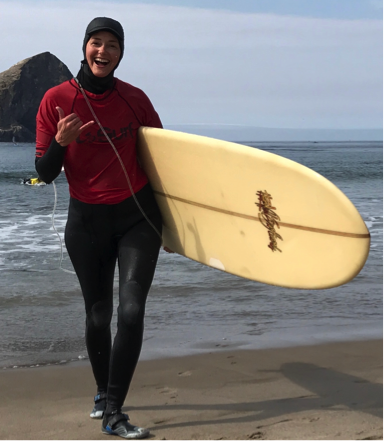
Want proof of how doing something terrifying changed my outlook? Take a look at the photo to the right. That’s me coming out of the water after my heat. That smile is genuine. I felt like a winner.
For me, there is nothing more debilitating than being fear-driven. It is a barrier to progress and I, for one, feel I have come too far to let anxiety sit at my table for long.
Don’t get me wrong. There is such a thing as healthy fear. If I would have shown up to the competition and the waves were fourteen feet high, I don’t think I would have surfed. But if I would have backed out because things had been going poorly and so, “this will probably be a disaster too,” well, I just plain refuse to adhere to that mind set, even if that’s where my brain wants to go.
We all go through periods of time when the world just seems to be working against us. Cycles when we feel we are swimming against the current. Sometimes the best way to break the cycle is to show ourselves that worry and doubt have not taken total control.
We can take the power away from fear and stock it back into our arsenal by taking action.
We set ourselves free by proving that we can do the very things that scare the bejesus out of us and that life will still go on, possibly with a renewed confidence, even greater than it was before. So, go out and do something that scares you. I double dog dare ya’!
Photo credit for Marigny’s surfing picture: Chris Goodyear
-

Overcoming Envy: How to Stop Feeling Inferior and Insecure
“Comparison is the thief of joy.” ~Theodore Roosevelt
If you are suffering from the painful sting of envy, know that you are not alone. I was there too, for a very long time. Envy can be a crippling emotion. For me it has been connected to my depression, anxiety, and obsessive-compulsive disorder.
It has been a very painful twenty years since my attachment to envy began, involving comparison, competition, judgment, harsh criticism of myself and others, in a never-ending, futile attempt to soothe my wounded ego.
I was constantly, obsessively, relentlessly afraid of being inadequate and inferior—to a classmate, to a boyfriend’s ex, to a fellow singer. “She’s prettier, happier, more successful, she’s married, she’s a mother…”
As we come to learn, the comparison game never ends. Sometimes you might win, sometimes you will lose, but ultimately it is always self-destructive.
My mind would constantly compare myself to other women, and whether I fell short or came out on top, it hurt. I was deeply insecure. I hated myself. At my lowest points I was suicidal, drowning in feelings of worthlessness and shame.
With some soul searching, I discovered exactly how this envy-obsession originated: It began with deep-rooted fears of inadequacy and of being abandoned and replaced, stemming from my parents’ separation when I was three years old, and then from my father’s starting a new family when I was twelve.
Even though I knew I wasn’t at fault for the breakdown of my family, I subconsciously believed that it meant I somehow wasn’t good enough. I was innately unworthy.
These fears morphed into deep recurring depressions, intense anxiety and panic, insomnia, and the obsessive thought patterns of envy and competition.
The mental grooves I had been digging for twenty years were very deep. They were painful, draining, and exhausting.
There were days I was afraid I would never have peace, that I would always be suffering from the mental torture of OCD. Deep down I was terrified of being abandoned and unloved. My fears manifested as an obsession with my perceived inadequacy and inferiority to other women.
It has taken a lot of hard work to undo the damage these thought addictions have done to my soul and psyche.
Our subconscious mind, which normally works to help keep us safe by alerting us to threats, has a way of becoming twisted after trauma. Instead of being my own best friend, I was my harshest critic, always convincing myself that I wasn’t good enough, and that someone else was better.
Attempting to run away from my emotional turmoil created this monster of a neurosis. It was a self-harming coping mechanism to distract myself from my deep inner pain. It had become easier to obsess about whether or not someone else was “better than me” than to do the hard work of finding my own self-worth and unconditional self-love.
Envy (and the comparison and competition that went along with it) was my obsession, and social media stalking was my compulsion. If only I had spent as much time songwriting as I spent on Facebook!
The suggestions I make for releasing yourself from envy are all things I personally do consistently. I now have a newfound freedom and confidence, in myself, in my place in this world, and in my connections to others.
Now that I’ve done this very important inner work, nothing would make me happier than to help others spare themselves some of the self-induced misery I subjected myself to for so long. Here are a few of the things that have helped me immeasurably.
1. Stop comparing and competing.
We know how harmful it is to compare and compete, we know we shouldn’t do it, but for those of us who have been engaging in this destructive habit for years, how do we actually stop? It comes down to changing the inner narrative—how we speak to and about ourselves and others.
I began to tell myself, “I am different, unique, and special, not better or worse.” We are all on completely different paths, with unique journeys, qualities, experiences, perspectives. Logically you can’t possibly compare one person to another, but we know fear doesn’t always operate logically, so we have to retrain our minds. “I love myself. I am beautiful. She is beautiful. I am blessed. She is blessed.”
Over time I stopped wanting to judge. I stopped wanting to compare and compete. I stopped bashing other women, in what had been my attempt to make myself feel better by putting them down. It didn’t feel good that I had been so negative, mean-spirited, and critical. It hurt that my fear had morphed into hate. I was embarrassed and ashamed that I had blatantly become a mean girl.
It felt so much better to appreciate people’s positive qualities, to see their light and focus on that light.
I started saying simply “she is beautiful” about everyone I saw, whether outside on the street, or online on social media. It wasn’t long before it felt true, because it is true! Everyone is beautiful—uniquely, beautifully special in his or her own way.
I stopped critiquing people’s physical characteristics, their lives, their success, their happiness. I stopped trying to measure them against me, and vice versa.
I began seeing us all as beings of light, beloved children of the Universe, with unique, incredible gifts and talents to share with the world.
I saw other women as potential friends and allies instead of threats. I no longer feared people; instead, I welcomed them and saw us all as extensions of one another—human beings doing their best at this thing we call life, all of us divinely connected, all of us struggling with very similar, common, messy challenges.
2. Embrace sharing and learning.
Instead of trying to one-up the next person, let’s change how we view one another. How can we learn from, and be a resource for, one another? How can we offer help, guidance, and support? Instead of being in competition with one another, we could be a network of people eager to celebrate each other, share in each other’s successes, and help each other heal and grow.
I began to ask myself new questions about the people in my extended network, and the new people I met:
What can I learn from them, from their journeys, from their successes and mistakes? What can I teach them? How can I be inspired by them rather than feel threatened? How can I better be of service to others? How can I give of myself? How can I support and be supported? How can we share our strengths and build each other up?
Where once I saw division and competition, I started to see our commonalities: We had similar fears, goals, and life experiences. I realized we all have so much to give one another. I started to appreciate people more and to see all the beautiful things they were offering the world. I began to see our healing journeys as linked. I felt layers of fear begin to fall away.
3. Focus on healing.
I got down to business and worked on my overall mental, emotional, and spiritual health; my self-love, self-focus, and self-esteem. I began daily meditation and gratitude practices. I tackle the OCD with EFT (Emotional Freedom Technique, also known as tapping), self-hypnosis, and ERP (Exposure and Response Prevention) Therapy.
I listen to meditation music designed to help balance the chakras. I repeat affirmations such as “I am at peace within myself,” as well as ancient mantras. Two of my favorites include Sa Ta Na Ma—helpful for breaking negative thought patterns and healing the mind’s chemical imbalances that lead to depression—and Om Namah Shivayah, which helps access your truest, highest self and guides your divine transformation.
I use writing, especially songwriting, to explore and to dig deep. I journal, and then I journal some more! I make lists: lists of the things I love about myself, lists of the factors contributing to my depressions, lists of ongoing challenges I’m working on. I routinely go on social media detoxes. I practice celibacy.
All of these things help me to turn the focus inward, when for years I had defaulted to focusing on other people, namely with this inadequacy complex, but also with dating and unhealthy relationships.
The more I focused on myself and my happiness, the easier it became. I rediscovered Aisling in the simplicity of comfort and candlelight, in the wind in the trees, in cooking, in music. It was liberating to love myself in a real way, and to finally feel worthy.
We live in a culture that normalizes and encourages competition. We tear each other down, we judge, we are downright mean. We allow our traumas, wounds, and fears, not to mention our cultural conditioning, to make us hate ourselves, thereby hating others.
With time and concerted effort, though, I do believe we can heal our spiritual afflictions, even the very persistent, very destructive penchant for envy, self-deprecation, and sabotage.
-

How to Boost Your Self-Worth: 7 Tips to Feel Better About Yourself
“The more we see ourselves as a vibrant, successful, inspiring person who boldly declares and manifests her vision, the more we become just that.” ~Kristi Bowman
I was kind of a chunky kid growing up.
In my own little world of trolls and playwriting, I didn’t notice the chunk. I genuinely liked me. But when I entered the “real world” of opinions, people, and comparison, I began to realize or rather feel that perhaps my body wasn’t good enough.
This thought was like a seed that was then planted in my brain. And every time I thought about it, I watered it. Soon enough, that seed sprouted and feelings of not being enough were just a part of who I was.
I was really good at disguising those thoughts, though. Most in my circle had no idea of how I really felt.
To be brutally honest, I didn’t even know how I really felt until an event that happened (years later) shined so much light on my deep-rooted feelings of not being enough that I could no longer not acknowledge my feelings. At this point, I fully acknowledged that I had some serious work to do.
The beginning of the event (you’ll see why I say beginning shortly) was with a boy. I was in my twenties. We were newly dating. We had just come back to his place after a nice dinner. We kissed. We decided to change and put on some comfy clothes to watch a movie.
While I was changing, a funny, unpleased look washed over his face, and he told me that he was surprised my stomach wasn’t really that flat. That I had somewhat of a “muffin top.”
I stood there, pulling my shirt over my head, stunned. I didn’t know what to say, so I didn’t say anything.
After the movie, I left, covered in shame. I felt confused, embarrassed, and alone. Despite all of that, I continued to still see him until he inevitably dumped me a few weeks later.
The real event was my reflection after this relationship ended, when I realized I felt so poorly about myself that I continued to stay with someone who made me feel deep shame. More importantly, I realized that he was just echoing and reflecting back my own feelings of not being good enough.
It was in this moment that I decided I was, in fact, enough, and that things were going to change.
Here’s what I did to begin to boost my self-worth and how you can begin to recognize your own worth too.
1. Pretend you are your own best friend.
Simply start to notice what you’re saying to yourself. You may be taken aback by how often you’re saying unkind things to yourself (I know I was), but know that it’s totally normal and part of the process. Allow yourself to observe the thoughts that come up and not judge yourself for having them.
When you notice that you’re in this unkind space, ask yourself, “If this were a friend coming to me with these thoughts, my thoughts, what would I say to them?”
This question would always wake me up and radically change my self-talk. I could see how mean I was being to myself. I wouldn’t speak to any other human being like I spoke to myself, let alone a friend. You may find this is the same for you.
If this is difficult for you, it may be because you don’t think you deserve this level of kindness. First of all, you do. Second of all, you can combat this by choosing to focus on one thing you appreciate about yourself that day. Perhaps you appreciate that you decided to go on a walk even though you didn’t want to, or you were kind to your coworker, even though she was being unkind.
Reflecting and recalling things you appreciate about yourself isn’t always easy, but the more you practice it, the easier it becomes. And it’s in this space you’ll begin to see you deserve to be spoken to kindly, just like you would speak to a friend.
2. Surround yourself with people who bring you up.
I was notorious for saying yes when I really wanted to say no. Again, it all boiled down to not valuing my wants, my needs, or myself. The first time I said no (with grace), I was petrified. I was worried the other person would hate me.
Funny thing is, they didn’t hate me. They began to respect me more. And the more and more I declined outings, events, dates, work, and time with people who brought me down, the more I made room for the things in my life that made me shine, feel happy, and feel whole.
By feeling this way, I began to really fall in love with myself and appreciate the power I had to make myself feel grounded. I began to feel enough.
And it was during this time that I joined a local yoga studio, signed up for meditation classes, and started regularly hiking. Through these activities, not only did I find self-worth, and myself, but I also began to grow a beautiful support network of likeminded individuals who would eventually become friends.
You can do this too. Find and/or make time for activities that bring you joy, and know that a simple hello and a smile can go a long way.
3. Ask close friends or family members what they appreciate about you.
Sometimes (or a lot of the time) a kind word from someone we love and trust can go a long way. Their perspective can also help shed some light on qualities about ourselves we previously dismissed.
And when you have these words in writing, you can pull then out and reread them whenever you feel down.
The email I sent, and that you can send too, went something like this: “As one of the key people in my soul circle, would you mind telling me what you appreciate about me? I’d be so appreciative!”
Try it. Save their words. And reread them when you need them.
4. Get curious about why you’re triggered.
We get emotionally triggered for all sorts of things—words, actions, decisions, comments, and the list could go on.
When I got serious about feeling my worth, instead of getting angry with others, situations, or myself when I became emotionally triggered, I got curious and began asking myself what still needed to be healed. By doing this, I was able to really heal my wounds and understand myself better, so the next decision, action, person, or words I chose would lend to better, more loving choices.
For example, comments about how much or how little I would eat triggered me because I thought someone was judging my body.
This observation made me realize I had more healing to do around accepting my body and being grateful for it. So I began to write what I appreciated about my body every day in a journal. Slowly, over time, I came to fully love my body—cellulite, “muffin top,” and all.
You can do this too. The first step is simply becoming aware of when you’re emotionally triggered, leaning into the “why” behind it all, and seeing what still needs to be healed.
5. Focus on kindness and helping others.
Choosing to switch my focus from “What’s wrong with me?” to “How can I give back?” was immensely powerful.
What made me see and feel my worth was helping others—giving a compliment, holding open a door, calling my grandma, starting a random conversation with the woman bagging my groceries, helping an elderly gentleman who had fallen get back up, extending an ear, a hug, and a tissue for a girlfriend after her long hard day.
By giving back, even in tiny ways, I saw how much of an impact I had. I saw I mattered. I saw I had the power to create happier moments for others and literally turn frowns upside down. And when you see that you’re capable of this, you can’t not see that you are worthy and deserving of love, including your own.
You can try this too with as much as a simple genuine compliment.
6. Practice gratitude for who you are as a human being.
In today’s world, we’re so used to looking at things from the outside in. I didn’t (and still don’t) want to feel my worth based on my looks. Our looks fade. Our soul never does.
I knew this but didn’t know how to really feel it until I began making notes of why I appreciated and liked myself, on a soul-level. Not on the superficial level. For example, I began writing down things like, “I appreciate that I have such a deep capacity to feel.” This was such a simple, yet transforming exercise.
You can begin to create this practice too. Every morning or evening (whatever feels best to you), in a journal, bullet-point a few things that you appreciate about your soul self that are unique to your last twenty-four hours.
For example, if you encountered a rough situation at work and you were kind regardless, you could write “I appreciate I acted with grace and gentleness at the office today in an uncomfortable situation.” Or, you could write, “I appreciate my grace and gentleness.”
The point is that your gratitude focus here is inward. You’re appreciating the qualities that make you uniquely and beautifully you. And you’re showing up daily to shine some light on them. And yes, know this may feel odd at first, but over time, it becomes easier, and naturally this appreciation of who you are positively changes your self-worth.
7. Realize everyone has their own struggles.
I had always known everyone had their own struggles, but I hadn’t fully internalized it. When I began creating a new tribe of souls who appreciated me, lifted me up, and who made me feel safe, I was able to talk about some of my struggles with loving myself and feeling worthy.
When I did this, others began to open up about their own struggles with self-worth. This made me feel less alone, and ironically, made my self-worth soar through the roof because by simply being open, I was able to help others move through their own self-worth struggles.
Here, I saw that I wasn’t alone and that I had more power than I thought. You do too.
-

Overcoming the Fear That Stands Between You and Your Dreams
“A few rare individuals refuse to have limited lives. They drive through tremendous amounts of pain—from rejections and failures to shorter moments of embarrassment and anxiety. Because they avoid nothing, they can pursue their highest aspirations. They seem more alive than the rest of us.” ~Phil Stutz and Barry Michels
If you were to see me in a social situation, you’d think that I’m confident.
And in most informal social settings, I am. Now.
I love people, love hearing their stories, so most of the time I trust my ability to relate and connect.
But this wasn’t always the case.
These were skills I had to re-learn.
During adolescence, probably as a result of my parents’ divorce and going to a new school where I felt completely out of my depth, I lost my natural childhood confidence.
Approaching new people felt very hard.
I would often spend break times at school pretending to be busy doing work, to avoid the shame of having to go up to a group and ask whether I could sit with them and face the potential humiliation of being told no.
It was a very lonely time.
For most of my high school career I avoided reaching out unless I was pretty certain of a favorable response.
Then I left school and took a gap year and needed to make money, so I started a job waiting tables.
I was perfectly capable of upgrading to waiting tables after the mandatory month of training (when I was responsible for clearing plates and setting tables but didn’t have to engage much with customers). But I was so afraid of the having to approach people and the deal with the uncertainty of how they would respond to me that I declined and continued to train for another two months.
Eventually it got ridiculous and I had to take the risk.
I can still remember my first few months waitressing.
I was terrified to approach new people and initially would try to avoid it by giving tables away.
But then something interesting happened. By now I wanted to buy a car, and the pain of being dependent on others for transport was greater than the pain of the potential rejection, so I started to force myself out of my comfort zone—and I started to enjoy it.
I started to enjoy the uncertainty and the challenge. I realized I loved meeting people from different places and hearing about their lives.
This increasing confidence and enjoyment of connecting with people has been key in helping me accomplish a number of my dreams, especially in relation to my work.
I’ve gotten several jobs through being able to connect with people, who then recommended me when an opening opened up (though this was not my initial intention when connecting with them).
My challenge now is to develop the same confidence I have in informal social situations and apply it to performance situations. This is still an area where I struggle with performance anxiety and feel self-conscious.
So I will continue to use the ideas below myself!
1. Our minds play tricks on us.
As Alison Ledgerwood, Ph.D, says in her TED talk entitled Getting Stuck in the Negatives (and How to Get Unstuck), our minds are built to look for negative information and hold onto it. Failures stick in our minds longer than successes do.
What that meant for me is that in most cases, I was massively overestimating the potential for shame and rejection from each new interaction. But I was also underestimating my capacity to cope, should my worst fears ever come true. (In hindsight, I don’t think that even the most challenging experiences came close to the horror stories my mind was telling me were possible.)
My mind kept reminding me of all the pain of failures I had previously experienced, rather than the times it had all worked out fine.
Alison Ledgerwood advises: “Our minds may be built to look for negative information and to hold onto it. But we can also retrain our minds if we put some effort into it and start to see that the glass may be a little more full than we initially thought.”
Love that!
2. Just as our minds play tricks on us, we can trick our minds.
It turns out that how we interpret the feelings of fear is the key to determining whether we’re able to engage or whether we avoid.
While most of us tell ourselves to calm down and stop worrying when we feel afraid, research out of Harvard shows that this standard response to stress may be well meant, but it’s also wrong. Instead of trying to calm ourselves down, we should aim to get excited, suggests Alison Wood Brooks, Ph. D of Harvard Business School.
Huh?
I was definitely not excited at the thought of approaching tables with the possibility of being shamed and humiliated.
But trust me, this works.
Why is that?
“When people feel anxious and try to calm down, they are thinking about all the things that could go badly. When they are excited, they are thinking about how things could go well,” Wood Brooks explains.
Even if you don’t believe it at first, when you say it repeatedly, authentic feelings of excitement increase.
Fake it until you become it!
The fact that you’re reading this post is testament that this works. For years I’ve been wanting to write, but my own anxiety and self-doubt held me back. Now when I sit down to write and feel myself becoming anxious I repeat “I’m excited, I love sharing ideas with people” over and over again.
After a few minutes I can feel myself actually start to believe it, and I feel more able to write.
3. On the other side of fear is your limitless potential.
This is an idea from therapists Phil Stutz and Barry Michels from their book The Tools. They describe how we all tend to avoid emotional pain, but that this dramatically limits our potential.
We need to know that our infinite potential exists on the other side of our comfort zones, and if we want to actualize our potential we need to break through it.
They advise that we need to condition ourselves to get excited about the challenges in our lives, and instead of avoiding fear and pain we need to run straight at them screaming “BRING IT ON!!”
I know this to be true.
When I’ve had the presence of mind to remember this idea and keep going, rather than avoid, I find myself in a strange and unfamiliar place. It’s a feeling of absolute freedom—of not being limited by what you fear.
And as a recovering worrier, that feels very good.
Here’s how I’m using it to help me develop my confidence in performance situations. Mostly when I think of something that I want to do that makes me feel anxious, my tendency is to procrastinate and avoid it.
But now, when I notice that fear (and the intense discomfort it can bring), instead of avoiding, I tell myself something along the lines of: “Great, an opportunity to expand my comfort zone and my capability. Bring it on!”
This allows me to move from avoidance into engagement.
The more I repeat this cycle, the easier it becomes to do the things I fear (mostly because I see that the thing I’m terrified of happening doesn’t actually happen).
While I can’t go back in time and change the course of my younger self’s life, every day I’m faced with choices that determine whether I move toward becoming what, deep down, I have a feeling I’m capable of becoming, or step back into my comfort zone to avoid risking humiliation.
What I now know is that the feeling of letting yourself down—the disappointment and unravelling confidence with each retreat—is far more painful than what is out there beyond the safety of what’s familiar.