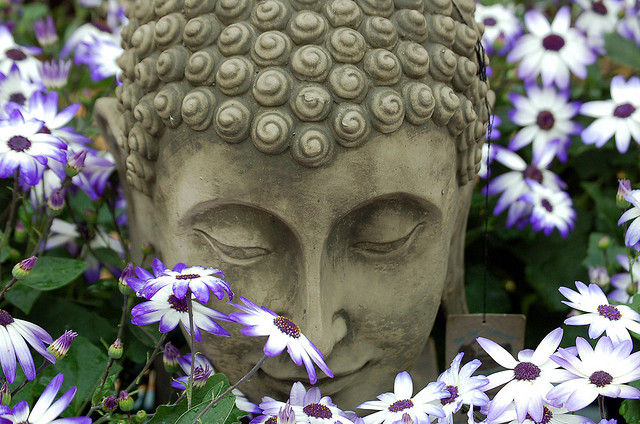
Tag: complaining

  • The Power of Reframing: 3 Ways to Feel Better About Life

    The Power of Reframing: 3 Ways to Feel Better About Life

    “Some people could be given an entire field of roses and only see the thorns in it. Others could be given a single weed and only see the wildflower in it. Perception is a key component to gratitude. And gratitude a key component to joy.” ~Amy Weatherly

    I grew up in a deeply negative environment. My parents separated acrimoniously when I was seven, and they were a grim example of how not to do divorce.

    They brought out the worst in each other, and sadly, over time, they also brought out the worst in me. I was depressed as a teen, and had been conditioned to believe that my problems were an unfortunate family trait—one that I had simply to accept and live with.

    And I did, for many years. But of course, I was not happy. And yet I didn’t know enough about the world to understand that my environment and upbringing were very largely to blame.

    I now know that while genetics can account for up to around 40% of the happiness we experience, the rest is within our control.

    I’m aware of this because studies have shown it to be the case. But I know it because I’ve also lived it.

    Deciding to Change My Life

    Over the last ten years, I’ve dramatically changed my life, and I’m the most at peace I’ve ever been.

    When my eldest daughter was a baby, I finally had an important enough reason to want better. I was determined that she would grow up in a fun and positive home. And if I was going to make that a reality, I had to put in the work to make it happen.

    Plus, it had become especially vital at that time since my daughter’s difficult delivery had been traumatic and left me with extreme postnatal anxiety. I was in a very bad place, and I needed to get out of it; I needed, in fact, to get out of my own head. And I didn’t want to rely on medication for that.

    While my husband had already saved me in many ways, the rest was my responsibility—my state of mind, my outlook.

    Desperate but determined, I began an activity that, over time, changed my life.

    While I appreciate that sounds like an exaggeration, it’s really not. Because my life truly has changed. Although it also hasn’t. Allow me to explain…

    The Power of Reframing

    I inadvertently learned how to reframe, and it’s possibly the most profound skill there is for increasing happiness.

    It’s so incredibly powerful because it can change your experience of life—without changing your actual circumstances.

    Here are a few examples of how reframing helped me to feel more positive about my own life…

    A few weeks ago my dad moved, and I planned to visit with my girls during half term to take him a plant.

    We live in the UK, and while the weather is changeable, it’s usually fairly mild. But on the day it so happened to be spectacularly windy. I told my dad we’d make our way and I’d let him know if we couldn’t get there.

    We made it! And after dropping off my dad’s plant, we drove a short way to a restaurant.

    Before we’d even ordered drinks, the winds brought down a pylon and there was a power cut. The kitchen closed, and my young daughters ate crisps for lunch, and I still had to get us safely home.

    But, instead of being mad that the entire day turned into a farce (we encountered fallen trees on the way home!), I was glad I’d made the effort. Most importantly, we were safe, but also it reinforced to my dad that we cared enough to get there despite the challenges.

    Another example is that since Christmas we’ve had one illness after another in our home. First was COVID, and since then we’ve had viruses and two bouts of chicken pox.

    When my eldest succumbed to COVID, I was worried about her, but also on a practical level how I’d get my youngest daughter to school (until my husband also tested positive, at which point I was able to leave the house). The fear that had been silently there for two years had finally caught up with us, and it had the potential to be an enormous source of stress.

    But during the COVID episode—and later with chicken pox too—school mums stepped up without me even asking. I’d never really felt like I’d integrated with the school mum crowd, but as it turned out, I was wrong:

    They totally had my back.

    I felt and continue to feel so incredibly grateful not only for them, but also knowing that I have a support network I did not even realize was there.

    These are just a couple of recent examples which spring to mind, of situations that previously I probably would have experienced negatively and complained about—but I’m now able to reframe to find the silver living.

    So you see, my life is different in terms of how I experience the world, and yet it’s really the very same as it always was. But I feel vastly different.

    I feel at peace.

    And now I want to share my process so others can also learn how to do this for themselves, because it’s basically free therapy, available to everyone, that we can implement alone, and without guidance.

    But how did I do it, without professional help—and without medication?

    How to Tap Into the Benefits of Reframing

    For me, there were really three steps to my journey, which happen to work together in perfect harmony.

    1. Practicing gratitude

    First, I began writing gratitude lists.

    With no comprehension of their value—but with a deep desire to start appreciating the good things in my life, and a desperate hope it was a good starting point. Good enough to help me do better for my daughter.

    I started writing a list of the positive things that had happened each week. Not realizing that this is actually an effective therapeutic exercise, I wasn’t expecting very much to happen.

    But I knew that the fundamental change I wanted to see in my life was more positivity. So I figured the “fake it till you make it” approach might just be beneficial.

    Incredibly, it didn’t just help—it was the turning point of my life to such a degree that it now feels like before and after.

    Writing gratitude lists isn’t difficult. It can be as simple as jotting down three, or five, or ten things you’re thankful for. This can be done when you wake up, to start the day on a positive note, or at the end of each day if you prefer.

    If you have a hectic schedule and can’t find time to do this daily, just be sure to do it regularly.

    And if writing it down seems like too much effort at the end of the day, you could try saying your list of things for the day quietly and privately in your own mind.

    It doesn’t need to a formal practice; it just needs to something you do practice. Because over time, something magical happens…

    2. Positivity

    As time goes by and you continue to acknowledge the good in your life, your default mindset will begin to switch over to a more positive one.

    For me, it was like a spiritual awakening, and I like to use an analogy to describe my experience.

    The idea of rose-tinted glasses is a familiar one for most people. But sometimes they’re actually a blessing. After spending several months practicing gratitude regularly, I felt like I’d removed the only pair of glasses I’d ever known, and the world suddenly looked brighter.

    I also began to appreciate that positivity is often a self-fulfilling prophecy: the harder you look for it, the more you will find.

    And your mood tends to be reflected back to you by others, too. Just as negativity is draining, positive people energize those around them!

    I was recently waxing lyrical to somebody about the positive impacts of gratitude and reframing, but they insisted that offloading onto friends or family is necessary sometimes. I didn’t completely disagree, but I had something important to add:

    By default, increased positivity leads to a decrease in negative experiences, which in turn leads to less often feeling a need to offload. And that’s the magic of this whole concept.

    There’s one final step in my toolkit…

    3. Journaling

    Unfortunately, when you’ve grown up in a negative environment, it can be all too easy to slide back into ingrained behaviors—old habits die hard.

    For that reason, even though I feel very mentally robust these days, I know that if I stop practicing these new skills, it’s almost inevitable that I’ll return to the mindset I developed as a child. (I’ve learned this the hard way.)

    Journaling is my favorite way to stay on track and accountable, because it can easily incorporate each of the above ideas, plus so many more.

    Depending on my mood, I love journaling for its mindfulness, or state of flow, or as a creative outlet. Or all of the above!

    Essentially, these skills each feed into and reinforce one another. And together, they really are life-changing.



  • 14 Daily Happiness Habits to Adopt Right Now

    14 Daily Happiness Habits to Adopt Right Now

    “The biggest lie we’re told is ‘Be with someone who makes you happy.’ The truth is, happiness is something you create on your own. Be with someone who adds to it.” ~Unknown

    That’s what we all strive for, right?

    Happiness, I mean.

    I used to think that happiness was about my external world. If things were going well for me (in my career, social life, relationships, etc.), then I was happy. If things weren’t going well, which things often weren’t in one area or another, I felt frustrated, angry, or defeated.

    Later, I realized that long-term happiness isn’t about external events. It starts from within and most importantly, it’s a skill to be learned and developed.

    To live your best life, you need to realize that happiness doesn’t happen to you—it happens because of you. That doesn’t mean if you do all the right things you’ll feel happy all the time. No one feels happy all the time. It just means your choices influence how you feel, and if you make healthy choices you’ll likely feel good more often than not.

    To help you create a happier life, I’ve put together fourteen habits you can adopt right now. Read them, ponder them, and let them move in with you. Use this list to start building habits that will help you cultivate happiness, no matter your current situation.

    1. Look for the silver lining.

    It’s said that every cloud has a silver lining. Sometimes they’re hard to find, but in my experience, they’re always there.

    When one of my friends passed away a few years ago, I had a hard time finding the silver lining. Life just seemed unfair and brutal.

    After a few months I decided to channel all that frustration, anger, and sadness into making a life change. So I quit my job and went traveling for a year. What happened to her made me realize that life can be short, and I wanted to make the most out of mine. That was the silver lining for me.

    2. Water your own grass.

    It’s so easy to compare ourselves these days. Just by turning on the TV, opening social media, or by having a conversation we can fall into the trap of comparison. That’s not how we build a happy life. We do that by watering our own grass, not by looking to our neighbors’.

    So, acknowledge what other people have and use that as inspiration to get to where you want to go. Keep your eyes on your lane and build, create, and nurture what you want more of.

    3. Move the phone away from the bedroom.

    For many people, the last thing they see before falling asleep is their phone. It’s also probably the first thing they see when they wake up. (Confession: I’m guilty as charged when it comes to this.)

    By checking your phone first thing in the morning you allow other people, apps, and email notifications to dictate how you feel. You start the day being reactive instead of deciding for yourself what to focus on.

    Get yourself an alarm that isn’t your phone (or at least put it on airplane mood). Then create a short bedtime and morning routine that makes you feel good. I like to spend a few minutes visualizing, meditating, or appreciating to set my attention straight.

    4. Setup feel-good reminders on your phone.

    Oh, this is something you have to do right now! Go to your phone calendar and set up one or two daily reminders to yourself. At 9am every morning I get the notification “I’m enough” to remind myself that no matter how I’m struggling or what other people think or say, I am enough!

    At 1pm another affirmation pops up saying “I deserve the best and I always get it.” This one always makes my heart smile because it reinforces my worth and compels me to consider how my present circumstances might actually be in my best interest.

    Treat your future self nicely by setting up at least one feel-good- daily reminder. It will help you to change course during the day, if needed.

    5. Go for a walk in nature.

    I’ve quite recently realized the power of connecting with nature. This is a place to reconnect and ground yourself.

    Fun fact: Nature is said to have a natural frequency pulsation of 7.83 hertz on average (the so-called Schumann resonance).

    This frequency (7.83 hertz) is supposedly also the brain’s average alpha frequency. The alpha state is where we feel relaxed and calm. Pretty epic, right? So, make it a daily habit to walk in nature and tune yourself into a happier and more relaxed version of yourself.

    6. Take 100% responsibility.

    This is always a game changer for me. I often avoid responsibility at first (much easier to turn to blame, criticism, or excuses, right?) But you can’t change a situation if you don’t first take 100% responsibility for it.

    Look at any area in your life that you’re not fully satisfied with (your finances, health, career, love, social life, etc.). Then decide to take full responsibility for changing it. It might be true that someone else is to blame for a situation, but the only way you can change things is by taking responsibility for what’s within your control.

    7. Stop complaining.

    Oh, it’s so easy to complain.  To look at what isn’t working or what other people are doing wrong and to criticize and condemn. But that doesn’t solve any problems.

    If you don’t like something, change it. If you’re unable to change it, your only option is to change your attitude about it. Next time you feel like complaining, ask yourself what you can be grateful for in this situation. For example, if a bus driver is rude to you on the way to work, you can choose to focus and give thanks to the fact that you are able to ride the bus to work.

    8. Communicate confidence through your body.

    Our body reflects how we feel. If you are nervous and anxious, you can be sure that your body is mirroring that. You might flicker with your gaze, speak quietly, or hold a posture that signals insecurity.

    The positive thing is that this mirroring also happens the other way around. So start communicating to your mind by using your body. Stand up tall and straight, look other people into the eyes, and speak up. Tell your mind, by using your body, that you’re safe, appreciated, and comfortable where you are.

    9. Spend time on what matters.

    If we want a happy life, we have to fill it with happy moments. This means spending time on things that matter and with people that matter.

    What do you love doing? What brings you joy and happiness? Which people do you feel great being around? Make sure to carve out time every day for what brings you joy.

    10. Spend less time on social media.

    Oh, social media! Just by opening our phone, we can step into the lives of thousands of people.

    Social media can be great in many ways. It can help us to get inspired, connect with people across the world, and share special moments. But it can also lead to feelings of lack, inadequacy, and exclusion.

    Be conscious of your mood before engaging in social media. Ask yourself: Am I in a place where I can use it to my benefit? Or am I in a place where it can trigger me negatively? In short, make sure you control your social media experience, not the other way around.

    11. Give yourself space during the day.

    It’s so easy to get caught up in the busy-ness of life. To focus on efficiency, productivity and getting shit done. But not making space for yourself during the day will not only create a sense of stress and urgency, it will also stifle your creativity, intuition, and ability to reflect.

    So, if possible, be smart about how you set up your day. Give yourself more time than needed to complete a task. Allow it to take an hour and a half instead of an hour. For me, not rushing through tasks has resulted in greater clarity, satisfaction, and (to my surprise!) productivity.

    12. Become a master at shifting perspective.

    This is my go-to, every day! Whenever I feel bad about a situation, I know there’s another, more beneficial perspective available. For example, if I have a hard time falling asleep, I can either focus on me losing sleep (oh, the horror!) or on the fact that I can handle a night with less sleep and that it’s not a big deal. (And yeah, that’s usually when I fall asleep).

    In short, look at any challenging situation and try to find a better-feeling perspective. For example, did you get into conflict with someone? Then this might result in you understanding each other better next time. Do whatever you can to scout out the learnings, upsides, and positive aspects of any difficult situation.

    13. Give the gift of allowing someone to help you.

    When was the last time you asked someone for help? We tend to believe we have to be strong and independent all the time. But the truth is we’re not wired for independence—we’re wired for collaboration.

    In general, people like helping other people. So, why not give someone the gift of allowing them to help you? Ask for their input, advice, or help to move forward. Not only will this add value for you both, you’ll also get closer by helping one another.

    14. Turn contrast into clarity.

    In life, we experience contrast and difficult situations on a daily basis. Here is the good news: Negative experiences are clues to what you want. A strict and rigid work schedule might tell you that you want more flexibility. Exercise that feels boring or overwhelming might tell you that it’s time to scout a new and fun workout routine.

    Contrasts show us what we don’t like. Your job is to acknowledge the dislike and then to turn your head in the other direction. Ask yourself: What do I want instead? How can I make that happen?

    Small Daily Steps Toward a Happier Life

    It’s easy to get overwhelmed when it comes to making changes. So, set yourself up for success by taking action on one of the points I mentioned above. Choose one that makes you excited and once you’ve mastered it, move on to the next point.

    Don’t leave your happiness in the hands of chance and external circumstances. Instead, take charge and cultivate happiness from the inside out.

    Take small steps to develop habits of happiness and you’ll contribute to making this world a better place.

  • Why I Now Complain Less and Appreciate More

    Why I Now Complain Less and Appreciate More

     “It is not happy people who are thankful. It is thankful people who are happy.” ~Unknown

    I used to be a complainer, a fault-finder, a grumbler. I would grumble a hundred times a day about mundane issues, be it the weather, the traffic, or my husband.

    I complained when my husband didn’t help me around the house, and grumbled when he helped. It took me some time to realize that it was not him or his lack of housekeeping skills that made me unhappy. I was unhappy because I was turning into an ungrateful person.

    I have some fond and not so fond memories of my childhood. When I was a kid, my parents force-fed me green vegetables and limited my television and playtime. They wanted me to study and do my homework, and made me go to sleep every night at 8:30 PM. But all I wanted was freedom, freedom from homework and freedom to do whatever I wanted.

    I was nine years old when I first expressed my ingratitude to my parents. One day, after school, instead of boarding the school bus that would take me home I boarded the one that took me to my friend’s house. I thought this would be the end to the horrible veggies and boring homework. But things didn’t go as planned.

    My friend’s father got in touch with my dad, who drove down to take me back home. As I nervously watched my dad step out of the car I noticed worry etched on his face. He gently put his protective hands around my shoulders and said, “Come, let’s go home.” We drove home in silence, and gradually guilt found its way into my heart.

    When we approached home, I peered through the windows of the car and spotted a tired, lean figure standing by the gate of the house, my mom. I got down from the car and tentatively took one step toward her. Gazing into her moist eyes I gingerly called out, “Mummy.”

    She took me in her arms and hugged me tightly, while crying into my school shirt. As my tiny hands held her I realized my mistake.

    Today, when I look back to that incident, I realize now that as a child I took for granted all that my parents did for me.

    In a world where girls are denied education, at times buried alive, where orphanages are filled with children abandoned by their parents, here were my parents who catered to all my needs and prepared me for the future. In this unfair world, I was blessed with parents who gave me a fair chance at life, to grow and to prosper.

    My parents indeed planted the first seeds of gratitude when I was still a kid. But it wasn’t until I attained motherhood that I truly understood the importance of showing gratitude.

    Like every first-time mother, I went through anxious moments looking after and raising my baby. With my hyperactive daughter, things just seemed like a never-ending battle, with crayon painted walls, carrot juice stains on the carpet, moisturizers and lipsticks tested on every piece of furniture, and toys scattered around.

    I longed for peace, I longed for rest, and I longed for a clean house. I complained and cribbed about how being a mother was the toughest job in the world.

    Until one day, I visited a friend whose six-month-old son was admitted in the hospital, as he was diagnosed with Muscle Dystrophy, a genetic disorder that affects all the muscles including the muscles of the heart.

    That tiny baby lay on a bed motionless, strapped to a heart monitor. It was heartbreaking to watch the grieving mother coax and beg her frail baby to wake up, to cry, to whine, to do something, anything, while he did nothing. He just lay there, motionless.

    As I stood there, watching helplessly, an image of my little devil—my daughter—scribbling on the walls flashed through my mind.

    What had I been complaining about? An active child, a healthy child? Isn’t this what I had prayed for when expecting her? Surely, there would be plenty of women out there in this world who would give anything for my sleepless nights and messy house.

    From that day on, whenever my daughter was unable to go to sleep even at two in the morning, I didn’t complain. In fact, as I held her and kissed her forehead, I was thankful knowing I have such a wonderful gift.

    It’s human nature to forget our blessings and concentrate on our problems, but when we complain, our mind plunges into negativity, and like a domino effect everyone around us gets impacted by it.

    Panasonic founder Konosuke Matsushita would often finalize a candidate selection by asking his famous concluding question. “Do you think you have been lucky in your life?”

    The purpose of this question, according to him, was to comprehend if the candidate was thankful for the people who helped him in his life. He believed that this attitude of gratitude in employees leads to a happy work environment, which in turn boosts company productivity.

    Most of us tend to connect happiness to major events, like a promotion or winning the lottery. But these events don’t happen often. Gratitude is what makes our life richer, more beautiful, and a lot happier as we start to enjoy the little things in life.

    We often take people in our life for granted, or get caught up in complaining and grumbling. It’s true, my husband can be lazy sometimes, my parents keep nagging me, my teenage daughters never listen to me, and I have some crazy friends, but you know what? My life is incomplete without all of them.

    Life is a celebration. When we love everything we have, we have everything we need. So, let us make this journey of life worthwhile and take that huge leap from grumbling to gratitude.

  • How Complaining Rewires Your Brain for Negativity (And How to Stop)

    How Complaining Rewires Your Brain for Negativity (And How to Stop)

    “Spending today complaining about yesterday won’t make tomorrow any better.” ~Unknown

    When I was about sixteen or so, one of my parent’s friends got into some trouble with the law. When we’d visit him he’d often shake his head from side to side and mumble, my life is in the toilet.

    He said it many times, for many years, even when things seemed to have gotten better for him.

    My life is in the toilet was his mantra.

    At the time I thought it was funny, so I adopted it for myself, until one day I started to believe it. I’ve since dumped that charming phrase and gotten a new mantra.

    Things haven’t magically become ideal for me since I did that. I mean, there’s this pinched nerve in my neck and those construction sounds across the street, and I could really use some more work, and…

    Type of Drains

    Everyone complains, at some point, at least a little, says Robin Kowalski, PhD, a professor of psychology at Clemson University.

    There are different types of complainers, according to Kowalski, such as The Venter. The Venter is a “dissatisfied person who doesn’t want to hear solutions, however brilliant.”

    Venting. We’re just letting off steam, right? Maybe not. I’ve personally found that the complain drain can be soul draining, not just for the complainer, but for all within earshot.

    Other types you may have met along the way (or may be yourself) are the Sympathy Seekers, the I got it worse than you do, and the habitual everything sucks folks.

    The Chronic Complainers, those living in a state of complaint, do something researchers call “ruminating.” This basically means thinking and complaining about a problem again and again. Instead of feeling a release after complaining, this sort of complaining can actually make things worse. It can cause even more worry and anxiety.

    No one is suggesting you be a peachy-keen-Josephine and pretend all is swell when it isn’t. What I’ve learned in my mindfulness practice is to aim to do the opposite.

    In mindfulness meditation, we try to experience fully the truth of the situation, in this exact moment, and allow it to just be. Easier said than done (but what isn’t?) Still, with practice, the need to express our dissatisfaction for things not being how we’d like them to be lessens.

    Can’t We Just Call Roto-Rooter?

    Running with this drain analogy…

    Call Roto-Rooter, that’s the name and away go troubles down the drain!

    When I was a kid I loved singing along to those Roto-Rooter commercials. Wouldn’t it be cool if we could “away go troubles down the drain?” Well, maybe we can.

    Most of us may have been unintentionally reinforcing the nasty habit of complaining, by virtue of… complaining.

    There’s something called “experience-dependent neuroplasticity,” which is the continuing creation and grouping of neuron connections in our brains that take place as a result of our life experiences.

    Neuroscience teaches us that neurons that fire together, wire together. Donald Hebb, a Canadian neuropsychologist, coined that phrase back in 1949. What this means is that whenever we think a thought or have a feeling or physical sensation, thousands of neurons are triggered and they all get together to form a neural network.

    With repetitive thinking, the brain learns to trigger the same neurons each time.

    So, if you keep your mind looping on self-criticism, worries, and how nothing is working out for you, your mind will more easily find that part of your brain and will quickly assist you in thinking those same thoughts again.

    This shapes your mind into greater reactivity, making you more vulnerable to anxiety.

    Imagine a truck driving down a muddy road. The wheels create a groove in the mud, and each time that truck drives down that exact spot, the groove gets deeper and deeper.

    The truck might even, eventually, get stuck in that mud rut. But it doesn’t have to. Instead of repeating the same negative complaints, we can drive our thoughts on a different road so we don’t get stuck in that negative mud rut.

    Throughout our lives we are wiring our brains, based on our repetitive thinking. We get good at what we practice.

    If we worry, creating more unease and anxiety, we become stellar worriers since our brain is responding, making it easier for us to worry each time we do it, thus creating our default mode living.

    Default mode living is our habitual way of going about our lives. It’s our reacting minds as opposed to our responding minds.

    Our reacting minds are often knee-jerk reactions to something. We often say or do things that we’ve said and done in the past, as if we were in that default mode living, on automatic pilot. But our responding minds come into play when we give ourselves a pause before responding to a situation.

    We ask ourselves what’s really going on and what the next best step is. It’s a clearer response in the moment that’s not linked to past responses. So, how do we respond instead of react?

    4 D.I.Y. Tips – Stop The Drain!

    You’re stuck in traffic and not only are you complaining out loud to the cars that are in your way, you’re imagining getting home and complaining to tell your significant other all about it. You’re practicing this conversation in your head while in the car. Your heart races, your forehead tenses up. It’s all so very annoying! What to do?

    1. Catch yourself.

    During meditation we soon find out that our minds will wander. The moment when we notice it wandering and we bring it back to our focus, our breath, that moment is what one of my teachers calls “that magic moment.”

    The catching yourself is the practice. Also, the not judging or berating yourself for having a mind that thinks thoughts. All minds think thoughts. That’s their job.

    So to stop the drain:

    • Catch yourself in a complaint.
    • Stop complaining.
    • Congratulate yourself—you’re aware!

    2. Be grateful.

    I’ve tried it; I simply can’t seem to complain and be grateful at the same time!

    I’m stuck in traffic, but I’m grateful to have a car. I’m grateful for the song that’s playing on the radio and the sunny day.

    It doesn’t matter what you’re grateful for; it can be the smallest thing, just notice. Complaining could very well be the evil twin of gratitude. Favor gratitude.

    3. Practice wise effort.

    In Buddhism, wise effort is letting go of that which is not helpful and cultivating that which is skillful.

    In the book Awakening the Buddha Within, Lama Surya Das breaks down wise effort into four aspects, the first one being, restraint: “the effort to prevent unskillful thoughts and actions.”

    Make the effort to pay attention and catch your complaining, negative thoughts before they become words.

    Try it out and see how it feels. You might be surprised as to where you habitually have been putting your energy. Everything takes a certain amount of energy.

    Next time you find yourself caught in a complaining loop, pause and regroup. Make the choice to put your energy elsewhere. The more you do this, the easier it gets.

    4. Make a new groove.

    Just the way our thoughts created that groove to make negative thoughts easier to replicate, we can create a brand new groove for pleasant feelings.

    The more often we allow our minds to remember the good stuff, the easier that kind of thinking becomes.

    Do you want to be the person who’s never satisfied and can always find fault in others, yourself, and the world at large? Or would you rather be someone who sees things as they are and finds a way to make peace with it? Let’s pretend it’s up to you. Oh, wait, it is up to you.

    So, what do you say? You don’t need Roto Rooter to flush your troubles down the drain. Just make a new groove.

  • How Complaining Keeps Us Stuck in Relationships That Don’t Work

    How Complaining Keeps Us Stuck in Relationships That Don’t Work

    Couple in Prison

    “As I began to love myself I found that anguish and emotional suffering are only warning signs that I was living against my own truth.” ~Charlie Chaplin

    When I was eight years old my father burst into my room in the middle of the night, high on drugs, and threw my dresser drawers all over the place.

    “Stop your crying!” he screamed. “Stop your crying!”

    There was a crazy man in my room and I was terrified.

    “Now clean up this mess!”

    I was shaking. What on earth could I have possibly done to deserve this? With a slam of the door he was gone.

    For years my father annihilated me like this. He shamed me in public and raged at me behind closed doors. He was emotionally abusive and sometimes physical too.

    He taught me to believe that everyone was out to get me and that everything was my fault. He taught me to believe that I was a worthless piece of you-know-what and that I didn’t deserve any better. Seriously, how else is an eight-year-old supposed to interpret this kind of adult behavior?

    Raise of the hand, excuse me, Dad, but what you’re doing is messing me up for the long run. I was a kid. I assumed I was getting the parenting and love I deserved.

    Growing up I took what my father taught me out into the world and perfected it. The first girlfriend I ever had cheated on me with another man, yet I stayed with her because I thought I didn’t deserve any better.

    My best thinking (at the time) told me that nobody else would ever love me, so I stayed and allowed her to treat me badly.

    I lived in a one-bedroom apartment for four years even though every time I needed something fixed the landlord would yell at me. She would yell at me as if I was the problem, yet I stayed and paid my rent each and every month on time. I had no self to esteem and allowed her to treat me poorly.

    See my pattern? I stay in and return to painful, destructive relationships. In fact, I’m in one right now.

    I have stayed in the same painful relationship for the past thirteen years. It’s a relationship that no longer works for me, yet I keep going back to it as if one day, magically, things will change. Shake of the head, things never change.

    I have been yelled at, threatened, and taken advantage of. I’m undervalued, underappreciated, and constantly miserable. Take, take, take, that’s all the other side does.

    Each day leaves me emotionally drained, mentally distraught, and in a fowl mood. It’s obviously an unhealthy relationship, yet I stay because my stinking thinking tells me I don’t deserve anything better. I’m talking about my job.

    I hate my job. Okay, maybe hate is a little over the top. Let’s just say I don’t like my job.

    Yet each day I get up, shower, put on my uniform, and return. Voluntarily, mind you. And that makes me sad.

    Sad because by staying, I’m allowing myself to be that scared little eight-year-old all over again. By staying, I’m telling myself that I’m not good enough and that I don’t deserve anything better. I’m ‘parenting’ myself the same way I was parented by my father.

    I should’ve left my first girlfriend when she cheated on me, but I didn’t know how to take care of myself then, so I stayed. A healthy person with healthy boundaries would’ve been out of there. I wasn’t healthy.

    I should’ve told my landlord that it wasn’t okay to yell at me, but I didn’t and I stayed. I didn’t have the tools to stand up for myself and therefore allowed her to bully me.

    We do this, don’t we? We stay in and or return to painful destructive relationships when we deserve so much more. We do this with family members, boyfriends/girlfriends, friends, and yes, we even do this with jobs.

    But why? What’s the payoff for staying? (Trust me, there’s always a payoff.)

    For me, it’s about sympathy, which fuels my low self-esteem. If I complain loudly enough someone will ultimately sympathize with me, which in return validates my pain. Look at me, I’m a victim! 

    Trust me when I tell you, I complain a lot. I complain at the bank, while driving in my car, at work, at the movies, at home, on vacation, at the grocery store, and so on. All so I can validate my childhood belief that I don’t deserve any better.

    In the process I’ve created a reality that coincides with my thoughts. A reality that looks a lot like my childhood. Argh.

    Deep sigh. I’m tired of being a victim. It’s exhausting and it’s gotten me nowhere.

    Folks, this isnt about my job or a past girlfriend or landlord, this is about me. It’s about me not being a victim anymore and learning to love myself in return. When my emotional suffering goes away, I’ll have the strength to walk away from things that aren’t serving me instead of complaining.

    If I stop complaining, what am I left with? Me, just me.

    And that right there is the gift! Getting a chance to be with just me. To love and affirm me.

    Talk about an amazing opportunity for growth. If I’m working at being the best me I can possibly be, I’m doing myself a disservice by wasting time complaining. We all are.

    Complaining doesn’t change anything. It just keeps us stuck, victimized, repeating old patterns and unable to change them. The alternative? Take responsibility for our part, forgive ourselves for the patterns we’ve perpetuated, treat ourselves with the love and respect we know we deserve, and begin to make positive changes in our lives.

    So what’s my next right action? Well, just for today I’m going to see if I can go twenty-four hours without complaining and at the very least stop/catch myself if I start to. I’m also going to be grateful for what I have in my life, which is a lot.

    Gratitude list here I come! I deserve the good stuff. We all do.

    Couple in prison image via Shutterstock

  • Tending to Your Garden of Thoughts and Keeping Your Mind Weed-Free

    Tending to Your Garden of Thoughts and Keeping Your Mind Weed-Free

    Garden Buddha

    “All that we are is the result of what we have thought. The mind is everything. What we think we become.” ~Buddha

    Imagine your mind as a garden. Positive thoughts are the beautiful flowers that brighten your life. Negative thoughts are the ugly weeds that spread and suffocate the flowers.

    Tending to my garden is an ongoing process.

    I’m not into chemical pesticides, but my natural weed killers are yoga, meditation, inspirational reading, and hanging out with positive people.

    Sure-fire weed food is worrying about what other people think, taking things personally, and stressing out about situations that don’t matter or are out of my control.

    I used to find myself having drawn-out imaginary conversations: “And if she said this, I would say that…” with absolutely no outcome. Now I catch myself and change the channel.

    I’ve seen firsthand how dangerous it is to let weeds snarl and take over.

    My dear Grandma Betty lived to be ninety-two. She outlived all six of her children, and had a lifetime of good physical health, yet her mind was tangled with weeds that began growing decades before she died.

    She was suspicious, distrusting, and convinced that people didn’t have her best interests at heart or were talking behind her back. I never noticed it when I was a kid, but it became increasingly apparent later on.

    Perhaps she felt lonely when my grandfather died early and she had too much time alone with her thoughts.

    It’s easy to over-think things, jump to conclusions, or get wrapped in negativity when you don’t have others to give you a fresh perspective. It then becomes a bigger problem when you alienate the ones who love you the most because you’re difficult to be around.

    This is what eventually happened. I loved her to bits, but she became challenging to talk to. The cup wasn’t half full; it was bone dry.

    This was in sharp contrast to my Grandma Millie. She was always smiling or laughing with a twinkle in her eye.

    Life dealt her a crappy deck. She was widowed young and had to raise three kids alone. She nursed her second husband through a nightmare of Alzheimer’s. She also experienced the tragic loss of both of her sons.

    But she always picked herself back up and remained positive.

    She drove for Meals on Wheels, delivering to people younger than herself.

    She went blind from cataracts disease in her early eighties but continued to find volunteer work so she could feel useful and keep active and social.

    Insistent on staying in her apartment, she remained fiercely independent.

    I used to ask her how she kept her great outlook when she’d been through so much. Her reply, “Well, I could sit around complaining, but then nobody would want to be around me!”

    Truer words have never been spoken.

    Complaining is pointless. It doesn’t make things any better, and it drains the complainer and everyone else around them.

    I loved both of my grandmas equally, but I know which one I was more likely to pick up the phone and call.

    Having these two amazing examples in my life gave me huge inspiration. I saw for myself how important it is to tend to my garden regularly and give it high quality fertilizers to keep it abundant and healthy.

    My friends are my fertilizers!

    My positive Grandma had a gaggle of girlfriends and those gals knew how to have a good time. They got together and played cards or Scrabble, went off on outings, and even went on a camping trip in their eighties. They were each other’s support systems.

    She used to say to me, when you get married, don’t ever forget about your girlfriends. They may outlive your husband and be all you have in your old age.

    Her very best friend died two days before she did. Both asked after the other in their final moments, neither knowing that the other was dying. They’d been friends for eighty-eight years.

    Both grandmas were my mentors in their very own ways. One being an example of how I want to live my life, the other showing what happens if I allow my mind to become overgrown and tangled with weeds.

    I wish I could have done something to help my Grandma Betty tend to her garden. If she had the awareness, she could have taken a machete to those weeds and felt a lot happier.

    We can all use the garden metaphor to bring an awareness of what helps our own mind grow and flourish, rather than creating a dark, tangled mess.

    What’s on your list of fertilizers and weed-killers? How does your garden grow?

    Photo by Neil Piddock

  • 10 Ways to Complain Less (and Be Happier)

    10 Ways to Complain Less (and Be Happier)

    Girl in Hat

    “Instead of complaining that the rose bush is full of thorns, be happy the thorn bush has roses.” ~Proverb

    We all complain. Even if you argue that you are the happiest person in the world, you still complain sometimes.

    Sometimes we complain without even realizing it, but rarely is it helpful. Sure, a common complaint can bond two people who may have nothing in common, but too much complaining would just break down the relationship.

    For example, I once had a friend who constantly griped about her health, her family, her relationships, school, and the list goes on. Every time I hung out with her, I felt drained afterward.

    No matter what I said or did, it never seemed to cheer her up. There is no arguing that she was going through a tough time, but her negative attitude certainly made matters worse. Eventually we grew apart because it was more than I could handle at the time.

    So what happens if you are the one stuck in the negative attitude? We’ve all been there. I know I sure have. There are days when everything seems to go wrong, and complaining is the easiest thing to do.

    It’s easier to complain instead of fixing a problem, like quitting a job or having a talk with someone. But I find that when you try to see things from a different perspective and challenge yourself to stop complaining, it is possible!

    Here are some tips to stop complaining and ditch the negative thoughts so you can focus on finding solutions. (more…)

  • Connect Without Complaining

    Connect Without Complaining

    rose

    “Instead of complaining the rose bush is full of thorns, be happy the thorn bush has roses.”~Proverb

    Complaining can be a bonding experience.

    You meet up with your friends after work and immediately start rehashing frustrations with your boss. You have dinner with your siblings and commiserate about confrontations with your black-sheep uncle. Or you release tension on a blind date by noticing the wait staff’s shortcomings.

    Commiserating is a great way to immediately establish rapport. In that moment you feel connected—you  both have grievances, problems, and wishes for a better world.

    It’s even easier to do in a challenging economy, where anxiety is de rigueur. In one study of complaining in a group situation, subjects averaged fifty expressions of dissatisfaction per hour—close to one complaint per minute.

    But, despite your initial bonding experience, complaining does more harm than good.

    According to Will Bowen, author of A Complaint Free World, complaining exacerbates individual and collective problems because our thoughts create our world. In focusing on everything that’s wrong, we create a world dominated by those ideas.

    Stopping that cycle isn’t easy because you can’t dictate how other people will behave. If they continue to vent and you refuse to engage, your whole social dynamic will start to shift, right? Maybe not. (more…)