Tag: comparisons

  • Why I Stopped Measuring My Pain Against Others’ Suffering

    Why I Stopped Measuring My Pain Against Others’ Suffering

    “A history of trauma can give you a high tolerance for emotional pain. But just because you can take it doesn’t mean you have to.” ~Dr. Thema

    I just returned from a walk with a dear friend—one of my favorite ways to catch up and socialize. This particular friend has endured significant challenges, especially over the past year. She faced the immense loss of her pets and many of her possessions in a devastating house fire.

    The ensuing tsunami of grief and pain pushed her through a tumultuous year filled with deep suffering and intense healing efforts. All the while, she juggled supporting her son without a partner, working full time, and navigating the complexities of temporary housing and an insurance claim.

    Witnessing her journey was heart-wrenching, but it also highlighted the remarkable strength and resilience of the human spirit. Today, she shared a profound insight: After confronting her greatest fears and being forced to sit with them, she emerged feeling lighter and less burdened by future uncertainties.

    I could see how true this was by her soft but resolved demeanor, the ease in her movements, and her willingness to risk joy again by adopting a new dog and reconnecting with friends.

    The Trap of Trauma Comparison

    Yet, one recurring theme in our conversation stood out to me: She often mentioned that others have survived much worse. This idea, while empathetic, raises an important issue. It seems to suggest that comparing our trauma to that of others can be a way to diminish our own pain and find gratitude for it not being worse.

    An effective way to gain perspective? Yes. But a mindset like this can also undermine our right to fully heal and acknowledge the internal impact of our own struggles.

    I understand this tendency well. Years ago, I broke down in a dental office after learning that I required surgery. The dentist, trying to offer perspective, compared my situation to those facing life-threatening illnesses. While I appreciated the attempt to provide context, it did little to address my immediate emotional experience.

    Looking back, I was certainly holding something energetically that needed attention, but I didn’t have the awareness to look at it. Plus, the dentist’s comment brought forward some shame for reacting in that way, so it was in my interest to move past it as quickly as possible.

    The Origin of Leveraging Comparison to Manage Pain

    At the time, the inclination to feel guilty for my reactions wasn’t a novel thing for me. I lived with a deep sense that entertaining negative feelings was excessive and undeserved because I was healthy, I was an only child, and I was privileged in many ways.

    I grew up at a time when parents often used comparison in their well-intentioned parenting strategy to raise unentitled children. I’ll give you something to cry about… There are starving children in Africa… Don’t be so sensitive… Do you know how good you have it? In my day…

    Even in my own parenting, I’ve been guilty of shaming my children for their feelings—a regret I can only reckon with by trying to do better now.

    The unfortunate truth is that all humans experience pain, and the depths of what is born of that pain can never be fully apparent from an outsider looking in. The real danger of comparison is that it often leads to the notion that trauma is solely about the external events we face rather than the internal impact they have on us.

    The Nature of Trauma: Big T vs. Small T

    Ryan Hassan, a trauma expert, provides a helpful metaphor to differentiate between what is often termed “Big T” trauma—such as war, abuse, or profound loss—and “Small T” trauma, which includes smaller prolonged experiences over time, like bullying or emotional neglect.

    Imagine someone damaging their knee in a car accident versus someone injuring it over years of repetitive strain. The knee injury might be different in its origin, but the damage and healing process are fundamentally similar. The same applies to trauma. Whether it stems from a single catastrophic event or ongoing micro-events, the internal impact can be equally profound and deserving of attention.

    In addition, our ability to metabolize trauma when it happens depends a lot on the support systems and safe relationships we can turn to at the time we experience something terrible. While this is partly circumstantial, the fact that two people who experience an identical trauma can move through it completely differently—one person becoming an addict and the other a motivational speaker, for example—highlights how the external nature of the trauma is not a measure of its impact but rather the capacity an individual has for coping with it at the time.

    My friend’s trauma would certainly be classified at Big T, but even knowing that, her tendency is to compare her experience with even Bigger Ts than her own in an attempt to diminish all she has done to come through the experience.

    The Unique Journey of Each Individual

    It has taken me most of my life to fully grasp that each person’s journey through trauma is uniquely their own. Our paths are shaped by the survival adaptations we’ve developed to protect ourselves in response to various life experiences that have triggered fight, flight, fawn, or freeze responses. Those responses lead to energetic imprints, which are held in our body and must be included in our healing work.

    Each painful experience, whether acute or chronic, holds the potential for profound healing, learning, and personal growth.

    The Missteps of the Medical Model

    Years ago, I was deeply troubled to hear about another friend who was told by her doctor that she should be “over” her father’s passing by now after she randomly started to cry at her checkup when she mentioned losing him the year before. This kind of dismissal, especially from a medical professional, underscores a critical flaw in our conventional approach to trauma.

    While radical acceptance of our circumstances is essential, the energetic aspect of trauma—often dismissed as “woo woo” in medical circles—plays a crucial role. This unaddressed energetic component can manifest in various physical and mental symptoms and require a different kind of intervention.

    Dr. John Sarno’s concept of the “symptom imperative” describes how symptoms rooted in repressed emotional energy shift and appear in new forms until they are resolved at a deeper level. For instance, resolving one symptom like plantar fasciitis might lead to another issue, such as migraines, if underlying trauma remains unaddressed.

    Exploring Comprehensive Healing Approaches

    We are fortunate to live in an era with diverse options for trauma processing. Methods such as craniosacral therapy, somatic movement, Eye Movement Desensitization and Reprocessing (EMDR), Emotional Freedom Technique (tapping), and traditional Eastern practices like acupuncture and chakra balancing offer various ways to address trauma. Creative arts therapy and journaling are also valuable tools. Recognizing the need for these approaches is key, as symptoms often persist until we confront their deeper origins.

    Giving Ourselves Permission to Heal

    My friend’s journey exemplifies the remarkable resilience of the human spirit in the face of profound trauma. But when she mentioned a skin condition that recently came out of nowhere and doctors couldn’t seem to diagnose, it signaled to me that perhaps there may be an aspect of her healing that isn’t getting the attention it’s calling for.

    While society’s understanding of trauma is evolving, we still need reminding that healing is not about comparing our pain but about honoring our personal journey, understanding that our experiences are valid, and listening to the wisdom of our body in the symptomatic language it uses to communicate.

    As we continue to expand our awareness and options for healing, may we all make the time and space to fully process our pain, cultivate our resilience, and move forward with a renewed understanding of what it means to be a whole human living within a complicated and messy human experience.
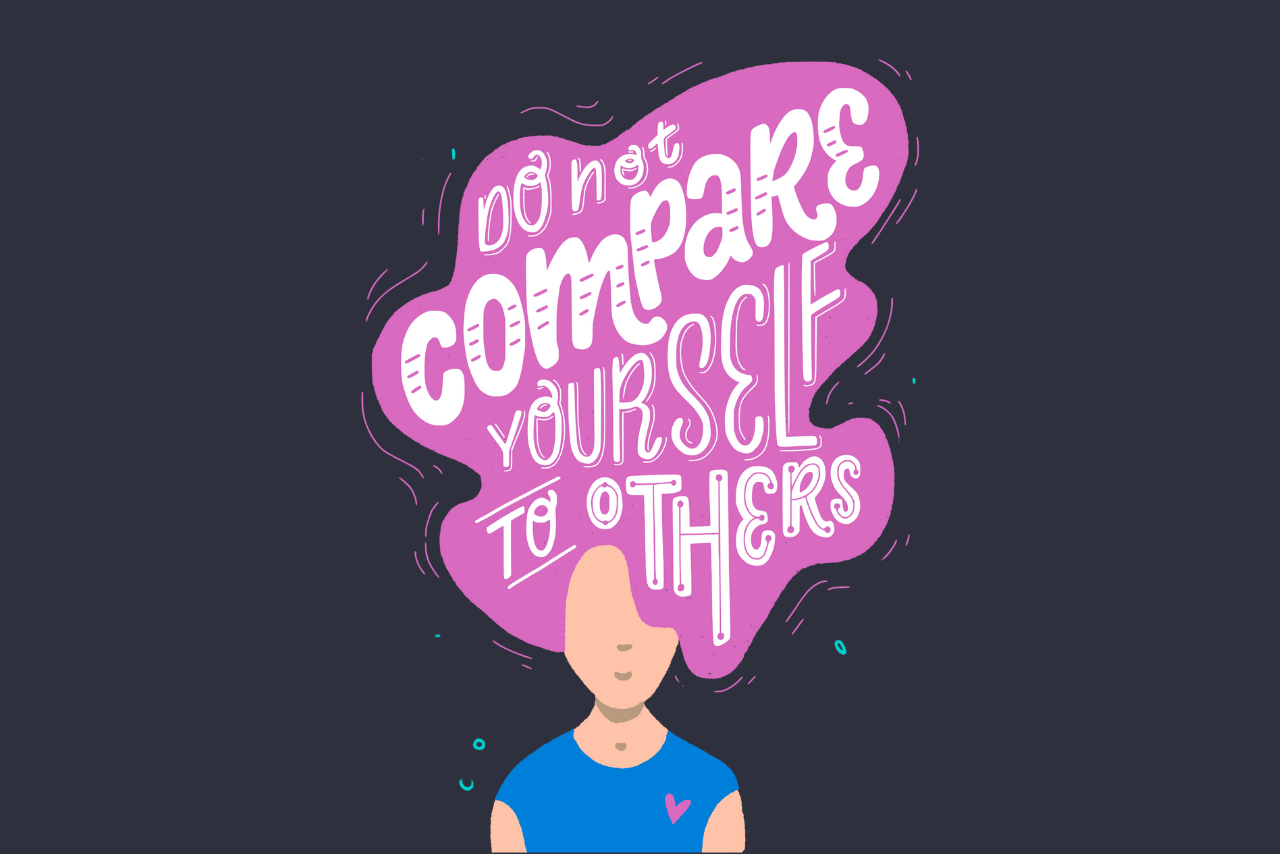
  • The Breakthrough That Helped Me Stop Comparing Myself to Others

    The Breakthrough That Helped Me Stop Comparing Myself to Others

    “Comparison is the thief of joy.” ~Theodore Roosevelt

    In March 2020, the UK went into its first Covid lockdown, and the country was swept with anxiety and sadness. When would we see our loved ones again? Would our health be okay? Was my job safe? And more pressingly, how the heck was I expected to teach my kids?

    Along with everyone else, I first received the news with a sense of impending doom and tried to make the best of a bizarre situation. “Normal life” consisted of stressful home schooling, online working, mask wearing, and (in the UK at least) stockpiling toilet paper!

    We were forced to slow down and retreat because nobody was allowed to socialize or engage in any activity outside of work or home. This was hard at first, but then, after a few weeks, something strange happened. I realized I’d never felt happier.

    You see, before lockdown, I might have appeared happy on the outside, but inside, I was an insecure mess. My mind was full of all the things I thought I “should” be doing: planning more exciting weekend plans, engaging in better hobbies, and making a bigger group of friends. Unless I was at the latest summer festival or spending my Wednesday evenings doing yin yoga, I didn’t feel good enough.

    After a busy day at work, scrolling through Facebook just gave me another list of things to do. An empty schedule felt like failure, and everyone else’s lives looked so much more exciting.

    So I lived for the future, constantly in planning mode and looking over my shoulder for approval. The pressure to keep up and always be doing something was exhausting. It caused rows with my husband (who couldn’t care less what everyone else was up to!), made me ignore my own needs, and reinforced low self-worth.

    If I wasn’t thinking about plans, then I was thinking about people. I compared myself to (what I assumed were) other people’s busy social lives and felt obliged to organize group nights out or always have people over for dinner. Even when I wasn’t seeing friends, I was always preoccupied with them. Were they a good friend? Was I? Why hadn’t they replied to that text? Do they even like me?

    Just below the surface of all the “planning” and “people” chatter that filled my brain was the ever-present noise of self-criticism.

    If you’re not making the most of life every minute, you’re failing.

    If you don’t have the perfect gang of besties like everyone else, then there’s something wrong with you.

    Your life is boring compared to everyone else’s.

    Nobody finds you interesting.

    Do more!!

    What made it all worse was assuming I was the only one with this nagging need to keep striving and do more just to feel good enough.

    I now know that, not only am I not the only one, but this type of thinking is natural.

    When I trained as a compassion-focused therapist, I learned all about how social comparison is wired into our brains. This is because having the biggest tribe and highest status gave us protection in Stone Age times.

    What gives us a sense of status these days? How big our social media following is, how many likes we get, and how amazing our social feed looks! We can’t help sharing if we’ve done something exciting because that inner caveman is driving us to compete.

    The problem is that when we don’t feel like we’re keeping up, our brain will turn on our inner critic because it thinks it’s helping (thanks brain!). It also has a negative bias, which makes us focus on the ways that everyone else seems to be doing better than us. And the false images we see on social media don’t help!

    Although this tendency is natural and we cannot help it, we are living in an age of unprecedented information about what everyone else is doing, and it’s putting our innate comparison nature into overdrive! This puts a strain on us all.

    For me, this started to change when the country closed down. Since everyone’s social calendar was empty, I no longer had anything to compare myself to. Since there were no longer any events or classes, there was nothing I felt like I “should” be doing.

    I spent my evenings and weekends doing what was in front of me because there was no other option. I’d take a local walk, relax in the garden, watch TV, and make it an early night.

    Surprisingly, rather than feeling unhappy and bored, like my critic told me I would, I felt relaxed, deeply content, and at peace. No more feeling like I was missing out; no internal should-ing; no self-criticism for being “boring.” The world had gone quiet, and so had my mind.

    I also realized how small my social circle needed to be. I know that many people felt crushingly alone and understandably missed those vital connections, but for me, it wasn’t an issue. I had my husband and kids, and, for the most part, that’s all I needed.

    Seeing very few people felt incredibly liberating, and it occurred to me that my desire to have a large social circle came from a need for validation. I liked my own company and was an introvert. Who knew?

    As life started to open up again, I was determined to hold on to this deep sense of contentment, and I didn’t want the world to have to stop again for me to keep it.

    Here are five useful steps I practice regularly that have helped me do that.

    1. Practice mindful self-compassion.

    As a newly trained therapist and committed mindfulness practitioner, I’ve found that mindful self-compassion is a powerful tool that helps keep comparison and criticism at bay. It’s becoming a widely used method taught by psychologists and spiritual leaders to improve mental well-being and self-acceptance.

    So, when I find myself being self-critical and comparing myself to others, I pause and bring a curious attention to my thoughts so that they are less consuming. Something simple like “I am noticing I am having self-critical thoughts” can be enough to recognize it’s just a thought, not a fact.

    Next, I tune into how I am feeling in my body so that I can label my emotions and allow any discomfort to be there. There might be a tightness in my chest from turning down an invitation or a heaviness in my stomach from feeling not good enough.

    Then, rather than judge how I feel, I remind myself that I cannot help it and that everyone feels like this from time to time. This step is so powerful because it releases the self-judgment cycle that makes us feel worse and opens up space for compassion.

    Finally, I ask myself what I need to hear, what would be helpful in this moment, or what I would say to a friend. Inevitably, I am able to tap into a deeper wisdom to remind myself that I am good enough already, that my needs are important, or that we have no idea what other people’s lives are really like.

    2. Give myself permission to be boring.

    We can be perfectly happy with our relatively chill weekend or evening, but as soon as we scroll through social media and see what other people are up to, we think there’s something wrong with us, and we experience FOMO.

    If you’re an active type and love staying busy, then great. But for me, the constant need to be doing something came from social pressure, and quiet evenings in front of the TV were what I craved the most after a busy day at work.

    Giving myself permission to be ‘boring’ honors who I am and helps me tune into my needs, which helps me know and like myself more. If the self-critical thoughts creep in, it’s a perfect time to practice self-compassion, and I remind myself that nobody is paying attention anyway.

    3. Keep my circle small.

     Many friendships changed for everyone during Covid because we were forced to focus on who mattered. I felt grateful that Covid made me realize that a large social circle was not actually making me happier, and social comparison had been a big driver for that.

    Not everyone has or needs a big gang, like my self-critic had told me. So, instead of going back out there and rekindling all my friendships, I made a point of keeping my circle small. I now focus on one to two close friendships and am able to be friendly with others without feeling like I have to be best friends with everyone!

    4. Embrace my inner introvert.

    It can be easy to think that introverts are quiet, bookish types, and if you met me, you would know that I do not fit that description at all. “Life and soul,” “chatterbox,” and “super-confident” are words that might more accurately describe me. But, as an empath, I have limited social reserves to be around people constantly, and I don’t need to either.

    I am perfectly happy in my own company and need lots of time to recharge in between socializing. Such tendencies do not suit a lifestyle with a busy social calendar and wide friendship circle. Acknowledging and accepting my introversion has allowed me to tune into what I need rather than thinking I need to be like everyone else.

    5. Work on my self-worth.

    Although we are all prone to social comparison, we are much more likely to do it if we lack self-worth. This is because our default “not good enough” belief makes us automatically assume other people are better than us, so to feel good enough, we try to keep up and secure imaginary approval.

    But it’s a slippery pole we can never get to the top of because it’s coming from a faulty belief that won’t go away just because we have external conditions. We therefore need to accept that we are already okay as we are, focus on what is important to us, and leave other people to their own lives.

    For me, using self-compassion and self-worth meditations, acting as if I was already good enough, and offering myself positive self-worth validations really helped.

    Learning to let go of destructive social comparisons and having the courage to be myself has been life changing, and I haven’t looked back since. There was so much about the pandemic that was negative, but I am grateful for the changes it helped me make.

  • When You Start Thinking That You’re Not Good Enough…

    When You Start Thinking That You’re Not Good Enough…

    “You are strong when you know your weaknesses. You are beautiful when you appreciate your flaws. You are wise when you learn from your mistakes.” ~Unknown

    The most annoying thing for me is to hear someone tell me, “Just stop it!” whenever I am frustrated or discouraged and looking for answers and solutions.

    When you’re anxious, and someone tells you, “Stop worrying, it will all be fine…” these words only add fuel to the fire and often make you angry. At least this is true for me.

    It reminds me of a funny video I watched about a “unique” therapeutic approach, when a therapist just tells a patient, after listening to their problems with deep emotional issues, “STOP IT!”

    “But I can’t just stop it,” the patient responds. “This issue has been within me since childhood, and my mom used to do the same.”

    But the therapist just calmly responds, “We don’t go there. Just stop it.”

    If only it were that easy to stop it: the limiting beliefs, the destructive behavior, the unwanted outcomes, the toxic relationships, etc. All people would be skinny, rich, and happy, and we’d live in the ideal word, but unfortunately, that’s not the case.

    You can’t just stop a feeling, especially one that tells you “you are not good enough.”

    No matter how hard I work on my personal growth and myself, the feelings of inadequacy and comparisons to others creep in occasionally, especially when things don’t go according to my plans. It is so easy for me to blame myself when I’m feeling frustrated.

    No matter how hard I try to push away the feeling that I’m not good enough, it doesn’t go away. In fact, it just strengthens. The more I resist that feelings, the more it persists.

    The ironic part is that my intellectual mind knows it’s not true that I’m not good enough. On a good day, I feel powerful and anchored, and I know my value. But on a bad day—when I fail at something or take things personally—I can’t seem to stop the wave of negative emotions that take me over.

    I’ve learned that I can’t just snap out of a negative feeling. I can’t just stop it. And I can’t bottle it.

    So what can you do when your inner voice tells you “you are not good enough”?

    Well, first of all, you need to acknowledge what you’re feeling. When you accept your feelings instead of trying to change them, they have less power over you, and can even serve you by encouraging your growth.

    For example, I recently attended a local speaking club where a French lady presented a speech. She spoke in English, but, as I speak French, I wanted to complement her speech in the French language.

    To my big annoyance, my mind just went blank after “Excellent travail!” (Great job!) I couldn’t think of another word. I quickly switched to English, but I felt like a failure.

    My logical mind was saying, “It’s okay, you don’t use French often, that’s why you forgot,” but my emotional mind woke up all my gremlins, who were screaming at me “You are not good enough!”

    I felt really frustrated, but that incident encouraged me to go back to my French books to refresh my memory. I enjoyed rereading Le Petit Prince, and in the end, I felt good about myself.

    It might be a simple example, but that’s how our psychology works.

    When you look your insecurity in the eyes, it often reveals an opportunity for fulfillment or improvement. Don’t deny it; listen to it. Don’t engage in the emotions it produces—the feelings of inadequacy, inferiority, and shame; just listen to what it has to say.

    It doesn’t matter how many times I tell you, “You are beautiful and amazing just the way you are” (and by the way, this is absolutely true); when you look at yourself in the mirror and you don’t like what you see, you will find it hard to believe this. You inner voice might tell you, “You are not good enough as you are right now.”

    Acknowledge that voice and consider that maybe your insecurity has some constructive value; for example, maybe your inner voice is trying to encourage you to start eating healthier or working out.

    You also need to accept the fear that you’re not good enough as part of yourself. I don’t care where you are in life—how successful, loved, and fulfilled you might feel—we all focus on our flaws and imperfections from time to time. It’s called being human. We can’t always be at our best and most confident. And this is okay.

    It’s okay to occasionally feel like you are not good enough, as long as you recognize that thoughts and feelings aren’t facts and don’t dwell in that state.

    These wobbly moments are unpleasant but inevitable; you can’t avoid them.

    Give yourself permission to be imperfect, to question and doubt yourself occasionally. Without questions and doubts we wouldn’t be able to grow and develop.

    I believe through wrestling with our weaknesses we are able to get to the other side of our strengths. But we can’t just ignore our shortcomings. They’re an undeniable part of us. We have to be aware and own the good, the bad, and the ugly within us, so we are better equipped to deal with our limitations.

    So, the question is not how to eliminate the negative voice, but how to learn to deal with it in an intelligent, mature, and conscious way. Listen to it, learn from it, but don’t let it define who you are, don’t let it write your story.

    Don’t be afraid of it and don’t try to stop it; allow it to help you learn more about who you are and who you can be.

  • How to Keep Going When You’re Not Good at Something New

    How to Keep Going When You’re Not Good at Something New

    I believe the people who are the most satisfied in life are those who feel the most alive.

    We generally feel most alive when we propel ourselves out of our comfort zone and seize new possibilities for meaning, excitement, and passion. But unfortunately, we’re wired to do what feels easy and safe, and it rarely feels easy or safe to be a beginner.

    No one wants to feel like Bambi taking his first wobbly first steps—weak, inept, like he could fall over at any time.

    And no one wants to feel as vulnerably exposed as Napoleon Dynamite during his awkward “Vote for Pedro” dance, an audience of underwhelmed peers staring blankly back at him, possibly judging in their heads.

    We want to feel competent, confident, and proud. Like we know what we’re doing and we’re doing it well. But that’s not usually how it works when we’re just starting out.

    Recently I’ve been helping produce a new podcast called Next Creator Up, a show that helps people get out of their own way and create what they want to create. In the first episode, Ehren Prudhel, my partner in many things, interviewed singer/songwriter Kelley McRae.

    After spending years touring, Kelley wanted to focus more on connection, community, and giving back, and ultimately started Song Rise Arts—a non-profit through which she helps underprivileged youth share their stories through song.

    Though her interview was full of aha moments for me, one thing that really stuck out for me was a discussion about getting a win quickly.

    She shared how she helps her kids complete something on day one so that they feel proud of themselves and motivated to continue.

    It’s such a simple idea, and yet incredibly powerful.

    Think about it: How many times have you tried something new and hard, felt overwhelmed, and then decided it wasn’t for you?

    I remember when I was really into step aerobics in my twenties. I liked to stand in the front row in class so I could see my form in the mirror.

    Since I’d been taking classes for months, I never felt insecure being front and center. In fact, I felt confident and proud of myself for hopping around up there with such precision of movement—so much so that it blinded me to the potential consequences of stationing my newby friend right beside me in the spotlight.

    Looking back, I can’t believe it didn’t occur to me that she likely wouldn’t appreciate being quite so visible while learning something new.

    Sure enough, she struggled throughout the entire class, every misstep reflected back to the whole group in the mirror; she felt discouraged and embarrassed; and she never again came back.

    I’ve had many similar experiences like this myself.

    Like the time I decided to learn to cook. One would think, after my aerobics experience, I would have recognized the importance of starting small and safe. But no.

    I didn’t try an easy recipe for one simple dish. I tried a four-course gourmet meal, burned most of it, then decided to go back to sandwiches and frozen food. Because I just wasn’t meant to cook.

    Then there was the time when I first tried painting. It would have made sense to find a class for beginners or a YouTube tutorial for something basic. But instead I overspent on art supplies, including a massive canvas, and quickly felt discouraged when I realized my piece looked like something I’d painted blindfolded. And drunk.

    In both situations, I expected instant perfection and set myself up for failure—not just in the moment but also in the long-term. I went from someone who could learn to cook and paint, in time, to someone who was afraid to try. Because I sucked at both… or so I thought.

    I now understand the importance of creating an early win, and continuing to create small wins over time, which I’ve learned requires me to do the following:

    • Adopt a growth mindset
    • Start small
    • Hold reasonable expectations
    • Avoid comparisons
    • Give myself credit

    If you want to feel more alive, and have identified a way to stretch into new territory, this is the path to seeing it through.

    Adopt a growth mindset.

    This is a crucial first step because you have to believe in your capacity to grow and improve, or you likely won’t allow yourself to keep going after your first imperfect attempt.

    Psychology professor Carol Dweck coined the terms “fixed mindset” and “growth mindset” over thirty years ago after studying thousands of kids and recognizing two opposing belief systems that influenced their efforts and their outcomes.

    People with a “fixed mindset” believe that success is based on innate ability—meaning you either have it or you don’t, and if you fail, it’s confirmation of the latter. It means you’re not talented enough, smart enough, or good enough, so there’s no point in trying any further because you’ll just make yourself look bad.

    People with a “growth mindset” believe that failures are part of learning, and if they keep trying, they can get better over time. Because they believe this, they keep showing up and eventually confirm their own belief. They may feel embarrassed when starting out, but they understand this is just part of the process.

    It turns out growth truly is possible for anyone. Research in brain plasticity has shown that through repeated practice—at anything—we can build new pathways in our brain, enabling continued progress.

    I remember when I was in Amsterdam, where more people ride bikes than drive cars. I had never ridden a bike in a street before, or ridden a bike at all since childhood, and I struggled to start up again whenever a red light turned green.

    On my first day, I was holding up bike traffic at an intersection as I tried to get myself going, so I turned my head and told the biker behind me, “Sorry, I’m not really good at this!” With a huge grin, he responded, “Not yet!”

    And he was right. By the end of my month there, I was stopping and starting like a pro, something that couldn’t have happened if I kicked my bike to the curb in resignation on day one.

    So before you go into this new thing, whatever it is, no matter how hard, recognize that ineptitude is just a starting point, and if you put in the time, even just a little every day, you will eventually see results. 

    Start small.

    When we feel a sense of accomplishment, it activates the reward center of our brain, releasing the neurochemical dopamine. Because we feel good, we’re then driven to do more.

    And the thing is, we don’t actually need to achieve massive success to feel a sense of accomplishment. Even a small win—like writing one section of a blog post or signing up for a class—can motivate us to keep moving forward.

    This isn’t relevant only when pursuing passions and professional goals; the same principle applies with everything you might want to improve in your life.

    If you’re struggling with depression or anxiety, applying one lesson or tool from therapy or personal research can help you feel encouraged and inspire more healthy choices.

    If you’d like to improve your financial situation, unsubscribing from one store newsletter or bringing lunch instead of buying it can empower you to make more smart money decisions.

    Or, if you’re trying to improve your health, walking ten minutes on a treadmill or smoking one fewer cigarette today could help you find the motivation to keep taking tiny steps forward.

    This was actually the most helpful approach I used when recovering from bulimia. The treatment centers preached abstinence, and for good reason, I know—setbacks can have fatal consequences when you’re putting such strain on your heart.

    But I was too far in to simply stop, and every slipup created massive shame, which then led to more slipups. So instead of expecting perfection, I told myself to do one fewer disordered behavior today, and to do at least the same tomorrow, or one fewer than that if I could.

    Sure enough, I eventually started to feel proud of myself, my pride built momentum, and through that momentum (along with continued therapy to address trauma from my past), I slowly healed.

    Hold reasonable expectations.

    In order to start small, you have to be willing to let go of any unrealistic expectations about what you should be able to accomplish.

    This isn’t always easy to do. We live in a culture that promotes extraordinary natural talent as an indicator of worth, and celebrates “overnight success” as the ultimate sign of accomplishment.

    But the truth is, even people with natural talent need to work hard to excel at their craft, and “overnight success” usually happens after months and years of work that no one knew to recognize, because it wasn’t public.

    So let go of the idea that you should be anywhere other than where you are. Release yourself from the burden of believing your current skill level says anything about who you are as a person, or what’s possible for you.

    If you’re going to expect anything as you start doing something new, expect that:

    • You may not be very good at it.
    • You may feel embarrassed if other people are watching.
    • You may follow every small win with (what feels like) a small failure.
    • You may feel frustrated and wish you could do more than you can do.
    • You may not be able to live up to your own taste level (another insight from Kelley’s interview).
    • You may want to give up because it feels too hard.
    • You may make slower progress than you’d like.
    • But if you accept all of the above and keep showing up anyways, you will eventually see results.

    Avoid comparisons.

    There’s a quote I love that reads, “Don’t compare your chapter one to someone else’s chapter twenty.” I’d extend this further to include, “Or someone else’s chapter one.”

    It’s tempting to judge ourselves based on someone else’s capabilities or accomplishments, especially since they’re in our face all day, every day, on social media. But all this does is feed into our insecurities and doubts and leave us feeling inadequate and discouraged.

    We’re all starting from different places, with different backgrounds, strengths, and skill levels. And we all have different wants, priorities, and values. Maybe you value balance, so you’re moving more slowly than someone else who works around the clock and deprioritizes family time and sleep.

    You could compare yourself to that person, but would it really be a fair comparison?

    And even if you are making a fair comparison, does it actually serve you in any way?

    I’m not going to lie; knowing this doesn’t always make it easy for me to stop comparing myself to other people.

    I sometimes see people who seem to be doing better, question if maybe they’re just fundamentally better—not just at whatever they’re doing, but also as people—and then get stuck in a cycle of shame and self-judgment. And sometimes this all happens so quickly I don’t even realize I’m doing it.

    If you find it hard to avoid comparisons, then maybe a better goal, for now, is to avoid comparison triggers.

    If you know you get down on yourself when you look at a specific person’s Facebook updates, unfollow them. If you can’t read about the greats in your niche without feeling like a failure, don’t read about them.

    Keep your eyes on your own path so you’re less apt to convince yourself your small wins are insignificant.

    Give yourself credit.

     A small win only has value if you acknowledge it, so stop and create some self-satisfaction by asking yourself the following questions:

    • What did I do right or well?
    • Why was this impressive or noteworthy for me specifically, based on my unique personality, past, and challenges?
    • What fears did I have to push through to do this?
    • In what way did this push me out of my comfort zone?
    • Why is this small win actually a big win?
    • What would I say to a friend or my child if they had a small win like this?

    Proactively choose to build yourself up for doing whatever you did, no matter how small, and you’ll be more likely to do the same, or even more, tomorrow. Then you’ll give yourself more credit, feel even more motivated, and slowly, over time, become the person you want to be and do the things you want to do.

    If you’re interested in hearing the podcast episode I mentioned at the start of this post, you can find it here, along with detailed show notes.

    I’m incredibly proud of Ehren, the show’s host, who’s pushed himself outside of his comfort zone with this new venture, and has been collecting small wins over the last several months leading up to this launch.

    And I’m beyond inspired by Kelley McRae, a talented musician and brilliant teacher who’s making a tremendous difference for low-income kids by enabling them to tell their stories through song.

  • When I Stopped Competing, I Set Myself Free

    When I Stopped Competing, I Set Myself Free

    “With nothing to compare yourself to, aren’t you perfect?” ~Byron Katie

    I have never liked competition. Every time I compete, I feel pressured and disconnected from others. I love harmony, peace, collaboration, and win-win situations, kind of like “me happy, you happy.” I don’t need to watch another person lose the game to feel good about myself. I don’t need to dominate or put someone else down in order to feel superior and worthy.

    In some cultures, competing is perceived as a sign of ambition, power, and strength. Most of us grew up hearing constant comparisons, which turned into a habit during our adult lives:

    “Do I look better than her? I want to be slimmer.”

    “How much is he earning? I want more.”

    “Where does she live? I want a house at least that size.”

    And so on…

    In my home country, Romania, like in many other places, the schooling system was a fierce competition to get the best grades and be the first in the class. As a child, I remember spending an average of ten hours a day studying and doing homework during weekdays. I hardly had any time to play and relax.

    Teachers were always making comparisons between students, parents would compare their children to their friends’ or neighbors’ kids, and no one truly encouraged individual talents.

    As a result of this conditioning, I ended up struggling with serious self-esteem issues for many years. As a young woman, I didn’t see myself as good enough, beautiful enough, smart enough, or successful enough, and I desperately tried to be perfect.

    When I wasn’t competing with other people, I was competing with myself. I was always striving to be the best friend I could be, the best daughter, or the best employee at work. Pleasing others was addictive because I felt validated whenever I heard “well done!” And then I wanted to do even better.

    I am not here to blame. I am not a victim. My parents did the best they could at the time, and society did the best it knew, so I am not blaming but instead looking for hidden and limiting beliefs that have worked against me. Here’s what I have realized I need to do:

    1. Stop competing with other people.

    “Comparing yourself to others is an act of violence against your authentic self.” ~Iyanla Vanzant

    Our society often encourages competition. There are some circumstances when we have no choice but to compete—when applying for a new position at work or attending job interviews, for example. However, there are situations when we make the rules, and the choice is entirely up to us. We can live our own lives and mind our own journey, or we can choose to compete with others over who’s more attractive, wealthier, happier, or more successful.

    During my single years, I often compared myself to other women. Most of them seemed settled; they were married and had the house, the men, the kids, and the dog. I used to feel like a failure, as if something were wrong with me. I met my husband when I was thirty-six. We were two Romanians working in Asia, for the same company. Small world, indeed. We’ve been happily married for four years now.

    So here what I’ve learned: Everyone is on their own path, and we all do what’s right for ourselves, in our own time. I believe we live in a supportive Universe where everything unfolds perfectly—at the right time, in the right place. Comparing ourselves to others is an infinite source of stress and frustration, and it doesn’t serve us well.

    2. Stop competing against myself.

    “Doing your best is more important than being the best.” ~Zig Ziglar

    Perfection is nothing but pure fiction, an illusion created by our minds. It’s also a learned practice. Most of us were raised to constantly strive to become better people—to focus on our flaws and perceived limitations—and we either take our strengths for granted or aren’t even aware of them.

    While we are all learning from our experiences and mistakes, we also need to be aware of our gifts and talents. We need to celebrate our uniqueness and detach ourselves from the toxic habit of comparing ourselves to others.

    Yet here I am, in my forties, still reading about infinite ways to become a better human. With so much focus on the need for improvement, particularly in the personal development industry, I wonder when I am ever supposed to turn into the best version of myself and find peace.

    So I’ve stopped competing with myself. I refuse to fight against myself so that I can reach the end of the tunnel, and I am no longer waiting for the magical day when I will become perfect and faultless.

    Why turn my life into a never-ending competition? True friendship is not about competing against each other. It’s about support and collaboration. Why act as my competitor when I can be my own best friend?

    As the Chinese proverb says, “Tension is who you think you should be. Relaxation is who you are.”

    If I am to spend my precious time waiting to grow into the best of myself, there will always be something to change, add, fix, or transform so that I can finally feel whole and complete.

    Life doesn’t have to be such a daily struggle. I don’t have to fix myself because I am not broken.

    I embrace the entire repertoire of my humanity with self-love and compassion. I choose not to be a “work in progress.” My desire for growth is about taking each day as an opportunity to learn more about life and myself.

    That’s how I discover who I really am and what brings me genuine happiness and fulfillment. By releasing old patterns and limiting beliefs that don’t serve me well, I get closer to my real human essence. My life is all about experiencing things as they come. It is a journey of self-discovery, not self-improvement.

    Since I changed my perspective, I’ve stopped beating myself up. I now talk to myself kindly. I treat myself with dignity and respect. I know I am worthy of the best things life has to offer, and it is my birthright to be happy. My happiness is nothing to compete or fight for.

    I also choose to see myself as perfectly beautiful and beautifully imperfect. I celebrate my mistakes as much-needed opportunities for growth. I celebrate both success and failure because this is what makes me wiser. I treat every life experience as an opportunity to learn new things about myself and other people.

    Furthermore, I’ve learned to forgive myself for my mistakes in the same way I forgive others, knowing I am also human. As a student at the school of life, I will sometimes rise and sometimes fall, and that is okay. I no longer strive to become the best version of myself. Instead, I always do the best I can. When I know I’ve done the best I could, there’s no room for regrets. Whenever I know better, I do better.

    I am enough and worthy, so I don’t need to prove myself to anyone. Not even to myself. Newborns and babies do not compete against each other. They love and approve of themselves as they are. In our competition-oriented society, we need to remind ourselves more of our true nature, which is balanced, loving, and peaceful.

    I believe the world needs fewer fighters and competitors. The world needs more givers, peacemakers, and soul nurturers, and it also needs more compassion.

    The day I stopped competing against myself and others, I set myself free.

    Artwork by Rebecca Freeman

  • Why We Don’t Need to Worry About What’s Missing in Our Lives

    Why We Don’t Need to Worry About What’s Missing in Our Lives

    Life is like a puzzle..Life consists of many components, 3d rendering

    “Don’t compare your struggles to anyone else’s. Don’t get discouraged by the success of others. Make your own path and never give up.” ~Unknown

    My recent breakup was the most painful experience of my life. More painful maybe than it should have been, as it came at a time when a lot of things weren’t going as I hoped they would.

    The road to healing seemed so much steeper and longer when all of these things also needed to be ‘fixed.’

    As I approached my thirtieth birthday, I found myself back living at home with my parents and at a crossroads in my career. I was suffering from anxiety and felt as though my life had little purpose. Things just weren’t supposed to be this way. This was not part of the plan.

    I knew that I needed to make some serious changes, but I was overwhelmed by the sheer size of the task in my hands.

    It wasn’t just my heart that had smashed. It was as though my life was a jigsaw that had just been broken into a million pieces. And I had to recreate the picture.

    So I started as you do with a jigsaw.

    I slowly picked up the pieces, one by one, and tried my best to slot them together.

    It wasn’t an easy task. Sometimes I couldn’t find the piece that I was looking for. Often, it seemed like the small sections I had completed would never properly fit together. There were many times I got frustrated and felt like abandoning the project all together.

    Yet somewhere along the way the picture started to take shape.

    I focused on my mental health and explored mindfulness. I devoted time to new hobbies and joined a sports club. I revisited my childhood passion for writing. I spent quality time with old friends and enjoyed getting to know new ones. I got a puppy.

    Bit by bit, I picked up the pieces and worked hard to create something new.

    After a while I could start to recognize some serious progress. I was still a long way off finishing the jigsaw, but it was getting easier to work on it. I was feeling much stronger, feeling a new sense of hope that one day I would get there. I had caught a glimpse of what the picture could become.

    Yet despite my best efforts, the holes in the picture haunted me.

    I was acutely aware of the parts that were missing. Months had passed, and some of the main pieces still evaded me, the ones that I saw as being crucial to my picture. It weighed on me greatly.

    Without these pieces, I felt that the jigsaw could never really make sense. Instead of concentrating on the pieces I had, I spent a lot of my time searching for these middle pieces. The others just didn’t hold as much value. At least, that’s how I chose to view it.

    Then one day, I cast my thoughts back to the start of my jigsaw journey.

    I remembered how utterly lost and frightened I had felt at that time. How overwhelming the whole process ahead seemed. And I realized just how much of the picture had appeared without me really noticing it. I considered how inconceivable this progress had seemed at the start, how proud I should be that I had managed to get this far.

    But once again, the missing pieces came into focus.

    On a night out with friends, talk naturally revolved around our jigsaws. I was already acutely aware that theirs were at a more advanced stage to mine. Engagements, mortgages, weddings, children.

    I observed, sadly, how many of their milestone pieces were already secure. An acute reminder that I still had so many to find.

    I wondered if I would ever find them or if my jigsaw would just remain incomplete forever. Still a jigsaw of sorts, but not as it should look. I was happy for my friends’ success. I just worried that I seemed to be so far behind.

    But then, as the conversation continued, I made another observation.

    It seemed as though there were parts of their jigsaws that were also still incomplete. These may have been the outer parts, the ones not quite at the center, but they were parts of the jigsaw nonetheless—parts that I, myself, had managed to obtain but perhaps had taken for granted.

    Through hard work and determination, I had successfully made the career transition that had once seemed impossible.

    My lowest points had strengthened my relationships and showed me that I had people who I could really count on.

    My period of reflection had taught me a lot about myself and what I wanted from life.

    I had developed my own interests as an individual and become more independent.

    I acknowledged that these were also a significant part of the picture, and that a jigsaw had many different pieces and everyone still had work to do. I realized that while I was busy concentrating on my missing pieces, I had neglected to appreciate the value of these other ones.

    While I was busy feeling ashamed of its hollow middle, others may just have been noticing how my corners were taking shape. To me, my jigsaw didn’t look as I wanted it to, but that didn’t mean that it looked the same to everyone else. And it didn’t make my success any less admirable.

    Viewed with a less critical eye, they would see a jigsaw that was slowly but surely taking shape, albeit a little slower than their own. A jigsaw at a different stage but with lots of potential. If I shifted my perspective, I might just notice how all the pieces were starting to connect.

    We are all completing a jigsaw of our lives at any given moment. Some of us are further ahead; some of us are a little bit behind. Sometimes a tremor comes along that will damage a piece of the picture, or may even dismantle it completely.

    In that case we must start to rebuild it again, maybe even from scratch. Sometimes we may never find a missing piece and the jigsaw must be appreciated without it. To destroy the whole jigsaw because of one missing piece would be to sacrifice a lifetime’s effort.

    The important thing is that, as we work side by side to do this, we must not let each other’s “success” deter our own progress. We have all been given slightly different jigsaws, some appear easy, some harder, but they will all have their unique challenges. And in the end, each one creates a beautiful picture. A result that is completely unique.

    How someone else constructs their jigsaw will not be the same as your approach. Some people dive straight in and fill in the middle, but then can find it a bit more difficult to fill out the edges. Some like to sort out all the pieces carefully before they even start.

    Some will have help completing their jigsaw, but that just makes it more of an achievement for those who manage to complete it alone. Your jigsaw is your masterpiece. It does not have to look like anybody else’s, nor does it have to be completed in the same way.

    Approach it your own way, and be sure to credit yourself for each part that takes shape. You can glance at others’ jigsaws now and again, but don’t let this put you off yours. No one knows what life holds in store for us, so comparison is a futile exercise.

    Support others and celebrate their progress, trusting in your heart that they will do the same for you as you move forward. Your time will come. You may even inspire others along the way.

    Try not to worry about how the picture will turn out, but enjoy the process and the excitement of seeing it revealed. You may think that you know what the picture will be like, only for it to turn out completely different. But either way, at the end, you will look back and see that they were all made perfectly. That your final picture is beautiful and as it was always meant to be.

    As it stands my jigsaw is still incomplete, but I am choosing to view the process differently. I am consistently working on the smaller pieces and these are bringing me much greater satisfaction.

    They are starting to give the whole picture a lot more meaning now that I’m not fixated on the gap in the middle. I now have much more appreciation for the value of these pieces. I know that I will look back one day and see that these were a lot more vital than I initially thought.

    I am also choosing to trust that the bigger pieces are on their way. I look forward to the days when they will slot easily into their rightful place, surrounded by a sturdy framework.

    With hindsight I can see that first jigsaw just wasn’t working out for me. Although painful at the time, the shake-up was necessary. There were pieces that were never going to fit, no matter how much I wanted them to. I like to believe that there is a reason why my jigsaw needed to be reconstructed in this way.

    For now, though, I have decided to be present and just enjoy the process. Because the reality is that we only get one jigsaw, and I want to make the most of the one I’ve got.

    I have a feeling that it’s shaping up to be a good one.

  • How to Feel Good Enough (When You Feel Anything But)

    How to Feel Good Enough (When You Feel Anything But)

    Woman hiding

    “There are plenty of difficult obstacles in your path. Don’t allow yourself to become one of them.” ~Ralph Marston

    I recently had a personal conversation with someone who was describing some struggles they were experiencing. In passing, they mentioned “It’s okay for you, you’ve fought your battles” and went on to talk about how I’m married, I’m working in a career I love, and I’m “successful.”

    Listening to them, I could feel my heart breaking, partly for them: I know what it’s like to compare my insides to someone else’s outsides and find myself severely wanting.

    But I also felt a deep sadness tinged with frustration, because their assumption was so far from the truth.

    While I am incredibly grateful to have the relationship, the professional opportunities, and everything else I have—and it’s true there are some battles that are now in my past—there are also plenty of challenges I’m still navigating. The biggest one by far is around feeling good enough; feeling at peace and fulfilled with who I am and what I’m doing in life.

    For a long time, I used external achievement to buoy my sense of worthiness. Underneath that, however, hid a lot of shame and anxiety, because I thought I was somehow deficient compared to other people. I felt a constant need to reinvent myself and be more than I currently was to keep up with those around me.

    Feeling good enough (and defining what good enough is) has been one of my biggest struggles and something I’ve realized will possibly be a lifelong process.

    I’d like to share some of my experiences and talk about a few things I’ve found helpful for my own ongoing journey. If you also struggle to feel good enough as you are, I hope they are helpful for you too:

    1. “Good enough” looks like different things in different contexts. 

    I used to set myself up for failure by telling myself something needed to be perfect to be good enough. Now, I’ve learned “good enough” exists on a spectrum, influenced by the situation, the context and other things that are happening in life, as well as my well-being, my values, and my priorities.

    In her book Succeed, psychologist Heidi Grant Halvorson explains it’s more helpful to focus on “getting better” rather than “being good.”

    When we focus on the latter, we tend to tie our self-worth to achievement and see ourselves either as a success or a failure. With the former, we are more open to the idea that skills, capability, and achievement are malleable things we can influence with our beliefs and behavior.

    When I tell myself the story that something has to go exactly to plan or it’s a total failure, I’m less likely to try things, I’m less open to feedback that will help me improve, and ultimately, I’m less likely to grow.

    If I try something and it doesn’t work out, it might feel painful in the short-term, but I know I’ll feel much better (and prouder of myself) looking back and knowing I’ve tried than looking back at a missed opportunity.

    I’ve also learned that it’s important to define “good enough” on my terms. Other people might have different ideas about what it means and looks like, but I can’t control that. Equally, there will always be someone who is smarter, more talented, more accomplished, more X and more Y than I am. The only person it’s helpful for me to compare myself to is me, yesterday.

    2. I focus on who I want to be more than what I want to achieve.

    Unhooking my self-worth from external achievement is still a work in progress, but one of the things I’ve found most helpful is focusing on the bigger picture. Sometimes this looks like asking myself, “How important is this particular thing going to be to me in ten years’ time?” (Usual answer: not very!). More often than not, it involves shifting from thinking about doing to being.

    While many of us place a huge amount of stock on external achievement, there are usually many variables beyond our control that influence the outcome of a situation. Even if we do our best and do everything right, we might still feel “not good enough” because those external variables mean we didn’t get the gold star or top prize.

    What we do have control over, however, are the qualities we embody. When I find myself slipping into “not good enough” thoughts, I find it helpful to stop and ask myself: Who do I want to be today? This reminds me I want to show up in my life as a creator, not as a victim, with compassion, not judgment, and calmly and wholeheartedly, rather than fighting an internal war.

    3. I focus on all the things I’m getting right (as well as the things I think I’m getting wrong).

    My inner critic is a champ at highlighting all the things I’m doing wrong and all the ways I could improve, usually with a big helping of shame and judgment on the side. A big part of my journey has been learning to turn down the volume on this part of my internal dialogue and turn up the volume on the part I call my inner mentor.

    My inner mentor is also good at pointing out things I could improve, but she does it with a very different tone.

    She is also a lot more question-orientated (while my inner critic throws statements around like confetti) and tends to ask open-ended queries like “How could you approach that situation differently in the future?”

    She also balances constructive criticism with acknowledging all the things I’m getting right too.

    I encourage my inner mentor with simple exercises like keeping a “have done” list (as opposed to a “to do” list) and taking time each week to reflect on positive experiences, new opportunities, things I feel proud of, and lessons learned.

     4. I remember just because I think something doesn’t mean it’s true.

    Like my companion at the beginning of this post, I can feel very alone when I’m in the grip of a “not good enough” episode.

    During these times, and especially with the prevalence of curated social media feeds, it’s easy to look at other people’s lives and make all kinds of assumptions and judgments about how well things are going for them, even feeling a teensy bit resentful about how challenging our life feels compared to how easy theirs seems.

    Having spent the best part of the last decade working with emotional support in one capacity or another, I’ve realized that “good enough” is not the result of circumstance, achievement, money, or success.

    The Latin root of the word compassion is “suffering with.” Everyone feels like or fears they are not good enough at some point or another. Fearing that we are not good enough doesn’t make us not good enough; it just makes us human.

    Remembering this helps me feel less alone, which enables me to start gently challenging that voice and asking “Is that really true?” “What are the other alternatives here?” “How would I respond if my best friend was telling me this?” and “Who would I be without this belief? What would I do differently?”

    Finally, I’ve learned there isn’t a “one size fits all” way to feel comfortable and enough within ourselves. There are many different paths to the same destination, and the right path for us is the one that fits our values, feels truthful, and helps us connect with whom we truly are.

    How do you navigate feeling not good enough in your own life? I’d love to hear what you find most helpful, so leave a comment and share your thoughts.

  • Why Someone Else’s Success Isn’t a Threat to Yours

    Why Someone Else’s Success Isn’t a Threat to Yours

    Envy

    “Stop beating yourself up. You are a work in progress; which means you get there a little at a time, not all at once.” ~Unknown

    I got embarrassed at the gym.

    I sat down at the bench press, ready to hoist up 135 pounds of iron. My goal was eight reps for the first set.

    Before I started my first set, I heard someone huffing to my left. I looked over and saw a young guy benching 315 pounds!

    I counted his reps, and he went all the way up to eight. It was the same number of repetitions that I aimed for, only I was lifting 135 pounds, which is one 45-pound weight on each side (compared to his three on each side).

    How embarrassing!

    In that moment, I felt like I was wasting my time at the gym.

    This young guy beast was leagues ahead of me in terms of physical strength. For the same number of reps, he could lift 180 pounds more than me. That difference is so much that, despite the point I’m making, my pride told me to omit this story.

    Pride isn’t a good thing though, so here’s the story!

    Others’ Success Is Not a Threat to Yours

    I didn’t leave the gym early from discouragement because I realized two things.

    1. I can bench press my bodyweight now (150 pounds), which is something I had wanted to do for a long time.

    2. LA Fitness has mirrors for walls. Peering into a mirror, I noticed how much stronger I looked than ever before.

    In other words, I had a lot of progress to be happy about, and that’s not all that I noticed. Literally one minute before this happened, I saw a man downstairs; he was walking on the treadmill, and he was obese.

    I came full circle and realized that here I was feeling embarrassed for my puny bench press, when someone like the guy downstairs could possibly be jealous of my physical conditioning. It helped me understand why the overweight man, the beast, and I should all ignore each other’s progress.

    Detach Your Progress from Everyone Else

    Unless you’re having a competition with a friendly wager, your personal progress is 100% independent from the world and the people in it.

    So what if the guy next to me can bench press a small car? That doesn’t impact me unless I make it my new standard.

    So what if the guy on the treadmill is out of shape compared to many others at the gym? That doesn’t change what he’s there to do.

    Also, there is a difference between using someone else as a representation of where you want to be and letting their success threaten your sense of satisfaction in the progress you’ve made or are making.

    If you need to clarify your goal, you can then say something like, “I want the physique of Hugh Jackman.” That’s useful because it gives you a clear target (visually) of where you want to end up.

    What I did in the gym did not start with me—it was from the outside in. I saw the guy in the gym, and I interpreted his strength as a strike against the value of my progress and goals.

    I think it’s easy to mix up referencing and enviously comparing, because both involve the desire to improve. One is to clarify an idea while the other is a guilt-ridden, envious focus on who are you not.

    No Pain, Still Gain?

    I think it’s common to be envious of someone’s progress and want to use that as a motivator. But such “negative motivation” is mentally draining and relatively ineffective (guilt and discontentment are short-minded and inferior ways to move forward in life).

    There’s something really important I’ve experienced in the last couple of years: amazing progress doesn’t require emotional pain; it only requires consistent effort. From the story, did you notice what seeing the 315-pound bench presser did to me? It made me hesitate to make progress, which doesn’t make sense.

    Seeing him bench that much decreased my motivation to exercise because my efforts seemed futile in comparison. Of course, we’re human and we will always look around to see what others are doing, but when it comes to our progress, it seems we’re better off disregarding what we see.

    The Permanent Cure for Envy Is Progress

    It’s easier to let go of a disappointing comparison to others when you see and know you’re making progress. Otherwise, a sense of futility and despair can set in (and unfortunately, I know this from experience!) I don’t even expect or care to bench 315 pounds, but I know I can continue to get stronger every week, because I’ve proven it.

    I mentioned earlier that I can bench press my body weight (150 pounds). Well, a couple years ago, I had a close call in the gym: I couldn’t get the barbell back up on my fourth rep (without a spotter), and I had to duck my head out from underneath the bar as it crashed into the bench.

    How do I know it was close? The rough “grip” part of the bar actually scraped my head on the way down! And it was only 115 pounds. I’ve made a ton of progress since then. But if we’re going to make comparisons, let’s go for the extremes.

    Compare my one push-up a day to this guy’s 315-pound bench press. Head-to-head, his achievement makes mine seem less than worthless, and yet, my one push-up a day transformed my life. This is why comparisons are invalid—your progress is only relative to you, not other people.

    Since I started my one push-up a day mini habit two years ago, I’ve gained twenty pounds of mostly muscle because the more progress you make, the more you’ll be willing and able to make.

    Who or What Is Your Most Bothersome Comparison?

    Try this: Think about your version of the 315-pound bench press guy. Does someone else have the fame, power, money, or respect that you crave? Do you know someone who has your dream job?

    Whatever you came up with, admit and internalize that it is irrelevant to your journey and personal progress.

    There will always be someone who is further along the path than you are in every area. Instead of seeing that as a threat to your success, see it as irrelevant to your success, because it is! I can’t think of a single time that I changed my life because I thought I compared unfavorably to another person. Can you?

    It’s great to have other people in life for support, socializing, and new perspectives, but when it comes to your personal progress, it seems best to leave others out of it, and especially so in the early stages of your growth in an area.

    If you’re already world class in running, comparisons to other elite athletes might motivate you to get to the next level (and even in a healthy way). But in that case, you already have the solid foundation to build from. Many people don’t have such a powerful foundation, which is possibly why they want to improve, and so the comparison (to someone well ahead of them) makes them overreact.

    In my case, I might try to lift too much weight and hurt myself or else quit going to the gym because it’d seem trivial by comparison. That’d be a mistake, as what seems to be a little bit of progress in the world’s eyes can compound and completely change your life.

    The only person you have to measure up to is the person you were yesterday. If you can beat that person, trust me, you’re doing very well.

    Envy image via Shutterstock

  • How to Stop Envying Other People’s Seemingly Perfect Lives

    How to Stop Envying Other People’s Seemingly Perfect Lives

    “The reason we struggle with insecurity is because we compare our behind-the-scenes with everyone else’s highlight reel.” ~Steve Furtick

    It’s in our nature to compare ourselves with others. The ability to weigh one situation up against another helps us make decisions and live our lives productively.

    The downside is that when you constantly compare your own life with those of other people, you will always come up short.

    Over-comparing causes envy. Envy is the feeling or sensation we have when we want to get something that someone else has and we can’t be happy for them when they have it.

    Getting stuck in a cycle of envy is just about the best way to ruin your life. Fortunately, there are several ways to deal with envy that will guide you toward happiness and well-being.

    Don’t Compare Your Cutting Room Floor With Someone Else’s Highlight Reel

    Have you ever seen anybody post an unflattering photo on Facebook? Let’s face it, you rarely read about someone fighting with their spouse, hating their job, or declaring bankruptcy. Most people show you what they want you to see—a highly edited, glossed-up version of their life.

    The next time you feel envious about someone else’s life, remember that you’re only looking at part of the story, the part they want you to see.

    Think of something that another person has that you want. For example, maybe someone you know is far more popular than you. On the surface it may appear that they are surrounded with people who look up to them, and that they are well-liked and respected.

    But in reality people might have a different view of them behind closed doors. In this case, the actual reality and what we perceive as reality are two very different things.

    Even the most enviable lifestyle has downsides. For example, many people covet the glamour and glitz of the rich and famous. But have you ever sat down and thought about what kind of life a famous person has?

    Ask yourself if you’d enjoy someone jumping out of a bush and taking a snapshot of you in your grubby tracksuit pants while you’re collecting the newspaper from the front lawn.

    There are always two sides to every coin. What you think you see is not necessarily the reality. So the next time you get caught up in envy, always remember that unless you are that person you don’t really have the whole story.

    Isn’t It Already Here?

    I am by nature a private person, but I wasn’t always that way. In my twenties I was invited to every party, had scores of friends, and was (in my own mind, at least) funny, clever, and popular.

    As the years went by I became more introverted, and not too long ago I started beating myself up for not having many friends. Why wasn’t I popular like other people?

    One particular couple that my husband and I love catching up with came to mind. Whenever we wanted to see them, we had to literally book months in advance because they were so busy with other social commitments.

    Then I started to really ask myself, what is the essence of what I think popularity will bring me? The answer was simple: I wanted to feel a sense of connection and belonging.

    It was at that time I realized that the essence of what I wanted was already here. I have a loving husband, a great family, a couple of good friends who would do anything for me, and plenty of time to do what I want.

    I also realized that I would absolutely hate not having a moment to myself; being popular would probably make me pretty miserable.

    So the next time you feel as though you’re missing out on something that somebody else has, drill down into the essence of whatever you think that thing would give you and ask yourself, is it already here?

    Do You Really Want What They Have?

    If you really want to play the comparison game, remember that if you want someone else’s life you have to be willing to do a complete swap; that is, you would have to give up your life as it is and swap over to theirs.

    Here’s an exercise that will help you decide if you really want out of your situation and into someone else’s:

    When you’re ready, think of someone you know who has the kind of life that you envy. Then take a piece of paper and in the left hand column write the heading “What I have that they don’t have.”

    Then in the right hand column, write the heading “What they have that I want.” In this column you are going to make a list of all the things this person has that you want. Write down whatever comes to your mind. For example, do they have a lot of money, a nice house, nice clothes, or the perfect partner?

    When you’ve finished doing this, move to the left hand column. Write down everything that you value in your life. For example, family, friends, pets, and everyone who is important to you.

    One caveat: the other person may indeed have friends, family, and pets just like you. But in this case you’re not so much looking at what they have (i.e.: a dog, a child, a husband), but the unique relationship and connection you have with your pets and loved ones. So remember to write down the names of your family members, friends, and pets.

    Be as specific as you can. Get really clear and what you love about your life. It could be something as simple as being able to finish work early on Thursdays so you can go to the gym.

    Now its crunch time; you’ll probably find that the list on the left hand side is much bigger than the list on the right. So ask yourself, is there anything in this list you would be willing to give up in order to have the life that the other person has?

    What you’ll likely discover is that everything you have in your list is as valuable as or more valuable than the things that the other person has.

    Practice Gratitude

    One of the reasons we feel envy is that we often take the good things in our own lives for granted.

    The happier you are with your lot in life, the more good things will come to you. Happiness studies show that truly happy people are not necessarily wealthy, powerful, or famous.

    They have simply made a choice to be happy by paying attention to the good things around them. Since whatever you focus on will become the inclination of the mind, this makes perfect sense.

    Every night before I go to sleep I ask myself the following questions:

    • What do I take for granted in my life?
    • Who are the important people (or animals) in my life?
    • Who is in my corner?
    • What freedoms do I enjoy?
    • What advantages have I been given in life?

    This allows me to take stock of what is important and gives me a nice feeling of contentment before I drift off to sleep. Try it for yourself!

    Our society has conditioned us to believe that your net worth equates to happiness. Accordingly many people strive to be more, do more, and have more.

    But none of those things actually cause any lasting happiness. They are all impermanent and subject to change. Most importantly, they represent other qualities of heart that can be achieved regardless of net worth.

    Ask yourself the question: “What really makes me happy?” Is it actually the money, possessions, or reputation? Or is it freedom, joy, peace, and serenity?

    Happiness is the ultimate currency, and there’s no law that says there isn’t enough of that to go around.

    Envy image via Shutterstock

  • 5 Ways to Deal With Envy So It Doesn’t Steal Your Happiness

    5 Ways to Deal With Envy So It Doesn’t Steal Your Happiness

    “Happiness is found when you stop comparing yourself to other people.” ~Unknown

    Throughout this year I’ve noticed myself feeling envious of other people. Particularly, I would feel envious of the famous people that I would see on television, read about in magazines, and follow on social media.

    I wouldn’t even be envious of them for the things one might expect. It wasn’t because they were famous or wealthy. It wasn’t because they had millions of followers on social media. And it wasn’t because they were good looking.

    Still, I would find myself feeling envious of an actress if she had a better personality than I did. I would feel bad about myself for not being as outgoing or bubbly or expressive. I would feel like I wasn’t as likeable for being quiet and an introvert.

    I would feel envious of another celebrity for her ability to live a fun and impulsive life. I would see the way someone else could take risks and not seem to worry about the future. This made me feel like I was too cautious, and that it would keep me from having an exciting life.

    I would feel envious of a musician for the level of success she achieved. This would be especially true if the singer was close to my age. I would feel as though I was wasting my life away, while other people my age already had careers.

    Whenever I felt this way, I always wanted to try to understand these feelings. Not only did I want to understand them, I wanted to make them go away.

    I didn’t want to feel envious of the people that I looked up to. I wanted to feel happy for them.

    So, I would think about the person that made me feel this way and I would try to figure out what specifically made me feel envious. I would try to list my own strengths. I would try to see that this person wasn’t so different from me.

    When that didn’t work, I would try to ignore the feelings. When that didn’t work, I just hoped these feelings would just fade over time. But I couldn’t seem to get the results I wanted.

    It became clear to me that I would have to learn to embrace my feelings instead. One thing I’ve come to realize is that you can’t really control how you feel. Feelings are not inherently bad. But you need to look within to understand what is causing them.

    By embracing my feelings, I realized that I would become envious of different people for similar reasons. I was envious of the person with a more outgoing personality because I wanted people to notice me.

    When I thought I was envious of someone’s success, I realized I was envious jealous of the friends she made along the way.

    Most of my envy came from a desire to make more friends and have more fun.

    On this path toward understanding envy, I remembered a time when I was younger when I would always get envious of my friends when they won trophies. I didn’t participate in sports, so there wasn’t any chance of me getting a trophy of my own.

    As I’ve gotten older, I’ve come to realize that trophies and awards don’t matter all that much. They can certainly help a person to feel good about his or her hard work. But what really matters is the journey.

    What matters is playing the sport, or playing the music, or performing in the plays, or solving the equations. What matters is growing and becoming better than you once were. What matters is doing something you love to do. The trophy is really just a symbol of the journey.

    If a person had a trophy, I would feel like she was better than me. I didn’t have one, so I would feel worthless. I didn’t realize that it represented something deeper. I didn’t understand the hard work or the journey.

    Now that I’m older, I realize that I don’t get envious of people who win trophies or awards anymore. Coming to this realization gave me hope. It made me realize that envy is something we can outgrow.

    Still, time is not the only remedy for unwanted envy.

    5 Tips For Overcoming Envy

    1. Look beyond the surface.

    If we feel envious of someone, we’re probably only seeing what’s on the surface.

    It might seem like a person has easily acquired success, love, and quite frankly, happiness, while we struggle to achieve any one of those things. However, it’s important to remember that life is a journey.

    If a person has success, there is a journey that led up to it. If a person has love, there is a journey that led up to it. These things don’t happen overnight. They take time. And you have to give yourself time to achieve them, too.

    2. Take some time to unplug.

    Social media makes it so easy for us to see the best parts of other people’s lives. It can make it seem like everyone else is happy and successful, while we are struggling to keep up.

    If you feel envious of someone, take some time to just focus on youtself. Do things that will make you happy, like taking a nice bath or drinking tea or going for a bike ride. Take some time to focus on things that make you feel good about yourself.

    3. Look within.

    If you are envious of someone, take some time to understand why specifically you are envious of him or her.

    Maybe you’re envious of the person’s career or appearance or abilities. Why do you feel envious of that particular thing? Maybe it would bring you happiness. Maybe it would give you independence. It could be that the thing you really want can be achieved in a variety of different ways.
    4. Know that your feelings do not make you a bad person.

    When I’m envious of someone it can be frustrating, because I usually just want to be happy for that person’s success. So then, not only do I feel envious, but I also feel guilty.

    We feel the things we do for a reason, and oftentimes we have to dig deep within to understand the true source of those feelings. Be patient with yourself.

    5. Know that you are valuable.

    If I feel envious of someone, it’s usually because I believe she is better than me. I’ll be envious of one aspect of that person’s life and think I am worthless because I don’t have that one thing.

    The truth is that we are all valuable. You may not have everything you want in your life right now, but that does not take away your worth. You don’t need to compare yourself to others because you are perfect the way you are.

  • Turn Your Envy into Inspiration and Cultivate Your Own Joy

    Turn Your Envy into Inspiration and Cultivate Your Own Joy

    Jumping Woman Image

    “Envy is the art of counting the other fellow’s blessings instead of your own.” ~Harold Coffin

    What happens when your neighbor upgrades to a mansion leaving your house in its shadow?

    What do you do when your friend’s business is expanding while you’re living paycheck to paycheck?

    How do you view the blissful couple next-door, seemingly in a never-ending honeymoon phase, while the strife in your household could be cut with a knife?

    Although we are each walking our own journey, as social creatures we tend to compare ourselves to others.  This habit may start in the classroom at a young age—“Look how nicely Johnny is sitting; why can’t you behave more like that?”

    Facebook is the real-time reality show of nearly every one we know. We have friends posting their kids’ achievements, doting anniversary love notes to their spouse, and pictures from exotic summer vacations. We are getting a sneak peek into the lives of others and concomitantly thinking about our own.

    While these comparisons can be a slippery slope leading us down the rabbit hole of “never enough,” we can also use this tendency to our advantage.

    When Difficult Emotions Happen to Good People

    Oftentimes, when a moment of envy emerges we push it aside, deny it, or fall into the pit and drown in it. Is there any other choice?

    A good friend was telling me about the lavish interior-decorating project under way for her brand new, sparkling apartment. I remember feeling a sincere desire to be happy for her. But as much as I tried to evade the truth, I was envious.

    Taking a deep breath and a moment of reflection, I nurtured those feelings inside me. I wasn’t envious because I’m a bad person or secretly wished for the demise of my friend. I was hurting because I was unknowingly aching for a beautifully designed home to call my own.

    Compassion and love toward myself was the antidote; I decided to spend the next few months creating a home that brought me joy.

    In order to achieve greatness we must utilize both our positive inclinations and our negative inclinations for our own benefit.

    Here is how envy can be both helpful and healing:

    You see our friends’, neighbors’, or colleagues’ good success and feel a pang. Question that emotion. What is leading you to feel that way?

    If my colleague got the promotion and I didn’t, perhaps I can take an internal audit and determine in what ways I can be a better employee. On the other hand, I may not even be in a profession that is suited to my personality.

    About eight years ago, I traveled around Israel and Thailand for nine weeks. I remember sensing that one of my best friends was feeling a tad envious of my voyage around the globe.

    Can a relationship tolerate a certain degree of envy? Yes, as long as we channel it in the right direction.

    A year later, she went on her own trek to visit her brother, who was teaching English in Cambodia at the time. Rather than sinking into her own envy, she channeled it to propel her life and actualize her dreams.

    As long as we realize that we do not need to burst someone else’s bubble but instead can cultivate our own joy, we are able to utilize any emotion to our benefit.

    When other people achieve a goal or a certain level of success, envy is not about wanting to take that away from the other person. Rather, if we learn to honor our emotions, we can discover hidden treasures within ourselves.

    We can rediscover new passions and dreams that have gone neglected. We can become aware that we unconsciously seek a better relationship with our spouse or kids. We may realize that we have a desire to be a leader in the community.

    Instead of focusing on the other person, we can look inward, set our goals, and get to work. The question then becomes, how badly do we want it? How hard are we willing to work for our lives?

    Even if we don’t reach our goal, when we do everything within our ability with the cards we are dealt that is the truest measure of success, regardless of the results.

    Maybe We Have Exactly What We Need

    It also helps to consider that maybe we have exactly what we need.

    Consider a seed planted in the earth. Mother nature places that seedling in dirt, sometimes in harsh terrain and inclement weather. Beneath the surface, the seed must break, rip, and tear open in order to fulfill its purpose.

    How do we know what the universe is sending our way in order to rip open our unique potential? With this in mind, there is no longer a need to compare. Each seed is given the nutrients it needs in order to grow.

    Happiness Magnified

    There is the common saying, that nobody’s life is perfect. Another person’s situation may look good from the outside but there is always something beneath the surface, a challenge that we don’t know about, or a skeleton in the closet.

    Yes, each person does face his or her unique set of challenges, but that way of thinking always rubbed me the wrong way. This belief almost lends itself to wishing challenges on another person. I believe we can do better than that.

    We can elevate our thinking to realize that success and positivity in the lives of those around us only leads to a cycle of happiness in our own lives. When we can truly rejoice at our friend’s wedding, our family members’ success, or at another’s accolades, then the happiness we feel is only magnified.

    When we live in a way so that other people’s joy only adds to our own, how much happier can our lives get?

    We may not be married, but isn’t it inspiring to know that such true love is possible?

    We may feel stuck in our own job, but isn’t it motivating to see someone else take a risk and go after his or her dream job?

    Perhaps we didn’t have the best relationship with our own parents, but doesn’t it strengthen your faith to know that incredible parental bonds still exist?

    We easily feel empathy when a loved one is going through a challenge. Now is the time to feel the joy of others. By doing so, we create a circle of light in our own lives and increase our own happiness.

    By changing our filter, our thoughts, our own abundance is increased exponentially. We can use every single emotion in our tool chest for the betterment (not embitterment) of our own lives.

    Jumping woman image via Shutterstock

  • Why Being the Best Is Not the Key to Happiness (And What Is)

    Why Being the Best Is Not the Key to Happiness (And What Is)

    Happy Man

    “A bad day for your ego is a great day for your soul.” ~Jillian Michaels

    A few weeks ago, when I was feeling a bit down on life, I was surfing through Facebook and found myself getting more and more upset.

    There were weddings and vacation photos and posts about promotions and new purchases and all the great things that happen in people’s lives.

    These were my friends, and I couldn’t understand why I felt so unhappy. Why did I feel a pit in my stomach that I wasn’t good enough when I heard about someone getting the job of their dreams? Why was I so thrown by other people’s lives going well?

    That’s when an idea that has been bumbling around my mind for a few months hit me like a ton of bricks. I realized something I’ve always known but never had words for.

    I realized the evil of my own ego.

    Ever since I was young, I was that kid in school who needed to be the best, who needed all the awards.

    I took something I was good at (academic achievement) and created an identity around it, visualizing myself as the Best. And I succeeded. I was valedictorian. I graduated Summa Cum Laude.

    I got the awards, the grades, the standardized test scores, the recognition, all of which was meant make me happier. It never did. 

    With an identity centered around being the top dog in my field, I became obsessed with the people who were better.

    There was always someone who achieved more than me, or someone else who got an award I wanted. Even if I was number one in the class, there were always those points that I missed or the looming fear that I couldn’t do as well on the next test.

    I made myself miserable trying to placate the beast inside me, a beast that was never content, could never relax in the glory of what I had accomplished. It always wanted more, more, more.

    I walked away from that academic life almost a year ago and started writing books. Right away, I realized I had to fight that ego, suppress the beast inside me that still wanted to be the best.

    Writing has always been my joy in life and I didn’t want to do it for money, fame, or success. I wanted to do it because it was something I’d always wanted to do. 

    For months I fought down my ego and tried to focus on the simple joy of creating stories and playing with characters.

    I certainly slipped up a number of times and I still compare myself to others on bad days (like the one described above), especially other writers my age. But on the days I can put that self-image aside and just be, those are times of true bliss, the days I’m happier than I’ve been since I got my first A.

    Perhaps you won’t agree, but I’m starting to believe that a significant portion of the bad things in life stem from our own gluttonous egos.

    We want to be the best, be recognized, be validated and put on a pedestal, but years of research and eons of evidence tell us that those are not the things that make human beings happy.

    Ironically, it’s selflessness that tends to make us most content.

    Doing work for no other reason than because you love it; giving time to your family or a cause that matters to you; luxuriating in the simple pleasures of a good meal, exercise, a book you love, or a beautiful view—these are the things that matter, the things that make our experience on Earth worthwhile.

    Money, fame, glory, accolades, recognition are like heroin to the human brain. Some deep and intrinsic part of our nature wants them, and when we get them it sure is a rush to the system.

    But the rush is fleeting, empty, and immediately requires more.

    Focusing on these material, external things and structuring our lives around them can be just as unhealthy as destructive drugs.

    The trap of vanity can capture a soul and mutilate it beyond recognition. Relationships fail, passions are lost, and years later we find ourselves wondering how we spiraled down to such a point.

    I know because I’ve been there.

    I compared myself to my peers in school. I’ve compared myself to my friends on Facebook. I let competition run my life for years. And never once did it make me happy.

    I’m not perfect and I still fall into the trap of wanting to impress everyone. But I’m fighting that instinct day by day, trying to do what all the sages and wise men advise: Don’t give an owl’s hoot about what others think of you. 

    So kill your ego. Don’t compare yourself to others (a truthful cliché) and do things just because you enjoy them.

    Create work you love. Spend time with people who make you happy, make you better. Enjoy the views, climb the mountains, swim in the oceans, and do all the things you’ll be happy to remember when you’re old.

    I can personally guarantee fighting to “win” the game of life isn’t going to be one of them.

    Happy man silhouette via Shutterstock

  • The Key to Freedom: Minding Your Own Business

    The Key to Freedom: Minding Your Own Business

    Freedom

    “The day you stop racing is the day you win the race.” ~Bob Marley

    Let me take you back to the beginning of my day, how I used to do it.

    Flicking through my Facebook newsfeed, clicking on profiles, scrolling through comments, monitoring social interactions, checking how many likes my last post or profile picture got. Then I’m going to my therapist, to talk about how worthless my own life is, how inadequate I feel.

    I’m not saving the world, pursuing my passion, making friends, or traveling. Neither am I getting married or engaged nor having children—and I do not have a clue what the heck I even think about all of these prospects, whether I even want them.

    I can barely look at myself in the mirror. I hate my life and my own weakness for not taking control of this pathetic situation.

    The smiling faces on my social media page grin down at me like clown masks in some perturbed haunted house in a nightmare. I ask myself, why am I taking their happiness so personally?

    We can’t seem to escape comparison. We seem to be enmeshed in it, entangled in it, trapped and suffocated by it. We can’t seem to understand who we are or where we are in life without looking around us to compare our position.

    Somewhere inside us we believe that if we can gain all the information that we can through comparing ourselves to those ‘better than us,’ maybe we will find the key to that elusive happiness, which comes only from the confidence that we are good enough.

    If we keep on social media stalking those who are living the lives of our dreams, maybe we will pick up on that thing that makes them so different from us—so much ‘better.’

    I believe we aren’t after their lives so much as what we perceive is their ease. As much as the freedom they ooze, or the contentment they display, we want their happiness. We forget that most people only display the highlight reels of their lives on the Internet.

    In fact, I used to tell myself that we create ourselves, and I tried to make myself a collage of all the people that I admired—Beyoncé included.

    I told myself, that I didn’t have any preferences. I treated myself as a blank canvas, and by that I mean I slowly rubbed out anything that came from within, without reason or logic, and replaced it with everything I was attracted to externally, like a magpie.

    The noise I was letting in from outside was torturing. And deafening.

    When the toxic concoction of low self-esteem, ambition, insecurity, and unfavorable self-comparison escalates, you may get depressed, as I did.

    My former way of life (in combination with a complex range of other factors) made me ill. While everyone is different, I realized, for me, the key to recovering my mental health was to supplement professional help and therapy with a radical simplifying of my life.

    Today, I wake up in the morning and open my eyes, taking a good look around at where I am, noticing a kitten asleep at my feet. I talk with my sister who I share a room with; we both get dressed for work, joking and teasing the other on our rushed fashion choices.

    I look out of my open attic window and smell the fresh crisp air, watching the stillness of the tree-lined street against a backdrop of rolling green hills, before the storm of traffic and rush hour.

    I get changed and choose my clothes. I pick out a book for my short commute to a digital marketing agency where I work as copywriter. I walk to work lightly, observing my surroundings and feeling life flow through me, a dull vibration at every step.

    I sit on a seat on the public bus as children get on with their parents, gossiping and teasing amongst each other. My mind is still, and I feel strangely alone—but alone in my own company. I am with myself.

    I am whole. How curious. What changed? Very little, externally. I unplugged from the noise around me and started to mind my own business.

    It happened one day, quietly, and I found it made my thoughts less erratic, my mind less split and divided. I didn’t force myself to come off social media; I knew I was way too stubborn and addicted to do that. So I turned my attention, gently, not in distraction, to the present moment instead.

    I peeked out of the quicksand that is an obsession with comparison and self-deprecation, and asked myself out of curiosity, what’s going on in my own life?

    I looked around and thought: this is it. Your dreams haven’t come true yet, and your past is filled with soreness. But there is no escape from that which you consider to be a hellhole, this is your life.

    And you are living it.

    Then a curious thing happened. I allowed any pain to pass through me like water in my hands. I processed the beauty in the same way, and I felt a part of life. Like life itself, in fact.

    I realized that I wasn’t in a hellhole at all. Relentless clinging to my thoughts, obsessions, and desperate escapes from life—resistance—had made it so. And all I had to do to be free was let go.

    Don’t worry, minding your own business doesn’t mean ignoring everyone else’s existence. But it does mean you get to control how you give and what you give, so that it is conscious, not masochistic martyrdom.

    Rather than thinking, I should travel abroad and save all those poor unfortunate souls less privileged than I (which is escapist, and also patronizing, and also doesn’t tackle the issue at the root), I began to help my mother, my siblings, my friends and began to write and share work on poverty and mental illness, as these were my most immediate experiences.

    Everyone has a different path, of course, and this is only one route, which brought me peace.
    I decided to pay attention to my existence, seeing as it was the only thing I had, after all.

    And, I started to really see the things around me, like the dust on the corners of my floorboards, and the hundreds of books I’d bought and piled up in desperation for some kind of knowledge that might bring me certainty or security, thinking I should maybe arrange them in alphabetical order.

    I would barely acknowledge these tiny details of living when I was caught up in the whirlwind of my mind—and now they grounded me in a stillness that calmed me.

    I was able to let myself live and feel worthy of the miracle of existence, with all its highs and lows. Above all, I felt a gorgeous freedom, liberating, vast and expansive, allowing me to have fun with curiosity, gratitude, and peace.

    I told myself I would enjoy the days I had, as I passed through this world, just like everyone else was also passing through. By freeing myself every day, and indeed every moment, from the limits of comparison, competition, chasing, and clinging, I began to mind my own business.

    We can all experience this freedom. We just have to choose to see life through our own eyes, by being present in the only moment that matters: this one.

    Free, happy woman image via Shutterstock

  • 10 Things Happy People Do to Stay Happy

    10 Things Happy People Do to Stay Happy

    “Here’s a little song I wrote. You might want to sing it note for note. Don’t worry, be happy.” ~Bobby McFerrin 

    I was one of those people that when asked what they want in life, would say, “I just want to be happy…”

    In my past, I suffered from debilitating depression. There was a period when getting the dry-cleaning and buying toilet paper was difficult enough.

    So, I made it my mission to study what happy people do to stay happy, then I started doing what they were doing. And my happiness increased until I became one of those people I used to be envious of.

    Here’s a list I use now on a daily basis as a reminder to increase my happiness:

    1. Give yourself permission.

    Permission to be who you are; permission to laugh big, to cry when you need to, to fail brilliantly, to make stuff; permission to fall apart, breakdown, and get back up again; permission to be different and unique; permission to go too far and reach your dreams.

    2. Don’t take yourself so seriously.

    Hold yourself with a “light hand.” Laugh at your foibles with amusement.

    When things get tough or stress arises, lift your shoulders with an “oh well…” Know that it’s never as big or life devastating as your mind thinks.

    Happy people trust that whatever glitch happens will work itself out.

    They give a “Ha! Ha!” and a “So what? Who cares? Big Deal! Why not?” when met with resistances.

    3. Don’t self-ruminate.

    I remember a friend of mine from Mississippi saying, “Lynn, when are you gonna’ stop starin’ at your own belly button…?” (Insert: Southern drawl.)

    I learned happy people don’t fixate on themselves and their problems. They don’t over-analyze the issue du jour.

    When they start to get stuck on a problem or in their head, they put their attention on something else.

    I remind myself to not have to have it all figured out: Get outside. Go back to your work. Plan something fun.

    4. Don’t compare.

    Comparison has been compared to a little death. When we compare ourselves to others, we harm ourselves.

    Happy people know that they’re no better or less than another person. Someone will always be at a “more evolved place” and someone will always be “less-evolved.”

    Note to self: Be concerned with only how to do your best and that’s all.

    5. Make adjustments.

    When something isn’t going your way, when your mood dips, or when you feel “off,” stay curious and self-aware. Fine-tune the energy in your body by making adjustments.

    If you eat something that makes you feel poor, why eat it? Pay attention if that glass of wine the night before makes you feel crappy in the morning or that slice of pizza made you bloated or that ice cream caused you to crash, losing your focus and energy.

    When you’re feeling stuck or heavy, take a walk, do something different than your normal routine, meet up with a friend.

    If feeling anxious or stressed, tune-up with extra sleep, meditation/yoga or a hot bath…

    6. Be of service and know how to take care of yourself.

    Happy people want to give back. They have plenty to share. They volunteer, take time out to help a friend, offer to connect people to others for their betterment, and aren’t in need of getting anything back.

    Commit to service but also stay aware of how to take care of yourself. When your energy gets depleted, remember to not give away to the point that you lose focus on your own emotional/mental/physical/spiritual health.

    Have loving boundaries to care for yourself so that you have more to give.

    7. Choose uplifting friendships.

    When we have friendships and conversations that are uplifting, supportive, and loving, with people interested in our betterment, we are on a faster track to our own enlightenment.

    If you hang out with someone and don’t feel great afterward, see less of that person and seek out other friendships.

    Know which friends increase your happiness and nurture those relationships.

    8. Be less interested in being happy and more interested in your peace of mind.

    I used to think happiness was about being totally ecstatic. In order to balance out my feelings of hopelessness and depression, it seemed natural that my goal would be to be maximally blissed.

    But with all the highs there’s a low—we eventually come down from it.

    Remember not to get attached to the highs and focus more on experiencing peaceful aliveness.

    When your life is at peace, there’s a relaxed balance; and the chances of sustained happiness and contentment increases.

    9. Use your senses.

    As they say, the ordinary is extraordinary.

    Happy people receive pleasure from enjoying the simple joys in life, and usually they’re connected to our senses. This subtle awareness creates significant moments of happiness.

    I discovered the pleasures I receive in the:

    • Warmth of a teacup in my hands on a cold winter day
    • Taste of a square of dark chocolate melting on my tongue
    • Dance music in my cycle class that wakes me up
    • Smile of a stranger on the street
    • Aroma of my favorite essential oil and when people say, “You smell so good!”

    Continue to mark pleasant sense experiences in your mind and carry them throughout your day to increase your spirits.

    10. Don’t make your intimate relationships the end-all-be-all.

    I used to think the person I was in a relationship with was there to give me my happiness rather than increase it.

    Happy people understand that those they are in relationship with are an “addition to,” not a completion of them. They live full lives so that at the end of the day they have so much more to share.

    A loving reminder: Don’t rely on your partner to shift your moods, heal you, or fill your empty spaces. And remember it’s not your responsibility to do that for your partner either.

    Support is an important part of relationship. We’re there on the bad days with compassion and a loving embrace. We’re there on the good days to cheer them on.

    But mostly, we rely on ourselves to give that to ourselves. We trust that our partners can wrestle with their own demons. We offer space for them to discover their own happiness, while we focus on creating our own.

    What might you put your focus on to continue to increase your own happiness?

  • How to Stop Shaming and Start Loving Yourself

    How to Stop Shaming and Start Loving Yourself

    Shame

    “Never bend your head. Always hold it high. Look the world straight in the face.” ~Helen Keller

    It’s discouraging, isn’t it?

    Walking around every day feeling as if you’re never enough?

    Comparing yourself to others and continually coming up short?

    You feel as if you’re not smart enough, talented enough, organized enough, or disciplined enough. You’ve made mistakes, some small and some big but all of them embarrassing.

    Fortunately, you and I are gloriously human and perfectly imperfect. We falter and fly, fall and triumph, cry, laugh, forget, remember, hurt, heal, dream, and love. Our one-of-a-kind uniqueness is amazing, really.

    I couldn’t appreciate this earlier in life due to a childhood in which I was too skinny, too clumsy, too emotional, too shy, too sensitive, too everything.

    When I was in kindergarten, I wanted nothing more than to stay inside alone and draw at recess. You can probably imagine how that went over.

    The teacher called my mother and informed her that I needed to go outside and play with the other children because I would never develop my large motor muscles.

    I already knew how to swing on the monkey bars, and I craved some quiet time. At the tender age of five, I decided there was something horribly wrong with me because too much noise and chaos set my nerves on edge.

    My secret guilt and shame for being so flawed began to unravel when I became a mother. Three babies in four years taught me more about love than I could ever have imagined.

    I wanted to protect and cherish the tender senses of self in my care, so I began reading every self-help book I could get my hands on. The more I honored the perfection in my children, the more generosity of spirit I developed for myself.

    My journey inward included books about dreams, intuition, and spiritual development, and in time I realized that my sensitive and nurturing nature was actually my greatest gift and not a trait to be deeply ashamed of.

    I can talk about it now from a genuine place of self-acceptance, but the pilgrimage from there to here was far from easy.

    What I have learned so far.

    It’s not about you.

    Stop taking it all personally. In the journey toward self-acceptance, this is rule number one. How others see you is largely a projection and has little to do with you.

    A great example of this is any politician. She may be viewed as an inspirational hero or incompetent fool depending on the person describing her. Same person just being viewed through vastly different lenses.

    If you have ever been brave enough to play the game where you ask several people who know you to describe you with one word, you’ve already seen the diverse range of perceptions people have about you.

    How people perceive you is more a reflection of the lens they are peering through than it is about you.

    Once you truly embrace this concept, it will free you from the weight of other’s opinions or judgments. How you feel and what you know to be true of yourself is what matters.

    Perfect people are annoying.

    Don’t try to be one of them. Nearly everyone I know and those I have consulted with have something about their pasts or their personalities they are deeply ashamed of or embarrassed by. It may be a dysfunctional family, failed relationships, or financial difficulties.

    We all hide our secrets convinced that if others knew, they would criticize, or worse, disown us. Some of us spend inordinate amounts of emotional energy trying to hide our embarrassing flaws, carrying around deep shame and guilt over our perceived shortcomings and mistakes.

    Unfortunate choices, bad hair days, saying too much, saying too little, getting jealous, and losing things are all part of what makes you gloriously human. Your mishaps are what make you relatable and loveable.

    None of us want picture-perfect friends because, frankly, they’re intimidating. We crave genuine friends. Friends who lock their keys in the car, fall for Mr. or Mrs. Wrong, and tangle up their Christmas lights.

    Embrace your weird self.

    I find it fascinating that billions of people walk the Earth and no two are exactly alike. If you are human, let’s face it, you have a few loveable quirks.

    Bask in your strangeness and you’ll attract your tribe. When you stop pouring energy into being someone you’re not, you have more time and energy to be who you are.

    In honor of my kindergarten teacher, I now stay inside and draw whenever I don’t feel like playing outside. So there.

    Words can and do hurt you.

    “Don’t be silly. You can’t do it. You mess everything up.” Sound familiar? If it wasn’t a harsh parent or teacher wagging a disapproving finger, it might have been coming from your own head.

    Stop the madness.

    If you wouldn’t dream of uttering such things to your best friend or child, then for Heaven’s sake stop saying them to yourself. “Oops cancel that” halts my negative self-talk in its tracks and helps me laugh at myself rather than heaping on more shame.

    A miraculous shift occurred when I began extending compassion and patience toward myself. I noticed that others began to mirror my improved inner attitude. My harshest critics were nowhere in sight, and my new friends were oddly fond of solitude.

    Now just imagine it. You make a mistake at work, at home, or in a relationship. This time, instead of beating yourself up, you calmly tell yourself that you’ll know better and do better next time because mistakes are great teachers.

    Doesn’t that feel better?

    Imagine being able to laugh at your blunders and accept your peculiarities.

    Go ahead, right now.

    Toss the burden of worry, shame, and guilt off your back.

    Sit up straight, toss your hair back, and say, “I am enough.”

    Ashamed girl image via Shutterstock

  • 6 Things to Do Instead of Comparing Yourself to Others

    6 Things to Do Instead of Comparing Yourself to Others

    Woman Thinking

    “Do not judge by appearances; a rich heart may be under a poor coat.” ~Scottish Proverb

    I grew up believing I was never enough. Ever. Not when I got all A’s in school. Not when I was in the talented and gifted program. Not when my father made more than enough money for me to buy whatever I wanted.

    I became an adult who compared herself to others too, always wondering why I didn’t have what they had or why I wasn’t as pretty or as cool.

    I brought this behavior into my relationships and my business. I would get super jealous to the point of stalking when it came to my romantic partners. I was controlling and pushy because I thought they would leave me for someone better.

    In my business, I would obsess over other entrepreneurs and wonder how they “had it all,” convincing myself that no one cared what little ole me had to say. I played the victim all too well. And it kept me stuck, alone, and broke.

    After a series of dramatic events, including a baby, a layoff, and a divorce—in one year—I hit rock bottom. It sucked, but that’s what it took for me to realize how terribly I was treating myself.

    I committed to making changes in my life, my behavior, and my attitude. I had to embrace who I was and who I was going to become. I had to risk becoming nothing to become something.

    If you catch yourself playing the comparison game often, it’s important to remember one thing: you don’t know anyone else’s story. You can only base your assumptions on what you see, and that’s a pretty shaky foundation to put all your bets on.

    A complete shift in focus and mindset around these behaviors needs to happen. Here are some things I learned to do instead of comparing myself to others.

    1. Compliment them.

    Most of the time, when you are jealous or comparing yourself to others, it’s because you think they have something you don’t. The natural instinct for most of us is to criticize them. We try to pump ourselves up in by putting them down.

    It’s a terrible practice and it puts you at a low vibration, feeling even worse. Instead, find something you really admire about them and compliment them.

    If it’s someone you know personally, send them a message or a note. If it’s someone you don’t know or someone with celebrity status, send a tweet or leave a nice comment on the blog. I guarantee you will brighten up their day and feel good about it.

    2. Believe in yourself.

    You are a beautiful, amazing human being. You were put on this Earth to do something unique. We all are. Unfortunately for some, they never embrace it and end up living unhappily.

    Believe you have a purpose and a mission in this life, whether it’s big or small. If you don’t believe it, then no one else will either. There are few people who will love you unconditionally. You should strive to be one of them.

    3. Embrace your journey.

    The comparison game is a sneaky trick. It makes you think you are on the same path as everyone else. Though some paths may be similar, every person has a different journey. Embrace yours.

    Stop comparing your beginning to someone else’s middle. You have no idea how much this person struggled or how hard they worked to get where they are. Stay focused on your own path and forge ahead.

    4. Find your awesome.

    Along with comparison comes a whole lot of negativity. We start beating ourselves up and talking badly about ourselves for not being as pretty, as smart, or as successful.

    Remember, you are unique and awesome. You have talents, traits, and accomplishments that make you who you are. Write a list of amazing things about yourself and put it somewhere you can see it daily. Make it the background of your phone or computer and read it to yourself all the time.

    5. Feel the fear.

    Most negativity comes from a place of fear. Fear of failure, success, looking silly, or being judged.

    Fear is something that never goes away entirely. The difference between successful people and unsuccessful people is their ability to see the fear and continue anyway.

    What are you afraid of? Identify it. Then ask yourself what’s the worse that could happen. Chances are, it’s not as bad as you think.

    6. Live in alignment.

    When I was going through my personal struggles, most of it came because I wasn’t in tune with who I was. I didn’t know what I wanted. I was frazzled. Something felt off.

    I had an insane work ethic, but I didn’t work on my relationships. I was preaching self-care, but I was overweight. When your life is not in alignment, it will always feel like something is missing.

    Take a look at how you’re living. Are you in tune across the board? If not, examine the areas you need to focus on.

    Comparison comes from a place of lack. If you find yourself doing this often, figure out what’s missing and where you can improve.

    Chances are, the person you’re comparing yourself to is reflecting something back that needs expansion. Pay attention and trust yourself. There’s always a deeper meaning. Figure out what it is, so you can move forward.

  • Taking the Shame and Fear Out of Mistakes

    Taking the Shame and Fear Out of Mistakes

    Ashamed

    “The greatest mistake you can make in life is continually fearing that you’ll make one.” ~Elbert Hubbard

    There have been times in my life when I knew I was stuck, but instead of dealing with it I chose to backpedal to the “safest bet” for me at the time, whether it was the steady paycheck from a soul-crushing job or an abusive relationship.

    Then, one day, I suddenly realized that I had spent precious years just going through the motions.

    One reason I had gotten so stuck was because I had been trained from early childhood to avoid making any sort of mistake at all.

    In the first grade, I cut my ankle playing on a swing set. It quickly became so infected that I had to be hospitalized for many weeks.

    I have blocked most of this from my memory, but my family tells me that I became very sick with osteomyelitis, which is an infection that reaches the bone. The doctors weren’t sure if my leg would need to be amputated or not.

    My parents admit to me now that they had been very afraid that I was going to die.

    Luckily, I recovered after an operation designed to help remove the infection instead of an amputation. Even so, they continued to operate from a place of fear and vigilantly protected me from the possibility of getting hurt.

    My five-year-old self misinterpreted their wishes to keep me safe to mean that I was supposed to be perfect.

    So, instead of moving forward, learning, and possibly harmlessly tripping up somewhere along the way, I learned to look for the sure thing, the safe harbor. The perfect choice became inaction.

    We often won’t change until the situation becomes intolerable.

    It’s like the urban legend of the frog in a pan of water under a Bunsen burner in a laboratory somewhere. The temperature of the water is gradually increased until the frog slowly boils to death, unconsciously, or at least until the frog suddenly becomes conscious enough to realize that it is too late to jump.

    The frog legend illustrates that if something were immediately intolerable, we would effortlessly change.

    But when the change happens so very gradually, we often aren’t aware that the situation has morphed into something completely intolerable.

    I was never allowed to skip and fall when I was a child. Although my parents loved me, after my hospital stay they were filled with fear that something would harm me again.

    If something went wrong, then one of them would have to rescue me. Worse than that, I was lectured so much about the dangers of failing at something that I often didn’t even try to begin. It was so much easier that way.

    Since I never learned how to handle mistakes and failing, I kept doing the things I considered safe, easy, and predictable.

    By protecting myself from falling, failing, or feeling uncomfortable, I became stuck in the place of not trying. I inadvertently had set up my life so there were no surprises and no chances of making a mistake.

    By doing that, I was limiting my learning and my evolution. Life became predictable and stagnant. I had essentially become my own boiling frog. Only recently have I jumped.

    I’ve learned that I need to make mistakes and face failure if I’m going to make any changes in my life. Here is what I have learned about failure and mistakes:

    1. View mistakes as learning experiences and stepping-stones to get where you want to go.

    “I have not failed. I have just found 10,000 ways that won’t work.” ~Thomas Edison

    We all make mistakes when we are learning. It’s the forward motion that’s important, no matter how small.

    2. Stop comparing yourself to others.

    “Comparison is the thief of joy.” ~Theodore Roosevelt

    We often have unrealistic expectations of ourselves and compare ourselves to those with much greater expertise when we are just beginning. Even the experts made mistakes when they were learning.

    3. Mistakes are seldom fatal.

    “Mistakes are a part of being human. Appreciate your mistakes for what they are: precious life lessons that can only be learned the hard way. Unless it’s a fatal mistake, which, at least, others can learn from.” ~Al Franken

    You will live. It’s important to learn to admit that we are human, we make mistakes, and we learn from them. Mistakes are about learning, not about shame.

    4. It takes guts to get up wherever you may fall, brush yourself off, and to try again.

    “The willingness to show up changes us. It makes us a little braver each time.” ~Brené Brown

    If the direction you are going is true to your heart, you simply need to keep honing your skills.

    5. If you are truly not learning and you keep making the same mistakes, it may be the truth coming out.

    “The most confused you will get is when you try to convince your heart and spirit of something your mind knows is a lie.” ~Shannon L. Adler

    Almost always, it doesn’t work because it isn’t beneficial for you. Move on in a completely different direction. At the time, we may consider what happened to be a failure, but it is almost always a blessing in disguise.

    The only way we can become unstuck is through movement. And, when we move in any direction, we will invariably make mistakes and experience failure along the way. But is it really a “mistake” or a “failure” if we learn something and move forward?

    Ashamed man image via Shutterstock

  • Why We Compare Ourselves to Others on Social Media and How to Stop

    Why We Compare Ourselves to Others on Social Media and How to Stop

    “The reason we struggle with insecurity is because we compare our behind-the-scenes with everyone else’s highlight reel.” ~Steve Furtick

    We all have certain triggers that can cause our confidence to take a sudden nosedive.

    For some, it’s a trip to the gym. If you’re self-conscious of your body, watching fit people strut their stuff in their tightest fitting gym clothes likely has you over analyzing your every body part.

    For others, it may be a certain individual—a family member, friend, or enemy that, for whatever reason, leaves them with the dreaded feeling that they just aren’t enough.

    We all know the gut wrenching feeling that arises when we see or hear something that immediately has us second guessing our appearance, personality, or skill set.

    Unfortunately, social media provides us with numerous platforms that help to quickly trigger that unpleasant self-disdain.

    Facebook recently reminded me of just how powerful a determinant it is to my confidence level.

    I found myself comparing all aspects of my life, both internal and external, to a person I had never met. She was a stranger in every sense of the word, and yet somehow, her profile page caused me to question my accomplishments, appearance, and even personality traits.

    I didn’t realize just how illogical this was until I explained it to someone, and, now as I type, I’m reminded even further.

    Regardless of how illogical these comparisons may be, our emotional responses to such images can be so strong that they completely overpower our sense of logic.

    The reality is, people are constantly showcasing the best aspects of their life onto social media.

    The arrival of a new baby and a recent trip to the Caribbean are both ideal picture-posting occasions. But do these same people post photos of 2 a.m. feedings or lost luggage? Not often, because that wouldn’t show them in an ideal light, but it would provide a sense of reality.

    Reality is what is lost on social media. We emphasize the best versions of ourselves instead of the real versions.

    Life can be hard, ugly, and downright depressing at times. But those likely aren’t the adjectives most of us would use to describe the photos we post onto our accounts.

    The feeling of lack and dissatisfaction that we feel when scrolling through our newsfeed often results from comparing our true reality to our “friends’” idealized, perfectly Instagramed realities.

    We are using the same scale to measure two entirely different realities.

    However, we fail to step back and recognize just how wildly unfair and unrealistic these comparisons actually are.

    So how can we stop ourselves from making them?

    1. Reduce your time on social media.

    This can be a challenge since we live in a culture that puts such a high value on social media outlets. But that doesn’t mean it’s impossible.

    Allow yourself five to ten minutes a day to check your social media accounts and then be done with it. Especially avoid looking at profiles of people who trigger thoughts of comparison. You have nothing to gain in doing so besides anxiety and sadness.

    2. Redirect your focus on the things that really matter.

    When you direct your attention toward the real world, you have less time and energy to direct toward meaningless activities such as social comparisons.

    Focus on a high-energy work out at the gym or finishing a book you’ve been putting off. Immerse yourself in activities that leave you feeling better for having engaged in them (versus Facebook stalking, which leaves you wishing you hadn’t).

    Make a list of activities and then schedule them onto a calendar. Since we often spend time on social media when we have little else going on, having scheduled plans will reduce the time we are sitting idle.

    3. Assess where those negative comparisons are stemming from.

    As unpleasant as these comparisons can feel, they can serve a positive purpose in that they inform us of an area of our lives that may benefit from some improvement. The incident served as a reminder that I want to be secure enough in who I am and where I am in life that I don’t feel the need to measure it in comparison to anyone else (least of all, a stranger).

    After my strong reaction to a stranger’s Facebook profile, I decided to work on developing a stronger sense of confidence and self-worth. I’ve done this in a number of different ways such as:

    • Putting a higher value on my relationships. I have amazing friends and family, but I admit that I often take them for granted. I’ve tried to become more present in my interactions with them, as well as in encounters with complete strangers.
    • Valuing my time more. In the past, I’ve been much more cognizant and respectful of others’ time than my own. I’m practicing putting my needs first and learning to accept that it is okay to do.
    • Doing more of what I love. Sounds simple, but I’ve really made an effort to go on quiet walks with my dog more or allow myself an hour to read a book. Doing things simply because I like to do them has given me an increasing amount of self-value.
    • Eating well and moving. I make sure to put my body in motion for at least thirty minutes a day (even if it’s just walking the dog), and I eat small, healthy meals throughout the day so I don’t find myself snacking mindlessly on junk. Putting a higher value on my body by eating clean and getting exercise has naturally given me a higher sense of self worth.

    So, next time you make an unfair comparison, instead of allowing it to make you feel poorly about yourself, view it as an opportunity for a little self-evaluating.

    Ultimately, social comparisons aren’t indicative of what others have that you don’t, but rather what you already have but aren’t quite aware of yet.

  • Releasing Comparisons: No One Is Perfect and We All Deserve Love

    Releasing Comparisons: No One Is Perfect and We All Deserve Love

    Woman Hugging Herself

    “Comparison is the thief of joy.” ~Theodore Roosevelt

    I spent my teenage years and early twenties believing that my weight was my worth; that I had to look and be a particular way to be accepted or loved.

    I lived in a negative cycle of comparing myself to everyone. I remember sitting in on one of my lectures in university, trying to work out if my lecturer was fatter or thinner than me.

    I look back now and wonder how many times I missed the fun and parties I was too scared to go to because I felt too fat or uncool or whatever negative feeling I was dwelling on at the time.

    When I was twenty-seven, my boyfriend of three years dumped me, on the day I found out I was pregnant. Worse still, or so it felt at the time, just a few months later he had a new girlfriend, a beautiful girl, who was also a single mother.

    I think the day I saw them together was the day I hit rock bottom. I cried so much and lost fourteen pounds in five days. I felt absolutely shattered and utterly worthless.

    Why wasn’t I good enough?

    How could he not want his own baby yet love another man’s child?

    Was I too ugly?

    Was I too fat?

    Why wasn’t I lovable?

    Destructive thoughts whizzed around my head in a very unhealthy manor.

    I lost my baby, which also made me feel worthless.

    His new girlfriend had everything I thought I wanted. She had the perfect body, she was absolutely gorgeous, she also had a baby, and the man I loved, loved her.

    I had to learn to love myself. It wasn’t easy to start, but the first step was to stop comparing myself unfavorably to everyone, especially her.

    It was destroying me.

    With everything that happens to you, you can either feel sorry for yourself or treat it as a gift.

    I wallowed in self-pity, regret, and depression for eighteen months. One day I stumbled upon Dr. Wayne Dyer’s Your Erroneous Zone. It was the book that woke me up and made me realize only I could change the way I was seeing myself and my past.

    The past was gone, done, over. I couldn’t change it, no matter how much it hurt. I had to accept what was, and most importantly, I had to learn to see myself in a different light.

    Here’s I how I did it.

    At first I kept a list of everything nice anyone said to me.

    I started a gratitude journal.

    I went back to basics—appreciation, picking love over fear.

    I learned that just because he didn’t love me, that didn’t mean that I’m unlovable.

    Slowly but surely, I began to see my value.

    I realized I was a worthwhile human being after all.

    As a nutritionist, I help clients change their health every day, so whenever I felt truly helpless, I would find some who needed my help and offer it for free. Was it good business? Some would say no, but for me, it was therapy.

    Kindness therapy, you get what you give. I was giving love, and in return I found myself. If you ever feel helpless, reach out and help someone. Smile at a stranger. It maybe the only person they see smile at them all day. You never know the ripple effect of the kindness you spread.

    I wrote articles on nutrition for magazines. At first, I think this was to give me validation. Seeing my name printed in a magazine must mean I’m a worthwhile human being, right?

    But the letters of gratitude I received made me realize that I knew things that could help people. One lady wrote to me saying her daughter’s behavior had improved dramatically after she implemented the changes I had suggested.

    These small things helped me realize that while I may not look like a Victoria’s Secret model, like my ex’s new girlfriend, I am still a worthwhile human being who has the ability to help people.

    I also started to see that even those who appear to “have it all” to the outside world often still have their own issues going on. I realized that having looks like a Victoria’s Secret model doesn’t protect you from heartbreak or sadness, a fact I had ignored until now.

    Cheryl Cole is one of the most beautiful women in show business, yet her husband cheated on her.

    We have to love ourselves. Comparison and envy are destructive forces that steal away contentment and block the flow of love. We don’t have to prove we are good enough to anyone; we just have to realize we were born worthy of love, and we’re lovable exactly as we are.

    I’ve learned that there will always be people who are more and less attractive than me. However, beauty is subjective, and we all have different taste.

    I believe beauty is a characteristic of a person. Beauty comes from a person’s soul. Beauty is in a person’s actions, how they treat people, how they care about people, and who they are as a person.

    So don’t live a half-life comparing yourself to others. Comparison in any form is destructive. Downward comparisons can make you vain and upward comparisons can make you bitter.

    We all deserve to be loved by others and to love others, but first we need to love ourselves.

    Love yourself just as you are. You, as much as anyone else in the world, deserve your own love.

    Woman hugging herself image via Shutterstock

  • 4 Toxic Habits That Can Control Our Lives and Keep Us Unhappy

    4 Toxic Habits That Can Control Our Lives and Keep Us Unhappy

    “We first make our habits, then our habits make us.” ~Charles C. Noble

    Until recently, I firmly believed that a classic set of toxic habits consisted of nail biting, smoking cigarettes, and abusing alcohol and drugs.

    I completely forgot that there are some behavior patterns that can do equally bad damage to our vital and creative energy, claiming control over our lives and holding us back.

    Ignorance is bliss, someone once said. I overstayed my welcome in that state of mind more than once. I thought my bad habits were actually making my life easier, and following the path to personal growth always seemed so cumbersome.

    Eventually, my desire to improve became stronger than my fear of getting out of my comfort zone. I realized that the patterns of my behavior were too destructive and the feeling of comfort and familiarity was just an illusion.

    So I decided to look long and hard at everything that had to be changed. The first step would be to break a set of toxic habits and take back control.

    1. A thirst for approval.

    I spent a large part of my life doing things in the hope of getting others’ approval.

    I did things I didn’t want to do and not things I felt passionate about. I would sit and learn math to fulfill my parents’ dream of me becoming an economist, while all I wanted to do was to paint, write, and read books about nature, biology, and psychology.

    I even stopped writing, which I feel is my purpose, because certain people saw it as a hobby. In chasing their approval, I completely gave up control of my life.

    But the ugliest truth is that I valued their opinion of me more than my own. No matter how great I did, no matter how much positive feedback I received, it never seemed to be enough.

    When we make approval-seeking a habit, we lose touch with who we are and what we really want, meaning we’ll never be able to truly approve of ourselves.

    2. Sit. Wait. Hope.

    I used to sit and wait and hope that somehow a complicated situation would magically resolve itself. I thought that if I waited long enough, I would suddenly understand my purpose, write a book in one sitting, and my body would get in shape without doing anything.

    I would spend countless hours sitting and procrastinating, believing that “good things come to those who wait,” whereas, in reality, “better things come to those who work hard for it and have patience to wait for the results.”

    There is a huge difference between procrastinating and mindfully waiting for something good to happen. When you work toward a goal and you have patience to see it through, you mindfully wait for the fruits of your work to bring you closer to your goal. And there sure isn’t anything mindful about aimlessly procrastinating and not doing anything productive.

    I finally understood that waiting and hoping for something good to happen in my life would never bring me any satisfaction. Notice that the word “satisfaction” ends with “action.”

    Action is that formula that brings us happiness, as we need to take action to see results.

    3. Super competitive-comparative mode.

    From childhood, it was somehow wired in my mind that I had to prove that I was better than everyone else in whatever I did. This state of constant competitiveness and stress about being taken over by someone else kept me going for years.

    I cared so much about being better, stronger, and about reaching excellence before everyone else that I completely forgot how to breathe normally, how to connect with people, and how not to alienate everyone.

    I didn’t have many friends back then. And it’s really lonely up there on the top when you have no one to share even the smallest of your achievements.

    Excessive competitiveness brought out the aggressive, rootless, and a little bit obsessive-compulsive part of me.

    When I saw my true colors, I simply didn’t like that person in the mirror. I decided mindfully to release the desire to be better than everyone (which isn’t even possible) and only compare myself with myself of all the yesterdays.

    After all, it’s not about being better than everyone in this world (that’s a lot of competition); it’s about being better than ourselves compared to who we were before and reflecting on our progress from that point.

    4. Relying too much on other people.

    When I wasn’t feeling like doing something, I would pass it over to someone else. And then I would rely on that person to do things for me instead of learning how to solve challenges myself.

    I relied completely on other people when I moved to London from Saint-Petersburg. I was hiding behind my fear of having to meet new people, learn new culture, and speak a different language.

    My partner was extremely supportive, but even he would get annoyed with me sometimes when I would be afraid to go to a shop, call my bank, or try to plan a weekend getaway. He kept insisting that I took more responsibility, because this was the only way to learn how to solve problems.

    I didn’t see that the more others did things I didn’t feel like doing, the more opportunities for growth I missed.

    When you look at a sequoia tree up close, it is so enormous, you feel like an ant before it. But when you step back and see it from a mountaintop, it looks like a tiny match from a matchbox.

    The same goes to our daily challenges in life. Up close, they seem so formidable and unsolvable, but that’s only true if we refuse to try.

    And no matter how many challenges we pass on to someone else, life will always have more in store. After all, we receive one lesson that repeats itself until we learn it. And the fastest way to learn it is to tackle it head on. Then, and only then we are ready to move on.

    We all have unhealthy habits. Identifying them and working to eliminate them can dramatically improve the quality of our life. It may take time to introduce changes, but if you do it mindfully and focus on the benefits, you’ll feel less resistance and a readiness to change for the better.