Tag: comparison

  • How I Stopped Feeling Like There Was Something Wrong with Me

    How I Stopped Feeling Like There Was Something Wrong with Me

    “A flower does not think of competing with the flower next to it. It just blooms.” – Zen Shin

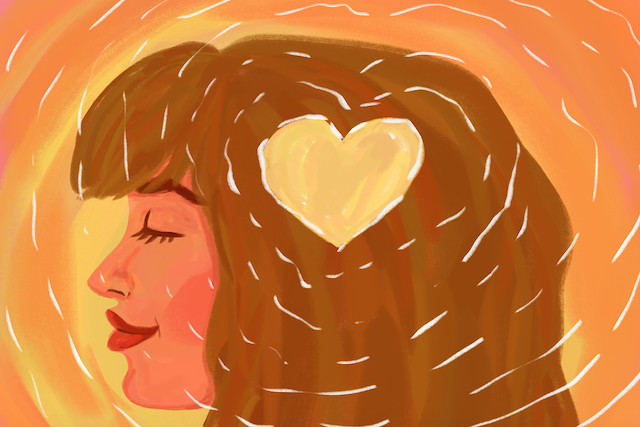
    In the past, I often felt like I didn’t belong in groups of women.

    Sometimes I felt like something was wrong with me, like I was othered in one way or another: too sporty, too quiet, too serious, too emotional, too dumb, too smart, too wild, too normal, too sexual, too prude.

    Other times, I felt like something was wrong with all of them. Girls’ nights and bachelorette parties? The screeching voices, the loud laughs, the mundane conversations about makeup, skin care routines, and lip injections? No thank you.

    I wanted so badly to belong but didn’t see a place for myself. I felt like I wasn’t doing the whole woman thing the right way. I found it easier to hang with the guys.

    But now? I have learned that nothing is wrong with me (or you), and hanging out with a group of women makes me feel all warm and fuzzy inside. 🙂

    What shifted?

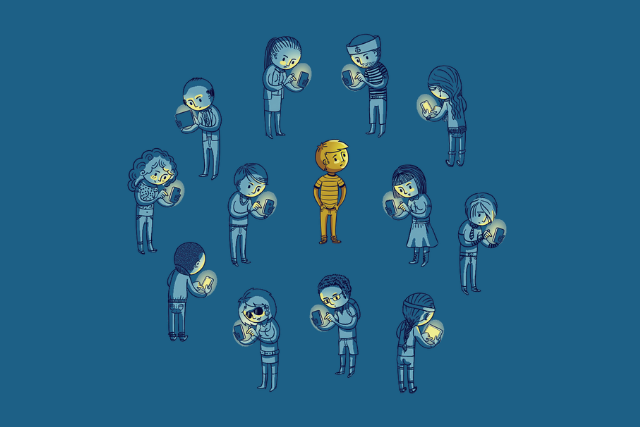
    First, I stopped comparing myself to others.

    Those “toos” I mentioned above, and that so many of us feel, are usually a product of that ever so insidious trap of comparison. It’s a trap because we get stuck in a negative thought loop, smothered by jealousy, anxiety, and self-criticism, which ultimately causes a fissure of separation, between ourselves and others.

    If we use other people and external standards as a barometer, we will always find ourselves being “too” something, which makes for a very disruptive and tumultuous internal experience. For me, it means that I have spent many years feeling insecure and ungrounded in who I am. It means I often acted as a chameleon and changed my energy based on who I was around, so I could “fit in.”

    But now, I don’t do that. (Okay, I still do it sometimes, but way less often.) I have learned that there is no “right” way to be a woman, or a human. We are each unique individuals with our own personalities, desires, fears, and preferences, and the uniqueness of all of us makes the world so much more interesting and beautiful.

    Second, I shifted away from judgment and toward curiosity.

    During my young adult years, I was very judgmental. I went from thinking that something was wrong with me to thinking that I was better than all the other women. I thought women talked too much about surface level things and people. My ego started to create stories of separateness: me over here wanting to ponder existential questions and talk about emotions, and them over there who wanted to gossip, laugh too loudly, and talk about makeup and boys.

    Now, instead of judging the “surface level” conversations (which still occur), I am curious about them.

    Why do women spend so much time discussing our weight, clothing, waxing habits, and skin care rituals? Because we have been force-fed the belief that we are inadequate the way we are. We are told that we have to buy this or that product if we want to be beautiful. We are told we have to be thin if we want to be loved. So it’s no wonder we spend so much time thinking and talking about matters of physical appearance.

    By switching from judgment to curiosity, I have realized that such discussions are actually not surface level at all. They are reflective of deep desires to belong, to be loved, and to be accepted.

    Third, I demoted my ego.

    My ego told me that I was the only woman that felt othered. That I was unique in my feeling like I didn’t belong. That I was special in some way because I wanted to have “deeper” conversations. That is such BS!

    I have now learned that I was in no way unique in feeling like I didn’t belong. Most women, and people, yearn to peel back the layers and connect with one another in a  deep, rich way, but we find ourselves stuck in a performative role, trying to show up how society has told us to.

    Many of us have erected walls around our hearts, minds, and bodies to protect the vulnerable, raw, sensitive parts of us. To protect the parts of us that we learned weren’t safe to express or were unlikeable. But we want to let others in.

    Lastly, I also started listening to the sage advice from philosophers, religious leaders, and laypeople across centuries.

    I started heeding their wisdom, which can be summed up as: you have everything you need within you.

    I started to deepen my connection to myself, knowing that the problem I was experiencing, namely the feeling of being othered and not belonging, could only be solved by first turning inward. I’ve deepened my connection to myself through dance, breathwork, journaling, meditating, and playing. I have started to uncover who I am and who I want to be, versus trying to fit into a mold of what I think a woman, or a human, is supposed to be.

    In my journey of releasing comparison, igniting curiosity, demoting my ego, and turning inward, I have also learned that:

    You are not too anything.

    This does not mean that you are perfect, or that you have no opportunities to grow and expand. But it does mean that there is no “right” way to be, except the way that is true and safe for you.

    Often when people say you are “too ___,” it is a reflection of their own insecurities.

    “You are too emotional” might mean, “I have not learned to express my emotions, and your vulnerability makes me uncomfortable.” “You are too loud” might mean, “I am not fully expressing myself, and I am jealous of your ability to express yourself confidently.”

    You are not alone in your desire to belong.

    It is likely that what you are feeling, others have felt at some point. When you remember this, you are reminded that you are not alone. The journey of self-discovery eventually leads to a feeling of oneness, because we absolve the illusion of self and separateness and begin to see our connectedness, our shared fears and desires. You know how it goes, we’re all made of stardust, baby!

    When you start to express the truest parts of yourself, it’s an act of leadership.

    Because in doing so, you provide a permission slip for others to do the same. This doesn’t mean you expect everyone to express themselves in the same way as you, but rather that we all start to express the weird, unique, quirky, true parts of ourselves. And that is what the world needs more of.

    So, here’s to less judgment, more curiosity; less separateness, more connectedness; less fear, more love.

  • How I Learned That My Pain is Valid and Worthy of My Own Empathy and Love

    How I Learned That My Pain is Valid and Worthy of My Own Empathy and Love

    “Sit with it. Sit with it. Sit with it. Sit with it. Even though you want to run. Even when it’s heavy and difficult. Even though you’re not quite sure of the way through. Healing happens by feeling.” ~Dr. Rebecca Ray

    It’s July 2022 and I’m in the middle of a red tent at Shambala Music Festival in British Columbia.

    I sit elbow to elbow, knee to knee, heart to heart with a group of women who I am meeting for the first time.

    It’s hot and we’re sweaty.

    A teacher is leading a healing womb meditation, and she prompts us to identify a person that has caused us pain, so that we can release that person and the power they wield over us.

    I am coming up short, thinking…

    “No one has caused me any real pain.”

    “I don’t have any real trauma.”

    “The pain I have experienced isn’t bad enough.”

    So I directed my healing energy to two friends who I believed were in need of more healing than me.

    I instantly realized what I was doing. I was defining my friends by their perceived abundance of pain and trauma and defining myself by my supposed lack of pain and trauma.

    I knew in that moment that this was probably not fair to my friends or to me, but this way of thinking had been familiar to me throughout my thirty-two years of living.

    Over and over again, I have found myself feeling guilty for the fact that I don’t think I have any “real” trauma.

    I come from a stable home with parents who love and support me. Growing up, I had everything I needed and most things I wanted. I have a big brother who is one of the best men (best humans) I know. I grew up in a middle-class part of Maryland. I have white skin in America. I can see, hear, and move my body.

    I used to constantly wonder how the challenges I have experienced could possibly stack up against those of my friends. She who experienced the deepest sexual trauma at a young age; or she who had an alcoholic father who was physically and emotionally abusive; or she who is regularly profiled when she walks home to her apartment because of the color of her skin.

    Or how my challenges could stack up against students I’ve mentored…like a ten-year-old boy from Syria whose legs are decorated with shrapnel scars; or a fifteen-year-old boy from Eritrea who was a child soldier; or a sixteen-year-old young woman who is the caretaker for her sick mother and five younger brothers and sisters.

    Luckily for me, and for you, I have detached from my struggle story that my pain is not enough. I have learned quite a few things and shifted away from this unhealthy way of thinking about pain and trauma.

    First, I have learned, and will continue to re-learn, that there is no competition for who has suffered the most. Trauma and pain are not a comparison game. 

    All experiences, emotions, and feelings are valid. And we all get to practice empathy for and awareness of the experiences and heartache of others, and of ourselves.

    I have also learned that people are not defined by their trauma. 

    And I am deeply sorry to the people in my life who I have ever defined in this way.

    My final learning is that the things I have experienced are valid and enough to warrant my own empathy, healing, and love. 

    Like…

    The countless times having sex with a previous partner, even though I didn’t want to, because it was just easier to go along with it. Which resulted in a period of my life where I really didn’t like sex. I told myself, it’s not that big of a deal, it’s just sex.

    The pressure from a friend to mess around with her boyfriend while she watched. Even though I said, “I don’t want to.”  I told myself I was just being a prude. This should be fun. What’s wrong with me?

    The grabs and gropes on the street, in the club, at the bar. I told myself this just came with the territory of being a woman.

    The unwanted touch and advance from a friend. I told myself I’ll just forget this and move on.

    The shame of one-night stands, even though I knew he, whoever he was, felt not shame but something more akin to glory. I told myself it was my fault for having a one-night stand. I brought this shame upon myself

    All of these experiences, and more, have been buried deep within me for years and I had barely been aware of them, until recently, as I have embarked on a very intentional journey of self-excavation.

    For me, this journey has included meditation, prayer, journaling, somatic healing, and experiences like the one in the red tent.

    I embarked on this journey thinking I would unpack a few insecurities and move on with my life with relative ease.

    But what has actually happened is that I have uncovered so many hidden treasures in myself.

    These treasures are sometimes in the form of past pain. Other times they take the form of nuggets of ideas that I buried long ago for a rainy day. And yet other times, they are in the form of things that I used to love as a child but forgot about as I grew up and was told by the world what I was supposed to love and who I was supposed to be.

    And now I get to excavate even further to see what each of these treasures is here to teach me. For the ones I shared above, there is a clear theme of sexuality, and that theme has led me to deep dive into this space with myself. This looks like self-pleasure, dancing naked in the mirror, loving every part of my body, and speaking my desires out loud to my partner.

    This journey has plunged me into the depths of my own darkness. And in that plunge, I have been reminded of my own strength—of my ability to bask in the darkness, all while knowing I will be okay.

    I also get to remind myself that I am enough. My pain is valid. I am worthy of taking up space.

    Guess what. The same goes for you, love.
  • A Gentle Reminder to Anyone Who’s Struggling This Holiday Season

    A Gentle Reminder to Anyone Who’s Struggling This Holiday Season

    “It’s okay to want to be alone. It’s okay to take time for yourself.” ~Kate Allan

    It’s the holiday season, the most wonderful time of the year, they say, but it’s not for all of us. For those of us coping with the loss of a loved one, family estrangement, loneliness, financial difficulties, or health struggles, the holidays can be one of the hardest times of the year.

    For some of us the holidays can feel as if we have been cast out in the cold. As if we are forced to look through a window of a happy, loving family.

    Many of us are filled with feelings of longing for things that can never be, such as more time with a loved one we have lost or a supportive family. We find ourselves swept into memories of holidays past or lost in fantasies about what the holidays would be like if we had a different life.

    We find ourselves feeling pressured to hide our problems, bake a dozen cookies, put on a happy smile and an ugly Christmas sweater, and attend that office holiday party. There, we smile and engage in exhausting small talk, and do our best to avoid the subject of what we are doing for the holidays.

    These events can leave us feeling totally depleted. We buy obligatory gifts for our friends or coworkers, and we spend hours trying to figure out what they might like. After the gift is purchased, we second guess ourselves and worry that we missed the mark.

    Some of us might host parties and obsess over making our tree look absolutely perfect in a desperate effort to please others and give people the impression that everything is fine.

    Society has filled our heads with unrealistic notions about perfect gifts, immaculate homes decorated with lavish matching decorations, endless resources to spend, and happy times spent with family. Some of us find ourselves exhausted and stressed trying to live up to social pressures or expectations of others.

    Over the years, as I have struggled with various losses in my life or felt cast aside by family members, I have learned that the most important thing we can do over the holidays is take care of ourselves.

    As an altruistic person who goes out of the way to please everyone, taking care of myself does not come easily to me. In the past I felt guilty for putting my own needs first, but over the years I’ve learned that our own needs are just as important as everyone else’s. If we sacrifice ourselves to please others, it can not only be harmful to ourselves but those around us as well.

    If you are struggling this holiday season, take time to reflect on how you would like to spend the holidays. Remember, you don’t have to buy the perfect gift for everyone, put up a tree, decorate the entire house, spend hours baking cookies, or even attend that family gathering.

    If you are worried that a friend will be disappointed that you are not attending an event, you can suggest that you meet up for coffee when you’re feeling up to it.

    In the past I worried that a friend would judge me for not attending a holiday event. However, over the years I have learned that true friends are empathetic and do not judge us for needing to take time for ourselves.

    The most important thing you can do if you are struggling during the holiday season is pay attention to your own needs and do what you feel is best for you.

    If you feel like curling up on the couch with Netflix or a good book and a pet instead of going to a party or a family gathering, give yourself permission. It can sometimes be better for our health and well-being to decline an invitation and rest.

    If you are someone who is used to keeping busy, the holidays can become more difficult because our workplaces are often closed or slower than other times of the year.

    In order to cope, I create a to-do list filled with new recipes I want to cook or bake, household cleaning that would be helpful to do, movies/shows I want to watch, places I want to go to see Christmas lights, and other things I have wanted to do. I also buy myself something that I have always wanted but don’t necessarily need as a form of self-love and self-affirmation.

    I also engage in volunteer work because when I am helping others I feel less alone and have less time to ruminate about the past or events that are outside of my control.

    I have discarded holiday traditions that did not bring me joy. I don’t go to church or make desserts with dried fruit or decorate my tree with handmade ornaments that are unsafe for my pets. I try not to buy material gifts for all of my friends. Instead, I treat friends to events such as concerts, art gallery exhibits, or museum shows we can enjoy together.

    I have held onto a few traditions that have made me happy. A childhood friend used to buy me a hallmark ornament as a gift, and now I buy one for myself. I donate to a charity, and I buy a gift for a for a child in need.

    I have also started to create my own traditions such as making my favorite cake and taking a break from digital communication. Each day I take time to feel grateful for the things that I have and the people and pets that help to make my life magical.

    I don’t force myself to do anything I am not feeling up for, and I do not spend time with people I do not feel comfortable being around. Once I started doing this, the holidays stopped being draining, exhausting, and socially challenging and started to become relaxing and peaceful.

    When I find myself feeling down, I remind myself that all situations are temporary, and the future could look very different. There may be other holiday seasons when I feel upbeat, excited, and eager to spend time with people who love me. But for now, I need to love myself, and that means doing what’s best for me.

    The best thing that any of us can do this holiday season is be kind to ourselves and take care of ourselves like we would our closest friend. This is the best holiday gift we can give ourselves.

  • The Best Way to Deal with Dissatisfaction (It’s Not What You Think)

    The Best Way to Deal with Dissatisfaction (It’s Not What You Think)

    “Trying to change ourselves does not work in the long run because we are resisting our own energy. Self-improvement can have temporary results, but lasting transformation occurs only when we honor ourselves as the source of wisdom and compassion.” ~Pema Chodron, The Places That Scare You

    In my late thirties, I was a yoga teacher and an avid practitioner. I lived by myself in a small but beautiful studio apartment in Tel Aviv, Israel, right next to the beach.

    Every morning I woke up in my large bed with a majestic white canopy and said a morning prayer. I meditated for an hour and practiced pranayama and yoga asana for another hour and a half.

    When I was done, I prepared myself a healthy breakfast and sat at the rectangular wooden dining table, facing a huge window and the row of ficus trees that kept me hidden from the world. I ate slowly and mindfully.

    Since then, my life has shifted. I found love, got married, had a child, started a new business, and moved to live in the US. I stopped having the luxury of a two-and-a-half-hour morning sadhana. But my morning prayer stayed with me all this time:

    I am grateful for everything that I have and for everything that I don’t have.

    I am grateful for the opportunity to live.

    I love myself the way I am.

    I love my life the way it is.

    I love all sentient beings the way they are.

    May all sentient beings be happy and peaceful, may they all be safe and protected, may everyone be healthy and strong, and know a deep sense of wellbeing.

    I created this prayer because I wanted to be grateful for life, but I was not. I wanted to love myself, but I did not. It was sort of “fake it till you make it.”

    I borrowed this principle from the metta bhavana practice. In this practice you send love and good wishes to yourself, then to someone you love, then to someone neutral and eventually to someone you have issues with.

    When you send love to someone you hate, you connect with your hatred and resentment. You can witness how hard it is for you to want this person to be happy and well. But the more you do it, the easier it becomes. The hatred dissolves and you become more authentic with your wishes.

    Similarly, I assumed that if I kept telling myself that I was grateful, I would eventually become grateful. If I told myself that I loved myself, I would eventually love myself.

    Today, I can say that I do love myself and I do love my life, a lot more than I used to when I created my morning prayer. But the more I am happy with what I have, the harder it is to say that I am happy for everything I don’t have.

    Right now, for example, I am dissatisfied with my business income.

    I could reason myself out of my dissatisfaction.

    I could tell myself that I only started my business three years ago, just before COVID. I am still not making enough money, but I am making money and my situation keeps improving.

    My husband makes enough money for both of us, so my life is pretty good as it is. I know I am fulfilling my purpose, and it gives me great satisfaction to serve and inspire others. I get many affirmations that I am on the right path.

    I could also count my blessings.

    I have an honest and deep, loving relationship. I have an out-of-this-world connection with my son. I have a charming old house in a city that, for me, is heaven on earth. I have great friends and a strong community of likeminded people.

    I could compare myself to many other people who do not have any of these gifts.

    This is what most of us do when we feel discontent or dissatisfied with our lives. We sweep our lack of satisfaction under the rug. We remind ourselves of all the reasons we should be content. We convince ourselves to stop complaining and be happy.

    But when we fake our gratitude, when we reason ourselves to be happy, or focus on our gifts rather than our sorrows, we do not increase our happiness, we get further away from it!

    Let me explain.

    Behind our dissatisfaction there is pain.

    There might be childhood wounds, there might be weaknesses. When we ignore our frustration, we miss a valuable opportunity to work with these themes.

    When I delved into my discontent, I realized a lot of it was rooted in my childhood. My father was a banker, and my mother was an artist. My mother loved art and different cultures. She wanted to travel to many places. She worked hard at raising three children, but she did not get to travel because my father thought traveling was a waste of time and money. My mother had no say, since she was not the one who made the money in our house.

    Because of this, as a child I promised myself that I would never be financially dependent on anyone. This decision motivated me to study accounting and economics, and to have a successful financial career. My work did not fulfill my purpose, but it brought me financial security.

    For me, not having a sustainable income equaled being weak, like my mother was.

    When I understood that, I could work with it. I could remind myself that I was not my mother. That I was a good businesswoman. That I’d made some good investments. That I was strong.

    We are afraid to experience dissatisfaction and pain because we fear they will bring us down. But in truth, depression comes from not dealing with the pain! You can only suppress your discontent for so long. At a certain point, everything you swept under the rug comes out, and you discover that in its dark hiding place it grew bigger and bigger.

    After my mother died, when I was eighteen, I decided to live life to the fullest. I was very grateful for being alive, and I thought my gratitude should be expressed with constant happiness. For few years, I forced myself to be happy, and pushed all the pain, hurt, and loneliness away.

    I lived like I was on top of the world, until one day I crashed to the ground. I got so depressed I could not get out of bed or stop crying for months.

    At first, I did not even understand why I was depressed while my life was so “perfect.” It took me years to open my eyes and see all the things I refused to acknowledge before.

    Since then, I’ve come a long way. I stopped running away from my pain. I turned around, looked it in the eyes, and said, “let’s be friends.”

    Even though I have so many reasons to be grateful, I am still allowed to be dissatisfied. I am not going to judge myself for that. I am not going to tell myself to stop whining and snap out of it. I am not going to deny this pain or try to modify it and shape it into gratitude.

    Befriending your pain and dissatisfaction is not an easy process.

    Our natural tendency is to fear these feelings, to avoid them, to deny them. It requires us to go against our instincts.

    On the first slope I ever skied, my instincts told me to lean back to prevent falling. But leaning back is exactly what makes you fall. You need to lean forward, into the downhill, in order to slow yourself down and ride the slope well.

    Leaning into your dissatisfaction works exactly the same. When you accept your dissatisfaction and allow yourself to be dissatisfied, you work with the situation. You make it your teacher. You appreciate the wisdom of it. Only then, transformation occurs, and you become content.

    So why do I keep saying the same morning prayer?

    In his book Infinite Life, Robert Thurman quotes Ram Dass, who once asked his guru “’What about the horrors in Bengal?’ His guru smiled to him and said, ‘Don’t you see, it’s all perfect!’ Ram Dass then said, ‘Yeah! It’s perfect—but it stinks!’”

    According to Thurman, there are two perceptions of reality that we must hold together. There is the enlightened perception in which everything is perfect, and the samsaric perception, in which we experience pain and dissatisfaction, which must be acknowledged and worked with.

    In my morning prayer I hold the enlightened perception. But when I start my day, I remember to lean into my true deep feelings, especially when I feel pain, frustration, and dissatisfactions. It makes me so much happier.

  • My Deepest, Darkest Secret: Why I Never Felt Good Enough

    My Deepest, Darkest Secret: Why I Never Felt Good Enough

    “Loving ourselves through the process of owning our story is the bravest thing we’ll ever do.” ~Brené Brown

    Lunge, turn, reverse, jump, land and rebound, push, pull, cut, run, double turn, fling, pause…

    Not good enough! Smooth the transitions, make it cleaner, find more ease!

    Heart pounds, ragged breath, muscles burn…

    You need more weight on the lunge and point your damn feet when you jump. Do it again.

    Repeat. Lunge, turn, reverse, jump, land and rebound, push, pull, cut, run, double turn, fling, pause…

    What is your problem? Why is it so sloppy? Clean it up! Do it again.

    Not good enough, do it again carved a deep groove into my brain, branding it like a wild bull by a hot iron. Not good enough. My mind, not my teacher, was brutalizing me, taunting me, teaching me “discipline” to improve my dancing.

    I improved—enough to become a professional dancer—but I couldn’t internalize or recognize any of my accomplishments. 

    Even after being asked to join a dance company before I graduated college, I continued to struggle with “not being good enough.” Despite the many compliments I received for my performance and choreography, I brushed them away thinking that they were lying to me, just placating me with false praise.

    I faltered in my performance, felt paralyzed by fear that would not always fade away once the performance began, distrusted my ability to remember the choreography, always fought the anxiety of being in front of an audience, and cried oceans of tears because I could never reach the bar I had set for myself. My confidence and faith in my ability to perform to the level that I wanted to plummeted.

    I loved dancing so much. I loved moving my body through space, the creative process, and working with a group of talented dancers to create shows. I loved rehearsals because I felt relaxed and at ease, like I could perform with the freedom that I couldn’t feel onstage. I loved refining and smoothing transitions and was described as a “liquid” dancer. I loved expressing my style through my movement.

    But the tension between my passion and my insecurity created an internal trip cord. I didn’t trust myself. In rehearsal I was militant about practicing the steps over and over, even when everyone was exhausted, because I still didn’t trust that I knew the choreography.

    I had made mistakes before, blanked out onstage, and felt deep humiliation and shame for not performing someone else’s choreography as well as I should have or meeting a paying audience’s expectations. I was proud that I had so much stamina to rehearse twice as hard as I needed to. If I rehearsed extra. then maybe it would finally quiet the critical voice in my head.

    It didn’t quiet the critic and the cycle continued.

    The shame of being a mediocre dancer led to working harder, but fear of making mistakes or not reaching the goal led to fear of being seen as mediocre, which led, once again, to shame. Shame is dark, subtle, slippery. Over and over, I went through this cycle, the shame cave becoming deeper and darker, until I was lost in it, burned out from so much effort and so little reward.  

    After ten years of pushing myself to learn, pushing against my fears, pushing myself to excel, and beating myself up along the way, I couldn’t push through any longer. I had nothing left to give. The trickling current of anxiety and depression became a flood and swallowed me up into a profound depression. Everything felt arduous, even the simplest daily tasks.

    I looked at people in the streets around me and thought, “How is everybody not depressed? How is anybody smiling?” But they were—smiling, laughing, moving through their days effortlessly, accomplishing wonderful things—and I was not. I was depleted of all vitality.

    I quit performing and turned to my yoga practice to help heal from the burnout. I learned therapeutic yogic principles about balancing effort and ease, surrender, non-grasping, contentment, non-violence (even toward oneself).

    It seemed only natural to become certified as a yoga teacher and, as I began to teach, I encountered the same insecurities. The same thoughts arose—I need to be an excellent yoga teacher, need to create excellent sequences, have excellent pacing, use excellent language to help guide students into an excellent experience. I felt the same performance anxiety—debilitating self-consciousness

    What are they thinking about me? Am I giving them what they need? There are so many different people in my class. They are different ages with different bodies and different life experiences. What do I know to teach other people?  I have only ever been a dancer so how do I know what other people need for their bodies?  

    I didn’t want to harm anyone because I didn’t know enough or have enough information and, once again, I quit after a couple of years.

    My deepest darkest secret, feeling inherently flawed and chronically inadequate, took up space in my heart and my throat. Rent-free. In fact, I was paying for its unwelcome residence. 

    My next strategy was simply to take the pressure off myself. I chose low-pressure jobs that didn’t require a big performance from me. I was lucky and these were jobs that I liked that suited me well as I slowly healed from years of chronic self-abuse.

    In my early forties I came across a term that I identified with—imposter syndrome.

    High achievers’ fear of being exposed as a fraud or imposter. Unable to accept accolades or compliments or awards for one’s talent, skill, or experience.

    Imposters suffer from chronic self-doubt and a sense of intellectual fraudulence that override any feelings of success or external proof of their competence.

    I thought, “That sounds like something I can relate to,” but I wasn’t ready to face it head on. I was finally feeling contented in a job that I liked, without the pressures of performing in ways that touched that deep insecurity, and I wanted to soak that contentment in.

    And then Covid-19 happened, and I lost that job.

    Midway through the pandemic, in an effort to be proactive about the next phase of my life, I turned my attention to developing a yoga therapy practice. Create a mission and vision. Come up with content and language. Identify my audience. Create a website and so on. And again, I came up against the deepest darkest secret that had been so blissfully dormant for several years. I was surprised at its potency, but I decided I was ready to face it head on.

    I remembered imposter syndrome and started researching again. Again, I checked all the boxes—except one. In so many articles that I read, examples were given of well-known people who struggled with imposter syndrome. These are people who have achieved extraordinary things, are in the public eye, and have either overcome or pushed through their demons to go on to incredible accomplishments.

    Naturally, I thought, “Well, I’m no celebrity, have no major awards or accomplishments to speak of, and I haven’t achieved that much in my career, so this probably doesn’t actually apply to me.”  

    Such is imposter syndrome.

    Comparison to others (who we deem higher achieving than we are) will trigger a cascade of shame and doubt. 

    Few people actually talk about imposter syndrome—either they don’t know about it or don’t want to discuss it because of the deep feelings of shame or insecurity that accompany it.

    I want you who silently struggle with imposter syndrome or dysmorphia or profound shame and insecurity to know that I, too, have struggled, but it’s getting better.

    Drop by drop, my cup fills as I take every opportunity to be kind to myself where in the past I would have criticized.

    Having studied positive neuroplasticity, I now understand our brains’ negativity bias and the protective role of the inner critic. I have a newfound appreciation for our natural protective mechanisms and gratitude for the ability of the brain to learn and grow new skills.

    I’m starting small, taking small steps to create an inner garden of welcome. A beautiful nurturing place where I invite one or two for tea and laugh and share experiences and stories.

    And after some time, I hope the garden will expand and the walls begin to crumble a little and I can have a small group for tea, stories, and dancing. And then gradually over time, the garden will expand further so that I can host more people in for tea, stories, dancing, and games.

    I can imagine that remnants of the walls will remain as a reminder of where I’ve been, and I can look at them with gratitude for keeping me safe for a while as I softened and settled and tended to the garden within.

  • A Simple Plan to Overcome Self-Doubt and Do What You Want to Do

    A Simple Plan to Overcome Self-Doubt and Do What You Want to Do

    “Don’t let others tell you what you can’t do. Don’t let the limitations of others limit your vision. If you can remove your self-doubt and believe in yourself, you can achieve what you never thought possible.” ~Roy T. Bennett

    Ahh yes, self-doubt. Something that affects every single one of us at different times and at different magnitudes—even those that seem supremely confident.

    Why do so many of us experience self-doubt, and how can we overcome it?

    On a personal note, I can tell you my self-doubt comes any time I am trying something new. I’ve learned over the years where this stems from, and it may be similar for you. It comes from my parents.

    Although my parents were always encouraging, they’d also say things like, “Are you sure this is the right move?”, “Are you sure you want to do this?”, and “Be careful.” In fact, every time I left the house, that’s what my dad would say: “Be careful.” “Drive safe.” Not, “Have fun,” “Have a fantastic time,” or something along these lines.

    In my twenties I realized that it had been ingrained in me to always be cautious, which then led to me doubting myself in certain scenarios, though I’ve never been someone who shies away from challenges or holds myself back. Over the years, I learned to identify what contributes to my self-doubt and then push through it.

    Now, this isn’t the case for everyone. Other things that contribute to self-doubt are comparing ourselves to others; feeling a lack of means, intelligence, or other things we think we need to succeed; past experiences; possibly being criticized; and the natural fear that we feel when attempting something new.

    When we doubt our ability, we are allowing fear to settle in and hold us back from forging forward and taking a leap. Without trying, we are feeding the self-doubt, which means it will likely compound the feeling the next time we are faced with or offered a similar opportunity.

    So how can we detach from self-doubt and make sure we are not missing out on what could be an amazing opportunity or journey for ourselves?

    First, we need CLARITY.

    We need to first get clear on where this self-doubt is coming from.

    What is striking this feeling within you that makes you think you shouldn’t try it or you can’t make something happen? Is it the fear of the unknown, or is it the feeling of not having the ability, or something else you think you need to succeed? Are you comparing yourself to someone else in the process? Or do you think you couldn’t handle it if you failed?

    Second, we need to recognize the FACTS.

    What do you know to be true? For example, what do you know about yourself that can help prove that you can attempt or accomplish this? Have you had any similar experiences that prove you can do this?

    If you’re comparing yourself to someone else, what are the facts in this? Meaning, are you comparing yourself to someone who has already succeeded? Or are you comparing yourself to someone who is at the same stage you are? Nobody gets from A to B without experience, practice, and even failure. So, try not to compare yourself to others, as you may not know the complete story to their success.

    There was a time when I was contemplating which direction to take my business degree. I’d majored in marketing because it’s a creative field that allows for variety, which aligns with my values. But as I was working in my first couple of “corporate” jobs, I was enticed by sales.

    My father wanted to steer me away from sales. He said that it’s a hard career, it’s mostly male-driven, and it’s extremely stressful and unpredictable. But what I saw was the fun interaction sales teams had with their clients and prospects. How they were able to basically chat on the phone 80% of the time and attend fun events.

    It was a fact that sales is stressful, unpredictable, and male-dominated, but I knew myself. I knew I was different than my father. I knew I was up for a challenge and taking risks, whereas he was risk adverse. I knew if it didn’t work out, I always had marketing to step into or maybe other options, whereas my father was opposed to change.

    I had to recognize that he was from a different generation. That although what he expressed was true, there were other factors to consider. If I compared myself to the majority of people occupying these roles I likely wouldn’t have attempted it and enjoyed a fifteen-year-plus career in sales and business development.

    Finally, GO FOR IT!

    The best way to conquer self-doubt is to put yourself out there, take action, and see what happens. No success comes without failure. If it works out, you’ll be glad you did it, and if it fails you’ll learn and can progress.

    Without acting on it you will never know. At least if you push through the doubt and try you will understand yourself and your ability a lot more.

    There was a time when I was considering making a big move that I had dreamt of for so long. I loved my friends and family, but I didn’t love where I was living or the lifestyle I was caught up in. When the timing was right I decided to take the leap and move to the other side of the county alone, without a job.

    I heard things like: “Do you really want to go?” “It’s so expensive out there. How will you afford it?” And “It rains so much there, and people get depressed.”.

    If I had listened to others’ fear and angst about the move I would’ve likely lived in a miserable cycle. Instead, seventeen years later, I still feel this was the best thing I’ve ever done for myself, for my life, for my soul.

    The move brought me an even greater awareness of how resilient we are when faced with change.

    And if it hadn’t worked out, I would have had an adventure, and who knows where it may have taken me? Maybe it would have led me to something else I didn’t even know I wanted until I opened myself up to new possibilities. New possibilities I would never have known about had I limited myself based on other people’s fears.

    Don’t let others’ doubt or success deter you from going after what you want or trying something new. Recognize that you can either let your doubt leave you with regret or feel the satisfaction of taking action. Who knows, your action might actually inspire others to ditch their doubt and take a leap into a life they’ll love.
  • “Old” Isn’t a Bad Word: The Beauty of Aging (Gracefully or Not)

    “Old” Isn’t a Bad Word: The Beauty of Aging (Gracefully or Not)

    “Mrs. Miniver suddenly understood why she was enjoying the forties so much better than she had enjoyed the thirties: it was the difference between August and October, between the heaviness of late summer and the sparkle of early autumn, between the ending of an old phase and the beginning of a fresh one.” ~Jan Struther, Mrs. Miniver

    As an adolescent, I was always keen on looking and acting older than my age.

    As the youngest amongst three, I always felt that my siblings held more power and their grown up lives seemed more glamorous to me. They would prance off to college or to high school, carrying their own bags and packing their own lunches, while I had to wait for my mother to drop me off, holding her hand as we crossed the street!

    Naturally, I looked forward to my birthday each year, waiting for a sense of “grownup”ness to take me over even as I got giddy at the thought of opening gifts. Yet, over the past few years, my birthday gifts have come wrapped in a vague fear, that of becoming invisible.

    In a society that values youth to the point of insanity, reaching that terrible “middle age” seems like a ticket to the circus of Forget-Me Land!

    As I journal and reflect my way through all this, I wonder why this is a big deal at all. In fact, in many families across nature, growing older is a good sign. It’s a symbol of status and respect.

    Take the example of the silverback gorilla: all that gray hair on their back gives them the authority to make decisions for the group! Wolf leaders, elephant mothers, and older dolphins are all instances where nature favors age.

    Why, then, are humans obsessed with youth? From creams that remove wrinkles to references like “well-maintained” (as if we were a car!), we are told repeatedly that being younger is somehow better.

    Personally, growing older has taught me a few things, and I wish I could go back in time and share them with my younger self. However, that’s not possible unless we invent a time machine, so I’ll list them here and you can take what you will.

    To begin with, don’t obsess over beauty. Or rather, what society tells you beauty is.

    All through my growing up years, I pursued being beautiful even at the cost of my true talents. I underplayed my reading habit, and I acted meek so men would perceive me as “more beautiful.” I have no idea where I received these ideas, but they were debilitating. I wanted to be beautiful so I would be chosen by men, but I never stopped to ask myself: Which man?

    It is sad that I desperately wanted to be chosen by someone even as I rejected myself, day in and out. After battling toxic relationships and severe blows to my self-esteem, I realized that the pursuit of beauty has been absolutely useless.

    What really helped me during difficult times was my sheer bullheadedness and foolish optimism. Surprisingly, being myself, with gray hair, crooked teeth, and a few extra pounds, is easy to do and has also earned me some beautiful friendships, with men and women alike.

    Secondly, age is really just a number.

    My dog doesn’t know how old she is, so she is free to act as she pleases. She jumps on beds, goes crazy over sweets, and gets jealous. She runs if she wants and as much as her body allows. It’s easy for her to do all this and more because she doesn’t have that limiting belief called “age.”

    Ellen Langer, a Harvard psychologist, conducted an unusual experiment where elderly subjects were asked to live like it was twenty years earlier, in a simulated environment. The men who underwent the experiment supposedly showed improvement in memory, cognition, and much more.

    Even if the experiment seems outlandish to you, there’s an important takeaway: How you perceive your age makes a huge difference in how you approach it. So why not approach it with positivity?

    A few months ago, I read a very powerful quote, and it made a huge impression on me: Do not regret growing older; it’s a privilege denied to many.

    How true! My mind immediately goes to my own father, who passed away before he fulfilled many of his dreams. I am sure he would have welcomed many more years with open arms, warts and all.

    For a patient with a terminal illness, each day growing older can only be a blessing, even when the body feels frail. We don’t have to wait for something like this to feel grateful for our age. We have that opportunity each day and in each moment.

    You don’t have to ‘maintain’ yourself.

    You don’t have to look younger.

    You can be thin, overweight, or anything in between or beyond.

    Don’t hold yourself back from things you love just because you feel older/younger.

    Don’t feel the pressure to age gracefully or anything else that society tells you to do. You have the freedom to age messily if you like. Heck, it’s your life, and it’s in chaos that order is born!

    Maybe you don’t have a head full of black hair, but so what? You probably sucked your thumb at six, but you don’t do that anymore, do you? It’s the same thing.

    Nostalgia is only helpful if it uplifts you. If it’s taking you on a downward spiral of “how I wish I was that age again!”, then it’s high time you closed that album of old photos. New sunrises and sunsets await you. Make yourself some frothy cold coffee and move on!

    There’s nothing that you need to tick off by a certain age. We all have our own trajectories and our own truths to learn. Take inspiration from plants and animals. They don’t strive; they just are and their lives pan out beautifully! Be courageous enough to own your messy self and your messy life.

  • When Positive Messages Feel Bad: Why I’m Changing How I Use Social Media

    When Positive Messages Feel Bad: Why I’m Changing How I Use Social Media

    “How wonderful that we have met with a paradox. Now we have some hope of making progress.” ~Niels Bohr

    Social media is indeed a paradox in that it has the power to be both good and evil simultaneously. Ironically, one of the most harmful things about social media is the abundance of “positive” messages.

    You’re probably wondering how something that creates so much comparison, self-doubt, and anxiety can be “too positive.” What I mean is that social media messaging is starting to put a lot of pressure on us to be grateful and optimistic about our life no matter what we’re going through—also known as “toxic positivity.” This seems to especially be applied to mothers.

    Optimism and happiness are of course wonderful when they’re authentic for you. However, if you try to pass over your uncomfortable emotions or ignore what you’re going through, it’s similar to spiritual bypassing, where you try to skip over being a human and struggling through life’s challenging times.

    What feels like toxic positivity to one person can feel completely empowering to another. It depends on where you’re at in this moment and how a specific message lands with you.

    There does seem to be an overall trend, however, of emphasizing how grateful and fulfilled we should be without the counter-messaging that sometimes life just sucks.

    One of the hardest things about social media is staying in tune with ourselves. We go to our phone for comfort, distraction, and entertainment. Once we arrive, our brain gets hijacked by the content, and we have to buckle up for whatever ride the algorithm sends us on. Even with the best intentions going in, we can get turned around by one video or post and find ourselves feeling like we aren’t measuring up.

    When I first became I mother I was obsessed with the idea of gentle parenting. I consumed everything I could find on this parenting style. I gave it my best go, but every day I felt like a complete and worthless failure.

    I was bombarding myself with an idealized version of this parenting style that social media made look so easy. After reading any social post, I felt like I was an idiot for sucking at it.

    How hard is it to just speak in a calm voice and not lose your patience with your one-year-old? He’s literally an innocent baby! One that hits the dog, bites you while breastfeeding, or turns and runs into the street with a mischievous smirk on his face.

    In my frustration I would go straight to social media to flagellate myself with messaging that had a toxic effect on me. I pivoted against my husband who had a more relaxed attitude toward parenting and put more pressure on myself to be a “perfect” mom. This created tension in my marriage and physical and emotional burnout for me.

    Don’t get me wrong here’; I don’t think there is anything inherently wrong with social media. The way it connects us with each other is truly wonderful. The current messaging to parents and mothers sounds so beautiful at first glance.

    “Your babies grow up fast, so you should savor each moment.”

    Motherhood is the most challenging job, but so worthwhile.”

    “Your house is a disaster, but you shouldn’t care about that when you have young children.”

    My issue is that we are using social media as a weapon to inflict self-harm. Instead of taking these messages in the way they are intended—to inspire us—we criticize and judge ourselves against them. 

    We can start to feel bad that we actually care if our house is a giant mess or that we don’t enjoy every moment.

    Or we might feel guilty for not feeling grateful. Or bad about feeling sad. Or frustrated because we can’t just “choose to be happy” when we’re feeling down.

    My solution is not to delete all your social media apps (but go for it if that sounds amazing to you). What I recommend is to start actually noticing how each reel, TikTok, or post feels in your body. It doesn’t matter that it has beautiful music, photos, or a positive message.

    If your brain is twisting that message to be used against you, it is not yours to absorb.

    It is easier to spot the types of messages that we instantly don’t agree with. Any time I see a perfectly put-together mom with three kids in matching, neutral-toned outfits, I mentally reject it. It doesn’t matter what the content is; this is always a pass for me. What messaging bothers you or feels toxic is completely personal.

    Our brain gets conflicted when something seems really positive, but doesn’t feel good to us. Since our brain doesn’t like being confused, we unknowingly spend mental energy trying to make sense of the discordance that we feel. Becoming aware of your emotional reactions helps you quickly accept or reject the messaging coming at you, so you aren’t as negatively affected by it.

    We don’t need to villainize the content creators here either. I don’t think anyone (hopefully) is going out there intentionally using pretty messaging to turn us against ourselves. So much of the messaging we see is meant to be inspiring and helpful.

    A lot of times I feel connected and motivated by the positivity I encounter on social media.  Especially content that is less perfected and less filtered.

    When you come across a “positive” message that makes you feel critical of yourself, I suggest you mentally “pass” on it and move on. 

    I like to compare social media messaging to a food sensitivity. Tomatoes are not inherently bad, but if your body doesn’t react well to them, then they aren’t for you right now. You may heal or grow out of some particular food sensitivities and be fine with them in the future.

    Giving yourself the power to pass on or to accept every message that comes your way gives you complete control over your experience on social media, regardless of what you scroll through.

    You get to decide what “positive” things feel good to absorb and what “positive” things aren’t for you right now. My wish for each of you reading this is that you update your relationship with social media to be one that fully empowers and supports you.

  • Why Judging People Hurt Me and 5 Things That Helped Me Stop

    Why Judging People Hurt Me and 5 Things That Helped Me Stop

    “It’s very easy to judge. It’s much more difficult to understand. Understanding requires compassion, patience and a willingness to believe that good hearts sometimes choose poor methods.” ~Doe Zantamata

    In the past, judgments kept me safe. They reassured me that I had worth. That I was right. That I was good. I believed I knew the “right” way to live.
    I felt I could clearly see the truth of matters. I didn’t understand why others weren’t always able to grasp the truth that I saw. However, the real truth was that my inner world was full of turmoil.

    Since adolescence, I went about my day with a certain level of tension in my chest. It was almost imperceptible, but always there. I felt I was constantly fighting the world, the universe. I tried to control it, to mold it to the way I saw things. I judged anyone who didn’t follow my vision of right and wrong.
    I spent a lot of time arguing and judging. Politics, religion, even school board meetings—they all elicited strong judgments from me. Judging others felt OH SO GOOD for a minute. That’s the kicker. Inevitably, though, the negative energy of the judgments left me feeling irritated or angry.

    Why was I judging so much? Because I believed that missteps should be punished. My judgments were just that. I thought punishments were critical to learning. To growing.

    The reality was that the person I was judging was mostly unaware of my judgy thoughts. My judgments weren’t resulting in positive change. When I sat down and actually thought about what punishments accomplish, I realized that no one needs to be punished in order to change. I saw that I was operating from a false “truth.”

    What I hadn’t understood was that the only person I was punishing when I judged was myself. I was poisoning my body, my mind, even my soul, with anger.

    What is clear to me now is that when I judge, I create division. When I judge someone, I am saying “I’m here and you’re over there.” I’m thinking, “I’m right and you’re wrong.” The problem is—they are thinking the same thing!

    I experienced the wisdom of the introductory quote in what turned out to be a pivotal moment in my spiritual journey.

    I was a witness to an unpleasant argument about vaccines between two friends. I started to feel the tension in my chest increase. I began to judge and felt the need to jump in and share my “right view” with them.

    Then I centered. I became still. And I saw two moms who were scared. Two moms who loved their children. Two moms who were just trying to do their best. The tension fell away. I stopped judging and felt compassion for my two friends instead.

    My inner world changed. The tension was replaced with expansion. I felt peaceful. I felt love.

    There is a concept in Buddhism called “the right view.” The “right view” is often described as the perspective that doesn’t cause suffering. I’ve also heard it described as “all views, or none at all.”

    I’ve learned that we filter all external information through our own personal experiences, knowledge, and traumas before coming to a conclusion. Our inner world and patterns determine our reactions. This is why we can all receive the same information and still come to different conclusions. None are right, and none are wrong. They are just different paths.

    In the past, I would have tried to convince you that my path was right. I wouldn’t allow you to be who you were. I wanted you to be who I wished you to be. I would have judged you.

    I don’t know about you, but when someone judges or shames me, I don’t change. I dig my feet in. It’s not a very effective communication technique.

    Instead of judging, if we try to understand each other and allow each other to be who we are, we foster acceptance rather than division. We have compassion rather than judgment and our inner world changes. We feel an inner peace within.

    It’s important to note that not judging someone doesn’t mean you condone what they’re doing. It also doesn’t change the consequences of their actions. It just allows you to keep your inner world peaceful.

    So, how did I get here?

    First, I learned to meditate and find that place of stillness within me.

    Second, I learned how to find that place of stillness with my eyes open. These first two steps allowed me to create a space between an event and my emotions. This moment (or space) allowed me to respond rather than react. In this moment, the truth will often become clear.

    Third, I practiced catching myself judging. I would take a moment and hold the person in compassion instead. I would try to understand them. I would allow them to be who they are rather than who I wished.

    Fourth, I saw that punishments don’t work. Judging others or ourselves doesn’t facilitate growth. It creates tension and division.

    Finally, I discovered that judging ties you to the past. To past patterns, reactions, and impressions. I’m judging based on my personal past experiences. I learned to let go and to forgive things in my past. I knew if I didn’t, nothing would change.

    The result was inner peace. My chest doesn’t feel tight anymore. In fact, it feels like there is an open, shiny jewel in place of the tension. Love flows through me daily. I see the bliss of the present moment. I spend less and less time in the past.

    When someone says something hurtful to me now, I try to pause and center. I bless them. I know when people are suffering that suffering often spills out onto others. I hold them in compassion. I understand that they are doing the best they can.

    I’m also not perfect. I do still catch myself judging. I am also doing the best that I can.

    I challenge you to try leading with compassion. First, compassion for yourself. We are all learning and growing. Then compassion for each other. See what happens to your inner world.

    It is easy to judge; it’s much harder to try and understand.

  • How My Dad’s Advice to Let Someone Else Shine Created My Fear of Success

    How My Dad’s Advice to Let Someone Else Shine Created My Fear of Success

    “Sometimes what you’re most afraid of doing is the very thing that will set you free.” ~Robert Tew

    Everyone has fears. It is not an emotion that is only for a chosen few. One’s fear may seem irrational to the outside world, but I guarantee to that person it is debilitating. So much so, that it shapes their perspective and how they see the world. My fear is of success.

    I know what you’re thinking. “That doesn’t make sense at all. Who doesn’t want to be successful?” Well, let me explain what I mean.

    You see, I am an introvert, so I don’t really want to draw attention to myself at all. My “success” is a personal gain, not a flashy show of pride to the world.

    I wasn’t quite sure where this fear of success began until this year when I was talking to my wife. Our discussions brought up a memory that I am sure started this fear.

    When I was twelve years old, I loved basketball. It was my all-time favorite sport. You had to be good individually but also as a team.

    Being introverted, I had to work hard at the latter, but it was a challenge I was willing to take on because I loved the game so much. I practiced all day every day. My grandma even brought me a basketball hoop to put in her driveway so I could practice. (This was a big deal because she loved her yard and thought the hoop made it look less appealing.)

    Nonetheless, I got good and made the basketball team. So now I could work more on the team aspect.

    One day I was at my cousin’s house, and we were playing basketball. A teammate lived across the street. After my game with my cousin, she came over and challenged me to a game one on one. I agreed

    As we were playing, I noticed she became more intense and aggressive. I didn’t pay much attention to it and just kept playing. When I won the game, I went toward her to say, “nice game.”

    She threw the ball at me and ran toward her house crying. I was so confused. My dad saw and made me go with him to her house, where she was sitting on the porch.

    He asked her what was wrong. She said, “Why does she have to be so good? She always wins. I’m not even a starter because of her.”

    My dad pulled me to the side and said, “You don’t have to be good all the time. Why don’t you let her win sometimes?” 

    I remember being confused. My twelve-year-old mind couldn’t understand why my dad would want me to lessen myself so that someone else could achieve, even though I worked hard. But he was my dad, and she was crying.

    Later, I found out that the girl was the niece of my dad’s future wife. I guess he was trying to impress her. But that’s a story for a different blog.

    From that time on I questioned the results of my success. If I succeeded would people be upset? Would I be taking someone else’s spot? Would this person hate me? Should I not try my best?

    This fear of success became a big deal in my twenties. At that time, I decided to make good on a goal I set for myself when I was in high school—to become a poet like Maya Angelou and Nicki Giovanni and a writer like John Grisham.

    At that time, I was working at a tutoring center, and there was this nice older gentleman name GW. He always saw me writing in my journal, and one day he invited me to an open poetry mic night that he held on Fridays in a barn.

    I didn’t think much of it. When I went home, I looked up the guy and learned that he was a famous poet. So, I decided to take him up on his offer to attend.

    It was great, everyone was kind and just wanted to share their work. After a couple of visits as a spectator, GW asked me when I was going to share my work. The thought was scary for me.

    It took so much for me to even attend. I told him I was just enjoying being there. He then said something that I hold on to even to this day.

    He said, “When you are a writer you have to become two people: the author Nesha and the regular Nesha. The regular Nesha can be afraid and introverted. But the author Nesha needs to be strong, confident, and want success, not fear it.”

    He then told me he was going to feature me as the poet of the night, where I would do a set of my poems for fifteen minutes for everyone. I reluctantly agreed.

    It took so much for me not to cancel. I had to constantly tell myself, “This is author Nesha.” I had to work on being in a room where all the attention was on me. It was a lot, but I’m glad I did it

    This fear of success is tough to deal with, especially as I continue to pursue my writing career.  I feel as though I have multiple personalities. “Author Nesha” wants success. I want to be a famous writer with people reading my books.

    “Regular Nesha” is introverted and just wants to write because I love it. “Regular Nesha” is afraid. I am afraid that I will get successful, and everyone will criticize my art that I worked so hard on.

    Will people say I shouldn’t be where I am because I am not good enough? Will I be taking someone’s spot? Will people want to meet me, touch me, speak to me?

    This fear of success has also morphed a bit into social anxiety. When I do open mics (which is rare because of my fears) I need to have my wife by my side.

    I remember one time I did an open mic, and as I was speaking, I noticed this woman crying and staring intently at me. My mind began to swirl with so many questions. Why is she staring at me? Does she think my work is bad? Will she want to talk to me?

    When I was done, I walked to my seat near my wife. The woman came and sat behind us. She touched my shoulder, which brought fear to my heart. I turned around. She was still crying.

    She said, “Your words brought me so much joy. I am crying because I recently lost my mom and your poem reminded me of her.” It was happening! Someone was talking to me!

    All I could think was, this is going to spiral into a full-blown conversation. All I could muster up was “I’m glad you liked the poem, and I’m sorry for your loss.”

    That night was difficult and exhilarating. Difficult because so many people came up to me and wanted to talk and shake my hand, and I was so afraid and had so many thoughts flying through my head. Exhilarating because OH MY GOD! People liked me!

    This battle between “Author Nesha” and “Regular Nesha” is something I deal with daily. Not only in my pursuit of being a writer but in other aspects of my life.

    I am an English teacher by day. In my staff meetings, I’m afraid to share my ideas because what if I succeed and some people like them? Will they expect me to always have good ideas? What if others are upset at me or think less of me because of my ideas?

    But then again, I want to share my thoughts because I worked hard on them and feel like they are worthy to be shared.

    I know you’re thinking, how do you survive? Well, first, I had to acknowledge that what my dad did when I was twelve was not right. He may have thought he was doing the right thing, but he should never have told me to dim my light so someone else could shine.

    Second, I try to do things out of my comfort zone. For example, in my staff meeting we were discussing how to improve student motivation. Usually, I don’t speak, but I pushed myself to share what I do in my class, and they loved it.

    Of course, I couldn’t help but question If they really loved it, or if someone was upset about my idea, but I pushed those thoughts aside and focused on what I can actually see and hear.

    Finally, success is relative. My idea of success may not be someone else’s idea of success, and that’s okay. By learning these things, I can now follow through on things that scare “Regular Nesha,” and that is me facing my fear of success.

  • 5 Things to Do When You’re Tired of Pretending to Be Happy

    5 Things to Do When You’re Tired of Pretending to Be Happy

    “Happiness is like being cool, the harder you try, the less it is going to happen. So stop trying. Start living.” ~Mark Manson

    I am a lucky person. In this crazy pandemic, my entire family and I have made it through in one piece. My husband has been out of work for half of a year and my son’s school has been closed. But I still have a job that can support my family.

    I am grateful.

    Every day after dealing with crazy deadlines and pressure at work, I go home and see my son’s sweet, cute face.

    I am happy. Or at least, I should be happy. At least, around him so that he can see and feel it. So he will grow up to be a happy person too.

    But sometimes, I’m tired. I’m tired of trying or pretending to feel happy when the weight of the whole world is on my shoulders, and I have to push every single second in my life to make it.

    Sometimes when I wake up so early that it is still dark out to go to work, I feel lonely and depressed. Sometimes when making my coffee, I cry a little while drinking it.

    That’s when I feel the burden of feeling happy.

    It is ridiculous that feeling happy becomes a burden. But it does. And all day long we’re bombarded with ideas to be happier and reminders that other people already are.

    How often do you surf the internet or scroll down on your Facebook, TikTok, or whatever app and see all of the so-called tips and tricks for a better body, a better salary… a better life?

    These kinds of life hacks are like ten a penny. Some are golden, some are stupid. And most of the time, people just make them up.

    Even though we might already know many of them, if not all, if we don’t go through them, what do we feel?

    We feel uncomfortable. Like we should watch them so we can learn more, so we can do more. So we can be better. And happier.

    How about when you are sitting on your couch, watching TV while eating chocolate, and a commercial comes on for a new workout or diet program. Immediately, you feel guilty as hell.

    Or how about when you scroll through your high school friends’ social media pages, and they seem to “have it all.” They talk about their healthy lifestyle, their new business, all the travel they’re doing, and you just feel like a complete loser.

    The fear of missing out is the real deal. So is the invisible competition between you and everyone else.

    We are always afraid.

    Especially when the whole world is going one way and we are going the other. But we don’t have to be happy all the time. And we don’t need beat ourselves up for feeling down.

    If you’re also feeling the burden of happiness, these ideas might help. (More tips and tricks, I know—but hopefully these ones won’t leave you feeling bad or guilty!)

    5 Simple Tricks to Let Go of the Burden of Feeling Happy

    1. Stop setting unreasonable goals and holding ridiculously high standards for yourself.

    We often think we have to be doing things all the time so we can be there for other people and we can achieve and attain the things we think we need to be happy.

    Here’s the harsh truth…

    We are not some damn robots that are wired to be superheroes and rescue the world. We don’t have superpowers or special magic that can get things done in a snap of our fingers.

    There are some days when we feel like we can do it all, but there are other days when we get lazy and tired.

    And it is completely okay to say “f*ck it” for a day or two.

    We don’t have to “save the day” all the time, it is okay to be saved too.

    So stop setting unrealistic goals and holding yourself to crazy high standards. It’s okay to want to accomplish things, but when you lay down those SMART goals and create your daily to-do lists, remember to give yourself some space to breathe too.

    2. Rethink your daily to-do list.

    Not the one you use to remind yourself of the important things. I am talking about the to-do list that requires you to jump from one thing to the next without any time to relax or drink some coffee. There is no point keeping a list of things that you know you won’t be able to complete. But we do it because we think we should happily go, go, go—be it all, do it all, and do it with a smile.

    Call me crazy, but there are days I am so busy that I don’t have time to go to the restroom. And I don’t drink any water on those days.

    So if your boss is crazy enough to ask you at the end of the day to submit a report the next morning, tell them you need more time.

    Don’t say, “Whatever you need!” Ask yourself what you need instead, especially on days when you’re not feeling your best.

    3. Be honest with your true emotions

    I am always envious as hell when I see some of my high school friends’ Facebook pages. When they seem to have it all figured out, but I am still trying, and struggling, and trying again.

    I used to brush away those feelings, telling myself to focus on what I have. But the feelings were still there. They don’t go away. And you know what happens with buried feelings.

    I now comfortably and publicly admit my emotions. I get jealous of people. I get sad. I get scared before speaking at every meeting. I say it out loud and I feel better.

    Some days I go to meetings and I tell everyone that I am nervous. And surprisingly, those meetings often go well.

    If you don’t know how to be honest about your true emotions, I highly recommend journaling. It helps to gradually open up your mind and lower your defense system.

    4. Come back to your core.

    Sometimes we are so lost in finding happiness that we forget what it really means—to us personally.

    Think about it, why do you do what you do? Is it just about money and responsibility, or is it also about taking care of your loved ones and feeling like you’re making a difference?

    Answer those questions, and when you’re aware that you are going against your core, lovingly turn back. No judgment. Remind yourself that it’s okay if you don’t feel happy in your daily grind because there’s a greater purpose behind everything you do.

    5. Do not compare.

    Remember, you are yourself. You are doing the best you can at the moment. No one has gone through what you’ve gone through, no one has done what you’ve done, so no one will fully understand.

    And the good thing is, you don’t need anyone to understand because you don’t need their approval.

    Same thing to others. You don’t know what they’ve been through. So do not secretly wish to switch your life with theirs.

    And remember you don’t have to be the best at everything you do. If you are not a super mom, it’s fine. I’m not mother of the year, but my son is completely cool with it. He still needs to hug my blanket and smell my scent to take naps when I’m not home.

    It can be so unfashionable to admit that you don’t always feel complete, content, happy, and at peace. But it’s okay if you don’t.

    You are not a robot with wired emotions. You get scared, freaked out, worried, jealous, anxious, or whatever. And you are still an awesome you.

  • Was I An Overachiever or Really Just Trying to Prove My Worth?

    Was I An Overachiever or Really Just Trying to Prove My Worth?

    “I spend an insane amount of time wondering if I’m doing it right. At some point I just remind myself that I’m doing my best. That is enough.” ~Myleik Teele

    Just one more client. Just one more call. Just one more. Repeat, repeat, repeat.

    Then, maybe, just maybe, I will feel validated. Worthy. Appreciated.

    That’s how success works, right? Everyone has to like you, think you’re amazing, and recognize all of your hard work for you to be successful? I learned the hard way that this is the path to overwhelm, burnout, and a massive anxiety disorder. Because, you have to grind it out for that business; forget your physical, emotional, and mental health.

    Let’s not scapegoat my business, however; my lack of self-worth started years, decades even before I opened my former company.

    As the oldest of three, I was expected to achieve.

    In middle school, I played competitively on an AAU (Amateur Athletic Union) basketball team. I remember never feeling good enough, tying my self-worth up in what my coach thought of me, if our team won or not, or if I scored a certain number of points. Something I loved became something I despised.

    Playing basketball in high school left me feeling empty and like fraud. If I wasn’t the best, who was I? The performative pressure was suffocating.

    The overachiever in me was never satisfied, never okay with mediocre.

    In high school, I took the SAT three times to earn the scholarship I needed to pay for most of my education. I got into the top state schools and even some private colleges. I couldn’t apply to just one. I had to apply to just one more.

    With each letter of acceptance, I felt validated. Like I actually belonged and that my life held meaning. Maybe then, when I got into my dream school, I would be worthy, and all of this anxiety would be worth it.

    “Where are you going in the fall”? I remember not knowing how to answer that question.

    Wanting to go to college and actually going were two very different things.

    My parents sent me to a private college prep school, where we were practically reading through course catalogs freshman year. I thought it was something that was next in the sequence of achievements.

    On the way home from a college tour in the spring, my mom told me I had to pay for room and board. I just had to figure out how. I ended up staying in my hometown and going to community college, which was a blow to my eighteen-year-old ego. I was devastated, angry with my parents, and frustrated about all the hard work I had put in with nothing to show for it.

    My self-worth was in the tank; my need to prove myself was at an all-time high. So was that constant, chirping companion, anxiety.

    After two years of community college, I transferred to a state college and chose education as my major. I wanted to be a leader, a catalyst for change, a visionary. I made the Dean’s list, worked my way through college, and even got married.

    After I graduated, I taught physical education and was also athletic director of a grade school. I believed that by using my degree I worked so hard for, I would finally be happy and fulfilled. Instead, the position came with a principal who gaslit and bullied me daily, at the time taking away any joy that I had in my chosen field. But I had worked so hard for this. Shouldn’t that be enough?

    Working hard was always a badge of honor I wore proudly; more accolades from others to put into the validation tank. All the while, I never felt worthy. As the things I’d worked so hard for were taken away from me, I began to wonder if success was even in the cards.

    I felt lost. Undeserving. I was focused on my first year of marriage, teaching, and working on extended family relationships. Would I ever be accepted?

    If I tried hard enough, they would like me, the overachiever in me believed.

    But wait, was I really an overachiever? Maybe it was something deeper?

    Was I just addicted to working hard because I was trying to prove my worth and gain approval?

    With a full-blown anxiety disorder, depression, a drinking problem, and zero boundaries, I entered my thirties thinking that if I just made it in business, I would be whole.

    What a crock.

    The patriarchal standards I had tried to measure up to, were the same ones holding me back from living a life of peace. If I just, “hustled,” and “grinded,” despite the effects on my mental, emotional, and physical health, I could finally prove my worth. All that ended up proving was that mental health matters. My work is not my worthiness.

    So how did I go from codependent thinking and seeking validation outside of myself to understanding that we are all born worthy?

    First, I had to decide what really lights me up like a firecracker. Passion, playfulness, and purpose are lost when you were trained to look outside yourself for validation.

    I’d spent my life focused on achievement. What did “success” even mean? It wasn’t until I was well into my thirties that I realized success, to me, means freedom, and freedom meant letting go.

    I had to then get radically honest with myself about my upbringing, my relationships with family members, my belief system, and what I wanted out of life.

    Did I really want to run the service-based business I’d started after I quit my teaching job, with several employees, ongoing calls and emails, that had me working holidays, nights, and weekends, and that left me in a people-pleasing tailspin on a regular basis?

    My honest answer: No.

    Relief washed over me. Not regret, longing, or sadness.

    Relief.

    I then realized I needed to let go of people-pleasing, overachieving, and the need for external validation in other aspects of my life, which meant doing some radical boundary setting and self-reflection.

    Looking back through my years of wearing my hard work in school as a badge of honor, drowning in my former business like a sacrificial lamb, and navigating the sometimes-chaotic waters of a new marriage and family, I can finally understand that my worthiness doesn’t come from others. I am good enough as I am. My oneness comes from within, not from outside accolades.

    Getting to the root cause of the unworthiness, worry, and workaholism was a deep dive into my childhood and young adulthood. I realized I carried toxic shame and guilt and believed that if I was just “enough,” I would be able to finally be free.

    Turns out, the complete opposite is true. Chasing becomes all-encompassing. I had been treading water; doggie-paddling, not knowing that the pool of people-pleasing I was swimming in was keeping me stuck.

    These days, creating takes the place of hard work, clarity takes the place of drinking to cope, and self-compassion takes the place of validation-seeking to prove my worth. And that toxic friend named Anxiety? She still likes to show up unannounced, but I have the self-acceptance and healthy internal dialogue to keep our interactions short.

    Take it from this former overachiever: You are worth more than your work and your accomplishments. Just one more client? Just one more call? Not anymore. Now I just choose freedom.

  • No One Starts Off at Their Best – Why We Need to Keep Going Anyway

    No One Starts Off at Their Best – Why We Need to Keep Going Anyway

    “Others have seen what is and asked why. I have seen what could be and asked why not.” ~Pablo Picasso

    This article is about the day I realized Picasso wasn’t born Picasso.

    If you’re already opening Google to find what his name was at birth, I’ll save you the typing and tell you here…

    He was born Pablo Ruiz Picasso. (His baptized name is wayyyy longer, but you get the point.)

    Okay, so he was always a Picasso.

    But he wasn’t always the Picasso.

    Let me explain by rewinding a few years back…

    I was in Spain for one of my best friend’s weddings, and I decided to spend an extra couple of weeks exploring the country.

    Of course, exploring the narrow winding streets and cultural history of Barcelona was high on my priority list (as well as eating endless tapas and indulging in delicious goblets of the most refreshing gin drinks to ever hit my lips haha).

    So many of the Great Creatives originated from Spain or left their mark in this beautifully complex country in one way or another.

    Put simply, I was in Heaven.

    I still remember the day I stepped foot in the Picasso Museum. With much anticipation I made my way up the stairs, one step at a time, until I was finally beginning my stroll down Picasso Memory Lane.

    Let me tell you… It was NOT what I was expecting.

    Confusion hit me first.

    “Wait, what? THIS is Picasso? Am I in the wrong place? Am I supposed to think these are incredible works of art?”

    Along with confusion, I was questioning my previous knowledge and what I thought I knew of this famous artist.

    I’m no art buff, but I’d like to think I know a thing or two about a thing or two.

    I weaved in and out of many more rooms, continuing to feel confused, kind of let down, and like there might be something wrong with me and my memory.

    I walked into the next room, almost feeling bored but trying to put on a super interested face by slightly tilting my head and nodding slowly as I took everything in.

    Then BOOM.

    There it was.

    The classic Picasso style we all know. The famous cube-like strokes and surrealistic images he was known for.

    I remember standing there in complete awe. It was a jaw-dropping moment for me, but it wasn’t because of the famous art I was staring at.

    It was because of all the not-so-famous art I had wandered past to get here.

    That’s when it hit me.

    PICASSO wasn’t born Picasso.

    He didn’t come out of the womb a world-famous painter, forging the way into a new era of art. He worked for it. Every. Single. Day.

    He was dedicated to his art.

    He was dedicated to the process, to the doing, to the journey of becoming the artist we all know today.

    In that instant, my perspective on the previous rooms and walls of art suddenly changed. I now saw those previous works of art as badges of honor. Of hours upon hours of self-exploration… Learning new techniques, putting images to thoughts, feelings, experiences, and words.

    Those paintings were a testament to his will and dedication not only to his art, but to himself.

    He didn’t give up just because he wasn’t acknowledged or celebrated right away.

    In fact, there were almost as many years of his work not being put on a pedestal as there were of his glory years.

    As a self-proclaimed perfectionist who has been afraid of “getting it wrong” or not being “good enough,” I’m letting go of the need to get it right.

    Yup, I’m doing it right now as I type. Eeks!

    This is a pivotal moment for me.

    I’ve realized I’ll never have the opportunity to “get it right” if I’m not willing to be okay with “getting it wrong.”

    And let’s be honest, the whole concept of “getting it right” is something that we all need to throw out the door ASAP.

    Let the “getting it wrong” begin and cheers to all of the ugly badges of honor I’ll create along the way.

    I’m realizing more than ever that like art, the exploration of self and quite simply, just living our lives, should be focused on what fuels our souls, what makes our heart sing, what makes us feel good, what makes us glow from the inside out—not how we’ll be received.

    Focusing on what feels good and true for us should be our number one priority.

    Of course, life comes with challenges, and there will always be tough times we need to wade through, but just imagine how much easier it would be to move through these times if we stayed committed to doing what brings us joy while we figure out the rest?

    This is what I think Picasso did.

    No matter what he was experiencing, he took paint to brush and brush to paper. It was his exploration, his self-expression, his therapy.

    He was the painter of his life, and he never stopped painting.

    I’m moving forward with a re-ignited, deepened knowing that while I may not be a painter, I am still the painter or rather, the creator, of my life.

    I get to paint the next picture, and there’s something very liberating and exciting about this.

    So, my question to you is simple….

    What’s the next picture you want to paint? And what would you try if you stopped worrying about doing your best work and simply followed your heart

  • 5 Tips to Stop Comparing Yourself to Other People

    5 Tips to Stop Comparing Yourself to Other People

    “No matter what you do, someone won’t be pleased. Someone will think your choices are wrong. And someone will tell you what you should do instead. No matter which path you take, someone will seem to be doing better. Someone will have more than you. And someone else’s life may look more impressive on paper. If you’re being true to yourself, none of that will matter because you’ll have something more satisfying than approval and the illusion of “success”: a life that feels right for you, based on your own wants, needs, values, and priorities.” ~Lori Deschene

    Have you ever walked past a grand-looking house, or driven through an upmarket neighborhood and thought, “I wish I lived here” or “The people living here are so lucky”?

    If you have, then we’ve been part of the same club! I used to do this a lot.

    While walking my dog, I’d look at a house and assume that the people living in that house must have been very happy with life. My assumptions were based on nothing more than the look of the front yard and the frontage of the house.

    When I think about it now as I write this post, I wonder, “How could I have been that naive?” Despite being aware of the expression “never judge a book by its cover,” that’s exactly what I used to do. How can one ever guess what lies behind the grand entrance of a home? Who knows what stories the plush homes of exclusive neighborhoods hold inside them?

    My regular bouts of comparisonitis got jolted by a sobering dose of reality through a shocking and tragic news story some years ago.

    One of the homes that I used to admire became the location of a horrific murder-suicide that wiped out an entire family! I could not believe my ears and eyes as I read the news and watched the coverage on television.

    My mind was thinking, in all its naivety, “How is that possible? What could have gone wrong for residents of that beautiful home? They had everything anyone could ever want, didn’t they?”

    Do I Know You?

    Have you heard the expression “human beings are like onions”? We have so many layers that hide our core self. As you peel away one layer, another appears!

    It is extremely difficult to know another person deep down to their core. How often have you found yourself wondering about the unexpected or puzzling behavior of someone you thought you knew well?

    The reality is that each one of us is unique, and it can often take a whole lifetime for us to understand our own selves. So, is it any wonder that we never manage to truly understand another person?

    Yet, we compare! We do it day in and day out, without even being aware of how easily and how often we slip into comparison mode.

    Humans are naturally prone to comparisons because this phenomenon begins quite early in our lives.

    As young kids, we might have experienced the feeling of being compared to other children—by parents, teachers, relatives, friends, peers, etc. As we grow into adults, we start comparing ourselves to other adults. Sometimes the comparisons might be in a favorable light, and at other times, the comparisons could be unfavorable. Either way, it leads to feelings that are unhealthy—a sense of superiority or inferiority.

    Feelings of arrogance or bitterness are never healthy, are they?

    Whether your comparison results in thoughts of “Oh, I’m so much better than this guy!” or “How does she do it? I’ll never be as good as her!”, there’s little doubt that “the thief of joy,” as coined perfectly by Roosevelt, has taken residence in your head and is busy ransacking your mind of all joy, happiness, and contentment.

    Why is it so difficult to avoid falling victim to the tendency of constant comparison?

    Social Comparison Theory

    Psychologist Leon Festinger proposed in his social comparison theory that the human species engages in comparison as a way of evaluating ourselves, like a benchmarking process. We get to know more about our own abilities, attitudes, or skills by comparing ourselves to our peers.

    Festinger’s theory contends that human beings can only define themselves in relation to other people. I wonder if that’s why the age-old existential question “Who am I?” seems so difficult to answer, as we seem to be incapable of defining ourselves independent of others.

    As mentioned earlier, social comparison can work in two ways.

    1. Upward social comparison

    This is when we compare ourselves to those who we believe are better than us. This type of comparison can lead to two kinds of thoughts, emotions, or outcomes.

    The first kind is where we might want to improve ourselves to reach the level of the person that we are comparing ourselves to, or even go past them. This is one possible benefit of comparison if we’re prepared to learn, as it could lead to personal growth.

    If comparison can be seen in this positive light, then “the thief of joy” might be entitled to a change of title and live inside us as “the giver of motivation.”

    The second and more common outcome of upward social comparison is envy, jealousy, and bitterness—obviously an undesirable outcome that can only lead to disappointment and frustration.

    2. Downward social comparison

    This happens when we compare ourselves to people who we believe are worse off than us. This is like an “artificial boost to self-esteem” exercise. The “at least I’m not as bad as him/her” attitude might help us feel better about our talents, achievements, or life situation, even if only temporarily.

    Social comparison begins early in life (for instance, a child in a kindergarten wanting the same toy that another kid has in his hands), gains momentum through school (new fads, fashions, and gadgets that kids want to follow or possess), and becomes deep-rooted in adulthood through comparisons in career, family, wealth, status, and lifestyle.

    This tendency to compare completes a full circle when the phenomenon moves on to adults comparing their children on how well they’re doing in academics, sports, or any other activity.

    Escaping the Comparison Trap

    To feel mentally and emotionally healthy, it is essential to free ourselves from the comparison trap. I’m sure none of us wants to experience the feeling of unworthiness from upward social comparison, or superiority from downward social comparison. So what can we do?

    Here are five simple ideas to get better at saying NO to the disease of comparisonitis:

    1. Define what success means to you.

    If we nailed down our own definition of success, the number of times that we indulged in comparisons would be significantly reduced. For instance, if our success definition were about raising healthy, happy kids, we wouldn’t really be bothered about someone else’s thriving business, would we?

    2. Discover your own strengths.

    Becoming aware of our strengths will help in minimizing the tendency of comparing our weaknesses with other people’s strengths. The great physicist Albert Einstein failed his French exams. Fortunately, he didn’t let that failure define him, as he was aware that his strengths lay elsewhere!

    3. Think of the big picture.

    Whenever you find yourself slipping into comparison mode (which will inevitably happen… we are human after all!), just remind yourself that there’s always more to a person’s life than what you’re seeing or hearing.

    Don’t let a peek through a small window into someone’s life lead to disillusionment or disappointment with your entire life. In other words, don’t compare your whole movie with another person’s highlights reel!

    4. Always be a student.

    Develop the “continuous learning” philosophy. If you always think of yourself as a student with lots more to learn in life, it becomes easier to think in terms of collaboration, not competition, with peers. If you think of yourself as an artist who is still painting his/her masterpiece, you might not be tempted to feel inferior when you view other people’s paintings because your job’s not done yet!

    5. Focus on small successes.

    When comparisonitis strikes, take up a small project that you can complete in a relatively short time, and do well. It could be something that you might’ve been putting off for a while.

    For example, let’s say you’ve started a new online business and you start to feel unsatisfied about the lack of progress. Maybe you’re looking at peers in your industry who are at a similar stage of the business cycle but seem to be gaining a lot more traction.

    Instead of letting this get you down, how about you focus on something small—like writing a blog or doing a podcast? Doing that specific task well could help lift your spirits.

    Unique Journeys

    Have you seen pieces of driftwood floating in a river? They come together at some point due to the action of the waves, might stay together for a little distance, and at some point down the river, the force of the waves separates them and they go their own ways.

    Our lives are like that.

    People come into our lives and go out of our lives at different stages of our life’s journey.

    We all begin our journeys at different points, end them at different points, and often our paths take different routes. Why then should we compare ourselves to others? After all, we are not running the same race.

    Try this exercise…

    Take a little trip down memory lane by rewinding your life some fifteen to twenty years. Think of someone that you always compared yourself with back then. It has to be someone that you’ve lost all contact with for many years. You also haven’t heard about them from anyone.

    Do you have any idea what they’re doing now? In fact, let’s go one step further—do you know if they’re still alive? Chances are your answer is “I don’t know.”

    So, my friend, in the long run, do comparisons really matter?

  • How Accepting That We’re Ordinary Opens Us Up to Love

    How Accepting That We’re Ordinary Opens Us Up to Love

    “Hardships often prepare ordinary people for an extraordinary destiny.” ~C.S. Lewis

    I was talking to a mentor of mine several months ago, and they cut me off midsentence and said, “Zach, it sounds like you’re trying to be extraordinary. How about you just work at being ordinary?”

    I paused then promptly broke into tears. Yep. Tears. Not ashamed to admit that.

    Tears because the meat of the conversation was about self-worth and being enough. In that moment my deepest childhood wound was tapped into, and ordinary sounded horrible to me.

    Who wants to be ordinary? Not this guy.

    My mentor asked what was coming up for me, and I said my mom. Let me explain.

    My mom was a celebrity. She was an Emmy award winning actress that was on the cover of TV Guide, and she dated one of Hollywood’s biggest stars.

    She died tragically of cancer when I was three-and-a-half years old. One day she was there, the next she was gone.

    I interpreted her death the only way I knew how: I made up a story to make sense of it all. Mom left me because I’m not special.

    Ever since then, for as long as I can remember, the thought of being ordinary hasn’t agreed with me.  Like a taboo subject, I’ve treated ordinary like something society considers a no-no. To me, ordinary equals “not enough,” and not enough equals rejection, aka, abandonment.

    In my mind…

    Ordinary doesn’t get me love and affection. Ordinary doesn’t get me Facebook or Instagram “likes.”

    Ordinary doesn’t get me acknowledged at work. Ordinary isn’t talked about at parties.

    Ordinary isn’t interesting. Ordinary is abandoned just like when I was as a little boy.

    The thought of being ordinary scares the you-know-what out of me. So much so that I’ve spent most of my life trying to be something more.

    It’s been an insatiable quest to fill an empty cup of not enough-ness. It’s been me putting on a mask every day and trying to be someone else. 

    My hair has to look just right out of fear of you judging me. I have to say all the right things out fear of sounding stupid.

    I have to wear the right outfits because I only have one chance to impress you. I have to be the ultimate people pleaser or else you might not like me.

    I have to be extraordinary out of fear of you rejecting and leaving me. I’ve been afraid all these years that if you knew the real me, the ordinary me, you would turn around and go in the other direction.

    Note to self. Hustling for my worthiness all these years has been exhausting.

    And here’s the kicker. The act of me trying to be something is what keeps me alone in the first place because I’m not letting anyone see the real me.

    The definition of ordinary is normal. It doesn’t mean rejected or not enough. Just normal.

    In other words, it’s me being my normal self and not trying to be something else. Ordinary is authentic. Yet for some of us being authentic doesn’t feel safe. So we put on a mask and try and be someone else.

    It’s what our culture does to us and social media glorifies. Status is such a big thing in our lives today.

    But when you try to be something other than your ordinary self, whatever you’re attracting isn’t real because it’s not the real you. You’re not attracting real love or adoration.

    Therefore, you keep looking and you continue the cycle. Once you change your mind about this (and yourself) you will see change.

    Look, I get it. It’s easy to get wrapped up in the stories we tell ourselves. I need to be (you fill in the blank) to be liked and loved.

    But here’s the thing, when we do this, we show up differently in life. People don’t want to be impressed, they want to be understood.

    At the end of the day this was all about me being disconnected from my own inner wisdom. My inner wisdom is the core of my essence, and I was disconnected from this when I was on the call.

    When we try and be something we forget who we are and what love is. Ordinary is your return to love. It’s not you out there looking for love.

    It’s a return to what you were born in to. It’s like a return to grace.

    Here are four questions that I have found to be extremely helpful in shining a light on this subject:

    • Where in your life do you feel like you are struggling to be extraordinary?
    • Where in your life do you want to apply the healing balm of normalcy?
    • Where are you putting pressure on yourself to be extraordinary?
    • Who are you comparing yourself to?

    If you want to explore this area of your life, in a very human and grounded way, journaling around these questions might serve you, if you’re open to it.

    Put down the weight of extraordinary and be your beautiful, ordinary self. Extraordinary people exist within people with the most ordinary lives.

    We’re all unique in our own right and that’s the beauty of being human. We’re all ordinary and we’re all extraordinary.

  • Afraid of What People Think? Free Yourself by Realizing How Unimportant You Are

    Afraid of What People Think? Free Yourself by Realizing How Unimportant You Are

    “You wouldn’t worry so much about what others think of you if you realized how seldom they do.” ~Eleanor Roosevelt

    It’s natural to think that we’re always in the spotlight.

    We think that people care about the way we dress, but they don’t.

    We think that people notice our nervous habits, when in reality, they’re worried about whether people are noticing their own.

    We tend to go through life as if our every move is being watched, judged, and evaluated on a moment-to-moment basis by the people around us. Here’s a reality check—you’re not that important.

    I don’t mean that in a brash way. This shouldn’t make you feel small or inferior, it should liberate you. And if it doesn’t, I have a feeling that what I’m about to talk about will.

    The Truth About Funerals

    As you guys know, a funeral procession is broken up into two parts: the funeral and the burial.

    During the funeral, spiritual leaders read various snippets from religious texts about the meaning of death, and close family members are allowed to get up and say a few words about the deceased.

    The burial takes place directly after the funeral, although some religions operate on a different procedure. During the burial, the body is transported outside, and the deceased is put to rest in the grave site.

    Now, you’re probably wondering why I’m spending so much time talking about funeral procedures. I’d probably be asking myself the same question reading this article, so here’s the bottom line.

    The burial takes place outside on grass.

    Do you want to know the number one factor that determines how many people attend the burial after the funeral procession is over?

    The weather.

    If it happens to be raining outside, 50% of people who attended the funeral will decide not to attend the burial and head home.

    That doesn’t mean those people don’t care, just that they’re first and foremost focused on themselves and their own lives and needs, as most of us are. Which means they’re focused on what they’re doing than what you’re doing.

    So why would you worry about what others think of your life choices? Why would you care about what other people say about you if you haven’t done anything to harm them?

    Why would you live life being bogged down by the opinions of others if half of the people attending your funeral will skip the burial because of bad weather?

    Coming across this information struck me like a lightning bolt. And no, I’m not going to sit here and lie to you by saying that reading this factoid about funerals led to some life-changing epiphany and now everything is sunshine and rainbows.

    What I will say is that it had an impact on my mindset. It forced me to really look at my day-to-day life and analyze where my actions were being driven by the opinions of others.

    Realizing just how little people cared about the decisions I made was one of many factors that influenced me to start shutting down the inner critic—that voice that tells you that everything you do is being judged by others.

    The Confessions of a Chronic People-Pleaser

    For most of my life, I let the opinions of other people stop me from living a rich, fulfilling life.

    In social situations, it was more comfortable for me to agree with what was said than express my own beliefs.

    It was more comfortable for me to sit back and watch instead of calling one of my friends out for something that he shouldn’t be doing.

    It was more comfortable for me to avoid the situations I was afraid of instead of diving into them head-first and stretching my limits. The fear of failing publicly in front of other people was absolutely terrifying to me.

    One particular instance from my high school years illustrates this perfectly.

    It was my freshman year, and our first dance of the year had arrived. I showed up in all-white, trying to keep consistent with the “white-out” theme that had been planned for the dance.

    As the dance started and music started playing, students began rushing to the middle of the gymnasium and dancing their hearts out.

    That’s when the fear hit me. My insides felt like they were twisting around each other.

    My breathing matched my heartbeat. It wasn’t calm and collected, it was frantic.

    My mind went into full “stop him from taking action” mode by conjuring up a bunch of scenarios in which I look like a total idiot on the dance floor.

    For the rest of the night, I was glued to that wall. Only thirty feet away, there was a bunch of care-free teenagers having the time of their lives.

    I went to the bathroom about seven or eight times just to make the time go faster. I talked to other people who weren’t really dancing, and we were all playing it off like we were too cool to express ourselves in public.

    The truth is that we were all just terrified of being ourselves in front of other people.

    That moment set the trajectory for the rest of my high school experience. I wish I could go back in time to my fifteen-year-old self and tell him to wake up. I wish I could tell that shy, insecure person that rejection, public failure, and the opinions of other people don’t matter.

    I wish I could tell him that at the end of someone’s life, the biggest factor in determining whether or not people attend their burial comes down to whether or not the sky cries more than the congregation does.

    But I can’t do that. I can only look forward to what’s in store for me now that I’ve finally realized how unimportant my actions are. It’s not a shameful thing to admit that you’re unimportant, it’s liberating. It gives you the freedom to take risks and challenge yourself.

    Life becomes a lot more fun when you realize that everyone around you is so absorbed with their own thoughts and feelings that they couldn’t care less what you do.

    So next time you see someone that you want to talk to, don’t let the fear of rejection stop you, go introduce yourself. I promise you that if you embarrass yourself and the conversation goes nowhere, the person won’t even remember your name tomorrow.

    The next time you feel the urge to call a friend that you haven’t spoken to in a while, but feel like it might come across as “weird,” I promise you there’s a 99% chance that the person will be extremely grateful for the call.

    And if the person isn’t grateful and gives you the cold shoulder? Well, let’s just say that you’re not the one with the problem if you’re trying to be friendly and warm and are flat out dismissed.

    I encourage you to write down the things in your life that you’re scared to do because you’re afraid of what other people will think. And then each day, cross one of those things off your list.

    Constantly remind yourself that everyone is busy thinking about one thing—themselves.

    Going through life with this mindset will make you much more likely to face down the demons that are stopping you from living the life you want.

  • 5 Life-Changing Pieces of Advice I Would Give to My Younger Self

    5 Life-Changing Pieces of Advice I Would Give to My Younger Self

    “I’d go back to my younger self and say, ‘Lighten up. Take it easy. Relax. Don’t be so anxious about everything. Try not to have today stolen from you by anxiety about yesterday or tomorrow.’” ~Bill Nighy

    I believe there is great power in looking back at our past to learn from our experiences, mistakes, and regrets.

    The Spanish philosopher George Santayana remarked, “Those who do not learn history are doomed to repeat it.” I might add that the history we need to study the most is our personal history so that we don’t keep making the same mistakes over and over again in our lives.

    If I had the option to go back to my past, this is the advice I would give my younger self.

    1. Express yourself freely and work to overcome your shyness.

    In the past, there were many opportunities that I didn’t take and many friendships that I failed to make because I was shy and often felt uncomfortable and self-conscious. Some people would interpret my shyness as rudeness, so it was crippling to me in many ways.

    Advice to myself:

    Make a conscious effort to interact and express yourself freely around others, no matter how uncomfortable it may make you feel in the moment. If you struggle, take deep breaths to relax yourself and calm your irrational thoughts.

    Nobody is judging you and analyzing you as thoroughly as you may think. Everybody is too absorbed in their own world to spend time caring about every little thing you say and do.

    Try to do the opposite of what a shy person would do in any given situation. Easier said than done, I know, but if you do that long enough, you’ll start creating a new identity for yourself in your mind. That’s really all you have to do to overcome being shy. The more you do it, the easier it gets and the more confident you’ll become, and soon it will feel natural.

    2. Stop fighting your negative feelings.

    For the longest time, I would try to resist and battle my negative emotions, like anxiety,  hoping they would go away somehow. If I felt that familiar knot in my stomach and started thinking anxious thoughts, I’d tell myself I should be positive because our thoughts create our reality.

    A couple of years ago, I finally realized that the way to free yourself of negative emotions, as counter-intuitive as it sounds, is to accept them.

    The more we try to fight our feelings with the underlying thought “I shouldn’t be feeling this way,” the worse we feel. However, these feelings pass much faster when we allow ourselves to feel them without judging them or thinking that they shouldn’t be happening.

    Advice to myself:

    Let go of the need to try and fix your negative emotions with your mind.

    Accept your unpleasant feelings and focus your attention fully on the sensations these emotions invoke instead of thinking thoughts like “I shouldn’t be feeling this way,” “This shouldn’t be happening.”

    When you do this, you will find that the unpleasant feelings dissolve much more quickly, and you will stop making things worse by feeding them with more energy.

    View your feelings as visitors, for they always come and go. Like most visitors, all they want is your attention and acknowledgement, and once you give them what they want, they will be on their way.

    3. Embrace uncertainty.

    In college, I spent a long time desperately trying to figure out my future, wishing for clarity on what I should be doing with my life.

    Many of us have a compelling need to have our whole lives all figured out. We hate not knowing where life may take us, and we seek the comfort of knowing what the future has in store for us.

    But no amount of mental analysis of our future can provide us with the answers. And that’s okay, because we don’t always need to know what we will be doing a year from now.

    Sometimes the only thing you can do is trust in life. Because when we are not trusting, we automatically start worrying, because that’s our mind’s default tendency.

    Advice to myself:

    Know that it’s okay to be confused and not have all the answers. Learn to be okay with not knowing and make room for surprise and mystery, because that’s a big part of what makes life exciting and interesting.

    Most of your fears and worries about the future, if you closely examine them, are nothing more than mental fabrications and do not exist anywhere else than in your mind. Most of the things you worry about won’t actually happen, and even if they do, you might learn and grow from those experiences. Hence there is no need to take your fears so seriously and get worked up over them.

    4. Stop trying to run away from discomfort.

    Our mind tends to prefer the known and comfortable and likes to seek out the easiest way to feel good.

    We’re often hesitant to do things that require effort or make us feel uncomfortable, since our natural tendency is to avoid feeling any discomfort.

    But many of the things that are beneficial for us and worth doing in life will require enduring some kind of discomfort. To run away from discomfort is to run away from growing and evolving as a person.

    That’s exactly what I did for most of my life. I avoided meditating, exercising, journaling, and spending time alone without technology—habits that have all had a positive impact on my life—during the times when I would have benefited from them the most because I felt resistance whenever I tried to get started.

    I also avoided being vulnerable with other people. But I’ve noticed over the last two years that if I stay with the discomfort of interacting with new people instead of running away, as I used to do, the interactions ultimately become rewarding and enjoyable.

    This is true of most things—reward lies on the other side of discomfort, but first we have to push through.

    Advice to myself:

    The mind can be very persuasive and convincing and come up with an endless list of reasons to procrastinate or avoid feeling any discomfort. But don’t let your mind deceive you.

    Discomfort often points toward what you should be doing, not what you should be avoiding. Be willing to dive deep into discomfort and learn to embrace it. It will help you more than you know.

    5. Accept yourself and stop judging yourself.

    When I was in college, I used to judge myself a lot because many of my interests, such as spirituality and metaphysics, were very different from all my friends’ interests.

    It was a few years later that it finally dawned on me that I needed to stop looking outside for validation and permission to accept myself.

    Once you learn to accept yourself, it doesn’t matter what others may or may not think. Other people’s opinions may bother you fleetingly, but you will need to live with what you think about yourself every day, so don’t make it hard by judging yourself.

    Advice to myself:

    You don’t need to judge yourself or feel embarrassed about wanting to spend your free time journaling, meditating, reading books, or enjoying spending time alone by yourself.

    Don’t feel compelled to be like everyone else, and there is absolutely no reason to be apologetic for following and doing what lights you up.

    Because the truth is, it’s okay to be different and unique. Imagine how boring the world would be if we were all the same.

    If you could talk with your younger self, what would you say? What do you think you would have done differently? What advice would you have for them?

  • A Life-Changing Insight: You Are Not a Problem to Be Fixed

    A Life-Changing Insight: You Are Not a Problem to Be Fixed

    “I decided that the single most subversive, revolutionary thing I could do was to show up for my life and not be ashamed.” ~Anne Lamott

    I remember one particular clear, cold winter morning as I returned home from a walk. I suddenly realized that I had missed the whole experience.

    The blue, clear sky.

    The lake opening up before me.

    The whisper of the trees that I love so much.

    I was there in body but not embodied. I was totally, completely wrapped up in the thoughts running rampant in my mind. The worries about others, work, the future; about everything I thought I should be doing better and wanted to change about myself… it was exhausting.

    Alive, but not present to my life. Breathing, but my life force was suffocated.

    This was not new. In fact, up until that point I had mostly approached life as something to figure out, tackle, and wrestle to the ground. This included my body, my career, and the people around me. 

    My tentacles of control, far-reaching in pursuit of a better place, said loudly, “What is here now is not acceptable. You are not acceptable.”

    “You can improve. You can figure it out. You can always make it better.”

    But this time, rather than indulging in the content of this particular struggle, I observed the process I was in and realized profoundly that even though the issues of the day changed regularly, the experience of struggle never did.

    And I would continue struggling until I stopped resisting and judging everything and started accepting myself and my life.

    This wasn’t the first time I’d had thoughts like these, but this time there was no “but I still need to change this…” or “I can accept everything except for this thing.” I knew it was 100% or nothing.

    I knew then I only had two choices:

    I could continue to resist reality, which now seemed impossible and exhausting (because it was). Or I could accept myself and the moment and make the best of it.

    “What if there is actually nothing to struggle against? What if I let go of the tug-of-war that I called my life?”

    The choice was before me. The one that comes to people when they have suffered enough and are tired: to put down the arms.

    This doesn’t have to mean accepting unhealthy relationships or situations. It just means we stop living in a constant state of needing things to change in order to accept ourselves and our lives. It means we learn to let things be—and even harder, to let ourselves be.

    Whenever I have a conversation with people who are struggling, I’ve recognized that they have this innate feeling of I should be doing better than this. Or, I should not be feeling like this.

    It might seem obvious that “shoulds” keep us in a contracted position of never-being-enough.

    But I have found that letting them go is not as simple as a quick change of thought.

    It seems like denying ourselves has become the generally accepted and encouraged modus operandi of our culture.

    Denying our feelings.

    Minimizing our pain.

    Hating our body parts.

    This leads to disconnection from the life that is here, the life that is us.

    Self-loathing has become the biggest dis-ease of our time.

    When we are disconnected from who we are in this moment, there is a tension between right here and the idealized self/state.

    This disconnection or gap is a rupture in our life force that presents itself as a physical contraction, a shortness of breath, an inner critic that lashes out harshly and creates a war within. This war contributes to pain, illness, and I’d guess 80% of visits to a medical doctor.

    Even some of the best self-help books promote this gap…

    Don’t think those thoughts.

    Don’t feel those negative feelings.

    Don’t just sit there—you should be doing something to improve yourself and your life

    All of the statements above might seem like wise advice. But we’ve missed the biggest step of all—mending the gap between who we are and who we think we should be so that we don’t feel so disconnected from ourselves.

    Disconnection is the shame that tells you that you’ve got it wrong, that it is not okay to feel or think the way you do in this moment. That you have to beat yourself up so you can improve, be more than you are now, be better.

    That you are a problem to fix.  

    This is the catch-22 of self-help when taken too much like boot camp. Self-help can be helpful, but it can create an antagonistic relationship with our true selves if it doesn’t include a full acceptance of who we are in this moment.

    The belief of “not-enoughness” is at the root of so much physical and emotional pain, and I, for one, have had enough of it.

    What if we allowed ourselves to be, or do, in the knowing that we are okay, that we are doing the best we can, given what we know at this point in time?

    Do you feel the fear-gremlins coming out that tell you that you will lie down on the couch and never get up again? Or perhaps you will never amount to anything or be good enough?

    This is the biggest secret of all: It’s all a lie to keep the consumer culture alive. 

    People who are scared and in scarcity need to consume something outside of themselves to gain fulfillment. But it never really comes because there’s always something new to change or attain.

    It can be so difficult for us humans to accept not only ourselves, but that everything just might be okay in this moment.

    That this feeling is just right. Even if it hurts.

    It’s okay to be right here, right now. Pain is here, and I don’t have to fight it.

    Our relationship with ourselves is the most important relationship we will ever have.

    Because we are truly sacred, no matter how we feel.

    Maybe the only question to ask today is not “What do I need to do to change?” but “How can I love myself, just as I am?”

    Maybe the act of loving ourselves is as simple as taking a breath to regulate our nervous system and come back to the present moment.

    Maybe healing involves not so much changing ourselves but allowing ourselves to be who we are.

    Which is exactly what I did that day when I realized I had missed my whole walk because I was caught up in my mind, worrying about everything I wanted to change. I shifted my focus from the thoughts I was thinking to the feelings in my body. I realized that I was enough in this step, in this breath, and that’s all there is.

    I promise the results of moving into acceptance will feel far better than the shame, disconnection, and cruelty that come from the constant pursuit of self-improvement.

    The truth is…

    You are not a problem to fix.

    You are a human to be held.

    To be held in your own arms and loved into wholeness.

    Take care of your human.

  • How I Found My Place in the World When I Felt Beaten Down by Life

    How I Found My Place in the World When I Felt Beaten Down by Life

    “Some people are going to reject you simply because you shine too bright for them. That’s okay. Keep shining.” ~Mandy Hale

    After I finished school, I was excited about moving forward with life.

    I thought about the career that I hoped to have, where I hoped to live, and the things that I wanted to accomplish.

    After starting off as a secondary high school English teacher and becoming disappointed with the ongoing changes in the public school system, I went to graduate school for law. I thought it would open up a lot of possibilities, but it did not.

    I never had any dream of being an attorney in a courtroom. Instead, I always wanted to work in Europe or South America with people from different cultures, nationalities, and backgrounds. I wanted to make a positive difference in a humanitarian way by working with people personally to implement change and improve their lives.

    Life had something different in store for me, though. I ended up being rejected endlessly, well over a thousand times for every application that I sent out over a period of years.

    Disillusionment set in. There was the feeling of “why even continue to try anymore?” As the rejections piled up, friends that I had known for years began leaving as well. Their calls and visits became less frequent. They moved on with their lives, careers, marriages, and kids.

    I felt left behind and rejected not just by jobs, but by life in general. The hurts and betrayals were leading me to lose my passion and enthusiasm. Then there were the callous remarks from friends, people in the local community, when I asked if they knew of a position, former professors who couldn’t assist in any way now that I’d graduated, college career center advisors, and even extended family members.

    It took time, but I finally came to the realization that those who were endlessly rejecting me weren’t the ones who really mattered. I would keep shining brightly with or without them.

    Here are the four things that helped me to finally “reject” the non-acceptance and rejection that I was experiencing from others.

    1. Realize that “there is no box.”

    Our background, degrees, friends, teachers, families, and the larger culture as a whole try to get us to conform to a narrow set of parameters. If you went to school to be a teacher, you have to be a teacher.  If you studied to be an auto mechanic, you have to be an auto mechanic. And you have to live in this place or this country, because that’s where your family have always lived.

    Someone once told me, “there is no box.” Society tries to “box” us in and to restrict us to defining ourselves within certain narrow limits. However, I realized that there really is “no box,” and that I could apply my skills and talents in other ways and in other places.

    I didn’t have to conform to where I was or seek acceptance from those who were currently around me.

    I started meeting new people and looking at other places and countries, and I stopped trying to seek the acceptance of those who had already decided that they weren’t going to accept me for who I was. The employers, institutions, and agencies told me I was  “overqualified” or that that there were “many qualified candidates” and I hadn’t been considered, or they’d keep my resume on file.

    It was as though no matter what I accomplished and no matter how hard I worked, it was never “the right skill set” or “enough” for the particular place or person that I was submitting to.

    In a way, I came to accept their rejection, because I knew that the answer was getting out of my box and realizing that someone else would be more than happy to accept me for who I was.

    2. Let go of the need for approval by others.

    Letting go of the need for approval opens up exciting new doors. We are finally free to be who we really are.

    I wanted to live up to the expectations of family and society. I think that’s why it hurt so much to receive so many rejections over such a long period of time. I wanted to be “successful” according to society’s expectations. I wanted to follow the path of what everyone told me was a “regular” and “secure” life.

    I’ve since realized that I get to define success for myself.

    Success, for me, means doing what I love—teaching, reading, traveling, meeting and working with people from throughout the world, studying languages, and experiencing different cultures.

    Everything changed for me when I decided to live my life on my terms now rather than looking for a company, agency, government institution, or some other entity to provide me with the chance or opportunity. I wasn’t going to wait for permission from someone or something else.

    I also realized I can use my skills in the world outside of the narrow and limited context of the jobs and people who were rejecting me.

    For example, I can teach, and I can work to help others, but it doesn’t have to be within the rigid structure of the public education system.

    I can use the skills that I’ve acquired to be a global citizen and to learn and grow every day without confining myself to the parameters of one place, country, or culture. I can be an amalgamation of all of them, as I continue to grow as a person, both personally and professionally, but on my own terms, not those that are dictated to be by someone or something else.

    As I let go of the need for others to approve of me, my world expanded, because now I could go after those things in life that I was passionate about rather than just trying to conform and satisfy others.

    3. Start journaling.

    Journaling and connecting with our true selves, and what really brings us joy, can make us value ourselves again in spite of any opposition and rejection that we experience from the world.

    It can also help us reconnect with the things we used to love when we were younger—the passions we lost after going through years of school and trying to do what we thought we had to do in order to be successful in the eyes of society.

    Journaling helped me get back to my uniqueness as a person and was what really motivated and inspired me. It helped me pay attention to what made me happy again and those things that I’d really like to do or accomplish.

    I was inspired by my experiences in the world that were outside of my comfort zone and by the rich and varied cultures and experiences that were waiting out there. As I continued journaling, I also realized I’d always been inspired by the possibility of teaching and helping others, but in an international capacity.

    As a result, I’ve had the opportunity to help students with autism, to teach English to students and adults internationally, and to write for a variety of places abroad that did accept and value my work. However, I would never have explored these aspects of myself if I had been accepted by those who were rejecting me. Which means really, their rejections were blessings in disguise.

    4. Support those who support you.

    “Your circle should want to see you win.  Your circle should clap the loudest when you have good news.  If they don’t, get a new circle.” ~Wesley Snipes

    We can reject rejection by supporting those who support us through both the good and the more difficult times in our lives. Why support those who are only there for you when life is good?

    The hard times made me realize who really was on my side. The people who stayed with me and continued to believe in me supported me through both the victories and the disappointments. There was a tremendous difference between those individuals and others who no longer answered calls or emails, except when I was “successful.”

    Now, I may not have as many friends as I once did, but those that I do have are an important part of my circle and people that I can rely on.

    Someone once told me, “Now I know who the true believers are.” I feel that way about those who have proudly celebrated my successes and have also been there for me during my darkest moments.

    I hope you’re fortunate enough to have people in your life who genuinely support you, even if it’s only one person. If you don’t, try to open yourself up to new people, and stop giving your energy to people who accept you conditionally or regularly disappoint you. Creating a supportive circle begins with that first step of making a little room.

    It wasn’t easy for me to overcome rejection and non-acceptance, and I still struggle with it at times. No one wants to feel left out or like a failure. But I’ve realized I can only fail by society’s terms if I accept them—and I don’t.

    Instead, I’ve rejected the “box” other people tried to impose on me, gotten outside my comfort zone, let go of the need for approval, started rediscovering what excites me, and shifted my focus to those people who have always supported me, regardless of what I’ve achieved. And I’m far happier for it.

  • How to Enjoy Social Media and Stop Comparing Your Life to Others

    How to Enjoy Social Media and Stop Comparing Your Life to Others

    “You never know what someone is going through. Be kind, always.” ~Unknown

    A few months back I was at the park and passed a family taking what looked like holiday photos.

    The mom’s hair was perfectly coifed, dad was nicely shaven and looking quite dapper, and four kids stood smiling between them—all wearing matching khaki and surprisingly clean white shirts.

    I watched the khaki family out of the corner of my eye as I pushed a stroller along the gravel trail, thinking of what their holiday post might say as my baby yodeled her displeasure at facing the sun.

    “Kayden is already reading!” I imagined the post beginning. “And Kenzy, Kyra, and Kourtney are now fluent in both Spanish AND Portuguese.”

    I giggled to myself as I imagined how the post would go on to detail news of the family travels, the dad’s promotion, and the non-profit the mom had started to benefit children in Siberia. I was checking all the boxes of an Instagram perfect share when my thought stream was interrupted by a piercing scream and some serious commotion.

    I looked over to see a khaki child being hauled out of the park’s pond by a now-not-so-dapper looking dad; mom was screaming and holding her white skirt above the mud as the other three kids threatened to join the first, who was now most definitely not clean.

    The photographer didn’t seem to know what to do, backing away from the deteriorating situation with a frozen smile and look of terror.

    I was far enough away that the scene didn’t involve me, but when I saw the mom break down in sobs I immediately had a stab of guilt: they aren’t some picture perfect social media fantasy, they’re just a regular family with regular emotional breakdowns like all of us have.

    My own baby started screaming as I stole one more glance over my sunglasses—this is the stuff you don’t see on social media, I thought. This is the stuff between the posts.

    **

    It’s important to remember all that doesn’t get shared on social media because otherwise we forget just how very human everyone else’s lives are too.

    With the advent of social sharing came the construction of an alternate universe, and the ability to create two-dimensional characters that don’t always match our actual lives.

    This sounds quite devious, but it’s not really our fault because social media wasn’t designed to be a play-by-play realistic depiction of who we are. Many refer to it as the “highlight reel” for a reason: most of us aren’t documenting our every moment, as evidenced by how few pictures you see of couples fighting or people picking their noses while staring at a screen.

    It’s easy to forget that the aforementioned moments are just as common in many of our lives as the smiling, witty, or thoughtful posts you likely see populating your feed (or even sharing yourself.)

    Even as someone who takes great care to be as honest and transparent online as possible, I can still recognize the chasm between my online avatar and my actual human life. Sometimes I’m thoughtful but sometimes I’m crass; sometimes I’m witty and sometimes I stare at a picture for an hour trying to come up with the perfect caption that seems off-the-cuff and effortless.

    And even as I recognize this gap between my online and actual self, I can forget that its true for other people as wellI have to consciously remind myself that other people (who may appear quite together and “perfect”) are also living very human, flawed, and sometimes boring lives.

    I know its easy to fall into the comparison game or to simply feel isolated (especially in times like the present, when so much of our lives are lived on a two-dimensional screen.)

    It’s for this reason I share with you some tips to cultivating a more positive relationship with social media—and more importantly, a healthy relationship with yourself.

    1. Remember that these are highlights, not reality.

    Though many of us try to be honest online about our imperfect lives, we still can’t possibly bring every fact about our reality to the screen (nor should this necessarily be the intention.) Not every emotion needs an audience, and its not always safe or necessary to bring all of our lives to the public sphere: but when scrolling through pictures of smiling faces and happy families, its important that we (the social media consumer)  remember that we’re seeing a highlight reel, not the “real” reel.

    2. Be yourself.

    This one sounds obvious, but its easy to put so many filters or edits onto our lives that we stop feeling like our actual selves.

    For example, years ago someone told me that I posted “too much” and I believed them; I decided to scale back my online presence in order to stop overwhelming the feed. I wouldn’t interact on social media for weeks at a time, trying to create this appearance of detachment and busy-ness: like I was simply too busy living life to interact online (when really I was totally still there I just didn’t want anyone else to think I was too much.)

    It was at this point that I began to hate social media and the people on it, and though at first, I blamed the platforms, I realized soon after that it was my relationship to them that was making me feel terrible.

    Once I realized it was because of who I thought I needed to be (or more importantly, who I thought I couldn’t be online—myself) I decided that I was done letting other people dictate who I was. I went back to interacting with friends, sharing articles I found interesting, and commenting on all the posts that my heart desired.

    This lightened me up to connect with people as my “real” self, turned off the “right” people who thought I was too much, and also helped me to like social media again. I found out that the energy had been coming from within me all along.

    3. Recognize the differences between you and your online persona.

    Whenever I start to compare my insides to other people’s outsides, I think about all the (accidental) differences there have been in my own social media posts and my actual life.

    For example, I took an amazing international trip a few years back that had me sleeping at the base of volcanos in Iceland and hiking to the top of green hillsides in Scotland.

    The pictures and memories I shared were mostly smiles and beautiful landscapes—I didn’t, however, detail my huge anxiety about driving in another country, or the tense moments between a close friend and I as we crammed ourselves into a camper van and tried not to snap at one another each cold morning. These omissions weren’t devious: they were simply not the moments I chose to share with other people. Similarly, it’s important to remember that other people are not sharing their full story with us either.

    4. Periodically check out of the online world and into your five senses.

    Sometimes I look up and realize that I’ve been scrolling mindlessly on my phone for way too long. I recognize these moments because I somehow end up three years deep into the online album of a person whom I’ve not seen for twenty years (or have never actually met in real life.)

    It’s moments like these that have had me swearing off social media all together: after all, why waste precious moments of life staring at other people’s timelines that have nothing to do with me?

    But I’ve found that this “all or nothing” approach isn’t sustainable for me either, because the truth is that I truly like connecting with people online—when I’m not mindlessly scrolling down rabbit holes, it’s really fun to check in with my friends and interact with the many people I’ve connected with virtually.

    The answer I’ve found is to balance my online interaction with my real-life day.

    I make it a practice to set a timer when I’m about to get on social media; finishing my scrolling or comments before the buzzer goes off becomes a game that I play with myself. And if I find myself feeling bad as I look at other people’s posts, I take that as a signal to sign off and look at “where my feet are.” As in: where am I standing, what can I see, hear, or touch?

    Checking in with my five senses gives me an idea of what’s real in my life, which gives me a space to decide if interfacing with the two-dimensional world is going to serve me at that moment or in that day. Though sometimes the answer is yes, the space to decide what serves us and doesn’t is the one from which we can enjoy social media interaction.

    5. Imagine your favorite celebrity constipated.

    Okay, I know that one’s a little crass, but bear with me here: Anybody that seems to have a perfect life is actually still a human just like you and me, with moments of definite imperfection at the same frequency.

    Yes, they might have great filters or a house that’s been featured on “lifestyles of the rich and famous”, but I guarantee that they too sometimes sit around picking their nose, have been heartbroken at one point or another, and likely have people that they watch longingly (and with a sense of comparison) as well.

    I’ll never forget happening into a group of very wealthy friends when I was young, and then being astonished at the ways they jealously compared themselves to even wealthier people. I was amazed at the houses and bank accounts they took for granted, while they told me about being made fun of in their privileged school for not having a garage full of antique cars or their own yacht, like some other (wealthier) classmates.

    As I scooped my jaw up off the floor I was forced to realize that there is no end to comparison, whether it be in real life or online: the key is to take some deep breaths, recognize all that we already have to be grateful for, and then remember just how similar our humanity is beneath the fancy filters and thoughtful captions.

    Everyone is doing the best they can—and this looks different online for different people. We are only responsible for what it looks (and feels) like in our world.

    **

    I hope the khaki family got a picture for their holiday card that day in the park, or that maybe they traded their perfectly posed smiles for some muddy and imperfect shots of real life. I got distracted with my own screaming baby and didn’t see how their shot turned out, but I’m sure that whatever happened, it didn’t all end up online. When I finally calmed my own daughter down, we lay belly up in the grass and I decided to snap a photo.

    “So grateful,” I captioned the post, looking at our happy faces beaming back at me from the land of social media. “And constipated,” I added with a smile, loading my daughter back into the car for our trip back home to our perfectly imperfect and very real, actual, life.