Tag: community

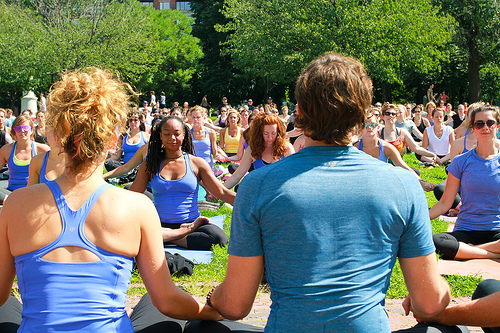
  • Why Relationships Matter Most: We’re All Just Walking Each Other Home

    Why Relationships Matter Most: We’re All Just Walking Each Other Home

    “We’re all just walking each other home.” ~Ram Dass

    Living in the hyper-individualist society that we do, it’s easy to forget our obligation to those around us. Often in the West, we are taught to prioritize ourselves in the unhealthiest ways, to ‘grind’ as hard as we can to achieve wealth and status.

    We are taught, between the lines, that our first responsibility is to create a ‘perfected‘ version of ourselves to such an extreme that it is alright to forsake our relationships with others to accomplish it.

    From day one, it is embedded in us that it is our individual selves against the world. Like many others, I’d like to challenge this notion. Because what is the purpose of wealth and status if not to share it with the ones you love and who love you the most?

    What is the meaning of life itself if not companionship, community, and love?

    I want to disclaim, of course, that this is by no means attacking the notion of having personal external goals. Career success, physique aspirations, and other tangible objectives can absolutely be noble in pursuit and attainment.

    What I would like to say is that none of those external goals will fulfill you the way that genuine human connection can—and that those goals should not be completed by abandoning your healthy relationships and support systems. And if you are thinking, “who actually does that?” this introduction is not for you.

    To put it simply, life is a series of circumstances, situations, and experiences that we get reluctantly swept into (and sometimes, foolishly, sweep ourselves into). It’s just one adventure after the next, for better or worse. That sounds gloomy, but it is what makes life so beautiful—the human ability to feel a vast range of emotions within an hour and find charm in the worst circumstances.

    A little over a year ago, my aunt passed. Through a blur of tears, I remember thinking about how beautiful the flowers people had sent were and how vibrantly green the grass of the cemetery was. And amidst all the despair, I remember looking around and seeing my friends.

    When I think back to all the times in my life when it felt like the roof would cave in, that I had nothing left, that I didn’t know if I would be strong enough to move forward and continue on, I remember what exactly it was that pushed me forward. It was always my friends, my people. Those who almost daily not only told me that they would be there for me but showed up when I needed them the most.

    Would I have survived my hardships alone? Yes. Would I prefer to do it alone? Never.

    I am infinitely grateful for the community I have created for myself—the network of friends that have become family and mentors that help guide me when things seem too chaotic to untangle.

    Through the gentle counsel of my loved ones, I have come to realize that there is no nobility in solitary living. There is no wisdom or bravery in taking on hardship or challenges alone when I don’t need to. Every time I forsook my loved ones to be (my distorted idea of) independent, it seemed almost like I was just adding gasoline to already growing flames. There was no more profound message beneath suffering in silence, only suffering.

    And I think most of us can agree that attempting to handle problems alone feels infinitely more difficult to manage than with support. It’s part of why people seek romantic partnerships, to have someone always there to walk through the flames alongside. It’s why people invest so strongly in their loved ones in general. It is to feel heard and be seen, to hear and to see.

    Part of the purpose of life, I have come to learn, is within the attempt to know someone else, to recognize yourself in another person deeply. Connection is everything we have in this world. It’s the mirror that holds itself up to us in the face of conflict with another person. It makes us think twice before buying from a brand that uses slave labor, and it’s what makes us recoil at the thought of abused animals or children.

    Connection with all living beings is the deeper understanding that we are all somehow joined by our humanity. And in that, understanding that one of our primary purposes is to know and be known. To know my friends and their joys and fears and draw parallels to how they reflect my own. To walk alongside them through the difficult times and the blissful times. I recognize now that it is in the attempt to know others that I now know myself.

    We are all just walking each other home. Life, at its core, is that simple.

    I am walking, hand in hand, side by side, sometimes a little bit ahead or a little bit behind, with the people around me. Some of those people may walk too quickly for me to keep up, and some may move too slowly. That is when I thank them for walking me as far as they could and continue on without them, as they will continue on without me.

    If the journey of life is a path we walk, then the purpose of our travel buddies is to help us navigate the storms on the road and to make the journey as funny, exciting, and comfortable as possible. If life is a journey, then the whole point of friendship, companionship, and mentorship is to just be with each other.

    If I am walking you home, is my purpose not to try my best to protect, guide, and love you throughout that journey? We are all walking each other and ourselves home. And the least we can do is do our best to make that journey as beautiful, warm, and light as possible.

    So many of us are falling into a spiritual trap of sorts and being wholly sucked into the hyper-consumerist and individualist mentality of the West. Some of us are actively fighting the true nature of our being, which yearns for deep and genuine connection above all else.

    As you age and the world around you changes, your values begin to change. When you’re nearing your final days, when all you want is your family and friends surrounding you, will you have planted those seeds? Will you have spent time cultivating and nourishing your relationships with those around you? Will you have walked your loved ones down their path and done your best to create joy in your (and others’) journey?

    The message I am trying desperately to convey here is that we need one another. We need love, and we need companionship. We need forgiveness, and we need grace. We need to be open to giving our hearts away and open to the risk of being hurt. And in that same breath, we need to do everything possible in our power to avoid hurting those around us. We need to use the path to grasp the importance of being tender with each other.

    The journey of life is not easy. Take a moment and reflect on all those who have walked you in the past and all those who continue to walk you home.

    Think about the connections you have made, the empathy and love you have nourished in the lives of those you care about.

    And remember that at the end of the day, despite all of the problems and chaos around us, we are all just walking each other home, and we are all just trying to be better companions, one day at a time.

    Dedicated to my travel companions, you know who you are.
  • How a Dance Class Brought Me Back to Life When I Was at My Lowest

    How a Dance Class Brought Me Back to Life When I Was at My Lowest

    “When it’s time for something new, you will feel it. You will feel a desire to let go, to shed layers, to move, to re-create. You will know because there will be subtle shifts all around you. You will release the old because you are really clearing the path for what’s ahead. Trust the process.” ~Brianna Wiest

    I landed myself in the ER three days short of my twenty-fifth birthday, due to a mental health crisis.

    It was January, always a difficult month for me. The holiday season tends to be stressful, and I’d recently visited my parents back home, which had led to a resurfacing of depressive and anxious symptoms. It was also a month filled with anniversaries, and the winter weather and early darkness affected my mood in a negative way.

    And of course, my fourth year English literature seminar had left me feeling so overwhelmed, I believed I’d never be able to graduate from university.

    I’ve been caught up in the same pattern for many years. The fallout of my hospitalization had left me not only with a broken heart, but also a deep conviction that everyone I loved would eventually leave me. Roommates asked me to move out; my therapist was discouraged and didn’t know whether she could continue to help me; and I was now unable to complete my course, which meant I had plenty of time on my hands.

    It shouldn’t come as a surprise, then, that I found myself in bed, ruminating about the choices I’d made that had led me to experience symptoms so severe I needed to be hospitalized. I wondered what options were left ahead of me.

    One afternoon, as I was wondering what was the point of being alive, I suddenly sat up in bed and exclaimed, aloud, “F*ck it. I’m signing up for dance lessons.” I had nothing to lose at that point, and I did have fond memories of dancing as a kid.

    It was not easy. First, I needed to find a studio. There was no way I’d show up alone, so I decided to bring a friend along. But the biggest challenge was simply managing the nerves that often fired up whenever I tried something new.

    I wish I could tell you that I found myself suddenly passionate about dance. That I found myself at the studio every day, determined to lose the weight I had gained over the last two years of the pandemic.

    That was not the case.

    But what I had not expected was to find a sense of community. It helped that the classes were open-level, and anybody, regardless of skill or size, could join.

    What I loved the most was showing up early and chatting with the dance teacher, other dancers, and the ladies at the front desk. They made me feel welcomed, and to be completely honest, were a much-needed distraction from the mess that was my life.

    Over the last few months, I’ve attended about a dozen classes, so I’ve been at the studio for about twelve hours total. It’s not a lot, when you consider the number of hours we have per week. But if anything, at least during that time, I allowed myself  to breathe. To relax, and even forget.

    It’s been a bit of an escape, and like I always say, sometimes it’s the small things in life that matter the most. They aren’t small, after all. I do look forward to Friday evenings now, especially because it’s contemporary dance, so the movements feel more natural to me.

    Sometimes I wonder how the people at the studio would feel if they knew the truth. If they knew my personal circumstances, the suffering I have endured this past six months, and the reality of living with chronic conditions that make it hard to enjoy life.

    I just want them to know that a simple hello can make my day, that their enthusiasm is contagious, and that I always leave feeling more at peace.

    In the past week, I’ve even caught myself twirling around in my kitchen, and it feels good to just be.

    Perhaps that’s what I have been looking for all along: the ability to just be, to just let my body take space, and give myself permission to dance and move as I please.

    I don’t have a lot of wisdom to offer, but I do know that showing up was an act of self-care. I know that it’s scary to try new things, especially when you anticipate feeling uncomfortable and perhaps even judged. I know that dancing and singing have been integral parts of my recovery, that a sense of community improves your overall health, and that growth can be painful.

    If there’s something I want people to remember, it’s that letting go is okay. Play, mindfulness, and dance are all gifts that need to be cherished.

    We live in a world that often encourages us to be productive 24/7, that values fast-paced environments and achievements. Sometimes, I get so caught up in my head, I forget I have a body that deserves my attention. I forget that taking time for myself will allow me to be a better youth peer supporter. I forget that we only have this one life, and that tragedy can strike at any moment.

    Mostly, it is easy for me to forget that others care, that my presence is valued, and that emotions aren’t dangerous; they deepen our connection to those around us.

    So, I encourage you to cherish the members of your community. They will hold space for you as you learn to hold space for yourself. Face your fears because you are worthy of bravery. And of course, take a pause. Listen to your body, because it is wise and trying hard to keep you alive.

  • How Letting Go of the Need to be Special Changed My Life

    How Letting Go of the Need to be Special Changed My Life

    “Our society has become a conspiracy against joy. It has put too much emphasis on the individuating part of our consciousness—individual reason—and too little emphasis on the bounding parts of our consciousness, the heart and soul.” ~David Brooks

    When I was in elementary school, I avoided group projects like the plague. When given the choice to work alone or as part of a team, I always chose to work alone.

    When I joined a new class, club, or sport, my parents inquired how I measured up against the rest.

    “So what do you think, Hail?” Dad would ask me. “Are you the fastest on the team? Did you get the highest grade?”

    In the years that followed I formed clubs, climbed to leadership roles, and sought only the most competitive opportunities.

    Later, I became fully self-employed as a coach. I had no colleagues—only clients. In my mid-twenties I moved to the Pacific Northwest in the name of novelty and exploration, leaving behind a thriving, New Jersey-bound network of extended family.

    I received a great deal of positive feedback for these decisions. I was succeeding, bucking social convention in favor of self-discovery, and family and friends described me as “brave,” “inspiring,” and “motivated.” I operated by a set of values that included fierce individualism and self-expression.

    This tale is as old as time among members of my generation. We’re the generation of digital nomad-hood, “Van Life,” and working from home. We value mobility. Wellness blogs laud alone time as the pinnacle of self-care. We spend hours each day on social media, seeking validation of our uniqueness and our worth.

    In The Second Mountain, NYTimes Bestselling Author David Brooks posits that this individualistic ethos is a backlash against the moral ecology of the 1950s, which emphasized group conformity, humility, and self-effacement. Since the 1960s, our culture has increasingly pushed back against collective identities, labels, and experiences, opting instead for boundless self-actualization.

    On one hand, I’m viscerally grateful for our culture’s modern emphasis on individualism. Women, especially, have waited centuries to receive cultural support to pursue our dreams and self-actualize. Likewise, as someone in recovery from codependency, I understand the critical importance of honoring my needs, my desires, and my choices. After all, it took years to break free from the shackles of people-pleasing and self-censorship.

    However, at a certain point, hyper-individualism stopped serving me and began hindering me. When my own specialness became the orienting principle for how I saw and interacted with the world, I lost touch with the belonging, trust, and community that culminate to form a rich and meaningful life.

    Individualism Gone Too Far

    As children, our caregivers and teachers celebrate us when we win awards, place first, and stand out. These celebrations become proxies for love—a love we have to work hard to earn.

    In adulthood, I hoarded my specialness, terrified that being “one among many”—in my career, in my lifestyle, in my heart—would leave me purposeless. I vested great effort into my hyper-individualism because I subconsciously believed it was the only way to feel seen and valued.

    I rarely fathomed the benefits of being a contributor, a member of a group, or a vessel for a greater moral or spiritual cause. I balked at “teamwork” and “service” because they threatened to rob me of my self-assigned elevated status. In fact, I judged those who advocated such ideals. These people have no identity, I scoffed. No dreams of their own. 

    Though my hyper-individualistic life had many socially sanctioned perks—I developed powerful leadership skills, special occasions found me swollen with pride, and my Instagram following climbed—I grappled with:

    Isolation. When I singularly prioritized my personal goals, personal time, and personal life, I didn’t have any allies. I was a lonely team of one. Though I made commitments to people and causes, I could be unreliable, self-centered, and flighty when better opportunities arose. I assumed that others would be the same. This left me with a sense of loneliness and skepticism that underscored even my most treasured connections.

    Detachment. A life dictated by hyper-individualism is a life detached from true connection. I often felt like a free-floating satellite, certain that no community—geographical, political, artistic, you name it—could give me as much joy as the pursuit of my goals.

    Anxiety. When our identities are based on being special, life is a relentless uphill climb. We will never be enough; we must constantly strive to be better, try harder, and achieve more. Under such circumstances, self-compassion is a distant possibility. Instead, anxiety becomes our daily companion, the soft whisper that erodes opportunities for peace and contentment.

    Finding Balance

    Throughout my years of hyper-individualistic thinking, I never realized that when we devote parts of ourselves to others, we benefit—really benefit—in return. The benefits of service and community aren’t just fluffy incentives for inspirational posters. Purpose, belonging, and a deep sense of trust arise when we willingly commit ourselves to other people, other causes, and other definitions of a meaningful life.

    I began to understand this truth when I befriended members of a group whose guiding principles espoused service, humility, and community. Upon first exposure to these ideals, my entire being revolted. These were the contrived, sing-song “values” that I’d spent my life trying to avoid.

    I spent months in a state of schism. On the one hand, I didn’t see how an other-centered life could serve me; I wasn’t taught to. I could only imagine how it would crush my identity and distract from my dreams. My ego was terrified. I wanted to hightail it out of there.

    But something kept me there, bearing silent witness to my discomfort, eyeing this community with curiosity. My new friends seemed anything but identity-less. In fact, they seemed embodied, peaceful, and genuinely happy. Their lives were not dictated by the ever-changing highs and lows of daily successes. They emanated groundedness and seemed to lack the existential woes that plagued most members of my generation.

    In retrospect, I believe I stayed because a part of me—a deeply hidden and deeply human part—was lonely, tired of the narrowness of my world, and craving something more.

    One night, something happened. My desperate, exhausted ego relinquished its grasp on my hyper-individualism. It was as if a switch had flipped within me. I felt a sudden, fierce desire to entrench myself in commitments to communities, to people, to a moral philosophy I could call my own. I felt like a wide-eyed, open-hearted child asking, “What now?”

    I don’t know exactly what happened that night— but since then, my values and philosophy have shifted with no effort on my part. Here’s what I’ve noticed:

    I feel more deeply connected to the people around me.

    Before, I spent most interactions with others noticing our differences. Disparities in age, experience, privilege, and values felt as palpable and prohibitive as walls. Now, I find myself noting similarities and relating more deeply to others’ experiences. Their stories penetrate the walls of my heart because I’m not hyper-focused on myself. My eyes well with tears at narratives of tragedy and stories of joy. Rich wells of empathy have taken up residence in me.

    My anxiety decreased dramatically.

    I no longer spend my days driven by the compulsion to overachieve or “prove” my value. My worth no longer depends on being special—and it’s liberating! Instead of being swallowed by a self-referential whirlwind, plagued by decision fatigue and perfectionism, I’m able to slow down, interact deeply and meaningfully with others, and relax into the comfort of my communities.

    I’m more curious.

    When specialness was my orienting principle, the only information I wanted to consume was related to my personal growth and my goals. Letting go of hyper-individualism allowed me to feel more a part of the human race and more a part of this Earth.

    Now, information of all kinds fascinates me. I get a kick out of watching Blue Planet, going to lectures on helicopter parenting, and reading memoirs by Midwestern farmers. None of this information is directly relevant to my experience, but it doesn’t matter. I’m intrigued by what the world has to offer.

    I know that everything’s going to be okay.

    Relinquishing my hyper-individualism helped me understand that I’ll never be truly alone. Now that I’m willing to commit myself deeply to others, I experience newfound depths of intimacy, trust, and safety. Even if I suffer a tragedy or loss, I will have a thick web of people to support me. I know this to be true because I would do the same for others.

    When I began this journey, I was certain that if I let go of my fierce individualism, I’d become amorphous and mundane. Instead, I became more deeply entrenched in the world around me. It has been an incredible gift.

    We tend to understand self-actualization as learning how to feel our feelings, comprehend our values, pursue our dreams, and express our highest selves. I believe that that’s true—and I believe that there’s more. Once we feel embodied in our own identities, I believe that the utmost manifestation of self-actualization is commitment to something greater: love for other people, overarching values, or warm communities.

    Letting go of the need to be special allowed me to see, with clear eyes, the abundance of connection, compassion, intimacy, and community all around me. It helped me begin to experience the world in its fullness—not as a leader, a facilitator, or a director, but as a member, participant, and recipient of its daily miracles.

  • A Simple Way to Really See Each Other and Be Seen

    A Simple Way to Really See Each Other and Be Seen

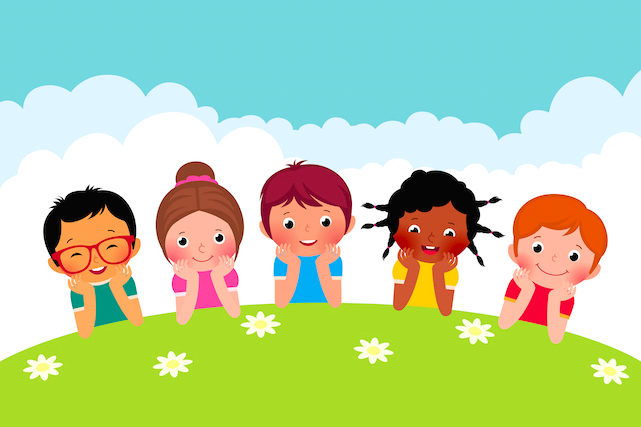
    Kids at a Table

    “Compassion is not a relationship between the healer and the wounded. It’s a relationship between equals.” ~Pema Chodron

    Growing up, my family ate dinner together nearly every night. It was a given. My mom also created a tradition called “go around the table,” in which everyone in my family would take turns sharing the details of our day.

    I often think back on this memory with awe at the impact this simple yet profound activity has had on my life.

    While I do not yet have a family, I have introduced “go around the table” to friends at dinner parties and colleagues at work events, and have experienced the benefits of this practice in the classroom, support groups, and spiritual groups.

    Sitting around a table with others and sharing is an experience that allows you to see and be seen, and if you have not done it lately, I suspect it could change your life.

    With the guidelines below, you can introduce this activity to your family, colleagues, or any other trusted group that seeks to nurture and improve communication, confidence, leadership skills, and community.

    1. The table is for sharing, not discussing.

    In my family, going around the table meant sharing about the events of our day. Sometimes this meant also sharing how these events made us feel, but we never used this time to plan a family vacation, talk about chores, or discuss “business” of any kind. This is especially important if your table exists in the workplace.

     2. Talk about your day (or week, depending on how often your table meets).

    You will find yourself wanting to pose specific questions or otherwise shape the way your table shares, but it’s important to keep it very simple.

    The focus of the activity is for each person at the table to tell his or her story in this moment in time. Why? Mostly because my mom said so, but also because having an audience to witness our stories as we tell them is extremely validating and empowering. It also gives us the power to own our stories.

    “Go around the table” also begs us to learn the art of storytelling—as a kid, my siblings and I quickly learned how to engage each other as we went around the table.

    When it was my turn to share, I always began, “I woke up,” and everyone would kind of grumble but also smile. I was funny (and a total hack). I was also learning that I like to make people laugh and humor is a good way to get my message across.

    As you share, you will find what type of communication works best for you.

    3. Just listen.

    When it’s not your turn to talk, you don’t talk. Period. When it is your turn to talk, you do not respond to another person’s story; you simply tell your story.

    Once you learn how to not interrupt others with your speech, you can begin to learn how to not interrupt others with your thoughts. When someone else is speaking, try not to plan what you are going to say. Just listen.

    Learning to really listen to what others have to say makes us better family members, friends, employees, managers, and people.

    4. No one is in charge.

    You will need someone to facilitate the sharing, but this does not make them the boss. The facilitator simply calls on someone to share first, and then rejoins the group as you “go around the table.”

    The table is a group of peers offering compassionate listening to each other. Avoid viewing one another through hierarchical dichotomies like teacher/student, counselor/patient, healer/wounded, or even parent/child. These relationships have purpose in other settings, but in this exercise, everyone is equal.

    If people begin to speak out of turn or abuse the sharing time in any way, each member of the group is equally responsible for maintaining decorum.

    When there are very few rules, you may be surprised at how steadfastly your table members adhere to them, even if they are very small children.

    5. Allow yourself to be heard.

    Talking out loud in a group setting is really scary. It is not something that comes easily or naturally to most people, and cultivating this ability to be heard is one of the best ways to live in a more awakened state.

    When you are talking, and people are listening, you are yanked into the present moment.

    When you learn to share in this way, you will have terrifying yet beautiful moments when you notice that everyone is listening to you. Breathe and continue your story in this moment, and eventually you may enjoy it. This is true for introverts and extroverts alike.

    Learning to be heard will grow your confidence and give you power.

    6. Be vulnerable.

    Sometimes you will come to the table carrying a heavy burden. One benefit of this practice is that talking about your fears, anxieties, or challenges will lighten your load.

    Be vulnerable and share and you will find peace as you allow yourself to be supported by the others at your table.

    7. If you don’t want to share, don’t.

    You may come to the table feeling something that can’t be articulated. When it’s your turn to talk, you can always pass.

    Don’t ever feel pressured to talk about something that you don’t feel ready to talk about and don’t make something up just so you have something to say. This activity demands authenticity or it doesn’t work.

    Additionally, the more you put into the exercise, the more you get out, so even if you decide not to share, don’t check out. Be present and listen to what others say.

    8. The table is free.

    There are a lot of groups out there that offer this type of experience to members, and most of them are wonderful, healing places. If you decide to join a new group or meet-up, do your research and trust your intuition.

    Everyone at your table should feel free to come and go as they please. If someone at your table wants you to offer something that does not feel right to you, whether financially, sexually, emotionally, energetically, or otherwise, walk away and find a new table.

    If you feel scared to leave or do not know how, find someone outside of the group to talk to. You should never be asked to give more than you are willing or able to give, and you should never be made to feel guilty for walking away from the group for any reason. This is true even if the others at your table are your family.

    My mom is a really incredible woman who taught her children compassion from a young age and above all else. Going around the table is an exercise in compassion, and my hope in sharing this practice is that her wisdom will continue to affect positive growth in others.

    Happy kids cartoon via Shutterstock

  • Introducing Tiny Buddha’s Community Forums!

    Introducing Tiny Buddha’s Community Forums!

    Tiny Buddha 2

    After much time and planning with Joshua Denney of Think Web Strategy, I’m thrilled to announce that Tiny Buddha now has a new responsive design and community forums!

    The new design enables for a better reading experience on mobile devices, and also gives you access to forum-related information right on the homepage.

    Why Join The Tiny Buddha Community Forums?

    The forums are a place to connect with the community, to share ideas, and to give and receive support. You’ll find topics related to:

    • Art
    • Crafts
    • Emotional Mastery
    • Fun
    • Health & Fitness
    • Parenting
    • Purpose
    • Relationships
    • Spirituality
    • Tough Times
    • Work

    Since site authors officially started using the forums two days ago, there are already quite a few conversations going on over there. I hope you’ll set up a free account to join one or start your own!

    To Set a Free Account on the Tiny Buddha Forums

    1. Click on the “Join the Forums” link at the top right-hand corner of the site.

    2. On the register page, enter a username, your name, your email address, and your password, and then hit “complete sign up.”

    3. You will receive a confirmation email to verify your account. Once you’ve done that…

    4. Login at http://www.tinybuddha.com/login

    Once you’re logged in, you can use the forum link in the main menu, at the top of the site, or check out on some of the popular forum conversations listed on the new homepage.

    Since this is a new site feature, there may be some bugs. If you notice any issues, please let us know in the technical support section, here: http://dev.tinybuddha.com/forum/site-feedback-support/technical-support/

    Thank you for being part of the Tiny Buddha community! 🙂

  • The Power of Community: 6 Reasons We Need Each Other

    The Power of Community: 6 Reasons We Need Each Other

    “Remember, we all stumble, every one of us. That’s why it’s a comfort to go hand in hand.” ~Emily Kimbrough

    Even though it was 18 months ago, I still remember my climb up Kilimanjaro like it was yesterday.

    Taking those final steps toward the summit with tears in my eyes because I never believed that I—someone who grew up this sick little kid who held a deep-seated belief that she’d never be “an athlete”—would do something that thousands each year, including world-class athletes, cannot.

    Yet there I was.

    But I certainly didn’t get there alone. I had help—a lot of it.

    While training, I called on my friends who are athletes and coaches to ask their training and recovery advice.

    For example, when I got ambitious on a hike and was so sore the next day I had to crawl up and down the stairs on my hands and knees, I called my Ironman Triathlete friend Shannon to ask him how to avoid having that happen again. (His answer was twofold: He first told me not to do that again, and then patiently walked me through the wild world of sport recovery drinks.)

    As I continued preparations, I continued to turn to my friends, the climbing company, and seasoned climbing veterans for buying and renting gear, figuring out snacks on the trip, understanding the challenges of altitude sickness, and everything else that went into making Kilimanjaro a memorable and easy trip for me.

    The phrase “it takes a village” certainly applied to me and this trip.

    Then, when I got there, it was my turn to pay it back. I was climbing with some older gentlemen who were having difficulty navigating the rocks and tree roots. So, I’d patiently reach down and offer a hand—after all, we were there together, to accomplish this together. I wanted to both pay it forward and see them succeed.

    On the summit day it was my turn to get help again.

    At altitudes above 10,000 feet you feel the effects of altitude sickness, and on our summit day we were traveling between 15,000 and 19,340 feet—meaning at the summit I had half of the oxygen I would at sea level.

    Hiking up a 45-degree scree-covered slope with half the air I normally had was making the final ascent a challenge, but I had a wonderfully patient guide who would listen to my breathing as I puffed along behind him; and he and the summit team would stop for me, let me catch my breath, and then patiently move forward only once I was ready.

    Then all of the sudden there it was—the summit—both literal and metaphorical. I had put in months of physical training and a year of research and planning to make it happen, and finally it was a reality. But I never could have done it alone. (more…)