Tag: coloring

  • Morning Coloring Page from Tiny Buddha’s Gratitude Journal

    Morning Coloring Page from Tiny Buddha’s Gratitude Journal

    Hi everyone! This is my seventh week sharing coloring pages from the soon-to-be-released Tiny Buddha’s Gratitude Journal (available for pre-order now). Previously, I shared:

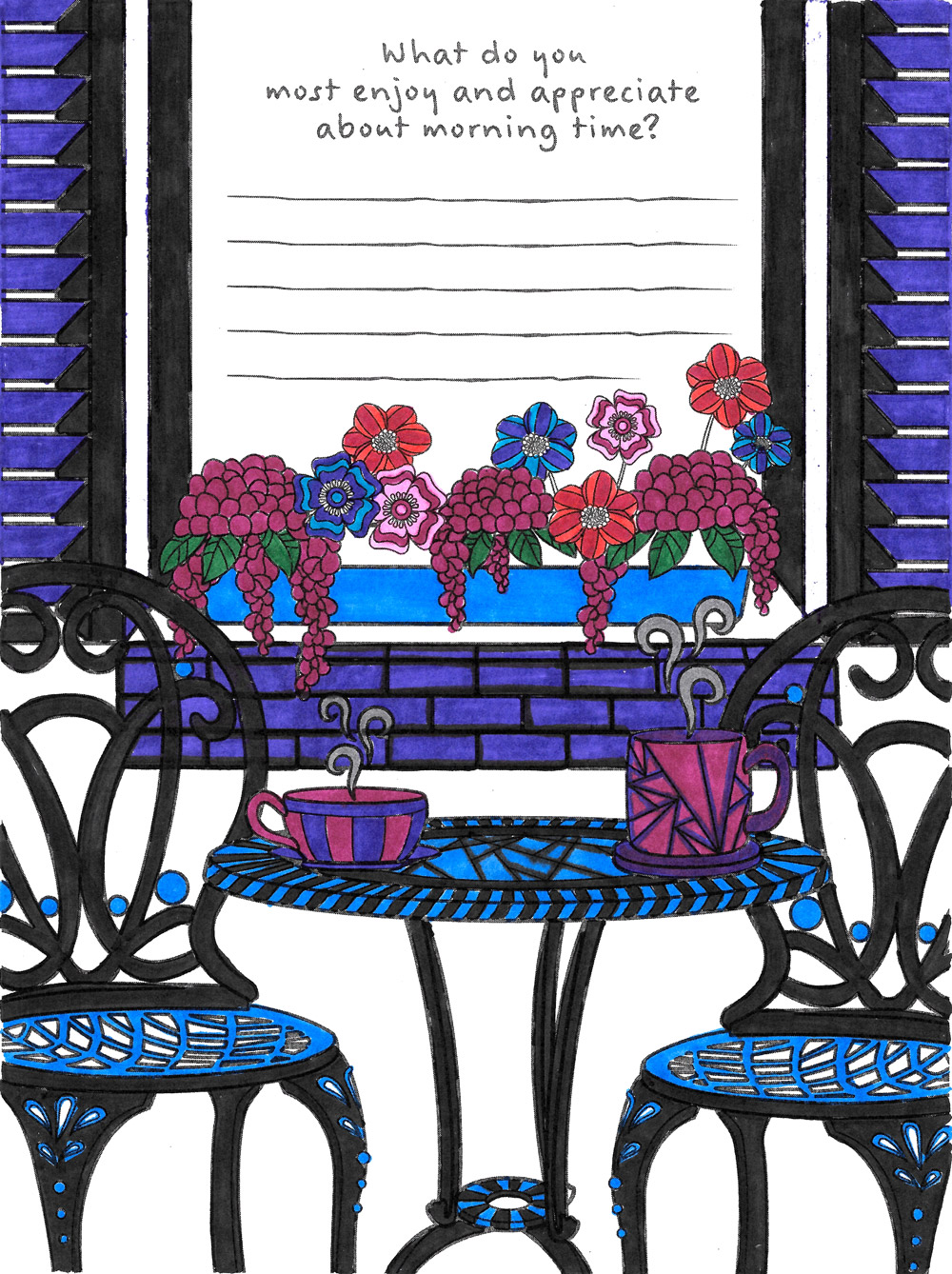
    How would you answer the question in the middle?

    Now that I get up much earlier than I used to, I appreciate that morning is my time for myself. On most mornings I meditate, sometimes while it’s still dark outside, and it’s usually feels quiet and peaceful around me.

    I also appreciate that morning always brings a sense of promise. It’s a new day, full of possibilities. A new chance to be who I want to be and do what I want to do.

    If you haven’t already, pre-order your copy of Tiny Buddha’s Gratitude Journal here, then forward your purchase confirmation email to bookbonus@tinybuddha.com to receive three free bonus gifts! These gifts are only available until June 13th, the official launch date.

  • Music Coloring Page from Tiny Buddha’s Gratitude Journal

    Music Coloring Page from Tiny Buddha’s Gratitude Journal

    Hi everyone! This is my fifth week sharing coloring pages from the soon-to-be-released Tiny Buddha’s Gratitude Journal (available for pre-order now). Previously, I shared:

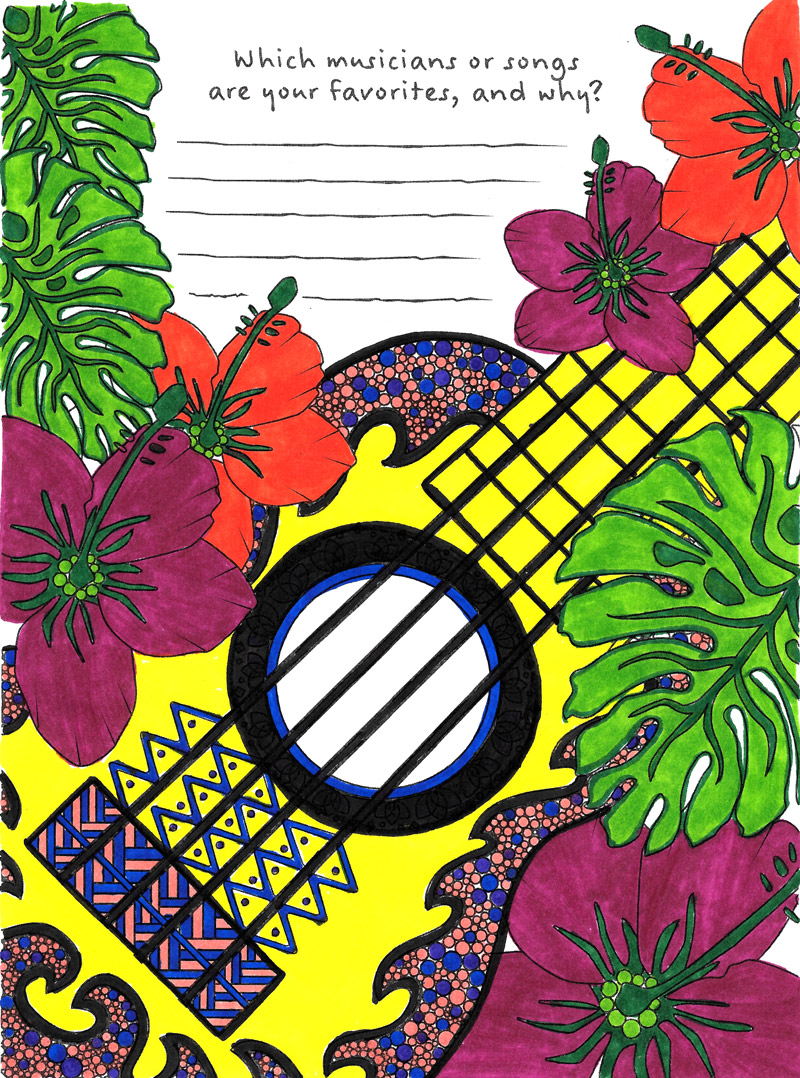
    How would you answer the question in the middle?

    It’s hard to narrow down my favorite music, as I imagine is true for most of us. But there are certain songs that are particularly meaningful to me because of the memories they evoke, including:

    1. Wonderwall, by Oasis (which I played on repeat, with friends, for much of my sophomore year of high school)

    2. So This is Christmas, by John Lennon (one of my favorite holiday songs, and the finale number of one of the most memorable regional shows I did in college)

    3. Mad World (the song my boyfriend sang at karaoke the night we met, a song I already loved from Donnie Darko)

    4. Cheer Up, Sleepy Jean (a song we often sing to commemorate my late grandmother Jeanne, when my aunt pulls out the karaoke machine)

    5. Sweet Caroline (a song I’ve sung while jumping many times at karaoke, and a few times with fellow Red Sox fans near my hometown in Massachusetts)

    6. Pretty much everything from The Beatles, The Rolling Stones, Pink Floyd, Coldplay, RadioheadDavid Gray, and Ray LaMontagne, for far too many reasons to list.

    Now I’d like to hear from you! What songs and musicians do you most appreciate, and why?

    If you haven’t already, pre-order your copy of Tiny Buddha’s Gratitude Journal here, then forward your purchase confirmation email to bookbonus@tinybuddha.com to receive three free bonus gifts!

  • Your Favorite Animal Coloring Page from Tiny Buddha’s Gratitude Journal

    Your Favorite Animal Coloring Page from Tiny Buddha’s Gratitude Journal

    Hi everyone! This is my fourth week sharing coloring pages from the soon-to-be-released Tiny Buddha’s Gratitude Journal (available for pre-order now). Previously, I shared:

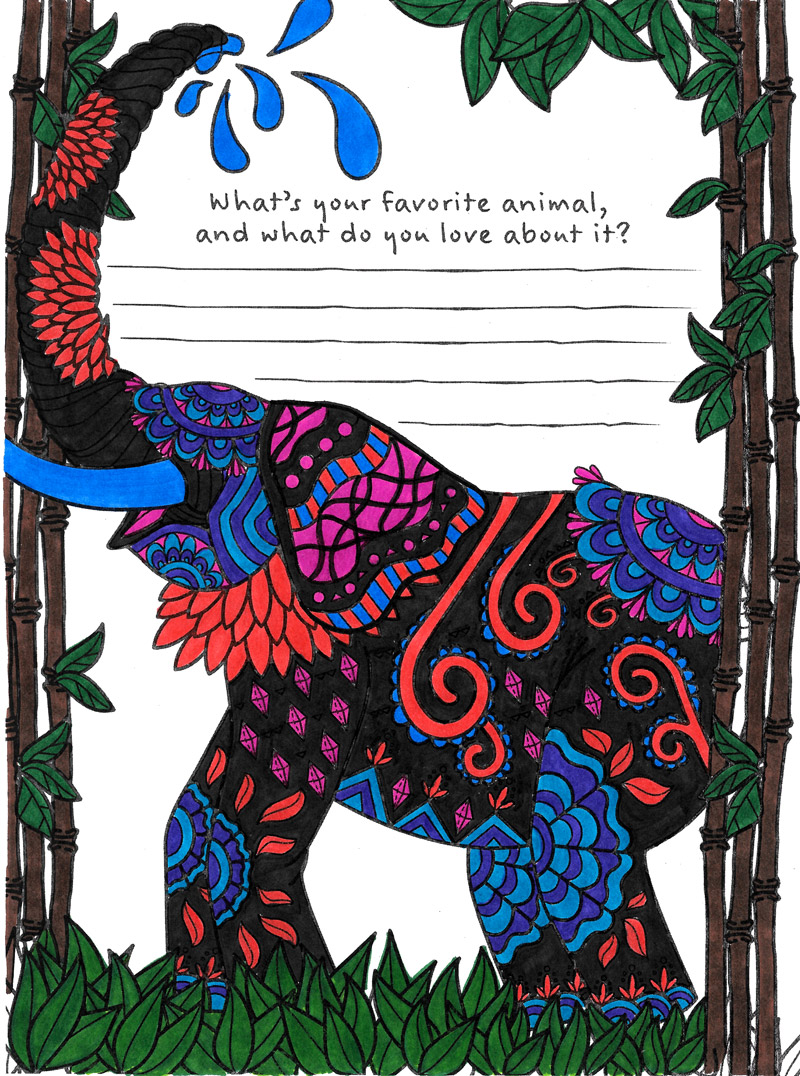
    I have a hard time answering this one because I’m a huge animal lover—literally. I’m mostly drawn to large animals, including lions and tigers and bears (Oh my!)

    These aren’t the pets that will greet you at the door or curl up in your lap. You can’t take them on a plane for emotional support or dress them like little humans. They’re commanding, formidable, and not just a little dangerous.

    Something about being around beautiful, massive predators, without human consciousness, pulls me out of my own tiny mind and fills me with presence and awe.

    What’s your favorite animal, and why?

    If you haven’t already, pre-order your copy of Tiny Buddha’s Gratitude Journal here, and you’ll instantly receive three free bonus gifts.

  • Technology Coloring Page from Tiny Buddha’s Gratitude Journal

    Technology Coloring Page from Tiny Buddha’s Gratitude Journal

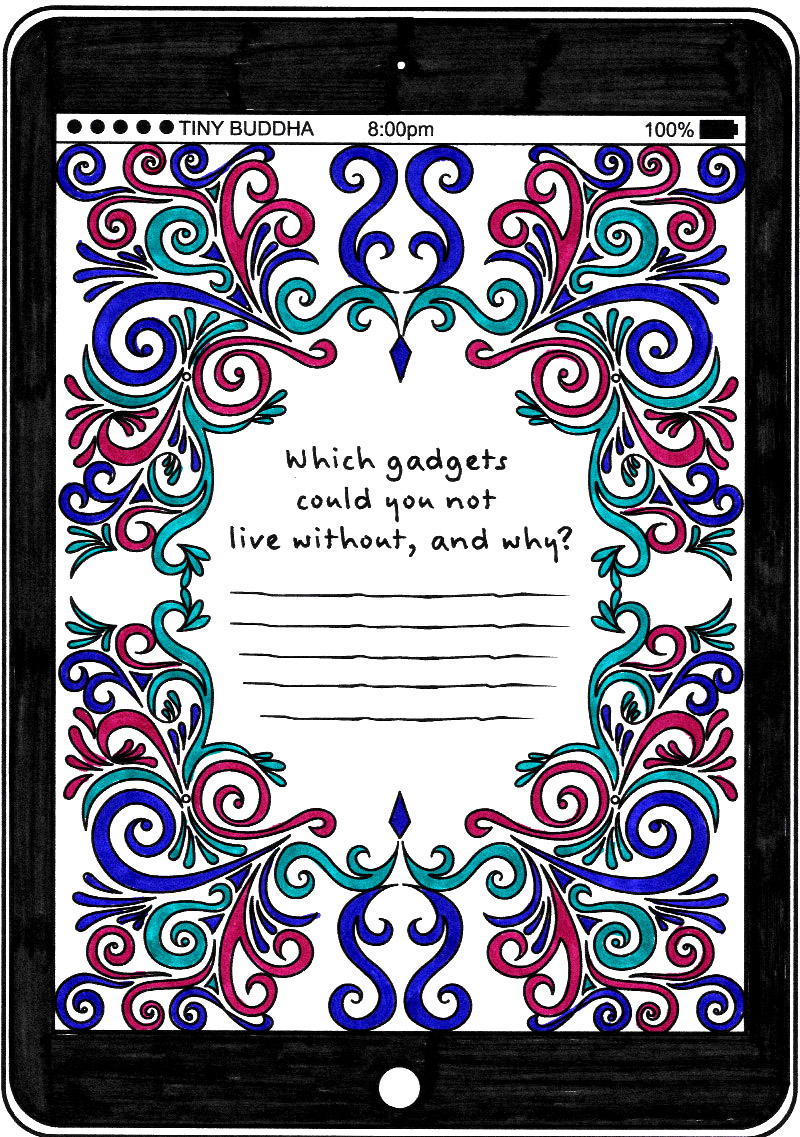
    Hi everyone! This is my third week sharing coloring pages from the soon-to-be-released Tiny Buddha’s Gratitude Journal (available for pre-order now). Previously, I shared the nature coloring page and the vacation coloring page.

    This one’s a no-brainer for me. Though I could live without it (did it for over twenty-five years!), I’m most grateful for my iPhone—which I use most frequently to manage Tiny Buddha’s social media pages and my inboxes on the go, read eBooks, track my steps, and listen to music and guided meditations.

    If you had told me in high school I’d one day own one device that would replace my computer, my alarm clock, my camera, my pedometer, and everything on my book shelf, I would have asked what you were on (and if you had any left).

    Though I was a late iPhone adopter, using a flip phone for an embarrassingly long amount of time, I’ve had one for quite a while now, yet it still blows my mind how much it simplifies my life.

    I’ve had to work at being mindful with technology, as it’s pretty tempting to mindlessly surf when I’m bored, agitated, or feeling anything I’d rather avoid. But even this is a gift, in a way, as every time I check my iPhone, I have a reminder to check in with myself.

    What’s your favorite gadget, and why?

    If you haven’t already, pre-order your copy of Tiny Buddha’s Gratitude Journal here, and you’ll instantly receive three free bonus gifts.

  • Awaken Your Creative Side: Interview with Melissa Dinwiddie and Book Giveaway

    Awaken Your Creative Side: Interview with Melissa Dinwiddie and Book Giveaway

    UPDATE: The winners for this giveaway are Alba and Nette Jordan.

    Like most of us, I spent much of my childhood creating, making everything from finger paintings and friendship bracelets to leaf collages and Lego castles.

    I also spent weeks rehearsing for community theater performances and hours writing poems and stories, with no thought of whether I could make money off any of it.

    I created because it was fun and fulfilling, and that alone was enough.

    Then, like many of us, I got caught up adulting and began spending far more time working and worrying than imagining and playing.

    I wanted to make things with my hands and my heart, as I formerly did, but I feared nothing I made would be good enough, that nothing would come of it, and that I would essentially be wasting my time.

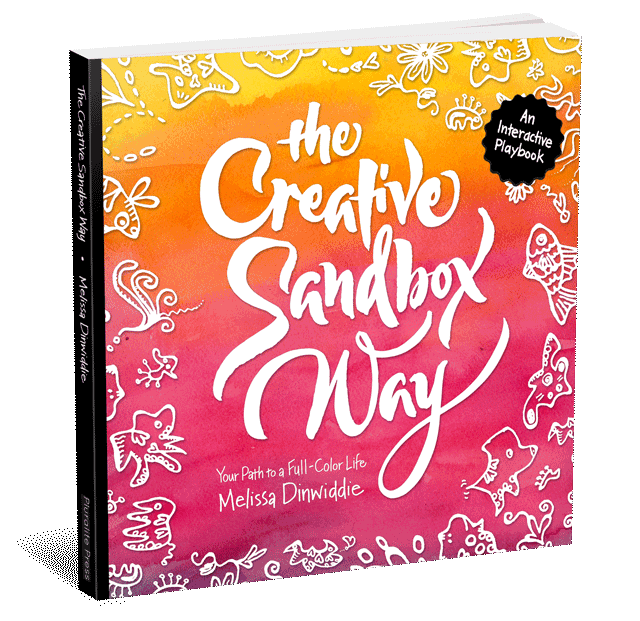
    Since I’ve been reconnecting with my creative side over these past couple of years, I was thrilled when Tiny Buddha contributor Melissa Dinwiddie introduced me to her new book, The Creative Sandbox Way: Your Path to a Full Color Life.

    Part creativity coach, part journal, and part coloring book, The Creative Sandbox Way will help you overcome your internal blocks so you can reclaim the joy of creative expression.

    Through the book, you’ll learn:

    • Melissa’s ten foolproof guideposts that have helped thousands get joyfully creating
    • Five reasons why creative play is good for you, and for the world
    • How to turn creative blocks into friends

    A self-proclaimed happiness catalyst and creativity instigator, Melissa believes that we are all creative, and we can all boost our happiness by living a full-color life.

    Whether you’re just discovering your creative side or nudging it awake after many years dormant, The Creative Sandbox Way may be just what you need to ditch your fear and return to joy.
    The Giveaway

    To enter to win one of two free copies of The Creative Sandbox Way:

    • Leave a comment below. You don’t have to share anything specific; “count me in” is enough. But if you feel inclined, share your favorite creative activity.
    • For an extra entry, share this interview on one of your social media pages and include the link in a second comment.

    You can enter until midnight PST on Sunday, January 29th.

    The Interview

    1. Tell us a little about yourself and what inspired you to create this book.

    My goal in life is to get people creating, and my ultimate mission is to change the entire conversation around creative expression and play.

    We tend to think of creative play as something frivolous and self-indulgent, but not only is creative play not self-indulgent, it’s essential to humans. It’s how you change your life for the better, and, in fact, it’s how you change the world!

    The reason I’m such an evangelist for creative play is because for too many years I was convinced that I was not creative. And that belief caused so much needless suffering.

    Because the truth is, all humans are creative.

    Saying “I’m not creative” is like saying “I don’t know how to be hungry.”

    But creativity gets cut off for so many us, and that unexpressed creativity does untold damage. It turns inward, as ennui, sadness, depression, and it manifests as external behaviors like overspending, overeating, addiction, and meanness.

    Nothing good or productive comes from unexpressed creativity.

    On the other hand, what I’ve experienced in my own life, and in the lives of my readers, students, and clients, is that small daily acts of creative play start a positive cascade in our lives.

    I wrote The Creative Sandbox Way as a love letter to my younger self. It is the book that I wish I’d had at age 43, 36, 27, 19, 13, back when my tender creative spirit was getting beaten down, when I could have benefited from an older, wiser mentor to guide me past the pitfalls.

    2. Who is the book for, and what do you hope they get from it?

    The Creative Sandbox Way is for three types of people:

    • People who believe they aren’t creative, but secretly (or not so secretly) wish they were. The Creative Sandbox Way will show you that you are!
    • Stuck creatives, who desperately want to be doing their writing, painting, music, or whatever their chosen creative expression is, but just can’t seem to get themselves to do it. The Creative Sandbox Way will get you past the stuck and into flow again.
    • Burned-out creative pros, who spend all their time creating for others, so art has become “just a job.” The Creative Sandbox Way will help you rekindle and reclaim the joy that got you into a creative profession in the first place.

    I’ve been all three people, so I know the problems of all three intimately.

    3. Can you talk a little about how perfectionism can hinder our creativity?

    Perfectionism is a curse. Nothing good comes from it, because it leads to paralysis.

    Creativity requires action. Movement.

    In my pre-Creative Sandbox days, I would see a call for entries for an art show, and part of me would want desperately to create a piece to enter, but the Perfectionist Gremlin would take over and convince me that nothing I could create would ever be good enough.

    So guess what I did?

    Nothing.

    That is perfectionist paralysis.

    For too many years I labored under the belief that if I let go of my perfectionism, it would mean letting go of striving for excellence, too.

    What I’ve learned along the Creative Sandbox Way is that you can still pursue excellence, still aim for continual improvement, while allowing yourself to create what you’re capable of creating right now—which may very well be crap! We get to allow ourselves to be human in our pursuit of excellence, rather than beating ourselves up for our failure to be superhuman.

    It’s a fine distinction, and one that took me well into my forties to come to terms with. I only wish I’d gotten here sooner!

    One thing that made a huge difference for me was to remember that, although nobody wants to make crap, we need the crap to fertilize the good stuff.

    Also, just because you allow yourself to create crap doesn’t mean you will, but it does mean you’ll create!

    4. On page 46 you wrote, “In art the only real rule is ‘Whatever works is right.’” Can you elaborate a little on that?

    In every art form, you can find people espousing rules that, if you follow them with precision, will lead to a known outcome. Early on we learn from our teachers and our friends that horses aren’t blue, and which end of the paintbrush is the right one to hold, and what part of the guitar to touch, and how to get the proper sound out of it.

    I don’t have a problem with knowing any of these rules, but the question I want people to ask—and it’s a question that too often gets overlooked—is, what’s the outcome you want to achieve?

    Once you know where you’re trying to go, whatever route you choose to get there is up to you.

    There may be ten or fifty or a zillion different paths to achieve the same outcome. Someone else may choose a different route, may even label your route “wrong.”

    But this is art, not brain surgery! If it gets you where you want to go, and nobody was killed or maimed in the process, then that’s all that matters.

    5. What is it about childhood that nurtures creativity, and why do we lose our connection to creativity as adults?

    We are born zestful, curious, inherently creative creatures, with wildly active imaginations. Unfortunately, we live in a culture that gives us very mixed messages about creativity and creative expression.

    Very young children are typically given a lot of freedom when it comes to creativity, but as we get older, we’re expected to rein it in. Creative expression, we learn, is “frivolous,” “self-indulgent,” and “unimportant.”

    Confusingly, at the same time, the arts are treated as something special, reserved for the elite few—the “special, talented ones,” not everyone else.

    And while we laud our top creators—artists, actors, filmmakers, musicians, dancers—the culture is also rife with negative myths about creatives.

    Films, television shows, and books are filled with images of starving artists, mentally unstable painters, suicidal writers, flaky creatives.

    These are just a few examples of a very long list of negative associations. Although they don’t actually have anything to do with reality (artists are not all starving, painters are not all mentally unstable, nor do they have to be!), the images are so “sticky” and prevalent that people believe them. If this is what it means to be creative, it’s no wonder we lose our connection to our creativity!

    6. You wrote, “creativity often happens in uncertainty,” outside of our comfort zone. What did you mean by this?

    Actually, true creativity always happens in uncertainty.

    Jonathan Fields, author of Uncertainty, pointed this out to me. He puts it something like this: If it’s not uncertain, that means it’s been done before, and if it’s been done before, that means it’s not truly creative.

    Now, this is not to say that reproducing what’s been done before can’t be valuable, but in order to push into our most fully creative realms, we are, by definition, required to step outside of our comfort zone.

    My Creative Sandbox Way Guideposts are designed to help make it easier to do just that.

    7. How do comparisons kill creativity, and how can we avoid this trap?

    First, it’s important to acknowledge that we are creatures of comparison. Part of being human is our exquisite propensity to notice, to recognize patterns and differences. We’re not trying to change this!

    Comparison itself is not the problem. The problem comes when we allow judgment to seep in and dictate what comes next.

    In fourth grade, I remember getting a print from the Scholastic Book Club of a painting of a rabbit that was so realistic it was like a photograph. You could see every hair in its fur.

    The adults in my life told me I was a “good artist,” but when I looked at this print, I knew I could never paint like that. I felt a deep sense of despair.

    Of course, there were all sorts of assumptions going on:

    I assumed that being a good artist meant painting in a photographically realistic style, and that this was the only way to be an artist.

    I assumed that because I didn’t already know how to paint as skillfully as the artist who’d painted that rabbit, that there was no hope for me.

    In fact, of course, there are an infinite variety of ways in which to be an artist. In fact, of course, painting in a photographically realistic style (or any style) is a skill that can be learned.

    As for avoiding the Comparison Trap, I find it comes down more to learning how to spring the trap, rather than avoiding it altogether.

    Personally, I step in the Comparison Trap at least six times a day. But the simple act of noticing when the Comparison Trap Gremlin has taken over allows me to then make a mindful choice about what comes next.

    More on this in the next question!

    8. You wrote that everything that goes well in your life boils down to two elements. Can you talk a little about those elements?

    Yes! I refer to these two elements together as my Golden Formula.

    Melissa’s Golden Formula: Self-awareness + self-compassion = the key to everything good.

    Self-awareness means noticing what’s working and not working in your life. Noticing your likes and dislikes. Noticing your reactions to situations.

    It means being a scientist and a detective in your own life, getting curious, and putting yourself under the scientist’s microscope and the detective’s magnifying glass.

    Self-compassion means responding to whatever you discover with love and kindness. It means not holding superhuman expectations of perfection, but acknowledging that you are just like the other seven billion people on the planet, and that’s okay.

    Self-compassion means forgiving yourself for being human.

    As a dyed-in-the-wool perfectionist, it took me well into my forties to loosen perfectionism’s grip on me, but when I final started living my life according to my Golden Formula, holding self-awareness and self-compassion as the key to everything good, life became a lot kinder and gentler. I now call myself an intentional imperfectionist, and highly recommend imperfectionism as a practice.

    (Hint: in practice, imperfectionism is really the same thing as self-compassion, and we get to practice imperfectionism in our practice of imperfectionism, because we are going to be imperfect at it! For a deeper dive into the benefits of and research behind self-compassion, I highly recommend Dr. Kristin Neff’s book, Self-Compassion: The Proven Power of Being Kind to Yourself.

    9. In Part Two of the book, you talk a little about the link between creativity and our emotional state. How does creativity affect our mood?

    Here’s an excerpt from The Creative Sandbox Way:

    First off, when you do your art (or if you’re still uncomfortable calling it art, call it your creative thing), it nourishes you. It fills you up, feeds you, makes you happy, and gives you joy. This alone is a radical, world-changing thing! I’m not saying you’ll achieve world peace, but you are part of the world, after all, and if you change your emotional state from negative to positive, you have, therefore, changed the world.

    Now it’s true that doing creative stuff may also frustrate you at times, maybe even a lot of the time, but something about it feeds you or you wouldn’t crave it, right? Think about it: If you’re unhappy, hungry, cranky, and resentful from never giving yourself what you need, you bring this negative energy to everything you do and everyone you interact with. You spread negativity, or victim energy, or plain old crankiness everywhere you go.

    On the other hand, when you’re happy and your soul is fed, you bring happy, well-nourished energy to everything you do and everyone you interact with. You bring more positivity and joy everywhere you go. Instead of a little rain cloud, spreading darkness and dreariness, you’re like a little sunbeam, spreading warmth and light, and that, on its own, changes the world for the better.

    This is not just fluff, either; science has proven that not only is happiness contagious, but people who live near a happy friend have a 25% higher chance of becoming happier themselves, and that increases to 34% if you simply live next door to a happy person.* Even more surprising, this “happiness effect” actually extends beyond the people we come in direct contact with. When you become happy, it reaches not just to your friends, but up to three degrees out, to friends of friends of friends.

    You may have been taught that doing your creative thing is selfish, but in fact, it’s quite the opposite. Doing your art spreads ripples of joy, and this enables you to offer up your best self to the world in everything you do.

    Doing your art is an act of generosity of spirit to others, not just to yourself.

    Even if you impact just one other person, even if all you do is make them smile, guess what? You have changed the world for the better.

    * See this Harvard Medicine article and this NPR article.

    10. Is there anything else you’d like to add?

    Only this: small daily acts build creative confidence and joy.

    Don’t wait until you have big chunks of time, or you will likely be waiting forever. Start now, start small, and start anywhere.

    And thank you so much for the opportunity to share with the Tiny Buddha community!

    Go get creating!

    You can learn more about The Creative Sandbox Way on Amazon here.

    FTC Disclosure: I receive complimentary books for reviews and interviews on tinybuddha.com, but I am not compensated for writing or obligated to write anything specific. I am an Amazon affiliate, meaning I earn a percentage of all books purchased through the links I provide on this site. 
  • The Zen of Coloring: 7 Lessons on Living a Happy, Mindful Life

    The Zen of Coloring: 7 Lessons on Living a Happy, Mindful Life

    Adult Coloring

    “The hand can never execute anything higher than the heart can imagine.” ~Ralph Waldo Emerson

    I’ve been into mindfulness for a long time but having never been much of an artist, the mindfulness coloring craze had bypassed me until recently.

    I brought a book and some colored pencils to keep me amused during a recent train trip but enjoyed it so much I’ve continued the habit—and to my surprise, the work I’ve done looks quite good!

    I’d heard that mindful coloring is good for reducing stress levels and being more present, but I found even more benefits. For example, after coloring I noticed that I had flashes of inspiration and ideas that seemed to come out of nowhere for someone not usually known for their creative genius.

    Coloring is less about passing time now and more about helping me connect to the present moment and activate the creative part of my brain. It has also taught me a few life lessons, which I’d like to share:

    1. We create what we envision.

    Life is a blank canvas; we make it what we want it to be.

    Like the pages of my coloring book, each new day is blank with potential and possibility, and I get to choose what colors I use, how, and when, and the attitude with which I approach the page or the day.

    I can spend the day creating amazing colors and fulfilling my potential, or I can complain about the blunt pencils, going out of the lines, and the many other things that may not be going right.

    2. We’re all capable of creating beauty.

    We are all capable of creating beauty, even if we think we can’t draw. I’ve spent many years believing I’m no good at art, but this has showed me I am still able to create pretty pictures, despite not being ‘an actual artist’!

    The same is true of other roles we might want to try in life. We might think we’re not writers, or chefs, or enterpreneurs—but we can do more than we think, if only we’re willing to try. We can create something beautiful if we’re willing to see ourselves in a new light.

    3. It doesn’t have to be perfect.

    Mindful coloring has taught me to let go of perfection and unrealistic expectations of myself. Like life, my drawings don’t have to be perfect. It’s okay if I go out of the lines; mistakes are just bends in the road, not the end of the road. And if I’ve really messed it up I turn the page and start again.

    On the flip side, when it goes right I’ve learned to take a moment to savor this and appreciate the beauty. Sometimes in life, whether it’s on the page and our own creation or out in the world and a natural phenomenon, it’s nice to stop for a moment and appreciate what we’ve done.

    4. Good maintenance increases effectiveness.

    The second investment I made after my coloring pencils was a sharpener. I realized you can’t draw nice pictures with blunt pencils, and keeping the implements in good shape is critical for effective results.

    The same is true for ourselves; looking after our bodies and minds and prioritizing self-care allows us to perform at our peak.

    Whatever you do in your personal or professional life, you’ll be far more effective if you exercise regularly, eat nutritious meals, recharge through contemplative practices like yoga and meditation, and get sufficient sleep.

     5. Doing things we love isn’t wasting time.

    Mindful coloring has taught me the importance of finding time to do what we love. Most people look at me funny when I say I’ve been coloring, almost as if I must have nothing better to do and am clearly not busy enough doing ‘important things’ like other grown ups.

    It’s important that we have downtime and make time not just to do the things we love, but to play and flex our creative muscles as well. For me, that’s coloring; for you, that might be dancing, playing in a band, or riding your bike.

    6. We’re never too old to play.

    The misguided belief that coloring is for kids or that there are much more pressing things to spend our time on made me realize the importance of play.

    I hadn’t colored since I was a kid. In our grown up world of busyness we have overlooked the importance of keeping in touch with our inner child, and this is how life can get dull and boring.

    Not only does play keeps this interesting, it also relieves stress, boosts creativity, and can even improve brain function.

     7. Less doing, more being.

    Most of all, mindful coloring has showed me the art of less doing and more being, which is crucial in a world of overstretched, exhausted adults.

    Mindfulness itself in any form is fabulous for returning us to the present and making us more aware. We can spend so much time going over the past or worrying about the future that we miss the present, and this is of course our lives—the moments we are in now.

    It’s too easy to let life pass us by. Mindful activities give us the opportunity to be more present.

    I would never have thought something as simple as coloring could have brought me so much insight and joy.

    Life is a lot like that—we never know what will enrich our lives until we give something a try. So go out there and create, and don’t worry about making it perfect. Just throw yourself into it and enjoy the process. And let yourself go out of the lines every now and then. Sometimes mistakes can be beautiful—and if not, you can always turn the page!

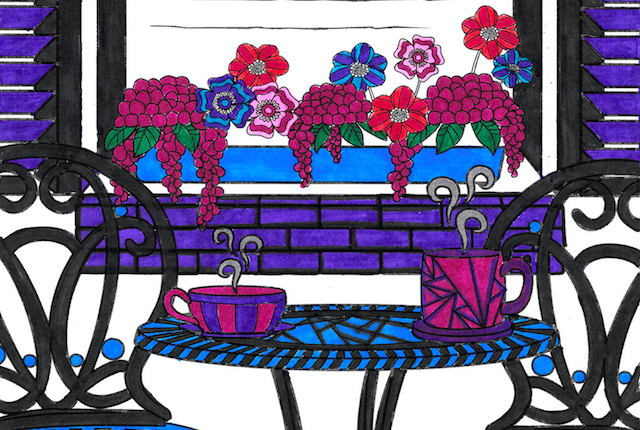
    Adult coloring image via Shutterstock

  • Giveaway: Let It Go Coloring Book for Stress Relief

    Giveaway: Let It Go Coloring Book for Stress Relief

    Let It Go

    Update: The winners for this giveaway are:

    • Lyndsay G
    • Beth Casey
    • Marsha Lawrence
    • Claudia Menger
    • Teejayhanton

    You can get a copy of Let It Go, Coloring and Activities to Awaken Your Mind and Relieve Stress on Amazon here.

    When I was a kid, I could color for hours. I could be a little Type-A about it; if I went outside the lines, I would often rip out the page and throw it away, and I may even have yelled, “I hate coloring!” while cursing my imperfection.

    But that was a lie—I loved it. So it was only a matter of time before I way lying on my stomach in the living room, humming the Gummy Bears cartoon theme song, and trying again for a crayon masterpiece.

    Years later, in my early twenties, I did the exact same thing in my living room while my boyfriend (at the time) played video games. I remember thinking we were both regressing, but I didn’t care.

    We’d each battled depression before, and were always on the lookout for something to numb the pain. I don’t think we consciously realized it at the time, but that’s exactly what we were doing right then, in a far healthier way than usual.

    There was something so calming about doing these mindless, childlike activities, free from the burden of our usual stresses. Bills were piling up, neither of us had a career path, but for that short time, our minds felt free.

    In my late twenties, having lost touch with my coloring habit for years, I went to a visit a friend who had a toddler at the time. Sure enough, I found her coloring with what she called “Mommy’s markers.”

    Unlike her son’s, these ones had fine point tips, ideal for coloring intricate pictures. I sat down, pulled out a page, and once again I was hooked.

    Still, I didn’t keep the habit for long. I remember thinking she had an excuse—she had a son. But it was a little embarrassing for me to color, alone, in my free time.

    That’s what I thought back then. Now, however, I’m not afraid to admit it: I love coloring. I love my fine point markers. I love my stack of coloring books.

    I love the time I take for myself to clear my head and focus on something fun and creative. I love that this enables me to relax, recharge, and not reflect, as I do all too often throughout my day.

    And I love that adult coloring is all the rage now, and there are so many awesome coloring books to choose from.

    I’m still a little Type-A about it—I admit I’ve ripped out a few pages after coloring outside of the lines. But I’ve also learned to turn “mistakes” into interesting details, challenging my sometimes-judgmental mind to turn the “bad” into “good.”

    Since I’m always on the lookout for new coloring books (a sentence I never thought I’d write as an adult), it was quite serendipitous when I received an email about Let It Go, Coloring and Activities to Awaken Your Mind and Relieve Stress.

    Illustrated by Sherise Seven, the book includes forty one-sided, hand-drawn, perforated coloring pages and eleven activity pages that will “push your brain toward happiness and inspirational positive thoughts.”

    I love how this book is filled with unique, intricate images and uplifting messages. And I especially appreciate that it comes with a color protector page so I don’t ruin any of the awesome pictures from color bleeding through the page.

    Lori-Deschene-Let-It-Go-Coloring

    Yes, that’s my work above. (Look Mom, I stayed in the lines!)

    If you too are looking for a fun, creative, stress-relieving hobby, I highly recommend grabbing a coloring book—and fortunately, I have five copies of Let It Go to giveaway. 

    The Giveaway

    To enter to win one of five free copies:

    • Leave a comment below.
    • For an extra entry, share the giveaway on Facebook or Twitter, and include the link in your comment.

    You can enter until Friday, December 25th.

    Want to grab a copy now? You can get a copy of Let It Go, Coloring and Activities to Awaken Your Mind and Relieve Stress on Amazon here.

    FTC Disclosure: I receive complimentary books for reviews and interviews on tinybuddha.com, but I am not compensated for writing or obligated to write anything specific. I am an Amazon affiliate, meaning I earn a percentage of all books purchased through the links I provide on this site.