Tag: codependency

  • What No One Tells You About Setting Boundaries: The Good, Bad, and Ugly

    What No One Tells You About Setting Boundaries: The Good, Bad, and Ugly

    “Yesterday I was clever, so I wanted to change the world. Today I am wise, so I am changing myself.” ~Rumi

    Three years back was the first time I dared to set a boundary and be assertive in a friendship, and guess what? She blocked me on her phone, and we stopped being friends.

    It came as a rude shock because I was quite invested in the friendship. Not only did we have good times together, but I had helped her search for and find a job and even babysat her kid for a long while free of charge. I felt betrayed and hurt. It made me feel like I was the one in the wrong, the bad person, and like I had no right to say what felt right to me.

    I admit that I was early in my journey of being assertive and learning how to set boundaries, so my skill set wasn’t the best. But despite the mayhem and chaos it caused, it was a good thing for me.

    We were similar in many ways, and I knew she was a lovely person. Still, I didn’t particularly appreciate that she always wanted to be in charge, acted as though she knew it all, only wanted her way, and behaved as though she had the world’s worst problems.

    I empathized with her because she shared her struggles with me. But I didn’t share mine back partly because I wasn’t comfortable and partly because I felt there was no place for me; it was only about her. So, one day, when I’d had enough, I exploded and said what I had to say, rudely, and that ended the relationship.

    Three years later, when the dust settled, we started talking. We are cordial, civilized, and respectful now. We share laughs and anecdotes, but it’ll never be the same because we’ve both changed, and our relationship has changed as well.

    After taking this journey, I’ve concluded that being assertive and setting boundaries is not as easy as it sounds. But it’s the only way to regain your sense of self, sanity, and self-love.

    What are the Benefits of Maintaining Boundaries?

    Boundaries are limits between us and other people that enable us to honor our feelings, wants, and needs and take good care of ourselves. We need to set boundaries because:

    • Boundaries offer protection against people who habitually do things that leave us feeling uncomfortable.
    • Correcting troublesome behavior and letting other people know what’s acceptable or not, where we stand, and what we are willing to tolerate drastically improves our sense of self.
    • Setting boundaries helps us trust ourselves and, in turn, trust others.
    • It helps us treat ourselves and others as equal with respect and dignity.
    • It teaches us what’s essential for us and gives us the courage to stand up for it.
    • It builds our confidence as we work on our assertiveness muscle.
    • Boundary-setting is generous to others because it allows them to grow and take responsibility for themselves, their actions, and their issues.

    So, if boundary-setting is such a good thing, what’s the problem?

    The problem is that it’s hard, especially for people who are not used to setting boundaries. It can make you question yourself and your intentions and turn your world topsy-turvy.

    Why Is Boundary-Setting So Difficult?

    Most people with weak boundaries:

    • Are not aware of their needs, and this takes lots of time and practice.
    • Are afraid to stand up for themselves.
    • Don’t believe that they deserve to have their boundaries recognized and honored.
    • Are afraid that people will think they are selfish.
    • Think it is wrong to think about themselves because of various cultural or religious influences.
    • Believe that what they want is unreasonable.

    How Do You Start Setting Boundaries?

    1. Take inventory.

    Have you ever been in a situation where you felt like you were being taken advantage of, taken for granted, or treated disrespectfully? When you feel any of these things, you need to ask yourself:

    • What are you feeling? Is it anger, hurt, betrayal?
    • What brought about those feelings? What did the other person do? Did they disregard your feelings or act dismissive? Did they cross a line you’d rather no one cross?
    • How did you react to the situation? Did you ignore it, make an excuse for them, or get angry and resentful but fake a smile?
    • Why did you tolerate this behavior and respond this way? What were you afraid of?

    So, the first step is being conscious of what happened and what you’re feeling.

    This is essential because it helps you become aware of your needs, wants, and limits; notice when someone is neglecting or violating them; and reflect on how you usually respond—and why.

    2. Be honest and courageous.

    The second step is being honest about what you would like to do in the situation and reflecting so you can find the fairest and healthiest way to respond.

    Then comes the hardest part: finding the courage to act even if it may displease, anger, or irritate the other person.

    Everything inside you might scream that this is a mistake. You may feel scared, anxious, and even unsafe speaking up. But remember that ignoring the issue is not a solution because you will just end up feeling resentful if you continually avoid saying what you really want to say.

     What No One Tells You About Setting Boundaries

    1. You may feel guilty.

    Somewhere down the line, you may have learned that your needs, feelings, and wants are less important than others’. When you start making changes, it may feel like you are embarking on a journey of selfishness and betraying the very core of your being.

    2. You will likely make mistakes.

    You are learning a new skill, and mistakes are bound to happen. You may overreact to minor issues or fail to communicate your feelings and needs accurately or clearly. There’s no right or wrong here, only a learning curve. You can always change your decision or apologize later if you realize that your decision wasn’t the best.

    3. It sometimes feels like you are at war with yourself.

    To some extent, that’s what this is. A war with what you once believed to be true but isn’t anymore, a war against your default responses.

    4.  It is not easy.

    It will sometimes mean wrong turns, slip-ups, and lost relationships. But if you’re honest with yourself, you may realize that those relationships were already dead to begin with; you were trying to nurture doomed relationships because you were afraid to let them go.

    5. It makes you confront demons you didn’t know you had.

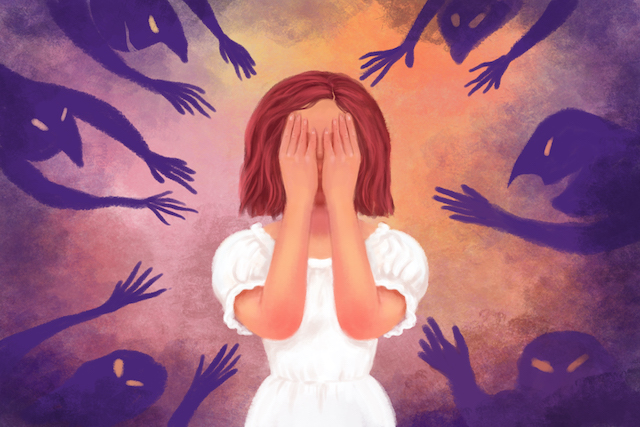
    Your insecurity, your feelings of low self-worth, your fear of being rejected or alone—all this and more bubbles to the surface when you get honest about why you’ve struggled with boundary-setting and start pushing past your blocks.

    6. It takes all you have, tears you up, and breaks you down.

    But when it’s all done and over, you build strength, wisdom, and trust in yourself. You learn to give your feelings more credence, knowing they’re an internal signal that something is off and you need to investigate them further so you can decide what’s really best for you.

    So yes, boundaries can be life-changing, but the emotional upheaval that often accompanies them isn’t for the fainthearted. Changing yourself, getting out of your comfort zone, and doing what is right for you can trigger your reptilian brain, which craves safety, making you feel like you are doing something wrong. Arnold Bennett rightly says that all change, even for the better, is accompanied by discomfort.

    Deepak Chopra said that “All great changes are preceded by chaos.” I believe the benefits of maintaining boundaries make the chaos worth it.
  • I Was Addicted to Helping People – Here’s Why It Made Me Miserable

    I Was Addicted to Helping People – Here’s Why It Made Me Miserable

    “As you grow older, you will discover that you have two hands, one for helping yourself, the other for helping others.” ~Maya Angelou

    Growing up in Africa, I was told that the virtue and worth of a woman lies in her ability to take care of everyone around her; that a woman was considered good or worthy when everyone around her was happy and pleased with her. I took this advice to heart, especially since I watched my mother meet this standard to a T. Putting everyone else, including strangers, above herself.

    Most of the Things We Learn as Kids Shape Us

    As a kid, I was taught how to cook, clean, and care for others. As a teenager, I got a lot of practice caring for my younger siblings; at first, it was great, being a caregiver, being the one who everyone went to when they needed something. I loved being needed, and I relished in the label I was given as dependable.

    Family, friends, and even strangers knew that I was the go-to girl for whatever they wanted. If I couldn’t help them with whatever they needed, I would find someone who could. I was determined to never leave anyone high and dry. I loved being needed, and if anyone needed me, I believed that I was their last resort.

    The Joy of Giving

    You see, one thing about giving is that it feels good… until it doesn’t. The moment you get to a place where giving doesn’t feel good anymore, it means that you need to turn the giving around and start giving to yourself. But how does someone who is addicted to being needed realize this?

    When helping people started feeling more exhausting than exhilarating, my first instinct was to give more because I believed that the more I gave to others, the more I would receive from them. But that was not the case. The more I gave, the less I received, and this prompted me to label most of my friends as bad friends because I wasn’t getting as much as I was giving to them.

    When I became isolated from cutting friends off because they were “bad” to me, I realized the problem wasn’t that I was not getting as much as I was giving; the problem was that I was giving to everyone but myself. I had put myself in the back burner and abandoned myself. How can I abandon myself and not expect others to abandon me?

    The Guilt That Comes with Giving to Yourself

    Realizing my deep-seated issues was easy, but addressing them was a whole other thing. Because I was conditioned to believe that my worth was in pleasing others, I always said yes to everyone who needed my help; saying no was extremely difficult.

    This was because I was suppressed by intense guilt and ended up caving in to finding help for the person at my own expense. Everything changed for me when a former classmate said to me out of the blue: “You are nobody’s last resort.”

    You are nobody’s last resort, no matter how bad it is. If you cannot help someone with their problem, another person will. And more importantly, it’s not your responsibility to ensure they get the help they need—it’s theirs.

    This was a turning point in my life because now I knew that telling someone no because I needed the time to invest in my own needs did not mean that they were never going to get help.

    The guilt was still there, but little by little, I persevered in choosing myself over and over again. I started with little things, like saying no to helping a friend walk their dog to stay at home, to take a long bath and read a book (I enjoy reading). And over time I was able to get better at saying no to larger requests that would have been draining and would have negatively impacted my mental health.

    Give to Yourself and You Won’t Expect Too Much From Others

    Slowly but surely, I learned that my worth is determined by me and me alone—by how much love and care I direct toward myself. Guilt still visits me sometimes, but it is not as intense as it used to be.

    I know now it is better to feel guilty for taking care of yourself than to expect others to anticipate your needs and take care of you. News flash: if you don’t take care of yourself from the inside out, no one will.

    Don’t get me wrong, I still take care of my loved ones and help others as well as I can, but I now do it from a complete place, a place of wholeness, knowing that I will be fine whether they invest in me or not.

    I don’t expect much from people, and I don’t get disappointed much because I have learned to prioritize myself. Frankly speaking, I have noticed that the people around me enjoy me more now that I am not a self-righteous person who resents her giving and selflessness.

    “I give and give and give, and what do I get? Nothing.” If you have heard yourself say or think these words, then you are expecting people to make you happy just because you are bending over backwards to make them happy. If you keep bending backwards to make others happy, one day you will break your back. A broken back is very painful to bear, take note.

    Life’s a Journey, Not a Race

    This is not an overnight process; it will take time and patience. I have learned that part of taking care of myself is being nice to myself, whether I’m making progress or not. I’m done talking down to myself. Everything I wouldn’t do or say to another person, I’ve vowed never to do or say to myself.

    There is no glory in stomping all over yourself to please the world, there is no glory in self-deprecation and self-hate. It is not humble to call yourself terrible names or to live in suffering because you don’t want to hurt some else’s feeling or because you want to be called a nice/polite person.

    Our feelings and needs matter as much as anyone else’s, but we can only honor them if we recognize this and prioritize them.

  • How I’m Healing from the Pain of Growing up in a Dysfunctional Family

    How I’m Healing from the Pain of Growing up in a Dysfunctional Family

    “Don’t try to understand everything, because sometimes it’s not meant to be understood, but accepted.” ~Unknown

    As a child, I never had the opportunity to develop a sense of self. I had a father who was a drug addict. A mother who was abused by my father. And later, we had my mom’s possessive and controlling boyfriend. It was tough finding a consistent role model in the mix.

    I was one of four kids and we grew up in a trailer, sharing one bunk bed among us all. As children, we often would brutally fight with each other. We all wanted our own space and sense of self, but there wasn’t enough to go around.

    With our mom working so much, her boyfriend would watch us. He seemed to enjoy punishing us. I remember feeling so afraid. I didn’t want to do anything wrong. I wanted to have his love because it felt like the only way to be safe. I never felt good enough, not to my mom, dad, or the boyfriend.

    Starting in my teen years, codependency started really kicking in, and I wanted my mom for everything. I unknowingly was part of her triangulation between me and my sister. We both craved her love and wanted to have her favoritism.

    As a wild child, my sister was stuck with my mom’s negative self-projections, I received the positive. As the years progressed, these roles flipped, and I suffered a sense of rejection and confusion as to what I had done wrong.

    Life was hard and I couldn’t live with the fear and shame, so I learned to unplug from my feelings. At the same time, these unprocessed feelings would cause outbursts of anger. I started feeling entitled to anger. It felt like life had kicked me so hard as a child, why wasn’t it getting easier? Why was it getting worse?

    My learned dysfunction kept me yearning for connection but fearing it and pushing people away at the same time. I wasn’t capable of trusting others in a healthy way. With each loss, I took on more shame and perceived failure.

    As I struggled through life, I was oblivious to the amounts of shame my family dynamic had me carrying. My mother’s triangulation and manipulation created an environment where she was justified in lashing out with no accountability. Everyone else was to blame for her poor reactions to situations.

    As my mom and sister became a team, I became the problem who needed to learn how to accept and love them unconditionally. There was nothing wrong with them treating other people poorly. It was okay for them to deceitfully hide family secrets (e.g.: Mom drove home drunk from the bar and doesn’t remember getting home), because I wouldn’t agree, so they were justified.

    I felt like I was on an island, broken and unable to figure out what was wrong and how to fix myself because the “rules” of justification changed so swiftly, and always in their favor.

    Having no sense of self and being completely enmeshed with my mom and sister, I felt beyond broken each time I was accused of not being able to love unconditionally. I was worthless and a disgusting human being who was incapable of even a basic emotion that everyone else had.

    It took a lot for me to see that love for my mom was making me feel close only when she was going through tough times, making me part of her someday club (our motto: “someday” will never happen for us).

    My sister learned to use her money to express her love. She would take me to dinner and give me her quality hand-me-down clothes. While I was grateful, it also became justification for her to do crummy things toward me, usually when she had been drinking.

    While sober, if she had a problem, she’d choose to “forgive.” The only problem is that she hadn’t really forgiven me because one night while everyone was having fun, I might get tired or I didn’t think a joke was funny or I looked at her the wrong way, and it would all come flooding out—every stored feeling she had been holding back for days or weeks.

    If either my mom or sister hurt me, the expectation was that I should just get over it. There was no need for them to take accountability because “we are human” and “I am happy with who I am.”

    I wanted to be loved and accepted but couldn’t ever really find my place within my family because the dynamics were so volatile. I was suffocating in the conflicting feelings. I felt angry but ashamed. I was unhappy and felt worthless.

    When I hit bottom and I couldn’t see one thing in my life that gave me worth, I knew that I needed to make changes. I reached out and got help from a therapist and joined a local support group.

    As I am separating from the dysfunctional patterns, the things that have helped me are:

    1. Ask for help.

    Dysfunctional family dynamics often create shame around the idea of talking to others. It’s seen as exposing family secrets and going against the unit. Nobody should suffer due to things out of their control. Reaching out helps you find the compassionate outlet you deserve and need.

    I have been in therapy for about two years now. It has been the only time of my life where I have been able to experience consistent, reliable, and healthy direction. It has supported me in learning how to have self-compassion and make healthy, but tough choices.

    I didn’t want to accept the reality that my mom and sister will likely never truly see me for me. My role as a scapegoat is brutally necessary for the emotional “economics” that occur within my family.

    Therapy helped support me in my choice to find myself outside of my family of origin. There was much pain in going from seeing my family every weekend to now living a life outside of them. It required radical acceptance and the knowledge that I am unable to change anyone but myself.

    I was lucky to have a kind, compassionate, reliable therapist to guide me as I dealt with each of the emotions that came up during this time.

    2. Accept others as they are.

    As a scapegoat in a dysfunctional family unit, I have learned to accept my situation for what it is. I have to set my expectations for what others are capable of giving.

    We have no control over others or their view of the world. All we can do is accept a situation for what it is and assess if it is healthy for us. Once I accepted that my mom and sister do not really see the family dynamic as dysfunctional, I was able to free myself of the anger and need for control. They are blind to the ways they protect themselves emotionally and unwilling to have an open mind about it.

    There is sadness, but I see that the relationship dynamic causes so much pain for me, and I cannot fix this on my own. While I am compassionate toward the pain they must be carrying, I see that I cannot continue a relationship that is built on dysfunctional habits.

    3. Know your worth.

    As an enmeshed individual, my worth was defined by external sources. I wanted my mom, sister, brothers, friends, coworkers, and acquaintances to validate me as a good, worthy person. I desperately needed to feel like others liked me enough to feel I had worth.

    I now know that we all have worth, and it’s our individual responsibility to maintain this worth from within.

    I have a tough inner critic, so having a consistent mindfulness practice has helped me establish my worth. It is hard to find worth when you are caught up in your own head, believing the negative thoughts going through it. Mindfulness helps me turn away from these thoughts and label them as just that, thoughts.

    The more we tune out our negative self-talk, the more we can acknowledge our mistakes and learn from them without sinking into a low and getting down on ourselves. With this brings the awareness that our mistakes do not diminish our worth. Our worth is inherent. A mistake is just a mistake.

    4. Learn what healthy love looks like.

    Our family of origin doesn’t always teach us what healthy love looks and feels like.

    In dysfunctional families, each person loves based on their limited capacity to process their own emotions. When someone has to keep reminding you that you are unconditionally loved, ask yourself, how do I feel right now? For me, I felt hated and restricted to being what was easy for my mom and sister.

    Love should connect you with your inner joy. We all feel down at times and cannot rely on others to make us feel good about ourselves at all times. But I do feel that when someone loves you unconditionally, you shouldn’t feel lost. The joy of this love should be consistently present and help carry you through the tough times (e.g.: disagreements, hurt feelings, etc.).

    When it comes to my mom and sister unconditionally loving me, I have had to accept that they love me the best and only way they know how while hiding from their shame. If they lash out, they are not able to carry the shame and embarrassment of their own actions. They cannot validate my feelings or experience in any way. They need me to carry this responsibility for them. This is not unconditional love.

    As you move through the necessary steps to separate from learned family dysfunction, please remember that you didn’t learn these things by yourself and you will not unlearn them by yourself, nor should you.

    Oftentimes things like depression or anxiety are a hurdle. Building a community is scary but necessary. This can be reaching out to a therapist or searching for support groups in your local community.

    For years I struggled thinking that I could fix what was wrong with me on my own. It wasn’t until I reached out and got help that my mind was able to open up, process traumas, and make lasting changes.

  • When You Lose a Loved One to Suicide: Healing from the Guilt and Trauma

    When You Lose a Loved One to Suicide: Healing from the Guilt and Trauma

    “You will survive, and you will find purpose in the chaos. Moving on doesn’t mean letting go.” ~Mary VanHaute

    I was ten years old when I discovered the truth. He didn’t fall. He wasn’t pushed. It wasn’t an accident.

    He jumped.

    Suicide isn’t a concept easily explained to a six-year-old, much less her younger siblings, so I grew up believing that my father’s drowning was an unfortunate freak accident. It was “just one of those things,” the cruel way of the world, and there was nothing anyone could have done about it.

    This explanation more than satisfied me and, other than a fear of open water and a slight pang of sadness whenever he was mentioned, I suffered no grievous trauma for the rest of my early childhood.

    But at ten years old I learnt the truth—that it wasn’t some divine entity or ill-fated catastrophe that took him from me. He had, in fact, ripped himself from the earth and left everyone he loved behind. Left me behind.

    Was it something I did?

    That’s the first question I asked.

    “Of course not,” my mother said. “He was just sad.”

    The idea that suicide was a simple cure for sadness became the first of many dangerous cognitive distortions I adopted. It would take no more than a dropped ice-cream cone or trivial friendship fall-out for me to declare my sadness overwhelming, to the point where, at the age of eleven, I drank a whole bottle of cough medicine in the belief that it would kill me.

    I was sad, I said, just like him. And if he could do it, why couldn’t I?

    As I grew into my teenage years, the possibility that I was the driving force behind my father’s suicide began to plague me, albeit subconsciously. I reasoned that the bullies at school hated me so, naturally, my father must have hated me too.

    Maybe I wasn’t smart enough or polite enough. Maybe I was unlovable. Maybe everyone I loved would leave me eventually.

    This pattern of thinking would slowly poison my mind, laying the foundations for what would later become borderline personality disorder. I suffered from intense fears of abandonment, codependency, emotional instability, and suicidal ideation, believing that I was an innately horrible person who drove people away.

    I refused to talk about my problems and allowed them to fester, harboring so much anger, guilt, shame, and sadness that eventually it would erupt out of me. It was only in my mid-twenties that I realized just how deeply my father’s suicide had affected me and the course of my whole life.

    I sought help and, slowly, I began to heal.

    Coping with The Stigma

    “Mental illness is nothing to be ashamed of, but stigma and bias shame us all.” ~Bill Clinton.

    Selfishness, cowardice, and damnation are toxic convictions that permeate the topic of suicide, adding to the anger, guilt, shame, and isolation that survivors feel. Growing up, I hid the truth of how my father died under fear of judgment or ridicule, scared that the knowledge would not only tarnish his humanity, but paint me with the same black brush.

    I still remember the words of a girl in high school, “Well, you shouldn’t feel sorry for people who do it, it was their choice after all.”

    Understanding the intricacies of mental illness and just how destructively they can distort the mind allowed me to come to terms with my father’s death. I was able to accept that his suicide was born not out of selfish weakness, but from lengthy suffering and pain, carried out by a mind that was consumed by darkness and void of the ability to think rationally.

    Letting Go of The Need for Answers

    “Why?”

    It is a question that only the person who took their life can answer—but they often leave us without any sense of understanding. In the absence of a detailed note or some definitive explanation we find ourselves trapped in an endless spiral of rumination, speculating, criticizing, and self-blaming, to no avail.

    It becomes a grievance, a desperate yearning for closure that weighs heavily on our hearts. After all, not only did they leave us, but they left us in the dark.

    It is completely natural to want an answer to the question of “why.” We feel as though an answer will provide closure, which in turn will ease our confusion, pain, and guilt. However, because there is usually no singular reason for a suicide attempt, we will always be left with questions that will go unanswered.

    Fully accepting that I was never going to get the answers I craved freed me from the constant rumination of “why.”

    Releasing the Guilt

    To quote Jeffery Jackson, “Human nature subconsciously resists so strongly the idea that we cannot control all the events of our lives that we would rather fault ourselves for a tragic occurrence than accept our inability to prevent it.”

    As survivors, we tend to magnify our contributing role to the suicide, tormenting ourselves with “what if’s,” as though the antidote to their pain lay in our pockets.

    We feel guilty for not seeing the signs, even when there were no signs to see. We feel guilty for not being grateful enough or attentive enough, for not picking up the phone or pushing harder when they said, “I’m fine.” Even as a child I felt an overwhelming guilt, wondering whether I could have prevented my father’s suicide simply by saying please-and-thank-you more often than I had.

    It wasn’t my fault. And it isn’t yours either.

    The truth is that we cannot control the actions of others, nor can we foresee them. Sometimes there are warning signs, sometimes there are not, but it is an act that often defies prediction. It is likely that we did as much as we could with the limited knowledge we had at the time.

    Healing takes acceptance, patience, self-exploration, and a lot of forgiveness as you navigate your way through a whirlwind of emotions. However, there is a light at the end of the tunnel of grief. Although we may never fully move on from the suicide of a loved one, in time we will realize that they were so much more than the way in which they died.

    To quote Darcie Sims, “May love be what you remember most.”