Tag: clutter

  • How to Clear the Emotional Clutter That Weighs You Down

    How to Clear the Emotional Clutter That Weighs You Down

    “Declutter your mind, your heart, your home. Let go of the heaviness that is weighing you down.” ~Maria Defillo

    I remember perusing through a used bookstore in a small New England town as a teenager. A book caught my eye—maybe because its spine was a MacIntosh apple red—and I slid it off the shelf. It was titled Clear Your Clutter with Feng Shui by Karen Kingston.

    Back at home in my apartment in Boston, I devoured it. That book shifted the trajectory of my life. Fast-forward seventeen years later and living clutter-free is not only my lifestyle, it’s my calling and my passion. It’s what I’ve used as the foundation to find home again, inside myself as much as out.

    I think I was eighteen when I was in that bookstore. I had devoted the last ten years of my life—sacrificed my childhood—to become a professional ballet dancer. “Sara the Ballerina” was my whole identity, who people knew me as, and the only way I knew myself. But because of very real burnout and a severely limited support system, I chose to go to college. Promising ballet career over.

    A commonplace habit in the ballet world, at least in my corner of it, was to never throw away your pointe shoes. We dancers had an intimate relationship with each and every pair, hand-sewing the ribbons and elastic on ourselves just to our liking, each pair my ally or sometimes foe on the battlefield of competitive, ever-unattainable beauty.

    Each pair was connected to a certain production, role, or memorable time of growth. Each shiny satin pair was a ticket to the elite club of Ballerina World. Not to mention each pair was $80-$100+ and always handmade. By the time I quit dancing I had bags of used pointe shoes filling up my entire closet and beyond.

    Like a good Virgo, I lived very mindfully regarding clutter and consumption through my twenties, in large part due to that book. By age twenty-six, I wanted to test the waters a bit more dramatically, and I let go of 80% of my belongings (including my pointe shoes) to move onto a thirty-foot sailboat with my partner.

    It was around this time that I found myself privately realizing just how deep clearing “clutter” goes. I started to independently use the term “emotional clutter,” only to return to my book and see that Karen Kingston wrote a whole chapter called “Clear Your Emotional Clutter.”

    I believe that in an intuitive way, I was yearning to simplify the hell out of my external environment so that I could free up the energy to tend to my inner environment. I knew I had internal baggage; I just couldn’t yet clarify what.

    You see, contrary to popular belief, when you are free of physical clutter, it doesn’t become rainbows and unicorns, an idea to which many TV shows and books allude. What happens is that what isn’t working in your life gets amplified. Like the surface of a lake clearing after a hard rainfall, clarity rises to the surface of your consciousness about certain things.

    One big thing for me was, to be blunt, that I felt miserable most of the time. Why? There were a few key reasons, but one big one was never grieving the stillbirth of my ballet career. This grief was sabotaging my life. It was emotional clutter that I now knew I needed to process and release. After simplifying my external environment and uncovering clarity, that is when the real work began.

    Fast-forward seventeen years, and my life is unrecognizable. I live in a different part of the world. My body is different, healthier. I’ve developed the courage and wisdom to only keep unconditionally loving and supportive people in my life (there’s a chapter in Kingston’s book about how people can be clutter too!). I’m re-wiring my brain and nervous system from C-PTSD.

    By framing outdated stuff, symptoms of C-PTSD, and old self-limiting beliefs all simply as “clutter” to process and let go, I was able to face a chaotic life and change it to one anchored in sane living.

    Now I know with all my heart that physical clutter is just a gentle starting point. By processing through my belongings mindfully, it tunes me into where I am. Where am I emotionally? What unfinished business do I have? What is weighing me down or holding me back? I now speak of it as mental, emotional, and spiritual clutter. This is how clutter-clearing is way more than getting rid of superfluous items.

    Clutter-clearing is an industry in itself now. But from comparing my personal experience with what I observe in the mainstream media, a lot of deeper practical wisdom is not making the cut (yet). If I want to live an intentional, empowered life, I have to regularly process all the mental/emotional input and physical extensions of myself in order to feed my spirit.

    If you’re also interested in clearing your emotional clutter, these four tips are a good start.

    1. A potent journal prompt is to answer these two questions for each area of your life (career, relationships, health, etc.): What unfinished business do I have? What is weighing me down or holding me back?

    2. Clutter-Clear! Choose an area of your home/studio/office to start. Curating through your belongings will tune you into what commitments, identities, or desires have expired for you.

    3. Emotional clutter that’s common:

    • Grief. Not just from loss of loved ones but also from loss of unfulfilled dreams or past versions of yourself.
    • Unhealed Trauma. Choose a trusted technique to process the emotional baggage and stick to it. I recommend eye movement desensitization and reprocessing (EMDR), inner child work, and support groups.
    • Self-Limiting Beliefs. We’ll subconsciously believe what authority figures told us about ourselves while growing up for our whole lives, unless we consciously choose otherwise when we’re adults.

    4. List out the values of the five people you interact with the most. If they don’t complement your values, life will be a much more intense emotional roller coaster ride.

    Remember that self-healing and growth aren’t about finding or discovering something new out there. It’s about letting go of all the junk that’s already there to uncover the real you.
  • How to Enjoy Life Without Buying Lots of Stuff

    How to Enjoy Life Without Buying Lots of Stuff

    “Minimalism isn’t about removing the things you love. It’s about removing the things that distract you from the things you love.” ~Joshua Becker

    Over the recent few years of being a digital nomad, I got a chance to live in Spain, Sri Lanka, Mexico, and Canada for a month or longer. As I didn’t have a home base and only had one medium-sized suitcase with me (still do), I couldn’t really afford to buy new things.

    I mean, I would need to put them somewhere, and my suitcase is already over forty-five pounds while most airlines only allow up to fifty.

    Even when I had to go back to my home country and stay there for almost a year because of the pandemic, I knew I’d be on the road again as soon as possible. So I continued to not buy anything other than essential things.

    I was never a shopaholic before, but I still felt miserable wearing the same few-year-old clothes and watching my friends (not even mentioning social media influencers I follow) regularly enjoy new things.

    I didn’t realize that more often than not we only buy things to fill a void or to relieve stress, not necessarily because we actually need or even want them. As soon as I figured that out, I started looking for alternative ways to fill my days with joy that didn’t involve buying new stuff.

    Today I want to share four things that I’m buying now when I want to feel better, which don’t occupy any space in my suitcase!

    1. Online courses

    Maybe it’s just me, but courses that teach me new skills are my favorite things ever! Even my husband knows that giving me a course as a gift will always make me happy.

    I have a ton of hobbies and things that I’m interested in, and each of them could become a full-time thing if I wanted it to. So there is no lack of information to keep learning.

    For example, last year I was into photography and took a bunch of courses on the subject. I learned mobile photography, then normal photography, and even some videography. I studied lots of related things including photo and video editing and even dipped my toes into stock photography.

    This year I’m learning digital illustration. YouTube and Skillshare are my two best friends right now and would probably be the most visited websites in my free time if I were to track my web activity. It just makes me so happy to ace a new thing I couldn’t imagine creating before!

    Honestly, I could never understand people who get bored staying alone at home and don’t know what to do. I wish I had another twenty-four hours in my day just to fit in all the things I want to learn!

    Besides, investing in yourself is never a bad idea. You never know where your new skills might appear useful on your life journey.

    2. Experiences

    You might say that it’s easy to find new experiences when you are traveling, and that’s true. I often go on walking tours, participate in cooking classes, and find other interesting things that my next country has to offer.

    But if you think I didn’t invest in experiences when I wasn’t a nomad, you are wrong.

    My favorite kind was always visiting an escape room. If you aren’t familiar with the concept, it’s a quest where you go into a room full of hints and puzzles, solving which leads you to the next one, and so on until the final thing gives you a key or something to escape the room. Usually, there is a specific theme for the room, you have one hour to escape, and there can be more than one actual room involved.

    Over the years, with my friends and coworkers, I went to almost every room that existed in my city at the time (which is a lot). Some were very easy; some were so hard that we didn’t get out on time. I remember the one which was absolutely dark and another one where they put chains around your ankles and wrists at the beginning, which you have to get out of.

    The feeling of nailing another quest room can hardly compare to anything else; it’s like actually being in an adventurous book for an hour. If you happen to be a nerd and avid reader like me, you know what I mean.

    Meaningful experiences strengthen your relationships and create memories for years to come. Do you remember every shirt you buy or reminisce about it with friends? I doubt that!

    3. Little gifts for friends

    This one is a bit of a cheat, as you might actually get to buy a physical thing.

    But, instead of it piling up in your closet, you give it away and feel good about it. Your friend is happy, you are happy, and your home doesn’t get cluttered. Not bad, huh?

    Just make sure to only buy things your loved ones actually want so they don’t start hating you for cluttering their home. Especially if your friend happens to be a minimalist.

    Wanna know my approach to always giving really good gifts? I swear by wishlists!

    I have had one for many years, and I made each of my friends and family members make one. Not everyone likes the idea at first, but I promise you, everyone loves getting specific things they want as presents! And don’t worry, it can still be a surprise, especially if their wishlist is long enough.

    To support the idea of having less stuff, encourage your friends to add items to their wishlists that aren’t physical things. About two-thirds of my own wishlist consists of specific online courses I’d love to take, new experiences I wish to try one day, and gift cards for fun things like massages and yoga classes.

    When it comes to hobbies and lifestyle choices, people usually know exactly what they want, and you can never go wrong with a wishlist. Without it, unless you know for sure all the details, it’s easy to gift someone a book they already have or a course that is too beginner-oriented (or too advanced) for their level. If you have doubts, better buy them a gift card to their favorite store or learning platform, so they can choose a specific item themselves.

    If you think you need to wait for a holiday or a birthday to give someone a gift, think again!

    The best presents are unexpected ones. Try surprising your friend with something they want for no particular reason, and just see how excited they get! They will feel loved and valued, which is something we can all benefit from.

    And as for you, the process of finding a perfect gift and seeing your friend genuinely enjoying it releases dopamine and endorphins, which basically make you feel happier. Win-win!

    4. eBooks

    The last thing on the list of things I still buy is eBooks.

    I am the person who used to read 100+ books per year and had a full bookcase at home. Now I travel with my tiny Kindle and am more mindful about what I’m reading.

    With that said, I still love the smell of real books and the feeling of actually turning pages! I still have a few of my favorite bookmarks. But I only buy digital books as it would be impossible to travel with “real” ones. I wish I had Hermione’s handbag with an extension charm on it, but sadly I don’t.

    I know many people these days don’t read books. With so many kinds of easily digestible visual content options we have online now, books became something of an old era. However, the process of reading still has a ton of health benefits: from improving your concentration skills and vocabulary to releasing stress and anxiety that is a constant problem in most of our lives.

    Nothing else can take your mind off your routines and worries quite as an interesting book can. It may only weigh a few kilobytes, but it has a whole world inside.

    These were my four things to buy that won’t ever clutter your life! They might, however, make a big impact on your self-development, make you smarter, improve your skills and mental health, and make you happier. Not a bad deal, is it? Especially for things that don’t take up any space.

    I hope you can agree with me now that it’s possible to live happily without buying new stuff all the time. I am not exactly a minimalist, but I like the idea of surrounding yourself with things that bring you joy instead of cluttering your life with things that only bring you instant gratification and then get forgotten.

    Try to fill your days with fun experiences and learning new skills, as your memories and abilities are things you can always take with you, wherever you go.

  • The False Comfort of Having More: Finding Peace in Living with Less

    The False Comfort of Having More: Finding Peace in Living with Less

    “Be a curator of your life. Slowly cut things out until you’re left only with what you love, with what’s necessary, with what makes you happy.” ~Leo Babauta

    As a kid, I remember begging my dad to take me to Burger King, Wendy’s, McDonalds, and any other number of fast food restaurants. Their food was okay, but that’s not the main reason I went. The toys were what beckoned me.

    Each chain offered different ones, some of which interested me more than others. The Mini Nintendos at Taco Bell? I was there. Assemble your own Inspector Gadget at McDonalds? Count me in on that Happy Meal.

    I remember gleefully jotting my Christmas lists inside the Grinch who Stole Christmas ornament-shaped notepad I’d extracted from beneath a soggy container of fries at the bottom of my Wendy’s kids’ meal bag.

    When Burger King came out with Pokemon toys, I raced on over. My goal was to get enough Poke balls to strap to every belt loop—because people in class, pedestrians sharing the street with me, and my family at home all needed to know how serious, esteemed, and accomplished of a Pokemon trainer I was.

    Meanwhile, the neglected burger and the remainder of fries glistened untouched beneath the fluorescent lights, off to the side.

    Ever since I was little, surplus brought me comfort.

    An all-in kind of girl when it came to my belongings and collections, I threw myself into the hobby of collecting and amassing—everything from Archie comics to souvenir pennies to Pepsi cans featuring photos of different Star Wars characters (which my mom hated and my cat enjoyed swatting around, only to be startled by the noise whenever they crashed against the ground).

    My room contained surplus—whether that was after a trip to the library with my mom, or from Beanie Babies scattering the floor. Bobbleheads crowded my shelves. Shot glasses that I used as cups for my dolls and stuffed animals during our play tea parties did as well.

    So did the pages of my angsty adolescent diary. One poster of Aaron Carter or a single pin-up of J.T.T. didn’t cut it for me—I had to fill the entire wall. How I managed to not feel unsettled falling asleep under the watch of so many prepubescent boy eyes still mystifies me.

    Material surplus as a child became surplus of a more abstract kind as a young adult. People, experiences, a large social circle, and nonstop activities took the place of physical objects. These grown-up versions of childhood collections served the same function my clutter once did.

    I scheduled back-to-back activities, unnerved by the thought of banking on solely one interaction to sustain me though the day. My schedule was constantly full.

    Where Does the Drive for More Come From?

    Reasons for “hoarding mentality” are numerous. I can see looking back now how surplus brought me comfort as a kid. Material excess likely allayed feelings of solitude.

    At one point I even wrote in my journal: “I believe many of us collect to fill voids. More means never going without, never living in scarcity. More confers safety. More means escaping alone-ness. If I just keep accumulating more more more, maybe at some point I can let out all this breath I’ve been holding in.”

    Our cultural climate likely also contributed. It capitalizes upon low self-worth and generalized ennui to sell the message that solutions and relief lie in consumption—consume more to fill the emptiness, may as well be their mantra.

    Additionally, I believe we create surplus when we don’t trust. We don’t trust what we have is enough. Or we don’t trust it’s good enough.

    I think about all the unfinished drafts on my computer over the years. Littering the pages were paragraphs of clumsy prose and scattered ideas, all chucked into the document and then abandoned.

    One paragraph on racial inequality. Introduction, scattered thoughts…  abandoned.

    Two paragraphs of a fiction piece on a one-night stand. Introduction, rising action… abandoned.

    I didn’t trust the voice. I didn’t trust the content. I didn’t trust the direction the piece was going in. I didn’t trust anything about it—so abandoning it felt like the comfortable, somewhat logical option.

    After fleeing it and attempting to start anew, I didn’t trust in the voice of this draft either, so I fled that one as well. Abandonment seemed the common trend, syntactically if not thematically. And over time all these abandonments, fueled by lack of trust, left surplus in its wake.

    I once compared the scatter-focused to the hyper-focused work style: More cups for the scatter-focused worker means less likelihood of failure—because if one’s not working, they can always shift focus to another. A half-finished project isn’t a failure. It just hasn’t been completed yet.

    Or think of it as putting your eggs into different baskets. You don’t want to put too much pressure on any one friend; instead, you spread your efforts onto multiple so that no one gets overwhelmed.

    It’s similar to the way some scatter-focused workers might view tasks. Dividing our attention amongst various simultaneous assignments takes pressure off any single one of them, reducing the likelihood of “botching it.” Because if one’s not working, they can always shift attention to another.

    Some of us who allow surplus into our lives may have difficulty with letting go.

    I grow attached to the things I write, for instance, even if I know they’re bad. A weak sentence, or a paragraph wherein the phrases are all jumbled together and not working in unison—even as this clunky tangle of words on the screen makes my head spin, I still fear hitting that delete button and watching my ideas vanish completely.

    I fear hitting it because even in their imperfect expression, they were still my ideas, born in a moment of generativity. I was adding something to the world, however small and insignificant, when I spawned them.

    Is Surplus Bad?

    I’m not trying to say that surplus is inherently bad; many people not only can successfully juggle multiple commitments, but likely even have to in order to stay afloat in this increasingly demanding world.

    What I am saying is that sometimes the hoarding mentality can prevent us from mindfully attending to what’s directly in front of us.

    As I came to find through my own later life experiences, “‘more” can sometimes feed disconnection.

    I once drove a Lyft passenger who, together with his wife, fostered twenty-two cats—a number he said was a “manageable amount.” He said that he didn’t think he could take in any more.

    “It’s very hard, because we want to say yes to all of them,” Jacob said, “But we’ve also got to think about how many we can realistically care for.”

    He then quipped, “Crazy cat ladies get a bad rap because they’re too idealistic. They’re in over their heads even, is what I’d say. She’s crossed the threshold from cat lover to cat addict.”

    We talked about the point at which a loving impulse turns into an addiction. About how even if the addicted person started out loving the thing they’re now addicted to, once compulsion has replaced it, love may no longer be at the center of the equation anymore.

    Jacob’s saying that he “wouldn’t be able to love fifty-six cats” resonated with me. I recalled how back when I had only one or two Pez dispensers, I really treasured them. They meant more to me. We had as close to an intimate connection as is possible for a human and a chunk of plastic to have with one another.

    The more my supply multiplied though, the less connection I felt with any single one of them.

    Looking back now, I’m just glad those Pez were inanimate objects rather than living creatures with needs and pain receptors—because they surely would have felt the sting of negligence under my care.

    ~~

    Becoming more aware of the roots of these tendencies has helped me to gradually shift them.

    The past few years I’ve slowly and steadily fengshui-ed many of the items accumulated throughout my past. The Pez dispensers were the first to go—to a customer through eBay.

    Next it was 1,050 of my 1,075 Archie comics (I kept a few as souvenirs from childhood, for nostalgic purposes). Writing I’d always found too difficult to part with, I’ve slowly recycled as well (after salvaging whichever remnants I saw some potential value in).

    I’ve sought more one-on-one interactions, careful to not plan too many in too short a period of time—both to preserve my energy and give each encounter the attention I feel it deserves.

    As minimalist Youtuber Ronald Banks said, “Minimalism is living with more of what matters by choosing to want less of what doesn’t.”

    When I do find myself starting to accumulate—be that material items or events on my social calendar— I ask myself questions now. Questions like, Am I saying yes to have one more item to add to my stash? Or because I genuinely connect and derive meaning from it?

    Are my motives extrinsic and escapist—tied more to bolstering my image or avoiding an uncomfortable emotion? Or are they intrinsic and self-actualizing—aimed toward the purpose of connecting?

    I wouldn’t say I’m a minimalist now, but I have become a bit more intentionally resistant toward what I now regard as the false comfort brought by surplus. I realize now I don’t need more things, more friends, more projects, more commitments. I just need to recognize when I’m trying to fill a void and instead focus more on the things I value most.

  • The Paradox of Less is More (And How It Will Improve Your Life)

    The Paradox of Less is More (And How It Will Improve Your Life)

    “Don’t use a lot where a little will do.” ~Proverb

    One of the most common paradoxical statements we hear is “less is more.”

    I, like many others, understand what that means in the context of personal style, where it is commonly used.

    I can appreciate, for example, that when we overdress, we are often taking away from the beauty of the outfit or the look and detracting attention from each valuable detail or accessory.

    But recently I discovered that the paradox of “less is more” has many other applications.

    When I started questioning whether I could apply this simple philosophy to my life, more generally—to be more effective, to be more at peace, to have higher levels of self-esteem—I found that it became the single most effective guiding principle of my life.

    The first time I noticed the amazing power of “less is more” was when I accepted that I could not physically do the brutal corporate hours that I used to work, and neither could I compete with the hyper-alpha entrepreneurs and business owners that worked fourteen hours a day.

    I tried to do the 5am starts that seem to be the trend in the world of business but found that is not how my body works. Every time I tried to push myself beyond my natural rhythm, I was so tired during the day, I could achieve nothing of value.

    That is when I made a new rule, that I would do just one thing every day, and as long as I achieved that one thing, my most important, value-added thing, I would appreciate myself as having achieved something significant.

    I appreciate that this is not always possible when you are not in charge of your own workload, but the essence of this lesson is to concentrate your focus on what is essential and of highest priority and value, rather than becoming overwhelmed with trying to do every task.

    I found that when you apply “less is more” to your work and daily to-do list, you become the epitome of productivity and focus. And although there is a certain tribe of people that glamorize the hustle culture and the grind ethic, we also now acknowledge that our mental health and self-care are just as important. Thankfully, we have started to realize that burn-out is counterproductive to success in the long term.

    I found that by trying to do less, I actually achieved more in all the important ways. I was more creative, I was more productive, and I was able to sustain my energy throughout the week instead of constantly going through peaks and crashes.

    I have now made this my routine and my ultimate measure of productivity. By focusing on the most important task, instead of aiming to complete every task, we can all achieve more by seemingly doing less. This is one way powerful we can utilize this paradox to streamline our everyday life.

    After my success with applying this approach to my working life, I then started to consider whether “less is more” might help me in other parts of my life.

    One arena in which I have reflected on “less is more” is when I have found myself critiquing my natural tendency to not want to speak about my accomplishments in a boastful way or try to push myself to the front to be ‘seen.’

    Often, I have wondered whether my natural modesty was holding me back. Should I be pushier? Is it a failing within myself to not be more self-promoting? But then I reflected on “less is more” and realized that one of the ways we can be guided by this philosophy is in how we present ourselves to the world.

    We do not need to necessarily boast about our accomplishments or clamor desperately for attention.

    Sometimes we get greater appreciation and respect by allowing people to learn for themselves our true value. In allowing people to discover us, we are attracting only those who appreciate us without having to work so hard at being liked or selling to them in the manner of a pushy salesperson. And there is so much flow and peace in approaching life like this.

    Think of the greats in history who changed the world and never talked about themselves, instead choosing to keep the focus on their mission and the people they served. Therein lay their greatness.

    The concept of servant leadership (another seeming paradox!) speaks to the way great leaders are ones that serve, and this necessitates keeping your ego aside. This is my go-to now when I feel I should be more of a pushy salesperson or chase after people that have no interest in reciprocating my efforts. Less is more!

    “Less is more” has also changed the way I communicate. I, like many other people in our modern society, have been conditioned that we should communicate, communicate, communicate! That we should talk about everything all the time and express everything we feel and think.

    But I found, when reflecting on “less is more,” that in relationships, we sometimes over-communicate.

    We can all do with holding our tongue and learning when not to speak, what not to say, and when to listen.

    This self-control and self-restraint can often pave the way for a better quality of communication and more peace and harmony in a culture where we overemphasize the power of words spoken—words that are often unnecessary and destructive, words that cannot be taken back.

    By saying less, these days I find that my relationships are more harmonious, and greater peace and ease have found their way into my interactions. It also reminded me that there are many ways we say so much when we say nothing. When we let ourselves just hold space, just be, or spend time listening, we are communicating in powerful ways.

    In my family and the way I love and care for them, “less is more” has helped me realize that sometimes the best way to love and care is by taking a step back and doing nothing rather than helping out every time.

    It allowed me to recognize where I was not being caring but, in fact, was being overbearing and enabling. And as many of us have discovered, the tendency to overextend yourself does no one any good; not the person you are trying to help, nor yourself.

    One of the ways I used to step from caring into being overbearing was by offering ‘helpful’ but unsolicited advice to my loved ones. Now I have realized that, when it comes to offering advice, less is definitely more!

    I discovered that “less is more” is about creating space. In your relationships, this is where you are not always reaching out to connect and create intimacy and you are allowing air to circulate and bring new life and perspectives to your interactions.

    And this also applies to physical space. By decluttering and letting go of things I no longer use or need, I now have less but better quality items, which I really treasure. I am able to value them, (because I can actually see them!), and this results in a feeling of luxury and abundance from the sensual act of taking time to fully enjoy them, rather than being on to the next purchase after the initial thrill wears off.

    And when we apply this philosophy to our schedule, by creating fewer obligations that drain us, we allow space and time to spend on what is truly important, while also creating space for new activities, that are more aligned to us, to come into our lives and take their place.

    “Less is more” seems contradictory and confusing.

    But the reality is, beauty lies in simplicity, truth lives in simplicity, and greatness lies in stripping yourself and your life down to what is truly important.

    Here are a few questions you might ask yourself to start the process of applying this motto to your life.

    • In what ways can you do, be, and have less and magnify your overall happiness, peace, and success?
    • Can you find ways to reprioritize and focus on what is truly important?
    • What do you do, with relative ease and effortlessness, that is adding value to your life?
    • In what ways, and in which areas, are you trying too hard?

    We can all reflect and apply the teachings of this paradox in any and every part of our life to live a life of greater meaning, focus, simplicity, and peace.

    I encourage you to deeply reflect on how less might actually be more in your life and then take small daily actions to align to that reality. Take small daily actions to remove things, to do less, to be less, to try less, and thereby create more flow and ease and less stress.

    Take small steps to create pockets of nothingness and space in order to expand into more of what is truly important and, most importantly, to expand into a greater version of yourself.

  • Free Up Your Space: Two Simple Questions for Easy Decluttering

    Free Up Your Space: Two Simple Questions for Easy Decluttering

    “Owning less is better than organizing more.” ~Joshua Becker

    There are lots of reasons to declutter—to free up space, to pare down belongings in advance of a move, to release any possessions that weigh you down emotionally, and to make room for new things to come into your life. And there’s another reason, though people don’t usually realize it: to reduce stress and overwhelm.

    The more stuff you have, the more time, energy, and money you need to devote to maintaining it, and the more likely you feel anxious in your cramped and potentially disorganized space.

    I declutter two to three times a year now, but my biggest decluttering was the one I did five years ago prior to moving in with the man who is now my husband.

    We each owned fully furnished three-bedroom houses. After much negotiation, we had decided to sell my split-level house and keep his rancher.

    My first step was to create two wee signs for myself. Both read, “Official Policy: Get rid of anything that does not bring pleasure, beauty, or purpose into my life.” On days when I became a bit muddled, those signs helped.

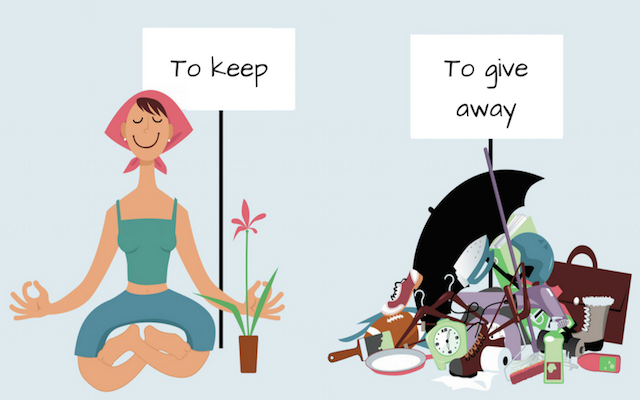
    My second step was realizing that there really are only two options when decluttering: “keep” or “get rid of.” There are, however, subsets to each of those categories.

    For “keep,” you must decide whether it’s being kept in storage of some sort (and what that might be—attic/basement/garage or rented storage space—or incorporated into your space.

    For “get rid of,” you have to decide whether it’s going to a specific person, being donated somewhere (and, if so, where), being sold, or being thrown out.

    Having worked into the “whats” of decision-making, I figured it might make sense to talk a bit about how to make these sorts of decisions, since it’s the rare person who is going to decide based solely on “what I like best” or “what fits in my new place.”

    One of the things my sweetheart and I did was decide what we were going to keep based on what we called a “must have” list.

    For each room, we decided what items we must have for the room to function properly. For our master bedroom, we decided we needed a bed, two nightstands, a TV stand with a TV, and one dresser.

    Once we had our list together, we focused solely on our necessities and figured out which items from where we were going to use to fill those needs. Only after we made those decisions did we add extras (like, say art for the walls, candlesticks, and the part of my hoard of crafting supplies that I kept).

    Making the list was simple. Deciding whose stuff got to fill the role of “dining table” or “dresser” or “bed” was a bit less simple, but we worked through it with love and dogged persistence.

    Here’s what I learned after decluttering and downsizing two full homes to merge them into one: You really only have to ask yourself two key questions:

    1. Do you love each object that you are considering?

    2. Do you use the object in question?

    You can actually start these in either order, because every single item has to jump through both hoops.

    1. Do you love it?

    You really ought to. Because life is too short to be surrounded by things you dislike or that you find oppressive to your spirit.

    If you despise an item, why would you want to keep it? (And yeah, I get “familial guilt” and all, but still. if you don’t have space in your new place and you don’t like it, this is the sort of stuff that you should be thinking of liberating, in hopes it will find someone who really does like it.)

    For clothing, optimally you should love the color, the style, the fit, and the way you feel in it, but realistically, I go with “what I like and wear and don’t mind being seen in.”

    For items, it means you should enjoy seeing them or using them. It’s kind of hard to love a can opener, but say you have two, and one hurts your hand and the other doesn’t, it’s pretty easy to decide you love the pain-free one. (If you have two and they both hurt your hand, which happened to me, then do what I did and get rid of them both!)

    And for items you’re keeping for nostalgia, a box of letters from an ex, for example, you’ll have to dig deep and be honest with yourself about whether this actually serves you, or just drags you down. You may have loved them in the past, but is it self-loving to hold on to them?

    If you’ve asked yourself if you love something, or if you at least don’t dislike it, you still have to proceed to the next question:

    2. Do you use it?

    For clothing, this means “Do you wear it?” And not in an “ever in life” way, but in a “within the past twelve months” way.

    If not, you probably ought to let it go, although I do believe in making the very occasional exception for this category as long as you have the storage space. That last caveat is very important.

    If you are crowding all of your stuff in order to keep a bunch of “maybe/just in case/but I can’t get rid of that dress/sweater/coat” items, then you are making every single day of your life harder than it needs to be. Because when your stuff is jam-packed, you can’t readily get to the stuff that fits, and that you wear.

    For every other usable item in the house, the same “within the past twelve months” rule applies. Possibly you only use that huge platter for turkey on Thanksgiving, and that’s cool—when next Thanksgiving comes, you’re still going to need it.

    If there’s “stuff,” though, that you haven’t used in ages, then you aren’t using it, and it’s a prime candidate for going. This was true, for example, of the ice cream machine I got rid of. On the one hand, it had been in the house for about thirteen years, so it was old; on the other hand, it had never been used—not even once—so it was brand new.

    As for stuff that has no practical purpose, like décor items, some people might think those are non-essentials, or are somehow non-functional. The purpose that they serve is to decorate your space and bring joy into your life. If they are something that brightens your life, and both you and your partner love it and have space to display or store it, you should keep it.

    Lastly, this tip from Yoda (sort of):

    3. Do or do not. There is no try “maybe.”

    Lots of decluttering gurus advocate creating a “maybe” pile for things that you can’t make an immediate decision about. I chose not to allow for it when we were downsizing as well as decluttering.

    The reason I chose not to use a “maybe” pile is because if you say “maybe,” you are essentially making a decision now to make the decision later, which isn’t really solving anything.

    It’s kind of like the advice when sorting through mail to not handle things twice if you can avoid it. If it’s trash/recycling, put it there right away, so you don’t have to go through the mail again later; if it’s filing, file it. So I opted as much as possible for immediate “keep” or “get rid of.”

    Five years on, there isn’t a thing we got rid of that my husband and I miss. There are, however, some things that we initially kept that we’ve since let go. Such is the way of decluttering.

  • When Too Much Stuff Gets in the Way of All the Good Stuff

    When Too Much Stuff Gets in the Way of All the Good Stuff

    “The secret of happiness, you see, is not found in seeking more, but in developing the capacity to enjoy less.” ~Socrates

    When Hans and I relocated from Chicago to Ann Arbor, we wanted to live in a house with a big yard so we could plant flowers and get a dog.

    There were two backstories feeding these wants. I grew up on a farm and we always had a dog or two. And having lived in Chicago three-flats for a decade, I was ready for some green grass.

    There were other things on our wish list, including enough space (to live in and for our stuff) and a garage (for the car and more stuff). And I think granite countertops might have been mentioned.

    After looking at a dozen houses, we found our home. By today’s standards, it was actually on the small side at 1,400 square feet (compared to the average size home of 2,500 square feet).

    There was a living room, family room, dining room, and kitchen. There were four bedrooms and two and a half baths. We don’t have kids, so that’s two bedrooms and a bathroom each—with half a bath left over!

    We earmarked a room for my home office, a workout room for the elliptical, a room at the far end of the house for Hans to loudly watch hockey…

    It seemed there was a separate room designated for every possible activity. And with so many rooms to choose from, it’s a wonder we ever ended up in the same room at the same time.

    Filling the Space

    Conventional wisdom says when you have space, you fill it up. And we did.

    We brought furniture from Chicago and we bought furniture in Ann Arbor. We went to home stores and container stores and hardware stores. We acquired things to fill the space.

    Whether we needed all that stuff wasn’t really discussed. We had the space and it needed to be filled (or so I thought back then).

    But a funny thing happened as we settled into our new home after years of apartment dwelling. We realized a couple things that would have been nice to have figured out beforehand.

    First, we hated yard work. Mowing the lawn felt like a huge waste of a weekend afternoon. My would-be green thumb forgot how much I dislike getting sweaty and dirty and toiling in the soil.

    And the dog? Yes, we really wanted a dog to love and pet and love some more. It would’ve been easy to just focus on the wonderfulness of having a chocolate lab…

    But as we started to notice the disconnect between the dream of a big yard and the reality, we realized the doggie dream was much the same.

    What Freedom Feels Like

    We started to embrace this about ourselves: The less commitment and obligation in our lives, the freer—and better—we feel.

    Initially, this was really uncomfortable for me to admit. I worried not wanting responsibility and obligations made me less of an adult.

    But as soon as I have that thought, the record skips and I say WHHHAAAT?!

    Because I’ve realized being a mature adult is knowing who you are, what makes you comfortable in your own skin and at peace in your own mind—and then designing your life around what’s true for you.

    In our more-is-better consumer culture, it’s easy to buy into all the messages about what we’re supposed to want and supposed to have. But what if you get those things and … meh … they just don’t resonate. Then what?

    Because that’s what happened to Hans and me.

    Everything looked great from the outside, but just didn’t feel quite right. It took us awhile to figure out the disconnect between what we thought we wanted and what we really wanted.

    So, after the first year in our home, no flowers were planted. We paid someone to take care of the lawn. And I made sure to pet other people’s dogs whenever I got the chance.

    But… we couldn’t unknow what we now knew: We’re not house people. Or the landscaping-on-the-weekends type. And while we’re totally dog people, we’re dog lovers—not dog owners.

    So Now What?

    Hans and I started to have the conversation:

    • If we’re not house people, who are we?
    • If we’re starting to have a different relationship to space and stuff, what does that mean?
    • If we quiet the voices about how we’re supposed to live and what we’re supposed to want, what do we hear that’s really true for us?

    We began to realize we wanted less. Less space and less stuff. Less housework and less upkeep. Less overhead and less oversight.

    If you’re on your own, making a life-altering change can be a solo decision. But when you’re partnered up, it would be a tough compromise if one of you wants the McMansion and the other wants to go live in a Tiny House.

    Luckily, Hans and I were on the same page: We had a short list of new wants.

    We wanted to downsize.

    For us, this meant we wanted to significantly reduce our square footage. We made a conscious choice to define “enough” for ourselves.

    We rejected “more is better” as a default and really thought about how much space we need to be comfortable and how many rooms we want to clean.

    All in all, we went from a house of 1,400 square feet to a hotel room of 300 (for six months while our apartment was under construction) to our current abode of 733 square feet. We have a kitchen, living room, bedroom, and bathroom.

    And I can honestly say we’ve never been happier or felt closer. In fact, Hans and I joke that we could easily go lower, perhaps to 500 square feet. But, for now, our 733 square feet is home sweet home.

    We wanted to rent, not own.

    Home ownership has historically been something you’re supposed to want, save, and strive for. For me, renting an apartment equals freedom. Freedom from maintenance, but also the freedom to decide next month I want to move to Denver or Sweden.

    Home ownership, on the other hand, feels locked in, less fluid.

    I’m frequently asked: Don’t you feel like you’re just wasting money renting? Don’t you think you’ll regret not building up equity?

    My answer: No and no. We’re paying rent to buy a lifestyle that works for us. And while we’re not building up equity, day-to-day peace of mind is priceless.

    Of course, I’m not advocating apartment renting over home ownership for everyone. I’m only speaking to what I’ve come to realize is true for me—even as it goes against the societal norm.

    We wanted less stuff. 

    When you halve your square footage it follows you’ll need to do the same with your belongings. In our case, we also gave up a garage (aka: three walls lined with large blue storage bins), which meant dramatically reducing our possessions.

    In a smaller living space, every possession needs to earn its keep. Less square footage necessarily raises the bar for what comes into your home.

    I found these questions useful for deciding what to keep versus what to get rid of:

    • Do I love it? Is it beautiful? Does it enhance my well-being?
    • Is it functional? Do I use it?
    • Does it reflect who I am today and where I’m headed—rather than keep me rooted in the past?
    • Do I only have this out of guilt or obligation?
    • Am I okay with the price I pay for owning it—the overhead to maintain, the time to clean, the cost to insure, etc.?

    I also noticed this about downsizing: Stuff is not just stuff.

    We have all kinds of complicated relationships with the things we own. In fact, at times it can feel like our stuff owns us rather than the other way around.

    When we decided to downsize, I realized I had to stop coping with life’s boo-boos, disappointments, and frustrations by acquiring more stuff. It’s easy to stuff feelings with stuff. They don’t call it “retail therapy” for nothing.

    I also had to untangle my relationship to my belongings. For instance, if I get rid of something my grandmother gave me, does that mean I didn’t love her? Of course not, but it can be challenging to look at items objectively and separate the person from the thing.

    We wanted to live in a walkable downtown.

    When we decided to downsize we were lucky to already be living in a city with great walkability. In fact, Ann Arbor is often rated as one of the most walkable communities in the country.

    We wanted to be able to stroll to a nearby restaurant for dinner on Friday night and walk to the farmer’s market on Saturday morning. We wanted to be able to walk to the post office, library, cafes, and movie theaters.

    We all value different things, so walkability won’t be at the top of everyone’s list.

    The key is taking time to really consider what’s most important and be intentional about the kind of life you create around that.

    We wanted to be car-free.  

    In some ways living without a car has been even more interesting than downsizing. I’ve had a driver’s license and a car since I was sixteen years old. While Hans lived for a time in New York and L.A. without a car, he’d become accustomed to the convenience of 24/7 access to his own set of wheels.

    So why did we want to be car free? We could just have easily changed our living situation and kept our car.

    It was simply the answer to this question “How much overhead do we want to support?” Because even when you own your car (as we did), there’s the ongoing overhead of gas, insurance, registration, maintenance, repairs, parking, etc.

    It comes back to knowing ourselves and embracing who we really are. I’ll say it again: Hans and I are not big on too much responsibility and obligation. Owning a car feels like both.

    If public transportation or walking are not options, we get a Zip car for an hour or two or book a rental car for longer weekend trips.

    We make living without a car an adventure rather than a sacrifice. There’s something fun about figuring out how to get from Point A to Point B when you can’t just step outside and hop in your car.

    And I never say, We don’t have a car—as if it’s about scarcity. I always say, We are car-free to emphasize it’s a choice, an intentional act.

    The capacity to enjoy less 

    Our journey of downsizing and living with less stuff has been one of redefining “enough.” Of figuring out the disconnect between what we thought we wanted and what we really wanted.

    We have far fewer possessions and so much more time and freedom. With less square footage, we have less housework, less upkeep—and less stress.

    Can you say less really is more?

    Here are ten journaling prompts to help you explore your relationship to your stuff and your space.

    1. What do you believe about how much living space you need? Where do those beliefs come from? Have they changed over the years?

    2. Look around your home. Is everything useful or beautiful?

    3. What truth about yourself are you on the verge of embracing? What will be different or possible when you embace this truth?

    4. Do you think we live in a more-is-better consumer culture? How does this play out—or not—in your life? In what ways is less more?

    5. Is there anything about your life that looks great on the outside, but doesn’t feel so great on the inside? What can you do to close this gap?

    6. What is your definition of “enough”?

    7. “Stuff is not just stuff. In fact, at times it can feel like our stuff owns us rather than the other way around.” Agree or disagree? Be specific by stating why.

    8. Have you ever tried to shop away boredom, worry, or pain? What’s your experience with “retail therapy”?

    9. What five factors are most important when it comes to your lifestyle wish list?

    10. We don’t have a car versus We are car-free. How can you use this type of distinction in your own life to emphasize choice and intention?

  • Clear Your Emotional Clutter and Open Up to Joy (Interview and Giveaway)

    Clear Your Emotional Clutter and Open Up to Joy (Interview and Giveaway)

    Woman Jumping

    UPDATE – The winners for this giveaway are:

    • C
    • Lori Pacheco

    When I was in my early twenties, I spent three months in a residential treatment center in a last-ditch effort to heal from depression and bulimia. Among many different treatment modalities, I participated in an experiential therapy that involved a ropes course and other adventure activities.

    One day, along with a dozen other frail women, I strapped a backpack full of tennis balls on my back and climbed to the top of a rock wall. It was hard enough to walk on some days; getting to the top with what felt like ten cats clinging to my back took everything I had in me.

    It was only when I completed the task, exhausted, that I understood the point of this draining exercise.

    Our therapist then instructed us, one by one, to open our backpacks and toss each ball down to the ground, naming each an emotion that had caused us pain.

    “This is my shame,” I yelled. “This is my anger. And this is my self-loathing.”

    This metaphorical emotional unloading, combined with the energetic release that often follows extreme exertion, brought me a lightness of being that I’d never before experienced.

    I had lived my life like the climb up that wall—weighed down by my emotions—and I had a glimpse of what it felt like to be free of them.

    Still, while the exercise was liberating, I didn’t know how to recreate that feeling of emotional freedom in my everyday life.

    Years later, I learned that mindfulness could provide the peace I desperately craved. I learned that I could fully embody the present moment, and see the people and things right in front of me without filtering them through my fickle emotions. I learned that I no longer had to live trapped inside a mind that constantly bombarded me with disempowering stories about my painful past.

    No one has to live that way. And the good news is, clearing that “emotional clutter” doesn’t require a daily trip up a rock wall.

    We can all overcome our toxic patterns and find freedom from the old pains and traumas that have weighed us down. Mindfulness is the key, and anyone, at any age, in any circumstances, can learn to practice it and reap the benefits.

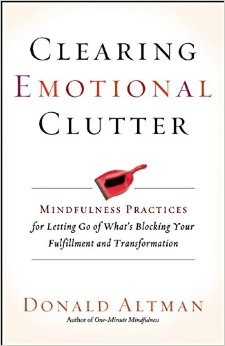
    In his new book Clearing Emotional Clutter: Mindfulness Practices for Letting Go of What’s Blocking Your Fulfillment and Transformation, author Donald Altman combines modern neuroscience with ancient practices to show how habits and patterns can be modified with only a few minutes of attention daily.

    It’s a powerful book that can hep anyone release their emotional pain to find happiness, fulfillment, and peace.

    I wish I’d found this book, and these practices, years ago, as they truly are life-changing.

    I’m grateful that Donald took the time to answer some questions about his work and his book, and that he’s offered two free copies for Tiny Buddha readers.

    Clearing Emotional ClutterTHE GIVEAWAY

    To enter to win one of two free copies of Clearing Emotional Clutter:

    • Leave a comment below
    • For an extra entry, tweet: Enter the @tinybuddha giveaway to win a free copy of Clearing Emotional Clutter http://bit.ly/1SLXcyB

    *US winners will receive a physical book in the mail; winners outside the US will receive an eBook.

    THE INTERVIEW

     1. Tell us a little about yourself and what inspired you to write this book.

    Mindfulness has helped me immensely in my life. I got on this path when I was going through a difficult life transition and found myself repeating an old, toxic pattern. It’s that idea that wherever you go, your problems always follow you. That is, unless you do something about it!

    Around that time I met a Burmese Buddhist monk—the Venerable U. Silananda—who had been teaching mindfulness in the U.S. since the 1970s. He possessed a palpable sense of compassion and availability that made me ask the question: How does someone become like that?

    When I had the opportunity to ordain with him as the head of the monastery, I jumped at it. Although I was in the monastery for a short period of time, it was an experience that changed my life direction because I was primed and ripe for the experience of looking inward.

    I wrote my first spiritual book while at the monastery, and continued to train with one of the monks afterward. I’m very grateful for the transformative experience the monks provided for me, which helped me nurture greater compassion and connect with my purpose. Now, my writing is focused on helping others find joy and fulfillment.

    Clearing Emotional Clutter is an important book for me because it integrates cutting edge brain science and research with the ancient practice of mindfulness. It shows that you don’t have to go into a monastery to transform your life, overcome past negative clutter, and rewire your brain.

    2. How do we accumulate “emotional clutter,” and why do we need to clear it out?

    No one can control what happens in life. There are losses, aging, and challenges throughout every stage of life, not to mention the daily wear and tear of stress. What we can do is to respond skillfully by not letting the emotional clutter pull us into states of dis-ease and unhappiness.

    By clearing out clutter, we can transform even difficult moments and respond to life in a way that helps us find the inherent joy that is present.

    3. You talk about getting off the emotional elevator. What do you mean by that?

    You can think of your emotions like an elevator that takes you up and down. What moves the elevator? What old programs are running in your head that push the buttons on your elevator to that it moves you up and down? Something good happens in your life and the elevator goes up. Something bad—even a perception of something being bad—and the elevator shoots down. But what if you could control that yourself?

    This book helps you decide who and what you are going to let push your emotional elevator buttons. Letting others push our mood elevator buttons can be exhausting. We’re not in control of our own elevator. Clearing away clutter means you get free from old emotional clutter programming and ways of thinking.

    4. In Chapter Two, you introduced a tool called “Inner-Facebooking.” Can you elaborate a little on this and share an example of how it’s helped you personally?

    Facebook is a wonderful way to post and put up for others what’s happening in our lives. In the same way, we are constantly putting up mental posts in our minds—through our thoughts and beliefs—that represent a kind of second Facebook: An Inner-Facebook, which shapes how we experience the world, ourselves, and others.

    If your Inner-Facebook posts are unhappy and unflattering, no wonder you feel bad and depressed. I have a whole chapter about noticing your Inner-Facebook posts so you can be more aware. Inner-Facebooking is a skill that helps you to emotionally regulate. Then you can change your Inner-Facebook posts to be more positive and accurate.

    Personally, I’ve gotten better at noticing my own inner-Facebooking posts. For example, my luggage was lost when traveling recently. But rather than respond to the highly reactive and anxious thoughts that my mind posted in that moment, I was able to step back and make a new, more realistic and helpful post that said, “My luggage is going to be found. Besides, in the big scope of things, losing my luggage isn’t that big a deal.”

    5. In Chapter Four, you wrote, “Much of the clutter of discomfort, discontent, and conflict that we experience in life comes from our unwillingness to accept things as they are.” I think we often equate acceptance with giving up. How can we simultaneously reduce the clutter of resistance while working to make positive changes in our lives?

    Acceptance is about realistically viewing your situation. It’s about surrendering to the truth that you may not have control over the situation. You recognize that it is what it is. That does not mean you are giving up. Submission, on the other hand, is about giving up.

    Acceptance allows us to surrender to the truth of our situation. So, if you’re frustrated at being caught in a traffic jam on the freeway, for example, you can have acceptance of what you’re experiencing instead of fighting with it. This means that you can then move forward in a more realistic and effective way instead of getting all stressed out and carrying the experience with you throughout your day.

    6. You devoted an entire chapter to “family emotional clutter.” How do we accumulate this type of clutter, and how does it negatively impact our lives?

    In my workshops I always ask, “Does anyone here have a difficult person in your life?” Everyone raises their hands.

    Family emotional clutter can negatively impact our future relationships and how safe we feel around others. If you’ve had negative relationship issues that have been a pattern in your life, that’s a sign you need to work on that clutter. Repairing this will lead to more loving, healthy, fulfilling, and secure relationships.

    7. What’s one thing we can do to begin releasing “family emotional clutter” to avoid these negative consequences?

    First, we can recognize that all people have suffered, even that person in your family who may have mistreated you. In fact, your family’s suffering may go back centuries. So, rather than feeling permanently victimized, it’s important not to pass on the wave of suffering in your family, and to know that you can heal.

    I believe that we can get a new brain download by finding benefactors in our lives. We can learn how to attune and alter our brain’s social and emotional rewiring. It’s a helpful process that I describe in one of the Lifestyle Tools found in Clearing Emotional Clutter.

    8. You talk about friendships as a tool to release emotional clutter. How and why can our relationships help with this, and how can we help other people release their emotional clutter as well?

    Research shows that having friends is the key to a happier life. The three seeds that make friendship grow and mature are the seeds of trust, acceptance, and empathy.

    Trust is essential, and that takes time to develop, so you need patience and real mutuality in a relationship.

    Acceptance means not being so demanding. It means accepting that everyone has flaws. Sometimes you need to let things to as a foundation for friendship.

    Lastly is empathy. Empathy is what lets you really feel connected to a friend. Develop these and you’ll develop friendship.

    9. In the chapter devoted to listening, you shared an acronym, HEAR, that can help us keep our emotional clutter out of conversations and “enter a more spacious and less defensive awareness.” Can you tell us a little about that and how it helps?

    Talking can be clutter that sometimes blocks understanding and deeper meaning. If we are to remove clutter in the moment, we need to be present with all our senses, especially listening. This acronym is designed to help us when we’ve stopped listening—like during an argument, or when we’re feeling defensive or caught up in our own opinion. It goes as follows:

    H- Hold all assumptions. Empty your ego and get curious. Set your personal beliefs and assumptions aside for a few minutes and take a more objective perspective as you listen.

    E- Empathy to engage, not enrage. With empathy, you can enter the emotional world of the other person so you can understand them better rather than try to deny or devalue what they are feeling.

    A- Absorb and accept. Understanding, with openness. Let in the ideas of the other person. Acceptance doesn’t mean you have to agree, but that you can accept this is the other’s belief.

    R- Reflect, then respect. Take time to pause before you respond. Take a step back so that you can think about what you’ve heard. Then, respond respectfully and with kindness.

    10. In Part 3 of the book, you explore ways to prevent new emotional clutter. What’s one practical thing we can all do daily to de-clutter?

    I especially like the idea of being faithful to this moment. You can be 100% committed to whatever you are doing. Uni-task, so you are fully present with this moment. This means fidelity to the breath, to walking, to eating, to working. Whatever you are doing, you can do so fully, without your mind being one place and your body being someplace else.

    That means that when you walk, walk. When you eat, eat. When you drive your car, drive. Cut down on the distractions and do one thing fully. In this way you can appreciate and savor even the most ordinary moments and that “in-between” time that is an important part of our days and lives.

    You can read more about Clearing Emotional Clutter on Amazon here.

    FTC Disclosure: I receive complimentary books for reviews and interviews on tinybuddha.com, but I am not compensated for writing or obligated to write anything specific. I am an Amazon affiliate, meaning I earn a percentage of all books purchased through the links I provide on this site. 

    Woman jumping image via Shutterstock

  • How to Let Go of the Stuff That Keeps You Emotionally Stuck

    How to Let Go of the Stuff That Keeps You Emotionally Stuck

    “The totality of my possessions reflects the totality of my being. I am what I have … What is mine is myself.” ~Jean Paul Sartre

    What kind of relationship do you have with your stuff?

    Embracing who we are naturally requires a letting go of who we aren’t, but perhaps want to be. That ties directly to our physical belongings, which can renew and inspire us in the direction we’re headed—or hold us back.

    Over the years, I’ve found that the objects with the most powerful grip on us are not necessarily those we use frequently and with ease, but the “aspirational” items that we wished we used more.

    The sleek high heels that never come out of the closet, because they’re too impractical to actually wear. The exercise bike that grows rusty in the basement. Or in my case, the high-end digital camera I just sold on eBay.

    The Lightness of Letting Go

    The camera is three or four years old at this point, but it takes amazing pictures. My partner at the time suggested I buy it before a big vacation to Istanbul, though I didn’t need much convincing.

    The idea of capturing the world through a lens and expressing myself creatively excited me. I liked the vision I saw for myself—someone with an eye for detail, with original, hand-crafted art on her walls to boot. This person sounded very clever and interesting.

    But what I quickly came to realize is that the actual process of taking photos, let alone editing them, held less appeal.

    My traveling companion used the camera on that trip far more than I did—he at least knew what to do with all those dials and buttons, whereas I had skipped reading the manual. It turned out my iPhone and a few Instagram filters were really all I needed to be satisfied. (So basic, I know.)

    Still, I held on to the camera for several more years, dutifully lugging it with me on trips and adventures, though it rarely came out of my bag. Even when I did snap pictures, they almost never came off the memory card.

    These unused items can take up a lot of space, but it’s the emotional burden, not the physical one, that really weighs us down.

    Every time I looked at my camera, I was struck by a pang of guilt. For wasted money, wasted potential.

    I’m rational, even ruthlessly unemotional, when it comes to most of my possessions, but this camera had a hold over me. I put off getting rid of it in the hopes that inspiration—or at least some motivation— would strike.

    Finally, this winter, I accepted what had already been true for quite a while: I’m not a photographer. And that’s okay.

    I sold the camera online and instantly felt better. The guilt was gone, my shelf was empty, and my wallet full. This time around, I plan to spend the money on something closer to my heart—an investment in my writing, some yoga classes or even a meal out with friends.

    Taking Stock for Yourself

    Here are a few things I considered when I accepted that my dreams of being a photographer, even a decent amateur one, were just that.

    Listen to your own stories.

    What stories run through your head when you look at an object that you don’t use but can’t seem to part with? How do you plan to use it and is that realistic?

    These stories are illuminating because they help us identify our true motivations.

    I rarely thought about planning my shots or the subsequent hours required in front of the computer to review my work—the nuts and bolts of photography. And when I did consider these tasks, it was not with much fondness.

    Watch out for the dreaded “shoulds.”

    As I’ve learned, it can be far too easy to conflate what we should want to do with what genuinely calls to us. Do the objects you cling to support the person you are and the activities you enjoy, or do they speak to some idealized identity in your mind’s eye?

    Author Gretchen Rubin writes frequently about what she considers the most important of her “personal commandments”—her commitment to just “Be Gretchen.” This has meant admitting she’ll never have a glamorous wardrobe or enjoy late-night jazz clubs, even if she likes the idea of these things in theory and sees why other people cherish them.

    “If something was really fun for me, it would pass this test: I looked forward to it; I found it energizing, not draining; and I didn’t feel guilty about it later,” she suggests in The Happiness Project.

    Let your possessions be physical reminders of what’s really fun for you.

    Consider substitutes.

    It’s possible your desire to hang onto something is telling you more than you think.

    I had a similar experience with a bicycle I bought the better part of a decade ago. It was a beautiful Italian road bike from the eighties, and I snatched it up on Craigslist, putting aside the fact that it wasn’t quite the right fit and that I didn’t feel comfortable riding it.

    I held onto the bike through several moves across states despite rarely using it, thanks to that familiar tug of guilt and desire.

    It was only in the past year that I finally invested in a new bike, one with upright handlebars, fatter tires, and easy-to-change gears. It fits me and I ride it everywhere. This one also has less emotional power over me. It’s functional, a tool I use for getting around—not a symbol for the kind of person I wish to be.

    Can you tweak what’s not working?

    Think about who else might gain.

    When I did finally sell my camera, it helped to convince myself that I was giving someone else the chance to enjoy it at a reduced cost. I hope the buyer finds the joy I’d been seeking, but never actually found.

    Could others use the items you’re clutching so hard? Consider letting go a gift to the world—one that will also free you to embrace your true self more fully.

  • 12 Ways to Turn Your Crippling Stress into Happiness

    12 Ways to Turn Your Crippling Stress into Happiness

    Happy Meditating Woman

    “More smiling, less worrying. More compassion, less judgment. More blessed, less stressed. More love, less hate.” ~Roy Bennett

    You are a slave to stress.

    I can relate. Stress crushed my life and dreams.

    I started a business and faced intense criticism over this decision.

    Everyone was sure I’d fail. My friends and family attacked me while I was combating my own self-doubt.

    My stress level was insanely high.

    Then the worst happened. My business failed and I lost all my savings. I was crushed.

    It took a long time to finally accept this failure.

    Today, whenever I work, stress still lingers in my body like the shadow of my dark past. But now I know how cope with it. Let me teach you how.

    1. Consider getting a pet.

    Sharing negative feelings with close friends can significantly reduce stress. Studies show that spending time with pets relieves stress in the same way. Also, when you’re accompanied by a pet in stressful situations, it prevents your stress level from rising.

    I have a cat. He was my only friend when nobody was supporting me. I’m grateful to have him by my side.

    If you don’t have a pet, consider getting one. It may change your life in surprising ways.

    2. Stop dwelling on your problems.

    Kant State University had an eye-opening discovery. Apparently, the more you talk about your problems, the more you’re likely to suffer from depression.

    Of course, it’s healthy to share what you’re going through. But when you’re mindlessly dwelling on your problems, it doesn’t solve anything.

    I never talk to anyone about my problems because no one supports me. This propels me to actively seek solutions instead of blindly mulling over things that could stress me out.

    If you’re fortunate to have supportive friends, do seek their support. What’s important is that you don’t just whine about your difficulties, but actually act.

    3. Shower yourself with gifts.

    You’re being brutally hard on yourself.

    You take success for granted. Worse, you exaggerate failure.

    When you’ve reached a goal, you move on nonchalantly. If you don’t, you torment yourself mentally. You scold, devalue, and deprive yourself.

    I’ve been there. I know this is self-destructive.

    Reward yourself for reaching goals. Research shows that when you’re rewarded for an action, you’re likely to repeat it. This is called a positive feedback loop. It’s much more effective than punishment.

    If you gain stress from failure, without happiness from success, the only outcome is stress.

    If you earn happiness from success, without stress from failure, the only outcome is happiness.

    4. Exploit bad habits to your advantage.

    I used to run away from problems. When stress hit, I’d instantly give up on whatever I was working on and resort to escapism.

    You may have experienced this too.

    Escapism may entail over-eating, indulging in unhealthy foods, TV, Internet, porn, smoking, and drinking. Over time, they form destructive habits.

    Exploit escapism by using it as an anchor.

    Pick healthy alternatives, such as meditation, stretching, listening to motivational talks, napping, or light exercises.

    Before you escape, do thirty seconds of an alternative first.

    Say you’re angry with your boyfriend. You think you need to eat some junk food to calm down. Before that, meditate for thirty seconds. Then you’re free to indulge.

    Do this for two months. Then increase good habit time weekly, until the good habit completely drowns out the bad.

    This way, I built new automatic responses to stress and broke my escapist habits completely. Now when I feel stress, I either take a short nap or move along to uplifting music.

    After a few minutes, I’m recharged and motivated to face new challenges.

    5. Unleash your anger (and cry yourself to sleep).

    Don’t always try to appear perfectly calm. You need to express difficult emotions—anger, for example.

    Discuss your frustration with friends. Journal your rage and analyze it objectively on paper. You can even confront the object of frustration assertively.

    Remember to release your anger under control. Don’t throw tantrums or yell impulsively. Express it as a means of problem solving.

    This applies to other difficult emotions, as well, like sadness. It’s healthy to express these “negative” emotions.

    6. Reach great heights by letting yourself suck big time.

    I’ve learned to accept my devastating failure. I have to. Otherwise, I’d be completely destroyed and discouraged from pursuing anything ever again.

    Some people cannot accept mistakes. Everything has to be perfect from the start. They think others will look down on them if they appear to be flawed.

    These people are frequently stressed.

    The happiest and most successful people focus on improvement. They love mistakes and flaws, because they see them as opportunities to grow.

    Learn from these people.

    Have lofty goals but have realistic standards. Don’t judge yourself based on the results of your actions. See them as feedback and seek improvement from there.

    7. Be shameless about not doing things.

    You don’t have the time and energy to do everything you want to do.

    Inevitably, things are left undone, and you beat yourself up. This creates stress.

    Consider what’s truly important to you. Kill the rest shamelessly.

    This way, you gain more time and control over your life while making more progress.

    I focus only on my career and my relationships. I’ve postponed other ambitions, like becoming a martial artist and a calligrapher, because they’re comparatively unimportant.

    8. Declare war on useless crap.

    I’m clearing up my apartment. It’s now clean and spacious. When I’m inside, I feel more relaxed, concentrated, and in control.

    Psychologists found that clutter competes for your attention and overloads your brain. This makes you stressed and even damages your ability to think.

    Trash this useless crap ruthlessly.

    Begin with discarding one item per day, for two months. It’s easy, and it trains you to detach emotionally from your possessions. Later, you can expand to junk more items daily.

    9. Learn how to use your body wisely.

    I always keep my back straight and try to appear confident.

    Why? Because posture has a direct relationship with your mood and behavior.

    When you position your body in a natural and comfortable way, you feel less stressed.

    Also, when you appear confident, you feel more powerful and in control. Confidence balances out stress.

    Read books on correct posture and body language. These skills not only reduce stress reliably, they also keep your body healthy.

    10. Extract everything from your overloaded head.

    When your mind is overloaded, you feel agitated, you malfunction, and then you collapse.

    Extract all your mind clutter in one place, out of your head.

    Observe your thoughts for five to fifteen minutes, and let information resurface from your mind.

    You’ll be surprised how much stuff pops up. Things you have to do, things you’re waiting to do, open loops, creative ideas, long-term plans, and many more.

    Write down everything as soon as they come up, no matter how trivial they may seem.

    This helps organize your life and clears even the smallest mind clutter. When you can see everything on paper, you’ll find them more actionable. Life becomes less overwhelming.

    I personally prefer pen and paper for this. A sophisticated to-do system works too, but avoid spending too much time on that. You might create stress in the process.

    11. Learn from the Chinese: the spectator’s eyes.

    Stressed people are masters at exaggeration. They magnify every little problem.

    You can’t see the big picture when you are caught up inside a problem. Then you begin to exaggerate and freak out.

    A Chinese saying goes, “The spectator’s eyes are always clear.

    Ask a friend for his honest opinion on your problems. This will likely help you recognize when something truly isn’t a big deal. Learn from spectators, and analyze your problems objectively. Then you can see problems as they are, and act wisely.

    12. Laugh: meet apocalypse with humor.

    I watch comedies a lot. They give me a brief escape from my stressors.

    One day I had a revelation.

    Visualize these scenarios: bombing a job interview, getting fired, being unemployed, getting robbed, getting sued, getting rejected by the opposite sex.

    Disasters. But they’re all funny in comedies. There’s something funny in every problem.

    Maybe you burned your food. Maybe you dropped your phone into the toilet. Have a laugh!

    Once you can do this, you’ll completely turn your perspective around. You’ll see the positive in every situation, and face problems happily.

    This Second, You Can Transform Stress Into Happiness

    It’s not impossible. Many people have done it.

    Pick one lesson that looks appealing to you, do some research on it, then act.

    You’ve let stress dominate you long enough. Now is the time to live differently.

    Do you want to stay crippled by stress? Or do you want to turn life into happiness?

    The choice is yours.

    Happy meditating woman image via Shutterstock

  • Declutter & Destress: How to “Live Tiny” in Your Not-Tiny House

    Declutter & Destress: How to “Live Tiny” in Your Not-Tiny House

    “Not what we have but what we enjoy constitutes our abundance.” ~John Petit-Senn

    I love the tiny house movement because it embraces simple living and diminishes the spiritual and financial burdens of materialism. However, I don’t really want to trade in the 1,700 square foot house I love for something that’s 200 square feet!

    If you’re like me, you may have felt the same pleasure watching shows like Tiny House Nation, but not known how to apply the ideas they present to life in your larger house.

    Well, I’ve found you really can “live tiny” in a not-so-literal way, and reap some of those tiny-living benefits in your bigger home!

    Step 1: The ruthless pare-down

    First of all, no one transitions to tiny living without trimming down the stuff they possess. I decided I didn’t need a living space reduction to inspire me to undertake an extreme pare-down.

    I commenced systematically sorting through everything in my seemingly uncluttered and organized home. (Those qualities were really only on the surface.) I didn’t give a pass to spaces that never got assessed because they seemed fine as-is. I went through my house thoroughly, basement, garage, and gardens included—no drawer, cardboard carton, or crawl space was exempt.

    A tiny-living-style purge requires something stricter than the usual “have I used it in the last year?” rule applied with frequent exceptions. For example, of course I hadn’t used my high school prom dress in the last year, but it always got spared in pare-downs due to sentimental value. This time I put the dress on, took a picture, and said goodbye to it.

    Here’s a tip regarding clothing reduction: You can easily see how often you use items in your closet by turning hangers to point to the front rather than the back when you wear something. If you find a long time goes by with many pieces on unturned hangers, you’ll see what a small sacrifice it would be to donate them to the needy.

    Now don’t be fearful as you purge! This process isn’t nearly the challenge tiny living requires. You have the leeway to take into account how your belongings contribute to your individual quality of life.

    Most people have glassware or coffee mugs gathering dust, making them perfect candidates for chucking. Me, I kept a few of every kind of bar glass imaginable—because mixology is one of my passions and I actually use them. But I gave away the eighteen duplicate tools we had between our upstairs tool drawer and our basement tool chest—because you don’t need two drills to be a home handywoman.

    The key is simple: As you evaluate each item, ask yourself, Can I have an excellent quality of life without this?

    Step 2: Don’t buy new when you can enjoy the old

    So, you’ve completed your purge and feel a great weight lifted from your soul. Now the task is to keep things that way! Again, look to the example of the tiny house lifestyle.

    I used to love finding a way to justify buying something new—don’t we all? Well, tiny house dwellers don’t have room to expand, so they think twice before making new purchases. And if you do that too, here’s what happens: First, you save a ton of money. Second, you keep your possessions level down. And third, you discover just how great the stuff is that you already have!

    Do you even fully know what you already have? I thought I did, but no. I found clothes, décor items, hobby supplies, dishes, etc. that I had forgotten completely but saw had real value. So now I use them! Odds are you too have a ton of possessions that could be a joy to rediscover and use, and it costs nothing.

    So, maybe the workhorse old mixer you own isn’t as exciting as a new Kitchenaid, but the money you save by living with it could pay for a month of groceries, a weekend getaway, or fifty eBooks. And why not revert yourself to the wise lifestyle of your grandparents? Mend and repair whenever you can!

    In those moments when you used to think, “Oh goody, we could use a new one of these!” ask yourself, Can I have an excellent quality of life without replacing this?

    Step 3: One in, one out

    So maybe you really do need that new item. You can still adopt the “one in, one out” principle employed by tiny homeowners. They literally have no choice but to make room for new items by removing the old, and that’s the way they keep their belongings at a steady level.

    You can discipline yourself to do the same, by finding an unnecessary item to “open a berth” for something new. This is something I’ve traditionally done right before the holidays, to make space for incoming gifts. Even better to apply the principle all the time; you’ll never have to do an extreme pare-down again!

    When you bring in the new purchase ask yourself, What can I spare to open up the space for this—who might make far better use of that item than I?

    Step 4: Maximize your space

    Tiny house dwellers have to get absolutely everything they can out of every square foot of space. They find hidden storage under beds and on the ceiling, and they have brilliantly clever furniture that does double duty as couch/bed or dining table/desk, etc.

    Take a good look around your house and make sure you are using all the space you own. (You may even find this inspires you to move to a smaller house!) Your purging could free up a closet that could become a modular home office space. A kitchen can double as a crafting room—I have my crafting materials in rolling storage that I can bring into the kitchen, and the table folds out into a larger size for claying or painting.

    One excellent way to gain storage space is by reducing your inventory of books. Keep a small library of special volumes to cherish, of course. Then consider collecting eBooks instead, which take up no physical space at all. Love to read books on paper? They are free at your local library! Or take a tip from Tiny Buddha founder Lori: buy used books and sell them back to the store later (one in, one out).

    If you’re short on closet space, look to the challenges met by tiny homeowners. Use an old trunk as a coffee table, under-bed boxes for clothing, and shelving added to vertical spaces. You don’t need to move to a larger home in order to have the space to meet your needs.

    Ask yourself, in HGTV parlance, How can I Love It rather than List It?

    Step 5: Discover the zen in being minimized and organized

    Living tiny in your big house isn’t just about reducing expense and consumption. You’ll be amazed at how following tiny house principles enhances your relationship with your belongings.

    Here’s a lesson from our cat toys. Previously we had cat toys in two drawers, two baskets, and four closets—they are now purged, mended, and organized. Now it’s easy to put away stray toys, I know where our stock of new ones is, and I’m not tempted to buy more. And better than that: I’m also more inspired to play with the cats!

    In other words, I’m more in tune with my home and all who dwell within it. With distractions reduced, I am more mindful of my environment and how I interact with it. Meanwhile, I don’t miss out on what I already own, and get more enjoyment out of my belongings.

    For example, I created a meditation corner with objects incorporating the feng shui elements. I found nearly everything I needed among my current stuff (I did treat myself to a Himalayan salt lamp). Not only do I now have this inspiring, Zen space, but things that were previously hidden away now have a purpose.

    Every day or so, find something in your house you haven’t engaged with in a while. Ask yourself gratefully, What is it about this that I really love—and how can I enjoy it even more?

    No pain, all gain

    If you’re like me and find the tiny house movement really inspiring, the reasons why are clear. Tiny is a great way to live! And in a bigger home, applying these ideas to your lifestyle is all upside. You won’t sacrifice necessary items, space, or privacy. All you give up are things like this:

    • Not knowing what you own or where it is
    • The stress of clutter and crowding
    • Not making full use of your stuff and your space
    • Unnecessary consumption and expense

    And you gain things like this:

    • Sharing your abundance by giving away what you don’t need
    • Gratitude for and appreciation of your possessions
    • More complete utilization of what you already have
    • Increased peace and serenity

    So join me in discovering the wonderful aspects of tiny living that we bigger home-dwellers can enjoy. Think tiny…and live large and well!

  • A Few Less Steps to Bliss

    A Few Less Steps to Bliss

    “Don’t use a lot where a little will do.” ~Proverb

    My fears around becoming a mother for the first time were validated. Giving birth did hurt, though in an empowering, “hear me roar” kind of way.

    There is stiff competition now for my husband’s attention, but mine is captivated as well. And our spontaneous, hedonistic, freewheeling lifestyle is permanently cramped—but into this cozy fetal position of child-friendly rhythm and routine.

    Though we have been pacified into a relatively mundane existence, my morphing into a mama bear that’s hell bent on protecting her cubs from excess has helped keep things spicy. Excess in the form of stuff, noise, and activities that attempt to encroach on our home and our time to connect, distancing us from our core values.

    There is a therapeutic benefit to this extreme nesting to the kids and adults in our family alike.  My kids are imaginative, calm, and pleasant to hang out with, and I find myself with more energy, creativity, and overall bliss than I have ever experienced before.

    With this keen selectivity of what is enough, we gift our minds and hearts the room to expand, explore, then retreat again for restorative contemplation and rest.

    Less leads us closer to more bliss and here are just three ways to get there:

    Step One: Less Stuff

    Take for instance the visual pollution surrounding us. Coming into a space that is clear of clutter can release us from the immediate but subtle sense of anxiety we feel due to the responsibility of ownership—the need to repair, organize, share, and account for.

    With kids in the house, we’ve found it necessary to do a seasonal or at least twice yearly purge of items that no longer serve us. Since we have limited storage space, we need to clear out the many quickly outgrown clothes, toys, and the occasional toddler toilet paraphernalia. (more…)

  • 10 Steps to Simplify Your Work Life

    10 Steps to Simplify Your Work Life

    Office Buddha

    “Life is actually really simple, but we insist on making it complicated.” ~Confucius

    While I have always piled a lot on my plate professionally, I’ve recently introduced more varied elements. Formerly, I may have devoted a long workweek to freelance writing, but I’m now juggling writing, consulting, editing my upcoming book, and promoting my recent eBook.

    I’ve noticed that the biggest complication to my life isn’t necessarily the full, varied schedule; it’s how I think about that busy schedule.

    Sometimes I let my to-do list overwhelm me, carrying the weight of the whole through all of the parts.

    So, instead of just answering an email, I’m responding, thinking about the blog post I want to write later, worrying about the magazine deadline I might not make, and planning to be more effective so that I can get everything done without having to worry so much.

    That’s something I sometimes do.

    But on other days, I remind myself that I can’t worry my way out of worrying, and that the most effective use of any moment is to fully do whatever it is I’m doing. The rest will get done later. That, I’m learning, is the most important part of simplifying.

    The first step in simplifying anything starts with how we think about it.

    Of course, there’s a lot more to simplifying work than that (which I realize is ironic given that the subject matter is simplification). (more…)