Tag: Christmas
-
How to Have a Meaningful Holiday Season on Your Own Terms
“Take a little time to be amazed by something you won’t enjoy unless you consciously choose to focus on it. See the things you can’t see when you’re rushing. Hear the things you can’t hear when you’re stressing. Get so caught up in your senses that everything else seems to stop for a moment—because things don’t actually stop. So we have to be the ones who do it.” ~Lori Deschene
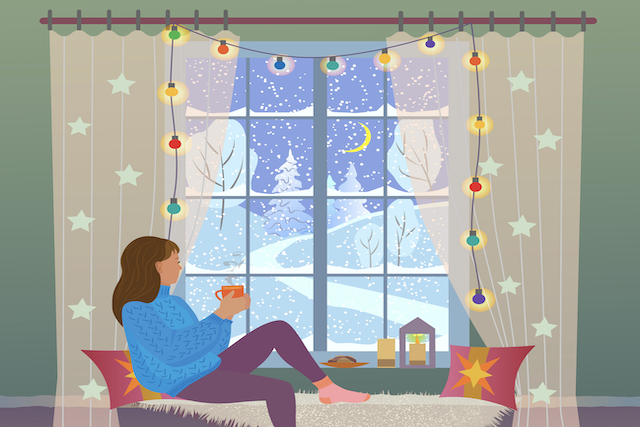
As December unfolds, I’ve made a conscious choice that feels both liberating and true to myself: I’m celebrating a quiet Christmas at home with just my best friend.
While my family lives far away, and tradition might dictate buying plane tickets and planning an elaborate holiday visit, I’m listening to a deeper wisdom this year—one that honors my personal growth, sense of balance, and need for peaceful reflection as we approach 2025.
This decision wasn’t made lightly, but it feels right. Instead of navigating crowded airports, juggling the stress of travel logistics, and potentially diluting my focus on what truly matters to me, I’m creating space for an intentional end to 2024. It’s not about loving my family any less—it’s about loving myself enough to recognize what I truly need right now.
Examining What Matters
The path to this decision became clear when I started examining what truly matters to me right now. While my family gatherings are always wonderful, they also come with different expectations and dynamics—competing priorities and well-meaning but sometimes overwhelming input about each other’s life choices.
By staying home, I’m creating a sanctuary where I can remain deeply connected to my own inner compass as I prepare for the year ahead.
My best friend shares this vision of a peaceful holiday. Like me, his family also lives far away, so we’ve embraced the opportunity to enjoy each other’s company this holiday season, celebrating our friendship and shared values. Together, we’re planning simple but meaningful celebrations that focus on joy, rest, and genuine connection.
Our plans include a holiday movie marathon at home, filled with plenty of festive classics and rom-coms. We’re also trying out new recipes and baking to our hearts’ content, transforming the kitchen into a festive hub of delicious treats. There’s something powerful about choosing to celebrate differently—about saying yes to what feels authentic rather than what’s expected.
I’m fortunate that my family demonstrates a beautiful kind of understanding, though it didn’t come without a touch of disappointment at first. When I shared my holiday plans, I could sense their initial sadness at us not being together. But that feeling quickly morphed into compassion and love as they recognized how important this choice was for me.
Their response reflected the very love and support that make our relationship special. They get it—they understand that sometimes taking care of yourself means making choices that look different from the traditional script.
This conversation helped me embrace my decision even more deeply. It reminded me that love and connection don’t depend on proximity or performance but thrive when we trust each other to honor what we need.
New Possibilities and Intentional Celebration
This simplified holiday season is already opening up new possibilities. Without the usual rush of travel preparations and extensive gift shopping, I’m finding time to reflect deeply on my goals and aspirations.
My best friend and I are looking forward to savoring time together. What feels especially refreshing is the quiet spaciousness of this season. It’s not just about what we’re doing—it’s about what we’re not doing. There’s no rushing, no overextending, and no pressure to meet anyone’s expectations but our own.
What makes this setup truly special is how we’re blending celebration with intention. From Christmas through New Year’s Day, we’re creating a space for reflection and renewal. This isn’t just about savoring the holidays; it’s about entering the new year with a clearer sense of what matters most.
Whether we’re brainstorming dreams for the future or simply enjoying the aroma of freshly baked cookies, this intentionality feels like the perfect way to honor the spirit of the season. It’s a reminder that peace and joy aren’t things we find—they’re things we create.
Choosing to forgo the usual holiday hustle has also given me an unexpected gift: the freedom to focus on what truly fills me up. Instead of stretching myself thin trying to do it all, I’m finding joy in the simple pleasures—a heartfelt conversation, a home-cooked meal, and the sense of ease that comes with slowing down.
It’s remarkable how small shifts can create waves of change in so many areas of life. This choice has reminded me that less truly can be more.
Creating Your Own Meaningful Holiday
For anyone considering a similar choice, here’s what I’ve learned about creating a meaningful holiday season on your own terms.
1. Trust your instincts about what you need.
Sometimes the greatest gift you can give yourself is permission to break from tradition when it serves your well-being.
2. Simplify your celebrations.
A meaningful holiday doesn’t require elaborate plans or expensive gatherings. Often, it’s the quieter moments that bring the most joy.
3. Set loving boundaries.
If family members express hurt or disappointment through guilt trips or emotional pressure, remember that their reaction often comes from a place of love. You can validate their feelings while still honoring your decision, using phrases like “I know this is different from our usual tradition, and I understand why that’s hard,” followed by a clear, kind explanation of your choice.
Consider suggesting specific ways to make the holiday special despite the distance, perhaps by having a virtual gift-opening session or planning a dedicated family celebration for another time. This shows your family that you’re still committed to maintaining meaningful connections with them.
4. Embrace creativity.
Whether it’s trying out a new tradition, experimenting with a recipe, or simply finding new ways to connect, creativity can infuse the holidays with fresh meaning.
5. Prioritize rest and reflection.
The holidays can be an emotionally charged time, so give yourself space to recharge. Whether it’s taking a long walk, journaling, or meditating, moments of stillness can bring clarity and peace.
6. Create your own traditions.
A personal ritual, like lighting candles, writing a gratitude list, or hosting a movie night, can be a comforting and grounding way to honor the season. Or create something completely unique that reflects what matters most to you. The point is that you get to choose.
7. Focus on experiences over material things.
Instead of stressing over gifts, embrace the simple joys of the season; for example, savoring a favorite holiday meal, watching movies that bring you comfort, or taking a mindful moment to appreciate the little things around you.
8. Stay flexible.
Life rarely goes according to plan, and that’s okay. By letting go of rigid expectations, you leave room for unexpected moments of joy and connection.
Grateful for Change
As 2024 draws to a close, I’m grateful for this choice to celebrate differently. This low-key Christmas isn’t about what I’m giving up. It’s all about what I’m gaining: clarity, peace, and the joy of honoring my own path.
In choosing this simpler celebration, I’m not just preparing for a better start to 2025; I’m practicing the art of living authentically right now. And that, to me, feels like the greatest gift of all.
-

Put Down Your Phone: Why Presence Is the Best Gift You’ll Ever Give
“When you love someone, the best thing you can offer is your presence. How can you love if you are not there?” ~Thich Nhat Hanh
The only thing worse than not listening to someone is pretending to listen.
Giving the vague murmur of agreement, or a quick nod to communicate “Yes, I’m listening, totally,” when really, we’re not.
I remember vividly a dinner I had with friends about four years ago. I’d been backpacking in New Zealand for twelve months and had just returned to the UK. Traveling in the car to my friend’s house, I imagined how the night would look…
There would be lots of laughter (it was always side-splitting when we all got together).
There would be lots of hugging (I hadn’t seen them for a whole year after all).
There would be lots of storytelling (I would get to share my epic adventure).
Did all of this happen? To some extent, yes, but not how I had imagined.
In fact, I left feeling a little miffed, a little gutted.
At first, I couldn’t work out why.
My friends were the same old fun-to-be-around people.
Despite ‘finding myself’ while traveling (I joke), I felt I was pretty much the same old person.
So what was different?
It hit me.
The constant. Mobile. Phones.
The entire evening was tainted by endless selfies, videos, status updates, incoming phone calls, outgoing phone calls, and notifications.
Distraction after distraction after distraction.
There were moments you could have heard a pin drop as the four of us, faces illuminated by the glow of the mobile phones, sat, hands glued to our devices. Ironically, telling anyone who was on Facebook and Instagram that night what a terrific time we were having.
To begin with, I was angry with my friends. But soon I realized I was really angry with myself. I was equally guilty, and people in glass houses shouldn’t throw stones after all.
What could have been, rather, what should have been, an evening of being deeply present with one another, each one of us offering our full and undivided attention, was tainted by technology, spoiled by social media, marred by meddling mobiles.
Backpacking was more campfires and deep life conversations below the stars, so this evening was felt like a return to reality. Most of us struggle to put our flipping phones down.
If we stop and think about it, what message does it send to the human beings in front of us when we are busy on our phones?
I made a vow that evening to get better at this, to be more present with friends and family, anyone I’m communicating with.
I didn’t want to make anyone feel how I felt that evening—unheard and unimportant.
Zoom forward to today and, well, I’m much better but far from perfect.
Technology certainly is a huge barrier to presence, but it’s not the main culprit.
The main culprit lives between our ears, the mind.
The mind is a lot like a talking alarm clock, and you have no control over when it goes off and what it will say.
For example, I can be sitting face to face with someone, physically a few centimeters in distance, but consciously, a world away.
Instead of listening to what the person sitting across from us is saying, we listen to our thoughts.
Hey, did I leave the oven on this morning when I left the house?
I hope my breath doesn’t stink.
Why is that stranger in the corner laughing—is my underwear tucking into my shirt?
Or literally, anything else. Anything. Any other thought can pop up at any moment, pulling my focus momentarily away from the person in front of me.
Luckily for us, people can’t always be certain when we’re not being fully present with them, especially if we’re an expert fake listener, able to give a very convincing response like “Yeah, sure, I get you.” Occasionally, I sense that the person I’m talking to senses I haven’t been listening. I feel bad and forgive myself for being human, before returning to the conversation.
On the other hand, when someone is really listening to us, fully present with us in the moment, we can be certain. Without a doubt, because we feel it.
It’s tough to put such moments into words, but you just know.
Moments when we’re fully present with someone and it’s reciprocated, it’s like magic, like the rest of the world fades into the background. Like the first time you fall in love and you just feel connected; you feel the dance of communication, the resonating, the synchronicity, the oneness.
That’s it. This, for me, is what presence is all about. The oneness.
A few of my favorite ways to get present and cultivate oneness are:
Eye contact
The eyes truly are the windows to the soul. Giving eye contact really lets people know they’re being heard.
Listening to understand instead of listening to respond
We’re stuck in our heads if we’re listening purely to plan our response. Tuning into a person’s words and also how they say the words has greatly helped me to connect with people.
Limiting distractions.
Technology, off. The world can wait.
Remember the good old days when only landline phones existed and if you weren’t at home people would leave a message and patiently wait for a response? Bliss. Nowadays, we’re available on mobile, Facebook, Messenger, Instagram, Snapchat, email… the list goes on. Flight mode is my friend. Anytime I want to get present, flight mode is activated.
Facial expressions.
When I really listen to someone, I find I empathize with them so much more. Naturally my facial expressions will reflect this, communicating I understand how they’re feeling. We all wish to feel understood.
In a few weeks’ time, I’ll be flying back to the UK to spend time with my family. In fact, this will be the first Christmas in six years we’ll all be together (my dear parents, older sister, younger brother, and me).
A part of me is sad knowing that around the world, there will be families sitting in their living rooms, surrounded by their nearest and dearest, but not really being there.
Distracted either by their own minds, their mobiles, or maybe their new presents.
It doesn’t have to be like this. Board games can be played and conversations can be had, with presence, together.
In truth, we needn’t wait until the holidays to connect in this way, as any moment, any conversation, offers a chance to be present with each other. But the holidays, for me, really are prime opportunities.
To be surrounded by the ones we love most and be with them more than just physically, but emotionally and spirituality too, well, this is worth more than any gift you’ll give or receive this year. This holiday season, give presence.
-

How to Safely Enjoy the Pandemic Holidays
“Surreal” is the word that keeps coming to mind. Life has felt like an alternative universe for quite a while now, and it feels even stranger during the holiday season.
After a year of much sacrifice, reality is requiring us to forgo traditions we hold dear and distance ourselves from people we may feel we’ve already gone too long without seeing.
And many are navigating the season with a sense of grief—for lost loved ones, lost purpose, maybe even lost hope.
Maybe that’s not you. Maybe you are full of gratitude for everything you have, and now appreciate even more because of the pandemic.
That’s also me, on some days.
Some days I look around and feel undeniably blessed to have my health, my family, and all my needs met.
On other days, I feel the weight of these long, isolating months and mourn for lost time with people I love and the family celebrations I will miss with my parents and siblings, who all live together, across the country from me.
You may be in a similar position, oscillating like a pendulum between gratitude and grief. And you may be debating how to approach this season, logistically, mentally, and emotionally.
Whatever your unique situation, I hope this checklist helps you approach the weeks ahead safely, with peace, hope, and joy, wherever you can create it.
1. Caution
This is the big one, and the hardest one to swallow and follow. It’s been a trying year, one marked by loss and heartache for many. We’re tired of it all and want this pandemic behind us—but it isn’t yet. So as much as we’d like to throw caution to the wind and end the year celebrating with all the people we love, we all need to do our part to protect ourselves and the people around us.
Not the most exciting way to start this list, I know, but just figured I’d get this one out of the way!
If you haven’t already seen the CDC guidelines for holiday gatherings, you can find them here.
2. Communication
As I imagine you’ve experienced as well, different people hold vastly different perspectives on what constitutes “caution,” and some are willing to take greater risks.
For example, my extended family got together with at least four different households on Thanksgiving—including some who are regularly exposed to masses of people, some without masks—and they will do so again on Christmas. That’s a risk I wouldn’t be willing to take, but I’m also 3,000 miles away, so it’s a choice I don’t have to make.
If you’re considering gathering with family, it’s essential to clarify where everyone stands, what precautions everyone’s taking in their daily life, and what precautions will be followed on the day itself. Don’t assume you know how anyone thinks unless they’ve clearly communicated it, because it’s quite possible you’d be wrong.
3. Empathy
This can be a tough one. When people make choices that may seem reckless to you, or they push beliefs you just can’t agree with, you may feel hurt, frustrated, or even outraged. It’s hard to separate a person from their choices, especially when it involves something as emotionally loaded as pandemic safety, and it’s hard not to take it personally if their choices seem selfish to you.
I have been here recently, and I took it very personally. I got upset, I criticized, I judged. What I didn’t do is change anyone’s opinion, or in any way better the situation. I realized then I needed to empathize with the people who see things differently than me. Even if I wouldn’t make the same choices, I needed to understand the feelings behind them and focus on that.
This doesn’t mean we need to condone decisions we don’t agree with, or in any way put ourselves at risk. It just means we accept what we can’t control and choose love over righteousness, however warranted it may feel.
4. Self-compassion
Odds are things haven’t been easy for you. Even if you are healthy, have a job and a roof over your head, and haven’t lost any loved ones, this year probably took a toll on your mental health. I know it’s taken a toll on mine.
You may feel lonely, discouraged, overwhelmed, impatient, or even downright depressed right now. You may also feel frustrated to have to change your usual holiday plans, at a time when you could really use a little extra love, joy, and connection.
It’s okay to feel frustrated. It’s okay to feel whatever you’re feeling, even if you know you’re fortunate. It’s hard to be far from people we love, especially around the holidays, and to miss the traditions we value most. Be extra gentle with yourself and know it’s okay if your gratitude is mixed with a wide range of complex emotions.
5. Acceptance
I know how tempting it is to live each day in resistance, especially when you’ve lost a lot, or when things seem unfair. I know how easy it is to get caught up in how things should be or were supposed to be or would be, if only…
What I don’t know is what you specifically have been through or what you’re feeling right now. So please know I am in no way suggesting acceptance is easy, or that I’d be able to do it easily if I were in your shoes.
I can only speak to the general idea of acceptance, and how it frees us mentally when we stop fighting reality. I know that when we accept what we can’t control, we’re free to focus on the things we can control and make the best of them.
I also know I feel better about the person I’m being, and ultimately better about life, when I come from a place of acceptance—even if it takes time to get there. I’m lighter, more present, more accessible to the people around me, and more likely to see opportunities where before I only saw unfairness.
6. Perspective
As with everything in life, this is all temporary. Things won’t always be this way. These challenges, these feelings, they won’t last forever. We will eventually get through this and will be able to live more freely. Though life won’t be exactly the same for many, we will find a new normal and new reasons to smile as we adapt to life as it evolves.
It may be hard to see that now. It may seem like this earthquake of an experience will send shockwaves for years, and we’ll never find our footing again. But we are amazingly resilient as people. Odds are you’ve been through some deeply trying experiences in your life, and you’ve come out stronger, wiser, and maybe even enriched for having gone through what you’ve been through.
Trust that, odds are, you will not only get through this, you will have many more reasons to smile, and many more holidays to celebrate with the people you love. This one year will one day be a crazy story in all of our rearview mirrors, so long as we keep driving, cautiously, on this somewhat treacherous road before us.
7. Ingenuity
One of the gifts of any challenge is that we need to be a little more creative, which can in itself be a source of pride and joy. If you’ve ever made a full meal on a day when you really needed to go grocery shopping, you know what I mean! My mother has a special phrase for this: “Not bad for a throw together!”
Think of this as your throw-together—your chance to do more with less, to find beauty in simplicity, to make the best of what you have and maybe even start new traditions.
I’m guessing you may have mastered the art of online connection this year. So now take it to the next level. How can celebrate in creative ways with people from afar? And how can you honor the people right in front of you, even if they’re only some of the ones you love?
As for me, I’m planning to focus on the excitement of my son’s second Christmas, since I think he’ll appreciate it more this year. I’m going to ask my brother to Zoom-watch A Very Brady Christmas with me, since we’re dorks and watch it every year. And I’ll Portal with my family on Christmas morning when they open the gifts I sent them, so it will be kind of like I’m there.
8. Mindfulness
So here we are. At the end of a strange, painful year, staring down months more of uncertainty and potential stress and struggle. No one would fault us for looking back—it’s like there’s a massive multi-car pileup behind us; it’s hard not to gawk. And no one would be surprised if we anxiously looked ahead, worrying about the potential for more accidents down the road.
But right now, many of us are sitting safely in our cars, with heat and music and at least one person we love to play car games with and pass the time.
I realize this isn’t true for everyone. You might not have your needs met right, and you may feel unsafe in your home. If that’s you, please know there are resources out there to support you. You can find some here and here.
If that’s not you—if, like me, you’re relatively fortunate and have a lot to appreciate and enjoy if you choose to be present—make the choice. As best as you can.
If it’s hard, be good to yourself. Then try again. Try to see the beauty right in front of you, even if you have to look a little harder. Try to hear the magic in the music that’s playing even if you wish you could belt out the lyrics with someone who’s far away. Take some deep breaths, take an inventory of everything that’s going well, and then just let yourself be here, in this moment, enjoying whatever’s here to be enjoyed.
—
I think one of the gifts of especially trying times is that we’re reminded of things that are always true, but we often forget: That life is short, nothing is guaranteed, every moment with the people we love is precious, and each day is ultimately what we make of it.
I know it’s easier for some than others to make the best of the life they’re living, because life is different for all of us. But I also know when I remember these things, I feel a lot more present, peaceful, and alive. And that’s the best way to appreciate the life we’re currently living—to choose to fully live it.
—
To help us all be a little more mindful, I’m currently running a holiday sale for my newly launched Mindfulness Kit, which includes four aromatherapy-based products for peace and relaxation and three FREE bonus guides for daily calm.
For a limited time, it’s available for $29 (usually $45). I know many of you have already gotten a kit for yourself and for holiday gifts for friends and family. If you haven’t yet, this may be the perfect time to give it a try or gift it to someone who could use some relaxation and relief. I hope it brings a little serenity to you or the people you love!
-
How to Reduce Holiday Stress by Setting Strong Boundaries
I love the holidays. I eagerly anticipate the first snowfall, adore the scent of pine, and watch It’s A Wonderful Life every year without fail.
That said, even the merriest among us know that the holidays can be emotionally, physically, and psychologically taxing. In addition to buying gifts, negotiating travel plans, and shuttling from gathering to gathering, many of us spend extended time with our families—and every family, no matter how loving, has its fair share of challenges.
When these difficult family dynamics combine with holiday-season stress, we may find ourselves at a crossroads. Do we burn out, freak out, and spend the holidays in a state of discomfort? Or do we set boundaries around our time, space, and energy?
Setting Boundaries With Family Members
For many of us, breaking the people-pleasing pattern and setting boundaries poses a unique challenge. Personally, I was taught that my value lay in how much I gave, and so speaking up for myself—or setting limits on my giving—at first felt mean and inconsiderate.
Setting boundaries among family members can be doubly challenging. For years, we may have felt burdened by unspoken expectations that have made it hard to put our own needs first.
For most of my life, I struggled to set boundaries with my parents because they raised me, fed me, clothed me, and supported me financially until I reached adulthood. At first, it was hard to instate boundaries because I felt I owed them everything.
Likewise, many parents would leap out in front of a train for their kids, and many siblings would go to great lengths to keep one another safe and happy. As a parent or sibling, you may feel obligated to offer your time, money, space, or energy without limitation.
Boundaries illuminate and challenge these unspoken expectations. Whereas before you may have been the resident people-pleaser or over-giver, setting boundaries changes your role in your family system. They enable you to prioritize your own needs and give at a sustainable rate.
Boundaries can protect your material possessions, your emotions, your physical space, or your spiritual beliefs. They are not “mean.” They simply draw a line between what belongs to you and what belongs to others.
As I prepare to have difficult conversations about boundaries, I like to keep these four key principles in mind:
When we refuse to set a boundary, we prioritize other people’s comfort over our own needs. Setting boundaries is a courageous act of putting ourselves first. It’s a great way to break the people-pleasing habit and practice the art of self-care and verbal self-defense.
Difficult honesty is not unkindness. It’s not mean to stand up for yourself. It’s actually the most truthful and authentic way to interact with others.
You can manage your boundaries or manage other people’s feelings, but you can’t do both. The bottom line is, your boundaries might make people feel frustrated or resentful. That burden is not yours to bear.
Other people are not mind-readers. Don’t expect them to be. There is no shame in directly asking for your feelings to be acknowledged or your needs to be met. Even our loved ones need ongoing instruction in how to care for us because we are always changing—as are our needs and boundaries.
This holiday season, practice setting boundaries in your family to give yourself the gift of feeling joyful, peaceful, and empowered. Here are some common holiday scenarios in which boundaries might come in handy:
Example #1: It’s okay not to go home for the holidays.
Maybe your adult children have finally fled the nest and you want to spend the holiday in Cancun with your spouse. Maybe you want to visit your fiancé’s family instead of your own. Maybe home is a toxic environment and you’d prefer to stay home and enjoy the company of your dog, Bobo.
You are not selfish for wanting to spend the holidays in the way you’d like. You are allowed to have desires that differ from your parents’ or siblings’. You are allowed to have a different understanding of what makes the “perfect” holiday.
It can be tough to buck traditions that have been in your family for decades. Sometimes, finding the right language is the hardest part.
My favorite way to communicate a boundary is the “I-statement” approach developed by clinical psychologist Thomas Gordon in 1970. It centers your feelings and experiences, reduces the likelihood of defensiveness in the listener, and offers concrete suggestions for change.
Here’s how it works:
- I feel _________________________________________.
- When you _____________________________________.
- Because _______________________________________.
- I need ________________________________________.
In the case offered above, you might try this: “I feel sad and overwhelmed when I come home for Christmas because there’s a lot of unresolved tension in our family. I need to spend a peaceful Christmas on my own this year.”
Example #2: It’s okay to need a break if you’re hosting.
Holiday hosting is no small feat. In my extended family, Christmas Eve was always a bonanza, complete with platters of hors d’oeuvres, mountains of gifts, and screaming kiddos hopped up on Neapolitan cookies. My grandma, our gracious hostess, would start preparing the moment summer vacation was over. It was a big deal.
Whether you’re hosting the extended family for one evening or hosting your kids for two weeks, you are offering your time, space, and energy in a big way. It’s taxing for your nervous system and your body, and it’s okay to take a break. “Taking a break” might mean spending a day by yourself, enjoying an afternoon nap, or outsourcing host responsibilities for an hour in the midst of the party.
Try this: I feel stressed when I host the family for Christmas Eve because it’s a ton of work to cook the food, mingle with guests, and clean up afterwards. I need someone to help me clean up when the guests start to leave.
Example #3: It’s okay to need alone time if you’re visiting.
Visiting entails fewer responsibilities than hosting, but it’s not always a walk in the park. As a visitor, you’re out of your comfort zone. You’re in a new environment, away from your routines and creature comforts. Even if you haven’t seen the folks you’re mingling with in months or years, it’s perfectly normal to take some time to be alone.
Try this: I feel overwhelmed by the non-stop festivities when I visit for Christmas because I’m used to having a lot of time to myself at home. I need one day where I can be alone so I can rest and recharge.
Example #4: It’s okay to disengage in controversial conversations.
Despite the litany of horror stories that illustrate the dangers of talking politics/religion/etc. around the dinner table, some of our loved ones can’t seem to help themselves. I know from personal experience: Some family members get a kick out of instigating uncomfortable conversations.
This year, you don’t have to choose between entering a heated conversation or forcing a chuckle on the sidelines. You can set a boundary that simultaneously protects your values and limits your involvement.
Try this: I feel uncomfortable when you talk about politics over Thanksgiving dinner because it creates an atmosphere of tension. Let’s change the conversation to something less controversial so we can enjoy one another’s company.
Example #5: It’s okay not to be okay with your family’s dynamics.
Every member of every family changes over time. Habits or routines that you loved as a child might not feel comfortable as you get older. Certain family tensions may have worsened as the years have passed.
Bottom line? Just because you accepted these behaviors and dynamics before does not mean you need to accept them now.
Maybe your brother always comments on your weight, and you’d really like him to stop. Maybe your grandmother constantly asks you why you’re going to school for music instead of medicine. Maybe certain family members get really drunk at your annual Christmas party and, this year, you’re not comfortable with them attending.
By addressing these discomforts in a straightforward manner, you can give yourself the gift of prioritizing your own feelings and needs.
But What If They Don’t Like My Boundaries?
The question I get most often is, “Okay, so I set a boundary. But what if they don’t like it? What if they don’t do what I ask?”
Your family members might not like your boundaries. Your boundaries may activate their deepest fears and insecurities, and they might wonder, “Does she still love me? Is he angry? What does this mean for our relationship?”
Your family members may get angry or upset. They may need time to adjust. They may even use guilt in an attempt to make you change your mind.
It’s important to enter these challenging conversations with realistic expectations for how your loved ones may react. Preparing for surprise, anger, or sadness will make it easier to hold firm to your boundary when faced with resistance.
During the conversation, acknowledge that your boundary may be difficult to hear. This helps your loved one feel seen and included in the process.
I also like to offer positive alternatives to the behaviors I’m trying to quelch. I want to make clear to my loved ones that I care about our relationship and I’m willing to work to find ways of interacting that feel good for both of us. For example:
- “I will be staying at a hotel when I come home for Christmas this year. I would love to carve out a day to spend together, just the two of us.”
- “Talking about this topic is difficult for me. Can we change the conversation? I’d love to hear how work’s been going for you.”
- “It’s really important to me that I meet my need for alone time. That said, time with you is really important to me. Can we work together to find a balance that works for both of us?”
Sometimes, no matter how firmly you hold to your boundary, others will be unwilling to change. Perhaps you express that your brother’s toxic behavior is no longer acceptable to you, but he carries on anyhow. Perhaps you explain that you’re no longer willing to host the annual holiday party, but nobody else steps up to volunteer.
You cannot change other people. You only have control over your own reactions and behavior. Sometimes, you may have to choose between tolerating the unacceptable behavior or evacuating the environment (e.g., not attending the family’s holiday gathering, ceasing contact with a family member altogether, etc.)
Though deeply challenging, making the bold decision to evacuate a toxic environment is a phenomenal act of self-care. Organizations like Stand Alone offer support and community to individuals who have had to make that difficult decision, and can be a wonderful resource this time of year.
—
Remember: you can simultaneously set boundaries and be loving, compassionate, and kind. You can sit with your loved one’s pain, hold space for their reaction, and reiterate how much they mean to you—all while making clear that your boundary is non-negotiable.
It takes a great deal of courage to speak up and alter old ways of relating to others, especially in your family. Every time you set a boundary, you bring your outer world into alignment with your inner needs. It is a gift that only you can give yourself—and a gift unlike any other.
-

7 Strategies to Stay Sane This Holiday Season
“Accept what is, let go of what was, and have faith in what will be.” ~Sonia Ricotti
It’s that time of year again. The fresh scent of an evergreen fills the house. Strains of “Silent Night” and “Jingle Bells” permeate the airwaves. Once again, I unpack the fragile, ceramic Santa that I made as a gift for my mom when I was five. Suddenly, I’m transported back in time—for better or for worse.
The holidays should be joyous times filled with family and friends, but sometimes the very traditions that give meaning to this season also trigger old fears, hurts, and anxieties. (And if you’re prone to Season Affective Disorder (SAD), the lack of warmth and sunshine can zap your goodwill toward men, and women, too.)
Then last year—after lots of recovery and mindfulness practice—I determined to navigate the holidays in a healthier manner. I decided to accept the reality of my Christmas crazies and choose to respond differently when things (inevitably) became stressful.
Since I was so good at making lists of gifts to buy others and errands to run and obligations to fulfill, why not make a list of ways to manage my emotional well-being? If you’re like me and tend to succumb to the holiday crazies, these strategies may help maintain your sanity, too.
1. Stock up on sanity savers.
When I went through my divorce, my therapist had me make a list of things—such as taking a hot bubble bath or calling a good friend—to do when I became anxious. Even when I’m not in all-out crisis mode, this form of self-care helps me maintain a more peaceful perspective. By thinking of these soothing activities ahead of time, I know exactly what to do when stressful situations appear.
2. Reel in expectations.
Repeat after me: “There is no such thing as a perfect holiday.” Something will go wrong. My brother-in-law will say something inappropriate at the family dinner. Gifts will get lost in the mail. The turkey will be raw in the middle. The ornaments will not all be evenly spaced on the tree—and it will be okay.
3. Keep a meltdown journal.
When something or someone inevitably pushes my buttons, I make note of it in my “meltdown” journal. I include details about what occurred before my meltdown and record if I was hungry, tired, lonely, or hormonal. Writing it all down helps me recognize patterns and also serves as a safe way to vent my frustrations.
4. Check motives at the door.
Do not, I repeat, do not give anything to anyone if you expect so much as a “thank you” in return. Seriously. One of the worst holiday meltdowns I’ve had in recent years was when a friend didn’t express (what I felt was) the proper amount of gratitude for my gift. This year, my presents may be decorated with ribbons, but they will not come with strings attached.
5. Own your inner Grinch.
If you’re feeling cranky because it seems like you always give more than you receive, or visa versa, set a limit for spending or call a truce on personal gift-giving. My very generous friends and I did this years ago, and it immediately improved my holiday spirit because I didn’t have to fret that my Christmas gifts were “good” enough.
6. Break up with tradition.
If you’re doing the same thing over and over again and expecting a different outcome, you’re going to become nuttier than a fruitcake. (Albert Einstein wasn’t necessarily talking about the holidays when he coined the definition of insanity, but it applies.)
Hearing “Jingle Bells,” the smell of gingerbread, or seeing your friends’ cheesy family photo holiday cards may inspire warm feels, or be cruel reminders of stressful, lonely times.
For example, when I was single, it was hard being the third-wheel at New Year’s Eve dinner parties, so rather than accept invitations that made me uncomfortable, I established a new tradition. New Year’s Eve became a time for quiet contemplation. (And now share that tradition with my honey.)
7. Be mindful for goodness sakes.
When anxiety strikes, it’s easy to stuff feelings, along with a mountain of sugar cookies. Over the holidays I double my effort to stock up on healthy snacks and non-alcoholic beverages. Then I post the question “Why?” on the fridge to help remind me of my motivations before I indulge. If I really want that treat, then I proceed; but if I’m eating because I’m anxious, I try to sooth myself with a more healthy activity. (See Tip 1.)
—
Simply reflecting on this list, makes me aware of how the holidays can affect my mood, and helps me reclaim the festive season. Now I can revision the season as a time to be grateful for all the positive aspects of my life, and the progress I’ve made since I made the decision to release the ghosts of Christmas’ past.
-
The Other Christmas Gift
When faced with a tough decision, will these kids pick a Christmas gift for themselves or give it up for a gift for their family? This touching video brought tears to my eyes. What amazing kids!
-
The Christmas Gift Experiment
While I don’t agree that presents aren’t for receiving (because someone has to receive in order for someone to give!) I love this joyful little experiment. =)
-

10 Powerful Gifts to Give and Receive Today
“Each day comes bearing its own gifts. Untie the ribbons.” ~Ruth Ann Schabacker
Regardless of what holiday you celebrate, or how you honor it, there’s no denying this is an emotionally loaded time of year.
We either remind ourselves how grateful we are for all the people we love, or we remember how much it hurts that we don’t have people like that in our lives.
We either celebrate all our blessings, or we look toward the year to come, wondering if we’ll have more then.
You may find yourself reflecting on last Christmas in awe of how much has changed for the better in just one year’s time.
Or you may look back on the last twelve months wistfully, wishing things could be the way they were.
We’ll all experience the holiday season in many different ways over the course of our lives.
Whatever your unique situation this year—whether you’re in a growth cycle or working through feelings of loss—you have a lot to give and receive.
5 Gifts You Can Receive Today
1. Your breath.
It’s one of those things we take for granted—the air that gives us life. We don’t even need to think about breathing; we do it automatically.
Clearly we can appreciate that our breath sustains us, but it can do so much more. When we focus on breathing deeply, it can ground us, calm us, detoxify us, and even heal us.
Breathe in. Breathe out. Look at your hands, your feet, the tip of your nose. Fully inhabit your body. You’re here. You’re alive. (more…)
-

8 Ideas for Stress-Free, Meaningful Holiday Gift Giving
“You make a living by what you get; you make a life by what you give.” ~Unknown
There’s something magical about this time of year, and it has nothing to do with the Santas posted like soldiers at various points throughout the globe or the million volts of electricity that light up Main Streets the world over.
I’ve always loved Christmastime because the season inspires people to focus on everything that’s important in life.
The usually harried slow down just a little to stop and smell the mistletoe, while humming along to redundant Christmas songs they secretly enjoy. Fighting relatives shelf their differences to share egg nog and brandy, bonding over the shared experience of wearing atrocious holiday sweaters from Christmas gifts past.
I know holiday euphoria well. Since I always spend at least two weeks visiting my family around Christmas, the season packs double the punch—the infectious excitement of Yuletide energy and the joy that comes from sharing it with people I appreciate all the more for seeing them less.
And then there’s the gift component. People may lament the commercialization of Christmas, but there’s something about it all that appeals to me. I love watching shoppers give to the Toys for Tots stand in the mall, recognizing just how many people do good things without needing recognition or reward.
I also love the opportunity to mass-gift my family at a time when positive feelings are already heightened. Historically, I’ve devoted hours to plotting which gifts I’d give them, imagining how their eyes would light up when they opened them, like Ralphie’s teacher’s when she read his essay about wanting a Red Ryder BB gun.
It might be the least meaningful part of the holiday season, but I’ve seen a lot of loving purpose among the humming shoppers scouring the shelves for people they love. Something about the fleeting magic of it all seems to make people more mindful; after all, the holidays come but once a year and they are, in fact, for giving.
-

10 Tips to Balance Self-Interest & Sacrifice for a Wonderful Life

“It’s really important to be able to receive love and receive compassion. It is as important as being able to give it.” ~Pema Chodron
Yesterday morning two of the correspondents on the news in Boston (where I’m home for the holidays) had an interesting conversation about the classic It’s a Wonderful Life.
One of them said he’s not a big fan of the movie, which instilled a sense of complete outrage in me.
How dare he take George Bailey’s name in vain! It’s such an inspirational film! From saving Harry’s life to finding Zuzu’s petals, every scene gets my little heart aflutter with renewed hope in our ability to make a difference and find happiness.
When the initial offense faded, I listened to what clearly-heartless news guy was saying—and he actually had a point.
The main character, George Bailey, sacrificed everything he wanted in life for the people around him. If he continued to operate in a constant state of self-sacrifice, he’d likely always have regrets where other men have dreams.
And why should he not have the chance, at some point, to feel satisfaction that isn’t hinged upon having saved someone else’s life?
At the end of the movie he receives the ultimate assurance that his life is best lived with everyone else’s interests before his own: a party where he receives all the gratitude and admiration he clearly felt had been lacking prior.
The implication seems to be that he should continue on this path because everyone’s life would have fallen apart if he didn’t come to their rescue.
The movie critique got me thinking about the sacrifices we make for other people. If you know me, you may find it off that I, ever the eternal optimist, have chosen to dissect the act of selflessness right before a holiday that often inspires it.
This is precisely why I have.
Holidays generally bring out the best in people. When we pull out the tear jerkers that remind us people care and miracles happen, we’re motivated to be the change we want to see in the world. To express and show our feelings. To care in action.
But what’s more important than an epiphany shouted from a balcony on Christmas morning is an understanding of healthy giving—both to others and ourselves—that’s sustainable all year long.
I, for one, would find this information invaluable, as I’m somewhat of a George Bailey, ever willing to consider someone else’s feelings and interests before my own.
On some level it’s because I want to be kind, but often I’m motivated by the desire to feel important and useful. Or to please other people. Or even to avoid facing my own needs.
If you can relate on any level, consider these reasons to find a balance between doing for others and yourself:
Too much sacrifice can harm relationships.
According to Ted Hagen, PhD, “The give and take between two people creates mutual respect. It strengthens a relationship.”
Excessive giving can create internal resentment.
If you continually put everyone else first, you may eventually resent everyone for expecting so much of you, when in all reality, you had the choice to give less at any time.
Sacrificing is not always helpful.
We often give because we think it’s the right thing to do, but sometimes it’s just plain not. People (children especially) need to learn to take care of themselves and to accept the world won’t always meet their every wish, whim, and need.
To truly give yourself, you need to take care of yourself.
Your daily car ride may make someone’s life easier, but your bond as a healthy, happy person is far more valuable. You can only offer that if you take care of your own needs, as well.

We all deserve a life that involves doing and resisting, and giving and taking, and being selfish and selfless at times. I recommend the following steps to find a balance with all of the above:
1. Identify your current give/take ratio.
If you’d like to find a balance you have to know how off-balance you currently are. Is it fifty-fifty? Or seventy-thirty?
2. Establish your reason for imbalance.
Are you overextending yourself to feel powerful? Or to please everyone? You need to figure this out to address the next part.
3. Find an alternative plan.
If your goal is to feel powerful and helpful, start mentoring a child on the weekend. If you’d like to be well-liked, nurture qualities and skills that attract people to you—other than your tendency to say yes. This is a far better approach to gaining respect anyway.
4. Take a piece of the pie.
You can’t give everyone in your life 100%, so you likely give your parents, friends, and significant other a percentage of your energy. Consider a piece of that your own, and honor that in your choices.
5. Think of taking as another form of giving.
Everything you get from giving, the people who love you will get the same if you give them a chance to reciprocate. Why not allow them the opportunity to feel helpful and important, too?
6. Take a drama-free look at your relationships.
Do some people take more than give? The goal isn’t to blame, attack, or make yourself a victim, but rather to establish which relationships need to change.
7. Make attempts to repair unbalanced relationships.
If the give/take ratio is off-kilter, you need to address this, either by asking for what you need when you need it or initiating a constructive conversation. If the bond is worth saving, the other person will be at least a little receptive.
8. Make a habit of expressing your needs.
People won’t always anticipate them and step up to the plate, even if you operate that way. If you state your expectations, it will be easier for people to meet them. (Trust that they’ll want to! That’s how healthy relationships work.)
9. Check in without an even-Steven philosophy.
You don’t need to keep an internal scorecard of how much people are doing for you, but you should feel that, on the whole, they’re there for you physically and emotionally as much as you’re there for them.
10. Ask yourself, “Would I need a George Bailey moment of gratitude and admiration to justify all I’ve sacrificed?”
If the answer is yes, you know you’re not living a completely fulfilling life—one in which you look out for yourself, and honor your wants and needs as much as other people’s.
This makes now the perfect time to ask yourself: How can I accept where the choices I’ve made have taken me, but make more balanced choices from here on out for a truly wonderful life?
Photo by mrlerone.