Tag: choice

  • The Art of Allowing: Let Go of Control and Go with the Flow

    The Art of Allowing: Let Go of Control and Go with the Flow

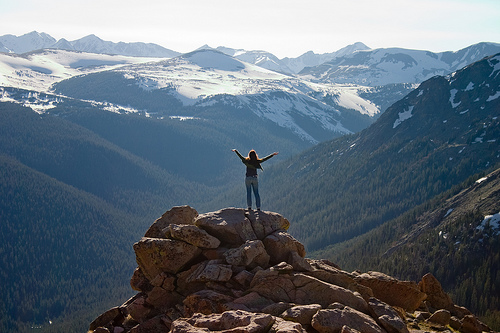
    Woman with Outstretched Arms

    “Accepting, allowing, and interacting with your life as though it is exactly as it should be, without making yourself wrong (or right) for what you discover is the way to Self-Realization.” ~Ariel Kane

    When you’re confused about what to do next, fully surrendering to the possibilities will help you see a clear path ahead.

    It all started the day I had lunch with my university friend Sarah.

    Sarah had been traveling since graduation and was full of exotic tales about life in other countries—different languages, foods, and cultures.

    What she was experiencing sounded amazing. She told me she had no plans to settle down and was, in fact, preparing to pack her bags again soon and travel to the UK.

    Several of our mutual friends were already there, and Sarah extended the invitation to me to travel with her. The idea sounded fantastic and I wanted to jump at the opportunity. I’d always been interested in travel, and this seemed like the perfect chance to have the adventure of a lifetime.

    The trouble was that I had recently embarked on my career. I was working for a reputable company on a specific project. This was work I had dreamed of pursuing while obtaining my degree, and it wasn’t an ideal time to pack up and leave.

    To compound this, I also had a strong sense of wanting to do the decent thing by my boss and my colleagues, which meant seeing the project through to completion.

    On the flipside, I was worried that if I didn’t go traveling with Sarah, I would miss my chance entirely. For weeks I was conflicted—paralyzed by confusion and completely frustrated with myself because I was totally incapable of making a decision.

    I was caught in one of those classic scenarios where you have your heart whispering in your left ear and your brain nagging in your right ear, both with opposing views.

    While leaving with Sarah sounded very tempting, I could not summon the courage to quit my job. My inner-conflict was all encompassing.

    In the end, tired of waiting for me to make up my mind, Sarah left without me.

    Over the following weeks, at every opportunity I dawdled around bookshops flipping through travel guides. I finished the work project and, as the assignment came to an end, I discovered that I had enjoyed it immensely even though at times I had been very distracted.

    I also discovered that I had a real talent for the work I was doing. As a result of my dedication and commitment, the firm rewarded me with another opportunity—a promotion and a pay rise.

    Ultimately, the extra money in my pay packet meant that I could afford to go and visit my friends, and this is eventually what I did. Down the track, I ended up enjoying the best of both opportunities, although at the time I did not know that it was going to work out that way.

    What I know now, looking back, is that by actively not making a decision about traveling versus my career, I was practicing the art of allowing.

    I sat with the confusion I felt. Even though it felt like I was really stuck, I was in fact, surrendering to the natural ebb and flow of my life and letting the next thing come to me.

    These days I try to practice the art of allowing more consciously, especially at times when I feel deeply conflicted and my head and heart are giving me different messages.

    When you’re in a state of confusion, resistance can easily set in. This causes anger, fear, panic, tension, and stress. Then, as a consequence of these emotions, we can also feel tempted to force a decision. But it is at exactly these times—when we are most uneasy—that we need to practice the art of allowing.

    Sometimes it takes real effort to do nothing and simply be in the experience. Especially because most of us want control, and we feel the need to be in charge of every aspect of our lives, especially at junctures when we perceive that our present circumstances are under the threat of change.

    But by practicing the art of allowing, we accept that change is constant. We also accept that control is an illusion. And when we slow down, relax, and simply observe what is happening in our lives, we can also sense how these things make us feel.

    We also need to have faith that our instincts (our inner-built compass) will tell us when the time is right to reach out for an opportunity. 

    When we do this, we’re truly living in the present. And we open up the scope for lasting and transformational change, secure in the knowledge that our journey is as individual as we are and that whatever comes next is meant to be.

    Woman with outstretched arms image via Shutterstock
  • How to Intentionally Embrace Change in the New Year

    How to Intentionally Embrace Change in the New Year

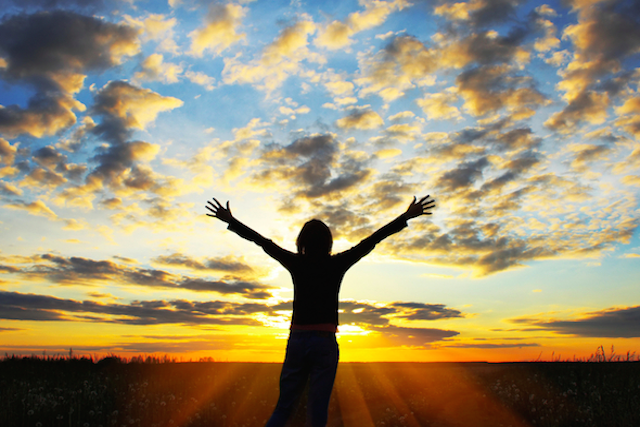
    Woman and Sunset

    “Change is inevitable. Growth is intentional.” ~Glenda Cloud

    What do you do when you come to the end of a calendar year as it approaches the start of another one? Do you get caught up in the festive season hype and then, as you roll into the new year, find it all a bit anticlimactic? Or, are you a bit like me and prefer to keep it a quieter, reflective time?

    We know that calendar time is really artificial, for true time is simply an infinite and continuous cycle of day and night, seasons, birth and death, and change.

    When I used to trek the mountains of the Himalayas, I loved the prayer wheels at the Tibetan temples. I would happily spend hours walking around the Boudhanath, spinning the prayer wheels with my hand, engrossed in a meditative state.

    It always reminded me of how change turns the wheel of time and life. Without change, life is static, stale, and limited. Without change, there isn’t growth. Like everything in nature, a flower doesn’t remain forever regardless of how beautiful it is.

    So, each year when the calendar slips into its last pages, as people rush around in a frenzy of spending, I prefer to retreat into a silent space of reflection. I write my gratitude list for the year gone and set my intentions for the year to come.

    In doing so, I get a deep sense of the energy for the coming year, then prepare my mind, body, and soul to flow with it. This has become my ritual every New Year’s Eve.

    Babies grow into children, children into adults, adults now have children of their own, and the mature become aged. New lives are born as we say goodbye to those who have passed on. Relationships end, new ones begin; some people fall in love and others out of love.

    Every year we are bestowed more gifts and joys, while also confronted with more challenges and turbulences.

    One particular year was especially tumultuous for me. Usually when I write in my Gratitude Book on New Year’s Eve, my pen won’t stop moving and I end up with pages of blessings that I’m grateful for.

    However, that one particular New Year’s Eve, I just sat there, stared at the blank page, and thought. “Wow, how do I begin?”

    Then, without thinking, my heart immediately whispered, “I am grateful for making it through this year.” And then it flowed again, “I am grateful for making through this year a wiser, more evolved and compassionate soul.”

    That was the year I nearly killed someone (random unintentional freak accident, of course), thought I had lawn-mowed my pet tortoise, saw a friend suffer through severe burns in a freak accident, ended a relationship that I thought was true love, had conflicts with my children, experienced extensive damages to my home and car from a major thunderstorm in my city, and the list went on.

    Globally, wars and riots ran rife, topped by natural disasters, like earthquakes, and human caused disasters, like major oil spills into pristine oceans. It was a year of chaos, so sitting down to reflect and journal into my Gratitude Book was most interesting.

    As the saying goes, through chaos emerges a new order.Through chaos, I saw that I have indeed grown, expanded, and matured. Through adversities, I’d learned to trust more in my true and higher reality.

    Through challenges, I’d come to turn inward and listen to the wisdom and voice of my higher self.

    Over time, change continued to sweep through, and the world shifted into renewal and recovery. So the pages of my Gratitude Book continued to fill.

    Now that I’ve come to the end of another year, again I bear gratitude. At the start of this year I’d sensed a very strong wind of change blowing through and knew I had to be ready for restructuring. Sure enough, everything regrouped itself in my life.

    Transition wasn’t easy. It was tiring, and it required trust in stepping into the unknown. It summoned my courage in welcoming the new and acceptance in letting go of what was. My kids changed, one moved out of home, another fell in love, and another stepped into a newfound life path.

    I’m grateful as I celebrate their independence, growth, and expansion into their own world, as much as I miss them. My home and divorce settlement came to a final closure. Our family home was sold and I moved into a small rental home that I love.

    My work changed, evolved, and restructured as I stepped into a new role. Overall, it was simply a year of change and transitions.

    So, in line with embarking into a new year, here are some suggestions for setting your purest intentions for moving forward into the sea of change. Incidentally, they are contained in the acronym CHANGE.

    Choice

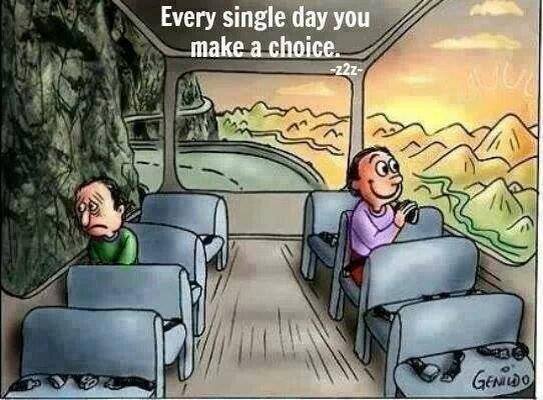
    At every point in time, and especially when confronted with imminent change, you have a choice of whether to embrace or to resist.

    Embracing change requires courage and trust because it’s always unnerving to step outside your comfort zone. But when you trust and embrace, change can bring you excitement, growth, and infinite new possibilities.

    Happiness

    Step into the New Year with the intention of choosing happiness for yourself and those around you.

    Happiness is a choice that comes from within. Regardless of your external circumstances, your perception determines your emotions.

    Choose to look on the bright side of everything; for example, ask yourself, “What can I learn from this?” Or, count your blessings with heart filled gratitude, and happiness will abound.

    Anchor

    Continue to anchor in your higher reality and wisdom, for there’s more to you than just this physical and transient existence.

    This brief life, with all its ups and downs, is merely a myriad of experiences for the growth of your soul. Staying anchored, you will ride and surf the storms and waves of life with skill and ease.

    New

    Time and change involve flow and movement. Along with these are borne new experiences, people, places, and ideas. Be open to receiving and bringing forth the new and nourishing, and let go of the old if they no longer serve you.

    Growth

    When you flow with the movement of time and change, and embrace the new while anchoring and trusting in the greater you, growth is the natural result. Like the sun enables a plant to sprout from a seed, the happiness that you soak in and project will allow you to grow and thrive.

    Emergence

    Out of that strength and solidly grounded foundation, new creations will emerge.

    You will find yourself forging new fulfilling friendships, relationships, successes, and joys. New ideas will emerge into manifestations. Imagination and dreams will become a reality. A new phase will continue and take you forward with the flow.

    What are your intentions for this New Year ahead? May you flow with the energies of change and embrace this wondrous gift of life, along with its mystery and excitement, into the unknown.

    Woman and sunset image via Shutterstock
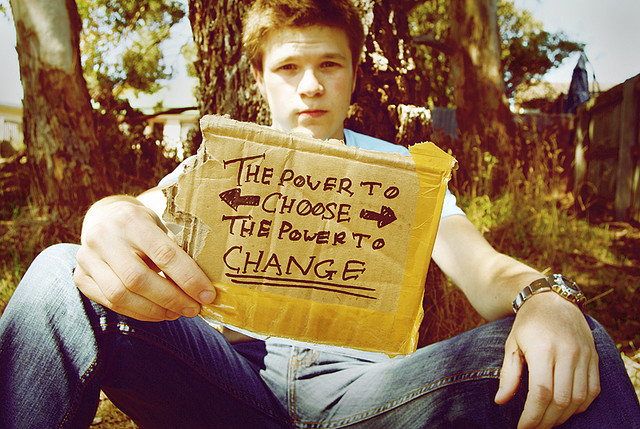
  • How to Be Sure External Factors Aren’t Affecting Your Decision

    How to Be Sure External Factors Aren’t Affecting Your Decision

    Standing at a Crossroad

    “Don’t make a permanent decision for your temporary emotion.” ~Unknown

    It was a beautiful day today. The sun shone brightly, kissing my face and warming my bones, the sky was as blue as a lover’s eyes, and there were those little fluffy clouds that seem like aimless but happy sheep floating gently in the sky.

    And my heart sang.

    I felt joy deep down in my soul.

    I smiled at bus drivers and baristas alike.

    Nothing could dent my good mood.

    Currently mulling over medium-term plans (I started living as a digital nomad two years ago), I started to consider seriously the idea of a short-term let in the English countryside, or a house-sit in some glorious old farmhouse surrounded by living green or golden fields, a cat on my lap, a dog by my feet, and chickens out back.

    Whooooah Nelly.

    I snapped back to reality with a click, the sunlight suddenly seeming harsh instead of kind, the blue of the sky austere instead of abundant, and the sheep in the sky suddenly moving with threatening purpose.

    I’ve been living in Thailand for nearly two years now, drawn there initially to experience something other than the total-work-immersion and the health issues that had previously dominated my life.

    Gradually, as I had begun to understand more the activities that brought me delight and awoke my passions, I eased into building a life there.

    I was happy to come back to the UK for periods of four to six weeks, a couple of times a year, but I wasn’t currently planning on living there. Not right now, anyway.

    It was then I was reminded how much our environment—in this case, the weather—affects our emotions and moods.

    It was easy to see how much the weather that day was influencing me. And I could remember lots of times when cold days and drizzle had made everything seem a little bit harder, a little bit more difficult to bear, a little more wearing on body and soul.

    And I wondered what other decisions I might have made in those circumstances, unconscious of the fact that the weather might have been influencing how I chose to move forward.

    Had I rejected social opportunities because my body had withdrawn into the comfort of sofa and duvet on days with biting winter winds?

    Had I declined to return a phone call from a recruiter that might have brought new possibilities because I didn’t want to take my gloves off on a cold day?

    Had I turned down a second date with a potential lover because the idea of trekking into the city to meet him in the rain felt like too much trouble?

    Alternatively, when the sun was shining, haloing those around me with a golden light, had I given people the benefit of the doubt?

    Had the energy to be kind to strangers?

    Gone out of my way to visit friends and family to share the warmth that the sun had brought me with them?

    This all led me to consider what other unseen or unheard things influence the decisions I make—decisions I think I am making independently, through my own free will.

    Environment, weather, the people I’ve just seen, the people I’m about to see, a song on the radio, the colors in the café where I’m writing out my pros and cons list.

    Buying a house is a classic example. Estate agents try to take photos of houses with a blue sky, with spring the best time to sell a house in the western hemisphere, and the sullen month of January the worst.

    There’s no question we can be influenced more than we realize by external factors. Marketing relies on this. But we can grow our awareness, and free ourselves from at least some of the stuff that isn’t really “us.”

    Here are my suggestions for how to ensure any decision you make is as much “yours” as it can be.

    1. Listen to your gut, then wait.

    This is one of the reasons I think it’s always a good idea to make a decision and then sit on it for a day or so.

    It’s taken me a long time to really hear my gut, and listen to my inner self. It’s important to listen to our instincts as part of any decision-making process, and combine that with experience, logic, and time to make the best possible decision.

    2. Consider your choice in different environments and difficult circumstances.

    Does it seem as good an idea in the dark night as it does in the bright day? In the cold as in the warm?

    In the dead of night, alone in bed I sometimes experience huge anxiety about things that in the day wouldn’t trouble me at all. I know now not to make a decision based on that anxiety alone.

    3. Get to know yourself better.

    Do you know what moods different external factors put you in? Do you love summer rain, or being cosy by the fire in autumn? Or do colorful spring flowers and snow at Christmas put you in a good mood?

    When you know what’s likely to increase your optimism or pessimism, when you’re thinking about a decision, take this into account.

    4. Track your moods.

    Moodscope.com is great for this. This engaging online tool presents you with twenty different emotions and asks you, via flipping cards, to rate yourself on each feeling every day. This can give you a very clear understanding of how you feel each day, and can help you to make your decisions accordingly.

    5. Make more of an effort.

    When you know you’re being affected negatively by outside circumstances, go out of your way to be kind not only to others, but to yourself.

    Hold off on big decisions where you can, and don’t sweat small decisions; it really doesn’t matter if you have the pasta or the risotto for your dinner. Have the other one another time.

    Reminding ourselves that our emotions affect our decision-making, and that our emotions in turn are affected by many external factors, can help us to step back and understand how we are actually making a decision.

    As with many human processes, it’s not quite as simple as it looks, but it doesn’t take much to think about what else is going on, and allow for it.

    Man at a crossroad image via Shutterstock
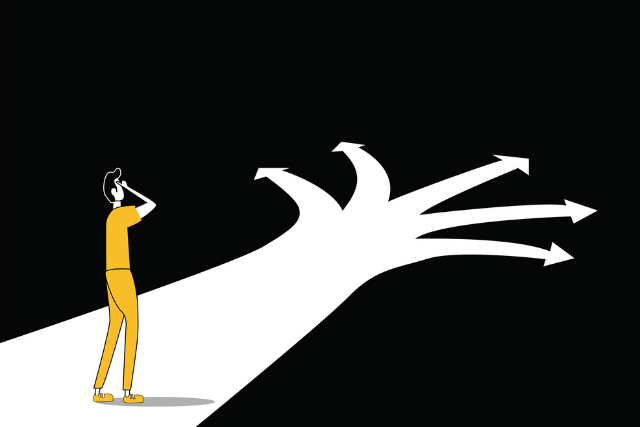
  • We Have the Power to Choose

    We Have the Power to Choose

    Man watching the sun

    “Be miserable. Or motivate yourself. Whatever has to be done, it’s always your choice.” ~Wayne Dyer

    When I was twelve years old I returned from a weekend at my aunt’s house, with my mom, to find my father dead in bed. I remember my mom’s screams causing many of our neighbors to come over to see what had happened.

    The experience shut me down. I don’t know how else to put it. My father was young: fifty-three years old. It was a huge shock to everyone.

    Apparently, he was too proud to get a pacemaker. He died of a heart attack.

    My oldest sister was on her honeymoon. She had just gotten married a week before. My other sister was away at college. When they came home they were hysterical, just like my mom and the rest of the family.

    I felt like I had to be the strong one because I was the man of the house now. I was very quiet and reserved about the whole thing. This gave the impression that I was handling it well.

    Things were not well, though. I never dealt with it in a proper way. I never received therapy or any other kind of help. I buried the experience deep down—so deep that I can barely remember him.

    I rarely even spoke about it with anyone. I may have had only a handful of conversations about it by the age of thirty.

    I thought I was okay with it, but I was damaged. (more…)

  • We Need to Give People the Freedom to Choose What’s Right for Them

    We Need to Give People the Freedom to Choose What’s Right for Them

    Flying Free

    “You must love in such a way that the other person feels free.” ~Thich Nhat Hanh

    I’ve read a lot of articles about loving without attachment and respecting other people’s choices, but it wasn’t until one day that I truly got it. And I will tell you what happened to me that day.

    My boss and I have a very special relationship. He’s the boss everyone would want to have. He appreciates me for my work and for everything I do. He thinks that I’m a great kid. Every time he has the chance, he praises my results and he shows his confidence in me and my work.

    One day, I decided to go to a job interview at another company. I wasn’t planning to leave; I only wanted to see what other companies have to offer. And I told him about it.

    His reaction was a complete surprise for me: instead of thinking of himself and offering me everything just so that I wouldn’t leave, he told me, “Andrei, go to the interview, and if you think that’s better for you, then go.”

    It was obvious for me that he wasn’t okay with me leaving. He loved my work and he wanted me to stay, but he understood something: the most important thing is for me to be happy. And that made the difference.

    He was thinking of me instead of thinking of himself. It was a breakthrough. Instead of forcing me to stay and granting everything so that I don’t leave, he offered me a choice. And choice means freedom.

    It meant that I got to compare. I got to see what others have to offer and then choose what is right for me. And of course, when I get to choose, I choose what makes me happy. So I went to the interview, realized that my current project was better than the new one, and returned to work with new forces.

    A few days after this I was at home, remembering the whole scene when my girlfriend called and told me that she was thinking of going on a trip for the weekend.

    We hadn’t seen each other for a while, and I had made some plans for us for the weekend. But she was thinking of leaving and she wanted to know what I thought about it.

    The first thing that popped into my mind when she told me this was: “No! Tell her not to go! We have plans!” But then I remembered how my boss had reacted. I wanted her to be happy.

    I wanted her to be able to choose what was right for her. I wanted her to have a choice, as I had, because I understood that choice means freedom. So I told her to go despite the fact that I was a little sad that I wouldn’t be able to be with her.

    There are two things that I learned from these experiences.

    Letting go gives people a choice.

    My boss taught me an important lesson: think about what other people want and need instead of only thinking about yourself.

    When someone wants a thing that is in contrast with what you want, there are two choices of action. The first is convincing the other to do the thing you want. This path empowers you. You will be satisfied, but the other will not necessarily be happy with it. By following this path, you take a risk by thinking that you know what is right for the other one. And you might fail.

    But there is another path: presenting your choice, but supporting the other’s choice. This path is more beautiful and more powerful because it empowers the other. You may or may not get what you want, but either way there is no way to failing.

    Choice means freedom.

    Freedom is a thing that we all desire because ultimately freedom brings happiness. Freedom means being able to compare the situations—the benefits and the drawbacks—and choosing what is best for you.

    As much as we all want to be free, we have to understand that others have the right to be free, as well.

    They say birds are a symbol of freedom. If you look at the sky and watch their flight, you will understand why. I’ve never seen a bird dragging another one around the sky. Yes, they might fly one near the other, they might eat and sleep near each other, but that’s it. If they choose to drag one another, neither of them will be able to fly and they will both fall down to the ground.

    It can sometimes be difficult to respect other people’s choices because it conflicts with our ego. But we all want the freedom to choose what is right for us. And everyone benefits when we all choose to give it to each other.

    Photo by Cornelia Kopp

  • Seconds: A Video About the Power of Each Tiny Choice

    Seconds: A Video About the Power of Each Tiny Choice

    Each day consists of 86,400 seconds, each one containing countless options, possibilities, and decisions, of which only one can emerge. 86,400 seconds. This is one of them.

  • How to Make a Difficult Decision: 30 Ideas to Help You Choose

    How to Make a Difficult Decision: 30 Ideas to Help You Choose

    “The doors we open and close each day decide the lives we live.” ~Flora Whittemore

    I have been running this website for almost two years. A few months back, I met a goal I set for myself: I eliminated most of my other freelance work and focused my energy on Tiny Buddha.

    Since I don’t require much money to live—and since my eBook has been selling regularly—I was able to transition in the spring. As a consequence, I decreased my workload dramatically.

    Now that I have more time, I realize that I need to discover a sense of purpose beyond writing and editing, and not just through hobbies and fun. Essentially, I need to find new ways to contribute to the world, regardless of the income it generates, because I crave a greater sense of connection and engagement, outside the world of the web.

    Last week, I received an offer to run a ‘tween website, working part-time hours. My first paid writing gig was for a ‘tween magazine, back in 2006. This felt meaningful to me, not just because I fulfilled the dream of seeing my byline in print, but because I understand how difficult it is to be that age.

    Many of my problems began in junior high, when I was chubby, overdeveloped, harassed, and even abused by other kids. Because that time was so traumatic for me, I revel in the opportunity to speak to girls who may be struggling to love themselves.

    This leaves me with a tough decision to make: Do I listen to the instinct that tells me to try to help young girls? Or do I listen to the instinct that tells me to stay unplugged when I’m not working on Tiny Buddha?

    Do I do what comes naturally to me—what I’ve done through various sites these last five years—and keep analyzing, advising, and helping online? Or do I step outside the world of the written word, onto a path I’ve yet to define, and see where it may lead?

    One seems to involve a lot more certainty. I’ll definitely feel fulfilled writing for girls (and the extra money couldn’t hurt). But I’ll likely also feel frustrated that I’m continuing to spend so much time alone, at my computer.

    The other revolves around a million unknowns. What’s next if it isn’t online? How do I pick one of the many ideas I have, and how can I bring it to fruition? How do I know that what I choose will work out, and if it doesn’t, that I won’t regret not going the other way?

    The answer is I don’t, can’t, and won’t. We can never know for sure when we make a decision that it’s going to pan out as we hope. All we can do is follow our strongest calling, and then trust that whatever the future holds, it will enrich our lives, one way or another.

    Since I’ve been struggling with career-related decisions recently, I turned to the Tiny Buddha Facebook page and asked the community, “How do you make a difficult decision?” I collected some of the responses that resonated with me most strongly: (more…)

  • Tiny Wisdom: On Fear-Based Decisions

    Tiny Wisdom: On Fear-Based Decisions

    “Love is what we were born with. Fear is what we learned here.” ~Marianne Williamson

    Sometimes I look at people who appear to be confident, successful, and happy and imagine that they always feel that way—that they never feel insecure or afraid, and they always operate from a place of trusting love.

    Then I remember that every person who has a pulse deals with human emotions. What confident, successful, happy people have going for them is that they feel fears, but they make decisions from a place underneath them.

    They push through discomfort, fully aware that it’s impermanent, and in the process learn, grow, and expand. They realize that whatever happened in the past is over, and what happens is the future is dependent on their willingness to act now.

    Some days I let my fear control me, feeling sure I know what bad thing is coming and determined to prevent it. On other days I remember that I am shaping the future, and I can create it in love or fear, but not both. Which do you choose today?

    Photo by jennratonmort

  • On Making Positive Choices for a Happy, Empowered Life

    On Making Positive Choices for a Happy, Empowered Life

    “Life is a choice.” ~Unknown

    I’ve recently realized that life is a never-ending stream of choices, even when you think you don’t have many options.

    Some look insignificant on their own but somehow manage to contribute to a massive whole. Others can feel overwhelming, and you don’t always realize when you make them what the consequences will be—how they’ll shape your life story.

    The biggest decision I’ve made in the past six months is to return to university and complete the MA Creative Writing course I began two years ago. It’s almost a choice I never made—a life I never had—though it leads to the future I’ve dreamed about for years.

    Good stories aren’t about people; they’re about action. They’re about what people do and what happens when they do these things.

    What we do is based upon the choices we make, whether it be in our everyday efforts to keep on top of our washing or in the extraordinary moments when we decide to take that job offer, even though friends and family don’t understand because it’s less money (but a lot more fun).

    Over a year ago my ‘action’ was to intermit my studies because I needed to get my health under control. I was hoping the decision of whether or not to return would pass me by like the summer had already done and relieve me of the burden of having to consider my options.

    I could still be sitting here now avoiding a decision. Instead, I found the strength to make a choice, and in doing so, I’ve discovered my health problems haven’t gone anywhere. They’re still there, and they’re still creating challenges I can either meet or run away from. Action not only drives us but also reveals us. (more…)

  • Stop Second-Guessing Yourself: 5 Tips to Feel at Ease with Decisions

    Stop Second-Guessing Yourself: 5 Tips to Feel at Ease with Decisions

    “Good decisions come from experience, and experience comes from bad decisions.”  ~Unknown

    A reader recently wrote to me:

    “I struggle with making decisions and always second-guess myself… I recently had to make a decision about something and after giving it a lot of thought, I decided. Now, months later, my decision is eating me up and I can’t stop thinking I made the wrong decision. So I guess my point is once you decide, how do you stop yourself from second guessing?”

    I know I’ve been there, having made a decision I not only second-guessed but wish I hadn’t made and couldn’t take back.

    I think there are two parts to each of us: who we are day to day, and who we are in our broader intentions. Second-guessing comes when the smaller part—the one that is at the effect of everything—is afraid of the greater part that’s forging a new way.

    When we make any decision, for better or for worse, we effect change. And sometimes it’s scary to be responsible for the change we effect. That’s why I love the saying. “Make a decision. And then make the decision right.” (more…)

  • The Halfhearted Yes: Why We Don’t Say No and How to Start

    The Halfhearted Yes: Why We Don’t Say No and How to Start

    I'm Free

    “A ‘No’ uttered from the deepest conviction is better than a ‘Yes’ merely uttered to please, or worse, to avoid trouble.”  ~Gandhi

    I was having dinner with a friend of mine a couple weeks ago when I asked her about a group she was considering joining. I wanted to know how it was going and what she decided.

    “You know,” she said, “I realized after the first group that I’m not that passionate about it. So, I’m not going to do it. I’d rather make my time available for something that matters more to me.”

    Aside from this being a healthy choice, it was also a very conscious and deliberate choice. She chose in the direction of her passion.

    How many of us take what is handed to us, follow what is put in front of us, or say yes to things that don’t really align with who we are or what we want in our lives?

    I’m a huge fan of the word yes. (more…)