Tag: childhood

  • Why My Abuse Is No Longer a Secret

    Why My Abuse Is No Longer a Secret

    “You own everything that happened to you. Tell your stories. If people wanted you to write warmly about them, they should have behaved better.” ~Anne Lamott

    To say I had a tough life would be a gross understatement. Growing up in a strict Catholic Italian family I endured my fair share of emotional and physical abuse. I was unloved and suffered great violence at the hands of both my parents, mostly my father.

    No one ever talked about this. On the outside, we were the ‘perfect’ family. Both my parents had decent full time jobs; Mom was heavily involved in the church and was the pillar of the community. Everyone respected and liked my parents.

    Growing Up Scared

    I spent most of my teenage years terrified of my parents. I hated them and wished I had a normal mom and dad like my friends did. I craved love, compassion, and affection. I so desperately wanted a normal life.

    I’ll admit, I wasn’t winning any “Teenager of the year” awards, but I’m sure my punishment never fit any crime I committed. Dad’s brutal force and mom’s lackadaisical attitude toward it all had me wishing I was dead. On many occasions.

    I have very clear memories of dad storming downstairs into my bedroom after an evening shift at work, ripping off my blankets, pulling me by my leg out of bed, and whipping me. He stopped when he was tired.

    I never knew when these random visits would happen. They just did.

    I feared coming home after school, I feared when they came home from work, I feared bedtime.

    Seeking Redemption

    Long after I moved out and had a child of my own, my mom became parent of the year. No one ever spoke of the abuse. It happened. It was their normal. And life went on.

    My mom finally became the mother I longed for. Dad wasn’t too far behind. Still unloving to me, he adored my child and with that, finally treated me somewhat like a human being. My parents would do anything for me and my son.

    I welcomed these new parents into my life. Loving, supportive, caring, and affectionate. Mom became my best friend. Dad became a father figure to my son. I appreciated this, as I’d separated from Julian’s father when he was just eighteen months old and we never saw him again.

    Through the Years

    As time went on I maintained a very close relationship with my parents. With my father it was mostly for my son; with my mom, it was simply because I let bygones be bygones. I forgave them both and we just moved on.

    I carried the trauma with me throughout my entire life. I spent a lot of time healing and growing. I needed to do that for me. I wasn’t the least bit interested in carrying all that heavy weight around. I had to learn to let it go. And I did.

    I let it go through writing, much to my family’s dismay.

    Finding My Voice

    I can’t pinpoint exactly when it happened, but I discovered blogging. At first I was blogging about fun Feng Shui stuff. Then I slowly slipped into personal development, and there I found my voice.

    I would share my stories and my readers would reply. They felt me. They totally got it. I wasn’t alone in my healing, and I realized that people desperately needed to hear my stories so they could heal too.

    At first I would share stories of healing from bad relationships (Lord knows I had enough of them), and then I started sharing stories on self-confidence and self-love. The more I wrote, the more impact I was having on others.

    I had found this voice that was helping people around the world, and I was more than happy to use it.

    And Then It Was Time

    I held back for the longest time on sharing my family trauma. I wasn’t sure. Should I or shouldn’t I? Will I hurt people? Will I help people? I struggled with this for years, until one day I finally put it out there.

    I wrote of the trauma, the pain, and the abuse. I poured my heart out about the lack of love and encouragement in my childhood—two things every kid deserves from their parents. I spoke of random beatings and being terrified.

    The replies and emails I received from people around the world shocked me. They thanked me for helping them forgive. They cried. They asked me how I did it and how they could let go and move forward.

    Finally, something good was coming from all this pain. I was not only healing myself, but helping others heal too. The more I wrote, the more we all healed together. And it was a beautiful thing.

    Not Everyone Shared My Enthusiasm

    I was sure, without a shadow of a doubt, that none of my family would ever read my stuff. Surely none of them were open minded enough to read self-help stuff, especially mine. They didn’t read blogs.

    They followed the news and immersed themselves in negativity and drama. They craved and hung on to misery and trauma. They’re not going to read anything from me ever. I was positive of this.

    I was wrong.

    Someone read a blog. I’m not sure who it was exactly, but I have my suspicions. A cousin perhaps. I’ll never know and at this point, it no longer matters. Someone read a blog and shared it with other members of the family.

    It was a good one. It was a Mother’s Day blog, and I went on about how my mom wasn’t always the mother of the year. How she beat me and let my dad do the same. I talked about how not all moms deserve to be honored on this special day.

    However, in my defense, I closed this piece with how my mom later became my best friend and the mom I had always longed for. No one read that part apparently.

    I didn’t become aware that my relatives had read my post until my mom’s funeral in February of 2019.

    My Final Goodbye

    Mom had been suffering with Alzheimer’s for the last fifteen years. We were waiting for her to die. We wanted her suffering to hurry up and end. (Dad had passed away five years earlier).

    I’ve been living in Guatemala for the last four years and hummed and hawed about whether or not I should return to Canada for her funeral. I had said goodbye to her when I left Canada.

    Somewhat reluctantly, I made the decision to return, be with my sisters and family, and say my final farewell to mom. And besides, I hadn’t seen most of my family in a long time. I was looking forward to catching up with them.

    That never happened.

    Being Shunned at My Mother’s Funeral

    I arrived in Canada and spent the first few days catching up with friends and two of my sisters. I was looking forward to seeing the rest of my family over the next two weeks. The day of mom’s funeral I knew I would see them all.

    Not the best place for a family reunion, but isn’t that usually the way? Weddings and funerals?

    I walked into the church and greeted a few people. Then my eldest sister walked in and brushed right past me, uttering a very brief and cold “oh, hello” as she continued to walk away. That’s odd, I thought. We’ve always been pretty close.

    Then another family member walked by without even a word. Hmmm. And then another one. I was numb. What was going on?

    We all congregated in the church for mom’s service, and the whole time I was confused and saddened by the fact that my family was shunning me. Why was this happening? Especially on this day?

    The Final Straw

    After the ceremony, we all headed to the basement of the church for fellowship. There, even more family members ignored me. I’d say hi, and they’d turn and walk away, leaving me standing with my heart broken and my jaw on the floor.

    I still didn’t know why I was being treated like this, though I had my suspicions—that someone had read a blog. And sure enough, two days later, I found out.

    My family members wanted to strangle me. They were disgusted with me. I embarrassed the family. I was a disgrace.

    This is How We Heal

    I spoke to no one after that aside from one sister. She understood.

    I found my voice and lost my family. I learned how to use my voice to help others heal, but not everyone understands this or is ready to heal. Keeping family secrets is sometimes more important.

    I long to have them back. But I realized this is also part of my healing, since it’s led me to release things and people that no longer serve me or my higher good.

    It breaks my heart into a million pieces to know that my family will choose losing a relative over healing. It frustrates me to think that people would rather stay broken, tormented, and in silence than repair what needs to be fixed.

    But I know I’ll never make them understand any of this, or grasp the concept that anger is toxic, negativity is poison, and only in love and forgiveness can we heal what hurts and move beyond the past.

    What’s Your Story?

    Too many of us keep our stories buried deep inside, afraid to share them with the world. Afraid of upsetting the apple cart. Embarrassing our families. We keep the trauma and the pain to ourselves, hiding behind secrets and drowning in shame.

    I did that for years, but when I finally released the truth I was set free.

    What’s your story? What family secrets and lies are you keeping buried deep inside that are tormenting your soul? It’s in talking about them and sharing our stories that we can heal from the pain.

    It is also in sharing our stories of pain and recovery that we can help others find healing and freedom too. Generational curses can end when we speak up and speak out.

    Always remember, the truth will set you free.

    My Final Goodbye

    My time with my family has come to an end. They are no longer part of my life (aside from a few). My heart is broken and I know without a doubt, this healing will take a bit longer, but it’s necessary.

    I know how hard it is to forgive. I also know that some people will never choose forgiveness and would much rather live with anger and hate.

    My wish and sincere hope is that one day, they will see that forgiveness will set them free.
  • How Unhealed Childhood Wounds Wreak Havoc in Our Adult Lives

    How Unhealed Childhood Wounds Wreak Havoc in Our Adult Lives

    “The emotional wounds and negative patterns of childhood often manifest as mental conflicts, emotional drama, and unexplained pains in adulthood.” ~Unknown

    I am a firm believer in making the unconscious conscious. We cannot influence what we don’t know about. We cannot fix when we don’t know what’s wrong.

    I made many choices in my life that I wouldn’t have made had I recognized the unconscious motivation behind them, based on my childhood conditioning.

    In the past, I beat myself up over my decisions countless times. Now I feel that I needed to make these choices and have these experiences so that the consequences would help me become aware of what I wasn’t aware of. Maybe, after all, that was the exact way it had to be.

    In any case, I am now hugely aware of how we, unbeknownst to us, negatively impact our own lives.

    As children, we form unconscious beliefs that motivate our choices, and come up with strategies for keeping ourselves safe. They’re usually effective for us as children; as adults, however, applying our childhood strategies can cause drama, distress, and damage. They simply no longer work. Instead, they wreak havoc in our lives.

    One of my particular childhood wounds was that I felt alone. I felt too scared to talk to anyone in my family about my fears or my feelings. It didn’t seem like that was something anyone else did, and so I stayed quiet. There were times I feared I could no longer bear the crushing loneliness and would just die without anyone noticing.

    Sometimes the feeling of loneliness would strangle and threaten to suffocate me. I remember trying to hide my fear and panic. I remember screaming into my pillow late at night trying not to wake anyone. It was then that I decided that I never wanted anyone else to feel like me. This pain, I decided, was too much to bear, and I did not wish it on anyone.

    As an adult, I sought out, whom I perceived as, people in need. When I saw someone being excluded, I’d be by their side even if it meant that I would miss out in some way. I’d sit with them, talk to them, be with them. I knew nothing about rescuing in those days. It just felt like the right thing to do: see someone alone and be with them so they wouldn’t feel lonely or excluded.

    Looking back now, I was clearly trying to heal my childhood wound through other people. I tried to give them what I wish I’d had when I was younger: someone kind, encouraging, and supportive by my side. I tried to prevent them from feeling lonely. This isn’t necessarily a bad thing—it’s kind to recognize others in pain and try to be there for them.

    The problem with my strategy was that I chose people who were alone for a reason: they behaved badly and no one wanted to be around them. I chose people healthy people would not choose to be with. People who treated others poorly and did not respect themselves, or anyone else for that matter. That included me.

    And so I suffered. I suffered because I chose badly for myself. And I chose badly for myself because I followed unconscious motivations. I obediently followed my conditioning. I followed the rules I came up with as a child, but playing by those rules doesn’t work out very well in adulthood.

    I never understood why I suffered. I couldn’t see that I had actively welcomed people into my life who simply were not good for me. It didn’t matter where I went or what I changed; for one reason or another, I’d always end up in the same kind of cycle, the same difficult situation.

    At one point I realized that I was the common denominator. It then still took me years to figure out what was going on.

    Eventually, my increasing self-awareness moved me from my passive victim position into a proactive role of empowered creator. Life has never been the same since. Thankfully. But it wasn’t easy.

    I had to look deep within and see truths about myself that were, at first, difficult to bear. But once I was willing to face them and feel the harshness of the reality, the truth set me free. It no longer made sense to play by rules I had long outgrown. I didn’t realize that I had become the adult I had always craved as a child. But I was not responsible for rescuing other adults—that was their job.

    I have since witnessed the same issue with everyone I meet and work with. One particular person, who had endured terrible abuse growing up, was constantly giving people the protection he had craved but never received as a child. He gave what he did not receive. And yet, in his adult life it caused nothing but heartache for him.

    When he saw, what he perceived as, an injustice like someone being rude to someone else or a driver driving without consideration for others, he intervened. Unfortunately, he often got it wrong and most people didn’t want his input, which left him feeling rejected and led to him becoming verbally aggressive. Eventually, his ‘helping’—his anger and boundary crossing—landed him in prison.

    He was not a bad person—far from it. He was simply run by his unconscious motivation to save his younger self. He projected and displaced this onto other people who did not need saving and never asked for his help. But his conditioning won every time and in the process wrecked his life.

    What ends this cycle is awareness, understanding, and compassion.

    We must learn to look at the consequences of our actions or inactions and then dig deep. We must ask ourselves: What patterns do I keep repeating? What must I believe about myself, others, and life in order to act this way? Why do I want what I want and why do I do what I do? And what would I do differently if I stopped acting on my childhood conditioning?

    Beliefs fuel all of our choices. When we don’t like the consequences of our actions, we must turn inward to shine a light onto the unhelpful unconscious beliefs we formed as children. Only awareness can help us find and soothe them. Only understanding can help us make sense of them. And only compassion can help us forgive ourselves for the patterns we unknowingly perpetuated.

    We didn’t know what we didn’t know. We couldn’t have made any different choices. But once we begin to see and understand how our minds work and how our conditioning drives everything we do, we grow more powerful than we ever thought possible.

    It is then that we are able to make healthier, wiser, and more life-enhancing choices for ourselves. We can then break the cycles that previously kept us stuck in unfulfilling and often harmful situations and relationships.

    There is always a different choice. We just have to begin to see it.

  • How to Break Painful Relationship Patterns

    How to Break Painful Relationship Patterns

    “Until you heal your past, your life patterns and relationships will continue to be the same; it’s just the faces that change.” ~Unknown

    First of all: honey, you are not broken. We are all works in process. There is nothing inherently wrong with you. We all end up in a loop here and there. Sometimes it’s because we haven’t healed pain from the past. And sometimes it’s because we’ve healed our pain but still hold on to past habits. When we do this, past habits will promote the replaying of past events and, therefore, the pain will return.

    This happens at a psychological and practical level. The type of beliefs we have about reality will shape the way we perceive it, react to it, and interpret it. This is a neurological reality that has been proven scientifically: the brain creates concepts and finds ways to validate them.

    This is the way prejudice is built, but is also the way you expect sweetness and tartness out of an apple.

    The moment you read the word “apple,” you already started generating the necessary enzymes to digest one and enjoy its flavor. You already started reacting to something that isn’t even here, based on the concepts (beliefs) the brain (mind) has constructed on it according to previous experiences.

    This is one of the many ways science has validated that “life is an illusion.” This is great news. It means we can choose, in a way, what kind of illusion to believe in and, consequently, co-create in our lives.

    Past experiences—especially our childhood experiences—inevitably shape this concept-system in the brain. They create what we refer to as a value system in the mind. These, in turn, determine our thinking habits. The thinking habits will define how we speak and act.

    In other words, the way we perceive apples will determine how we react to them or even the idea of them.

    If you believe that you should expect sweetness out of apples, you will seek apples that provide sweetness, and you will react by preparing to enjoy the sweetness, which will allow you to do so at a higher level than if your body didn’t salivate and prep your taste buds for it. By expecting sweetness, you get to experience it with heightened senses when you get it.

    This idea also applies to unpleasant concepts. This is also a neurological reality and was designed as a survival mechanism.

    Go get your ears pierced and you will see what I mean. When you get ears pierced the first one is barely perceivable. However, the next one hurts quite a bit. Why? Because the brain was expecting pain; therefore, it reacted to the second experience with a concept of pain.

    You think, “This will hurt,” and, therefore, you experience more pain. The tool is still the same. The pressure did not change. Reality is the same as with the first one; however, your brain constructs a concept of pain, so that’s what you get.

    Your earlobes will heal within six weeks. But when you expect unpleasantness out of other life experiences, that’s what you will repeatedly get. In order to produce change, we must let go of a value system that constructs realities of pain and difficulty. This truth is evident in relationship dynamics as well.

    The Loop: What We Think About Relationships Defines How We Experience Them

    I want to make a disclosure about what you are about to read: taking responsibility for your thinking habits and how those affect what you expect from relationships does not mean that anything is your “fault.” It also should not be used to justify abuse.

    Abuse is not justifiable. However, as a survivor of abuse, I can say from experience that it’s actually empowering to realize how much is in my power. I can change how I think, how I talk, how I perceive situations, and how I react to them. I can co-create my relationships.

    I happened to grow up in a culture of fear. I grew up thinking work had to be hard, people had to be in a bad mood when they got home, marriages are meant to be hard, and you should not expect the best, ever; you needed to expect the worst.

    I was married for almost eight years and got divorced a year ago. Since then, I’ve found myself making similar mistakes in the way I seek partners, and all of my relationships have ended up leaving me drained and resentful. But why? I was doing what I thought was supposed to be done: I was being of service in a relationship where one person needed to be saved and I could be their savior.

    There are so many memes out there with the phrase “You saved me” phrase on them. It’s supposed to be romantic! Well, that did not go so well for me. It bred unhealthy and unbalanced relationships, and an environment of codependence that led to pain for both people.

    So I went on a quest for my own healing and discovered why I was constantly trying to save the people I date (more on this later). Finally, I was ready to get out there again. But this time, there was no saving involved. Because I was ready for a healthy relationship. I was at peace.

    I went on a first date with a wonderful man I’d met on a dating app. Before leaving, I called a friend to share how excited I was. She suggested that I calm down, keep “low expectations,” and keep my guard up. I decided not to follow that advice. It comes from a place of good intentions, but it’s really a chain of fear.

    On a vibrational level, to act that way would not allow me to attract my highest good. On a practical level, it would set me up to not look for the best in this person, which would produce a reality where I would be unable to see it even if it hit me in the face.

    I went in there with the same attitude I approach everything currently: at peace. No negative or positive expectations. Just being in the present moment.

    I ended up having the best date of my entire life and building a deep connection with my now-partner.

    We cheat ourselves out of wonder if we tiptoe around in life afraid to get hurt. We must be strong and self-confident to allow ourselves to expect goodness. I did not get here right away. It does take practice to make progress. But it really doesn’t have to be considered an “impossible” in our brains.

    How to Hijack Your Way Out of the Loop and Start Flowing Upward!

    These are some of the things that helped me heal and rewire my brain before I finally downloaded the dating app, posted a cute picture of myself, and hoped only for the best.

    1. Observe your thoughts. What are they based on? Which beliefs no longer serve you?

    A tool that helped me greatly in this step was John Bradshaw’s book Home Coming: Reclaiming and Championing Your Inner Child, which includes exercises to heal past experiences. This releases the brain to freely create new constructs and prevents us from staying on a loop.

    I was having trouble as an adult voicing my needs. I would be terrified and would be physically unable to communicate what I needed.

    During my work with myself I discovered that when I was four years old, I was so terrified of being physically and emotionally abused by my caregivers that when I was hungry, I would not dare voice that need. I have memories of hiding in a cabinet eating raw rice from a bag in order to feed myself without being a “bad girl” and bothering my caregivers.

    I recognized then that this was why I fell into a pattern of focusing on my partners’ needs and trying to save them: I was expecting that it would be painful if I voiced what I needed.

    So, I recognized the source of the problem, now what?

    2. Release the vibrational memory of emotional baggage.

    Once you recognize the roots it will be time to release their emotional baggage. That way you won’t be triggered by old stuff in your new relationship. In other words, you won’t fall into the same old patterns because you’re driven by emotions from the past.

    There are many ways to release emotional baggage, including meditation, Emotional Freedom Technique (EFT) tapping, Mental Emotional Release (MER) therapy, and journaling. Explore, experiment, and find what works for you.

    I went to an Emotional Release Body Balance therapy specialist. It’s the best investment I’d ever made in my life.

    I also engaged in regular cleansing rituals with sage at home.

    Finally, I used release affirmations and prayers daily. One that especially worked for me was a Unity prayer that states: “I release from me all energies that are contrary to what I am creating for myself. I cut them off and release them to the Universe to transform into beneficial forms of energy. I now fill myself with love, peace, and perfect health.”

    Okay, I am no longer controlled by emotions from my painful past, what’s next?

    3. Learn new skills.

    This is the ongoing step. It requires our willingness to learn new skills. New thoughts. New ways of communicating, new brain constructs about relationships, and new ways of having faith in ourselves and others. In my case, this meant learn to voice my needs instead of stifling myself in fear.

    To accomplish this, I attended virtual classes. I enrolled in a communication workshop and practiced those skills. It was just like learning how to read: practice, review, assess, practice again. You will need support here. Someone to practice with. I do so with my best friend. We exchange notes and debrief with one another.

    The skills you need to learn will depend on what you ascertained about your beliefs and expectations and what pattern you fell into as a result of them. It doesn’t matter if you attend classes, read books, practice with friends, or join a support group. What matters is that you do something to learn and strengthen the skills that will help you break your pattern.

    But… why?!

    Now, why go through all this? Baby, ‘cause you are worth it! Plus, there is no magical soul mate in the Universe who will heal your low self-worth concepts and create positive expectations of healthy relationships in your brain.

    You either do the work you need to complete on yourself before you get out there, or you will be stuck in an ongoing loop of pain, with a list of exes that turn out the be the same dog with a different collar, calling them “toxic” instead of owning your own need for growth.

    I’m rooting for you. I bless your journey. The best is already within you. What you want in a partner is out there looking for you as well. May you find each other at the right time and may you have the skills to enjoy your union. Ashe!*

    *Ashe is a West African philosophical concept through which the Yoruba of Nigeria conceive the power to make things happen and produce change.

  • How I’m Healing the Vulnerable, Rejected Kid Inside Me

    How I’m Healing the Vulnerable, Rejected Kid Inside Me

    “In case no one told you today:
 You’re beautiful. You’re loved. You’re needed. You’re alive for a reason. 
You’re stronger than you think. You’re going to get through this. 
I’m glad you’re alive. Don’t give up.” ~Unknown

    I was fourteen years old and it was a holiday of firsts: my first holiday away from my family with my school and my first holiday abroad, where I had my first real crush.

    For the two weeks I was away, I was caught up in a flirtation with a boy from one of the other schools. I had to pinch myself when he said yes after I’d struck up the courage to ask if he would meet me at the disco on the last night.

    The disco was everything I wanted it to be; we laughed, we danced, and I had my first kiss. If there is such thing as cloud nine, that’s where I woke the next morning. Still in a romantic haze (well, as romantic as a fourteen-year-old can get), I went to wave off the boy I’d begun to think of as my “Prince Charming” for what would be our last goodbye.

    But the fairy tale romance didn’t work out the way it had played out in my fourteen-year-old imagination. As I walked up expecting an embrace, he didn’t even want to make eye contact, then he turned his back on me.

    I’ll never forget the feeling of rejection. It was like my whole being was blocked off and cast aside.

    Still hoping for that dream goodbye, I waited until he got on the bus, thinking maybe I had been mistaken. That’s when it happened: surrounded by his friends, looking through the window, he was pointing at me, pretending to stick his fingers down his throat, implying being sick, and making gestures about my weight.

    “Prince Charming” had actually led me on as a bet, as a joke to his friends. I was the joke. I don’t know how, but somewhere inside I had the strength to keep my tears in, probably because I didn’t want to deal with the humiliation of what had just happened in front of everyone (including my friends).

    Twenty-one years on, and for as long as I can remember, when I recall the experience I feel the exact pain—the feeling of rejection and not feeling good enough—as I did at that very moment.

    That, right there, was the beginning of my low self-esteem, which later manifested into an eating disorder, anxiety, and being in toxic and abusive relationships. I accepted physical, emotional, and sexual abuse because I didn’t want to feel the feeling of rejection again.

    It was only recently, when I retold the story to my therapist, that I realized what a life-defining moment it had actually been, and recognized the narrative I had given myself.

    As I began recalling the experience, I started “When I was fat, ugly, and spotty I had this experience… No wonder he didn’t like me.” There it was: that one life-defining moment had played out a narrative that all my being wasn’t good enough. As a result, I sought acceptance and approval from others, and accepted their opinions of me as my truth.

    As I’ve started to process not only what happened but also the huge impact it’s had on my life, these are the things I have learned and what has helped me to begin to heal:

    1. We are good enough, and what really matters is how we feel about ourselves.

    At first I found it difficult, but I had to start believing that I was lovable, good enough, and that the only opinion of me that really mattered was my own. As I began practicing telling myself “I love you,” my whole body would tense, and I’d feel wrong for saying it. As I kept practicing, I slowly began to realize that I could love myself. I even had a small ceremony sealing my commitment to myself!

    Having struggled with self-love for nearly thirty years, I found it easy to slip into seeking approval from others at times. On the days I felt weak I looked at my commitment ring as a reminder of my love and acceptance for myself. On these days I gave myself the permission to feel whatever emotion I needed to feel.

    I’ve learned that we are each the one person we are guaranteed to wake up with for the rest of our lives, so we need to make ourselves our main priority. Instead of putting others on a pedestal and seeking their approval, we need to instead change our hierarchy of love so that we’re sitting at the top.

    We deserve love, but that love needs to begin within us.

    2. What would your present self like to say to the hurt person from long ago?

    As I sat with the pain of my fourteen-year-old self, I had an overwhelming urge to hold myself tight, providing a force field of safety where no one could hurt me.

    As the tears began to flow, I told myself how beautiful I was compared to the boy who had ridiculed me; any person who feels the need to humiliate a person for a joke is not deserving of my love or respect.

    As I stayed with the moment I felt every emotion I could feel—sadness, fear, anger, and then, just as the feelings flooded through me, the weight of the emotions I had held for so many years began to dissolve.

    Talking to our vulnerable self may seem a bit weird at first, I get it, but it’s worked for me. By going back in our minds and being there for our vulnerable younger self, it’s like having a superhero swoop in to protect us, only even more empowering because we are the superhero, minus the spandex and cape.

    No matter what has happened in our pasts, we have the opportunity to give ourselves the wisdom and words of hope we wish we had heard at the time. If it’s difficult to do this, think about what you would say to a best friend if they had a similar experience. We’re often much more compassionate toward our friends, so try to see yourself in that same loving light.

    3. Where has the need for validation from others come from?

    Having committed to love and accept myself, I knew I owed it to myself to go deeper to work out why I had relied so much on others for approval.

    My reflections led me to think of my upbringing, growing up with parents affected by alcoholism. Following violent outbursts I felt I was to blame for what had happened; I felt that I deserved the abuse. In fear of further violent outbursts I began people-pleasing and seeking approval from others in order to feel safe. At my core I felt unlovable.

    I then realized that when the fourteen-year-old boy had ridiculed me it had only reinforced how I had felt inside, and made me further believe that I was unlovable. I was then able to look at how I had acted and behaved from then onward, reinforcing those core beliefs.

    I realized I had accepted poor behavior and abuse from others because I felt I “deserved it.” I also engaged in self-sabotaging behaviors in the form of an eating disorder and drinking to excess.

    Delving deep inside may not be an easy task, and it may be something that we put off, or don’t do at all. We may be connecting to a part of ourselves that we may have kept hidden for years, even decades, for fear of being rejected. But, when we have the ability to do this important work, we are finally giving that vulnerable part of ourselves a voice and an opportunity to say what it needs to heal and finally get its needs met.

    4. Nourish, nourish, nourish.

    For close to three decades I had hidden that vulnerable part of myself and turned to my eating disorder for comfort, believing that others would reject me for being fat and ugly if I let it go. I now know I need to connect to the part of myself that has been abandoned for so long. I need to nourish it, and give it the love it has deserved all this time.

    While hard at first, when I’ve eaten, I’ve reminded myself how the food will nourish me. When I’ve exercised, I’ve remembered how the exercise is nourishing my body. When I’ve sat in meditation, I’ve reflected on how good it has felt to nourish my soul.

    These small acts of kindness have already had a positive impact. I haven’t found the need to emotionally eat or purge. I have more motivation, as I’m doing things from a compassionate place of self-love. I am also finally able to look in the mirror and utter the words “I am enough” and “I love myself” (and mean it).

    No matter what happened to us in the past, we have the opportunity to rewrite our narrative for our future. We have the opportunity to love and accept ourselves as a whole, including the vulnerable parts that we may have hidden as a way of self-preservation.

    With each day we begin to meet our own physical, emotional, and spiritual needs the layers of self-loathing will be replaced with self-love and acceptance.

    Be kind to yourself. xx

  • How I Overcame Childhood Emotional Neglect and Learned to Meet My Needs

    How I Overcame Childhood Emotional Neglect and Learned to Meet My Needs

    “In order to move on, you must understand why you felt what you did and why you no longer need to feel it.” ~Mitch Albom

    “Your feelings are valid,” said my life coach during one of our sessions, as we were working on an issue I had with my parents.

    I had to do a double take. My feelings are valid? She actually accepts them as they are?

    Eventually it started to dawn on me: My parents never validated my feelings. This sudden revelation earlier this year threw me into a dark period of my life.

    When I was growing up, my parents criticized me for being “overly emotional” and “too sensitive,” and I never felt they truly accepted me.

    My whole family shied away from expressing emotions, so I learned not to express or talk about my emotions either. I felt deeply disconnected in romantic relationships and often didn’t want to depend on others for help. Something felt completely off in my life, but I just couldn’t put my finger on what.

    It wasn’t until I did more research and came across the term “childhood emotional neglect,” coined by Dr. Jonice Webb, that I started to fully understand my situation.

    Childhood emotional neglect, or CEN, refers to a parent’s failure to respond to their child’s emotional needs.

    Dr. Jonice explains that CEN is an act of omission—or something that is silent, missing, and not visible—that goes on in the background of a child’s upbringing. In fact, most parents have good intentions and often provide for their child’s material needs but are emotionally unavailable because they were neglected themselves—thus, resulting in a cycle of not being able to express emotions or respond to their child’s feelings.

    So how do you know if you’ve experienced CEN? In Dr. Jonice’s CEN questionnaire, she asks questions like:

    • Do you sometimes feel like you don’t belong with your family and friends?
    • Do you have trouble knowing what you’re feeling?
    • Do you have trouble identifying your strengths and weaknesses?
    • Do you at times feel empty inside?
    • Do you have friends or family members who complain that you are aloof or distant?

    The more questions you answer “yes” to, the more likely you have been affected by CEN in those areas of your life.

    After taking the CEN questionnaire and reading more about it, I realized that it described my situation perfectly.

    Although I come from an Asian background that is generally known for not being expressive, I don’t want to live my life feeling wholly disconnected from myself and my emotions. But for a long time I wasn’t able to change this. It took me spiraling headfirst into anxiety and depression to find the courage to dig myself out of that proverbial black hole and fight back.

    I started going for counseling and received more validation that my feelings and emotions should be unconditionally accepted, and that it was okay to express them to others. I learned, through role-playing exercises, how to communicate my feelings properly, without feeling ashamed for having them.

    This continued to reinforce a new belief in me: that my feelings are valid and important, and so am I.

    As I went through this inner discovery, I learned a few other things that have helped me recover from the effects of CEN.

    1. I deserve self-forgiveness and self-compassion.

    Because children and adults affected by CEN are often shamed for their feelings, it is important for them to learn how to self-soothe and develop compassion for themselves.

    While I was going through my depression, I recognized that I was perpetuating the same behavior by shaming and guilting myself for my thoughts about my parents. I also blamed myself for causing my own pain all this time.

    It took much awareness to notice these negative thought patterns and consciously replace them with more positive ones. Now, I choose to be kind to myself when I’m struggling. I validate my own feelings in the way I wish my parents once did.

    2. My needs are important.

    In addition to accepting my emotional needs, I realized that all of my needs—physical, mental, and spiritual—are important. To ensure I could better honor them, I made a list of my varied needs and now use this as a guide on how to live my life consciously.

    I also learned how to communicate effectively when I need to stand up for myself instead of hiding from or running away from difficult situations. I learned that emotions are neither good nor bad; they’re just messages to inform me as I go about my daily life.

    For example, I don’t need to feel guilty about feeling angry. Anger is just a sign there’s something I need to address, like a boundary violation or perhaps a miscommunication.

    3. It’s okay to put my needs first.

    If your parents neglected your needs when you were younger, you may think that they are not a top priority. In my case, it took a lot of relearning, and I often had to stop and ask myself, in relationships or work situations, am I not putting myself first?

    I had to be careful to not martyr myself by agreeing to obligations, as this would lead to resentment and often, passive-aggressive behavior. I had to seriously consider whether I was actually saying yes to something because I wanted to or just agreeing because I wanted to please others.

    4. I need to regularly tune into my emotions.

    I use a simple body scan exercise every day that helps me recognize what I’m feeling. I listen to my body, and if any emotions or tension come up, I write this down, investigate what this really means, and see if I can find a way to meet my own emotional needs.

    For example, if I’m sad or angry, I ask myself: How can I tend to those emotions myself? What do I need to accept, change, or address? It’s like do-it-yourself parenting in a way.

    Slowly but surely, through the exercises above and counseling, I’ve become more conscious of my needs and emotions. I’ve started feeling more connected to myself, and I’ve opened up to other people. I now feel much freer and better able to accept myself and my emotions, and I find it easier to relate to others.

    Often, the biggest challenge for those who’ve been affected by childhood emotional neglect is recognizing they’ve been subjected to it, since many people don’t even recognize how their childhood affected them.

    When you have more awareness of your own situation, you can easily implement the above tips and get help from a professional to learn how to re-parent yourself, and also ensure you don’t perpetuate this unhealthy cycle with your own kids.

  • The Importance of Finding and Standing in Our Truth

    The Importance of Finding and Standing in Our Truth

    “What I know for sure is that you feel real joy in direct proportion to how connected you are to living your truth.” ~Oprah Winfrey

    If we cannot live in and from our truth, then we cannot be authentic. The process of self- actualization is not striving to become the person we are supposed to be. It is removing what is not true for or about us so that we can be the person that we already are.

    The hardest part of living in my truth was coming to understand and accept that it didn’t matter how anyone else experienced my childhood and my life but myself. That includes my father, mother, and three siblings. It also didn’t matter how others were affected or not. For our recovery only our truth matters

    Why is standing in our truth so important? It is impossible to build a solid life on a foundation of untruths, lies, denial, fabrications, and misinterpretations.

    Many of us have built our lives according to what we were taught and what we gleaned from a childhood spent in dysfunctional homes. We were asked to play a role that served our dysfunctional family system and not ourselves. We learned not to question the status quo, to follow unwritten rules, to live in denial and fantasy.

    Growing up I thought my family was fine; everyone else was messed up. I thought everyone’s mother drank themselves into a stupor on a daily basis and everyone’s father had become a ghost. Neither of my parents was available for support or counsel.

    I was no good, according to my father’s constant criticism, and would never amount to anything. I was a good football player and I would come off the field feeling I’d played a good game. That was until I reached my father and all he wanted to do was to talk about the block I missed or the tackle I didn’t make.

    Slowly, I stopped to try to impress my father, and eventually I stopped trying anything at all. Then I found drugs and alcohol during the summer between ninth and tenth grade. 

    I fell in love with partying and cared little for anything else. I quit football immediately and later quit school altogether. I was a sixteen-year-old boy making life decisions by himself due to his parents’ dysfunction.

    Little did I know that no one looks favorably at partying skills, and they get you nowhere in life. It took me thirteen years to figure that out, after which I went to rehab and have been clean ever since.

    I don’t think that I lost myself; it’s more like I never had myself. I was just pieces of those around me. I had tried so hard to be who everyone wanted me to be that I left myself behind.

    “…human beings universally abandon themselves for five major reasons: for someone’s love, for someone’s acceptance and approval, to keep the peace, to maintain balance, or to stay in the state of harmony. When we abandon ourselves for someone’s love, pretending to be other than who we are in order to get someone’s love, acceptance, or approval, it is a form of self-abandonment.”  Angeles Arrien Ph.D., The Four-Fold Way 

    I had spent my life being who others wanted me to be—who I had to be to get by, to be safe, to fit in, to not make waves. I no longer knew who I was, who I wanted to be, what I liked, and what I believed. I had been a chameleon for so long and had shape-shifted so many times that I didn’t know who I was.

    This never hit me as hard as when I was a new member of an Adult Child of an Alcoholic therapy group. One of the older members confronted me during our check-ins. He said, “I don’t care what your sponsor or father thinks or what anyone else thinks; I want to know what you think.”

    In working with that statement I came to realize that I didn’t have many original thoughts or beliefs. That I had let other people and events decide who I was for me.

    “What you live with you learn, what you learn you practice, what you practice you become, and what you become has consequences.” ~Earnie Larson, a pioneer in the field of recovery from addictive behaviors 

    It is devastating when you realize that you are inauthentic. That in some ways who you are and what you present to the people and the world around you is a lie. On the other hand, this awareness is also a blessing, because without awareness there can be no change.

    I realized that I would not be able to find my truth while being subjected to the influence of my family. That I had to spend time away from them to do the work needed. That doesn’t mean that I had nothing to do with them. I just kept my time with family members short and superficial.

    I also began to spend time with myself contemplating and writing in my journal. I began to question my beliefs, understandings, and positions.

    John Bradshaw talks about coming to realize that the thoughts we are thinking aren’t our own. That it is someone else’s voice in our head and we need to determine whose. For me, I came to realize that so much of the self-critical thoughts were actually criticisms my father had of me that I had chosen to own.

    In recovery, we say that “everything that we know is up for revision, especially what we know to be true.” In my own search I was so confused and uncertain of my truth that I had to start with discarding what I knew was not true—the things my father had told me, for example. The things that I was unsure of, I had to try on and drive around the block for a while.

    Today I am aware that my search for the truth is a spiritual endeavor, which includes prayer, meditation, and contemplation. My hope and prayers are that all who read this will strive to find and live in and from their truth.

  • Why I No Longer Believe There’s Something Wrong with Me

    Why I No Longer Believe There’s Something Wrong with Me

    Our thoughts create our beliefs, meaning if you think about yourself a certain way for a long enough period of time you will ultimately believe it.” ~Anonymous

    You’re ugly. You’re stupid. You’re a loser.

    Imagine thinking this way about yourself every day. No exaggeration. That was me.

    When a girl didn’t want to go on a second date with me, I told myself I was ugly. When I didn’t know what someone was talking about, I told myself I was stupid. When my Instagram post only received two likes, I told myself I was loser.

    I spoon-fed myself toxic thoughts like these on a daily basis for years. And what’s worse is I believed them.

    But why? Where do these toxic thoughts and beliefs even come from? Well, for most of us they come from our childhoods, and they are largely based on experiences with our caregivers.

    My belief system (which fuels those not-so-nice thoughts listed above) was formed by the tragic death of my mother when I was three-and-a-half years old and by my rageaholic cocaine-addict father. I internalized Mom’s death and Dad’s crazy behavior (trust me, it was bad) the only way I knew how to: I thought I was the problem.

    You see, my dad never sat me down and apologized for bursting into my room in the middle of the night high on cocaine and torturing me. He never apologized for not allowing me to celebrate my birthdays. He never apologized for making me get in front of my soccer team and tell them that I was a bad boy and couldn’t play in that week’s game.

    Since he never apologized to me, my growing little mind took it personally and figured I must be the problem. I thought I deserved to be punished and as such, a negative thought pattern was born.

    Like a kid at school writing on a chalkboard because he did something wrong, my thoughts wrote in my mind over and over again: I did something wrong. I did something wrong.

    This consistent negative self-talk eventually turned into a core belief: I am wrong. I am wrong.  

    Imagine growing up believing that your very existence is wrong. That was me. I was hard-wired by my parents to believe this. It was like being sentenced for a crime that I didn’t commit.

    As an adult I actively looked for validation in other people as a result of this belief. I became a people-pleaser, a yes man, a guy that would do anything for you to like me. Please like me, please tell me I’m okay.

    If you liked me, I felt less broken, but one person liking me was never enough. If I was in a room with 100 people and all of them but one liked me I would worry and fret, wondering what I had done to upset that one person.

    I also thought I had to be perfect in every area of my life. My hair had to be perfect. My clothes had to be perfect.

    I had to say the right things. Do the right things. Be the right thing.

    I also used each failed attempt for your validation as proof that I was broken. See!

    I would go to bed at night saying I was done with that kind of behavior, yet I would wake up in the morning and start it all over again. It was like the movie Groundhog Day. I was living the same day over and over again, and I couldn’t stop.

    I hit what I’ll call my rock bottom eight years ago when I was thirty-seven-years old. I hated myself and the life I had created and desperately wanted change.

    But how? How do we let go of deeply rooted false beliefs that no longer serve us? The same way we formed them.

    You begin by detaching from the individual thoughts that reinforce the negative belief, then you let go of the belief all together. I’ve heard them called illusions, false beliefs, and even lies. It took time for me to believe these lies and it took time for me to undo them.

    Henry David Thoreau said, “As a single footstep will not make a path on the earth, so a single thought will not make a pathway in the mind. To make a deep physical path, we walk again and again. To make a deep mental path, we must think over and over the kind of thoughts we wish to dominate our lives.”

    In order to let go of false beliefs, we have to practice observing our thoughts and recognize when we are acting on old stories about our worth. By repeatedly choosing not to get caught up in the old stories, we can begin to experience the world in a new way.

    You don’t go to the gym once and suddenly you’re in the best shape of your life. No, you go five to six times a week, eat healthy, and get plenty of rest. And you do this over and over again.

    The same goes for our minds. The more we work toward mindfulness and self-kindness, the quicker we will default to it. When you catch yourself having a negative thought, recognize that you don’t have to get attached to it and choose to let it pass. If you’re having trouble letting it go, tell yourself a new, more empowering story.

    And above all else, just remember, it had nothing to do with you. You did nothing wrong. You are not flawed.

    I didn’t commit a crime. I just absorbed the information given to me the only way my eight-year-old mind knew how to.

    So where do we start? It’s different for all of us, but if you’re reading this and relating to any of it then that in and of itself is a start. That’s the beginning of self-awareness.

    For me it was all about becoming self-aware. That was my first step toward personal change.

    I knew I couldn’t do things on my own (been there, tried that), so I started with a twelve-step program. Liberation would never be possible if I kept reaching for validation from other people, so I took a deep breath and courageously stepped into my first meeting and admitted that I had a problem.

    It was there that I opened up and allowed myself to be seen for who I was: a wounded man who sometimes still felt like a scared little boy. Eventually, little by little, I shared my childhood secrets and I was loved for doing so. It was an eye opening experience, which immediately changed my thought process to: I did nothing wrong.

    For the last eight years I’ve been letting go of false thoughts and beliefs, which in turn has created new possibilities for how I think and feel in relationships. I hope you can do the same.

  • 5 Childhood Mantras That Are Poisoning Your Happiness

    5 Childhood Mantras That Are Poisoning Your Happiness

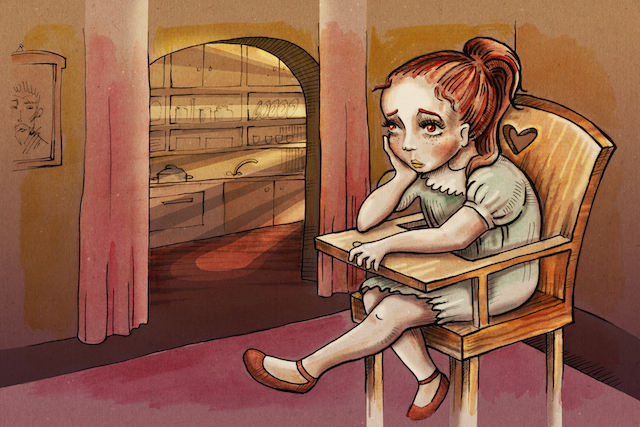
    Unhappy Little Girl

    “So, like a forgotten fire, a childhood can always flare up again within us.” ~Gaston Bachelard

    I woke up to the sun peeking through the bedroom curtains and I cautiously opened one eye to check if my little brother was still asleep on the other side of our room.

    I was excited about the day. The sun was shining and we were meeting up with some family friends for a picnic in the park later that day. All I cared about was we would be having lots of treats at that picnic and the park we were going to had a giant swing set. This was going to be a good day.

    An hour later, my brother and I were in our parents’ bedroom, with my mom gently explaining that Daddy had left and he wouldn’t be coming back home.

    I was only six. I had thought everything was okay, but it wasn’t. I wasn’t expecting this.

    I felt sucker-punched. I promised myself, “I won’t let my guard down like this again.”

    Fast-forward twenty-five years…

    I stretched out beneath the shade of a huge umbrella, wiggling my toes in the white sand and watching my husband snorkel in the bathtub warmth of the ocean. There was nothing to do but sit and soak in the paradise of a tiny island in Malaysia.

    This was my dream vacation—one that I had waited years for.

    This should have been one of the happiest moments in my life. But I wasn’t happy.

    I remember at one point that day telling my husband that I should have brought my laptop with me so I could do some work while I was at the beach.

    I was genuinely struggling to relax and embrace an experience that could have offered me pure joy. I couldn’t just let go.

    Perhaps something similar has happened to you.

    Let me save you a few hundred dollars in therapy.

    This vacation made me realize that this was only one of many times in my life that I had gleefully anticipated an activity, but when I was actually in the moment I wasn’t able to feel very happy.

    I wish I could tell you that after I recognized this pattern, I immediately began a journey toward emotional wholeness. It wasn’t until years after that vacation, when I was finally brave enough to start digging into things that were holding me back.

    I started to see a therapist regularly, but I have a hunch that you might relate to what I discovered.

    So what did I figure out?

    I should have been paying more attention to what I was telling myself—mantras from my childhood were heavily influencing my adult life.

    I realized the childhood mantras or “tapes” I was playing inside my head had a significant impact on my ability to feel happiness—ones that were formed in my early years and may sound familiar to you.

    Do you recognize any of these mantras that you’ve told yourself for years, therefore diminishing your own potential happiness?

    Mantra #1: I won’t ever do that again.

    Earth-shattering events happen when you are younger. There may have been major traumas or minor events that felt traumatic to your younger self.

    As kids we often react to such events by making a vow or promise to ourselves. We do this to protect ourselves, but as we grow older we don’t stop to re-examine if this vow is helping us or holding us back.

    I wanted to avoid the unexpected pain I felt when I was abandoned as a child, so I had promised myself that I wouldn’t let my guard down again.

    Could a vow to stay guarded at all times affect the ability to feel true happiness? Most definitely.

    Mantra #2: This can’t last.

    Brené Brown identifies a major limitation to our happiness in her chapter about joy and scarcity in The Gifts of Imperfection (a book recommended by my therapist).

    She explains, “We think to ourselves: I’m not going to allow myself to feel this joy because I know it won’t last…I’d rather not be joyful than have to wait for the other shoe to drop.”

    Does this resonate with you?

    Unforeseen trauma when we were younger can create a sense of dread—we start to expect something bad is going to happen, especially in the times we are feeling most happy, or vulnerable.

    Did events from your childhood create a fear that good things happening were an invitation for something bad to happen?

    Mantra #3: It’s not okay to do that.

    Oh, the complexities of the rules within each family!

    Whether spoken outright or implied through reactions to certain behaviors, each family has a code of conduct with a profound influence on us, well into our adult lives.

    Maybe emotional expression was frowned upon in your family? Or perhaps there was an unspoken rule about how you should conduct yourself in stressful situations.

    I can remember the implied rules about money in my family. In the wake of my father leaving, money was tight and I quickly learned to stop asking for any treats. I had determined that it’s not okay to spend money on non-essentials.

    There can be so many facets to the family culture of your early childhood—some good and some not so good. Are there rules from your younger years that restrict your ability to feel happy?

    Mantra #4: This actually means that.

    Assumptions we make as kids, about the way the world works, can deeply influence our thoughts as adults. We become aware that the world does not consist of just ourselves and we start forming a framework of decisions about how life works.

    Is it possible that, back in your childhood, you decided that relaxing meant you were being lazy? Alternately, you may have assumed achievements meant love from your parents, so if you stopped achieving you would lose that affection.

    Can these childhood assumptions inhibit our ability to enjoy the moment? Absolutely.

    Mantra #5: I’m no good at that.

    Neglected dreams or passions that you had as a young child can be an amazing compass toward rediscovering your happiness.

    Is there an activity that you used to love doing as a child that you no longer do? Perhaps due to someone’s criticism, you decided you weren’t good enough to keep doing it?

    I had an embarrassing incident in gymnastics class when I was younger. (Let’s just say that the balance beam won). I refused to go back to class, resulting in an abandoned passion that I didn’t reconnect with until just this year.

    Was there a dream you had that you forced yourself to let go of, in an effort to be more practical or realistic as you grew up?

    These buried passions offer us an opportunity to remember what used to truly bring us joy. It is an invitation to welcome happiness back into your life.

    The Next Brave Step in Banishing Your Childhood Mantras

    I’m guessing that at least one of these mantras jumped out at you. We all have a default “tape” that is worth examining, to understand if it is suppressing our happiness.

    Be brave. Recognize this impulse and decide to make a change.

    Now what?

    It’s actually pretty simple—not easy, but simple.

    You need to start playing a new “tape” inside your head instead of the ones that are diminishing your ability to be joyful.

    I chose to start telling myself that it is okay to let my guard down. This involved literally chanting inside my head that the world would not fall apart if I allowed myself to enjoy the moment.

    I had to constantly reassure myself that even if something bad did happen, bracing myself for it would not make it hurt any less and was actually robbing me of joy.

    It actually didn’t take too long before I started to believe this. Surprisingly, this removed a huge obstacle to giving myself permission to feel happy.

    How to Amplify Your Happiness

    The good news?

    You’ve already taken the first step: pausing to ask what you are actually telling yourself.

    How about some more good news?

    You can choose one thing that you are going to start saying differently to yourself and you will be amazed at how quickly you can change the narration.

    It is tempting to cling to the voices of our past, but wouldn’t it feel amazing to be able to truly embrace your happiness?

    Try out your new script today and congratulate yourself on moving toward a happier life!

    Unhappy little girl image via Shutterstock

  • 10 Ways to Be the Person You Wanted to Be as a Kid

    10 Ways to Be the Person You Wanted to Be as a Kid

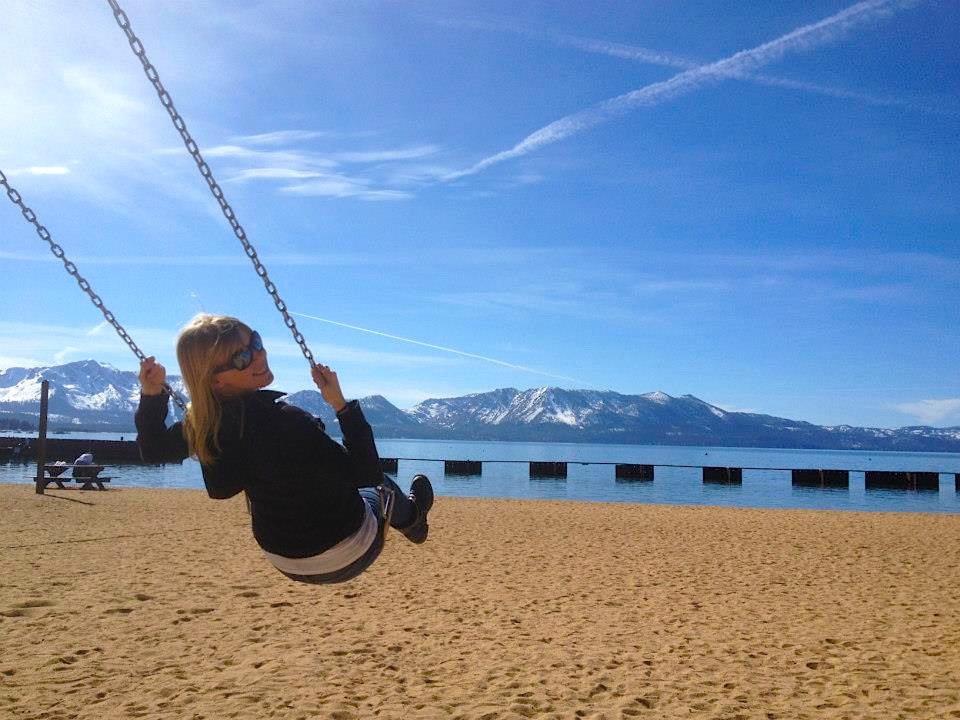
    Lori Swinging

    “While we try to teach our children all about life, our children teach us what life is all about.” ~Angela Schwindt

    When you’re young, anything seems possible. Whether you want to become a school teacher, a ballerina, or an astronaut, it all feels within your reach.

    And you so easily get excited by it.

    You can visualize in vivid detail what it would be like to hold your roses at curtain call, or how proud you’ll feel when you save the day—as a fireman, a soldier, or maybe even a superhero. You pretend your way through different roles and stay open to different ideas of who you are.

    You might know what you like and don’t, and you probably aren’t afraid to vocalize it, but you haven’t yet learned how to get stuck in your ways. You’re too curious for that. That would be boring.

    Though you knew back then that sticks and stones might break your bones but names could never hurt you, you did get hurt sometimes. You cried when a bully teased you, or you couldn’t get something you wanted.

    But the next day you were back swinging and giving underdogs at the playground, smiling and dreaming new dreams again.

    Then life happened. Maybe time and experience taught you to worry, fear, and limit yourself, and you slowly became a person younger you wouldn’t want to play with. You started playing by rules that no one even gave you. You stopped imagining possibilities and believing that you could meet them.

    And worst of all, you started thinking that it’s something the world did to you—not something you choose, moment to moment. (more…)