Tag: childhood

  • 5 Surefire Signs You Grew Up with an Emotionally Immature Parent

    5 Surefire Signs You Grew Up with an Emotionally Immature Parent

    “There’s no such thing as a ‘bad kid’—just angry, hurt, tired, scared, confused, impulsive ones expressing their feelings and needs the only way they know how. We owe it to every single one of them to always remember that.” ~Dr. Jessica Stephens 

    All children look up to their parents from the moment they enter this world. They have this beautiful, pure, unconditional love pouring out of them. Parents are on a pedestal. They are the ones who know what’s best! They are the grownups showing us how to do life!

    We don’t think for one moment that they could be showing us the wrong way.

    I, like many others, adored both my mum and dad. I could not see their flaws, their pains, or their trauma. I just loved them and wanted to spend time with them. If they shouted at me and told me I was wrong, I trusted that they were right, no question.

    When I had non-existent self-esteem, anxiety, and suicidal ideation because I believed I was not good enough, I blamed that 100% on myself. I had unconsciously recorded all those moments when their behavior had made me feel not good enough as my own fault for being ‘bad,’ not considering they could have had something going on themselves.

    When I struggled in romantic relationships, always chasing unavailable men, I held myself responsible and never for one minute thought that this pattern of behavior stemmed from my relationship with my parents. I believed what they had told me in different ways—that I was the problem!

    The reason I struggled in relationships, I later discovered, was that my parents were not actually okay when they were parenting me because of their own traumas and were emotionally immature.

    Here are five signs you had emotionally immature parents and how may it impact you.

    1. Their feelings and needs were more important than yours.

    Emotionally immature parents can be incredibly self-absorbed and distracted by their own feelings and emotions, and they want their child, you, to regulate them.

    For example, when my mum was upset, I would be affectionate toward her and soothe her. As I got older, she would be angry with me if I was not there to soothe her when she needed it, saying I was selfish and she had no one. I believed her.

    I was off playing with my friends and being a child, but this was not allowed if it meant I couldn’t meet her needs and calm her emotions. As a result, I learned it was not safe to choose my needs over hers, as she would withdraw her love from me, which felt so scary. My heart would race, and I would feel terror take over my body.

    As an adult, this meant I believed I was responsible for other people’s emotions, and if they were angry or upset, it was my fault. So I would always walk around on eggshells just in case someone might attack me for upsetting them. Because I believed everyone’s pain was my fault, I attracted more relationships like the one with my mum. These relationships made me feel powerless.

    2. Expressing your feelings or needs was not safe.

    When you expressed a feeling and it was met with a negative reaction from your parent, it created a world of panic inside your body. For example, sharing how you were struggling could have been met with a comment about how their lives were so much worse and you should stop being so dramatic.

    Expressing a need, like asking for a ride somewhere, could have launched an attack about how selfish you were—and didn’t you realize how hard your parents were working!

    So what happened? You stopped expressing your feelings and needs and buried them deep. (For me, I topped them with ice cream and sugar for comfort.) As an adult, you may now be so cut off from your own emotions and needs that you act as if you don’t have any.

    3. They did not take responsibility for their actions.

    They’d say or do something that really hurt you, but they wouldn’t acknowledge it, nor apologize. In fact, they may have just carried on as normal.

    Your relationship with them was not repaired as a result. You may have tried to resolve the situation, but you were the only one trying, and you may even have found yourself blamed for something you didn’t even do. The whole situation would leave you feeling crazy and like you didn’t know what’s true. You may even have started thinking it was your own fault.

    As an adult, you might repeat this dynamic in other relationships, feeling powerless to repair and resolve issues that arise. This leads to resentment and staying in unhappy relationships because you don’t know it can be any other way.

    4. They have no idea how to regulate their emotions.

    They walked around triggered by their emotions all day. They had no idea how to bring themselves back into balance. They’d come home exhausted from work, but rather than doing something to discharge from the day, they’d get stuck in their chores and then take out their emotions on others due to resentment over being so tired.

    They also might have had no idea what they were feeling. Maybe they were constantly angry because they lacked the self-awareness to recognize they were really feeling sad or anxious or overwhelmed. And because they didn’t know what they were feeling, they had no idea what they needed to do to feel better.

    5. You were forced to grow up before your time.

    It wasn’t okay for you to be a child. They found it way too stressful, so you were encouraged to be a little adult. Maybe even a little adult that parented them. It was also not safe for you to be a child. You couldn’t be loud or silly, as they could have lost their temper, so you walked around on high alert waiting for this. You may have learned to be the calm one because your parents weren’t.

    I found myself getting involved in their very grown-up arguments as a child just to try and keep the peace in the house. This is not the role of a child. If you had the same experience, you may find yourself attracting similarly codependent relationships as an adult.

    If this childhood sounds like yours, you are not alone. There are many of us. There is an inner child within you that missed out on so much love, nurturing, encouragement, and balance, which could be the reason you are struggling now as an adult.

    It is not because you are not good enough or because you are to blame for everything. It is because you were raised by emotionally immature parents. Effectively, you were raised by children in adult bodies.

    You could still be dealing with these patterns as an adult with your parents, as they could be children in even older bodies now!

    Learning how to be emotionally mature yourself so you don’t repeat the patterns with your own children is a wonderful gift to be able to give them, but also it means you can have healthy relationships and find peace within. Healing and reparenting your inner child means you will be able to express your emotions and have boundaries so others don’t think it is okay to do the same to you.

    I used to feel powerless when people treated me like this, not just with my parents but in other relationships too. I would try to be whatever they wanted me to be, but they would still react in the same ways no matter what I did. Stepping back from them and focusing on healing my inner child, understanding her feelings and needs, and holding space for her has changed my life. I was able to become the parent I always longed for.

    I understand now that my parents were emotionally immature, as they were raised by emotionally immature parents too. They were mature with money and jobs, but with emotions, they were out of their depth because no one showed them how to manage them, and unfortunately, they never learned.

    But we can be the generation that breaks this pattern by being the emotionally mature parent we needed. We can be the example of healthy relationship dynamics that we never had.

    **This post was originally published in 2022.
  • How to Calm Anxiety That’s Rooted in Childhood Wounds

    How to Calm Anxiety That’s Rooted in Childhood Wounds

    “Anxiety is a response to a nervous system that learned early on it had to protect itself.” ~Dr. Hilary Jacobs Hendel

    Anxiety shaped much of my life—how I showed up, how I held myself back, and how I connected with others. For years, I didn’t even know what it was. I just knew the pounding heart, the tight chest, the trembling hands. I knew the shame that followed every “failure,” big or small, and the fear I would never be enough.

    For a long time, I thought I was the problem. But anxiety isn’t a moral failing. It’s a part of me that learned to survive in environments where my emotional needs weren’t met, where fear and shame felt louder than safety.

    Where It Started

    The roots of my anxiety began in childhood.

    I was in first grade when I brought home my school report card and saw that I ranked seventh in my class. At that age, I didn’t know if that was good or bad. I was just excited to tell my dad.

    When he came to pick me up, I smiled and shared the news innocently. Instead of a hug or encouragement, his eyes glared at me. His sharp, aggressive tone cut through me as he shouted, “It’s bad!”

    Looking back, I can see his reaction came from fear—that my performance might limit my future and that shaming me would push me to improve. But as a child, I couldn’t see that. I felt shocked and humiliated. My small body trembled, and my younger brain concluded:

    “I’m only worthy of love if I perform better.”

    The next semester, I ranked third. My dad bragged about it to everyone, and I felt brief relief. But the fear returned quickly:

    “What if I can’t keep this up?”

    That was the beginning of a belief that no matter how much I achieved, I was never “enough.”

    This pattern followed me for decades, surfacing in unexpected places. As an adult, I would freeze with anxiety at gas stations, trembling as I pushed my motorbike forward even when no one was rushing me.

    Eventually, I connected it to another childhood memory: my dad shouting at me to move faster in line at a gas station, his glare and sharp tone burning into me again. When processing this as an adult, I realized he had a good intention—to move things along for the other people waiting. But before I began my healing process, my nervous system was wired to react to the present as if I were reliving the past.

    Even years later, the anxiety lived on in my body, and I didn’t know how to process it.

    The Breaking Point

    I carried this unprocessed anxiety into adulthood. When I was five weeks pregnant, my partner was in a tragic accident that left him in a coma for two weeks before he passed away. Suddenly, I was alone, grieving, and without money to survive.

    I didn’t have the privilege of avoidance anymore. Grief, financial instability, and the responsibility of carrying a child forced me to face emotions I had buried for years.

    This was when I learned the practices that helped me stop spiraling and regain my composure.

    10 Tips That Help Me Prevent and Manage Anxiety

    Important note: These tips are not a substitute for therapy, medication, or professional diagnosis. They are complementary practices to help restore balance and create a sense of safety in the body.

    1. The gratitude shift—turn anxiety into information.

    Instead of berating the intense sensations anxiety brings, I now try meeting it with gratitude. Anxiety is my body’s built-in alarm system.

    When I feel it rising, I say, “Hi, anxiety. I see you doing your job. Thank you for showing up.”

    Then I ask:

    What is this sensation trying to tell me?

    Where is this coming from in my history?

    What action can I take now to feel safer and more supported?

    This small act of acknowledgment makes space to feel more in control and invites curiosity instead of fear.

    2. Slow down and simplify your life.
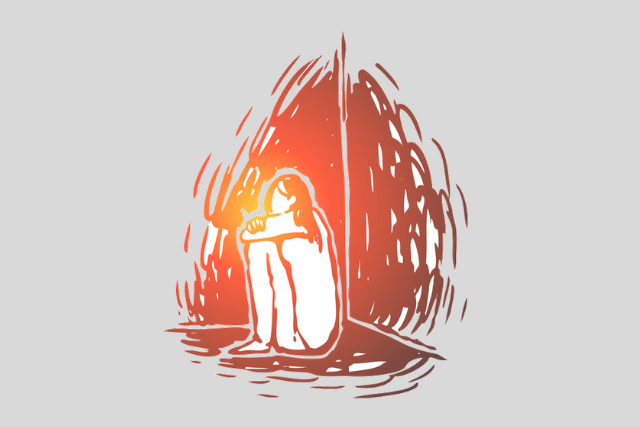
    Too many distractions can block memories and emotions from surfacing. Simplifying my life gave me mental space for self-awareness.

    I released unnecessary obligations, overpacked schedules, and numbing habits like endless scrolling. When I slowed down, I could finally hear myself and recognize what was driving my anxiety.

    3. Trace the roots through quiet observation (and fasting).

    Closing my eyes and observing the first persistent memories that surface often reveals the root of anxiety.

    When I couldn’t afford therapy, I used intentional fasting to access clarity. (If you decide to give this a try, I recommend consulting with your doctor first. This is my personal spiritual practice, not a universal recommendation.) I started slowly with:

    • A twelve-hour fruit and vegetable fast, then
    • A twelve-hour water fast, then
    • A full-day fast (6 a.m. to 6 p.m.)

    Each time hunger arose, I named my intention out loud through prayer or journaling: “Please show me the root cause of this anxiety and how to release it.”

    Fasting, for me, was a deliberate way to quiet external noise so buried memories and insights could surface.

    4. Catch the first emotion—shock.

    My body often stores layers of pain, and shock is usually the first overwhelming emotion. If I can name it quickly, I can interrupt the spiral.

    For example, when I was feeling overwhelmed as a mother, I’d sometimes snap at my daughter. I’d get frustrated and angry with myself, but after fasting, the memory of my parents snapping at me came up quite vividly.

    Remembering this, I allowed myself to see, acknowledge, experience, and accept how painful and shocking it was for me to be treated that way.

    5. Write in detail what shocked you (and other emotions).

    After naming shock, I write the exact details of what triggered it: the sudden glare, the change in tone, the clenched jaw, the slammed door.

    Then I name the other emotions as honestly as possible: fear, humiliation, sadness, anger, or betrayal—whatever is true in that moment.

    Being radically honest in this process helps me release the experiences that I previously stored as trauma.

    6. Grieve the losses.

    Once I release the shock, I let myself grieve. I cry for the safety, compassion, and respect I needed but didn’t receive.

    Sometimes I use music to amplify the sadness so it can move through me. This isn’t weakness—it’s how the body processes pain instead of storing it.

    7. Name the unmet needs.

    Grief opens the door to understanding my needs.

    “When I was shouted at by my dad after making mistakes, I felt unsafe and ashamed. My need for emotional security was violated.”

    “When I was only praised for achievements, I felt unseen. My need for consistent acceptance was neglected.”

    Naming needs clarifies what’s important so I can ask for it clearly and assertively as an adult. It’s empowering to name the hurt and see how it helps me understand my emotional needs better.

    8. See the context—compassion for your parents’ limitations.

    Fasting and becoming a mother helped me understand the hardship my parents faced. Parenting a neurodivergent child with limited resources, little support, and financial stress is overwhelming.

    This doesn’t excuse the harm, but it helps me hold two truths:

    1. Their actions hurt me.
    2. They were also struggling humans who lacked the tools to parent better.

    This perspective softens resentment and breaks cycles.

    9. Write down the worst-case scenarios.

    While processing the past experiences that have contributed to my anxiety can help decrease anxious feelings in the present, it also helps to challenge how I think about the future.

    When I spiral, my brain floods me with worst-case scenarios. Positive thinking never helped—it only deepened my fear.

    Instead, I confront the fears by writing down every possible worst-case outcome, even the most extreme. I’ve lived through homelessness, earthquakes, and tragic losses. Pretending they couldn’t happen again didn’t work.

    By naming them, I strip them of their power.

    10. Prepare intuitive actions and identify help.

    After writing the worst cases, I ask:

    What is the first intuitive action I can take to prevent or reduce the impact?

    Who is the first person I can contact for help? Who else could I reach out to?

    Writing these down gives me agency. It tells my nervous system, “I’m not helpless. There are things I can do and people I can ask for help.”

    Anxiety is a part of me. Experiencing the spiral because I didn’t know how to name, process, and communicate it sucks.

    I’m still a work in progress when it comes to maintaining composure consistently, but I feel empowered knowing that I’m mastering emotional intelligence—skills I can pass down to my child.

    Healing is not linear, and some steps will feel harder than others. But with consistency, these practices can help you restore a sense of safety, reclaim your agency, and soften the belief that you must always be on high alert.

  • How to Return to Emotional Safety, One Sensory Anchor at a Time

    How to Return to Emotional Safety, One Sensory Anchor at a Time

    “In a sense, we are all time travelers drifting through our memories, returning to the places where we once lived.” ~Vladimir Nabokov

    I found it by accident, a grainy image of my childhood bedroom wallpaper.

    It was tucked in the blurry background of a photo in an old family album, a detail I’d never noticed until that day.

    White background. Tiny pastel hearts and flowers. A border of ragdoll girls in dresses the color of mint candies and pink lemonade.

    My body tingled with recognition.

    It was like finding a piece of myself I didn’t remember existed. Not the grown-up me, but the girl I used to be before a career, a mortgage, and the heavy quiet of adult responsibility.

    The Pull of the Past

    When I was small, the world felt bigger in a softer way.

    Colors seemed brighter, objects more alive, and the smallest things—the feel of my favorite stuffed animal companion in my hand, the scent of my mother’s bathwater—carried entire worlds of meaning.

    These aren’t just memories; they’re sensory anchors.

    I could forget a conversation from last week, but I can still picture the exact shade of the mint-green dress my wallpaper girl wore. I can still feel the gentle indentation of her printed outline, as if the wallpaper itself had texture.

    These details, it turns out, were never gone. They were simply waiting for me to come back.

    Nostalgia as a Regulation Tool

    I didn’t realize until recently that revisiting those sensory anchors could calm my nervous system.

    Of course, I know not everyone remembers childhood as safe or sweet. For many, those early years carried pain or fear. Some people find their sensory anchors in different chapters of life—a first apartment, a quiet library corner, or a beloved chair in adulthood. Wherever they come from, anchors can be powerful.

    For me, nostalgia isn’t about wanting to live in the past. It’s about finding small pockets of safety I can carry into the present.

    Touching the soft yarn hair of a Cabbage Patch Kid isn’t just cute, it’s grounding. Seeing those pastel hearts reminds my body what peace once felt like, and in that moment, I can feel it again.

    A few months ago, one of my children was in the hospital for a week. Those days blurred together: the beeping machines, the too-bright lights, the smell of antiseptic in the air.

    One afternoon, while she slept beside me in that cold plastic hospital chair, I scrolled on my phone and stumbled upon an online image of a toy I used to have. That single memory opened a door. I looked for another, and another. Each one reminded me of something else I had loved.

    Before I knew it, I was mentally compiling a list of toys I’d like to find again, and how I might track them down.

    That feeling—the rush of familiarity, the gentle spark of recognition—was more than just pleasant. It was regulating. In those moments of quiet, I felt a warmth that had been nearly forgotten.

    When she woke and the noise and decisions returned, I carried that warmth in my belly like a hidden ember.

    The Practice of Returning

    Since then, I’ve begun weaving these cues into my home.

    My shelf holds a cheerful line of 1980s toys in the exact colors I remember. At night, the soft glow of the wooden childhood lamp I sought out warms my space with a light that feels like safety.

    These touches aren’t just décor; they’re part of my emotional toolkit.

    When I feel overwhelmed, I step into that corner, touch the toys, take a slow breath, and remember who I was before life got so loud.

    Some of my collection lives in my walk-in closet, tucked away just for me. I choose when and how to share it. Sometimes I don’t share it at all. That privacy feels important, like holding a small, sacred key that unlocks a door only I am meant to open.

    This practice can look different for others. A friend of mine grew up with an entirely different story. His childhood was full of absence and stress, and he never had the GI Joes he longed for. Now, as an adult, he collects them one by one. For him, this is not nostalgia but repair, a way to heal by finally holding what once felt out of reach.

    How You Can Try It

    If you’d like to create your own version of a ritual of return, here’s how to begin:

    1. Identify your sensory anchors.

    Think about colors, textures, scents, or sounds from your happiest memories. If childhood feels heavy, look to other times. What do you remember most vividly? A kitchen smell? A favorite song? The feel of a well-loved blanket?

    2. Find small ways to bring them back.

    This doesn’t have to mean collecting big, expensive items. It could be a thrifted mug, a playlist of songs you loved at age eight, or a single scent that transports you.

    3. Use them intentionally.

    Place these cues where you’ll see or touch them often. Incorporate them into a morning or evening routine. Let them be part of how you calm yourself, not just pretty objects but companions in your present life.

    Why It Matters

    We can’t go back, and we don’t need to.

    But we can return, in small ways, to the places inside us where we first felt safe, joyful, or whole.

    For some, that means reclaiming the sweetness of childhood. For others, like my friend with his GI Joes, it means rewriting the story and creating what was once missing. Still others may anchor themselves in completely different seasons of life.

    What matters is the act of returning to something steady, something that belongs to us now.

    Each time we do, we carry a little more of that peace forward into the lives we are living now.

    I’m still searching for that childhood wallpaper—online, in vintage shops, in the corners of the internet where people post long-forgotten designs. The search brings almost as much joy as the finding.

    Because every time I search, I’m not just looking for wallpaper. I’m putting my hand on the door handle of memory. And when that door opens, I meet myself.

  • Why I Learned to Stay Quiet to Be “Good”

    Why I Learned to Stay Quiet to Be “Good”

     “Your silence will not protect you.” ~Audre Lorde

    When I was little, I learned that being “good” meant being quiet.

    Not just with my voice, but with my needs. My emotions. Even the space I took up.

    I don’t remember anyone sitting me down and saying, “Don’t speak unless spoken to.” But I felt it—in the flinches when I was too loud, the tension when I cried, the subtle praise when I stayed calm, agreeable, small. I felt it in the way adults sighed with relief when I didn’t make a fuss. I felt it in the way I stopped asking for what I wanted.

    Goodness, to me, became about not rocking the boat.

    I remember once being told, “You’re such a good girl—you never complain.” And I carried that like a medal. I remember crying in my room instead of speaking up at dinner. Saying “I’m fine” even when my chest hurt with unsaid words. I didn’t want to cause trouble. I wanted to be easy to love.

    So I smiled through discomfort. Nodded when I wanted to say no. Bit my tongue when I had something true to say. I became pleasant, adaptable, well-liked.

    And utterly disconnected from myself.

    The Body Keeps the Quiet

    For a long time, I thought this was just a personality trait. I told myself I was just easygoing. Sensitive. A peacemaker.

    But the truth is, I had internalized a nervous system survival strategy: fawning. A subtle, often invisible adaptation where safety is sought not through flight or fight but through appeasement. Becoming who others want you to be. Saying what they want to hear.

    In my body, this looked like:

    • Holding my breath in tense conversations
    • Smiling when I felt anxious
    • Swallowing words that rose in my throat
    • Feeling exhausted after social interactions, not knowing why

    It wasn’t just social anxiety or shyness. It was a deeply ingrained survival pattern—one that shaped everything from how I moved in the world to how I related to others.

    I didn’t yet have the language for what was happening. But I could feel the cost.

    The silence I carried started to ache—not just emotionally, but physically.

    My jaw clenched. My shoulders rounded forward.  My chest felt like a locked room. I felt foggy in conversations, distant in relationships, unsure of where I began and ended.

    It turns out, when you chronically silence yourself to stay safe, your body starts whispering what your voice can’t say.

    The First Time I Said “No”

    It wasn’t a dramatic moment. There was no shouting or storming out.

    It was a quiet dinner with someone I didn’t feel fully safe around. They asked for something that crossed a line. And for the first time in my adult life, instead of automatically saying yes, I paused.

    I heard the old script start to run: Be nice. Don’t upset them. Just say yes, it’s easier.

    But something in me—a wiser, quieter part—held steady.

    I took a breath. I said, “No, I’m not okay with that.”

    And even though my body trembled, I didn’t crumble. Nothing catastrophic happened. I went home and cried—not from fear, but from relief.

    It was one of the first moments I realized I could choose myself. Even when it felt unnatural. Even when I wasn’t sure what would happen next.

    That one moment changed something in me. Not overnight. But it planted a seed.

    Reclaiming My Voice, One Breath at a Time

    Reclaiming my voice hasn’t been a big, bold revolution. It’s been a slow unfolding.

    It looks like:

    • Taking a few seconds before I respond, even if silence feels uncomfortable
    • Letting myself speak with emotion, not filtering everything to sound “reasonable”
    • Naming what I need, even if my voice shakes
    • Resting after interactions that leave me drained—honoring the impact
    • Journaling the things I wanted to say, even if I never say them out loud

    Some days I still go quiet. I still feel the old fear that speaking truth will cause rupture, rejection, or harm. Sometimes I still rehearse what I want to say five times before I say it once.

    But I’ve learned that every time I listen to myself, even if just with a hand on my heart, I’m creating safety from the inside out.

    And slowly, my body began to shift. I stood a little taller. My breath came a little easier. I started to feel more here—more like myself, not just a reflection of who I thought I needed to be.

    What Helped Me Begin

    Sometimes, what rises first isn’t courage but grief. Grief for all the moments we didn’t speak, for the versions of ourselves that held it all inside. I had to learn to meet that grief gently, not as failure, but as evidence of how hard I was trying to stay safe.

    This journey didn’t begin with confidence—it began with compassion.

    Noticing the times I silenced myself with curiosity instead of shame.

    Asking: What did I fear might happen if I spoke? What used to happen?

    Placing a hand on my chest and saying gently, “You’re not bad for being quiet. You were trying to stay safe.”

    And then, when I felt ready, experimenting with small expansions:

    • Leaving a voice note for a friend instead of texting
    • Telling someone “I need a moment to think” instead of rushing an answer
    • Saying “I actually disagree” in a conversation where I normally would’ve nodded along

    None of these were big leaps. But each one taught my nervous system a new truth: it’s safe to have a voice.

    If You’ve Been Quiet Too

    If you’re reading this and recognizing your own silence, I want you to know:

    You’re not bad for going quiet. You were wise. Your nervous system was doing its best to keep you safe.

    And if you’re beginning to feel the tug to speak—to take up a little more space, to say “no” or “I don’t know” or “I need a moment”—you can trust that too.

    You don’t need to become loud or forceful. Reclaiming voice doesn’t mean overpowering anyone else. It just means including yourself. Honoring your truth. Letting your body exhale.

    You are allowed to be heard. You are allowed to pause. You are allowed to unfold, one breath at a time.

    Your voice is not a threat. It’s a bridge—back to yourself. Your silence once kept you safe. But now, your truth might set you free.

  • Raised on Their Best Intentions—Healed on My Own Terms

    Raised on Their Best Intentions—Healed on My Own Terms

    “Out of suffering have emerged the strongest souls; the most massive characters are seared with scars.” ~Kahlil Gibran

    There are two versions of me.

    There’s the one I am now—the grounded, present woman who holds space for others, who guides people toward healing, who walks barefoot through the grass and whispers affirmations while sipping her coffee.

    And then there’s the other version. The one who barely made it. The one who used to stare into her fridge not out of hunger but as a distraction from the ache in her chest. The one who didn’t feel at home in her body. The one who was certain no one could ever understand the weight she carried, let alone help lift it.

    If you’ve ever felt pain that rewired your entire being, you know:

    Trauma doesn’t just live in the mind.

    It takes root in the bones, in the pauses between conversations, in the way you flinch when someone raises their voice—even slightly.

    For years, I was operating on autopilot. From the outside, I seemed fine. But internally, I was haunted by invisible wounds and unspoken memories.

    Then came the moment I will never forget—when I confronted the very people who gave me life.

    I was in my twenties. I’d been carrying years of resentment, confusion, and heartache. Every harsh word, every time I felt small—it all built up inside me.

    And I finally let it spill out during an emotionally charged conversation. I brought up a pattern that had deeply impacted me, hoping to be heard.

    I expected remorse, maybe even repair.

    But instead, I heard: “We did the best we could.” It was calm, maybe even resigned. It wasn’t unkind, but it felt like a door closing instead of opening. In that moment, I felt both understanding and a quiet ache, realizing we weren’t going to meet in the middle.

    Those six words didn’t offer relief. They didn’t soften the years of damage. Because understanding your parents’ limitations doesn’t erase your pain. But it does offer you a choice:

    To carry it forward. Or to finally put it down.

    That was the turning point.

    I realized I didn’t want to live stuck anymore—stuck in old stories, like believing I had to suppress my emotions to keep the peace, or that loyalty meant silence; stuck in shame and in patterns I didn’t choose. I wanted to heal. Not just for myself, but for every version of me that had felt unseen.

    So I started to write.

    Not for anyone else, but for me.

    When I couldn’t speak the truth out loud, I wrote it down. My journals became confessionals. My pen, a lifeline. My pain, my teacher.

    Eventually, I found tools that helped me dig even deeper—meditation, somatic work, subconscious reprogramming, hypnotherapy.

    I learned that the subconscious mind is like a computer. It stores everything you’ve ever believed about yourself—especially the painful parts. If you don’t update the programming, you’ll keep replaying the same loop:

    I’m not enough. It’s my fault. Love has to be earned. I must stay small to be safe.

    And when you realize that you can change that inner script? That’s when everything shifts.

    In 2020, I became a certified hypnotherapist. But truthfully, that was just the official title. My real training began the day I stopped running from myself.

    Through that work, I began to rewire old beliefs, release trauma stored in my body, and speak to my younger self with compassion instead of criticism.

    I finally started to feel free. Not perfect. Not enlightened. But freer.

    Free to cry and not apologize for it. Free to take up space. Free to stop fixing everyone else so I could finally tend to myself.

    Today, I help others do the same.

    Not because I have all the answers, but because I remember what it felt like to not even know which questions to ask.

    And if you’re reading this right now, I want to say something I wish someone had said to me: You are not broken. You are not behind. You are not unworthy. You are a soul who has walked through fire—and you’re still here.

    Healing is not linear.

    You will have days where you feel like you’ve regressed, where the sadness feels fresh, where you question everything. That’s okay.

    Progress isn’t perfection. It’s presence. And your presence—your willingness to look at your pain instead of running from it—is what will change your life.

    You don’t need to hustle your way to healing. You just need to return to yourself.

    So here’s what I’ve learned, in case it helps you:

    1. Triggers are teachers in disguise. They point to wounds that need tending. For me, being interrupted or talked over would trigger an intense emotional response—one rooted in earlier experiences where my voice didn’t feel valued. I also noticed that certain tones of voice, especially condescending ones, could instantly make me feel small.

    2. You are allowed to feel anger at those who hurt you and compassion for the fact they didn’t know better.

    3. The body holds trauma, but it also holds the key to release. Pay attention to your breath. Your posture. Your gut feelings.

    4. You can forgive and still hold boundaries, like saying no without over-explaining or stepping away from emotionally unsafe conversations. I’ve also created space by recognizing when it’s not my role to carry someone else’s emotional process—especially if it comes at the cost of my well-being.

    5. You can grieve and still grow.

    And most of all: You can rewrite your story at any time. Because you are not your past.  You are the author of your next chapter.

    So let it be one of reclamation.

    Let it be the moment you stop shrinking and start rising. Let it be the chapter where you stop surviving and start living.

    You are the light you’ve been looking for.

  • Healing Childhood Wounds: A Journey to Love and Connection

    Healing Childhood Wounds: A Journey to Love and Connection

    The drive on I-95 from the New England coast back home to Washington, D.C., was harrowing— construction zones, accidents, and rush-hour traffic. I was glad my husband was at the wheel.

    After spending the weekend visiting our daughter at college in Connecticut, I was ready to check out, so I scrolled through social media on my phone to mindlessly pass the time. But when I paused on a post from my favorite self-help influencer, Cory Muscara, I got something very different from the relaxation I’d been craving.

    I started following Cory several months before, after a friend had sent me a post of his about navigating significant life transitions. After my daughters left for college, I faced an empty nest and was about to turn fifty. To help with the changes, I immersed myself in all the self-improvement content I could find.

    Cory’s striking blue eyes and calm, steady voice captivated me. He was a former monk, inspirational speaker, and teacher of all things zen. In the post that caught my attention in the car, he filmed himself walking through a forest, a green hoodie pulled over his head. Since my husband was busy with work calls, the sound was muted, and I focused on the captions.

    One word caught my attention: fireball. I continued to read, engrossed with the step-by step instructions to overcome stored pain, break free from destructive patterns, and achieve freedom and inner peace.

    I’m great at following directions, but the concepts of letting go or surrendering frustrate me. I’d love to, but how? I hoped that Cory was about to deliver the answers.

    I was told to connect with my heart. I closed my eyes, took a deep breath, and felt the space my heart occupied in my chest. Next, I was to identify a barrier or obstacle I had been struggling with, something preventing me from achieving what I truly desire: love and connection.

    When I discovered the barrier, I should then imagine my heart flowing toward it, softening it, and then, as the barrier began to soften, I was to observe it unravel. At the very bottom of this would be a fireball.

    In Cory’s vernacular, it was the core wound. Google defines this as a deep emotional wound that can be traced back to a significant event in childhood. It can be caused by suppressed pain or emotions and can lead to a belief system about the self. Core wounds can be a result of unmet needs and can include messages like “I am not enough” or “I am unworthy of love.”

    Cory warned me not to get distracted by the fireball and to move toward the pain, look at it, and acknowledge it. I felt emotional pain as a memory took hold and began to replay over and over in my mind. And he was right: it was a fireball.

    I was around fourteen, and it was the end of a school day. I remember walking with my friends, heading to the bus stop. And then, I saw my mom in the carpool line. She had never picked me up from high school; she was driving her new red sports car.

    Growing up as an only child and a latchkey kid on the outskirts of a small town in Northern Arizona, my afternoons were often spent alone at home. My parents were involved in their careers and were active members of the community, often not returning home until late in the evening. My neighbors were mostly retirees, and the distance from town made it difficult to hang out with friends.

    I often wondered why my parents didn’t want to spend time with me. Was I unlovable?

    With all the pain and insecurity I felt every day, the sight of my mom waiting for me in the carpool line filled me with joy. Seeing her there, in her new car, I felt something I rarely felt: special.

    My heart surged. I couldn’t believe she had surprised me. I stopped in my tracks, not believing she was actually there. I told my friends I had to go and then ran as fast as I could to the car. I was out of breath when I climbed into the passenger seat.

    “Thank you for picking me up!” I said.

    My mom turned to me. “Oh, I’m not here for you, Jennifer. I’m picking up a client.”

    Before I could respond, she added, “I’ll see you at home.”

    Mom was a therapist, and the client was a student.

    I remember how I swallowed back tears and feelings of rejection.

    I walked to the bus stop. It felt like the longest ride of my life, and the walk home even longer.  Angry with myself for getting my hopes up, all I wanted to do was crawl into bed and pull the covers over my head.

    When Mom returned from work that evening, there was no mention of the incident.

    And now, thirty-five years later, I sat in the car and cried as I recalled this painful moment. I had found a fireball, and I was told to stay with it, but then what? Did I have to be stuck with the pain of this core wound, unsure of what to do next?

    This is when I realized that the girl on the bus so many years ago needed an adult to soothe her. I closed my eyes, imagined seating my fifty-year-old self next to her, and held her hand. I asked her to tell me what was wrong, and I listened with compassion. I sat with her until the pain subsided. Until our pain subsided.

    When I opened my eyes, I realized that an hour had passed since I had started watching Cory’s post. I was surprised my husband hadn’t noticed the tears that I had been too distracted to wipe away.

    I felt a mix of disappointment and relief. I felt sad that he wasn’t aware of my tears sitting so close to me, but the experience felt so personal that I didn’t want the burden of explaining it to him at that moment.

    Following Cory’s instructions had proven more effective than my past two years of therapy. In this short time, I had not only taken care of myself but had also become aware of the needs of that fourteen-year-old girl. I knew exactly what she needed to hear.

    It was up to me to heal her wounds.

    The girl on the bus couldn’t understand why a mom would dismiss her daughter so easily, but I was able to explain. I could see from what my mom had expressed to me about her childhood, growing up with an alcoholic mother and a traveling father, that she was so traumatized that she felt compelled to fiercely protect her heart.

    She didn’t allow herself to be curious about my emotional needs because she was conditioned to protect herself. My mother wasn’t capable of empathizing with me, not because she didn’t love me, but because of her own deep-seated wounds.

    I’ve tried to discuss this incident and others from my past with my mom, but every time a painful childhood memory resurfaced, she would inevitably ask, “Did I do anything right?” It’s clear that these conversations are not ones she is open to having with me.

    It took me a few days to tell my husband what had taken place during that ride. I told him about the wound and how it no longer felt painful, but I was still feeling raw, and I was worried that I wasn’t accurately explaining. However, as I described Cory’s steps and how I processed the memory until the fireball was extinguished, I became animated and excited to share this new tool.

    He was taken aback and said, “I can’t believe you had that experience in the car!”

    Then, I asked him if he had noticed my tears while sitting next to him. He responded, “No, I was focused on the road.”

    The truth is, much like my mom, my husband isn’t as attuned to my emotions as I would like. However, healing this childhood wound has empowered me in my relationships with him and others. I now have the confidence to express my emotions, and if I don’t feel heard, I make sure to speak up.

    Throughout this journey, I have come to understand that the solutions reside within us. We possess the ability to nurture the younger parts of ourselves and acknowledge our inherent worthiness of love. Perhaps, like me, you will experience healing by spending time with your younger self and addressing their pain.

  • 4 Practical Techniques to Heal from Childhood Trauma

    4 Practical Techniques to Heal from Childhood Trauma

    “It is important for people to know that no matter what lies in their past, they can overcome the dark side and press on to a brighter world.” ~Dave Pelzer, A Child Called “It”

    I grew up in the shadow of my pathologically narcissistic father. From a very young age, my role in the family was that of the scapegoat, a role that poisoned my entire childhood. I lived in a constant state of fear, shame, and self-doubt, always trying to please my father and earn his love and approval.

    But as I grew older and began to understand the true nature of my father’s behavior, I realized that his love was never something I could earn or deserve. It was simply not within my control. And so I made the conscious decision to release myself from the burden of trying to gain his love.

    Letting go of this childhood trauma was not easy. It took time, and notwithstanding the fact that I am now well into middle age, there are still days when I feel the weight of my past on my shoulders. But as I began to peel away the layers of hurt and pain, I also discovered a newfound sense of freedom and self-acceptance.

    By acknowledging my past experiences and their impact on my life, I was able to take control and make positive changes. I learned to use my voice, set boundaries, and prioritize my own well-being. And in doing so, I found that the more I released myself from the hold of my childhood trauma, the more empowered and hopeful I became.

    Letting go of childhood trauma does not mean forgetting or denying what happened. It means accepting it, learning from it, and using it as fuel for growth and healing. It also means embracing vulnerability and allowing ourselves to feel and process our emotions.

    The Dysfunctional Dynamics of a Narcissistic Family

    In the cast of characters within my family, each of us played a specific role in my father’s drama, almost as if we were following a script.

    My father, the puppet master, was the archetypal narcissist, continually seeking admiration while lacking empathy for others, making family life a perpetual performance.

    My mother played the part of the enabler, softening and justifying my father’s actions, her support acting as the grease that allowed the machinery of his narcissism to run smoothly.

    My brother, the golden child, lived in the glow of my father’s approval, unwittingly being shaped into a younger version of the man who was destroying him.

    And then there was me, the scapegoat, taking on all of my father’s projected anger and shame, often being punished for things I didn’t even do.

    Understanding these roles has been a painful yet illuminating part of my journey. This insight is a bittersweet liberation, lifting some of the burdens that I’ve carried for so long—and with each step in awareness, I’m crafting a new life narrative, built not on the foundations of trauma but on hope and self-compassion.

    The Importance of Letting Go

    For the longest time, I clung to my past, believing that the pain I refused to shed was somehow integral to my identity. Yet, the power I gave to those memories only helped them grow roots in the present.

    In the end, it took a total mental breakdown to shake me out of this mindset, ironically triggered by an act of total altruism by my oldest and closest friend. She fostered a little girl, and when I met her I was catapulted back to my own childhood and all the pain and fear it entailed.

    It was like opening Pandora’s box, but instead of the evils of the world flying out, they pulled me in and closed the lid behind me.

    But it was in this dark place that I finally found the strength to let go. I couldn’t keep living a life where my past weighed so heavily on my present. I was no longer a child, bound by my father’s whims and expectations. I had the power to break free from that cycle of trauma—but this required me to release the past.

    The Healing Process Through Release and Forgiveness

    Healing from my childhood trauma was not just about shutting the door on my past experiences, but rather understanding and empathizing with the self that had to endure them.

    Forgiveness, I learned, isn’t about absolving others of consequence. It’s about forgiving myself for all the things that I did to cope with my pain.

    Through therapy and self-reflection, I slowly released the anger and hurt that had consumed me for so long. And as I did so, I was able to replace it with a sense of peace and self-acceptance. It’s an ongoing process, but one that has brought immense healing and growth into my life.

    Practical Techniques for Letting Go

    The path to release is different for everyone, and there is no one right way to let go of childhood trauma. However, there are common threads that tie the experiences of many trauma survivors in their quest for freedom from the past.

    Therapy and Counseling Options

    Seeking professional help was a pivotal step in my personal growth. It took a while for me to find the right therapist – someone with whom I felt comfortable discussing my most painful memories. But when I did, it was a game-changer.

    Therapy gave me the tools to process my emotions and memories in a healthy way, allowing me to gradually let go of the hold they had on me. It also provided a safe space for me to explore and understand the dysfunctional dynamics within my family.

    I had to face the fact that some of the behaviors that I had adopted as a child as a means of survival were no longer serving me in the present. With the help of my therapist, I was able to challenge these beliefs and develop healthier coping mechanisms.

    For example, as a kid I learned to overachieve in an attempt to prove that I was more than the nothing my father insisted I was. Therapy helped me understand that I didn’t need to prove my worth through accomplishments. I now practice embracing my imperfection and loving myself regardless of what I achieve.

    Self-Care Practices

    Taking care of myself physically, mentally, and emotionally has also been crucial in my healing journey. This includes regular exercise, eating well, getting enough rest, and setting healthy boundaries with others.

    But self-care also means allowing myself to feel and process my emotions, without judgment or shame. It means practicing self-compassion and being gentle with myself as I work through the trauma.

    Journaling and Creative Outlets

    Journaling became my confidante. The act of writing was a release valve for my emotions, allowing the chaos within me to take shape and form on the page. I also started a blog, which helped me connect with many people who had gone through similar experiences. For the first time, I did not feel alone.

    The Gift of Gratitude

    I have now come a very long way. I no longer see myself as a victim, a damaged person constantly trying to convince others, and herself, that she is worthy of love. My family of birth had not nurtured me, but somehow, along the way, I met people who were not related to me by blood but who held out their hand and helped me pull myself out of the hole I had almost been buried in.

    These people finally offered the validation and affection that I had always longed for, and I learned that family is more than a biological fact. It is a spiritual and emotional bond that is chosen and nurtured.

    I learned that healing is best not done in isolation, but within a community. Reflecting on the love and support they’ve given me, I feel a profound sense of gratitude that fills me with hope and gives strength to my journey.

    Conclusion

    If you stand where I once stood, weighed down by the chains of your past, I offer you one simple truth: release is not the end, but a beginning. It is a step into the unknown, where the freedom to redefine yourself lies in the courage to shed the familiar, even when it’s painful.

    I encourage you, fellow survivor, to take that step, to release and heal, and to discover the world that waits beyond the walls of trauma. It is a world of limitless potential, a life in full color, where the past is not a prison, but a whisper, and you hold the pen to write your own story.

  • Finding Magic in the Dreams That Didn’t Come True

    Finding Magic in the Dreams That Didn’t Come True

    “Most of us have two lives. The life we live, and the unlived life within us.” ~Steven Pressfield

    I was born a decade too late in 1975 in a small Pennsylvania town. By the time I was old enough to buy a record, the legendary rock and roll culture of the 1960s and 70s was a distant memory. To some, it might have even seemed uncool by then. But to me, a teen in the late 80s, the era of sex, drugs, and rock and roll was everything.

    I spent hours writing song lyrics in my flowered journal, watching MTV, and poring over Circus and Rolling Stonemagazines, trying to catch glimpses of the personal lives of my favorite rock stars. I strummed my guitar and pretended I was Janis Joplin. I was a dreamer, obsessed with poetry and music and the romantic notion of traveling across the country to see my favorite bands.

    At twelve years old, I took a bus from my small town to Philadelphia to see the band Heart. At fourteen, my parents drove me hours away to see Stevie Nicks. Then, in my late teens, I drove all the way to Ohio and Las Vegas, Nevada to see her again. No distance ever seemed too far to travel for my favorite music.

    Back then, I envisioned myself following bands and living a carefree, hippie lifestyle where my only concern was getting to my favorite artist’s next show. And most of all, I dreamed about a concert at Red Rocks Amphitheater in Colorado.

    But somehow, by my early twenties, that dream felt out of reach. I met a man, got married, and had a daughter. Our life was filled with routines that were so different from the vagabond life I’d envisioned for myself. I traded spontaneity for discipline and gave up my dreams of traveling for the security of a stable life and a house in a good neighborhood.

    Eventually, the responsibilities of marriage, career, and never-ending to-do lists made my dream of going to Red Rocks feel more and more like only that—a dream.

    And it went on like that for seventeen years. Then, after years of doing what I thought I was supposed to do, my husband and I decided to separate.

    I embarked on life as a single mom. And as I did, I reflected on the last two decades. We’d married young and, in retrospect, I realized we probably weren’t a good match. He was a real estate attorney with a strong personality and even stronger opinions. I gave our marriage the best of me that I could, but it felt like I was always being who he wanted me to be.

    I had lost myself. I’d lost sight of my own hopes and ambitions. I’d never even made it to Red Rocks.

    In 2016, newly single, I felt eager to date again, so I downloaded Bumble and set up a profile. Not long after, I matched with Jerry. He lived on the West Coast but was in my hometown of Philadelphia for a Dead and Co. concert—the same one I had tickets to.

    Jerry had told me he’d followed the band as a teenager, but he hadn’t stopped going to concerts like I had. He’d held onto his dream and seen them at least 500 times. It was almost like he’d lived the life I’d imagined for myself way back when. We seemed to be kindred spirits. But I had a type, and that was someone who was within a fifteen-mile radius, so I decided not to meet up with Jerry at the concert, despite being intrigued.

    Jerry and I kept in touch over the next four years, although I never held out any hope for anything more. He was a divorced man with children, on a dating app; I assumed he’d meet somebody close to home, and I’d eventually stop hearing from him. But to my surprise, he reached out periodically, often to talk about what was happening in the world of Grateful Dead concerts. It seemed he wanted to stay on my radar. He was always polite and respectful, never creepy or pushy.

    Jerry was ten years older than me, but somehow reminded me of my younger self. He had a refreshingly youthful spirit, which was completely different than any man I ever dated. Like me, he had a corporate job, but he didn’t let that stop him from following his band across the country. Music was a huge part of his life, like mine.

    We kept in touch, and by the summer of 2021, the pandemic restrictions had started to loosen. Outdoor events resumed. I’d been itching to go to an outdoor concert, and that’s when Jerry told me he had an extra ticket for Dead and Co. Honestly, when I accepted the ticket, it wasn’t to finally meet Jerry in person. I was just tired of being stuck at home.

    I didn’t have any expectations. But the first time I saw Jerry smile in person, I had this feeling my life was about to get a lot more adventurous. And I realized I liked him. He was intelligent, polite, and handsome, and he loved all the same music that I had loved for years.

    After that first concert, Jerry told me he was falling for me and that he wanted to see me again on his travels with the band. When I reminded him that I was a single mom with a full-time job and couldn’t follow a band, he offered to take me to Red Rocks for my birthday.

    I couldn’t say no. Jerry was handing me my childhood dream on a silver platter, and I wanted to eat until I was full.

    He pursued me relentlessly, and it was exhilarating and romantic. Nothing like that had happened in my adult life before him. We spoke daily, and our adventures over the next two years were amazing.

    But about two years into our relationship, I began to realize that Jerry and I might not be forever. We led such different lives. His was wild and interesting; mine was more predictable. And as much as I loved his spontaneity, I began to see how chaotic his personal life was. I started to wonder: Was I in love with Jerry, or was I in love with the way he had stayed connected to his childhood dreams as an adult?

    After two years of seeing each other periodically and talking daily, the facade started to fade. The rose-colored glasses were off, and I was seeing things more clearly. While professionally successful, Jerry jumped from job to job. He lived in constant drama with his family, and all his traveling took a toll on his health and his relationships. I also started to wonder if there were other women like me in his life.

    I never doubted that Jerry cared deeply for me, but I couldn’t help but wonder if he had women like me in several states. I never asked him. I wanted to stay in my bliss, living out my childhood dream of music and love—to stay in the bubble of contentment and happiness with what we had, with one exception.

    I wanted to see more of him. And, ultimately, I wanted to know that I was important to him.

    Jerry couldn’t do that. He had a hard time committing to anybody or anything other than the band. I understood. It was that lifestyle that drew me to him in the first place, but I couldn’t continue a relationship like that.

    The last time I saw Jerry, as I was dropping him off at the airport to fly home, I started to cry uncontrollably. I realized that the free-spiritedness of dating Jerry had a dark side: uncertainty. Every time he left, I never knew if or when I would see him again. Like the bands I had loved to follow, everything was on his terms. He decided when, where, and how, while I just showed up. It was incredible, but I wanted—needed—more.

    When I told Jerry that I wanted more commitment, I thought for sure that he would choose me. It’s what I would have done. But he didn’t. And it broke my heart. At least for a while.

    Once my relationship with Jerry ended, I had time to reflect. I realized that in our pragmatic world it’s all too easy to exist on autopilot. Still, we shouldn’t abandon our childhood dreams because they connect us to our inner truth and reveal the magic that surrounds us—and not only in iconic destinations like Red Rocks or in grand gestures like love-bombing and being swept off my feet.

    Magic also exists in the beauty of a cotton candy sunset while driving home after a long day at work. It exists in the time I spend with the people I love, like my ninety-year-old mother, whose short-term memory no longer exists, but when we sit hand-in-hand and play Frank Sinatra’s “New York, New York,” we smile and sing every word and feel joyful in the moment, even if we’re off-key.

    Magic surrounds me when my ex-husband, who I consider a friend now, and I watch our magnificent eighteen-year-old daughter live her life, and beam with pride at the amazing young woman she’s become.

    Most days, though, I find that when I listen to music, attend concerts, and spend time writing, those are the moments I know who I am, and my childhood dreams come to life.

    And, of course, falling in love with Jerry taught me a valuable lesson:

    Relationships don’t have to be long-lasting to be impactful. Sometimes, a short-lived experience, like those concerts I chased all my life, could contain years-worth of depth, love, and meaning.

    And, I learned, dating doesn’t have to lead to a ring. Sometimes it leads to living a childhood dream and falling in love under a clear Colorado sky.

    Sometimes, that’s enough.

  • How Childhood Bullying Influenced How I Treat Others as an Adult

    How Childhood Bullying Influenced How I Treat Others as an Adult

    “For me, that strong back is grounded confidence and boundaries. The soft front is staying vulnerable and curious. The mark of a wild heart is living out these paradoxes in our lives and not giving into the either/or BS that reduces us. It’s showing up in our vulnerability and our courage, and, above all else, being both fierce and kind.” ~Brené Brown

    Many people have experienced bullying in their lives and have possibly been a bully by association without realizing it at the time.

    While the type of bullying may differ, the emotions are often the same. Bullying is never okay, and the layered pain that bullies usually possess drives how they treat others.

    For me anxiety, shame, and a lack of understanding has always been present. On a regular basis, I experience pings of past bullying in my head reminiscent of the notifications that pop up on my phone.

    When I reflect on my teen years, it’s the cringe-worthy moments that are the headliners. These negative experiences can stick to you like glue throughout your life.

    Like every teenager, I wanted to fit in, and I wanted to feel like I belonged. Unfortunately, I never belonged where I wanted to the most.

    Much of the time I felt or knew I didn’t belong, or the belonging was fake, but I didn’t want to acknowledge it. To make it just a little more complicated, I am a highly sensitive person (HSP), and at that age I didn’t understand how that impacted how I made friends and how I was treated by others.

    Most of the bullying I experienced as a teen was emotional, and for a period it was physical. Standing up for myself wasn’t really in the cards as far as solutions went. I was an athlete and I lived for the sports I played. But you don’t get to choose your team, and that proved to be a dangerous reality for me.

    My teammates did and said hurtful things. I’m not sure if they knew it or not, but I could hear them sometimes at practices. To this day I’m not sure if they knew that I knew; I waited on many days until I got home to fall apart. While the emotional toll has been tough, my worst memories pertain to physical bullying.

    Without going into too much detail, I was targeted by teammates I thought were my friends. They picked a part of my body and thought it was funny to hit, slap, and punch me. I didn’t know what to do or how to stop it, but I didn’t stand up for myself or tell anyone that could help me either.

    While the physical contact hurt, gave me headaches, and caused me to throw up, the most harmful part was that their game taught me that something was wrong with my body.

    By eleventh grade, I’d developed body dysmorphia disorder, and I hid my body as much as possible. To this day sometimes my skin still burns if I feel like I’m showing too much of my body. The shame screams at me inside my head, so I cover as much skin as I can.

    Earlier I wrote that it is possible to be a bully by association. Growing up, I hated when my mom said “guilt by association.” I loathe the feeling of those words ringing in my ears to this day. I didn’t stand up for myself, and I certainly didn’t have the strength or understanding that I could walk away instead of worrying about fitting in.

    I can think of countless times when people who bullied me then targeted others. There were times that I didn’t say a word, times I agreed, and times I maybe laughed. I knew it was wrong. I was stuck between wanting to be accepted, not wanting to be targeted, and trying not to draw attention to myself.

    I was like that in my youth, and I would get sick to my stomach about it all the time. I knew it was wrong but lacked the ability to do the right thing because of the emotional weakness that controlled me.

    Knowing that I can’t go back to change those actions has made me passionate about standing up for what I believe is right as an adult. Because when you stand by, injustice just continues in a loop and things don’t change. 

    I don’t know if I could have changed things back then. I don’t know if simply walking away could have helped. But I know the pain from bullying may last well into adulthood and can potentially affect someone for life.

    As someone who was bullied for a lot of my youth, it took me a long time to forgive myself for bullying by association. I was guilty of harming others even if I didn’t mean to.

    Now, as an adult, I am more mindful of how I want to treat others. I have developed skills, become stronger, and worked extremely hard to hold my head high (which will always be a work in progress).

    At the core, I believe that people are trying their best and do not set out to harm others. While I make mistakes and sometimes need to analyze my own behavior, I live my life with a high level of intention. I use kindness to help others, but also to heal from the harmful experiences in my past.

    After developing a list of practices that reflect how I want to treat people, I now intentionally use my past experiences to do the following…

    1. I pause to cultivate meaningful interactions and relationships. An inner mantra is “people first.” I want to make others feel like they matter and are seen.

    2. I learn about the people around me, and I show my gratitude with acts of kindness.

    3. I’m honest about my past experiences and struggles to help others feel validated.

    4. I openly reflect with others about behaviors, actions, and mistakes that I’ve made that have harmed others. I also share how I work to do better when I make mistakes.

    5. I encourage others to give me feedback and let me know if something I’m doing is hurtful or not helpful.

    6. I practice patience and kindness in the moments when I feel annoyed, angry, or sad.

    7. I speak up if I don’t agree with how someone or a group is being treated.

    8. I exit toxic relationships faster than I used to, realizing that toxic relationships do not just harm me but those around me too.

    9. I take stock of my actions and words on a regular basis to reflect on areas I can improve or how I can be kinder.

    10. I no longer allow being an HSP to shame me into not being my authentic self. I work to use sensitivity as a tool to help myself and others to truly show empathy.

    I know my actions may have harmed others in the past, and I will never arrive at a point where I am magically healed from the ways others hurt me. But I believe in the power of kindness and vulnerability. An important moment in my life was when I decided that I would no longer let my past dictate how I live my life. I decided not to hide who I was anymore. And when I leaned into the discomfort of the painful experiences, I started to grow.

  • How Meeting and Re-Parenting My Inner Child Helped Me Love Myself

    How Meeting and Re-Parenting My Inner Child Helped Me Love Myself

    “To love oneself is the beginning of a lifelong romance.” ~Oscar Wilde

    The journey to meeting, loving, and re-parenting my inner child was a long time coming.

    In 2018, I went through a devastating breakup. I’d been through breakups before. They suck, they hurt, some of them left me in deep abysses of sadness for a long time, but this one was something different.

    I can honestly say I felt levels of pain I did not know were survivable for a human being. Many days, I did not want to survive; I couldn’t imagine continuing to be in that level of pain for another moment. It is indeed a miracle I survived and came out on the other side thriving!

    So, what was the cause of so much pain?

    Well, it wasn’t him, I’ll tell you that much. While I loved that man more deeply than I previously knew possible to love someone, and so it made sense for it to be more painful, it didn’t make sense for me to be crying non-stop for months. I felt like I was being ripped to shreds from the inside out. The pain was relentless and wasn’t lifting even a tiny bit as time went on.

    So, I sought help to get to the root issue. The real cause of my pain was the tremendous amount of unresolved trauma I was carrying, a complete inability to love myself—in fact, I had no real understanding of what it meant to love oneself—and a massively wounded and scared little girl running the show at my core.

    To sum up: I had a great amount of sexual trauma, abandonment trauma, complex PTSD, and low self-worth, and I only understood validation as coming from outside of me. This breakup unearthed all these issues in one violent movement, like ripping a Band-Aid off a scab.

    All this ugly, unhealed stuff was exposed and shot into my awareness like a volcanic eruption, and I had no means of escape. All I could do was deal and heal. So that’s what I did.

    There were a lot of things I did, and still do, to facilitate this healing. Therapies, somatic healing modalities, and spiritual methods. None are necessarily better than the other. They all worked together to weave a rich tapestry of healing approaches to choose from at any moment.

    But since this is about inner child work, that’s what I am going to talk about.

    I believe many of us have wounded inner children running the show. Everyone we meet has an inner child expressing themselves through adult bodies. To what degree that inner child is wounded ranges on a wide spectrum, mostly based on how well their needs were met by their caregivers.

    My therapist suggested I purchase The Abandonment Recovery Workbook by Susan Anderson and begin working through it on my own in between our sessions. I furiously raced through the chapters, hoping that once I finished, I could date and find someone to hopefully mitigate the unrelenting pain. However, as I worked through and neared the end of the book, it became clear to me that I was in no way ready for someone else yet.

    The workbook contains several exercises, but there were a few dedicated specifically to identifying, visualizing, or meeting your inner child—a younger, more tender, innocent version of yourself that just needed to be seen, heard, and accepted for who they are.

    It helped for me to find photographs of myself from three to five years of age to aid in visualizing this child. Looking at that little girl and imagining she still lived inside me, deep inside my being.

    Once adult me was able to see her, I had to learn how to hear her and how to communicate with her. Via meditation, I’d visualize her and ask her questions:

    What does she need right now?

    How can I make things better for her right now?

    What is she feeling about this situation?

    I’d have to sit until I received an answer from her. This came as a thought or a feeling, sometimes a visual image or memory. Oftentimes, all she wanted was to be held, so I’d visualize my adult-self holding this small girl and giving her the comfort and compassion she desperately needed.

    This is the re-parenting. The part where we respond to ourselves in the ways that we would have wanted or needed when we were small children. To be seen and heard, rather than molded to act or behave a certain way. To be truly responded to, based on the needs we were expressing.

    The dialogue exercises with my little girl continued daily, sometimes multiple times in a day. It just depended on how intensely my inner child needed something from me that day, or how intently I was listening at the time.

    Sometime after I’d begun this dialogue, I was at work and delivered a small thank-you token to a colleague for doing a quick project for my office. He kissed me on the forehead in return. It made me very uncomfortable, and I quickly exited his workspace.

    I walked out to the street to run an errand, and within me, my little girl was raging. It felt like there was an inferno of anger brewing within my gut. I recognized in that moment I was not listening to my inner child, and she wasn’t having it, now that we had begun communicating with each other.

    So, I stopped. I tuned in. I asked her what she needed.

    She told me this man had violated her space and she felt unsafe, and I’d promised, capital “P” promised, she said, stomping her feet as young children often do, that I would take care of her from now on, and I hadn’t when I allowed someone to violate my physical space without saying something. She would not be appeased until the matter was resolved.

    The inferno continued to rage inside my belly until I walked back down the street, back into his office, and told him, “I do not want to be kissed by my coworkers. I’m sure others may not be bothered by it, but this is a boundary for me.”

    Of course, he apologized profusely, and we have never had any inappropriate run-ins again. But more importantly, immediately upon taking care of myself and my little girl, the inferno subsided.

    I took care of her and made her feel safe and secure. I continue to do so in my day-to-day life now.

    The above example was an extreme one. She is not always so easily heard. Sometimes I ask her what she needs, and it’s just to move the body, go for a walk. Other times it’s a cookie she wants. Often, it’s just to be acknowledged. Validated. To be told, “I hear you, I see you, your feelings matter.”

    As with any relationship, the needs, communication, and dynamics are ever-evolving.

    But I can say without a doubt, the connection between my adult-self and my inner child is the most valuable relationship I have, and today the amount of love I have for myself, due to inner child work, is above and beyond anything I could have ever imagined.

    I used to feel, most of the time, that I was not enough. Since doing this healing work, I now know I am enough, in all situations and places.

    Where there was typically a sense of impending doom and danger, there is now a lightness and delight and a true, deep happiness that has nothing to do with outside circumstances—just the pure joy of an inner wholeness I never even could have dreamed of.

    That’s what happens when we truly see and hear our inner child and respond to their needs without judgment. We feel love and safety like we’ve never known, and we finally realize we deserve nothing less.

  • How I’m Healing from the Pain of Growing up in a Dysfunctional Family

    How I’m Healing from the Pain of Growing up in a Dysfunctional Family

    “Don’t try to understand everything, because sometimes it’s not meant to be understood, but accepted.” ~Unknown

    As a child, I never had the opportunity to develop a sense of self. I had a father who was a drug addict. A mother who was abused by my father. And later, we had my mom’s possessive and controlling boyfriend. It was tough finding a consistent role model in the mix.

    I was one of four kids and we grew up in a trailer, sharing one bunk bed among us all. As children, we often would brutally fight with each other. We all wanted our own space and sense of self, but there wasn’t enough to go around.

    With our mom working so much, her boyfriend would watch us. He seemed to enjoy punishing us. I remember feeling so afraid. I didn’t want to do anything wrong. I wanted to have his love because it felt like the only way to be safe. I never felt good enough, not to my mom, dad, or the boyfriend.

    Starting in my teen years, codependency started really kicking in, and I wanted my mom for everything. I unknowingly was part of her triangulation between me and my sister. We both craved her love and wanted to have her favoritism.

    As a wild child, my sister was stuck with my mom’s negative self-projections, I received the positive. As the years progressed, these roles flipped, and I suffered a sense of rejection and confusion as to what I had done wrong.

    Life was hard and I couldn’t live with the fear and shame, so I learned to unplug from my feelings. At the same time, these unprocessed feelings would cause outbursts of anger. I started feeling entitled to anger. It felt like life had kicked me so hard as a child, why wasn’t it getting easier? Why was it getting worse?

    My learned dysfunction kept me yearning for connection but fearing it and pushing people away at the same time. I wasn’t capable of trusting others in a healthy way. With each loss, I took on more shame and perceived failure.

    As I struggled through life, I was oblivious to the amounts of shame my family dynamic had me carrying. My mother’s triangulation and manipulation created an environment where she was justified in lashing out with no accountability. Everyone else was to blame for her poor reactions to situations.

    As my mom and sister became a team, I became the problem who needed to learn how to accept and love them unconditionally. There was nothing wrong with them treating other people poorly. It was okay for them to deceitfully hide family secrets (e.g.: Mom drove home drunk from the bar and doesn’t remember getting home), because I wouldn’t agree, so they were justified.

    I felt like I was on an island, broken and unable to figure out what was wrong and how to fix myself because the “rules” of justification changed so swiftly, and always in their favor.

    Having no sense of self and being completely enmeshed with my mom and sister, I felt beyond broken each time I was accused of not being able to love unconditionally. I was worthless and a disgusting human being who was incapable of even a basic emotion that everyone else had.

    It took a lot for me to see that love for my mom was making me feel close only when she was going through tough times, making me part of her someday club (our motto: “someday” will never happen for us).

    My sister learned to use her money to express her love. She would take me to dinner and give me her quality hand-me-down clothes. While I was grateful, it also became justification for her to do crummy things toward me, usually when she had been drinking.

    While sober, if she had a problem, she’d choose to “forgive.” The only problem is that she hadn’t really forgiven me because one night while everyone was having fun, I might get tired or I didn’t think a joke was funny or I looked at her the wrong way, and it would all come flooding out—every stored feeling she had been holding back for days or weeks.

    If either my mom or sister hurt me, the expectation was that I should just get over it. There was no need for them to take accountability because “we are human” and “I am happy with who I am.”

    I wanted to be loved and accepted but couldn’t ever really find my place within my family because the dynamics were so volatile. I was suffocating in the conflicting feelings. I felt angry but ashamed. I was unhappy and felt worthless.

    When I hit bottom and I couldn’t see one thing in my life that gave me worth, I knew that I needed to make changes. I reached out and got help from a therapist and joined a local support group.

    As I am separating from the dysfunctional patterns, the things that have helped me are:

    1. Ask for help.

    Dysfunctional family dynamics often create shame around the idea of talking to others. It’s seen as exposing family secrets and going against the unit. Nobody should suffer due to things out of their control. Reaching out helps you find the compassionate outlet you deserve and need.

    I have been in therapy for about two years now. It has been the only time of my life where I have been able to experience consistent, reliable, and healthy direction. It has supported me in learning how to have self-compassion and make healthy, but tough choices.

    I didn’t want to accept the reality that my mom and sister will likely never truly see me for me. My role as a scapegoat is brutally necessary for the emotional “economics” that occur within my family.

    Therapy helped support me in my choice to find myself outside of my family of origin. There was much pain in going from seeing my family every weekend to now living a life outside of them. It required radical acceptance and the knowledge that I am unable to change anyone but myself.

    I was lucky to have a kind, compassionate, reliable therapist to guide me as I dealt with each of the emotions that came up during this time.

    2. Accept others as they are.

    As a scapegoat in a dysfunctional family unit, I have learned to accept my situation for what it is. I have to set my expectations for what others are capable of giving.

    We have no control over others or their view of the world. All we can do is accept a situation for what it is and assess if it is healthy for us. Once I accepted that my mom and sister do not really see the family dynamic as dysfunctional, I was able to free myself of the anger and need for control. They are blind to the ways they protect themselves emotionally and unwilling to have an open mind about it.

    There is sadness, but I see that the relationship dynamic causes so much pain for me, and I cannot fix this on my own. While I am compassionate toward the pain they must be carrying, I see that I cannot continue a relationship that is built on dysfunctional habits.

    3. Know your worth.

    As an enmeshed individual, my worth was defined by external sources. I wanted my mom, sister, brothers, friends, coworkers, and acquaintances to validate me as a good, worthy person. I desperately needed to feel like others liked me enough to feel I had worth.

    I now know that we all have worth, and it’s our individual responsibility to maintain this worth from within.

    I have a tough inner critic, so having a consistent mindfulness practice has helped me establish my worth. It is hard to find worth when you are caught up in your own head, believing the negative thoughts going through it. Mindfulness helps me turn away from these thoughts and label them as just that, thoughts.

    The more we tune out our negative self-talk, the more we can acknowledge our mistakes and learn from them without sinking into a low and getting down on ourselves. With this brings the awareness that our mistakes do not diminish our worth. Our worth is inherent. A mistake is just a mistake.

    4. Learn what healthy love looks like.

    Our family of origin doesn’t always teach us what healthy love looks and feels like.

    In dysfunctional families, each person loves based on their limited capacity to process their own emotions. When someone has to keep reminding you that you are unconditionally loved, ask yourself, how do I feel right now? For me, I felt hated and restricted to being what was easy for my mom and sister.

    Love should connect you with your inner joy. We all feel down at times and cannot rely on others to make us feel good about ourselves at all times. But I do feel that when someone loves you unconditionally, you shouldn’t feel lost. The joy of this love should be consistently present and help carry you through the tough times (e.g.: disagreements, hurt feelings, etc.).

    When it comes to my mom and sister unconditionally loving me, I have had to accept that they love me the best and only way they know how while hiding from their shame. If they lash out, they are not able to carry the shame and embarrassment of their own actions. They cannot validate my feelings or experience in any way. They need me to carry this responsibility for them. This is not unconditional love.

    As you move through the necessary steps to separate from learned family dysfunction, please remember that you didn’t learn these things by yourself and you will not unlearn them by yourself, nor should you.

    Oftentimes things like depression or anxiety are a hurdle. Building a community is scary but necessary. This can be reaching out to a therapist or searching for support groups in your local community.

    For years I struggled thinking that I could fix what was wrong with me on my own. It wasn’t until I reached out and got help that my mind was able to open up, process traumas, and make lasting changes.

  • The Magic of Rewriting Our Most Painful Stories

    The Magic of Rewriting Our Most Painful Stories

    “When you bring peace to your past, you can move forward to your future.” ~Unknown

    It amazes me how things that happen in our childhood can greatly impact our adult lives. I learned the hard way that I was living my life with a deep wound in my heart.

    My father was a very strict man with a temper when I was little, starting when I was around seven years old.

    He had a way of making me feel like all my efforts were not enough. If I scored an 8 in a math exam, he would say, “Why 8 and not 10?” and then punish me. It was a time when some parents thought that beating their children was a way to “put them in place” and teach them a lesson. All this taught me, though, was that I was a disappointment.

    His favorite phrase was “You will never be better than me.”

    As I got older, his temper cooled down a bit, but one thing didn’t change: his painful remarks. “At your age, I was already married, had a house, a car, two daughters, and a piece of land… what have YOU accomplished? See? You will never surpass me.”

    It was his way of “inspiring me” to do better with my life, but it had the opposite effect on me. It was slowly killing my self-esteem.

    When my father passed away, I was seven-year-old Cerise all over again. At the funeral, I asked him, “Daddy, did I finally make you proud? Did I do good with my life?”

    This was the trigger that made me rethink what I was doing with my life. I had to stop for a moment to look at the past. This can be very difficult to do, but sometimes we need to face those painful events in order to understand the nature of our poor decisions and behavior.

    It helped me realize that, unconsciously, I was looking for my father’s approval in the guys I dated. And you know what? It got me nothing but disappointment and heartache, because I was looking for something that they couldn’t give me.

    Inside, I was still that little girl looking for her father’s love.

    When you are a child, you are considered a victim, but when you are a grown up, it is your duty to heal from what was done to you. You just can’t go through life feeling sorry for yourself and complaining about the hand you were dealt. This just keeps you stuck in a sad, joyless life and jeopardizes your relationships.

    In my case, I had to give that little girl the love she so needed in order to stop feeling lonely and stop making the same mistakes.

    The only approval that I needed was my own! When I realized that, I started learning to love myself—regardless of my accomplishments—and I also developed compassion toward my father because I recognized that he was raised the same way he raised me.

    He probably also felt he needed to be the best at everything he did in order to win his parents’ approval. And maybe he thought if I wasn’t the best at everything I did I would never be valued or loved by anyone else.

    Understanding this enabled me to forgive him, break the cycle, and finally let him go.

    So, what makes us slaves to anger, resentment, and abandonment issues? I think it’s the way we keep telling the story in our heads, and this is something that we can transform.

    Don’t get me wrong, I am not suggesting we sweep things under the rug and pretend like nothing happened. We cannot change the past, and certainly we cannot turn a blind eye to it, but we can modify the way we retell the story to ourselves, and this can be a step toward inner healing.

    I decided to give the difficult parts of my childhood experience another meaning. I edited the way I tell myself the story, and this is how it sounds now:

    “My father was a strict man because he wanted me to succeed in life. He taught me to give my best in every task assigned to me; he didn’t make things easier for me because he wanted me to become strong in character and to find a solution in every situation. Daddy constantly challenged me because he wanted me to develop my potential to the fullest so I could face life and its difficulties.

    I’m certain that when my father departed from this world, he did it in peace knowing that he left behind a strong and brave daughter.”

    This is now the story of my childhood, and you know what? I think I like this version better! It’s helped me close the wound I had in my heart. My childhood left a scar, but it’s not hurting anymore.

    My gift to you today is this: Close your eyes and picture a pencil. Do you know why a pencil has an eraser? To remove the things we don’t like, giving us the freedom to rewrite them into something that we feel more comfortable with.

    You can’t change the facts from your past, but you can change how you interpret them, so feel rewrite as much as you need.

    Your wounds will hurt a lot less when you broaden your perspective, try to understand the people who hurt you, and change the meaning of what you’ve been through.

  • The Unexpected Impact of Growing Up with a Difficult Mother

    The Unexpected Impact of Growing Up with a Difficult Mother

    “Difficulties in your life do not come to destroy you, but to help you realise your hidden potential and power, let difficulties know that you too are difficult.” ~Abdul Kalam

    Do you sometimes daydream that your mom is gone, and all your troubles disappear along with her?

    I used to imagine that, too.

    When Mom was in intensive care, swaying between life and death, I sat outside, shell-shocked, trembling all over my body, trying to comprehend the doctor’s words: “Her condition is critical, and only time will show if she will make it. I’m sorry.”

    For a moment, I imagined that Mom was going to die right there, in that old hospital building with rotundas, pylons, and stucco ceilings.

    And the thought of her not returning into my life felt like a relief. It felt terrific: finally, I could relax and live my own life… Then, the moment passed, and the muscles tightened around my chest, suffocating me with the energy of a rested beast.

    My mom was a fighter, and she survived against the odds. We had thirteen more years together, drifting between bad and awful. Then, close to the end, it all changed unexpectedly. It was nothing less than a miracle… or was it?

    Don’t Throw the Baby Out with the Bath Water

    The thing is, you can run away or go incommunicado, and it might bring you temporary relief. But sooner or later, history will catch up with you unless you stop running and heal yourself.

    Don’t misunderstand me—in extreme cases, the only way to save yourself is to get away from your tormentor. But in the majority of cases of family tension, it’s about a cavalcade of unhappy, struggling women who never felt loved by their mothers and don’t know how to love us as a result. Generations of unhappiness and needless suffering.

    It’s like being a part of the machinery, a gear in a wound-up clock that keeps running till either someone forgets to wind the clock, or one gear gets out of synchronicity and sabotages the entire mechanism.

    You can be that irreverent, rebellious gear and break out of a generational pattern of mistreatment as long as you have the will to heal. But don’t throw the baby out with the bathwater.

    What on earth do you mean? 

    Let me explain.

    You Are YOU Because of Your Mom

    I’m guessing your mother never really listens, or if she does, she turns it against you. She is critical, hurtful in her remarks, and she controls your life with a hard hand. And she loves to complain about her life all the time, how hard it is, how lonely and unappreciated she feels, and how tired she is, being left without help.

    These complaints drive you crazy—you have enough worries of your own. You may be still too angry and resentful to find understanding and empathy for your difficult mother. I get it.

    At your core, I know that you are kind and sensitive, a good listener, and an empathetic person. You understand the pain of others because you have been there, too. Even if you do not always know what to say, you know how to be there for another person.

    But you are also a fighter. You have to be because your mom tries to run your life according to her plan, but you won’t let her. This life is yours, you are a separate person, and only you know what’s right for you, so you have to prove to her and yourself that you can be happy on your own.

    You fight for your dreams and make them come true, one by one. You don’t wait for a fairy to come and give you everything you need to be happy served on a plate. Instead, you try to change your life for the better, bit by bit.

    You are strong and resilient, more than you give yourself credit for.

    You see, the “side effect” of being criticized and chastened, of having another’s will imposed on you, is your ability to think for yourself. You see that your mother’s behavior is irrational and confusing, and you question her judgment and decisions. You can sense people who potentially can hurt you, and you avoid getting involved with them when you listen to your inner voice.

    Always remember that that resilient and robust part of you is in there, and you can connect with it at any time. It may feel like being angry for a good reason—that anger gives you the energy to stand up for yourself. Use it to protect yourself and grow.

    You may not see it right now, but your trials are gifts to help you become a better person. Just zoom out, and you will see it—the bigger picture of your existence.

    As the Steel Was Tempered

    Each experience we live through is valuable because it teaches us a lesson we need to learn.

    Your mother was responsible for you when you were a kid. Well, you’re not a kid anymore. How you feel about yourself is your responsibility now. Take it, and you will be able to change your life.

    And what has to be done?

    Healing.

    It takes time, but that doesn’t mean you should be on a treadmill working hard all the time. You should live and enjoy your life here and now; doing so will help speed up the healing itself.

    Thinking back, the most important milestones of my healing were:

    #1 Undergoing therapy.

    Before therapy, I didn’t remember much of my childhood, and those memories that I still had were the memories I would rather forget. But the truth is, I didn’t want to remember any good stuff because it wouldn’t support the image of a terrible mother I had back then. My pain and fear so absorbed me that I couldn’t see any good in Mom at all.

    Therapy helped me to clear the anger from my heart, and doing so unfroze the good memories of my childhood: Mom reading goodnight stories for me every night; Mom making pretty dresses for me or buying me an outfit she hardly could afford; Mom spending her vacation at home so that I could take a friend to the Black Sea.

    In time, I realized that pure good and evil don’t exist—we are all mixed up, cocktails of light and darkness. Owning our shadows helps us get off a high horse of righteousness and stop pointing the finger at others. We are all humans, and that means being faulty.

    #2 Studying trauma.

    Educating myself about childhood abuse and other trauma-related topics helped me understand the cause of the problem. It also showed me that I wasn’t crazy, and none of it was my fault. That healing was possible and necessary if I wanted to live a happy life of my own. But probably the biggest takeaway was learning that I wasn’t alone in this situation.

    #3 Getting curious about my family’s history.

    Exploring my mom’s background and understanding her wounds helped me forgive her later and move on with my life.

    #4 Building boundaries and keeping my distance.

    Distancing myself emotionally from Mom helped me rebuild myself as an independent person and not an extension of her, and set up healthy boundaries.

    #5 Becoming a better daughter.

    Learning better communication skills allowed me to connect with Mom at another level, minimizing new hurt. Better communication means choosing your fights and avoiding some of the unnecessary ones.

    For example, if your mother complains about being lonely, you can validate her experience—just like that! After all, she may live alone, and if she feels lonely despite all your help, she has the right to her feelings. So by saying, “I understand, Mom, it must be tough for you,” you can prevent an attack and help her hold on to her feelings.

    P.S. You have to sound empathetic and authentic to get the response you want.

    #6 Continuing with the effort.

    Keeping up your efforts to keep contact alive to the very end, always trying to reach her, can pay off later when you least expect a change.

    Not at all costs, however. Use your judgment. In cases where there is a very malignant relationship, it’s up to you to keep your distance or avoid contact altogether.

    #7 Cultivating positive relationships.

    Making friends with emotionally healthy people can allow you to enjoy sane, healthy relationships and learn better ways of interacting.

    Is it easy? Not in the beginning, but you can learn. It can be scary, I know, but it will be rewarding, too. So, give it a chance.

    Do the Work Only You Can Do

    Losing my mom back in 2005 would probably have made my life easier in some ways, but would it have contributed to my healing and growth? Maybe not.

    And I would’ve missed the opportunity to meet a different Mom that last year of her life—that one who beamed with a smile of delight on her face when she saw me, bottomless love and appreciation in her eyes. Our mutual forgiveness and hugs—she had never hugged me before!

    All the pain and anger toward my mom are gone, and I finally feel at peace. Believe it or not, I miss her. I have pictures of her and Dad that I took from her apartment after she died; they are now in my office. I say “Good morning” to them every day when I step in.

    There’s work that only you can do. Do it not just for you, but for the next generations of your family, and also for the world, which needs kindness and acceptance more than ever. Stop trying to change your mother and use the energy to build yourself up.

    Be angry, sad, and hurt—feel it all. Then, let go and move on. If anyone can do it, it’s you, because thanks to your difficult mother, you are strong, resilient, and have a strong will to change your life for the better.

    Do it!

  • If You Think There’s Something Wrong with You…

    If You Think There’s Something Wrong with You…

    The root cause of suffering for many of us is believing that there’s something wrong with us. Psychiatrists’ and therapists’ offices are filled with people who are carrying this false belief, most often stemming from traumatic or painful childhood experiences, or even people telling us this directly.

    Sometimes we inferred this idea because we were treated badly as children and/or we didn’t get our physical or emotional needs met. Perhaps we were called selfish or bad because we “asked for too much,” or we were told we couldn’t have what we wanted because we didn’t “earn or deserve it.”

    Maybe we blamed ourselves for our parents’ fighting and/or divorce or issues that were going on in our family because we believed they were our fault.

    Our little minds drew conclusions, and for some of us, self-abandonment became the solution. We did this because we thought there was something wrong with us—welcome suppression, people-pleasing, and “good little boy or girl.”

    Without conscious awareness, we tried to be and do what others wanted us to be and do so they’d love and accept us. By doing this, we hid our truth. We also concluded that it wasn’t okay to feel how we were feeling, so we made sure we suppressed our emotions, especially those that seemed forbidden, like anger or sadness.

    All this disconnected us from our authenticity. Many of us live our whole lives according to how others told us we needed to be, and we’re never truly happy. 

    Because we believed it was wrong for us to be ourselves, some of us created symptoms like addictions, depression, eating disorders, anxiety, or even illness in the body.

    Now, we have more reasons to believe we’re “bad” or “wrong” because we may think that having these symptoms proves it. Welcome more self-hatred—now we’re living with a big inner debate. It becomes a no-win situation, and we frantically turn to escapism and/or we create numbing/survival mechanisms.

    We think, “I can only show the good me”—“good” according to the rules of our family and society—and “I can’t show the bad me,” which are just parts of ourselves that weren’t acceptable to our family or society. By doing this we never really experience inner peace; instead, we become fragmented beings.

    Welcome shame and shadow “hiding.” What’s that? Shadow hiding is denying or disowning parts of ourselves that were not allowed to be seen; we pushed them down in our shadows and put them in our “forbidden cage.”

    Most people think our shadows carry our deep hurt and pain, and that may be, but in our shadows also reside our authenticity, our lovability, our natural gifts, talents, and abilities, our creativity, and our greatest qualities.

    So, how does the idea that something’s wrong with us affect our lives? If we have this as our core belief, we may create symptoms like self-sabotage, anxiety, helplessness, hopelessness, and the other symptoms I mentioned above. 

    We filter our perceptions and points of view through the ways we feel about ourselves, and we let that feeling create our reality.

    We may deny our true desires and what really makes us happy. Sometimes we do this unconsciously; however, it shows up as procrastinating and/or self-sabotaging or saying we don’t know what we like or how to have fun and play—because we believe doing so isn’t okay.

    We may have a hard time speaking our truth and asking for what we need in relationships; we’ve become people-pleasing beings because we learned we needed to abandon ourselves in order to be accepted and be a good person.

    We may try to suppress, deny, or run away from any negative, sad, or unacceptable feelings because we were told that we were bad or wrong for feeling what we felt.

    If shame is running in our system, we’ll never feel like a good enough person. We may even feel like a failure, or we may overcompensate, trying to prove we’re good enough through success, fame, and accumulation, but deep inside we’re empty and not happy.  

    Just an FYI, there’s nothing wrong with these things; it’s the energy behind what we’re doing that we need to pay attention to.

    There are many ways this false idea plays out, especially in the energy of fear and doubt.

    So, here’s a bit of what it was like for me, having this false idea that there was something wrong with me. This belief was created from the messages I received and inferred when I was a little being, constantly being told that I was wrong, fat, ugly, stupid, selfish, and that I asked for too much.

    From my earliest memory I ate a lot; food comforted and soothed me. It gave me a way to focus my energy, numb my painful feelings, and keep me safe in an environment in which I was not accepted.

    Then at age thirteen my doctor told me to go on a diet, and at age fifteen I was anorexic, which made me feel even more wrong and bad.

    The anorexia was a symptom stemming from the feeling and belief that I was undeserving, bad, and wrong and that I needed to deprive myself in order to be accepted and loved. Kinda screwy, eh?

    What most people don’t understand is that anorexia isn’t just about starving our body; we’re starving ourselves from living. It’s self-denial, self-abandonment, and self-abuse, the opposite of self-honoring and self-loving.

    I took on the ways my parents treated me, and I became my own mean parent. I beat myself up daily with negative self-talk, cutting my wrists and face, bingeing, starving myself, and exercising compulsively. I was also depressed and anxious and took sleeping pills to sleep through the day.

    I was a slave to this way of being, stemming from the belief that there was something wrong with me and, going even deeper, that I was bad and wrong.

    I deprived myself of everything, not just food. I didn’t allow myself to get close to others or buy myself anything; I basically lived in lack, limitation, and fear daily. If I made money, it had to go into the bank, and I overworked myself to prove I was a “good girl.” I put myself in dangerous situations, like walking alone in bad areas at night, and stayed in abusive relationships because I didn’t value myself or my life.

    I was living in a trance, and no one was able to help me change. Even after going in and out of numerous hospitals and treatment centers and seeing therapists for over twenty-three years, I still lived with an internal war. I held on tight to the harmful ways I was living, because I believed I deserved to be treated that way; it was how I learned to cope and survive.

    So, how did things finally change? How did I get to where I am today? I finally took my healing into my own hands and found myself on a spiritual path. It wasn’t until everyone gave up on me and my body starting really deteriorating that I decided to learn self-acceptance, self-honoring, and self-loving.

    It was a process. I read many self-help books, but most of them only worked on the conscious level. It was like I was fighting against my own biology, consciously trying to change, but my energy patterning was saying, “No way.”

    I didn’t start feeling comfortable being true to myself and living in my body until I went to the root cause—until I understood why I was carrying this energy internally.

    By going to the root cause—what happened when I was younger—I made contact with my inner child, who was really hurting and crying out for love.

    Sweet little Debra was so afraid, and she didn’t feel safe because no one had ever comforted her or let her know that she was okay. She wanted and needed to know that she wasn’t bad or wrong, and that it was okay for her to come out and play; that she was now loved, accepted, appreciated, and safe.

    She was very hurt and angry, and it took a while for her to trust me. However, I stayed with it, and bit by bit I started feeling at peace internally through self-love and self-acceptance.

    What if instead of giving medication to someone who doesn’t truly need it, we gave them the prescription that there’s nothing wrong with them?

    What if we helped them peel away the layers of conditioning, helped them heal their traumas and unresolved issues, and gave them permission to love and honor themselves and embrace their authenticity?

    What if we stopped judging ourselves and making ourselves bad or wrong for who we are and instead loved and accepted ourselves unconditionally—especially those parts that weren’t/aren’t accepted by our family and/or society?

    What if we saw our shame, insecurities, and fear of being seen as parts of ourselves asking for compassion, forgiveness, unconditional acceptance, and love?

    What if we saw our “flaws” as beautiful and valuable aspects of ourselves, and we started finding approval for those parts of ourselves that were unaccepted by society?

    What if we moved from self-judging into self-compassion and self-loving and we allowed ourselves to feel however we’re feeling?

    What if we made friends with ourselves so that we felt at ease throughout the day? So we no longer tried so hard to be someone acceptable, and instead we flowed with our heart and soul?

    What if we changed things about ourselves and our lives because it’s an act of self-love—we improved because we want to, not because we need to in order to be accepted and loved by others?

    If we put in the work, there hopefully comes a time when we see that we no longer need to “fix” ourselves to be a certain way so that we’ll be accepted by others. And instead, we allow ourselves to be who we are, we love and accept ourselves unconditionally, and we change only if we want to, not because we think there’s something wrong with us. Because there isn’t. And there never was.

  • Dear Childhood Friends, Thank You and I Miss You

    Dear Childhood Friends, Thank You and I Miss You

    “Sweet is the memory of distant friends. Like the mellow rays of the departing sun, it falls tenderly, yet sadly, on the heart.” ~Washington Irving

    Why is it that the older we seem to get the more and more we miss friendships from days long past?

    You know the ones…

    The friendships where you felt 100% happiness being in their presence.

    Where you felt as if you could be your true self—goofy, silly, honest, and real.

    Where you would get lost in conversations, imagination, and being fully present in the moment.

    Where you went on adventures, told them your secrets, and laughed until your bellies hurt.

    They knew you, and you knew them, and it just… clicked.

    You swore you would be BFF’s forever, maybe even got one of those adorable half-heart necklaces, but somehow along the journey your paths drifted.

    You wonder what happened; but you know what happened. Life happened. They went one way, you went another. 

    Leaving a sadness in your heart, you may or may not have been aware of at the time, because life simply went on.

    You met other friends, classmates, co-workers, acquaintances, and as you began to juggle all things life, career, and family the years passed by.

    Until one day, a photo of them pops in your social feed and the floodgates open up as you reminisce on the memories of a simpler time.

    Remembering how important that person was to you.

    How their friendship helped shape who you are today.

    How you truly were 100% yourself around them before life experiences dimmed your essence.

    You think about how much you miss that person in your life.

    About how you wish you hadn’t let the bond of friendship drift as your heart literally hurts.

    You think about reaching out to say hi. To tell them how important they were in your life. How grateful you are for the friendship you shared. 

    That you miss it.

    That you miss them.

    But you fear it would be weird.

    Justifying to yourself:

    They are too busy.

    They have their own life.

    It has been “too long.”

    And as your mind talks your heart out of reaching out, you breathe a heavy sigh and keep scrolling.

    We have all had these friendships.

    And maybe not just one.

    At various stages in our lives we have those special friendships that go that ‘next level.’

    Whether it was your childhood friends, high school friends, college friends…

    There is something about the bond of growing through a time of transition with someone that creates an unshakable foundation.

    And it is not until you find yourself lost in the throes of adulting, longing for connection, that true-authentic-next-level connection that you reminisce and reflect on how special those bonds truly were. 

    Because no one tells you, when you transition into adulthood, parenthood, and midlife how badly you will miss those friendships more than you ever knew was possible.

    How creating authentic, soul-connecting friendships seems to be harder than it once was.

    And how these special friendships will forever be embedded in your heart.

    If you are like most, you may look back and feel some regrets.

    Regret for letting those friendships drift.

    Regret for not saying the things you wanted to say, or saying the things you wish you didn’t say.

    Regret you did not tell them how important they were to you and how they have shaped who you are today.

    Regret for not recognizing the specialness of the bond you shared.

    But the thing is, it is not too late.

    To tell that friend how much they meant to you.

    To apologize for something that you may still regret.

    To tell them how much you valued them.

    To tell them how much you cherished all of the laughs, the trials and tribulations and memories which were made.

    Because although you both may have grown separate ways through life, your roots are forever entwined. 

    So today, I challenge you to choose love.

    To choose bravery.

    To choose vulnerability.

    To choose connection…. re-connection.

    If you have a friend who’s been on your mind but have been hesitant to reach out and tell them how much they impacted your life, tag them in this post. Send them a little note. Add them on one of your social media platforms. Reach out and let them know you are thinking of them with no expectations, but simply to share a smile, a memory, a reminder of how much you value them.

    For what I would give to have one more conversation with one of my best friends who is no longer here.

    To tell her how much I admired her resilience, her dedication, her strong morals.

    To tell her I’m sorry for not being a good friend when I was consumed with my inner demons.  

    To thank her for some of the best memories I could have asked for.

    To tell her I valued her friendship, honesty and love more than anything and I only hope my daughter can have a friendship like we had.

    To thank her for giving me an empathetic ass kicking when I was in the throes of an eating disorder and binge drinking and saving my life.

    Be brave.

    Choose love.

    Choose connection.

    “Growing apart doesn’t change the fact that for a long time we grew side by side; our roots will always be tangled. I’m glad for that.” ~Ally Condie

  • Growing Up with a Narcissist: How I’m Healing from the Abuse

    Growing Up with a Narcissist: How I’m Healing from the Abuse

    “You could have grown cold, but you grew courageous instead. You could have given up, but you kept on going. You could have seen obstacles, but you called them adventures. You could have called them weeds, but instead you called them wildflower. You could have died a caterpillar, but you fought on to be a butterfly. You could have denied yourself goodness, but instead you chose to show yourself some self-love. You could have defined yourself by the dark days, but instead through them you realized your light.” ~S.C. Lourie

    As the memories of my childhood flash within my mind, I am brought back to a place in which I did not know if I was ever going to be happy. Happiness, stability, and love seemed so far away and out of reach that I met each day with overwhelming sadness. I longed for peace, I longed for someone to understand, and I longed for someone to save me.

    No one really knew what was going on behind closed doors with my mom. She was a tyrant who emotionally demolished anyone who got in her path. My siblings and I were her constant targets. Due to her nature, she isolated us from family and friends and only brought us around to make her look good and build up her ego. The classic case of a narcissist.

    You see, it was not until many years later during my adult life that my mom was officially diagnosed with narcissistic personality disorder.

    If you are unfamiliar with this diagnosis, it is someone who lacks empathy and is unable to show love. They appear to have a superficial life, and they are always concerned with how things look to others.

    She was incapable of being loving and nurturing, things we look for mothers to provide. While I was a child, I was always grasping for answers to the constant emotional, verbal, and physical abuse that plagued my household.

    I learned very early on that I was to be seen, not heard, and that any challenge or inquiry of fun would be met with a tongue-lashing and/or strike to my body. When you are the daughter of a narcissistic mother, you internalize every strike and every word laid upon you. You feel dismissed and discounted. You never feel good enough.

    I remember moments in which I wished for the mother-daughter bond that my friends experienced. I would cry whenever I would read about it in books or see it on television.

    When you are a victim of abuse, you always feel as if what you desire is out of reach because you believe you don’t deserve it. How could someone who gave birth to me inflict so much pain? This question flooded my brain on a daily basis.

    Motherhood is a sacred act of love that was not provided to me, and therefore, I suffered. I suffered with lack of confidence, limited beliefs, fear of failure, anxiety, perfectionism, and lack of emotional closeness with romantic relationships and friendships.

    It was at the age of nineteen that I decided that I no longer wanted to be a part of this life. I made up my mind that this cloak of darkness would no longer plague me. I left.

    I left with all my belongings in a laundry bag as well as what little light I had within me and moved in with my now-spouse’s family. I was grateful that they welcomed me with open arms and that I was safe. Little did I know that the real healing began once I decided to step into it.

    Trauma leaves not only emotional scars but also tiny imprints that influence your thoughts and decisions. I was an adult who knew nothing about adulting and lacked the guidance from a parental figure: I was terrified.

    But I realized that sometimes you must mother yourself. In the chaos you learn how to give yourself the love and affection you longed for in your most powerless moments. 

    I needed to show up for myself and the little girl within me that didn’t have a chance to enjoy life. It was time for me to take my power back and ignite my inner being.

    I started becoming increasingly curious and hopeful about this transition I was beginning to step into, so there were a few steps that I began to implement on this journey of transformation. I hope you may find them useful when you are ready.

    Distance yourself from the toxic behavior.

    Sometimes distance and time help heal and give clarity as well as peace.

    I’ve had to take myself out of situations where I knew I had to protect myself. This allowed me to take time out to really focus on what I wanted and the direction I desired to go in.

    At times this meant limited communication, geographic distance, or emotional distance. This is not always easy, but it will help keep you on track if you constantly remind yourself that it is for the development of your highest good and your healing.

    Surround yourself with people who can lift you up and pour into you.

    Coming from a household where love and warmth were not present can leave you feeling empty. Surround yourself with friends or other family that can lift you up while you are sorting things out. Being around people who were able to showcase this for me provided me with the motivation to continue creating it within myself.

    Develop and nurture a spiritual practice.

    Faith and hope were the two driving forces behind my motivation to leave. I just knew deep down that this was not the direction that I wanted my life to go in, and there were better things out there for me.

    Developing a spiritual practice helped me to gain inner peace when moments of fear, anxiety, and doubt heavily crept in. It comforted me when I had no idea if taking a leap would work out, but the valuable lesson that I learned was that when you take a leap, the net will appear. Meditation, prayer, and connecting to a higher power can create stillness within the chaos.

    Start with unconditional love toward yourself.

    Surviving verbal and physical abuse is no easy feat and can tarnish what little confidence you may have had, which is why beginning to develop that within yourself is super important.

    I had to learn that if I loved myself, I could feel more confident in my abilities and continue pushing forward.

    Give yourself those motivational pep talks, read dozens of books, work with a professional, listen to uplifting music or podcasts. Pour into yourself and become your own best friend. No one can take that away from you.

    Give yourself time.

    There is no one-size-fits-all solution to healing. It is a journey that loops and curves, but it all leads to a transformation.

    It can take time to unravel all that you experienced, but be compassionate with yourself as you figure it all out. Set the intention of working toward a positive transformation and gather the tools necessary to facilitate the change.

    It took me years of trial and error to get to the place that I am in right now, but my intention was always to become better than I was yesterday. Nurture your healing; there is a breakthrough on the other side.

    Continue to make that conscious choice every day to grow, heal, and reach transformation. Don’t shy away from the healing necessary to set yourself free and live the life you deserve to live. You have to shed the old in order to let in the new and no longer allow fear to have a strong hold on you.

    There is beauty in discovering a life of inward and outward victory. Throughout my transformation my breakthrough consisted of this one powerful mantra:

    I am not a victim of my circumstance. I am victorious.

    You are too.

  • How I Found the Gift in My Pain and Let Go of Resentment

    How I Found the Gift in My Pain and Let Go of Resentment

    “Change is inevitable, growth is intentional.” ~Glenda Cloud

    How much time slips by when you’re living in the pain of resentment? Do you ever question if your bitterness has held you back from living your true destiny? Is blaming everyone else sabotaging your life and future?

    It’s only now that I can admit to the years I wasted pointing the finger at everyone else. It was easier for me to say it was their fault than accept responsibility for my own decisions. For me, attaining perfection was validation of my success. If it wasn’t achievable, then it was obviously someone else’s fault.

    Until one day, I took the time to watch the Tony Robbins’ documentary movie, Guru, for the second time. Amazing when you watch something again or read a book twice, you get something different out of it.

    There was a young girl struggling with the lack of love she received from her drug-addicted father. After admitting that it was her father’s love she craved the most, Tony Robbins led her to a breakthrough perspective.

    He told her if you are going to blame him for everything that went wrong, like not being Daddy’s girl, then don’t forget to blame him for making you a strong woman too. He reminded her that she was allowed to blame him for not being around but not to forget to blame him for teaching her how to cope at such a young age.

    Suddenly, I felt a shift within me. I connected to the anger deep within me, and somehow it no longer felt so heavy. What was happening? Unexpectedly, I realized the pain of my resentment was actually a gift.

    I have carried a lot of emotional weight in my heart, some of which still remains. My heaviness is rooted in childhood memories of hurt and confusion. At the blissful age of eleven, just when I thought life was pretty safe and stable, I had the rug ripped out from underneath of me.

    Infidelity and unfaithfulness had crept into our home and turned everything upside down. Everything I knew faded away as my mother threw his things around, screaming and crying. She was so emotional, and I couldn’t help but feel sorry for her. Her anger was wrapped up in sadness as she packed up all of my father’s belongings into black trash bags.

    One by one out the door, like little pieces of my heart that she was just bagging up and throwing out. She set them out on our front lawn, and I stood there grieving.

    She didn’t see the little girl in the corner crying along with her. Someone forgot the little soul who was being traumatized by these big emotions. No one stopped the chaos for a minute to realize my heart was breaking too. My memories of Christmas traditions and Saturdays at the grocery store never came back.

    Everything changed, and I hated this new life.

    From then on, everyone always seemed sad around me. I recall listening to my grandmother try to comfort my mother as she wept in her bedroom for weeks. I can still see the shame in my father’s face as he came and visited us every once in a while.

    The raw vulnerability and pure helplessness I felt during those years were probably the most painful parts. The sense of being abandoned and left with all these intense emotions to deal with was so demanding. The pressure of trying to figure things out with no sense of direction left me with an underlying sense of unhappiness all the time.

    It was then a seed of undeniable pain was planted. I would spend years nurturing this seed like it was my life’s purpose.

    Growing up, I appeared to be okay with the change, but the days of confusion were simply endless for me. My new normal was abnormal, and the finality of the chaos ended when I accepted the idea that my parents would never get back together.

    My mother was left trying to hold it all together, and it was a struggle to watch over the years. For the sake of her children and with the little strength she had left, I watched her work tirelessly to preserve the memory of a good life.

    Despite her dedication to her children, the inevitable happened: Her little children grew up. We created our own version of our childhood memories, and our seeds of hurt began to bloom.

    It’s a shame how pain, resentment, and fear have a way of spreading like wildfire within us. It shows up in the friends we hang out with, the partners we choose, and the weaknesses that destruct us.

    When things fall apart, it’s hard to think clearly, let alone follow a path of success. It’s far easier to point the finger and hand out slips of blame to anyone close to you. But after years of feeling heavy, I was tired. I was ready to let this baggage go.

    That evening, I reflected on what Tony Robbins said to the girl: “If you are going to blame people, then blame them for everything.”

    This is how I transformed my resentment into gratitude:

    If I was hardened by the things I didn’t get as a child, then I must be grateful for the life skills I now possess.

    The resourcefulness I’ve gained throughout the years is immeasurable. I don’t say that out of arrogance, but out of pride. I used to resent the lack I grew up with, but now I’m so thankful because it nurtured my resilience. The desire for more fostered an enormous amount of determination within me.

    If I blamed my parents for a tough childhood, then I must also thank them for teaching me how to be a great mother.

    The insatiable craving to feel loved, noticed, and important gave me the skills to connect with my son on the most fundamental level. I know the value of establishing and maintaining this relationship with him because that’s all I ever wanted growing up, a close connection to my parents.

    If I was saddened by the years of confusion in my life, then I must acknowledge the beautiful clarity present in my life now.

    The tears shed were not in vain. Instead, they washed away a distinct path for me to travel. I can see the gift of my writing. The dreaded confusion gave birth to my innate ability to connect to others’ pain and articulate what they feel.

    If I allowed the pain of my sadness to grow, then I must not forget to appreciate the goodness in my life.

    I know what it feels like to be sad, but this led me to experience happiness on a whole new level. I find joy in really simple things, like a good cup of coffee. I can feel bliss when I am with my husband doing absolutely nothing. Most of all, I can live with a sense of true contentment in my life.

    If I found fault in everyone for all the things I thought went wrong in my life, then I’m indebted to all these people eternally.

    The agony I perceived as targeted was destined to be part of my life. The people I couldn’t forgive, who fostered hate within me, I now love even more. It’s because of them that I now live a fulfilled life with more to come.

    You see, this is all part of life’s plan. The people we despise, the rage we harbor, and the bitterness we nurture are actually the tools we need to grow and evolve. The goal of transformation is to gain a higher level of awareness in our lives.

    There is no achievement in staying stuck when the goal is to walk through these milestones. The problem does not lie in another person; it’s the fixed perspective you are perpetually protecting. Do not prolong experiencing real joy. Time is fleeting.

    Transform your bitterness into sweetness, and your purpose will reveal itself to you. Dig deep, not to find fault in others, but to find the gifts within your soul; therein lies the gift of your pain and the beauty in all that you have suffered.

  • How to Re-wire Your Brain for Better Relationships

    How to Re-wire Your Brain for Better Relationships

    “For one human being to love another: that is perhaps the most difficult of all our tasks; the ultimate, the last test and proof, the work for which all other work is but preparation.” ~Rainer Maria Rilke

    I was eight years old when my father and I somehow ended up in a heated, verbal struggle. I don’t remember what we were fighting about, but I remember that he was yelling at me.

    I already knew by then that my father didn’t deal well with anger. It wasn’t uncommon for him to explode into fits of rage. I don’t know what I had done this time that had gotten him so upset, but I must have felt that he was being unfair. As he turned his back on me to walk away, I blurted out, “I hate you!”

    It’s not an uncommon thing for a kid to say in the heat of anger, because kids haven’t yet learned how to cope with strong emotions. If you’re a parent, you know what I’m talking about.

    My father didn’t respond. In fact, he didn’t say anything to me at all for several days. He gave me the silent treatment. He ignored all of my attempts to get his attention or to try to reconnect with him. He acted as if I didn’t exist.

    I felt alone, sad, guilty, and scared. As you can imagine, for a child of eight, it was excruciating to be shut off from him. And that wasn’t the only time my dad punished me with silence.

    Obviously, my father wasn’t a good role model for helping me to deal with anger constructively. If he had been, he might have asked me what was upsetting me and would have helped me figure out my feelings. At the very least, he might have apologized for getting so angry.

    Instead, he responded in a way that was anxiety-provoking, guilt-inducing, and painful. His tendency to act in this way made an indelible impression on me and my nervous system that I have struggled with for much of my life. The message I got was clear: Anger is bad and dangerous to a relationship; it brings disdain, loss of approval, and abandonment.

    It’s not that my father didn’t love me. I know now that he loved me very much. But he had a really hard time managing his emotions. This came from his own early experiences in his family where he learned the very same thing that he ended up teaching me.

    During our volatile exchange, I’m sure something deep in his brain had gotten triggered and had gotten the best of him. Some old unprocessed feelings came up, and caused him to withdraw and shut down.

    At the time, he didn’t understand what kind of damage his reaction was causing. He was actually doing the best he knew how. Fortunately, he’s grown and changed a lot since then and so have I.

    But that kind of treatment affected the way my brain got wired. I grew up feeling anxious about feelings of anger. If I felt angry with someone important to me, I worried that if I spoke up or asserted myself, they would abandon me.

    In my adult relationships, any sign of conflict with a partner, friend, or authority figure made me scared that something bad would happen, that I’d be punished in some way, rejected, or abandoned. In romantic relationships, I worried that I would lose our relationship if anything challenging came up.

    As soon as anger arose in some way, my nervous system would respond as though I was in danger. I’d feel anxious and panicky. I’d question my feelings and inevitably I’d rationalizing away whatever was bothering me. I avoided the discomfort of honoring my emotions and talking to the other person about how I felt.

    My adult relationships followed a typical pattern: They would start out with a lot of happiness and excitement, but as they continued, I’d start to feel anxious, worried, unsure, especially whenever there was any sign of conflict. I felt conflicted about my feelings and had a hard time working with them.

    Every relationship has times when partners get angry or upset, and in healthy relationships, the partners can find a way to constructively deal with their emotions and talk it out with one another. But that was not a part of my software. I’d avoid having uncomfortable conversations, I’d repress my feelings, and I’d hide how I really felt.

    As a result, I would often wonder why I felt so disconnected to other people. I would keep busy with my work, school, going to the gym and other activities just so I wouldn’t have to slow down and feel my real feelings.

    Of course, none of this was apparent to me at the time. It was just how I’d been wired. It took many years before I understood what was going on.

    Eventually a skilled and compassionate therapist helped me see how much anxiety was affecting my experience, that I was shutting myself off from my certain feelings because they felt threatening. I had been taught that strong emotions–particularly anger—were dangerous and would result in abandonment and rejection.

    Now, many years later, I have a happy twenty-two-year marriage to my husband, Tim, and I’m a therapist, writer, coach, and speaker. Though I still sometimes feel that old wiring trying to take control, I’ve developed some skills to manage the anxiety or fear that can get stirred up when something is off between us or when conflict arises.

    I see many clients who struggle with similar issues in their relationships. They feel excited to start out with their new romance, but as the relationship goes on, they start to struggle, they feel disconnected, shut down, or they and their partners fight a lot, or respond in ways that don’t support the health of their relationship.

    They often ask me: why is this so hard?

    I’ve learned that, while our specific relationship problems may be different, the underlying issue for most of us is the same.

    At the core of our struggles, underneath many layers of conflict and complaints, is a fear of being emotionally present and authentic in our relationships. We’re afraid of truly expressing our feelings in a vulnerable way. We worry that the other person won’t like us or want to be with us if we tell them what’s really going on for us.

    But why are we afraid of being emotionally present in our relationships?

    The short answer is that—as you saw in the story about my dad and me—our adult brains are still operating on wiring that was created in the first few years of our lives. Depending on what our caretakers taught us about how to function in close relationships, we may have learned some unhealthy coping mechanisms.

    If you struggle with painful romantic relationships (or even troubled relationships in general) as I have, you may be experiencing the effects of “faulty wiring.” You may have learned ways to cope with your emotions that don’t serve you anymore.

    Luckily, there are ways to “re-wire” your brain for better relationships.

    The first step is to understand what you learned about expressing your emotions when you were a child. Take some time to respond to these questions (separately for each parent or caregiver):

    • How did your parent(s) respond to your feelings?
    • Were they generally open, attentive, and responsive to your feelings?
    • Did they get uncomfortable or anxious when you expressed your feelings or certain feelings in particular (e.g., anger, sadness, fear, joy, and the like)?
    • Did they get distracted or seem to ignore certain feelings?
    • Were some feelings okay and others not? If so, which feelings were welcomed, and which weren’t?
    • Did they get irritated, frustrated, or angry at times when you expressed certain feelings?
    • Did they apologize when they hurt your feelings or reacted in an unhelpful way?
    • How did they respond when you were afraid or feeling vulnerable?
    • How did they respond when you were angry and asserted yourself?
    • How did they respond when you were affectionate and loving?
    • Could you rely on them to be there for you emotionally when you needed them?
    • Overall, how did it feel for you to share your vulnerable feelings with them?

    Now think about whether your answers to these questions reminds you of your romantic relationships in any way. Do you ever see yourself acting in similar ways to one of your parents or caregivers when particular feelings arise in your relationship? Does your partner ever act in similar ways? If you’re in a relationship now and your partner is willing, ask them to answer these questions about their parents as well.

    See if you can identify any patterns in how you both share and react to different emotions in one another.

    If you’re not currently in a relationship, think about past relationships, especially particularly difficult ones.

    After you get a sense of what lessons you may have learned about how to express emotions (or not) with people close to you, you’ll be in a better place to learn new ways of reacting.

    Here are some tips for growing your capacity to be emotionally mindful and present when you get triggered by your feelings. .

    1. Recognize and name.

    When you feel a strong emotion, you may have been triggered by old wiring. You may feel out of control in your response, which is why some people say, “I don’t know what came over me!” when they get really upset.

    The first step in regaining control of your emotions is to learn to identify the ones that most often trigger you. Practice observing yourself when you feel those challenging emotions. Name them as they come up. You might even want to write down the emotions that are difficult for you to cope with. This step takes a lot of practice, but it gets easier the more you do it.

    2. Stop, drop, and stay.

    When we feel triggered, upset, and uncomfortable, we often want to escape that emotion. We may get irritable, yell or criticize, walk away, shut ourselves in our room, or numb ourselves out.

    But in order to practice being mindful of your emotions, you’ll need to learn how to stay with them and ride them out. Rather than doing what you normally do when you have those feelings, stop. Pay attention to how the emotion feels in your body. Describe it. Ask it what it’s there to teach you. You may even want to write or draw it so you can become familiar and comfortable with it.

    The point is to look at it, stay with, and learn about it.

    3. Pause and reflect.

    When we’re in a conflict, we often feel like there’s no choice between the time we feel the strong emotion (such as anger, rage, hatred, or fear) and our response to it (yelling, becoming violent, shutting down, or running away).

    But in reality, by stretching the space between the feelings arising and responding, we can create some room in which we can chose how best to respond.

    So, practice feeling the challenging emotion and not responding right away. If you normally lash out with an angry statement when your partner says or does something you dislike, practice doing something else. Tell your partner you need a moment. Breathe deeply and slowly which will help to calm your nervous system. Go for a walk. Whatever you need to do to calm your distress and choose a more helpful response.

    The more often you do this, the easier it will get to make better choices.

    In this space that you create, reflect on what you’re feeling underneath the reactivity. If you’re feeling like lashing out, what’s underneath that? If you’re angry that your partner forgot to call you on your birthday, is there more to it? Are you feeling hurt, disappointed, or afraid of losing a sense of connection with them? Does it feel familiar? Might it be linked to feelings you had when you were a child?

    Explore the emotion. Give yourself time to figure out what you’re really feeling, what you want, what you desire, and what you’d like to happen in that situation.

    4. Mindfully relate your feelings.

    Once you know what it is you’re really feeling and what you’d like to happen, try relating that in a calm and open way to your partner. If your partner forgot to call you, rather than yell that she doesn’t really care about you at all, maybe you can say, “I’m realizing that I feel hurt that you didn’t call me. I worry that you don’t really care about me. I would like to understand what happened.”

    This will help you and your partner connect with one another, open yourselves up to one another in a more authentic way, and share your true feelings and experiences. This way, you are less likely to fall into old patterns where you may trigger one another and cause each other pain.

    By being vulnerable, open, and unafraid to express your true self, you’ll connect better to your romantic partner and you can develop a better understanding of what you want in your relationship.

    I speak from experience. Once I learned how to better express my emotions and what they were saying to me, I decided that I wanted a partner who would be willing to do that as well. I made the painful decision to end a 5-year relationship I’d been in which was full of conflict and, on a deep level, I knew wasn’t all that I longed for.

    But in doing so, in listening to and trusting my feelings, I was able to move forward and eventually meet my husband, with whom I’ve found the space disentangle myself from my old wiring and have a healthier, satisfying relationship. To love and be loved like I mean it.

  • No One Deserves to Be Abused

    No One Deserves to Be Abused

    “Out of suffering have emerged the strongest souls; the most massive characters are seared with scars.” ~Kahlil Gibran

    You’re stupid. You’re a loser. You’re worthless. You will never amount to anything. You’re not worthy of love. These are things I’ve told myself throughout my life.

    The experiences I had throughout my childhood led me to believe I was deeply unlovable. I thought that because I had been abused and ignored, there was something seriously wrong with me.

    That’s what abuse and neglect does. It seeps inside you down to the deepest level. It changes you in every way.

    You begin to feel as if you don’t matter. You blame yourself, thinking maybe you did something bad enough to deserve it.

    You push people away. You build walls because it’s easier than letting people in and letting them get to know you.

    You sabotage anything that could turn out to be good because you believe you don’t deserve to have good things.

    You may look for any little thing in a relationship that would make you feel justified in running for the hills because when someone shows you love, it terrifies you.

    Even after the abuse ends your brain finds a way to continue abusing you.

    I grew up with emotionally stunted parents. The only emotion my father knew was anger, and when he expressed it, it terrified me. My mother was a very distant woman who kept to herself and ignored what was happening around her. This left me feeling trapped, with no one to talk to.

    I shut down emotionally just like my mother. The only way to escape my environment was to close in on myself and keep everything inside.

    For a long time I believed my childhood trauma was my fault. I told myself no one could ever love me because my parents didn’t, so how could anyone else? I told myself I was worth less than dirt and proceeded to treat myself as such.

    It’s easy to think that once you leave those people behind life will be better and bright. No more pain. No more heartbreak.

    I thought that leaving the place I was born, the place that had brought me so much pain and sadness and anger and self-hate, would solve all my problems. I thought the words (stupid worthless piece of garbage!) that repeated over and over in my mind daily would dissolve. I thought if I could just get enough distance between myself and my parents, it would all magically fix itself and I’d become a completely different person.

    I was wrong.

    Leaving didn’t solve anything other than putting over 2,000 miles between me and them. I didn’t magically change.

    Those thoughts were still there. They became stronger over time, but at first they weren’t as bad. A few years later I was blindsided with feelings of self-loathing. Every time I made a mistake it was because I was stupid, and you better believe I never missed an opportunity to berate myself for those mistakes.

    I believed the dirt on the ground was worth more than me. There was always this voice in my head whispering “worthless, worthless, worthless,” and I believed it.

    I really struggled. I felt lost and alone. I hated my parents. I held on to so much anger over what had happened that I was blinded by it. If I could keep that anger and pain alive, I could use it to punish my parents. Or so I thought. I was only hurting myself.

    A few months ago I started counseling. I’ve learned a few things about myself and life in general. I hope that if you are struggling or have experienced trauma, these things will help you too.

    1. Abuse is never, ever okay.

    There is nothing a child could ever do to deserve abuse. If you are an abuse survivor of any kind, it was not your fault. You didn’t deserve to be hurt in that way.

    2. You don’t have to believe every negative thing you think about yourself.

    When we’re born, we don’t have all those self-loathing thoughts floating around in our heads. They are ingrained in us by others, and if we live with them long enough, we start to believe they’re true.

    When you start to tell yourself that you are worthless or ugly or stupid, think about that thought and where it really comes from. You’ll most likely find that it stems from an external source. If we examine these thoughts we’ll see that perhaps they aren’t how we truly feel about ourselves. We can change them.

    3. Abuse doesn’t make you any less worthy of love.

    I know that’s hard to believe, but it’s true. Just because someone else can’t see your worth that doesn’t mean it’s not there.

    4. It’s okay to ask for help.

    There are many trauma-informed mental health providers out there. They can be helpful in giving us tools to live better lives. They also set us on the path of being able to see that we do matter and we do deserve good things.

    5. It’s okay to let go of people who’ve hurt you, whether that is a parent, sibling, aunt, or uncle.

    We live in a world that acts as if familial relationships are forever, no matter how poorly we may be treated. Sometimes they are. Sometimes they aren’t. It’s okay to put yourself first. It’s okay to either set strict boundaries or let go completely. Don’t let anyone tell you otherwise.

    6. It’s never too late to take care of your inner child.

    Many survivors feel as though they missed out on a “normal” childhood. Your inner child is the part of you that feels wounded and unworthy. That little child reaches out for you, begging you to listen and be there.

    Ask that part of you what it needs, and do that. It could be something creative like coloring or finger-painting. It could be dancing or playing a favorite game. Or they might want validation for their feelings. Don’t criticize your inner child’s thoughts. Let them know they are loved. Let them know you will be there from now on.

    Healing isn’t easy. If you’ve lived your life believing you don’t matter, it can be very difficult to even want to set out on the path to healing. Give yourself a chance. Don’t give up on yourself, on who you could become. It will take some deep digging, but it’s worth it. You are worth it.