Tag: child

  • The Child I Lost and the Inner Child I’m Now Learning to Love

    The Child I Lost and the Inner Child I’m Now Learning to Love

    “Our sorrows and wounds are healed only when we touch them with compassion.” ~Jack Kornfield

    Her absence lingers in the stillness of early mornings, in the moments between tasks, in the hush of evening when the day exhales. I’ve gotten good at moving. At staying busy. At producing. But sometimes, especially lately, the quiet catches me—and I fall in.

    Grief doesn’t always roar. Sometimes it’s a whisper, one you barely hear until it’s grown into a wind that bends your bones.

    It’s been nearly three years since my daughter passed. People told me time would help. That the firsts—first holidays, first birthday without her—would be the hardest. And maybe that was true.

    But what no one prepared me for was how her absence would echo into the years that followed. How grief would evolve, shape-shift, and sometimes grow heavier—not lighter—with time. How her loss would uncover older wounds. Ones that predate her birth. Wounds that go back to a little girl who never quite felt safe enough to just be.

    I’d like to say I’ve spent the past few years healing. Meditating. Journaling. Growing. And I did—sort of. Inconsistently. Mostly as a checkmark, doing what a healthy, mindful person is supposed to do, but without much feeling. I went through the motions, hoping healing would somehow catch up.

    What I found instead was a voice I hadn’t truly listened to in years—my inner child, angry and waiting. While this year’s whirlwind pace pulled me further away, the truth is, I began losing touch with her long before.

    She waited, quietly at first. But ignored long enough, she began to stir. Her protest wasn’t loud. It was physical—tight shoulders, shallow breath, scattered thoughts, restless sleep. A kind of anxious disconnection I kept trying to “fix” by doing more.

    I filled my days with obligations and outward-focused energy, thinking productivity might shield me from the ache.

    But the ache never left.

    It just got smarter—showing up in my body, in my distracted mind, in the invisible wall between me and the world.

    Until the day I finally stopped. I don’t know if I was too tired to keep running or if my grief finally had its way with me. But I paused long enough to pull a card from my self-healing oracle deck. It read:

    “Hear and know me.”

    I stared at the words and wept.

    This was her. The little girl in me. The one who had waited through years of striving and performing and perfecting. The one who wasn’t sure she was lovable unless she earned it. The one who held not just my pain but my joy, too. My tenderness. My creativity. My curiosity.

    She never left. She just waited—watching, hurting, hoping I’d remember.

    For so long, I thought healing meant fixing. Erasing. Becoming “better” so I wouldn’t have to feel the ache anymore.

    But she reminded me that healing is less about removing pain and more about returning to myself.

    I’m still learning how to be with her. I don’t always know what she needs. But I’m listening now.

    Sometimes, she just wants to color or lie on the grass. Sometimes she wants to cry. Sometimes she wants pancakes for dinner. And sometimes, she wants nothing more than to be told she’s safe. That I see her. That I won’t leave again.

    These small, ordinary acts feel like re-parenting. I’m learning how to mother myself, even as I continue grieving my daughter. It’s a strange thing—to give the care I long to give her, to the parts of me that were once just as small, just as tender, just as in need.

    I’ve spoken so much about the loss of my daughter. The space she once filled echoes every day. But what also lingers is her way of being—her authenticity. She was always exactly who she was in each moment. No apologies. No shrinking.

    In my own journey of trying to fit in, of not wanting to be different, I let go of parts of myself just to be accepted.

    She, on the other hand, stood out—fearlessly. The world called her special needs. I just called her Lily.

    Her authenticity reminded me of something I had lost in myself. And now, authenticity is what my inner child has been waiting for—for so, so long.

    Sometimes I wonder if the universe gave me Lily not just to teach her but to be taught by her. Maybe our children don’t just inherit from us—we inherit from them, too.

    Her gift, her legacy, wasn’t just love. It was truth. The kind of truth that comes from living as you are.

    Maybe her lesson for me is the one I’m just now beginning to accept: that being fully myself is the most sacred way I can honor her.

    It’s not easy. The adult in me wants a checklist, a result, a clean timeline. But she reminds me: healing isn’t a destination. It’s a relationship.

    It’s a relationship with the past—yes—but also with the present moment. With the part of me that still flinches under pressure. With the softness I once thought I had to abandon in order to survive.

    I’m learning that my softness was never the problem. It was the silence that followed when no one responded to it.

    She is the key. The key to my own heart.

    It doesn’t always come in waves.

    Sometimes it’s a flicker, a breath, a quiet knowing that I’m still here—and that they are, too.

    My daughter, in the memories that move like wind through my life. And my inner child, in the softness I’m learning to reclaim. In the space where grief and love hold hands, we all meet.

    Maybe that’s the lesson she’s been shouting all along: that we can’t truly love others if we abandon ourselves. That within our own hearts—tender, bruised, still beating—lies the key to beginning again.

    We can’t mother our lost children the way we once did.

    But maybe, in their absence, we can begin to mother the small, forgotten parts of ourselves—with the same love, the same patience, the same fierce devotion.

    Maybe that’s how we honor them—not by moving on, but by moving inward.

  • How I’m Mothering the Wounded Kid Inside Who Just Wanted Love

    How I’m Mothering the Wounded Kid Inside Who Just Wanted Love

    “Bless the daughters who sat carrying the trauma of mothers. Who sat asking for more love and not getting any, carried themselves to light. Bless the daughters who raised themselves.” ~Questions for Ada by Ijeoma Umebinyuo

    “I failed you…”

    My mother said this to me after I confronted her about my childhood.

    That day, I had a clear image of the young girl I was, the girl I had tried to ignore in the hopes of moving forward. But pain shouts when it demands attention, and the suffering was palpable.

    A memory flashed within my mind. I had tried telling my mother I was hurting somehow. All children have hurt they can’t quite explain, even if it turns out that it’s just an itch or a bruised feeling, but the need to have the boo-boo kissed means everything to the child.

    That day I had found my mother occupied with something more pressing. And I, being the sensitive girl I was, figured that she hadn’t heard me or that I had disturbed her.

    It seemed that I only existed to be cautious of the adults in my life who, at best, were preoccupied with a mysterious something and, at worst, cruel without reason. I existed in a world where children were things you spoke to. Tell them what to do, and they’ll simply do it, because what else are they there for?

    The idea that children had inner lives, breakable hearts, and ideas of their own making was quite dangerous in my childhood. I’d soon learn that it was better to take a vow of silence and say very little. I was starved for the hunger all children have—the hunger to be seen.

    Love requires attention.

    It seems like the older we get, the more we have to reflect on those days when we were at our most vulnerable. We have to look back at the beliefs, habits, and people that shape us if we want to grow.

    When I finally talked to my mother, I was attempting to grow out of a destructive habit I had learned in childhood: denial. If you don’t talk about a thing, or name a thing, then maybe the thing never happened. Perhaps it wasn’t that bad, or maybe it was just a dream.

    I was no longer talking as a child in need of her mother’s attention; I was talking as a woman in need of the truth. I was now an adult who hoped to be a mother someday, and a healer committed to breaking the generational curse of mothers failing daughters, women failing women, and humans failing themselves.

    I poured out the heart of that little girl over the phone. She had needed protection when she was called names, or when someone hit her, or when she was touched inappropriately. She needed to know that whether she was a child or a girl becoming a young woman, she had a right to her body, mind, and spirit.

    My voice cracked through the phone, but I told her anyway. To me, you have never been trustworthy.

    She took a long breath and then spoke almost rapidly, like her life and our fragile bond depended on it. “I’m human; I falter. I never said I was a great mother. I know I failed. It looks like I’ve failed you many times. Forgive me.”

    The pus ball that had always festered in my soul—that sore that kept reddening with anguish—burst.

    My mother revealed something that I think all parents fear showing their children: humanity. At least I know for her generation, showing children a semblance of an emotional life was secondary to putting food on the table, and when you’re not raised on showing your feelings, you forget you have them.

    It’s scary to admit you’re full of contradictions, possibly wounded, and that raising a child, no matter what the circumstance, is difficult.

    In that moment, I understood what the word “grace” meant. It’s such an elusive word, and much better to experience than explain, but I know that my heart broke, love flooded in, and a burden was lifted.

    Her honesty freed me from having to second guess my existence, and it helped me understand the hardship of hers. The mirror I was looking through was no longer foggy. I could see my life clearly; it had texture, color, clearly defined lines, and a burst pus ball that needed cleaning.

    I saw a clear picture of the precariousness in my childhood. It was like my spirit whispered in my ear and confirmed, Yes. It was terrifying.

    So what do we do in the wake of failure?

    My mother’s admission gave me a little taste of what it means to become a mother. You can love a thing and hurt a thing at the same time. I deeply love and adore my mother. I can only imagine the people and circumstances that failed her. I have a softness toward her and a softness for myself that has made my heart grow more space to hold the things I’ll never fully understand. Sometimes, it is what it is.

    After ten years of doing what survivors of any trauma must do to clean their wounds—meditating, numbing, praying, therapy, journaling, blaming, finding community, practicing yoga, raging, and crying—I have come to accept the unacceptable.

    We don’t tell our parents the truth about our experiences to condemn them; we tell them our experiences because we must contend with it. No matter how painful the purge, this raw material from living is the grist that reminds us to do better the next time around. And there’s always a next time around.

    “I am a reflection of my mother’s secret poetry as well as of her hidden angers.” ~Audre Lorde

    This is what I’ve learned.

    Sometimes you must mother yourself. In the wreckage, you learn how to give yourself the love and affection you hungered for in your most powerless moments.

    I adore the little girl I once was. She found worthwhile things to enjoy about life as the ground beneath her eroded. She sang, had her own dance parties, liked to play with balloons, and loved listening to Motown music.

    She saved me, and now I get to take care of her.

    This is my greatest lesson: I can accept complexity as a requisite for living. I can love the mother that gave me birth, be my own mother, and also know that there’s a higher power that loves and watches over both of us.

    I can forgive while remaining protective of the little girl who was hurt too often, and too often ignored.

    Redemption in the wake of failure is possible, though difficult, and yet, it beats continuing a wretched cycle of negation.

    The more I reflect, the more I see that my mother and I, in many ways, are quite alike. It’s now my duty to be fiercely aware of my own demons and angels. If I am a reflection of my mother, what questions do I have to ask myself about who I have become? And what do I hope to pass on, to myself and others?

    I believe my story speaks to generations of children, particularly women, who grew into adult bodies and are still searching for their mothers. The reality is that we are the caretakers and mothers we’ve been searching for.

    The yearning I had as an adult for nurturing and recognition was my soul nudging me to show up for myself. Now you get to take care of you, and you must.

    Mothering yourself is the sacred call to practice love. Here are a few things I did in my own self-mothering journey. I hope you find them useful for your own toolkit.

    Get to know your inner child.

    I started doing inner child work in therapy. My therapist gave me some great activities to get to know what that part of myself was thinking, and I still do the exercises to this day. My tried and true activity is writing in the voice of my inner child with my left hand and responding as an adult with my right. I’ve found this exercise revelatory and recommend it for anyone attempting to rekindle a relationship with their younger self.

    Your inner child never leaves you, and I learned that mine had a lot to say. This helped me learn how to show up for myself emotionally and mother that part of myself that needed validation.

    Meditate.

    Meditation has helped me sharpen my awareness, and it keeps me present to what I’m feeling in my body. The health benefits are great too. Do whatever activity brings you a sense of stillness and focus (walking in nature, cooking, mindful exercise).

    Practice unconditional love, starting with yourself.

    Love is a practice, and in this world we’re taught to see love as transactional. You get love if you can prove that you’re lovable. Choose a different kind of love for yourself.

    Start simply, perhaps by listing what you’ve come to appreciate about yourself and treating yourself with grace when you make mistakes. Find alignment with your values and get to know yourself. Become your own best friend.   

    Distance yourself if you need to save yourself.

    Sometimes distance and time help heal and give perspective.

    I’ve had to take myself out of situations where I knew I had to protect myself. At times this meant limited communication, geographic distance, or emotional distance. This can be tough, but trust that when it’s time to save yourself, you’ll know what to do for your highest good.

    Reflect.

    No one is a saint, and the truth is that we’ve all hurt people and will hurt people. And it’s true that if we do a personal inventory, we’ll see that we have unsavory habits and patterns that need to go. Reflecting helped me see where I would like to grow. I’m acknowledging my own tendencies to shut down, ice people out, and feed into negative stories when I’m feeling defensive or frightened. I see that these habits stem from fear. Reflection provides information. Now, I am choosing to practice more loving habits towards myself and others while honoring my need for comfort.

    Finding a way to reflect is critical. I journal and make music to do this. It’s really helped me see how far I’ve come and where I still have gaps.

    Create rituals.

    Condition your hair on Sundays, or soak your feet in Epsom salts when you get back from work, or go for a swim, or draw before you go to bed, or cook yourself your favorite dinner on Saturdays. Go dance at Ecstatic Dance with your girls on a Saturday.

    Finding rituals for yourself helps reestablish intimacy that you might not have had growing up. It also helps you get to know what you like and brings you peace. Find that for yourself.

    Take care of yourself.

    Did you eat? Shower? Brush your teeth? Did you take a jacket with you because it’s cold outside? Do you like your eggs scrambled or fried? Are eggs even good for your unique body type? Become your parent and look after yourself.

    Don’t force forgiveness.

    Forgiveness will come when it needs to, if it even needs to, and if it doesn’t, then it doesn’t make you any more or less enlightened than the rest of us. It just means this is your path and that you’re working on some intense stuff. Be easy.

    I’ve found forgiveness to be a complicated process that takes time and a lot of honesty. Try to let yourself be where you are, and trust that it’s okay. Bypassing your emotions can feed into denial and numbing to your lived experience.

    The point is not to rush to enlightenment; the hope is that feeling your emotions can help you become whole. Working with a professional and/or support group can help you in your process.

    Learning how to become the caregiver you’ve always needed is not only a gift to yourself; it’s a gift to everyone you meet. I vowed to nurture myself because I wanted to send a message that redemption of the human spirit is always possible, no matter the trauma. My life is a testament to that.

    Take what I say as an offering because you know yourself best, and the medicine that restores me might not be the ideal prescription for you. Feel free to add your own ideas of what makes you come alive to this list. At the end of the day, your experience is your teacher.

  • 40 Ways To Live, Laugh, And Love Like A Child

    40 Ways To Live, Laugh, And Love Like A Child

    “Children see magic because they look for it.” ~Christopher Moore

    Adulthood? No thanks!

    All too often, being grown up is the pits.

    It can leave you drowning in responsibility, suffocating from anxiety, and sinking with doubts about your ability to be all that you should.

    Frazzled, you fall into bed to fortify yourself for tomorrow’s craziness. Then you lie awake fretting over your lack of action you regret, scary debt, and all the targets you haven’t met.

    Life’s supposed journey has left you dreading where you’re heading.

    What the hell happened?

    Somewhere between making daisy chains and making money, life’s magic became a disappointing sideshow. Somehow, your everyday blue sky turned a disconcerting gray.

    Rediscover Your Sunshine

    Children are sunshine, sunshine on little legs.

    Because sunshine is all they see.

    They have no concept of worrying about the future and living up to responsibilities or overwhelming to-do lists. They feel no embarrassment in falling over, getting it wrong, or showing anyone exactly how they feel.

    Every day brings discoveries, wonder, and excitement. Every day is new.

    They’re always way too caught up in the fun to even think about the consequences. They laugh with every inch of their bodies until they hurt, and they still keep laughing.

    There’s a word that sums up all of these characteristics …carefree.

    Ah! That’s an incredible state to be in.

    Imagine brimming with blissful expectation rather than a million worries. Being pleased with everything you’ve said and done instead of regretting forever. And swapping fear of what the day might bring to being too excited to wait and see.

    Oh boy, we can learn a huge lesson from our mini experts on life. I certainly have.

    Luckily, years ago my career path took a convoluted turn, and I ended up being surrounded by happy innocence while immersed in the whirlwind of teaching children.

    Right from the start, my wagon load of worries felt an extra heavy burden amid their light, lively atmosphere. All my long-standing hang-ups stood out as making life unbelievably difficult among their unrestricted actions. And my critical inner voice sounded super mean around their enthusiasm over the slightest achievement.

    But I desperately wanted to be one of their gang, so I resolved to emulate my young friends.

    I decided to rediscover my silly, consequence-free side, to unlock my optimism, to question everything and see responsibility as nothing more than fun tasks I’d chosen to accept.

    I worked with my little sunshines on legs nine to five every day, but it no longer felt like work.

    They made every task bright, fun, and interesting . . . and chaotic. Their infectious excitement and belief in good things pervaded my every working day. Their unconscious behavior and easy emotions filled my every weekday thought.

    I owe those little smiley faces a heck of a lot! Being surrounded by children for years made me feel years younger.

    You don’t need to be childish to be childlike. You can find happiness in everyday routine.

    I’d love for you to have carefree times too. To breathe. To dance. To laugh so hard that you physically shake.

    How can you take the first step toward feeling that free? With one small, child-like action at a time. Run with the ideas below that jump out at you. Skip into some more when you’re ready.

    Re-discover your sunshine…

    How to Live, Laugh and Love Like a Child

    1. Belly laugh at your own jokes.

    Give your happiness a double boost by delighting in your own unique sense of humor.

    2. Hop, skip, and run.

    Instantly halt worry with the enjoyable distraction of moving your body in fun ways.

    3. Believe you have super powers.

    Call on your amazing inner store of talent, knowledge, and intuition to feel superhero invincible and stay blissfully upbeat no matter what the day throws your way. “All the wonders you seek are within yourself.” ~Sir Thomas Browne

    4. Giggle with friends.

    Build heart-warming, life-long relationships and a treasure of great memories with fun, giggle-making get-togethers.

    5. Ride a chariot.

    Whiz along on a shopping cart or anything with wheels for a gleeful ride that will blow any earnest thoughts from your mind.

    6. Holler, “Me! Me! Me!”

    Trust good things will happen, and put your hand up for every opportunity that comes your way.

    7. Jump into the circle.

    Join in with any fabulous fun around you without waiting to be asked. You’re bound to form some great new relationships with like-minded good-timers.

    8. Demand, “Why not?”

    Argue back against any limiting thoughts regarding your chances of happily succeeding with any ideas or plans you have for the life you dream of.

    9. Radiate joy.

    Let your presence spread happiness to others by the infectious nature of your joy.

    10. Clown about.

    Brighten up your day by acting out any daft idea that strikes you—the sillier the better.

    11. Be impulsive sometimes.

    Follow your gut instead of overthinking. It’s a great way to find what truly motivates and inspires you.

    12. Jump up and down.

    Encourage feelings of excitement to bubble up more often by giving them glorious, physical free rein. Others will fall in love with this hugely appealing quality.

    13. Be a rebel.

    Question every wretched rule that hampers your precious happiness. Realize consequences are mostly imagined.

    14. Talk nonsense.

    “I like nonsense, it wakes up the brain cells.” ~Dr. Seuss

    15. Sing happy birthday.

    Give yourself the gorgeous gift of looking forward to birthdays (even the “big” ones!) by focusing on sharing, receiving, and celebrating all you’ve contributed in the past twelve months.

    16. Do a twirl.

    Pander to your creative flair for a brilliant mood-boost by wearing exactly what you fancy, unrestricted by any concerns for color matching or trends.

    17. Dress it up.

    Delve into your dressing up box to turn unavoidable chores into fun, let-me-at-‘em tasks by completing them while regaled in fantastically outrageous items that instantly lift your spirits.

    18. Boogie on down.

    “Kids: they dance before they learn there is anything that isn’t music.” ~William Stafford

    19. Eat jam from the jar.

    Bypass the rules every now and then if you see a happiness-boosting opportunity, and it won’t hurt anyone else.

    20. Splish splash through puddles.

    Take a break from meaningful activities to relax by being deliciously frivolous.

    21. Banish bedtime blues.

    Play late into the night if you’re having fun; you’ll sleep better for it and wake up feeling super positive.

    22. Hug your friends.

    Lavish love and affection on the people who make your world a great place to live.

    23. Burst into song.

    Sing lustily when a tune pops into your head to bring on feelings of pure joy.

    24. Chatter to yourself.

    Have upbeat conversations with yourself out loud to silence your inner critic. Kid’s don’t have an inner monolog and get things out in the open – much more healthy.

    25. Have a powwow.

    Don’t be self-conscious about asking for help from strangers. Discussing your problems in a positive way with someone else not only finds a solution faster but also can find a new friend as well.

    26. Splash in the bath.

    Get super playful with mundane events to make these supremely enjoyable.

    27. Camp out.

    Build an overnight den in the yard or even in the lounge for an exciting change of routine that will keep your thinking patterns fresh.

    28. Stamp your foot.

    Be strong over matters that are important to you. No one has the right to steal your, or a child’s, happiness.

    29. Blurt out, “I love you.”

    Love at face value. Don’t be shy about telling those you cherish just how much they mean to you.

    30. Say sorry.

    Be the first to quickly repair any relationship breakdowns for a lifetime of loving support and a million happy memories.

    31. Play with your food.

    Make meal times fun again by dining in playful settings and choosing menu options you associate with celebrations, holidays, and picnics.

    32. Trust a stranger.

    Rekindle unconscious, natural behaviors by talking to people you’ve never met. You’ll be amazed by how much you light up their day and what you learn along the way.

    33. Be boastful.

    Be proud of every little success each day, and give yourself a gorgeous reward that encourages you to keep going.

    34. Refuse to tidy your room.

    Leave tasks unfinished when you’ve had enough in favor of an activity that will give your happiness a super boost.

    35. Ask for the world.

    Be cheeky, and ask for something seemingly outrageous if it’s important to your joyful well-being.

    36. Point with awe.

    Re-discover how awesome the everyday world is around you.“There are no seven wonders of the world in the eyes of a child. There are seven million.” ~Walt Streightiff

    37. Create chaos.

    Get messy, big, and bright! Focus on fully enjoying any activity you choose so that you can encourage carefree thinking and let go of needing to control the result.

    38. Be queen (or king) of your kingdom.

    Rule your own imaginary world and let some of that feel-good fantasy rub off in the real world. “Logic will get you from A to B. Imagination will take you everywhere.” ~Albert Einstein

    39. Please yourself.

    Leave dull, unimportant tasks till later, and make time for the things that truly matter to you.

    40. Slay the dragon.

    Believe in fairy tale endings by casting yourself as the heroine or hero in your own true life story. Act this out for an incredible life of happiness. “If children ran the world, it would be a place of eternal bliss and cheer.” ~Peter David

    Forever stressing through all the pressures of adulthood is exhausting.

    The relentless demands on your time and physical and emotional wellbeing leave you feeling totally wrung out.

    Your natural energy and enthusiasm have totally lost their sparkle.

    But small, simple actions toward rediscovering your sunshine can help you burst with the joy of being a kid again.

    Consciously choosing a child-like approach brings incredibly carefree times that you can build on.

    Rekindle your natural inner child. Giggle, guff, snort, and chortle until pure joy runs out your nose. Live, love, and laugh like you never lost the magic.

    And wake up feeling as if every day is the first day or your childhood.

  • 3 Things Kids Do That Can Lead to Self-Love & Happiness

    3 Things Kids Do That Can Lead to Self-Love & Happiness

    Girl in a Meadow

    “When you recover or discover something that nourishes your soul and brings joy, care enough about yourself to make room for it in your life.” ~Jean Shinoda Bolen

    As we grow older, a lot of us fall out of love with ourselves, and as a result, have a hard time figuring out what we value and what lights us up.

    Self-love is crucial to creating a life that aligns with our desires because it serves as our inner compass, empowering and enabling us to steer our life in a direction that makes us happy. Otherwise, we end up turning to external sources for love and happiness. That’s what happened to me.

    I started dating late in my life compared to all my friends, so when I entered a serious relationship, I was over the moon. Finally, I felt complete because I found someone who liked me enough to want to be with me.

    I was so desperate to maintain the relationship that I ended up trying to be like him, doing what he liked so that he’d love me more.

    Along the way, I lost my own interests and lost touch with some of my friends. When the relationship came to an end, I didn’t know who I was and felt so empty. I knew then that I needed to learn how to love myself again.

    Recently, I’ve been spending time with my niece and nephew, who are between the ages of two and six. It dawned on me that there’s a lot we can learn from children when it comes to re-learning how to love ourselves.

    So what can we learn from children?

    Say what’s on your mind.

    Often, children say exactly what’s on their mind because they haven’t yet formed the belief that it’s wrong to be honest. For the most part, there is no hidden agenda in what they say. If there is, we can easily see through it, as we listen and work with them to find a compromise.

    Depending on your upbringing and your experiences, you may have developed certain rules or beliefs about speaking your mind. As an adult, you now have a choice. Instead of operating like you would have in the past, you can decide if you would like to change your rule or belief.

    With my cultural upbringing, I was taught that it is impolite and disrespectful to question elders or people of authority. So I did what I was told because I would get reprimanded when I asked why.

    I carried this belief throughout my school years, and when someone pushed me to speak up in class or in work settings, I always felt guilty and uncomfortable.

    One day, I decided to give myself permission to not feel guilty when someone asked what I thought. I changed my belief to I feel valued and safe when someone asks for my opinion.

    Slowly, I realized that you can simultaneously respect someone and speak up.

    So why not honor that little voice inside of you and say what you’re thinking? In doing so, you are expressing your truth, and this is an act of self-love.

    Likewise, if you are the receiver in the conversation, practice listening to the speaker with compassion and openness, as you would with a child.

    In creating a safe, respectful space for mutual sharing, you’re creating the opportunity to connect with others on a deeper level, strengthening your relationships and your self-love at the same time.

    Incorporate more playtime into your life.

    As adults, our work tends to get in the way of play. I am certainly guilty of this.

    My definition of play is doing something big, like a night out of town with friends, or traveling. As such, I often go a long period of time without ‘play.’ In hanging out with my niece and nephew, I realized my definition of play is too rigid.

    Like children, we need to incorporate playtime or break time into our day-to-day life. Not only does playing provide health benefits, but there are also studies that have shown it increases creativity, connection, and productivity.

    So bring out your inner child and look for simple ways to create opportunities to laugh, relax, and have fun in your life.

    This could be going to the park and getting on a swing, getting a game of Candy Crush in, organizing game nights, having a dance party with your kids, or going for a coffee break with colleagues.

    When you incorporate play in moderation into your life, you are giving yourself permission to relax, clear out your mind, and reap the health benefits. This action in itself is a form of self-care and self-love.

    Smile at yourself instead of criticizing yourself.

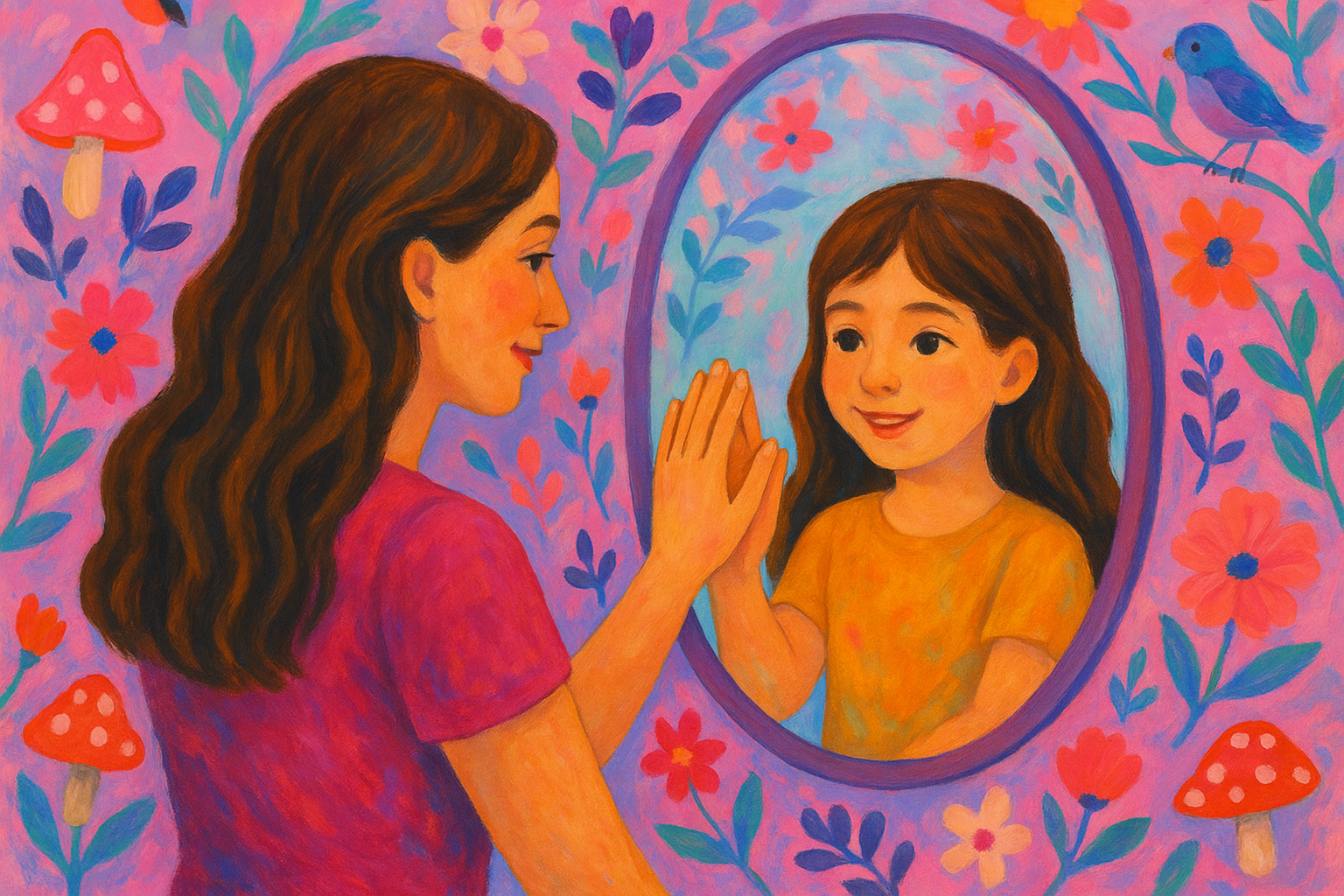
    Children adore themselves. They love looking in the mirror and seeing themselves, just the way they are. They smile, they blow kisses to themselves. There are no judgments.

    As human beings, we are love. It is our birthright to be loved and to give love. It is what keeps us alive and what gives us hope and helps us grow.

    But over time, we start to dim our lights and build walls around our heart. When this happens, we not only close the pathways to love, but also make it hard for others to love us.

    Next time when you look in the mirror, challenge yourself to look in your eyes and refrain from being critical. Be kind to yourself.

    Smile at the person you see, even if you need to imagine yourself as a younger version of you. Acknowledge your inner spirit with your eyes.

    This was always hard for me to do. I found it uncomfortable to look into my eyes, as I knew I would start criticizing myself.

    I’d say things like you look fat, look at the black circles underneath your eyes, look at that zit, you need to take better care of yourself. What are you looking at? There’s nothing to look at.

    At that moment, I’d look away, take a few deep breaths, and remind myself of where that voice was coming from. It was a combination of my own and my parents’.

    They criticized me because of the way they were brought up, and it was how they showed their love and care, but I knew I could choose to say “thank you but no thank you.”

    I would then take another deep breath and look up again.

    At first, it felt kind of like a peek-a-boo game. But once I locked eyes with myself, I acknowledged myself and said, “See this isn’t too bad. I just want to say hi. I see you and I love you. Thanks for playing. Let’s see where this goes after a month. If nothing changes, I’ll stop, I promise.”

    Things did change, though. I felt more peaceful and grounded, and I noticed I smiled more when I was out and about.

    So what are you waiting for? Rekindle your connection with your inner child and you will soon feel the self-love you once had when you were a kid, and you’ll love your life a lot more as a result.

    Girl in a meadow image via Shutterstock

  • Finding Our Inner Child and Having More Fun in Life

    Finding Our Inner Child and Having More Fun in Life

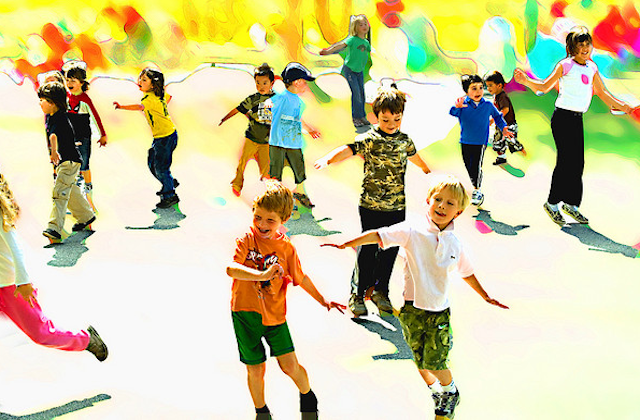
    Happy Kids

    “A healthy attitude is contagious but dont wait to catch it from others. Be a carrier.” ~Tom Stoppard

    Just the other day, I was at my daughter’s school to watch her participate in a spelling bee. As the kids came into the room, I took notice of their manner and their faces.

    They looked excited, frightened, and some, decidedly uninterested. The teacher led them over to their area and promptly told them to sit on the floor, in two straight lines, and no talking please. They complied.

    Some kids pushed at the others to “move over!” Some held their fingers to their lips, loudly shhhhhshing the others. Some opened their notebooks and began to draw or write. Some spoke quietly to the friend next door.

    I smiled as I watched them; some caught my grin and smiled back. I wondered if adults would have fulfilled the teacher’s request so quickly, and with relatively little complaint.

    I pondered how many adults, after being told to sit on the floor, would have protested “I don’t want to sit on the floor,” or “the floor, are you kidding?!”

    How many would have continued talking, ignoring anyone imploring them to quiet down? How many of them would have busied themselves instead of complaining, “This floor is hard, how long is this going to take anyway?!”

    And I wondered how many of them would have spoken to the people next to them as if they were their best friends instead of judging, sizing up.

    Once the spelling bee was under way, I paid close attention to the children in the room. There were four classes participating, with what must have been around 100 kids on that cold, hard floor.

    The children on stage were doing great.

    Some of them struggled with a word here and there but managed to put all the letters in the right order. And when they did, their relief and pride in themselves was more than evident. They slapped their foreheads, dramatically wiped their brows, knees buckling as they pretended to faint punctuated by laughter and camaraderie. They cheered each other, congratulated each other, consoled each other.

    What of those adults? Would they be willing to slap their foreheads? Pretend to faint? Laugh and shrug their shoulders when they messed up?

    What about that camaraderie? Those kids all cheered each other. It didn’t matter whose class they were in, how good or bad a speller they were. It just didn’t matter. Adults won’t speak to you if you’re on a different team.

    Maybe I’m being too hard on the adults. I’m sure there are some of them who’ll stand up on life’s stage, give it their very best shot, and maybe win—then pretend to faint, or jump up and down arms waving yelling, “I did it!” Or lose and shrug their shoulders, knowing there will be another chance, or run into the arms of a friend for consolation. But I think they are few and far between.

    Composure—looking the part for the other eyes—that’s the important thing.

    Take all that sadness or elation and put it away now, my goodness; how old are you? Don’t you know that when you win you’re supposed to look sheepish, uninterested?

    When you lose you’re supposed to pull your shoulders back, steel your face, nod your head, and say, “That’s okay, I’m fine.” When you dance you’re supposed to have “the moves,” do it well or don’t get on the dance floor; people are watching.

    I stayed with my daughter for the better part of that afternoon, following the children as they headed out the door for Physical Education. Once there, they were told to sit down, this time on the concrete. They did.

    I sat down right there on the concrete with them, and they looked at me a little strangely. Then they listened intently while the coach explained the rules of the game they were about to play.

    When he was finished, arms shot up in the air, shaking crazily, bursting with the fire of the questions. What if…? When does…? Who goes…?”

    They asked all their questions until satisfied that they understood. The game was underway. I watched. Some cheated; most played fair. They came back off the court to their spots on the ground exhausted, sweaty, giddy.

    For about a second, some were angry their team didn’t win. But they didn’t dwell. I laughed with them, told them they did really well, and asked if they had fun. They responded with a resounding “yes!” I sat cross-legged, just like them, absorbed the energy, and contemplated the attitude.

    How would I have participated, I wondered. Would I have raised my arm and asked questions? Would I have given it all I had and collapsed on the ground afterward? What, as adults, do we do to get exhausted and giddy?

    After that day I looked around at the adults I encountered. This is what I saw:

    Some were well dressed, on their way to work or a lunch break, talking intently on the phone or rummaging through purses and wallets.

    Some were driving, staring through the windshield, maybe thinking about the mortgage payment or the kids or Mom and Dad or how much it’s going to cost to fix the hot water heater.

    Some were standing in line, checking their watches, rolling their eyes, seemingly counting the number of items the person in front of them had.

    Some were at the park, watching their kids play soccer, looking stressed and yelling, “Kick it! Move up! Go! Go! Go!”

    Where did our little kids go, I wondered? Where did that elated, excited, play the game because it’s fun, run in the rain, catch the drops on my tongue, ask all the questions I need to, hug my best friend and tell them I’m sad person go? Can it be I’ve grown up too much? Have all of us?

    What would happen if the next time we do something well, we ran around in circles and screamed? What would happen if the next time we don’t understand something, we raised our hand, shook it mightily, and asked a question?

    If the next time we’re sad, we grabbed a friend and sobbed into her shoulders? If the next time we sit next to someone we don’t know, we asked them what their favorite color is? What would happen if we danced any way we wanted?

    So what am I going to do the next time? I hope I’ll be able to find the inner child I raised into an adult and give her a voice, an arm to wave, and a song to dance to.

    But for now, I’m going to sit on the floor and color.

    Photo by David Robert Bilwas

  • Stress, Snowfall, and the Inner Child

    Stress, Snowfall, and the Inner Child

    I love when people send me inspiring videos that include their own thoughts, voice, and illustrations. It’s like gaining access to a piece of their soul in one entertaining, thought-provoking work of art.

    This short film by Mike Biagiotti really spoke to me. In his own words, it’s “a meditative journey about one man’s escape to his back country cabin.”

    What does you inner child need today?

  • Act Your Shoe Size

    Act Your Shoe Size

    “A three-year-old child is a being who gets almost as much fun out of a fifty-six dollar set of swings as it does out of finding a small green worm.” ~Bill Vaughn

    You have bills, obligations, and responsibilities.

    And there are people who mean something to you: people who believe in you who you’d like to make proud, people who don’t believe in you who you’d like to prove wrong.

    You have things you want to accomplish, both for you and your family. Things you want to experience to feel you’ve lived a full life. Things that keep you caught in a place in your head where now feels like no more than a vehicle to a better tomorrow.

    Those people and things aren’t going anywhere. You can.

    You can go to a place where anything seems possible. Where you see what’s right in front of you and fully enjoy it without stressing about something that happened or hasn’t happened yet.

    A place where appearances don’t seem so important—so you play, and act silly, and ask questions, and respond honestly, without censoring or judging your feelings.

    A place where you feel good doing things that make you happy, no matter how long they’ll last, because they make you smile right now.

    You can’t go back to three years old—and you probably wouldn’t want to—but you can tap into all that joy.

    Take recess today.

    Give yourself permission to stop worrying and striving. Just be where you are. Focus on the wonder of something simple. Create something and have fun—do it just to have fun. Be curious, and playful, and easily impressed, and open. Even if just for a while.

    A small break and a small shift in thinking can make a significant difference.

    Photo credit