Tag: challenge

  • Your Struggle Does Not Define You: 2 Steps to Start Breaking Free

    Your Struggle Does Not Define You: 2 Steps to Start Breaking Free

    “Your present circumstances don’t determine where you can go; they merely determine where you start.” ~Nido Qubein

    It’s difficult to remember the exact moment when things fell apart.

    By now, so much time has passed that when I think back to that evening, the chain of events is clear up until everything stood still. I don’t remember how I slept after midnight or when he left.

    Just the eerie glow of the flip phone in my darkened apartment as I ignored the calls after I sent the text. The text that set my whole life into forward motion after feeling stuck for years.

    You’d think I would remember the text clearly, but instead I remember how my then-boyfriend rushed into the apartment, reeled when he saw I was safe, and then slid down the wall like a cartoon character, numb with tears.

    I think I sent “I won’t be here tomorrow,” but I can’t be sure. I thought about the tequila that was above the refrigerator and the ibuprofen that was in the medicine cabinet. I did nothing with either.

    It was the second time in my life that I was in such a low, but it was the first time in my life that I realized I had to get help. Because when I saw how much I was hurting someone else, I finally saw how much I was hurting myself.

    I tell this story today and it doesn’t feel like it’s part of me anymore, even though it’s here on this page. After that evening, I drove myself to the doctor and got an antidepressant. Then I drove myself to my first yoga class.

    And this was when things really started to get interesting.

    I considered the possibility that I was not destined for depression my entire life just because it was in my genes.

    In fact, I was not destined to be or do anything I didn’t want to be or do. I was not trapped, not insignificant, not worthless.

    Turns out, our lowest lows reunite us with our resilience.

    A lot of us equate bad days, depression, and whatever else we’re struggling with as roadblocks in our progress toward being a more mindful, happy person.

    Feeling down is not the same thing as moving backward. Depression isn’t regression. Your dis-ease is key to your transformation.

    This is for you on those off-days, those disaster days, those days when you’d rather pull up the covers for no reason at all. This is your two-step process for easing your way into a life that is worth living again.

    1. Identify that you are struggling (with depression or <insert your pain here>).

    You’ve probably heard the first step in the twelve-step program before, proposed by Alcoholics Anonymous: admitting that you can’t control your addiction.

    In this first step, however, it’s all about identifying with your pain without giving up your power to change it. In fact, you’re now fully stepping into your power because you’re present with your problem instead of remaining a victim.

    Hi, hello—yes, I see you there. I feel you and I see you. Now, let’s get on together with this, shall we?

    2. Stop identifying with your struggle.

    This is the most important thing to remember, always: You are not whatever you said you were in step 1. As an example, here’s how I recovered, day by day for two years after I sent the text.

    Every time I felt a spark of hopelessness, I told myself: You are not your depression.

    You may be or have been depressed, but depression is not who you are. That’s difficult to understand, especially when you’re consumed and it feels like there’s no other possible way to feel. Like all the feels have evaporated quicker than sweat on a 100-degree day.

    Until I started taking a yoga class once a week, I didn’t think twice about rethinking who I was at my core. But when you’re laser-focused on bending your body into yoga poses with proper alignment, you have little time to ruminate on what’s happening in your head.

    And so it dawned on me that depression is a temporary experience, just like taking a yoga class. If I could get out of my depressed mind for an hour, I had the potential to get out of my depressed mind all the time.

    You do, too, no matter what’s causing you pain. The pain is the starting point.

    The rest is up to you.

  • Using Our Passions While We Can And Never Giving Up

    Using Our Passions While We Can And Never Giving Up

    Runner

    “Never underestimate the power of passion.” ~Eve Sawyer

    I am a runner in my heart and in my body. Running has provided me with so many life lessons that I cannot even count them. But having to fight for running has given me the most important ones.

    I still remember that day in September of 2002 when I went to my first cross-country practice. The coach told me it would only be an easy six-miler.

    Only? Easy? And a six-miler?

    “How does that even belong to the same sentence?” I wondered. I didn’t even know what miles were (being originally from Europe I only knew kilometers up until that point), but I sensed that six miles was somehow just way too long.

    You see, until 2002, I was an anti-sport, anti-activity, never-ran-a-step-in-my-life, skinny-fat couch potato. I walked the gym mile and even failed gym. Athletics wasn’t in my genes.

    Yet, there I was, at my first cross-country practice suffering through a so-called “easy six-miler.” It’s something that’s easy and short for me now, but back in 2012 it was a pain every step along the way. But I finished.

    My life forever changed that day. I ran my first race four days later. I fell in love with running forever.

    I improved quickly and steadily. I ended up continuing my college running on scholarship. I was All-State, All-Conference, All-Academic team, and I broke my personal record often.

    I worked extremely hard. I was a little running machine. I was a bit of a maniac.

    Post-college I started road racing: 5K-s, 10K-s, half marathons, and more. I ran my first marathon with a Boston Qualifying time… then I got hurt.

    To this day I am not sure what happened. It wasn’t an acute pain, and I hadn’t run through some pain leaving me with a chronic issue. But from one day to another I had terrible hip pain. I couldn’t run; even sitting was painful.

    The MRIs and bone scans proved that it was not a stress fracture, it wasn’t a labrum tear or other cartilage issue, and it was not tendonitis—but it was an excruciating pain. I saw many doctors and physical therapists. Nothing helped.

    I did all the exercises I was prescribed. I wore the clunky motion control shoes with orthotics and heel lifts, as recommended. I did it all. Yet, I was not getting better.

    I was in pain for over two years. Sometimes it was better and I could sit and walk pain-free. Sometimes getting out of bed was a question mark. Actual running was pretty much out of the question. But I longed for running and remained a runner in my heart.

    I kept searching and finally found my answer.

    A chiropractor suggested to change shoes: drop the ideas from other doctors, physical therapists, and shoe store employees; take the orthotics out, leave the heal lift behind, throw away the clunky motion control shoes, and go more natural. Just get some regular shoes without any fancy inserts and without any “new technology.”

    I had nothing to lose. I tried it. Within weeks I was able to run again.

    It has been two years since then. I’ve been running pain-free. I am training and racing again. I am not only a runner in my heart but also in action. Through this experience, I’ve learned:

    1. Do not take anything for granted.

    I appreciated running from that first six-miler on, but I have to admit, since it was in my life every day I somewhat took it for granted. Now, I say thanks every single day for all my past and present running experiences. I start and finish my runs with gratitude for the happiness, freedom, clarity, and connection to nature and health it brings me.

    You never know what is going to happen in the future, so don’t take things granted. Be thankful for people, activities, things, and experiences in your life. If you love somebody, tell them every day.

    2. There are lessons behind every challenge.

    Throughout the years of being hurt I asked, “Why?” so many times: “Why me? Why now? Why? Why? Why?”

    The reality is that having to fight to get running back into my life taught me so much that I would not have learned without getting hurt.

    I learned that I have an enormous amount of strength and will power. I learned to be patient. I learned to trust. I learned how to find passion in life besides running. And I learned not take anything in life for granted. These lessons were reason enough to go through the pain.

    You don’t have to be religious or spiritual to think that everything has a reason. Just keep in mind that there is a lesson to be learned behind every single experience—and then choose to find it.

    3. Trust the process.

    I always knew I would run again. I didn’t know what my answer would be—how I would heal and when I’d be back on the roads—but I knew that I meant to be running again, so I trusted the process.

    Trust wasn’t just a crutch to help me through the difficult times, but more like an inner-guide and certainty that this, combined with time and effort, would guide me to my answer, whatever that may have been.

    Life can get crazy and chaotic. Sometimes you feel like you are lost in the forest and don’t know your way out. But trust the process. Always trust that eventually you find what you are looking for. If you trust the process, you will.

    4. Be open to try anything.

    Imagine if I had been closed-minded. I would have never trusted my chiropractor’s shoe advice. I would not be running pain-free today.

    No matter how crazy or unconventional something sounds, always keep an open mind. Be willing to give anything a shot that resonates with you even a bit. It just may change your life for the better.

    5. Never give up.        

    I was in pain and out of running for over two years. Yet, I never gave up. I am running today because I held onto my passion.

    No matter how tough things get, never give up on your dreams. Remember, it can’t rain forever. After the rain there is sunshine, everything will be brighter, and you will be happy for having stayed the course.

    6. Live with passion.

    Running is my passion and it makes me feel alive, happy, and free. I am able to transfer the joy, happiness, energy, freedom, and clarity I receive from running to other areas of my life, including relationships and work. Thus, my passion for running makes my other areas of life more beautiful too.

    Having a passion and living passionately is key to living happy and healthy life. So go find you passion. Use your passion. Live with passion.

    Photo by Aaron

  • How to ROCK Your Rock Bottom and Reinvent Yourself

    How to ROCK Your Rock Bottom and Reinvent Yourself

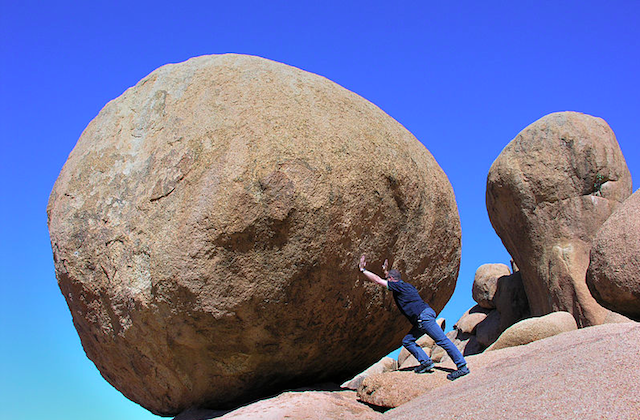
    Pushing Giant Boulder

    “When something bad happens you have three choices. You can let it define you, let it destroy you, or you can let it strengthen you.” ~Unknown

    I wasn’t always the ridiculously attractive (and humble) Jason you see before you. No, from a very young age I was overweight. I am an only child raised by a single, very hard-working mom. Her crazy work schedule meant that cooking meals was rarely a feasible option. This meant we ate at restaurants or had fast food quite often.

    Couple that with my extreme TV watching habits and only going outside when forced, and it’s easy to see how my unhealthy lifestyle led me to 250 pounds by the age of 15! You know, the age where kids are super compassionate and never cruel toward those who look different (insert sarcastic grunt here).

    Sad Kid to Sadder Adult 

    My adult life wasn’t any easier. Those patterns of poor eating and never exercising created a 330-pound 30-year-old.

    I had now made the transition from a chubby kid to a morbidly obese adult.

    You would think the high probability of various health problems and the very real concern of a premature death would wake me up, but sadly, it did not.

    For me, it wasn’t about health. It was about feeling like I never really fit in (literally and figuratively). From seat belts on planes to school desks, “fitting in” was a frustrating endeavor.

    I leveraged the only thing I thought I was good at, making others laugh, to create relationships since I thought I had nothing else to offer.

    I was always in the “friend zone” with girls (which was hell for a hopeless romantic like me), was made fun by the “cool kids,” and never felt comfortable in my own skin. My appearance, and the perception that everyone was constantly judging me, consumed my thinking on a daily basis.

    I was so sad, stressed, and depressed all because of my waistline and what I believed it meant about my self-worth.

    Sure, I became “successful” as an adult; prestigious job with a big salary, a condo in a ritzy-ish part of town, and a pimp ride, but that stuff was all a front!

    I couldn’t seem to decide what to do to alter the course I was on. And I was so hopeless sometimes that I don’t know if I would have taken the action even if I knew what to do!

    Then the Bank Got Involved 

    I remember like it was yesterday. I was at my highest weight, the Director of a technology firm, stomping across the lobby of our office building, angrily phoning the bank because my debit card was declined when I tried to make a purchase online.

    Fat JG was kind of a jerk sometimes—short on patience and quick to lose my temper whenever I felt like it. I was still the same loving, caring, and giving JG that I am now, but when I had a tantrum, it was like a vortex of schmuck that would suck everyone in! 

    I was giving the bank rep “the business.”

    “I know I have money in the account. Why is my damn card being declined? This is bullsh*t!”

    To which she replied, “I’m sorry for the inconvenience,” (you know the script) “but we have closed your card due to suspicious activity.”

    “Suspicious activity?” I inquired, “What are you talking about?!?!”

    “Well,” she continued, “yesterday there were four transactions at various fast food locations all across Orlando. It seemed suspicious that so many transactions would occur in a single day at different fast food establishments, so we shut down the card to ensure it hadn’t been stolen.” 

    The phone went silent. I was speechless. The charges were not fraudulent. They were mine. I had eaten at four different fast food restaurants in one day.

    I knew it was unhealthy, but it was just the norm for me. A multi-billion dollar corporation, however, knew something wasn’t right. My bank had essentially just told me I was an out-of-control fat ass and they were worried about me. Shame.

    I had truly hit rock bottom. 

    Let Your Future Pain Motivate You Now

    I had experienced my own rock bottom at the hands of the customer service rep at the bank, and it was now time for me to really reflect on what I was doing with my life.

    I was so lucky to have my wife Alicia to talk this through. (I could not have done this alone!) We talked about what I already missed out on and how this default life of mine was not going to get any better (it would actually get worse) unless I took bold action to change the trajectory of my health and life.

    I visualized the pain I was causing for my loved ones, not just myself. I saw a future where my wife became a widow because I had a heart attack. Where my mother would bury me, something a parent should never have to do.

    I pictured that my unborn children wouldn’t have their father at their high school graduation or wedding.

    Why was I being so selfish, taking away this joy from myself and from all of them?

    These are the questions that “rock bottom” hurls at your head and you owe it to yourself, and everyone you love, to answer them!

    Time for Some Action 

    Drastic times called for drastic measures. After researching for a year and going through every test, physical and psychological, they could throw at me, I decided to have weight loss surgery.  This was a huge decision that would require 100% commitment to healthy living if I were to be successful.

    Some people think this is an overnight fix, but it is far from it. Since surgery, I live a very healthy lifestyle including regular cardio and strength training, a vegetarian diet, and lots of thought about everything that goes into my pie hole. (I still splurge sometimes; there is no need to deprive ourselves of indulgence once in a while.)

    Prepping for, having and recovering from surgery was a six-month process, followed by another year of hard work to lose the rest of the weight. And now, almost three years later, I have lost 130lbs, kept it off and feel like 100 grand (the currency, not the candy bar)!

    My entire outlook on life has changed. I now know that if I was able to take action to reduce (or eliminate) issues in one area of my life, that doing the same for anything else I am, or will be challenged by in the future, is possible!

    Gravel or Boulder; The Choice is Yours

    Here is the beauty of rock bottom; it can have multiple interpretations.

    To me, the rock signifies heaviness, stillness, being centered. It is an opportunity, weighed down by this tremendous structure, to dig deep and decide in that moment what to do next, as if nothing else matters. Because in that moment, nothing else does.

    You can choose to be crushed by the rock. You can become gravel that outside circumstances push deeper into the earth, with no control over its own destiny. You can make excuses and pretend that this is your only option.

    But you would be wrong.

    There is another option. You can become the rock! You can use it as an example to become a boulder that is strong, unshakeable, and can steamroll anything in its path given the right direction and momentum.

    You can use the rock as a stepping stone (pun intended) to reach heights of re-invention that may have otherwise felt impossible.

    Remember, once you hit rock bottom, there is no place else to go but up!

    You Don’t Have to Wait for Rock Bottom to Rock It!

    Rock bottom did the trick for me, but the smarter way to conquer life’s difficulties is to anticipate when rock bottom may be a few feet away and to take action!

    What challenges are you facing that need action?

    Think of one, write it at the top of a sheet of paper, and then truthfully answer the following questions:

    1. What am I missing out on (personally, relationships, joy, professionally) if I don’t do something to change it?

    2. What do I stand to gain (personally, relationships, joy, professionally) if I take bold action to overcome it?

    3. Who are three people I can reach out to this week, to get guidance, direction or ideas on how to handle it?

    4. What is the smallest step I can take right now that will lead me in the direction of overcoming it?

    If you are reading this, it means you are the type of person that is committed to living on purpose and are fully capable of overcoming any challenges you may encounter. Rock on my friends, rock on!

    Photo by Hansueli Krapf

  • Your Loving Presence Is Enough: Helping Someone Who’s Hurting

    Your Loving Presence Is Enough: Helping Someone Who’s Hurting

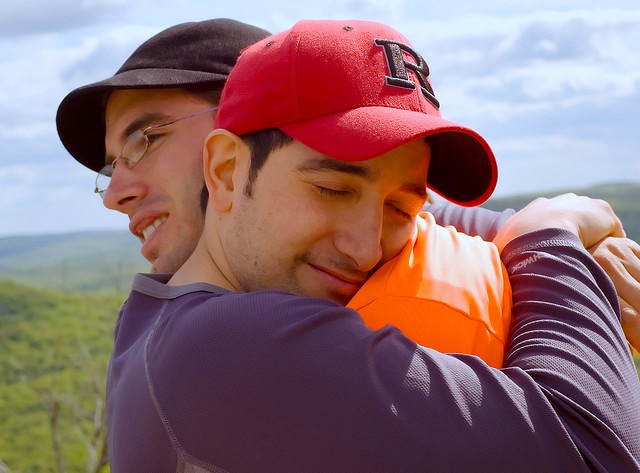
    Hugging

    “Wisdom is nothing more than healed pain.” ~Robert Gary Lee

    As the only child of a single parent, my family of two was small and our relationship could be intense.

    My southern belle mom, with her stories and easy laugh, her quick wit, and her love of all things literary was the mom who all my high school friends adored and loved—the one who my teenage friends could talk to when they were too angry or irritated with their own mother.

    I loved her too, but I also worried about her. A lot. Because I knew a secret about her that no one else did: she was an alcoholic. Not a big, scary, yelling, hitting alcoholic, but a quiet, light dimming, slow fade alcoholic. 

    My mom loved me, she provided for me, but her own grief and story about her past could take over her brain and take her far away, down into her beer bottle, along with her ever present cigarettes.

    When she told me during my senior year of college that she was entering outpatient chemical dependency treatment, that heavy weight of worry felt lifted from my shoulders. I hoped that this would give her a chance at a happier life.

    As my mom healed, I did too, and got more of my own life in action. I went to graduate school and moved across the country and back. I started a relationship with the man who would become my husband. I got my first real professional job.

    So when the pain in her leg was diagnosed as cancer—terminal stage 4 Lung Cancer, spread to her bone, with a prognosis of six months to live—it was a huge blow.

    Through six months of treatments that left her tired and nauseated, she persevered. But then another blow, though not the one I anticipated: leaving a doctor’s appointment, she had a stroke and fell down unconscious in the parking lot.

    The drive from my house to the hospital where she was taken was one of the longest four hours of my life, not knowing what awaited me at the end.

    After three hard weeks of physical therapy, my mom returned home. But she wasn’t the same. The parts of my mom that I and others most valued and relied upon—her humor, empathy, and listening ear—were gone, stripped away by the stroke like a cheap veneer, never to return. 

    And while she wasn’t drinking or smoking any more, my worry returned, not knowing when the proverbial other shoe would drop. Was she really able to live alone in a two-story house? Was I being a bad daughter by not moving back to my hometown to care for her?

    On top of the worry, the impact of the stroke was a bitter pill to swallow. While others marveled at her longevity with such an advanced cancer diagnosis, I felt guilty and angry: the whole situation felt like a rip-off. My mom was still alive, but it was hardly much of a life, in my opinion.

    I wondered why she was still alive, when she was barely able to enjoy the life she was leading. 

    Before her stroke, I’d clung to some romantic notion that her illness might give her opportunity to finally make sense of the hardships she’d endured through much of her life.

    I cared for her the best I could from afar, knowing that it was less than ideal, and I continued to craft my own independent life, as well. Over the next eight years, I married my boyfriend, got promoted at work, and got pregnant with my first child.

    Throughout my pregnancy, my mom had more troubles—a heart attack and increased breathing problems. The day we brought our newborn son home from the hospital, my mom called saying she was in the hospital with shortness of breath.

    Instead of relishing the first sweet days of my son’s life, my first days of parenthood were flooded with the same familiar worry, guilt, and anxiety.

    My mom spent the next three weeks bouncing between home, hospital, and residential hospice.

    She clearly was in denial about what was happening to her: as the survivor she was, she saw it as just another difficulty to overcome, anticipating another victory in her long triumph over cancer. She struggled and resisted what was happening to her.

    This time, she couldn’t outrun it: I held and stroked her sweet hand as she took her last breaths, and nursed my baby five minutes later.

    In the ten years since my mom’s death, I’ve realized the person who needed to learn and transform from her illness and death wasn’t her: it was me.

    My worry, judgment, guilt, fear, and anxiety couldn’t fix the past, cure her cancer, or protect us from the future. Those emotional states and feelings only could inflict more pain, distance, and suffering.

    Throughout my mom’s life, including illness and death, all I could do was be with her and love her, as best I could, from moment to moment. Our loving presence with each other was often the most useful medicine for either of us during the hardest times.

    Because no matter how much we might wish otherwise, there will always be some difficult times in life. It’s pretty much a guaranteed part of the deal with being a human.

    So when you or someone you love is hurting or suffering, rather than trying to outrun any difficult feelings, such guilt, worry, judgment, fear, or anxiety, see if you can stop and find a grounding place within yourself, such as the regular rhythm of your breath.

    See if you can even briefly be present to the hurt or suffering, as unpleasant as it may be, without needing to change it.

    In first witnessing and just simply being present to our own or others’ difficulties, rather than automatically trying to change or fix the situation, we are of great service and can create deep healing in ourselves and others.

    Through being with the situation, as it is, we can also better discern what our next best actions should be.

    Instead of getting caught up and carried away by intense emotions, disappointments, grief, anxiety, or any other difficulty, being with the experience as it is and doing as best we can in that moment is often the quickest and least painful way through challenging times.

    Regardless of what difficulty your loved ones face, trust that your loving presence is all that is required. And know it is completely enough.

    Photo by David Goehring

  • 4 Lessons on Surviving and Thriving When Times Are Tough

    4 Lessons on Surviving and Thriving When Times Are Tough

    Joyful

    “Every day may not be good, but there’s something good in every day.” ~Unknown

    Five months ago, I was sitting outside with a friend when a mosquito bit me under the arm. I went to scratch the bite and felt a lump on the side of my breast. My doctor sent me for a mammogram, ultrasound, and fine needle biopsy. I had breast cancer.

    I am a 44-year-old single mother of two beautiful young girls with primary custody. I am also Director of a psychology practice and self-employed.

    The day I was diagnosed was the day I lost the carefully constructed control I thought I had mastered in my life. I juggled many balls in the air every day, and they all came falling down.

    I strongly believe in salvaging good from bad, but I struggled with finding the silver lining. The fear and anxiety waiting on test results to find out if the cancer had spread were crippling, and I was haunted by dark thoughts of death.

    I was lucky. The cancer had not spread, as far as they could tell. The tumor was contained and I had a genetic test done that showed minimal benefit from chemotherapy, assuming I had lumpectomy surgery, radiation, and then took a hormone drug called Tamoxifen for the next ten years.

    I think I have found the silver lining in this journey, and my dearest hope, over and above the cancer being gone for good, is that I hold onto these lessons:

    1. Let go.

    My life before breast cancer was highly organized, disciplined, and controlled. Every spare moment was productive. I saw clients back-to-back, I ferried my daughters to activities, I crammed my weekends with social events, and I had multiple to-do lists for each facet of my life.

    I have spent the past five months going where medical people tell me to go, doing what they tell me to do, and waiting. The radiation has made me extremely tired and my brain is simply not functioning.

    I returned to work three weeks after surgery in an advanced state of denial, and kept on trying to be the old me but finally accepted I was not.

    I don’t do very much now. I go to radiation treatment each day. I come home and do some household chores and then rest. For hours. I may read a book, listen to music, play the piano, I even started a painting. I then pick my girls up from school and spend time with them. And it is a revelation.

    Control is an illusion. Letting go of control is liberation.

    2. Stop asking, “Why me?”

    Why not me? That is the profound answer I have come up with to answer this most difficult of questions. Bad things happen to good people and life is not fair. The test is genuinely is how we cope with the adversity thrown at us.

    I am proud of how I have coped with having breast cancer. I have remained psychologically intact, albeit bruised and battered, and allowed myself to be vulnerable. I have dealt with the spectre of dying and have gotten my affairs in order just in case. I also now have a bucket list, and I am crossing things off one by one.

    The purpose of life, I have decided, is not to be happy. It is to realize our potential, to love and to be loved, to do new things and take calculated risks. I do not want to get to the end of my life, be it next year or in forty years, and have regrets.

    The biggest regrets are the things we did not say or do. So focus on what you can do instead of dwelling on why there are some things you can’t.

    3. Ask for support.

    I have never been good at asking for or accepting help. I have asked people to come to appointments with me, to pick up my children, to come and sit with me while I cry. I have never been good at crying either, and I have had crying jags that lasted hours since being diagnosed.

    I had friends over one day and as they were leaving, I slid to the floor and could not get up because I was sobbing so hard. They bundled the girls and me, took us to their home, and looked after us, me weakly protesting that I was fine. The loss of control and identity associated with melting down felt soul destroying.

    So many wonderful people have offered to help, and I am learning to say, “Yes, thank you, that would be lovely.” And it has made me and my relationships stronger, not weaker.

    Sometimes we have to ask for what we need and accept being vulnerable.

    4. Practice gratitude.

    In the blur of normal life, I think we are all guilty of wanting more. We forget to be grateful for what we have, and at its most fundamental, that is life. I would love to be able to write that I am now genuinely grateful for my life, but this would not be entirely true just yet. I slip into denial at times and fall back on old habits, but I am learning.

    I am grateful for the immense generosity of my parents, my friends, and my boyfriend, who have given of their time, money, and emotional energy. The parents at my children’s school who delivered us meals. My work colleagues, who have kept my business going, and acquaintances who have contacted me to express their concern.

    I have let go of the disappointment I felt over those people who I expected to be there for me but were not.

    I have also found myself grateful for things that I took for granted. For my beautiful children, a vase of flowers in the hallway, a good cup of coffee, a flock of birds on my walk, or the ability to pay the bills. I am grateful that I am not dead.

    Mindfulness and gratitude let us stay in the present and ward off anxiety, which comes from living in the future.

    I obviously do not know what the future will hold. My chance of dying from breast cancer related illness is a lot higher than average, but I am so lucky. I am lucky to be alive, and so are you.

    Every day we are not in the ground is a good day, a chance to remake ourselves and our lives into things of value and beauty. Tragedy and trauma can have silver linings. Sometimes it is hard to find them and even harder to hold on to them, but I am holding on tight.

    Photo by geralt

  • Make a Tough Situation Good: One Question That Changes Everything

    Make a Tough Situation Good: One Question That Changes Everything

    Thinking Man

    “The last of one’s freedoms is to choose one’s attitude in any given circumstance.” ~Viktor E. Frankl

    For my livelihood, I lead workshops on how to let go of stress and experience deeper happiness. My occupation makes my occasional meltdowns all the more embarrassing. Fortunately, a meltdown I had last year led me to a question that completely changed how I view difficult situations in my life.

    As I was checking in at the airport a few months ago, I was told I did not have a ticket for my cross-country flight. Fortunately, I had my confirmation number with me—which I promptly gave to the agent.

    “I’m sorry,” she said. “Although you have a confirmation number, you’re not in our system. You can’t board this flight.”

    A wave of self-pity, anger, and anxiety seared through my body. Fifty people were expecting me in New York City the next morning to talk about how to be happier. Yet, here I was fully stressed out and making this situation mean I’m an unlucky hypocrite.

    I asked the ticket agent if there were any more tickets available.

    “Yes,” she said enthusiastically as she typed away on her keyboard.

    “Okay,” I thought. “Maybe it’s not going to be such a bad day after all. I’ve been saved.”

    She continued, “But if you buy the same ticket you had before, instead of $600 round trip, it will cost you $3200.”

    “I was right the first time,” I thought. “This means I’ve been totally screwed.”

    I needed to get to New York ASAP, so I reluctantly, angrily, and self-righteously bought the stupid ticket.

    The irony of the situation did not escape me. Here I was feeling self-pity and totally stressed out while buying a ticket to lead a workshop on happiness. The universe definitely has a sense of humor.

    For a long time I’ve known I can choose my attitude and the meaning I give the events in my life. Yet, there is a difference between knowing something intellectually and knowing it when the crap hits the fan.

    Fortunately, the “ticket fiasco” I went through that day led me to create a simple question I can ask myself that has greatly impacted my daily life.

    To make a long story short, I got to New York on time and led the workshop the next morning. That night I talked to the folks at United Air Lines and they confessed that my not “being in the system” was totally their fault.

    In fact, they decided to refund the $3200 fare I had paid that day plus what I had previously paid for my ticket.

    I actually ended up making $600. Now I was feeling like life is a bowl of cherries and everything works out for the best. It seemed like I had gone through a lot of bad feelings for nothing.

    Then it hit me. I realized I often get “worked up” about things that frequently end up working out for the best. I wondered if there was a way to short-circuit this process so I didn’t spend so much time being unnecessarily stressed. 

    As I pondered this situation, I wondered, “What question could I ask myself that would help me when faced with difficult situations?” I saw that when things occur that I don’t like, I’m basically asking myself “What could be bad about this?”

    Since I ask that question, my brain feels obliged to give me many reasons why something sucks.

    So I wondered what it would be like to ask myself, “What could (potentially) be good about this?” when facing challenging situations.

    In retrospect, I realized that had I asked this question when finding out I had no ticket, I might have come up with a couple of good answers.

    I might have guessed it would ultimately lead to a good story, or a new technique—or even a refund beyond what I had paid. Of course, that’s what ended up happening, but it would have saved me a lot of grief had I imagined that outcome while in the ticket line.

    Of course, no one knows what the future holds. Yet, it seems we habitually make the challenging events of our life mean things that lead to bad feelings.

    If you’re going to make up things about the future, you may as well come up with a meaning that empowers you—rather than stresses you out.

    For better or worse, over the next few weeks I had plenty of opportunities to practice this simple method. For example, when my tax bill was unexpectedly high, I asked, “What could be good about this?”

    That answer was easy. It could mean I’m making more money than ever before; it could mean I get to help contribute to the government so they can provide services to people less fortunate than I.

    When I got sick, I asked, “What could potentially be good about this?”

    Begrudgingly I answered, “It’s a helpful wake up reminder that I need to take my vitamins and not work too many hours.” Though still sick, I immediately felt better now that I had attached an empowering meaning to my illness.

    The ability to quickly create a positive meaning to the events in our life is a great aid to being happy. Yet, this is the exact opposite of what our mind normally does. We normally create negative, disempowering meanings whenever things seemingly “go wrong.”

    The question, “What could (potentially) be good about this?” is a simple way to change how we interpret each situation in our life. So when you get in an argument with your partner, you can see that disagreement as a doorway to deeper intimacy—rather than a doorway to depression.

    When the argument is over, you don’t really know what the future holds. You may as well create a meaning that empowers you. Through such empowerment, you’ll feel better and you’ll be more likely to act in a helpful manner.

    Nowadays, I frequently ask myself, “What could be good about this?” I always come up with at least two answers, even if I don’t believe them. I find that it immediately makes me feel better—and more empowered.

    Instead of life feeling like a battle I need to put up with, it feels like I’m being given useful challenges that will eventually lead to a happy ending. It’s a much better way to live than being the victim of a mind that always delivers bad news.

    Photo by wesleynitsckie

  • How to Bounce Back from a Hard Time and Come Out Stronger

    How to Bounce Back from a Hard Time and Come Out Stronger

    “How we remember, what we remember, and why we remember, form the most personal map of our individuality.” ~Christina Baldwin

    Look in the mirror. Who returns your gaze?

    Is the face looking back at you a fulfilled being, or a mere shell of longing for something better?

    If you would’ve asked me these questions a year ago, I wouldn’t have been able to tell you.

    Fresh out of college and on a mission to convince my ego of its importance, I began down a path that, unbeknownst to me at the time, would teach me more about myself than I’d ever committed to learning before.

    It taught me who I am.

    As I suffered through recovery from a brain tumor, the wild emotional rollercoaster of becoming a tech entrepreneur, social insecurities, and the straining of interpersonal relationships, my ego assumed the form of a beaten and battered soldier, pushed to the brink of surrender.

    And that’s when the magic happened.

    Three things occurred in this process. If you’re going through a hard time, these may help you come out the other side better and stronger.

    1. Understand your limitations.

    Before my tumor diagnosis and the ensuing melee between my thoughts and the reality of the outside world, I had never really needed to push myself. Success came easily.

    Sure, I worked hard, but nothing like the excruciating mental work and rapid maturation of emotional intelligence required to successfully trudge through to the other side of those trying years.

    I had no need to test my limits before I was actually challenged.

    But amidst the storm, I learned that I’d just begun to push. There was still a lot of room to grow—and nothing to be afraid of.

    So I decided to perform another form of slow torture on myself.

    I started a company.

    Eighteen months later, I was broke. Like “barely pay the rent, eat only oatmeal, and do laundry once a month” broke. Things didn’t work out financially, to say the least. But on the flip side, starting that company was the most incredible, educational thing I’ve ever done.

    I spent eighteen months pushing myself to the brink of what I considered possible—doing things that I never could’ve foreseen myself doing.

    Yet I did them, all in a short amount of time. At times the impossible became possible. Or it was just outside my reach. But I saw it.

    It was as if the mere act of doing opened my eyes to an invisible line that I could not cross, but I could push back—further and further until eventually I was in new, uncharted territory.

    We all have a line like that—our limit. It awaits acknowledgement, and it becomes an opportunity.

    2. Understand your value.

    Before pushing my limits, I never had a grasp on how much value I bring to the table.

    For example, I’ve always been good at science—heck, I’ve got a degree in neuroscience—so I allowed myself to be grouped into a certain categorization, one that I wasn’t particularly content with.

    Because I’m also an artist. With engineer tendencies. And Asperger focus. And I love business, innovation, and technology. And writing about issues as seemingly mundane as fitness by reaching in and pulling them out by the heart, Temple of Doom style.

    I didn’t understand my value before because I had never taken the time to give it away. You cannot give that which you don’t have.

    Taking the time to push boundaries and dive headfirst into things that scared the heck out of me—voluntarily or involuntarily—forced me to reassess just how valuable I actually am.

    I can do a lot of things! And I’m sure you can too.

    Many people fall into the trap of not knowing what their gifts are, or what value they can bring to others.

    And they never actually take any action in terms of seeing just how much they have to give.

    Sitting in a room thinking about what gifts you may have will not help anyone. Going out into the world and succeeding or failing at something will. A gift is meant to be given. How can you know your gifts until you try to give something, anything, to someone else?

    Don’t make the mistake of underestimating your worth.

    It is far better to overestimate yourself and fail, to take that learning experience and recalibrate your direction, than to underestimate your potential and miss out on opportunities in the process.

    When I finally accepted my gifts and embraced the idea that I could use them to not only make a living, but also to create a meaningful life—a congruent existence that mattered—I was instantly free to explore.

    Free to pursue. To create. To add value.

    Will I continue to overreach? Fall flat on my face? Fail?

    Of course; only a fool would expect not to. But at least I can rest easy knowing that I’ll never again under-reach. I’ll never regret a chance untaken.

    Because heck, I’m going for it, and you should too!

    3. Surrender yourself.

    Life is a journey.

    And when, after climbing mountains and enduring valleys, you’ve come to that point in the trail where you’re weathered and beaten, your feet pulse from the incessant pounding, and your mind screams to please stop, you realize that you’ll never reach the end of this journey alone.

    That alone, you’re too insignificant to go on.

    That’s when you surrender yourself.

    You don’t quit, no. Instead, you acknowledge your role in the big picture. That’s when you learn your place in relation to all other things. And you can relate your purpose to the plans of that kingdom.

    So when I fully absorbed the fact that I am here to serve others, to use my gifts selflessly, and in turn reap the goodwill I sow, well, I gained a purpose.

    For the first time ever, life became so overwhelming that I realized I couldn’t go through it alone, like I had been. Growing up, I barely talked to anyone, including my parents. I began reaching back out to them, finally asking for help, and a strong bond resulted.

    I also always focused on my gifts as something to be cherished and cultivated for my own purposes—so I could be outstanding or excellent at something. But this was leaving out a key ingredient to true success: context.

    Without someone else to receive it, a gift is nothing more than a selfish toy. Something we use to amuse ourselves.

    To truly find your relation to other things, you must first surrender your self. Start relying on other people for help and support. Start giving freely of your gifts. Define a religious purpose. Self-discovery is a long, arduous process, but the alternative, complacency, is fatal.

    We already have far too many ill-defined shells of individuals floating through life, not making a difference, not making an impact, and, quite frankly, not even living.

    Ghosts.

    What we need is more warm bodies.

    More passionately congruent, ambitiously purposeful individuals—people who know that what they do matters.

    People who understand their value and limitations, and have not only brushed up against their dreams, but embraced them.

    So from here I breathe my challenge to you: Will you realize that you matter?

    Photo by Zach Dischner

  • 3 Ways to Feel Good When Things Seem Bad

    3 Ways to Feel Good When Things Seem Bad

    “It isn’t what happens to us that causes us to suffer; it’s what we say to ourselves about what happens.” ~Pema Chodron

    Have you ever had something happen in your life that completely changed everything?

    Wham. Suddenly you haven’t left your bedroom in days, you can’t remember what it feels like to shower, and it’s clear the only friend you can really count on is your cat. 

    And whether it’s a major life-suck event or a minor one, the question is: How can I feel contented and calm when things don’t go to plan?

    That is what this post is about. Because a while back I had a M. A. J. O. R. Major event. It went like this:

    I’d just graduated from college. I had a Masters Degree. In science. Human nutrition science, in case you’re wondering. I was excited about life!

    Sure, I had a ridiculous door-to-door research job and my roommate was annoying, but I had plans—I’ll move in with my boyfriend, get a better job, travel, start a family, hang out with all my amazing friends, and live an awesome life.

    But then I got sick. The kind of sick where raising your arms above your head makes you want to take a nap. And instead of starting the amazing life I’d planned, I moved home with my parents.

    It was a shock, to say the least. Before that, I was tough. I hiked. My friends liked me. I stayed up late. I wasn’t a sick person.

    And while my parents are sweet and kind, living in their basement in small town New Zealand, watching daytime re-runs of Dr Quinn Medicine Woman, and hanging out with a fluffy cat called Whisky was not the plan.

    It wasn’t so bad at first. But months went by, then years, and it seemed no matter what I did, I was still sick.

    I thought, why did this happen to me?

    I cried. A lot. For seemingly no reason. And if someone asked why I was crying, I’d say, “I’m just so tired.” I cried so much some days that I’d go home and laugh with my sister on the phone over who I’d cried in front of that day. It was comical.

    That was a few years ago now. And, of course, the whole experience turned out to be a huge gift. They often are, in my experience, anyway, but that’s getting ahead of things.

    Here are three insights that helped during those “you’ve got to be freaking kidding me” times:

    1. There’s a healing side to pain.

    When a challenging event happens—a breakup, a sickness, or having your leopard pink car seat covers stolen—the human mind, being what it is, thinks this is why you feel badly.

    You hear it all the time: “Oh, you poor thing for losing your car seat covers.” Or, “She’s such a rat to do this to you.”

    The truth is, it’s your perception of the situation that makes you feel bad. This means that no matter how crumpled-in and dysfunctional you feel, you’re not. It’s just your thoughts that are a bit wonky. And actually, your thoughts on this were always wonky; the situation just exposed them.

    Take my situation. Everything I’d based my self-esteem on was gone: work, grades, friends, boyfriend, the ability to sit up straight for more than half an hour.

    I thought I was upset because I was sick, when the truth was, my situation had triggered every negative belief I had about myself. Things like:

    “I’m only lovable if people like me.” “I’m only worthwhile if I’m busy doing things.”

    I so strongly identified with all the things I did that when you took them away, I felt miserable. I’d been given the opportunity to see what I really thought about myself.

    Someone could have told me “you’re worthy and lovable,” and I might have intellectually known this, but I didn’t feel it.

    What I began to realize was that behind the pain, over time, my faulty beliefs were shifting. My sense of self-worth was beginning to heal by itself.

    The pain is the faulty belief system being ripped out by its roots. You feel like you’re losing something dear. The trick is to understand that it’s just a faulty belief going away. And beneath it lays a pocket of self-love that you haven’t previously been able to access.

    As poet Kahlil Gibran says, “Your pain is the breaking of the shell that encloses your understanding. Even as the stone of the fruit must break, that its heart may stand in the sun, so must you know pain.”

    2. Pain fades when we let go of expectations.

    Most of us live in an intellectual way. We make plans for our life and then we try and follow them through. We think we know the best way for our life to proceed.

    The truth is, a large part of our pain is caused by an attachment to our expectations.

    For example, one of the reasons I felt so bone achingly sorry for myself was because I had a plan for how to have a good life—and it didn’t include Dr. Quinn.

    I thought success came from going to college, getting a good job, and having a family. No one said anything about spending all this time in bed. But actually, it was the best thing for me.

    To illustrate you how powerful your expectations are, try this exercise:

    First, imagine you’re me.

    Now, imagine you’d grown up thinking the best way to have an awesome life was to spend five years in bed cross-stitching cushions. That it was something everyone did.

    “Oh yeah,” you’d say to your friend, “I’m just off to do my five-years-in-bed years.”

    And they’d be like, “Oh cool. I hear you learn such amazing things, like how to feel self-assured, and you get clarity on your life direction, and you start to feel that inner calm we’re always reading about.”

    Seriously.

    Now think about your current situation and imagine that for your whole life, you believed that what is happening to you was going to happen. And not only that, but it’s the absolute best thing to happen.

    So much of the pain we feel is because we can’t let go of how we think life should look. Your mind thinks it knows the best way for your life to work out—but simply put, it doesn’t; the plan it had was flawed in the first place.

    Your mind can only see your life as it’s showing up right now. There is a bigger picture.

    3. You’re doing fine.

    Learning about personal awareness and healing can be such a helpful thing, but remember, there’s no right or wrong way to feel.

    Feeling grateful and “being positive” and so on is perfectly fine, and sure, it can be helpful, but if you don’t feel like it all the time, don’t worry about it.

    Instead of attaching a judgment to how you’re feeling or what you’re thinking, try just noticing it.

    I believe the act of simply noticing and accepting how things are, right now—no matter how messy and dysfunctional they seem—is the most powerful, healing thing you can do.

    Photo by Dahl-Face Photography

  • Surviving and Thriving: 3 Lessons About Dealing with Hard Times

    Surviving and Thriving: 3 Lessons About Dealing with Hard Times

    Lonely Person

    “Your current safe boundaries were once unknown frontiers.” ~Unknown

    Lying in a hospital bed, hooked up to an IV and massive machines, I seriously considered the possibility that I was having a nightmare. Everything felt so surreal.

    At 22 years old, my life was full of promise and potential. I had recently graduated from college and it was a time of beginnings. I was living in Manhattan and had begun working in music publishing.

    I had no idea that a late night trip to the emergency room due to a rapid heart rate would result in a weeklong hospitalization.

    When extreme, unexpected, life changing, or scary things happen, how can we not only survive them but also grow from the experience?

    1. Embrace the situation you’re in.

    I was in the emergency room when the doctor gravely told me this was serious. My thyroid was pumping out gigantic quantities of thyroid hormone, leading to a potentially fatal thyroid storm. I was wheeled upstairs and admitted to the “step down” unit, one step down in care from ICU.

    Hearing the doctor’s extreme words, I was shocked into inaction. I was so taken off guard that fighting or fleeing didn’t even cross my mind. I simply stayed where I was, lying on the bed, and prepared myself to accept this crazy situation and cope with whatever happened next. (more…)

  • 5 Tips to Help You Embrace Extreme Change

    5 Tips to Help You Embrace Extreme Change

    “The only way to make sense out of change is to plunge into it, move with it, and join the dance” ~Alan Watts

    My obsession at an early age became to follow my heart—a life’s search for meaning, adventure, and enlightenment.

    This search has been remarkable, a journey that has brought me to fascinating places for extended stays (Japan, the UK, Australia, you name the place) and has led me to relationships with some of the most interesting, loving people from around the globe.

    As exhilarating the feeling of following your heart can be, it’s not always the yellow brick road we envision. The journey can be ambiguous, and it can toss us around like in an airplane cabin during times of heavy turbulence.

    In the midst of my latest adventure of working for a small marketing agency in Sydney, Australia, I received word from my general manager that my position would be eliminated.

    This forfeited my visa rights to stay in the country. Instead of being overcome by the drama-loving ego, I felt a strong sense of inner peace, as if a path to an important journey lay ahead.

    Sometimes spiritual journeys are not the fuzzy-feely ones we see all too often in modern pop culture, Eat, Pray, Love being one of them. Spiritual journeys can be physically challenging, emotionally daunting, and can require deep inner strength.  

    I received word that my best friend passed away shortly after arriving back in the States from Australia. Kari Bowerman had been pursing her passion for travel and passed away while vacationing in Vietnam. Her young travel companion (Cathy Huynh) passed away two days later.

    We live in an ever-changing world, and we need to fine-tune our souls to release inner resistance and fully open to the journey—good, bad, or horrific. Here are five things I’ve learned that help in embracing extreme change:

    1. Open your heart to divine guidance.

    I craved a coffee immediately following the meeting with my general manager about my non-existent work visa. I had been on my latest health kick and had been caffeine-free for 65 days at the time.

    I simply could not fight the compulsive urge at that moment and made a firm decision to make the 20-minute walk to my favorite quaint coffee shop in Sydney.

    The exact minute I set foot in the coffee shop I was overcome with an extremely positive feeling. A song I hadn’t heard in years came over the airwaves by a famous one-hit wonder of his time. The lyrics were so comforting, and in that moment I knew everything was as it should be. (more…)

  • Letting People Challenge You So You Can Learn and Grow

    Letting People Challenge You So You Can Learn and Grow

    “The final proof of greatness lies in being able to endure criticism without resentment.” ~Elbert Hubbard

    My self-awareness grows while watching an eight-year-old boy navigate Sudoku.

    He wants to be good at the game, but he doesn’t want to do the work. He wants to know the next right answer without having to think.

    His approach to the puzzle is one box at a time, filling in a number at random. He doesn’t realize each little mistake right away; he may get through a row or column, but eventually it catches up with him.

    He then tries to backtrack, which you know, if you’ve ever played Sudoku, is nearly impossible. If one set of numbers doesn’t work, chances are many other numbers are incorrect, and you cannot move forward with the puzzle. 

    I suggest erasing the whole puzzle and starting over. This advice is not well received by an eight year old. He resists. He pouts. Sometimes he cries and/or storms off.

    I get frustrated with him because I am sitting there guiding him, and when he listens to me, it takes a fraction of the time to complete each puzzle. He asks for my help, but then he doesn’t focus and take the time to use his brain.

    When I guide him step-by-step through the puzzle, he is able to identify and explain why a certain number is appropriate for a specific box. When I step back and have him work through it on his own, he reverts back to the rushed guessing game.

    This process represents so much for me.

    I am a writer. I am working on various projects; one in particular has taken over my focus—metaphorically, my Sudoku puzzle.

    I have a mentor/writing partner in my life who provides the same willingness to guide me as I do for the boy. I better understand the frustrations he expresses having with me because of my role as the boy’s guide.

    Instead of admitting that he does not know the right number for a certain Sudoku box, the boy guesses. Instead of me admitting that I don’t know what to do next to further my project, I guess. (more…)

  • When Things Go Wrong: We Can Thrive, Not Just Survive

    When Things Go Wrong: We Can Thrive, Not Just Survive

    “Let us not look back in anger, nor forward in fear, but around in awareness.” ~James Thurber

    Ever thought you had achieved everything you wanted to? I did.

    My teens had passed in a blur of self-loathing regarding my body. (Tape measure, thighs, and many tears; need I say more?)

    I stumbled through my twenties not exactly sure what I wanted to do, but never feeling quite good enough—for what, I didn’t know, but surely I should have been better.

    By my thirties, though, I had settled into a career of holistic therapy and had three happy, healthy children, great friends, and a beautiful house in a village environment.

    What could possibly go wrong? Um, quite a lot. Somebody crashed into the back of my car, and in seconds my seemingly perfect life unraveled.

    Although I was in too much pain to stand or walk unaided, it never actually crossed my mind that I could stay in that state permanently.

    After numerous tests, X-rays, and MRI scans, when my consultant uttered the words, “I am sorry, there is nothing we can do for you,” I felt such a huge, blind panic that I could literally feel myself retreating inside of myself. That’s where I intended to stay.

    It isn’t hard to be invisible in a wheelchair. I felt like nobody saw me anymore, but then I didn’t know who I wanted them to see. All the words I thought defined me—like dog walker, Kinesiologist, runner, and kick boxer—no longer applied, and I didn’t know who I was.

    If I was popping into a shop I could make do with crutches, but people frequently asked me, “Have you hurt your foot?” I had to reply, “No, I am disabled.”

    People were embarrassed at my answer, and their response made me ashamed of myself. I became more and more insular until there was virtually nothing of me left. (more…)

  • Learning is a Series of Steps: 7 Tips to Master a New Skill

    Learning is a Series of Steps: 7 Tips to Master a New Skill

    Learning

    “The excitement of learning separates youth from old age. As long as you’re learning, you’re not old.” ~Rosalyn S. Yalow

    A few weeks ago, at the age of thirty-something, I started the process of learning to drive.

    To be completely honest, it has been a daunting experience, especially for an overachiever like me.

    Most of the tasks I undertake I find relatively easy, but not driving.

    Seeing as I’m an introspective kind of person, I‘ve been curious to identify what it is that I’ve been struggling with these past few weeks. The answer is an obvious one: fear.

    Fear of the unknown. Fear of losing control. Fear of being responsible for my conduct on unknown roads in an unchartered territory.

    In theory, I know that I have nothing to fear. I know that everything we have ever learned is learned through a series of steps—and driving is no different.

    If you’re an experienced driver, you may be reading this wondering what all the fuss is about, but there is a lot to learn when you set out.

    What I’ve learned is that these things take time.

    There have been lessons where I’ve come out swearing I’ll never get in a car again, and then lessons where I’ve felt surprisingly in control and at ease with everything.

    Regardless, I know that if I follow the steps, I will eventually get there.

    If you’re learning a new skill, breaking a new habit, or simply trying to change yourself for the better, it won’t happen overnight, but it will happen if you commit. (more…)

  • 5 Tips to Overcome a Major Setback

    5 Tips to Overcome a Major Setback

    “Breakdowns can create breakthroughs. Things fall apart so things can fall together.” ~Unknown.

    Just when I thought I was ready to get some of my ideas into motion and action, I have a setback.

    Previously setbacks involved finances (unexpected bills, for example), time delays, and an unresponsive partner or friend when I wanted to make changes.

    My current setback came in the form of a massive health scare.

    When I’ve gotten over some fear and self-sabotage, and I feel like I’m finally ready to take action, it always brings up things for me…

    At that moment of action, when all my hard work starts to pay off, my little voice creeps in to stop me from moving forward. It creates doubt and makes me question my decisions.

    It feels like I’m going to fall—or rather jump—off a cliff. But I know I need to get out of my comfort zone and take that leap. I also know, on some level, that these setbacks show me how close I am to achieving my dreams, if only I can find the faith to push through them.

    Still, this setback is extreme, even for me!

    I am writing this from a hospital. After I wrote my goals for the next six months, and got ready for an action-packed week ahead, I had an “attack” and was immediately rushed to hospital via ambulance.

    Long story short, they found I have a pancreas and liver disease and I needed urgent life-saving surgery. I am now needing to heal from this and will probably need more surgery in six weeks time (although I am researching other natural alternatives too).

    I’m a girl who drinks green smoothies every day, I don’t eat red meat or drink alcohol, and I’m certainly not overweight or unhealthy, yet I am in this health challenge.

    As I write this with tears, I realize that facing and dealing with setbacks is a part of life for all of us. And sometimes when we think we’re ready to unleash on the world, the universe has other plans! (more…)

  • The Tiny Risk-Taking Challenge

    The Tiny Risk-Taking Challenge

    “A diamond is just a piece of charcoal that handled stress exceptionally well.” – Unknown

    Two years ago, I was sitting in my car thinking just after being laid off from the job I thought I’d probably spend the rest of my life doing. According to how these stories usually go, I should have been mad; I should have been scared; I should have wanted revenge.

    But I didn’t feel any of these things. Instead, I felt an unexplainable happiness—like a weight had been lifted from my shoulders. When the shock of the moment wore off, I realized why I was so happy; all of a sudden, anything was possible!

    It had been years since I’d tried something new. It’d been years since I’d taken a risk on myself. It’d been years since I’d actually felt alive. And this moment had snapped me out of it.

    So, sitting there in my car that day, faced with no idea what my life was going to look like starting tomorrow, I asked myself a simple question:

    What would my life be like if I did something that scared me every single day?

    Two years later and I’m relatively convinced it’s the best question I ever asked. It’s lead me to new and interesting relationships, up mountains, to strange countries, and into self-employment.

    None of these things were comfortable—quite the opposite, actually, but they were all worth the effort.

    Giving Stress a Good Name

    I think it’s been a while since stress has gotten a fair shake. It’s no four-letter word—literally or figuratively—and for the bad rap it’s gotten in ruining lives, it’s also reaffirmed just as many. (more…)

  • Getting Back Up After You Fall

    Getting Back Up After You Fall

    “If you get up one more time than you fall, you will make it through.” ~Chinese Proverb

    Last year I had emergency open heart surgery. Shortly after the procedure, two nurses entered my room and gave me terrible news: I had to walk.

    That may not sound like a big deal, but open heart surgery is brutal. Simple things like being able to sit up or change position once my backside became sore were agony. Getting to the walker, a mere several steps away from my bed, was an extreme effort.

    My goal was to walk around the nurse’s station, and I might as well have been told to walk to the moon.

    Despite a punctured lung (a surgical accident), I concentrated on regular deep breaths and slow deliberate steps. I was so focused on these two things that the pain, while still significant, slipped away.

    By the time I made it back to my bed, I wanted to cry and laugh—I had made it!

    The next day was very different, as I’d been having a difficult time. I couldn’t seem to muster the strength to get out of bed; finally, out of desperation, I cried and gasped out that I couldn’t do it. One of the nurses very firmly but compassionately told me I could.

    With her help, I somehow managed to stand on both feet and stagger to the walker. As I made my tour of the station, the deep breathing and deliberate walking allowed me to calm down enough to cope with the pain and the severe depression I’d been battling.

    It had hurt so much to move that morning, but once I stood up and took that first step, things started to get better.

    From that moment on, I knew that I had the strength to conquer this physical challenge. I walked every day, right up until I was released. By far it was the greatest and most painful thing I had ever accomplished.

    The stumbles and falls we suffer in life can be very much like physical ones. Have you ever actually fallen? Aside from the embarrassment, what thoughts ran through your mind?

    Did you: (more…)

  • Baby Steps: A Simple Guide to Doing Something New

    Baby Steps: A Simple Guide to Doing Something New

    “It is better to take many small steps in the right direction than to make a great leap forward only to stumble backward.” ~Proverb

    Two years ago, after hearing Gretchen Rubin of The Happiness Project, talk about setting up one’s own blog, I went home and did just that. It had been something I had thought of doing, one day, when I would get over my “fear” of technology and decide I can do this.

    Her talk made it sound so easy that I sat down and went for it. And I did it; I set up my own blog on blogpost. I was quite proud of myself. Within the next couple of weeks I wrote a couple of posts. And then I got stuck. I didn’t know where to go from there, what to focus on, what direction to take.

    Month after month went by and I didn’t post. I had only done three postings in total. It actually felt burdensome having it up there but feeling paralyzed about continuing to post.

    After about a year, I decided to get it taken down. I felt relieved that it was off. My leap into the blogging world had sent me springing backwards. I was not ready for this. It required a commitment of writing consistently and with a focus, neither of which I had at the time.

    But it was definitely something I wanted to come back to again, one day. I didn’t feel like I was barking up the wrong tree but rather I needed to backtrack and take more preliminary steps towards this goal. So I started reading lots of other blogs and posting comments on them, Tiny Buddha being one of them.

    I’d even get comments on my comments, which was exciting to me. That gave me a boost. I wrote a couple of online pieces for newsletters. That was a win for me. And then I noticed the submissions statement on Tiny Buddha and figured I’d give that a try. (more…)

  • 10 Questions to Ask Yourself Before Giving Up on Your Dream

    10 Questions to Ask Yourself Before Giving Up on Your Dream

    “Commitment in the face of conflict produces character.” ~Unknown

    We all face obstacles in pursuing our goals, whether they’re professional or personal.

    We think we’re on the right track but realize we’ve chosen the wrong approach. We’re enthusiastic and hard-working, but our support system disintegrates when we need them the most. We’re just about to make significant progress when we run out of time or funding.

    Tenacious as we may be, we all have our breaking points—that moment when the potential rewards stop justifying the effort. Usually, that’s the hump that separates your best shot and your best reality.

    Before you throw in the towel and go back to something safe and far less taxing, ask yourself the following questions:

    1. Why did you want to pursue this goal to begin with, and has anything changed?

    You had a good reason for committing to this plan. Maybe you visualized a financially free future once you started this new business, or you realized you’d live longer and healthier if you lost forty pounds.

    Odds are, you still want those things as much as you did before; you just stopped believing you could have them because your attempts have yet to yield results. Now you have to ask yourself: If you push through the discomfort, will it be worth it in the end?

    2. Have you been operating with too much information?

    With so much information at our fingertips on the good ole World Wide Web, it’s easy to overwhelm yourself with more knowledge than you can apply. You read e-books and blogs, participate in teleconferences and coaching sessions, and join user forums to talk about getting things done.

    One of two things happen as a result: You spend more time planning to act than acting, or you devote minimal energy to multiple plans instead of committing to one solid approach. Instead of drowning in all the data, why not narrow it down and start again from a less overwhelming space?

    3. Did you set a smart goal? SMART goals are:

    • Specific—you know exactly what your world will look like when you achieve this goal.
    • Measurable—you have a specific plan to mark your progress as you go.
    • Attainable—you have the attitude and aptitude to make your goal reality.
    • Realistic—you’re willing and able to do the required work.
    • Time-bound—you’ve set a concrete timeframe for completion to create a sense of urgency.

    If you didn’t set a SMART goal, you may have set yourself up for failure. How can you possibly make something happen if you don’t know exactly what you want, or didn’t really believe you could do it? Are you really willing to walk away when you didn’t give yourself every opportunity to succeed?

    4. What’s the worst that will happen if you keep going and don’t reach your goal?

    Often when I want to turn around it’s because I’m afraid of failing—afraid other people will be disappointed in me or judge me, or afraid I’ll have wasted my time. In all reality, no one ever judges us like we judge ourselves, and we always grow and learn through the process of striving, regardless of what we attain.

    If you don’t keep going, you’ll never know how far you could have gone and you’ll miss out on being the person you’d become through the effort itself. If you do keep going, well, it’s like this quote: “Shoot for the moon, for even if you miss you’ll land among the stars.”

    5. Are you afraid of succeeding?

    One of my biggest problems is that I don’t like responsibility. There are many things I’d like to do, but I resist because I don’t want the power to impact, hurt, or disappoint other people. That doesn’t mean that I don’t have dreams. It’s just that I’m just scared of what achieving them will entail.

    If you can relate to this feeling, perhaps you’ll respond well to the mantra I’ve been repeating: Great power comes with great responsibility, but it also brings great rewards. If you play it safe you won’t hurt or disappoint anyone, but you also won’t help or inspire anyone. And equally important, you won’t help or inspire yourself.

    6. Are you acting on impulse or emotion instead of thinking things through?

    Sometimes our emotions give us hints about what we want and what we should do, but other times they’re just responses to stress, and maybe even indications we’re on the right track. If you act in that moment of intense emotion—be it anger, fear, or frustration—you may regret it once the wave has passed.

    So sit back. Take note of what you’re feeling. Feel it fully, without judging it or yourself. Then act when you’ve gotten to the other side. At least then you’ll know you made your decision in a moment of peace and clarity.

    7. Would you enjoy giving a loved one the honest explanation for why you gave up?

    And I mean honest.

    Would you like telling your daughter, “I stopped trying to quit smoking because cigarettes are more important to me than having more golden years to spend with you?”

    Would it be fun to tell your mother “I decided not to go to school because I’d rather spend all my time with my boyfriend of three months than prepare for a career that will ensure I won’t end up jobless and homeless?”

    If you lay it out like this, odds are you’ll realize you had a really good reason for doing this difficult thing, and no matter how challenging the process is, it’s worth plowing ahead.

    8. Would your life be better if you gave up on this goal?

    This may not sound motivational, but sometimes giving up is actually good thing. Perhaps you set a completely unrealistic goal and the pursuit of it is filling you with a constant sense of inadequacy and anxiety. Or maybe the goal isn’t in your or your family’s best interest, and it’s better to get out before you invest so much time it’s near impossible to walk away.

    You could easily use this as a justification to delude yourself, so think about it carefully. Is this goal really a good thing, when you weigh all the consequences of its fulfillment?

    9. How much have you already put in?

    A concept studied in social psychology called “the sunk cost principle” indicates the more we’ve invested in something, the less likely we are to prematurely walk away.

    How invested are you? How much money and time have you devoted? How many sacrifices have you made? Are you really willing to chalk it all up as a loss because you’re not feeling confident in your abilities?

    10. What would you tell someone else if they were in your shoes?

    Would you tell your best friend to throw in the towel because she can’t possibly reach her goal? Or would you practice your finest motivational speech and help her see what you see in her potential? Unless you’re secretly a frenemy who hopes she fails in life, odds are you’d push her to be her best—so why not push yourself?

    It may sound kind of cheesy, but you need to be your own best friend. You, more than anyone in this world, deserve your belief and motivation.

    If you’ve gone through all these questions and still feel resolute about the decision to give up, you have my blessing to abandon your goal. (Bet you feel so relieved!)

    If you don’t—if there’s some lingering doubt—keep working toward that dream that fills you with passion.

    Take a different approach if you need to. Enlist new assistance. Scale back your time commitment to something you can more easily maintain. But whatever you do, don’t give yourself a reason to one day utter the words, “I quit because I was scared.”