Tag: caring

  • HumanKind: The Inspiring, Uplifting Book We All Need to Read (Giveaway!)

    HumanKind: The Inspiring, Uplifting Book We All Need to Read (Giveaway!)

    A while back I shared a quote by an unknown author that reads:

    “You know who’s going through a lot right now? Literally everyone. Just be kind.”

    It got me thinking about all the struggles we assume other people don’t have—because we’d never guess from the looks of them.

    You’d never guess that your confident colleague struggles with PTSD from childhood abuse and neglect.

    You’d never guess that your boisterous brother-in-law beats himself up because he doesn’t earn enough to get his family out of debt.

    You’d never guess that your collected cousin cries in the bathroom every day because she’s overwhelmed by parenthood and scared she’s messing it up.

    You’d probably also never guess how many times you’ve been someone’s lifeline, simply by being kind.

    A hug, a hand, an ear, a compliment—small acts of support and encouragement like these can help someone believe in themselves and their future when they feel like giving up.

    And it’s not just the gesture itself that makes a difference, though a little bit of support can provide a massive amount of relief. It’s the reminder that there are good people out there who care and want to help.

    There’s little more powerful than reminding someone there’s more love in the world than hate. Give someone the gift of faith in humanity, and you’re literally giving them the world—a world of light to believe in, no matter how dark things may seem.

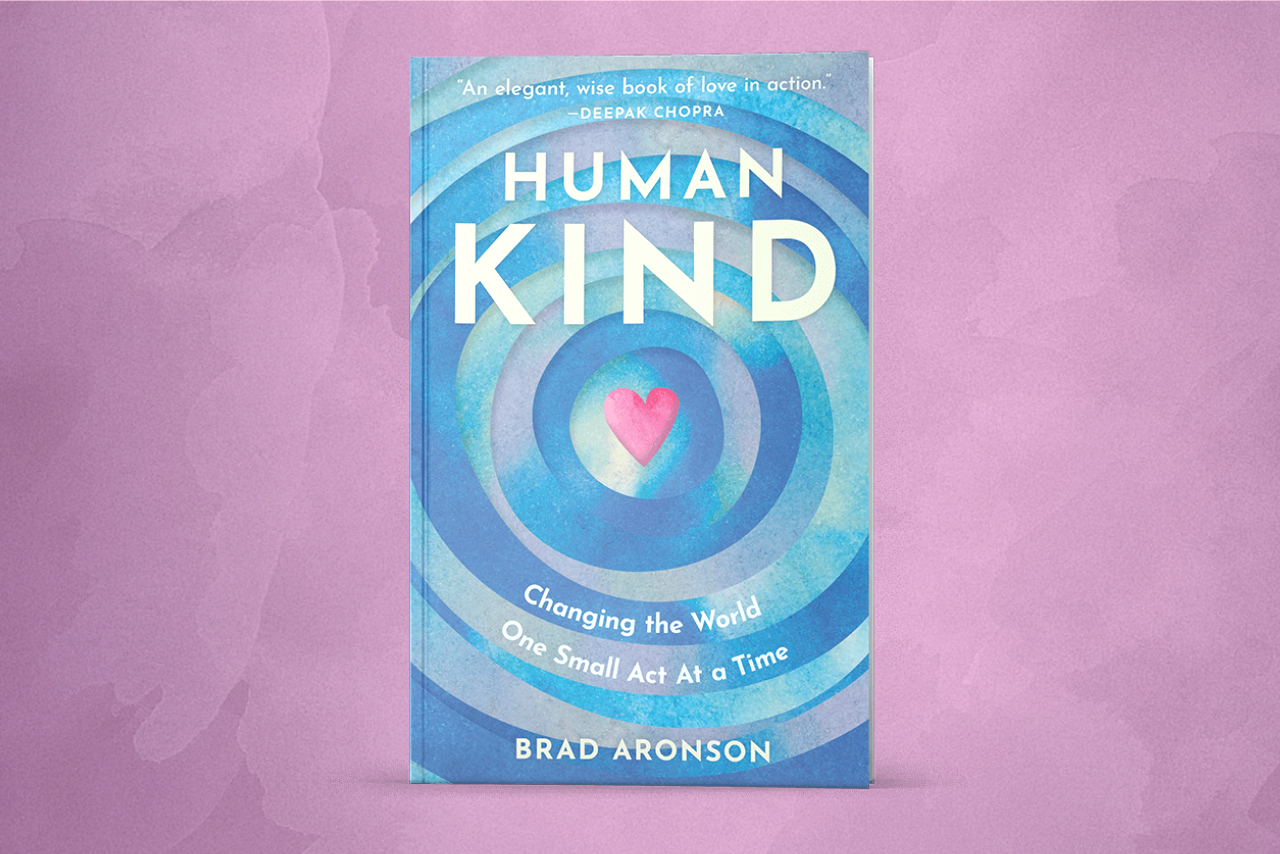
    This is why I keep re-reading and gifting Brad Aronson’s book HumanKind: Changing the World One Small Act a Time. The kindness stories are like a palate cleanser after a tough day has left a bad taste in my mouth. They touch me, restore me, and inspire me to be someone else’s reason to believe in people.

    And all the author’s royalties go to Big Brothers, Big Sisters, which means buying a copy is an act of kindness for both yourself and someone else.

    I’ve written about the book several times now, so it’s possible you’re already familiar with Brad’s story. You may already know he was inspired to write this book after his friends and family rallied around him and his wife Mia during her battle with leukemia. You may also know that the book offers both uplifting stories and practical tips to make a difference in the world.

    You might not know that someone in your life needs this book right now and will likely refer to it for years to come. That they may highlight passages and dog ear pages that give them a sense of peace and purpose, and maybe even pay it forward to someone else whose life will be better and brighter because of it. Someone who’s going through a lot right now, though no one would guess or believe it.

    That’s the thing about kindness: it ripples in ways you could never anticipate and will likely never know. But you can know you’re being the change you want to see, and that you’re changing the world even if you don’t see it.

    True to form, Brad has generously offered ten copes of HumanKind to Tiny Buddha readers, four of which I’ll giveaway here on the blog (the others on social media).

    To enter to win a copy, share an act of kindness you’ve recently received or witnessed in the comment section below.

    You can enter until midnight PST on Sunday, April 17th. I’ll update this post with the winners after I choose them and will also send a follow-up email next week.

    If you’d like to buy a copy for yourself or a friend now (which I highly recommend!), you can grab one on Amazon here.

  • All It Takes Is One Person to Start a Chain Reaction of Caring and Kindness

    All It Takes Is One Person to Start a Chain Reaction of Caring and Kindness

    “People will never know how far a little kindness can go. You just may start a chain reaction.” ~Rachel Joy Scott

    One afternoon a while back, after stepping onboard to a full train car with no available seats, I situated myself in the standing section.

    A couple of stops later, two passengers vacated their seats, allowing me the chance to sit. I embraced the opportunity to people-watch. The woman in front of me began chapter four of her book, titled How to Jump for Your Life. The girl next to her alternated between the Tinder app and a school report. A little dog ruffed from the black duffel bag on the lap of the woman across the aisle from me.

    One minute I was staring down at my iPhone screen—earphones in, listening to a podcast. The next I was looking up to a group of teenagers yelling at a middle-aged man. The man was seated next to his bike in the bike section. I didn’t see what he’d done to provoke them.

    Their voices grew louder. Removing my earphones, I watched as the man stood up, chest puffed out. Barely an inch of space separated his face from the younger man’s. His opponent bridged this distance by stepping closer and punching him square in the eye. The older man hit back.

    As the spat escalated into a physical altercation, each hit delivered with more force than the last, passengers (myself included) watched incredulously. Headlines broadcasting the recent senseless murder of Nia Wilson on BART (Bay Area Rapid Transit) flashed through my mind, and I wondered if one of these men would pull out a weapon.

    I wondered how long they would fight for, and I wondered what would put an end to it. Was there anything we witnesses could or should do (and if so, what?)—or were we just captive audiences to the violent scene occurring in front of us?

    Visibly shaken, and with tears in her eyes, a woman passenger with dark curly hair, who looked to be in her early thirties, got up from her seat. “Stop. STOP!” she yelled, her voice at once insistent and pleading.

    About twenty seconds later the train came to its next stop, and the teenage boy and his group of friends ran off. The older man with the bike stayed behind—left side of his face twitching, injured eye watering heavily (he seemed unable to keep it open).

    Though I’d witnessed violence like this on television, this was the first time I’d been so close to actual, real-life physical aggression. That the fight had occurred between real people rather than actors— powered by raw anger and heightened emotions—and that it hadn’t been manufactured for audiences to consume from behind a screen both jarred and disturbed me.

    Still, the initial collective response seemed no different than had we all just watched a scene from Orange is the New Black together.

    Some BART riders put their earphones back in. Others appeared minimally affected, yet still somewhat removed and distanced from the spectacle. Almost everyone remained seated.

    Everyone except for one woman—the one who had been noticeably shaken by the altercation. The one who had cried and pleaded with the two men to stop.

    This woman marched over to the intercom and reported the assault to the station agent, asking that he please send a person to attend to the injured man. She then sat with the man, allowing him to use her phone to provide his information to the police.

    Once he hung up and handed her phone back to her, I felt suddenly compelled to leave my seat. The woman’s actions had emboldened me to push past my apprehensions. After getting up, I approached and offered the man some water to wash out his eye with.

    And then I watched as other people followed suit.

    One woman handed him eye-drops. Another conjured towelettes with disinfectant from her bag. A third offered Ibuprofen.

    I observed, and felt calmed by, the prosocial Domino effect playing out in front of me. And the precipitator of it—that woman in her thirties with the dark curly hair—stayed in my mind for a long time after.

    Since then, I’ve reflected a lot on the initial collective response. I don’t think it’s specific to our time; our desensitization in the presence of large groups of strangers is nothing new, as much as we might like to blame it on the disconnection from one another that technology has engendered.

    What came to mind was the bystander effect, a social psychological phenomenon in which individuals are less likely to offer help to a victim when other people are present” (Wikipedia). In short, according to this theory, the more people there are, the less likely it is that any one of them will step forward to help in a given situation.

    One of the most famous examples of the bystander effect took place in 1964 Queens New York, when Kitty Genovese was brutally stabbed, sexually assaulted, and left to die while returning home from work on foot at 3 am. The New York Times reported that thirty-eight witnesses watched the stabbings and did not try to intervene. They did not call the police until the assailant was gone and Genovese had already passed away.

    It’s disconcerting to read what the worst-case scenario of bystander effect can lead to, but at the same time I think we can glean a hopeful message from it. I think we can use it as evidence that any one of us may take it upon ourselves to model responsible, prosocial behavior for one another.

    I think a lot of times people shut down and check out when they don’t see a way to be useful or help the situation. To me, it’s comforting to know that all it takes is one person to get the helping momentum going, though.

    One person can drag us out of this paralysis by leading by example, perhaps motivating others to be that initial precipitator in a future scenariothe one who steps up and steps in, encouraging others to follow their lead.

    Imagine what the world would be like if we all did just that?

  • Why I Won’t Tell You to Stop Caring About What Other People Think

    Why I Won’t Tell You to Stop Caring About What Other People Think

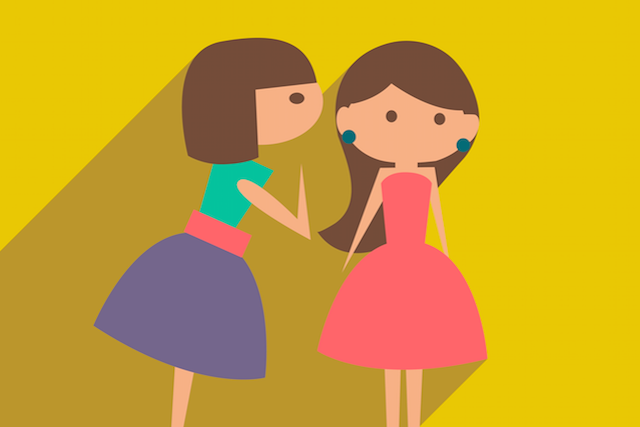
    Two women talking

    “A man cannot be comfortable without his own approval.” ~Mark Twain

    I almost didn’t dye the tips of my hair purple a couple years ago because I was so worried about what other people might think. While changing my hair color was something new for me, basing my decisions on other people’s opinions was not.

    I tend to look to others for clues about how I should think and act. Sometimes this shows up in small things, like opinions about movies, music, or clothes. Even when asking big life questions, however, my first impulse is often to wonder what other people think I should do.

    It’s a natural human tendency to want to gain others’ approval. We’re afraid of being rejected and forced to navigate life’s challenges all on our own. While we may have good reasons for meeting expectations, basing our lives on what other people think has its drawbacks.

    It’s lonely.

    When I change to speak and act the way others think I should, I’m not letting people see the real me. There’s limited benefit to people liking me if the person they like isn’t actually who I am. When someone connects with a pretend version of me, it doesn’t meet my very real need to be known.

    It hinders self-expression.

    When I base my choices on what other people think, the things I choose often don’t accurately reflect my own preferences. I live my life as generically as possible to avoid offending anyone. I miss out on showing others what really matters to me, and the world misses out on what I have to give.

    It filters out valuable information.

    When I give a lot of weight to other people’s opinions, I overlook a very important opinion—mine. There may be a lot of great advice out there, but I’m the only one who can decide what fits best for me. Repeatedly quashing my own opinion reinforces the belief that my thoughts aren’t worth as much as other people’s.

    It limits growth.

    When I look to other people for my answers, I don’t have to do the hard work of wrestling with my own questions. I don’t take responsibility for myself when I can more comfortably blame the person whose opinions I’m following. Instead of stretching myself to become more fully who I am, I keep squeezing myself into someone else’s idea of who I should be.

    Constantly trying to meet other people’s expectations is a painful and dissatisfying way to live.

    To counter this, a common piece of advice is to not give a @#$% what anyone else thinks. I have to admit, after the pressure of trying to please everyone, the idea of disregarding all those outside thoughts sounds like a relief.

    Of course, it’s hard to make such an extreme shift all at once, but I’ve given it a try. I’ve tried showing up to social events without caring about what anyone thought of me, only to feel aloof and arrogant. I’ve tried talking about things that matter to me without caring about what anyone thought of them—but, instead of my vulnerability bringing us closer, I felt myself hardening against the people listening.

    The thing is, not caring about what other people think is not the same as learning to value what I think. I can shut out everyone else’s thoughts and still be telling myself I’m worthless. The drawbacks of not caring about what other people think look awfully familiar.

    It’s lonely.

    When I care too much about what other people think I don’t have sufficient boundaries, but not caring isn’t establishing boundaries. It’s building walls.

    In order to not care, I can’t let anything in. I can’t let anyone’s thoughts get close enough to touch me. Either way—whether my own identity is being overwhelmed or I’ve erected a barrier between us—we are not connecting one human to another.

    When I don’t care what people think, I’m not mindful of how my words and deeds impact them. I act as if I’m superior to others. I may not even notice the hurt or inconvenience I leave in my wake.

    A crucial part of relationships is knowing and being known, hearing and being heard. Imagining nobody cares what I think feels incredibly lonely. And let’s face it, if I don’t care what someone thinks, why would they want to be my friend?

    It hinders self-expression.

    It might seem like not caring about what other people think would give me complete freedom to be fully myself. This actually hasn’t been the case. Honestly, when I don’t care what other people think, I feel and act like a jerk, and that just isn’t me.

    The truth is, my connections with other people are part of who I am. Making a difference in other people’s lives is a key ingredient to the things that matter most to me. It would feel less risky to give of myself if I didn’t care about the response, but that same lack of engagement would make my actions less satisfying.

    It filters out valuable information.

    Not caring about what other people think does make space for me to start paying more attention to what I think, but it comes at the cost of other valuable information. I lose out on what I can learn from other people’s thoughts.

    Often the hardest to hear thoughts come from the people I care about most. The people who know me best not only have the strongest opinions about what I should do, but also have the clearest insight into who I am.

    Although their thoughts aren’t always helpful, I’m grateful for people who have been willing to share an insight they knew I wouldn’t want to hear. Sometimes I need an outside perspective to help me see where what I’m doing doesn’t line up with who I say I am and where I want to be heading.

    The thing is, not caring about what others think isn’t just about ignoring the hurtful. I miss out on the encouragement, positive feedback, and insightful challenges as well. I can’t just listen when people are telling me what I want to hear.

    It limits growth.

    When I build walls instead of establishing boundaries, I don’t have to get clear on my needs and preferences. I keep everything out instead of exercising discernment around what I’ll allow in and what I won’t. I don’t practice respectfully engaging with other people’s perspectives without sacrificing mine.

    New possibilities grow out of differing opinions. I can learn so much from other people’s perspectives and experiences. They challenge me to examine and refine my own ideas.

    Thankfully, my options aren’t either losing myself in trying to please others or living without any concern for how my words and actions impact those around me. I can care about other people’s thoughts and opinions without letting them define me.

    The answer isn’t choosing between two extremes, but learning to live in the tension between them. I still often overcorrect, skidding back and forth between caring too much and too little. With practice it’ll become easier to find a balance, but I doubt the struggle will go away completely.

    Rather than trying to decide whether or not I care, I’m learning to decide how I want to respond. Asking these simple questions helps bring clarity.

    What is our relationship?

    Of course, I can’t always care what everyone thinks. There are different levels of relationship. Some people just don’t know me or what matters to me well enough to offer relevant opinions.

    On the other hand, there are people who want the best for me. Just because I’m close to someone doesn’t mean I’ll agree with what they think, but I’m willing to spend more energy considering the thoughts of people who have shown they care about me.

    What is the intent?

    While I can’t know for sure someone else’s intentions, I can consider whether they are trying to help me or hurt me. I try to assume the best, but it can be wise to disregard the opinion of someone who is trying to cut me down.

    Even those who are honestly trying to be helpful don’t always have the purest motives. Sometimes they may want me to do what they think will keep me safe or bring me their idea of success. I can appreciate their intentions while still following my own course.

    Is it helpful?

    Other people’s thoughts are data to be considered. Just like my own thoughts, however, some ideas are more helpful than others. I don’t have to view anyone’s thoughts as the truth about who I should be in order to learn from them. There is usually something I can learn—even if it’s just that I can’t make everyone happy.

    What do I think?

    The real question isn’t whether or not I care what other people think, but how much I value what I think. When I value my own thoughts and opinions, I can also care about theirs without letting myself be defined by them.

    There’s a difference between caring about what someone thinks and accepting it as true. I can listen to what others have to say and still make up my own mind.

    Whether I care too much or too little, focusing on my response to another’s thoughts is still choosing to shape my identity in relation to theirs. I’d rather focus on learning to appreciate my own thoughts more fully so I can care about people and what they think without sacrificing who I am.

    Do you tend more toward caring too much or too little about what others think? What do you find most helpful in valuing your own thoughts?