Tag: career

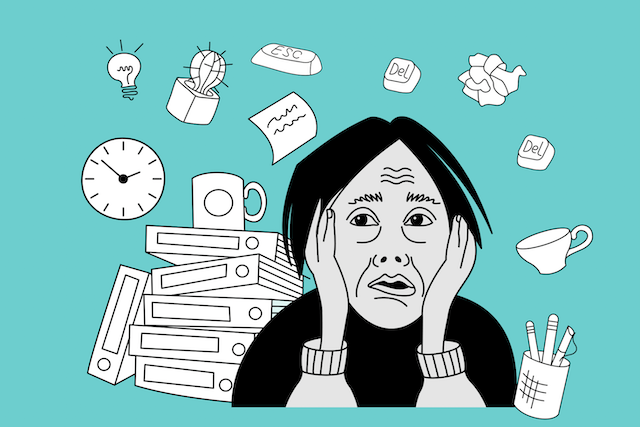
  • Moving On Isn’t Failure: 5 Lessons On Changing Paths

    Moving On Isn’t Failure: 5 Lessons On Changing Paths

    Changing Paths

    “Letting go isn’t the end of the world. It’s the beginning of a new life.” ~Unknown

    Ever since I was young, I have been intensely driven and very goal-focused. I have never been the type to flip-flop and I have never been the type to start something I do not intend to finish.

    Recently, I was faced with the incredibly difficult decision to leave the career path I had committed myself to. In the process, I learned quite a lot about my definition of “failure” and what happens when we allow ourselves to move on.

    About three months after completing my undergraduate degree, I applied for and was accepted into a Master’s program within which I began studying midwifery. As a chronic and hugely enthusiastic student, I poured my heart into my training.

    In addition to seeing clients and attending births, I read everything I could about the field, I took classes, I attended conferences, I networked with other midwives and apprentices, and I talked at length about the experience to anyone who would listen.

    Being a student midwife defined me, and I applied huge significance to the direction it provided.

    For the better part of a year, everything went beautifully. I was happy, I felt filled with unique purpose and excitement, and I genuinely loved what I was doing. And then one day I woke up and realized “This is not right for me.”

    The realization was truly that sudden, and the certainty with which I felt it nearly knocked me off my feet.

    Suddenly, I was confronted with the prospect of abandoning something for the first time in my life. Suddenly, I was confronted with what felt, to me, like failure.

    Most of us aren’t great at this—“failure,” that is—and we live in a world that doesn’t often offer much of a grace period for finding yourself or trying things that don’t work out.

    We are largely expected to define our purpose and then stick to it, for better or for worse. The majority of us are taught that failure, quite simply, is not an option.

    But here is what I realized when I came face to face with my own moment of “failure”: in order to live a fulfilling and fully formed life, failure needs to be an option.

    To insist upon stamping out failure is like insisting upon banishing rain and enjoying only cloudless days—failure is an essential piece of the experience, and, indeed, it is sometimes a better teacher than success.

    So, what can we do when “failure” stares us in the face and insists upon becoming a reality? Here are five tips:

    1. Ask yourself good questions and then listen for the answer.

    When I first began talking to my partner about the possibility that I would leave midwifery, I already knew what I was going to do. I had my mind made up, I just wanted him to tell me that I wouldn’t be branded as flaky or indecisive if I did decide to pursue something different.

    I wanted him to tell me that the world wouldn’t fall apart if I chose to go down another path.

    There is nothing wrong with seeking reassurance and validation from the people we value, but we must also be sure to make room our own voices to come through. In situations like this, most of us already know what we need to do; we simply need to honor ourselves enough to truly listen.

    2. See it for what it is.

    Before I made the decision to leave my budding profession, I agonized over what would happen when I was gone. I lost sleep over how my colleagues would view me and what my absence would do to the clinic.

    It took awhile for me to realize that each of these things was borne from ego. Well-meaning ego—ego focused on the good of the whole—but ego nonetheless. The truth was, my absence would not make or break anything.

    Once I realized this, I felt much more free to make my decisions based upon true desire rather than a sense of uneasy obligation. If we can learn to zoom out and view a situation from a place of distance, we can often gain a better handle on the truth of the matter.

    Very few things in life truly center around us the way that our ideas about obligation and responsibility would have us believe. And while a sense of obligation and responsibility are both important things, there is freedom in realizing that we are not actually the point around which everything orbits.

    Knowing this allows us to break free and follow something different without believing that the world as we know it will collapse if we aren’t there to hold it up.

    3. Take from it what you can.

    Every experience in life offers us something, and it is important to remember this when we are faced with a transition into something new.

    Yes, I spent a great deal of time and money on something I ultimately chose not to finish, but I witnessed beautiful births and I built relationships I will never forget. I came to the bottom of myself time and time again, and, as a result, I was forced to grow in ways I would not have had I not chosen to study midwifery.

    Even though I ultimately stepped off of the path I was on, I took countless lessons with me, and, because of that, the experience simply cannot be counted as a loss.

    Very few things are truly for naught, in the end. Most situations, regardless of outcome, provide us with a wealth of things to take away with us to ensure that we are stronger, smarter, braver, and better down the road. Our job is simply to find these things and make the best possible use of them.

    4. Let yourself rest.

    Part of me knew all along that I jumped into that Master’s program because I was uncomfortable with what I perceived as stillness. I had been so intensely proactive for so many years that I did not know how to rest and allow myself to be guided over time.

    Although I did truly love midwifery, I know that I committed to it at a point in my life that wasn’t ideal simply because I felt I needed to be doing something. Simply because, back then, I thought that doing something—anything, really—would prevent me from seeing myself as inactive or stalled-out.

    Now that I’ve done that, I know not to do it again. Although uncertainty is a difficult place to be, it is infinitely more productive to think, lie in wait, and go slowly than it is to lunge at the first thing that presents itself.

    5. Forgive yourself.

    After I had made my decision to leave, I had a hugely difficult time forgiving myself for making the decision in the first place. I berated myself for spending so much time, energy, and money. I convinced that I had let people down and I battered myself for not “getting it right” the first time around.

    In retrospect, these were cruel thoughts and they didn’t ultimately help me figure out where I was going.

    When we feel like we have ‘failed’ it can be hard not to enter into critic-mode, but doing so won’t serve us in the long run. Instead, we would be wise to remember the words of Thomas Edison: “I have not failed, I have simply found 10,000 ways that don’t work.”

    In the end, we cannot think of these things as failures. Instead, we must think of them as lessons. We must think of them as gifts and opportunities. We must take from them what we can and be grateful that we had the opportunity to experience what we did.

    Most importantly, we must allow ourselves to move on, realizing full well that we did not fail; we were simply brave enough to acknowledge the truth and seek out something better.

    Changing paths image via Shutterstock
  • That Horrible Job You Hate Might Just Change Your Life

    That Horrible Job You Hate Might Just Change Your Life

    “What you do today can improve all your tomorrows.” ~Ralph Marston

    Before I started my business, I spent three years at an ad agency and a little over a year at an international furnishings retailer. I also waitressed, wrote freelance articles, designed and developed a church website, and worked in an incredibly boring mailroom.

    Some of those jobs (let’s be honest, most of those jobs) totally sucked.

    In the mailroom, my boss was a sexist jerk with a Napoleon Complex.

    In waitressing, I spent too much of my time being other people’s emotional punching bag.

    And at the ad agency—the most relevant, fun, and useful of my full-time jobs—I worked myself half to death, burning out around the three-year mark and seriously contemplating a simple life spent working at Starbucks and never taking my work home with me.

    Sometimes, in the middle of the day, I would walk around the block and cry my eyes out because I was so exhausted. So you won’t be surprised when I say that I don’t look back on any of those jobs and want to relive them. I don’t think back on them and feel nostalgic.

    And if you told me that you hated your job or even that you loved your job but you’d burned yourself completely out, I’d say, “I hear that, sister!” And then I’d help you come up with a practical plan for quitting and doing something truly spectacular.

    That said, it’s only now that I’m truly working toward what I want, doing the things that inspire me, that I can look back and realize that every single job I had, with every good, bad, and ugly thing about it, led me perfectly to the place I am today.

    Waitressing taught me patience. It taught me how to work with people (even entitled, difficult, or angry people). It taught me not to take everything so damn personally.

    At the furnishings retailer, I learned about account management, event planning, eStore management, and editing content across multiple countries and cultures.

    At the ad agency, I learned how to run my own business.

    I sat with the accountant while she explained how she balanced the books. I worked alongside the designers and developers and learned to speak their language and respect their work. I wrote and strategized content for every format you can imagine. I managed client projects. I flew across the country to present on social media in front of hundreds.

    I also learned the art of the short sentence, the closely edited article. I worked closely with the Creative Director on brand slogans and ad concepts for big brands. And I learned how to sell. Sell my ideas. Sell our services. Sell my expertise.

    I learned that when you’re constantly selling yourself, you start to believe in yourself more.

    In other words, all the tools that made my first business successful were things I learned on the job at jobs that weren’t my dream.

    All the skills I’m using now as a full-time travel writer—my long-time dream job—come from a history of difficult, sometimes heartbreaking work.

    Which is why today I wanted to offer up a little encouragement:

    If you’re in a totally sucky job you hate or even a job that you kinda love but that is zapping your energy and killing your creativity…

    It’s okay.

    Because you never know how those skills you’re developing now might just set you up for future success.

    So, while you’re in that not-so-ideal job, learn as much as you can. Hone your skills. Connect with your colleagues. Go for that award. Volunteer for a task you want to learn more about.

    And in the meantime start looking for or planning for the thing you really want. That job at a company you admire. That career as a freelance creative type. That business idea that’s been coming up over and over again.

    Make a change. Do what you love.

    But also take advantage of what you can now. And remember that you can’t know just how much that job is doing for you until you’ve left it in the dust. The things you do today can change everything…even if you can’t see it yet.

  • Making Your Passion Your Career (Despite the Naysayers)

    Making Your Passion Your Career (Despite the Naysayers)

    Painter

    “Don’t let life randomly kick you into the adult you don’t want to become.” ~Chris Hadfield, astronaut

    As a kid, you put zero thought into doing what you loved.

    You simply played, not knowing that your future self wouldn’t play that much at all. Work was serious business.

    When I was in kindergarten, our classroom had a block center, a board game shelf, a home center with dolls and a play stove, a drawing center, and a sand table.

    We naturally gravitated to the area that was most fun, with no thought about what would look good on our future resumes or college applications.

    As far back as I can remember, making up stories, writing them down, and telling them to anyone that would listen were my favorite activities.

    Fast forward to high school, then college.

    It’s Time to be an Adult

    Others told me that writing and art were lovely little hobbies, but I needed to choose a real career, something that would make money. I looked around to see what the other kids would do, trying to spark an idea. If it wasn’t writing, I was clueless.

    I never thought of asking, “Why not?” Why couldn’t writing be a career? I just accepted that a job or career had to be something you made a realistic, intellectual choice about, and not one that came from your heart.

    And I wasn’t the only one who received messages like this. I heard Oprah say that as a child she was asked what she thought she would do as a career.

    She said, “Well, I like talking to people.”

    The person responded, “Well, you can’t make money doing that.”

    7 Failed Careers Later

    Years later, after I was told I couldn’t make a career out of writing, I ended up with a resume that was four pages long and days that were like a yearlong run-on sentence.

    I plowed through job after job, staring out the windows and riding the trains I hated to jobs I hated even more. I did a good job at most of them and earned a nice income.

    I was a school secretary, lifeguard, pre-school assistant, mortgage processor, office manager, dance teacher, and a few others I can’t remember. I taught sewing classes and even started two businesses thinking that being my own boss would solve my empty feelings.

    It didn’t.

    A Return to Love

    Then I reached a turning point and realized I needed to go back to doing what I loved and make it work somehow.

    I had a week off work and found myself writing from morning to night. I felt my headaches lifting and a sense of peacefulness developing. I submitted an essay to a local newspaper. The publication didn’t accept it, but I didn’t care.

    I knew it was time to make my passion my day job, and here is what I did.

    The next time I was asked what type of work I did, for the first time in my life, I answered, “I’m a writer.”

    I began to read everything I could about writers and bloggers who wrote for a living, how they did it, and how they transitioned from other jobs. I wrote daily because I loved it.

    No worries about publication or earning money from my passion, just pure unadulterated love. I decided not to lose hope no matter what.

    I responded to an online ad for writing work and got the gig. Though I was only writing a few blog posts for $25 each, it felt like a million dollars.

    So my kids started wearing their cousins’ hand-me-down clothes. I held my breath as I tightened my belt until I could barely breathe. The fridge had the bare basics, the electricity got shut off once, and the car got towed and it was a pain to get it back. But I managed.

    I took a course on writing, joined a business mastermind group, and worked with a mentor on writing during the mornings. I worked evenings and weekends to support myself.

    I was writing at last.

    Do you recognize your passion? Not hobbies or things you like doing for fun sometimes—the one thing that rises above all. Think back to what you loved to do as a child, what you gravitated toward for no reason other than fun, and you will find it.

    Are you ready to say yes? Turn your passion into a career one step at a time with the following tips.

    1. Tell one stranger.

    Even before you’re working at making your passion your day job or income source, go ahead and tell someone that you’re a _______. (Fill in the blank). At any chance you get, do it again.

    2. Obsess over it.

    Move your passion from the back burner of your mind to the front. Think about it every chance you get if you’re not already doing so. Read about people who have successfully transitioned into the work you want to be doing.

    3. Do it for love.

    Whatever your passion, forget about making it into a career until you spend enough time reveling in the absolute joy of doing it. Paint, write, dance, take photos, carve wood, whatever it may be for love and only love.

    4. Hope above all.

    Decide that you will never give up hope.

    5. Shout it out loud.

    Put an ad out or tell people that you are willing to do some work in your field of passion for pay or for free.

    6. Wear the tightest belt ever.

    Pull. Tight, if you must (if funds are an issue). I hate this part, but there’s no getting around this. See where you could take some funds from one budget and put it toward a course or mentor so you are not doing this alone.

    One person inspires another. If you are already pulled tight, reach out for a mentor or learn from free resources and YouTube videos.

    7. Forget “Easy does it.”

    Easy doesn’t do it. Period. You’ll face challenges, and resistance from yourself and others. Do it anyway.

    Goodbye Naysayers

    Whoever told you that you couldn’t turn your passion into a career had better sit down, because you may be on your way to doing just that. The girl with the pretty voice from the Bronx, the English writer on the train on welfare, the guy with the alcoholic step dad that became President.

    And now you.

    Stop Looking at the Odds of Failing

    The odds against successfully turning your passion into a career and making money from it seem so overwhelming. So stop looking at the odds.

    The longing of not doing what you are meant to do catches up to you, and it becomes like a faraway lover that you dream of, that will never return.

    The power is in your hands to make it happen day by day, and to blow the naysayers a kiss from the podium. Every moment of the journey is, in fact, an end result in itself.

    You will glow from internal approval, even if the money doesn’t come as fast and as much as you would like.

    Reclaim the act of doing your passionate work as your career, as if happiness depended upon it.

    Because it does.

    Photo by Garry Knight

  • When You Still Don’t Know What You Want to Do with Your Life

    When You Still Don’t Know What You Want to Do with Your Life

    “If you worry about what might be, and wonder what might have been, you will ignore what is.” ~Unknown

    Sitting at my kitchen table, I can’t help but ask myself over and over again how I got to be here. Just yesterday it seems I was sitting with my family for dinner, discussing my college plans and a future that seemed so far away from the comfortable and naïve life I always knew.

    Now, I am graduating from college and embarking on the unknown journey that is “the real world” with what seems like no preparation whatsoever. Well, I wouldn’t say that. If they had beer pong tournaments or sorority trash talking in this “real world,” I would be more than prepared.

    The funny thing about life is that it’s set up to always be preparing us for something.

    Elementary school gets us ready for junior high school, which prepares us for high school, which prepares us for college, which prepares us for this “real world.” We are set on this path right from the start and told to follow the path to get us to where we need to be.

    But what society doesn’t seem to understand is that humans aren’t designed to stick to one path. Humans are free flowing, always changing, and always moving. One moment we can be so joyful we want to start a flash mob in the middle of the train station, and the next we can be disheartened and hopeless.

    Our feelings are ever changing and ever flowing, as are our thoughts, beliefs, interests, and our relationships with others.

    Maybe this is why when we are told to pick a major, a job, or a career, we are ultimately faced with the hardest challenge of our life. We spent our whole lives preparing for this moment, after all. The decided fate of what we will spend our whole lives doing.

    When I was faced with the big decision of picking my major and future career four years ago, I was at a standstill. I had so many interests, how was it possible to pick just one? Being the over analyzer I naturally am, I contemplated for a long time, measuring the pros and cons of each profession. I planned and thought, and planned some more.

    But it was when I was on a road trip with my family to Colorado, when I had finally stopped planning and thinking, that everything made sense to me.

    I was sitting in the car next to my little brother, who has autism. He is nonverbal but probably smarter than any average thirteen old; people just don’t see him how I do.

    Pondering about life, as I had nothing else to do in a twenty-five-hour car ride, everything suddenly made sense.

    Speech therapy, where I can help people like my brother whose intelligence is underestimated due to his autism, suddenly became my purpose. I can’t explain the feeling other than it seemed like my brother was set on this planet to be my brother and to help me find this purpose in life.

    It turned out all that time contemplating my future had gone to waste, because I didn’t need to contemplate at all. I just knew, and the beauty of it all was that it came to me when I was doing absolutely nothing.

    So this is where the great plan idea doesn’t quite have it right.

    We spend our whole life in preparation. We don’t realize that while we’re planning, we’re missing out on the important things in life. While we’re planning, we’re missing out on the opportunities to relax and let the plan come to us.

    We’re missing out on valuable time spent living our lives worry-free and stress-free. Nobody needs a plan or a set path to get to where they need to be, because where you need to be is where you already are.

    Being someone who is in the process of growing up, I can confidently say that I believe humans never really “grow up.” But I do believe that humans are constantly growing and changing to be the best selves they can be. People have multiple purposes in life, not just one.

    So take those risks. Venture onto different paths; explore the paths that may seem far-fetched or unrealistic. Travel the world, start a business, do the things that are pulling you toward them.

    I strongly believe everything happens for a reason, and if you have an instinct to do something, there is a reason for that feeling.

    When you become confused about life, can’t make a decision, or are anxious about having a plan, take a deep breath and remember that life is a journey, not a destination. There is no plan required in life. The only thing required is to keep an open mind and go with the flow.

    You never know what might hit you when you are relaxed and doing nothing, and what instinct will draw you to your next adventure.

    It’s important to have faith in yourself and know that our internal selves are more powerful than we think.

    If we can trust ourselves, knowing that we don’t need anything external to give us answers, everything will come together. Remember, you know yourself better than anyone else, even if you don’t think you do.

  • Finding a Path When You Feel Like Two Different People

    Finding a Path When You Feel Like Two Different People

    Yin Yang

    “By accepting yourself and being fully what you are, your presence can make others happy.” ~Jane Roberts

    When I was a little girl, I played a lot of imaginary games and spent a lot of time on my own. I wasn’t particularly popular. I was a complete goodie-two-shoes.

    I had no idea what I wanted to be when I grew up. When people asked me, sometimes I said a vet, sometimes an interior designer, sometimes just to work for my parents who have a fruit importing business. Truth is, I had no idea.

    Why do people think a child would know? Sure, you can know things you like doing, but know what you want to do for a living? That’s a tall order for many adults to answer definitively.

    So, I grew up. I finished school. I got my bachelors degree. I joined the family business. I did everything that was expected of me.

    Here’s the thing about doing what’s expected of you: having those expectations means you don’t really get to figure out what you want to do.

    I started doing yoga in university and during that time started to explore a more spiritual side of myself that I’d not really touched on before. I realized I loved helping people and being in nature. I loved the peace I felt at the end of my yoga classes and I loved listening to people’s problems. Turns out I was pretty good at asking the sort of questions which got them answers too.

    But none of that mattered, because I had a ‘proper’ job. I left the family business and moved to London with my boyfriend at the time to develop my career. I was fast-tracked up the ladder and got to senior management within eighteen months. Everyone was so proud of me. I was proud of me. I’d worked my butt off and I was great at my job.

    The only thing: I felt like I was being torn in two.

    The person I was at work was completely different to my online persona and the one I was at home—the one who counseled people and had studied part time for her diplomas in yoga, hypnotherapy, and counseling.

    At work I was professional and logical, with an eye for detail and seeing the bigger picture. I made tough decisions and managed teams of people with grace and business acumen. (Way to blow your own trumpet, hey?!)

    At home and in my ‘other’ life I was a caring, nurturing, slightly under-confident hippy who loved helping people, standing on my head, and laughing with friends.

    For quite a few years I tried to hide my hippy-self from work and my corporate-self from home and yoga and therapy self, but ultimately, I always felt like I was half a person. I was never quite being myself. Whatever ‘myself’ was.

    There were various times when I thought I had to do one or the other; when I had decided I was going to leave the corporate world and be hippy-me full time, but that never really materialized.

    Funnily enough, the idea of giving up yoga and therapy and concentrating fully on my corporate persona was never an option. I guess I’m more hippy than corporate and, ultimately, I needed hippy instinct to survive the corporate world.

    Why am I telling you about my dalliances with trying to separate my two personas? Because there has to be a balance. For whatever reason, the universe was not ready for me to let my corporate life go.

    A few weeks ago, fresh off the plane from an Ayurvedic and yoga retreat in India and spending time with my family in rural Wales, I eventually summoned the courage to tell my director I wanted to leave. I had to follow my heart, I told her. I want to be closer to my family, I told her. I’m a country girl at heart, I told her.

    Then, she told me something. She said, “People think you can’t have the best of both worlds, but you can.”

    Then she offered me the option of working part time. It was something I’d never really looked at seriously. I hadn’t even considered that I could meld my two personalities and it would be enough for either.

    I’d always felt torn, feeling one was fake and one was real. I never even considered the possibility that my two sides could compliment and help each other; that they could make each other whole.

    I don’t know how my dual roles will work—now I am working part time in a corporate job and part time as a therapist—but I do know that, instead of fighting with myself, I have learned to accept both sides of myself.

    It’s not a terrible thing that I am logical and professional and can work well in a pressurized environment. It doesn’t mean I’ve sold out of my hippy roots. Nor is it a bad thing I believe in energy healing and the power of meditation.

    All sides of my personality are valid. They make me who I am. They will always influence the other parts of me. I am whole. Denying one part would be to lose a part of myself.

    So if you feel like you’ve got two different personas fighting for attention, with one invariably being left in the dark, perhaps try to shift your perspective from them being opposing to complementary. There may be cross-overs you haven’t noticed before which might make things seem a little less black and white or all or nothing.

    Photo by _UNPLUGGED_

  • Knowing What to Do When the Path You’re On Feels Wrong

    Knowing What to Do When the Path You’re On Feels Wrong

    Man on a pier

    “Don’t let yesterday use up too much of today.” ~Cherokee Proverb

    Age is a funny thing, isn’t it? It’s both an internal and external measurement by which many of us, consciously or not, judge our successes and failures, and it’s how others often judge us: “She’s so young to be CEO.” “He’s too old to be a quarterback now.” “Those guys should have stopped touring years ago.” “How old is that woman he’s dating?”

    Measurement is part of our culture.

    Paradoxically, we initially choose our life paths when we are the least prepared to understand the significance of our decisions.

    It took me until I reached mid-life, while simultaneously hitting rock bottom, to finally change the course of my life and, most importantly, to learn how to let go of the “whys,” “what ifs,” and “if onlys” that had been my everyday mantras for as long as I could remember.

    It’s not easy to put your past in perspective and ignore cultural measurements, and it can be unnerving to allow yourself the time and space to evolve. But from my experience, the mistakes, bad choices, and seemingly insurmountable challenges you may now be facing are truly fixable.

    And once you decide you’re ready, you’ll find that it’s cathartic (and yes, a little frightening) to give yourself some time to find your true path, however you define that for yourself.

    My path appeared on March 5, 2010. I was president of my family’s company. Except for a few years out of college when I thought I would be a musician, I had always worked in the business.

    I knew very early on that joining the company was a mistake, but I had made a commitment to my father in my early twenties, worked my way up from intern to president, and had always done the “right thing.”

    In 2010, the world was still recovering from the financial meltdown, and many companies’ sins and weaknesses were exposed. On that Friday morning in March I realized exactly how far down our company had fallen.

    In the space of a few minutes, I discovered that people I trusted deeply had been lying to me for years, 300 employees could lose their jobs (including me), my savings were gone, and my house could go into foreclosure.

    Everything I had worked for and bet my life—and future—on was collapsing around me. I closed the door to my office and cried.

    But wait, it gets worse.

    I soon found I could do very little other than sit in my office and watch TV, occasionally crying for no apparent reason. I only talked to the people I had to. Things I loved to do like playing the guitar or riding my motorcycle were of no interest.

    Most days I closed the door to my office when I got there in the morning and opened the door nine hours later to go home. Some days, I didn’t even get out of bed.

    Having so much time to think, I only focused on my failures (especially as I was desperate to save the company).

    I obsessed about why I trusted so easily, where I thought I should have been by now, and why I made the choices I’d made. Regret, anger, fear, embarrassment, and blame encompassed my every moment.

    For those of you who have never seen a commercial for antidepressants, these are the classic signs of depression, and I was deep in the abyss before I sought professional help.

    Therapy was hugely valuable (and still is), but it was a conscious, meditative exercise an Eastern astrologer friend suggested several months later that gave me the freedom to breathe, gain clarity, and find the courage to change.

    My friend told me to take a break, get on my Harley, and disappear for a few days (which was far more difficult than it seems). He said the problems would certainly be there when I returned. While riding he wanted me to practice what he called ‘the simplest state of awareness.’

    This meant that any negative thoughts about anything—job, money, house, family, fear, failure, regret, crashing, etc.—were to be pushed away by focusing only on the simplest things around me such as the color of the sky, the smell of the flowers (or car exhaust), the sound of the motorcycle, a bird in flight, the weathered wood on a barn.

    If anything negative entered my mind, I was to immediately replace that thought with a simple thought.

    Oddly, I had always felt comfortable being unhappy, so to not allow anything negative in was against my nature back then.

    But when I replaced a stressful thought with a basic observation about the world around me—an observation where there was no judgment—I started to understand what it meant to “clear your mind.”

    This was not about focusing on what I wanted. When I tried to do that and skip the simplest state process, my mind always reverted to what “should” be. I wasn’t ready to start changing my life… yet.

    So, what happened? Even in my depression I had enough sense and commitment to do whatever was necessary to fix the company, and after some drastic and painful changes it was slowly stabilizing, but in my heart I knew that it was time for me to leave the family business.

    After convincing myself all my life that running the company was my destiny, I understood, and accepted, that it wasn’t. I resigned in February 2011.

    My decision did not help my relationship with my father, and I was now left without a job, yet still a mortgage, bills, and a family to support. But for the first time in my life I felt aware. The resentment, shame, and paralyzing fear of change were fading.

    I realized I needed to do what I loved and what I was good at—obvious, I know, but not at the time—which was being a creative entrepreneur and working with music in some way.

    I started a full-service, strategic creative consulting agency; we work with companies, brands, and top-level artists helping them engage differently with their audiences so they achieve their goals and grow.

    From the beginning we landed clients we never thought possible, considering we had no experience, and they’re all still happy today; our reputation has earned us more clients; I have more time to do things for me; apparently I “look” happier; and, financially, I am far better off now doing what I love to do than when I was doing what I had to do.

    I also decided to go back to graduate school part-time, which I was prevented from doing years ago; I start in the spring.

    The quote in the beginning says not to let yesterday take up too much of today, it doesn’t say “don’t ever look back.”

    I believe that while never looking back is a noble goal, it’s very difficult for many people to do, especially me, without the kind of awareness that comes only from distance. So I chose a quote that, for me, was accessible, allowing me the space to safely pause and reflect, and then inspiring me to act when I was ready. You, too, will find the right words for you, if you haven’t already.

    It took many years, a traumatic event, and depression for me to start my life over. And still it was difficult and I was afraid when I made that decision; change is scary regardless of it being “right.”

    The simplest state exercise helped me gain clarity and perspective, and then time gave me the confidence and courage to act. And remember cultural measurement? I measure myself differently now, and I actively learn from people of all ages.

    This is my story so far. I encourage you to find your inspiration and motivation to help you on your journey, and then perhaps you’ll share your story.

    Most importantly, you need to know—not just believe—there is a right time for you to change, no matter how hard, no matter your age, no matter the obstacles. If you feel in your heart that you are not where you want to be, it is never too late. Be your own light; the universe will wait for you.

  • 4 Questions to Ask Yourself When You’re Unhappy with Your Work

    4 Questions to Ask Yourself When You’re Unhappy with Your Work

    “What you do today is important, because you are exchanging a day of your life for it.” ~Unknown

    In my working lifetime, I have been the poster child for seeking work-life balance. I have spent hundreds of hours curled into complex yoga asanas, breathing into the resistance and unexpected openness.

    I have meditated sincerely, flowering into a quieter mind. Add to that a happy, growing relationship, stable social connections, and purposefully cultivated hobbies, and you would think that I go humming and beaming to work each morning.

    The startling truth is that for every minute that I have spent meditating in my entire life, I have cried in my car coming to or from my job.

    When I first started working, it seemed normal—if you have a bad day, I reasoned, you let off a little emotional steam in the car on the way home.

    As a teacher, I often experience my most tumultuous classroom situations during the last part of the day, and the result is that as a new teacher, I often climbed into my car shell-shocked and fragile, barraged by a hailstorm of chaotic situations.

    My first year, the answer was mindfulness, and therefore I pursued yoga and meditation with the doggedness of a shipwrecked sailor swimming for shore. My mental image of stress reduction was that mindfulness techniques were a counterweight for stressful situations.

    In the process, I took responsibility for my tranquility, but not for the situations that were causing me so much angst.

    My second year, I switched jobs and kept doing yoga avidly, but I also gravitated towards the philosophy of “no”—that if I could protect my boundaries more skillfully, that I could weaken the thick net of sadness that I tangibly felt tightly wrapped around my job and schedule.

    Again, this was a wonderful, positive technique; by reducing my activities, I narrowed and strengthened my channel of energy. However, I continued to perform that defeating ritual of the occasional “afternoon cry,” and was adding morning weep sessions to my repertoire.

    No simple solutions, regardless of their wisdom or usefulness, warded off the constant worrying about work situations, and by the end of that year, I was understandably burned out and confused.

    Branching out into more hobbies, my final attempt to achieve that elusive “work-life balance,” had only succeeded in diluting my passion instead of re-awakening it, and I came to a skidding stop in the educational field. I quit my job.

    Now, I am thankful for this burnout—running out of quick answers and clever solutions dropped me onto the bedrock of humility with a resounding thud.

    I finally realized that work-life balance is elusive because it is always a shining horizon—if I see my work as something to “balance,” I run in the opposite direction as soon as I clock out for the day, and my energies are pulled in different directions.

    In the end, my many attempts to achieve that golden standard of “balance” resulted in a hollowness—an inability to “go deep” in any direction. As long as I made these techniques the locus of my attention, I was distracted from the core issues that resulted in my desperate frustration.

    Although at the time I thought that another career—any other career—was the answer, I didn’t realize that I wasn’t even asking the right questions. I am thankful now that I was serendipitously brought back into alignment with teaching, and that I have had an opportunity to heal my wounds as an educator in a beautiful way.

    In the process, these are the four questions that I have developed for use in times of career unhappiness, which provoke honest self-evaluation and authentic action. These questions open the heart of the matter.

    1. What are the separate issues?

    When I hit my bottom in my vocation of teaching, I forced myself, in an unlooked-for burst of clarity, to create a chart that outlined my distinct issues with my job.

    In my current position at the time, the problems ranged widely from my personal safety all the way to poor administration. I could do nothing about many of the issues, I realized, but one of my unmet needs, getting a masters degree, was entirely within my realm of control.

    By separating the issues, I was able to define the “deal-breakers” and bring distinctness to what was before an overwhelming amalgam of bad feelings.

    2. What can I do differently right now?

    Once you have separated the issues, you can then decide which of the problems within your control you can transform immediately.

    Some changes must wait—they are within your power, but they are necessarily time-bound. However, there are other issues that can be addressed right away, and change can bring immediate relief even if you plan on eventually leaving your job.

    Positive strategies such as asking for help and reaching out for healthy social connections at work can help make you happier right now, regardless of your ultimate employment decision. Sometimes you just need to clear the spiritual fog by mitigating acute stress before you can move in any direction.

    3. How can I disconnect my effort from my expectations?

    Possibly the most powerful agent of burnout in any profession is the lack of tangible results. For me, my heart was broken every time I couldn’t see a project through to completion, and once I broke that arrow that connected effort to results, my expectations were far more realistic.

    I am now able to plunge in—and back out—of projects with more abandon, understanding that sometimes trying is the same as doing. When you truly feel connected to the purpose of your work, the endeavor or effort is an end unto itself, and the results are secondary.

    This question makes the important assumption that you strongly believe in what you are doing, even if the outcomes are sometimes disappointing. However, if even the process is draining, you may not be living in alignment with your mission.

    4. What is my mission?

    Recognizing and celebrating your unique voice, which will never be spoken by any other human being, is an important part of the journey to peace with your work.

    Your mission is not intertwined with your job—your mission is completely internal. You are the archetypal hero, accomplishing your life’s work, and the job or the career is simply an outer manifestation of the spiritual odyssey.

    Your inner mission may be in alignment with your job, or your career may at least have the potential to exist in service of your calling.

    But because your mission is not something that you have to generate, it creates unrest when you ignore it. If you’re feeling stifled and limited by your current job, you need to do the gentle but courageous work of discerning your deepest purpose, and take the necessary actions to follow that expansion.

    I still do yoga daily. Setting appropriate boundaries and saying “no” to people is truly a part of my spiritual practice.

    The hobbies that I have developed over the years are still integral to my routines and add color and joy to my life. However, until I could ask myself those four questions, I was only re-dressing the surface issues and leaving the core dilemmas unresolved—and I kept crying in the car.

    But ultimately, I found myself irresistibly pulled through my discontent to a deeper connection with my great work.

    There are no quick fixes. Work-life balance, if it is even possible, is certainly not achievable if you are turning a deaf ear to the call of your most urgent and aligned life’s work.

    Clarify those longings and answer them, and then make all the changes that you need to make, no matter how large or small. Go deep in that direction.

    When you are firmly grounded in the passion of creatively discovering your vocation one day at a time, you will absorb that energy. Then, instead of creating the storms in your life, you will have the deep, healthy roots to weather the challenges that will inevitably arrive when you are fully engaged with life.

  • Enjoying Our Passions Instead of Focusing on Status and Approval

    Enjoying Our Passions Instead of Focusing on Status and Approval

    Happiness

    “If your number one goal is to make sure that everyone likes and approves of you, then you risk sacrificing your uniqueness, and, therefore, your excellence.” ~Unknown

    The year that I graduated from college with my undergraduate degree, I was beyond enthusiastic about being a teacher.

    I was absolutely confident that I was a very gifted communicator and that I had a great deal to offer to the field of education. In reality, I had no idea how right I was, yet how different my path would be from what I expected.

    For me, work was not just a “J-O-B”; however, my first school job was incredibly disappointing for me. The students were apathetic, my colleagues were unimpressed with me, and at the end of the year I was crushed when I received an average performance review.

    When I switched schools, under the impression that a change of scenery would improve my experience, I somehow carried with me in my bag of tricks the same perfectionism and tendency to overwork that had poisoned my first experience.

    To my frustrated mind, it was as though my previous school’s faculty had gone backstage, changed costumes, and reappeared in new garb to undermine me.

    That year, I was so determined to make a name for myself locally that I worked myself into an almost hysterical state of constant anxiety and busy-ness.

    Responding to every emergency, I took on all the weaknesses of the struggling school system in an effort to feel important and indispensable. I thought great teachers could work miracles. Again, I was right—but not in the way that I assumed.

    Ironically, the intensity and drive that I brought to my teaching did nothing to increase its impact or my prestige.

    My people-pleasing was not only compromising my professional effectiveness, but it was also causing me to continue to look outside of myself, to my principal, my students, and my colleagues, for affirmation—something that I could only give myself.

    However, the worst part was that I had begun to resent my students, because they became the symbol of my exhaustion. I turned in my resignation at the end of that school year with a sinking feeling of defeat.

    How was I, the star of my college graduating class, rapidly becoming a statistic of teacher attrition?

    That summer, I applied for new teaching positions relentlessly as unemployment loomed before me, but I wondered if the problem was the job—or me.

    I researched graduate school obsessively, continually looking for the next right thing that would launch me into professional happiness. However, all roads were dead ends.

    I didn’t realize it, but the emptiness and anger were having a profound impact on my ego, as I was no longer sure that I had anything special to offer education or culture, let alone a confidence that my ideas were as valuable as anyone else’s contributions to the world.

    Most importantly, I was beginning to question the purpose of work and vocation in my life for the first time. I asked myself, “What do I want to do?” instead of, “What should I do?”

    I completed an extensive career workbook that allowed me to take an honest look at my spiritual motives for working, and I realized that my relationship to work was based on my desire for recognition—a gift that I could grant myself simply by believing in the unique value that I brought to the educational world.  

    My addiction to achievement, education, and status had defined me for so long that my newfound non-identity, professionally, was intensely quieting.

    While I was in this space of self-exploration and laying the groundwork for a major career change, however, I was unexpectedly offered an interview at a very appealing private school.

    Ironically, by that time, I was simply interviewing as a last-ditch effort to use my existing education degree before I became a fitness instructor or got a degree in counseling.

    On the interview, I was casually frank and personable—I did not use the PowerPoint presentation that I had brought on my computer to all of my other failed interviews. I simply talked about my passion for my subject with directness, humor, and energy.

    Then, of course, I got the job—and, surprisingly, there was a mix of disappointment in my excitement.

    I had barely attained serenity without my “teacher” mortarboard, and then the universe returned that role to me. That’s when the two years of experience that I had sown, planted in frustration, and watered with anger and emptiness began to flower.

    Because I was less emotionally invested than I ever had been before, I found myself creating ways to rearrange my working time at my new school so that I could do more teaching and exploration of my fascinating subject, and less codependent overworking.

    I began to experience more “flow” states, of being totally engaged in my teaching. Also, I had developed numerous hobbies, such as writing, from my period of unemployment, and I continued to enjoy them.

    I said “no” more than I ever had at any other job. I was late occasionally, I risked people’s disappointment, and I stood up for myself. In other words, I took my job, and myself, a lot less seriously.

    I had finally taken myself off my self-created pedestal and joined my coworkers as a more relatable person, and for the first time ever I felt connected to the people around me, and the relationships allowed my unique and talented voice to be heard in the workplace in the way that I had always wanted.

    Best of all, I realized late that first autumn that I truly loved my students and my subject—fortunately, somewhere along my winding path I had left behind that bitter version of myself that resented the young people who depended on me most.

    Work, now, isn’t all about what I should do or what I have to do—now in the mix there’s a healthy dose of what I want to do. My passion is a precious gift that I should share with the people around me, not hoard in order to obtain status.

    My valuable voice is heard best when I am surrounded by a caring, connected community, and that circle is not available to me when I overwork and isolate myself.

    For me, being a human being in the workplace means that I make mistakes, and that those flaws connect me with the people around me.

    I’ve learned that we don’t always have to make major career changes to become content with our work. We may only need to appreciate the energy that flows from what we do, and stop looking outside of ourselves for affirmation of our uniqueness and worth.

    Photo by camdiluv

  • Try This If You’re Struggling to Find Your Passion

    Try This If You’re Struggling to Find Your Passion

    “Don’t worry about what the world needs. Ask what makes you come alive and do that, because what the world needs is people who have come alive.” ~Howard Thurman

    For the past three years, I’ve been in the throes of a quarter-life crisis.

    Just a few months into my first cubicle-bound job, I had the life-altering realization that most everyone comes to eventually: I’m going to work a job every day for the next forty-plus of my life. If I want to make that enjoyable, I need to be living my purpose and engaging my passions.

    Knowing that life is short and the best time to change is now, I dove headfirst into reading and implementing advice on how I could discover and live my passion. 

    In the three-year search, I registered for hobbies that interested me. I researched and pursued various careers. I talked to my friends about what I was good at. I encouraged my husband to find his passions so that we were both supported in this dream. I waited patiently and openly for inspiration.

    Soon enough, some of my passions bubbled up to the surface in easily identifiable ways.

    I loved writing, interacting with people one on one, business, yoga, rescue animals, chocolate, coffee houses, and digital newspapers.

    To see what ideas “stuck,” I started businesses, changed careers, wrote freelance, initiated a local yoga community, volunteered, and truly “discovered” myself.

    But these attempts at finding a passion that could become my career always happened the same way—I’d start out with massive bursts of energy, produce great results, and then hear the small voice in my heart whisper, “This isn’t it…there’s something else out there for you.”

    After a couple of years of trying and failing at finding the passion that would stick, I decided to just stop looking for a while.

    In the meantime, I would work hard at my job and come to terms with the fact that the most people never have careers that engage their passions—and maybe that’s okay. After all, I could still have passions outside my work.

    But the drive to create a career around my passion never went away.

    My turning point came one night as I was sitting at home with my husband watching The Legend of Baggar Vance—a movie about a down-on-his-luck golfer who enlists the help of an inspirational golf caddy (Baggar Vance) to perfect his game.

    In one of the scenes, Baggar says to the golfer:

    “Inside each and every one of us is one true authentic swing. Something we were born with. Something that’s ours and ours alone. Something that can’t be taught to you or learned. Something that got to be remembered.”

    And I sat stunned for a second. Although the movie went on, my mind was stuck on this idea: your passion—your one true authentic gift—has to be remembered.

    For so long, I had been searching, trying new things, exploring jobs, careers, and “attractive” passions outside of myself—without ever trying to remember what passions have been with me all along.

    In an instant of clarity, I remembered that for my whole life, I have been in love with business and personal finance. My father and grandmother had always been very determined to teach me about the flow of money and how starting a business could ensure my freedom.

    From these constant little lessons growing up, I picked up an interest in business that had permeated my life in ways that I just didn’t really recognize.

    I remembered back to the time I was nine years old and told my grandma I’d love to be a financial planner to help people with their business and money, the way she’d helped me develop those skills.

    I remembered too how I sat enthralled reading business magazines on airplanes. I remembered how what I really wanted out of my career was to run my own business one day. I realized that this was a deep, steady current that connected many phases of my life.

    But how could my passion be so… plain? Aren’t passions supposed to be artistic, exotic, or inspirational? Aren’t passions supposed to wow people?

    Perhaps not. Perhaps my passion for the mundane things could be a way to bring life to an otherwise mundane topic—the way your crazy history teacher started talking really fast and excitedly about the Civil Rights movement, making you excited about it too.

    Since this realization, I’ve started pursuing a business in financial coaching, and I am so happy. The small voice in my heart is whispering, “You’re on the right track!” for the first time. I haven’t been distracted by what other things I could be doing. Even better, I am engaging my other passions too.

    If you’re struggling to find your passion, even after trying what feels like doing everything, I encourage you to do this: sit down, open your journal, pour a cup of tea, and try to remember your passions.

    Think back on your life, and remember things you wanted to be, the habits you developed naturally, the games you played, the books you read, and see how they may apply to your life and career today. You might be surprised by the connection points that have been right under your nose all along.

  • When You Don’t Have a Clear Purpose: 4 Helpful Mantras to Adopt

    When You Don’t Have a Clear Purpose: 4 Helpful Mantras to Adopt

    “Don’t take life too seriously. You’ll never get out alive.” ~Elbert Hubbard

    I have always defined my life by my career. I think that was my first mistake.

    For the last six years, I worked at a publicity firm in Los Angeles.

    It was a job where your email is the first thing you check in the morning before getting out of bed. A job where you are on your phone while eating your dinner. A job where your boss calls you out of a funeral in order to send out a press release. Frequent travel, evening events to attend, and not a lot of free time. Not any free time.

    The problem was that this job became my life. I went from work, to home, to bed, each day.

    Seven months ago, I quit my job. In fact, not only did I quit my job, I moved out of my Los Angeles apartment and hopped on a one-way flight to Puerto Rico all in one week.

    I had met someone who opened my eyes to thinking differently and who let me see that I should try and find a life where I was happy.

    I realized that this job was not bringing me the life that I wanted to experience. My hair was falling out due to stress; I had migraines each week. My doctor even advised for a change.

    My first weeks in Puerto Rico were paradise. I lay on the beach, learned to dive, and got on a surfboard. I went to waterfalls, drank pina coladas, and I was in love. Soon, however, I started to come down off my high. I started to get anxiety.

    I realized what happened. When I took away my job, I took away 90% of the only thing I knew to be my life. I had a big hole inside of me now. I didn’t know what I enjoyed doing, what my hobbies were, or who I was as a person.

    Keeping busy through work never allowed me time to think about things like that. Now that I had no job filling my time, I was overwhelmed with thinking. The thinking soon led to over-analyzing, which then led to anxiety.

    I woke up each day with a knot in my stomach. What was I doing? Am I going to be happy today? What am I going to do for a career? What is my life going to be like in Puerto Rico?

    Often I would worry that my new relationship would fail. My boyfriend fell in love with me because of my independence, my drive, and my passion—all of which he observed through my former job. Now that the job was gone, I felt I had lost all of those traits as well and that he soon would fall out of love with me.

    What I came to realize was that “I” was not my career. That wasn’t what defined me. I still had all of those traits and more. I was putting these thoughts and worries into my head that didn’t need to be there.

    People fantasize about living on a tropical island. Seeing the ocean each morning when you wake up. Walking beaches with not a single other person on the sand. So why, in the land of paradise, was I causing myself so much worry and stress?

    If I couldn’t cease my worries here, I certainly had no hope anywhere else.

    So I made it my mission to not take life so seriously and to learn to be present each day in order to find happiness within myself and for my new life. These were my daily mantras:

    1. Give yourself some credit.

    I took a big risk when I quit my job. I took an even bigger risk moving to an island. Rather than being down on myself for not having a career at the moment or not feeling like my life has a purpose, I give myself credit for the little things: learning Spanish a bit more, attempting to surf, taking pilates each week at a local studio, meeting new people.

    When you are focusing on what you see as bad things, you are preventing the good from shining through.

    Don’t be so hard on yourself. Take ten minutes of meditation time each day and thank yourself for it afterward. Get up early and make a healthy breakfast. Talk to someone new in line at the coffee shop. Notice the little things you are already doing each day for yourself.

    2. Stop thinking so much.

    Think of nothing for two whole minutes. Clear your mind. Don’t put effort into thinking about things that haven’t happened yet. It will just cause you worry. It’s too much for one little mind and it’s a waste of your time and energy.

    I still catch myself in a whirlwind of thoughts each day and every time this happens, I stop, I take three deep breaths, I think about something positive, and I smile. There is always a reason to smile and less of a reason to worry.

    3. It’s okay to take a break.

    My family asked me why I was wasting a college degree and why I spent my 401k to move to an island. I didn’t have a straight answer for them, but I did know that I worked harder than I ever had for six years of my life, for almost twelve hours each day and put up with a lack of appreciation for what I did.

    So it was okay if I took some time to do nothing. You don’t have to be achieving scientific discovery every day. It’s okay to take time to simply be and to experience life.

    4. You don’t have to find your life purpose tomorrow.

    I used to hate the saying “find what you love and go do it.” As if it’s so easy. But each day, don’t be afraid to attempt something new. In Puerto Rico, I have learned that I actually like oysters. I love being in the water. I am more creative than I thought I could be.

    I still haven’t found what I love in life or what my “purpose” is, but trying is the only way to find it.

  • 4 Lessons on How to Find the Right Direction in Life

    4 Lessons on How to Find the Right Direction in Life


    “Life’s blows cannot break a person whose spirit is warmed by the fire of enthusiasm.” ~Norman Vincent Peale

    “Something just doesn’t feel right,” I thought to myself as I walked into my house after a long commute from work, being greeted by my exhausted spouse, who was trying to manage the kids after putting in a long day at her own job.

    Work hard, save money, buy a house, and live happily ever after. The formula I grew up with didn’t seem all that great anymore. Was it broken? I mean, I worked at a good job but felt as though I was meant to do more.

    My stress and anxiety were heightened by the increasing uncertainty in my career, the unpredictability of events, and the complicated, fast nature of life, especially over the last few years.

    I became stuck, frozen, and paralyzed by the chaos of life and work I felt all around me.  

    With no reasonable approach apparent I stood still. Examining my life, overthinking all the various life paths in front of me, presented a scary picture. Each path looked worse than the other, inhibiting any possible action I might take.

    As I was spinning down this spiral of anxiety, my life stagnated and I just felt hopeless.

    Then one day, I took an unexpected trip that changed my life and led me down an unpredictable path, where I learned, adapted, and grew to understand myself better. It also led me toward a life purpose that was neither grand nor perfect, but it seemed to fit. It just made sense, and I discovered it by chance.

    Or was it by chance?

    Breathing fresh air into a stagnant soul, I felt alive again, traveling on a road despite the uncertainty existing around me.

    Over the last few years, through my journey of trying to figure out which path to follow, I learned a lot about those factors that led me to ultimately discover what I think I’m meant to do.

    As a result, I am currently in the middle of a major life change, going from a twenty-year corporate career to being an author, speaker, and career counselor. While I am not sure how the next few years will go, I am at last open to new possibilities.

    Here are four lessons I learned on how to find the right direction in life:

    1. Stop overthinking.

    So much of our stress and anxiety about the future stems from all the analysis and thinking we do as adults. We ask ourselves all sorts of questions. I recall countless nights lying awake, entertaining ideas, and wrestling with my soul. I tried so hard to figure out where I would end up that I often felt defeated before I even began.

    But all the overanalysis got me nowhere; it just burned more time.

    The reality is that no matter how smart we may be, we cannot predict the future. Things are moving so fast and we’re so interconnected that it is impossible to predict where you’ll end up five years from now.

    You just don’t know. And that’s not necessarily a bad thing, because you will not be basing your choice of direction on a forecast that’s likely to be wrong.

    You’ll be making your choice on what’s really important to you, right here and right now, not tomorrow.

    By recognizing and ultimately accepting the unpredictable nature of life, we can stop overthinking and overanalyzing, and start living more in the present moment. This helps to open the mind up to the possibilities of today.

    2. Try anything. Do something.

    When you take action and start doing things, you begin to feel better almost immediately. Instead of thinking about some far-off place in your head, full of uncertainty, you will be working on something that is really certain: your actions.

    So many times, I got caught up in the chaos of life and was consumed by it, until I realized that, while I cannot control what will happen tomorrow, I can control the actions I take every single day.

    That’s the real beauty of life—knowing that you have absolute control over each of your thoughts, words, and actions.

    And by trying, moving, asking, engaging, experimenting, and walking forward, you are one step further than where you were yesterday. And you just never know where that one step will lead you.

    3. Follow your inner voice.

    I used to feel that if only I knew more, I would be able to make a better decision about the direction I wanted to take in life. But as I dug deeper trying to get more information, the hole got so deep that I found myself buried.

    Confused and overwhelmed by so much information, some of it conflicting, I just didn’t know what or whom to believe.

    Then, I just let go. I let go of all evidence and started following my gut.

    I took chances; I took small steps walking forward in the dark. I stumbled, fell, but got back up and went in a different direction. Then again, and again, and again. As they say, the first step was the hardest, but I eventually found my way, not because some data point on a career chart showed me which way to go, but because I started to trust my inner voice.

    Sure, it was often wrong, but it got better eventually because I was out there doing and learning—not sitting and waiting.

    4. Believe in yourself.

    When I first started exploring new opportunities to find the right direction in my life, I found myself overwhelmed by the competition. There were so many others just like me trying to do what I was doing.

    Turning to my friends didn’t offer any respite, because, instead of encouraging me to try new avenues, some of them brought me back to where I began. “Why don’t you be more pragmatic?”

    With such seeds of self-doubt sown within me, it took me some time to recover my momentum. It was in the positive voices of so many others, in blogs such as this, in videos, and in social media, that I found encouragement to keep at it. It felt like these voices were talking about me.

    And in that positive lens, I found the light inside of me to bring forward the resiliency that until then had lain dormant.

    No longer suppressed by someone else’s ideas of the way things “ought to be,” I continued on my newly discovered path. The more I focused on my own voice and the voices of encouraging friends, the more I grew to believe in myself.

    Although for some, finding the right direction might require the journey of a lifetime, I do believe there is one direction in which we are all meant to go: forward.

    By taking small steps each and every day, putting aside overthinking, and realizing that you have everything you need deep within, you can find the right direction in your life. And while it may not be the direction you expected, it will work out just fine.

    Photo by katiaromanova

  • Taking Back Our Dreams: Releasing the Drive for Wealth and Status

    Taking Back Our Dreams: Releasing the Drive for Wealth and Status

    Jumping

    “The poor man is not he who is without a cent, but he who is without a dream.” ~Harry Kemp

    We’ve all been there. You’re having a great time playing a game with your friends, and then all of a sudden, things start to get tense.

    What started out as fun turns into a fierce competition, as everyone is desperately trying to collect gold coins, red flags, or whatever happens to be the game’s currency.

    To an outsider, it would be clear that we are all playing a game. Just like the kid with the tallest stack of red coins, the adult with the largest home and fanciest car receives the admiration of his or her peers.

    Originally invented to simplify the trading process, money has long surpassed its intended purpose. Of course, we all need money to survive, but it doesn’t end there.

    Money has long been a status symbol. It is precisely for this reason its appeal is so difficult to resist.

    Our social status and income level are closely intertwined. We’ve even coined the term “socio-economic status.” In this society, you simply cannot have high status without the money to back it up.

    Okay, so what’s the problem? Why do I say all this as if it’s a bad thing?

    Because it comes at a price. A very high price.

    As we strive to win this game that society wants us to play, we give up on something that matters a lot more than money and prestige. We give up on our dreams.

    MISSING THE MIDDLE GROUND

    The chain that locks us down to jobs we hate has two ends. On one end stands wealth and status. At the other end is fear of poverty.

    Of course, we all need food to eat and a roof over our heads. Now here’s the catch: If you dare to dream even an inch outside the status quo, society is quick to assume that you will be an utter failure, left with nothing to pay the bills.

    For example, say you always dreamed of being an actor. When people think of actors, they think of Angelina Jolie, Nicolas Cage, or other stars. “Actors make a killing, but hardly anyone makes it!” they may tell you. Indeed, hardly anyone becomes a star.

    You see, without even realizing it, they are back to wealth and prestige. But what they forget are the many working actors who are not world famous, who nevertheless make enough to support themselves while doing what they love.

    Another common misconception is that in order to pursue your passion, you must quit your job immediately. Doing so could indeed be a recipe for disaster. You see, pursuing your passion is a process. Many quit their jobs only after their passion can support them.

    Society tells us that wealth and status will make us happy, while simultaneously scaring us that pursuing our dreams will leave us penny-less. Both of these are fallacies. There is a middle ground: Your passion can support you, if you’re willing to give it a chance.

    MY STORY

    I was born with the heart of an artist. I dreamed of being on stage as a singer or an actress. I wanted to express myself through music, dance, and writing.

    Despite these dreams, at the age of 18 I had an entirely different plan. I was set on becoming a manager at a software company.

    I worked hard to get into a prestigious computer science program, and for my first internship, I landed a position at well-known firm. I was overjoyed. It looked as if my plan was working out.

    But a couple of months into the internship, something completely unexpected happened: I found myself hating my life. I don’t mean just my job. My entire life felt empty, meaningless, and downright painful.

    I would wake up early to go to a job that bored me. Then, I had to spend most of my waking hours effectively tied down to a chair, staring at a computer screen. I was a slave in the free world.

    By the time that this dreadful internship was finally over, I was so broken down that I swore never to do this to myself again.

    It wasn’t easy to figure out what to do next. It took the next ten years to go through layer upon layer of fears and insecurities. I started out with such a rigid perception of what is “normal” and “acceptable” that I had a very long road to travel.

    Three years ago, I finally took my first singing class and started to write. I couldn’t begin to tell you what a difference this has made in my life. Every morning I jump out of bed, eager to start the day. My work excites me, energizes me, and brings me a deep sense of personal fulfillment.

    For the first time in my life, I no longer feel a divide between myself and my job. All that I do is an extension of who I am.

    But then, I go out into the world and interact with other people. People who wish that they didn’t have to work. People who sacrifice their lives for a handsome paycheck. People who have forgotten their dreams.

    WHY WE LOSE TRACK OF OUR DREAMS

    How did this happen? When and where did we lose track of our dreams?

    If I were to come up to a person with a passion for pursuing their dream, and ask them, “How much money would it take to get you to forget about pursuing your dreams?” they would surely send me away. Nobody would knowingly sell their dreams.

    But there is something else, something more powerful than money that can make us give up on our dreams—that is, our sense of self-worth. Without realizing it, we end up giving up our dreams in an effort to feel good about ourselves.

    Society teaches us that you are what you do. We are bombarded with this message from childhood. We are constantly asked, “What do you want to be when you grow up?”

    Combine this with the clear connection between status and money, and the formula is complete. We work at jobs we hate in order to attain high social standing, so that we can feel good about who we are.  

    The trouble is that our dreams rarely line up with what society happens to consider prestigious. And so, in an effort to reconcile our ambitions with our need for approval, we replace our dreams with what society wants us to do.

    And if, during a moment of clarity, we decide we no longer care about wealth and prestige, then they get us with the fear of poverty. “Do what we tell you, and you will be rich. Disobey, and you will have nothing.”

    That’s when most of us give up and forget about our dreams altogether.

    But I don’t believe that it is possible to completely lose our dreams. Like a precious jewel that accumulated years of dust, our dreams are waiting to be uncovered from beneath layers of fears and insecurities.

    Taking back our dreams is the first step to building the life that we want—a life that is true to who we really are. It may seem intimidating at first, but if you find the courage to reclaim your dreams, they will light the way to a meaningful, fulfilling life.

    Photo by sidonath

  • Why Enthusiasm Trumps Worrying When It Comes to Reaching Goals

    Why Enthusiasm Trumps Worrying When It Comes to Reaching Goals

    Sunrise Jump

    “Worry never robs tomorrow of its sorrow. It only saps today of its joy.” ~Leo Buscaglia

    They say the greatest joy in life is to be able to live your passion every day, and I only had to look to my teens to remember that what I had always enjoyed doing most—working out. That’s where I wanted to go in life.

    Held hostage by worries about the future, status, and money, I decided to head on a different path. I did well in college, graduating with a business degree and a double major in finance and accounting.

    A few years later, it was clear that something was off. So last year, I made the big decision to pursue my passion in fitness by becoming a certified personal trainer. The start of the year was full of energy and joy. I was glad that I had finally found my direction, something that I wholeheartedly wanted to do.

    I was a man on a mission. By the end of August, I had accomplished my task by taking all the exams and passing the instructor competency evaluation.

    Whew, I thought.

    All I had to do now was wait for a letter of approval and a wallet card to make it official.

    But, what was supposed to take a few weeks ended up taking more than two months. This was the kink in my momentum.

    Before I ran into this speed bump, I had everything all carefully and strategically planned out. After I became an accredited personal trainer, it would be “go” time.

    Then, while waiting for my accreditation to come through, I felt stuck. I couldn’t start taking clients. I just waited. And with extra time on my hands, I started to think.

    This thinking was good at first; I laid out my plans and business strategically. But the more I thought about my personal training business, the more I started to worry.

    My worries soon manifested into fear and doubt. I started to feel sick, both inside and out. It wasn’t long before the slow days gave way to questions. Did I give up pursuing a career in the finance industry for this? Was this all a mistake? (more…)

  • How Mindfulness Can Help You Discover What You Want to Do in Life

    How Mindfulness Can Help You Discover What You Want to Do in Life

    “Nothing is a waste of time if you use the experience wisely.” ~Rodin

    When I was in college, I knew what to do and everything clicked along.

    But as graduation approached, I got nervous.

    I’d always assumed that some “good job” would turn up when I got out of school. But now it was in my face that I had no idea where I was going.

    I took a career workshop where we figured out our favorite interests and best skills. What the class didn’t provide was any follow-up to help me actually find the dream job.

    I didn’t know how to ask for help in putting these ideas into practice. Or even who to ask.

    I floundered.

    For the next three years I drifted through a series of little jobs. The bills got paid with some money I inherited from my father, but this cushion was getting thin.

    And I still didn’t know how to get a decent job.

    At some point I heard that people were always looking for reliable house cleaners. “I may not be able to do much,” I thought, “but at least I can clean a house.”

    So I started a housecleaning business.

    There were a number of great things about this job. The money was good. The part-time hours were good. I was my own boss. But I hated the work.

    So I decided quite randomly that a career in professional sales was the thing to pursue. Never mind that it held no interest for me. It seemed that I’d be good at it. (more…)

  • Changing Direction: It’s Not Too Late to Be Who You Want to Be

    Changing Direction: It’s Not Too Late to Be Who You Want to Be

    “You are never too old to set another goal or to dream a new dream.” ~C.S. Lewis

    Growing up, people always saw me as the over-achiever and said, “That girl is really going to make something of herself one day.”

    I often felt the pressure of having to live up to these expectations.

    I recently turned 30 and it was a day of reflection for me. I always had this idea that by the time I turned 30, I’d be one of the top celebrities in South Africa, living the life of a talented singer, a self-made millionaire, driving a fancy car, living in a big mansion—the works!

    I realized I was merely living up to an idea I had in my head of what success meant to me.

    Perhaps what I wanted was a tad unrealistic.

    I’ve always been told to dream big and have gone through many ups and downs working toward these goals, but at some point I decided to change my direction.

    I had to grow up and realize that perhaps these things I wanted just weren’t in the cards for me, and that maybe, in realizing my true potential, I first had to be content with that notion.

    When I did this, I realized what I definitely wanted in my life, and it couldn’t have happened at a more perfect time.

    I have my day job (of course); I work in the web industry as a developer and I love it. I enjoy the people I work with and I’m excited to come to work every day.

    It’s just that lately, I’ve started thinking about where my life is headed and how I want contribute to this world and do my part to make it a better place. (more…)

  • Book Giveaway and Author Interview: 52-Week Life Passion Project

    Book Giveaway and Author Interview: 52-Week Life Passion Project

    52-Week Life Passion Project

    Note: The winners for this giveaway have already been chosen. Subscribe to Tiny Buddha for free daily or weekly emails and to learn about future giveaways!

    The Winners:

    It’s not easy to do something you’re passionate about for work—and not only because it’s hard to discover your passion or find a job to leverage it.

    Once we know what we love to do, we then need to work through all kinds of limiting thoughts, beliefs, and fears that may prevent us from taking action. Then we need to decide what that action should be—how and where to start, and how to stay motivated.

    It’s with this in mind that coach and blogger Barrie Davenport wrote the 52-Week Life Passion Project, an insightful, comprehensive guide to identifying what you really want to do and building your life around it.

    I’m excited to share an interview with Barrie, and grateful that she offered to give away 5 books for Tiny Buddha readers!

    The Giveaway

    To enter to win one of five free copies of 52-Week Life Passion Project:

    • Leave a comment on this post sharing something you’re passionate about. (If there’s nothing you’re passionate about yet, then just leave a comment saying hello!)
    • For an extra entry, tweet: RT @tinybuddha Book Giveaway: The 52-Week Life Passion Project: Comment and RT to win! http://bit.ly/W8WUUz

    You can enter until midnight PST on Monday, January 7th.

    The Interview

    1. What inspired you to write the 52-Week Life Passion Project? (more…)
  • Stop Pushing: The Art of Relaxed Achievement

    Stop Pushing: The Art of Relaxed Achievement

    “Some people think it’s holding that makes one strong—sometimes it’s letting go.” ~Unknown

    A few weeks ago, I took a sip of my morning tea hoping that the day would be better than the prior ones. I had somehow tripped over the cracks of life and couldn’t seem to pull myself back. I had woken up feeling eager to start a new day, but like every other day of my life, within the first few hours, things had gotten off track.

    I was stuck in a downward vortex of fear, anxiety and self-ridicule. I read my Yogi tea bag message, “It’s not life that matters; it’s the courage that we bring to it.”

    I held back my tears because my courage was feeling impossibly deflated. I was sick of trying so hard.

    How much courage do we really need to live our lives?

    I realized then that my entire life I’d felt like a fraud. I was renting someone else’s life, trying to pretend that it was me. My only consistency was my inconsistency with not being true and honoring myself. It is exhausting to be someone you’re not supposed to be.

    Society conditioned me to believe if you want something you have to work hard to get it. And I worked really hard accepting the fact that life was supposed to be an uphill struggle. All my relationships were superficial. I forced a smile to hide the fact that I felt all alone.

    Everyone I knew wanted to talk about the latest fashion buzz, who won American Idol, or what Snookie’s latest drama was. I pretended to be interested, but I was more curious about the pull on my heart. It kept prickling and nagging as to say, “There is more than this, honey.”

    For over a decade I lived this delusional nightmare of codependency and a search for security with success.

    I chose all my romantic relationships carefully to escape the painful reality of my anxiety. I’d pick partners who were addicted to numbing their pain, too. We’d escape life by doing drugs together and drinking over the fear.

    I finally got up enough courage to recognize that the relationship was unhealthy and I would end it only to find myself back in the arms of another addiction—overeating, over exercising, overworking; more men, more drugs. I stayed in a constant state of denial, consumed by my fear-based mind.

    I was always waiting for the next thing to happen— the next promotion, the next boyfriend, the next anything to drag me out of the depression. It never occurred to me that “pushing” was the problem. My inner drive was really just a cry for help—a call for love.

    I believed the root of my depression was my job in marketing. So after many attempts I finally left that position to pursue a new dream. Again the pushing overtook my world. I declared I would be a travel writer and pushed my way into that industry.  (more…)

  • Career Transitions: How to Cope with the In-Between Stage

    Career Transitions: How to Cope with the In-Between Stage

    “If we are facing in the right direction, all we have to do is keep on walking.” ~Proverb

    If you’re a passionate person with goals for your life, you’ve probably been at the “in between” stage more than a few times. This is the stage when you’ve identified your goals, broken them down, identified steps to reach them, and started on that plan—but you’re not yet seeing the fruits of your labor.

    Ambitious and excited at the goal-setting stage, you embarked on this path with a vision in front of you. Now you’re in the throes of it—or maybe waiting on the sidelines for the next step. You are feeling frustrated and stuck, like you’re not making progress fast enough.

    What else can you do aside from a. worrying, b. going over your plan again and again, and c. feeling like a mouse on a wheel?

    The good news is that if you’re at the waiting stage, you’ve surpassed a major milestone. Often the hardest part of goal-setting is identifying what you want in a clear, specific manner. Visualizing your end goal is a lot of work in itself. But once you’ve done your homework, all that work can feel like a waiting game.

    I’m in the “in between” stage in my career right now, and I have been for a few months.

    I earned my MBA over a period of three years while working full-time in marketing within the financial services industry. Previously, I worked in entry-level and junior positions. I thought having an advanced degree would make it a lot easier to climb the corporate ladder, starting with a management position.

    When I graduated, I felt hopeful about my prospects, but the job search has not been as easy as I thought it would be. I’ve had some phone and in-person interviews, but none for a job I really wanted.

    I’ve reworked my resume, sought out career counselors, networked with everyone I know, and I’ve always had the “what do you do” small talk at the tip of my tongue at parties. I’ve listed my strengths, likes and dislikes, favorite companies, and important contacts. I’ve set aside time on my calendar every day for applications, networking, and follow-up efforts.

    Recently, I was starting to feel like I was just spinning my wheels. I thought I was doing all I could do, but nothing seemed to be working out, and that was frustrating. Now that I was ready, I wanted something to happen immediately. I took the time and put in the effort—where was it already?! Something should have been happening.   (more…)