Tag: calm
-
How to Stay Calm in a Chaotic, Stressed Out World
“You can’t calm the storm so stop trying. What you can do is calm yourself and the storm will pass.” ~Timber Hawkeye
After another driver pulled out in front of me and narrowly missed a collision, I put on my brakes and waited for the car to stop. As the other driver sailed off ahead of me, my hysterical passenger screamed, “What an idiot! Didn’t you see him? Why didn’t you blast the horn? These people shouldn’t be on the road!”
I realized my reaction, or lack of reaction, was out of the ordinary, and I also noticed that despite the circumstance I had remained equanimous—I hadn’t let it disturb my peace of mind.
I wasn’t angry with the driver, my blood pressure hadn’t increased, and no damage had been done. I was at peace.
It hadn’t always been this way. I inherited a short fuse from my dad (at least, that’s the excuse I used for years).
I was a footballer and with it, competitive and aggressive. Road rage was common, even when I wasn’t in a car, and I’ve been known to throw things across the room in frustration.
The person I am now could not be more different in this respect, and I’m a lot happier as a result, not to mention the improvement in my relationships and my health.
Imagine a day where very little upsets you and in the face of annoyances you just sail through, calm, peaceful, and happy. It may seem like an impossibility, but when I look at where I was and where I am now, I can assure you it’s not.
So how did I become equanimous and how did it change my life?
It started when I began daily meditation.
I took up the habit to try to control stress in a busy life. As I progressed I noticed I was becoming more relaxed, centred, and calm. But there was more to it than that; my brain was changing and I was becoming more self-aware, and also more considerate and compassionate toward others.
I was able to notice my emotions arising and slowly regained control over my moods.
This isn’t the same as supressing anger and emotions; this can be even more damaging. It’s getting to a point where the emotions don’t even arise in the first place.
It’s a long journey, it doesn’t happen overnight, and like with everything it takes practice.
Before I could do anything about controlling them, the first step was just to notice them. I spent a long time at this point prior to progressing! But with awareness comes progress, and just noticing the emotions arise is a huge step in the right direction.
The funny thing is that, as I traveled with a friend recently, I was shocked by how frustrated she got with drivers doing the speed limit but getting in her way.
I watched how her demeanor changed as she got more agitated and how the experience affected her mood after the journey, and I thought, This is crazy, how can people live like this? Then I thought, Well, exactly how you did not so long ago!
It’s become so common we consider it normal, but when I spend time in Thailand and other Buddhist countries it’s refreshing to notice that people don’t really lose their temper or scream, swear, and shout.
I used to think it was an unattainable goal. I’d look at monks and nuns being zen and think, Well surely it’s easy to be zen if you live on a mountain top away from the world. But as one old monk (who looked very young) told me, while they may not have the outside pressures like traffic jams, shopping, and emails to test their equanimity, they still have human internal pressures.
He explained to me about his separation from his mother when he was a young child, living through a war, the death of his brother, and his overcoming cancer. There’s enough there to make any human mind an unpeaceful place!
Our minds are so precious and powerful it makes sense we should keep them as peaceful as possible. Not only does it impact on our mood, our relationships, and our effectiveness, but also our health.
Imagine how different life could be if the ups and downs and little annoyances didn’t affect us anymore, if our brains were trained to not react, not suppressing anger but not having it there to suppress.
It’s not as difficult as we’ve been lead to believe, and it opens up a whole new way of life, one I am experiencing now. Having been both sides of this fence I can tell you which I prefer, and the way to get there—equanimity!
I learned this skill by meditating most days for just ten minutes, and the change was so subtle that sometimes I’m not quite sure when it all changed and how I arrived here. But looking back in hindsight, I can see how far I’ve come and what a difference it’s made to my life and the life of those around me.
My days are not the same if I don’t get some yoga or meditation done first thing. Once I’m up out of bed I like to sit for just ten minutes and focus my awareness on my breathing.
On my more distracted days I might chose a guided meditation to help me focus. Some days if I don’t have time to sit on a cushion I find ways to incorporate stillness into my daily life. It could be a few deep breaths while I wait for the kettle to boil or a mindful walk on the way to work.
There are so many opportunities throughout our day to stop for a second, bring our awareness to our breathing, and notice what is going around us and within us. This is the key to developing equanimity.
The more awareness we have of our thoughts and feelings, the easier it becomes to detach from them, over time, with practice.
Imagine what a different place the world would be if we could all learn equanimity. Well, be the change you want to see and start today! Bringing stillness to our mind also brings peace, and when we are at peace nothing disturbs our equanimity.
Meditating girl image via Shutterstock
-
4 Tips for Managing Stress from a Combat Veteran
“Buddha was asked, ‘What have you gained from meditation?’ He replied, ‘Nothing.’ ‘However,’ Buddha said, ‘let me tell you what I lost: anger, anxiety, depression, insecurity, fear of old age, and death.’”
“I never get stressed.”
I used to say and think this all the time when I saw someone freaking out about an upcoming test, a bad grade, relationship problems, or a boss or coworker.
I had a false sense of being “carefree” because I wouldn’t get stressed over the trivial things that most people did.
I was a “battle hardened” soldier recently back from a deployment in Afghanistan. When I saw people worry about those inconsequential things, I would think to myself, “Please, you have no idea what it means to be stressed.”
As it turns out, my understanding of stress was wrong. It’s also wrong for a lot of people who believe they aren’t stressed.
It wasn’t until I started meditating three years after my deployment that I started to realize that I was stressed—just in a different way and from different things than most people.
After meditating every day for a couple months, my “ah-ha” moment finally hit me.
I was sitting in traffic, late for an appointment (I hate being late), watching all the people around me freaking out. For once, I was calm and collected sitting in that traffic, thinking, “Why freak out about something I can’t change?”
That was when I really started to see the benefits and began reflecting on my past.
I realized that since returning from my deployment, I had become very irritable, not a great people person, and had very little patience.
The reaction time between something happening and my response was almost immediate.
If my girlfriend confronted me about a problem, I would immediately either get defensive and blame her or just shut down and ignore her.
Literally all of this started to change, just from consistently meditating for eight minutes a day!
My life has been drastically different since then. I am much more calm and collected. I don’t get upset over little things, especially if they’re out of my control.
My response time to a stimulus has greatly increased so I can choose the type of reaction I have and think about what to say.
My relationship with my wife (the same girlfriend from before) is incredible, and we know how to communicate like mature adults by allowing time to see the reality of a situation and choose how we respond to it.
I’ve brought about an awareness that allows me to continually grow as a person and manage the hidden stressors that often go by unnoticed.
This is just part of a long list of benefits from meditation, and I could go on and on… like how nice it is to be able to travel in third world countries without constantly keeping an eye out for ambushes or looking for my next piece of cover (a habit I had from deployment).
Although it’s great to talk about meditation and its benefits, what I really want people to understand is that there may be a lot more stress in your life than you realize, and when you meditate you become aware of that stress and are able to shift how you respond to it.
When it comes to this type of stress, the older you are, the worse it gets.
If you have ten, twenty, thirty-plus years of having negative experiences without intentionally prioritizing positive ones, you are much more likely to easily become stressed and have a negative view of the world.
The more hidden stress you experience, the more efficient your body gets at activating your physiological stress response, commonly known as “fight or flight” mode.
Ask yourself this: Were you, or someone you know, once “carefree” but are now afraid of heights, flying, and think natural disasters and shootings are about to happen whenever you leave home?
Well, you can thank your body’s efficient adaptability for that. The more stressful situations you have (and yes, watching all the negative things on the news is stressful), the more your body thinks it needs to switch into the fight or flight response to keep you safe.
That means your brain becomes more efficient at recognizing even the smallest of stressors, and less efficient at calming down or noticing positive things.
For me, it was a condensed time period that required a lot of worst-case scenario thinking. When you are constantly exposed to driving on roads with IEDs (improvised explosive devices), that stress response will condition your physiology to tell you that roads are a very dangerous place.
The same thing happens if you only watch the news; you’ll have a very misconstrued perception of the world, and you’ll be constantly feeding the bias your brain has for negative experiences.
Evolutionarily, your brain has needed to remember negative experiences to protect you much more than it needed to remember positive experiences. It takes time to undo this wiring of neural pathways that your brain has put in place. But it can be done, and meditation is a great way to build new “positive pathways” in your brain.
There’s an enormous amount of ways to meditate so I’ll share what I’ve personally done and am still doing, in the hopes that it will help you as well.
1. Basic mindfulness meditation
I started my practice with a book called 8 Minute Meditation. It takes you through a series of different styles, most of which I liked. But from this I continued to do a simple meditation every morning of focusing on my breath. Just doing this lead me to the “ah-ha moment” I mentioned earlier.
2. Meditation apps
I also use a couple different apps now that I like to use mid-day or at night. In particular, I like the “loving kindness” options, also known as “focus on positive”. This is perfect for trying to counteract the negativity bias and rebuild positive neural pathways. There are a lot of options out there, including Calm, which is free.
3. Reading
This may not be thought of as meditation, but if meditation can be doing one task effortlessly with focused concentration on that one particular task, then reading is a type of meditation for me.
I easily enter what’s called “flow state” when I read. Not only that, I’m reading positive things which helps shape the way I think. The other end of this could also be “not watching the news”, just like I don’t like putting junk in my body by eating it, I don’t like putting junk in my body by watching/hearing it.
If reading isn’t quite your thing, then try listening to podcasts. Preferably podcasts that lift you up and feed your brain with positivity and learning. These can be easily listened to on your way to work, at the gym, cooking, walking, or you can just sit down and listen.
4. Walking
Walking is such an undervalued way to de-stress. I love walking for a lot of reasons, pretty much any major life decision my wife and I have made in the past few years has been made while walking.
In terms of meditation, walking meditation is an awesome practice. It’s a great way to bring about your awareness while getting the benefits of moving your body. Odds are, you walk at some point in your day. So if you’re strapped for time, use walking from the car to work as time to practice mindfulness.
After hating being late to the point of stressing out, I now tell myself, “I’m exactly where I’m supposed to be. In the here, in the now.” This has helped me drastically. Check out Thich Naht Hahn’s How to Walk for more.
There are a number of other ways to help you de-stress and become a more relaxed, positive person. These are just some ways to get started and feel less anxious, worried, and negative.
Start to use some of these strategies and it’ll feel like a weight has been lifted off your shoulders that you didn’t even know was there.
Meditation vector image via Shutterstock
-

Why Silence Is Often the Best Response to a Verbal Attack

“Have the maturity to sometimes know that silence is more powerful than having the last word.” ~Thema Davis
It all started with the forks.
“You need to return my forks,” my roommate demanded one morning as I sat in the kitchen attempting to get some work done.
“I have already said that I don’t have them. We told you that the other roommate has been hiding them,” I replied.
She began raising her voice at me, “I can’t believe you would accuse her. You’re just a mean, nasty person!”
I slowly turned around and said calmly, “Today is my birthday, actually. So I don’t really want to have this conversation right now.”
She retorted, “I don’t care,” and then began to attack my character with a spiel of all the various other things I’ve ever done to upset her.
Perhaps she felt some kind of underlying hurt, but she would not share this with me. She was not telling me these problems so that we could work on them together to fix the hurt. Instead, she was insulting and attacking my very existence as a human so that I could feel hurt with her.
I could already foresee that nothing I could say was going to calm her down, so I chose to respond with silence. I suppose my silence pushed her over the edge, because she ended the conversation with “good luck with your miserable life treating people this way!” and stormed out of the room.
Well, that escalated quickly. All because of some missing forks. I continued on with my birthday as happily as I could.
Over the next few weeks, I waited for my roommate to come to me in a calm manner to resolve her issues with me, but she never did. Any chance she had, she continued to speak to me in a hateful manner, even though I didn’t engage her.
For some reason, my respectful silence made her angrier with me. I had held my tongue and kept my negative thoughts to myself, yet she still found a reason to hold on to her anger. This made it seem to me that she did not respect me or wish to resolve our issues.
One day she shoved me while coming in the front door at the same time as me. She went so far as to spread rumors that I was planning to break up with my boyfriend so that he would break up with me first. I remained silent and still as a tree.
Looking at things from her point of view, it seems that she was trapped in pain. A pain so severe she wanted someone else to feel it with her. She did not know another way to express her pain to me, so I will never know the true cause of it.
Luckily for me, she moved out shortly afterward. Though our relationship ended and our issues remained unsolved because of her lack of cooperation, I do not regret my silence for several reasons.
Silence shows that external factors cannot affect your self-esteem.
If you have hurt them, it is okay to acknowledge this and apologize. You are a human who makes mistakes. If they are unfoundedly attacking you, remember that they are speaking from a place of hurt that clouds their judgment.
In either situation, remind yourself that their negative view of you does not change your self-esteem and value as a person.
Oftentimes, flinging an insult is a reflection of their hidden insecurities and fears. True maturity comes from letting the hurtful words roll off your back without feeling the need to defend yourself, knowing that they are not a reflection of you.
Silence is not weakness.
Silence is harnessing your calm in a heated moment. Silence is a moment of Zen in which you can see the positive and negative coexisting together. Silence is the power to mindfully choose to stay out of the negative space, and not to say hurtful words back.
It takes true strength to hold your tongue and not succumb to negative energy. With time and practice, it will become easier and easier to ignore negative comments and continue on happily with your day.
Silence is not ignoring the problem.
Silence is the way to avoid saying things during a moment’s anger that you may later regret. Of course if the person has cooled off later on and wishes to speak to you calmly and respectfully regarding the matter, you should have a dialogue with them. Rational conversations are the only way to effective conflict resolution.
Silence is always in your toolbox.
When someone has an interpersonal problem that they genuinely wish to fix, they approach the other person from a place within their heart, a place of actual caring and love. If someone immediately attacks your integrity and character, they are not speaking out of love but out of hate. Hatred cannot solve problems, only love can.
When the other person is being intentionally hurtful, without regard for your feelings, you always have the choice to stay silent and walk away from the conversation. There is a point where no words will calm them down, and they simply want you to join in their anger. Reciprocating their anger and adding fuel to their fire will just make things worse.
Silence is always there for a moment of clarity.
-
What Anxiety Can Do to Your Body & How to Calm Your Mind
“Our bodies communicate to us clearly and specifically, if we are willing to listen.” ~Shakti Gawain
I woke up screaming—not just any scream, but a blood-curdling sound that could have woken the dead.
My throat was searing with pain, and my pajamas were stuck to me from being so damp. After a minute or two, my heartbeat slowed and I lay back down, still shaking. It wasn’t a nightmare; I couldn’t even remember what I had dreamt.
This behavior sounds weird, but it was not an infrequent episode in our house. The week prior I’d woken up in the bathtub.
My mum would often say, “Do you remember what you did last night?” I would have no recollection whatsoever—unnerving and also frustrating.
I was experiencing what doctors refer to as “night terrors.” As a child it was just the norm—sleep walking and waking up screaming in the middle of the night. It’s only looking back now that I can provide a logical explanation for it.
You see, I had a fairly average upbringing, nothing traumatic about it, except I was always a worrier.
I felt different from other children and liked to keep myself to myself. There I would be in the playground reading a book, while others played. I was a bit of a loner and I got singled out for it. I was also quite plump as well.
The Beginning of My Anxiety
I went through many changes with my parents getting divorced, moving a few times, and both my mother and father remarrying again very quickly, all within a short space of time.
I took it all in my stride and never consciously felt any real stress or tension—or so I thought.
In hindsight, I am well aware that my brain was in constant overdrive and found a way of dealing with the anxiety that I had managed to suppress. This all came bubbling to the surface subconsciously during times of deep sleep.
Although from time to time I still wake up screaming, the sleepwalking has stopped and the night terrors have subsided. What helped? I’ve learned how to calm my mind, and now I no longer have heart palpitations and panic attacks during the night.
The brain is so powerful, and the one major organ in the body that cannot be fully explained. Through my own personal experiences, have discovered ways to work with my brain so I have more control over my thoughts and behavior.
I will elaborate on this, but first I would like to tell you another story to prove just how powerful our minds are.
The Mind/Body Connection
Last year, one of my closest friends began to feel tingling all over her body. It would come and go in waves but was mainly focused on her hands, feet, and back.
I’d known my friend for years, and she always struck me as confident, strong, and ‘together.’
For months she suffered these symptoms and saw several doctors, consultants, and neurologists. She had numerous blood tests and scans, just to be told there was nothing wrong with her.
My friend was at her wits end, constantly on Google and convinced she had a severe neurological condition such as MS. Nobody believed her and everyone (including myself) assumed she was being a hypochondriac.
My friend did not give up. She continued in her pursuit, getting a third, fourth, fifth, and sixth opinion—as many as it would take until someone could give her an accurate diagnosis and actually help her.
Eventually, she found a specialist and neurological consultant in London, who explained that she did have a neurological condition, but it was more of a disorder than a disease.
My friend had an unstable childhood and always felt unloved and unwanted. Having carried around many insecurities for years, and having excessively worried about everything, she had developed a disorder whereby her nervous system was in a constant state of shock, known as the “fight or flight mode.”
She was diagnosed with a psychosomatic illness and then referred to a counsellor.
In laymen’s terms, there had been a severe psychiatric disturbance in my friend’s brain, which had built up over years primarily due to stress and anxiety. With no means to channel or express these feelings, her nerves had become highly sensitized, mimicking symptoms similar to those of MS and Parkinson’s disease.
Also known as Neurological Anxiety Disorder, this disease affects many who are not even aware they have it.
For example, you could be suffering from severe headaches. You go to work every day to do a job that you detest. Eventually, you leave this job and find another one. Simultaneously, your headaches stop. It wouldn’t occur to many individuals to connect the dots.
There are countless of examples just like this, which affect thousands all over the world, every day—all because of built up stress.
I’m sharing my friend’s experience and mine because I believe it is important for such conditions to be openly discussed and understood.
Although liberal in most parts, we still live in a society that thinks a mental condition defines the individual as being mad and unhinged—it’s a taboo subject. Unfortunately, this compels victims to suffer in silence due to the fear of being judged.
Calm Your Mind
We all have our emotional issues to bear. During the whirlwind of daily life, it is paramount that we learn to relax more frequently. Relaxation and peace are qualities that are neither expensive nor difficult to obtain, if we prioritize and make time for them.
The best time to relax, I find, is in the evening, a few hours before I go to sleep. I have a routine that has helped me to have more of a restful sleep, enabling me to feel refreshed when I awake in the mornings. Very straightforward, it can be applied by anyone.
Three Tips to Relax Before Bed
1. Unplug.
At least two hours before sleep, stop watching TV, using your phone, or engaging with any technology. Get into the habit of winding down by reading, listening to relaxing music, or having a hot bath. Any creative hobby is good, as long as it’s relaxing.
2. Keep a journal.
Reflecting on your day and writing about your problems, worries, and irritants can help unload your mind so you can go to sleep with a clearer head.
This process can also help you find solutions. Try writing all your problems in order of priority and deciding how you will tackle them, one by one. This will give you a sense of control, help you seeing what is really important, and enable you to put the smaller worries into perspective.
3. Meditate lying in bed.
Here’s a simple technique I use: Imagine being in your favorite place. Travel to the most idyllic location or scenario you can picture in your mind’s eye. Visualize all your worries and concerns becoming more distant, a world away from you and your blissful, special place.
These steps are simple but extremely effective.
So often we go to sleep emotionally charged, with our brains still buzzing. Finding time daily to unwind prevents long-term anxiety, stress, tension, and, yes, illnesses.
A restful sleep has a big influence over our brain activity and determines how focused and energized we are physically, mentally, and emotionally the following day.
Incorporating Serenity into Your Day
1. Practice deep breathing.
Our breathing and physical state have a huge influence over our mental state. During the day, when you are feeling overwhelmed, get into the habit of stopping and focusing on your breath.
Take five minutes and do nothing—be still, try to quiet your thoughts, and focus only on your breathing; in through your nose, out through your mouth. Do this a dozen times and you will feel better and more composed.
2. Tap your way to peace.
Tapping several times on pressure points such as your wrists, the inside of your finger tips, neck, and chest can also help relax you. While tapping, imagine you are sending tranquil energy directly into your body. It only takes a few minutes, and you can do it anywhere and as frequently as you like.
—
If you believe that you suffer from an abnormal level of anxiety or have experienced symptoms like my friend’s or mine, is important that you seek help.
We all need to de-stress and focus on becoming more balanced. If we don’t get into the habit of fostering inner peace, we could experience severe consequences that take a lot of time to rectify in the long run.
We need to nourish our minds by providing the tranquility it needs to function efficiently and proactively.
Meditation silhouette via Shutterstock
-
5 Essential Practices to Enjoy a Stress-Free Life
“Stress happens when your mind resists what is.” ~Dan Millman
A troubling thought, isn’t it? That most of us are too stressed out to even sleep through the night. You try to relax and decompress after a stressful day, but all you do is fight with your frustrations and worries all through the night.
As much as we’d like to, it’s hard to let go of nerve-racking tension. We get caught up in the notion that the world will stop turning if we don’t play our integral part. I know what a burden stress can be.
When I graduated from college, I moved to south Texas armed with an empty resume and two wildlife degrees. Most wildlife jobs are seasonal. Depending on what was migrating or nesting or being hunted that year, I’d move all over the country working three months at a time. No sooner had I celebrated my new position when I had to dive right into my next job search.
I didn’t have a permanent address. My home was furnished with whatever I could fit in my car. And I rarely got reliable phone service.
I was surrounded by breathtaking outdoor views and the wonders of wilderness. But all I could do was stress out wondering where my next housing and paycheck were coming from.
Eventually, I let myself enjoy everything I loved about nature. But first, I had to relieve the stressors that I dealt with. Here are a few pivotal habits that will help significantly if you’re dealing with stress in your life, too.
1. Do work you love.
Your job can be stressful. But not liking your job is different from not liking your life. It takes more than just an income to be happy and stress-free in your life.
After college, I thought that if I got a job doing something I liked, I’d never work another day in my life. But sometimes the work you love and your job are two separate things.
I love being outside. I enjoy maintaining trails and outdoor areas for others to enjoy too. It’s how I find solitude. But I realized that I wanted to do it on my time, not an employer’s. Eventually, I found ways to indulge in nature and keep up with the rigors of a demanding job separately.
One of the best ways to de-stress is to do what you love outside of your job. Whether you indulge in a hobby or a business venture on the side, enjoy the fulfillment of doing something that matters to you.
2. Take a toxicity vacation.
Avoid people and situations that inflame you. If you cannot avoid them entirely, take a break from them and decide later if you want to invite them back into your life.
Toxic people are like bad investments. They rob you of the hopes and dreams you worked so hard for. They’ve got a problem for every solution.
Don’t waste another minute turning into a nervous wreck over people who stress you out. Instead, take time to relax and de-stress around the people who show you the support and respect they say they have for you.
3. Declutter.
Clutter leads to overcrowding. There’s nothing more stressful than feeling like you’ve lost control of the space around you.
My friend Doronda stressed out over being alone in her forties. By herself in her bedroom one day, she got sick of doing nothing but complain about it.
She started cleaning the mess under her bed. Pile after pile, she sorted and trashed until she cleared out what she called her “marriage space.” Doronda wasn’t just tidying up. She was reclaiming her space and deciding to stop stressing over dating. Not surprisingly, she met a man soon after whom she still dates to this day.
Clearing away the clutter gives you a sense of expansiveness and spaciousness. When you feel like you have room to grow, you can relax and relieve stress around you.
4. Find your voice.
One of the worst ways to stress out is to hold everything inside. Get a creative outlet. Whether it’s through art, writing, dance, or music—express what’s inside you.
One of my favorite excuses used to be, “But I’m not a creative person at all.” Using that line absolved me of ever having to risk looking like I wasn’t perfect. But using that line also silenced me. It kept me invisible, like I didn’t matter.
Just because you’re not Picasso does not mean you’re not creative. It’s time to let go of the stress of feeling invisible and find your unique way to invent being heard.
5. Just say no.
Stop stressing yourself out with everyone else’s busy work. Trying to tackle everything that’s thrown at you is like trying to digest an elephant in one gulp. At the end of the day, all you’ve accomplished is swallowing an elephant.
Don’t worry so much about what you “should” do. De-stressing is all about saying no to what’s not essential for you and yes to all that moves you closer to where you want to be. Address your priorities and say no to the rest.
—
Life has de-stressed for me. I’ve enjoyed the same home for almost ten years, I’ve got a job that I love, and I run a consulting business on the side. It took some effort, but I finally subtracted what wasn’t getting me near my goals and added what worked.
Stress can rob you of your chance at happiness. When is that ever worth it? Do whatever it takes to practice a stress-free lifestyle. Wherever you get your income, fulfill yourself with work you love. Don’t put up with toxic people. Find your voice and be heard. You’ve got a lot of life to live. Why not enjoy it stress-free?
Calm man image via Shutterstock
-

The Simplest Way to Create More Calm in Your Life
“I vow to let go of all worries and anxiety in order to be light and free.” ~Thich Nhat Hanh
This particular week, I flunked. I’d be lucky if you gave me a D grade in assessing my calmness.
Generally, nobody can question my commitment to leading a life of less stress. I try hard. I try very hard.
You might even be impressed with my healthy diet, my abundance of sleep, and my regular exercise. You couldn’t fault the careful thought and planning that go into my days and weeks. Hell, I can even claim meditation, mindfulness, and self-awareness as long-time, well-practiced skills.
But some weeks you take your eye off the ball, don’t you.
And I can’t blame any common stressors that predictably make life tougher: no illness or injury, no family or relationship conflict, no extra pressure at work or excessive financial strain.
That particular week I failed because I didn’t stop. I didn’t let go. Too much rushing, too much on my mind, too much scheduled.
And of course I was on edge, with that irksome and uneasy agitation that plagues you when stress gets the better of you.
It feels unshakeable, lurks about robbing you of simple pleasures, sapping any joy from your day. Left unchecked it will escalate. We all know that stress may pass with little consequence, but let it go and go, and it mutates, into depression, anxiety, or destructive behaviors, ruining work, relationships or your health.
Despite working hard over the years to build my repertoire of tricks and techniques to restore calm, on this occasion it was more luck than effort that turned things around for me.
The surprising antidote arrived on the Saturday afternoon.
Unplanned, Unexpected Calm (and How It Happens)
“Tilt your head forward so that you’re looking down,” Claire instructed, and boy, did it feel weird. “Yes, it will feel strange, as though you’re swimming downward,” she went on.
Ugh. What was I doing here? And why?
Well, I had signed up my husband and I for a swimming instruction session—determined to choose a shared experience that he’d enjoy for his birthday rather than buying more stuff.
But here I was near the end of a hectic week, with a very full head, stacks of unattended emails, and loads of washing to do. The swimming thing had seemed like a good idea at the time and I knew he’d love it, but maybe I could have skipped it, got some jobs done, and joined him afterward for dinner.
Then it happened.
Claire again: “Swim a short distance that you can manage without a breath, go as slow as you can, and try to minimize any splash. How does it feel, what do you notice?”
I noticed I was beginning to feel better!
She had my attention now, and with each instruction, she dragged me out of my head (with all of its worries and preoccupations) and into my body, full of new muscle, body-position and watery sensations.
I let go and resigned myself to the present moment. And why not? The emails and washing were out of reach and my work worries would still be there when I got back to my desk. Anyway, in order to follow Claire’s instructions, I had to tune in!
I had to listen and interpret her words with my body and my movements.
Claire is a Total Immersion swimming coach, and this method of swimming is all about slowing down at first to improve the accuracy of your stroke: to get balance and movement right, in order that you maximize propulsion and minimize drag. It’s very mindful. It requires that you commit to the present moment and focus inward.
Calm was upon me, hooray.
Take a romantic view, and envisage the sensory experience of the cool and quiet of the water, the slow and rhythmic movements of the body. Or the simple science of it: the activity required me to engage my pre-frontal cortex, thus redressing the dominance of the stress-fuelled, and stress-fuelling, limbic system.
Your Way is the Best Way
The swim session reminded me of a lesson I’ve learned before, my pursuit of mindfulness and meditation. Many years ago after the traumatic loss of a loved one, I survived on yoga and walks on the beach.
Even earlier in life, during anxious exam periods, I had a taste of it when I got some physical and mental relief from dancing around my room and singing along to Thelma Houston and The Pressure Cookers’ “I Got the Music in Me.”
Some of my friends are also devotees of yoga and meditation, but many of them aren’t. They have their own way of getting out of their heads and into their bodies. Out of the angry memory trap of yesterday’s argument with the boss, or out of the anxiety-ridden imaginings of tomorrow’s tense family gathering.
They find their way into the present moment and into their bodies via all sorts of sometimes forgotten, yet always relished activities, like surfing, guitar-playing, gardening, painting, baking.
They rediscover and commit to these cherished activities, and learn as I did again in my swimming lesson, that they rebuild your depleted stores of calm and stop the ravages of stress.
What is your calm-restoring activity? When was the last time you did it? Or is it time to take up something new?
(It ought to go without saying that escapist distractions, like the game you play on your phone on the way home, don’t cut—they do nothing to bring you into the present, or into your body!)
I’m certain you want more calm in your life, and I could give you a long, long list of ways to achieve it. But the simplest and best way to begin is to find your own way and commit to it. But beware.
The trick to getting started on the path to more calm.
Finding your way, your chosen activity, is not hard. Making it happen is harder. You must stop. You must stop and let go. Certainly, when I get it wrong, that’s where I go wrong—I don’t stop.
You won’t find the time for it; you must make the time for it. Thank goodness I booked that swim session weeks before.
You must stop and give yourself permission to let go of your troubles, even just for a short while.
It won’t solve your problems, but it will, in the very least, ground you and let you feel better. And it will likely leave you better equipped to deal with your challenges.
By all means develop your meditation skills and practice. But the simplest way to get more calm right away is to choose your calm-restoring activity, and make a time for it. That’s the trick.
Calm will happen.
When you struggle to get out of your head and let go of all that’s in there nagging at you, your activity is the way to go. And this easy indirect way of letting go is, happily, habit forming.
You will get better and better at stopping. Better and better at returning to the present moment. Better and better at restoring calm.
Thich Nhat Hanh said: I vow to let go of all worries and anxiety in order to be light and free.
Hear, hear. I am renewing my vow to let go of all worries and anxiety in order to be light and free. I will do my best. And to that end, and especially when I struggle, I will make time to swim, or do yoga, or whatever it may be that will bring more calm.
How about you?
Man relaxing on beach image via Shutterstock
-

Lashing Out is Losing Control; Calmness Is Strength and Power
“Self-control is strength. Right thought is mastery. Calmness is power.” ~James Allen
I would like to share something personal with you. It’s the story of how I first glimpsed what true strength and power is and where they come from. I hope this story helps to further illuminate your journey through life.
I remember one day when I was in the back seat of my parents’ car. I was probably about thirteen years old. We were parked in a hotel driveway, waiting, though I can’t recall why.
After a few minutes, another car pulled up behind ours and the driver began to impatiently honk at us. Soon he began to scream and curse as well. I turned and saw a man whose face was bright red, scarred deeply by wrinkles of rage and bitterness.
The driver had obviously lost control of his emotions, as it was impossible for us to go anywhere with his car blocking us in. It was as clear as day that we were stuck until he moved. What on earth did he want us to do?
My father sat in the driver’s seat, gazing into the rearview mirror. His face was strained with confusion, trying to figure out how to process what was happening.
My father is a great man, always striving to do what is right, strictly honest and keen to help others. Finally, somewhat frustrated, my father opened the door so he could go and speak with the impatient man in the car behind us.
I remember feeling afraid when he stood up because I knew that the other person was really angry.
I watched my father begin to walk toward the other car. As the car horn continued to blow, my father abruptly stopped and paused. He seemed to be contemplating something, and it appeared as if his entire being softened.
Slowly, he returned to the car and sat back down. My father’s expression was one that I had never seen before on him: a look of straining and struggle with a hint of shame. Eventually, the other man drove off and that was the end of the incident.
The image of my father’s face profoundly affected me and was forever tattooed in my memory. I was just a young child and, in my mind, my father was perfect. He was my hero and I idolized him.
He is not a large man and I have never known him to fight; yet I felt a tinge of disappointment that he hadn’t stood his ground and confronted the other man. I felt that he had retreated. And my impression was that he felt the same way.
A few days later my father shared with me a dream that he had the night before. In his dream, I had beaten up the man who was honking the horn.
At the time, despite being young, I was a black belt in Taekwondo. I remember wishing that I really had beaten him up. I wanted to get even with the man who had embarrassed my father.
I became full of anger. I imagined myself beating him up again and again yelling, “This is for my father!”
I was angry, partly because he had hurt my father, but mostly because he had hurt me. He revealed to me a flaw in my father’s character: he was afraid and perhaps not strong enough to fight back. It left me bewildered and, for the first time, I realized that my hero wasn’t perfect.
Something deep inside me was forever changed.
Years later, as a college student, a friend and I went out for a meal. While eating, an acquaintance of ours lost his temper and began yelling at my friend. My friend listened silently, showing no change in his demeanor.
Eventually, the man finished yelling and my friend quietly stood up and walked away without saying a word. I was so impressed by how calm he was.
Later, I asked him how he managed to keep his cool. He smiled and told me, “A strong person is not one who knocks other people down; it is one who does not let his anger get the better of him.”
I was stunned. I knew that he was completely right. Who demonstrated more strength: the person who had lost control of his temper or my friend who had kept his?
These words touched my soul and aroused in me an understanding of where true power comes from: it comes from within. And inner strength dwarfs physical strength.
That night, this realization lingered in my mind. As I was digesting this lesson, suddenly I remembered the incident with my father and the horn-honker, many years before.
A voice within me asked, “Who was the stronger man?” and chills slowly crept up my spine as I realized that it was, in fact, my father. While the other man had allowed his rage to overcome him, my father had controlled himself.
The other man had lost; he lost to himself when he allowed his emotions to take over. My father, on the other hand, had stood victorious over himself, conquering his own emotions, commanding them down. The other man was a slave to his passions; my father was the master of his.
It was then that I saw my father for the truly strong and courageous man that he is. The weak and easy path would have been to return anger with anger, yelling with yelling. But my father had the strength to resist this; he had the power to calm his mind while a tempest raged about him.
It was in this moment, that my own path became a bit clearer. I realized that I must embark on a journey of conquering myself, because I now knew that I did not want to be a slave. The only other option was to master myself, to command the hidden forces within.
When you feel negative emotions rising, threatening to overcome you and make you into their puppet, remember that the strength and power needed to maintain calmness lie forever within you.
Calm man image via Shutterstock
-

4 Powerful Mantras to Help You Deal with Fear and Anxiety
“Trust that, when you are not holding yourself together so tightly, you will not fall apart. Trust that it is more important to fulfill your authentic desires than listen to your fears. Trust that your intuition is leading you somewhere. Trust that the flow of life contains you, is bigger than you, and will take care of you—if you let it.” ~Vironika Tugaleva
Anxiety has been a part of my life for as long as I can remember. But a year ago marked my first full-blown panic attack.
As is common with first-time panic attacks, I had no idea what was happening to me, landing myself in the emergency room several times and visiting numerous doctors before a diagnosis of panic disorder was offered.
Anxiety can cause you to feel like you are dying. Rapid heartbeat, shaking, confusion, shortness of breath, a feeling of impending doom, and a sense of unreality are just a few of the horrifying symptoms of intense fear.
Continually worried about when the next attack would present itself, I lived in a state of constant anxiety.
I started avoiding all the places that could possibly trigger an attack, including grocery stores, social gatherings, and even my place of work. My life went from being filled with adventure to being very, very confined.
Anxiety was literally trapping me inside myself.
As my life spiraled out of control, I realized that I was doing anything and everything to avoid the fear. I was afraid of the fear. Instead of riding through the sensations, allowing them to be in my body, I was pushing and squirming against them.
I knew I had to find a way to ride the attacks through.
I started adopting mantras, words, or phrases that carry spiritual significance, to repeat to myself during intense moments of anxiety, and I found that my ability to handle the attacks grew. The mantras served as a vessel to carry me through the stormy waters.
Here are some of the mantras I found most effective in leading me through fear and anxiety.
1. Feel the fear and do it anyway.
This phrase, originally coined by author Susan Jeffers, was a beautiful lesson for me in allowing the sensations of fear to live in my body.
Whenever I would finally convince myself to venture out to the grocery store, I would immediately find my heart quickening, my throat tightening, and my vision getting blurry. As I walked down the aisles, all I wanted to do was bolt to the car and drive home to “safety.”
But I just kept repeating, feel the fear and do it anyway.
In other words, let fear be here. You can still do whatever it is you need to do with fear present.
This mantra can apply not only to panic attacks, but any situation where anxiety may limit us, like starting a new job or moving on from an unhealthy relationship or talking to a stranger. Our initial tendency is to avoid these situations where fear arises. It’s so much easier to not accept the new job because we’re scared.
But if we can learn to allow the sensations of fear to be what they are, we can do it anyway. We can do anything we desire, because we aren’t giving fear permission to stop us anymore.
2. Other people feel this too.
Often, I found myself feeling isolated and alone in my emotions and struggles. Here I was struggling to drive myself down the street without panicking, when the people around me seemed so at ease.
But after adopting this mantra, I started realizing that whatever it is fear makes us feel—whether it be sadness, jealousy, guilt, hopelessness, anger, distrust, unworthiness—other people feel this too. Even when I am in the midst of a panic attack, certain that I am going crazy or about to die, I tell myself that other people feel this too. I am not alone.
This mantra also evoked compassion and empathy. Instead of focusing solely on my own struggles, I began shifting my attention to all the people who feel this pain, too. My thoughts then morphed from Why am I suffering? to May all beings be free from this suffering.
3. Commit to love.
Fear is a very powerful emotion, especially as it overtakes your body and mind at unrelenting speeds. But love is even more powerful than all the fear of the world combined.
When an attack threatened to push me over the edge, I reminded myself over and over to commit to love. I can’t love myself fully when I am focused on fear. I can’t love others fully when I am focused on fear.
Often, I was so preoccupied with my fear that I couldn’t hear what anyone around me was saying.
Committing to love meant being present when my loved ones spoke instead of silently planning my escape routes from the restaurant. It meant forgiving myself when I couldn’t drive as far that day instead of increasing my fear with worries of having a set back.
If I can come back to love, over and over, the fear just doesn’t have as much power. Yes, it is scary and yes, it seems so very real, but we’re not meant to live lives filled with fear. If we can commit to love, however often we might need to remind ourselves, fear doesn’t stand a chance.
4. This too shall pass.
This a phrase I’m sure we’ve all heard a million times. But it is one of the most powerful mantras I adopted for dealing with panic and anxiety.
Anxiety has a way of making us feel like it will last forever, especially during the intense moments of an attack. The fearful thoughts swirling around in my head—What if this lasts forever? I can’t handle this if it doesn’t end—only added fuel to the fire.
By reminding myself that this too shall pass, no matter how awful it may seem, I was able to allow more space for the fear to live.
This too shall pass, so I can handle it while it is here.
Even during the worst attacks of my life, when I absolutely thought I was a goner, the whisper of this too shall pass echoed in the background. Every attack ends. Anxiety may linger but it changes. It morphs from one second to the next, which means that we can handle each second as it comes because it will all be different in another.
Ultimately, a mantra is most powerful when it is a phrase that truly speaks to your heart. Maybe it comes from a book you happened to open, or a close friend’s advice, or a relaxing yoga class.
Anxiety is not easy to deal with, but we can take some of the power into our own hands by shifting our thoughts from fear to love and light. Many blessings.
Peaceful woman image via Shutterstock
-
How to Stay Calm in Frustrating Situations (Even if You Have Zero Patience)
“Holding on to anger is like grasping a hot coal with the intent of throwing it at someone else; you are the one who gets burned.” ~Buddha
Uh-oh, you did it again.
You fell into the same trap as last week.
Perhaps someone was driving in front of you going 20 in a 55 mph zone, or maybe you received terrible customer service and couldn’t get your refund.
So you snapped and lost your temper.
Whatever the reason for your explosive reaction, you haven’t yet found a way to keep control and remain calm.
Becoming impatient and losing your temper is sort of like smoking cigarettes. Sure, one or a few hundred won’t kill you.
But compounded over time it’ll secretly damage you from within by alienating yourself, negatively influencing your kids, and indirectly pushing your spouse or close ones away.
Despite your situation being a big deal, you may not know where to begin to fix it.
You feel powerless to control it, so you continue sweeping it under the rug.
How I Unknowingly Inherited and Cultivated an Unwanted Trait
For most of my life and practically all stressful encounters, I’d become frustrated and lose my temper. I didn’t realize I was subconsciously “practicing” negativity each time I did that.
I was acting out an unwanted behavior repeatedly, over and over to the point of mastering pessimism.
I displayed an objectionable outburst for every resented encounter.
Practice makes perfect, after all. And ultimately, I perfected being negative.
Sigh … an unwanted skill so simple to obtain.
My dad learned it from my grandpa, I learned it from my dad, and I’ve unintentionally passed it on to my two little daughters.
My impatience infected my family. This endless cycle needed to end.
For years, my family stuck with me no matter what, and my guilt coaxed me into trying to finally put a stop to it all.
I tried many things over the years to conquer my impatience—everything from meditation to conscious laughter—and while these methods might help others, they didn’t really work for me.
So I struggled trying new tactics—until I found what worked.
Through a lot of trial and error, I’ve finally conquered it with the following techniques:
1. Curse if you have to.
We all know cursing is a bad habit to begin with, but we need to start somewhere, especially when reacting to situations that set us off.
The moment you instinctively curse, take that as your audible cue to immediately inhale deeply. Visualize negative energy purging from your body as you exhale.
Repeat a few more times to generate a feeling of calm and control.
It can be hard to quit cursing cold turkey, so allow yourself to curse, notice when you do, and then use breathing exercises to calm yourself down.
You’re ultimately aiming to replace your expletives with calming breaths the instant a stressful situation arises.
It’s advisable to curse when alone—not at others or around those who might be offended (such as parents with children).
2. Do not walk away to cool off.
Instead of walking away to cool off, do the opposite and face the stress head-on by training your brain to “visualize calm” at the moment the stress occurs.
I found that walking away is like a pause button. It only delays the inevitable but doesn’t fix the root of the problem. I wasn’t reprogramming my brain to react positively when the stimuli occurred.
So for me, visualizing calm was my baby daughter sleeping; for others, a waterfall may do.
When losing our cool, we snap without thinking.
By forcing yourself to visualize calm the moment the stress takes place, you are essentially diffusing it as a potential trigger.
You’re nipping it in the bud before it escalates.
3. Fight stress with more stress.
Creatively think of another stressful situation that’s ten times bigger than the one you have now, then juxtapose them to realize that your initial stress isn’t such a big deal anymore.
These two stressors should be related to each other for this to work.
So what’s worse: being late for a job interview, or getting into a mangled car wreck because you were tailgating?
4. Learn to love your enemy in less than sixty seconds.
Instead of becoming irate toward the person you feel has wronged you, visualize a loving family member, a caring friend, or anyone close to you in their place instead.
Imagine for a moment that you’re driving to work going the speed limit when all of a sudden someone going half your speed abruptly cuts in front of you, prompting you to slam on your brakes.
If that were a stranger, you would lose your mind in a heartbeat.
But you can change the whole dynamic. If it were your mother, you would relax in a second and be thankful you didn’t accidentally hurt her.
You’ll feel an overwhelming sense of peace and accomplishment when you can throw your ego out the window and care about a total stranger.
And what if the person you’re frustrated by is a family member? For me, this one’s easy. I think of one caring act they have done for me in the past.
5. Apply the asteroid scenario test.
Simply put, if an asteroid hit Earth and life as we know it was about to end, you’d have a choice:
Would you really spend your final days stressing and worrying about something you have absolutely no control over?
Or would you be happy with your loved ones with whatever time you have left?
Extreme situation, I know, but you need to decide and move forward.
Learn to ascertain what you cannot control and acknowledge this with unwavering acceptance. Then focus on positive steps you can control instead.
6. Accept criticism gracefully.
By accepting criticism without malice, you are neutralizing any tension and strengthening your poise under pressure. You can think of it as psychological judo by redirecting someone else’s verbal attacks away from you.
Yes, you will feel hurt and angry, and you’ll feel the sting afterward. That’s completely normal.
But instead of retaliating impulsively and getting into a heated argument, remember that you can either leave this unstable mess as it is or you can add more fuel to the fire and make it bigger than it already is.
Choose wisely and pick the lesser of the two evils.
No matter what situation you face, know this fact:
You have the power to make a choice. Never, ever give that power away.
Don’t waste your precious energy on things that accomplish absolutely nothing.
I’ve Finally Arrived
It’s quite an achievement: I feel closer to my family than ever.
I gradually see my daughters “unlearning” how to be impatient. They followed suit without being aware of it.
It’s a work in progress, but pleasing nonetheless.
It’s simply amazing how others absorb your warm energy.
I communicate so much easier with my loving wife too. Of course, we do have minor quibbles here and there, but we don’t have any sarcastic sharp-tongue arguments now!
Everything feels healthy and balanced.
Start Small in the Right Direction
Engaging in stress is a daily ritual all of us fall victim to with absolute ease.
Make a conscious effort to catch yourself if you falter.
Wait too long and you risk boiling it over. It’s too late if you’re already worked up.
And if you’re dead-set on knowing you’ll fail, you will. It’s a self-fulfilling prophecy.
So take a stand.
Make an effort to change for the better each instance you feel something simmering from within you.
Use perseverance as a vehicle to your destination.
Your family, everyone close to you, and your own happy life are waiting for you.
No stress image via Shutterstock
-
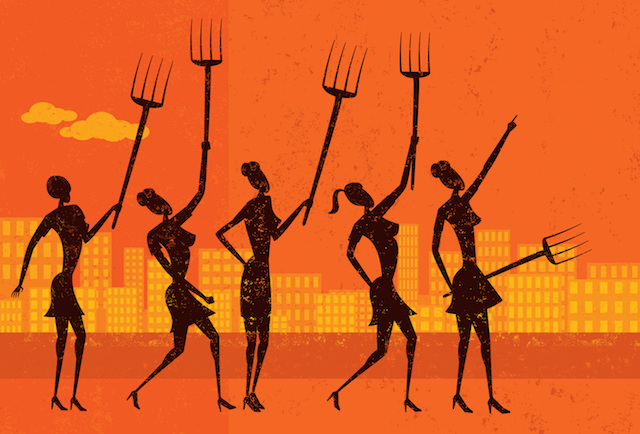
9 Tips To Tame Your Temper: Anger Management Made Easy
“Anger is an acid that can do more harm to the vessel in which it is stored than to anything on which it is poured.” ~Mark Twain
I am in serious danger, and I think you might be too.
I am in danger of becoming a grumpy old person. I get angry easily. I operate on a short fuse, ready to snap or explode at the littlest thing.
I could blame it on a combination of genetics and environment. My father seems to have only two moods, and one of them is angry.
He is like a volcano and can explode at any moment. And I don’t mean he’s just cranky or that he yells.
No. When he loses it, he really loses it. Emotionally and physically.
He tenses every muscle in his body, clenches his fists, sticks his jaw out, and says things like, “Eeeoourgh!!!”
He is a fireball of white-hot fury. Irrational, unreasonable, and perverse.
As a child, I never knew whether I would be hugged or hit. I desperately wanted his approval and love, but often I incurred his wrath.
As a teenager, I learned to fight back, yell as loudly, and be as demanding as he was. As an adult, I learned two key components that comprise anger.
There’s the emotion that can envelope you in a moment, instantly causing you to become irrational and almost uncontrollable. And there are the situations or environments that have the potential to lead to anger, if we let them.
I could let anger rule my life, but I refuse to do that, damn it! So I employ some simple anger management techniques instead.
I am still in serious danger, but with these tools, I think I’ve found a way out.
1. Follow a process.
Create a process for managing situations that often trigger anger. When someone does something that upsets you, take a deep breath and trust in the process.
One process I use to express my feelings calmly is to describe the behavior and explain my emotional response.
So, I’d say something like, “When you yell at me, I feel hurt and upset,” or, “When you behave this way, I feel really angry.” It helps identify the problem and my emotions. It also helps me feel in control and prevents me from resorting to useless, blaming behavior.
2. Tap it out.
Try a little tapping, or Emotional Freedom Technique (EFT). EFT is a healing tool that helps reduce deep emotional responses so we can manage our lives more calmly.
The whole EFT process includes a tapping routine and a mantra, but I find a simplified version just as effective.
When you feel an intense emotion, just use your first two fingers and tap your collarbone until you feel calmer. If you start tapping quickly and then gradually slow your rhythm, you’ll find yourself calming down.
Sometimes, when I feel like tensing up and yelling, “Eeeoourgh!” myself, I go to the bathroom and tap until I feel calmer. Then I can handle the situation rationally.
3. Think about your belly button.
Centering is a super-simple technique that even a child can use. All you do is focus your mind on your belly button, or rather, just a smidge below your belly button.
As you focus, tense those muscles and draw your belly button in toward your spine. If you’ve done any Pilates or yoga, you’ll be familiar with these deep abdominal muscles.
Doing this exercise is truly calming and empowering. It puts you in a state of calm control, so you’re less likely to react and lash out. I sometimes close my eyes for a moment and focus on my belly button. When I open my eyes and continue centering, I can operate more calmly and coherently.
4. Lighten up.
Anger appears when we’re frustrated, but if you stand back from the situation a little, you might see it’s quite ludicrous. Not always, but often. Before you blow your stack, stand back and see if you can find something silly about what’s happening.
I remember being frustrated by an organization I worked for when they arranged a breakfast for us to discuss strategies to improve our work-life balance.
They wanted us to get up hours earlier than usual and spend extra time with our colleagues so we could talk about ways we could spend less time with them. How ridiculous!
5. Practice daily calm.
We can experience anger and frustration almost daily, and the more we experience it, the more it becomes our way of operating.
When you commit to practicing daily calm, you counteract the anger. You practice something much more beneficial to your health and well-being.
This doesn’t have to be hard. Just spend a moment or two doing nothing, whenever you can. Sit quietly and realize that you’re doing nothing, and see how calming it is.
6. Get curious.
The next time you find your anger rising, divert your energy into curiosity. Get really curious about the other person’s perspective.
Keep asking questions until you fully understand the other person’s opinion. Once you do, you’ll be in a better position to discover a solution that suits everyone.
Recently, my daughter was extremely trying, and I saw red. I drew in my breath, preparing to yell at her. But somehow, in the split second of inhaling, I thought, I just need to follow the process.
Instead of yelling, I reflected her feelings to get to the bottom of why she was behaving so poorly. I got curious about the cause of her behavior, and together we created a solution to the problem.
Instead of an angry interaction that would rip our relationship apart, we had a truly productive, useful talk that brought us together.
7. Hug a tree.
If you feel yourself spinning out of control with anger, you can become grounded by literally grounding yourself. Hug a tree, lay on the ground, or sit with your back to a large, solid oak.
Connecting yourself to the ground in this way will make you feel both physically and emotionally supported, calm, and stable.
Grounding strategies help you detach from strong emotions. They help you gain control over your feelings so that you can get back in control.
If you need a more portable strategy than an oak tree, try putting a small stone in your pocket. When you start feeling overwhelmed by emotion, reach into your pocket and focus on the stone—notice its texture, size, and temperature. This action focuses you on reality and stabilizes your emotions.
8. Close the argument room.
There’s a Monty Python skit where Michael Palin pays for an argument in the argument room. We often do the equivalent of asking for an argument by starting discussions that go nowhere or pushing our opinions onto people who don’t want them.
We should always ask ourselves if going into the argument room is worth it.
When my father rants, I often let him go. I don’t want to engage with him because I’d be entering the argument room, and for what? I’d end up cranky and frustrated, without achieving anything.
9. Look beneath the anger.
Anger is often a secondary emotion that masks the true feelings beneath it. The next time you feel angry, look inside and see if your anger is masking another deeper emotion.
If you can discover the underlying emotion, you can address the real reason behind your emotional response.
Think about the last time someone cut you off when you were driving. The moment it happens a chill of fear runs through you, and then it’s quickly replaced by frustration and resentment.
Or, consider the last time you were running late and someone seemed to be delaying you. Underneath your anger may be self-loathing regarding how you didn’t prepare better, guilt for making someone wait, or fear of the consequences of your late arrival.
Anger is the secondary emotion.
The Truth About Anger
It’s a powerful, all-encompassing emotion.
Well harnessed, it can drive us to achieve great things. We can use it to fight injustice, increase confidence, and create focus. Think Erin Brockovich, Alanis Morissette, and Steve Jobs.
But it can also ruin our relationships, damage our reputations, and make us hard to love. Think Naomi Campbell, Mel Gibson, and Charlie Sheen.
That grumpy old person we talked about? Their anger is unchecked, and it’s become a front.
A way of interacting with people. A mask to hide behind.
And no one can live a great life if they’re hiding.
It’s far better to have the courage to face the world, and your problems, head on. To discover what’s really under that anger, and address the true problem.
The next time you feel your anger flare up, you can hide behind it, or you can dig deep into self-reflection and deal with what you find.
Which will you choose?
Angry woman image via Shutterstock
-

7 Lessons to Learn If You Want to Thrive in Life
“Embrace each challenge in your life as an opportunity for self-transformation.” ~Bernie S. Siegel
I’d been having mild pain for about a week—a consistent, dull ache in the center of my chest.
I’m thirty-nine years old with no personal history of heart disease, or of anything else for that matter. Worry hadn’t yet consumed me, but I was keeping an eye on the pain to see if it got better or worse.
Once a week I drive ninety Los Angeles miles round trip for work. I say “Los Angeles” miles because I should theoretically be able to make the journey there and back in just over two hours, but it can take up to five, since I spend almost the entire commute on the perpetually traffic-ensnarled 405 freeway.
It was during this commute that the pain began to feel more intense. I thought my left hand felt tingly. My mind, always a little bit anxious when driving in LA, ratcheted up the worry ten-fold.
I envisioned having a full-on heart attack while driving in rush hour traffic. I made a mental laundry list of the ensuing consequences, such as passing out and losing control of the car or what would happen to all of my debt if I died. Whose lives would be irrevocably changed for the worse?
I managed to calm myself down enough to make it home, but once there my dutiful and pragmatic husband suggested a trip to the Emergency Room. I was in no shape to argue, and truthfully was grateful that he echoed my own escalating concern.
During my visit to the ER and the subsequent overnight hospital stay, I had lots of opportunities to overreact and feel sorry for myself. I’m sure I did quite a bit of both. But I also saw it as an opportunity to remember and to practice some of the hard-won lessons I’ve learned over the years.
1. The most important things in life are worth waiting for.
It’s no surprise that the name for someone receiving medical care is the same as the word for tolerating delays without becoming annoyed or anxious.
The ER was so busy the intake nurse joked that they must be running a special she didn’t know about. After taking my vitals and determining that I was not having a heart attack at that very moment, I was sent to the lobby where I waited for over five hours to be seen.
I almost talked myself into leaving several times, convinced that if I really was experiencing something serious they would have seen me right away. But I have a family history of heart disease, and the pain wasn’t going away, so I opted to stay.
It turns out that I (thankfully) don’t have a heart problem, but that was not for me to determine.
In our modern age of instant gratification, exercising patience can be a real challenge, especially because we’ve become accustomed to getting what we want right away. But there’s a reason why people often say the most important things in life are worth waiting for—they are. Particularly when your well-being is at stake.
2. A little kindness can go a long way.
“Be nice to others and they will be nice to you” doesn’t always pan out, but when you’re in a busy hospital with doctors and nurses who are stretched to their limits and beyond, a little kindness goes a long way. That doesn’t mean you shouldn’t be firm when necessary, but remember the person you’re talking to is a human being.
Be respectful. In most cases, you’ll find that respect is reciprocated. Everyone has feelings, and most people are doing the best they can with the tools and resources they have.
3. What works for others may not work for you.
If learned nothing else from this incident, it is that nitroglycerin is not my friend. Yes, nitro is a life-saving wonder drug that opens blood vessels so blood can continue to flow through damaged heart tissue. But if you are prone to migraine headaches as I am, taking a nitro tablet as a precaution is just plain awful.
Nitroglycerin did nothing for my chest pain, but it did give me an instant, crushing headache that lingered for three days. If nitro is going to save my life, I will certainly take it. But if I’m taking it as a precaution, I will think twice in the future.
There is no one-size-fits-all solution to every problem. Sometimes knowing what doesn’t work is just as important as knowing what does. It can literally save you a headache or two down the line.
4. Happiness is being grateful for the small things.
I was finally admitted to a room at 2AM, with a roommate restlessly snoring in the next bed.
I felt dehydrated and a little nauseated from taking a cocktail of meds on an empty stomach. All I could think about was how much better I would feel if I could just eat a cracker, so I asked the nurse who brought me to my room if she could possibly bring me one.
A few moments later she returned with not one, but eight crackers—and two cups of apple juice! I almost cried with relief and gratitude. I think I thanked her four times, which she seemed to appreciate.
I also asked if she might have any earplugs, when I noticed a small box on the bedside table. It not only contained earplugs, but also a face mask, a book of crossword puzzles, a pencil, and—what felt like the best thing in the whole world—ChapStick! I actually squealed “OOO, CHAPSTICK!” out loud with delight.
I gave a silent “thank you!” to the genius that thought to include ChapStick in that box while I slathered the stuff on my lips and downed the crackers and juice. I popped in the earplugs and fell asleep with lubricated lips and a stomach that was no longer doing gymnastics.
It’s the small things, people. Finding joy in the seemingly insignificant moments and the small gifts is how to find happiness every day, even in the most trying circumstances. I think the choice to be happy is one of the most transformational decisions a person can ever make.
5. Laughter is the best medicine.
I did not sleep well that night. The earplugs didn’t really help to cancel out the various noises coming from my roommate, including the spa piano music she was playing to help her sleep.
But as I lay there listening to her snore, she suddenly blurted out in a thick Polish accent, “Wrong chef!” She then mumbled something under her breath and continued the buzz saw serenade. I laughed out loud, wondering what she could possibly be dreaming about.
Amusing things happen every day. Don’t get so caught up in the serious moments that you can’t have a laugh or two. Studies show laughter actually improves health, and will most certainly lighten your mood.
6. We could all use a little compassion.
While it could have been easy to be seriously annoyed by my roommate, I chose instead to practice compassion. Yes, she was an obstacle preventing me from getting rest. But she was also in the hospital because she wasn’t feeling well.
Couldn’t we all use a little extra compassion from others when we aren’t feeling our best? Letting go of my irritation not only allowed her to continue doing whatever it was she felt she needed to do in order to feel better, it actually made me feel better.
One night of poor sleep isn’t a big deal in the grand scheme of things. Being compassionate is.
7. Now is the time to prepare.
There really is no feeling worse than knowing you are woefully underprepared for serious circumstances.
This isn’t to say you should be constantly worrying about the future, but having the courage to face the inevitable consequence of life (which is, of course, death), can mitigate much of that worry. I don’t want my loved ones to be left in the lurch with my passing.
It’s finally time to admit that I’m a grown-up and I need to act like one, which means obtaining life insurance so my family doesn’t find themselves saddled with financial responsibility they aren’t prepared to handle when I’m gone.
—
Sometimes it takes big, scary moments to remind us that the quality of our lives is not determined by what happens to us, but by how we react to those experiences.
Why wait until you’re confronted with a serious situation to adopt one or more of these behaviors? Not only will it make your daily life richer and more meaningful, but it’ll also give you the tools you need to survive and thrive when life takes an unexpected turn.
Strong, confident woman image via Shutterstock
-

The Secret to Replacing Agitation with Calmness
“Calmness is the cradle of power.” ~Josiah Gilbert Holland
I was interested, recently, to find that our local supermarket had set up an area with ten self-service checkouts. For years I‘d accepted the normal method of bagging and paying for my stuff. No stress there. But they’d installed some new technology and I was keen to give it a try.
All new things bring with them hiccups or small difficulties of some kind. The self-service area was no exception.
Sure, I did receive the correct change. And, it was definitely the fun experience I looked forward to. However, a queuing area hadn’t yet been established, so people just jumped into a vacant self-service spot as soon as one became available, oblivious to the fact that others were waiting.
Here was the dilemma.
Should I have called out in a loud voice, “Hey you! What about the queue?” (angry response) OR “Excuse me. Do you mind going to the end of the queue?”(polite response) OR continue to wait in line without commenting. (I could either churn myself up internally or mutter to the person next to me or to myself.)
Being a bit shy, I was not fond of using the angry or polite responses. I was actually churning inside over such a small thing. After all, it only meant I’d be held up a few minutes.
Have you been guilty of getting anxious inside over something as trivial as queue jumping?
The Secret to Replacing Agitation with Calmness
So what is the secret?
I’ve given it the name: reaction awareness. Let me explain.
When you are in a situation where you feel your insides churning, become aware of your reaction to that situation. By observing what is happening in this way, you are in control. You have the power to calm the negative reaction welling up inside you.
Reaction awareness allows you to replace a churning reaction with a calming one. You’ll actually lessen the severity of any negativity that arises.
How It Works in Practice
Okay, you’re aware of your reaction, but how can you lessen the negative results of each particular situation, on your body?
Reaction awareness consists of two techniques.
One technique deals with developing calmness as soon as a stress or annoyance arises. Of course, not all of the ideas listed below are ideal for each situation. Your choice will depend on where you are and what has happened.
On the other hand, you might select just one that you’ll use every time because you know it would be the most comfortable and useful response for you.
The second technique involves the regular practice of activities that over the long term will become part of you, like a habit. These activities will strengthen you so that when situations occur in the future, you’ll be ready and well prepared for them. You’ll be equipped to handle yourself better.
Quick Techniques for Immediate Use
- Use breathing. Take a few deep breaths to calm yourself. Turn away from the situation so that it’s out of sight for a minute or two.
- Reduce surrounding noise. Turn off loud music and change to calm, quieter sounds.
- Ask someone to massage your shoulders. This is where tension is stored. A quick massage can release the tension and relax you.
- Count to ten. This was the technique popularized when I was a kid.
- Drink water. Make a warm drink with lemon to soothe you, or have a glass of water.
Activities to Practice Over Time for Long-Term Benefit
- Use breathing exercises. The most basic is to inhale, then exhale, using the nose, both to the count of four. Yoga enthusiasts will know various breathing exercises they can use. Or consult a practitioner for the ones that will give you most benefit.
- Sit quietly. We are conditioned to thinking we must be doing something every moment of every day. If we’re not sending a text message, we’re “tweeting” or “liking” someone. Just sit and quietly read, practice mindfulness, or enjoy a short time of shut-eye.
- Walk or jog outdoors. Choose a place with trees, grass, or flowers, because they send a calming message to the brain.
- Have “me” time. You are important so treat yourself as important. Do something you love doing but rarely have (or make) time to do.
- Recognize the triggers. Know particular situations in advance when you’re sure you’ll flare up or need calming. Two of mine are feeling very cold, or feeling thirsty/hungry. Know the triggers that create agitation for you, so you can be better prepared. You’ll gain that state of calmness quicker.
Because the last five listed above are ideas to be used over the long term, it’s important to practice them on a regular basis. You might like to select just one or two and master them.
Try them. See which ones calm you down. Your body will thank you because calmness, rather than an uptight feeling, will be the norm.
Why Should You Use Reaction Awareness?
It’s healthy. Your body doesn’t respond as angrily as you might without using it.
According to Josiah Holland, calmness is the place from which power emerges. In other words, by using this technique, you are developing an inner strength—an inner power and confidence—because you are in control of each situation. You haven’t let your emotions take control of you.
Using reaction awareness is definitely not a sign of weakness. The confidence it creates in your ability to handle awkward or difficult situations by reacting calmly enables you to face each day with your head held high. You exude that special quality not many people have, of inner peace and strength.
In Summary
Many times each week, you’ll find yourself in situations where you can either forget all about action awareness, or use it. The choice is yours. Remember, you are in charge of your life and your health.
When you practice reaction awareness, you’ll be prepared for anything—almost. In whatever situation you find yourself, you’ll be replacing agitation with calmness.
As you deal with every issue, you’ll become more confident. You’ll become a source of strength and calm for others around you.
Calm man on a cloud image via Shutterstock
-
Just Breathe: A Message from Children on the Power of Mindfulness
Just breathe. Such simple advice, and yet it can be so tough to remember when we feel caught up in our emotions. Imagine what the world would be like if we all learned the power of mindfulness as kids. Imagine what it would be like if we all made an effort to practice this as adults.
-
Stop Feeling Frazzled: A Powerful Guide to Reducing Stress (and a Giveaway!)
 Update – The winners for this giveaway have been chosen:
In my high school yearbook’s class prophecy, it was predicted that I would one day write and star in a one-woman show about my life called “Stress.”
I was chronically frazzled—in a constant state of panic about everything I had to do and had already done but may not have done well enough.
I overextended myself, took very little time to nurture my emotional and mental well-being, and frequently felt like I was about to snap.
In fact, I even broke a stress ball once from excessive squeezing. It was made for that, but apparently not with the force in my freakishly strong little hand.
Fortunately, I eventually discovered mindfulness, which was life-changing for me. It helped me step outside of my anxious thoughts so I could respond to life more consciously and calmly.
Since I’ve been more stressed than usual as of late—and I’ve needed a reminder of how to effectively manage my emotions—I was thrilled to receive a copy of Shamash Alidina’s new book, The Mindful Way Through Stress.
The subtitle promises a proven eight-week path to health, happiness, and well-being—and the book delivers!
It’s clear that Shamash is not only an expert on mindfulness, but he’s also quite passionate about helping others respond wisely to life’s inevitably stressors instead of getting caught in a frenzy of reaction.
I highly recommend The Mindful Way Through Stress to anyone who’d like to find more peace within the chaos of daily life.
It is, hands down, the most helpful guide I’ve read in a long while, and one I will certainly reference whenever I need a little help dealing with life’s inevitable challenges.
I’m grateful that Shamash took the time to provide some incredibly detailed answers to my questions about stress and mindfulness, and that he’s provided two free copies of The Mindful Way Through Stress for Tiny Buddha readers.
The Giveaway
To enter to win one of two free copies of The Mindful Way Through Stress:
- Leave a comment below
- For an extra entry, tweet: Enter the @tinybuddha giveaway to win a free copy of The Mindful Way Through Stress http://bit.ly/1M3wBvL
You can enter until midnight PST on Friday, March 6th.
The Interview
1. What brought you to your career as a mindfulness teacher and coach?
I originally got interested due to stress. The stress for me when I was in college, aged twenty, came from a combination of workload and confusion.
I didn’t know what to do. I was halfway though a degree that I didn’t enjoy (Chemical Engineering), and working toward a job I knew I didn’t want (working in the Oil Industry).
Then, my fortunes changed. I came across a class in “practical philosophy” in which the teacher guided a short mindfulness meditation. I was pleasantly shocked!
Just a short few minutes and I’d gone from feeling frazzled to focused. Wow! Why hadn’t anyone taught me this technique years ago?
I resolved from that day on to teach mindfulness to as many children and adults that I could.
I started by teaching in a school for eight years, where all the children had time to practice mindfulness and meditation. And then I moved on to focusing on just teaching adults mindfulness full-time.
Training mindfulness teachers to embody both awareness and compassion, for themselves and their students, is my passion.
2. Your book presents a self-help version of mindfulness-based stress reduction. Can you tell us a little about MBSR and how mindfulness helps with stress?
Mindfulness-based Stress Reduction was developed in the late seventies by Dr. Jon Kabat-Zinn and his colleagues at UMASS Medical School. He asked his colleagues, doctors, to send him their most challenging patients—those that they felt they could no longer help using modern medicine.
He put together an eight-week course, which comprised of guided meditations, mindful yoga stretches, and group dialogue around managing stress and living life in a mindful way.
His experiments worked. The groups reported huge reduction not only in stress, but also reductions in anxiety, depression, and chronic pain, and a greater feeling of control of their lives.
Even more encouragingly, these positive reports of stress reduction from patients continued even three years after they’d done the MBSR program.
So naturally, MBSR began to spread, first, across the US and now, worldwide. Hundreds of thousands of people have probably done the program now, if not millions.
Stress is a complex subject, and so the path to relieving it is not straightforward. However, there’s a few key, powerful ways in which mindfulness can reduce stress.
Mindfulness helps you to switch off your normal, habitual, automatic reactions to the stressors you face.
If you’re living mindlessly, you don’t even know how stressed you are.
A friend of mine recently started practicing mindfulness and has discovered his body is riddled in tension and is now slowly beginning to relax. Without mindfulness, he’d still be going around with this chronic tension in his body.
So with mindfulness you can see if you’re getting excessively stressed early, and step out of that stream. You know how to rest your mind and body. Without mindfulness, you don’t have access to that.
Mindfulness makes your brain more resilient to stress.
People who have practiced mindfulness have brains that don’t seem to ruminate so much; they can spot negative, repetitive thinking earlier, and step out of it. Or sometimes, worries just don’t seem to take hold. Sounds good, doesn’t it?
Mindfulness naturally engages the relaxation response in your body.
This is a hard-wired system. By combining mindful awareness with a sense of warmth toward different sensations, emotions, or even situations in your life, the stress inevitably eases.
You make fewer mistakes.
If you’re rushing around mindlessly, you’re going to bump into a lot of things, both physically and metaphorically. So many of us are running through life, causing more problems as a result. The running is due to fear of missing out, or being imperfect.
Mindfulness shows you how to access a peace within so you don’t have to run for it everywhere you go. By discovering a different way of operating, which everyone can do step-by-step, you meet life with greater calm, peace, joy, and freedom.
But remember, stress by itself is not bad. Stress is a problem if it’s sustained for too long and feels like it’s too much for you. See the positive aspects of stress—how it energizes you and gets you going. Seeing stress negatively makes things worse.
Make friends with stress! Stress is inevitable. Just use mindfulness to take regular breaks from your stress to recharge yourself. Then out you go again!
3. What are the problems with living on autopilot?
Living on autopilot is great for planes, but not for human beings.
When we were babies and young children, we didn’t really live on autopilot. We lived each day fresh, alive, in the moment. That’s a natural way to be.
But the human brain is clever. To save energy, rather than keeping your conscious, it switches off consciousness for any repeated activity.
Eventually your whole life is one big autopilot experience. You’re like a robot. And this kind of living reduces your joy and freedom tremendously.
The thing is, living consciously is so enjoyable once you discover how! The feeling of your own body is beautiful. Just experiencing sitting and breathing can be blissful.
The present moment really is a wonderful moment once you discover how to penetrate the crust of thoughts that is pasted over everything.
You can do it. Everyone can do it. You just need to create the right environment, follow the right instructions, and bring the right attitude—patience, kindness, curiosity, and allow the mindfulness and compassion to rise.
Just as the sun rises in the morning, bringing light and warmth, so your life becomes a joy as mindfulness and compassion grow. By prioritizing mindfulness practice in your life, you can experience this.
4. With our increasingly busy lives, many of us end up multitasking and feeling stressed as a result. How can we challenge this instinct to multitask without falling behind with everything we need to do?
The busier you are, the slower you need to go. Watch people like the Dalai Lama—do you see him rushing around in a panic? Yet, he’s constantly teaching, coaching, serving. He’s probably much busier than you or me.
The urge to multitask is powerful. And if you’re on autopilot, you’ve got no chance to release yourself from the hold of phones, computers, and tablets. In our digital age, mindfulness is essential to prevent you being swept in an ocean of information and people wanting to connect.
Try small steps like keeping your digital devices out of the bedroom. Or keep them off in the evenings. But try and take a bigger step if you can—leave your phones behind on vacation. Take one day off every week totally free of multi-tasking. A digital detox day!
Here’s one approach you can take to dealing with an excessively long to-do list:
- Before going to bed, jot down all the key things you wish to complete the next day.
- Prioritize them. What’s number 1? What’s number 2? Rewrite the tasks in the correct order. Put mindfulness at the top of the list!
- The next day, resist the urge to check emails, Facebook messages, Twitter, etc. By resisting this urge, it diminishes. Just because you have a compulsion to check your messages, you don’t need to actually check them—they can wait.
- Do the task you need to complete, in the order you set out. And write down the time you start and finish each task. Having a written record will help you to see how you’re really using your time. It’s more power than it sounds—do try it out!
- Between tasks, practice mindfulness. Feel some breaths, go for a mindful walk, slowly and consciously drink a glass of water, or stretch. These breaks with rejuvenate you and make you finish your tasks sooner (so you have more time to meditate every day).
5. You wrote, “Emotions are not problems to be solved. They are experiences to be felt.” Can you elaborate a little on this?
This is a very important point to understand. Misunderstanding how to manage emotions is at the root of so much human suffering.
Let’s take the example of feeling sad. If you’re feeling sad, what do you do? If you’re on autopilot, you try to fix it. You may think, “I must feel better.” So you go off and try and cheer yourself up. You don’t let yourself actually feel the sadness.
Now, that may work or may not. If it works for you, great. But what if it doesn’t work? What if partying with your friends doesn’t make you feel better? Or calling your sister doesn’t seem to lift the mood?
Well, your next thought will probably be, “Oh no. I’m still feeling sad. I must try something else. I must try harder.” Eventually, this turns into thoughts like, “What’s wrong with me? I should be happy.’
All this is hard work. You work harder and harder to fix your mood. But that’s not what your emotion wants.
Emotions need skillful awareness and care. Just like a young child needs attention and love to grow in a healthy way, so do emotions. So you need to feel the emotion.
Feel the emotion in your body. Notice its shape, maybe its color or texture. And bring some feeling of care toward the feeling. Place your warm hand on the sensation. Breathe and feel the emotion.
You can even speak gently to the emotion and ask, “What do want to say to me?”
One of my students did this the other day, and the response was a clear: “Slow down!” She discovered that she needs to slow down the pace of her life or things will get worse. That’s wisdom in action.
So emotions don’t need to be fixed or pushed away. They need to be gently felt—then they’ll dissolve and pass away in their own time.
6. Why do we tend to dwell on the negative, and how can we challenge this instinct to minimize our stress?
If you had a lovely day all day, but for one minute someone said to you, “You’re a complete idiot! You’re stupid, useless, and a waste of space!” then you’ll remember that. You’ll think about that much more than the thousands of other minutes that were absolutely lovely.
That’s because our brains are evolved to be like Teflon for positive experiences and Velcro for negative experiences.
Scientists think this focus on negativity, called negativity bias, is a way to ensure we survive—if you spotted a tiger on the way back to your cave, you need to be able to remember that! If not, next time you could be dinner!
You’re probably not reading this blog in a jungle. So, you need to re-balance your brain. The solution: find your favorite daily way to focus on what’s going well in your life. This could be combined with your daily meditation practice.
At the end of the practice, ask yourself, “What’s going well in my life?” Or, “What’s awesome about me?” Or, “How have I been a nice person today/yesterday/this week?”
Ask yourself positive questions like those above, and they’ll draw positive thoughts and emotions from within you.
7. What is one simple mindfulness exercise anyone can do whenever they’re feeling stressed?
This is a powerful one for most people, originally developed by meditation teacher, Ajahn Brahm:
- Sit comfortably and close your eyes.
- Imagine you’re holding two heavy suitcases in your hand. The left one represents your past and all your experiences, both positive and the regrets. And the right one represents your future and all your hopes, dreams, worries, and anxieties.
- Feel the weight of holding these bags around all day. It’s tiring. You need a break from time to time.
- Lower down the bag in your left hand, onto the ground. Enjoy the feeling of letting go as the weight transfers to the ground.
- Lower down the bag in your right hand, representing your future.
- Enjoy staying in between the past and future, in the present moment. What a relief that is!
- Connect with any present moment experience. Your body, your breath, sounds around you.
- When you feel you’ve had a rest and ready to resume, you can re-engage in your everyday activities. Ideally with some more mindful awareness and kindness to yourself and those you meet.
You can learn more about The Mindful Way Through Stress on Amazon here.
FTC Disclosure: I receive complimentary books for reviews and interviews on tinybuddha.com, but I am not compensated for writing or obligated to write anything specific. I am an Amazon affiliate, meaning I earn a percentage of all books purchased through the links I provide on this site.
-

How To Be The Best Version Of You A Lot More Often
“In chaos, there is fertility.” ~Anaïs Nin
Are you a calm creature in your yoga class, then you get home and yell at your kids?
Do you ever read a really inspirational book or blog and think, “Yes! That makes total sense, and I’m going to start doing that!” Then life gets busy and it never quite happens?
Do you ever feel like you’re two different people living in the same body? Saying one thing, doing another?
Me too.
For the past fifteen years I’ve been a self-development junkie.
I’ve read tons of books and I’ve attended courses and loads of amazing workshops. These covered everything from parenting to time management, relationships to getting organized, healthy eating to setting up a business, plus anything to do with spirituality and personal growth.
All of these have inspired me with an array of fantastic ideas—but often they remained just ideas, floating around in my head without any action plan behind them.
On the mat at my local yoga center I was the calm, peaceful, positive soul I craved to be. Yet, when I got home and re-entered my chaotic reality, it felt like just a temporary illusion.
I was straight back to my grumpy, irritable, impatient “other self.”
What was wrong with me? How could I be so Jekyll and Hyde?
How could I more consistently be the “me” I loved being around?
I was writing in my journal one day when I began to list the qualities I show when I’m being my best version of me.
- Kind
- Lighthearted
- Playful
- Calm
- Relaxed
- Positive
- Present
I knew what brought out the best in me—yoga, inspiring workshops, running in nature, laughing with friends, dancing my socks off, getting stuck in an amazing book.
Then I listed what the poor version of me looks like.
- Irritable
- Impatient
- Snappy
- Short-fused
- Negative
- Mind spinning in overdrive!
I asked myself, “What brings out the poor version of me?”
- Feeling overwhelmed, with a lot on my plate
- Too much on my mind, trying to figure things out in my head
- Rushed, running late
- Tired
- Not enough “me” time
And it occurred to me that, since I know what brings out the worst in me, why not look at each of these things and find ways to make them happen less often?
I realized that I needed to get a handle on the day-to-day “running the show” stuff.
To tackle overwhelm and having too much on my plate, I began to take a deep look at my time management. I learned how to say “no,” to delegate, and to structure my days better.
I began to prepare for success by meal planning, laying clothes out for myself and the kids the night before, and always thinking one step ahead about what I’d need to take with me before going out the door, so I could feel calm and confident that I wasn’t forgetting anything.
I began to feel less rushed. I was on time.
Then I got back into a regular journal writing habit. I also had weekly scheduled brain-dumps to get things out of my head and onto paper so I could figure things. I crafted step-by-step action plans to get organized and on top of everything that needed doing.
Instead of spending my evenings slumped in front of the TV or scrolling mindlessly on my phone, I started having regular candlelit baths and getting into bed earlier, curled up with a good book.
It was the “me” time I always craved but never thought I had space in my day for. And I was consistent with it. I was finally implementing a lot of the great things I’d read about (hurrah!), and I felt the best version of me coming out more often.
Once I got on top of the logistics, I felt less stressed and overwhelmed. It was easier to be more mindful and present. I began a daily practice of checking in with myself, asking, “How am I feeling?” listening to the answers and using them to guide me.
After a lifetime of telling myself “I’m not a morning person,” I began to wake fifteen minutes before the children and used this quiet time to write in a gratitude journal or meditate using an app on my phone.
It’s helped me stop being so cranky at breakfast and send my kids off to school peacefully, and with love.
It took recognizing what brings out the worst in me to turn things around. It didn’t happen overnight, but by taking baby steps in the right direction I got there.
Now I’m able to be my best version of me in my everyday life—not just on the yoga mat.
If you want to be your best version of you more often, write your answers to the following questions:
I feel like my best version of me when…
How I feel about myself when I’m the best version of me…
It’s easier to be my best version of me when…
I’m a poor version of me when…
What can I learn from these insights? What new habits can I create to make it easier to be my best version of me?
Inspired actions I will take this week:
1.
2.
3.
Share in the comments below: What brings out your best and worst you? What can you do to bring out your best self more often?
Happy woman image via Shutterstock
-

How to Stop Fearing the Worst and Worrying About “What Ifs”
“Our anxiety does not empty tomorrow of its sorrows, but only empties today of its strengths.” ~Charles H. Spurgeon
There’s nothing like a real health emergency for putting insignificant worries into perspective.
By the time I was pregnant the second time, I had left my struggles with anxiety largely behind me. Having been to therapy years earlier to find coping mechanisms for managing my ever-present phobias, I was in a fairly good place when I learned I’d been given a second chance at having a child.
But worry is as much as part of me as breathing, and having lost a pregnancy the year prior, I spent the first eight to ten weeks of the second one constantly preoccupied with the what-ifs that tend to haunt anxiety sufferers, even reformed ones like me.
One day in week forty, after many hours of irregular contractions, something told me I needed to check myself into the hospital. It was a different feeling than the one I’d experienced during my panic attacks, which was always induced by the fight or flight response.
It was calmer, and felt more peaceful. So I listened.
Once I got there, the midwives discovered my blood pressure was 200/110 (stroke territory). I was in the middle of a hypertensive crisis caused by undiagnosed pre-eclampsia—a dangerous condition that affects a small percentage of pregnant women worldwide.
They admitted me immediately, and a scene from an emergency room TV drama ensued. Machines screamed. Nurses ran. Doctors were paged. IV’s were administered.
Between waves of doctors and nurses I learned that if they didn’t succeed in getting my blood pressure down soon, I could seize, stroke out, or suffer irreparable damage to my liver and kidneys.
To further complicate matters, my son was starting to show some signs of distress, and I got the sense from the folks in scrubs around my bedside that they weren’t quite sure how to manage it.
Through it all I remained surprisingly calm, somehow at peace with what was happening around me, despite the many hours I’d spent worrying about just such an event in the past. I felt saddened by the possibility of dying—or worse, losing my son—but not panicked or afraid.
When my son was born, healthy and strong by emergency C-section, then I truly understood the futility of my past concern.
Having survived the incident unscathed, I spent the next six years of my life working on building the skills that keep the time-suck that is anxiety from ever coming back.
If I had to tell my past self something I’ve learned to prevent unnecessary suffering, it would go something like this:
Don’t argue with a fool. (People may not know the difference).
One piece of advice for anxiety sufferers I read and hear often is to take a deep breath and reassure yourself that you are safe, your anxiety can’t hurt you, and your fears are all in your head.
Anxiety is irrational, and no amount of rational thinking will banish unnecessary worry or anxious thoughts. In fact, trying to fight irrational thinking with logic can be counterproductive and lead you down the rabbit hole of self-doubt.
Instead, respond to irrational fears by accepting that there is a (however remote) possibility that what you fear may come to pass, but also trust that if it does, you will have the tools to manage it.
Don’t ask others to argue with a fool.
Mental illness is tough, and having support from friends and family is key to making it through unscathed to the other side.
Asking your friends and families to tell you why your fears are unfounded and your worries are irrational is not asking for help—it’s asking for validation.
Many of us suffering through anxiety believe that if we can’t trust our own logical arguments for why everything is going to be okay, maybe someone else can make it okay for us.
This kind of behavior often serves to undermine your self-confidence and create codependent tendencies, since you’re relying (most often very ineffectively) on others to manage your anxiety for you.
Find a more productive focal point.
A few years before my pregnancy, when I was first treated for anxiety, my therapist taught me a trick I carry with me to this day.
Anxiety needs a focal point, but with a little sleight of hand you can find one that is less disturbing than your worry.
When embarking on a trip to Cabo for my friend’s wedding (I’m afraid to fly), she told me to wear the most uncomfortable outfit I could tolerate for the flight. I chose a tight, itchy strapless corset, and spent a good nine hours trying to fight the garment’s pinch.
Guess what I wasn’t doing, though, while cursing my existence? Worrying about plane crashes.
Over time, I’ve found many other tools to help me stay present and banish unnecessary concerns. If I have a legitimate worry, I take action to mitigate risks and try to move on with my life.
If there’s nothing I can do, I occupy my mind with something else. I practice yoga. I wear itchy underwear. Most of all I trust. I trust that I can deal with any unexpected hurdles life might throw my way.
And if for some reason I encounter one I can’t manage, it simply was meant to be, whether it’s what I want for my life or not.
And then I move on and enjoy the moment. Or at least I try, anyway.
-

Getting Back Your Spark When Every Day Feels Hard
“When you reach the end of your rope, tie a knot in it and hang on.” ~Thomas Jefferson
Did you ever wake up one morning and not know who you were anymore?
Waking up for the past four years of my life, I felt like I was in the movie Groundhog Day. The same things happened every day, and I felt the same horrible feelings all the time. Anxiety, depression, and hopelessness ran my life.
I had it all figured out at some point. I was furthering my career and moving toward my dream of becoming a psychologist. I had great co-workers, tons of friends, and a supportive family.
There was this continuous, sun-shiny, flowing feeling of “everything works out for the best.” Any struggles I went through would make me stronger, a better psychologist and friend. A better person. And so, I enjoyed the ups and downs of life with no regrets and little struggle.
It seems that I woke up one day and everything was gone.
I had lost my job, which paid for my education. All my friends had drug abuse issues, and I removed myself from their lives or vice versa. My puppy, best friend since age five, died four days before my birthday. I was plagued with pain from Lyme disease and an undiagnosed tick-borne illness. I felt like every piece of my life was falling apart.
My dreams were not coming true anymore. I still have no idea how I slid down this far without knowing it.
The best parts of my life had left me, and it seems like it all hit me at once. There were no more happy, “let it go, it’ll all turn out for the best” thoughts. It was all darkness. I had lost myself and my joy for life.
The worst part was that I knew I could get back to that place if I tried. But I didn’t know how. I longed for that spark, that fulfillment with my life, for years. I just couldn’t put my finger on what I was missing. I hadn’t even realized that it was gone until it seemed light years away.
I realize now that there were quite a few things I could actively do every day to pull myself out of this dark place. If you’re going through a rough time, these may help you as well.
1. Acknowledge and appreciate everything that happens, even the seemingly bad.
During my “golden age,” I had acknowledged everything that worked out well for me. I recognized the random strokes of luck that life handed me and appreciated them, and it seemed like more of these things happened as a result.
When I lost my way, I was so focused on the negative, overwhelming feelings that I thought good things just didn’t happen for me anymore. I had to learn that the only difference between a good thing and a bad thing is how you look at it.
I could sit and think about how much I disliked my boyfriend’s mother all day. From the first thought in the morning, all the way until bedtime I could obsess over how horribly she treated me. Why couldn’t she just accept me as I am? I love her son more than anything, after all!
After struggling with this for close to a year, I finally realized why she had grown to be such a focal point in my life. She was here to teach me compassion. True, loving compassion for someone you thought you couldn’t stand, until you open your eyes and think what it may be like to be them.
It is a good thing that she is in my life, and though she often presents challenges to me, that’s not necessarily a bad thing. She helped me to see that people are not black and white, good or bad.
Nothing is inherently bad; it just is. As your mind processes information, it applies your filters, your beliefs, and your preconceptions to the information. This is the reason we are angered, or feel sad, or disappointed. It’s not actually the thing she said, or what he did that angered you; it’s all what you think about it.
2. Challenge limiting, irrational thoughts.
When things go haywire, we tend to cling to our irrational thoughts like a life preserver, when what we really need to hold onto is our inner calm.
I really believed that I could just think my way out of the hopelessness-box I had placed myself in. I obsessed and ran and re-ran the same thoughts all day, trying to make sense or pull what I wanted out of every conversation.
My mind was a mess of tangled thoughts that I used to keep me in a bad place. Nothing was ever good enough; nothing was ever good at all. And there seemed nothing I could do about it but obsess even more.
I would obsess that my boyfriend and I weren’t getting along. Did he still love me? Why wasn’t that spark there anymore? He was cheating on me, he had to be. Why couldn’t things be the way they used to be? Why had he said that thing this morning, the one that made me feel so unloved?
I realized that all these thoughts did was give me something external to obsess over, to keep me from thinking about the real problem.
The real reason why I was uncomfortable and stuck in this thought loop was because of my own insecurities. I did not feel like I was good enough for him, hence my sneaking suspicion he would cheat on me. Focusing on what he may do kept me from addressing my own issues.
I was insecure. I had deep rooted self-worth issues, and I kept looking past the fact that all this started and ended with me. It was my insecurities making me think this way. It was my thoughts that would one day enable these things to happen—if I wanted to keep believing that I wasn’t good enough.
Often, when you think defeating and self-limiting thoughts all day, you start to believe they are true.
If you start from a place of love and acceptance for yourself, it greatly affects the way you think about important things in your life. My panicked mind just took the root cause and expanded upon it, made it grow, made it bigger and meaner until I couldn’t overlook the real problem staring me in the face anymore.
When you accept and love yourself as you are, and when you feel the inner peacefulness and calm inside yourself, you are able to see straight through your own tricks.
3. Do something just for you. Every day.
I am a responsible person and I always did everything I was supposed to do. I was a good girl. I went to work. I did my job. I did the dishes and laundry and was exhausted by the end of every day. But I couldn’t sleep through the night.
I felt like nothing was ever truly done. There was always more to do. I remember looking at a dirty bottle once and breaking down crying. Being everything for everyone doesn’t mean anything if you can’t enjoy a few moments with yourself. No one can appreciate you the way you can.
I slowly started substituting tasks with things I wanted to do. Instead of coming home and picking up the living room, I would come home and exercise. I felt better, relaxed, and energized when I was done, and the picking up got done quickly and without the bitterness accompanied by never having any time to do anything for me.
Its funny—all these people are relying on you, but all these people really need is you. Not the things you do. They love and appreciate you for you, not for the clean house. I had built up this idea that being a mother and responsible adult meant that I couldn’t have fun anymore. That I couldn’t do things I enjoy.
Make time to do something you love, and to just be you. Make you your number one priority today. Everything else will fall into place
4. Let the fun in.
Dance to your favorite song in the car, go dig your hands in the dirt in the garden, tickle your husband, make a mess; however you like to have fun, do it!
It seems like as we grow into adults, we are expected to act like grown-ups and slowly filter out all the fun in our lives. Piece by piece you realize everything that you used to enjoy, you no longer do!
Reclaim your life.
You need to take whatever time you have and use it to the fullest. It’s okay to go a little crazy. Get a little dirty doing something you enjoy. Remember what it was like to be a kid and totally immerse yourself in something, just because you loved to do it.
Forget your to-do list and do you instead. Love completely, open your heart, act like a kid, and who knows; you may just feel like one again.