Tag: calm

  • How 10 Minutes of Daily Meditation Can Calm Your Mind and Relax Your Body

    How 10 Minutes of Daily Meditation Can Calm Your Mind and Relax Your Body

    “Peace. It does not mean to be in a place where there is no noise, trouble or hard work. It means to be in the midst of these things and still be calm in your heart.” ~Unknown

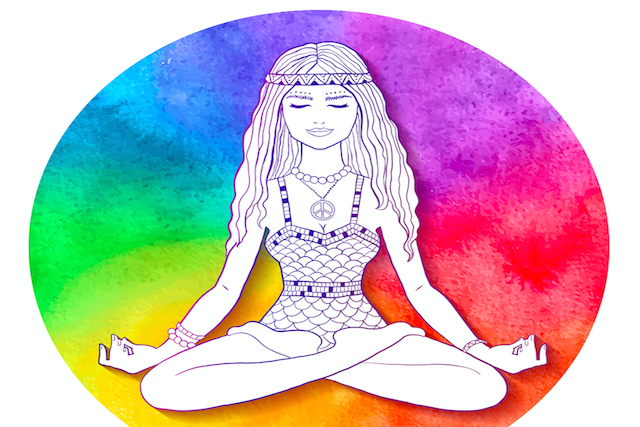
    I began the morning with a meditation. After taking my dog out and brewing the coffee, I sat in my sunny living room, my little dog Frankie nestled beside me. I perched cross-legged, a blue pillow on my lap for warmth. I closed my eyes and began to focus on my breath.

    When ten minutes passed, I raised my hands in appreciation. “Thank you for this day. Thank you for my family and for our health. Give me strength, wisdom, and love.” Then I extended my hands forward, “So that I may give strength, wisdom, and love.” Finally, I stretched both arms out sideways, wiggling my fingers in my peripheral vision, a reminder to be fully aware. This is how I start every day.

    It wasn’t always this way. My older brother Marc tried to get me to meditate when I was fourteen. Although he was a patient teacher, I didn’t understand the point of the exercise.

    “Let’s sit together. Close your eyes and concentrate on your breath.”

    “Why do I have to do this?

    “Just sit, Lise. It’s good for you to learn. We will do it together.”

    “OK, but why?”

    Marc tried, but I resisted. I stopped meditating as soon as he went back to college.

    Years later, as part of my psychology training, I took classes which touted meditation as a stress-reducing technique. During the classes, there were demonstrations which I always enjoyed. I sat back, breathed deeply, and felt a deep flow of relaxation inside me. But, back home, I had no follow-through. Once the classes were over, so was my meditation.

    My breakthrough into daily meditation happened in 2020, one of the few good things that arose from that dreadful year. I was home, virtually every minute of my life. I didn’t have to dash from of the house, brave traffic, and arrive at the office by 9:00. Mornings stretched more languidly. It was easier to find those ten minutes to breathe every morning.

    Now I sit every day. I scan through my body, noting points of tension, areas of pain and pressure. Simple awareness of the tension shifts any pain, and my body settles.

    My mind, free from my constant to-do lists, drifts along, as if floating on the waves of a gentle sea. I hear the sounds of the house around me, the heater outside, working mightily to warm our home; Frankie the dog beside me, sighing. My stomach muscles unclench. I notice thoughts drifting in. I don’t attend to them. The thoughts fade away. Peace.

    Of course, that’s when meditation goes well. Sometimes every minute slogs on. My scalps itches. “I forgot to return that phone call,” I think, and my body tenses into high alert. “Oh no, I have to write that woman back!” My throat tightens. “What if that editor doesn’t like my submission?” My stomach jams into a knot. I cannot let these thoughts go. “I suck at meditation. Why can’t I just breathe? When will these ten minutes be over?”

    Sometimes meditation goes like this. It isn’t always peaceful, and it doesn’t always feel good. The key, I’m told, is to keep at it. Like any skill, the more we practice, the better we get at it. It is no accident that we say one “practices meditation.” I didn’t get decent at writing in one year either.

    If you are like the fourteen-year-old me, you might be asking, why meditate at all? There are so many benefits I don’t even know where to begin; here is a partial list. Meditation…

    • Soothes anxiety: When you learn to focus the mind, your thoughts don’t spin off into anxious “what-ifs,” spiraling into anxious ruminations.
    • Calms anger: Focusing on breathing calms the mind, stopping our internal tirades over people who have wronged us.
    • Improves the immune system: The body is not designed to be in a constant “fight or flight” mode. When we are tense, our immune system works poorly. When we relax, our immune system resumes its work.
    • Lowers blood pressure: Meditation is a proven technique for improving hypertension.
    • Manages emotional reactivity: This is a big one. It is easy for me, sensitive soul that I am, to feel hurt and wounded by other people. Meditation allows me to detach from the provocations of the moment, and to tap into inner peace. Once I have calmed myself, I find freedom from reacting emotionally. I can bring more thoughtfulness and wisdom to my relationships.

    Happily, the benefits of meditation extend past the ten minutes into the whole day.

    Now that I practice regularly, I notice when my shoulders leap to attention. With mindfulness, I can lower those shoulders down.

    I notice when my stomach tenses up, and I can breathe that tension away.

    I notice when my mind anxiously swirls around my to-do list and I can tell my mind to relax.

    The awareness that comes from a regular ten-minute mediation follows me throughout my day, helping me stay calmer and more serene.

    A while ago, I was getting ready for a radio interview, as part of my recent book promotion. I had an hour to spare, and I thought I’d make a quick phone call to an insurance company.

    This “quick” phone call dragged into an infuriating forty minutes. I was on hold, listening to inane music, on some incessant torture loop. Finally, the customer service rep came on, but we had with a terrible connection. I could barely hear her, as she was undoubtedly on another continent, and I couldn’t understand her either.

    After a brief exchange, which I barely fathomed, she declared she couldn’t help me. I got off the phone in disgust.

    “I’m so aggravated! I just wasted an hour on the phone with this stupid company and now I have an interview in fifteen minutes. What a colossal waste of time! I have this radio interview and I am so upset I can barely think!”

    My husband gazed at me. “Why don’t you do your meditation thing?”

    I glared at him. I really just wanted to righteously complain. But my husband was right; I was a wreck.

    I sat in my bedroom and closed my eyes, focusing on my breath. Immediately I sensed my body’s distress. My heart rate was elevated. I breathed rapidly. My shoulders were raised and my stomach was in spasm.

    “My god,” I thought. “My body is completely dysregulated, all from one stupid phone call.”

    Quietly, I focused. I felt my muscles relaxing and my heart rate slowing. I ended the meditation, feeling like a different woman, and started the interview with a smile on my face.

    That is the power of a regular ten-minute meditation practice.

    Let’s be clear. Everyone, no matter how busy, has ten minutes to spare. You can do this, and build yourself a calmer, more peaceful life, in a healthier body.

    One final tip: it is best to find a regular time of day for your meditation practice. Do your breathing every morning, or every bedtime, or every evening after work. Otherwise, you will keep putting it off until later. If you are like me, you might even put it off for forty years.


  • Easing Anxiety: How Painting Helps Me Stop Worrying

    Easing Anxiety: How Painting Helps Me Stop Worrying

    “Our anxiety does not come from thinking about the future, but from wanting to control it.” ~Kahlil Gibran

    Anxiety has followed me around like a lost dog looking for a bone for years now.

    I feel it the most acutely when I’m worried about my health or my daughter’s health. I notice a strange rash or feel an unusual sensation and all of a sudden: panic!

    My worries are not limited to health concerns though, and my ruminations go in the direction of dread about the future of the world, worries about my finances, and fears that I’m not good enough.

    Is my anxiety warranted? My mind tells me it is.

    “Remember how you had that bad reaction to a medication? It could happen again!”

    “You know how your daughter had that febrile seizure two years ago? You never know what could happen next!”

    “Think back to that time you and your family had a slow winter and were extremely worried about money. That could be just around the corner!”

    And on and on my mind goes. I know I shouldn’t believe what it tells me, but sometimes I get sucked under and can’t help it.

    I don’t think I was anxious like this when I was a kid. I think these underpinnings of nervousness started when I was older, probably my late twenties. I suppose by then I’d lived enough life to know that things can and do go wrong.

    I don’t like feeling anxious. I don’t like the way my body feels jangly and my mind races. I don’t like it when I can’t focus on the thing I’m supposed to be doing.

    But this is not a sad story, it’s a story of tiny improvements and little steps forward. It’s a journey of finding peace in the middle of a storm.

    For me that peace began with painting.

    Let me go back a few decades, back to when anxiety wasn’t part of my life. When I was a child, I loved art. I drew, I colored, I took extra art classes on the weekends because that’s what I enjoyed.

    I went to college to become an art teacher, switching to a graphic design track later. When I finished school in May of 2001, I had a part-time design job, and after the events of September 2001, I knew I needed to travel, to get out of the safe life I was living in my hometown.

    That’s when my creative practices fell by the wayside. I would never give up those years of travel and camping and working random jobs, but when I look back, I see this is where I stopped making art.

    Luckily, after the birth of my daughter in 2014, the desire to create came roaring back. At first, I was using a tiny corner of a bedroom in our small mountaintop rental house to paint. Eventually we bought a house, and I had the space to spread out, to keep my supplies on top of my desk, ready to paint whenever the urge struck.

    That’s when I started noticing something important: Painting stilled me in a way that nothing else did. It eased my fears and anxieties in a way other practices (deep breathing, meditating) did not, at least not as consistently.

    Painting is my peaceful place. Painting brings me directly into the moment, quickly and easily. You know how you’re supposed to stay mindful and present? That’s what painting does for me, no tips or tricks or timers or mantras needed.

    Yes, I use other methods to quell my anxiety, but painting is my absolute favorite. I get to bring forth something new. I get to flow with wherever the brush takes me. I get to be still inside while the rest of the world drops away, all while allowing something beautiful to emerge.

    When anxious thoughts start to swirl, I know what to do. I head into my studio, grab some materials, and start creating. Soon enough, the spiraling worries are gone and instead my mind is quiet.

    Even if you aren’t artistic, even if you don’t have a creative bone in your body, I still think you can achieve the stillness I achieve when painting. You might not have a brush in your hand, though!

    First things first: If you struggle with anxiety, you should seek the help of a licensed professional. As helpful as painting is, I also see a counselor, and the tools she’s given me are absolutely priceless.

    Now that we’ve gotten that out of the way, here are the other ways I think stillness and peace can be found, even if you’re not meditating or breathing deeply while counting to ten.

    Think back to what brought you joy and the feeling of flow when you were a child. Maybe for you it was playing sports or a musical instrument; writing your own sketches or training your dog to roll over. Whatever it was, look for ways to add more of it back into your life now.

    Start paying attention to your life as an adult and what activities make you forget about the time. When are you fully immersed? When do you fully let go? Maybe it’s during a yoga or meditation class, but maybe it’s when you’re preparing a meal for your family or writing up a budget for work.

    Still your mind any time you remember. I do this now, especially when I’m not painting. I know that a still mind releases my anxiety, and I also know I can’t paint all hours of the day. Simply noticing the feeling of my body on the chair below me or listening to the sounds in the room around me helps my mind to quiet.

    I think the reason painting is so helpful for my anxiety is that, in order for me to be anxious, I have to be worrying about the future and what it holds. When I’m doing an activity that requires my full concentration, I have to be in the moment; there is no other choice.

    All of the practices that we can use to find calm, whether it’s changing our thoughts, following our breath, repeating a prayer or mantra, they all rely on the same thing: bringing our presence to the now.

    What activity brings you into the now? What makes you feel fully alive and entwined with the moment? It doesn’t matter if you’re artistic. It doesn’t matter if you like making things. The only thing that matters is finding a way to be here, in the now, instead of in the unknowable future.

    **Artwork by the author, Jen Picicci

  • 10 Quotes You Need to Read If You Struggle with Anxiety

    10 Quotes You Need to Read If You Struggle with Anxiety

    Have you ever received well-intentioned advice while facing intense anxiety, only to feel judged, misunderstood, or condescended?

    Like, “Calm down!” Or “Just be positive!” Or “Don’t worry so much!”

    The people who try to help generally want to do just that, but it’s always easier to advise someone when you’re not feeling what they’re feeling, because you have the benefit of rational thought—which goes out the window when fight-or-flight mode takes over.

    And if you’ve never felt the depth of anxiety some of us experience—perhaps because you weren’t conditioned that way through trauma, or you’ve learned to block or resist your emotions—it’s hard to truly understand what it’s like or what it takes to get through it.

    This is why I have appreciated reading stories and advice from people who’ve been there and truly get what it’s like. People who are intimately familiar with anxiety’s blood-pumping, heart-racing, mind-spiraling madness, and have both empathy and insight to offer.

    Reading about their experiences and what’s been helpful to them always makes me feel a little less alone and a lot better equipped to handle the tornados in my head and my heart.

    With this in mind, I decided to amass a collection of powerful quotes from anxiety posts through the years. I hope something here provides you with the same peace and comfort these thoughts have offered me!
    10 Quotes You Need to Read If You Struggle with Anxiety

    1. “Without a doubt, the most important thing to remember is that it’s okay to feel overwhelmed and stressed out. It’s okay to feel lost and unsure. It’s alright to have no idea how you’re going to hold it together sometimes. We put so much pressure on ourselves to be happy all the time. It’s okay to acknowledge when times are tough. It’s alright to feel anxious, even if it’s uncomfortable.” ~Ilene S. Cohen (from When You Feel Bad About Feeling Sad and Anxious)

     2.”When you observe your thoughts, you’re able to choose which to believe and which to let pass. You can choose not to believe that someone else meant to hurt you, that you did something wrong, or you deserve to be judged. You can see these thoughts as nothing more than knee-jerk reactions to a perceived offense, and not reflections of reality or ideas you need to let influence your state of mind.” ~Kimberly Diaz-Rosso (from How to Stop Dwelling: A Simple Practice to Let Go of Anxious Thoughts)

    3. “When you feel like running or fleeing, it’s time to face your fear with courage. Although our automatic response is often to run away, numb our feelings, or somehow distract ourselves, escaping only temporarily relieves anxiety. Fear will return, possibly in a different form, until you choose to confront it with kindness.” ~Carly Hamilton-Jones (from How to Tackle Fear and Anxiety, Cognitively, Behaviorally, and Spiritually)

    4. “No matter how close to home anxiety hits, there is always a lie hiding in it somewhere. Maybe it’s based on a false belief. Maybe the problem doesn’t have to be dealt with as immediately as it feels. Maybe there are options we haven’t considered. But anxiety always—always—contains a lie. It might be big and in-our-face, or it could be small, tricky, and subtle. Look hard enough and we will uncover it… Finding the lie takes the teeth out of the anxiety.” ~Jason Large (from 4 Life-Changing Lessons for People Who Struggle with Anxiety)

    5. “Instead of stuffing down your depression, anxiety, shame, loneliness—or whatever emotion you’re tempted to resist—ask yourself: What message is it trying to send to me? What would I do differently in my life if I listened to this emotion instead of suppressing it?” ~Kelly Martin (from How Embracing and Loving My “Negative Emotions” Helped Me Heal)

    6. “‘I need to be doing something right now.’ This is an incredibly subtle belief that most of us don’t even realize we are holding onto. It stems from our obsession with productivity and achievement, and it manifests as a constant, itching discontent. Though our ego tricks us into believing we need this feeling to get things done, when we can let it go, we see a lot of our anxiety dissolves and our relaxation deepens. We’re also much more likely to enjoy what we need to do without the constant internal pressure of feeling that what we’re doing in this moment is never enough.” ~Benjamin Fishel (from 9 Beliefs You Have to Let Go if You Want to Find Inner Peace)

    7. “When we draw conclusions about a situation without checking the facts first, we can escalate it into a full-blown crisis in our minds. In other words, our negative thinking can spiral out of control, rapidly increasing our anxiety, unnecessarily. That’s called globalizing. How we think about our circumstances can make all the difference in the level of stress we feel.” ~Paula Jones (from To Reduce Stress, Stop Globalizing and Put Things in Perspective)

    8.“Eventually, it passes. It always does. We are left feeling drained or numb or depressed or ashamed. I tend to get angry… We recover, though, and that’s exactly why people who have panic attacks are warriors. We fight battles every day. We know the nature of The Beast. We don’t always know when he’ll strike, but we know that we will survive whatever he throws at us. We’ve faced death in our own way, and it hasn’t beaten us yet. We survived the last panic attack, and we’ll survive the next one. We have no choice.” ~Haley West (from Inside a Panic Attack: What It’s Like When Anxiety Strikes)

     9. “Our primal brain is wired to seek pleasure and avoid pain; and anxiety is often caused by worrying about the potential pain that we might feel in the future. Sometimes we’re so afraid of emotional pain and loss that we forget that they can’t physically harm us. And this is where the saying ‘make peace with discomfort’ will serve you very well, because your ability to be uncomfortable is directly related to your ability to be a relaxed person. Sometimes we assume that we need to be comfortable in order to be relaxed. But sometimes being relaxed simply means feeling uncomfortable and being okay with that. The more discomfort you’re able to tolerate, the less you’ll worry about preventing it from happening.” ~Kari Dahlgren (from 3 Ways to Stop Worrying and Feel Less Anxious)

    10. “In the middle of uncertainty-induced anxiety, our vision narrows, literally and metaphorically. Fight-or-flight takes over and our vision literally focuses sharply while our brain diverts resources to survival, leaving no energy for creative problem-solving. So, relax. Know that this is what is happening and remind yourself that there are options that you can’t possibly see right now. Just because you don’t see them doesn’t mean they aren’t there. Acknowledge that there is a whole lot that you don’t know that you don’t know—and that some of those unknown, currently unforeseeable options will make you very, very happy.” ~Dr. Amy Johnson (from How to Feel Less Stressed About the Uncertain Future)

    Which of these quotes resonated most strongly with you? And are there other quotes you’ve found particularly comforting or helpful?

  • A Love Note to Introverts: 10 Superpowers That Make You Amazing

    A Love Note to Introverts: 10 Superpowers That Make You Amazing

    “Your vision will become clear only when you look into your own heart. Who looks outside dreams, who looks inside, awakens.” ~Carl Jung

    Dear Introvert,

    We live in an extraverted world, one that is not always kind to introverts. You may be that introvert who was bullied because you were quiet, or who felt as though you never fit in. Maybe you used food, alcohol, or substances to numb the pain, which created its own set of problems.

    First and foremost, know that you are perfect as you are.

    Being introverted doesn’t make you weird, awkward, anti-social, or too sensitive. It doesn’t mean that you’re distant or fear being social. Many introverts crave connection and relationships, but they may be most comfortable in smaller settings or for shorter periods of time, allowing you needed downtime.

    Carl Jung, who identified introversion as a personality style, talked about introversion in terms of how people derive energy. Introverts, he said, derive energy by connecting inwardly; they reflect first and act with clarity.

    There are many myths about introverts and it’s hard sometimes to know what is true. It’s also easy to use these myths against yourself, and to create a story that there’s something wrong with you.

    I get it—I’ve been there. It’s taken me half a decade or so to know that I’m okay as an introvert.

    As I’ve moved into my okay-ness, embracing Buddhist concepts such as non-judgment, something strange and wonderful has happened. I’ve noticed that many introverts have amazing superpowers, and I’d like to share these with you.

    Whether they all resonate, or just some, quieting that inner critic and amplifying your inner cheerleader can help you to accept and love who you are.

    10 Introvert Superpowers That Make You Amazing

    1. Listening

    While it’s true that introverts may prefer being more on the sidelines, they are rarely disengaged. In fact, listening is an exceptional strength in a world where many people jostle to be the first to express an opinion.

    2. Calm

    Okay, at least in other’s eyes, introverts usually appear calm and unruffled. Internally they may be freaking out, or not. This calm presence helps in many situations.

    Thich Nhat Hanh tells a story of the Vietnamese refugee boats, which were often approached by pirates. When even one person on the boat remained calm, it was enough, and showed everyone how to survive.

    3. Written communication

    Sitting back, reflecting, and writing out my thoughts is a great way to share. I prefer it at times, and maybe you do too. Being able to communicate well in writing is a definitely advantage in school or the business world.

    4. Loyalty

    While it may take a bit to lower barriers, when they let others in and allow themselves to be vulnerable, introverts are loyal friends and supports. When they do need to speak up on others’ behalves, natural reticence usually disappears. They are fierce allies.

    5. Observation skills/eye for detail

    Spend time with me, and I’ll remember your preferred beverage and whether you like your food spicy or mild. I’m also likely to make that guac you enjoyed next time we meet. Is that you too? Observation and an eye for detail rock.

    6. Independence

    Introverts rarely need to be entertained. We can easily curl up with a good book, our dog or cat, or binge on Netflix.

    7. Deep thinking

    While you may or may not consider yourself a deep thinker, most introverts are more reflective. It has to do with the natural pause we take, and the internal time thinking about the situation at hand.

    8. The ability to think before talking.

    This one is closely related. That pause allows many introverts time to formulate an answer rather than just responding. This may make interactions feel “honest but kind,” feedback I’m proud to have gotten myself. If you are not as likely to pause, it’s worth trying.

    9. Sensitivity

    Sensitivity is one of those traits that can give introverts a bad rep, but why? Sensitivity is not the same as being prickly or overly reactive. In fact, it’s indicative of an attunement to others that supports empathy.

    10. The capacity to engage people

    When introverts speak, others listen. Since introverts do not jabber on, when they feel comfortable entering a conversation, or are invited to do so, others listen. What comes out can be profound.

    And so, dear introvert friends, you can see why I love having you in my life. I hope you can learn to value yourself as much as I value you!

  • Slow Down and Relax with ZoneOutTV (100 Free Subscriptions!)

    Slow Down and Relax with ZoneOutTV (100 Free Subscriptions!)

    Every now and then you just need to shut off—shut your phone off, shut your brain off, and give yourself a little space to simply be. We all do, especially now.

    Let’s face it, it’s been a crazy year, with the pandemic, economic upheaval, and social justice conflicts, not to mention the upcoming election.

    It’s always a good idea to create time and space for mindfulness and relaxation, but it’s even more imperative when life gets extra stressful and chaotic.

    If you, like me, need a little help unwinding and quieting the voice in your head, I suspect you’ll love ZoneOutTV. I know I do. And I’m grateful the team has offered 100 free annual subscriptions to the Tiny Buddha community.

    “ZoneOutTV is what you turn on when you’ve had enough… enough news, enough politics; enough social updates; enough email; enough texts. ZoneOutTV is your refuge from being programmed, sold, directed, educated, informed, and manipulated. When it is time to slow down, relax, and enjoy we are here for your soul.”

    About ZoneOutTV

    ZoneOutTV is an easy, drug-free escape from anxiety and insomnia with gentle sounds, message-free content, and virtual travel to beautiful places.

    The expanding series of simple, beautiful videos with natural sounds features a vast range of hour-long and infinite-loop episodes of beautiful environments, natural habitats, fun critters, and surprising locations.

    This subscription-based service—accessible via Roku, FireTV, AppleTV, Xbox, Desktop, laptop and mobile—features content in various categories, including:

    • Nature
    • Urban
    • Animals
    • Holidays
    • Lifestyle
    • Guest Artists
    • Sleep

    New episodes are published monthly, providing a wide variety of options to calm and soothe your busy mind, along with free monthly sample episodes, available without requiring any personal information.

    ZoneOut is nothing like regular TV. You can watch your favorite videos on a loop, for meditation, reading, holiday celebrations, and so forth; you can adjust your settings to play all videos in a given category; or you can choose from the wide variety of sleep episodes, carefully crafted with dark screen visuals and gentle relaxation inducing natural sounds, for a non-drug insomnia solution.

    You can use your TV with a timer to help you relax into sleep, use your smartphone with headphones to help calm your mind, or use the web version in a separate browser while you’re working to help create mental quiet and boost your productivity.

    Get a Free Year of ZoneOutTV

    The first 100 readers to redeem this coupon code will get a free one-year subscription (valued at $49.99):

    TINYBUDDHA

    This code is valid through August 31, 2020. You can redeem it by clicking here, then clicking on “start free trial” on the top right of the page. From there, click on “monthly” on the left, then enter your info on the right and check the “promo code” box. After you’ve entered your info and promo code, click “Apply.” Then click the big yellow “Redeem now” button below the form and you’ll be all set!

    If you’re reading this after all 100 subscriptions have been redeemed, you can still enjoy the service at no cost by signing up for a free 60-day trial, using the code TINYBUDDHA30.

    I hope you enjoy ZoneOutTV as much as I have!

    **Though this is a sponsored post, you can trust I only promote products and services I love and can easily personally recommend.

  • 8 Quick and Easy Meditation Techniques to Calm Your Anxious Mind

    8 Quick and Easy Meditation Techniques to Calm Your Anxious Mind

    Have you ever found it hard to motivate yourself to do something that was good for you, only to eventually do it, feel amazing, and wonder why you waited so long?

    That’s what meditating was like for me. Even though I knew I could do it for only five minutes each day to feel calmer, less stressed, and more present, I found excuses not to do it regularly for years.
    I’d tell myself five minutes wasn’t enough; I really needed thirty or more, and I didn’t have that time, so why bother?

    I’d lament that I was too anxious to sit still (ironic, considering that I knew meditating could calm my anxiety).

    I’d complain that my environment was too distracting (irony yet again, since meditation ultimately helps us focus and better deal with distractions).

    And then there was my most commonly used excuse: “It just doesn’t work for me.”

    Of course it didn’t “work.” I wasn’t meditating with any consistency. And when I did, I got impatient with my own busy brain, like watching the proverbial pot that wouldn’t boil, instead of simply easing into the experience.

    I was approaching it with a perfectionist mindset, as if I needed to eventually have a completely clear mind to be “good at it.”

    Everything changed for me when I realized I could meditate in many different ways, to suit my schedule, moods, and needs; and that the only goal was to show up, mindfully observe my inner life, and practice detaching from my thoughts.

    It was okay if I never achieved complete mental clarity. The practice itself, with its mental messiness and mind wandering, was the path to more clarity in my daily life.

    And it’s not just about mental clarity. Adopting a regular meditation practice—even just five minutes a day—can improve your sleep, regulate your mood, boost your resilience, and help ease and prevent a number of physical ailments.

    No other habit positively impacts so many areas of your life simultaneously. Because meditation helps reduce anxiety, depression, stress, and anger, while improving your focus, presence, and physical health, it bleeds into all areas of your life—your work, your relationships, your hobbies.

    Literally everything can transform, over time, with just five minutes each day.

    Whether you’re new to meditation or just looking for some alternative ways to fit mindfulness into your daily life, you may enjoy trying one or more of my favorite practices, including…

    1. Alternate Nostril Breathing

    Hold your left nostril down with your left thumb and inhale through your right nostril. Then close your right nostril with your left index finger, so both are closed, and hold the breath. Release your left nostril only and exhale.

    With your right nostril still closed, inhale through your left. Now close your left nostril with your thumb, so both nostrils are closed, and hold the breath. Release your index finger from your right nostril and exhale.

    This is one set. Complete a minimum of five sets to harmonize the left and right hemispheres of your brain, calm your nervous system, and create a sense of relaxation and ease.

    2. The 100-Breaths Technique

    Close your eyes. Feel your back against your chair and your feet pressed firmly on the ground, then gently bring yourself into the present moment. Now start breathing through your nostrils and counting as you go, thinking “and” for every inhale, and the number for each exhale—inhale “and,” exhale “one”; inhale “and,” exhale “two.”

    Feel your belly rise with each inhalation and let the breaths slow as you count yourself into a greater sense of relaxation. After you reach 100, open your eyes, move your fingers and toes, and bow your head in gratitude for the mental space you created.

    3. Full Body Breath Scan

    Start by inhaling through your nose, expanding your stomach, and counting to five. As you breathe in, visualize soothing warm light filling your feet, and then exhale through your lips for a count of five, while visualizing yourself releasing any tension you may have been carrying there.

    Repeat this process for your ankles, your shins, your knees, and so on, all the way up to your head. After you finish scanning your entire body, you’ll likely feel lighter, calmer, and more at ease.

    4. Lip-Touching Breathing

    When aroused, your sympathetic nervous system puts you in a state of high alert—that sense of “fight-or-flight” panic that tells you there’s some sort of threat. Your parasympathetic nervous system, when aroused, produces the opposite feeling—a sense of relaxation and ease.

    In his book Buddha’s Brain, Rick Hanson suggests a few simple ways to stimulate the parasympathetic nervous system—the simplest of which is to touch your lip with two fingers.

    The lips contain parasympathetic nerve fibers, making this is a simple approach to create a sense of calm that you can use anywhere, anytime. To reap the benefits, all you need to do is touch your lips, breathe slowly, and tell yourself, “I am safe.”

    5. Walking Meditation

    Though you can practice this any time you’re walking, you may want to find a peaceful place to stroll, in nature. If it’s safe to walk barefoot, this will give you a sense of being more connected to the earth.

    Stand with your spine straight, with your shoulders and arms relaxed, and take a few inhalations and exhalations to breathe in calming energy and breathe out tension.

    Now begin slowly moving forward and sync your breathing with your steps—right foot, inhale; left foot, exhale. Use all of your senses to fully experience where you are—the warm feeling of sun on your face, the soft sound of wind rustling leaves on trees. The goal is not to arrive at a destination; it’s simply to be present in the experience of walking.

    6. Meditative Shower

    It’s easy to let go of all other thoughts when you’re standing under a stream of water, set to the perfect temperature for you.

    Take this time to tune into your senses. Choose a soap you love so that the scent is intoxicating. Enjoy the sensation of the water on your skin, and feel it drip down your back, your calves, and your heels.

    Notice when you begin thinking about the day ahead (or behind you). Don’t judge the thoughts or yourself for having them. Instead, visualize them going down the drain and then bring your focus back to the experience of cleansing your body and mind.

    (I’ve included a detailed guide on this very topic, titled How to Make Your Shower Mindful, Blissful, and Rejuvenating, in my new Mindfulness Kit, which you can find here!)

    7. Chore Meditation

    Whether you’re vacuuming, dusting, or washing dishes, it can be your meditation if you immerse yourself completely in the activity.

    Washing dishes, for example, can be both satisfying and grounding. Feel the warm water on your hands; let yourself enjoy the experience of making something dirty clean again. Don’t think about finishing or what you’ll do when you’re done. Focus solely on the doing and see if you can find a sense of acceptance and presence in doing it slowly and well.

    8. Mindful Eating

    Instead of eating quickly with one eye on your food and the other on your iPhone, turn mealtime into meditation. It doesn’t take long to eat, so why not put everything aside and take this time for you? Your texts, emails, and social media pages will still be there when you’re done.

    Breathe deeply and try to identify the different nuances of scent in each item on your plate. When you’re eating, take deep breaths between each bite, and think about your meal like a foodie, appreciating the different flavors and textures.

    If you find your thoughts wandering to things you’ve done or have to do, bring your attention to the feeling of the fork in your hand. Then breathe deeply, take a bite, and focus on savoring the food in front of you.

    You can incorporate any of these techniques into your day to begin to reap the benefits. And it really only takes five minutes, though you may be tempted to do more once you get started. Mindfulness just feels that good. In a world where it’s all too easy to get distracted and caught up in your thoughts and fears, there’s nothing quite as calming as a few moments of pure presence.

  • Why I Want to Stop Judging and How This Opens My Heart

    Why I Want to Stop Judging and How This Opens My Heart

    “The quicker you are in attaching verbal or mental labels to things, people, or situations, the more shallow and lifeless your reality becomes, and the more deadened you become to reality.” ~Eckhart Tolle

    Things are hard right now, aren’t they? When I first started writing this article about my goal to drop labels so I could live without judgment, I was thinking I didn’t want to judge people at the gym based on what their T-shirts said.

    Now I’m trying not to judge people in my local community and around the country for taking actions that make me feel afraid for my safety and the safety of my family. It’s quite a different kettle of fish, let me tell you.

    In some ways, though, this experience has clarified something for me: We are all human and we are all doing our best. And judging someone else’s best, someone else’s beliefs, does nothing but harm us.

    I’ve spent a long time trying to become aware, trying to become more conscious, trying to practice gratitude and compassion.

    But this pandemic, it’s testing me.

    When I read a news article about people in my town caravanning down Main Street, protesting the stay-at-home orders, I admit my mind immediately jumped in with negative labels and assumptions.

    And I bet those same people caravanning would judge me in an unflattering way, as well.

    That’s the thing with judgment—it cuts both ways and there is no final answer. There’s no way to know who is “right.” Likely because we all have glimmers of truth in our belief systems.

    I also find myself listening to the news and calling people names, both out loud to my husband and inside my own head, which is just another way of labeling and judging them. It makes my insides feel awful, but I’ve noticed my fear makes it hard for me to stop.

    Since I don’t want to spend my entire existence during this crazy time wrapped up in a ball of nerves, worries, and anger, though, I’m realizing it’s more important now than ever to try to let go of labels.

    But how?? How can I let go when I think that guy over there is doing something stupid, something that might literally kill me?

    There’s one thing I’m certain of, and it’s that I feel better, calmer, and more present when I stop listening to and believing the chatter of my mind. When I go outside and take a walk, when my mind is busy admiring the flowers rather than tearing down the politicians, I’m at peace.

    I want more of that. Fewer labels. More compassion. So here’s how I’m currently encouraging myself to let go of judgments.

    I’m reminding myself that labeling helps nothing. Nothing at all. Whether you’re labeling people who want everything to stay closed for a long time as ridiculous snowflakes or judging the leader of a city who wants everything re-opened right now as a right-wing nut, you’re not helping.

    Judging other people won’t make you feel better, not really. It may temporarily make your ego feel self-important, or smart, or special, but if you’re in touch with yourself and your real feelings, it will just leave you feeling empty.

    When I judge, I get angry. When I get angry, I’m not compassionate or kind. I’m not calm and available with my kid. And all of this negative energy would be significantly lessened if I simply accepted people for what and who they are.

    Accepting our differences and other people’s opinions doesn’t mean taking no action, though. It just means taking action from a place of peace rather reacting from anger or fear. It means putting yourself in their shoes for a moment.

    Instead of commenting on someone’s Facebook post during a fit of rage (which will help nothing), take some deep breaths, then assess what the actual problem is.

    Can you do anything about it? Can you organize a petition or take other actions to protect yourself and your own family? If you can, go ahead and do it from a level-headed place.

    Judging someone from your home computer and getting riled up doesn’t help anything or anyone. Remember, these are people, too.

    I’m realizing that labeling is judging, plain and simple.

    You label someone as with you or against you, as old or young, as sick or healthy, as pretty or ugly. You label yourself as too wrinkly or too saggy, too nervous or too loud.

    They are all just words. Look at yourself and let your mind be still. Look at that person with the offensive (to you!) opinion and let it wash over you rather than tearing that person down in your mind.

    See that your mind is busy, busy, busy giving out comments and justifying why they’re necessary, when in reality it’s not helping anyone.

    I’m observing without the labels.

    I’m also noticing my judgments without labeling them.

    I would be embellishing the truth considerably if I told you I’m already really good at looking at things, especially other people with differing opinions about the way this pandemic should be handled, without labeling them.

    However, as part of this process I’m giving myself compassion. When I notice that I’m labeling someone or something, (She’s trying to do what!? Why he is saying that, it’s so dangerous! How did we get in this horrible position??), I simply stop.

    I take the time to notice that I’m making judgments without labeling myself as “not good at this” or “never going to change.” A huge shift like this takes time, and getting down on myself certainly will not make the process more enjoyable.

    I’m consciously inviting myself to notice the present moment.

    When I start judging others, it takes me out of enjoying what’s happening around me.

    Instead of relishing the smell of baked ziti in the oven, I’m grousing about what I just read online. Instead of appreciating the brightness of my daughter’s laugh, I’m mentally worrying about her smearing jelly all over her shirt. Instead of feeling the warmth of my husband’s hug, I’m inwardly grimacing at the smell of the paint on his t-shirt.

    I’m simply not there when I’m in my mind, labeling every little thing. And current life events have made that even more noticeable.

    Instead of getting sad about living so much of my life in judgment, though (which is just another label!), I’m going to feel appreciative that I’ve arrived at this point.

    I’m going to take a deep breath and come back to right now. I’m going to spend as much time as I can simply being in the present moment.

    Being in the present moment also makes these circumstances easier to deal with. Instead of worrying when it will be over, or what tomorrow will be like, I can simply live in the now, my mind clear, my heart open.

  • How I Overcame My Anger to Be Better for My Family

    How I Overcame My Anger to Be Better for My Family

    “Where there is anger, there is always pain underneath.” ~Eckhart Tolle

    As a special-needs parent, it feels that I am in constant anger and fight mode.

    I am fighting with my children on the home front.

    I am fighting for their right to get access to services.

    I am fighting for their acceptance.

    I am fighting for my children to help them make progress.

    To be in constant fight mode can be overwhelming and exhausting.

    In my weakness, I let my emotions get the best of me.

    I lose my temper with my loved ones.

    The One Thing I Regret Saying to My Daughter

    A particular incident that took place many years ago stands out in my mind to this date.

    The principal of my daughter’s school told me she was causing lots of problems there. Her behavior was disturbing her classmates, and many parents had complaints about it.

    “We feel that this school is not suitable for her and it would be best to find her another school,” said the principal.

    I fought with the school to let her stay. This was the third school we had to fight for her acceptance.

    I felt that I was coming to another dead end.

    After that meeting, I headed home and was greeted with an onslaught of screaming and shouting children.

    Adding to that chaos, my daughter with autism poured out the contents of every toiletry bottle she could find into the bathtub. It is incredible how much children can do given one minute unsupervised.

    At that very moment, I snapped and yelled.

    “What is wrong with you? What is wrong with you?”

    “Why are you always wrecking the house?”

    “Why can’t I have a moment of peace without you causing any trouble?”

    “I did not sign up for this!” 

    “I don’t want you!”

    My daughter with little communication skills stood frozen. I saw fear in her eyes. She felt every ounce of anger I had in me then.

    Why Yelling Further Delays a Child’s Development

    When children misbehave, yelling at them seems like a natural response. We feel that when we yell at them, we get their attention, we are disciplining them.

    None of us likes to be yelled at. When we yell at our children, they are more likely to shut down instead of listening. That is not a good way to communicate.

    For children on the spectrum, yelling can be particularly detrimental, as it may result in them retreating into their own world and not engaging with other people even more.

    The more we connect and engage with them, the more they can thrive and grow. Hence, yelling can never be a means to “discipline” them regardless of how stressful and frustrated we may feel at that moment.

    Not Yelling—Easier Said Than Done

    Trust me. No one understands this more than I do. When you are stressed and frustrated, releasing all that pent-up emotion seems like the only solution.

    I struggle at managing my anger. There are so many times I find myself regretting the way I spoke and raised my voice to my loved ones.

    With each angry word exchanged, I see my daughter retreating into her own world, and it pains me so much. Her mother caused all of that.

    The truth is, I am not angry with my daughter for the silly things she has done.

    It is not her fault.

    My beautiful daughter is not making life difficult for me, she is having a difficult time.

    For her sake, I’ve I had to find a positive way to deal with my anger issues.

    I’ve needed to help myself so that I could help her.

    Anger Is Just a Mask for Another Emotion

    Anger is often a secondary emotion. It is a mask that covers a deeper feeling that I am unwilling to address.

    Behind my anger are my fears, frustration, and insecurities.

    More than often, my anger stems from my inability to control what is outside of myself.

    I am unable to change the school’s decision not to accept her.

    My daughter is unable to receive decent therapy support in our home country.

    Instead, I have had to be my daughter’s therapist, and I felt insecure about my abilities to help her then.

    All these overwhelming feelings of being frustrated, being unfairly treated, not being respected, triggered the anger inside of me. Unfortunately, my poor daughter had to bear the angry burns of her hot-headed mother.

    How I Address the Real Meaning of My Anger

    In order to manage my anger, I’ve needed to:

    1. Acknowledge the emotion I am feeling.

    What am I feeling now?

     I am feeling angry.

    Telling myself that I am angry helps me to calm down.

    It’s important to recognize and feel the anger in these situations. By addressing it, I am acknowledging that I matter, and it prompts me to take a deeper look at what is going on behind the scenes.

    2. Identify the emotion behind the anger.

    What am I feeling besides anger?

    I am feeling rejected by what the school has done, and I am also feeling anxious about having the time to find another school for my daughter, or if I even can.

    My anger is always trying to tell me something. Once I listen to it, I’m in a better place to understand the situation and move forward toward the healing process.

    The more clarity I get about why I am angry and the more I acknowledge those emotions, the less my anger impacts me. By gaining more clarity, I can also find productive solutions to solve my problems.

    How I Manage My Anger

    1. Replace negative thoughts with more constructive ones.

    I realize that my attitude affects how I interpret my circumstances. It impacts my thoughts, energy, and above all, the actions I take.

    Much of my anger and frustration can be better managed when I practice reframing.

    Instead of saying, “My child is a brat who doesn’t listen and is out to make my life miserable,” I try to say, “My child doesn’t quite understand what I’m trying to tell her. I need to demonstrate to her what she is required to do.”

    By reframing my thought process and how I describe my children and my problems, I am able to see things with acceptance, compassion, and empathy.

    2. Identify common anger triggers.

    Identifying my common triggers helps me mentally prepare myself prior to the event.

    I start by visualizing a typical situation and ask myself how I can respond to it wisely. The more I practice this visualization, the more I can react to such situations more appropriately.

    It also helps to journal down what times and moments cause these triggers.

    3. Practice some relaxation/calming exercises.

    Using simple relaxation and calming strategies helps me soothe those angry feelings.

    Some examples of common relaxation exercises:

    • Having a cup of tea
    • Using breathing techniques
    • Practicing yoga and meditation
    • Listening to music
    • Exercising
    • Using stress-relief tools (e.g. stress ball)

    Since I’ve been practicing these exercises, homework and therapy times at home have been more pleasant for me and the children. Meditating for five minutes before homework takes away any lingering frustrations and stress.

    4. Focus on the solution, not the problem.

    All too often, when a problem occurs, I focus on the negative situation, and this puts me in a bad mood. I resolve more things when I focus more on the solution instead.

    To start, I take the time to fully analyze the problem and make a list of possible solutions.

    When I do this, I know I am taking proactive steps to improve our lives. I am focusing on what I can control instead of mindlessly reacting to my circumstances.

    5. Find humor in the situation.

    Sometimes laughter is the best medicine.

    Finding humor in a situation, even amid the most trying times, can be both relieving and empowering.

    I was in the car when my daughter started screaming and crying suddenly. I stopped the car and asked her what the matter was; no amount of coaxing, hugs, and bribes {sweets} was able to calm her down.

    I was feeling stressed with the situation, so in desperation, I made funny faces and fart noises at her. and she laughed hysterically. After a good laugh, my daughter explained that she was angry with me because I promised her earlier that I would bring her to the shop, but instead was driving toward home.

    If I had responded in anger then, I would not have been in a position of empathy to help her, and the mystery to her emotional outburst would remain unsolved.

    6. Take a time-out.

    When I sense a wave of anger coming up, I try to excuse myself from the situation. Taking a time-out prevents me from saying things that I may later regret.

    Finding a quiet area to cool down and practicing some of the relaxation exercises mentioned above has saved me on many occasions.

    When the anger has subsided, I find it helps to think of what I may say before returning to the scene.

    7. Practice forgiveness.

    It’s difficult to find peace when we’re bottled up in anger and pain. Constant internal hostility saps away our energy both physically and mentally.

    It helps me minimize the hostility within to see everyone like my daughter—not giving me a hard time, but having a hard time. It’s much easier to forgive when I consider that everyone else is struggling, trying their best, and sometimes falling short.

    By forgiving, I accept the events for the way they are. I am letting go of any negative attachments.

    By forgiving, I am taking control of my life by saying that this act no longer defines me, it no longer controls me.

    By forgiving, I can finally find peace and move on with my life.

    Learning How to Own My Anger

    I have seen first-hand how my anger affects my family. It doesn’t serve them at all. Out of love and necessity, I will do whatever I can to be a better person for them.

    Hence, every day in every way, I am making a conscious effort to control my anger before it controls me.

    There will be days when I still mess up. We are all human and we will never be perfect.

    I recognize my mistakes and acknowledge what needs to be done to improve.

    Slowly but surely, I am getting there. I am, and will always be, a constant work in progress.

    Is your anger controlling your life? What strategies have helped you work through and let go of your anger?

  • How to Reap the Benefits of Meditation Without Meditating

    How to Reap the Benefits of Meditation Without Meditating

    “Absorb what is useful, discard what is useless and add what is specifically your own.” ~Bruce Lee

    The benefits of meditation are far reaching and have been well known for centuries. However, the idea of formal meditation doesn’t sit well with some of us.

    The idea of sitting cross-legged for extended periods and delving inward puts many of us off before we’ve even got started. Even the word “meditation” can be a very real barrier to entry for some. What a shame, as the many benefits of meditation can be good for us all.

    Those benefits can include:

    • A reduction in the stress we feel
    • A deeper sense of calm and relaxation in our lives
    • Reduced feelings of anxiety
    • A better understanding of what we truly think/feel/want
    • Less feelings of anger, hurt, or disquiet
    • Being more present
    • Being more content
    • A better understanding of who we really are

    This little list is just starting to scratch the surface. Meditating can be that powerful.

    If meditating in a more traditional way for extended periods feels right for you, all power to you— please continue with your journey. If that isn’t you, don’t worry, I’m here to tell you it doesn’t have to be.

    If you recoil a little when meditation is mentioned but still want to reap some of the rewards, I hope to offer several ideas that might work for you. But first, a bit of personal reflection.

    I Confess I Do Not Have a Formal Meditation Practice

    As someone that writes books and a blog all under the broad umbrella of simplicity and that can often be found leafing through books and words by Thich Nhat Hanh, Bruce Lee, Sun Tzu, and Lao Tzu, it may surprise you to know I do not consider myself to have a formal meditation practice.

    Perhaps somewhat out of step with the trend of our time, my morning routine (if I even have one) does not have time carved out for sitting cross-legged in a quiet room, reflecting on the universe at large.

    Don’t get me wrong, I admire that others do this, but it never really felt like a fit for me. I’ve tried to make it a habit, at a few points in my life, but it just hasn’t stuck.

    If I’m honest, I think the word “meditation” itself intimidates many of us. We perceive it to mean we need some special point of entry, or skillset, to reap the rewards.

    All this said, perhaps paradoxically, I am also totally sold on the benefits of meditation and I want them to be a part of my life. I just happen to believe you can get those benefits in other ways. Your formal practice doesn’t have to be formal, and you don’t even have to call it a “practice.”

    This is where the art of meditating without meditation comes in.

    Meditation without Meditating in Action: My Top 6

    Here are some of my favorite ways to achieve some of meditation’s powerful benefits without actually feeling like I am meditating.

    1. Walking

    Walking is my ultimate reset. It blows away the mental cobwebs that can accumulate. It provides new stimulus and re-energises a tired mind. Complex problems I’ve been struggling with can suddenly feel like they fall into place on a good, long walk. A fresh perspective can somewhat magically drift into view.

    I like to walk early, before the rush and before the noise of human traffic drowns out the birds singing. Depending on where I am, I like to walk as close to nature as possible (a nice park, a beach, a hike over rolling hills). This is as close as I consider I get to a formal meditative practice.

    2. Being at one with the outdoors and nature

    The natural world is a passion for me. Something that breathes life and color into any day, if I just make time to stop and notice what is going on around me. I find it grounding and uplifting all at once.

    Nature presents us with a constant wonderland. It’s easy to take this for granted. We can fix this by spending some time just being at one with nature and reconnecting with the great outdoors, and we’ll feel so much better for it.

    Be amazed by that spider’s web glistening with the morning’s dew.

    Take in the sun rising and setting.

    Make time to watch the clouds moving overhead, soak up the inspiration that comes from the view.

    Be endlessly in awe at nature’s ability to evolve, adapt, and deal with challenges.

    Enjoy the offerings of new life and renewal each and every spring, by making deliberate time to stop and notice.

    3. Losing myself in music (art)

    Some would say this is cheating, as you are using outside stimulus to get a response; I say call it what you will. The benefits that people claim to get from meditation, I have and feel from losing myself in music.

    Music is transformative. It can lift our mood on our darkest days, it can ease anxiety when we feel on edge about something, it can shift our mindset.

    We can leverage different music at different times to support our state of well-being. Music is one of life’s true pleasures for me, one of the very last things I would want to give up.

    However, if music isn’t quite as powerful a force in your own life, perhaps there is something else that is. Literature can, and does, serve the same end. Or a beautiful painting or sculpture that really moves us, or even a really great movie. All of the above can be transformative, life-affirming, and even life-changing ways we can apply ourselves.

    4. Seeking stillness

    Seeking stillness may sound like a total contrast to the earlier suggestion to listen to music; maybe it is or isn’t, but this time is necessary for me. This is time to let my mind just drift without expecting too much of anything from it. Letting it wander where it wanders. In a results-orientated culture, we can spend too little time here.

    Cut to the core, this is actually what meditation is all about. For me, all it really means is taking the time to get in touch with our own thoughts and finding a point of reflection. It’s cutting out the external world for a while and tuning into frequency us. It’s about reconnecting with the signal, amongst the noise.

    This is time to turn off the phone, unplug from the internet, and make space for some calm in our day.

    Disconnecting a little from the busy world around us, to reconnect with ourselves.

    No special cushion necessary, unless you want one, no special seating position necessary unless it helps trigger the state. Just make a commitment to be mindful and find some stillness in your own way.

    5. Creating

    For me this means writing and playing guitar.

    Writing, in particular, is something I spend much time on. I feel better on days and weeks that I have made time to write creatively. Ideas flow freely and come out on the page. I make sense of thoughts and words and try to communicate as effectively as I can, then I refine (edit). When I am truly in a writing flow, this creative process can definitely feel meditative.

    6. Exercise (calisthenics, yoga, and breathwork)

    I am a fan and practitioner of calisthenics (working with one’s bodyweight as the weight). I find this form of training both physically demanding and endlessly interesting. I enjoy the raw simplicity.

    Learning new moves or practicing well-worn moves, trying to perfect them, also has a meditative effect. I’m totally in the practice, and often have to be if the move in question is getting hard or has a balancing element. Trying to create whole body tension for some moves also means I need to be aware of where my breath is (am I holding it somewhere or letting it flow?).

    Yoga is relatively new to me and I have been slow to embrace it, perhaps somewhat surprisingly as my wife is a yoga practitioner and teacher and has encouraged me to give it a proper go for years.  Knucklehead that I am, I finally took note and I’ve come to really enjoy this time. I now make time for working on the mat through my week, amongst other exercise I do.

    As I am new to the yoga poses themselves, and how different teachers teach, I find I have to be totally present for yoga. No time to think about what comes after or what has just happened; to keep up with the class I have to listen. This has a calming effect on body and soul on the best days.

    The breathwork, and constant queues to focus on breath, have also made me aware of where I tend to keep tension (physically and mentally).

    Reframing Meditation

    What’s great about this list is that you can use these practices interchangeably, and they can happily co-exist at the same time.

    I think the “meditation” label puts as many off as it attracts. In busy and distracted times, this is a missed opportunity for us all to feel the benefits.

    When we forget the labels, all we’re doing with the practices above is resetting a little. The art of meditating without meditating if you like.

    Give it a go. String these resets together on a regular basis and feel the benefits for yourself. Who knows, maybe you’ll even be open to further experiments in formal meditative practice after doing so. If not, just find your own way. Keep what works for you, discard what doesn’t, and call it what you want, or call it nothing at all.

  • How to Mindfully Calm Your Anger and Stop Doing Things You Regret

    How to Mindfully Calm Your Anger and Stop Doing Things You Regret

    “Neurologists claim that every time you resist acting on your anger, you’re actually rewiring your brain to be calmer and more loving.” ~Unknown

    One of the most impactful ways that mindfulness has changed my life is how I’m able to work with my feelings of anger.

    Anyone who has met me in recent years would never know how anger used to run my life. I often wish that people who are just now meeting me could realize the transformation I’ve gone through from my past. If people could see how mindfulness has changed me from an angry, irritable person who hated the world to a fun-loving, happy-go-lucky guy, I think everyone would give mindfulness a try.

    My mindfulness practice has allowed me to pay attention to what’s happening in my mind and body when anger is rising. I often call this the “volume knob” of anger, and I’ll dive a little more into that shortly.

    First, I want to give you a glimpse into my past so you can have a better frame of reference of where I used to be and where I’m at now through a practice of mindfulness.

    The Child of an Alcoholic

    I grew up as a child of an alcoholic mother, and this gave me a host of issues while growing up, but the biggest one was anger.

    I was extremely angry with my mom because I couldn’t understand why she wouldn’t stop drinking for me. I thought that if she truly loved me, she’d be able to quit drinking for me, but she didn’t. My mom ended up getting sober when I was twenty years old, but it was twenty years too late, and I still had two decades of resentments toward her.

    Aside from the anger I had toward my mother, I had anger toward the rest of the world.

    Looking back on it, it seems completely insane (and it kind of was). It angered me growing up with kids who didn’t have to go through what I was going through in my home life. The kids I grew up with had great parents who made a decent amount of money and could buy them whatever they wanted. But it wasn’t just the material things; they actually had parents and family members who cared about them.

    A Life Full of Anger

    Being angry all the time was exhausting, but it was the only way I knew how to be. Because of this, I took my anger out on anyone who crossed paths with me.

    Although I wasn’t someone who got into many physical altercations growing up, I had words that were venom. I hurt many people throughout my life by saying the most hurtful things I could think of, and then I felt extremely guilty about it. While I thought that every woman I dated was at fault, I could look back at my past and see how toxic I was to anyone who had the misfortune of dating me.

    I forgot to mention that I turned into a drug addict and alcoholic myself around eighteen years old, but I managed to get sober on my twenty-seventh birthday in 2012.

    Part of the program of recovery that I work says that one of the main reasons we drink and use is because of resentments, which I could definitely relate to. Another part of this program is making amends. Making amends to the people I had hurt in my past was something that helped me forgive myself, but I’m also not a big fan of making amends.

    One of the issues with getting sober is that you don’t immediately become this spiritual being. I still had a lot of anger, and I still couldn’t control my temper. I was the epitome of someone who reacted rather than responded. Whenever I would react poorly, I had to humble myself to apologize. I needed to figure out a way to manage my anger before it got to that point, and that’s when I found mindfulness.

    Mindfulness is My Anger Management Tool

    I didn’t find mindfulness until I was three years sober. My anger wasn’t nearly as bad as it used to be, but it was still there. I knew that I still had a lot of self-improvement to do, so I gave mindfulness meditation a try.

    From the first time I tried meditating, I immediately understood how transformative it could be in my life, but I didn’t realize how much it would help me with my anger issues.

    One of the reasons I love the practice of mindfulness is because there are so many informal practices. As I started introducing different practices like mindful walking, mindful listening, and mindful communicating, I was becoming more mindful in my everyday life.

    What I began to realize was that I was only acknowledging my anger when I was ready to explode, and it was often something that had been building up for a while. Since I wasn’t recognizing the early triggers of my anger, I wasn’t able to deal with it before reacting in a way that I would regret.

    Some of the patterns of my anger triggers I started to recognize include:

    • Disrespected
    • Lied to
    • Being talked down to
    • Not being treated fairly
    • Not given credit
    • Not appreciated

    When I speak of the “volume knob” of anger, I mean that mindfulness has helped me begin catching my anger at a volume level of one or two rather than at a nine or ten. By the time my anger gets to the highest volume, it is controlling me rather than me controlling it.

    Being more mindful throughout my day has given me the opportunity to not only spot my anger in its earlier stages, but it’s also allowed me to treat it with compassion and curiosity.

    Now, when I feel that initial anger within my body or mind, I get really curious. I take a calm breath and simply think, “That’s interesting. Why am I feeling this way towards this person or situation?”

    Mindfulness helps declutter the mind and help me get to the root of what’s really happening within my own mind. Often times, I find that my anger is based on circumstances that are completely outside of my control, or they’re based on other circumstances that have nothing to do with the other person or people involved.

    Perhaps the most profound way that mindfulness has affected me is that it’s had me realize that my anger is often based on belief systems that are rather closed-minded.

    A Mindful Communication Practice

    A great practice you can begin using is mindful communication. This involves being fully present during a conversation, which involves listening while also being mindful of what your own mind and body are doing.

    I suggest you begin practicing this with someone who you may not get along with too well, but not someone who makes you overly emotional. This could be a coworker you’re not too fond of, a family member, or a friend in your inner circle. If this is too much for you, you can do it while browsing social media posts or watching the news.

    While communicating with this person, be mindful of the emotions rising in your body and the sensations you’re getting. Begin to notice what they’ve said that’s triggered this initial emotion and be aware of where you’re feeling sensations in your body.

    Rather than turning to judgment, just be curious. Be fascinated by why your body and mind are reacting the way they are in that moment. When you treat these thoughts and sensations with equanimity, you’re less likely to react poorly in the situation.

    When I speak of being fascinated, I mean to treat your experience with the curiosity of a child. This was one of my first lessons in mindfulness. When you’re being curious, you’re not judging. Inspect your experience like a child closely examining a leaf for the first time. This helps takes the power away from the strong emotion you’re feeling in that moment.

    This whole practice is extremely important because it gives us a chance to pause. When we pause, we’re able to respond rather than react. Reactions are often what the primitive part of our brain wants to do, and we don’t put much thought into it. This typically leads to regret and suffering. By being able to pause, and then respond, we make much wiser decisions.

    This is going to take practice until you have your temper under control, but over time, you’ll begin to reflect on situations that would have set you off. I’m personally amazed at how well my anger is managed today, and it’s something I continue to work on. Now that I know how to respond rather than react, I don’t find myself regretting the decisions I made out of a knee-jerk reaction to anger.

    As I mentioned in the beginning of this post, I wish more people could truly understand how much mindfulness has changed me. Whenever I see senseless acts of violence such as domestic abuse, physical altercations between strangers, or even murder that happens due to somebody’s inability to manage their anger, I just think of how much different this world would be if more people learned this practice.

    My hope is to be an example to others when it comes to managing anger through mindfulness. If they can see how I respond to life’s difficulties on a daily basis, maybe they’ll decide to give this mindfulness thing a try.

  • When Things Go Wrong, I Remember This Day

    When Things Go Wrong, I Remember This Day

    “There is no such thing as a problem without a gift for you in its hands. You seek problems because you need their gifts.” ~Richard Bach

    I’d wanted to visit Alaska nearly my entire life. I’d always wanted to see the vast landscape, majestic scenery, and awesome wildlife. So as a single, middle-aged mom with two boys aged fourteen and twelve, we went.

    It was going to be an epic trip—travel from our home in the Midwest to Anchorage, a few days to Denali and back, then down to the coast and a cruise all the way to Vancouver. So much to see, and I was finally there! I was thrilled to experience it all with my boys.

    The first few days of the trip exceeded my expectations. The train ride to Talkeetna was amazing, the lodge we stayed in was perfect, and one clear morning, we got to see Denali! I could practically hear the angels singing when the clouds parted and the mountain was visible.

    After the Denali leg of the trip, we returned to Anchorage to catch a bus to Seward, where we were going to board our cruise ship and head down the coast for the wonders ahead. We had eaten breakfast and were supposed to have lunch at a wildlife rescue center, and then board our ship. It was a lovely sunny day.

    But only an hour or so outside Anchorage, all the traffic on the two-lane highway came to a dead stop. Right there in the middle of nowhere, with the Cook Inlet on our right and the mountains on our left, we were stopped along with all the other traffic in both directions on the highway.

    The bus driver learned there had been a terrible accident up ahead that had involved seven vehicles. Some people were transported by helicopter back to Anchorage with serious injuries; some died. It was truly horrible.

    After the first hour of being stopped, passengers on our bus started getting anxious about how long we’d be stuck and if the cruise boat would leave without us, ruining our vacations.

    The driver told us the traffic jam was many miles long. My kids were hungry for lunch and starting to get stressed about missing the boat. I knew they were trying to figure out my reaction, and they’d probably catch my mood. If I was upset, angry, or anxious, they would be too.

    I realized at that moment that the universe had sent me a test! I think I actually chuckled to myself.

    I’d been interested in spirituality since my youth, reading and studying and pondering a lot. But I hadn’t expected to be tested in front of my kids on my long-awaited dream vacation. I decided in that moment to make some choices in accordance with all that I’d learned, and here’s how they played out.

    1. Acceptance of what is

    I told my kids that I didn’t know for sure if we’d miss our cruise, but that even if we did, we’d find a way to salvage the vacation. They were hungry and bored—their cell phones didn’t work out here. What should we do, Mom? How are we going to pass the time?

    I told them I was going to talk to people, and they should, too. They resisted at first. What will we talk about? We don’t know these people. But we were allowed to get out of the bus and stand beside it with the others, so we did. Wow was it beautiful there—water glimmering with sunlight, green fields in front of gorgeous mountains. And miles of vehicles standing still!

    2. Gratitude

    After a few hours, the wreckers started coming by on the opposite side of the road carrying the crushed vehicles back to Anchorage. One was flattened; another had its roof missing. Awful. My boys and I said a silent prayer for all the people who had been in the cars, and gave thanks that we weren’t among them. None of those people expected their day would end this way.

    3. Calm

    As the hours passed, people were getting hungry and thirsty and more anxious. The tour company sent water, and we had a working restroom on the bus, so we were okay. The boys were hungry, but we’d eat again later.

    We heard stories about people on the other busses yelling at their drivers, threatening, cursing, and acting badly. No one on our bus was doing that, which was another reason to be grateful.

    Before it got dark, our driver told us the cruise line was holding the boat because eleven busses were stuck in the traffic jam. We truly had nothing more to worry about.

    It got dark out and the moon was shining when the bus started moving again. We had been stopped for ten hours! The boys fell asleep on the bus, and we finally got to the boat at midnight. They had a big buffet for all who had been stuck and we were on our way.

    Sometimes when we anticipate something for a very long time, it turns out much differently that we’d imagined. I’m so glad I recognized a test when it presented itself. Now whenever I find myself being tested, I try to apply the lessons that served me so well in a traffic jam in the most breathtaking spot you could ever be stranded.

    Acceptance, gratitude, calm. Embrace the situation for what it is. Find something to appreciate. Keep things in perspective. Things often aren’t as bad as they seem, and even when a lot is beyond our control, we can always control our attitude and how we respond.

  • My Life Will Be My Message

    My Life Will Be My Message

    “Thousands of candles can be lighted from a single candle, and the life of the candle will not be shortened. Happiness never decreases by being shared.” ~Gautama Buddha

    I have meditated for over half my life. It didn’t always look like meditation, and I didn’t always refer to it as such, but the driving need to introspectively understand my universe has been an ever-present presence,.

    For a long time, there was a certain guarded nature to my practice. It was intimate for me. I didn’t have words to explain what I was doing in a way that didn’t seem crazy. I didn’t realize that there were other people who were pursuing the same path. And so, I remained solitary.

    A series of fortunate events led me to spend the past fifteen years working in alternative education.

    I spent thirteen years working with adolescents living with the challenges of addiction. As a result, my practice began to take on new elements. Self-care became paramount, and I used the refuge of meditation to handle the day-to-day heartbreak.

    My introspection became a way to get a shore leave from the battle against addiction. And still, it was solitary.

    Then one of my coworkers, a wonderful mentor, took a course on mindfulness meditation and began using it with the students. Amazingly, many of them gravitated toward the practice and began to look forward to the time carved out during the day for relaxation and mindfulness.

    I stood on the outside, wanting to participate in a more active way but still feeling a sense of almost shame of the weirdness, the apartness that I had unconsciously associated with my meditation practice. When my mentor left he took that time with him. I didn’t feel qualified to continue it. So we let it lapse. I didn’t even offer.

    Over the next few years my practice continued to deepen and take on a central role in my personal development. I began to talk more openly about my meditation with my colleagues at first, and then with a few students who I felt close to and thought might be receptive. I invited them to come sit with me during lunch.

    Our cafeteria was often an incredibly negative place for both the students and the staff. I thought I would offer an alternative to that. We had recently built a space for teaching yoga that was being woefully underused that fit my needs exactly.

    I wish there was a happy ending. That the students came by the cartload and blossomed, and that my colleagues rushed to my side to begin meditating as they saw the infinite benefits of the practice.

    Instead, my colleagues politely declined citing their own classroom needs or lunchtime responsibilities, and other than a few students who took me up on my offer a few times and then returned to their regular lunch, I found myself alone… again.

    Strangely enough, or perhaps not, what seemed like defeat bore fruit. My solitary lunch became my moments to reach for my own compassion and to try to find the humanity that at times seemed so lost in both those suffering from and those trying to aid people in addiction.

    I began to see that not my words, but my life had to be the message. If I truly believed in what I was doing, the way that I comported myself would be far more profound than discussing the effects that meditation had for me.

    So I began to talk openly about my practice without reserve whenever it was appropriate. When a student would come to me for advice I would invite them to sit with me while we talked.

    I began to try to remain still during my staff meeting instead of squirming and joking with the people next to me. I learned how to try to give my single-pointed attention to those who were with me more often. I began to talk less and listen more to my colleagues.

    I began to try to see the middle way in the frequently passionate meetings we would have after school, finding compromises instead of pushing for my point of view. Especially as those meetings took on an increasing layer of gravity and an almost frantic quality as our students began to fall victim to the opiate epidemic. One death after another, sometimes within weeks of each other. Beautiful young lives ended.

    I learned about holding grief and sharing pain. I learned about being present in the moment because the blatant reality that the next day was no longer guaranteed was ever present.

    I left that job after ten years, with a heavy heart, amidst what felt like an interminable sea of personal troubles that had prompted my decision to leave a community I had quite literally grown up in.

    When I reached my new employer the next school year I set up my desk. I put my singing bowl out and hung up my banner with a quote from HH the Dalai Lama. My new students started to ask me about them. I told them quite openly about what they were for and about my meditation practice.

    I asked a few of my colleagues if they would let me do a short meditation before they started their class, and for the first few months of the school year I took five or seven minutes to try to teach some of the most basic elements of meditation: relaxation, finding the breath, body position.

    Once again, most of the students weren’t particularly interested, and my colleagues quickly reclaimed their “time on learning” for more important things. But I persisted.

    My openness brought other colleagues from other grades to me, and we began to have a small community of teachers who not only all had a practice, but all shared the hidden shame and frustration of knowing the impact of meditation but not knowing how to implement it, or how to even discuss it with our students. We found each other.

    We began to talk about how to bring this into the classroom and into the school community. I began to offer a short twenty-five-minute class on meditation during a recess on Friday.

    I expected maybe three or four students. Those who seemed receptive to our conversations over the course of the year and who would frequently request that I return to leading meditation before class. Instead, I got eight. And to my surprise it was not the students I expected. I had made my own poor judgments. Most of the students at my door that first day were not even on my radar. Over the next few months they became some of my best students.

    I left that first class with a deep gratitude. The students were hungry for this. For a time and a place that was unscheduled, safe, and without threat, where they could simply be.

    I saw what I had always believed, that these practices were powerful, useful, and practical for anyone who was willing to try, even a little.

    I’ll never forget the first time I had a meeting that ran into that time, and one of my sixth graders stomped up to me and demanded to know where I had been and informed me that I owed them a meditation!

    This small class turned into a bigger and longer class. I got an official class period once a week and told the specialist coordinator not to cap the number thinking, once again, that I wouldn’t need to. On the first day there were seventeen that came. By the end there were nineteen. I had planned for eight.

    I learned about a different kind of at-risk student: High drive for success, high socioeconomic status, high expectations. The achiever. The over-scheduled. The listless and bored. It was incredible to me how infrequently these children got to be children.

    The first time one of them relaxed enough to fall asleep during a class I felt like I had achieved something important. They were safe, they were calm, they were able to relax and for a few minutes experience the solace of not being asked to do anything. To be allowed to just be.

    What is the point of all this? For me, it was the realization that if I wanted to make an impact on my students, my community, my world, it required the courage of truth. It required me to be exactly who I was.

    I have no illusions that my students came to me to learn meditation. The novelty of the experience wears off fairly quickly. They came to me to learn meditation because they saw how I lived.

    I own who I am. Waking up doesn’t make you less human. It makes you intensely human. Emotions bloom like flowers and then fade and die. I enjoy the flower. I let the flower go. I live openly and it draws the openness out of others.

    I don’t know if meditation will have a place in my students’ lives in the future. I do know that my life has gently jostled theirs in that they now know, consciously or otherwise, that there is someone in the world who cultivates peace and serene silence.

    One of my favorite students commented that he had never seen me upset for more than a few minutes. He was a deeply anxious child with tendencies toward obsessive-compulsive disorder and ADHD.

    Without my saying anything he remarked, “That’s because you meditate right?” “Every day.” I replied. He smiled. I smiled. We were present, together for a moment.

  • Being Busy Made Me Feel Important, But Now I Feel at Peace

    Being Busy Made Me Feel Important, But Now I Feel at Peace

    “You should sit in meditation for twenty minutes a day, unless you are too busy, then you should sit for an hour.” ~Ancient Zen proverb

    I used to think that life was about powering through things. I’d grab a latte, write my to-do list, and proudly cram as many things as possible into my day.

    At work, there was staff, payroll, invoices, customers, marketing, and the occasional cleaning of an office bathroom. At home, there was parenting, dinner, cleaning, homework, bedtime, laundry, and plans for the next day. When my eyes could no longer remain open, I’d fall into a restless night’s sleep accompanied by a busy mind and grinding teeth.

    I figured I had no choice. I had two kids, a husband, a landscape business, a school that wanted parent participation, a co-housing community with obligations, and an overachiever complex.

    There was plenty on my plate just being a mother of two with a family business. But what made matters worse was me going above and beyond. I was president of the school foundation, head chef for community meals, point person for committees, and in my free time, (when was that exactly?) an aspiring athlete training for triathlons. I wanted to be the woman who could do it all, and do it well.

    Being busy made me feel important. The more I juggled, the more praise and attention I got from others, fueling my sense of purpose. It fed my ego and gave me the adrenaline to keep going.

    Without being busy I thought my life would look insignificant. I might disappear like a beige house in a sea of endless tract homes, bland and provincial. So I filled every second of every day with a sense of purpose and a mission that never left room for rest. When no one needed me, I scrambled for something or someone to engage with. I’d repaint a bedroom or rework our website to keep from being unproductive.

    My busy-ness became an addiction. Another project complete, another shot of adrenaline. I felt good and sh*t was getting done!

    But similar to a person with anorexia who starves herself to the point of hospitalization, I was so focused on getting results that I didn’t realize the toll it was taking on me.

    I told my concerned parents I was fine, and that it all needed to happen. I rationalized that I had to do it all for the sake of my family. But underneath it, I was wearing out. My back hurt, my jaw ached, and according to my Ayurvedic practitioner, I’d worn down my adrenal glands, which would eventually lead to other health problems.

    When my mother died, my father took up Vipassana meditation at a Buddhist retreat center in Northern California. For Christmas, he paid for me to attend a three-day silent meditation retreat. I was touched by his gift, but nervous.

    The thought of sitting still for three days scared me. How would I exercise? What if I had to go to the bathroom during a meditation? What if I couldn’t do it?

    The first two days were the hardest. I did everything in my power to summon my patience, but sometimes I let my mind wander on purpose, counted the minutes until the bell rang, and allowed myself to take walks instead of “walking meditations.” I did what any person new to meditation might do: I bent the instructions to fit what I thought were my needs.

    But by the third day, something profound happened. I surrendered to the moment, and the stillness felt good. A calm washed over me like the warmth of a bath. What once felt tense relaxed, and I experienced a deep sense of peace. In the absence of doing, I felt like I was coming home.

    That New Year’s Eve I made a resolution to meditate every day for one year. Though I knew it was one more thing to add to my to-do list, it felt important. There would be no schedule, no method, no particular length of time, and no particular place. It was just me, sitting in observation of my breath, every day. It needed to be on my terms and without judgment or pressure, or it wouldn’t work.

    I noticed my life began to calm down that year. My back pain eased a bit and I craved more quiet. I was quick to notice my feelings and follow my intuition, and my urgency about things getting done was beginning to diminish. By the end of the year, I had only missed six days of meditating. What was once a good idea had become a part of my daily routine.

    It’s been over six years since that retreat, and the results of my almost-daily meditation practice have been noticeable, but my proclivity toward being over-productive remains.

    Like a recovering alcoholic, I have to talk myself out of falling back into its socially acceptable, compelling grip. My smartphone taunts me like a flask I carry in my purse, begging me to engage with more causes, more conversations, and more people. It never goes away; I just have to keep on top of it.

    But unlike alcoholism, being addicted to busy-ness is not a disease; it can be a simple choice. I know that if I choose to indulge myself by packing my schedule, kicking back too much coffee, and going full throttle, I will feel depleted after the race. I know that if I choose to over commit myself, I’m actually looking for praise.

    So, instead of getting down on myself, I now close my eyes and focus on my breath. Though I feel impatient and annoyed at first, eventually the familiar warm water soothes my active mind and I am reminded that there is no need to panic, no need to rush. I just need to be still and present, the place where my feelings of insecurity are replaced with feelings of deep connection and gratitude.

    It is there that I can relax and just be.

  • One of Those Days? How to Deal When Everything Irritates You

    One of Those Days? How to Deal When Everything Irritates You

    “Be proactive not reactive, for an apparently insignificant issue ignored today can spawn tomorrow’s catastrophe.” ~Ken Poirot 

    Do you ever have one of those mornings where the battle against annoying minutiae begins before you’re even truly awake?

    One of those days where you feel the illusion of control fully slipping away. You try to grasp and pull it back, but you really have no control over this day or its outcome, at all.

    We dread these types of days, don’t we? The control freak in me gets uncomfortable thinking about it. Even the Meet The Parents movies make me unsettled, because as more and more things go wrong, I just want to cry out, “Stop it already! Stop making bad choices!”

    I can’t guarantee that I can help you stop making bad choices, but I can give you tips for handling those days when everything minor breaks, stalls, or gets in your way.

    I had a day like this when I was pregnant with my youngest. I never regained my energy back like they say you will in the second trimester. I was tired, achy, and feeling uncomfortably large one morning last spring. Still, being pregnant, with all its discomforts, was the highlight of my day.

    It started with an alarm that didn’t go off—well, we didn’t set alarms anymore. My daughter always wakes early, so no need. That day, she took the morning off. No wakeup call from the toddler.

    We woke up running late in a panic. Then, as our cats had been doing lately, just for fun, they threw up their breakfast on the kitchen floor.

    I looked at the stream of cat vomit and told my husband, “Your turn, I cleaned it up last time.”

    He gaped at the floor, and then looked as if he was considering adding his own vomit to the pile. “No. Can’t do it.”

    “UHHH!!” I fumed, and thus began a morning squabble, the bane of my existence. I hate fighting in the morning more than cleaning up cat vomit, but I was rattled from waking up quickly, so I just went for it and dove headfirst into a fight.

    Fight over, we went our separate ways—he went to work and I stayed at home with our kid.

    Later, my first new phone in four years showed up in the mail. Now, if you have ever tried to set up anything with a toddler in tow, you know it’s like trying to build Ikea furniture in a tornado. But I was excited and needed to reset the vibe of the day, so I called to set it up.

    A new phone shouldn’t have problems from the start, right? Seems reasonable, but I had to keep explaining to the representative that I was setting up a new phone.

    We lost phone connection three times. My toddler needed helping five times. Suddenly both my old phone (that I was talking to the rep on) and my new one wouldn’t work. Confused, I was interrupted by a loud hissing.

    I was making split pea soup in the cooker, which I had forgotten. The neglected pot was spewing hot soup goo all over. Meanwhile my sink, countertop, and the stove were full of dishes.

    Old-fashioned pressure cookers are unpopular because if you move them quickly, you get burning steam shooting out at you. Most people don’t use old-fashioned pressure cookers because of this—smart people.

    There was nowhere to move the pot.

    So I had to move the pressure cooker pot in slow motion. I watched in horror as more and more hot goo spilled over the stove, counter, and flowed like a green boiling waterfall onto the floor.

    I huffed with frustration and started cleaning up—phone temporarily a backseat issue—while trying to keep my kid away from the literal hot mess.

    But I was also proud of myself. I hadn’t taken my frustrations out on anyone. I had carried myself with calm, even though I was boiling over, like the soup pot.

    Smiling, I went to place the cleanup towels in the hamper. There, one entire corner of the floor was covered with broken picture frames and glass. I was shocked. And now broken glass? I hadn’t heard anything fall?? What?!

    Suddenly, it was all too much. I felt anger and frustration rising inside of me. I had enough! I walked into the room away from my daughter and dad, and gave a little scream—not loud enough to scare anyone, but it was enough to release my steam valve.

    I’m guessing you’ve had a day like this before. When one irritating thing after another happened, building major annoyance and frustration, making it hard to keep your cool.

    How can we stop getting riled up by everything that goes wrong in a day?

    Most of us in the Western world have become very busy and, by default, very reactive. This does not set us up well to handle unexpected annoyances. But there are a few things we can do to prepare for these days in advance, and a number of ways we can cope better so we don’t get epically annoyed with all the irritations happening around us.

    A Preventative Plan for Managing Murphy’s-Law-Kinda Days

    1. Be mindful of the influences around you.

    The people we surround ourselves with and the information we consume affect our overall mood. If you’re constantly bombarded with criticism, judgment, or negativity, you’ll likely be primed to snap at little things.

    Are your interactions with others positive and supportive? Is your partner or best friend kind to you? Do you have people around you who have your best interests at heart? Or is getting through every day like walking through a minefield of aggressive, explosive people?

    I don’t have expertise in the area of extricating yourself from abusive or trying relationships, but there are plenty of people who do, so if you find yourself being mistreated and traumatized, take action to help yourself today.

    If you aren’t surrounded by intentionally harmful people, yet you listen to news that drags you down and spend a lot of time with complainers and energy drainers, you are not protecting your sweet soul from the tarnishing effects of others.

    I’m not suggesting that you insulate yourself from every negative thing, but can you minimize that which is optional?

    Can you make an effort to consciously choose to surround yourself with people and media who lift you up and make you a better version of yourself?

    2. Take good care of yourself so you’re balanced going in.

    To thrive even with adversity, you need to take care of the animal that is your human body. This body needs fresh air, water, exercise, rest, and quality food. If you are depriving your body of any of these on a regular basis, it is simply a matter of time until you’re an angry, reactive mess.

    Keeping up your good habits of exercising and eating well is essential. The food you put into your body affects your mood. Sugar can give us an energy high, but after it wears off then there’s an energy low, which can leave you feeling worse than before.

    An unhealthy diet high in sugar and processed food can contribute to depression. And living a sedentary life is a risk factor is well. Exercise releases endorphins, the feel-good hormone, which can help you keep calm when things go wrong.

    If you don’t currently eat well and exercise regularly, a reactive, frustrating day can be a wake up call to start supporting a good foundation of health. Then you can weather these storms better.

    3. Find some time during the day to be quiet, meditate, and get calm.

    Meditation is like training for your mind. It literally rewires your brain to be calmer and less reactive, and it can significantly reduce stress and anxiety. By taking time on a regular basis to be quiet and contemplate, you can sometimes identify nagging small concerns before they become large concerns.

    Spending time in nature can have a similar relaxing effect. Being in nature helps you center yourself and recharge—and there’s even some research to show that a certain bacteria in soil can act as a natural antidepressant.

    If you can get out to nature, please do so as soon as possible. It always helps me immensely to get outside.

    How to Handle Trying Days When They Happen

     1. Ask yourself: Is it the day that is a problem, or is it me?

    This is a tough love type of question, but I think it’s essential to pause and ask yourself what’s really going on. When you have a day in which everything and anything annoys you, take time to reflect. Ask yourself if it’s just a rough day, or if your reaction is a sign that something in your life is out of whack.

    It might just be a fluke of a day where things are going funky right and left. Or maybe you’ve been letting little things build up, and things are boiling over because there’s something big you need to address that you’re ignoring—dissatisfaction with your work, or a compatibility issue in your relationship, for example.

    If there is something big that you’re avoiding, can you face it? Can you find someone who will help you find the courage to address what you need to do—to face what you are afraid of?

     2. Release your pent up emotions.

    Modern living and working close with others means there are lots of times where we have to filter our words and our reactions to act like a responsible adult. All too often we stuff our feelings down until we’re ready to explode—and often on some innocent bystander who doesn’t deserve our rage.

    A healthier approach is to feel and work through our feelings as they arise, and sometimes the best approach is to physically release them from our bodies.

    The relief that a good primal scream or pillow punching episode can provide is so incredible (though these things are best done in solitude, so we don’t offload our emotions onto the people around us).

    Elevated stress levels can be stored in the body and create muscle tension, and cause many other physical/emotional strain. But if we release the stress, we can fluidly move forward. Exercise can also help with this, since it gets our muscles moving, and our heart pumping—another good reason to get active!

    3. Take the pressure off.

    On some of my worst bad days, I give myself permission to check out and chill out. I take time to watch funny videos on YouTube or do a calming visualization meditation. It can feel tempting to plow through our to-do list, especially since we often tie our worth to our busyness and productivity. But sometimes you just need a break to regroup.

    For example, can you find a few moments when you can sit or lie down? Then you can either relax or fill yourself with something silly and lighthearted. Animal videos, anyone?

    4. Lastly, remember that it is okay to have a low day.

    Life will ebb and flow. It’s all right for us to feel low, defeated, or sad some days. If you can cultivate a sense of non-attachment and tell yourself, “Well, that was one bad day. Tomorrow will be different,” you can release your feelings about what happened. You can acknowledge that one low day might just be a dip in a life that is largely good overall.

    If it’s just one annoying day that is bothering you, you’ve likely got a lot still that you can be grateful for. When you can see that you are doing okay, that you have so many things going for you, even in the midst of challenging situations, then you know things are actually going quite well in your life!

    Here’s to rolling with the tricky days and relishing in the good ones.

  • Creating Calm in the Chaos: How I Found My Peace in NYC

    Creating Calm in the Chaos: How I Found My Peace in NYC

    “In the midst of movement and chaos, keep stillness inside of you.” ~Deepak Chopra

    I found my peace in New York City, where I spent a year as a consultant on a temporary work assignment.

    It may seem counter-intuitive that living in a city targeted by terrorists, clogged with traffic, and punctuated by sirens and honking horns could instill a kind of tranquility unattainable in Minnesota, where I currently live. After all, Minnesota is home to over 10,000 lakes, comforting casseroles of tater tots and cheese, and generations of Scandinavians who make Minnesota “nice.”

    So, what is it about the chaos and madness of New York City, as experienced in my year of living and working there, that helped me slow down, tame my neuroses, and rediscover a quiet place not present in my Minnesota life?

    It turns out New York City is a pretty good teacher. It pushed me to my limits (and no, not just how long I’ll stay in a subway car with a puddle of piss) and taught me three big lessons along the way.

    Lesson #1: Let go.

    It seems simple, right? Who hasn’t received this advice at some point in her life? For me, letting go speaks to short-circuiting the wiring in my brain that causes me to spend far too much energy worrying about things that objectively don’t matter.

    Back in Minnesota, I get hung up on things like people taking the parking spots in front of my house or the peeling paint on my neighbor’s windows or the landscaping crew that fires up when I step outside for my morning coffee.

    I’m one of those people who adjusts the angling of picture frames and positioning of salt shakers and wipes the fingerprints off my phone screen with a persistent regularity. If I had lived in Victorian times, I certainly would have been treated for my “delicate sensibilities” and spent my days on a fainting couch or taking in the air on the Continent.

    But living in my pre-war rented apartment on 23rd street in a building with over 900 apartments, I somehow managed to not care about a lot of things that likely would have triggered me back in Minnesota. For New York makes palpable the sense that I am part of something much larger than myself and my petty preoccupations. It puts my sense of my own importance into perspective.

    My particular concern at a given moment is not more important than anyone else’s.

    You don’t like sirens at 3am? Too bad—someone’s probably fallen down a flight of stairs or needs his stomach pumped.

    You find it rude and annoying that the woman down the hall parks her cruiser bike in the hallway in a blatant disregard of apartment policy? Deal with it. It’s not worth the risk of months of awkward elevator encounters if you say something.

    In those moments, instead of giving in to my frustration, I chose to let go of my urge to control and settle into a space of acceptance, knowing that New York City will not bow to my will and neither will most New Yorkers.

    Lesson #2: Be present.

    I know, this is another lesson that is boorishly common and desperately close to being trite. And it’s a lesson I’ve been trying to ace for a long time with fleeting success.

    My mind lures me into the future, pulling me along on a subtle but sustained undertow of discontent that prompts wonder about how things might be different if I found a new job or started doing yoga again or any number of “what if?” scenarios.

    It’s not uncommon for me to read or watch something or sit in a meeting and realize that I haven’t really absorbed anything—my mind was too busy thinking of other things. Sometimes it is serious stuff, like whether I’m saving enough for retirement, but more often than not, it’s random thoughts that could certainly wait, like what if dogs could whistle?

    The city demands a certain degree of presence to avoid being hit by a cab or taken down by a commuter on a Citibike.

    For me, the splendor of being in one of the world’s greatest cities inspired me to take in all the sights and sounds (but definitely not the smells) and feel truly alive.

    I remember sitting precariously on the ledge of my 16th floor window on a warm October night with only the faintest whisper of winter in the air. I watched dogs come home from their nightly walks, saw the specks of other humans in windows across the way, listened to the hum of the bus as it let people on and off. Above us all and our millions of anonymous lives, a harvest moon shone bright, lending an intimacy to a night alone balancing on the edge.

    In those moments I became more of an observer, experiencing the world as it was in that moment, divorced from any of my misplaced notions about how I think things should be.

    New York City rewards those who pay attention, whether it is those beautiful moments of feeling connected to humanity and grateful to be alive or the ridiculously absurd things you can overhear walking down the street that will have you laughing for days.

    Lesson #3: Simplify.

    This lesson gets to my inclination toward accumulation and the sense of satisfaction I get from filling my house with beautiful things. Being married to a general contractor who likes projects, I live in a big turn-of-the-century house built for a family with servants, yet currently home to only my husband, dog, and me.

    Despite acknowledging when we bought the house that it was far more space than we needed, I found myself becoming more and more attached to my house and cultivating an unconscious belief that I need a big house and lots of pretty things to be happy and feel successful.

    Living in my little rented apartment in New York City, with its sliver of a kitchen, I learned that not only can I be happy with much less, but the weight of those possessions and responsibilities creates a not insignificant amount of stress and anxiety.

    While NYC real estate certainly brings its own burdens, I discovered the value of scaling down and living a simpler life that is focused on how I live, not where I live and what I have.

    As my project comes to an end and it is time to return to Minnesota, I’m challenging myself to bring these lessons home and maintain my New York state of mind. In my own version of “What Would Jesus Do?” I need to ask myself: “’Would NY-me care?” If the answer is no, then I’m just going to breathe and let it go.

  • How Yogic Breathing Helped Me Overcome Chronic Panic Attacks

    How Yogic Breathing Helped Me Overcome Chronic Panic Attacks

    “If you want to conquer the anxiety of life, live in the moment, live in the breath.” ~Amit Ray

    I’ve battled chronic anxiety and PTSD my entire life and am no stranger to that tight pressure grip that dread and panic can have on the body and mind.

    On my worst days, I’d feel my chest and throat tighten as I struggled to breathe.

    Chronic panic attacks would leave me curled up in the fetal position, unable to move or stop panting.

    On my best days, I’d manage to get by, thanks to my numbing out with food and alcohol, self-medication, or mindless TV watching.

    I wasn’t just battling anxiety; I was in denial about the low-grade, high-functioning depression that, like a dark little storm cloud, hovered over me from the time my eyes opened in the morning till I finally fell asleep at night.

    I tried everything I could to shake it, to blow past the inner turmoil that never seemed to stop churning.

    But I couldn’t.

    I couldn’t make it stop, and I couldn’t make it go away.

    At least not long-term.

    Some things I tried provided brief momentary relief or comfort, though eventually, the feelings of dread, fear, defeat, and overwhelm would resurface yet again.

    I felt trapped. Powerless. Out of control. Doubtful I’d ever be able to experience anything other than this miserable existence.

    I come from a long lineage of various family members with a history of mental disorder and addiction, so I guess you can say it’s in my blood.

    As a young child I grew up witnessing my mother struggle with severe depression, bipolar disorder, and substance abuse problems, all of which eventually led her to several meltdowns and even a suicide attempt.

    So naturally, I was an anxious and fearful little girl who often felt very unsafe.

    My young mind learned early on that in order to survive I had to constantly be on guard.

    My nervous system became accustomed to the constant stress-mode of being in “fight-freeze-or-flight.”

    As my way to cope and make sense of it all, I sought out things that would help me feel in control of myself and my life, even if I accomplished this by numbing out, distracting, or shrinking and playing small.

    How I Found Peace and Courage Through Yogic Breathing

    It wasn’t until I embarked on the yogic path that things really changed for me.

    I turned to yoga in search of answers and natural anxiety relief during one of the lowest points in my life.

    I found comfort in this ancient practice, which taught me that I am not my past and I am not where I come from.

    Thanks to my yoga practice I realized that my anxiety didn’t have to define me.

    I learned that I could indeed rise above my fears, even in the midst of a full blown panic attack.

    I could learn to calm my racing mind and hyper-aroused body by learning to control my breath.

    This is one of yoga’s cornerstone teachings and it’s called pranayama or yogic breathing.

    “When the breath wanders the mind is unsteady. But when the breath is calmed, the mind too will be still.” ~Hatha Yoga Pradipika

    It wasn’t easy to employ these techniques in the middle of an attack, but with practice, time, consistency, and dedication, my panic attacks gradually shifted.

    They lessened their hold on me.

    I haven’t had a panic attack in almost three years.
    So how’d I do it?

    Each time I’d feel the onslaught of an attack, it took everything I had in me to channel my inner yogic warrior and brace myself for the internal battle about to take place.

    “I am not my fear; I am not this panic,” I’d remind myself over and over again as I struggled to breath.

    Sometimes I’d believe myself, other times I wouldn’t, but I kept reminding myself…

    “I am not my fear; I am not this panic.”

    Using The Warrior Breath for Victory

    I used various yogic breathing techniques each time I needed to calm my panicky mind and body.

    One proved particularly effective, so it became a go-to.

    It’s a science-backed technique called Ujjayi Breathing, also known as Warrior Breath and Victorious Breath.

    Uijayi Breathing has a host of mental, physical, and emotional benefits. This breathing technique is known to:

    • Increase resilience for coping with stress, anxiety, anger, and depression effectively
    • Regulate emotions
    • Balance the nervous system
    • Decrease stress response
    • Increase rest/ digest/ relaxation/ regeneration response
    • Regulate blood sugar levels
    • Lower cholesterol
    • Improve sleep cycle and quality
    • Improve digestion
    • Boost immunity
    • Improve respiratory function

    When you practice Ujjayi you create a sound like the ocean’s waves or an animal’s hiss by gently constricting the back of the throat.

    It sort of sounds like Darth Vader in Star Wars.
    Various studies have indicated that Ujjayi can be effective in working with PTSD. It’s been used with Vietnam veterans and natural disaster victims.
    When paired with deep abdominal breathing, Ujjayi can help you deactivate your body’s panic response while activating the soothing, regenerating response.
    The wave-like sounds of this breathing exercise can also provide you with some much needed soothing in the middle of the storm.

    Just a few minutes of Ujjayi breathing can offer you a welcomed sense of control as well as a wave of calm groundedness.

    5 Simple Steps to Take During Your Next Panic Attack

     1. Find solitude. 

    This is probably instinctive during a panic attack, it was for me at least. It’s important to set yourself up to win during this critical time window, so step away from the crowd and go somewhere quiet and where you feel safe. Remind yourself: “I am not my fear; I am not this panic.”

    2. Control your breath.

    In the throes of a panic attack, your body and mind can feel completely out of control. Your breath tends to be short, shallow, and frantic, so it’s important and essential to do what’s in your power to regain control by shifting your breathing. Start to slow your breath down intentionally.

    Here’s how to practice Ujjayi:

    – Place the tip of your tongue on the center of the roof of your mouth, keep it there.

    – Breathe only through your nose.

    – Take a full exhale with the mouth closed.

    – Start breathing like the ocean—constrict the back of your throat as you inhale slowly for six counts and exhale slowly for six counts.

    – As you’re inhaling, engage the lower belly by expanding it outwardly.

    – As you’re exhaling, contract the lower belly by bringing it inwardly toward your spine.

    – Keep repeating this breathing pattern of inhaling for six and exhaling for six until you feel a shift in your body and you’re no longer struggling to keep the pace (preferably a minimum of three minutes).

    3. Breathe with awareness.

    Once you’ve gotten control of your breathing rate with Ujjayi, start to bring awareness to your breathing. Bring your entire awareness to your breath as the air flows into your nostrils and out of your nostrils.

    Follow your breath with total attention. Observe your breathing. Is it long? Let it be long. Is it short? Let it be short. If the mind wanders, bring it back to your breath. Follow the breath and watch it with full presence. This is an excellent mental training that will get easier and easier the more your practice.

    4. Name it.

    Once you’ve connected to your breath and have brought awareness to it you’re ready to notice what is coming up for you and name it.

    A recent study out of UCLA found that the simple act of mindfully naming or labeling our emotions has the power to lessen their intensity. The study looked at brain scans of subjects as they named emotions and found that the part of their brain associated with fear and reactive emotional responses actually became less active. So name what you’re feeling and don’t hesitate… Name “fear,” “panic,” “dread,” “anger,” “scared,” “anxious,” “worried,” “resentful,” and so on.

    5. Keep breathing.

    With each inhale and exhale keep making the ocean’s sound and find your flow with it. Imagine the waves ebbing and flowing around you as you breathe the waves through you. Feel the waves within you. The more you flow with the waves, the more you’ll dissolve panic and activate inner calm.

  • Anxiety Is Not My Enemy: How I’ve Learned to Accept It And Cope

    Anxiety Is Not My Enemy: How I’ve Learned to Accept It And Cope

    “You are strong for getting out of bed in the morning when it feels like hell. You are brave for doing things even though they scare you or make you anxious. And you are amazing for trying and holding on no matter how hard life gets.” ~Unknown

    I couldn’t take it anymore. I no longer wanted to answer to the heart beating on my ribcage, my sweat on my palms, or the breath that got caught in the upper part of my lungs. I wanted the swirling thoughts in my brain to settle. I imagined them falling like leaves finding their place on the ground after a gust of wind forces them into a cyclone.

    Driving my daughter to daycare, I couldn’t calm myself. We had just moved to a new town in what was our last relocation.

    Over the past thirteen years, my husband and I had moved across the country and lived in several cities—Baltimore, Milwaukee, San Diego, Winston-Salem, NC, Oxford—and I was tired. Tired of the stress of packing and unpacking our things. Tired of finding new doctors. Tired of making new friends. Tired of setting up daycare for my toddler. Tired of finding her new therapy providers to address her gross motor delays. Tired of finding new babysitters. Tired of rebuilding our home.

    If tired had been all I had felt, I may have coped better. But, as always, anxiety was there. Like a childhood friend—or foe, or frenemy—it never leaves my side. As long as I have had memories, anxiety tagged itself in.

    So, when driving my daughter to her first day at a new daycare, my thoughts were sent into a tailspin.

    It wasn’t until this last move, during that drive down yet another College Avenue in yet another new city, that I realized my anxiety was something I needed to deal with.

    I asked myself: What if my daughter sees this? Will she learn to live in fear? Will she worry about big things and small things, just as I do? Will she learn to stress over things she cannot change or that have yet to happen? Will she see my tears on our way to her new daycare and wonder if she, too, should be crying?

    My daughter is fun-loving, silly, humorous, and independent. Life never gets her down, even though she was born eight weeks early, spent five weeks in the NICU, and continues to struggle with muscle weakness.

    She cannot run with her friends on the playground. Yet she has friends. Lots of them. All of the children in her classroom call out “Evelyn!” when she arrives in the morning. Teachers from the other side of the building know her. It may be because she uses a walker, or because she has special braces on her feet. More likely, it’s because of her outgoing personality and willingness to try anything.

    She has an empathy that cannot be taught. She pats babies’ backs when they cry. She hugs me when I look sad. At snack time, she shares her crackers. She always wants to play and is sure to include others. All this and she is only three.

    She never worries what others will think of her slow walking. She just walks. She never judges others for being different. She just plays. She never worries about hiding her disability. She just sits down with the group of children playing with the Legos.

    During that drive, with the tears streaming down my cheeks, I knew this excessive angst was something I should not pass on to her. She deserved better.

    My daughter needed a mother who worried less and enjoyed more. A mother who could show her that happiness is found from within. I wanted her to learn that she is worthy of a peaceful life.

    At this point, my suffering had spanned thirty-six years. As a child, when I had started a new grade in school, I cried the night before. When we visited relatives’ homes, they would call me “bashful” or “shy” or some equivalent when really I was none of those things. I wanted to engage more, but fear of saying the wrong thing held me back.

    When I started college, I was certain I would fail. My dream of studying abroad was almost squashed by fear of living in a new country.

    I was afraid of learning to drive, going to school dances, and being invited (or not) to birthday parties. Even attending Girl Scout meetings in grade school meant I had to interact with others whom I feared didn’t like me. I never knew if that was really how others felt. My anxiety didn’t care about truth.

    Anxiety whispers to me: You’re not good enough. You’re not smart enough. You’ll fail at that. No one will like you. You can’t do that.

    And then the questions start: What if you get lost? What if you have to eat in front of strangers? What if food gets stuck in your teeth? What if your car breaks down? What if….

    So, by the time we reached my daughter’s daycare, when the tears wouldn’t stop, I had had enough. I vowed to get help.

    That night I found a therapist who has taught me the importance of my anxiety.

    “The anxiety won’t completely go away,” my therapist told me. Even though I had hoped she had the secret to an anxiety-free life, I knew she was right. Anxiety is natural. It is useful. Just not at my level.

    I explored it, feeling its crevices and textures. It’s a part of my personality. It makes me me. Anxiety was not the problem. My inability to cope was. Allowing it to take over my thoughts until I became frozen was.

    Now, I’m learning to accept myself. I check in with myself. I allow myself to feel what is there, yet I can step aside enough to analyze what is really happening.

    Through our therapy sessions, I found compassion for my anxiety. It’s there to tell me something. It often points out the paths in life that are most worthwhile. My instinct to fight back, to push myself through the angst, was right. Each time I face my anxiety, I come out the other side victorious. Yet the energy drained from me each time leaves me fatigued. As I reach each threshold between relenting to anxiety or jumping into something something fearful, exhaustion fills my body. I feel as if I could go to sleep and never wake up.

    “I don’t want to have to force myself to do things every time I get anxious,” I told my therapist.

    She responded, “What if you looked at it as not forcing yourself but rather you made a choice to do something despite your fear?”

    Being proud of myself for my achievements despite my anxiety never occured to me. My anxiety didn’t have to be my enemy. It wasn’t the harrowing fight between knight and fire-breathing dragon that I thought it was. My anxiety tested me, pushed me, and ultimately made me who I am. Accepting it would not be conceding, but rather it meant I could live with more sanity.

    It’s not easy to live with anxiety, but with the aid of a few goals, my days now start with more purpose and end with more peace.

    Through my self-exploration, I found a mantra that recenters my focus from one of fear to one stillness; Feed my mind, body, soul. I found a way to leave my ego on the side—that which feeds my negative thoughts about myself—and relax into the present moment. Days on which I manage to include all three elements of focus, I feel the most calm.

    It takes work to achieve them all. One usually fights to take on more weight than the others. But when I insist on balance, I can settle my rattled brain for at least a little while. I do this work daily. The triangle image hangs in my thoughts as I try and balance each side into a perfect equilateral shape. When achieved, I go to bed feeling like my soul has evened out.

    As my therapist had suggested, reframing my self-language focuses on the mind. Just as my daughter can find compassion for the people around her, I am learning to find compassion for myself. I’m not broken. I have emotions and needs and fears. I can allow those to exist. I honor them for what they are while also finding pride for choosing the tough road time and again.

    Giving my mind a safe place to find quietness has also enhanced the this portion of my triangle. But when the battle is with anxiety, that is a difficult feat. Meditation is tougher than I thought. ‘Doing nothing’ is actually doing quite a bit. Yet, when I am able to put aside the noisy chatter in my head, the peace is exhilarating. At times, when the anxious voice is shut out—along with all of the upcoming things I should be worrying about—I feel as if I am floating off my couch cushion.

    Yoga, kickboxing, Zumba—all help drain the anxiety from my body. As the sweat glistens on my skin, the anxiety has no place to be. My heartbeat increases, my blood flows freely, and my focus is on finishing the workout. My body feels cared for.

    I feed my body foods it needs to thrive. I’ve cut back on coffee and leaned more on tea. Fruits and vegetables find their way into every meal and snack. Sugar is limited, although to ban it altogether would go against what is good for my soul.

    My soul begs for me to feed my own inner energy. I engage in activities I enjoy, even when I don’t think there are enough hours in the day. I nurture myself.

    Through writing, I find great solace. It’s meditative and brings me a joy I cannot find elsewhere. Sentences and stories flow through my head, often taking the place of the anxious ones. Just like anxiety, I was born this way. Since childhood, I’ve liked storytelling. The more time I schedule for writing, the less time anxiety can claim.

    I cook. Providing nutritious meals for my family is a privilege. When engaged in new recipes, my focus shifts to one of worry about the future to one of creating something to enjoy.

    I even find time to watch my favorite television shows. When my daughter is at school, and my husband is in the office working, I take my lunch to the couch and turn on Netflix. I often find the comedies. When something can make me laugh when I’m alone, I know it’s the distraction from the tough parts of life that I need.

    I am a work in progress. Some days, anxiety sneaks up on me. Panic can be overwhelming. Instead of criticizing myself for being weak, I allow the feelings to come. I try to slow down. I accept that in that moment, I feel overwhelmed. It will pass.

    Now, when I drive my daughter to daycare, I don’t cry. I sing. I no longer worry about what the driver next to me will think when he sees my mouth moving and hands tapping.

    My daughter and I say “hi” to the busses on the road. We pretend her stuffed Elmo is driving, and we laugh at her silly jokes. She tells me to go “this way” and points the wrong direction to which I respond, “no, this way.” That banter always makes her giggle. We talk about which friends will be at school and what she’ll play outside.

    Through it all, she smiles. And now, so do I.

  • How Practicing Patience Can Relieve Stress and Anxiety

    How Practicing Patience Can Relieve Stress and Anxiety

    “Patience is not the ability to wait, but the ability to keep a good attitude while waiting.” ~Joyce Meyer

    I used to say, “Patience is a virtue I don’t have.” So, of course, that is how I lived my life. Hurried, exasperated, impatient, and stressed out.

    Not only was I a creating a world where I was running around like a chicken with my head cut off—because everything had to be done now, and anything that got in the way of that had to be removed immediately—but I was creating this world for those around me.

    My children often bore the brunt of my impatience. If they didn’t get dressed fast enough, or show up at the dinner table as soon as I called them, or get into the car when it was time to go, they met my wrath. And, I had a wicked tongue.

    I was constantly haranguing them to stop “being lazy,” “quit dawdling,” etc. Somehow, their lack of speed equated into being lazy or “less than.” Where did I pick up such a mentality?

    Do you find yourself constantly speeding to work, rushing through the grocery store, and generally snapping at people who can’t keep up? How does this make you feel inside?

    For me, it made me feel wound up like a tight ball. I felt a constant sense of anxiety. And, it didn’t make me feel good about myself—certainly my best self was not shining. Mostly, it made me feel chronically stressed out.

    Researchers have recently been able to prove through MRI scans of peoples’ brains under stress that stress causes certain areas of the brain to shut off. This means there is less activity in the brain—which leads to a depressed brain. This also leads to an angry brain because there is less neurological activity happening to process things that are going on in your day-to-day life. It’s like a traffic jam in your brain happens because you don’t have enough snowplows to clear the road.

    This frustration can lead to a trigger-happy mouth—one that blurts out frustrations and snaps angrily at people. Because, the brain is thinking so hard, it hurts!

    This used to be my life: constant impatience and its ensuing anxiety > chronically stressed brain > chronic depression > inner rage and anger.

    The thing with not having any patience is it clouds your entire life. You are so busy rushing from one thing to the next, expecting immediate gratification, that you are often not only disappointed but also emotionally and physically depleted.

    What happens when you yell at your children to hurry up? You’re met with resistance, that’s what happens. They yell back—more stress. Or, they go even slower!

    Does this resolve the issue in the end? No. It only makes matters worse. And, what was the issue in the end? I believe the issue was you had an attitude problem.

    The attitude is this: I have so much to do I can’t possibly get everything done in the day. So, I must rush about doing everything so I can make good progress on my to-do list. If someone or something impedes my progress on my to-do list, I get angry because I can’t possibly get everything done.

    Sounds like a vicious cycle, doesn’t it? The thing with being impatient is it is intimately tied to the judgmental and critical sides of ourselves. This is because whatever is happening in the moment is deemed not good enough in some way shape or form.

    In this case, it’s not happening fast enough. The moment and what’s happening in it has been judged! And it has been criticized.

    Once this occurs, suddenly you find yourself trying to control the situation and making it happen faster. When this doesn’t work—for example, if the person in front of you is driving really slowly—you get angry, which causes your cortisol stress levels to rise. And, we all know stress isn’t good for us.

    So, how do you stop this vicious cycle and where do you find patience? I was at a loss, myself. I didn’t even realize I had a patience problem, because I was telling myself the story that I didn’t have any patience to begin with. From this point of view, why bother since I didn’t have any?

    Well, we believe what we tell ourselves, and if I keep saying I don’t have any patience, well then I won’t.

    The first thing I needed to do was look at the story I was telling myself and change it. I began by saying to myself, “Patience is a virtue I practice daily.” It was a way to shift my mindset. Maybe I couldn’t jump straight to “I am the world’s most patient person” immediately. So, I found a middle group that shifted my old thinking into a different kind of habit.

    I had to write this down. And, whenever I found myself a) telling myself I am not patient or b) in a situation where I was feeling impatient and starting to get frustrated, I’d repeat the mantra “Patience is a virtue I practice daily.” Thus, I could accept the situation as a learning experience for practicing the virtue of patience.

    The other thing about patience is it allows you to slooooow down and actually experience the world. I used to be so concerned about getting to the next wherever I was going—finish a project at work, order off the menu, find a parking spot—that I never actually lived.

    I mean, I certainly wasn’t paying attention to where I was in the moment, or even being in the moment. I was too busy focusing on something else. It’s like I was not living at all. I was simply doing.

    There is a huge difference between doing and living. Many of us wind up confusing the two. This is especially true in western cultures, where output of an action, product, or thing is given so much value. It seems it is given much more value than say, actually sitting there in the parking lot waiting for the person to pull out and enjoying the moment—like noticing the birds chirping in the trees, or the sun in the sky.

    Sometimes we need to realize we have a patience problem and challenge the assumptions that got us there in the first place. Otherwise, we live a lesser life. We live a life in constant stress, we act a diminished version of ourselves, and most importantly, we don’t actually live and enjoy our lives.

    Here’s an exercise for you to try:

    What is the story you tell yourself about how patient you are? If you realize you say to yourself you’re the most patient person in the world, that’s wonderful! If you realize you often tell yourself you’re not patient at all, then consider a different statement you could be telling yourself instead.

    One of the other stories I used to tell myself that was absolutely sabotaging was “I don’t have time for this.” I would think I had to hurry to make the yellow light, because I don’t have time to wait at the red light. So, I’d rush ahead.

    I used to say “I don’t have time for this” when a slow person was entering a store, so I’d rudely rush right past them instead of even considering if there was a way I could help them.

    Or, I’d say I don’t have time to make small talk with my colleagues in a meeting and would just focus on the work at hand. Needless to say, this didn’t help me develop strong bonds with people if I didn’t have time to talk with them and learn something about their day or what’s going on in their life.

    I realized after a while that I had a patience problem. The way I realized this was because I was so stressed and anxious all the time. And, I was constantly angry. This is not an enjoyable way to live your life.

    So, one day I did a thought experience on that “I don’t have time for this” story I was always telling myself. When I was sitting at a light saying I don’t have time for this, I replied back to myself “Yes, you do have time for this.” And so it went all day. Every day.

    I challenged that story I was telling myself and I rebutted it. You know what happened? One day I found out all that time I was trying to save in a day by rushing around everywhere, maybe added up to ten whole minutes at the of the day.

    Was all that angst to get it done so quickly or all that pressure I put on other people worth a whole extra ten minutes? Who even notices an extra ten minutes in the day? Nobody. That’s who. So, what exactly was all this getting me for being so impatient and driving so fast and furious? Nothing. Well, actually it was getting me miserable, that’s what.

    Now, when I’m feeling a little impatient I realize I actually do have time for it. And, this makes me calm and relaxed instead.

    It’s okay if I didn’t make the light and have to wait at it for a minute. I have time for this. It’s okay if my kids arrive at the dinner table when they get there. I have time for this. It’s okay if I spend some time to connect with my co-workers before we begin the meeting. I have time for this. In fact, I have an embarrassment of riches of time! And so do you.

    The last thing I’ll talk about here is a little exercise that I like to do to bring myself off the ledge whenever I am having “a moment.” It’s called count backward from five.

    I know most people have heard of just count to ten if you’re upset about something and that will help. I never did find that very helpful. It was like I was just counting up on my frustration! Then, one day I learned the count backward from five technique. Just start counting: five – four – three – two – one.

    It has a strange calming effect. It is as if whatever it is that is bothering you is dissipating as you count backward. Usually, when I start counting backward from five I notice even by the time I get to three that something has lifted. I feel a shift in my agitation. By the time I get to one, I’m kind of over it. Try it. You may find it really helps you get through a moment.

    In the end, learning how to change your story and your habits when it comes to patience will help you heal from unnecessary anxiety and stress in your life. Will life still be stressful? Sure. But, at least you aren’t inflicting more of it on yourself with a patience problem.

    Surprisingly, when I learned to finally create healthy habits around patience, I began to get a lot better at compassion too. That’s because compassion requires patience.

    That crying child that you wish would stop? Having patience with that and slooowing down enough, makes you pause just enough to consider this child is in pain or frightened. You’ll realize you were once a child and when you felt pain or were frightened, you wished for comfort.

    Maybe instead of scowling at the child wishing they would shut up, you smile at them instead and say, “It will be okay.” In a way, you are also saying this to your inner child in some small fashion. It will be okay and you are okay.

  • 5 Psychological Strategies to Ease the Stress of Perfectionism

    5 Psychological Strategies to Ease the Stress of Perfectionism

    “Striving for excellence motivates you, striving for perfection is demoralizing.” ~Harriet Braiker

    The last three months I’ve been trying an experiment. It’s something that I’ve never done before, and in a certain way, it’s been a huge challenge. However, in other ways, it’s been an enormous stress relief, and I would say a largely successful effort.

    What I’ve done seems to go against conventional wisdom, but that doesn’t mean it wasn’t a wise choice.

    So what exactly is this challenge? Well, I have actively gone out of my way to be average.

    Yep, sounds a little weird, doesn’t it? But hear me out.

    Over the past year, I’ve become more aware than ever of how much unconscious stress I put on myself to be above average. I’ve always known I have a type-A personality, but I didn’t know to what extent this was doing me harm. A large part of this realization came from journaling my dreams and discussing them with a psychotherapist, and another part came about through a mindfulness practice.

    So for six months, whenever I felt like relaxing, and the little voice in my head would pop up and tell me I could be doing more in this moment, I would ignore it. I would decide to watch that extra episode on Netflix. I would choose to sleep in the extra fifteen minutes. I would leave the little bit of extra work until tomorrow.

    What came out of this was unexpected. The more I ignored the voice, the more loud and aggressive it became.

    Coming into contact with this part of myself ultimately did three things.

    Firstly, it showed me that I had an issue with perfectionism that I wasn’t entirely aware of. Secondly, it showed me just how tricky and persuasive the little voice of perfectionism could be. And finally, and most importantly, it taught me how overcoming that perfectionist tendency could lead to less stress, more productivity, and greater well-being.

    So, the moment of truth. How do you know you’re a perfectionist?

    • You often feel weighed down by fear of your goals not succeeding
    • You’re constantly looking for the ‘right’ moment to do something
    • You have a persistent sense of dissatisfaction with what you’ve achieved
    • You obsess over small mistakes that have little impact on the big picture
    • You neglect self-care in favor of achievements

    I came up with five psychological strategies to overcome this perfectionism. This has allowed me to take steps toward accepting the average parts of myself, and it’s helped me let go of a shocking amount of hidden stress.

    I’ve decided to share these steps with you here so you can begin to accept who and where you are, and enjoy the journey a little more.

    1. Rethink what it means to be average.

    In our society, we often consider anything less than greatness to be failure. That’s not an exaggeration; it’s just the reality of our skewed notions of achievement that have failed to account for larger and more interconnected societies in which it’s increasingly difficult to stand out.

    When we hear the terms “average” or “mediocre” we consider them dirty words, although they’re supposed to denote the middle of the pack. If you are average at something, that shouldn’t have any correlation whatsoever to your self-worth. Most people are average at most things for most of their lives. Does that mean that most people should feel bad about themselves?

    Accepting the ways in which you are average doesn’t mean you can’t strive to achieve greatness in some areas of your life. All it means is that the desire to excel doesn’t need to be driven by the feeling that you are incomplete. It can be out of the love of competing with your past self, the need to serve your community, or even just the enjoyment of a challenge in the present moment.

    2. Challenge the all-or-nothing fallacy.

    Perfectionism is a direct result of the all-or-nothing fallacy, also known as black-and-white thinking. When we believe that our value is completely tied to our achievements, for example, we cannot help but obsessively strive to do everything the right way, because any mistake would undermine our entire self-worth.

    We can also see this when we look for the one perfect moment to get started on something, when we put all our efforts into one project and neglect our health, and most toxically, when we try to evaluate our life against the over-generalized boxes of success or failure.

    When you see this type of thinking emerge in your psyche, challenge it, and replace it with more nuanced explanations.

    For example, I used to believe that I was either being productive or lazy. When I was being productive I wasn’t being lazy, and when I wasn’t being productive I was being lazy. I’ve started to challenge that idea with the more nuanced explanation that breaks are sometimes lazy and sometimes productive; they serve many purposes. They can be reinvigorating, rewarding, and sometimes need no justification.

    3. Become friends with what you don’t know.

    Another key trait of perfectionism that I saw in myself is a strong desire to control outcomes. We have this tendency partly because we have a heightened fear of things not going the way we want or expect.

    In part, this is because perfectionism creates stress, and when we are stressed we start to become more susceptible to cognitive biases. For example, we may believe that if things don’t go the way we anticipate, everything will fall apart, we will lose out on opportunities, or we will be criticized by others.

    One way we can counteract this attitude is by becoming more comfortable with the unknown. You can only ever influence a certain amount of any situation you’re in, whether that’s work, money, or relationships.

    I have become more comfortable with the unknown by journaling about my fears over time. By seeking out counterexamples of when your fears haven’t been true (and they often aren’t), you can see how worries about the future are exaggerated by the brain, and you can start to gain more control over your emotions.

    It may also help to practice setting a wide range of goals, with varied levels of difficulty. Meeting the easier goals should fulfill your need to be in control and achieve, and working toward the more difficult goals will simply be a challenge to be creative, go above and beyond, and enjoy the uncertainty of things that are out of your control.

    4. Become friends with what you don’t love.

    Likewise, perfectionism is largely tied to the relationship you have with what you don’t accept about yourself.

    You probably know that acceptance is at the root of love. It’s therefore not surprising that people often advise you to love yourself when you’re dealing with internal conflict. Well, it sounds simple, but it’s never that easy, unfortunately. So I’m going to propose something more manageable: become friends with what you don’t love.

    If there are parts of yourself or your experience that you can’t accept or bring yourself to love, just befriend them. Ask what purpose the things you don’t like serve; become familiar with them the way you would a friend.

    Ease into the changing relationship you have with these harder-to-accept parts of yourself, and over time you’ll see a shift in your perspective that calms your anxiety around them.

    For example, I used to have an antagonistic relationship with my anxiety. The fact that I wasn’t always cool, calm, and collected, was something I found hard to accept, and it created internal conflict and (obviously) more anxiety. When I was able to see that anxiety was just a part of my brain was trying to help me, I was able to accept it. And over time I even started to appreciate this quirky part of myself.

    5. Reassess how you measure your success.

    If your perfectionism is driven by the belief that you’re not successful enough, then it’s not necessarily you that needs to change. It could be that the way you’re measuring success needs to be reassessed.

    For example, it’s common that we compare ourselves to others, and while we’re often told to focus on ourselves, making social comparisons in specific situations—such as workplace evaluations or in competitive sports—does have some (albeit limited) utility. If we didn’t make these comparisons, it would be difficult to see how we were improving and in what roles we could most help the group.

    When you start to generalize this idea to the rest of your life, however, that’s when it becomes a problem. If you start to tell yourself that so-and-so’s life is better than yours or that he or she is more successful than you, that’s almost always a generalization. What makes a life better? What does success mean? Are we talking about financial achievements? Free time? Deep relationships? Take a closer look at how success could be more effectively defined in your life.

    My own definition of success used to be based on how well I compared to people in my life in standardized measures (money, relationships, novel experiences etc.) Now I see success as how well I’m able to find meaning in the present moment, stay motivated for the future, and spend my time working on something that helps me, the people I love, and the rest of the world.

    All of the elements of my definition may not be relevant to anyone else, but because they are more fluid and flexible, and can grow with my personality, they prevent me from falling into the habit of perfectionism.

    To bring this all full circle, consider this: You can be average in one area and successful in another. This doesn’t mean you don’t have value, are not worthy or love or respect, and don’t deserve some down time every once in a while.

    Being average is normal, and it’s not an indicator of worth. You have inherent value just as you are. And if you should want to obsess about a project or be a little bit of a perfectionist every now and then, that’s fine. But be driven by the love of the creative process itself, not the anxiety that you can never do enough.

    What experience have you had with perfectionism? Have you used any of these strategies to find more peace of mind? Let us know in the comments—we’d love to hear from you!

  • What to Ask Yourself When You Feel Overwhelmed, Stressed, or Anxious

    What to Ask Yourself When You Feel Overwhelmed, Stressed, or Anxious

    “Clear your mind. Your heart is trying to tell you something.” ~Unknown

    Words have incredible power. I’d like to share three little words that can unlock your inner magic. They can help you cut through the layers that stand in the way of your inner truth and help you get in touch with your highest self. The peaceful, compassionate, loving self that knows what you need in any given moment and wants to bring goodness to the world.

    But I better tell you now that they are simple words that may not seem earth shattering at first.

    These words have become part of my life in the last few months. When I am feeling tired, stressed, anxious, or overwhelmed I ask myself this simple question. It forces me to stop and listen to myself. Then I can take action from a calm and peaceful state.

    What Are These Three Words that Can Unlock Your Inner Magic?

    So what are the simple words I have found that help me to stop in the middle of stressful situations? How can I tune into the reality at the heart of every circumstance? With three little words, which form a simple question:

    What is so?

    Isn’t it often the simplest things that have the most profound impact? Allow me to share why these words have been so powerful for me.

    I am the mom of one high-energy and very curious four-year-old boy. We also happen to live in Japan, where I am a foreigner. Japan can be a stressful place for a foreign mom. I get overwhelmed. I misunderstand things. I feel out of control.

    I am a writer, but procrastination and the struggle to find the time to write kick my butt over and over again.

    Maybe you have those feeling too, whatever your circumstances.

    Learning to Make Choices to Respond Wisely

    There are key moments in the day when I have decisions to make. To be honest there was a time, not long ago, when I didn’t believe I could make those choices.

    There are moments when I would give in to procrastination when I should be taking action. Or moments when I would force myself to push through and do things when I need to sit and rest.

    Moments when I would get angry with my son when he needs me to be calm and help him process his own difficult emotions. Or moments when I would get stressed out by overcrowded places when I have no choice but to take my place among the crowds.

    There are voices that run through my head in those moments. They tell me things I should be doing or things other people shouldn’t be doing. I have a litany of judgments about how things should be different to what they are in the moments of my day.

    In those moments when I’m struggling, those voices come from somewhere other than my own inner wisdom. When I react poorly, it is often because I am more worried about what other people will think. My mind gets caught up in a million thoughts that do not serve me.

    I snap. I react. I get mad at people pushing me on a crowded escalator and push back. I become the thing I hate and judge myself along with everyone else.

    So I am learning to stop and take a deep breath and ask myself “What is so?”

    What Is So?

    These three words cause me to slow down long enough to listen to what’s going on with me. I may just be hungry or tired or distracted by something I read online that continues to run through my mind.

    If I am procrastinating on a writing project, for example, I need to listen through the fear and the doubt to the voice underneath. The voice that says, “You’ve got this. You are good enough. You are safe. Everything is okay. You have everything you need right here and now.”

    If I’m getting mad at how other people are behaving, perhaps it is because, as my husband always says, it’s their first time being human. Hell, maybe it’s my first time being human. We are all still practicing this humanity thing.

    Finding the Voice of Compassion

    And we all need to find the voice inside of us that is kind and compassionate. The voice that allows us to respond wisely to what life throws at us and not react out of our fear or worry.

    Few of us ever slow down enough to find that voice. We believe that the fear and doubt are the only emotions we are feeling; we are too afraid to dig beneath them. We find it hard to believe that the deeper reality, what is true and what is so, is always peace and love and goodness. We just need to sit with our feelings and listen to our highest self.

    We are experts at avoiding the unpleasant emotions. We never sit with the negative thoughts long enough to let them melt away. Facebook will happily offer up endless distractions. There’ll always be one more cup of coffee and another box of cookies.

    But if we always avoid the unpleasant feelings, we can never find our way through them.

    Acknowledging What’s Underneath the Fear and Negative Thoughts

    This simple question, “What is so?” frees me to acknowledge what is happening inside me. Invariably, I procrastinate when those ugly little words “I am not good enough” are raging unacknowledged within me.

    If I keep going and keep digging there might be a physical reason why I am not feeling in control and my best. I probably need to eat or drink or sleep or exercise. Maybe I need to sit down and journal through the feelings and find my equilibrium again.

    I’m still working on being the mom who responds calmly to whatever my son gets himself into instead of being the mom who screams “Don’t do that. Don’t touch that. WHAT DID YOU DO THAT FOR?!” Because what is so is that he is a healthy, happy four-year-old, and the light of my world.

    It takes practice to know that you have the power to act from love and not fear. It takes practice to strip away the anxious thoughts and find what is most deeply true in every moment.

    Will you join me and try it the next time you are feeling overwhelmed or stressed out?

    Stop, slow your breathing, and focus your attention inside your chest. What is so? What is so? What is so?

    You are alive. You are safe. You know what you need.