Tag: calm

  • A Quiet but Powerful Shift: How Slowing Down Transformed My Life

    A Quiet but Powerful Shift: How Slowing Down Transformed My Life

    “Slow down and enjoy life. It’s not only the scenery you miss by going too fast—you also miss the sense of where you are going and why.” ~Eddie Cantor

    In today’s hyper-connected and fast-paced world, slowing down isn’t just rare—it feels almost countercultural.

    For years, I tied my identity to productivity. My self-worth hinged on how much I could accomplish in a day, how many boxes I could check. The busier I was, the more valuable I believed myself to be. But that constant need to perform left me mentally and emotionally drained, disconnected not only from others but from myself.

    The shift didn’t happen overnight. There wasn’t a single moment of clarity, but rather a quiet unraveling of old habits and a tentative embrace of new rhythms.

    It started with one simple change: drinking my morning coffee without looking at a screen.

    Then came short walks without headphones, evenings spent journaling instead of scrolling. I also began ending each day by writing down three things I was grateful for.

    These tiny pauses felt insignificant at first. But gradually, they started to stitch together a new way of being. I noticed my breath more. I felt the texture of sunlight on my skin. I paid attention to the stories I was telling myself—and questioned whether they were even true.

    The more I slowed down, the more I began to hear the quiet voice within me that I had long ignored.

    Slowing down didn’t mean abandoning ambition. It meant redefining it.

    I started asking myself: Is this opportunity aligned with the life I want to create? Am I doing this because it brings me joy or because I feel I should? I said no more often, but with less guilt. I said yes with greater intention.

    Creativity, which had felt like a dried-up well, slowly began to flow again. I wrote not for deadlines or approval but to explore my inner world. I painted, even if the results were messy. I read poetry aloud in the quiet of my room. These acts weren’t about achievement—they were about presence.

    Relationships changed, too. When I wasn’t preoccupied with the next thing on my to-do list, I could be fully present with the people around me. I listened more deeply. I responded instead of reacting. I laughed more freely, loved more fully, and felt a deeper sense of connection.

    I also became more attuned to my body. I noticed when I was tired—and let myself rest. I recognized signs of stress and anxiety and learned not to push through them but to sit with them. I stopped seeing rest as something to earn and began to see it as something essential.

    With time, slowing down transformed from an experiment into a lifestyle. It became a guiding principle rather than a temporary fix. And perhaps the most surprising thing? I didn’t lose momentum—I gained clarity. I pursued goals with greater focus and more ease. I didn’t do more, but what I did had more meaning.

    Slowing down also helped me develop greater resilience. When life inevitably brought challenges, I didn’t spiral into panic as I once might have. I had built up a foundation of calm, a toolkit of stillness, and an ability to ground myself in the present moment. This made me stronger, not weaker.

    I discovered that the richness of life is often found in the pauses—in the moments we allow ourselves to simply be rather than constantly do. The world didn’t fall apart when I slowed down. In fact, it came into sharper focus. I was able to appreciate the subtleties of life: the way a friend smiled, the sound of rain on the roof, the comfort of a quiet evening at home.

    My relationship with technology changed as well. I became more intentional with my screen time, setting boundaries around social media and emails. I reclaimed hours of my day and filled them with activities that nourished me instead of drained me. I learned to value solitude not as loneliness but as sacred space for reflection and growth.

    Slowing down helped me tune into my intuition. I stopped crowding my mind with noise and distraction, and I started listening—really listening—to what I needed. Sometimes it was rest, other times movement. Sometimes it was connection, and sometimes it was solitude. I began honoring these needs without judgment.

    I even noticed changes in how I approached work. Instead of multitasking and burning out, I began focusing on one task at a time. The quality of my work improved, and I found more satisfaction in the process rather than just the outcome. This shift in mindset rippled into every area of my life, bringing more balance and peace.

    Slowing down helped me reconnect with the rhythms of nature. I paid attention to the seasons, the moon, the cycles of energy in my own body. I learned to embrace periods of rest as much as periods of growth. I found wisdom in the stillness.

    If you’re feeling overwhelmed, anxious, or simply disconnected, I invite you to try your own quiet shift. Start small. Five minutes of silence in the morning. A walk without your phone. One deep breath before opening your laptop. These moments add up.

    They’re not about escaping life—they’re about returning to it. You don’t have to escape your life to reconnect with yourself. Sometimes, all it takes is a little stillness. In that space, you might rediscover not just calm—but the truest parts of who you are.

  • 6 Simple Things I Do When Life Feels Completely Overwhelming

    6 Simple Things I Do When Life Feels Completely Overwhelming

    “You can’t calm the storm, so stop trying. What you can do is calm yourself. The storm will pass.” ~Timber Hawkeye

    Overwhelm doesn’t always knock politely. Sometimes it crashes into my day like an unexpected storm—suddenly I can’t think straight, and everything feels urgent, impossible, and too loud. One minute I’m fine, the next I’m spiraling in my head, convinced I’m falling behind on everything and failing everyone.

    If you’ve ever sat frozen in your car in the grocery store parking lot, staring blankly at a to-do list that now feels like a personal attack, you’re not alone.

    Here are six things I turn to when I feel completely overwhelmed—none of them fix everything, but they all help me find my footing again.

    1. I stop trying to “figure it all out” right now.

    When I’m overwhelmed, my brain turns into a malfunctioning computer with eighty-seven tabs open and nothing loading. I immediately try to solve everything at once, like I can outthink the chaos if I just try hard enough.

    But thinking harder doesn’t fix it. It just fries my system.

    I’ve learned to pause and remind myself: I don’t need to fix my whole life in this exact moment. When I feel myself spiraling into “fix all the things” mode (shoutout to ADHD), I write down whatever I’m trying to remember or control. That way I’m not ignoring it—I’m just parking it somewhere so I can get through the thing I actually need to do right now.

    2. I pick one tiny thing I can do.

    Sometimes I stare at the mountain and forget I can just take one step. My brain immediately goes into “do it all right now or you’re failing” mode. And that’s when I end up doing absolutely nothing except overthinking and hating myself for not being productive.

    So I stop and ask: What’s the next five-minute task I can do without using my last brain cell?

    Not the whole kitchen—just get the dishes out of the sink. Not the whole inbox—just respond to the one email that’s been haunting me for days. One drawer. One phone call. One bill.

    It doesn’t feel glamorous, but it’s how I trick my brain into motion. Because five minutes of action beats two hours of beating myself up for not doing anything. Tiny progress is still progress. And sometimes, it’s the only kind that’s available.

    3. I ground myself in something sensory.

    When anxiety hits, it’s like my brain hijacks my whole body. Suddenly, I’m not just stressed and overwhelmed. No amount of logic works in that moment because my nervous system doesn’t care that everything’s technically fine.

    So instead of trying to think my way out of it (which never works), I shift focus to anything physical. I take a cool shower, drink a cold glass of water, light a candle, or put on my favorite scented lotion. I’ve held ice cubes before just to shock my brain back into my body.

    Sometimes I just sit with my cat and focus on the feel of his fur under my hand, like, “Okay, this is real. This is here. I’m not being chased by a bear.”

    Sensory grounding actually helps. It’s not deep or profound, but it’s basic anxiety relief. And honestly, that’s the vibe I’m going for when I’m spiraling: survive first, analyze later.

    4. I do a ten-minute reset (phone-free).

    I set a timer and do something quiet and simple—no phone, no news, no notifications. Just ten minutes without input. That alone feels like a luxury.

    I sit outside and zone out to whatever the wind is doing. Or I color like a bored kindergartener. Sometimes I wash the dishes really slowly, like I’m doing a meditative art form instead of basic hygiene. And occasionally, I just lie on the floor and stare at the ceiling like I’m rebooting my entire existence.

    It’s not about being productive or using the time well. It’s about giving my brain a break from having to be on all the time. Ten minutes of stillness doesn’t fix everything, but it gives me just enough space to breathe again—and sometimes, that’s all I need to keep going.

    5. I check my self-talk for cruelty.

    Overwhelm brings out the absolute worst inner dialogue. My brain turns into a mean girl with a megaphone. She says things like:

    “Why can’t you handle this?”

    “You’re behind—again.”

    “Everyone else is doing just fine. What’s your excuse?”

    It’s not helpful. It’s just self-bullying, dressed up as motivation.

    When I catch that voice spiraling, I try to pause and respond the way I would if a friend came to me in the same state—exhausted, anxious, and trying their best. I’d never say, “Wow, you’re really bad at life.” I’d say something like:

    You’re not failing. You’re overwhelmed. Let’s figure out what would actually help right now.

    That shift—from shame to support, from blame to curiosity—changes everything. It doesn’t magically make the stress disappear, but it keeps me from mentally kicking myself while I’m already down. And honestly, that’s a win.

    6. I let it be a “low power mode” day.

    Phones go into low power mode when they’re drained—and so do I. And on those days, I stop expecting myself to function like I’m fully charged.

    I do the bare minimum. I eat something simple (whatever takes zero brain power and maybe comes in a wrapper). I wear the comfiest clothes I can find, even if they don’t match and have questionable stains. I don’t force motivation to show up or try to “push through.” I let it be enough that I exist and made it out of bed.

    And I stop treating rest like something I must earn. I don’t need to check off five tasks or prove I’m productive before I’m allowed to take a breath. Sometimes, the most responsible thing I can do is shut everything down and reboot.

    Because being human is hard. Being sensitive, overstimulated, exhausted, or just done is part of it. And it’s okay to have days when I’m not okay. I don’t have to explain or justify it. Low power mode is still functioning—it just means I’m protecting my energy until I have enough to show up fully again.

    Final Thoughts

    Overwhelm doesn’t mean I’m broken. It usually means I’ve been running on empty for too long while trying to hold everything together without enough rest, support, or room to fall apart safely. It’s not weakness. It’s a warning light.

    These six things don’t magically fix the mess. They’re not a makeover or a glow-up. They’re a ladder. A gentle, scrappy, wobbly little ladder I’ve built over time that helps me climb out of the mental spiral one small rung at a time.

    If you’re feeling buried right now—under expectations, emotions, responsibilities, or just life in general—I hope something in this list reminds you:

    You don’t have to do it all. You don’t have to be productive to be worthy. You don’t have to perform your pain or prove how hard things are.

    You just have to come back to yourself. One breath. One step. One tiny act of care at a time.

    You’ve got this. And even if today, this just means brushing your teeth, replying to one text, or microwaving some sad leftovers—that still counts.

    You still count.

  • How to Speak from the Heart: Let Your First Word Be a Breath

    How to Speak from the Heart: Let Your First Word Be a Breath

    “Mindfulness is a pause—the space between stimulus and response: that’s where choice lies.” ~Tara Brach

    We’ve all been there.

    A sharp reply. A snide remark. A moment when we said something that didn’t come from our heart but from somewhere else entirely—a need to be right, to sound smart, to prove a point, to stay in control, or simply to defend ourselves.

    What follows is the spinning. The knowing that what was said didn’t align with our soul. The overthinking, the replaying of the moment, the rumination, the regret, the tightening in the chest, the wish we could take it back.

    We justify, we rationalize—but deep down, we know those words weren’t true to who we really are. They weren’t true to the part of us that longs to connect.

    For many years, I lived in that loop.

    I prided myself on being kind, thoughtful, intelligent, articulate, in control. I made every effort to be so. But I was operating from a place filled with expectations and invisible scripts—needing to prove, impress, or protect. I was filling roles: the composed professional, the high achiever, the witty and loyal friend, the perfect daughter and sister, the confident partner, and the ideal mother.

    And so, although my words were often considered, they lacked something deeper and essential: heart.

    I thought being thoughtful meant thinking more. Planning my responses. Winning debates. But what I didn’t realize was that thinking without presence can become a wall, not a bridge.

    It wasn’t until I learned to pause—to breathe—to allow space between stimulus and response, and to use that space to connect within, that I began to understand a different kind of thoughtfulness. A deeper kind: heartfulness.

    This is wisdom—not intellectual but embodied. It lives not in the mind, but in the body. In the breath. In the heart.

    The Journey Back to the Heart

    This shift didn’t happen overnight.

    It came slowly as I gave myself permission to pause, to reflect, to grow. I started noticing how my words were shaping my relationships and my experience of life overall. I wanted to feel better. Calmer. More connected. Ruminate less. Regret less. Suffer less. Feel happier, more relaxed, more authentic.

    Mindfulness opened that door.

    Through meditation, self-inquiry, and contemplative reading, I began to understand the power of being impeccable with my words.

    Books like The Four Agreements by Don Miguel Ruiz—and its core teaching: be impeccable with your word—resonated deeply. So did the Buddhist teaching on Right Speech, which invites us to ask before speaking: Is this kind? Is this honest? Is this timely? Does it add value?

    These questions became my framework.

    I would repeat them silently each morning during meditation. I would return to them during conversations, especially the difficult ones. Eventually, they became part of me.

    And here’s what I realized: being impeccable with our words isn’t just about avoiding gossip or negativity.

    It’s about creating love.

    It’s about adding to the world rather than taking from it.

    It’s about using words to build, not break.

    That meant pausing before I spoke. Feeling into my body. Listening for what was true beneath the surface.

    And slowly, my words began to change.

    I began to feel the quiet power of responding instead of reacting. I was no longer using my energy to defend or ruminate.  Instead, I was using it to create connection and kindness.

    This was a new kind of power—not the kind that makes us feel “in control,” but the kind that offers space. Space to connect with who I really am. Space to choose love.

    A Simple, Yet Powerful Phrase to Remember

    Just a few weeks ago, I came across a podcast where Jefferson Fisher, a Texas trial lawyer who speaks often about emotional regulation and grounded communication was being interviewed.

    He suggested:

    “May your first word be a breath.”

    And in that moment, I felt the wisdom of the years of practice, reflection, and self-inquiry come together in one clear, simple, and practical sentence, something I could share with others to help implement and integrate the power of pausing before speaking.

    This quote offered the simplest reminder for the wisdom I have spent years cultivating.

    If there is one thing that you take away from this article, let it be this: “Let a breath be your first response” and see what happens.

    This phrase has become a kind of shorthand for me.

    A phrase I carry into parenting, relationships, conversations, and teaching.

    Because when your first word is a breath…

    You create space. You reconnect with the part of you that knows who you want to be. You return to the heart—before habitual reactivity takes over.

    Why This Matters

    Our brains are wired for efficiency. Most of us live and act from a place of patterned reactivity, what neuroscience calls the default mode network. This is the brain’s autopilot, built from years of conditioning and past experiences. It’s like mental autopilot: fast, familiar, and often defensive.

    The brain does not distinguish from good or bad, from positive or negative, from happier or unhappy. It doesn’t filter for what’s kind, truthful, or wise—it simply scans for what’s familiar and safe. It’s designed for survival, not fulfilment.

    And when we’re triggered—by stress, conflict, or fear—our nervous system kicks into fight-or-flight mode. In this state, we’re primed to protect, defend, or escape. Our field of vision narrows. Our breath shortens. Our first words are often fast, defensive, sharp—not because we’re unkind, but because we’re unsafe.

    This is why we say things we regret.

    It’s why we speak without consideration, even when we know better.

    It’s why our words can feel out of sync with who we truly are.

    But mindfulness interrupts that cycle.

    It invites us to pause. To observe. To breathe.

    And in that pause, we return to ourselves. We reconnect with the part of us that knows. And we get to choose again.

    This matters because when we give ourselves permission to pause, to check in, and to bring more heart into our lives, we begin to create something more meaningful.

    We stop living in reaction.

    We stop creating pain for ourselves and others.

    And instead, we begin to cultivate an inner peace that radiates outward, into our relationships, our work, and our presence in the world.

    Let This Be Your Invitation

    “May my first word be a breath.”

    Not because you have to believe in it, but because you can experience its benefits immediately.

    Try it the next time you’re in a difficult moment—before replying to that message. Before responding to your child’s cry. Before defending yourself in an argument.

    Pause. Feel your feet on the ground. Feel your body.

    Breathe in for two seconds. Hold for two seconds. Breathe out for two seconds.

    And ask yourself: What would my heart want to say here?

    The Life That Becomes Possible

    Imagine a life where your words feel true. Where your voice comes from clarity, not chaos. Where you speak, not to prove, impress, or control, but to connect.

    A life where your presence calms the room, not because you’ve mastered perfection, but because you’ve learned to pause.

    This is the life I live now.

    Not perfectly, but intentionally.

    It’s the life that opened up when I stopped performing and started pausing. When I chose presence over reactivity. When I let my heart lead instead of habit.

    It’s available to all of us.

    And it begins not with a plan, a list, or a big transformation. It begins with something much simpler.

    A breath.

    So if you’re looking for one practice to change your life—one small shift that creates ripples in how you speak, relate, and live—let it be this:

    May your first word be a breath.

  • Mindful Parenting: How to Calm Our Kids and Heal Ourselves

    Mindful Parenting: How to Calm Our Kids and Heal Ourselves

    “When we show up for our kids in moments when no one showed up for us, we’re not just healing them. We’re healing ourselves.” ~Dr. Becky Kenedy

    I wasn’t taught to pause and breathe when I was overwhelmed.

    I was taught to push through. To be a “good girl.” To smile when something inside me was begging to be seen.

    I was told to toughen up. Not to cry. Not to feel too much.

    But how can we grow into resilient humans when we’re taught to hide the very feelings that make us human?

    I thought I was learning strength. But what I was really learning was how to disconnect.

    And I carried that disconnection into adulthood… into motherhood… into my work… until it begged to be healed.

    Becoming a Mother and Seeing Myself Again

    When I became a mother, the past resurfaced in ways I couldn’t ignore.

    As a school psychologist, I had spent years working with children, guiding them through emotional regulation, supporting teachers and families, and creating safe spaces in classrooms and therapy rooms. But nothing prepared me for what would rise when my own child began to feel deeply.

    At the same time, my soul sister, Sondra, was walking through a similar reckoning.

    She had spent years creating spaces for children to express themselves through story and imagination, yet still carried parts of her own childhood she hadn’t been taught how to hold.

    We were doing meaningful work in the world, but our children cracked something open. Their meltdowns, their restlessness, their big emotions… all of it held up a mirror.

    And instead of just reacting, I saw something deeper: myself.

    Because even with all my tools and knowledge, I was still learning how to sit with my own feelings too.

    When I Teach My Child, I Re-Teach Myself

    That’s when I truly understood: When I teach my child mindfulness, I’m not just raising them. I’m re-raising myself.

    I’m learning to do something I was never taught: To feel. To breathe. To stay present in the discomfort. To hold space without fixing or fleeing.

    And through that process, I’m healing parts of myself that had been quietly waiting for years.

    I remember this moment clearly:

    My child was on the floor, overwhelmed by emotion. The kind of meltdown that pulls something primal out of you. Every instinct in me wanted to yell. To leave the room. To shut it down.

    But instead, I paused. I sat down. I took a breath. And then another. I whispered, “I’m here.”

    That moment wasn’t about control. It was about connection. And that’s what changed everything.

    What Mindfulness Looks Like in Real Life

    I used to think mindfulness had to look calm and quiet, but it’s not perfect.

    • It’s not silent yoga flows and lavender oils (though we love those, too).
    • It’s pausing before reacting.
    • It’s whispering affirmations under your breath when you want to scream.
    • It’s sitting beside my child, breathing together, without trying to make the feeling go away.
    • It’s placing a hand on your heart and remembering that you are safe now.
    • It’s letting your child see you regulate, repair, and return to love.
    • It’s letting a tantrum pass, not because I stopped it, but because I stayed.
    • It’s about building homes and classrooms where children don’t have to unlearn their feelings later.

    It’s not about perfection. It’s about presence. It’s about co-regulation, what children truly need to feel safe.

    Because kids don’t calm down by being told to. They calm down when their nervous system is met with ours. With softness. With breath. With safety.

    That’s mindfulness.

    That’s the real work.

    Healing Myself, Healing My Lineage

    The more I practiced this way of parenting, the more I realized I wasn’t just helping my child feel. I was healing emotional patterns that had lived in my family for generations.

    I lived in a loving family, but trauma was hard on them. They didn’t know how to regulate their emotions. They didn’t know how to sit with discomfort, how to process instead of project.

    So they yelled. They shut down. They pushed through, just like they were taught. And that became the blueprint I inherited, too.

    I am part of the first generation trying to raise emotionally attuned children while still learning how to feel safe in my own body.

    And it’s not easy. It’s sacred work. It’s spiritual work. It’s lineage work.

    Because every time I whisper “I’m here” to my child, I whisper it to the younger version of me who needed it too.

    There are moments, gentle, almost sacred, when I hear my child hum softly while striking a chime, eyes closed, saying,“This sound makes my heart feel better.”

    No one explained resonance. No one showed them how.

    And in that moment, I remember: our children come into this world with a knowing we spend years trying to reclaim.

    We believe we’re the teachers. But in their stillness, their play, their pure presence, they become the ones guiding us home.

    Planting Seeds of Calm

    One day, my son looked up at me with tearful eyes and said, “Mommy, I just need you to sit with me.”

    And in that moment, I realized: so did I.

    That moment changed everything. It was the beginning of a softer way. A new rhythm rooted in breath, presence, and remembering that we’re not just here to teach our children how to regulate; we’re here to learn how to stay with ourselves, too.

    I began to notice the magic in slowing down. To listen. To honor what was happening inside of me so I could meet what was happening inside of them. Not with control but with connection.

    Every time a parent sits on the floor and breathes with their child, something ancient is rewritten.

    Every time we name emotions instead of shutting them down, we break a pattern.

    We don’t just raise mindful children. We raise ourselves.

    Because the truth is: Every breath we teach our children to take is one we were never taught to take ourselves.

    And now, we get to learn together.

  • Magic in the Ordinary: Finding Glimmers and Hope in Everyday Life

    Magic in the Ordinary: Finding Glimmers and Hope in Everyday Life

    “If today gets difficult, remember the smell of coffee, the way sunlight bounces off a window, the sound of your favorite person’s laugh, the feeling when a song you love comes on, the color of the sky at dusk, and that we are here to take care of each other.” ~Nanea Hoffman

    The beach breeze brushed against my skin. I felt the warmth from the sun, and I could hear the crashing waves and wild shrieking laughter of my toddlers.

    I looked down at my perfect ten-month-old with his adorable chubby cheeks, snoring softly in my arms. My chest ached as if my heart physically hurt from the amount of love I felt toward my children in that moment, and my eyes shimmered with tears at the force of that love. “This was a glimmer,” I thought.

    Many people are familiar with the idea of triggers. Triggers are any scenarios or stimuli that stir up negative emotions, which are usually rooted in a past hurt or trauma.

    Less familiar to most people is the concept of glimmers. Glimmers are the opposite of triggers. They’re little moments that spark calm and connection. The idea was originally introduced by Deb Dana, who is a prominent figure in the application of Polyvagal Theory, which is a scientific framework for understanding the nervous system.

    We are less inclined to look for glimmers than triggers, and the reason is evolutionary.

    In the past, our caveperson brains benefited more from remembering the time we ate poison berries or the places that hungry lions lurked than from savoring a beautiful sunset. But most of us are buying our groceries at farmers’ markets and grocery stores now—and don’t have to worry about lions, so we can practice changing our brains.

    There’s an idea in psychology that “what we water will grow” in reference to what thoughts we attend to. The more we practice noticing the positives, the more naturally our brains will make and strengthen those pathways.

    I’m a mental health therapist, and I learned about glimmers through a continuing education course. At the time, I was struggling with my own anxiety. I had feelings of guilt show up as I guided my clients through their mental health challenges while still learning how to manage my own.

    When I have a moment to take perspective, though, I can show myself grace as a mom of a three-year-old, a two-year-old, and a ten-month-old, who happened to be a miraculous little surprise.

    With three small humans, two dogs, and a fish, life is loud, messy, chaotic, and beautiful. Balancing work, house chores, and the needs of others can feel exhausting and overwhelming.

    I don’t have hours to do all the self-care activities that you are “supposed to” do in a day—journal, exercise, meditate. But glimmers? They fit into my life.

    I love Harry Potter, fantasy, and magic. I like to look at glimmers as more than calm and connection and more like sparkly little moments in our ordinary life. Glimmers can be sensory—a beautiful sunset, a warm breeze, the flicker of a candle, the scent of lavender, or the first sip of a really delicious coffee.

    They can be internal—a deep exhale, a comforting memory, a moment of self-compassion, or being proud of an accomplishment.

    They can be a social connection—a long hug from your partner, a rambling story from your three-year-old, or hearing your two-year-old tell his sister, “I love you, Evy.”

    The idea of glimmers reminds me a bit of the Danish concept of hygge. Hygge’s closest English translation is a concept of coziness and contentment. I love the idea of connecting these two ideas because it would seem to me that engaging in hygge practices would set you up to have even more glimmers.

    Creating more hygge in your life would include whatever feels cozy for you. For me, it’s big comfy blankets, candlelight, a warm drink, and clothing with the softest fabrics. The values behind hygge are a sense of presence, slowness, and connection. Hygge is about setting an environment to invite glimmers in.

    These days, I collect glimmers like fireflies in a jar. They’re nothing fancy, but they’re tiny moments that reassure me that I’m okay. They bring me home inside my own body. There is magic in the ordinary, after all. You just have to look for it.

  • How to Escape Cycles of Panic, Overwhelm and Dread

    How to Escape Cycles of Panic, Overwhelm and Dread

    “Neuroscience research shows that the only way we can change the way we feel is by becoming aware of our inner experience and learning to befriend what is going inside ourselves.” ~Bessel A. van der Kolk

    It’s early morning, and I wake with an intense sensation of foreboding. I say wake up, but really, it’s just coming fully into consciousness, as I’ve been semi-conscious all night. Fitfully tossing and turning, a deep anxiety gnawing at my chest.

    My mind has been flipping back and forth—across different subjects, even different times, collecting insurmountable evidence that my life is going terribly, and I’ll always feel like I’m just about hanging on by a thread.

    I drag myself out of bed, exhausted as usual, meeting the day with an intense feeling of disappointment in myself. Why am I always bouncing between anxiety and panic? Why can’t I control myself so that I stop being fed a constant stream of fearful, self-blaming, intrusive thoughts?

    Why can’t these terrible emotions just give me a break once in a while so I could complete some of the things that I’m so anxious about? Why is my life so riddled with overwhelm, and how on earth do I escape this?

    That early morning six years ago was a scenario that had played out on repeat for decades. Different worries plagued me at twenty than at forty. But the texture of my mornings, the texture of my days, was the same. Except that by forty I was more tired—my body exhausted from being in this perpetual state of different flavors of fear. I’d had more than enough. Enough was twenty-five years ago.

    I’d tried lots of different things—did different types of talk therapy, changed my diet, exercised, went on retreats, completed four different types of meditation training, read endless books, removed stressful-feeling friendships, moved several times, left the country… And while so many things gave me some good ideas, took the edge off things for a while, and at times felt really good, I would always return to the same baseline.

    When I missed a meditation, left the retreat, or walked out of the therapy office, I would feel just as alone, just as vulnerable to the forces of the world to take me down into pits of dread and despair. A baseline that was sinking from the weight of so much overwhelm and a life lived in a state of panic.

    I didn’t want to feel like this anymore. This wasn’t a life. This was living in glue and trying to battle my way through my days.

    Over time, I had made my life smaller and smaller so that there were fewer things to be stressed and anxious about. I’d see fewer people who I found difficult. I made my work and home life simpler. But my worries expanded to fit however small I made my life.

    I felt so lost, so alone in my struggles, like I was the only one feeling like this. No one else looked like they would panic if things didn’t go how they needed them to go.

    One day by chance, while researching something online for work, I randomly happened upon a coach and decided to give her a try. Over the next few months of working with her, I noticed a small but significant shift in how I was feeling.

    I felt a lot calmer; I woke up without punishing dread. I started sleeping better and felt less like I needed to carefully manage my life in order to cope.

    I was hooked.

    What had happened?

    My coach explained to me about the survival states of fight, flight, freeze, and fawn—how I’d been bouncing around between freeze and fawn my whole life, and that’s why I felt so terrible.

    Survival is a mode our nervous system goes into when there’s an actual physical threat on the horizon or there’s too much emotional pressure that we don’t know how to deal with.

    Like emotions are flooding us, and our nervous system says, “No! We need to protect against this emotional flood.” So survival mode gets turned on.

    Unfortunately, survival mode doesn’t feel good! It doesn’t help us live in a state where we are thriving, feeling calm, hopeful, productive, and like life is full of possibility.

    Living in survival mode feels awful because it’s a state that we aren’t meant to live in for long stretches of time.

    It’s a state we’re meant to access when there’s an actual threat to our survival, but because of how much emotional pressure so many of us carry, many of us are living there a lot of the time.

    All emotions are natural and valid; we aren’t meant to disconnect from or suppress them. But when we do, emotional pressure builds.

    Emotional pressure can come from an array of sources.

    1. When we had experiences as children that brought up a lot of emotions but were left alone to deal with them, and it was too much for our child selves.

    Experiences like our parents’ divorce, financial struggles, health issues, and alcoholism. Maybe we had an accident or witnessed abuse or experienced bullying or neglect.

    2. Any times when we had natural human emotions like fear, shame, guilt, sadness, and anger but received no emotional support to help us process these emotions as children.

    When we have families that don’t know how to process their own emotions, then they can’t support us in learning how to process ours.

    When we’re left alone to face terror, that terror is never processed, and the memories of it linger in our body, keeping us trapped in cycles of experiencing it without the opportunity for it to release.

    3. Or when our parents and families didn’t allow or tolerate our natural human emotions, like fear, sadness, grief, or anger.

    So we had to suppress our feelings, to numb against them, or release the pressure from them in unhealthy ways. Lashing out at others or engaging in destructive behaviors.

    When we had to be hyper aware of our parents’ emotions more than our own—instead of our parents being aware of our emotions—as is the case with so many people.

    These experiences disconnect us from ourselves, our emotions, and our needs. And when we don’t have the opportunity to process emotions and emotionally activating experiences throughout our lives, the emotional pressure builds over the years until, often late into adulthood, it starts to feel way too much. 

    What I needed—and what so many of us need—was to release the emotional pressure. To allow the emotions that had been building up to slowly and gently release through my body. And to feel safe to do so.

    To show my nervous system how to move out of a state of needing to be in survival mode and into a state of safety.

    To be able to feel emotions like fear, anger, sadness, and grief in a way that felt safe so that I wasn’t being pushed into a survival mode every time fear showed up. Or anger, sadness, or even joy.

    So where do we start if we want to stop living in survival mode?

    Know that it’s not who we are—it’s survival mode. 

    For decades I felt, as many of my clients do when they first come to me—that my reactions of panic and overwhelm, of struggling with dread and resentment, of feeling so often on edge, were somehow something to do with my personality.

    Oh, I am just a panicky person. 

    I am just someone who is very safety conscious and anxious.

    I am just someone who struggles to slow down and not be busy.

    I am a control freak—it’s just who I am.

    None of these things are personality traits. They are merely a reflection of a nervous system that has lived under too much emotional pressure for too long. It has survival mode on speed dial.

    Understanding this can give us some space between us and the reaction or behavior we exhibit in survival mode, which can help us support ourselves more effectively.

    Attune to ourselves and offer compassion.

    When we’ve been encouraged to disconnect from our emotions, or we’ve had too many experiences in our lives that created significant emotional impact that have been dismissed or ignored, one of the first, most powerful steps is to start attuning to our own emotions and needs.

    To know that every emotional reaction and survival response we have has a reason.

    Many situations, people, and experiences created this emotional pressure that we’re still carrying. And if there is emotional pressure and pain still within us, it means there hasn’t been enough emotional healing.

    Period.

    The body does not lie.

    Our emotions do not lie.

    Our feelings of unease, unsafety, and sensitivity do not lie.

    When we judge our reactions and our emotions, it feels like putting a stopper on the jar. It blocks our emotional healing.

    Instead, when we can turn toward ourselves with kindness, understanding, compassion, and curiosity about why we feel how we do, this is an incredibly powerful first step in healing.

    Coming out of long-term survival mode takes time.

    In my experience, there isn’t a quick fix for living through decades of survival in a body that’s been dysregulated by unhealed emotional pain from trauma. Taking a slow, gentle, but consistent approach is what has created the most profound, permanent, and expansive change for me and for my clients.

    The nervous system loves baby steps. And when we think in terms of how long we have lived in this state, taking time to unravel and rewire our reactions over months or years—that’s as long as it took to create these responses, right?

    Our nervous system has been pushing us into a protective state for a long time, so we want to acknowledge this push into survival and be gentle with ourselves as we emerge from it.

    Survival mode is a protective response—it doesn’t feel good, but your nervous system thinks you need to be in this mode because of the emotional pressures from the past.

    So we’re taking the long game here. The nervous system loves slow, gentle change.

    I love what the teacher Deb Dana says, “We want to stretch our nervous system, not stress it.”

    We can start by offering regular cues of safety to our nervous system. 

    We can’t generally talk our way out of survival mode; we need to create the conditions for our nervous system to move out of it.

    What the nervous system needs is to feel safe. That there isn’t an emergency or a threat to our survival on the horizon.

    By regularly doing things that turn on the parasympathetic part of our nervous system, which is the ‘rest and digest’ part, we can start to feel calmer and more grounded. This is the first step in healing. It means that we aren’t always stuck in this urgent state.

    Here are some simple ways we can start sending cues of safety to our nervous system so that we can turn down the dial of survival—that intense stress-overwhelm-hypervigilant state.

    Physiological sigh

    One of the simplest ways we can come out of survival or intense overwhelm is with this breath. Take a short, full inhale through the nose and then an extra inhale on top. And then a long, slow exhale. Often, doing this once or twice is enough, but you can do this for a couple of minutes to get to a deeper state of regulation and relaxation.

    Orienting to safety 

    When we are in survival mode, we get tunnel vision, and our minds loop on one subject. When we notice this tunnel vision or fixations, we can bring a cue of safety to our nervous system by expanding our vision.

    We can start, very slowly, letting our eyes drift around our space, turning our necks and looking above us, below us, and behind us. Take a few minutes to take in all of the space we are in. Going very slowly (slowness is also a cue of safety for the nervous system). Looking out of the window, especially if we can see a horizon line. The nervous system finds the horizon very soothing, and looking toward our exit too.

    This shows our nervous system there are no threats nearby.

    Reconnecting to our body with a body scan

    When we are in survival mode, we disconnect from our bodies. We may not realize this because we feel flooded with challenging, sometimes painful sensations. But when we ask ourselves, “Can I feel my feet? My fingers?” We see that we have disconnected from our body.

    Survival can feel like a very ‘head’ only experience, as we get locked into the terrible/terrifying/looping intrusive thoughts that survival mode creates.

    A simple body scan can help bring us into connection with our body and therefore into a sensation of safety. Gently going through our bodies, noticing each limb or section, wiggling or flexing the area if it feels numb, brings a strong cue of safety to the nervous system so that it can ‘turn off’ from survival mode.

    These simple exercises can be a powerful beginning, creating a gentle shift, one step at a time, toward creating a safe anchor within our body in which to land.

    Validating our emotions 

    This is also an incredibly useful step in this work of healing our survival mode reactions. When we understand that, in fact, all emotions are valid, all emotions are natural, and all emotions are looking to express needs, we can start to change our perceptions of our emotional experiences.

    Of course, we don’t want to throw our emotions at other people—shouting in anger or terrifying our kids because we feel scared. We want to take responsibility for our emotions—always.

    But we need to know that what emotions are yearning for is to be seen, felt, and heard. They want space, and they want to be acknowledged.

    Can we validate our emotions, offering them some compassion and understanding, instead of trying to push them away, suppress them, or argue with them?

    It’s in this brave and courageous act of turning toward and accepting our emotions that we get the chance to allow them enough space to release through our bodies—so we stop keeping them suppressed inside.

    Change—and rewiring our nervous system responses—is always possible.

    What has been the most hopeful and encouraging thing on my journey to release myself from punishing anxiety and persistent survival mode is recognizing that it’s possible for us to reconnect to our natural state of self-healing.

    Our nervous system is built to naturally release stress, overwhelm, and trauma. When we can bring safety to our bodies and start to powerfully attune to ourselves and our emotions, offering ourselves compassion and support, it’s possible to start reconnecting to that natural state. To rewire our patterns of overwhelm—from feeling on edge so often, quick to panic or anxiety to feeling calmer, grounded, and confident in ourselves.

  • How I’ve Found Relief from Panic Attacks

    How I’ve Found Relief from Panic Attacks

    “Don’t assume I’m weak because I have panic attacks. You’ll never know the amount of strength it takes to face the world every day.” ~Unknown

    I was just eighteen when it happened. Sitting in a crowded school assembly, my heart pounded, my chest felt constricted in a vice, and the air seemed to vanish from my lungs. As my surroundings closed in on me, my inner voice muttered, “I think you are dying.”

    That was the day I experienced my first panic attack.

    Terrified, I fled from the hall. “I need to see a doctor now,” I gasped tearfully to the school secretary. “Something is wrong! I can’t breathe properly!”

    The secretary, recognizing what was happening, reassured me that what I was experiencing was a panic attack. Taking my hand in hers, she explained that it would soon pass.

    Her guiding me through a few rounds of slow, deep breathing eased the panic. Drenched in sweat and drained from the experience, I called my mom to fetch me.

    After that first terrifying experience, panic attacks became a regular, unwelcome presence in my life. I lived in constant fear, always on edge, dreading the next one.

    The fear wasn’t just about the physical symptoms; it was also about the overwhelming sense of doom, the fear of collapsing in public, of losing control, or even dying.

    Whenever panic struck, my immediate response was to escape, to flee from wherever I was. I would phone my mom or dad, hoping their voice would anchor me until the terror subsided.

    This pattern cost me countless experiences. Movies, parties, shopping trips—anything that could trigger a panic attack—became something to avoid. My world shrank as the panic attacks took over my life.

    Locked in Panic’s Cycle

    Panic attacks can manifest in various ways. I have experienced them all. Multiple times. Racing heart, shortness of breath, chest pain, dizziness, sweating, tingling in my arms and legs, dizziness, nausea, stomach cramps, sweating or chills, or detachment from reality.

    Even though I knew rationally that these were all panic symptoms, I sometimes found it hard to accept that nothing else was wrong. I know many people share this sentiment.

    In the beginning, panic was a lonely experience for me, as I was ashamed to talk about it to friends. This meant quietly suffering. It was a dark place to be. I ached within and longed for this condition to disappear forever.

    My once colorful world quickly morphed into a choking gray. Thankfully, in time, I chose to share my condition with others.

    In doing so, I created a supportive lifeline. People whose gentle, caring aid helped me to navigate the panic attacks when they felt too overwhelming to manage alone.

    Decoding the Trigger: The Nervous System’s Hidden Role

    I sought the help of a psychologist who helped me to understand the panic attack cycle. I consumed books on panic to understand the condition that had turned my world upside down.

    Panic attacks were foreign words to me when I first experienced them. However, I quickly learned how common they are.

    Through therapy, I realized my panic attacks were not random or a sign of weakness; they were the result of a dysregulated nervous system. Through various life experiences, my body’s natural alarm system—designed to protect me from danger—had gone haywire.

    My nervous system was stuck in a constant state of high alert, responding to threats that didn’t exist. This realization was a turning point in my journey.

    With this new understanding, I began to change how I approached my panic attacks. Instead of fleeing or resisting, I started to face them head-on. I learned to breathe through the discomfort.

    I had always been aware of the delicate interplay between mind and body and realized that my thoughts needed attention. My catastrophic thinking had become my nemesis, flooding my body with increased panic symptoms.

    I worked hard at changing my thoughts, and, over time, the booming negative voice was replaced with a more reassuring, positive one.

    Progress took time. Patience was an important lesson. I learned to be gentle with myself and to celebrate the small victories. When setbacks occurred, I encouraged myself to persevere.

    Panic Tips for Immediate Relief

    Grounding Techniques: I use the “5-4-3-2-1” technique when panic strikes. This entails naming five things I can see, four I can touch, three I can hear, two I can smell, and one I can taste. This is a powerful method, as it helps distract my mind from the panic symptoms.

    Conscious Breathing Rounds: This technique involves breathing in for four counts through my nose, holding for four counts, and then breathing out through my mouth for four counts. I do several rounds of these. The positive effect this has on my nervous system is evident after this exercise.

    Positive affirmations: Memorize a few positive affirmations to repeat to yourself during a panic attack. Affirmations such as “This is just a false alarm” or “I am safe, and these feelings will pass” are very useful. These gentle affirmations invite the nervous system to quieten.

    From Fear to Freedom: A Bold New Journey

    Today, panic attacks no longer rule my life. I’ve learned to manage and understand them. Their occurrence is far less frequent.

    If you suffer from panic attacks, know this: With the right tools and mindset, you can also regain control of your life.

    Find a caring therapist. Allow yourself to be vulnerable. You may temporarily require medication, in which case your therapist will guide you. Most importantly, do the internal work.

    Today, unlike forty years ago, when my struggles first started, panic attacks are widely discussed. And with access to the Internet, information on the topic is merely a click away. I wish I’d had that luxury back then.

    Facebook offers access to many free groups. Join an anxiety support group that resonates with you.

    Connect with your tribe. A shared space of meaningful interaction and empathy offers hope and encouragement.

    What could be more healing than the collective energy of your tribe cheering you on every day?

  • The Benefits of Vipassana Meditation and How to Start Your Practice

    The Benefits of Vipassana Meditation and How to Start Your Practice

    “Meditation is not a way of making your mind quiet. It’s a way of entering into the quiet that’s already there.” ~Deepak Chopra

    Have you ever felt overwhelmed by the chaos of daily life, longing for a sense of calm and clarity? That was me a year ago, trapped in a cycle of overwork and unhealthy habits. It wasn’t until I rediscovered meditation, particularly Vipassana, that I began to find true peace and transformation. Here’s my story and how Vipassana changed my life and how it could change yours too.

    My Personal Journey with Meditation

    I’ve always been drawn to self-improvement activities like meditation, exercise, and healthy eating. However, I often ignored my own advice and indulged in moderate-to-heavy drinking and overworking, embodying a “work hard, play hard” mentality. In college, I was introduced to meditation and yoga, but my practice was inconsistent, lacking the structure or commitment needed for lasting change.

    About a year ago, I became determined to transform my life. I was drinking more than I liked, eating poorly, overweight, and overstressed from my highly demanding job as an actuary. I committed to a daily practice of meditation, exercise, and healthy eating.

    After browsing for books on meditation, I discovered 10% Happier: How I Tamed the Voice in My Head, Reduced Stress Without Losing My Edge, and Found Self-Help That Actually WorksA True Story, by Dan Harris.

    The book’s simple approach—eyes closed, focusing on the breath—resonated with me. My OCD tendencies made mantra-based meditation daunting; I worried a mantra might exacerbate my symptoms.

    The Limits of Breath-Based Meditation

    After a few months, the commitments were paying off, but I wasn’t getting the mental calm and peace I’d read so much about with meditation.

    As I started listening to podcasts about meditation and sober living, I noticed a recurring theme: Many people, including myself, found it challenging to stay committed to focusing solely on the breath because it can become monotonous. This led me to question, “Is all I get just 10% happier? Why not aim for 100%?”

    Breath-based meditation has become incredibly popular and is often seen as the beginning and end of meditation practice; however, there’s a common perception that it is the ultimate form of meditation. While it is great for beginner meditators or for those comfortable with a more casual practice, it may be insufficient for those seeking more. Vipassana offers a deeper, more transformative experience.

    Discovering Vipassana Meditation

    During my exploration, I found The Art of Living: Vipassana Meditation as Taught by S. N. Goenka, by William Hart. Vipassana meditation is believed by some to be the actual method of meditation practice used and taught by the Buddha over 2,500 years ago. Vipassana takes meditation to the next level by addressing the deeper layers of the mind.

    According to The Art of Living, breath awareness is the foundation, but true progress comes from observing bodily sensations. It emphasizes maintaining equanimity, or mental calmness, while experiencing these sensations. Practitioners maintain a balanced mind in the face of physical and mental discomfort, heal past traumas, and foster mental resilience.

    The book is organized into ten chapters, in sync with the typical ten days of a Goenka-style meditation retreat, described more below. To put the importance of breath-focused meditation, or Anapana meditation, into perspective, seven chapters are dedicated to Anapana, while only three focus on Vipassana. Breath-based meditation’s importance is fundamental to a successful Vipassana practice.

    Vipassana in Practice

    My own experience with Vipassana has helped me tremendously. As one who has struggled with severe anxiety, panic attacks, and hypochondria, it has helped me break the cycle of interpreting daily aches and pains as life-threatening illnesses and to accept the bodily sensations with more equanimity.

    By observing sensations without reacting, I have trained myself to dissociate minor physical discomforts from anxious thoughts. As a result, the frequency and severity of my anxiety and panic attacks have been significantly reduced.

    Even on the days I do have stronger aches and pains, I focus on the pain itself and notice the physical sensations are constantly changing. They don’t feel as bad as what my brain tells me the pain should feel like.

    I continue meditating on the pain and let the physical sensations come and go. Eventually, the pain becomes more tolerable and often forgettable.

    Another benefit is that I feel more at peace with childhood traumas and that some of the experiences I’ve clung to for all these years aren’t as bad as I’ve made them out to be. When a memory of these bad experiences arises, I observe and feel my bodily sensations with equanimity. I permit the feelings to be with me until they subside.

    It isn’t always easy. Recently, there was a meditation session where I had a more profound realization that brought forth deep-rooted feelings of fear and terror.

    I began to struggle to breathe and started to hyperventilate. I was scared. Goenka teaches during these times to refocus back on the breath until the emotion and sensations subside and equanimity returns.

    I rode that wave and trusted the process, and my breath eventually calmed down. That session was one of the most profound experiences of my life and really helped me on my spiritual journey toward peace and calm.

    Mechanics and Technique of Vipassana Meditation

    For those interested, the technique of Vipassana meditation involves several steps:

    1. Preparation

    Sit comfortably with your back straight and eyes closed. Take a few moments to settle and focus.

    2. Anapana

    Start with Anapana meditation, focusing on your breath. Observe the natural flow of breath as it enters and leaves your nostrils without trying to control it. This helps calm the mind and prepares it for Vipassana.

    3. Body Scan

    After calming the mind, begin the Vipassana practice by systematically scanning your body from head to toe. Observe each part of the body in turn, noticing any sensations—tingling, heat, pressure, etc. Keep your attention moving without lingering too long on any one sensation.

    4. Equanimity

    As you observe sensations, maintain a sense of equanimity. Understand that sensations are transient and try not to react to them with craving or aversion. This helps in developing mental balance and insight.

    5. Focus

    When strong emotions and thoughts come, return the focus to the breath until they subside and equanimity can be regained, then go back to the body scan.

    6. Regular Practice

    Consistent daily practice is essential. Start with short sessions and gradually increase the duration as you become more comfortable with the technique. With repeated practice, some of the strong traumas begin to lessen and fade as you become more at peace with yourself.

    The Ten-Day Vipassana Retreat

    To deepen my practice, I hope to attend a ten-day Vipassana retreat. These retreats provide an immersive experience in Vipassana meditation with a structured schedule of meditation, instruction, and silence.

    The retreat offers a unique opportunity to disconnect from daily distractions and focus entirely on the practice. It is intense but promises profound insights and lasting benefits for those who complete it. It includes a strict schedule of meditation, instructions, and “noble silence,” providing a conducive environment for deep mental purification.

    The retreat is free of charge, funded by donations from previous participants. More information can be found on the dhamma.org website.

    My Progress to Date

    Since committing to meditation last year and strengthening my practice with Vipassana, I’ve seen significant improvements in my physical and mental health. I have weaned off all my prescription medications, lost twelve pounds, and gained a newfound energy I haven’t felt in years. I even went for a run the other day just for fun and to let off some extra energy, something I haven’t done in a long time.

    Even more dramatic, I realized my actuary job wasn’t worth the stress and long hours, and I quit. I bought an RV and have been traveling with my dog, exploring the country and having adventures. I’ve also started a blog dedicated to my passions in health and travel.

    Final Thoughts

    For me, maintaining a balanced sense of work and play where I can enjoy life’s rich pageant is what truly matters. Vipassana meditation is quickly establishing itself in my life as the doorway through which I am free to drop my past baggage at the door, step through, and live in the present moment like it was meant to be lived.

    I’m excited to see what the next year brings for me. If you’re curious about Vipassana, I encourage you to give it a try.

  • How One Simple Change Transformed My Life

    How One Simple Change Transformed My Life

    “It’s the small habits. How you spend your mornings. How you talk to yourself. What you read and what you watch. Who you share your energy with. Who has access to you. That will change your life.” ~Michael Tonge

    It was a Tuesday morning like any other. The alarm clock mercilessly blared, abruptly ending my peaceful slumber. Groggy and disoriented, I dragged myself out of bed, my mind already racing with the countless tasks that awaited me.

    I wearily stumbled down the stairs, desperately yearning for the comfort of my morning coffee. But as the aroma filled the air, I knew that a storm was brewing within our household.

    As always, time was slipping away faster than I could catch it. I hurriedly prepared breakfast, threw lunches together, and rushed to get my kids and myself ready.

    Amidst the frenzy, there was always someone in tears, usually one of my children, overwhelmed by the chaos and the sense of urgency. I lamented the lack of time and the never-ending pressure to keep up with the demands of daily life.

    Surrounded by the mayhem, a tiny voice within me whispered, “What if there was another way?” Determined to find a solution, I started to explore the possibility of reclaiming mornings for myself before the chaos ensued.

    It was a daunting thought, knowing that I would have to sacrifice precious moments of sleep, but I had convinced myself that it was worth a try.

    And so, the next morning, my alarm rang a bit earlier than usual. As I stumbled into the kitchen, I brewed a fresh cup of coffee and settled back into the comfort of my bed in an upright position.

    Sipping thoughtfully, I allowed myself the luxury of simply being present in the moment. It was in this newfound stillness that I experienced something truly remarkable—a sense of calm and clarity that had eluded me for far too long.

    As I sipped on my coffee, I began to reflect on all the things I was grateful for—my loving family, good health, and the opportunities that each new day brought.

    This practice of gratitude shifted my focus from the rushed chaos to the abundance of blessings that surrounded me. It reminded me that even amidst the challenges, there were reasons to be grateful and find joy in the simple moments.

    Moreover, this intentional time allowed me to set clear intentions for the day ahead. I identified and visualized my goals, both big and small.

    By setting my intentions, I found that my actions aligned with my aspirations, propelling me toward personal growth and a greater sense of purpose. This simple act of mindfulness in the morning became a powerful catalyst for positive change in my life.

    As the days turned into weeks, I gradually introduced other self-care practices into my morning ritual. I made space for meditation, journaling, stretches, and deep breaths, nourishing my body and mind before diving into the demands of the day.

    These small acts of self-care not only set a tone of self-love and respect but also allowed me to approach challenges with resilience and grace.

    By prioritizing my well-being in the morning, I found that I not only had more energy and patience to support others throughout the day, but I also felt more prepared and focused.

    Taking this time for myself allowed me to tackle tasks with a clear mind and a sense of direction, eliminating the feeling of overwhelm. It helped me feel awake and ready to embrace the day ahead.

    Rushing through my mornings without pause was no longer an option. Instead, I established a new habit that filled me with anticipation for the day ahead, creating a sense of excitement to wake up each morning.

    This shift in mindset transformed my experience from one of feeling drained and overwhelmed to becoming a source of calm and stability, both for myself and for my family, helping us weather the inevitable storms of daily life together.

    Through my journey, I realized that a morning ritual is not merely a checklist of tasks to be completed. It is an opportunity to set the tone for the day, to consciously choose how we show up in the world.

    Mornings can often be a battleground of chaos and stress, leaving us feeling overwhelmed and drained before the day has even begun.

    For many years, I found myself trapped in this cycle, rushing through my morning routine and sacrificing my own well-being for the sake of everyone else’s. It was only when I discovered the transformative power of a morning ritual that my life took an unexpected turn towards balance, clarity, and personal growth.

    By dedicating time for self-reflection and self-care in the morning, we build a solid foundation upon which the rest of our day can flourish.

    It is important to recognize that everyone’s morning ritual will be unique, tailored to their individual needs and preferences.

    The key lies in finding practices that cultivate balance, clarity, and a sense of purpose. Whether it’s meditation, journaling, exercise, or simply taking a quiet moment to enjoy a cup of coffee, the magic unfolds when we carve out space for ourselves amidst the chaos.

    If you’re thinking about starting a morning ritual, here are some tips to help you get started.

    Begin by setting your alarm just a few minutes earlier each day, and use this time to do activities that bring you joy and peace. You can expand your routine gradually as you find what works for you.

    Creating a sacred space in your home can help you escape from distractions and noise. Designate a quiet corner and fill it with items that inspire and uplift you, making it a perfect environment for self-reflection and relaxation.

    Incorporating mindfulness practices like meditation, gratitude journaling, or deep breathing exercises into your morning routine can help foster a sense of calm and set a positive tone for the day. It can be as simple as sitting quietly with your thoughts for a few minutes.

    Make self-care a priority by engaging in activities that nourish your body and mind, such as stretching, yoga, or enjoying a nutritious breakfast. Starting your day with self-care can set the stage for a day filled with vitality and positivity.

    Finally, finding support in your journey can be incredibly helpful. Consider partnering up with an accountability partner or joining a morning ritual group to stay motivated and inspired. Sharing experiences and insights with like-minded individuals can enhance the transformative power of your morning practice.

    The power of a morning ritual lies in its ability to transform our lives from the inside out. By carving out time for self-care and reflection, we set the stage for a day brimming with balance, clarity, and personal growth.

    My journey toward reclaiming my mornings taught me invaluable lessons about the importance of prioritizing self-care, cultivating mindfulness, and honoring my own well-being.

    As you embark on your own morning ritual, remember that it is a fluid and evolving process. Be patient with yourself as you experiment with different activities and observe what resonates with your soul.

    Embrace the calm and the stillness, and allow the transformative power of a morning ritual to guide you toward a life filled with purpose, clarity, and joy.

  • The Amazing Healing Power of Talking About Our Anxiety

    The Amazing Healing Power of Talking About Our Anxiety

    Letting go gives us freedom, and freedom is the only condition for happiness. If, in our heart, we still cling to anything—anger, anxiety, or possessions—we cannot be free.” ~Thich Nhat Hanh

    I have dealt with anxiety for as long as I can remember. There are times when I don’t experience it and times when it seems unbearable. It’s sort of like a rollercoaster that just never stops. And I am the first person to admit that anxiety can take over your life if it goes unmanaged.

    The toughest part about anxiety is that it can be hard to pinpoint what is causing it. For me, there isn’t just one common recurring thing that starts it; rather, it stems from an underlying issue or insecurity that I am trying to ignore.

    What I have learned about anxiety over the years is this: The worst thing you can do is ignore it or run away from it. Anxiety is there to teach you a lesson so you can continue to evolve and grow.

    I recently had a rough encounter with anxiety that left me feeling isolated and scared. I had these recurring thoughts that wouldn’t go away. It was also confusing because I hadn’t experienced anxiety at that level for a very long time. I was feeling happy and content with life, and then it came back with a vengeance.

    This time, when my anxiety appeared, I pretty much ignored all my own advice and the years of learning I had accumulated on the subject. All I wanted to do was numb myself with distractions, wishing it would go away on its own.

    I tried to pretend that everything was fine and nothing bothered me. This made the situation so much worse; running from the anxiety caused it to become loud and persistent until I was able to learn from it.

    This recent experience reminded me that the best way to deal with stress is something most people aren’t using.

    Disclaimer: I am not a doctor or a therapist and can’t support my advice with any medical studies. But I am someone who has lived with anxiety all my life and can recognize what helps me move past it and not let it completely derail me.

    When it comes to anxiety, the best and fastest way to find relief is by talking it out. Yes, it really can be that simple.

    In my experience, talking through your anxiety with a trusted friend, partner, or therapist can be instantly therapeutic.

    So why do most people not talk about their anxiety? Let’s look at the main reasons why.

    Judging the anxiety

    Have you ever thought, “My feelings are stupid, and my thoughts sound ridiculous; why are they making me anxious?” Our judgments about anxiety block us from sharing with other people because we’re afraid of what they might think. This, in turn, gives us more anxiety!

    Next time you feel anxiety creep in, remind yourself that you are not weak for having anxious thoughts. Talk them through with a trusted friend, and you will soon be reminded that you are safe, loved, and protected.

    Dismissing the anxiety

    While our judgments can make anxiety worse, dismissing it altogether can be just as detrimental.

    So many people spend their day distracted, going from work straight into numbing with TV and social media, to avoid sitting with their thoughts.

    Dismissing anxiety does not make it go away; it only makes it stronger. When we stuff down emotions, we give them way more energy than we would if we simply talked through them in the moment.

    Also, repressed emotions can lead to physical ailments and block our ability to feel happiness.

    Whenever I feel weighed down, like a dark cloud is over me, I know it’s because I am ignoring a thought or emotion. When I talk it through, it soon takes away all the energy needed to store the anxiety, allowing me to find happy feelings once again.

    Isolating yourself because of anxiety

    Anxiety can make us feel completely alone, as if no one else feels how we feel. But with eight billion people on this planet, there’s no way you have a unique thought. I promise you, if you’re dealing with it, there are thousands of other people going through it too.

    The majority of us are waiting for someone else to be vulnerable first before we feel comfortable sharing. So have the courage to share what you’re going through, and I guarantee you that there is someone who can relate to you, making you feel less alone. Vulnerability is the fastest way to find courage and dismantle what anxiety is trying to keep you stuck with.

    The truth is that anxiety wants your attention, even if it’s just to tell you to take better care of yourself or set some boundaries. Whatever the message is, it’s better to listen and talk it out rather than suppress it.

    Understanding this has been instrumental in helping me release anxiety. Here’s what happened when I talked about my anxiety with someone I trusted:

    My body physically relaxed.

    That chest tightness that grabs ahold of me when anxiety is at its worst instantly went away. It’s like I could feel my body physically melt into the present moment as the anxiety eased. All that stored tension was able to exit my body. After, whenever the anxiety came back, I remembered to focus on my breathing and remind myself that I was safe in that present moment.

    My mind stopped swirling.

    The number one way I know that my anxiety is escalating is when my mind just won’t stop with swirling thoughts. They seem to only get louder and more pronounced the more I try to ignore them. So, when I finally sat down and talked it through, the clouds lifted, and I was able to think more clearly. I took away their power by voicing my fears and worries because I wasn’t holding them in anymore. Which leads me into the greatest perk of calming my anxiety, which is:

    My creativity came back.

    Anxiety causes us to be in constant fight-or-flight mode, where the body only focuses on survival tactics. Even anxiety about a non-life-threatening situation, like an important work meeting, can cause our body to go into survival mode. And when we are in fight- or-flight, our ability to access our creativity will be diminished.

    This happened to me with my writing. I was stalling on writing and tried to work on one article for over two months. Usually when I get inspiration, I can sit down and write an article in a couple of hours. This was a major warning sign that I was not in balance, and I was letting fear take over.

    When I got real with myself and voiced my anxiety, my creativity and this article quickly came to me, and I was able to find my voice once again.

    I know that talking about anxiety can feel scary, especially if you have never done it. So here is a little grounding exercise I like to do before I talk about it or if my anxiety comes back:

    Place your hand on your heart and close your eyes. Take a deep breath in and repeat to yourself, I am safe and loved. I am not my anxiety or my fears; they are not in control of me. I have the power to feel happy and free, and sharing my fears with someone I trust reminds me that I am not alone. I have all the support I need, and I will not let this fear take over.

    Do your soul a favor and release yourself from the constraints of anxiety. This may not be a magic pill or what works for everyone, but I do know this: Talking about your anxiety will give you the relief you are seeking. Anxiety can be debilitating, but you don’t have to suffer. You have all the power to take back control and love your life again.

  • How I Calm My Anxiety Octopus at Home with My Aquaponics Zen Zone

    How I Calm My Anxiety Octopus at Home with My Aquaponics Zen Zone

    “Stay in the moment. The practice of staying present will heal you. Obsessing about how the future will turn out creates anxiety. Replaying broken scenarios from the past causes anger and sadness. Stay here, in this moment.” ~Sylvester McNutt

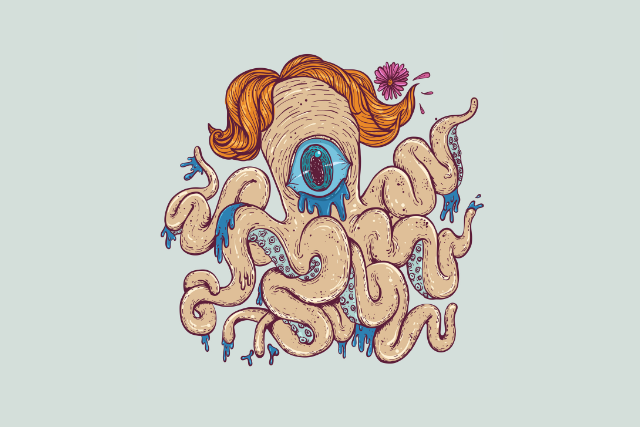
    Like many people, I have an anxiety disorder that twists my thoughts and feelings. I call it my “anxiety octopus,” as it feels like there are tentacles in my brain triggering fear-based reactions for no reason. In everything, even things that I am confident in, I suddenly feel insecure and unsure.

    It takes time to realize that the “anxiety octopus” has woken and is stretching, almost testing my powers of resilience that day.

    Today was one of those days where my resilience was low, and it took time to notice that the octopus had woken.

    There was nothing that triggered it, nothing special about today. Just a cold morning with the sun popping its head out, a morning that I normally love the briskness of, yet today, it was hard to get started. My feline alarm clocks kept meowing, even when I gave a morning pat.

    They wanted me up. The “anxiety octopus” didn’t.

    Sometimes when your heart races so hard, you fear that you are going to have a heart attack. That’s how it was this morning. Heart racing, inability to think, sweating profusely, your breathing becomes shallow, and you feel this intense fear, for no reason.

    This is the point where my doctors say, “Take medication.” This is where I think to myself, “Connect with my Zen.”

    You’ve probably heard of the power of garden therapy, which is incredible. But I’m an Aries woman, a fire sign that loves to flare; the Earth doesn’t actually calm me down or help with my anxiety. It does for many, but not for me. I need water to balance me out.

    My Zen Zone is my aquaponics systems. Yes, I have more than one. Truth be told, I have five and two more planned. Aquaponics is a form of gardening that you can do in any space; however, unlike soil gardening, it is growing food with water constantly cycling through it in a sustainable way. 

    Not to be confused with hydroponics, which also grows food with water and synthetic nutrients in an artificial system, aquaponics in a man-made (or woman-made, in my case) ecosystem. We have freshwater fish (mine are friends, not food) that provide fertilizer for the veggies, and the veggies filter the water for the fish. They both have their own space within an aquaponics system, and being closed-looped, the water is fully recycled.

    With constant fertilizer from the fish and water continuously flowing through the system, the veggies are in plant heaven. They grow faster in this system that is replicating nature. This is not a new fad; in fact, it’s a concept dating back 4000 years BC.

    Other than being a food growing system, which is totally awesome and in a changing world, necessary, it is also my Zen Zone.

    It helps to balance my fire energy and calm me down. Sitting outside by my little courtyard aquaponics system, powered by goldfish, this morning, I sat watching the fish swim and the veggies that are thriving, and I could finally breathe again.

    It’s as if hearing that water flowing gently through the aquaponics system was a signal for the “anxiety octopus” to go back to sleep. As if it connected with the water and found its peace.

    Obviously, there is no octopus in my mind, and this is how I manage my anxiety with these thoughts, but it is what works for me.

    I find peace in hearing the water, seeing the fish swimming, and smelling the herbs that are right there. I have a lot growing in this small system; you can get so much produce in a small space because the water filled with fertilizer passes through it all, whereas soil gardens are more limited.

    It makes me smile, as I know I have food security in my small space, no matter what happens.

    I think the best part is this little system costs me $10 per year to run based on the watts of the water pump. That is the cost to help control the “anxiety octopus” in my mind.

    It’s always fascinating to watch people’s reaction when they come to my home. I’m very private, and at times people visit for various reasons. Not one to be normal, my home is not just filled with animals (both living and artwork), but my unique aquatic family.

    As people move down the hallway, talking about what is going on in their life, I watch as they enter the dining room, where I have four very special aquariums. My first aquatic family. I see the excitement in their eyes, and I realize that my aquatic family are being better hosts than I am. I have a passion for the Murray-Darling Basin, so all my fish are native to the region. My Murray Cod, Eel-tailed catfish, Bass, and even my turtles are natives and mostly extroverts.

    However, the excitement changes as I take them out back to my main aquaponics system and courtyard aquaponics system. I watch them take a deep breath and, in that moment, I see something they are often unaware of.

    As they breathe deeply watching the fish and veggies moving slowly in the breeze, I see their “anxiety octopus” go to sleep too. Everything about them changes. It’s like they come home to a place within themselves that they had forgotten.

    In that moment, I feel I have done something I have been put here on this Earth to do. To help another person breathe again. Just by showing them my aquaponics systems and how they work. I reconnect them with nature too, as well as help them to find their flow.

    Sometimes no words are needed; just listening to the water and seeing something else being in balance, which is what aquaponics is all about, helps them to balance themselves out too.

    It’s not your conventional form of garden therapy. In fact, this only takes me ten minutes a day to maintain, so I have a lot of time to spend relaxing by the flowing water.

    There is something incredibly special about aquaponics, something that is often known but forgotten: Everything is interconnected, just as all things in life are.

    The fish cannot live without being in an ecosystem where the bacteria convert their waste into useable fertilizer, and the plants need to filter the water using the fertilizer. In that system, everything is interconnected.

    The lesson here is that when my “anxiety octopus” awakens, this interconnectedness ceases to happen. At this point, I need to trigger my awareness of this, and reconnect with everything. For me, as I sit by my aquaponics systems, feeling myself breathe a bit deeper, feeling my heart rate slow a little, I start to reconnect to the interconnectedness of myself—how my body works, how my mind works, and how I am an amazing soul put on this earth for a reason.

    You need to find what works for you to be able to do this. But no matter what you find to bring peace and balance into your life, remember this: We are all here for a reason. It doesn’t feel like it sometimes, and as life hits us in the gut it can feel like we can never get up. Feel like “What’s the point?” I’ve been there.

    For me, it was seeing aquaponics in a different way that got me up. Seeing that I didn’t have to hold onto others’ beliefs, that I could let go of everyone’s crap that I was conditioned to believe. That I could reconnect to the deepest part of myself and my purpose—to share the beauty and power of my Zen Zone and inspire people like yourself to find their own zen and purpose.

  • Meditation Simplified: How to Find Calm in Our Chaotic World

    Meditation Simplified: How to Find Calm in Our Chaotic World

    “Be the silent watcher of your thoughts and behavior. You are beneath the thinker. You are the stillness beneath the mental noise. You are the love and joy beneath the pain.” ~Eckhart Tolle

    I completed my meditation teacher training in 2022 and continue to practice two to three times each day.

    I was initially skeptical of what this practice could possibly offer me. But, as someone who had been riddled with daily anxiety, periodic bouts of depression, and an exhausting inability to maintain focus that left me depleted energetically, I was keen to learn more and discover for myself what sort of support this practice could offer me.

    While the religious roots of the practice originated in the Hindu tradition and were later established in Buddhism, we now have a strong, scientifically based understanding, backed by evidence, that likely makes the practice a little more digestible to Western cultures. The key is to experiment with a few different approaches and go with what works for you.

    Let me explain. Meditation is a formal practice of mindfulness. It requires a person to intentionally direct their attention to a single point of focus in the present moment, on purpose, and without judgment.

    While there are some fantastic guided meditations and educational resources that you can download and use on Apps like Calm, Insight Timer, or One Giant Mind, I love simplicity and don’t like to overcomplicate things. Less is more.

    For me, when I’m meditating my preference is to simply focus on the only thing in my body that is both constant and noticeable—my breath. In and out. That’s it.

    Try this now. Just for one minute.

    Set a timer for one minute on your watch or phone.

    Close your eyes or lower your gaze to a steady point of focus in front of you.

    Release any tension in your body, from your head to your toes.

    Now notice your mind focusing on your breath going in, then out. Now let’s play a game with your mind: How long can you sustain this focus until you notice a thought enter your mind? Ten seconds? Three seconds? One?!

    Gently let the thought that has arisen go and return to noticing your breath. Try again. How long until the next thought pops into your mind? Let it go and return to observing. Continue in the same manner for one minute.

    Tricky, isn’t it?

    Now here’s the thing. Your mind wants to think—that’s its purpose. It thinks to help protect you and keep you safe. It needs to remind you about your dentist appointment tomorrow, or to decide what you should cook for dinner tonight and, therefore, which items you need to pick up at the supermarket. Or perhaps it wants you to unpack that meeting you had with your boss yesterday, and now you’re worrying about what he or she thinks about your productivity levels.

    Your mind wants to protect you by solving all the problems in the world (either real or imagined), whether you are in the middle of meditation or not! And this is the point where many beginners will say, “My mind won’t stop thinking—this is too hard. Meditation doesn’t work for me,” before they give up.

    But just like weight training and running are exercise to strengthen your muscles and increase your fitness levels, meditation is exercise to strengthen your brain. Just as you can’t run a marathon when you’ve tried running for ten minutes, you can’t strengthen your brain after meditating for ten minutes. And yes, you’re probably going to be all over the place when you start, in both cases!

    When you first begin a meditation practice, your mind will wander ALL. THE. TIME. I mean, it’s going to go everywhere—up, down, backward, forward, and around in circles. That’s good—it means it’s doing its job! But we just need to rein it in a little and keep it under our control, much like when out walking the dog, we pull on the leash when the dog starts to pull away.

    We only need our mind to do its job when we need it to do its job, and we can train it to work more efficiently and effectively for us than it may currently be.

    Now more than ever, we need to strengthen our brain. Human beings exist today with the most highly developed brain of any species on the planet. Unlike any other living creature, the human brain can produce and communicate ideas and engage in creativity and planning, which we have used to continually shape and evolve the world around us, making it what it is today.

    This unique capability has enabled us to build a world that is so technically advanced, scientists have discovered that in our fast-paced modern world, the brain is now continually exposed to 11,000,000 bits of sensory information per second, even though it has the capacity of processing only sixty bits of information per second.

    So, while civilization has progressed enormously, the human brain, which has barely changed in structure nor cognitive capacity in the last 500,000 years, now finds itself existing in a world where it is failing to function and serve us effectively in its efforts to adapt.

    In the highly stimulating world we live in today, we find ourselves attempting to spread our bandwidth of sixty bits of conscious attention across all incoming sensory information. What we now observe is that we are in a constant state of distraction as our brain endlessly alternates between the vast load of stimuli vying for our attention—commonly known as multi-tasking.

    When we engage in task switching, as it is known in the world of psychology, our stress levels increase, as do the levels of the stress hormone cortisol in our bloodstream. We have low self-control, and we’re fatigued as our conscious present moment awareness is reduced.

    In addition, we now observe that the amygdala, buried deep in the lymbic system, responsible for the processing of emotions and essential to the survival and protection of the human species, is being continuously triggered in response to incoming stimuli that we evaluate, attach meaning to (whether accurate or not), and interpret as being threatening. This could be an imposing deadline at work, or the examples of the dentist appointment, the shopping list, and the meeting with your boss mentioned earlier.

    With its connection to so many other parts of the brain, the amygdala organizes physiological responses that are subsequently felt throughout the physical body.

    This examination of society has revealed that the source of our progress as a species, our brain, is also the source of our unhappiness.

    While we have witnessed technological advances throughout history, we have also seen a surge in mental illness, including chronic stress, anxiety, and depression; an increased reliance on medication such as anti-depressants; and also a rise of a myriad of medical conditions from high blood pressure to migraines and eczema.

    The mind is like an instrument, but rather than the mind playing us, we must master it so we can use it to do what it has been so beautifully created to do. Serve us.

    We are constantly being played by our minds when we allow them to distract us with text and email notifications. Or when we allow it to tell us self-comparison stories about how our business will never measure up to our competitors, or that we’ll never be able to run a marathon, or that we can’t fly in a plane because the chances are too likely that it will crash.

    Meditation allows us the opportunity to stop and practice observing our thoughts. Each thought that enters our mind is like coming to a fork in a road.

    If we observe a negative thought, we can either choose to take it with us and head down one path, along which we will continue to encounter many other negative thoughts that we will attach to our first thought—thereby creating the story spiral that we all know too well; or we can let go, gently place that thought down in front of us, and carry on down another path that will allow us to gently return our focus to our breathing.

    The first option creates feelings such as tension, worry, stress, anxiety, or anger in the body, which are manifested physiologically as symptoms such as tight muscles, shallow breathing, or an increased heart rate. The second option allows us to maintain a state of homeostasis, a stable internal environment, and we feel calm, relaxed, and grounded.

    We can’t do much to change our wider world, so the question is, how can we change ourselves by changing our habits so we can adapt? How can we use meditation to achieve a state of calm centeredness in our fast-paced, adrenaline-inducing, chaotic world?

    There are three elements that make up a repetitive cycle that we need to understand and follow when practicing meditation.

    Notice, Accept, Redirect.

    When you have closed your eyes, relaxed your body, and drawn your attention to your breath, notice the following over the duration of a minute:

    Your ability to notice when your mind has wandered from observing your breath to a thought or chain of thoughts.

    Your ability to accept your thought or thoughts for what they are, and not cast judgment over them by labelling them as “good” or “bad.”

    Your ability to redirect your mind back to your point of focus (in my case, and for the purpose of this article, that’s my breath).

    You will find yourself moving through this cycle over and over and over again as your mind, well-practiced in running its own show, jumps from thought to thought to thought. This is normal—it’s doing a job that it has learned over years of conditioning.

    What we are trying to do is to help it relearn how to slow down and to maintain focus on just one thing at a time, and not allow it to unnecessarily trigger alarm bells of fear and panic, which we feel as unwanted sensations throughout our body.

    And just like any physical workout, you will have some experiences in meditation where you will notice you are calmer and more focused than in other experiences—just as I do most of the time when I meditate, particularly in the initial stages when my mind is trying to settle. (Think of the settling of your thoughts like tiny pieces of glitter that have been shaken up in a jar of water and have now been left to slowly settle at the bottom of the jar).

    But as tempting as it is, try not to label your experiences either during or at the end of your practice. Remember that we are also practicing non-judgment. And just as a negative judgment will likely create a build-up of resistance to what you are trying to achieve, a desire for things to be anything other than what they are creates tension—which is exactly the thing we are trying to ease. Just accept the experience for what it is—it’s a practice, and every practice brings you closer to your goal of creating awareness to help master your thoughts.

    As you develop both your awareness of thought and agency over your thoughts, in time you will begin to gradually apply these skills to your daily life. You may notice that you are able to sustain focus on a task, whether giving a presentation for work or having a conversation with someone, and be fully engaged in the present without your mind kicking into default mode where it wanders and starts thinking about unrelated events. (Ever noticed your mind thinking about your day at work when you’re prepping the veggies for dinner?)

    With an awareness of your thoughts you are able to create space between them, which will enable you to pick and choose which thoughts are useful and of benefit to you, and which are not. In addition, with consistent daily practice, you will experience improved emotional stability, reduced fatigue, and reduced physical ailments resulting from allostatic load or long-term stress.

    I have begun my practice with just thirty to forty minutes each day—once in the morning, once at lunchtime (if I can manage it), and once in the evening. You may be wondering where on earth you could possibly pull that time from. I’ve simply substituted a portion of the two to three hours a day when I would get lost in checking my phone and mindlessly scrolling, or watching random stuff on TV, with my practice.

    Identify the habits in your day that you consider unproductive—for example, scrolling, video games, and TV. Or perhaps you can save time on trips to the supermarket by creating a list of things to buy in advance, or allocate blocks of time when you will check your emails rather than constantly monitoring your inbox throughout the day.

    To help create and reinforce your new habit, identify set times throughout your day when you will meditate, just as you do with brushing your teeth.

    Interested and want additional tips on how to get cracking with your practice?

    • Start with small and achievable. Set yourself the goal of doing one minute at least in the morning and in the evening. Allow yourself to extend this time whenever you feel the urge or desire. No pressure.
    • Keep it simple and don’t overcomplicate things. Simply focus your attention on your breath—in and out. When your mind wanders, without judgment, gently bring your focus back to your breath, just like the analogy of the dog pulling on a leash.
    • I like to use my earplugs and add some gentle music. There are plenty of appropriate musical options and choices available on Spotify or YouTube.
    • Start in a comfortable position, with some type of support for your back. And if you find yourself falling asleep, no stress. Just let the session go and start again later in the day. (This could also potentially be an alert to check your sleep stores—are you getting enough rest? Our brain waves slow down when meditating so we remain alert and focused, but we don’t want them slowing down so much that we are falling asleep.)
    • If you get interrupted (the kids start making noise, someone comes to the door, or your phone starts ringing), again, no stress. Just let that session go too.
    • Alert people when you’re devoting time to your practice. I have taught the members of my family to let me be when I am meditating. Unless it’s an emergency and the house is burning down or someone’s arm is falling off, it can wait!

    It is important to remember that our worries are the stream of jumbled thoughts and stories that we tell ourselves about a given situation. With the awareness of thought that evolves from a consistent meditation practice, we empower ourselves to choose to let go, or to do as we please with these thoughts, thereby opening ourselves up to improved physical and emotional well-being.

  • How to Stop Feeling Overwhelmed by Other People’s Strong Emotions

    How to Stop Feeling Overwhelmed by Other People’s Strong Emotions

    “It is not your responsibility to figure out what someone else is feeling and why. Let go of the illusion that ‘fixing’ their bad mood will make you feel better.” ~Sarah Crosby

    Some years ago, I was talking to my husband on the phone. He sounded annoyed about something to do with his work, but I noticed an intense emotional reaction in myself. Immediately, my heart contracted and my stomach lurched. I could feel a runaway train of emotions activate within me.

    My whole body was awash with nausea, and I felt so very uncomfortable. 

    This was a familiar and old pattern for me. My husband had some feelings and expressed them, and I felt totally overwhelmed by them. It then created a loop of reactivity where he would say something in this annoyance, I would respond with fear that he was annoyed, and it would all become a big mess of emotions being thrown all over the place.

    But what felt worse than that moment, when I experienced his feelings as though they were the end of the world, is what came after. I would sink into a familiar space of despair about my husband and how he was feeling. I would try and think of ways to fix the situation, or feel aggrieved by how he’d reacted.

    This response is something that I experienced not just with my husband, but with most people in my life to a greater or lesser degree. My real or imagined noticing of someone having feelings, and how horrible that felt for me, in my body.

    It was totally instinctive, that someone would seem upset and I would jump in and try to fix, reassure, help, or soothe. And in that process, I would totally subjugate my needs and feelings because of how much I didn’t like how it felt to be around people and their emotions. 

    Sometimes it would feel that people close to me were trying to upset me with their emotions on purpose. When a family member got angry it would totally overwhelm me, and I would end up resenting them for days or weeks. It felt like they were punishing me with their anger.

    When my kids felt disappointment or sadness, I found it unbearable to see them feeling so bad, and I would endeavor to help them by changing their plans, getting them a cookie, or trying to talk them out of how they were feeling.

    The problem here is that, of course, when we are human beings around other human beings, we are going to encounter people having feelings—about us or themselves, or anything else we humans have feelings about.

    When we find other people’s feelings challenging, we aren’t giving them the space they need to have feelings. There is an element of Your feelings are making me uncomfortable! Can you please shut them down because I don’t like them.

    Which is understandable when we don’t know how to deal with our own emotions. If we don’t feel okay around our feelings, of course we struggle with other people’s.

    So how do we learn how to not get intertwined with other people and their emotions? How do we stop having such intense reactions to people having feelings, regardless of what they are about?

    How can we stop letting other people’s emotional responses completely distract us, and throw us off our day—consuming vast amounts of time and activating intensely uncomfortable feelings of our own?

    For me, the first step was learning how to identify what was happening. I felt like other people’s feelings were happening to me, but really, they were having feelings and I was having feelings.

    My feelings are separate from your feelings. 

    One of the reasons why it feels that we get so intertwined and things get so messy in relationships is that we don’t recognize that we all have separate feelings. In so many relationships we don’t give each other space to have feelings, because of the patterns of how we respond to emotions.

    We often think it’s like this:

    Stop being scared! It’s making me scared!

    Stop being irritable! It’s making me anxious!

    But really no one is making us have feelings. Our emotions arise on their own, as do someone else’s. But we can learn how to stop reacting to their emotions as our own.

    If we can see Oh, I am having my own feelings here! we can then use this awareness to create some space and start to pay attention to ourselves and our emotions instead.

    Recognize that no one is having feelings on purpose.  

    Once I had been coaching for a few years and had radically changed how I worked with both my own emotions and how I responded to those of the other people around me, I asked my husband what he loved the most about my work. He said that now he no longer feels tortured by my feelings. And I thought, Wow! That is so fascinating.

    I was so used to feeling overwhelmed by his feelings that I never considered that he was feeling the same way.

    Because my emotional reactions are so different from his, it didn’t occur to me that he was also uncomfortable around my feelings. And it’s the difference in our responses that can provide so much confusion in relationships.

    My go-to strategy when overwhelmed by my husband’s emotions was to chase him down and try to discuss and fix everything straight away. His strategy was to try to disconnect from me and run away.

    Essentially, we both felt challenged by the other’s emotions, and by working to create some space to support ourselves in our own emotions, we created such a big shift in how we now respond to each other.

    People can’t be truly empathetic when they are emotionally activated. 

    What I now know about emotions is that we can’t truly access empathy when we are emotionally activated, so if I am with someone who is having feelings, I don’t expect empathy and understanding from them.

    In order to gain full access to our empathy, we need to move through the emotions, so part of working with other people is letting them move through the anger/fear/sadness or whatever it is they are feeling.

    I don’t engage them in things I am not happy about or talk about their behavior or what they’ve said—until after they have moved through that feeling.

    When we feel any emotion, we see the whole world through the lens of that emotion. Anger sees upsetting things everywhere. Fear sees scary things everywhere. So it doesn’t benefit us to get too involved in what someone might say when they are in the thick of emotional activation.

    Knowing this helps us work on not reacting to what they are saying, doing, or feeling.

    Feelings activate feelings.  

    If we are feeling super calm and someone comes along and is expressing a lot of anger, it can easily activate our own feelings. That’s natural. Maybe we feel fear around anger, or maybe we feel anger at their anger. It’s natural for our feelings to activate around others.

    With all emotions, we want to work on supporting ourselves through emotional activation. When we can do this, when we can sit with ourselves and provide support, we can move through the emotions with more ease and confidence, and not get stuck in the loop of that emotion.

    By noticing and naming your experience, you are offering yourself some support.

    We can say to ourselves, The best thing I can do right now is support myself in feeling my feelings, and not engage in their feelings. 

    We can acknowledge how challenging this is for us. We can offer ourselves the gift of understanding, and that can help us move with the discomfort of the emotions that have activated.

    Offer yourself some empathy, understanding, and validation.

    Empathy is a very powerful resource when we are in the thick of emotions. Giving ourselves some tender, kind, loving support is a real gift to ourselves when we feel activated.

    Maybe we say to ourselves:

    This is hard for me because…

    I understand why this is so challenging.

    It makes sense that this is tough for me since…

    It’s hard seeing someone feel so disappointed or angry. It’s hard to hold these feelings. 

    If it feels good, offer yourself some physical support.

    Put your hand on your heart, or stroke your arms, giving yourself a hug, while you stay with yourself in this experience of sitting with your feelings.

    Of course, this isn’t always easy! When we have spent a lifetime responding to people’s emotions in a certain way, it takes some effort and focus to start responding differently.

    Other people’s emotional activations are some of the hardest things we deal with, but with awareness and intention, we can learn to see these experiences differently, and then learn to respond differently.

    Now when I hear disappointment or irritation from my husband, or sadness or despair from my kids, or anger or shame from my family, I can recognize that these are their feelings! I don’t need to jump into their pool of emotions and get immersed in their experiences. 

    I can instead stand back and support myself, which in turn supports them because I am not adding to the emotional load they are experiencing.

    I can help by being responsible for my feelings so we aren’t creating a big chaotic mix of messy emotions.

    This is how anyone can create some space and peace in the emotional experiences around them.

  • How I Calm and Release Intense Emotions of Anger, Sadness, and Frustration

    How I Calm and Release Intense Emotions of Anger, Sadness, and Frustration

    “You don’t have to be positive all the time. It’s perfectly okay to feel sad, angry, annoyed, frustrated, scared, or anxious. Having feelings doesn’t make you a ‘negative person.’ It makes you human.” ~Lori Deschene

    In November, I was on an emotional roller coaster full of sudden, unexplainable fits of anger—hysterically crying for no reason, barely sleeping, feeling urges to physically kick, hit, and scream.

    One of the main triggers was when my partner would go out without me.

    He’d go out with his friends to play pool, and I would immediately shut down, shut him out, and turn inward.

    Lying in bed, my thoughts would spiral out of control.

    What if he gets hurt?
    He’s a grown man playing pool; he’s not going to get hurt.

    Is he picking up other women?
    No. He loves me.

    Why didn’t he invite me?
    Having time to ourselves is something I value.

    We’re in a loving, committed relationship and have been together for four years, so why hasn’t he proposed?
    Wait, do I actually want to get married? Or has society just told me I want to get married?

    Why hasn’t he texted me?
    He’s being present with his friends. That is a good thing.

    What is wrong with me? Why am I being petulant, controlling, and jealous? Why can’t I support his time with friends like he does for me? On and on and on…

    Then the physical sensations would take over my body.

    I’d feel hot, my heart would beat quickly, and I wanted to escape my body. I’d have the urge to kick and scream and punch. I could not relax.

    I tried to quell my emotions and rely on the quiet, calm part of me to remedy the situation with my go-to tactics of meditating, focusing on breathing, and reading, but all of those failed miserably.

    I could not figure out why my usual calm, optimistic self, who is able to quickly pinpoint negative thoughts and change them, was not doing her job.

    My inability to understand what the hell was happening made me feel even more angry, frustrated, and helpless.

    So, through talk therapy, coaching, and journaling, I turned to my inner child, who I know wants to be seen, heard, and loved but who has erected walls to protect her heart.

    Communing with my inner child offered me a giant release and a few discoveries:

    In my relationship (and in my new business), I had a deep fear of abandonment and fear of the unknown.

    My fear of abandonment was being activated because my partner and I had just finished eighteen months of travel during which we were together most of the time. I grew comfortable in our little refuge, secluded from the rest of the world.

    And now, we were back in the real world, hanging out with people, adjusting to a new city and new jobs.

    I felt like we didn’t spend any time together anymore. I had expected him to propose during our year of travel, but he didn’t. I thought he was pulling away from me.

    The truth is, all of these were made-up stories in my head.

    In reality, we still spent a lot of time together, and we had gotten to know each other even more intimately and deeply during our year of travel. (And a proposal was right around the corner!) We were simply adjusting to a new way of living.

    I also started to realize that I was desiring to express a part of me that I had never expressed.

    The tears and physical discomfort were a sign that a part of me was being suppressed. Those parts that I was suppressing were the parts of me that I had been told were too much… too emotional, too loud, too big.

    I was taught that being stoic and quiet is a virtue.

    I was taught that showing emotions is a sign of weakness.

    I was taught that women are meant to be seen, not heard.

    I started to realize that it is actually a strength to express emotions and that I am worthy of taking up space.

    And I realized that my anger, frustration, and sadness could not be quelled and calmed through breathing and meditation; rather, I needed to become fortified in these intense emotions and express them in a healthy way.

    Three tactics I use to be fortified in the difficult emotions of anger, frustration, and sadness are:

    1. Shake it out. I bring my whole body into this and shake and stomp. It offers an instant release of tension.

    2. Yell it out. I go in my car, turn up some music, and yell until my vocal cords feel tired. Afterward, I always think, “Wow, that felt good.”

    3. Run it out. I never feel worse after a run, especially a run in the rain.

    Each of these tactics is of a physical nature, because sometimes, our emotions are simply energy that needs to be moved through the body. (I suggest pairing these three somatic practices with mindset work to understand and move through your beliefs, doubts, and fears. In other words, get into the body and the mind!)

    So, if you’re feeling intense emotions that you are unable to quell and calm, I invite you to match that emotional intensity with a healthy physical release.

    And please know that fear of abandonment in our relationships is totally normal (it’s a survival instinct, which might also be exacerbated by childhood trauma), so release the self-judgment and give yourself a little grace.

    (Also, I am happy to report that, at the time of writing, my fiancé is at his bachelor party, and I am one hundred percent not freaking out. Which is a result of therapy, mindset work, and somatic practice!)

    We get to explore what is going on and transmute that fear into a deeper love, more pleasure, and expanded intimacy.

    So here’s to getting to know and expressing your full, perfectly imperfect self!

  • 3 Life-Changing Insights for Control Freaks (Lessons from an Ant Infestation)

    3 Life-Changing Insights for Control Freaks (Lessons from an Ant Infestation)

    “Freedom is what you do with what’s been done to you.”  ~Jean-Paul Sartre

    “So did you figure out what your shadow totem is?”

    This was the first thing out of my husband’s friend’s mouth as I sat down to dinner at a local downtown restaurant, across from my husband and a couple friends we were meeting up with.

    I laughed at the choice of question but then paused with wide eyes and replied, “YES, I DID! Oh my gosh. It’s an ant!”

    The backstory is that we had previously had a conversation about animal symbolism, and how figuring out what we identify with (spirit animal) or most fear (shadow totem) can help us gain deep insights into ourselves. I had no trouble with identifying my spirit animal—an eagle—but could not for the life of me pin down my shadow totem.

    As he asked that question that evening, a light bulb in my head went off. I had been battling a multi-week-long ant infestation in my home and it had become the bane of my existence. Every time I saw one of those suckers, I got triggered all over again. It ruined many days. So this made perfect sense! Ants are my shadow totem. But why??

    Upon reflection about this realization, I mulled over the meaning of this and was able to come away with some pretty incredible nuggets. Put simply, the ants struck me at my weakest point: my need for control.

    I know I’m not alone in this quirk—“control issues,” as a lot of us jokingly refer to them. But the truth is, if you’re saddled with this deep urge then you know you live your life on a high wire, trying to balance everything and keep it perfectly just so. And when you are thrown off, you take a pretty deep dive into mental chaos until you right the ship again. Okay, too many metaphors, but the point is, it sucks.

    Back to the ants. Days after the dinner I took time to think about the true meaning of them as my shadow totem. The insights I had about my control issues were not only helpful to me, but I bet will be the same for you!

    I was even able to identify three mindset adjustments as an accompaniment. I noticed they tend toward the Buddhist way of thinking but are just truly solid ways to approach life. So here we go!

    1. The ants were coming out of nowhere. And FROM ANYWHERE. It drove me nuts since I couldn’t identify the source of the problem.

    Insight:

    Upon reflection, I connected this to how I often feel like a sitting duck in life, just waiting for the next blow to come. The unpredictable nature of things feels like a constant threat. Also, I notice I often doggedly search for the “why” of things, but sadly am not always able to come up with an answer.

    I’ve felt this sentiment in many situations, ranging from the trivial to the most profound, with the latter being when I had a miscarriage. It was (as many of them are) not possible to tie to a definitive reason. In this case, my only true course of action (one easier said than done) was to accept and move forward.

    Mindset adjustment:

    Acceptance, though not a sexy response to the above, is really the best one. You’re gonna get ants in your house (especially when it’s in a green community built in 1936!).

    In life, you’re gonna get surprises. And not always happy ones. I once heard that if you can expect the unexpected, when it comes, you will accept it as an “old friend.” Sounds much better than treating life’s downs (the “ups” are more easily handled, right?!) as a monster under the bed.

    2. The dang ants were ruining my days. What a waste! But true.

    I felt silly with my outbursts, exclaiming expletives each time I came across one of those evil little things. My poor husband (who has the patience of a saint, zen master, and probably Jesus, combined!) hearing me from the next room. I didn’t want this for me (or him).

    Insight:

    Just like in my larger life, small things going wrong can really mess me up. The feeling of having a bad day rather than just keeping it a bad moment is one I am familiar with, unfortunately.

    Mindset adjustment:

    Enter mindfulness. This handy strategy allows for a sort of compartmentalization so we can fully be in the reality that is in front of us in the present moment. The truth is, the ants were really only in a couple rooms of the house, and I only encountered them for maybe a couple minutes out of my day. But MAN, you wouldn’t have known it!

    Attaching to our day being or staying a specific way is certain death. Okay, that’s extreme, but it’s cause for certain anxiety. And that’s no way to live this short life. Key principle: impermanence. Funnily enough, I have that word tattooed on me! In permanent ink… but is it “permanent”? I digress.

    3. I chose a treatment option for the ants, but still I walked around in a huff about it. I had done all I could do—why couldn’t I let it go?

    Insight:

    I frequently find myself ruminating on other things in life long after I had chosen a course of action. Sounds like a waste of mental, emotional, and even physical (if you’re pacing!) energy to me.

    Like when I made the decision to switch careers from business to education. Questions lingered, swirling in my head for quite some time after: “Is this a mistake?” “What if I want to change my mind again?” “Did I just waste my bachelor’s degree?” This made the path forward foggy and uncertain when what I needed was clarity and smooth sailing—which would have been afforded to me had I had self-trust at the time.

    Mindset adjustment:

    Hard as it is, the practice—keyword, PRACTICE—must be letting go with the knowledge that you can only do so much. There are so many sources of inspiration for this concept. Take your pick: The famous quote “Let go and let God” or  “Let it goooo” a la Frozen (any other parents in the house?). You get the idea.

    Also, add to the mantra list that nature will always win. This is true with the ants (spoiler alert, they came back) and with life in general, the universe on a broader scale. Think entropy. It’s everywhere in all ways. The sooner we align ourselves with the concept, the better!

    I felt oddly grateful to the ants for the opportunity to reflect. It gave me a chance to gain insights that I (and maybe you!) otherwise would not have had. If you’re worried about us forgetting this wisdom, don’t be. Those little reminders (aka the ants) are always around the corner.

    Post-writing edit: Funny thing is, right after writing this, I walked into my bathroom and saw an ant making its way up the side of my mirror! Poetic, huh?

  • How Yoga Helped Heal My Anxiety and Quiet My Overactive Mind

    How Yoga Helped Heal My Anxiety and Quiet My Overactive Mind

    “The privilege of a lifetime is to become who you really are” ~Carl Jung

    Yoga is often celebrated for its physical benefits: greater flexibility, increased strength, improved circulation, and so on. But nothing could have prepared me for the transformational effect that yoga has had on my mental health and well-being.

    I was diagnosed with anxiety and depression when I was fourteen, and I have struggled with both for most of my life. My mind was my worst enemy, constantly worrying and criticizing to the point where it became hard to do anything. Even the things I really wanted to do became too overwhelming.

    I knew about the positive impact of exercise and healthy living on mental health, and I had dabbled in yoga classes at the gym for years in an attempt to drag myself out of this hole I was in.

    I did notice some small changes in my mood and energy levels. I couldn’t explain it, but I would always feel a certain buzz after a great yoga class.

    So, in 2022, I decided to take this yoga thing seriously. I began practicing daily and even studied for a yoga teacher training qualification.

    Since then, I have noticed significant changes in not only my physical body and well-being but in my mental health too. Most notably, my anxiety levels have significantly decreased. Of course, I still have moments of anxiety, but I feel better equipped to cope with them and less likely to allow them to pull me into a downward spiral.

    Disclaimer: This is not medical health advice; it is simply my own experience. If you are struggling with your mental health, please seek a medical health professional.

    How Yoga Can Help with Anxiety

    Yoga helps you recognize your emotions and triggers.

    The first thing to know about yoga is that it is not a series of complicated poses used to make you look a certain way or increase your flexibility.

    Instead, it is an inner practice where we unite our body, mind, and spirit and become one with the universal life force energy that sustains all of life.

    Meditation and breathwork are just as important parts of yoga as the poses (known as asana).

    With this knowledge, yoga has the power to transform your mental state from a place of stress and anxiety to complete peace with yourself and the world around you.

    It allows you to notice how you’re feeling and what you’re thinking without judging yourself. It allows you to understand your body, how it works, and what messages it’s trying to communicate to you about your health and your needs.

    By learning to recognize when I felt anxious and why, yoga provided a safe space to release those triggers and emotions that I would ordinarily suppress.

    Yoga regulates your nervous system.

    When we experience high levels of anxiety, we are constantly living in fight-or-flight mode. The fight-or-flight response is designed to switch on in moments of danger and stress to protect you and then return to homeostasis once the threat has gone.

    However, in this day and age, many people are experiencing an overactive fight-or-flight response due to an increasingly stressful lifestyle. And many live in a constant state of hypervigilance as a result of trauma or abuse.

    Living in fight-or-flight mode takes up an enormous amount of energy, and our bodies cannot keep up with the demands long term. Over time, the body and mind begin to shut down and we get illness and disease as a result.

    This is what happened to me. My body could not cope with the pressure I was putting it under daily, so my mental health suffered.

    Practicing yoga allows you to calm your nervous system and creates a space where the mind and body feel safe to exit fight-or-flight mode and actually relax.

    One way to do this is through practicing breathwork, also known as pranayama.

    Yogic philosophy believes that the breath is how we can harness our energy and the energy of the universe. We can alter our emotions, energy levels, and even physiological responses, such as the fight-or-flight response, with just the breath.

    When I notice I am starting to feel anxious, I breathe deeply into my stomach for the count of four, hold it for four, and then slowly exhale for the count of four, also known as belly breathing.

    While this may sound trivial, it really helps me to feel calm in moments of stress and anxiety.

    Breathing slowly and deeply activates our parasympathetic nervous system. This sends signals to the brain that there is no danger here and the fight-or-flight response does not need to be activated.

    Yoga teaches you new coping mechanisms.

    Yoga taught me different techniques to cope with my anxiety and panic attacks.

    Firstly, yoga teaches that you are not your mind. You are not your thoughts, your beliefs, or even your body.

    When we study the five koshas (layers of the self) we can see our physical being is just a vehicle to navigate this world in; it is not who we are as a whole. For example, the koshas teach us that our essence cannot be entirely in our physical body because physical bodies are subject to change, yet who we are remains.

    This mindset applies to our thoughts too. Once I started acknowledging that my thoughts did not always come from me, they began to hold less weight. Most of our thoughts are just ‘re-runs’ of things we are told as a child or things we repeatedly hear from society that get internalized. They are not necessarily representative of who we truly are.

    This knowledge allowed me to distance myself from my anxious thoughts instead of letting them consume me.

    Secondly, through pranayama and meditation, both essential aspects of yoga, I learned to recognize how I was feeling and allow those feelings to exist within me, without trying to change them or distract myself from them.

    When we don’t allow our emotions space to be there, we are instead rejecting that aspect of ourselves. We push these feelings deeper and deeper down as a way to avoid dealing with them, without realizing we are actually ingraining them deeper into our psyche.
    By giving our emotions space to be felt, we can release them from our mind and body so we don’t have to carry them with us through our life.

    Yoga helps you be more present.

    To practice yoga, you need to be focused and in the present moment. To hold balance poses like tree pose or to get into the correct alignment of warrior 1, you need to be paying attention to what is happening around you right now.

    If your mind drifts while you’re holding a balance pose, you can bet your body will lose all balance too.

    Yoga forces you to be in the present moment, to be fully engaged in what you are doing, and doesn’t allow room to think about anything else.

    For me, this is exactly what I needed to get out of my anxiety-ridden head. One of my main struggles with anxiety was that I could not stop myself from thinking. The incessant noise of my own mind was exhausting to live with.

    However, when I am in a yoga flow, the noise stops. The mind chatter about future scenarios that will probably never happen is no longer there, as I am using all my focus to get into the proper alignment of the pose.
    The more you practice focusing, the easier it is to apply this in your daily life. I can now notice when my mind is overactive and instead re-direct it to the task at hand. By giving our full attention to the thing we are doing, we can quieten that anxious voice within and begin to enjoy the present moment.

    Yoga has so many incredible benefits physically, mentally, and spiritually. Since sticking to a consistent yoga practice, I have noticed my anxiety decrease dramatically and I am able to live a full and happy life without my mind controlling me.