Tag: busy

  • 6 Fears That Keep You Busy and How to Enjoy More of Your Life

    6 Fears That Keep You Busy and How to Enjoy More of Your Life

    “All the mistakes I ever made in my life were when I wanted to say no, and said yes.” ~Moss Hart

    Do you ever feel like you’re always too busy to truly enjoy life?

    I know the feeling.

    I work multiple jobs to care for my family and have many responsibilities at work and at home. My to-do list never seems to end, leaving precious little time for leisure and rest.

    But here’s the funny thing: whenever I do have some downtime, my anxiety kicks in because I’m thinking about all the things I “should” do to help move my life and career forward.

    Some days, I become so overwhelmed with all the things I “need” to do that I struggle to be present with my family and those I love. I struggle to find contentment in simply doing nothing.

    As I’ve reflected on these struggles, I’ve learned that my need to keep busy has been driven in large part by six subconscious fears. I’ve learned that by facing them, I can begin to let go of my busyness so that I can enjoy my life in the moment.

    If you’re always swamped and struggling to enjoy your life, consider if any of the following fears are the cause of your need to keep busy as well:

    1. The fear of missing out.

    So pervasive is the fear of missing out that it’s referred to simply as FOMO. This fear is based on the overwhelming feeling that something more exciting is happening elsewhere or that there are more attractive options than the one chosen.

    This fear is behind my compulsion to multitask while I work—most notably, switching between multiple tabs on my browser or even viewing multiple computer screens at once.

    It’s the force behind my need to purchase the next breakthrough product or program, or chase down every opportunity that comes my way.

    Worst of all, it’s the fear behind my mindless web surfing or constant email checking when I could be spending time with my family.

    FOMO drives us to be busier (or appear to be busier) than we need to be.

    Fortunately, we don’t have to let our FOMO control us. You can face your FOMO by accepting the fact that it is impossible to pursue every great opportunity.

    By acknowledging and accepting that you cannot have everything, you can focus your limited time and energy on the few things that truly matter. That way, you’ll never miss out.

    2. The fear of being bored.

    Kids are famous for how quickly they become bored, but adults get bored too, especially with the daily grind of life. This boredom is constantly tempting us to take on the new and the novel.

    I took a while to realize that I struggle with the fear of being bored. I become bored fairly quickly. I actually enjoy working in multiple settings because it keeps me from being in one place or doing one set of tasks all day long.

    But working in multiple settings means that I always have something to do and sometimes I get overwhelmed.

    To counteract the effects of the busy life I’ve created for myself, I frequently set aside time for prayer, meditation, and reflection. And as I began to reflect on my fear of boredom, I began to see that:

    Boredom is a privilege.

    It is not something to run from but something to enter into. Boredom means that all my basic needs are met. I’ve never heard the hungry, the poor, or the person in danger say they were bored. I can, so I give thanks when I’m bored.

    You, too, can begin to face your fear of boredom by expressing gratitude for all the comforts you enjoy.

    3. The fear of facing difficult tasks.

    Do you dread working on your taxes, your marriage, or that year-end report? Most of us in a similar situation would instinctively busy ourselves with the trivial and the meaningless to avoid facing the difficult stuff now.

    This busywork is simply a form of procrastination. But it can be hard to spot if we’ve thoroughly convinced ourselves that the busywork is important. In doing so, we manage to not do the things that are truly important.

    Avoiding difficult tasks may work in the short-term but may also have disastrous effects in the long-term. In my own life, I’ve found that this behavior only leads to prolonged and magnified pain.

    Facing this fear means learning to reframe how you think about the unpleasant and difficult tasks we all must deal with from time to time. Instead of seeing them as burdens to avoid, we can view them as opportunities for breakthroughs in our finances, our relationships, and our work.

    4. The fear of looking lazy or unaccomplished.

    It’s no secret that being busy, or looking busy, has become a sign of accomplishment in our culture.

    Sometimes, this fear manifests itself in my own life. I may feel insecure if the person I’m speaking with gets interrupted with a phone call or text – I’ve responded to such interruptions before by surfing the web on my phone (or checking my empty email inbox) to appear just as busy.

    Or I might feel inadequate by comparing my life to a busy professional who travels every week for work.

    I remember once feeling small compared to an acquaintance who frequently traveled for work. Somehow, I felt less important because my work did not take me to interesting locations across the country.

    I began to change my thinking about this when I later learned that this person eventually lost his marriage. The news caused me to re-examine my priorities. Instead of feeling inadequate, I began to be thankful that I could go home to my family every day after work.

    Facing this fear means giving up your insecurities about appearing lazy or unaccomplished so that you can focus on what truly matters.

    5. The fear of being alone.

    Is your busyness driven by the fear of being alone? We often think that to enjoy life, we must constantly be in the company of others.

    We learn from a young age that being alone is undesirable. If you’ve been labeled a loner at some point in your life, people may think you’re a loser, a weirdo, or even dangerous.

    We may fear being alone because we fear being labeled, we’re afraid to be with our own thoughts, or we’re afraid of being lonely.

    Always-having-somewhere-to-be is an effective strategy to deploy when we’re afraid to be alone, but it also robs us of the ability to enjoy our own company. In her book Between Dark and Daylight, Sr. Joan Chittister writes:

    “We love to be told that we are social beings, yes, but we also know deep in the core of us that we are not frantically social beings.”

    Facing the fear of being alone means embracing the moments we get to ourselves in order to rest, recharge, enjoy a good book, or enjoy your own company.

    6. The fear of not being well-liked.

    We all want to be liked, but sometimes this need drives us to say yes to every request that comes our way. We’re afraid that saying no will cause people not to like us.

    This fear has also been a big driver of my busyness. As a recovering people pleaser, I know what it’s like to suddenly find myself caught in a hectic schedule filled with the priorities of other people. It’s utterly exhausting and demoralizing.

    Whenever I’ve said yes to win the approval of others, I almost always emerge from the experience feeling resentful toward the person and myself. Furthermore, instead of winning the admiration of that person, I become an easy target for future requests, and their estimation of me may actually decrease.

    Giving up this fear means accepting the risk of being disliked by deciding to set (and stick to) clear boundaries. Once I learned to say no—with kindness—I began to feel happier for gaining control of my time again. And people rarely reacted as negatively as I imagined for politely declining their requests.

    Stop Keeping Yourself Busy and Enjoy Your Life Instead

    If you’ve always wondered why you can’t seem to stop being busy, one or more of these fears may be driving your busyness.

    You may have fallen for the myth that being busy means having social status and prestige.

    But you also know that all the status and prestige in the world is no good if it prevents you from enjoying your life.

    Yes, these six fears are powerful, but you have what it takes to overcome them.

    You have the power to drop these illusions right now.

    Acknowledge the fears. And release them today so that you can regain control of your time and enjoy your life.
  • When You’re Busy Looking for Happiness in the Future

    When You’re Busy Looking for Happiness in the Future

    Man Looking Through Binoculars

    “You are not a drop in the ocean. You are the entire ocean in a drop. Seek the wisdom that will untie your knot. Seek the path that demands your whole being.” ~Rumi

    It seems like there is so much busyness in the world today. When was the last time you stopped to focus on your breath and to truly settle into the moment?

    When we’re busy, we don’t always prioritize these precious moments of full presence with our own aliveness.

    Being busy can become like an addiction, an urge that drives us compulsively. But what are we really looking for in all those things that keep us busy?

    A friend recently told me she’s been busy for four years renovating her house. Now that it’s almost done, she doesn’t feel what she thought she’d feel. “It’s just a house, but it doesn’t necessarily feel like a home.”

    I’ve found that the circumstances we think we want aren’t always what we truly want; we want the feeling we perceive it will give us. We believe changing our lives is going to give us a sense of completion or happiness.  

    For many years, I had a vision of what my perfect life would look like—as if that picture of happiness was a destination.

    I spent my life chasing a sense of freedom. I stayed unhappily busy in a career that promised financial security so I could eventually do all the things I loved in the future.

    I was busy assembling an idea of happiness, but every time I got something I thought I wanted, I felt unsatisfied.

    When I established my career, I then looked for “the one” romantic relationship. When I got that, I felt happy, but I always felt I needed more to complete my perfect picture.

    I once heard it said that there is nothing wrong with ego, it’s just looking for love in all the wrong places. I was looking for freedom and completion in my circumstances.

    When you’re looking for love in your circumstances rather than in who you are inside, right now, in the present, you experience your life like a shell. Just like a house, it’s empty on the inside.

    You might have experienced it for yourself when you worked hard toward a goal but it didn’t give you that feeling of completion or satisfaction when you achieved it—and if it did, it was temporary.

    As soon as I realized I was chasing happiness in the future, I stopped. I radically started living for the now. I followed my heart into a new business, out of old relationships, and into new adventures moment to moment.

    Every time I acted on my heart, I felt an immediate sense of love that was different from what I felt when I made choices for love in the future.  

    Searching for completion in your circumstances is, in a way, looking for your sense of self in them.

    There have been times when I’ve gotten lost by misidentifying what I do with who I am.

    If you derive your sense of self or boost your idea of happiness through your life circumstances—your job, your financial security, or your relationships—it’s going to be painful when those things change form.

    The key is to stop making any of your circumstances mean something about who you are.

    When you find your sense of self in the wholeness of truly living for the now, you free yourself to occupy any life shell. Your contentment comes from who you are, which has nothing to do with what you do, what you have, or what you’ve accomplished.

    You can accomplish great things in this life. But when you know yourself at the depth of your being first, you don’t pursue goals to complete yourself; you pursue them to express yourself in the world, because you feel a love for expression as an extension of your love of life.  

    There is nothing wrong with being busy, but it can distract you from the love that’s already present in who you are at a level of being.

    It’s in moments of silence when I’ve laid down the chase for change that peace has found me, where I have wanted for nothing except just being alive. Happiness happens when you stop looking for it.

    So what are we all really looking for? I believe we are looking for ourselves in our hearts, the one we already are and always have been. I believe we are looking for a state of being—love, that feeling of happiness for no reason.

    Here is how we can find it:

    1. Slow down.

    Pause. Recognize why you’re busy and see if you can do less. Embrace the discomfort that comes from stopping and notice what you are avoiding by being busy. Be willing to sit in that discomfort.

    2. Stop focusing on externals.

    Stop pursuing goals with the idea that you’ll be happy when you achieve them, and put that energy into connecting with your heart. This will relieve the need to fix, improve, or change things out of fear.

    3. Know what matters to you.

    Ask yourself what’s truly important for you in your life. If you were going to die in one year, what would you do in your remaining time?

    4. Do what makes you come alive.

    Find the things that move you in your soul and create those experiences that touch your heart. It’s one step at a time, moment by moment.

    Be willing to turn your life upside down if you need to—get radical—and find support from those who also live by the movements of their heart.

    Man looking through binoculars image via Shutterstock

  • 10 Choices That Lead to a Happy, Fulfilling Life

    10 Choices That Lead to a Happy, Fulfilling Life

    “Happiness is a choice that requires effort at times.” ~Aeschylus

    My twenty-sixth birthday was approaching, and I asked myself one question: “Do I want this year to look like the last one?”

    The answer was an immediate and very solid no. I frantically began to analyze what I was doing with my life to get this reaction. I was unhappy for most of twenty-five, romantically, professionally, and socially.

    I had been with my live-in boyfriend for about a year and a half, and there seemed to be a growing disconnect. Despite the lies, resulting in jealousy and insecurity, I stayed with him because it was what I knew. I was comfortably uncomfortable.

    I justified staying by telling myself, “All relationships take work” and “I know he can change.” I had also become a bit of a hermit with him. Netflix marathons every weekend. My social calendar eventually became booked with Don Draper and Piper Chapman.

    Professionally, I was nowhere near where I wanted to be. As a millennial, I can say we carry a certain grandiose expectation for a picturesque life that we expect to have at a very young age, and we thoroughly believe it’s going to happen. Right up until the time when it doesn’t.

    Stuck and confused, I realized that if I changed nothing, the next year was destined to look like the prior one.

    I was in search of my truth and my happiness. I needed to know what this life thing is all about. Why do some people seem to have it all figured out and I’m left worried and more confused than ever before?

    I had some money saved up, so I broke up with my boyfriend, moved out, bought a plane ticket, and left to travel Asia in a timeframe of a whopping two days. I had nothing to lose. I was on a mission to learn how to live a meaningful and happy life.

    After a few months of trekking unfamiliar mountains, living with monks, and being freshly single, this is what I’ve learned.

    1. Don’t sweat the small stuff; don’t sweat the big stuff.

    I learned this after I had my wallet, passport, and camera stolen. Every day you will be faced with challenges that are both in and out of your control. Either way, there’s no sense in worrying about them.

    If the situation is uncontrollable, whatever is going to happen, will. If you can control it, then take a deep breath and face it with a calm mind to make the process much easier. Worrying gets you nowhere. Hakuna Matata.

    2. Do something every day that pushes you out of your comfort zone.

    Order and routine give us a sense of security. It feels nice to have familiarity, but it’s also hard to grow into the person you’re meant to be without pushing your limits and trying new things.

    At one point, everything is new to us. The more experiences you expose yourself to, the higher probability you’ll find one your passionate about.

    3. Live fully in each moment.

    Yesterday is gone and tomorrow is not promised. The only certain thing we have in life is right now, this very moment.

    This is an important lesson I’ve learned when meditating with the monks throughout Thailand. They teach the significance of remaining mindful and the importance of acknowledging our senses.

    By smelling, tasting, feeling, seeing, and hearing everything in our surroundings, we’re able to stay in the present, resulting in insight, a crucial stepping stone on the path to happiness. Life is incredibly beautiful when you slow down enough to enjoy it. Live in the moment, live for right now. This very moment is life.

    4. Give gratitude any chance you can, and lots of it.

    I really learned about gratitude when traveling through Indonesia. When once I would have complained about a bad Wi-Fi connection, I saw people just grateful for clean drinking water. It really puts things into perspective.

    Take the time to remember how lucky you are. Even if it doesn’t feel this way, it could always be worse. Share love and gratitude every chance you can, and you’re left with an overwhelming feeling of abundance and happiness.

    5. Remember, life is what’s happening while you’re busy on your cell phone.

    Dining solo, I was left to master the art of people watching. What I observed was this: the happiest, loudest, and liveliest tables were those with cellphones tucked away. They were making memories and sharing stories and experiencing what life is all about.

    They ate more slowly and stayed longer because there wasn’t anywhere they’d rather be. On the contrary, those with eyes glued to bright screens were quiet and quick to eat with emotionless expressions.

    Next time you’re out, try leaving your phone in the car to thoroughly enjoy your company. If you can’t imagine a meal without technology, at least take a few moments to observe the difference between people on their phones and those who aren’t, and ask yourself, who’s table would you rather be sitting at?

    6. Listen to your gut.

    I’ve never been so in tune with myself as when I was on the road with no travel companion to interrupt my thoughts. There have been countless times when I’ve gotten myself out of sticky situations (or avoided them altogether) by listening to my “gut feeling” as a reliable and trustworthy source.

    Silence the mind and listen to the body. Our gut is widely acknowledged as our second brain. If it feels wrong and you can’t exactly pinpoint why, it’s your intuition in physical form telling you it probably is. Listen to what it has to say.

    7. Look for similarities.

    Same same. In Bangkok, I probably heard this phrase nine thousand times, which inevitably led me to ponder its significance.

    No matter where you go in the world, as different as we appear, we are much more similar to one another. We all have human emotions. Sadness and excitement are genetically programmed in us, and we all have the same end goal of happiness.

    A smile and laughter are universal. When you meet someone new, look for similarities and it will form an intimate bond. You’ll begin to feel compassion and a connection to them. A feeling of connection gives you a sense of home no matter where you are.

    8. Let go of the fear of not being accepted and let your true self come out.

    Living abroad alone, I really embraced my inner weirdo. I laid out all the things I was hesitant to say and do before because I assumed no one would “get” me. The results? Confidence and self-respect.

    You owe it to yourself to celebrate your uniqueness and be the truest version of you. Those who are meant to stick around will love you even more for it. Besides, weird people bring a lot to the table. Just saying.

    9. Make time to reflect on relationships and make changes.

    Being on a twelve-hour time difference and half a world away makes communication to home difficult, and perfect for relationship reflection. I really began to analyze the quality of my relationships, asking, “Do they feed my soul? Do we really have that much in common?”

    Life is too short to spend time with anyone who exhausts you. Be selective with where your energy goes. For those who you decide to keep in your life, it’s important you show them how much they mean to you. Love and respect leads to quality relationships, which are the only ones worth having.

    10. Know that no matter how far you travel in search of happiness, it can only be found in one place.

    A monk at the Wat Mahathat in Bangkok said something I will never forget. “Why are you here in Thailand? To find happiness? You won’t find it here. I can’t give it to you. You can travel the world to find it, but there is only one place it can be found. It is found within.”

    I had left home and traveled across the world to find happiness, but I never felt it until I became fully connected with myself.

    Somewhere along the way I lost sight of the important things by forgetting my relationships, ignoring my gut, and worrying too much about the past and the future. None of these things served me.

    True and lasting peace is found within. When you learn to be appreciative for what you have, embrace the present moment, and love fully, this is happiness. This is nirvana.

  • 6 Tips to Stay in the Now During Busy Times

    6 Tips to Stay in the Now During Busy Times

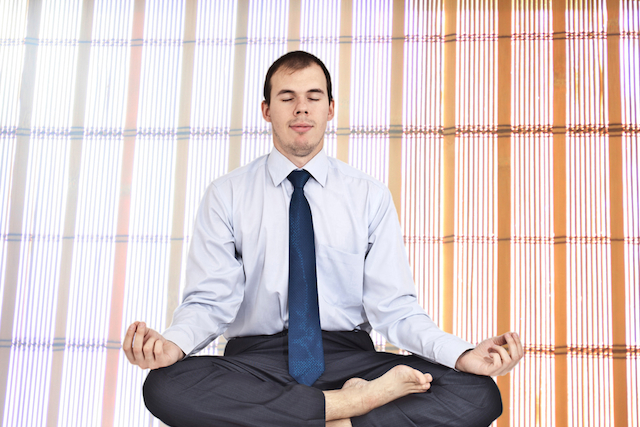
    Businessman Meditating

    “If we are not fully ourselves, truly in the present moment, we miss everything.” ~Thich Nhat Hanh

    Have you ever had one of those days where you catch yourself rushing and not paying attention to the present moment?

    I had one of those days a few years ago.

    I had just ordered some coffee at a drive-thru and was waiting for the clerk to open the window.

    While I waited, I began plotting my plan of attack for running several personal errands. My to-do list was long, and I knew I was going to need to be efficient if I wanted to get everything done in the amount of time I had available.

    The clerk opened the window and I paid for my coffee. Then I drove off.

    A moment later, I reached down to my cup holder and realized that I’d driven off without the coffee.

    I swung back around and went through the drive-thru again. I was fortunate there was no line. I laughed and apologized to the clerk for rushing off without the coffee. “No problem,” she said. “It happens all the time!”

    I was surprised. This was the first time I had ever paid for something at a drive-thru and then drove off without it. I guess I wasn’t the only one that had done this.

    In a supercharged world where we are encouraged to multitask, it becomes more difficult than ever to be fully in the moment with what we are doing.

    If we are focused on rushing to the next event and our minds are on the future, it becomes easy to make mistakes in the present.

    In my case, I almost drove off and wasted my hard-earned money because I was paying more attention to my thoughts about my to-do list than what I was doing in the moment.

    Since that time, I have made an effort to bring more of my attention to the present moment. While it is not always easy, the following are six tips that help me stay in the moment during busy times.

    1. Relax your pace.

    After I realized my mistake at the coffee shop, I noticed how tense and anxious I was feeling about all of the things I wanted to do that day. When I paused to think about what I was doing, I realized there was really no need for me to be rushing through my day.

    I was putting pressure on myself to move fast out of habit. There was no deadline I needed to meet. I had generated all of the pressure, internally.

    As I gave myself permission to relax the pace and become more present, I felt relieved. The anxious and tense feelings melted away.

    2. Find some space.

    If you have a tendency to pack your schedule too tightly, try making a conscious effort to build some space in. You will be less likely to spend your time strategizing how you are going to get everything done and more likely to be able to be mindful in the moment.

    After I left the drive-thru coffee shop with my coffee in hand, I realized that I didn’t need to rush and run all of those errands the same day. I could space them out and allow myself a little breathing room in my schedule.

    I felt more at ease and found it easy to enjoy the rest of my day without continuing to obsess over my plans.

    3. Use mistakes as a signal.

    If you make a mistake doing something easy and familiar to you, this may be a signal that you have drifted out of the present moment.

    Go easy on yourself. It happens to most of us. Just observe what happened and gently bring yourself back to the now.

    4. Breathe.

    If you find that you have drifted out of the moment and are focused on the future or the past, try pausing and taking a few deep breaths.

    The simple act of paying attention to your breathing is an easy way to bring your focus back to what is happening in the moment.

    5. Be aware that rushing can be contagious.

    It can be tempting to join in if others are rushing, even when rushing is not in your best interest.

    For example, let’s say you are making a purchase at a retail store. The clerk has a long line and is moving fast to try to serve the customers as quickly as possible. When you reach the front of the line, you are tempted to match the clerk’s pace.

    As you speed up your pace, you lose your focus and forget to ask the clerk a question about the item you are buying. You regret rushing through the transaction later, after you remember that you forgot to get more information about the item before purchasing it.

    Try sticking with a pace that is natural for you. You will be more likely to keep your attention on what is important to you in the moment.

    6. Be compassionate with others.

    If you notice that someone has made a mistake because he or she is rushing and lacks focus on the present, try to be understanding. This can help you reaffirm your own focus on the moment.

    Many times, the person who made the mistake will acknowledge it, slow down, and come back to the present moment, like I did when I returned to the drive-thru coffee shop to claim my coffee.

    I appreciate that the clerk was kind and understanding, and I hope to pay that forward.

    Most of us have been less than fully present at one time or another.

    While being mindful in the moment can be a challenge during busy times, we will all benefit if we can practice mindfulness more often.

    Businessman meditating image via Shutterstock

  • 3 Things You Can Start Doing Today to Improve Your Life

    3 Things You Can Start Doing Today to Improve Your Life

    Man Jumping

    “The grass is always greener where you water it.” ~Unknown

    Have you noticed that when we’re unhappy we often spend our time focusing on those very things that are making us unhappy?

    My life has had its ups and downs, like anyone, but one of the lowest lows was back when I had a graduate job at a big four accounting firm.

    I was completely stuck in a rut: I’d drag myself out of bed in the morning, commute to work, spend the day in an office full of people I didn’t like, doing work I found mind-numbingly boring and unfulfilling, go out and drink too much in the evening, often with those same colleagues that I didn’t much like, get a late bus home, and then do it all again.

    I was bored, unhealthy, and unhappy.

    I spent all my energy doing things I didn’t enjoy with people who weren’t my tribe, and then drowning it all with a bottle of wine.

    But it hasn’t always been like that, and I’ve worked out my own tools to turn life on its head and spend my time being happy.

    Now I focus on making every day joyful, and living a life filled with fun, happiness, and adventure.

    As Seth Godin says, “Instead of wondering when your next vacation is, maybe you should set up a life you don’t need to escape from.”

    And that, my friends, is where I come in.

    There are three small but impactful shifts any can make to start improving their life. They may feel daunting initially, but these three shifts will start to make your life different—and better—day by day.

    1. Make some space.

    “Busy” is the new buzzword. Lots of us rush around cramming our day full of unfulfilling activities, and when someone asks how we are, we sigh, “Busy…”

    Have a look at your calendar and see how much time you’re spending doing things that don’t rock your world.

    Do you always say “yes” to meeting up with your husband’s brother’s wife even though you leave feeling drained and unhappy?

    Do you say “yes” to meetings at work that you know beforehand are just going to waste time and cause you to stay late to finish off your real work?

    Do you find yourself out with friends at expensive restaurants where the cost means you spend the night worrying about the bill and not having fun?

    All these things are negotiable! Start saying “no” to events and people that drain you. No need to provide excuses or justification, just politely bow out.

    The more you say “no” to the things that don’t fill you with joy, the more time you have available to do said joyful tasks.

    It can feel scary to begin with—you may end up with free time in your calendar, and lots of us worry that people won’t like us for saying “no.” That’s normal! But are you willing to face those fears to open your life up to make you happy every day?

    2. Do something that scares you.

    Maybe making space in your schedule is already pushing you out of your comfort zone. Great! But I bet there are plenty of things that you’d love to do to fill the space that make you feel jussstttt a little bit nervous.

    These things help expand us, and doing things that start from a place of fear helps free us of the fear and expand our comfort zone. So scare yourself today, and you’ll be less scared tomorrow.

    These scary activities don’t have to be earth shattering. My first list of scary tasks included calling a girl I wanted to be friends with, answering my phone every time it rang (I’d gotten into the habit of screening almost all my calls, even though I love chatting with people!), and joining a dance class.

    See, they’re all simple, but each of them had the effect of improving my life when I did them.

    As you start living from your growing edge and consciously pushing yourself to do things outside your comfort zone, the zone will expand and you will find a renewed confidence in yourself and your abilities.

    3. Do something you love.

    I love to read; I always have. When I was a kid, my dad described it as voracious.

    I’d read all the time—when I went to bed, when I woke up on the weekends, in the afternoon after school. Still, one of my favorite indulgences is when I have time on the weekends to wake up without an alarm and just read in bed until I’m too hungry and have to get up and eat some eggs.

    But when I’m busy, tired, and stressed, it’s one of the first things to go. Huge error! I find myself zonking on the couch in front of TV, getting more and more drained and tired. But I noticed the pattern, and I consciously make time to read now. I love getting lost in a beautiful novel.

    What’s your “thing”? What are a few things you love to do? Read, chat on the phone with friends, go for walks in nature? Write down a list of a few of these things and do one of them every day.

    Maybe pick small things for weekdays and something bigger for the weekends so you don’t overwhelm yourself, but focus on the things you love to do and make it a priority to spend your time doing things that make you happy.

    Once we’ve made some space, written down things we love to do, and started recognizing the things that we’re holding off doing because they’re scary, it’s time to do!

    Take your calendar and book it in. Cross out that thing you’re going to say “no” to, and write in something scary and something you love.

    Make it happen, make the commitment to improve your life in a small way every day. A little bit of daily action will get you further than one huge burst of energy every month.

    It’s your life. Choose to make it amazing.
    Man jumping image via Shutterstock

  • Letting Go of Guilt About What You “Should” Be Doing

    Letting Go of Guilt About What You “Should” Be Doing

    “Beware the bareness of a busy life.” ~Socrates

    It was December 26th. The day after Christmas. Ten days after my daughter’s first birthday. I was sitting on the floor coiling Christmas lights when I began to try to stand up. Almost immediately, I sunk back down to the floor.

    I was tired. I was physically tired. I was emotionally tired. Even my soul felt tired.

    In that moment, I couldn’t help but wonder, how did I get here? Sitting on the family room floor after two beautiful family events—my daughter’s birthday and Christmas—and my bones, heart, and soul ached so much that I considered whether I would be able to stand up again.

    Six weeks after the birth of my daughter, I chose to get back on a plane and continue building my consulting business. I spent the entire first year of her life haunted by my ego as I frantically tried to build my business, serve clients, and prove that I was needed and valuable.

    The image of a successful woman that I’ve always carried with me is that of a woman who is smart, driven, professionally accomplished. She is also a Mary Poppins mom, a loving wife, and a leader in the community. And she is someone who makes it all look effortless with her calm, impeccable style.

    That superwoman was the gold standard I’d spent years, and especially the last year, trying to live up to.

    But now, on December 26th, I’d awakened only to realize that as much as I was chasing the dream of the superwoman, I wasn’t living my life.

    I came crashing headfirst into my so called life.

    The words of Socrates, beware the bareness of a busy life, were suddenly eerily real.

    I knew it was time for me to make some significant changes in my life.

    As I reflected back on that year, I realized that I had been driven by guilt and its close cousin, the “shoulds.” Together, they ignited a fire in me that drove me, ultimately filling my hours and days with busyness.

    Guilt would rear its ugly head with questions like, “Am I working too much and not spending enough time with my family?” Or “Am I undermining my health and my family’s health because a significant majority of the food consumed in the household comes from a takeout box?” Perhaps, “Am I letting down my client because I did not immediately reply to their email?”

    All I needed to do was to spend a few minutes pondering questions like these, and I was deep in the black hole of guilt—insecure, confused, miserable, tired.

    But, when I paused on December 26th, I realized that it was my fears and anxieties that were driving me. My guilt was the manifestation of both. So, I decided it was time to face my fears by asking myself, “What is the worst thing that could happen? Is it real? Is it true?”

    As I looked at my fears—really looked at them—I realized that I had created elaborate, worst case scenarios that had no actual grounding in reality. They were neither real nor true.

    I did not know a business owner who had lost a client because they did not immediately respond to an email. And, upon reflection, if I did lose a client because of this, they probably weren’t an ideal client for me.

    Once I realized that fear and anxiety had been driving my guilt, it was time for me to take an honest look at its close cousin, the “shoulds.” The “should” are those voices in your head—and you know the ones—saying “You should be doing this,” “You should like that,” “You should spend time on this,” “You should stop doing that,” and so on and so forth—endlessly.

    There were numerous unspoken “shoulds” that had contributed to my busy, barren, exhausted life.

    The problem with the “shoulds” is that they can easily become a runaway train, completely derailing your ability to get clear and focused on what you need and desire.

    I realized that I needed to start saying “no.” Saying “no” to the voices inside my head, and maybe externally as well, and doing it in a new way—a way that I developed and like to call the “P.O.W.E.R. No.”

    Here’s how I use it:

    • Priorities: When that voice in your head tells you that should complete this task, lead another project, attend another meeting, or make cupcakes from scratch, evaluate the priority of that message. How does this “should” align to your priorities, the company’s strategic priorities, and/or your family’s priorities?
    • Opportunities: Explore the opportunities. What opportunities does this “should” create for you? Is there something that does actually need additional attention in your life? This “should” could be shining a light on something that you need to address.
    • Who: Who or what triggered this “should”? Was it an old script from childhood? Was it an ad in a magazine? Was it your colleague?
    • Expectations: Whose expectations are these really? Your manager? Your mother? Your spouse? Your child? Society’s?
    • Real: Get real.What is this “should” really about? Are there real priorities that are driving this “should”? Or are you taking on societal expectations that are not in alignment with your priorities?

    The P.O.W.E.R. No enables me to think carefully and critically about all of the “shoulds” so that I can consciously and thoughtfully respond. It has helped me get back in the driver’s seat of my life—conscious, intentional, and awake.

    I am so grateful that I crashed headfirst into my life on December 26th. In that moment of crisis and confusion, I was able to see clearly what drove me to such a barren, lifeless existence—and to know that I was capable of fixing it to restore personal and professional order for myself.

    Today, I have created a life that keeps me connected to my husband and daughter, laughing, running in the mornings, building my dream business, working simply and living fully.

    With that said though, I keep Socrates’ quote posted inside my desk drawer. It serves as a as a simple reminder of not only what’s at stake, but also, and more importantly, how far I’ve come to build a life I love.

  • 4 Things to Keep You Going When You’re Stressed at Work

    4 Things to Keep You Going When You’re Stressed at Work

    Man Meditating at Work

    “Life is 10% what happens to you and 90% how you react to it.” ~Charles Swindoll

    I remember working at a job where I absolutely could not do anything right.

    This was one of those jobs where it was extremely fast paced and you received 100 tons of work that must be completed by an unrealistic deadline. And here’s the kicker: your time at work was spent in meetings, all day. I’m talking about four to seven hours of your day. You get the picture.

    So you may ask when I had time to do the work. Unfortunately, after work hours, in the evenings at home or on the weekends, when I was supposed to be spending time with my family.

    Now don’t get me wrong, at times I was able to steal a half hour to an hour on the job to work on tasks that needed to be completed; however, I found it tough to consistently focus and devote my undivided attention when I was shifting gears all day, every day.

    It almost seemed impossible to win against an environment of nonstop “busyness” with no real progression in sight. I was losing fast.

    I did not perform well during my time there and did not have the impact I thought I would and wanted to have in my work, and within the organization. I failed (or so it seemed to me).

    One day, I finally decided it was time for me to leave. While I initially had mixed emotions about leaving, I knew I wasn’t helping myself by staying at the organization; I was totally out of balance!

    I needed to breathe, I was drowning at work, too busy doing the work at home, not fully paying attention to my daughter, and I became a stressed out monster, having emotional meltdowns far too often.

    Upon leaving, I received a card from my department staff and some people shared their reflections with me, which revealed that I had done so much more than what I knew. How could I have shared my light with others after falling short in my role?

    What I learned is, people are always watching how you respond and react in tough situations. Your character is revealed when going through darkness.

    I was able to reach out to others and bring out the best in them through in-depth conversations during supervision or in morning talks with colleagues. Even though I was dying inside, I always came to work with positive attitude, a smile, and people picked up on that energy.

    I provided guidance to some with their career goals, assisted with developing their voice and professionalism in the work environment. I had somehow helped others become acclimated to the job and feel like they were productive and contributed.

    When I reflected on what kept me going, I remembered the four things listed below were key:

    1. Shift gears with your thoughts.

    We can control our thoughts by monitoring them, and when we find ourselves having negative thoughts, change it to something positive. With self-talk we can be proactive and plant the thoughts we want.

    For example, there were times I would feel sick before heading into the office and I told myself how much I hated being there. But changing my thought from “I don’t want to be here” to “What can I do to help someone today?” allowed me to open myself up to the possibilities for each day.

    2. Meditation is key.

    Spend at least ten minutes in the morning quiet and doing nothing before starting your work; prepare your mind for the day. A prepared mind will help you to sustain the stresses that life will place on you. You will feel the pressure, but when you are mentally prepared it will be much easier to cope with them.

    3. Get pumped up.

    Before heading into the office listen to a song that motivates you, makes you feel good, and will push you. This can be your song of the day to play at your desk to keep you going. Two of my songs were “Happy” by Pharrell and “Walking on Sunshine” by Katrina and the Waves.

    4. It is what it is.

    When challenges are out of your control at work, don’t beat yourself up. Accept what it is. By accepting the things that you have no control over, you will have the energy to concentrate on the things that you can control. You will end up maintaining your happiness, and perhaps even your sanity.

    When you find yourself in a situation where there’s too much that you simply cannot accept, or that is unhealthy to accept, it is time to take responsibility for making a change. Instead of staying in a situation that will build bitterness and resentment, start looking for something new that will contribute more positively to your life.
    In the end, through my unhappiness, I had somehow been encouraging, supportive, and motivating to others. I shared my sense of humor and brought out the humor in others. In what I deemed as a professional failing nightmare, I unknowingly had brought positive energy and a boost to others.

    How you respond in tough situations may unknowingly help others, as well.

    Man meditating at work image via Shutterstock

  • Are You Too Busy to Enjoy Your Life?

    Are You Too Busy to Enjoy Your Life?

    Happy Guy

    “It’s not enough to be busy; so are the ants. The question is: what are we busy about?” ~Henry David Thoreau

    I was slipping deeper into a dark spiral after my fortieth birthday, looking for anything to grab onto and pull myself out of the darkness. Some said I was having a midlife crisis, but I believe it was actually the beginning of an awakening for me. For the sake of argument, I’ll call it a midlife awakening.

    This by no means meant that I understood the meaning of life and was all of a sudden enlightened and happy—quite the contrary. I was seeing for the first time the “me” that everyone else saw and had no idea who that person was or wanted to be.

    Try as I might, I could not remember much about my thirties. I know worked a lot and was raising my daughters as well as coaching; I was staying busy but definitely not living. I became numb to my surroundings: feeling no pain, no happiness, nothing but a big empty hole inside.

    Still, the real wakeup call came after returning to school as a forty year old. Working on an assignment for a speech class I watched a video tape of an overweight, sad, negative person.

    This led me toward the beginning of my journey and the first challenge was to rid myself of negativity. It was a journey to be positive and learn how to “live” my life as each moment presents itself to me.

    Setting out on a quest to find a spiritual balance that was not tied to labels and judgment, the biggest test was still being around people that knew the old me as I continued my transformation. It’s easy to get dragged back into old habits and feelings, so I separated myself from as many “triggers” as I could.

    In 2007 after my youngest daughter turned twenty-one, I made the decision to separate and later divorce, since the relationship was a major source of negativity.

    I was nineteen when this relationship started, so I never had a chance to know myself and, as selfish as it sounds, I needed to know me. One of the first things I learned was that I did not know how to be alone. As a matter of fact, this was my first time in my life with my own apartment.

    There was a lot of reading and soul searching going on and still going on, but little by little I got better at being me.

    In the fall of 2009 I met my soul mate, and although I previously said I would never marry again, in June of 2010 I asked and she accepted. We once wondered why we couldn’t have met sooner in our lives, but I know the answer is that we were not the people we are today, so it would not have been the same.

    I have never pretended to possess all the answers but I do freely give some advice when the opportunity arises, especially when people bring a child into the world. That is not take one moment for granted and enjoy their child or grandchild every chance they have.

    We spend so much time being busy and not enough time just being.

    I rarely look at the news, television, or read a newspaper because many times when I do I feel bad, and common sense tells me if something feels bad, don’t do it.

    Outside of work I try to surround myself with positive, good hearted people and do activities that help keep me centered.

    Exercise and running have become my best centering activities. Trail running particularly meets all of this criteria because it seems to draw these people, and if you run a rocky, root bound, hilly trail you had better be in the moment.

    There are moments that I know are gone forever and I can’t go back and try again to live them. I will strive to live every minute I am afforded and try to share what I have learned with anyone who is willing to listen.

    My intent is to pass on my love for the beauty and serenity of nature and the satisfaction of learning from everyone we meet along the way.

    I would love to tell you that I live in complete peace and harmony all the time now and I have my life in perfect order. But that wouldn’t be true. Still, living is a more positive and open-minded process now and I feel like I am a better person—one who does not have to be faultless.

    Also by having a more positive group of friends, I have help on the days when the ego wants the negative side to make an appearance.

    As our responsibilities grow it is increasingly easy to retreat into busy mode, overloading our senses, and lose touch with those around us.

    Staying busy as a defense mechanism leaves you stagnant; not growing, not solving anything, and not living your life. It is the equivalent of looking the other way and thinking that if you don’t see something it is not real.
    I try to remind myself to cherish every moment I am given with my family, friends, and people I care about. I fight the urge to excuse myself from experiences, from this moment, because if I tell someone “I’m just too busy” I will never get that time back.

    I read somewhere that if you stick your hand in a river you can never touch the same water twice, because by the time you stick your hand back in the water has moved on. It is like that with time and being busy simply for the sake of being busy; once that moment is gone you can never get it back.

    Happy guy image via Shutterstock

  • Knowing What Matters to You Instead of Living by Default

    Knowing What Matters to You Instead of Living by Default

    Happy Family

    “It’s not enough to be busy; so are the ants. The question is: what are we busy about?” ~Henry David Thoreau

    If you are like most people reading this, I bet that you are very busy. We are all very busy. In fact, some of us even like to brag about just how busy we are. But are you busy doing the things that really matter to you?

    There was a time when my life when I was busy. I was focused on my career, spending a lot of time at work, and enjoying the fruits of my labor.

    This was okay for a while, but after months and months of working seventy hour weeks, it became a struggle for me to just make it through the day. I began to wish that things would slow down enough for me to be able to enjoy life.

    Maybe you have been there too. Maybe you are experiencing this right now. You wish that your life would slow down so that you can enjoy the things that really matter to you.

    In my case, I forced myself to keep going, and everything was fine for a while. Then one day I woke up with a sore throat.

    I felt a stabbing pain every time that I tried to swallow, and I decided to take the day off and visit the doctor. The doctor told me that I had an abscess in one of my tonsils, and he had me immediately admitted to the hospital.

    Later that day the abscess broke and the infection surrounded my heart. I was so sick that my doctors didn’t think that I would make it through the day.

    Have you ever been told that you might not make it through the day? It is not a good place to be in life, but it does make you think about what really matters.

    When you are lying in a hospital bed, and you don’t know if you are going to live or die, you spend a lot of time thinking about what is really important in life.

    If you are like me, you will discover that it is not your job, or your money, or the things in your life. It is your health, and your relationships with the people who matter the most to you.

    I am sharing my story with you today because I don’t want you to experience what happened to me. I want you to spend your time on the things that matter most to you before it is too late. I want you to decide what is important to you, and create a plan to get there.

    Here are four tips that helped me, and they can also help you to begin to focus on what matter most:

    Determine your priorities.

    Think about what you want most out of life. What were you created for? What is your mission in life? What is your passion? You were put on this earth for a reason, and knowing that reason will help you determine your priorities.

    I spent a total of four months in the hospital healing from my sickness. During that time I spent a lot of time thinking about my purpose in life. I discovered that my purpose is to help you change your lives by learning to focus on what matters most to you.
    Create a plan.

    Create a plan to get from where you are today to where you want to be. Maybe you need a new job. Maybe you need to go back to school. Maybe you need to deal with some relationship issues. Whatever it is, create a plan that will get you to where you want to be.

    While I was in the hospital, I began to draft my life plan. My plan guides all of my actions, helps me focus on my relationships with my wife and daughter, and helps me keep working toward my life purpose. A life plan will help you focus your life too.

    Focus on now.

    Stop multitasking and focus on one thing at a time. It may be a project at work. It may be a conversation with your best friend. It may just be the book that you have wanted to read for months. The key is to focus on one thing at a time.

    I plan each day the night before by picking the three most important tasks from my to-do list. In the morning I focus on each one of these task individually until they are completed. Once I complete these three tasks I move on to checking email, returning phone calls, etc.

    Just say no.

    We all have too much to do and too little time. The only way that you are going to find the time for the things that really matter is to say no to the things that don’t.

    I use my purpose and life plan to make decisions about the projects and tasks that I say yes to. If a project or task is not aligned with my purpose, a good fit with my life plan, and something that I have time to accomplish, I say no to the project. Saying no to good opportunities gives you time to focus on the best opportunities.

    Research tells us that 97% of people are living their life by default and not by design. They don’t know where their life is headed, and don’t have a plan for what they want to accomplish in life.
    These steps will help you too decide what matters most to you. They will help you to begin living your life by design and not by default. Most importantly, they will help you to create a life focused on what really matters to you.

    Let me end by asking, “What really matters most to you?”

    Happy family image via Shutterstock

  • How to Be Happier Without Really Trying

    How to Be Happier Without Really Trying

    “Happiness is the absence of trying to strive for happiness.” ~Chuang Zi 

    I sat in the café wondering why I wasn’t happy.

    I had been listening to all the happiness and self-help gurus. I was meditating every morning. I ate a healthy diet. I exercised four times a week. I was working hard on projects I was passionate about. I wasn’t wasting time and watching my life tick away.

    Yet somehow, as I sat in the café, I wondered how I could have been “doing it all right” and yet everything felt incredibly wrong.

    There is no mistaking the feeling of being unhappy. I wasn’t quite sure where it originated, but I constantly felt exhausted, uninspired, and like the energy was being sucked from my body.

    I had this mantra constantly running through my head: If you only get one life, the solution is to cram as much stuff into it, every minute, and waste no time so that you will die fulfilled.

    But it just wasn’t working.

    So I did what we naturally do. I went to Google, the mystical tech god, to help show me why I wasn’t happy and to help figure out what to do. 

    I tried all the usual suggestions. I started journaling and keeping a track of all my moments I was the most grateful for during the day.

    I started engaging in random acts of kindness; I would buy strangers’ coffee at Starbucks, pay for someone else’s toll, or leave a gift on someone’s windshield.

    I increased my meditation time to at least forty-five minutes per day and focused on staying mindful throughout the day. 

    But the big problem was still there. I felt stressed constantly, unhappy, and had the weird feeling that even though I wasn’t wasting any time, and was using my life wisely, I just wasn’t enjoying life that much. 

    I just could not understand why at the end of the day I felt so grumpy Every. Single. Time. 

    And then, as most coincidences in life happen, I stumbled upon an article written by Martha Beck, the famous life coach, about how there was one overlooked path to success—and it wasn’t hard work.

    In fact, quite the opposite. And it was something seriously in short supply in the modern world. 

    Play. 

    At first I thought, “What?” How is that possible? I’m having fun all day long. I go to work, come home, exercise (which I enjoy), work on my side project (which I enjoy), do some studying for a bonus class (which I enjoy). I play all day! 

    No, no, no, Martha’s article said. That is not play. Play needs to be restorative; it needs to be a time when your brain and body are turned off and simply in flow. 

    I decided to do an experiment. 

    Every guru since the dawn of time has mentioned how children are closer to “the truth,” and that by observing them we could learn quite a bit.

    So every day for a week I sat in a café. And I just observed. I did nothing but watch people interact, watched them come and go, and in particular, watched how children interacted. 

    The first thing I noticed was something obvious: Life is a game to kids.

    They spill milk and then laugh. Something breaks and they act scared for a moment, then laugh. It’s pouring outside and they jump in puddles and laugh. 

    It’s incredible the 180 that I (and many other adults) make. 

    Spilled milk? Annoying. Now my clothes are dirty. Broken wine glass? Great. Now I have to spend $15. Raining outside? Ecstatic. I get to run around freezing and potentially get a cold. 

    It was insanity. We were both experiencing the exact same things in life and I was giving myself a heart attack, while little kids were rolling on the floor laughing. Same situation. Big difference.

    I then did a flow test, where I wrote down every single moment of my daily schedule and analyzed whether I was having fun or not. 

    I quickly realized I wasn’t playing. I wasn’t engaging in the relaxed, restorative kind of play that leaves you feeling strong and healthy. 

    I was too concerned with “making this one life count” that I was jamming every minute of every day with some kind of activity, for fear of wasting a single minute.

    And the horrible irony was that I was seeking happiness by not wasting time, but “doing more” didn’t get me there.

    Isn’t that crazy? One of life’s most important practices is so easily overlooked because we take it for granted.

    There’s the old saying about how kids smile 400 times a day, but by the time they reach adulthood they only smile 10 times a day. I think it’s true.

    And for me, the real secret to enjoying life, beating unhappiness, and beginning to reverse depression was all about playing more in life.
    And, like meditation, everything can become an exercise in playfulness. 

    Maybe this life-changing secret will help you too: If you aren’t enjoying life enough, stop pursuing happiness and just play.

    Happiness will come as an unintended side effect.

  • Why We Stay Busy When We’re Not and The Benefits of Doing Nothing

    Why We Stay Busy When We’re Not and The Benefits of Doing Nothing

    “Doing nothing is better than being busy doing nothing.” ~Lao Tzu

    How many times in a day do you tell yourself you are busy and have too much to do? In a week? In a month?

    How many of those times are you actually busy doing “nothing”? You know the “nothing” that I am talking about—the nothing that means you are watching hours of mindless TV, roaming the internet, or playing a game that you can’t seem to tear yourself away from on your smartphone.
    I’ve been there and done that, and I still do it sometimes. I know what it’s like to feel drained and tired and want a break from real life for a bit so that you can recharge and refresh yourself.

    And I know what it’s like to choose to tune out/zone out/disconnect instead, and how that ends up causing you to feel even more worn out and overwhelmed than before you took that so-called break to do “nothing” for a while.

    We tell ourselves that it’s okay to do “nothing” and that we deserve some downtime, but we really don’t believe it and that’s why we choose to occupy that time with activities that don’t allow us to recharge. We want others to believe that we are as busy as they are, so we distract ourselves with those mindless tasks.

    I resisted “doing nothing” on its own for a long time without realizing it. I tried to do it while reading a book and watching TV and texting friends (yes all at the same time) and I burnt myself out.

    I couldn’t focus anymore and I had trouble completing my work when I needed to.

    I told everyone that I was busy and stressed out, but I really wasn’t doing what I was supposed to be doing, and my workload was getting larger and the quality of my work was decreasing, all because I wouldn’t give myself permission to take a genuine break and “do nothing.”

    It wasn’t until I left a stressful work situation and took some time to travel in South America for a few months that I learned the difference between being busy “doing nothing” and just “doing nothing.”

    It was there that I was challenged to just be, as I was traveling by myself, didn’t have any work to bury myself in, and there was no TV or phone to distract myself with.

    It was scary at first to be alone with my own thoughts and feelings, and I actually felt anxious, as I experienced sadness, anger, and worry without any way to divert my attention from them. However, as those feelings came up I was able to deal with them and release them, and that was what allowed me to feel rested and recharged.

    Even better, when you stop distracting yourself, you also get to enjoy your comfortable feelings such as excitement, happiness, and joy on a more intense level.

    Now you don’t have to leave your job and travel to South America to learn how to just do nothing; there are ways to experience this in our everyday life.

    For example, we don’t give ourselves permission to take a walk in the park and notice the changing leaves. Instead, we check in with a friend or work on our cell phone and let them know we are busy “exercising.”

    We don’t give ourselves permission to enjoy a cup of coffee or a glass of wine with a friend as we talk about how grateful we are for what we have. Instead, we meet with a friend after months of trying to schedule something and end up trying to compete over who is the most overwhelmed.

    We don’t give ourselves permission to have fun with our family at the beach, where the only thing we should worry about is remembering to put sunblock on. Instead, we get annoyed by our kids who want to play with us while we try to read “that book” that everyone is raving about, that we have no interest in but feel like we are supposed to read.

    Well let me share something with you: All of those things that you keep busy with when you say you are “doing nothing” are distractions. 

    They are distractions that are preventing you from connecting with others on a deeper level. They are distractions that are actually contributing to your feelings of exhaustion and unease.

    I want to challenge you to try doing nothing for a while. Spend some time just being where you are and enjoying this downtime either by yourself or with others. Tell yourself that it’s okay to spend some time really, truly “doing nothing.”

    Now, you may be figuring out how to do nothing, and I don’t want you to waste your time worrying about that, so here are some ways to try this “doing nothing” thing out:

    Sit on a park bench and enjoy the fresh air, take a nap if you need some extra sleep, enjoy a cup of coffee out while you spend some time people watching, call a friend or family member and only talk about happy events in your lives, lie in your backyard and watch the clouds roll by, or get lost in a magazine or a few chapters of a funny book.

    It doesn’t matter which “nothing” you choose, just make sure that you will not be distracted so that you can benefit from it (that means keeping your cell phone far away from you or even turning it off).

    This may feel uncomfortable for you the first few times you do this. There are some things that you can do to make this easier for yourself.

    Put this into your calendar just like you would a haircut, a doctor’s appointment, exercise, or any other type of self-care.

    Also, before you start this process, give yourself permission to set the intention that you will be doing nothing and are okay with that.

    There are a bunch of benefits that you will get to experience when you release your need to stay busy, which include feeling relaxed and less stressed, decreased tension, increased focus, improved connections with others, and a greater appreciation of all that you have.

    Isn’t time you let yourself reap the benefits of really, truly doing nothing?

  • Want More Joy in Life? Prioritize Things You Enjoy Doing

    Want More Joy in Life? Prioritize Things You Enjoy Doing

    “I don’t believe people are looking for the meaning of life as much as they are looking for the experience of being alive.” ~Joseph Campbell

    Because I am self-employed, I often find that my work is my life. There is no off switch when the day is over. Some days I get so caught up in the busyness that I completely forget myself.

    While my work is immensely meaningful and enjoyable, I believe it’s important to have other activities outside of work that bring us joy so we can live even fuller lives.

    When I get too caught up in my work of helping others, I forget the other things that are important to me. This makes me feel that I lack the balance of a multifaceted life.

    One day I realized that I was so caught up in helping other people that I completely forgot to help myself. As an introvert, it’s important to recharge my batteries by pursuing activities that recharge the soul.

    So I sat down with a pen and paper and did what most busy people do: I wrote a list.

    This was a list with a difference.

    I wrote down every single activity I enjoy. I wrote down every single activity I hadn’t tried but wanted to. And I wrote down every single place I wanted to visit.

    This was the beginning of actively creating joy in life. You can make of life what you will. Personally, I choose happiness.

    In positive psychology, a method for finding happiness and joy is being in a state of flow. You already know this feeling. It’s when you are completely tied up in what you are doing and you lose track of time because you are so engaged and stimulated in your activity.

    Often, activities that put us in a state of flow are creative—things like painting, playing music, cooking, sewing, reading, writing, and doing arts and crafts.

    Other activities that often put us in this flow state are physical. This could be gardening, hiking, bike riding, yoga, golf, and any other physical activities we enjoy.

    For ultimate happiness and health, I believe it’s important to pursue both creative and physical activities. Stimulating your mind and body leads to greater intelligence and a heightened state of awareness.

    Some might say to get into a state of flow you need to get a hobby. I think perhaps this is true. When was the last time you heard someone say they have a hobby?

    Hobbies seem to be something of the past. Today we are so busy. We get so caught up in work, family, relationships, pleasing other people, and technology that we forget to do the things we enjoy for ourselves.

    This is where my list came into play. It ended up being a multi-page list of every hobby I ever had, every activity I enjoy, and every activity I wanted to try. I then made it a priority to do at least one “happiness activity” every week.

    Taking time out of our regular day-to-day work and finding new ways to enjoy life is essential to our happiness and well-being.

    If your life is very busy, do not be fooled into thinking you have no time for hobbies. Everyone has fifteen minutes available, even if it cuts into your sleep or email time.

    Although fifteen minutes may not feel like enough time to get into a state of flow, it is enough time to feel joy and happiness. With a bit of practice, you might find you get into such a state of flow that fifteen minutes turns into an hour. Over time, you may find that these pursuits of happiness overtake the importance of busyness.

    If you think you have no hobbies now, the best way to find out what you enjoy is to remind yourself what you enjoyed as a child. Did you previously enjoy baking? Or drawing, or playing music, or playing football?

    Write yourself a list of every activity you ever enjoyed and every activity you’d like to try but haven’t yet. Pick one thing that you previously enjoyed immensely, and set yourself an appointment to give it a go again. When you are ready, set an appointment for one new activity you have never tried before.

    Your life could be transformed by this one simple act: making it a priority to do the things you enjoy.

    Ideally, you want to set time for this daily. I completely understand that this is difficult to do. At a bare minimum, you want to schedule it in weekly.

    Personally, I like to set aside one day every week to go for a hike. But sometimes if I don’t have time for that, I like to pick up my flute and improvise. If I only have a spare fifteen minutes to do this, I find the time just flies by, and it only feels like five minutes.

    Doing something like this is so good for my soul. I find that if I don’t schedule flow time, then I feel tired and overwhelmed with life. It is so important to me that I actually write it down in my diary and stick to it like any other important appointment.

    We can all experience more joy in our lives. We just need to consciously choose to create it.

  • Jump Off the Busy Train for a Simpler, More Passion-Filled Life

    Jump Off the Busy Train for a Simpler, More Passion-Filled Life

    Time concept

    “What you do today is important, because you are exchanging a day of your life for it.” ~Unknown

    A few years ago I was on the busy track. I was working a corporate nine-to-five job, studying at night, and trying to keep up a busy social life. I thought I was achieving it all by doing so many things at once, but really, I was just burning myself out.

    My life was a busy blur. I’d start my weeks feeling tired and end them completely exhausted. Time was a constant challenge. I was always rushing from one thing to the next, and in the little down time I gave myself off, I’d be so completely exhausted that all I could do was slump into the lounge chair and fall asleep in front of the television.

    Between working a high-pressure full-time job, studying my nights away, and maintaining a busy social life on the weekend, there was little time for me to just be. In the midst of the daily rush, there was no reflection or alone time. There was just busyness.

    Feeling this way, it didn’t take me long to realize that it was not what I wanted for myself. I was rarely happy or at ease, and I was feeling the strain big time. I pushed myself for answers and I realized that my pursuit of “doing it all” was in vain. I simply wasn’t happy.

    I wasn’t enjoying my job, and although it paid well and had some great career prospects, it drained every ounce of enthusiasm I had and left me dry.

    It would leave me feeling so dry that I’d throw myself into action during every ounce of time I had spare, to the point of exhaustion, as if to try and salvage those wasted forty-plus hours a week I’d spent at work.

    I was studying a design course three nights a week to make up for my lack of passion for my job and I was out all weekend drowning my sorrows, rewarding myself for just getting through another lackluster week.

    It was madness and something I couldn’t keep doing. Every day drained me and ate away at me just a little more, but still, time went on. The days became weeks and the weeks flowed into months.

    I wanted to jump off the busy train, but making a change was hard. Though I knew that my job wasn’t where my passions lied, I couldn’t just throw it all in and quit. I had bills to pay and my love of design was just that at the time—a love, not a moneymaker.

    I struggled for months with this decision, thinking of every possible way I could make things work. But none of them compelled me to action. The truth was, I was scared.

    Right when I was almost at breaking point, salvation came for me in the form of a company restructure. Cuts were being made and I was called up for retrenchment.

    My retrenchment was a blessing in disguise. While I was worried about how I would make it work, I knew it was the push I needed to live a simpler life, more in tune with my passions.

    With this in mind I was convinced I could make it happen. I decided, then and there, that I would pursue my studies full time to do what I loved and work whichever other jobs I needed to work to make it happen. I started looking for part-time office jobs, and to my surprise, there were some great ones.

    Within a month I’d found the perfect part-time job that would let me launch into my studies with full force while still making ends meet. I’d have to make some tough cuts to my spending to make it work, but I knew I could.

    The tradeoffs were tough at first, and living my newfound modest lifestyle wasn’t always easy, but it was more than worth it. What I soon realized was that for all the material things I’d lost, I’d gained the most valuable thing of all: the freedom of my own time.

    I now had time to breathe, think, and live.

    Today I’m living a simpler life, one of freedom and choices. I’m still actively doing things every day, but I’m doing things I truly love.

    With my design diploma in hand, I’m working as a fashion designer and writing about my creative journey on my very own website. I’m living with joy and I no longer feel busy and stressed. Instead, I am energized and passionate.

    We can get so caught up in the pursuit of busyness that we forget what we are losing. In busyness we lose our freedom, our options, and a little piece of ourselves.

    Time is freedom. It enables you pursue your dreams and go after what you love. How you spend it determines whether you experience happiness or not. And at the end of the day, it’s all you really have. 

    Jump Off the Busy Train and Reclaim Your Joy

    If you want to jump off the busy train to make a change to a simpler, more passion-filled life, here are three things you can do:

    1. Take the change step by step.

    Instead of launching right in and quitting your job without a solid plan, make sure you have everything in place to make it work.

    Look into your options for part-time work or more flexible working arrangements, like working different hours or from home. Weigh up your viable options to free yourself from busyness and determine how you can make it work financially.

    2. Accept a better outcome, even if it’s not the perfect one.

    We would all love to jump in and pursue our passions full time but often it’s not practical, at least not from the outset. Instead of striving for perfect, find a better outcome in the short term.

    It doesn’t need to be an all-or-nothing approach. Right now, it might mean pursuing a passion on the side. In a years time, it might mean transitioning to a part-time working arrangement. Sometimes, good things take time.

    3. Scale back in other areas of your life.

    There is always give and take in life, and if you want to move toward a simpler, more passion filled life, there are going to be tradeoffs.

    Scaling back might involve selling your car, moving into a smaller house, and cutting back on meals out. These might all sound like big changes, but the reward you will receive every day from living in tune with what you love will far outweigh the sacrifice.

    If you’re feeling the weight of busyness in your life, challenge yourself to slow down. Don’t sell your life to the highest bidder, trading your time for dollars at the expense of your own happiness and joy. Reclaim your freedom and find a way to do what you love. Your happiness depends on it.

  • How to Reduce Stress and Focus More on What Truly Matters

    How to Reduce Stress and Focus More on What Truly Matters

    “Beware the barrenness of a busy life.” ~Socrates

    Did you ever wish you could just take off from work and get away from it all?

    This past summer I had the opportunity to do just that.

    I was wrapping up a twenty-four-year career in the Air Force and had saved up two months of vacation time. So my wife and I decided to visit Rio de Janeiro and live by the beach.

    The tropical weather was everything you would expect it to be: sunny, warm, and gorgeous.

    But surprisingly, the time off gave me so much more.

    Being away from the daily grind of work prompted deep reflection on my part. As a result, I came to some unexpected insights about my career and my life. The lessons I learned are:

    Ambition can make you miserable.

    When you’re on the fast track, you’ve always got this nagging, stomach-knotting anxiety that you’ve got to go and make it happen or else you’ll be left behind, unable to take your place at the table of materialistic plenty. Worse yet, you start to worry that others will elbow you out and grab your share.

    For sure, our competitive society is full of this kind of attitude. And it’s easy to get pulled into it yourself.

    I’m not saying that ambition is bad—especially when pursued for good reasons, like taking care of yourself and improving your state in life.

    But the dark side of ambition is that it can pile on the stress. Remember that knot in the stomach I talked about?

    I learned that only when you take a break from the grind can you realize the impact of your ambition on your spirit.

    Only then can you discover what’s driving you and sort out whether it’s truly important or not.

    For my part, I discovered that “climbing the ladder” in an organization was no longer important to me.

    What emerged as most important was using my strengths and experience to coach leaders, help them solve their problems, and make their own marks.

    You may be more stressed than you realize.

    After about two weeks of sleeping in and waking up to the sound of waves and tropical birds, I realized the knot in my stomach was gone. What’s more, I didn’t realize how big of a knot it was.

    A good chunk of the stress knot was present because of my own doing.

    For many of us, this knot of stress is the price we pay for trying to make a living and get ahead. The price includes responsibilities that bear down on you. Maybe over time your health and wellness starts to slip away.

    The next thing you know you’re in the grind.

    But what’s being ground up is you.

    At this point, I learned I had a choice: I could go back to the grind or I could use the strengths I developed over my career to serve others in a more balanced way.

    I’ll give you one guess what I chose.

    You really don’t need a lot to live well.

    While we were in Rio, my wife and I rented a tiny one-bedroom studio apartment. All of our household goods had been packed up and stored, so the sum total of our possessions amounted to a couple of suitcases of clothes.

    And that was plenty. In fact, it was more than enough.

    Living this stripped-down lifestyle removed the hidden burden of having material things to worry about. I’m talking about things like a house, two cars, furnishings, bikes, golf clubs, lawn mowers, washers and dryers, and all the other things we buy to simplify our lives.

    The radical downsizing opened me up to experience the rhythm of a simpler life.

    And it wasn’t boring at all.

    On the contrary—with the hustle, bustle, noise, and possessions gone, I had time to notice the little things that make life rich and enjoyable.

    Like the cooling ocean breeze or the small monkeys that jumped from branch to branch in the trees outside our apartment window.

    Like connecting more with family, friends, and the transcendent.

    Living with less clears away the clutter of our go-go modern lives and allows us to get reacquainted with our authentic human selves.

    The Big Lesson: Taking Time Away to Reflect Can Change Your Life

    Extended time away from work can improve your life. It certainly did mine.

    However, my circumstances were unique. For the vast majority of people, getting away from work for an extended stretch is a challenge.

    So what can you do to incorporate reflection in your life?

    If you can’t take extended time off, you can take small breaks. These breaks can come in all shapes and sizes such as:

    • Meditation
    • Turning off the TV
    • Setting aside your smartphone
    • Journaling
    • Going on a hike
    • Taking a run
    • Getting away for a weekend

    Use these small breaks to progressively gain perspective on what truly matters.

    Even these little breaks away from the routine will bring insight and understanding. Over time, they will grow into tools that you can use to transform your life.

    Plan your small breaks (or a big one) now.

    And move toward a life that is simpler, less stressful, and more fulfilling.

  • 4 Questions to Help You Know When to Say No

    4 Questions to Help You Know When to Say No

    “It is not enough to be busy; so are the ants. The question is: what are we busy about?” ~Henry David Thoreau

    A couple of years ago my friends and I went on a weekend retreat to honor our dear friend’s fortieth birthday. It was supposed to be a relaxing weekend filled with yoga and meditation at an ashram in the mountains.

    But I had a serious problem with the retreat: I actually brought work with me! As an educator, it seems I am perpetually behind with my grading. And so I brought a whole stack of midterm exams with me to grade in my “free time.”

    There I sat, alone in the cabin, while everyone else was hiking or chanting or taking a yoga class.

    After grading just a few exams, it hit me just how wrong the whole scenario was. I was at an ashram in the mountains, for goodness sake, and here I was working.

    I had so many obligations connected with my job and my children and my community that I felt my only option was to keep going.

    And then I broke down. I started to cry as I thought about what I might be doing to myself. Can I go any further living like this, I asked myself.

    I started to doubt my ability to handle the life I had created for myself.

    I continued to cry until my friend Karen came back to the cabin. I confided in her that I was at a loss about what to do. I was extremely stressed out and saw no way out.

    She asked me about what I had going on. Well, one issue was I had committed to attend a meeting months before I knew that my daughter’s band concert was the same night. And I felt obligated to go to the meeting.

    Karen asked me what I was doing at the meeting: Was I running it? Was I speaking at it? Would it fall apart without me? Well, no, I admitted. I was just supposed to attend.

    And what would happen if you canceled, she asked next. I thought for a moment and realized that nothing would happen.

    So when I got back from the weekend, I emailed the meeting organizer and told her I had to go to my daughter’s concert. And guess what? It was fine; she said she completely understood.

    Then I started really getting into the saying “no” mood. Next, I declined to take on a project I was asked to work on. I stopped myself from agreeing to be on a church committee.

    I was going “no” crazy. But it felt wonderful. My stress level dropped dramatically and I felt free.

    I still have a lot on my plate. But I’ve gotten to the point where I can differentiate between what I must do, what I really and truly want to do, and what I don’t need or want to do.

    Another way of saying this is that I have learned to prioritize my time.

    So if you tend to over commit like I did, slow down for a minute and ask yourself the same kinds of questions Karen asked me:

    1. Do you absolutely have to do whatever it is you are contemplating taking on?

    We do have to do many things… for our families, our friends, our jobs. But a lot of times we just think we have to do something because of a sense of obligation or because we’ve always done it that way.

    To gain a different perspective on the situation, try taking a step back from the automatic thinking of “I have to do this” and ask yourself a few questions:

    What would happen if I didn’t do it? Would everything fall apart? Or could things go on without my help?

    2. Do you really and truly want to do it?

    Sometimes we don’t even know the answer to this question. What do we really want out of life?

    In order to prioritize our time, we need to know ourselves well enough to know what matters. And getting to know ourselves takes time, but a good starting place is again asking some key questions:

    What kinds of activities make you happiest or relaxed, free, focused, content, connected, alive?

    It helps me to think about the big picture of my life: What do I want to be able say I did with my life? This is kind of like my vision statement for my life. And then I can ask myself how individual activities fit into that overall plan.

    3. What will you get out of it?

    This doesn’t have to be a financial benefit or a plus for your career; it could be helping out the community or learning something new or spending time with your family.

    But whatever you might get out of it, just make sure that it is really important to you.

    It can be difficult to sort out when to put your priorities first over obligations to others. Sacrificing our time and our own wants for others is a part of life.

    But if you sacrifice too much of yourself for others, there is nothing left over for you. And pretty soon you have nothing left to give others.

    A balance between doing for yourself and doing for others is necessary. You can gauge if you are striking this balance by paying attention to your stress levels and how often you allow yourself to do something just for you.

    4. How much time do you have to devote to something new?

    The flip side of this question is: What will you have to give up to spend time on this new endeavor?

    In the end, the very bottom line is whether or not it is a priority for you. Think about what you want to do with your life, how you want to spend your time, and what would make you happiest.

    Discover that saying “no” to some things is absolutely liberating. It frees you up to focus on the things that are most important and really mean something to you.

    Don’t follow my lead by getting so overwhelmed with commitments that you break down and see no way out. Follow my lead with my new approach and prioritize your commitments.

    And don’t be afraid to say “no” even after you’ve said “yes.” Things happen; people change their mind; schedules change. That’s life, and most people understand that.

    Asking yourself a few key questions about priorities will start you on the path to more freedom and more time for the things you really want to do with your life.

  • Learning to Enjoy the Process and Stop Worrying About the Outcome

    Learning to Enjoy the Process and Stop Worrying About the Outcome

    Happy

    “Slow down and everything you are chasing will come around and catch you” ~John De Paula

    Remember the Tasmanian Devil?

    That crazed Loony Tunes cartoon character spinning out of control, crashing into everything in his path? Arriving in a blur. Leaving chaos in its wake.

    That was pretty much me and my approach to “living my passion.”

    This is hard to write but here goes (deep breath)…

    Not too long ago I was seriously trying to accomplish all of these things at the same time:

    • Play in a rock and roll band of middle aged men living in New York City, rehearse regularly, play live shows, tour, and still play dad to a family of four.
    • Engineer and produce our own albums while simultaneously attempting to produce other artists to help them realize their artistic vision
    • Start my own blog to inspire awesomeness in other creators
    • Guest post for major blogs and write epic content regularly to help their audience and build up my own blog audience
    • Shoot my own videos, create graphics, and edit them (though I have little to no skills in any of these areas) for my blog
    • Write a novel and multiple eBooks
    • Design cool music themed apps
    • Stay gainfully employed (a day job I desperately wanted to quit to make more time for all of the above)
    • Practice meditation and find the deeper meaning to my life

    The idea was that my brilliant plan would eventually pay off and sustain my family completely so that I could:

    • Pay a New York City mortgage
    • Put food on the table
    • Make time for my two young children
    • Spend some quality alone time with my wife and stay married
    • Have the freedom to create more awesome art

    So how did that all work out, you might ask. Total disaster. Here’s a glimpse into my crazy Tazmanian lifestyle:

    I would commute to my day gig and write blog posts while standing up on crowded subway cars. I’d come home and have a quick dinner, hang out with the children, and pretend to listen as they would excitedly recount their day. But I wasn’t really present. Then I would dash off after their bedtime to my studio man cave to work on my music until the wee hours.

    Then I would collapse into bed every night, only to get up a few hours later and do it all over again. At the end of my self-imposed exile of several months, I would finally return home victorious, the proud father of a shiny new CD.

    But there was no applause in my household. Only a very chilly reception from an ever more distant wife who understood my passion but couldn’t accept its all-consuming nature or my many frazzled creative endeavors.

    Then I would spend the next few months trying to stitch back together our relationship. But the chasm between us was growing and heading to the point of no return, having repeated this scenario at least three times before since we had known each other.

    I knew something needed to change, and quickly, if I was going to try and stay married.

    How did I arrive here, you might ask.

    Simply put, I became a casualty of the Digital Revolution. A world where faster is better, multi-tasking is the national anthem, and technology will set you free to be more productive and make you more intelligent.

    Where you don’t need human interaction anymore. You can simply “connect” to your global audience, which was almost as good as being there with them.

    Except that it’s not.

    I was duped into believing that I could accomplish so many more tasks with all this technology and achieve incredible feats by simply sitting in front of a computer screen.

    I was also following several successful bloggers and online marketers and learning everything I could from them. But this only amplified the delusion that I could accomplish all these things at once because they had done it.

    Only all those marketers seemed very focused on just one thing and they were doing it really well. The problem for me was that I had many irons in many different fires and none of them were getting very hot.

    I call this The Flailing Effect.

    But thank God (or Buddha as it were) that somewhere in the midst of all this chaos I began practicing meditation. You could say I finally caught my breath. I quickly began to slow down and see a different perspective.

    It didn’t happen overnight. There were no tectonic shifts in my crazy lifestyle. In fact, I had to get up even earlier to now fit my meditation into my already insane schedule.

    But it was the best thing I ever could have done.

    Slowly, through the practice of quieting my mind, I began to find clarity.

    I clearly saw my attachment to this desperate need to accomplish something important in this life and be recognized by the world for it; and how these external accomplishments would somehow validate me as a person, as though who I was already wasn’t enough.

    It didn’t take long before I recognized the insanity in my ways.

    It became clear that I really needed to define what I wanted my life to stand for. Then I needed to eliminate everything else that didn’t serve that end.

    But the most important discovery was learning to finally let go of all expectations that any of these aspirations needed to come true. Or if they were meant to be, I needed to stop worrying about when they were going to happen, which it turns out was a huge source of frustration.

    Attachment, worry, frustration—these things don’t exist in nature. Things unfold as they are supposed to in nature.

    Sometimes the rains come. Sometimes they don’t. Sometimes one storm can change the course of millions of lives in just a few minutes.

    A river runs its course based on the lay of the land. When it meets an obstacle, it doesn’t fight with it. It simply goes around it…eventually.

    How long it takes is of little consequence. After some six million years or so, it might carve something as magnificent as the Grand Canyon. Nobody’s watching the clock in nature.

    A tree is happy wherever it grows. It doesn’t secretly wish to sprout legs and run off to some other more happening part of the forest. (Robert Frost wrote a pretty great poem on this subject.)

    In Buddhism, they call this patient acceptance.

    Life happens in spite of your wishes. This is the nature of all things. When I began to accept this, my frustrations started to melt away.

    When you can see yourself as a part of that nature, not separate from it, and start behaving as nature does, you will become more peaceful.

    I’ve learned to embrace the work now.

    The day to day. Nothing else matters, except my family. When I’m with my kids or my wife now, I try to really be present, to enjoy the now in each moment.

    When I finish a post or a song after many hours of editing and polishing it to a fine shine, I can stand back and smile. Another child is born. Then I put it out into the world.

    I do wish for it a happy, prosperous life as any father would. I just don’t worry so much any more about how it all turns out.

    It all turns out fine.

    Photo by Nguyen ST

  • 5 Meditation Tips for People Who Don’t (Yet) Like to Meditate

    5 Meditation Tips for People Who Don’t (Yet) Like to Meditate

    “Don’t wait for your feelings to change to take the action. Take the action and your feelings will change.” ~Barbara Baron

    I own a series of CDs called “Classical Music for People Who Hate Classical Music.” We know we should like and listen to classical music—they’re the classics after all! But when I actually find time to listen to music, I reach for Mumford & Sons, not Mozart.

    Some of us have a similar relationship with meditation.

    We know we should meditate—it has so many mental, emotional, and physical benefits, and who couldn’t use a bit of slowing down in their busy life? But when we actually find that bit of time to ourselves that could be used for meditation, we instead turn on the TV, reach for the iPad, or mindlessly page through a magazine.

    When I first became interested in establishing a meditation and mindfulness practice, I approached it intellectually: I read a lot of books, downloaded apps for meditation, and even considered taking a class at a local Zen meditation center.

    The more I learned about it, the more I knew I had to incorporate these practices into my life. So I read even more, and I did so much reading that I didn’t actually meditate!

    Why not? Well, honestly, meditation seemed a bit boring. And I didn’t think I was very good at it. I’d close my eyes, count my breath, and then start making grocery lists in my head and worrying about the un-crossed-off items on my to-do list.

    I found I loved the idea of meditation, but I didn’t want to practice meditation. I consider myself a left-brain, idea-loving gal, and if I have some free time, I want engage my mind, not quiet it!

    Has this happened to you? Is meditation your equivalent of a great classic of literature, which Mark Twain once described as something that everyone wants to have read, but no one wants to actually read?

    Ultimately, I came to develop a meditation practice in conjunction with my therapy for depression and anxiety, and it has changed my life for the better. I’ve learned that with meditation, the process of doing it, is the whole point, not checking the “done” box.

    I would like to share some tips to help those of you who, like I did, want to meditate, but don’t actually want to start meditating! Each tip combats one of the reasons we may give for not starting a meditation practice.

    1. I don’t have time!

    Yes, we are busy with careers, children, homes, and social obligations, but we all have five minutes to stop during our day and breathe.

    If you wanted to train to run a 5K, you probably wouldn’t start your first workout with a thirty-minute hard run. To begin a meditation practice, start slowly. Start with five minutes a day, then work up to eight, then to ten, and so on.

    You can also practice mindfulness meditation while eating (paying attention to the tastes and sensations as you eat), walking, cleaning, or any other task you do in your busy day. Can you find times in your day to bring meditative and mindful attention to what you are already doing?

    Additionally, you may find that regular meditation actually saves you time. By becoming more mindful, you’ll be less likely to make forgetful mistakes that take even more of your precious time to fix!

    2. It’s so boring! If I’m going to take time for myself, I am going to read and think!

    Yes, we love to think, but there is also beauty in quieting the mind. If you really want to get your thinking fix through meditation, however, there are meditative practices that engage your mind.

    For example, you could meditate on a short reading or scripture, or focus on a mantra for your meditation. Meditation and mindfulness are not just “sitting there thinking of nothing.” There are a variety of ways to practice.

    You can also find plenty of guided meditations online that give you something to focus on and help you develop your practice.

    3. I’m not good at it!

    Well, that’s kind of the point! Meditation is not about “emptying the mind,” but about observing the mind.

    If you find in your meditation session that your mind has wandered to the events of the day, or planning for the future, you simply bring your attention back to the breath. And the fact that you have noticed that your mind is wandering is great!

    It means you are good at it. You observed the actions of your mind. You are become more mindful. (And there’s a reason it’s called a practice—it’s something you’ll continually work on improving.)

    4. But when my mind wanders, it’s to planning, and worrying, and that seems far more important than meditation.

    Yes, we have to live in the world. We have to plan and organize—but not all the time. A strategy that has been effective for me (especially in yoga class) is to allow myself about five to ten minutes for the planning, thinking about what I need to do when I get home, or whatever else is occupying my mind.

    By getting it out of the way, I can then focus mindfully on my practice. When you sit down to meditate, write down those concerns or the to-do list items before you begin. Then set them aside—they’ll still be there when you’re done, and you can approach them with a fresh perspective!

    5. I don’t know where to begin!

    Take your cue from Nike and Just Do It! You won’t improve your cardiovascular health by reading about Zumba classes, you won’t start liking classical music if that CD collects dust on your shelf, and you won’t experience the amazing benefits of meditation until you begin your practice.

    Start small and go easy on yourself. In fact, it might be easier if you change Nike’s advice: don’t just do something; sit there!

    And just like with exercising, you may find that after a few weeks of continuous practice, meditation doesn’t feel like effort, but it becomes something you want to do, and something you truly like doing. Maybe even while listening to classical music.

  • How I Found My Inner Balance When I Was Tired of Feeling Anxious

    How I Found My Inner Balance When I Was Tired of Feeling Anxious

    “Within you there is a stillness and a sanctuary to which you can retreat at any time and be yourself.” ~Hermann Hesse

    As a child in ballet I was chastised for my inability to capture attitude or arabesque. With only one foot planted on the ground I reached for anything to prop myself up—the barre, the instructor, an unsuspecting fellow tutu-wearing classmate who would then lose balance herself.

    My days at ballet were short lived, but my trouble balancing was not. This persisted for decades, through college and into the early years of my marriage.

    Now I was no longer just hoping to stand steadily and gracefully on one foot, but instead was trying endlessly to balance hopes with expectations, mental energy with physical willingness, yearning and desire with fatigue and dread.

    Fast-forward through my short-lived childhood aspirations of becoming a ballerina to my first yoga class. Walking into the classroom I instinctively stretched out my mat at the end of the room, right up against the wall. Without thinking about it I created a safety net to hold onto. In case of a fall, the wall would be right there. In case I lost my balance.

    About midway through the practice my instructor set up a metaphor that stuck with me. “Your mat is your world, and you are here, present in the midst of it,” she said. “We all have areas of our life that need attention. Start applying that attention here and now.”

    As she guided us into a new pose she concluded, “If you require strength, then push yourself harder. If you require peace, then take a deep breath.”

    That is when I toppled over—as if on cue, and the wall didn’t catch me either. A sign could not have struck me more clearly. My mat is my world, and I need to find balance.

    But the mat wasn’t actually my world, and outside of the yoga studio there were things calling to me. There were questions I had to answer, decisions I needed to make, people I had to talk to. With two feet planted firmly on the ground I was still in danger of losing balance.

    This lack of balance stretched far beyond my physical abilities. It poured over into my personal life, academic endeavors, and career choices. Imbalance seemingly seeped into every action I attempted.

    I developed an all-or-nothing mentality. I either had a calendar packed with things to do at every waking moment or I let every bit of it go and spent long days in bed, wondering if anyone would call. I was either overconfident in my abilities or completely unsure of myself; I felt loved or I felt hated.

    This perpetual imbalance left me in a constant state of anxiety. I didn’t know what to expect out of myself. So I took a step back, evaluated the role I was playing in my own life, and I found my center.

    In my journey to finding inner balance, I found that there are five fundamental changes I had to make:

    1. Stop being busy.

    Busyness isn’t a packed to-do list; it’s a mentality. If you want to be busy, things you love to do and even otherwise relaxing activities can grow overwhelming as you turn them into tasks.

    Busyness can quickly become a mask to hide behind. I wanted people to think I was busy more than I wanted to do the tasks I had taken on. I let go of the need to be busy and learned to accept and appreciate downtime as space for self-development.

    2. Learn when to let chances pass.

    Opportunities knock, but not all of them are right for you. Job offers will come, friendships will be formed, and investments will be proposed. Not all of them need to be taken. There are things that I have thought I wanted, and when finally faced with the chance to act I felt more obligated than interested.

    Continuing down this road isn’t helping anyone and is only going to drive you towards greater imbalance. Learn to cut your losses and listen to your gut.

    3. Recognize external pressure.

    Not every problem you face is your problem to solve. Friends, family members, and co-workers may inadvertently push their problems onto your shoulders to bear, but you do not need to accept it. External pressure can drive you to make decisions you aren’t comfortable with and can cause you to second-guess yourself.

    Listen to yourself first, and reassert your personal control over your own actions.

    If there was no pressure there would be no need for finding balance. Part of maintaining balance in your life is finding the will to continue in the face of pressure, and learning when it is okay to let it go.

    4.  Stop rushing.

    I once grew pestered with my husband for taking so long to get ready for a day at the beach, and then became flustered by the traffic on our way there. He found it hilarious that I could grow so stressed in this situation. “Hurry up to wait” is what he called it, and he was right.

    I created a deadline where there wasn’t one and forced my desire to rush onto him.

    No one has the right to dictate how anyone else spends their time. You move at your own pace and I, at mine. We all have destinations we are striving to reach, whether they are physical, emotional, or even in our career.

    There are things to learn along the way, so don’t rush the process.

    5. Accept the present.

    The past is loaded with anxiety and thoughts about things you should have or could have done. The future is packed with unknowns and ideals of what should happen. Constantly struggling between the past and future will leave anyone unbalanced.

    The present is the center. To find balance you have to accept the moment you are living in now. The past has already played out, and the future will unravel as it comes. The time worth thinking about is now.

    There are things in life that are going to knock you off your feet, and there are times that you are going to lose balance. Maintaining inner balance isn’t just learning how to stay grounded. It involves finding the strength to get back up after you fall and to try again.