Tag: broken

  • The Beauty in the Broken: How to Celebrate the Fragility of Life

    The Beauty in the Broken: How to Celebrate the Fragility of Life

    “Sometimes you get what you want. Other times, you get a lesson in patience, timing, alignment, empathy, compassion, faith, perseverance, resilience, humility, trust, meaning, awareness, resistance, purpose, clarity, grief, beauty, and life. Either way, you win.” ~Brianna Wiest

    Last month, I was feeling super fragile.

    I was deep in the woes of another round of covid type symptoms, along with an onslaught of chronic health conditions that were flaring up left, right, and center. I was one month into a new job, and after the initial excitement, I was starting to feel wildly overwhelmed.

    I spent two weeks waking up with what felt like an axe through my forehead, a body of muscles that were continually twisting and contorting, along with a heavy mind and a tired heart.

    My mind was fuzzy and my balance completely off kilter; no matter how hard I tried to pull my body out of bed, my bones wanted to collapse into a pile of rubble. It was time to be broken down and rebuilt.

    The Beauty of Fragile Things

    December came and went, and I spent the majority of it at home alone, downing vitamin drinks.

    I wobbled my way through my second month at work, but missed out on all the fun; gatherings with friends, a once-in a-lifetime retreat experience with work, and all the things that usually make me feel good fell to the side. It was a matter of eat, sleep, repeat.

    On the day of the retreat, I woke up feeling super low. My head was still banging, and my mind began to spiral. I had hit my upper limit. My tolerance for pain is super high, having experienced chronic health conditions for the past decade of my life, but the addition of a flu had tipped me over the edge.

    I so desperately wanted to be at the retreat and to connect with my new colleagues. I wanted to see my family and friends. I wanted to go back to the gym and feel good again.

    However, my only mission for that day was to make it to the shops to get some food.

    I wobbled out of the house and into my van, starting the engine with a sigh. The rain hammered down and the wind picked up—a storm was brewing.

    Halfway down the lane, I took my foot off the pedal and stopped dead in my tracks.

    Was I dreaming? Or perhaps hallucinating?

    Before my eyes was the most beautiful blue bird I had ever seen; turquoise feathers ruffled amongst a burnt orange chest, rainbows glinting from a technicolor body—plucked from a tropical rainforest and dropped into my existence. My heart gulped as I witnessed it float down a small stream, struggling to survive with a bent wing and wonky legs, its beady eyes and long black beak begging me for help.

    I burst into tears. Here was the most beautiful little creature I had ever seen; why was life so cruel?

    The flood gates opened, and this little guy made me feel everything that I had been holding back: a lifetime of dealing with chronic health conditions, holding my broken body together and becoming infinitely resilient to my own detriment. Becoming chronically positive to deal with the negative.

    But here was such a beautiful thing.

    The fragility of this little bird hit me hard. I felt simultaneously touched and heartbroken, giving thanks for our chance meeting while cursing at life and its bittersweet narrative. This bird said it all.

    Out of the Depths and Into the Light

    Suddenly, I snapped out of my bittersweet story and put my own experiences to the side.

    This little guy needed help, and he needed it now.

    Despite my dizzy head, I gently crouched down and scooped him up into a box, his beak squeaking as I told him everything was going to be okay. He was out of the storm and in the warmth of my van.

    We drove down the bumpy lane together. He was flapping and squawking, and I was bawling.

    Fifteen minutes later, we were at the vets. I handed over his tiny little body, as the receptionists cooed over his beauty and fragility and told me he was, in fact, a kingfisher.

    I gave thanks to this creature for reminding me that broken is beautiful; for it is in the broken that we find the depths of our feelings and the truth of our hearts.

    I’m sad to share that this little guy didn’t make it, but he experienced his final moments with love and warmth. There was no way I could have left him alone and cold in a wild, windswept storm.

    But this little guy moved me greatly. He reminded me that life is filled with beautiful moments and shimmers of light, even when it feels we are passing through dark, stormy skies.

    And so, I awoke from my spiral; weeks’ worth of self-pity and sadness lifted from my chest.

    My body may be broken, but I was doing my best.

    The Beating of a Fragile Heart

    December passed, and I lifted from the storm. Life wasn’t perfect, but my perspective had shifted.

    While I was still waking up with a plethora of weird aches and pains, I felt hopeful.

    I was back at work and back at the gym, and spring was on the horizon; I looked forward to the sunlight streaming in through my window and found peace in watching the moonlight shine through my skylight.

    But little did I know, the lesson wasn’t complete.

    I was to experience yet another round of beauty laced with fragility; grief was about to hit.

    In the second of week of January, I had another visit to the vets.

    This time with my gorgeous Persian cat, Basil.

    I adopted Basil two years ago, and he lovingly joined me on this happy-go-lucky, topsy-turvy journey called life. Basil is my source of light; he is a creature of comfort and character, and the source of much laughter. He has traveled with me in times of great change, through one of the most difficult heartbreaks of my life, and always makes me smile.

    Basil had been acting a bit strange for a few weeks, and after many tests it was suggested that he needed a scan of his heart. And so, we rocked up, Basil meowing and me feeling confident that he was fine. It was just a cold; surely he would be alright?

    Wrong. After his beautiful locks had been shaved, the vet returned with the results with a concerned look upon his face. My heart sank into my chest, and I prepared myself for the worst.

    Basil had hypertrophic cardiomyopathy; he was only two-and-a-half years old, but the disease had progressed rapidly. I was told he didn’t have long left to live.

    My body started shaking, and I lost it completely.

    I broke down in front of the vet and everything fell out.

    “He can’t have a heart condition this bad. I have a heart condition, and I knew he had a heart condition but not this bad. We’ve been through so much together. I get him, and he gets me. I can’t lose him. Please tell me it’s not true. I can’t lose him. I can’t lose him.”

    The vet said nothing, and I watched his eyes fill with tears.

    “I’m so sorry,” he said. “But there’s nothing we can do.”

    The bombshell dropped, and I walked out into the car park, struggling to breathe.

    The Complexity of Loving Fragile Things

    I spent the rest of that day wailing harder than I had wailed in years. My heart imploded and exploded; a supernova of anger at stupid f**king life and a tidal wave of grief. I didn’t understand why Basil had come into my life if he was just going to be taken away, so early and so brutally.

    I got home, looked at my housemate, and said, “What is the point? What is the point of loving something that is just going to be taken away? What is the point of this life and all this f**king pain?”

    She looked at me with holes in her heart, feeling the depths of my love, having just recently lost a precious pet herself. For a moment, she said nothing and then the wisdom hit.

    “If you hadn’t loved him, who would have? Who would have taken care of him like you did? You got to experience all that love with him, and he got to experience all that love with you. You have given him the best life possible, and that’s such a beautiful thing.”

    And she was right. Adopting Basil was one of the best decisions I had ever made.

    Even though it hurt like hell, I had experienced more love, more laughter, and more presence with this little furball than I had have experienced before. So many moments, with so many housemates. This bundle of joy had brightened up more than just my life—he had brightened up my world.

    Celebrating Our Fragile World

    It is not just my life that is fragile, not the kingfisher’s, or my baby Basil’s. It is yours and mine and the world’s at large.

    This month has continued to bathe me in the lesson of fragility and acceptance; humility hits me as I listen to stories of young bodies battling life-threatening conditions, walk past park benches feeling the emotions laced through memorial flowers, and witness the cyclic life of bittersweet endings. We live in a delicate world, one that is uncomprehendingly fragile.

    Sometimes, we don’t get dealt the hand we desire, nor do those we love.

    But it is up to us to take these lessons and shift our perspective from what was lost to what was; to remember the love, the joy, and moments of simple pleasures; to rejoice in the light that so lovingly blessed us, even if just for a short while.

    For these fragile moments may take the breath from our lungs and puncture our hearts, but in doing so we are cracked wide open and taught how to love. There is beauty in the broken, and this is how we celebrate the fragility of life. Whether brutal or breathtaking, it somehow serves our lives.
  • You’re Bent, Not Broken: A Mindset Shift That Can Change Your Life

    You’re Bent, Not Broken: A Mindset Shift That Can Change Your Life

    Bent but never broken; down but never out.” ~Annetta Ribken

    I lived for a long time thinking I was broken beyond repair.

    Let me rephrase: I thought I was unloved, unworthy, scarred, and broken. What a package, right?

    It started young, never feeling like I was good enough for anything I did. Being the youngest of the typical modern recomposed family in the eighties, I never knew on which foot to dance and always thought I needed to bend left and right to be seen and loved.

    I carried this baggage under my badge of anxiety, feeling like no one and nothing could ever make me happy, that no one could love the real me, that nothing could ever make me feel worthy.

    It reached a point as I was entering my forties when all I wanted to do was disappear. I wanted to not be who I was. I wanted to die.

    I thought that was my only solution.

    I believed the world would be better without me.

    What I didn’t understand then is that by thinking I was broken, unworthy, unloved, and all the other awful things I told myself daily, I was pouring salt into old wounds that had no chance to mend until I stopped the self-loathing.

    The more I told myself I was broken, the more I was breaking my soul. The more I told myself I was unloved, the less I loved others and opened myself up to love. The more I told myself I was unworthy, the more I interpreted others’ words to mean the same.

    I didn’t know what I could do. I didn’t know how to get out of the storm I was stuck in. I didn’t know what could help me live in the moment and stop hurting from the past or getting scared of the future.

    How do you get out of hurting so much you want to die?

    For me: writing.

    It was the only thing I could do.

    I was losing friends left and right, closing up like an oyster, hurting myself and others with my words and actions—but my pen and paper were my salvation.

    I bled tears and words until the day I could take a step back.

    The pain, the feeling of being broken and unworthy was still here; I could barely look at myself in a mirror, even less love anyone properly. But as I was playing with my pencil not finding words for a poem I needed to write to survive, I kept pushing into a crack it had. And I pushed my nails into it, and I played with it, and picked at it and some more not really thinking what I was doing, desperately trying to find words, until the pencil broke in two.

    No, let me take responsibility—until I broke the pencil in two.

    I looked at the two pieces in my hand.

    I had played with that pencil’s crack until I broke it.

    My fingers kind of hurt, but I smiled.

    This wasn’t me. This couldn’t be me. I really didn’t want this to become me.

    I wasn’t two parts of one entity.

    I was still one.

    And if I was still one, I wasn’t broken, I was just scarred. I was just bent.

    From that moment on, everything shifted.

    I wasn’t broken, just bent. I could learn to love myself again.

    It became like a mantra I repeated daily.

    And if I wasn’t broken, just bent, then maybe I wasn’t unlovable but loved by the wrong people. And maybe I wasn’t unworthy but only surrounded by people who didn’t recognize my worth, or maybe I was blind to my awesomeness.

    And if I wasn’t broken, if I stopped playing with my wounds, then maybe the healed scars could tell a story. And if I could tell my story and help others in any way, maybe, just maybe my pain and hardship and years of anxiety and depression could become more than a feeling of brokenness.

    So maybe I wasn’t broken. Maybe I was indeed just bent.

    It was hard to say it out loud, it was hard to explain, but the moment I shifted my mindset, I felt a relief.

    I knew then I could rise from the traumas I’d gone through. Even the smallest ones.

    I could give myself a second chance at life by healing and sharing my story.

    I wasn’t broken; I was made to break the shell of my past and show that if I could do it, you could too.

    Because here is my biggest secret: I am no one, and I am everyone.

    My story is the same story as most of yours. I didn’t deal with my traumas, and they caught up. I thought I had dealt with the past by putting a bandage on it when I really needed an open soul surgery.

    I thought I could wear a mask and be loved for who I thought people wanted me to be, but this made me feel unloved to the core.

    I thought I was broken when I was only bent by circumstances I needed to untangle. I thought I was unworthy but I was capable of creating art with my scars and shining a light on the most common depression story ever to tell others they weren’t alone and could get out of it too.

    So don’t tell yourself that you are broken.

    Don’t think you need an extraordinary story to help others find their light.

    Don’t believe you are no one, because we are all no one, and we are everyone.

    I’m not a life coach, I’m not selling classes, I’m not even trying to save your soul. I’m just like you, trying to find a light of love and joy. And together, we are healing, and we have a story to write. A story about the power of choosing to see yourself as someone with strength, value, and purpose.

    Change your mindset today. See yourself as just bent, and don’t try to straighten yourself up.

    Allow yourself to be bent, and let the shift happen.

    Broken is irreparable.

    Bent is not.

    It’s not a big difference, but it might change your life.

  • Why We Need to Stop Hiding and Share the Beauty in Our Brokenness

    Why We Need to Stop Hiding and Share the Beauty in Our Brokenness

    “Out of perfection nothing can be made. Every process involves breaking something up. The earth must be broken to bring forth life. If the seed does not die there is no plant. Bread results from the death of wheat. Life lives on lives. Our own life lives on the act of other people. If you are lifeworthy, you can take it.” ~Joseph Campbell
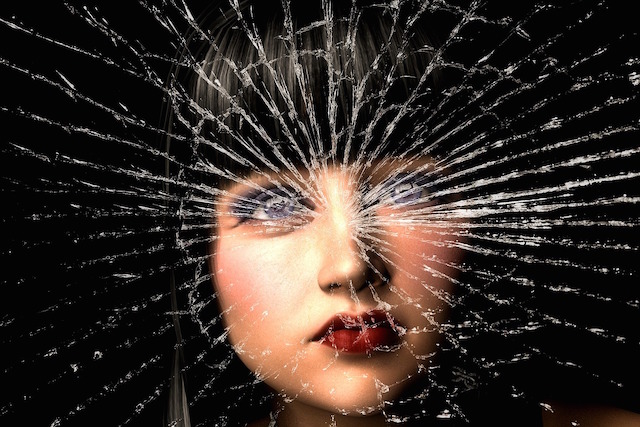
    Head on my pillow, tears in my eyes, a list of to-dos in my brain, I felt unable to move my body. I’d worked so hard to leave behind this person who stayed in bed avoiding life. But someone’s angry words had pierced my soul, and I once again was a prisoner to my bed, my thoughts, and my anxiety.

    It wasn’t so much the disagreement that stung, but the chuckles and snide “You can’t really believe that?” More than “mansplaining,” he was patronizing and questioning my intelligence.

    I tried to stop the personal attacks by “setting up boundaries,” as they say. No doubt I did not express myself in a calm, clear manner, as my blood was boiling. However, I tried to protect my integrity during the argument for the first time in this particular relationship.

    What now, though? Concern for the future of this relationship was what was now spiraling out of control in my head and overwhelming my thoughts.

    In retrospect, the fight hadn’t left me paralyzed with anxiety; it was the new way of dealing with belittling behavior that I had allowed myself. This was unchartered territory.

    I had dared to make a change in a relationship. Now, I was awash with the resulting questions about what came next and if I’d done the right thing.

    Without leaving my bed, I catapulted myself out of yet another comfort zone by reaching out to a group of supportive people. Phone in hand, I scrambled to type the message before I could think myself out of it.

    A few days before, a friend and I had heard author and activist Glennon Doyle speak. She encouraged the audience to speak our truths, “Blow shit up, and walk away like Wonder Woman.” So, that morning, as I licked my wounds, I told my truth to a safe audience.

    Like a dog offering up his belly in a display of vulnerability, I spoke the truth of where I was. I pulled back the curtain and said life has knocked me down. Can I get a hand up? The responding support was worth the risk.

    Not long after, I heard the song “This Is Me” from the movie The Greatest Showman for the first time. I rushed home and looked up the lyrical version on YouTube. I sat and absorbed the rising beat.

    I read the words as Kesha belted them out. Words like “Today, I won’t let the shame sink in,” and “I am bruised. I am who I’m meant to be. This is me.”

    My soul surged. I sucked in the words and rhythm like air. I marinated in the meaning, replaying it over and over.

    I wanted to announce my bruises too. I’ve battled depression my entire adult life; “this is me.” My latest psychologist diagnosed me with generalized anxiety disorder; “this is me.” No one knows about my battles with bulimia, but “today, I won’t let the shame sink in.”

    I headed off to the gym with my new warrior anthem playing in my head. I’m pumped. I greet everyone with a huge smile on my face. This is my happy place.

    I got to an exercise requiring balance, which I lack. My arms are flitting around being more comical than helpful. The lady next to me says, “See? You’ve worked it out!”

    Wait, what is she seeing? I’m flailing around like a fish out of water, and she sees “worked it out?” This sends me back in my head thinking about the song and my story and my struggles.

    I rushed home and wrote the truth about all the messiness that lies beneath what people see. I wrote about how I “worked it out” through my battles with mental illness, not despite them.

    I started telling my truth and in doing so, embracing it. With every scribbled word, I accepted my wounds a little more.

    I wrote about all the things that I thought I had to keep hidden in order to be presentable. My struggles had been my flaws, my “dirty little secrets.” I wanted to tidy up the pieces of my broken world before I could let anyone in.

    I had it all wrong. Our scars are the proof that we are living and growing. Our strength is that we have battled with demons and are still standing.

    Just look at the natural world. It transforms flaws and mistakes into beauty all the time.

    The pearl starts as an intruding piece of sand. Protecting itself from the intruder, an oyster creates a thing of value.

    Quartz is naturally colorless, but if iron mistakenly mixes in, it turns a beautiful purple, resulting in amethyst. The bodies of long-extinct creatures are now our fuel.

    The power of the universe is on display when it turns decay into value. There are no wasted failures in nature. They are simply transformed and renewed.

    What if beauty begins when the imaginary ideal is broken? What if the universe needs the messy, broken, and failed to demonstrate its power to make the defective whole? What if we have that same power to turn our battles into our beauty?

    I’m convinced now of the inherent beauty of the damaged parts, and that we must resist the temptation to air brush our lives as if they are cover girls. Hiding robs us of our divine power to turn our broken pieces into something wondrous.

    The broken bits don’t go back together the same way as before, though. We may have to mourn that fact. For example, life after divorce will never look the same. Mourning that loss is healthy, but shouldn’t forever immobilize.

    The caterpillar has no choice but to transform into a butterfly. We, however, can impede our transformation like I did through shame, guilt, denial, and hiding. There is so much value that can come from our damaged, defeated souls if we open them up to the light.

    To courageously tell our truth allows others to see the beauty and hope in the battlefield before them. We are so much more than what life has thrown our way. We are the warriors who are still standing no matter how many times we had to get off the ground. When we become vulnerable enough to illuminate our brokenness, we harness the power of the universe to create beauty out of failure.

  • Why Self-Help Shouldn’t Be About Trying to “Fix” Yourself

    Why Self-Help Shouldn’t Be About Trying to “Fix” Yourself

    “Stop trying to ‘fix’ yourself; you’re not broken! You are perfectly imperfect and powerful beyond measure.” ~Steve Maraboli

    The other day I had some time to kill before a meeting, so I decided to go to one of my favorite places, Chapters Bookstore. When I walked in, I immediately headed toward the self-help section to pick up Brene Brown’s Rising Strong (great read, by the way).

    As I was searching for her book, I noticed an unusual number of people browsing the same shelves, searching for their self-help book of choice.

    Of course, there is nothing wrong with this. The desire to learn, grow, and be the best version of yourself is something that takes commitment, which I applaud.

    But, there was a time when going to the self-help section of the bookstore was done discreetly, not wanting others to think you needed that kind of help.

    There was this silent insinuation that something was wrong with you; you needed to be fixed because you were “working on yourself.”

    Now, with the personal growth movement in full effect, it’s widely accepted, with sales in self-help books soaring! Yet that silent insinuation has not quite fully left.

    Some who seek help increasing their confidence or decreasing self-doubt, or doing anything else for their own personal growth, believe that:

    • “I need fixing,”
    • “There really is something wrong with me,” or
    • “If I loved myself enough I would/would not (fill in the blank).”

    If you connect with what I’m saying, then I’m here to tell you that none of that is true! How do I know? I used to carry those same beliefs.

    So I ask you, why do you seek personal growth? Your answer will determine your outcome.

    I believe there are two motivators as to why people seek personal growth: love and fear.

    When you seek personal growth from a place of love, your relationship with yourself changes. No matter how many mistakes or wrong turns you feel you have made, you are willing to use those as learning opportunities, not as a reason to judge, criticize, or blame yourself.

    You acknowledge that you are doing the best you can with whatever life throws at you. You are there for yourself with acceptance, understanding, and forgiveness. As a result, true growth happens.

    When you approach self-help from a place of fear, you believe that you or your life is lacking in some way. You hang on to the hope that if you just get the right self-help book, or sign up for that life-changing workshop, retreat, or program, that uncomfortable feeling will go away and all will be well again.

    If you hang on to this belief, that is not personal growth.

    This is looking outside of yourself for happiness, self-acceptance, or inner peace, or to bring security, guarantees, or the love you desire.

    It’s a temporary fix. It will continually leave you feeling unfilled and in a cycle of looking for the next best thing to fill you up, creating more fear within you because you are not getting the long-lasting results you want.

    I was in that cycle about six years ago. The end of a promising relationship left me heartbroken.

    I was about to turn forty, I wasn’t happy with where I was in my career, and I was struggling financially. Although grateful for my supportive family and friends, I knew it was all on me to do things differently. But I was feeling lost, empty inside, and unsure of myself, and I had no idea of my next steps.

    What I had envisioned for my life up until that point was definitely not where I had landed. This scared me. I felt alone most of the time. I felt like everything was falling down around me, and it jolted me to my core.

    It opened up insecurities I was unknowingly carrying, or thought I had resolved. My self-doubt was high, and I constantly second-guessed myself. But you would have never known it, because I was very good at putting on a mask to get through the day.

    I shed many tears. I prayed for help. I blamed. I was angry. I felt cheated.

    I didn’t realize it at the time, but this was the best place for me to be in. This emotional time in my life pushed me to challenge and redefine the type of relationship I had with myself, which ultimately impacted my relationship with life.

    A self-awareness journey had begun like never before in the midst of believing I needed fixing.

    My whole life I had always dabbled in personal growth, always having a curiosity about life, the purpose of it, wanting answers on how to find fulfillment. So I felt I was pretty well versed in spiritually and well-being.

    I would soon find out that this time would be different.

    I began to soak up all the information I could on the “how to’s” of personal growth and development, to help me get to a better place in relationship with myself.

    And it did help me—to a certain point.

    While I learned a lot from books, retreats, and online courses, my subconscious intention was to fill that void within me. So nothing really stuck long term.

    All the happiness, love, and peace I felt lasted as long as my boyfriend approved of me, or people only had nice things to say about me, or I was the perfect friend, daughter, employee, or boss.

    I was still operating from a place of inner emptiness and a lack of self-love, so I didn’t fully see my own beauty. As I went deeper within, unraveling layers of myself that I had never tapped into before, some I didn’t even know existed within me, my fear started to evolve into self-love.

    I realized that we are taught how to love others, how to get love, how to be lovable, but we’re never taught how to truly love ourselves—at all, let alone unconditionally. Why? Because on some level, our society believes that it’s egotistical, not important, or narcissistic.

    What I now know for sure is that each time we depend on others or things to give us happiness, approval, to make us feel loved, important, successful, to receive guarantees, peace, or security, we give a piece of ourselves away.

    We give what is happening outside of ourselves permission to dictate our level of happiness and self-love.

    For me, that evolved into people pleasing, because I allowed others to be my lifeline to feeling good. I didn’t realize that I didn’t need fixing; I just needed to be re-introduced to who I truly was and I have always been. Whole and complete.

    Once I stopped giving away my power to everyone but myself, my relationship with myself changed, and so did my life.

    When you meet yourself with love, you allow the process of personal growth to be about fulfillment rather than filling in. You begin to be kinder to yourself, more understanding, compassionate, and supportive of your journey. The love for yourself expands.

    Self-love is not about the ego or selfishness; it’s a pure, positive, compassionate attitude toward yourself. So when we hear that voice within saying, How dare you love yourself? I ask, How dare you not?

    Personal growth is a lifelong process that is not about getting to a destination, but the journey itself. There is no right or wrong way of going through this process.

    Each of our life journeys is unpredictable. The only thing you truly have control over is yourself—your actions, your effort, your words, your fun and play, your ideas, your mistakes, or your behavior. You have the power to decide how you will continue along your journey. So ask yourself…

    Will my decisions come from a place of love or a place of fear?

    Build a solid foundation from within by tapping into your beauty, confidence, strength, resilience, and all the other good stuff that may be buried away and forgotten, so that you don’t lose yourself during life’s ups and downs.

    Know that nothing or no one can validate you, because you are already valid.

    There is no “fixing” that needs to be done, nor are you “flawed” for seeking help and guidance. It just means that you are ready to experience yourself and your life in a new way, because what you’re doing is no longer working.

    The next time you pick up a self-help book, go to a spiritual healer, hire a life coach, see a counselor, or attend a personal development workshop, let these resources be a means to support. Let them help and guide you toward true fulfillment rather than inviting them to be a substitute for your true happiness.

    You are perfect, whole, and complete exactly as you are!

  • Healing Is a Journey, Not a Destination (and You’re Not Broken)

    Healing Is a Journey, Not a Destination (and You’re Not Broken)

    Man on a Journey

    “Healing requires from us to stop struggling, but to enjoy life more and endure it less.” ~Darina Stoyanova

    At the age of twenty-seven I was diagnosed with interstitial cystitis, chronic inflammation of the bladder that causes UTI like symptoms. I am now twenty-nine and still experiencing symptoms, but I have improved greatly.

    I have spent that time searching for the answers to this medical enigma, for which doctors claim there is no cure. At first my research led me on a path of frustration and hopelessness, until I realized that my mindset was what was holding me back from healing.

    I then decided to change my expectation of healing from “I must be cured to be happy” to “I am enjoying my healing journey and look for happiness in any moment I can.”

    As a fellow chronic condition sufferer, I understand how overwhelming that statement can be. It is difficult to accept that we are in pain. However, just making that mindset a part of your routine will help open your mind to finding healing modalities that will work for you and help take the pressure off.

    Feeling like you need to find a cure is a lot of pressure to put on one person dealing with a chronic illness, and most people who develop these illnesses usually are characterized as perfectionists. I know I am.

    But what we don’t realize is that pressure is an obstacle to our healing. Acceptance is what will help us move forward in our healing journey.

    I will share with you what I have learned about healing through my countless hours exploring the Internet and personal experience. Here are five things I have taken away from my search:

    Be mindful of what you put in your body.

    I believe chronic illnesses are created when a perfect storm occurs in our bodies. When you pair emotional upset with a breach in your body’s immunity, you are vulnerable to that final straw that causes your body to go into attack mode.

    For me, I believe it was when I started a new birth control pill. With a history of chronic back pain, overuse of antibiotics, bad diet, unbelievable stress levels, and hormonal imbalances, the new birth control pill was the final straw that caused my body to attack my bladder and cause a vicious cycle that would lead me on my healing journey.

    There was a time when my life was consumed with searching the Internet for the magical answers to healing. It gave me a sense of control during a time when I felt like a helpless victim to my IC.

    But I realized this led to feeling completely overwhelmed by the large amount of contradictory information I found. For every article that said being paleo was the way to combat chronic illnesses, I found two more saying vegan was the only way.

    Everyone is different, and it is important to find the foods that work best for you, not to try to eat foods that fit into a box of a specific diet.

    I also find that when you start off being extremely restrictive with your diet it sets you up for failure. Starting slowly when introducing new ways of eating is the key to success. Don’t listen to every hot new diet trend, cleanse, or superfood out on the market no matter what kind of amazing results they boast.

    For me, plant-based diets free of processed foods and sugar make the most sense. Any other restrictions with food you decide to make should be based on your body. Use your common sense, and question doctors and healers about the pills and herbs they recommend. Not everyone has our best interests at heart or is well informed.

    You are not broken.

    When we deal with chronic illness we tend to blame ourselves, and it leaves us feeling broken and searching for a way to fix ourselves. We think if we could just handle the stress better or deal with our unresolved feelings, we would not have the illness to begin with.
    I have spent years reading self-help books hoping to find the secret to happiness. While self-help books often provide useful coping techniques and good advice, it infers that we need to be fixed in order to be happy. That is a belief that I feel to be limiting and self-sabotaging.

    Practicing self-acceptance of all parts of our self, including our health ailments, is more productive for our healing journey.

    That is not to say that we cannot try things to improve our self or change negative habits or thought patterns. But the more we try to hide or banish parts of yourself that you do not like, the more they will rear their ugly heads. You do not need to be healed of your chronic illness in order to deserve love and acceptance.

    Be your own advocate.

    Unfortunately, we can no longer take the word of every doctor when it comes to our health, medications, and foods we put into our bodies. It is important to educate yourself the best you can before deciding to take a new medication or try a new treatment.

    Weigh the pros and cons and make the best choice you can. Take the time to find a doctor who is best fit for your healing journey.

    Don’t let others make you feel like your illness is your fault.

    Chronic illnesses for which it’s difficult to identify the cause can be difficult for people to accept because the thought of having an illness that we cannot predict or fix is scary, even if you do not have the illness yourself.

    This causes people to just blame the sufferer because they are frustrated themselves that their loved ones are not getting better.

    No one understands your battle better than you. Do not take it personally when someone makes an ignorant comment.

    Those comments come from a place of fear inside themselves. It is still important to take accountability for your health and make the best choices possible, but sometimes we develop illness even when we are doing our best.

    Some of the answers to healing are already inside you.

    Everyone has some sort of healing power inside them. Do not underestimate your body’s ability to heal given the right circumstances. It may be only one piece of your puzzle, but it’s there.

    Society teaches us that all we have to do is take a pill and we’ll feel better. This way of thinking takes the power away from us and keeps us in the victim role.

    Medications and herbs can be helpful and an important key to your healing, but they are not the be-all and end-all. The mental component to healing is just as important as whatever we choose to put inside our bodies to promote healing.

    Let go of what doesn’t serve you. Meditating, yoga, and practicing gratitude will help you connect to your inner self and prepare your mind and body for healing.

    Your healing journey may be different from mine, and some of this information you may not agree with. You may also not be in a place where you are willing to change. That is fine. I am still learning new things about what is best for my health every day.

    Honor where you are now and know that every day is a new opportunity to take care of you one small step at a time. Happy healing!

    Man on a journey image via Shutterstock

  • Why Self-Help Might Not Help, and What Will (Interview & Book Giveaway)

    Why Self-Help Might Not Help, and What Will (Interview & Book Giveaway)

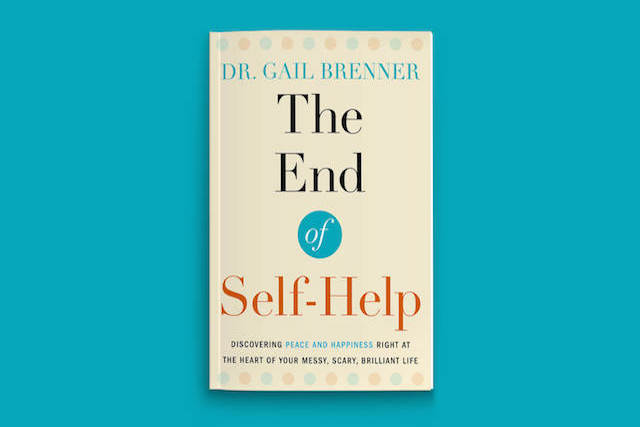
    the-end-of-self-help

    Update: The winners for this giveaway have been chosen. They are:

    When I first found what looked like a self-help book called The End of Self-Help, I thought it was a tad ironic. And I wondered if perhaps the author was suggesting that self-help is inherently harmful.

    As someone who’s bounced back from overwhelming adversity using some very powerful self-help tools, this didn’t quite sit right with me.

    Then I decided to stop wondering what this book was all about and instead find out by reading it. I couldn’t be more grateful that I did.

    Powerful and insightful, Dr. Gail Brenner’s book touches upon a common misconception that might lead us to self-help resources—the idea that we’re broken and need to be fixed.

    This mindset keeps us focused on the possibility of happiness in the future instead of enabling us to create happiness and fulfillment right now.

    But there is another way. We don’t need to embrace personal development from a place of inadequacy. It is possible to simultaneously empower ourselves to grow and allow ourselves to feel whole and happy in the present.

    The End of Self-Help teaches us how to do the latter.

    If you’ve ever felt trapped by your thoughts and feelings, if you’ve ever felt fundamentally damaged, if you’ve ever felt incapable of feeling peace in the present, The End of Self-Help could be life-changing for you.

    I’m grateful that Gail took the time to provide some incredibly detailed answers to my questions, and that she’s provided five free copies of her book for Tiny Buddha readers.

    The Giveaway

    To enter to win one of five free copies of The End of Self-Help:

    • Leave a comment below
    • For an extra entry, tweet: Enter the @tinybuddha giveaway to win a free copy of The End of Self-Help http://bit.ly/1iNkb2f

    You can enter until midnight PST on Monday, September 28th.

    The Interview

     1. Tell us a little bit about yourself and what inspired you to write this book.

    First, Lori, I’d like to thank you so much for this opportunity to connect with your readers. We get to talk about my favorite topic—peace and happiness!

    By profession, I’m a clinical psychologist based in Santa Barbara, and I’ve loved my work with the elderly and their families, specializing in aging, loss, and dying.

    For as long as I can remember, I’ve been on a quest to be happy. Even after fifteen years of psychotherapy and reading many self-help books, I was still experiencing anxiety and wondering how I could truly feel happy and fulfilled.

    Like many of us, I was a self-help failure, but I kept searching!

    Finally, I turned to spiritual teachings where I discovered this truth: that unhappiness is a case of mistaken identity. When we suffer, we’re defining ourselves by conditioned ways of thinking that aren’t necessarily true. And when we stop clinging to these identities, we’re happy.

    I’m passionate about the liberating fact that who we are is not the limited, unlovable person our thoughts tell us we are. I wrote this book because I want everyone to have the opportunity to live fully, without fear, in openhearted contentment and love.

    2. What differentiates your book from most self-help books—and do you believe self-help can be positive and, well, helpful?

    The intention of self-help is pure—we just want to be happy. We don’t want to live our lives feeling broken and inadequate. It makes sense that we look to self-help offerings to help us discover the peace we’re so desperately looking for.

    But here’s the problem. The phrase “self-help” contains an incorrect assumption about who we are. It assumes that we are broken and damaged selves who need to be helped.

    And while we’re searching for help and trying to fix ourselves, what is our present moment experience? It’s not happiness, fulfillment, and the simple enjoyment of life. We feel anxious and inadequate, and we mistakenly think we’re missing what we need to be whole.

    The premise of The End of Self-Help is that we can always find our way to happiness and peace in any moment. Instead of waiting for happiness, we get to live it right now. This is a marvelous discovery!

    That said, self-help can teach us about specific topics, such as communication skills, strategies to change habits, or ways to maintain healthy boundaries.

    But if we spin our wheels relentlessly looking outside ourselves for that one tip—or person or situation—that will finally make us happy, we’re believing we need to be fixed, and we won’t be successful.

    The solution is to make a U-turn with our attention inward to discover the inner aliveness always here at the core of our being. Every time we return here, we’re naturally happy.

    3. As someone with a tendency to overanalyze, I found the section on thinking to be quite powerful—particularly the idea that we don’t need to stop our minds to be peaceful and happy. Can you elaborate a little on this?

    Trying to get rid of thoughts resists the fact that thinking is present. And as the saying goes, what we resist persists.

    Instead of fighting with our thinking, the way to find peace is to be unattached to the content of our thoughts, to not take them as true. Then it doesn’t matter if thoughts are present or not.

    I know that sounds challenging, so let’s start with some bold truths about most of our thinking.

    It’s useless and repetitive.

    • It’s fear-based.
    • It doesn’t actually solve problems.
    • It’s negative and critical.
    • It’s distorted and not based on facts.

    The most authentic, palpably alive experience of this precious life is right here, outside the thinking mind. But when our attention is absorbed into thinking, mostly about the past and future, sadly we miss it.

    It’s possible, in any moment, to consciously lose interest in thoughts. Instead of compulsively thinking, we can take a breath and open our attention to what this now moment is actually offering us outside of our thoughts about it. Because this topic is so important, I devote a whole chapter of the book on ways to undo our attachment to thoughts.

    In case you’re wondering, life is just fine without all our thinking about it. If I’m wrestling with a problem, I find that creative solutions come not from thinking, but from resting my attention in the space of silence and stillness underneath the thoughts—and listening for the answers.

    4. I’ve always believed that happiness has a lot to do with the questions we ask ourselves, so I especially appreciated the section on curiosity. How can shifting from “why?” to “what?” decrease our suffering and increase our happiness?

    I love curiosity, too, Lori. It was a huge moment of transformation for me when I started being genuinely curious about my inner experience. Being curious means that we explore what’s present from a place of deep openness with no expectations about what we will find.

    When we ask why we feel a certain way or why things are as they are, we answer with the mind, which only feeds more mental activity. We blame ourselves, others, the situation, or our childhood, and these thoughts don’t lead us to peace.

    But asking “what” changes everything. Instead of going into more story, we get curious about our in-the-moment experience, asking:

    • What exactly is happening right now?
    • What thoughts are present?
    • How does this experience feel in my body?
    • Can I just be here, breathing and aware?
    • What do I really want for this moment?

    As we go beyond our stories and wake up to the reality of right now, we realize the possibility of being peaceful with things just as they are.

    5. As you wrote in Chapter Seven, we’re constantly bombarded with messages about what we’re lacking. How can we start to experience freedom from our feelings of inadequacy?

    This is such an important topic because people have so much pain around inadequacy. And we start by understanding exactly what we’re experiencing in those moments when we feel inadequate.

    When we shine the laser light of our awareness on this experience of inadequacy, we’ll find a subtle stream of thoughts that may be barely conscious that convince us we’re inadequate. These thoughts tell us a distorted story about ourselves that criticizes, compares, and doubts.

    Then we might find some bodily sensations of contraction and tension that physically make us feel small and separate.

    Now we get to follow these breadcrumbs to freedom.

    • First, when this pattern arises, take a breath and shift your attention to being present.
    • Notice that when you observe these thoughts and sensations, there’s a gap between you and them. You’re not completely gripped by them.
    • When you feel stable in observing, shift your attention to the observing presence itself, and expand into this peaceful awareness.
    • Rinse and repeat, a thousand times a day if necessary, as each time chips away at the power of this pattern.

    Over time, we’re less driven by this conditioned belief that we’re lacking. And we become more transparent to our natural vibrancy and uniqueness that starts shining out everywhere!

    6. The crux of your book, it seems, is that separation disconnects us from the truth of who we are and leads to suffering. What’s the alternative to living life this way?

    As we shed our false and distorted identities about who we think we are, we become more available to life as it’s unfolding right now. I have found that everyday living becomes so delicious!

    Where before we were fear-driven, constantly needing to protect and defend ourselves, now we come from wholeness and love. We encounter familiar relationships, some with their familiar, unsatisfying dynamics, but we can show up in them freshly, which changes everything.

    We no longer need to spend energy avoiding difficult feelings or analyzing ourselves and other people. Welcoming everything without resistance, there is free space for creativity to arise, for simply enjoying ourselves, and for love and appreciation.

    We stop taking life situations so seriously, so we don’t need to ruminate about them. Stress diminishes, as it’s seen as the product of a busy, anxious mind. And without our attention being occupied by worry and regret, we are quiet, listening within, and moving in the world with greater clarity.

    It’s not at all that we’re eternally blissful and that difficult situations and feelings never again arise. But we open up to our experience rather than avoid it, meeting our emotional reactions with love and understanding so they no longer control us.

    7. What’s the main message you hope readers take from your book?

    No matter what your mind tells you, you are not broken or damaged, and you don’t need to be fixed. Be diligent about looking within to discover your essential wholeness, which is boundless, unlimited by any ideas, luminous, and infinitely peaceful.

    Then go out there and enjoy your life!

    You can learn more about The End of Self-Help on Amazon here.

    FTC Disclosure: I receive complimentary books for reviews and interviews on tinybuddha.com, but I am not compensated for writing or obligated to write anything specific. I am an Amazon affiliate, meaning I earn a percentage of all books purchased through the links I provide on this site. 

  • You Are Broken, Let Me Fix You

    You Are Broken, Let Me Fix You

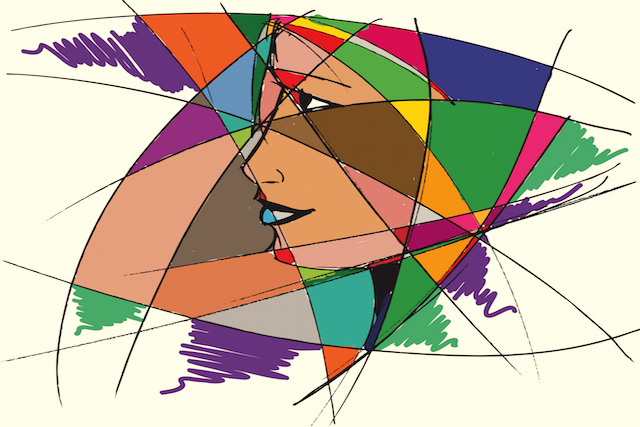
    Mosaic Face

    “To wish you were someone else is to waste the person you are.” ~Sven Goran Erikkson

    Let me fix you.

    You really should try not to be so sensitive, Leah. The world is sometimes a difficult and upsetting place, but you shouldn’t let it affect you so much.

    Let me fix you.

    You know, you really ought to spend more time with people, Leah. It’s not good for you to be alone so much.

    Let me fix you.

    You know, you really shouldn’t make such quick, spur-of-the-moment decisions, Leah. It’s not good to do that in life and you’ll end up regretting them.

    Let me fix you.

    You’re so young, Leah. You should be out dancing and dating and having fun, not sitting home alone with another book.

    Let me fix you.

    You need to be more realistic, Leah. I know you have big dreams for your business and life, but it’s not secure. We all have to do work we don’t enjoy, it’s just the way things are.

    Let me fix you.

    Thank you for trying to fix me. Now let me tell you this…

    Let me tell you…

    My greatest strength is empathy. I feel others’ feelings as if they were my own. Their pain is my pain. Their joy is my joy. I cannot help but cry sometimes and I cannot hold the tears in, as you would like me to, nor wait for a more convenient moment.

    Please don’t try to fix me. My sensitivity is my gift.

    Let me tell you…

    I am an introvert and a thinker. Introspection is in my blood. Long periods of time alone are a joy to me. Where others might feel lonely, I feel replenished.

    I ponder, I reflect, and I muse over the thousands of dreams and ideas that are always in my head. I’m filtering, planning, connecting the dots and making sense of the world around me

    Please don’t try to fix me. My thinking is my gift.

    Let me tell you…

    I am a woman of action and I do not like to wait. Once my mind is made up there is no turning back. Where others might be stuck in indecision, I have moved ten steps ahead. My life is in motion and I am creating in the real world the dreams I have in my head.

    Please don’t try to fix me. My ability to act is my gift.

    Let me tell you…

    The future is beautiful to me. I see all that is possible and all that I want to create. In vivid colour and in high definition it appears to me. Whilst others see all that is wrong and the reasons why not, I see all that is right and all that could be.

    Please don’t try to fix me. My dreaming is my gift.

    You Are Not Broken

    For the longest time, I thought I was broken. I thought I had to change myself. I thought I had to behave differently. I thought that my way of being wasn’t the way of being. I wished I were someone else.

    At school my reports went like this:

    “Leah is a wonderful student but she’s too quiet and needs to speak up more in class.”

    In my nine-to-five office jobs it went like this:

    “Try not to be so sensitive, Leah. It’s not good to let people see you cry at work.”

    And when I handed in my notice, it went like this:

    You can’t go through life making rash decisions like this, Leah,”

    And even now, almost three years into my journey of creating my dream life and business, it goes like this:

    “We believe in you, Leah, we really do, but don’t you think it’s time to look for a more secure job?”

    Everyone, everywhere, throughout my life has been ready with advice for me on how I should be.

    Over the years, not knowing any better, I tried to bend myself to their suggestions.

    I tried to be less sensitive. I tried to hold my tears in. I tried to be less impulsive and less impatient. I tried to spend more time around people. I tried to tame my dreams.

    But when I tried to do all these things, all I felt was pain and it didn’t make anything in my life work better the way people told me it would.

    Finally, thankfully, today, I see the truth.

    There isn’t and never was anything to fix.

    The very things that others told me were my faults turned out to be my greatest strengths and my most beautiful gifts.

    When I finally saw and embraced them as such, I was able to begin creating a life that encapsulated everything that I am instead of constantly struggling and trying to be something that I was not.

    It’s true for you too. There is nothing to fix.

    If you find yourself surrounded by people telling you should or need to be different, I hope these three short notes will help you let go of what they’re telling you and to embrace instead what is truly special about you.

    1. You are not broken, faulty, or defective.

    There is no right or wrong way to be. Each and every one of us makes sense of the world differently. The way you are may be different to those around you, but that does not make your way of being wrong.

    Instead of trying to bend yourself to their suggestions, take note of what the people around you say you should be like. There is a very good chance that they are pointing the way to your most special gifts and the things that make you uniquely you.

    2. Use your unique gifts to create a life you love.

    When you recognize, understand, and accept your personal strengths, you have the opportunity to consciously and thoughtfully craft a life that is in alignment with those strengths, instead of trying to squeeze yourself into a mould you won’t ever fit into.

    I didn’t see it at the time, but the pain I experienced in my office jobs were clear signs that I wasn’t where I was meant to be. The roles I was in didn’t value my biggest strengths and work often felt like a battle against my very nature.

    By seeing, understanding, and accepting my own personal strengths and gifts, I have been able to create a business and life that allows me to freely be all that I am. You can do the same.

    3. Forgive those who try to fix you.

    Remember that those who are telling you to be more like this or less like that—it’s not their fault. They, too, are filtering everything through their own set of unique gifts. Go easy on them; they’re just doing their best, like the rest of us.

    Listen to what they have to say, take anything that feels useful but go ahead and drop the rest without a second thought.

    Let me tell you this, my friend…

    There is nothing to fix and nothing to change.

    It is in those qualities that others might find difficult to accept that you will find your power.

    It is in the acceptance of those qualities that you will have the opportunity to not only create a life that feels right for you, but to have the greatest positive impact on the people and world around you in this short and precious life.

    You are a gift to the world. Just as you are.

    Mosaic face image via Shutterstock

  • I’m Not Broken, and Neither Are You

    I’m Not Broken, and Neither Are You

    “Our deepest fear is not that we are inadequate. Our deepest fear is that we are powerful beyond measure.” ~Marianne Williamson

    I used to have this secret habit of flipping through the DSM—The Diagnostic Statistical Manual for Mental Disorders—and diagnosing myself with every disorder in the book.

    Reading over the criteria for borderline personality disorder, cigarette in hand and eyes wide open, I scanned the diagnosis criteria.

    Frantic efforts to avoid abandonment? Check. Unstable and intense interpersonal relationships? Check. Unstable self-image? Check. Impulsivity that’s self-damaging? Check. Suicidal behaviour? Check. Unstable moods? Check. Chronic feelings of emptiness? Check. Inappropriate and intense anger? Check. Paranoia? Check.

    Oh my god.

    I thought that was an uncanny description of me, until I found antisocial personality disorder.

    Failure to conform to social norms? Yup. Doing things that are grounds for arrest? Regularly. Deceitfulness? Impulsivity? Failure to plan ahead? Oh yes. Irritability? Aggression? Reckless disregard for safety? Lack of remorse?

    Oh my god.

    That seemed spot-on, but nothing, and I mean nothing, compared to when I first read about post-traumatic stress disorder.

    Exposure to traumatic event? Yes. Recurrent, involuntary, and intrusive memories? Oh god, yes. Traumatic nightmares? All the time. Flashbacks? Yes. Avoidance of trauma-related stimuli? Yes! Feeling alienated from others? Persistent negative beliefs about self? Persistent negative emotions? Distorted memory and feelings of blame?

    Oh my god.

    After a few years, I added body dysmorphic disorder, substance use disorder, occasional episodes of manic disorder, and constant rotations between bulimia and EDNOS (eating disorder not otherwise classified).

    Admittedly, some of those diagnoses should really have cancelled each other out, but I was more interested in collecting diagnoses like some would collect stamps than achieving medical accuracy.

    All of my self-imposed labels gave me a strange kind of soothing feeling. They affirmed something I already believed, deeply, within me: I was broken. I was in a state of disorder. There was something wrong with me.

    In my scourings, I avoided certain disorders like the plague. Anxiety, for example, and depression. Anxiety didn’t seem like a very “cool” thing to have and depression just didn’t seem plausible because I was so violently self-destructive, never stopping to rest for a moment unless I got infected with mono or West Nile meningitis (both of which actually happened).

    To an onlooker, these things might have seemed like ploys for attention or misguided attempts at impersonating Hollywood. But, truly, these self-diagnoses stayed more private than many of my tortured war stories. They were something personal. They were just for me.

    Looking back, I realize that the fuel behind my self-diagnosing was an obsessive, perpetual drive to find the answer to a question I couldn’t avoid for more than a few hours at a time: “What’s wrong with me?”

    What was wrong with me, I liked to think, was childhood-trauma-induced permanent damage that, in mixing with my apparently high IQ, had created a sort of “Dr. House” complex within me, making me irreparably and irrevocably screwed up.

    That was a nice story, but it didn’t satisfy the question. A question like “What’s wrong with me?” isn’t just some domestic house cat in the mind. It won’t sit quietly and patiently for most of the day, becoming vocal only if it isn’t fed for too long.

    No, a question like that is a wild, ferocious, insatiable beast that rips into anything and everything in its path, killing simply for the sake of the kill, feeding constantly and ceaselessly on anything that smells like nourishment.

    What was wrong with me?

    By the time I made it to age twenty-three, there were so many answers.

    What was wrong with me?

    The stretch marks all over my body. The pimples on my skin, my back. The little hair growing an inch above my nipple. The moles on my upper back. The fat all over my body.

    What was wrong with me?

    The way I blushed at the drop of a hat. The way I wouldn’t be able to stop laughing when other people did. The way I made jokes that weren’t funny to anyone but me. The way my upper lip twitched when I was nervous.

    What was wrong with me?

    How I had absolutely zero ability to be sexy or act sexy without alcohol, feeling frozen and ugly if anyone ever saw me naked. How I had flashbacks, nightmares, and hallucinations I told close to no one about. How I drank alone.

    How I just couldn’t seem to sustain happiness and, even when I tasted joy for a second, soon enough the drugs would wear off and I’d be right back where I started, wishing for a freedom I wasn’t sure was real.

    All of my happiness, for about ten years, was induced by chemicals and co-dependence. I thought what was wrong with me was that I couldn’t feel happy without buying it or begging for it. I thought I was just that kind of person. I thought it would always be that way.

    I’d love to tell you that I was afraid of being broken and damaged, afraid that past emotional trauma had rendered me dysfunctional, afraid that I was different from other people. Of course, that’s what I used to say and that’s a nice story, but I know now that it was all a big lie.

    You know what I was really terrified of?

    Deep inside of me, there was the awareness that, even if I fit every symptom in the book, I had no excuse to live half a life. Somewhere in there I knew I wasn’t really broken. I was terrified of what my responsibilities would be if I allowed myself to be, truly, whole.

    When I was an addict, a victim, a diagnosis, I had no responsibility to anyone. If your neck is severed and bleeding, you can hardly be expected to open doors for people and make the world a better place.

    Like this, I dodged the responsibility to discover my skills and talents, to serve people, to do something meaningful in the world—all by playing broken.

    Of course, it wasn’t all a giant act. I had been abused. I had been raped. I had been an addict. I had horrible body image issues. I heard voices. I hated myself. Yes, those things were “wrong,” but so is a paper cut. And your body will do its best to heal the paper cut with no further intervention from you, if you let it.

    Yes, I’d been broken, but I didn’t have to keep being broken. For fear of my own greatness, I put bandages on my wounds, letting them grow necrotic for lack of oxygen. I never wanted to get better; I just wanted to get pity, because I was too scared to ask for love. I kept myself sick for fear of my own health.

    I’ll tell you right now that my fear wasn’t unjustified. Now that I’m not playing small anymore, I have more responsibilities than I ever have. I’m trusted with people’s most painful memories, with their deepest secrets, with the chance to support them when they’re on the brink of hurting themselves or others.

    Yes, the responsibility is there, but it’s not the horror show I imagined it would be. I think the only reason I ran from it was because I was so weak from keeping myself broken that I couldn’t imagine how much energy I’d have to help people when I allowed myself to be whole.

    I couldn’t have imagined how fulfilling it is to spread love, give love, be love instead of scrounging for tiny little pieces of approval and acceptance like a thief in the night.

    From what I’ve seen of myself and of people, I believe, without condition, that no one is irreparably broken. In fact, no one is broken. Is having a paper cut broken? Of course not. From the moment you get a cut, you’re already healing.

    And that’s what I believe. I believe we’re all already healing, no matter how great our pain or how serious the offenses against us. We’re built to heal, we’re already healing, and we can all experience this amazing life process—if only we’d get out of the way.

  • Why Letting Yourself Feel Broken is the Key to Feeling Whole

    Why Letting Yourself Feel Broken is the Key to Feeling Whole

    “Life always waits for some crisis to occur before revealing itself at its most brilliant.” ~Paul Coelho

    I spent my twenty-fifth birthday crying alone at the foot of a mountain. While I had always found solace in spending time by myself, in that moment, I did not recognize my “self.”  Without my self, I had nothing.

    I was utterly alone.

    Three weeks earlier, a man was shot just feet away from my front door. My then-boyfriend and I performed CPR until an ambulance arrived, but the man had been killed on impact. The police left my home at 3 a.m.; at 7 a.m., I was headed to the airport for a family wedding.

    There is no mourning at a wedding.

    Forced to paste on a smile, I told myself and everyone around me that I was fine. Never mind the fact that I felt like all of the air had been sucked out of me. If you tell a lie enough times, you start to believe it yourself.

    For weeks, I assured myself that I was strong enough to bear the heavy burden of witnessing a violent crime. I always identified as a strong, independent woman. I couldn’t let go of that, I felt, or I might not ever get it back.

    But as the days passed, I started to realize that something was different. The girl who was known for her constant zest for life and naturally cheerful demeanor was replaced by a woman who was exhausted, short-tempered and—it took me weeks to realize—depressed.

    When the truth finally broke free, I was overwhelmed. Sitting there, at the base of my favorite Phoenix mountain, all I could think was, “I am not okay.”

    In that moment, I was not okay.

    But the truth has a funny way of setting you free. Faced with a sensation that was completely foreign and extremely uncomfortable to me—the idea that I was more vulnerable than I wanted to believe—I finally saw a glimmer of light.

    Only in honoring my emotions was I able to let them go.

    After crying myself weak, I climbed that mountain. As I reached the top, I inhaled deeply and felt my breath for the first time in weeks. The tears that flowed at the top were entirely different: they were tears of gratitude.

    The moment that I learned to allow myself to be “not okay” was a turning point in my adult life.

    To allow yourself to feel is to allow yourself to really live.

    Once I was able to look at my emotions honestly, I was able to look at my life honestly and to realize that I did, in fact, want to participate wholly in it. I appreciated life more deeply than ever before.

    Months later, when my dear friend lost her dear friend, I shared my secret: “It’s okay to be not okay.” Amidst all of the sympathetic wishes and “it will get betters,” that message resonated most deeply. Her grief was okay.

    Sometimes, people need permission to break. And it is from that broken place that they are finally able to become whole again.

    Time and time again, when faced with some of life’s hardest moments, I have shared my secret: “It’s okay to be not okay.”

    Accepting that simple truth has been exactly the remedy that allowed the people I love to move into a space where they are more than okay—they are thriving.

  • You Don’t Need to Fix Yourself to Be Healed

    You Don’t Need to Fix Yourself to Be Healed

    Calm Acceptance

    “Growth begins when we begin to accept our weaknesses.” -Jean Vanier

    I used to believe the word “healed” had a very specific meaning. In my mind, it described a state of perfection that always looked very different from the chronic health challenges I endured.

    Being born with VACTERL Association, a birth disorder that causes malformations in six of the body’s systems, meant that I entered the world needing a lot of fixes. There were surgeries, hospitalizations, treatments, and medications aimed at perfecting something inherently imperfect.

    The Search

    I grew up searching. To be like everyone else. For a cure. For Peace. Clarity. Happiness. Always searching for a technique or philosophy that could mold me into the ideal woman I imagined I should be.

    My search was fueled by a very narrow view of “normal,” “beautiful,” and “successful.” Images perpetuated on magazine covers and a myriad of self-help manifestos told me that life was good only if you could figure out how to become flawless, inside and out.

    I read hundreds of books, attended seminars, journaled, meditated, said affirmations, communed with my inner child, prayed, eventually begged, finally groveled. And nothing.

    Well, there was something. I found out that I was going to need a kidney transplant.

    I assumed this prognosis meant that I wasn’t being “spiritual” enough. I needed to try harder. I saw the decline in my kidney function as a manifestation of negativity in my emotions. Maybe the damage was subconscious?

    I saw healers and hypnotherapists. I listened to subliminal message tapes. I reviewed my memories, and looked, and looked, and looked for the cause of my current predicament. And still nothing.

    All that came out of my search was restlessness and desire to search more.

    I was operating under the assumption that if I meditated masterfully, became enlightened, or at least healed old emotional wounds than life would bend toward my will. It followed that since life was not yet how I wanted it, something must be wrong with me. I needed to find the fix.

    As I stewed in my own spiritual turmoil, my kidney function continued to decline. The pressure I had placed on myself to not just find the cure, but to become the cure was making things worse.

    Life is Suffering

    I thought “healed” meant that life became the way you wanted it to be. I could not have been further from the truth. I had missed the most basic of Buddhist principles: life is suffering.

    Becoming spiritual does not mean that we are no longer human. It doesn’t take away the pain, illness, and stress; it only reframes it. Suffering tells us that we are inherently human. Coping with human challenges does not mean that we are less-than or that we are damaged; it only means that we are experiencing things all human beings experience.

    The trick is not to bend life’s will to our personal desires. It is the other way around. We must find the flexibility to bend to Life. That is what I had been missing.

    There Was Nothing to Find

    All of that searching took me to the most basic of places: exactly right where I was. Nothing to fix. Nothing to do. Nothing to become.

    I no longer see “healed” as some form of perfection. It isn’t a certain health status, lab value, or lack of a diagnosis. Healed isn’t remission or cure. It isn’t any specific thing.

    Healed is the willingness to unconditionally accept whatever life is at this exact moment.

    My kidney is now flirting with the edge of kidney failure. Transplant plans are in the works. Sometimes I feel scared or worried. Sometimes I cry. Those are things I accept too. I no longer need to always be positive. I don’t force myself to be anything other than exactly what I am.

    I’m learning to yield. It is a practice. I still have latent urges to “figure this out” or to be the miracle doctors cannot explain, and those tendencies get welcomed into my experience as well.

    That’s the thing about acceptance: it doesn’t require searching. It is always available. Simply knowing that these rough edges are part of being here in a body, on earth, lifted a huge weight off of me.

    I am healed. Even as I face surgery and a lifetime of medication, I am healed. At peace. With clarity. Content. Happy.

    Photo by Cornelia Kopp