Tag: breathe

  • How a Simple Object Helped Me Slow Down and Breathe

    How a Simple Object Helped Me Slow Down and Breathe

    “Sometimes the smallest things take up the most room in your heart.” ~A.A. Milne

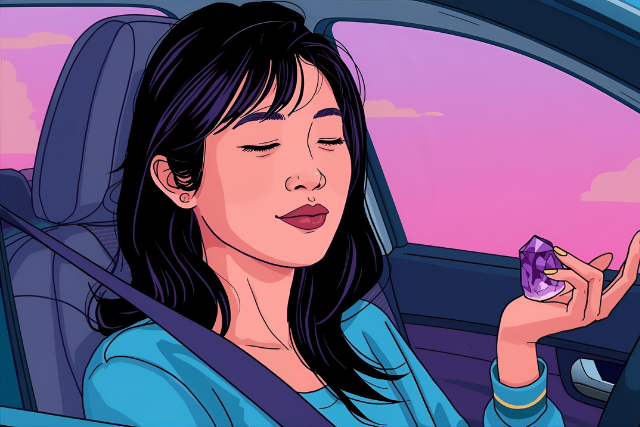
    It was a Wednesday afternoon, and I was sitting in my car, too overwhelmed to turn the key in the ignition. My phone had been buzzing all day with work notifications, and the mental list of things I needed to do was growing faster than I could breathe.

    Somewhere in the middle of my swirling thoughts, I reached into my coat pocket and felt something smooth and cool. It was a tiny amethyst I’d tucked there weeks ago, almost as an afterthought.

    I held it in my palm, noticing its weight, its texture, the faint warmth it picked up from my skin. Slowly, my breath deepened. My shoulders relaxed. For the first time that day, I felt just enough space between myself and the chaos to think clearly.

    That moment taught me something I hadn’t realized before: big changes don’t always come from big actions. Sometimes, the smallest things—the ones you can hold in the palm of your hand—can pull you back to yourself.

    Why the Small Things Matter

    For most of my life, I believed that fixing problems required a full reset—a new job, a big trip, a total life overhaul. If I was stressed, I thought I needed to clear my schedule completely. If I was sad, I thought I had to “solve” the sadness before I could feel better.

    But that afternoon in my car changed my perspective. It wasn’t the crystal itself that “fixed” me. It was the way that small, tangible object interrupted my spiral long enough for me to breathe.

    That was the first day I started carrying a stone in my pocket—not for magic, but for mindfulness. It became a reminder that no matter where I was or what was happening, I could pause. I could choose a different response.

    Over the weeks that followed, I started noticing how these tiny moments of pause changed the course of my days. Holding that stone at my desk before a meeting. Resting it in my hand before bed instead of scrolling my phone. Each time, I felt more grounded, more present, more myself.

    I realized it wasn’t just about the crystal. It was about creating a bridge—something physical that pulled me out of my head and into the moment. For someone else, it might be a smooth pebble from the beach, a favorite coin, or even a small piece of fabric.

    The power wasn’t in the object itself. The power was in what it represented: a conscious choice to stop, breathe, and reconnect.

    Looking back, I can see how much I underestimated the small things. I used to believe they were insignificant compared to “real change.” Now I know they’re the foundation for it.

    Because when you can find peace in the smallest of moments—sitting in your car, holding a stone, breathing deeply—you’re not just surviving. You’re building the capacity to handle life with more grace.

    A Simple Invitation

    If you’re feeling overwhelmed, you don’t have to change everything at once. Start small. Find one object that feels comforting in your hand. Carry it for a week, and whenever your mind starts to race, hold it and take three deep breaths. Notice what shifts.

    It may seem too simple to matter, but that’s the point. The smallest things are often the ones we return to again and again. Sometimes, they don’t just take up space in your heart—they help you find your way back to it.
  • Escape Isn’t Self-Care: What We Really Need to Feel at Peace

    Escape Isn’t Self-Care: What We Really Need to Feel at Peace

    “A pause gives you breathing space so listen to the whispers of the real you waiting to happen.” ~Tara Estacaan

    You and I, we’re much too busy. We’re doing too much. We’re stressed. We’re overscheduled and overwhelmed. And we’re not doing enough self-care.

    The good thing is there’s help. There are headlines, hacks, and half-baked gurus who promise to bring us to the less-stressed light. And there’s a vast supply of products to help too. Bath salts, wine, essential oils, yoga classes, massages, chocolate cake, books, life coach packages, etc. But sometimes I wonder, are all the articles and products about becoming less busy actually helpful? Does the practice of self-care actually take care of yourself?

    For the last few weeks I’ve been dosing myself regularly with the things prescribed as self-care. Bath soaks. Chocolate cupcakes. Mantras. Spa music. I’m doing it and I feel like if I fake it till I make it, maybe I’ll soon feel like my life is better managed. I’ll feel less stressed. I’ll run to social media and post a bunch of cloying hashtags: #blessed #metime #nofilter.

    I’m somewhat inclined to think that most of the snake oil being peddled as self-care is feel good fluff. It’s not bad. Baths are lovely. Chocolate cupcakes are really lovely. But, it’s not self-care in and of itself. It’s escapism that that has often been packaged and sold to us.

    Escape is a completely necessary and wonderful practice. One I enjoy with some frequency. Escape practices allow for quiet, space, pampering, indulgence. Do it. Enjoy your escape.
    But the reality is all these practices aren’t bringing me even a slice of peace. I am sitting in the bathtub with billions of thoughts swarming my head. I don’t know how to turn off. My life moves faster than I can. My daily existence exceeds my ability to process it all. Things have to change.

    This here is the crux of actual self-care. Self-care is parenting yourself. It’s cleaning your room by the time your family returns home. Not having candy for dinner. Getting lessons in how to make a solid pasta with bolognese. Kissing booboos. It’s going to your room and thinking about what you’ve done and continue to do; not as a practice of shaming or punishment, but as a practice of self-awareness and understanding the consequences of your actions.

    Self-care means pausing and paying attention. It’s asking yourself a lot of questions: How am I? What’s working? What’s not working? Why am I stressed, sad, mad, overwhelmed, feeling ashamed, etc.? What can I change? If I can’t change it, how can I cope? If I can change it, what do I do first? Self-care can…suck.

    Sometimes I pause, check in with myself, and realize the thing I need right now to relieve some pressure from my life is a hot bath and a glass of wine. Perfect. Escape can be self-care. But sometimes I pause, check in with myself, and when I really pay attention I am forced to recognize that the way I am living right now isn’t cutting it.

    My habits, jobs, or relationships have become cycles that bring frustration, stress, sadness, or other crappy feelings. I can throw all the yoga classes and massages at those feelings, but I won’t actually feel better until I change something.

    When you come to the point where you need to take care of yourself, it means your current way of being isn’t working and you need to guide yourself back to a good course.

    It’s saying no to something. Sometimes it’s saying no to something deeply ingrained in you or in our culture. It will feel like parts of yourself go missing. It will feel like you are doing it all wrong. You will have to keep reminding yourself our materialistic and accomplishment-obsessed culture got it wrong, and you have a right to sanity.

    Here are some of things I have done out of self-care that have sucked: reduced my eating out budget, quit a job, put a goal on hold, taken a six-month break from drinking, disappointed my daughter, disappointed my wife, let myself feel pain rather than seeking distraction from it, and opened my heart knowing it will break over and over again.

    Self-care can be gritty, treacherous stuff. It’s like a scramble up a steep incline. Rocks are loose under your feet. It’s hard to find stable footholds and grips. But, eventually, you get to the summit and take in a windy, clear view.

    About a year ago I made a list of things that make me feel most human. At the time of making the list I didn’t realize it, but looking back I realize this was a list of things I do to pause. The practices that work for me to connect to myself and check in. A walk in the woods. Time alone. A soak in a hot bath. Yoga.

    None of these things are necessarily self-care in and of themselves, though they can be. But, they are practices that allow me to listen to myself. They make room for self-awareness.

    Your self-care will be varied, inconsistent, and dependent on your current circumstances. But, the practices you use to pause, pay attention, ask yourself a bunch of questions, and listen to the answers can be consistent, regular practices. Schedule them into your life. Make yourself accountable. Ensure you are pausing. Give yourself the opportunity to listen.

    Self-care is what enables me to go to a lovely massage and return to a life I like. I’m not just waiting for the next time I can get away. The neverending chase for bliss and ease doesn’t provide me substance or solidity. So instead I work to craft a good daily life. A life with rhythms and cycles that I can sustain while maintaining a feeling of wholeness.

    This simplicity is exactly what has brought me the most happiness. This life that is wholly boring, introspective, questioned, and arranged with intention.

  • Just Breathe: A Message from Children on the Power of Mindfulness

    Just Breathe: A Message from Children on the Power of Mindfulness

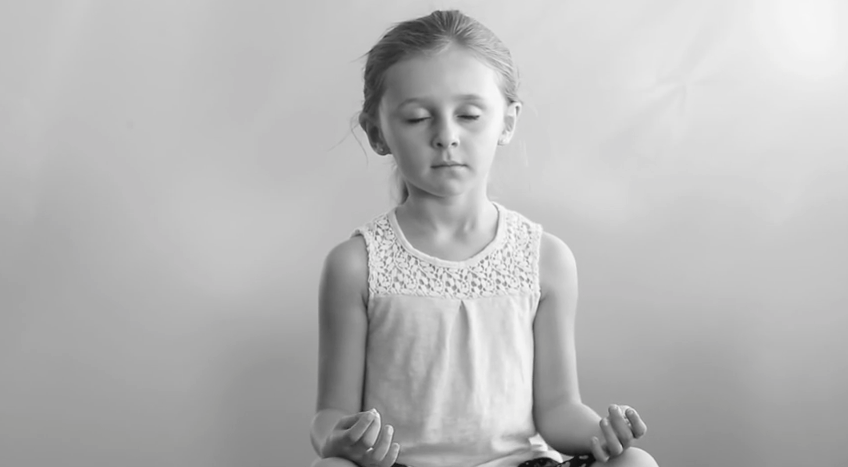
    Just breathe. Such simple advice, and yet it can be so tough to remember when we feel caught up in our emotions. Imagine what the world would be like if we all learned the power of mindfulness as kids. Imagine what it would be like if we all made an effort to practice this as adults.

  • When All You Can Do is Breathe

    When All You Can Do is Breathe

    Just Breathe

    “Don’t try to change anything at all, just breathe and let go. Breathe and let be… in your mind and in your heart, give yourself permission to allow this moment to be exactly as it is, and allow yourself to be exactly as you are.” ~Jon Kabat-Zinn

    I watched him breathe. In. Out. In. Out. Sometimes I’d move closer to his tiny body in his hospital bed just to see if I could get him to move a bit, wanting to boost the comfort of in and out with a roll to the side or an eye flicker.

    This all reminded me of five years before, when he was a newborn and I’d do the same thing. You know about this if you’re a parent or you’ve ever cared for an infant. Sometimes you just need to watch them breathe.

    We say, I suppose, that it’s to make sure they don’t die of SIDS, but I also think that it’s to make sure they actually exist at all. Someone, something, the Universe, trusted me with this little person and here he is. How did that happen?

    But of course now I was really watching my son to make sure he didn’t die. In a few short days, he’d gone from seeming a bit under the weather to barely breathing.

    We were living in the haphazard capital city of Antananarivo, Madagascar and our son had just been diagnosed with Type I Diabetes. Now all of my greatest fears were being realized in the barely existent space between his body and mine. In and out. In and out.

    I’d spent eighteen months in a place where I’d always feared one of my children would get sick or injured or worse. Eighteen months of saying, “Yes, it could happen, but it probably won’t.” Eighteen months out the window because now it was all happening. And we had to wait.
    Wait to see if the one doctor in the entire country capable of treating Type I would ever show. Wait for an air ambulance to South Africa. Wait to see if we’d ever go back to our house (we didn’t). Wait to see if he’d keep breathing. In. Out.

    And then somehow, at some point, the waiting stopped. Here he was—breathing in and out. Here I was beside him—breathing in and out. I don’t even know when exactly it happened, but somehow the rest of the world began to fall away.

    We were just us, in that moment. With nowhere else to go and nothing else to do but wait, we just stopped.

    The heavy weight of stress and fear and sadness and loss was with me, but all emotion existed in that moment alone. What was before seemed forever past, what was ahead faded into mystery. And there we were. In and Out.

    We made our way from the small, ill-equipped hospital in Antananarivo in an old truck with a siren. We passed our neighborhood and his school.

    I saw a friend in her car waiting out the traffic caused by our makeshift ambulance. She looked confused, but resigned. That’s often all you can be in Antananarivo.

    At the airport we boarded a tiny air ambulance on a three-hour flight to Pretoria. Eventually, we were reunited with his siblings and father, my other children and husband. Then we were back in the US. And we were still breathing. In and out.

    There are so many lessons we’ve learned in the last year since this happened—about health, gratitude, love, friendship, family—but only now am I realizing that what mattered most was simply that we kept breathing.

    Because what has happened behind us is gone forever and no matter how much we plan or wish or pray, we’ll never truly know how things will unfold in the days ahead. For those first few hours when my son’s life was on the line, I had a moment of clarity.

    There was no time for doubt or self-judgment. The only anchor was his breath. And as his breath moved, and mine with it, we were fully absorbed in what was happening there in that moment.

    Now I know for sure that more difficult times will come and also more days of happy, silly bliss. I know sometimes it will rain. Sometimes we’ll feel as though the sun will shine forever. We’ll witness loss. We’ll have gains.

    Every day is a series of ins and outs. We think things should stay in a straight line, full speed ahead, but they don’t. They go up and down. In and out.

    How blessed I am now to have seen what it’s like to really breathe, to be so fully absorbed in the in and out of breath as to know that it is the most important thing. Not how you do it, for how long or for why, but simply that you breathe. And when you need it most, the rest will fall away and you’ll have the in and out.

    Sometimes you’ll find it may be all you really need.

    Just breathe image via Shutterstock

  • You’re Going to Be Okay

    You’re Going to Be Okay

    Man on a Bench

    “The mind is everything. What you think, you become.” ~Buddha

    “I will be okay,” I repeated to myself. “Deep breaths. You’re okay. Focus on the breath. I am going to be okay…”

    I was on a small plane flying over the Rocky Mountains of Colorado on a hot summer afternoon—a notoriously turbulent time to fly.

    I’m not afraid of flying. I do it a lot and it’s not something that makes me nervous, although the mantra could work perfectly well if I was. It does, for some reason, make me incredibly motion sick at times—scanning seatback pockets for white bags, sweaty forehead, trembling, white-faced…sick.

    I was flying alone, and thankfully there was no one in the other seat next to me. (The plane was only three seats wide, with the aisle offset in the middle.)

    I was glad to have personal space to sweat it out, bump by bump, mantra by mantra, coaching myself through, without having to tend to anyone else’s experience or reaction to my sickness.

    I knew I would be perfectly fine, ultimately. Like those times with a bad case of the stomach bug, the body’s reaction can be scary, or super uncomfortable at the very least. The severity feels primal, and one generally goes someplace deep inside and gets through.

    In this case, my mantra and the self-talk served as an anchor, a ray of hope, a deeply present champion who needed nothing from me. It was simply there, relaying meditative principles to my experience moment by moment.

    A few years later, I was going through the grieving process of saying goodbye to a relationship, riding waves of feeling sad, hurt, and alone, sometimes with gut wrenching strength. I wanted to reach out to him; I wanted to hear words I felt I needed to feel better, tell him how I wanted it to be, and then have that actually happen.

    I wanted control.

    It was done, and I hadn’t anticipated the ending script. My head and heart spun from hurt and unfulfilled dreams. So I began telling my story to friends and family, trying to help process the emotions, events, and logic.

    Sometimes it helped, others times it just hurt.

    As the emotions buffeted up and down like airplane turbulence, I always felt alone in the moments when the crescendo peaked then pressed me down into an unsteady whoosh.

    How was I happily engaged living life in the present one moment, then longing for connection, what had been, and feeling hurt, rejected, or confused the next?

    And how could I support myself better without just craving what had been or wanting another version of the story? I needed a mantra for those moments.

    A mantra is sometimes referred to as an “instrument for the mind.” The roots of man (mind) and tra (instrument) come from Sanskrit and can help us utilize the power of the mind to enter a place of healthy silence.

    In this space we can gain distance, perspective, and awareness from the stories that we tell ourselves about our lives and get wrapped up in.

    I think of mantras like yoga and church. (Go with me for a moment!)

    One can attend, soaking in the principles, morals, and lifestyle, and walk out the door not to return to that headspace until the next entrance to the building. Or, one can walk out the door taking the values into daily practice, and upon return, simply enrich the soul and fundamentals nourished from previous visits.

    I vote for integration and transference in all we do.

    On the plane, my mind would get caught up in a story such as, “How long is this going to last?!”and upon realization, I would come back to my mantra.

    Integrating mindfulness into more turbulent emotional times challenged my personal integration edge; after telling stories, feeling the emotions, and sometimes just trying to push them away, I walked back into the building.

    If I choose to stay attuned, present in my life, and committed to growth, I can honor the ups and downs and have the power to provide myself what I need.

    I am there. I can always be there—the constant, ever present voice in my life.

    It’s not that I don’t have good friends, loved ones, or a strong support system. I do. Most of the time they are probably best as the cherry on top, supplement, or supercharge to my own inner knowing.

    Imagine, what if you were always there for yourself, providing just what you needed, allowing your friends, family, and significant others to delightfully enrich your life?

    Coaching myself through living is more complicated than moments of seeing black spots, with sweat dripping off my face, sick as a dog on an airplane. But I believe I can—we can—learn and always become better supports for ourselves.

    At the very least we can be willing to search, learn, and try when we do not know.

    And in the end, for me, the mantra from the plane works, for heartache and quite a lot of other things. “I will be okay. Deep breaths. You’re okay. Focus on the breath. You are going to be okay.”

    Your mantra may sound different. My hope for you is to remember the instrument of your mind in times of smooth passage or turbulent flight, then sing, whisper, or chant yourself a perfect melody for the moment.

    Man on a bench image via Shutterstock

  • Remember to Breathe: How to Feel Calm, Peaceful, and Loving

    Remember to Breathe: How to Feel Calm, Peaceful, and Loving

    Peaceful woman with surfboard

    “Our greatness lies not so much in being able to remake the world as being able to remake ourselves.” ~Gandhi

    At some point during 2005 I discovered the sense that I am connected to everything, that nothing exists outside of me. This realization came while surfing with a friend of mine. From that moment, surfing became a religion for me.

    I sat on top a surf board about 100 yards off the sand, just a little north of the San Onofre Nuclear Power Plant in San Clemente, California, for hours on end every single day.

    At some point during each session, the endorphins would kick in. My mind would empty and I would relax. The best word to describe it would be “bliss.”

    Off the surf board, I spent most of my time at the public library reading books about the human experience—history, psychology, religion, and spirituality.

    Each morning, as I sank into this blissful state, I allowed the information to pour over me in a manner that Thich Naht Hanh called “Dharma Rain.” I just breathed deeply and joyfully as my mind filtered information, looking for truth.

    I could have easily stayed in that state of bliss had I not needed to go to work or interact with most of the people around me. I’ve never been much of a joiner. Monkhood was off the table.

    I tended bar just a few nights a week. I had been sober for nearly a year but rarely became thirsty even working. It was a means to an end, and it afforded me more free time than any other job out there.

    Tending bar also brought into focus the idea that all I observe is a reflection of me. I owe most of real growth spiritually not to the texts, not to meditation, and not even to surfing; I owe it to my time slinging drinks. (more…)