Tag: breakup

  • What Most People Get Wrong About Singles and 6 Messages You Might Need

    What Most People Get Wrong About Singles and 6 Messages You Might Need

    “In a world that treats a forty-one-year-old single woman like a teenager who didn’t get asked to prom, I think it’s extremely important to recognize the unique wisdom of a solitary life—a wisdom that develops slowly over many years, that is fundamentally different from that of, say, the person who was between boyfriends for a year when she was twenty-six.” ~Sara Eckel

    I was twenty-three and had just told a woman I was casually dating that I’d never been in a long-term committed relationship.

    Her response was this: “Wow, really? I mean, you’re attractive, so why haven’t you?”

    Having spent more of my life single than coupled, I’ve become accustomed to questions and comments like these. And although I am currently at a place of contentment and acceptance with my singleness, I wasn’t always. Shame often attaches itself to people (women especially) who remain un-partnered for long patches of time, particularly as we get older.

    As author Sara Eckel put it: “In polite society, there’s an understanding that inquiring about the reason two people marry is completely inappropriate. Singles are not afforded this privacy. Instead, the rude inquiries are wrapped in compliments about how attractive and together you are.”

    “For many of us, living alone in a society that is so rigorously constructed around couples and nuclear families is hard on the soul,” she wrote.

    Look to sites like Quora and Reddit, and you’ll find a plethora of questions posted by the worriedly un-partnered—from “What’s wrong with me? I’ve been single for seven years” to “Do you become undateable after being single for over ten years?”

    There are many negative messages and annoying presumptions about singleness percolating through society that I wish would stop. It’s no coincidence in my mind that women (more than men) are the more frequent targets of them.

    Here are my own counter-messages that I’ve developed in my thirty-two years as a woman on this planet.

    1. It’s quite possible that you’re not trying too hard.

    From the time I was eighteen, people told me that the desire for a connection was what kept me from finding one. If I just stopped caring or wanting it, a relationship would find me. As Sara Eckel wrote, “The fact that you want love is taken as evidence that you’re not ready for it.”

    I’ve known many people through the years whose desire for a relationship definitely didn’t stop them from finding one.

    2. Wanting a relationship doesn’t mean you are ungrateful for all the other positive aspects of your life

    In my ambivalently single years, I often felt I was constantly pushing myself to look on the bright side, count my blessings, and express gratitude (both to myself and to those around me) for the friends, hobbies, and other things I had going on in my life.

    I feel this way far less now. That is, I don’t feel as if I need to force the gratitude and appreciation; it flows in naturally in response to all the positive that currently fills my life. I’m living it in alignment with my values. I’m spending my time in the ways I want to.

    Still, it was okay to want more, even back then. The desire for partnership is human and valid, and it’s more than understandable for it to surface from time to time.

    As Rachel Heller put it in Attached (which she coauthored with Amir Levine), “Our need for someone to share our lives with is part of our genetic makeup and has nothing to do with how much we love ourselves or how fulfilled we feel on our own.”

    Singles are wired to want love and companionship as much as the next person. Our own company can be wonderful, but we’re not weak if that “there’s something missing” feeling still creeps up unexpectedly some days.

    What gets me about this one is the contradiction. Being single raises antennae. So too does the inability to find happiness on one’s own. It’s a bit of a damned if you do, damned if you don’t predicament.

    3. It’s completely possible that you genuinely just want companionship, not necessarily someone to satisfy all of your emotional needs.

    At times people assume a woman’s desire for a partner is rooted in an unrealistic expectation for a romantic relationship to fulfill all of her emotional needs. The truth for me, back in my twenties, was that I would have been happy to meet some of those needs through platonic connection. The older I got, though, the less available friends seemed to become.

    I feel more content with my friendships now, and a combination of expectation adjustment and meeting more like-minded people has helped me to feel like my connection needs are mostly met. But this wasn’t always the case. And for the people out there currently feeling a void, it’s not always due to lack of effort.

    As Sara Eckel wrote, “Our society is structured around couples and families—and if you don’t fit neatly into one of those units, you often have to build a support system from scratch, which is a big task. Friends move, or marry, or disappear into time-sucking work projects. And they usually don’t consult you about it.”

    Back when I felt more of that connection void, many of my friends had partnered off, become consumed by career commitments, or moved out of the area.

    It would be convenient to believe that the full secret to happiness lies completely within oneself. But individual efforts and self-care can only enhance one’s life so much. The truth is we do need others, to some extent. Most of us need (at least some amount of) healthy and satisfying connections. If you feel like you’re doing all that you can and not getting back what you need, it’s disheartening.

    4. Your life might actually be full enough as it is.

    “Take up a hobby.” “Become a more interesting person.” “Work through your issues.” “Focus on your friendships.” “Get more settled in your career.” These are just some of the many morsels of advice bestowed upon singles.

    I think that at times people prescribe the “have a full life” advice too heavily—using it to justify why some remain un-partnered, even when it doesn’t apply.

    For instance, back when I really wanted a relationship, I enjoyed the life I’d carved out for myself. I led a mostly full one, making time to hike and appreciate the outdoors at least several times a week. I biked. I read voraciously. I cooked healthy meals. I planned solo trips and made ample time for friends. I kept myself open and receptive to the beauty of the world around me.

    Though my job didn’t always feel like a perfect fit and lacked the comfort of a consistent coworker community, it drew upon my skills and passions while allowing me to serve a vulnerable population.

    Even though I had all that, I still at times found myself wanting a partner.

    The truth is that all kinds of people, from those with full lives to ones with few hobbies, find love. Even people whose lives seem unadorned or ”empty” when viewed from the outside are capable of intimate connections. Our species would not have persisted if the only ones of us who partnered were those with past-times and over-stuffed days.

    Many of the same people who prescribed “spend more time with friends or on hobbies” seemed to have also (ironically) been the ones who’d never had to fill their time in this way for more than a year (or maybe two) tops—either because they’d been in a partnership for many years or had only been single intermittently (having spent far more of their adult lives coupled off).

    5. The losses of “mini” or “almost” relationships are still losses.

    Chronically single people are likelier to have more experience with the dating apps. More time spent in the dating game means more exposure to the muck and unhealed emotional issues that circulates its fetid waters. We’re more susceptible to getting caught up in a frustrating and constant cycle of false hope and cautious optimism, followed by disappointment and disillusionment that the partnered don’t have to deal with.

    As much as I wanted to “just get over” some of these dating situations and not let them affect me, as blogger Janis Isaman wrote, “inside our bodies, it doesn’t work that way when we feel loss—over and over again—and lack support, lack feeling, lack an empathetic abiding witness, or lack self-compassion.”

    She writes, “this failure to give space to: ‘this is painful,’ ‘this feels like rejection,’ ‘this feels awful’ means we not only abandon our authenticity but also that we experience trauma. The tiny interactions of serial dating transmute themselves up into pain and disconnection, and we might find ourselves increasingly angry or panic-filled because we haven’t metabolized the previous losses.”

    Now I’m able to see: these experiences were still losses. Any time you invest heart and time, you are building some form of connection. When that connection dissolves, you will feel the hurt. It’s not only more than okay to feel your feelings; doing so is necessary for moving on.

    6. It’s not because you’re broken or need to spend more time healing your issues.

    This counsel isn’t totally without merit. In several relationships when younger, I had a lot of issues to work through; I wasn’t emotionally healthy. A relationship would not have been the wisest move.

    Still, this piece of advice mythologizes perfect health and implies we can arrive at a place where we’re fully healed—when health is always along a spectrum, with no human ever completely on the side of perfection.

    People with far more emotional baggage than both me and other chronically single people I know have found loving connections. Perpetual worriers. “Boring” folks. Individuals all across the spectrum have found partners who think the world of them. They didn’t have to work to improve themselves in order to. They didn’t have to go through years and years of rigorous therapy. They didn’t need a full-on personality transplant.

    The underlying message I hear poking out from this piece of advice is this: Change who you are.

    What if we were to shift to this message instead? You don’t need to perpetually strive. Therapy can help you become more self-aware, secure in yourself, and clear in what you’re looking for—but ultimately, a lot of meeting a compatible partner has to do with luck, timing, and the types of people you are encountering. You are worthy of love as you are.

    Not only does this feel kinder, but also more accurate.

    ~~

    For years I sought reasons to explain my single status. The conclusion I’ve arrived at now is: There is no grand overarching reason. Or rather, there are so many that it’s no use trying to pick them all apart. Seeking to fully untangle the bundle would be an unproductive use of time.

    Yes, some societal positions might increase your odds. And healthy relationships are less likely to occur between people with unhealed emotional issues. Ultimately, though, timing and chance are key aspects.

    The right partners will grace our lives when they’re meant to. I can’t say when that will happen. I just know that what we can control is the amount of energy we spend pursuing, perseverating, and picking ourselves apart in our pursuit of the “why.”

    I feel less urgency to be in a relationship now than before, and I am grateful for this. Having a more discerning lens has allowed me to be a better guardian of my emotional energy (and life in general)—where before, I would let in a questionable fit just for the sake of being able to say I was in a relationship. It has also led to growth that I don’t think I would have achieved if a significant other were a part of the equation.

    My hope is for anyone who’s struggled with shame and self-doubt to breathe a little easier, knowing you don’t have to try so hard to improve yourself—that you’re as lovable as the rest of us, exactly as you are.
  • How I Knew It Was Emotional Abuse: The Subtle Signs I Almost Missed

    How I Knew It Was Emotional Abuse: The Subtle Signs I Almost Missed

    “I hope you find love, but more importantly, I hope you’re strong enough to walk away from what love isn’t.” ~Tiffany Tomiko

    A few weeks after breaking up from what I thought was a loving relationship that in reality was sliding into an emotionally abusive one, I had a dream.

    In it, I was hiding from a group of dangerous people, but could see the footsteps of one of them coming toward me. Suddenly they saw me, and I pleaded to them, “Please, don’t kill me,” and they turned and left. When I emerged, I could see the victims all around me suffering from a fate I had been spared.

    I believe dreams relay information from our unconscious to our conscious mind, and that they hold huge significance in the processing that occurs while we sleep. I have no doubt at all that this dream signified the narrow escape I had from a man who was being emotionally abusive.

    The Cognitive Dissonance of Emotional Abuse

    I don’t use the term “emotional abuse” lightly, and I have struggled to apply it to the man I shared so much love with. Yet, one of the resources I used to understand what had been happening in my relationship was a podcast called “Love and Abuse,” which sums it all up so perfectly.

    Emotional abuse is a cycle that flips between loving moments and abusive ones, sending you on a rollercoaster ride toward a place you never wanted to end up. A result of the constant highs and lows is a state of mind that is unbalanced, ungrounded, and permanently confused. In this state, it becomes very hard to understand what’s happening.

    You’re caught between wanting to appease the person whose behavior is so hard to read and staying true to yourself. There is no part of you that wants to connect with your intuition; you only want to fix things and make them go back to the loving part.

    My relationship became a fog of confusion, as my brain struggled to understand how one moment it was loving and another it was abusive. This is a state of mind called “cognitive dissonance.” In the immediate aftermath of the relationship I read something that perfectly resonated with me—cognitive dissonance is when your heart needs time to catch up to what the mind already knows.

    Once I surfaced from the relationship, I could finally see the abusive part, as subtle as it was, and understand that it wasn’t healthy, without my heart getting in the way.

    The Moment I Knew It Was Emotional Abuse

    The realization that something was very wrong in my relationship dawned on me in the most fortunate way. We had been watching a program on Netflix called Maid. The series was about a young woman, isolated with a child and an emotionally abusive partner.

    You never see him hit her, yet the controlling behavior and shouting are there. Even though she doesn’t know that he’s abusive, she knows she needs to leave.

    As we watched, I could feel something shifting in my subconscious. I was seeing something playing out on screen that ran parallel to my life. I wasn’t with someone who was breaking things or yelling in my face, yet I was right on the edge of the cliff and he was about to lead me over the ledge.

    I just know, intuitively, that if I hadn’t gotten out of there, I would have slid downward to a place that would have been much harder to leave.

    The other lucky thing that happened to me was meeting someone who picked up the pieces of what I told her and showed me all the red flags. I had dismissed them before, not wanting to judge him for his choices, yet they were all there.

    He didn’t have any friends, he wasn’t close with his parents, he didn’t like me making plans without him, he got tense and silent, he would raise his voice at me, he was moody, he questioned my beliefs, he spoke badly about my family… all the signs were there.

    The Trauma Bond

    The trouble is, when you’re deep in it with someone, when they’ve love-bombed you so hard and fast that you’ve barely had time to breathe, when they’ve called you their soulmate and moved you in within months of dating and declare they want to marry you, you just can’t see the wood through the trees.

    Being loved feels so good, and that’s dangerous because love can blind you. Worse than that, when you’re in a cycle of love and abuse, whether or not the abuse is emotional or physical, the chemicals in your brain become severely dysregulated. This is called a trauma bond.

    The trauma bond is a chemical concoction made up from the abusive cycle—the bonding phase, where you’re showered with love, promises, and romance; the stress during the abuse; and the making up period afterward.

    It’s why making up feels so good after they’ve been angry or given you the silent treatment, and it’s why leaving someone hurts so very much. You’ve gone into withdrawal from your dopamine fix, and it’s horrific. You’re also stuck in that foggy state of confusion where you’re trying to align the messages you’re getting from your heart and your brain.

    The trouble is, they don’t match, and in this state of cognitive dissonance, which feels so deeply uncomfortable, you reach for the easiest, simplest, and safest answer—you listen to your heart. After all, what the heart wants, it gets.

    It’s this trauma bond that keeps people going back to an abusive partner. To add to this confusing chemistry, the emotional abuser will do everything to win you back, from bombarding you with messages and emails proclaiming their love and inability to live without you, to hurling their hurt and anger at you, guilt-tripping you right back into their arms.

    For someone whose self-esteem has been slowly whittled down in a relationship, this behavior is like a balm to your fragile soul. You feel so loved and needed that you fall right back into their trap. They say you’re their soulmate and you believe them, but after a period of making up, they can then continue the cycle of abuse right where they left off.

    They know you’re fragile, they know what you want to hear, and they are masters of manipulation. They pull at your heartstrings in every way they can, so be ready for it, and stay strong.

    Waking Up and Leaving

    I had no idea that it was emotional abuse, or what emotional abuse even was, until I started sharing my experience and reading about what others had been through. I think I was extremely lucky, because after seven intense months I gradually began to wake up to the spell I’d been under.

    It hasn’t been easy, and the feelings are still fresh and raw, which is why I wanted to write them down so quickly, as it’s powering my resolve to stay away from him.

    I also want to share the red flags that were there right under my nose that I couldn’t bring myself to examine at the time. I still have trouble believing that what transpired in our relationship wasn’t normal or healthy, which I think is all part of the process when leaving someone abusive. Recovery is starting to trust yourself rather than the person who was the source of your pain.

    Of course, I doubt myself and think I misunderstood it all. Part of me still thinks I’m exaggerating and making a fuss. A part of me also thinks about ways I could have responded to the abuse differently and what might have happened if I had. I also still miss him. Love doesn’t just switch off, but I know that’s my altered brain chemistry rather than true love.

    Then I remember the list I made of all the red flags—all the little incidents that happened, all the uneasy feelings of confusion, sadness, and wariness I felt—and I know I made the right decision to leave.

    Alarm Bells and Red Flags

    One of the main alarm bells that began to ring was how wary I was of what I said. I didn’t know what mood he would be in, so I was always trying to read the signals. If there was a tense silence, I knew it wasn’t good and tried to make myself as inconspicuous as possible to avoid triggering him and making his mood worse.

    I also noticed that I was tiptoeing around on eggshells and making myself small and quiet, appeasing him and putting his happiness before mine. Putting someone first through fear of making them angry or upset isn’t love.

    I also began to tune into my mood, which was beginning to feel flat and joyless. At times, I thought I could be immune to his moods, but they affected me whether I was aware of it or not.

    I remember crying as he stormed out of the house, wondering what had gone so wrong. I remember feeling deeply confused when he picked a fight about something that made no sense to me. I remember feeling sad when he would turn from being gentle and loving to short-tempered and passive-aggressive in the flick of a switch.

    Controlling Behavior

    Another sign that slowly crept up on me were signs of control.

    I once told him about an appointment I’d made for the following day, and he became angry because I hadn’t told him sooner. One time, I was meeting a male friend who wanted to give me an acupressure treatment, and he said he felt uncomfortable having another man’s hands on me. He once mentioned how he didn’t like waiting to receive a reply to his messages, so I became nervous to always message him back as soon as possible.

    It got to the point where I felt scared to mention plans to see friends or see my family, and this is very wrong.

    The examples go on and on and, as you can see, they are small things, but added together they make up a very clear picture. We should all have the freedom to see who we choose, when we want, yet he wanted to spend every evening together, as that, in his opinion, was what a ‘proper relationship’ was about. It seemed he wanted me to feel guilty for needing my space.

    The last red flag was speaking badly of my family, who I am very close to. He used my need for independence from my family as a driving wedge between us. When my parents asked me to house-sit, he got angry, said they were using me, and made very subtle putdowns against them.

    Even I noticed how my behavior was changing and how I was spending less and less time seeing my family, a warning sign if ever there was one.

    Making the Decision to Leave

    Whether all his actions were conscious or unconscious, I know I made the right decision to leave. I thought I loved him, but I love myself far too much to ever put myself in a position like that again.

    I have a huge amount of empathy for him and remember the parts of him that are kind and loving, so I feel no anger, just sadness that he’s pushed love away through no fault but his own. I am not here to save or heal anyone, and if anyone places that responsibility on my shoulders or wants me to feel guilty that I am not helping them, then I am walking away.

    So my advice for you is this: If you feel like something isn’t right, it isn’t. This is your intuition talking to you, and it may save your life.

    You need to get away from the emotionally abusive person as soon as you can and surround yourself with friends and family. This gives you time and space to lift the fog that has been clouding your judgment, and to sever the trauma bond.

    Your relationship doesn’t need to contain every sign of emotional abuse for it to be so. Just knowing how you feel—wary, confused, scared, tearful, and all those other emotions—is enough. No one should feel fearful or trapped in a relationship.

    There is nothing more powerful in a situation like this than an outside perspective. In an emotionally abusive relationship, you are on a rollercoaster ride of chemicals, emotions, stress, love, and pain. There is very little chance you’re going to be able to decipher this on your own, so speak out, whether it’s to a friend, family member, therapist, or anyone at all—just speak to someone.

    As soon as you start to share how you’ve been feeling and what you’ve been experiencing, you will start to see the signs of emotional abuse in your relationship, like I did in mine, and hopefully will get away as fast as you can.

  • I Cheated on Him with My Higher Self (and We’re Still Going Strong)

    I Cheated on Him with My Higher Self (and We’re Still Going Strong)

    “It’s okay to let go of those who couldn’t love you. Those who didn’t know how to. Those who failed to even try. It’s okay to outgrow them, because that means you filled the empty space in you with self-love instead. You’re outgrowing them because you’re growing into you. And that’s more than okay, that’s something to celebrate.” ~Angelica Moone

    “How could you do this to me? It’s obvious you’re with someone else.”

    That was the third and final message I received from my partner of nearly three years, several weeks after we had finally decided to break up. I say “we” because initially it seemed that the decision was mutual, although it would later be revealed that it was me who wanted out.

    He was right, by the way. I had left him for someone else.

    No, not the lover that he had conjured up for me in his own mind. In fact, what had pulled me away was much more powerful and seductive than that. I had cheated on him with my higher self. And she had been trying to win me over for quite some time.

    My higher self: AKA my intuition, AKA my inner badass that will never be ignored. Yep, she’s the one I had left him for.

    Much like when I was nearing the end of my marriage, she had started off with a gentle nudge, a tap on the shoulder every now and again. I’ve noticed throughout my life that if I don’t stop what I’m doing, these attempts to get my attention will become more consistent, until what was once a whisper finally becomes a roar.

    Such was the case three years ago when she decided that I should shave my head. At that point, I had invested a lot of money turning my naturally dark brown hair into a platinum blond mane. This was before the pandemic, when I couldn’t imagine anything coming between me and my monthly visits to the salon.

    As with most suggestions that come from my higher self, my ego was not impressed.

    If the two of them had been sitting across from one another, the conversation would have gone something like . .

    “You want to do whaaaat??”

    “Shave it.”

    “Excuse me?”

    “Take it all off.”

    “All of it?”

    “All. Of. It.”

    So I attempted a compromise by shaving a bit off the side. I knew I was kidding myself when I thought that would be the end, but at least it was a start. Over the course of the next twelve months, I felt equal parts admiration and jealousy whenever I caught a glimpse of someone with a shaved head. This peculiar mix was familiar to me, and it signaled what was destined to happen next.

    When I had finally made the decision, it was a random Tuesday morning, and it made absolutely no sense to my logical mind. Unlike the ego that thrives on being booked and busy, the higher self loves white space. When we give ourselves the opportunity to tune out and tune in, our deepest desires have a funny way of being revealed.

    That fateful day I had decided to take an extra long walk with my dog through one of the parks here in Barcelona. There’s nothing like nature, movement, and a bit of solitude to help you cut through the noise and get to the heart of what you really want. Instead of returning to my apartment, we headed to the salon.

    As I took a seat at my hairdresser’s station and looked at myself in the mirror, my ego had a full-blown tantrum while my higher self popped open the proverbial champagne.

    In those moments of feeling the clippers pass over my scalp, watching my shoulder-length hair fall to the floor, I finally felt free. Whether it’s our hair, our jobs, or a relationship we’ve long outgrown, the higher self seeks our liberation, no matter what the cost.

    That day when I told my then partner what I had done, the conversation didn’t go as I had hoped but exactly like I had imagined.

    “You’re bald.”

    While this was indeed a fact, the tone made it feel like a personal attack. He asked me why someone so beautiful would intentionally make herself so ugly. For once in my life, being “pretty” hadn’t been the deciding factor. I wasn’t so concerned with how I wanted to look but rather how I wanted to feel. As I’ve come to learn since, life really changes when this perspective starts to shift.

    If his thoughts and feelings were any indication, I was no longer much to look at when it came to the male gaze. Ironically, all he could see was “a weirdo” while the person I saw with my own eyes was a queen. 

    While my ex couldn’t get past my shaved head, I couldn’t get over the luminosity and the brilliance that could fully shine through. As he continued to fixate on what I had lost, I knew the truth of what I had gained: freedom, courage, and beauty on my own terms.

    Perhaps I always knew that he would leave me over a haircut. No one likes to think that the future of their relationship comes down to the length of their hair, but he had told me from the beginning that shaving my head was the one thing I should never do. Funny the rules we’ll follow in an attempt to belong to other people while we strategically abandon ourselves.

    I had spent nearly four decades of my life searching for safety in the fulfillment of everyone’s expectations. I used to be an expert at figuring out what they wanted and becoming exactly that. Until one cold, cloudy morning in February 2021, when I decided I was done. Done with the pretending. Done with the pleasing. Done with the denial of what I knew to be true.

    I was finally ready for a different kind of love. And this time it was all my own.

    You could say that I cheated on my ex with my higher self, or maybe she was the one I was meant for all along. Either way, I’ve chosen to be faithful to my inner wisdom. And from what I can tell, we’re still going strong.

  • Healing from Abandonment Trauma: 3 Things I Learned from Being Cheated On

    Healing from Abandonment Trauma: 3 Things I Learned from Being Cheated On

    “The wound is the place where the light enters you.” ~Rumi

    I want to share an experience I went through that hurt like hell, but that helped me so much in the long run.

    The experience was being “cheated on,” though the woman wasn’t my girlfriend. Nevertheless, I was very attached and it felt awful.

    So, let me start with the backstory.

    I met Diana through mutual friends in late 2021. I thought she was cute, and a little anxious, which I seem to gravitate toward. That’s just my savior complex coming out, which is another story for another day.

    Eventually we hooked up after a holiday party and continued hooking up regularly. I began to have stronger feelings for Diana than I anticipated, though I tried to play it cool and not cause any awkwardness in the group.

    Things started deteriorating between us at one point, and it culminated in Diana going home with another guy basically in front of me.

    Needless to say, I was devastated.

    My friend who introduced me to Diana was there, and he asked me, “Are you catching feelings?” I was so angry that he would try to shame me into not feeling what I was feeling. I said, “Yes, I am” and left immediately.

    On the way home, I was screaming in my car, and I even punched my steering wheel, which I had never done before. I was so triggered and mad. There was a tornado of emotion ripping through my chest—anger, grief, worthlessness, desperation.

    The next day, I woke up and left the house to get a smoothie. I didn’t want to be by myself as I was going through this.

    Initially I didn’t feel so bad, but I knew that the wave was going to hit me sooner or later. I started rereading books on relationships that I had read before. Books like Fear of Intimacy by Robert Firestone and Facing Love Addiction by Pia Mellody. Luckily, I had these books to turn to for guidance.

    Over the next two weeks I cried multiple times on my way to work, or on the way home from running errands. I even pulled over a few times to bawl my eyes out and wail alone in my car before continuing.

    Over the next couple of months, I worked on processing the grief and pain. Occasionally I would dive deep and get a memory of childhood abandonment, the real source of the pain. I’d get a memory of my mom not being there for me…

    While I was growing up, my mom worked all the time to support our family. And we had such a big family that one-on-one time was basically nonexistent.

    That meant there were countless times when I felt lost, abandoned, and overlooked.

    Being deeply hurt by Diana gave me the opportunity to go right to the source of the pain, my original abandonment experiences. Daily meditation and journaling helped whittle away the pain.

    It was slow progress for a while. I even stopped writing for a few weeks because I was overwhelmed with emotion. But eventually I began to feel like myself again.

    The first two months were rough, the next two were a little better, and after six months I was finally out of the weeds. But more than that, I feel better than I did before I met Diana.

    I feel as if my baseline level of security and happiness is higher. The way I think about it is that my abandonment experiences were heavy boulders weighing down my soul. Not carrying them around feels so much lighter.

    I must have spent over 100 hours meditating to let go of these emotions, and I’ve learned a few things in the process…

    1. Present pain is compounded by pain from the past. If you want to be free, heal the original wound.

    2. We seek what is familiar in relationships, even at the expense of our safety and happiness. And what is familiar is the love we received from our parents. If we want to have better relationships, we need to heal our past or we will repeat what we know endlessly.

    3. We get what we need to heal in relationships. And I think that’s beautiful. While things might suck in the short-term, you’ll come to know that life has your best interests at heart. Now that this episode is over, I’m glad life gave me the experience I needed to heal.

    Now it’s time for a counterintuitive move that helped me close this chapter in my life.

    I used to think “being left by Diana like that hurt so bad and I wouldn’t want to experience it again, but I am glad that I was able to learn and grow from it.”

    But that thought reveals that there is more work for me. To get closure from this experience, I had to open myself up to going through it again (but trusting life to not be so cruel).

    It’s not what you would think would help, but when you run from an experience you are still controlled by it.

    And if your goal is genuine freedom, you need to open yourself up to it. Of course, I will still be cautious going forward, just not fearful.

    Once I opened myself up to experiencing that same pain and hurt, I became freer. I took off the armor I was wearing, and I know that life can be trusted to have my back.

    I’d rather live with an open heart and get hurt than live closed off. That’s the way of freedom.

    “You have to keep breaking your heart until it opens.” ~Rumi

  • Surrendering Isn’t Giving Up: Why We Need to Accept What’s Happened

    Surrendering Isn’t Giving Up: Why We Need to Accept What’s Happened

    “The first step toward change is awareness. The second step is acceptance.” ~Nathaniel Branden

    I remember the last time I saw him before my world crumbled. I held up my hand with the ASL sign for “I love you” through the window to him as he mouthed the words back and got in his car to leave for work. I found out an hour later that he—my fiancé—had begun cheating on me a month before he had proposed.

    He never fought for me. Even during the course of our relationship, when he would run away due to his insecurities, I would perpetually be the one fixing everything. That should have been a sign. But even as I stood before him and confronted him about his infidelities, telling him we could work it out, his pride was too wild. He didn’t fight for me.

    I am an impulsive and drastic person when I have been hurt. I have a tendency to pick up and move when things have gotten too emotionally rough, looking for the magic pill to happiness in the new places, faces, and experiences. It works for a while…until it doesn’t.

    So I left again. I went from a home-owning, engaged woman in New England to a renting, single, almost middle-aged chick back in my hometown of Los Angeles within three weeks.

    Then everyone around me waited for the other shoe to drop; they watched me closely and expected me to lose it in the middle of dinner, or start crying while watching TV. But nothing of the sort happened, and that’s because I was completely dissociated from the environment around me. I had not accepted a thing that had occurred.

    A month later, I got COVID. I remember in the midst of purging my guts out, I asked the universe to either end it for me or make me better. I was at the mercy of the cosmos, and it was in this total surrender that I began accepting where I was and how I got there.

    In full surrender mode, acceptance has a strange way of finding you without you seeking it out. I began accepting that my relationship was over. I began accepting that I wasn’t, in fact, a failure because I was back in my hometown. I began accepting that I was going to have to pick up what was left of me off of the bathroom floor and start anew.

    More importantly, along with acceptance came personal accountability. I made the choice to end my relationship when push came to shove. I made the choice to sell my house and move across the country. And I was making the choice to pick said shell of a human off the bathroom floor, accept who and where I was at that moment, and move forward.

    I think our natural instinct is to think in circles instead of accepting. We’ll obsess over why something happened, try to find ways to undo it, and exhaust ourselves trying to control the uncontrollable so we don’t have to admit defeat.

    We mistakenly believe acceptance means we can’t feel how we feel—maybe angry or disappointed—or that we’ve given up. Worst of all, we assume acceptance means what happened was okay.

    But that’s not what acceptance means. It simply means you acknowledge reality for what it is and surrender instead of resisting. You lost your teaching tenure because of financial cuts? It’s not okay, but it happened. Your partner left you for someone twenty years younger? Still not okay, but again, it still happened. Your best friend got diagnosed with an incurable disease and is suffering? Nowhere near okay, but it happened.

    Understanding and surrendering to the situation because it happened does not mean that you have to be all right with it or do nothing about it. But at this current moment, what has transpired is already past, and therefore, any move you make is just future planning and action. You cannot change the past; you can merely accept it and go from here.

    As the days continued and my body got stronger, my mind wanted to retreat again. I had to continuously remind myself that I had made these choices, and even though my brain didn’t want to acknowledge that it could do something to hurt itself, I repeatedly told it the situation to get it to finally sink in.

    I sat in my desk chair one day and looked around my new apartment. Even though I had moved most of my stuff with me, nothing seemed familiar.

    I realized that for the months of being in this new space, I still felt like I was just visiting and waiting to go home to my ex-fiancé. Trying to grapple with my new reality, I simply began talking to myself out loud:

    “This is your apartment.”

    “You live in Los Angeles.”

    “You moved here two months ago.”

    “You broke up with so-and-so, and the relationship is over.”

    “You are home.”

    I spoke to myself out loud for about twenty minutes, repeating these phrases over and over with different intonations, until I felt them really settle into the cracks of my cerebral cortex. Since that day, I have not had to do it again, nor have I felt dissociated from my current reality. I was finally able to entirely accept the setting of my life and truly initiate the changes I desired.

    Is it okay that my ex cheated on me? Absolutely not. But it happened. And I can say that now without cringing at the thought. Is it okay that I allowed him to make me feel so unloved that my trauma response flung me back to the west coast? Nope, but at least I’m aware of it and can do things to control my own reactions from here on out.

    All of this means that I am in control now, and it’s purely through taking accountability via acceptance of the situation. Surrendering on the bathroom floor during my bout with COVID may have initiated the wheels of acceptance, but it is continued mindfulness and submission to the present moment that actually ensures that acceptance.

    Whatever happened to you is not okay, but it’s okay to accept it. Acceptance doesn’t mean you’re weak; it means the opposite: You are strong enough to face the reality of the situation you’re currently in.

    Acceptance doesn’t mean you forgive and forget what befell you, but rather that you understand where you are, how you got there, and that you now have the control to make a change.

    And surrendering doesn’t mean you’ve given up. In actuality, it exemplifies that you’re willing to roll with the punches, trust something outside of yourself, pick yourself up off of the bathroom floor, and move forward.

  • 5 Ways to Start Healing from the Grief of Betrayal and Domestic Abuse

    5 Ways to Start Healing from the Grief of Betrayal and Domestic Abuse

    “If your heart hurts a little after letting go of someone or something, that’s okay. It just means that your feelings were genuine. No one likes ends. And no one likes pain. But sometimes we have to put things that were once good to an end after they turn toxic to our well-being. Not every new beginning is meant to last forever. And not every person who walks into your life is meant to stay.” ~Najwa Zebian

    It’s hard to describe what betrayal feels like. Unless you’ve experienced it, I mean, in which case you’ll know. You’ll know that moment—the punch to the gut, which in my case, even though I was standing in an empty room all on my own, literally knocked me to the floor. I’d seen something, you see.

    Proof that my partner had been cheating.

    It was a beautiful day, the sun was shining. I think I’d been listening to music, probably something upbeat in the hope it would squash the worry that something wasn’t quite right. Maybe (most likely, knowing me) dancing, to carry some of the nervous energy away. Scrolling on social media, distracting myself with other people’s realities, to stop me thinking about my own.

    And then something—something—made me look. A pull. An inexplicable urge. And so, of course, I did.

    There it was. What I’d known in my gut, but had been told repeatedly couldn’t be true. Labelled as “over-reacting,” “seeing things that aren’t there,” “being too sensitive.” What I now know to be gaslighting, that abuse isn’t always physical (even though in my case it was that too). Tangible evidence for all to see.

    And so here I was, in a heap. Collapsed to the ground like a house of cards that had been caught by a gush of air. But it wasn’t air that had taken my legs from underneath me. It was the end of a relationship.

    To this day, I don’t know how long I was lying there. I can picture it in my head even all these years later.  Like a boat that’s adrift. Wind knocked out of my sails. Listless.

    The night drew in, and with it came this incredible wave of noise. Like I was sitting in a busy café, and someone had turned the music up to try and compensate, but you couldn’t make anything out. Except no one could hear this noise, because it was all happening in my head. Thoughts about “what if?” and “if only,” ironically contributing to the din.

    I wanted a hand to reach out from the darkness and give me the answers. To say “It’s going to be fine.” But it wasn’t fine. It was painful. Distressing. Desperate.

    And then, something. A message. A friend. He had no idea what was going on; I hadn’t told a soul. But he knew. At least, he sensed it. So he had messaged me and gently reminded me that I have a right to be here.

    I look back on this moment in my life now as if it was another person. I’m still me, of course, but different, like we all are when we go through grief. Because grief doesn’t just belong to death. We experience it for anything that mattered to us that’s no longer there.

    A divorce.

    A redundancy.

    Even a child leaving for college.

    Endings mean we go through this process; not in stages, but a journey that takes as long as it takes.

    Here are a few insights and tips that might help if you’re on this journey now.

    1. Grieving is a unique experience.

    It’s raw at first; it can be messy, but it does look different to everyone. Some people feel rage, others feel numb. I felt completely lost for a while. There is no right way to mourn a loss; we just find our own way, hopefully with the support of others who get it. Even then, people need to resist the urge to cheer us up or “silver line” what’s happened.

    We don’t always need to find the “upside” of pain or be told “at least you can always get remarried” (sigh). What helped me that night was the generosity of a friend, a simple act of kindness in the willingness to just hold space with me.

    But of course my journey to recovery didn’t end there. Allowing myself to be open to the idea that I didn’t need “fixing”—that I just needed to go at my own pace, finding healthy ways to cope—was hugely beneficial.

    2. Feel what you feel.

    Sometimes we numb out with booze, food, or mindless scrolling so that we don’t have to feel the pain we’re enduring, and I get it; grief can be gnarly. But the reality is, whether we give our feelings a name or not, they’re there anyway. Sure, we can push them down for a while, but if we keep putting pain on top of pain, eventually it rises up and grabs us metaphorically by the throat.

    Give yourself permission to sit with your emotions when you can, or with someone else if it helps.

    3. Reach out.

    I am so grateful in my case that someone reached in, but in the weeks that followed I went in search of people and services that I knew would be able to help. I got in touch with a therapist to sit with my grief and found a mindfulness teacher—a Buddhist monk as it happens. He trained me to be still with the painful thoughts of rejection and abandonment I was having, and the trauma I had been through.

    I also found agencies who could offer practical help with housing and finances, as I literally had nowhere to go, having been isolated from friends and work, what I know now to be a common sign in these cases.

    If you or someone you know has been affected by domestic abuse or are suffering with difficult thoughts, find what services are available in your local area.

    4. Share what you know.

    I do not see what happened to me as a “lesson.” I didn’t need to experience trauma in order to be a “better” person; I was good enough before all this happened actually.

    Having said that, I did find meaning in these moments. I decided to use what happened to me to help others; I became accredited to work with victims of crime and now volunteer my time in a women’s refuge. I also work as an independent advisor to police authorities to help raise awareness of what helps (and what doesn’t), as well as writing and supporting people in other ways.  When you’re ready, you could use the benefit of your experience to help others too.

    5. Take care of yourself.

    I cannot emphasize enough how important it is that when you’re going through a difficult time, your needs matter too. You’re not saying “me first” to the people in your life; you’re just saying “me included.”

    For me, this meant making sure I was eating, getting enough sleep, and yes, even dancing round my kitchen—it all helps.

    I’ve always believed self-care is in the little things, like changing your bedding, putting out clean towels, and getting fresh air. But it can be other things, like spending time in nature, chatting with a friend, or learning new ways to cope healthily with what life throws at you.

    It doesn’t have to be expensive; in fact, restorative acts of self-care don’t have to cost a penny. I love taking myself off somewhere to enjoy a cup of tea and reading a book. You’re allowed to have and do nice things that can help lift your spirits. Give yourself permission to say no and make sure your tribe includes people that help you rise, not bring you down.

    We deal with endings all the time in life, and some might seem inconsequential, but that doesn’t mean we have to forget or pretend they didn’t happen. We can honor our experiences in helpful ways; we might just need to figure out how to do that for a while.

    Allow yourself time and space to discover what helps you best. This might mean taking time out or just taking a deep breath, revisiting your values to understand what really matters to you, setting new boundaries, or distancing yourself from those who don’t help. As Elizabeth Gilbert once so beautifully said, “We can love everybody, but some we must love from a safe distance.”

  • Dealing with a Big Disappointment: How to Soften the Blow and Move On

    Dealing with a Big Disappointment: How to Soften the Blow and Move On

    “New beginnings are often disguised as painful endings.” ~Lao Tzu

    In the middle of a storm, it is difficult to see any way out. But on the other side, we usually can recognize a silver lining—something we gained from the experience that enhanced our lives in some way.

    When my husband unexpectedly died and left me a single mother to three young children, I could not conceptualize anything good coming out of it.

    Yet, years later, I am here to tell you that the gutting, heart-wrenching experience taught me invaluable lessons that have helped me to not just survive but actually thrive, finding more happiness when I never thought I would again. Although I wish that experience never happened, I also would never trade the person I am today. Life is funny in that way.

    There have been many setbacks and impending feelings of disappointment. Losing loved ones, the end of relationships, professional rejections and mishaps, parenting flops, general life blunders. All of it.

    Each time I survive a setback, I learn something new and I get better. I become wiser when I seek to understand the lesson and reflect on the experience. I realize that these moments of disappointment have a lot to offer me in personal growth.

    However, in order to get to this place, you must take care of your disappointment. It helps to study human nature and the common responses during these emotions, so you can recognize the pitfalls and be proactive about responding to your disappointment in a nurturing, positive way.

    Most recently, when a relationship ended, I knew immediately that I had to make sure my disappointment didn’t turn into something bigger and darker. I learned from previous experiences what not to do.

    Disappointment—what happens when your expectations are not aligned with reality—can be emotionally and physically painful. But when it turns into devastation, it becomes destructive and crushing, potentially putting you in danger.

    Disappointment is a little hole you can jump over or fill in with some effort. Devastation is a deep trench that is difficult to escape and will require monumental effort. The trick is to take care of it before it becomes insurmountable.

    After my husband passed away, it felt like my wings had been clipped. In a second, I lost my best friend, partner, colleague, and source of unfaltering support. I suddenly found myself having to stand on my own two feet with nobody to root me on, and I felt unconfident and unworthy.

    It took me a while to consider dating. When I did meet someone, I had high hopes for that first relationship. I wanted so badly to experience the security of a stable relationship with a committed partner, the kind I had with my husband. I overlooked the fact that not everyone shared those expectations.

    Unfortunately, this person wasn’t the right one. It was disappointing to feel like I’d wasted my time on someone with whom the stars did not align. I was not prepared to deal with the letdown.

    I felt wronged by the universe for being in a predicament that I thought shouldn’t have happened in the first place. If only my husband hadn’t passed away, I wouldn’t be in this ridiculous, embarrassing situation of trying to re-enter the dating field as a single mother in the early years of her middle age.

    I spiraled into self-pity, wondering why me and why not other people. It was triggering to see others in relationships and wonder why they didn’t have to suffer the way I felt our family had. It can feel isolating and lonely when nobody in your social circles is in the same boat.

    That’s the thing about disappointment. We take it so personally. In reality, everyone has their own share of it; we just aren’t privy to seeing all of the ways it manifests in other people’s lives. We have tunnel vision with the realities we spin in our minds.

    That relationship riddled me with self-doubt, which felt embarrassing because I knew I had already experienced more serious loss than that. Still, I wanted to dissect all of the details and ruminate over what happened, what could have happened, and what might have happened.

    I let it linger too long instead of severing ties when I should have. I let the experience reinforce negative thoughts, like the ones where I told myself that I would never find anyone, that I wasn’t good enough, or that I didn’t deserve another chapter.

    This was a classic case of me not taking care of my disappointment. I let my expectations go wild and I took the disappointment as a crushing blow to my ego. I internalized the pain and let it grow, feeding it irrational thoughts and reactions to perpetuate the negative emotions.

    There is a better approach.

    Disappointment is inevitable and natural, but there are ways we can soften the blow to help ourselves heal and move through the feelings instead of getting stuck in them. When we learn to not hold on so tight and let go, seek joy, and imagine the road ahead, we help ourselves dilute the disappointment until it no longer hurts us.

    Letting Go

    First and foremost, learn to accept what you can control and what you can not. This is paramount to taking care of your disappointment. Holding on to a reality that does not exist only makes your wounds fester.

    I keep a journal, and it serves as an outlet for me to dump my thoughts into. I can go back to previous entries, and it is usually then that I make connections and realize that the grass was not always greener. I did this recently with a breakup, and I read, in my own words, about the red flags that I didn’t heed, which helped give me perspective as I processed what happened.

    When we feel disappointed, our levels of neurotransmitters (serotonin, dopamine) go down. We experience emotional and sometimes physical pain as a result. The first night after my most recent breakup, my chest felt heavy, making it difficult to breathe as I struggled to fall asleep that night.

    Even though I knew on an intellectual level that it was absolutely for the best, I couldn’t get over the feeling that I had done something wrong and, even worse, that I had wasted my time again. I find myself defaulting to toxic habits: lashing out, looking for ways to hold on, giving the situation too much benefit of the doubt, and trying to rescue something that was not there anymore. In a disappointed state, we tend to fall into irrational thinking and unsavory reactions in an effort to make the pain stop.

    We have to learn to wrap our minds around the impermanence of disappointment—it won’t hurt this bad forever—and let it go, instead of desperately digging in our heels. At this stage, there’s nothing more important than acknowledging how you feel, but then moving on and adjusting your expectations.

    Find Varied Sources of Joy

    The old adage “don’t put all of your eggs in one basket” applies here. The person that got away, the job you lost, or whatever happened to cause your disappointment was not the only source of your joy. Or at least it shouldn’t have been. You are a person with many interests, and you are going to find your dopamine and serotonin elsewhere.

    If you don’t have any hobbies, now is the time to explore and perhaps learn something new. This will help redirect your attention away from the disappointment and also make you feel good. It’s always a good idea to fill your happiness bucket, and now is the perfect time.

    Some questions to consider:

    • What did you used to do in the past that made you happy?
    • What have you always wanted to do?
    • What can you do now that you couldn’t do before?

    For me, I decided I wanted to finish some projects I had kept on the backburner when I was busy in a relationship, and I decided to learn pickleball to meet new people and go back to pilates, which I had stopped pre-pandemic and never resumed.

    Conceptualize the Road Ahead

    Disappointment is not the end of your road. You are not stuck in a dead end. You simply encountered a bump in the road and there is a way out.

    First, figure out what you want in your life in terms of priorities and values. I spend a lot of time doing this, but when I encounter disappointment, I still find myself swerving off the path and bombarding myself with negative thoughts. I have to consciously separate the disappointment from my identity, and keep reminding myself that I am not what I lost.

    I remind myself of the goals I have, ones that still exist even in the face of loss. Sometimes we need to adjust these goals and find other plans or even go in new directions, but you are still a person with aspirations, hopes, and dreams that belong to you. Disappointment doesn’t get to take that away from you.

    It helps me to create lists of the small action steps I need to take to achieve these goals. I call them “bite-size” actions. Teeny, tiny steps.

    For example, I made a “glow” list after my most recent breakup, with all of the things I wanted to do to enhance and better my life. It included tasks as small as getting my nails done and as big as setting up an investment account. Check items off your list and build your grit and perseverance as you prove to yourself how strong you are.
    Also, embrace an abundance mindset. There are more fish in the ocean. There will be job opportunities you can’t even conceptualize right now. Trust they are out there and be open to these possibilities. Seek them out.

    When I get a writing rejection, I try to reframe it as a learning opportunity, trusting that there will be more opportunities to submit my work and I will get better with practice. You don’t get one shot and you’re done. There are an infinite amount of opportunities still waiting for you to explore.

    Bottom line: Disappointment is an opportunity to grow your emotional resilience. It’s a chance to get stronger and intentional about your life, evolving into a better version of who you were yesterday.

    One way to approach your disappointment is to remember seven-year-old you. How would you talk to that child? What advice would you tell seven-year-old you?

    Treating yourself with compassion and patience, while firmly steering yourself back into a positive direction, will help you overcome the many forms of disappointment you will inevitably encounter.

    I’m human, so disappointment still stings even with all of the work I have done. But utilizing these tools have helped me navigate through negative feelings, enabling me to heal more quickly and move on toward new sources of joy.

    I like this quote by Peter Marshall. He said, “When we long for life without difficulties, remind us that oaks grow strong in contrary winds and diamonds are made under pressure.”

    Never forget that you are a diamond, nothing less.

  • 10 Signs You’re in a Toxic, Unhealthy Relationship and How to Help Yourself

    10 Signs You’re in a Toxic, Unhealthy Relationship and How to Help Yourself

    “Love is never any better than the lover. Wicked people love wickedly, violent people love violently, weak people love weakly…the lover alone possesses his gift of love.” ~Toni Morrison

    Not all relationships are created equal. Some rage in like a storm and leave you far weaker than you were before. As you try to process the wreck that is now your reality, you wonder, how did I end up here?

    I found myself in a toxic and addicting relationship in my mid-late twenties. Now that some time has passed and allowed for reflection, I want to pass on some signs from my previous relationship that I should have paid more attention to, in hopes that this may help others who are in a similar situation.

    Signs a Relationship Has Become Unhealthy and Toxic

    1. You are putting in most of the effort, and your needs aren’t being met.

    Emotionally, I felt drained and exhausted. This frequently happened when I tried to communicate my wants and needs to my former partner. Most of the time, it felt like my efforts were in vain.

    2. You constantly feel like you are walking on eggshells.

    I never knew when I would say something that would be too much for my former partner to talk about and he would shut down emotionally. It made me nervous to bring up my concerns about the relationship, as I felt like he had a wall built around him that I just couldn’t knock down.

    3. You hang on because you think that’s what you are supposed to do when you love somebody.

    Blame it on Disney, romantic comedies, or countless love songs, but how many of us stay in unhealthy relationships because we feel like we owe it to that person to be there for them? But what do we owe ourselves?

    Looking back on my past relationship, I stayed in it for far too long because I thought that’s what you do when you love somebody. You stick with them when they are hurting. But what if it’s one-sided and it’s hurting you most of the time? Is that really love, or is it an unhealthy attachment to that person?

    4. You get addicted to the highs of the relationship.

    When things are bad, they are bad. But when they are good, you forget about the bad. The on-and-off-again pattern makes it passionate and addicting, almost like a game. It also makes it incredibly unstable. I felt like I was taking one step forward and two steps backward, constantly preparing for the next big crash.

    5. You are always giving in the relationship.

    I gave most of my time and energy to my previous relationship because I didn’t think I deserved to be on the receiving end of love. Now I know how wrong I was.

    6. You’re trying to solve problems that aren’t yours to solve.

    I tried too hard to solve my ex’s problems and didn’t focus on myself. I was overwhelmed by huge life transitions like moving and starting a new career, so it seemed easier to try to help him even though he didn’t ask me for help.

    This also allowed me to avoid admitting our relationship was deteriorating. It hurt too much to accept that our relationship was over and that I’d given 100% to someone who no longer cared about my feelings or well-being. After all, to admit is to acknowledge, and who wants to become aware that their relationship has become incredibly unhealthy?

    7. You get stonewalled.

    When I would be vulnerable and try to communicate how I felt, my former partner would go silent on me for long periods of time. This was pure mental torture. It was one of the most excruciating things I had ever experienced emotionally.

    Stonewalling was also incredibly confusing and traumatic. I would feel ignored, helpless, abandoned, and disrespected. This in turn would make me want to try to communicate more. Eventually we would start to talk again, and we got into an unhealthy cycle of me becoming anxious and him being avoidant.

    8. You lose a sense of who you are.

    At the end of the relationship, I felt broken and like a doormat that got stomped on incessantly. The person that I’d been before our relationship was no more, and all I was left with was a deep sense of shame for losing myself.

    I felt like I had fallen like Humpty Dumpty. No matter how much I tried, I couldn’t put all my pieces back together.

    It was hard to admit that I’d enabled my ex to treat me disrespectfully over and over again. I’d worried so much about him that I stopped focusing on myself and became entwined in trying to save a relationship that had fallen apart long ago. I didn’t want to accept that after all the years we were together this was the way that it would end.

    9. You feel like you are in limbo and things are out of your control.

    When my ex stonewalled me, I felt like I was waiting on someone else for my future to start. Everything got placed on pause. I gave him all of the power in the relationship, and I felt like I was waiting for answers that I’d likely never receive.

    10. You feel disrespected.

    My former partner stopped caring about my feelings the moment the stonewalling started. I felt so hurt, shocked, and betrayed. I think part of me stayed in the relationship so long because I couldn’t admit that this person who cared about me in the beginning had stopped showing concern for me and treated me without any kind of dignity.

    That loss of love, communication, and affection was really hard to face. His apathy and lack of compassion made me feel like I was a piece of garbage that he threw out. I felt invisible, degraded, and unheard.

    To get a clearer sense of how an unhealthy relationship is impacting you, ask yourself these questions: 

    • Why am I staying in this relationship? Am I staying because I am scared to be alone and deal with my own problems?
    • How much of the time do I initiate communicating? Am I the one putting in all the effort in the relationship?
    • Am I enabling the toxicity in the relationship by continuing to allow this person to treat me in a disrespectful way? Are there boundaries in the relationship for disrespectful and inappropriate behavior?
    • Am I trying to save my partner? Am I constantly worrying more about them than myself?
    • Why do I want to fix things in the relationship so badly? Do I feel like a failure for having the relationship end?
    • Am I trying to control something that has run its course? Do we both want different things?
    • Am I co-dependent? Am I staying in a one-sided relationship to help care for this person even when my needs are not being met?
    • Am I living the life I want to live? Does this relationship make me feel loved and fulfilled?

    Ending and walking away from a relationship that is unhealthy and toxic may be one of the hardest things that you ever do. Know that you are not alone and that you are worthy of being in a loving and healthy relationship. You deserve a relationship full of mutual respect, love, and healthy boundaries.

    Some activities and resources that have helped me on my journey to self-empowerment and growth have been:

    1. Express yourself; find your voice.

    Holding in all of the hurt from a toxic relationship isn’t going to make it go away. Talk openly to trusted loved ones or friends about what you’ve experienced. It may surprise you to hear that others have similar stories. Talking to a counselor, who can give you tools, strategies, and resources to help you navigate this difficult time, may also be helpful.

    Write in a journal or compose a mock letter to the person who hurt you, or to your past or future self. I wrote a letter to myself ten years into the future in hopes of where I wanted my life to be and found it to be inspiring and motivating.

    2. Educate yourself on codependency.

    I was familiar with the term codependency, but I didn’t truly understand what it was until I heard a podcaster mention the book Codependent No More by Melody Beattie. This book put words to everything that I felt during this turbulent relationship.

    It made me realize that I put all of my energy into a relationship that wasn’t mutual or healthy and lost myself on that journey. The book helped reinforce the notion that we only have control over our actions and not others. It motivated me to always be the driver of my life.

    3. Spend time alone.

    After things ended, I didn’t realize how addicted to the relationship I was and how challenging it would be to not reach out to my ex. It felt like I was going through withdrawal. It was intense and frustrating because, rationally, I knew it was for the best, but when I stopped contact, it was a visceral experience.

    I forgot how important it was to be alone, which is also the hardest and scariest thing. The healing truly began when I was able to sit with myself and all of my thoughts. Meditating and participating in yin yoga helped me recenter and decrease my anxiety while also decreasing built-up stress and tension in my body.

    4. Take responsibility for your part.

    I wasn’t just a victim in the relationship; I was also an enabler. I stayed in something that became incredibly unhealthy and allowed my ex to treat me in an inconsiderate and unkind way. I enabled this pattern to continue, which was the hardest thing to admit to myself.

    5. Be gentle with yourself.

    We are all human and are learning. Be patient and kind with yourself.

    When this relationship was finally over, I wanted to rush through all of my grief and uncertainty in order to move on because it hurt too much. It was too real.

    I knew deep down that this would take time to heal, and I wanted to fast-forward through that phase. Give yourself time and grace. Some days will be worse than others. Just know that eventually you will have many more good days than bad days.

    6. Forgive yourself.

    Initially, I wanted to forgive my ex and felt an urgency to do so because I thought it would stop the pain. However, the person that I was most upset with was myself. How did it take me so long to realize this relationship was unhealthy? Why did I allow someone to treat me so poorly emotionally?

    The person that I really needed to forgive was myself for allowing someone to walk all over my feelings for such a long amount of time. Once that process starts, everything gets easier. You may never get closure from your former partner after things end, but you can find it on your own.

    7. Use this experience as a lesson.

    Every relationship is a lesson. Even if it was a difficult time, learn what worked and what didn’t work. What you want and don’t want. Decide what are acceptable and unacceptable boundaries in a relationship so that the cycle doesn’t get repeated in the future.

    8. Take control of your life and be the author of your own story.

    Don’t wait for someone to change to start living your life. Hit the play button and start focusing on your goals and dreams and where you want to be in the future. You may not be able to put all of your broken pieces together in the same way they were before the relationship, but take time to figure out what person you want to become and rebuild yourself.

    9. Love and believe in yourself.

    Take good care of yourself because if you don’t, nobody will. Have high standards for what you deserve in a relationship and don’t accept less. Practice positive affirmations about your worth. How you perceive yourself will impact how others perceive you.

    We might not have control over others’ actions, but we do have control over our own. It’s time to empower ourselves to live the life we want to live.

    If we take time to truly understand why a relationship was unhealthy and toxic, we can vow to break the pattern and not allow it to happen again. We can love in a secure and healthy way and in turn attract partners who do the same. After all, we deserve to be in a healthy, fulfilling, and happy relationship, with ourselves and with others.

  • How My Narcissist Ex Was a Catalyst to My Healing and Self-Love

    How My Narcissist Ex Was a Catalyst to My Healing and Self-Love

    “It’s okay to let go of those who couldn’t love you. Those who didn’t know how to. Those who failed to even try. It’s okay to outgrow them, because that means you filled the empty space in you with self-love instead. You’re outgrowing them because you’re growing into you. And that’s more than okay, that’s something to celebrate.” ~Angelica Moone

    I thought I had married the love of my life. I had never felt a connection so strong before. I was sure he was my soul mate, and I thoroughly believed he was my twin flame—my one and only.

    I can’t even begin to tell you the horror that started to unfold after we got married. The accusations that my beloved other started to hurtle at me. That I didn’t care about him and I didn’t love him enough. He was convinced I was having affairs behind his back, and conspiring against him, and was clearly out to take his money.

    I was not just perplexed by this, I was shattered. How could he not see that I loved him unwaveringly, without question, and that I never even considered having eyes for anyone else? And trying to take his money? That was incredibly bizarre because I discovered, contrary to his initial proclamations, that he hardly had any.

    Yet I didn’t care. I loved him. I tried to love him, and I was convinced that my love would be enough—that he would know that I loved him, and we would soon return to the comfort and the knowing that our love for each other was real, safe, and forever.

    No matter how much I tried to love him, things were spiraling out of control. I couldn’t be five minutes late from the supermarket without suffering his wrath. Life outside of “us” was getting smaller and smaller.

    If I looked out the window, I was thinking the wrong thing or looking at something the wrong way. If I didn’t take his hand when we were together, I was advertising that I was single. Visiting friends or family or working outside of the property became as possible as flying to the moon.

    Eventually it happened: I stopped trying to love us back to unity and fought back. Initially to try to stop the despair that he didn’t trust me, then for my literal sanity, freedom, and autonomy. Without these things I was losing my soul.

    None of it worked. As my attachment to him became more panicked and devastated and I was losing control of my reactions, his abuse accelerated, and then I realized I was coming close to losing my life.

    I had complicated post-traumatic stress disorder. I shook. I sweat. I couldn’t eat. I could barely sleep. Everything and everyone I cared about was turning away from me.

    I had married a narcissist. I didn’t realize it at first, because back then, fifteen years ago, not many people were talking about narcissism.

    I had always believed that narcissists were arrogant people who were “up on themselves.” I had no idea that they were people who presented in our lives offering the love, total acceptance, validation, and “life” that we thought we had wanted our entire life. I had no idea that someone like this could enter my life and they would feel so right to fall in love with.

    The day that the word “narcissist” popped into my head, and I googled it, I nearly fell off my chair. I was ticking every point that was so “him” off a list of traits and behaviors. I was in shock.

    Entitled—tick. Can’t take personal responsibility for wrongdoings—tick. Has hair-trigger reactions to things that most adults don’t get bent out of shape about—tick. Argues in circles in ways that make your head spin—tick. Pathologically lies while looking you straight in the eye—tick … and on and on the list went. I needed to get to the punch line: Could a person like this be fixed? Could they get well from this disease?

    I searched high and low; I turned over every possibility and read all the research I could find. The answer was a flat “no.” Then, believing there is always a solution, I was determined to heal him, to fix our marriage, to return to the dream of the “one and only” that I just knew he must have been.

    It didn’t turn out well. In fact, it turned out terribly. Now I was experiencing things I never believed I could or would: Mental and emotional abuse that had me curled up in a corner. Physical abuse that had me fearing for my life. Financial abuse that was ripping my life to shreds. At times, for self-preservation, I had to escape. Eventually, I left him and relocated.

    But I wasn’t getting better away from him. I was totally unprepared for feeling so haunted. By the fact that he was in the home I had bought, seeing other women and seemingly having a great life while I was so empty, devastated, and traumatized that it hurt to breathe, it hurt to live, and I thought that I was going to die.

    I returned to him countless times. Either because he would contact me and promise to change, or I missed him so much I couldn’t function.

    Every time I returned, it got worse. The makeup periods were briefer, and the explosions more damaging and horrifying. Then, I broke. I had a complete psychotic and adrenal breakdown. I was told I would never heal from it and would need three anti-psychotics to be able to function, but I would never be the same again. I was told I now had permanent brain and nervous system damage.

    Of course, he didn’t care. He did what he had always done when I needed him—he discarded me. It was then that I decided to die. So, I started trying to formulate how to do this in the kindest way for my family and son.

    However, my soul had a different idea for me. A voice in my head kept insisting, “No, there is another way.” I thought it was just my madness speaking. I argued with it, but it wouldn’t let up. In desperation I walked into my bathroom, fell on the mat, put my hands in the air, and shrieked, “Help me, I can’t do this anymore!”

    In that moment the most incredible thing happened. It was like my head parted and the blinding truth entered me. I had never known such clarity in my entire life. Maybe you have to be “out of your mind” to really know the truth?

    The voice in my head told me that my husband was a catalyst. He was never meant to grant me my “self” and my “life”; rather he had come into my life to show me the parts of myself that were unhealed, that I hadn’t healed yet, to generate my true self and true life.

    A whirl of incidents and truths flashed into my mind. The ways I was so hard on myself and was always needing more, saying to myself, “Melanie, I can’t even like you (let alone love you) if you don’t get your to-do list all done, if you don’t lose ten pounds, if you don’t look like this or that … “ and how he had treated me the same—as not good enough, right, or acceptable.

    How I had always kept busy rather than “be” with myself, care, validate, and love myself. How I had terminally self-avoided and self-abandoned my inner being, and how I had yelled at him, “You don’t even know who I really am!” yet had never taken the time to have a real relationship with myself.

    On and on, the realizations came hard and fast. And I knew, he hadn’t treated me how I had treated him; he had treated me how I had really felt about and treated myself.

    I knew that if I let go of him, healed, and came home to my inner self, I would recover. I would save my sanity, life, and soul. I knew I could heal, get better, and do better. I knew that finally my life and love could be real and work.

    I knew this because in this divine intervention experience, I had been thrust into a vision in the future where I was healed and whole, and I had felt it for real. I saw who I was. I saw what I had and most importantly, I felt who I had become.

    He wasn’t the healer of my wounds; he was the messenger of them instead.

    I let go. I turned inward. I healed.

    This I now know at the highest level of truth: A twin flame, as the nemesis who reflects back to us our unhealed parts in intensely painful ways, offers the greatest love of all—the returning home to ourselves. From there my life has blossomed, from this true relationship with myself, life, and others in ways that I could never have previously imagined.

    I am love. I am self-acceptance. I am free.

  • How to Get Comfortable Being Alone and Get the Most Out of Solitude

    How to Get Comfortable Being Alone and Get the Most Out of Solitude

    “The act of sitting down is an act of revolution. By sitting down, you stop that state of being: losing yourself, not being yourself. And when you sit down, you connect to yourself. And you don’t need an iPhone or a computer to do that. You just need to sit down mindfully and breathe in mindfully.” ~Thich Nhat Hanh

    The day my ex-wife moved out was also the day when our dog moved out and when I was laid off from my bankrupt ex-company. It felt like everything around me had suddenly died. Many of our common friends and loved ones distanced themselves from me, and I felt abandoned.

    As I took my first few steps through the rubble, I felt the full force of this new solitude that was now forced upon me. And it wasn’t going anywhere soon.

    I immediately lost my appetite and my desire to cook. I started taking irresponsibly long hot showers and baths till my skin burned. I decluttered. I threw away pictures and memorabilia, love notes and cutlery, teabags and cushion covers. I stopped vacuuming.

    But I continued running. I started reading. I read anything that looked like it held a secret to end my suffering.

    I lost interest in my job. I’d wake up every morning with dread, sometimes not sleeping entire nights.

    I kept running. I got faster and stronger. I also got injured and had to stop. The darkness stayed even as the days started to get longer. While I lived abroad, the second wave of covid had just hit back home. One of my best friends from childhood died. Also a cousin. A friend lost his father and never saw the body. My dad got very sick and almost died. I sank further.

    But I kept meditating in solitude. Every time the void of existence hit me with boredom, anxiety, and restlessness, something deep within forced me to continue sitting through it. It started feeling familiar. And I slowly started to come back to life. My sense of taste returned. I started cooking again. I started having friends over.

    Still, some days I would collapse on the floor and cry till I got thirsty. Then I’d hydrate and go back to my laptop to run the next zoom meeting, smiling through it.

    I realized what a shell of a person I was now that my ex-wife had left me. At the same time, I continued to befriend the solitude and get comfortable with my aching heart—to sit with it, have a conversation with it, and see what it had to say and what it had learned.

    I was starting to get to know myself from a brand new perspective. It was almost like getting to know this new person who had been living in the basement all these years and I had no idea! And this person sure was interesting!

    The solitude soaked in all my tears so I could laugh again with people. It became my duvet in the winters, my picnic blanket in the summer. The solitude and I would often do karaoke at 7:00 on a Sunday morning till the neighbors started complaining. We went on bike trips together, dipped in cold lakes, went to eat at buffets, and sat through boring dates.

    It became my best friend when there was no one around. It taught me to write, to read, to think, to philosophize, to know what’s good for me, to love everyone unconditionally, and to be kind.

    It showed me things as they truly are and caught me when I was being judgmental. It took away my anger and my desperation. It carried my dreams and filled me with hope.

    Solitude has the power to teach us about ourselves. It is the gym where we must go to train.

    A century ago, people would look forward to solitary periods of relaxation on their porch after a long day of work. But today, we devote most of our conscious time to the pursuit of feeling connected with other people, either offline or online. A simple notification instantly pulls us away from the present moment. We are constantly everywhere but here and now. But our true self lives in the here and now, though we seem to spend less and less time with it.

    In the raw moments of loneliness that succeed a breakup or a bereavement, when we have nowhere to run, we encounter our true self. Like I did. And it was scary. It felt like sitting in the corner of a dungeon with a chain locked around my ankle as a stranger towered over me. I wanted to run away, but there was nowhere good enough to run to. I went scuba diving in the tropics, but my broken, ghost-of-a-self found me under water too.

    The key to cultivating fearlessness in these moments is getting to know yourself through solitude. It means deliberately taking time out to sit alone so you feel comfortable with yourself, connected to yourself, and at peace with yourself.

    To practice solitude, try this.

    1. Think of your favorite meditative activity.

    Ideally, it should involve interaction with physical objects, not digital ones. And definitely not a phone or something with a screen. It should be mundane and not involve rational thinking. This provides the ideal setting for your true self to emerge. An example is doing the dishes, focusing on your breath, or just sitting out in the garden, hearing and seeing what’s around you.

    2. Set aside a fixed time during the day.

    This is especially important if you are just starting out, because a strict regime is helpful to cultivate a habit. A good time is early in the morning. A recent study showed that early morning is the ideal time for alpha wave activity in the brain, which is associated with restful attentiveness. But depending on your schedule or your routine, any other time of the day is good enough to start with. Start with ten minutes and slowly make your way up to an hour. There’s no right or wrong duration, but the more the better.

    3. Start with an intention.

    Make a decision to consciously choose solitude. Embrace it like it’s your best friend. Know that it is good for you, that it is the right thing for you. That there is nothing better you’d rather do right now, and no one more important to talk to than yourself.

    Most importantly, don’t get too serious. Develop a sense of joy, a sense of humor about the whole thing.

    Sometimes it all may seem impossible, especially when painful memories and a sense of loss come back with profound pain. It may feel hopeless as the thoughts and feelings overwhelm you. But believe that those thoughts and feelings are like a movie playing in your head. They do not define your reality in the present moment. Do not let them consume you.

    Believe you are the mountain in the storm. And when the thoughts and feelings eventually pass, which they will, come back to your practice. Develop almost a blind devotion to it in the beginning, because it may take many sittings to feel the first signs of solidity and bliss coming back.

    If you are finding it tough to start by yourself, go to a local yoga or meditation class and work on your basic form. Then come back and try it again.

    4. Start enjoying your company whenever the opportunity arises.

    As you start building a regiment for solitude, you will start to appreciate moments to yourself. While you wait for your friend at the subway before you head to that party together. While you wait for your favorite burger to arrive after deciding to eat out by yourself.

    Think of those fleeting minutes as a gift, as an opportunity to see if you can appreciate the world around you. Wait before you flip out your phone or put on your music. Can you see how solid and calm you feel now, compared to before? How rich the world around you is? Give yourself a high-five for putting in all those hours of solitude practice.

    And if by chance that solitude is forced upon you by a tragedy or unforeseen event, even better! Because when your heart is broken it’s the most open, and ripe for new wisdom and the richness of the world to take root. Acclaimed author and Buddhist nun Pema Chödrön says, “To stay with that shakiness—to stay with a broken heart, with a rumbling stomach, with the feeling of hopelessness and wanting to get revenge—that is the path of true awakening,”

    Be deliberate. Be disciplined. And you will soon get to know the most interesting person you have ever met! One who will always be with you, no matter what else you lose.

  • How I Found Peace and Self-Love After a Toxic Relationship

    How I Found Peace and Self-Love After a Toxic Relationship

    “Bravery is leaving a toxic relationship and knowing that you deserve better.” ~Unknown

    When my marriage ended, it left a huge void that I desperately needed to fill, and quickly.

    Along with my divorce came the unbearable feelings of rejection and being unlovable. To avoid these feelings, fill the void, and distract myself, I turned to dating. And it turns out, it was much too soon.

    What seemed like a harmless distraction soon became what I needed to feel wanted and loved. This was a way to avoid doing the harder work of learning to love myself instead of needing outside validation to feel good about myself.

    The online dating scene was a complete circus that I didn’t know how to navigate with all of my wounding. I ended up falling for a guy—let’s call him Steve.

    Steve seemed nice enough when I met him. He was quiet and seemed like he may have been a little too passive for me, but he was really into me, so I kept coming back for more. It was nice to feel wanted again.

    We had some things in common, and he was handsome and sweet. We had fun together, and he was always texting me to say hello and chat—again, that made me feel wanted.

    Eventually, Steve grew more distant. When I brought it up, it only seemed to get worse. But at this point, I was addicted to the feeling of being with someone again. I was addicted to feeling wanted and loved, so leaving wasn’t an option I was willing to entertain.

    The unconscious programming in my brain that would do anything to avoid rejection kicked in. I began to justify everything that should have been a red flag. I found myself constantly doing whatever I thought I needed to do to keep Steve from rejecting me, but it never seemed to be enough. I became unconsciously obsessed with being who I thought I needed to be to win his love and approval.

    Steve and I had both been through divorces and were both dealing with mental health issues. The relationship became very codependent, and I began putting my own needs aside to be his caretaker. He would never return the favor unless it was convenient for him, so I would just try harder to get him to want to return the favor.

    It never worked.

    As each day went by, I was becoming less and less of myself to be loved and accepted by someone who would never be able to give me what I wanted or needed. He just wasn’t capable of it. There was no possible way that I would ever be enough for him.

    He ended up breaking up with me, but shortly after we resumed our relationship on a casual basis. Deep down, I didn’t feel this was showing myself respect, but I allowed it to happen because again, I was trying to be who he wanted me to be—a casual friend-with-benefits.

    Our relationship eventually started to get more serious again, and it seemed we were headed back to exclusive relationship status when I found out he was dating other women behind my back. I’m so thankful I found out about this because it was the singular event that made me stop and get intentional about respecting myself.

    I realized how completely I had lost myself in this dysfunctional, codependent, and toxic relationship, where my only concern was avoiding feelings of rejection and being unlovable. It was the last straw for me, and I decided I was done tolerating it. I was done abandoning myself to get something he was never going to give me.

    I cut off all contact with Steve that day.

    You’d think that it would be easy to leave a relationship that is toxic. I mean, who wants toxicity? But the truth is, it isn’t easy.

    Why do we get into these tricky situations in the first place?

    My divorce had left me in so much pain, feeling rejected and unloved, that I was willing to do anything to avoid those feelings. Instead of being discerning and heeding the red flags that were, in hindsight, obvious, I jumped in and continued the pattern of proving that I was worthy of love.

    When you’re always trying to feel loved and accepted, you’ll ask yourself questions like, “Who do you need me to be to love me?” You’ll shape-shift to fit someone else’s needs and abandon your own. You may over-give, or shower your partner with gifts and affection, all in an effort to win their love so you can feel loved.

    The end result is similar to being rejected because you end up feeling alone—except this time it’s because you’ve abandoned yourself and your truth.

    You lose yourself, which, in the end, can be just as lonely as feeling rejected and unloved. That’s how it was for me. I spent so much time trying to prove my worth that I lost sight of who I was and what I deserved.

    I didn’t realize at the time that I needed to come home to myself first and love and accept myself before anyone else could ever give that to me.

    It turned out that leaving that relationship was an act of self-love and the beginning of finding peace.

    Was it easy? No. There were so many feelings that came up for me when I left the relationship. There was embarrassment that I had chosen him over myself so many times. There was the loneliness and pain that go along with the end of any relationship. And, of course, there was fear that I would never find that love and acceptance that I craved so desperately.

    So how did I do it? How did I find inner peace after leaving that toxic relationship?

    What it really came down to was finding peace within myself.

    When there is a void of some sort, we naturally want to try to fill it with something else. But when you try to fill the void with something external, it never works.

    If I had kept looking to fill that void with things outside of myself after my relationship ended, I would have likely bounced from one toxic relationship to another until I learned to turn inward and fill myself up from the inside.

    So how do you turn inward? Part of the reason you’ve gotten into a toxic relationship in the first place is that you don’t know how to do that.

    The act of leaving the relationship was the first step for me. It was a huge step. The feeling you get when you decide you’re no longer going to pretend you’re someone you’re not in order to gain someone’s love is empowering, and gives you a little boost of confidence that you’ve got your own back.

    It’s an act of love toward yourself.

    At the time, I didn’t think of it as an act of love, but in unpacking it later, I can see that it was. It was the first step in rebuilding my relationship with myself.

    The next part of the process for me was to reconnect with myself.

    We tend to get our identities tangled up with our partners’, and it’s easy to forget who we are without our relationships. That happened to me after seventeen years of marriage, and bouncing right into an unhealthy relationship didn’t help. I spent so much time worrying about who I was being and if I was good enough to be loved that I totally lost sight of my true self.

    Reconnecting with myself meant spending a lot of time with myself. I had become great at staying busy to avoid loneliness, but I knew I needed to learn how to sit with the discomfort of being alone in order to heal.

    I spent a lot of time connecting with nature. I started taking myself out on solo dinner dates and I went to movies by myself. And when the loneliness didn’t feel good, I sat with it while I cried tears of sadness, learning how to show myself compassion for what I was feeling instead of pushing the feelings away.

    For someone who has spent a lot of time avoiding rejection, being alone can be difficult. But it’s a necessary part of reconnecting with your truth, and you will learn, like I did, that it’s really not that bad. It’s actually refreshing and beautiful to have time with yourself.

    I also reconnected with my support system. When I was in the relationship with Steve, I didn’t make my friends and family as much of a priority as I once had. In my quest for feeling loved, I became so focused on the relationship that I not only abandoned myself but also some of the most important people in my life. I made some questionable choices when I was being who I thought I needed to be for him, and after leaving the relationship, it was time for me to reconnect with my true support system.

    But the most important thing I did to find peace after this toxic relationship was to learn to love myself.

    I started with a list of all of the reasons I didn’t deserve to be treated the way Steve had treated me, written with dry-erase marker on my bathroom mirror. Every time I looked in the mirror, I was reminded of why I deserved more. I also kept a list of all the things I wanted to believe about myself. I wrote a new list each day and eventually, one by one, I started to believe the things on that list.

    I made the decision not to date for a while so I could focus on strengthening my confidence in who I am without someone else. Through therapy and working with a life coach, I learned that my self-love issues were rooted in perfectionism, so I worked to lower the expectations I had for myself to a more realistic level.

    I learned that I was much happier when I was just focusing on enjoying the moment being an average human. In fact, I adopted the idea that we are all just average human beings. We all have unique gifts and talents, and there is no need to compete with one another to be exceptional. Average is a fine place to be, and I found embracing this attitude helped me navigate life with more compassion toward myself and others.

    The most important step I took toward self-love was learning how to surrender and accept the present moment as it is. If I was feeling a lack of self-love, I learned to sit with it and send love to the part of me that was feeling that way. I learned to not get hung up on the what-ifs and to appreciate who I am being in this very moment, which is all I know I have for certain.

    The journey to loving yourself is the most important one you will ever make. Self-love is a work in progress, of course, but knowing where you’re headed helps to know who you are, know your worth, and remind you to always choose yourself unapologetically.

    While the relationship with Steve was traumatic in many ways, I am grateful for it because I learned and grew so much from it. Needing to heal from the codependency and toxicity of the relationship created a beautiful space in which I was able to ground myself and find peace in knowing that no matter what, I always have my own back and I will always choose myself.

    It’s a serene feeling and I wish this for you too.

  • The Surprising Lesson I Learned About Why People Leave Us

    The Surprising Lesson I Learned About Why People Leave Us

    “When the student is ready, the teacher will appear.” ~Lao Tzu

    While this Lao Tzu quote may sound familiar, I recently learned there is a second portion of that quote that often gets omitted.

    “When the student is truly ready…the teacher will disappear.”

    The first part of this quote was a healing anchor for me as I went through what I call a thirteen, or a divine storm.

    In one year’s time, I went through a devastating divorce, was robbed, got in two car accidents, and lost a dear friend to a heart attack. I felt like I was watching everything in my life burn to ash, including my deepest desire of having a family, and found myself on my knees doing something I had never done before: asking for help.

    I realized the way I had been living my life wasn’t working anymore and I needed to learn, so I became the student and opened my palms to the sky asking for guidance.

    So many teachers came. I found a therapist who helped me heal from my divorce, I found spiritual guidance after being lost, I met other divorcees, and found meditation, which was a loving balm to my broken heart. I was ready, so the teachers appeared.

    Each teacher that came forward instilled in me the importance and effectiveness of the right support, and as I faced all the challenges of building a new life, I continued to seek help. What I learned allowed me to find my life partner, one who desired creating a family as much as I did.

    As my life transformed and I opened my heart to love again, I thought the first part of this quote was the full lesson.

    Until recently, when I encountered the second part on a quote website.

    Staring at the words on my screen, my whole body stopped. Tears fell down my face as I realized all these years I’ve spoken about the teachers that arrived in the face of my divorce, but hadn’t really spoken about the teachers that left.

    Specifically, the biggest teacher, my ex. For the purpose of this post, we will call him Jon.

    When Jon dropped the bomb on Thanksgiving Day of 2012, and said he didn’t love me anymore, I honestly thought I could stop it. I thought I could save the marriage. But nothing worked. Not couple’s counseling, not locking myself in the bedroom and refusing to eat, or crawling under the hide-a-bed he was sleeping on in the living room, pleading for him to stay.

    Jon’s refusal to work on the marriage left me with something I hadn’t spent real time with in my thirty-seven years. His refusal left me with myself.

    And the truth was, I had been lying to everyone around me for years. I had been in an on and off again affair and swayed violently between immense shame for my actions and complete confusion as to why I kept going back to a man I didn’t really love.

    I didn’t understand what I was doing or why.

    I would cover up the shame and confusion with overdrinking, lots of TV, and listening to constant music. I would cry in the shower, so afraid I would be found out. I was convinced my friends and family would all stop loving me.

    But something had been alive for a long time. In fact, it was alive when Jon and I were engaged in college.

    I was a musical theater major, and in my last year of school, when I was planning my wedding, I threw myself at two men I was in shows with. Nothing happened with the first guy, but with the second, we kissed, and I immediately felt ashamed and appalled. What was I doing?

    So I told Jon, and he asked me a powerful question, “Do you want to postpone the wedding?” I told him no. I told him I loved him. I apologized and promised this would never happen again.

    So the wedding went forward, except a week before I walked down the aisle, I felt scared again and asked my mom if this was a good idea. She thought it was just nerves and talked me back into getting married.

    Our first year of marriage was both exciting and tumultuous. We were both actors, and very passionate, and many times would have escalating fights filling our small Queens apartment with our voices. My parents came to visit, and my mother pulled me aside, concerned about how we were speaking to each other.

    I told her this was what actual communication was like, not just staying silent like she did with my father.

    So the yelling continued, as did all the excitement of our careers, and we spent a lot of time apart as we worked at different theaters. Even though I thought we were on the same page about having a family eventually, the years went on and on.

    Until my thirty-sixth birthday, when I finally got off the pill. I was terrified. I never thought I would wait this long to have a family, and as the months went on and my period continued to come, I heard again and again how scared Jon was too. Nothing I said would make any difference, and the fights were getting uglier and uglier.

    I felt so alone.

    And a panic was rising in me. A panic that he didn’t want to have a family. That I was married to a man who didn’t want to be a father.

    Then he kneeled in front of me a year later and confirmed my panic. Turns out, everything I felt was actually true.

    “When the student is truly ready…the teacher disappears.”

    Jon was my teacher for nineteen years. I met him when I was eighteen, wide eyed and madly in love. But now it was time. Time for me to learn what it looked and felt like to be with a partner who shared my deepest desire.

    Time to learn what a healthy relationship is, and what healthy and loving communication sounds like.

    Time to learn how to honor my instincts and process strong emotions, and especially my anger at being in my late thirties with no children.

    He didn’t need to be there anymore, because I was finally waking up and ready to learn the lesson he was in my life to teach me.

    He could leave, and actually had to leave in order for me to grow.

    Lao Tzu was speaking to one of the most profound teachings we have, that change is constant. People come in and out of our lives for different purposes, and our deepest suffering arises when we try to control every outcome. We try to control our relationships, our friendships, and the people we believe have to always be there.

    But what if each teacher is here for the time needed, and when they leave, it’s actually a reflection of what you are ready for?

    What if people leaving, relationships ending, is actually a reflection of your readiness for transformation?

    What if your heartbreak of any kind, romantic or personal, is a moment of sacred alchemy?

    Take a moment today to honor the teachers who have left. Perhaps write in your journal around this question: What did you learn when they were gone?

    For me, I sat down on the floor and cried. I felt a great wave of relief recognizing Jon left because I was ready.

    And I would not have known otherwise.

    You are so much stronger than you know, and your greatest learning comes when you claim the wisdom of those teachers who have left.

  • Sick of Toxic Relationships? Love Yourself Enough to Walk Away

    Sick of Toxic Relationships? Love Yourself Enough to Walk Away

    “There comes a time in your life when you walk away from all the drama and people who create it. You surround yourself with people who make you laugh. Forget the bad and focus on the good. Love the people who treat you right, pray for the ones who do not. Life is too short to be anything but happy. Falling down is a part of life, getting back up is living.” ~José N. Harris

    Letting go of relationships that impact your well-being and make you feel unsafe may seem like a simple act for many, but for those of us who are cut off from our emotions, it is a challenge even to know how we feel around other people.

    Some of us have lived with a feeling of unsafety since birth. It was our normal from the beginning. It was in our first homes and in our first relationships.

    This was my experience for most of my life.

    I was born into a house where my mum had felt unsafe while pregnant with me. That fear she felt living with her in-laws and my dad was real. She had an arranged marriage at twenty-two and had no idea her father-in-law was an alcoholic.

    Her first experience of alcoholism was mine too, but I was a newborn. I have memories of her being too scared to go into the house. My body still remembers how this feels.

    So I came into this world on high alert, waiting for an eruption to occur at any given moment. I remember being terrified in my crib. This experience wired me to be sensitive to energy. As a baby I could feel the tension and would almost hold my breath around my family.

    I learned early that people were unsafe. I learnt about fear and how to contract my body. For me, fear was normal, and I felt constantly on the lookout for any perceived threat.

    My poor little body didn’t know how to survive, and my parents were preoccupied with dramas in our house, so I learned survival skills like freezing, not speaking, and pleasing my adult caregivers to keep the peace. When they were calmer, I got connection and love and was able to survive.

    We all learned young how to survive in the family we were born into, and our nervous systems were wired accordingly.

    As I got older and came in contact with people I felt unsafe with, I would do the same—freeze, rescue, or please others and silence myself. It crushed my self-esteem and made me quite the doormat for other people’s drama.  It made me suicidal, as I wanted to escape the pain yet felt trapped in these patterns.

    I let people talk to me awfully. I let people work out their trauma on me. I saw my parents doing the same and didn’t know it wasn’t normal. I thought being a punch bag for other people’s trauma was okay.

    I didn’t know how to express my truth or have boundaries.

    As I got older it became obvious to me that I had become a magnet for toxic relationships. I was constantly reliving these unsafe feelings from my childhood.

    I gravitated toward people who needed me to help them with emotional regulation, just as I’d learned to do as a child. These relationships drained me and kept me in a constant cycle of pain, yet I was almost addicted to these interactions

    I had become so needless and wantless myself that I didn’t know who I was without these people. I would get a dopamine high from getting their love and acceptance for a small moment after making them feel better.

    I was always chasing the love and safety I longed for in my childhood home. 

    I was attracted to people who required rescuing due to their own trauma and addictions. I was either trying to save them or letting them persecute me.

    I would say nothing when they blamed and shamed me without justification, internalizing their blame—just as I had as a child when my dad persecuted me for all the stress he felt. “If Dad says everything is my fault, then it must be,” I thought.

    I saw it as my job to take care of other people’s emotions. If they were sad, I would help them feel better, and if they were angry, I let them take it out on me, as I always had done. If someone was angry with me, I believed it must have been my fault.

    One day, I came across the drama triangle, and it made me look at my relationships in a whole new way. A drama triangle has three points:

    Persecutor: blames others for their pain

    Victim: feels powerless to a persecutor

    Rescuer: tries to rescue others to manage their emotions

    I found myself in the role of victim and rescuer for many of my relationships. I felt powerless to other people’s emotions and behaviors. Like I just had to accept them.

    The time came for me to take responsibility for my own happiness and build my strength to end this pattern I had been in my whole life. No more being a victim to other people’s trauma. 

    After hitting rock bottom, I finally started to invest my time, money, and energy in myself. I started small with little acts of love—walking in nature, meditating, exercising, and cooking myself healthy, nutritious meals.

    I started to notice feeling calm and relaxed in my body. I became aware of my own feelings and needs. I began to connect with the voice within me, which I couldn’t hear previously. It was always overpowered by other people’s voices.

    This voice guided me to begin to say no to certain events and prioritize my own time. This voice guided me to get therapy, read books on healing, and join support groups.

    There was no way I could make my relationships healthier until I had a healthier, more stable relationship with myself. Building this foundation is what gave me the strength to make more difficult decisions further down the line.

    Over time I became more grounded in my own energy, something I had never experienced before. I noticed which relationships felt safe and when I was getting what I was giving.

    It also became apparent which relationships didn’t feel good and negatively affected my well-being. 

    When I began this journey, I was in a workplace where, unknowingly, I was highly triggered on a daily basis. Once I started to incorporate self-care before and after work and during my lunch breaks, it became apparent that this job had to go!

    I had never expressed my truth in relationships, not even the ones I felt safe in. I just kept it all in and came up with my own stories and assumptions about how the other people felt about me. I drove myself crazy like that.

    I began to change this behavior by expressing my feelings in relationships I felt safe in. I realized how communication can make relationships healthier and more fulfilling.

    Self-expression in relationships created true Intimacy. I had always hidden my true self away.

    I had been single for most of my life because of my previous patterns, but after building a foundation of self-love, I was able to form a relationship with a man who is now my fiancé, who gave me what I’d learned to give to myself—unconditional love and safety.

    As my relationship with myself grew, so did my strength to walk away from relationships that felt unhealthy for me. Some of these were easier than others. I had never been okay with hurting people’s feelings, putting my needs first, or causing trouble.

    I was always the good girl. It took courage not to be.

    I became the one who was seen as selfish or the troublemaker in the family.

    After growing and experiencing relationships in which boundaries are respected, you cannot accept it when people ignore your boundaries and have complete disregard for your feelings. I realized it’s not healthy for someone else to avoid taking responsibility for their actions, blame you, and focus solely on winning an argument.

    You cannot ignore the drama in a drama triangle when you step outside of it.

    Some people just do not want to respect your boundaries because of where they are in their own healing journey.

    You will realize that walking away from some people you have loved your whole life is essential for your own well-being, whether it be for a short period of time or forever. You cannot keep putting yourself last to continue a relationship that does not feel good for your health, no matter who they are. Especially when your inner voice is shouting at you to walk away.
    Many family systems run on the drama triangle with us each taking on our role. But when we step out of it, we give others the opportunity to grow and emotionally regulate themselves.

    It is natural for your family to have a reaction to changes to the family dynamics. But it is not your responsibility to ease that discomfort for them. That is down to each individual.

    My self-love journey empowered me to heal my nervous system from past trauma and stress. My body did not function properly anymore because of the wear and tear from my relationships. I finally listened.

    I invested in body-based treatments such as cognitive breathing, craniosacral therapy, trauma-release exercise, and qi gong. These modalities helped my nervous system heal from the past.

    It took bravery and courage to step away from the toxic relationships in my life, but it’s been my greatest act of self-love to date.

    Begin to tune into the relationships in your life. How do they make your body feel? What is your body telling you? Is it time to set a boundary, express your truth, or step away?

    If that all feels too scary right now, just focus on building that foundation of self-love. And recognize that you don’t deserve to be blamed or shamed for someone else’s issues, and it’s not your responsibility to fix or save them.

    In time, as your love for yourself grows, so will your strength to put yourself first and no longer accept relationships in which you are not treated with kindness, love, and respect.

    You are worthy of relationships that make you feel loved, energized, and happy. Most importantly, you are not responsible for rescuing anyone else or being the place where they project their pain.

  • How I Healed My Low Self-Worth After Infidelity and Divorce

    How I Healed My Low Self-Worth After Infidelity and Divorce

    “It’s okay to let go of those who couldn’t love you. Those who didn’t know how to. Those who failed to even try. It’s okay to outgrow them, because that means you filled the empty space in you with self-love instead. You’re outgrowing them because you’re growing into you. And that’s more than okay, that’s something to celebrate.” ~Angelica Moone

    Once upon a time, I met and fell in love with the man of my dreams. He was the most romantic, loving, amazing person I had ever met and for some reason, he wanted to be with me.

    I was a nobody. I was the little girl who had lost her mommy and had control issues. I was the princess needing to be rescued by a prince. And I was rescued, whisked away to a whole other state, and loved and adored by this wonderful man whom I eventually married.

    We were together for almost nine years. But my history of eating disorders caused a disconnect. I obsessed over food, exercise, and the slightest interference in my perfectly planned day. We no longer could talk with each other. We no longer could connect on a physical, spiritual, or emotional level.

    Two days after Christmas, he told me he didn’t love me. He filed for divorce in early 2021.

    I admit, the facts remain foggy about when husband’s affair started, but the emotional truth is this: I felt raw, exposed, ripped apart from the inside. My heart broke into pieces and then those pieces broke into more pieces.

    Each time he left the house, I knew where he was going and who he was with. A pickaxe constantly chiseled away at the hole in my chest, making the constant ache and longing for the return of my former life, my husband, greater and greater.

    I wanted him next to me, in our bed. I wanted to feel his weight while he slept, see his silhouette in the darkness. Hear his breath and occasional snoring. I thought I would run out of salt from the tears I shed, but they kept coming, night after night, day after day.

    I blamed myself for all of it: losing my husband, my house, my dog. It was because of me that my marriage failed. I was unlovable and unworthy of love. Broken. That is why my husband didn’t love me enough to want to work through our problems.

    If I had only gotten help sooner, then we would have stayed together. If I wouldn’t have been so obsessive over exercise and what I ate, then he wouldn’t have stopped loving me. If I would have loved him perfectly, then he wouldn’t have found the love he needed with another woman. 

    Good and bad memories of him haunted me in my dreams. Harsh words I said, unloving things I did, waited for me in my bed and pounced when I tried to sleep. Wherever I went, the constant flood of tears threatened to destroy me.

    When he filed for divorce, I made up my mind. I refused to allow the eating disorder to take any more of my life away.

    I realized I couldn’t blame myself entirely for the end of my relationship. For the first time in fifteen years, I threw all of my energy into my healing process instead of achieving the perfect body.

    I needed to heal for me. I needed to take real control of my past and learn from my mistakes so I wouldn’t make them again. I had experienced other life-changing trauma, and knew I finally needed to work through it. But I didn’t know where I should begin in the healing process. This is what helped me:

    1. Gratitude and Prayer

    I am reminded every day that there is always something to be grateful for. The light of the sun after the darkness. The gentle rain that falls after a long dry spell. The changing leaves on the trees. A functioning mind and body. People in your life who love you unconditionally.

    I still experienced all of these things, and I still had people who loved me in my life, even though they were hundreds of miles away. I vocalized my gratitude for even the smallest things out loud each day.

    At night, I wrote down at least three things that I was grateful for that day: I am grateful that I rose from my bed free of pain in my body. I am grateful for the ability to make my bed. I am grateful for my job.

    When you express gratitude for even insignificant things, you begin to see the good in your life, and not dwell on what is going wrong.

    I have always been a spiritual person, believing in a connection with a higher power. Each night, I prayed for my family. Then for my friends. And eventually for myself, something I’d never done before because I didn’t feel worthy.

    I wanted the gnawing ache in my stomach gone, and my broken heart to mend. Blaming and berating myself all my life had not worked, so what did I have to lose. What I had to gain was a stronger and more confident self.

    2. Counseling and Self-Love

    I sought a counselor. It helped to relay my story to someone who could help. By telling someone my story from the beginning, I was released from its power. It didn’t own me anymore.
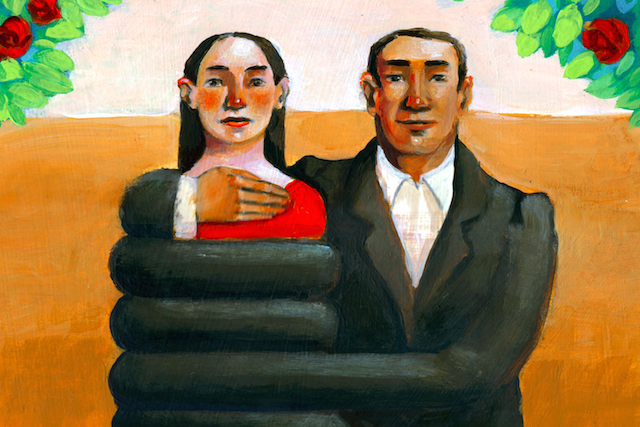
    But I still had a long way to go.

    The energy around my husband was cold and uncomfortable. I knew he felt it too. He avoided me. When we did encounter each other, he looked at me with disdain and disgust. I went straight to my default thoughts; he must think I’m ugly. It put me in another downward spiral of self-loathing, but not for long.
    I was determined to get better, to stop struggling with low-self-worth and lack of self-compassion.

    Counseling helped put things in a new perspective. In one of our sessions, she told me something I will never forget: There was nothing you could have done differently. He was going to leave anyway. To know that I hadn’t failed at my relationship and it wasn’t all my fault was a huge relief.

    My counselor introduced self-love activities, which sounded so counter-intuitive. I couldn’t wrap my head around it. Despite the awkwardness of looking at myself in the mirror and giving myself positive compliments full of compassion, I did it. The more I practiced compassion toward myself, the more I began to see my intrinsic worth.

    I began with the simple phrase: I love you.

    That turned into: I deserve love.

    I kept saying these every day, wherever I was. My thinking changed my reality. I began to truly believe I was worthy of love.

    3. Acceptance and Forgiveness

    Even though I spoke with a counselor regularly, I still rode on a rollercoaster from hell. While I still lived at the house, my husband had told me he was going on a fishing trip a few hours away. Every fiber of my being told me he was lying.

    The Monday he returned, I searched the room he slept in and found the receipt for a hotel room for two people only twenty minutes away. I confronted him and he denied anything was going on. I couldn’t mention the receipt because I was ashamed for trying to find proof.

    I said horrible things to him that night, not because of what he had done, but because he was lying. After being together for almost nine years, how could he still ignore my feelings? How could he continue to lie? His behavior made it perfectly clear that our marriage was over, he had someone else, and he had nothing else to lose. Why not admit it?

    I felt as though he never loved me at all. The tension between us worsened and I felt like a stranger in the home I had lived in for six years.

    I wanted him to hurt like I did, to understand my pain, my devastation, to empathize with me in some way. He had never experienced a devastating loss of a parent like I had as a child. He had never experienced abandonment of people who are supposed to love all of you, the imperfect parts too. He could not begin to understand the pain and grief I experienced. He had no idea how it festers inside like a dormant volcano for years, then spews out in forms of self-harm.

    Despite my mistakes in our relationship and my feelings of unworthiness, I knew I didn’t deserve his lies. The next morning, I promised myself that I would stop trying to find proof of his affair. It wasn’t worth the pain. I knew the truth and if he wanted to continue to lie, that was his choice. I also stopped berating myself for what I had said.

    I knew I could never go back in time and redo everything. I couldn’t take anything back. I had to learn from it all and move forward. I had loved this man, and a part of me still did. It was at that moment I forgave my husband for what he had done. I just couldn’t forgive myself yet.

    4. Meditation and Breathing

    I tried meditation on my own, but I was in the same boat as so many other people who say they can’t meditate because their mind wanders. I didn’t have the patience to meditate, but I still tried.

    I sat down on the floor, closed my eyes, and began thinking of all the things I wasn’t supposed to think about. I tried hard to stay focused on the present moment, like I had read so many times. I needed help.

    I found a Meetup group about mindfulness and the healing process. I learned tactics for finding awareness and my own inner peace, like repeating a mantra over and over, “I am here. I am love. I am enough. I am okay.” I learned about the power of breathing and the breath cycles: inhale for four seconds, hold for seven, exhale for eight.

    With practice, I was able to retrain my brain to stay in the present and not dwell in the past or worry in the future. Meditation helps to change the mind’s thoughts, too.

    With meditation came awareness and acceptance of my emotions. When the sadness came, I let it. I crumbled to the floor and allowed my tears to fall for as long as needed and eventually, I rose from the floor and moved forward, telling myself that it’s okay to feel whatever it is you feel.

    When loneliness threatened to debilitate me, I let it in, sensing it poke and pry at every vulnerable part of me. But then it eventually went away too. I learned that emotions are like unwanted guests: they are annoying when they are around, but they will eventually leave.

    Over the next few months, I could feel a shift within me. I felt empowered. I felt more confident.

    5. Writing

    Writing is in my soul. It helps to put things in a new perspective. Since I was a child, I wrote my thoughts down to help process what happened to me. I can see the events anew with some distance and perspective.

    I kept a notebook and carried it with me wherever I went. When I felt overwhelmed by my thoughts, I wrote them down. It served as a kind of brain dump for all the streaming thoughts in my head.

    Writing is tangible proof and a reminder that the only constant thing in life is change. Our viewpoint on life never looks the same when we look back on it from the rearview mirror.

    I am a work in progress. I am healing. I am growing. I am learning. I am rising stronger every day. Even if one person cannot see my value, my worth, and my intrinsic goodness, I have countless others who can and who have shown me that I am worthy of love.

    Love is what humans truly crave when they futilely use money to buy new gadgets, clothes, or make fancy renovations to their homes. But at the end of the day, humans thrive and prosper on love. No amount of money or material wealth can replace the desire to feel loved and be loved in return. The most important love of all is that for yourself.

    I still question myself and my value. But I am getting better at recognizing those thoughts and shutting them down sooner, then replacing them with more compassionate ones.

    I have learned that mental illness is not something to be ashamed of or kept secret.

    Mental health is okay to talk about. It is okay to ask for help. Don’t hold it in no matter what you assume other people will think. You are worthy of finding peace and healing. You deserve to be the best version of yourself. Accept yourself so you can forgive yourself. Choose to love yourself first and everything else will fall into place.

  • How a Highly Sensitive Person Can Get Over a Breakup And Move On

    How a Highly Sensitive Person Can Get Over a Breakup And Move On

    “A shoutout to everyone who is trying right now… Trying to do the right thing. Trying to stay open. Trying to keep going. Trying to hold on. Trying to let go. Trying to find their flow. Trying to stay afloat. Trying to meet each new day. Trying to find their balance. Trying to love themselves. Trying new things and new ways. I see you. I’m there too. We’re in this together.” ~S.C. Lourie

    Breakups are devastating, and the pain is real. But if you’re a highly sensitive person (HSP), it can take an extreme toll on your system because HSPs feel everything twice as deeply.

    For the HSP, the pain of a breakup can be completely overwhelming and trigger a heightened emotional state.

    When a relationship ends, it can make you feel insignificant. Regardless of who initiated the ending, you experience a tremendous impact in your life that can drive you into despair, confusion, and rage. Not only do you feel emotionally affected, but you may feel as if you are physically wounded as well.

    My whole world came crashing down when my partner went radio silent. He refused to answer my texts and avoided any form of contact. I felt lost and confused, not knowing what to do or where to turn. Each day felt harder than the day before.

    I knew for months that things were not going well, but I was clinging on to hope that the situation would somehow improve. When my partner left without a word, I knew that was the end. I did not get any closure, not that I require it because I realized it would not make me feel even the least bit better even if I did.

    I’ve heard stories from fellow HSPs who took a long time to get over a breakup, and I didn’t want that same experience for myself. But the pain of dragging my broken heart around and the intense emotional stress were not getting any easier on me.

    A day felt like a month, and I wasn’t sure I could survive until the end of the month because the experience was so devastating. I wanted to get over to the other side quickly and get on with my life.

    These are the steps that helped me recover within a shorter time than I feared it would it take.

    1. Forcing Myself to Get Out

    When the realization that we’d never be together again hit my brain multiple times a day, I lost functionality. My entire system broke down. I could not think clearly or act normally. All I wanted to do was vegetate and cry, which only made the situation worse.

    To reset my brain, I tried to get out of the house as often as I could. My body and brain would fight me. I was already exhausted and feeling hopeless. It took a tremendous amount of willpower to drag myself out of bed. The moment I succeeded, I realized it wasn’t half as bad as I thought it would be. I just had to win the mind game.

    I engaged in simple activities such as dropping in for a cup of coffee at the local café, taking a drive to nowhere, sitting alone watching children play in the park, or just enjoying the sunset. Beauty has a way of distracting us from our thoughts and soothing our nervous system. It drew my mind temporarily away from the problem and provided relief at the moment.

    2. Affirming My Self Worth

    Whenever my mind started reminding me it was over, I blamed myself. I imagined there was something I could have done differently. Or that it was my fault it had happened. I beat myself up and placed the entire burden on my shoulders.

    Knowing there was nothing I could do to reverse the situation, I attempted to tell myself a different story, even though I did not believe it in the beginning. I assured myself I was worthy of love, that I deserved to have someone love me as I was, and I required no validation from others to feel good about myself. I made those affirmations out loud so I could hear myself speak.

    In the beginning, it was a struggle. I would sneer, criticize, or ridicule myself every time I said an affirmation because I did not believe my own words. I persisted between tears and disbelief. Thankfully, it got better over time. Gradually I stopped criticizing myself and what remained were purely affirmations. As I continued to hear myself speak, I gained my own acceptance.

    3. Practicing Self-Compassion

    Research suggests that practicing self-compassion can help us become better adjusted and significantly improve our mental health. But it doesn’t come easily to HSPs.

    We tend to have unlimited compassion for everyone else but struggle to offer the same compassion to ourselves. We often judge ourselves as weak when we’re struggling with emotional pain. But that’s when we need self-compassion the most.

    As I gradually came to terms with reality, I indulged in more positive self-talk. I spoke to myself as I would my best friend. I told myself that I was the main character in my story, and I needed to heal. Despite what was going on, I assured myself I could feel better and rise above the situation.

    I focused on myself, telling myself that I would get out of this episode just fine. I convinced myself that soon, the pain would go away, and the awful feelings would end. Again, in the beginning, there were no significant changes. I persisted and gradually experienced mental clarity that showed me I was on the right path.

    4. Dealing With Relapse

    As I began to heal, I noticed the gap between the time I crumbled and the time I could hold up became further apart. It was not uncommon for me to break down multiple times throughout the day. Sometimes, I managed to get by without crying for an entire day. To me, that was a breakthrough because it showed a marked improvement.

    Some days I unexpectedly suffered a relapse after a period that I thought was an improvement. That took me completely by surprise. Gradually, I accepted that I was still in the process of healing, and that it was normal for my brain to revert to the lingering memory.

    When that happened, I revisited what I practiced earlier—getting out, affirming my self-worth, and practicing self-compassion. Self-talk was a crucial part of my healing process.

    I had to listen to my own words long enough to believe they were true. I had to avoid giving in to the mental chatter about my role in the breakup and my worth.

    We generally act on what we believe about ourselves. If we believe we deserve to hurt, we don’t do the things we need to do to heal.

    Moving On With My Life

    In slightly less than two months, I woke up with no brain fog and was able to go through an entire day without breaking down. I was able to resume my normal activities and focus on the day ahead.

    For me, the whole healing process was a battle of willpower. Some days were tranquil, although most days were difficult. Typically, it was one step forward and two steps backward. Whenever I struggled, I reminded myself that I wanted to heal and feel better. That generally got me on my feet and out of the house.

    A breakup can have a huge impact on a highly sensitive person, since we are more susceptible to stress and extreme anxiety. Although healing takes time and often we have to allow nature to run its course, there is no need to prolong the pain longer than necessary.

    Once you decide you are ready to receive healing and do everything you need to accommodate the process, you can come out of the episode faster and move on with your life.

  • Healing After Heartbreak: How to Turn Your Pain into Your Greatest Superpower

    Healing After Heartbreak: How to Turn Your Pain into Your Greatest Superpower

    “Blessed are the cracked, for they let in the light.” ~Spike Milligan

    Ever since I was a little girl, Disney films, story books, family, and friends unconsciously conditioned me to believe that the definition of happiness was a knight in shining armor galloping into my life to rescue me, sweeping me away, soothing all my problems as we ride off into the sunset to live happily ever after.

    However, it’s fair to say, that fairytale didn’t play out how I’d expected in real life. Nor does it for most, if any of us.

    For much of my teenage years, I had a turbulent relationship with my dad, who was absent a lot of the time (both physically and emotionally), as he battled with a toxic relationship with alcohol and mental illness. He was inconsistent, distant, and showed little interest in me or any of my achievements as I went through school and university.

    The story I told myself and the belief I adopted was that I clearly was not enough for this man, my own flesh and blood, to love me and to want to play a part in my life.

    I never recognized or processed all the negative emotions around him; the anger, hurt, resentment, and sadness that resided discreetly and comfortably in a deep dark corner of my heart, waiting for an opportunity to make their ugly appearance years later.

    I was twenty-three when I met the man that would years later become my husband. He was consistent, present, and loveable—all the things my dad was not. He loved me and made me feel like I was enough.

    Finally, my knight in shining armor had arrived—albeit not on a horse, but in a dark bar one Saturday night dressed as Spiderman. Regardless, I was sure it was going to be just like the fairytales.

    Like everyone else in my friendship group at that time, we progressed our way through the game of life like it was some kind of tick-box race:

    • Good job (tick)
    • Find a partner (tick)
    • Get engaged (tick)
    • Buy a house (tick)
    • Get married (tick)

    In all those films I’d watched and books I’d read, this was the equation for happiness. I’d seemingly completed the game successfully and nailed the equation. I’d gotten all those things I’d been yearning for, yet something was missing. I felt like I’d been cheated somehow. I didn’t feel truly happy, I didn’t feel really fulfilled, and I found myself asking: “is this it?”

    After a lot of contemplation and sleepless nights, I pressed the self-destruct button on my life and made the decision to walk away from my marriage and home. My friends thought I was mad. My family questioned my sanity. Somedays even I questioned my own decisions, but something deep inside me—my intuition, an inner knowing maybe—told me that I was not where I was meant to be.

    I reluctantly followed that pull, even though I was stepping into a terrifying unknown. My future looked dark and all the hopes, dreams, and plans that I had quickly fell to a thousand little pieces at my feet.

    I subsequently went from 0-100mph into full distraction mode. I threw myself into a new job, went traveling on my own, I dated, and from the outside I looked to be coping brilliantly. On the inside, however? I was far from brilliant. I felt lost, scared, and lonely, with an overwhelming feeling of failure with a sense that I just wasn’t “enough.”

    All those limiting beliefs and stories I had been telling myself since I was twelve bubbled up to the surface, and in my mind, had all been validated in one fell swoop.

    Crushed, I found I was frantically grasping for the things that once made me feel loved, safe, and secure, and there was nothing there. It gave me no choice but to go inward and be my own savior— my own knight in shining armor.

    This was the start of a journey of deep healing, rebuilding, and self-discovery—my comeback story. With the right support from a counselor and a coach, I processed and healed the wounds in my heart from my dad, and later from my divorce, which had unsurprisingly unearthed a lot of past trauma.

    I made a commitment that I was going to see this through no matter how tough and painful it was. I owed it to myself. I changed and transitioned, many times. I peeled back all the delicate layers of my heart and held each one up to the light with a compassionate curiosity. I had to break wide open in order for me to stick myself back together piece by piece.

    I took time to get to know myself. I healed and grew stronger and wiser. I expressed forgiveness and gratitude. I accepted all of myself. I learned to love myself. And slowly but surely, my natural confidence blossomed and spilled out. I realized that the more love I gave to myself, the more I had to pour into others.

    Self-love was the answer. For my whole life I had been looking to other people and external things to validate me, make me happy, and make me feel loved, when all along that was my job. I first needed to be enough for myself.

    I learned that it’s not about what you get in life. All of that ‘stuff’ is impermanent. Your looks? They’ll fade. Material stuff? Doesn’t mean anything, and you can’t take it all with you. Your job? Can be taken away. People? Can leave you. It’s who you become that’s really important.

    So, I made peace with my past and arrived at a place where I felt grateful for all of it. I then decided I was going to use every challenging experience to learn, grow, and become the best version of myself I could be.

    All healing begins with the ability to love yourself first—the ability to accept and acknowledge all of yourself and all your experiences, the good and the bad. Like water weathering a rock over time, your experiences have shaped you into the incredible, unique person that you are today.

    Forgiveness is another critical part of healing. You must find it in yourself to forgive others when they were doing the best with what they had, and to also forgive yourself for the mistakes you made when you were doing your best. If you don’t forgive, you are the person who suffers. It’s like walking around with an open wound; until you heal it, you will continue to bleed over every aspect of your life.

    After a lot of inner work, I healed and found the courage to shine a light on the biggest shadow that resided deep in my heart: that in some way I just wasn’t enough—not loveable enough. It pains me to see those words in black and white now, because they are no longer my truth.

    I carried the worry that people would judge my path because it looked different for too long. I chose to embrace the change, let go of caring what other people thought, and became the person I wanted to be. The person I always was underneath all the conditioning, limiting beliefs, and stories I’d made up as a result of my experiences.

    I thought, “What thoughts would the best version of me be thinking? How would she speak to herself? How would she treat others? How would she show up?” And I chose to become her.

    Since stepping into my authentic self, I have attracted the most incredible, diverse, inspiring people into my life. I had to choose to love some people from afar, but now I see how it was necessary in order for me to grow and evolve into the person I was always meant to become. The woman I am now proud to be.

    Don’t get me wrong, I still have days where I can wake up with a heavy heart or feel sad, but I’m human, and healing is by no means a simple or linear process. The difference is that now I am prepared with the mindset, awareness, and tools to approach challenging days with grace and self-compassion.

    We have been conditioned to think that a relationship ending means we are a failure. Yet, a relationship ending can often be evidence of strength, bravery, and empowerment. It can be the moment we stop settling for mediocrity and we finally say “enough” and choose ourselves.

    Although they do not feel like it at the time, endings are powerful containers for growth, learning, expansion, and exciting new beginnings.

    Yes, I lost a relationship with someone who I thought would be my forever person; we didn’t gallop off into the sunset and live happily ever after like I had expected we would. But through that messy, painful process of healing and re-building, I found the most secure, fulfilling, and loving relationship with a person who is going to be by my side until the day I take my last breath: me.

  • Why I Felt Broken and Unworthy of Love and What Changed Everything

    Why I Felt Broken and Unworthy of Love and What Changed Everything

    “How people treat other people is a direct reflection of how they feel about themselves.” ~Paulo Coelho

    He used to tell me no one else would love me because I’m damaged goods.

    And I believed him.

    Because I received messages for most of my life that there was something wrong with me.

    I wasn’t good enough. Too sensitive. Too weak. Too sickly. Too different.

    I realize now those messages were passed on to me by concerned parents who saw in me parts of themselves they didn’t fully accept.

    And those messages were from parents whose own parents had used criticism as a way to motivate them to do better. They didn’t know another way. They were just trying to help me succeed.

    But my little HSP soul took it to heart. I took it literally.

    Then I ventured into the world as an adult choosing romantic partners who confirmed every single belief I’d held about myself since my developmental years.

    This is a common cycle we perpetuate when we’re not aware that programmed conditioning is running the show.

    I attracted romantic partners that played out all the emotional dysregulation from my family of origin—to confirm to me that everything my caregivers had told me was indeed true.

    But I was also looking for someone to give me the love and acceptance I felt I had been lacking my whole life. I thought that would finally make me feel “normal.” I thought I would finally feel whole.

    Almost a decade ago, when I was in the worst (and most dangerous) romantic situation of my life, I tried to leave.

    Looking back, my friends told me they were truly concerned for my safety and my life while I was in that relationship.

    I had stayed because I felt that I deserved the treatment I received. That if someone who said they loved me spoke to me the way that he did, there must be a good reason.

    Although deep down inside, I had an inkling that this didn’t feel right. That perhaps being on my own was better than feeling terrible in this relationship.

    When I finally stood up for myself, he made sure I knew that if I left, I’d be destined to suffer alone forever because no one else would be willing to love a broken soul like me, and that I would indeed suffer greatly.

    He told me over and over again until I broke. Until I believed him.

    It took two whole years to finally free myself.

    In the end, what helped was seeking professional support—a wonderful counselor who helped me see that the situation I was in was harming me.

    Truly, my soul was dying. I was becoming a shell of who I was, and I hate to think where I’d be now had I stayed.

    The counselor helped me come to a new agreement with myself of what I was willing to tolerate in my life.

    It was the first step in an awakening to some important truths I hadn’t seen before.

    And I then committed to the inner healing.

    I spent many a moment in a sobbing mess on my yoga mat.

    I sat with the emotions that came up, even if they were uncomfortable. The fear, shame, guilt, anger. All of it.

    I listened to the messages these tough emotions had for me. And there were many.

    I met and befriended my inner child and realized she was scared. And that the only person that could really give her the assurance and comfort she truly desired was me.

    I had a dark night of the soul. My second (of three to date). Just as uncomfortable as the first.

    Just as the initial one had, this dark night delivered a deep realization that the path I was on was not leading me in a direction of my truth. I was moving away from my own inner light, not toward it.

    It was the jolt I needed to change. It was then that I finally mustered the strength to leave and not turn back.

    I didn’t yet know where I was going, but I knew it was going to be a different direction than where I had been. It had to be.

    I had changed my perspective about myself, and as a result, my life changed completely

    The people who then showed up were of a completely different caliber. Supportive, encouraging, and accepting of me for who I am: quirks and all.

    Or rather, I stopped letting in the wounded who didn’t accept me in all my bright, shiny perfect imperfection. I created new boundaries that prevented those uncomfortable with my light from trying to destroy it.

    As a result, I created more room around me for people who shine themselves.

    I’m now in a healthy, emotionally stable, and incredibly supportive relationship. It’s like night and day. I can see the difference now, and the contrast is remarkable.

    I now see that those manipulations and insults my ex threw at me were his way to control me because he didn’t feel in control himself. It was his coping mechanism.

    This behavior was most likely modeled to him from his own family of origin. This is how wounds are passed down.

    But at the time I didn’t understand, because I was taking in those comments from a completely different perspective.

    I was hearing those comments from the belief that there was something wrong with me, and so I assumed what he was saying to me was the truth.

    Please know, beautiful soul, that you are worthy of love in every way—especially and most importantly love from yourself.

    Anyone who tells you otherwise is coming from a place of woundedness. Do not let them pull you into their wounds.

    Stay in your light. Stay strong to your truth.

    Some may think your light is too bright, but that’s because it illuminates the wounds they’re not yet ready to face.

    As a result, they’ll try to dull your light to protect themselves.

    The ones who are meant for you will love your unique brightness and encourage more of it.

    Because they also live their truth and shine their light bright, and they understand the importance of supporting others to do the same.

    My love does this every single day.

    He doesn’t think I’m broken—he thinks I’m beautiful, inside and out.

    He knows I have wounds.

    And the lessons I’ve learned and strength I’ve gathered because of those wounds makes me wiser.

    He loves that about me. The emotional maturity I’ve gained through my journey makes me that much more appealing to him.

    And I’ve also come to realize on my journey that I don’t need his love or anyone else’s in order to find my own within. That’s the most important lesson of them all.

    You’re not broken, lovely human. Don’t let anyone convince you otherwise.

  • The Vault in Our Hearts: How I’m Learning to Fill It with My Own Love

    The Vault in Our Hearts: How I’m Learning to Fill It with My Own Love

    “If you don’t love yourself, you’ll always be looking for someone else to fill the void inside you, but no one will ever be able to do it.” ~Lori Deschene

    This year I have fallen in and out of love. Not once, not twice, but three times.

    Firstly, I fell deeply into being held, being heard, and being supported. For the first time, in a long time, I understood what it meant to be loved.

    Secondly, I flew quickly into a spontaneous soul, who lit up my world and reminded me who I was.

    Thirdly, I surrendered earth-shatteringly into something that would force me to grow; someone who would crack my heart wide open and inspire my soul.

    And each time I fell a little more softly than the last; a little more tenderly, a little more lovingly, and a little more openly from my soul. Yet, with all this falling and flying, laced with twisted heartstrings and crying, I am still here trying to feel my way through the vault in my heart.

    The black hole that is almost instantaneously filled with the love of another, like stardust filling my heart. The black hole that is continuously expanding and shifting, then engulfing itself.

    The love also expands and shifts, it swirls and grows—I feel temporarily full until I begin to lose my glow. And then I wonder, how I am sat here again with tears in my eyes and a chest full of doubt? And it hits me, like a meteor of light—gold dust running through my veins and lightning in my heart.

    My vault is to be filled, not by the love of another, not by the way I think it should feel, but by my hopes, my wonder, and my soul-powered dreams; the technicolor life I have always wanted to lead.

    And so, I sit here, laughing and crying and sentimentally smiling at the irony of life, as I realize that the love that I have always wished for will never be enough. No one will keep me cradled in my heartstrings and permanently high on love.

    This person, your person, may light up your soul, but they will never fill the vault of your full-blown world. And so, we must vow to ourselves—we must allow ourselves—to fall in and out of love, not just with another, but with our true selves. Not with synchronizing with another but with aligning with our hearts, every single day.

    We must vision our life, our way, the way we want it to be. We must trust that it will yield to us everything we need. And on our paths, others may unlock our souls with golden keys of hope, vulnerability, longing, loss, and growth. But we must stay true to our paths, investing our time in a love that will last.

    The vault in our hearts needs to be filled, with visions of desire and hopes and dreams. Because in all this loving, I refuse to be stagnant. I refuse to let someone fill me and take away my passion. I want to feel it all, even if it means constantly falling and flying, contracting and expanding.

    This is the only way to stay true to my highest self, where my pain meets my madness, and my perspective shifts itself. My vault keeps unlocking and shimmering with gold, but this gold will always fade if I do not feed my soul. And now, I know. It doesn’t just have to be a temporary glow.

    I don’t want to be loved. I want to BE love.

    I want to feel it all, see it all, be it all. I want to journey with another, yet stay true to myself.

    And so here I am again, falling deeply and completely into the path of love; navigating a new relationship, and remembering what I have learned. They will never be enough unless I stay aligned with my true self. But who is my “true self”?

    She is creativity and joy, freedom and passion. She is travel, she is adventure, she is writing and compassion. She is singing from my heartstrings and rolling around in hugs, she is feeding my body good food and taking naps at lunch.

    She is grounding my body and rooting my earthly soul, she is reminding myself to take it easy and schedule in time for myself. She is having space to reflect, to vision, and to create—to live my best possible life every single day.

    She is dancing around my bedroom with a full and open heart, she is appreciating little flower buds and gazing at the milky way above. She is stopping for a moment to enjoy the simplicities of life and dancing in the rain even when storms rage outside. She is crying from my heart center, even when I don’t know what it’s about, she is cleansing my body with long baths and bucket loads of Epsom salt.

    She is moving my body and releasing emotions from deep within, she is letting go of yang and settling into yin. She is expressing my soul in a way that feels good to me, birthing zesty creations that fill me with energy. She is being honest with others even when it hurts, she is sharing my story and lighting up the world.

    She is diving into oceans with sweet and salty hair, drowning in my sorrows and shooting up for air. She is bathing in the sunshine and filling my body with light, allowing myself to rest when my eyes feel dim and tired. She is asking for guidance and praying from my heart, she is surrendering softly and letting life take its course.

    She is asking for help when I feel lost and broken, calling up a friend and sharing what I’m feeling. She is connecting with source and being committed every day, to filling up my cup and sharing it along the way. She is spending time with others who value my time and soul, who give with equal balance, and are committed to the path of growth.

    She is shining so bright that it blinds passers-by, inspiring others gently to shake up their own lives. She is standing bravely, boldly, and oh so lovingly so, when conversations are had and pain begins to show. She is forgiving the past, and not running to the future, living in the now and creating life from a balanced center.

    This is my love, my infinite love—my true self.

    And while I am open to falling into another, I will fall softly and deeply while honoring my center. The journey of love has taken me so far, but what it always teaches me is that I am capable of creating from my heart. And until it stops beating, I will allow it to shimmer and glow, igniting my dreams and letting my vault know—I will fill you. Every single day.

  • How a Simple Morning Routine Helped Me Heal from PTSD and Grief

    How a Simple Morning Routine Helped Me Heal from PTSD and Grief

    “If there is no struggle, there is no progress.” ~Frederick Douglass

    In an eighteen-month window, I had a landslide of firsts that I would not wish on my worst enemy.

    I ended my first long-term relationship with someone I deeply cared for but did not love. She had borderline personality disorder, and I was not mentally strong enough nor mature enough to be what she needed in a partner. Within five minutes of me saying our relationship was over, she slit her wrist as we sat there in bed. This was the beginning of it all.

    Drug overdoses, online personal attacks, physically beating me, calling and texting sixty-plus times a day, coming to my work, breaking into my home to steal and trash the place, and general emotional abuse followed over the next ten months.

    Day after day, week after week, month after month.

    My heart started racing, and my breathing spiked every time my phone went off, and I mean EVERY time. I woke each morning to multiple alerts that someone had tried to hack my social media and bank accounts and people I barely knew messaging me saying, “Hey, don’t know if you saw this, but your ex is…”

    In the midst of this, my parents called a family meeting, and that’s when they told us that dad’s doctor thought he might be showing the first signs of Parkinson’s disease.

    I didn’t know at the time what this news would mean long-term for him and us as a family, but I soon found out.

    Dad slowly started deteriorating mentally and physically. Within a year, he had aged twenty years and wasn’t able to be left alone. The man I had once known to be the picture of health and courage was gone.

    I, too, was changing for the worse.

    Happiness was a feeling I couldn’t relate to anymore. I was constantly in a state of duress, from twitching fingers to a tightness in my chest. The most notable change in my life was the constant breaking down as I would shower in the morning.

    After I woke, I would kneel, resting my head on my shoulders and cry, in fear for what the day ahead had in store and disbelief that my life had come to this.

    Even as I huddled there under the warm stream of water, I would feel my eyes shifting back and forth, a mile a minute, it seemed. The effects of my anxiety, depression, and PTSD were touching all areas of my body.

    I did not know what to do.

    I couldn’t believe my life had turned out like this.

    How could this be happening to me?

    But the scariest thought that came to mind, as I knelt in the shower each morning, was how do I stop this? No one had taught this in school.

    I remember staring at my ceiling one afternoon (as I often did, not having any desire to do anything that I once loved or cared about) and saying to myself, “If I don’t take action, I’ll be like this till I’m fifty.” And this was the truth; I knew it wasn’t going to go away without consistent work to better myself.

    Over the following weeks to months, I started working on my morning routine, something that had never been part of my life before this. Most mornings had me showering and getting dressed as I scrolled through the gram, looking at negative posts, adding more unhealthy thoughts to my already full mind.

    It was a slow process.

    Most days I only lasted five minutes before I gave up and went back to bed, but slowly, over time, with two steps forward then five steps back, I created a routine that felt comfortable and achievable each day.

    The routine went like this:

    • Wake up at the same time each day, no matter weekday or weekend.
    • Hop into the shower right away and finish off the last thirty seconds with a full blast of cold water.
    • Make my bed after I get changed.
    • Make a glass of hot lemon water.
    • Sit and drink the lemon water in silence as I look out the window.
    • Finish the time on the chair by saying five things that I am grateful for, no matter how small—”I am grateful for this tree outside my window.”
    • Put on a pot of coffee.
    • Write in my journal as the coffee brews, exploring how I am feeling at the moment or how I felt yesterday and why.

    Not until I had my coffee in my hand, around forty-five minutes after waking up, would I get my phone and flick it open to see what I had missed overnight.

    I had created a morning routine that put me ahead of everything else going on in life. There were no sudden jolts of unease or stress from outside sources like a text message, email, or social media post. 

    I was in control of my life for at least forty-five minutes every morning.

    I would use that confidence to extend those positive vibes further and further into my days. At first, they didn’t last very long, but over time I was able to look at the clock and see mid-day was here, and I hadn’t given up on being productive.

    My morning routine saved me. It gave me the confidence to add other tools to my mental health toolbox. I started eating healthier foods, working out more often, reading in bed instead of watching TV, and going to therapy. All of these things aided me in battling my mental health struggles.

    I’ve learned that sometimes, when our challenges feel daunting and unbeatable, we need to think big and act small, taking it one day at a time, or one morning at a time, or one breath at a time.

    Sometimes one small positive choice can have a massive ripple effect and change everything—especially when it enables us to tune out the noise of the world and reconnect with ourselves. Life will always be chaotic; if we want calm in our lives we have to consciously choose to create it.

    I write this to you three years after creating this morning routine, still doing it every damn day.

    It has evolved and adapted as I have grown as a human from these life experiences that shook me to the core.

    But I still make sure of one thing. I keep my phone out of my hands until my morning routine is done.

    This is my time.

  • 4 Things I Learned from Being Possessive and Controlling in a Relationship

    4 Things I Learned from Being Possessive and Controlling in a Relationship

    As she stood there watching the puppet show, our eyes locked. I was instantly attracted.

    After what felt like the longest fifteen minutes torn between the desire to talk to her and the fear of rejection, I mustered the courage to introduce myself.

    She gave me a smile, then without saying a word, walked away.

    “What just happened? How can such a beautiful lady be so rude?” I stood there in disbelief, overtaken by embarrassment, pretending nothing had happened.

    Two weeks later, as if by pure serendipity, a mutual friend reconnected us. That was the beginning of a relationship I could only dream of.

    Oh boy, did I misjudge her! Her attractive appearance was an exact expression of the beauty of her soul.

    One year and a half later, we were dating. Yes, I spent one year and half chasing after her. I guarantee a minute spent with her would convince you it was well worth my while.

    They say it takes longer to build a castle than a chicken coop. One and a half years must be the foundation for a skyscraper that not even the worst storm could break.

    For about a year, it felt that way. We were inseparable. Both our parents gave us their blessings. We moved in together. We even made wedding plans.

    It was like a relationship out of a fairy tale. We had every reason to believe we would live happily forever after. Life without each other was inconceivable.

    But there a problem… I was excessively possessive and controlling.

    I couldn’t stand my girl talking to another guy. I had the passwords to all her social media accounts. Whomever she was talking to, I knew. If she had to meet a male friend, I was present.

    Little by little I was withdrawing from her emotional bank account, as Stephen Covey put it. Worst of all, I was taking more than I was putting in.

    As a fervent Buddhist who believes in “letting go,” she was very tolerant. That gave me plenty of room to throw tantrums, ruminate, and blow the littlest issue out of proportion.

    Well, patience has its limits. After three and a half years, she had reached hers. I had emptied her emotional bank account.

    It was over. She had broken up with me.

    I was so clingy that I wouldn’t even accept her decision. I spent eighteen days trying every trick under the blue sky to get her back, to no avail.

    How did that happen? We’d spent so much time building our relationship, cherishing and loving each other. What went wrong?

    The eighteen days that followed were like a living hell. I suffered panic attacks, lost my appetite, and couldn’t sleep. Life became meaningless. I was at a breaking point.

    On the eighteenth day after the breakup, when I realized she wasn’t coming back, I had a reckoning. My desperation suddenly gave way to a wave of frustration, anger, and shame.

    As I was engulfed in deceit and embarrassment, I made a solemn decision to never again get rejected by a girl for being overly possessive, irrational, and intolerant.

    Such a momentous decision! I didn’t know if that was even possible and how I was ever going to reach such a lofty goal.

    That breakup and the three years spent self-examining taught me the big four lessons I am about to share with you.

    Are you in a relationship? Does your overbearingness prevent you from spending quality time with your partner? Are you ready to make changes?

    If you answered yes to all three questions, you are reading the right article. Hopefully, you won’t have to lose a partner and spend three years in self-introspection to find out you need to make changes.

    First thing first, love thyself.

    I know that sounds cliché, but I couldn’t find any fancier way to put it..

    Enjoying the company of your partner starts with you feeling good in your own skin. I’m guessing you would agree that one cannot love if they don’t possess it.

    A lack of self-love will cause you to center your entire being around the other person. And just like any host-parasite relationship, it will eventually fail. Your partner can’t let you feed off them indefinitely.

    Self-love is not selfishness. Loving yourself first doesn’t mean disparaging the other to elevate yourself. It’s acknowledging and embracing yourself while selflessly attuning to your partner’s needs and whims.

    Forget the “other half” mantras. Neither you nor your partner is a half, each of you possess their unique interests, weaknesses, strengths, and aspiration. It’s only when you both commit to each other, while staying true to your individuality, that genuine love happens.

    If I had espoused that idea then, I would never have considered suicide when my ex left me. I had based so much of my life on her I just couldn’t find meaning outsider of her.

    Learn to trust or you lose.

    Trust is the pillar of every human relationship, especially romantic ones.

    My lack of trust in my ex had nothing to do with her but rather with my deep sense of insecurity. I had the recurring thought that she would leave the minute she met someone better than me.

    Not only did my baseless fears cause me my peace of mind, they also created a wedge in our relationship.

    My trust issues caused her to lose all sense of vulnerability and safety around me. The only option she had was to confide in someone else.

    To learn to trust, I had to remind myself of this simple truth: We can’t control someone’s thoughts and actions. The best we can do is to give them the benefit of the doubt.

    Now, I choose to respect and trust my girlfriend unconditionally. Not only is she more willing to open up to me, I also enjoy a dramatic increase in self-esteem.

    Forgive and forget.

    Do you know those people who catastrophize and ruminate long after they got hurt? Well, that’s my past self!

    I did this every time my ex did something that displeased me. It didn’t matter if she apologized, I would internalize it and bring it up every time we were in an argument.

    For the last two years of our relationship, I made her life miserable. Imagine someone who never forgets even your most trivial mishap and uses it to attack you every time you’re wrong.

    Ironically, I learned to forgive and forget during the eighteen-day period while I was trying to get her back out of desperation.

    After flowers, long letters, and constant phone calls failed, I thought I could use religion to get her attention. That idea brought me to Google searching for “Buddha’s quote about forgiveness.”

    I came across this wisdom by Buddha: “Holding on to anger is like grasping a hot coal with the intent of throwing it at someone else; you are the one who gets burned.”

    As I copied and pasted the quote in a text message, I realized it was more relevant to me than her. I had an instant awakening.

    Instead of sending the quote to her, I decided to internalize it and use it for myself. How many times have I burnt myself by holding to anger? That was a genuine eye opener.

    When I started to remind myself of the danger anger poses to one’s mental health and peace of mind, not to mention its disastrous consequence on our relationships, I became more tolerant and accepting.

    Understand that nothing is guaranteed to last forever.

    I learned the hard way that no matter how well things are going between you and your partner, they may leave you at any time.

    When you accept the temporal nature of everything, you can stop clinging and worrying about the future and simply enjoy what you have in the moment.

    This means we must balance enjoying the company of our partner, while accepting the relationship might not last forever.

    Ironically, accepting that they could leave might decrease the odds of them leaving any time soon because people feel a lot happier when they don’t feel suffocated or controlled.

    Today, I understand my ex breaking up with me was a blessing in disguise.

    Would I change things if I could go back in time? Not for the world! I grew more in the three years following our breakup than I had in the twenty-one years before that. Why would anyone trade that?

    Exactly three years after that breakup, I got into a new a relationship that’s been going strong for almost two years now. I know when to invest in myself and when to give my girlfriend my undivided attention. I respect, trust, and give her all the affection she deserves.

    I don’t know what the future holds, but I don’t worry. I seize the day, prepare for the worst, and hope for best.

    Did I reach my lofty goal to never again get rejected for being overly possessive? Geez, I don’t know, and it doesn’t matter. All I know is that if my girlfriend leaves me tomorrow, it won’t be because I was being intolerant, overbearing, and bossy.