Tag: breakup

  • When Someone You Love Shuts the Door

    When Someone You Love Shuts the Door

    “It is one thing to lose people you love. It is another to lose yourself. That is a greater loss.” ~Donna Goddard

    We didn’t mean to fall into anything romantic. It started as friendship, collaboration, long voice notes about work, life, trauma, and healing. We helped each other solve problems. We gave each other pep talks before difficult meetings. He liked to say I had good instincts; I told him he had grit.

    We shared vulnerabilities like flashlights in the dark—he told me about getting into fights, going to jail, losing jobs because he couldn’t keep his mouth shut. I shared about growing up in a home with yelling, hitting, and silence, and how I used to chase validation in relationships just to feel seen. Somewhere in there, something sparked.

    By early May, the friendship shifted. There was a night we were sitting together, talking about emotional sobriety, when I felt it: the weight of his gaze, the stillness between us. We kissed. And then we didn’t stop. I didn’t expect it, but I also didn’t resist it. It felt natural, like picking up a conversation we didn’t realize we’d already started.

    But like many things built on intensity, it became complicated fast.

    He opened up about wanting to explore something sexually that I couldn’t. It may have felt like shame to him, but that wasn’t my intention—I was simply clear: I wouldn’t feel safe there. He was hurt. Said I’d stepped on his vulnerability. And I didn’t respond perfectly. I froze. That’s what I do when I feel pressure or threat. I don’t yell or lash out—I go quiet, retreat inward, try to understand what’s happening before I respond.

    Still, I thought we’d moved past it. I gave him space while traveling, and when we reconnected, he told me he was in love with me. That he accepted my situation. That it was worth it. That he’d be patient.

    So I met him in the middle. I softened. I opened a little more.

    He was a recovering alcoholic—sober for nearly nineteen years. He had wrecked two long-term relationships in the past, he told me. He’d been arrested multiple times, fired for outbursts, and said he was trying to do better now. I believed him. I saw the way he loved his dog training clients, how he was trying to build something on his own terms.

    I shared my own journey—how I’d sought approval in the arms of others when I felt dismissed or invisible in my marriage. How I went to SLAA and learned to sit with my feelings instead of running from them. How I founded a company, Geri-Gadgets, inspired by caring for my mom during her dementia journey. He understood the grief of losing a parent slowly. His mom had dementia too. We bonded over what that does to you—how it softens certain edges while sharpening others.

    We had history, shared values, hard-earned wisdom. That’s why I was so unprepared for how it ended.

    It started with a question. I asked him what I should wear to dinner with his sister and brother-in-law after a meeting we were attending together. He responded by sending me a photo of a woman in a short leather outfit, over-the-knee stiletto boots, and a dominatrix pose.

    I stared at the image, confused. Was it a joke? A test? A dig? Given my past—the abuse, the trauma, the very clear boundaries I’d communicated—I didn’t find it funny. I felt dismissed. Mocked, even. I made a comment about the woman’s body, not because I cared, but because I was triggered. Because I didn’t know how to say, This hurts me.

    That set off a chain reaction.

    We were supposed to be working on something together—a potential hire for his business—but the conversation turned tense. I felt myself shutting down. I needed time to process. I called to talk, to break through the tension with an actual voice, but he wouldn’t answer. He refused to talk to me—until he’d already decided to be done.

    By the time we finally spoke, it was over. He’d already shut the door. The ending didn’t come in one moment—it came in his silence, his refusal to engage when I needed him to. It came when vulnerability met a wall.

    This kind of ending triggers old wounds. The kind that taught me to freeze when someone withdraws love. The kind that makes me overfunction to earn back safety.

    I was the child who was hit and then ignored. My father would scream and slam a strap against my legs, then bury his head in the newspaper and pretend I didn’t exist. Those are the things that shape a nervous system. Those are the stories we carry into adulthood, whether we want to or not.

    In past relationships, I chased. I made excuses. I convinced myself it was my fault. I’d think: If only I were more accommodating… less sensitive… sexier, smarter, cooler… maybe they’d stay. But not this time.

    This time, I sat with the ache. I let it wash over me. I didn’t rush to fix it or fill it. I didn’t reach out. I didn’t beg for clarity or closure. I cried. I journaled. I went to meetings. I talked to trusted friends. I worked. I kept my boundaries intact.

    Because here’s what I’ve learned: I am worth calm. I am worth communication that doesn’t punish. I am worth someone who doesn’t confuse intensity with depth.

    He said I pivoted. But what he saw as inconsistency was actually growth. I was honoring a boundary. I wasn’t trying to wound him—I was trying to protect myself. And yes, sometimes that looks messy. Sometimes healing doesn’t come in a neat package with perfect communication and the right amount of eye contact. Sometimes it means making the best decision you can in real time with the nervous system you have.

    I had let him in. I trusted him with my story, my body, my boundaries. I showed up with care and effort and consistency. But I can’t control how someone receives me. I can only control how I respond when they shut the door.

    And this time, I didn’t run after it. I let it close. Gently, painfully, finally.

    Losing him hurt. But losing myself again would’ve hurt more.

    If you opened yourself up to someone and they rejected you, remember it’s not a reflection of your worth. And sometimes when someone walks away, it’s for the best if them staying would have meant you abandoning yourself.
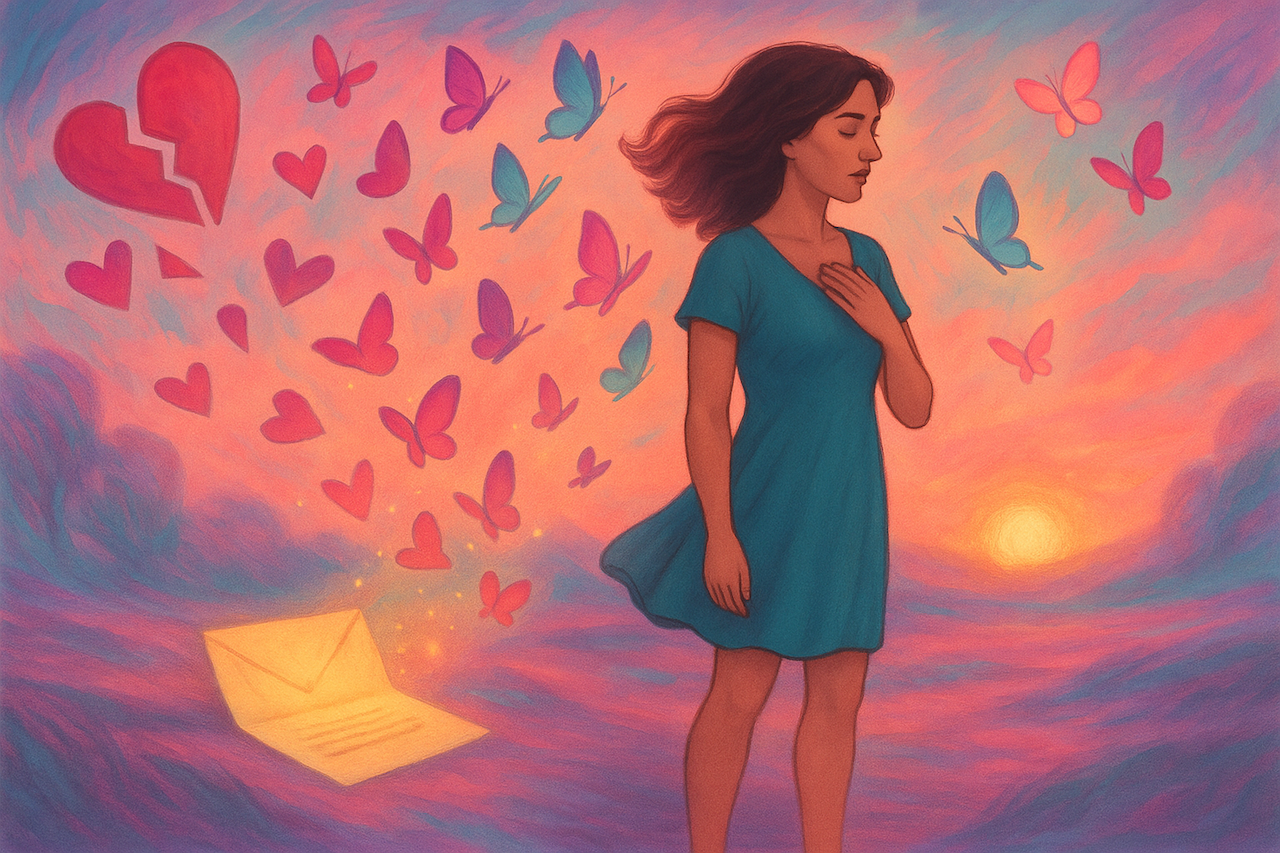
  • What My First Heartbreak Revealed About My Self-Worth

    What My First Heartbreak Revealed About My Self-Worth

    The first time I got my heart broken—really, painfully broken—I remember feeling too ashamed to ask for support. I didn’t talk about it with anyone because, at the time, there weren’t many people I trusted with such a raw and tender part of myself.

    I cried a lot, so people around me knew something had happened, but looking back, I think it’s tragic that I had no friends or family I felt safe enough to open up to. No bestie to cry into a tub of ice cream with. Tragic, but also a bit revealing.

    Like all painful experiences of loss, it eventually became more bearable. I resumed my regular routines. Heartbreak is just another part of life, and we move on as time passes, right?

    It was over a decade later when I chanced upon a letter I had written to my ex shortly after our breakup. I found it at my parents’ house in the pocket of an old pair of pants, in a drawer full of remnants from those restless years of young adulthood when I had no true home of my own.

    My stomach sank as I pulled it out, recognizing it instantly. Had someone found it and read it? Imagine that. Shame outweighed curiosity even all those years later. But the envelope was still sealed. It had his name written on the front in my handwriting.

    The letter was written to him, but it was always meant for me. I had been drowning in misery when I wrote it, and re-reading the words pulled me right back into that pain. But with years of distance, I saw something I couldn’t have grasped back then.

    At the time, I had believed the pain was all about losing him—that I couldn’t imagine not being with him anymore. Missing him felt like a black hole in my life, one that only he could fill. And yes, part of my pain was indeed about him. But if I’m being honest, our connection was never strong enough to justify the depth of pain I felt when it ended.

    The true source of my pain—the visceral agony of the weeks that followed—was not about him at all. It was about what his rejection confirmed for me.

    I’m not enough.

    That is why the whole experience was so closely tied to feeling shame as much as (or more so) than feeling grief. Every insecurity I had carried since childhood—not smart enough, not interesting enough, not attractive enough, not cool enough, not sexy enough, not fun enough—felt legitimized the moment he decided I wasn’t for him. Losing him was a personal failure and a reflection of my insignificance.

    Even more than that, I realized that our entire relationship had been a desperate attempt to prove my own worth. If I could be loved by him, then maybe I was good enough. That was my only focus. And in making that my focus, I sabotaged the relationship.

    In the early days, I was being me. That’s what had sparked the attraction. But once we committed, I became hyper-aware of everything I thought I needed to be in order for him to keep wanting me. I stopped being present. I stopped enjoying him. Without even realizing it, I created drama—not because I wanted to, but because I needed him to prove he cared enough to stay. I was so obsessed with being enough for him that I never paused to ask myself if he was enough for me.

    I didn’t know it then, but breakups don’t just hurt because of who we’ve lost. They crack open something deeper. They expose wounds we didn’t even know we were carrying.

    At the time, I looked at other people—especially my ex—who seemed fine, and I convinced myself that something must be wrong with me. But looking back, I see how misguided that was. I wasn’t broken. I was reckoning with my own self-loathing. Without support. Without any reason to see how human it was.

    I wish I had known that the pain of a breakup isn’t necessarily just about missing someone. It’s also about what the feeling of desertion stirs up in you. It’s about how the sudden loss of connection can make you question your own worth.

    I tried to be strong by pushing through, distracting myself, pretending I was okay. I tried to hate him, fixating on all his flaws. But avoidance isn’t healing—it only postpones the inevitable. The feelings I refused to process didn’t disappear; they resurfaced in my self-doubt, in my choices, in the quiet moments when no distraction was enough.

    Standing in my parents’ home that day, I was able to see the missed window of opportunity. I understood how going through that alone due to my shame never gave the experience a chance to be properly digested. The same inner critic and shame resurfaced again and again in the years that followed until eventually, I was brave enough to do the work and step into a version of myself who believes in my inherent value.

    If I could go back, I would tell myself a few important things:

    • This isn’t something to just get over. It’s something to move through. The pain isn’t here to break you—it’s asking for your attention.
    • Real strength isn’t pretending you’re fine. It’s allowing yourself to feel what needs to be felt. It’s getting the right support, whether from a therapist, a coach, or a trusted guide. It’s letting the experience change you—not by making you harder, but by making you whole.
    • Healing doesn’t mean forgetting. It doesn’t mean waking up one day and realizing you no longer care. It means learning from the loss. Understanding yourself more deeply. Stepping forward with a clearer sense of what you truly need and deserve.

    I can’t go back and give my younger self this wisdom. Who knows if she would have been ready to listen anyway? But I can offer it to anyone who might be there now—wondering why it still hurts, wondering when they’ll finally be “over it.”

    The truth? The most painful moments of our lives often carry the greatest invitations for self-discovery. Normalizing our pain and meeting it with self-compassion can unlock massive personal growth.

    We don’t get through life unscathed. We will be hurt. We will face pain. We will have to accept the incomprehensible.

    But if we learn to turn inward—to become a safe refuge for ourselves, filled with kindness and understanding—we can evolve. We can transform our lives rather than repeat the same lesson over and over, carrying that wisdom into our next experience.

    So here is my wish for all of you with a broken heart. May you meet your pain so it won’t just wound you but shape you into a truer version of yourself. Stay in your heart.
  • Sometimes Letting Go Is the Ultimate Act of Love

    Sometimes Letting Go Is the Ultimate Act of Love

    “Sometimes letting go is the ultimate act of love—both for the other person and for yourself.” ~Unknown

    I never imagined that the same classroom where I found love would become the first chapter of a story about letting go.

    Ten years ago, as an undergraduate student full of dreams and certainty, I met him. We were classmates first, then friends, and finally, lovers who thought we’d conquered the dating game by finding our perfect match so young.

    During our college years, our bond seemed unshakeable. We even chose to intern in the same city, not wanting distance to separate us. I remember the tiny apartment we’d meet in after long workdays, sharing instant noodles and big dreams. We thought we were building our future together, one shared experience at a time.

    But as graduation approached and those dreams began taking concrete shape, hairline cracks started appearing in our foundation. While I envisioned building a family by twenty-seven, seeing myself hosting Sunday dinners and creating a warm home, he was focused on making his mark in his career. Every conversation about the future seemed to pull us in opposite directions.

    Those differences erupted into arguments that stretched across two years. Each fight left us more entrenched in our positions, unable to find middle ground. What had once been loving support for each other’s goals became a tug-of-war between two different life paths. We kept trying to bend each other’s vision of the future until we finally realized that some dreams can’t be compromised without breaking the dreamer.

    In 2022, after a decade of love, memories, and shared history, our relationship ended. The future I had spent ten years imagining disappeared overnight. Every plan, every dream, every “someday” we had talked about vanished, leaving me feeling like I was free-falling through space without a tether.

    The first year after our breakup was the hardest challenge I’ve ever faced. I was struck down by bronchitis, and in those dark nights of physical and emotional pain, thoughts of giving up crossed my mind. Why should I continue when the future I had built my entire adult life around had crumbled?

    But in those moments of deepest despair, a quiet voice inside me asked, “Why should I give up my life for a rejection? Why should someone else’s inability to choose me determine my worth?”

    That was my turning point. I realized that by entertaining thoughts of giving up, I was rejecting myself far more brutally than anyone else ever could. The end of a relationship, even a decade-long one, didn’t have to mean the end of my story.

    Here’s what I learned about surviving the death of a future you thought was certain:

    1. Your plans changing doesn’t mean you failed. Sometimes the bravest thing we can do is acknowledge that two good people can want different things, and that’s okay.

    2. The length of a relationship doesn’t determine its success. Those ten years weren’t wasted—they were filled with growth, love, and lessons that shaped who I am today.

    3. Physical illness and emotional pain often go hand in hand. Taking care of your body becomes crucial when your heart is healing.

    4. The future you imagined isn’t the only future possible. When one door closes, it doesn’t mean you’re trapped—it means you’re being redirected to a path you haven’t imagined yet.

    5. Choosing life is an act of courage. Every morning you get up and face the day, you’re choosing to believe in possibilities over past pain.

    It took me a full year to finally accept that I would never have that particular future I had planned. But in accepting that loss, I found something unexpected—freedom. Freedom to reimagine my life without compromising my core desires. Freedom to discover who I am outside of a relationship that had defined my entire adult life.

    Now, looking back, I understand that the end of our relationship wasn’t just about losing someone I loved; it was about finding myself. In choosing to live, to move forward, to accept the end of one dream as the potential beginning of another, I discovered a strength I never knew I possessed.

    To anyone reading this who’s in the depths of heartbreak, questioning whether they’ll ever feel whole again: you will. Not in the same way—you’ll never be the same person you were before this loss. But you’ll be stronger, wiser, and more authentically yourself than ever before. The future you imagined may be gone, but the future you’ll create might be even better than anything you could have planned.

    Choose life. Choose yourself. Choose to believe that an ended relationship isn’t a failed one—it’s just a completed chapter in your ongoing story.
  • When Love Isn’t Enough: The Lessons I Learned from my Breakup

    When Love Isn’t Enough: The Lessons I Learned from my Breakup

    “This is not where your story ends. It’s simply where it takes a turn you didn’t expect.” ~Cheryl Strayed

    He had the courage to say what I couldn’t.

    “It’s not working anymore.”

    It didn’t make any sense that we were breaking up. We loved each other so much. We had been talking about getting engaged. Our couples therapy was moving in a positive direction, even when it was really challenging.

    When he said those words, I knew I wasn’t going to argue with him. As much as we loved each other, we had taken the relationship as far as it could go.

    But this isn’t a story about lost love. It’s about all the love you can find when it leaves.

    I knew our relationship had felt off for a while.

    Earlier in the day before the breakup, when he went to the bar to watch the football game, I got down on my knees and prayed for clarity. I felt lost about whether I should stay and fight for the relationship or if it was time for it to end.

    Our relationship felt like a back-and-forth struggle for months. We even took a long weekend trip to New Orleans to reignite our spark. But when we got back home, it seemed like one minute he was my one-man cheering section at my half marathon, and the next we were yelling at each other sitting in our parked car.

    The minute I prayed for help, I knew that the relationship needed to end. But I wasn’t willing to be honest and admit that to myself. I wasn’t really ready to say those words out loud. I didn’t want them to be true, even though I knew deep down that they were true.

    A few hours later, he walked in the door and said the words no one wants to hear, “We need to talk.”

    And then began a two-hour-long conversation about ending our relationship and honoring what we had shared together. We had dated off and on for almost five years, living together for two. And it was over.

    While we had fun together and had undeniable chemistry, our compatibility never fit together. He had plenty of trauma from his past, and he questioned me when I encouraged him to have a life of his own outside of the relationship. He feared that if he was fully himself, I would yell and try to control him.

    And I had my own issues where I tried for so long to twist myself into being the perfect girlfriend. Eventually I got tired of pretending to be someone I wasn’t, but he didn’t seem to like who I really was. So, I made myself as small as possible, trying to be pleasing and acceptable but struggling to also be myself.

    It seemed that we loved each other, and we managed to bring out the worst in each other, despite all our best efforts.

    Loving someone isn’t always enough for a successful relationship. In our situation, we really were each other’s biggest cheerleader. And we wanted success and happiness so much for the other person that we masked our true selves. 

    I can’t speak for him, but I was afraid if I stepped into my full, powerful self that I would be rejected and told I was too much. I feared being abandoned once he saw me for who I really was.

    I learned too late into the relationship to let myself be vulnerable and real. By the time I did, our dynamic patterns had already been established, and the change was too much. He reacted in ways that reinforced my worst fears—that I was unlovable, that I was asking too much, that my real self wasn’t worthy of love.

    I deeply regret not being myself from day one in the relationship. But the pain of regret is a powerful teacher.

    I don’t know if our relationship would have gone differently if I had been real from the beginning. Maybe it would have never started. Or maybe it would have gone the distance. There’s no way to know.

    But that’s not a lingering question I’m willing to have in the future. I knew this relationship was teaching me that I DO matter, and I needed to learn how to be myself without the masks.

    It took me a lot of deep inner work to rebuild my confidence after that relationship ended. I needed to believe that I would be okay no matter what happened if I revealed who I am at the beginning of a relationship. 

    I practiced picking myself up after rejection and letting myself feel those really icky feelings that I had been trying to avoid—feelings like despair, disappointment, embarrassment, and shame.

    One of the hardest parts of mourning the breakup was that no one had done anything wrong. I had to learn to live in the paradox that we love each other and breaking up was the right thing. I learned that it’s enough that I don’t want to be in that relationship dynamic anymore.

    Pain is here as our teacher. It shows up to let us know what not to do.

    Most people want to rush through the pain as fast as possible. It’s not comfortable to allow the pain to be there without trying to make it all better.

    But when you learn how to sit with the pain and befriend it, there is so much wisdom to learn.

    My pain showed me all the ways I avoid being with myself and all the ways I had already abandoned myself—before any boyfriend could even have a chance. I was so quick to blame my problems on everyone else and then complain to my friends over glasses of rosé. I numbed my pain with wine, partying, hookups, nights out with friends, and Netflix.

    I see now that when I do that repeatedly, I end up not receiving pain’s wisdom. And instead, my life keeps giving me the same lesson over and over until I’m ready to learn it.

    I signed up with a therapist, a coach, and a women’s embodiment group. Each one brought a different way of guiding me to the lesson I was really avoiding:

    No one can abandon me if I don’t abandon myself first.

    I had to learn to love all of me. Even the parts that I think aren’t worthy. And I’m not writing this because I’m done learning, and I figured it all out. But I’m willing to learn, and I’m trying to be a bit more loving every day. 

    I remember being on a retreat in Mexico with my women’s group in the final moments of our time together. I raised my hand for coaching in front of everyone for the first time. I brought my messiest self and braced myself for shame.

    Instead, I let myself look in the eyes of the women around me as I shared my messiest self, and I saw nothing but love being reflected to me.

    My messiest self was lovable. I can bring her with me. I don’t have to be perfect, and I don’t have to show up how I think other people need me to be. I can just be me.

    I still struggle with this, honestly. I still try to be perfect and have it all figured out. But I remember back to the version of me in that relationship, and she seems so different from the woman I am today. I look at her with so much compassion because she’s trying so hard to be lovable.

    She hasn’t accepted the truth that she’s already lovable as she is. And that kind of love is always going to be enough for me. There is peace and power in loving myself.

    If my ex hadn’t broken up with me, I don’t think I would have let myself be totally broken open and vulnerable. And as painful as it was, I am forever grateful he was brave enough to break my heart.

  • Divorce: A Portal to Reclaiming My Authentic Self

    Divorce: A Portal to Reclaiming My Authentic Self

    “The only journey is the one within.” ~Rainer Maria Rilke

    Navigating life after divorce has been the hardest thing I’ve ever done, but divorce also contained the best gifts I have ever received. My whole world was shaken up and rearranged. The shake-up included a loss of career and becoming a mostly solo parent on top of the divorce.

    From the rubble of my old life, I got the chance to build something new, authentic, and fresh. Divorce was a painful portal to powerfully reclaiming myself and my life. Through the rebuilding process, I found strength and clarity in ways I never expected.

    Before my divorce, I felt anxious all the time, trapped in a constant cycle of wondering if I could be happier and if the problem was me, him, or us. I stayed in an agonizing limbo of “not bad enough to leave, not good enough to stay” for about five years.

    My husband at the time would ask, “Why can’t you just be happy with what you have?” The question hit me like a punch to the gut. Why couldn’t I? I was constantly questioning myself and my worth.

    Looking back on it now, I see that was the wrong question. My husband at the time was largely deflecting from the issues I was bringing to him and making it about me being perpetually unhappy as some kind of default. But it was true that I had inner work to do, and it was up to me to figure out what would make me happy.

    I tried everything to fix myself and the marriage—therapy, couples counseling, countless self-help books, and coaching. But the sense of loneliness persisted, especially around parenting, community, and spirituality.

    The key challenges that made my marriage deeply unsatisfying for me were money, sex, emotional connection, and identity. For the first three we didn’t share the same values and there was constant friction. Underneath all of that misalignment in the relationship, though, was the fact that my identity had been swallowed up.

    First in our company, which was his dream, but I worked tirelessly in it, and then in my role as a mom. But who was I, just for myself? That was the better question.

    Eventually, what gave me the strength to leave the marriage was simply giving myself permission to want what I wanted based on knowing who I truly was and believing that whatever was best for me was also best for everyone in my life. I believe all the models of self-help and self-care that I tried contributed to this realization.

    I had to believe that I could stand on my own, which was terrifying. But as I started taking small steps, each step, even the hardest ones, gave me the energy to keep going. I began to rebuild something real, authentic, and new.

    Of course, it’s impossible to distill the five-year-plus journey into easy steps or “hot” tips. But I want to attempt to narrow it down to the six key insights that got me through, in the hopes it can inspire others too.

    These are the six steps I took to use divorce as a portal to reclaim my authentic self.

    1. I gave myself permission to want what I wanted.

    For so long, I didn’t even know what I wanted. It was buried under years of trying to make everything work and thinking about what others wanted. It felt scary and uncomfortable to give myself permission to truly explore my desires, but once I did everything began to shift.

    I admitted to myself that I was ambitious in my own right, that I wanted my own business, and I wasn’t satisfied playing the key supporting role in the family business. I uncovered the secret longing I had for an exciting and equal romantic partnership where I felt seen and valued for the insights, fun, and hard work I bring to my relationships.

    Letting myself know what I wanted, taking those swirling locked-up longings from deep inside and forming them into solid words to be spoken out loud—that was the first step toward reclaiming my identity.

    2. I identified my core values.

    I took time to reflect on what truly mattered to me. Somewhere along the way I had merged values with my husband and his family. I needed to re-evaluate which ones were truly mine. This meant questioning everything from how I approached money to what emotional connection meant to me.

    My core personal values of wholeheartedness and adventurousness weren’t engrained in my career nor were they present in my day to day.  While there was nothing inherently dishonest about my life with my husband, our family wasn’t living in the deepest integrity that I longed for.

    When I was able to let go of the values that no longer represented me, there was room to discover my true values, which I had suppressed.

    3. I worked through old beliefs that were keeping me stuck.

    The old narratives that had kept me stuck in my marriage for so long didn’t go away overnight. It took time to unpack them and let go of the guilt, fear, and limiting beliefs that were holding me back.

    Particularly sticky was the belief that I was responsible for everyone’s feelings and coping abilities, even grown adults older than myself. Even after we separated, I felt responsible for how my ex was coping and the things he was choosing to do. But once I started working through these mental roadblocks, many of them newly emerging from my subconscious, I felt a sense of freedom I hadn’t experienced in years.

    4. I allowed myself dream big—even when it felt impossible.

    At the height of my separation, I was overwhelmed by tough decisions—parenting, finances, and the legal process. It felt ridiculous to even think about my dreams, but doing so gave me momentum. Dreaming big gave me a vision for a brighter future, one where I could live authentically. So my message for you is to allow yourself to dream, even when life feels heavy.

    5. I set boundaries—both internal and external.

    Learning to set boundaries, especially internal ones, helped me protect my energy and focus on rebuilding my life. Whether it was saying “no” to things that drained me or distancing myself from unhealthy dynamics, boundaries were crucial for me to maintain the new connection I had made with my authentic self. The new connection was tender and needed protection.

    6. I took small, empowering actions.

    Dreaming big was the most important step, but taking small actions was the only way to really feel like things were possible and manageable. Every little action created a ripple effect, surprising me with how much I could accomplish when I started small.

    For example, I wanted to become financially free, a multi-layered goal that would take years, so I started with a one-year goal to read six financial literacy books and make a budget. I committed to the small action of reading for five minutes a day and simply recording current expenses on a spreadsheet. I logged my progress in a daily habit tracker.

    For my big dream of finding an equal partner, I knew that I would need to be grounded and confident, so I committed to meditating ten minutes a day. There were other bigger leaps that had to be taken along the way of course, but those small daily habits really changed me. Now I read and meditate easily for hours a day, and I relish the time, but I remember when I first started how hard it felt to do even five minutes.

    It took me years, close to a decade, to reflect on and finally see the steps I took to get to where I am today. I hope it doesn’t take that long for anyone reading this who is navigating divorce. Please use these and apply them to your own situation. I hope they serve as a reminder that even though the journey is hard, there’s immense strength, growth, and rebirth waiting on the other side. Go get it!

  • The Tremendous Pain and Beauty of Letting Things Die

    The Tremendous Pain and Beauty of Letting Things Die

    “The cave you fear to enter holds the treasure you seek.” ~Joseph Campbell

    My husband Jake and I sit in anguish on our beautiful new linen couch, inches away from each other, yet worlds apart. Hours of arguing have left us at another impasse, the stalemate now a decade long.

    I look around in despair at the beautiful life we built together, petrified by the decision I know I have to make. My partner, my friends, the country I live in, the ground beneath my feet—all on the brink of collapse.

    I stare at the ceiling in heartache. What will be left of my life? So begins my descent into the white-hot heartache of letting things die.

    Lost in Translation: Identity and Adaptation

    I’d moved from Australia to the United States ten years earlier to be with my soon-to-be husband.

    This wasn’t a particularly dramatic move for me. I’d spent my whole adult life up until that point traveling and living in foreign countries and, although there was always a natural adaptation period, I managed. In fact, I loved it—I feel born to be foreign.

    So I thought this would be similar; straightforward, even. But I was wrong.

    The nature of being foreign is unfamiliarity. Each day feels like a fragile dance between two worlds that requires a huge amount of personal strength, emotional generosity, and energetic adaptation, because you are perpetually read from a different worldview, which means you likely feel constantly misread and misunderstood, even when you speak the same language.

    Along with that, and the other difficulties inherent in making a life in a foreign culture that I had learned to deal with—having no outlet for huge parts of who I am, constantly navigating an environment that reflected nothing of my values—I now also had to reckon with the need to adapt to my partner’s lifestyle. I needed to be friends with his friends, take the vacations he wanted to take, and fit myself into the predetermined role of “wife” in his life.

    We made large-scale decisions that seemed like compromises at the time, and I was often genuinely happy to make them in the name of the unit. But with each compromise, a piece of my identity slipped away, and I eventually realized how much of what was true to me was being weeded out of “us” and how little importance I was placing on my own desires and happiness.

    I became deeply alienated in my life and my marriage. I stretched myself so far outside my own skin that maladaptations started to occur. I would find myself in conversation with friends saying things that felt like they were coming out of someone else’s mouth.

    In trying to survive, I’d created a life that reflected little to nothing of my truth, a life that was emotionally, psychologically, and spiritually starving me to death.

    But even when I realized this, I couldn’t bring myself to end it. Deconstructing my half-life seemed worse than living it. I knew it would spark a tsunami of such unknown proportions that it was an absurd decision to make. So I didn’t.

    For months, I coped with my unhappiness, convinced it was better than starting all over with nothing.

    Confronting the Inevitable: Embracing Endings and Loss

    A few years ago, I joined a group that met monthly to grow in death awareness and reckon with the grief and heartache of the little and big endings that occur in each moment, month, year, and lifetime, in preparation for our final ending—death.

    Through it, I realized that I was avoiding the death of my relationship, for fear of enduring the pain that inevitably came with that, and in doing so, I had forced it and myself to be alive in unnatural ways.

    For ten years, my ex-husband and I were two planets orbiting each other—day in and day out. I never thought we would have to live without each other. And even in the later years, despite all we’d been through, I was still in love with him and had great love for him.

    Losing this love came with an immense level of pain—even worse that I thought.

    For six months I walked around feeling like my chest had been ripped open. The pain was not just a fleeting sensation; it was a tangible, daily presence in my life, so intense that by the time the afternoon came around, I could do nothing but lie down on my bedroom floor, the weight of the world pressing down on my chest. The pain was so dense and heavy it felt like it was squeezing the air from my lungs.

    When things we love end or die, we experience pain. Pain and grief are the natural response to death, and to endings in general. But we also have a simple, biological tendency to cling to things that make us feel good and to avoid things that make us feel bad.

    This is a paradox—pain is biologically natural, but we try to avert it. In averting it, we miss the point.

    The Alchemy of Pain: Increased Resilience and Sensitivity

    Pain and fear are so profound that they transform your understanding of life.

    If we’re lucky, we don’t get a lot of opportunities for them over the course of our lives, but they are an important part of nature’s design.

    The human organism evolves through many things, and pain is a very potent catalyst for our evolution. It makes our interior worlds wider and deeper in their capacity to understand and hold life, and the more pain we allow ourselves to feel, the bigger our tolerance for it grows.

    What I came to feel, through the death and ending of my relationship, was more deeply in touch with the nature inside and all around me. It was as though the pain had entered into and worked out all the petrified spaces within me and brought renewed sensitivity back into my life.

    Death and Endings are Not Tragedies

    Death and endings are natural parts of life. To argue with them is like arguing with our need to eat—we only hurt ourselves. More importantly, we rob ourselves of the biological purpose these endings are here to serve.

    I have learned to notice more closely when I’m stopping a death from occurring. I’ve learned to embrace the pain of endings, to love what they’ve done inside me—reshaping my life to bring me to new, more authentic, more deeply fulfilling places I never thought I’d be able to reach.

    My deconstruction still hurts every day, but I am much less afraid of it now. I feel way more in partnership with my fear, and I can now recognize it as a healthy, normal part of my own psychology.

    As I face life’s uncertainty, I know that when this immense level of pain comes again, I will feel it just as much, but the fear will be more tolerable. And I know now to take solace in the beauty and intention of its design—to grow my heart and soul in breadth and depth.

    After a year, my divorce finally came through last week, and when I look around at my life, I realize I was right—not much remains. The people I surround myself with, where I spend my time, and even my business is different.

    It will be a while before I can say my healing journey is complete, but as I continue to sink deep into my bones, to reclaim the parts of me that were lost these last few years, and re-learn how to dream my dreams alone, one thing above all else is clear: I am back in touch with everything inside me again, feeling all parts of my humanity and all parts of my life, and that’s all that matters.

  • The Surprising Way a Breakup Can Help Heal Your Heart

    The Surprising Way a Breakup Can Help Heal Your Heart

    “Your vision will become clear only when you look into your heart … Who looks outside dreams; who looks inside awakens.” ~Carl Jung

    There is nothing quite like an unwanted breakup to rip your heart open and bring you face to face with your deepest shadows.

    At least, that’s how it was for me.

    Nearly six years ago, on a typically warm and sunny Saturday October afternoon in Los Angeles, I was lying on the floor of my apartment, wallowing to my then-boyfriend on the phone about how everything in my life seemed to just be hitting walls: My career was hitting a ceiling, our relationship felt stagnant, the direction of my life itself was hazy and vague.

    It wasn’t the first time we’d had a conversation like this, but this time was different. On this day, for reasons I can only ascribe to the greatest mysteries of life, the center bearing the weight of it all began to unravel at the seams—with a long, deep sigh after at least an hour of getting nowhere, he spoke, “I think we should break up.

    My mind couldn’t have fathomed hearing these words. Our relationship, no matter how bad it was, did not have an end in my mind. We were connected, we had found something within one another—something special and unique—and he had rekindled a feeling of aliveness in me that I did not want to let go of. It was simply unthinkable to me that what I had found with him would ever come to an end.

    But—as will eventually happen to us all at one point in life or another, whether it be a breakup, loss of a loved one, or something else—the unthinkable happened.

    I wish I could say that part of me found relief in the moment; that the part of me that knew things weren’t totally right came to surface to tell me, yes, this is a good thing.

    Instead, I entered complete denial.

    I listened to his words, and after grappling my way through the remainder of that conversation, I hung up, went to bed, and cried myself to sleep.

    In my head, because I was still so enraptured by a fantasy of “this can’t possibly ever end,” this was just a hurdle. It was a part of our path that would see us separating for a moment, but ultimately coming back together again.

    My mind simply didn’t want to let go.

    In fact, it couldn’t, because that is what happens when the unthinkable occurs. A mind attached to a specific outcome cannot comprehend any other outcome, as anything other than what it has imagined feels like a threat to your survival.

    That relationship, no matter how many red flags persisted throughout our two and a half years together—never having said “I love you” to one another, always feeling like I was just trying to prove myself, consistently being told “can’t you just be more of this or less of that,” to name just a few—was a matter of survival for me. Without it, my mind thought I would literally die.

    In retrospect, I can clearly see I was a woman attached.

    The relationship had been a lifeline for me when we first met. Fresh on the heels of losing my dad, that man came into my life and made me feel something when life had all but lost feeling. Without him, I thought I would lose it all (the irony being, of course, that a relationship born in attachment will lose it all anyway).

    Our relationship had been built on a shaky foundation of codependency and fleeting physical chemistry, and having never experienced a truly healthy relationship before, I couldn’t make sense of how a connection that had once felt so alive couldn’t be somehow fixed or saved. Breaking up was simply not a scenario that existed in my worldview.

    Beyond the Unthinkable

    I would like to say that you do not, in fact, die when the unthinkable happens. But the truth is, you kind of do.

    That is, at least a part of you does.

    Perhaps more accurately stated, a version of who you’ve known yourself to be up until that point starts to wither and asks to be let go.

    It’s the part of you that thinks you need to stay in a relationship that isn’t empowering you, or the part of you that thinks you need to stay in a dead-end job that’s out of alignment with your heart’s desires, or it may even be the part of you that thinks you cannot say no to friends who ultimately don’t bring out your best.

    Whatever scenario is most relevant to your current situation, the attachment to staying somewhere that is not empowering for your heart and soul is ultimately a reflection of how you once learned things needed to be in order for you to survive.

    It is no coincidence or surprise, then, that when the thing you are attached to is ripped away, what’s left is a gaping hole into the depth of your shadow. If you’ve never faced your shadow before, it can feel terrifying to do so. That is why, as was my experience, we often find ourselves in a state of denial about what has happened.

    Denial allows us to hang on to what was instead of facing what is. And what is, is this—a doorway into your very own path of soul initiation; a moment in which you are given a choice to either stay how you’ve been or face what has been swept into darkness so that you can begin to be free.

    The Threshold of a Soul Encounter

    For me, that doorway came one week later when I woke up the following Saturday morning and found myself facing a hard truth I had not yet seen or known: On my own for the first time, I actually had no idea what to do with myself or how to spend my time.

    It hit me like a ton of bricks. There, standing in the bathroom that morning and staring at myself in the mirror, I reached the threshold of all great soul encounters: I realized I simply could not keep living this way any longer.

    I could no longer bear the weight; the center had officially broken.

    Not knowing what else to do, I grabbed my journal, sat on my couch, and began to write about the experience of the breakup and all the thoughts and feelings I had encountered over the past week.

    And that’s when it happened.

    It came like a flash of lightning. As I was recounting a scene from a few days prior when I’d run into my newly ex-boyfriend and felt my mood drop from feeling somewhat okay to feeling excruciating pain and despair, I noticed that my response to seeing him was to retreat inward. I realized in that moment something that I had never been able to see before: When you retreat, you can’t feel the pain anymore.

    The sensation of retreating to ultimately being withdrawn was something I’d felt many times in my life before, but it wasn’t until that moment that I realized the withdrawal was a form of self-protection: In order to stop feeling any pain that a part of me thought I wouldn’t be able to survive, I simply removed myself from it.

    As I continued to journal, I began to see how for much of my adult life, I had made choices to avoid feeling pain. Like staying in a relationship that wasn’t good for my heart for far too long, I often opted for the perceived safety of what was familiar instead of being true to myself by making choices that honored my heart.

    When I really got to the bottom of it, I realized that the pain I had experienced that I had so diligently been avoiding over the years stemmed from believing that there was something outside of myself that could deem me worthy of love and acceptance.

    I had long been living as a woman terrified of being rejected and unloved to the point where I might literally die, and it showed.

    Ultimately, it was in those pages that I began connecting the dots of my life and how I’d come to be someone who stayed in a relationship out of fear rather than real love.

    Perhaps more directly put, I was meeting my shadow.

    The Encounter is Just the Beginning

    The insights I gained that day did not, unfortunately, make everything in my life immediately fall into place and feel better again. What they did do, however, was jump start my journey into real healing and inner growth on a level I had never been able to access before. That day, on my living room sofa, standing in front of life’s metaphorical wide open plain, I was given the gift of meeting my soul.

    The path hasn’t been easy, but facing your shadows and getting acquainted with your soul isn’t meant to be. It is meant to shake you to your core, to make you face the parts of yourself you’ve been too afraid to look at and learn to befriend them so that you can uncover the strength, wisdom, and heart you didn’t even know you had.

    Following the call of my soul to honor my heart took time, patience, gentleness, support, curiosity, and a whole lot of practice and faith to see myself through the darkness, but the rewards have been sweet: No longer automatically shutting down at the first sign of pain, I now know that the love I had been so afraid of not getting was within me the whole time, just waiting to be known.

    It’s been just over six years since the breakup, and I can say with the utmost confidence, it’s been worth every word journaled, every tear shed, and every painful moment encountered on the way down and back.

    In the end, you may not willingly choose the hard things that happen in your life (I certainly would not have chosen to be broken up with at the time), but when you find the fabric of your reality starting to rip at the seams, and you are standing on the precipice of the very depths of your soul, you are being given one of life’s greatest gifts: to meet yourself as you are and, ultimately, to know yourself as you came here to be.

  • How to Recognize a Toxic Relationship and Know When It’s Time to Leave

    How to Recognize a Toxic Relationship and Know When It’s Time to Leave

    “Your heart knows the way. Run in that direction.” ~Rumi

    Have you ever found yourself questioning the health of your relationship, unsure if what you’re experiencing is normal or if it’s veering into toxic territory? It’s a common dilemma that many of us face at some point in our lives.

    But how do we know when it’s time to walk away?

    Toxic relationships can be insidious, often starting out innocently enough before gradually morphing into something destructive and harmful. The warning signs may be subtle at first, but they can become impossible to ignore over time.

    Flashback to 2016, I was traveling the world with my best friend. I was having so much fun at only twenty-one, and the whole trip felt like a dream.

    One night on my twenty-first birthday, I met a beautiful local boy playing drums in a bar. We had a magnetic and electrifying connection, and it really felt like we were soul mates.

    He was kind, sensitive, and understanding. He looked after me, too, buying me food and coconuts when I said I was hungry. I fell madly in love.

    But time passed, and the relationship came to a heartbreaking end when I realized I couldn’t live there forever. I had to go to university and go back to see my family.

    Seven years passed, and we both had fleeting lovers but kept in contact. Neither of us ever found a connection with another like ours.

    He was my reference point. The one I compared everyone to. “But they don’t love me like he did!” I was frequently in tears, at least once a month, even seven years on, to my parents. Crying my little heart out, petrified that I would never find a love like him again.

    Fast-forward to this past year, and I had the opportunity to go back. We said we were going to be best friends… but obviously, that didn’t happen. We immediately fell straight back into our deep love for one another.

    It was wild to think that after seven years, we were back here again, still tangled up together and wanting this to work.

    The first few weeks were perfect. Full of so much love, joy, and laughter. Until we went out one night, and we were both very drunk. I saw a side to him I never had seen before.

    He got so angry with me for no reason, blaming my culture for ruining their culture, and was so fuming mad that I started to become really scared.

    Who is this person? Why is he so angry? Have I triggered this? What did I do wrong?

    I went to bed feeling pretty gobsmacked and terrified about what I had just witnessed and prayed that it was a one-time, drunken mistake.

    But as much as I tried to tell myself that, the gut-sinking feeling in my stomach had already begun.

    I wish I had a happier story to tell, but frankly, I do not.

    We carried on full of love and magic but also with these drunk outbursts of anger and deep, deep resentment, clearly caused by a lot of unresolved relationships and cultural trauma.

    I found myself constantly trying to mediate the situation and calm him down. That was draining.

    On top of that, I was trying to navigate how someone who claimed they loved me more than anything in the world could use such violent words toward me and belittle my character as much as he was doing.

    I felt confused and heartbroken.

    What is this? Who is this? Is it me? Am I to blame? Is this the man I have loved all these years? Do I even know this man at all?

    These are some of the heart-wrenching questions you might ask yourself if you start to suspect that your relationship is turning toxic or you are starting to see surprising acts of violence from your partner.

    There is no feeling in the world more intense than that of shock, disappointment, guilt, fear, and heartbreak rolled into one.

    And the longer you stay, the harder it gets to leave, more often than not.

    So, what are the warning signs you should look out for?

    Lack of Respect and Boundaries

    This is one of the earliest red flags. In a healthy relationship, both partners should, at the very least, feel valued, heard, and respected. If you find yourself constantly feeling belittled, criticized, or invalidated by your partner, it may be a sign that the relationship has become toxic.

    Manipulation and Control

    Another common warning sign is manipulation and control. Toxic partners may use guilt, coercion, or emotional blackmail to get their way, leaving you feeling powerless and trapped. They may also isolate you from friends, family, and social situations, making it difficult for you to seek support or perspective outside of the relationship.

    Erosion of Self-Esteem and Self-Worth

    Perhaps one of the most insidious aspects of toxic relationships is the gradual erosion of self-esteem and self-worth. Over time, you may find yourself doubting your own judgment, questioning your reality, and feeling unworthy of love and respect. This can make it incredibly difficult to leave, even when you know deep down that the relationship is unhealthy.

    So how do you know when it’s time to leave?

    While the decision to end a relationship is deeply personal and nuanced, there are some clear signs that it may be time to walk away.

    Trust your Instincts

    First and foremost, trust your instincts. If something doesn’t feel right, it probably isn’t. Listen to that inner voice telling you that you deserve better and that you’re worthy of love and respect.

    Pay Attention to Your Emotions

    Pay attention to how you feel in the relationship. Are you happy and fulfilled, or do you constantly feel drained, anxious, and unhappy? Your emotional well-being should always be a top priority.

    Look for their Patterns

    Look for patterns of behavior that are unlikely to change. While people can and do change, it’s important to recognize when your partner’s actions are consistently harmful and toxic. Suppose you’ve tried to address the relationship issues, but nothing has improved. In that case, it may be time to consider walking away.

    Realizing this is what compelled me to finally walk away from my relationship. Desperately wanting someone to change is just fear, trying to hold onto hope.

    Above all, remember that you deserve to be in a relationship that brings out the best in you, not one that diminishes your worth and undermines your happiness.

    It takes tremendous courage to leave a toxic relationship, but the freedom and peace that come with reclaiming your life are worth it.

    Recognizing a toxic relationship and finding the courage to leave is a profoundly personal journey. Trust yourself, prioritize your well-being, and know that you deserve love and respect. The path to healing and happiness may be challenging, but it’s always within reach.

  • 5 Things to Remember When Heartbreak Feels Too Heavy to Bear

    5 Things to Remember When Heartbreak Feels Too Heavy to Bear

    “If you feel like you’re losing everything, remember that trees lose their leaves every year and they still stand tall and wait for better days to come.” ~Unknown

    For a big lover like me, heartbreak has always gotten the best of me. I have felt heavy pain from the ending of a relationship, the ghosting of a situationship, and the loss of what could have been with someone I never dated. And I’ve experienced the sting of friendships leaving my life.

    It’s all heartbreaking.

    It starts with a crippling, piercing full-body agony. And eventually it grows into a dull ache and lethargy toward anything.

    That’s because heartbreak can throw you into a type of withdrawal. And it’s hard to see the light at the end of the tunnel.

    When I was going through my last breakup, I felt like I lost a piece of myself. I felt like this person had taken my heart and ripped it apart. I was in a confused state, wanting them badly back in my life and yet wanting nothing to do with them ever again. I had to teach myself how to process my day without communicating with my ex.

    As it turns out, this is all a very normal part of going through heartbreak.

    Breakups, whether romantic or platonic, are like a death. In fact, we process the stages of grief during a breakup similarly to losing someone who dies. And sometimes it feels even more cutting, because we know that person is still living and existing. Just without us.

    While it’s important to feel all the feelings that come with heartbreak, it’s equally crucial to plant seeds of hope, as there is something better waiting for you on the other side.

    Going through a breakup is a transformative experience of shedding old layers and welcoming new ones. You are growing and learning from these emotions.

    While I was going through this particular breakup, I developed deeper emotional resilience and empowerment. The weight on my heart gradually lifted as I alchemized the lessons and self-reflection to remind myself of the following things.

    1. You are not alone.

    When you’re in the heat of heartbreak, it can feel as though everyone else around you is doing just fine and you’re the only one who is suffering. And the sudden absence of someone you cared about heightens the loneliness.

    But I know without a doubt that you are not alone. Everyone has dealt with what you’re going through right now (just take me as an example!). And there are likely people in your networks who are currently going through it. Take some time to reach out to people you trust or seek out events that will help foster connection. It’s okay to ask for help.

    2. You broke up for a good reason.  

    When my heart was aching for my ex and any sign of him coming back, I had to remind myself that we broke up for a good reason.

    He wasn’t prioritizing or respecting me consistently. I had to stop romanticizing the moments of brief happiness and look at the longer-term picture. We were fundamentally incompatible and not bringing out the best in each other. If we continued to try to make it work, it would feel as if we were dragging our feet in the mud.

    All relationships will bring up their own unique challenges, but I want to be with someone who I can feel safe to tackle them with.

    If you feel the urge to get back together or if they are trying to get back into your life right away, write down the positive reasons for this breakup to give you a healthy perspective.

    3. They never completed you. You are whole and complete as you are.

    Even if you don’t feel okay right now, you are still whole and complete. The people that come into our lives, whether as friends or romantic partners, complement us. But they never complete us.

    Thinking that we need someone to complete us or be our better half is a fairy tale misconception. And it convinces us that we’re not enough, especially if someone leaves us behind.

    But the fact is, you are enough. You might want a romantic relationship, and that’s natural because we all need connection to thrive. But you can live a full, satisfying life even if you’re single right now.

    While deep love can be experienced between you and other people, the deepest love will first come from you. Take the driver’s seat of your life and steer it. Anyone else that comes along is joining the road trip.

    4. This relationship was not a waste of time.

    When we’ve invested a lot of time, energy, and resources into relationships, it makes the breakups that much more painful. You might think that you’re back at square one, but it’s the opposite.

    And often this investment makes us stay longer than we should.

    There’s a term in psychology called “sunk-cost fallacy,” which perfectly describes this phenomenon. It’s when you are reluctant to walk away from a course of action after heavily investing in it, so you continue to invest even though there’s a more desirable option.

    Ultimately, the most desirable option in my situation was to walk away so I could stop trying to prove my worth to someone who didn’t see it.

    I could have looked at my relationship as a waste of time, but instead I saw it as an important example of what I didn’t want in my next relationship. I’m now grateful toward my ex for the growth and experiences gained, even though the relationship ended.

    It also helped me look at my relationship with myself so that I can show up for my life with more self-esteem and confidence. And I believe that has gotten me further ahead rather than behind.

    5. You will feel your sparkle again.

    Happiness doesn’t start and end with your past relationship. You can feel happiness after them. As you heal and focus on new things that excite you, your life will become more vibrant and abundant. And I promise, you will feel like yourself again.

    Give it some time and pour back into yourself. Invest in new skills or hobbies, spend time with your community, and reconnect to your future goals.
    Breakups are often a portal for our next highest chapter. Walk through this door believing the best is yet to come—because if you believe amazing possibilities are ahead of you, you’ll do your part to help create them.

    Feeling heavy emotions after a heartbreak is a part of the healing process. And it will ebb and flow. Even though healing isn’t linear, it’s always happening.

    Get curious and show yourself more love and reverence. You owe it to yourself to heal from this. Because there’s something more painful than a broken heart. And it’s a closed heart. I would rather continue to love big and get hurt at times than not love at all.

  • How to Heal from Rejection (Without Getting Down on Yourself)

    How to Heal from Rejection (Without Getting Down on Yourself)

    “This is a moment of suffering. Suffering is part of life. May I be kind to myself in this moment. May I give myself the compassion I need.” ~Kristen Neff

    The handsome man I was dating sat on the easy chair to tell a difficult story. We were in my loft, and he was avoiding eye contact. I studied the symmetry of his jaw as he spoke.

    “I did something stupid,” he said.

    I thought he was confiding in me. Maybe this intimacy would bring us closer. Maybe his eye had wandered but he was choosing me. I leaned in.

    There was someone else, but not in a way I ever would have guessed. The ugliness of his admission was at odds with my glowing perception of him.

    Adding to my cognitive dissonance, at the end of his tale I was stunned to hear the words, “and that’s why I can’t see you anymore.”

    My hands shook. I set my wine glass down on the coffee table. We’re all flooded with stress hormones during separations because we’re social creatures. My body felt like it was drowning. I had daydreamed this man would be a buoy to reach for and hold me in safety during life’s challenges. Instead, he put on his coat.

    “I’m sorry,” he said, with genuine sentiment. Then he left, slipping away into the night, leaving me alone on my sofa in the riptide of emotion.

    I was at once disappointed, disheartened, sad, betrayed, and scared to be alone. Yet in light of his revelation, I was also relieved.

    I’d been broken up with before, but this time there was no punishing blame put upon me, and the shame was all his. For the first time I could see rejection as impersonal. It had nothing to do with my worth, value, or actions. It was about where he was at in his life, the recognition that I wasn’t in that same place, and the fact he didn’t want to take me.

    Nor did I want to go there. His story was that he lost his cool while DJing a wedding on the weekend. A woman kept pestering him to play a song he’d already played. When she became irate and shouty he spit on her.

    Her friends called the police, who charged him with assault. Spitting on someone is a criminal offense. It’s also disgusting and degrading. Now he was dealing with the legal consequences, something he was taking responsibility for on his own.

    My brain said, “This breakup is for the best,” while my body processed the rejection as a bereavement. Our fun concert dates, record shopping field trips, and song sharing were over. He was gone, and so was the hopeful promise of our budding relationship. The indulgent illusion and fantasy of early-stage dating evaporated in an instant.

    Alone on my sofa I wrapped myself in a fuzzy blanket, sipped wine, and watched a movie. I don’t remember which one. I was numb. But after that my rejection coping veered off the usual script.

    The Old Post-Rejection Story

    There’s a standard RomCom break-up montage—you know the one. The star of the story gets dumped then self-destructive. She gets drunk, sends the messy message she shouldn’t, wallows in her pajamas with unkempt hair, and eats pizza and ice cream until a bestie intervenes. Then she hits the gym, regains confidence, gets a new look, and is all set for a surprising meet cute with someone else.

    But what if after a rejection you could skip the self-sabotage?

    To sail through rejection, you’d have to see it as not personal, as I did with my crush. You’d also need to know it’s not perfect by perceiving people and situations as flawed, the way things really are. And you’d need to accept that nothing’s permanent and not be attached to outcomes. You would go in and out of relationships like a graceful butterfly, with no ego, expectations, fantasy, or old baggage.

    In other words, you’d be a learned Buddhist, or Eckhart Tolle. I don’t know about you, but I’m nowhere near there yet in my conscious evolution.

    But there’s another way to process rejection as an adult that also sidesteps the hapless drunken humiliation and numb hiding. It’s so simple we don’t do it, or if we do, we don’t apply it enough. We have to love ourselves.

    Why Loving Ourselves Heals

    It’s taken me a long time to learn that self-love is not just cheesy sentiment. It’s more than a positive mental attitude or a meme from RuPaul’s Drag Race. Active self-love is self-soothing, and for those of us who’ve ever felt inadequately comforted, seen, heard, or understood (i.e., virtually everyone), this concept can be hard to grasp.

    I didn’t fully appreciate self-soothing until a few years after that breakup with the handsome spitter, when I moved to a new city by myself. In the lead up to the move I was so busy planning and packing I didn’t fully feel my myriad feelings. It wasn’t until I arrived and unpacked that I grieved the loss of my friendships and familiar comforts I’d grown used to. It was like I’d broken up with a whole city.

    Then, facing the pandemic on my own, without my full support network, I took a deep dive into neuroscience, reading everything I could about resilience, anxiety, and burnout. In the process I discovered Kristen Neff’s groundbreaking research on fierce self-compassion.

    I learned the reason rejections and losses are so painful is that the separation triggers all the times we’ve felt bereft before. We feel this in our bodies, which sound alarms. We typically react with fight, flight, freeze, or fawn reactions, and our minds spiral. We might blame or shame ourselves, twisting “this isn’t working,” “things change” or other impersonal reasons into harsh feelings of “I’m bad,” “I’m unworthy,” or “I’m not enough.”

    If we act with self-love and compassion instead, we acknowledge the pain and sadness we’re feeling. We comfort ourselves like we would a sobbing small child—with soothing actions that calm down our activated nervous systems.

    What We Get Wrong About Self-Love

    In adulthood our attempts at self-soothing too often numb the pain instead of healing it. We blanket ourselves in escapist binge watching or video games. We reach for another glass of wine or something stronger. Or we overwork to exhaustion. Sitting with difficult emotions we’d rather avoid is too uncomfortable and scary.

    But the worst thing we can do is to take our raw, unprocessed emotions and lash out at someone else. That’s when feelings turn into reactivity and abusive behavior, like spitting on someone or harassing them with tirades of vitriol. That’s when hurt people lose it and hurt others.

    That means the corollary is also true: the best thing we can do for ourselves, families, friends, partners, communities, and the world is to feel our feelings fully and ride them, surf-like, to shore. To do that we need to be present and aware and know how to take care of our emotions through self-soothing. That’s healing.

    Self-Love Practices That Really Work

    Self-soothing is about being in your body, not checking out or judging yourself harshly. I’m still a novice at self-soothing, but so far, the methods that work for me are:

    -Wrapping myself in a self-hug, or rubbing my upper arms

    -Breathing in quickly and then releasing a long, sigh-like exhale at least three times

    -Standing up and shaking out my hands, shoulders, arms, and legs, or dancing it out

    -Taking a moment to notice as many details as I can about where I am (colors, sounds, smells)

    -Breathing in steam from a hot cup of tea or a warm bath

    -Listening to calming music

    -Lighting a candle to watch it sparkle

    -Going for a walk

    -Doing gentle yin yoga

    When I try to think my way through rejection I either spiral into rumination or shut down. Telling someone what happened can help make sense of it and provide validation. But the only words that truly salve the sting are loving reassurances we tell ourselves, like: “You’re okay. I’ve got you. You’re safe.” In this way, repeating positive affirmations can help too.

    Remember It’s a Process!

    One important thing to know about self-soothing is that it takes time! In our rushed, busy-is-better culture we don’t gift ourselves with time-outs enough. That’s why we’re so often on the edge and reactive. But self-soothing in the moment we feel the first sting of rejection completes the stress cycle faster. It takes less time to heal by self-soothing than we’d normally spend ruminating, numbing, or fuming.

    And when you soothe yourself, you might see new ways to connect with others. I didn’t date the handsome spitter again, but by not taking our breakup personally I didn’t build up a wall of shame or blame against him either. We became friends and continued seeing concerts together until I moved to my new city.

    Everything changes. Along with the best, the worst things are always going to happen. Loved ones leave or die. Opportunities are fleeting. Material possessions break or fade. There’s grief in losing the familiarity of a home you once lived in, even when it’s time to move on. Remember you’ve still got yourself to live with.

    Loving yourself is a reason to keep going, find joy wherever you can, and attract more love. Loving yourself is the rescue buoy that’s always there. It’s the soft soothing comfort and calm power you’ve always longed for.

  • Why Forgiveness Is the Ultimate Act of Self-Love and 3 Lessons That Might Help

    Why Forgiveness Is the Ultimate Act of Self-Love and 3 Lessons That Might Help

    “The practice of forgiveness is our most important contribution to the healing of the world.” ~Marianne Williamson 

    When you hear the word “forgiveness,” what do you feel?

    Forgiveness used to make me feel uncomfortable. I would physically contract when I thought about forgiving someone who hurt me. I felt like forgiving meant letting them off the hook while I was the one paying for their hurtful words and actions.

    I would play a scene in my head about what it would look like for someone to apologize and admit to their wrongs… and only then would I be ready and able to forgive. I put a moment that hadn’t happened on a pedestal. And in doing so, I outsourced my power to another person.

    This kept me in a prolonged state of anxiousness, resentment, and heartache. I thought that I could bypass forgiveness because there was never an apology.

    While apologies are helpful in healing, they aren’t always guaranteed. You can’t control what other people do or don’t do.

    When you wait for an apology or project high expectations on what it should look like, you’re letting another person’s actions have too much control over your healing. And even if an apology is given, it can never fully take back what happened.

    When I grew the courage to walk away from my partner last year, I felt so much anger for how I’d been treated throughout our relationship. He admitted to emotional cheating, he’d talked down to me, and he’d disrespected my time and energy.

    The last text that I received from him was an apology, and yet I still didn’t feel like it was satisfactory. That’s because the ego will never be fully satisfied. True forgiveness has little to do with what the other person does for you; nobody can truly give you closure but yourself.
    My path to forgiveness began when I received his text. In my final text to him, I was loving and wished him the best. It didn’t involve me trying to say one more piece to gain a reaction or salvage the relationship again.

    It was me listening to the wisdom of my highest self that whispered in the depths of my pain: 

    “I am loving and loved.” 

    “It is for you, future you, and the people that love you that you take this experience of heartbreak and alchemize it into love, acceptance, and peace.”

    My old story of forgiveness was that it was naive and unrealistic.

    But my new story? Forgiveness is empowering and healing. And my future health, well-being, and relationships depend on it.

    Here are three lessons about forgiveness that my breakup taught me.

    1. Forgiveness is a process.

    Forgiveness is not like following the exact route on your GPS to spend a Saturday at the beach. It ebbs and flows. We can’t rush or force it, but we can be willing to welcome its healing effects over time.

    It didn’t feel right to jump right from my breakup into a place of forgiveness. I needed to process the sacred anger, rage, sadness, and bitterness that I was feeling. Because I let myself move through these emotions in healthy ways, I was able to release a lot of energy.

    I then decided I was ready to forgive. I made a conscious choice to forgive internally every time I was triggered or reminded of something painful. At first, it felt nearly impossible. But I reminded myself that it was going to feel hard, and I loved myself where I was at.

    I started with small moments of putting my hand on my heart and wishing peace for my ex. Then I began writing about my forgiveness in my journal. One day, I wrote a forgiveness letter to my ex (not to send) and then burnt it.

    Over time, forgiveness feels more natural and reflexive, but it still requires intention. Be gentle with yourself in the process.

    2. Forgiveness is for you.

    Forgiveness is not about condoning, excusing, or minimizing someone’s behavior and actions. And it’s not about forgetting what happened or giving someone more chances.

    Unlike reconciliation, forgiveness does not necessarily mean letting someone back into your life, although some people may choose that path to rebuild something stronger. But that requires conscious commitment from both parties involved.

    When we resist forgiveness and harbor resentment, the only person we hurt is ourselves. In my case, forgiveness was an act of self-love and acceptance.

    First, I had to forgive myself for staying longer than I should have. Then it was easier to energetically extend forgiveness to my ex and let go of uncomfortable emotions, like anxiety and resentment, which were keeping me stuck in a victim mindset.

    I took my power back through forgiveness because it gave me permission to move on and created space for something more aligned with the highest version of myself.

    When I welcomed the feelings of forgiveness, my energy had a ripple effect. Once I forgave my ex, I saw the best in other people and situations instead of projecting resentful, negative energy, which had previously kept me in a lack mentality.

    Since I started to forgive and love myself more, I have attracted more abundance, love, and success.

    Gratitude now radiates from me and has helped me align with connections, business opportunities, and experiences that have been for my highest good.

    3. Forgiveness invites compassion for all.

    The by-product of forgiveness is an equally healing expression: compassion. When you forgive, you welcome full, compassionate presence as you’re releasing the chains of judgment, blame, and shame. You begin to see the situation or person with a more loving lens.

    As I started forgiving my ex-partner in my heart, I could clearly see that his behaviors were a reflection of his own internal struggles and pain. This gave me pause.

    The feelings of anger and resentment slowly melted away as I saw a side of myself—someone who has also struggled, suffered, and made mistakes. And I couldn’t help but feel compassion for him, myself, and everyone who has felt pain because of pain caused by others.

    Compassion is the antidote to the judgment that poisons our world and creates more suffering. It’s the greatest gift we can give and receive.

    Forgiveness isn’t easy, but neither is carrying the pain in the long run. See forgiveness as a non-negotiable act of healing, empowerment, and self-love. It is the ultimate closure you seek, and it will radically change your life and the lives around you.

  • Why I Don’t Regret That I Didn’t Walk Away from My Relationship Sooner

    Why I Don’t Regret That I Didn’t Walk Away from My Relationship Sooner

    “The butterfly does not look back at the caterpillar in shame, just as you should not look back at your past in shame. Your past was part of your own transformation.” ~Anthony Gucciardi 

    Before I finally grew the courage to walk away from my boyfriend, I contemplated walking away many times.

    There was the time that he had ghosted me for a week without communicating that he needed space. Then after promising me a timeline for telling his mom about me and our relationship, when the time came to do it, he made up another excuse. And there were many moments when he canceled our plans at the last minute.

    Every time I felt disappointed or disrespected, I would feel my body start to tremble from the inside and I felt my sense of self start to break away as I tried all of the things I thought would repair the relationship. I tried to be patient and understanding, and I communicated my needs while trying to see where he was coming from. But nothing changed.

    Sometimes I would feel a glimmer of hope as my partner took accountability and would try to be better. I gave him multiple chances to make things right, and yet he still went back to old patterns. I wasn’t expecting an overnight change, but I wanted more investment. Deep down, he just wasn’t on the same page.

    So why couldn’t I walk away from this person who was no longer treating me the way I deserved to be treated? Why did I still keep putting up with less and accepting the bare minimum?

    I didn’t know how to let go of someone I loved. I was scared of letting go of what I saw as the potential of this person and the relationship. And I was scared of letting myself down. 

    Relationships are complex, and people on the outside looking in make it seem easy for you to just leave at the first sign of turmoil or dissatisfaction. It’s normal to feel uncomfortable and unhappy in a relationship, yet still struggle to walk away.

    The truth is, I needed to go through these experiences to finally see that this relationship was no longer serving my highest good. And that’s not to say that I deserved any of it. But it would not have been as easy to walk away with the clarity, certainty, and purpose that I had at the moment that I had it.

    When the pain of staying was greater than the fear of leaving, I knew it was the right time to walk away. 

    If I had walked away sooner, I might have held onto hope of getting back together, fearing that I didn’t do enough or give it enough of a chance. I would likely be floundering with my internal need for closure, rather than knowing I received all the closure I needed by the time I walked away.

    Even though there were many times that my soul knew deep down that I would eventually have to walk away, my heart wasn’t there yet. And when it finally was, the courage grew inside of me like an ocean wave coming closer to shore.

    If you’re struggling to walk away from a person or feeling regret about not walking away sooner, here’s what helped me on my journey of making peace with it:

    1. Honor your lessons.

    Love is not enough. This was one of the hardest pills to swallow, but it was necessary.

    A couple days before we broke up, my ex and I had another hard conversation about our relationship. And at some point, I remember saying, “But we love each other,” attempting a plea to hold us together through some challenges.

    Healthy relationships require more than just the feeling of love. There needs to be commitment, action, integrity, communication, and trust. Feeling love for another person is nice, but you can feel love for a person and not be in a relationship with them. A relationship requires much more.

    At first, I felt sad and defeated when I reflected and realized that these values were not in alignment in our relationship. But now I honor this lesson and know that it will serve me well in my next relationship. I won’t waver on the importance of being aligned on values more than just a feeling of love.

    When you have core takeaways from a relationship that didn’t work out, it helps to create a deeper meaning from it. And it helps you focus your energy on yourself, rather than your ex-partner.

    2. Give yourself grace.

    We can be so hard on ourselves. And the times that you need grace the most are often when you’re least likely to give grace to yourself.
    In my relationship with my ex, I was quicker to give him grace than myself.
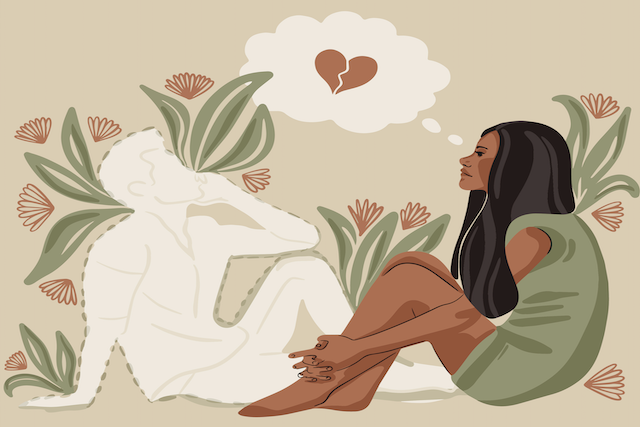
    After I walked away, this hit me like a truck. That’s when I started to give myself the grace and love that I pushed down in favor of trying to hold the relationship together. Did I do everything right? No, but that’s the point of grace.

    I poured so much love back into me and my life after the breakup. I gave myself grace to recognize that this relationship was not the right fit, and that it took me some time to really see that. Grace allowed me to forgive both myself and my ex, because it always creates a ripple effect.

    3. Letting go is a process, not a destination.

    Even though I walked away with clarity and purpose, I didn’t feel an immediate sense of relief right after we broke up. I knew it was the right decision, but my body went into a grieving process.

    When someone passes away, we go through stages of grief. The same thing happens after a breakup.

    As I wavered back and forth between anger and acceptance, it helped when I returned back to the core reasoning behind why I walked away when I did, and why that was necessary for my happiness and well-being. Each deliberate choice to return back to my core knowing, while giving myself grace, was a part of the process of letting go and healing my heart.

    Making peace with this relationship and breakup meant treating my healing as a process and not a final destination. I had to acknowledge every step along the way to rebuild and come back from it stronger than before.

    —-

    We don’t always make the best choices for our highest selves in every moment, but this is an impossible expectation. We are all human beings trying our best to learn from experiences and grow. And I don’t believe there should be any regret in that.

  • How I Forgave Myself for Cheating and Hurting Someone I Once Loved

    How I Forgave Myself for Cheating and Hurting Someone I Once Loved

    “The best apology is simply admitting your mistake. The worst apology is dressing up your mistake with rationalizations to make it look like you were not really wrong, but just misunderstood.” ~Dodinsky

    It was January 2016 and Baltimore was in the midst of a blizzard. Outside, the city was covered in a three-foot blanket of snow. Inside, we were having a blizzard party. My boyfriend, five friends, and me.

    We’d been coloring, listening to music, dancing, and playing games. Already, I knew it was one of the most cozy and fun nights of my life. Everyone was happy. The energy was easy and joyful.

    As the night went on, my boyfriend turned on his light display in the basement. It was a combination of LED lights and infinity mirrors that he built with our friend E. They both controlled the light show and music from an app on their phones.

    With the exception of one friend who went to bed early, we were all in the basement listening to music, dancing and enjoying the lights.

    Eventually, the basement group started to disperse. I went upstairs, and so did our friend E. A few people were in the kitchen. Someone stepped outside to smoke a cigarette. I noticed my boyfriend was the only one still down in the basement, then heard him coming up the stairs.

    As he entered the doorway, I noticed he was eerily calm, but I also sensed a rage bubbling beneath the surface. He approached our friend E, poked him in the chest, and said, “How long has this been going on?”

    I instantly knew what “this” was. So did E. But everyone else was clueless.

    My boyfriend told everyone to get out of the house (in the middle of the blizzard). Everyone except me, E, and another friend who he asked to stay as a neutral party. Someone woke up my friend who was sleeping upstairs. Everyone left and trudged home in three feet of snow. (Luckily, we were all neighbors, so they didn’t have to journey far).

    I have no idea what they were thinking, but I imagine everyone was confused and concerned.

    My boyfriend began to interrogate E and me because he’d read a message between us on E’s phone.

    It was a message from me that read: “I can’t wait to kiss you again.”

    Oof. I wish I could say I dreaded this moment. But I did not, because I honestly did not think this moment would happen.

    I didn’t think it would happen because earlier that day I had vowed not to mess around with E anymore. I had figured out that I was no longer in love with my boyfriend, and I was going to wait until he was finished with his dissertation in a few months to break up with him. In the meantime, I would not pursue anything that I felt with E.

    I thought I could simply tell my boyfriend that I had fallen out of love with him and was leaving. It was a good plan.

    I was guilty for having made out with E, and for the feelings I had for him, but we had not had sex, or even come close. Plus, I knew that my being unfaithful was a symptom of the fact that I needed to get out of this relationship. I had crossed a line, but I knew why, and I was going to stay on the right side of the line until I talked to my boyfriend.

    It was a good plan. Except for the fact that my boyfriend suspected something was going on. (Of course he did. People know. People always know.)

    So there we were: midnight in the middle of a blizzard in an intense interrogation. Time was moving slowly. It was all very surreal and nightmare-ish.

    The interrogation went something like: When? Where? How often? Why? To our other friend: Did you know? (He had no clue).

    The questioning went on and on until eventually, my boyfriend told E and our friend to leave. Then it was just the two of us.

    The thing I remember most about the rest of that night is lying together on the couch, crying. I was crying because I had hurt this person who, at one time, I loved deeply. He was crying because he was hurt by the one person he thought would never, could never, do such a thing.

    What I remember most about the next week, before I moved out, is lying in bed with him, watching Rick and Morty, and having the most open, raw conversations we’d had in years.

    I remember how sad I felt.

    I also remember how relieved I felt.

    I didn’t have the language for it at the time, but the relief was from the death that was occurring, and the re-birth that was to come.

    I can’t say I regret the outcome because, in truth, I am now happy. And from what I know, my ex is happy too. And this happiness would not have existed for either of us if I had stayed in that relationship. In the words of Liz Gilbert, via Glennon Doyle: “there is no such thing as one-way liberation.”

    But I do regret how it happened. I wish I had been mature, wise, and strong enough to recognize that I no longer wanted this relationship, before it got to the point of cheating.

    I wish I had known myself better.

    I wish I had known that I could have just left without doing this horrible thing and causing so much pain.

    I regret how I made my ex feel.

    I regret how I let down my friends who thought I was someone who would never do something like that.

    I regret how I strung E along for so long and toyed with his emotions, sometimes knowingly, sometimes not.

    I regret how little worth I had in myself, which led me to stay in this relationship far past its expiration date.

    I am still healing from this experience, and I cannot blame anyone for my pain, except myself. It’s a really weird thing to be healing from the pain you caused yourself.
    It’s also weird to be healing while living a happy, nourishing dream life, which is exactly what I am doing.

    The night of that blizzard a death occurred. A death of a version of myself that I did not like. A version of me who did not speak her mind, who was in the background, who did not like having sex, who was too scared to imagine a more expansive, beautiful life.

    This death opened the portal for me to return to myself, which is the journey I have been on for the last seven years. And it’s a beautiful one.

    If you’ve been hurt by someone who was unfaithful, I am sorry. I feel for you. You did not deserve it. Allow yourself to feel what you feel. Learn from it. Forgive the other person, for the sake of your inner peace.

    If you’ve hurt someone by being unfaithful, I am sorry too. I feel for you too. Allow yourself to feel what you feel. Learn from it. Forgive yourself.
    I’ve learned to forgive myself by:

    1. Acknowledging the pain I caused and apologizing for it.

    2. Communing with my inner child to learn about her unmet needs (the need to speak up, to be heard and seen, to stop people-pleasing).

    3. Remembering that I am imperfect and that making mistakes is part of the human experience.

    4. Asking myself what I learned during this experience (for one thing, not to stay in a relationship when my instincts tell me it’s over), and then applying that learning moving forward.

    And know this: if you are in a relationship in which you are unhappy, you do have the strength to get out of it, without hurting the other person through infidelity. (Please know that I am not talking about abusive relationships here; that was not my experience and is not something I am suited to give any kind of advice on.)

    Also know that you do not have to stick in a relationship just because your lives are intertwined and it’s hard to imagine the logistics (moving out, dividing finances, breaking a lease, etc.) of breaking up. If you’re most worried about these logistics, then it’s time to go. You will figure it out. And you both will be better off for it.

    The last thing I’ll leave you with are these words that my friend-turned-mentor shared with me: People do shitty things, but it does not necessarily mean they are shitty people. Let’s have grace with ourselves and each other. Let’s love even when (especially when) it seems another is not worthy of our love. Let’s have compassion for the lonely child that exists inside most of us.

  • How Getting Sober Healed My Dating Life (When I Thought It Would Ruin It)

    How Getting Sober Healed My Dating Life (When I Thought It Would Ruin It)

    “Sometimes we motivate ourselves by thinking of what we want to become. Sometimes we motivate ourselves by thinking about who we don’t ever want to be again.” ~Shane Niemeyer

    When I faced the prospect of no longer drinking anymore (at age twenty-one!), after eight years of heavy boozing, I had so many questions about my dating life.

    Will I be fun anymore? Will I have FOMO? How will I cope with stress? What will I drink on dates? Will anyone want to be with me? What will sober sex be like? Omg!

    These questions paralyzed me, as I couldn’t imagine my life without alcohol, yet I couldn’t imagine my life with it either. I put down the drink and with it, I thought I surrendered my desirability and compatibility as a potential partner.

    That couldn’t have been further from the truth.

    Over time, I’ve realized plenty of people don’t mind that I’m sober; some even like it or are sober too. Ultimately, I found I didn’t really care what others thought because I was okay with myself.

    The reality was, slowly but surely, getting sober healed my dating, sex, and love life for good. Here’s how.

    Feeling My Feelings

    Gosh, alcohol seemed to solve everything. Stressed? Drink. Excited? Drink. Sad? Drink.

    I’m face-to-face with reality without picking up the bottle every time I have a feeling. I don’t get to check out. It’s a good thing, honestly. It means I feel the spectrum of feelings and am present with them, which helps me work through those feelings in a healthy way.

    I recently went through a breakup, and it destroyed me emotionally. Even though I was the initiator, I felt so many feelings.

    I spent the first few weeks running from my feelings by trying to meet people on dating apps (what a joke that was at such a raw point!), but I quickly realized this wouldn’t serve me. I had to face my feelings head-on.

    Now, it’s been almost two months, and I’m still sad, but I’m feeling the sadness. I’m leaning in to let the sadness visit, then leaning out when I’ve let it visit for long enough. I know now that the best way to move through sadness is to let it unfold within me, not fight it.

    Owning and Releasing My Stuff

    Alcoholism stunted my growth as a human. I think when I got sober, mentally, I was like sixteen instead of twenty-one. What sobriety has given me is a chance to catch up with that emotional maturity.

    I can take responsibility for my actions, knowing when something is my fault and when I owe someone an apology. For example, if I raised my voice at my ex-partner, I owed him amends or an “I’m sorry,” and I apologized promptly.

    I can also own when I don’t have a part in things and, instead, have to figure out what isn’t mine to carry. For example, I felt some guilt and shame about the traumatic aspects of my childhood, but this is not my stuff. I’ve learned that I need to let that go.

    Emotional maturity teaches me to make sense of what to own and what to reject as not mine.

    Becoming Okay with Being Alone

    When I was drinking, I was terrified of being alone. I was cheating on my partner because I couldn’t be with him but couldn’t be without him either.

    Once I got sober, I spent many years practicing being by myself. I took myself on dates to beaches and bookstores, learned proper self-care through relaxation and gentle but necessary productivity like doing my laundry, and learned that I’d be okay no matter what happened.

    I realized I was a lovable human being and that I could love myself.

    I’m alone again a few years later, and although I don’t love it, I’m thriving in solitude. I’m rediscovering my passions, such as yoga, writing, and spending time with loved ones. I’m embracing myself because I’m realizing I’m worth it.

    I can’t be with another person until I’m whole again, and I’m just not there yet. Today, I try not to use other people to escape my feelings through rebounding. So alone time it is.

    Engaging in More Communicative Sex

    When drinking excessively, it can be challenging to have consistent consent. I was assaulted several times during my drinking days, and although I never deserved that, I put myself at risk by blacking out and drinking to excess.

    Now, I have incredibly communicative sex. I don’t settle for anything less than enthusiastic consent.

    When I sleep with someone, we talk about it before it happens and make sure we know each other’s boundaries and needs. We communicate clearly during and even after. It’s magical! Sure, you don’t need sobriety for this, but with my drinking habits, I did.

    Getting Additional Support

    Getting sober in an alcohol twelve-step program made me realize I needed another twelve-step program for sex and love. I came to find out that, although getting sober did a lot for my sex and love life, more healing was necessary to level up. So I joined Sex & Love Addicts Anonymous, where they taught me self-love and how to date in a healthy way.

    They taught me how to avoid behaviors that harmed me, like having sex with randos and chasing unavailable people. In the evolved part of my life with my ex-partner, they taught me how to set boundaries and accept love. Now that I’m alone, I’m learning again how to face it.

    Final Thoughts for Others

    I have nothing against alcohol; it just didn’t work for me anymore. I was binge drinking, blacking out, cheating when I got too drunk, waking up in strange places, and just generally making an ass of myself. I was most definitely ruining my relationships!

    If you think you have a problem with alcohol, there are many resources for the non-drinker. I personally found Alcoholics Anonymous to be the most helpful, but whatever works for you is what you should do. It might just heal you and your relationships.

  • One Missing Ingredient in My Recovery and Why I Relapsed

    One Missing Ingredient in My Recovery and Why I Relapsed

    “The Phoenix must burn to emerge.” ~Janet Fitch

    Many people were shocked when I relapsed after twenty-three years of recovery. After all, I was the model of doing it right. I did everything I was told: went to treatment, followed instructions, prayed for help, and completed the assignments.

    After returning home from treatment, I joined a recovery program and went to therapy. Once again, I followed all the suggestions, which worked when it came to staying sober. I had no desire to drink or do drugs—well, at least for a long while.

    When I went to treatment, I was an emotional wreck. I would have done anything to get rid of the pain. But substances only intensified the pain and prevented healing.

    The worse I felt, the more I needed to medicate those emotions, but it was only causing the ache in my heart to be prolonged, driving me to suicidal thoughts. The moment I stopped using substances, the pain immediately subsided. I’d gone from struggling to get out of bed to engaging in my life fully.

    But going to treatment was only the tip of the iceberg. There was something much deeper underneath my addiction that I wrongly thought a relationship could fix. There was an underlying malaise and sense of shame I couldn’t identify. I knew something was wrong, so I kept searching for answers but couldn’t find the magic formula.

    Without the solution, relapse was inevitable.

    Most recovery programs address a single addiction, but I had many. After two years of sobriety, I stopped smoking but then started compulsive exercising. I didn’t eat right, spent too much, was codependent with needy people, and went from one addictive relationship to the next, never healthy enough to attract someone who could problem solve with me.

    I didn’t realize I was still substituting addictions for love.

    I wanted to make up for my troubled childhood, and I thought getting married and having kids would fix the problem, but after several attempts, it only made me feel more inadequate. Worse, I was a therapist and felt like a hypocrite. It wasn’t like I didn’t work at getting better; self-help was like a part-time job

    I spent decades in different kinds of therapy, not only as a patient but expanding my education in other modalities. I attended dozens of workshops and seminars doing inner-child work. I fully immersed myself in over twenty years of therapy, including psychoanalysis. My toolbox was overflowing, but I still felt disconnected for some reason.

    I didn’t realize those tools weren’t teaching me how to love myself.

    My journey took me on a lifelong spiritual quest. I found a higher power in recovery. I attended various churches and did some mission work in Haiti. I went to Brazil to be healed by John of God (later convicted of multiple cases of sexual abuse), on to a spiritual quest in Peru, on a visit to the Holy Land in Israel, and to Fiji to find my destiny but still felt something was missing.

    I read every spirituality book I could get my hands on and studied A Course in Miracles, but I was still disconnected from myself and others.

    Discouraged, I began to drift further away from all sources of help. I resigned myself to being an unhealed healer.

    I didn’t realize that all the therapy and spirituality were simply another form of addiction for me.

    Relapse began when I got breast cancer and was prescribed opiates after surgery. I got a taste of that forgotten high and made sure I took all the pills, whether I needed them or not. I also forgot how mood-altering substances affected my judgment.

    Instead of facing my fears about being ill and moving forward with my life, I reconciled with my ex-husband. I had little to no regard for how this affected my children. Like a piece of dust suctioned into a vacuum, despite feeling uncomfortable, I allowed my thoughts to suck me back into unhealthy choices—all the while in therapy.

    The next seven years were dark. Another divorce was followed by my former husband’s death, though I was grateful to bring him to our home and care for him until he passed. Then, a fire turned our newly renovated home into a mass of black and burnt-out walls, forcing another relocation for myself and youngest. Soon after, one of my businesses suffered severe damage from another fire resulting in six months of work and restoration.

    Three devastating hurricanes over two years damaged our home and business. One caused the foyer ceiling to cave in, another landed a large tree on our roof, and the third made our yard look like it had been run through a giant blender. One of my businesses was twice flooded and everything had to be thrown away.

    Soon after, our home was ransacked and burglarized. The stress of managing repairs, insurance claims, child-rearing, and working full-time felt like I was repeatedly set on fire and drowned.

    I kept trying to get better but felt emotionally shredded from the struggle. Desperate for support, poor decisions kept me in a whirlwind of insanity—more bad relationships. I was tired of trying, sick of hurting, and anger brewed within me.

    I stopped therapy, recovery meetings, and my spiritual quest, and decided to throw it all away. I went on a rebellious rampage. I’d been married at age sixteen and had a child, and now I was entirely alone. I decided to return to my pre-recovery lifestyle and live it up.

    Looking back, I lived a dual life of selfishness and a thirty-year career of helping others. I was self-will run riot but couldn’t see myself. I’d lived a life of making things happen and simultaneously wondered why my higher power didn’t deliver everything I wanted.

    Spirituality is a tricky thing. It’s so easy to think that God or some higher power is in control, but I believe, with free will, it’s a collaborative effort. Do the footwork and wait… if only I’d waited; impatience was my Achilles heel.

    My party life added a new heap of problems: disappointed children, bad judgment, and wrecked relationships. It didn’t take long to wind up in the same place that took me to treatment twenty-three years earlier, an emotional bottom. But this time, I was ready for the miracle of change.

    I finally found the missing ingredient to a happy life.

    The night was pitch black as I drove around emotionally deranged from grief and substances. After a near accident, I pulled into a parking lot and sobbed uncontrollably. I railed, “Whatever you are out there, why did you abandon me? Why haven’t you helped me? Why don’t you love me?”

    Immediately, a thought shot through my brain like an arrow through a cloud. “It’s not me that doesn’t love you. You don’t love yourself.” And for the first time in my life, I realized two things: I didn’t love myself and didn’t know what loving myself even meant.

    How would I learn to love myself? It never occurred to me that I didn’t. But now, I was armed with the missing ingredient to my happiness, and I intended to figure it out.

    Psychoanalysts are taught the importance of an infant’s basic needs for nurturing and bonding, but I’d never applied any of those concepts to myself. There were some missing parts in my childhood, so I had to learn how to provide for my physical, emotional, and spiritual needs,  as well as get proper nutrition, rest, and activity, in addition to responsibilities, play time, creative and quiet time, gratitude and appreciation, and loss of tolerance for unkind behavior (to and from others), all of which places I started the journey to self-love.

    I let go of what I wanted and focused on doing the next right thing for myself and others. The results were miraculous; peace engulfed me for the first time. By being the love I’d always wanted, I felt loved.

    I was always a doer and thought that spirituality was like getting a degree. Follow the steps, and everything will be okay. Whether or not that’s true, there’s a lot more to staying sober than following a set of directions. It’s important to find a higher power, clean up our act, apologize to those we’ve hurt, and stop using, but that won’t keep us sober if we don’t know how to love ourselves. My higher power became love.

    Correct behavior and self-love are not the same. Loving oneself starts with giving thanks to the sunrise and the sunset, cuddling with your pillow and those you love, acknowledging a universal intelligence and trusting guidance from your conscience, discovering and loving your mission, and nourishing your body, mind, and soul.

    Feed your body with nontoxic food; feed your mind with positive, stimulating information; and feed your soul with nature, good friends, healthy partners, and a higher power (of your own understanding) that inspires and uplifts you.

    If you’ve struggled with staying sober, you probably haven’t learned to love yourself. It’s never too late to start. When I started loving myself like a small child, I lost all substitutes for that godly love, and I finally began to blossom and grow.

    It took decades of failure to discover the missing ingredient to staying sober. I had to learn that love isn’t something I get. Love is an action I give to myself and others.

    Through being the love that I want, I then receive love. There’s a difference between staying sober and recovering. For all like me, who failed to stay sober, learn how to love yourself and then you will recover from the lack of self-love at the root of this tragic disease.

    It’s not enough to just stay sober, and life without happiness makes no sense. You were meant to have a life of love and joy. If you’ve tried everything and something’s still missing, try learning how to love.

  • Finding Home After Divorce: What Brought Me Peace and Healing

    Finding Home After Divorce: What Brought Me Peace and Healing

    “We need to learn how to navigate our minds, both the good and the bad, the light and the dark, so that ultimately, we can create acceptance and open our arms and come home to ourselves.” ~Candy Leigh

    Divorce is so common that my son, at a young age, asked if my husband and I could divorce so he could have “a mom’s and dad’s house too!” And my daughter agreed because then “we could get double presents on holidays!” Given my experience as a child with divorced parents, I assured them, “Guys, divorce is not really that much fun.”

    The truth is there is nothing romantic about divorce for the parents or the children. When a family breaks up it becomes de-stabilizing for everyone. Suddenly, how things were disappears and everything feels tilted. Like being on one of those “tilt-a-whirl” amusement park rides where you just want it to right itself so you can feel better.

    Home doesn’t feel like home anymore in the way one knew it. A mother’s kitchen may have no child at Christmas. A parent’s bedroom looks different with someone missing.

    I remember before my parents divorced, I noticed a sign. Their bed was actually two twin beds pushed together. But in the year before the divorce the beds were separated. Soon, my dad wasn’t around on Sunday mornings to make me bagel and bacon sandwiches, and our house echoed emptiness.

    One’s home is grounding and so important to their inner stability. Divorce is like an earthquake leaving emotional rubble in the living room that a family must heal and recover from.

    My “earthquake” happened when I was fifteen years old. There had been tremors before. My parents sometimes liked each other. But when they didn’t, there was a lot of shrieking in the kitchen and even worse, cold silences where they would walk by one another as if each one didn’t exist—a scary distance that gave me a stomachache.

    My worst fear was that they’d divorce, but I decided if that happened, I could always just kill myself.

    Thankfully, my plan never came to pass. But on that autumn day, after a tearful conversation on our beige sofa when my parents used the terrifying “D” word,  I decided that I would never cry about it again and tell no one. Instead, I got on my bike and pedaled away my pain, my voice lost in spokes of sorrow. I didn’t eat enough for years hoping that swallowing less would lessen the pain.

    The literature points out that living in a home with high conflict is more detrimental than divorce for all parties involved, so no matter how painful it is, separation is often the next right and healthy step.

    Recent findings indicate that better adjustment after divorce correlates with less conflict before and after between the parents. So it’s the detrimental effects of conflict rather than the divorce itself that is an important mediating factor to consider.

    Yet “nice” divorces without conflict and with excellent communication are rare. Most couples will divorce how they were married and bring the dysfunctional communication and marital issues into the divorce process. After deciding to divorce, things may become more stressful for families. But if the marriage doesn’t feel salvageable, separation provides hope for something healthier and happier that staying in an unhappy relationship may not provide.

    Quickly, my father met someone new. And suddenly, I was meeting a lady in a big house that was neat, orderly, and had three teenagers. I was scared they wouldn’t like me. But they were nice to the curly-haired young girl who visited every other weekend.

    My stepmother taught me to make a pie crust being careful the dough was as “soft as a baby’s bottom.” She bought me my first prom dress and called my father “dear,” and no one yelled. She never became my mother, but over the years, I had the security of two women who took care of me. And when she died on a cold Christmas morning thirty years later, I had finally learned to weep.

    There is a strange sense of togetherness in divorce even if a family doesn’t realize it at the time. Parents grieve, don’t feel good enough, and often have guilt because of the children. Children grieve and can have guilt about not being good enough to hold parents together. No one is alone in the sorrow, and that mutual understanding can reduce a family’s disconnection and isolation.

    The importance of home and family is never shattered; it is how to rebuild and find a sense of belonging in the new arrangement that is left standing. Often, that includes new partners, stepbrothers and sisters, or a smaller family of a single parent and child.

    The uncertainty of the future with new family constellations is challenging. Yet tomorrow’s uncertainty is an issue that parents, children, and all of us grapple with throughout life. But with time we adjust, build new homes, and find safety and a sense of security once again.

    The emotional toll on children often includes increased sadness, anger, and depression, as well as increased physical symptoms and academic challenges. But just being aware of these reactions and comforting, normalizing, and giving voice to a child’s experience can be healing.

    We have to encourage everyone not to divorce from their emotions. My parents, at the time of the divorce, thought it would be a good idea for me to see a therapist. He was an old man sitting behind a big desk who asked me a lot of questions that I didn’t want to answer. I think I sat through the whole session but was very clear I’d never go there again!

    It was only with leaving my family for college that I could get help on my own terms. My hunger for my true feelings had finally become more important than remaining hungry for food, which was how I had coped for years.

    I walked into my therapist’s office, and she smiled and said, “Take a seat.” I finally had found true nurturance in a safe space where I could share my anger, sadness, and grief. It was that deep home inside all of us which is the tender place of truth.

    The timeline for healing is different for everyone and every family. But it comes with grieving and an acceptance of the loss—like a death we never forget but learn to live with, and it becomes part of us and our life story.

    Divorce may not be what we planned for, that fairy tale of happily ever after. And we can easily be hard on ourselves or hurt ourselves with destructive behaviors instead of facing our pain. But learning how to grieve, care for, and love ourselves through the difficult times brings a sense of peace and healing to the home inside. And that home isn’t defined by a mom’s or a dad’s house.

  • How Grieving My Parents’ Divorce (20 Years Later) Changed Me for the Better

    How Grieving My Parents’ Divorce (20 Years Later) Changed Me for the Better

    “There are years that ask questions and years that answer.” ~Zora Neale Hurston

    At the age of thirteen, my childhood as I knew it came to an end. My parents sat my brother and me down at the kitchen table and told us they were getting a divorce. In that moment, I could acutely feel the pain of losing the only family unit I knew.

    Although my teenage self was devastated by this news, it would take another twenty years for me to realize the full extent of what I had lost. And to acknowledge that I had never fully grieved this loss.

    While divorce is so common in the United States, it is not a benign experience for children or adolescents. In fact, divorce is even considered a type of adverse childhood experience, or childhood trauma, that can have long-term behavioral, health, and income consequences. Children of divorced families have an increased risk of developing psychological disorders, attaining lower levels of education, and experiencing relationship difficulties.

    However, not all divorce is equal and will impact children in the same way. And if the children still feel loved, protected, and supported by the parents following the divorce, this can act as a buffer against long-term harm.

    But in many cases following a divorce, parents are not in an emotional or financial state to continue meeting the children’s needs at the same level as prior to the divorce. In these circumstances, children are less likely to receive the emotional support needed to properly grieve—which is what I personally experienced.

    After receiving news that my parents were planning to divorce, I did begin the grieving process. I was in denial that they would actually go through with it. Then I felt anger that they were uprooting my entire world. And then after the anger settled, I remember pleading with them for weeks to stay together. But I think I got stuck somewhere in the stage of depression, never being able to fully reach acceptance.

    Then, twenty years later, after a series of stressful life events, I realized how much the divorce of my parents still impacted me—and how I still had grieving to do. So, at thirty-two years old, I faced a childhood head-on that I had spent my entire adult life attempting to avoid. And I gave myself everything that the thirteen-year-old me had needed twenty years ago but had never received.

    I gained social support through my husband, friends, and therapist. I showed myself compassion. And after two decades, I finally gave myself permission to grieve the childhood and family of origin that I never had and never will.

    I believe the reason that divorce can be so harmful for children is because there is a prevalent belief that children are resilient and they’ll always bounce back. When provided the right support and care, this may be true. However, children don’t have the emotional maturity to manage their emotions on their own when experiencing such an intense loss. This is particularly true when the divorce precipitates or is accompanied by other types of adverse childhood experiences.

    Since divorce can oftentimes lead to intense upheaval and disruption in the family structure, this makes children more susceptible to other types of trauma. Financial difficulties, abuse from stepparents, or a parent suddenly becoming absent can all amplify an already distressing situation for a child. And since children are programmed to rely on their parents for survival, what may seem like a mildly stressful incident for an adult could feel life-threatening for a child.

    I never fully grieved and accepted my parents’ divorce because I lacked the social support I needed to do so. And since the breakdown of the family also led to a breakdown in parenting, I was focused on survival, not grieving. However, it took me many years to realize that my parents were also focused on survival, which can take precedence over ensuring your children are prepared for adulthood. 

    I know my parents did the best they could with the tools they had at the time. But it has been difficult to understand why a parent wouldn’t do everything in their power to shield their child from trauma.

    I was not old enough to understand that it was mental illness and substance abuse that caused a parent’s partner to go into violent rages. My parents had to pretend everything was normal for their own survival—all while neglecting to consider the long-term impacts of trauma during such formative, developmental years.

    To avoid the instability and chaos of the post-divorce homes, from the age of fourteen, I bounced around living from friend’s house to friend’s house. And by the age of sixteen, I had left school and was working nearly full-time in restaurants.

    I didn’t have any plans for my life, but working gave me a sense of safety and an alternate identity. No one had to know that I was a teenager from a broken home living in a trailer park. They only cared that I came in on time and did the job.

    Looking back, it’s clear that my desire to leave school and work was very much a means to gain some control over my chaotic and troubled home life. I felt as though I had to support and protect myself because I had no one to fall back on. And this has been a consistent feeling throughout my life.

    When I began the process of grieving my parents’ divorce as an adult, I realized how many of my beliefs about the world and myself were connected to the aftermath of this traumatic experience.

    My early years instilled beliefs in me that the world is not a safe place—and that I’m not worthy of safety or protection. And it was through the process of grieving that I realized that the thirteen-year-old girl that feared for her safety was still inside me wanting to be heard and comforted.

    I wanted to tell her that she had nothing to fear. But that wouldn’t be the truth. Because the decade following the divorce would be filled with intense distress and tumult. And she would be expected to endure challenges beyond her years.

    While I couldn’t tell her that she would have nothing to fear, I could tell her that she would get through it with courage. And she would become an adult with the ability to love, and a devotion to the health and preservation of her own marriage. And that she would put herself through college and grad school and have a professional career and travel the world.

    I could tell her that some stressful life experiences in her early thirties would open up wounds that she had kept closed for decades. But that she would be strong enough to constructively deal with her past and accept the loss of a childhood cut too short. And that through this journey, she would learn to forgive and show compassion—to herself and to others.

    Grieving my parents’ divorce changed me. I’m no longer waiting for the other shoe to drop. And I’m no longer blaming myself for a truncated childhood. I’m also learning that the world is not as scary and unpredictable as I’ve spent my entire adult life thinking it was.

    I’ve discovered that while there was a point in my young life when I experienced hardships that exceeded my ability to cope, I now have all the tools I need inside of me. And I know that it is possible to reach a point in life where you are no longer focused on surviving but rather on thriving.

  • Why I No Longer Chase Emotionally Unavailable People, Hoping They’ll Change

    Why I No Longer Chase Emotionally Unavailable People, Hoping They’ll Change

    “Never chase love, affection, or attention. If it isn’t given freely by another person, it isn’t worth having.” ~Unknown

    We met at a bar with Skee-Ball and slushy margaritas for our first date.

    She was gorgeous. I noticed that as soon as I walked in. I still wasn’t sure whether we’d have anything to talk about though. The messages we’d exchanged had been minimal.

    It turned out we did.

    Conversation flowed from one topic to the next—meandering from her passion for biology in college to how I tried to master mountain boarding at summer camp as a kid to how both of us were passionate about writing/putting words to the page.

    I found her articulate, funny, sociable, and down-to-earth. I liked her intellect. Her wit. Her seeming earnestness and appetite for unconventional topics like the environmental benefit of eating insects and sexism in the taxidermy industry.

    She came over to my place after; I cooked dinner for us. Talk got deeper. She shared the effect her dad’s depression had on her when she was a kid; how she’d personalize his quiet moods. I shared some of the instability I’d experienced as a kid.

    The evening ended in a hook-up. Nothing like a good trauma spill for an aphrodisiac.

    A couple weeks later we had another date. I felt similarly elated afterwards. But doubts began to surface before our third; she was acting wishy-washy and noncommittal.

    I talked them away, though, because seeing her filled me with buzzy joy. Our interactions powered me through the week with a buoyancy unlike any that my morning coffee had ever provided.

    So we kept going on dates.

    She’d bring flowers to them. Lift me into the air when we kissed, which I loved. Tell me I was a “really good thing in her life.”

    The last day I saw her, we biked around to local breweries.

    The sun shone against our faces as we sipped from each other’s beers out on the back patio—having what felt like a raw conversation about intimacy patterns and fears. She was working on hers, she said. I acknowledged some of my own in return.

    When she asked if she could kiss me (for the fourth time that day) as we unlocked our bikes, I remember how wanted it made me feel.

    I carried that golden effervescent feeling with me into the next day. It was still with me when I opened a text from her—but  shattered into spiky glass shards when I read what it said.

    That she couldn’t continue seeing me. That she wasn’t in the right place emotionally.

    It’s not you, it’s me.

    We all know the spiel.

    **

    It wasn’t the first time I’d had my heart dropped from the Trauma Tower on top of which a woman and I had been insecurely attaching.

    This woman was just one among several in a pattern. You can call it trauma bonding. A hot and cold relationship. The anxious-avoidant dance. These push-pull dynamics that played out through my twenties had elements of all of these.

    One day the person would open up. We’d connect and it’d feel like I’d really seen them, and they’d seen me.

    The next day they’d pull back (even in the seeming absence of overt conflict). The contrast was painful. The shift felt jarring.

    According to Healthline, Recognizing emotional unavailability can be tricky. Many emotionally unavailable people have a knack for making you feel great about yourself and hopeful about the future of your relationship.”

    Whenever these situationships crumbled, it would really break me. Feelings I’d hoped to have buried for good would resurrect—among them, doubt that anyone would ever choose to see and accept me fully.

    And yet the “connections” felt so hard to disentangle from once formed. From my perspective, the woman and I often had strong chemistry. Words came easily. We talked about vulnerable things, but could also laugh and enjoy the lighter aspects of life. They were my type physically. The perceived strength of our connection compelled me to stay.

    **

    It took me some time to realize that each relationship of this sort that I remained in spoke to unhealed parts of me.

    Part of the healing I did over the past few years involved looking at the role I played in them. It involved realizing that I too contributed to the cycle—by continuing to give chances to a person who couldn’t (or didn’t want to) help meet my needs.

    I contributed by staying and hoping the situation would shift. That the clouds obstructing their full attention and investment would magically lift. That they’d depart to reveal the sun that was waiting all along to wrap its powerful rays around my heart.

    I contributed by not establishing boundaries. For instance, in one situationship I felt as if I’d become the woman’s therapist, there to reassure her when self-doubts overtook her; to validate her following any perceived rejection by strangers; to coddle her ego when she felt unattractive in the eyes of the male barista who’d just served us our coffee.

    I could have set a limit around how much she confided in or leaned on me. I could’ve communicated that if we were just friends with occasional benefits, then I only had so much bandwidth. That it didn’t feel reciprocal to be her on-call therapist.

    I also could have left at any time. I chose to stay in these situations, though, despite the signs. Perhaps I thought those signs were ambiguous enough to be negotiable. Or that I was just giving the benefit of the doubt.

    Additionally, I chose to look at the women for who I wanted them to be, who they could be somewhere down the line, and who they sometimes were—rather than seeing them for who they fully were on the whole and in the present moment.

    When we see others for their potential, no matter how innocent or well-meaning our willful obscuring of the present reality may be, we pay a cost.

    **

    Inconsistency and unavailability are less attractive to me the older I get and the more that I heal from my past trauma. Game-playing has even begun to repel me in a way it didn’t used to. When a person shows signs of it, I notice my interest starting to wane. Conversely, qualities like consistency and decisiveness, and earnestness are increasingly attractive now.

    In my thirties I no longer find the emotional ups and downs of an anxious-avoidant dynamic sustainable. I want something calmer.

    I hope for a connection that takes a load off—not one that adds more stress to a world already saddled with the weight of so much of it. One wherein we’re both safe spaces for the other. I believe this is what we all deserve, granted that we too are willing to put in some work.

    In general, having a choosier mentality means you may stay single for more years than you imagined—because it’s true that the dating pool bubbles with people whose traumas and defenses are incompatible with our own. I think maybe it always will.

    Still, when I picture all the heart pain spared, it’s an approach that feels right. The thought now of being pulled back into another cycle of fleeting hope and optimism punctured by blindsiding shards of disappointment unsettles me more than the thought of staying indefinitely un-partnered.

    Not only that, it also saddens me. The sadness I feel is for every person ever caught in the same emotional cyclone. I can’t help but think it’s such a tremendous drain of energy. Energy that could be used instead to vitalize both the larger world and our own lives.

    **

    No more will I follow the bread-crumby path to another person’s heart when it takes me so far from the integrity of my own.

    And anyone who’s been through similar experiences—I encourage you to remain hopeful that one day, a person who’s deserving of your love will step into your life and onto your path. Until then, remember you have you. Treasure yourself, treat yourself well, and realize you’re worth more than chasing. You deserve to put your feet up and let someone chase you—or better still, come meet you in the middle.

  • The Secret to Letting Go (And Why It’s Okay if You Can’t Right Now)

    The Secret to Letting Go (And Why It’s Okay if You Can’t Right Now)

    “It’s not a matter of letting go—you would if you could. Instead of ‘Let it go,’ we should probably say ‘Let it be.’” ~Jon Kabat-Zinn

    When I was in my twenties, I went to see an acupuncturist because I’d been through a bad breakup and felt uncertain about my life path and purpose. “Went” is a kind way of saying it; I was dragged. I didn’t want to go, but my family was going and thought it might be supportive with all that I was going through.

    I was dealing with a lot of rough emotions and felt like I was on a daily roller coaster of lows. The ride took me from anger, to sadness, back to regret, and to general disappointment in myself and life. I felt so angry that life had taken me down that path and that I hadn’t seen the breakup coming.

    I continued repeating this mental narrative for months, and my biggest trigger was thinking about the mistakes I’d made—starting with choosing a relationship that looked good on paper because I’d been hurt in the past when I’d followed my heart. 

    It was a whirlwind of an unhealthy relationship, and when I looked back, I wasn’t sure how it happened, but I knew that I was untrue to myself and to others.

    It felt like my boyfriend wanted me to change and didn’t accept me. When I started the relationship, I felt confident in myself and shared my opinions and ideas openly. Over time, I got quiet and began to take on his opinion of how I should be. Whether it was my style of clothing, weight, or even sense of humor, I felt so afraid that I would lose him that I tried to change myself to please him.

    I now realize that his controlling and manipulative behavior stemmed from his own insecurities and fears of losing me, but at the time I had no idea. I thought it was my fault and that there was something wrong with me.

    About a year later, when I went to the acupuncturist for the first time, I was surprised when she wanted to talk to me about letting go. I told her I didn’t know how, and she put a bottle she was holding in my hand and told me to let go. This, of course, led to the bottle dropping on the floor.

    I needed to let go of all the emotions and thoughts of the past and how things didn’t work out the way I wanted. I’ve realized that, contrary to what the acupuncturist suggested, letting go is easy to say and hard to do. Letting go isn’t a one-time thing. It takes time.

    Looking back, I see that there were many layers in letting go, including: seeing the situation from a different perspective (realizing we all want love, so it makes sense we sometimes stay in unhappy relationships), forgiving myself and others (because we’re all doing our best), taking space from the world and spending time alone, and directly working at releasing my feelings through movement.

    There were a lot of emotions to process, and it helped to talk about it with others, write unsent letters to say what I needed to say, and eventually, dream up a healthier future so I could experience a new present.  

    However, none of these actions provided instantaneous relief. It wasn’t the same as opening my hand and dropping the bottle. It was more like shedding layers and discovering new ones as the old ones disappeared. It was like seeing myself through new eyes and discovering more about my heart and soul.

    Letting go wasn’t about getting over it or feeling nothing at all. It was about learning more about myself and pulling at the seams, which took time. It wasn’t about not caring anymore because some pain never fully goes away, but it does evolve.

    I see now that this is true for many of life’s painful experiences and learnings. They often repeat themselves, and each time I get disappointed that I am in the same space or frustrated that I haven’t let go of something that hurt, I remind myself that evolution, growth, and expansion aren’t one-time things—they’re constant.

    If there’s something important for me to learn, it’s likely to take time and include many elements.

    If you, like me, have a hard time letting go and want to move forward, remember that many streams lead to the sea. And remove the thought that there’s an end point or that letting go is instantaneous so that you can embrace your learnings and move on from the past naturally, one tiny step at a time.