Tag: breaks

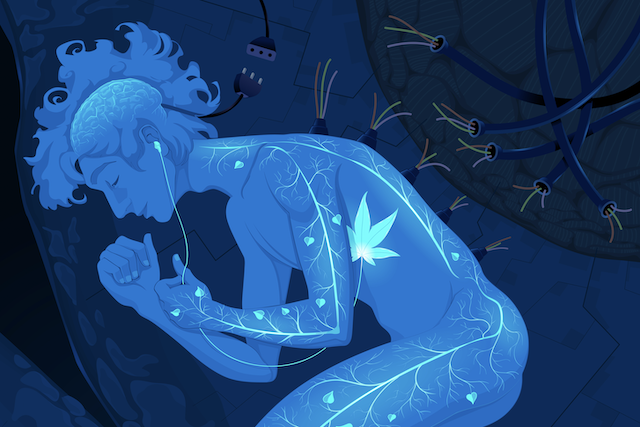
  • How I Created a Beautiful Life on the Other Side of Burnout

    How I Created a Beautiful Life on the Other Side of Burnout

    “If you dont give your mind and body a break, you’ll break. Stop pushing yourself through pain and exhaustion and take care of your needs. ~Lori Deschene

    For forty-five minutes, I lay on my yoga mat in child’s pose, unable to move.

    The exhaustion in my body felt like a thousand kilos, and the ache of failure pricked my eyes with tears.

    Despite all my early morning runs, after-work bootcamps, and restricted meals, my body did not look like the bikini models I saw on Instagram.

    Despite all my energy, efforts, and attention, my romantic relationship had fallen apart. No matter what I did or how hard I tried, he didn’t love me anymore, and I couldn’t understand what I had done wrong.

    Despite my long working hours and high levels of stress, my boss didn’t recognize me, and I had to face the fact that I just wasn’t the talented designer I was trying so hard to be.

    As I wallowed in my failure and the heartbreak of ‘not enough,’ I felt my body pleading with me.

    “Why don’t you love me?” she asked. “Why do you push me so hard? Why is it NEVER enough?”

    I was taken aback, as it was the first time I heard this voice, and it was full of the pain of rejection.

    In that moment, I realized that everything I had been pushing for had been sending the message that I was ultimately unacceptable as I was. I needed to change or be different in order to be loved, valued, and successful.

    The harder I tried to be perfect, to achieve, to prove my worth, the more exhausted, broken, and small I felt. By desperately trying to win other people’s approval, I was actually rejecting and abandoning myself.

    This realization flooded me with grief. What had I done to myself???

    Since this was clearly not working, I made a decision that changed my life.

    “Okay,” I said to my body. “We’re going to do things differently.”

    “From now on, I’m going to listen to you,” I promised. “We are going to do this TOGETHER.”

    As soon as I made this commitment, I felt my body exhale with relief. She had been waiting for this moment my whole life.

    In the months that followed, I left my job, I left my friendships, and I left the home my ex and I had built together.

    I found refuge on my parents’ couch with severe burnout. After years of pushing, my body had finally collapsed.

    My body struggled to walk to the end of the street. Being in a store was so overly stimulating that I felt like I was going to pass out. I couldn’t sleep for months. I had severe stomach pains and terrible migraines, and I couldn’t think straight. My heart was broken. I felt like my life was over.

    It was physically excruciating. It was emotionally devastating. It was the biggest blessing.

    My body was giving me the chance to start again.

    The thing about burnout is that you can never go back to how you were living before. That way was clearly not working: the lifestyle, the thought patterns, the identity, the environments—it was not serving you.

    Burnout burns it all to the ground and forces you to start over.

    My identity used to be a “hardworking, people-pleasing perfectionist addicted to external validation.” If I hadn’t done the inner work to let go of that pattern and completely rewire my identity, I would have ended up straight back in burnout just a few years later (which is, sadly, something that happens to others).

    Trust me, burnout is not something you want to repeat. I promised myself I would NEVER end up in that situation again.

    During my healing journey, I focused on building a relationship with myself and my body. Not one where I commanded and pushed my body, but one where I regularly checked in with her, learned to listen to her, and respectfully honored her needs.

    Every morning, I sat on my meditation cushion and took time to go within.

    What was I feeling?

    How was I speaking to myself? 

    Where was I judging myself?

    What did my body need from me that day?

    My burnout took two years, almost three, to recover from fully. To say I felt impatient to feel “normal” again is an understatement.

    Any time I felt frustration toward my body, I quickly shifted my attitude to compassion and gratitude, recognizing that my body had been through hell and was doing her best to recharge back to optimal health. My impatience was only adding more stress that, honestly, she didn’t need to deal with.

    It was in this way that I learned to love myself, as I was, without all the labels of achievement. Burnout had stripped away everything I had worked so hard for—my career, my relationships, my physique, my home. I had to learn to truly love myself without the badge of productivity.

    Through this loving commitment, my body guided me on how to live a life that was right for me.

    I found I was a Human Design Projector, which is an intuitive guide who needs to manage their energy to stay happy and healthy in this hectic productive-obsessed world. I adjusted my schedule based on my energetic rhythms to include more rest and play in my day (which, admittedly, was not easy at first with my workaholic tendencies, but now I can’t imagine any other way).

    Creating more space allowed me to find my soul’s purpose in teaching others how to connect to their bodies, love themselves unconditionally, and create successful lives in a sustainable way. I created a business based on what I love to do, began coaching women, and held retreats all over the world—without the extreme hustle I had been used to.

    All the pressure to shrink down was gone. Instead of counting calories and pushing my body to the extreme, I focused on nutrition and movement that felt good. I didn’t care if my cellulite was showing or what people thought of the outfits I chose. The space that this opened up in my mind after years of obsession was the most freeing thing ever.

    Learning to love my body changed my entire approach to life. It made me aware of my boundaries for the first time and helped me to create balanced relationships that felt truly fulfilling.

    I went from overworking in a job I hated and over-giving in terrible relationships to running a purpose-led business where I get paid to be myself and surrounding myself with truly supportive people.

    All because my body pulled the breaks on my old life and made me change direction. She showed me there was a more sustainable, more joyful, and more aligned way to make my dreams come true.

    And for that, I am eternally grateful.
  • Why It’s So Hard to Just Rest and Why We Need to Do It

    Why It’s So Hard to Just Rest and Why We Need to Do It

    “If you don’t give your mind and body a break, you’ll break. Stop pushing yourself through pain and exhaustion and take care of your needs.” ~Lori Deschene

    In November of 2021, my autoimmune issues flared up. My doctor and I are still unsure which of my conditions—rheumatoid arthritis or fibromyalgia—was the culprit, or if they were acting in cahoots, but the overall achiness and debilitating fatigue were a solid indication that something was more active than usual.

    I woke up tired, needed naps, and often ran out of spoons—a phrase familiar to many with chronic conditions, based on a gorgeous essay called “The Spoon Theory” written by Christine Miserandino.

    While I may not know the reason, the one thing that was certain was that my body was demanding rest.

    Do you have any idea how hard it is to just rest?

    I mean it.

    Knowing that I needed rest did not grant me the immediate ability to actually pull it off.

    I would sit down to watch a show and find myself trying to multitask. Or I would attempt to put off a nap like a recalcitrant toddler. Instead of throwing myself on the floor in a tantrum, I was trying to “push through” so I could finish typing an email or move a load of laundry into the dryer.

    Even with a body and brain that were crying out for rest, it was difficult to allow myself to do it. In the end, I had to reparent myself in order to be able to rest, enforcing stopping times and rest periods.

    Those of us in the western world, especially here in the United States where I live, are programmed to be productive. We are told—and we tell ourselves—all of the things that we “should” be doing in order to be busy. Work in all its forms, from job tasks to errands to chores, is what we are “supposed” to do.

    We are conditioned to be productive and to stay busy from the time we are young. We hear people say things like “I’ll rest when I’m dead” and “no rest for the weary.” We are exhorted to “pay our dues” and “put in the work.”

    If we were somehow fortunate enough to avoid the overt messaging about staying busy and working hard, most of us received those messages indirectly by watching the people in our lives.

    We watched our parents come home from work with arms full of grocery bags, only for them to fix dinner while putting groceries away. Or we were asked what we were doing and made to feel wrong if our answer to the question was a child’s honest “nothing.”

    Long after dinner, once everything was cleaned up or tidied and it was “time to relax,” we watched our parents do additional work, both paid and unpaid. Or we watched them knitting, ironing, or puttering around the house.

    We have been told that we have to “work hard” in order to succeed. That “nothing good comes easy.” That we shouldn’t stop when we are tired, but only when we are “done.”

    Sitting down and resting is not prioritized. Those who decide to rest often must justify it: they have to have earned the right to rest.

    Rest doesn’t only mean sleep, although sleep is a large part of it. It also includes sitting comfortably doing not much of anything at all.

    It could mean listening to music or watching TV or meditating. Or perhaps working quietly on a jigsaw puzzle or craft or reading a book or article. Maybe playing solitaire, or looking out the window, or journaling.

    In the fall, as I was struggling with my autoimmune flare, it occurred to me that I should rest more. I was so accustomed to overriding my body’s signals that I hadn’t realized how far I’d pushed myself.

    When I tapped into how my mind and body were truly feeling, I was shocked to find that my mind and body were almost buckling, on the edge of collapse.

    I waited to notice what was happening until I’d reached the point where I was unable to do many tasks in the day at all. A banner day during that time might have involved doing a single load or laundry or cooking dinner for my husband and me.

    I was so fixated on staying busy that I could no longer assess my need for busyness in an honest manner. I had lost the ability to tune into my body to find out if it needed to move and stretch, or even to stretch out and sleep.

    Had I continued to push ahead for much longer, I’m certain that I would have fallen ill. As it was, I was dealing with brain fog, fatigue, and both joint and muscle pain, all of which made life unpleasant.

    It is easy to see now that I should never have allowed things to get to that state, but fatigue and pain and brain fog have a way of teaming up on you so that you can’t clearly assess much of anything. Nevertheless, when I hit the edge of collapse and burnout, I realized that some serious rest was in order.

    I essentially cleared my calendar for at least three weeks. I cleared my work calendar of appointments, scheduled some brief blog posts and emails, and took time off.

    It was torture at first.

    For one thing, my husband was still getting up and heading out into the world to teach tai chi and qigong classes, so he was modeling “proper” work behavior. For another, I discovered that I was incapable of “just resting.”

    I had to relearn how to listen to my body to discover what it needed. 

    I also had to reprogram my thoughts about rest as being an inherent right that we all hold, and not a reward for productivity.

    I also had to learn how to actually do it.

    I did all of the things I listed earlier as forms of rest, from naps to puzzles to sitting quietly. It was ridiculously difficult.

    I had to almost force myself to limit myself to single-tasking, which is doing one task at a time. That was especially hard if the task was mechanically simple, such as watching a television show. My inner monologue would kick up, chastising me for “just sitting there,” urging me to “be productive.”

    In those moments when I decided that rest meant watching a movie on TV, I sometimes sat on my hands to make sure that I didn’t pick up my phone or a crossword puzzle or something else. I often put my phone on silent and deliberately left it in another room, just to reduce temptation.

    Full disclosure: Even with taking affirmative steps to single-task, I didn’t always manage. I did, however, learn through reinforcement that there was nothing likely to arise in an hour or two of time that required me to give up on resting and take immediate action.

    I realized that in many ways, I was retraining my nervous system to allow itself to relax. It was so used to being in a state of alertness that resting and allowing it to have some time off took some getting used to.

    What I learned when I started to budget rest into my days was that I could start to tell more easily what signals my body was sending. It became easier to converse with my brain and body to find out how they were feeling and what they needed.

    It sounds a bit dissociated when put that way, but I have never felt more integrated than I do now. At any given moment, I can pause, tap into what I am feeling (mentally and physically), and act on my own needs in ways that are more nurturing and caring than before.

    When I realize that I am losing focus on a project—perhaps while typing a blog post or planning a workshop—I no longer push through. Instead, thanks to months of practice, I pause and check in with my brain and body. Thanks to practice, I can quickly ascertain whether I need to take a simple break, to get up and walk around for a bit, to take a walk outdoors, or to stop for the day.

    I am learning to embrace the idea that rest is an inherent right, not something that needs to be earned. It is no longer something that occurs only once I have pushed myself until the point of collapse. 

    As it turns out, the more I lean into rest and build it into my days, the more energy I have to actually accomplish all the things I want to get done in life.

    When I add time off or breaks during the day, I find I have better focus when I need to be working on a task. When I include rest in my days, I have the energy to exercise in the morning and also make a good meal for dinner.

    I invite you to join me in adding actual breaks into your day, where you do nothing “productive” at all. No catching up on phone calls or emails or texts—just rest. I’d love to hear if and how it works for you.

  • 45 Work Self-Care Ideas for Your Physical, Emotional, and Mental Health

    45 Work Self-Care Ideas for Your Physical, Emotional, and Mental Health

    “Self-care equals success. You’re going to be more successful if you take care of yourself and you’re healthy.” ~Beth Behrs

    Does your job ever seem to take over your life?

    Mine has, more than once, despite some drastic changes to stop it each time.

    For twelve years I worked a sixty-hour-a-week consulting job in London, UK. I loved my team, and much of my work, but I wasn’t good at switching off.

    Whiplash from a minor car accident initiated a chronic pain condition that grew worse and worse with each passing day.

    I didn’t think I was allowed to take care of myself at work. At work, I felt my focus should be on being productive, getting more done, being the best, getting promoted, earning more—on success.

    But my definition of success wasn’t bringing me happiness.

    Breaking Point(s)

    The moment when my chronic pain was such agony that I spent an entire conversation with a beloved team member holding back tears, not hearing anything they said, was a wake-up call.

    I told myself what a bad manager I was, piling negative feelings on in addition to the grinding, constant physical hurt.

    I created suffering on top of the pain.

    After a lot of soul searching, I took a sabbatical where I planned to “lie on a beach and rest.”

    But I took my personality with me. I never went back to my job, but within a few years, I’d created a new life, that I also loved, but I worked in 25 countries and took 100 flights a year.

    Oh, and I caught strep throat seven times in that same year.

    This time, when I realized what was happening, my suffering was a little less. I was frustrated, but at this point, I had developed a self-care practice. I had more tools, more self-kindness, more self-compassion.

    Last year, another busy year when I wrote a book about work wellness and ran an international consulting practice, I went to the emergency room several times.

    What I thought was my chronic pain had gotten so bad I admitted I needed help.

    At the hospital, they decided to do exploratory surgery. And found endometritis, which had caused a 6cmx4cm cyst and spread infection throughout my abdomen. It took the removal of the cyst and a further eight days of intravenous antibiotics before they’d send me home.

    I took some time off….

    Now while I can’t say I’m never going to go through this loop again, what these experiences have taught me is that in order to be the best version of ourselves, it’s as critical to take care of ourselves at work as is it as at home.

    It’s not just okay to take care of yourself at work, it’s obligatory.

    Despite the fact our job often takes up a third of our waking hours or more, most of us feel it’s inappropriate to think about ‘fluffy’ concepts like work wellness, or self-care, while we’re working.

    We’re wrong.

    If we neglect habits of kindness to ourselves in this arena, our thoughts, feelings, and behaviors at work can lead to burnout, resentment, anger, or exhaustion.

    Be Intentional

    Bringing an attitude of self-kindness and self-compassion to work is likely to make you a better employee. You’ll have more energy to work with the difficult customers and challenging employees, or on the complex and confusing tasks that are dumped on you.

    The following are ideas you can try at work to ensure you nourish yourself in that context. They are designed to be small and inexpensive. Leave those that don’t speak to you, but make the choice to include several in each week—and start today.

    Simple Self-Care for Physical Work Wellness

    1. Clean your tech mindfully. Take three minutes to wipe down your phone, laptop, screen, anything technological you use for work. As you do, be grateful for what these technologies add to your life.

    2. Sit up straight. We all have a tendency to slump over our keyboards. Adjust your posture: pull your shoulders back and align your head with your spine.

    3. Take one deep breath. Just one. But make it a good, long one. Breathe out and imagine that breath flushing through your body and going into the earth to ground you.

    4. Plot a route. Plan a short (20-minute) easy walk you can take at lunch or during breaks at least twice a week. Put it in your diary.

    5. Stand up. Use a box or books to lift your keyboard and screen so you can stand up to work. Vary your position during the day between standing and sitting.

    6. Scents memory. Find an essential oil or item that you can smell at your desk to energise you, like mint or citrus—especially useful in that post-lunch slump.

    7. Light up. Ensure your lighting is sufficient and as natural as possible, and your screen is at an appropriate brightness.

    8. Step up. Take the stairs. If you work on the 30th floor, you don’t have to take every flight. Try one flight for a week, then add in more over time.

    9. Add color. Wear one small item of your favourite color to work. A tie, pantyhose, socks, cufflinks, lipstick, a hairband, a necklace, earrings, bag etc.

    10. Pre-plan health. Identify three healthy meals at your three most-visited lunch places. At least once a week, don’t even look at the menu, order one of those.

    11. See green. Spend a few minutes a day looking at something green and alive. If you can’t see out of a window, get a plant.

    12. Return to neutral. At the end of the day take two minutes to tidy clutter away and wipe the surface down. This will make the next morning a nicer experience.

    13. Stretch while sitting. Roll your shoulders back, straighten each leg and point your toes, lift your arms above your head, and point your fingers to the sky. Move your body for a few seconds in a way that feels good.

    14. 20:20:20. Every 20 minutes, look at something for 20 seconds, 20 feet away, to help prevent eye strain.

    15. Object of solace. Bring to work an item that brings you physical comfort. A soft sweater, a smooth pebble, a stress ball—anything that grounds you in your senses and can bring you secret consolation on a difficult day.

    Simple Self-Care for Emotional Work Wellness

    16. Choose a soundtrack. Find a song that energises you, and play it just before you start work (on headphones!) or on your commute to put you in the right mood.

    17. Focus on others. When you interact with colleagues (or suppliers, clients, other freelancers) ask them a couple of questions about themselves before you talk about you.

    18. Be vulnerable. Share something small about your personal life—a hope, fear, dream, wish, desire—with a work colleague. Ask them about theirs.

    19. Build connection. Ask someone new to lunch or for a coffee.

    20. Take notice. Say happy birthday or congratulate someone on something they achieved on one of their tasks or projects.

    21. Know your personal brand. Write down the five words (qualities, behaviors, knowledge, etc.) others are most likely to associate with you at work.

    22. Push through a small emotional discomfort. Take an action you find mildly uncomfortable—talking more in a meeting, talking less, sharing a mistake etc. It will then be easier to do later when you don’t have a choice.

    23. Deepen a workplace relationship. Identify someone at work you want to know better. Increase the quality and quantity of your interactions.

    24. Connect to a positive memory. Choose a physical item to go on your desk that uplifts you because of its associations (e.g., a foreign coin from a holiday, a special photo).

    25. Celebrate. Take a moment to celebrate (privately or with colleagues) a small work win before you rush on to the next task.

    26. Create a workplace tradition. Connect colleagues with “Pizza Friday/; or “morning-coffee-and-catch-up,” even if it’s through Zoom.

    27. Look forward. Always have something at work you’re looking forward to. Create that thing yourself, if necessary.

    28. Build a positive attitude. Think of three things that make work great for you (a friend, a project, a client, a café you visit in your lunch hour), and write a list of these over time. Include one in each week.

    29. Take the long view. When upset about a mistake you made, or something that happened, ask yourself, will this still matter to me in five years?

    30.What matters? Take a helicopter view, and think about—what do I gain from this job? What does it bring me? Is there a balance between the rewards and the work?

    Simple Self-Care for Mental Work Wellness

    31. Use physical boundaries. Help your brain switch off via “thresholding” at the bookends of your day. Step through the door that leads into your workspace and tell yourself “I am at work’ “Step out of your workspace and tell yourself “I have left work.”

    32. Find your values. Write down the things that are important to you at work and circle the top three to four. Use these to guide decisions.

    33. Get feedback. Ask five people who know you well what they see as your top three strengths and development areas.

    34. Improve one thing. Choose a behavior that is not working for you and experiment with doing it differently.

    35. Have a walking meeting. Ask a colleague with whom you have a meeting planned if you can do this while outside and moving.

    36. Get unstuck. When working on a creative challenge, set a timer and free write for five minutes on the problem.

    37. Expand your perspective. Ask a colleague to talk you through how they approach a common issue you both experience.

    38. Use a timer. Choose a task you do regularly where you know roughly how long it takes, and set a timer for 10% less than that. Complete the task in less time.

    39. Learn something. Listen to a podcast, read a blog article or several pages of a non-fiction book at the start or end of your day.

    40. Know where you’re going. Pick a small career goal and write down three actions that would get you closer to it. Complete one action.

    41. Be curious. Always have something you’re learning or developing relevant to your work—a book, course, discussions, professional development etc.

    42. Distance self-talk. Create some objectivity in your thoughts by talking to yourself using your name, or second or third person.

    43. Make a “small pleasures at work” list. Write down the smallest behaviours (e.g., smile at a friend) you can do that bring you joy in the workplace. Include one in every day.

    44. Determine a downer. What one activity do you find most draining at work? What small action can you take to make that activity just a fraction easier for yourself?

    45. Enjoy the process as much as the outcome. Achieving a goal can bring delight, but the journey to get there is likely to take longer, so find ways to make the process just as enjoyable.

    We Are What We Do Every Day

    In the end, the actions we do most often are those that make up who we are.

    If we’re going to be our best self, we need to keep self-compassion and self-care in mind at work as well as outside it.

    Treat your work as an integral piece of who you are as a whole.

    Break out of your loop. Pay attention to your work wellness.

    Pick one of the ideas and try it today.

    **Ellen has generously offered five copies of her new book, Your Work Wellness Toolkit: Mindset Tips, Journaling, and Rituals to Help You Thrive at Work, to Tiny Buddha readers. Offering 100 simple and super-effective exercises, Your Work Wellness Toolkit is a practical guide to nurturing yourself at work so you can feel calmer, more productive, and more energized, every day.

    To enter to win a copy, leave a comment below sharing which self-care exercise above resonated with you most strongly, then email the link to your comment to Ellen at ellen@ellenbard.com with “Tiny Buddha Giveaway” in the subject line.

    You can enter until midnight PST on Friday, February 18th. She’ll choose the winners at random and contact them soon after! 

  • How Single-Tasking Can Decrease Your Stress and Improve Your Mood

    How Single-Tasking Can Decrease Your Stress and Improve Your Mood

    “The shortest way to do many things is to do only one thing at once.” ~Samuel Smiles

    I am a recovering multitasker.

    I’m sure you know what multitasking is—it is the performance of more than one task at a time. For me it can look like this: “Watching TV” might include scanning social media on my phone, playing a game on my laptop, and/or doing some knitting or embroidery. Sometimes I switch back and forth between all of those things.

    “Writing a blog post” might include doing a load of laundry, including moving it from washer to dryer, or folding it. It might also include research, social media, fixing a snack or meal, checking email, texting my kids, and more.

    I not only used to multitask my way through each day, but I also used to pride myself on it. I would run multiple errands while making phone calls to schedule appointments, which meant I had to open the calendar on my phone as well. I’d cook dinner while scrolling social media while listening to the evening news, while also writing a grocery list.

    “I am so productive,” I’d think. “Just look at all the things I am doing.”

    Only I’d forget to move the clothes from the washer to the dryer, so they sat overnight and started to smell funky. Or I’d forget one of the most important parts of an errand or a phone call. Or I’d get distracted by reading something on my phone and the onions I was meant to be browning would burn.

    Asking your conscious mind to do multiple things at once is more difficult. The human brain can’t do all that many things simultaneously. It’s good at the stuff controlled by the autonomic nervous system—keep breathing, keep the blood flowing, etc.

    Essentially what happens when you multitask is that your brain toggles rapidly between two or more tasks. The more you try to do things simultaneously, the more likely it is that something will be lost or dropped as your brain tries to switch focus.

    If you’ve ever tried something like listening to the weather forecast for tomorrow while reading an email, it’s not uncommon to realize you missed tomorrow’s weather because you were reading and not listening, or you have to go back to re-read some or all of the email because you were listening and not reading.

    When trying to process two different types of information—say, an in-person conversation while watching a television show—things get messier. Maybe you lose track of the show and what’s going on, or you lose track of the story that the person in the room with you is sharing. Maybe it’s a bit of both.

    The same goes for switching tasks at work, about which there are many, many articles. It’s not unheard of to be writing an email or memo, but be interrupted by phone calls, people stopping by your desk, and other emails or texts. Every single interruption requires you to switch your focus, then return to the writing.

    Each time you switch your focus, whether it’s due to an interruption or multitasking, it takes your brain time to reorient itself and get back on task. It can take seconds sometimes, but often requires minutes. The more you switch tasks, however briefly, the more time you spend getting back on track.

    Multitasking can reduce your productivity by as much as 40% according to an article in Forbes. It’s not efficient, either in time or output levels.

    But that’s not the real danger. Multitasking is not good for your brain processes or mental health. It can lead to increased frustration, irritability, and stress.

    Studies show that media multitasking in particular, such as scrolling social media while watching something on a separate screen, or switching between social media sites, can lead to social anxiety and even depression.

    The more we “multitask,” or switch between tasks, the more we distract ourselves and interrupt our thought processes. It can cause us to become anxious, as we worry that time is slipping away from us.

    In November of 2021, faced with an ongoing pandemic in the world and a sudden bout of fatigue at home due to my autoimmune issues, I began to try to single-task as much as possible.

    My thought process, having read all sorts of articles on brain health and multitasking, was that maybe it would be better if I didn’t ask quite so much from my brain. Due to fatigue, my thinking was often fuzzy or foggy to begin, so I reasoned that focusing on one thing at a time might feel like self-kindness. It yielded some interesting results.

    I was right about single-tasking being kinder to myself. If I only expected myself to do one thing at a time, it was easier to focus and to see the task through. I applied single-tasking to rest, as well as to household chores and work.

    I found that single-tasking allowed me to pay more attention to whatever I was doing. If I was writing a blog post, I was able to write it more quickly by “just writing” than when I was writing the post, jumping to create graphics for it, coming back to write more, hopping to a different site to do some research, then returning to write some more, etc.

    Single-tasking also led to me breaking complex tasks into smaller, more manageable pieces, each of which got their own allotted time. So I would come up with an idea, then research it. Write the blog post, then go create the graphics I needed. And so on.

    On the one hand, I was doing all the usual tasks needed to create a blog post, only instead of multitasking by hopping between them, I did them one at a time. I was shocked when I found that I saved as much as an hour of my time by compartmentalizing those components, then single-tasking.

    In addition, I realized that when I focused on one task at a time, I gained the sense of satisfaction at being able to actually complete my projects. I felt more accomplished. And if I had to take a break, it was much easier to see where I needed to pick things back up.

    Instead of having five open, “in progress” items on my to-do list, I had one at a time. There is tremendous satisfaction in crossing things off the list and moving on. On days when my fatigue was particularly bad, I was also more likely to tackle something when I knew it was a smaller piece that could be completed quickly.

    In addition to feeling more productive, my overall stress levels fell. I was able to see daily progress, and celebrate it. I started to get a better handle on how much I was capable of realistically accomplishing.

    It felt so much easier, especially once I worked out that I would get as many—or more—tasks done in a day by single-tasking as I did when I multitasked. By focusing on one task at a time, I cut down on how many times I interrupted myself with additional items. I found that I often finished sooner, giving me more free time and breaks between tasks.

    These days, I try hard to move to single-task whenever I possibly can. To do one thing at a time, or focus on one task at a time, rather than trying to accomplish multiple things at once.

    Some days, that is easier than others to accomplish. But always I find that when I succeed, my stress levels decrease. My ability to focus and finish things increases.

    And just as the studies report, the amount of stuff I get done actually increases, too.

    Here are some tips to help you try this for yourself:

    1. Put your cellphone on silent when you are trying to do computer work.

    2. Use a social media blocker app such as Freedom if you need to. It allows you to set time limits on your usage, and to prevent you from “just checking one thing,” only to get sucked down a rabbit hole.

    3. Create a to-do list for yourself each day with no more than three priorities on it. Tackle them in order, one at a time. Once they are done, you can relax your boundaries if you want, or continue on to another task.

    4. Set a timer to focus on a task. Allow yourself a break, or even to be done with that task for the day, when the timer goes off.

    5. Challenge yourself to put your phone and laptop away when watching a movie or television show, allowing yourself to focus only on what it is you are watching.

    6. Set up a reward system for yourself to encourage single-tasking behavior.

    7. Don’t get upset or throw in the towel if you “catch” yourself multi-tasking. It took you a long time to develop that habit, and it will take a while to unlearn it.

    As I said at the start of this post, I am a recovering multi-tasker, so I don’t yet have this all down pat. If you need me, I’ll be over here practicing how to focus on just one thing at a time.

  • The Simplest Ways to Find Calm in the Middle of Life’s Constant Chaos

    The Simplest Ways to Find Calm in the Middle of Life’s Constant Chaos

    “When you are resting because you are worn out, you need to remember that you are not wasting time. You are doing exactly what you need to do. You are recovering.” ~Unknown

    I woke up at 3am when I heard my alarm ring. I slowly pulled my arm away from my son, who was half holding my arm and half lying on it, so that he didn’t wake up. I tip-toed out of bed while my husband and my son were sleeping.

    My eyes ached and were blurry from sleep deprivation. My head felt like I was floating in the air. But even so, I couldn’t sleep any longer.

    Knowing that just in a few hours, I would have another fully busy day at work, with deadlines all over my head, and I’d have to deal with all the mails marked “urgent” yesterday before getting to today’s mail.

    My sleepiness went away quickly as I started to feel butterflies in my stomach. Not in a good way.

    The deadlines, the rush and anxiety, all kicked in. I felt like I wanted to cry. And so I did a little.

    But I felt like I shouldn’t feel that way, that I should be grateful instead.

    The whole pandemic gave people hell. And I am so lucky that my family is safe, and we are doing fine.

    My husband could not work for six months, and I have been the sole provider since. But I am lucky that I still have a job.

    Compared with how other people go through their days, I should be grateful.

    But on a wild thought, I just wanted to open my laptop and send a resignation mail right away.

    Because I was tired.

    I was tired of being the sole provider.

    I was tired of trying and pushing so hard.

    I was tired of taking care of other people.

    I was tired of getting tired but not being able to sleep.

    I was tired of getting up so early alone.

    I was tired of working at different jobs all the time.

    I was tired of not getting enough breaks or not saying “screw it.”

    But I can’t. I have a family to take care of, I have a little boy to worry about.

    Being strong, being resilient is the only choice I have.

    So I turn on some music when feeling lonely, wipe my own tears when having a mental breakdown. Tell myself to stay strong, and always keep going forward.

    But today, I woke up and realized, I don’t have to feel that way.

    Life gives me responsibilities not to break me down. Responsibilities are the sublimation of love.

    Because of love, I wake up early and work while others are still sleeping.

    Because of love, I agree to do different jobs to be able to take care of my loved ones.

    Because of love, I need to take care of myself first.

    Because not only do I love them, but they also love me and want me to be happy.

    I realize I am not a superhero that never makes a mistake. I am a human being. I screw up sometimes. I oversleep sometimes. I miss deadlines sometimes. I act stupidly sometimes. I get lazy sometimes.

    And it is okay.

    It is okay for me to slow down and take a deep breath.

    It is okay to take a break so that I don’t get burnt out.

    It is okay to make mistakes and say “I don’t know” with pride.

    It is okay to know that I cannot control every single aspect in my life, and the good thing is I don’t have to.

    Because that’s how unexpected things happen. That’s the fun of life.

    And I know there is always a place that I belong and find peace: my home, my family, my heart.

    If you are like me, feeling the world is fighting against you, here are a few simple ways to find calm in the chaos.

    1. Stop what you are doing and take a deep breath.

    I learned this technique through one of Louise Hay’s books. You take a deep breath, tense your body as hard as you can, and hold it for a few seconds. Then release and exhale.

    Do it a few times whenever you feel worried or stressed. The butterflies-in-the-stomach feeling quickly dissolves.

    2. Find a peaceful place.

    No, you don’t have to call your boss to ask for an immediate vacation on a beach, nor do you have to go to the bathroom and cry (though you can do either if you think it would help).

    Look inside yourself and find your peaceful place—or person.

    Who do you love? Who do you do this for? Remember, responsibility is the sublimation of love.

    When I’m at work and I am about to have a panic attack, after taking a few deep breaths, I pull out my son’s videos and pictures. I remind myself that I love him, and he loves me no matter what.

    He gives me a reason to believe that I am worthy and I am loved and gives me the strength and motivation to keep going.

    3. Meditate daily, even just for five minutes.

    I learned that meditation is not about clearing your mind and thinking of nothing; it is about accepting who you are and not letting your wild thoughts control you.

    Don’t worry about learning how to meditate, just sit down in stillness as an act of love for yourself. Be present, aware of your thoughts.

    You will soon realize that meditation helps to untangle your thoughts so you don’t feel controlled by the chaos in your life.

    4. Thank yourself.

    Have you done it today? Have you thanked yourself for all the good you do and stopped to think about how proud of yourself you are?

    Look at how amazing you are taking care of your loved ones, how their lives are much better because of you, or how brave you are in all the things you do, or even how you are aware of this moment. There are thousands of reasons to be proud of yourself.

    Most of us focus more on what we think we’re doing wrong than all the things we’re doing right, and this creates a constant sense of anxiety. If you give yourself a little credit instead, you’ll likely feel instant relief. So remember to thank yourself at every chance you get.

    When life gets busy and overwhelming, it’s tempting to think you can’t relax until everything gets easier. That you need to escape or make it all stop, which generally isn’t an option. Fortunately, we don’t have to make major life changes or run away to find a little peace.

    Calm is not when you are at the beach enjoying a drink. Calm is right there in the middle of the storm. Calm is in your heart.