Tag: boundaries

  • How to Set Better Boundaries: 9 Tips for People-Pleasers

    How to Set Better Boundaries: 9 Tips for People-Pleasers

    “Boundaries are a part of self-care. They are healthy, normal, and necessary.” ~Doreen Virtue

    I still have the journal entry that sparked my journey into boundary setting. It says, in striking black pen, “I wish I could speak my truth. If I can learn to speak my truth before I die, I will die a happy woman.”

    Dramatic? Maybe. But I was tired of being a pushover, a people-pleaser.

    I’d written it the day after I’d been the recipient of unwanted advances at a bar. For thirty minutes, a stranger had engaged me in aggressive conversation, peppered in flirtation, and slipped his bony hand around my waist. I’d tolerated his behavior with a fake smile before escaping to the bathroom.

    As often used to happen, I couldn’t speak up for myself. I’d waited in silence, hoping the man would mind-read my discomfort and give me space. The next morning, I took my pen and articulated what I saw as my Great Frontier in life: setting boundaries, communicating authentically, and heeding the needs of my inner self.

    This challenge presented in all areas of my life. My tendency to people-please led to a sense of imbalance in relationships with friends, lovers, and colleagues. Sometimes, it manifested as mildly as staying too long in a conversation that bored me, or offering to help a friend when I didn’t have the time. Sometimes it was as extreme as sleeping with someone I didn’t want to sleep with because I didn’t want to “hurt his feelings.”

    I was constantly betraying myself, constantly designing my life around others’ desires. The result was a life that felt mediocre, underwhelming, and not quite my own.

    From an early age, women are taught to be people-pleasing, accommodating, and self-sacrificial. Over time, we can lose our connection to our authentic, empowered selves beneath the weight of our commitments, our imbalanced relationships, and our carefully constructed personas.

    Everything changed when I went through a challenging breakup and awoke to the reality that I’d always been the sole person responsible for my own happiness.

    I realized that this was my chance to develop a nurturing, supportive relationship with my inner self: the woman beneath the performing and the people-pleasing. For the first time, I made a commitment to become my own first priority, set firm boundaries, and communicate authentically with others. The rest is history.

    If you leave conflicts wishing you’d spoken up for yourself; if you feel drained in social situations because you feel like you’re performing; if you over-commit to obligations and under-commit to activities that bring you joy; if you agree to be intimate with people, but later regret your decision; if you feel like you give much more than you receive in your relationships: this can be the year you break the pattern and begin speaking—and living—your truth.

    Here are nine tips that break down the boundary-setting journey into simple, actionable habits.

    1. Name your feelings in interactions with others.

    Challenging emotions like overwhelm, anger, and frustration can be helpful guideposts as you uncover when, where, and with whom to set boundaries. These emotions signal that others might be impinging on your personal time or space. Developing literacy with your own emotions enables you to set impactful boundaries in the future.

    Instead of pushing the feelings away, ask yourself, “What am I feeling? Why am I feeling this way? What would need to change for me to feel safer?”

    2. Prepare your well-being disclaimer.

    Preface conversations about boundaries with a disclaimer to set the stage for a compassionate, permissive discussion. (This can be a particularly useful tool if you’re concerned about rocking the boat by changing entrenched patterns in existing long-term relationships with family or lovers).

    Break the ice by sharing your resolution to set boundaries. Explain why it’s important to you and how you believe it will benefit you. Centering your own well-being sparks a meaningful exchange around an indisputable value: your own wellness and health.

    3. Express gratitude when others set boundaries.

    Folks who have trouble setting boundaries usually have trouble responding to boundaries set by others.

    Before I began setting my own boundaries, I often felt dismissed, angry, or rejected when friends or lovers put limits on our interactions. As I began to understand that people set boundaries to protect their own well-being, I intentionally cultivated an attitude of gratitude by responding to others with “I value your honesty” or “I appreciate you sharing that with me”—even if the boundary was hard to hear.

    These friends and lovers became my role models and helped me envision what a healthily boundaried life could look like.

    4. Practice saying “no thanks” without giving a reason.

    It’s common to feel like you need to explain your boundaries to others. But you don’t—and sometimes the simplest, most honest response is “No, thanks.” (Giving an excuse or falsifying your reasoning can ultimately leave you feeling guilty or out of alignment with your inner self.)

    Practice saying “No, thanks” and nothing more. Start small; say “No, thanks” when your housemate asks if you want to watch a TV show, or “No, thanks” to the person who wants to buy you a drink at the bar.

    5. Craft a VIP-Only list.

    Without a clear sense of your own boundaries, you may regularly overshare personal information. Though truth-telling is a powerful exercise, sharing too much too quickly can make others feel uneasy, and may leave you feeling uncomfortably overexposed.

    If you have a history of TMI, create a VIP-Only list: a list of sensitive topics that you will only discuss with trusted people who make you feel safe and seen. Using this list as a guideline will help you develop a sense of self-trust as you maintain your privacy and build a community of dependable confidants.

    6. Take a break from a toxic friendship.

    Perhaps you have a friend who constantly uses you as a sounding board for his or her dilemmas, or asks for favors but never gives in return. Perhaps you have a friend whose personal struggles impose on your own sense of well-being.

    One of the most difficult, yet most rewarding forms of boundary setting is to take a break from the relationships that no longer serve you.

    If you have a one-sided friendship that leaves you feeling unseen, unheard, or disrespected, resolve to take a break from that relationship. And remember: It is not selfish or cruel to put your own well-being first. Healthy friendships are reciprocal and mutually nourishing, not one-sided and depleting.

    7. Create a post-boundary-setting mantra.

    If you have a history of people-pleasing, setting boundaries will be a major adjustment to old patterns, complete with the requisite growing pains. As such, it’s totally normal to feel guilty, selfish, or embarrassed after setting a (completely valid) boundary.

    Be gentle with yourself and acknowledge that your boundary-setting muscle takes time to develop. In the meantime, prepare a mantra to refer to after setting difficult boundaries with others. It can be as simple as: “I set boundaries to feel safe,” or “Setting boundaries is an act of self-love.”

    Your mantra can be your anchor, a permanent reminder that this journey, though difficult, has your best interests at heart.

    8. Designate a cheerleader.

    Throughout my boundary-setting process, I benefitted immensely by sharing my successes with a best friend who cheered me on at every turn. She bore witness to my journey and helped me acknowledge my progress when I was feeling self-critical.

    Set yourself up for success by designating a cherished friend, family member, or partner to be your boundary cheerleader. Explain your intention to set better boundaries and your desire for a supportive buddy throughout the process. When you set a new boundary, let your cheerleader know, and carve out the space—in person, over the phone, or with a high-five emoji—for the two of you to celebrate your success.

    9. Imagine how your life will be different.

    Instead of focusing on oversharing and people-pleasing less, imagine the many ways you will benefit from setting boundaries. Gently allow yourself to imagine how your life will be different when you begin to speak your truth. How will you change? How will your daily life become richer? How might you feel more authentic in your relationships? Keep your vision at the forefront as you make the decisions that are best for you, day by day.

    Boundaries are tools that enable us to feel safe, strong, and empowered in our relationships. As your journey progresses, you’ll begin to feel more empowered by the truth that it’s not only your right, but your duty, to make the choices that are best for you.
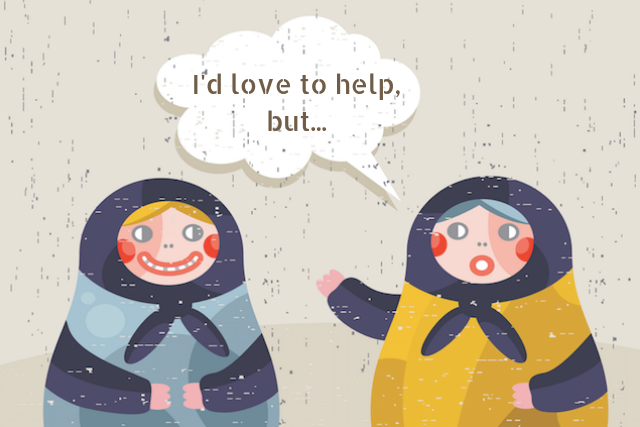
  • The Art of Saying No: Lessons from a Caregiver

    The Art of Saying No: Lessons from a Caregiver

    “When you say yes to others, make sure you are not saying no to yourself.” ~Paulo Coelho

    There it is again. Another person asks me for help. There’s a sharp pull inside of me to stop what I am doing and give.

    And the internal struggle comes up.

    I should just say yes and help them. What’s it take to write out a few text lines? An extra phone call? It’s not so bad, I tell myself. You are, after all, a caregiver.

    My internal voice is so strong. It has been with me for a long time, this voice.

    Then I feel my shoulders tense. I feel my breath begin to shorten. And a lightheaded feeling takes over. These are my early warning signs that I am taking on too much.

    It has taken me some time to realize that this is what happens when I take on a lot and say yes—and that there is a significant cost to me. It stops me from getting my work done. I am not engaged and present when I am playing with my children. I am short with my husband. It derails my priorities. And it stops me from looking after myself.

    If the above sounds familiar, then you can probably relate to being a natural caregiver. Perhaps you are someone who seeks approval from other people. Maybe you are a people pleaser. You might even describe yourself as a “do-er.” You do for others, but sometimes, or maybe always, you forget to just be.

    You put the needs of others ahead of your own at the cost of yourself. You thrive on caring for others. You love to give. In fact, you probably hold yourself to high standards, and one of those standards is that you give to others.

    Before my first child was born, and even in the first year or so of his life, I continued to give and say yes to others. I was the person that would tell others, “What do you need? I’ll make it happen!” or “Tell me what you have in mind for that day, I’ll be there.” Or if someone needed something, help with anything, I would quickly say yes. I would give up my own thoughts, feelings, and needs in hopes of ensuring the other person was happy. To ensure that “we” were happy, and “we” were “good.”

    And then it started to hit me in the fall days of long walks with my newborn child—the second child to join our family. With the wind swirling around me, the crunch of the leaves beneath my feet and stroller wheels, and the brightness of the leaf colors, I realized that I was giving so much to others to fill up my self-worth. I was defining who I am, and what I am worth, by what I give to others and what I can do for others.

    Give more. Be more present for others. Be there for them. This was my mantra.

    It’s not an unfamiliar role. I’m a clinical psychologist, after all. It is what I spend my day doing—caring for others.

    My older sister recalls me being this way since my early formative years. She will tell the story of coming to me with her problems, and I would explore ways to solve them or cope. I loved watching others and trying to understand their thoughts and feelings, and their behaviors behind them.

    It didn’t take much to find my “calling”—my sharp perception for relationships, how I use my sensitivity and empathy. I find it meaningful to spend my days helping others change, process hard and difficult experiences, and live a life that is filled with meaning and authenticity.

    But I’ve noticed the impact of caring for others all the time. It’s a cost. And it was a cost to my own self-worth. I held myself to rigid standards—“If I don’t give then I’m not a good friend.” And yet I spend hours working with clients to help them develop more adaptive ways of viewing themselves. I wasn’t upholding this to myself. Would I think this of my friends? Absolutely not. They are “good,” just as they are, but not me.

    I know I am not alone in this challenge. Most of us struggle with communicating our needs and setting healthy boundaries. And many of us need to explore the role of caregiving, what it does for us, and how we can find other ways to build our sense of self.

    So, here’s the thing. Gaining insight into this pattern, this behavior, this desire to be in this role, is the first step. I had to understand what it was that I was doing, and what it was providing me. If you are reading this post, you likely identified with the challenge of saying no, and being a caregiver. So here are my eight tips to help you say no.

    1. Tune in to when you are feeling overwhelmed.

    These signs might be like mine where you experience increased physiological arousal. Or maybe they are emotional (feelings of being frustrated, anxious, hurt), cognitive (holding rigid thoughts; telling yourself you’re not enough), or even changes in your relationship (decreased sex; increased arguing). Identifying your emotional experience will help you identify when you need to change.

    2. Acknowledge that you have different thoughts, feelings, and opinions from other people.

    You have your own internal experience. And your partner/friend/parent/coworker has their separate internal experience. You are a separate individual from the other person in your relationship. It is not for you to change their internal world, and it is not for them to change your thoughts or feelings, or desires and wishes.

    You are responsible, however, for communicating your needs to the other person. If you need to take space for yourself because you have too much on your plate, or perhaps you simply do not want to do a requested task, it is your job to communicate this, with respect, to the other person. More on how to do this in the next step.

    3. Start saying no.

    You have the right to say no. You do not have the right to be aggressive to someone or to criticize them. “How could you ask me to do that when you know I have so much going on?” That’s critical. You have the right to say no—and you do not have to explain your no.

    You can provide empathy for the difficulties that the other person is in. “I see you’re having a hard time right now.” You can also express what can happen next time. “Next time, perhaps we can find a way through this together.” And you can express your feelings. “I’m feeling overwhelmed and I am not able to do that.”

    Note that sharing feelings starts with “I.” But remember, saying, “I feel like you don’t understand” is not a feeling. Feelings are sad, happy, mad, fearful.

    4. If saying no is difficult, try giving yourself the twenty-four-hour rule.

    So often we respond with emotion, and this leads us to taking on too much. If saying no in the moment is really hard, let the other person know that you will get back to them in twenty-four hours. Or, if the request comes through an email and it’s not urgent, allow yourself a day to reflect on what it is that the request entails and how this would impact you professionally and personally. Remember, we often overestimate what we can get done in a day, or even a year.

    5. Maintain your boundary.

    If you start to assert yourself and begin to say no and then you change your mind, others learn to not take your no seriously. This isn’t anyone’s fault. We all do this at times—we all have our own motivation for asking for help.

    A boss asking you to stay overtime to help with a project? Or asking you to take on more work? A partner wanting you to complete a task in the home? Helping a friend? Saying no and being a broken record, “Unfortunately I am not able to at this time,” over and over again can help you hold that boundary.

    6. Challenge the internal dialogue or bring acceptance to it.

    If you hold yourself to a standard that you need to help others, try finding other ways of viewing your no. Does being a good friend mean that you have to always give? This would be what cognitive therapists view as all or nothing thinking. Can you try living in the grey?

    Shift perspectives—what would you tell a friend if they were struggling to say no? Or maybe you are using emotional reasoning—you feel bad, so you tell yourself you are bad. What other ways do you show up as a significant other?

    Challenge that old dialogue. And if you continue to struggle, perhaps try bringing a stance of acceptance to this old internal dialogue. I bet it has been with you for a long time. And I challenge you to ask others if they have the same dialogue!

    7. Give yourself permission to struggle.

    This will not change overnight. You will feel guilty. And it will be hard.

    The best way to address guilt is to do exactly what it is that you feel guilty about. Feeling guilty for saying no? Say no! If you continue to avoid feeling guilty, guilt will continue to knock on your door. And the way others respond to your new stance of saying no will not change overnight. In fact, I can predict that if you have been in this role for quite some time, the other person will not know what to do at first, and will try to revert back to old patterns.

    8. Ask for help.

    This is a tough one, especially for someone who always keeps helping others. Often, we are so busy giving help and responding to others that we minimize our needs, and they are not aware that we, too, need help in some way.

    Help might come in all forms. Perhaps you start by setting thirty-minutes of you time during the week away from the family. Or you share a task with someone. You could also try letting others know how you are feeling.

    Learning to say no has helped me re-focus my priorities. It doesn’t mean that I always say no, but rather I allow myself to be flexible.

    There are times when I can give and times when I cannot. Instead of feeling tied to giving as a symbol of self-worth, I shifted my focus to living a life that is connected to what is important to me and to being my authentic self. And when we can be authentic with ourselves and those around us, we feel the most connected between our mind and body.

  • 5 Practices That Helped Me Stop Being a People-Pleaser

    5 Practices That Helped Me Stop Being a People-Pleaser

    “If you spend your life pleasing others, you spend your life.” ~Cheryl Richardson

    Looking back on my life, I came to realize that I spent quite a high amount of my precious time trying. Trying to be perfect. Trying to be appreciated and liked by everyone else around me. Trying to fit in with different groups of people so that I could feel accepted and approved of.

    I can recall many situations in my life when I did things I didn’t really want to do to comfort or please others. I was a master of people-pleasing and, to be honest, it wasn’t always because I wanted to make everyone happy.

    The truth is that I wanted people to like me. I expected them to give me the things I wasn’t giving myself: love, care, and attention.

    People-pleasing is an unhealthy behavior, a clear sign of low self-esteem. It is disempowering, inauthentic, and extremely time- and energy-consuming.

    Here are five simple practices that helped me stop being a people-pleaser.

    1. Allow myself to be me.

    I can recall I once told a guy I was dating that I wanted to join him for a football match when, in fact, I didn’t. I knew he loved football, so I thought he would see me as a right partner and like me more. Big mistake.

    If you’re also doing things you don’t want to do, hoping those things will strengthen your relationships, be careful with that. Be honest about what you like or dislike. Be real. Pretending and faking who you are and what you want will only work against you.

    Being myself got me married. The day I had the first dinner with my husband (as friends at that time), I had no expectations of getting involved in a romantic relationship. I didn’t care if he liked me, I didn’t try to please him in any way because, to me, he was just a friend, not “a marriage prospect.” No lies, no mask, no hidden agenda.

    He got to meet the honest, real me, and this was whom he eventually fell in love with. Authenticity is magnetic! Being genuine is a matter of choice, so I stopped explaining myself for what I want and for who I am.

    If you also feel like wearing a mask when among people, I want you to know it is okay to be you. Your perfect imperfections make you special and unique.

    Be your own kind of beauty. Stay true to your feelings, opinions, thoughts, and emotions. Live your own life, with no apologies and no regrets.

    “Authenticity is the daily practice of letting go of who we think we’re supposed to be and embracing who we are.” ~ Brene Brown

    2. Detach from other people’s opinion of me.

    Did you know that the fear of public speaking comes first among all kinds of fears? Even the fear of death comes second! Most people don’t feel brave enough to show up in their vulnerability in front of others because they’re focusing more on what people might think about them than on the message they want to convey. I was there in the past, and whenever I had to hold a speech at work, it felt like torture.

    Seeking validation from others turns us into their prisoners. In reality, we can’t control what other people feel or think, but we are in charge of our own actions, feelings, and thoughts.

    When I know that what other people think of me does not define me, I set myself free from any judgment. What they see in me is their opinion. Some might perceive me as smart, funny, and talented. Others might think I’m an average public speaker or even a lousy one. To some, I might look pretty. To others, I might not. It’s all about their standards of beauty or intelligence, and it has nothing to do with me.

    I do the best I know and the best I can every day. I love and approve of myself as I am, and other people’s opinion or validation of me is neither required nor needed.

    If this rings a bell with you, please know you cannot please everyone, no matter how much you might try. Other people’s opinions of you are nothing but perception, filtered through their own lenses, expectations, or system of belief. Know you are worthy and beautiful, not because others think so, but because you decide to believe it.

    When I seek your approval, I don’t approve of the me that’s seeking the approval.” ~ Byron Katie 

    3. Set healthy boundaries with the outer world.

    One of the most challenging things I had to learn was how to say no to things I didn’t really want to do, without feeling selfish, guilty, or overly worried that I might hurt or upset someone else. I struggled with this in my personal relationships (like when I saw a movie in town on a Sunday because a good friend had asked, even though my body only wanted to sleep and recharge), but not only in this area of my life.

    This was a challenge at work, as well, whether I was saying yes to tasks that were not part of my job profile or volunteering to take on new projects when I already had a lot on my plate. But one day, I decided to speak up for myself and see what happened. Surprisingly, everything was just fine when I started telling people what I needed.

    To me, setting healthy boundaries was a learned practice, and here’s where I am today:

    Saying no doesn’t mean I dislike or reject the other person. I say yes to the person and no to the task. In reality, I know I can’t disappoint anyone. People disappoint themselves with the expectations they set for whom they want me to be and what they expect me to do. It’s always their story. If they truly love me, they’ll understand.

    We teach people how to treat us by deciding what we will and won’t accept. I ceased letting anyone take advantage of me. I am not a doormat. It is not my responsibility to entertain other people and make them happy. Whenever I offer people time, I give them a piece of my life.

    Today, I spend my precious time with people who bring the best in me, who support me and accept me just the way I am. Relationships in which we need to pretend are toxic. If I don’t feel at ease with people, I don’t change myself; I change the people.

    Setting boundaries in a relationship might look selfish to the outer world. In reality, it is a form of self-respect, self-love, and self-care.

    “No one can make you feel inferior without your consent.” ~ Eleanor Roosevelt

    4. Assertive communication.

    Often cases, I found it extremely difficult to say no only because I didn’t know how to express myself with clarity and confidence, fearing I could sound aggressive or impolite. I learned to say no with grace, without offending anyone.

    Here are some simple formulas that always work well for me:

    • It doesn’t work for me right now.
    • I’m not able to make it this Sunday/this week/month/year.
    • I’ve got too much on my plate right now.
    • Thank you for thinking of me, I’m sorry I can’t at this time.
    • It’s too bad I’m busy, but please let me know how it turns out.
    • Perhaps another time, let me know what next week looks like for you.

    • No thank you, but it sounds lovely.

    “When you say Yes to others, make sure you are not saying No to yourself.” ~ Paulo Coelho

    5. Become my own best friend. 

    For my happiness, I’m in charge. I stopped expecting others to make me happy and to fulfill my needs and desires.

    I’ve made myself a priority in my own life. I engage in activities that bring me joy. I do more things for my heart and soul. This way, I create happiness from the inside out instead of chasing it through other people.

    It is not my husband’s responsibility to make me feel valued, cherished, loved, whole, and complete; it’s mine.

    Loving ourselves as a whole—mind, body, and soul—is not selfish; it is necessary. Being loved is a human need. However, being needy is something different. I came to understand that people who are taking good care of themselves are less dependent on the approval of others.

    I pay attention to my self-talk. I eliminated disempowering words or thoughts from my repertoire: “I am stupid,” “I am too fat,” “I’m a failure,” “I’m not good enough.”

    I treat myself with dignity and respect. I talk to myself kindly. I don’t call myself names and I acknowledge myself for my achievements, for my willingness to learn and grow. This way, my cup of self-love is always full, and external praise comes as a bonus.

    I practice the art of embracing praise. I take compliments gracefully instead of putting myself down, as if I’m unworthy of such a celebration. I enjoy when people compliment me but I am not dependent on them to feel good about myself.

    “It’s not your job to like me; it’s mine.” ~ Byron Katie

    Once I decided to embrace myself with love and compassion, being alone didn’t feel scary or hard, and I started to enjoy my own company.

    Just think from this perspective: Out of everyone you know in the world, the only person that is always present in your life, non-negotiable, day and night, is you. So if you don’t like being all by yourself, at least from time to time, you might need to work on the most important relationship you’ll ever get in life: the one with yourself.

    To some people, the need to be alone could also be a personality issue, as introverted persons want to charge their batteries from the inside out and don’t always need to be surrounded by people. Meanwhile, I have met very extroverted people who suddenly didn’t need to spend so much of their time with others and started focusing more on themselves.

    Being liked and included and feeling a sense of belonging to a community are basic human needs. As defined by Descartes, humans are “social animals.” However, many people use others as a diverting tool that helps them run from themselves.

    I’ve been there as well in the past—spending time with others to feel seen or included, or keeping the TV switched on all day long in my home, even if I wasn’t watching. In reality, I was using that noise to run from my own thoughts and emotions.

    When we have a harmonic relationship with ourselves, we no longer look to other people to fill holes in our self-esteem. We need people but we aren’t emotionally needy. There’s a big difference between the two.

    “You can never feel lonely when you like the person you’re alone with.“ ~Wayne Dyer

  • How to Stop Losing Yourself and Giving Your Power Away in Dating

    How to Stop Losing Yourself and Giving Your Power Away in Dating

    “Daring to set boundaries is about having the courage to love ourselves, even when we risk disappointing others.” ~Brené Brown

    I was a serial dater for a decade.

    Dating can be fun and exciting, but it can also come with lots of disappointment and emotional pain.

    All those rejections, ghosting, and shattered hopes had a huge impact on me.

    They left me feeling exhausted and heartbroken. Probably because I dated too much but also because I didn’t do much to protect myself and my energy on these dating adventures.

    I’d say yes to many men who were not suitable for me, because I didn’t want to be single. I’d do things that I didn’t fully agree with just to keep the relationship going. I’d dishonor my own values and ideals so I wasn’t lonely. I was too available for men. I didn’t realize the power of no in dating.

    I lost faith in love. I lost my confidence and self-esteem. It took me a while to realize that it was unhealthy; but eventually, I did.

    One day, I understood that the price was too high to pay and it was not worth it. I was losing myself—the most important person in my life. I was betraying myself. I was dishonoring my own needs and wants.

    The pain I experienced during those dating years was the greatest catalyst for my transformation, like it often is in life. We want to avoid the pain at all costs, but the pain makes us find strength for making difficult decisions and the motivation for making radical changes in our life.

    I actually bless all the painful experiences I’ve had. They helped me wake up.

    They helped me to re-evaluate my approach to dating and relationships.

    They helped me step into my power and start to respect myself more in order to find men who would respect me back.

    It was the pain that helped me stop dating compulsively and find a better way. One day, enough was enough. I was ready for something else.

    I took a break to reconnect with myself. During these months, I reviewed all my previous relationships, all the dating I’d done and the men I was attracting.

    It wasn’t looking good. But honesty brings clarity, and clarity gives us an opportunity to make some decisions.

    I made many life changes and promises to myself, but there was one obvious thing that stood out to me.

    My boundaries in dating were way too weak. That’s why I was creating so much heartache in my dating and love life. That’s why I was losing myself in relationships.

    I was giving my power away by being way too accommodating and compromising too much.

    Because of weak boundaries, I allowed myself to stay in dysfunctional relationships for far too long. I was attracting men who couldn’t give me what I wanted. I’d accept the crumbs of love and never ask for more. I never stood up for myself. I never said no when I felt like it. I’d ignore red flags and never challenge men who treated me poorly.

    I needed to start to value and respect myself more. And I found the best way to do this was to strengthen my own boundaries.

    This decision changed the dating experience for me, on so many levels. In truth, it changed the course of my love life.

    I learned to say no in dating, and I said it to many, many men before I was able to say yes to my current partner.

    I became much more selective and careful when choosing the men I dated.

    I developed zero tolerance for mind games, commitment-phobes, guys who just wanted to have fun, inconsistency, indecisiveness, and disrespect.

    And it served me very well.

    I believe that I found the love of my life, after dating aimlessly for ten years, due to the fact that I defined my non-negotiables and I religiously stuck to them, no matter what.

    To help you understand where you are with your boundaries, I will begin by explaining what boundaries are.

    Simply put, boundaries are the limits you set for yourself in dating, in love, and in life. Things you are not willing to tolerate, put up with, accept, or compromise on. Your boundaries are your rules! I also interchangeably call them non-negotiables.

    A few signs of weak boundaries are:

    • Over giving and people pleasing
    • Saying yes when you mean no
    • Losing yourself in relationships
    • Overcommitting
    • Prioritizing others at the expense of your own well-being
    • Compromising, accommodating, and justifying
    • Settling for less than you deserve
    • Feeling taken for granted or resentful

    Your boundaries have a few important roles in dating. They protect your personal space, your values, and your sense of self. Weak boundaries leave you vulnerable and likely to be taken for granted, or even abused, by others.

    Here are five reasons why you need to have strong boundaries in place.

     1. They protect you.

    Without healthy boundaries, you will be hurt way too often. You will allow people into your life who don’t have genuine intentions and who are not looking for the same things that you are. Boundaries help you bring the right people into your life.

    You need to identify what you want, what is good for you, and what kind of partner you want to attract. And you need to start rejecting anyone who doesn’t have the qualities you are looking for. Otherwise, you will be wasting lots of time in dating and random relationships. Not to mention the amount of heartache you are going to experience. You need strong boundaries to protect your own heart.

    2. They communicate your value. 

    People who have strong boundaries radiate more confidence and self-respect; hence, they are more attractive. Boundaries show how much love you have for yourself and how much you value yourself. They help you attract the right people—people who value and respect what you do.

    Lack of boundaries is often linked to feeling unworthy and unlovable. Boundaries tell people how you want to be treated based on what you believe you deserve. They also help others understand how you want to be valued and respected.

    3. They save you time, energy, and sanity.

    Your boundaries help others know where they stand with you and what your expectations are. For example, in dating, when you know what you will accept and what you won’t tolerate, and you openly express it with your potential date (at the right time and in a non-aggressive way), you give people an opportunity to decide whether they will respect your boundaries or not.

    If they won’t, they will quickly disappear from your life and will save you time and energy. It will be either too much work for them or you’ll just thank them because they will be too much work for you. Rather than wasting time on the wrong people and relationships, you move on quickly and open yourself up to some more suitable dating opportunities.
    4. They empower you.

    Boundaries help you honor yourself. They help you honor your needs. They help you take responsibility for your own well-being. They help you become more assertive. They help you stand firmly in your own power.

    When you start being more mindful about your boundaries and start saying no to things/situations that don’t serve you or drain you, you will start putting into place healthy limits around dating, work, and people. You will start to feel proud of yourself. You will feel a sense of empowerment. You will feel like you are more in control of your own life.

    5. They help you love and respect yourself.

    There is no bigger act of self-love than having healthy boundaries. Your boundaries reflect how much you love and value yourself.

    When you communicate your boundaries, you let other people know that you know yourself. You let them know what is in your best interest and you are not willing to compromise on the important things in your life. Having boundaries is about loving and respecting yourself. And when you do, you get love and respect back from others.

    How to Strengthen Your Boundaries

    1. Start to say no when it feels like a no. 

    So often, we say yes to things we really don’t want to do, or don’t have time or energy for. We want to be polite and keep others happy. We do it so we don’t get rejected or lose people. But at the same time, we are being unkind to ourselves and making ourselves miserable.

    Bring more awareness to your day-to-day life and start observing how often you say yes to things you want to say no to. After a while, start actually saying no when you truly mean it.

    Saying no is an ultimate act of self-love. Saying no is empowering. When you start saying no, you’ll start feeling happier, your relationships will improve, and your self-esteem will get a boost, because you’ll be honoring yourself!

    A no doesn’t need to be blunt and rigid. You can find a loving way to say no. Here are a few examples:

    • Let me think about it.
    • I am not quite ready for this.
    • Thanks, but it’s not going to work out.
    • I am not sure I really want it right now.
    • I’d prefer not to.
    • I feel this is not the right time for me.
    • I’m okay for now.
    • I’m not able to commit to that at the moment.

    2. Start being more mindful of what you are saying yes to, and why.

    Anything to please others, out of guilt or fear, or because you want to avoid confrontation, is out of alignment. Start saying yes only to things that serve you, bring you joy, pleasure, or happiness, or agree with you and your values in the first place. Often, when you say yes to something that doesn’t feel like a complete yes, it’s really a no.

    A few questions to explore to define whether your yes is aligned:

    • When do you say yes when you really want to say no?
    • What do you say yes to?
    • How do you feel about it?
    • What would you like to say no to?

    One thing to remember: It’s one thing to set your boundaries and know what they are. It’s another thing to actually honor and stick to them. There is no point in having boundaries if you don’t honor them. If you don’t honor them, nobody else will.

    As hard as it can be initially, over time they will make you feel amazing. At the beginning, you will feel fear—fear of being rejected, of losing people, of being perceived as rude, of hurting others.

    But you will need to learn that how people respond and feel about your boundaries is not your responsibility.

    Your responsibility is to communicate your boundaries in the most loving way possible, without accusing, blaming, and criticizing. The best way to do it is to use “I feel…” statements. Just describe how you feel about the situation, or the person, so it’s more about you, not the recipient.

    Healthy boundaries help you take care of yourself emotionally, physically, and mentally. They help you respect your needs, feelings, and desires. They help you eliminate drama and emotional pain from your dating. They help you create healthy relationships with others.

    People will treat you the way you allow them to treat you. You have the power to set the tone for the quality of your dating, and every relationship in your life, simply by putting some healthy boundaries into place.

  • 8 Tips So You Don’t Lose Yourself In Your Next Relationship

    8 Tips So You Don’t Lose Yourself In Your Next Relationship

    “Never lose yourself in a relationship. Love your partner fiercely, but always follow your unique dreams and desires. Be true to yourself.” ~Unknown

    All my previous relationships drained me.

    Not only because I was with the wrong men and kept trying to make things work where there was no way, but also because I was a queen of justifying, accommodating, and compromising.

    I accommodated men because I wanted to be liked and avoid rejection.

    I justified their lousy behavior because I wanted to be in a relationship and not be alone.

    I compromised on my values and romantic ideals just to have someone in my life.

    On the surface, I was an independent woman, strong, fierce, and full of energy and opinions.

    When it came to relationships, I’d lose my power and myself completely in them.

    I would become a meek mouse with no voice or opinions. I would put my boyfriend’s needs first and ignore mine. I would keep quiet about how I felt. I wouldn’t question things.

    It took me a few love attempts and ten years of random dating to recognize my unhealthy patterns.

    Firstly, I was subconsciously copying the behavior of my mum, who needed to survive with my despotic dad in a very turbulent relationship. I didn’t know any better until I learned the hard way.

    Secondly, I didn’t feel worthy of love. I didn’t feel like I was good enough for anyone. I was afraid to be myself, as I didn’t feel like I had much to offer.

    Thirdly, I wasn’t happy with myself and my life and I believed a relationship would change that, so my desire to be in one was pretty strong.

    These patterns made me feel and act like I was desperate for love. So, once I landed myself a boyfriend, I’d do anything to please him and keep him in my life.

    I would be a cheerful giver. I would take all the responsibility for the relationship on my own shoulders. I would make my men’s life easier by doing things for them and sometimes against myself. I would accommodate their busy schedules, moods, and issues. I would help them improve their self-esteem and lifestyle so they’d feel happier within. I would completely disappear in my relationships.

    Everything in my relationships was about the men. They became my main focus and the most important thing in my life.

    I would abandon myself. I would give up my friends, my passions, and my dreams. I would lose my own identity in the name of love. My main priority was to keep them happy so I could keep the relationships.

    But even all the crazy giving and accommodating wouldn’t keep dysfunctional relationships going. So, when it came to an end, I would have nothing left to give.

    Every split left me feeling empty. It almost felt like a little part of me died after every relationship.

    I didn’t know who I was anymore because I was focusing so heavily on the relationship that I’d completely neglect myself.

    It didn’t feel healthy at all.

    When I started to become more aware of my patterns and how harmful they were to me and my love life, I made some promises to myself.

    1. The relationship with myself comes first

    2. A man will never be more important to me than I am to myself

    3. I will always love myself more than any man in my life

    Although they might sound a bit harsh, these rules have served me and my relationship amazingly well so far.

    The truth is, your relationship with yourself is the most important one in your life. Also, it is the foundation of any other relationship, so it makes sense to prioritize and nurture it.

    If you love someone else more than yourself, you will always compromise too much, ignore the red flags, get hurt, and lose yourself in your relationships.

    You can’t love in a healthy way unless you love yourself first. Also, the love for yourself will help you set stronger boundaries in relationships, protect yourself, and find the courage to walk away from any relationship that doesn’t serve you.

    Along with these promises, I also made a decision that I wanted to create something different in my love life. I wanted to create a healthy and happy relationship, unlike the one my parents had and the ones I’d had in the past.

    To do that, I needed to become someone different. Not really a different person, but become braver and more authentic in my relationships. Otherwise, what is the point?

    I needed to start speaking my mind, expressing my feelings, and asking for what I wanted. I simply needed to become more vulnerable in my relationships.

    Firstly, I took a break from dating and focused on becoming happier and stronger.

    Secondly, when I found the right person, I had some new rules in place to support myself in staying strong in my relationship. I didn’t want to lose myself in a relationship again. Because, to be honest, losing yourself is far more painful than losing a relationship. And it will take you forever to find your strength, dignity, and truth again.

    Here are some things I did differently, before and after getting into a new relationship, that you can do too to make sure you don’t lose yourself.

    Establish a strong foundation while you are single.

    We lose ourselves in relationships because we don’t feel worthy of love and our boundaries are weak. When you love yourself, you know how you want to feel and be in your next relationship. You also set healthy boundaries, which prevents you from losing your identity in a relationship.

    How do you start loving yourself? Here are three tips you can implement straightaway.

    1. Start every day by asking yourself: What do I need today? How can I be loving with myself today? Follow the answers, as they will help you be more loving and respectful of yourself.

    2. Operate from a loving, compassionate place within yourself. Choose people, situations, and things in your life that serve you and don’t harm you. Honor your own needs and feelings. Be kind to yourself. Stop judging yourself. Set some powerful boundaries to protect your time and energy. Become your own cheerleader. Listen to your own intuition.

    3. Change your priorities. You come first, everything else comes after. Choose yourself. Make your own wellbeing a priority. Put yourself first when you can. Make yourself important in your own life. Stop people pleasing. You matter!

    When you start following the path of self-love you will start showing up differently in your life and your relationships.

    Know who you are.

    Know your needs. Know your desires. Know your dreams. Know your values. Know your priorities. Know yourself basically. This knowledge will prevent you from compromising too much in a relationship. Your strong sense of self will help you stick to what is truly important to you. This will give you a sense of security, which comes from within and not from your relationship.

    I have two little exercises that will help you get to know and understand yourself and your needs better.

    1. Create a list of your current needs. Grab a piece of paper and create four columns. Title each column: emotional, mental, physical, and spiritual. Take your time and explore what you need in these four categories to feel fulfilled.

    2. Write down your top five to ten priorities. These are the things that are important to you that you’d like to focus on right now. List them in order of importance.

    These exercises will give you a stronger direction in life and help you explore what is truly important to you. It makes sense to revisit them occasionally, since things will likely change over time. Your needs will be different a few months down the line. Your priorities will be different, as we are always growing and evolving. The goal isn’t to define yourself in rigid terms, but to understand what you need and want at this point in your life.

    Have strong boundaries.

    Know your non-negotiables in relationships. Things you won’t tolerate. Things you don’t want to compromise on. Things you don’t want in your relationship. And communicate them so your partner knows and respects your limits.

    Healthy boundaries will make you feel stronger and more empowered in your next relationship. If you don’t honor your boundaries, you will feel exhausted, overwhelmed, and drained. Healthy boundaries prevent you from losing yourself in love.

    Have your own friends.

    It’s very easy to get infatuated in a new relationship, get all loved up and forget about the whole world outside. As much as it’s a natural part of every new relationship, don’t forget about your friends. Schedule regular time with them. They’ve been your rock and a sounding board many times, and can be now as well. Don’t limit your life just to your new partner. You need some other perspective.

    Have your own life.

    Just because you are in a relationship that doesn’t mean you need to give up the things you love doing—even if you feel tempted, especially at the beginning when things are exciting, and you want to spend as much time with the person as possible. It’s important to maintain your normal routine as you can.

    Make time for the things you love doing. Make them your priority because they contribute to your happiness, so they are just as important as your relationship. Keep some hobbies you only do on your own or with people other than your partner. Plan some time every week when you do things separately. Schedule solo dates. Cultivate a spiritual practice. Stick to your exercise routine.

    Doing things on your own will help you stay connected to yourself and cultivate a sense of self. It will also keep your relationship fresh. No relationship can fulfill all your needs and desires. That is why you need different things in your life, apart from your relationship, to keep you growing and expanding in new directions. Also, the time you spend on your own will help you nurture the relationship with yourself and keep your independence.

    Stay true to yourself.

    Don’t suddenly change who you are for someone else. For example, don’t suddenly pretend you’re a football lover just because your boyfriend likes football or don’t force yourself to do shopping with your girlfriend just to please her. Be honest with yourself and communicate what you like and what you don’t with your partner.

    Also, make some independent decisions. You don’t need to consult your partner about every single decision. Express your opinions. Share your thoughts. Speak your mind. Tell them how you feel. All of these will help your partner to understand you better.

    Communicate openly.

    Talk about how you feel. Talk about what isn’t working for you. Talk about what you like and dislike. Even tell your new partner that you are afraid of losing yourself in the relationship again. I did and my partner supported me in trying to maintain my own identity. Honest and open communication will only bring your closer. You can only improve a relationship when you know what is not working. So, talk openly!

    Stop the over giving and accommodating.

    Over giving usually comes from not seeing your own value and seeking approval. We believe the more we give, the more love we will get back from our partner. Unfortunately, it doesn’t work like that. In the long run, it is a sure way to increase resentment and feel taken for granted. And resentment is one of the factors that determines the happiness and longevity of the relationship. So, when you over give, you don’t only risk losing yourself in the relationship but also losing the relationship.

    Reflect back on your relationships. How you felt, how you compromised, how you betrayed yourself. Our previous relationships can give us a huge amount of knowledge about ourselves. So, look at the mistakes you have made in the past and learn from them.

    Decide what you don’t want to repeat and what you want to do differently in your next relationship. Commit to staying strong and true to yourself. Set the rules which you are going to follow once you meet someone—you can use the ones I created for myself or create your own!

    Healthy relationships are created by two strong and complete individuals who can exist without each other.

    Healthy relationships are free of co-dependency.

    Healthy relationships start from a healthy relationship with yourself. The stronger your relationship with yourself, the lesser the possibility that you will lose the sense of self in your next relationship.

    You can build strong foundations now by getting to know yourself, exploring life on your own, and establishing habits which make you happy.

    When you feel strong within and when you meet the right person, you will stay grounded throughout the first phase of dating and have a better judgment.

    You will keep a strong identity, make better romantic choices, and avoid heartache.

  • 7 Self-Love Practices That Helped Me Heal from a Devastating Divorce

    7 Self-Love Practices That Helped Me Heal from a Devastating Divorce

    “Unlike self-criticism, which asks if you’re good enough, self-compassion asks what’s good for you?” ~Kristin Neff

    My husband and family were my world. Although I’d found joy in my passion of writing, my heart revolved around my marriage. I thought we were happy. Then one day, he dropped the bomb: “I don’t love you anymore.”

    Two weeks later, I found out he’d fallen in love with another woman who lived across the world. He didn’t want me anymore.

    Sure, I’d known for a while something was wrong—that knowing deep in your gut that you can’t put your finger on, that tackles you in the quiet hours of the night, making it hard for you to sleep. That taunts you with fear when he doesn’t act as loving toward you as he used to. But I ignored it, because he was my world.

    I’d fallen in love with him at a time when my self-esteem wasn’t too good. Social rejection at school, losing a parent at a young age, and being steeped in a very strict religion had all played their parts in making me feel that I wasn’t good enough. He made me feel loved and wanted. I was codependent and I didn’t even know it.

    The next few months, after he took the rug out from under my world, I felt like I was dying. The pain, the rejection, and the hurt were all-encompassing, but I had a little light inside me. It was called hope. I suddenly had this hunger to heal, to become strong, and to find my truth. I began my self-love journey.

    It all started when I read Choosing Me Before We, by Christine Arylo. She spoke about self-love in her amazing book. I realized that if I ever went into another relationship, I would put myself first. I wouldn’t go into something giving and giving and giving, knowing my own needs weren’t met. I would run far away from a man who used me in any way. I would turn away from anything less than true intimacy and love.

    The problem was, in the loneliness, I entered into a rebound relationship, despite what I’d decided. The deep hole left in my heart made me blind to how harmful it was. The relationship was much worse than anything I’d experienced in my sometimes dysfunctional marriage. I had to learn the hard way. I eventually turned away, eyes finally wide open. But I’ve grown. And grown.

    This is how I’ve healed through self-love, because self-love is the foundation of emotional and mental well-being.

    Non-Judgment

    When divorce hits you right between the eyes, you get flung into the five stages of grief with no mercy. They assault your soul like a tsunami. But they also wash over you and heal you.

    I learned to let myself grieve. It was painful. I had to keep coming back to the same pain and sorrow, the same anger and “why?” questions, over and over again. But I let the waves hit me again and again. After awhile, they were smaller, gentler, more manageable.

    I didn’t judge myself for my pain. I grew in my self-compassion and non-judgment. I learned to love, nurture, and coddle myself. Gentleness was my motto. And that helped me heal.

    Self-Respect

    When you’re steeped in a judgmental, strict religion, it’s hard to grow up with self-respect. You believe you were born in sin, and that you are this weak being who is bound by it. You are hard on yourself because of the rules imposed on you.

    As the scales fell away from my eyes, I began to see that I’m a beautiful being. I’m worthy of respect. I am good to the core. We all are, but sometimes the mirror is cracked.

    It’s hard to always respect yourself, but once I made that decision, I grew by leaps and bounds. I also realized how my ex’s words and actions had broken me down at times—or more so, I’d allowed his perception of me to affect the way I saw myself.

    Now I could accept myself no matter whether I was having a good hair day or not, and even though I wasn’t this skinny youngster anymore. I could accept myself even when I didn’t act like a saint or I didn’t feel great! Non-judgment—I’m a work in progress.

    No matter what shape my body is, I respect it because it’s beautiful and does amazing things. I still have bad days when I want to pull my curls out as they don’t cooperate or I want to get rid of the rolls around my middle, but then, mindfully, I remind myself that it’s the heart that matters. And that society has lied to me on what is beautiful. Society has honored perfection, not authenticity and true beauty.

    Boundaries

    This is a hard one for me, but as I’ve begun to set boundaries around me, to protect myself from people taking advantage, my sense of safety has increased. I’ve chosen to be single for now, as I know I’m not ready to enter into a relationship without falling back into codependency and losing myself again. I’m relishing in my freedom and the growth of self-love.

    If I entered into a relationship now, I wouldn’t keep up the right boundaries because I would jump over hoops to keep this person in my life—hoops that hurt me. I have often given parts of myself to a man before I wanted to, just to keep him interested. No more!

    Boundaries comes in all shapes and sizes, and whenever we say “yes” when we want to say “no,” we are being unkind to ourselves. It’s hard because there is a spot inside of us that loves to help and please people. And it feeds something in us. So, we have to find the balance. I’m a student of self-love and I’m learning the balance every day.

    Self-Nuture

    I’ve learned to find ways to nuture myself, and I’ve actually had a blast. In making sure I have a daily spiritual ritual, I’ve bought myself a few special things, I’ve joined a dance group to meet people and to just have fun, and I’ve taken up a hobby to just unwind; I’m thoroughly enjoying my freedom.

    I didn’t realize how much of my energy I’d put into making my husband happy. All because I was afraid he would leave me. I bent over backward for him and oftentimes, didn’t feel free to just be myself and put “me” first.

    I’m loving putting me first; even with having three teens to look after and running a busy household, my downtime is my time. It’s been healing my soul. I feel like I’m just starting on this journey of self-nuture and self-love. I can’t wait to discover more. But even the little bit I’ve learned has changed my whole mindset on life.

    A Spiritual Practice

    I began a meditation practice around about the time my marriage broke down. It grew as my desperation grew, especially during a very difficult time after experiencing crime as a single woman. This practice has become the lifeblood of my existence. It has helped me to calm deep anxiety, find peace, grow spiritually, and learn mindfulness.

    As I’ve become more mindful, I’ve grown aware of when I sabotage myself with negativity and anxiety. It’s not always easy. But I have hope and my peace is growing.

    Meditation has taught me how to be me and how to connect with the divine. It’s taught me the value of silence and taking things slower, of breathing and resting. The joy of listening and tapping into higher consciousness and the higher self.

    Alongside my meditation practice, I also have a self-Reiki practice every day to balance my energy, heal me, and give me peace.

    I’ve been devouring spiritual books and growing in my faith in the Universe and my knowledge. I’ve opened my eyes to see truth in many faiths and practices. It’s enlightened my soul. It’s put me on the path of love and peace.

    Self-Knowledge

    I’ve learned to tap into my intuition. Yes, I’ve had several men take an interest in me. I’ve learned to say “no,” because my gut says “no.” It’s been hard. When you’re lonely, you’re keen to have someone in your life, but I’ve learned to listen to that voice inside and say “no” when it hasn’t felt right deep in my gut.

    I’ve grown in my intuition practice by doing Reiki, reading oracle and tarot cards for myself (such a powerful mirror into the soul), practicing soul writing, and just plain going with that deep, inner voice. I’ve grown more aware of miracles and synchronicities; I’ve grown in gratefulness.

    Finding tools to get in touch with my higher self / Spirit has been essential in this time of my life. I’ve had to grow up fast. When I married my husband, I was young and naïve. He was the main breadwinner and head of the home. I’ve had to learn greater responsibilities and make big decisions for my family, instead of relying on him to steer the ship.

    Being able to access my higher self has led me to make more guided and calmer decisions. It’s increased my sense of peace and wholeness as I’m following my true desires and that still, gentle voice that’s deep inside. It’s enabled me to navigate difficult relationships and situations with a sound mind. Yes, I sometimes get it wrong, but it’s like a fitness routine—the more you practice it, the better you get.

    Letting Go

    I think the hardest part for me has been to let go and forgive. Together, hurt and resentment have been the one wave that has broken most violently upon my shore. But part of self-love is forgiveness.

    We only harm ourselves when we refuse to forgive those who have hurt us. Yet, as much as we know this fact, it’s not always possible to feel forgiveness straight away. In fact, it’s taken me one and a half years since that dreadful day to start to see the light. Today, I prayed for the well-being of my ex and the woman he left me for. And I meant it! I want their highest good.

    The thing that has actually helped me to forgive the most is to realize my own worthiness. As soon as I chose to believe that I wasn’t responsible for what happened or that there wasn’t something dreadfully flawed about me which made him leave me, the desire to blame disintegrated. I released and validated myself and it became easier to release him. I began to see him as a human being with his own hurt and pain—that’s why he’d hurt me.

    I have to choose daily to release him and what happened back to the Universe. I choose daily to believe that what has happened is being used for my good. And it is. I can see how much I’ve grown. I can see how love has worked this whole thing out to make me feel more loved and more supported.

    What I’d deeply feared happened to me, and I’m still okay. I’m more than okay! I now know that it will always be okay. That deep inside, no matter what happens to us, we’ll be okay. We are whole; we are love; we are connected. We are growing and evolving toward better beings. We are deeply, irrevocably loved!! I’m going to practice that love every day. It’s called self-love.

  • Why Anger Isn’t “Bad” and How I Learned to Hear Its Hidden Message

    Why Anger Isn’t “Bad” and How I Learned to Hear Its Hidden Message

    “Bitterness is like cancer. It eats upon the host. But anger is like fire. It burns it all clean.” ~Maya Angelou

    I’ve always had a complex relationship with anger.

    When I was young, I used to think I was somehow above anger. I would brag to people that I never got mad. Sure, I’d admit, I hated some people, but at least I wasn’t angry.

    When I began therapy in my mid-twenties to deal with persistent depression and panic attacks, I started to see the feebleness of that particular story. I did get angry, it turned out, quite frequently, and I found that things went much better when I allowed myself to feel it.

    I began to learn that my anger often contained useful information about me and what I wanted.

    It alerted me to the fact that one of my boundaries had been crossed, or that there was something I wanted to speak up about. It let me know when I felt hurt. I saw how my closest relationships could allow for anger without falling apart, and I began to accept it as a normal part of the human condition, perhaps even a helpful one.

    Still, as I perused self-help books and blogs and learned from spiritual teachers, I read about the dangers of anger over and over again.

    It’s the enemy of nonviolence, Gandhi said. The Dalai Lama once asserted that it’s the main destroyer of a peaceful mind. Even the Buddha is quoted as saying that holding on to anger is like grasping a hot coal with the intent of throwing it at someone else; you are the one who gets burned.

    So I asked myself: Was it better to try to quell anger or embrace it?

    A Life-Changing Distinction

    I muddled through as best I could, hedging my bets and working to accept anger without amplifying its flames, until I began going to a local meditation class where the emphasis was on moving energy.

    The meditation is based on a blend of Buddhist and Taoist practices. In addition to developing mindfulness, we’re encouraged to notice the energy within us—whether emotional or spiritual—and let it move through us. We do this by noticing the physical sensations of the energy and then following their lead, either by making noise, moving our bodies, or simply observing with nonjudgmental awareness and presence.

    One day a fellow participant asked the teacher how to handle the large amount of angry energy she was feeling.

    “Move the energy of the anger,” my teacher said. “It’s not good or bad; it’s just what wants to happen. When you make space for the energy and allow it to move through you, it transforms you. Just don’t get caught up in its story.”

    I’d never heard anybody separate the story of anger from its energy before, but the distinction helped me a lot.

    I realized that when I feel the first flush of anger, I often come up with a story: Things shouldn’t be this way. He shouldn’t have done that. It’s her fault I’m feeling bad.

    Stories are about assigning blame, making people right or wrong, and moving into better than/worse than. They’re not so helpful. I realized that it’s anger’s story, not its energy, that “burns” us.

    Anger’s energy is neutral. It doesn’t seek to blame or make anybody right or wrong. When I feel anger in my body, I feel a burning sensation, a warmth, and a flow of intense energy. That’s it. It actually reconnects me to the strength in my core and reminds me that I’m powerful, capable, and alive.

    Hearing a Hidden Message

    It was while moving the energy of anger that I first heard its hidden message.

    Someone—a Very Important Person in my life—accused me of treating him poorly and having less-than-stellar intentions. I don’t remember his exact words, but I do recall that they implied I had been deliberately inconsiderate, selfish, and hurtful.

    I was outraged and began to tell a story. Why couldn’t he see my good intentions? It wasn’t fair; I was doing my best. He was being unreasonable, hurtful, and cruel.

    Fortunately, I knew enough to leave the conversation as soon as I realized I was triggered and go somewhere where I could move the energy. As I was feeling the burning heat of the anger, I realized that I was making the same movement over and over with my arms; pushing them out and away from my chest, I looked like I was trying to shove something away from myself.

    Suddenly it occurred to me: What I was trying to push away were the judgments, accusations, and negative opinions of my Very Important Person. It was almost like I was trying to set a physical boundary so that they wouldn’t penetrate my own being or take root in how I viewed myself.

    That’s when I realized that the energy of anger was trying to prevent me from internalizing my loved one’s criticism.

    An Inexhaustible Well of Strength

    As I kept pushing the negative opinions away from myself mentally and physically, I began to feel a sense of strength. I realized that I had a choice: I don’t have to take on anybody else’s judgments. I can choose to hold my own truth, one that sees the goodness in myself and everyone else, and I can act based on what feels right to me.

    Along with the sense of strength came a sense of immensity. It was like all the criticism and accusations had felt so huge and crushing just moments earlier because I had forgotten how big I was. Once I stood up to my full height, they seemed more like mosquitoes biting at my ankles.

    Feeling my own power and size again, I realized that I was free to say what I needed to say, no matter how difficult, without fear of how he responded. His thoughts and feelings couldn’t hurt me, after all. For someone like me with codependent tendencies who often cares too much about the opinions and expectations of others, this was pretty revolutionary.

    And then the most amazing thing happened. The anger burned itself right out.

    I believe this is because when I’m connected with my own power, I can advocate for and take care of myself. When I see clearly who I really am, nothing can threaten my sense of myself as a good person. Others have no real power over me.

    As a result, there’s no need for the anger, no need to either defend or attack, and no need to make my loved one wrong. After all, he’s really only trying to take care of himself in the best way he knows how, and no matter what he does, I have options in terms of how I choose to respond.

    All of this allowed me to go back to my Very Important Person, apologize for where I had been unskillful, express compassion for his suffering without taking responsibility for it, and let him know how the way he had communicated affected me. I was able to make a request about how he communicates with me when he’s upset.

    Afterward, we both understood each other better, and though it didn’t resolve the issue then and there, it did lay a foundation for finding resolution in the future.

    The Great Gift of Anger

    Anger is a perfect example of something that’s both/and, not either/or. It can be incredibly destructive if we pay too much attention to its story, and it’s also a healing and transformative force.

    It arises from a misunderstanding—that what I want and need is at the mercy of others—and it also contains within it the key to breaking free from that misconception.

    Anger arises when I forget that I already have everything I need within me (and by now I’m aware enough to recognize that this happens on a daily basis). I now see it as a fiercely loving force. It wants me to reconnect to my strength and size. It wants me to transform. It wants me to take back the power that is mine to treat myself with love and respect.

    It does its job by persisting until I am reminded of who I really am. I do mine by letting go of my small story long enough to hear its higher message.

  • How I Turned Fear and Anxiety into Joy and Fulfillment

    How I Turned Fear and Anxiety into Joy and Fulfillment

    “The largest part of what we call ‘personality’ is determined by how we’ve opted to defend ourselves against anxiety and sadness.” ~Alain de Botton

    I know fear and anxiety. We’re old friends. When I was fifteen, and school was over, I’d have to force one foot in front of the other. It was time to go home. I always kept going, and with every step I’d psych myself up.

    You see, once I’d gotten home, fixed my dinner, and finished my homework, my mother would come home. It was then that we would begin the nightly ritual of me talking her out of killing herself. I succeeded, but every day was a struggle.

    As I got older I became terrified of leaving my room and fixated on studying so I could go to college and leave her dramatic mood swings behind.

    I did get out. I went on to study at the University of North Carolina at Chapel Hill, a highly ranked school, studied abroad in England, and even went on to get a Masters Degree in International Studies from the University of Sydney in Australia. I worked hard and climbed in my career as a humanitarian worker.

    But the problem was that the fear and anxiety followed me. The chaotic energy of my childhood was still in every cell of my body. And as a result, I attracted people very similar to my mother and I was attracted to dangerous situations, such as visiting former war zones for work.

    After seventeen years of carrying this weight around, I buckled. My work suffered and I fell apart emotionally. I felt like a pilot trying to land an out of control jumbo jet with both engines on fire.

    I just couldn’t carry the weight anymore, so I began to unload toxic relationships left and right—quite to the shock and dismay of my family and friends.

    As I felt better and cracks of clarity began to seep through, the people around me pushed back. That’s when I made probably the biggest most dramatic decision I’ve ever made.

    I sold my house in Washington, DC, worked out a part-time telecommuting position with my boss, and moved to Asheville, North Carolina. I knew that I needed space to figure out who I was and to spend some quality time dealing with my past.

    Four and a half years later, I feel like a completely different person. I believe in myself, like really believe in myself. I meditate. I have clear boundaries that I stick to, and at a cellular level, I feel at peace.

    Now, I still have work to do, but I don’t dread it. Instead, I look forward to my continued work and getting to the next level of fulfillment, and I see life as full possibilities and joy.

    During this journey people have continually asked me how I did it. They’re amazed that every time they see me, I somehow have jumped to a more fulfilled level. Well, let me tell you.

    1. I made personal development my number one priority.

    Every time I made a leap, my relationship with myself improved, my relationships with others improved, new opportunities appeared in my life, and my business became less stressful, more streamlined, and more purposeful.

    2. I embraced my emotions.

    It was messy at first. I’m not going to lie. I cried every day for two years and I still cry fairly often, but it’s over quickly and I feel much better afterward. I understand now that I had to grieve for the childhood that I never had.

    The two tools that kept me sane and helped me push through were a) a regimented and strenuous workout routine that allowed me to get my anger out in a physical way and b) Iyanla Vanzant’s online Forgiveness Workshop, which guided me through why I was angry, allowed me to get to the heart of my anger (and more importantly, my hurt), and allowed me to let go.

    3. I stopped identifying myself as a victim.

    I’ll be honest, this one still comes up for me in surprising ways. I realized that I had been taking pride in being a victim. It had become part of my identity, and it was holding me back from believing in myself.

    4. I embraced that it’s how I feel that is the most important thing in my life, not the amount of money in my bank account, the status of the people around me, or the car that I drive.

    Danielle LaPorte’s book The Desire Map was instrumental in this mind shift. After reading it, I finally understood that when I coveted material things or relationships, I wasn’t coveting them; I was coveting how I thought they would make me feel. My whole life changed when I realized that I could have positive feelings now without these things.

    I began to incorporate experiencing belonging, feeling loved, and feeling safe into my morning meditation.

    There was a lot of reaching at the beginning. These weren’t emotions that I had ever experienced in a holistic and healthy way. But I kept meditating on them, and slowly, things, programs, podcasts, and people showed up in my life that showed me what those healthy emotions did feel like. And my meditations on them became more and more real. And now I know with certainty that my life will be filled with belonging, love, and feelings of being safe for the rest of my life.

    5. I embraced affirmations and mantras.

    I began to write down affirmations and post them throughout my house. When things were at their worst, I printed out on a piece of paper in huge font the words “I love you” and taped it to my bathroom mirror.

    I still cry thinking about how lonely and unloved I felt when I looked at that piece of paper every morning. But I kept it up there and I even started to say “I love you” to myself in the mirror.

    At first I could barely look myself in the eye, but after over five years, I look myself clearly in the eye and smile every time I say it, because I mean it.

    I also started to identify how I wanted to feel so I could create mantras. I still do this. At the moment I’ve borrowed one of Gabrielle Bernstein’s favorites and adapted it. Every time I am at rest I repeat to myself “I am supported in my life and business” and everyday I feel more supported.

    6. I got a dog.

    It may sound simple to some, but getting a dog has been one of the best decisions I’ve ever made. The obvious perks are the unconditional love, the constant shoulder to cry on, and someone who is always ecstatic to play with me.

    But the actual reason goes much deeper. Dogs’ behavior reflects the energy we put off into the world, so they’re like an instant karma meter. If we’re feeling chaotic and unsure of ourselves, they might protect us by attacking other dogs or misbehave.

    People always assume it’s the dog’s fault if he misbehaves, but the fault is almost always the human’s energy. Once I figured this out, I felt an even greater responsibility for the energy that I was putting out in the world. I now had to be calm, direct, and assertive so that my dog could have a happy life. During this process, he has helped me identify countless things to clear.

    7. I set firm boundaries.

    This one was and still is paramount to my happiness. I grew up in a family with essentially no boundaries. My parents would tell me about their love lives, their problems, and didn’t really allow me to have any material possessions that really felt like mine.

    So as an adult I had very poor boundaries. I’d let people take advantage of me and then get mad behind their backs. I’d ask inappropriate questions. The list goes on and on.

    One day my therapist mentioned boundaries in passing, so I looked on Amazon and found another life changing book, Where you End and I Begin by Anne Katherine. It rocked my world.

    I honestly had never even realized that I was allowed to set boundaries. I started setting them right away and my whole world started to shift.

    I now tell people when I don’t want to talk about a subject. I leave a party if I no longer want to be there and I only do things I want to do. As a result I am so much happier and grounded, and more importantly, I am now free to explore what it is that I really want.

    8. I understand that what people say often reflects what they think about themselves.

    This was a hard one. I grew up thinking that everyone’s emotional state and actions were my fault.

    As a result, I had a chronic need to please—and if I didn’t, I felt horribly guilty about it afterward. As I worked through my own emotional chaos, I began to understand how the energy that I brought to a situation could completely shift its outcome.

    I realized that I was creating a revolving mirror of chaos by projecting my own insecurities onto other people’s words and actions. Once I had reined in my inner chaos and could see the world with some clarity, I realized that most people do the same thing I was doing.

    In some cases I realized it didn’t even matter if I was in the room; their insecurities were the only thing that mattered in their world. Whatever I had to say wasn’t going to change anything.

    This realization was downright magical. I finally felt free. I look back and realize that so many situations that had made me feel bad had absolutely nothing to do with me. This has not only allowed me to forgive more people, but it has allowed me to more easily spot secure people who genuinely listen and gravitate toward them.

    9. I expelled negative messages from my life.

    I realized that the television shows I watched, the music that I listened to, and the furniture and objects I put in my house all impacted my subconscious.

    As a result, I stopped watching television where the main character was on the verge of dying or the world was going to end in every episode. This doesn’t mean I switched to shows with unicorns and bunnies. I’m an intelligent person who likes complex plots. But what I did was make sure that the shows I watched reflected how I wanted to feel.

    I started curating my music more carefully. If I loved the beat, but the song had negative messages about women, it got tossed. If the lyrics were about self-sabotage or unhealthy self-doubt, it got tossed. Or if I just didn’t like the beat, it also got tossed.

    What is now left is positive, affirming music that actually feels like me. I’ve even had people comment that the music I listen to feels like my artwork.

    I gave away or threw out all furniture or objects that I didn’t like or that reminded me of someone that I didn’t like. If an object made me feel guilty, it got tossed. If something was broken, it got tossed.

    I even threw away my dining room table! Every time I would drive to the Restore or Goodwill with a full car I was filled with guilt, but then when I drove away empty-handed I always felt an overwhelming sense of relief.

    I realized that I was so busy cluttering my house up with obligations and broken things that I wasn’t showcasing the things I loved and that brought me joy.

    10. I believe in myself.

    When I was trying to study abroad in England and get my Masters in Australia, I felt so sure of the outcome—in my mind there was no other outcome—and I felt so focused and purposeful. I realized this year that I had lost that drive.

    Going through my past in painstaking detail in order to heal had really taken its toll. In some ways it had dragged me into a holding pattern and I couldn’t see a life beyond it.

    Then I started to listen to the Tim Ferriss’ podcast. It’s a complex show hosted by a complex man, so you could take away any number of things. What I’ve taken away lately is that I need to start asking myself more absurd questions.

    Essentially I need to start thinking bigger. So when Tim mentioned an old 1959 book called The Magic of Thinking Big by David Schwartz, I devoured it. It is lifting me up in ways that I never expected (and making me chuckle at its totally 1950s take on life).

    As a result of this book, I finally understand what Tony Robbins has been banging on about—successful people and businesses are successful because they truly believe they will be successful, and they’re willing to do any amount of personal growth work to get to their goal.

    They are so sure of the outcome that nothing, not even their most horrifying ghost will stop them. They’re not going to push against the ghost, they’re going to embrace the ghost, feel its pain, and move through it.

    I believe that I can. And I believe that you can too.

  • How I Prioritize and Take Care of Myself Without Feeling Selfish

    How I Prioritize and Take Care of Myself Without Feeling Selfish

    “I am worthy of the best things in life, and I now lovingly allow myself to accept it.” ~Louise Hay

    Looking back on my life, I see that for a long time I struggled to take care of my own wants and needs and didn’t make them a priority. I used to find that very uncomfortable, and sometimes even selfish. I was a master of giving, but I faced serious obstacles to receiving.

    By nature, I am a nurturer. I find tremendous joy and fulfillment in giving, so the old me used to offer plenty of time and energy to everyone else (my family, friends, and employers). I was always doing my best to please others and make them happy. I still believe there’s nothing wrong about that, and that my only mistake was treating myself as unimportant.

    Several years ago, while I was working for an international corporation in Shanghai, I was assigned to organize a major team-building event for the organization. I decided to go for a Chinese food cooking class. It all went beautifully, and everyone had much fun. People were cooking, laughing, and taking pictures, while I was supervising and making sure everything went impeccably.

    After the cooking class, it was time for dinner, time to eat that delicious food and enjoy a relaxing evening together. I had spent hours setting the tables, preparing different team games, and making sure this event was going to be a party to remember. And so it was, especially for me.

    I will never forget that day. It was transformational; a wake-up call that shook me to the bones. My colleagues asked where I was going to sit and have dinner, and I couldn’t answer. I had been so focused on making everything perfect for everyone else that I had completely forgotten about myself.

    Everyone had their seats and was ready to enjoy a nice meal, except for me. I was planning to grab some food at the end, if anything was left. I’d entertain everyone and play the master of ceremonies, even if no one had ever asked me to do that.

    I was the only one responsible for that unfortunate decision to please everyone but me.

    My first reaction was to blame myself. How could I have done such a thing? How could I have been so stupid? Deep inside, I felt angry with myself, and upset with my mother, as well.

    Since an early age, I watched her dedicate herself to us, her family, day and night: never tired (that’s what we thought), always available and willing to help. I watched her taking care of the household and working full time, including night shifts.

    I would have wanted her to teach me differently, to tell me about healthy boundaries and self-care. But that was the best she knew, and she did the best she could. Her mother had done the same thing, and so had her grandmother.

    Today, I feel thankful for that precious gift. My mother taught me how to serve, nourish, and nurture from the heart. However, there was one more thing for me to learn as a grown-up woman: that self-care was not selfish, but fair. Like everyone else, I am also a person, worthy of love, care, and attention.

    Today I know I needed that experience, to understand how old, inherited patterns of behavior didn’t serve me well. We can only change what we are aware of and accept to be true about ourselves, and staying in denial is a trap.

    So here’s what worked well for me and helped me take much better care of myself:

    1. Do more things for my heart and soul.

    If I can’t find time for myself in my busy agenda, I make it. We all have twenty-four hours a day, and my wants and needs are important.

    I have started to spend a higher number of hours all by myself. It doesn’t mean I’m not a social person or I don’t love the people around me. That’s how I reconnect with myself and get grounded, reflect, and recharge.

    I take breaks between working hours; I am not a robot. Sometimes, I go out for a nice walk in nature. I watch a good movie or read a good book. I listen to relaxing recordings, with my eyes closed. I sometimes treat myself to a massage. I use the beautiful bed sheets and the nice towels instead of saving them for the guests, because I’m worth it.

    2. Take good care of my body.

    I know my body is the temple of my soul, and the only one I’ve got, so I make sure I give it nutritious foods and plenty of water. I schedule those much-needed doctor appointments and yearly health checks. I take a nap when I need rest; put my phone on silent and disconnect from the outer world for a while. Surprisingly, the world does not collapse.

    3. Set healthy boundaries with the outer world.

    One of the most difficult things I had to learn was how to say no to things I didn’t really want to do, without feeling selfish, guilty, or overly worried that I might hurt or upset someone else.

    I struggled with this in my personal relationships (like when I saw a movie in town on a Sunday because a good friend had asked, even though my body only wanted to sleep and recharge), but not only in this area of my life.

    This was a challenge at work, as well, whether I was saying yes to tasks that were not part of my job profile or volunteering to take on new projects when I already had a lot on my plate.

    But one day, I decided to speak up for myself and see what happened. Surprisingly, everything was just fine when I started telling people what I needed.

    To me, setting healthy boundaries was a learned practice, and here’s where I am today:

    If it sounds like a “should,” I don’t do it. I have learned how to say no to things I don’t really want to do without fearing I might disappoint others.

    Saying no doesn’t mean I dislike or reject the other person. I know I can’t disappoint anyone. People disappoint themselves with the expectations they set for whom they want me to be and what they expect me to do. It’s always about them, and it has zero to do with me. If they truly love me, they would understand.

    It’s not my job to please others, and I don’t feel like I owe anyone any explanations or apologies for the way I am spending my precious time, and with whom. We always choose how much we give.

    Setting boundaries in a relationship might look selfish to the outer world. In reality, it is a form of self-respect, self-love, and self-care.

    4. Stop fighting for perfection.

    Years ago, I almost got burnt out at work. I was working ten hours a day as a rule, plus weekends. I couldn’t sleep well, and I generally spent my weekend time recovering from stress through overeating.

    One day, I collapsed. I often saw my colleagues leaving the office after the normal working hours, while I was doing overtime on a regular basis. I blamed myself for being less intelligent than my peers, thinking that my brain couldn’t handle my assignments at the same speed. In other words, I thought I was stupid.

    I had a chat with my manager about my workload, and that was transformational. I told him it felt too hard to handle. I will never forget that manager’s words:

    “Sara, I do appreciate your hard work, and I’m very pleased to have you on my team. However, I want you to know that I only expect you to run the daily business. I have never asked you for perfection, but for good enough.”

    That was mind blowing. For the first time ever, I came to understand that “good enough” had never been part of my repertoire. I couldn’t define what that was. I wanted things to do everything perfectly so no one could hurt me or blame anything on my performance. I was an overachiever, identifying my human worth through my professional results and achievements.

    I was raising the bar so high that my body couldn’t cope with the expectations I had set for myself any longer. Nobody else was responsible for my situation, but me.

    So here’s what I’ve learned from that experience: The need for perfection is energy consuming, and it can be exhausting for both body and soul. If this sounds familiar to you, please know that you will never get rid of perfectionism till you learn how to be okay with good enough.

    Today I do the best I know and be the best I can be in every situation, and I aim for progress instead of perfection. I have learned to embrace my mistakes as much-needed opportunities for growth. I know am not a Superwoman, and that we all have good and bad days.

    5. Let go of the “do it all” mentality.

    In a society that values human worth through how well we do things in life (based on individual results, goals, and achievements), most of us have forgotten just to be. Everyone is in a hurry, doing something or running somewhere. Many of us have even started to feel guilty for doing nothing.

    But here’s what I believe: Doing nothing doesn’t necessary mean I’m lazy. As long as it comes from an empowering place of choice—my own choosing—doing nothing is an action!

    6. Love and approve of myself, as I am.

    I’ll be brutally honest with this one: I often used to put other people’s needs above my own not because I genuinely wanted to help others. In many cases, I did it because I wanted people to like me. I wanted to be seen as someone who could handle everything in my private life and career so that people would perceive me as invincible, irreplaceable, and strong. Especially at work, I wanted to feel important, valuable, and needed.

    This came along with a very strong need for control, as I thought that would allow me to trust that I’d always be included in my group of friends, safe and never abandoned. According to Maslow’s pyramid of human needs, we all have a basic need to feel a sense of belonging to a group or community. However, if the cost is living behind a mask and having a hidden agenda, our relationships can become inauthentic, unhealthy, and even toxic.

    Looking back on my past, I realize that I often used others as an instrument of self-validation. I spent so much of my precious time trying to please others that I didn’t have any energy to focus on myself and what I truly wanted.

    I needed others to fill my void and help me avoid myself. Focusing on other people was a way for me to escape my own flaws and limitations. I used to associate this behavior with the extroverted side of my personality, but today I know that was a lie.

    Once I learned to approve of myself unconditionally and treat myself as if I were my own best friend, I didn’t need others to validate me. Though I still need to be loved and appreciated, I am not needy for approval any longer. And I no longer try to control how people perceive me, as I know they’ll always see me filtered through their own lenses.

    Once I began to take care of myself—body, mind, and soul—I started to feel happier and more balanced, energized, and alive. Investing in my self-care was the best decision I could ever make, and a life changing one.

    And now, I would like to hear from you. Have you ever felt like taking care of yourself and prioritizing your heart’s desires was selfish? Do you also tend to put other people’s wants and needs before your own? And why do you think that is?

  • How I Stopped Trying to Please Everyone and Started Prioritizing Myself

    How I Stopped Trying to Please Everyone and Started Prioritizing Myself

    “When you say ‘yes’ to others, make sure you don’t say ‘no’ to yourself.” ~Paolo Coehlo

    My whole body was shaking. Tears streaming down my face, my nose blocked and throat sore from crying. Yet, no sound escaped my mouth except an occasional gentle sigh or hushed sob I was unable to control.

    My husband was lying in bed next to me. I held my breath and lay motionless whenever he stirred in his sleep.

    He had an early start ahead and needed rest. I didn’t want to disturb him, bother him with my silly crying fits. I didn’t want him to know that I was unhappy.

    He wouldn’t understand, I didn’t even understand myself. I had a good life. A loving family, caring friends, a promising career I enjoyed.

    I should have been happy, fulfilled, and grateful for the blessings in my life. But instead I felt numb, empty, and lifeless, as if a grey veil was covering every part of my being. And the crushing wave of desperation washed over me night after night.

    Because the nighttime tears were my only release. I drowned in overwhelm, stress, and exhaustion. I was so tired.

    Drained and worn out by the myriad of tasks every new day had in store. Weighed down by tons of work projects, household chores, family demands, and favors. Broken from being kind, loyal, considerate, caring, and hardworking for others, non-stop.

    I never had time to rest and relax. I couldn’t even remember when I last read a novel, walked on the beach, or followed my passions. And I had pushed my dreams to the back burner so many times that they lost all their pull and sparkle.

    I was trapped in an endless loop of “work, eat, cry, sleep,” and I couldn’t escape. Too many people relied on me, depended on my help, and counted on my support.

    I couldn’t let them down. They would be upset, displeased, maybe even angry. And they would be disappointed if they discovered the truth: that I wasn’t strong enough to cope with it all, that I was a failure.

    That night, as I secretly cried in my pillow, I realized that I was on the fast lane to burnout. I couldn’t go on like this without killing myself. And I knew something had to change.

    The Impossible Task of Relaxation

    In the following days, I attempted to take time out for myself—do things I enjoyed, pursue my hobbies, have a well-deserved nap. But my diary was too full, bursting with appointments, events, and meetings.

    My boss expected me to take on yet another project, my work colleagues asked for support with their problems, my friends needed help with wedding preparations, house moves, and childcare. My charity volunteering position as a treasurer of a local cat shelter demanded constant attention, and the household suffered in silence even without me taking a break.

    And how could I not put my family first in everything I did? I was their wife, sister, daughter, and mother. I loved them, was responsible for them, and wanted them to be happy and healthy.

    But sometimes I struggled to find the motivation, energy, and strength to get out of bed. And nobody noticed; nobody offered help or support. They took for granted that I would get it all done. They didn’t realize that I hated myself for being too weak to juggle it all.

    I felt overburdened, resentful, abused, and irritated. Why did they all take advantage of my good nature? Why did they not see how exhausted I was, how their demands swallowed my life?

    How could they do this to me? I knew nothing back then.

    The True Problem of the Ever Helpful, Chronically Selfless, and Desperately Exhausted

    I spent several weeks angry and resentful. People around me wondered why I was so unbalanced, upset, and grumpy.

    They had no idea that I was suffering because of their unrealistically high demands and expectations. That they were selfish, mean, and inconsiderate for shifting their burdens on to me. At least that’s what I thought.

    But then they started to ask whether something was wrong, whether I needed to talk about it, and what they could do to help. “Just holler,” they said. “Anything you need, any time, we are there for you, okay?”

    I was gobsmacked. I had convinced myself that they didn’t care, that they were taking me for granted and considered me their personal property.

    But the truth was that I had kept my suffering a secret. I never told them that I was stressed and exhausted; I never said “no” if they asked me for yet another favor. They didn’t know that it was all too much, that I wasn’t coping.

    They weren’t malicious, exploitative, or taking advantage. But they saw me smile, heard me say that “I was fine,” and were used to me helping out without a second thought.

    I had fooled them all those years with my happy face and bubbly spirit. So I could help, support, save, and rescue. So they could be grateful and I could feel useful, valuable and appreciated.

    There was no way around it: I was a people pleaser. I needed the praise, recognition, and gratitude of others to feel worthwhile. I was addicted to serving others.

    And I was hurting myself in more ways than I realized.

    6 Compelling Reasons to Break the People-Pleasing Addiction

    I knew that my people pleasing compulsion left me exhausted and drained of energy and joy. But only when I examined my predicament more deeply did I recognize the devastating impact it had on my life:

    1. I lost myself.

    Because I was so desperate to please others, I not only did what they expected from me, I also was who I thought they wanted me to be. I assimilated their interests, behaved according to their preferences, and kept my opinions to myself. My true self was buried under an enormous pile of adaptation and lies in the hope to please others.

    2. I felt unloved.

    I was always ready to help others but, when I needed support, I felt that nobody cared. They were taking from me without any intention to give back. Many of my friends back then only contacted me when they had a problem but seemed to forget about me when things were going well. Simply because they weren’t used to me asking for anything in return.

    3. I created co-dependencies.

    Many of my relationships relied on me giving and the other person receiving. I depended on the service to get my fix of appreciation and recognition. The others depended on me for my help and support. And I was never sure whether the relationships were based on affection or co-dependence.

    4. I was vulnerable.

    Because of my overwhelming desire for acknowledgement and appreciation, I would have done anything to please others. Looking back now, I understand how vulnerable this made me. How easily somebody could have abused me, forced me to do things to “make them happy.” I was lucky, but others might not be.

    5. I damaged my health.

    Because I was hard-wired to please others, I ignored my body when it screamed for rest. I couldn’t stay in bed if I had promised others my help or my company. I couldn’t live with myself if I let them down. So I ploughed through the exhaustion and drained my immune system until I seemed to have colds, coughs, and flus non-stop.

    6. I beat myself up.

    And when I was lying in bed with a high fever I still beat myself up for disappointing others. I felt down and upset because I was a useless inconvenience. I was horrified my family and friends would get sick of me if I bothered them too much and needed help. And I wondered how I could justify my existence if I got seriously ill or too old and frail to please everybody all the time.

    As I saw the damage my people pleasing caused in my life, I knew it had to stop. I had to break my addiction this time. I would finally learn to say “no.”

    But it was far more difficult than I imagined.

    The Real Motivation of a People Pleaser

    After the shocking realization of the true consequences, I was mindful of my people pleasing tendencies. I was determined to prioritize myself.

    But, while my body cried out for a rest, I felt lazy every time I settled down for a nap. I felt selfish when I indulged in a hobby and inadequate if I didn’t give 400% in everything I did.

    Whenever I attempted to do something for myself, rest, or say “no,” I was gripped by crippling guilt. It spread through my body, stinging in my chest, choking my breath, and weighing on my heart.

    My mind was racing with all the tasks I should do, all the chores I ought to complete, and all the support I was supposed to provide.

    Instead of enjoying my me-time, I beat myself up for not focusing on more pressing matters. Instead of deriving pleasure from my hobbies, I punished myself for letting others down. Instead of recharging vital energy, I condemned myself for not cleaning the bathroom.

    The guilt sucked all the joy out of my life and left me in an unbearable state of self-punishment, self-loathing, and self-condemnation. It seemed like I had only two options in my life: be miserable because of overwhelm, or be unhappy because of guilt. And none of these choices was acceptable.

    But why could I not prioritize myself? Why did I feel so guilty?

    The Tragic Reason Why We Sacrifice Ourselves to Please Others

    As I contemplated these crucial questions, I soon discovered that all my problems were caused by lack of self-worth.

    I was pleasing others because I believed that I wasn’t good enough for their friendship, respect, and attention. I didn’t deserve their love.

    I was convinced that others only tolerated me as long as I was useful, contributed my share, and proved my worth. I was terrified that they would abandon me if I didn’t comply, disappointed them, or ever dared to say “no.”

    Low self-worth caused fear of rejection. And fear of rejection produced guilt. An all-consuming pressure to do more, be better, and try harder if I wanted to maintain my relationships and keep my job.

    So pleasing others became an addiction. A compulsive overcompensation for my lack of self-worth and self-love. With guilt overpowering me every time I withdrew from my self-invalidation and chose to prioritize myself.

    I was burning myself out, sacrificing my life for others. Not because they demanded it but because I was convinced it was necessary to be accepted. Because I thought I had nothing to offer but my tireless service, commitment, and dedication.

    Because, deep down, I believed I was unacceptable, unlovable. Worthless.

    I knew that I had to say “no” to others if I wanted to prioritize myself. Yet, I never could. At least not without feeling like a nasty, unhelpful, selfish bastard.

    Yes, I could force myself to say “no.” But afterward, I would plummet into a turbulent sea of unhappiness, guilt, and self-punishment. It wasn’t the way out.

    Because my people pleasing addiction wasn’t the real problem, it was merely a symptom. If I wanted to learn to prioritize myself without suffering I had to treat the root cause. I had to heal my low self-worth.

    Learning to Prioritize Yourself

    I grew up believing that our worth is defined by our achievements, our usefulness to others and society. That we are inherently worthless but can earn worthiness by gaining qualifications, wealth, popularity, and success. And that we are only deserving of love and friendship if we sacrifice ourselves to please others.

    But I was wrong because the truth is that we are worth personified. Worth isn’t the result of our actions, accomplishments, and possessions; it isn’t increased by self-sacrifice. It is the essence of our being, the foundation of our existence.

    And it is our task to remember. To let go of our society’s misunderstanding and wake up to the exquisite value and deservedness that is inherent to all of us. To realize our infinite worth that does not depend on any outside factors.

    We are worth. And as long as we treat others with respect and kindness we will always be good enough to deserve their love—without sacrificing our happiness, damaging our bodies, and betraying our values.

    I must have repeated “I am worth” a million times. I affirmed it twenty times a day, told myself when I felt guilty for putting myself first. And I assured myself when I finally told my colleagues, family, and friends that I was stressed and exhausted, that I couldn’t go on like this, that I needed time for myself.

    And they understood. All those years I was horrified they would leave me if I didn’t cater to all their needs. But they knew my true worth better than I did.

    They cared for me, not for the tasks and favors I did for them. They respected my needs. And, after a while, I managed to prioritize myself.

    I now have time to pursue my dreams, give my body the rest it needs, and read a book in the sun. Without guilt or fear of rejection.

    I still enjoy helping and supporting others, granting favors, and doing my best at work. But my motivation has changed. I no longer do it because I am terrified of negative consequences.

    I do it because it makes me happy. And I now know that I deserve happiness. I deserve love, rest and time for myself. Because I am worth.

    And so are you.

  • 5 Things I Wish I Did When Dating an Addict

    5 Things I Wish I Did When Dating an Addict

    “Don’t let people pull you into their storm. Pull them into your peace.” ~Kimberly Jones

    I was finally in a solid place when I met my now-ex-boyfriend earlier this year. I had created some healthy habits for myself and was fully recovered from the eating disorder that had ruled my life for eight years prior.

    Things had turned around completely for me, as now I was getting my first novel published and had a flourishing greeting card line.

    When I first met my ex, who I’ll call Alex, it was love at first sight. I was completely infatuated with this talented individual from Seattle who made beautiful paintings and music. The art he made truly resonated with my soul, and he could say the same thing about my writing.

    Needless to say, it felt like a match made in heaven. So after our courtship, I was more than willing to move up to Seattle from Los Angeles and live with him.

    I was heartbroken when four months into living together, he revealed he was addicted to meth. He admitted that he’d been addicted the past two and half years and had been using every day up to five times.

    I was blindsided, stunned, and overwhelmed with a twister of emotions. How could I have not known? I scolded myself. He was always hyper and created much more art in such a short time frame than I’d ever seen any other human do.

    Well, they say hindsight is 20/20. I didn’t know he was on meth because I didn’t know what signs to look for, and I’d personally never tried meth myself.

    When Alex admitted this to me, I cried in fear, certain that our lives would change for the worst. I knew this betrayal of trust would be difficult for me to recover from, as I became vigilant at his capacity for dishonesty.

    I also worried that he wouldn’t love me the same after he quit meth and that the only reason that he’d fallen in love with me so easily was because he was high! But I had already invested so much in this relationship, moving states and all. I wasn’t ready to just throw what we had away.

    It was ironic because I remembered feeling so happy that I had met him when I was in a “good place” in my life, but all of that seemed so distant now. We can all morph into the worst versions of ourselves when we become clenched in fear.

    When Alex was in the process of attempting to quit, it became difficult to detach myself from the turmoil he’d ooze every evening.

    Like clockwork, every night around nine, he’d get this vacant look in his eyes and begin to pace around. It was like a dark cloud had come over him and I wasn’t even there anymore. I began to feel that I wasn’t enough for him.

    The love I had for him and the idea of us kept me in that relationship for several months after the revelation about his addiction, and I eventually realized why Alex had admitted his meth use to me. He thought he could rely on me to be the “strong one” in the relationship, since I was sober, but in actuality, I was just as fragile as he was.

    And I felt too awkward setting boundaries for this recovering addict, afraid he’d feel infantilized or patronized every time I questioned him about his drug use or nagged him to stop. I felt like I lost myself again, when just months before I was so certain about my identity.

    Alex continued to relapse for the next six months, never staying sober for more than a few weeks at a time, and I began to feel extremely helpless.

    Those fits of restlessness and angst that overwhelmed him every night felt too close to home, and just like him, I had yet to master how to tolerate those uncomfortable feelings.

    Some evenings I found strength in myself and was able to tolerate the uncomfortable emotions he was experiencing without reacting. Other nights, we’d get into fights when he’d want to go on a “drive” (buy meth).

    This lovely relationship we once had devolved to one of raw, dark emotions that neither of us really knew how to get a grip on. And worst, we both relied on the other person to get it together!

    Eventually, despite the fact that I loved this man with all my heart, I knew I had to set myself free from this relationship. I had enough insight to know that even though I’d recovered from my eating disorder, I still wasn’t strong enough to resist getting pulled into his troubled psyche. I needed to pull back to create my own peace again, because I sure as hell wasn’t going to get it from this guy.

    It’s been about a couple of months since we’ve been officially broken up and I’ve moved back to Los Angeles to live with my family.

    Many days I have guilt and regrets for leaving and not being able to help him out of his addiction. It was like all of the meaningful talks we had, trips to the psychiatrist, and meditative walks in nature were for nothing. In all honesty, I felt pretty useless to his recovery.

    In retrospect, I know I would have done things differently if I knew the things I know now. Here’s what I wish I would have done as soon as I found out I was dating an addict:

    1. Encourage him to get help

    When he first revealed he was addicted to meth, I could have been honest and told him I had no clue what to do and somehow convey the depths of helplessness I felt. Then I would have pointed him to professional support sooner and wouldn’t have taken his relapses so personally, as if I was at fault because I was solely responsible for helping him.

    2. Get support for myself

    I should have attended Al-Anon meetings and attempted to have my own support group in Seattle instead of letting anxiety take such a strong hold over me and then isolating myself from meeting new people.  Supporting an addict can be draining, and no one should have to carry that alone.

    3. Take good care of myself

    I should have made time every day to reconnect with myself in some way, whether it be meditation, exercise, or prayer. I should have taken time every day to reflect on my own journey and the progress I’d made instead of becoming so fixated on helping him with his.

    Relationships often become unbalanced when one person is an addict, but both people need time and space to focus on themselves and their needs.

    4. Set clear boundaries

    I wish I had clearer boundaries for myself going in so that I didn’t stay as long as I did and watch the love we had sour. For instance, it would have been more helpful if I told myself that if I saw him using while we were together, I would have distanced myself from him.

    I could have communicated this to him, as well, by saying something like “I’m all for your recovery and supporting you through your journey. But using drugs while being together is unacceptable to me, and if I find out you are using, I will have to distance myself from you for my sake.”

    Setting boundaries earlier on may have prevented my unintentional enabling, which created behaviors in him that I later resented.

    5. Prioritize my own happiness

    I shouldn’t have let guilt keep me in a relationship that was making me unhappy. Like many others, I felt pretty paralyzed by fear of hurting the other person. I wished I had more strength to leave this person I was in love with because he was self destructing and refusing to really help himself.

    As one can surmise, these are all lessons and wisdom you gain after an experience like this, not before, but perhaps they will be helpful to someone who’s right now standing where I once stood.

    Now I am taking time to find peace in myself every day so that I am better equipped to handle another person’s baggage (because we all have it) the next time I attempt to date.

  • You Have the Right to Feel Safe in Your Relationships (Even with Your Family)

    You Have the Right to Feel Safe in Your Relationships (Even with Your Family)

    Hugging

    “Anger is a signal, and one worth listening to[…]  It exists for a reason and always deserves our respect and attention.”  ~Harriet G. Lerner, The Dance of Anger

    My journey to authentic safety began, at long last, with my discovery of my own anger.

    Anger is my least favorite emotion. I don’t even particularly like its cousins—annoyance, irritation, frustration.

    The moment that cemented my profound dislike occurred when I was a teenager.

    I had tucked myself away in a corner of the house—in the dark den where my family kept the computer. (Just a word processor—this was in the dark ages before the internet.)

    I was doing homework, I think, and an extended family member who was staying with us—someone I had always trusted and looked up to—burst into the room to confront me about something. (I don’t recall what it was, but I doubt it was particularly bad. I was a straight-A student, a people-pleasing, we-must-ALL-play-strictly-by-the-rules kind of child and teen.)

    I don’t remember what I said or did; I think I felt distracted. In any case, I somehow neglected to give my family member what he wanted and he grabbed the printed pages I’d set next to the computer.

    They were the pages of an important piece of writing I’d recently handed in at school; they’d been returned with a good grade, and, to my pleased delight, some specific words of praise scrawled in my teacher’s handwriting.

    My family member grabbed the pages and tore them to express his impotent frustration at not getting the response he’d wanted from me. I so clearly remember the distorted, crazed look of pure rage on his face.

    I remember thinking something like,

    That’s really not okay. Those pages, with those handwritten words, can’t be replaced. You are out of control. YOU are acting like a tantruming, irrational, destructive child.

    Looking at this from an outsider’s perspective, I realize this would probably not strike most people as a bad outburst. It’s pretty mild.

    But to put it in context: On the one hand, my parents were pretty nurturing, and angry outbursts were rare. There was some dysfunction, but enough stability and normalcy that I had a strong inner sense of what things should look like between people.

    At the same time, there was a lot of mental illness in my immediate and extended family—a lot of weird, distorted thought and behavior, a lot of unpredictability. Part of why I was such a rule-follower, or, rule-worshipper, even, was that it made life feel safe. Contained.

    I just hated anything that felt out-of-control.

    I yearned for things to feel normal, reasonable, safe. My trusted family member’s irrational rage struck me as emotionally chaotic; the kind of extremely disorderly thing I despised.

    I remember moving into a very distant place inside myself, and vowing something along the lines of:

    I don’t ever want to behave like that. Ever. I will never be like that.

    Many, many years later, as a long-married adult, I experienced a dramatic counterpoint to that.

    I was in my own home, and thinking about someone I love very much and how they had recently been betrayed in a way that was cruel, unjust, and profoundly devastating.

    Thinking about the person who had done the betraying, I imagined picking up a heavy piece of furniture in the room (far too heavy for me to lift, in actuality), and throwing it at the wall.

    The image startled me and I paused. And then I realized:  “Oh. I’m angry. I’m feeling anger. This is what that feels like.”

    I now realize it was dangerous for me to distance myself so deeply from my own anger. Not because I’ve ever been likely to act out mindlessly on that repressed anger, but because I had placed myself out of hearing range of the vitally important information that anger holds for all of us.  

    I couldn’t hear myself scream.

    In The Dance of Anger, Harriet G. Lerner writes, “Our anger may be a message that we are being hurt, that our rights are being violated… or simply that something is not right.”

    Letting the signals of anger go unperceived is potentially quite risky; those messages may turn out to be important.

    It’s also risky to ignore things like: a feeling of discomfort, because something about a situation feels weird or “off,” a feeling of jitteriness. A feeling of I’d rather not be here.

    All of these sensations are ones that we’re often discouraged from acting on, but perhaps most especially, with our families. With families, distancing ourselves from our bodies and the unpleasant feelings and signals they may hold for us, is so common that it’s a joke.

    “Oh, the holidays are coming up? Time to get plastered!”

    The lesson our society seems to be teaching here is: it’s best just to ignore how you actually feel.

    Of course, our interpersonal lives are filled with friction; it’s impossible to feel totally at ease with everyone, all the time. It can be noble and constructive to avoid fights, to let little things go.

    But sometimes, kindly acting on the information that anger has given us is the most important, most constructive thing one can do.

    Friendships and family relationships require care and attention to be healthy. Acknowledging where we feel uncomfortable or angry or hurt, and taking gentle action as early and often as we reasonably can, is a way of honouring and protecting a vitally important connection. So that it doesn’t degrade; so that discord and distrust can be repaired; so that both people in a relationship feel safe and can grow, together.

    Ignoring things and hoping they’ll magically get better, well, it turns out, that doesn’t work so well.

    Anger deferred too long means that something (or someone) is getting extinguished. In the short term, it’s the person ignoring their own inner signals who is silenced. But that can only be endured so long.

    Ignored anger goes underground, but it doesn’t go away. Eventually a person’s boundaries must be protected. After enough pressure builds up, anger erupts, and, too often, breaks trust and destroys friendships.

    With families, even more is on the line. We are influenced and affected by family members in ways that are well below our conscious awareness. And there is an active risk of harm to that most vulnerable and emotionally vital part of you—that “inner child” deep within.

    I can speak from personal experience about something that all too many of us have had to go through.

    When healthier members of a family grow—go into therapy, learn to recognize inappropriate or dysfunctional (even abusive) patterns and behaviors—they naturally want to help bring those insights back into their family systems. To initiate healthier patterns, for everyone.

    Attempting that can bring about a negative outcome that is simply blindsidingly bad. (It’s hard to anticipate because most relationships don’t operate like family relationships.)

    That blindsidingly bad outcome is: that our family system will not only refuse to change along with us, but our family members will deny that there are any problems at all.

    Or, they will tell us both that we are wrong about there being a problem, and, that we are the problem.

    Which is crazy-making and awful.

    In families, there can be tremendous pressure to let our unallowable anger go unaddressed, to deny our own reality until we extinguish us—our truths, our rights, our authentic selves.

    That’s a tragic, awful, unjust outcome. That doesn’t have to happen; instead, find someone—or better, many someones—whom you trust, who believe you, and figure things out in a safe, secure, reliable space.

    We are far more whole and wiser,* when we listen to the truths that our bodies, minds, and hearts are desperately trying to communicate to us. This is far from a simple process; listening to our feelings does not mean (as I believed for a long time) melding with the strongest feeling, identifying with it, acting without reflection on whatever the feeling wanted me to do.

    Figuring out how to listen well to feelings, how to respond to them from a place of separate-but-compassionate insight, what to do with the awareness and energy they offer—this is a long-term process.

    Finding a way to stay safe within a family system, on top of all of that—well, to my mind, there is no absolute right course of action for this.

    Having the courage and insight to change, and the further courage to protect our evolving well-being inside our families, it can be so complicated, so challenging, (so grueling!) to navigate all of that.

    Self-protection might involve avoiding the family (or certain members) while you take time to figure things out; making gentle requests for a family member to do things a little differently; asking one or more members to go to meditation or therapy with you; it might mean a short, long, or forever period of limited or no contact. It might mean a whole host of other things, entirely.

    In other words, it can take a whole lot of exploring and planning with people you trust, who stand outside the family, who have expert knowledge and are absolutely committed to your well-being, to find the path that is right for you, that makes your inner self safe and secure. 

    It took years for me to understand that when I said “no” to owning and knowing my own anger, I was leaving an extremely wise, and powerfully protective piece of myself behind.

    Anger can feel combustible; but it’s also energetic and fierce. It can lend us its strength and bravery and confidence.

    Of course, everything that bothers or angers us does not, by itself, constitute a reason to take immediate or drastic action. A world of hair-trigger tantrummers would be a nightmarish one.

    But if we are made to feel violated or uncomfortable, invaded in a way that feels “not right” in certain intimate relationships, especially relationships within our family of origin, there is no higher or more urgent calling than to heed and protect that inner child.*

    You have the right to protect your heart. The little one within needs you. S/he doesn’t need you to commit arson or murder; s/he might even be safest if you lay low for awhile; but no external accusation against you has any merit whatsoever, if you are taking good care of him or her.

    It is not mean, it is not rude, it is not selfish, it is not disloyal, it does not make you a bad daughter/son, brother/sister, family member/friend, to protect that inner child.

    Protecting our hearts doesn’t make us “bad” people; vigilantly and nonviolently protecting our hearts is exactly what makes it possible for us to be good, kind, generous human beings.

    I still crave approval, like the kid and teen I once was. I still want people to think I’m a “good” person (daughter/ niece/ friend). I still hate to let people down.

    But that sort of concern doesn’t matter in the least when it comes to my inner child. For her sake, it is irrelevant whether anyone else likes me or my choices, my words, my behavior, my values.

    Ultimately, all that matters is that I protect her. Because her safety is what makes all the rest possible—my sanity, my well-being, my commitment to my values.

    I can offer the world my best when I am whole; when I feel safe in the ways that matter to my inner, sensitive, wisely aware child. She may not have the cognitive tools to make sense of what’s going on; she needs my help, to understand and to take right action. But she has a deep, instinctual knowledge of what is and isn’t safe for me/ us.

    My highest, most sacred duty is to protect my vulnerable inner self; if my inner child is crying for my attention, that is a more urgent concern than anything else. Caring for her doesn’t make me rude or selfish or disloyal or bad; it makes me a kind, whole, responsible adult.

    I value kindness above almost anything else; in my most drastically self-protective actions, I have tried to speak carefully, act gently. But I am ruthlessly committed to my well-being, because without it, I’m worse than “mean” or any other name you might call me—I’m nothing. I’m a powerless, silenced sufferer.

    My goodness is a fount that flows from my refusal to allow my inner child to be invaded or abused.

    My intact wellness—protected by heeding my inner signals and guarding my boundaries—is the source of my integrity and insight and strength.

    If something feels not okay, you and I have the right to disengage, to step out and walk away. At. Any. Point. Without permission or explanation. Even, and especially, within your family.

    In fact, the title of this post could have been:

    You Have the Absolute Right to Take the Nonviolent Actions Necessary For You to Feel SAFE, at All Times, Especially with Your Family

    Family patterns change slowly. All too often, violence, abuse, and other unhealthy patterns are passed along for generation after generation. We can interrupt this cycle by taking ruthlessly kind and compassionately wise care of ourselves.

    Let us make our world one that is safe for children, one inner child at a time.

    Footnotes:

    *I’m NOT an expert on this, but it’s my understanding that sometimes, in threatening, abusive situations, dissociating from the reality of what we’re feeling is actually a really effective coping strategy. Coping with and coming back from dissociation is, unfortunately, outside the humble scope of this article; but I hope it’s obvious that I symbolically lend my love and support to anyone on that journey.

    **I’m sensitive to the fact that responsible adults should actively nurture and protect their own actual child/ren first and foremost (and their inner child second). It seems a tricky thing to balance, and I hope that those seeking a resolution to this question will look, broadly and openheartedly, to the spirit and heart of what I have written here. Also, it is my hope, for all of us who parent or teach or mentor children, that we have been given or found the chance to do vital self-parenting work, first.  

    Finally: a few minor details included in this piece have been altered to protect the innocent.

  • 5 Myths About Setting Boundaries That Steal Your Joy and Lead to Resentment

    5 Myths About Setting Boundaries That Steal Your Joy and Lead to Resentment

    Meditating in a Bubble

    Compassionate people ask for what they need. They say no when they need to, and when they say yes, they mean it. They’re compassionate because their boundaries keep them out of resentment.” ~Brené Brown

    Do you find yourself saying yes when you’d rather say no? Are you inexplicably exhausted all the time? Do you often experience anger, bitterness, or resentment toward yourself or others?

    I did too for a long time.

    I’m a recovering people pleaser. For as long as I can remember, I desired to keep everyone around me happy. I was also very fearful of upsetting others.

    Over time, I found myself doing whatever I could to keep others happy. In short, this meant saying yes to just about every request that came my way. No matter the day or time, no matter what I was doing, I found time for others by neglecting my own needs.

    For instance, I often need time alone for personal reflection and meditation. But instead of starting my day with silence, I would begin my days by checking email. This would often cause me to start my day feeling stressed. At the end of each day I was often exhausted and irritable.

    Over time, this path became unsustainable. By not giving myself the care I needed, I was much less effective at caring for others. As my feelings of resentment and bitterness grew, I knew that something had to give. I needed to develop healthy boundaries to protect myself and others.

    Over the years, as I’ve strengthened my own boundaries and helped others do so, I’ve found some common misconceptions about boundaries that keep people from creating and enforcing them.

    If you struggle with boundaries, it’s likely that you’re consciously or unconsciously harboring some of these misconceptions as well:

    1. Boundaries are not needed in intimate relationships.

    Every relationship needs boundaries to be healthy. Setting boundaries is all about establishing ownership over what’s yours versus what belongs to someone else. Boundaries may be physical, emotional, or spiritual. Dr. Henry Cloud, author of Boundaries, defines the concept this way:

    “Boundaries define us. They define what is me and what is not me. A boundary shows me where I end and someone else begins, leading me to a sense of ownership.”

    No relationship, no matter how familial, is exempt—that includes relationships with spouses, lovers, children, parents, coworkers, extended family, and close friends. This misconception alone is responsible for a high degree of dysfunction in our families and intimate relationships.

    It’s actually rare for people to have boundary problems with total strangers or acquaintances. People often struggle with boundary issues in their most personal relationships.

    It makes sense: those who know us best may use that knowledge to manipulate us. Most of the time, this happens unconsciously but it makes the reality no less painful. However, the solution is not to pretend that nothing’s wrong for the sake of the relationship.

    2. Boundary setting is for selfish people.

    If you’ve had loose boundaries for a long time and attempt to put some in place, it’s almost guaranteed that someone will call you “selfish.”

    For some people, the idea of losing their power over you will cause them to do or say almost anything to keep you under their control. Others are simply unaware of the ways in which they were conditioned to view any form of self-care as selfish.

    If you’re a naturally generous person, you may refrain from creating or enforcing boundaries for fear of being viewed as selfish and cold. However, setting boundaries is one of the most generous things you can do for others.

    Boundary setting is not about being selfish; it’s about protecting the spiritual property rights of yourself and others. Because it’s not just about protecting yourself from others, it’s also about protecting others from your own potential toxic behaviors that may unconsciously occur when your needs are not being met.

    In my case, when I did not give myself the alone time I needed, I often snapped at the people closest to me. This reality finally convinced me to take action by waking up earlier in the morning to spend the first moments of my day in solitude.

    3. Setting boundaries means being aggressive toward others.

    If you’re a sensitive person, this common myth can be an obstacle to setting proper boundaries. Boundary setting does not mean that you need to get in peoples’ faces, have nasty arguments, or display acts of aggression toward others. In fact, aggression is a sign of poor boundaries.

    Setting boundaries is really about modifying your own behavior to conform to the reality that you are limited in what you can do for others. It means recognizing that to effectively bring your authentic self to others, you must care for yourself—not as an afterthought, but in a primary way.

    4. Setting boundaries involves saying no all the time.

    Undoubtedly, learning to say no is a big part of proper boundary setting, but this is not the end all be all. Learning to say no is ultimately about learning to say yes to the things that truly matter in your relationships with yourself and others. In other words, “no’s” pave the way to authentic “yes’s.”

    It’s also important to realize that not all boundaries are created equally. Boundaries have different levels of permeability depending on the nature of the relationship and the individual on the other end of the relationship.

    Boundaries tend to be more permeable when dealing with the people closest to you (quite different from having no boundaries at all) and less so when dealing with strangers. However, if the family member is highly manipulative then the boundary will need to be less permeable.

    5. Nobody will like you if you set boundaries.

    We resist setting boundaries to appear more likeable to others. If you’re a recovering people pleaser like me, you’ll be tempted to answer phone calls, emails, or texts immediately. You’ll quietly bear the lion’s share of the workload at school or in the workplace, and you’re probably wearing many hats as a church or non-profit volunteer. Finally, you can be counted on to take on any other roles that nobody else wants to sign up for.

    If you’ve lived this way for many years, upending the balance can seem daunting. Besides, everyone thinks you’re a saint and you feel highly regarded by your peers.

    This may be true, but it’s also likely that some of these people actually respect you less and view you as a pushover. Some will actively take advantage of your kindness because they know they can always get what they want from you. Are these relationships really worth protecting?

    Free Yourself By Defining Your Boundaries

    Are you ready to be free of resentment and bitterness?

    If you’ve resonated with these misconceptions, you already know that it’s time to try something new.

    Fortunately, there are steps you can take today to begin setting boundaries in your life. These include: clearly defining your values, learning to say no, asking for what you need, and making time for yourself.

    Defining your boundaries will feel cold and hostile in the beginning. But if you do it with a compassionate heart, you’ll regain your joy.

    And you’ll increase the joy of those around you.

    Editor’s Note: Cylon has generously offered to give five readers free access to the Kindle version of his book Self-Love: How to Love Yourself Unconditionally. With this book, you’ll learn how to overcome negative thinking, grow your confidence, and transform your life.

    To enter for a chance to win, leave a comment below. You don’t need to write anything specific—“count me in for the giveaway!” is sufficient. You can enter until midnight PST on Friday, September 2nd.

    Update: The winners for this giveaway are: Melody of Life, Regan, Michael Gibson, Mary Banks, and Dylan Montanez.

  • How To Take Your Life Back From People Who Ask for Too Much

    How To Take Your Life Back From People Who Ask for Too Much

    Say no

    “It’s not selfish to love yourself, take care of yourself, and to make your happiness a priority.” ~Mandy Hale

    It sucks, doesn’t it?

    People who ask too much of you?

    People who steal your time and drain your energy.

    Who just keep on attacking your natural defenses, abusing your loyalty and exploiting your love.

    You want to stop giving, to say no! But frustratingly, when you try to pull away, they say or imply that you’re the selfish one.

    And in some cases it’s unwanted or impractical to distance yourself from that person, especially if they’re a family member or even a partner.

    But if you do give in to the barrage of persistent requests, the cumulative effect can be devastating to your emotional and physical well-being.

    I know from personal experience.

    A Lost Life

    Oh dear, life turned out not so great for my mum, bless her. The more her life came unglued, the more she retreated into a space she felt comfortable in. With each setback, she stepped further back, refusing to take action, to accept responsibility.

    It became noticeable when she stopped driving. Nothing had happened, no accident or near miss to cause anxiety, but driving meant she could accomplish tasks that needed doing, and that meant taking responsibility.

    From an early age any errands beyond the village fell to me. Soon that became errands in the village—going to the bank or getting the washing machine repaired, and soon, more and more tasks in the house.

    With every errand I ran, there were another two waiting.

    Even back then I could see Mum was looking for attention. She fell into being needy to be assured that she was loved. But no matter how often I told her I loved her, those words weren’t enough.

    When I left for university, it was to the closest campus to Mum, not to the best one for my future. And when I had to move further away from home to find work, the flood of requests never lessened. Moving out had felt callous enough, so I put up with the four-hour journey back and forth to home every few days without a word.

    My life was dealing with hers, from my late teens to early thirties. And I took it on, willingly out of love but also unwittingly out of ignorance.

    Hindsight really is a wonderful gift. After Mum passed away I looked back over so many years and saw that neither of us had lived our lives at all.

    I wish I’d had the courage to explain to her that me doing all that she asked wasn’t filling any holes in her life. That I was missing out on living mine, yet it was solving nothing in hers. That way we both could have blossomed.

    That is the most painful lesson I think I will ever learn.

    But oh boy, I now recognize when someone is asking for too much. I still understand that constant or unreasonable demands are borne of the other person’s struggles. But I’ve mastered the tenets of a healthy relationship—reasonable limits and mutual respect. Without those two things, it’s unhealthy, detrimental, even damaging.

    But saying no isn’t usually our happy place.

    Maybe you’ve tried to be assertive and drew back because it felt uncomfortable, unfamiliar.

    Take heart, you can seize your life back, and in many cases without confrontation.

    And even in cases where a little confrontation is unavoidable, maybe with a family member, there are ways to not freak out so you still have somewhere to go for the holidays.

    8 Ways To Take Your Life Back

    1. Make peace with them.

    When someone demands too much, it’s often a result of the fierceness of their own personal battles. If you try to put yourself in their shoes, in their head, sometimes you can reach an understanding that means your needs are still met and at the same time you feel that you’re not being selfish.

    Your elderly mother or granny may keep asking you to run errands for her, and it might seem that many of them are unnecessary or she could do them herself. But she may just be lonely and seeking company.

    If you can only find out what it is that’s eating her up inside, you may find a way to make peace with her and manage those demands sympathetically by offering a real solution, such as accompanying her to join a local friendship group… once or twice.

    2. Identify the threat.

    If someone tries to commandeer way too much of your time or energy in one go, then it’s easy to spot. However, they can also encroach upon your physical and mental resources little by little, almost imperceptibly.

    When they make a request, even a seemingly small one, pause before replying. Ask yourself, “If I say ‘yes’ to this, where might it lead in the future?” It’s always easier to say no to the first request than later on, when people have come to expect you to say yes routinely.

    If I’d been alert to Mum handing over tasks she could easily do, I could have helped support her in finding a way back into normal life without losing mine.

    3. Set up an early warning system.

    Identify your needs first. Work out which personal resources are critical to you achieving your physical and mental goals. Once you understand these, you can spot early on if someone is bombarding you with demands that will leave you low on reserves for your own life.

    If you have worked out you need an hour to yourself each day to recuperate, then if someone asks you to commit to something that would eat into that essential you-time, you can politely but firmly say “I’m sorry, but that’s my only time in the day to recharge, I’m sure you understand.”

    4. Secure your perimeter.

    Set up a mental and, if needed, physical barrier to attacks on your personal resources. If they cannot reach you, they can’t invade your life.

    Choose a separate ringtone for those demanding calls you need to leave unanswered. Put a sign on your bedroom or den door not to be disturbed. At work, be less available for unreasonable demands by leaving the building at lunchtime. For online intrusions, use social media blocking if you need to.

    Always being available not only makes it harder for you to say no, it gives exactly the wrong message to those making demands. Always being there actually says “Pick me, I’m right here waiting.”

    5. Think strategically.

    Learn to evaluate all requests. Think about the consequences down the road if you keep giving of your time, energy, and emotion. Are you getting anything back or is it just a one sided-game of take and take again? Not all requests need to be give and take, but on balance if you find yourself always giving and rarely, if ever, receiving, then it’s time to say no.

    In trying to help Mum, I gave her so much time and energy that she came to see it as expected. And finally she became reliant on me being available. If I’d looked ahead and set some limits, we both could have kept out independence and still enjoyed our relationship.

    6. Find your allies.

    If someone is forever expecting you to do their bidding, then it’s likely they are behaving this way to others you know, maybe family, friends, or co-workers. Get together and come up with a joint strategy for dealing with them and their persistent demands.

    By delivering a joint and consistent message, you will help the person making demands to see their behavior is universally unacceptable. You can also draw strength and comfort from united allies.

    Remember that though allies are helpful, they are far from essential. You can still communicate your own strong stance by choosing to confront an over-demanding person on your own. Just remember, be firm, be you.

    7. Stand your ground.

    Sometimes the only answer with people who are greedy for as much of you as they can grab is to face them head on and say no. Learning to stand up for yourself and refuse to bend to their will is essential to your self-esteem and self-preservation. There are many ways to say no without offending, although some people will take offense no matter what, so stand firm.

    Refuse to meet unreasonable demands by being honest but kind. However uncomfortable it might feel, you’ll walk away knowing you let them down gently and held onto your self-respect.

    8. Outmaneuver them.

    If someone persistently lays claim to your time, energy, and emotion, then try reversing the flow. Ask them for as much or more than they are asking of you. This makes it harder for them to justify their requests if they are not reciprocating in equal measure.

    If they are constantly asking you to run errands for them, ask them to run one for you. If they can’t for some reason, then request something that will take up an equal amount of their time. If they refuse, then ask, “But isn’t this the kind of thing you are asking me to do all the time? Do you think maybe it’s a little one-sided?”
    Again ask the question politely, quietly and in your own words. The idea is not to antagonize them, but to get them to look at their own behavior towards you. And of course, remember to give your elderly granny a little leeway!
    It’s Your Life—Take It Back

    Giving up your life for anyone isn’t noble unless they are incapacitated. It isn’t healthy. It absolutely isn’t necessary.

    Being the go-to person makes you the go-nowhere person. Your life is on hold, permanently.

    And if this sounds harsh, I’m sorry, but forever putting yourself second doesn’t help anyone.

    Aiding and abetting over-demanding behavior in others will never serve you or them. It will only perpetuate their own lack of self-reliance.

    If I’d said no to Mum, she would have had every chance of making a fantastic second go of her life.

    Don’t wait until hindsight tells you that you did it wrong.

    Take your life back right now.

    It’s your time.

  • Why We Put Ourselves Last and Why Self-Care Should Be a Priority

    Why We Put Ourselves Last and Why Self-Care Should Be a Priority

    “Be there for others, but never leave yourself behind.” ~Dodinsky

    Sometimes, when we’re feeling stressed and running around taking care of everybody else, the healthiest thing we can do is to stop and consider how we can take care of ourselves.

    While this seems obvious to some people, many of us struggle with the idea of putting ourselves first. We were raised to think we should always put others before ourselves and ignore our own needs—that it is somehow arrogant or self-centered, and not a nice thing to do.

    So why is self-care not held in high regard as the essential practice that it is for our well-being?

    Here, I take a look at some misconceptions that hold us back from looking after the most important person in our lives, explore why self-care is better for others around us, and share my own list of self-care commitments, as somebody who has struggled with this in the past.

    1. We think self-care means being selfish. 

    Taking care of ourselves is the opposite of being selfish, as it strengthens us and enables us to support our loved ones better. We are no use to anyone if our energy is depleted because we have given every last bit of it away. Self-care is an antidote to stress, as it builds resilience so we can better cope with challenges.

    Just think how they tell us to put on our oxygen mask first on an airplane before we help others. Yes, absolutely support others, but nurture yourself first.

    2. We confuse “rescuing” with caring.

    We often sacrifice self-care because we’re too busy trying to save everyone else. But people have to learn their own lessons in life, however painful that is. Who are you to decide that you know what is right for them? Now that is selfish, as it’s based on your own desires for them, which may not truly be in their best interests.

    The way we can really help is to focus on ourselves and stop trying to run others’ lives. While we think we’re caring by “rescuing” them from unpleasant experiences in their lives, we are denying them the opportunity to face their own challenges, and grow stronger or learn a lesson from doing so.

    This has been a hard truth for me to face, as I always thought I was being nice and caring. It’s even tougher to accept now that a close family member of mine is very ill, mostly caused by their own actions. I have an overwhelming desire to help, and have tried on numerous occasions, but I now realize that they have to want to change.

    By rescuing them every time, out of what we believe is love, the rest of the family are enabling this person to stay feeling helpless, and we are burning ourselves out with stress.

    I don’t mean we should never help people, but there is a difference between providing support for somebody who asks and taking it upon ourselves to save somebody and make their life turn out in a way that we think it should.

    3. We are accustomed to relationships based on neediness, not real love.

    We often fall in love with the idea of being in love because we watch Hollywood films that portray love as dramatic and needing to be with somebody 24/7.

    When we give from this place, we give too much because we believe we have to die for that person and other such dramatic statements. As Ernest Hemingway wrote in Men Without Women, “The most painful thing is losing yourself in the process of loving someone too much and forgetting that you are special too.”

    Instead of spending our every waking hour thinking about that other person and forgetting ourselves, we (and our partners!) would be better served by focusing on ourselves. This way, we’ll be able to give from a place of wholeness, without expecting anything in return or feeling resentful.

    As Rollo May said, “Love is generally confused with dependence; but in point of fact, you can only love in proportion to your capacity for independence.” If we take care of ourselves, we are more independent, less needy of getting attention or affection, and more capable of truly connecting with another human being.

    4. We don’t realize we teach people how to treat us.

    We teach people how to treat us by our own actions and attitude toward ourselves. By putting signs out there that you are a rescuer and will sacrifice yourself to help others, you attract the sort of people who want to be rescued and for whom it has to be all about them—not a balanced relationship.

    Then, you have made it a self-fulfilling prophecy, by effectively bringing about what you always complain that you attract: people who take advantage of your good nature.

    Here, it is useful to question whether they have really taken everything we have or if we have voluntarily given it all to them. Yes, they have played a part, but we can’t change them. We only have control over our own actions, so what part did we play?

    Also, although this can be hard to hear, there is always a pay-off for us. Is it that you always get to be the “nice guy” or the “victim”? Take a long hard look now…

    5. We expect others to take care of us.

    While we might believe that our actions are purely altruistic and caring, are we actually expecting something in return?

    I have previously been guilty of giving everything and believing I was being nice, but then feeling resentful when they inevitably didn’t give back in equal measure.

    I complained to my friends that this or that person didn’t give me enough (and, in some cases, I wouldn’t have been wrong!) It’s easy to complain about what others aren’t doing. It’s hard to accept that we have chosen to give all our love to them and keep none for ourselves, expecting them to fill a gap they couldn’t fill, because it was our own self-esteem that was missing.

    Yes, somebody may take advantage of your caring nature, but if you lie down to be walked on, you can’t be surprised when people treat you like a doormat. Your self-care is your responsibility, nobody else’s.

    6. We don’t realize our worth.

    Ultimately, it boils down to the fact that we think others are worth more than us. If we are confident in our love for ourselves and treat ourselves as if we are worthy, then that is what we will attract back.

    Yes, I’m afraid it comes down to that whole self-love thing again! There is a reason why this is a cliché, though, because the key to meaningful relationships really is to love ourselves first.

    So, What Does Self-Care Look Like?

    Self-care is essential for us all, but looks different from person to person. We are all individuals with different preferences. Listen to your inner voice to find out what makes you content. Sometimes we can’t even hear our own inner voice because we are so busy anticipating the needs of those we care about, so you might have to listen carefully at first.

    Below is my own personal list of self-care practices. I hope it gives you some inspiration for ways to take care of yourself.

    I commit to:

    1. Being fully in and embracing the present moment—mindful living

    2. Preparing and eating three healthy meals a day, avoiding sugar fixes

    3. Getting outside every day

    4. Exercising every day

    5. Doing something I enjoy every day—being creative

    6. Spending time with positive people

    7. Setting healthy boundaries—saying no more often

    8. Identifying negative self-talk and changing it to positive

    9. Pausing before reacting—do I really want to do this?

    10. Getting one thing done every day, and celebrating this achievement

    11. Looking after my health, body, skin, hair, teeth—regular appointments

    12. Being grateful—starting each day with at least three things I am thankful for

    13. Regular yoga and meditation

    14. Laughing more and starting the day with a smile

    15. Singing or dancing whenever possible

    16. Having more fun and taking life less seriously

    17. Treating myself with love and compassion—being my own best friend

    18. Focusing on myself and prioritizing my needs—not focusing on the lives of others

    19. Spending time alone and being still every day

    20. Being my authentic self, not what others want me to be

    21. Listening to my inner voice/intuition and doing what feels right for me

    22. Avoiding over-analyzing a situation

    23. Limiting my time on Facebook

    24. Not worrying about what other people think about me

    25. Getting a good sleep every night

    26. Being patient with myself

    27. My self-development, no matter how challenging

    What’s your most important self-care practice?

  • 5 Ways to Cope with Family Bullies

    5 Ways to Cope with Family Bullies

    “When we can no longer change a situation, we are challenged to change ourselves.” ~Viktor Frankl

    Bullies are everywhere. One of the most insidious and destructive forms of bullying is family bullying, because it’s often done in the name of love.

    As someone who was bullied by family members for more years than I care to count, I spent a lot of time learning that most of the bullying going on was not about me or my failings—it was more about what other people needed to unload.

    Family bullies often pretend to (or believe they can) help by offering criticism. But a majority of the criticism is usually designed to make the bully feel better rather than to help the victim.

    In my family, bullying was the way my parents got rid of their feelings. After years of paying close attention to what was going on under the surface, I finally realized that the more emotions my parents were trying to deny in themselves, the more they put me down.

    I also learned that there are ways to minimize the effects of relating to dysfunctional family members, and I’d like to share them with you.
    1. Plan your responses ahead of time.

    If you know what kinds of comments push your buttons, prepare responses ahead of time that allow you to hold on to your self-esteem.

    For instance, if someone always comments on your parenting style, you can say, “I parent my kids according to my own values. I’m sorry if you don’t like it, but that’s what I will continue to do.”

    Use “I” messages rather than “you” messages, which means saying “I think” or “I feel” rather than “You always” or “You shouldn’t.” “I” messages keep the focus on what you’re trying to communicate, and are less likely to instigate an argument.

    Practice your responses several times when you’re alone so they become automatic. When you’re in the midst of a heated situation, sometimes it’s hard to come up with a response that’s not habitual, so if you practice beforehand, standing up for yourself will begin to become a positive habit.

    2. Stand up to the bully without hostility.

    One tactic that often works to defuse criticism is to take a strong stance, look the person right in the eye, pause for a moment, and then say, “Excuse me?”

    With this phrase, you’re letting the person know that you’re aware they’re putting you down or dumping on you, and you’re not going to take it. But the beauty of this phrase is that it’s not hostile; you’re not adding fuel to the fire or throwing your anger back at the other person.

    You do need to take a strong stance, however, maintain eye contact, and say the words very clearly and distinctly. Sometimes this statement will stop the criticizer in his tracks as he steps back in his mind and hears what he actually said.

    3. Remove yourself from the situation.

    If you find yourself getting sucked into what the person says, take a break and go somewhere private. I used to go in the bathroom and scream silently, shake my hands, and shake my head. It helped to let the tension out of my body. Remind yourself that you don’t have to get caught up in the drama.

    It can take some practice over time to remember to take a break, but when you step out of the situation over and over, you’re reminding yourself of your separateness and your awareness of the dysfunction, and validating your desire to stay out of the traps and become mentally healthier.

    If you feel a need to leave the situation altogether, you do have the power to do that. People may get upset or yell or threaten you, but you’re not responsible for their feelings—you’re not responsible for calming them down, for solving their problems, or for ignoring your own needs in order to make them happy.

    They’ll try to get you under their control again, but the more you pay attention to your own needs and act on them, the more respect you’ll develop for yourself.

    4. Set boundaries.

    Setting boundaries ahead of time can help you feel more in control of a situation. Tell everyone ahead of time that you can only stay for two hours at a family party, or that instead of cooking the holiday ham for the tenth year in a row, this time you’ll bring a salad.

    You’ll need to be prepared for a backlash of “No! You can’t change! We liked you better when you let us control you!” But each time you stick to your guns, you’ll be growing stronger. Pay attention to your own needs and desires—they’re absolutely just as important as anyone else’s.

    5. When you leave, leave it all behind you.

    When you’ve just left a difficult situation, instead of rolling it around and around in your mind, set yourself a mental task of figuring out how to make it easier for yourself next time.

    What would need to change? How could you respond in a way that helps you feel more centered and grounded? What kinds of boundaries could you set up before the next time you see them?

    Ruminating over who said what and how awful it all felt for days afterward is a negative habit that reinforces old emotional patterns. Instead, remind yourself that the situation is over, and allow it to turn into a fading memory rather than constantly pulling it back into the front of your mind to relive over and over again.

    People who are regularly criticized by others tend to be very critical of themselves, as well. Have compassion for yourself, and treat yourself with kindness. Most of us are actually doing a better job at everything than we think we are—no matter what anyone else believes or says.

  • 6 Signs You Have a Strong Friendship That Will Stand the Test of Time

    6 Signs You Have a Strong Friendship That Will Stand the Test of Time

    Best Friends

    “Friendship… is not something you learn in school. But if you haven’t learned the meaning of friendship, you really haven’t learned anything.” ~Muhammad Ali

    Doesn’t it hurt?

    You develop a friendship with someone who appeared to be decent but turned out to be a huge problem in your life.

    I’m not talking about those occasional slip-ups like keeping you waiting at the coffee shop until 4:10 when the rendezvous was scheduled for 4:00.

    I mean those things that completely slash the fabric of your friendship—stuff that truly hurts, like harsh words that prey on your weaknesses and sensitivities, or complete betrayal of your trust and abuse of your goodwill.

    We’re all vulnerable to being hurt by those closest to us, and I’m no exception.

    Over the years, I’ve made friends with several people who turned out to be destructive to my well-being.

    Some had spoken words to me that cut like blades. Others had coldly accused me of things I wouldn’t even dream of doing, just to save their own hide.

    But despite the pain and anguish those experiences put me through, they were telling moments in my life because they forced me to rethink my understanding of the true meaning of friendship.

    We often befriend someone because we see commonalities in them. They have shared interests, a common background, or a similar sense of humor. But while all those things are important, they’re not enough to build a deep-rooted, long-lasting friendship on, at least not by themselves.

    I had lots in common with my friends, and they always cracked me up, so why did they end up hurting me? Something was obviously missing, and after some deep reflection, I found out what it was.

    For a true friendship to form, it has to be mutually built on the essentials—strong pillars that burrow deep beyond the superficial stuff.

    Here are the six signs you have a strong friendship that will stand the test of time.

     1. You stick with each other through the highs and lows.

    You don’t desert each other when things get tough or suspiciously start spending less time together after a promotion at work.

    Your relationship doesn’t fluctuate based on each other’s bank balance, the kind of people you hang out with, or any other trivial variables.

    Your connection to one another stems from one creed—you are friends because you want to be.

    2. You keep each other in the loop.

    You have trust and confidence in each other, and you’ll come to each other directly if any problems arise between you instead of talking behind each other’s backs about it.

    You try your best to avoid getting a third party involved if you do have problems because you cherish how your friendship is like a coin—it’s two-sided and in no need of a third to be complete.

    You’re close enough to confide your problems in each other and come to a sensible solution between yourselves.

    By doing this, you both show that you are actively eradicating any potential threats to your friendship’s survival and that you genuinely care about preserving it.

    3. You view each other through a positive lens.

    You both realize that you’re human and make mistakes, so you give each other the benefit of the doubt.

    You forgive and pardon the petty stuff and don’t reignite the flames of bad memories.

    One day, my friend came over with a gift to encourage me in my studies.

    Now, I’m kind of quirky. I only do well in my studies if I stay focused through my own motivations, and I see outside encouragement as a distraction.

    I know my friend meant well, but at that moment, I rejected his gift with some snappy comment without explaining my position. I regretted it almost instantly.

    Thankfully, he gave me the benefit of the doubt and hasn’t mentioned that little blooper to this day. (Let’s hope he doesn’t mention it anytime in the near future!) Now that’s a true friend.

    4. You respect each other’s boundaries.

    You both acknowledge that you come from different backgrounds and have different upbringings, so you understand that differences of opinion are inevitable.

    You also handle those differences of opinion and other sensitivities tastefully and respectfully.

    You don’t impose your mindsets on each other, take a swipe at each other’s opinions, or become irritated if you differ on something because you both know that respecting and being respected are critical factors in maintaining a good friendship.

    You also value and treat each other as people with freedom of choice and don’t expect each other to bend out of character to entertain quirks and caprices.

    5. You share each other’s shortcomings as a gift.

    You don’t always have a hey-it’s-all-good attitude. You won’t hesitate to advise each other about a particular shortcoming because you deeply care for one another and don’t want to see each other hurt.

    Oscar Wilde once said, ”True friends stab you in the front,” and how true that was for me a few years back when I was developing a strong friendship with someone from a different culture.

    We were watching a bunch of boisterous kids wrestling, and I jokingly said, “They’re like animals!”

    I didn’t think much of it, but he immediately brought to my attention that saying something like that in his culture is very offensive and that it’s like belittling the children and their parents to a sub-human level.

    I really appreciated his sincere concern for me because if he hadn’t corrected my mistake there and then, I probably would have hurt someone with my goofy jokes!

    6. You want for each other what you want for yourself.

    You are both perfectly aware that envy is a massive threat to your friendship and that it can wreak unpredictable havoc because it’s like a festering pot itching to erupt and spew out its nasty contents.

    So you are genuinely happy for each other’s success and aren’t consumed by jealousy when one surpasses the other in any way, like with career, money, or popularity.

    When one of you comes to know of the other’s success, you react positively with hand-on-heart sincerity instead of continuously repeating the phrase, “It should have been me.”

    You are like one mind, and you see each other’s success as your success.

    Build Your Pillars of Deep-Rooted Friendship

    Friendship is truly an invaluable treasure, but only if it’s built on the right pillars. Otherwise, you risk your friends disappointing you when you most need them.

    If you’re looking to deepen and cement your friendship with someone, use these six pillars as your guidelines. Make sure they’re concretely intact, both on your side and theirs, and you’ll begin to relish the sweet fruits of true friendship.

    Or perhaps past friends have put you through painful experiences, and, like me, you don’t want to repeat that mistake.

    So put on your discernment hat and use these six pillars as your screening device. If you see someone constantly doing the opposite of these pillars, they’ll probably hurt you sooner or later.

    You deserve to be in good company, and you don’t deserve to be hurt by the people closest to you.
    So spare yourself the headache of being betrayed by someone you held close, and enjoy the value of true friendship instead.

    Best friends image via Shutterstock

  • Increase Your Self-Love: 8 Ways to Be Good to Yourself

    Increase Your Self-Love: 8 Ways to Be Good to Yourself

    “You yourself, as much as anybody in the entire universe, deserve your love & affection.” ~Buddha

    Someone asked me a couple of years ago out of ten, how much did I love myself? I said four. I had to give my immediate, intuitive answer, as this was the honest truth.

    Four! That came as a shock to me. It’s low. I thought I was pretty good with myself. I’m smart, multitalented, not bad looking, generally happy, I have lots of friends and enjoy life.

    But now the truth began to shine. With introspection I could see why the answer was four. My thoughts, feelings, words, and actions showed how I really felt. What I thought was self-love was largely a superficial gloss on the surface of my life.

    What’s more, this lack of self-love was playing out in my life and keeping me from experiencing real joy and freedom.

    My strict Indian upbringing had me believe that my job was to conform to other people’s rules, from how I dressed and socialized down to whom I would marry. My true self had no place here; it was to be hidden away. But it never goes away; it’s always there waiting to be loved and accepted by us.

    Below are some of the areas I was lacking in self-love, which perhaps you can relate to. Taking conscious action to increase our self-love in these areas can make life much more magical. And we deserve magic!

    1. Set boundaries.

    A good sign of how much you love yourself is how you let other people treat you.

    Do they walk all over you?

    Do you go to the ends of the earth to please them, at the detriment of yourself?

    Do they speak or act unkindly to you, put you down, and trample on your dreams?

    Do they put you at the bottom of their list?

    Although I’ve experienced all of these things, people-pleasing was my big one. I always said yes to people for fear of upsetting them. As a result, I spent my precious time and energy in situations that I didn’t even want to be in.

    Setting boundaries is often as simple as knowing when to say no. We worry that people will stop liking us if we do this. But I find that if you do it confidently and lovingly, those who care will respect you for it and even change their behavior with you. And those who do walk away, do you really want them there anyway?

    2. Watch your self-talk.

    I once read, “If you spoke to your friends the way you speak to yourself, would they still be your friends?” In my case they certainly wouldn’t, because I’d be saying things like:

    You’re thirty-two and you still get pimples, your teeth are wonky, and you’re getting out of shape.

    You’re not going to achieve your goals.

    You don’t have a right to ask for what you want or speak your mind—keep quiet.

    Other people are more important than you; their wishes should come first.

    Imagine saying that to your friends! You’d never say it to them, so don’t say it to yourself.

    With self-awareness and practice we can notice these thoughts in our minds and make a conscious decision to stop them or reverse them into positives.

    3. Take time to “do you.”

    There’s always someone who wants a piece of you—your boss, spouse, kids, friends, parents, siblings, the bank manager. Do you know who else wants and needs a piece of you? You!

    When we truly love someone, we take time to nurture their well-being. How often do you do this for yourself?

    I know life is busy, but I always make time to do things that make me feel looked after—exercise, time alone, a little pampering. Giving yourself permission to nurture yourself creates the beliefs that you are worthy and loved.

    4. Be honest with yourself and others.

    If someone’s dishonest with you, you don’t like it. Same goes for when you are dishonest with yourself—it hurts! Being honest in my eyes means that our words and actions reflect the truth of our heart and soul—in front of anyone and everyone.

    For years I was dishonest with my family about who I really was.

    I liked to party, drank alcohol, had relationships, and had no interest in getting an arranged marriage. This may seem normal to most, but these things were all frowned upon by my family. So although I did them, I also hid them.

    This dishonesty seemed harmless until I realized that I was sending an unloving message to myself that who I really was, was wrong and shameful.

    Being honest about my feelings is my biggest challenge, as it makes me feel vulnerable. But in vulnerability lies great power, so I try and speak my truth as often as possible.

    The more you do it, the easier it becomes, and as long as you are not hurting anyone, expression from a place of honesty opens up so much space inside you. You feel free. You feel worthy. You feel loved.

    5. Allow yourself to feel painful emotions, and nurture yourself through them.

    For some reason we have learned to shun feelings of hurt, sadness, fear, depression, hopelessness, and so on, as if they are somehow wrong. When I was sad and hurt after a breakup, pride took the part of me that was sad and tried to shut it away.

    I had little compassion or acceptance for my own feelings of rejection, hurt, and unworthiness. I tried to quickly move on from heartbreak, dealing with everything in my head rather than my heart. So this pain remained inside me, unloved and unhealed.

    What if a small child were sad? We’d comfort them because we love them and want them to feel supported. They are fragile. But so are you. We are all fragile when in pain, so we must support ourselves, comfort ourselves, and love ourselves when we need it most.

    6. Let yourself off the hook.

    There’s no such thing as perfection, though you could say that you are perfect in your imperfection. Everyone makes mistakes or struggles at some things, it’s natural. I’m pretty sure it’s impossible to get everything right.

    So isn’t it funny that we berate ourselves—the opposite of love—for not meeting a standard that’s impossible to reach in the first place? There’s no winning there! The only way to win is to let yourself off the hook.

    7. Watch who you spend time with.

    They say you turn out like the five people you spend most time with.

    Many years ago I remember being surrounded by people who had quite a negative outlook on life. We all go through dark times, but none of us want to get trapped in them.

    I realized the most loving thing we can do to help ourselves out of a negative state is surround ourselves with positive energy. The goal isn’t to find people who are always positive—none of us are. It’s to spend time around people who are making a conscious effort to release negativity.

    Your life is too precious. Love yourself enough to distance yourself from people who dim your light and find those who help you shine brighter.

    8. Know who you really are.

    Because when you find out who you really are, you won’t be able to help but love yourself.

    Did you know that almost every element on Earth was formed at the heart of a star? So your body is made of stardust! Your soul is a pure and powerful energy. Your life, as you know it, is a unique expression in consciousness that will never exist again. You are a miracle. Who doesn’t love a miracle?

    So if you were to ask me now, how much do I love myself? I’d say six or seven. I’ve still got work to do, and decades of conditioning to be dissolved. But life is a journey. Few things come to us instantly, especially this sort of transformation.

    Learning to love ourselves may be our life’s work. And true joy comes from the realization that not only do you deserve love, you are love.

  • The Power of “No”: Better Boundaries Lead to a Better Life

    The Power of “No”: Better Boundaries Lead to a Better Life

    Just Say No

    “’No’ is a complete sentence.” ~Anne Lamott

    When I went to counseling for the first time, my therapist told me I needed better boundaries. I had no idea what he was talking about, and although the book he lent me on the subject helped a little, I still didn’t really get it.

    I tried here and there to integrate the few concepts I’d picked up from the book into my life, but mostly I stayed away from anything that could be considered boundary setting, as I still couldn’t quite figure out what it meant.

    A decade after my first introduction to the concept, though, two life coaches I admire happened to be teaching a free class on the subject, and I jumped at the chance to take my learning to the next level.

    After hearing what they had to say, things finally started to click. I began to understand that it wasn’t about trying to control someone else’s actions, but rather about being clear on what action I would take if and when my boundaries were crossed.

    Still, it was hard for me to set boundaries, because I felt very uncertain of myself and my worth. Was it okay to tell someone no? Or that I wasn’t satisfied with the way things were?

    Since the world works in mysterious ways, chances to test my boundaries continue appearing in my life whether I want them to or not.

    Most recently, it came up with my child, an area where I’d never realized boundaries would be necessary (silly, but true).

    My mother and I were out to lunch with my toddler, and I spent most of the wait for our food walking around bouncing my daughter, trying to keep her entertained. After the food came I was barely able to eat, because my little girl wanted to be held and would not stay in her high chair.

    After that experience, my mom sent me an email. She thought I needed to start setting some gentle boundaries with my daughter, and was buying me a book that she thought would help. I burst out crying because I knew she was right.

    As soon and I started reading the book, I finally got it. Everything that I’d been trying to understand about boundaries for the last fifteen years finally made sense, and I finally started believing it was okay for me to get my needs met, and that it was totally acceptable to say no sometimes.

    This change with my daughter has come more easily than I imagined, and, thankfully, it’s starting to impact how I interact with adults, too.

    I have a feeling I’m going to need another fifteen years to become an expert at setting boundaries, but here are some things I’ve learned so far.

    1. Most of us are socialized to actively not have boundaries.

    We’re taught that we shouldn’t say no, and that it would be impolite to ignore another person’s wishes.

    This point was driven home for me the other day when I saw a kid’s TV program that made it clear that even the youngest members of our society are being taught they should always do what other people want.

    In the program, one character (a bear) was watching TV, but then a second character (a little girl) came in and wanted to watch something else. She gave the bear big, sad, puppy dog eyes, and, even though he clearly didn’t want to, he gave up the TV.

    As the girl watched TV, the bear paced back and forth, wishing he was watching his program. He kept hoping she would fall asleep, or go play outside, so he could get back to what he really wanted to be doing.

    This is exactly how we start learning that it’s not okay to say exactly what we want. When we’re young and impressionable, we’re taught that it’s rude to be clear on what we do and do not like.

    2. Not having clear boundaries keeps us in lives that are subpar.

    In my own life not having boundaries has been a huge problem. It’s allowed me to stay in unhealthy relationships (both the romantic kind and the friend kind), made me a doormat, and made me anxious and unhappy.

    Setting a boundary simply means saying no if I don’t want to do something (instead of feeling guilty and obligated). It means telling my husband what I need rather than getting mad when he doesn’t read my mind. It means only working the hours I’ve set for myself rather than running myself ragged trying to do “enough.”

    3. When you refuse to set a boundary, it leads to anger and resentment.

    It can tear relationships apart, keep you in a role at work that doesn’t suit you, and cause you to feel badly about yourself.

    Looking back on a relationship I had in college, I can see how not having boundaries set us up for failure. My boyfriend at the time was involved in a couple of activities that made me very uncomfortable, but I wouldn’t set a boundary with him, so instead I just lashed out with anger and jealousy, which just made things worse.

    The healthiest thing I could have done for myself would have been to say, “I’m not okay with you doing that. If that’s something you’re going to continue doing, I am going to have to remove myself from this relationship.” I was too fearful of the consequences, though, so it took me a long time to end things.

    One caveat when setting boundaries like this: You must be sure you’re not setting a limit in order to control or change someone. You must be truly ready to walk away from the relationship, and you absolutely must be setting the boundary from a place of love and respect for yourself, rather than a place of fear and control toward someone else.

    4. Setting boundaries is going to be uncomfortable sometimes.

    If you always say yes to everything, or let your parents or neighbors come over unannounced even though it really annoys you, or always clean up after your spouse because you don’t want to upset him or her by requesting they clean up after themselves, you’re going to have to take some scary steps to start drawing lines in the sand.

    The uncomfortable feelings don’t mean you shouldn’t follow through with boundary setting, though. In the long run everyone will be happier if you set better boundaries, and if they’re not, it’s really and truly their own issue, not yours.

    5. Boundaries are never about trying to change someone else’s actions or behaviors.

    This one gets kind of tricky for me, but think of it like this: If you’re in the car and someone is speeding, your boundary wouldn’t be “stop driving so fast,” it would be “I am very scared that you’re driving this fast; if you’re not going to slow down, I need you stop and to let me out of the car.”

    You’re not trying to make them stop speeding, you’re telling them you won’t allow yourself to be in the speeding car.

    Boundaries are about getting your needs met, but not by getting someone else to sacrifice their own needs. You have to decide what you really want for your own life, and then go about setting limits that serve these goals.

    Just say no image via Shutterstock

  • 10 Ways to Seize the Day and Achieve Greater Work-Life Balance

    10 Ways to Seize the Day and Achieve Greater Work-Life Balance

    Seize the Day

    “Seize the day, trusting little in the future.” ~Horace

    Don’t you hate it when you think of the perfect comeback to someone’s comment way too late? One that really sticks out for me happened a couple years ago.

    I was midway through a cross-Canada speaking tour, sharing about my journey with cancer and what it taught me about work-life balance and embracing life’s simple pleasures.

    After giving my talk to a Rotary Club in Alberta, one of the audience members approached me.

    “You know what balance is?” he gruffly demanded, jabbing a finger at me. “Working hard the first half of your life so you can enjoy the second half. That’s balance!”

    Taken aback, my mind went blank. It wouldn’t have mattered. He was out the door before I had a chance to speak.

    Strictly speaking, the man wasn’t wrong. In the left-side-equals-right-side sense of things, spending the first half of your life focused on work and the latter half focused on leisure is a form of balance.

    It was only some time later, on the long, lonely road to Regina, Saskatchewan that I thought of what I should have said. Sure, the man’s definition of balance might technically be accurate. But it’s also quite a gamble.

    Life’s Curveballs

    As I drove along the Trans-Canada Highway through the prairies, my thoughts turned to a conversation I had with my dying uncle a few months earlier. I was on my way to visit my dad, who had been diagnosed with early onset dementia, and the hospital my uncle was being treated at was on the way. So I stopped in to say hello.

    It was a short visit, but a good one. Though the cancer had ravaged my uncle’s body, his mind was as sharp as ever.

    “This isn’t how your dad or I planned on spending our retirement,” he said.

    If my uncle’s death, dad’s diagnosis, and my experience with cancer at age twenty-seven have taught me anything, it’s that life is full of curveballs. And while there’s nothing wrong with planning for the future and having goals, pinning all your hopes for happiness on something “down the road” is risky.

    Because whether it’s a drunk driver, bolt of lightning, collapsed roof, or massive heart attack, life can change in the blink of an eye.

    Carpe Diem

    Memento mori: Remember that you will die. It’s a Latin expression that some might consider morbid and depressing; one that makes you want to curl up in a ball and cry. I don’t.

    Instead, I see it as an empowering reminder of the short time we have in life and an awesome motivation to make the most of it. This video by spoken word artist Prince Ea communicates this idea beautifully.

    But sure, you’re thinking, that all sounds well and good, but how exactly do I go about grabbing life by the horns? I barely have time to grab it by the tail and hang on for dear life as it goes charging past me.

    Of course, there’s no one-size-fits-all solution. Every situation and everybody is different. But to get your creative juices flowing, here are ten ideas for how to seize the day and enjoy greater work-life balance:

    1. Remember what’s important.

    Keep yourself grounded and aware of your priorities with tangible reminders.

    That might mean a picture of your kids on your desk to remind you to be home for dinner. Or an inspirational quote you hang on your wall.

    For example, next to my bedroom door, I have a quote by Henry David Thoreau that says, “Go confidently in the direction of your dreams! Live the life you’ve imagined.”

    2. Take your vacation.

    There’s an alarming trend in Western culture (particularly in North America) where an increasing number of employees don’t use all their vacation days. I get it. Sometimes taking time off can feel like it adds more stress and work to life.

    But holidays are important opportunities to recharge and spend quality time with loved ones. Check out Forbes’ “How to Take a Stress-Free Vacation From Your Stress Job” for some helpful tips.

    3. Mind your “mibs” (the “moments in between”).

    Whether it’s stressing about an urgent deadline or brooding about an argument you had with a friend last week, it’s easy to live in your head instead of being present in the moment.

    Take time every couple hours to focus on your breathing or to make a mental note of five things you can hear, smell, or see in your immediate surroundings. Ground yourself in the moment to appreciate the little things around you.

    4. Set boundaries.

    In the age of emails and smartphones, the line between work and home life is a blurry one.

    It takes strictly enforced rules and discipline to keep your boss’ texts away from the dinner table or your upcoming presentation from encroaching on Monopoly night. Carve out regular gadget-free times and stick to them.

    5. Switch off the TV.

    Balance isn’t always a tension between work and home. It’s also about how we spend our leisure time.

    Don’t let the world pass you by as you watch re-runs of The Big Bang Theory. Enforce screen-free nights and get outside. Nobody on their deathbed ever wished they spent more time in front of the boob tube.

    6. Choose fear over regret.

    This one may seem odd, but bear with me. For as long as I can remember, I had a personal policy: when confronted with a choice between fear and regret, always choose fear.

    Yes, that white water rafting trip seems terrifying. But if I don’t go, will I regret it? Yes? Then hand me that paddle. Will I kick myself for not asking that woman out on a date? Yes? Time to steel those nerves and take a chance.

    Fear is fleeting. Regret is sticky. Choose to face fear.

    7. Let go of grudges.

    Life’s too short to hang onto old hurts. As Buddha said, “Holding on to anger is like grasping a hot coal with the intent of throwing it at someone else; you are the one who gets burned.”

    Many people live with the regret of not mending fences with a loved one while they had the chance. Extend an olive branch with an email or coffee date invitation.

    8. Find time for hobbies.

    Always wanted to write a book or do more camping? Don’t wait until retirement. Start now.

    Find an activity that you do just for you and nurture it. No agenda. No purpose beyond having fun. Give yourself permission to engage in a fulfilling pastime.

    9. Be clear.

    Spend more time with my family. Have a healthier lifestyle. Achieve better work-life balance.

    Don’t be satisfied with vague goals. Get down to the nuts and bolts of your ambitions with clear, actionable plans.

    Thursday—movie night with the kids; Monday, Wednesday, Friday—go for a run; June 5-12—vacation. Be specific. Make a list of activities and add them to your calendar.

    10. Start an “I’ve Never” Club.

    As the late great Dr. Seuss penned, “If you never have, you should. These things are fun and fun is good.”

    One way to seize the day is to formalize it. Start a mini social club with a few friends where you try something new every week. Send out a list of ideas, vote on a favourite, get together, and do it!

    Take a cooking class, geocache, hike a new trail, try a new board game, go to a karaoke bar—the possibilities are endless.

    By all means plan and hope for a bright and awesome future. But don’t forget to embrace life along the way.

    As my experience with cancer showed me—and the road to Regina reminded me—life is full of unexpected twists and turns. So memento mordi, carpe diem. Remember you will die, so seize the day.

    Seize the day image via Shutterstock