Tag: boundaries

  • Ending My Toxic Relationship with My Mother Was an Act of Self-Love

    Ending My Toxic Relationship with My Mother Was an Act of Self-Love

    “It’s okay to let go of those who couldn’t love you. Those who didn’t know how to. Those who failed to even try. It’s okay to outgrow them, because that means you filled the empty space in you with self-love instead. You’re outgrowing them because you’re growing into you. And that’s more than okay, that’s something to celebrate.” ~Angelica Moone

    I was taught to love my family and to just accept the love they give. With the passage of time and the dawning of maturity, I began to doubt this kind of unquestioning love. The chronic emotional and mental stress of the relationship with my mother came into a new light after the birth of my youngest daughter.

    I could no longer avoid and just accept a toxic relationship that was void of emotion and affection. I began to look at the dysfunctional familial relationship with her through the eyes of a new parent and started to see things differently.

    I started asking myself questions like “Would I ever purposely treat my child with such indifference and disregard them so callously?” So many more questions I asked myself were met with “no.” So, why would I just accept this behavior? Why was I allowing this constant stress to take up so much energy in my life?

    I can look back and see now that I was holding out hope for a grand gesture while craving to receive maternal feelings of love and security.  My inner child was holding out for love from the person that gave birth to her, but the adult in me sees that the love I was truly needing was love for myself. 

    The walls to unquestioning family loyalty came tumbling down around me about five years ago. My husband and I had been living in the Bay Area and felt strongly that it would be nice to raise a family near family. So, before the birth of our youngest, we decided after fifteen years of living in California to move across the country to Connecticut.

    During our plans to move, I held on to the delusion that if I lived closer, my mother would want to be part of our lives. She even called me while packing up our last few moving boxes to tell me how thrilled she was that we were moving back and that she could not wait to visit us all the time. She never came to visit; I had built up the illusion that she wanted to be part of our lives.

    The coup de grace was when she called me out of the blue on her drive up from Florida, where she vacations in the winter, tell me she was planning on stopping for a quick visit on her way home to Massachusetts. Giving me a time frame as to when she would be arriving.

    As the week passed, she did not call or visit. However, I did receive an out of the blue message three months later to say hi, which never acknowledged the previous plan to visit.

    It was after this final act of indifference that I made the decision, I could no longer allow the hurt and manipulation to continue. What was I teaching my children about boundaries if I was not creating healthy boundaries?

    My therapist once asked me “Would you go shopping at a clothing store for groceries”? When I answered, no, it dawned on me that I wouldn’t, so why was I expecting something different from my mother?

    I once read that people can change, but toxic people rarely do. Toxic individuals, according to this adage, seldom change. Because if someone isn’t accepting responsibility for their acts and lacks self-awareness, how can you expect them to alter their ways? The change I was waiting for was not her to change but my willingness to change.

    At first, I questioned my decision to end this relationship. Was it cruel of me to not allow my children to know their grandmother? However, at the same time the realization came that she was not really a part of our lives.

    Unraveling this toxic tie has been an act of self-love. For myself, for my inner child who is still healing, and for my children, so they can witness their mother loving herself enough to quit letting someone else harm her.

    Since this decision, I have had family try and talk to me about my decision. Telling me stories of how their friends severed their relationship with a family member and regretted it after their passing. When that time happens, I will grieve, I will grieve for what never was.

    Instead of clinging to this toxic relationship, I am teaching my children so much more by ending the cycle of neglect and creating healthy boundaries. I am showing my children how to love themselves.

  • Feeling Burnt Out? Meet Toxic Productivity & Grind Culture with Rest

    Feeling Burnt Out? Meet Toxic Productivity & Grind Culture with Rest

    “Caring for myself is not self-indulgence, it is self-preservation, and that is an act of political warfare.” ~Audre Lorde

    When you hear the word “productive,” you likely think of something positive: busting through that work assignment, making your house sparkly clean, or crushing your hobby.

    Productivity is what we all aim for, right? On workdays and even on our days off, we seek to make something happen.

    Grinding and hustling are seen as admirable, and something to work toward, always.

    If we fall short, we beat ourselves up, and sometimes even drag ourselves off the couch to force ourselves into productivity. We feel if we don’t complete all of the tasks, we’ve failed. We set crazy high expectations for ourselves then hate ourselves when we don’t meet them.

    What would happen if we scaled back, even just a little? What if we included rest in our practice?

    It seems we’d fall apart, we’d become piles of mush, not contributing to society or our own lives. This is bullsh*t. Toxic productivity grinds us down, not forward.

    The need to be productive all the damn time impedes our ability to enjoy life and take a breather once in a while.

    I’m not saying that all productivity and hustle are bad. I’m saying the culture around needing to be a robot of a human, producing 24/7, is what gets us into trouble.

    I’m guilty of it myself. When I got my first big girl job out of college, I worked for a fancy tech start-up. I was amped to be given so much responsibility at age twenty-three, so I worked all the hours I could to prove I was capable.

    The “work hard, play hard” culture was pushed at my job. After all, we had a ping pong table, avocados in our snack room, and bean bag chairs to nap on. Who needs an apartment when you’ve got everything at work?

    That was my mindset. I grinded, early mornings and late nights, extra coffee and minimal sleep. It was almost cool to be working in the office on a Saturday.

    I had a coworker who slept at the office multiple nights a week. We all thought she was crazy, but I wasn’t far off.

    On top of all my work, I had a gazillion hobbies. I was running a blog, playing hockey, volunteering at my meditation center, attending twelve-step meetings, and trying to date.

    The grind never ended. When did I rest? Never. Rest was for the wicked.

    It all eventually caught up to me when, one dreary winter evening, I sat in my therapist’s office sobbing about how I didn’t want to be alive anymore. I had burned the candle at both ends for too long, and it had all become too much.

    I was sent to a mental hospital, and my whole life came crashing down. I had been institutionalized for two whole weeks when I began to reconsider my life.

    “Is this what I want for myself?” I thought. “Can I even keep going like this?”

    The answer was no. My work and life patterns were not sustainable. I couldn’t keep “yes-ing” everything and everyone.

    Something had to give. I was bursting at the seams, with no coping skills to tie me together again. With no choice, I had to give up my job and submit to my healing.

    For a year, I didn’t work a full-time job. It was very unlike me. I was privileged to get on disability and was able to take the time to pick apart my life to find what wasn’t working.

    What I found to be toxic was the grind, or the pursuit of always needing to be doing something. It ate away at me and my perfectionist tendencies, always wanting to be the best.

    Instead, I embraced rest. I know I’m privileged in this because not everyone has the same chance to do such a thing. Some have no choice but to work forty-plus hours a week.

    Still, even now, with a full-time job, in grad school, in a relationship, and with several hobbies, I carve out space for rest. I know how important it is to my overall well-being.

    I do this by giving myself some space on a certain day of the week to just do nothing. I have full permission to kick back and do whatever I please: nap, read a book, watch tv, lay in the grass. The point is to not have to be productive for some time.

    Not only do I give myself an entire day, I try to carve out moments all throughout the week where I can just take a deep breath and be. Whether that’s getting up for a stretch or walk from my work computer or cuddling with my roommate’s cat for a moment, I enjoy life.

    Life isn’t just about how much I can produce. Being able to rest is essential to being the best human I can be and enjoying this short amount of time I have on Earth.

    The way that I suggest to drop the grind culture and toxic productivity is to examine your life. Ask yourself these questions:

    • Am I pushing myself beyond my limits?
    • Do I have too much on my plate?
    • How am I beating myself up?
    • What can I prioritize?
    • Where can I include more rest?

    Take a look at your life and see where you fall victim to toxic productivity. But don’t be overscrupulous! The point is to peek, not scour.

    With this information, you can make informed choices that intentionally include rest. Rest is the way out of this mess. Sometimes my productive brain even tells me, “If you rest, you’ll be able to work harder!” Maybe, but that’s not the point.

    The point is we need to recharge. There’s a reason why we sleep almost a third of our lives; we need the respite. Look at working out, one needs to rest in order to rebuild.

    Our bodies are sending us cues left and right that it’s what we need to do, but we often don’t listen until it’s too late and our gauge is past empty.

    You don’t need to wait until you’ve been hospitalized to rest. You can choose it today, in whatever increment makes sense for you. I promise it’s worth it.

  • Breaking the Toxic Cycle: My Family Dysfunction Stops with Me

    Breaking the Toxic Cycle: My Family Dysfunction Stops with Me

    TRIGGER WARNING: This post references physical abuse and may be triggering to some people.

    “Forgive yourself for not knowing better at the time. Forgive yourself for giving away your power. Forgive yourself for past behaviors. Forgive yourself for the survival patterns and traits you picked up while enduring trauma. Forgive yourself for being who you needed to be.” ~Audrey Kitching 

    I will never forget, when I was twelve years old, I went to sit on my father’s lap and he told me, “No! You’re too heavy to sit on my lap!” What does an adolescent girl do with a comment like that? She hides it away and adds it to the ammunition she has begun to store up in her arsenal of self-flagellation. Shame knows no boundaries.

    My father was never intentionally cruel to me. He had demons of his own. I knew that he had been physically abused as a boy and he used to tell us, or rather proclaim, “I vow to NEVER hit any of my kids!” He neglected to realize that words can hurt even more than a physical slap. And even more hurtful was when nothing was said at all.

    Silence is a killer that there are no words for.

    His father used a leather razor sharpening strap to beat him, and my father hung it in the kitchen of our house. I would wonder if it was a reminder of what happened to him, or was it a warning of what could happen to us? I made sure I toed the line so I would never find out. The beginning of my perfectionism.

    Growing up, the one message that was crystal clear to me was that my body was not acceptable. It was reinforced in so many ways. The times my father would suggest I attend Weight Watchers meetings with my mother. But the biggest reinforcement was once a month when the Playboy Magazine would arrive in the mail. That was what a real woman’s body was supposed to look like! And the only point of reference I had.

    I dealt with this by going within. I hid food and binged in secret. I used running and sports to try to counter the caloric intake. I became the perfect daughter on the outside, knowing it didn’t matter because I would never be acceptable. I fought a battle that there was no way to win. I just didn’t know it at the time. I was a teenager trying to find love in all the wrong places, with all the wrong people. In all the wrong ways.

    And I wasn’t the only one. I was the oldest of four children, and my siblings all had their own demons they were fighting as well. Some people would say that the family that plays together stays together. I would add that the dysfunction in a family can not only rip a family apart, but it can also pick them off one by one.

    My father was the first to fall victim. He died when I was thirty-six from pancreatic cancer after suffering a massive stroke. I am convinced that his stroke was a direct cause of his drinking and lifestyle.

    My youngest sister died when I was thirty-nine years old. She was in a physically abusive relationship for nine years. Her partner and the father to her two children beat her to death.

    The hardest loss was my mother, who died when I was fifty-two. She had suffered from dementia for years. but ultimately it was lung cancer that caused her death.

    At fifty-six, my second sister died of an accidental overdose of heroin. She was fifty-five.

    And lastly, my only brother, who is still living, is recovering from laryngeal cancer and now uses an artificial voice box.

    For the longest time, I would wonder when my time was coming. People would tell me that my family was cursed, and the temptation to fall into that camp was appealing. Just let the chips fall where they may! But the truth of the matter was that, like for us all, there are consequences for our choices. I know that sounds harsh considering that I have lost most of my family, but I cannot make it be anything it is not. And believe me, I’ve tried!

    My codependency was strong, and I tried to save them all! And in the process, I was losing myself. I was tired. I was sad, I felt defeated. But enough was enough.

    I had made the decision, when my husband and I adopted our only daughter, that the dysfunction was going to stop with me.

    I had a lot of work to do on myself. I had to uncover all the lies I had believed about myself. About my life. And then I had to choose new things to believe. I had to unearth all the ammunition I had used to build the walls I had cemented around myself. The walls that would have strangled me if I had let them.

    But that is my work to do now. And because I made the decision to do that work, my daughter is a healthy, well-adjusted young woman in her third year of college.

    I don’t say that to pat myself on the shoulder necessarily, but why not? I chose to walk a different path then my biological family. And choosing that different path also offered me different choices. And it will also my daughter different choices.

    I learned about the boundaries I needed to place around my own family unit, and I was not popular for that. Those boundaries were not popular, and I was ostracized and called out for them.

    My work was to take the box down from the closet. You know the one, where the secrets hide. And if I just keep it up there, no one needs to know. But I knew I had to open that box and take them all out. Then I could decide which were real and which were imagined. Which ones had to go and which ones I could work with.

    Life is a series of turning points. And we get to decide, at any time whether we keep moving forward or whether it’s time to turn around and begin again. We are never too old to keep moving forward. And we have never made a mistake that cannot be forgiven. A wrong that cannot be made right. I have forgiven myself for many mistakes. Many hurts I have caused. I have made amends. I keep taking the next right step.

    I am fifty-eight. I have forgiven those who have needed to be forgiven. I have grieved the family I wished I had. And I continue to grieve the loss of those who have died far too young. And the relationships that will never be.

    I no longer run from the loneliness that catches up to me from time to time. I just don’t stay wrapped in it for too long. I have shed the shawl of shame I have carried around me and work everyday to find the light and the beauty within.

    And I continue to remind myself, every single day, that it is not too late to become who I was created to be. My work is to keep doing the work and find my way home. Home is a place within. A place of wholeness. A place where self-forgiveness and self-acceptance merge. And beauty abounds.

  • Why Your Anger Is the Key to Maintaining Your Boundaries

    Why Your Anger Is the Key to Maintaining Your Boundaries

    “Boundaries define us. They define what is me and what is not me. A boundary shows me where I end and someone else begins, leading me to a sense of ownership. Knowing what I am to own and take responsibility for gives me freedom.” ~Henry Cloud

    Late last night, I once again found myself unable to sleep, and boy was I angry. So, in order not to disturb my other half, who is always asleep the moment his head touches the pillow, I dragged myself off to the sofa. Once there, sat seething in the dark, I listened to my emotion and asked it to speak to me, and guess what it screamed?! Boundaries!

    Now please bear in mind that I have been on this journey for a while and had also been discussing boundaries earlier in the day, so my inner knowing came out loud and clear. For you this may not be the case, and that’s okay.

    Practical Tip 1: When you feel angry, take yourself away and write down all those racing thoughts. No judgment, just get pen to scrap piece of paper and write it all down. Do not, I repeat DO NOT, take it out on the person you feel has caused this anger.

    So, where was I? Oh yes, boundaries! Those joyful and challenging rules. That is what they are after all, rules.

    If you think back to being a child, when you broke a rule, an adult got cross. Therefore, it’s hardly surprising that anger is a messenger for when you have overstepped your boundaries, or you have let someone else break a boundary you consciously or unconsciously set.

    This is probably where I should explain the difference between internal and external boundaries.

    Internal boundaries are the rules and limits that you set for yourself. They don’t have to be shared with anyone else, but they are for you to follow. They may sound like:

    • When I finish work for the day I will take ten minutes to meditate/for myself.
    • I respect my body, so today is a non-chocolate or non-alcohol day.
    • To protect my time and mental health, I will limit time scrolling through social media to one hour a day.
    • Because I value my family, I will not take on any projects that require me to work nights or weekends.
    • To help myself let go and move on, I will do something healthy for myself every time I start dwelling on my ex and our breakup.

    External boundaries are the ones you set with the outside world. These do need to be shared, unfortunately, and can be challenging in that respect. They outline how you will allow others to treat you. They may sound like:

    • I would love to help you with this project; however, I can only give you one hour a week.
    • Please give me ten minutes when I get in from work for me to settle before we start chatting or planning dinner.
    • I enjoy seeing you, but it’s important to me that you call before coming over.
    • This topic is upsetting to me, so I would rather not discuss it with you.
    • I hate to see you two fighting, but I can no longer be the middleman in your arguments.

    Practical Tip 2: Take that page of anger thoughts and identify any boundaries, internal or external, that have been messed with.

    Have you let yourself down in some way? Or did you let someone break a boundary without gently reminding them it was there?

    Strong boundaries help us protect our time, our energy, and our physical and mental health, so it makes sense we’d feel angry when they’re violated. But oftentimes our boundaries are unclear or fuzzy, or we negotiate them without conscious awareness because we’re tempted to give in to our impulses or we don’t want to make other people feel uncomfortable.

    This is why we need to practice self-awareness and recognize which boundaries we’ve allowed to be crossed and why.

    Seething on the sofa, there I was, scolding myself for breaking a boundary that I have set and reset many times over the past few years—allowing myself at least thirty minutes of quiet wind down time before bed, with no distractions, no talk of work or anything that might get my highly sensitive nature all stimulated, making it hard to sleep.

    Practical Tip 3: Once you understand the boundaries that were crossed, the first step is forgiveness. You are a human being doing the best you can right now, and it’s okay that at times you forget to uphold boundaries with others or yourself.

    Thank the anger for drawing it to your attention, forgive yourself and resolve to do a little better each time. If you are alone, I recommend doing this out loud a few times.

    This first stage is powerful and really calmed me down, enough that I could crawl back into bed with a snoring partner and finally drift off. However, that is not the end of this lesson, dear reader. In the morning light, sat at my desk, I reviewed the boundary I’d crossed and asked myself a few questions, just like the ones in the next tip.

    Practical Tip 4: Time to review your boundaries and ask yourself:

    • Is this an internal or external boundary? Did I let myself down, or did I not uphold a boundary with someone else?
    • Why did I not maintain this boundary? How did neglecting it negatively impact me?
    • Is this a boundary I want to have? Is it time to set a different boundary? Or is there something I need to change or address to better maintain this boundary?
    • If internal, what is the purpose for this boundary? Is it in alignment with who I want to be?
    • If external, have I communicated my boundaries clearly to this person? What kind things can I say to remind them of my boundaries when they start to cross the line?

    The results of my review were that I want a balance around this boundary, as I love staying up late into the night chatting with my partner or watching TV, yet sleep is crucial to my well-being. Therefore, I have resolved that Monday to Thursday I will uphold my boundary, and the weekend is the time to relax the boundary a little.

    Over dinner I will discuss this with my partner and get his buy-in and most importantly ask for his support in helping me to uphold the boundary during the week, just until it becomes a new habit!

    Remember:

    Boundaries are just rules we set ourselves.

    Boundaries are yours to uphold regardless of if they are external or internal.

    Anger is a great messenger for boundaries you have allowed to be crossed.

    Communicate why you have a boundary with others and ask for their support.

    It is all within your control.

  • How Beating Cancer Helped Me Stop Being a People-Pleaser

    How Beating Cancer Helped Me Stop Being a People-Pleaser

    “Nothing ever goes away until it has taught us what we need to know.” ~Pema Chadron

    The hardest part of hearing the words, “I’m sorry, but you have cancer” at the age of thirty was knowing I had to tell my mother and my husband.

    Why?

    Not because I was afraid of their reaction, although it would be especially heightened since my father had died of cancer three years prior, but because I was going to take on a role I had never experienced before: a patient.

    For me, being a patient equaled being dependent. Someone who was needy and required others to change their lives to accommodate them. That wasn’t me at all.

    I was a people-pleaser. A self-sacrificer. An empath who could feel the emotions of my family members and worked hard to avoid adding to their stress. 

    I spent my entire life making things easier for those around me. I never complained. I didn’t ask for anything. I willingly gave up my desires to make other people happy.

    I built my life around the premise that I could handle everything on my own; but suddenly, my “I’m fine, don’t worry about me,” mantra was about to change.

    As a young mother with two children under the age of three, I knew that I was going to need help during my cancer treatments. And that fact was more terrifying than my diagnosis.

    Growing up, my family never had any money. My mom and dad worked opposite shifts to avoid paying for daycare, and many times, it was just me and my two older brothers fending for ourselves.

    While I never went hungry, I didn’t always have a lot of food options. I remember the days of powdered milk and wearing my brother’s old, ragged clothes.

    As an empath, I could feel the strain on my parents as they tried to make ends meet. So I learned to be quiet. Shrink down. Not make waves. No milk for cereal? Okay, I’ll just use water. Cold? I’ll just wear my winter coat in the house. I became so good at being “easy,” it became part of my identity.

    “Oh, Natalie never gives us any trouble at all” was something I took as a compliment. It was overwhelming, but over time being a people pleaser became an intrinsic part of me.

    As I grew older, life became a little easier. I got a job, started making my own money, and my parents respected my independence. More importantly, I was able to leave my people-pleasing practices behind for a little while. I went to college, then graduate school, and became a psychologist helping others live better lives.

    I was a helper, which is a more acceptable way to channel my people-pleasing lifestyle. And it worked well to keep my people-pleasing at bay. Until I became a mother.

    When I had children, my husband and I made the decision that I would stay home to raise them. While blessed to have this choice, it reawakened my people-pleasing tendencies.

    In my mind, since I was the one who stayed home, I needed to make everything as easy as possible for my husband, since he was the one going to work. All the night feedings, the diaper changes, the baths, even while recovering from complicated c-sections, my automatic response was, “I got it.”

    When my husband would interject, I would remind him how he needed sleep because he had to go to work, reply that I wasn’t tired, or that it was “faster,” if I did it.

    Was I tired? Yes. Did I sleep during the day? Anyone who has children knows the answer to that one. But that’s all I knew—how to make it easier for everyone else so I could avoid feeling their emotions. 

    When my cancer diagnosis threatened to remove my ability to handle everything on my own, I fought hard against it. I drove myself to my testing appointments, refused any support group or counseling; and I would probably have driven myself to my mastectomy and chemotherapy appointments if they would have allowed it.

    Others called me “strong,” and “stoic,” but I felt confused to hear that until my mother asked me, “Where did you learn that you have to do everything on your own? What is that about?” I shrugged; it was just how I was wired.

    Thankfully, my cancer journey passed quickly, and I was back into my routine in a few short months. I was healthy and immersed in raising children.

    Yet I started to think about my mother’s question and wonder why I consistently refused help from anyone.

    It took a few years and a lot of reading and soul searching, but I came to realize that my empathic abilities were more than just understanding how others feel, but feeling how others feel. And my people-pleasing practices were attempts to remove any feelings of discomfort from my loved ones.

    I wasn’t living authentically for myself; I was living for others. And it was time for a change. 

    Here are five ways that I transitioned from people-pleasing to self-caring:

    1. I learned about boundaries.

    Setting boundaries is one of the most helpful and basic activities that one can do to interrupt the people-pleasing process. I started to tune into my body and notice when I felt uncomfortable, whether it’s how I was being treated or if someone was asking something of me. Those were good indicators that a boundary was needed.

    2. I practiced saying no.

    I always tell my children that just because you can do something, doesn’t mean you need to.

    3. I did some self-exploration.

    My kids would ask me “What’s your favorite food?” Or “What’s your favorite color?” and I could never answer. Why? Because I was so used to going along to get along that I never developed favorites or even a basic sense of what I truly liked and didn’t like.

    4. I started journaling.

    I utilized writing to help me learn about myself. Who am I without a relationship with anyone else? I asked myself questions, listed my wants/desires, and started taking small steps towards achieving those goals.

    5. I was gentle with myself.

    I understand this is a process. I am still in recovery, but now I have the awareness to recognize when I am struggling with wanting to please others rather than myself.

    Ultimately, transitioning from people-pleasing to self-caring enabled me to become stronger, not only for myself but also for the people I care about most. It wasn’t easy to break free from the ways that I had adapted to my childhood circumstances.

    I had to rewire my brain, step by step and it’s still a process. It’s ironic that not having a choice with cancer is what ultimately gave me the freedom to change.

  • Why Rest is the Ultimate Protective Gear in a Busy, Chaotic World

    Why Rest is the Ultimate Protective Gear in a Busy, Chaotic World

    “The time to relax is when you don’t have time for it.” ~Sydney J. Harris

    No matter what airline you fly, there are safety instructions at the start of every flight that the flight crew goes over with everyone on the plane.

    The important ones are also listed out on a card or brochure located in the seat back pocket in front of you. Besides letting you know where the exits are, there is always some version of the following statement: “In the event of a change in cabin pressure, oxygen masks will automatically drop from the ceiling. Put your own oxygen mask on before helping others.”

    Many times, there’s no further explanation about this particular safety feature and procedure. I suppose that if there were, it would necessarily sound a bit dark. Something along the lines of “There’s no use ub you starting to help someone else and failing, and then both of you passing out.”

    The phrase “put your own oxygen mask on first” is so commonplace that people use it in other contexts. Medical personnel or counselors say it to caretakers when they mean to remind those people to take care of themselves; some bosses say it to their harried employees who are in the process of burning out.

    On the one hand, it’s similar to the advice given by the Six-Fingered Man, Count Rugen, to Prince Humperdinck in the movie The Princess Bride. “Get some rest. If you haven’t got your health, you haven’t got anything.” It is a way of advocating that the listener engage in basic self-care by maintaining their health.

    On the other hand, it can sound puzzling or even contrary to what we believe. What’s so bad about putting the needs of others first? Isn’t it selfish of us to prioritize ourselves when other people need us to care for them? How can we rest when there is so much to be done?

    I know I used to scoff at the idea of putting my own oxygen mask on first, but I learned the hard way to pay attention to this particular platitude.

    A little more about me, so you know where I’m coming from: I have rheumatoid arthritis (RA) and fibromyalgia. I came down with RA almost twenty years ago, when I was a single mom taking care of my two young daughters, working a full-time job as an attorney, taking care of my own house and yard, cooking, cleaning, and doing ALL THE THINGS.

    I almost never asked for help, and on the one occasion that I asked my mom to watch the kids for a weekend just so I could get a break, she turned me down. Her message, and the one I had already internalized, was that mothers don’t get to rest.

    I put my kids first, my job second, and the house third, and to be honest, I am not sure I was even on the list of my top five priorities. In the end, I paid for it with my long-term health.

    After my diagnosis with RA in 2002, I ended up on long-term disability (because I was fortunate to have good disability coverage at work). It’s been nearly twenty years, and I still can’t commit to a “regular job” outside my home because (a) stress causes my conditions to flare and (b) even if I can show up for a day or week, there’s no guarantee I can do it longer than that without my symptoms acting up.

    The link between stress and the onset of RA is fairly well-documented, and I had stress of all sorts back then. Also, and I tell you this to make it clear, I ignored myself.

    I ignored my health, my need for sleep, and my mounting stress levels. To the extent that I thought of myself and my own needs, my self-talk was a nonstop negative inner critic, constantly telling me what I was doing wrong, etc. It quickly shut down any thoughts that I deserved a break or any assistance.

    I was so low on my own list that I ran myself down when all the caution lights were flashing. I now have chronic health issues and am considered immune-compromised due to the medications I take for my RA. I no longer practice law since a full-time job or even any regular work outside my home is out of the question.

    In the context of my own life, “putting my own oxygen mask on first” might have looked like asking for some help or hiring some help. It might have looked like reducing how many hours I was working. It might have looked like me putting myself to bed at a decent hour every night instead of burning the midnight oil to do client work, sew Halloween costumes, and clean the house.

    It most certainly would have looked like getting more rest. Since I did none of those things, it is little wonder that my health took a beating until I was forced to slow down and rest.

    These days, I know to listen to my body when it sends out a warning. To take a rest the first time I notice things starting to act up, because if I don’t, a flare is certain to follow. I schedule recovery days for the day after travel, or the day after an infusion treatment.

    Over the years, I’ve arrived at an analogy that I prefer to the oxygen mask one. It has to do with firefighters. If you like, they can be hot, hunky firefighters, although that part doesn’t really matter.

    As I think about things, I picture two firefighters who go about things in very different manners.

    The first of these two firefighters sees that your house is on fire, so he runs toward the house in his T-shirt and shorts. He grabs a garden hose that he sees lying nearby and has to run close to the house in order to get the water in that garden hose to reach the flames.

    He is now very close to the house. If the flames explode or the wall falls down, he will be injured or killed, and others will have to rush in to rescue him.

    He runs a serious risk of smoke inhalation. His garden hose might be helping, but only a little. Due to the heat, smoke, and flames, he has to back away after only a few minutes. The house continues to burn.

    The second firefighter grabs her helmet and respirator. She puts on her flame-retardant suit and her boots and gloves. As a result, it takes her longer to get to the house, but she is now fully prepared to take the high-pressure hose and use it, and can hang in there and work until the flames are out.

    If your house is on fire, which firefighter would you rather be? The one who rushes in without thinking or taking care of themselves, or the one who takes the time to ensure that she is protected and prepared?

    Our natural instinct is to rush in and help, to do all we can right away.

    But sometimes, it is better for us to take just a bit of time away from that burning house so that we can take care of ourselves and our bodies—our own equipment—so that we can hang in there and be of assistance much longer.

    It is not selfish if you take time to preserve or improve your physical and mental health. Under either the oxygen mask or the firefighter analogy, it’s using the proper equipment for you to be able to continue to do all the things that need to be done to take care of the others who depend on you.

    Of course you want to do the best you can under whatever circumstances you face. Taking care of yourself, taking breaks, asking for help: all of those things will allow you to hang in there a bit longer and do the job a bit better. You deserve nothing less.

  • How to Trust Yourself After the Trauma of Being Dismissed and Invalidated

    How to Trust Yourself After the Trauma of Being Dismissed and Invalidated

    “Have the courage to follow your heart and intuition. They somehow already know what you truly want to become.” ~Steve Jobs

    I was a sensitive child growing up, and I felt everything deeply. Unfortunately, my childhood home was dominated by chronic tension, fear, and anger—not an ideal environment for anyone, let alone a perceptive and empathic child.

    My father was rather authoritative and controlling, and he disciplined us harshly. I was raised to obey without questioning and punished for mistakes or not falling in line.

    Love was only assumed but never shared, and so I grew up feeling alone, unsupported, and like I was never enough. Craving my parents’ love and attention, I became the good girl, the overachiever, the people pleaser, the caretaker—the chameleon who knew how to morph herself to fit the environment in order to feel accepted. Over the years, I lost a sense of who I was, never really feeling like I belonged.

    Instead, I felt like I had no voice. My feelings were chronically dismissed or invalidated—there was no room for what I wanted, felt, or needed.

    I grew up thinking others knew what was good for me better than I did myself. I grew up seeking their approval, attention, and affection. I grew up disconnected from my own feelings and instead hyper-attuned to what others needed from me. Disconnected from my emotions and judgments, I second-guessed myself, never quite trusting my instincts about what was healthy and what was not.

    Loyal to a fault, I tolerated toxic relationships, unable to leave people who gave me just enough attention to keep me around but not enough for me to feel fulfilled. I ended up chasing people who were unavailable, invalidating, and unsupportive; love entangled with pain was all I knew.

    I became a caretaker who forgot she has needs too. I compromised my values, kept giving chances to people who’d take me for granted, eventually erecting walls to protect myself from the world that just didn’t get me, didn’t value me—a world that didn’t care.

    Isolated, lost, and depressed, I finally realized that the hurt inside me was hurting the people I love the most—my own children. I didn’t want to pass my trauma and my parents’ trauma down to the next generation, so I made a promise to myself to heal as best I could.

    This was the first step on my journey back to myself. It took me years, but I eventually came home.

    Trauma Leaves an Imprint on the Body, Mind, Heart, and Soul

    Adverse experiences in childhood leave a mark on a developing brain, personality, and a sense of self, especially if we did not receive adequate support and nurturing through the crisis. Worse yet if the trauma was chronic.

    The reality is that trauma during childhood affects us to the core and rattles our sense of self. Not receiving the love, care, support and validation we need at our most vulnerable time leaves us feeling less than, undeserving, abandoned, and broken.

    We often grow up internalizing fear, anger, guilt, shame, helplessness and a feeling of being unsafe in the world. Overwhelmed, we push the pain away and put on masks in order to survive. This isolates us and disconnects us from ourselves and the world around us, keeping us small, scared, and unfulfilled.

    Growing up in an unstable or abusive home means we often become hypersensitive to stress, emotionally reactive, and unable to assert ourselves or go after what we want in life. We’re ridden with self-doubt, anxiety, and chronic overwhelm.

    We lose our sense of agency and safety. We stop trusting our own judgment and trusting in the flow of life.

    We become overly controlling, perfecting, pleasing, and performing. Desperately trying to mask our shame and the feeling like we don’t belong, we become a warped version of ourselves, stuck in a cycle of fight-and-flight, push and pull, constantly negotiating between states of avoiding and reacting.

    This affects us on physical, mental, emotional, and energetic levels. We get cut off from our intuition, our authenticity, and our higher self. We lose sight of who we are and what makes us happy.

    Childhood Trauma Destroys Trust

    When those who are supposed to love and protect us harm or neglect us instead, trust is broken. When our caregivers don’t reflect our worth back to us, we never learn to internalize it. We grow up believing that we don’t deserve love, care, and attention.

    If our feelings and emotions are not validated growing up, we begin to believe that they are invalid, that we shouldn’t feel them, that they are wrong. We begin to doubt ourselves and how we feel. Our sense of trust in our own experience is shaken.

    Instead of listening to our inner voice, we let the outside world dictate how to live, feel, and behave. We lose a sense of who we are, what we want, and how we feel. This disconnect from our innermost self means that we end up living a life that isn’t really ours—it’s perhaps a successful life by modern standards, but not an authentic and fulfilling life.

    This was my experience—until I learned to tune into my intuition.

    Your Intuition is Your Superpower

    Our intuition is the bridge connecting our body, mind, and soul. This is not the loud voice of our ego, but the quiet yet steady one underneath our judgments, assumptions, and interpretations.

    Just as our body communicates through our senses, our spirit speaks to us through insights, hunches, dreams, and gut feelings—our intuition. Listening to that inner wisdom and allowing it to guide us toward what is best for us in the moment—and then following that intuitive knowing—opens the doorways for higher knowledge to enter our consciousness.

    Aligning with the higher self this way doesn’t remove challenges and difficulties from our lives, but it fortifies our strength and courage and helps us find a path toward fulfillment.

    Rebuilding Self-Trust

    Trust is the foundation of any relationship, and that includes the one we have with ourselves. Without being able to trust ourselves, we’re unable to make decisions, we lack confidence, and we feel like we have no control over our own lives. Instead, we are plagued with confusion, fear, and self-doubt.

    Fortunately, self-trust can be nurtured and strengthened. Here’s what helped me learn to trust my emotions, intuition, and judgment after the trauma of being dismissed and invalidated as a kid.

    Spend time alone and reconnect with yourself.

    Carve out some time in the day to just be and enjoy yourself—without any distractions. This may mean sitting in silence in your garden, meditating, or just listening to nature. Maybe you best connect with yourself on long walks. Or maybe you best hear yourself by writing your thoughts out—journaling about what matters to you, the lessons you learned from the past, or dreams you have for the future.

    Whatever you choose, daily alone time will help you reset and renew, reconnect with who you are, and realign you with your true nature. The goal is to silence your mind and create space so that insight can come into your awareness.

    Practice mindfulness.

    Slow down and check in with yourself throughout the day. Sense into your body. How does it feel right now? What sensations are you noticing? What emotions are coming up? What wants to be heard? Fully tune into your inner experience in the moment. Consciously observe what is happening internally and take in any messages that you are receiving.

    For example, you may find that you need to put up a boundary with a friend or a loved one. Perhaps you need to say no to an expectation in order to protect your mental health. Maybe you need to speak your truth or let something go if it no longer serves you. Follow these internal cues—they are your guides to what you want and don’t want in your life.

    By tuning in and listening to your inner voice, you stay true to yourself. Instead of reacting habitually out of fear—saying yes out of a sense of obligation, staying quiet in order to keep the peace, or choosing others over yourself—you learn to respond from your inner wisdom and become more aligned with your wants and needs. You learn to have your own back.

    Process stuck energies.

    Take the time to feel any pain and trauma you’re still holding onto instead of repressing your feelings and distracting yourself with work, mindless scrolling, or substances. Gently and lovingly, acknowledge what happened and allow the hurt to come up, whether through physical sensations, feelings, or thoughts.

    Sit with the discomfort watching it ebb and flow through your body. Observe it, embrace it, and surround it with kindness. Extend compassion to yourself for going through that experience alone. Give yourself the love and nurturing you needed but never received. Finally, consciously release it as if it’s just a cloud in the sky passing through, imagining feeling lighter and lighter.

    Allowing the stuck energies to move through your physical body dissolves their power so that you’re no longer controlled by your past conditioning, painful experiences, and knee-jerk reactions. The trick is learning to surrender and allow the process to complete, one breath at a time.

    The more painful the experience, the more time it takes to heal it. Be patient with yourself. You may have to sit with your pain again and again, but each time you will get closer to releasing its grip and finding peace.

    Put yourself first.

    This isn’t selfish—it’s taking ownership. And it’s empowering. Nurture your body, mind, and heart, prioritizing your own needs before you give to anyone else.

    Create boundaries to protect your energy. Love yourself enough to keep commitments to yourself, your healing journey, and your growth—by showing up to do the work no matter how hard it gets.

    Have your own back and stand up for yourself. Encourage yourself through hard times and celebrate your successes. Practice kindness, not perfection. Become your best friend and your loudest supporter. Be authentically you!

    When I started putting myself first, my whole energy shifted. Instead of looking to others for validation and approval, I reached within. Instead of waiting for them to fulfill me, I started giving myself the love, care, and attention I craved. By focusing on meeting my own needs first, I was able to give to others from a place of love instead of obligation.

    I used to feel anxious, burnt out, resentful, and taken for granted. Now I was showing others how I wanted to be treated.

    By prioritizing myself, I was sending a message that my needs are just as important, and I deserve love and care too. The more I showed up for myself, the more I trusted that I was worth showing up for. As I drew boundaries, released the need to hold onto toxic or one-sided relationships, and started building the life I wanted to have, I found inner peace. I found my worth. I came home to myself.

    Reclaiming your sense of self and the ability to trust your feelings and intuition is not only paramount to healing but also creating a fulfilling life.

    By reconnecting with myself, practicing mindfulness, processing stuck energies, and putting myself first, I’ve learned to access and trust my intuition about what I need and what’s best for me. I reclaimed my worth and rebuilt a strong sense of self. As a result, I no longer attract or accept toxic relationships or situations. I trust that I deserve better—and I know you do too.

  • Afraid to Say No Because You Might Miss Out on a Big Opportunity?

    Afraid to Say No Because You Might Miss Out on a Big Opportunity?

    “What you do today is important because you are exchanging a day of your life for it.” ~Unknown

    Are you afraid of saying no in your professional life because you think you’ll miss out on a big opportunity? I’ve learned that a quick yes can sink a lot of ships. God only knows I’ve taken on too much at times because I feared I’d miss out on something life changing.

    We view opportunities as golden nuggets that are few and far between, so we snatch them up before someone else does, even if they don’t really excite us. But many of them are nothing more than fool’s gold—a superficial resemblance to what we actually want.

    It’s just so damn hard to pass on something that sounds promising like a new role at work, a chance to join an exciting new project, or an invitation to pitch your business idea (even if it’s hats for cats). And we’d be stupid to say anything but yes because it’s now or never, right?

    This is a sh*t storm brewing up a triple threat of overcommitted, overwhelmed, and overloaded, when all those exciting opportunities start feeling more like burdens.

    Grace Bonney is an author, blogger, and entrepreneur who knows a thing or two about this struggle. Bonney wrote The New York Times bestseller In the Company of Women, a book featuring more than 100 stories about women entrepreneurs who overcame adversity.

    Bonney had this to share on saying no:

    “The biggest fear most of us have with learning to say no is that we will miss an opportunity. An opportunity that would have catapulted us to success, or that will never come again. And most of the time, that simply isn’t true. I’ve found that the first part of learning to say no is learning to accept that offers and opportunities are merely an indication that you’re on the right path—not that you’ve arrived at a final destination you can never find again. If someone is choosing you, it means you’re doing something right. And that is the biggest opportunity you can receive—the chance to recognize that your hard work is paying off. And if you continue to do good work, those opportunities will continue—and improve—over time.”

    I know what she’s talking about because I used to put myself in this situation at least once a year. I would ignore this lesson and believe that this time would be different (and it never is).

    I remember one time I was sitting on the edge of my bed feeling like I had been kicked out of an airplane without a parachute. I could hear a violent whoosh sound in my ears as my boss picked up. “I don’t think I’m going to be able to come in today, I’m…”

    It was too late. I was already freefalling. I was experiencing my first panic attack. I couldn’t finish the sentence. The tears started coming as I blurted out, “I’m sorry, I’ve taken on too much and it’s hitting me all at once.”

    I was in a full-time job I loved, I had returned to school to become a certified coach, and I was attempting to start a business. As if all of that wasn’t enough, I’d also accepted an invitation to kick off a new innovation team because I thought it would look good on my resume and I was afraid I might never get an opportunity like that again.

    It’s sad to say, but my partner was left with a burned-out, easily agitated shadow of support. In an attempt to give us a better life, I had made life miserable.

    I sucked all the fun out of these exciting opportunities by pushing myself to a limit that clearly wasn’t sustainable.

    But then I did something magical. I started to say no.

    From then onward, I used three questions to help me filter possible opportunities in order to gain clarity.

    What does this opportunity mean to me?

    Why is this opportunity important to me?

    What does this opportunity give me?

    Answering these questions helped me see that I’d put zero thought into a lot of stuff I was saying yes to because I was trying to create a “successful” life.

    But I knew what I wanted my days to look like and what “success” actually meant to me. And more importantly, I understood that success without fulfillment is the ultimate failure.

    My north star of success is freedom. Having the freedom to invest my focus in the things that matter to me. Which means I need to do less so I can enjoy more.

    Now I’m not willing to accept an opportunity unless it truly excites me and I take something else off my plate. I’m unwilling to sacrifice my values. I trust that bigger and better opportunities will continue to come my way (if I keep improving and honing my craft).

    This gives me a measuring stick I can reference before I take on any new opportunities. Because a big part of saying no is the power it gives you to go all-in on something awesome when it comes across your plate (without being overcommitted, overloaded, and overwhelmed by sh*t you don’t care about).

    Bonney shifted my thinking of how I view opportunities. Rather than see an offer as a one-off that I need to jump on, it’s a sign that I’m on the right path. If someone wants to partner with me, it means I’m doing something right. As long as I continue to do what got me noticed in the first place, the opportunities will continue and improve in the future.

    Life is too damn short to be overcommitted, overloaded, and overwhelmed by a schedule of projects and people that bring you no joy. In the words of philosopher Ralph Waldo Emerson, “Nothing great was ever achieved without enthusiasm.”

    Don’t see saying no as letting people down. You’re actually letting people down when you say yes, but don’t have the capacity or the enthusiasm to knock it out of the park. If you won’t say no for yourself, say it for the rest of us, because the world is a better place when you’re working on things you love.

  • 19 Techniques to Calm a Highly Sensitive Nervous System

    19 Techniques to Calm a Highly Sensitive Nervous System

    “You can’t calm the storm, so stop trying. What you can do is calm yourself. The storm will pass.” ~Timber Hawkeye

    The sun is setting, and the cold wind is gently blowing in my face. I’m sitting on a rock that’s about ten feet tall, overlooking the Peruvian city of Cuzco. I can hear dogs barking, groups of teenagers laughing, the low hum of traffic, and the music blaring from cars in the distance. As it goes dark, the lights of thousands of houses begin to flicker on like fireflies.

    I should be enjoying this picturesque scene, but I’m not. My mind is racing too fast for me to make sense of anything that I’m thinking.

    The only thing I’m able to fixate on is the intense ball of worry that sits in the top of my chest. Every thought introduces a new problem and a restless attempt to solve it. But the thoughts themselves aren’t that important. They’re really just a manifestation of a physical tension that I’ve been holding onto for far too long.

    This was my life with relentless anxiety.

    For years I didn’t understand why I would get anxious, nor did I have the capacity to relax my body when the physical symptoms came to visit. Was I just born with a sensitive nervous system? Had life experiences conditioned me to be that way? Was it both? Ultimately, it didn’t matter. Anxiety was there, and it was making itself heard, loud and clear.

    Fortunately, I learned, slowly but surely, in both my work with others and my own personal experience, that anxiety could be tamed and reversed. But it was only after I was able to bring greater awareness to my body and progressively convince my nervous system that I was safe and it was okay to be calm that I was able to make any lasting change.

    Calming your body and mind doesn’t happen overnight. It takes practice, but it’s a real possibility.

    Here are nineteen ways to calm a highly sensitive nervous system.

    1. Focus on the calmest part of your body.

    Instead of sitting directly with uncomfortable feelings, sensations, and tensions, we can place our attention on wherever in our body we find a sense of calm. By doing that, we can familiarize ourselves with relaxation and sit with it until it deepens. For example, your legs may be twitching, but perhaps you feel stillness at the back of your neck. Draw your attention there.

    2. Set boundaries and manage your energy wisely.

    If you’re dealing with anxiety, then you’re burning more energy than you usually would. And when your energy is low, it’s more difficult to regulate your feelings. That’s why it’s important to manage your energy wisely and not be afraid to set boundaries and say no to things that you don’t feel are in your best interest.

    3. Self-soothe through affirmations.

    Affirmations are only useful if they’re having a helpful impact on your state of being. Repeating positive phrases that you don’t truly believe in can actually have the opposite effect. So instead, choose an affirmation that feels true to you, such as “I am strong enough to survive this panic.” And try experimenting with how you talk to yourself—the tone of voice, pace, care behind the words—instead of just focusing on the words you are saying. A slow, calm, and reassuring internal voice can be a great tool to calm the body.

    4. Journal from the perspective of your stress.

    Sometimes your anxious thoughts just need to be respected and expressed coherently by getting them out of your head and down on a piece of paper. Writing from the perspective of stress, exploring what’s fueling it and what it wants us to know, also helps us take a step back from our worries.

    5. Journal from the perspective of your calm.

    When you’ve written down your stressful thoughts, you can dialogue (and reason) with it from the perspective of a calmer and wiser voice.

    6. Try Taoist Inner Smile Meditation.

    This meditation is one where you feel a smiling energy in your body. Most people find this easiest to do by visualizing a smile or bringing a slight smile to their face. The effect of the inner smile meditation is cumulative, and it can be an effective way to signal to your brain that you’re not under any threat.

    7. Finish the sentence “My nervous system wants to…”

    This is another journal exercise that helps connect your thoughts to your feelings so you can take a step back from your thoughts. You may discover that your nervous system wants you to take a break, rest, or get some fresh air.

    8. Create compassionate imagery.

    Like the inner smile meditation, compassionate imagery is a way to tell your brain that you’re safe and it’s okay to relax. You might want to visualize a person or a place, either real or fictitious, where you’d feel the most calm, safe, and connected.

    9. Increase bodily awareness.

    Anxiety can feel like it comes out of nowhere, but that’s rarely the case. By increasing bodily awareness, either through meditation, yoga, or just regularly checking in with how you’re feeling, you can catch the early signs of tension in your body before they get too difficult to manage.

    10. Slow down to six breaths a minute.

    Studies have shown that six breaths a minute seems to be the number at which we get the most benefits in terms of relaxation. As most of us breathe a lot quicker than this, any attempt to reduce the rate at which we breathe—with a focus on extending the exhalation—is a useful practice.

    11. Play around with your body language.

    How we position our bodies and physically move through the world has a big impact on our emotional state. Bringing more awareness to how you’re holding your body from moment to moment—how you sit, stand, communicate, etc.—can help you to address habits of tension.

    12. Establish a mindful movement practice.

    It can be hard to remember to be aware of our bodies, which is why a daily or weekly embodiment practice is useful. You might want to try yoga, qigong, or tai chi, the Feldenkrais method or the Alexander Technique, or any other practice. Just try to find something you enjoy and that works for you.

    13. Dance.

    Dancing is a great way to reduce stress and increase your bodily awareness. If you don’t like the idea of a formal practice, then this might be for you. And the good thing is you don’t need to get any special training or even leave your house—you can just blast your favorite song and get moving.

    14. Visualize a future calm self.

    Our minds are largely predictive machines, so when we expect to be anxious, that’s what will happen. We can begin to disrupt this cycle by visualizing a future state of calm, which sets a more useful expectation.

    15. Imagine your mind in slow motion.

    This is just another trick to break out of unhelpful patterns. An anxious mind will move rapidly, whereas a mind that is intentionally moving slowly will start to move us out of a state of anxiety.

    16. Laugh (even if it’s forced).

    Laughter is another great way to take our body out of a state of stress. In fact, the reason we laugh might be an evolutionary signal that everything is okay and that a perceived threat has been averted. It doesn’t matter if it feels forced; your brain will still get the message, and you might even find that you end up really laughing anyway.

    17. Try chanting or singing meditation.

    Both chanting and singing slow your breathing down and stimulate the vagus nerve, which is another quick way to transition from a state or fight-or-flight to rest-and-digest.

    18. Hum.

    Some people don’t like to chant or sing, but luckily humming does pretty much the same thing.

    19. Visualize healthy and rewarding social situations.

    A lot of bodily tension comes from an unconscious perceived threat in the world—particularly the social world. By visualizing healthy relationships and positive social situations, either real or imagined, we are convincing the social part of our brain that we’re connected and safe.

    If my experience with anxiety and my work as a therapist have taught me anything, it’s that there is no best way to manage our nervous systems. There is only the way that works for you. By permitting yourself to experiment and play around with different techniques, you’ll be better positioned to uncover the most effective way to calm your highly sensitized nervous system.

    Let us know in the comments which techniques have worked for you and if there are any that we might have missed!

  • How Meeting and Re-Parenting My Inner Child Helped Me Love Myself

    How Meeting and Re-Parenting My Inner Child Helped Me Love Myself

    “To love oneself is the beginning of a lifelong romance.” ~Oscar Wilde

    The journey to meeting, loving, and re-parenting my inner child was a long time coming.

    In 2018, I went through a devastating breakup. I’d been through breakups before. They suck, they hurt, some of them left me in deep abysses of sadness for a long time, but this one was something different.

    I can honestly say I felt levels of pain I did not know were survivable for a human being. Many days, I did not want to survive; I couldn’t imagine continuing to be in that level of pain for another moment. It is indeed a miracle I survived and came out on the other side thriving!

    So, what was the cause of so much pain?

    Well, it wasn’t him, I’ll tell you that much. While I loved that man more deeply than I previously knew possible to love someone, and so it made sense for it to be more painful, it didn’t make sense for me to be crying non-stop for months. I felt like I was being ripped to shreds from the inside out. The pain was relentless and wasn’t lifting even a tiny bit as time went on.

    So, I sought help to get to the root issue. The real cause of my pain was the tremendous amount of unresolved trauma I was carrying, a complete inability to love myself—in fact, I had no real understanding of what it meant to love oneself—and a massively wounded and scared little girl running the show at my core.

    To sum up: I had a great amount of sexual trauma, abandonment trauma, complex PTSD, and low self-worth, and I only understood validation as coming from outside of me. This breakup unearthed all these issues in one violent movement, like ripping a Band-Aid off a scab.

    All this ugly, unhealed stuff was exposed and shot into my awareness like a volcanic eruption, and I had no means of escape. All I could do was deal and heal. So that’s what I did.

    There were a lot of things I did, and still do, to facilitate this healing. Therapies, somatic healing modalities, and spiritual methods. None are necessarily better than the other. They all worked together to weave a rich tapestry of healing approaches to choose from at any moment.

    But since this is about inner child work, that’s what I am going to talk about.

    I believe many of us have wounded inner children running the show. Everyone we meet has an inner child expressing themselves through adult bodies. To what degree that inner child is wounded ranges on a wide spectrum, mostly based on how well their needs were met by their caregivers.

    My therapist suggested I purchase The Abandonment Recovery Workbook by Susan Anderson and begin working through it on my own in between our sessions. I furiously raced through the chapters, hoping that once I finished, I could date and find someone to hopefully mitigate the unrelenting pain. However, as I worked through and neared the end of the book, it became clear to me that I was in no way ready for someone else yet.

    The workbook contains several exercises, but there were a few dedicated specifically to identifying, visualizing, or meeting your inner child—a younger, more tender, innocent version of yourself that just needed to be seen, heard, and accepted for who they are.

    It helped for me to find photographs of myself from three to five years of age to aid in visualizing this child. Looking at that little girl and imagining she still lived inside me, deep inside my being.

    Once adult me was able to see her, I had to learn how to hear her and how to communicate with her. Via meditation, I’d visualize her and ask her questions:

    What does she need right now?

    How can I make things better for her right now?

    What is she feeling about this situation?

    I’d have to sit until I received an answer from her. This came as a thought or a feeling, sometimes a visual image or memory. Oftentimes, all she wanted was to be held, so I’d visualize my adult-self holding this small girl and giving her the comfort and compassion she desperately needed.

    This is the re-parenting. The part where we respond to ourselves in the ways that we would have wanted or needed when we were small children. To be seen and heard, rather than molded to act or behave a certain way. To be truly responded to, based on the needs we were expressing.

    The dialogue exercises with my little girl continued daily, sometimes multiple times in a day. It just depended on how intensely my inner child needed something from me that day, or how intently I was listening at the time.

    Sometime after I’d begun this dialogue, I was at work and delivered a small thank-you token to a colleague for doing a quick project for my office. He kissed me on the forehead in return. It made me very uncomfortable, and I quickly exited his workspace.

    I walked out to the street to run an errand, and within me, my little girl was raging. It felt like there was an inferno of anger brewing within my gut. I recognized in that moment I was not listening to my inner child, and she wasn’t having it, now that we had begun communicating with each other.

    So, I stopped. I tuned in. I asked her what she needed.

    She told me this man had violated her space and she felt unsafe, and I’d promised, capital “P” promised, she said, stomping her feet as young children often do, that I would take care of her from now on, and I hadn’t when I allowed someone to violate my physical space without saying something. She would not be appeased until the matter was resolved.

    The inferno continued to rage inside my belly until I walked back down the street, back into his office, and told him, “I do not want to be kissed by my coworkers. I’m sure others may not be bothered by it, but this is a boundary for me.”

    Of course, he apologized profusely, and we have never had any inappropriate run-ins again. But more importantly, immediately upon taking care of myself and my little girl, the inferno subsided.

    I took care of her and made her feel safe and secure. I continue to do so in my day-to-day life now.

    The above example was an extreme one. She is not always so easily heard. Sometimes I ask her what she needs, and it’s just to move the body, go for a walk. Other times it’s a cookie she wants. Often, it’s just to be acknowledged. Validated. To be told, “I hear you, I see you, your feelings matter.”

    As with any relationship, the needs, communication, and dynamics are ever-evolving.

    But I can say without a doubt, the connection between my adult-self and my inner child is the most valuable relationship I have, and today the amount of love I have for myself, due to inner child work, is above and beyond anything I could have ever imagined.

    I used to feel, most of the time, that I was not enough. Since doing this healing work, I now know I am enough, in all situations and places.

    Where there was typically a sense of impending doom and danger, there is now a lightness and delight and a true, deep happiness that has nothing to do with outside circumstances—just the pure joy of an inner wholeness I never even could have dreamed of.

    That’s what happens when we truly see and hear our inner child and respond to their needs without judgment. We feel love and safety like we’ve never known, and we finally realize we deserve nothing less.

  • What No One Tells You About Setting Boundaries: The Good, Bad, and Ugly

    What No One Tells You About Setting Boundaries: The Good, Bad, and Ugly

    “Yesterday I was clever, so I wanted to change the world. Today I am wise, so I am changing myself.” ~Rumi

    Three years back was the first time I dared to set a boundary and be assertive in a friendship, and guess what? She blocked me on her phone, and we stopped being friends.

    It came as a rude shock because I was quite invested in the friendship. Not only did we have good times together, but I had helped her search for and find a job and even babysat her kid for a long while free of charge. I felt betrayed and hurt. It made me feel like I was the one in the wrong, the bad person, and like I had no right to say what felt right to me.

    I admit that I was early in my journey of being assertive and learning how to set boundaries, so my skill set wasn’t the best. But despite the mayhem and chaos it caused, it was a good thing for me.

    We were similar in many ways, and I knew she was a lovely person. Still, I didn’t particularly appreciate that she always wanted to be in charge, acted as though she knew it all, only wanted her way, and behaved as though she had the world’s worst problems.

    I empathized with her because she shared her struggles with me. But I didn’t share mine back partly because I wasn’t comfortable and partly because I felt there was no place for me; it was only about her. So, one day, when I’d had enough, I exploded and said what I had to say, rudely, and that ended the relationship.

    Three years later, when the dust settled, we started talking. We are cordial, civilized, and respectful now. We share laughs and anecdotes, but it’ll never be the same because we’ve both changed, and our relationship has changed as well.

    After taking this journey, I’ve concluded that being assertive and setting boundaries is not as easy as it sounds. But it’s the only way to regain your sense of self, sanity, and self-love.

    What are the Benefits of Maintaining Boundaries?

    Boundaries are limits between us and other people that enable us to honor our feelings, wants, and needs and take good care of ourselves. We need to set boundaries because:

    • Boundaries offer protection against people who habitually do things that leave us feeling uncomfortable.
    • Correcting troublesome behavior and letting other people know what’s acceptable or not, where we stand, and what we are willing to tolerate drastically improves our sense of self.
    • Setting boundaries helps us trust ourselves and, in turn, trust others.
    • It helps us treat ourselves and others as equal with respect and dignity.
    • It teaches us what’s essential for us and gives us the courage to stand up for it.
    • It builds our confidence as we work on our assertiveness muscle.
    • Boundary-setting is generous to others because it allows them to grow and take responsibility for themselves, their actions, and their issues.

    So, if boundary-setting is such a good thing, what’s the problem?

    The problem is that it’s hard, especially for people who are not used to setting boundaries. It can make you question yourself and your intentions and turn your world topsy-turvy.

    Why Is Boundary-Setting So Difficult?

    Most people with weak boundaries:

    • Are not aware of their needs, and this takes lots of time and practice.
    • Are afraid to stand up for themselves.
    • Don’t believe that they deserve to have their boundaries recognized and honored.
    • Are afraid that people will think they are selfish.
    • Think it is wrong to think about themselves because of various cultural or religious influences.
    • Believe that what they want is unreasonable.

    How Do You Start Setting Boundaries?

    1. Take inventory.

    Have you ever been in a situation where you felt like you were being taken advantage of, taken for granted, or treated disrespectfully? When you feel any of these things, you need to ask yourself:

    • What are you feeling? Is it anger, hurt, betrayal?
    • What brought about those feelings? What did the other person do? Did they disregard your feelings or act dismissive? Did they cross a line you’d rather no one cross?
    • How did you react to the situation? Did you ignore it, make an excuse for them, or get angry and resentful but fake a smile?
    • Why did you tolerate this behavior and respond this way? What were you afraid of?

    So, the first step is being conscious of what happened and what you’re feeling.

    This is essential because it helps you become aware of your needs, wants, and limits; notice when someone is neglecting or violating them; and reflect on how you usually respond—and why.

    2. Be honest and courageous.

    The second step is being honest about what you would like to do in the situation and reflecting so you can find the fairest and healthiest way to respond.

    Then comes the hardest part: finding the courage to act even if it may displease, anger, or irritate the other person.

    Everything inside you might scream that this is a mistake. You may feel scared, anxious, and even unsafe speaking up. But remember that ignoring the issue is not a solution because you will just end up feeling resentful if you continually avoid saying what you really want to say.

     What No One Tells You About Setting Boundaries

    1. You may feel guilty.

    Somewhere down the line, you may have learned that your needs, feelings, and wants are less important than others’. When you start making changes, it may feel like you are embarking on a journey of selfishness and betraying the very core of your being.

    2. You will likely make mistakes.

    You are learning a new skill, and mistakes are bound to happen. You may overreact to minor issues or fail to communicate your feelings and needs accurately or clearly. There’s no right or wrong here, only a learning curve. You can always change your decision or apologize later if you realize that your decision wasn’t the best.

    3. It sometimes feels like you are at war with yourself.

    To some extent, that’s what this is. A war with what you once believed to be true but isn’t anymore, a war against your default responses.

    4.  It is not easy.

    It will sometimes mean wrong turns, slip-ups, and lost relationships. But if you’re honest with yourself, you may realize that those relationships were already dead to begin with; you were trying to nurture doomed relationships because you were afraid to let them go.

    5. It makes you confront demons you didn’t know you had.

    Your insecurity, your feelings of low self-worth, your fear of being rejected or alone—all this and more bubbles to the surface when you get honest about why you’ve struggled with boundary-setting and start pushing past your blocks.

    6. It takes all you have, tears you up, and breaks you down.

    But when it’s all done and over, you build strength, wisdom, and trust in yourself. You learn to give your feelings more credence, knowing they’re an internal signal that something is off and you need to investigate them further so you can decide what’s really best for you.

    So yes, boundaries can be life-changing, but the emotional upheaval that often accompanies them isn’t for the fainthearted. Changing yourself, getting out of your comfort zone, and doing what is right for you can trigger your reptilian brain, which craves safety, making you feel like you are doing something wrong. Arnold Bennett rightly says that all change, even for the better, is accompanied by discomfort.

    Deepak Chopra said that “All great changes are preceded by chaos.” I believe the benefits of maintaining boundaries make the chaos worth it.

  • How I Stopped Putting Everyone Else’s Needs Above My Own

    How I Stopped Putting Everyone Else’s Needs Above My Own

    “Never feel sorry for choosing yourself.” ~Unknown

    I was eleven years old, possibly twelve, the day I first discovered my mother’s betrayal. I assume she didn’t hear me when I walked in the door after school. The distant voices in the finished basement room of our home drew me in. My mother’s voice was soft as she spoke to her friend. What was she hiding that she didn’t want me to hear?

    I leaned in a little bit closer to the opening of the stairs… She was talking about a man she’d met. Her voice changed when she spoke of him. The tone of dreamy wonder when you discover something that makes your heart race. She talked about the way they touched and how she felt being with him.

    I felt my body go weak. I could not tell if it was sorrow or rage. All I knew was, she had lied to me.

    Several months prior, my parents had announced their divorce. My mother told me the decision was my father’s choice. She told me he was the one breaking up our family. She told me she wanted nothing more than to stay with us and be together.

    And now I heard her revealing that was not true. She wanted to leave. She was not choosing me. She was choosing him.

    Since I was nine months old, my mother had been in and out of doctor’s offices, hospitals, psychiatrist’s and therapist’s offices trying to find the cure of her mental and emotional instability.

    When I was a young child, she began to share her frustrations and sorrows with me. I became her support and the keeper of her pain. She had nicknamed me her “little psychiatrist.” It was my job to help her. I had to. I needed her stable so I could survive.

    I don’t remember when or if she told us that she was seeing someone. I just remember she was gone a lot after that day. She spent her time with her new boyfriend out of the house. As the parentified child who she had inadvertently made her caretaker, it felt like she was betraying me. She left me for him.

    I was no longer the chosen one—he was.

    I hated him for it. When my mother moved in with him, I refused to meet him. I didn’t want to get to know or like this man she left me for.

    I saw them one day in the parking lot outside of a shopping plaza. I watched them walking together and hid behind a large concrete pillar so they wouldn’t see me. The friend I was with asked if I wanted to say hello. I scowled at the thought. I despised him.

    Within the same year, his own compromised mental health spiraled, and they broke up. He moved out of their apartment. I didn’t know why or what happened. I only knew my mother was sad. Shortly after their breakup, he took his own life. From what we heard, he had done so in a disturbingly torturous way. It was clear his self-loathing and pain was deep.

    My mother was devastated. She mourned the loss of her love and the traumatic way he exited. She stopped taking her medication, and her own mental health began to spiral. My father received a phone call that her car had been abandoned several states away. I’m unsure what she was doing there, but she had some issues and took a taxi back home.

    He later received a call stating that my mother had been arrested for playing her music too loud in her apartment. Perhaps to drown out the voices in her head. She was later taken to the hospital without her consent and was admitted due to her mental instability.

    After several days of attempting to rebalance her brain chemistry with medication, my mother began to sound grounded again. The family decided she would move in with her parents a few states away from us and live with them until she was stable again.

    A few days after Christmas she called me to tell me how sad she was. She grieved her dead boyfriend. I was short with her. I was still angry for her betrayal. I didn’t want to continue being used as her therapist. The imbalance in our relationship was significant, and my resentment was huge.

    I loved her, but I could not fall back into the role of being her support without any support back. It was life-sucking. And I didn’t care that he was dead. She chose him over me. I was fine with him being gone.

    I don’t recall feeling any guilt when I got off the phone that day. I felt good that I had chosen myself and put a boundary in place to not get sucked into her sorrow. I was fourteen years old, less than a week shy of fifteen. I just wanted to be a kid.

    The next day, my mother chose to make more decisions for me and for herself. These were more final. She told her parents she was taking a nap and intentionally overdosed on the medication meant to save her. She died quietly to relieve herself from her pain and left me forever.

    That choice—my own and hers—would change the course of my life.

    The day my mother freed herself from this world was the same day I learned to become imprisoned in mine. I was imprinted with a fear that would dictate my life. I became quietly terrified of hurting other people. I feared their discomfort and feeling it was my fault. From that day forward I would live with the silent fear of choosing myself.

    My rational mind told me it was not my fault. I did not open the bottle. I did not force her to swallow the pills. I did not end her life. But I also did not save it.

    I learned that day that creating a boundary to preserve myself not only was unsafe, it was dangerous. When I chose me, people not only could or would abandon me, they could die.

    Of course, I never saw this in my teenage mind. Nor did I see it in my twenties, thirties or the beginning of my forties. I only saw my big, loving heart give myself away over and over again at the cost of myself.

    I felt my body tighten up when I feared someone would be mad at me. I heard myself use words to make things okay in situations that were not okay. I said yes far too many times when my heart screamed no. All because I was afraid to choose myself.

    The pattern and fear only strengthened with time. I learned to squirm my way out of hurting others and discovered passive-aggressive and deceptive approaches to get my needs met. My body shook in situations where conflict seemed imminent, and I learned to avoid that too.
    What I didn’t see was that this avoidance had a high price. I was living a life where I was scared to be myself.

    On the outside I played the part. The woman who had it all together. Vocal, passionate, confident, and ambitious. But on the inside, I held in more secrets than I knew what to do with. I wasn’t living as me. My fear of being judged and rejected or not having my needs met was silently ruling my life.

    So many have developed this fear over time. Starting with our own insecurities of not feeling good enough and then having multiple experiences that solidified this belief. The experiences and memories differ, but the feelings accompanying them are very much the same.

    The fear of choosing ourselves, our desires, our truths, all deeply hidden under the masks of “I’m fine. It’s fine.” When in reality, we learn to give way more than we receive and wonder why we live unsatisfied, resentful, and with chronic disappointment. Nothing ever feels enough, and if it does, it’s short-lived.

    The memories and feelings become imprints in our bodies and in our minds that convince us we can’t trust ourselves. That we can’t trust others. That we must stay in control in order to keep us safe. We learn to manipulate situations and people to save ourselves from the opinions and judgments outside of us. We learn to protect ourselves by giving in, in order to not feel the pain of being left out.

    We shelter ourselves with lies that we are indifferent or it’s not a big deal in order to shield ourselves from the truth that we want more. We crave more, but we are too scared to ask for it. The repercussions feel too risky. The fear of loneliness too great.

    In the end, our fear of choosing ourselves even convinces us we can live with less. That we are meant to live with less, and we need to be grateful for whatever that is.

    Do we? Why?

    What if we learned to own our fear? What if we accepted that we were scared, and it was reasonable? What would happen if we acknowledged to our partners, families, friends, and even strangers that we, too, were scared of not being good enough? Of being discarded, rejected, and left behind.

    What would it be like if we shared our stories and exposed our insecurities to free them instead of locking them up to be hidden in the dark shadows of ourselves?

    I’m so curious.

    Where in your past can you see that choosing yourself left a mark? What silenced you, shamed you, discouraged you from choosing your needs over another’s? When were you rejected for not doing what someone else wanted you to do? And how has that fear dictated your life?

    Choosing ourselves starts with awareness. Looking at the ways you keep quiet out of fear or don’t make choices that include your needs. Seeing where this fear shows up in your life gives you the opportunity to change it. The more you see it, the more you can make another choice.

    Start with looking at the areas of life where you hold on to the most resentment and anger. Who or what situations frustrate you? Anger often indicates where imbalances lie or when a boundary has been crossed. It shows us where we feel powerless.

    Make a list of the situations that annoy you and then ask yourself, what’s in your control and what’s not? What can you directly address or ask for help with?

    Note the ways you may be manipulating others to get your needs met in those situations and how that feels. Note also what you may be avoiding and why.

    How would it feel to be more direct and assertive? What feelings or fears come up for you?

    Then start with one small thing you could do differently. Include who you could ask for help with this step, if anyone.

    As for me, I have found myself in situations where I lied or remained silent to avoid being judged, in an attempt to manipulate how others see me. I have felt my body cringe with sadness and shame each time. It doesn’t matter how big or small the lie, it assaults my body the same.

    I have learned that speaking my truth, no matter how seemingly small or insignificant, saves my body from feeling abused by the secrets it must keep. Choosing me is choosing self-honesty; identifying what is true for me and what is not based on the way my body responds. I am not in control of others’ judgments of me, but I am in control of the way I continue to set myself up to judge myself.

    I have also found myself agreeing to do things I didn’t want to do in order to win the approval of others, then becoming resentful toward them because I refused to speak up for myself.

    Choosing me in these scenarios is honoring the fact that I will still be scared to ask for what I need, as my fears are real and valid, but asking anyway, even when the stakes feel high. It’s scary to feel that someone may abandon us if we choose ourselves, but it’s scarier to lose ourselves to earn a love built on a brittle foundation of fear.

    l cannot control the past where I have left myself behind, but I can control today, the way I forgive myself for falling victim to my human fear, and the way I choose to love myself moving forward. When I choose me, I have more love to give to others. Today I can take a small step toward change.

    Taking these small steps and building on them will help us to show ourselves that we can make progress in bite size amounts and prove to ourselves we are going to be okay. The small bites are digestible and give us proof that we can do it. This helps us build our ability to do more over time, while also decreasing our fear.

    If we look at our past, we will see the majority of our big fears do not come to fruition, and if they did, we survived them and gained knowledge or strength in the process.

    It’s not the action holding us back, but the memory of the discomfort we still live with. The more we move through these fears, the more that discomfort will decrease, and the more we will trust that we will be okay no matter what.

  • How I Developed Self-Worth After Being Sexually Harassed and Fired

    How I Developed Self-Worth After Being Sexually Harassed and Fired

    “Your value doesn’t decrease based on someone’s inability to see your worth.” ~Unknown

    In my early twenties, I was a food and beverage manager at a nice hotel in Portland, Maine. About a month after I started working there, they hired our department director, a man twice my age whom I would report to.

    At the end of his first week, we went out for a “get to know each other” drink at a loud and busy bar. As we drank and chatted, he was physically very close to me. I told myself it was because of the noise.

    His knees were against mine as we chatted facing each other on barstools. It made me uncomfortable, but I didn’t do anything about it. He put his hand on my thigh as we talked. I pretended it didn’t bother me.

    He leaned in very close to my face and ear as he talked about himself and told me how attractive I was. He led me through doorways with his hand gently on the small of my back.

    There was more of this over the next few months. More of him stepping on and just over that invisible line. More of me acting as though I was okay with it and convincing myself that I was.

    A few months after that night, he and I were in a position to fire a male employee who had several complaints against him for not doing his work.

    The morning before the firing, Human Resources pulled me into their office to tell me that this employee had lodged a complaint about my boss and me. He had said that he knew we were going to fire him, and he believed it was because my boss and I were having an affair. His “proof” was that he saw us at the bar that Friday night and saw us “kissing.” There was even a line cook who backed up his story.

    A few days later, both of these employees admitted that they didn’t exactly see us kissing, they just saw us talking very closely together, and it looked intimate.

    HR dropped the complaint but no longer felt comfortable with firing this employee, so he stayed on. A few weeks later after a busy event that went poorly due to being understaffed, I was taken into the CEO’s office, and I was fired.

    The male employee continued working there. My male boss continued working there. The male employee was promoted to take my now vacant position. My male boss was promoted to work at a larger resort at a tropical destination.

    These two events—being accused of having an affair with my married older boss, and subsequently being fired for an event that I wasn’t even in charge of staffing—were the two lowest points of my professional career.

    I honestly rarely think back to this time in my life, but I also recently realized that I never talk about this experience because of my embarrassment that I let this happen without objection.

    What This Story is Really About

    I didn’t think that my boss would hurt me. I wasn’t even worried that I would lose my job if I pushed back. I was afraid that if I acted like someone who was bothered by his comments, I would be seen as a lame, no fun, boring, stuck-up prude.

    I subconsciously believed that my worthiness as a person was determined by people who were cooler than me, more successful than me, smarter than me, or more liked than me.

    I believe that had I told my boss “no,” he would have listened. I’d gotten to know him over several months, and while he was egotistical, dim-witted, and selfish, I think he would have respected my boundaries had I set them. I just never did.

    There are a lot of layers to this story. Far too many to cover in one post.

    But the reason for writing this today is to share what I was so ashamed of. I was ashamed that young, twenty-something me was so insecure and so afraid of rejection that her people-pleasing led to allowing this man to touch her and act inappropriately.

    She was so afraid that if she set a boundary and said “no” she would be seen as too emotional, weak, and a complainer. She would become “less than.”

    I’ll restate that there are a lot of layers to this; from the patriarchal system at this business (and society as a whole), to the abuse of men in power, to mixed messages at high school where girls were not allowed to wear certain clothes because the boys would get distracted, to a lack of examples through the 90s/early 2000’s of what it looks like for a young woman to stand up for herself in a situation like this, and far beyond.

    But the part of the story I want to focus on right now is my insecurity. This is the part of the story that I had the most shame and regret about, because this was not an isolated incident for me.

    Insecurity was a Trend Throughout My Life

    People-pleasing was a huge problem for me in several areas of my life for many years. It’s something that held me back from so much.

    • I didn’t leave a long relationship that I’d dreamt of ending for fear that I would disappoint our families.
    • I let people walk all over me, interrupt me while I spoke, and tell me what I should think.
    • In my late twenties I remember being home alone, again, crying that I had no one who would want to spend time with me or go somewhere with me, feeling sad and lonely, when in reality I was just too scared and embarrassed to pick up the phone and ask, for fear of rejection.

    I wasted so many years and felt a lot of pain, and a whole lot of nothing happened as I was stuck. Stuck feeling worthless, unlikable, and unknowing how to “please” my way out of it.

    I spent years numbing how uncomfortable my insecurity made me feel by smoking a lot of pot. I avoided what I came to realize were my triggers by staying home or finding excuses to leave early if I did go out. I blamed everyone else for how they made me feel. I compared myself to everyone and constantly fell short.

    Until eventually, I realized the cause for all this pain and discomfort was believing my worth was based on what other people thought of me.

    The Emotional Toolbox That Saved Me

    If I could go back in time to give myself one thing, it would be the emotional toolbox that I’ve collected over the years so that I could stop living to please other people, because I know now that I am inherently worthy.

    By my thirties I found myself on a journey to lift the veil of insecurity that hid me from my real self. This wall I’d inadvertently built to protect myself was keeping me from seeing who I really was beneath my fear and anxiety.

    Once I found the courage to start tearing down that wall and opening myself to the vulnerability necessary to truly connect with the real me, I was able to discern between who I am and what I do. I learned to stop judging myself. I learned my true value. And I liked what I saw.

    Finding My Core Values

    I came to realize that it’s hard to feel worthy when you don’t really like yourself. And it’s even harder to genuinely like yourself if you don’t truly know yourself. Figuring out my core values was a crucial part of the puzzle.

    Core values are the beliefs, principles, ideals, and traits that are most important to you. They represent what you stand for, what you’re committed to, and how you want to operate in the world.

    Knowing your core values is like having a brighter flashlight to get through the woods at night. It shines a light on the path ahead—a path that aligns with your true self—so that you can show up in the world and to challenging situations as the person you want to be.

    It helps you decide in any given scenario if you want to be funny or compassionate, direct or easy-going, decisive or open-minded. These aren’t easy decisions to make, but knowing how you want to be in this world helps you make the decisions that best align with your authentic self.

    And when you truly know yourself and act intentionally and authentically in tune with your values (as best as you can) a magical thing happens: You connect with your own inherent worthiness.

    For me, I came to realize that I am a compassionate, kind, courageous, funny, well-balanced woman constantly in pursuit of purposeful growth. I like that person. She’s cool. I’d hang out with her.

    More importantly, I believe she is a good person deserving of respect. Which means I don’t need to accept situations that cross my boundaries. I have a right to speak up when something makes me uncomfortable.

    So how do you want to be? Which of your principles and qualities matter most to you? And what would you do or change if you chose to let those principles and qualities guide you?

    Connecting With Others About My Shame

    Shame breeds in the darkness. We don’t normally speak up about the things that we feel embarrassed about. And that leads to us feeling isolated and alone with how we feel.

    Whether it’s reading stories online, talking with friends, joining a support group, going to therapy, or working with a coach, share and listen. A vital component of self-compassion is learning to connect over our shared experiences. And it takes self-compassion to respect and believe in our own self-worth, especially when confronted with our inner critic.

    By sharing my feelings of insecurity, I learned that a beautiful friend of mine also felt ugly. I thought, “Wow, if someone that gorgeous could think of herself as anything less than, my thinking might be wrong too.” I found out that even talented celebrities from Lady Gaga to Arianna Huffington to Maya Angelou have all felt insecure about their abilities. That somehow gave me permission to feel the way that I did, which was the first step in letting it go.

    Who can you connect with? If you’re not sure, or you aren’t at a place yet in your journey to feel comfortable doing that, perhaps start by reading stories online.

    Coaching Myself Through Insecurity

    Alas, I am only human. Therefore, I still fall victim to moments of insecurity and feel tempted to let other people dictate my worth. Knowing that purposeful growth is important to me, I know that the work continues, and I’m willing to do it.

    So I coach myself through those challenging times when I say something stupid and worry about being judged or I come across someone who is similar to me, but more successful and fear that means I’m not good enough. I’ll ask myself questions as a way of stepping out of self-judgment mode, and into an open and curious mindset. These are questions like:

    • If my good friend was experiencing this, how would I motivate her?
    • Did I do the best I could with what I had?
    • If the universe gave me this experience for a reason, what lesson am I supposed to be learning so that I can turn this into a meaningful experience?
    • What uncomfortable thing am I avoiding? Am I willing to be uncomfortable in order to go after what I want?

    Or I’ll break out the motivational phrases that remind me of my capabilities or worthiness like:

    • I can do hard things.
    • My worthiness is not determined by other people’s opinions.
    • This is just one moment in time, and it will pass.
    • Even though this is difficult, I’m willing to do it.
    • I forgive myself for making a mistake. I’ve learned from it and will do better next time.

    Tools like these are simple, but priceless. They gave me my life. And I can say now without hesitation, I like myself, I love myself, I love my life, I’m worthy as hell, and I’m my own best friend. That’s how I want to live my life.

    Because of this, I have the confidence to speak my truth with courage, and I have the confidence to live authentically and unapologetically myself. And the number one person I’m most concerned with pleasing is myself.

  • Hurt by Negative People? How to Stop Taking Things Personally

    Hurt by Negative People? How to Stop Taking Things Personally

    “Some people are in such utter darkness that they will burn you just to see a light. Try not to take it personally.” ~Kamand Kojouri

    The saying goes that money makes the world go round, but of course that’s not true.

    It’s our relationships.

    How we relate to other people and how they relate to us keeps our world turning. When things go well, all’s right with our world. When things go badly, it can feel as though our world has ground to a halt.

    This is exactly how I felt whenever I had a difficult experience with a loved one or friend.

    Whenever they lashed out at me for no real reason, it felt as if I couldn’t move on again until their negativity or bad temper had blown over. Until that happened, I replayed the scenarios in my mind, trying to work out where I was to blame for their behavior, and feeling awful in the meantime.

    That’s why our relationships will always be the most important thing in our lives—they have such a strong impact on us, both good and bad.

    That is also why it serves us well to try to have the best possible relationship with others, as well as ourselves. That includes improving the connections we have with the difficult and less-than-positive people in our lives and strengthening our boundaries in the process.

    We probably all have several negative people in our lives—those who criticize, complain, belittle us and other people, and say or do cruel things. They can be the closest to us, people we have known all our lives, and that makes their negativity harder to escape and endure.

    I had a family member who was very negative about pretty much everything. Spending time in their company was usually a draining and disheartening experience due to their complaining and sniping comments.

    This person made it very clear whenever I met them that they had little time or affection for me, which of course made family get-togethers less than enjoyable.

    I was also puzzled as to why they were like that: we’d never argued, and I had never, to my knowledge, done or said anything mean to them. Yet, they still acted in a negative way toward me, especially if I mentioned affirmative life experiences such as a great holiday or a new exciting project.

    Unsurprisingly, I responded to their negativity with a sense of apprehension, frustration, and confusion, which stopped me from enjoying the company of my other relatives. It also made me wary about fully expressing myself or talking about my life. And my uneasiness undoubtedly made the atmosphere between my family member and me even more negative.

    We all Have Emotional Scars from the Past

    I eventually recognized that I was hurt by my relative’s treatment in large part because I took it personally and allowed it to affect my self-image and self-esteem—as if I somehow deserved it. Then I realized something that changed everything for me.

    We all have a self-image shaped in large part by other people. Family, friends, and partners, who’ve likely scarred us through anger, resentment, jealousy, judgment, neglect, or even outright abuse. And this affects how we show up in the world.

    Everyone, including the people who have wronged you or been negative toward you in some way, has scars from their past too.
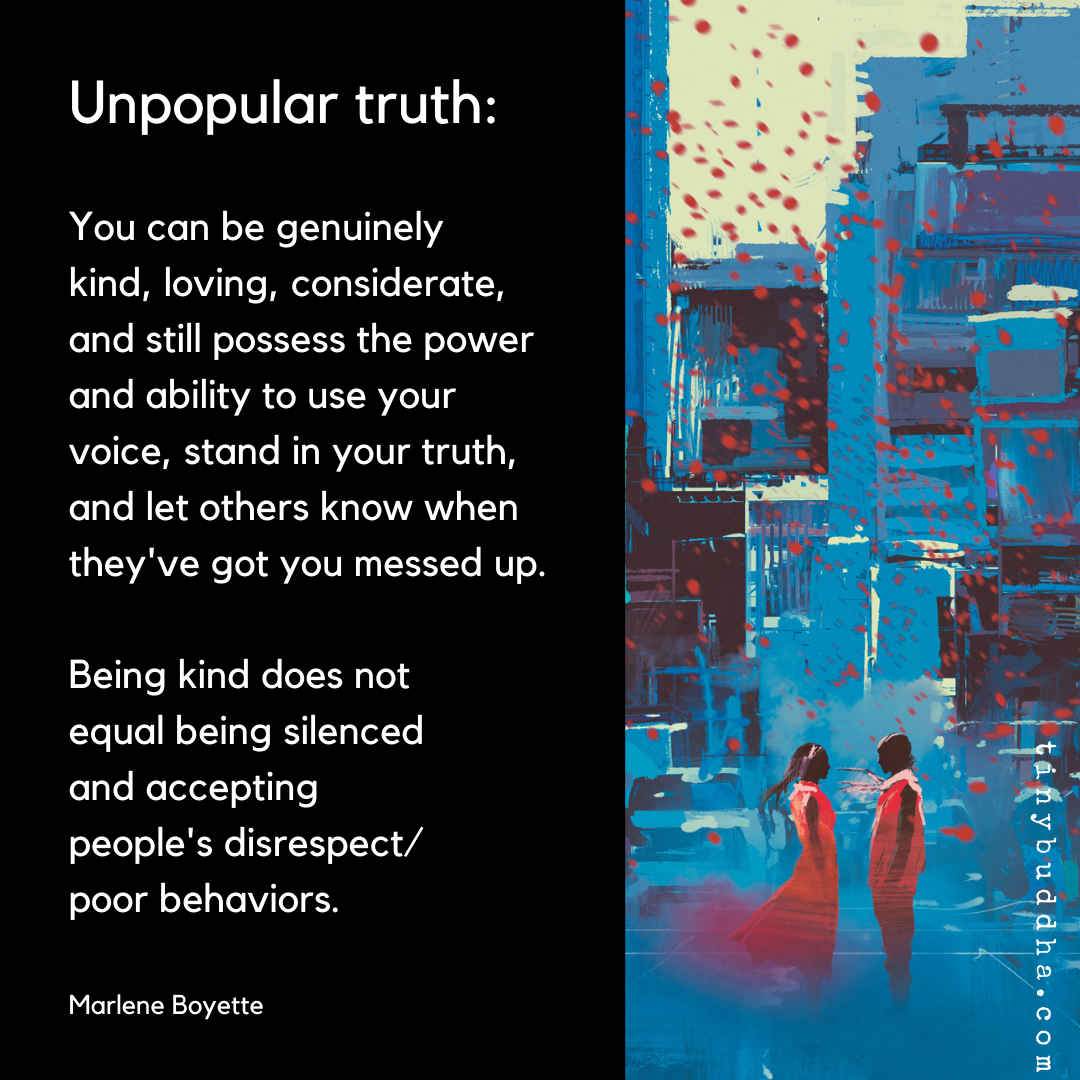
    Maybe your critical mother doesn’t know any better because her mother was critical. Maybe your absent father never knew his father either. Maybe your backstabbing friend was jealous of you for reasons only known to them. Perhaps your cheating partner had abusive parents, and your partner sabotages relationships because they don’t believe anyone can love them.

    Each and every one of us carries around our scars, going out into the world to meet other people who have scars, and when we connect, these combined scars can sometimes tear open.

    We all See Ourselves Through Others’ Eyes

    We all tend to see ourselves through our loved ones’ eyes—starting with our parents when we’re young—because we assume their perceptions of us are accurate and blame ourselves if they’re not flattering. Our self-image can alter based on their comments, emotions, and actions—positive and negative.

    This is a classic case of our relationships shaping our sense of self, an ongoing shaping that begins even before we can fully understand the meanings of what other people say or do to us.

    We are each the result of our experiences within our multiple relationships and interactions. How other people relate to us affects our image of ourselves, but that doesn’t mean we are helpless in the face of other people’s behavior toward us.

    We may not have had much of a choice as a child, but it’s a different matter once we’re adults. With awareness, we’re now able to protect ourselves far better from others’ negativity toward us and set necessary boundaries.

    Learning to Connect in a Different Way

    If you’re dealing with a negative or painful relationship that leaves you feeling bad about yourself, you can of course choose to distance yourself from the person and limit contact. Sometimes, however, this isn’t possible, so you have to learn how to connect in a different way while safeguarding yourself from their negative impact on you.

    I decided I had to respond differently to my family member and their negativity for the sake of my well-being. I began to look beyond their behavior and actions, and in doing so I started to piece together an idea of what might be the real cause of their pain and unhappiness.

    I recalled they had often moaned about how much they hated their job, how they disliked the town they lived in and their neighbors, and they also often complained of tiredness and physical aches and pains.

    I began to see that this person’s negativity—even if it was aimed at me, maybe due to their feelings of envy—wasn’t really about me. They were unhappy with their life in general. Negative people are often unhappy on many levels.

    It also helped me to remember we all have emotional scars, as mentioned before. When you approach people from a place of understanding, compassion, and empathy, you no longer see them as cheats, liars, betrayers, or “bad” people out to get you—even though they might cheat, lie, or betray you. You instead begin to see beyond their behavior and recognize that they’re in pain.

    When you do that a lot of their power over you starts to fade. You begin to see them as vulnerable, like everyone else. You start to realize that their negative actions toward you reflect far more on them than they do on you.

    People often hurt each other because of their own deep pain and because they don’t know any other way to act. This is often a painful lesson to learn.

    But when you finally grasp this difficult truth, you become more accepting of what happened, more forgiving, and ready to let go and move on. You realize you do not need to take on their negativity, brood about it, or feel you are the cause of it.

    That doesn’t mean you have to condone or accept mistreatment. And that’s not to say people’s negativity toward you won’t bother or hurt you ever again, but the effect won’t be so intense. You’ll realize that the situation isn’t really about you at all. Any pain they try to inflict on you is simply a reflection of what they feel inside; it no longer feels so personal.

    When I stopped taking my relative’s negativity personally, I was able to interact with them in a different way. I was much more relaxed in their company and able to enjoy family gatherings much more.

    When you stop taking other people’s negativity personally, you cease to be so susceptible to creating your self-image through their eyes. In fact, you start to focus far more on how you view them.

    Then you’re also free to focus less on their negativity and bad behavior and more on how you respond to it. That might mean setting boundaries and limiting your contact with them, and that’s okay. Sometimes you have to understand and empathize from afar to take good care of yourself.

    We’re All in the Same “Life” Boat

    Essentially, we’re all in the same “life” boat, bobbing up and down on the vast ocean of existence.

    We are all fallible. We all inflict hurt on others, intentionally and unintentionally.

    We all experience negative situations and inevitable suffering, and we simply have to accept this. Without pain and suffering we might not value joy or experience spiritual growth. If we never experienced adversity, we might not appreciate our strength.

    And without negative people we might not be truly grateful for or cherish the loving, supportive people we have in our lives.

  • Surviving a Dysfunctional Relationship: What I Wish I Knew and Did Sooner

    Surviving a Dysfunctional Relationship: What I Wish I Knew and Did Sooner

    “No person is your friend who demands your silence or denies your right to grow.” ~Alice Walker

    When I was a child and in my early teenage years, I was a free bird. I laughed easily, loved life, never worried, and dreamed big. I thought the best of others, the glass was always full. I never dreamed others would hurt me, and I had a joyful and playful attitude toward life.

    That was a long time ago.
    My breakdown started gradually and slowly with judgments from a very close and trusted family member I dare not name. This person, though probably well-intentioned, thought that you make someone stronger by criticizing them. They believed in knocking me down, throwing verbal punches to make me “resilient.”
    They believed in “hard love.” They watched while I faltered and sometimes suffered. They stood back and watched from the cheap seats, then critiqued my performance. Their assessment of me was rarely, if ever, encouraging and was full of arrogance and judgment.

    Well into my adult life, this trusted person threatened me after an ugly incident where they made a terrible judgment call. Instead of admitting their error, they threatened me and made it my fault by saying, “If you ever tell anyone about this, I will disown you.”

    Shuddering under the weight of those words, I decided to sever ties with this person once and for all.

    Those words, “If you ever tell anyone about this, I will disown you…” said so much about this person who I have struggled to understand my entire life.

    For me, it was about as close to the admittance of wrongdoing I would ever get from them. And as always, there was the signature and ever-present judgmental spin. “I will disown you” because, after all, this is your fault, and you deserve punishment.

    I try to come to terms with the aftermath of the ugly side effects that this person has brought to my life.  Someone so blatantly flawed showed me my own weaknesses because I allowed them to erode my confidence and well-being.

    I regret not cutting ties sooner—like twenty years ago.

    As I sat in the aftermath of this situation, I wondered what good can possibly come from such a disappointing relationship? A lifetime of misunderstanding, jarring actions, harmful words, and hurt feelings—all from a person so close to me—someone I should trust, love and respect.

    Perhaps the answer lies in the decisive way I ended it after so many years of abuse. The final decision for me to end this relationship was my first real stand to protect myself. The first time I valued myself more than another person.

    The dysfunction of this relationship would not have come this far if I knew how to establish healthy boundaries early on and knew how to deal appropriately with a difficult person. I am nearly sixty years old and have learned my lessons the hard way.

    I like to share with you some easy strategies you can employ if you are struggling with a dysfunctional person in your life.

    1. Nothing you say or do will ever change them.

    Save yourself a lot of time and energy and come to terms with this reality. The only person you can change is yourself, which is the best place to focus your energy. You can control your reactions to this person, your opinions, and how you deal with them, but you can’t control them.

    They have to accept you for who you are, and likewise, you have to accept them for who they are.

    If you don’t like them or their behavior, you have to decide how you will deal with it. Maybe you only visit once a year or not at all. Perhaps you only call on the phone. Explore all the options that you feel will work for you and keep you safe, and try not to feel guilty about your decision.

    2. Set healthy personal boundaries.

    Healthy boundaries are essential not only for you in this relationship but within all relationships. Setting healthy boundaries with friends, your boss, your wife or husband, your children, with anyone is key to having healthy and fulfilling relationships.

    When you set healthy boundaries, you also allow the other people in your life to know what you expect and what you will or will not tolerate.  They will appreciate you for that.

    Setting healthy boundaries starts with knowing what irritates you, what pushes your buttons, what compromises you might make, if any.  Healthy boundaries have a lot to do with knowing your core values. Start with a shortlist of core values important to you. Know them and stick by them, and when someone challenges those values, be ready to protect them because they are there to protect you.

    Also, choose your words carefully when setting clear boundaries. For example, saying, “You insulted me, so I am out of here,” is not as effective as saying, “Your words (specify the words you find insulting) are insulting to me, and if you continue to talk to me like that I will have to leave.”

    Everyone deserves a chance to change their behavior for the better. However, act decisively and immediately if your boundary is crossed.

    3. Whether it is a friend or family member, people who constantly cross your boundaries and challenge your values don’t deserve your energy.

    Being decisive like this is called standing up for yourself. You can walk away and come back another day—or not.

    If you don’t stand up for yourself early, people will chip away at your inner confidence and make you resentful and even potentially volatile. Don’t let things get that bad.

    Make yourself strong from the inside out, rely on your judgments. Don’t listen to other people who persuade you to ignore your guidance. Only you can know whether someone is violating your inner self.

    4. You are not a bad person for deciding to step back or even end the relationship.

    Tell yourself that you are not a bad daughter, son, wife, husband, mother, whatever. You are not bad for deciding to end a volatile relationship that has left you drained, eroded, and empty.

    Maybe you could have done things differently or better or sooner, but you didn’t and couldn’t, and you did your best. You had good reasons to step away or even leave the relationship; accept that and don’t beat yourself up over it. Self-preservation will always make you a better person in a relationship, and indeed, it will make you a better person out of it as well.

    There is a great deal of wisdom that can be learned from years of perseverance and working your way through challenging lessons. It was my choice to stay in a dysfunctional relationship, perhaps too long, in a place that clipped my wings.

    I now know the true value of standing strong in who I am, and not basing my self-acceptance on the way others treat or view me.  That wisdom is profoundly liberating and once again I can be free, like a bird with newly feathered wings.

  • How I’m Healing from the Pain of Growing up in a Dysfunctional Family

    How I’m Healing from the Pain of Growing up in a Dysfunctional Family

    “Don’t try to understand everything, because sometimes it’s not meant to be understood, but accepted.” ~Unknown

    As a child, I never had the opportunity to develop a sense of self. I had a father who was a drug addict. A mother who was abused by my father. And later, we had my mom’s possessive and controlling boyfriend. It was tough finding a consistent role model in the mix.

    I was one of four kids and we grew up in a trailer, sharing one bunk bed among us all. As children, we often would brutally fight with each other. We all wanted our own space and sense of self, but there wasn’t enough to go around.

    With our mom working so much, her boyfriend would watch us. He seemed to enjoy punishing us. I remember feeling so afraid. I didn’t want to do anything wrong. I wanted to have his love because it felt like the only way to be safe. I never felt good enough, not to my mom, dad, or the boyfriend.

    Starting in my teen years, codependency started really kicking in, and I wanted my mom for everything. I unknowingly was part of her triangulation between me and my sister. We both craved her love and wanted to have her favoritism.

    As a wild child, my sister was stuck with my mom’s negative self-projections, I received the positive. As the years progressed, these roles flipped, and I suffered a sense of rejection and confusion as to what I had done wrong.

    Life was hard and I couldn’t live with the fear and shame, so I learned to unplug from my feelings. At the same time, these unprocessed feelings would cause outbursts of anger. I started feeling entitled to anger. It felt like life had kicked me so hard as a child, why wasn’t it getting easier? Why was it getting worse?

    My learned dysfunction kept me yearning for connection but fearing it and pushing people away at the same time. I wasn’t capable of trusting others in a healthy way. With each loss, I took on more shame and perceived failure.

    As I struggled through life, I was oblivious to the amounts of shame my family dynamic had me carrying. My mother’s triangulation and manipulation created an environment where she was justified in lashing out with no accountability. Everyone else was to blame for her poor reactions to situations.

    As my mom and sister became a team, I became the problem who needed to learn how to accept and love them unconditionally. There was nothing wrong with them treating other people poorly. It was okay for them to deceitfully hide family secrets (e.g.: Mom drove home drunk from the bar and doesn’t remember getting home), because I wouldn’t agree, so they were justified.

    I felt like I was on an island, broken and unable to figure out what was wrong and how to fix myself because the “rules” of justification changed so swiftly, and always in their favor.

    Having no sense of self and being completely enmeshed with my mom and sister, I felt beyond broken each time I was accused of not being able to love unconditionally. I was worthless and a disgusting human being who was incapable of even a basic emotion that everyone else had.

    It took a lot for me to see that love for my mom was making me feel close only when she was going through tough times, making me part of her someday club (our motto: “someday” will never happen for us).

    My sister learned to use her money to express her love. She would take me to dinner and give me her quality hand-me-down clothes. While I was grateful, it also became justification for her to do crummy things toward me, usually when she had been drinking.

    While sober, if she had a problem, she’d choose to “forgive.” The only problem is that she hadn’t really forgiven me because one night while everyone was having fun, I might get tired or I didn’t think a joke was funny or I looked at her the wrong way, and it would all come flooding out—every stored feeling she had been holding back for days or weeks.

    If either my mom or sister hurt me, the expectation was that I should just get over it. There was no need for them to take accountability because “we are human” and “I am happy with who I am.”

    I wanted to be loved and accepted but couldn’t ever really find my place within my family because the dynamics were so volatile. I was suffocating in the conflicting feelings. I felt angry but ashamed. I was unhappy and felt worthless.

    When I hit bottom and I couldn’t see one thing in my life that gave me worth, I knew that I needed to make changes. I reached out and got help from a therapist and joined a local support group.

    As I am separating from the dysfunctional patterns, the things that have helped me are:

    1. Ask for help.

    Dysfunctional family dynamics often create shame around the idea of talking to others. It’s seen as exposing family secrets and going against the unit. Nobody should suffer due to things out of their control. Reaching out helps you find the compassionate outlet you deserve and need.

    I have been in therapy for about two years now. It has been the only time of my life where I have been able to experience consistent, reliable, and healthy direction. It has supported me in learning how to have self-compassion and make healthy, but tough choices.

    I didn’t want to accept the reality that my mom and sister will likely never truly see me for me. My role as a scapegoat is brutally necessary for the emotional “economics” that occur within my family.

    Therapy helped support me in my choice to find myself outside of my family of origin. There was much pain in going from seeing my family every weekend to now living a life outside of them. It required radical acceptance and the knowledge that I am unable to change anyone but myself.

    I was lucky to have a kind, compassionate, reliable therapist to guide me as I dealt with each of the emotions that came up during this time.

    2. Accept others as they are.

    As a scapegoat in a dysfunctional family unit, I have learned to accept my situation for what it is. I have to set my expectations for what others are capable of giving.

    We have no control over others or their view of the world. All we can do is accept a situation for what it is and assess if it is healthy for us. Once I accepted that my mom and sister do not really see the family dynamic as dysfunctional, I was able to free myself of the anger and need for control. They are blind to the ways they protect themselves emotionally and unwilling to have an open mind about it.

    There is sadness, but I see that the relationship dynamic causes so much pain for me, and I cannot fix this on my own. While I am compassionate toward the pain they must be carrying, I see that I cannot continue a relationship that is built on dysfunctional habits.

    3. Know your worth.

    As an enmeshed individual, my worth was defined by external sources. I wanted my mom, sister, brothers, friends, coworkers, and acquaintances to validate me as a good, worthy person. I desperately needed to feel like others liked me enough to feel I had worth.

    I now know that we all have worth, and it’s our individual responsibility to maintain this worth from within.

    I have a tough inner critic, so having a consistent mindfulness practice has helped me establish my worth. It is hard to find worth when you are caught up in your own head, believing the negative thoughts going through it. Mindfulness helps me turn away from these thoughts and label them as just that, thoughts.

    The more we tune out our negative self-talk, the more we can acknowledge our mistakes and learn from them without sinking into a low and getting down on ourselves. With this brings the awareness that our mistakes do not diminish our worth. Our worth is inherent. A mistake is just a mistake.

    4. Learn what healthy love looks like.

    Our family of origin doesn’t always teach us what healthy love looks and feels like.

    In dysfunctional families, each person loves based on their limited capacity to process their own emotions. When someone has to keep reminding you that you are unconditionally loved, ask yourself, how do I feel right now? For me, I felt hated and restricted to being what was easy for my mom and sister.

    Love should connect you with your inner joy. We all feel down at times and cannot rely on others to make us feel good about ourselves at all times. But I do feel that when someone loves you unconditionally, you shouldn’t feel lost. The joy of this love should be consistently present and help carry you through the tough times (e.g.: disagreements, hurt feelings, etc.).

    When it comes to my mom and sister unconditionally loving me, I have had to accept that they love me the best and only way they know how while hiding from their shame. If they lash out, they are not able to carry the shame and embarrassment of their own actions. They cannot validate my feelings or experience in any way. They need me to carry this responsibility for them. This is not unconditional love.

    As you move through the necessary steps to separate from learned family dysfunction, please remember that you didn’t learn these things by yourself and you will not unlearn them by yourself, nor should you.

    Oftentimes things like depression or anxiety are a hurdle. Building a community is scary but necessary. This can be reaching out to a therapist or searching for support groups in your local community.

    For years I struggled thinking that I could fix what was wrong with me on my own. It wasn’t until I reached out and got help that my mind was able to open up, process traumas, and make lasting changes.

  • The Signs of a Strong Friendship (and an Unhealthy One)

    The Signs of a Strong Friendship (and an Unhealthy One)

    “Lots of people want to ride with you in the limo, but what you want is someone who will take the bus with you when the limo breaks down.” ~Oprah Winfrey

    “How on earth am I supposed to survive? I have no friends whatsoever!”

    These were the thoughts that ran through my mind then when I first set foot in London five years ago. I felt raw and vulnerable in the beautiful new city that I had to make my new home, alone, with my two kids, while my husband was overseas. I wondered how I was supposed to do it all.

    Well, I had J, a friend I’d met on my honeymoon in Bali, but we had only kept in touch occasionally, so I didn’t expect much from her. I couldn’t really call her my friend, maybe a pleasant acquaintance, but surprisingly she turned out to be my much-needed rock-solid support system and guardian angel.

    Every Saturday after work, she came over to my place, and we hung out. Sometimes we would walk to the park. Other times she would encourage me to drive (something I resisted). She visited my daughter when she fell and was in a cast and made my four-year-old daughter’s birthday memorable. She even helped me put up my garden table and chair. To say that I was grateful for her kindness would be an understatement.

    I was grateful—one, because the help and friendship she offered was unexpected. Secondly, because she did it with a great and open heart. And lastly, because she accepted me for who I was and what I could offer at that point.

    For the first time in my life, I was a ‘receiver’ in a friendship. Until then, I was always the giver.

    But with J, things were different. Her generosity touched me so much, so I thanked her often and told her how much I truly appreciated the trouble she took. But she always shrugged it off. One day as I was thanking her for the millionth time, she said, “Lana, the friendship goes both ways. I too appreciate hanging out with you and your little kids. They add a lot of joy to my life also!”

    She then proceeded to tell me that she lost two of her friends to cancer in the last few years, and the sudden losses left her feeling devastated. She said spending time with us helped her through that. I was shocked to hear it but was also pleased to know that my kids and I could fill that void for her in our imperfect selves.

    Her honesty and generosity taught me some essential lessons on friendship and helped me differentiate between a healthy and unhealthy one. So, let’s unpack them.

    The Tell-Tale Signs of Healthy Friendship

    1. There is an equal amount of give and take in the relationship. Both people’s needs are considered essential, and the friendship doesn’t feel lopsided.

    2. You’re both honest and transparent with each other. When J honestly opened up to me, it cemented our friendship because it made me feel equally important. Till then, I thought I was the vulnerable person in need of her, and I was surprised to know that she needed me as well.

    3. You’re both kind and compassionate, and you completely accept each other. Whenever J arrived, she was always considerate of how overwhelmed I was. She was happy to have an overwhelmed, scared, and disoriented friend and accepted me for who I was.

    4. Good friends don’t try to control, dictate, or tell you how to live your life. Though I was new to many things, she didn’t try to control me. She offered suggestions and sometimes pushed me out of my comfort zone but never crossed any boundaries. She gave me the space I needed.

    5. Good friends are generous—with their time, resources, or whatever they have to give. J was generous with her time and company and took me to various places. I was happy to have another adult with me as I visited new locations with my girls.

    6. Good friends appreciate each other and don’t try to take advantage of each other’s vulnerabilities.

    7. Good friends don’t try to manipulate the other for personal gain. They may help each other, but they don’t use each other. They spend time together because they care for each other and enjoy each other’s company, not because they want something from each other.

    Whenever there is an equal amount of give-and-take in a relationship, honesty, respect, and empathy for one another, you can be sure it is a keeper.

    Through J, I learned that friendship is a two-way street. Before that, I had no standards and welcomed anyone and everyone in my life as friends. Even the ones who walked all over me and took advantage. J upped the bar for me.

    So, what are the signs of an unhealthy friendship?

    1. It feels one-sided. The other person dominates the friendship and prioritizes their needs and wants over yours.

    2. They’re insensitive to your needs—they don’t consider them essential, or they trivialize them as unnecessary, either by joking or making your needs sound insignificant.

    3. They subtly undermine you, implying that you aren’t good enough, can’t do what you want to do, or shouldn’t bother pursuing your wants, needs, and interests.

    4. They see you as a means to an end, meaning you are useful for some specific purpose. Maybe you can help them move forward with their career, or you’re a bridge to connecting with someone else.

    5. They do not respect you—they ignore your boundaries, talk to you in a condescending tone, and/or treat you like you’re not a priority.

    6. They don’t respect or appreciate your time or effort.

    7. They’re demanding and think everything rotates around them.

    8. They have numerous issues that they can never sort out on their own. They never ask about you; you’re only there to listen to their problems and service their needs.

    9. They’re always competing with you, and everything is a game where they want to be the winner.

    10. They don’t want to know about you—your past, your feelings, or your interests.

    11. They repeatedly bail on you unexpectedly, as if they don’t value your time together.

    Walter Winchell says that “A real friend is one who walks in when the rest of the world walks out.” Here’s hoping you find that real friend who understands you, lifts you, and brings out the best in you!