Tag: boundaries
-
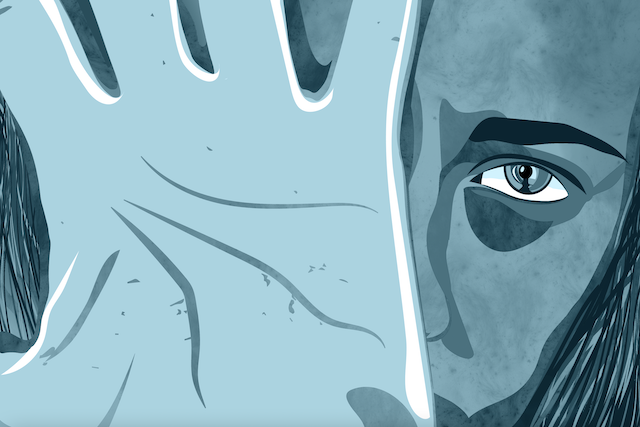
Abuse is Like an Iceberg: The Cruelty and Pain You Never See

“What we see is only a fractional part of what really is.” ~Unknown
On the surface, in the public eye, it can seem trivial. It might look like the seemingly harmless teasing of a child or romantic partner, joking about words they have mispronounced or silly mistakes they have made. Inane mistakes like putting on a shirt backward, burning something in the oven, or losing their keys. Mistakes that everyone makes.
Abuse might sound like judgmental comments that appear to come from a place of compassion. Comments like:
My daughter doesn’t apply herself; she’s lazy, and I wish she would care about her education so she can make something of herself.
At the moment she likes girls, but I’m sure she’ll grow out of it because I just want her to be happy and get married and have a family.
I wish he would make plans and stick to them instead of changing careers every five minutes; he would be so much happier.Sometimes on the surface abuse can sound like frustration:
I wish she would just pick up after herself; it annoys me that I have to live in a pigsty.
She doesn’t do well in school, which is embarrassing for me because I am a teacher.
He never has any time for me; he’s so selfish, and all he thinks about is his work.Abuse can also sound like statements of compassionate control:
If she doesn’t do better in school, I’m not going to pay for her cello lessons.
If he doesn’t help out around the house, I’m not going to make time for him.
If she doesn’t try to dress nicely, then why would I make time for date night?I’m not saying that all teasing or comments expressing frustration necessarily mean that someone is being abused. I am only drawing your attention to them and encouraging you to look closer.
The victim might give you subtle hints. Hints like:
My parents really don’t care what I do; my parents only care if I do well in school and that’s all.
My partner is only happy when I’m doing things for him.
I don’t get a lot of me-time because me-time is selfish.The victim might show you emails or texts the abuser has written. Oftentimes, these emails or texts may seem benign or contain subtleties that can be easily overlooked. They might have a few verbally abusive comments and a handful of demands, or they might even be disguised as messages of concern.
Sometimes these messages may be written so persuasively you might find yourself siding with the abuser or wondering why the victim is so upset about something so trivial.
Beneath the teasing, the frustration, and the deprecating comments disguised as compassion lies a world of abuse that you are not looking for.
Behind closed doors teasing turns into putdowns and verbal abuse:
You will never amount to anything.
You are incompetent.
You are lazy.
You are fundamentally a failure.
You will never be able to support yourself.
You’re a fag.
How can you be so dumb?These harsh words may come with physical violence, but even on their own, they can be devastating.
Compassionate control that appears on the surface may be an indicator of neglect or financial abuse.
I have the money for music lessons, but you’re not doing what I want, so I’m not going to support you. I’m not giving you money for shampoo because it wouldn’t change the fact that you look ugly.
You have not become the person I had hoped you would become, so I’m not going to pay for your educational opportunities.
Sometimes you might look at abuse victims, like me, and wonder why we don’t wear better clothes, get regular haircuts, or take better care of ourselves. However, many times these simple choices were not within our power to make.
Victims of abuse often make self-deprecating comments. Comments like:
It was no big deal; anyone could have done it.
I’m not good at a lot of things.
I can’t do anything right.Over the years we have been groomed to put ourselves down before you do. We have internalized the abuse narratives to the point where we no longer see our lack of self-esteem, or our talents.
Victims of abuse often don’t know how to accept a compliment and at times can feel uncomfortable in the spotlight. We’ve learned to make ourselves small and build you up so that we can keep ourselves safe. We downplay the favors we have given to you or the kindness we have shown you because we have learned the needs of others matter much more than our own.
We become overly anxious when we made a mistake, when we’ve expressed an opinion contrary to yours, or when we think we might have offended you.
We put your needs first, and we act overly agreeable and easy to please. We don’t mind where we go or what we eat when we are out with you. We don’t tell you if we’re feeling tired or cold, and we hyperfocus on you because we have learned that our needs don’t really matter to anyone.
Because we have been gaslit and our reality has been denied over and over, we have learned to downplay the abuse and even to deny it. We might say contrary things about our abuser, such as:
My mother loves me; she just doesn’t know how to express it.
Yes, that was a nasty thing that he said, but if I had been kinder to him or done a better job, he wouldn’t have felt the need to say that.You might occasionally hear us expressing frustration about the way our parents have treated us. You might hear our longing for love and acceptance, but in response you may find yourself saying:
Your mother really loves you; she just wants what’s best for you.
I know you’re frustrated with your dad, but you should really try and forgive him.You might hear us expressing frustration about our partners and you may find yourself saying:
You should be grateful for all that they have provided for you and done for your family.
I don’t believe you; he or she doesn’t seem like the type of person to do a thing like that.Your comments leave us feeling invalidated, so we become silent.
Abuse was always there in plain sight, but like an iceberg you only saw the tip. A tip you could easily normalize, rationalize, and dismiss.
If you suspect that someone is being abused, here are some small steps you can take to protect them.
First, realize that the victim may not know that they are being abused or that the way they are being treated is wrong.
Oftentimes, they have been groomed to believe that they deserve to be treated poorly and that the abuse is somehow their fault. If they do realize that they are being abused, they may not be in a position to do anything about it; therefore, their denial serves as a temporary coping mechanism. The best thing that you can do is to treat them with kindness and compassion.
Ask questions that encourage the person to get in touch with their feelings or needs. For example, I noticed that your mother makes a lot of negative comments about your abilities. How does this make you feel? Or, last night when we were out your partner said some harsh things about your appearance. How did you feel about this? I notice that you look thirsty. Would you like some water?
By encouraging them to get in touch with their feelings, you validate their lived experiences and help them recognize that the way they have been treated is not appropriate or healthy. By encouraging them to focus on their needs, you help them to prioritize self-care even if only in a small way. This allows them to take back the power they have lost and helps them realize that they deserve to be treated better.
Sometimes the simplest compassionate questions can help them take small steps to decrease the amount of abuse they are exposed to and eventually take drastic actions to remove the abusers from their lives entirely.
If you witness someone being teased or shamed during a social event, firmly tell the perpetrator that their behavior is not kind or appropriate. If the perpetrator does not stop, invite the victim to walk with you to another part of the room or engage in a different activity to give them a break.
Never join the perpetrator in teasing or criticizing the victim even if you believe that the teasing is just for fun.
When you join the perpetrator in teasing you are engaging in a benign form of abuse and reinforcing their power and control. You are unknowingly teaching the perpetrator that you are a person they can use against the victim. Additionally, you are affirming and normalizing the perpetrator’s opinions of the victim, making it hard for the victim to break free from toxic narratives and limiting beliefs.
Never engage in discussions about the victim with the perpetrator. Oftentimes, abusers use people who are close to the victim to convince them to do things they are not comfortable doing. Sometimes these conversations are disguised as concern for the victims, their well-being, or their financial future. If you suspect that you are being used in this manner, make it clear that you are not comfortable engaging in these sorts of conversations. Keep your communications with them brief yet firm.
Never confront the abuser or tell them that you think their behavior is abusive. This may prompt them to encourage the victim to cut you out of their life. If you need to call the abuser out on their actions, talk specifically about why you do not like their behavior or why it is not appropriate. If you suspect that the victim is in serious physical danger, contact the police, a social worker, or a local women’s shelter for professional advice.
Abusers tend to isolate their victims in order to maintain control over their lives. Invite them to activities you both enjoy so you can spend quality time together and give them a break from their home life.
If you have a friend or family member who cancels plans at the last minute or frequently declines invitations, they may not be making this choice of their own free will. It is important not to take this personally or wall the victim out of your life. This is what the abuser wants you to do.
Instead, continue to call your friend and invite them to social events even if you think that they will not attend. Knowing that you are in our lives even in some small way can make us feel less isolated.
Make it clear to your friend or family member that you are always there if they need to talk and frequently remind them of this. If you feel comfortable you can also let them know that they are always welcome to stay at your home if they ever need a safe place to go. You can also offer to help them create a safety plan should they ever feel unsafe.
By taking these small steps you are choosing to see the abuse that lies beneath the tip of the iceberg and helping your loved one make it safely to the surface.
-

3 Painful Consequences to Overgiving and People-Pleasing

People-pleasing, overhelping, overgiving—we can give it lots of different names, but the consequences of putting yourself last all the time are generally the same.
You may have been raised to see giving and helping as virtuous things. And hear me say, they are. I believe wholeheartedly that it’s a beautiful thing to serve, support, and help others. However, people-pleasers don’t always know when to draw the line; they give and give almost as if they have an endless supply of time, energy, and resources.
Surprisingly, people-pleasing is often about control. It’s rooted in your need to try and boost your own self-esteem, avoid conflict, and manipulate the environment into what you need it to be to feel at ease.
But I can assure you, there are vast and detrimental consequences to working so hard to please and appease others. I know firsthand. My overgiving, overhelping ways were rooted in my deep need to be seen, supported, and cared for. I’ve experienced fried adrenal glands not once, but twice from pushing so hard to say yes to everything but me.
Let me share with you some of the costs of overgiving and people-pleasing now.
Deep Resentment
The more you try to please those around you, the less time you have for yourself and the things you need and desire, which then leads to feeling resentful.
If your needs aren’t being met by those around you (because, let’s face it, most people-pleasers aren’t being honest and telling our people what we need), it can cause deep hurt and anger.
It’s not other people’s job to read our minds. It’s our job to speak our truth and be honest, but often, we fail to do so. So when they don’t intuit or “just know” our needs, we start becoming resentful toward them too. “Arghhh, how can they be so uncaring?”
Anger then takes hold. Resentment is what happens when we stuff or suppress that anger (common for the people-pleaser—remember, we need to keep the harmony at all costs, so speaking on behalf of our anger is major a taboo!).
And once resentment kicks in, that’s when the illness of bitterness seeps in and festers. Resentment is what leads to long marriages and relationships of contempt, rolling eyes, and “staying together for the kids.” It leaks out as criticism, defensiveness, and snarky side comments. It explodes in the kitchen at a random comment (that actually isn’t random—it simply pressed on the already existing wound).
Loss of Identity
People-pleasers spend a great deal of time editing themselves—so much so that they lose sight of who they really are.
When you’re always trying to please other people, you often hide yourself or morph into behaving like other people to get what you want. You’re a master chameleon, an expert at being anyone… other than you.
This was my ammo 100%. I didn’t know who I was because I had spent decades trying to be what I thought others wanted me to be. It was the only way I knew how to keep myself safe. I had spent years feeling like I was unlikable, didn’t fit in, or that I wasn’t smart enough. So I simply bought into the notion that I had to go along to get along.
This led me straight down a path to never understanding what I enjoyed, liked, disliked, or needed because I rarely made any choices for myself. I didn’t put aside time for myself and explore new things because I had no idea what those things might be. So I just didn’t. I continued in my pattern of pleasing and appeasing to my own detriment.
Loss of Intimacy/Loss of Relationships
For a typical people-pleaser, their relationships often look one-sided.
Let me guess, you’re the one that:
- Plans outings
- Is the listening ear
- Is the shoulder to cry on
- Everyone calls when they need something
- Is always “holding space for others”
This makes you feel needed, wanted, valued, and important. But when you stop to think about it, you realize you’re not getting the same in return.
It’s not hard to see how this leads to short-lived relationships following a set pattern:
Joy and fun at first, then you start to feel exhausted, then resentment creeps in, followed by mild confrontation and the inevitable parting of the ways. (And I know because this is a pattern I followed more times than I care to confess).
There came a point where I had to get honest about the depth of my friendships. Yes, many were fun. But they lacked the support and intimacy that I longed for. No one ever asked about me and what I had going on. No one ever held space for my hurts and frustrations in life. I often felt emptier when I came home from spending an evening together than I did when I left.
Fear kept me in those relationships long past their expiration dates. I didn’t walk away sooner because I was too scared to be alone.
I noticed that I held back from being honest and sharing myself with them. I didn’t think I could be intimate or vulnerable, so at some point, the relationship simply expired. Just like a carton of yogurt that gets pushed to the back of the refrigerator, it saw its final date.
As I was growing and healing, I began to see that the people I had chosen to be in relationships with were no longer healthy for me. My soul was healing, and I was learning to align with relationships that felt honest and authentic.
Speaking your truth and asking for what you need doesn’t make you a selfish person. It makes you a real person with real needs, and real relationships are only formed when we are willing to be… you guessed it, real.
It’s okay to want to help and support people. I’m not telling anyone to be a jerk and to never lend a helping hand. However, you need to know where to draw the line; you need to find a balance of helping them and you.
We all matter. We all have needs that matter. And the only way to get our needs met is to be honest about them—and to set healthy boundaries that honor them.
Boundaries are not about saying no all the time and demanding things of other people. Boundaries are about knowing where the line is for you and communicating that line in a way that is firm and compassionate so you can flourish and thrive.
When set correctly, boundaries give both people a choice as to what happens next in the relationship. It’s okay sometimes to walk away. But it’s also okay to stay in the relationship and practice honesty and intimacy if that feels right. When you start to become familiar with boundary-setting, your intuition will guide your next steps.
Trust yourself. I know from being a recovering people-pleaser that this step alone can be so challenging, as we don’t really know who we are, so how do we trust ourselves? But that small, still voice within has always been there, guiding and leading. The difference is, now you’re listening.
-
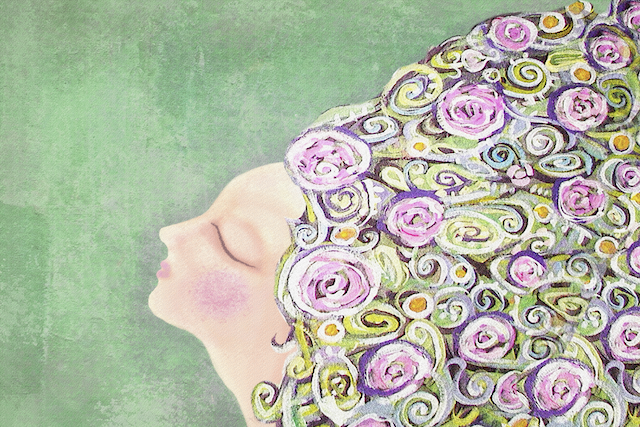
The Difference Between Easy and Hard Self-Care and Why Both Matter
“Sometimes you’ve got to look straight into the tired eyes of the woman staring back at you in the mirror and tell her that she deserves the best kind of love, the best kind of life, and devote yourself to giving it to her all over again.” ~S.C. Lourie
Self-care. An important concept that has become a buzzword. What does it mean? The answer… that depends on you. Google and you will find lists, articles, and suggestions for self-care tasks. These can be helpful as inspiration, but self-care is something that’s unique to you.
I work in suicide prevention and mental health promotion. I talk about self-care a lot. I encourage others to engage in self-care regularly. I have them make lists with self-care tasks that are meaningful to them. You’d imagine I’d be an expert in self-care. Am I? No. But I’m working on it. And I’m way better than I used to be.
How did I get better? I started doing the hard self-care.
What’s the difference between easy and hard self-care?
Easy self-care for me is things like a hot bath or shower. Hiking with my family on the weekends. Texting my sister about daily frustrations. Baking sourdough. Practicing meditation.
The easy self-care is doing the things that fill your bucket, the things you make time for without excuses and that make you feel better in the moment.
This is the first type of self-care I focused on when I was feeling burnt out. Most of my twenties consisted of my working several jobs at a time, filling my unpaid time with volunteer work and seeing friends, going out, staying so busy that I didn’t realize I was worn out. I was known to use the mantra “I’ll sleep when I’m dead.”
It was when my thirties hit that the mantra started to feel too real.
I had my first child at thirty and my second child at thirty-four, and the go-go-go lifestyle started catching up to me. Working full-time, volunteering, seeing friends, never saying no, and staying busy hit different with two kids and a partner who worked shifts.
I was tired—all the time. The kind of tired that sleep doesn’t touch. The kind of tired that had me sobbing at the dinner table because I didn’t know where I’d find the energy to do the bedtime routine. The kind of tired that had me begging my doctor for tests and wishing he would find something wrong so that I could fix whatever was sucking my energy.
I was getting strep throat every other month. I was having stomach issues. I was burnt out and not well. I would be so exhausted that I didn’t have energy for my kids at the end of the workday. The kind of exhausted that no number of hot showers or meditation was fixing.
I had been to my doctor several times in eight years, explaining my symptoms, and was turned away with the rationale that I had young kids; I should expect to be tired.
At some point, I decided that this was unacceptable. I declared 2019 to be the year of health for myself and booked an appointment with a naturopath. In my first appointment, she asked me to rate my energy levels on average each day from a scale of one to ten.
I told her that on average, my energy levels were at a two, but sometimes I would be a three on a good day.
She looked at me in shock and clarified: “You are a two on average, on a daily basis?”
I said, “Yes.”
She told me, “Honey, this is not normal.”
I burst into tears: I felt validated; I felt seen and not ignored. Fast forward to a few rounds of bloodwork, and I was diagnosed with Hashimoto’s Thyroiditis, which explained many of the symptoms I had been struggling with, including the crushing fatigue that left me in tears most days.
This is where the hard self-care kicked in. Hot baths, meditation, baking sourdough—all things that continue to fill my bucket and that help me to feel better—were important. But the self-care I needed to feel better in the long run, to have energy for my family, to live life instead of getting through life—the hard stuff—this is where I shifted.
Knowing that I could make changes to how I was taking care of myself was empowering. I finally felt like I had some control over how I was feeling. And shifting my perspective to see this as a part of self-care helped me to prioritize the hard stuff.
Advocating to my healthcare providers, changing my diet and how I exercise, changing how I rest and recharge my body, setting boundaries, choosing what I use my energy for—these are necessary choices to alter my symptoms and help me to feel better, but they do not come easily for me. Yet, they are all a part of my own self-care. If I wanted to feel well, I needed to start doing these things—and continue to do them if I wanted to continue feeling better.
And I do feel better. I am now on thyroid medication. I know that dairy makes me feel not great. I can now feel when I’m going into a Hashimoto’s flare, and I know when I need to rest more.
I know what exercise is helpful for me, and what makes me feel worse.
I am honest with my partner when I need him to take on more so I can rest.
I know the difference in my body when I am tired vs. fatigued, and I can take action for both of those feelings.
Doing the hard self-care over the last three years has been worth the work for how I feel overall.
The hard self-care will likely always be something that I’m working on. Some of the hardest things have become much easier as I practice them.
I’m much more likely to advocate for my health with my doctor than I was three years ago. I am much more confident to set boundaries at work with my hours and my capacity. I am much better at listening to my body and accepting the need for rest.
I still have internal arguments with myself in terms of pushing myself to be productive (my trick is writing “rest” on my to-do list—it helps me reframe rest as productive instead of lazy!), but where I am now is vastly different from where I was just a few years ago.
When I talk to others about self-care, I encourage them to think about the self-care that’s easy for them, and to also consider the harder self-care. Both are important and necessary to make sure you are honoring yourself.
How?
Start today.
1. Think of one easy self-care task you can do right now (or today) that fills your bucket, and will help you to feel good, or better, in this moment.
2. Think of one hard self-care task that you want to take on. It could be something like making an appointment you’ve been putting off or considering how to set a boundary that’s been difficult for you. It could even be something like drinking more water—that can be so difficult for some people, while it sounds easy.
3. Be kind to yourself. Know that everyone’s journey is different. What’s hard for you might be easy for others, and vice versa. Self-care is individual, and some of us have privilege to prioritize self-care in some ways that others do not.
It might not be easy, but you will start to see how things can start to change when you put yourself on your to-do list.
-
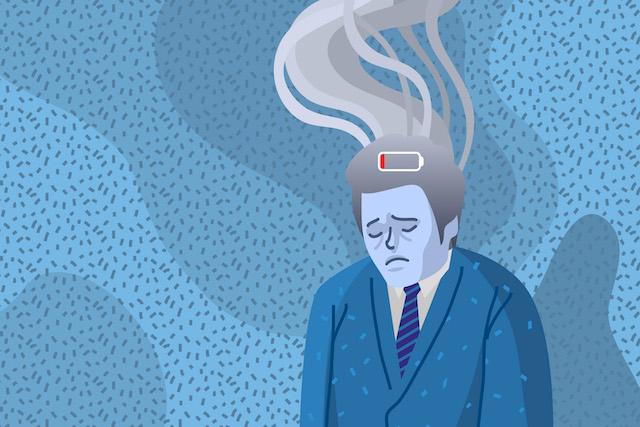
Feeling Burnt Out? How to Slow Down and Reclaim Your Peace
“Burnout is a sign that something needs to change.” ~Sarah Forgrave
Fifteen years ago, my doctor informed me I was in the early stages of adrenal exhaustion. In no uncertain terms, she warned that if I failed to address the stress I was under, my adrenals might not recover. This was hard to hear, but it forced me to face the fact that eating well, exercising religiously, and keeping up with the latest research on wellness was not enough.
I had to ask myself a defining question that day: Am I ready to go down with the ship?
At the time, I was teaching an average of fourteen classes a week at my wellness studio. I had been exceeding my threshold for so long that I had pain in every joint and muscle in my body. I was completely exhausted, physically, mentally, and emotionally, but slowing down or cutting back was just not an option.
Or so I believed.
The problem was that every time I would even begin to consider addressing the reality of my situation, my head would instantly fill with all the reasons I couldn’t possibly stop.
There was the dream for a business I couldn’t imagine giving up. The huge amounts of time and money I had invested in realizing that dream. And most of all, there were the clients I was serving, a community of amazing women I loved working with and didn’t want to let go.
Meanwhile, my thirty-year marriage to a man struggling with an opioid addiction was falling apart. My kids were distressed. My body was completely breaking down, and my life had become a tangled mess of fears, conflicted feelings, and obligations I just didn’t have the heart for anymore.
As the growing pressure to do something about my situation increased, my anxiety increased right along with it. Talk about a pressure cooker!
I couldn’t even imagine the courage I would need to tell my husband I wanted a divorce. And whenever I got anywhere close to that courage, my mind would flood with anxiety over the uncertainty.
How would he react?
How would it affect my children?
Where would I live?
How would I ever rebuild my life?
It felt as if I was being buried alive under a growing mountain of complexity with no way out. So, the pain continued to get worse, and I kept trudging forward, blindly hoping against hope that somehow it would all work itself out (without changing anything about the way I was living).
Growing up, I had learned to take the offensive and power through obstacles. I had always seen myself as someone who could do anything she put her mind to. Now I found myself stuck between the person who thought she was responsible for everyone’s experience but her own and the person I might actually become if I started making self-valuing, authentic choices.
Then one morning, the dam broke.
I was walking up to the door of my studio to teach the 6:00 a.m. class, asking myself (like I did every morning) how I was going to get through the day with all the pain I was in.
As I turned the key in the lock of the business I had dreamed of creating for over a decade—the business I had built out of everything I believed in and everything I knew I wanted to offer to the world—I could see the consequences of my resistance to change about to swallow me whole. I could see that my fear of change was completely blocking my ability to see anything past that.
And suddenly… everything went quiet. All the reasons for not stopping that typically flooded my mind just fell away.
The only thought I had in that moment was, The way you stop… is you stop.
I didn’t just hear these words; I felt an absolute acceptance of them. One minute it was impossible to stop; the next, it felt like the simplest thing in the world.
In the quiet of this moment, I became so aware of my own breath that I felt it everywhere in my body. For the first time in as long as I could remember, I stopped. And when I did, I found the courage to listen to my aching heart.
I felt a depth of longing for peace I had never allowed myself to experience before. I stood there breathing and felt an acceptance of the reality of everything that was happening wash over me. The pressure to control it all was gone!
My mind was clear, and my body felt relaxed even as I faced the same facts of my situation, but without all the usual stories and justifications overwhelming me. It felt like a miracle.
Suddenly the door to my studio, which I had been walking through for years, felt like the door to an entirely new way. Standing there with my key in my hand, in the profound quiet of that moment, I was flooded with a new sense of possibility.
As I set up for the 6:00 a.m. class, I stayed focused on my breathing and continued to listen to my body. It became clear to me that when I wasn’t being honest with myself, my body responded by restricting my breath. And I was able to see how all the years of unaddressed tension were expressing themselves as escalating physical pain.
A New Direction
That morning, I didn’t just take a first step toward interrupting the old way. I began heading in a new direction.
But it still took me a year and a half to wind down my commitments and extricate myself from the studio. This was a massive transformation involving every aspect of my life, but it began with just one step—accepting that the old way was broken. Once I accepted this wholeheartedly, I moved to the next step.
I had a friend who had moved back to town to take care of her aging mother. She was looking for a place to establish her yoga school and had already been teaching a couple of classes a week at my studio while she looked for a more permanent place. On that pivotal morning, after I taught the 6:00 a.m. class, I called my friend and told her that I was stepping down and that she could hold all her classes there.
I continued to pull back, one step at a time, constantly asking myself, “What can I let go of today?” (One day, the answer to this question was “my hair”!) Eventually my friend bought out my lease and took over completely.
This is not to say I did not continue to wrestle with self-doubt. But my intention to slow down and to stop ignoring my tension became my guiding compass point.
In the years that followed, I relied on this compass to dive more deeply into the mind-body connection and what it truly means to take care of myself and be happy. My primary tool was the simple mindfulness practice of paying attention to my posture (whether it was tense or at ease) and my breath (restricted or free). I found strong community for this priority in the study and practice of Qigong, Tai Chi, and Continuum.
In the process, it became clear to me that to access the wisdom within, the first thing I had to do was slow down and calm down. This priority allowed me to be honest about the pressure I was putting on myself to keep doing things I no longer had the heart for and to recognize the emotional reasons I was hanging onto them.
We all come to thresholds in our lives, times when we’re faced with tremendous pressure to change (or go down with the ship). When we refuse to change, the only other option is to increase our tolerance for suffering while convincing ourselves that it’s not affecting us as much as it really is. In this fantasy we tell ourselves we’ll make it (somehow) if we just keep powering through.
I’ve come to realize that it’s not about avoiding stress. It’s about increasing your ability to remain present and functional while stressful events are happening. The calmer you can be in the face of stress, the more resilient you’ll be and the less likely you’ll be to end up teetering on the edge of complete burnout like I was.
When we practice being present, we’re able to make more accurate moment-to-moment choices. We’re able to slow down and take an honest look at what needs to change. Which isn’t to say that it’s going to change in a minute, or a day, or a week, or even a year. The truth is that lasting change can often be a very gradual process.
How to Stop
I was able to stop by establishing new priorities. I made it a point to slow down, calm down, and really be honest about what I could eliminate. My process was essentially as follows:
1. Stop. (For the moment, anyway.) Acknowledge that before a new way can show itself, you have to find a way to stop the old way.
2. Acknowledge the pain you are in—emotional and physical.
3. Ask what you can let go of now and in the near future. (If the answer is “nothing,” then ask again.)
4. With “something has to give” as your mantra, what can you let go of next?
- Consider what you are physically and mentally capable of doing right now. (If the answer is “everything, if I push myself,” then ask again.)
- Consider your life priorities and what you need to make room for.
- Consider what you no longer have a heart for.
- Consider that what you are holding on to tightest might be what really needs to go. Letting go of smaller things first often helps to relax your grip on even your strongest (and often unhealthy) attachments.
5. When the “yes, but…” voice shows up, be aware of it and do your best not to listen or take action based on what this voice says. This is the voice of your attachment to keeping an unsustainable system on life support. It’s fueled by your fear of uncertainty because if you stop what you’re doing, you’re not sure what will happen (and your “yes, but…” voice is certain it will be awful!).
6. Gather tools to help yourself detach enough from this voice to move toward accepting reality and make the changes needed to live a more authentic and satisfying life. (The Serenity Prayer is a good one.)
7. Remember that change is a process, not a single event. Start small, then graduate to bigger things that need to go.
—
I hope you’ll continue to play with the concept of stopping (the old way) to start (a better way). Every meaningful change hinges on your ability to interrupt the old pattern. You’ll learn to rely on this ability the more you practice using it.
Also keep in mind that you won’t necessarily know anything about the new way when you stop the old one. Change usually happens very slowly, and patience can be the hardest thing.
Good luck, and feel free to reach out with questions or comments!
-

3 Things I Realized When I Stopped People-Pleasing and Let Myself Receive
“Until we can receive with an open heart, we are never really giving with an open heart.” ~Brene Brown
The honest truth about needing to please is that we do it to make other people happy. We will sacrifice everything and anything to put a smile on another’s face and lighten their load, while ours keeps building.
The only problem is that while helping others makes us feel good, it’s almost addictive until we are burnt out. And giving and pleasing others starts to come from a place of resentment.
I’ve been there!
There was a time when I used to come up with a thousand reasons why I couldn’t leave the house. I was desperate to get to a yoga class and claim an hour away from being a mum, wife, friend, and entrepreneur.
But instead, I prioritized keeping my kids happy and did everything I could to avoid the onset of a tantrum and also made sure my husband sat down to a delicious, home-cooked meal each night. And when the kids were napping, I would use that time to do a little work.
The routine started to get boring. I complained daily. I was grumpy and irritable.
Yet the days kept coming and I started to drag my feet. The tasks were mundane and never-ending, and they started to get on my nerves. I’d lash out at the washing machine or slap together a half-assed attempt at dinner. And I wasn’t just overextended and resentful in my home life. My clients were taking advantage of me, and my friends sucked my energy dry.
I kept showing up for everyone around me—striving to keep the peace, to keep them happy, while I was worried that I might let them down or wasn’t living up to their expectations. Yet with a whole lot of hindsight, I discovered that I had placed all this pressure on my shoulders myself.
Denying myself a sixty-minute yin yoga class was the stupidest thing I had ever done. It still sounds ridiculous now. But at the time, I couldn’t see any solutions. I had tunnel vision and it didn’t revolve around me.
I felt like I didn’t deserve the break.
I felt responsible for everyone around me.
I was unsure what would happen if I left our house for an hour and what I would walk back into after leaving my two young kids alone with my husband.
Each afternoon, I was an emotional wreck by the time my husband came home. Being the problem solver that he is, he encouraged me to go and find a class—as if it was that simple. I thought, “What does he know anyway? He has no idea about all the things I still have to do.”
But I eventually realized he was right. I needed a break, and I had to get out of my own way and take it.
Finding a class was easier than I had imagined. There were loads to choose from and all kinds. I settled on a 4:30 p.m. class on a Friday, that was only a five-minute bike ride away.
I remember walking through those yellow doors to find only me, two other people, and a smiley yoga teacher.
Ahhh, I relaxed. I rolled out my mat and lay down because it was a yin restorative practice. We lay there for what seemed a lifetime. I spent it fighting with my mind to not think about what might be happening at home, my to-do list, my kids, the grocery list, my work… Thankfully, we finally got moving and I started to tune into the music.
The class was literally six poses of deep stretching and rest, and it was a challenge to surrender instead of extending each pose.
My mind focused on how to allow my limbs to soften even in a standing pose that we held for a good five minutes. Not collapsing took every ounce of concentration I had.
I took big belly breaths, in to fill my lungs and out to gently soften.
In the final fifteen minutes we had a deep meditation (savasana), with the yoga teacher coming around to us individually, massaging the back of our necks to the bottom of our skulls. She finished it off by pressing her two warm hands down on my shoulders as if she was pushing me back into the ground. Tears began streaming down my face as she walked away.
I had fully surrendered and left my mind to be in the present moment, and her touch released the stress and burden I was carrying. It was an intense moment, and I felt joyful and at peace. I had literally forgotten that I had to return to my family only minutes later.
That class changed me as a mother and a wife.
I went back every week religiously after that. I saw the power of connecting with my breath and myself. Because that one hour reset each week was enough to fill up my cup and change how I was showing up for myself and others.
My daily chores didn’t bother me anymore. I had more love to give my kids and partner. I had a renewed sense of energy. When someone asked for help, I had the capacity to give because I wanted to instead of seeing it just as another task I had to do.
Once I learned to receive, which meant surrendering my responsibility and need to control and allowing myself a little love, I discovered that I often denied myself other things, like going out for walk or catching up with friends. And this is where I had to lean in deeper and question what it means to receive. Here is what I realized.
Accepting Help
It is not a sign of weakness to ask for help or receive it, and I don’t need to prove myself or my worth through giving.
I really felt like I was doing life alone, taking on the responsibility of everyone around me and driving myself into the ground. People would make kind gestures to help, but I would often shut them down with an “I’ve got it covered, thanks.”
The day my husband stepped in to wash the dishes after I shared that I had a looming deadline, he practically threw me out of the kitchen. I felt so guilty, like I should be the one doing them, not him.
What I thought was a one-time deal has now lasted three years. It has lightened my load, and our relationship has been better because I no longer feel like I’m the one doing all the things.
Accepting help is receiving an energetic exchange with someone that wants to offer support. So take it.
Acknowledging Compliments
Too often, I would deflect when someone would say something nice to me. I found it uncomfortable, and it made me question their ability to see what was really happening.
I didn’t feel like I deserved a compliment because I didn’t see myself like others did. I didn’t feel worthy of being praised, so I brushed it off with, “No worries, it was nothing,” “I would do it for anyone,” or “This old thing? I bought it on sale five years ago.”
Learning to receive a compliment showed me that I could be honored and celebrated for who I am and that there was nothing to be ashamed of. I thought that people who received compliments looked nothing like me and were doing more important work than little old me. But I learned that compliments are praise, and we all deserve to feel seen, heard, and acknowledged.
Realizing I’m Not Responsible for Everything
Here was my greatest lesson, which was letting go of my need to control all situations. The responsibility I carried, because I felt it was my job to make everyone happy, was costing me my physical and mental health along with my relationships.
When I released the control, it created space for things to happen without my interference. It provided space for me to see how others could step up and take responsibility, for mutual needs and their own. It gave me permission to invest in my own well-being.
Instead of over-giving, fixing, and manipulating, I stood back. From here I could see that life is a two-way street where we exchange our energy with one another. This allows us to give from a full, nourished heart, and this is much more satisfying than giving from a sense of fear and obligation.
—
Opening our hearts to receive eliminates our tendency to over-give. When we give without our full presence, we are not showing up fully for ourselves or for other people.
We all love to support the people we care about, but we need to receive just as much as we give, creating a balance that never leaves us feeling drained or that we “should” be doing something.
Do you find it hard to receive? What helps you let go of control and fill your own cup?
-

Sick of Toxic Relationships? Love Yourself Enough to Walk Away
“There comes a time in your life when you walk away from all the drama and people who create it. You surround yourself with people who make you laugh. Forget the bad and focus on the good. Love the people who treat you right, pray for the ones who do not. Life is too short to be anything but happy. Falling down is a part of life, getting back up is living.” ~José N. Harris
Letting go of relationships that impact your well-being and make you feel unsafe may seem like a simple act for many, but for those of us who are cut off from our emotions, it is a challenge even to know how we feel around other people.
Some of us have lived with a feeling of unsafety since birth. It was our normal from the beginning. It was in our first homes and in our first relationships.
This was my experience for most of my life.
I was born into a house where my mum had felt unsafe while pregnant with me. That fear she felt living with her in-laws and my dad was real. She had an arranged marriage at twenty-two and had no idea her father-in-law was an alcoholic.
Her first experience of alcoholism was mine too, but I was a newborn. I have memories of her being too scared to go into the house. My body still remembers how this feels.
So I came into this world on high alert, waiting for an eruption to occur at any given moment. I remember being terrified in my crib. This experience wired me to be sensitive to energy. As a baby I could feel the tension and would almost hold my breath around my family.
I learned early that people were unsafe. I learnt about fear and how to contract my body. For me, fear was normal, and I felt constantly on the lookout for any perceived threat.
My poor little body didn’t know how to survive, and my parents were preoccupied with dramas in our house, so I learned survival skills like freezing, not speaking, and pleasing my adult caregivers to keep the peace. When they were calmer, I got connection and love and was able to survive.
We all learned young how to survive in the family we were born into, and our nervous systems were wired accordingly.
As I got older and came in contact with people I felt unsafe with, I would do the same—freeze, rescue, or please others and silence myself. It crushed my self-esteem and made me quite the doormat for other people’s drama. It made me suicidal, as I wanted to escape the pain yet felt trapped in these patterns.
I let people talk to me awfully. I let people work out their trauma on me. I saw my parents doing the same and didn’t know it wasn’t normal. I thought being a punch bag for other people’s trauma was okay.
I didn’t know how to express my truth or have boundaries.
As I got older it became obvious to me that I had become a magnet for toxic relationships. I was constantly reliving these unsafe feelings from my childhood.
I gravitated toward people who needed me to help them with emotional regulation, just as I’d learned to do as a child. These relationships drained me and kept me in a constant cycle of pain, yet I was almost addicted to these interactions
I had become so needless and wantless myself that I didn’t know who I was without these people. I would get a dopamine high from getting their love and acceptance for a small moment after making them feel better.
I was always chasing the love and safety I longed for in my childhood home.
I was attracted to people who required rescuing due to their own trauma and addictions. I was either trying to save them or letting them persecute me.
I would say nothing when they blamed and shamed me without justification, internalizing their blame—just as I had as a child when my dad persecuted me for all the stress he felt. “If Dad says everything is my fault, then it must be,” I thought.
I saw it as my job to take care of other people’s emotions. If they were sad, I would help them feel better, and if they were angry, I let them take it out on me, as I always had done. If someone was angry with me, I believed it must have been my fault.
One day, I came across the drama triangle, and it made me look at my relationships in a whole new way. A drama triangle has three points:
Persecutor: blames others for their pain
Victim: feels powerless to a persecutor
Rescuer: tries to rescue others to manage their emotions
I found myself in the role of victim and rescuer for many of my relationships. I felt powerless to other people’s emotions and behaviors. Like I just had to accept them.
The time came for me to take responsibility for my own happiness and build my strength to end this pattern I had been in my whole life. No more being a victim to other people’s trauma.
After hitting rock bottom, I finally started to invest my time, money, and energy in myself. I started small with little acts of love—walking in nature, meditating, exercising, and cooking myself healthy, nutritious meals.
I started to notice feeling calm and relaxed in my body. I became aware of my own feelings and needs. I began to connect with the voice within me, which I couldn’t hear previously. It was always overpowered by other people’s voices.
This voice guided me to begin to say no to certain events and prioritize my own time. This voice guided me to get therapy, read books on healing, and join support groups.
There was no way I could make my relationships healthier until I had a healthier, more stable relationship with myself. Building this foundation is what gave me the strength to make more difficult decisions further down the line.
Over time I became more grounded in my own energy, something I had never experienced before. I noticed which relationships felt safe and when I was getting what I was giving.
It also became apparent which relationships didn’t feel good and negatively affected my well-being.
When I began this journey, I was in a workplace where, unknowingly, I was highly triggered on a daily basis. Once I started to incorporate self-care before and after work and during my lunch breaks, it became apparent that this job had to go!
I had never expressed my truth in relationships, not even the ones I felt safe in. I just kept it all in and came up with my own stories and assumptions about how the other people felt about me. I drove myself crazy like that.
I began to change this behavior by expressing my feelings in relationships I felt safe in. I realized how communication can make relationships healthier and more fulfilling.
Self-expression in relationships created true Intimacy. I had always hidden my true self away.
I had been single for most of my life because of my previous patterns, but after building a foundation of self-love, I was able to form a relationship with a man who is now my fiancé, who gave me what I’d learned to give to myself—unconditional love and safety.
As my relationship with myself grew, so did my strength to walk away from relationships that felt unhealthy for me. Some of these were easier than others. I had never been okay with hurting people’s feelings, putting my needs first, or causing trouble.
I was always the good girl. It took courage not to be.
I became the one who was seen as selfish or the troublemaker in the family.
After growing and experiencing relationships in which boundaries are respected, you cannot accept it when people ignore your boundaries and have complete disregard for your feelings. I realized it’s not healthy for someone else to avoid taking responsibility for their actions, blame you, and focus solely on winning an argument.
You cannot ignore the drama in a drama triangle when you step outside of it.
Some people just do not want to respect your boundaries because of where they are in their own healing journey.
You will realize that walking away from some people you have loved your whole life is essential for your own well-being, whether it be for a short period of time or forever. You cannot keep putting yourself last to continue a relationship that does not feel good for your health, no matter who they are. Especially when your inner voice is shouting at you to walk away.
Many family systems run on the drama triangle with us each taking on our role. But when we step out of it, we give others the opportunity to grow and emotionally regulate themselves.
It is natural for your family to have a reaction to changes to the family dynamics. But it is not your responsibility to ease that discomfort for them. That is down to each individual.
My self-love journey empowered me to heal my nervous system from past trauma and stress. My body did not function properly anymore because of the wear and tear from my relationships. I finally listened.
I invested in body-based treatments such as cognitive breathing, craniosacral therapy, trauma-release exercise, and qi gong. These modalities helped my nervous system heal from the past.
It took bravery and courage to step away from the toxic relationships in my life, but it’s been my greatest act of self-love to date.
Begin to tune into the relationships in your life. How do they make your body feel? What is your body telling you? Is it time to set a boundary, express your truth, or step away?
If that all feels too scary right now, just focus on building that foundation of self-love. And recognize that you don’t deserve to be blamed or shamed for someone else’s issues, and it’s not your responsibility to fix or save them.
In time, as your love for yourself grows, so will your strength to put yourself first and no longer accept relationships in which you are not treated with kindness, love, and respect.
You are worthy of relationships that make you feel loved, energized, and happy. Most importantly, you are not responsible for rescuing anyone else or being the place where they project their pain.
-

A Guide to Saying No Without Guilt: 7 Steps for People-Pleasers
“You can be a good person with a kind heart and still say no.” ~Unknown
Why is it so hard to say no? The uncomfortable buildup of emotion I felt while contemplating dropping the ‘n’ word used to have me rushing around town, home, and work for the people I loved in a heartbeat.
I remember one day I was on the cusp of complete overwhelm with the responsibility of being a mother, wife, sister, daughter, friend, and business owner. Hanging up the phone with a potential new client who was keen to work with me, I was wired. I had jumped the gun and said yes, when I knew all too well that this was a bad idea.
I jumped in my car to go pick up my kids from school, slightly perplexed at what had just unfolded in that thirty-minute conversation. It went from me asking questions to see if we were a good fit, to things being turned around when the potential client questioned my ability, to being locked in to meet in person a week later.
Yet, something didn’t feel right. Still, the thought of landing them as a client was exciting, as it brought in a sizeable paycheck. And it gave me a sense of purpose knowing that I could help them, especially since they’d had bad luck in the past. My past track record of helping people is pretty expansive; I will do just about anything for anyone if I can.
Sending over the invoice and contract with my two kids running around me wildly meant that a fifteen-minute task required an hour. Finally hitting send made my stomach drop. I questioned “How did this all happen?”
Reality hit when one of my kids fell to the floor with a flood of tears—I now needed to get back to my day-to-day tasks.
My life was busy, and I was desperate to get to my yin yoga class. My hubby was running late from work, the kids’ dinner was on the go, while my mate was on speaker phone.
I shared with her how this new client wanted me to drive an hour for our sessions at no extra charge, and that somehow, I had agreed. I felt totally taken advantage of and my alarm bells were going off, but I wanted the extra income.
She asked me, “How would you feel if you didn’t say yes?”
I replied simply, “Bad, because I know I can help them.”
Resting my head on my pillow that night, my mind whirled with thoughts about “what if?”. Is it too late to change my mind? What if they’re amazing people and I’m just scared because I felt a little resistance? I don’t really want to have to drive. Why did I agree to that? It’s my whole day out the window.
The day before our meeting, I noticed that the invoice and contract still had not been paid or signed.
Then my kids’ school decided they were throwing a last-minute sports day, which I really didn’t want to miss. My heart was loud and clear. My daughter won. I decided to call it. These people had not paid or signed, and it was twenty-four hours until their meeting.
I emailed them to cancel our meeting and suggested they find someone else for the job. It took me a good hour to write that short, to-the-point email, and it took me another hour to hit send because I felt so guilty for letting them down. I wished I had just said no at the beginning. Instead, I took a week to stew.
Within five minutes, our phone rang. I had forgotten that they had our number, which I never give out, but they’d insisted that we speak that way. I was completely caught off guard as a woman’s voice started questioning why I would do this at such late notice.
Considering her tone, I felt under attack.
I explained about the unpaid invoice and unsigned contract and then shared how I wanted to be there for my daughter’s unexpected sports day. She grilled me for ten minutes. The only thing I could say was “I apologize,” which I had to repeat over and over until she abruptly hung up the phone.
Rattled, I sobbed while my body slowly stopped shaking. I realized that I had just asserted my boundaries by prioritizing my family first. Still, I felt guilty about what I had just done. But I also felt guilty for not wanting to say no in the first place.
When we continually say yes to things we don’t really want, we are saying no to ourselves. We are confirming that other people matter more than we do.
This is why it’s so important to embrace saying no and practice it with grace instead of guilt. If I had done that from the beginning, I would have saved myself—and my client—a lot of stress.
Here’s how I now practice saying no without guilt, and how you can do it too.
7 Practices to Embrace Saying No Without the Guilt
1. Resist the urge to justify or overexplain yourself.
The fear of saying no is just one part of the puzzle. The second is that we often feel we need a legitimate reason to say no, like we have to prove that our no is completely justifiable. Otherwise, of course we would help, right?
Wrong. Overly explaining or justifying why we are saying no reinforces our need to please others—as if we need them to confirm that our reasoning is valid. That we’re still good people even if we can’t do what they’re requesting. A simple “no, I can’t” is actually enough, so get straight to the point.
Try: Thanks, but I’ll have to pass. Or: I can’t today. Or simply: No, thank you.
2. Give yourself more time to respond.
Not all situations are created equally, but if you can buy yourself some extra time to respond it might save you from jumping right in with a big ole yes to save the day.
Now this doesn’t mean giving yourself permission to ghost someone with an “I’ll see” or “I’m not sure” and then leaving them hanging. What you’re trying to do here is stop yourself from reacting impulsively so you have time to make an informed decision. Give yourself a little time to think it through and realize, for example, that staying at work for an extra couple of hours and missing your weekly yoga class is not worth the overtime in your pocket.
Try: Can I let you know in {insert timeframe of choice}? Or: I’ll put some thought into it and get back to you.
3. Refer them.
The need to please often leaves us wanting to do all the things for everyone. We might not have the exact right skill but will throw ourselves into a task to help someone out.
Over the years I’ve learned that I can only work with my skill set, and if I can’t do something, that doesn’t mean I’m letting someone else down. This simple way to say no is honestly my lifesaver. It doesn’t mean I’m palming off a task but redirecting where to find the right person for the job. I no longer need to be a jack of all trades
If you’re broken down on the highway, you call roadside assistance; if you need your bathroom sorted, you call a plumber. Everyone has a skill set unique to them, so let’s all honor that.
Try: Unfortunately, I can’t; however, you could try {insert person for them to contact}. Or: I know someone who would be perfect for this.
4. Know your limitations.
This is drawing a line in the sand according to our boundaries, and it requires us to learn more about who we are and what we value so we can understand our priorities around time, finances, relationships, home, family, and even our environment. Respecting our priorities means saying no when we realize we are not honoring our values. Each time we let one of our values drop, we are devaluing ourselves.
These limitations can be simple, like not going out because you’ve got a big meeting the next day and want to be well-rested. Here, the importance of work outweighs socialization.
Try: Unfortunately, I don’t have time for that today. Or: I’d like to help, but I can’t manage that at the moment.
Negotiating solutions that work for both parties will help curb the pattern of always saying yes first. Here we already understand our limitations, so now it’s about supporting others in a way that feels good for us instead of just caving into what we’ve been asked.
For example, perhaps a friend needs your help doing something on Saturday, but you have a full day planned out with your family. Instead of saying yes in a heartbeat and moving your family day, you could suggest that you can help on Sunday instead. Think of this as offering what you can do instead of what you can’t.
Try: I can’t help you with that, but I can do *this* for you instead.
6. Be persistent.
If you’re anything like me, I bet the people around you think you’re superhuman. It’s almost like they expect you to help because you have never said no before.
Here is an opportunity to get a little uncomfortable and stand your ground by practicing persistence with that one person who won’t take no for an answer, or keeps going and going until you break. It will bring up a lot of mixed feelings, especially if the other person doesn’t listen and throws all kinds of accusations and emotional tidings your way.
Reinforcing your response over and over again until they get it takes courage, and it might be tempting to start offering excuses if they keep it up. But hold on in there.
Them: “Can you help me get to work?”
You: “Unfortunately, I can’t.”
Them: “You can pick me up whatever time suits you?”
You: “I can’t today.”
Them: “What if I give you gas money?”
You: “Unfortunately, I still can’t.”
Try: Holding your ground. Eventually they’ll get the message.
7. Write yourself a permission slip.
It’s okay to honor ourselves and respect our priorities. And if this is the permission slip you need today, then here it is: There is absolutely no need to do all things for everyone around you. It’s okay to say no. You are not responsible for anyone else but yourself. Remember that. It’s okay to turn down your best friend for a Friday night dinner when you’re exhausted. Or decline a work opportunity when there’s something you’d rather do. Or say no to anything when it’s not in your best interest.
Try: I’m honored you’ve asked, but I can’t. Or: Thank you so much for thinking of me, but not today.
—
Saying no was challenging at first, but it became easier with practice. I no longer feel like I have to be the one to save the day all the time—and this has saved my sanity.
Do you find it hard to say no? And how are you tackling it?
-

How to Feel Comfortable Setting Boundaries and Why We Need Them
“Avoiding certain people to protect your emotional health is not weakness. It is wisdom.” ~Unknown
The word “boundary” often conjures up negative thoughts. After all, it’s usually an indication of something being restricted.
However, deciding to set boundaries is one of the most empowering things you can do for your mental well-being.
Growing up I always put the needs of others before my own, and not much has changed in my adult life.
While I enjoy the idea of being a mediator in some ways, or the person that other people come to in times of need, it gets exhausting and emotionally draining.
You see, the more you engage in these sorts of dynamics the more difficult it becomes to set boundaries to protect your emotional energy, especially when you’re a people-pleaser, like me.
Where My Poor Boundaries Came From
I grew up in a hostile environment where the norm was my parents arguing and me deciding whether to use fight or flight.
Younger-me tried to intervene many times, but they just got angry with me or blamed me when the issue had nothing to do with me.
I quickly learned that the best way to deal with things was to go with the flight response. I would keep myself in my room until the arguing or chaos had ended, and then, when it felt safe to return, I’d tip-toe around the house while my parents served each other the silent treatment—sometimes for days on end.
I became accustomed to not expressing my feelings, since they weren’t available to receive them, but they often dumped theirs on me. I would often be unwillingly involved in their arguments as one parent would come to me and try and coerce me into taking their side and agreeing with their point.
I knew this was a horrible tactic, but it was impossible not to be involved in their relationship to some degree.
So, I grew up not knowing where I was to position myself. I learned to keep silent but other times agree with others all for keeping the peace, and I lost touch with my own emotions, growing to believe people didn’t care about my needs and it was best not to trust others.
Boundaries became non-existent in my world. Until recently, they always have been. Thankfully, I’m now able to see that boundaries are healthy and important.
Feeling Comfortable Setting Boundaries
When I first explored the idea of boundary-setting, when I was twenty-two, I approached it in an unhealthy way and cut off all contact with my mum for almost a year.
After setting this boundary, that I didn’t even communicate, I did not feel empowered. In hindsight, I’d say I was trying to escape my emotions rather than face them.
The ongoing pattern of my parents’ dysfunctional relationship continues to this day; however, I now choose not to be involved.
I’m far more mindful of how I set boundaries now, and I try to do so in a compassionate way. I’m often met with resistance, anger, or blame when I set them, but I know that they’re paramount to my healing.
If you also struggle with boundary-setting, here are some suggestions to get comfortable with it.
1. Get curious about your struggles.
Think about which emotions you struggle to express. Is there a reason why (like my story above) you learned to minimize said feelings? Once you have insight into where your struggles began, you might find it easier to speak up and share your feelings and needs.
2. Accept that boundaries are good.
Think of how other people in your life assert their boundaries. If nobody comes to mind or you don’t have great examples, think about how you’d feel if a friend were to set a boundary. By doing this and accepting that it is normal and okay for others to set boundaries, you’ll come to accept that it is good to set your own.
3. Journal about the boundaries you want to set.
Perhaps you have a certain friend who texts you with problems around the clock, or your mum constantly gossips with you and pushes you to offer personal information you don’t want to share. Journal about why the situation makes you uncomfortable, what you’ll gain if you set a boundary, and why you have every right to do it.
4. Visualize how much lighter you’ll feel with boundaries in place.
Oftentimes poor boundaries result in feeling exhausted emotionally, not aligned with our true selves, and constantly anxious about other people’s lives.
5. Use affirmations to reassure yourself that boundaries are okay.
If you grew up without good examples of how boundaries can protect and serve you emotionally, you will struggle with boundary-setting. Affirmations can help especially when repeated each day aloud. Here are some examples:
- I set boundaries with others to protect my energy.
- Boundaries are not selfish.
- I choose to put myself first with boundaries.
- My needs matter, and that’s why I use boundaries.
How To Set Boundaries Honestly and Compassionately
Many people confuse boundary-setting with not caring, but this is far from true.
When you set a boundary, you’re demonstrating that you care about yourself enough to honor your emotional needs. And when you communicate your need for a boundary, you’re conveying that you care about the other person enough to be honest about what your relationship needs to survive.
You don’t need to give in-depth reasons as to why you are setting a boundary. In fact, you’ll likely find that people who aren’t used to you asserting boundaries with them will resist your decision. You may be met with all sorts of mixed emotions—including your own.
Here’s how I communicate boundaries in an open, honest, and compassionate way:
1. Choose a peaceful setting and a good time to have the discussion.
If you have the conversation while the other person is driving in rush hour traffic, or right when they walk in the door after a stressful day at work, odds are they’ll be agitated and unreceptive.
2. Show the person you care about them.
Ask how they’re doing and have a normal conversation before bringing up the topic of boundaries. This may disarm them and make them more receptive to your feelings and needs.
3. Approach the subject of boundaries gently.
Bring up the subject in a compassionate way, owning your own feelings instead of blaming them. Perhaps start with “I’ve been feeling really emotionally drained recently because I haven’t been clear about my needs.”
4. Talk about why you wish to set a boundary.
Keep it short and to the point, e.g.: I can’t be in the middle of your arguments anymore because it’s not good for my mental health. Don’t allow the other person to emotionally manipulate you or diminish your reasoning or needs. Oftentimes, this will happen, and you have to be prepared to assert yourself again.
5. Reassure the person, but put your needs first.
If the person is insulted or shows negative emotion, you can say something reassuring, like “I understand this may feel uncomfortable, but this doesn’t mean I don’t value our relationship. I just need some space in our connection to honor my own needs.”
—
If you take one thing from this article, let it be this: boundaries are healthy and a way of showing love for yourself.
Today, I feel more empowered than ever knowing that I put boundaries in place to protect my energy and to maintain my inner peace. My relationships are far more balanced now, and I no longer feel like I’m neglecting my own needs just to keep other people happy.
I hope that you too can grow to be comfortable with setting boundaries so you can reap the benefits as well.
-
How to Prevent Burnout: 15 Simple Self-Care Ideas to Help You Recharge
“It’s okay if you fall apart sometimes. Tacos fall apart, and we still love them.” ~Unknown
Do you often find yourself saying, “I just have to get through this week…” and then that turns into every week? I know I do.
Between work responsibilities, chores, and spending time with family and friends the calendar can start to fill up quickly. Unfortunately, there was a time in my life where I let those activities push self-care off my to-do list, leaving me constantly feeling exhausted and burned out.
Before this experience, I always thought burnout was predominantly mental, not necessarily physical. But then I experienced a major wake up call.
Recognizing the Signs of Burnout
A couple of years ago, I was working long hours and filling my hours after work with hobbies, chores, and time with my significant other. This constant activity started to take a physical toll on my body.
I felt tired all the time.
I had gained ten pounds in a short amount of time. I was experiencing constant joint pain and headaches several times a week. Sometimes I would even get chest pain and a fever.
Naturally, these physical symptoms were alarming, so I went to see my doctor. She thought I may have some kind of serious issue, so she sent me to get some bloodwork.
As I waited for the results, I felt nervous. The prospect of facing a serious health issue in the midst of all of the other overwhelm I was experiencing felt like more than I could handle.
When I got the email notifying me that my test results had come in, I took a deep breath and opened it.
Everything was all clear. At first, I felt confused. How could nothing be wrong when I felt so sick?
My diagnosis? Stress and burnout.
After talking it over with my doctor, we determined that my lack of time to relax was causing me to feel so burned out that I was feeling physical symptoms in addition to the mental symptoms. I felt a little stunned. Could stress really cause me to feel that physically sick?
Overcoming Burnout and Finding Relief Through Self-Care
I knew then that I needed to change my lifestyle.
Previously, I often turned to unhealthy ways of coping with stress like treating myself to fast food for dinner… every night.
I would also have trouble falling asleep because it was difficult to turn my mind off at the end of the day. I wasn’t getting enough sleep and compensating with caffeine throughout the day instead of improving my sleep habits.
As I started investing more time on self-care, I started to feel more like myself again. I was feeling rested, and those physical symptoms of burnout started to go away.
If you’re also feeling burned out…
Take items off your to-do list.
Because burnout often stems from feeling overwhelmed by our schedule and how much we need to get done, I started by taking non-essential tasks off my to-do list and leaning on my support system. For example, asking my significant other to take care of dinner.
Downsizing my to-do list allowed me to set a more realistic schedule for myself, so I was able to lower my expectations on how much I should accomplish every day.
I learned to forgive myself for not completing everything on my to-do list. When feeling burned out, it’s important for us to be gentle with ourselves if the quality and quantity of what we accomplish isn’t up to our usual standards.
It can be difficult to say no to people at first, but the more we do it the more comfortable we start to feel with letting others know we don’t have the bandwidth to support them right now.
It’s also important to be realistic about time frames and what needs to be accomplished every day. When creating a to-do list and schedule, also estimate how long it will take to complete each task to avoid agreeing to too much.
Take time to rest and relax.
When feeling burned out, it is so important to give ourselves space to rest and recover.
If we are feeling sick or experiencing physical pain from burnout, we need to take time and care to treat these ailments.
It’s also important to mentally rest and recover. It can be easy to fall into a habit of coming home from work and watching Netflix on the couch all night. I used to drown out the stressful thoughts of everything I needed to get done by distracting my mind with TV shows and social media.
Now, instead of binge-watching shows or scrolling, I make sure to spend some quiet time relaxing.
Sleep is also really important in preventing burnout and exhaustion. If we find ourselves cutting back on sleep to make room for items on our to-do list, that tells us that we might be biting off a little more than we can chew.
Find the right self-care activities.
Self-care activities help us mentally decompress from the stressful impact of our daily schedule. Self-care isn’t just about relaxing, it’s about caring for yourself physically, mentally, and emotionally so you feel energized and strong enough to handle whatever the next day throws at you.
Physical self-care ideas:
- Do some yoga to stretch your muscles, reduce body aches, and help you get a better night’s sleep.
- Get a massage to ease muscle tension and relax your body.
- Hydrate to increase your energy and flush out toxins.
- Eat a healthy meal to aid your digestion and boost your immunity.
- Schedule a check-up with your doctor to stay on top of potential health issues.
Mental self-care ideas:
- Read a book to get lost in a story and give your mind a break from worries.
- Take a mental health day to reconnect with yourself.
- Unplug from technology for a while to find peace and stillness in the present.
- Do a craft to boost your mood and get into a state of flow (research has shown crafting is a natural antidepressant!)
- Listen to a podcast for inspiration, education, entertainment, or all three.
Emotional self-care ideas:
- Journal to identify and process your emotions.
- Meditate to create space between your thoughts, emotions, and reactions.
- Talk to a therapist to work through feelings you find difficult to address on your own.
- Make a list of five things you are grateful for to boost your hope and optimism.
- Set healthy boundaries for yourself to ensure you’re not taking on other people’s feelings.
The key is finding self-care activities that are enjoyable and leave us feeling recharged and refreshed. That means getting clear on what works for you, knowing that may change on a day-to-day basis.
Don’t choose activities that might be mentally or physically draining when you’re already feeling burned out. Today you might feel like running, tomorrow you might feel like walking, the next day you might feel like napping. Ask yourself what you need right now, then honor what you find, without judgment.
There Is Hope
We all feel burned out at times, because we all go through phases when life gets busier than usual. Just know there’s a light at the end of the tunnel if you release your high expectations of yourself, set boundaries around your time, and give yourself permission to put your well-being at the top of your priority list.
-

5 Ways to Be Productive with Chronic Illness: How I Built a Business from Bed
“The master leads by weakening their ambition and toughening their resolve.” ~Tao Te Ching
How much of productivity advice is ableist? Sure, there are lots of good ideas and concepts in there, but most of it is healthy-body-focused.
Advice like:
“Be sure to exercise in the morning.”
“Get up early before anyone else.”
“Keep a consistent morning routine of meditation, journaling.”
“Set aside fixed times in the day to do deep work.”
“Get dressed and do your hair even if you work from home.”
“Set goals and stick to them.”
“Work harder than anyone else around you.”
I have built a business entirely from bed, entirely from my pajamas, without ever getting up early, without knowing what time my body is willing to get up and function each day, with no schedule at all due to daily changing physical and schedule needs.
I set goals, but they only get done when they can; I cannot force my body to make anything happen. I might have a few hours a day average of usable time, some days it’s barely usable at all.
I’m 95-99% bedbound and have been for the last eight years since I started my business. Two of those years I was homeless living in tents, and I spent three more moving from B&B to B&B or hotel to hotel.
My illness threatens to end everything on a biweekly basis, sending me into a few days of complete inability to function, followed by a trauma shutdown state for a day or two more.
This is how I have been able to build a successful business in the midst of that, while learning from productivity teachers and adjusting the advice to these circumstances of chronic illness.
1. Let go of the stress.
The stress of working is one of the main things that prevents people with serious chronic illness from holding a job or running a business. Having a job that is super flexible has been key to my survival and success. Being able to take on tasks on my own time when I am able, without a deadline, is definitely central.
But still, it’s been vitally important that I’ve worked on letting go of stress around my work.
I was very much influenced by a video by Eckhart Tolle on how our thoughts make the situation what it is. It’s the thoughts and engrained associations with those tasks that create stress in the body making some of those tasks more difficult.
For example, typing a letter to a friend versus typing an easy email for work is technically the same job. Watching a movie that takes concentration versus watching an educational video for work is technically the same job. By remembering this, work-related tasks feel less daunting.
This is the most difficult item on the list for me, but I’ve made progress. I am still working on it!
2. Let go of perfectionism.
Banish this to outer space immediately! This was the best thing I ever did. I don’t have to keep going on a task until it’s done or until it’s perfect. I can keep many moving parts going without needing to do them all perfectly.
I do focus on excellence in the research and writing for my job, but anything that doesn’t need to be done perfectly, I don’t. If it’s good enough then it’s done.
You can’t be super productive in very little time and get caught up on anything that isn’t needed.
3. On that note, let go of any and every task that isn’t necessary.
This is the only way I have found time to work and is another big thing that can hold someone back.
Emails that don’t 100% need to be sent or replied to? I don’t do it.
PMs and messages? I don’t reply to almost all of them.
Social events (online or even emails) that I can’t make it to, I don’t.
Keeping up with email newsletters? I don’t.
Keeping up with the news, nope, can’t do that either.
Any task that comes my way regarding an account issue, to an order I need to put in, to something I need to clear up or fix with a company or provider, I ask myself if not doing it will not have any consequence. If not, it’s not getting done.
I have faced the most misunderstanding on the point of not responding to messages. But it’s a matter of survival. I cannot do all of those things and also make enough money to eat and pay my enormous illness-related bills.
4. Make time in a way that makes sense for you.
I don’t have very much control over my schedule, but I do have some. I don’t know if my body will function on a given day; I often urgently need to arrange getting medical appointments, medication, or other items needed for survival, and these things can throw off so many of my days.
But I still arrange my weeks in a way that allows for the best chance of streamlining my schedule and creating time for deep work.
I ask my caregivers to either come every second day, or at worst, take one day off per week. Some of those off days will coordinate with a “good day” for my body and will result in some time to dig into the larger chunks of work.
5. Organize tasks by ability.
I can’t know what my abilities will be like on any given day, so I always have a running tally of at least ten tasks that need to be done that vary in their length, cognitive ability required, concentration ability needed, and stress or annoyance level.
I usually have about three that are at the top of the list ready to go for good days. My best moments are reserved for deep research and writing, with the smallest tasks reserved for the sickest days, the days with the least amount of concentration ability, or days where I know I will be interrupted a lot.
I always do something, though, even if it’s just a ten-minute task that day. My entire business success is based on this “just do what I can approach.” But I never choose not to do anything just because it’s a day when I don’t feel great or have good cognitive ability.
I take some time to think through the tasks at night in the bath and in the morning before I get up from bed.
…
Those are my secrets to building a business from bed, and most of these strategies are a far cry from the conventional advice on how you need to schedule your day to be successful.
A “productive” schedule is one where you can accomplish what you want to in any way or at any speed that you need to.
-
45 Work Self-Care Ideas for Your Physical, Emotional, and Mental Health
“Self-care equals success. You’re going to be more successful if you take care of yourself and you’re healthy.” ~Beth Behrs
Does your job ever seem to take over your life?
Mine has, more than once, despite some drastic changes to stop it each time.
For twelve years I worked a sixty-hour-a-week consulting job in London, UK. I loved my team, and much of my work, but I wasn’t good at switching off.
Whiplash from a minor car accident initiated a chronic pain condition that grew worse and worse with each passing day.
I didn’t think I was allowed to take care of myself at work. At work, I felt my focus should be on being productive, getting more done, being the best, getting promoted, earning more—on success.
But my definition of success wasn’t bringing me happiness.
Breaking Point(s)
The moment when my chronic pain was such agony that I spent an entire conversation with a beloved team member holding back tears, not hearing anything they said, was a wake-up call.
I told myself what a bad manager I was, piling negative feelings on in addition to the grinding, constant physical hurt.
I created suffering on top of the pain.
After a lot of soul searching, I took a sabbatical where I planned to “lie on a beach and rest.”
But I took my personality with me. I never went back to my job, but within a few years, I’d created a new life, that I also loved, but I worked in 25 countries and took 100 flights a year.
Oh, and I caught strep throat seven times in that same year.
This time, when I realized what was happening, my suffering was a little less. I was frustrated, but at this point, I had developed a self-care practice. I had more tools, more self-kindness, more self-compassion.
Last year, another busy year when I wrote a book about work wellness and ran an international consulting practice, I went to the emergency room several times.
What I thought was my chronic pain had gotten so bad I admitted I needed help.
At the hospital, they decided to do exploratory surgery. And found endometritis, which had caused a 6cmx4cm cyst and spread infection throughout my abdomen. It took the removal of the cyst and a further eight days of intravenous antibiotics before they’d send me home.
I took some time off….
Now while I can’t say I’m never going to go through this loop again, what these experiences have taught me is that in order to be the best version of ourselves, it’s as critical to take care of ourselves at work as is it as at home.
It’s not just okay to take care of yourself at work, it’s obligatory.
Despite the fact our job often takes up a third of our waking hours or more, most of us feel it’s inappropriate to think about ‘fluffy’ concepts like work wellness, or self-care, while we’re working.
We’re wrong.
If we neglect habits of kindness to ourselves in this arena, our thoughts, feelings, and behaviors at work can lead to burnout, resentment, anger, or exhaustion.
Be Intentional
Bringing an attitude of self-kindness and self-compassion to work is likely to make you a better employee. You’ll have more energy to work with the difficult customers and challenging employees, or on the complex and confusing tasks that are dumped on you.
The following are ideas you can try at work to ensure you nourish yourself in that context. They are designed to be small and inexpensive. Leave those that don’t speak to you, but make the choice to include several in each week—and start today.
Simple Self-Care for Physical Work Wellness
1. Clean your tech mindfully. Take three minutes to wipe down your phone, laptop, screen, anything technological you use for work. As you do, be grateful for what these technologies add to your life.
2. Sit up straight. We all have a tendency to slump over our keyboards. Adjust your posture: pull your shoulders back and align your head with your spine.
3. Take one deep breath. Just one. But make it a good, long one. Breathe out and imagine that breath flushing through your body and going into the earth to ground you.
4. Plot a route. Plan a short (20-minute) easy walk you can take at lunch or during breaks at least twice a week. Put it in your diary.
5. Stand up. Use a box or books to lift your keyboard and screen so you can stand up to work. Vary your position during the day between standing and sitting.
6. Scents memory. Find an essential oil or item that you can smell at your desk to energise you, like mint or citrus—especially useful in that post-lunch slump.
7. Light up. Ensure your lighting is sufficient and as natural as possible, and your screen is at an appropriate brightness.
8. Step up. Take the stairs. If you work on the 30th floor, you don’t have to take every flight. Try one flight for a week, then add in more over time.
9. Add color. Wear one small item of your favourite color to work. A tie, pantyhose, socks, cufflinks, lipstick, a hairband, a necklace, earrings, bag etc.
10. Pre-plan health. Identify three healthy meals at your three most-visited lunch places. At least once a week, don’t even look at the menu, order one of those.
11. See green. Spend a few minutes a day looking at something green and alive. If you can’t see out of a window, get a plant.
12. Return to neutral. At the end of the day take two minutes to tidy clutter away and wipe the surface down. This will make the next morning a nicer experience.
13. Stretch while sitting. Roll your shoulders back, straighten each leg and point your toes, lift your arms above your head, and point your fingers to the sky. Move your body for a few seconds in a way that feels good.
14. 20:20:20. Every 20 minutes, look at something for 20 seconds, 20 feet away, to help prevent eye strain.
15. Object of solace. Bring to work an item that brings you physical comfort. A soft sweater, a smooth pebble, a stress ball—anything that grounds you in your senses and can bring you secret consolation on a difficult day.
Simple Self-Care for Emotional Work Wellness
16. Choose a soundtrack. Find a song that energises you, and play it just before you start work (on headphones!) or on your commute to put you in the right mood.
17. Focus on others. When you interact with colleagues (or suppliers, clients, other freelancers) ask them a couple of questions about themselves before you talk about you.
18. Be vulnerable. Share something small about your personal life—a hope, fear, dream, wish, desire—with a work colleague. Ask them about theirs.
19. Build connection. Ask someone new to lunch or for a coffee.
20. Take notice. Say happy birthday or congratulate someone on something they achieved on one of their tasks or projects.
21. Know your personal brand. Write down the five words (qualities, behaviors, knowledge, etc.) others are most likely to associate with you at work.
22. Push through a small emotional discomfort. Take an action you find mildly uncomfortable—talking more in a meeting, talking less, sharing a mistake etc. It will then be easier to do later when you don’t have a choice.
23. Deepen a workplace relationship. Identify someone at work you want to know better. Increase the quality and quantity of your interactions.
24. Connect to a positive memory. Choose a physical item to go on your desk that uplifts you because of its associations (e.g., a foreign coin from a holiday, a special photo).
25. Celebrate. Take a moment to celebrate (privately or with colleagues) a small work win before you rush on to the next task.
26. Create a workplace tradition. Connect colleagues with “Pizza Friday/; or “morning-coffee-and-catch-up,” even if it’s through Zoom.
27. Look forward. Always have something at work you’re looking forward to. Create that thing yourself, if necessary.
28. Build a positive attitude. Think of three things that make work great for you (a friend, a project, a client, a café you visit in your lunch hour), and write a list of these over time. Include one in each week.
29. Take the long view. When upset about a mistake you made, or something that happened, ask yourself, will this still matter to me in five years?
30.What matters? Take a helicopter view, and think about—what do I gain from this job? What does it bring me? Is there a balance between the rewards and the work?
Simple Self-Care for Mental Work Wellness
31. Use physical boundaries. Help your brain switch off via “thresholding” at the bookends of your day. Step through the door that leads into your workspace and tell yourself “I am at work’ “Step out of your workspace and tell yourself “I have left work.”
32. Find your values. Write down the things that are important to you at work and circle the top three to four. Use these to guide decisions.
33. Get feedback. Ask five people who know you well what they see as your top three strengths and development areas.
34. Improve one thing. Choose a behavior that is not working for you and experiment with doing it differently.
35. Have a walking meeting. Ask a colleague with whom you have a meeting planned if you can do this while outside and moving.
36. Get unstuck. When working on a creative challenge, set a timer and free write for five minutes on the problem.
37. Expand your perspective. Ask a colleague to talk you through how they approach a common issue you both experience.
38. Use a timer. Choose a task you do regularly where you know roughly how long it takes, and set a timer for 10% less than that. Complete the task in less time.
39. Learn something. Listen to a podcast, read a blog article or several pages of a non-fiction book at the start or end of your day.
40. Know where you’re going. Pick a small career goal and write down three actions that would get you closer to it. Complete one action.
41. Be curious. Always have something you’re learning or developing relevant to your work—a book, course, discussions, professional development etc.
42. Distance self-talk. Create some objectivity in your thoughts by talking to yourself using your name, or second or third person.
43. Make a “small pleasures at work” list. Write down the smallest behaviours (e.g., smile at a friend) you can do that bring you joy in the workplace. Include one in every day.
44. Determine a downer. What one activity do you find most draining at work? What small action can you take to make that activity just a fraction easier for yourself?
45. Enjoy the process as much as the outcome. Achieving a goal can bring delight, but the journey to get there is likely to take longer, so find ways to make the process just as enjoyable.
We Are What We Do Every Day
In the end, the actions we do most often are those that make up who we are.
If we’re going to be our best self, we need to keep self-compassion and self-care in mind at work as well as outside it.
Treat your work as an integral piece of who you are as a whole.
Break out of your loop. Pay attention to your work wellness.
Pick one of the ideas and try it today.
—
**Ellen has generously offered five copies of her new book, Your Work Wellness Toolkit: Mindset Tips, Journaling, and Rituals to Help You Thrive at Work, to Tiny Buddha readers. Offering 100 simple and super-effective exercises, Your Work Wellness Toolkit is a practical guide to nurturing yourself at work so you can feel calmer, more productive, and more energized, every day.
To enter to win a copy, leave a comment below sharing which self-care exercise above resonated with you most strongly, then email the link to your comment to Ellen at ellen@ellenbard.com with “Tiny Buddha Giveaway” in the subject line.
You can enter until midnight PST on Friday, February 18th. She’ll choose the winners at random and contact them soon after!
-
5 Important Life Skills I Learned in Grief After My Husband Died
“Sit with it. Sit with it. Sit with it. Sit with it. Even though you want to run. Even when it’s heavy and difficult. Even though you’re not quite sure of the way through. Healing happens by feeling.” ~Dr. Rebecca Ray
When my husband died from terminal brain cancer in 2014, I learned all about deep grief. The kind of grief that plunges you into a valley of pain so vast it takes years to claw your way out. In the beginning, I didn’t want to deal with grief because the pain was too intense. So, I dodged grief and circled around the pit of despair, trying to outrun or outwit it.
My biggest grief fault was imagining an end. In my naiveté I figured I’d reach a point where I could wash my hands of it and claim, “Whew, I’m done!” But that’s not how grief and living with monumental loss works.
Grief doesn’t like to be ignored. The hardest lesson for any griever is learning that grief never goes away. You just figure out how to make room for it.
A few years after my husband died, I kept seeing the quote “what you resist persists.” It was like grief sending me a message to stop running and pay attention.
This message reached me at a critical time because I was exhausted from avoiding the pain, so I decided to let myself feel the sadness and see what happened instead. I stopped asking, why me? and started asking, what am I supposed to learn from this? Instead of evading grief, which was too grueling anyway, I let grief teach me what I needed to know.
Much to my surprise, amid the discomfort and sorrow and suffering, I learned a whole new way of living.
I didn’t realize I was morphing into a new, more self-actualized me because it’s hard to see the changes happening in real time. You can’t possibly appreciate your progress until you look back at how far you’ve come.
With the benefit of hindsight, I can see how grief’s guidance taught me the following important life skills I never would have learned without it.
How to Accept My Feelings
Prior to my husband’s death, I didn’t have time to feel my feelings. I kept busy with distractions, and whenever a tsunami of emotion surrounded me, I shut down.
The mistake I used to make was thinking my emotions meant something about me as a person. I convinced myself that sadness meant I was weak, and I couldn’t possibly be healing if I still cried over my husband’s death years later. I thought, I must be an angry person because I get angry so often, or something must be wrong with me because I feel overly judgmental sometimes.
Because grief brings with it a whole slew of emotions, it forced me to get better at feeling everything. With practice, I started naming my emotions, and I uncovered what I was feeling and why. Instead of labeling my feelings as good or bad, I accepted them as nothing more than the brief emotional surges they are.
I took a deep dive into all the self-help guides I could find to determine that every emotion has its place. We feel things so we can process what’s happening in our lives, learn from it, and eventually express its meaning. None of my feelings were better or worse than the others. None of them meant anything about my healing or how well I coped.
I learned I’m not an angry person, I’m just a person who occasionally feels anger. I’m not a judgmental person, I just feel judgmental sometimes. And sadness doesn’t mean I’m weak. It means I’m a human being experiencing a human emotion.
It took me a while to believe that my feelings were nothing more than blips on the radar screen of my human existence. If it weren’t for grief, I might not have uncovered the secret to accepting all my feelings –they mean nothing about me as a person.
If I’m being honest, I still get angry way more than I want to. But I don’t keep busy with distractions anymore. I feel my feelings when they come up, let them pass through and thank them for giving me an opportunity to understand myself on a deeper level.
How to Be More Vulnerable
In the past, I rarely admitted when I made mistake, when someone hurt me, or when I was afraid. As far back as I can remember, people viewed me as strong, brave, and determined because that’s what I portrayed. Few people ever saw the anxious, disappointed, or terrified side of me.
So, it was no surprise after my husband died, when card after card poured in with the same sentiment: “I’m so sorry for your loss. But I know how strong you are. If anyone can get through this devastation, you can.”
It comforted people to think I was “strong” enough to endure my loss. As if “strong” people grieved less than their more fragile counterparts. But their condolences were of little comfort to me after I learned a very basic principle of grief; it doesn’t discriminate. It tests the mettle of everyone’s soul.
Grief forced me to expose myself emotionally. I had to show my vulnerable side because fear took over and I didn’t know how to conceal it anymore. It seeped out of my pores
The upside of exposing my vulnerability was building deeper, more authentic relationships. I never knew how much people craved to see the real me until I noticed a favorable shift in my personal connections after I admitted my fear, shame, and regret. When I was honest about the intense stress of grief and the toll it took on me, others trusted me with their innermost secrets too.
I much prefer letting others in now. I never want to go back to keeping people at arm’s length and pretending to be someone I’m not. I did a grave disservice to myself by appearing so aloof for so long. Before my husband died, I got away with it. After he died, there was nowhere left to hide.
I’m not afraid of being afraid anymore. I can readily admit now when I’m scared. I also admit that I cry and break down and throw an occasional temper tantrum when life gets to be too much.
If it wasn’t for grief, I would’ve never known the benefit of letting others see the real me.
How to Ask for Help
As a person who avoided feelings and shunned vulnerability, I never knew how to ask for help. Not that I didn’t need help. I just hated asking because I assumed people would say yes when they secretly wanted to say no.
I didn’t want to be a burden on anyone.
After my husband died, I needed help with lawn maintenance, household repairs and childcare, among other things. I realized quickly I couldn’t do it all on my own and it took everything I had in me to ask for help because it was such a foreign concept.
One of the biggest things I learned on my grief journey is that healing requires honesty. And honesty requires practice. When people said, “let me know what you need” I understood what they really meant was, “I have no idea what to do! I feel so helpless and I’m begging you to please just tell me what you need, and I’ll do it!” People aren’t mind-readers, so I practiced being as honest and explicit as I could.
It took me a while to get good at asking for help. But I appreciate how wonderful it is for the person on the receiving end to get specific instructions. People want to help and now I let them.
My healing heart and relationships have vastly improved by implementing this one simple change.
How to Settle in with Uncertainty
I used to think I controlled the universe—until my husband died. Control is an illusion, and that truth smacked me upside the head the day his doctor diagnosed him with terminal cancer.
I’ve never liked uncertainty. I’m not a spontaneous person. My world works better when I know what’s going on and no one has any surprises up his or her sleeve. But after my husband’s diagnosis, we lived each day with uncertainty because we knew for sure he would die from his disease—we just didn’t know when.
The twelve months between his diagnosis and death were pure torture. However, we settled in with uncertainty anyway because we had no choice. Instead of focusing on the when of the future, we made the most of the present.
After he died, I learned that grief and uncertainty go hand in hand. When you’re grieving, you don’t know what emotional wave will hit you from day to day. You go through life without the security of knowing what will happen next because something terrible already happened and it could happen again. And you can’t control it. This is both a blessing and a curse.
The curse is the uncertainty, of course, but the blessing is you get to take the responsibility of the world off your shoulders. You surrender because you understand you were never in charge, anyway.
Now, I welcome the peace of surrender and not knowing. I discovered it’s easier to live in the moment instead of focusing on things outside of my control. Talk about lifting an enormous burden! I ride the emotional waves as they come and remind myself to stop forcing things and just let them be.
Whenever the control urge starts to churn and makes me think I have a chance to influence an outcome, I imagine my husband tapping me on the shoulder and whispering, “remember how we used to surrender? Please do that with me until this feeling passes.”
How to Allow Others to Have Their Own Feelings
When I got better at feeling my feelings, allowing vulnerability, and settling in with uncertainty, I also learned one of the most important life skills—how to let other people have their own feelings, too.
Because I know I’m not in charge and I don’t control the Universe, I know I can’t control what other people think or feel either. If grief has taught me anything, it’s that everyone has their own way of doing things and thinking about things and expressing their feelings about things. And none of it means anything about me.
I used to get upset when someone else was upset or get offended if someone else offended me. I tried to fix people and things to make everyone happy because I thought it was my responsibility to help others live in harmony.
Death put the kibosh on that distorted way of living.
I no longer had the time or inclination to teach everyone how to live in harmony because my world was one breath away from potential collapse. I had to concentrate on myself. When I focused on getting my mind right, making peace with grief, and learning how to handle my feelings, I understood it was an inside job. No one else could do it for me. And I couldn’t or shouldn’t try to do that for anyone else. Everyone comes from their own level of understanding about themselves and the world.
It took me a long time to understand this because it took me a long time to understand me.
Now I don’t pretend to know what or how or why someone else should think or feel a certain way. When other people tell me how they feel, I believe them.
It’s not my job to try and change someone else’s feelings any more than it’s their job to try and change mine.
The Way It Is Today
I don’t wish my monumental loss on anyone, but looking back now, I see how my crooked, confusing, and soul-crushing path taught me essential life skills I wouldn’t have learned otherwise.
Even though I’ve had my fair share of hard days and months and years, I became a more compassionate and considerate person with grief’s guidance. I changed my worldview because pain changed me. And these days, I surrender to what is instead of trying to change circumstances outside of me.
It’s only after spending time with your pain that you develop an understanding of its purpose. I never thought I’d find an upside to grief because I thought grief was all about death. But I found out that grief teaches you about more than just death and surviving loss.
It teaches you how to live.
-
How Single-Tasking Can Decrease Your Stress and Improve Your Mood
“The shortest way to do many things is to do only one thing at once.” ~Samuel Smiles
I am a recovering multitasker.
I’m sure you know what multitasking is—it is the performance of more than one task at a time. For me it can look like this: “Watching TV” might include scanning social media on my phone, playing a game on my laptop, and/or doing some knitting or embroidery. Sometimes I switch back and forth between all of those things.
“Writing a blog post” might include doing a load of laundry, including moving it from washer to dryer, or folding it. It might also include research, social media, fixing a snack or meal, checking email, texting my kids, and more.
I not only used to multitask my way through each day, but I also used to pride myself on it. I would run multiple errands while making phone calls to schedule appointments, which meant I had to open the calendar on my phone as well. I’d cook dinner while scrolling social media while listening to the evening news, while also writing a grocery list.
“I am so productive,” I’d think. “Just look at all the things I am doing.”
Only I’d forget to move the clothes from the washer to the dryer, so they sat overnight and started to smell funky. Or I’d forget one of the most important parts of an errand or a phone call. Or I’d get distracted by reading something on my phone and the onions I was meant to be browning would burn.
Asking your conscious mind to do multiple things at once is more difficult. The human brain can’t do all that many things simultaneously. It’s good at the stuff controlled by the autonomic nervous system—keep breathing, keep the blood flowing, etc.
Essentially what happens when you multitask is that your brain toggles rapidly between two or more tasks. The more you try to do things simultaneously, the more likely it is that something will be lost or dropped as your brain tries to switch focus.
If you’ve ever tried something like listening to the weather forecast for tomorrow while reading an email, it’s not uncommon to realize you missed tomorrow’s weather because you were reading and not listening, or you have to go back to re-read some or all of the email because you were listening and not reading.
When trying to process two different types of information—say, an in-person conversation while watching a television show—things get messier. Maybe you lose track of the show and what’s going on, or you lose track of the story that the person in the room with you is sharing. Maybe it’s a bit of both.
The same goes for switching tasks at work, about which there are many, many articles. It’s not unheard of to be writing an email or memo, but be interrupted by phone calls, people stopping by your desk, and other emails or texts. Every single interruption requires you to switch your focus, then return to the writing.
Each time you switch your focus, whether it’s due to an interruption or multitasking, it takes your brain time to reorient itself and get back on task. It can take seconds sometimes, but often requires minutes. The more you switch tasks, however briefly, the more time you spend getting back on track.
Multitasking can reduce your productivity by as much as 40% according to an article in Forbes. It’s not efficient, either in time or output levels.
But that’s not the real danger. Multitasking is not good for your brain processes or mental health. It can lead to increased frustration, irritability, and stress.
Studies show that media multitasking in particular, such as scrolling social media while watching something on a separate screen, or switching between social media sites, can lead to social anxiety and even depression.
The more we “multitask,” or switch between tasks, the more we distract ourselves and interrupt our thought processes. It can cause us to become anxious, as we worry that time is slipping away from us.
In November of 2021, faced with an ongoing pandemic in the world and a sudden bout of fatigue at home due to my autoimmune issues, I began to try to single-task as much as possible.
My thought process, having read all sorts of articles on brain health and multitasking, was that maybe it would be better if I didn’t ask quite so much from my brain. Due to fatigue, my thinking was often fuzzy or foggy to begin, so I reasoned that focusing on one thing at a time might feel like self-kindness. It yielded some interesting results.
I was right about single-tasking being kinder to myself. If I only expected myself to do one thing at a time, it was easier to focus and to see the task through. I applied single-tasking to rest, as well as to household chores and work.
I found that single-tasking allowed me to pay more attention to whatever I was doing. If I was writing a blog post, I was able to write it more quickly by “just writing” than when I was writing the post, jumping to create graphics for it, coming back to write more, hopping to a different site to do some research, then returning to write some more, etc.
Single-tasking also led to me breaking complex tasks into smaller, more manageable pieces, each of which got their own allotted time. So I would come up with an idea, then research it. Write the blog post, then go create the graphics I needed. And so on.
On the one hand, I was doing all the usual tasks needed to create a blog post, only instead of multitasking by hopping between them, I did them one at a time. I was shocked when I found that I saved as much as an hour of my time by compartmentalizing those components, then single-tasking.
In addition, I realized that when I focused on one task at a time, I gained the sense of satisfaction at being able to actually complete my projects. I felt more accomplished. And if I had to take a break, it was much easier to see where I needed to pick things back up.
Instead of having five open, “in progress” items on my to-do list, I had one at a time. There is tremendous satisfaction in crossing things off the list and moving on. On days when my fatigue was particularly bad, I was also more likely to tackle something when I knew it was a smaller piece that could be completed quickly.
In addition to feeling more productive, my overall stress levels fell. I was able to see daily progress, and celebrate it. I started to get a better handle on how much I was capable of realistically accomplishing.
It felt so much easier, especially once I worked out that I would get as many—or more—tasks done in a day by single-tasking as I did when I multitasked. By focusing on one task at a time, I cut down on how many times I interrupted myself with additional items. I found that I often finished sooner, giving me more free time and breaks between tasks.
These days, I try hard to move to single-task whenever I possibly can. To do one thing at a time, or focus on one task at a time, rather than trying to accomplish multiple things at once.
Some days, that is easier than others to accomplish. But always I find that when I succeed, my stress levels decrease. My ability to focus and finish things increases.
And just as the studies report, the amount of stuff I get done actually increases, too.
Here are some tips to help you try this for yourself:
1. Put your cellphone on silent when you are trying to do computer work.
2. Use a social media blocker app such as Freedom if you need to. It allows you to set time limits on your usage, and to prevent you from “just checking one thing,” only to get sucked down a rabbit hole.
3. Create a to-do list for yourself each day with no more than three priorities on it. Tackle them in order, one at a time. Once they are done, you can relax your boundaries if you want, or continue on to another task.
4. Set a timer to focus on a task. Allow yourself a break, or even to be done with that task for the day, when the timer goes off.
5. Challenge yourself to put your phone and laptop away when watching a movie or television show, allowing yourself to focus only on what it is you are watching.
6. Set up a reward system for yourself to encourage single-tasking behavior.
7. Don’t get upset or throw in the towel if you “catch” yourself multi-tasking. It took you a long time to develop that habit, and it will take a while to unlearn it.
As I said at the start of this post, I am a recovering multi-tasker, so I don’t yet have this all down pat. If you need me, I’ll be over here practicing how to focus on just one thing at a time.
-
How I’ve Stopped Attracting One-Sided Relationships That Leave Me Feeling Empty
“Curiosity will save your soul.” ~Danielle LaPorte
When I was a young girl, about age five, my mother volunteered weekly at a nursing home. Because she was a stay-at-home mom, I was required to tag along with her.
While she would wheel all the residents into the front room and sing prayers and read devotionals, I simply couldn’t sit still for 2.5 seconds. I was a busy girl with an agenda. I had people to see and things to do.
Weekly, I would pop in and out of residents’ rooms while my mom banged on the piano down the hall. In and out of each room I would float, loaded with question upon question for each resident.
At the ripe age of five, I knew something about these people that many struggle to see. I didn’t see them as sick, helpless people preparing to leave this world.
Oh, I was fully aware that their last and final days would be spent in this place. I was fully aware that many of the folks sat day after day with no visitors, no family, and no sense of community. And while that broke my heart, I saw these people as productive individuals—teachers, attorneys, homemakers, and accountants who had stories to share and things to offer.
I saw them as humans who had contributed to society, using their gifts and talents to leave the world a better place.
I loved cruising those dark and dim hallways just to see who would make eye contact with me so I could strike up a conversation.
My curiosity wasn’t just contained to the hallways of the nursing homes. Many times, my mother would find me at a neighbor’s house down the street, following them along while they tilled or pulled weeds in their garden, asking question upon question to experience just a snippet of their worldview and hear their life stories.
Often, I think my mom was taken aback by this behavior, thinking it was intrusive rather than a gift. Many times, I was told not to bother folks or to be quiet. She didn’t do it to be coldhearted or cruel; I think sometimes my endless curiosity and questions just felt exhausting to her.
While I have come to see my curiosity as a beautiful gift and one of my strongest skills, I didn’t always see it that way.
In school, I was often told I was too social, too talkative, by teachers and coaches. My love and curiosity for others weren’t things a lot of other people appreciated. As a child who was also highly empathic, I felt everything. I was very attuned to other people’s feelings and emotions.
I didn’t really know what my boundaries were, and so I often was overly attuned to others and took responsibility for their emotions, neglecting my own needs and preferences.
Looking back, I can see how I have always been the cheerleader and the “yes girl” within my friend groups. I was the one who would rally the girls and include everyone because I believed from an early age that everyone mattered, and everyone’s story mattered.
And frankly, I am not willing to stop using this precious gift of mine. Holding back on using my curiosity in my relationships would be out of integrity for me and mean not showing up as my authentic self.
However, over these past few years my curiosity led me to realize that these relationships I seemed to care about so deeply were beginning to feel a bit one-sided. Most folks love being around me. I am fun, vibrant, always asking questions and always holding space for others. I love deep conversations and getting to know someone’s heart.
However, I started to realize that while I was getting to know someone, they really weren’t getting to know me.
I started to pay attention to how I felt after being around certain people. It was evident that when I would return home after time with particular friends, I felt empty. Sure, we may have had a “good time,” a few good laughs, but for me, something was missing.
I turned my own gift of curiosity on myself to explore what that might be.
I began to realize that many of my relationships were, in fact, one-sided. In order for a relationship to be healthy and to deepen, it has to go both ways.
While I love getting to know people and deeply understanding them, I crave and need to be known by the other person too.
I need my relationships to be two-sided.
Because that is a sign of a healthy relationship. Give and take. Two-sided. Holding space for one another.
It’s easy for me to allow my curiosity to run rampant when building relationships, but now that I am aware of this deep need within myself there are a few questions I ask myself before giving my time and energy away. Maybe these will be helpful to you too.
1. Do you take turns sharing about various aspects of your lives?
2. Do they know about your interests or struggles, just as you know about theirs?
3. Does this person reach out to you? Or are you the only one initiating?
If you want to develop healthy relationships, the first thing you have to do is to identify the unhealthy ones. It’s hard to forge healthy friendships if you’re spending all your time and energy on dead-end relationships. So while it never feels good to release old friendships, in order to make room for the new, sometimes you have to release the old.
Healthy relationships aren’t created by luck. They are created by knowing what you need and what matters to you and then seeking out or asking for that in your relationships.
Knowing and communicating our needs is key to intimacy and honesty in our relationships. When we take this step, we are actually teaching people how to be successful in a relationship with us. They get to decide if they have the capacity or desire to meet our needs. Their feedback is all we need to know to either move forward and create greater depth or back away, understanding that this may not be a friendship we want to invest a lot of energy into.
The truth is that for us recovering people-pleasers, we were often taught to:
- Be nice.
- Get along with others.
- Be polite.
- Never rock the boat.
However, being nice, having good manners, and working to make the waters smooth for other people is not how you make good friends. It’s how you become a wonderful houseguest.
I want more. And I want more for you.
I want us to learn how to move far away from toxic relationships and pull in healthy ones.
I want us to have friends who share in our heartaches and celebrate our successes.
I want us to have friends who know us inside and out.
In order to have relationships like that—even just one relationship like that—we are going to need to decide we deserve two-way relationships with people who cherish and adore us for who we are, and we’re not willing to settle for less.
-

3 Reasons Why It’s Hard to Set Boundaries and What to Do About It
“Care what other people think, and you will forever be their prisoner.” ~Lao Tzu
I love this quote because it is such truth. But I also recognize the difficulty and the uncomfortable feelings that arise when working toward living this quote.
There’s a reason why it feels so hard to set healthy boundaries, and that is what this article is going to show you.
Discovery #1: Understanding our hard wiring
Our minds were not created to care about healthy boundaries. Say what? Let me explain.
From the beginning of time, we humans were hard wired for connection. We are not solitary creatures; we are similar to herd animals. Back in the caveman days, we needed a hive or a pack because we were more powerful when we were together. If we didn’t lean on our tribe, we were eaten by a saber tooth tiger.
We were built to care about others, to rely on others, to let others watch out for our safety and for us to watch out for them too. Staying in our herd, our hive, our pack, our tribe is how we stayed safe. And it worked!
Our tribe was important to us back then for our survival. If your pack wasn’t happy with you, you were outta there. Your tribe is what kept you alive, and so the human brain learned, “Oh, we must keep people happy with us and then we get to live.”
If you struggle with people-pleasing, I hope you will understand that we come by our people-pleasing instincts naturally. They are quite literally part of our survival set up. It is part of being human. It is perfectly normal to have the urge to people-please.
Wanting to serve and please others is a perfectly good and often wonderful thing. The problem with people-pleasing in today’s world is when we don’t have good boundaries to go with it.
Our brain today says, “Let’s do whatever keeps the tribe happy. Let’s do whatever we need to, to be part of the gang.” Most of the time that looks like acquiescing, going along to get along, and doing whatever we can to “not upset the apple cart.”
As children we gain information from all types of sources around us—our traumas, personality, health status, our race, ethnicity, gender, family of origin, our class, economic status, and more! Each one of these alone comes with a handbag of rules that instruct us how to behave, act, what to think and what to say in order to please our tribe. Our poor mind has to put all of these pieces together somehow in a way that makes sense and keeps us alive.
Discovery #2: The Rulebook
In essence, our sweet mind creates a sort of rule book in terms of what will keep us safe. We start to notice from the time we are small that if our people are not happy with us, we do not feel safe. We start to notice this in our bodies, our feelings, the look on someone’s face, the tone, what is not being said, the iciness of the room.
When we are children, we are 100% dependent on our caregivers. They are quite literally everything to us. Remember the tribe, the pack, the hive that I talked about earlier? Well, to our little toddler minds, they are our first tribe.
It is our caregivers’ job to mirror to us who we are in the world. And hopefully with healthy caregivers, we are shown that we are loved, cherished, worthy, important. This is what creates our self-esteem. This is what relays the message to us that we matter.
This gets written into the rule book or the rolodex file of our little child brain.
However, many folks did not grow up this way. Those of us who may have grown up with caregivers who were harsh, unloving, absent, unpredictable, neglectful, and even abusive, their little, sweet mind recorded a whole different set of rules into the rulebook of life.
It may sound something like I am not loveable, I don’t matter, I’m a nuisance, I am a bother, I should never take up space. It might sound like I’m loved as long as I’m good, or performing, or agreeable.
(Please note, much of the time our parents did the best they could with the skills and tools that they had in their awareness. However, to our innocent, little, childlike selves, it simply wasn’t the message that we needed. The message was misconstrued, and we wound up feeling as though we somehow did not matter).
Often this gets passed down generation after generation.
So now are you starting to understand that the mind’s idea of boundaries is to do whatever it needs to do to keep you alive?
Perhaps when you were little, if you were constantly told to be quiet, that you were too loud, too much, or to simply go away, then the mind created a belief that came into agreement with this. A rule was filed away that it was better to not disrespect your elders and continue to be loud or to take up space.
The problem is that of course this is nonsense (you were just being a sweet and normal child), but you never questioned the rule. You questioned Santa Claus, the Easter Bunny, and the Tooth Fairy. Yet, you never stopped or questioned your rules or beliefs about yourself. You wrote those things in the rule book as absolute truth.
Your mind doesn’t care that you are older now and that the situation is different now. To the mind, a rule is a rule. And remember what happened to humans who questioned the rules in the past? They didn’t survive!
Let me tell you a little bit about my own rulebook…
Several years ago, I was deeply terrified of what other people thought of me. Growing up in a small town, it was written in my rulebook that all eyes were on you. Boundaries were one of my biggest struggles because it meant breaking free of the people-pleasing pattern in order to speak my truth.
Having struggled with codependent patterns and low self-esteem, I didn’t even know what my truth was, what my needs and values were, or what mattered to me.
What I did know was that I needed people to like me, to not talk ill of me and to think of me in a certain way—nice, kind, giving, good.
I couldn’t excuse myself from a phone conversation.
I couldn’t end playdates at the time I needed to even if my kids were throwing a full-blown temper tantrum.
I couldn’t remove myself from a conversation that made me uncomfortable because of the topic.
I laughed at jokes that, deep down, I found offensive.
I agreed with others’ opinions because I either didn’t know my opinion or if I did, I didn’t feel confident sharing it.
I talked incessantly because silence felt unbearable.
I couldn’t even be on time, because I was rushing from one activity to the next, just trying to show face and that I was doing my part to be the nice girl and make everyone around me feel good.
Speaking my truth was so uncomfortable that many years ago I actually had a seven-hour coffee date. I didn’t want a seven-hour coffee date. The idea was come over for a couple hours, chit chat a bit, and move on with our day.
However, this woman arrived promptly right after the kiddos left on the school bus in the morning and was still there when they got home on said school bus at 3:30pm.
I can recall the massive headache I felt because I wanted so badly to ask her leave and tell her I had things to do, but I couldn’t.
I remember that I never invited her back again, even though she was a great gal in many ways. I was clueless in how to handle these situations, so my answer was to cut the relationship off and move forward by avoiding her.
At the time I was a young mom with a husband who worked long hours, and I often felt lonely. I wanted so badly to connect with other women and be a part of a community, and I thought the way to connection was through self-abandoning any of my needs so that I could focus on appeasing what other people in my life needed.
This was all written in my rulebook. All of this worrying about what others thought and not wanting to upset anyone caused me severe stress, anxiety, and overwhelm.
I was trying to function on fried adrenals and walking on eggshells. I was unhappy, and it showed up in my relationship with my partner, my kids, and mostly, the relationship I had with myself. But there was something always driving me to keep pleasing, keep appeasing, and that leads me to our next discovery.
Discovery #3: But why do I always feel so guilty?
Why do we feel so darn guilty when we try to set a boundary? Well, anytime we step outside the rulebook, the mind pushes a great big, huge alarm bell.
Remember, our mind thinks that this is a rule created for our safety. I share this because hopefully you can start to relax and realize that there is absolutely nothing wrong with you. The mind simply is perceiving danger.
From there we may experience bodily reactions—our palms get sweaty, we have a million butterflies in our stomach, our temperature rises, our throat constricts.
Our brain’s one and only job is to keep us alive, so it often uses guilt to get us to acquiesce and once again, go along to get along.
How many times have you been invited to a baby shower or a barbecue on a Saturday and absolutely dreaded it? You’ve worked fifty hours this week, you coached soccer two nights, ran the carpool this week, and are utterly exhausted. You know you need a day to get caught up, sleep in, and take a little time to yourself. But there it is—guilt lurking around the corner, “What will Aunt Betty think if you don’t show your face at Cousin Amy’s shower?”
That guilt pushes on you, making you feel as if you are doing something wrong. So, what do you do? You RSVP that you will gladly be there. Oh, and you will also make and bring the punch.
Pretty effective strategy to get you to follow the rules, right?
This is why boundaries feel so challenging. Because they are not part of our original hardwiring.
So where do we start if we want to set healthy boundaries?
1. Understand that boundaries are first and foremost an internal job.
Yes, we create parameters and limits with institutions and people. But ultimately, before we can ever do that, we have to start on the inside.
When we aren’t taught how to properly do the internal work, our boundaries come off as rigid walls and we are left isolated and lonely. I have been that person because I didn’t understand what boundaries were, how to set them, and I certainly wasn’t going to entertain any sort of an uncomfortable conversation that looked like any type of repair or reconciliation work. I was left alone and miserable.
Boundary work starts by addressing our own issues. And as the inner work is done and healing occurs, it organically flows into changed outer behaviors, habits, and choices. We can be empowered to have loving and compassionate conversations that build bridges of connection rather than walls of isolation.
2. You have to realize that boundaries are in fact healthy.
If you don’t believe this then it will be hard to lean into them. Make the agreement right now, or work toward believing, that setting boundaries is healthy for you to do.
3. You have to know your needs.
Do you know your needs? Have you ever thought about them? Many people don’t, so if you haven’t, know that it’s not uncommon.
Start by thinking of what a “good” parent would do for their child. What needs do they help their child remember to meet? I.E., even if the child does not want to go to bed, they help them to calm down and go to sleep. Start by making a list of the needs a good parent will help a child to meet.
When you’re done with that list, circle the needs that you are not meeting for yourself (or inconsistently meeting).
For each circled need, respond to the following questions:
- How do I respond to this need?
- What gets in the way of responsiveness or consistency?
- How do I respond to other people when they have this need?
- How would my life improve if I responded to this need?
For each need, create an intention that you will honor by setting boundaries if necessary. Focus on one intention a week to get a need met more fully and consistently. I know you want to do more, but remember, your mind will fight you because it wants you simply to stay safe and alive. It will douse you with that guilt working you toward acquiescing and shape shifting, so let’s just focus on nailing one for now. Keeping it simple is key!
Write out your intentions weekly by finishing the sentence stem:
My intentions are:
If you’re working to build up the strength to bring more integrity to your relationships and set healthy boundaries, please understand that you don’t have to go it alone. Be consistent and trust that your hard work in your boundary journey will pay off.
-
When a Mother Fails to Love: What’s Helped Me Move On
“You keep meeting the same person in different bodies until you learn the lesson.” ~Brandon Tarot
Like most girls in junior high school, I tried out for all the cheerleading squads every time tryouts came around—basketball, football, even wrestling. And like 95% of the girls, I never made the squad.
My kicks weren’t high enough, my splits weren’t split enough, my arms weren’t board-straight enough, I couldn’t jump high enough—and, let’s be real here: I wasn’t pretty enough and I wasn’t popular enough. After all, we are talking about junior high school.
But eventually, the one tryout came around that I had half a chance at: the pom-pom squad. Even at thirteen years old, I knew I could dance. Pom pom was the group of ten to twelve girls that performed choreographed routines to music at half-time during basketball games, and rarely during the period breaks at hockey games, on ice (I grew up in North Dakota, where hockey was a big deal).
To try out for pom pom, you usually got together with two or three of your best girlfriends who also wanted to make the team, picked a song you all liked, and tried to choreograph a dance routine to that song.
Picking the right song was crucial: it had to be a popular song that everyone would immediately recognize (Top 40, currently getting radio play time was best!), and it had to have the right rock-and-roll beat that was not too slow so that it would be boring to dance to, yet not too fast so that we would have a hard time making spins, kicks, or coordinated moves in time with the beat.
So it came to pass: Eighth grade, tryout date was announced, and teams signed up to compete. It turned out to be myself and my friends Diane and Becky who agreed we were going to go for it that year.
We had no experience whatsoever in coming up with a dance routine; all we had ever done was watch the previous year’s dance team do their thing, and we figured we might be able to copy a few moves from them. This was 1970, and I believe we chose an Elton John song that was getting a lot of airtime that year.
We pulled my bright orange record player out to my back concrete patio and set it up, where we played that song over and over as we practiced sequences of turns, kicks, fancy footwork, arm movements, and hip action.
This patio was right off the back door leading from our kitchen, and in retrospect I’m sure hearing that song play endlessly must have driven my mother insane, because even after my friends left for the day, I continued to practice, practice, practice.
Finally, the day of tryouts arrived! It was long and nerve-wracking, as we had to watch everyone else’s performance until our turn came around.
We watched as their nerves got the better of them—as the plastered smiles froze and then faded completely, their eyes widening like deer in the headlights. We saw them forget their steps; turn in opposite directions; one girl ran off before her routine was even over. A few routines went smoothly, and you could hear the collective sigh of relief from those of us still waiting, but the disastrous ones unnerved us completely.
I actually have no memory whatsoever of how our routine went. I remember our names being called, scampering up onto the gym floor, hearing the scratching of the needle on the record, and shaking like a leaf until the music started. Then I remember sitting down and the polite applause afterward. That’s it.
We watched as the final teams competed, and waited for the judges to make their picks. This was the worst part of all. The gym was full of girls who all wanted a shot, and they would hear in front of everyone whether they would get that shot or not.
It was already getting late and the judges seemed to be taking a long time. This event had taken place on a school night, so by now it was past 9:30 p.m.
One by one, they started to call the girls’ names who had made it onto the dance team. When they eventually said “Gail …” and hesitated on the last name, I knew it was me they were referring to! (I had a Polish last name that always seemed to get massacred.)
I leapt to my feet and ran out onto the gym floor in complete shock—OH MY GOD OH MY GOD!! My girlfriends pounded me on the back on my way out to the floor and shrieked and clapped for me. Finally, the ONE thing I knew I was good at, and I got my chance to be a part of this group. I was over-the-top euphoric!
I lived a little more than a mile from my junior high school and had to walk back home that night. Well, I practically ran all the way home; I was so excited and couldn’t wait to tell my mom that I had made the pom pom team! I burst into the back door about 10:30 p.m.
I yelled out, “Mom!”
She stormed through the living room and into the kitchen, furious and screaming at me, “Where the HELL have you been??”
Taken aback, I said, “You know I was at pom pom tryouts. I made it!”
She said, “I don’t give a damn. You know your curfew is 10 o’clock. What the hell have you been doing this whole time?”
Dumbfounded, I tried again. “Ma, you know where I was. It went late. It wasn’t my fault. Ma, didn’t you hear me? I made the squad.”
“I don’t care about that. Next time you call if you’re going to be late.” Then she turned around and went to bed.
I was stunned. If she had slapped me in the face, it wouldn’t have hurt worse. Literally the only thing I’d ever competed for, and they had said “Yes, Gail, you have talent, and we want you on our team,” and my own mother didn’t give a damn.
If I ever needed a message that in her mind, my accomplishments meant nothing, she delivered it loud and clear that night. Unfortunately, it left a scar so deep that it remained with me for rest of my life, as the same message continued to be delivered, over and over.
That night I could not get to sleep. Waves of excitement kept washing over me as I couldn’t believe my good fortune in being picked for this elite team. I remember literal chills going through my body; I simply could not relax. Then I would remember my mom’s reaction and a feeling of incredulity would take over.
How could someone do that to their own daughter? How could someone do that to anyone who had such great news to tell—be such a horrible wet blanket?
I never forgave her for how she treated me that night. At the end of that school year, the teacher/advisor who was the head of the pom pom squad thought it would be nice to host a mother-daughter night. The girls would choreograph a special routine, showing the mothers what they had learned all year long, and the teachers would prepare a special buffet for the mothers. This would take place after school one night. I didn’t even tell my mom about it.
The day arrived, and I just told my mom I had a performance after school and would be home late. When I got home several hours later, she tore into me, furious. One of the other mothers had called her up, offering her a ride to the mother-daughter night. Of course this caught my mom off-guard because she didn’t know anything about it, and it embarrassed her as well. She declined the ride, seeing as she wasn’t ready to go out.
Obviously, I got yelled at again because of the embarrassing phone call. But this time I didn’t care. I just tossed my head and said, “I didn’t tell you about it because I knew you wouldn’t want to go anyway.” And I walked away.
The following year, as I was transitioning into high school, I tried out again for the high school pom pom squad. That year, I was the only one from my entire junior high school who made the team. For all three years of high school, I continued to try out and make the team. My senior year, I was the only senior on the squad.
All this is to say that I was good at what I did. And for the four years I was performing with these girls, my mother never came once to watch me dance.
I think her ugly dismissal of my winning a spot on the team, and my response by keeping her away from the mother-daughter night, created a gulf between us that never got repaired. The battle lines between us were already drawn, but that incident firmly entrenched them for many decades to come.
When the most important people in my life essentially told me that I didn’t matter, that my accomplishments didn’t matter, two things resulted: I stopped “putting my pearls before swine,” and I started to seek validation from the wrong people and in the wrong places.
By pearls before swine, I mean this: I protected my heart by not including her in the big celebratory events of my life. I felt that because of her lack of support, she didn’t deserve to be there and wouldn’t really appreciate what I’d accomplished anyway.
We started to live a tit-for-tat existence. One day I came home from high school to find out that she’d given away my dog—she left a note for me on the kitchen table. The explosive fight we had when she came home that evening was epic, as was the silent treatment around the house that lasted for weeks afterward.
She tried to prevent me from attending college, telling me I’d only be wasting money and was only going there to “chase boys” anyway. Four years later when I earned my B.S. degree, I purposely didn’t walk the graduation ceremony to spite her, thus robbing her of her day in the sun. “Why should she get any credit for that,” I thought? Several years later when I earned my M.S. degree, I didn’t invite her to that ceremony either, which I did participate in.
The most far-reaching decision I made, as early as high school, was that I would never have children. I was the youngest of seven in my family and the only one who never had kids. I was so afraid I would turn out to be a mother just like her, and I didn’t want to inflict that kind of misery on any child.
Where was my father in all of this? When I was in junior high school, my father had an operation for a brain tumor and its removal was successful. But a few days later he had a stroke that left him paralyzed on his right side and unable to speak. He remained in this state, wheelchair-bound, for the rest of his life.
This was our alcoholic father who was unfaithful to my mother and physically abusive to her and to his seven children. Our mother, being the righteous Catholic martyr that she was, insisted it was her duty to now care for him at home. I am convinced it was this intensive caregiving for a man she did not love and who had been horrible to her that turned her into the bitter woman who was doing battle with me.
It took decades of hindsight and therapy for me to see and understand this, but in the thick of our day-to-day dogfights, all I saw was a woman who would do everything in her power to hold me back. If she couldn’t be happy, no one was going to be happy.
I’ve had three failed marriages, the final one lasting only nine months. My therapist helped me to see that I chose the same personality type each time: three overachievers, three brilliant and talented individuals, three bright and shiny objects. And by doing that, I was seeking my own validation—they reflected well on me, and surely they must see the same qualities in me.
What I didn’t realize was that in these types of partnerships with high-achieving individuals, there is only room for one successful person, and that person would not be me. Megalomaniacs do not share the spotlight.
Finally, in my sixties now, I understand that aloneness does not mean loneliness. I am more content and fulfilled than I’ve ever been in my life, as I pursue as many passions and dreams as the remaining years will allow. To finally achieve self-acceptance and self-esteem through rigorous study and therapy has been the greatest gift imaginable.
It all started with understanding that my mother’s mistreatment had nothing to do with me. She let her pain shape her life. I won’t do the same. And I won’t spend my time seeking validation from anyone else, as I once did with my mother and three husbands. It’s natural to want approval from other people, but all that really matters is that we approve of ourselves.
-

How I Stopped Worrying All the Time and Started Feeling Good About Life
“We don’t see things as they are. We see things as we are.” ~Anais Nin
When I was young, I used to stare out into the big, blue sky and ask, “Is this really the right place?” “Did they drop me off on the wrong planet?” I wondered.
It felt like I didn’t fit in or belong. Things seemed so much easier for others. They moved forward with ease even when something was painful, while I felt an arrow pierce my heart every time a loved one was in pain, or a difficult situation arose.
When I looked around, I saw so much suffering. Being incredibly sensitive, I did more than watch, I jumped right in the suffering. At the time, I judged myself vehemently for being emotional. I didn’t know that about 20% of the population is highly sensitive and that it’s a trait filled with gifts as well as deep feelings.
Quietly observing my surroundings, I watched with teary eyes as my family struggled. I felt with deep-rooted sensitivity when my mom felt afraid. I watched the news and thought, “Look at all the horrible things happening out there.” Everything I saw and felt reflected back to me what I decided was true as a child: the world isn’t a safe or good place.
It was during these early years that I developed a habit of worrying about my loved ones and the world. For me, life was a tornado of worst-case scenarios, and the what-ifs consumed me.
I didn’t realize at the time that thinking was my way out of feeling my feelings. The pain felt so earth-shattering that I never let it touch me. Instead, I tried to control situations with my thoughts. I didn’t wait and see how things would unfold; I began making negative conclusions so that I could feel safe. If I already knew it was bad, I wouldn’t be shocked when horrible things happened.
I took on the role of helper to save others. They were in so much pain. I believed that if they weren’t suffering, I wouldn’t suffer and could finally live. I believed I was more powerful because I could hold their pain, connect to it, and help them.
Since I was in a constant state of overwhelm, my nervous system was on overdrive to protect me from all the thoughts and perceptions I’d adopted about life. Years later, I was diagnosed with Hashimoto’s Disease and saw firsthand the way years of stressing, living in my head, and avoiding my emotions impacted my health.
A turning point came for me when I realized that all this suffering was my own doing. After receiving painful news about a family member, I had a breakthrough. My reaction to the news was filled with so much pain and fear that I sensed it wasn’t about the circumstances at all.
It was about me. I had created a life that revolved around fixing others. Needing to help them so that I could feel safe. Believing that the pain I felt was because of them, their hardships, and this dark world we live in.
The truth was, I was in a lot of pain that had nothing to do with them. I put on my super woman cape with the hope of saving others because it was easier than focusing on myself.
At the time, I had no idea who I was or what I wanted. I’d been hiding behind the mask of “perfect helper” so I didn’t have to acknowledge that I was struggling with my identity and purpose and commit to the work of discovering and embracing my true self.
With this sudden awareness, I realized there must be a different way of looking at life. I let my guard down enough to feel, and the emotion erupted through me like a volcano.
I looked a little deeper and saw that beneath the murky, dark water of my emotions there was a golden door, and the only way into that door was swimming through the water. I used the deep-rooted love I felt for everyone around me and sent it inwards, to the one that needed it most, myself.
I did this by hiring my first life coach. It was the first time I’d ever invested in myself for the sole purpose of loving and caring for myself. It wasn’t to change the way I looked, to earn more money, to gain a relationship; it was for my heart and soul. To speak up, to be heard, to receive love, and to shine a light on the tangled web I held inside of me.
I knew that life could be filled with laughter, joy, and confidence if I started focusing more on my own issues and needs than everyone else’s. I was ready to take the weight of the world off my shoulders. I began imagining my life as exciting, filled with adventures, romance, and most of all peace of mind!
When I turned on the light inside, I discovered I had a deep-rooted belief that my life was in my hands, I held the reins, and I knew wholeheartedly that anything I wanted was possible.
I recognized that my worries and fears were within me too, and that meant I had the power to shift them.
That golden door began to feel closer each day as I empowered myself with love and awareness, swam through the waters of pain, and challenged two limiting beliefs—that I needed approval from others to be safe and needed to appear perfect and strong to be worthy.
I learned that my body was constantly on guard trying to protect me from my worries. Our bodies can’t tell the difference between actual danger and perceived danger. Since I was constantly thinking negative and fearful thoughts, my nervous system perceived danger and was ramped up in case I needed to fight. As I practiced breathwork, yoga, and physical exercise, my nervous system calmed and neutralized.
Instead of fighting to give up my addictions to worry and anxiety, I began to add in self-love, compassion, and acceptance. I sat with my feelings and invited them to tea. It was scary and shaky but with time and support, I trusted that my life experiences were happening for me and not to me.
There would always be unknowns in life. Rather than fear or control them, I began to embrace them and accept that whatever was happening was for the highest good. In fact, all the difficulties I encountered became the catalyst for reconnecting with my true self. Rather than see life as good or bad, I removed the label and saw it as all as part of one whole experience.
The trust and love weren’t hard to find, they were within me. Just as everything is within you right now. The difference was my focus and perspective—instead of leaning on fear and worry and trying to fix and change the world, I began to slow down and let go of the illusion of control.
Putting myself first and seeing myself meant looking at the broken pieces along with the whole and saying I love it all! I accept it all! I trust it all!
When I think about life now and the planet my soul dropped onto, I am in awe and wonder of the beauty and magic I see all around me. It is in my daughter’s bright eyes, the warm hug of friend, the sound of the waves crashing on the beach. I now can see what was hidden from me when I was in constant fear.
The boundless love I have given myself has created a sense of safety that enables me to experience life with far less fear and worry.
I know that no matter what happens in life, I have my own back. I am listening to my needs and honoring what is present by loving myself through the difficulties that may arise instead of judging or hiding from myself.
The first step to any great change is awareness. When you meet your awareness with loving arms, magic can happen.
If you too feel overwhelmed by all the pain around you and think you need to control it to be safe, shift your focus back to yourself. Trust that both the dark and light serve a purpose—for all of us—so you don’t need to save or fix anyone else. You just need to take care of yourself, honor your own needs, and trust that no matter what happens, with the strength of your own self-love, you can handle it.
-
10 Easy Responses to Use When People Ask Why You Aren’t Drinking
Embracing the holiday season can sometimes mean embracing alcohol with gusto… or not. Fortunately for those who choose the former, “Dry January” has caught on over the years and it’s a fantastic concept. Going through a refresh is a perfect way to rid the toxins and melt the bloat away.
I’d like to throw out a radical idea, or should I say a radical self-care opportunity!
How would your holidays feel without alcohol?
You might gasp looking for a chair to sit down as you frantically wonder how on earth you would get through the parties, relatives, house guests, and cooking without the comfort of your old friend Chardonnay or Mr. P (Pinot Noir!)
Before you race to the fridge confirming you have enough Prosecco from the stress of the idea I just offered up, please stay with me! I’d like you to try an exercise my community members often call their favorite strategy in tweaking their relationship with alcohol.
Imagine it’s Christmas Eve. What if you decided not to drink?
How would you feel going to bed knowing you wouldn’t be waking up at 2am for water and aspirin?
Would it feel inspiring to know the next morning would be one where perhaps you might see the sunrise or get up before everyone else to read or bake cinnamon rolls as a surprise?
How marvelous would it be not to feel hung over, exhausted, and impatient with your loved ones? What would it mean for them to experience you as truly calm and present in conversations?
I often say four hours of no-alcohol-infused sleep is far better than ten hours of drunk sleep. Yes, you may be tired in the morning even if you don’t drink, but oh my goodness, how good it feels not to layer on the fogginess and headache!
Now, let’s flash forward to New Year’s Eve. Envision that instead of popping open another bottle of champagne at midnight, you created a sacred ritual for yourself and loved ones. A beautiful and energetically calm meditation space with candles, wishes written out for the new year, tea, treats, and cozy blankets.
As the clock strikes midnight your wishes for the 2022 are released to everyone and everything in the universe as you breathe with eyes closed and smiles wide.
You might be sighing with a sense of pleasure looking at this vision.
The voices in your head, however, may be slowly speaking up the concern of “But what will everyone think if I’m not drinking? Will they put me on the spot in front of others, and what will I say? Will the events be boring or worse yet, will I be boring? How will I handle the overwhelm and/or social anxiety without my ever-faithful wingman called alcohol?”
When someone in my community complains about certain friends or family being nosey about why they aren’t drinking, I smile and say, “it’s not about you… it’s about them.” It’s been my experience when people make the fact that you aren’t drinking “a thing,” it’s simply because something within them, consciously or subconsciously, is calling them to examine their own relationship with alcohol.
I should know. Back when my drinking habit was a few glasses of wine every night in addition to a martini or two on the weekends, I was hyper aware of who was drinking, what they were drinking, and how many drinks they had had. It gave me anxiety when someone was still on their first glass of chardonnay while I had already gulped down a Manhattan and on to my second.
When I decided to go on an extended break from alcohol during quarantine, it was easy peasy to sail through the weekends and happy hours pleasantly content in my nightgown with Netflix. It was not as simple, however, when the small outdoor picnic dinners with friends started that summer.
I was thrown back into the “real world” for little bursts of time, and it was humbling. I experienced anxiety around the thought of people judging me, talking about me, wondering if I “had a problem,” and so on. I was worried life would be boring, or more importantly, that I would be boring.
Little did I know the exact opposite would come to fruition. Life, and I, became more colorful, brighter, happier, calmer, and more present. Still, however, it helped to have a few scripts in my back pocket for when I was caught off guard with the out-of-the-blue question around my beverage of choice.
Recently, I posted a list of responses for that awkward moment at a dinner party or event when someone says (oftentimes in front of others) “Why aren’t you drinking?” I thought my “Live More Drink Less” members would find them helpful for future use. Instead, I was happily surprised when the comments started rolling in about the responses they already use, which I must say are far better than the ones I created!
The reality is, just because someone asks you a question does not mean you owe them a response. You do not need to explain anything you are doing for the well-being of your mind, body, and soul.
However, if you are more into mocktails than mojitos and seriously dread the curious comments, here are some great comebacks that will end the discussion around your drinking, some that may bring a giggle to you and others in earshot.
1. It makes me drowsy, and I don’t want to fall asleep in your arms right now.
2. I’m driving.
3. Alcohol is just not something I am attracted to at the moment because it wakes me up at 2am with a dry mouth and headache.
4. I’m doing a self-care program and it includes the release of alcohol, and I don’t want a hangover stealing my joy tomorrow.
5. It fuels my anxiety and steals my peace.
6. I like to get up early to see the sunrise.
7. It’s more fun for me to create alcohol-free memories.
8. “Wine Face” is not my friend. (Otherwise known as dark circles under eyes, puffy face, bloodshot eyes, etc.)
9. I make decisions for my Saturday nights based upon how I want to feel Sunday morning.
10. Because… I… Am… Not… but thanks for asking, Nosey Posey 🙂
If, at this moment, you are feeling inspired to do a hangover-free holiday, that’s your soul speaking to you. Are you ready to listen?
Taking a break is not about taking anything away but instead putting so much more into your life. Even just a short break from alcohol can create a ripple effect of joy, success, and well-being throughout the year.
-
How to Overcome Ultra-Independence and Receive Love and Support
“Ultra independence is a coping mechanism we develop when we’ve learned it’s not safe to trust love or when we are terrified to lose ourselves in another. We aren’t meant to go it alone. We are wounded in relationship and we heal in relationship.” ~Rising Woman
Do you feel like you have to do everything on your own?
Is it difficult for you to ask for and receive help in fear of being let down?
Have you ever heard the expression “Ultra-independence may be a trauma response”?
If this is you, I get it; that was me too.
Please know there isn’t anything wrong with you. I lived most of my life this way. This way of being was a survival strategy that kept me safe, but it was also very lonely. I lived in a constant state of anxiety, and it wore me out physically because I thought I had to do everything myself.
We often become ultra-independent because we don’t trust others and/or we may not feel worthy of being loved and supported. Or, we may believe that by denying support from others and doing things ourselves we’ll gain love and acceptance, because we’re not being a burden.
Maintaining connections and receiving support from others are basic human needs. If we’re saying we don’t need anybody, that’s often coming from a part of ourselves that wants to protect us from hurt, abuse, criticism, disappointment, or rejection.
If we even consider the possibility of wanting, needing, and/or receiving support from other people, something in us may say, “No way, it’s not safe,” so we keep these thoughts at bay.
We may think that if we ask for anything then we’re weak or being too needy, and that’s codependency. But we’re not meant to do everything on our own; there is such a thing as healthy codependency.
Ultra-independence may also be an extreme unspoken boundary, so, what may be important is to learn how to set healthy boundaries so we can feel safe in situations where we thought we’d lose ourselves.
Sometimes we feel the need to be ultra-independent because we don’t feel safe being vulnerable and letting people in, because if we do, they may see our flaws and insecurities, or they may trigger our unresolved traumas and wounds.
We may be carrying deep shame, and we don’t want to feel it or have others see it, so we stay away from connecting with and receiving support from other human beings.
One of the hardest things to fathom is that, although we’ve been hurt in relationships, in supportive relationships we can experience healing and a sense of safety.
That didn’t make sense to me, because in my relationships I often experienced criticism, hurt, rejection, and being screamed at for having natural human feelings and needs.
A part of me wanted support and connections, but another part of me was afraid, because as a child it made my father angry when I asked for anything. It was hard living in a world where I felt all alone, believing I had to do everything on my own while watching everyone else receive support and connect with their family and friends.
For me, being ultra-independent eventually led to denying and suppressing my needs and feelings because it got too overwhelming to try to do everything on my own, especially at such a young age.
At age fifteen I became anorexic, and I struggled with depression, anxiety, and self-harm for over twenty-three years.
In the midst of that, at age twenty, I let my guard down and got a boyfriend, who I thought loved me because he bought me anything I wanted, but there were strings attached. If I didn’t do what he wanted he would take back the gifts. He became obsessed with me, waited outside of my house when I wouldn’t talk to him, and would draw me in again with gifts and words of seduction.
This left me confused. “Do I only receive support and things when I’m a slave to somebody?” I wondered. After I finally broke up with him, I made a vow to myself that I would never receive anything from anyone again.
I got the opportunity to heal that vow later in my life when I went to Palm Springs with a friend. We were playing the slot machines and he put in $20. I told him “It’s your money if we win.” We won $200 on the first spin, and he told me, “Cash out, you won.”
When I cashed out, I chased him around the casino, trying to put the money in his pocket. I didn’t want to receive from him because I thought, “Then I owe him, and he owns me.”
Thankfully, he’s someone I can share anything with, and we talked about it. He told me he knew my struggle, that he didn’t want anything in return, and that it makes him happy to give to his friends and family. This experience helped me see things differently.
My healing journey really began at age forty when I started learning how to reconnect with myself, my needs, and my feelings and started healing the trauma I was carrying. I also learned how to ask for support, which wasn’t easy at the beginning; some people got mad at me, and some people were happy to fulfill my requests and needs.
Instead of blaming and shaming myself for believing I had to do everything on my own, I made peace with the part of me that felt it didn’t need anybody. By listening to its fears I started understanding why it thought I needed protecting.
It revealed to me the pain it felt of being rejected, hurt, and screamed at for having human feelings and needs, and that it didn’t want to experience that pain again.
As I listened to this part of myself with compassion, I acknowledged and validated the fear and pain it experienced, thanked it for doing what it was doing, and let it know it was now loved and safe.
I asked it what it really wanted, and it said, “I want to have true connections. I want to feel safe with and receive support from others, but I’m afraid.”
This younger part of me was stuck in perspective from my childhood wounding and the experience with the guy I was dating. By giving this part of me a chance to speak and tell me its intentions, I was able to help it/me have a new understanding and feel loved and safe.
I also began to have a more realistic view of who is and who isn’t safe, instead of seeing no one as safe based on outdated neuro programming stemming from my past traumas, hurts, and pains.
Being ultra-independent did help me heal from all those years of struggling with anorexia, depression, and anxiety. Even after twenty-three years of going in and out of hospitals and treatment centers and doing traditional therapy and nothing working, I finally took my healing into my own hands, and yes, I did most of it on my own.
However, even doing it on my own, I found it was also helpful to be in a loving and supportive environment with people who didn’t try to fix, control, or save me.
We’re not meant to be or do life alone, but being alone can be comforting if we fear being hurt by others.
This doesn’t mean we should force ourselves to ask for and receive support from others, especially if we’re afraid; it means we need to create a loving and caring relationship with ourselves and understand where the need to be ultra-independent is coming from as a first step toward letting people in.
A great question to ask yourself is “Why is it not okay for me to receive support?” Be with that part of you, allow it to show you what it believes, and take time to listen with compassion. Then ask it what it really wants and needs.
Receiving support isn’t about being totally dependent on others, that’s just a setup for frustration and disappointment; it’s also important to learn how to be independent and meet our needs. This isn’t either/or, it’s both.
Learning how to connect with our feelings and needs and how to communicate them and make requests is also important.
For instance, if you’re going through a challenge and you would like support from someone, you can say, “I’m having a hard time right now, and I would really like someone who I can talk to, someone who will just listen without trying to change me or my situation. Is that something you would be willing to do?”
If this feels impossible for you, it might help to repeat some affirmations related to letting people in and receiving support. If some of these don’t resonate yet, instead of using “I am” start with “I like the idea of…”
I am worthy of being supported and loved.
I am worthy of having heartfelt connections.
It’s safe for me to have this experience.
I am worthy of being seen, heard, and accepted,
I am worthy of being loved and cared for by myself and others.
I am worthy of shining authentically,
I am worthy of receiving help and support.
There isn’t anything you need to earn or prove. You are worthy because you are beautiful and amazing you.
—
If you’re shutting people out because of your past traumas, as I once did, know that you don’t need to do everything on your own just because you were hurt in the past. Some people may let you down, but there are plenty of good people out there who want to love and support you—you just have to let them in.