Tag: boundaries

  • How Boundaries Help You Stay True to Yourself (And Two Practices to Try Today)

    How Boundaries Help You Stay True to Yourself (And Two Practices to Try Today)

    “The more you value yourself, the healthier your boundaries are.” ~Lorraine Nilon

    I want to talk about the direct correlation between boundaries and self-love. Because when we truly love ourselves and have a healthy self-worth and self-concept, setting boundaries becomes a natural extension of that.

    Without boundaries, we either become walled off and protect ourselves from others, which creates a sense of deep isolation and loneliness, or we become enmeshed with others. We often find ourselves living on their side of the street, working overtime to manage, fix, caretake, or be needed by them, all while neglecting ourselves and our personal well-being and needs.

    As children, we were often rewarded for being relational, compliant, quiet, agreeable, easy, and invisible. The underlying message was that we didn’t deserve to have ownership of ourselves.

    As long as we did what the big people said, we were in their good graces, but if we crossed that line, then we were in trouble. Because that hurt and brought up so much shame for us, the alternative was to disconnect from our authentic selves. We became people who played a part merely to gain acceptance and approval, but at the detriment of our own needs and desires.

    I personally have been on both sides of the coin. I was boundary-less for much of my life, giving and giving to others, unable to stand up for myself and my own personal needs.  

    A great example of this was when my husband and I went on vacation many years ago. We had a great time, but upon returning home I experienced an almost debilitating sadness and anxiety.

    I remember being uncomfortable in my own body to the point of wanting to crawl right out of my skin. As I sat with the uncomfortable sadness, I realized that it was deep grief.

    While I was on vacation, I felt free. I felt an ease about what I wanted to do each day and how I wanted to spend my time. In my regular ‘not on vacation’ life, I felt stifled and obligated to everyone.

    I realized I was living someone else’s life. I had built a life that others looked at and thought, “Wow, she’s got it all,” but it wasn’t the life that felt true to me. The grief I met that day came from meeting the realization of how I lived for everyone but me.

    I had checked all the ‘right’ boxes of what my parents wanted and what society expected of a good girl, but I was miserable.

    After this experience, it still took me a while to get a handle on my overpleasing and appeasing. Eventually, after having fried adrenal glands twice from my constant over-giving, over-serving, and endless worry of what others thought of me, I flipped the pendulum to the other extreme and began to build a wall. I was tired of everyone taking advantage of me and asking me for my energy.

    “No” became my personal mantra—until I woke up one day realizing how incredibly isolated and alone I felt. I had protected myself to the point of shutting everyone out.

    We are hardwired for connection, for community, for a group of people in which we feel we belong. Our nervous systems operate beautifully when we feel safe with others and are able to experience a dance of co-regulation.

    We want to move toward healthy boundaries, which are flexible, fluid, and give us the chance to shift and change. Healthy boundaries aren’t completely loose and open, but they aren’t to the other extreme of being closed off and guarded. 

    Boundaries and attachment style go hand in hand. Our earliest attachment was with our mothers, or primary caregivers.

    If we had a mother who met us in our time of need with compassion, a friendly face, and consistency, we built what is called a secure attachment.

    If we didn’t have this experience and our mother was unfriendly, shut down, cold, inconsistent, and not able to attune to our feelings and emotions as children, we created something called an insecure attachment. As adults with this deep well of insecurity, there is a good chance we are looking to have another adult meet our needs or fill this hole in our soul.

    My own mother controlled the emotional climate in the home. Just a tightening of her jaw and a furrow of her brows, and I was instantly walking on eggshells. Being raised in such an emotionally shut down and rigid home, I carried the belief with me that I was responsible for everyone else’s feelings, and if someone else was upset, I believed it was my fault.

    I wasted hours, days, and weeks worrying if someone was upset with me or disliked me. I had a huge gaping hole in my soul, and I strived to fill it by using other people’s validation and acceptance.

    It took me decades to learn how to be kind to myself and give my inner child what she needed, which was validation, acceptance, and a ‘kindful’ witness.  (I once heard the term kindful from one of my mentors, and it really stuck—it simply refers to being kind to myself.)

    Developing healthy boundaries requires us to learn that no other person can provide the inner safety and security that we need. Our healing work requires that we learn to reparent ourselves and provide ourselves the internal safety that we need and long for.

    This work isn’t necessarily easy; it takes time to learn how to nurture ourselves and build a rock-solid sense of authenticity and integrity. However, the irony is that when we learn to meet our own needs and recognize that we can create our own internal safety, we build the exact foundation required for better intimate relationships and friendships.

    The best thing we can do is learn to stay with ourselves and be true to who we really are. 

    Your needs, your preferences, your wishes, and your desires are what make you YOU! I know you’ve maybe heard that a million times, but maybe a million and one is what it takes. Really let that sink in. If any relationship requires that you abandon yourself to keep the peace, it’s not a healthy relationship.

    As we begin to build a healthier version of ourselves and recognize our value, we begin to not be so tolerable of those who mistreated us or diminished our worth. Being in our energy is a privilege, not a right. (You might want to repeat that to yourself on the daily.)

    When we believe this, over time, we draw in healthier individuals who respect us because they too respect themselves. As we shed the false self that we once created to gain approval and stay safe, we give ourselves the opportunity to explore what our hearts actually need and desire.

    It’s possible that the people in your life who were always used to you being easy, going with the flow, and not ruffling any feathers will find your newfound boundaries a bit of an inconvenience. I just experienced this situation recently. A friend begged for the old version of me that just wasn’t available to her whims and needs any longer. She loved me when I could be in a one-way friendship for her, but I couldn’t do it anymore.

    My new rule is two-sided relationships are the only relationships for me.

    What I love most about boundary work is that it is so incredibly honest. Because boundaries are grounded in our values and our needs, we are showing people the real and authentic us. 

    We are saying, “This is what I need; this is what I desire—are you able to meet me in this?” Sometimes they can and sometimes they can’t, but the bottom line is that boundaries give us the opportunity to create relationships based on pure honesty and truth.

    Having healthy boundaries requires you to be healthy, whole, and anchored to your truth. It requires you to step up and express this truth to create relationships and a life that you love.

    There are two exercises I want to leave you with to begin working on your boundaries. While these exercises seem simple, they are incredibly potent. One of my favorite current sayings is a little + often = a lot.

    When these practices are worked over and over, they become embodied. We no longer have to think about them so much, as they start to become second nature.

    1. No more auto-yesing.

    From now on, when anyone asks you anything, your immediate response is that you need to give yourself a minimum of twenty-four hours before you respond.

    This exercise is important because it gives you an opportunity to pause and check in with your body.

    If we are accustomed to having codependency, good girl/boy, or people-pleasing patterns, our immediate response is always YES, 150% of the time. This exercise stops that pattern and gives you the pause you need to ascertain what feels expansive and good to you.

    2. Spend some time journaling on the following questions:

    • In what ways/areas/relationships am I giving my power away?
    • What am I tolerating that doesn’t feel good to me any longer?
    • In what ways was I rewarded for not having boundaries as a child?
    • In which current situations/relationships do I have an opportunity to start building my boundary muscle?

    These two exercises are powerhouse tools to help you discover and implement new choices and responses.

    And lastly, if you feel like you are bumping up against a wall when it comes to your boundaries, the only way out is through. Yes, it feels clunky. No, you won’t always get your newfound boundaries ‘right’ (hello, good child), but with practice and support, you’ll make it to the other side.

    Join me where life is so free and expansive, you can’t even imagine.

  • Are You Outgrowing Your Family? 6 Effective Ways to Manage This

    Are You Outgrowing Your Family? 6 Effective Ways to Manage This

    “You can’t force anyone to value, respect, understand, or support you, but you can choose to spend time around people who do.” ~Lori Deschene

    I always felt somewhat different from my family growing up.

    I didn’t have a terrible childhood—I was certainly loved, cared for, and looked after—but despite having two siblings, a mother, and a stepfather (who raised me), I seldom felt a sense of belonging and often times I felt very lonely.

    Growing up I could never quite put my finger on what it was that was different, but I just knew that I was. I knew that I didn’t see the world how my family saw it. I analyzed everything on a much deeper level. I viewed things differently, and a lot of my interests were different than my family.

    Late last year, I had just gotten back from a long weekend on a family trip and I was relieved to be home. I found the weekend to be exhausting and couldn’t wait for it to be over. I checked in with a friend and informed him about my weekend.

    “It sounds like you’ve outgrown your family.”

    I paused while I reflected on this statement. Just a couple of weeks prior I had written an article about outgrowing friendships. It never once crossed my mind that we could outgrow our own family.

    I mean, we can’t possibly outgrow our family, right? At best, they are our protectors and providers. They love us unconditionally, flaws and all, and they are our biggest supporters. We are tied and bonded by blood and DNA.

    I sat and reflected on this for a few days. If we can outgrow our friends and partners, then we can, too, outgrow our family.

    I had worked a lot on myself over the past ten years. I was committed to self-development, and although I was in no way perfect, I actively worked to be the best version of myself and tried to take something away from every difficult situation I was faced with.

    This inner work had enabled me to grow mentally, emotionally, and spiritually, while I believed my family were stuck in their ways, ignorant to the fact that as the world around us changes, so should our mindsets.

    As I did the inner work, I noticed I disagreed with more things that my family were saying and doing. Decisions they made and behaviors they displayed didn’t sit right with me a lot of the time. I was changing, leading me to drift further away from my family. The connection we once had was tearing at the seams, and I desperately wanted them to ‘catch up.’

    The trouble is, outgrowing our families can be complex. For example, when you outgrow your friends, you usually go your separate ways, open and ready to let people into your life who align with who you are at that time. But when this is family, it isn’t always that easy or the right thing to do.

    Below are some things you can implement in order to maintain healthy relationships with your loved ones when you have outgrown your family.

    1. Stop trying to change people who do not want to be changed.

    Whenever I found the courage to disagree with my family, I would spend a significant amount of time trying to reason with them and make them see a different point of view—that things are not always black and white, but there are sometimes grey areas too.

    Admittedly, I would often try to encourage personal growth and healing in the hope that they would view the world the way I did, and in the hope that we could connect on the same level we once did. This only created tension, frustration, and conflict.

    When I reflected on this, I realized that I had my own views on how I felt my family should behave or act, but not everyone had to think the same way I did. I also realized that I shouldn’t preach and try to push my ways of living on others, and that I didn’t always know best, especially since everyone is on their own journey and path to self-discovery.

    Everybody is responsible for themselves; you cannot change anyone if they do not wish to be changed. Perhaps, like mine, your family does not feel that they need to change. If this is the case, then you are fighting a losing battle. You cannot change anyone, and they cannot change you.

    2. Do not be afraid to let them know when you do not agree with them.

    There were times when I did not agree with my family’s decisions, opinions, or choices, and to keep the peace or to please them I would agree with them, at the detriment of being true to myself.

    This always led to me having a deep sense of discomfort when I had to pretend to be on their side of an issue. It always felt like my reality and spirituality were at war with one another, and I was being a traitor to myself.

    As I looked back, I realized that this had nothing to do with them and everything to do with me. I didn’t want to disappoint my family by having opposing views and feared how they would react if I voiced my true opinions.

    I also feared that I would be rejected, and moreover, I feared that any disagreements would lead to conflict.

    Understand that you are your own person. You may share blood and DNA, but you are on your own journey, and you may have morals and values that do not align with your family’s, and this is okay.

    While I was fearful of hurting my relationship with my family members by being honest, I also learned that not being honest with them could do just as much damage if they found out how I truly felt.

    You are entitled to your own opinions and views, and if your family or friends condemn you for not agreeing with them, then that is their problem and not yours. They should try to understand that our differences make us diverse and unique.

    Now, I can confidently and respectfully disagree with my family when I need to, without fear of consequences.

    3. Have compassion.

    While I have spent a significant amount of time healing from old wounds and past trauma in order to grow, spiritually, emotionally and mentally, not everyone in my family has.

    Everyone has their own struggles and battles, and we should not judge or condemn them but be compassionate toward them and their struggles.

    4. Establish new boundaries.

    Establishing boundaries is a solid foundation for any healthy relationship. When we have boundaries in place, we have a clear understanding of what is expected of one another.

    Boundaries have many benefits for our relationships; they are more likely to be respectful, with less conflict and more peace.

    Perhaps there are topics that you feel uncomfortable talking about with your family, or behavior that you simply won’t tolerate. Identify your limits and set those boundaries in place so everyone is clear on expectations.

    5. Understand “outgrowing” doesn’t mean “better.”

    The word “outgrown” gets a bad rap, which is why I have avoided using it with my own family for fear it will make them feel less-than. However, I am not better than my family, nor are they better than me.

    Outgrowing family does not mean that your life is now better than theirs, and the way you view the world holds more value than the way they view theirs.

    Outgrowing your family simply means that your values, morals, opinions, and views have changed and may be in conflict with one another’s. It means you are no longer in alignment with those you once were.

    Something changed, and that something is you (or them), and that’s okay. Change is natural and fundamental to progress in life. When you change, it can change the dynamics in relationships, sometimes for the better and sadly, sometimes for the worse.

    6. Learn conflict resolution.

    Nobody’s family is perfect; there will always be conflict. But this can be even more common if you feel you have outgrown your family because there may be more disagreements and behavior you can no longer tolerate.

    The ability to deal with conflict might just be the saving grace for serious fallouts and family dysfunction. This can include:

    • Addressing the issues
    • Finding a resolution to the problem
    • Agreeing to disagree without animosity
    • Using good communication skills; for example, actively listening
    • Not ignoring the conflict

    7. Distance yourself if needed.

    Being family does not have to mean that you are obliged to put up with anything you do not feel comfortable with, toxic behavior, or abuse, so if you need to distance yourself or cut off family members to protect your peace and mental health, you are well within your rights to do that.

  • How I’ve Stopped Letting My Unhealed Parents Define My Worth

    How I’ve Stopped Letting My Unhealed Parents Define My Worth

    “Detachment is not about refusing to feel or not caring or turning away from those you love. Detachment is profoundly honest, grounded firmly in the truth of what is.” ~Sharon Salzberg

    A few months ago, my father informed me that he’d been diagnosed with prostate cancer. Although he seemed optimistic about the treatment, I knew that hearing such news was not easy.

    After a few weeks, I followed up with him. He ignored my message and went silent for a couple of months. Although his slight ghosting was common, it made me feel ignored and dismissed.

    In the meantime, I went to India for a couple of months. A few weeks before I returned, he reached out, saying he needed to talk. Although he wasn’t specific, I knew something was happening and immediately agreed to speak to him.

    It was Sunday afternoon when he called. After I picked up, I immediately asked about his health. He went on to explain the situation and the next steps of the treatment.

    The call took one hour and twenty-six minutes. I learned everything about his health, where he goes hiking, what food he eats after the hike, what time he wakes up, the fun he and his girlfriend have, what his relationships with his students is like, and where he goes dancing every Saturday night.

    The only thing he knew about me was that my trip to India was great. He didn’t ask me what I did there or why I even decided to take such a radical step.

    Right after the call, somewhat discouraged because of his lack of interest, I received a call from my mom.

    Since my parents are divorced, I must divide these calls and often keep them secret in front of each other.

    The call with my mom went pretty much the same way. The only difference was that she repeated things numerous times without realizing it since she is on anti-depressants, often accompanied by alcohol.

    After both calls were over, thoughts of unworthiness started hitting me. At first, I judged myself for expecting my father to care about my life and used his health as a justification for his treatment. Then I realized I always made excuses for my parents. It was the way I coped with their behavior.

    Although talking to them was more of a duty than anything else, I knew not having contact wouldn’t resolve the issue. However, I didn’t know how to deal with these feelings. It felt as if every phone call with them reminded me how unworthy and unimportant I was to them.

    While growing up, my mother struggled with alcohol, and my father abused the entire family. When I began dating, I naturally attracted partners that reflected what I thought of myself: I was unworthy and unlovable.

    Although I wasn’t sure how to handle it, I knew there must have been a solution to this emotional torture.

    Typically, when I ended my calls with my parents, I would reach for thoughts of unworthiness and inadequacy. However, this Sunday, I chose differently. For the first time, I stopped the self-destructive thoughts in their tracks and asked myself the fundamental question that changed everything: How long will I let my unhealed parents define my worth and how lovable I am?

    After sitting in awe for about ten minutes and realizing the healthy step I just took, I asked myself another question: How can I manage these relationships to protect my mental health and, at the same time, maintain a decent relationship with them?

    Here is how I decided to move forward.

    1. Setting boundaries while finding understanding

    I always dreamed of how it would be if my mom didn’t drink. I remember as a fourteen-year-old kneeling by the couch where she lay intoxicated, asking her to please quit drinking. As a child and as an adult, I believed that if she could stop the alcohol abuse, everything would be better. She wasn’t a bad mother but an unhealed mother.

    Today, I understand that this may not be possible. Although watching someone I love destroying themselves almost in front of my eyes is painful, after working through my codependency, I understand that it’s impossible to save those who have no desire to change their life.

    Therefore, emotional distance for me is inevitable. I decided to use the skills I learned as a recovering codependent when appropriate. If I feel guilty that I moved far away, stopped financially supporting my mom since she drinks, or that I am not there to deal with her alcohol issue, I pause. Then, I forgive myself for such thoughts and remind myself that the only power I hold is the power to heal myself.

    If I find myself secretly begging for the love of my father, I reflect on all those loving and close relationships I was able to create with people around me.

    Another self-care remedy I use when feeling sad is a loving-kindness meditation to soothe my heart, or I talk with a close friend.

    2. Accepting and meeting my parents where they are

    Frankly, this has been the hardest thing for me to conquer. For years, the little girl inside me screamed and prayed for my parents to be more present, loving, and caring.

    Because I secretly wished for them to change, I couldn’t accept them for who they were. I wanted my father to be more loving and my mom to be the overly caring woman many other mothers are.

    When I began accepting that the people who caused my wounding couldn’t heal it, I dropped my unrealistic expectations and let go.

    I also realized that instead of healing my wounded inner child, I used her to blame my parents. Therefore, I was stuck in a victim mentality while giving them all the power to define my value.

    Today, I understand that expecting change will only lead to disappointment. Frankly, my parents are entitled to be whoever they choose to be. Although it takes greater mental power and maturity, I try to remind myself that this is what their best looks like while considering their unhealed wounds. This realization allows me to be more accepting and less controlled by their behavior. It allows me not to take things too personally.

    3. Practicing detachment

    Frankly, I felt exuberant when I chose not to allow my parents to define how I felt about myself when we last spoke. It wasn’t anger or arrogance; it was detachment. I remember sitting there with my phone in hand, mentally repeating: “I won’t let you define my worth anymore.” After a couple of weeks of reflecting on this day, I can say that this was the first time I took responsibility for my feelings concerning my parents.

    Although this story doesn’t necessarily have a happy ending, it feels empowering, freeing, and unbelievably healing. Breaking the emotional chains from the two most important people in my life is the healthiest decision I could have made.

    After my first victory in a years-long battle, I feel optimistic that this is the beginning of immense healing. Although I know that thoughts of unworthiness will creep in when interacting with them in the future, now I understand that I hold in my hands the most powerful tool there is—the power of choice.

  • How I’m Overcoming Codependency and the Need to Prove My Worth

    How I’m Overcoming Codependency and the Need to Prove My Worth

    Everywhere you go, there you are.” ~Unknown

    I have heard this quote many times throughout life, but that was it. I heard it, thought hmm, and moved on. Well, here I am at the age of thirty-nine, and I am really starting to see and understand it.

    I first started noticing this idea showing up over and over again recently, at a time of a change in my career. I went from an ER nurse to an RN in the transfer center. So bedside nursing to office work.

    I noticed one day, as I was sitting in my new, quiet office area looking at the board of the ER in epic (which shows how many patients are currently in the emergency room), there were about ninety-eight patients in a forty-four-bed unit. I felt as if I was actually in the ER. I felt horrible on the inside, and felt sorry for the patients, nurses, doctors, etc.

    Then I thought, What the hell am I doing? I am in an office; I am not down in the ER. If I am going to experience the same feelings in this office as I would have in the ER, then why did I change jobs?

    It was at that moment that I was like Katie, you got to heal this wound. Whatever it is, you got to heal it.

    I took a deep breath and consciously chose not to feel that way. I decided to acknowledge that there were long wait times, that workers were overwhelmed, and that patients may not get the care they needed due to the hospital being saturated.

    In that moment I chose to be thankful that I was not one of them. I chose to feel better. I chose to celebrate that I had stepped out of an environment that was unhealthy for me.

    Another time it happened was when we were working on a stroke transfer. Everyone was rush, rush, rush.

    I felt my face get flushed; my chest tightened. The fear and worry were taking over. I thought to myself, What the hell, Katie. You are doing it again. You are feeling as if you are in an emergency room at the bedside. Calm down. Remember, if you are going to feel the feelings you felt in the ER, you should have just stayed in the ER.

    Once again, I took a deep breath. I reminded myself that I am only one person. I was doing all that I could do, as fast as I could, and that was enough. I reminded myself that I don’t have a magic wand and can’t teleport anyone in an instant. I felt better but was really starting to have an awareness of “Everywhere you go, there you are.”

    This happened again on a day of consistent work in the transfer center. I did try to be creative, do some swapping of patients, but, ultimately, all my work led nowhere.

    As I was sending out my email that shows transfers that were complete, it read “zero.” I had thoughts like Omg, they are going to think I did not do anything today. I did not help the ER at all. They have thirty-three admits, and I got no one moved from the hospital.

    The truth is I did my best. There were things out of my control that inhibited the movement.

    At that moment of frustration, I heard in my head, once again, “Everywhere you go, there you are.”

    I started talking about how I was feeling with one of my friends and coworkers. He asked me if I was familiar with codependency, I’m guessing because he could see the signs in me.

    It made me laugh because codependency is definitely something I am working on overcoming. Everywhere I go, there you are, codependency. It does not just show up in relationships; it shows up in all areas of my life.

    In my work, it showed in how I looked to validate my importance by the number of transfers out of the hospital I made, even though there are so many factors involved in transfers, most of them out of my control.

    In my personal relationships, it showed in how I aimed to please everyone but myself, ultimately to feel worthy based on their approval.

    According to Psychology Today, codependency is “a dysfunctional relationship dynamic where one person assumes the role of the giver, sacrificing their own needs for the sake of others.”

    This, in my opinion, is what’s happening in healthcare. So many healthcare providers give, give, give but only receive a paycheck. That is not sustainable, not satisfying to the individual or their spirit.

    Do you find that you often feel responsible and overly invested in the lives of others, abandoning your feelings, thoughts, and identity; feel guilty for asking for a break or just sitting for a minute; have poor boundaries or no boundaries with your friends, family, coworkers, and clients? If so, it might be a good idea to take the time to reflect and see if you are codependent.

    Self-awareness and understanding what role you play in feeling burned out or dissatisfied can lead to a much more fulfilling life and career.

    Pay attention to your thoughts, emotions, and feelings. They are powerful messengers. Take the time to be curious about your reactions and your triggers. When you replace judgment with curiosity, you create space in your brain to learn.

    As I reflect on my nursing career, I have a feeling that many people, especially in healthcare, struggle with codependency. I think perhaps we create most of our problems from unhealthy patterns developed in childhood.  For example, I learned young to neglect my needs, please other people instead of speaking up for myself, and suppress and deny how I felt.

    So, what was I really feeling in that moment—the moment when I felt guilty that there were no transfers? I was feeling like a letdown. I was feeling like I wasn’t good enough, and why? Old habits are hard to break, but I am thankful now because I have awareness. With awareness I can do better, create new habits, and break old patterns. I can pay attention to what follows me everywhere I go.

    Tomorrow is my last day as an RN. I am stepping out on faith and wanting to create a new life and career for myself.

    I am not expecting all rainbows and sunshine. I am aware now that as I embark on this journey there are going to be thoughts, feelings, and emotions that are going to follow me everywhere I go.

    I am going to have to remind myself not to make choices based on the need for validation. I might get insecure when I get just one like on something I posted on social media, or I might worry that my son won’t like me if I don’t buy him everything he wants.

    But I have to remind myself not to allow views and likes to determine my worth, and I also have to remember it’s more important to set a good example for my kid than to win his approval.

    It all starts with questioning my thoughts and trying to get to the root of my behavior.

    With awareness I can grow, heal, and become the person I am destined to be. Perfectly imperfect.

  • All the Things I Didn’t Tell the Men I Dated Because I Was Afraid

    All the Things I Didn’t Tell the Men I Dated Because I Was Afraid

    I’ve recently been reflecting on my relationship history and how often I did things I wasn’t comfortable with instead of speaking up.

    It would be easy to solely blame the men I’ve been with, but I’ve recognized I played a role by remaining silent instead of communicating my wants and needs and telling them when they were pushing my limits.

    I have played a role in my own disrespect by swallowing my truth and showing a smile when I really felt uncomfortable.

    I realize that everyone’s experiences are different, but if you can relate to what I wrote, perhaps you might appreciate these reminders I wrote for myself.

    Tell him that he hurt you.

    Tell him that when he rolled over on top of you and penetrated you that you were not ready.

    Tell him you froze. So thrown off by the quickness of his moves that you were in shock.

    Tell him it felt like you were not present in your body.

    Tell him that even though you kissed him and laid in the bed with him with your bodies close, you were not ready.

    Tell him you were afraid to tell him these things.

    Tell him that you have silenced your feelings for most of your life and were afraid to speak your truth.

    Tell him you thought that he was the key that unlocked the door to your happiness.

    Tell him you knew that if you kept having sex with him, he would keep coming around.

    Tell him that you learned and that he taught you what it was you needed.

    Tell him that you love him.

    Tell that you understand that he could not see past his own desires.

    Tell him you know the pain inflicted was not intentional; it was unconsciously embedded by society and personal desire.

    Tell him that you are healing.

    Tell him to get consent.

    Tell him to take his time with a woman.

    Tell him that you thought he was the one, that you felt it to your bone.

    Tell him you were wrong.

    Tell him that you used him without conscious awareness because he felt like home—familiar but, like the home you grew up in, not happy or safe.

    Tell him you are whole.

    Tell him you found your own key to happiness and that it resides in your heart.

    Tell him that you forgive him.

    Tell him that you forgive yourself.

    Tell him thank you for all the warnings about the reality of your relationship, like blocking your number and ignoring you at times.

    Tell him that you chose to ignore how emotionally unavailable he was because you too have trouble looking past your own desires—in your case, the desire to feel wanted to validate your worth.

    Tell him that you wanted to do things differently, but old patterns are not easy to break.

    So often we avoid conversations that are difficult. We avoid feeling the pain or simply the discomfort of honesty.

    I believe that if we start having these uncomfortable conversations we can heal. If we acknowledge what role we played in the situation and acknowledge another viewpoint besides our own. If we stop blaming and start speaking our truths, how much progress could we make?

    I have pushed down my truth my whole life. As these truths are coming up and out my goal is not to blame.

    My goal is to have a conversation so perhaps we can all understand each other a little better.

    My goal is to learn what role I played in these events and how to do better.

    My goal is to be comfortable being uncomfortable. Because what I know now is that you can only silence your truth for so long; there is only so much space to push things down. It will come out. Why wait until it makes you sick?

  • All the Wrong Reasons I Slept with Men Before and Why I’m Changing Now

    All the Wrong Reasons I Slept with Men Before and Why I’m Changing Now

    “We think we want sex, but it’s not always about sex. It’s intimacy we want. To be touched. Looked at. Admired. Smiled at. Laugh with someone. Feel safe. Feel like someone’s really got you. That’s what we crave.” ~Anonymous

    I have not had sex in years. I was meditating one day, and my mind was silent (an extremely rare event), then I heard “Do not have sex until you are married.” Something I heard often growing up as a southern Baptist.

    I started breathing fast, and my thoughts immediately started racing. I am pretty sure I cried, if not in that moment, later on. I felt I had been given clear instructions on what to do to take my life to another level.

    The problem was that marriage was not on my to-do list. I do like the idea of monogamy, but I don’t like the idea of being legally bonded to someone for life. Then, if for whatever reason that does not work out, I have to go through the legal system for my breakup.

    I also thought that would mean I would never have sex again, so my mind was all over the place. Fear had taken over. But then I actually listened to that message.

    The first thing I became clear about was how, on a subconscious level, I was having sex with men before I was ready because I lacked the confidence to say no. I had a fear that if I did not have sex with them, they would not like me or stick around. 

    I also learned that I was using sex to get my needs met. Sometimes I was just lonely and wanted to cuddle or be held, but I would not communicate that. I felt that no one would give me that, so ultimately, I would end up knocking boots with someone.

    I learned that I had a belief that my value was tied to my sexuality. I also learned that when I have sex with someone, I develop a strong attachment to them. I was not able to think clearly. It no longer became about growth or love but about ego. Are they going to call me? Do they like me? I never asked myself if I liked them.

    Although I have no clue as to when I will be sexually active again, I do know this: I have redefined my definition of marriage to one of a spiritual partnership. A union, not legally bound but soulfully bound for whatever time period it flows. And that’s what I’m waiting for now.

    To me, this non-legal marriage is about growth. It is a safe space to evaluate whether or not the relationship should continue. Maybe with a weekly or monthly check in. If it feels right, you keep going forward; if someone decides it’s not working for whatever reason, you move on. People grow and change. Sometimes you grow together, sometimes you grow apart. There is not this underlining pressure to stay bonded to someone your twenty-year-old self attracted.

    A spiritual partnership is a place where it is safe for us to be our authentic selves. We encourage each other, support one another. Explore our sexuality. There is a comfort in telling the other person what feels good and what does not. It is safe to say and share what we think and feel. I think we may find this type of spiritual partnership ends up lasting much longer than most marriages.

    Another lesson I have learned since I received the message about not having sex is that I always thought sex was something that you had to do. I didn’t think a person could function without it. Turns out you can. I have become more familiar with my body and what I like and what feels good to me. I have become more confident and learned that my worth and value is not at all related to my sexuality.

    I have also learned patience, trust, and surrender. We have a tendency to settle because of fear. This is something I want to challenge.

    I want to see what it is like to wait. To be patient and trust that I will form a meaningful relationship in time if I don’t jump on anyone who shows interest in me because I’m afraid of being alone. I have a feeling it will be much more rewarding than I can imagine. 
    I have learned that my body is sacred, that I want to share this with one person and give this to them as gift. I want to wait to have sex until I am in a spiritual partnership not because someone told me to but because that feels right for me. Not having sex helped me learn to love my self, develop my own set of beliefs outside the religion I was raised in, and flourish into someone that I like and respect.

    If you find yourself having thoughts like “Men are always taking advantage of me” or “There are no good men out there” or maybe “I feel like I am being used,” I highly recommend getting quiet with yourself and asking yourself: What role am I playing in this? What am I doing to create this reality for myself? What can I do differently to get different results?

  • 3 Key Benefits to Forgiving and Why I Thanked My Imperfect Parents

    3 Key Benefits to Forgiving and Why I Thanked My Imperfect Parents

    TRIGGER WARNING: This post mentions physical abuse and may be triggered to some people.

    “Forgiveness is not always easy. At times, it feels more painful than the wound we suffered, to forgive the one that inflicted it. And yet, there is no peace without forgiveness.” ~Marianne Williamson

    The subject of forgiveness comes up often in conversation, but I find that when it comes to the details of what that truly entails, what that process feels like is not actually talked about.

    Over the years, I’ve heard the following statements most often from people when the subject of forgiving someone came up in discussions:

    1. “What they’ve done is just wrong! I can never forgive them for that.”

    2. “They haven’t earned my forgiveness. There’s no reason for me to forgive them.”

    3. “Oh, I already forgave them and let it go. I haven’t told them because we aren’t talking. Why should I be the one to reach out first?”

    In 2006, I attended a long weekend workshop with the late Dr. Lee Gibson, where he gifted us one of his brilliant Leeisms: “Forgiveness is erasing a debt you think someone owes you. That’s why forgiveness can feel like it’s costing you something.”

    I was blown away.

    Yes! I was beginning to understand why it was so hard for me to forgive my parents. I was stuck in the very same mentality of “Why should I?”, “They were clearly wrong!”, and “They haven’t earned it!”

    Late one night when I was nineteen, I was assaulted by my father, who lost his temper and self-control. I thought I was going to die that night, because it certainly felt like he was trying to kill me. My younger brother eventually pulled him off me and kept him away long enough for us all to calm down.

    I was terrified and didn’t sleep for three nights. I also told myself this was the last time I was going to allow this to happen. I started packing that night and moved out in three days. My parents and I didn’t have a relationship for the next ten years, as my mother stood by my father’s side.

    During Lee’s workshop, with a mere group of six attendees that long weekend, we dove into the subject of family dysfunctions and forgiveness. It immediately hit a pain point for me, right in the core.

    I fought with him for about forty minutes (I was told later by someone in the same class) in what felt to me like ten minutes—I was passionately immersed in that moment to prove my point and how wronged I was that time. I was at a standstill.

    I asked him what about fairness and justice, and why must I be the bigger person here when they are the parents? Lee calmly asked, “How does it feel for you to be the bigger person? Is that okay?” Well, I thought, I suppose it is, but why must I always be that person?

    Then he proposed an even more outlandish concept—thanking the people who had wronged us for all the things they’d done right.

    I was stirred up a little more, but for some reason was curious to hear more. I needed to understand why he thought it was a good idea, and how exactly it would help me be at peace.

    To be honest, I don’t remember all the deep wisdom he had shared as to why. All I remember is that it would create a shift within us if we were open and brave enough to try it, and he encouraged us to share our experience with him afterward.

    No way, I thought. Never. Not gonna happen. Forgiveness is one thing, but thanking them was way beyond what I was willing to consider.

    I was still stewing about all this a week after the workshop. But my adventurous heart wanted to know what it would feel like if I set aside all that my parents had done wrong and thanked them for all the things they had done right.

    I started making a list of some of the things I thought they did right, such as struggling through the hardships of being first-generation immigrants and working day and night to put food on the table and a roof over our heads.

    After much thought, with a racing heart and trembling voice, I did the unthinkable—I called my parents one night, out of the blue, to conduct this “social experiment.” I went down my list and thanked them for all the things they did right without mentioning anything that they’d done wrong. They reacted surprisingly well and acknowledged there was a lot they could have done better.

    I’ll admit, I tried not to have any expectations, but a part of me was hoping they’d apologize for what they’d done wrong, and they didn’t. I felt surprisingly okay about that after we hung up.

    I felt proud of myself for having done that. I felt bigger. I felt more grown up. I felt more empowered to be the bigger person. That was my first taste of offering compassion and gratitude from a place of empowerment rather than martyrdom.

    I definitely experienced a shift.

    It probably took another five years for me to fully understand and let go of the night of the assault and all the things I thought they could’ve done better. In hindsight, giving thanks was the first step to feeling more of an adult and less of a helpless child in their presence. Being able to give my own parents a pat on the back put me at the same level.

    I no longer feel the need to be hopeful that they will treat me a certain way, give me the attention I felt I needed, or make up for what they’d done wrong. I felt more in a position to see them as they are—other human beings also dealing with their own suffering.

    As each year goes by, I continue to get to know my parents as human beings and not just as my parents.

    I have gradually taken them out of the parental role, as I no longer need them to be, and treat them like any other adult. I have established boundaries with them and began to respect their boundaries too, once I got to know their limitations. And I disengage whenever I feel like our interactions start to redirect toward an unhealthy dynamic.

    I understood very well that, as an adult, it was my choice whether to have a relationship with my parents or not. And if I chose to, I would also be playing a part in what kind of relationship we would have. I wanted to have a good relationship with them, and the only way to do that was to forgive.

    At some point in my life, I realized forgiveness is truly for my own benefit. Here’s why:

    Good closure

    The best closure is always amicable. How many relationships have left us feeling abandoned, confused, heartbroken, and questioning our self-worth? We were often not given a choice in those types of endings. But what if we could actively choose a better way to end a relationship with someone? (Or, like with my parents, begin a new relationship with them.)

    While this is a two-way street, we have control over our side. This allows each of us to move on to better future relationships and the next chapter of our lives, without guilt or attachment. A bond with another formed by anger, guilt, or bitterness is an energetic constraint to our own heart and soul.

    Personal growth and transformation

    Whenever we hold onto the victim mentality, we keep ourselves small. When we refuse to forgive, we hold onto the fact that we have been wronged and that we are the victim in that scenario. It’s hard to grow beyond that mindset when we hold onto what hurts us and continue to hold that over those we feel have wronged us.

    It may not feel like it right now (I know I certainly struggled with it for a long time), but the first step to feeling empowered is recognizing that we are in the position to forgive, and that is big. Much like extending gratitude, extending forgiveness comes from a higher place. A place where we have the knowledge that we are in a leadership position to forgive and break through the cage we have built for ourselves.

    Soul freedom

    In a way, we’re helping their hearts and souls to move on. We’re here on earth for a short period of time. As cliché as it sounds, the only things that we’ll think of in our last hours are how much we gave, loved, and lived, and what will haunt us is how much we didn’t.

    I want to make sure I am free of such torment. And if I could free others of such torment in the process, then it would truly be a win-win, on a soul level.

    Forgiveness not only frees us from being permanently tied to those we feel have wronged us; it also releases them from a debt we feel they owe us—a karmic tie I do not wish to adhere to. Only then will we all feel a deep sigh of relief with a freedom to move on to whatever awaits our souls next.

    I sent my father a care package last year with a card attached, letting him know that I wish him happiness and health and he is loved and he is forgiven. And now I am at peace.

    **I am not suggesting anyone else should thank their abuser. I personally found this helpful and healing, but everyone needs to make their own choice based on what’s best for them.

  • 11 Important Things I’ve Learned in 11 Years of Marriage

    11 Important Things I’ve Learned in 11 Years of Marriage

    “A great marriage is not when the ‘perfect couple’ comes together. It is when an imperfect couple learns to enjoy their differences.” ~Dave Meurer 

    My husband and I will soon be celebrating our eleventh anniversary. By no means do we have the perfect marriage or are we the perfect couple. Over our eleven years of marriage, I’ve recognized a few critical areas needed to build a solid and lasting union as a couple.

    Here are eleven things I’ve learned in eleven years of marriage.

    1. Communicate.

    In the early days of my marriage, I was terrible at communicating my feelings with my husband. Rather than sharing what was bothering me, I suppressed my feelings, hoping he would read my mind.

    Over the years, I’ve learned that my spouse is not a mind reader, and if something is bothering me, I need to talk to him about it so change can occur.

    Both parties must be willing to communicate openly for a marriage to succeed.

    Admit when you both are not aligned with each other. You don’t always have to compromise or give in, as doing this will make only one of you happy. Instead, find common ground by communicating your feelings honestly and looking at things from each other’s perspectives.

    2. Support each other.

    As a couple, we’ve always supported each other’s dreams—big or small.

    Last year, my husband needed to move across three provinces for work.

    While I didn’t see that in our future and wasn’t a fan of moving, I knew what it meant for him.

    He’s always been an enormous support and constantly encourages my growth in business and my personal life. Without a shadow of a doubt, I knew I needed to stand by him and make a move, so we did!

    Even when difficult, we must give each other support to grow.

    3. Apologize to each other.

    I’m not always the best at apologizing, but I’ve improved over the years. I’m mature enough today to say, “I’m sorry” or “I apologize for XYZ.”

    In the past, I was way too proud to say I was sorry or even acknowledge I was wrong, but over the years, I’ve learned to apologize rather than start a small conversation and carry on as usual without owning or acknowledging the argument.

    Saying I’m sorry shows that we validate each other’s feeling and are willing to work through our disagreements.

    Saying I’m sorry also promotes that we are a mistake-making couple, willing to improve ourselves while lifting each other up.

    4. Set boundaries with relatives.

    Relatives love giving their two cents in relationships.

    We had a lot of comments from relatives regarding when we should start a family. The choice to exclusively breastfeed both of our kids also got a lot of criticism (especially with the first one).

    The most recent was when my spouse had to move across the country due to work, his parents suggested he shouldn’t.

    We learned the importance of setting boundaries with family members early as a couple—being brave and bold enough to say, “Thanks for the advice; however, we will make a decision best suited for our season of life and our family.”

    5. Have common goals.

    My spouse and I are total opposites. But I believe that our differences complement each other.

    Not all of our goals are the same. My husband has his personal goals, and so do I. But we, as a couple, have common goals and key areas we agree upon. For example: how we raise our kids, invest our money, spend our time, plan vacations, give gifts, and so forth.

    6. Make time for each other.

    As a couple with two young kids, we are constantly interrupted. That’s the season of life we are in, and we openly embrace that.

    In fact, we enjoy incorporating our kids into almost everything we do, spending as much time as possible with them.

    However, once the kids are asleep, we spend an hour or so every night intentionally chatting and catching up before heading to bed.

    7. Don’t judge or criticize each other.

    After eleven years of marriage, I’ve realized there’s always going to be something he does that irritates me. Likewise, some of my actions will annoy him. It’s an inevitable part of being married.

    I no longer get frustrated when he changes and leaves his PJs on the bed. Instead, I put them in the hamper for him.

    Paying attention to all your spouse’s quirks and quickly getting annoyed will only hinder you from seeing their endless good qualities.

    8. Show interest in learning more about each other.

    When you’ve been with someone a long time, it’s easy to assume you know everything about them, but there’s always more to learn and understand, and curiosity can keep a relationship fresh and exciting.

    Even though we’ve been married for over a decade, there’s still so much to be known.

    I’m always interested in learning more about my spouse, listening attentively to him, and noticing what triggers him when he’s looking at the news, or what is of interest to him when he’s playing a game, watching a movie, or playing with the kids.

    9. Choose not to keep score.

    Tit for tat never works well and is quite unhealthy for any relationship.

    Of course, both people should have time and the ability to nurture their own interests. But if you think you need to find a new adventure as some sort of payback for your partner golfing all afternoon, you’re probably breeding resentment.

    10. Avoid running to your parents or best friend to complain about trivial matters.

    Arguments in marriage are inevitable, and disagreements can be healthy. I believe they provide an opportunity to learn something new about each other.

    The more people you involve in your affairs, the more complicated things get because it’s tempting to let them influence you instead of making the choice that’s right for you and your relationship.

    When spouses sit together and have an honest, open, thoughtful conversation, they can understand each other better.

    11. Be playful.

    Over eleven years of marriage, I’ve recognized the importance of not always talking about mundane activities and things happening worldwide. Our hearts can easily become heavy when we focus on everything that’s going on in the world.

    As a couple, you must take a moment and indulge in life’s light-hearted, playful side. Sometimes, for us, this involves looking at funny TikTok videos together or sending funny text messages to one another.

    This allows us to add joy and bring a much-needed sparkle into our life.

    Marriages are not always easy. We’ve got stats to prove it, right?!

    Today, I feel blessed and thankful to be entering another year of marriage with my husband.

    I’m ready to learn, grow, and aspire to be the best version of myself while supporting him to be the best version of himself.

  • How Not Setting Boundaries Serves Our Primal Need for Acceptance

    How Not Setting Boundaries Serves Our Primal Need for Acceptance

    “When we fail to set boundaries and hold people accountable, we feel used and mistreated.” ~Brené Brown

    I used to believe that others didn’t have healthy boundaries. They didn’t know where to draw the line, and I was the victim of overbearing people. People that would always cross the invisible line.
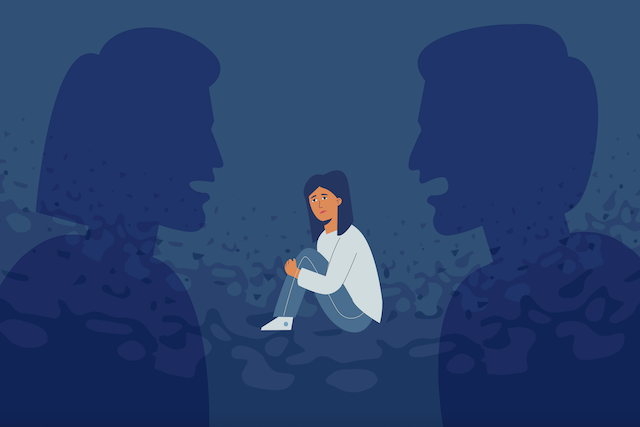
    When people crossed that line, it left me feeling uncomfortable, exhausted, and resentful. It felt wrong in my gut, but I never knew how to communicate it or change it until later in life. Lack of boundaries seeped into every part of my life, personal, professional, and everything in between.

    For example, an ex-boyfriend assumed it was okay to borrow my car. I wanted to be nice and easygoing, so I let it slide until I found myself walking home in the middle of the day from a long work shift. The same ex-boyfriend also moved in with me during a difficult life transition for him, and I thought being supportive meant letting him stay.

    I struggled with staying up late to talk a friend through her troubles night after night, even though I knew I needed to rest and felt depleted. In many cases, she wasn’t listening and was unaware of how long we had been speaking. I wanted to be helpful and caring and thought that it was the right thing to do.

    I also felt afraid to speak up with friends on subjects I was passionate about and would keep quiet when a friend said something that I didn’t agree with because I didn’t want to rock the boat or receive her judgment of my different opinion.

    In work situations, not setting boundaries meant I made myself overly available and overly responsible.

    I had a boss that would call me during off hours to complete a task he wasn’t able to do during the day. My instinct was to ignore, yet the people-pleaser in me wanted to be a “good” employee. I also went above and beyond finding my own replacements when I left jobs so that the transition would be smooth, and my co-workers wouldn’t have to bear any extra weight with my leaving.

    I’d continuously find myself offering and accepting situations that left me stressed out and resentful and would wonder why other people didn’t notice.

    I blamed others until I realized that it wasn’t anyone else’s job to guess what I was thinking or feeling. It wasn’t their responsibility to change to suit me; it was my responsibility to change to suit myself—my truest self, the part of me that felt confident enough to be honest, communicate, and trust that it was okay to do what was best for me.

    My problem with boundaries wasn’t that other people kept crossing the invisible line. It was that the line was invisible. I needed to start setting boundaries with myself. That meant recognizing that I struggled with setting boundaries because I felt safe and secure when I over-gave. I felt loved and worthy.
    After realizing why I struggled with boundaries and empowering myself to learn more about my unhealthy pattern of people-pleasing, setting boundaries became about facing my fears around others’ approval or disapproval.

    Being able to say no to people I loved or jobs I cared about might come at a cost to me. Would they ultimately love and accept me even if I didn’t meet their needs, or would they abandon me?

    In most cases, the communication or conversation wasn’t so dire; however, the fear I felt was big. After years of habitually putting others first and pleasing, I had to have the courage to disappoint others and even lose relationships that no longer fit.

    Thankfully, when I faced my fear of speaking up and potentially being abandoned, I was mostly met with unconditional love and support. In fact, most of the judgment came from myself and not from others. The pain I felt wasn’t about them, it was about me.

    To overcome my fear, I spent time journaling and listening to my heart. I spent time getting to know myself and accepting myself. I realized it was safe to be myself and that the relationship that mattered most was the relationship with myself. When I started to love and accept myself, I no longer searched for love acceptance through approval of others.

    I had to reach a point when honesty with myself and honoring my deepest desires became non-negotiable. Continuously going above and beyond for others left me angry and lonely. I wasn’t able to be authentic, so even if I was accepted by others, it was impossible for me to feel good.

    If you struggle with setting boundaries, speaking up for yourself, or saying no, begin by asking yourself why. What part of you desires to put others first? What are you truly afraid of? And are you willing to face your fears in order to meet your needs and create more reciprocal relationships?

    In order to communicate our needs to others we need to be clear with what they are first. That means taking the time to understand what is most important to you and what helps you feel your best.

    If, like me, you’re afraid of being abandoned, you can overcome your fear of rejection by understanding where it stems from and taking the time to nurture and soothe it. Then taking initiative and getting clear with what you want (and don’t want) won’t be a problem any longer.

  • 5 Meditation Retreat Practices to Try at Home for a More Mindful Life

    5 Meditation Retreat Practices to Try at Home for a More Mindful Life

    “Meditation is the ultimate mobile device; you can use it anywhere, anytime, unobtrusively.” ~Sharon Salzberg

    It was the fifth night of my first silent retreat, and 100 of us spilled out of the meditation hall into darkness, flashlights swinging as we made our way along the path to our dorms and sleep.

    Suddenly the wind picked up and quiet excitement rippled through the group as we looked up to see a bank of clouds move and reveal a full moon, beaming a bright white light from the night sky. We stopped and stood, some of us for hours, gazing upwards.

    This is a painfully obvious metaphor, I wanted to say to someone.

    Despite my natural cynicism, despite the sleepiness and agitated thinking that had haunted my meditation for days, as I looked up at the moon I thought: In a world this beautiful, how can I not pay attention?

    Days later, when my weeklong retreat ended and I came home, I was reminded that being on a retreat is a lot different from regular life.

    I can’t see the sky let alone the moon from my house, and my time is punctuated by the sound of email notifications instead of gongs. But is it possible to recapture some of the mindfulness you can cultivate on a meditation retreat? Here are five strategies I am trying, and you can try too.

    1. Enjoy a daily meditative meal (or snack).

    On the first day of our retreat one of the teachers gave an inspiring talk just before lunch. Every mealtime is an opportunity to practice, he said. Try smelling each spoonful of food before you put it in your mouth. Put your silverware down between each bite.

    Lunch that day was the longest meal I have ever experienced. We considered each bite of salad, noting the whiff of vinegar in the dressing and the crunch of the greens. I grew to know the subtle flavor of plain brown rice, and the multisensory experience of holding a mug of hot tea to my lips and inhaling the lightly scented steam before sipping.

    It was reinforcing to be in such a large group enjoying meals together so slowly and quietly, but everyday life presents multiple mindful eating opportunities as well.

    Post-retreat, I try for at least one meditative meal. Where I would once wolf down lunch while scrolling through Twitter, I create space to experience the flavor of the food and note the texture. It works for snacks too—you can really taste the salt on your lips from the first bite of a chip. An added bonus: All that chewing is great for digestion.

    2. Ground yourself by walking.

    Much of the retreat schedule can be summed up as “seated meditation followed by walking meditation.” The sitting-walking pattern helps break up the day and ideally prevents us from dozing off on the meditation cushion.

    Slow meditative walking, with its noting of the “lift, move, step” motions of our feet, felt like a close cousin of seated meditation. Normally paced walking in the hills of the retreat center was still more inspiring, as I tried to tune into each step connecting me to the earth.

    At home, where sitting at a desk dominates my awake time, I am incorporating periods of mindful walking—even if it is just down the hall. Between meetings or projects, I get up and feel the floor under my feet with each step, noting the swinging of my arms, and the way the fabric of my pants moves across my legs.

    Longer walks, taking in the sights of the neighborhood without a distracting podcast, is also part of my new routine. With or without the mental noting of “lift, move, step,” walking can effectively bring our minds back into our bodies.

    3. Befriend a tree.

    One retreat teacher encouraged us to select a tree from the surrounding forests and forge a connection with it. We each considered our tree’s solidity, the sap running through it, the wind in its branches bringing constant change, and the co-arising circumstances that led to its growth. It was common to round a path in the woods and come across someone standing looking up at a tree, seated at its roots, or even swaying in rhythm to its movements.

    Back in the city, I can simply sit on my front steps and contemplate the river birch in the yard without alarming my neighbors. I pay attention to the subtle grays and whites of its bark, the way its leaves almost shimmer in the breeze. I have lived with it for years, but this tree is now a brilliant object of meditation in my daily life. Cheesy as it sounds, the tree has become a friend I greet with a smile every morning.

    4. Embrace mindful chores.

    Just like the summer camp I attended as a kid, my retreat required us all to sign up for a job. My work meditation was to chop vegetables in the afternoon. It became a highlight of my day to carefully peel parsnips or work my way through a box of eggplants, guiding the knife into the flesh to create slices then cubes I would eventually see in the evening meal.

    In everyday life, chopping vegetables can feel like a boring imposition, something to rush through between more exciting activities. But when you have been meditating all day the subtle pleasures of chores become clearer.

    I try to invoke some of that mindfulness at home, feeling the weight of the knife in my hand as I chop, and taking the time to focus all my attention on removing the peel from a carrot. Using vegetables as my gateway I am now experimenting with mindful dishwashing. Soap bubbles can be a revelation if you really pay attention.

    5. Take a break from needing to “be” someone.

    When you are on silent retreat, you’re not just quiet, you’re existing anonymously within a large group of people. It was enormously relaxing not needing to “be” someone for a week—and eye-opening to recognize how much effort goes into conjuring up the ideal “me” to present in social situations.

    In not speaking to one another, or even looking each other in the eye, my fellow retreatants and I could co-exist, focusing on our experiences in the moment instead of mentally rehearsing what we would say at dinner.

    I admit to secretly pondering the backstories of my fellow retreatants, and I was certain that people were judging me whenever I forgot to take off my shoes inside or made other newbie mistakes. But overall, our shared silence created much more space to do what we were doing without extra mental labor.

    The relaxation of silent co-existence can be harder to achieve in the regular world, where our work and family lives can hinge on being visible and vocal.

    Taking “non-being” home for me has meant noticing the relaxing qualities of being alone, rather than looking for distractions, and recognizing the temptation to needlessly make an impression in passing interactions as I go about my day. That jokey comment to the barista might be less about being friendly and more about being noticed.

    I’ve also brought a new kind of attention to gathering places like the grocery store or library, asking myself: Can I navigate among people without comparing, judging, fixing, or asserting an ego that demands attention?”

    As Sharon Salzberg so wisely says, we can use meditation anywhere. I had the privilege of dropping out of the daily grind for a weeklong retreat, and literally saw the clouds part for a moment of insight. In the time since returning, however, I see that many of the retreat’s greatest gifts were the less flashy moments—the practices that provide tools for the other fifty-one weeks of the year.

  • The Exhausted Extrovert: How I Stopped Worrying About How People See Me

    The Exhausted Extrovert: How I Stopped Worrying About How People See Me

    “When we allow ourselves to be vulnerable, we are not pretending, we are not hiding—we are simply present with whatever is going on inside us. Ironically, it is this very feeling of authenticity that draws people to us, not the brittle effort of perfectionism.”  ~Maureen Cooper

    Most people in my life would call me an extrovert, and I often refer to myself with that label as well. On the surface, I appear friendly, talkative, and enthusiastic, and those characteristics became part of my identity at an early age. I enjoy being around other people and value my interpersonal relationships.

    I also participate in a variety of social groups and remain connected to friends near and far despite our busy schedules. I have often attributed my love of people to the fact that I am an only child who always wanted to spend more time with kids my own age.

    Despite my friendly nature, I usually felt drained after social interactions, especially when they involved large groups of people. I dreaded small talk, mingling at parties, and attending events where I was the only new person in the group.

    For example, my anxiety was sky high when I met my husband’s large group of close friends for the first time. I felt intimidated because they had all known each other since preschool, which automatically made me feel like an outsider. As a child and young adult, I tended to avoid situations where I felt uncomfortable, preferring to focus on the environments and people that I already knew.

    Even in familiar social situations, I still often came home feeling depleted. I enjoyed myself during these events but required a lot of downtime to fully recover and feel like myself again. This reaction confused me because I thought extroverts craved and felt energized by social interactions. 

    I struggled to classify myself because neither introvert nor extrovert truly matched my personal experience. I often felt torn between wanting to attend social events and worrying that I would feel exhausted afterward. These conflicting desires prompted me to explore the reasons why being social fed and depleted my soul at the same time.

    This journey would hopefully allow me to develop a deeper level of self-awareness and learn how to take better care of myself. As I paid more attention to my thoughts, feelings, and behavior at social events, I noticed that I was hyper focused on how I came across to others. I wanted to be liked, make a good impression, and be viewed as fun.

    I frequently wondered what people genuinely thought of me, including friends that I had known for years. I also worried a great deal about others’ feelings and wanted to make sure that everyone was having a good time. As the host of parties or gatherings, I went out of my way to ensure that the house was spotless, the food options were plentiful, and the environment was comfortable.

    I avoided choosing group activities out of fear that people would not like my decisions and from a desire to be known as the “easy-going, chill friend.” Even when I wasn’t the host, I found myself studying everyone’s reactions to see if they were happy and had their needs met fully. I made it my responsibility to take care of everyone even though no one asked me to be the superhero.

    If someone wasn’t in a good mood or a conflict arose, I immediately intervened to be the peacemaker or crack a joke to lighten the mood. I also did my best to keep the focus and attention away from me. I acted like an interviewer, asking other people endless questions and rarely sharing about my own life.

    I hated any silence within the conversation and would quickly fill it by bringing up a new topic or giving compliments. I began to realize that even my closest friends didn’t know much about me because I was so guarded with them. My fear of boring others, seeming conceited, or talking too much prevented me from being honest and authentic.

    For most of my life, I thought these behaviors were typical and even smart ways to be a good friend. I wanted others to accept me and enjoy being around me, but my ways of accomplishing these goals left me exhausted at the end of the day. Upon realizing how I navigated social interactions, I chose to examine why I needed these techniques and how they affected my view of interpersonal relationships.

    Up until this point, I believed that my behaviors were simply proof of my strong social skills, compassion, and emotional intelligence. I also assumed that most people thought and acted similarly to me because it was so natural and automatic in my life. In reality, my behavior involved coping strategies that I had developed from an early age due to an intense fear of being left out, disliked, and alone.  

    I came to learn that as an empath, I needed to set emotional boundaries to prevent myself from becoming depleted. A healthy empath holds space for another person’s emotions and experiences without making it their responsibility to fix, save, or protect the person. In order to be accepted and liked, I became a chameleon who adapted to any environment, didn’t speak up, and focused on pleasing everyone else at my own expense.

    In doing so, I didn’t allow people to get close or learn about the real me. My outward focus on how everyone else was thinking, feeling, and acting left me exhausted and overwhelmed because I took on their problems as my own. I remained fearful to share my true opinions, make any decisions, or take up space in social settings.

    Fading into the background felt safer, easier, and more comfortable to me, but it didn’t allow me to relax and be fully present. I constantly scanned the environment for any issues, working to please others and control what people thought of me. On top of that, I made it a priority to appear easy, effortless, and relaxed so that no one would see my internal struggles.

    I didn’t want to appear stressed, tired, or unhappy because I could possibly be viewed as “needy” or “too much.” My hypervigilance only intensified when I was around new people because I desperately wanted to make a good first impression and earn their validation. After a social gathering lasting only a few hours, it was no wonder that I felt so drained and needed to recharge.

    I began to realize that while I do love people and enjoy interacting with others, these situations would be more fun if I slowed down, checked in with myself, and focused on being truly present. I needed to practice turning the spotlight on myself for the first time, making choices and doing activities that worked for me. 

    When I allowed other people to manage their own feelings rather than jumping in to fix, save, and protect them, it freed up more time and energy for me. I also allowed myself to open up and engage fully in conversations, sharing small details at first and allowing other people to carry the conversation. These behaviors showed me that it was safe to take up space and let people get to know me.

    Instead of blending in and always going with the flow, I could practice offering my opinion, choosing a restaurant or a movie for the group, and turning down social opportunities when I was tired or uninterested in the outing.

    I knew that I needed to take these steps slowly because they would require courage, and I didn’t want to give up out of overwhelm. I also begin learning to trust that people wouldn’t abandon or reject me for speaking up and setting boundaries.

    And if I did lose friendships or people didn’t love everything about me, I could handle that reality and survive. My mantra became “I am not for everyone, and that is okay.”  

    Since that time, I have made strides toward relaxing, being present, and releasing control, allowing myself to “just be.” Some days and situations are easier than others to practice this new mindset. But now that I have self-awareness and understanding, I can more easily catch myself when I engage in people pleasing behaviors to earn love, praise, and acceptance.

    I pause, take a deep breath, and remember that I am allowed to take up space, that I deserve to have fun and be myself, and that my needs, feelings, and opinions matter. In doing so, I enjoy social interactions, even with new people, more than I ever did. And that has made all the difference for a social butterfly like me.

  • How I Stopped Carrying the Weight of the World and Started Enjoying Life

    How I Stopped Carrying the Weight of the World and Started Enjoying Life

    “These mountains that you are carrying, you were only supposed to climb.” ~Najwa Zebian

    During a personal development course, one of my first assignments was to reach out to three friends and ask them to list my top three qualities. It was to help me see myself the way others saw me.

    At the time, my confidence was low and I couldn’t truly see myself. I didn’t remember who I was or what I wanted. The assignment was a way to rebuild my self-esteem and see myself from a broader perspective.

    As I vulnerably asked and then received the responses, I immediately felt disappointed. All three lists shared commonalties, specifically around responsibility. The problem was, I didn’t see responsibility as a positive trait. In fact, I didn’t want to be responsible; I wanted to be light, fun, and joyful.

    Though I understood that my loved ones shared this trait in a positive light—as in I was trustworthy and caring—intuitively, I knew responsibility was my armor. I used it to protect and control while, deep down, I wanted to be free and true to myself.

    I didn’t trust life. I found myself unable to let go out of fear of what may or may not happen to myself and others. I let my imagination run loose in dark places and believed if I thought my way out of every bad scenario or was on guard, I could somehow be prepared to meet the challenges that arose.

    I thought that if I oversaw everything, it would get taken care of correctly and then I’d be safe from the pain of life. The pain in life was not only my own, but my family’s, the local community’s, and the world’s. I wanted to plan and plot a way to fix everything so that everything would be perfect.

    I saw myself as a doer—a person that takes actions and makes stuff happen. I relied heavily on pushing myself and coming up with solutions and, at times, took pride in my ability to work hard, multi-task, and be clever. With time, however, I felt resentful and exhausted.

    Over the years it became too heavy a burden. My shoulders could no longer carry the weight of the world, and I was incapable of juggling so many balls. I had to let go.

    There were so many things that were out of my control, including situations that had nothing to do with me, and yet there were so many people I loved and so many dangerous possibilities.

    Living in a state of constant responsibility meant I had to be alert; I had to be on guard. I was never present and thus unable to have fun. I didn’t understand how to enjoy life while being responsible. I saw these as competing desires and ended up avoiding joy totally.

    I believed I could save joy for a vacation or that wedding coming up next month. I always postponed joy until later so that I could resume being responsible.

    However, being a doer and taking responsibility for things that were not in my direct control had consequences. I was unhappy and drained, constantly wondering why I couldn’t just relax and enjoy life.

    Even when I went away on a vacation, I was unable to calm my mind and have fun. I told myself once x,y,z was taken care of, then I’d feel calm, but then something new would come up and I’d be thinking about that instead of enjoying my trip.

    This left me with a powerful realization: I felt safer feeling anxious and tense than I did feeling happy.

    In some twisted way, it served me. At the time, being happy was too vulnerable, while being on guard for the next catastrophe felt safer. This was not how I wanted to continue living life.

    I wanted to remove the armor. I wanted to trust and enjoy life, and I wanted to believe that whether or not I was on top of everything, things would work out.

    I knew that I could be responsible without carrying the weight of the world on my shoulders. That I could be dependable and caring without being stressed or serious. Those were expectations I had falsely placed on myself, and it was up to me to remove them.

    Once I realized that solving the world’s problems was harming my health and that I was choosing fear over joy out of a false sense of security, I decided to give myself permission to feel the discomfort and vulnerability of happiness. In doing so I found the courage to let go, trust, play, and love life.

    I began setting boundaries with myself. The person that had placed the badge of responsibility on my shoulders was me, and I had chosen to do it out of fear, not love. I had to let go of knowing everything that was going on in other people’s lives and the world and take space from social media, friends, and family to make space for me.

    I began to cultivate joy by practicing presence daily and taking the time to do things I enjoyed doing.

    I took yoga classes, watched comedy shows, went to the beach, and continued personal development courses.

    I learned that although I was great at multi-tasking and pushing through, it wasn’t what I wanted. I wanted to courageously follow my dreams and enjoy my precious life.

    That meant that I had to feel the uncertainty, sadness, and danger of life’s circumstances without jumping in to fix anything. I had to take a step back and bring awareness to my thoughts so I wouldn’t unconsciously join the merry-go-round of solving problems.

    I was a beginner at all these things, but the more I practiced, the more joy I experienced, and this spread onto others. Surprisingly, friends would tell me how I inspired and helped them—not by solving their problems but by being bold enough to enjoy my life.

    If you want to enjoy your life but stress yourself out trying to save everyone from pain, begin to set boundaries with yourself. Stay in your lane and focus on the areas you have direct control over—your attitude, your daily activities, and your perspectives.

    Try slowing down, investing time and energy into activities that light you up. You can’t protect anyone from what’s coming in the future, but you can enjoy your present by letting go and opening up to joy.

  • How to Deal With Low Moods: A 4-Step Plan to Help You Feel Better

    How to Deal With Low Moods: A 4-Step Plan to Help You Feel Better

    “And some days life is just hard. And some days are just rough. And some days you just gotta cry before you move forward. And all of that is okay.” ~Unknown

    I have always struggled with low moods. I guess that considering that I spent close to twenty years of my life inactive and depressed, this could be seen as progress. But that still didn’t feel good enough.

    I wanted to feel more balanced, light, and happy, and I wanted to achieve it in natural ways without having to take any kind of medication since that hadn’t worked for me in the past.

    So I began to research. I asked around. I read books. I watched videos. I became a psychotherapist.

    Most people can’t tell you how you shift out of low or bad moods. Sit with it, they say.

    And sure, that is a huge help because, up until that point, I would beat myself up over being in a low mood, which just made things worse.

    So ditching that beating-myself-up habit did help a lot.

    But here’s how I went further with it.

    During my studies and my experiences as a psychotherapist, I realized that everything has a cause. It might look random, but it never is. So there had to be a reason for my low moods. It was time for a lot of self-observation and self-exploration.

    Funnily enough, my work with my clients helped me uncover what I was looking for. It is, after all, always so much easier to see it in other people than it is to find it in yourself.

    I discovered that my moods were primarily linked to two things.

    The first one was needs, or more accurately, unmet needs.

    The second one was feelings, unexpressed feelings.

    Before my healing journey, there was no way for me to change my mood in any way because I wasn’t aware of my needs, and all I ever did was suppress and inhibit my feelings.

    Both of these things logically result in low moods.

    So why didn’t I meet my needs or feel my feelings? These simply weren’t things I had been taught how to do. In fact, suppressing my feelings was encouraged. No, it was demanded.

    If I didn’t, I would get punished. I would get hit. And a child learns very quickly how to keep themselves safe, so that’s what I did.

    I remember this one time I got bullied really badly. As I walked into the family home, I collapsed on the floor and cried. This was not something I had ever done before. It was a rare occasion. I had a proper breakdown.

    My mother looked at me in disgust, stepped over me, and carried on with cleaning the house.

    I don’t exactly remember how long I lay there, but it must have been a long time because she repeatedly stepped over me and ignored me in my pain.

    So that’s what I learned to do to myself.

    Whatever was going on, I ignored it.

    I never stopped to ask myself what I needed or how I felt. I didn’t give myself any reassurance or encouragement. I didn’t help myself in any way, so my only go-to point was depression or a low mood.

    On the inside, I kept my loudly screaming needs and feelings locked up in a tiny little jar just waiting to explode. I had to keep my moods low to keep the pressure down. I had to be quiet to make sure I didn’t accidentally unlock the biggest scream the world had ever heard.

    Today, I realize that my low moods were symptoms of me ignoring myself, not feeling my feelings, and not meeting my needs.

    I didn’t know how to honor my feelings and needs then, but I learned how during my work and healing journey.

    When a low mood visits me today, I don’t step over myself. I don’t repeat the patterns of the past. I don’t repeat the lack of kindness and warmth. Instead, I do these four things:

    1. I dig deep instead of surrendering to my low mood.

    I no longer just leave myself in it. I don’t just tolerate it.

    I notice it, stay with it, and love myself too much to not do anything about it.

    Instead, I get curious.

    2. I accept instead of fighting my low mood.

    There’s no point in putting yourself down when you’re already feeling low.

    You’re not doing anything wrong when you feel bad.

    It’s just a sign that you need to check in with yourself and figure out what’s going on for you so that you can take care of yourself in a healthy and loving way.

    So that’s what I do.

    3. I ask, “What’s going on for me?

    Sometimes it’s obvious what’s impacting my mood. It could be a bad night’s sleep, an argument, or a cold.

    Sometimes it’s harder to figure out what’s going on, but then it’s important that I stay with it and don’t just shrug it off.

    In my experience, mood management has a lot to do with emotional self-care.

    I ask myself:

    • What feelings might I be suppressing?
    • In what ways might I be inhibiting or censoring myself?
    • Am I staying in the wrong kinds of relationships for me?
    • Do I forget to set boundaries?
    • Am I not having enough fun or variety?
    • Do I need to stretch myself more and grow?

    Learning how to meet my needs and feel my feelings were the two most important aspects of my healing journey. So much started to make sense once I knew what to do about my feelings or needs.

    My moods weren’t just random anymore. They made sense. And if they didn’t, I knew that I hadn’t found all of the puzzle pieces yet.

    4. I have compassion for myself.

    It’s wonderful to be a human. It’s also hard.

    We have feelings and moods and needs and relationships and dreams and fears and so much else going on.

    It’s not simple, and it’s not easy.

    We have to give ourselves some credit for all the great things that we achieve and do.

    But most of all, we have to appreciate who we are and how we are.

    We want to improve things. We want to feel better and be better for ourselves and for others. That alone needs to be celebrated!

    The not giving up. The striving to grow. The commitment to healing. All of that needs to be acknowledged.

    And all of you deserves compassion. Low mood or not.

  • 5 Simple Yet Essential Self-Care Tips That Can Change Your Life

    5 Simple Yet Essential Self-Care Tips That Can Change Your Life

    “Never be ashamed to say, ‘I’m worn out. I’ve had enough. I need some time for myself.’ That isn’t being selfish. That isn’t being weak. That’s being human.” ~Topher Kearby

    Years ago, my extended family, who I am very close with, migrated from Vietnam to America as permanent residents. Four separate families had a couple of kids in each family. They are nice, kind, and loving people, and their kids were super cute and respectful.

    My relationship with my extended family has taught me a lot of lessons throughout my life so far, but this was one of the most impactful ones to date.

    Throughout the first few years of their residency here in the USA, they struggled with the language barrier and navigating an unfamiliar setting. As with most people who choose to migrate to another country, it was challenging for them to learn how to adapt to their new normal here in the United States.

    I couldn’t bear seeing them struggle, so I decided to step in to help them through this huge transition they were facing. I took them to most of their doctor’s appointments, brought them to work on time, helped them out with school conferences for their kids, and supported them in the completion of other tasks that they weren’t able to do on their own.

    I didn’t see this as a burden at all. In fact, I was having fun helping them because I love them so much.

    If you’re like me, you will understand this. When I am helping people that I care about, I tend to forget about taking care of myself. Slowly, this began to be the case.      

    The love I have for my family fueled my energy, which made me overlook the importance of caring for myself. Sure enough, after a while of supporting and caring for my family through their transition, I started to feel emotionally depressed and physically drained.

    I couldn’t find an explanation for why I was feeling this way, so I decided to check in with my doctor. My doctor explained that I had nothing to worry about regarding my physical health.

    After determining that I was healthy, I realized that there must have been a deeper explanation for why I was feeling that way. That’s when I knew my exhaustion was coming from overly helping and caring for my family. After all, I was taking on responsibility for everything in their lives from the little things to the important things.

    At this point, there was a little voice inside my head saying that it was time to sit down with myself and re-evaluate how I was spending my time and energy. Deep down I knew that this would be the only way for me to feel healthier and happier.

    For the sake of my well-being, I decided to implement positive change in my life, Once I did, I was amazed at how my physical and emotional well-being began to improve.

    I didn’t want to leave my family hanging, so I made sure that I took the time to show their kids what they needed to know so that they could help their parents and themselves. I knew that they had other family members that were willing to step in when they needed assistance with tasks.

    It took me a while to make this decision because I didn’t want to leave them without ensuring that they would be cared for. Thankfully, their children were confident taking over some of the tasks and helping their parents and their own families with the transitions that they were making.

    Sometimes, setting healthy boundaries with the people you care about also comes with setting a boundary with yourself.

    You cannot control how other people will react to your choices, no matter how badly you would like to be able to. With that said, it will bring you comfort knowing that you are doing what is best for you.

    In my case, I knew I needed to take better care of myself. I also took comfort in knowing that the choices I made for myself wouldn’t bring harm to anyone else. In time, I hope that my family will come to understand; but if they don’t, that’s okay too.

    I will always be wishing the best for them and sending them the brightest blessings in their life, regardless of if it is from a distance or up close.

    It was through this experience that I learned that the best way to care for others is to begin with caring for yourself. This may seem selfish or unnatural at first. However, with time, you will find that you are more capable of adequately caring for others when you are well cared for yourself.

    Once you master the art of self-care, you will find that you have more time and positive energy to put toward caring for those around you. Here are a few tips on where to begin on your journey toward self-care.

    1. Stay in touch with your feelings.

    If you’re honest with yourself about how you feel, you’ll be better able to meet your needs. It can be a challenge to be truthful with yourself and others about your feelings, but if you don’t, you’ll end up burnt out and resentful. This was my first step toward taking care of myself: telling my family I was feeling depleted.

    Ask yourself: How do I feel about how I currently spend my time? Am I honoring my needs and priorities? How do I feel about how much I give in my relationships? Am I overextending myself or giving more than I receive?

    2. Spend time with others.

    You can’t spend all of your time alone and remain emotionally healthy. Part of self-care is surrounding yourself with people who uplift, encourage, and support you.

    The ideal amount of human contact varies greatly from one person to another. No matter how much of a loner you might be, though, spending time with others matters because human connection brings happiness, joy, and belonging.

    When I realized I needed more time for reciprocal relationships, I set out a schedule to hang out with some of my closest friends.

    Call some of your friend or relatives to catch up, and ask them to get together. You’ll feel more connected, and if you open up about what’s going on in your life, you’ll be able to receive support instead of always being the one who gives it.

    3. Spend quality time alone.

    When you spend time alone, you’re able to get in touch with yourself on a deeper level. You get to reflect, introspect, and make a plan for anything that needs to change in your life. This will help you accomplish your goals, and you’ll feel more grounded as a person.

    Again, how much time you need to spend alone is an individual preference. It can be hard to refuse requests or say no to gatherings, but if you find the right balance for you, you can stay connected to other people while keeping up with your personal goals.

    4. Exercise regularly.

    When I decided to prioritize myself, I committed to keeping myself active and in shape. I personally enjoy weight training, pilates, dancing, and taking long walks by the lake. Not only do I feel physically stronger, I have more energy and get a boost of feel-good chemicals every time I exercise.

    Any physical activity is better than nothing, but you’ll feel a lot better if you can devote thirty minutes each day to movement, whether you play a sport, dance, or participate in a group exercise class. Your body is designed to move, so when it’s not using its potential, it creates stagnation.

    5. Manage stress.

    Take frequent breaks throughout the day to relieve tension and restore your energy before tackling your next task. Check in with yourself regularly to look for signs of stress, including physical exhaustion, getting irritated easily, having a lack of focus, and mindlessly eating junk food.

    When you notice your stress level rising, practice deep breathing or utilize any other relaxation methods that work for you.

    I generally like to get a massage, go for a walk, meditate, and journal. I like to write out all the stress on paper and burn it away.

    Another stress relief practice that I often do is chanting. It’s a healing method to help you clear any worries, stress, fears. When I chant for a period of time, my energy always shifts, bringing me back to a more grounded state.

    If you take on other people’s energy, you may want to practice energy cord cutting. This can be as simple as visualizing yourself detaching a cord connecting you to someone who drains you.

    Practicing forgiveness for yourself and others is also a powerful stress-release method. I highly recommend the Ho’opononopo practice; if you’re not familiar with it, you can go on YouTube and look it up.

    The quality of your self-care is a great barometer of your overall well-being, and it can keep you firing on all cylinders. If you’re feeling down and out, give extra attention to your self-care. You deserve the time and attention. A regular self-care practice also demonstrates that you truly recognize your own worth.

  • Confessions of an Extrovert: Why I Now Love My Alone Time

    Confessions of an Extrovert: Why I Now Love My Alone Time

    “Allow yourself to grow and change. Your future self is waiting.” -Unknown

    Not to be dramatic, but I really mean it when I say that solitude changed my life. I am an extrovert who loves humans, socializing, and learning from people and experiences. I’ve always enjoyed being around others, and don’t get me wrong, I still thrive this way. But when I got Covid in 2021, life completely changed, and it’s not the only way I thrive now.

    Before Covid, I’d been living my life in a way that wasn’t serving me. I was partying a lot, not eating well, and living in chaos, with very little rest. I constantly had my schedule booked, leaving no time for self-care. I felt like I was living life for others, ignoring what I needed.

    I made mistakes, like blowing off my priorities because I was in a terrible headspace, and I continued living an unhealthy lifestyle until I finally had a talk with myself and realized this wasn’t right for me (then Covid came along, and sh*t got serious).

    I didn’t immediately enjoy quarantining and being stuck at home, away from friends and family, but before I got sick, I knew change was coming. And though I felt a lot of resistance, I also felt that a new version of myself was on the way.

    While I’m usually not one to fight change, there was so much going on at once, and it was a lot. I also learned that I was one of the people who suffered from panic attacks and anxiety as a side effect of Covid. The aftermath was worse than having the virus itself.

    This lasted almost a year. I felt so bad for myself; I couldn’t believe that this is what life had come to for me. I was even losing my hair. Some days I’d wonder if this dark tunnel would ever come to an end and show me light. Things felt very heavy, but I also had some of the most beautiful things going on at the same time, like living in the city with my now fiancé, so it was all very confusing.

    I began to lose sleep, which was unusual for me. My inner world felt like chaos. There were lots of tears and weekly therapy sessions (which also changed my life). Therapy and journaling became my safe spaces to release and understand myself.

    Throughout the year of that inner chaos, what did I learn? Surrender. I was trying to maintain full control of my life and keeping busy while actively avoiding working through suppressed emotions from times when younger Naila would over-extend for others, and completely forget to take care of herself. I didn’t want to listen because I was afraid. And that’s human nature, to fear the unknown.

    So, here’s a reminder that the Universe forces you to slow down and redirect when you’re not listening. This also means it may hurt more since we didn’t consciously welcome the change.

    Over time, I have gone through so many phases and such inner growth. I began working with my wonderful therapist and quit a job that was not working out for me as expected (which hurt). I’ve lost people and my relationships changed, thankfully most of them for the better.

    As soon as I let go of control and put in the hard work, things got better, and I saw results—even if they were just small victories. I was starting to see that light I’d been waiting for. My body felt lighter as I began to release dead weight from my body and I began to feel like myself again, but this time, better than ever.

    I chose watering myself over destructive behaviors. Instead of focusing on the anxiety attacks and trying to force myself back to sleep at night, I meditated. I chose solitude over socializing. This was the peak of my growth. 

    Sometimes, we get lost in the chaos of this busy world. We get sucked into conversations and company we don’t actually enjoy. Society tells us to be productive 24/7. Our worth is based off money, accomplishments, and what social media sees. Conversations are about what we are instead of who we are.

    Long before this journey, I was used to overbooking my schedule, always very busy. I would work two jobs, scheduling anything I could in between and going to school at the same time. I enjoyed it then.

    Solitude and self-reflection taught me what I truly care about: genuine connections, giving and receiving love, nurturing myself just as I do others, and living, not just surviving.

    My higher self told me that the world’s expectations are not my own, and that it’s okay to choose a different path than I once wanted (or society told me I wanted). As I’ve learned in therapy, I am my own worst critic, so my new path is all about letting life unfold naturally, without constantly criticizing myself for where I thought I’d be in life, especially in my career.

    I began to reflect on my life, my inner child, and current self. Most importantly, I began to heal from things I’d stored away from childhood pains and days long ago during an abusive relationship. I let go of self-sabotaging behaviors and decided to finally listen and release, then the inner turmoil started to calm.

    Because I was spending much more time alone, I learned a lot about myself. Solitude helps us build trust with ourselves and teaches us about our true desires. We begin to tolerate less and prioritize differently. I value very different things now than I once did. I’m getting to know my true self, and that’s something no one can teach you or prepare you for. 

    I also want to emphasize that solitude is possible while you’re in a healthy relationship.

    Throughout my dark days, I had my now-fiancé supporting me through it all while letting me heal and grow. Him supporting my solitude made me that much more successful on my journey. When someone around you offers love, respect, and support, it makes it easier. Their company becomes a bonus and not a burden. Previous Naila didn’t think this was possible, and I’m grateful things panned out differently.

    Overall, I have learned that the “dark” times were actually just lessons and periods that catapulted my growth and healing. The tough times are temporary, and there is strength and clarity in solitude. As of today, I cherish my solitude; it’s a vital part of my being. I also learned that there is light at the end of the dark tunnel. Yes, even when it’s long and scary.

    In this new chapter of my life, rest is high on my priority list, not overworking and overbooking. I am much pickier about who/what I surround myself with, much more productive, and still growing and ever-changing.

    My life is much more peaceful and calm, and my boundary-setting skills are much stronger. These are lessons I couldn’t learn as an unbalanced extrovert. I’m a better version of myself now.

    So, if you’re an extrovert who forgets to prioritize yourself, someone who’s going through a dark tunnel, or someone who avoids change, this post is for you. Instead of being afraid of solitude and change, learn to accept them and watch how they transform your life for the better.

    As my dad once told me, change is the only constant in life, so get comfortable with the uncomfortable.

    I believe in you. ♥

  • 10 Signs You’re in a Toxic, Unhealthy Relationship and How to Help Yourself

    10 Signs You’re in a Toxic, Unhealthy Relationship and How to Help Yourself

    “Love is never any better than the lover. Wicked people love wickedly, violent people love violently, weak people love weakly…the lover alone possesses his gift of love.” ~Toni Morrison

    Not all relationships are created equal. Some rage in like a storm and leave you far weaker than you were before. As you try to process the wreck that is now your reality, you wonder, how did I end up here?

    I found myself in a toxic and addicting relationship in my mid-late twenties. Now that some time has passed and allowed for reflection, I want to pass on some signs from my previous relationship that I should have paid more attention to, in hopes that this may help others who are in a similar situation.

    Signs a Relationship Has Become Unhealthy and Toxic

    1. You are putting in most of the effort, and your needs aren’t being met.

    Emotionally, I felt drained and exhausted. This frequently happened when I tried to communicate my wants and needs to my former partner. Most of the time, it felt like my efforts were in vain.

    2. You constantly feel like you are walking on eggshells.

    I never knew when I would say something that would be too much for my former partner to talk about and he would shut down emotionally. It made me nervous to bring up my concerns about the relationship, as I felt like he had a wall built around him that I just couldn’t knock down.

    3. You hang on because you think that’s what you are supposed to do when you love somebody.

    Blame it on Disney, romantic comedies, or countless love songs, but how many of us stay in unhealthy relationships because we feel like we owe it to that person to be there for them? But what do we owe ourselves?

    Looking back on my past relationship, I stayed in it for far too long because I thought that’s what you do when you love somebody. You stick with them when they are hurting. But what if it’s one-sided and it’s hurting you most of the time? Is that really love, or is it an unhealthy attachment to that person?

    4. You get addicted to the highs of the relationship.

    When things are bad, they are bad. But when they are good, you forget about the bad. The on-and-off-again pattern makes it passionate and addicting, almost like a game. It also makes it incredibly unstable. I felt like I was taking one step forward and two steps backward, constantly preparing for the next big crash.

    5. You are always giving in the relationship.

    I gave most of my time and energy to my previous relationship because I didn’t think I deserved to be on the receiving end of love. Now I know how wrong I was.

    6. You’re trying to solve problems that aren’t yours to solve.

    I tried too hard to solve my ex’s problems and didn’t focus on myself. I was overwhelmed by huge life transitions like moving and starting a new career, so it seemed easier to try to help him even though he didn’t ask me for help.

    This also allowed me to avoid admitting our relationship was deteriorating. It hurt too much to accept that our relationship was over and that I’d given 100% to someone who no longer cared about my feelings or well-being. After all, to admit is to acknowledge, and who wants to become aware that their relationship has become incredibly unhealthy?

    7. You get stonewalled.

    When I would be vulnerable and try to communicate how I felt, my former partner would go silent on me for long periods of time. This was pure mental torture. It was one of the most excruciating things I had ever experienced emotionally.

    Stonewalling was also incredibly confusing and traumatic. I would feel ignored, helpless, abandoned, and disrespected. This in turn would make me want to try to communicate more. Eventually we would start to talk again, and we got into an unhealthy cycle of me becoming anxious and him being avoidant.

    8. You lose a sense of who you are.

    At the end of the relationship, I felt broken and like a doormat that got stomped on incessantly. The person that I’d been before our relationship was no more, and all I was left with was a deep sense of shame for losing myself.

    I felt like I had fallen like Humpty Dumpty. No matter how much I tried, I couldn’t put all my pieces back together.

    It was hard to admit that I’d enabled my ex to treat me disrespectfully over and over again. I’d worried so much about him that I stopped focusing on myself and became entwined in trying to save a relationship that had fallen apart long ago. I didn’t want to accept that after all the years we were together this was the way that it would end.

    9. You feel like you are in limbo and things are out of your control.

    When my ex stonewalled me, I felt like I was waiting on someone else for my future to start. Everything got placed on pause. I gave him all of the power in the relationship, and I felt like I was waiting for answers that I’d likely never receive.

    10. You feel disrespected.

    My former partner stopped caring about my feelings the moment the stonewalling started. I felt so hurt, shocked, and betrayed. I think part of me stayed in the relationship so long because I couldn’t admit that this person who cared about me in the beginning had stopped showing concern for me and treated me without any kind of dignity.

    That loss of love, communication, and affection was really hard to face. His apathy and lack of compassion made me feel like I was a piece of garbage that he threw out. I felt invisible, degraded, and unheard.

    To get a clearer sense of how an unhealthy relationship is impacting you, ask yourself these questions: 

    • Why am I staying in this relationship? Am I staying because I am scared to be alone and deal with my own problems?
    • How much of the time do I initiate communicating? Am I the one putting in all the effort in the relationship?
    • Am I enabling the toxicity in the relationship by continuing to allow this person to treat me in a disrespectful way? Are there boundaries in the relationship for disrespectful and inappropriate behavior?
    • Am I trying to save my partner? Am I constantly worrying more about them than myself?
    • Why do I want to fix things in the relationship so badly? Do I feel like a failure for having the relationship end?
    • Am I trying to control something that has run its course? Do we both want different things?
    • Am I co-dependent? Am I staying in a one-sided relationship to help care for this person even when my needs are not being met?
    • Am I living the life I want to live? Does this relationship make me feel loved and fulfilled?

    Ending and walking away from a relationship that is unhealthy and toxic may be one of the hardest things that you ever do. Know that you are not alone and that you are worthy of being in a loving and healthy relationship. You deserve a relationship full of mutual respect, love, and healthy boundaries.

    Some activities and resources that have helped me on my journey to self-empowerment and growth have been:

    1. Express yourself; find your voice.

    Holding in all of the hurt from a toxic relationship isn’t going to make it go away. Talk openly to trusted loved ones or friends about what you’ve experienced. It may surprise you to hear that others have similar stories. Talking to a counselor, who can give you tools, strategies, and resources to help you navigate this difficult time, may also be helpful.

    Write in a journal or compose a mock letter to the person who hurt you, or to your past or future self. I wrote a letter to myself ten years into the future in hopes of where I wanted my life to be and found it to be inspiring and motivating.

    2. Educate yourself on codependency.

    I was familiar with the term codependency, but I didn’t truly understand what it was until I heard a podcaster mention the book Codependent No More by Melody Beattie. This book put words to everything that I felt during this turbulent relationship.

    It made me realize that I put all of my energy into a relationship that wasn’t mutual or healthy and lost myself on that journey. The book helped reinforce the notion that we only have control over our actions and not others. It motivated me to always be the driver of my life.

    3. Spend time alone.

    After things ended, I didn’t realize how addicted to the relationship I was and how challenging it would be to not reach out to my ex. It felt like I was going through withdrawal. It was intense and frustrating because, rationally, I knew it was for the best, but when I stopped contact, it was a visceral experience.

    I forgot how important it was to be alone, which is also the hardest and scariest thing. The healing truly began when I was able to sit with myself and all of my thoughts. Meditating and participating in yin yoga helped me recenter and decrease my anxiety while also decreasing built-up stress and tension in my body.

    4. Take responsibility for your part.

    I wasn’t just a victim in the relationship; I was also an enabler. I stayed in something that became incredibly unhealthy and allowed my ex to treat me in an inconsiderate and unkind way. I enabled this pattern to continue, which was the hardest thing to admit to myself.

    5. Be gentle with yourself.

    We are all human and are learning. Be patient and kind with yourself.

    When this relationship was finally over, I wanted to rush through all of my grief and uncertainty in order to move on because it hurt too much. It was too real.

    I knew deep down that this would take time to heal, and I wanted to fast-forward through that phase. Give yourself time and grace. Some days will be worse than others. Just know that eventually you will have many more good days than bad days.

    6. Forgive yourself.

    Initially, I wanted to forgive my ex and felt an urgency to do so because I thought it would stop the pain. However, the person that I was most upset with was myself. How did it take me so long to realize this relationship was unhealthy? Why did I allow someone to treat me so poorly emotionally?

    The person that I really needed to forgive was myself for allowing someone to walk all over my feelings for such a long amount of time. Once that process starts, everything gets easier. You may never get closure from your former partner after things end, but you can find it on your own.

    7. Use this experience as a lesson.

    Every relationship is a lesson. Even if it was a difficult time, learn what worked and what didn’t work. What you want and don’t want. Decide what are acceptable and unacceptable boundaries in a relationship so that the cycle doesn’t get repeated in the future.

    8. Take control of your life and be the author of your own story.

    Don’t wait for someone to change to start living your life. Hit the play button and start focusing on your goals and dreams and where you want to be in the future. You may not be able to put all of your broken pieces together in the same way they were before the relationship, but take time to figure out what person you want to become and rebuild yourself.

    9. Love and believe in yourself.

    Take good care of yourself because if you don’t, nobody will. Have high standards for what you deserve in a relationship and don’t accept less. Practice positive affirmations about your worth. How you perceive yourself will impact how others perceive you.

    We might not have control over others’ actions, but we do have control over our own. It’s time to empower ourselves to live the life we want to live.

    If we take time to truly understand why a relationship was unhealthy and toxic, we can vow to break the pattern and not allow it to happen again. We can love in a secure and healthy way and in turn attract partners who do the same. After all, we deserve to be in a healthy, fulfilling, and happy relationship, with ourselves and with others.

  • How I Found Peace and Self-Love After a Toxic Relationship

    How I Found Peace and Self-Love After a Toxic Relationship

    “Bravery is leaving a toxic relationship and knowing that you deserve better.” ~Unknown

    When my marriage ended, it left a huge void that I desperately needed to fill, and quickly.

    Along with my divorce came the unbearable feelings of rejection and being unlovable. To avoid these feelings, fill the void, and distract myself, I turned to dating. And it turns out, it was much too soon.

    What seemed like a harmless distraction soon became what I needed to feel wanted and loved. This was a way to avoid doing the harder work of learning to love myself instead of needing outside validation to feel good about myself.

    The online dating scene was a complete circus that I didn’t know how to navigate with all of my wounding. I ended up falling for a guy—let’s call him Steve.

    Steve seemed nice enough when I met him. He was quiet and seemed like he may have been a little too passive for me, but he was really into me, so I kept coming back for more. It was nice to feel wanted again.

    We had some things in common, and he was handsome and sweet. We had fun together, and he was always texting me to say hello and chat—again, that made me feel wanted.

    Eventually, Steve grew more distant. When I brought it up, it only seemed to get worse. But at this point, I was addicted to the feeling of being with someone again. I was addicted to feeling wanted and loved, so leaving wasn’t an option I was willing to entertain.

    The unconscious programming in my brain that would do anything to avoid rejection kicked in. I began to justify everything that should have been a red flag. I found myself constantly doing whatever I thought I needed to do to keep Steve from rejecting me, but it never seemed to be enough. I became unconsciously obsessed with being who I thought I needed to be to win his love and approval.

    Steve and I had both been through divorces and were both dealing with mental health issues. The relationship became very codependent, and I began putting my own needs aside to be his caretaker. He would never return the favor unless it was convenient for him, so I would just try harder to get him to want to return the favor.

    It never worked.

    As each day went by, I was becoming less and less of myself to be loved and accepted by someone who would never be able to give me what I wanted or needed. He just wasn’t capable of it. There was no possible way that I would ever be enough for him.

    He ended up breaking up with me, but shortly after we resumed our relationship on a casual basis. Deep down, I didn’t feel this was showing myself respect, but I allowed it to happen because again, I was trying to be who he wanted me to be—a casual friend-with-benefits.

    Our relationship eventually started to get more serious again, and it seemed we were headed back to exclusive relationship status when I found out he was dating other women behind my back. I’m so thankful I found out about this because it was the singular event that made me stop and get intentional about respecting myself.

    I realized how completely I had lost myself in this dysfunctional, codependent, and toxic relationship, where my only concern was avoiding feelings of rejection and being unlovable. It was the last straw for me, and I decided I was done tolerating it. I was done abandoning myself to get something he was never going to give me.

    I cut off all contact with Steve that day.

    You’d think that it would be easy to leave a relationship that is toxic. I mean, who wants toxicity? But the truth is, it isn’t easy.

    Why do we get into these tricky situations in the first place?

    My divorce had left me in so much pain, feeling rejected and unloved, that I was willing to do anything to avoid those feelings. Instead of being discerning and heeding the red flags that were, in hindsight, obvious, I jumped in and continued the pattern of proving that I was worthy of love.

    When you’re always trying to feel loved and accepted, you’ll ask yourself questions like, “Who do you need me to be to love me?” You’ll shape-shift to fit someone else’s needs and abandon your own. You may over-give, or shower your partner with gifts and affection, all in an effort to win their love so you can feel loved.

    The end result is similar to being rejected because you end up feeling alone—except this time it’s because you’ve abandoned yourself and your truth.

    You lose yourself, which, in the end, can be just as lonely as feeling rejected and unloved. That’s how it was for me. I spent so much time trying to prove my worth that I lost sight of who I was and what I deserved.

    I didn’t realize at the time that I needed to come home to myself first and love and accept myself before anyone else could ever give that to me.

    It turned out that leaving that relationship was an act of self-love and the beginning of finding peace.

    Was it easy? No. There were so many feelings that came up for me when I left the relationship. There was embarrassment that I had chosen him over myself so many times. There was the loneliness and pain that go along with the end of any relationship. And, of course, there was fear that I would never find that love and acceptance that I craved so desperately.

    So how did I do it? How did I find inner peace after leaving that toxic relationship?

    What it really came down to was finding peace within myself.

    When there is a void of some sort, we naturally want to try to fill it with something else. But when you try to fill the void with something external, it never works.

    If I had kept looking to fill that void with things outside of myself after my relationship ended, I would have likely bounced from one toxic relationship to another until I learned to turn inward and fill myself up from the inside.

    So how do you turn inward? Part of the reason you’ve gotten into a toxic relationship in the first place is that you don’t know how to do that.

    The act of leaving the relationship was the first step for me. It was a huge step. The feeling you get when you decide you’re no longer going to pretend you’re someone you’re not in order to gain someone’s love is empowering, and gives you a little boost of confidence that you’ve got your own back.

    It’s an act of love toward yourself.

    At the time, I didn’t think of it as an act of love, but in unpacking it later, I can see that it was. It was the first step in rebuilding my relationship with myself.

    The next part of the process for me was to reconnect with myself.

    We tend to get our identities tangled up with our partners’, and it’s easy to forget who we are without our relationships. That happened to me after seventeen years of marriage, and bouncing right into an unhealthy relationship didn’t help. I spent so much time worrying about who I was being and if I was good enough to be loved that I totally lost sight of my true self.

    Reconnecting with myself meant spending a lot of time with myself. I had become great at staying busy to avoid loneliness, but I knew I needed to learn how to sit with the discomfort of being alone in order to heal.

    I spent a lot of time connecting with nature. I started taking myself out on solo dinner dates and I went to movies by myself. And when the loneliness didn’t feel good, I sat with it while I cried tears of sadness, learning how to show myself compassion for what I was feeling instead of pushing the feelings away.

    For someone who has spent a lot of time avoiding rejection, being alone can be difficult. But it’s a necessary part of reconnecting with your truth, and you will learn, like I did, that it’s really not that bad. It’s actually refreshing and beautiful to have time with yourself.

    I also reconnected with my support system. When I was in the relationship with Steve, I didn’t make my friends and family as much of a priority as I once had. In my quest for feeling loved, I became so focused on the relationship that I not only abandoned myself but also some of the most important people in my life. I made some questionable choices when I was being who I thought I needed to be for him, and after leaving the relationship, it was time for me to reconnect with my true support system.

    But the most important thing I did to find peace after this toxic relationship was to learn to love myself.

    I started with a list of all of the reasons I didn’t deserve to be treated the way Steve had treated me, written with dry-erase marker on my bathroom mirror. Every time I looked in the mirror, I was reminded of why I deserved more. I also kept a list of all the things I wanted to believe about myself. I wrote a new list each day and eventually, one by one, I started to believe the things on that list.

    I made the decision not to date for a while so I could focus on strengthening my confidence in who I am without someone else. Through therapy and working with a life coach, I learned that my self-love issues were rooted in perfectionism, so I worked to lower the expectations I had for myself to a more realistic level.

    I learned that I was much happier when I was just focusing on enjoying the moment being an average human. In fact, I adopted the idea that we are all just average human beings. We all have unique gifts and talents, and there is no need to compete with one another to be exceptional. Average is a fine place to be, and I found embracing this attitude helped me navigate life with more compassion toward myself and others.

    The most important step I took toward self-love was learning how to surrender and accept the present moment as it is. If I was feeling a lack of self-love, I learned to sit with it and send love to the part of me that was feeling that way. I learned to not get hung up on the what-ifs and to appreciate who I am being in this very moment, which is all I know I have for certain.

    The journey to loving yourself is the most important one you will ever make. Self-love is a work in progress, of course, but knowing where you’re headed helps to know who you are, know your worth, and remind you to always choose yourself unapologetically.

    While the relationship with Steve was traumatic in many ways, I am grateful for it because I learned and grew so much from it. Needing to heal from the codependency and toxicity of the relationship created a beautiful space in which I was able to ground myself and find peace in knowing that no matter what, I always have my own back and I will always choose myself.

    It’s a serene feeling and I wish this for you too.

  • Dear Everyone Who Tells Me I Should Reconcile with My Parents

    Dear Everyone Who Tells Me I Should Reconcile with My Parents

    “You are allowed to terminate your relationship with toxic family members. You are allowed to walk away from people who hurt you. You don’t owe anyone an explanation for taking care of yourself.” ~Unknown

    You might think I’m a monster because I don’t have a relationship with my parents. I don’t spend holidays with them; I don’t call them and reminisce; they don’t know pertinent details about my life, my friends, my family, my work, or even the person I have become. Do these facts shock you?

    It is possible that you have only known loving, supportive parents. Parents who were open to discussing and negotiating your relationship, respecting your boundaries, and truly being a part of your life. That’s probably why you can’t understand how I don’t feel the same way about my parents.

    When you learn that I don’t have a relationship with my parents your instinct is to deny my reality. You try to tell me that my parents love me unconditionally, that my mother still cares about me, and that my parents acted out of love for me. You assert that I should try and reconcile with my family, and tell me over and over that I will regret it if I don’t.

    I don’t agree that they love me unconditionally, that they still care about me, that their actions are based on good intentions, or that they abused me in order to make me a better person. I am sorry if this upsets you or challenges your understanding of what a family looks like.

    You become aggressive telling me that I should try harder, that I should adapt and be accommodating and compassionate toward my parents. You tell me that I should forgive them for the things I claim they have done to me and tell me over and over that forgiveness will lead to peace and healing.

    But you don’t get it; I have already healed by not having them in my life, by accepting my painful reality.

    You think that I should call my parents and have a reasonable conversation that would magically lead to a Hollywood ending filled with apologies, validation, love, and reconciliation. You believe that if I do this, I will have the family I have always wanted, and our relationship will be stronger, healthier, and more supportive.

    I need to stop you and be firm. Your lack of understanding about my situation is re-traumatizing me. I cannot contact my parents and reconcile with them. Do you think I didn’t try to have the conversations that you’re suggesting? Don’t you realize that I tried so hard to adapt, to do what they wanted, to apologize and accommodate my parents, yet nothing ever changed? I was never enough!

    Each interaction affirmed how much they despised me, how little they thought of me, and how reluctant they were to listen to me, get to know me more, or even to take the time to understand where I am coming from. Over and over, I tried harder and harder, my heart breaking each time. The picture of the perfect family shattering off the wall and the reality of my family becoming clearer and clearer.

    These were not parents who loved me unconditionally the way parents should love their child. These were parents that might love me if I was better at school, did more for them around the house, and accomplished something they could brag about to elevate their own social position.

    These were not parents who could be bothered to get to know the person I had become, because they believed they knew the flawed, evil monster they had conjured up in their minds. Yet I was not the evil monster; I was an adult child desperate to have a healthy relationship with my parents. I was a teenager who made a few mistakes, and finally I was an adult who saw and understood the family dynamics clearly and accurately.

    Cutting contact with my parents was one of the hardest choices I have ever had to make in my life. Contrary to what you may think, I did not wake up one morning and decide that I did not want to have a family anymore. Rather, I woke up one morning and realized that if I didn’t end the relationship, I would continue to get hurt by my parents for the rest of my life.

    Cutting contact with my parents, formally known as estrangement, allowed me to accept the reality of my situation and build a life that led to self-validation and healing.

    This path has been painful, and there are times when I question whether I did the right thing. However, there are also times when I realize how much better my life is without my parents’ lack of compassion, respect for my boundaries, or willingness to work with me to have a healthy relationship.

    Each time you cling to the Hollywood notion of reconciliation, you traumatize me. I know that I can’t have a relationship with my parents because this relationship will never be healthy. Yet each time you suggest I reconcile you cause me to question myself.

    Questioning myself is something I have grown good at over the years because society does not affirm my choice as socially acceptable, nor does it condone the reasons I chose to cut contact in the first place.

    Questioning myself and my own self-worth is something my parents helped me to become very good at over the years. You see, I couldn’t be doing what was best for me because to them, I was wrong, I was a bad person, and I never remembered situations and events accurately.

    Maybe you don’t mean to cause me to question myself, but each time you bring up reconciliation and the notion that the relationship with my family could be fixed it takes me back into that space. I’m forced to remind myself of all the reasons why I had to cut contact. I’m forced to relive the painful conversations and the intense, overwhelming longing for apologies, validation, and love I know I will never get from my parents.

    Before you tell me I need to see things differently and that most relationships can be fixed, I’m going to stop you. I’m going to remind you that it is hard for people to change. It is much easier for people to say that they have changed in order to save face or absolve themselves of any feelings of guilt and anguish.

    People don’t change for others; they change for themselves because they realize that there are benefits to adjusting their behavior. An uncaring, disconnected parent is not likely to change for a child they never really could love.

    I know that my choices make you feel uncomfortable. I took your family picture and I broke it into a million pieces, pieces that can never be put back together. I challenged your notions of the loving, supportive, forgiving family because that is not my reality, although for your sake, I am glad if that is yours.

    Don’t tell me that time can heal all wounds or that time fixes relationships. Time has taught me that I made the right choice.

    Incredible longing still washes over me when I see some of you interacting with your parents. You have support, love, and mentorship from your family that I will never know. Instead, I will look through the window at the seemingly perfect family, at your family, longing to know what it feels like to be loved and supported the way that you are.

    I will always feel the pain of not having that picture as my own. Part of me will always question why I was not worthy enough to have it in the first place. A piece of my heart will ache with pangs of longing, longing I have learned and accepted is a natural part of life when you don’t have parents who are loving and supportive.

    Don’t downplay my pain or deny my lived experiences. Don’t tell me that how I feel now will not be the same way I feel six months or six years from now. I don’t mean to be harsh, but you have not lived my life or walked in my shoes, and I am relieved for you.

    Don’t remind me that my siblings have a great relationship with my parents, so therefore, I might be able to improve my relationship with them.

    Let me remind you that in families like mine, not all children are treated the same way

    Some children are the golden children, showered with love and support, while others are the neglected children who are barely noticed yet continue to maintain contact in the hopes that one day the relationship will improve. Other children within the toxic family system are scapegoats. Scapegoats are not really loved, and are blamed for things beyond their control.

    In adulthood, some children in these families choose to deny the reality of the dysfunction because society teaches us that everyone needs a family. They choose to hang on and stay in touch with uncaring parents because the alternative choice is so stigmatizing and painful.

    Stop! Don’t remind me of the way my mother acted when you were over at my house growing up. Don’t tell me that she treated you well over the years and was very interested/invested in your life. Please don’t tell me she asks about me every time she sees you or that she has no idea why I cut contact with her.

    I don’t want to hear about how kind my father was. I don’t want to relive backyard barbecues where my parents acted kind and hospitable. You see, they acted.

    Toxic parents can often be kind, compassionate, and caring to everyone else except for their own children. Behind closed doors, when you and the rest of the world were not watching, they were very different people.

    You may have seen them treating me with kindness or pretending that they cared. This was all an act. I don’t want to show you who they really were behind closed doors because I doubt that you will believe me. I know this makes it harder to understand my perspective, but I don’t want to live in the pain of the past. I want to dwell in the present and look to the future with an open heart and an optimistic mind.

    Let me reiterate this: the choice not to have family is both stigmatizing and painful. The pain and stigma flow from not being understood. From assumptions that there must be something wrong with me for cutting contact, that I must be inherently bad or have done something catastrophic to deserve to be cast out of the family.

    Let me shatter that picture again. The only thing I did wrong is challenge your understanding of a loving supportive family.

    Let me ask you something: If your friend criticized and judged everything you did and did not accept you as a person, would you stay friends with that person?

    What if I told you that after interactions with that friend you were anxious, your entire body hurt, you felt like you did something wrong, you couldn’t sleep, and you questioned your judgment? You replayed the interaction over and over in your head each time, remembering more of the abusive comments, the judgmental actions, and the dismissive words you had endured during your visit.

    Could you really stay friends with that person? No, you couldn’t. So why are you encouraging me to reconcile and stay in contact with my parents given that this is how they make me feel? Is it so hard for you to grasp that an unhealthy relationship can occur between family members?

    Hold on tight to your family picture, but don’t ask me to repair mine. Instead, understand and accept my shattered picture.

    Don’t ask me to cut myself with the shards of glass through forgiveness, reconciliation, and false hopes of unconditional love and acceptance. I’m sorry if what I’ve said makes you feel uncomfortable. Society makes me feel uncomfortable each time I am asked to deny my reality, pick up a piece of glass, and expose my family wound that you could easily help me heal by accepting it.

  • How I Healed My Mother Wound and My Daughters Are Healing Theirs

    How I Healed My Mother Wound and My Daughters Are Healing Theirs

    “Your children are not your children. They are the sons and daughters of Life’s longing for itself… You may give them your love but not your thoughts, for they have their own thoughts. You may house their bodies but not their souls, for their souls dwell in the house of tomorrow…” ~Kahlil Gibran

    Now that my daughters are in therapy trying to heal their relationship with me, I have more compassion than ever for my mom. I haven’t felt angry at her in years. But when I was a teen, I earnestly desired to kill her more than once.

    I was in my forties when my mom died. Afterward, I had frequent dreams about her chasing me around, telling me I wasn’t good enough. The dreams lasted nightly for about six months and occurred for a few more years when I felt stressed. The last one I remember, she was chasing me under the covers of the bed, screaming my worst fears—that I was unlovable and unworthy—reinforcing my wounded child.

    About twelve years after she died, I was able to come to a place of comfort with her. While in deep meditation I saw a vision of her spirit bathed with light and love. Freed from her mental and physical sufferings, I saw her as I had seen her when I was a child—my universe.

    Unfortunately, she couldn’t see herself as I did in those days. I knew that she was beautiful. I remember thinking about it as a young child, and when she was dying. How often I’d searched her face, looking for her to see me.

    Like my dad, I have prominent facial features. I wished I had her cute small nose and her pretty lips that always looked beautiful in her Berry Berry Avon lipstick. She had blue eyes, which I rarely saw straight on. She was uncomfortable with her looks. I don’t remember any direct eye contact with her unless she was angry, though I realized there must have been.

    She was born with a crossed eye. Her story was that her parents were accused of having a sexually transmitted disease that caused it, which brought great shame. My mom was also dyslexic. Sometimes at school, she had to wear a dunce cap and stand in the corner or hall because she couldn’t spell. These challenges shaped her self-worth from a young age.

    I loved looking at pictures of her in her twenties with long dark wavy hair, stylish glasses, and a beautiful smile.

    When she died, I didn’t cry. I proclaimed that her reign of terror had ended, and I held on to my anger for twelve more years. That day in meditation, when I was able to break through the veil of outrage that kept me in my darkness, I saw her as a bright light in my life. 

    I had known for years that some of my healing depended on letting go of the story of my time with my mom—one of mental health issues, abuse, and unhappiness. I needed to take time to process our relationship and see her beyond her earthly life. When I was finally able to, I felt better than I expected.

    Through my experience and my work with other women, I’ve learned that the mother wound—our unresolved anger at the flawed woman who birthed or raised us—is two or threefold.

    Our first challenge is processing the actual events that happened as we were growing up.

    The second is letting go of our reluctance to be fully responsible for our mental and physical health as adults.

    And, if we have children, the third is not wounding ourselves—realizing that there was never a scenario where we could be the perfect parent we had hoped to be, no matter how self-sacrificing we were.

    Processing Our Childhood

    Our work as adults is to make a conscious effort to process the hurt, anger, and betrayal that we endured from the female authority figure that raised us (or the figure who was our primary caregiver).

    Even if we resolve that our mother did her best, we are still left to sort through our shame over not feeling loveable or good enough, and the feeling that we missed out on the experience we should have had growing up. Processing and healing could mean seeing a therapist, journaling, or even stopping all contact with our mother.

    I moved far away from my mom, which minimized my contact and gave me space to process. But I kept the past alive in my thoughts. Now when I look back, I see that holding on to my anger well into adulthood added to the years of feeling like I was missing out on a normal life. In the end, I was responsible for my own healing, and it didn’t happen overnight.

    Now, at this place in my life journey, I see the hard parts of my life as the foundation for my life’s purpose, and I don’t feel like I’m missing out.

    I’ve met enough people to know that even those who had the perfect parents—like we all wanted—also have challenges as adults. My work to heal has led me to a deep understanding of the human condition and fueled my passion to love and to help uplift the suffering of all.

    How Our Commitment to Self-Care Helps Heal Our Mother Wound

    We looked to our mother to provide emotional and physical nourishment. Her inability to do this (or do it consistently) created our feeling that we were wronged by our mother. Now, as adults, we need to let go of thinking our mother will take care of us and do our own nurturing work for ourselves. That might seem like a harsh statement, but it enables us to move on.

    The second part of healing my mother wound was letting go of the part of me that doesn’t take care of myself. That little voice in my head that apathetically whispers, “I don’t care” about little things that would improve my health, help me sleep better, or feel successful.

    That little voice doesn’t have as much power over me anymore. So instead of overeating in the evening, which would affect my ability to sleep well, I can override it—most days. I’m also able to notice that when I don’t take care of myself, I open myself up to being the wounded child again.

    We didn’t have a choice when we were young, but now the choice is ours. We need to decide when and how we take up the torch.

    When Our Mother Wound Becomes a Mothering Wound

    My mother wound turned into a mothering wound when I didn’t live up to my hopes of being a perfect parent. Of course, I had intended to be the loving, nurturing, protecting mother, who produced adults without any challenges, but alas, I was not. How could this happen? I tried so hard. 

    I was able to find alternatives to the punitive, violent punishments, shaming, and blaming tactics that my mother used, but as a young parent, I was still challenged with low self-worth issues and an eating disorder.

    Although some of the things that occurred during the three marriages and two divorces that my daughters and I experienced together were horrific, we were luckily able to process a lot of them in real time with therapy and tears.

    Now, with their adult awareness, my daughters are processing their childhood, including my addictions, insecurities, and mistakes. It is almost torture to watch them do that, even though I know they must. And they are so busy with their lives now—as they should be. I miss them.

    To weather this time of my life and continue to grow, I need to employ my practices of understanding, compassion, and detachment, and take deep care of myself. Continuing to love my daughters deeply, to be on call whenever they need me, and at the same time be detached from needing them, has called me to deeper depths of my character.

    We all deserve to be treated respectfully and kindly. As daughters and mothers, we can role model compassion—empathy in action—and boundaries with our mother and our children. We can strive to create relationships that mutually nourish loving-kindness.

    We can focus on healing our past and taking care of our future. We all need to communicate this clearly to our mothers, partners, and children. And, although we can’t walk away from our underage children, we can set boundaries that facilitate healthy relationships now.

    We can be clear—our children don’t need their lives or their mother to be perfect. They need to know that they are loved, and they need to see us love ourselves. Holding on to this love for them and for ourselves when our children are troubled, distant, or even estranged is one of our biggest tests as parents. My heart goes out to any mother dealing with these challenges, especially if you are dealing with them alone.

    I never stopped wanting my mom to be happy. She is now at peace, maybe even joyful. I strive to let myself be at peace. I let myself live in this place of deep tenderness for her—and now for me. I understand that my experience is universal. I needn’t feel alone.

    I realized that this confident and peaceful version of me is the best I can do for my daughters as they heal their mother wounds and take care of themselves, as I am doing for myself.

    To heal our mother wound is to remember that it is ultimately a spiritual journey. Not only are we trying to figure out the depths of our own purpose, but we are bound to the journeys of our kin.

    As with all spiritual journeys, there will be rough passages that tear our heart open and ask us to become more. The journey of the mother is the journey of love. We need to remember, no matter what rough journey is behind us, we are the designers of the path ahead.