Tag: boundaries
-

From Pain to Power: Letting Go of Approval to Love Myself
“If you love yourself, it doesn’t matter if other people like you because you don’t need their approval to feel good about yourself.” ~Lori Deschene
For most of my life, I worried about what others thought. Every move I made felt like a performance for someone else. I’d built my life on their approval.
Then came the losses. Three family members were gone in a matter of years. Each time, the grief hit like a fist to the gut.
My mother was my pillar of strength; my father, who might not have always been there for me but was still my father, went next, and then my younger brother—a cruel fate.
Their absence left a void that seemed impossible to fill.
I felt hollow, like someone had punched all the air out of me. I was left winded and empty. Grief, relentless and heavy, kept knocking me down.
I tried to keep up appearances, but inside, I was stuck. Couldn’t move. I didn’t know how.
I remember one day after my younger brother died, I sat alone in the garden. The sun was out, but I felt nothing.
It was close to Easter, and I had a list of commitments. Things I’d agreed to, people I had to see. Each one felt like a chain around my neck.
I stared at my phone, anxious and tired. ‘’Where are you?” the message read. My hands were shaking. That’s when I put it down.
It was a moment of liberation. I realized I didn’t want to do this anymore. I didn’t want to worry about what everyone else wanted.
It was time to let go. And in that release, I found a new sense of freedom and hope.
I picked up my phone again and texted, “Sorry, I will not make it today.” And I hit send.
One message turned into two, then three. “I’m sorry, I won’t be coming.” The words felt strange, as if I were speaking them for the first time.
One small act, one message, was enough to break the chains. For the first time in years, I felt like I could breathe. The tightness in my chest eased.
It was a turning point in my journey to self-acceptance.
I didn’t know it then, but that was the beginning of reclaiming my life. Just a few words and the weight started to lift.
Grief Changes Everything
Grief stripped away everything I thought mattered. The “should” and “have to” layers fell away like dead skin. I was left with nothing but raw, aching truth.
I saw my life clearly for the first time. It was built on everyone else’s expectations. There was no space left for me.
That was the most challenging part to accept. I had spent so long trying to be what everyone else wanted. And now I didn’t know who I was.
But the losses kept coming, pushing me deeper into emptiness. Each time, it took something from me. And each time, I was forced to look harder at myself.
I began to see a pattern. I was living for others, not for myself. It was a painful truth, but grief can uncover what’s hidden.
The Realization
One day, I stood in front of the mirror. The reflection, looking back, was a stranger. My face, my clothes, how I stood—it was all for someone else.
That was the moment when I decided I needed to change. I didn’t want to live like this. I needed to stop.
I didn’t need the approval of others. I didn’t need to be perfect for anyone but myself. It was time to break free.
It wasn’t easy. The habit of pleasing others ran deep. But I started with small steps.
Steps Toward Freedom
First, I listened to my thoughts. When I found myself worrying about someone’s opinion, I stopped. “Is this helping me?” I’d ask.
The answer was almost always no! So I let the thought go. It was redemptive.
Slowly, the worrying and sleepless nights of being a people-pleaser lessened.
Next, I set boundaries. The most challenging boundary was with me. I had to stop pushing past my limits, physically, emotionally, or mentally.
I began saying no. I stopped feeling guilty for choosing myself. Setting boundaries was empowering and made me feel more in control of my life.
It was a declaration of my needs and desires, a step toward asserting my worth.
I distanced myself from people who drained me and people who made me question myself. It was a gradual process.
I started by reducing the time I spent with them, and eventually, I found the courage to communicate my need for space.
I started creating space, which allowed me to breathe and focus on my well-being.
Slowly, I started doing what felt good: walking in the rain instead of counting steps; I just walked for pleasure.
I stopped trying to please everyone; instead, I pleased myself.
This focus on my desires and needs was an essential aspect of my journey to self-acceptance and self-love.
I stopped playing host because others required it. The first Christmas after my younger brother passed away, I took a vacation with just my children, starting a tradition that centered on what worked for me. Now I only host when it feels right on my terms.
I also stopped being the one to reach out constantly to family or friends. I realized I didn’t have to check in or hold relationships together single-handedly. Trusting that real friendships wouldn’t crumble without my constant effort was freeing.
Each small action was a step closer to who I was. Each “no” brought me back to myself. It wasn’t a sudden transformation but a slow, steady shift.
Healing Through Action
There’s freedom in not needing anyone’s approval. I started to feel it in my bones. I began to laugh again.
The weight lifted. I noticed the world again—the way the sky changes colors at dusk, the way the wind feels on my face. Life was waiting for me.
I started to walk more—no destination, no purpose—just walking. I felt the ground under my feet, solid and real.
The loss of my loved ones will always be there. But it doesn’t define me anymore. It’s part of the story, not the whole of it.
Moving Forward
If you’re stuck seeking approval, start small—one step at a time. You don’t have to change everything at once.
Ask yourself: What do I want today? Just for today, choose that. It’s enough.
Reflect on the moments when you felt trapped—times when you felt overwhelmed by external pressures and were trying to meet everyone’s expectations; when you sacrificed your own needs and desires to please others; or when you found yourself constantly worrying about the opinions of others. By reflecting on these moments, you can identify what has been holding you back and take the first step toward living authentically.
Self-reflection is a crucial part of the journey to self-love and self-acceptance. It’s a mirror that allows you to see yourself more clearly, understand your wants and needs, and be free to fulfill them.
It takes time to break free. The habits run deep. But each small step chips away at the chains.
Embracing Self-Acceptance
Self-acceptance wasn’t easy. It felt foreign, like trying on clothes that didn’t fit. But little by little, I got used to it.
I stopped chasing what others thought was beautiful. I looked at my imperfections and decided they were mine. The quirks became markers of who I was.
Writing helped. It was messy and unfiltered, but it was real.
I saw my patterns. The way I bent over backward to fit in. The way I swallowed my voice to keep others happy.
So, I began taking small actions. For instance, I started embracing my uniqueness by wearing clothes that made me smile (like a short mini skirt!).
I spent more time with people who supported me. The ones who made me feel seen. Their encouragement helped me believe that I didn’t have to change to be worthy.
The Healing Process
Of course, there were setbacks. Days when I slipped back into old habits. But each time, I chose to keep moving forward.
It’s not a straight path. There are twists and turns. But each small step makes you stronger.
There’s freedom in not needing anyone else’s approval. I started to feel it grow. I felt lighter, unburdened.
Conclusion
Grief changed everything. But through it, I found strength. I found my worth buried beneath all the noise.
You don’t need anyone’s approval to feel good about who you are. The only person who can define your worth is you.
So ask yourself today: Who’s writing my story?
If the answer isn’t you, it’s time to take the pen back.
-
The Silent Struggle: When Saying “No” Is Not That Simple

“The first step toward change is awareness. The second step is acceptance.” ~Nathaniel Branden
I vividly recall a morning when my son was just five years old. My husband wanted to leave the country we were living in again, this time to escape what he believed was the imminent collapse of society due to COVID.
After years of constant relocations, I had finally started to build a community of friends, my son was settled in school, and I was beginning to feel some sense of normalcy. But he couldn’t stand it. My growing independence seemed to threaten him, and I could sense his unease.
His anxiety about the constantly shifting COVID situation only seemed to intensify his need for control. Approaching me in the kitchen with an intense expression, he declared, “We need to leave the country now, before they close the borders for good,” his voice sharp and urgent. I knew that his desire to relocate us to a non-English-speaking country would not only deepen my isolation but also render me wholly dependent on him once more.
“No, I don’t want to move again,” I responded cautiously. My heart raced as I braced for his reaction. I had experienced this countless times before, moments where a simple “no” would set off a storm.
Sure enough, the guilt-tripping began immediately. “You care more about your friends than your own family,” he snarled, his words filled with contempt. “You’re just selfish, and you’re too scared to see the truth.” He knew exactly how to manipulate my emotions and to make me feel small.
For weeks, he harassed me about the move, following me around the house and bombarding me with articles on “government control.” Eventually, he involved our son in the manipulation. “Wouldn’t you love to move to a warmer country with lots of beaches?” he asked our child. “Tell Mummy how much you want to go.”
The High Cost of “No”
The cost of saying “no” was always too high. It wasn’t just the exhaustion of defending my decisions, but the way he would target my self-worth. He accused me of being weak and too scared to live a full life, and of harming our son by denying him the experiences he deemed essential for his development.
“If you don’t agree, I’ll take our son and go without you,” he threatened, leaving me feeling cornered. There was no room for compromise—only submission.
In these moments, my identity became tied to his criticisms, and I began to internalize the belief that my needs and desires were unworthy of consideration. My self-worth eroded with every encounter, and I started to question whether I deserved the stability and independence I longed for.
The Silent Battle of Coercive Control
At the time, I didn’t realize I was living in a situation defined by coercive control. This form of abuse is often subtle, insidious, and far-reaching, characterized by patterns of manipulation designed to strip away a victim’s autonomy and self-worth.
Coercive control doesn’t always manifest through physical violence, making it difficult for victims to recognize it as abuse. Instead, it erodes your personal freedom, your ability to make decisions, and ultimately, your sense of self.
Saying “no” in a coercive relationship feels like striking a match near gasoline. The abuser thrives on control, and when that control is threatened, they will go to any lengths to regain it. For me, that meant enduring relentless verbal abuse, where my husband attacked my intelligence, character, and mothering.
When insults didn’t work, he turned to emotional manipulation, saying things like, “I just want what’s best for our family. Why are you so against that?” When emotional appeals failed, he reminded me of his financial power, ensuring I was aware of my complete dependence on him.
I used to think if I could just explain my reasoning clearly enough, he would understand. But abusers don’t operate on logic or empathy—they operate on power and control. My refusal wasn’t just an inconvenience to him; it was a direct challenge to his authority.
When “No” Feels Impossible
What many don’t understand is that saying “no” to an abuser isn’t just difficult—it’s dangerous. While my husband never physically harmed me, the psychological torment was equally devastating. Saying “no” was never worth the emotional fallout—the days of walking on eggshells, the cold stares, and the endless nights of lectures designed to break me down.
As domestic abuse expert Evan Stark explains, “Coercive control is the perpetrator establishing in the mind of the victim the price of her resistance.” In my case, every “no” brought with it a whirlwind of accusations, guilt, and threats. His constant barrage of manipulation made defiance feel like an insurmountable risk, leading me to internalize the belief that my resistance would only result in greater harm.
Reclaiming My Power
It took me years to understand that saying “no” in a coercive relationship is never just about a single decision—it’s about power. Every time I caved, I surrendered a little more of my autonomy. But everything shifted when I faced the prospect of moving countries again. Something clicked. I began reaching out to friends and family—something I had been too afraid to do before. I started to recognize the patterns of abuse that had controlled my life.
The turning point came when I started seeing a therapist. She helped me untangle the manipulation I had been living under and see my situation for what it was. For the first time, I understood the depth of the emotional toll it was taking on me. It became increasingly clear that I couldn’t continue in an environment where my needs were consistently disregarded and my well-being compromised.
Ultimately, I made the decision to leave my abusive marriage. It wasn’t easy, but I realized that leaving was the only way to prioritize my safety and reclaim my life. The thought of remaining in a situation that perpetuated my isolation and dependence became unbearable, and I knew that reclaiming my freedom would start with that crucial decision.
Lessons for Those Still in the Fight
I remember the countless times I thought, “If I just avoid confrontation, things will be okay.” I often complied quietly, not because I agreed but because it felt safer to maintain the peace. But over time, I realized that this approach wasn’t just eroding my autonomy—it was eroding my self-worth. If you find yourself in a similar situation, know that taking small steps toward regaining your autonomy is possible.
Cultivating internal resilience is one of the first ways to begin. Even if saying “no” out loud feels too dangerous, you can start by protecting yourself emotionally. When my husband belittled me, I would mentally counter his words by affirming my worth, telling myself, “I know my value, and this isn’t true.” Over time, I began separating his harmful words from my inner truth and reclaiming my sense of self from within.
You might also consider setting small, manageable boundaries. Look for moments where you can say “no” to minor requests that are unlikely to provoke a major reaction. It doesn’t have to be about asserting yourself in every situation. Start with boundaries that feel comfortable and build from there. It’s not about winning every battle—it’s about taking back the power that’s been taken from you, one step at a time.
When It Becomes a Matter of Survival
The truth is, when saying “no” feels unsafe, it may be time to question whether staying in the relationship is truly an option. If asserting even the smallest boundaries leads to verbal attacks or threats, your emotional and psychological safety may be at risk. I know how easy it is to convince yourself that the abuse is manageable—that by avoiding certain triggers, you can keep the peace. But here’s what I learned: When you can’t safely say “no,” it’s not about conflict anymore—it’s about survival.
If you find yourself feeling increasingly anxious or afraid, it might be time to consider leaving. I know the decision to leave can feel overwhelming, but reclaiming your autonomy is vital to protecting your mental health. Sometimes, leaving isn’t an immediate, all-or-nothing decision—it’s a gradual process. Gathering resources, building a support network, and planning your exit carefully can be small but essential acts of self-care.
Ultimately, the journey to reclaim your freedom starts with recognizing your worth. The first step is acknowledging that you deserve more than a life lived in fear or doubt. For me, it wasn’t about trying to fix the relationship or hoping my husband would change. It was about prioritizing myself and my child.
You deserve to feel safe, valued, and loved—by yourself and by others. This realization may not come overnight, but accepting the reality of your situation, even when it’s painful, is the beginning of true freedom and self-worth.
-

An Unexpected Lesson on Boundaries and Putting Yourself First
I just dropped off a rider—her name is Mariel.
When I picked her up, she got into the car and said she was headed downtown. I casually mentioned that I live downtown, near the Walt Disney Concert Hall. She smiled, said, “That’s fire,” and then, just like that, she put on her headphones.
And I got angry. Yeah, I’m admitting it. That stupid, bubbling rage started to rise. Why? Because I’m insecure.
My mind started spinning: How could she put on her headphones like I don’t matter? Isn’t that rude? I caught myself thinking she should be giving me attention, talking to me—acknowledging me. I mean, wasn’t I the one driving her, providing a service, doing her a favor? But then it hit me. No, I wasn’t doing her a favor. I was doing my job.
Mariel didn’t do a damn thing to hurt me. She wasn’t out to snub me or make me feel small. She wasn’t dismissing me at all. You know what she was doing? She was putting herself first, unapologetically. She just wanted to rock out to her music, enjoy the ride her way. She did what we all should be doing—taking care of herself without worrying about how it looked to others.
It was a gut check moment for me. I felt exposed—my need for validation, my desire to be seen and acknowledged, all laid bare in a single interaction. But why? Why did I care so much that this stranger wasn’t engaging with me?
The truth is, it wasn’t really about Mariel at all. It was about me, about this bottomless well of neediness that I hadn’t fully acknowledged before. I’ve been feeding off other people’s attention like a vampire, needing their smiles, their laughter, their words to feel okay about myself. And Mariel, without saying a word, held up a mirror and made me see it.
Mariel’s Magic: The Art of Not Giving a Damn
Mariel didn’t give a damn about what I thought, or at least didn’t seem like she did, and that’s exactly what made her so powerful. She was living her truth, moment by moment. Maybe she’d had a long day and just needed to zone out. Maybe she was lost in some existential daydream, pondering the meaning of life, or maybe she was just tired and wanted to listen to her favorite playlist. Whatever the reason, she didn’t owe me anything beyond the basic courtesy of “hello” and “goodbye.” And why should she?
Too often, I’ve found myself stuck in a loop of trying to please everyone around me. I’m like a shapeshifter, bending myself into whatever form I think someone else wants me to be. I tell myself I’m being kind, considerate, attentive. But in reality, it’s just fear—a desperate attempt to be liked, to be needed, to be seen. But Mariel? She wasn’t playing that game. She was the antidote to the people-pleasing poison I’d been sipping on for years.
Mariel was a masterclass in boundaries, and I was the desperate student trying to graduate to her level. She wasn’t being rude or dismissive. She was being herself—no masks, no filters. And I envied her for that. I envied her for not feeling like she needed to make small talk or placate me with some half-assed conversation. She was just doing her, and I was left to deal with my own insecurities.
A Lesson in Self-Respect
Here’s what I learned from Mariel: Putting yourself first isn’t selfish—it’s necessary. It’s about knowing your limits and respecting your own needs enough to honor them. It’s about having the guts to say, “This is what I need right now, and I’m not going to compromise it just to make you feel better.” It’s about being honest, not just with others but with yourself.
And the truth is, I haven’t been honest with myself. I’ve been bending over backwards to be the “nice guy,” the “good listener,” the “friendly driver,” all the while secretly resenting the people who didn’t reciprocate.
It’s a game I’ve been playing for so long, I didn’t even realize I was playing it. But Mariel made me see it. She shone a light on the dark corners of my neediness, my fear of rejection, my deep-seated belief that I’m not enough unless I’m being validated by someone else.
Mariel didn’t need my validation. And she sure as hell didn’t need to validate me. She was in her own world, taking care of herself, and in doing so, she showed me the way. She showed me that it’s okay to say, “This is what I need right now, and I’m going to take it, unapologetically.” She showed me that true self-respect doesn’t come from getting others to see your worth. It comes from seeing your own worth and not compromising it for anyone.
Unapologetic Self-Care: The Mariel Method
So, here’s to you, Mariel. Thank you for the lesson I didn’t know I needed. You taught me that self-care isn’t just bubble baths and meditation. It’s also having the courage to say, “No, I’m not engaging right now because I need this time for me.” You showed me that it’s okay to be a little self-centered, a little guarded with your energy. And that it’s not my job—or anyone else’s—to take care of someone else’s feelings at the expense of my own.
We’re all so caught up in this idea that we have to be everything to everyone, that we have to be likable, agreeable, pleasant. But what if we just… stopped? What if we took a page out of Mariel’s book and decided to live on our own terms, without explanation, without apology? What if we gave ourselves the freedom to just be?
Mariel didn’t do anything extraordinary. She didn’t cure cancer or climb Mount Everest. She didn’t give some inspirational TED Talk. All she did was put on her headphones and tune out the world. But in that simple act, she gave me a gift. She gave me permission to stop trying so hard to be everything for everyone. To stop performing. To just exist.
The Real Hero’s Journey
I think, in a way, we’re all looking for permission to be ourselves. We’re all waiting for someone to say, “It’s okay. You don’t have to be perfect. You don’t have to be everything for everyone. You just have to be you.”
But the truth is, that permission has to come from within. We have to be our own gatekeepers, our own liberators. And that’s what Mariel showed me. She wasn’t looking for anyone’s approval. She wasn’t waiting for anyone to give her permission. She just took it.
And that’s what I want to do. I want to take that permission and run with it. I want to live unapologetically. I want to put myself first, not in a selfish way, but in a way that honors my own needs and boundaries. I want to stop needing everyone to like me, to validate me, to make me feel worthy. Because the truth is, I am worthy. Just as I am. Without the masks, without the performances, without the need for anyone else’s approval.
The Takeaway
So, here’s to you, Mariel. You, with your headphones and your unapologetic self-care. You, who probably didn’t even know you were teaching me something profound. Thank you for showing me what it means to put yourself first, to live authentically, to honor your needs in a world that demands we give, give, give until there’s nothing left. Thanks for reminding me that it’s okay to take up space, to put ourselves first, to just be.
-
For the First Time in a Long Time, She Says Yes to Herself
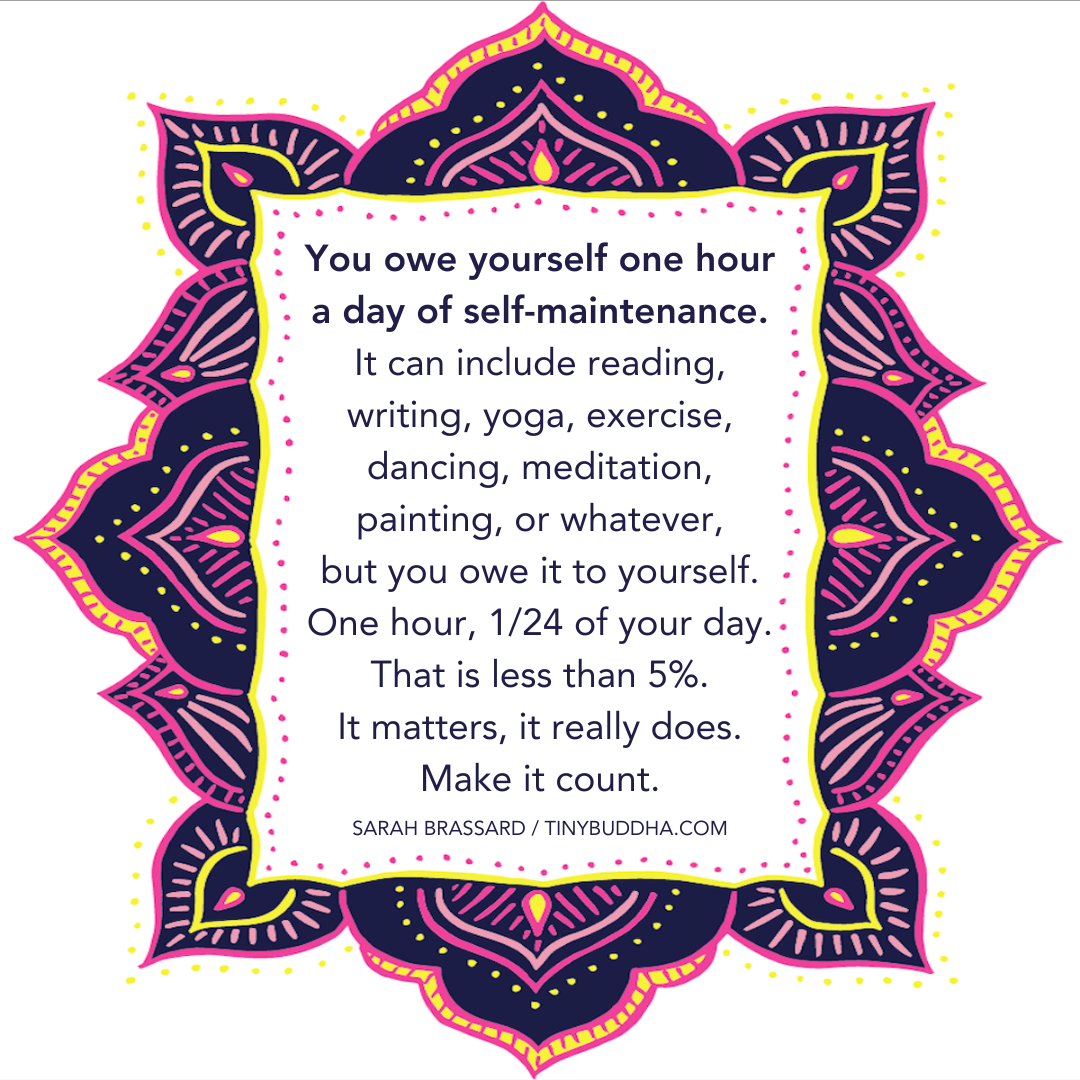
“You owe yourself one hour a day of self-maintenance. It can include reading, writing, yoga, exercise, dancing, meditation, painting, or whatever, but you owe it to yourself. One hour, 1/24 of your day. That is less than 5%. It matters, it really does. Make it count.” ~Sarah Brassard
The alarm rings at 5:45 a.m. She’s been awake for half an hour already, her mind running through everything she has to get done. Her son’s project is due today, her daughter has a well-visit appointment, and her inbox is bursting with urgent requests from work. She’s exhausted, but there’s no time to dwell on that.
She quietly slips out of bed and heads to the kitchen, careful not to wake her husband. The house is still, but her thoughts are already spiraling—her own silent storm.
She starts the coffee, opens her laptop, and immediately sees the email she’s been dreading. There’s another crisis at work that needs to be taken care of today. She checks her phone—texts from her mom asking for help with groceries, messages from her kids’ teachers about volunteering. She types “Sure, I’ll take care of it” without a second thought.
By 7:00 a.m., the house is alive with noise. Her son is whining about breakfast, her daughter can’t find her shoes, and the dog is barking. She rushes to keep everything moving while her coffee grows cold on the counter. “Mom, can you…” echoes through the air from all sides. Yes, she responds—yes to every request, every demand, as if she’s on autopilot. Of course she’ll help. Of course she’ll handle it.
In the car on the way to school, she’s ticking off her mental list: drop off the kids, hit the grocery store, squeeze in a work call before the dentist. Her hands grip the steering wheel a little too tight. She turns on the radio to drown out the rising panic.
At work, the day is a blur. Meetings she can barely focus on, emails she drafts with one eye on the clock. Every time her phone buzzes, her stomach tightens. Another person needing something. Yes, she types, even as her neck cramps from tension, even as the headache starts to pulse behind her eyes.
It’s 3:30 p.m. when she’s back in the school pickup line. Her phone vibrates again. Another work email, another urgent ask. Her heart sinks. She hasn’t eaten since breakfast. Her head feels heavy, like it’s too full, about to spill over. She’s scrolling through her phone when her son climbs into the backseat. “Mom, can we stop by Rocco’s house? I promised him I’d come over.”
“Yes, sure,” she says again.
Later, at home, it’s dinner time. Her husband’s late from work, her kids are fighting, and she’s trying to cook while answering another email on her phone. Her chest feels tight, like she’s barely holding it together, but she pushes through, as always. She has to keep saying yes. What happens if she doesn’t?
It’s 9 p.m. now. The kids are in bed. The house is quiet again. She sits on the couch, her laptop open, staring at the screen. Another request. Another task to be done. She hovers over the keyboard, about to type another yes, but she hesitates. Her hands are trembling, her body pleading for rest, but she’s forgotten how to give it to herself.
And then it hits her: she’s drowning. Not in work, not in tasks, but in all the times she’s said yes when her body, her mind, and her heart were begging her to say no.
She feels the sting of tears. She’s been running on empty for so long, she’s forgotten what it feels like to be full. She’s spent so much time saying yes to everyone else that she’s never left space to say yes to herself.
Her breath catches in her throat as she leans back, eyes closed, and lets the weight of the day sink in. For once, she lets herself feel it. The exhaustion, the resentment, the guilt that’s been her constant companion. And in that moment, she realizes something: It doesn’t have to be like this.
She closes her laptop. She picks up her phone and texts her team, “I’ll get to it tomorrow, but tonight I need to rest.” Send.
Her hands are still shaking, but now there’s a feeling of relief. She walks upstairs, past the pile of laundry she hasn’t touched, past the emails waiting in her inbox. She peeks in on her kids, watching them sleep, her heart full but finally light. Then, she does something she hasn’t done in years: she runs herself a bath.
For the first time in a long time, she says yes—to herself.
She is me. Is this you too? And is it time you said yes to yourself?
-

The Importance of Setting Strong, Healthy Boundaries
“If you love yourself, it doesn’t matter if other people don’t like you because you don’t need their approval to feel good about yourself.” ~Lori Deschene
I spent my whole life trying to please other people. I would put myself through stress and discomfort to fit in with what they wanted or needed. I would rarely feel confident enough to communicate what I wanted because when I did, I would be met with frustration or anger, and I’d often come away feeling stupid.
When I was growing up, I would feel my emotions very strongly, so a lot of the time I would receive comments like “you’re too emotional” or “just relax.” I now realize that people made these types of comments to make me feel like I was wrong for feeling sad, stressed, or uncomfortable when others weren’t respecting my boundaries.
At the time, I didn’t understand this happened because I wasn’t enforcing my own boundaries strongly enough, because all I wanted to do was please others. So when I felt strong emotions, I would just assume I was wrong for feeling them.
This eventually led to me losing most of my confidence and keeping myself “small.” I felt I wasn’t deserving of being seen or heard. I had learned that by trying to communicate my boundaries, I would frustrate other people and be made to feel I was being unreasonable.
If I wanted certain people in my life, I had to adapt to what would make them happy. Of course, this would just result in me becoming more and more unhappy, leading to unhealthy relationships anyway.
It wasn’t until I had my son that I realized how unnecessary it was to not enforce my own boundaries. Even for a while after he was born, I would bend over backwards to fit in with others, even if it meant messing up my son’s schedule. I became stressed, unhappy, and anxious a lot of the time.
I realized one day how this was becoming too much for me because I made a decision to stay home with my son for the day (which, at the time, I felt very selfish for doing!), and it felt so incredibly peaceful.
Before this, I would often think my son wasn’t a happy baby, but quickly understood it was because I wasn’t putting our needs first and was instead always racing around and going out of my way to meet other people’s needs.
As soon as I started saying “no” to things I didn’t really want to do or didn’t feel I had time for and began communicating what situations would suit me and my son, we were both so much happier and more relaxed!
However, since doing this, my relationships with several people have changed. I’m no longer as close with certain friends, and I’ve had to deal with hurt responses from family members. The guilt I’ve felt was almost too much to bear at times. But I am no longer willing to cause myself sadness and stress just to make others happy.
The result? Some of my previously close relationships are no longer as close, and that has been tough to digest. You start prioritizing yourself more and spend less time accommodating others, and they eventually stop speaking to you… ouch!
However, other relationships have become stronger, happier, and healthier! I’ve even made several new close friends. I also want to mention one previously close relationship because I now spend less time with this person, but I feel our relationship is much stronger. I’ve learned I need to protect my own energy when around them, as they have quite a negative view on life at times.
Since it was someone close to me, I didn’t want to lose them. So I had to find a way to adapt the relationship to suit my boundaries.
I don’t think all boundaries need to be communicated, especially if the person is likely to be offended or not understand. Instead, I was able to keep things positive by changing the dynamic. So I would arrange coffee meets with this person occasionally and subtly shift from going over to their house regularly, as this would result in more time and energy being taken from me.
One thing I noticed that made me realize I wasn’t setting healthy boundaries was that I felt anxious about going into social situations and family events—even events in my honor. One year, someone else decided what we would be doing for MY birthday, and I didn’t have the confidence to speak up to explain I didn’t want to do what they had chosen.
I also felt upset if I tried to communicate my preferences, but someone got frustrated or implied that I was being unreasonable. I would often question if certain people even liked me and would exhaust myself trying to make them happy so they would accept me.
Setting boundaries can be really difficult for some of us, but it doesn’t mean we can’t do it. It can also be scary because it can mean not having such a close relationship with certain people, or maybe even losing them completely.
But the question we need to ask ourselves is this: If relationships change or we lose people in the process of creating strong boundaries, were they even meant for us? Our happiness is just as important as the next person’s. As long as we aren’t acting in a way to hurt others, our boundaries are valid and acceptable. It isn’t up to us to make other people happy. We are all responsible for our own happiness. We can both create it and change it.
-

The Ultimate Guide to Better Boundaries
“Boundaries are the distance at which I can love you and me simultaneously.” ~Prentis Hemphill
I was talking with a friend about some aspect of a challenging relationship (I don’t even remember what it was now), and she lovingly informed me that I needed better boundaries. I nodded in understanding, but later I realized that I didn’t really know what that meant. Like, what do better boundaries actually look like? And how does one go about developing them?
It’s all fine and dandy to know that “No” is a complete sentence, but how does that apply to a coworker just needing a quick hand (even though I’m already swamped)? Or a friend needing help with a minor crisis (but I’m not feeling so great)? Or a parent needing medical attention (when I’m really not qualified and still trying to get on my own two feet)? Or a new beau asking very reasonably to be accepted as they are (while my core needs aren’t getting met)?
I didn’t have the answers then, so I just filed that recommendation away, pending further intel. I had already moved halfway across the country to get some distance from both of my (divorced) parents, but I would eventually develop a more diverse toolkit of relational skills.
Flash-forward a year or two, and I was participating in some structured activities with a group of people who practiced “Authentic Relating” when I encountered what I later realized were healthy boundaries—for the first time in my life.
These beautiful souls would occasionally turn down an invitation (to an activity as part of the event or perhaps for something after) in the most disarming way I’d ever experienced: They would deliver a no without disconnecting. It was pleasant and friendly without being apologetic or abrasive. It was truthful, and it was immediately clear that it wasn’t personal. It felt surprisingly good, like honesty and mutual respect.
I realized that I felt safe to be upfront about my nos with them too, trusting that they would appreciate my authenticity (delivered responsibly) and not have their feelings hurt or try to twist my arm in their favor.
It also dawned on me that if these folks were so comfortable saying no, I could trust the sincerity of their yeses and not fall into my usual pattern of asking “Are you sure?”, worried that they were just being nice and would end up resenting me later. Wow! How freeing is that?!
Then I was confronted with my own question: What had I been doing all my life, trying to be “nice”? I was thoroughly inspired to enhance the quality of safety and trust in my own relationships. This opening led me to deeper and deeper insights about the nature and nuances of boundaries.
One of the next revelations on my journey was that our boundaries are essentially our resource limits, and then I found myself confronted by the whole “abundance vs. scarcity” thing. As a recovering people-pleaser, I already wanted to be able to say yes to everything, and having to say no to things felt even scarier with the story that a no could mean limiting myself and putting blocks between me and my dreams. I was supposed to be abundant, damn it, not limited!
As it turns out, there is a substantial difference between the mindset of abundance or scarcity and the reality of abundance and scarcity in the world.
There is certainly an abundance of life on this planet, but each one is fleeting. I may have the potential for financial abundance, but at any given moment, the amount of money I have is finite. One of the most fixed resources of all is time. There are only twenty-four hours in each day; in some cases, that might feel abundant, and in others, it might feel scarce.
Then I noticed that some of the most precious resources on earth, such as gold and diamonds, are valued in large part precisely because of their scarcity. Suddenly, my limited resources became precious to me. My time, money, energy, attention, and care were suddenly like jewels, and I was their honored steward.
The “oxygen mask rule” was now clearer to me: If we’re not good to ourselves, we’re no good to anyone else.
When we let our resources become depleted, we have nothing left for the people and causes we care most about; often, we even do them harm when we act out from the survival mode that being under-resourced triggers. In many cases, we end up blaming others for over-taking when we were the ones who were over-giving. (Resentment is almost always the byproduct of a failed boundary.)
Sometimes, we’ll even get preemptively resentful over being put in the position of having to say no—“How could you even ask me that?!” This happens because we’re holding onto misplaced responsibility for other people’s emotions. We completely lose sight of the option to simply say, “No, thank you.” “Nah, I’m good.” “Nope.” “Sorry, I can’t make it. Maybe next time!” “I can’t help you with that, but I might know someone who can.” “I’ve gotta go now. I love you, and I’ll call you tomorrow.”
But what if we don’t even know what our limits are?
What I came to discover next was just how deeply seated my fawning behavior was. There’s talk of “being a yes” to some things and “being a no” to others. It gets tricky, though, for those of us who grew up carrying the misplaced responsibility for other people’s emotional states so that we could feel safe, as this tends to develop a reflexive yes.
In the moment of a request (or even a perceived need), we are a yes, but it’s to the person—their acceptance of us and their ease. This yes arises before we even hear or process the request because we have an external orientation that makes other people’s acceptance of us (rather than our own) our source of security.
We are so quick to say yes to them because we just want to relieve them of their burden and avoid the terror of making them wait for us to consider whether we’re a yes to their actual request. Of course, this is all subconscious and so habitual that we’re not even aware that it’s driving us. It’s hard to notice if you’re a no to a request when you’re already a yes to the requester.
Once we become aware of this pattern, though, we start getting acquainted with our own limits, often for the first time, and then we start to realize how much power we’ve been abdicating.
On our quest to right the wrongs, most of us encounter the unfortunately prevalent notion that we have to sacrifice our compassion in order to become empowered. After letting our boundaries be trampled for so long, once we find our no, we start to wield it like a sword with the faulty assumption that our only options for boundaries are “flimsy fences” or “spiked walls,”
Yet, spiked walls are no healthier than flimsy fences. Both of these dysfunctional boundary styles lack the key ingredient of appropriate responsibility. When I finally took full ownership of my limits, there was no one to blame when they were exceeded but myself, and there was no need to be rude about them because they were in my power to care for.
Then I remembered a piece from my dog training years that was about following a no with a yes, and I combined it with the connected rejections I learned from the “authentic relaters” for a way to ease my fawning response while still being boundaried.
I started telling people, “I’m not available for that, but I am available for this.” A true no, followed by a true yes.
>> “I’m sorry, Barb; I can’t help you with that project right now. If you still need help tomorrow, I’ll have some time after lunch.”
>> “No, I can’t help you move today, Sam, but I might be able to help you unpack this weekend.”
>> “I’m not sure what those symptoms mean, Mom. Here’s an emergency nurse hotline—please give them a call.”
>> “You’re right, John. I do want to accept you as you are, so if my requests are outside of your capacity, then this is not going to be a healthy relationship for me, which means it won’t be good for either of us. I really appreciate you, though, and I’d like to stay friends if you’re open to that.”
These are “selective gates,” and there is no quick fix to getting there. We have to devote time and attention to the uncomfortable transition of rooting our security within ourselves so we have the foundation of self-love and self-acceptance to brave the fear of rejection that is always at risk when speaking our truth.
Selective gates are not only communicated through not-that-but-this. In our closest relationships, we can offer information about our limits and the consequences of them being exceeded as gifts for our loved ones to understand and support us better.
It’s important to understand that boundaries are not the same thing as needs. Because they are simply our limits, there’s nothing to request and only self-care to be applied.
As my foundation got stronger, I stopped asking for others to make adjustments and started simply informing them about what comes up for me under certain circumstances and what I needed to do as a result.
This model looks like: “When [X] happens, I feel [Y], and so to care for myself, I will [do Z].”
>> “When it’s early, my brain is not fully online, and I can get grumpy if prodded. You’re welcome to make contact and I will listen without responding, but if you ask me stuff before I’m fully awake, I’ll just grunt.”
>> “When we’re on our trip, if we want to do different things, rather than one of us getting disgruntled, I’ll just go my own way and meet back up with you after.”
>> “When I receive harsh criticism, I feel shame, and so to care for myself, I’ll remove myself from the conversation.”
I call this boundary style “selective gates” because we get to choose how people can have access to us, and they get to know the rules. And since these are defined by behaviors instead of whole people, folks have the option to use the gate or be on their way.
(Hot tip: These only work if you actually follow through on your end—and be consistent. Also, be prepared to restate your boundaries a few times. Feel free to have a limit there too, but I’d allow two or three repeats for the learning curve.)
In other cases, we might be a yes to a request, but it needs to be qualified. Here, we need to communicate our boundaries in a more proactive way, and it can be really simple—no lengthy explanations required. The winning strategy with these boils down to explicit clarity, with minimal room left for assumptions, misinterpretations, or “psychic” games.
Instead of an open-ended yes that is likely to leave us trampled, we can state our conditions outright.
>> “Sure, I’ve got five minutes.”
>> “No worries, just let me know by Wednesday.”
>> “I can do one of those things.”
Again, consistency is key. We’ve got to stick to our stated limits, or our words will lose their value.
Boundaries are a service! Others can be bummed by our nos or our conditions, but if they’re a counterpart in a quality relationship with us, they’ll also appreciate our honesty and self-care, for that is how we’re able to show up to the relationship resourced and how trust is built. Conversely, this insight can also help us accept a disappointing no from someone else and truly respect their boundary at the same time.
Love is unconditional, relationships are not; that’s what boundaries are for.
Having a big heart is not the problem. Please don’t wall yours off—just mend your fences and install gates. There’s no need to sacrifice your compassion in order to become empowered. Empower your compassion so it’s big enough for yourself as well as others.
What has worked wonders for me is a regular practice of study, self-reflection, embodiment, interactions, and support. I call it my “peaceful power practice,” and it involves a lot of reading and educational programs, little inspographics that I create and keep on my phone as touchstone reminders, frequently journaling and reviewing my entries, habitual introspection, regular chakra meditations, mindfulness in my connections with fellow humans (especially when triggers are involved), and a core network of trusted people.
Developing better boundaries has been a challenging road, but it continues to be a deeply rewarding one.
-

Why I Deprioritized Myself and What I Now Know About Boundaries
“If you do not have needs, you once did.” ~ Marshall Rosenberg
When I was born, my mother did not want me. In the northern part of India, there is still a very strong preference for having a male child. A female child is often seen as a burden because of the social and economic traditions of patriarchy.
Because of this initial rejection, I became highly sensitive to my parents’ inner worlds. In my deep longing to be loved and accepted, I mastered the subtle art of sensing their needs and feelings, becoming a natural caretaker.
I would come back from school and notice my mother’s overwhelmed face. Her days were always busy and full with myriad responsibilities. Before I knew it, I slid into the role of mothering my younger brother. And so, growing up, due to circumstances and adaptation, my favorite thing in the world became making someone feel at home.
In my twenties, designing emotionally safe spaces became the core of my work. First as a university teacher and eventually as a wellness coach, I became a professional caretaker. Along with my students, I experienced the deepest textures of fulfillment and intimacy at work. My work became a nest for rebirthing and nurturing. Non-judgment, emotional safety, and warmth were its key tenets. It was an experience of inclusion, ease, and belongingness.
One day, I faced the decision to let go of a student who had been emotionally aggressive toward me. I felt fragmented into parts: one part feeling hurt for myself, and the other part feeling care and protectiveness toward the student who had crossed the line. In all honesty, I was more attuned and identified with the latter part.
For days, I suffered. I tried to find a way for these parts to coexist, but they couldn’t. I had to face the emotional reality of chaos and discomfort. As they say, if it is hysterical, it must be historical; during this internal churning, I had a significant insight. I realized that my favorite thing originated from my least favorite thing in the world.
I never wanted to subject anyone to the experience of feeling emotionally walled out, rejected, homeless, and undesired. This tenderness, stemming from my early childhood experience, made me highly attuned to anyone who might feel similarly.
Ironically, in designing a non-hierarchical classroom and workplace where everyone shared power, I was not taking my own needs and feelings into account. I was not listening to my own needs and feelings. To quote the late American psychologist Marshall Rosenberg, “If you do not have needs, you once did.”
It awakened me to the awareness that I had learned to neglect my needs to the point where they did not matter as much as someone else’s. This was a learned behavior, an adaptation I made very early in my life.
This prevented me from drawing boundaries, even when necessary to protect my vitality and life spark. In trying to embody elements of an emotionally safe home, I was tuned out to my own personal truths, especially the subtle ones. It was through this experience of conflict that I could see the contest between these different parts.
In that moment of insight, my heart felt lighter after days of heaviness. I could see the beauty and dignity of my needs again. The part of me that did not receive unconditional acceptance from her primary caretakers had birthed the part that valued deep care and emotional safety for others. I was trying to soothe my grieving part by breathing life into others.
From a spiritual dimension, it was beautiful to witness that others were a part of me in this cosmic adaptation. However, in this material realm, it was important to acknowledge separation as a prerequisite for co-existence.
My learning was to first breathe life into my own abandoned part, nurturing it back to richness, ease, and wholeness, and then share my gifts from that choiceful place.
Another simple question helped me: Every night, why do I lock the door of my apartment? It is to protect my space from strangers. Similarly, for me to embody emotional safety at my workplace, I need to first feel safe.
I saw the light and shadow meet at the horizon. Boundaries, which once seemed like rude, disruptive, and violent borders separating people, suddenly felt like love lines inside my body, helping me to love better, richer, and more honestly.
Learning to set boundaries was not easy. It required me to slow down and witness uncomfortable truths about my past and present. I had to learn to honestly understand where my giving was coming from and learn to heal and nurture my own grief.
It was only when I came in touch with that initial rupture that I could become more capable of giving genuine care and support to others without depleting myself.
This journey freed me from my savior syndrome and taught me to be self-compassionate and create a more authentic and nurturing environment for others.
Boundaries allowed me to reclaim my sense of self. They became a way for me to define what was acceptable and what was not, to express my limits, and to protect my emotional and mental health. This process also taught me the difference between passion and obsession.
Today, I am more attuned to my own needs and feelings. I understand that setting boundaries is an ongoing practice, not a one-time event. It involves continually checking in with myself and adjusting as necessary. This dynamic process has brought more inner peace and honesty in my actions.
In essence, my journey of overcoming guilt and shame around drawing boundaries has been an inner journey of healing and integration. It allows me the choice to create a life that honors my personal truths, and in doing so, I am better equipped to support and nurture others in a healthy, sustainable way.
-

How to Stop Prioritizing Everyone and Everything Else at Your Own Expense
“Agreeing to things just to keep the peace is actually a trauma response. When you do this you’re disrespecting your boundaries. No more making yourself uncomfortable for others to feel comfortable. You have control now. You run your life. Take up space and use your voice.” ~Dj Love Light
I read the text from my stepmother inviting everyone to the holiday dinner at her house, and my stomach began to churn. I did not want to attend, but I was instantly flooded with guilt at the thought of saying no.
“How to kindly decline an invite” I typed and hit search.
I felt like I should go to their dinner, even though I didn’t want to. My stepparents were always disappointed when some of us RSVPed no. Would they be mad if I said no this time? Would they ask why my family couldn’t come?
Also, my sister was coming to town for the holiday, and I didn’t want her to be disappointed that my family wasn’t there. All kinds of scenarios were playing out in my head, fueling my shame, while my guilt dug in its heels.
The following day I replied to the group, “The Montgomerys can’t make it. Have a happy holiday,” and let out a nervous sigh while I tried to let myself off the hook. I’d been so overwhelmed lately; I just needed a break.
I’ve spent most of my life being conditioned to believe that my needs do not matter. My mother got breast cancer when I was eight, and she and my stepfather kept it a secret to ‘protect’ the kids. All that did was rob me of being able to express my fears and be comforted.
I was told to put a smile on my face when we’d visit her in the hospital—“Don’t cry. You don’t want to upset your mother”—teaching me that my sadness was irrelevant, and I should focus on my mother’s happiness instead.
She died when I was twelve, and even then, as I sat in the backseat on the drive home, I was handed a tissue to wipe the tears off my face without so much as a hug or a comforting word.
When my stepfather remarried, my stepmother’s narcissism only solidified the notion that my needs were unimportant. Her kids mattered; I did not. Her feelings took priority; mine were an inconvenience. I learned that conceding to my stepparents’ wants and preferences, even at my own discomfort, equaled safety.
My stepparents were emotionally and verbally abusive. My stepfather was a screamer and used rage as a weapon. My stepmother was a narcissist with a powerful sense of entitlement and superiority. They demanded compliance.
I buried my needs and made myself small as a means of survival. I became a people-pleaser to endure the trauma. I spent decades in survival mode, never having a voice, never taking up space.
In my mid-thirties, I finally realized that the narrative I had been told, “you don’t matter,” simply wasn’t true. After years of therapy and establishing a happy, healthy family of my own, I came to understand that I do matter, and my needs are valid.
Even into my adult years, with marriage and kids, I continued to try to foster a relationship with my stepparents. I tolerated their abuse and made excuses. “That’s just how they are,” or, “We have to go; they’re family.”
I finally hit my breaking point after my stepparents stood me up for the second time. We were supposed to have lunch, and they didn’t show. It had happened the previous month as well, but I gave them the benefit of the doubt. This was the final straw.
I had spent so much time and effort trying to get them to be a part of my and my children’s lives with invitations that were ignored, all while being required to show up for them whether it worked for our schedules or not.
I decided that I would go low contact. I would no longer reach out to them and would only attend holidays or birthdays when I was available and felt like it. I did not want to go full no contact, because I still wanted to interact with my siblings and their families.
The boundaries I put in place were extremely helpful. They decreased the harm my stepparents inflicted upon me and my family. Anytime we gathered with them, and a cruel comment or snarky remark was made, I found it had lost its power. Instead of bringing me to tears, I would now say, “That’s just how they are,” with a shrug and an eye roll.
I refused to give my power away to them anymore. Their attempts to hurt me failed now. I no longer subscribe to their narrative of me.
The boundaries and reclaiming my voice are now my norm; however, I still have moments when the feeling of I don’t matter creeps back in, and I go back to my factory setting of being a people-pleaser. Trauma is tricky that way.
When I find myself in people-pleaser mode, shoving my needs aside to take care of everyone and everything else, those are the times when I need to remember how prioritizing others at my expense ends in exhaustion and resentment. I remind myself that I have control of my life, I matter, and my needs are valid.
Prioritizing your needs and developing boundaries can be daunting when you are not accustomed to using your voice and taking up space. To stop putting others’ comfort above your own, try the following.
1. Assess the situation.
- Check in with yourself: How are you feeling? Are your needs being met?
- If/then: If you are exhausted and your needs are not being met, then what needs to change?
- Be mindful: What people/places are challenging for you?
2. Create an actionable plan.
- Having my needs met looks like: going for a daily walk and saying no when I’m overwhelmed.
- Challenging people/places: Establish boundaries and eliminate toxic environments.
- Reminders: Be kind to yourself, respond as if you were talking with a friend, and no shaming.
3. Adjust and continue.
- What worked: Setting a boundary of helping neighbor only when free went well.
- What went wrong: Family getting upset with boundary caused guilt and shame.
- Pivot: Practice giving yourself grace and remember that “No” is a complete sentence.
- Learn: It gets easier; you can do it again; you are not responsible for other’s reactions.
The saying “you can’t pour from an empty cup” is popular for a reason. Give yourself some grace as you reclaim your value and worth. Use your voice and take up space. You matter.
-

How to Start Saying No When You’re Afraid of Disapproval
“Sometimes what you’re most afraid of doing is the very thing that will set you free.” ~Robert Tew
When I say that my need for people to like me has been one of the hidden rulers of my life, I’m not kidding!
Ever since I was a kid, I wanted everyone to like me, and I had significant anxiety if they didn’t. My fear of the disapproval of others quietly lurked beneath the surface like a shadow under my skin, dictating my behavior and my mood.
I was so afraid of the disapproval of others that I would ruminate over inconsequential things I had said to people and tiny actions I had taken, trying to determine if they might have been received in ways that could have ignited disappointment or rejection.
Nowadays, when I think back to that version of me, with the need for people to like me running my life, I feel a wave of compassion.
It was that version of me who decided to go through with a marriage I knew was not right for me because I was afraid people would be disappointed or disapproving if I decided to back out of my engagement.
It was that version of me who vulnerably disappeared from friendships when I felt judged because I would rather fade into the distance than meet that experience with curiosity and presence.
It was that version of me who was afraid of saying no to work commitments because I put other people’s needs ahead of my own.
It was that version of me who would overcommit to meet other people’s requests and then have to anxiously backpedal because I could not possibly manage my own over-scheduling.
That version of me was on the fast track to complete depletion, exhaustion, frayed nerves, and burnout.
The time came when I had to meet the shadow within me that was so frightened to displease others because I had lost sight of what truly mattered most: my own inner compass.
My closest family members shared that they didn’t even recognize me anymore.
Sometimes when we reach the depths of our inner darkness—when the shadow of our fears overtakes the light of our spirit—we can experience the richest and most transformational turning points of our lives. For me, this certainly was the case.
Through a cascade of serendipitous events, I began to face my own fear-based shadow. I participated in an intensive gestalt therapy group that helped me rediscover what it was like to feel grounded in my body and belong to a community at the same time. I reconnected with nature and started taking regular walks, taking my shoes off and feeling the earth beneath my feet, and going camping. I reconnected with music and dancing. I rejoined the aliveness within me.
I learned the gift of my “no.” I learned the gift of feeling the strength of my spine and the tenderness of my heart as I voiced my boundaries, my limits, and the clear truth of my honorable “no.”
The gift of giving myself permission to say “no” set me free. I realized that in saying “no” I was offering other people the greatest gift I could offer them, which was my honesty and integrity. If people felt disapproval or disappointment in response to my boundary, I realized that I could have compassion for their struggle without assuming responsibility for it.
Another surprising aspect of giving myself permission to voice my “no” was that this also offered me a new perspective on other people’s limits and boundaries.
Nowadays, when someone answers my requests with a limit or boundary, I recognize the beauty in their response. Even if I feel a little disappointment that they cannot connect with me in that moment in the ways that I am seeking, I feel even more honored that they trust me to hear and respect their boundary. Experiencing other people’s limits in this way has been unexpectedly freeing as well.
Embracing the gift of “no” has also offered me the real possibility of “yes.” My yes rings more clearly, like a beautiful bell. Because I am honoring the truth of my limits, my experience of my openness with my “yes” is so much more filled with aliveness and presence. When I feel my “yes,” I feel the integrity, clarity, and joy of that opening because my limits have been honored within me.
Have I had to face the reality that not everyone likes me? You bet. It hasn’t been easy, either. I find it amusing to reflect on my earlier self, though, and recognize that not everyone liked me then either.
I have been astonished to learn that the gift of my “no” has allowed me to connect more deeply with people who do enjoy my company and celebrate our relationships because I’m showing up more authentically as myself.
Even though the fear of disapproval and disappointment had such a tremendous impact on my life for so many years, I don’t regret this journey. It has not been easy, and it has required a great deal of courage to face my fears, but I feel gratitude to my shadow for offering me such a valuable lesson.
In the end, it was my fear of people not liking me that ultimately led me on the path to growing into more fully liking and accepting myself. It was the darkness of that shadow that became my catalyst to the brilliant and blazing light of aliveness.
Every once in a while, the fear shadow shows up again. Today, though, I can greet that fear as a familiar old friend, reminding me that I’m absolutely, imperfectly human. As I greet my fear, I notice the contrast that nowadays I have the courage to feel my feet on the ground and my belonging within myself.
The fear simply doesn’t hold the same power over me anymore. I can still choose to feel my strong spine and tender heart, and act from my own truth.
If I can offer any little pearls of wisdom from my own journey, I would offer these.
Invite your fear to be your ally.
If you can invite your fear to be your ally by getting curious to learn more about what it might be trying to protect you from, you then can ask yourself if there is another way you might protect yourself.
In my case, my fear was trying to protect me from disappointing others, and truly I needed to protect myself by offering myself the space to practice saying my “no.”
Start small because small is significant!
By starting with smaller steps rather than bigger steps, we can gradually practice a new habit or way of being with lower stakes at first. This practice is very important because as you gain your footing and balance with the small steps toward setting limits and boundaries, you can work your way to setting the bigger limits you need.
In my case, I started by engaging in activities I loved, such as going for a walk outside, even if some of my family members would have preferred that I engaged in what they wanted to do in that moment instead.
Remember to breathe.
Sometimes when we are facing our fears—no matter how small—we can tense up and constrict our bodies without even realizing it, which heightens the sensations of fear and anxiety within us. Gently remind yourself to take some deep breaths and see if you can ease tension in your body.
Sometimes life has such beautiful twists. Had anybody ever told me years ago that I would be sitting at my kitchen table, writing and reflecting on the gift of my “no,” I wouldn’t have even understood what they were talking about. Of course not; my fear shadow hadn’t led me to this wisdom yet.
I’m so thankful it did.
-

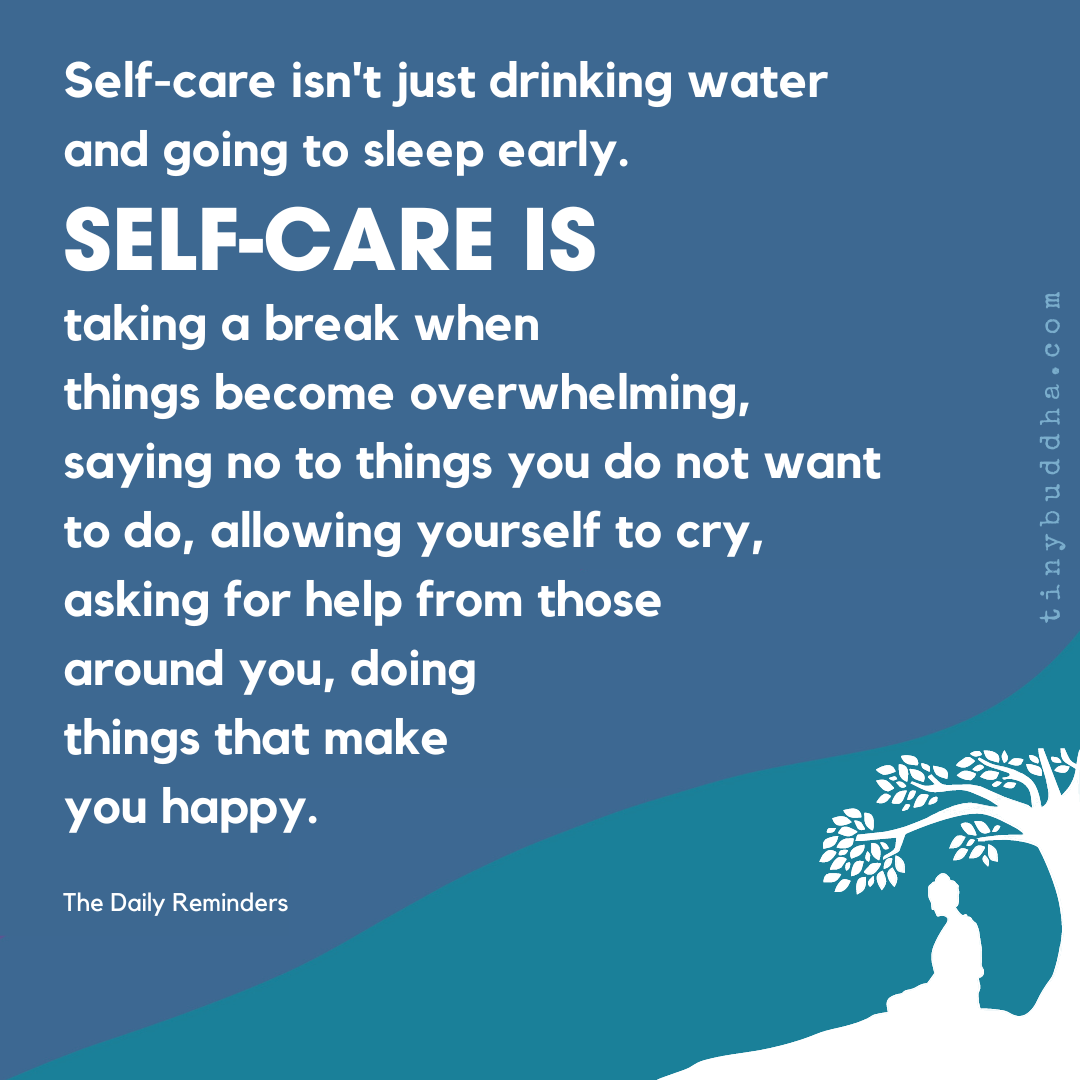
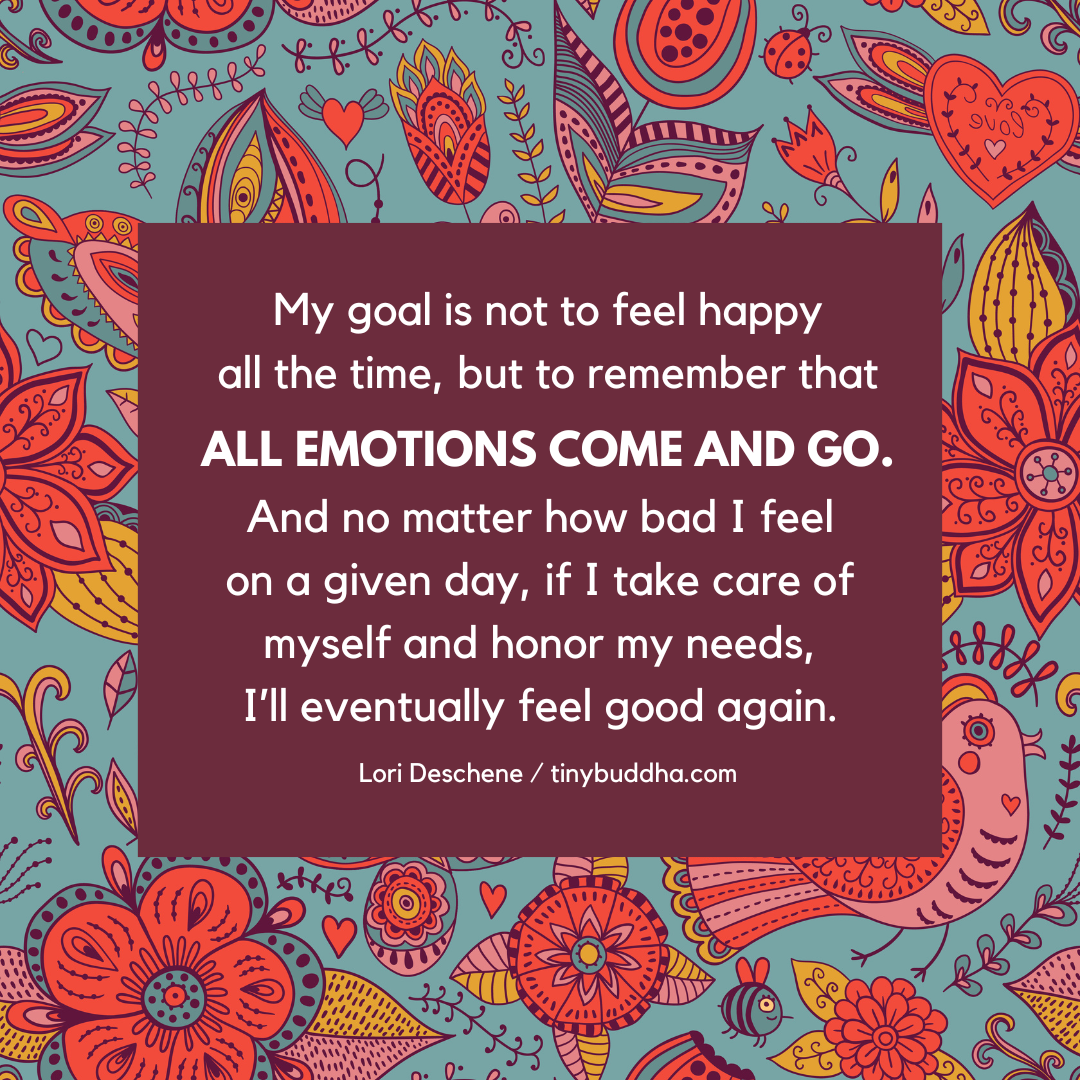
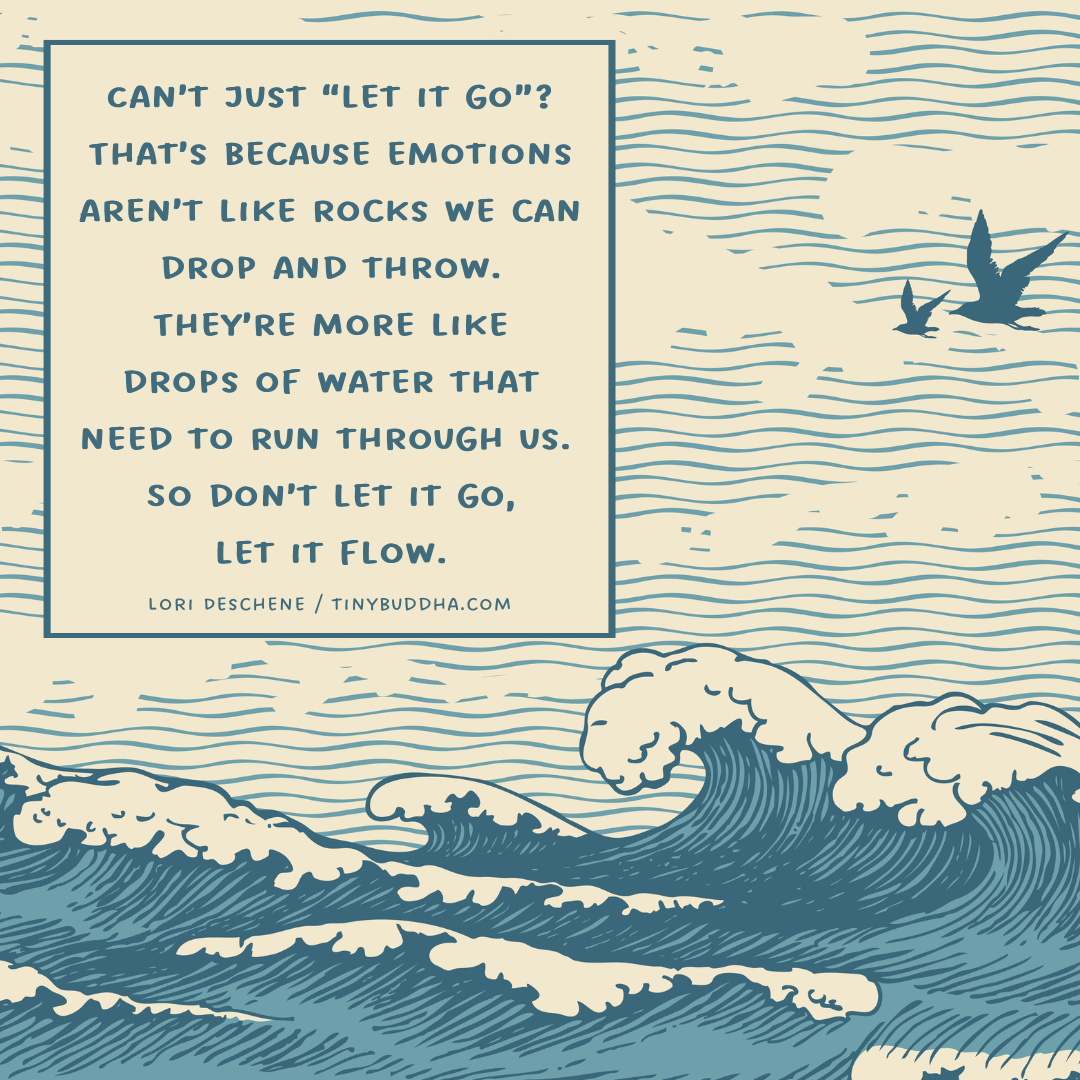
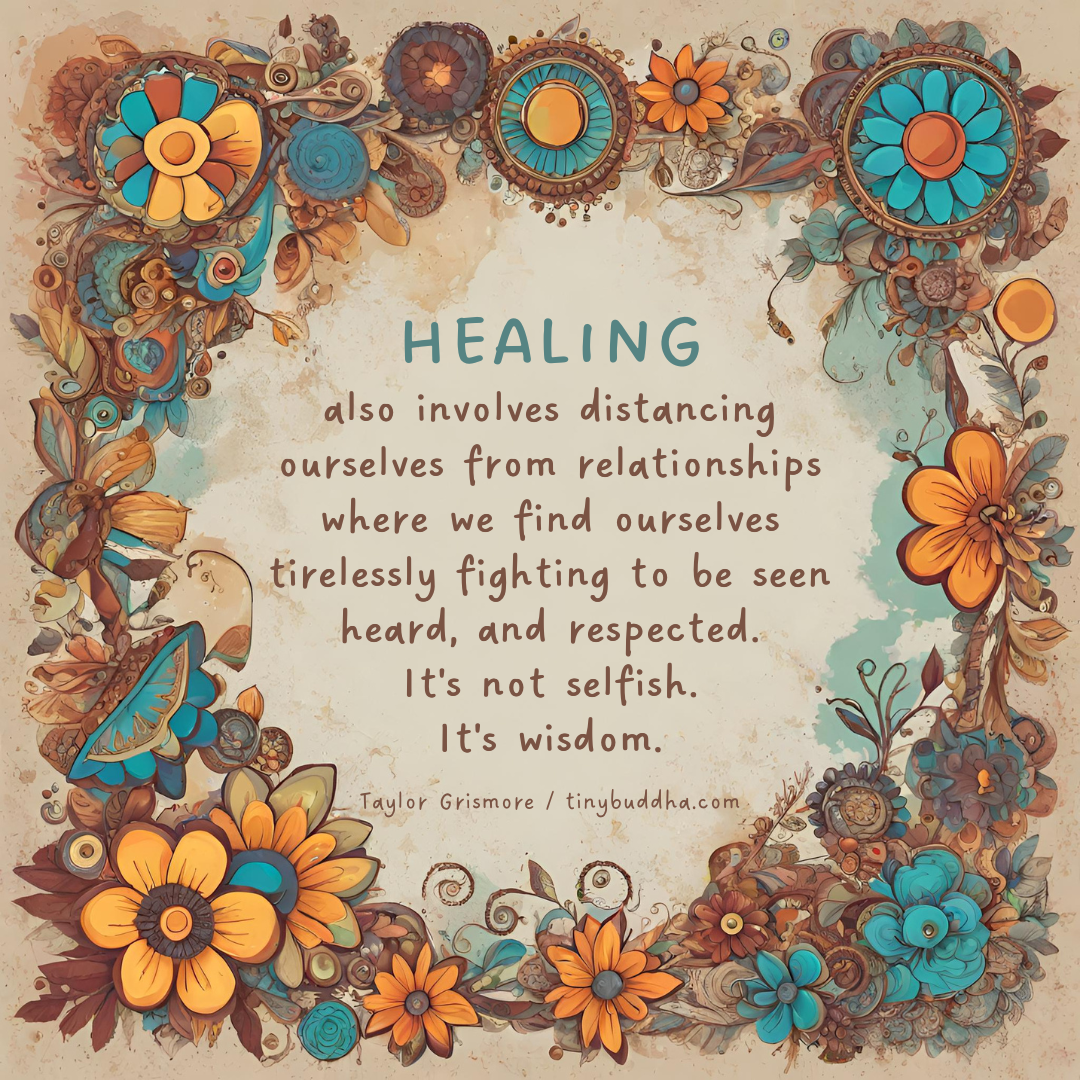
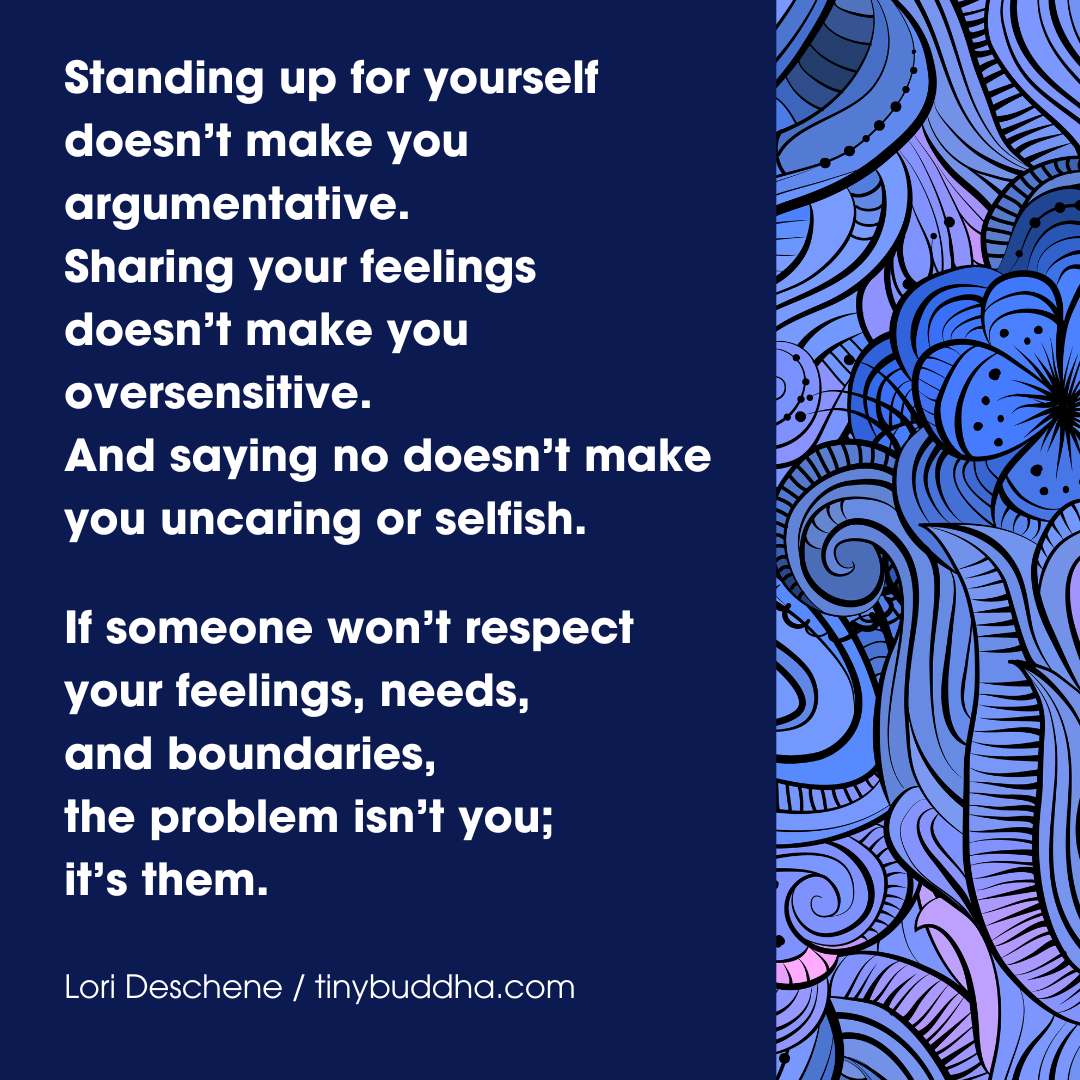
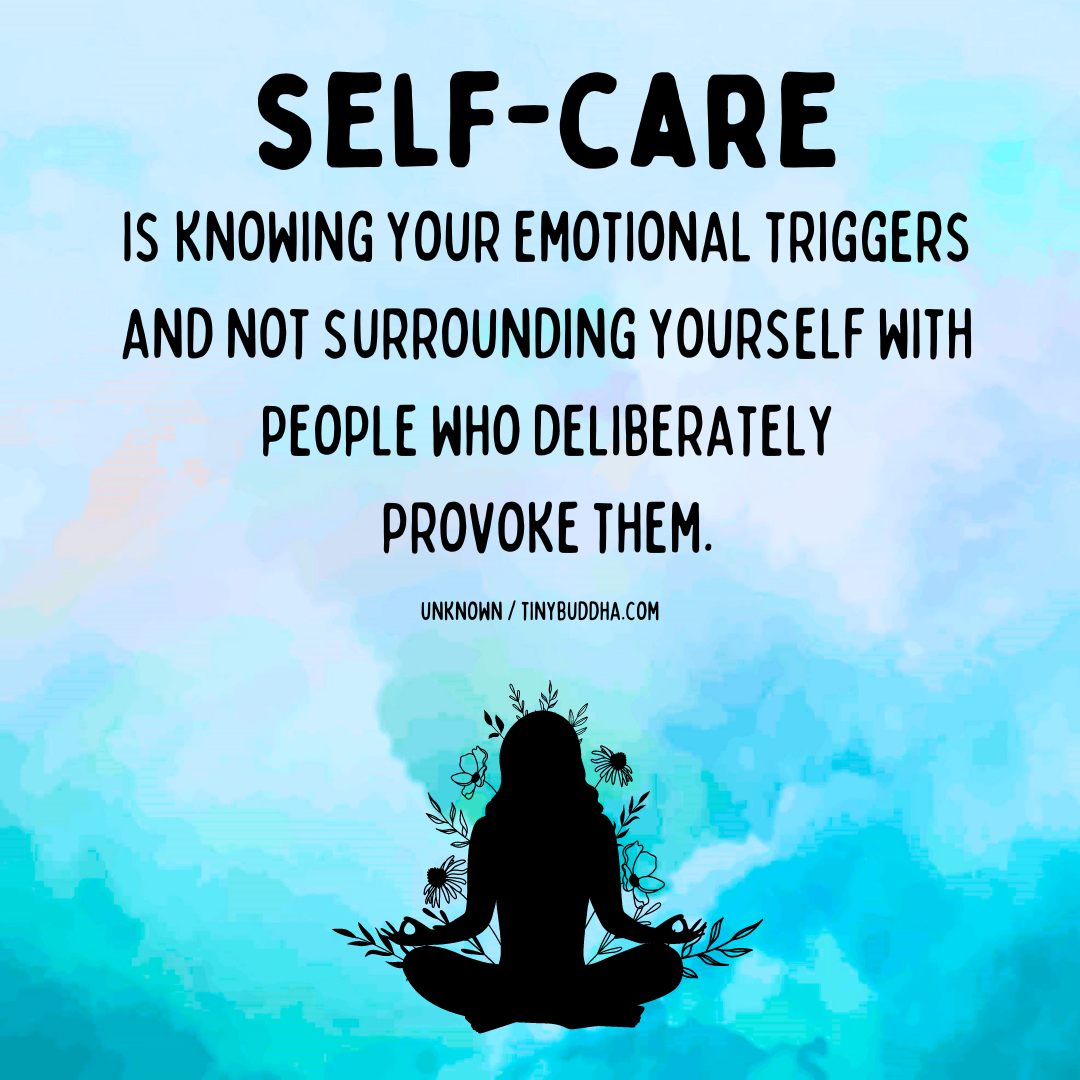
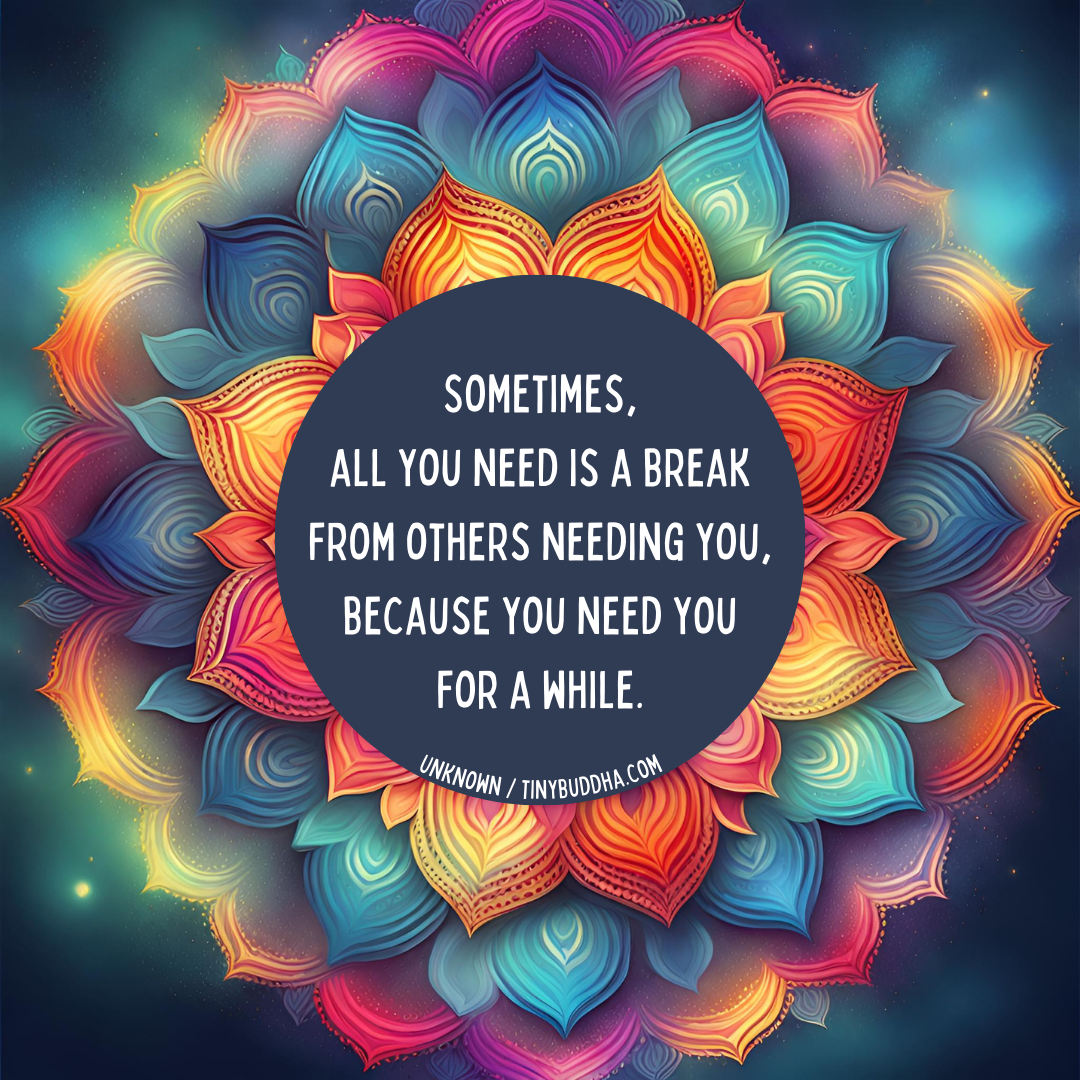
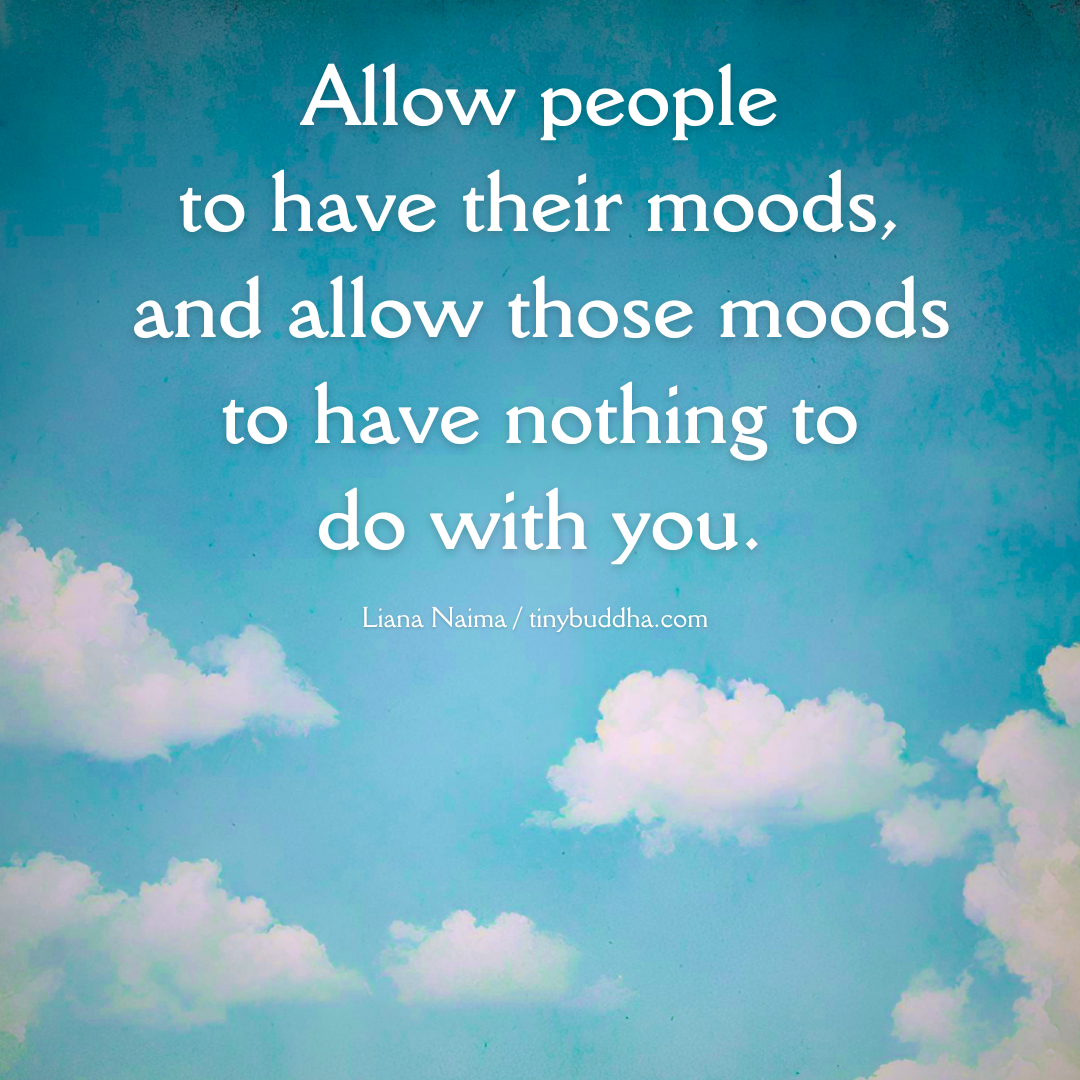
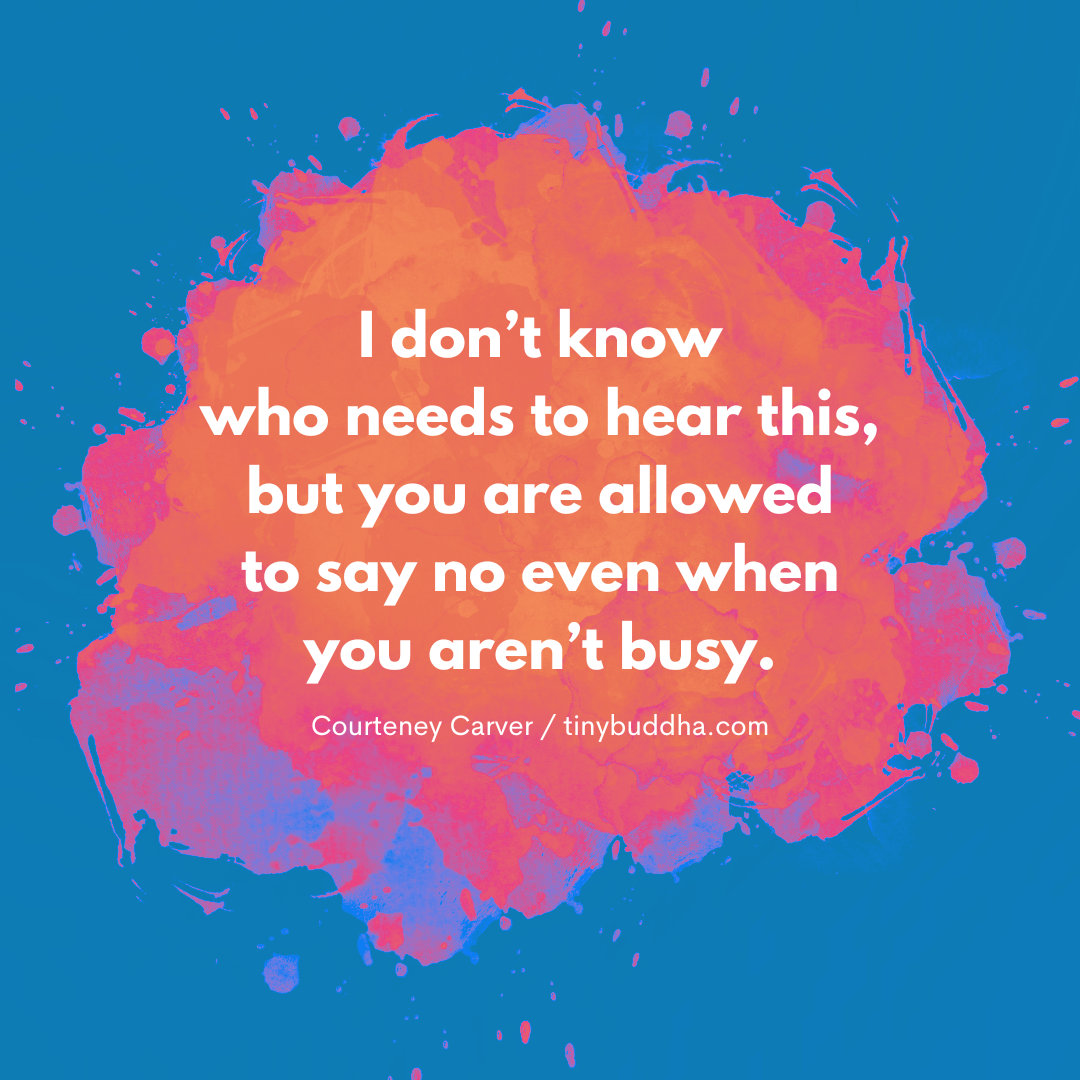
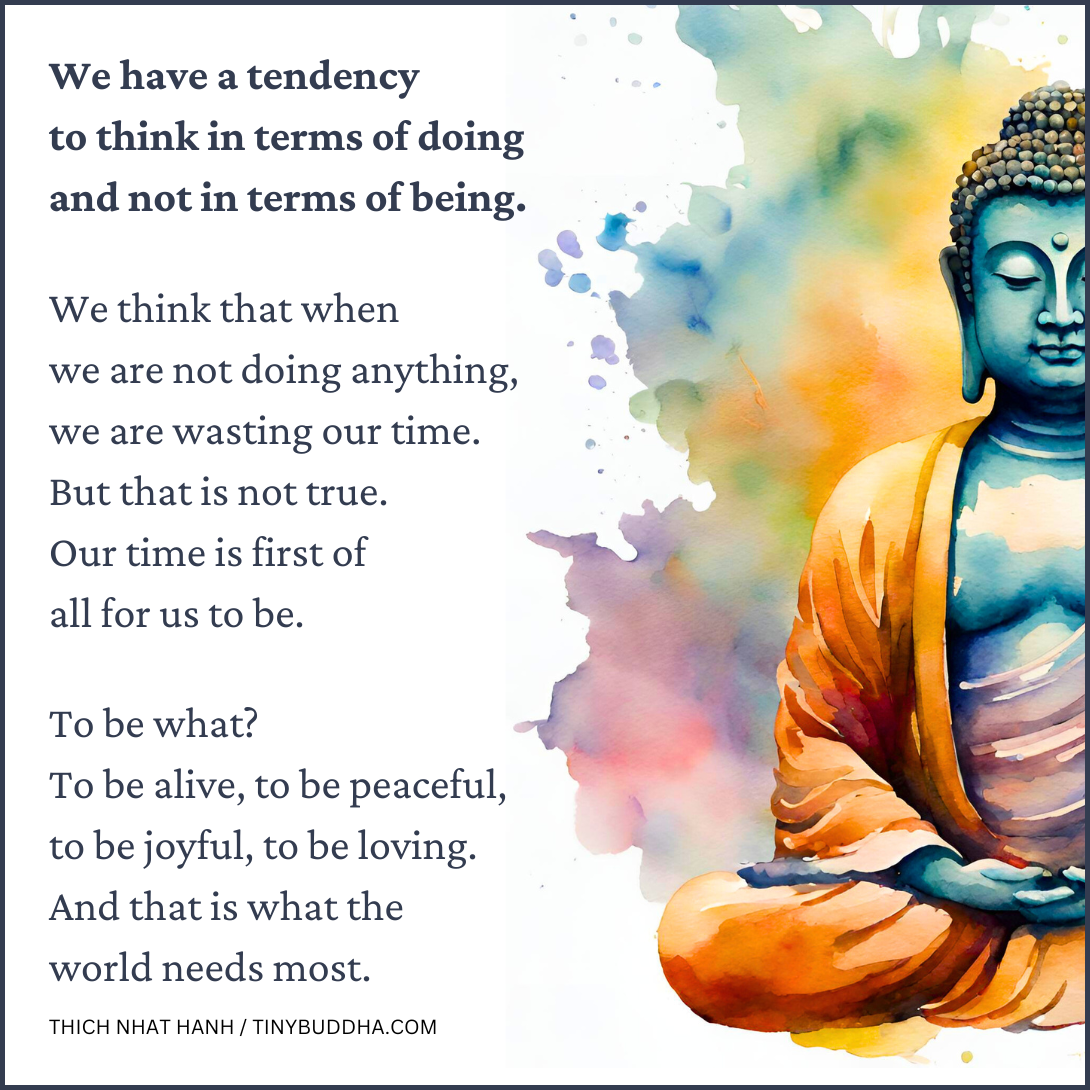
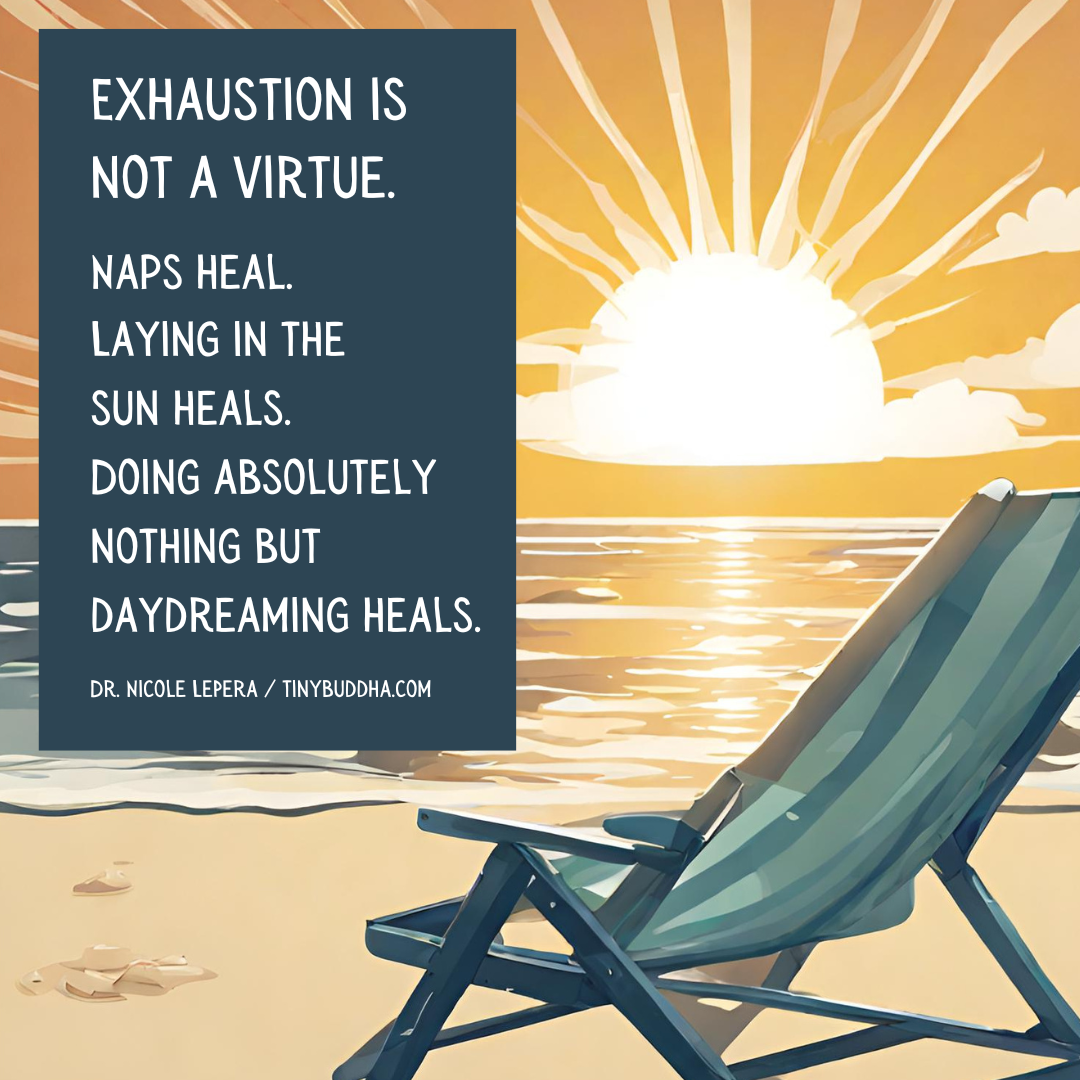
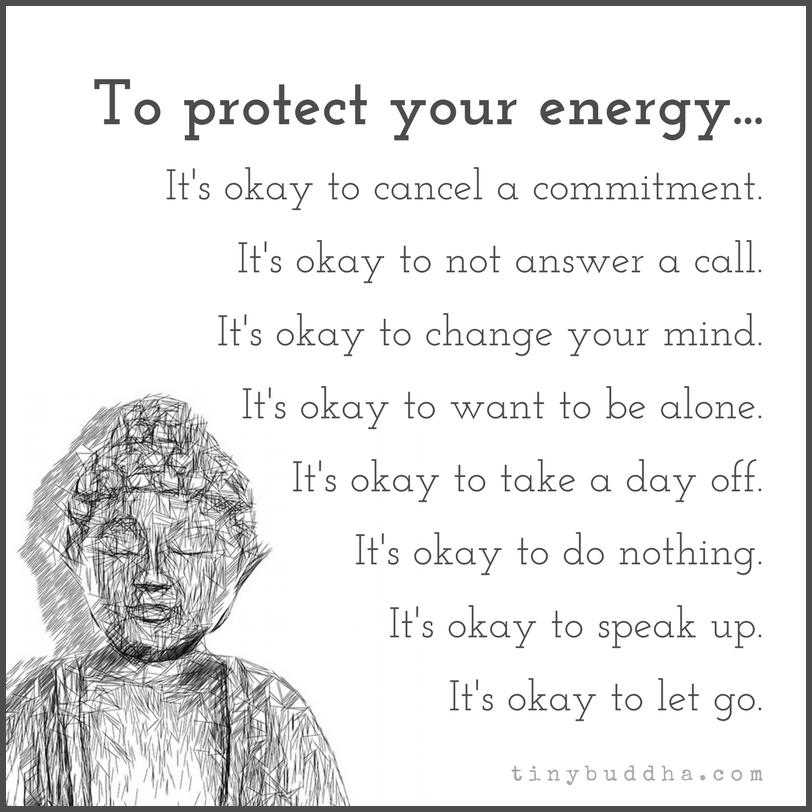
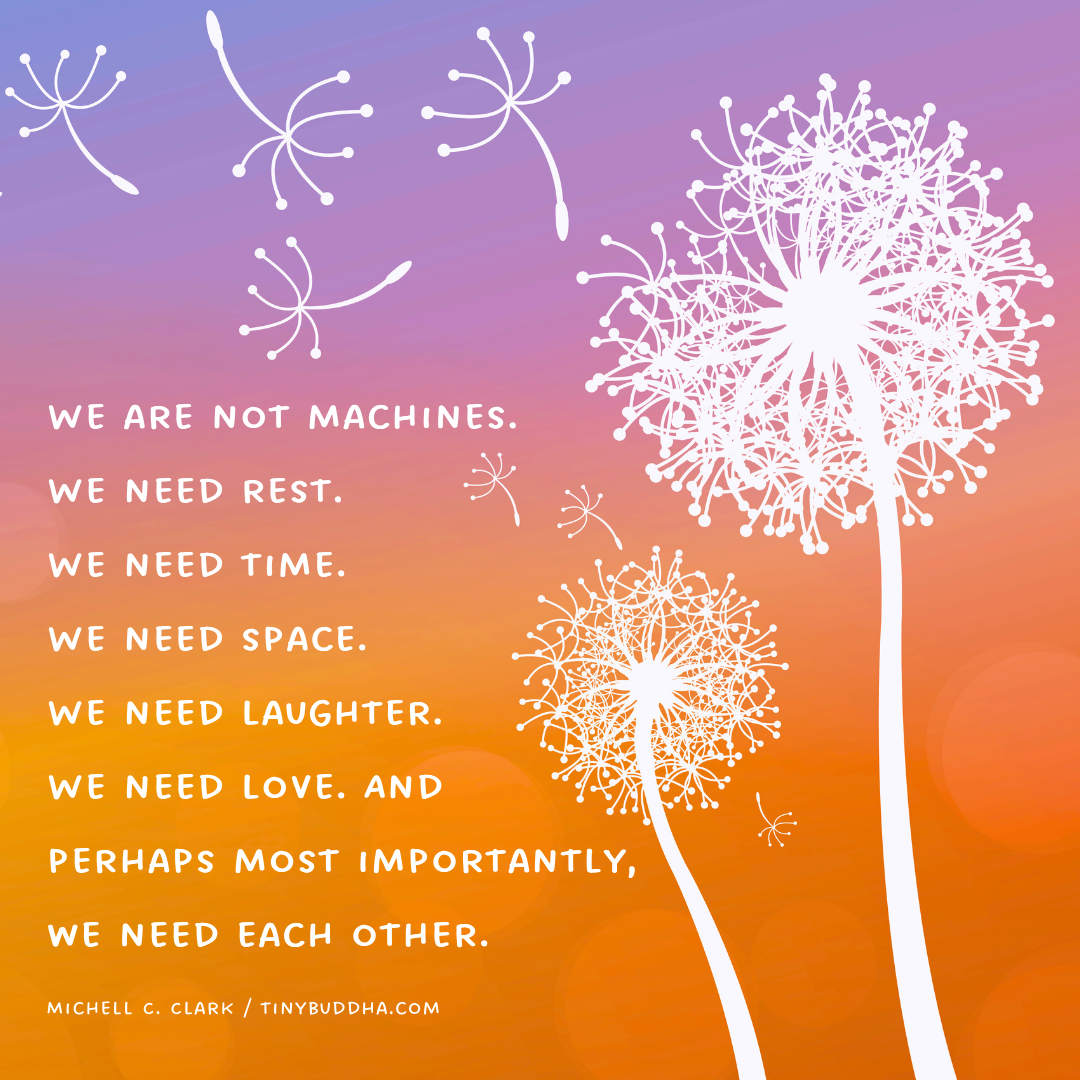
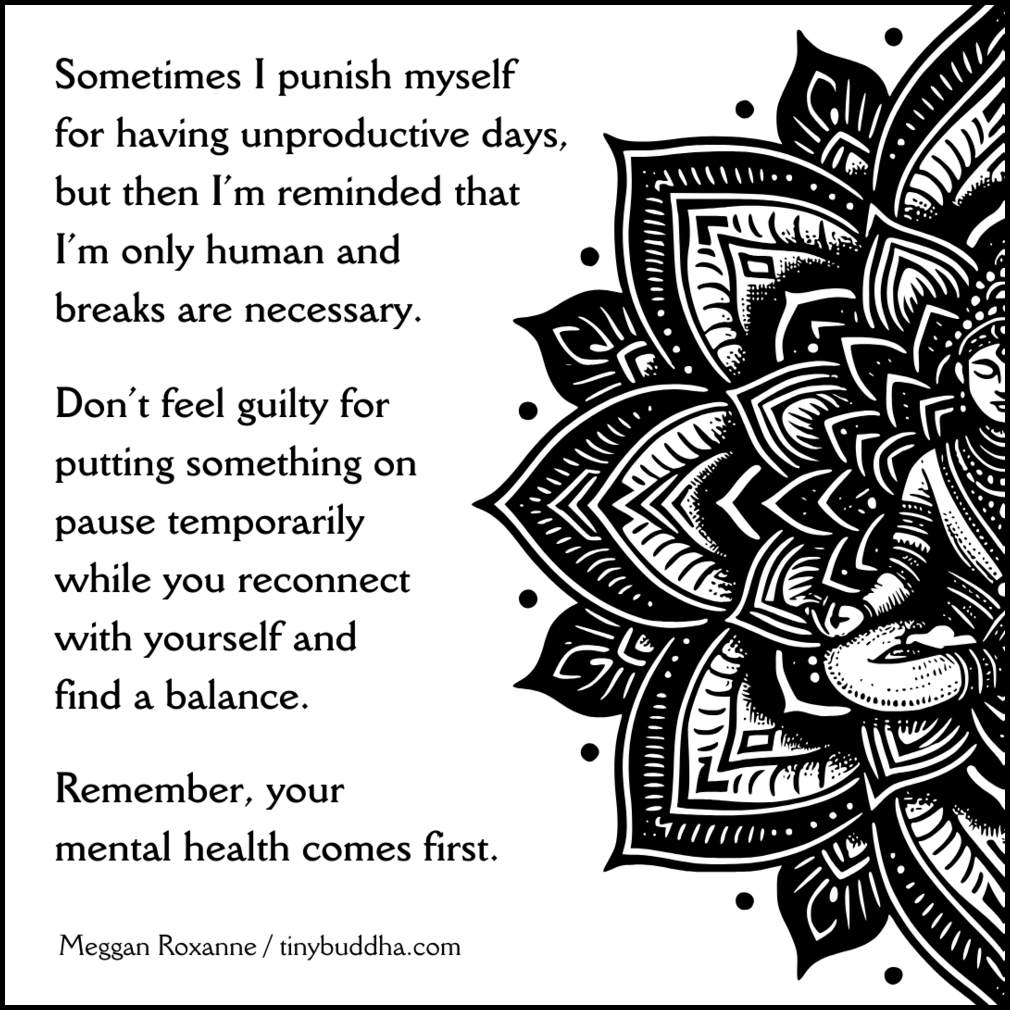
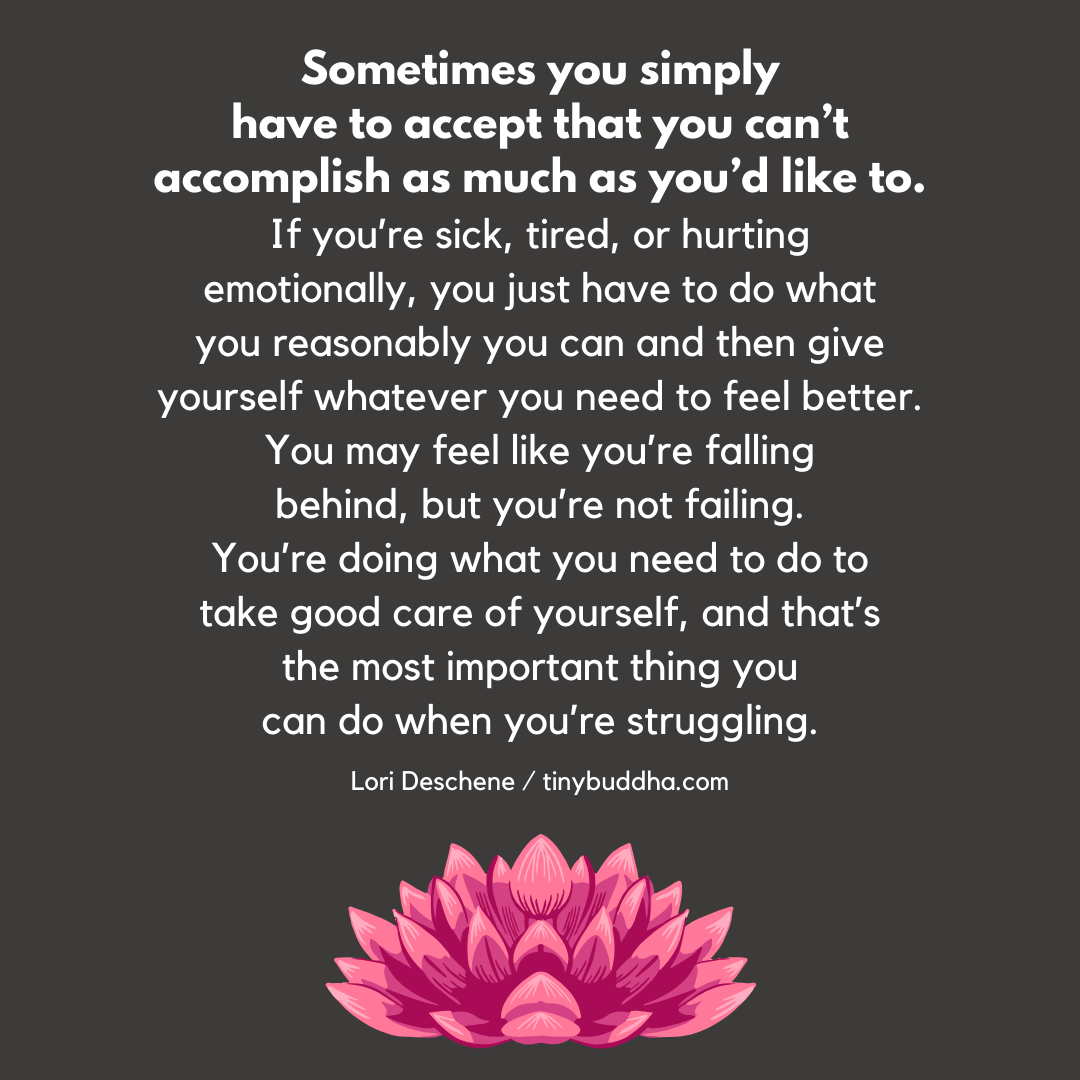
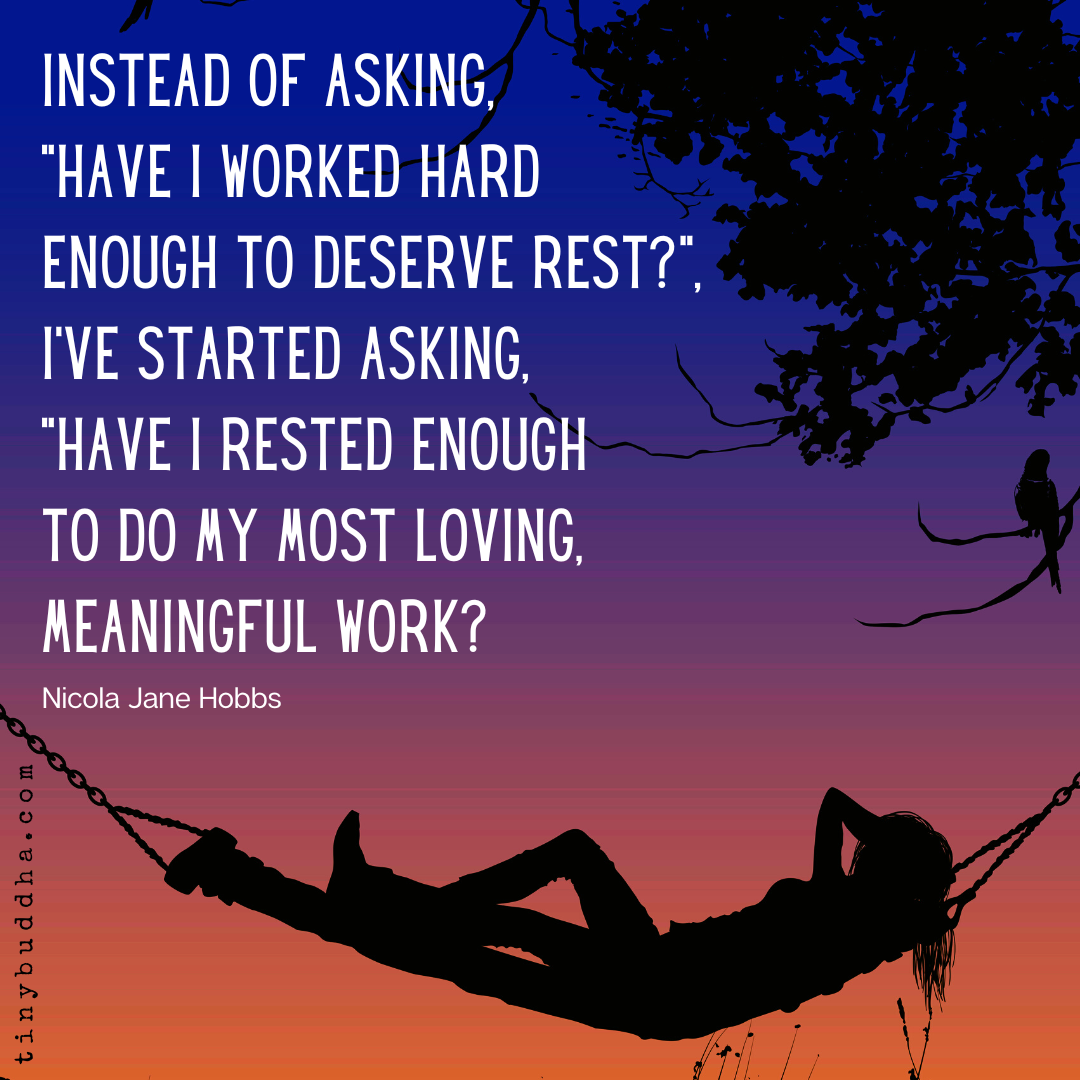
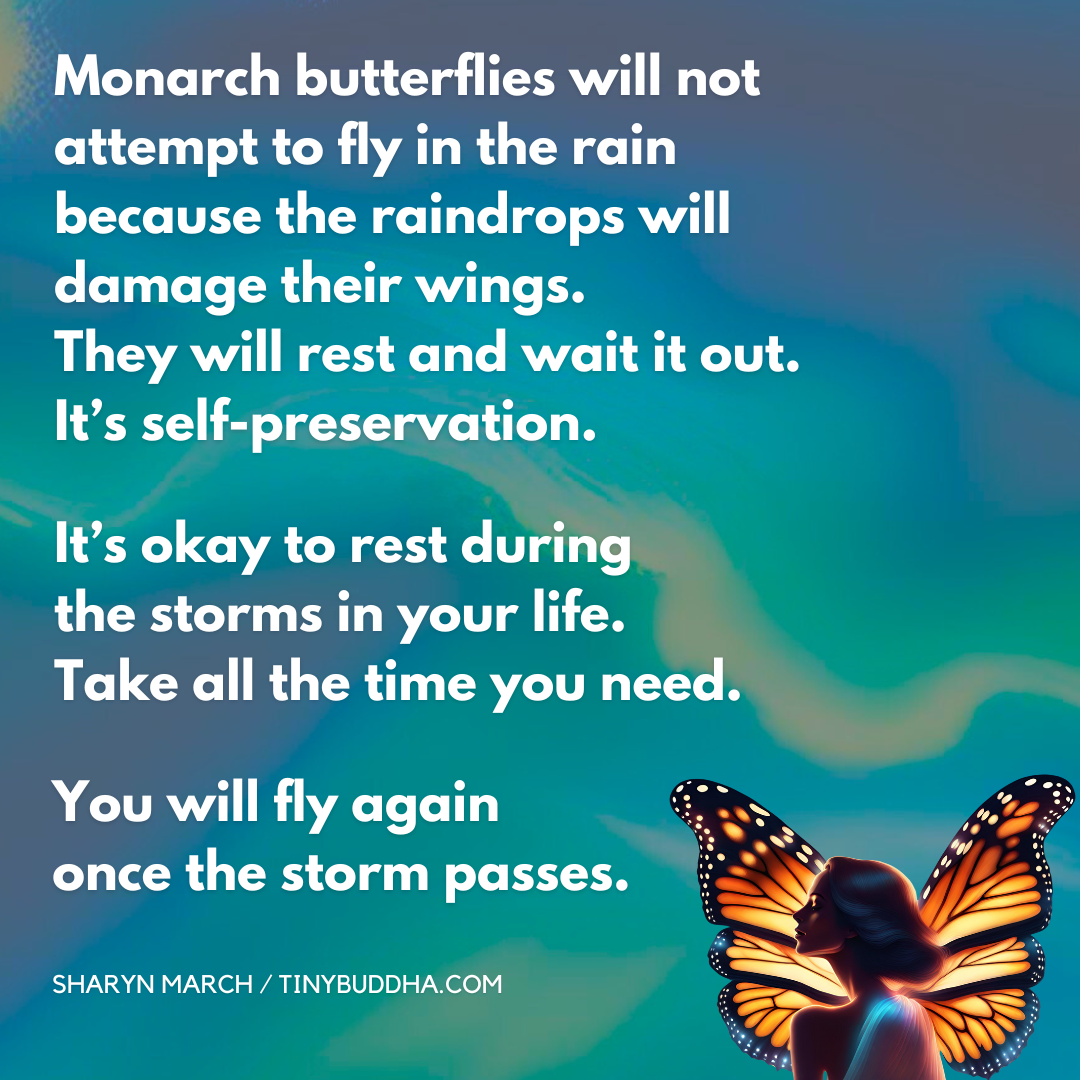
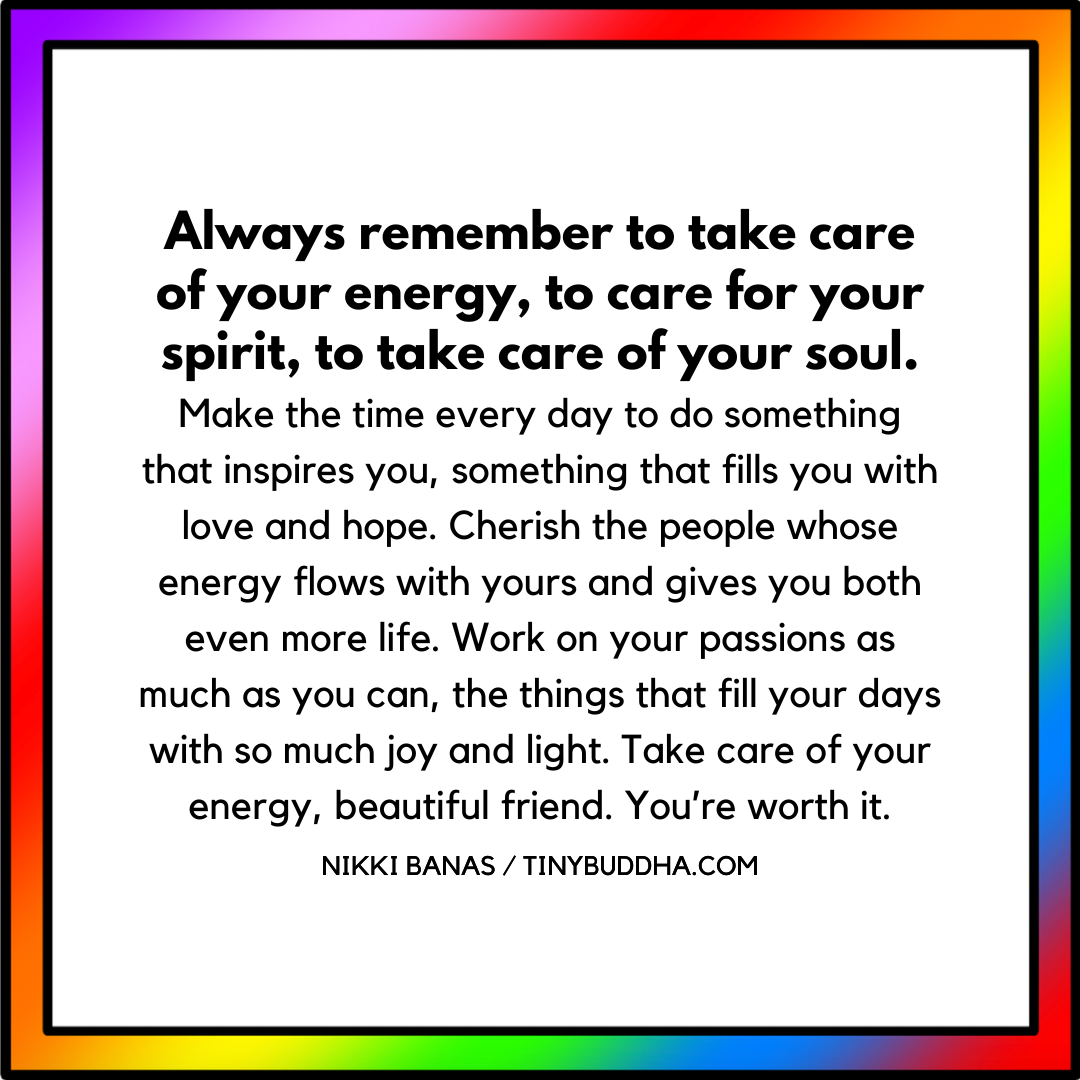
20 Self-Care Quotes to Keep You Mentally and Emotionally Strong
It’s a new week, and that can bring with it a sense of excitement and possibility or a sense of dread about your overwhelming responsibilities. Sometimes for me it’s both.
And not just because I have a lot to do, but also because, like most of us, I have a lot going in my head and my heart at any given time. And it’s not always easy to be a feeling human in a busy world that won’t slow down when it all seems like too much. Which means sometimes we need to stop instead.
Stop pushing ourselves. Stop ignoring our needs. Stop suppressing our emotions. Stop expecting more from ourselves than we’d ever demand from anyone we love. And start listening to the voice inside that knows what’s good for us so we can feel and be our best.
Whatever you’re feeling today, whatever you’re dealing with, whatever happened this weekend, whatever’s coming in the days ahead, take a few minutes to set the intention to take good care of yourself, and let these messages be your guide.
-
8 Ways Life Improves When You Value and Prioritize Yourself
“Every day, the world will drag you by the hand, yelling, ‘This is important! And this is important! And this is important! You need to worry about this! And this! And this!’ And each day, it’s up to you to yank your hand back, put it on your heart, and say, ‘No. This is what’s important.’” ~Iain Thomas
As someone who believes in the healing power of self-care, I absolutely love this quote. But I didn’t always believe it was true. And it didn’t feel good to do it.
My heart was too tender to be touched for long. And for years, it seemed to be empty. I didn’t feel pleasure. I didn’t feel passion. I didn’t feel love or hope or joy. I just felt numb from years of pain followed by years of suppressing my emotions with alcohol, food, and other anesthetics. And my feelings and needs didn’t feel important to me because I didn’t believe I was important.
I suspect a lot of people are living some variation of this story, even if they’re not consciously aware of it. Because none of us get through our childhoods unscathed. And many of us go into adulthood with mounds of unresolved trauma, resultant low self-worth, and an arsenal of unhealthy coping mechanisms to keep the pain at bay.
We don’t prioritize the things that we need to thrive because we’re too busy surviving.
It would be easy to blame the world for dragging us by the hand, because it does—oh, how it does. There are bills to be paid, and requests to be honored, and all the million little things we feel we need to do and figure out before we can finally take a break and breathe.
But we also drag ourselves all around, trying to do it all and be everything to everyone, because it’s easier than facing ourselves. It’s easier than facing our deepest pains.
And it’s easier than acknowledging the truth—which would set us free if we could only admit and address it: We simply don’t value ourselves enough to prioritize ourselves.
Maybe because we blame ourselves for pain from the past. Or because we don’t think we’ve accomplished enough to earn kindness and care. Or maybe because we’ve learned that good people put everyone else first, and we desperately want to be good people—loveable people. All were true for me.
But I think that’s the point of the quote. That our most important work is to heal the wounds that cause us to devalue ourselves so we can then prioritize ourselves enough to figure out what we need to do to feel and be our best.
For years I tried to make my life better, starting by making myself better, but nothing changed until I believed I deserved better.
When you believe you deserve better, you commit to creating it, and you keep going when it’s hard because you know you’re worth it. And oh, how life expands when you do.
When you start valuing and prioritizing yourself…
1. You’ll start feeling calmer, more energized, and more fulfilled because you’ll be meeting more of your needs.
The hardest thing about being the kind of person who puts everyone else first is that you never feel like you’re doing enough, even when you’re giving all you have. So you not only try to do everything you can for everyone else, but you also try to make them all comfortable and happy—which is impossible, so you generally feel neither.
When you make yourself a top priority, you’ll figure out what you need to feel comfortable and happy first. And you’ll give yourself permission to do those things without carrying the weight of everyone else’s feelings and problems, as if it’s your responsibility to fix them.
Then, instead of trying to fill your tank with quick-burning fuel of approval, you’ll fill it with the kind of things that truly nourish you, which, for me, includes movement, creativity, and time in nature.
2. You’ll experience the joy of growing and exploring new possibilities as you invest in yourself and your potential instead of spending money on distractions that leave you feeling empty.
When you decide that your top priority is to take care of yourself and your needs, you’ll feel more confident about investing in yourself—whether that means undergoing training for a more rewarding career or going to therapy to start healing from your trauma.
Instead of spending your money on Band-Aids that barely cover your pain and overall life dissatisfaction, you’ll devote your time, energy, and resources to addressing those things so that you no longer feel the need to numb yourself.
3. You’ll prioritize healing and feel more at peace with yourself, your past, and others as a result.
As you work on healing from pains from the past, you’ll find it easier to forgive the people who hurt you. And because you value and want to honor yourself, you’ll recognize this doesn’t have to mean allowing them back into your life. It can simply mean releasing your anger and resentment toward them—which is a lot easier to do when they no longer have access to continually hurt you.
Healing will also allow you to see your past through an entirely different lens, with a deeper understanding of who and what shaped you and more empathy toward the little version of you who always did their best and has always been deserving of love and respect.
4. You’ll feel proud of yourself instead of ashamed because, through healing, you’ll be able to forgive yourself for things you could have done better and focus on doing better now.
As you build that empathy for your younger self, you’ll also grow your empathy for your present self, and your relationship with yourself will transform. You’ll start to focus more on what you’re doing right than what you think you’re doing wrong, giving you more and more reasons to feel good about yourself.
You’ll simultaneously find it easier to forgive yourself when you struggle, and you’ll start seeing your missteps as opportunities to learn instead of beating yourself up and stewing in regret. This means you’ll bounce back more quickly, with confidence in what you can do differently going forward, which will make it a lot easier to actually make those changes.
5. You’ll feel more connected to yourself and start to trust yourself more as you make time and space to hear your intuition.
When you start allowing yourself time to just be—releasing the pressure to constantly do and achieve—you’ll find it easier to hear the voice of your intuition. Which means you’ll get clearer insight into what might be good for you, in all areas of your life.
As you act on this insight and see (at least some) positive results, you’ll develop a deeper sense of trust in yourself. Trust that enables you to make big decisions you might otherwise avoid in fear of making the “wrong” choice.
You’ll also spend less time worrying about what other people think because it will feel far less relevant when you’re guided by what you know.
6. Your relationships will become more of a source of pleasure than pain because you’ll set boundaries with people who hurt you and let them go if they refuse to stop.
When you put your own peace, happiness, and well-being at the top of your priority list, you’ll start setting clearer boundaries about what’s acceptable in your relationships.
You’ll also find the courage to speak up when someone crosses your boundaries because you’ll know that protecting your heart and your energy is worth the discomfort of confrontation.
That’s not to say your relationships will always be effortless and fun. People will still stress and disappoint you, just as you’ll sometimes stress and disappoint them, because we’re all only human.
But you won’t say, “No worries” when someone’s behavior fills you with fear or “It’s okay” when you know in your gut it’s not. And when someone disrespects or mistreats you for the umpteenth time, you’ll find the strength to say, “No more”—which means you’ll spend a lot less time justifying and recovering from their behavior and more time enjoying people who treat you well.
7. Your days will feel more enjoyable and exciting because you’ll be using more of your time on things that matter to you.
The more time and space you allot for yourself, the more energy you’ll be able to devote to the things that matter to you. The things that make you feel excited to be alive. Your passions and interests and new possibilities—or the pursuit of discovering what brings you joy if you have no idea what that might be.
Because other people also matter to you, you’ll still devote time and energy to them, but you’ll know it’s okay if it’s notjust about them. That you can suggest things to do or places to go or ask for their support at times.
This isn’t just about filling time you previously didn’t have available to you. It’s also about enjoying more of your time because you’ll no longer feel guilty about doing less for everyone else, or at least you’ll feel less anxious about it because you’ll know you’re honoring one of your top priorities—yourself.
8. You’ll feel physically stronger, mentally clearer, and more emotionally balanced.
When you address your needs, invest in your happiness and healing, and make choices to honor and support yourself, you’ll notice improvements in every aspect of your health—physical, mental, and emotional.
Because instead of merely surviving as you deal with the varied consequences of neglecting and devaluing yourself, you’ll be thriving through the process of taking care good care of yourself.
And it will become a self-perpetuating cycle—because you feel better, you’ll continually do better, and then feel even better as a result. Unlike the opposite cycle that might be more familiar—when you feel bad, continually do things you feel bad about, and then feel worse as a result.
This doesn’t mean you’ll always feel great and will never struggle again. You’ll still be human, after all. But you’ll feel a lot more confident in your capacity to get through your difficult times and make the best of every hardship you face because you’ll be acting from a stable foundation of inner strength forged through self-support and care.
—
Maybe you’ve already experienced some of these things. And maybe, like me, you feel like the path to valuing and prioritizing yourself has often been a journey of two steps forward and one step back—or one step forward and two steps back.
Maybe some days you set boundaries and other days you suppress your needs in fear. Maybe some days you make time for exercise and meditation, and other times have one too many glasses of wine because it’s easier than feeling your feelings, or acknowledging what you really need to do or change to feel better.
Healing isn’t a linear process. We grow, we stumble, we disappoint ourselves, then hopefully forgive ourselves so we can get back up and try again, one small step at a time.
The important thing is that we keep taking those steps, even if we get knocked down for a while.
That we try to face our pains instead of numbing them. Honor our needs instead of ignoring them. Acknowledge the things that aren’t working instead of settling on them. And most importantly, continually challenge the voice within that tells us we need to do or be more to be worthy of love and care.
Once upon a time I thought my heart was numb because of everything that had happened to me. Then I realized that was the past, and I was the one numbing it in the present by treating myself worse than anyone else ever had.
I only came alive when I stopped telling myself I didn’t matter and started working on believing I did—which started with treating myself like I did. One loving act of self-care at a time.
-

A People-Pleaser’s Guide to Reclaiming Your Life: 6 Ways to Say No
“Self-love, self-respect, self-worth: There’s a reason they all start with ‘self.’ You can’t find them in anyone else.” ~Unknown
Have you ever found yourself stuck in the “yes” trap, even when your gut screamed “no”?
I have.
We people-pleasers struggle with boundary crushers, and there are a lot of them out there continuously knocking over the barriers we put up!
But here is a secret I have learned: I’m allowed to say “no” without drowning in guilt. In fact, it’s a vital part of my self-care journey to give myself permission to freely say “no.”
Empowerment of “NO”
Saying “no” makes me, a people-pleaser, feel guilty.
I wonder, “Am I being selfish? Am I letting people down?”
It’s tough, but it is essential that I set firm boundaries to protect my time, resources, and mental health. Trust me, I need to look out for myself because nobody else is going to do it for me.
One of the most powerful tools I have at my disposal is the ability to say “no.”
It may seem paradoxical, but embracing the closed “no” has opened my life in a transformative way.
“No” Was Not Allowed
My people-pleasing ways were cultivated during my childhood when I was supposed to do as I was told, not question authority, and be compliant.
I was praised as being a good girl, an obedient child, the gold-star-sticker student.
Prioritizing others’ needs and desires over my own became the norm.
But here’s the big problem: Children do not stay little. We morph into adults.
As I grew and matured, it was difficult to switch gears to be able to stand up to bosses, romantic partners, and friends. It was easier to just give in.
But it didn’t turn me into a gold-star-sticker adult.
This constant self-sacrifice led to burnout, resentment, and a loss of my own identity.
Saying “no” is like reclaiming a piece of myself I’ve neglected for far too long. It seemed foreign at first, but practice has helped me harness the power of this miraculous word.
6 Ways I Say “No”
1. The Direct Approach
Picture this: A friend asks you to help them move on your only day off this month. You feel compelled to say, “Sure, I can do that.” But what if you just don’t have the time?
I will use the direct approach and say, “No, I can’t do that.”
I’m not required to give more explanation than that. No means no; that’s it. Initially, this approach felt uncomfortable to me because that isn’t how a good, obedient child should respond.
But I am not a child.
I’ve learned that being direct respects my own boundaries.
2. The Delayed Response
Sometimes, in the heat of the moment, it’s challenging to gauge whether a “yes” or a “no” is the right response. That’s where the delayed response comes in handy. It buys extra time to be able to think through the decision process.
For example, I had an old coworker who was always asking me to help with projects that weren’t my own. As a people-pleaser, I strive to make everyone happy, but I found that she soon began to expect my help.
I began utilizing the delayed approach by saying, “Let me look over my workload and get back to you on that.”
This allows me to avoid impulsively saying “yes” until I consider whether or not adding to my current workload is even possible.
3. The Grateful Decline
I went through a phase when I was obsessed with homemade cinnamon rolls. And they were amazing! But my recipe was one that took a couple days to complete because I had to allow time for the dough to rise twice over twenty-four hours. That, plus slicing and rolling individual rolls, made it very time consuming, although the results were worth it.
Well, people began asking me to make my “famous cinnamon rolls” for tons of parties and special occasions. Suddenly, my special-event-sweet-treat was being requested regularly. I appreciated the compliment but found I just didn’t have the time or energy to provide them for every party I was invited to.
This is where the grateful decline comes in handy. Instead of just simply saying “no,” I say, “I appreciate your thinking of me, but I can’t do it this time.”
This method shows gratitude for the request while respectfully declining. It’s a soft, sweet “no.”
4. The Alternate Offer
I had a neighbor who would occasionally ask me to help with her puppy when she had long workdays or extra meetings. I enjoyed the little guy and was happy to help.
But when my neighbor asked me to pet sit for a weeklong trip she was going on, I had to seriously think about my answer.
Puppies are a lot of work!
I knew I didn’t have the bandwidth to spend hours each day devoted to walking and playing with the puppy. Instead, I offered to take just one shift of puppy care per day. This allowed me to be helpful while maintaining my boundaries.
5. The Diplomatic Approach
I never want to hurt anyone’s feelings or appear harsh, but I still need to be able to say “no.”
Guess what? I don’t owe anybody a detailed explanation. This is when it’s important to be diplomatic.
As a writer, I get asked all the time to help with writing and editing. Sometimes I can, and do, help. But other times I just don’t have the time.
Someone I know recently asked me if I could help her college-aged student write a paper. I had a busy week, so I said, “I have too many other commitments at the moment.” End of story! I conveyed that my plate was full without making it personal.
6. The Empathetic Decline
Lastly, the empathetic decline allows me to acknowledge the other person’s needs and feelings while maintaining my boundaries.
A friend recently asked to borrow money. Usually a generous person, I am just not in a position to be able to give right now. I had to say, “I understand your need, but I have to say ‘no’ right now.” This response shows compassion while also respecting my own boundaries.
My Not-So-Secret Weapon
Learning to say “no” is my secret weapon in the quest to recover from people-pleasing. It’s not about being selfish or uncaring; it’s about establishing boundaries and regaining control over my own life.
Remember, saying “no” isn’t a rejection of others; it’s an affirmation of yourself and about valuing your time, energy, and well-being. Using these techniques has made setting boundaries less daunting and has freed me from the “yes” trap. Go ahead and embrace the power of “no,” and take control of your life.
-

7 Steps to Deconstruct Your Anger So It No Longer Controls You
“Holding on to anger is like grasping a hot coal with the intent of throwing it at someone else; you are the one who gets burned.” ~Buddha
For as long as I can remember I’ve struggled with anger.
My earliest memories of my anger are from junior high school, but it was around much earlier than that.
The only emotion that was ever shown in my house growing up was anger. My dad had an anger problem, and my mother showed no emotion at all. This is what emotional normal looked like to me—either nothing or anger.
I was the quiet, reserved kid, keeping my emotions locked away. I buried my feelings, especially the touchy ones, trying to hide any expression of vulnerability. Not knowing what to do with my feelings other than ignore them.
It was obvious to the teachers that paid attention and cared that I was hurting, and my anger showed it, but I didn’t know it. I was sarcastic and had an edge to the way I talked and interacted with others. One day, while standing in line to leave the classroom, I got bumped from behind, and without hesitation, I turned around and punched the kid behind me to the floor.
As I went through my twenties trying to figure who I was and what my place in this world could be, anger spewed out of me at unexpected and awkward times. It confused others, but it was all normal to me.
It wasn’t until I got fired from a job because I was too confrontational toward the owner that I started to see my anger as more about me than others or my circumstances.
One of my favorite sayings that best describes my view of my anger back then is, “I don’t need anger management. I need people to stop pissing me off!”
Acknowledging my problem with anger wasn’t easy. It required admitting shortcomings and facing deeper issues within myself, something I’d worked years to avoid. But I finally realized and accepted that my future relationships, happiness, and mental health depended upon understanding and resolving those feelings and beliefs.
My First Step in Healing – Not as Easy as I’d Hoped
The journey toward healing started with self-reflection and seeking support. Ironically, this journey to understand myself began as I was completing my undergraduate degree in psychology.
I found a psychologist to help me unravel the complex emotions I’d been suppressing for so many years. I’ll admit, I was hoping he’d give me a few quick tips and tricks to keep my anger under control and send me on my way.
No such luck.
He explained that to truly resolve anger issues, I had to:
- Deconstruct my anger response
- Create a healthy framework for processing my feelings
- Learn new methods for communicating and expressing emotions
The process wasn’t as quick and easy as I’d wanted.
What It Looks Like to Deconstruct Your Anger
Deconstructing your anger means breaking apart and examining the elements that have created it.
The process requires analyzing and understanding the underlying factors, triggers, and emotions contributing to your anger and its eruptions. Although it takes work and a hard look at some ugly parts of yourself, doing this leads to the effective management of all emotions, which is an essential skill for happiness.
The key steps for deconstructing your anger are:
1. Evaluating past experiences
Past experiences and traumas contribute to how you respond to certain situations and influence the formation of anger. Reflecting on these experiences can help you recognize patterns and triggers.
For me, it was the influence of my father. He was both emotionally disconnected from our family and blisteringly angry. Any response could be cold or hot, or simultaneously both.
Unknowingly, like every kid, I was psychologically influenced by him. And although I would have told you I wasn’t going to be anything like him, it turned out that I followed in his footsteps (until my thirties when I began to really do this work).
2. Understanding your emotions
Anger is a complex emotion that often masks other feelings. Fear, sadness, frustration, and hurt are all difficult feelings to face. For many, including me, it was easier to get angry than deal with the intensity of these feelings I didn’t know how to face or process.
These emotions also created feelings of vulnerability and weakness in me that I didn’t want to see, experience, or admit to. And I certainly didn’t want to show them to anyone else.
But examining these underlying emotions is a necessity for understanding anger and learning how to lessen and control it.
3. Identifying your triggers
Everyone has things that trigger a seemingly automatic emotional response. Identifying triggers, the emotion that follows a trigger, and how your anger rescues that emotion is crucial.
Triggers can be external (e.g., someone’s actions, words, situations, or events) or internal (e.g., negative thoughts or memories).
When I looked closely, I discovered that most of my triggers involved my expectations of others. One such expectation is rule following—doesn’t everybody know you don’t drive slow in the fast lane? Or that you treat others the way you want to be treated?
4. Analyzing responsive thoughts
Most of us have reinforced certain thought patterns. And these thoughts significantly influence our emotions and emotional response. Deconstructing anger involves examining these thoughts and the resulting emotions that fuel your anger.
For instance, are you jumping to conclusions, catastrophizing, or personalizing situations? If so, your emotional response may be disproportionate or even inappropriate for the situation.
I began to understand that my expectations led me to make assumptions about others that were incorrect. If you look in the rearview mirror when driving and think about how your speed is impacting other drivers, you’d move to the right, but some people don’t use their mirrors and aren’t aware of what’s going on around them. They should, but they don’t.
Changing my expectation that everyone drives like me helped me reduce the buildup of anger.
5. Assessing responsive behavior
Responsive thoughts often initiate responsive emotions and behaviors, such as getting angry. By examining your behavioral responses and how they impact your relationships, and others in general, you’ll better understand why it’s helpful to consider new and healthier alternatives.
I realized that my inclination toward aggressive driving was a result of my anger at others for not following the “rules,” and this was only fueling more anger and negatively impacting me, not changing anyone else.
6. Exploring new coping mechanisms
If you’re struggling with anger issues, your current coping mechanisms for the deep emotions that trigger anger aren’t working. You need to find more constructive ways to respond to and express your feelings. Doing so will help break the negative thought-behavior cycle.
Part of my process was to write down what triggered me, along with my responsive thoughts and behaviors. Looking at them on paper and away from the emotion of the moment allowed me to see them accurately as unhelpful and unhealthy for me.
I could then write out a more balanced and healthier response. Once on paper, I would practice those more positive responses, and then weekly look back and reread what I’d originally written and my new better coping response to assess my progress.
7. Setting boundaries and prioritizing self-care
Recognizing your limits and establishing healthy boundaries will help prevent you from being drawn into situations that trigger anger. It’s also critical to prioritize self-care to ensure that you have the emotional resources to handle challenging situations.
One of the more effective practices for me is walking away for a few minutes when I feel my frustration or anger rising. By removing myself from a triggering situation I am better able to refocus more on myself internally and less on the external situation.
These steps aren’t an overnight fix and really need to become a life-long practice. But by following these steps to deconstruct your own anger you’ll gain self-awareness and emotional intelligence that can empower you to respond to difficult emotions more constructively.
The Transformative Result of Deconstructing My Anger
As I worked through these steps, I was able to develop and incorporate new ways to cope with my emotions.
This path of personal growth coincided with my pursuit of multiple degrees in psychology. So, as I learned how to help others change, I was able to first help myself change. Now I’m the doctor giving the advice, which comes from years of training as well as my own personal experience.
Mindfulness and internal reflection have allowed me to respond to my feelings with greater emotional intelligence. I’ve learned to recognize my triggers and the warning signs of building anger in the moment and implement calming techniques as a response before an eruption.
But perhaps the most profound transformation came from learning to show kindness and compassion toward myself. I am now able to acknowledge my mistakes, forgive myself, accept that I am a work in progress, and recognize the need for regular emotional check-ins with myself.
Deconstructing my anger has opened the door to my being more understanding and patient with others. The process has also helped me better empathize with my patients, as I’ve sat where they sit and done the work I recommend they do too.
I still feel anger at times—it’s a natural emotion, and it can be beneficial in certain situations. I will always be more prone to it than others. But anger doesn’t control my life or negatively impact my relationships any longer.
My journey toward addressing my anger issues has been long and challenging, but it’s also been profound and life-changing. We all carry burdens, and we heal and grow through acknowledging and addressing them.
Deconstructing your anger can be a transformative process, empowering you to understand your emotions better and respond to them more effectively. Remember, although anger is a natural part of being human, how you choose to manage it determines its impact on your life and the lives of others around you.
-

A Little-Known Truth About People-Pleasing and How to Stop (for Good)
“Being a people-pleaser may be more than a personality trait; it could be a response to serious trauma.” ~Alex Bachert
Growing up in a home, school, and church that placed a lot of value on good behavior, self-discipline, and corporal punishment, I was a model child. There could have been an American Girl doll designed after me—the well-mannered church girl with a nineties hairbow edition.
I was quiet and pleasant and never got sent to the principal’s office. Complaining and “ugly” emotions were simply not allowed. Though I was very rambunctious and “rebellious” as a toddler, all of that was cleansed from my personality by the time I was school-aged.
I had no other choice. I felt unsafe in my body at the slightest hint that someone was upset with me. It was enough to tame my inner rebel, at least for many years.
I carried this pattern into adulthood. I found myself in jobs with supervisors who would fly off the handle at every opportunity. I worked extra hard, more than anyone else, to avoid getting in trouble. When my colleagues got yelled at over their mistakes, they laughed with amusement under their breath—but when the anger was directed at me, I was ridden with anxiety.
How could my coworkers brush off our manager’s anger, but I felt triggered for hours afterward?
It took me many years to learn the answer—that some of us are conditioned from a young age to develop a deep-seated fear of losing our sense of belonging and safety in our relationships. To cope with this fear, we develop strategies to safeguard ourselves, which for some, turns into a habit of people-pleasing.
There’s one clear common denominator for people-pleasers—feeling beholden to others. You put your needs last and feel obligated to manage everyone else’s happiness. You’re hypersensitive to being judged, shamed, and rejected. You worry about what other people think about you. You overextend yourself to be helpful. When you dare to stand up for yourself, you suffer from anxiety and guilt.
When you don’t address and change these patterns, you may eventually feel resentful, frustrated, and angry. It compromises your emotional and physical well-being and contributes to an overwhelming sense of powerlessness.
And it lights a blazing fire under your ass.
Because we aren’t responsible for juggling other people’s emotions.
We don’t owe anyone comfort.
We’re not a charity receptacle for others’ emotional venting, unhealed trauma, or misdirected anger.
Our time, energy, and well-being are not up for negotiation.
And we don’t deserve the guilt-tripping manipulation.
Truthfully, we cannot control how other people show up in our relationships, but we can change our patterns of powerlessness and take back our lives, and it doesn’t have to compromise our genuine desire to care for others.
Brain Ruts
It’s not a mystery what you should be doing in lieu of carrying the burden of responsibility that comes with people-pleasing.
You need to set boundaries, speak your truth, be more confrontational, use your voice to advocate for yourself, separate your feelings from others, and put your needs first.
Which begs the question—what’s getting in the way of you taking these steps?
Though you may feel the need to change your patterns through sheer willpower or more self-discipline, that isn’t the answer.
You don’t need to read useless books about how to “grab life by the horns” or “grow some balls” (ew, gross!).
You don’t need to muscle through debilitating anxiety or guilt.
You don’t need to give-up your generosity or empathy to take back your power in one-sided relationships.
You don’t need to be “thicker skinned” or less “sensitive.” (Your sensitivity is a gift.)
Here’s the little-known truth about people-pleasing—it’s a learned pattern that gets “turned on” in your unconscious mind over and over again.
Whether it’s avoiding conflict, freezing up when you need to speak your truth, or feeling guilty, people-pleasing is a survival strategy. And all survival strategies are a set of automated behaviors, thoughts, and emotions that repeatedly get turned on unconsciously.
In a sense, you’re not fully in control of how your people-pleasing habits show up. Which is why just “trying harder” doesn’t work, because you can’t beat the speed at which your unconscious mind is turning on patterns.
Ninety percent of how we show up in life is unconscious and based on our past. Your brain needs to save energy, so it’s automating your decisions, behaviors, and feelings for you. Think of your bad habits as brain ruts.
Every time a people-pleasing habit is presenting itself, your brain is riding down the same neural pathway, deepening the grooves, much like how a dirt path naturally forms over time if you keep walking over the grass.
This well-worn path appears to be safer and easier than walking through the wild, unruly grass, which feels unfamiliar, dangerous, and risky to deal with—you fear being judged, shamed, or rejected out there. Just the thought of standing up to your evil mother-in-law turns on the anxiety.
But you’ve reached a point where you long to be in the wild grass. It represents the life you could be living—taking up space, effortlessly putting your needs first, being in your pleasure, and feeling amazing in your emotional well-being.
So how do you take the leap into the metaphorical grassy field of your “hell yes” life?
By planting new seeds in your unconscious mind and watering them on a regular basis.
Planting Seeds
If people-pleasing wasn’t a problem for you anymore, what would be possible in your life?
Imagine a scenario where you’ve already reconfigured the pathways of your unconscious mind and you feel exactly how you want to feel, showing up exactly how you want to, and it’s just easy. You’re confident, powerful, and unapologetic.
Whose rules would you stop following?
What boundaries, enmeshed in barbed wire, would you put in place?
Whose misdirected emotions would you feel bulletproof against?
What responsibilities would you shamelessly give up?
What self-indulgence would you treat yourself to?
What truths would come spilling from your mouth? (Truths that are SO electric, that you feel you might burst if you don’t say them right now!)
There’s a reason it’s so intoxicating to fantasize about our ideal life. We’re wired to “believe” what we imagine because a part of our brain doesn’t know the difference between what is real and imaginary. It’s the same reason we get emotionally pulled into TV and movies. You do realize it’s acting, right?
When the critical thinking part of your mind goes quiet—as it does when you’re getting wrapped up in a good story—you’re accessing your unconscious mind, where all habits are formed. It’s where we’re most swayed, influenced, and sold on ideas.
To get out of a people-pleasing brain rut, you need to plant seeds in your unconscious mind to “influence” yourself to show up the way you want in your life. Done with repetition, these seeds help build new neural pathways, making it possible to be your best self at home, work, and in your community.
One of the most powerful ways to plant seeds is to visualize while in a deeply relaxed state of mind. Here are some tips on how to get started.
Start in the Right Frame of Mind
Visualization works best when you’re feeling relaxed and calm in your body. If you’re actively triggered, self-regulate your emotions before jumping into visualization.
One quick and easy way to do this is to combine a breathing exercise with stimulation of the acupressure points on your wrist. Grab one wrist with the opposite hand and squeeze. Take one big inhale, hold at the top of your inhale for a couple seconds, and then exhale twice as long. Repeat two to three times. Once you feel nice and grounded, find a quiet place without any interruptions so you can focus and go inward.
Get Specific
The brain works in very specific, finite ways. If you want to be a badass who lives life on your terms, what exactly does that look like? Imagine yourself in specific places, taking specific actions, feeling a certain way about it. Focus on actions like speaking your truth, confronting people, feeling confident, setting boundaries, etc.
Repetition Counts
Your mind needs enough new information on who you want to be in order to generalize the changes into your life. You don’t need to visualize for long periods of time—two to three minutes at a time is enough, but be sure to make it a part of your routine. Try starting with a handful of times a week.
Water the Seeds
Take real-life action that supports the person you’re becoming. Your brain and nervous system are always learning and adapting when you show up in new ways. It’s like providing the proof to yourself that yes, I can do this. Start with small steps. Choose places where you want to put yourself first and practice using your voice to advocate for yourself. Be tenacious about doing this work—the confidence and bravery you crave will naturally emerge.