Tag: body

  • Yo-Yo Dieting: How to Free Yourself From the Struggle

    Yo-Yo Dieting: How to Free Yourself From the Struggle

    “Your body is a temple, but only if you treat it as one.” ~Astrid Alauda

    Have you ever guiltily reached for second helpings of a tempting dish or dessert while justifying it with something along the lines of, “It’s okay, I’m going on a diet/detox after this”?

    Or, do you ever find yourself eating really healthy one week, then the minute you cave in and eat something unhealthy, your eating habits suddenly take a turn for the worst?

    Are you really hard on yourself when you don’t feel comfortable in clothes you want to wear and suddenly regret all the unhealthy food choices you’ve made the past few months?

    I’ve experienced all of these scenarios. I used to yo-yo diet for years, and I would cycle through super healthy or restrictive eating plans one week, to eat-whatever-you-like the next week.

    I was always fighting to be a particular weight or to look a certain way. My eating habits were inconsistent, and so were my weight, my energy levels, and the way I felt about my body.

    After years of unhealthy eating habits (that may have appeared healthy on the outside), my body didn’t take it so well anymore. I got to a stage where I would feel sick after most meals and suffered stomach cramps due to a digestive disorder.

    It was frustrating and a daily inconvenience, however it was irritating enough for me to stop and do something about it.

    After years of not looking after my body, the messages became louder and clearer until I made the choice to pay attention and listen to my body.

    I started to re-educate myself about my health from a more holistic perspective. I moved away from using food as a way to control how my body looked and moved toward using food as a way to heal my body of illness.

    By embracing mindfulness with my eating I began to notice which foods my body rejected and which foods fueled my body.

    I also noticed how my eating habits affected my mindset and how I feel much more confident about my body now that I look after it and eat well.

    I redefined what healthy means for me and it no longer means choosing fat-free options or tiny portion sizes.

    On reflection, these are the steps I took to redefine my health and finally be free of yo-yo dieting and controlling eating behavior.

    1. Make it your diet, not a diet.

    The word diet simply refers to the food that a living being eats day-to-day. (Like, the diet of a koala consists of eucalyptus leaves.) However, in modern times, the word diet is more commonly associated with a temporary eating plan that has an end goal of losing weight.

    But, what happens after the weight is lost? Do you go back to eating take-out and chocolate and whatever you can get your hands on? Being healthy is not a temporary thing that is to be attained in the future; it is a way of life that is to experienced now.

    View your health as a permanent thing in your life and see it as something in the present rather than in the future.

    2. Tune into your highest level of motivation.

    For many people the initial incentive to diet is to be thinner; however, this motivation is not always enough when more important things take priority in life, such as passing exams, building a career, and raising children.

    When I developed digestive problems, my motivation shifted and accelerated because attention was now drawn to one of my highest values: my health. I realized that striving to be healthy just so I could be thin was not helping me in the long run if my body was suffering.

    To be truly committed to creating a healthy lifestyle, you need to be driven by something of high value to you, across all areas of your life, such as your health and vitality (what keeps you alive and thriving so you have the energy to play with your kids, excel in your career, travel the world, or do whatever it is that makes you happiest).

    Use this to remind yourself why you need to be healthy to live a fulfilling life now; don’t wait till you’re burnt out and sick to value your health.

    3. Change your beliefs about healthy eating.

    When I started changing my perspective on health, I also realized some of my old beliefs about health were not helping me—i.e.: being healthy means only eat foods with fat-free labels; eat just under daily calorie requirements; never eat avocados, nuts, or any foods naturally high in fat.

    I had to let go of beliefs that held me back and create new ones that brought me toward a lifestyle where I felt energy and vitality to do the things I loved. My new beliefs include: eat whole foods as much as possible, make healthy snacks using nuts and seeds for energy boosts throughout the day, and listen to my body to judge food intake rather than counting calories.

    If you find your current beliefs for optimal health are a little skewed or unattainable, it is time to re-educate and recreate your beliefs about health. Then, visualize yourself living as your healthiest self, and draw on this daily to remind yourself of what is most important to you.

    4. Discover what’s holding you back.

    When we continue with unhealthy habits, even ones we want to change, we become stuck in it, because staying there is fulfilling a need (albeit it in an unhealthy way). Usually, we don’t know what that need is until we look within and be completely honest with ourselves.

    For me, this need was self-acceptance. I was striving to create a perfect body idolized and accepted by society, but the person I really wanted acceptance from was myself. 

    Dieting fulfilled that need because when I lost weight I would like my body; however, when I gained weight I’d dislike myself. Once I started to accept my natural body type and embrace the body I have rather than change it to look like a photoshopped celebrity, I began feeling good about my body all the time, regardless of how much I weighed or what I ate that day.

    Once you dig deeper and understand your why, you can work toward meeting your need for something like self-acceptance in a healthier way too.

    To do this, start with the behavior you see on the surface (such as restricting calories), and ask yourself why you do this. Get your answer and then ask yourself why or what is the purpose of this? Keep asking why until you get to the core of the issue.

    5. Listen to your body.

    Once you have tuned in to what motivates you and what holds you back, you have also tuned into the values that are unique to you. These values have been shaped by who you are and what you need to function as your best self. Therefore, it doesn’t make sense for you to follow a healthy lifestyle carved out by someone else; however, it does help to gain advice and inspiration from other people’s experiences.

    You need to listen to your body and make your food choices intuitively. The easiest way to start this is to keep a food diary. Record what you eat and how you feel after each meal so that you can choose to eat more of the foods that make you feel good and less of the foods that don’t make you feel so good.

    6. Implement your new perspective of health.

    The last step is to take action. In my opinion, the best way to do this is by taking baby steps. Set achievable goals so that you can comfortably introduce healthier behavior into your lifestyle.

    If you decide you’re going to give up all processed food, refined sugars, and gluten, and you’re going to start tomorrow, there’s a good chance you will be overwhelmed and disappointed and quickly return to old ways.

    You need to be realistic and set goals you can start now, that are achievable in a specific time frame. Be honest with your self. Ask, “Is this something I can do in that space of time, and do I believe the outcome will create the healthier lifestyle I envision?” If not, then re-adjust so it does.

    Accept what works for you and move away from what doesn’t. When you work from within you will naturally take action that feels best for you.

    Once you follow these steps and mindfully create a healthier lifestyle that is unique to you, being healthy will become a part of who you are, and not just something you strive for. This is what happened to me.

    I am now very passionate about my health and I love cooking and preparing healthy foods. I have learned how to listen to my body and honor and respect what I need to be at my optimal health. I now have a healthy relationship with food and diets are something of my past.
  • How to Transform Your Body by Coming from Love Instead of Fear

    How to Transform Your Body by Coming from Love Instead of Fear

    “Fear is the opposite of everything you are, and so has an effect of opposition to your mental and physical health.” ~Neale Donald Walsch

    My initial foray into health and fitness started from a deep place of fear.

    I feared my weight and my appearance, always wondering what new trend I’d encounter in a magazine or on social media that would point out the latest way I was inadequate.

    I feared the big health scares that we’re told could kill us at any moment if we aren’t careful. Diabetes. High blood pressure. Cancer.

    Many of us have all been on some part of this same path. But when we let fear sit in the driver’s seat, it actually pushes us in the opposite direction of true health and happiness. We’re driven to make exercise or diet choices that never seem to satisfy, and the body we see in the mirror never seems to be what we want.

    And so like many of us, I hopped from one exercise plan to another. I jumped from one eat-this-but-not-that diet to another. Meanwhile, I never arrived at a place of feeling healthy, whole, and happy.

    This feeling I was seeking—this thing I was trying to get out of my body and my physical pursuits—was a teaching moment for me.

    As each so-called “healthy” lifestyle change led to dead ends, and as I saw friends struggle with weight despite their strongest efforts, I slowly realized that our health is only as good as our mindset.

    See, fear is completely unsustainable as a motivation for our health journey. We don’t like to dwell on all the ways our mortal bodies are threatened. Information alone isn’t heart knowledge, which is why so many of us intellectually know we shouldn’t smoke or eat so much fried food, but maybe we eat French fries for lunch anyway.

    Fear of our own bodies doesn’t work either. Our unhappiness might make us go on a diet, but for every action there’s an equal and opposite reaction, so we inevitably get off of that diet. Then we feel the pang of guilt and more fear, and the fear-driven cycle repeats itself.

    To break this cycle, we have to talk about not just our gym habits or our eating habits or our favorite green juice, but also our mind habits.

    If we change our minds, we change our bodies. The body is the physical incarnation or manifestation of our internal beliefs and thoughts. While so-called “body problems,” like extra weight where we don’t want it, may bubble to the surface on the body level, the answer isn’t solely on the body level but also on the level of our mindset.

    My health path switched lanes dramatically when A Course in Miracles reminded me that nothing real could be threatened.

    The book teaches that our real, inner self is already whole, perfect, and securely loved. That’s real, but we’ve bought into the illusions that Hollywood, magazines, social media, and the world sells to us.

    When we accept that we’re already whole and that this truth cannot be threatened, we can finally release the fear we feel when we perceive a threat to our body. Body image threats—“I’m less if I don’t weigh less” or “I lack if I don’t have more muscles”—lose all of their power and dissolve the moment we hug this truth close to our hearts.

    To paraphrase it in non-religious psychological and philosophical terms, everything that we see around us is simply our minds’ projection—our world, our “reality,” reflecting back to us our own internal beliefs and mindsets.

    This is true when it comes to the types of careers we chase, or the types of friendships we create, or how we relate to money or sex or love. It’s especially true for how we perceive what we see in the mirror and how we care for our body.

    If fear is an unsustainable motivator for weight loss or staying healthy, and if fear actually makes us make unhealthy choices, then we must return to a core place of love.

    We must release the illusion and accept that our real self is whole. Similar to how darkness is just an absence of light, the fear we’re feeling is not an actual thing, but rather an absence of love for our true selves.

    Approach exercise, diet, and physical health with a love-focused mindset, and suddenly we change how we treat our bodies and we begin to see the physical results we’re looking for.

    Remember, when we get healthy on the mind level, the body manifests this new mindset through our subconscious choices.

    There are a few ways that we can each start to center our diet, weight loss, and fitness on a spirit of love instead of a spirit of fear:

    1. Remember who you really are.

    In A Course of Miracles, we’re told that we’re already whole, divine, and full of light, but we’ve just forgotten that and need to be reminded of it.

    Unfortunately, so much of the messaging that we’ve internalized tells us we need a certain waistline or a specific number of abs to be good, whole, and lovable.

    Begin to remember who you really are, and remember that your real you is not threatened. You are divine, and therefore you’re wholly love, wholly lovable, and wholly loving—no matter your physical appearance!

    2. Identify and let go of your triggers.

    So many of our dietary choices are driven by subconscious, fear-based emotions like anxiety and stress. For example, researchers have found that stress—which is really fear of a situation that we can’t control—causes us to crave unhealthy, sugary snacks.

    Fear also causes our body to release cortisol, a hormone that boosts appetite and makes us store extra abdominal fat.

    Every diet we’ve ever tried and failed at focused solely on the physical symptoms, like stopping late-night snacking. But remember, a problem like late-night munchies isn’t just on the body level but on the mind level.

    Take a step back and observe the situation for any underlying triggers—a problem in the office, or maybe a toxic friend—that may be provoking fear.

    Self-care is having the courage to heal by identifying and creating boundaries between you and any toxic situations present, carving out time to relax and de-stress, and saying no whenever appropriate.

    3. Build an abundance mentality.

    It’s time to exercise your mindset muscle just like you exercise your physical muscles. As a certified personal trainer, I have reviewed dozens of psychological studies that show how positive self-talk and a positive mindset motivate us to stick to our health goals. It’s one of the big differences between people who stick to their New Year resolutions and those of us who don’t.

    In our health journey, an abundance mentality means we choose to exercise and bless our physical bodies because we want to add more positivity to our already abundant lives, not because we’re trying to fill some sort of inner emptiness.

    For me, when I walk into the gym with a mindset of abundant success (“I love myself, so I want to sweat a little”) instead of a lack mentality (“I can’t believe I ate that, I need to burn it off now”), it changes everything about my workout endurance and the physical results I see.

    4. Drop the fear-based language.

    When I talk to people, they often refer to their diet struggle. Or they see health as a battle between their mind and their body. “No pain, no gain,” is something athletes yell at themselves as they complete one last mile or one last burpee.

    Struggles, battles, and pain are no way to refer to the physical temple within which our divine love lives. All it does is reinforce the false idea of separation between our spiritual and physical manifestations.

    Your body is not something you need to battle and beat into submission. As we drop fear-based language, we empower ourselves and the people around us to view each of our bodies with more love.

    5. Create love-based diet, exercise, and wellness goals.

    The health stool has three legs: Our internal mindset, scientific research on proven exercise and diet techniques, and actual action. Research may say, “Do XYZ to get stronger,” and we take action. But the mindset aspect is a game changer.

    An action done in fear has a different outcome than the same action done in love. As a personal trainer, I know that it’s our thoughts and beliefs systems that actually transform our bodies.

    For example, every summer, people tell me they want to look ripped or toned for the pool season and that they’re worried about abs or love handles. This is a fear-based wellness goal.

    A love-based wellness goal might look like this: “I want to be more flexible so I can play with my grandchildren.” Or, “I want stronger legs so I can go hiking more.” Goals built around love connect us to positive, abundant life experiences.

    Instead of eating or not eating something because we’re terrified or our body, we can replace this fear with love. If we love our body, because it houses our divine nature, how does that change what we do?

    Love looks like a little bit of sweat at the right time, enough sleep every night, and nourishing, yummy meals that make you feel good.

    The more we stay connected to love instead of fear, the more we’ll see this same love reflecting back to us when we look in the mirror and when we glance down at the bathroom scale.

    Ask yourself right now, “If I am whole, healed, and loved, what changes would I make to feel more of that love in my own body today?”

  • How to Release the Painful Memories and Emotions Stored in Your Body

    How to Release the Painful Memories and Emotions Stored in Your Body

    “The cure for the pain is in the pain.” ~Rumi

    Your body keeps a physical memory of all of your experiences.

    You have lots of memories stored in your brain that you can recount at any given moment. You can recall names, faces, where the event took place, what it smelled like. But over time, these memories fade or change as time passes and we mature. However, even when the memory begins to fade from your brain, it lives on in your body in the form of physical sensations and behavior patterns.

    The body doesn’t forget.

    The events of our lives leave physiological imprints in our bodies, especially when we experience trauma or situations of extreme stress that cause the body to fight, flee, or freeze in order to cope.

    In a perfect world, we would be able to release the trauma or soothe the stress response soon after it was triggered. But we don’t live in a perfect world, so we’re all walking around with physical imprints of past experiences (good and bad) stored in our bodies. Most of us don’t know how to release them because we don’t even realize they exist!

    You may feel your body tense up when you have to ask for help or borrow money, or your face may get hot when you’re asked to speak in front of a crowd. The sensation is your body remembering.

    It’s remembering a past experience when you asked for help and it didn’t go well. Maybe someone made you feel ashamed because you “should be able to handle it yourself.” Perhaps you were called to the front of your third grade class and asked a question you didn’t know the answer to, so you felt embarrassed and humiliated.

    The body doesn’t have words to express itself, so it responds with physical sensations.

    You can forget, block, or intellectualize the memories that are stored in our brains, but how do you work through the memories being stored in your body?

    Animals shake when they experience trauma or anxiety. Think of a dog who’s been in a fight with another dog: Once the fight is over, both dogs will shake to calm their nervous systems and quiet the fight, flight, or freeze response. This enables them to move on without the physical memory of the situation.

    Humans, however, don’t naturally do this. Instead we carry our stress, anxiety, and trauma around with us every day and use food and other addictive behaviors to soothe ourselves and quiet the emotional discomfort.

    There’s nothing wrong with turning to food or other means to soothe yourself, but typically habitual behaviors provide a short-term solution, and you’ll continue to feel the discomfort until you release the memory from your body.

    I am a recovering sugar addict. I used to stuff myself with cake, cookies, and ice cream any time I felt sad, angry, or alone. The sugar high helped me cope with difficult emotions and soothed the pain of a childhood marred with stress and abuse.

    It was a behavior that eventually made me sick. Chronic yeast infections, migraines, and fatigue were the norm for ten years before I realized sugar was making me sick. I eliminated it from my diet, but the changes in my physical health were minimal.

    In order to truly heal my body, I had to address the emotional issues that caused me to self-medicate with food. I did this by creating an emotional tool-kit.

    In order to release the emotions and create a more peaceful state of being, it’s important to create an emotional tool-kit to help regulate your nervous system and soothe the discomfort.

    The first tool to put in your emotional tool-kit: non-judgment

    When you feel emotionally triggered and tempted to turn to food or other addictive behaviors for comfort, try not to judge the reaction. Our bodies are programmed to seek pleasure, not discomfort, so it’s natural to try and find something to soothe the pain and make yourself feel better.

    The need to soothe yourself with food or other means doesn’t make you a bad person—it makes you human.

    The second tool in your emotional tool-kit: permission

    Give yourself permission to feel—you have to feel it to heal it.

    Often the reason we feel the need to numb what we’re feeling is because we believe that the emotion we’re feeling isn’t allowed. We think we’re not allowed to be angry or we’re supposed to be strong, so we can’t cry.

    Giving yourself permission to feel allows you to have power over it—you control it instead of allowing it to control you, and in the process you create the space to heal.

    The healing process will bring up lots of different feelings and emotions; many will be uncomfortable. When these uncomfortable emotions come up, allow them to come up without becoming attached to them; notice them for what they are and know that there is a natural ebb and flow to them.

    It may be horribly uncomfortable initially, but allow yourself to witness them without judgment or reaction. This will allow you to respond objectively. Feelings aren’t forever. They come and go, if you let them.

    The third tool in your emotional tool-kit: release

    Now that you’ve allowed yourself to feel, it’s time to release the emotion from your body.

    You can do this by gently shaking. Start with your feet and work your way up, one body part at a time, or you can turn on a song that mirrors the way you’re feeling and sing, dance, or cry until you feel physically and emotionally satisfied. All of these things will help give the emotion a voice and move the emotion out of your body.

    Not quite ready to move your body? Grab a journal and write. No filter, no editing; leave the anger, frustration, sadness, and anything else you’re feeling on the page. Feel free to tear or safely burn the pages when you’re done as a symbolic release.

    There isn’t a one-size-fits-all way to release. There will be times when moving your body helps, and other times singing or writing will feel more effective. Choose the method that feels best to you in the moment.

    The fourth tool in your emotional tool-kit: forgiveness

    This is the most important tool in your tool-kit. In order to truly heal, you have to be able to forgive yourself.

    Beating yourself up for past transgressions isn’t productive, and certainly doesn’t make you feel good about yourself.

    Understand that no matter what situation(s) led you to numb yourself with food, drugs, sex, or your self-soothing mechanism of choice, you did the best you could with the information you had on a physical, mental, and emotional level. You dealt with your emotions in the best way that you knew how.

    Hindsight is 20/20, and it’s easy to get caught up in the “shoulda, coulda, woulda” spiral of shame when looking back on a situation. But when we’re in a state of discomfort, we don’t always have the capacity to think logically or rationally. Your brain and body respond to discomfort based on what feels like the safest option in the moment, and sometimes that means turning to habitual or addictive behaviors.

    Forgive yourself because you did the best you could at the time, and move on knowing that you have the knowledge and tools to think differently next time.

    Finally: time.

    We have a tendency to look for the quick fix, but there’s no six-hour healing elixir that can magically erase the pain and discomfort from old wounds. Healing takes time.

    Give yourself time to fill your emotional tool-kit and understand that healing is a journey—one that lasts a lifetime.

    Of course, practice makes the journey easier, but there is no perfection. There will be times when you fall back on old patterns and behaviors, when that happens reach into your emotional tool-kit and take what you need. You are equipped. You can do this.

  • Why Dieting Never Works: 4 Reasons to Stop

    Why Dieting Never Works: 4 Reasons to Stop

    “Your body is precious. It is your vehicle for awakening. Treat it with care.” ~Buddha

    Diets are extremely seductive.

    We get lured in by the promises they make:

    The temptation of a smaller jeans size.

    The possibility of having a beach-ready body.

    The idea that everything would be better if you just weighed ten (or fifteen, or twenty…) pounds less.

    When you’ve overloaded yourself with sweets and feel horrible about your body, it’s easy to get sucked into attempting a diet as a quick-fix to your weight issues.

    In my own life, I struggled with gaining and losing the same sixty pounds for about twelve years. I would start over on Monday, swear off sweets and dessert, and then be knee-deep in a gallon of ice cream by Friday.

    If there was a diet out there, I tried it. Cleanses, detoxes, Paleo, South Beach, Atkins, The Zone Diet, Weight Watchers, and even diet pills.

    Even though I was continually seduced by the promise of weight loss, I never kept it off. I would inevitably end up failing miserably, but would still be seduced by the promise of “well, next time, I’ll really stick with it!”

    So when you’re seduced by the promise of weight loss and tempted to start another diet, let me save you weeks of frustration and tears with what I learned in my twelve years of dieting.

    Here’s why another diet is never the answer:

    Diets fail 100% of the time.

    Diets fail because there is an “on” and an “off.” If you go “on” something, at some point in time you have to go “off” of it. Yes, you may lose weight initially. You may drop a size or two from not eating carbs. But in six months, a year, or five years, has the weight come back?

    No one can sustain the “I’m eating only fruits, vegetables, and chicken” diet forever. When you rigidly restrict what you eat, eventually you’ll get to a point where you give in. This inevitably leads to a slippery downhill slope of overeating and then “starting over” the next day.

    Diets are never successful long term. Failure is built into the very nature of a diet. When you start a food plan, something will come up where you’ll desperately want something not on your diet. And then you feel like a failure because you broke the diet.

    Diets always measure “success” in days, weeks, or months, because the reality is, it never lasts long term.

    Diets set you up to crave even more sweets.

    When you tell a toddler he can’t have the green crayon, what does he immediately want? The green crayon. He throws a temper tantrum if you won’t give him the green crayon. After a while, you get so sick of him screaming about the crayon that you give it to him so he’ll stop his tantrum.

    And so it is with dieting. You tell yourself you can’t have cake, cookies, bread, or chocolate, so what do you think about all day long? The cakes, cookies, bread, and chocolate. You’re consumed with it, you dream about it, and you fantasize about ways you can eat one a piece of cake without having it “count.”

    Your forbidden foods seem to be consuming your thoughts and soon, you’re so sick of fighting an internal battle and thinking about cakes and cookies 24/7 that you give in so all of the fighting stops.

    The nature of something being forbidden means you’re much more likely to want, need, and crave it.

    Diets take you further and further away from learning to listen to your body.

    Diets work in direct opposition to intuitive eating. They’re based on strict rules and foods you can’t eat. There isn’t room to check in with your body, allow your needs/wants to arise, and nourish your body accordingly.

    “Success” is based on adhering to a system that’s prescribed. If there are rules you have to abide by, you can bet that the diet does not encourage listening to your body. Instead of learning how to tap into your body’s own intuition, you only eat what’s on the list of “acceptable” foods.

    Lasting weight loss requires that you are in touch with your body, that you understand what it needs and wants, and that you pay enough attention to yourself that you are aware of how/why you use food. And when you diet, it takes you farther away from listening to your own body’s wisdom.

    Diets create a sense of separation from yourself.

    Because diets operate on strict rules and guidelines, it creates a sense of separation from your body. Your body becomes this “thing” you’re fighting against. You wage war on it, you deprive it, and you punish it.

    The sense of separation grows as you work against your body, attempting to punish it into a place of weight loss.

    A diet is essentially a battle with yourself, and the more you diet, the more the distance you create between you and your body. The way back to hearing your body’s messages is through listening, honoring, and nourishing yourself (which dieting will never do for you!)

    Remember that dieting never brings about the results you truly want. Lasting change begins with awareness, love, and self-compassion as you start to understand your food patterns and behaviors.

  • 5 Ways to Feel Better in Your Body

    5 Ways to Feel Better in Your Body

    Woman raising arms

    “Do the best you can until you know better. Then when you know better, do better.” ~Maya Angelou

    We’re bombarded by advertisements that tell us if we’re thin, we’ll love ourselves. If we suddenly look a certain way, all our worries will vanish.

    I’ve always been thin without really having to work at it—well, in my younger days at least.

    Yes, I was skinny, but that didn’t mean I was happy. I was suffering from depression, had terrible skin, and just felt awful in my body.

    Being a “perfect” size is not what will make you happy, because happiness isn’t about how you look or how much you weigh; it’s about how you feel about yourself and how you feel in your own skin.

    One day I went shopping for a wedding dress and I was so depressed afterward that I swallowed most of my prescribed medication.

    All I wanted to do was sleep, and sleep I did.

    When I woke up I was hooked up to tubes and lying in a hospital bed. This was a major wake-up call for me. I was ashamed, and also mortified of how this was going to look.

    Again, I was focusing on other people’s opinion of me, and not enough on how I felt inside.

    After the overdose I knew I could take one of two different roads. I could go back to the way I was without making any changes and hope for the best, or I could take responsibility for where my life was and where I wanted it to go.

    I chose the one leading me to freedom and to feeling good about myself, both inside and out.

    Once I took down the filters and mental shackles that were holding me down, I started to see how good I could feel. It had nothing to do with how I looked, but rather how much love I gave myself.

    Body love has to do with how we feel about ourselves from the inside out.

    How did I get to “better”? A lot of self-healing, dedication, being totally honest with myself about what I required to feel good, and getting real about what my body needed to thrive.

    5 Steps to Feeling Better in Your Body

    1. Forgiveness

    I felt so much shame and guilt because of the things I had done, and these feeling kept me stuck in an unhealthy pattern until I forgave myself.

    I forgave myself for letting myself go, for not believing in myself, for being addicted to foods and habits that brought me down, for not having confidence or knowing my value, and for not using my strengths or working on my weaknesses.

    Guilt and shame bring negative energy and will just keep you stuck. Period!

    Forgiveness helps you let go of the past and enables you to focus on making healthy choices in the present.

    2. Self-love

    Before, I didn’t love or respect myself. No matter how great I looked, I would always find fault. I was putting my value on outside appearances to feel validated. If I didn’t look a certain way, that meant I was unlovable.

    Self-love doesn’t mean you can let yourself go. It means you have enough appreciation and value for yourself to create habits that nourish your soul and your growth.

    We show self-love by what we feed ourselves, by what we choose to say or think about ourselves, and by forgiving ourselves when we slip.

    Without having this sense of respect and appreciation for ourselves, no matter how we look, we will always feel a void.

    3. Self-awareness

    We have so much information coming at us, lots of different views and perspectives. Question everything and become aware of what you need—what your body needs to thrive and what feels good.

    Does it need more movement or more fresh air? If it’s not feeling the way you want it to feel, listen.

    It has nothing to do with trying to look a certain way just because the media says so; it has to do with paying attention to how you’re feeling and being rooted within your body. Our bodies aren’t separate from us; they’re part of us, and we need to pay attention to them.

    A funny thing that happens when you become aware—you care a lot less about other people’s opinions, stop taking on their beliefs as your own, and develop more confidence in yourself.

    4. Self-care

    Back then I didn’t know food affected my moods, so my diet consisted mostly of fast food and junk food. I wasn’t taking care of my body by working out, nor was I paying attention to my emotional needs.

    Our bodies give us signals to let us know what they need. We may feel tired or sluggish when we need more sleep or water. We may get headaches or light-headedness when we need a stress-relieving practice, like yoga or meditation. Until we pay attention and work with them, we’ll always feel an imbalance.

    5. Consistency

    It’s not what we do once in a while that brings change, but what we do consistently—day in and day out, when we feel like it and especially when we don’t.

    I grew up on junk food; this was a tough habit to break. It was the consistency of me eating healthy every day that made the cravings go away, so much that it turns me off to even smell junk food now. This wasn’t deprivation; this was pushing through my short-term resistance so I could feel better in the long term.

    Instead of focusing on being a certain weight, let’s focus on real health, inside and out. Chances are when you’re living an intentional life, and feeling happier and better in your skin, owning a scale won’t even be on your radar!

    Woman raising arms image via Shutterstock

  • A Simple Practice to Appreciate Our Bodies, Flaws and All

    A Simple Practice to Appreciate Our Bodies, Flaws and All

    Sunset Silhouette

    “Who does not thank for little does not thank for much.” ~Estonian Proverb

    I remember the moment so well: I had been seeing a new guy for a few months and I was staying the night for the first time. Up until that point he hadn’t seen me without heavy makeup, as I was careful to always look completely put together while with him.

    That night I had to make a decision.

    I could fall asleep with my makeup still on, or I could remove it first. Did I feel comfortable enough to let him see me without foundation, eyeliner, or mascara? Would he still like me?
    For many people this might not be a tough decision to make (and truly, I have nothing against makeup or those who wear it), but for over a decade I had worried constantly about anyone seeing me without. I had over a decade of time to build up unhealthy attitudes about my appearance.

    Any time I spent the night away from home, from trips and staying with friends to dating, I would get up around 5am to redo my makeup and get back into bed before “waking up.”

    It was exhausting, but the only way I felt comfortable around other people. Going to the beach or the pool was a real struggle.

    I remember this particular moment so strongly because when he saw me the only thing he said was “you look so different.”

    The comment itself wasn’t outwardly negative, but I also noticed his body language and the look on his face. Let’s just say it didn’t make me feel supported, or beautiful, or seen. It simply made me feel sad.

    Moving Past Crippling Self-Criticism

    Sometimes I feel gratitude for that moment, the weight of my own insecurity so heavy that I knew there was a choice to make.

    Would I repeat this scenario again and again in each new relationship, holding my breath and expecting the worst in that critical moment? Or would I learn to truly accept myself first, as I was?

    Not long after, I stopped wearing makeup completely.

    I had significant difficulty at first, to be honest. I was so used to feeling put together and confident. No makeup left me feeling depressed and deeply unattractive, as I was struggling with significant acne at the time.

    I even had trouble looking up from the ground while I walked, as I was so afraid to be seen.

    I remember thinking to myself during this time have faith, have faith, have faith.

    And then one morning I was drawn to stand in front of the mirror and place one hand on my stomach and the other hand over my heart. I took a deep breath and said to my body, Thank you for taking care of me.

    Then I touched the skin of my cheeks to feel their warmth and said, Thank you for your resilience.

    Then my hands, my fingers, my wrists: Thank you for your strength. 

    And finally my throat, saying, Thank you for your truth.

    I ended the practice with a simple thank you. I love you.

    A Shift in Perspective

    Whenever my critical eye began to get the best of me, I’d return to the mirror.

    Thank you. I love you.

    The most powerful part of the exercise for me has always been the element of touch.

    I’ve always found it so easy to briefly glance in the mirror and only see what I dislike. My flaws become harder to see when I feel the strong beat of my heart and the muscles beneath my skin that make my life as I know it possible. A pimple doesn’t seem as important when my chest rises and falls beneath my hand during a powerful breath.

    I still have mornings when I wake up and am not pleased with what I see in the mirror. However, I now also have mornings when I feel complete gratitude for what my body allows me to do and who I’m able to be.

    I now have mornings when I look at my eyes in the mirror and instead of seeing pale eyelashes I see kindness. I see courage and determination.

    Thank you for taking care of me. Thank you for your resilience.

    It’s incredibly easy to be critical of ourselves, and so incredibly vulnerable to embrace our bodies, acne and all.

    The next time you feel insecure, try reconnecting to yourself with a simple touch. Touch reinvigorates us with the energy that runs through our veins, our skin, our organs.

    Thank you for your strength.

    Place one hand over your heart and the other on your stomach and breathe in and out, feeling the healing impact of your breath on your body.

    Thank you for your truth.

    Stay there for several breaths, eyes open or closed.

    When you’re ready, say thank you.

    When you’re ready, I love you.

    Sunset silhouette via Shutterstock

  • Shedding Layers of Pain and Learning to Love Our Bodies

    Shedding Layers of Pain and Learning to Love Our Bodies

    Amy Pence-Brown

    “You yourself, as much as anybody in the entire universe, deserve your love & affection.” ~Buddha

    I cried when I watched the YouTube clip of Amy Pence-Brown standing in a bikini in a crowded marketplace in Idaho.

    In the clip Amy asks people to write on her body. Her arms are wide open, she has a blindfold on, she has curves and cellulite, and she is completely vulnerable.

    Why did she do it? Because she wanted to say: Here’s my body, complete and real. You can choose to accept me or reject me, but here’s my body. I want to make a statement that all bodies are valuable. I want to work toward self-acceptance.

    I cried because she was doing the inverse of what we have trained ourselves to do.

    I cried because I have spent most of my life disliking my body.

    I cried because I recognized how brave Amy’s gesture was.

    I cried because people were kind and wrote words and symbols of love and acceptance all over her body.

    I cried because I’ve experienced the inverse.

    I cried because so many of us have experienced the inverse.

    Let’s acknowledge just how deep it goes.

    I know a lot of people write about this. The advice is usually that we need to ignore the billboards and societal pressure and to stop striving for the body perfection we’ve been taught to seek; that instead, we should embark on a journey to love the skin we’re in.

    This is all true but it doesn’t really acknowledge just how very hard this is to do. It’s flippant.

    The fact is that many of us have had days, weeks, months, and years of messaging. It’s first come from external sources but is then repeated over and over again internally. The messaging is that our bodies are not okay; that they unacceptable.

    We have been living in a house that we’ve been taught to dislike or hate for a very long time.

    So when we are told that we should learn to love our bodies, we need to recognize that this is not an easy thing to do by any means. It’s going to take work and focus and a lot of grace and love.

    The whole debate about whether someone should be happy with themselves as “fat” or “thin” or “athletic” or “normal” is immaterial.

    When love is given, it doesn’t matter what shape it’s given to. It’s just given. Really, that’s what we are all looking for. When we think of our body we want to think of it lovingly. I’m not talking about pride here as pride arises from comparison and ego; I’m talking about love.

    Can we remember what it was like before?

    How on earth do we learn to love our bodies given that we have years of training to hate them?

    When I thought about what it would really take to love my body, given what I was up against, I had a fleeting memory of myself as a young girl playing in a stream on a sand island off the coast of Australia.

    I was determined to build a wall to block the stream so I could have a bath. I remembered how fun that was and exactly how it felt to be in that body.

    I then remembered other experiences in my young body like doing high jump, running around in bare feet, climbing up trees, dancing, and swimming in the ocean.

    I remembered back then I didn’t think of my body as anything other than a vehicle for adventure. In fact, there were many times I didn’t think of my body at all.

    I then started to think about the exact point in my life when I started to acknowledge and dislike my body. For me it was around puberty when my body started to fill out.

    I got pimples and started to be rated by others as attractive or unattractive. Soon boys rejected me or were indifferent, and the appearance of my body became a priority. My outside was now part of my worth.

    My body was affecting my social standing. I saw the people who had better bodies become more popular; their experience of life seemed effortless. Whether or not this was the reality was lost to me.

    In these formative years I would consciously or subconsciously direct my thoughts to how much I disliked my body.

    I had years of training before my twenties hit, so these thoughts didn’t go away even though, in my case, the pressure to have the perfect body did.

    After all of this remembering I asked myself, how I could get back to the little girl in the stream that was determined to build that dam?

    I looked down at my body. It’s not something we body traumatized people often do.

    Then. One by one, little by little I saw grey layers form around my body.

    I knew that these layers were old.

    They had formed over many, many years.

    They built on each other, binding together.

    They built over the little girl.

    They were the specific experiences that had haunted me. They were the memories of the people who rejected my body, who had called me ugly, whether it was through a gesture, a look, or words. They were the moments when I experienced overwhelming dislike for various parts of my body.

    I acknowledged that there were a lot of layers and my job was to work through them bit by bit. To thank the memory and experiences, to cry and to say that’s enough, I’d like to move on, thank you very much. You will not define me or my concept of who I am anymore.

    For the truth of it is that these are just layers and underneath them all is the girl that didn’t see her body as anything other than a vehicle for adventure. She is still gloriously there.

    I know there a lot of us out there who have these layers.

    I know that the journey toward body love is not simple.

    I wondered what would life be like if we worked through these layers and shed them with the goal of coming back to the part of ourselves that is unencumbered. I wondered if this would mean that this part of our existence would be a little freer, a little more joyful?

    Amy Pence-Brown did a very brave thing and stood in a crowded marketplace. She asked people to love her body, and they did.

    Her reward for this brave act was a shedding of some her own layers of pain and hurt and I’ve no doubt that she loved herself just a little more on that day.

    We have that opportunity to love in this lifetime as well. We just need to remember.

    Photo by Melanie Folwell 

  • Overcoming Sugar Addiction: A Guide to Breaking the Sweets Cycle

    Overcoming Sugar Addiction: A Guide to Breaking the Sweets Cycle

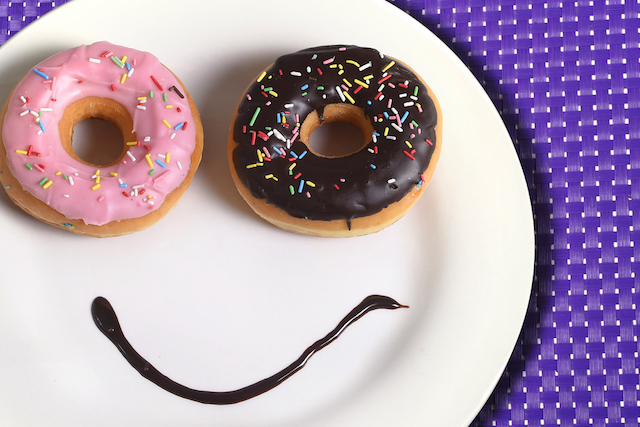
    Donut Smiley Face

    “Its not until your eyes adjust to the dark that you can finally grasp—and if you let it—be astonished, by the light of your own being.” ~Andréa Balt

    Sugar was my best friend, my confidant, and my (not so secret) love. She provided me comfort and companionship. I went to her when I was happy, sad, anxious, excited, celebratory, scared, and broken-hearted. Social gatherings were centered around my infatuation with her.

    I loved the taste, the experience, the social aspect. I loved the visual experience, the artistry, the display case of the perfectly frosted cupcakes and dusting of sprinkles. The colors and rows of smooth, rounded, crunchy on the outside and chewy, gooey deliciousness on the inside pistachio macaroons.

    I loved sugar, but she didn’t love me back.

    We fought, every day. I hated myself for the way I would feel when I woke up the morning after eating a box of cookies. I carried that struggle with me to every birthday, every look in the mirror, and even into my dreams and career aspirations.

    The impact of sugar destroyed my confidence. I knew that my inner self was so much brighter and alive than what my outside appeared to be.

    In my early twenties, I dated someone who was trying to quit smoking. I saw her struggle and recognized in it my own.

    For the first time in my life, I said out loud that I was addicted to sugar. I told her that I couldnt go a day, let alone a few hours, without eating it. That every time I said I was going to stop eating sugar, I would only be drawn in even more.

    She dismissed me and my pain, and I felt belittled. She didn’t understand that my struggle was real too. I didn’t speak of it again, to anyone, for years. When we eventually broke up, I turned to my “real friend” Nutella, and she helped me dry the tears.

    The winter after my thirtieth birthday was especially long, and filled with many mornings of food hangovers from overindulgences. One night I decided to watch a documentary that I had heard about the year before.

    I sat on the bed, obviously with a pint of vegan chocolate cherry ice cream in hand, and started the movie. Within the first hour, it became very apparent to me that I needed to make a change.

    I was watching heartbreaking stories of obese children being made fun of and struggling, devastatingly, without success to lose weight. And it wasn’t for lack of determination but for lack of education.

    They were eating a “low-fat diet” and were completely oblivious to the high content of sugar they were ingesting.

    The documentary summed up the nation’s disconnect of low-fat versus low-sugar, highlighting the suffering of the miseducated. But the difference between those kids and myself was that I knew what I was doing and I was still choosing the option that kept me feeling horrible about myself.

    The pain of being the biggest girl in the room, feeling left out of shopping at cool stores, and having peers call you fat really tugged on my heartstrings. Tears streamed down my face. I knew that I owed it to myself—my younger and current self—to know what my life and my body would be like without the go-to comfort of a treat.

    Here’s what my next few minutes, hours, and days looked like. Hopefully if you too have struggled with this attachment to sugar, this little plan I set out for myself will help you:

    1. Put down the treat, right now. Don’t take another bite.

    What if it’s that simple? What if putting down the treat really is all that needs to happen to change your life? In theory, yes, it is that simple. In reality, you’ll probably need to follow these next few steps.

    But putting down the treat right now is a great start. Good for you!

    2. Open up the dialogue with yourself, but come from a place of love.

    If you’ve struggled with an attachment to sugar your whole life, as I have, think back to when you were a little kid. What were the dreams you had for yourself? Are you honoring them today by the choices you make?

    If you wrote your inner child a letter, would you be proud of the person that you are today? It’s so easy to be mean and harsh with yourself, but your body is the only vessel that will keep you strong and healthy well past 100, so start your sweet-talking now, so to speak.

    If you wouldn’t say it to your eight-year-old self, don’t say it to your forty-year-old self. Be your own best friend, cheerleader, and dream maker.

    3. No is just an answer. But a series of no’s is…

    A series of no’s will leave you feeling successful. One day at a time.

    Next time you are shopping at the grocery store, keep walking past that container of peanut butter cups calling your name. The first time you do it, give your inner-self a high five, and take a moment to recognize that saying no was actually kind of easy. Empower yourself to keep walkin’!

    4. Eliminate all sugar.

    Yep, eliminate all sugar. Except fruit. Step aside, sugar, fruit is your new best friend. I had been in the habit of finishing dinner (and most lunches) with dessert.

    Frozen fruit (specifically dark sweet cherries) was a godsend. It helped me transition my taste buds to a healthier, still satiating option. No alcohol, no honey, no stevia, no maple syrup. You don’t want to taste anything sweet. Your brain chemistry will light up like the fourth of July and you’ll be left wanting more.

    Watch out for sauces, breads, pretty much anything packaged; companies love adding sugar to those guys.

    Eventually you won’t find yourself needing something sweet after every meal and the cycle will break!

    5. Keep perspective.

    The fulfillment and satisfaction you receive from sugar is so momentary. You taste it, chew it, swallow it, and it’s gone. Remember this when you’re out to dinner. This will save you when the plates are cleared and the dessert menus are dropped.

    If your friends order dessert in front of you, order a tea. Peppermint tea is a great option! This will keep your hands, mouth, and brain busy.

    6. Replace your go-to. For good.

    Go for a walk. Take up a new hobby. Stream of consciousness write for five or ten minutes until the craving goes away. Brush your teeth. Meditate. Call up a friend to chat. Put on your favorite song and dance!

    I went to sugar to bury anxiety. Think about your behavior and relationship with sugar; is it a medication, a habit, a crutch so you don’t have to deal with something or someone? Tune in to your inner voice and see what it’s saying.

    7. Mark the date on your calendar.

    March 23rd. I remember it like it was yesterday. I made the decision to eliminate sugar from my life. It wasn’t a “fad diet” or “challenge for X number of days.”

    While it was very exciting to say that it had been one week or one month since my last scoop of chocolate cherry, at no point was I looking to the future. It was purely about making good choices today, for this meal, at this moment.

    As the days go on, you will find within yourself a strength you didn’t know you had simply by honoring yourself, your true self.

    As time moves forward you will begin to feel a difference in the clarity of your thoughts and your confidence, and your body will follow suit. The weeks will pass, and it will be a series of good choices that will lead to your success.

    For me, weeks turned into months and here we are, twenty-six weeks since that last bite of ice cream.

    I don’t know what future me will decide when it comes to treats.

    Right now there isn’t a place for frivolous foods that don’t enrich my body, but I can say for sure that present me is really happy. I have made room for myself to grow in so many ways, without the dark cloud of my sugar addiction weighing down on me.

    I hope that this will give you the courage that you are seeking to make a change!

    Donut smiley face image via Shutterstock

  • How Obsessing About Your Body Gets in the Way of What Matters

    How Obsessing About Your Body Gets in the Way of What Matters

    Woman Exercising

    “Focus on what you want your life to look like—not just your body.” ~Sarah Failla

    Growing up I never had much concern for the shape or size of my body. Perhaps once in a while the idea of losing weight or beginning an exercise routine crossed my mind, but it was always fleeting and I was quickly back to gossiping with my best friend or writing a note to my boyfriend.

    Once I entered college I gained some weight, what with the unlimited access to Peanut Butter Cap’n Crunch (something that never, ever crossed the threshold of my childhood home) and no fewer than five local pizza joints that delivered to the dorms.

    Still, though, I didn’t spend much time worrying about my health or what was going on with my body.

    In my last year or two at school, I began going to the gym along with my roommates, and by the time graduation rolled around I decided I should try to go on a diet and lose the weight I’d gained in the last few years.

    My attempt at slimming down worked, as a combination of restricting calories and increasing exercise will do, and soon I was off on my next set of adventures, which included working at a ski lodge in Vermont, traveling cross country, living for a summer in Montana, and traveling around the southern US, often living in a tent.

    During that time thoughts about my body didn’t occupy much space in my mind, though at times there was a fear of weight gain. For the most part, though, I was living my life and enjoying my travels.

    A few years down the line, though, things had taken a turn. I was uncertain about the future of both my romantic relationship and my career, and focusing on the health, size, and shape of my body became a very time-consuming diversion.

    I began waking at 5:30 most mornings in order to fit in a workout, sometimes completing another when I got home from work. I began feeling a bit uncertain and afraid around certain foods, and felt the need to cut back on the amount I ate. I felt consumed with losing weight and changing the shape of my body.

    Though many praised me for what they assumed was my healthy lifestyle, I was increasingly miserable. It didn’t matter that I was losing weight, I still thought my body looked wrong.

    I spent more and more of my time, energy, and attention thinking about my body. I was never, ever in the present moment with myself. I felt paralyzed when it came to many life decisions.

    When I look back now, I see clearly what was going on. I see that I was afraid, and that obsessing about the way my body looked gave me an outlet, gave me something else to focus on. I was trying to avoid my fear.

    I wanted to do something big and bold and amazing with my life, but I was afraid I never would. I was unsatisfied in my relationship, but afraid of being alone. I wanted to do and be so much more, but the thought of change and fear of failure were too much.

    Focusing on the food I put on my mouth, the size on the tag in my jeans, and the number on the scale made it possible to avoiding facing up to my deepest uncertainties.

    Eventually, with much time spent in self-reflection, coaching, and counseling, I was able to move past my body woes. I was able to stop letting worries about my body stand in the way of taking big, important steps toward living a life I could be proud of and present in.

    Today my life and focus is very different. I am very happily married, a mother, and a business owner. I am proud of myself for getting here.

    I can’t wish away the years I spent dieting and overly worrying about my physical appearance, because doing so actually helped me cope with things I wasn’t yet ready to face. I wouldn’t have wanted to live that way long term, but at the time it provided me with a valuable escape.

    The experience also gave me something I never expected: the ability to help others struggling with the same thing. For that, I am so thankful, because I have found a passion I didn’t know existed, one that wouldn’t even exist, had I not been through all of that.

    If you find that you are putting excessive energy into worrying about your weight, size, or other aspects of your body, to the point where you are unable to live life in such a way that is satisfying to you, here are my suggestions for getting back to a place of balance:

    Acknowledge that your worries have gotten out of hand.

    Sometimes just realizing that something bigger is going on can be the key to getting back to a centered place.

    Realize they’re just thoughts, and you can, with practice, make them kinder or even ignore them.

    Just because the thought “I’m need to lose weight” crosses your mind doesn’t mean you need to believe it. You can shift it to “I would prefer to focus on what I like about my body” or even let the thought float by and not attach to it.

    Learn to value, appreciate, and respect your body for what it is.

    Your body does amazing things no matter what your size, shape, or weight. For instance, if you can see these words, it means your eyes work, and finding more positive things about your body is easy once you get started thinking about it.

    Practice something that brings you to the present moment.

    Being in the present helps you remove yourself from too much worry about your body and focus on what matters most to you. Maybe meditation isn’t your thing, but perhaps stretching, practicing yoga, journaling, praying, or even watching the leaves sway in the breeze will work for you.

    Check in to see what you’re trying to avoid.

    As I said, I used my body focus as a way to avoid what I was afraid of, so if you’re doing the same, try taking a peak at what’s scaring you in small, incremental sessions. You don’t have to solve everything right now, just begin to open your awareness.

    Get professional help if necessary.

    Food and body image issues are no joke, and if you’re suffering in a way that is negatively impacting your life, seek counseling from someone who is trained to provide the help you need.

    To be clear, there is nothing wrong with making an effort to eat healthfully and move your body in a way that feels good to you, it really all comes down to the energy behind your actions.

    If you are choosing to exercise because it makes you feel strong and alive or helps you shake off the stresses of the day, that is very different from choosing to exercise because you are full of fear about your life or what would happen if you gained weight.

    The same goes for your eating habits. If you are filling your body with healthy, whole foods because you enjoy them and love preparing them, that is very different from forcing yourself to eat a certain way because you are afraid of what will happen to your body if you do not.

    Your body is a gift, and it deserves the best care. However, if your focus on it starts to get out of hand and prevents you from existing and inhabiting your life, or consumes your thoughts, it’s time to take a step back and shift your focus to what truly matters to you.

    Woman exercising image via Shutterstock

  • Consumed by Food? 6 Lessons on Overcoming Disordered Eating

    Consumed by Food? 6 Lessons on Overcoming Disordered Eating

    “The struggle you’re in today is developing the strength you need for tomorrow. Don’t give up.” ~Robert Tew

    For a good twelve years of my life, I was obsessively consumed with food.

    I had this unhealthy relationship with my body and my eating. I simultaneously loathed myself and desperately desired to be skinnier, while also compulsively binging until I couldn’t move.

    For months I would restrict. I’d eat some fruit for breakfast, green peppers, and ranch dressing for lunch and a few bites of whatever was in my fridge for dinner. I was also hooked on diet pills and exercised until I worked off every single calorie I had eaten (which was not much).

    And then, because no one could ever sustain a diet of 800 calories (if that!), I ended up binging. I’d find myself in this compulsive frenzy, stuffing my face with bowls of ice cream, cookies slathered in icing, leftover brownies, and candy.

    This was followed by fits of depression, a deep loathing of my body, and promises to start again on Monday.

    I lost and gained the same sixty pounds over and over and over again. It was an exhausting and miserable way to live.

    When I began getting help, I thought I would never get to the end.

    My recovery consisted of lots of tears, endless pages of journaling, voraciously reading through self-help books, a mentor who guided me through the process (and kept me afloat when I wanted to give up), yoga, meditation, and lots of lessons learned along the way.

    It took years to get to the place I am today, where I don’t think about what I’m eating 24/7, I’m not consumed with being a size two, and I can relax into a life filled with freedom and ease.

    But every hardship, struggle, and tear was worth the fight because I’m a different person now. I’m the authentic, happier version of that girl I used to be. My life is full; my heart is happy (most of the time). And the lessons I learned on my journey still impact how I live today:

    Here are the top lessons I learned from my crazy, all-over-the-place eating.

    1. Comparing yourself to others only sets you back.

    When you gauge your own progress, your own body, and your own successes against others, it leaves you in an endless game that you’ll never be able to win. Trying to keep up with other people leaves you hopeless and discouraged. Others’ lives are depicted through snapshots; you never get the whole picture.

    Your journey is about focusing on your own milestones and progress. You can never compare your insides, struggles, and hardships with someone else’s, because you never know what is going on deep within them.

    There is a depth to everyone that we aren’t aware of. Each of us has our own battles, struggles, and insecurities. Focusing only on you frees up the energy it takes to create deeper healing.

    2. Your relationship to food mirrors your relationship to your life.

    Your relationship to food reflects your relationship to everything in your life: your family, your friends, yourself, and your mental/emotional state. What you are doing with your body/food is a projection of what you are doing in your mind/spirit.

    Exploring your relationship with food takes you deeper into your relationship with everything else in your life.

    The need for control and certainty is reflected in rigid, inflexible food rules. Fear of loneliness and emptiness is seen in eating for comfort and escape. Hurrying through life, always wanting to be in the next place and achieve the next goal, is reflected in rushing through meals. When we are aware of these connections, we can begin to change.

    When we change our relationship to food, we change the way we live. When we abuse our body, we abuse ourselves. And when we respect and honor our body, we respect and honor ourselves.

    3. You will never be done.

    Dealing with food issues isn’t something you can just ignore, put aside, or avoid. Healing disordered eating means dealing with it every day, multiple times a day, for the rest of your life.

    This is actually good news! You will constantly be refining what works for you, what foods give you energy, how emotions contribute to eating, what way of eating fits into your lifestyle, and what truly serves you.

    When you fall back into old habits, when you find yourself wanting to overeat and restrict, you’ll know it’s a signal to go deeper (see #2).

    4. Perfectionism derails progress.

    Striving to be a perfect eater, have the perfect body, and be a perfect person is stifling and exhausting. When you’re yearning to achieve this unattainable goal, it only sets you up for failure.

    We need to soften our expectations, relax into our imperfect selves, and realize that no one is meant to be perfect in any area of life. In a “perfect” world, everything is stagnant. There is no growth and no evolution. It is only through mistakes, trial and error, and experimentation that we learn and grow.

    When you allow yourself to make mistakes—whether it’s messing up your food plan, getting into a fight with a family member, or realizing your work isn’t satisfying—this is how you learn, incorporate feedback, and chart a new course.

    5. You are really, truly good enough—just as you are.

    I always thought that I had to lose more weight, be thinner, and have a flatter stomach in order to be accepted by others, and that I needed their acceptance to be happy. But the irony is that when you truly believe you are innately acceptable, just as you are, your healing begins to deepen and you’re able to nurture a happiness that isn’t dependent on what other people think.

    6. Disordered eating is your soul desperately crying out for help.

    Our biggest obstacles often turn into our biggest lessons. A screwed up relationship with food forces you to go deeper into yourself to really heal. It gently nudges you to explore the depths within you that you didn’t know were there, to heal all limiting beliefs, emotions, thoughts, and habits, and uncover who you really are.

    This journey is an act of pure, unfiltered courage. It exposes you raw and leaves you vulnerable. And as you realize this truth, you realize this is a gift. This is a chance to go deeper, live more honestly, and be more authentic. And isn’t that what living really is all about?

  • 3 Ways to Slow Down and Take Better Care of Yourself

    3 Ways to Slow Down and Take Better Care of Yourself

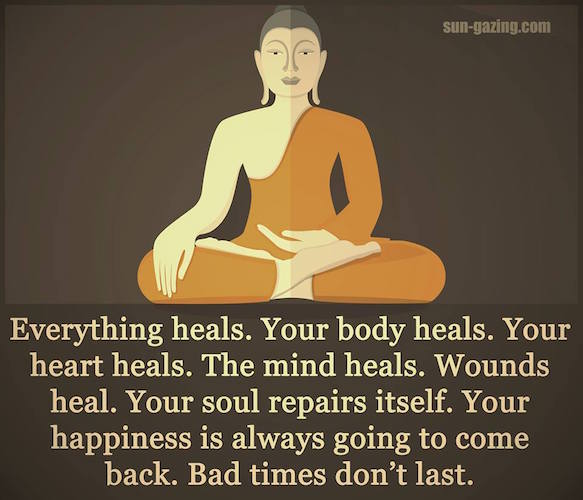
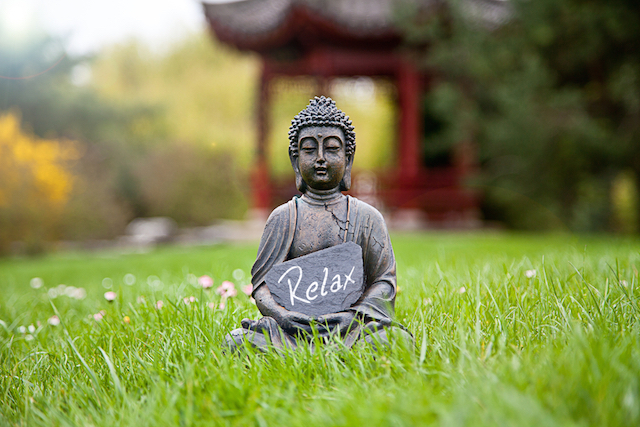
    Buddha

    “Your body is precious. It is your vehicle for awakening. Treat it with care.” ~Buddha

    It’s interesting how easily we forget to appreciate the simple day-to-day luxuries that we are granted with our body.

    We assume that as we exhale, there will always be an inhalation to follow.

    We assume that when we lay our head down on our pillow at night, our heart will beat, our blood will flow, and we will open our eyes in the morning.

    We go on day after day, running around with a mile-long to-do list without taking a moment to check in with our body to acknowledge how it’s feeling today.

    Oftentimes, our health and well-being end up last on that list of priorities.

    We pretend we are superhuman, existing on caffeine from Starbucks in place of adequate sleep and snacks from the vending machine in place of meals.

    Maybe (hopefully) you haven’t gotten to this extreme yet, but a lot of us are. And I bet you can relate to this lack of self-care and preservation at least on some level.

    Sorry to burst all of our bubbles, but this style of living is not sustainable (nor is it healthy, but you already knew that). We can’t go on like this, ignoring our health and well-being forever, as hard as we may try.

    When we go-go-go without giving our body the nourishment and care that it needs to thrive, our body begins to give us the sign that it needs attention.

    Hey, take care of me.

    Hey, I need rest.

    Hey, let’s slow down.

    Ahem, I’m serious. I’m really exhausted, foggy, and need some downtime.

    It’s starts out as fatigue, but then we don’t listen. So it gets a little louder, and then louder, until eventually we have no other option but to slow down and rest. Think sickness, or worse, dis-ease.

    I’ve been on this kick lately, talking and thinking a lot about how we measure ourselves up against these standards that are set so high, not even a super hero could measure up.

    We strive for perfection in the eyes of our peers at the expense of our health and true happiness.

    For what? What are we trying to prove? We believe that once we hit that pinnacle of success then we can relax, be happy, be good enough, and will have made it.

    But the reality is that the only finish line is death, and those things that we think are going to finally prove that we are important aren’t. It’s human nature to want more. And chasing validation to prove our worthiness is the biggest “silent killer” of all.

    There is nothing we need to prove to anyone. We are worthy now. Who we are and where we are right now is enough.

    This moment, right here, is where our pot of gold is. We just have to give ourselves permission to see it as so.

    And without our health, how could we ever experience these beautiful things that make life so meaningful?

    It’s often last on our list of priorities, and yet, when you stop and think about it, our health is the most important of all.

    Our body is our vehicle. It is what allows us to experience life. It’s our five senses, our ability to laugh and feel joy, to embrace our loved ones, to share an intimate connection, to sing, to dance, and play.

    There would be no such thing as life without this body. Yet, often we treat it so poorly.

    For years I would treat my body worse than any enemy. I would talk to it with disrespect and hatred. I would say things about my body that I would never in a million years say about a loved one.

    I would deprive it of food, and then binge out of comfort, sometimes on food, other times on alcohol.

    I would go periods without much sleep and not much movement and exercise, and then during other periods of my life I would exercise for hours in hopes of changing the way my body looked because in my eyes, it wasn’t good enough.

    It’s hard for me to think back to the abuse I put my body through. This body that has always been there for me, supporting me through it all.

    This body that today is so vibrant, so alive, so beautiful—to think of how hard I was on it. It just goes to show you how amazing this miracle of a machine the human body truly is. It can recover and rebuild from so much.

    If you can relate and you aren’t sure how to start treating your body the way it deserves to be treated, I am here to help (and as you can see, I speak from experience).

    Here are three steps to upping your self-care game so you can treat your precious body like the gift that it is.

    1. Nourish it.

    I love the word nourishment as it applies to all things related to well-being, healing, and self-care. Nourish your body in every way you can—with nutrient-rich, tasty food, movement, and even mentally, with supportive, loving thoughts.

    ACTION STEP

    Take an inventory of all of these areas (food, movement, thoughts/self-talk). In what ways can you step up your game and choose options that are more nourishing to your body and spirit?

    Make those adjustments and pay attention to the difference in how you feel. Continue to refine and adjust until your life as a whole is filled with experiences and things that fill you up and energize you rather than exhaust you.

    2. Calendar it.

    The key to making time for self-care is treating it like any other VIP appointment. Things like workouts, cooking yourself a nourishing, tasty meal, exercise, massage, time with friends, romantic evenings with your partner, and fun with the kids are all important “fill-you-up” type activities.

    Prioritize your priorities by carving out the time in your schedule for the things that matter to you most.

    ACTION STEP

    Pull out your calendar and take a look at where you spend the majority of your time. Now think about this for a moment: What are your top three priorities?

    Evaluate whether or not the things you spend the majority of your time doing match up with what’s most important to you.

    Make adjustments as necessary to block out time for self-care and the other things that are most important to you in life.

    You may need to bow out of some commitments or hand off some responsibilities that are not important for you yourself to be taking care of, in order to create this space in your schedule for the things that do matter most.

    3. Start single-tasking.

    We multitask a lot, which you probably don’t know is tough on the body. For example, it’s hard for your body to prepare for and focus on the process of eating and digestion when you are trying to do it while driving, reading, or doing any of the other things we try to do while eating.

    Create an environment of ease and relaxation for your body as often as possible, especially while eating.

    I know in this day and age that might seem impossible, but it’s not. The key is in stripping away some of those responsibilities and “trying to measure up” type things we do in order to create more time for being present.

    ACTION STEP

    Multitask less, be present in the moment more. Life is so much more enjoyable when you are engaged and present versus on your phone texting, Facebooking, or talking to somebody that is not even present with you, all of the time.

    So often I look around while I’m at a restaurant and I see tables upon tables of people sitting there across from each other, but rather than connecting, talking, and being present with each other, they are both looking down typing on their phones.

    It’s so confusing to me. Why do we even get together in person if the person we’re with isn’t actually who we want to be connecting with?

    Put down your phone, look somebody in the eye, and have a moment together. Trust me, it’s way more rewarding than whatever communicating you are doing on your phone. Text later, engage in this moment more.

    The more you practice taking really good care of your body, the more it will reward you with good health, tons of clarity, energy, and the ability to experience all the good that life has to offer for years to come!

    Treat your precious body with love and kindness. This is your body—yours—and it’s the only one you’ve got.

    Buddha statue image via Shutterstock

  • 50 People, 1 Question

    50 People, 1 Question

    If you could change one thing about your body, what would it be? Fifty people answered that question, and the answers after the two-minute mark really make you think.

  • How to Listen to Your Body (and Become Happy Again)

    How to Listen to Your Body (and Become Happy Again)

    “Keeping your body healthy is an expression of gratitude to the whole cosmos—the trees, the clouds, everything.” ~Thich Nhat Hanh

    It’s embarrassing, isn’t it?

    You don’t want to make a fuss about tiny health annoyances.

    But you feel lethargic for no apparent reason. You get constipated, especially when you travel. You have difficulty sleeping.  And your hormones are all over the place.  You hold onto that niggly five or ten pounds like your life depends on it.

    Sound familiar? I’ve been there too.

    I was working at a dream job and living on the French Riveria. I was paid a lot of money to help Fortune 500 Companies with their IT strategies.

    I worked in cities like Paris, Dublin, London, and Manchester during the week, staying in luxury hotels and flying to my home in Nice on weekends. We partied like rock stars on the beaches, and in exclusive clubs and glamorous villas. At twenty-nine, I was a management-level executive on the cusp of becoming a partner.

    Meanwhile, my body wasnt happy. I was chronically tired. I slept poorly. And despite daily exercise and yoga, I couldnt figure out my weight gain.  

    I tried the radical Master Cleanse—drinking lemon juice and maple syrup for a week. But the extra weight would creep back.

    My hormones went crazy. When I stopped birth control pills, my menstrual cycles stopped. I wasn’t sure if that was the reason for my blotchy skin and depression. And the worst part was my mood. I wasn’t happy, despite all the glitzy outside trappings.

    The One Thing Most People Never Learn To Do

    Then I did something most people never learn to do: I listened.

    I felt great after practicing yoga. I took a baby step: I practiced more yoga and eventually attended teacher training sessions. Fast-forward a couple years….

    I quit my job, packed my belongings, and moved to a yoga retreat center in Thailand. The move felt natural and organic.

    I lived simply in a tiny bungalow and taught yoga retreats to tourists. And my health improved. I was sleeping well. My periods eventually returned. I felt better and better, and my sparkle returned too.

    The first and most important step is to stop and listen. Your body and mind are intimately connected. Listen to your body and you’ll learn a ton. Start with tiny steps and you’ll reach your pot of gold quicker than you’d expect.

    You can do this.

    You’d think doing so would be impossible, but it’s not. I’ll tell you how.

    But first, let’s look at three core principles that could save you.

    Don’t Make This Monumental Mistake

    Most people ignore their small but annoying health issues. Nothing about your health is inconsequential. Everything matters. Your digestion. Your ability to lose belly fat. Your bowel movements.

    You’re not alone if you want to run screaming and bury your head in the sand. How about changing your mindset?

    Rather than categorizing what is wrong with you, notice how your body throws you clues. For example, you aren’t going to the bathroom every day. Usually for a very simple reason—lack of dietary fiber. Try adding an apple and ground flax to your breakfast and see what happens.

    The Alarming Truth About Stress

    It can make or break your healthiest intentions. When we perceive danger, stress is our body’s natural response.

    For cave people, stress came when a lion was about to pounce; we needed to run like lightning.

    Under stress, we optimize our resources for survival and shutdown non-essential functions. Translation? Your digestion grinds to a halt, your sex hormones (estrogen, progesterone, and testosterone) convert to cortisol, and your blood sugar skyrockets.

    This is okay now and then. Are you in a state of constant, low-grade stress? Imagine the havoc and inner turmoil.

    A few condition-linked stresses include IBS, constipation, weight gain, insomnia, high blood sugar, and hormone irregularities—for women, missed or absent periods, severe PMS, and fertility issues. And these are just the tip of the iceberg.

    Your body and mind are like the matrix.

    The Western approach to medicine is to examine each problem separately, so you end up with a different specialist for each malady.

    In Eastern medicines, your body is a united whole rather than a constellation of unrelated parts. Your insomnia may be the result of high stress. Or your constipation and weight gain may be due to a complete absence of fiber in your diet.

    Now let’s talk about what you need to do.

    But first, I must introduce you to your personal, world-class health advocate. And it’s not your doctor, your chiropractor, or even your yoga teacher.

    It’s you.

    1. What silence can teach you about listening.

    Set aside time to listen to your own deepest wishes. I searched for answers outside of myself, looking for rigid rules and diets. I used food to shut off my thoughts. It was hard, but I gradually let my truths surface. I know you can do it too. Decide on a time, and set aside ten minutes each day. Breathe deeply and listen.

    How are you feeling physically, mentally, and emotionally?

    Have a journal nearby to jot down any thoughts. Notice what pops into your head. Bring yourself back to your breath if you start to get lost in thoughts.

    2. What would happen if you followed your passions right now?

    You can do this right now in tiny steps. Make time to do the things you love.

    How do you most want to spend each day? Write a list of your priorities and brainstorm easy solutions.

    Exercise: wake up twenty minutes earlier. Do a series of sit-ups, push-ups, leg lifts, squats, etc.

    Time with your children: say no to superfluous activities—committees, boards, etc.

    More creative time: schedule your time on weekends for writing, painting, or whatever you love.

    Treat it like a priority appointment.

    When I worked at a corporate job, I’d wake early to practice yoga at home before work. I didn’t miss the sleep, and I was much more productive and happier during the day. I couldn’t control the rest of the day, but I relished my sacred morning ritual.

    3. Say goodbye to your job if it makes you unhappy.

    Right now, maybe you need it to support your family. No problem. Make sure you limit your working hours. Make the rest count.

    Turn off your TV and put away your iPhone. Spend engaged time with your family. Thinking about work takes you away from important leisure activities.

    Your people will always be important—your children, parents, siblings, friends, and your tribe. Don’t sweat the little things. Cultures with high longevity emphasize personal relationships, support networks, and family. The elders are the big shots, not the richest in the village.

    4. How to glow from the inside out.

    We are genetically wired to thrive on a whole-foods diet. A rule of thumb: the more processed the food, the less you should eat.

    Most of the diets that actually work—paleo, low-carb, and vegan—all have whole foods at their base. They vary in content, but all encourage vegetables, fruits, and good-quality protein sources.

    Return to those niggly health issues. Take an honest look at your diet. What could you do better? What things would you be willing to change?

    I used to systematically overeat healthy foods. My diet was great, but I used foods, even healthy ones, to quell my inner unhappiness. I hated my job. I felt lonely and isolated.

    Start with one change per month. Not more. Drink a glass of water with your meals and skip sugary drinks.Or eat a salad with your lunch or dinner.

    5. Here’s a little-known secret about your mind.

    How do you feel after eating a plate of fried foods? Or a big meal in a restaurant followed by dessert? I feel fuzzy and sluggish.

    What about after eating a bowl of candy? Like a space cadet? Sugar spikes our blood sugar and makes concentration impossible.

    Want to keep your mind clear and alert? Choose fresh vegetables and fruits, high-quality animal products, legumes like lentils and beans, healthy fats from nuts and seeds, and high-quality cold-pressed oils.

    Why Most People Fail Miserably

    Simply put, they don’t prioritize their own health. Don’t fall down that rabbit hole.

    Your job is not to put everyone else’s health above your own.

    Your job is not to make excuses about what you should be doing but aren’t.

    Your job is to be your most enthusiastic health advocate. You must fight tooth and nail to make stellar choices for your health.

    Your good intentions are worthless if you never take action. I’ve been there too. I’ve ignored my body. It was a mistake.

    Start making tiny changes, like having oatmeal and an apple for breakfast. Notice how much better you feel. You’ll be chomping at the bit to do more.

    Living well makes you feel better and happier. But it requires a little courage and determination.

    Start with one tiny step in the right direction. Take five minutes now and decide what your first step is.

    You know you deserve a healthier life.

    And more happiness.

  • Managing Chronic Pain: 5 Lessons from Being Hit by a Truck

    Managing Chronic Pain: 5 Lessons from Being Hit by a Truck

    Woman in Pain

    “Pain can change you, but that doesn’t mean it has to be a bad change. Take that pain and turn it into wisdom.” ~Unknown

    You know how people say, “It was like being hit by a truck”?

    I know what they mean.

    But the impact took over ten years.

    It was a cold, snowy January, and I was in my car, singing along to the radio.

    I was doing a steady, careful sixty miles per hour, in the middle lane of a busy British highway. I was on my way to deliver my first solo course for the company I’d joined a few months before. It was a good day.

    Suddenly, my world shook. I saw a flash of yellow in the passenger side window, and two big bangs jerked me to a stop.

    I went from cheerily singing to a terrified shaking in the front seat, car stopped dead at a lopsided angle in the fast lane.

    My body, infused with adrenaline, struggled for air, and I felt paralyzed, knowing I needed to do something, move the car, get out, anything, but it was as if my brain was frozen. What the hell had just happened?

    I’d been hit by a truck.

    A foreign lorry (the driver on the opposite side of the cab to UK cars) had pulled into the middle lane without seeing it was already occupied. By me.

    The side of his yellow truck hit the side of my car at sixty miles per hour, pushing it out of the way like a child knocking over toy soldiers.

    I was shunted at speed into the fast lane, where I hit the back of another car. Instead of spinning out into the middle of the highway, I came to a stop after this second hit.

    And then I wept as the adrenaline hit me and I realized what had just happened. And what could have happened. And was just grateful it was over.

    I wonder what my reaction would have been if I could have seen the longer-term impact of that accident—the impact that would stretch ten years and more ahead of me.

    Immediate Impact

    At the time, I suffered mild whiplash, my car needed extensive work, and unsurprisingly, I didn’t deliver the course.

    But after that, apart from some slight twinges in my shoulder and neck, I felt okay. Maybe a little quieter and more anxious than usual for a while, but okay.

    There was some pain, but I saw an osteopath for a few sessions, and my body seemed to settle.

    But after another couple of months, the pain returned. I saw the osteopath again, and after a few sessions it subsided.

    Rinse and repeat.

    This pattern happened again and again, and I started to expand my treatment options. Physio, acupuncture, Bowen, deep tissue massage—you name it, I probably tried it.

    And although the treatment often did help, the intervals without pain became smaller and smaller until eventually, the pain was constant. I was diagnosed with chronic pain, something you need to manage, rather than acute pain, something you can cure.

    Sometimes You Have to Learn Lessons the Hard Way

    Fast forward another five years, and I’m no longer in London, working in a stressful job with long hours and high demands.

    I spend most of my time in Thailand. Yoga is a big part of my life, as is writing, blogging, and sharing both my expertise as a psychologist and my experiences as someone who’s lived through great personal change and development myself.

    So what lessons did I learn from all this that helped me to change my life so dramatically?

    1. Think of your body as an integrated system and not unconnected parts.

    When I started to see consultants, I would see “the shoulder consultant” or “the back consultant.” But our bodies don’t work like that. I had more than one issue, but struggled to get the back consultant to think about my neck, or the shoulder consultant to take into consideration my arm.

    Since the accident, I’ve learned a huge amount about my own body. I understand more about the “flavor” of different kinds of sensation and pain. But most importantly, I know that my body is a complex system of many different parts working together, not a set of connected-but-separate pieces.

    Doctors aren’t trained to think that way. But that doesn’t mean you can’t. Keep track of your symptoms, read up, and be open to seeing different practitioners who might be able to help you view your body as a whole.

    2. Your body is both strong and fragile.

    I used to have an arrogance around my body, my spirit, my independence. I used to say that I never wanted to be dependent on anything—food, coffee, pills, a person.

    Now, I take a number of different medications every day. I’m no longer independent.

    I wasn’t particularly fit, but I thought my strength of will was enough. I was wrong.

    I learned that our bodies and minds have both infinite strength, but also fragility and vulnerability. And I’m slowly learning to embrace the vulnerability as well as the strength.

    Where are you strong? Where are you vulnerable? Work on identifying and more importantly, accepting, both.

    3. Be open to what can help you.

    I was also very skeptical of any kind of alternative therapy. But when you’re in constant pain, you’ll try anything. I’ve seen many different practitioners now, and have tried to be as open as possible to each.

    Unless I really feel uncomfortable or negative about them, I will give a practitioner three goes. And I’ll monitor the impact of their treatment.

    Given that you can also end up spending quite a lot of time and money, if the impact isn’t enough—the cost-benefit isn’t high—then I won’t continue. Some treatments have surprised me in how much they helped; others have disappointed me.

    I’m well aware of the placebo effect, but I’m okay with it. But I’m also cautious when the practitioner says something like “the effects are subtle.” Too subtle, and maybe I should be spending my time and money elsewhere.

    What have you closed your mind to without further exploration? What could you experiment with if only you could put pride aside?

    4. Manage your own “stuff” with boundaries and kindness.

    Chronic pain is a challenging condition in many ways, as it’s invisible; it’s not like a broken arm, where your cast clearly shows others something’s wrong so they don’t bump into you.

    To other people, I look no more or less healthy than them. When I have a bad pain day, it’s hard for others to know, and they are much more likely to “bump into me.”

    We all have “stuff” like this—and it doesn’t have to be a health condition. Invisible stuff—a stressful day, a bad day, grief, loss, pain, rejection—the list goes on.

    My relationship with my body has also changed over time. Before the accident, my connection with my body was functional; it did what I needed it to. After the accident, I was angry, and disconnected my mind and body. I even talked about it as another entity: “My body and I have a difficult relationship.”

    It took me a long time—and work with mindfulness, yoga, and meditation—to learn to accept my body and just “be” with it.

    And rebuilding the shattered relationship between body and mind has also meant learning how to be in my mind (remembering that the two aren’t distinct). Understanding what I need when I have a bad day. Being kind to myself. And also creating self-care boundaries; I don’t have endless energy, and so need to curate it carefully.

    Do you know when you’re having a bad day? What do you do to protect yourself? Where are your boundaries? How are you kind to yourself?

    5. Good things can come from bad.

    I don’t believe that I had to be hit by a truck to change my life—that “everything happens for a reason.”

    I try and flip it round—what good can I find in this tough situation? How can I, as the quote says, turn this pain into wisdom? It’s not easy, but nothing worthwhile ever is. I’m a work-in-progress, just like everyone else. I get knocked down; I get up again.

    Chronic pain was a critical factor in my decision to completely change my life, going from a workaholic management consultant in London to running my own business online, basing myself mainly in Thailand.

    It’s helped me to learn (and re-learn!) the lesson of acceptance of “what is,” rather than constantly wishing the world was somehow different.

    Because once you accept the now, you can build on that foundation and apply all the other lessons to the next stage of your life, or even just the next day.

    Because every moment is a new moment. An opportunity for change. Another start.

    Woman in pain image via Shutterstock

  • Stop Resisting: Surrender to Your Body to Transform It and Your Life

    Stop Resisting: Surrender to Your Body to Transform It and Your Life

    Surrender

    “Whatever you fight, you strengthen, and what you resist, persists.” ~Eckhart Tolle

    Most people don’t realize that your relationship with your body affects your entire life. Why? Because if you are fighting with your body, you are fighting with yourself. And if you are fighting with yourself, you are resisting what you truly desire in life.

    I know too well what it feels like to fight with your body. I had the same fear as most people…

    If I love my body as it is today, it will get worse. I will gain more weight. If I keep my constant attention on it, remind myself hourly how much I don’t like it, it will transform.

    Sure sounds crazy, doesn’t it? Has anyone ever “hated themselves skinny” and had healthy, long lasting results? Or how about the opposite? Has anyone ever “loved themselves fat”? And I am not talking about the love you think you are giving yourself by eating a package of Oreo cookies. I am talking true, authentic love causing the body to gain massive amounts of weight.

    And yet this is our fear: that if we were to love ourselves, love our bodies as they are in this moment, we would get worse. But remember, what you fight you strengthen.

    The more I fought with my body for gaining weight, the more weight I gained.

    Then, one sunny day as I was driving, singing along to my favorite tunes, thinking about what new clothes I wanted to purchase at the mall, I noticed something out of the corner of my eye.

    Before I could comprehend what this thing was, everything went black. To this day, I can’t be fully sure whether everything went black because my eyes were closed or because my airbag deployed, but either way I knew that I was no longer on my path to the mall.

    In what felt like the most extreme game of bumper cars, I finally came to a stop as my Chevy truck flipped on to the side with me on the freeway and my passenger door above me.

    Turns out I was hit by five cars, one car for each lane on the freeway. And although I was able to safely exit my vehicle the next morning, I quickly learned that I was not able to lift my own head and, therefore, couldn’t move freely on my own.

    As I lay on the couch each day, unable to lift my own head, I no longer had the strength to fight against my body and, therefore, my body finally had the ability to let go. And after thirty days of only moving with help to get to and from the bathroom, my body released ten pounds.

    It is safe to say that some people would have gained weight injured on the couch. There are very specific reasons that my body didn’t, one of which was my ability to simply be okay with where I was.

    I wasn’t angry that I couldn’t move. I wasn’t upset that I could no longer work out. I certainly wasn’t fighting with the idea of a much-needed vacation from working. And I decided to treat it as just that—a vacation from my everyday life. The life that I had set up for myself that was so stressful and impossible to maintain.

    I relaxed and enjoyed not needing to do anything but heal.

    I realized that there are more important things in life then losing weight, like being able to lift my head again.

    I allowed my body to rest and stopped punishing it for being the way it was.

    And I finally allowed my body and myself a much-needed break from the stress of trying to lose weight.

    I highly recommend surrendering to your body without being hit by five cars. Here are three tips to get you started:

    1. Become present where you are.

    The first step is to be honest with yourself and admit where you are to establish a starting point for your growth. Otherwise, this would be like trying to drive to New York without knowing if you are in California, Florida, or Mississippi.

    It also follows along with the theme that what you fight, you strengthen. The longer you ignore where you are or pretend you are not where you are, the longer you’ll stay there.

    When you let yourself be in your body without needing to have a different one, you release the resistance and have the ability to move forward toward a life you truly desire.

    When you are desperately clinging to a different body with all your might, convinced that this is what will bring you all the happiness, contentment, and love in the world, you will find that an alternate physical appearance simply doesn’t create the internal feelings you are after.

    Therefore, even if you achieve this physical body that you desire, it will come with a sense of emptiness, as you still must learn how to simply be where you are with full presence and love, no matter what.

    2. Feel your feelings.

    In order for me to find acceptance for myself, I had to feel. I had gone so many months feeling completely numb to everything and then wondering, “Why can’t I just love myself?”

    In order for me to love myself, I had to first admit that I wasn’t happy. In fact, I was out right pissed off. And after a celebratory pity party, followed by many tears, I could finally move forward.

    When we ignore what we feel, we think we can make it go away. However, just the opposite is true. Not feeling our feelings isn’t a way to make sure we never have sadness; it’s a way to start an inner battle for however long it takes you to finally feel sad.

    The minute you admit that you are in fact pissed off, frustrated, and down right suspicious of your body, you will release the resistance, call off the fight, and move toward an overall feeling of lightness.

    3. Find peace and calm.

    It’s no secret that a stressful environment is not conducive for lasting results in your life, yet so many people live each day in a stressed out body, wondering why they can’t release their weight and feel lighter.

    Then to make matters worse, they obsess over their food and spend hours at the gym without even taking a moment to breathe.

    In order to find acceptance for your body and release your weight, you first want to create the most peaceful environment in your body as you possibly can.

    This doesn’t mean you have to lock yourself in a room with your Pure Zen CD for a month; it means you begin to find places in your life where you can introduce more peace and calm easily—for example, your own thoughts and beliefs. Why not zen those puppies out?

    Instead of believing that weight loss is hard and your appetite is too big, why not believe that in the past weight loss has been challenging and now you are open and ready to receive an approach that feels easy and effortless? And your appetite isn’t too big, but maybe you need to learn how to better connect to your body and hear your hunger and fullness cues.

    We tend to take on very stressful thoughts and beliefs about weight that will inhibit our bodies’ ability to release the weight easily and effortlessly. If you believe weight loss is hard, painful, and full of restriction, then it will be. If you believe that weight loss is intuitive, insightful, and transformative, then it will be.

    You get to choose what your weight loss journey looks like. I suggest you choose a path that feels calm and peaceful in order to enjoy each step of the way without being so dependent on the end result to fill you up.

    When you become present with exactly where you are, feel all your feelings, and find your peace and calm, you now have the ability to stop fighting. The battle that you have been facing with your body and weight will finally be done as you wave your white flag and admit that you are tired of the fight.

    This doesn’t mean you aren’t giving up on your true desires. You are deeply aligning with them.

    You are admitting that this whole weight loss thing isn’t something that you want to control anymore. That maybe there is a better way to release your weight that doesn’t suck. And you’re reminding yourself that when you desire something, the ability to have it has to be present.

    Therefore, you have no reason to focus so intently on losing weight anymore. Instead, you get to focus on living your best life in this moment, wherever you are.

    Remember this, you’re not weak or pathetic for surrendering. You are smart and powerful.

    You have the ability to say that you have so much love for yourself that you are willing to do whatever it takes to feel good now, regardless of where you are. And this is the most powerful move you can make for lasting results in your body and your life.

    Photo by Scott

  • Forming Healthy Habits: 3 Tiny Choices That Create Huge Change

    Forming Healthy Habits: 3 Tiny Choices That Create Huge Change

    Im Free

    “It is better to make many small steps in the right direction than to make a great leap forward only to stumble backward.” ~Proverb

    Seven years ago I was a sedentary, over-caffeinated, unmindful, somewhat neurotic meat-eater with a bit of a drinking problem. My meals came out of boxes with chemical compounds for ingredients and had little in the way of anything that grew outside or came from a field.

    I made excuses for not exercising, but in reality I was so insecure that I didn’t think I was strong enough to be athletic. I was afraid of making an utter fool of myself. And I was afraid that if I sat still long enough to look inward, I would loathe myself more than I already did.

    Today I am a mostly vegetarian running nut. I’m always training and gaining strength for the next race. For the most part my meals are fresh and made from scratch, containing less animal meat and more leaves.

    I still indulge in coffee and Coke, but find comfort and clarity in tea and a glass of water. I meditate regularly for my spiritual practice. Mindfulness is a part of my everyday life, and wine is no longer a stress-reliever.

    There are countless Cinderella stories like these out there, stories of couch potato turned to vegan Ironman, stories of people who turned terrible habits into wholesome ones. People who lost weight, kicked an addiction, stared their fears in the face, and made their lives better.

    But for people who are still in the Couch Potato Stage, these changes feel astronomical. You may as well ask them to leap across the Grand Canyon and land on the other side on both feet. 

    So how does a person go from being a lump to a marathoner?

    I did something quite simple that anybody who wants to change their life can do without stumbling and feeling like a failure.

    Each day, I made one small decision to make a healthier choice.

    Each choice was manageable. Rather than making grandiose plans to alter my diet and routine in massive ways, I made one small choice every day to make my life healthier.

    This slow change began seven years ago, when a small idea was planted in my mind and began to grow.

    Food.

    I realized that my diet depended heavily on processed food. I needed a Chemistry degree to understand what I was putting into my body. By watching an ex-boyfriend in the kitchen, I learned how to cook.

    Then every Sunday evening, I cooked a nice meal for myself, nothing too fancy. I became curious about different recipes and new foods. I soon found sanctuary in chopping vegetables, the aroma of fresh herbs, and gently simmering a sauce.

    I felt a sense of accomplishment in creating a nutritious and tasty meal, and before long I was cooking for myself three to four times a week.

    At lunch I chose to eat a piece of fruit and to drink water instead of a soda. At restaurants I chose salad instead of French fries and a veggie burger instead of a hamburger. When I got tired at work, I turned to water instead of coffee.

    I was still eating meat, but I was eating a lot less of it, and fruit was a regular snack.

    You don’t need to completely change your diet. You just need to start with one healthy choice.  Every small choice adds up.

    Exercise.

    After changing my diet, it took another three years to change my level of activity. I was going through major stress at work and in my personal life. I felt I needed intense physical activity that burned off pent up energy. I didn’t want to spend a lot of money on fancy equipment, so I started running.

    For a long time I wanted to try running, but I was afraid that I would look stupid. One day I thought to myself, screw it—everyone feels stupid on their first run.

    On a quiet Sunday morning, I went on my first jog/walk. I felt so amazing that I bought a decent pair of running shoes. I haven’t stopped running since.

    That single choice to simply try exercise has lead me to three half marathons, a marathon, and a relay race. Running has helped me face myself in ways that I never imagined and find strength I didn’t think I had.

    You don’t need to run a marathon today, or even a mile. You simply can make the choice to do something, no matter how small, to be physically active.

    Meditation.

    Around the time I started running, I also tried meditation. I heard accounts of the benefits of meditations, such as reduced stress and clarity of mind, but I was afraid of finding what was hidden deep inside of me.

    I chose to simply try it. I sat for periods of ten minutes a few times a week. After trying that for a couple weeks, I felt like I needed guidance. So I searched for meditation services in my community. My first time sitting meditation at the Zen center, the silence and stillness of meditation brought me ease. I kept going back.

    I now use mindfulness and meditation as a regular part of my spiritual practice. It takes a lot of work to see my fears as they truly are.

    I’ve worked through jackal voices that tell me I’m not good enough. When I sit meditations, the stillness shows me that those are just voices and that they’re trying to protect me from life’s disappointments. And what keeps me going is the awareness that I don’t have to have all the answers right now.

    You don’t need to meditate for hours at a time. All you have to do is sit in silence for a few moments each day to be more peaceful and present.

    Seven years since I chose not to eat something out of a box, I live my life each day making choices that don’t feel like sacrifices. Eating vegetables doesn’t feel like I’m denying myself potato chips. It feels as if I’m eating something that I enjoy. Going for a run doesn’t feel like I’m torturing myself for thirty minutes. It’s a choice that makes me feel invigorated.

    Each moment, you have an opportunity to make a choice. You can choose the same harmful habits that you always choose. Or you can choose a better habit that treats your body the way it deserves to be treated.

    Today, I am still making changes and am a constant work in progress. A year ago my drinking habit changed from two to three drinks per day to two to three drinks per month.

    Recognizing that this was a destructive habit, I reached a place where I was ready to let go of my dependence.

    I came home from a visit with my family (the side that doesn’t drink), and I was already on a five-day hiatus from drinking alcohol. Five days became six and then seven. I still struggle with those urges, but then I ask myself, what choice do I want to make?

    Photo by Tomás Fano

  • How to Find Your Purpose When Your Life Is a Mess

    How to Find Your Purpose When Your Life Is a Mess

    “What is my purpose here and how may I serve…in the midst of all this confusion?” ~Wayne Dyer

    Your life is a mess and you can’t do anything about it, right?

    Wrong.

    You may be closer to the answers than you think, even while right in the middle of the chaos that showed up.

    You ask yourself, “What happened to the life I had where I knew my purpose?”

    All you know is that a rug you didn’t know you were standing on was pulled out from underneath you, leaving you in a heap. You want a magic carpet to take you out of this craziness so you can find yourself a new world that’s nicer to you.

    Not long ago, that’s what I wanted too.

    One day I was minding my own business, feeling on purpose, and the next…

    California called my name and I listened. I felt all smug and purposeful in the sand and sun of Los Angeles as a stay-at-home mom. I knew my purpose as a mother after spending years in a corporate financial cubicle in New York, and I loved it.

    Along came the cyclone of lost spousal income and a dry job market. The dark winds of change (and a landlord that wanted his rent) moved us over to the shores of New Jersey. A better job was waiting.

    But the jobs didn’t work out, and the mailbox filled with eviction letters and power shut off notices. The nights got cold, and as I lay bundled near my children, I knew something had to change fast. Only I didn’t know what to do first.

    I just wanted the confusion and chaos to end so I could figure out what my purpose in all this was.

    Does this sound familiar? Do you believe you can find your purpose while in chaos?

    The following three steps will help you stop focusing on your problems and make room in your life for your purpose to reveal itself.

    1. Give away your time for free.

    Clear your mind of your problems for a moment by finding someone or some organization that needs a skill you have, and offer it for free, even if just for an hour.

    This may sound like you are being irresponsible; shouldn’t you be spending all your time finding a solution to your life—a job, or a loan perhaps? No. Take a break and step away from the spinning mind; it will be there when you get back.

    The Result: Volunteering makes you feel purposeful and grateful for what you do have, what you can offer. Service and gratitude are a magical combination that comes back to help you tenfold.

    You may even gain some new perspective about your life and purpose. Perhaps you will network, or be inspired to apply for a job you have not thought about before.

    2. Get moving.

    You can easily feel immobile when going through a crisis. Close your eyes and imagine a white light coursing through your blood to every part of your body, energizing it.

    If you can, get down on the ground and do a few pushups, or do some jumping jacks. Head out the door and walk until your feet hurt, or turn some music on and move, no excuses and no equipment needed.

    Choose an easy workout ritual to follow daily.

    The Result: The energy in your body gets shaken and shifted, and endorphins start to flow. You then crave healthy food, leading to a clear mind.

    The depressing thoughts disappear when you work out, and in this moment of clarity you can plan your next step. Perhaps you’ll think of someone that can help to call, or you’ll begin getting ideas about what your purpose is and how to go about living it.

    3. Stop and listen.

    Go to a place where you can sit in solitude and connect with your soul. Your soul is your partner forever and it needs attention; it will give you back as much as you give it.

    Sit under a tree, or on a bench in a busy city, or simply at a window, and breathe. Deeply.

    The Result: You are allowing your soul to guide you to the answers that your mind cannot seem to find about where this chaos is leading you.

    Deep in your soul is a knowing of what your purpose may be. Stop and listen to it. 

    These are the steps I took. I realized that I needed to get out of my mind and connect with my body and soul.

    • I started a four-minute workout every morning called The Peaceful Warrior Workout by Dan Millman. It’s awesome. Best part: it’s only four minutes. Every morning after doing this workout I felt better, good enough to reach out to anyone I thought could help me.
    • I spent time sitting alone on my steps at night, looking up at the stars, to consciously make soul contact. I felt peaceful, and I usually came inside with ideas that I could follow up on the next day.
    • I emailed twenty local recovery centers in my area and offered to do anything they needed for one hour a week. For free. (I am trained as a Holistic Addiction and Recovery Coach.)

    I got one response and started leading a weekly half-hour recovery meeting. The men and women in the meetings inspired me with their hope, strength, and courage exactly when I needed it. They saved me as much as I saved them.

    Their courage led me to write about it, and the essay ended up being published on the website for a magazine I dreamed of writing for all my life. I found my purpose as a writer once again, and the hopeless feelings disappeared.

    Life did not magically change, but when you know you are not staring down a scary path from a distance but are walking on the path, you access ideas and courage you did not have before. You feel deep down that you are living on purpose again.

    Your Path to Purpose

    Choose an area where you think you may want to serve and send out emails or make phone call offers. There are nursing homes full of people needing visitors, children in need of tutoring, and social service agencies available to guide you. Community gardens need gardening helpers and small businesses need an extra hand.

    Add a little workout ritual, maybe visualizing energy coursing through your blood while doing a few yoga poses or jogging outside. Or put music on at home and move around until you break a sweat.

    Find peace looking up at the sky, or out at passersby, or sitting in a park.

    You will realize that it’s a relief to take a break from thinking about your chaotic situation—and it’s productive. Stopping to calm your mind and connect with your body and soul is actually doing something!

    So go ahead and take a leap of faith. Have faith that you can find your purpose in the midst of confusion and chaos.

    And if you don’t have faith, pretend you do. Even a drop will do.

    When taking a step outside of your mind and connecting with your body and soul, your purpose may sneak up on you. So let it.

  • The 3 Pieces of Recovery from Addiction or Depression

    The 3 Pieces of Recovery from Addiction or Depression

    Mind Body Spirit

    “I now see how owning our story and loving ourselves through that process is the bravest thing that we will ever do.” ~Brené Brown

    When I started graduate school, it was safe to say that I was running away from things. I’d recently ended a nine-year relationship and I wasn’t planning on dealing with it.

    Upon the birth of my nephew, my father, a long-term addict, had begun rekindling his relationships with his three daughters. I didn’t recognize, though I should have, that this needed dealing with too.

    I began school so that I’d have something to pour my energy and feelings into wholeheartedly. And I did. It worked, at least for a while. I soon began to notice that I was increasingly unhappy in my new student position.

    While I had things I looked forward to, like teaching and program events, I spent my time alone watching television in bed and wishing I could be anywhere else, though I didn’t know where that might be.

    It was the closest I could ever remember feeling to depressed, a word that had long been whispered, though never addressed, in my family.

    There are few perks to being a graduate student, at least on paper, but one of them, for me, was school-funded student health insurance that included mental health care.

    I should mention that, although my family history certainly warrants mental health care, no one had ever sought it. If ongoing drug and alcohol addictions, divorce, and teenage pregnancy apparently didn’t warrant it, perhaps nothing would. But I was feeling pretty bad, and it was free.

    On the day I walked into the counselor’s office, I found two people from my very small program sitting in there.

    It was at first awkward and then comforting—each of us had found ourselves in a similar situation, and something about that Tuesday had summoned us to the office.

    Inside, I met with Krishna, a soft-spoken therapist who identified my family immediately as co-dependent and prone to addiction.

    I felt better already. She recommended that I be around animals and begin practicing yoga. I committed to both and began seeing Krishna every other week.

    Since I was a busy student and unable to commit to a pet, I decided to volunteer at a local animal shelter. Every Friday, I woke up at 6am to walk dogs for an hour before I went to teach. It was inspiring for a few reasons—one, it reminded me that things could be worse, and two, puppies.

    The animal capacity for cuteness and kindness is extraordinary, and I certainly felt better for having been around them.

    It is often said that volunteer work is a selfish task, designed to make the volunteer feel better for having done it. I don’t object to this, nor do I see anything wrong with it. Those dogs got me through graduate school.

    Next, I set out to learn to practice yoga. This was a scary goal because it seemed to showcase many of my fears and insecurities.

    I was self-conscious about my body and asked to put on body hugging clothes. I was uncomfortable being watched, and the eyes of the class would often be on me. Also, I’d never done yoga before and the thought of all of those skinny, stretchy people terrified me.

    With one of the girls I’d run into at the counselor’s office, I searched for a nonthreatening yoga class that I thought would meet my needs.

    Upon the recommendation of a friend, I joined a group with a focus on restorative yoga, mostly stretching, snacks at the end.

    I found a community of like-minded men and women interested in finding a mind/body/spirit balance to treat the various issues we were all dealing with. Is there anything that hurts today, our teacher would ask, mind or body?

    Because I come from a family of somewhat functional alcoholics going back as far as I can remember, I know that these parts of me may just be hidden, dormant for now.

    Yoga has allowed me to channel these possible proclivities into an activity that promotes physical and mental health, an activity that is no longer scary. It’s also my way of acknowledging that there is something outside of me, something larger than me, at work in the universe.

    Yoga is, for me, the acknowledgment of spirit.

    Recovery (from anything, addiction, depression, physical illness) requires the addressing of a triangle in its entirety—mind, body, and spirit. While counseling began to address the mind, yoga and puppies addressed both body and spirit. Learning this felt like my whole body sighing.

    While I’m not an addict, I can see how yoga would be useful there, too. A positive community, a refocus on the body, an attention to self-restraint and awareness that is hard to replicate.

    For me, breaking down the barriers and walls my family had tried so long create was no small feat. In acknowledging my own capacity for mental illness, I was able to begin a road to recovery that improved my health in many ways. That recognition and verbalization of ill feelings was, for me, essential to the healing process.

    In my professional life, I deal with this all the time—men and women struggling with mental disease, often accompanied by addiction, that lack the approval of families to move forward with treatment.

    For me, it was easier to say then to do. Eventually, though, it became a part of myself (this history of mental illness) that I was happy to disclose because it meant that I had begun recovery.

    Then, I suspected that I was alone. Now, I realize that it’s common to fear that acknowledging there’s a problem is failure.

    Be vocal, be active, be spiritual in any way that you find productive. Be alive.

    I have a triangle tattooed on my left foot to remind me that everything that goes to pieces also happens in pieces, even recovery. One, two, three: mind, body, spirit.

    Photo by HartwigHKD

  • Learning to Love Your Body: 4 Steps to Self-Care

    Learning to Love Your Body: 4 Steps to Self-Care

    Yoga on the Beach

    “Your body is precious. It is our vehicle for awakening. Treat it with care.” ~Buddha

    My life has been one big hate-fest of my body.

    I don’t know when or how it developed, but I have been comparing my body to others’ for as long as I can remember. I was never happy, never good enough. There was always work to be done, goals to achieve.

    Not only was I constantly on the latest diet that most likely was extremely bad for me, but I was also mentally beating myself up every step of the way.

    The self-talk was brutal and relentless. “Why can’t I just lose weight?” “Why am I so fat?”

    The negativity didn’t stop there. I hated others too. Women with “perfect” bodies were a major source of jealousy and envy for me.

    The few times that I achieved some sort of ideal, I found myself uncomfortable with my appearance. I projected my hatred and jealousy of others onto myself, and just kept falling down the negativity rabbit hole.

    Achievements felt shallow, undeserved, and were always short-lived and followed by a period of self-sabotage.

    Finally, after a difficult divorce, left as a single mother raising three young children alone, some sort of light bulb went off in my head. No one else was going to take care of me. I was sick of the misery and mental anguish.

    I realized more than ever that I needed to take care of myself so that I could have the energy to get through my demanding life. Something had to give, and what I was doing was not working.

    I began by simply realizing that I didn’t feel good physically with the way that I was eating. I noticed a daily sugar crash that was leaving me depressed and with no energy. I decided to start there and started eating more whole foods and less sugar.

    Taking a new attitude toward my diet increased my awareness of how good health affected me, and that choice built upon itself daily.

    I researched what else I could do to develop better health, and began to properly care for myself. In turn, my life became more manageable, I felt happier, and I was a better mom and person. As a nice bonus I actually lost 30 pounds and became an athlete.

    If you’re tired of the self-hate game and ready to begin taking care of yourself, you may want to try the steps that I followed. (more…)