Tag: body

  • Trauma Can Make Us Sick: How I Found a Key to Healing

    Trauma Can Make Us Sick: How I Found a Key to Healing

    “Our bodies contain our histories—every chapter, line, and verse of every event and relationship in our lives.” ~Caroline Myss

    I could hear my teacher talking, but I wasn’t listening. Staring at the math homework in front of me, I couldn’t get the sound of my heartbeat out of my head.

    Two times two equals, thump thump, equals thump thump, four.

    The more I focused on my heartbeat, the louder it became. I could even feel beating in my chest.

    Noticing the clock, I had ten more minutes before my mom would meet me in the school office. We had a meeting scheduled with the school nurse. I dreaded it.

    Was I in trouble?

    If so, then why was I meeting the nurse and not the principal? Besides, I was an A+ student. I never got in trouble.

    At the sound of the bell, I made my way reluctantly to the office. As planned, Mom was there. The school nurse, a small woman with a huge smile, met the both of us.

    “Come in,” she said, as she motioned in the direction of her door.

    I looked over at my mom and she looked at me, shrugging her shoulders. We were both clueless about the purpose of this meeting.

    “Uh huh,” clearing her throat, Nurse Smith broke the ice…

    “Let’s get to it. Casey, you are too thin. It concerns me.”

    Looking at my mom, she said, “Mom, do you know why Casey is losing so much weight?”

    My mom quickly described our diet and how she prepared meals for me, “balanced and complete.”

    “Is Casey seeing a doctor?” Nurse Smith followed up.

    My mom, in an agitated voice said, “When necessary we go to our family physician.”

    Looking at me intently, Nurse Smith patted me on the shoulder,

    “Okay, Casey, you eat more of your mom’s good cooking and get some weight on you. I don’t want to see you back in my office until you fill out a bit.”

    This was one of many incidents where people, including professionals, noticed something physical about me, made assumptions, but never asked me about my experience.

    No one asked me about my perceptions of my weight.

    Did I notice changes in the way my pants fit?

    Did I notice changes in my desire to eat?

    Instead, a band-aid approach—eat my mom’s great food—was recommended, and I was sent on my way.

    It was assumed that if I ate more, my weight would increase.

    Was eating more also the solution for my fast heartbeat?

    Apparently not.

    Months later, during a physical education drill, my teacher confirmed my rapid heartbeat. My teacher was not only concerned, but I was banned from taking physical education classes until my heartbeat was “normal.”

    Saddened that I couldn’t take a class that I really enjoyed, no one, including my physicians, offered me any solutions. After wearing heart monitors and complying with many tests, I was diagnosed with tachycardia. This is a medical term, or as I like to call it, a fancy name for not knowing the cause for elevated heartbeat.

    The Importance of our Thoughts, Feelings, and Perceptions

    I went through most of my young adult years being diagnosed with a number of conditions based on my physical symptoms and observations of my outward appearance.

    No one inquired about my internal environment—my thoughts, feelings, beliefs.

    No one asked me about my life either.

    What was it like for me at home?

    What kind of relationship did I have with my parents?

    Did I experience any stress, or even understand the meaning of stress?

    Did I feel safe and cared for physically and emotionally?

    Needless to say, my mom’s excellent cooking didn’t make me gain weight. I continued to lose weight. My heartbeat continued racing too.

    It wasn’t until my mom took me to see a psychologist that I was diagnosed with an eating disorder. The real reason I was losing weight: I was very ill.

    It was during therapy sessions that the psychologist pointed out I would not gain weight or begin to repair my relationship with food until the conflict between my parents remitted.

    She was absolutely right.

    The psychologist made a connection between my weight loss and conflict in my home.

    The focus wasn’t on my diet as the cause. The focus was on the emotional turmoil in my life.

    This was the first time anyone connected my physical symptoms to stress in my environment.

    Trauma Can Make Us Sick

    At the time of my weight loss and rapid heartbeat, my parents were going through a tumultuous, and by my view, traumatic divorce. Conflict was normal in my home, and I was a classic “child the middle of this conflict.”

    As my parents argued over their lost relationship and years of service to each other, I was lost in the midst of their problems.

    Divorce is one of many traumatic events people can experience.

    Any event perceived as threatening, disempowering, helpless, or out of control is a trauma.

    Trauma contributes to physical symptoms in the body.

    In other words, one of my traumas—my parents’ divorce– made me sick.

    After years of therapy, I came to understand that anxiety is a mental health condition. Anxiety can present with many symptoms, one of which is tachycardia, or a rapid heartbeat.

    I was relieved. Suddenly the reasons for my rapid heartbeat made sense!

    Animal Instincts Keep Us Safe But Can Make Us Sick

    When a person’s perception of safety is threatened, the body goes into a natural response called fight-or-flight. Like an animal in the wild who is about to become prey for another, the body mobilizes a response to react and protect.

    People who live in traumatic environments experience threats frequently. Just because we aren’t going to really be eaten, the body doesn’t know the difference, and it mobilizes to save us just the same. Increased heart rate is a side effect.

    I did not perceive my home as safe. The conflict between my parents was traumatic. My body didn’t know the difference between an animal getting ready to eat me or any other threat.

    When my parents argued, my body mobilized a fight-or-flight response, which caused my heart rate to increase. Anxiety, living on edge, and fearing for what was going to happen next, became a way of living for me—even when my parents weren’t arguing. This explains why my heart rate was elevated even while I was at school doing something I enjoyed.

    Making Connections That Help Us Heal

    I am grateful I saw a psychologist at such a young age. She planted the seed for bringing my awareness to connections between illness and trauma.

    However, for decades following these sessions, no one else made these connections, and gradually I forgot about how intertwined our physical symptoms are to our histories of trauma and stress.

    It wasn’t until I was diagnosed with Crohn’s disease, an autoimmune inflammatory bowel disease, that I was compelled to go back through my life and connect the dots in hopes I would find answers to aid in my healing.

    Sure enough, I didn’t have to look very far to discover physical symptoms that were preceded by a traumatic event in my life.

    Empowered by this information, I knew I had found the answers to my healing.

    My only task was to find a professional: a physician, healer, or licensed mental health therapist who could help me integrate my life with my symptoms.

    Once there is an awareness of the connections between illness and trauma, it is possible to find resources.

    Functional medicine physicians, somatic therapies, alternative modalities, and sensorimotor psychotherapists are just several of many options which look at healing as integrative.

    You Are an Expert on Your Body

    I have explored many therapies and I continue to improve. However, I believe healing is a lifelong process. I have to be continuously aware of how sensitive my body is to stress. After all, it had a lifetime of programming to be geared for fight-or-flight.

    When stress is in my life, my body will often have physical symptoms. Sometimes simple interactions with colleagues are enough to trigger my body’s threat response.

    Living with Crohn’s disease has many challenges. True healing began when I recognized that my past history of childhood trauma laid a foundation for disease in my body and continues to contribute to how the Crohn’s Disease shows up.

    Now that I have this awareness, the possibilities for healing are exponential. The more I support my body in healing from trauma, the more my physical symptoms improve and the stronger my immune system becomes.

    Needless to say, it isn’t an easy journey. But never lose hope.

    Even though conventional medical models continue to separate physical from emotional, solutions are plentiful. This means that people like you and I must brave the terrain, making connections about our own bodies and lives and seeking treatments that offer this integration.

    In many ways, we have to educate our physicians and healers about these connections. As we are experts on our own bodies, we hold many answers to our own healing based on a lifetime of living with ourselves.

    No one knows you better than you know yourself.
  • The Truth About Body-Positive Activists on Social Media

    The Truth About Body-Positive Activists on Social Media

    “The most difficult times for many of us are the ones we give ourselves.” ~Pema Chodron

    I’m on my phone, posting a photo of myself on Instagram. It’s a vulnerable shot—I’m holding my bare belly.

    I type in the caption “Accepting my body isn’t easy, but it’s worth it.”

    I mean this, but I also have voices in my head telling me to delete the picture because I’m gross, not good enough, and a phony.

    I get half a dozen comments supporting me, mostly emoji hearts. One comment reads, “I wish I had your confidence.” I feel weird reading it because my feelings are mixed. I don’t necessarily think of myself as confident all the time.

    In fact, my reality is that I’m struggling with body image more than I’m swimming in acceptance. I think about how this person is comparing their backstage to my highlight-reel. 

    We do that—we look at ourselves as “not enough” and think that others have it all together.

    We’re our harshest critics, and we hyper-focus on aspects of ourselves and bash them. We think that behind closed doors we are monsters. But when we focus all of our attention on that behind-the-scenes person, we’re not taking into consideration how human others are, too.

    The truth of the matter is that things aren’t always as they appear on social media. Yes, I realize I’m calling myself out, but I think it’s important for people to know that even people who seem wildly body-positive struggle, too. I mean, body acceptance is damn hard.

    I didn’t get to this point overnight, finding relative peace with myself. It’s been a long time of hating myself and wishing I was different. Even with finding some peace, I’m not “cured.” I don’t have a magic dose of body love all of a sudden.

    In fact, body acceptance doesn’t have to be self-love at all. It’s commencing on a simpler level. How about I just try to find acceptance in myself to think that this is how my body is at this moment? This is where we are, here in this body. It’s simple, but not easy.  

    It’s important to note that body acceptance is a moment-to-moment thing rather than a state of being in which you exist. It’s something that has to be fought for but is sometimes settled on.

    My background is that I’ve had eating disorders over the years, I’ve dieted like it was going to save me from body image issues, and I’ve had long periods where I weighed myself every day. I’ve also counted Cheez-Its out of the box, vowing to eat only the serving size. I’ve suffered in not accepting my body and instead succumbing to diet culture.

    At points, I thought I had it under control. I had dieted just right. I had even lost some weight. Inevitably, though, the self-disgust seeped in. I fell off the wagon over and over again, binging, particularly on sweets and foods high in carbs—the very foods I was depriving myself of.

    I’d say, “screw it” and I’d devour pizza with friends. I’d eat alone with a carton of ice cream or a box of cookies. Binging was inevitable after deprivation. While the high was fun during, it led to being sick and hating myself even more.

    In a fit of despair, I’d vow to “get back on the wagon” the next day.

    I’d tell myself I was definitely going to do better next time, but next time never permanently came. I may have been able to string together a few days of what I saw as “good” eating, but never lasting change.

    I got to a point where I felt defeated.

    Diet exhaustion looked like no longer finding joy in foods. It felt like a rock in my stomach. It sounded like sighs from having to make what felt like complicated food choices over and over again every day. 

    I couldn’t count my Cheeze-Its anymore. The scale was haunting and owning me. I feared social gatherings with friends, sometimes even avoided them. The next diet be it Keto or Whole 30 just sounded like another opportunity to fail.

    I got tired of chasing my tail. Diet culture wasn’t working for me anymore.

    What was the alternative? My ears started to perk up when I saw body-positive content on my social media feed. There were promises of body freedom and breaking the cycle of binging. I couldn’t believe it, but I thought about trying it for myself.

    The only thing was that I was terrified of trying it this way. The path of body acceptance sounded like giving up to me. It was far from it, though.

    I don’t remember if I googled body positivity, ran into it on social media, or some combination. I remember the despair I felt in searching for it. Thoughts passed through my mind like “could this work?” or “could this be real?” For so long all I had known was war with my body.

    While I was terrified, the positive effects of body acceptance began to flood my world in the best way possible. 

    I found influencers like Lauren Marie Fleming, Megan Jayne Crabbe, and Jes Baker. These women showed me that you could be happy and free in any body type. They started to break down those ideas I had about fatness and even what constitutes health.

    I started my journey. I downloaded all the podcasts I could on the topic: Food Psych and Love, Food were my favorites and top-ranking in the podcast charts. I filled my arms with books like Health at Every Size by Linda Bacon and Shrill by Lindy West. I religiously followed Instagram influencers like Virgie Tovar and Tess Holiday.

    Their messages were essentially the same:

    • Your size doesn’t determine your worth.
    • People can take actions to be healthy at any size.
    • Food isn’t to be defined as “good” and “bad.”
    • Dieting doesn’t work, and long-term weight loss from dieting is not sustainable.
    • All bodies are good bodies.
    • You can listen to and trust your body.

    These are just a small handful of the variety of beautiful messages I got from these amazing body-positive activists. They brought me hope.

    I also compared myself to them.

    I imagined their lives being perfect. I believed they had totally overcome diet culture and were floating above the clouds in body acceptance land. I thought that in order for me to experience freedom, I had to completely rid myself of negative thoughts.

    My backstage looked more like some body-accepting thoughts mixed in with a whole lot of self-loathing. Even today, I look down at my belly in disgust some moments. I guess the difference is that I have tools and messages to turn my thinking around these days.

    Some horrible thoughts that actually go through my mind are:

    • You’re only worthwhile if you’re thin.
    • No one’s ever going to love you.
    • You’re a failure and pathetic.
    • You ate terribly today.
    • Tomorrow I’ll eat “better.”

    I’m not immune from these thoughts just because I strive for body acceptance. In fact, these thoughts infiltrate my thinking regularly.

    It’s not a matter of having negative thoughts or not, it’s what I do with them.

    What I do with them these days is breathe through them. I turn them around and don’t let them control my life. In turning them around, I tell myself things like:

    • You’re worthwhile at every size.
    • You’re incredibly lovable.
    • The only thing that’s failed is diet culture’s promises.
    • You were feeding your body the best you could.
    • There’s no hope in a diet tomorrow.

    I want others to remember this when they think that myself or any other body-positive person on social media has it all together. I have to remind myself, too, when I go to compare my insides to another person’s outsides.

    We’re all just trying to figure it out, perhaps fumbling in the process. Those of us who are lucky enough to be working toward body acceptance know that this journey isn’t perfect. Changes aren’t going to happen overnight. Even the changes that do happen aren’t totally polished. 

    Just as others don’t know all that’s going on inside of us, we don’t know what’s going on inside of another person. They could be struggling just as we are. Attempts to mind-read only bring pain.

    What if that person you’re admiring is thinking the same self-deprecating thoughts as you are about themselves? What if they’re not happy with the way they’re eating and their relationship with their body isn’t nourishing?

    You can’t compare what’s going on inside of you to what’s going on outside for another person. All you can do is work to have the best relationship with yourself as possible.

    Acceptance is difficult and a process. In no way am I saying that it’s easy breezy. We wouldn’t all struggle so hard with accepting ourselves if it was easy.

    By recognizing that the person in the picture is just a human being, we see that we can have acceptance for ourselves, too. So, stop measuring yourself up to someone else. You’re your own person, flawed and beautiful. You deserve your own acceptance.

  • The Number on the Scale Does Not Dictate Your Value

    The Number on the Scale Does Not Dictate Your Value

    “To be beautiful means to be yourself. You don’t need to be accepted by others. You need to accept yourself.” ~Thich Nhat Hanh
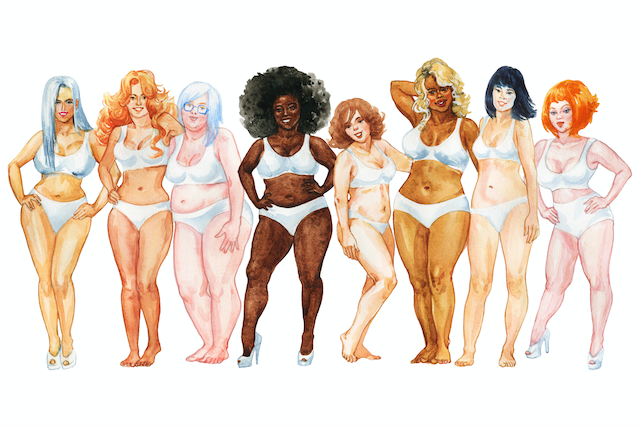
    We try to give our bodies value with numbers. We’re obsessed with the number on the scale and the circumference of our waist.

    We also think our value lies in labels. Words like “obese,” “fat,” and “overweight” are triggers for many, and we abhor them like coffee breath, because we’ve been immersed in pocrescophobia (the fear of getting fat) from before we can remember.

    But we are more than a category on a pie chart. We are more than our body shape. Magazines tell us we are shaped like a fruit, but we are shaped by the experiences that have made us the people we are today.

    Our bodies may not be light, but inside we are shrouded with light. We may be soft where we’ve been told we ought to be hard and toned, but it’s in our softness that others feel comforted in the midst of their problems. We may not have a thigh gap, but there’s space between our arms for those we love to seek shelter.

    We are more than just a body.

    Our bodies are amazing. They can do so much, for ourselves and for others. We are each beautiful in our own right.

    But that’s not all there is to us. We are the imprint we leave on the planet during our short life on Earth. We are the heart that beats within us for the things we are passionate about.

    We are the smile that radiates out of our eyes when we experience a moment of pure joy, and the serenity that pervades us when we are content. We are the words we exchange, the words we write down, the words we guard in our minds at all costs. We are the feelings that pass through us, exhilarate us, drive us, guide us.

    We are the thoughts and memories and unique set of DNA that set us apart from everyone else. We are special. We are needed. We are designed for a purpose.

    We have value that surpasses everything society and the media wants us to obsess over. We have value apart from how we look. We have value apart from our relationship status.

    We have value apart from our income. We have value apart from whether we own a house or not, or have kids or not. We. Have. Value. Unchanging, unequivocal, perfect value.

    I regret that I wasted this whole weekend feeling depressed about how much I weigh now compared to how much I weighed in my early twenties (I’m approaching thirty). It seems so silly when you think about it, a stone here or there. But I found myself giving in to that black hole, falling-to-the-floor kind of despair.

    I should weigh less. I should look slimmer. I should try harder.

    I should be something that isn’t me at this moment in time.

    It seems like everyone is dissatisfied with the way they look. We will pay money and give up all our free time to try and achieve the illusion of perfection. Snapchat filters, Instagram filters, even paying for apps that will help us to create the perfect selfie, because heaven forbid we look anything less than perfect online!

    This, in turn, feeds into other people’s insecurities, spreading the toxic message that our “just as I am” is not enough.

    The thing is, weight is just one small way to measure health. My weight suggests I’m quite overweight for my height. But when you look at my waist-to-hip and waist-to-height measurements, I’m in the “healthy” category for both of them, with little-to-no risk of developing heart disease or obesity.

    Things just don’t add up. I’m left feeling like something is wrong with me. Am I in the red, or in the green?

    Do I need to lose weight, or can I breathe a sigh or relief?

    The thing is, it’s these categories and labels that have got it all wrong. Health can’t always be measured by numbers. It’s how you live your life. 

    Being obsessive isn’t healthy. Talking negatively (even in your mind) about yourself isn’t healthy. Striving for perfection isn’t healthy.

    What is healthy? Loving yourself exactly the way you are. Making good choices for your physical and mental health.

    Being balanced in everything.

    Some days I feel like I’ve come so far, that I truly do love and accept myself as I am, wobbly bits and all. Other days I feel lost in a sea of self-pity and a strong dislike for what I see in the mirror. I compare myself to other girls.

    Why can’t I be naturally skinny? Why has nature been so unkind? Then I remember that nature has been kind.

    I’m uniquely myself with my own combination of curves and body fat. Why would I want to look like anyone else?

    My thoughts go round and round like this. It can be so tiring.

    My parents used to tell me I had a “feminine figure.” My partner loves the way I look and never ceases to remind me, even when I’m in one of my funks and in a loop of obsessing over my supposed flaws. If I could only see myself through the eyes of those who love me, my obsessing and self-loathing would all stop in an instant.

    The thing is, we have to see ourselves through the eyes of love. We have to accept. We are craving our own love and acceptance.

    We need our own kindness. We need to talk about ourselves like we would talk to our best friend. We need to look in the mirror and say, “You are beautiful, just the way you are.”

    See your own value. Yes, your body has value. Yes, it is beautiful, exactly as it is.

    Shout it out! Proclaim it to the rooftops!

    But you are more than that.

    You are so much more than a body.

  • Why I’m at Peace with My Weight Gain

    Why I’m at Peace with My Weight Gain

    “Resistance keeps you stuck. Surrender immediately opens you to the greater intelligence that is vaster than the human mind, and it can then express itself through you. So through surrender often you find circumstances changing.” ~Eckhart Tolle

    I took a deep breath, feeling the recent change in my belly. I pinched at my belly rolls. They were familiar, I’d had them before, but recently I had gone through a period of over a year where I was in a smaller body. Now I was gaining weight again.

    I refuse to step on the scale, so I don’t actually know how much weight I’ve gained. I can just feel it in the extra belly rolls and the snugness in some of my clothes. In my mind, I have two choices: to wage war on my body or to surrender to the weight gain.

    Surrender is the ability to let go of the crushing weight of societal and personal expectations. It’s waving the white flag, signifying I’m giving up all the diet culture methods I’ve tried so hard to make work. I’m acknowledging that they actually never worked in the first place. This option isn’t always so easy, though.

    For some context, I’m a body positive and fat positive activist. I advocate for acceptance and health at every size. I tell others they’re worthwhile just as they are. Though when it comes time to put them into practice within myself, it’s very challenging.

    I still have days where I suck in my stomach, hoping to appear skinnier to the world and to myself. I try to shrink to become small enough. I feel as though my worth lies in the number on the scale (even though I’m a stranger to it now).

    I lie to myself and say that I’m never going to find a partner if I keep gaining weight. I beat myself up about the food I’ve consumed and I compare myself to other people.

    My body positive journey is far from perfect; I struggle with all of these things. One big reason is internalized weight stigma or fatphobia. It infests my mind and can take over if I’m not careful.

    I mean, look at the world: We fear and despise fat. People are bullied and discriminated against because of being in larger bodies. Fatphobia is very real. It’s ingrained subconsciously; our society trains us to be this way.

    The Body is not an Apology outlines some ways in which fatphobia rears its ugly head. In jobs, fat employees tend to be paid less for the same work. In dating, they often deal with people who fetishize them rather than seeing them as humans. In fashion, there are rarely sizes available beyond a size 16. In medicine, doctors see them as weak-willed and lazy.

    This is not surrender in our society. This is bullying and prejudice. No wonder it’s hard for people to accept their changing bodies—there are so many consequences for being fat.

    The irony of fat-shaming in the name of health is that it actually causes adverse health effects. According to a survey done by Esquire magazine, two-thirds of people report they’d rather be dead than fat. Can you imagine the damage this amount of stress does to one’s system?

    No wonder we’re terrified of gaining weight. We let those messages infiltrate our minds, and they drive us to pinch at our belly rolls as if we’re the worst people ever.

    On the other hand, being thin means being accepted, flying under the radar, even being complimented. It means that life is easier because you’re not oppressed in this way. Still, fatphobia manages to creep into all of our minds.

    When you’re scared to death of what other people are going to think of you, you’re carrying your own sense of internalized fatphobia. This phenomenon even impacts those who are in smaller bodies because of the negative feelings they have about themselves and the world.

    It makes sense, then, that my first reaction to my body admittedly isn’t always unconditional love. Rather, the old messages in my mind were saying, “You’re not good enough. You’re disgusting. No one will ever love you. You’re a failure.” They were loud and unrelenting. I was familiar with these messages.

    For many years I waged war with myself. I was stuck in cycles of binging and restricting that wreaked havoc on my body. I thought I was being “healthy,” but really I was very sick.

    I was obsessing over every little thing I consumed, making sure to track seventy-two calories of butter to my MyFitnessPal app and being hysterical when I gave into a Twix bar. Weight control owned me. I was constantly thinking about food.

    Binging and restricting create terrible health risks—getting physically sick from too much or not enough food and brittle hair, not to mention the emotional consequences that occur like stress, obsession, and the absence of joy.

    I loathed my very existence, and I definitely was fighting a war against my body and myself. I thought that there was something fundamentally wrong with me. It was utterly exhausting.

    I started to think that there had to be another way to relate to my body.

    When I was twenty-two, I discovered the body positivity movement. I began with a program called Bawdy Love, which was all about being a revolution to loudly declare that every body is worthy and no body is shameful.

    I began to follow body positive influencers online like Megan Jayne Crabbe, Tess Holiday, Roz the Diva, Jes Baker, and hashtags like #allbodiesaregoodbodies. Fat women filled my feed. They were beautiful and unapologetic. They taught me that fat isn’t bad and that people in larger bodies aren’t lazy, unhealthy, or unlovable.

    Now, I must say, I’m in a smaller body. I have privileges that many people do not. My level of weight gain so far is still keeping me in a body that’s relatively accepted by society. I don’t know what it’s like to face discrimination based on my size.

    I do, however, know what it’s like to hate your body and think that you’re broken. I know what it’s like to do the opposite of surrender. When I’m living this way I do things like workout until I’m ill, take my favorite foods out of my diet, and berate my body in front of other people. This is what waging war looks like.

    Instead of doing this, I chose to surrender to weight gain. I make this choice every single day. I try to let go of my expectations and preconceived notions. I’m throwing my hands up in the air.

    This isn’t a happily-ever-after story where everything is perfect. Rather, body acceptance takes rigorous work as well simply just letting myself be.

    I’m continuing to enjoy my food free from disordered eating. This means no restricting; every single food is available at any time. You won’t hear me talking poorly about my body or about anyone else’s. I refuse to diet and I refuse to indulge others in their diets.

    To counteract the voices that tell me I’m not good enough, refute them with “You’re worthy and lovable just as you are. Weight is just a number. You’re okay.”

    Eventually, I started to believe these thoughts are true. Part of me thinks that maybe, just maybe, my existence on this planet isn’t for nothing. In letting go of the self-pity, a beautiful sense of self begins to bloom.

    Surrendering is harder than you may believe. Internalized weight bias runs deep.

    I think at times I come off as someone who’s super-confident in myself and in my relationship with my body, but it takes a whole lot of work to get to the point of surrender. The point of being free from the grips of diet culture.

    I still poke at my belly, but mostly it’s with curiosity. If I feel disgust, I quickly try to turn my thoughts around to have compassion and confidence. I notice when my thighs are pressed against a bench. I smile, feeling thankful that my legs move me around.

    I don’t step on the scale because I know that it can’t tell me anything about my worth. The numbers are irrelevant. I open my arms to weight gain, though sometimes taking a deep breath first. Accepting it means healing from a disordered relationship with my body and food.

    Weight gain is an indicator that I’m living with joy in my life. I’m enjoying meals out with friends, snacking on treats at work, and taking seconds. I’m eating when I’m hungry, what a revelation.

    I’m taking deep care of myself, and that may not look like other people’s definitions of self-care. That’s okay.

    Fatphobia may say that I’m being stupid, but I choose surrender today. For me, that means throwing out lifelong conceptions that I’m not good enough. It means no longer running in circles chasing my tail, trying to lose weight. It’s opening up to the idea that there’s another way to go about this. It’s peace and joy.

  • How to Listen to Your Body and Give It What It Needs

    How to Listen to Your Body and Give It What It Needs

    “And I said to my body softly, ‘I want to be your friend.’ It took a long breath and replied, ‘I’ve been waiting my whole life for this.’” ~Nayyirah Waheed

    For more than half my life, I took care of my body “by the numbers.” Every day, I walked a certain number of steps, no matter how sore, sick, or tired I was. I worked a certain number of hours, often going without sleep in order to finish my work and check off all the numbered items on my to-do list, no matter how my body begged for rest.

    For weeks I’d follow a strict diet, counting points or calories or carbs, ignoring hunger pains and my growling stomach. But when the diet was over, I’d stuff myself on sweets and junk food until I felt sick and ashamed. At the same time, I struggled to see a certain number on the scale and to fit into a certain dress size.

    Not only was I miserable physically, but when I didn’t meet these “number goals,” I felt like a failure and told myself there was something wrong with me.

    Maybe some of this sounds familiar to you. Maybe you’re exercising through pain, working beyond exhaustion, and eating in ways that leave you feeling tired, bloated, or sick.

    Maybe, like me, you’re blaming your body for not being strong enough, thin enough, tough enough, or just plain not good enough.

    But here’s the truth: None of this is your body’s fault.

    Whether you know it or not, your body is speaking to you all day long. It’s telling you on an ongoing basis what it needs to keep you healthy, comfortable, and happy.

    The trouble is that we’ve all been taught to ignore what our bodies are telling us in order to please the people around us. From our earliest days we were told when and what to eat. We’re told how we should look, act, and live in order to fit in. And, over the years, we’ve learned to judge ourselves and our lives “by the numbers.”

    But what if you decided to stop letting those numbers run your life and started listening to your body instead? What if you could trust that your body has a deep wisdom you can rely on to keep you healthy and strong?

    Here are some techniques you can use to connect with your body in a way that helps you feel, hear, and then honor its needs. Try them all and see what works for you.

    Listening to Your Body

    1. Respect it.

    Begin by thinking about and speaking to your body with love and respect. If you’re not sure how to do that, try repeating this.

    Dear Body:

    I love you exactly the way you are.
    I thank you for all the things you’ve done for me throughout my life.
    I respect you for all the things you do for me daily.
    I honor you for having the wisdom to know how to heal.
    I trust you to take care of me, and I will take care of you.
    I promise I will always listen to you and give you what you ask for to heal and thrive.
    My beloved body, I will speak to you with love and care for you as long as we’re together.

    Thank you.

    Commit to replacing any negative thoughts you have about your body with thoughts of gratitude for how well your body works and how many ways it serves you throughout your day. If you’d like, pick the body part you like best, and resolve to replace any negative thoughts about your body with a positive thought about what you like about your nose or your hands or your teeth.

    2. Connect body and mind.

    The easiest way to connect your body and mind is to use a combination of your breath and your sense of touch. Begin by putting your hand over your heart. Notice how your heart beats under your palm and how your chest rises and falls with each breath you take. Now close your eyes and draw a deep breath into your belly. Hold it a moment, then exhale slowly.

    As you continue to breathe deeply and rhythmically, bring your focus to the sound of your inhale and the sound of your exhale. Breathe in and breathe out as you continue to relax.

    Now, tune into your body and what it’s telling you.

    Is it tense? Relaxed? Tired? Hungry? Thirsty? Jittery? Notice if there’s a part that’s holding tension. Is that part tight or stiff? Does any part of you feel achy or anxious? Take a moment and really listen. You may be surprised at what you learn about what’s really going on inside you.

    3. Ask what your body needs in the moment.

    Now ask your body what it needs to feel better right away. When it answers, be ready to honor that need.

    • If your body is feeling anxious, try this breathing technique. Pull your shoulders all the way up to your ears, then exhale with a whoosh and repeat until you feel calmer.
    • If you’re hungry, grab a quick, healthy snack.
    • If you’re thirsty, drink some water.
    • If you’re restless, take a break and go for a short walk.
    • If you’re achy or stiff, stretch or try a few yoga poses.
    • If you’re tired, take a nap if you can. If not, try taking a two-minute vacation. Close your eyes and imagine yourself relaxing in a beautiful, peaceful place. Let your worries and exhaustion go for those two minutes while you soak up the feeling of calm relaxation.

    4. Ask what your body needs to stay healthy in the future.

    Next, take some time and ask your body what it needs on a long-term basis to heal and thrive in the future.

    • Do you need to go back to the gym?
    • Do you need to stop eating at night?
    • Do you need to replace your mattress to get a better night’s sleep?
    • Do you need to ask for help at work or at home?
    • Do you need to schedule a massage?
    • Do you need to forgive yourself or someone else?
    • Do you need to start speaking up for yourself?

    Pick the one thing you know your body needs right now to help it heal. Decide on one small step you could take right now to make long-term healthy changes. Commit to taking that step. Then commit to taking another small step tomorrow and the day after that until it becomes a healthy habit.

    5. Stop living “by the numbers.”

    Resolve to stop letting numbers run your life. Instead, commit to allowing your body to be your guide to good health and peace of mind. No more fear of failing, because you can’t get this wrong. Your body always knows what it needs.

    Remind yourself how important you are, not only to yourself but also to the people around you. What you think and feel matters. Your body matters. And when you honor that body by treating it with love and respect, it will respond in kind.

    As Jim Rohn says, “Take care of your body. It’s the only place you have to live.”

  • How to Replace Body-Hate with Self-Compassion

    How to Replace Body-Hate with Self-Compassion

    “Loving yourself is the greatest revolution.” ~Unknown

    I’ve spent most of my life struggling with my weight and trying desperately to fit the idealistic image of beauty that our culture celebrates.

    As a young teen, I was obsessed with magazines and all their secrets to be prettier and have a better butt and get your crush to notice you. I see now how desperate I was at such a young age to feel beautiful. Nothing seemed to work, though, as years passed and my need to fit the ideal beauty image only increased.

    In high school I learned to skip meals, and in college I learned to combine food restriction with exercise. Even then, I don’t remember being happy with my body.

    Over many years my body and my weight have changed drastically. Also, struggling with depression and anxiety has meant trying different prescriptions, all with weight gain as a side effect. It’s contributed to more body changes, especially in recent years.

    The more my weight changed, the harder it became to reside in my own body. I didn’t feel like myself anymore, and I didn’t look or move like I once did.

    I looked back on when I was thinner and remembered that I was unhappy at that size, but now I’d kill to have that old body back.

    It was painful to look at myself in photos. I started avoiding old friends and acquaintances because I didn’t want anyone to see my new body. Every pound I weighed carried shame and self-blame. My body was the enemy and I was at war.

    In the midst of trying new ways to manage my anxiety and depression, I came across yoga therapy. It was life changing for me. I found that I felt better after every session, even amid a severe depressive episode. To feel a mood shift in the slightest degree was miraculous, and I was hooked.

    I needed more yoga in my life and, being the academic that I am, I decided to study it. I found a local program that specialized in training yoga teachers and yoga therapists, and a new journey began.

    The first thing I learned was that yoga means union. It aims to unify the mind, the spirit, and (lucky me) the body. As a woman currently waging war on her body and studying yoga at the
    same time, things were about to hit the metaphorical fan.

    Not too many months into my yoga studies, I found myself in treatment for an eating disorder. I had to learn, or in some ways, re-learn, how to connect with my body. Turns out there are a variety of sensations and sensitivities in the body that we can (and should) tune into.

    Our bodies give us subtle cues all the time, and when I started approaching my body mindfully, I became more aware of them. For example, as I was more mindful of my breath, I noticed that I’d stop breathing when I had a difficult thought or when I challenged my body to do something it wasn’t ready to do.

    My body responded to every negative thing I did to it. When I starved myself or pushed my body past its limits, it responded with headaches and overuse injuries.

    Once I realized these things were all related, I began to ask questions: Why am I so tired? Why do I feel so overwhelmed? Why am I pushing myself so hard? How do I begin to recharge? How do I honor my own needs?

    This body I’d been at war with for so long turned out to hold the key to healing many wounds.

    When I began listening to my body’s limitations and needs, I began to change. Learning to honor my body gave me the confidence to ask for what I needed. I tuned into when I was tired or hurting, and I set up new boundaries. Taking breaks when I needed them and stepping back from certain relationships actually left me feeling more connected and capable.

    I realized it was time to end the war. My body deserved peace. It deserved compassion.

    All those years of struggle have left a mark on me. I still tend toward eating disordered behavior from time to time, and still find myself comparing my body to those around me. Sometimes the body-hate speech in my head can still get so loud that I can’t hear myself think.

    In my recovery, I’ve realized that countering negative self-talk is key. I’ve found a few things that help, and I’d like to share them in hopes of helping someone else who needs it.

    1. Every time you notice body envy, thank your body for something it does well.

    This will require you to be mindful about when you are comparing yourself to others or checking yourself in a mirror. Take a moment to purposely think about something your body does that is good for you. Doing this may not create an instant change in mindset, but it will, over time, help to re-wire some old thought patterns.

    Some things you could thank yourself for are breathing, talking, hearing, and thinking. Maybe thank your body for transporting you from place to place, walking, frolicking, twirling. Feel free to be creative!

    2. Find body movements that suit you.

    Bodies are magnificent! They are capable of doing so many things. When we tune into our body’s capacity for movement and we’re active, we feel more connected to our bodies. In those moments of connection, we are more likely to be proud of what our bodies can do instead of ashamed of how they look.

    Not every person is a natural athlete, so I’m not going to insist everyone start running marathons. You know your body and you know what you’re capable of doing.

    Personally, I love yoga, as all good yoga teachers do. I also love the camaraderie of running activities, but I’m a walker. I walk 5ks and am planning to participate in a walker-friendly half marathon within the next year. It’s accessible to me and I feel good doing it.

    Maybe for you it’s swimming or dancing or hiking. You don’t have to be the best at it, just enjoy it.

    3. Scrub your social media feed.

    Nourishing ourselves goes way beyond just what we put in our mouth; it includes what enters our minds.

    Nearly everyone has some contact with social media these days whether it’s Twitter or Facebook or Instagram. These places are ripe for talk of new diets and weight loss before and after photos. Of course, it’s mostly full of weight loss stories because no one seems to post their weight gain to social media.

    Anyway, I find it important to unfollow anything that’s unhelpful to you. If it elicits negative feelings about yourself, I beg you to consider deleting or unfollowing. Replace these feeds with more body neutral or body positive or health-at-every-size feeds. Add stories and images of successful people who look like you and who behave in ways that make you feel good.

    4. Buy clothes you feel comfortable in.

    I am so uncomfortable in tight fitting clothes, and I’m not present when I wear them. My mind is constantly focused on how others may be seeing me or interpreting my outfit when I’m uncomfortable in the clothes I wear.

    So, I recommend going out and going shopping for a few new pieces that make you feel good. Ignore the numbers and go by how it makes you feel. Take a friend with you for support if you need it. It does improve your confidence when you wear clothes that really fit you.

    5. Have honest conversations with your loved ones.

    Set boundaries around diet talk. If certain topics and conversations trigger you to feel poorly about yourself, it’s important to talk to people you trust about your sensitivities. Loving friends will want to support you in this and are often really receptive.

    I’m lucky to have lovely friends who are respectful of my boundaries and who are honest with me when I ask them questions about my insecurities.

    I’ve asked my friends not to discuss diets around me and to avoid calling themselves “bad” for having seconds or eating dessert. Also, we agreed not don’t put our bodies down. Those things really affect me, so I’m grateful to have friends that understand that. I encourage you to find people you can trust and let them support you.

    Finding ways to stand up to your own body-hate speech is so important. These little exercises may seem small, but over time can help make a difference. When we habituate self-compassion, our lives will change. Sometimes the smallest things can make the biggest impact.

  • The Best Question for Self-Care: What Do You Really Need Today?

    The Best Question for Self-Care: What Do You Really Need Today?

    “Each day is a little life: every waking and rising a little birth, every fresh morning a little youth, every going to rest and sleep a little death.” ~Arthur Schopenhauer

    About a month ago I came back to my daily meditation practice after realizing I’d been pushing myself too hard, and I was amazed at how easy it was to sit, get into that groove, and just be. I expected to sit for ten minutes, but on this day, my body didn’t want to move. I was completely content in the stillness, in silence.

    I have been meditating and practicing yoga for many years, and different variations of different practices feel good at any given point in time. However, this was the first time in thirteen years that I sat down in meditation and didn’t fidget, or move a single millimeter, until the time was over.

    This continued for a few weeks, and I was elated. I felt like I had reached a new level of comfort in my body, of awareness of what is important, of connection to a magical inner peace.

    But life is a constant ebb and flow, and after that sweet three weeks, I was back to discomfort and fidgeting beyond about ten minutes. I felt a bit bummed, somewhat jokingly thinking that my Zen super powers were gone.

    But of course, fluctuations are normal. After not regularly meditating for a few months, my body was deeply craving the softness and stillness of sitting instead of pushing for five more minutes of intensity in Vinyasa flow or five more handstands. But after a few weeks, my needs shifted again. And that was okay.

    Every day, every week, every season of life brings different needs, desires, and requests. To truly care for ourselves, we need to pay attention to honor them.

    The How: Check In All of the Time—Regularly, Actively, and Consistently

    Ask yourself, what do I need right now? What do I desire? What’s true for me today? Only then can we address the shifts inside us and show them the respect they deserve.

    If you feel more tired than usual today, you may need to take a nap or at least take it easy. If you feel emotionally overwhelmed, you may need to carve out time for journaling. If you feel physically sore, you may need some gentle stretching. Or, if you feel disconnected from yourself, you may need a little meditation or some mirror work.

    There are no right or wrong answers when it comes to self-care—only what’s right for you in a given moment based on what you’re feeling and what you need. So, create a judgment-free space for yourself. Be kind, loving, and compassionate to yourself, and honor your varied needs.
    And remember: It’s not lazy to rest or switch an active practice for a gentle one if that’s what your body and mind are craving. In fact, this is the key energizing yourself.

    We are always changing, so what we need tomorrow, next week, and next month will be different. Whether the differences are subtle or obvious, it’s undeniably true. Believing that we are stagnant in life or permanently stuck in what is presenting today serves no value.

    The body, mind, and soul are constantly in flux, in growth, in evolution. When we don’t check in at least once a day about what is different and how our needs and wants have changed, we often do what we have done previously. We stick to our last best routine, and end up giving ourselves something that might have worked two weeks ago or two months ago, but doesn’t necessarily benefit us today.

    When I sat down and meditated so easily and effortlessly, I was finally answering some subconscious call. It made me curious to know for just how many weeks or months prior to starting meditations again my being had been requesting the practice.

    If I had been tuned in then and started meditating again when my body/mind/soul was asking for it, I could have given myself the medicine, the sweetness, that it was requesting and felt healthier and more aligned much sooner, instead of struggling through imbalance.

    For months, I had simply been going too fast and trying too hard to bring the next phase of my life to fruition. I didn’t like how it felt and my intuition gave me clues to stop, but instead of choosing to slow down, I told myself this was just an intense growth season in this chapter of my life and I should keep plowing forward.

    This helped me reach my external goals, but I felt burnt out, stressed, unhappy, and disconnected from myself. By the time I fully realized I needed to surrender and take the time to get still and silent, my being was begging for it. Once I honored that need, the imbalance began to recalibrate and harmony began to take its place.

    Now as a daily practice, upon waking, I ask myself:

    • What does my body need today?
    • What does my mind need today?
    • What does my soul need today?
    • What is my intention keyword for today?

    Finally, I write an empowering statement or affirmation to use as a mantra throughout the day.

    I write down whatever answers come and then figure out how I am going to fit those responses into my schedule.

    For example:

    Today my body wants nurturing and sweetness, which might mean a short morning self-message or a bath with essential oils in the evening.

    Today my mind wants relaxation, which could mean going to sleep thirty minutes earlier than usual, doing a yoga nidra practice, or watching something that makes me laugh.

    Today my soul wants peace and joy, which might mean calling a friend to laugh together or reading a spiritual book that makes me happy.

    My intention keyword today is peace. And, moving with the intention of peace throughout my day means being content with what I have, appreciating all the components of day that, continuing to come back to conscious breathing, and smiling.

    The Key: Follow-Through

    Follow-through is as important as tuning in and asking questions, because only when we give ourselves what we truly desire can we thrive and be the best version of ourselves.

    When we give ourselves exactly what we want and need, it’s surprising just how different our day is. We care for ourselves in a deeper way, we show up for other people and our work with more presence and with a better attitude and kinder heart, and we live on purpose in the truth of what is really important in life.

    Many years ago, my therapist told me “Every day is a little life.”

    I loved that phrase and put it on my mirror. Truthfully every day is a magnificent, magical, grand chance to create our life—a chance to give ourselves exactly what we crave; a chance to choose to be our genuine, raw, bold selves; a chance to be fully alive in our skin.

    Things will shift; change is the only constant. Check in every day. It’s the only way to know if you’re living each day with purpose, intuitive wisdom, and love. Give yourself what you need, what you desire, what you deeply crave. When we honor ourselves, life simply feels better.

  • Blinded by Our Diet Culture? How to Stop Hating Your Body

    Blinded by Our Diet Culture? How to Stop Hating Your Body

    “Don’t change your body to get respect from society. Instead let’s change society to respect our bodies.” ~Golda Poretsky

    Age thirteen—that was when my eating disorder kicked into full gear because our diet culture had its tentacles wrapped around me tightly. All I thought about all day was how I was going to control and restrict my food, then how I was going to burn it off.

    I sought to burn off every calorie I ate. I couldn’t go to sleep at night unless I’d burned off most of what I’d consumed. I was obsessed with exercise and trying to morph my body into an unreasonable shape.

    Thinness, that’s what I was seeking. I’d scroll through “ana” or anorexia forums online and gain inspiration from others. I’d swoon over protruding collarbones and thigh gaps. I was in eighth grade.

    I have a distinct memory of tears streaming down my face, when I was fourteen, in the parking lot of the YMCA in my boyfriend’s car. Desperation and regret were washing over me like waterfalls. I couldn’t believe I had eaten something outside of my diet plan.

    I had a roll of cookie dough in hand that I had just binged on. I wrapped it up and angrily threw it on the floor. Then I vowed to burn the sweet off by sweating on the elliptical and to never do that again.

    Though inevitably I had sweets again. Or something that was high in fat. Or something that was too carb-y. There was no winning, I had myself trapped.

    I’d even berate myself when I ate two granola bars because that was too many calories. I’d hide in the bathroom while at the beach in fear of being “too big.” Diet culture dogged my every step.

    I thought there was something fundamentally wrong with me, like I was broken, largely because of the messages I’d received from our culture—that I’d always have something that needed to be “fixed.” I lived my life as if that were true.

    I read in Jes Baker’s book, Things No One Will Tell Fat Girls, that 81% of ten-year-olds are afraid of being fat, and these same ten-year-olds are more afraid of becoming fat than they are of cancer, war, or losing both of their parents.

    That was me, terrified of weight gain. As a teenager headed into adulthood, I let the fear of gaining weight run my life. I developed a binge eating disorder, where I ate in private, and the shame, guilt, and remorse mounted.

    At seventeen years old I was the heaviest I’d ever been, though still small by most people’s standards. My dad was hoping to buy me a car for high school graduation, but instead, I convinced him to pay $4,000 to send me to fat camp for thirty days. There I starved and worked out until I was ill.

    They had us working out for hours a day, barely eating anything, and they restricted us from bringing in food from outside. We’d play running games, but also row on the lake that the camp resided on. Sometimes we would workout for upwards of six hours a day, so I got sick.

    Sun sickness, exhaustion, and insufficient nutrition knocked me on my butt. I went home a few days early.

    I had mixed feelings about the whole thing. The camp felt like a prison, but I also felt good about being there because I was on my way to being thin.

    I hoped that maybe this weight loss would mean that I’d finally be enough. I felt like I had to be good enough for my boyfriend, despite him thinking that I was just fine as I was. I was convinced that I needed to be skinny in order to keep him around.

    My weight continued to fluctuate: up, down, up, down. And you know what? No matter what diet, weight loss plan, or “lifestyle change” I tried, my total disdain for myself remained. When I hit my goal weight, I still hated myself.

    It was baffling. I told myself when I hit x weight I would be good enough, but even when I reached my goal, my level of misery was the same. I was still stuck with me, the same me that is the same no matter what I weigh.

    When I was talking to my AA sponsor about my dang weight plateau (even though I weighed less than my original goal), she asked me, “But, when will the weight loss ever be enough? What weight is ‘enough?’”

    It didn’t hit me like a ton of bricks that day. I had been hearing the sentiment over and over again. When is enough, enough? But I knew then I was sick of the cycle.

    What if I was enough just as I was? I began reading books like Health at Every Size and Bawdy Love. While reading these books I kept asking myself if diets and restriction were really the way to happiness. These books and others taught me, bit by bit, that I might just be an okay human without weight loss.

    I started questioning the way I thought about things and vocalized my feelings about my body. Like, what if I played hockey for enjoyment rather than to burn off food I’ve eaten? What if I stopped berating myself to others and instead chose to talk positively about my body?

    I slowly realized that I had more important things to worry about than how many calories I’d consumed and if I was thin enough for my date. Even before I was calling it body positivity, I was on a journey of self-acceptance.

    I’d been so convinced that I possessed innate badness, but I started to wonder, what if that was a lie? Can I really be all that horrible? What if there was another way?

    I had been studying Buddhism for years but got deeper into it right around the time that I was learning about body acceptance. That was when I found basic goodness, which is Shambhala’s Chogyam Trungpa Rinpoche’s idea of discovering our inherent worth, our fundamental nature that cannot be obscured by anything like body dysmorphia or diet culture.

    It didn’t happen overnight, but I slowly began to learn about my inherent worthiness.

    I fought along the way. For as long as I can remember, I’ve had a sense that there was something fundamentally wrong with me. Trying to turn that around has been quite a feat. It’s taken daily kind self-talk, a body positive community, and professionals like a therapist and a Health at Every Size nutritionist.

    It’s also taken my sangha’s love and wisdom. When I’m in the space of my center, whether it’s my local one or the land center tucked away a few hours north, I feel a sense of peace with myself and the world.

    It’s not always so simple to say everything’s okay. There are many things that feel difficult to accept about me. Some days it’s my “fat” thighs (which are actually average-sized) and other times my jiggly tummy. Neither of these are bad things.

    My “flaws” are actually things to celebrate about myself. My legs are strong enough to carry me around day-to-day and sometimes even go hiking! And I have a belly that digests all the delicious food I eat.

    While it’s important to feel positive about certain aspects of myself, basic goodness runs a little bit deeper. It’s not “good” or “bad” in the sense we’re familiar with, rather it’s a naturalness that’s difficult to describe.

    It started seeping into my life, though, and became very real for me. I started to have this deep feeling in my chest that reminded me that I’m fundamentally okay no matter what mistakes I make or flaws I think I have.

    It helped that I tattooed the words “basically good” in giant letters on my forearm. I needed the reminder!

    It didn’t just affect my relationship with my body, it bled out into different parts of my life. In connecting to my nature and understanding my own worth, I interacted with people differently. For example, I was better at setting boundaries and saying “no” because I realized I deserve respect. I also had more empathy for people who made horrible mistakes.

    When I started to believe in my basic goodness I began to treat myself differently. When I heard those voices in my head telling me that I was broken, I gently dismissed them and moved on with my day. I replaced them with new thoughts like “you’re lovable just as you are.”

    I dove right into body acceptance work. I started to practice intuitive eating, subscribed to the Health at Every Size movement, and became a body positive advocate on social media.

    Experiencing intuitive eating manifested as learning to tune into my body and dropping the “shoulds” and “shouldn’ts.” There were no longer “bad” foods in my life that I “shouldn’t eat,” and there were no longer exercises that I “should” be doing.

    Rather, I learned that my body has inherent wisdom. It sends me hunger and fullness cues. It tells me when it doesn’t like something. It’s naturally emotional, providing me the opportunity to share joy with friends through a birthday cake.

    My relationships with food and exercise go hand-in-hand. Exercise became an outlet to move my body and have fun. What a revelation! I didn’t have to punish myself in order to get moving. I could move just fine by playing hockey and taking walks.

    Health at Every Size taught me many things, one of the biggest being that diets don’t work.

    In the book Body of Truth: How Science, History, and Culture Drive Our Obsession with Weight—and What We Can Do About It, author Harriet Brown cites statistics that show “over 45 million Americans will go on a diet at some point each year. All but 5% of them will gain the weight back in a year, and all but 3% of them will gain the weight back plus some extra in three years.

    Many of us throw ourselves into dieting, thinking that it’s going to cure our problems and we’re finally going to be thin. It’s a sinkhole. The real solution isn’t an attempt to change your body. It’s connecting with that goodness deep inside of you.

    From there, you can take better care of yourself. A meta-analysis of twenty-four studies published between 2006 and 2015 found that people were actually more motivated to exercise when the drive wasn’t from shame and guilt and instead focused on enjoyment.

    The same goes for eating and anything else we do. When shame is the drive, everything suffers. On the other hand, if we’re operating from an understanding of our basic goodness, we actually want to care for ourselves.

    One of the best tools I’ve found to care for myself and connect to my basic goodness is meditation.

    Meditation isn’t the only answer to connecting to your basic goodness, but it’s the biggest. This practice may drum up images of monks on mountaintops, but everyone can do it and everyone can benefit from it.

    It’s not about being perfect. It’s not even really about quieting your mind or becoming happy, though these are often welcomed side effects. Instead, it’s about making friends with what’s going on inside your own mind and in turn connecting with your body and realizing it’s doing a great job.

    To listen to your body, things have to be clear. Pema Chodron made the analogy of a glass of water. If you put a tablespoon of dirt in the water and start stirring, everything’s all muddied.

    This is equivalent to negative diet culture thoughts churning in your mind. Thinking about weight loss, calories burned, and steps taken are the dirt swirling. These kinds of thoughts often take you away from your intuition, or your state of calmness.

    What if you stopped stirring, though? The dirt would go to the bottom and you could see clearly again; you could connect to your body’s needs.

    Pema identifies this as our natural state, or state of basic goodness. When our relationship to our body comes from a place of love instead of punishment, many benefits can occur.

    I’ve done much healing of my relationship with my body (and mind and spirit for that matter). I still have days where the old voices and habits creep in, but I connect to my basic goodness on a daily basis.

    The best advice that I can share is to become connected to a body positive community. Connect with others who are on the same journey. Follow Instagram influencers like Megan Jayne Crabbe, Tess Holiday, and Virgie Tovar.

    Learn about the topic of basic goodness. Chogyam Trungpa Rinpoche writes a lot about it, but you can also find more on the matter in books by Sakyong Mipham Rinpoche and Pema Chodron.

    Tap into that basic goodness. Use meditation to connect and use Health at Every Size and Intuitive Eating practices to be embodied. Know that you are so good, no matter what.

    Drop that diet culture garbage; it isn’t serving you. Remind yourself that your health is about so much more than weight. Lastly, work toward accepting your body; it’s the only one you’ll get.

    For me, it’s a journey. I’ll never achieve the perfect level of accepting my basic goodness and my body. We can talk all day about the best tactics to achieve freedom, but there are going to be plenty of days when I fall short.

    I just want to make it clear that, like many things, having a healthy relationship with our bodies is a practice. Fundamental worthiness and body acceptance have changed my relationship with myself for the better, for sure. But I’ll always be learning and growing.

  • 3 Healing Practices to Connect with Yourself and Release Your Pain

    3 Healing Practices to Connect with Yourself and Release Your Pain

    “Our practice rather than being about killing the ego is about simply discovering our true nature.” ~Sharon Salzberg

    One of the symptoms of living in today’s fast-paced world is the underlying feeling of loneliness, overwhelm, and disconnection. Chronically stressed and under financial and familial pressures, we often feel alone in the world, out of touch with others, overwhelmed by our emotions, and disconnected from our own bodies and ourselves.

    Our world is ego-driven. We constantly compare ourselves to others, judge our performance (usually harshly), define our worth by our financial and career achievements, and criticize ourselves for failure.

    This ego-based drive for success and happiness is of course ineffective. We keep wanting more, never feeling quite satisfied. And that’s because our definition of happiness as something that can be obtained externally is fundamentally misguided.

    It’s a good thing to achieve external success and take pride in what we’ve accomplished through hard work. However, happiness comes when we feel fulfilled, and in order to feel fulfilled we need more than material possessions and accolades—we need to feel loved and that we belong.

    This feeling was always fleeting for me growing up. A difficult childhood and my highly sensitive personality meant I grew up believing that there was something wrong with me. Feeling deeply insecure, and without an anchor at home, I had a hard time making friends and felt mostly misunderstood, hurt, and alone.

    Eventually, chaos at home and bullies at school led me to disconnect, both from my body and myself. I didn’t feel like I belonged anywhere, so I made myself small, almost disappearing behind a veil of hurt, fear, and shame.

    I associated my body with pain, and love with getting hurt. Living in my head was safe, and so I put up big walls around my heart and decided to make the best of what I was given.

    I compensated for internal pain and emptiness with external validation: straight A’s, degrees, a career in high tech, people pleasing, perfecting, performing, putting on a mask to make myself look better than I felt. Eventually, I found love and friends, but the internal angst was still there, unexamined.

    Unbeknownst to me, my ego was in control and the driving force behind my constant search for approval and validation. This perpetual state of searching for contentment kept me feeling empty, unhappy, and alone.

    Running from yourself can only work for so long. Eventually, the walls I built became my prison.

    I had to face my pain, confront my fears, and unleash the chains I’d built around my heart so that I could go on living, not just functioning.

    If I wanted a fulfilled life, I had to look inside and find love there first. I had to undo years of disconnect and pain, and reconnect with my body and my heart. I had to recalibrate my life toward inner peace and joy, and away from self-focus, fear, and my perceived brokenness and separateness.

    Over the years I spent healing and getting back to myself, I discovered that some practices can help us drop the swelled up ego just enough so that we can embrace our life with love. Those practices include…

    Reconnecting with Our Body

    At some point in our lives, most of us went through a traumatic experience that left us feeling disconnected from our body. Childhood abuse, sexual trauma, a car accident—all those experiences can lead to disembodiment.

    Even if we were lucky enough to avoid trauma, we live in a world of chronic stress and overwhelm, which puts a lot of strain on our bodies. We often operate in “survival mode” and experience chronic muscle tension, fatigue, and pain.

    When our body has been the source of pain, we might want to disconnect and numb out in order to protect ourselves from the hurt. We end up living in our head, often completely unaware of what is going on in our body.

    Getting back in touch with our body is the first step in healing our soul, opening our heart, and dropping our ego. And yoga is a perfect tool here.

    Yoga is a gentle practice that can help us reconnect with our body. Yoga means unity, between the body and mind. With breath as an anchor, flowing through poses while holding ourselves gently, we center and reconnect with ourselves in the present moment.

    We get out of our head (and our ego-based identity), and back to our body and our true self. We quiet the mind, softening its grip as we turn to movement, being fully present and aware.

    As we tune into each pose, we begin to feel every part of our body. We start cultivating a close relationship with ourselves, exploring our own feelings, thoughts, and relationships to the poses. Yoga becomes an intimate practice for self-exploration and self-acceptance. And it slowly dissolves the ego as your heart takes center stage.

    Certain poses are particularly good for grounding and centering , like child’s pose, tree pose, and warrior poses. There are also many heart-opening poses—like camel, bow, or bridge poses—most of which focus on rotating our shoulders, opening our ribs, and doing backbends, which release muscle tension and unlock sensation in the heart center (also great for anxiety relief).

    Kundalini yoga is another practice for awakening and healing our energy body and releasing trauma/blocks, whether in our heart center, root center, or elsewhere.

    The important thing is to focus less on the “exercise” component of it and more on the mind-body-heart connection that happens when you slow down and become really present in your practice.

    Befriending and Taming our Mind

    Once we’ve reconnected with our bodies, we need to befriend our mind, which can easily be overwhelmed by fears, worries, doubts, self-criticism, and obsessive thoughts. We can do that through meditation.

    Mindfulness meditation specifically helps us cultivate a sense of awareness and teaches us to look inward, observe our experience, and learn to let go. It brings to our attention the impermanence of life—as our thoughts and sensations change constantly, so does our experience. This means we can let go of our grip and take life as is, moment by moment.

    With the breath anchoring us in the present moment, we gain a sense of freedom from our past troubles and future worries. Our fears fall away and freedom sets in—freedom to choose how we experience life that’s in front of us.

    With practice, we learn to notice feelings, and emotions underneath those feeling, and the thoughts underneath those. There’s a freedom in that too—freedom to choose to not buy into those thoughts, to let go of them and choose differently. We learn to respond wisely to what’s in front of us, choosing love instead of reacting from our unconscious programming and out of learned fear.

    By observing our thoughts and sensations we learn to recognize when we are afraid, hurt, angry, or ashamed, and that awareness is what allows our ego to fall away.

    We begin to understand the meaning behind our experience and surround ourselves with compassion for our pain, holding ourselves with tenderness and care. We learn to drop our fears and our beliefs about ourselves and the world, and begin to live from our heart, our authentic self.

    When we meditate, we start to gain a better understanding of ourselves, and our way of being starts to shift. We come into wholeness, the realization that our lives are both joyful and painful, and no, we are not damaged, we’re simply human. And the best thing we can do is to love ourselves in this moment, to offer ourselves the care and compassion we need in order to feel soothed and safe. And then we can extend that love and care to others as well. We all suffer and have moments of struggle; this simple acknowledgement can open our heart and connect us all.

    In moments of chaos or anxiety, when our mind is restless or overwhelmed, we can do simple practices that will calm our mind and tame our inner dialogue. A particularly nourishing practice is Tara Brach’s RAIN of self-compassion meditation. By observing our thoughts and feelings without judgment—the core of mindfulness meditation—we can shift from pain to compassion in a gentle way.

    Another practice to try is loving-kindness meditation popularized by Sharon Salzberg.

    And if sitting meditation is too hard for us, we can tap into a meditative state through movement. Rhythmic exercises such as walking, swimming, or dancing can help integrate our body-mind and reset the nervous system through the rhythmic flow of movements that will relax and soothe our mind. These will ground us in the present moment so that we can be there for ourselves, and others.

    Accepting and Rewriting our Story

    If we’ve been running from our pain for a long time, as I once did, this pain becomes our story; our ego is entangled in it. It’s time to untangle and release it so that we can make a new ending. It’s time to rewrite our story.

    I’ve found journaling to be particularly helpful because it allows me to explore my thoughts and feelings without worrying about being judged, criticized, or rejected for who I really am.

    Through journaling, we can uncover our inner pain and suffering and bring to the conscious our fears of feeling not good enough, unlovable, and ultimately alone.

    As we explore our deepest thoughts and try to make sense of our experience, we begin to discern our true feelings from adaptations and programming that we’ve accumulated over our lifetime—messages we received from our family, peers, and society as a whole. We tap into our inner wisdom and intuition, and gain a new perspective on ourselves and the events in our lives.

    Writing is like having a deep conversation with ourselves. Faced with our shame, grief, and the sheer depth of our pain, we learn to offer ourselves the compassion and care we’ve been searching for outside of ourselves. Tending to the wounds we’ve been avoiding, we develop empathy for ourselves as a vulnerable and wounded person.

    Journaling is the ultimate release; we can drop our masks and explore our hang-ups and limitations head on. We slowly unpack our deep-seated beliefs, bringing them to light. This deepens our inner knowing, helping us examine and change our beliefs about ourselves and the world. As we release the pain we’ve been holding onto our whole life, our hearts begin to soften, our armor drops, and our story changes.

    There are two main ways you can journal to heal: expressive writing and prompt-based writing.

    To begin expressive writing, relax your body and close your eyes. Look inward and wait for thoughts to arrive. Begin writing them down without censoring yourself. Spill it all out onto paper, letting your unconscious step forward, giving it a voice. Bring up your real feelings about yourself and the world—and not just what you’ve been conditioned to believe.
    Prompt-based writing can help you think about how your family history, your cultural background, and your religion have all played roles in why you are the way you are.

    For example:

    • How did your family of origin show (or withhold) love?
    • What are you most ashamed about regarding your family?
    • What did you not get as a child that you are now seeking as an adult?
    • How was anger expressed or repressed in your family growing up?

    By examining your past and what shaped you, you can shed a light on your unconscious patterns and the beliefs that you accepted as truths. This is the first step in changing them and rewriting your story.

    These three practices—yoga, mindfulness, and journaling—helped me heal, reconnect with myself, and learn to love myself, and self-love is a prerequisite to feeling the love and belonging that leads to happiness.

    Whether you’ve experienced some sort of trauma or you’ve disconnected from yourself as a consequence of living in our stressed out, achievement-focused world, these practices can help you too.

    By making a little time to reconnect with your body, befriend your mind, and rewrite old stories that no longer serve you, you’ll soon stop being a slave to your ego and start living a freer, happier, more authentic life.

  • How I Healed from an Eating Disorder and Stopped Hating Myself and My Body

    How I Healed from an Eating Disorder and Stopped Hating Myself and My Body

    “Quiet the voice telling you to do more and be more, and trust that in this moment, who you are, where you are at, and what you are doing is enough. You will get to where you need to be in your own time. Until then, breathe. Breathe and be patient with yourself and your process. You are doing the best you can to cope and survive amid your struggles, and that’s all you can ask of yourself. It’s enough. You are enough.” ~Daniell Koepke
    I remember looking at the nutrition information on the bag of jujubes I had just eaten and feeling utterly and completely disgusted with myself.
    That was my first binge. Little did I know how much worse it would get.

    It was four days in to the first official diet that I had somehow managed to stay on for more than one day.

    I had dieted on and off most of my life, but any time I tried a diet that told me what I was and wasn’t allowed to eat (Atkins was the first of many), I never managed to last longer than a day or two before I’d “blow it” and give up.

    Prior to the day of my first binge, I had actually lost a lot of weight on my own, simply by counting calories, but I hired a trainer because, while I reached my goal weight on my own, I still hated my body and wasn’t happy.

    So, I did the only thing I knew to do at the time—pay someone else to tell me what to eat so I could have a perfect body and finally be happy.

    Ha.

    I white knuckled my way through four whole days before I found myself at the grocery store feeling much like I’d imagine a junkie feels as their high begins to wear off. I needed a fix and was jonesing bad.

    The next day, I barely ate anything and ran for about two hours to punish myself for being such a pig the day prior.

    Within a few months, I was sitting in a therapist’s office hearing him call me bulimic while I bawled hysterically and begged him to tell me how to stop feeling so completely out of control with food.

    The harder I tried to control my intake, the more out of control I became.

    The more out of control I felt, the worse I felt about myself and treated my body.

    Depression, panic attacks, bingeing, and restricting/over exercising (those were my compensatory behaviors) took over my world.

    What was wrong with me? I wanted a perfect body so desperately; why couldn’t I just eat what I was supposed to eat?!

    I spent a lot of time with my therapist, and he never really gave me answer for what was wrong with me (beyond the eating disorder) or how to fix it.

    It just kept getting worse.

    My body would shake and I’d be so desperate to get into whatever food I had as fast as humanly possible that I’d usually end up eating an entire large bag of candy on the drive home before continuing to eat until I was sick once I got home.

    After awhile I started noticing that it literally felt like a hole in the center of my being that I was frantically trying to fill—unsuccessfully. No matter how much I stuffed in there, it just never ever felt full.

    What started with one small bag of candy turned into a monster inside me that I could not control. It morphed from a bag of candy to eating myself sick and ultimately feeling like I was killing myself with food. At my worst, there were nights when I had eaten so much I was legitimately scared I was going to have a heart attack in my sleep and wondered if I should go to ER.

    So I started reading everything I could get my hands on. I was desperate—desperate to not eat myself to death, but also desperate to find a way to stop so I could just have that perfect body and finally be happy.

    But as I read, I came to realize that my bingeing wasn’t about the food. The over exercising and starving myself to compensate for the bingeing, none of it was about the food or exercise.

    And my desperate need to have a perfect body, in order to be happy, wasn’t even about my body.

    It all had everything to do with how I felt about myself and my worth as a person.

    I hated myself and felt worthless.

    I didn’t think I was good enough for anything.

    And in that one moment of awakening, everything that was wrong in my life made complete sense.

    I finally knew why I was angry all the time—I was in pain.

    The starving, restricting, bingeing, and over exercising made sense—I was punishing myself.

    The obsessive ways I dove into everything, including food and exercise, were attempts to keep myself numb and not address the pain.

    I knew that if I ever had any hope of changing anything, I had to stop chasing the perfect body and start learning to love and value myself, which meant figuring out where the self-loathing and feelings of inadequacy were coming from.

    The first thing I had to do in my process of healing, recovery, and growth was to start learning to be forgiving of myself and treat myself with compassion. I had been living with excruciating emotional pain my entire life that I never allowed myself to even acknowledge, never mind deal with.

    My constant anger didn’t make me a b*tch or a horrible person; it was a symptom of someone who was hurting deeply.

    The initial weight problem that morphed into dieting/disordered eating and ultimately bulimia didn’t make me disgusting or weak; it was a symptom of someone who hated herself so badly she was punishing herself every day.

    Those realizations allowed me to start extending myself compassion for those things in me that I wasn’t proud of. They allowed me the space to start healing. Because you cannot change while you believe you deserve to be punished.
    I gave myself permission to eat whatever I wanted.

    I even gave myself permission to binge, and the weirdest thing happened—I began to do it less and less. Now I cannot remember the last time I binged. It’s been years.

    It sounds crazy, like the opposite of what we should do. Permission to binge?!

    But when I realized the purpose it was serving and stopped judging myself for it so I could work on actually healing the need it was filling, it all changed.

    You see, as long as we’re judging and hating ourselves, we’ll always feel like we’re bad and deserve to be punished. And as long as we believe we’re bad and deserve to be punished, we’ll never stop punishing ourselves.

    It came down to five basic mindset switches for me: permission, acceptance, compassion, kindness, and curiosity.

    Permission: It’s okay because I’m doing the best I can with what I know right now. When I learn how to better handle these feelings, I’ll make more loving choices for myself.

    Acceptance: It sucks pretty bad, but it’s my journey. For whatever reason, whatever I’m supposed to learn from this, this is the journey I’m supposed to be on.

    Compassion: How would I speak to a friend or client going through this? That’s how I started trying to speak to myself.

    Kindness: The worse I felt, the kinder I was to myself.

    Curiosity: I couldn’t just blindly give myself permission to binge forever without actively getting curious about why I was doing it. So, every time it would happen, I’d spend a lot of time asking myself why. How was I feeling? What feelings was I trying to keep myself from feeling? Was there a better way I could manage those feelings?

    Alongside making those changes I also worked on learning to love and value myself and change the stories I had been telling myself about who I was and what I was worth my whole life.

    So, dieting may have made me bulimic, but my obsession with finding happiness and self-acceptance by building a perfect body led me down a path of learning to love myself and create happiness from within.

    I am enough.

    And so are you. So give yourself permission, acceptance, compassion, and kindness, and get curious about why you do the things you do. Perhaps, like me, you’ll find this is the key to your healing.

  • What Helped Me Love and Accept My Imperfect Body

    What Helped Me Love and Accept My Imperfect Body

    “You are imperfect, permanently and inevitably flawed. And you are beautiful.” ~Amy Bloom

    “Just look at yourself!”

    “That chubby face, those massive hips and thighs. The stumpy legs.”

    “No wonder he doesn’t love you anymore. No wonder he left you for her! She is so much prettier than you are.”

    I stood in front of the mirror. Tears streamed down my face. My body was shaking uncontrollably as I stared at it in disgust.

    Resentment and anger accumulated in my chest. Heavy, dark, and painful, the all-consuming emotions tried to crush me. My throat felt tight, I couldn’t breathe, my mind was racing in desperation.

    If only I was beautiful. Tall, slender, delicate, and fair. If only my body was perfect.

    He wouldn’t have rejected and betrayed me. We would still be happy. The plans we made for a future together intact and alive.

    I collapsed on the floor, sobbing and shivering. Blaming my flawed appearance for all the despair, the unbearable suffering, my shattered life.

    I had always been insecure about my body and the way it looked. But now, I condemned it for failing me, destroying my life. Judged all its blemishes and cursed its unattractive features that were too ugly to love.

    I hated my body.

    And that’s how it started.

    The Miserable Consequence of Fighting Your Own Body

    In the weeks after my boyfriend left me in May 2005, negativity consumed me.

    I was furious at him for choosing another woman over me, and I beat myself up for not noticing the affair earlier. Toxic thoughts about my inadequate body and insufficient looks circled endlessly in my mind.

    I was obsessed with the improvement of my appearance. I cut my hair, changed my wardrobe, waxed, plucked, and dyed. I considered plastic surgery to remove the visible effects of a genetic skin condition that had never bothered me before.

    And I deprived myself of food, forwent sleep to have more time to exercise fanatically every day. I ignored any hunger, discomfort, and exhaustion, lashing myself on.

    I was determined to make my body better. Fitter, slimmer, more attractive. I would never allow it to let me down again.

    And my body reacted to the verbal and physical abuse.

    Within a few weeks I suffered from a stomach ulcer, bowel issues, and frequent migraines. My hands and legs were covered in eczema. And I was plagued by hypoglycaemia that made me dizzy, faint and, on a couple of occasions, temporarily blind.

    My body and I were at war. I knew I couldn’t go on like this. I had to make peace with the way I looked.

    I had to accept my body for what it was to restore my health, emotional balance, and sanity.

    For months, I forced myself to look in the mirror and reconcile with every part of my body. I reasoned with myself that the failed relationship had long run its course and my looks had nothing to do with the break-up. I cried as I tried to forgive myself for every flaw, wrong proportion, and imperfection.

    After a while, I could look at myself and accept what I saw. Free from condemnation, shame, or judgment. Without the self-hatred, it became easier to take care of my body and my health improved together with my opinion of my appearance.

    I thought I had learned to love my body. But I was wrong.

    Realization #1: Accepting your body doesn’t equal loving your body.

    For eight years, my body and I upheld our truce. I could walk past a mirror without criticizing myself and look at myself without disgust, upset, or resentment. I had found a loving husband who frequently told me how beautiful I was.

    And I believed that he really meant it. For the most part I was okay with my looks.

    But then I gained twenty pounds during my pregnancy, and the disastrous body-shaming cycle started again.

    At first, I didn’t notice.

    I thought that I kept my husband at a distance because I was too preoccupied with my daughter. But, in reality, I felt too self-conscious and ashamed to allow him to see my flabby body.

    I deluded myself into thinking that life with a new baby was too busy to visit friends. But I just didn’t want them to think, “Blimey, she’s gone fat.”

    I believed that I stuffed myself with chocolate and greasy junk food because I had no time to cook from scratch and needed the energy while breastfeeding. In truth, I punished my body for its shortcomings.

    I had worked so hard to accept my appearance. But now, my new, changed body had once again become an enemy. I blamed it for my marital problems with a dissatisfied husband and held it accountable for my social isolation. I hated it for its ugliness, for letting me down again.

    Because the truth was that, back in 2005, I didn’t accept my body for what it was, embracing all its imperfections.

    Instead, I made peace with the fact that I wasn’t beautiful. I accepted my body as “just not good enough.” And convinced myself that, despite the inadequacies, I could live with the specific looks of the body I had back then.

    But as I gained weight and my body changed, the acceptance vanished because I never learned to love my body.

    Realization #2: The true reason why your body deserves your love.

    As I searched for ways to truly love and accept my body, I realized what a miracle the human body is.

    Trillions of cells work in harmony to perform millions of tasks that guarantee survival. Day after day, they communicate via chemical, electrical, and hormonal signals to regulate, defend, digest, filter, breathe, regenerate.

    The heart beats 42 million times every year, pumping over 2.7 million liters of blood. Bones, muscles, cartilage, tendons, ligaments, and joints work together, orchestrated by the nervous system, to allow us to sit, walk, run and jump. It takes the coordinated cooperation of around 100 muscles to simply say “Hello”!

    And yet, we are mostly unaware of our body’s accomplishments. It works in the background. Tireless, faithful, reliable, expecting nothing in return.

    As a health scientist, I knew how bodily functions worked to preserve life. At least in theory. But somehow I had never truly understood what my body did for me every second of every day.

    My body gave me life and served me unconditionally. It allowed me to experience the sunshine and all this world’s joys and pleasures. It enabled me to love, laugh, cry, and contribute.

    It created my daughter.

    But, instead of being grateful, I ignored and neglected it, sabotaged its efforts to maintain my health, and damaged it with abuse and negativity. Instead of loving the miracle that it was, I reduced it to its outer form, condemned its looks, which I denounced as unacceptable.

    Despite knowing what an amazing marvel of creation my body was, I still couldn’t look beneath my body’s exterior appearance. I obsessed over my figure and physique.

    Why did I believe my body was somehow wrong or not good enough? Why was it so difficult to love and accept it?

    Realization #3: Beauty is not in the eye of the beholder.

    As I looked into it more deeply, I started to understand that I had become a victim. All my life, I was bombarded with set definitions of beauty. Every TV show, movie, and newspaper highlighted the standards required to be beautiful.

    Every commercial, billboard, and fashion magazine implied how I had to look to be desirable. And they established beauty, attractiveness, and physical perfection as prerequisites for happiness, success, and love.

    Society seemed to prescribe specific measurements for every part of the human body.

    A certain height, weight, and hip-to-waist ratio defined a gorgeous body. Symmetrical features, flawless skin, and full lips made an attractive face. And every scar, lump, blemish or departure from the perfect body proportions destroyed all prospects of ever being beautiful.

    I had allowed my mind to become conditioned and accepted society’s version of beauty without questioning. I believed that I was destined to be ugly because I didn’t meet the criteria. I accepted the fact that beauty was out of my reach because my body shape didn’t make the grade.

    I felt like a failure for not being beautiful.

    But now it dawned on me that the society-imposed criteria were haphazard. The beauty I yearned for was a set of randomly selected dimensions, arbitrary proportions, and subjective features. Ever changing according to trends dictated by the media and beauty and fashion industries.

    Yet I bowed to them. I fixated on my appearance and compared myself to photoshopped idols. I beat myself up for my too broad hips, short legs, and round face.

    But these features were out of my control, genetically determined by the miraculous fusion of my parents’ DNA. My body was so much more than its looks and I was so much more than my body.

    So why was it so important for me to be beautiful?

    Realization #4: The true reason why we strive for beauty and perfection

    I now knew that beauty was nothing but a man-made concept. A random phantasm imposed upon us by relentless conditioning.

    But still I craved to be beautiful, I obsessed over my body’s appearance, I wanted others to admire my looks.

    And the reason was low self-worth.

    All my life, I felt inferior to others. I thought that I was inherently worthless.

    Yet, I believed that, in order to deserve happiness, love, and fulfilment, I had to be worthy of them. I had to have worth.

    So I dedicated my life to the accumulation of worth. And again, society had strict criteria to fulfill in order to be worthy of what I desired. Impressive possessions, qualifications, wealth, and other people’s approval increased my worth. And so did beauty.

    The more beautiful, flawless, and perfect a person is, the more worth they possess in society’s eyes.

    And my unremarkable looks were not good enough, leaving me with a painful worth deficit.

    Because not being beautiful made me worth less compared to others. Unworthy of a happy life, undeserving of a loving relationship. And there was nothing I could do about it.

    Or so I thought.

    The Incredibly Irony of Our Obsession with Beauty

    All my life I had been stuck in a disastrous, depressing loop.

    I wanted a life blessed with happiness and love. And in order to deserve it, I had to be worthy. But I couldn’t be worthy because I wasn’t beautiful enough.

    My body’s looks didn’t meet the requirements.

    And that’s why I could never love my body. Because it doomed me to a miserable, worthless life full of heartache, disappointment, and suffering.

    But all my self-loathing, self-condemnation, and the inability to love and accept myself were based on a mesh of lies.

    Because the truth is that beauty is a myth, a random set of society-imposed criteria. And not falling into the narrow range of qualifying measurements does not make us worthless.

    Our worth doesn’t depend on beauty, desirability, popularity or other people’s admiration and approval. It is an inherent part of who we are. An intrinsic, absolute feature of our being.

    We are worth personified, every one of us.

    We all equally deserve to be happy and loved. No matter what we look like, how tall we are, or how much we weigh.

    Our body’s outer appearance will never change anything about our worth. Our scars and imperfections cannot diminish our deservedness. Excess weight won’t make us inferior to others.

    Because we never were worthless. Nor will we ever be.

    How to Finally Love Your Body

    After these life-changing realizations, I went to work to improve my self-worth and break my mind’s conditioning.

    I must have repeated the affirmations “I am worth” and “I love and approve of myself” thousands of times. I ignored my mind’s resistance to the new paradigm and forgave myself when I slipped back into old self-criticising habits for a while. I persevered.

    I kept reminding myself that our commonly accepted concept of beauty was society-imposed, arbitrary, and unfounded. My body was a miracle regardless of whether its outer appearance met the criteria. As such, beauty wasn’t a prerequisite for loving it. Or for my worthiness as a person.

    As my mind got used to the new way of thinking, I started to accept my body as a wonderful part of the infinitely worthy being I was. I broke free from the misguided untruths I used to bow to.

    I am in a loving relationship with my body now. We are a team. I listen to its needs and allow it to look after me.

    Every day I thank it for being awesome and serving me so well. When my body changes or is unwell or in pain, I bless it with love instead of cursing it for being weak or letting me down.

    I still carry the twenty pounds I gained during my pregnancy. I might lose them eventually, for health reasons. But they don’t destroy my beauty; they don’t deduct from my worth.

    I no longer look in the mirror and see vast hips, a flabby belly, and imperfections. I see a miracle. I see life.

    I see worth.

    Beauty isn’t restricted to a chosen few who happen to meet the requirements. It is an expression of the marvel of human existence. Beauty is within all of us.

    Your body is a miracle. You are worth.

    And you are be-you-tiful.

  • 5 Signs You Don’t Know What Your Body Needs

    5 Signs You Don’t Know What Your Body Needs

    “The body is a multilingual being. It speaks through its color and its temperature, the flush of recognition, the glow of love, the ash of pain, the heat of arousal, the coldness of nonconviction. It speaks through its constant tiny dance, sometimes swaying, sometimes a-jitter, sometimes trembling. It speaks through the leaping of the heart, the falling of the spirit, the pit at the center, and rising hope.” ~Clarissa Pinkola Estés, Women Who Run With the Wolves

    We read about all these things we “should” be doing for self-care, so we add them to our to-do list and rarely, if ever, cross them off.

    Most of us have such busy schedules, we move on fast-forward without getting any closer to the end of our list. We end up running on autopilot to the point that we ignore most of what our body tries to tell us it needs in order to look and feel our best.

    Just getting through our to-do list each day can take a toll on our body and mind. But what’s becoming more apparent is that not slowing down, not listening to our body, can be detrimental to our health—and our looks!

    At some point, I realized that I was on autopilot so often that it felt physically impossible to fit healthy eating into my routine. I tried so hard to eat the “right” foods and would always end up binging on pizza or some other junk food when I thought no one was looking. I felt so much shame and distress from trying so hard, and yet nothing changed.

    What I didn’t realize is that my body had been sending me signals all along to lead me in the right direction, but I was completely clueless. Autopilot had taken over my life, and not to mention, my body’s energy, luster, and shape. Not cool.

    So how do you know if you’re running on autopilot and are disconnected from what your body needs to function and look its best? Read these signs and see if they sound familiar.

    Sign #1: You don’t know if you have any food allergies or sensitivities.

    Do you ever wonder if you’re one of the millions of people with a gluten sensitivity or a dairy intolerance? If it turns out that you are, your body has tried to tell you multiple times.

    Common symptoms of gluten sensitivities are bloating, frequent headaches, constipation, diarrhea, skin issues, sluggishness, and so much more. Common symptoms of lactose intolerance are congestion, bloating, abdominal pain, acne, and migraines. If you’ve ever experienced any of these, your body is trying to tell you something.

    I started birth control as a teenager, since it was the only thing I knew that actually worked to keep my acne under control. At times it was so bad, my mom let me skip school to avoid embarrassment.

    When I became an adult, I tried many times to get off of it but each time I did, my skin broke out again. Adult acne felt even worse. It wasn’t until I limited wheat and dairy that I was able to get off birth control and my skin finally cleared up for good.

    Contrary to what we tend to believe, symptoms like these aren’t normal! It’s your body’s way of telling you a serious change is needed. Seriously.

    Sign #2: You frequently aren’t sure if you’re actually hungry or not.

    How often do you find yourself staring blankly into your pantry wondering if you’re truly hungry or if you’re just bored?

    In the past, I’d go to my fridge, open it up and give it a good hard stare, close it, and then walk away—only to find myself doing it again minutes later. Was I hungry? Was I craving something? I had no clue if my own body was hungry or not! I felt so frustrated and annoyed with myself for doing this time and time again.

    It sounds counterintuitive, but many of us don’t have an appetite the majority of the day simply because we just don’t eat enough food. Our body ends up holding onto every morsel we feed it for dear life.

    It’s a genuine a survival instinct. If your body doesn’t know if it’s going to get enough at its next meal, it sends mixed signals. But when your body is getting enough nutrients, you won’t have to question whether you’re hungry or not.

    Sign #3: You swear to have zero willpower when it comes to processed food.

    Does it seem like no matter how hard to try to eat healthy, you always end up choosing the food you know you’ll regret?

    Whenever I’d go through one of my clean eating phases, I’d inevitably be the girl hiding in the corner stuffing her face with the muffin she never liked to begin with. I’d be so angry with myself for not having more self-control and then feel so ashamed. I’d repeat silently to myself over and over, “What’s wrong with you? Why do you keep doing this?”

    A lack of willpower is our body’s way of telling you it needs specific nutrients (hello chocolate! magnesium needed), nostalgia (let’s recreate an old memory), or even yearnings (how alive will I feel if I eat this).

    If you pay attention to what your body is feeling physically during these moments, you may notice your throat constricting or heaviness in your belly. I argue that there’s no such thing as willpower. Your body needs something and it’s not necessarily food related.

    Sign #4: You have no idea why you’re so tired and craving junk food every afternoon like clockwork.

    Do you feel sluggish at 2:00 to 3:00 pm on a daily basis? And then find yourself reaching for the first extra sweet or salty thing you can get your hands on?

    When my afternoon slump came, all I knew is that I was so dang tired… and craving carbs and sugar like a fiend! Enter vending machine with salty chips and sweet candy bars to the rescue. I’d feel so lethargic and just awful. This vicious cycle had me exhausted and ultimately is what made realize I had to do something. I had to make a change.

    Your body’s ravenous afternoon cravings are a message. They’re screaming at you, “I need nutrients! I need fuel!” Chances are, you haven’t fed it what it needs throughout the day and your body’s only way to get through to you is to intensify your cravings.

    Sign #5: You feel extreme emotions without rhyme or reason.

    Do you ever have days where you feel like you want to scream or cry for absolutely no reason at all?

    Formerly, I sometimes experienced this during a TV show or movie. The characters would say or do something that wasn’t particularly scary or exciting, but it triggered something and I felt an urge to start bawling. It was really unnerving to realize I could cry my heart out for no apparent reason at all.

    Our nature is to take the easy route—to push any heightened emotions aside and go on with our day. (We always have so much to do, right?!) But emotions need to be felt. Otherwise, they can manifest by coming out at unexpected moments or even physically in our bodies through hair loss, skin rashes, weight gain/loss, etc.

    Your body is a magical and wise teacher. Every ache, pain, symptom, and craving is a gift in its own way.

    Think of how many chronic illnesses that are diet related. Here are some to name a few: diabetes, heart disease, cancer, dental health, osteoporosis, asthma … The negative symptoms you’re experiencing today are your body’s way of doing what it can to help you prevent a disease from manifesting in your body tomorrow.

    My mom found out she has breast cancer a couple years ago. Since then, she’s completely transformed her diet and lifestyle, and from what we can tell, the cancer has regressed.

    She’s always struggled with extreme allergies and health issues. I can’t help but wonder, what if she had listened to her body and made these changes before the cancer progressed? How much less scared and stressed would our family be? (Now she’s feeling better than she did before her diagnosis!)

    I’m not suggesting that anyone who has cancer is to blame for their diagnosis, or that dietary and lifestyle changes alone will cure it, but simply that our diet affects our health in more ways than we know.

    I learned through her story and now I’m doing the best I can to take note of every little ache, pain, flush, color, craving, and emotion of my body… before I end up with the kind of life-changing hardship that’s far more than just gaining a few pounds or adult acne.

    If your body is experiencing a persisting symptom, it’s telling you something. Listen.

    If you’re feeling an extreme emotion, your body has something it needs to feel. Let it.

    If any of these signs resonate with you, try this: Put one hand on your belly, the other on your heart and say this aloud, “Dear body, I’m sorry for not listening and not making you the priority. I really do want the best for you. I love you. I’m listening.”

    Slow down and be mindful of the signs your body is sending. And instead of adding more things to your to-do list, you’ll gradually feel more confident about what your body needs to move naturally in a positive, healthier direction.

  • The Wisdom of Our Body: Slow Down and Tune In to Take Care of Yourself

    The Wisdom of Our Body: Slow Down and Tune In to Take Care of Yourself

    “There is more wisdom in your body than in your deepest philosophies.” ~Friedrich Nietzsche

    Parked in a dimly lit garage in the middle of the city at around 7pm, I sat in the driver’s seat, seatbelt still on, texting two different male acquaintances who had expressed sexual interest in me.

    “What are you up to tonight?” Waiting for a response back, I checked my phone every few minutes. The resounding emptiness in me that craved to be filled felt like it was growing deeper. After some time of getting immersed in social media, I receive a response back: an invitation from one man to come over to his house for dinner not too far away.

    That night, I ended up drinking several glasses of wine too many, engaging intimately with the man beyond my intention and consent, and feeling emptier than before as I left his apartment in the morning.

    Despite the gaping presence I felt inside, I was able to distract myself. I was a woman in her early twenties with a stable, corporate job. I also had a part-time job that got me out, socializing and exploring the city. I was doing something with my life, and I was just having a good time.

    When my mother expressed some resistance to my social life because I wasn’t spending much time with my family, I responded to her feelings with agitation and dismissal; there she was again, being overly sensitive and ruining my fun.

    Two days later, I had a fully booked day of hot yoga at 5am, a full day at the office, and then an hour-long drive to the city for an evening celebration for my part-time job. That night, after receiving and celebrating a promotion to a senior position on my part-time team, I began a drive back to the suburbs just past midnight only to wake up to the winds of a cold, lonely highway.

    It was Wednesday morning at 1am when I fell asleep at the wheel while driving the long stretch between the city and the suburbs. I awoke to a dramatic and jolting swerve into a bush, grazing the windshield at first, and then, within a blink, shattered glass and metal crashed into Highway 280’s center divide.

    Shocked by the sight of stark headlights on cement, smoke rising, and a deflated airbag that had just slapped me in the face, I thought, “Was this a dream? Please let it be a dream.”

    A few speeding cars left me behind in a body ridden with shock, invisible and alone on the interstate. In deep dread and fear at the realization that it wasn’t a dream, I lifted my leg in throbbing agony; it was the heavy deadweight of broken bone. I looked down to see the orange toenails of a swollen foot hanging dementedly, disconnected from my leg.

    The police officer that found me came by to peek into my car through the wreckage, flashlight blinding as it pointed at my squinting eyes and pained body. He told me that the ambulance was on its way and asked if I had been drinking.

    “Yes… earlier,” I confessed before he went back to his patrol car that felt miles away. I worried that he had moved far away in case my car exploded; I was petrified of dying there on that freeway from the flames of this grave mistake.

    The blinding sterility of the hospital emergency room ‪at 1:30am was cutting. Cutting off the green chiffon dress I had recently celebrated a job promotion in. They tore it straight up the middle. Cutting open my underwear without remorse, cold scissors sliding over me, leaving me vulnerable and without voice.

    I was exposed on a cold, hard table overlooked by shadows of examining strangers. After some tests, drugs, and hazy memories, I discovered hours later that I had fractured my left hip, broken my right ankle, and needed emergency surgery.

    The call I had to make to my parents at 6am the next morning was the hardest one I’ve ever had to make. I woke them up to tell them that I hadn’t made it home that night; rather, I had been in the hospital for the last five hours, I was in horrible shape and needed emergency surgery, which they needed to be present for.

    My father also had to track down the ‘95 emerald green Civic they gifted me that was impounded somewhere unknown to me and was unrecognizable to us all.

    In the months following, I was in a wheelchair, non-weight bearing on both legs, recovering and being taken care of by my family. I was forced to slow down, meditate, reflect, and tune in with my ailing body and spirit.

    It was a painful and humbling process, especially because I had little independence to even go to the bathroom, bathe, and prepare food for myself. The identities I carried like designer purses were suddenly made irrelevant; the superficial relationships I lent my body to felt wasteful; and my loneliness was alchemized into gratitude as I saw my body and life heal.

    Thinking back to the time before the crash, I realize how disembodied I was. I had been awake for twenty hours that day when I crashed my life as I had known it. I had been giving my body away to strangers, acquaintances, substances, and busyness to feel more alive, yet I was numbing myself to a point of not even realizing how tired I was.

    If I had paid a bit more attention to my body, I would have likely realized that I was tired and in need of a break to rest, express my loneliness in ways that nourished me, and breathe in deeply. I wouldn’t have made the decision to go to yoga at 5 a.m. the same day as a work celebration that was expected to go into the night, or I would have found a safe friend to stay with in the city.

    I wasn’t listening to the wisdom my body was giving me, and I wasn’t listening to anyone else, my mother included, who expressed love or concern.

    Six years later, I still think back to this time of trauma and healing often. If I could whisper something in the ear of that twenty-four-year-old sitting in that dim garage seeking others before herself, I would share four things that I’ve found to be immensely important for our physical, psycho-spiritual, and social health:

    1. Slow down and tune in. Ask yourself and your body curious questions.

    Being really busy doesn’t mean you’re living your best life. Spend time being with yourself and your body, feeling into it, and paying attention when it becomes too difficult to do so. Talk to your body, ask it what it needs, and be willing to listen with patience and non-judgment, sometimes even in silence.

    Meditation, journaling, and internally focused exercise like yoga (with rest) or solo dance are effective ways to tune inward to the wisdom of the body and the heart.

    I was so busy around the time of this calamity that I was living on autopilot, with little time to check in with myself. Western culture happens to reward busyness and doing the most; I felt validated and worthwhile by constantly being on the go.

    I also began to identify with always being busy, and I would judge myself critically when I “wasn’t doing enough.” This is still an uphill battle sometimes, and reminding myself and allowing time to slow down is helpful.

    2. Honor your feelings, even the uncomfortable and “negative” ones, by giving them space to be as they are; they will change, as all things do.

    Acknowledge the feelings that you tend to want to escape from: loneliness, sadness, and jealousy, for example. Be conscious of when you want to jump to fix it or distract from it quickly, before giving space to the feelings and letting them air out.

    Recognize that these feelings are great feedback and wisdom for you regarding what you might want physically, emotionally, mentally, and even spiritually. Most importantly, know that these feelings change like all feelings do, and that no state of mind (or anything) lasts forever.

    I was doing everything in my power to escape my feelings of loneliness. I was willing to give my body away before giving myself time to hear what it was telling me. While it was telling me to rest, to give myself some attention, care, and love first, and to slow down, I was ignoring and numbing it.

    3. Take time to play and creatively express yourself.

    Play games, move your body and express yourself to a song, create music with whatever is in and around you, draw or paint something without judgment, tell jokes to yourself or others, climb trees and convene with nature, speak in babble to a friend.

    I especially notice that my energy shifts dramatically when I dance, climb, or draw. My emotions are moved when I laugh or when I get on all fours and walk around like our ancestors. I try to practice going to these mechanisms before distracting myself from uncomfortable feelings or thoughts with technology binges or substances like food or pot.

    4. Massage your body.

    Feel into the places that feel tense and give yourself a rub. Notice your breath, inhale and exhale the tension out, and massage yourself just the way you like it. Consider this time and care that you are giving to yourself. It’s amazing how we can often give ourselves exactly what we need.

    We live in a society that tells us that we need this or we need that to be whole or worthy of something. Yet, we have all the wisdom we need to live a healthy, awake, and attuned life in our very bodies. Even just massaging ourselves with the power of our own touch can give us much healing and strength.

    I was acting like I was in the passenger seat of my life, taking a passive responsibility over my health and well-being. Little did I realize that I was in the driver’s seat, literally and metaphorically, holding the power to destruct and rebuild in the blink of an eye.

    Since gaining my capacities and independence to walk, run, bathe, and feed myself again, I’ve also studied my body with psychological training, movement, and somatic therapy. I’ve become more attuned to my physical and psychic senses, using the multifaceted feedback that my senses are giving me all the time to assess what works for me, when I need rest, solitude, and healthy connection.

    Whenever I fall back into old patterns of giving myself away to external factors in hopes of being filled, I remember this time of my accident. The pain on the faces of my parents and brother when they arrived at the hospital to see me for the first time after the crash is especially hard to forget.

    I remember too that this precious body is telling me something with every step I take, and that it’s up to me to listen and take care of it with attentiveness and devotion. Moreover, as I am able to take attuned and devoted care of my own body and self, I’ve noticed my deepened, genuine capacity to offer attuned care to and with others.

  • How to Move Through Feelings of Body Shame

    How to Move Through Feelings of Body Shame

    “Only when we are brave enough to explore the darkness will we discover the infinite power of our light.” ~Brené Brown

    My husband’s legs are smaller than mine.

    I wish I could tell you that when I first realized this (when we were dating) I wasn’t emotionally triggered. And that I didn’t care.

    But, I can’t.

    Instead, I can tell you that I walked right up next to him, planted my thigh next to his, and awkwardly declared, “Ha! My legs are bigger than yours!”

    I can still see him looking right back at me, saying, “So? I love your legs.”

    I didn’t know what to say.

    I thought—even though it wasn’t true—he’d say my legs weren’t bigger.

    But, he didn’t. He told the truth. And that truth was that my legs were (and are) bigger.

    I said nothing to him in return, except a mumbled “thank you” and changed the conversation topic. All while my body insecurities and feelings of shame and embarrassment jumbled up inside of me.

    I had some thinking to do.

    What was that?

    This stuff was supposed to be behind me. But here it was, staring me in the face.

    So I rolled up my sleeves.

    I needed to move through these feelings of body shame.

    Below are the five steps I used and that you can use too to move through body insecurities when you’re emotionally triggered.

    Step 1: Name your shame.

    By naming your shame you’re shining light on something that feels dark. And something that you’re embarrassed about.

    For example, in this experience, I named my shame with the following: “I’m feeling shameful because my legs are bigger than a man’s, and culturally, I feel it should be the opposite. I’m used to seeing images of the woman being smaller than the man.”

    By naming my shame not only was I lifting up a rock to let light in, I was allowing myself to get really clear on what my feelings of shame actually are and where they stem from.

    When you get triggered about your body size, name your shame. Write it out in a journal or if you need more time, allow yourself the time to digest your experience and come back to it. By recognizing that you want to name your shame, it’ll come to you when you’re ready.

    Step 2: Observe (instead of judge) your experience.

    Give yourself a break and stop judging yourself (or your body). Allow yourself to get curious about the experience and observe what happened. A helpful tactic to do this is pretending that you were a fly on the wall, witnessing your experience.

    What would that fly say happened in your experience?

    This allows you to stop beating yourself up and to get out of your head.

    For example, my judgmental experience with the “leg incident” would be, “I acted like a three-year-old and got super awkward and weird and started telling my now husband how much bigger my legs are than his. I’m a loser and so over dramatic.”

    My observational, “fly on the wall” experience would be, “I was feeling insecure and got triggered when I realized my legs were bigger than my husband’s legs.”

    See the difference?

    By making your triggering experience observational, you remove yourself from the experience. You allow yourself a different perspective. And it’s in this space that you can really move through something and learn from it, instead of stay stuck in it.

    Step 3: Own your experience.

    When we can own our experiences, we step back into our power. And we realize that we have more power than we think. Because we’re creating part of the experience, especially our reaction.

    Take my incident. When I own my part in the experience, I see that I chose my reaction.

    I can choose to feel bad about my body. Or, I can choose to be grateful for what my body allows me to do and that I have a partner who is accepting of me for me.

    Whether you had a “horrible food day,” got called a mean name, or feel insecure after scrolling through social media, own those feelings. Because once you name your shame and look at your experience objectively, you’ll realize that you’re the creator of your own reality and that somewhere in here there is something more for you to learn about yourself.

    I needed to learn that in relation to a man, a bigger body size doesn’t mean you’re any less feminine. And that there was still a part of me that was living based off of what society says is normal (i.e. the man should be bigger than the woman).

    There is no such thing as normal. This is the same thinking that has us feeling that we need to shrink ourselves to worthiness. In reality, this just isn’t true. Our size does not equate our worth.

    You see, it’s not about shrinking ourselves into happiness. It’s about caring for ourselves into health and happiness.

    You can do this when you begin to own your experiences and your part in them.

    Step 4: Move through (not around) your emotions.

    When you get to this step, you’ve already done a ton of work. This step is simply a reminder that working through triggers and funky emotions, especially surrounding our bodies and insecurities is hard work. We’re not taught this stuff in school.

    And in all honesty, it’s easier to just get angry when triggers come up and then pretend they never happened. But, what generally happens here is that the thing you need to work through will present itself again and again until you work through it.

    So make time to dissect what came up. You don’t need to do it all in one swoop. But plant the seed and allow the answers to come up. They will once you allow yourself and your mind to relax. Then, you can heal the wound, move through the trigger (or the belief) holding you back, and grow. Ultimately, you’ll feel more at peace with yourself and your body.

    Step 5: Choose a story that serves you.

    This is by far the most fun step. And will allow your wound to become a scar. Plus, it’s simple.

    Choose a new story that serves you.

    For example, my old story was, “Women should always be smaller than men. Especially, the ones they’re romantically involved with.”

    My new story, “The size of my physical body doesn’t determine if or how I’m loved. Especially, by the right romantic partner who sees me for who I am on a deeper level.”

    You see, we humans love to make up stories. They’re how we connect with one another. But, they’re also how we heal.

    So in your healing process, choose a story that serves you, heals you, and honors the direction you want to go.

    It’s not always easy, but I promise it’s worth it.

  • Overcoming a Negative Body Image: 4 Things to Remember

    Overcoming a Negative Body Image: 4 Things to Remember

    TRIGGER WARNING: This post deals with an account of anorexia and may be triggering to some people.

    “You will never be free until you free yourself from the prison of your own false thoughts.” ~Philip Arnold

    I really don’t remember my life before anorexia. I think back to my early teenage years when I ate peanut butter sandwiches and drank hot chocolate without a single thought of how many calories I had consumed. There was no guilt, no worry, no need for perfection. How I wish I could get those carefree moments back.

    A few years ago anorexia completely distorted my perception of myself. All it took was one seemingly innocent comment from my classmate: Haven’t you gained weight recently? From that moment on, I no longer saw a healthy, fit person when I looked into the mirror. All I saw was an imperfect body.

    Meticulous calorie counting, diet restriction, and exercise time logging began to fill day after day. I wasn’t living as a human, but rather as an engineer treating my body as a machine. I loved myself for every pound I lost, every piece of clothing that felt a bit looser, and every little bit of food I managed to leave on my plate.

    I felt like a crazy person because my reasonable self knew that I shouldn’t be starving myself and exercising ridiculous number of hours every single day. I knew exactly what was wrong with me except there was nothing wrong.

    Somewhere in the evolution of the illness, I lost control. I ate one apple a day, drank only water, ran ten miles every morning, did squats and push-ups while studying, and paced in my room instead of sleeping. Nobody asked any questions, so I didn’t provide any answers.

    And then one day I was finally rewarded with my target weight glowing on the scale. I had done it! The hard work had paid off and I was free. Or so I thought. The control I now had over my body was deceiving. Once I reached my target weight, I couldn’t stop. The rush was too inviting. Every extra pound lost felt like a victory.

    You Don’t Notice You’re Losing Control Until It’s Lost

    When I looked into the mirror, I saw my ribs with their thinly stretched coating of papery skin, and every single hump of the spine as I bent over. People began to whisper. The doctors told me that I wouldn’t survive if I didn’t start eating. But I was proud. Every comment about how skinny I was felt like an accomplishment. My insecure self was at rest only when I met all so high standards I set for myself. It felt like a prison I couldn’t get out of.

    The prison was in my head. If at some point I was controlling everything related to food and body image, now I had lost control and the illness controlled me.

    I was hungry, cold, tired, and unable to pick myself up. The voice inside my head was telling me that nothing I did was good enough. If I ate a salad, I shouldn’t have had it. If I went for a walk, I hadn’t walked far enough. I pushed my body to the point that I collapsed.

    Since I’m at a healthy weight now, people ask me how I overcame anorexia. The truth is that the recovery didn’t happen overnight, and not without relapses. It took a lot of tears and struggling, but eventually I stopped drowning. I chose to step out of my self-imposed prison, with the help of friends, family, and a counselor.

    I was fortunate enough to have the support of loving parents who were there when things were hard, when I wanted to give up because I felt too fat, when I needed somebody to remind me that recovery was worth it. And more importantly, that I was worth it.

    It was a taxing mental battle that still at times rages within me. The old eating disorder voice creeps up sometimes, but I now recognize that voice as irrational and destructive. I’m learning to ignore it. I’m learning to quit running away from myself.

    4 Things to Remember When You’re Under the Spell of a Negative Body Image

    Negative thoughts about your body consume you. They take and take and take. To recover, you essentially have to figure out who you are again. You have to build yourself up from the smallest bits of what you know of yourself. You have to differentiate yourself from the condemning voice. Here are some of the things I learned (and had to embrace) on my way to recovery.

    1. Not all thoughts are facts.

    The problem with a negative self-image is that it feels like a fact. You can easily convince yourself of something that is not true. Even at 5’7” and my lowest weight (ninety pounds), I believed that I needed to be thinner.

    I felt that my waist wasn’t slim enough, my arms weren’t toned enough, and my thighs weren’t narrow enough. My mind was a very thorough liar, and there was nothing anyone could say to convince me otherwise.

    If I hadn’t learned about these lies and how to discern them, I would probably never have gotten out of that vicious cycle.

    You might have a hard time discerning truth from lies in the beginning, so instead of questioning whether your thoughts are facts, ask yourself which ones serve you and which do not.

    Growing up with an athletic sister, most of my negative thoughts evolved around my body. I could objectively say that although I was very thin, I wasn’t particularly lean. So I signed up for a gym membership and started lifting weights.

    However, what was initially a constructive thought—that it would serve me to build muscle—turned into an obsession within a few months.

    I remember standing in a basement gym, pushing a heavy barbell above my head, when I realized I was crying. I let my tears roll down my cheeks and focused back on the barbell. I had to finish my workout. I was exhausted and hungry from all the workouts I put my body through every single day, but all I could think of were toned arms and washboard abs.

    I think I knew long before that day that my desire for a lean body was no longer serving me. However, I couldn’t stop exercising. I had to sweat. I had to feel my heart race. My life revolved around my fitness routines.

    I knew then I needed to challenge the thoughts that told me I wasn’t lean or fit enough, and adjust accordingly.

    That isn’t to say that I stopped working out altogether. There are days I still experience anxiety when I know I won’t be able to get to the gym. But any time a destructive thought about my not-so-toned body pops up, I remind myself this doesn’t serve me and do my best to let it go and focus on something more positive. I may not have the leanest body, but I am more than just my physique.

    2. Absolute control is an illusion.

    Eating disorders are all about control. Control issues with what goes into your body and what comes out of your body. It’s about exerting control over at least one aspect of your life. However, it’s an illusion. In fact, you may feel in control, but be very out of control. The more successful you are at exerting control over how much food you take in, the less control you actually have. The eating disorder and twisted ideals are controlling you.

    Right before I hit rock bottom, I was paralyzed with fear and crippled with anxiety. I needed the eating disorder. I needed the identity and illusionary control it gave me. If I felt I got everything under perfect control, I felt strong. Paradoxically, that’s when I ended up under the doctors’ and my parents’ supervision, with no control over my food intake.

    Letting go of control was the hardest part. I would be lying if I said I no longer struggle. However, I’m much better at reminding myself that the greatest control is in letting go of the need for it.

    3. Perfectionism is unattainable.

    Perfectionism goes beyond doing your best. It’s about setting extremely high standards that are unrealistic. In my perpetual quest for perfection, I believed I could meet those high standards. I strived for perfection in my studies, relationships, cleanliness, exercise, and diet. Mediocrity was unsatisfactory. It was all or nothing.

    Perfection is so addictive because it locks you into thinking that if you do everything perfectly, you can minimize the feelings of pain and judgment. But the truth is, you can’t. There will always be people in your life who judge you no matter what you do or what you say.

    The one thing you can do is to surrender. Accept that you are work in progress. Embrace all parts of yourself, even those that seem “imperfect” to you. Practice forgiveness and self-compassion. And most importantly, be patient. Adopting new patterns of thinking takes time, but the work is worth it.

    4. Food isn’t the enemy.

    The difficulty with negative body image is that it’s closely tied to weight (and therefore, food). But unlike a drug addict, you can’t avoid the trigger. You can’t simply avoid food for the rest of your life, although it is very tempting to adopt the mindset that the fewer calories you eat, the better.

    In that sense, healthy eating literally saved my life. Fueling my body with simple whole foods shifted my focus from calorie counting to nourishment. Instead of weighing myself several times a day, I focused on my health.

    At times, I still pay attention to how my clothes fit and how I look in the mirror, but food is no longer the enemy. It’s the means to achieve the good health we all find so radiantly beautiful—glowing skin, shiny hair, and a fit, strong body.

    Silencing the Voice

    Do I still struggle at times? Yes. However, when my negative thoughts and struggles reappear, I no longer let them run my life. I recognize them as something I must overcome. There are days that I have to make a conscious effort to eat and not panic when the scale shows an increase. But thankfully, I know the price of letting fear take over my life.

    I know that one day I’ll be able to step on the scale and not cringe at the numbers that appear in front of me. One day, I’ll be able to eat a meal without thinking about calories. One day, my mind will be completely free. Until that day, I keep silencing that voice.

  • How to Start Liking Your Body More (Just as It Is)

    How to Start Liking Your Body More (Just as It Is)

    “Body love is more than acceptance of self or the acceptance of the body. Body love is about self-worth in general. It’s more than our physical appearance.” ~Mary Lambert

    This past week, I got married.

    For me, this symbolized not only a new chapter in my life with a partner, but also a new chapter in life with myself.

    Here, in this new chapter, I officially left behind the woman who was constantly trying to mold herself into whatever she needed to be to (hopefully) be accepted and loved by a partner.

    And instead, I found the woman who was unapologetically herself and loved for it. In fact, that’s what ironically got her to this point in the first place.

    And I left the girl who used to get by on a diet full of grapes, lettuce, and coffee. Who thought the thinner she was, the more worthy she was.

    This sad, hungry girl was replaced by a woman who didn’t think twice about losing an ounce to fit into a white dress, and who embraced her curves, thighs, cellulite, wrinkles, and all that goes along with the celebration (yes, celebration) of aging.

    My twenty-something self would be amazed.

    To be honest, my thirty-something self is amazed.

    If you had told me how I’d feel about my body and myself today, even ten years ago, I wouldn’t have believed you.

    And that realization got me sitting here, reflecting, thinking, “Wow, what a journey.”

    How did I get to this radical place of self-acceptance?

    While it’s difficult to pinpoint any particular moment that landed me here (because there isn’t any one moment), there are certain things that pop up that I distinctly remember that allowed me to begin liking my body (and myself) more.

    That allowed me to stop obsessively counting calories and to start actually enjoying food.

    That allowed me to trade frantically exercising for mindfully moving (and connecting with) my body.

    That allowed me to swap feeling shame about my thighs for gratitude that I have thighs.

    Here are a few of those things that allowed me to start learning how to like my body more. I hope they help you just as much as they helped me.

    1. Get clear on how you want to feel in your body and why that’s important to you.

    First thing first, you need to know how you want to feel in your body.

    Because you can’t get to where you want to go if you don’t know where that is.

    So make the time, grab a pen and journal, find a quiet calm space, and ask yourself, “How do I want to feel in my body?”

    Or, if it’s easier, ask yourself, “In my ideal world, where I am kind to myself, what would my relationship with my body look like?”

    Write your answers out.

    When you have your answers, ask yourself, “Why is this important to me?”

    Know that you may need to ask yourself “why” five to seven times and really dig deep to uncover the core reason changing your relationship with your body is important to you. Just continue asking “why” until you feel your heart is speaking instead of your head.

    You’ll need this reason to understand yourself more and to reflect upon when you feel frustrated and like you want to throw in the towel, because you will have those moments. But when you remember your WHY, you’ll rekindle your connection to being kinder to your body and yourself.

    For me, my “why” centered on the fact that I couldn’t imagine going through my entire life at war with my body. I just couldn’t. I wanted to feel confident and free in my body, not shameful and controlled.

    It took time and daily work to get to a new place, but my “why” and my vision of where I wanted to go was so strong I continued showing up.

    You can do this too.

    2. Flex your gratitude muscle.

    One of the most interesting tools I used to like my body more was gratitude. Today, you see this word everywhere, but there’s a huge difference in seeing it all over social media and online mediums versus putting it to use.

    When I began making the shift to what my body allowed me to do versus what my body didn’t look like, I was amazed.

    I slowly began forming this new perspective that my body was a gift and a vehicle that allowed me to move through life. And it was my job to nurture it, take care of it, and stop being so mean to it.

    What happened is that I became appreciative. I appreciated that I had thighs to hike, that even though I had cellulite, I could run a half marathon or participate in a yoga class. And it was through this viewpoint that I also came to like who I was as a person more.

    I appreciated that I was open to growth, that I was compassionate, and that I had the ability to inspire others. Ironically, I found that I was more than just a body.

    And so are you.

    You’ll be able to see this if every day, you bullet point one or more things that you are truly grateful for or appreciate about yourself.

    I promise that practicing gratitude is popular for a reason—it works.

    3. Surround yourself with healthy bodies.

    A huge part of my journey was surrounding myself with healthy bodies, all sorts of shapes and sizes, online and offline.

    Because what can so easily happen is that we end up comparing ourselves to ideals that aren’t even real or that aren’t physiologically possible for us because they’re simply not the intended shape of our bodies.

    For example, I used to be obsessed with model-type thighs. And then one day, it hit me. Those thin, “leggy” model-type thighs are not a part of my body shape. No matter how much I exercise or how little I eat, my body will never go there.

    And it was through this realization that I began paying attention to all types of bodies—smaller bodies, bigger bodies, in-between bodies—and I found that there are no better types of bodies; they’re just all bodies. And it’s how we treat them that matters.

    So if you’re struggling here, I highly recommend unfollowing social media accounts that make you feel bad about your body. And, if you haven’t, find a place to move your body where you feel comfortable and accepted. Because if you don’t feel comfortable in your body or accepted, you won’t want to go there to exercise, and movement is such a huge part in connecting with your body in mind, soul, and spirit.

    4. Connect and acknowledge your underlying fears.

    Acknowledging and understanding your underlying fears when it comes to your body is so huge. Those fears hold answers. But so many times, we’re taught to simply brush them under the rug and try to fit in and look like everybody else.

    But what if you allowed yourself to dig into your fears?

    To understand what you’re actually worried about?

    And then to dig deep and question if that fear is an actual truth or if it’s something that is truly just a fear?

    For me, when I allowed myself to examine my body fears, I found that I was afraid of not being accepted, of not being the way a woman was supposed to look.

    You see, as a little kid, I was always teased or left out because I was on the chunky side. I wasn’t one of the popular girls. When I realized that I could overexercise and undereat to become thinner, and that I looked more like how the girls in the magazines and the popular girls looked, that’s what I did.

    My deep underlying fear was not being accepted; it actually wasn’t about my body size.

    I internalized this and then realized that the key people in my life didn’t care about my body size (in fact, they were concerned by my shrinking size and misery). Rather, they cared about who I was as a human being.

    In other words, they accepted me for what was beneath my skin.

    So my fear that if I weren’t a certain size, I wouldn’t be accepted was just that—it was a fear. There wasn’t truth behind it.

    Wrapping my mind around this was revolutionary (and it still is).

    You can begin to connect and break through your fears too by first playing with the idea that you may have body fears. And then get curious and see what comes up for you. If fears come up, examine them and allow yourself time to question if they’re true or just a fear.

    5. Focus on actions that make you feel good in your skin.

    Releasing the need to lose weight or look a certain way and instead focusing on doing things that make you feel confident and good in your body is a game-changer. When you do this, your body will come to its natural state of being, no question.

    And trust me, I know this is so much harder than it sounds, but by really showing up and experimenting in your life and then keeping what works well for you and leaving behind what doesn’t, you will naturally like your body more.

    Simply because you’ll feel more “at home” in it.

    For example, when I first started down my body acceptance path, I realized I actually really disliked spending two hours a day in the gym. It made me feel worse about my body. So I experimented with walking and strength training and discovered I loved it.

    Later, I’d discover yoga and go on to become a yoga teacher.

    Yoga, during my body hate days, was something I said I’d never ever do.

    Today, I love it.

    You never know what you’ll find when you let go of the outcome and follow what feels right.

    I also discovered that I actually loved cooking healthy, nutritious meals with lots of veggies and tasty food. Before, I only allowed myself bars and wraps where I knew the exact calorie amount.

    You see, when I started truly allowing myself to let go and to experiment with enjoying food, moving my body in ways that felt good, and talking to myself kindly and coming at my body with gratitude instead of hate, something miraculous happened.

    I learned how to not only accept but my body, but to like my body.

    And I know that when you focus on actions that make you feel confident in your body, you’ll begin to like your body more too.

  • 6 Toxic Thoughts That Keep You Battling with Food

    6 Toxic Thoughts That Keep You Battling with Food

    “Eating is not a crime. It’s not a moral issue. It’s normal. It’s enjoyable. It just is.” ~Carrie Arnold

    Like many women, I was introduced to diet “tricks” and “hacks” at a young age. In my case, that was around twelve to thirteen years old.

    I consumed magazines and movies that constantly reminded me about the importance of dieting, losing weight, and looking skinny.

    As a self-conscious teenager, I began to compare myself to the women in music videos with flat bellies, the slim actresses in movies, and models in magazines with their perfect “beach bodies.”

    This self-consciousness only grew louder as I witnessed girls in my classroom getting teased for being “too fat” and “ugly.”

    Thinking there was only one type of “perfect body” made me feel I didn’t measure up.

    How I Broke My Relationship with Food

    The feeling of not being good enough made me pay attention to the diet tricks I was promised on magazine covers.

    This is when my relationship with food changed.

    Food stopped being an experience to enjoy, and it became a way to create the body I thought I wanted.

    To be completely honest, my experience wasn’t as traumatic as what other women have suffered. I never vomited. I never stopped eating for days. Although I was happy whenever I came down with a stomach virus because my stomach looked completely flat afterward.

    I started experimenting with green juices—the wrong way. I would drink a spinach and cucumber juice (hating the taste) and immediately give myself permission to binge on pizza and other foods because I had “endured” the juicing.

    I began counting calories on a blackboard, like if I was doing math at school.

    For a period of time, I decided to eat only liquid and very soft foods, in tiny portions.

    After several months of my “experiments,” my father started commenting that the bones in my wrists became more noticeable, and my mom insisted I looked too thin, but there was not such thing at “too thin” in the mind of my teenage self.

    One time that I came down with another stomach virus, the doctor told me I was underweight, and she gave me a prescription for a supplement to gain weight.

    I was horrified at the idea of putting on weight. I refused, much to my mother’s concern.

    The irony was that even though I was restricting my food on a daily basis, I had no problem with binging on cake and ice cream while watching TV in my room. I thought if I ate very little most of the time, these foods were my prizes.

    Eating turned into a bittersweet experience. When I was in “diet mode,” I ate too little, with worry, and calculated the effect of everything I ate on my weight. When I was on “binge mode,” I ate without restrictions, with guilt in the back of my mind, feeling upset that I would have to go back to “diet” soon.

    When My Body Said “Enough”

    Because of my inconsistent and emaciating eating habits, I had digestive problems most of my teenage years.

    My turning point happened when I developed serious digestive issues during holiday.

    For almost two weeks I couldn’t digest my food properly, I was bloated, and I had constant stomach pain.

    Because we were away on holiday in my grandparents’ house in the countryside in Costa Rica, there were no clinics or doctors around.

    My grandfather made me tea with ginger and digestive herbs from his garden to alleviate my pain.

    To my surprise, that same day my stomach problems diminished, and after two days I felt in perfect shape.

    I was baffled that drinking tea helped me get better when medications that I’d taken for years couldn’t fix my stomach problems.

    This is the moment when I realized food could heal my body.

    I began researching and learning about what food could do for me from the inside out. Quickly, I realized the damage I had been doing to my body by eating the way I was.

    I decided to start eating whole foods, mostly plant-based meals, almost right away.

    I wanted to heal my body and in the process I healed my relationship with food.

    In my mind, food became what it should have been all along: nourishment and pleasure.

    Fast forward to today, I’ve learned how to eat intuitively, how to eat with mindfulness and joy, and how to approach my body from a place of acceptance and love.

    Our Thoughts About Food Matter

    Looking back, I realize how damaging my thoughts about food were.

    Seeing food as my enemy made me eat in a way that damaged my body—too little, too much, and never with absolute pleasure. This happens to so many people in our diet-crazed society.

    In this post, I want to help you identify and transform thoughts that are harming your relationship with food and holding you back from eating with joy.

    The way you eat is a reflection of your thoughts and perceptions.

    If you have been struggling with dieting, obsessing over calories, and restricting your meals, I want to help you take a step back and shift your mindset so you can heal your relationship with food.

    Letting go of these six toxic thoughts about food will help you eat mindfully, and with pleasure.

    1. Thinking of food as a reward.

    Rewarding a healthy diet with unhealthy food, like during cheat days, defeats the purpose of eating with joy.

    Having cheat days can make your daily meals seem less enjoyable in comparison, which diminishes your pleasure.

    Also, cheat days often turn into binge eating episodes that leave you feeling physically and mentally upset. This doesn’t contribute to your health or happiness.

    A more mindful approach is to allow yourself to indulge on not-so-healthy foods occasionally in moderate portions, instead of reserving certain moments or days to pig out on junk food. Don’t see these indulgences as “rewards” or “prizes” reserved for certain occasions.

    At the same time, eat healthy food that makes you happy on a daily basis. Don’t limit your meals to bland or boring food. Expand your daily menu so you’re always eating healthy meals you like.

    2. Using food as a punishment.

    Using food to punish yourself is just as damaging as using it to reward yourself.

    Eating less or not eating to “punish” yourself for overeating is only going to reinforce the feeling you have been “bad,” and this will make you more anxious and paranoid around food.

    For example, forcing yourself to eat only certain foods—green juices, “detox” teas, salads—that you dislike to compensate for binging episodes or because you feel “fat” will deprive your body of the nutrients you need and make you miserable.

    You don’t need to deprive your body; torturing yourself is not the answer.

    The best thing you can do to stop this cycle is to practice self-love. Love yourself, love your body, and know you don’t need to punish it.

    A healthy diet that keeps you fit is abundant in whole, nourishing foods. If you want to start over, don’t stop eating. Eat more healthy foods: berries, nuts, beans, lentils, quinoa, all the veggies you can imagine, plenty of water, whole grains, soups, and more.

    3. Thinking of food as comfort.

    Emotional eating happens when we see food as a form of consolation.

    I ate cake many times a week because I thought it made me “happy.” I was a lonely teenager, and cake made me feel life was a little sweeter for a moment.

    Using food to cope when we feel sad, angry, lonely, or hurt can be addictive. We start to associate “happiness” with food, and the longer we do it, the harder it is to break the habit.

    Relying on food to feel better shuts down the opportunity to work on your problems in a meaningful way.

    The best thing you can do for yourself is to actively seek healthier ways to cope when things seem bad—and there are plenty of them.

    Exercising, meditating, listening to music, reading, taking a walk, playing with a kitten or a dog, brainstorming solutions to your problems, learning a new skill, taking a nap, and talking to friends are more effective and healthier ways to lift up your mood.

    4. Seeing food as something “prohibited.”

    Having a strict and inflexible diet will stress you and it may not even help you eat less, according to studies.

    Food restrictions often result in constant thoughts and cravings about the food you are “forbidding”—donuts, brownies, ice cream, or sugar—and this keeps you from fully enjoying the meals in your plate.

    Studies show that restricted eaters have more thoughts about food that non-restricted eaters.

    Obviously, this won’t let you feel at peace or happy with your food.

    I’m not saying you should eat without limits and binge on whatever you want, I’m suggestion to focus your efforts elsewhere: Instead of frantically forbidding foods, focus on adding healthier foods to your diet.

    Forbidding unhealthy food makes you stressed and is ineffective, but if you simply focus on eating more whole foods, your mind will be at peace and you will eat healthier without even noticing.

     5. Seeing food as entertainment.

    When you go to the movies, do you eat popcorn because you’re truly hungry or just because that’s how it’s done?

    It’s probably the latter, right? In this context, popcorn is part of the entertaining experience.

    However, if you start turning to food to keep you entertained every time you’re bored, you will overeat and won’t savor your meals.

    Eating mindfully means being aware of your food and enjoying the experience.

    Using food as a distraction won’t let you enjoy your meals the same way.

    Instead of using food as entertainment, find constructive ways to occupy your mind.

    Activities that engage you, like playing a game, reading a novel, drawing, organizing or exercising are better for your mind and body.

    6. Measuring your self-worth based on how much you eat.

    Finally, don’t give food the power to measure your self-worth.

    You’re more than what or how much you eat.

    Beating yourself up over what you eat is exactly what harms your relationship with food and steals your happiness.

    If you feel you haven’t been eating healthy, don’t get angry with yourself. You can always make a change for the better and improve your diet whenever you decide.

    It’s important you see food as your ally, not as the enemy.

    Food is not meant to make you feel guilty, worried, or restrict you in any way.

    It is there to nourish, support you, and make you feel your best.

    If you want to heal your relationship with food, begin by transforming the harmful thoughts that keep you from fully enjoying your eating experience.

  • How to Rise Above Negative Comments About Your Body & What You Eat

    How to Rise Above Negative Comments About Your Body & What You Eat

    Close up Portrait Of Beautiful smiling Plus Size Young Woman in

    “It’s also helpful to realize that this very body that we have, that’s sitting right here right now … with its aches and its pleasures … is exactly what we need to be fully human, fully awake, fully alive.” ~Pema Chodron

    I took a photograph with my mom last night. She sighed when she saw the photo, saying she looked “so big.” My heart sank.

    A few weeks ago, I was picking up sushi from the local supermarket with her, and she looked down at the to-go pack I was picking up and asked, “You’re really going to eat that? It has so many carbs.” Again, my heart sank.

    These two little scenarios shed light light on why I had so many body image and food issues growing up as a kid. If your mom, your main symbol of how a female “should” be, is consumed with calorie counting and her weight, you’re going to have some degree of that too, at least in my experience.

    More importantly, these scenarios showed me how far I’ve come. Because these things didn’t trigger me. Instead, they empowered me. Words like this now slide right off of me because of the strong relationship I now have with my body and food.

    As much as I don’t want to admit this, talk like this used to infuriate me. I’d feel like part of my soul was burning up inside.

    Now, I accept that that is how my mom is. Calorie counting works for her. It’s not my job to change that or her. It’s my job to practice acceptance and to choose to recognize that comments about weight and body image are coming from a place of insecurity within her, not me.

    That being said, how do you deal with people who make comments about your food, your body, or your choices on what you eat? While there are no black and white, clear cut, yes and no rules, there are some things to remember and tools you can use to help you stay grounded, centered, and most importantly, calm.

    I’ve discovered the more you do this work, the easier it becomes. Like all good things that last, it takes practice and dedication.

    Here are eight ways to rise above negative comments about your body and food.

    1. Don’t take things personally.

    We constantly need to remind ourselves of this, because when people make comments about us (in even the slightest negative context), it’s hard to not take them personally. But know that their comments about you show more about them.

    People who are truly happy with themselves (or the area of life they’re commenting on) don’t try to bring others down. Instead, truly happy people do the exact opposite—they’ll try to lift you up.

    People who are happy with themselves aren’t jealous or worried that there will be less for them, and they don’t make hurtful comments. No. Truly happy people are present and there for you, rooting you on. If they’re not, it’s a sign that your action, statement, thought, feeling, belief, or appearance, triggered a wound within them that needs some healing.

    2. Use people as a mirror.

    In that same context, watch when you get triggered. Triggers are strong emotional reactions to people, words, and situations. When someone’s words trigger you, don’t beat yourself up for reacting. Instead, use the person as a mirror for yourself and allow yourself to look within and investigate why you were triggered.

    If you do this when people make negative comments about your body or food, you’ll take the anger and emphasis off of them and put the focus back onto the only person’s reaction you can control—your own.

    This is what will further your personal development and self-love journey more than anything else. Even if you come up with no answers here, simply digging deep and exploring these emotions will allow you to expand your perspective. And it will provide insights on why you feel how you feel and what changes you need to make in your life, propelling you forward.

    3. Express how you feel.

    In all honesty, we can’t get upset with someone until we voice our feelings and tell them that what they’re doing or saying is upsetting us. Once you do this, it’s important to set boundaries (more on this below).

    There are so many times when people think their comments about your body, your diet, or your food choices are “helpful,” “inspiring,” or they’re just “trying to tell you what worked for them.” Whether or not something is helping in your journey, is your decision, not theirs. Let them know.

    4. Set boundaries.

    We teach people how to treat us. So if you never tell your friends, family members, or partner that commenting about your body or food in a certain way isn’t acceptable, they might continue to do it. Stand up for yourself. Often, what we think people should know, or people should be able to tell, they can’t. Tell them and teach them how to talk to you.

    An example: “When you’re always making comments on my weight I feel like I’m not good enough and that you don’t actually want me in your life. Can you please no longer bring it up unless I do?”

    Notice that you’re stating the action that bothers you, stating how it makes you feel, and then asking for what you need.

    If you begin to speak your truth and notice things aren’t changing, set boundaries with your time and how and with whom you spend it. You should spend time with people who generally make you feel good and who push you to grow in a positive way. If not, it’s time to reevaluate. And know that that’s okay!

    Not everyone is meant to be in our lives forever. Usually, once the growth period is over in any relationship, it’s time to move on.

    5. Have a grounding practice.

    When you begin speaking up for yourself it’s easy to get overwhelmed. So it’s important to find an activity that works for you that makes you feel calm, connected with yourself, and peaceful.

    There are many ways to do this: hiking, journaling, walking, meditating, painting, reading, exercising, singing, writing, deep breathing. The trick is to find what works for you, and once you do, to use it to bring you back to center when the chatter from others becomes too much.

    6. Reflect on your progress.

    If you’re receiving negative comments about your body, food, or weight, it’s hard to recognize all the good you’re doing. As human beings, especially sensitive ones, it’s super easy for us to reflect on everything we’re not and to let the negative talk (others and our own) consume us.

    Rise above this by making the time to reflect on your progress, how far you’ve come, and the amazing work that you’re doing right now to move forward along your journey.

    Keep a notebook and every day, write down three things about yourself or your choices that you’re proud of. Try it. It’s a serious life-changer. It’ll help you refocus your energy on the good.

    7. Practice radical acceptance (and don’t wait on the apology).

    This one is hard, but possibly the most rewarding. When you begin to not take others’ comments personally and accept them as who they are, it will change your world.

    You’re not trying to change them. You’re not trying to get them to see things a different way (this can be exhausting, especially when someone isn’t ready). You’re not trying to get them to apologize. Instead, you see them as who they are—working (or not working) through their own stuff—and you accept that.

    This may translate into you seeing them less, setting more boundaries, or expressing how you feel in a loving way. But at the end of the day, you see them, you accept where they’re at, and you choose your actions accordingly.

    8. Don’t wait on your weight, regardless, of what anyone says.

    For years I thought I wasn’t lovable or good enough unless I looked a certain way. This couldn’t be more wrong. Don’t you wait on your weight to do the things you want to do too! That chatter inside your mind is only your fear holding you back. And part of that fear of not feeling good enough comes from others who don’t feel good enough themselves.

    I’ve found it’s never really our bodies that hold us back; it’s our fear. Move through the fear and do “the thing” anyway. When you do this, what you find may very well surprise you—you’ll begin to break through your own body jail you’ve put yourself in and start living your life.

    And at the end of the day, your body is here to help you live the life you really want. Use your body to do what it’s intended to do—to help you live. And along the way, take care and speak kindly to it. Your body deserves that.

  • 30 Trillion Reasons to Be Grateful: An Ode to the Awesome Human Body

    30 Trillion Reasons to Be Grateful: An Ode to the Awesome Human Body

    neon-body

    “What spirit is so empty and blind, that it cannot recognize the fact that the foot is more noble than the shoe, and skin more beautiful than the garment with which it is clothed?” ~Michelangelo

    “Stop hunching! Stand up straight!” This is what I heard as a young child.

    A running commentary on my appearance continued throughout my childhood. It was well intended, but not entirely helpful.

    I grew self-conscious. If you’ve ever decided you’re too tall or too short or too fat or too thin, or that some parts of your body look unsatisfactory, you’ll understand.

    Then I went to medical school. For a couple of years we studied the normal structure and functions of the body.

    Over the next few years we studied tens of clinical subjects, peered down microscopes, learned about drugs and surgery, and examined thousands of patients. We were learning to diagnose and treat.

    Studying the human body was a revelation. The more detailed our study grew, the more awesome the body seemed.

    Most people take their bodies for granted. Only when a leg is broken or amputated, for example, do we start appreciating how amazing a normal leg is.

    We often use the word “awesome” for food or music or other delightful stuff. However, your body truly puts the awe into “awesome.”

    Think of a dazzling galaxy in space, or the most sophisticated machine you can imagine. Your body is even more awe-inspiring than either of those. And it constantly self-heals!

    I think the human body deserves a love letter. I’m grateful for all these parts of me, and more:

    1. Brain

    It allowed me, as a little baby, to take a tangled jumble of strange syllables and assemble them into a language. It keeps my body going whether I’m asleep or awake. It will allow me to recall a childhood friend’s face vividly, even when I’m old and beautifully wrinkled.

    Miraculously, it enables mere atoms and molecules to form opinions, have subjective experiences, make choices, fall in love, and forgive. I’ve fallen in love with many inanimate objects, from pianos to favorite chairs to gadgets to majestic mountains, but they’re unable to fall in love.

    My brain helps me to separate fact from fiction, to solve problems, to enthuse, to grieve, to empathize, to create fanciful things such as new musical compositions, and to keep learning throughout my life.

    Even when I’m asleep, it’s busy filing away memories, giving me vivid dreams, solving problems, and restoring me for the next day. It constantly heals and reforms itself, responding to my choices and habits.

    It allows me to keep defining myself in new ways, coping with setbacks, escaping from the prison of past mistakes, focusing on the present, finding meaning and purpose, and greeting the future with hope and optimism.

    I thank my brain by looking after my heart and blood vessels, which supply it with blood. I use a seatbelt when driving and a helmet when riding a bike to avoid damaging my brain. I also try to focus calmly on doing the next small step that is important and good in my life instead of anxiously trying to control whatever is unpredictable.

    2. Heart

    It started beating when I was less than six weeks in my mother’s womb. It will keep beating, lub-dup, lub-dup, lub-dup, for as long as it can. I fall asleep, wake up, feel happy, feel sad, succeed at some things, fail at other things, sometimes agree with people and sometimes disagree.

    Through everything, my heart keeps pumping life-giving blood to my toes, brain, fingertips, and every part of my body. It responds to every situation, from the extreme stress of battle or danger, to the calm glow of relaxed affection, or the complete rest of deep sleep.

    I can mistreat it easily, by eating or drinking sugary stuff or processed snacks, and neglecting my need for dietary fiber or physical activity. It still keeps working tirelessly. It will keep going until it’s forced to stop.

    Not even the most faithful dog can match my heart for devoted service. If I could see it, and it could hear me, I’d fall to my knees and thank my heart, probably with tears of gratitude streaming down my face.

    Meanwhile, I thank my heart by making time for nourishing meals, and by being physically active.

    3. Lungs and diaphragm

    They work non-stop to expel waste air and refuel my body with oxygen.

    Even if I mistreated them, by inhaling polluted air, or smoking stuff, or accumulating way too much body fat, they would keep doing their best. Only if I persistently sabotaged them with unhelpful habits would they start struggling.

    I thank them by consciously breathing deeply, several times a day, and by walking or cycling in nature, where the air is rich in negative ions.

    4. Cranial nerves

    These are the nerves that connect my eyes, ears, face, mouth, digestive system, voice, and internal organs to my brain. They allow me to hear, read, and sing Handel’s “Messiah,” to smell and taste delicious cuisine, to smile, to tell my loved ones how precious they are to me, to speak words of comfort and healing, to keep all my internal organs working day and night, and to use my breathing to calm myself when I’m upset.

    Without them, I would face significant challenges.

    I thank my cranial nerves by not subjecting them to overly loud sounds, by not looking directly at the sun, and by looking after my general health.

    5. Immune system

    This is my sophisticated defense system that recognizes and remembers every micro-enemy. It protects me against infections, cancers, foreign objects, toxins, and more.

    There was once no effective treatment for the human immune-deficiency virus (HIV). In those days, people infected by HIV would die.

    Without my immune system, microbes would invade me as easily as they invade a corpse, and cancers would flourish. I’m grateful for my immune system, despite the small risk of it getting confused and attacking me.

    I thank my immune system by staying calm, optimistic, and motivated despite the setbacks of life. When I focus fully on doing the next little step that is important and good in my life, I can more easily stay calm, optimistic and motivated.

    6. Liver

    This is the world’s most sophisticated “detox” machine and factory. It works quietly, removing harmful molecules or transforming them into harmless ones, and making molecules that are crucial for my survival.

    If I drink too much alcohol or take toxic drugs, my liver dies a bit. It keeps doing its best despite abuse, and even regenerates itself partly.

    I thank it by limiting my alcohol intake to no more than a small glass of red wine in a day, and avoiding drugs that my doctor considers unnecessary.

    7. Kidneys

    These are my body’s balancing stations. They extract unhelpful or excess molecules from my blood and expel them in my urine. However, they retain useful molecules in my blood.

    Without my kidneys, I would die. My blood pressure, blood acidity, salt levels, protein levels, and waste levels would be out of control. To survive, I would need a dialysis machine or a replacement kidney from a donor.

    I thank my kidneys by trying to prevent diabetes. I do this by eating nourishing meals instead of grazing on sugary and processed snacks, and by exercising regularly.

    I also make sure that any urinary infections are promptly treated, before the problem ascends to my kidneys.

    8. Muscles

    They enable me to breathe, move, keep a good posture, speak, sing, and achieve many things that I take for granted.

    If they grew too weak, I might start falling over and become confined to a wheelchair. Professor Stephen Hawking has a condition affecting the nerves that activate his muscles. He still makes spectacular contributions to the world. I hope to use my fully functional muscles to keep contributing to others.

    I show my gratitude to my muscles by doing exercises that strengthen them, by stretching them regularly, and by using a work chair that is kind to my lower back and neck. When my muscles get sore, I stretch them and allow them time to rest and recover.

    9. Circulatory system

    These blood vessels carry good stuff to every part of my body. They carry unwanted stuff, like carbon dioxide, to where it can be passed out of my body.

    If my blood vessels get blocked, parts of me will eventually die of starvation. Even my heart relies on these blood vessels to supply it with blood.

    I thank my blood vessels by avoiding smoking, by eating nourishing meals instead of sugary or processed snacks, by avoiding sitting continuously for long periods, and by exercising regularly.

    10. Endocrine glands

    These provide me with tiny, but indispensable, amounts of hormones. The hormones fine-tune the way I function and make me a sexual being.

    If my glands malfunctioned, my body would lapse into various illnesses.

    I thank my endocrine glands by eating nourishing meals, calming myself when distressed, and remaining physically active.

    11. Bones and joints

    These allow me to stand, move, and fulfil my chosen purposes. Without them, I’d be an immobile blob of jelly. My brain, heart, and lungs would have no protection. I’d soon bleed to death from internal or external wounds, because I’d lack the clot-forming platelets that my bones manufacture.

    My bones are also a factory for blood cells and some hormones. They help keep my mineral levels steady.

    I thank my bones and joints by walking and doing strengthening exercises for my muscles, and eating nourishing meals. I keep my weight within healthy limits to spare the cartilage in my knee joints. I always use a seatbelt in a car, and minimize the need to speed.

    12. Digestive system

    This is the astonishing system which takes what I eat and drink and turns part of it into me. Its associated glands produce enzymes that break the food and drink into smaller molecules. These small molecules pass through the wall of my digestive system into my blood.

    Whether I’m asleep or awake, my digestive system works to supply my body with nutrients, while moving waste along to where it can be expelled.

    There’s a huge variety of ingredients I can ingest. Some of them are harmless, some are healthy, and some are downright harmful. My digestive system copes with them all as best it can. It also hosts trillions of useful microbes.

    I thank my digestive system by avoiding polluted or toxic food and drink, by creating pleasant meal-times, and by eating healthy-sized portions of nourishing meals.

    13. Skin

    This is my amazing built-in, self-repairing raincoat and blanket, which responds to a lover’s touch as no other fabric can. It helps keep my body at just the right temperature, while keeping my insides in and the weather out.

    I thank my skin by protecting it from over-exposure to the sun’s ultra-violet rays. I keep it clean, but without using excessively hot water, which would wash away its natural oils. If it gets broken, I disinfect the wound quickly and seal it with a layer of petroleum jelly.

    14. Peripheral nerves

    These are the command system for my muscles, the nerve supply for my skin, and my protective warning system. Without them, I could accidentally hold my hand in a fire and not know it. I could be bitten by insects, or devoured by rats, and still feel nothing.

    Thanks to my peripheral nerves, my hand springs back automatically if I accidentally touch a candle flame or hot kettle. I have no choice in the matter. My nerves carry the pain to my spinal cord and then instantaneously carry the command back to my muscles: jump away from the source of pain!

    Once, a famous hand surgeon asked medical students to volunteer for a peripheral nerve to be anesthetized. Within hours, all the volunteers found wounds and blisters on their skin. They didn’t know how the wounds happened, since they were temporarily deprived of pain in the affected skin.

    I thank my peripheral nerves by eating nourishing meals instead of sugary or processed snacks, and by exercising regularly. I also avoid smoking and limit my alcohol intake to a small glass of red wine a day.

    15. Reproductive system

    This is the magical part of me that prompted and allowed me to seek a loving partner in life and make babies. I look at our grown children and marvel that half of each child originated in me.

    Imagine if you had a machine that would follow all the instructions of a super-delicious but complicated and fiddly recipe. You know, the kind of recipe that involves pre-cooking some ingredients, then adding others at the right time, then adding a dash of this followed by straining it all and keeping it at just the right temperature for a precise number of minutes. Well, your reproductive system does far more complex things for you.

    Your body self-regulates all the hormonal and other changes required for two half-cells to be formed, in a man and woman respectively. These can eventually come together and be nurtured until a baby is born—ready to be cherished, and apparently determined to keep its parents awake all night.

    I thank my reproductive system by avoiding infections, loving my partner, and making the time and space to be playful together.

    That just skims the surface of a few things we know about the human body. Each of the points could be expanded into several large libraries. The thirty trillion inter-related cells of the human body will keep scientific researchers busy for centuries to come.

    You and I are awesome, in the best sense of the word.

    Whenever you begin to criticize your body, pause to remember that your body is even more awesome than a galaxy. If you find the Milky Way awe-inspiring, then remember that your body is even more awe-inspiring.

    The more grateful I become for my body, the greater grows my respect for others. I will bow to an Olympic athlete, but also to the most impoverished or disabled or aged person you can imagine. Because our bodies are awesome temples, regardless of our appearance.

    Respect your body and tend it with love.

    I’ve signed up for organ donation after I die. These organs that have served me so well can continue their amazing service, but to others who need them. On my deathbed, I’ll be willing a message to my beloved organs: “Thank you, my faithful friends. Thirty trillion times over, thank you.”

  • Get Out of Your Head: The Life-Changing Power of Embodying Your Body

    Get Out of Your Head: The Life-Changing Power of Embodying Your Body

    woman skipping

    “The modern individual is committed to being successful, not to being a person. He belongs rightly to the ‘action generation’ whose motto is ‘do more but feel less.’” ~Alexander Lowen

    I’ve always been a little bit scared of my body. And when you’re scared of something, you tend to avoid it at all costs. So that’s what I did for most of my childhood and teenage years.

    I avoided it in lots of different ways, and most dangerously, I avoided it unconsciously.

    I was bought up doing a lot of physical activity—gymnastics, dance, basketball, and horseback riding. Although this wasn’t bad, the perspective I developed was. I grew up seeing my body as a challenge to overcome—something to will into performing better.

    Moving into my awkward pre-teen and teen years, surrounded by an image-obsessed culture where our bodies are displayed in a hierarchy of perfect to undesirable, I started to rank myself.

    It was inevitable that I’d become even more isolated from my body. I stopped playing sports as much, feeling too insecure to lose myself in something I enjoyed, and started feeling embarrassed about my body altogether.

    I had an idea of what I should have looked like, but it seemed impossible to mirror that image without feeling miserable.

    It was as if my body didn’t belong to me anymore. Other people’s preferences determined the way it moved and how it looked.

    I neglected the conversation my body was trying to have with me.

    We are a head culture, and increasingly so. We spend a scarily large portion of our lives inside our minds. Whether it’s on Facebook, talking on the phone, listening to music through headphones, or staring at screens, our physical interaction with the world is limited.

    It’s rare for us to use our bodies physically in any activity. Even when we exercise, we often have the ultimate ego goal of looking good in our minds, not feeling good.

    I realized that my mind had become so loud, and with university coming up and more responsibility looming, it was just going to get louder.

    One day, by chance, I came across bioenergetics.

    Bioenergetics is a form of therapy that seeks to understand personality through the expression of our bodies. Its most fundamental principle is that what goes on in the body affects the mind, and vice versa.

    Essentially, the mind and the body are the same thing.

    This was groundbreaking to me, because I had always thought of myself as two separate entities—the mind in control and the body along for the ride.

    Exploring bioenergetics further, I started to practice calming my busy mind through paying attention to the physical sensations in my body.

    I would stretch every morning, not using any particular routine, just allowing myself to move, and in turn, relinquishing any sense of control over my body.

    I learned to let myself breathe in a way that made me feel good. Not with the shallow breaths I was used to taking from years of sucking in my stomach, but deep, indulgent belly breaths. The satisfaction and happiness I felt from simply breathing deeply was phenomenal.

    I learned that being exhausted doesn’t indicate a “good workout,” but that my body was telling me I had done too much.

    I would go on these intense runs and not even be aware of myself until I was home, sweating, and bright red in the face. Why do we force our bodies to run that extra mile if they’re screaming at us to stop?

    In a society that values power and progress, our bodies can sometimes take the role of subordinate, working beneath our minds.

    We want to achieve more, so we repress feelings of tiredness in the name of getting more done. We ignore tough emotions, like sadness, because we think we have to put on a happy face to the world around us.

    When you listen to your body, you get a greater sense of your emotions flowing within you. Allowing your emotions and feelings to surface and be expressed, as opposed to repressing them, is a recipe for happiness.

    It takes courage to give in to how you feel, but when I started doing this, I wasted less energy trying to hide my real feelings.

    Instead of runs, I tried going for walks, moving slowly and sensually, with purpose, being completely aware and engaged with myself and everything around me. It has proven to be a much more enjoyable experience.

    And why not enjoy our bodies?

    Our heads are a seductive place to live because inside them, we feel we have complete control. But through having complete control, are we really enjoying life more? The gaping void between a mind that can’t be quiet and a body that is a dozen steps behind causes us nothing but stress.

    Sometimes we need to let go of our heads and follow our hearts. To truly experience life is to allow the thinking in our head to mute and the feelings and sensations in our bodies to amplify.

    Next time you’re going somewhere, pay attention to everything you feel in your body as you walk. Try not to plan what you’re going to do when you arrive; just stay very present with your body in the moment you are.

    Think of children playing, and how much excitement and joy they get from just moving and being in their bodies. There is no reason we can’t be like this again. We just need to trust in our bodies—in ourselves.

    I turned against my body and the intricacies of its needs, all in the name of progress—in order to look better, run faster, perform more accurately. I now know that our bodies are our gateways to the world; and unless we are fully living in them, our presence will be limited and the world will pass us by.