Tag: body image

  • Thinner is Not Better – Healthy, Connected, and Happy Is

    Thinner is Not Better – Healthy, Connected, and Happy Is

    “Standards of beauty are arbitrary. Body shame exists only to the extent that our physiques don’t match our own beliefs about how we should look.” ~Martha Beck

    I have so many women around me right now—friends, mothers, clients that are on a diet—constantly talking about their weight and how their bodies look, struggling with body image.

    I am profoundly sad about the frequency and theme of those discussions.

    At the same time, I deeply get it; it is hard to detach from our conditioning.

    I too struggled with body image at one point in my life, and for a very long time. I suffered from anorexia in my late teens and early twenties. I was skinny as a rail and thought I was not thin enough. I hated the way I looked. I was never perfect enough.

    I controlled my food intake as a way to regain control over my life, as a way to maybe one day be perfect enough that I might feel loved. I almost ended up in the hospital, as my weight impacted my health, physically and mentally. I had no period, no healthy bowel movement. I was so unhappy and depressed. I had no energy.

    The messed-up thing is that the skinnier I looked, the more compliments I received from a lot of people, from family to friends: “You are so slim and gorgeous.” To me, this just validated the way I treated my body—and myself—with control, self-criticism, and harshness.

    Then there were the magazines, showing skinny models, getting so much positive attention. I was obsessed. The more my body looked like those magazine pictures, the better; though I could never quite get to a point where I looked at myself in the mirror and liked what I saw. It was an endless circle of judgment, control, and unhappiness. 

    It took me many years to change the way I saw my body and debunk the standards created by “society” for women.

    For many years I bit my tongue each time I would hear other women around me comparing and judging their body size and shape, repeating the same narrative of needing to lose weight. These conversations felt like an unbearable ringing in my ears, a knot in my stomach, the story in my head of “I am not good enough.”

    I was in the process of creating a new set of standards for myself, of what it was to be a woman in this world, but the old stories were hard to escape and easier to follow because they were the gold standard. I did not have any role models of women out there, younger or older, loving their body just the way it was.

    There was a point, though, when it was just too draining. I noticed that it was not the striving to get to a perfect body that brought me love. What brought me love was being vulnerable, authentic, sharing my inner life, supporting others, having deep talks, being kind with myself and others, and doing the things I loved.

    From then on, I started to soften and release all those standards that had been gifted to me. I allowed myself to be okay with how my body looked, to enjoy food, to enjoy movement, to enjoy my body. I learned to truly love my body, and with that came a different type of respect: I learned to rest when my body was tired. I learned to eat really nourishing food. I learned to move every day in a way that was respectful to my body and that I enjoyed.

    Thinner is not better. Healthy, connected, and happy is.

    Practicing yoga helped me so much in embodying this new belief, and studying neuro-linguistic programming as well.

    The truth is we are “society”—all of us, women and men—which means we are the agents of change. So let’s pause, reflect, and choose new standards. Is this constant need to lose weight healthy or serving anyone?

    There are a few different things to separate and highlight here.

    If your weight negatively impacts your health or your life, if you feel heavy in an unhealthy way and can’t do the activities you’d like to do, that is a different story; and yes, please, take care of your body, through what you think will work best for you: exercise, nutrition, mindset, support.

    Your body is your vessel to experience life, so finding your way to a healthy body is a worthwhile investment. And daily movement and good nutrition will have such a positive impact on your vitality and health, physical and mental, so yes, go for it, with love, softness and kindness—no control, judgment, or harshness.

    But if you feel that your body is strong and healthy, but you don’t like the way it looks… I feel you. I was there. I felt the shame, the discomfort, the sadness, the feeling of not being good enough. Allow yourself to feel this pain. It is okay, and human nature, to feel concerned about your appearance. We all want to be part of the tribe, to be loved and admired.

    But then, ask yourself, is it me that does not like the way my body looks, or is it because of society’s beauty standards? Is it because of all the noise from my friends, constantly talking about weight and looks? Do I want to transmit those standards to the next generation? To my sons? To my daughters? Is it really the most important thing for us women, to look thin and good? Is this story serving us all? Is it love?

    No, it is not love, and it serves no one. Not the women suffering in silence because they believe their body is not slim enough. Not the partners of those women who can’t appreciate their true beauty and fullness. Not the daughters that will believe the same messages and suffer as well. Not the sons that will not know how to recognize beauty in its diverse shapes and forms. Not society as a whole, which will be robbed of having a happy, compassionate, loving, self-confident population.

    So let’s choose differently. Let’s celebrate our different body shapes and weights and strength. Let’s feel good and enjoy life, movement, and food without counting and restricting and denying love to our bodies and selves.

    Let’s stop talking about our weight constantly and find other ways to connect.

    Some might say that I am too slim to really speak about this subject, that I have it easy. This is not quite true. My body has changed so much throughout the years. I went from an ultra-skinny teenager and twenty-year-old with anorexia, to a healthy weight in my thirties, to ups and downs with weight throughout my two pregnancies and breastfeeding journeys. I have seen my body change quite a lot and have been judged for how I looked oh so many times. I have been judged for being skinny, or envied for being slim, and I have been judged for gaining weight.

    Today I am forty-three. My body is not as slim as it used to be. I have a bit of fat around my belly, and my breasts are not as round and firm as they once were, but I feel strong and healthy. And I am SO grateful for my body for enabling me to experience life so far, and for creating life and feeding life, that I don’t want to ever criticize or shame my body again.

    I have learned to love every scar, my stretch marks, my extra skin, because they are the witness of my life, my loves, my years.

    So thank you, body, for everything you allow me to experience.

    The alternative to loving my body—the constant internal criticism and self-doubt—is too draining.

    We, as humans, are society, so let’s change this conditioning. Let’s never transmit this idea of what a woman’s body should look like to our daughters, to our sons. Let’s invent a world where it does not matter what you weigh as long as you feel healthy and good within. Let’s change the chattering from what diet we are on to how our heart is feeling.

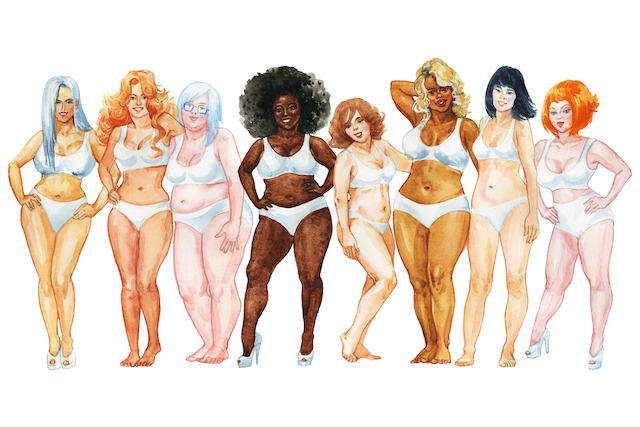
    Let’s celebrate bodies, in their diverse beauty and forms.

  • How I Learned to Love My Body Instead of Hating Her

    How I Learned to Love My Body Instead of Hating Her

    “Your body does not need to be fixed, because your body is not a problem. Your body is a person.” ~Jamie Lee Finch

    I was thirty years old when I realized that I was completely dissociated from my body.

    I grew up in the height of the purity culture movement in American Evangelicalism. Purity culture was based on one primary concept: abstain from sex until marriage. But the messaging went further than this.

    I sat next to my peers in youth group while the male pastor stood on stage and told us young women to always cover our bodies. For example, two-piece bathing suits were completely out of the question for summer activities. Why?

    Our female bodies cause the young men to “stumble” and have impure thoughts. So out of love for the young men in our group, we must cover up and never do anything “suggestive.”

    The message was clear: My body caused others to sin. My body is bad.

    It would be impossible for me to accurately detail how many times and in how many different ways I received this message growing up.

    I didn’t know it was happening, but over time, I learned to dissociate from my body. My body was bad, and I was trying to be good, so I must distance myself from her.

    Thankfully, I listened to my body when she told me to leave this religious group and find my own way in the world. Yes, my body talks to me. More on that later.

    Recently, society has seen more acceptance of bodies. We see variety in body shapes represented in the media. While that’s a great sign that we are moving in a new direction, simply saying that we love our bodies isn’t enough.

    That feeling of positivity toward our body when we say that is momentary. We must take consistent action in order to make meaningful and lasting change.

    Here are the ways I was able to radically change my relationship with my body and learned to see her as my greatest ally and most prized possession.

    See Your Body as a Person

    A concept introduced to me by Jamie Lee Finch, seeing my body as a person changed everything.

    It allowed me to do one key thing: cultivate a relationship.

    Once I started referring to my body as “her,” I understood how far from her I really was. I didn’t know my own intuitive “yes” and “no.” I didn’t know what I really wanted in life.

    When was I safe? When was I in danger? These are questions that our bodies are designed to answer.

    So I learned to listen to her. And I talked back.

    A number of years ago, I noticed that I was constantly pushing people away. I really beat myself up about this, seeing myself as a cold, unloving person.

    Eventually I realized that this behavior started after a traumatic body violation that I had experienced. I understood that my body was resisting vulnerability and closeness in relationships as a way to protect me from further harm.

    I could see that my body had not been working against me, but for me. And I had the opportunity to say to her, “Thank you so much for trying to keep me safe, but I’m going to start trusting people again. I have learned from the experience and will trust my gut to alert me to danger.”

    I realized that things I thought of as “wrong with me” were in fact genius protective and defense mechanisms that my body wisely developed in order to keep me safe in my environment.

    I started talking lovingly to her, full of gratitude for all the ways she worked to keep me safe over the years. I started seeing past experiences through a different lens.

    About ten years ago, I was in a relationship with a man who wanted to marry me. I was in constant turmoil inside about the relationship, plagued with doubt and uncertainty, unsure if I should stay or go.

    I was so mad at myself for not having a clear “yes” or “no” about the situation. I didn’t realize this at the time, but I can see so clearly now that the anxious feeling in my gut was my body trying to tell me that this man was not my person.

    In truth, my body was always working for my best interests. No one looks out for me the way my body does. She has always been my most fierce protector.

    So I talk to my body and she talks to me. It’s the most important relationship I have.

    Write a Thank You Letter to Your Body

    There is a reason that gratitude practices have become so popular: they work.

    One I started to understand just how hard my body had been working to protect me, I wanted to show my gratitude.

    Writing a thank you letter can be the catalyst for a powerful mindset shift. It’s so easy to see all the things we hate about ourselves and our bodies.

    Write a letter to your body. Think about all the millions of ways your body has worked to keep you safe.

    How your body has alerted you when there’s danger, enabled you to speak truth by giving you gut feelings, and allowed you to experience the greatest pleasure.

    We can never know all the ways that our bodies tirelessly work for us. Gratitude allowed me to further cultivate a positive relationship with my body and work in partnership with her instead of against her.

    Gaze into Your Own Eyes

    If you’ve done eye gazing with another person, you know how powerful and bonding it can be. This is true when you eye gaze with yourself.

    I practice this by sitting on the floor in front of my closet doors that are large mirrors. I feel my body rooted into the ground before looking deeply into my own eyes.

    As a woman, I often look into my left eye, which is generally considered to be the feminine side. The masculine is the right side.

    This practice can bring intense emotions, so start with only a few minutes. You can grow your practice to twenty minutes or longer should you wish.

    See yourself. Really see. And feel the feelings that arise.

    It’s not uncommon for me to cry during this practice, reflecting on all the ways I’ve spoken negatively about my body and remembering how truly spectacular she is. She is beautiful, wise, and strong.

    Eye gazing will allow you to see and experience these truths. And when you embrace those truths, your relationship to your body will change.

    Try Mirror Work

    Remember when you were younger and a parent told you to say one nice thing about your sibling or friend that you were fighting with? There’s something about acknowledging the good in another person that regulates emotions and stirs positive feelings. The same can be said about your body.

    Mirror work is standing in front of the mirror and pointing out things you love about your body. This can be done clothed or unclothed depending on your comfort level.

    The thing you love can be as small as an eyebrow or as large as your torso. As you start to focus on one thing you love and sit with the positive emotions that arise, you will start to consistently feel more positive about your body.

    You’ll notice things you never saw before. Or see things as beautiful instead of ordinary.

    The sexy curve of your left thigh, the strong shape of your ankles, the color of that freckle on your shoulder. You are uniquely you and that is inherently valuable.

    Mirror work can be a ten-second practice or ten-minute practice. You can focus on the same part of your body every day or something different each time.

    I incorporate mirror work into my morning routine when I’m brushing my teeth. As I brush, I look at myself in the mirror and pick one thing I love about my body that morning. This way, it doesn’t feel like I’ve added another self-help practice, but rather I’m taking advantage of opportunities to multitask.

    When we take the time to see ourselves, what we really like about ourselves, we will learn to love what we see.

    Commit One Loving Action

    Similar to saying something nice about someone, doing a kind and loving action can also foster feelings of fondness and compassion.

    For a week, do one focused, loving action to your body. If you can’t think of anything, ask this question: What’s something I have been wanting to incorporate into my daily self-care or hygiene routine, but haven’t done?

    For me, this was moisturizing my feet. When I first did this practice, I had just moved to a new city with a much drier climate. My feet were so dry, but I wasn’t taking the time to moisturize them.

    So I committed to do this once a day for a week. It wasn’t long before I started seeing my feet in a new way.

    I was intentional when I sat on my bed and did this. I took my time rubbing the lotion in, observing new things about my feet I had never noticed before. Thinking about how hard my feet work and all the places they’ve stepped over my lifetime.

    After doing this for a week or so, moisturizing became a natural part of my daily routine. In fact, I consistently moisturize all of my skin now, something I’ve wanted to do for a long time.

    Some extra tender loving care will naturally grow your love for your body and cause you to care for them better.

  • How to Protect Our Kids from a Lifetime of Food, Weight, and Body Image Issues

    How to Protect Our Kids from a Lifetime of Food, Weight, and Body Image Issues

    I went on my first diet when I was around fourteen or so because, as they often do in growing teens, my jeans started getting tight.

    And because I grew up in the same anti-fat culture we all have, I hated myself for it.

    Around the same time, an adult in my life who was always obsessed with “eating healthy” gave me a copy of the new book she was reading outlining the healthiest way to eat.

    It was a book on the Atkins/low-carb diet.

    The author spent the bulk of the book demonizing carbs, explaining in convincing-sounding detail all the science he supposedly had about not only how harmful carbs were but how they were the cause of weight gain.

    Three things happened from reading that book.

    1. I became scared of eating carbs and started trying to eliminate them because, while of course I wanted to be healthy, I was terrified of gaining weight.

    2. Instead of losing the five pounds or so that I wanted to lose, I gained about five pounds and a slow progression of weight gain continued for years. Because the harder I tried to eliminate the carbs, the more I craved and obsessed over them; always eventually caving, eating them, and then hating myself for it and promising to start “being good tomorrow.

    Eventually the caving led to overeating them because “as long as I was being bad anyway, I may as well eat them all and get them out of the house so I won’t be tempted when I start being good again.”

    3. An almost three-decades-long war with my weight, my body, myself, and food began. A war that resulted in a hospitalization in my early thirties, after my first foray into the world of “it’s not a diet; it’s clean, healthy eating,” for bulimia so severe I often felt like I was going to eat myself to death.

    And the whole time, I blamed myself for it. I believed I was stupid, weak, pathetic, a pig who needed to try harder to control myself.

    So I kept trying. For more than half my life I tried, and it almost killed me.

    I’ve been working with women around the whole weight and food thing in one form or another for over fifteen years now. I started sharing my story because after listening to other women describe their histories with food and weight, I realized that my story is not unique.

    Varying degrees of my story are the norm, and they all start in basically the same seemingly innocent ways.

    We want to lose weight or “eat healthier,” so we do what we’re taught we’re supposed to.

    We start a diet or “healthy eating plan” of some sort that tells us what we “should” and “shouldn’t be” eating. This leads to a lifetime of trying to control our intake and our bodies, which results in disordered eating patterns, weight cycling, and self-loathing.

    I regularly hear from women in their seventies or eighties who have spent their entire lives fighting this losing battle with themselves to “eat right” and lose weight.

    In one survey of US women a few years ago, 75% reported disordered eating behaviors or symptoms consistent with eating disorders.

    My recovery didn’t start until I realized a few basic truths.

    First, if I had any hope of healing, I had to figure out what was causing my eating issues. Ultimately, it came down to my conditioning: patterns of thoughts, beliefs, and behaviors that had developed over the course of my life as a result of many different things, not the least of which being:

    1. The stories I had learned to believe about bodies and the people in them: Big ones are bad, unhealthy, undisciplined, and lazy. Small ones are good, healthy, and disciplined, and they work hard.

    These misguided beliefs taught me not only to live in fear of weight gain and the harsh judgment of others if I gained weight, but also to judge myself and my body harshly when I did so. This contributed to not only the decades of weight gain and disordered eating but ultimately the eating disorder.

    2. The stories I’d learned about food: These are the good foods, the healthy foods, the foods you should be eating, and those are the bad foods, the unhealthy ones, the ones that cause all manner of disease, poor health, and weight gain. Those are the foods you have to give up forever, or only allow in moderation.

    These misguided beliefs taught me to live in fear of food and my body becoming unhealthy or fat if I dared to eat the “wrong” thing. This created the never-ending pattern of promising myself I was going to “be good” only to end up craving, caving, hating myself, and starting over that I felt trapped in for so many years.

    3. Disconnection with myself, my body, and my own needs: As long as I was trying to make myself eat or do the things I thought I “should” do in order to control my body and my food intake, I was stuck in my head. Stuck in fear. Disconnected from myself, my body, and even the decision-making part of my brain. Ruminating, promising, obsessing, hating.

    In that state, I had no ability to understand the messages my body was constantly sending me about what it needed, nor did I have any concept that my body was something that could be trusted to tell me that. I saw it as an enemy to be ruled over, controlled, and beaten into submission… rather than the ally, healer, and communicator that it is.

    4. Self-loathing: I didn’t like, love, trust, or value myself, so my entire self-worth and relationship with myself relied on what my body looked like and my need to control how others saw me.

    The second truth I had to realize: if I had any hope of recovering and making peace with myself, my body, and food, I had to change the things that were causing the war.

    That meant giving up the obsession with my weight and eating or looking perfect.

    I had to recognize those things for what they were—distractions that kept me from dealing with the issues that were causing the problems in the first place and were making matters worse.

    So I put all my energy into changing the causes.

    It didn’t happen overnight, but one day I realized I couldn’t remember the last time I’d engaged in compensatory behaviors. The binges were getting fewer and farther between.

    And then I couldn’t remember the last time I binged or even overate, and I couldn’t even imagine ever doing it again.

    It’s been many years since those things were my daily reality, and I’m thrilled to say they simply don’t exist in me anymore because I changed the conditioning that was causing them. I learned to reconnect with and trust my body when it tells me what it needs or wants, and I learned to value myself enough that I cannot imagine treating myself or my body poorly anymore.

    Recovery and peace are blessings that I don’t take for granted for a second and I’m still grateful for every minute of the day.

    But disordered eating and eating disorder recovery are unbelievably difficult, prone to multiple relapses, and many aren’t so lucky.

    This brings me to my main points because the simplest solution to disordered eating or eating disorder recovery is to prevent those things from ever starting in the first place.

    That’s my dream, to save future generations from growing up with the disordered eating patterns/eating disorders and horrible body/self-images that ours has grown up with.

    It starts with us, as parents.

    What I Wish Parents Understood

    Living with disordered eating patterns or an eating disorder is a special kind of hell that I wouldn’t wish on anyone.

    It’s like living with the meanest, most self-destructive monster in your head one can imagine.

    You know the things you’re thinking and the choices you’re making are harming you, you know they’re making you miserable, you’re desperate to stop, and yet… no matter how hard you try, you can’t.

    You feel powerless. Hopeless. Helpless. Trapped.

    Recovery was one of the hardest things I’ve ever done in my life—and I’ve not had an easy life, so that says a lot.

    Given this, it’s my view that in addition to helping those struggling recover, prevention at an early age needs to be a top priority.

    And parents, I’m not trying to place blame, but after fifteen years of hearing women talk about their struggles, I’ve come to realize that we are often a big part of the cause, although not purposely of course.

    We all have our kids’ best interests in mind.

    We want our kids to be the healthiest, most confident versions of themselves, and we’re all doing the best we can to help them get there.

    We want them to maintain healthy bodies and eat nutritious foods. Nobody doubts that we all want the best for our children and are doing our best.

    But the way we’re approaching it is almost guaranteeing that our kids are going to struggle with the same food issues, eating disorders, or a lifetime of disordered eating and failed diet attempts that so many in our generation have.

    They’re learning to fight the same wars we have in the same ways we learned to fight them.

    All the things we typically do to try to help encourage health (restricting “bad” foods, teaching them that some are “good” and some are “bad,” encouraging them to lose weight or even acknowledging their weight) are among the worst things we can do for the health of our children.

    It’s difficult to overstate the damage that weight and food shame does to adults, and that damage is worse in children.

    We also have to remember that they learn from us. If your kids watch you struggle with food and your weight, if they see you tie your mood and your self-worth to your scale, they are going to be at a significantly higher risk for developing an eating disorder or living with those same struggles themselves.

    So this is what I want parents everywhere to know: encouraging weight loss, labeling or restricting their food intake (good vs bad, allowed vs not allowed), discussing weight, restricting foods, and dieting yourself—all of those things that millions of us are doing every single day that diet and healthy eating cultures have taught us is expected or accepted—they’re putting our children at risk.

    Research has shown that the younger girls are when they go on their first diet, the more likely they are to engage in extreme weight control behaviors like vomiting and laxatives (that’s an eating disorder), abusing drugs and alcohol, and becoming overweight by the time they reach their thirties.

    One out of four dieters will develop some type of eating disorder. That’s a number that’s doubled in the last twenty years. And the majority of the rest develop very disordered eating patterns.

    Eating disorders are widely recognized to have the highest mortality rate of all mental illness, while also being among the most underdiagnosed and under/poorly treated.

    Not even to mention the levels of anxiety, depression, and self-loathing that typically come from years of living with disordered eating and battling with our weight.

    There is a better way.

    Encouraging Healthy Choices Without the Risk

    DON’Ts

    Don’t discuss weight, size, or bodies—not yours, not theirs, not anyone else’s.

    Don’t let other people discuss their weight in front of them—not their doctor, not relatives, no one.

    Don’t label foods—no good, no bad, no healthy, no unhealthy… no food labels. At all. Binary food labels can cause shame, create self-punishing behaviors, destroy our relationship with food, and contribute to overeat/binge/restrict cycles that can take years to heal.

    Don’t tell them they are what they eat—our food choices don’t determine our worth.

    Don’t restrict foods—let them eat what they want. Restriction leads to guilt, shame, overeating, or bingeing and fuels disconnection.

    Don’t force exercise or “burning off calories”—encouraging exercise as a means of weight loss is setting them up for trouble.

    DOs

    Do encourage them to consider how their food choices make their body feel. How does that big mac and fries make their body feel when they’re done eating? What about the candy for breakfast? Do they feel good when they’re done eating? Or do they feel sick? Would they rather feel good, or sick? How does skipping a meal make their body feel? Do they want to feel that way? Do they really want to ignore their body’s most basic human needs with restriction? Why?

    Do encourage them to consider why they’re eating. Are they physically hungry? No? Are they emotionally hungry? Teach them the difference and help them learn to accept, honor, and express the emotions they’re trying to feed or soothe rather than ignore or numb them.

    Do teach them the value of understanding the why behind the choices they’re making and how their choices are often a result of their relationship with themselves.

    Do teach them that the relationships they have with themselves, food, and their bodies are the most important relationships they’ll ever have in their lives and to protect and nurture them.

    Do lift them up, teach them to value themselves exactly as they are, for who they are, not what they look like, weigh, or how they eat. Teach them to value and respect others, no matter what size they are.

    Do teach them about self-acceptance, kindness, authenticity, self-compassion, and the power of mindful living.

    Do teach them to appreciate the wonder and magic of their bodies, no matter what size they are. Teach them how to stay present in the moment and in their bodies, so they learn to listen to and trust their own bodies.

    Do teach them humans come in all shapes and sizes—and that no one shape or size is any better than another.

    Teach them that they are enough, exactly as they are, and that neither their bodies nor their food choices define their worth.

    And that will all be way easier if you learn it for yourself first.

  • Breaking the Toxic Cycle: My Family Dysfunction Stops with Me

    Breaking the Toxic Cycle: My Family Dysfunction Stops with Me

    TRIGGER WARNING: This post references physical abuse and may be triggering to some people.

    “Forgive yourself for not knowing better at the time. Forgive yourself for giving away your power. Forgive yourself for past behaviors. Forgive yourself for the survival patterns and traits you picked up while enduring trauma. Forgive yourself for being who you needed to be.” ~Audrey Kitching 

    I will never forget, when I was twelve years old, I went to sit on my father’s lap and he told me, “No! You’re too heavy to sit on my lap!” What does an adolescent girl do with a comment like that? She hides it away and adds it to the ammunition she has begun to store up in her arsenal of self-flagellation. Shame knows no boundaries.

    My father was never intentionally cruel to me. He had demons of his own. I knew that he had been physically abused as a boy and he used to tell us, or rather proclaim, “I vow to NEVER hit any of my kids!” He neglected to realize that words can hurt even more than a physical slap. And even more hurtful was when nothing was said at all.

    Silence is a killer that there are no words for.

    His father used a leather razor sharpening strap to beat him, and my father hung it in the kitchen of our house. I would wonder if it was a reminder of what happened to him, or was it a warning of what could happen to us? I made sure I toed the line so I would never find out. The beginning of my perfectionism.

    Growing up, the one message that was crystal clear to me was that my body was not acceptable. It was reinforced in so many ways. The times my father would suggest I attend Weight Watchers meetings with my mother. But the biggest reinforcement was once a month when the Playboy Magazine would arrive in the mail. That was what a real woman’s body was supposed to look like! And the only point of reference I had.

    I dealt with this by going within. I hid food and binged in secret. I used running and sports to try to counter the caloric intake. I became the perfect daughter on the outside, knowing it didn’t matter because I would never be acceptable. I fought a battle that there was no way to win. I just didn’t know it at the time. I was a teenager trying to find love in all the wrong places, with all the wrong people. In all the wrong ways.

    And I wasn’t the only one. I was the oldest of four children, and my siblings all had their own demons they were fighting as well. Some people would say that the family that plays together stays together. I would add that the dysfunction in a family can not only rip a family apart, but it can also pick them off one by one.

    My father was the first to fall victim. He died when I was thirty-six from pancreatic cancer after suffering a massive stroke. I am convinced that his stroke was a direct cause of his drinking and lifestyle.

    My youngest sister died when I was thirty-nine years old. She was in a physically abusive relationship for nine years. Her partner and the father to her two children beat her to death.

    The hardest loss was my mother, who died when I was fifty-two. She had suffered from dementia for years. but ultimately it was lung cancer that caused her death.

    At fifty-six, my second sister died of an accidental overdose of heroin. She was fifty-five.

    And lastly, my only brother, who is still living, is recovering from laryngeal cancer and now uses an artificial voice box.

    For the longest time, I would wonder when my time was coming. People would tell me that my family was cursed, and the temptation to fall into that camp was appealing. Just let the chips fall where they may! But the truth of the matter was that, like for us all, there are consequences for our choices. I know that sounds harsh considering that I have lost most of my family, but I cannot make it be anything it is not. And believe me, I’ve tried!

    My codependency was strong, and I tried to save them all! And in the process, I was losing myself. I was tired. I was sad, I felt defeated. But enough was enough.

    I had made the decision, when my husband and I adopted our only daughter, that the dysfunction was going to stop with me.

    I had a lot of work to do on myself. I had to uncover all the lies I had believed about myself. About my life. And then I had to choose new things to believe. I had to unearth all the ammunition I had used to build the walls I had cemented around myself. The walls that would have strangled me if I had let them.

    But that is my work to do now. And because I made the decision to do that work, my daughter is a healthy, well-adjusted young woman in her third year of college.

    I don’t say that to pat myself on the shoulder necessarily, but why not? I chose to walk a different path then my biological family. And choosing that different path also offered me different choices. And it will also my daughter different choices.

    I learned about the boundaries I needed to place around my own family unit, and I was not popular for that. Those boundaries were not popular, and I was ostracized and called out for them.

    My work was to take the box down from the closet. You know the one, where the secrets hide. And if I just keep it up there, no one needs to know. But I knew I had to open that box and take them all out. Then I could decide which were real and which were imagined. Which ones had to go and which ones I could work with.

    Life is a series of turning points. And we get to decide, at any time whether we keep moving forward or whether it’s time to turn around and begin again. We are never too old to keep moving forward. And we have never made a mistake that cannot be forgiven. A wrong that cannot be made right. I have forgiven myself for many mistakes. Many hurts I have caused. I have made amends. I keep taking the next right step.

    I am fifty-eight. I have forgiven those who have needed to be forgiven. I have grieved the family I wished I had. And I continue to grieve the loss of those who have died far too young. And the relationships that will never be.

    I no longer run from the loneliness that catches up to me from time to time. I just don’t stay wrapped in it for too long. I have shed the shawl of shame I have carried around me and work everyday to find the light and the beauty within.

    And I continue to remind myself, every single day, that it is not too late to become who I was created to be. My work is to keep doing the work and find my way home. Home is a place within. A place of wholeness. A place where self-forgiveness and self-acceptance merge. And beauty abounds.

  • How to Embrace Your Physical ‘Flaws’ and Feel Comfortable in Your Skin

    How to Embrace Your Physical ‘Flaws’ and Feel Comfortable in Your Skin

    “When you’re comfortable in your skin, you look beautiful, regardless of any flaws.” ~Emily Deschanel

    I started doubting the way I looked at the age of eight following comments from other children, about my twin sister being cuter/prettier than me. During adolescence I suffered from bullying because of my appearance and thought I was ugly. Like many others, I believed for many years that everything would’ve been easier if I was better-looking.

    At eighteen, when I left home for military service (mandatory in Israel), I started to get positive feedback from men and to feel much better about the way I looked. But still, for many years after there was a big gap between my self-perception and how others saw me.

    Today, at fifty-one, even though I’m far from perfect-looking, I have finally come to terms with my appearance.

    In my work, I encounter many women, some traditionally beautiful, others with a pleasant appearance and charm, who feel that due to the way they look, there’s no chance that somebody would want them. And I know children and teenagers who think that something is wrong with them and who feel ashamed of themselves because they don’t look like models.

    Accepting how we look really comes down to developing self-esteem and self-love. Nonetheless, today I want to present to you ten steps that can create a shift in your relationship with your appearance and your body.

    1. Clean your social media feeds of anything that makes you feel bad about yourself and your body.

    Every time you scroll through social media and come across images or ideas that make you feel bad about your life or the way you look, stop following that person or page.

    You may tell yourself that certain content motivates you to change, but you can’t effectively create change from a place of self-condemnation, jealousy, or fear. So if you choose to follow someone, make sure their content genuinely inspires you and helps you feel better about yourself, not worse.

    2. Don’t try to force yourself to love a body part you don’t like.

    I know I might be breaking a myth here, but you don’t need to love each and every part of your body in order to love yourself.

    Trying to force yourself into loving a body part that troubles you might do more harm than good, as it consumes vital energy and evokes harmful self-judgment if you fail.

    If you don’t like the look of a particular part, you can still focus on its good qualities, like its strength, function, or the pleasure it can give you.

    For example, the breasts you judge as too small might produce all the milk needed for your baby. And those legs that seem too big to you might enable you to hike and enjoy nature.

    3. Think of people you love and appreciate who do not have a perfect look.

    I know it’s hard to stop believing that attractiveness is the key to happiness. That’s why I don’t expect that this step and the following one will radically change your self-perception. Nevertheless, I think it’s important to use them as a reality check from time to time.

    Start by creating a list of at least five people you love, appreciate, or look up to, who do not have a perfect look, yet you still find beautiful, charming, or attractive.

    Now think of what makes these people attractive to you.

    I bet that what you most like about them is their heart and personality, something we often forget to take into account when we are so absorbed in our shortcomings.

    I remember that my mother used to look at me with admiration and say how beautiful I was. But since I didn’t think I was beautiful, it used to annoy me.

    Now that my beloved nephew is a teenager, I find myself looking at him in this way. While he inspects his looks with critical eyes and mostly finds faults, I see a handsome young man with the biggest heart I ever saw, exceptional wisdom, and a unique personality, and he takes my breath away.

    4. Think of people who don’t look perfect, who are in happy relationships.

    If you insist that a worthy person would want you “if only…” (you had bigger breasts, blonde hair, or you weighed three pounds less or were four inches taller), think of people you know who are in happy relationships with great people, despite not having what you would consider perfect looks.

    Create a list of five or more such people to remind yourself that someone out there would find you perfect just as you are.

    Recognizing that you don’t need to look perfect to be lovable can help you accept yourself and stop wasting energy obsessing over your appearance.

    5. Nourish your body with things that are good for it and things you find satisfying.

    On the journey to loving ourselves and our bodies, people often suggest we nourish our bodies with healthy foods only.

    Though I largely agree, it’s easy to become obsessive and hate yourself every time you eat something that is considered unhealthy.

    Twenty-eight years ago, when freeing myself from an eating disorder, I integrated into my daily diet the foods that drove me to binge eat, and now I no longer feel the need to overeat them.

    This way, I eat in a more balanced way, experience greater enjoyment, and eliminate guilty feelings.

    And the happiest result of this decision is that it enabled me to lose the extra weight I was carrying and to gain complete freedom from obsessing over food and weight—which means I now feel far more comfortable in my own skin.

    6. Don’t force yourself to do mirror work.

    Another common recommendation that I personally find ineffective is to do what’s called “mirror work.”  That is, to stand in front of the mirror and praise your body.

    If there are body parts that you don’t like, and you feel down every time you see them in the mirror, instead of inspecting them closely from the least flattering angles, look at your body in dim lighting. This will allow you to enjoy the way you look without seeing all the minor flaws that no one but you sees anyway.

    If mirror work does work for you, that’s great. But if you are like me, be good to yourself and abandon it.

    7. Maintain a strong and healthy body.

    Love for our bodies stems not only from liking the way we look but also from feeling healthy and strong and being able to enjoy our bodies’ capabilities.

    I, for instance, am really proud of my body, which today is stronger than ever.

    The best thing Covid did for me is force me to quit the gym. I’ve started practicing yoga at home, and today I’m able to take much more advanced classes than I did a year ago. Recently I started running on the beach as well, and a few days ago I completed my first six-mile run!

    To maintain a strong and healthy body, incorporate physical activity into your daily routine. It may be exercising, dancing, running, walking, or hiking in nature. And if you don’t find any activity that you enjoy, focus on the good feeling your chosen activity provides.

    8. Stop talking to and about yourself in an offensive way.

    Statements like “no normal man would ever want someone with hips like mine” are not only detached from reality but also extremely offensive toward oneself.

    If you already completed step four (noting people who do not look perfect yet are in happy relationships), you must have realized that many worthy people choose imperfect-looking partners because of who they are, which is far more important than a perfect look!

    So talk to (and about) yourself as you’d talk to someone you love, not from a place of self-loathing. You don’t have to say that the part you don’t like is attractive, but if you stop condemning it, your feelings about it may start to change.

    Also, notice when you’re tempted to talk about your physical flaws with other people. The more you focus on your perceived shortcomings, the more you’ll obsess over them, and the less energy you’ll have to focus on the many beautiful things about you that have nothing to do with your looks.

    9. Set your boundaries with people who make you feel bad about your body.

    It’s important to spend time with people who love your body just as it is.

    If you are in a relationship with someone who keeps putting you down for your looks, don’t downplay or justify it.

    You may tell yourself that they’re just being honest, but you don’t have to be perfect for someone to love you, and no one who truly loves you would ever judge you for your looks or talk down to you.

    Even if they say they’re simply encouraging you to take care of your health, you don’t need to tolerate cruel comments about your appearance or constant reminders that you better not eat so much.

    If anyone around you comments on your looks, learn how to set your boundaries with them. Tell them you’re not comfortable discussing your appearance with them and therefore not going to participate in such a conversion anymore, or physically remove yourself from the situation when they start putting you down.

    10. Practice meditation!

    At the end of the day, whether we’re talking about happiness, self-love, or body-acceptance, I recommend practicing meditation (or more accurately, practicing the ability to be present in the moment).

    It’s only when we are present here and now that we can clearly see the reality that is in front of us, instead of the distorted reality created by our minds, and feel who we truly are—not just a body but a heart and soul.

    When we’re present, we’re simply in our bodies instead of judging them, and thus we’re automatically in a state of self-acceptance. Then our true beauty naturally shines through.

  • The Surprising Strategy I Used to Stop Bingeing (and Why It Worked)

    The Surprising Strategy I Used to Stop Bingeing (and Why It Worked)

    “Sometimes the thing you’re most afraid of doing, is the very thing that will set you free.” ~Robert Tew

    I recovered from binge eating and bulimia by giving myself permission to binge. Sounds crazy, doesn’t it?

    My decades-long weight and food war started in my teens, immediately after reading my first diet book, about Atkins, to be exact. I spent the following two decades trying to lose weight (only to keep gaining) and struggling with food.

    By my early thirties, I’d finally managed to lose weight, but it hadn’t end the war, it had just started a new one. The war to try to keep the weight off and transform my body even further.

    Thus began the decade of my “fitness journey.” I became an award-winning personal trainer and nutrition wellness coach and even a nationally qualified, champion figure athlete.

    The weight and food war continued through it all.

    I was introduced to clean eating by a trainer I hired before I became one myself. Four days into my first attempt at clean eating, I was bulimic—bingeing out of control then starving myself and over-exercising to try to compensate. Within eight months, I was officially diagnosed.

    Bingeing to the point of feeling like I may die in my sleep became common, and I realized I had two choices: potentially eat myself to death or heal. I chose the latter.

    I sensed that understanding what was driving those behaviors was the key to learning to change it all, so I decided to get busy learning just that.

    And I recognized that meant I had to stop obsessing over (and hating myself for) my food choices. They were not the problem; they were the symptom of whatever was going on in me that was driving those behaviors.

    So I gave myself full permission to eat whatever I wanted, whenever I wanted.

    I even gave myself permission to binge as much as I wanted.

    And I slowly started bingeing less and less. Now it’s been years since I have—the drive is just completely gone.

    I know permission to binge sounds crazy, but has trying to force yourself not to binge or eat “bad things” been working? Is trying to judge, control, criticize, restrict, and shame your way to “eating right” and/or health and happiness working?

    If so, carry on. But if what you’ve been doing hasn’t been working, stay with me while I explain two reasons why permission is so vital, and the helpful versus unhelpful way to practice it.

    Why Is Permission So Vital?

    Permission to eat whatever we want helps reverse two of the biggest reasons we eat self-destructively: restrictions and self-punishment.

    Food restriction (the rules around what we think we should or shouldn’t be eating) caused my cravings, overeating, and even bingeing.

    Science has shown that food scarcity/restriction activates a millennia’s old survival instinct in our brains that triggers cravings, compulsions, and even food obsessions until we “cave.”

    Self-punishment contributes to bingeing because we treat ourselves how we believe we deserve to be treated.

    We’ve been taught that certain foods are good and create “good” bodies, and that certain foods are bad and create “bad” ones. We’re taught that we are what we eat, and to judge weight gain or eating “bad” things as failure, that we are good or bad depending on what we eat and what size we are.

    We punish ourselves by trying to restrict even more, or we go in the other direction and overeat the things we keep telling ourselves we’re not supposed to have, which fuels the cycle.

    How can you want to make nurturing or nourishing choices for yourself when you’re hating, judging, shaming, and criticizing yourself? You can’t.

    That thought, “Oh well, you already screwed up, you may as well eat the rest and start again tomorrow”—that all or nothing thinking, the bingeing, the self-sabotaging—it’s being driven in large part by those two things: restriction and self-punishment.

    Full permission, even to binge, helps start to shift both.

    It stops the feelings of scarcity around certain foods (so they lose their allure), and it helps improve the relationship you have with yourself (so you’re no longer judging and berating yourself for eating “bad things”).

    Now, you may be thinking, but Roni, eating whatever I want got me into this mess. I can’t be trusted to just eat whatever I want.

    Here’s where the biggest lie of all has steered us in such a toxic direction: the idea that our natural compulsion is to “be bad” and eat all that bad stuff is bull.

    We’re not born into bodies that naturally want to eat in ways that make them feel like garbage. We’re not even born into bodies that are “too lazy to exercise.” I call bull on all that too.

    We’re born into bodies that know how to eat and naturally want to move. We’re born into bodies that want to feel good and are actively working to try to keep us healthy 24/7.

    But we’re actively taught to ignore or disconnect from them, and we get so good at ignoring and disconnecting from our bodies’ natural cues that we can’t even hear them anymore.

    We learn patterns of thinking and behaving that get programmed into our brains and end up driving our choices, rather than the natural instincts we were born with.

    It’s not your natural instinct to chow down on a whole bag of potato chips just because they’re there. Nor is it your natural instinct to ignore your body’s cry for some movement. Those are learned behaviors.

    By the time we get to adulthood, the ways we eat, think, and live just become learned patterns of behavior—that can be changed when you stop trying to follow other people’s rules and start understanding how you got where you are.

    When you spend your life stuck in that “on track” versus “off track” cycle you’re completely disconnected from yourself, your body, and what you actually want and need.

    The two things that are driving you and your choices when you live in that place are either:

    1) learned patterns of thoughts and behaviors from old programming (when you’re “off track”)

    or

    2) fear and other people’s rules about what you think you should be doing (when you’re “on track”)

    Neither have anything to do with you—with what you, at your core, actually need or want.

    By giving yourself full permission to eat what you want, when you want (yes, even permission to binge) you’re given space to reconnect with yourself and what’s best for you.

    What You Think Permission Is Vs. What It Actually Is

    There are two ways to do this whole permission thing: the way you think you’re doing it when you’re “off track” and the helpful way.

    Typically, when we “fall off track” or binge, we start “allowing ourselves” all the foods we can’t have when we’re on track, but the whole time we keep telling ourselves it’s okay because when we get back on track, we won’t have it anymore. Then we feel bad and guilty the whole time.

    That’s not permission, it’s a clear example of the food restriction/self-punishment cycle that fuels feeling out of control around food/overeating or bingeing.

    How? It’s restrictive and punishing. We know at some point we won’t be “allowed” to have it anymore—ya know, when we start “being good”—and since we’re already “being bad” we may as well just eat all of it, then we end up not feeling great.

    That’s a food restriction/punishment fueled diet mindset that perpetuates those old patterns.

    True permission means losing all the food rules and judgments. I know it sounds scary and wrong, but it really is key to learning to want to eat in ways that serve you and hearing your body when it tells you what makes you feel your best.

    Begin noticing the things you’re saying to yourself around your food choices and start noticing how the foods you’re eating make you feel after you eat them.

    Do you feel energetic and good when you eat that thing, or do you feel bloaty, lethargic, and sick? How do you want to feel?

    If you’re eating lots of things that are making you feel the latter, just notice that, get curious about why, and most importantly, extend yourself compassion and kindness.

    The next time you’re about to eat something that you know makes you feel terrible, remember how it made you feel last time and ask yourself, do you really want to feel that way right now?

    If you think, I don’t care, ask why? Why do you not care about treating yourself and your body well? Don’t you want to feel good? If you keep hearing, I don’t care, that’s a sign more digging is likely required, but permission is still where you start.

    Notice how often through the day you judge yourself for eating something you think you shouldn’t. How does that judgment affect the choices you make next?

    Remind yourself that what you eat doesn’t determine your worth, and you’re an adult. You’re allowed to eat whatever you want.

    Giving myself permission to eat whatever I wanted, even to binge, was the first step toward a binge-free life because it helped me learn to change the biggest reasons I was bingeing in the first place: destructive thoughts, habits, and behaviors that were caused by food restriction and self-punishment.

    It’s how you start learning to end the food war, to trust yourself and your body, to stop feeling out of control around food, and to start making choices that make you feel your best, because you deserve to feel your best.

  • Freedom from Food – This Time for Good!

    Freedom from Food – This Time for Good!

    “Nonresistance is the key to the greatest power in the universe.” ~Eckhart Tolle

    I cannot say that I didn’t struggle in my life. But there’s one area in which I have overcome the challenges I was facing with hardly an effort: letting go of the eating disorder I was suffering from, getting rid of the extra weight I was carrying, and maintaining the results easily for twenty-eight years.

    How Did I Do That?

    In a minute I’ll tell you exactly how I did that and how you can do it too. But first let me take a moment to explain what exactly I was dealing with.

    As a child I always loved to eat and ate quite a lot, but though I wasn’t skinny I was always thin.

    At around fifteen I developed an eating disorder. I usually say that I suffered from bulimia, but when I read the symptoms, I’ve realized it might have been a binge eating disorder.

    I would eat a huge amount of food one day in a short period of time, and the next day I would start an extreme diet plan that I never managed to maintain for long. On one occasion I managed to maintain such a diet plan for several months until my period stopped and my hair started falling out.

    I would rarely vomit. Firstly, because it took a couple of years until I found out it was possible, and secondly, because it made my eyes red and swollen.

    But I think the exact diagnosis is not that important. In any case, I was suffering. And I’m sure you can relate, because even if you are not diagnosed with an eating disorder, you might still be struggling with endless cycles of dieting and overeating.

    (You may not be calling your eating plan “a diet,” since today it’s fashionable to say “I simply eat healthy” instead. But all those healthy *and strict* eating plans are ultimately diets, and like any diet, they eventually drive us to binge eating.)

    Why Did This Happen to Me?

    Concurrent with the development of my eating disorder I struggled as a teenager with bullying for six years.

    As an adult, when thinking about what happened, I used to say that eating was a distraction from my feelings. This is not entirely wrong; however, over time I’ve realized that this was not the main cause of my problem.

    My mother struggled most of her life with obesity and for years she tried all sorts of diets, without success.

    When I was in the seventh grade, she became concerned that I was eating too much. “If you keep eating so much, you’ll end up being fat like me,” she repeatedly told me.

    As a consequence, I came to believe that I inherited her tendency to be overweight and thus shouldn’t eat certain kinds of food. And because I had a hard time resisting the temptation, I started eating in secret and eventually developed an eating disorder and gained weight.

    The Big Shift

    Toward the age of twenty-three I woke up one morning with the understanding that not only did I think about food all day long, my efforts to overcome my weight problem didn’t get me anywhere.

    That morning I decided I would never diet again, even if it meant being overweight my entire life. I also decided that the foods that made me break my diet time and time again would become an integral part of my menu.

    For instance, from that day on, for many years my breakfast consisted of coffee and cookies (and that wasn’t the only sweet thing I ate that day).

    Once the burden of dieting was removed from my life, I no longer felt the irresistible urge to finish a whole block of chocolate like before. I knew I could eat chocolate today, tomorrow, the day after tomorrow, and so on; and thus, I got to the point where I had chocolate at home and didn’t touch it—something I couldn’t imagine before.

    During the following year my weight has balanced and to this day, twenty-eight years later, I am thin and maintaining a stable body weight.

    I still think quite a lot about food, but not obsessively, only because I enjoy it so much. I also eat quite a lot, by estimation between 1700-2000 calories a day (I don’t count). I love healthy food but also enjoy unhealthy foods, and I never feel guilty for something I ate; in the worst-case scenario I suffer from a stomachache or nausea.

    The Principles That Gained Me My Freedom

    1. No food is the enemy.

    Contrary to popular belief, no food by itself has the power to create addiction, ruin your health (unless you are suffering from a specific medical condition), or make you instantly fat. However, many people have gotten extremely rich by convincing you otherwise.

    Obviously, the main part of your diet should be healthy, yet the bigger problem than eating unhealthy food is stressing, obsessing, and loathing yourself for doing so!

    If you can’t control yourself in front of a certain food, allow yourself to eat it only when you are outside or buy it in small packages.

    2. No food is strictly forbidden.

    When we forbid ourselves from a certain food, we inevitably develop an uncontrollable desire for it, and eventually find ourselves helplessly bingeing it.

    When we allow ourselves to eat whatever we crave, as I did with sweets, the day that we don’t feel like eating the food we couldn’t resist before, or desire it only once in a while, will surely come.

    The reason why this idea seems so unrealistic to most people is due to what I’ll describe next.

    3. Give yourself permission.

    The secret of my success was that I really allowed myself to eat whatever I want for the rest of my life.

    While people sometimes say that they give themselves permission to eat certain foods, they are still driven by fear of these foods and by the belief that they shouldn’t be eating them.

    While “enjoying” their freedom, in their minds they say to themselves, “tomorrow I’ll get back on track.” (Tomorrow, in this context, can mean the next day or “as soon as I can.”)

    And as long as this is their state of mind, they’ll be impelled to eat as much as possible of the forbidden food today.

    4. Stop treating yourself as an emotional eater.

    According to the urban legend about emotional eating, a “normal” person should only eat when they are hungry, only healthy food, never eat for pleasure only, and never reach a sense of fullness.

    Anything but this is emotional eating.

    But this is a complete deception, and if you hold onto it, you’ll forever be dieting and bingeing and will always feel that something is wrong with you.

    I often eat a bit too much or things that are not so healthy. I eat not only according to my needs but also for pleasure. And if I overdo it, nausea, stomachache, and a feeling of heaviness remind me that I need to regain balance.

    I’m not saying that overeating has no emotional motive; I’m just saying that this idea has gone way too far.

    5. Follow your own guidance.

    I can promise you that as long as you eat according to someone else’s plan, or according to any strict plan, over time your efforts will be futile.

    Rules such as “You must eat breakfast,” “three (or six) meals a day,” “Chew each bite thirty times,” “Never eat in front of the TV,” or, “Don’t eat after 7pm,” will only stand between you and your natural instincts and enhance fear and self-judgment.

    I eat fast, mainly in front of the TV, I eat small portions every one to three hours, I eat late at night—and that’s fine for me.

    So listen to yourself and learn through trial and error what works best for your body.

    6. Be honest with yourself.

    Often people say things like, “I’ve forgotten to eat,” “I’m never hungry before 4pm,” or, “one modest meal a day totally satisfies me.”

    They insist so strongly it’s the truth that they manage to deceive even themselves. But only for a while. Eventually their natural hunger and satisfy mechanisms reveal the truth, and again they find themselves bingeing.

    So don’t play games with yourself. It might work in the short term, but it keeps you in the loop of weight fluctuations and obsessive thinking about food in the long term.

    7. Do not waste calories on something you don’t like.

    If you insist on eating something you don’t want to, you’ll find yourself craving what you really desired and eventually eating it in addition to what you already ate.

    8. Be physically active.

    Being physically active boosts your metabolism and immune system and supports your emotional and physical well-being.

    Sometimes, however, people set a trap for themselves when they push themselves too far with exercising, and thus, after a while they can’t endure it anymore and ultimately quit.

    Instead, be as active as you can and in the way that best suits you. That will serve you much better in the long term.

    9. Focus on reaching a balance.

    Your ideal body weight might be a bit higher than the one you desire. But remember, insisting on reaching a certain body weight that is beyond your natural balance will cost you your freedom and keep you in the vicious circle of dieting and bingeing.

    Last but Not Least…

    The concept I’ve offered here won’t make you lose weight overnight. It took me a year to lose the excess twenty-two pounds I was carrying. And if you have more weight to lose it might take a bit longer.

    But if you feed it well, without driving it crazy with constant fluctuations between starvations and overeating, over time your body will relax and balance itself, this time for good.

  • How to Start Liking Your Body More (Just as It Is)

    How to Start Liking Your Body More (Just as It Is)

    “Body love is more than acceptance of self or the acceptance of the body. Body love is about self-worth in general. It’s more than our physical appearance.” ~Mary Lambert

    This past week, I got married.

    For me, this symbolized not only a new chapter in my life with a partner, but also a new chapter in life with myself.

    Here, in this new chapter, I officially left behind the woman who was constantly trying to mold herself into whatever she needed to be to (hopefully) be accepted and loved by a partner.

    And instead, I found the woman who was unapologetically herself and loved for it. In fact, that’s what ironically got her to this point in the first place.

    And I left the girl who used to get by on a diet full of grapes, lettuce, and coffee. Who thought the thinner she was, the more worthy she was.

    This sad, hungry girl was replaced by a woman who didn’t think twice about losing an ounce to fit into a white dress, and who embraced her curves, thighs, cellulite, wrinkles, and all that goes along with the celebration (yes, celebration) of aging.

    My twenty-something self would be amazed.

    To be honest, my thirty-something self is amazed.

    If you had told me how I’d feel about my body and myself today, even ten years ago, I wouldn’t have believed you.

    And that realization got me sitting here, reflecting, thinking, “Wow, what a journey.”

    How did I get to this radical place of self-acceptance?

    While it’s difficult to pinpoint any particular moment that landed me here (because there isn’t any one moment), there are certain things that pop up that I distinctly remember that allowed me to begin liking my body (and myself) more.

    That allowed me to stop obsessively counting calories and to start actually enjoying food.

    That allowed me to trade frantically exercising for mindfully moving (and connecting with) my body.

    That allowed me to swap feeling shame about my thighs for gratitude that I have thighs.

    Here are a few of those things that allowed me to start learning how to like my body more. I hope they help you just as much as they helped me.

    1. Get clear on how you want to feel in your body and why that’s important to you.

    First thing first, you need to know how you want to feel in your body.

    Because you can’t get to where you want to go if you don’t know where that is.

    So make the time, grab a pen and journal, find a quiet calm space, and ask yourself, “How do I want to feel in my body?”

    Or, if it’s easier, ask yourself, “In my ideal world, where I am kind to myself, what would my relationship with my body look like?”

    Write your answers out.

    When you have your answers, ask yourself, “Why is this important to me?”

    Know that you may need to ask yourself “why” five to seven times and really dig deep to uncover the core reason changing your relationship with your body is important to you. Just continue asking “why” until you feel your heart is speaking instead of your head.

    You’ll need this reason to understand yourself more and to reflect upon when you feel frustrated and like you want to throw in the towel, because you will have those moments. But when you remember your WHY, you’ll rekindle your connection to being kinder to your body and yourself.

    For me, my “why” centered on the fact that I couldn’t imagine going through my entire life at war with my body. I just couldn’t. I wanted to feel confident and free in my body, not shameful and controlled.

    It took time and daily work to get to a new place, but my “why” and my vision of where I wanted to go was so strong I continued showing up.

    You can do this too.

    2. Flex your gratitude muscle.

    One of the most interesting tools I used to like my body more was gratitude. Today, you see this word everywhere, but there’s a huge difference in seeing it all over social media and online mediums versus putting it to use.

    When I began making the shift to what my body allowed me to do versus what my body didn’t look like, I was amazed.

    I slowly began forming this new perspective that my body was a gift and a vehicle that allowed me to move through life. And it was my job to nurture it, take care of it, and stop being so mean to it.

    What happened is that I became appreciative. I appreciated that I had thighs to hike, that even though I had cellulite, I could run a half marathon or participate in a yoga class. And it was through this viewpoint that I also came to like who I was as a person more.

    I appreciated that I was open to growth, that I was compassionate, and that I had the ability to inspire others. Ironically, I found that I was more than just a body.

    And so are you.

    You’ll be able to see this if every day, you bullet point one or more things that you are truly grateful for or appreciate about yourself.

    I promise that practicing gratitude is popular for a reason—it works.

    3. Surround yourself with healthy bodies.

    A huge part of my journey was surrounding myself with healthy bodies, all sorts of shapes and sizes, online and offline.

    Because what can so easily happen is that we end up comparing ourselves to ideals that aren’t even real or that aren’t physiologically possible for us because they’re simply not the intended shape of our bodies.

    For example, I used to be obsessed with model-type thighs. And then one day, it hit me. Those thin, “leggy” model-type thighs are not a part of my body shape. No matter how much I exercise or how little I eat, my body will never go there.

    And it was through this realization that I began paying attention to all types of bodies—smaller bodies, bigger bodies, in-between bodies—and I found that there are no better types of bodies; they’re just all bodies. And it’s how we treat them that matters.

    So if you’re struggling here, I highly recommend unfollowing social media accounts that make you feel bad about your body. And, if you haven’t, find a place to move your body where you feel comfortable and accepted. Because if you don’t feel comfortable in your body or accepted, you won’t want to go there to exercise, and movement is such a huge part in connecting with your body in mind, soul, and spirit.

    4. Connect and acknowledge your underlying fears.

    Acknowledging and understanding your underlying fears when it comes to your body is so huge. Those fears hold answers. But so many times, we’re taught to simply brush them under the rug and try to fit in and look like everybody else.

    But what if you allowed yourself to dig into your fears?

    To understand what you’re actually worried about?

    And then to dig deep and question if that fear is an actual truth or if it’s something that is truly just a fear?

    For me, when I allowed myself to examine my body fears, I found that I was afraid of not being accepted, of not being the way a woman was supposed to look.

    You see, as a little kid, I was always teased or left out because I was on the chunky side. I wasn’t one of the popular girls. When I realized that I could overexercise and undereat to become thinner, and that I looked more like how the girls in the magazines and the popular girls looked, that’s what I did.

    My deep underlying fear was not being accepted; it actually wasn’t about my body size.

    I internalized this and then realized that the key people in my life didn’t care about my body size (in fact, they were concerned by my shrinking size and misery). Rather, they cared about who I was as a human being.

    In other words, they accepted me for what was beneath my skin.

    So my fear that if I weren’t a certain size, I wouldn’t be accepted was just that—it was a fear. There wasn’t truth behind it.

    Wrapping my mind around this was revolutionary (and it still is).

    You can begin to connect and break through your fears too by first playing with the idea that you may have body fears. And then get curious and see what comes up for you. If fears come up, examine them and allow yourself time to question if they’re true or just a fear.

    5. Focus on actions that make you feel good in your skin.

    Releasing the need to lose weight or look a certain way and instead focusing on doing things that make you feel confident and good in your body is a game-changer. When you do this, your body will come to its natural state of being, no question.

    And trust me, I know this is so much harder than it sounds, but by really showing up and experimenting in your life and then keeping what works well for you and leaving behind what doesn’t, you will naturally like your body more.

    Simply because you’ll feel more “at home” in it.

    For example, when I first started down my body acceptance path, I realized I actually really disliked spending two hours a day in the gym. It made me feel worse about my body. So I experimented with walking and strength training and discovered I loved it.

    Later, I’d discover yoga and go on to become a yoga teacher.

    Yoga, during my body hate days, was something I said I’d never ever do.

    Today, I love it.

    You never know what you’ll find when you let go of the outcome and follow what feels right.

    I also discovered that I actually loved cooking healthy, nutritious meals with lots of veggies and tasty food. Before, I only allowed myself bars and wraps where I knew the exact calorie amount.

    You see, when I started truly allowing myself to let go and to experiment with enjoying food, moving my body in ways that felt good, and talking to myself kindly and coming at my body with gratitude instead of hate, something miraculous happened.

    I learned how to not only accept but my body, but to like my body.

    And I know that when you focus on actions that make you feel confident in your body, you’ll begin to like your body more too.