Tag: blame
-

Take Back Your Power: Let Go of Blame and Focus on the Lesson
“When you blame others, you give up your power to change.” ~Robert Anthony
Blame is seductive because it makes us right and them wrong. For a moment, it feels good to say, “It was their fault,” but in the long run holding on to blame only hurts us and does absolutely nothing to help our evolution. In fact, it keeps us stuck.
But, I get it. When we feel wronged, upset, and angry, that person is the only one to blame.
I understand that some things are so egregious and so unforgivable that it seems impossible to not default to blame. It’s almost instinctual. We are hard wired to blame.
But I have come to learn the hard way that when we blame others, we avoid seeing the truth about ourselves. When we focus on what someone else did wrong, we’re not able to see our part and learn about what we need to do differently going forward.
A while ago, I was in a toxic relationship that brought out the worst in me.
I felt like I was the most incompetent and unlovable human being on this planet. My self-esteem was nonexistent. I gave far too much of myself in the name of love, without ever checking in with my heart or my body to feel whether this journey was serving me.
Ultimately, as I abandoned myself, the relationship abandoned me: She cheated on me. After giving endlessly to this relationship, that was my payback. And just to add a cherry on top, she stole from me.
I didn’t recognize myself. I was stripped of many things. I lost my ability to trust myself and others. I lost the ideals I’d once had about love. I lost respect for myself. I ignored my intuition. I forgot to honor the sacredness and preciousness of my heart. I lost my confidence. I lost my innocence. For a minute, I thought I had lost my soul. I felt completely empty.
I remember that the blame, the anger, and the frustration were blinding. Every word I spoke and every thought that crossed my mind had one theme: I was the victim and she was wrong. I would happily share my story endlessly, and I made myself right every single time—and boy did it feel good to badmouth her over and over again.
But when the dust settled a bit and I was able to step back from my anger-filled stupor, I realized that I was tired of this story. I was done with it. I was ready to do some healing because the burden of carrying blame and anger was weighing me down. It was heavy.
What had happened no longer mattered; my desire to heal was greater than my desire to hold on to this story.
With my journal in hand, some lavender in the air, and tears streaming down my face, I took three deep breaths, summoned the energy of blame, and for the first time I asked myself: “How did I contribute to this? What do I need to learn from this?” I then said, “Universe, I am ready to release this story. Show me the way.”
My mind was screaming, “What! How dare you ask this question?” But my heart was proud of this because it was a moment of deep truth.
This was a teachable moment for me. I stayed with the feeling as I closed my eyes and allowed the anger to consume me. And in that tornado of anger inside of me, I finally received insight.
Once the storm inside me passed, I realized that I had never once spoke my truth in that relationship. I ignored every single red flag from the beginning. I had this notion that I could save people from themselves. I was arrogant in thinking that my love would heal anyone. I wanted to fix the world. I wanted to fix her. I abandoned myself.
Then I asked, “But how can life do this to me when I was so giving, so genuine, and so authentic with my love?” The insight that came from that question was, “That’s not love, that’s self-abuse. It is not your job to save anyone.”
And the lessons kept pouring in: From a spiritual perspective, and on a soul level, I know that it is beautiful to love everyone, but in this physical plane, we must pay attention to how people are showing up for us.
We can’t ignore mistreatment or unhealthy behaviors in the name of love. We can love from afar, we can love from the other end of the world, but that doesn’t mean that we need to stay in a relationship with anyone who is on a very different path or with someone who is clearly living a highly toxic life.
This blame that I was carrying came back to me tenfold. I was really just angry with myself for allowing something outside of me to have so much power over me, and for allowing something outside of me to override my own intuition and feelings.
These realizations laid a foundation for my healing. From that moment, I became more conscious in my interactions. My boundaries strengthened and my relationship with myself began to flourish.
I still had, and will forever have, a lot of work to do, but the minute I was willing to release blame I recharged my energy and took back my power. I realized that I do not want to be the passive observer in my life. I want to be as conscious as possible.
In this moment of truth, I also learned that self-love is realizing that our bodies and our health are sacred, and holding on to blame destroys us on a physical, spiritual, and emotional level.
The biggest epiphany I had is that we all came here to learn lessons, and some of the lessons will seem unfair, and occasionally way worse than what I share here. But I learned to surrender to this belief—the belief that my soul came here to learn lessons and that, if I can become the happy and willing student, there is so much wisdom to be gained from these moments of darkness.
After feeling anger and blame for a while, most of us, myself included, just want to find some way to escape the pain, but if we simply ignore our feelings, we also shut down the message.
I understand that this is one of the hardest things we as humans can do, but I promise you that there are treasures inside of you waiting to be uncovered during each moment of darkness.
I realize that every instance of hurt warrants a different degree of blame, and the anger will vary. Some lessons will undoubtedly be much harder than others. But in the end, if we’re willing to surrender to these lessons and love ourselves through the most painful abuse and injustice, we will rise as warriors.
We will rise as light workers. We will rise as healers. We will be the light in someone’s dark world. We will gain insight. We will have a chance to do it over in a different way.
It’s time to take your power back. Begin today, pick any moment of darkness in your world, and start with this question: What do I need to learn from this?
Breathe and just listen. Your body knows the answers.
-
How to Prevent Blame and Criticism from Destroying Your Relationship
“Who is it that’s unhappy? The one who finds fault.” ~Anonymous
If you are anything like me, you yearn to know in your bones that you are showing up in your primary relationship as your best self. You want to be loving, kind, and supportive (and to reap the gifts those qualities sow in your love life). But certain habits of interaction get in the way, making you feel inept and ashamed.
Like many of us, I grew up in a family that was steeped in criticism and blame. Though I rebelled against this behavior intellectually, it found its way deep into me.
When the first blush of love-bliss wore off in my more serious relationships, blame and criticism would rear their ugly heads, leaving me guilt ridden and very disappointed in myself. It always created distance in my relationships.
This habit is the top reason relationships fall apart. Not only does it feel terrible to the one being criticized, it also destroys the perpetrator’s own sense of confidence in their worthiness and integrity, further shutting down the free flow of love.
Looking back at my first marriage, I see that this ingrained and destructive habit was at the root of our love’s erosion. Because I tended to use a subtle form of blame and criticism that were harder to label as such (I mostly thought I was asking for things, when actually I was belittling and condemning), it became pervasive. Over time, like weeds left to grow rampant, it overtook our joy entirely.
Criticism and blame can be blatant or subtle. The obvious expressions are often in the actual words we choose. But, as I learned the hard way, it’s the subtler forms of blame and criticism that can do the most damage because they are harder to spot.
Since much of our communication is non-verbal (up to 93%!), it makes sense to take a good look at if and how we are imparting blame and criticism without words.
Some of these subtle ways include:
~Tone of voice (“Can you please stop…” said with a tone that drips blame or implies stupidity.)
~Sounds (“Ugh!” meaning, “There you go again.”)
~Body language (rolling your eyes, giving them cold looks… I once stuck out my tongue at my partner in a heated moment.)
~Asking someone to “do better” can be an insidious form of criticism, if not done well. This was my main way of using it.
In my current partnership I vowed to do things very differently. I let him be him, no complaints. We enjoyed years of authentic, kind, tolerant, and loving ways of relating to each other. I felt proud and happy to have seemingly overcome that bad habit.
And then we hit a rough patch. Over the course of one stressful year we had a baby, with all the lack of sleep and physical and emotional adjustments that brings, as well as built a house (a huge and challenging job…as the saying goes: “build a house, lose a spouse”), while also raising my older boys and maintaining the rest of our lives.
The strain of this time put a lot of pressure on me, and I found my old bad habit of blaming and criticizing really hard to suppress, as if it had a life of its own.
I started subtly putting him down, sometimes saying things like, “You never listen!” or once, “You are such a teenager!” because he stayed out later than he said he would. But mostly it showed up in my tone of voice, judgmental and intolerant. This would set him off and send us downhill fast.
This went on for a few months. I felt terrible about it, yet didn’t know how to stop. The effect was that he became more on guard, not as open and warm as usual. And I started berating myself for my behavior, which cut me off from being able to feel and express my warmth and love.
It also made me afraid I might destroy this incredibly good thing we had—one of the most cherished things in my life.
It was time to regroup. So I rested up and rebalanced a bit. It was from this more centered place that I had the capacity to take a really hard look at where I was going wrong.
The powerful insights I discovered have all but completely eliminated that harmful way of relating. Here they are for you, with tips on how to live them so that you can keep, revive, and grow that beautiful thing that is the love in your life.
1. Build an inner eco-system of self-compassion.
Don’t make the mistake of re-directing any blame back at yourself. Instead, try kindness and curiosity.
Start by understanding that blame and criticism are misguided attempts at protecting yourself and, ironically, at creating a better relationship. At the heart of it is a longing to feel good. Although the goal is virtuous, the method is not. Just understanding this invokes a sense of self-compassion.
Then, consciously cultivate an attitude of kindness toward yourself.
The next time you are experiencing the fallout emotions of having blamed or criticized your partner, simply feel what you feel. Be there with yourself the way you would with a child who is having a temper tantrum—compassionately.
Put your hand on your own heart (or cheek or arm) and say to yourself “be safe, be well, be at ease, my dear.” I like to call myself “my love, or my sweet” when I do this.
Experiment and see what feels most resonant for you. As feel-good hormones are released through this simple action, you start to feel more safe and at ease inside yourself. This raises your ability to be your authentically loving self in your relationship.
2. Own it.
Taking responsibility for your unskillful ways is essential for wholeheartedly ending them.
Whether in the heat of the moment or later, you must be able to say: “Oops, my bad—again!” Admitting your blunder to yourself (compassionately) and to your significant other is part of taking responsibility for your actions.
Doing so will help soften your partner’s barbed defenses and start to ease any tension. An authentic “I’m sorry” can work wonders, as a starting point.
Own that when you are complaining or blaming you usually want something but are simply sharing that ineffectively. Instead, figure out what you want. Then be brave enough to ask for it—when you are ready to use a calm kind tone.
3. Notice that fear is the underbelly of blame and criticism.
Below every angry expression of blame or criticism is fear. Fear of discomfort, pain, or otherwise feeling bad. Fear hijacks our brain and makes even our allies look like enemies, leaving behind the rational, kind, and loving parts of our nature.
A small example would be if I were whining to my man about how he never sticks to his agreements about our division of house chores. Underneath that blaming expression is the fear of feeling stressed out and exhausted by having to squeeze more chores into my already full schedule.
The key here is being deeply and bravely honest with yourself. When you find yourself about to criticize or blame someone, or having just done so, ask yourself, “What am I afraid of here?”
Then ask, “What’s underneath that?” You might find that sadness lives there. Or even shame. Either way, this will help shift you out of anger and into curiosity, compassion, and a sense of integrity as you draw closer to your genuine truth. If you can uncover that truth just once, it will unravel the grip of the habit and make it easier to stop the next time it tries to grab you.
4. Enlist your body.
When the mood of blame and criticism hovers close, smothering you from the inside out, move your body. Shift your position, go for a walk or, my favorite, dance.
Instead of closing in on yourself, as fear and anger cause us to do, allow movement to physically open your posture, shake out the irritation, express the frustration, and soften your muscles.
Or maybe your need is to rest, shifting the body into a softer easeful state. This will melt your fear brain, connect you to your essence and get you back to acting from your natural kind goodness.
5. Redirect to appreciation.
Ask yourself a really good positivity-boosting question to direct your attention toward appreciation. As a self-protective measure, our brains are wired to look for the negative. To counteract this bias in our relationships, we must consciously look for what is positive.
So ask yourself, “What is wonderful to me about him/her?” If at first answers come slowly, stick with it and the floodgates will open.
When I do this I start to see many things that I adore about my man, and it fills me with love, replacing anger or fear. Nothing is too little: his cheekbones, the way he plays with our sons, the unique sound of his breathing as he shifts into sleep…
Sharing these appreciations with your partner through words or gestures encourages a flourishing of warmth and affection.
—
Now that I am through those few months of stress when I was once again ensnared by the temptation to criticize and blame, I am grateful for that time because it motivated me to dig out the roots of that harmful habit.
I am now deeply confident in my ability to show up as my best, most loving self in my partnership (which helps my man do the same).
These days, if my love life were a garden, it would be the most lush, colorful, and medicinal place, with an occasional root leftover from that giant old criticism tree that I pulled up not so long ago.
When those roots occasionally grow a shoot, I notice it and gently but firmly pull it up using the techniques I discovered. Then I turn back to adoring my magical garden, allowing it to nourish my whole life. And you can do this too.
-
How Our Egos Create Drama in Our Relationships (And How to Avoid It)
“The ego is the false self-born out of fear and defensiveness.” ~John O’Donohue
I started a new relationship in December 2015, then moved countries to be with my Swedish partner in August, 2016.
The last year has been life changing in the best possible ways. I’ve learned so much about myself, things I didn’t have the courage to acknowledge before.
But it hasn’t all been a bed of roses—some of the insights I’ve gleaned haven’t been that comfortable to see.
We met on an intensive spiritual retreat in India. We’ve both spent many years working on ourselves and our issues, so it’s fair to say we’re both awake and aware. But this has not guaranteed an easy ride or a challenge-free relationship.
We both still have to work hard on the problems that come up, affecting us both individually and as a couple.
When our disagreements or arguments erupt, it is often over the smallest things, which seem so important at the time. A prime example is when my partner asks me to do something without saying “please” (something that’s common in Sweden.)
Such a minor failing has the power to seriously irritate me, causing our argument to blow up out of all proportion—sending one or either of us into fits of temper tantrums that can end with one or both of us brooding and not speaking to the other.
Although we’re both aware how childishly we’re behaving and can see our over-reactions, we are nevertheless at a loss to stop or change this process. Why? Because of our egos!
For the first time in my life I am seeing, experiencing, and understanding the ego play that takes place in every conflict I have. These insights are allowing me to unravel the true nature of my ego and its workings.
If I were to describe my ego, I would compare it to an irritable, barely containable caged monster on the one hand and an irate, screaming five-year-old on the other. And just like a child that doesn’t get her own way, she’s constantly throwing tantrums.
These tantrums take the form of anger, hurt, fear, defensiveness, exaggeration, frustration, self-preservation, insecurity, self-pity, and tears—all mixed with large quantities of drama.
In the heat of an argument, my five-year-old ego is very quick to feel hurt, so she reacts by jumping, stamping her feet, cursing, and defending herself. Then, just as quickly, the caged monster surfaces, rearing up like an angry giant, sword and shield in hand, ready to inflict hurt in return.
I literally see my ego self rising up like a dark shadowy character, looming menacingly above my head.
Of course I know this ego play doesn’t solve anything—it only serves to trigger my partner’s own ego defense games. Suddenly we’re both wounded five-year-olds, shouting and throwing ugly insults back and forth at each other.
Then, invariably, we have to argue about who started it and which one of us is right.
As you can imagine, these ego battles take up a lot of energy and are very stressful, not to mention emotionally draining.
I notice that when I’m in this heightened state of drama, my ability for logical thinking goes out of the window. I lose all connection to my grown-up self and I feel the adult receding, regressing me back to an insecure child.
I see myself adopting the same body language and survival strategies I used when I got into disputes with my mother during childhood.
Looking back, it’s obvious to me that my current over-reactions have a lot to do with how I was brought up. My mother was a strict matriarch with black and white views—grey areas didn’t exist in her world. She was always right and everyone else wrong, and there was no room for argument.
If I ever dared to argue, I would be quickly silenced with a barrage of cutting words or physical blows that would leave me hurt, feeling powerless and seething for hours. My voice was quashed, my will controlled, and I felt small and stifled.
As a child, I didn’t have the awareness to recognize the surge of my ego during these altercations with my mother, when my very existence felt under threat. But of course, every part of me screamed silently in protest, including my ego.
Now, as a so-called mature fifty-year-old adult, it’s quite disconcerting to visibly witness my conditioned responses popping to the surface during heated conflicts, especially when some part of me feels threatened.
These responses haven’t altered or evolved at all since my childhood. Sometimes it feels like I’ve never really grown up.
I still discover myself seething in the same helpless way to emotional triggers and feeling the same powerlessness when my will is challenged or when I feel controlled, as I often do during conflicts with my partner.
My ego rears up in anger and defense in exactly the way it did when I was a child.
And yet, even in the most extreme spells of ego drama, I’m sometimes able to take a step back from my hurt, stealing a momentary pause from the heat of my frustration.
These short breaks allow my anger to calm, giving space for my ego to stand down. Then I’m able to recognize the reasons for my exaggerated reactions, understanding that a part of me was feeling threatened.
I’ve observed that my biggest over-reactions occur when my partner threatens what I deem important; for example, the time and money I spend on my spiritual activities.
In these brief moments of lucidity, the ego is fully exposed with technicolor clarity. In this instant, the cause of our argument, which seemed so important just a few minutes before, completely loses its power and dissolves, rendering the whole situation funny and somewhat ridiculous.
My ego’s true nature is laid bare during these points of pure seeing.
It’s utterly clear to me that my ego simply functions to protect the parts of myself I feel I must defend, secure, or guard, like my will, my way of expression, my beliefs and moral values.
My ego jumps up in defense of these values because of the importance I’ve given them, effectively giving my ego permission to react whenever these values feel challenged.
Amazingly, the truth is, these morals can only exert power over me if I allow them to. I can equally decide not to give them any power at all, which should gradually stop my ego’s need to defend them.
I know it will take time to break this pattern of over-reactions to emotional triggers, since my conditioned responses are almost automatic now. However, in conflict situations, if in one time out of ten I don’t react, it will certainly make a difference to my life and relationships, won’t it?
What a liberation that will be!
For years I’ve unknowingly been trapped in the same ego cycle of trigger/reaction, trigger/reaction that developed when I was a child.
Now, with the benefit of being able to witness my ego play in action, I no longer feel a prisoner of its games. For the first time in life, I am learning to choose whether or not to react.
These other insights around my ego are helping to improve my partner relationship, as well as the relationships with family and friends.
The ego wants to blame others.
We have all become so accustomed to blaming other people and circumstances that we are often not even conscious that we’re doing it.
On the surface, it’s much easier to blame others, because it removes the burden of accountability from us and places it firmly at the feet of the other. However, although blaming others appears to be a quick-fix solution, in all honesty, it isn’t.
Believe it or not, blaming others takes away our control of the situation and passes it onto the other. It prevents us from seeing the whole truth of the issue and blocks us from fully understanding ourselves, which can keep us stuck in the same obstructive patterns of behavior.
For years I blamed my mother for everything that was wrong in my life. I blamed her for not being there for me, for not supporting my dreams, and for not being the parent I expected her to be. Spending so much time and energy blaming her, I wasn’t able to see my own part in the situation.
When I finally had the courage to stop blaming my mother, it came as quite a shock to me to realize that I was equally responsible for the things I was unhappy with.
It’s clear to me that my ego’s fear of admitting culpability kept me in blame mode.
I naturally progressed onto blaming my partner, because my ego makes it difficult for me to accept my part in a conflict that I am at least partly responsible for. So it’s no surprise our arguments escalate as they do.
Ultimately, we must all strive to accept responsibility for every action we take, even the ones we’re ashamed of. The more we’re able to do this, the stronger we become and the weaker our egos will be, gradually loosening the grip they have on us.
The ego covers up.
Another thing I can say about the ego is that it will do anything to cover up its mistakes, especially when it sees it’s wrong. Its attempts to cover up increase when caught red-handed, behaving just like a child caught with his hand in the cookie jar.
I remember when I was a child, even when I was caught in the act, I would do everything I could to cover up my mistake, trying my best to deny the blatant truth.
Maybe my actions as a child could be excused, but sadly, my behavior as an adult hasn’t improved—I still find myself fighting to deny the truth when I’m unexpectedly caught off guard. Like when my partner surprises me, by correctly guessing the trivial cause of my upset.
My ego hates being so easily called out, so it must cover up and defend.
One of the hardest things for any of us to do is to admit we are wrong, because when we own up to being wrong, it automatically makes the other right.
And being wrong is something our egos cannot bear. As a result, we find it difficult to say sorry or to ask for forgiveness, which exacerbates our conflicts.
I’m also recognizing that our inability to admit our wrongdoing keeps us stuck in our defensive positions, which allows our egos to fool us into fighting, justifying, and defending every point of view—a complete drain of our energy.
I’ve noticed, however, that when I see the truth and can openly admit it to my partner, surprisingly, rather than separating us, the admission brings us closer together, healing some of the hurt we created during our conflict.
So admitting that we are wrong need not be a negative experience, but can instead empower us, lessening some of the control our egos have on us.
The ego wants to hurt back.
For me, one of the worst things in the world is the pain of feeling hurt, as I imagine is true for most of us.
Sometimes, the hurt we feel paralyzes us and we’re unable to fight back, but at other times, the only thing we can think of is how we can hurt the other person back.
Our egos trick us into believing that hurting the other will alleviate the pain we’re feeling.
I’ve realized that in all conflict situations, it is actually our egos that feel hurt. Again because some value or aspect of the image we have internally built up of ourselves is being challenged, threatened, or undermined in one way or another.
I’m ashamed to say that on many occasions, both in my childhood and adulthood, my ego has wanted nothing more than to inflict as much pain on others as possible, as a way of lessening some of the hurt it was feeling.
But retaliation is not the answer; it only adds more fuel to the fires of our egos.
Maybe I can be forgiven for saying that in my childhood, hurting others was an unconscious reaction to my own feelings of hurt. And in the recent past when I was still unawake, hurting someone who hurt me was my natural course of action. But now, with my increasing awareness, knowingly hurting another is not something I can condone.
In the heat of ego fights between me and my partner, when my ego rears up ready to defend itself, it’s hard, but I am becoming more and more able to check myself before I go over the line with insults I know will cause my partner pain. Even when I feel he has crossed the line with me, I can still consciously stop myself from going too far.
I consider this a huge triumph over my ego, and something I’m proud of.
Every time I can stop myself from blindly over-reacting to a perceived threat to my values and can become an observer of my ego and its games, I know I’m taking a step in the right direction.
The more conscious we can all become of our ego play in action, the more freedom we will gain from our egos. Then, over time and with consistent effort, positive changes to our life journeys and relationships are inevitable.
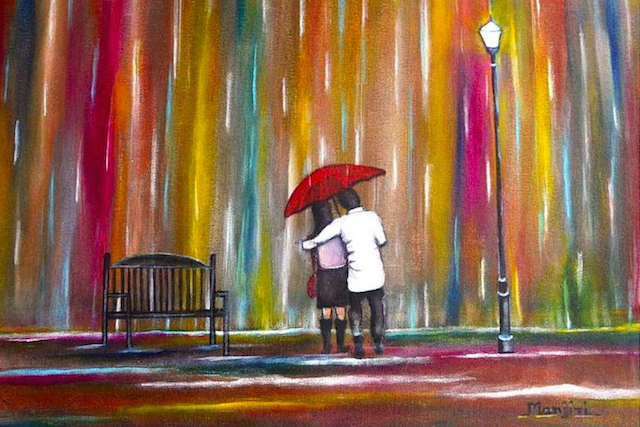
Artwork by artbymanjiri, CC 2.0
-

3 Ways We Unconsciously Sabotage Our Relationships (And How to Stop)
“Love never dies a natural death. It dies because we don’t know how to replenish its source.” ~Anaïs Nin
As a long-time commitment-phobe, my love life has been somewhat inconsistent, to say the least, but this year it seemed I’d finally met someone I was ready and able to think about building a future with. Still, along with this feeling of hope came some challenges that I had never experienced before in a relationship. (And yes, it did occur to me that maybe these two things went together!)
I knew I loved my partner, but we often seemed to argue about nothing in particular. This was bewildering to me. I really couldn’t understand what had gone wrong! But, thanks to her patient reflecting to me, I recognized how I was contributing to this pattern, and why I needed to alter my own attitudes and behavior rather than blaming my partner and expecting her to change.
I began thinking about all this because it was frustrating to get into a shouting match but not be able to remember what had kicked it all off, only to realize, at the end of it, that we could both have used that time in many more enjoyable or productive ways.
I was sick of feeling stressed about it all, so when the opportunity came up at the local community center, I took a mindfulness class. My expectations weren’t that high, to be honest, but I was ready to try anything!
One challenging exercise was to take a step back from reacting when things got heated between us so that I could see more clearly what was actually going on, what I was doing to fan the flames, and some ways I could change.
One bad habit, I discovered, was how I would often interpret what my lover had said to me in the most negative possible way. If she told me I seemed tired, I’d worry she was saying I wasn’t as good in bed; or, if she said I was looking “healthy,” I’d think she meant I was putting on weight.
I had been too ashamed to actually share these thoughts with her, to see if what I was hearing was what she actually meant. But finally, I couldn’t avoid it any longer. So I plucked up the courage to share these vulnerable feelings, only to discover that I was creating almost all that negativity in my own head.
I realized that my interpretations stemmed from my own low level of trust and self-confidence; and that I needed a lot more reassurance from my partner than I had been willing to admit.
I understood how, because of my history, including the strained relationship I’d had with my parents when I was a child, I found it hard to accept love, even from the person I was closest to. This was hurtful and frustrating for her, and it was making me miserable.
In a strange kind of twist, I was nervous about being happy, even though it was what I wanted, because that meant the risk of being hurt and disappointed, as I’d been in my childhood. The only antidote to these fears seemed to be to learn to love and accept myself for who I was, and not be dependent on getting approval from anyone else.
My partner has been very supportive with this, and paradoxically, this sense of greater emotional independence has made it possible for me to risk being, and feeling, closer and more loving with her.
After reflecting more on the roots of conflict in our relationship, I identified our three main types of communication and saw how confusing them could easily create a mismatch between the intention of what we were saying to each other and how the other interpreted it.
This often led to an argument, which was nothing more than two people with different perspectives each pointlessly trying to convince the other that they were right—a futile pattern that were both keen to avoid.
You might recognize some, or all, of these; if so, what I learned about how to defuse them might work for you too.
1. Arguing with emotions.
These are statements of fact about the experience of the person sharing them—i.e.: “I feel nervous when you drive that fast”—so there’s no point in disagreeing with them.
My mistake was to respond to this kind of statement as if it were my partner’s opinion, and then disagree with it.
Or, I’d respond to personal statements, such as “I feel like you don’t listen to me,” or “You don’t prioritize sending time with me” with a rebuttal, such as “What do you mean, of course I do,” or defensiveness, i.e.: “You’re always criticizing me!”
Denying her reality like this was a sure way of disempowering and upsetting her. Instead, I’m learning to be more tuned in to how she’s feeling, and to respond in ways that validate this and show that it’s important to me.
So now I might respond with, “I’m sorry you feel that way. Can you explain more?” or “Is there anything that I could do differently to change this?” Then I’ll try to act on any response she has given me.
This listening and hearing builds a bridge of trust between us, rather than the wall I used to put up, and makes it much easier for us to find compromises and solutions. It changes from being a zero sum conversation to a win- win.
If you ever deny your partner’s feelings, take a step back before responding and get curious instead of defensive. It’s not easy, but validating each other’s emotions creates an atmosphere of love, care, and understanding.
2. Stating opinions as facts.
The trouble was, we both used to express opinions as if they were facts, the underlying assumption being that one of us was right, and therefore, anyone with a different point of view was wrong. Now, I appreciate and accept that my partner and I can have different perspectives on anything, and neither of us is necessarily more right. I can accept and enjoy our differences rather than being threatened by them.
Formerly, my partner would express opinions like “You’re being selfish,” or even “You work too much!” to me as if they were facts. It was hard for me not to feel judged and criticized.
If she insisted, this led to angry denials. In a perfect world, she would always recognize that these are opinions. But it’s a fact of life that I can’t control what she does, only how I respond to her. So now I try to understand where she’s coming from and why, rather than just reacting, and if I can’t, I ask for an explanation.
Try to recognize when you are stating opinions as fact, or trying to make your partner “wrong.” Communication goes a lot more smoothly when neither person feels judged or criticized.
3. Blaming each other for our own feelings.
I sometimes blamed my partner for my feelings, saying things like, “You’ve made me angry,” or “You’re so insensitive.” Thanks to her patient refusal to take these kinds of accusations on board, I came to see that these statements revealed more about me than her!
With a new awareness of how these dynamics operate between us, I’m able to take responsibility for my own negative feelings, which gives me a much better ability to do something about them, if that’s needed or possible. This also allows me to nurture more mutual trust and intimacy with my partner.
When you’re about to blame your partner for how you feel, step back and ask yourself, “How would I respond if I took responsibility for my feelings instead?” You can still acknowledge how their actions affected you, but you will be doing so from a place of owning your own experience and responses.
—
Reflecting honestly on this process has been painful and challenging. If you’re at all like me, you may avoid doing any of this work for that very reason. It’s completely natural; we all instinctively avoid pain. All I can say is that, in my experience, it’s more than worth it.
By being clearer about what we are trying to communicate, and more conscious about how we share and listen to each other’s feelings, we can avoid the pitfalls of misunderstanding that could sabotage our relationships. And that will leave a lot more time and energy for what we really want to be doing: sharing love and being happy!
-

How to Deal with Painful Emotional Triggers in Your Relationships
“A comfort zone is a beautiful place, but nothing ever grows there.” ~Unknown
I’ve been looking for a new job, so I recently decided to update my resume.
“Hun, can you please help me with that?”
“Of course, my love.”
“Thanks, babe.”
Not only did my wife help me revamp my resume, she drafted me a killer cover letter as well.
“You’re the best, babe!”
“Happy to help, sweetie.”
I opened the cover letter the other day and found a discrepancy, something that immediately touched my deepest core wound.
There, at the bottom of the page, where my name, email address, and phone number are supposed to go, was someone else’s phone number, not mine. It wasn’t even remotely close to being mine.
Within a matter of seconds my panic alarm went off. Abandonment alert! Abandonment alert!
Is my wife is cheating on me? Where did she meet this guy, and how long have they been talking to each other?
No exaggeration. That’s right where my irrational thoughts went.
I Googled the number and found that it belonged to a John Smith from Los Angeles. (That’s not his real name.) It was like pouring gasoline on an already burning fire. Who the heck is John Smith?
As if that wasn’t bad enough, I went to Google images and saw that John Smith is a tall, slender, good-looking guy. WTF?! She’s sleeping with this guy. I just know it!
Stop, Zach! Stop!
I couldn’t. The part of me that’s afraid of being abandoned was in charge and driving the bus straight down to crazy town. What should have been contained (my fear of abandonment) leaked into our relationship.
I text my wife to ask if she was available for a quick phone call.
“As long as it’s quick,” she replied.
I had no intention of actually accusing my wife. I just wanted to ask if she knew whose number was at the bottom of my cover letter. At least that’s what I kept telling myself.
“I’m not sure what you’re getting at,” she said.
“I don’t know who John Smith is, nor have I ever seen that number before.”
“I was just using a template that a friend gave me.”
A template? Yeah right. Who the heck is this guy?
I kept telling her that I wasn’t accusing her of anything, which was a complete joke. News flash, Zach: Anyone could’ve seen that I was accusing her even if I didn’t say the actual words. It was total covert manipulation on my part.
And it gets worse.
Talking to my wife wasn’t enough to ease my panicked mind, so I picked up my phone, blocked my number, and called John Smith. I’m gonna get to the bottom of this!
Ladies and gentleman, we have a full blown blazing inferno.
Turns out his name isn’t John Smith. It’s Bob Smith. (Again, not his real name.) After getting his voicemail I did one more Google search and found out that he works at the same company that my wife’s friend works at. The same friend that gave my wife the cover letter template that she used for me.
I let out a deep sigh of relief because it finally all made sense. There was no other guy. It was just a larger than life story that I made up in my head.
With the fire finally out, I took the steering wheel away from the part of me that lives in fear, called a friend, and told him what I did. In hindsight, it’s something I should’ve done right from the get go, but we have to make mistakes to learn and grow.
Look, I get it, I was freaking out that day. Not because of something my wife did but because I was emotionally triggered and in a fearful place. I assumed she was cheating on me—“assumed” being the keyword—and then I reacted by blaming her for how I was feeling.
But why?
Emotional triggers stem from our past, and they can be very painful. When touched upon, we become hypersensitive and we make up stories like I did. We react and blame someone else because we don’t want to re-experience a painful childhood feeling.
It’s a way for us to remain in control rather than feeling out of control like we felt when we were little. It’s a coping mechanism. An unhealthy one, but one nonetheless.
When I was little, my mom died of cancer. It was painful and scary, and deep down that little boy, me, is positive that someone will leave him again. When that part of me gets triggered, it’s the scariest feeling in the world.
Containing something that scary is difficult to do, but I believe necessary for our personal growth.
I’ve put together a list of what I believe are healthy alternatives for dealing with thought patterns that can sabotage relationships in all areas of our lives. Remember, it’s not the fear destroys relationships; it’s how we handle them.
Practice Healthy Boundaries
My therapist and I talk a lot about healthy boundaries. A good boundary acts as a block for all that wants to come out, and it also acts as a filter for all incoming and outgoing information.
For example, a healthy emotional boundary for me would’ve been to see the incoming information—the wrong number at the bottom of the cover letter—for what it really was: just a random wrong number.
My wife has never given me a single reason to doubt her, ever, and this is where my fears should have come to an end, but instead I allowed the false information to seep in and affect me. That’s me having a bad personal boundary.
Next, a healthy boundary would have prevented me from blaming my wife because boundaries help to regulate how reactive we are. They help us contain everything that so desperately wants to come out.
When executed correctly, boundaries help us develop a better sense of self because we learn to hold ourselves accountable for our feelings and our behavior.
Share Our Fears with a Close Friend/Mentor
I called a trusted friend later that day, and he reminded me that I was reacting to a past experience. “Zach, the death of your mother was completely out of your control. She didn’t want to leave you. You’re not a bad person. She loved you.”
Tears streamed down my face as he reminded me of this. I was finally feeling my feelings. The tension that consumed my body earlier in the day was gone.
My friend encouraged me to write down all of the fearful thoughts that I had around this specific event. He reminded me that I’m powerless over a negative thought entering my mind but not over what I do with it.
Writing helps with this because the longer we stay in our heads with our fearful thoughts, the worse the problem usually gets.
Feel Our Feelings
I’ll never get over the loss of my mother if I don’t learn to sit through my painful feelings every time they come up, and I can’t sit through the painful feelings if I’m reacting and blaming someone else for how I feel. That’s not me living my truth, and that’s not me developing a sense of self.
Truth is, it’s scary when my abandonment wound gets triggered, but I’ll never get over the pain if I don’t learn to sit with it.
What I should’ve done that day was allow myself to feel the emotional pain that was coming up for me and let it pass. That’s me leaning into and working through the feeling rather than reacting to it. Remember, it’s not someone else’s job to take care of us emotionally; it’s our job.
—
I called my wife after talking to my friend and told her I was sorry. I told her that in the future I would do a better job containing the part of me that’s afraid of abandonment. She didn’t deserve to be blamed for a wrong number; that was all me.
Bottom line, blaming someone else for how we feel doesn’t solve our problems. Honesty, feeling our feelings, and ownership does. We miss an opportunity for personal growth when we react and blame other people for how we’re feeling.
It’s about progress, not perfection. Personal growth is a daily practice, and we’re all worth it. Even me. Namaste.
-

When Things Go Wrong: 5 Tips for Navigating Your “Why Me” Moments
“Getting over a painful experience is much like crossing monkey bars. You have to let go at some point in order to move forward.” ~C.S. Lewis
Have you ever been cruising down the highway of life only to unexpectedly hit a major pothole that completely threw you off? Maybe you lost a job, ended a relationship, or were betrayed by a friend.
It’s easy to wonder “why did this happen to me?” and stay buried in the pothole. It’s up to us to break free and regain our cruising speed on our life journey. Easier said than done, right?
I hit a major pothole in my professional life that blindsided me and left me feeling alone and unsure of what to do. Through this experience, I learned a lot about getting out of the pothole and getting back to living my fullest life. Let me start by telling you a little about my journey to the pothole.
The Rise
I grew up very much an academic, excelling in school all the way through the ranks of getting a Ph.D. in Operations Research (which is essentially applied math).
After that final graduation, I went off into the work force to put all of my newly learned skills, tools, and techniques to work. I worked as an analyst directly for two US federal agencies and also at a federally funded research and development center (FFRDC).
While at the FFRDC, I began talking to two colleagues/ friends, and we decided that we should strike out on our own. We started an analytical consulting company and began pursuing federal contracts. We were very successful.
As with most businesses, we had our ups and downs, but overall life was good. As owners, our skill sets complemented each other very well, but we did have some differences in our business philosophies that in the back of my mind I always viewed as a ticking time bomb.
The Fall
Fast-forward six years. All of sudden I found myself at real odds with my business partners and everything began to unravel. My partners gave me an ultimatum that was crushing, and I was forced to move on.
It was unexpected, and I was deeply hurt. I didn’t know where to turn. I had devoted everything to this company and partnership over the last six years…what was I going to do now? Why me?!?!
Pulling it together after this blow was definitely a challenge professionally and personally, and I learned some valuable lessons about getting through the “why me” moments in life.
The Lessons
1. Don’t get caught up in your story.
When bad things happen, it’s very easy to get caught up in the drama. We can get a lot of things from repeating our story to others such as sympathy, support, and encouragement. But wallowing in that story keeps you living in the past and not focused on being present to what’s in front of you right now.
Initially, I would go into all of the gory details of the “break up” when people asked me why I wasn’t in the business anymore, but pretty soon I grew tired of living in and repeating that story. Although people still asked me what happened, my response was just that I had irreconcilable differences with my partners. No bells, no whistles…simply, I’ve moved on. This kept me out of my story.
2. Don’t consume yourself in placing blame.
It’s easy to focus on placing blame on yourself and/or others when difficulties arise. What could I have done differently? Why did they do this to me? Why didn’t I try harder?
Focusing on all these “what ifs” won’t change the situation or ease your pain and sorrow. Focus your energy on what you can do right here, right now, to move forward.
3. Accept where you are.
As hard as it may be, you have to accept what happened. You can try not to, but it will only bring you more pain. Accepting your present circumstance is the first step to moving forward.
We have a natural tendency to judge and analyze the things that occur in our lives and label them as right or wrong, good or bad. Once we decide something is wrong or bad, we often spend a lot of time and energy complaining about it, feeling sorry for ourselves, pondering on how it could have gone differently, and/or trying to ‘fix’ it.
Shifting from that place of judgment and ‘fixing’ to a state of acceptance frees up that energy to explore new possibilities available from our current reality.
That doesn’t mean you have to like your current situation, but you do need to accept that you are where you are. It will clear your mind to take action to move to a better place.
4. Find the lesson.
This can be really hard because most potholes appear to be nothing but trouble when you hit them. But over time, you’ll likely realize that the pothole was actually there to teach or show you something.
Perhaps a job loss is setting you up to pursue something you’ll enjoy more. Maybe ending your relationship with your significant other frees you to meet the true love of your life. It may not be apparent immediately, but there is a lesson to be learned and an opportunity to grow.
For me, the end of my partnership freed me to advise other small business owners. During my time in the partnership, I learned how to run a small business and picked up several skills directly from my partners. I’m grateful because all of this prepared me to do what I do now which is extremely gratifying.
5. Focus on your vision.
Instead of holding a pity party, take the time to think about what you really want. Developing a vision of what you do want in your life (instead of focusing on your current situation and what you don’t want) is very powerful.
If you pile all of your energy into thinking about what happened and how it could have gone differently, you’ll stay stuck. Create a new vision for yourself so you can move forward. Focus on the positive things you want to see in your life and set the intention to pursue them.
This may require some rework of your previous plans, but that’s okay. Change can be good and may lead to things better than you could have imagined.
—
Life can definitely blindside you at times. Those unexpected circumstances or events can make or break you depending on how you recover. You may not have had control over what happened, but you do have a choice in how you respond.
Accept your current reality, but don’t let it define you. Keep your eyes open for the lessons to be learned and create a clear vision of what you want moving forward. Set your intention on your vision and allow it to unfold.
-
How to Stop Blaming Your Parents for Messing Up Your Life
“Compassion is not a relationship between the healer and the wounded. It’s a relationship between equals.” ~Pema Chodron
I was nineteen when it happened.
Legally an adult, but in no way equipped with what I was expected to deal with.
As I found myself agreeing to a marriage arranged by my mum, my thoughts turned to my dad.
We had buried him two days prior. He’d suffered a lot before he died. I wondered what he’d make of all this.
What followed my agreement was nothing short of a whirlwind, but not the romantic whirlwind that’s often associated with marriage.
Sure, there was the buying of clothes and jewelry, the organizing of venues, and the excited congratulations.
But then came the serious part. The living together. The getting to know your partner. The complete indifference to each other.
And before I’d even acknowledged that I was a married woman, I was getting divorced.
We weren’t suited. We didn’t agree on anything. I refused to live my life with someone I couldn’t stand the sight of. And despite my own shortcomings, there was one person I blamed for everything I experienced: my mom.
If it wasn’t for her, I wouldn’t have been married in the first place. I agreed to it because she asked me to—and because I wanted to see her happy.
I’d been the black sheep in my family up until that point. Agreeing to something she wanted for me could be a fresh start, especially since she’d lost her husband merely days before.
I felt guilty for saying anything but yes.
So the fact that I agreed to the marriage for her was justification enough to blame her for everything that went wrong.
It started with her, and so it had to end with her.
I lived with this feeling for years. The resentment turned to anger. The anger turned to bitterness. And the bitterness led me to blame her more.
Over time, I grew pretty tired of feeling like that. I didn’t see what function it had in my life. I was ready to feel differently.
But my feelings towards her didn’t change after some miraculous revelation or insightful discussion. They changed gradually, and with a lot of questions.
What had influenced her at the time?
How had her life experiences shaped what she’d asked me to do?
What had she gone through that led up to that moment?
The more I questioned her, the more I understood her. And the more I understood her, the more compassion I felt toward her.
Compassion didn’t have any room for judgment, resentment, or bitterness.
It did, however, have a lot of room for understanding.
And compassion taught me three clear steps that led me to forgive her:
Step One: Recognize that parents are human, too.
As the children of our parents, we often forget they had a life before us.
They had experiences and challenges; they made mistakes and felt joy and regret.
They had parents of their own, a childhood, friends, and relationships.
They had an entire life before we came into the picture.
Once I started seeing my mum as another human being, the dynamics of our relationship changed.
Each experience we had was no longer a parent-child interaction. It was an adult-adult interaction. And this made all the difference.
Rather than seeing her as my mother, who should be the adult in the relationship, I started relating to her like any other adult in my life, and I saw her for who she was—a woman who had lost her husband sooner than she expected, and was struggling with her own demons.
Start seeing your parents as human beings.
Recognize that they struggle in the same way you struggle. They feel fear, and loss, vulnerability, and joy.
Once you do this, you can then move to:
Step Two: Question them to understand them.
This is both the most difficult and the most rewarding of the three steps, especially if your parents have done something seemingly unimaginable.
If you’ve had parents that have abused you in any way, questioning why they did this can be incredibly challenging.
It means you have to take yourself back to when it happened. Replay it in your head and put yourself in their shoes.
By asking more questions, and seeing events from their perspective, your mind begins to open.
If your parents abused you, ask: Why would someone do this to their child?
What did they experience in their childhood and life before you that may have influenced this behavior?
What was their relationship like with their parents?
This doesn’t condone what they did; it just helps you understand.
When I started questioning my mom’s motives to arrange my marriage, it became clear to me that she had been under an entirely different kind of pressure than me.
She’d had pressure from her relatives to do the right thing and marry her children off soon. Having been born and raised in Pakistan, she had been conditioned to believe marriage was imperative for everyone.
She had also become a widow at a very young age. After my dad had died, she was in no emotional state to respond to that pressure in a healthy way.
The more I questioned her, the more I understood the context of what she had been experiencing.
And this took me to the last step.
Step 3: Forgive them.
The understanding that you build about your parents could lead you to feel more resentment toward them.
But this is unlikely.
Because questioning leads to compassion, and compassion has a tendency to lead to forgiveness.
And forgiveness means you can start to heal.
Forgive them because it’s a remedy to your pain.
Forgive them because they, too, can make mistakes.
Forgive them because they’re human.
I found myself forgiving my mom far quicker than I thought I would. Once she told me the pressure her relatives put her under to arrange my marriage, I saw that she acted in the best way she thought at the time.
It became impossible not to forgive her and move on.
This article comes with one huge caveat: your parents’ cooperation in this isn’t guaranteed.
They must be willing to open up a dialogue with you for you to have your questions answered.
And it will be tough, especially when they are forced to face their actions, demons, challenges, and frustrations.
This means you have to see the bigger picture and be the bigger person.
It means you must have the courage to take the first step. And you have to accept that there is some understandable explanation for their behavior if they aren’t willing or able to share it, even if they aren’t able to take responsibility for what they’ve done.
None of this is easy, but it’s worth it to heal the wounds from your past.
Parents image via Shutterstock
-

How to Let Go of the Pain of Anger and Blame
“Resentment is like drinking poison and then hoping it will kill your enemies.” ~Nelson Mandela
Has anger ever filled you up so completely that you felt you’d explode?
Two months after I had a baby I suddenly found myself inextricably angry. Yes, I felt the joy and happy stuff that everyone tells you about.
But having a daughter also triggered a flash flood of buried anger, blame, and resentment. And it was all directed to one person—my mother.
A therapist told me once that my mother had “verbally abused” me. That launched a fifteen-year process of rehashing and blaming my plethora of emotional issues on my mother.
But no matter how many therapists or coaches told me that she “didn’t form a proper attachment” or whatever, I always defended her. That is, until I became a mother myself.
When my own nurturing instinct kicked in, I realized what I’d missed out on as a child. I was overwhelmed by “how coulds.” How could anyone treat a little girl that way?
The anger overtook me. It was like a well of blame had opened up and I had fallen in. Something had to shift.
In truth, it happened fast. You might think it would take years to let go of anger and blame so strong it feels like it’s coming out of your eyeballs.
But once I realized how to let it go, all at once, poof, I was free. Now years later, I’ve never looked back.
How did I do it? I discovered the profound meaning of two words: perspective and compassion.
Life is Like a Box of Hair Dye
My mother grew up in the South in the sixties. I’ve watched enough Mad Men to know that life for women in my mother’s generation was very different.
Women’s value was heavily dependent on their looks and the look of their houses. Combine that world-view with a heaping helping of stress from an overwhelming job and you get a picture of my mother.
Think of an uber stressed-out Betty Draper. At thirteen, when my blonde hair started fading to light brown, she started dying it. “Boys won’t like you with brown hair,” she said.
Yelling was the norm and more I cried the more she yelled. I was an only child, lost in a world where my looks and image were tantamount to survival and nothing I did was enough.
The Blame-Spin Cycle
Getting stuck in blame feels like walking through an endless maze, looking for cheese that doesn’t exist. That’s what therapy felt like.
The more I re-counted the past, the madder I became and the more hopeless I felt. I was spinning in an endless cycle of blame, anger, and resentment.
What is the end game? What do I do with the fact that my mother’s behavior may have caused me pain later in life?
It was a well-meaning friend who finally cracked the code, over wine and panic one afternoon. I had called her over because I felt too emotionally unstable to be alone with my infant daughter.
“Why don’t you just ask her why she did it?” she asked.
That had never occurred to me.
I’d Like Perspective with a Side of Compassion Please
“It was the only way I knew…” she explained, after I found the courage to ask her why she had treated me so harshly.
My mother then went on to recount tales of her childhood. You know the beginning of Cinderella, when she spends her hours cleaning endlessly at the whim of a demanding mother?
That’s the image that came to mind as my mom recounted years of cleaning and re-cleaning my grandmother’s house. The family was not allowed to leave the house to do any activities until the house was spotless.
And of course, the cleaning always took up the entire day, disappointing my mom and her sister every time. My grandmother, it turned out, had been an even stronger product of her environment.
Why are people the way they are? If you can ask yourself that question before passing judgment, you can save yourself tremendous mental energy.
When I started understanding the world for my mother and grandmother, I was flooded with intense compassion. Think of Biff in any Back to the Future movie, when manure was inevitably dumped on his head—that was what happened to me with compassion.
Suddenly I realized that no one is to blame. If I blame my mother for my problems, then I have to blame my grandmother for my mother’s problems. And then I’d have to blame the Great Depression and society for my grandmother’s problems.
I just don’t have enough space for all of that anger.
Getting perspective on a situation and fully understanding the whole story is like pulling back the curtain and finding the little man with the booming voice in The Wizard of Oz. It loses its power over you.
Could my mother have made different choices? Of course she could have. Did she do the best she could with who she was back then? Yes, I believe she did.
Setting Yourself Free
What happened happened. No amount of blame, resentment, or anger at my mother will make it not have happened. It is just what happened.
We can let what happened control us and we can live in blame and anger, or we can let it go and free ourselves. When you hold on to anger, it’s you who suffers. You’re the one who has to live in your head.
Forgiveness has nothing to do with the other person. You don’t have to tell him that you forgive him, or even talk to her again if you don’t want to.
This process is simply about changing the way you see someone so that you can stop wasting valuable emotional energy. If you are holding onto resentment or anger, today is the day to set yourself free.
Right now, think of one person who isn’t safe to walk down the streets of your mind without being attacked.
Picture your story about that person. Then try to tell the story again from her perspective.
What is the back-story? Think about her childhood; when did she get hurt?
Find some way to see the story that allows you to feel compassion. It may not be easy at first, but there is always an answer.
The forgiveness journey is worth taking 1,000 times over. I can’t even begin to describe how much this idea shifted my experience in life.
Letting go of the anger feels like flying. By getting perspective on the story and uncovering compassion, you have the power to set yourself free.
Sad woman image via Shutterstock
-

The Power of Apologizing: Why Saying “Sorry” Is So Important
“Sincere apologies are for those that make them, not for those to whom they are made.” ~Greg LeMond
When I was growing up, every time I took my sister’s toy or called my brother names, my mother would grab me by the wrist and demanded that I offer an apology. What’s more, if the apology didn’t sound meaningful enough to her, I had to repeat it until my tone was genuine. An apology was the basic reaction to any mistake.
Now that I’m older, I see apologizing as more than just a household rule. My younger self didn’t understand the complexities of human pride and self-righteousness, but my older self does.
Now, I see family members refusing to talk to each other for years after an argument just because neither side wants to be the first to let go of their pride and “break down and apologize.” But who decided apologizing was a sign of weakness?
I think we’ve reached a day and age where showing emotional vulnerability can be viewed as a positive rather than a negative quality.
People are becoming more aware of ideas like empathy and sensitivity, and everywhere we are being encouraged to talk about our feelings, to seek help, and to connect with others. Gone are the days of keeping everything bottled up inside to suffer alone.
As we move forward in this time of self-knowledge and self-discovery, it’s vital to acquire the ability to recognize our own mistakes. Nobody is perfect, and we all will do something to hurt another person at some point in our lives. The difference, however, lies in acknowledging that we have done something wrong.
This was hard for me to grasp, because I was taught that an apology should be an automatic response.
It took me a long time to realize what it meant to say “I’m sorry” from the heart. Apologizing just for the sake of apologizing is meaningless. We cannot genuinely apologize if we can’t admit to ourselves that we made a mistake.
This is where humility comes in. Can we look at ourselves in the mirror and say that it was at least partly our fault? Can we take that responsibility?
Placing the blame on someone else is easy. Making excuses and skirting the subject is easy. Assuming the full weight of blame on our own shoulders, however, is very hard.
I learned this the hard way with a childhood friend of mine. As we grew older, we started becoming more competitive in the things we did together, and eventually the playful competition went a little too far.
It became a game of silently trying to prove who was better, and we ended up hurting each other over our pride.
We refused to apologize or even address what was going on because neither wanted to be the one to “give in.”
The tension kept growing, breaking apart our friendship. I wish I could go back now, because if I had taken responsibility for the mistakes I made, we probably could have resolved it easily and saved our friendship.
Instead, I let my pride take priority over my relationships with the people around me.
Learning to apologize is the first and most important step in the healing process. Not only does it show the recipient that you acknowledge their right to feel hurt, but it opens the way to forgiveness.
It seems so silly, really. I mean, it’s only two tiny words. How can something so small be so powerful?
Well, there have been various scientific studies on the power of apologizing, which have demonstrated that when the victim receives an apology from his offender, he develops empathy toward that person, which later develops more quickly into forgiveness.
This is due to the fact that when we receive an apology, we feel that our offender recognizes our pain and is willing to help us heal.
Timing is an important aspect to keep in mind, as well, because sometimes the other person might not be ready to accept your apology. Sometimes we need to allow time to heal the wounds a little bit before we come forward to say “I’m sorry.”
An apology cannot undo what has been done, but it can help ease the pain and tension of the aftermath. It gives hope for rebuilding, and puts value on the relationship rather than the individual’s pride.
Sometimes people don’t even realize the hurt they are creating around them by failing to take responsibility for their actions. Maybe it’s you, maybe it’s someone you know, but everyone knows someone who has suffered from this at some time.
Now is the time to make a change.
Often times those two simple words are worth more than a lifetime of excuses and explanations.
Choose the path of humility. Choose the path of healing. Choose love above pride. Choose to apologize.
Little girl apologizing image via Shutterstock
-

What Helped Me Forgive Myself and Honor My Needs
“To forgive is to set a prisoner free and realize that prisoner was you.” ~Lewis B. Smedes
Have you ever tried to forgive someone who hurt you, and despite your best efforts, it was just too hard? So you beat yourself up because you were not able to forgive, and the pain was still there?
I spent years trying to forgive others.
I tried to forgive a family member for abusing me as a child.
I tried to forgive my primary school teacher of seven years for constantly hammering that even though I was a straight-A student, I wasn’t allowed to be me, and I needed to change myself so I could be accepted and loved.
I tried to forgive those who indirectly made me understand that their lives would have been so much better if I hadn’t been there, or if I would have been a boy.
Although I had developed a strong resilience, which allowed me to build strength from these negative life experiences, they had left their mark, and I felt pain, resentment, and a feeling of injustice.
I had been taught that I should forgive others for everything they did to me. But I couldn’t get out of my head and back to my heart, and I couldn’t manage to forgive them.
I was still feeling stuck, trapped, and unable to let go, move forward, and honor my needs. I let the regrets of wasted time consume me.
I realized I was making everything so hard on myself because I felt guilty.
If these people had taken advantage of me in one form or another, somehow, to me, it meant that I did something wrong, that I was broken, that something was wrong with me, and that I didn’t deserve anything better.
I just clutched to my guilt so tightly.
And one day, I had a breakthrough.
I realized that I needed to offer forgiveness, not to others, but to myself.
I had no control over the decisions, thoughts, and actions of others, but I did have control over the blame I was placing on myself.
It was time to let go of the pain, heal old wounds, move forward, and finally nurture myself and honor my needs.
The first step I took on the path to self-forgiveness was to accept reality without blaming others.
I would have loved to change the past and rewrite my history, but that was not possible. So instead of accepting reality and moving forward, I was drowning myself in blame and resentment.
I couldn’t go on like that. I needed my life to move forward. I had created a lot of struggles and suffering for myself because I spent too much energy resisting the present moment.
I needed to accept the reality I’d been given. Once I did, I was finally able to release all of the anger, blame, and resentment that had been built up in my mind and body.
To me, accepting reality is a crucial step toward self-acceptance. And self-acceptance is one of the first steps toward self-forgiveness.
The second step for me was to stop blaming myself and feeling guilty.
Most of us have been raised in a culture that stresses dichotomous thinking—good or bad, young or old, guilty or not guilty…
And once we stop blaming others, we usually blame ourselves. It must be someone’s fault, right?
I blamed myself for letting this family member abuse me as a child.
I blamed myself for not being able to change myself so I could be accepted and loved.
I blamed myself for having made a financial mistake and not knowing how I would get out of debt.
Once I had reflected on my negative experiences and identified what exactly I was blaming myself for and what exactly I was feeling guilty about, I took the next step and declared I was no longer going to blame myself for all this.
This was extremely liberating.
I was now accepting reality without blaming anyone. I was one step away from being able to forgive myself, let go, and honor my needs.
The third step toward self-forgiveness was to love myself fully.
I knew if I wanted to let go of my past experiences, I had to work on loving myself.
I managed to increase my self-love and forgive myself by consistently doing three simple things every day of the week.
First, I started a gratitude journal, and at the end of each day, I wrote five different things I was grateful for. It helped me see my life and myself through a new, more compassionate lens.
Then, I kept a list of all nice things that people said to me. I was mindful of thank-yous and compliments, and instead of focusing on the people who didn’t seem to appreciate me, I focused on those who I knew did love me.
Eventually, I repeatedly said to myself, “I am valued, I am enough, I am not damaged or broken, and I love myself just the way I am.”
Once you start looking, you can find so many reasons to love yourself fully. And the more love you feel for yourself, the easier it becomes to forgive your past.
I was finally ready to forgive myself wholeheartedly…
I forgave myself for making mistakes.
I forgave myself for allowing negative energies into my life and letting those sit in my body for all these years.
I forgave myself for not being who others wanted me to be.
I forgave myself for allowing outside circumstances and people to dictate my self-worth.
I forgave myself for not trusting my inner wisdom to know better.
And most importantly, I forgave myself for carrying the weight of my guilt and self-blame.
Forgiving myself wholeheartedly was liberating. It allowed me to be compassionate, accept myself, and let go of painful memories.
Sure, I still doubt my worth sometimes, I still re-live some memories I wish I could just erase from my mind, and I still worry about not pleasing other people and being rejected. But I feel free, joyful, and whole.
By forgiving myself, I was finally able to honor many of my needs that I had ignored before, even if it’s still a work in progress in some areas.
I was able to honor my need to feel great in my skin and accept my body.
I was able to honor my need to be myself and be loved for who I am, not for what I do.
I was able to honor my need to let go and not feel like I had to be hyper-vigilant and in control all the time.
You can do this too.
If you’ve made financial mistakes, if you struggle with food, or if you feel resentment and anger toward other people in your life, take these three steps: stop blaming others, stop blaming yourself, and learn to love yourself fully.
Your life will never be the same.
Self-forgiveness will allow you to create more peaceful relationships going forward, it will boost your mood so you’ll no longer experience depressive feelings, and it will reduce stress in your life. You’ll feel better, and you’ll also be healthier.
To me, self-forgiveness is one of the most meaningful lessons life has to offer. And I am so grateful for those times of trial.
Don’t waste another day of your life.
Forgive yourself and live fully!
-
5 Helpful Things to Do When You Think Life Sucks
“It isn’t what happens to us that causes us to suffer; it’s what we say to ourselves about what happens.” ~Pema Chodron
You know that foreboding fear we all have—that something will go terribly wrong and life will never be the same again?
Mine is that something will happen to our daughter. She is our only child. We battled infertility for years before conceiving her. I keep telling myself that it’s just an irrational fear and that every parent probably has it to some extent, but it’s a constant companion that stealthily follows me around everywhere I go.
So, on a Saturday evening, when we returned from an evening out to pick her up from the playcare and were greeted by the sight of blood on her face and the sound of inconsolable weeping, my heart just stopped.
She had fallen off a playscape headfirst. It had happened minutes before we arrived. All the caretakers could tell us was that a tooth was knocked off. We rushed her to the emergency room.
After what seemed like hours, they gave the all-clear—no head trauma or fractures—and sent us home with a prescription of painkillers and instructions to rest.
She spent the next twenty-four hours in pain and throwing up. She couldn’t even hold water down.
I tortured myself with fears that it must be a devastating head injury that the emergency room staff had failed to catch. She felt better the next day, so I brushed my fears away.
The next week was a whirlwind of visits to the dentist to extract fragmented and loose teeth. During one of the visits, the dentist noticed that her jaw was misaligned. We rushed to an oral surgeon.
The emergency room staff had failed to catch it—her jaw had broken. And now it was too late. The bone had already started to set in a crooked manner.
She’d need major surgery to reverse it. She was too young to do the surgery yet, but by the time she turns eighteen the misaligned jaw will likely bother her so much that surgery will be unavoidable.
A couple of weeks later, as the dust started to settle, I took her to the park to let some steam off. As luck would have it, she had another fall, and this time she broke her arm.
We hadn’t had any major trauma in her entire life. And now we had two sets of broken bones in as many weeks.
Waiting for the orthopedic to put the cast on, I couldn’t help but think, “Right now, our life sucks.”
And this wasn’t the first time I’d thought that.
A few years back, I’d felt much worse when my husband was in the emergency room, I waited outside with her, and the doctors had no answers for us.
And before that at work when a colleague was bent on making my life a living hell.
And when my best friend was lost to depression and wouldn’t take my calls.
And when I broke up with my first boyfriend.
And a million other times.
Every single one of us has these moments. It’s just the way life is. It’s what we do in those moments that matters.
For the better part of my life, I’ve felt flustered and incapable of handling these moments. Over time, I feel like I’ve figured out a few things that I can start doing to bounce back.
I’m sharing these with the hopes that some of you will find them as useful as I do.
1. Replace “Why me?” with “What next?”
It’s natural; when things go wrong, one of our first thoughts is likely to be “Why me?”
Here’s the thing though: “Why me?” is a weakening phrase. It only serves to increase our feeling of victimhood and makes us feel incapable of dealing with the situation.
By intentionally catching ourselves thinking “Why me?” and replacing it with “What next?” we not only gain back a feeling of control, but also figure out what we can actually do.
Anytime my daughter had a mini accident after that, she would panic. I’d put on my calmest voice, even when I felt like screaming “Why us? Can we please catch a break?” and say, “Aww, poor baby. Are you hurt? Accidents happen. Do you think a boo-boo pad might help?” And yes, a boo-boo pad always helped.
Ever so slowly, we were back to being resilient in the face of mini accidents again.
2. Force yourself to practice gratitude.
It is hard to feel grateful when you are dealt a blow, no matter how big or small it is.
I was devastated by my daughter’s jaw fracture verdict. I had to practically force myself to practice gratitude.
Every time I talked to someone, I’d say, “Well, we’re lucky it wasn’t a head injury.” After repeating it a few times, I actually started to believe it and started to feel the gratitude. And that eventually helped deal with the news of the misaligned jaw.
No matter what you are dealing with, there is always, always something to be grateful for. Force yourself to say it out loud a few times. Your heart and your mind will soon catch up.
3. Quit blaming.
When you’re hurt, it is equally natural to look for someone to blame.
In my case, I was tempted to blame myself, the caregivers at the playcare, the doctors at the emergency room, and so on.
But blame only serves to prolong the hurt. It makes it harder to let things go. It makes us angry and corrodes us from the inside. It brings negativity into our life.
So just stop.
If something is meant to be, it will happen. That’s it. Deal with it and move on.
4. Don’t give in to fear and despair.
This is a tough one. It’s so much easier to just give in and surrender to the fear and grief. But we need to stand tall, even when we feel two feet too short.
It was very hard for me to mask my worries from my daughter and project confidence. But I’m so glad I did.
Back then, for a while, I’d actually started to wonder if something was wrong. The foreboding fear that was my constant companion kept telling me that something bad was going on.
But slowly, she gained from my projected confidence and grew more confident herself. And got back to her monkey business. And didn’t having any more accidents.
And my worries started to fizzle.
When it comes to fear and despair, you have to fake it till you make it. And, sooner or later, you will make it.
5. Never give up.
We didn’t like the jaw surgery verdict. We sought out another opinion even though it seemed pointless.
The new oral surgeon was old school. She suggested physical therapy. We set alarms on the phone, and my daughter diligently did her exercises (bless her soul, she’s just a wee little kid, but such a sport).
After a month, the jaw was starting to get aligned again. Things are beginning to look good. Maybe we won’t need that surgery after all. We can only hope for the best.
No matter where you’re at or what you’re going through, don’t give up. Try just one more thing; maybe it’s just the thing that will resolve it for you.
It ain’t over, until it’s over.
—
As I type this article, I hear my daughter biking around the house.
And then I hear a loud thud. I catch my breath and wait. And there it comes: “I’m okay,” she calls out.
Yes. I think we’re indeed okay.
-

Ending a Toxic Relationship: When It’s Time to Say “No More”
“Worry less, smile more. Don’t regret, just learn and grow.” ~Unknown
The day finally came when my heart was strong enough to speak up.
I had spent many years trying to be the calm, sensible one. The one who would try to rationalize my sister’s behavior just to keep the peace.
For years the strategy was to keep everything in its place and accept what was said, done, or requested. The day finally came when the weight of accepting the burden was too much to bear.
No amount of talking would convince my sister that I was being reasonable. It had to be her way. It had to be acknowledged that I had somehow erred, when in fact it was her very own thoughts that had caused her pain.
So, no more, I decided then and there.
“I am done. We are both far too dysfunctional to be in each other’s lives. I wish you all the best… You can blame me…This is what I want.” With those words I gave up on our relationship.
The feeling of freedom rose. The confidence from finally taking a stand was a trophy I now held proudly. “Well done!” I cheered. I no longer had to deal with accusations. Hooray! I was now in charge. I was the creator of my life.
Then, ever so slowly, it started to shift. Ever so gently the doubts crept in. Old scripts started playing. The mind was reverting back to old default programs.
We had both suffered as children. Our parents had been abusive in many ways. We never told anyone what happened in our home. We believed we had to protect our parents.
I became the surrogate parent. We both accepted that our parents did not know any better, doing to us what had been done to them. We allowed them to continue in our lives as adults.
My sister was the first to end contact with our parents. I was convinced I was enlightened enough that I could save them. All that ended the night I found myself terrified, at a police station, explaining why I thought my father was about to come to my home and hurt me.
That night I spoke the truth. That night I heard my mother speak another lie to protect my father. That night I said “no more” to my parents.
That was an end I could justify. I had to find help to get through the flood of emotions that threatened to drown me. Among the consolations was the fact that I still had my sister. Nobody else understood what we had gone through.
Now, however, I began to doubt my bravery. My sister and I were supposed to be there for each other until the very end.
I worried that I had made a terrible mistake. My view of who I was had shifted. I was no longer the savior. I was no longer the protector. I was no longer the one who got along with everybody.
I saw myself as abandoning my sister. How could I have been so mean? How could I just end it like that? I was a terrible person!
The pain was intense. The anger, the hurt, the bitterness all began to choke my life. Overwhelmingly, they tortured my soul.
Years of buried resentment began to rise up like icebergs slowly breaking the surface from their depths. The feelings, once anchored to my core, were now exposed to reveal infected open wounds.
I cried. I screamed. I read. I meditated. I yelled. I punched. I got angry. I journaled. What was wrong with me? I had always held it together. To witness myself unravelling was terrifying.
Dark and ugly thoughts plagued me. Driving was now an opportunity to vent. I was safe in my car; I could blast my horn, I could utter every imaginable swear word, and I could find fault with every driver’s technique.
I was a person possessed by anger and looking for a way to punish.
My daily meditation seemed to go nowhere. I connected to the universe. I begged for help.
I had persevered with the early morning practice for months, when one morning I suddenly realized that my sister was no longer the first thought of my day. That was new. Then ever so slowly, other thoughts began disappearing.
There was a gentle loving energy helping me to create new thoughts to replace the old. I was okay. I am okay. Everything will be okay.
It was an inexplicably subtle process that I was convinced was not working when, on another ordinary day, I realized I was waking up okay.
Realizations began emerging. It was fair for me to end the discussion. No amount of talking was going to change my sister’s mind. Years of role-playing had created an expectation that I was to be at fault.
By speaking up, I was positioning myself as a priority. I was no longer willing to rate myself last. I deserved better, and I now saw that I had made the perfect decision for me.
Another realization soon came to mind: “You can blame me.” Those were the words I was most angry about. Those words came out of my mouth. I was mad at myself. I was mad that I had given my sister a reason to ignore her role in our story.
That had always been my go-to solution. Take on the blame to keep the peace.
When that was done, everything would go back to the way it was. We could live a fantasy life of closeness, all the while not realizing that I was slowly breaking my own heart.
This was the lesson I was now being shown. I had to learn to speak up when I did not agree. I had to learn to take responsibility for my role in allowing it to be that way.
I had wanted my sister to love me and to make me feel important and needed. For this I had paid an expensive price. My sister, I realized, played her role to perfection in allowing me to wake up to this truth.
A few weeks later another realization came to mind: Silently, we had both blamed each other for parts of our pain. We were two damaged souls trying to live our lives with massive wounds in our hearts.
We could not give each other what we did not have. We did not know how to love each other without the past tearing open the old wounds.
I realized that I was not a terrible person for making a decision that was in my best interest. No one should be given an automatic pass into your life, regardless of their title.
It is actually a privilege that should be honored and treated with respect. The lesson may be painful, but if you find some way through the hurt, a better future awaits.
Each new morning brings a little more light. The universe continues to coax me to take another step away from the ledge of my past. I realize that the heartbreak I felt was a dissolving of me into a million tiny molecules before the gentle re-sculpting of those atoms into a more open and peaceful me.
Is it time for you to speak up? Is it time for you to find the courage to say “No more”?
Woman on the rocks image via Shutterstock
-

When Someone Blames You: How to Cope with Misdirected Anger
“Life becomes easier when you learn to accept an apology you never got.” ~Robert Brault
My ex-boyfriend is angry with me.
I met him soon after he had broken up with his then fiancée, and he thought he was ready to move on, but wasn’t. After many months of messing me about, we ended it. I cut off contact because it still hurt me and I still cared for him.
Eventually, I wrote to him to see if I could get some closure and to consider if we could salvage a friendship. His reply was scathing, vitriolic, angry. He blamed me for the fact that his ex-fiancée would not give him another chance.
Yet, he had made those decisions. He insisted that it was my fault, and that I had cost him everything, despite the fact that all I had done was support him and respond to his interest in me. I hadn’t even known him before their breakup.
Beyond that, we had also been, I had thought, really good friends that had connected on a level that is rare to come across in life. It hurt that the person I thought I had connected with like this now felt so much anger and hate toward me.
It was difficult not to be affected by that, and it hurt me deeply. I fell into a bit of a depression, and even though I knew I hadn’t done anything to warrant such vicious verbal attacks, I still questioned myself and my actions.
Maybe I did deserve his anger. Maybe I was worthy of hatred.
Then it dawned on me. This was not my issue. This was his issue and his inability to accept responsibility for his choices. I had not wanted nor asked for any of it! But how was I going to disentangle myself from the hate he was sending my way? I came to rely on five things.
1.Know your truth.
I know deep down that I am not the person he sees me as, that I did not set out to ever hurt or destroy him, that I gave so much more than most would have given to a relationship that was not good for me.
I know that I am a good person. I know with certainty that his anger is misdirected; it’s not my truth. I’m honest with myself to a fault, and I take on what I deserve to and accept blame and mistakes when I make them. This was not my mistake to accept.
2. Accept that people won’t see your reality.
People won’t always see things the way that you do. You cannot make someone see what you believe to be a rational truth, nor will you see it from their point of view. Don’t try to; accept that we all think differently.
3. Let go.
It’s not worth your constant wondering and worrying. It isn’t good for you to hold onto it and over-analyze it. Let it go; visualise yourself blowing it all into a balloon, tying it off, and letting it drift away. Feel lighter because of it!
4. Remember, all actions are based in either fear or love.
Base yours in love. Realize their actions are based in fear. Often, these fears are ones that no one can reach because they are too deep-seated for the person to acknowledge. Accept that, and continue to operate from your own base of love.
5. Surround yourself with people and things that make your soul sing.
Let the angry be angry. Don’t let yourself live that way, and don’t deprive yourself of the things that make you happy because you’re giving time to something out of your control.
See friends, indulge in books or art or physical activity—whatever makes you feel good. You’re not who they think you are; you’re a good person who deserves to live a bountiful, peaceful, happy life. Go and get it!
Arguing couple image via Shutterstock
-

How to Take Responsibility for Your Life Without Blaming Yourself
“The place to improve the world is first in one’s own heart and head and hands.” ~Robert M. Pirsig
Many of us are exploring what it means to be responsible for ourselves, to be creating our own reality. These are concepts that in some situations are easy to grab ahold of; at other times, the meanings are far more elusive.
I’ve seen, in myself and in others, the tendency to beat ourselves up while we are learning what self-empowerment really means. I think this is a natural result of our cultural programming, and it’s understandable that we’d need to work through this type of self-punishment on our quest for understanding.
I used to be an expert at self-blame.
When old relationships ended, I asked myself what I’d done wrong. When I didn’t take advantage an opportunity, I wondered what was wrong with me; why wasn’t I paying more attention? If a friend was acting a bit off, I thought it was me. Had I said something insensitive? Was I talking too much? Was I boring?
I was an excellent over-thinker and a superb finger-pointer, as long as that finger was pointed right back at me.
I rationalized this over-thinking by reminding myself of my desire to be responsible for myself. I was paying attention! I was recognizing my role! I was empowering myself! Doing that required this type of self-questioning!
I knew I was creating my own reality. I felt that if I could not keep things from happening that made me feel uncomfortable (read: sad, mad, confused), then I was failing.
At that time, punishing myself felt like taking responsibility for what was going on. If I blamed myself, it meant I recognized that I was creating the reality. I wasn’t being a victim or pointing the finger at someone else; I was taking on the full load, and man, did I.
I trucked along fairly successfully with that outlook for quite some time. It was certainly stressful, and I spent lots of time making up stories about myself, but it wasn’t affecting me in a negative enough way for me to change it.
That is, until my marriage broke up.
That occurrence marked the beginning of the most stressful time that I’d ever experienced. The internal dialogue was vicious. I felt guilt, and a sense of failure, and a sadness that I’d never experienced before.
That combination of emotions really opened the floodgates to the parts of me that excelled at self-blame.
It was several months into that experience when I realized that all the self-punishment wasn’t helping. I wasn’t feeling any better. If anything, I was feeling worse. The self-blame didn’t feel like healing, or like I was working through the emotion; it felt like quicksand.
Over time, I’ve learned that there is a big difference between being responsible for ourselves and blaming ourselves.
This knowledge didn’t come over night; it was a process that I am still working through. Initially, it can be tough for us to tell the difference between self-punishment and empowerment. Here are a few tips and tricks I’ve used to help me drop the habit of self-blame.
1. Re-frame how you question yourself.
We all have patterns, or tendencies, in how we communicate. In a tough situation, there is probably an automatic question or two that you usually ask yourself. When it pops up, write it down. It might be, “What did I do wrong?” or, “Why do I always eff up?”
Ask yourself if you would ask someone you care about the same exact question. Chances are, the answer is no. Let that sink in.
2. Change the question.
How would you ask the question if it was directed at someone else?
Pretend you are playing the role of trusted friend to someone you respect, love, and whom you hold in the highest regard. Would you have more compassion for their experience? Would you want to be supportive? Would you desire to assist them by being able to offer a more detached view? (Spoiler: Yes!)
The new question you ask will depend on the situation. One that fits almost any experience is, simply, “What can I take from this?”
I also like, “What do I want to learn from this?” which can remind us to consider in a more empowering direction. Also, “How do I want this to be different in the future?” can help us to formulate a plan to make that future happen.
3. Now ask yourself that question.
How does your altered question feel? Does it cause you to clench up, or do you begin hearing a litany of crappy internal dialogue? If so, change the question again. Keep changing it until you come up with a version that you’re comfortable hearing, that assists you in actually coming up with an introspective response.
4. Remember, there is not one “right” way; there are just ways of being.
I think many of us believe there is only one right way or one correct path. With this belief, there are many chances to consider that we are wrong or that we’ve failed. This is simply not the case!
There are many ways to do most tasks, just as there are many ways to live our lives. Having a difficult experience doesn’t mean we’ve done anything wrong; it means we are on a tougher road to learning, for the moment.
Opportunities are infinite; our options are boundless, and we always have the power to change our perspective on any life event, large or small.
We have just as much energy for self-compassion and exploration as we do for self-punishment. It’s up to us to direct it.
How do you shift the energy when you realize you’re beating yourself up?
Photo by Daniela Brown
-

4 Simple But Powerful Tips to Reduce Stress and Anxiety
“Life is 10% what happens to you and 90% how you react to it.” ~Charles Swindoll
I found Tiny Buddha because I have never dealt with stress and anxiety all that well, and once I became a full-time working mum of two, this had become a real issue affecting my quality of life.
It was one day earlier this year when I was battling yet another bout of the flu, and I’d just learned about something out of my control at work that would make life even harder, that I went rushing by a group of my friends, not even seeing them.
One rang later and asked if I was okay, adding that I had rushed by them with a face “grey with stress,” and had not heard them calling out to me. I realized something had to be done, and that’s how I found this site.
I have never blogged or written publicly in my life, but if any of these help someone out there, I will be so happy to have contributed to the light and peacefulness coming from this site. So here goes.
If you’re also feeling overwhelmed by stress:
1. Think “Poor thing…” when you’re aggravated with someone.
Part of the rushing-about modern-day-life thing is the constant irritation and even anger of bumping into other people as you go about your business.
Someone cuts you off in traffic. Someone beats you to the last seat on the train. Your spouse forgets to turn on the dishwasher and now there are no clean plates or cups for the kids. Argh!
Well, I came up with this to help me be more compassionate toward others, and peaceful in myself. Every time I’m aggravated with someone, I say to myself “Poor thing…” and then fill in the blank.
So now I say, “Poor thing, my spouse must have been so stressed and addled that he forgot to turn on the dishwasher.”
“Poor thing, they must be exhausted to need that seat on train. I’ll go stand by the window; besides, it’s easier to pretend dance to my iPod when I’m standing.”
Or sometimes when I can’t think of anything, I’ll say, “Poor thing, it must be painful to be in such a rush that you end up cutting people off in traffic.”
This makes me nicer to everyone, and more importantly, happier in my own day-to-day existence. Because being irritated, angry, or in a rush is painful, and that’s punishment in itself.
2. Decide “I don’t do blame.”
This one came out of the blue—well, that is, after reading so many of your amazing posts.
I grew up in a family where there was constant blame, and it was always something or somebody else’s fault that something negative had happened.
I then worked in places where you sent emails to the person sitting a meter away, just so you could dig them out later and forward it up higher, to show it was their fault something had happened, not yours. Awful way to live.
Out of the blue, I suddenly said to myself, “I don’t do blame.”
When something negative happens and my brain, out of habit, starts looking for who or what caused it, I step away from the blameful thoughts and tell myself, “That’s just an old habit.”
I just ignore them entirely. I then look at what that negative thing is, and I think of practical ways to deal with it. As a result, my relationship with my husband, my work colleagues, even my parents, has improved immensely.
I no longer get that awful feeling of resentment that comes when you live constantly blaming everything else around you.
3. Next, decide “I don’t do urgency.”
After reading this post about the surprising secret to being on time, I was thinking about how I rush around a lot, and how I can’t find a way to stop. Then I thought, well, sometimes you need “urgency,” and I tried to think of when. I thought, in life-and-death situations, like in a hospital Emergency Room, surely you need “urgency” then.
But then I thought about shows like ER or the times I’ve been in hospital, and I remembered how the doctors and nurses always seem decisive, super-efficient, cool, collected, but never urgent.
“Urgency” to me connotes awful feelings of desperation, being rushed, helplessness. When I get something done, even in a situation where time is of the essence, it is done because I am decisive, calm, and efficient—not because I’m “urgent.”
So I reasoned that if ER doctors and nurses can handle life-and-death situations without “urgency,” then “urgency” is never required. I never, ever have to be “urgent”!
I haven’t slowed down to the extent that I walk around in a constant feeling of being on a beach holiday, but I don’t have that stressed-out, hurried feeling anymore. When I need to, I act like an ER doctor or nurse with super-efficient and calm action. (And when I don’t, I try very hard to act like I’m on a beach holiday!)
4. Change “I have to” to ” I will.”
Like a lot of full-time working parents, I’ve lived with a lot of “have-to’s” permeating my life. From the little things (I have to do another load of laundry) to the big things (I have to find a new job) to the guilty things (I have to spend more time with my kids), I could feel these tugging away at me all the time.
There is always a “… but” at the end of those sentences. “I have to do another load of laundry…but I don’t feel like it/have run out of washing powder/also need to cook the kids dinner.”
The “but” causes all the stress, but I realized it wouldn’t be there if it wasn’t for the “have to.”
Again, out of the blue I decided to swap “I have to” with “I will,” as in “I will do another load of laundry.”
“I will” sounds like I’ve decided to do it, rather than “I have to” with all its connotations of coercion, pressure, stress, and resentment. This thing is now in my control. There is no room for “…but.”
Suddenly, life is full of things I have decided that I will do, for whatever reason, rather than a thousand things out there making me feel anxious, pressured, and guilty because I’m not doing them.
These are four tiny things that have made a big difference for my everyday peace and living experience. I wouldn’t have come up with any of them if it weren’t for all the fabulous other posts I’ve read here.
I hope sharing them here might now give a little something back to someone out there, and make their daily lives a little lighter and brighter, as well.
-

4 Steps to Let Go of Blame in Your Relationship
“When you blame others, you give up your power to change.” ~Dr. Robert Anthony
After living alone for five years, I moved in with my girlfriend just eight months ago. I knew that I would have to make some adjustments, but I had no idea what they might be.
I expected most of the changes to be around the dynamics of our relationship and spending too much time together. I didn’t foresee any personal growth coming out of it.
But that’s exactly what happened. I grew, and I evolved.
What Sparks a Fight
For both me and my girlfriend, cleaning our apartment is a big issue.
Neither one of us wants to do it. And even when we do clean, we want credit for it. Or at least I do.
I remember one time I had just finished cleaning our bathroom, and I felt like I had made a significant contribution to our apartment. My girlfriend—let’s just call her Mary—thanked me, but I felt like she wasn’t contributing as much to our apartment.
I accused her.
Mary hadn’t cleaned anything in a week, and I didn’t want to do all the cleaning by myself. Now it was her turn. And she should know about it.
She didn’t take it so well.
She said that she had cleaned the bathroom the last two times, in addition to the kitchen and parts of the bedroom. I told her that I had cooked the last few meals, and that she’s the one who keeps dirtying the bathroom and bedroom anyway. Why should I clean her mess?
Things Get Ugly
Before I knew it, we had escalated into a full-blown fight as we got more and more upset at each other. We were blaming each other back and forth for what the other person had or hadn’t done.
We were playing the “blame game.”
And this wasn’t the first time either.
We had played the blame game many times before, and every time we did, it would damage our relationship in a new way. Sometimes there would still be ripple effects days later.
We would get mad at each other. We would accuse each other. We would look for reasons why one of us was right and the other was wrong.
It was a downward spiral.
Blame Awareness and The Gift of Pain
Usually before I can make any significant change in my life, I need to have a high level of awareness about it. I can’t change without first knowing what change I need to make. And usually, the big alarm that tells me when something isn’t working is this:
I feel pain.
It can be sadness, anger, unhappiness—basically, any emotion that feels bad is my warning sign that something’s wrong. And this time, it was my girlfriend and I being intensely angry at each other.
Pain is a gift.
Why?
Pain is a gift because it tells us that something is not right, that something isn’t working and needs to be changed. Without feeling this pain, we might never know that we need to change.
This painful experience is what brought our blame game to my awareness.
I was now empowered to change.
Taking 100% Responsibility
I read somewhere that most successful people take 100% responsibility for their lives.
Hmm.
I thought I’d try an experiment.
What if I were to take 100% responsibility for everything in our apartment, in our relationship, in our lives?
Even though a relationship is really a 50-50 partnership, I figured I’d bite the bullet and take all the blame and responsibility—for everything—and just see what happens. (Note: If you’re in an unhealthy relationship, and your partner regularly mistreats or takes advantage of you, I would not recommend this.)
I deliberately became more aware of my tendency to blame. I was denying responsibility for things I could change.
Blame is a victim mindset, not an empowered one.
I would catch myself after I had just blamed Mary. I would catch myself while I was accusing her, or right before I was about to.
I would catch myself merely thinking the thought—that it’s her fault for such-and-such. And right before I was about to blame her for something, I’d just sit in awareness of it, as if I were a Buddhist monk.
Letting go of the blame, I would instead take full responsibility for it.
Talking About It
Accusing her and blaming her only made our relationship worse. So I was taking 100% responsibility for our relationship, and I wasn’t going to blame her for anything. Even if I felt certain it really was her fault.
At first, I didn’t tell Mary what I was doing.
Eventually, though, I told her everything. We had been blaming each other a lot, and it was making our relationship not so good, and I was making an effort to stop. I was happy when she said that she would make an effort too.
She soon stopped blaming me.
Even when she hadn’t cleaned up the mess on our table, and it was clearly her mess and her “fault,” I took responsibility for it.
Sounds crazy. Sounds dis-empowering, right?
But maybe, I had created the circumstances to allow her to leave the mess. Maybe I hadn’t communicated clearly to her that I don’t like clutter on our table. Maybe I hadn’t done anything to encourage us to both clean up together, as a team.
Total responsibility.
In the end, I didn’t become a victim either. If Mary was going to take advantage of me, this strategy would have backfired and I’d be her scapegoat. But because we’re in a healthy relationship, she didn’t mistreat me.
Eliminating Blame in Your Relationship
You’ll notice from my experience with Mary that I took specific steps to eliminate blame in our relationship. Here are the steps you can take to do the same:
Pain
The first step is just to notice if it’s an issue in your relationship. Are you fighting, getting angry with each other, playing the blame game?
Awareness
Get super-aware of when you’re blaming or faulting or accusing, even if you’re doing it in your head. If you can catch yourself sooner, you can let it go and preempt sparking a fight.
Take Responsibility
This is the hardest part, because it’s easier to find fault in others than in ourselves. We want to be right. So just do an experiment, and see if you can take complete responsibility for your life, including your relationship. See what happens. Remember, this advice applies to anyone who’s in a healthy relationship. This doesn’t mean you need to take responsibility for someone else mistreating you.
Communicate
Tell your partner what’s been going on, how you feel about it, and the effort you’re going to make. (And if something’s really bothering you, communicate your feelings without blaming.) This will bond you together, and get you on the same team. Once you’re both making an effort, you’re well on your way.
Photo by Bjorn Soderqvist
-

Take Back Your Power and Start Loving Your Life
Editor’s Note: This is a contribution by Lindsey Kasch
“People are always blaming their circumstances for what they are. I don’t believe in circumstances. The people who get on in this world are the people who get up and look for the circumstances they want, and, if they can’t find them, make them.” ~George Bernard Shaw
Excuses. We all make them.
We make them for everything all the time without even realizing it, pointing the finger at someone or something else, anything or anyone but ourselves.
I didn’t think I made excuses. Blaming people? Who me? No way!
Once I took a real, hard look at my life I realized I was full of excuses and blame—excuses for why I was always running late, why I couldn’t start living a healthier life, do the dishes, go out on a Friday night, or call someone back.
Excuses for why I couldn’t do this or that, why I wasn’t good enough, why my life wasn’t what I wished it was, why my financial situation wasn’t the best, why I was upset at someone.
You name it, I had an excuse. I blamed everything and everyone under the sun for why I couldn’t do this or have that, why I felt a certain way, why I wasn’t fulfilled or happy. Nothing was my fault or my responsibility. This was hard to see and even harder to finally admit.
What increased my self-awareness about the excuses I made was a cold, hard dose of reality when I broke up with my fiancé and boyfriend of five years. I chose to leave because it didn’t feel right, but it left me shattered and heartbroken. It became painfully clear that I really had no idea who I was.
I was forced to figure myself out. For the first time ever I was being honest with myself. Brutally honest—honest about everything! Before this happened I had never once stopped to think about my choices and how they had affected my life and the people around me.
I used to think that life happened and I had no control over it. Things happened to me. Life was hard and unfair. It wasn’t my fault that I wasn’t happy or didn’t have what I thought I wanted or needed. It was the fault of those around me. (more…)
-

Non-Dual Thinking: There Are Things We Don’t Know

“Nothing is either good or bad but thinking makes it so.” ~Shakespeare
It is not possible to grasp the infinite from a position that is finite. Seems like a good place to start.
“Dual” thinking, as I understand it, is the idea that something has to be “either/or.” That it’s either good or bad. Right or wrong.
Here’s another way describing it: The concept of up and down seems to make sense from an earthly or gravitational perspective, but if you are somewhere out in space, it suddenly makes no sense at all. There is no up or down.
The list of these polar opposites goes on and on, but they all have one thing in common—they are often laced with judgment, and the need for resolution.
I find myself doing it all the time—making judgments or assumptions about the people I come into contact with on a daily basis.
The waiter who doesn’t treat me as I deserve to be treated. The inconsiderate driver who cuts me off in traffic. The rude person on the phone that is completely unreasonable. My wife who has her own way of navigating through life.
Why don’t they see things my way, the way they are?
The fact is that dual thinking has become integrated in how I process things, and it is rooted in fear—fear of what I don’t know, fear of what I don’t understand, and fear of what I can’t control. A feeling of lack. Being right seems to quiet the screaming monkeys, at least temporarily.
And when I think in black and white, I miss all the shades of grey in between. Someone has to be wrong for me to be right. My relationships have suffered because they are stuck in “defending a position” mode.
I am so concerned about being right, of making sure that my viewpoint is heard, that I miss all the magic, learning, wisdom, and connection that are waiting to be discovered.
And if my relationships are based in this “either/or” way of thinking, is it any wonder that I continue to feel separate and isolated, from myself and others?
How can dual thinking represent “truth” when something can be right for one person, but wrong for another?
Truth is simply a matter of perspective, and no one person can be the judge and jury on that.
It is a very narrow, disrespectful, arrogant, and un-evolved way of thinking that I know does not serve me, or any of us. (more…)