Tag: better

  • Embracing Equality: How to Stop Putting People on Pedestals

    Embracing Equality: How to Stop Putting People on Pedestals

    “The most common ego identifications have to do with possessions, the work you do, social status and recognition, knowledge and education, physical appearance, special abilities, relationships, personal and family history, belief systems, and often also political, nationalistic, racial, religious, and other collective identifications. None of these is you.” ~Eckhart Tolle

    Growing up in a patriarchal and hierarchical society, I learned to see certain people as superior to me and therefore placed them on pedestals: teachers, authority figures, managers… This behavior transformed me into a quite reserved, almost submissive version of myself, in contrast to my outspoken feminist persona outside of those circles.

    I noticed a shift even in interactions with peers who had previously been of “equal rank.” Once they assumed higher positions, I would adopt a quiet, subordinate demeanor. This left me feeling frustrated with myself and diminished, unable to express myself freely in their presence.

    Sadly, this tendency to idolize some people isn’t unique to me. It’s a societal phenomenon I’ve observed not only within myself but also among clients and peers. Especially women. We often elevate individuals, attributing to them qualities we admire or perceive as superior to our own.

    This hierarchical mindset is deeply entrenched in our society’s values, which prioritize certain external things such as wealth, success, gender, ethnicity, fame, and appearance. Hierarchies rank individuals according to certain criteria, perpetuating inequality and often leading to abuse and trauma.

    We see echoes of this in racial and gender discrimination, religious abuse scandals, and instances of power abuse in various fields like the field I love and teach, yoga.

    It’s imperative to dismantle this hierarchical ranking of human worth. Every individual, regardless of title, gender, race, or ability, is inherently deserving of love and respect simply by virtue of being human. This seems obvious and a bit silly to write really, but we’ve yet to truly understand and embody this as a collective. And until we internalize this truth on an individual level, systemic change will remain elusive.

    Today, I rarely feel invisible or submissive in front of anyone. I don’t see anyone as better or worse than me. We’re all just humans living different life experiences. And if I find myself going back to feeling inadequate or superior to someone, I am able to observe my bias and release that judgment. This is an empowering, loving way to live.

    It took a bit of effort, studying and applying neuro-linguistic programming (NLP), and practicing yoga not just as an exercise but as a way of living, but I now know it is possible, with patience, awareness, and practice.

    Here are some key steps to start unlearning this hierarchical model and embrace the truth of your inherent worthiness.

    1. Recognize hierarchical thinking and be curious.

    Begin by identifying any limiting beliefs or assumptions related to hierarchy or judgment of others. These beliefs may include ideas such as “some people are inherently better or worse than others.” Ask yourself with radical honesty: Who do I see as better or worse than me?

    When you catch yourself judging others negatively, replace it with curiosity. Explore why you perceive their behaviors as unacceptable, where this belief of yours is coming from, and consider their perspective.

    When you catch yourself putting others on a pedestal, be curious. Explore why you perceive them as “better” than you. What about what they have or do makes them better? Where is this belief of yours coming from? What is the limiting belief you hold about yourself?

    Recognize that both ends of judgment come from a place of hurt or insecurity within yourself.

    In my formative years, I put on a pedestal individuals who held roles as educators and those who belonged to families with greater financial means than my own. Subconsciously, there was also a strong tendency to put men on that pedestal.

    As I transitioned into adulthood, this pattern persisted in the workplace, where I found myself placing male superiors on pedestals, and in my early relationships, where I did the same with romantic partners and forgot myself in the process. It required a significant amount of introspection and self-awareness to recognize and address these deeply ingrained hierarchical biases, particularly those operating at an unconscious level.

    To bring awareness to your own beliefs, simply observe those moments when you feel small, invisible, or incapable of speaking out or being authentically yourself because you are in front of a specific person or group of persons. Those are the people you put on pedestal.

    2. Explore and address unconscious bias.

    It’s important to investigate our unconscious biases, especially those toward specific races, genders, disabilities, ages, and other identities. These biases often lurk beneath the surface, making them challenging to identify.

    Engage in discussions with friends from diverse backgrounds to gain insight into their experiences and perspectives. Listen attentively to their stories of bias, discrimination, and the barriers they face.

    For example, challenge your assumptions by questioning who you perceive as capable professionals or leaders. If your mental image primarily consists of tall white men, it’s a sign of an unconscious bias that needs addressing. Similarly, if your workplace lacks diversity at the top and claims to be unbiased, it’s essential to recognize the discrepancy. Approach this exploration with curiosity and kindness toward yourself. Don’t hesitate to seek assistance along the way.

    After becoming aware of my biases, I felt compelled to engage in difficult conversations, particularly with the men in my life. I vividly recall a discomforting dialogue with a high-ranking manager at a large corporation, during which I highlighted the noticeable lack of diversity in the upper echelons, consisting predominantly of tall white men. I confronted the inherent bias within the company’s structure, particularly its disposition toward women.

    These are the hard but necessary conversations you can have when you reestablish your connection to yourself and a non-hierarchical mindset. These conversations can be uncomfortable, especially when you are in front of people who have not uncovered their unconscious bias, but they are seeds of change. Choose discomfort over staying small.

    3. Humanize those on pedestals.

    If you find yourself placing someone on a pedestal, remind yourself that they are human too, prone to mistakes and vulnerabilities. Reflect on the qualities you admire in them and recognize that you possess those qualities too.

    Perhaps you find yourself admiring someone for their confidence and outspokenness, their beautiful home, or the loving family they’ve built. Consider this a message to introspect: why do these aspects hold value for you? It could be a learned belief that no longer serves you, which you can reframe or release. Alternatively, it might represent a genuine longing within your heart. In that case, view it as an intention—something to nurture within yourself, such as confidence—rather than a cause for feeling inferior.

    Or, if you’ve always seen authority figures as infallible, challenge this notion by recalling instances of their fallibility or unjust actions. Similarly, if you tend to idealise a partner or someone else in your life, reflect on whether this pattern echoes a past relationship dynamic, possibly with a parental figure. Question the reasons behind this pedestal and consider releasing any outdated beliefs associated with it.

    Keep in mind that liberating someone from the burden of unrealistic expectations can be empowering for both parties. Embrace their humanity, allowing room for growth and imperfection within the relationship.

    However, be prepared for the possibility that a shift in your belief might alter or even end the relationship—and that’s okay. Relationships evolve, and sometimes letting go is necessary for personal and mutual growth.

    Moreover, if you encounter inappropriate behaviour from someone in authority, refuse to normalize such conduct.

    Lastly, challenge any notions of superiority based on personality types, such as extroversion over introversion. Remind yourself that everyone experiences moments of insecurity and doubt. Whether you’re an extrovert or introvert, recognize your inherent worth and value as a unique individual.

    4. Reconnect with self-love.

    Once you find within yourself a place of love and acceptance, despite your differences, quirks, and the challenges you face, you will be able to be loving and accepting of others’ differences.

    Many mindfulness or somatic practices have supported my journey to acknowledge my innate worth and lovability.

    Here is one of my favorite ones: place one hand on your heart and the other on your belly, breathe deeply, and remember the warmth and love you experienced in your mother’s womb. Acknowledge the truth that you are deserving of love and respect, regardless of external measures of success or worth.

    If this is hard for you because you have been lost in the trance of unworthiness for a long time, it is okay. Maybe start modeling the behavior of someone who embodies equality, empowerment, and self-love. Spend time in nature; nature is healing and non-judgmental.

    I know from personal and coaching experience that this is not the easiest step. It is a daily practice. It is a daily remembrance. This is how I found true liberation. And some days are easier than others. On the hard days, I come back to my heart space, to my center, reminding myself that I am loved, with conviction, sincerity, and compassion.

    Once you truly embody that knowing, not much can shake you to the core and make you feel invisible. You can see yourself for who you are, and you can see people where they are, at their level of consciousness. No more getting lost in the trance of unworthiness when certain people show up.

    5. Rewire your mind. 

    Choose a new set of beliefs regarding yourself and others. Like the belief that everyone is worthy of love, respect, and compassion. Visualize yourself interacting confidently and assertively with others in situations where hierarchical thinking may have previously held you back.

    One potent technique from NLP that I frequently practice myself and with my clients involves creating positive anchors associated with certain states of being or feelings—for this specific example, feelings of equality, empowerment, and self-worth.

    An anchor can be as simple as taking a deep breath, adopting an empowering posture such as standing tall with hands on hips, using a discreet point on your body (like pressing a point on your hand or using a finger) while remembering or imagining and feeling the sensation in your body of a time with you felt loved and empowered. Amplify that feeling as much as you can while you activate that posture, breath, point in your body.

    Since the body retains these associations, whenever hierarchical thinking creeps in, triggering these anchors can serve as a powerful reminder of your inherent value and equality with others.

    You can also use a mantra in combination to those anchors (an affirmation you repeat to yourself). A few examples: I am worthy of love, I deserve to be here, I am loved….

    Let’s envision a new system of horizontal hierarchy—one where each individual’s unique gifts and strengths are celebrated, and differences are embraced. By dismantling hierarchical systems and embracing equality, we can create a more just, fulfilling world for all.
  • Why We Don’t Need to Try So Hard to Be Better

    Why We Don’t Need to Try So Hard to Be Better

    Relax

    “To heal a wound, you need to stop touching it.” ~Unknown

    I’ve always been an overachiever. In sixth grade, I spent weeks memorizing over five pages of the poem “Horatius at the Bridge” for extra credit, even though I already had an A in the class.

    When I started therapy in my mid-twenties to deal with depression and panic attacks, I turned my overachieving tactics to self-improvement. I spent hours journaling, going to meetings, talking to mentors, reading books, and beating myself up when I fell into old habits.

    I always worried: Was I doing it right? Was I making enough progress? Would I feel better, find enlightenment, or be a better person in the end?

    That’s when I began to notice a pattern that surprised me.

    I found that when I first had an insight, discovered a tool, or began a new practice, I got very excited. It worked wonders for me and I could feel a sense of growth and expansion.

    I’d begin to try harder to generate more insights and discover more tools. But as I redoubled my efforts and worked harder at healing, I’d begin to feel anxious, self-critical, and depleted. The harder I tried, the less enlightened I felt.

    At some point I’d give up. I’d let go of trying to become the next Buddha and accept the fact that I was just going to be neurotic and flawed the rest of my life.

    And that’s when the insights and growth would start again. That’s when I would suddenly experience the most healing and notice the biggest changes in my life.

    Why was this? I wondered.

    And then one day it hit me: When we get injured, our body knows what to do and mends itself automatically—we don’t have to try. We’re designed to self-heal physiologically. It occurred to me then that perhaps we’re designed to self-heal mentally, emotionally, and spiritually as well.

    Why We Don’t Need to Try So Hard

    Once I recognized our capacity to self-heal, I began to see evidence of it everywhere. Here are three common ways I’ve seen it work:

    1. The insight, answers, and wisdom we need are always within us and emerge in their own time.

    One of the things I’ve learned through years of struggling with depression is that no matter how miserable, confused, and hopeless I feel, clarity always returns at some point and I know exactly what to do.

    For instance, a few months ago I was feeling depressed for a few days and couldn’t for the life of me figure out why.

    Then suddenly one night I woke up and it was clear: I was trying to do too much. I was overcommitted. I was doing too much to please other people.

    What I really needed was space for rest and relaxation. I cut back on a couple of commitments and took some time to rejuvenate. The depression lifted and things started to go a lot better for me.

    I get off-track a lot, but the wisdom is in there, and it always comes out when I allow space for it to emerge.

    2. When we miss a lesson, we’ll get new opportunities to learn it until we get it.

    Growing up, I struggled with my sister because when we fought, she would judge or blame me. I didn’t know how not to internalize that criticism and feel unworthy because of it.

    Then, years later, I fell in love with a man who did the same thing. He helped me realize that when he got angry and blamed me, he was actually feeling vulnerable or hurt himself. I learned how to use his judgment to help me connect to compassion and love—for him and myself—rather than guilt and shame.

    I didn’t consciously seek someone out who reminded me of my sister, but something within me drew me toward him, allowing me to work out a new way of dealing with blame.

    3. Our pain won’t let us stay off course for long.

    I was shocked when I learned that a runny nose and fever are more than mere byproducts of having a cold; they’re actually the body’s way of healing itself by flushing or burning out those mischievous germs.

    Similarly, our pain and neuroses are often our spirit’s way of getting our attention and guiding us so we can heal.

    Case in point: several years ago I began to have trouble sleeping. Falling asleep became more difficult and before long I was sleeping only three to six hours a night, if at all. I was exhausted, cranky, and miserable much of the time.
    It took a long time, but eventually I noticed patterns in what kept me from sleeping. Some nights I would lie in bed wide awake until I finally allowed myself to feel an emotional response (i.e.: fear, anger, disappointment, etc.) that I was pushing away or avoiding. Once I felt the feeling, sleep came quite easily.

    Other times I couldn’t sleep because I was being particularly hard on myself that day. I struggle with a very active inner critic and high expectations for myself, and on these nights sleep wouldn’t come until I dropped my critic’s attack and directed some compassion and love towards myself.

    I had tried ignoring the problem, powering through, or finding quick fixes, but they didn’t work. The insomnia forced me to address what was at the heart of the issue. Far from being an unlucky curse, the pain of not sleeping actually helped me to take the next step on my path to healing and wholeness.

    The Key to Allowing Self-Healing to Happen

    The reason so many of us spend so much time in pain and misery (myself included) lies in the difference between our egos and our true selves.

    Our true selves—who we are beneath the fears, the defense mechanisms, and the limiting beliefs—are wise, whole, and deeply connected to the larger world.

    Our egos, on the other hand, feel separate and alone and rigidly hold onto a particular set of habits and identities in an effort to feel okay in the world. We all have access to both.

    When I’m trying to grow and develop, I’m often caught in ego. I want something—peace, enlightenment, the respect of my peers, or an image of myself as an evolved person. I feel like I need to change something about myself in order to be worthy or good enough.

    When I’m coming from ego, I obsess. I strive. I effort. I compare myself to others and become convinced that I’m the least enlightened creature on the planet.

    All this striving and comparing is the mud that gums up the works of my self-healing process. That’s why it sometimes takes so long to work: I get in the way.

    To allow my self-healing process to unfold with its full power, all I need to do is relax.

    When I stop trying so hard, I reconnect with my true self. I have access to the fundamental wisdom and strength we all share. When I trust my inner workings to do their thing and simply observe what’s happening without trying to change it, my ego relaxes and healing happens naturally.

    To that end, I’ve found a few questions that help me heal and grow with less interference:

    Where am I striving with the intention of fixing myself or becoming more perfect? What would I do if I were to fully accept that I’m good enough as I am and that I’m exactly where I should be?

    What would nourish and nurture me right now? What would help me relax and feel safe enough to let go of old patterns?

    What is my inner wisdom trying to tell me right now? And if I’m not sure, how could I create enough space in my head and my life to hear what it has to say?

    We don’t always receive satisfying answers right away. That’s okay—in my experience, if we keep asking the question long enough, eventually we’ll get more clarity. It just may take a little longer than we expected.

    The process of relaxing into the process of change isn’t an easy one; knowing that I’m self-healing doesn’t mean my ego never gets stirred up or I don’t fall back into striving and obsessing. In fact, I believe that getting in our own way is an inevitable and enlightening part of the process, and I like to think that my inner wisdom is strong enough that it can handle whatever my inner foolishness throws at it.

    At some point I always become aware that I’m efforting again, and that’s when I can chuckle, pat my ego on the head, and remind it that it doesn’t need to try so hard. I can return to the questions, listen for answers, and then pray for the willingness to let go once again.

    Relax image via Shutterstock

  • Freedom Is Knowing We Don’t Need to Be the Best

    Freedom Is Knowing We Don’t Need to Be the Best

    Happy Woman

    “Whenever I climb I am followed by a dog called ‘Ego.’” ~Frierich Nietzsche

    At a young age, the bar for the rest of my life was set very high. I was a natural at anything I tried to do, and I was lucky enough to have my friends and family support me in just about every venture, so I became incredibly confident in my abilities and hopeful that life would always be easy and painless.

    Eventually, I solidified the expectation for myself to always be number one because that is what my identity was based upon.

    To give you a couple examples of my pre-adolescent stretch of glory: I was an all star swimmer (better than even the boys on my swim team); no one dared challenge me in verbal warfare due to my incredibly intellectual argumentative skills; I was “popular” for a pre-teen and had close friends; and I was very good at school.

    Then I was humbled by reality.

    I transferred from my safe 100-student private school to a public school of over 400 students in sixth grade, and my world was literally flipped upside down.

    I lost my identity in a sea of kids who went toe to toe with my vivacious personality, and my ego took a big hit.

    I was not the best at anything anymore, so who I was and my contribution to the world, in my young mind, was compromised, because those things that I attached my value to as a human being were challenged.

    This identity (ego) I refused to let go of ate me up inside, as I internalized it to mean that I was somehow not valuable as a person. My intrinsic value was somehow diminished because I was not the best at everything anymore.

    And that is where my mind failed me, because that pattern of thinking is not true. Problems arise when we believe our value comes from our accomplishments and achievements.

    The world makes it very hard to avoid attaching our value to our success because success is defined, measured, and standardized in many cultures by what we do, who we do it for, what we have (materialistic things and money), and how far we get.

    What I came to realize was that these things can’t even begin to explain the person you are on the inside. What matters is your intention, the worth and depth of your relationships, and your values. These qualities make you who you are.

    Let me back up a bit. Before I came to this conclusion, I was hurting badly for a number of years. Not only did my life get considerably harder after entering the sixth grade, but I also stopped asking for help and maintaining the close relationships I had made when I was at my “peak,” because I felt unworthy.

    To protect my precious ego, I started blaming and judging everyone to keep them at a distance so they wouldn’t see my self-perceived faults. And that, my friends, is the ugly nature of the ego. Call it competitive, stubborn, or hardheaded—it is an insatiable monster that will eat you up inside if you let it.

    I would like to say that I grew up and had an awakening of sorts, but to tell you the truth, I am still very much in the process of accepting and loving the true me. Here are some tips on how I manage the monster that you may want to try:

    Identify any beliefs regarding achievement and access that cause you to suffer.

    Can you let these go? Why or why not? Oftentimes, we hold on to beliefs for our survival and comfort even when they make us unhappy. We also hold onto beliefs because we are afraid to discover our true selves, which would mean big changes for everything around us.

    Ask yourself what you genuinely value in others that has nothing to do with success, appearance, or other “worldly” objects.

    Can you see these qualities in yourself? What would it feel like to acknowledge, grow, and love these values/qualities in yourself? Think of qualities in others that make you feel safe, respected, and cared for. Usually the good qualities we see in others are direct reflections of what we do not see in ourselves but possess deep down.

    Honestly ask yourself what you need, and seek help.

    Oftentimes, people like me try to prove they have it all together but end up overwhelmed because they wind up juggling too many balls, saying, “No, it’s okay, I got it.”

    I realized I stopped asking for help because I needed to maintain the illusion (primarily for myself) that I knew everything so I wouldn’t feel incompetent.

    Being vulnerable enough to admit you can’t do everything and need help actually brings people closer to you because it opens the door for the most basic of human needs—empathy, validation, and most importantly, the need to feel like you are not alone in your experiences.

    Be gentle and patient with yourself. Allow yourself some room for error and be humble enough to seek other perspectives to issues that arise. It can be extremely freeing to learn that you do not, in fact, have all the answers.

    It is a process to let go of the unrelenting demands created by past experiences and accomplishments. Life has a funny way of showing what you need to relinquish in order to be at peace and congruent with your inner values.

    Be aware of what causes you to suffer on a regular basis and try to make a habit of acknowledging your core inner qualities that give your life meaning and value. When you start living in congruence with the values and truths you discover inside yourself, everything else naturally falls into place.

    “Perhaps middle-age is, or should be, a period of shedding shells; the shell of ambition, the shell of material accumulations and possessions, the shell of the ego.” ~Anne Morrow Lindbergh

    Happy woman image via Shutterstock

  • You Have a Choice: Your Future Can Be Better Than Your Past

    You Have a Choice: Your Future Can Be Better Than Your Past

    “Someone I loved once gave me a box full of darkness. It took me years to understand that this, too, was a gift.” ~Mary Oliver

    On the January 17, 2000, I was in a car crash. I was living in France at the time. I don’t remember much about the crash. I know that we all walked out of the car relatively unscathed. Shocked, scared, and confused, yes. Injured, no.

    I remember thinking that I should probably call my mum and dad back in England. Tell them what happened. What I didn’t know in that moment was that back in the UK, I didn’t have a mum to call anymore.

    That same afternoon, on the 17th January 2000, was also the day my mum had decided to take her own life.

    I found out about my mum’s death standing in the reception of the hotel we had walked into after the crash.

    “Liz, she’s gone.”

    That’s all I heard at the other end of the phone. It’s all I had to hear. I knew. It was my sister’s voice. She’d managed to track me down in the hotel.

    It’s weird because I remember thinking in that moment, “Okay, my mum has just died and I now have to tell some people I don’t know that my mum has died, and I don’t want to put them out or get them all upset, so I’ll just be matter of fact and straight up and not cry.”

    Matter of fact. Straight up. I won’t cry. And that’s how I chose to deal with the aftermath of my mum’s death.

    While everyone fell apart around me, or grieved, I was the one who was totally okay. I was so together and dealing with it quietly, like I was totally fine.

    I remember one day, standing at the checkout of a supermarket, I stood next to my dad as he fell apart while we were packing cans of baked beans into the carrier bag.

    I looked at him, the giant pillar of a man I had always known—wracked with the most intense grief for his wife—and thought, “I am alone in this. I’ve got to be strong because no-one else will be.”

    I returned to France three weeks after my mum’s death. I couldn’t wait. I spoke to no one of her death. People knew, of course, but death is weird, isn’t it? It shuts people down. Especially suicide.

    “How did your mum die?”

    “She killed herself.”

    Oh. No more questions.

    Back in France, I got drunk a lot. I was the first person at the party and the last one to leave. If there was something stupid to do, I was there, the life and soul, but if anyone got too close I’d push them away.

    I was the master pretender. The chameleon. Always fun and happy and having the best time, yet on the inside it was ugly and dark and I was wracked with grief that was so painful, the only way I could cope with it was to numb it out. To not allow myself to feel anything.

    I started developing strange behaviors about seven years after my mum died. The grief that had been locked in the box in my head for so long finally exploded, and it manifested itself not by crying and grieving, but in horrific anxiety and OCD and really weird thoughts that freaked me out.

    I also started to wonder what it would be like to not be alive anymore. To not have to walk around and be the girl whose mum killed herself and deal with all the crap that came along with it.

    I remember walking past a huge wall one day and wondering what it would be like to climb to the top and jump off it. I wondered whether the impact would kill me.

    It was in that moment, staring up at that wall, that I actually felt something for the first time. And that feeling was relief. Relief that I had a choice. A choice of whether I lived or died. A choice in my future.

    As numb and as twisted as I felt right there in that moment, I remember smiling. Because it was up to me what happened next. I chose to walk away from that wall. To start living again even if I didn’t know what that meant exactly at the time.
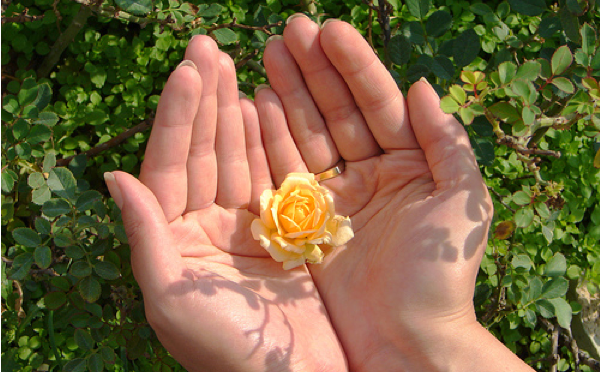
    I decided to not let my mum’s death, which had dogged me for some many years, become a reason to end my life too.

    And I don’t just mean end my life by suicide, but to end my life emotionally, to shut down, to numb out, to allow what happened to become my story—the story of someone who shirked away from her own life because her mum killed herself and the world now owed her something for taking her away.

    But guess what? The world didn’t owe me anything, and the world doesn’t owe you anything either.

    We are all victims of something that has happened in our lives. We ruminate and torture ourselves with things that were said or not said, and about what happened or didn’t happen or things that haven’t even happened yet.

    We react to things like a tightly coiled spring, red raw from experiences and situations that lie well in the past. And yet most of us allow our past to build our future.

    It’s the reason why you can’t commit to men, because your dad walked out when you were five, or you don’t make friends easily because of that one moment in the playground, aged eleven, when the popular girls made fun of your glasses.

    It’s the reason you go to work to a job you hate every day, because you decided early on in life that you weren’t good enough and that you’d just settle for less than.

    It’s the reason we make so much meaning out of things. You receive a text message and they don’t end it with a kiss, or someone signs off their email with “regards,” and your immediate thought is, “What did I do?”

    You see your boss walking toward you in the corridor at work and you say hello to him, but he keeps his head down and doesn’t respond. “Oh my god, why did he not say hello? Maybe I’m one of the ones who’ll be made redundant?”

    We attach so much meaning to everything, don’t we? And yet here’s the thing. There’s what happened and our story about what happened, and assuming the two things to be the same is the source of much pain and unnecessary self-suffering.

    Some people just don’t like leaving kisses at the end of text messages, and your boss just found out his wife has cancer and didn’t notice you walking toward him in the corridor, and Barry in accounts doesn’t think that “regards” at the end of an email sounds rude because Barry is more interested in getting the email written and sent so he can leave at 5pm, and fifteen years ago my mum died.

    You’re not five anymore. You’re not eleven and I am not the eighteen-year-old girl whose mum blew out the candle without saying goodbye.

    You have a choice. Today, right here, right now, you have a choice in how you’re going to show up, not just while you’re reading this, but right here in your life.

    You only have one life. And yet you always have lots of choices. About how you respond to what has happened to you in your life and what you do with it as a result.

    We can become wrapped up in darkness and negativity, blaming everyone and everything, or we can take from what has happened and learn something about ourselves.

    My favorite poet, Mary Oliver, wrote in her Thirst collection, “Someone I loved once gave me a box full of darkness. It took me years to understand that this, too, was a gift.”

    And now, writing this, fifteen years after my mum’s death, I feel grateful, not that she died, but that amidst the heartache and the grief and the intense loss, I found out who I was.

    And I did so because I made a choice. To show up. To live the life that I wanted to. To take responsibility. To rewrite my story. To not just be the girl whose mum killed herself. But to be the woman who chose to decide that my future is bigger and better than my past.

    And I invite you to do the same.

    Change image via Shutterstock

  • The Power of Starting Small and Not Needing to Be the Best

    The Power of Starting Small and Not Needing to Be the Best

    Start Now

    Better to do something imperfectly than to do nothing flawlessly.” ~Robert H Schuller

    I have tried for so long to build a meditation habit. Seriously, it’s been one of my biggest goals for more than a decade.

    And I’ve tried really hard. I’ve read books, I’ve taken classes, I’ve made accountability charts, I’ve set SMART goals; I’ve done it all.

    Sometimes, I’ll fall into a good rhythm, and I might make it onto my mat three or four days in a row. Then sometimes, three whole months will go by without me managing to do it at all.
    So what gives? Why can’t I make it happen? What am I doing wrong, after ten years of trying?

    I decided to dig deeper into what was happening inside my poor little monkey mind that might be hindering my progress.

    It took me by surprise when I realized that no matter what my practice has actually looked like over the years, whether I’d been totally diligent or utterly neglectful, there had been one constant the entire time: I’ve always felt like I needed to be the best at meditation.

    Yep, that’s the phrase that actually popped into my mind, word for word, when I tried to unpack what was going on: the best at meditation.

    I know what you’re thinking: What does that even mean? How can you be “the best” at something like meditation?

    And let me tell you, I know how dumb it sounds. Meditation, by its very nature, is about not having attachment to such things as results or outcomes. I mean, it’s about being in the moment, not about getting an A+ rating or a bunch of gold-stars.

    And yet I felt like I needed to be awesome at it. To be better than others. To bypass beginner status and immediately step into the category of “expert.”

    I kept getting this image in my head: me, perched perfectly still in lotus position, the dawn sunshine on my face, wind blowing gently in my beautifully beachy hair, my outfit crisp and white, and my face a perfect vision of peace and tranquility.

    (Never mind that I am not a morning person, that the lotus position gives me pins and needles, that my hair is more bushy than beachy, and that I don’t even own any crisp white clothes.)

    When I dug deeper, I realized there was a follow-on thought from my attachment to this vision and my need for achievement: If I couldn’t be awesome at meditation, if I couldn’t achieve perfection… there was no point.

    That was my unconscious thought pattern.

    Which was why I always aimed for ridiculously long sessions; if I didn’t have a full thirty minutes to devote to it, what was the point?

    It was why I was so disappointed if my mind wandered; if I didn’t give an A+ performance, what was the point?

    It is why I’d feel like a failure if I didn’t do it first thing in the morning (even though my late-night work sessions made that completely impractical); if I hadn’t done a dawn session, what was the point?

    And it was why I would get so down on myself if I missed a single day; if I couldn’t keep a perfect score card, what on earth was the point?

    All in all, it’s no wonder I haven’t been able to make this habit stick. At every step of the journey, I’ve been psyching myself out of making any progress by expecting supreme, utter perfection.

    In the past, this type of thinking has reared its head in other areas of my life too: if I can’t go to the gym for at least a full hour, there’s no point, right?

    If I can’t eat 100% healthy for the rest of the week, I may as well write the next few days off, yeah?

    And if I can’t fit in a long, uninterrupted stretch of writing time, there’s no point pulling out my notebook at all, amiright?!

    Thankfully, over the years I’ve become aware of these perfectionist tendencies, and have developed a few mental strategies and ninja tricks to overcome them. (Don’t have time for a full gym session? Do half an hour of power yoga in the lounge room instead. Revolutionary, huh?)

    But it’s taken me oh-so-long to realize that I was also doing it in my meditation practice; that I was letting my pursuit of perfection hold me back from inner peace.

    Now that I know, I’m trying to let go of all expectations on myself when it comes to gettin’ my Zen on. In fact, my meditation sessions these days have been pared right back to the simplest, most achievable, most non-perfect thing I could think of.

    Want to know what that looks like? (Prepare yourself for the profoundness!)

    Two minutes of meditation, every one or two days.

    That’s it.

    And, if I haven’t managed to pull it off during the day, I do it in the shower at night, just before I go to bed (yep, standing there, suds and all, with not a lotus position in sight).

    It’s minimal, it’s manageable, and it’s achievable. It’s also effective for quieting my monkey mind and giving me the tiny pockets of peace and stillness I crave so much.

    I’m now on my fourth week of this new approach, and I’m happy to report that by releasing my expectations of perfection. In fact, by embracing the fact that I am going to mess up, and by giving myself some wiggle room and a short-cut to get around it, I’ve actually been more mindful in the past month than I’ve been for a really long time.

    And I’ve definitely ended up with more time spent on the mat through these little baby steps than when I was aiming for giant, dramatic leaps.

    It’s been an eye-opening lesson, and one that I’m very grateful for.

    So now I want to ask you, dear one, are you letting perfection hold you back from achieving something you really want?

    Could you cut yourself a break and aim for “okay” instead of “awesome”? It might sound counterintuitive in our culture of comparison and perfection, but the results might just take you by surprise.

    Start now image via Shutterstock

  • Why Accepting That You’re Not the Best Is the Key to Getting Better

    Why Accepting That You’re Not the Best Is the Key to Getting Better

    Medal

    “In fear, we expect; with love, we accept.” ~Kenny Werner

    It’s easy to let our ego and fear get in the way of our own success. I’m not talking about the aspects of ego that create a desire to “win” over others, which plague some more than others; I’m talking about the more inherent aspects of our inward facing ego that plague us all.

    When I was in high school I played a lot of piano. For Christmas one year, my dad (a professional musician) gave me a book called Effortless Mastery.

    It was a book that, among other things, taught one how to practice. The author spoke about the importance of learning how to practice in order to improve one’s skill. Sounds like common sense, right? Well, sort of.

    You see, most people don’t really like to practice much of anything.

    When I was a kid I learned a few really impressive songs on piano. My favorite was “Swanee River” in a boogie-woogie style. I practiced it and practiced it until my fingers could dance around like little people on the keys.

    Once I had learned that song, I played it over and over and over again. I used to tell myself I was “practicing,” but really I just enjoyed sounding good, so I would play it repeatedly, never really improving. I had been playing piano for over ten years, but I had never really learned to practice.

    Practicing is intentionally sounding bad in order to get better, and what I was doing was performing for myself. Quite a bit of life can be spent performing for oneself, which can act as a real barrier to knowledge, the kind of knowledge that requires vulnerability to acquire.

    If all you ever do is perform, then you’re not really learning and growing. If you’re afraid of practicing because you might sound bad or fail, then you will never really master anything.

    If you’re not willing to accept being anything but the best, then you will never gain knowledge and develop the skills that come from learning from others who are better than you.

    I’ve spent over ten years thinking about that book and reflecting on it in different ways, and I’ve finally learned how to put my thirst for knowledge ahead of fears.

    My interests and hobbies have come a long way from when I was a kid. Back then, I took up anything and everything that I was good at. It’s not to say that I didn’t genuinely love the activities I was doing, because I really did, but I wanted to do things that offered me the opportunity to be the best.

    My first foray into the realm of activities that I wasn’t naturally gifted in was triathlon. After high school I took up the sport. I had been running all my life. While swimming came very naturally to me, cycling did not.

    I began to sort of thrive in the zone of discomfort that I lived in throughout my years cycling. I would ride with people who were so much better than me and they would push me harder and harder every week.

    I remember at one point, I had a game going with my cycling buddies where when we reached a hill, they would keep cycling to the top and then back down again, repeating this until I reached the top.

    I began to grow a little less uncomfortable knowing that I wasn’t the best at this sport. So much so that I was able to laugh at myself as one by one competitors would pass me on the bike leg of the race, after I had come out on top in the swim.

    If you were to look at my life today, you would find a person who participates in a range of activities (in my personal life, my career, and academically), from ones where I excel to those at which I am less than mediocre.

    My husband has helped me along on this journey, because he doesn’t have a competitive bone in his body, so I’ve learned to derive enjoyment from things other than winning and to be less afraid of losing.

    I’ve taken up things like crafting. I love it and I’m really quite terrible at it. I mean, I can do simple projects, but give me a glue gun and materials and watch out, because I’m bound to mess something up.

    I really love rock climbing. I’m middle of the road (and that might be a stretch) within the group of people I climb with. And I recently finished a research project for a degree I was working on and I took up interpretive research, a paradigm that I was completely lost in.

    I have learned to take absolute pride in not being the best. As much as I love being a mentor, I’ve discovered that I really love being a student too! I love the vulnerability that is present and how real it feels when I openly acknowledge my weaknesses and areas for improvement.

    I’m perfectly okay knowing that I’m not the best, and I’m even more okay knowing that in certain activities, I never will be.

    In activities where performing counts (like my career), I’ve learned that it’s okay (even desirable) to make mistakes.

    I declare freely when there’s something that I don’t know. Ask me at an interview what my greatest weakness or area for improvement is, and you won’t get a cliché answer that I’m too attached to my work—you’ll get the real deal.

    In this territory of discomfort, failure, and ‘sounding bad,’ I have found what it really means to have a willingness to learn.

    I accept what I don’t know and learn what I can. I practice many things every day (from communication in my relationships to skills in my career), and as a result, I learn and grow every day.

    Here’s how you too can overcome your fears, embrace failure, and learn every day:

    1. Try something new that interests you but doesn’t come naturally to you.

    I think most people have at least one activity that they might like to try but don’t out of fear of being bad at it.

    Maybe it’s singing, maybe it’s drawing, maybe it’s public speaking. Pick an activity that you’re not good at and try it out for a while. Embrace the discomfort and insecurity that you’ll experience being less than the best, and have fun with it!

    2. Ask more questions.

    When you ask questions, you display vulnerability; you’re acknowledging that there is something that you don’t know that others do.

    Asking questions doesn’t always come easily for people who derive their confidence from a sense of success. Don’t be afraid to ask questions, and ask lots of them. People appreciate sincere questions and the opportunity to teach.

    3. Lift others up.

    Take some time to tell those around you how great they are, and celebrate in their successes.

    Have a friend that you run with who runs faster? Tell them. Have a coworker who has organizational skills that you could learn from? Tell them. Have a significant other who communicates better than you do? Tell them.

    Communication is the gateway to learning. When you tell someone about a skill or trait of theirs that you appreciate and could learn from, it empowers them and gives them the confidence to own that skill/trait. The more they own it, the more you can learn from them.

    4. Don’t beat yourself up.

    When you’re used to being good at everything you do, it’s going to feel very awkward to be less than the best. Don’t allow negative self-talk.

    I often catch myself jokingly saying, “I just suck at this” during my weekly rock climbing sessions, but all that’s doing is re-focusing on a win/lose attitude. Instead, speak kindly to yourself, and focus on how much your improving and what you can do rather than what you can’t.

    5. Think about the fun you’re having.

    Reflect on things that you do in your life and why you enjoy them. Acknowledge the aspects of your life where you derive pleasure out of perfectionism and those where you derive pleasure from other sources.

    Those other sources will be the key to finding more enjoyment out of new experiences and activities that don’t involve your ego.

    6. Be enthusiastic about failure.

    Don’t just accept failure as part of life; welcome it in with open arms! Sometimes the only way to learn is through complete and utter failure. It’s what you do with the failure that counts.

    Next time you’re working on something in your life (maybe a work project, maybe a relationship), acknowledge when what you’re doing goes belly up and think objectively about what went wrong. Don’t look at failure as an extension of you; see it as the only journey that leads to true success.

    As the great Winston Churchill once said, “Success is the ability to jump from one failure to the next with enthusiasm.”

    Medal image via Shutterstock

  • You Can Change Your Life with Tiny Daily Improvements

    You Can Change Your Life with Tiny Daily Improvements

    Man Walking

    “Life is change. Growth is optional. Choose wisely.” ~Karen Kaiser Clark

    Of all the people who have passed through my life over the years, the one person I remember the most was this old, ornery man who seemed to have the personality of a mule. Stubborn to the core, with a straightforward approach to everything, Phil was a difficult man to like, yet I learned to love him.

    Phil didn’t speak much, but when he did, it came from the heart. He grew up in the mid thirties, in a rough Detroit neighborhood, composed mainly of Irish immigrants. In Phil’s world, you worked hard, took care of your family, and kept to yourself.

    It was difficult for Phil to get close to others. If he talked to you, it was because he genuinely cared, but his mannerisms were harsh and often, people took his gestures the wrong way. The first time Phil spoke to me, my immediate reaction was to stay away from him.

    “You think you’re tough with that hat on backwards?” he asked, in a tone that dared me to challenge him. I never could figure out why the way I wore my hat bothered him so much, but at the time, I was convinced he was just picking on me.

    Had I not been twelve, had Phil not owned the corner store deli, and had it not been my job to pick up the meats my mother purchased each week, I may have been able to avoid him. But alas, it was not to be my fate and each week, I was forced to listen to Phil’s harsh lectures as he packaged up the meat my mother had ordered.

    I didn’t realize what a great man Phil was until years later when my life took a turn for the worst and I found myself sleeping in an abandoned house, eating at homeless agencies and showering at the YMCA.

    As I walked past the old deli, one cold winter day, in a flimsy jacket that didn’t even have a zipper, I heard the door open and a few seconds later, this gruff voice said, “Jamey, is that you?”

    I turned around and saw Phil’s now emaciated figure, standing in the deli door. He invited me in and asked how I was doing. I told him the truth. I was embarrassed and rarely told anyone about my misfortune, but somehow I suspected he already knew.

    Phil poured me a cup of coffee and sliced me some lunchmeat and cheese. He handed me a loaf of bread and then disappeared into a back room. A few minutes later, he returned with a thick fur-lined winter fleece and gloves. I remember the feeling of embarrassment as I accepted his generosity.

    I guess my embarrassment was obvious because he told me not to worry, that I could pay him back whenever I could. He then told me about a time in his own life when he was homeless and struggling to survive.

    I felt strangely comforted by his story. As he spoke, I remember thinking what a different man he was than the man I remembered as a child.

    I visited Phil many times over the next six or so months. He seemed genuinely pleased whenever I stopped by and we would converse for hours over coffee and whatever meal he had prepared.

    One day, I asked how he made it through the hard times in his own life. I remember him growing serious as he said, “I just tried to be a better person each day than the person I was the day before.”

    The last time I saw Phil was through the window of his store; he was sitting in a recliner and there were paramedics surrounding him. Phil had died in his sleep of natural causes at the age of sixty-nine. I cried.

    Much of what he said to me in the final days of his life has faded into some obscure place in the back of my mind. But the one thing he said that remains with me to this day is how he “tried to be a better person each day…” than the person he was the day before.

    I try to apply this principle in my own life, successfully at times and not so successfully at others. I am no longer homeless or poor. I have a beautiful wife and daughter, a decent paying job I thoroughly enjoy, and a wonderful church family. I’d like to believe that trying to be a better person each day than the person I was the day before had something to do with this.

    Either way, it is a valuable piece of advice and I repeat it to others as often as I can.

    Maybe you are going through some hard times in your own life—a broken relationship, a lost job, or some other misfortune. Perhaps you are feeling the hopelessness of your situation and wondering how you can improve it.

    Life is unpredictable and often harsh, but whatever life throws us, we can handle it, if we just try to be a little better each day than we were the day before.

    Some days, it will be easier than others, but if we just put forth the tiniest of effort, maybe give some change to someone less fortunate, or smile when you don’t feel like it, things will get better.

    You don’t have to be a miracle worker or a saint, just conscious of how you approach life on a daily basis. By taking things one day at a time, with tiny improvements, you can get through anything life throws at you.

    Man walking image via Shutterstock

  • Celebrate Your Strengths Instead of Pushing Yourself to Be Better

    Celebrate Your Strengths Instead of Pushing Yourself to Be Better

    Excited

    “Make the best use of what is in your power and take the rest as it happens.” ~Epictetus

    Performance reviews. Assessments. Evaluations. The dreaded annual review. Most of us have run into some kind of quality assurance technique while employed in the American workforce, or at least know someone who has.

    Evaluations are a regular part of life at my place of employment and something that I am very used to by now. Typically I get good scores and the evaluation includes plenty of praise and positive acknowledgement, along with whatever constructive criticism is appropriate to the work that is being evaluated.

    Usually I can look through the evaluation form, note what needs to be noted, and move on. I can accept feedback when needed, use it appropriately, and in turn notice the strengths of others and acknowledge them along the way. I do pretty well, really.

    Most days, doing pretty well is enough. But sometimes I get the feeling that there is something missing. That I could still do better. That enough isn’t actually satisfactory. That if I’m not constantly evaluating how I’m doing and striving for something better, there’s something wrong. That in acknowledging others, my voice gets tired and there’s not much left for acknowledging myself.

    Even though I can plainly see the strengths in others and even verbalize them regularly, I don’t always notice and acknowledge them in myself. I have a tendency to want acknowledgement but brush it off when it arrives. 

    I crave being recognized for doing well but hardly know how to react when that craving is satisfied.

    When I receive feedback—even when it’s positive—my default reaction is usually set to “how could I do this better?” It’s easy to get stuck inside the idea that there’s always room for improvement, and then turn a blind eye to what has already been improved or what doesn’t need to be.

    There is nothing wrong with striving to better one’s self, growing professionally, building skills, or figuring out how to be more effective at what we choose to spend our time doing. But I think that sometimes we spend all of our time figuring out how to better ourselves, how to grow professionally, how to build even better skills, or how to be even more effective.

    We get so caught up in growing and getting better that we forget to honor the life we have right now.

    I know I get caught up in our culture’s mantra of “more, better, faster” more often than I care to admit.

    What if I could take my usually positive outlook and mold it into a way of being that sets my default to accepting wherever I am in my job, or my relationships, or my life situation? What if I could celebrate what is?

    What if I could put the focus on the strengths and gifts that I have—like being able to see the good in a challenging situation, or finding the joy that hides under anxiety, or baking a really good loaf of bread, or always knowing where the keys are—and then accept whatever comes from that focus?

    What if we all focused on what we already excel at, or what we have bettered already, instead of that thing we feel is a weakness that needs fixing? 

    Perhaps the intent to celebrate the perfection that we already are would allow us to evolve into a collective that is founded on acceptance and peace and less focused on longing.

    Maybe accepting the perfection that lies beneath our struggles can help move us into a space beyond what we think is possible—a space that knows no limits and a space that is simply enough. Period.

    Seeking to grow and building on knowledge and presence of being invites excellence by creating space for that excellence to exist and thrive. But perhaps we cannot expand without first truly seeing ourselves as complete. 

    It could be that the excellence I invite by way of acceptance is different from what I have been taught to strive for over the years. It could be that “living my strengths” means moving slower, or pushing forward less. It could mean resisting the urge to try to be something I’m not. It could mean listening to understand more and listening to respond less.

    I think it also means stopping to notice the beauty of a pebble in the rain, or hearing the gentle rustle of leaves when the wind changes direction, or feeling the warmth of the sun after the fog lifts.

    It means looking into the eyes of someone different and seeing truth reflected back.

    It means accepting myself as whole and complete, and letting that acceptance grow into my own version of perfection.

    I could say there is no such thing as a perfect life and that there is always room for improvement and growth. I think I’d be right.

    I could say that every life is perfect if allowed to be. And I think I’d still be right.

    Living through strengths is not easy. But living through our strengths sets us up to find our unique version of perfection. Accepting whatever that perfections looks like reminds us that we are enough.

    Photo by Gregory Tonon

  • Stop Comparing: No One Can Do a Better Job of Being You

    Stop Comparing: No One Can Do a Better Job of Being You

    Smiling

    “Why compare yourself with others? No one in the entire world can do a better job of being you than you.” ~Unknown

    For fifteen years I gave up on art.

    I’d been an “artistic” kid, always drawing and painting, but by first or second grade I was already comparing my work to that of other kids and judging it as inferior.

    At thirteen I quit making art altogether. There were other kids who could draw so much more realistically than I could—kids to whom anything artistic just seemed to come naturally—and I jumped to the conclusion that their superior skills meant that they were the artists, and that therefore I wasn’t.

    I was the poster child of “compare and despair syndrome,” caught in the comparison trap so badly that the only escape route seemed to be just giving up.

    Then fifteen years later, when I was twenty-eight, I found myself fascinated with the art of calligraphy.

    I started playing with paper and pens, and it was as if I’d opened a floodgate: soon I was accumulating books and supplies, immersing myself in classes and workshops, rekindling the joy in creating that I’d felt as a young child, before the comparison trap shut me down.

    Those harsh self-judgments hadn’t gone away, however.

    I’d pore through my calligraphy books and magazines, tears streaming down my face because I just knew my work would never be as good as the pieces on those pages. Every workshop I went to offered more opportunities for comparison with people whose work felt so vastly superior to mine.

    I got stuck in the comparison trap so often it’s amazing I managed to make any progress at all.

    I remember one workshop in particular, about a year into my calligraphic adventure. The class was all about making decorated initials, and the teacher offered technique after technique to spark our creativity. After each demonstration we’d all race back to our tables to try out what we’d learned.

    My comparison trap gremlins—those voices that try to convince me that my work is inferior to everyone else’s—were working overtime.

    The woman sharing my work table, Linda, had years of experience under her belt, and the work she was creating showed evidence of her skill and expertise.

    Beyond that, though, it was just so creative! The colors she used were so exciting! Her ideas were so cool and interesting!

    My own work felt so pathetic in comparison.

    Her work inspired me to try new things, but still, nothing I made felt as fresh as what she created. My spirits wavered back and forth between excitement at playing with paper and color, and despair that nothing I created was as beautiful as my table partner’s work.

    As the weekend went on, we spread our small exercises out on the floor near our tables so everyone could see the product of our work. With each new addition to our “galleries,” my ego shrunk smaller and smaller, and my negative self-talk got louder.

    “Her work is so amazing!” said my gremlins, “Why can’t you make work like that? Your work is so boring!”

    Imagine my surprise when Linda turned to me and said, “Melissa, your work is so amazing! My work is so boring—I wish I could make work like yours!”

    I was astonished. How could she say that? Her work, boring?

    To me, her work was fresh and exciting. But as we talked I realized that what was felt fresh and exciting to me, to Linda felt like the same old stuff she’d been doing forever.

    *Click!*

    Suddenly, it was as if the world shifted two degrees to the left. Like I was seeing everything through a different lens.

    Maybe the truth wasn’t that my work was inferior to Linda’s. Maybe it was simply that her work felt more interesting and exciting to me than my own because it came from her unconscious, her personality, her sensibility—all of which were, of course, totally unknown and mysterious to me.

    My own unconscious, personality, and sensibility might not be completely known to me, either, but I know them better than I do anyone else’s, so by definition what springs from me is going to feel less fresh to me than what springs from someone else.

    What could I do but laugh? I shared with Linda that I’d been admiring and envying her work all weekend, that I’d tried to emulate her work to make mine more interesting, and she confessed she’d been doing the same on her end, incorporating elements of my work that she particularly liked.

    I learned an important lesson that weekend.

    I learned that my job is not to judge the value of my creations, but simply to create. My job as an artist is to express me, to pull out the unique expression that can only exist because it’s coming from inside me, and there is only one me.

    Your job as a creator is to express you.

    Martha Graham said it best, in this quote, which is posted on my wall near my workspace:

    There is a vitality, a life force, an energy, a quickening that is translated through you into action, and because there is only one of you in all of time, this expression is unique. And if you block it, it will never exist through any other medium and it will be lost. The world will not have it.

    It is not your business to determine how good it is nor how valuable nor how it compares with other expressions. It is your business to keep it yours clearly and directly, to keep the channel open. You do not even have to believe in yourself or your work.

    You have to keep yourself open and aware to the urges that motivate you. Keep the channel open. … No artist is pleased. [There is] no satisfaction whatever at any time. There is only a queer divine dissatisfaction, a blessed unrest that keeps us marching and makes us more alive than the others.

    ~ Martha Graham

    I remind myself all the time that it’s not my business to determine how good or valuable my expression is, or how it compares with others. It is my business to keep it mine, to be me—that is where the true value of my creativity lies.

    Of course the same is true for you.

    Compare and despair syndrome doesn’t only keep us stuck when it comes to creative endeavors, however. It’s easy to get stuck in the comparison trap in all areas of life!

    The way someone dresses, their choice of a career or lifestyle, the style of their home décor, their food choices or exercise routine—I’ve stepped into the comparison trap around each and every one of these things and more.

    From where I sit, what someone else is doing, the choices they make, can so often seem much more sparkly and fresh than my own life.

    What to do? Simply remind myself of what I learned in that workshop with Linda: that other people’s choices will feel more interesting and exciting to me than my own because they come from their unconscious, their personality, their sensibility—all of which are, of course, totally unknown and mysterious to me.

    Just like in that workshop with Linda, I allow myself to try things out, using the comparison trap as a gauge to help me experiment and grow. I ask myself: Does this different way of being in the world work for me? Is there something here that I can customize to fit my own needs and desires?

    Then I remind myself that, in the end, there’s no comparison. No one in the world can do a better job of being me.

    Photo by Marjan Lazarevski

  • 6 Thought-Provoking Realizations to Make You Feel Better About Life

    6 Thought-Provoking Realizations to Make You Feel Better About Life

    “Turn your face toward the sun and the shadows will fall behind you.” ~Māori Proverb

    It’s easy to get caught up in our own lives and forget what makes life so beautiful in the first place. Isn’t that true? I know for me, I end up living life through autopilot, lacking a conscious thought until I snap out of it and remind myself that life is great.

    When I get like this, it’s nice to remind myself of the realizations I’ve come across over the years and stored in my memory bank.

    Every time you forget what you’re living for or feel like life is purposeless, consult this list.

    1. You can’t ever really be bored.

    One of my favorite quotes comes from comedian Louis C.K. If you don’t think you should be reading life quotes from a comedian, wait until you hear his.

    “‘I’m bored’ is a useless thing to say. I mean, you live in a great, big, vast world that you’ve seen none percent of. Even the inside of your own mind is endless; it goes on forever, inwardly, do you understand? The fact that you’re alive is amazing, so you don’t get to say ‘I’m bored.’”

    2. You have the potential to make someone smile.

    You know what’s awesome? You could, if you really tried, make a stranger’s day today. Find a stranger who you’d guess no one has acknowledged in weeks and smile at him or her. Most people live invisibly with hardly an individual glancing at them. Show them you see them and smile. Bonus points if you say hi or strike up a conversation.

    3. You’ve gotten through so many moments where you thought it was going to be all over.

    Especially as a kid, I used to have all these doomsday alarms setting off in my head. If I don’t get this or that, my life is over. I’m going to be miserable forever.

    Of course, as I grew up my mind became more realistic, but how often do we feel like we’re going to be miserable forever? We’ve gotten through pretty much most of them, right?

    We move on and find new things to fear or be worried about.

    4. You have the power to better yourself every day.

    Maybe a few people reading this may think to themselves that this one is obvious, but it really isn’t. I honestly know many people who don’t believe in the idea of people changing and, of course, they “accept” who they are.

    There’s a difference between accepting who you are and striving to become a better person. Isn’t it liberating to know that you’re not stuck with the cards you’ve been given? You’re not stuck at all! Not ever!

    You can work towards becoming your ideal self a little bit at a time.

    5. You from five years ago had nothing on present-you.

    Every time I look back just a few years I have this smile on my face. I look at the socially awkward past-Vincent, the guy just trying to figure life out. Then I say, wow, I was a doofus!

    Guess what? A few years ago when I did the same retrospection I thought the same thing to myself. Every time you look back you sort of cringe and wonder how you were so _______.

    Imagine five years from now. You’re going to change so much (hopefully for the better) and you’ll realize you’ve grown a lot.

    6. You have the potential to learn about anything.

    The Internet is this gigantic resource available to you anytime and it has the potential to teach you just about anything.

    Isn’t that just awesome? I taught myself how to get websites on Google’s first page, how to write words that stick so that people across the world can enjoy and learn, and I also taught myself juggling! All of these, by the way, were within the past year.

    When was the last time you thought to yourself, “I wish I knew about _____”?  What’s your excuse? You have access to the Internet. After all, you are reading this.

    Sometimes life may seem hard, unfair, or chaotic, but you must remind yourself of how beautiful the world really is. Try to remember the little things that many people forget somewhere along the way.

  • Will You Get Bitter or Better?

    Will You Get Bitter or Better?

    “Instead of complaining that the rose bush is full of thorns, be happy the thorn bush has roses.” ~Proverb

    I am a member of a mercifully small subset of society. I am the mother of a dead child.

    Twenty years ago, my daughter Grace—my first child, my only girl—was born prematurely and died 32-minutes later. As I write this, I am astonished that it has been twenty years since I met my daughter for the only time.

    Time stopped for me when Grace took her last little breath. And I was certain that my life could never start again. 

    I was wrong.

    Here’s what made all the difference in my healing:

    Over time, I learned to bless the thorns in my life. I began to see that the thorn and rose define one another. Since, one cannot exist without the other, we can only enjoy the rose when we embrace the thorn.

    As a society, though, we make healing from loss very difficult. We unintentionally tell each other lies about suffering and the healing process.

    One of those lies is that “Time heals all wounds.”

    If time healed all wounds, why do so many people suffer their entire lives from things that happened decades ago?

    As one of the bereavement experts I studied explained, it’s not “time” that heals all wounds. It’s hard work. And hard work takes time.

    Here is some of the hard work of healing: (more…)

  • 6 ways to Deal with “I Should Be Better” Syndrome

    6 ways to Deal with “I Should Be Better” Syndrome

    “When you realize there is nothing lacking, the whole world belongs to you.” ~Lao Tzu

    Pretty much everyone I know thinks they should be doing better in some way, at least sometimes.

    Are you totally and completely satisfied with what you’ve done so far in life? No little part of you thinks, maybe I should have more money in the bank? Or maybe I should have a more professional wardrobe, or a book contract, or a dog that’s housebroken?

    The word “should” isn’t exactly enlightened or peaceful, nor is the practice of judging yourself or believing that you’re not exactly where you’re meant to be. But we’re human, so our thoughts inevitably go there from time to time.

    We judge ourselves. We hold ourselves to standards that someone else made up—standards that may not even make sense for our current life.

    I often hear people say things like:

    • “I can’t believe I’m in my forties and still don’t have matching luggage.”
    • “Shouldn’t my child be reading by now?”
    • “I always assumed I’d exercise regularly after I finished college.”
    • “I can’t believe I don’t have better health insurance at this stage in my career.”

    I have to wonder, whose beliefs are those? Whose standards are they, really? It’s not like we wake up at forty and suddenly crave matching luggage. Someone fed us that expectation somewhere along the way, and we forgot it wasn’t our own.

    Would the mother feel genuine concern for her child’s reading skills if they lived on a deserted island? Or is the pressure external, based on what others say, think, and read, and she simply doesn’t realize those thoughts aren’t hers?

    And I, too, have thoughts like these all the time. Not those exactly, but ones like them.

    Like how I should be famous by now. Really. The ship has sailed for being on Oprah, but isn’t someone going to beg me to come on their show?  And how I always thought that by age thirty-four I’d own a home with a yard, not a small condo in the city. Or how I still buy all my clothes on sale and I don’t have a decent wardrobe. And how I still say “like” and “awesome” way too much for an adult.

    So it’s starting to look like we’re all in the same boat with this I-should-be-doing -better stuff.

    Since it’s such a universal human issue, maybe we can make a collective pact to just stop with the shoulds? Can we collectively agree to be just a little kinder to ourselves? Can we set aside the judgments and be proud of ourselves, right this minute, not when we achieve something we haven’t yet achieved? (more…)