Tag: belonging

  • Why Being Real Matters More Than Being the Best

    Why Being Real Matters More Than Being the Best

    Friends

    “We have to dare to be ourselves, however frightening or strange that self may prove to be.” ~May Sarton

    Have you ever compared yourself to others on social media?

    You’re not alone if you have. It’s human nature to compare, compete, and seek value in the opinions of others. To aspire to the heights others seem to have attained.

    But how real are those people we compare ourselves to really being? The ones who seem to have it all together? Perfect family, ideal job, loving relationship?

    I would venture to guess they’re not being very real at all.

    It’s true they may have a great partner, a great job, and well-behaved kids—some of the time. But like everyone else, they fall, they fight, and they make mistakes. They just don’t talk about it on Facebook.

    That’s where online relationships let us down; they fail to tell the whole story.

    I’m as guilty as the next person. I post pictures of my kids baking cakes, running along the beach, and acing the soccer game on a Sunday. But I neglect to mention how much I yelled at them for their attitude or constant fighting.

    I talk about date night with my husband but don’t mention how we argued all the way home.

    And I post pictures of inspirational life quotes, such as, “Only a life lived for others is a life worthwhile” (Einstein) as though I’m living them every day.

    Because I, like everyone else, want to show the best side of myself. I have an inherent need to be liked and to belong. It’s human nature.

    But what if being liked and belonging is more about being authentic than being the best or getting ahead? What if in sharing who we really are, we are more able to find the connection we crave?

    A few years ago I attended a weekend retreat and workshop for personal development along with about thirty others. Not knowing anyone, I was nervous.

    We met for the introductory session in a large room and had to mingle for about twenty minutes or so before the facilitators arrived.

    What I experienced in that time was eye-opening to me. I watched as eyes darted around the room, each person looking for someone like themselves to identify with, be it through age, appearance, personality type (introverts, extroverts), or physical attraction.

    In this vulnerable state, where each of us was seeking to find favor with the other, we all were quick to disguise our true selves and to judge everyone in the room on appearances and first words.

    And for the first day of that workshop judgment remained, until the facilitators were able to break down our walls and encourage us to see the value in being who we really were—in talking honestly and not trying to be better than the next person.

    To do so required being vulnerable. But once one person began to speak honestly about their fears and their struggles, it gave the next person permission to do the same. This continued until we all let down our guards and spoke honestly about our struggles and fears.

    The result was incredible. The connections I made that weekend were real, honest, and close.

    Once I saw my fellow participants for who they really were, all judgment fell away and I felt nothing but genuine love for them. Because when we see one another in our true light, it doesn’t make us weak; it makes us the same. We see how we are all human and in this thing called life together.

    It’s not being the best or getting ahead that meets our true desires; it’s being real and doing life together.

    What if we were to share our truth on social media? To talk about a bad day instead of always trying to be great?

    And what if instead of saying “I’m fine” to the next friend who asks, “How are you doing?” we could instead respond with “I’ve had a hard time lately”?

    Sometimes that leap of faith in the response is the first step toward living an authentic life and being true to ourselves. Because being anything less than who we really are just isn’t worth it.

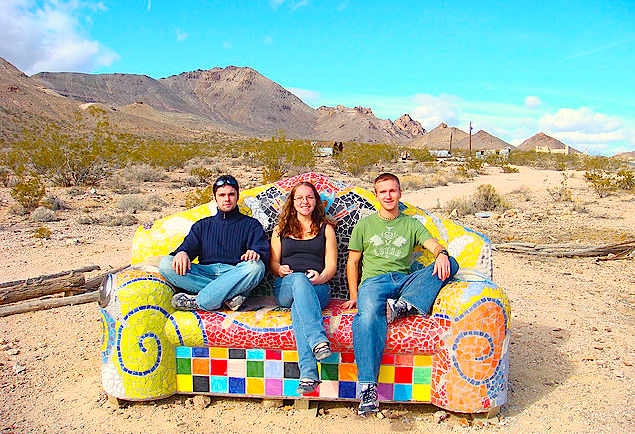
    Friends image via Shutterstock
  • 7 Things to Realize When You Think You Don’t Matter

    7 Things to Realize When You Think You Don’t Matter

    Woman in a Ski Jacket

    “I wish I could show you, when you are lonely or in darkness, the astonishing light of your own being.” ~Hafiz of Shiraz

    Have you ever felt like you didn’t matter?

    Were you ever held back from pursuing something because the voice in your head said, “Why bother?”

    You’re not alone.

    I once felt that way too, but I discovered a way out of that dark time.

    In my early twenties, fresh out of college, I had my first professional job interview. I had the blissful optimism and naiveté characteristic of most college grads seeing a world full of infinite possibilities.

    And although optimistic, I was understandably apprehensive because it was relatively difficult for a first-time interview.

    It consisted of the following:

    • An interview lasting one to two hours conducted by a panel of eight to ten people.
    • Answering questions in Spanish since being bilingual was a requirement.

    I prepared for a week and hoped for the best.

    In the beginning, the situation was quite unnerving with everyone watching and analyzing me, but then it got relatively easier. Yet, just when I started to feel somewhat comfortable, someone asked me a question in Spanish (my big weakness).

    I wasn’t confident speaking conversational Spanish, so when I answered the question, I completely choked, and my Spanish sounded like I was a toddler learning how to talk. All of a sudden one of the other interviewers belted out raucous laughter, and the humiliation poured over me like a waterfall.

    After ten seconds of awkward silence, the rest of the interview didn’t matter because I felt more insignificant than a speck of dust.

    And, not only did I not get the job, but the resulting humiliation also destroyed my self-worth and bruised my youthful, inexperienced ego.

    I didn’t bother interviewing for another job for almost a year.

    Not until I had some clarity one day looking into my daughter’s eyes did I realize how I had allowed someone to control my life like an invisible bully.

    I wanted to take back control, move on, and not live life feeling so small.

    I had to be strong for my daughter and regain my self-worth.

    I realized seven things we should remember when we think we don’t matter:

    1. We all have the same emotional pain points: insecurity, self-doubt, and fear of not belonging.

    As different as we all are outwardly, we feel the same emotional pain. Some of us hide it or mask it with anger, mean-spiritedness, and insensitivity, while a minority can clearly communicate that pain in a healthy way. In the end, we all want the comfort of belonging to a group and the feeling of sincere acceptance.

    Stop feeding your pain by comparing yourself with others.

    Whether it’s a lack of success in relationships, financial issues, or being insecure about your body, focus on the emotional indirect connection with others instead, and feel less alone by knowing you share this pain with everyone

    2. You were blessed with a “super power.”

    You may not know it, but you can do something so easily that you take it for granted. If you are unsure what that super power is, take the time to deeply reflect on the possibilities: intuitive, artistic, empathic, talented dancer or musician, skilled cook, caring, organized, etc.

    This is your super power or skill you are blessed with. No matter what you think, this blessing is significant, so recognize you have a gift, use it, and share it with the world.

    3. Confidence can be learned.

    You may think that people are born confident, but this isn’t true; confidence can be learned. It also can be rebuilt. For me, the difficult first step of doing another job interview began the process of rebuilding my confidence, and steadily my confidence grew with each interview I tackled afterward.

    Know it’s possible and don’t get shut down by the myth that you either have confidence or you don’t. Learning to be confident will test your comfort levels, but building confidence is a process that even the most timid can achieve.

    4. Look at low points in your life without self-judgment.

    Just like we take care of a physical injury, emotional pain also must be taken care of in deeply caring ways.

    The most important thing to do when you are at a low point in your life is don’t judge or self-blame. Punishing yourself by going through that mental loop of I deserve this, or I’m worthless is like walking on a broken leg; you won’t heal.

    Be gentle to yourself, give yourself time, and rebuild your strength—you’ll get through.

    5. Of all the voices in the world, the loudest and most insidious is your inner voice.

    The inner critic wants you to believe the lie that you must be perfect. Trying to be perfect all the time strips the joy out of life.

    If you don’t accomplish goals, don’t know what you want yet, and make numerous mistakes, that’s okay because life is about discovery.

    The only obligation you have is to be true to yourself. Don’t empower that inner critic by listening. Instead, drown out that voice by talking to yourself in more encouraging ways; you’ll live your life with more joy this way

    6. You don’t need to know what others think. In other words, nobody will please and be liked by everyone.

    Stop obsessing about what others think. You can’t control their thoughts because it isn’t within your control. So let go of that forever.

    Free yourself and know that you can’t possibly please everyone. The greatest creators, dreamers, and innovators faced the worse kind of adversity and were hated by many people. Just be the real you and nothing more.

    Don’t allow others to validate your worth; all you need to know is you are doing the best that you can do, and that’s enough.

    Throughout your life, gather the ideas, thoughts, and opinions of others, but always look within and live your truth. We all want acceptance, but if you never live your truth, you will always be imprisoned by other people’s opinions.

    7. Rejection is not failure; it means something better that you deserve is coming.

    That rejection by a love interest or that HR Manager for the job opportunity you really wanted is not a failure. You are simply in the process of getting what you deserve and what is right for you.

    The doors that slam in your face may be many, but soon you’ll realize they were secret blessings that you will look back on fondly. When people say, “No,” keep trying and eventually you’ll find that one proverbial door that will finally be the one meant just for you.

    Rejection is better than doing nothing because you’re at least trying and building momentum, regardless of how crappy you may feel.

    If you want something, momentum begins when you take the first step, even if it is the tiniest step.

    Make Your Inner Light Burn Brighter

    Regardless of all the curveballs that life throws at you, know that you completely matter.

    You may feel your self-worth has been lost, but don’t lose hope.

    Focus on what connects you with others (both flaws and strengths), embrace your superpower and not your weaknesses, strengthen your confidence one step at a time, and be empowered to accomplish your dreams.

    Know that everyone endures the ebb and flow of life in different ways.

    Before you know it, the bounce will return to your step, and your confidence will radiate the room.

    It’s only a matter of time.

    Let me know which of these points you’ll embrace today.

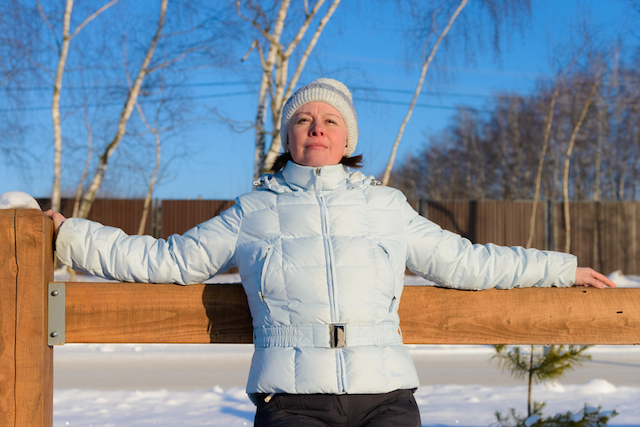
    Woman in a ski jacket image via Shutterstock

  • When You Want More Love and Support in Relationships

    When You Want More Love and Support in Relationships

    “You’re imperfect, and you’re wired for struggle, but you are worthy of love and belonging.” ~Brené Brown

    For years, I felt unfulfilled in my relationships. I often felt drained, and as if I was the only one giving and doing things for others.

    I couldn’t quite understand what I was doing wrong and why relationships were so challenging for me. All I wanted to do was to feel loved and supported. Why couldn’t I get that?

    Then, nearly three years ago, after a bad breakup and a ton of other relationship challenges, I reached a breaking point. I knew I had to make some serious changes, so I found myself a therapist, a ton of self-help books, and a few other self-development professionals.

    Through this journey, I’ve learned several lessons that have helped me find and create the fulfilling relationships that I have today. Here are four lessons I learned.

    1. We have to accept people where they are.

    Even though I wanted more depth, intimacy, and support in my relationships, I had to learn to accept that others didn’t always want the same things I did; or, they did want the same things, but they were simply not ready for them at that point in time.

    In learning this lesson, I was able to let go of idealistic dreams that some people would one day change and appreciate those relationships for what they were.

    Many times we are unfulfilled in relationships because we are lying to ourselves. We choose to reject what is while clinging to our own idealistic dream of what could be.

    When we accept relationships as they are, we open the door to connecting with others who are able to give us what we know we deserve.

    2. Love begins on the inside, not the outside.

    One of my all-time favorite passages on love begins, “Love is patient, love is kind. It does not envy, it does not boast, it is not proud.” When I was younger I interpreted this as though I had to find someone who was patient and kind, not jealous or boastful, and so on.

    I thought it was telling me that I had to judge other people according to that criteria to determine if it was truly “love” or not. I thought it was about seeking it in the external world.

    Then, when I heard this verse a couple years ago at a friend’s wedding, I had a huge “ah ha” moment: This verse has nothing to do with looking for these traits in other people. It’s telling us that this is the love that we can find within ourselves. 

    It is the love that makes this universe exist and keep it together. It is a love that we all possess.

    We are not meant to seek love externally in the world but to connect to it within so that we can create even more of that love in the world around us.

    The love that we seek is something that we already have. When we make the conscious effort to tap into that inner love and express it in the world, we can then begin to see all the love around us.

    3. It’s more painful to fear being authentic then to actually be authentic.

    I always held back my inner truth in relationships because I feared rejection. Deep down, I felt that I wasn’t good enough or worthy.

    I feared that others would automatically reject me if I expressed my unique, genuine interests and talents. I felt that by blending in with people, I’d guarantee acceptance.

    The reality, though, is that it took so much more effort, more strain, and more heartache to hold on to this fear.

    As I have gradually learned how to simply express my authentic truth in relationships, it has not only made my relationships better, it has also given me more energy that I can put into more proactive things.

    4. We get what we give.

    Even though I often felt like I was giving a lot in my relationships, what I was giving wasn’t necessarily healthy. I often gave to others in order to be accepted and avoid rejection, because I feared being vulnerable. I was giving out of fear, not from a place of inner love.

    If you want others to be more real and vulnerable, then you have to be more real and vulnerable. If you want others to openly discuss feelings, then you have to openly discuss feelings. This doesn’t guarantee they’ll reciprocate, but it opens the door for the type of relationship you’d like to have.

    Many of us know what we desire in our relationships, but we don’t realize the importance of our part. We have the ability to create the tempo. If we are willing to set the example, others will be more likely to follow and reciprocate.

    The more we realize the power of our own actions and align them to our heart’s true desires, the closer we’ll get to creating relationships filled with love, support, authenticity, and fulfillment.

  • When You Don’t Fit In: The Value of Being Different

    When You Don’t Fit In: The Value of Being Different

    Accept Yourself

    “No one can make you feel inferior without your consent.” ~Eleanor Roosevelt

    When I was ten, my blonde, blue-eyed best friend gave me a label.

    “I never thought I’d make friends with anyone brown,” she said. She was clearly embarrassed by her revelation and had summoned the courage to own up.

    I was dumbstruck for a moment. I never really thought of myself as brown, or indeed, as anything. I was just me.

    Then, wanting to get us both out of this awkward situation, and thinking of how my Sri Lankan mother would compliment my beautiful golden brown skin, I blurted out, “Well, I’m not really brown, I’m golden.”

    Immediately my friend collapsed into laughter, as she imagined me with bright orange skin. I suspect she was glad to divert the shame away from herself.

    And I did feel ashamed. Ashamed of being labelled as something I didn’t particularly identify with, but also ashamed of denying my brown skin, of unwittingly playing along with this casual racism.

    Over the years I have discovered that it’s not unusual to be judged as different.

    I still encounter many situations where people make incorrect assessments of me based on my looks.

    The question “where are you from” is sadly very common, as if the origin of my ancestors will give people the most important clues about who I am.

    My kids and I have picked up some Sri Lankan characteristics (age four, my third generation daughter called her little brother “darling” with a decidedly Asian lilt), but on the two occasions I have travelled to Sri Lanka, I was definitely a foreign tourist.

    Of course, my family history does partly define me, but mostly not in the way that those people think.

    Instead, it defines me as different.

    Being mixed-race is only one of the factors that make me different. I tend to be more outspoken than my peers, less religious, more bookish, more alternative… Apart from being married with two kids and a mortgage, there are plenty of things about me that are not “normal.” 

    Being different is a self-definition I struggled with for years, which I now deeply appreciate.

    Although it is not always an easy path, I hold my differences as precious. Conformity would be stifling. I want to be me, not some mythical “normal” that only exists in my imagination.

    Being different has tremendous value. Here is how.

    1. Being different is a source of connection and belonging.

    I find shared experiences when I speak with people who know what it is like to feel different—people with disabilities, migrants, creative people, gay people, introverts, recovering addicts, and many others.

    Though we don’t share those particular characteristics, our mutual understanding of what it is like to be different connects us, powerfully.

    We know what it is like to be judged because of who we are. We know what it is like to feel like outsiders or freaks. We know what it is like to try and hide our differences to fit in.

    But fitting in is the opposite of being yourself. It leaves you sick inside.

    What we really crave is to belong. When we are accepted despite or even because of our differences, we have found true belonging.

    2. What we have in common easily trumps our differences.

    We have empathy built into our brains. Mirror neurons mean that when we hear someone tell a moving story, we feel what they feel.

    Heck, Tiny Buddha is built on our ability to care, learn from and identify with the experiences of others!

    We all want to be understood. And science has proven what we instinctively know: we are more alike than different.

    So, take the risk of hearing and being heard. By telling your story you invite others to understand you, and to understand themselves better, too.

    3. My differences are a source of motivation.

    Looking back on the life choices I have made, I can see how my desire to help others feel they belong and are valued has influenced my career and relationships.

    One of my favorite jobs involved providing careers and business guidance to refugees, amongst the most stigmatized and stereotyped people in our society.

    These were often highly qualified and had been doctors, lawyers, and businessmen and women in their country of origin. Having left that behind, they found themselves without the respect, financial security, and social standing they had previously known.

    They were portrayed as scroungers, while being excluded from working by regulation, discrimination, and lack of confidence. I found a vocation helping them navigate these obstacles.

    Many of my colleagues were refugees themselves, who, having found their own way, wanted to pass on the learning to the next generation. Our differences motivated us to help others in the same boat.

    4. Being different is intensely creative.

    As I began to take more pride in what made me different, I began to research other people who went against the social norms.

    I discovered that artists, entrepreneurs, innovators, and other world-changers were always different from the people that surrounded them. Like me, they had often felt excluded from the “popular” kids group at school.

    They thought differently. They made connections (with other people, or between ideas) that others had not previously made.

    And they had the courage and resilience to put those ideas out into the world—the courage to take the risk of being judged, and the resilience to try again when they were.

    In the process, their ideas were tested and improved and tested again.

    Some made it big (think Steve Jobs, Lady Gaga, Barack Obama) appealing to a mass audience with their new ways of seeing; others appealed to a niche with similar tastes. In every case their creativity was rooted in their differences.

    You, too, have value hidden in your differences.

    Though we may never escape all judgment and discrimination, we can learn to value our own unique perspective.

    Then at least we can stop judging ourselves.

    Photo by Hamad Al-Mohanna

  • How to Feel at Home Wherever You Are

    How to Feel at Home Wherever You Are

    At Home

    “Every day is a journey, and the journey itself is home.” ~Basho

    For over three years, I’ve been living out of a suitcase and traveling around the world doing a combination of volunteering, housesitting, and couch surfing.

    This journey started after I decided to drastically change my life. In the span of a week, I filed for divorce, quit my high-paying job in New York, left my PhD program at an Ivy League school, sold all my stuff, and flew to South America.

    After spending six months volunteering in Brazil, I began to realize that, while I was born and raised in New York, it never really felt like home.

    While I always knew I struggled with many aspects of the external environment, it was how I felt internally when I returned from South America that really made me realize how misunderstood and unhappy I was when I was there.

    So flying to South America turned out to be the first stop on a long quest to find a new home. Since then, I’ve driven to over thirty states in the US and have been welcomed into so many homes, I’ve lost count. I’ve viewed each of these experiences as an opportunity to learn how other people have created a sense of home for themselves.

    Here are five ways I’ve learned to develop a sense of home, and how you can too:

    1. Seek safety.

    Feeling safe is a basic human need and part of the foundation that allows us to relax and open up to the world around us. Feeling safe isn’t just a sense of physical well-being; it’s a sense of emotional and psychological well-being, as well.

    Many things can make a space feel unsafe, everything from unsettled relationships, to unfamiliar surroundings, to unsanitary living conditions. Growing up, there was a great deal of unspoken tension in the house, and when I got married, I never felt emotionally safe with my now ex-husband.

    As I’ve moved around over the last few years, I’ve confirmed that if we don’t feel safe, it’s impossible to feel at home. As a result, there have been places I thought I’d stay for weeks that I ended up leaving after a few hours, and there are places I thought I’d spend one night and ended up staying several months.

    Anyone or anything that disrupts your sense of safety will become an obstacle on your quest to feeling at home. Eliminate these obstacles by either moving on from unsettling situations or by developing healthy boundaries that help to maintain your safe space.

    2. Connect with people.

    While a physical space (home, apartment, condo) can provide a degree of structure and external stability, it’s the people we surround ourselves with that truly make or break a home. We all need a community of people in which we feel understood and supported.

    When I was living on Long Island, it appeared that I had a huge network of people surrounding me. But as I’ve traveled and found communities of like-minded individuals, I’ve realized just how misunderstood and disconnected I felt growing up. Once I experienced what it feels like to be embraced and accepted by those around me, it became impossible to settle for anything less.

    Connecting with others takes effort and time. Talk to those around you and really listen to what they’re saying. Notice how you feel when you’re with them; when you’re around those that feel like home, you’ll know. Keep searching until you find the community of people that feels right for you.

    3. Explore and try new things.

    It’s easy to take for granted everything that our environment has to offer. But chances are there is a great deal more going on than we realize. If we can learn to view life as though we are on an adventure, we’ll feel more inspired to explore that which is right in front of us.

    When I arrive at a new city, I have zero expectations about what I want to see or do; instead, I speak to the people in the community and ask them for advice. This is how I ended up on a river float in Missoula, Montana; learned salsa dancing in Boulder, Colorado; and explored artwork in a tiny park on the outskirts of St. Louis, Missouri.

    Bring a sense of enthusiasm into everything you do, as though you’re a child seeing everything for the first time. Be curious, ask questions, and learn details; every place and every person has a story. Be fearless and go out and explore; this exploration will help you build the deeper connection to the world around you that is needed to feel at home.

    4. Spend some time alone.

    Developing a sense of home is as much an internal discovery as it is an external one. Being present and aware of our feelings and intuitions will help guide us toward making the necessary changes needed to feel at home.

    Even though I’m moving around to different places, I still make time for myself every day. I wake up and do a yoga practice, go on long walks by myself, meditate, journal and spend long drives in silence as a way to clear my mind.

    Take some time alone each day and use this time to check in with your emotions. Inquire about how the people and environment make you feel. Journey within as much as you journey outward and ask yourself what you can do to make the space you’re in feel more like home.

    5. Slow down.

    It can be tempting to rush in and out of new environments, frantically trying to explore and connect. But to truly develop a sense of home, we must slow down long enough to really experience the people and places we find ourselves in; this same concept applies to environments that we’ve been living in our entire lives.

    There have been several moments over the past few years where I’ve found myself caught up in needing to see and do everything that every city has to offer. Not only is this impossible, but it’s also exhausting. Focusing on quality over quantity, in both my connections with others and in my experiences, has been far more powerful in creating a sense of home than having a laundry list of mediocre ones.

    Become an active participant in the world around you rather than sitting on the sidelines and observing life as it passes you by. Take the necessary time to fully process each and every experience and each and every person you meet along the way.

    Take one step today toward exploring your sense of home wherever you go.

    There are plenty of ways in which you can explore the world around you, but remember that you must also look inside yourself and let your gut be your guide.

    Home is where you feel safe, connected, understood, and loved. The more present and engaged you are with both yourself and the world around you, the easier it will be to feel at home anywhere.

    Photo by satemkemet

  • Finding What We’re Missing: Our Lives Are Already Complete

    Finding What We’re Missing: Our Lives Are Already Complete

    Searching

    “Each day is a journey, and the journey itself is home.” ~Basho

    What does family mean? Is it the people whose genes you share? Is it the people that you grew up with? Is it the people who love you unconditionally in spite of your faults and flaws?

    Family for me has been an evolving idea. I was adopted from Seoul, Korea when I was four months old. After a few months in an orphanage, family started off simply as the people I grew up with.

    Raised in South Central Pennsylvania with a Caucasian family in an area where diversity was lacking, to say the least, I remember receiving looks from some people when my older sister introduced me as her baby sister. They would tilt their heads to the side and say, “Are you sure?”

    Adding insult to injury, my adopted mother passed away when I was thirteen after years of complicated health issues. She was the most vocal about how much she loved me, wanted me, and protected me when she caught anyone directing their fearful insecurities my way.

    Losing her was one of the most difficult experiences I’ve ever had to deal with. Losing my best friend after a cliff diving accident in college was the next. The two people who embodied family and home for me were gone.

    I spent many years angry, bitter, and confused as to why my biological family gave me away only for me to land in a family where I would experience a death nearly every other year from the time I was five years old, along with many other traumas and heartbreaks. (more…)

  • We Belong When We Connect with Each Other

    We Belong When We Connect with Each Other

    “When you live on a round planet, there’s no choosing sides.” ~Wayne Dyer 

    Te holiday season is a time to connect with others, to celebrate our common humanity, even if the holidays we celebrate are different.

    Instead sadly people all over the world are still taking sides. They seek to identify with one “side” or another (tribe, culture, religion, politics, nationality). They seek to belong by being distinct from others.

    They seek to belong by hating the other side, sometimes by killing the other side.

    But finding identity in reinforcing our differences will never give us a true sense of belonging, a real sense of connection. We are already connected; we are already one. We are all just individual expressions of the same universal energy.

    We need to work out how to stay united—connected in our diversity, rather than divided by our differences.

    When my husband and I were suffering infertility (infertility is still there, we just choose not to suffer anymore), I desperately wanted to belong to the Mother’s club.

    But instead of reaching out to friends and colleagues who were mothers (every woman around me, it seemed) I chose to disconnect. I let my insane jealousy drive a wedge in friendships, and my mom friends walked on eggshells around me.

    As I put distance between us, it was easy for them to drift away.

    We embarked on a long and arduous (and ultimately unsuccessful) IVF journey, and I remember walking out of our first information session feeling like I was already branded—infertile, guilty as charged.

    I stared into the faces of the other couples in the room, but I chose not to see them. I didn’t want to identify with them. I didn’t want to join the IVF patients club.

    So we became patients, but didn’t seek connection with other couples. We didn’t offer them compassion, nor seek solace in our own struggles. And running away from the shared sense of consolation we might have had only left us alone.  (more…)