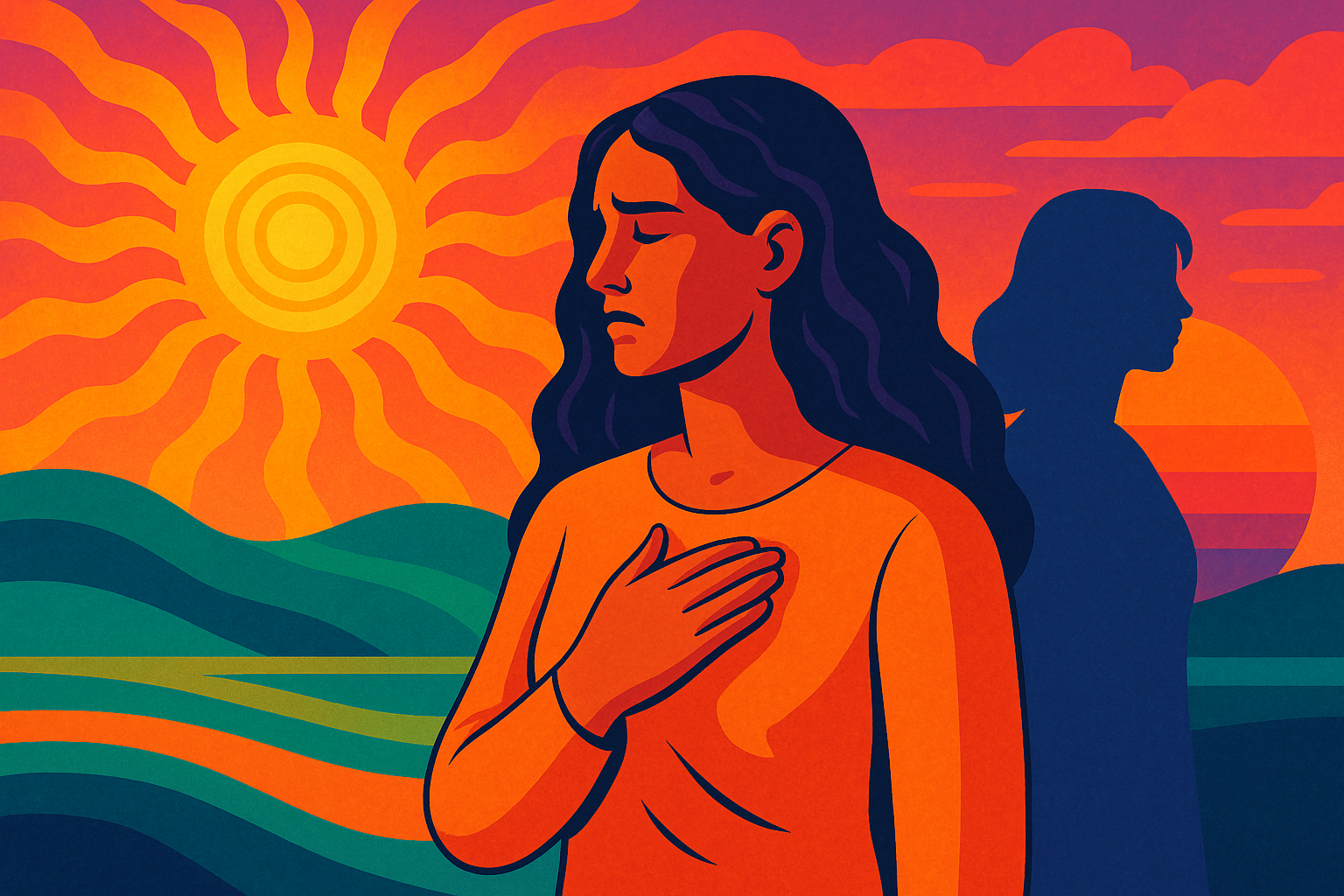
Tag: belonging

  • When Growth Comes with Grief Because People Still See the Old You

    When Growth Comes with Grief Because People Still See the Old You

    “In the process of letting go, you will lose many things from the past, but you will find yourself.” ~Deepak Chopra

    There’s a strange ache that comes with becoming healthy. Not the physical kind. The relational kind. The kind that surfaces when we’re no longer quite so wired to betray ourselves for belonging. When we stop curating ourselves to fit into spaces where we used to shrink, bend, or smile politely through the dissonance.

    Years of hard work and effort, slowly unwrapping all those unhealthy ways of being in the world, cleaning off my lenses to see more clearly through the eyes of an authentic, healthy me, rather than the over-functioning codependent, perfectionistic people pleaser I had become.

    In the process of becoming, it’s felt—at times—like I’ve lost everything. Not just roles or routines but people too. Many of the main characters who once shared the center stage of my life have quietly exited because the script no longer fits. And the scene now looks quite different. The cast has changed, the lighting is softer, the dialogue less frantic.

    I’m no longer that tightly bound version of me, holding the tension of everyone’s expectations like thread in my hands. I’m a freer version. The one who doesn’t perform for applause or connection. The one who lives more from the inside out.

    And while that freedom is hard-earned and beautiful, it doesn’t come without cost. Growth rewrites the story. Sometimes that means letting go of the plotlines that once gave us meaning.

    I’m not going to pretend I’m completely there yet on this journey of healthy growth toward a more authentic, more empowered version of myself, but I’m far enough along to become more of an observer in my life than completely identified with everything that is happening to and around me.

    Sometimes, though, I find myself standing in front of people who still see the old version of me—the compliant one, the helpful one, the emotionally available-on-demand version who made it easy for them to stay comfortable. But I’ve changed. I’ve chosen sovereignty over survival. Truth over performance. And they don’t quite know what to do with me now.

    And to be fair, it must be pretty challenging to be close to a blogging memoirist. To be clear, in the more than ten years I’ve shared my personal growth journey, I have always sought never to “name and shame,” except for my own epiphanies about myself. But I am writing about real life, and I share it so people who are on a similar journey might not feel so alone; they might find pieces of themselves in my words, and it might help.

    The grace, then, in being in the many relationships that surround me, is not in pretending to be who they want me to be. It’s in standing as who I am, without making them wrong for not joining me.

    That’s the razor’s edge.

    To hold my center while others twist away from it. To love people I no longer align with, without making myself small or them bad. To walk with grace among people who are technically close but emotionally far.

    Because it hurts. That contrast between the curated self I used to be—relationally attuned, endlessly accommodating—and the fuller self I’m becoming—boundaried, expressive, sovereign. It’s not just growth, it’s grief. Grief for the roles I’ve shed, grief for the versions of connection that relied on my self-abandonment, and grief for the quiet, persistent hope that maybe one day they’d really see me.

    But not everyone wants to see clearly; to be fair, I used to be one of them. Some are fighting not to be seen at all.

    And after fighting so hard to be seen, that clash doesn’t just sting—it feels like a threat to our core safety. Especially when we were raised, trained, or wired to find security in others’ approval.

    It’s deeply frustrating when people who claim to value honesty and trust really mean “as long as it doesn’t make me uncomfortable or challenge my narrative.”

    When our authenticity gets met with suspicion, when our reflections are seen as risks rather than offerings, we are speaking a language of truth, and they’re replying in code.

    That’s the heartbreak. And the liberation.

    Because here’s the quietly powerful thing: We’re no longer playing by their rules. We’re not trying to control how we’re perceived. We’re just being—thoughtful, expressive, intentional.

    Well, we’re trying anyway; I’m not quite there yet.

    And that, in a world still steeped in performance and image management, is revolutionary.

    We’re no longer seeking connection through appeasement. We’re seeking connection through presence. Through truth.

    Which means letting relationships be what they are, rather than what we wish they were. It means stepping around old dynamics rather than trying to fix them. It means recognizing patterns—like the nurse archetype, competent and respected, but image-bound and risk-averse—and choosing not to collapse in the face of them.

    I’ve been on the other side. I was that person once, not so long ago, really. Carefully curated. Layered in survival. So my clarity now comes with compassion. But it also comes with boundaries.

    Because I’ve earned them.

    This next chapter? It’s not about being alone—it’s about being true. Not hiding behind titles or roles or team identities, but standing in my own voice, even if no one claps. Even if no one comes. Even if they misunderstand.

    I am the Stag now. Poised. Still. Unapologetic.

    My solitude isn’t survival—it’s sovereignty.

    And my anger? That sacred anger that rises in the face of denial and deflection—it’s not a flaw. It’s a signal. It tells me where the firelight is. It reminds me of what matters. It roots me in the truth that even when others retreat into shadow, I don’t have to follow.

    I can stay lit. I can stay me. I can whisper, “This is me, seen or not.”

    And that’s the power. Not in being understood. But in being whole.
  • Transmuting Shame: None of Us Need to Be Fixed

    Transmuting Shame: None of Us Need to Be Fixed

    “Shame is the intensely painful feeling or experience of believing that we are flawed and therefore unworthy of love, belonging, and connection.” ~Brené Brown, Atlas of the Heart

    This past year, I started the journey of investigating—maybe even befriending—“my” shame.

    I use quotes around the “my” because most of the shame is not mine; much of it is internalized sexism, racisim, anti-blackness and homophobia, and/or intergenerational—it was passed down to me. And while I didn’t choose to internalize or inherit it, it is my responsibility to care for “my” shame, to tenderize it with love and compassion so it may be transmuted. I get to alchemize and grow flowers rooted within the rich compost of my healing journey, fertilized by ancestral gifts.

    Shame is one of the most uncomfortable experiences, so much so that we often project our shame onto others to provide some relief from the discomfort. I learned this at the Mindful Self-Compassion (MSC) teacher training intensive I had the privilege to attend in the fall.

    During the MSC training, I received the blessing of the dharma of shame and learned about its antidote—mindful self-compassion. Five wise practitioners, including Chris Germer, one of the co-founders of the eight-week MSC program, guided about thirty individuals (from across the United States, including some folks from overseas) to experience the power of self-compassion through a week-long workshop.

    Chris shared a wisdom gem I will never forget: shame is rooted in our universal need and desire to be loved. The innocence of shame touched something deep in me; it felt like permission, or an invite, to see the exiled parts of myself battling shame.

    I had never really talked about shame before training to offer mindful self-compassion. It felt like if I talked about the shame, if I named it, you would see the thin film of shame that I felt covered my body for much of my childhood into young adulthood. It felt like if I named it, you would know I was not worthy of the love I felt desperate for.

    There was shame around being a girl, then a woman; there was shame around being expansive in my sexual orientation and gender expression; there was shame in being a survivor of domestic and sexual violence; there was shame around socioeconomic status… the list goes on.

    Mindful self-compassion has helped me look beyond the victim mentality I used to strongly identify with. I see that, like all of us, I have been shaped by early experiences with caregivers and by the environments I have grown in. I see that, like most of us, I have always done the best I could with the tools available to me at the time. And in my experience, I have leaned on—and clung to—many maladaptive tools like using substances to escape.

    Today, I am grateful to know the shame comes from an innocent place and that it can be transmuted into compassion for myself and for all beings everywhere.

    I don’t remember where I first learned this, but Brené Brown also talks about shame’s roots in the universal need for belonging. When we feel we are separate from the rest of the world, when we feel we don’t belong, there is a specific form of pain and suffering that emerges.

    In my experience, feeling like I did not belong, feeling separate, created deep wounds of unworthiness and otherness. Brené goes on to talk about “fitting in” being the opposite of belonging. And in my desperate attempts to belong and be loved, I leaned into the facade of “fitting in,” and the wounding deepened.

    In writing about my lived experience—releasing what’s been floating around for years in my mind-body space—I am reminded of Brené Brown’s Atlas of the Heart.

    She defines shame as “the intensely painful feeling or experience of believing that we are flawed and therefore unworthy of love, belonging, and connection.”

    She offers “shame 1-2-3s”: (1) We all have it. Shame is universal and one of the most primitive emotions that we experience. The only people who don’t experience it are those who lack the capacity for empathy and human connection. (2) We’re all afraid to talk about it. Sometimes we can feel shame when we just say the word “shame.” But it’s getting easier as more people are talking about it. And (3) The less we talk about it, the more control it has over us. Shame hates being spoken.

    So, here is my first writing—likely one of many—on shame, as I continue this sacred journey of becoming a mindful self-compassion teacher and offering one of the mindfulness-based programs for mental health that’s been most impactful for me.

    I’ll close with one more share, offered by a beautiful mentor, one of the facilitators of the teacher training intensive: “No one here needs to be fixed.

    As he shared this at the opening to the week-long intensive, I felt my body soften and exhale. It was received as a love note to little river exiles: I am not bad, I am not unworthy, I do not need fixing. Like all of us, I deserve love, belonging, and connection. We all do; no matter what has happened in the past, no matter what the future holds. Right here, right now, we deserve and are worthy of love, belonging, and connection.

    May we feel love, belonging, and connection. May we know we are loved, we belong, and we are interconnected. May we support each other on the journey of self-liberation.

  • How Being Alone Made Me Fall in Love with Myself

    How Being Alone Made Me Fall in Love with Myself

    “Solitude is where one discovers one is not alone.” ~Marty Rubin

    “No one invites me to their party.” That’s what middle school was like for me, anyway. No matter how hard I tried, I could never really fit in with any friend groups.

    It seemed like everyone got the instructions on who to hang with and where to sit except me.

    I was the serious, quiet type. And the gossipers and sleepover crews didn’t want serious and reserved. So I bounced around, making a buddy here and there. But I was never fully brought into the social scene.

    At first, I figured it would sort itself out and I’d find my people. But middle school turned into high school. And high school turned into my first year of college.

    I was still on the outside looking in.

    No matter how often I put myself out there to try and squeeze into different circles, I’d end up alone again before long—feeling even more lonely than when I just kept to myself.

    The worst part was when I pretended to be someone else, just trying to fit in. And it would work…for a minute. Then I couldn’t keep up the act anymore.

    I was back to being an outsider. But now I also felt like I lost some inner part of me that made me, me. I was drained. I was bummed.

    Eventually, I realized I had hit rock bottom. I was tired of criticizing myself and trying to contort into someone I was not just to please people who didn’t actually care about me.

    I had already chased after so many groups and friends, desperate for that connection, but all I was left with was emptiness.

    Finally, one day, I asked myself, “Who has been here through it all? The highs and lows, wins and losses?”

    The answer was me, myself, and I. ‘I’ was the constant.

    ‘I’ was the one listening and providing answers when I talked myself through difficult situations. ‘I’ was the one patting myself on the back when I succeeded at something.

    That realization—that I already had the most loyal companion imaginable—brought me more comfort than any superficial friendship or party invite could. I had myself, and I was enough.

    I decided to stop begging for validation or acceptance from others. I was going to validate myself.

    I started actively spending more time alone, without distractions or social media. Reading, writing, and taking myself on solo dates.

    I discovered so much about my interests and strengths. I found inspiration and magic in solitude I had never known before.

    For the first time in ages, I was at peace. I felt whole, not like some fractured version of myself. I was alone but not lonely. I was independent yet fulfilled.

    I became my own best friend. And that made all the difference.

    It taught me that I alone am enough, even if others don’t see my worth. Their approval is meaningless unless I have self-approval first.

    Further, an interesting thing happened once I stopped desperately chasing friendships—I started attracting people who liked me for me. Turns out when you’re confident and self-assured, you give off good vibes that draw others in.

    I made some fantastic friends in college who didn’t care that I was an introvert. And you know what’s the best part? I even found my love partner! Everyone valued my insight and quiet persistence.

    For the first time, I felt like I belonged while still being fully myself.

    I learned four vital lessons from my lonely middle school days:

    1. You are your own best friend or worst critic. How you talk to yourself matters. Build yourself up rather than tear yourself down.

    2. Embrace what makes you different. Don’t hide your unique gifts and talents away in some quest to fit in. The right people will appreciate them.

    3. Connections can’t be forced. Friendships and relationships worth having tend to come when you least expect them. Stop chasing and let things unfold.

    4. It’s better to be “alone” than in bad company. Having toxic or fake friends is far lonelier than having just yourself.

    My middle school self would never believe me if I told him one day, he’d have true friends and a partner who adores his little quirks.

    But by making peace with being alone, I found the relationships I had craved for so long and discovered that all the acceptance I needed was my own.

    I still consider myself an introvert. I enjoy my solo time and quiet hobbies. But now I don’t feel pressured to be someone I’m not just to keep friends around. The connections I do have are based on authenticity from both sides.

    And when I need advice or just someone to listen, I turn inward. I explore my feelings through journaling. I tap into my inner wisdom through long, contemplative walks alone. I’ve become my own counselor and cheerleader.

    I’m so grateful that the younger me kept striving to find his place. All that perseverance led me right where I needed to be—firmly rooted in myself.

    If you’ve been going through something similar, I see you. And I want you to know that you are enough, exactly as you are. You don’t need to earn a spot at anyone’s table for your life to have meaning.

    The people who will love you most deeply are on their way. For now, love yourself. Treat yourself kindly. Pursue your passions unapologetically.

    Speak encouraging words into the mirror each morning. Put in the work to be your best friend.

    And know that wherever you end up in life—surrounded by a tribe of people who adore everything that makes you different or embracing solitude and forging your own singular path—you can’t lose as long as you have yourself.

    I am my own closest companion. You can be your own, too.

    Whatever stage you’re at in your journey of self-discovery, keep going. Know that the loneliness and feelings of not belonging won’t last forever.

    Have faith that things will get better, especially when you nurture your relationship with yourself above all else.

    Maybe today is an awkward day where you’re struggling to find your place. That’s okay. Breathe through it. Tomorrow holds new possibilities.

    Maybe you’re entering a season of solitude that first feels uncomfortable but will ultimately lead to profound growth. Lean into it entirely rather than resist it. There is a treasure to uncover.

    Or maybe you have finally attracted a “tribe” that appreciates the unique shades of who you are. Congrats! But never lose sight of your own worth that exists with or without them.

    Wherever you’re at, you’ve got this. And you’ve got yourself. That’s all you’ll ever really need.

    So stay true to yourself. Don’t shrink parts of you to appease others. Keep taking chances on yourself, even when no one else will.

    Trust that by being loyal to your own soul, you will find both inner fullness and meaningful connections with time.

    For now, chin up, sweet soul. I’m proud of you for how far you’ve come. How far you’ll go from here is breathtaking. Onward.

  • How I Stopped Feeling Like There Was Something Wrong with Me

    How I Stopped Feeling Like There Was Something Wrong with Me

    “A flower does not think of competing with the flower next to it. It just blooms.” – Zen Shin

    In the past, I often felt like I didn’t belong in groups of women.

    Sometimes I felt like something was wrong with me, like I was othered in one way or another: too sporty, too quiet, too serious, too emotional, too dumb, too smart, too wild, too normal, too sexual, too prude.

    Other times, I felt like something was wrong with all of them. Girls’ nights and bachelorette parties? The screeching voices, the loud laughs, the mundane conversations about makeup, skin care routines, and lip injections? No thank you.

    I wanted so badly to belong but didn’t see a place for myself. I felt like I wasn’t doing the whole woman thing the right way. I found it easier to hang with the guys.

    But now? I have learned that nothing is wrong with me (or you), and hanging out with a group of women makes me feel all warm and fuzzy inside. 🙂

    What shifted?

    First, I stopped comparing myself to others.

    Those “toos” I mentioned above, and that so many of us feel, are usually a product of that ever so insidious trap of comparison. It’s a trap because we get stuck in a negative thought loop, smothered by jealousy, anxiety, and self-criticism, which ultimately causes a fissure of separation, between ourselves and others.

    If we use other people and external standards as a barometer, we will always find ourselves being “too” something, which makes for a very disruptive and tumultuous internal experience. For me, it means that I have spent many years feeling insecure and ungrounded in who I am. It means I often acted as a chameleon and changed my energy based on who I was around, so I could “fit in.”

    But now, I don’t do that. (Okay, I still do it sometimes, but way less often.) I have learned that there is no “right” way to be a woman, or a human. We are each unique individuals with our own personalities, desires, fears, and preferences, and the uniqueness of all of us makes the world so much more interesting and beautiful.

    Second, I shifted away from judgment and toward curiosity.

    During my young adult years, I was very judgmental. I went from thinking that something was wrong with me to thinking that I was better than all the other women. I thought women talked too much about surface level things and people. My ego started to create stories of separateness: me over here wanting to ponder existential questions and talk about emotions, and them over there who wanted to gossip, laugh too loudly, and talk about makeup and boys.

    Now, instead of judging the “surface level” conversations (which still occur), I am curious about them.

    Why do women spend so much time discussing our weight, clothing, waxing habits, and skin care rituals? Because we have been force-fed the belief that we are inadequate the way we are. We are told that we have to buy this or that product if we want to be beautiful. We are told we have to be thin if we want to be loved. So it’s no wonder we spend so much time thinking and talking about matters of physical appearance.

    By switching from judgment to curiosity, I have realized that such discussions are actually not surface level at all. They are reflective of deep desires to belong, to be loved, and to be accepted.

    Third, I demoted my ego.

    My ego told me that I was the only woman that felt othered. That I was unique in my feeling like I didn’t belong. That I was special in some way because I wanted to have “deeper” conversations. That is such BS!

    I have now learned that I was in no way unique in feeling like I didn’t belong. Most women, and people, yearn to peel back the layers and connect with one another in a  deep, rich way, but we find ourselves stuck in a performative role, trying to show up how society has told us to.

    Many of us have erected walls around our hearts, minds, and bodies to protect the vulnerable, raw, sensitive parts of us. To protect the parts of us that we learned weren’t safe to express or were unlikeable. But we want to let others in.

    Lastly, I also started listening to the sage advice from philosophers, religious leaders, and laypeople across centuries.

    I started heeding their wisdom, which can be summed up as: you have everything you need within you.

    I started to deepen my connection to myself, knowing that the problem I was experiencing, namely the feeling of being othered and not belonging, could only be solved by first turning inward. I’ve deepened my connection to myself through dance, breathwork, journaling, meditating, and playing. I have started to uncover who I am and who I want to be, versus trying to fit into a mold of what I think a woman, or a human, is supposed to be.

    In my journey of releasing comparison, igniting curiosity, demoting my ego, and turning inward, I have also learned that:

    You are not too anything.

    This does not mean that you are perfect, or that you have no opportunities to grow and expand. But it does mean that there is no “right” way to be, except the way that is true and safe for you.

    Often when people say you are “too ___,” it is a reflection of their own insecurities.

    “You are too emotional” might mean, “I have not learned to express my emotions, and your vulnerability makes me uncomfortable.” “You are too loud” might mean, “I am not fully expressing myself, and I am jealous of your ability to express yourself confidently.”

    You are not alone in your desire to belong.

    It is likely that what you are feeling, others have felt at some point. When you remember this, you are reminded that you are not alone. The journey of self-discovery eventually leads to a feeling of oneness, because we absolve the illusion of self and separateness and begin to see our connectedness, our shared fears and desires. You know how it goes, we’re all made of stardust, baby!

    When you start to express the truest parts of yourself, it’s an act of leadership.

    Because in doing so, you provide a permission slip for others to do the same. This doesn’t mean you expect everyone to express themselves in the same way as you, but rather that we all start to express the weird, unique, quirky, true parts of ourselves. And that is what the world needs more of.

    So, here’s to less judgment, more curiosity; less separateness, more connectedness; less fear, more love.

  • I Felt Like I Didn’t Belong: 5 Lessons from a Former Misfit

    I Felt Like I Didn’t Belong: 5 Lessons from a Former Misfit

    “I long, as does every human being, to be at home wherever I find myself.” ~Maya Angelou

    In my final year of high school, I had a horrible breakup. I was heavily attached to my girlfriend because, with her, for the first time in my life, I felt like I belonged. Growing up in Germany, of Arabic roots, made me feel like I belonged nowhere. I didn’t feel German nor Arabic.

    With her, I finally thought I had a place somewhere. So when this relationship ended, all I wanted was to escape. I hoped a change of location would solve my problems. So, after graduation, I packed my stuff, booked a one-way ticket, and fled to Australia.

    My early days in Australia were anything but idyllic. Arriving there, not knowing anyone and barely able to communicate in English, I felt lost like never before. During the first month, I was constantly battling self-doubt. It seemed as if this was the first time anyone had ever experienced the harshness that can accompany travel. I felt like a loser.

    Everybody around me seemed to enjoy their trips. They seemed to have found their place. Every conversation I had felt so awkward.

    I was deeply ashamed of my English, so I isolated myself. I wanted to go home, but after telling everybody I was planning to leave, I promised myself not to give up. But the truth was, again, like in Germany, I felt like a misfit. The sense of isolation I had felt back home was still with me. It was so alive. It was like living in a nightmarish loop—unable to escape my loneliness and alienation.

    Two months into my stay, I sat on a bench in Sydney, consuming junk food and battling the urge to give up. Nothing had changed. I felt out of place, had made no friends, and was utterly miserable.

    At that low point, I was reflecting on my time in Germany and I had a realization that, looking back at it now, changed my life: I had taken my problems with me. My issues were about more than just a specific location. They were within me. I was responsible for my misery, isolation, and inability to fit in. The problems I had left in Germany had taken a new form in Australia.

    This insight was crushing but made me stand up from this bench with a new sense of resolve.

    The following day I checked into a new hostel. I promised myself to keep trying, push myself to speak English, and make a conscious effort to form connections with fellow travelers. It wasn’t easy at first, but I became more comfortable speaking as time passed. I started to trust myself more. I began to make friends, people started asking me if I wanted to join them on trips, and people were interested in my past.

    Following my realization on this bench, this month was one of my life’s best. In this month, I made deep, lasting friendships that I still have to this day.

    Ultimately, I stayed in Australia for almost a year and had a great time. I left Germany and was homesick, and I left Australia with newly gained confidence and trust in myself. Since then, I’ve traveled to over twenty-five countries. It became my nature to go to new places, and I no longer have the same issues fitting into a new context.

    Also, I changed my relationship with Germany. Every time I go back, I embrace and like it. Ironically, the attempt to escape my roots formed a deeper connection to my German and Arabic origins. I smile when I look back. I was so ready to give up. I was at the lowest point of my life. One realization, one thought on this bench, changed the course of my life.

    Now I want to share with you the key lessons I learned from my time in Australia.

    1. Trust life.

    Life puts us in difficult situations that ultimately lead us to grow. My time in Australia was a gift, particularly those first two challenging months. They forced me to confront my internal struggles, the issues I had been unwilling to face. I believe that life knows what it is doing and is working for us, not against us. This holds true for me to this day.

    2. Take responsibility.

    In Germany, I had a habit of playing the victim, blaming my circumstances and culture clash for my unhappiness. While those issues were real, acknowledging that I was also a part of the problem was liberating. Understanding that I had the power to change my situation was the first step toward actual change.

    3. Be persistent.

    In Australia, I came close to giving up and returning home. Looking back, I realize that would have been a huge mistake. The best year of my life and experiences that changed the course of my life followed that initial struggle, reminding me that persisting through tough times can lead to beautiful outcomes.

    4. Hard times are necessary for growth.

    Those two months in Australia were some of the hardest in my life. The loneliness I felt was crushing. However, looking back, those challenging times were also when I grew the most. I developed resilience and a better understanding of myself, which I wouldn’t trade for anything.

    5. Be a blank sheet.

    One of the most powerful lessons I learned throughout my travels was the power of approaching each new situation like a blank sheet.

    For far too long, I allowed my past experiences and hurts to dictate my present and future. I was constantly recreating my past wherever I went, not giving my life story a chance to change or evolve. I carried heavy, invisible baggage of past failures, rejections, and loneliness that kept me rooted in a narrative no longer serving me.

    It wasn’t about forgetting or denying what had happened but not letting it control my present and future.

    Like a blank sheet, allow yourself to be open, to receive new experiences, change, and learn.

  • How I Stopped Feeling Like an Outsider by Being Honest with Myself

    How I Stopped Feeling Like an Outsider by Being Honest with Myself

    “Be who you are and say what you feel, because those who mind don’t matter, and those who matter don’t mind.” ~Bernard M. Baruch

    As a young boy, maybe in fourth or fifth grade, I came to the realization that I was an outsider.

    I didn’t like playing video games after school, I played basketball while the other boys played soccer, and most of all, I didn’t like the unpleasant and sometimes bullying tone that had formed amongst my good friends.

    One good friend in particular—let’s call him Theo—I considered to be my best friend.

    For years, we celebrated birthdays, played together, laughed together, and held each other’s hands walking from school to the after-school club. I was proud to say that he was my best friend, and I was his, but lately I had sensed a change in Theo’s behavior towards me.

    One day, walking the usual half-a-mile-long walk to the afterschool club, our other friend Sebastian tagged along. Sebastian and Theo lived in the same neighborhood, their parents knew each other well, and they even played on the same soccer team.

    Trudging down the narrow sidewalk, I let the two of them walk side by side in front of me as they laughed and pushed each other jokingly as young boys that age do, and suddenly I was hit by a wave of sadness. It felt like they had completely forgotten about my presence.

    I felt invisible.

    I decided to gradually sag behind to see if they would notice that I was no longer walking behind them.

    My assumption had been confirmed. I was invisible, and to make matters worse, I realized in that moment that my best friend was no longer my best friend.

    I detached from the usual route and walked to a small treehouse near the after-school club that we built earlier in the year. The tree house was unoccupied because of a fine rain that quietly fell from the gray clouds that day.

    I threw my bag on the ground and climbed the tree effortlessly. Here, I sat on a branch in silence, watching innocent tears trickle down my cheeks and splash onto the ground. I felt overwhelmed with the realization that I was somehow different.

    Something inside me, very close to the core of who I am, was no longer accepted or appreciated by my closest friends. But why? I was always kind and caring. Patient and tolerant. Compassionate. And now I was lonely—an outsider; an old soul caught in a crowd of young boys.

    So… what do children do when they realize they don’t fit in? They adapt. They become whoever they need to become to “survive.”

    This is a simple defense mechanism that all human beings possess that is deeply rooted in the subconscious mind to protect themselves from additional hurt.

    As a teenager, I recall the daily challenge of fitting in. I altered the way I talked, the clothes I wore, and my opinions and personal values. Depending on who I was talking to, I would change my words to meet their expectations and kept my true self in hiding from myself and the world around me.

    A big part of me feared that if I showed my true, gentle nature, I would be called a wimp, get bullied, or ostracized; it was a profound fear that pushed me to blend in anywhere as best as I could—even if it meant I had to lie, be rude, or a little violent.

    I got so used to putting on different masks that they became my identity, and my true, loving self was concealed behind a hurt child.

    What is interesting is that all of this took place on a subconscious level. I wasn’t overtly telling myself to alter my actions just to fit in. In fact, I didn’t even realize that this was happening until years later.

    It wasn’t until a few months ago that I, like a flash from the past, remembered this image of a young boy sitting in a tree, and I have been thinking about its significance ever since.

    That boy went through something that all people go through sooner or later…

    It’s called heartbreak.

    Heartbreak is an inevitable part of the human experience. It might just be the most important part because heartbreak teaches us how to deal with pain.

    Pain is natural, but pain that we hold on to becomes suffering, and suffering is a choice because we always have the ability to work through the pain.

    As adults, we hold the power and responsibility to examine the pain we experienced as children. We are presented with a choice: To work through the pain or hide behind it? To suppress our internalized fears or express them?

    To heal and reconnect with our true selves again—our “inner child”—we must look inward and courageously face the pain of the past, however uncomfortable this may be.

    Why?

    Because we cannot heal if we do not admit that we are bleeding.

    For me, things changed when I made one transformational decision: I started being brutally honest with myself.

    Suddenly, I started noticing when I altered my behavior simply to meet the expectations of others. I noticed when I twisted a truth to make myself look better. I noticed my overarching fear of exclusion. And then I finally accepted the uncomfortable truth that I was so afraid of what others thought of me, always people-pleasing and seeking acceptance.

    When I didn’t find that acceptance, fear would set in, and enter: defense mechanism.

    The best thing you can do when you feel fear is to question it. Analyze it, and ask: “Why does this harmless thing trigger me so deeply?”

    I also noticed how draining not being my true self was. I would leave conversations energetically drained or avoid certain people because I knew I would have to “put on a show.” Acting is tiring, and I was tired of being tired.

    I got the idea to make a list of all the things that I do during a full day, and I crossed off the things that I knew wasn’t in alignment with the person I wanted to become. I also asked myself which activities bring me peace, passion, and positive energy.

    Journaling, meditation, and yoga became a part of my daily routine, and so did practices like honesty, integrity, and compassion. I found myself in the depths of a spiritual awakening, and the finding of my true self was resurfacing. It felt empowering and inspiring!

    On my growth journey, I discovered many new things about myself that I had never acknowledged before. I learned about my love for music, books, reading, and writing, and my growing passion for sharing my knowledge with the world around me to make a difference—even if it’s just a small one.

    And finally, I reached the paradoxical truth: The moment I stopped trying to fit in was the moment I stopped feeling like an outsider.

  • How I Claimed My Right to Belong While Dealing with Imposter Syndrome

    How I Claimed My Right to Belong While Dealing with Imposter Syndrome

    TRIGGER WARNING: This post briefly references sexual abuse.

    “Never hold yourself back from trying something new just because you’re afraid you won’t be good enough. You’ll never get the opportunity to do your best work if you’re not willing to first do your worst and then let yourself learn and grow.” ~Lori Deschene

    The year 2022 was the hardest of my life. And I survived a brain tumor before that.

    My thirtieth year started off innocently enough. I was living with my then-boyfriend in Long Beach and had a nice ring on my finger. The relationship had developed quickly, but it seemed like kismet. Unfortunately, we broke up around June. And that’s when the madness began.

    I believe it to be the extreme heat of the summer that somehow wrought this buried pain from underneath my pores to come up. Except the pain didn’t evaporate. It stayed stagnant, and I felt suffocated.

    There were excruciating memories of being sexually abused as a child. Feelings of intense helplessness came along. I had nightmares every night, and worse, a feeling of horrendous shame when I woke up. All of this made me suicidal.

    Before I knew it, every two weeks I was being hospitalized for powerful bouts of depression, PTSD, and the most severe anxiety that riddled my bones.

    This intense, almost trance-like experience of going in and out of hospitals seemed like the only way to cope with life. I felt broken, beyond repair. I gained a lot of weight and shaved my head and then regretted it. My self-esteem plummeted.

    I felt like I didn’t belong to society anymore. I’d had superficial thoughts like this before, growing up in the punk scene, but the experience of constantly being in and out of mental hospitals was beyond being “fringe.” I felt extremely alienated.

    With many hospitalizations in 2022, I was losing myself. Conservatorship was now on the table. I was terrified and angry at the circumstances fate had bestowed upon me.

    In my final hospitalization in December, I suffered tortuously. I was taken off most of the benzos I was on, and I was withdrawing terribly, alone in a room at the psych ward. My hands and feet were constantly glazed in a cold sweat.

    I was so on-edge that every sound outside my door jerked my head up. The girl next door would sob super loud, in real “boo-hoos,” and do so for hours on end. It eroded me. I would scream at her to stop, but she would then cry louder.

    If there was a hell on earth, this was it. I told myself, with gritted teeth, staring out the window, that this would be my last time in a psych ward. No matter how miserable I was, I would just cope with it. I didn’t want to deal with this anymore.

    So I made a commitment to myself to really try to get better. Hope was hatched by that intense amount of pain. I knew I had a long journey ahead to heal, but that there was no other way but up.

    After that final hospitalization, I joined a residential program that helped me form new habits. There was a sense of healing and community there. I felt a mentorship connection with one of the workers, who was a recovered drug addict.

    I was glad I was finally doing a little better. I realized I shouldn’t have gone to the hospital so much and perhaps should have plugged into one of the residential places first.

    This year has been easier as a result of sticking to treatment and addressing some of the issues that were plaguing me. I now have better coping mechanisms to deal with symptoms of PTSD, as well as some better grounding techniques.

    As a result, I’ve been able to go back to work, despite still dealing with intense anxiety. For the first time in a while, I feel hopeful for my life. But I can’t help but getting hit with a barrage of thoughts before I go to work.

    This whole thing I’m going through is commonly known as “imposter syndrome.” Basically, it feels like I don’t belong where I’m going in order to make the quality of my life better. I feel like a fake or a phony, afraid my coworkers will understand who I really am—someone who has struggled with PTSD and depression.

    As a result, some days are more difficult than others when it comes to showing up at work. I’ll have mini panic attacks in the restroom. There’s an overwhelming feeling of surrealness.

    Although I’m glad to have gotten out of the merry-go-round of doom, putting on a happy face and attempting to appear as a healthy, well-adjusted person is too much sometimes.

    And I know it’s not just in my situation that people experience imposter syndrome. Some people that were once extremely overweight feel out of place once they’ve lost their extra pounds. Others who are the minority in race or gender where they work can also feel like they don’t belong.

    I’ve come to realize this is a universal experience, the feeling of “not belonging.” It’s also a syndrome of lack of self-worth. I try to tackle this in baby steps every day.

    Here are some things I try to live by to feel more secure where I’m trying to thrive.

    I ask myself, “Why NOT me?”

    There’s a Buddhist quote that suggests, when you’re suffering, instead of asking, “Why me?”, you’re supposed to humble yourself by asking, “Why NOT me?” But I think this is also relevant to feelings of belonging.

    When you feel like you don’t belong, ask yourself, “Why NOT me?” Why wouldn’t you deserve to belong, when everyone else does, despite their varied challenges? This sort of thinking levels the playing field.

    I remind myself of my worth.

    I could spend hours thinking about why I’m not adequate or deserving. But I try to think about why I do have a right to be there. I deserve to get a paycheck like everyone else. I deserve to work, no matter what I’ve been through, and to value the sense of belonging offered through my coworkers.

    I try to power through my inner resistance.

    Many days this is more difficult than others, but I know if my greater goal is improving my life and feeling like I belong to society again, its worth challenging all the mental resistance I feel. I also know that my feelings will change over time if I keep pushing through them.

    Cherish the times of connection.

    There are times at work where I feel really connected to my coworkers, even though I doubt we have the same psychiatric history. I try to savor those times of connection because they keep me going. Since we are social beings, it is important to us to feel connected.

    Take comfort in knowing this will fade.

    Already, having just worked a few weeks at this job, my feelings of imposter syndrome are starting to fade. If I had known this would happen in the beginning, I wouldn’t have put so much anxiety on myself. If you’re going through this too in any capacity, just remember that the feelings are only temporary and will pass as you find your footing.

    Make peace with your past.

    Everyone has a past, some that may feel more shameful than others. But don’t conflate that with your right to belong and be a contributing member of society. Sure, some things are harder to rebound from than others, but that doesn’t mean that you can’t get past them. And that doesn’t mean you need to be defined or limited by your past challenges.

    Validate your feelings of struggle.

    Although it would be nice to just use denial to move forward, that’s not possible since you know the truth. You know what you’ve been through and how it’s affected you. I validate my experience in the struggle by going to support groups after work. That way I’m not gaslighting myself, pretending I’m fine. It’s just about knowing there’s a time and place for that unheard, marginalized part of yourself.

    We all put on a brave face to be accepted, but we all deserve to belong, regardless of how we’ve struggled.

    Don’t let your struggles define you. Instead, validate the fact that they have given you the strength to get where you are now.

  • An Unexpected Place to Find Kindness: What Made Me Feel Like I Belong

    An Unexpected Place to Find Kindness: What Made Me Feel Like I Belong

    “Not all of us can do great things. But we can do small things with great love.” ~Mother Teresa

    Routines are important to me. I rely on certain things to bring me back home to myself; to feel clear and open in my mind, body, and heart.

    One of the activities that bring steadiness to my life is swimming. It’s one of my greatest pleasures. There is something magical to me about the feeling of water on my skin, the repetition of the arm strokes that calm my mind, the sound of my breath that relaxes my body, and the rays of sunlight that reflect off the water.

    I rely on swimming three mornings a week. I like to say it gets me back in my lane or it keeps me out of the others’ lanes.

    I showed up to my local pool several weeks ago—pool closed due to mechanical issues.

    It was just supposed to be for a few days. I told myself that it was a gift to give my body a rest from swimming. Over the next few days, I told myself that this time allowed me to help a loved one who needed extra care. But as more time passed, I couldn’t find a reason to find peace without swimming. I missed it.

    I found another pool a bit farther away from my home. Though I felt irritated that I had to go to another pool and create a new routine, I chose my love for swimming over any of the inconveniences.

    After my first swim, an employee ran over to me and said, “I’d like to introduce myself and welcome you to our pool. It’s wonderful to have more lap swimmers here.” We connected over our love for swimming.

    I left feeling a little more cheerful than I usually do after a swim, and I am already pretty cheerful after swimming.

    I came back the following week, and after finishing my swim was greeted by the water aerobics women. As I got out of the pool, they chatted with me about swimming and how they want to learn to do laps.

    Over the next few weeks, I began to notice that every time I left swimming, I was a bit more cheerful.

    One morning, as the aerobics women came into the pool, I noticed that they greeted each other with hugs and kisses (yes, in the pool at 9:00 a.m.).  I asked the lifeguard, “Does this always happen?” 

    He replied, “Sure does.”

    In the locker room women hum songs, tell me to have a blessed day, and chat with me about all sorts of things as I shower. I don’t know anyone personally, and yet they are undeniably kind and warm to me.

    Just this past week a woman belted out in the locker room I AM BEAUTIFUL. I couldn’t help but feel completely overjoyed at this women’s confidence and radiance.

    I have been noticing how I’ve been feeling after swimming, and I have become curious about what’s contributed to the fact I haven’t checked if my pool has reopened.

    It’s the women. It’s the kindness. It’s the singing. It’s the joyful greetings. It’s the curiosity.

    While I only know two women by name, they know even less about me and how the things they have been doing for many years have been bringing an extra dose of cheer into my life.

    It has not been easy for me living in a neighborhood that is known for intergenerational legacies of families living here. I didn’t come from this neighborhood. Even though I have been here for eighteen years, feeling like I fit in has been a private struggle that I don’t often share with others.

    In this pool, a short drive from my home, in another neighborhood, I have found a place that I need more of in my life. 

    We all want to find our people; we all want to belong.

    Sometimes we don’t actually know how much pain we hold until we are blessed with the one thing that has been missing—kindness.

    And with that kindness, the protection starts to soften and the hurts come to the surface. We realize that’s just what our heart was holding all of these years.

    In my mind, I’ve known the story of the past eighteen years of living in a place I don’t really feel like I fit.

    I’ve worked with the beliefs. I’ve taken responsibility for what is mine to learn, heal, and grow from. I’ve also come to accept that this was what life gave me and that even in not feeling like I belong, there have been tremendous gifts and blessings these past years.

    But it is also true that we need to give words to our truth. I want to belong. It is a human birthright to belong. We are designed to belong to groups of human beings.

    We see people through our own lens and make up stories about them that aren’t necessarily true. I am grateful that these women at the pool didn’t make up a story about me and instead treated me with kindness.

    They could have easily made up a story about me. They are black, and I am white. They know I am not from their neighborhood, but instead, they saw past what I looked like and opened their hearts to me. They sang to me in the shower, blessed my day with prayers, and wished me well for the rest of my day.

    None of us know the story of someone’s insides. None of us know how simple acts of kindness and inclusion can make someone feel like they belong.

    Sometimes the people that we least expect to make a difference in our lives do. We are all capable of this.

    We all live with a protected heart in some ways; none of us are free from hurts. If I hadn’t sat with the pain of not belonging and feeling disappointed in past relationships, my heart may have been impenetrable. I had to learn to be there for myself with kindness before I could allow others to be there for me. I think this is true for all of us.

    Sometimes the simple gesture of placing your hand on your heart and saying to yourself, “I am here for you” is a great act of kindness and allows the unexpected joys of life to be felt when you least expect them.

  • Why People-Pleasers Lie and What We Gain When We Share Our Truth

    Why People-Pleasers Lie and What We Gain When We Share Our Truth

    “You’re a liar. People-pleasers are liars,” a friend said to me. I felt like I was punched in the gut. “You say yes when you mean no. You say it’s okay when it’s not okay.” My friend challenged me, “In your gentle way, begin to be more honest.”

    I believed the lie that pleasing people would make my relationships better. It didn’t.

    I decided to take my friend’s challenge to tell the truth. People didn’t have a relationship with me; they had a relationship with another version of someone else. They didn’t know me.

    People-pleasing was safe; it was how I hid and protected myself so I could belong. Besides wanting to belong, pleasing-people is a bargain for love. If I kept people happy, I believed I would be loved. If I took care of others, I believed I would be loved.

    Showing up differently in relationships is like learning a new dance. You may feel clumsy and awkward at first, but the old dance, while comfortable, is unhealthy. The old dance creates overwhelm, frustration, and resentment.

    I am now a recovering people-pleaser. My journey started when I faced the truth that I was a liar. The first step in change begins with self-awareness. Once you are aware, you can learn new dance steps. The new dance looked like saying no, tolerating less, and telling my truth.

    As I told the truth, here’s what I noticed in my relationships:

    First, I experienced true intimacy.

    As I was more engaged in being honest, others began to know me, not a fake version of me.

    In his book, Seven Levels of Intimacy, Matthew Kelly describes intimacy as “In-to-me-see.” I started saying things I’d never felt comfortable saying before—like “I see things differently” and “that doesn’t work for me.” Secret-keeping was killing my soul, so I also started opening up about the pain and brokenness I felt regarding my former spouse’s addiction and how I’d protected him at a cost to myself.

    When we share more of who we are with others, then we are known and loved, which is a powerful need in humans. I was not broken as a people-pleaser but broken open. I allowed myself to receive the love of others as I allowed them to see me. As a result, I experienced intimacy in a new way.

    Secondly, when we stop lying to others and ourselves, it builds trust.

    It is hard to love someone when you don’t trust them. Trust is the foundation of all relationships. When we are real, others trust our words and actions, and we become more trustworthy. We are no longer chameleons, adapting and saying what others want to hear when interacting with us, and trust grows.

    Lastly, when we pay attention to being more real, we are more fully engaged in our relationships.

    We are wired for connection. When we are engaged in bringing a greater depth to our relationships, the investment pays off. It’s like we are making a deposit in the relationship when we allow others to “see us,” and they in turn feel closer to us. As I began to share more in my relationships, it helped others to open up. One friend said, “Keep sharing; it helps us too!”

    Being more honest in our relationships is a dance worth learning. It improves intimacy, trust, and closeness in our relationships. After all, the alternative is being called a liar!

  • How Weight and Food Obsessions Disconnect Us and Why This Is So Harmful

    How Weight and Food Obsessions Disconnect Us and Why This Is So Harmful

    “We are hard-wired to connect with others, it’s what gives purpose and meaning to our lives, and without it, there is suffering.” ~Brené Brown

    I was inducted into diet culture in my early teens and then into the health and fitness industry in my early thirties, when my “fitness journey” had finally really taken off, and I ultimately became a personal trainer and nutrition and wellness coach.

    Once we’ve given enough years of our life to diet culture, many of us begin to recognize the ways that it’s harming us and all the things it’s stealing from us.

    Peace of mind. Self-worth and self-trust. Mental, emotional, and physical health and well-being.

    My grandmother’s cookies.

    The ability to just eat and enjoy food without fear.

    Self-respect.

    Body trust.

    But we don’t notice all the ways “health and fitness” are promoted in our culture and how they do the same thing. And there are so many other things it steals from us that we often don’t think about or notice.

    One of the biggest examples of this for me, and the women I work with, was connection.

    Connection with myself and connection with others.

    I didn’t start losing my ability to connect because of my induction into diet culture. That started earlier as a result of growing up with an abusive, alcoholic father.

    But those industries preyed on it, fueled it, flamed it, and then ran away with it for decades.

    Feeling connected is a core human need. According to Maslow’s hierarchy of needs, love and belonging are right up there after things like food, water, and safety.

    We are hardwired to connect.

    Recent research has suggested that the brain processes the pain of feeling disconnected or rejected the same way it processes physical pain. Nearly every aspect of our health and well-being relies on connection.

    And while it may seem like we’re constantly connected, especially now through things like social media or video calls, it’s not actually the case.

    Loneliness has been on the rise, worldwide.

    Chatting about what food we should or shouldn’t eat; commiserating over how much we hate our bodies, how much weight we gained, the latest diet attempt we just failed; bragging about how we did in the gym, how much weight we lost, how many steps we took, or how “clean” we’re eating—this isn’t connection. It’s not connecting with others, and it’s definitely not connecting with ourselves.

    In fact, those things keep us from being able to connect with ourselves because we’re so focused on controlling external “shoulds.”

    We may form friendships around those things, but they aren’t based on genuine connections.

    Curating the picture-perfect Instagram feed, gathering around mutually hated or demonized “others,” and sharing memes or videos of the latest TikTok trend are also not the same as real, genuine human connections.

    It’s all just filling space with mindless, external distractions.

    It’s not truly allowing ourselves to be raw, real, and vulnerable. To be seen, heard, and valued for who we uniquely are as individuals—not just the perfectly curated image we present to the world but the messy, raw, and real parts we try so hard to hide.

    The parts we fear make us most undeserving of love and belonging.

    I certainly hid behind many of those things. I used them as a cover, as a tool to hide behind. A mask. A role I played, behind which I could feel (somewhat) safely tucked away and protected.

    My “passion for health and fitness” allowed me to play the badass.

    (In reality, I was scared all the time.)

    It allowed me to play the inspirational “success” story.

    (In reality, I was terrified of putting an ounce of weight back on because I desperately craved the praise and validation I was receiving. And it was destroying my mental, emotional, and physical health and well-being).

    The strong, fearless, confident “fitness freak” that could do anything she put her mind to.

    (Which, in reality, hid the fact that I was so scared and emotionally fragile and felt so broken that I needed the physical strength I could build through exercise just to get through the day.)

    I was good at these roles. I loved these roles, at least in the early years.

    Just be what people expected. Be what I’d seen get celebrated in others. Easy, right? Sure, until it isn’t.

    The longer I wore the mask, the more it started to hurt.

    The harder I worked to keep up those appearances, to maintain that external image of perfection through my body and what I was eating, the more damage it was doing.

    Externally, I was doing everything “right.”

    In reality? I ended up a binge eater, bulimic, clinically depressed, and living with generalized anxiety disorder and panic attacks. For many reasons, not the least of which because I was completely disconnected—from myself, my body, and from others.

    I was so focused on trying to be something I thought I was supposed to be, so I’d be liked, admired, impressive, that I lost who I was and what I needed.

    I lost what truly mattered to me and in life.

    I lost the ability to trust myself, to trust others, to let them in and truly see me.

    In fact, I was terrified of being really seen.

    Because I didn’t like myself and I didn’t believe anyone else would either if they knew the real me.

    So I hid behind what my body looked like. My external strength. The image I built.

    Holy cow, it got exhausting. And soul-crushing.

    You simply cannot simultaneously spend your life worried about what other people think about you (or your body), trying to micro-manage and control the image you project, and also be truly connected to yourself and others in any meaningful way. 

    Because in order to keep up those appearances, you have to actively work to hide parts of yourself—large parts of yourself that you’re terrified will be seen if you dare take off the mask.

    If you’re actively hiding parts of yourself, you’re not able to truly feel seen, heard, and valued… because you are hidden away. Locked in some dark, dusty corner of your inner world, and in my case, stuffed down with food.

    After a while, I didn’t even remember who I was. My identity became so wrapped up in who I thought I was (a worthless failure who was completely undeserving of love or acceptance) and who I was trying to be (the perfect, badass inspiration) to hide it, that I was lost.

    And completely disconnected. From myself and others.

    What I wanted or needed didn’t matter because my entire existence was being driven by fear and the disconnection that causes.

    Fear of rejection and abandonment if I stopped playing the role.
    Fear of weight gain and not looking “good enough.” Fear of not being good enough. Fear of what the binge eating was doing to my health. Fear of what would happen if I stopped micro-managing every morsel of food I ate and just trusted myself with food.

    Fear of judgment.

    And every time I turned around, there were diet, “health and wellness” cultures swooping in and stoking those fears.

    Eventually, I recognized that I couldn’t keep it up. I couldn’t keep playing the role. I was too tired, and it had completely broken me. I couldn’t keep caring about trying to be impressive or accepted. I had to start caring about being healthy and at peace with myself.
    In order to do that, I needed to find my way back to myself. I needed to shut out the garbage that was keeping me disconnected and learn how to connect.

    First with myself, because how could I ever truly connect with others if I didn’t even know who I was when I wasn’t playing the role?

    And how could I heal all that weight and food stuff if I stayed in the fear and obsession that kept me so disconnected from myself?

    I couldn’t.

    So I started working on being present with myself, not an easy feat when you don’t much like yourself. But required, nonetheless.

    I started getting curious and practiced connecting with my body, my thoughts, my emotions, my needs… my inner world.

    Who was I, really?

    What really mattered to me in life?

    Forget what I thought I should eat or do… what did I need?

    Was I really put here to spend my life hating myself, obsessing over these things that are destroying me, distrusting myself, and fearing real, meaningful connection with others?

    What if I could find a way to unconditionally accept myself and my body? How would that change the way I treated it and showed up in the world?

    What did I want to eat? Forget what I was “supposed to” eat; what did I want? How were the foods I was eating making me feel? How did I want to feel in my body?

    Forget what it was supposed to look like or weigh; how did I want it to feel to live in? How were my thoughts and conditioned patterns with food and exercise impacting that? Were they helping or harming? How could I learn to change them if they weren’t?

    And I started practicing being more intentional with my thoughts, beliefs, and actions. Intentionally making choices that were loving and kind, that helped me feel better, in general and about myself. Anything that wasn’t helping me live or feel better, and more connected with myself, could have no place in my world anymore.

    Once I started feeling deeply connected with myself and my body, I slowly started working on learning to connect with others.

    That’s still something I find difficult and am learning to do, but I’m still practicing. In baby steps.

    Because what I learned when I started reconnecting with myself was how much living with an alcoholic father impacted me as an adult.

    It taught me that not only is the world scary, but people are. They’re scary and unpredictable. It also created abandonment issues, and it’s where the fear of not being good enough, and the feeling that I needed to play a role to be loved or accepted, had actually begun. No wonder I had so much trouble connecting.

    I share this story because I’ve come to realize that most of us have an underlying fear around not being good enough that started in childhood for one reason or another. And those predatory industries sneak into every corner of our world, capitalizing on our fear with broken promises that do nothing but make things worse.

    The weight and food obsessions are a diversion.

    A socially acceptable, surface-level distraction that keeps us so externally focused and consumed that we spend most of our adult lives not even knowing that we’re disconnected—or that we’re living in fear and we’re just trying to “fix it” by making ourselves feel more socially acceptable.

    All while disconnecting us more and more. From ourselves and others.

    Because we’re hiding behind diversions and masks.

    Well, my mask is finally off.

    Under it, I have belly rolls. I have wrinkles. I have gray hair. I dye it because I prefer dark hair, but sometimes I put it off and rock a solid skunk stripe of gray down the middle of my head.

    Like all bodies, mine changes.

    None of that means I let myself go. It means I let myself just be.

    I’ve overcome a lot of things in my life, but still struggle with some others.

    I screw up a lot, even fail sometimes. Often, actually.

    I’m exceptionally good at some things and full-on suck at even more.

    I can’t do everything myself. Sometimes I need help and support. I’m still not very good at asking for it, but I’m working on it.

    All of that simply means that like you, I’m human. And I cannot connect with myself or anyone else if I’m trying so hard to be impressive that I’m not being real.

    So I don’t anymore.

  • Why Belonging Is So Difficult for Survivors of Domestic Abuse

    Why Belonging Is So Difficult for Survivors of Domestic Abuse

    “Our sense of belonging can never be greater than our level of self-acceptance.” ~Brené Brown

    Sitting there watching The Greatest Showman, with tears pouring down my face, I asked myself why does this song, in fact this whole film, make me cry so much? Why does it evoke so much emotion in me?

    “I am brave,

    I am bruised,

    I am who I’m meant to be.

    This is ME.”

    “Look out cos here I come,

    And I’m marching on to the beat I drum,

    I’m not scared to be seen,

    I make no apologies.

    This is ME.”

    I am brave, I am bruised, and I know, after many years of working on myself, that I am who I am meant to be. But if I am honest, I am still not marching to the beat of my drum, I am still scared to be seen, and I am still apologizing.

    The reason why this film makes me so emotional is because it brings up emotional scars that have still not fully healed. It highlights a part of me that still needs work. I watch these people who have lived their lives as outcasts and have never before found somewhere they belong, and I empathize.

    I have never been cast out of anywhere. I grew up in a stable, loving family, but I am familiar with the feeling of not belonging because for many years I have been scared to show the real me.

    This fear or inability to be me started the minute my ex pushed me over for voicing my opinion and trying to argue my point. It grew with every punch, kick, threat, humiliation, criticism, and brush off. It grew as the secrets I was keeping mounted up, as the lies I was telling became bigger and bigger.

    From the moment my relationship became abusive I did not belong anywhere because I was no longer free to be me.

    I hid what was going on, and when it was obvious something was happening because of the bruises, I made light of it and played it down.

    I withdrew from myself, becoming just a shell of a person. When I was at home with my partner, I was who he expected me to be; when I was with my family, I tried to be just like them. When I was at work, I was who I thought they wanted me to be.

    I found some sense of belonging when I gave birth to my first son. As I lay there in hospital with him in my arms this new feeling came over me—nothing else mattered apart from this wonderful little person. However, I quickly learned to be the mum my partner wanted me to be rather than the mum I wanted to be, and that broke my heart.

    Friends disappeared, work colleagues were unsure how to treat me, and on the one occasion I reached out for help (to one of my son’s teachers), I was brushed off. It was a private school, and domestic abuse was not something that was part of their agenda. I did not belong there.

    When I finally left for good, I turned up to a women’s refuge, with my seven-year-old son, in a place that I did not know, miles away from my family and friends. I thought that was it, that all my pain was going to stop. While the physical pain obviously stopped, the pain on the inside has taken much longer to heal.

    Over fifteen years later, after years of inner work and a happy marriage, I still do not feel that I belong in many places. This is because I am still holding myself back from being me.

    My self-preservation tendencies, which were once so vital for my survival, are now holding me back. The fear that kept me on high alert, that helped me to evaluate my words and actions before speaking or acting, to keep me safe, was so strong that even after all these years, it is still there.

    What if I do something to upset my husband, will he leave me?

    If I voice an opinion that is different to someone else’s, will they brush me off and think I am stupid or stop liking me?

    What if I say something and open myself up and no one cares or listens? That will just make me feel worthless and unimportant again.

    If I do what I really want to do and get it wrong or fail, others will think I am useless.

    Why would anyone want to listen to what I say?

    Making decisions that everyone agrees with means I am doing the right thing, even if I am not sure that is what I want.

    This fear has prevented me from finding places I belong.

    Yes, I fit in wherever I go because I speak and act in a way that suits the situation, that ties in with everyone else. I sit on the fence and do my best to understand and accept everyone’s point of view without voicing my own because then everyone will like me, and I will not get hurt.

    But just fitting in is not good for your self-esteem. It just cements the belief that you need to hide the real you.

    Being a good communicator involves adapting to suit the environment and situation that you are in, but it should not be at the expense of your own values and opinions, which are just as important as everyone else’s. Pleasing everyone else at the expense of yourself means that you are not giving them the best of you, because that can only come from being wholly and truly YOU.

    As a result of domestic abuse, I suffer from low self-esteem. It has got a lot better over the years, but it still pops up now and again.

    I go through times when my self-love and self-worth are purely based on what others think of me. One unkind word, one difference of opinion, one moment of feeling ignored has me plummeting into the depths of self-hatred and self-doubt.

    It normally happens when I meet someone new or join a new group. I am overly concerned with what they think of me, so I mold myself into someone I think they want me to be, ensuring that they like me. I still hold back now and again with my husband, preventing a disagreement that could potentially result in him deciding he doesn’t love me anymore.

    The truth is, everyone who meets you genuinely wants to meet the real you. The best you is the authentic, bruised, brave, perfectly imperfect you.

    There are times when I genuinely feel that I belong, when I feel comfortable being my funny, hyper, jokey self, when I can speak up and voice my opinion, when I have the confidence to make a mistake and to listen to and act on my intuition.

    At these times I feel content, my head is not working on overdrive trying to figure out what I should say and do, my heart is open, and I feel safe to be me. And I know that during these times I am able to give the best of me. These are the times when I feel I am just as important as everyone else. When I feel that I am an equal.

    I want to feel like this all of the time! I don’t want to just fit in. I want to belong wherever I go. I want to march to the beat of my own drum. I want to fulfill my potential and be all I can be.

    I know, however, that there is only one place I truly need to belong and feel safe to be me, and that is within.

    I need to know who I am, what I want, what I like, and what I don’t like. I need to be clear on what my values are and what my dreams and aspirations are. I need to be honest with myself about how I am feeling. I need to work on that overpowering self-preservation mode that is still on autopilot by recognizing that I am safe, that I will not get hurt if I open up and let my true self out.

    I need to give myself a break from the ridiculously high expectations I have of myself and treat myself with compassion and respect. I need to love and accept myself for who I am, not just when I have achieved something.

    Only then will I truly belong, will I be able to unapologetically be me and shout from the rooftops “THIS IS ME!”

  • Why We’re Afraid of Real Connection and Why We Need Deeper Conversations Now

    Why We’re Afraid of Real Connection and Why We Need Deeper Conversations Now

    “It’s one of the great paradoxes of the human condition—we ask some variation of the question ‘How are you feeling?’ over and over, which would lead one to assume that we attach some importance to it.  And yet we never expect or desire—or provide—an honest answer.” ~Mark Brackett, Ph.D., Permission to Feel

    I used to feel so satisfied if I had made them cry.

    Not in a twisted, sadistic way.

    I just knew once things went quiet and they felt safe, we could peel back enough layers, the tears would flow, and we could finally get to the truth. The truth of how they were really feeling, what their real struggles were, and what they really believed about themselves.

    I did not like seeing their pain, but I did know how to hold space for it.

    This was not achieved in a psychologist’s office or in some sort of support group for mental health. I carried this out in a workplace… for employees.

    You see, I have never been a surface level communicator. Most days, I would rather stick pins in my eyes than chitchat about the weather with someone, knowing there is so much more going on beneath the surface of that person. I get frustrated with the façade, pretending we are all okay, when everyone, on some level, is struggling.

    Product of Conditioning

    I know it is not how most of us are conditioned to operate in society. For many, cultural norms dictate that we be polite, keep emotions to a minimum, and keep conversational topics within acceptable boundaries.

    Why are our conversations this way when our fundamental need for connection and belonging is as strong as eating and sleeping?

    We have enough solid evidence to confirm that we feel more connected and happier when we take our conversations just a little deeper, yet we don’t. We even have a chemical in our brain called tachykinin that’s released when we feel lonely. It’s the brain’s way of making us feel uncomfortable, so we search out others and connect.

    It’s obvious we’re wired for connection. So then why is it so difficult to have meaningful connections that go beyond shallow pleasantries?

    Our Beautiful, Messy Complexity

    Well, as with most human behavior, I believe the answer is an intriguing confluence of reasons.

    I say this based on my academic studies and professional consulting experience. But a more honest answer would be to admit that my response is predominantly coming from my own childhood experiences going back decades, and even some personal experiences from as little as a few years ago.

    Since we see the world through our own filters and perceptions, we tend to focus on what we unconsciously decide is important. And I think for me, being able to sense the greater depths of other human being stems from my own childhood of no one acknowledging my own.

    I am aware I am not Robinson Crusoe, as all of us, to some degree, had some need that was not met in our smaller years, and I am sure Freud could have a field day here.

    The point being my dedication to creating more connection and belonging (primarily in a workplace context) with people, is mostly due to my past experiences. And thankfully for my past, I totally understand why people do not want to connect on a more meaningful level, even though it is so good for our psychological and physical health.

    Our Aversion to Deeper Connection

    There are many reasons why people find it challenging to have more meaningful, connected conversations with one another, and I feel the list would be even longer if we put this in a work context.

    However, here are my top five:

    1. We make emotions binary.

    Emotions are not “good” or “bad.” They’re simply data, giving us signs and clues. We have not been taught to be with and embrace all of our emotions, so we judge and suppress many of them. We are comfortable around someone who is happy but feel very uncomfortable if someone is sad.

    2. We hide our vulnerability.

    When we experience uncomfortable emotions like sadness, guilt, shame, or fear it can be scary and vulnerable to share these emotions with someone else. Naturally, we want to protect ourselves from this type of exposure.

    Yet sharing these deep parts of ourselves with someone we trust can provide us with a deep sense of connection, as well as a sense of acceptance and belonging (not to mention a cascade of feel-good brain chemicals).

    3. We don’t want to risk being ousted.

    The need to belong to a group is hardwired into our brains, so if we experience social exclusion, it actually registers in the brain as physical pain (true story). So, it would make sense that we would forgo our own needs, not take risks such as expressing our opinion or sharing deeper parts of ourselves in conversations, if it meant we get to stay and be part of a group. I think we have all seen plenty of this play out at work

    4. We get triggered.

    Any conversation that goes below the depths of surface level chitchat always runs the risk of an emotion making a guest appearance at some stage. With heightened emotions comes the gamble of getting triggered and moving into a threat response, which can be distressing and traumatic for some people. It is in this space we often see old patterns, defense mechanisms, childhood conditioning, and other unconscious behavior playing out.

    5. We hold ourselves back because our emotions were met poorly as children.

    When we were growing up, if any of our strong emotions like fear, sadness, or anger were met with negative consequences, we may have learned to shut down that part of ourselves. The narrative then became “it is not safe to show how I really feel.” This coping mechanism can make it difficult to connect with anyone on a deep level as an adult.

    Where There is Connection There is Light

    Even though this list may act as encouragement to keep our emotions and vulnerability to a minimum, doing so would not allow us to feel the full, beautiful, rich experience of being human.

    Thankfully, Covid has provided us with some benefits. All this disruption we have been experiencing the last couple of years has made us acutely aware of how we need to make connection a priority. Loneliness now becoming a public health concern.

    I’ve even noticed an increase in my own introversion and a strange apprehension to connect with others at the moment. Even though I specialize in connection and know all the benefits that come with it, I have had to give myself a bit of a push to get out and about and be with others (insert face palm here).

    But what I know for sure, is that sharing our vulnerability and struggles connects us. This is where we find commonality, where we do not feel alone. Where we get to see that we are all the same, trying to do the best we can with the tools we have. Where our hearts can soften, so that we have more compassion with not only those around us, but also with ourselves.

    Moments of real connection make for a real rich life. So go on, get out there….

  • 5 Simple Ways to Overcome Your Mind’s Constant Judgments

    5 Simple Ways to Overcome Your Mind’s Constant Judgments

    “It’s easy to judge. It’s more difficult to understand. Understanding requires compassion, patience, and a willingness to believe that good hearts sometimes choose poor methods. Through judging, we separate. Through understanding, we grow.” ~Doe Zantamata

    If you don’t live in a cave, you have probably noticed two things. First, there are a lot of annoying, incompetent, stupid, and very difficult folks living in this world. Second, assuming you agree with my previous sentence, you have a very judgmental mind.

    For better or worse, you’re not alone. A hundred thousand years ago, the ability to judge people quickly helped our species survive. If we saw an unknown caveman and thought they “looked friendly,” we could die if they actually ended up being a killer. Thus, our minds learned to judge people quickly, and if in doubt, with great suspicion. After all, judging and being afraid of strangers could save your life.

    Yet nowadays, the tendency of our minds to judge most everyone as annoying, different than us, or just plain difficult simply leads to stress and unhappiness.

    Fortunately, there are five simple phrases you can use to overcome your mind’s constant judgments, and instead feel open hearted, compassionate, and at ease with others’ behavior.

    Your mission, should you decide to accept it, is to find the simple phrase or phrases that work best for you. Once you find a phrase that works for you, you can maintain a peaceful and loving attitude toward people—even when they’re committed to being super annoying.

    It Must Be Hard Being Them

    The first phrase I’ve used to quickly let go of judgment is, “It must be hard being them.” This sentence is meant to evoke compassion, not superiority. If you think this phrase and feel superior to whoever you’re judging, you’re not using it the way it’s intended. However, if you think this phrase from your heart, and feel compassion for a person for being burdened by their difficult behavior, then you’re using it well.

    Recently, I talked to a very rude airline reservation clerk over the phone. She was curt, unhelpful, and incompetent (in my judgmental opinion).

    Anyway, she was either a very wounded and angry person, or she was having a particularly bad day. Yet, when I thought in my mind, “It must be hard being her,” I immediately felt more compassion for her. After all, someone as angry and unhelpful as she must create a lot of havoc in her life.

    She probably feels very lonely, frustrated with her job, and angry that she gets a lot of resistance to her difficult personality.

    Strangely, as soon as I felt more compassion for her, her behavior became less troubling. It often goes that way.

    How is That Like Me?

    I used to live in a spiritual community. I liked some of the members of this community, while others I found particularly irritating. When annoyed, in this community we were encouraged to use a phrase that helped us to immediately let go of our self-righteousness and annoyance. The phrase was, “How’s that like me?”

    So, if Joe was complaining about how it was too hot to work outside when it was eighty degrees, I’d ask myself, “How’s that like me? Do I ever complain like Joe is doing?” The answer was an inevitable “yes.” In fact, I’d try to pinpoint exactly how I sometimes behaved like Joe’s current annoying behavior. For example, I might remember that my complaining about being out of potato chips was similar to Joe being upset about working in less than perfect weather.

    When I would see how I sometimes acted in ways that were similar to whatever I found annoying or difficult in another, two things would happen. First, I would let go of my self-righteousness and feel humbled. Second, I would feel more compassionate toward whoever I had been judging.

    After all, we all do annoying and even stupid things at times. We’re human. The phrase, “How’s that like me?” has helped remind me of our shared humanity and assisted me in seeing that I, too, am not perfect.

    Don’t Know Mind

    A third approach to overcoming our mind’s judgmental tendencies is to think a phrase such as, “I don’t really know the whole story.” In the Zen tradition, they call this “don’t know mind.”

    Our mind always wants to attach a story to whatever is happening in our lives. Even when we have almost no information, we create a story in our head as to what things mean and what’s really going on. Most of these stories that we create make us look pretty good and make others look pretty bad. Yet, if and when we get a fuller picture of reality, we see that there’s no such thing as one person being “all good,” and another being “all bad.”

    People are complex, and they often have very good reasons for their behavior—even if we can’t see it at the time or know what it is.

    As a psychotherapist, I get to see “behind the curtain” of why people behave the way they do.  Several years back, I had a client who was required by a court to see me due to his having repeatedly hit his wife and kids.

    I had never seen such a person in my office, and my initial reaction to him was one of judgement and disgust. However, I soon learned that his father had not only beaten him, but sexually abused him as a child. As I learned about his life, I understood why he had turned out the way he did. I felt deep compassion for this wounded man, and as therapy progressed, I let go of my judgments and he let go of his violent tendencies.

    Had I held on to my initial judgment that he was a bad person, neither of us would have been healed. Not believing your mind’s initial judgments can be a path to greater freedom for both you and others.

     They Are a Perfect Them

    In most spiritual traditions, there is the idea that behind our personality and behaviors, we all share a common awareness, soul, or divine nature. This divine nature may be hidden under many layers of ego and problematic behavior, but it’s there somewhere.

    If you can quiet your mind and open your heart, you can sometimes tune into this soul or divine aspect in others—even if they’re being annoying.

    A phrase I’ve used to help me along this path is, “They are a perfect them.”  When I say this sentence from my heart, it reminds me that everyone is simply doing the best they can, and that a perfect soul is hidden underneath all their wounding.

    In movies, there’s always a “bad guy” or gal who we root against. Even if that character’s behavior is abhorrent, we may still marvel at the acting abilities of the person portraying the antagonist.

    In a similar way, when I see someone doing something I find offensive, I can still admire how well they’re playing their role. They might be a world class jerk, but at least they are playing that role perfectly. And behind the role they are playing, they are a wounded, vulnerable human being—just like me.

    In short, they are a “perfect them,” and as I allow them to be who they are, it gives me the chance to let go of my judgment and feel compassion and peace.

    A fifth and final way to conquer your (and my) judging mind is to use a phrase that Jesus used: “Forgive them, Father, for they know not what they do.”

    People don’t consciously do stupid or self-destructive things. After all, people never put their hand on a hot stove if they know it’s hot. If we see someone acting in an upsetting or self-destructive manner, it inevitably means they’re too unaware—or too compelled—to do anything else.

    Because we assume babies are not very aware and have little or no free will, we tend to not judge them when they do things we don’t like—such as cry. In a similar manner, we can see that many adults also are so unaware or so compelled by their past conditioning that they’re really like a little baby. From our understanding that they “know not what they do,” it’s easier to let go of our judging and being annoyed at them.

    Ultimately, we all want to love and be loved. Unfortunately, our Neanderthal-like judgmental minds get in the way of what we truly crave deep down inside. By trying out the four phrases I’ve discussed, you may find a quick way to sidestep how your mind creates separation and annoyance. Once you find a simple way to elude judging others, you can instantly enjoy more peace, compassion, and love.

  • Why I Despised My Skin Color & 5 Strategies That Improved My Self-Image

    Why I Despised My Skin Color & 5 Strategies That Improved My Self-Image

    “Beauty begins the moment you decide to be yourself.” ~Coco Chanel

    I believed I was ugly and blamed it on my dark skin. I hated my skin color. Looking back, I realized it’s because I didn’t fit in with the white kids, nor did I fit in with the black kids.

    I am mixed race. I have a black father and a white mother. Until I started school, I never considered myself different. My family and I were close, and I felt love and acceptance.

    When I started second grade, I developed a crush on a boy, who never noticed me and fawned over the pretty blonde girl in class. She was beautiful, with springy blonde curls and a soft, feminine voice. She wore colorful dresses that enhanced her beauty. I felt drab and plain next to her. Thus, began my dislike of my dark, frizzy afro.

    As I grew older, the name calling occurred. I was called zebra, Oreo, and n*gger. I spent a lot of my youth in tears.

    I wish I could say that it got easier as I grew older. I grew envious of the blonde girls, who caught the boys’ attention. I even envied my two sisters. One had no trouble getting boys to like her, and the other had beautiful hair that fell naturally down her neck in wavy curls.

    However, entering the seventh grade solidified my hatred of my skin color and frizzy hair.

    I sat in the back of my math class working on my assignment, while passing notes to my friends. Exhibiting a form of bravery, I tossed a note to my secret crush named Mike. He wrote back which pleased me.

    In one particular note, I asked him why he didn’t like me. As I handed it to him, I hoped with all my might that he’d tell me I was wrong. When he gave me the note back, he smiled, and I grew hopeful. I opened it and tears formed in my eyes. My heart plummeted to my stomach and bile rose to my throat. His words seared my brain as if he said them aloud.

    “Because you’re ugly.”

    Devastation enveloped me. I crumbled up the note, but the words couldn’t be as easily destroyed like the piece of paper. It sat in the back of my mind as an explanation to me why boys didn’t like me.

    In ninth grade, I was called a dog and had spitballs spat at the back of my head. I left them there, too embarrassed to even rummage through my thick frizzy mass to find them.

    “Why did you let them throw spitballs at you?” the substitute teacher asked me after class, as she removed the wet globs from my hair.

    I shrugged and left the room thinking, “Why didn’t you stop them?”

    By the time I graduated from high school, I pretty much gave up on finding somebody to love me for me. I did go on dates, but I had to do the asking. Even as I went out with them, I could tell that they’d have preferred to be anywhere else but with me.

    I struggled with my self-esteem but hid it all behind a smile. I decided to just be myself, be friendly, be kind, and smile. In private, I would cry as I wrote my feelings in stories and journals.

    Then one day at the college computer room, I met Rick. He spoke to me and showed an interest in me. When he asked me out, I accepted. Unfortunately, my life never went like I had hoped. I got pregnant. He left me.

    Deciding to keep my baby, I raised him with the help of my parents and went back to college to get my degree. I decided then to focus on myself and my little boy. Naturally, obstacles surfaced, but I chose to be myself and incorporated five strategies that slowly helped me start liking myself.

    1. I practiced self-care.

    Although self-love needs to come from within, I knew I’d feel better about myself if I put more effort into my appearance, so I bought new clothes and changed my hairstyle. This reinforced that I was worth the effort. Wearing flattering clothes and makeup enhanced my skin tone and body shape.

    I also took care of myself mentally by reading books that centered on personal growth and following steps to keep my thoughts positive, such as reciting positive affirmations and being more aware of my negative thoughts so I can reframe my thinking patterns.

    Taking care of my mind and body really helped me see myself differently. When I felt more comfortable in my skin and more at ease in my own mind, my self-confidence grew.

    2. I stopped worrying about what people thought.

    I had always been shy and introverted, and I was afraid of being judged. Being in college helped me break out of that shell. I spoke up in class and asked questions. I stopped worrying what people would think about me because I knew this was holding me back. My entire focus centered on what I wanted to learn and get from the classes I took.

    My best friend at the time told me that I should walk with my head up and back straight. She taught me that with my shoulders back and my head held high, I’d appear confident, and when I felt confident, no one’s opinions could hurt me. I adopted that form, and believe me, it felt great to walk with extremely good posture and feel the confidence exude from within me.

    3. I focused on the positive.

    Being positive had always been hard. I would wallow in self-pity and then wonder why I didn’t have many friends or couldn’t get a date. I changed my mindset and focused on the good things in my life and positive changes I wanted to make.

    I spent a lot of time with my son and worked on my writing skills, because being a writer was very important to me, and still is! I learned everything I could about business management and continuously developed my skills. I also started hanging out with positive people with healthy self-esteem and emulated their free spirit and vivacious personalities. Spending time around people who see the world through a positive, empowering lens has helped switch my mindset and feel better about myself and life.

    4. I started smiling more.

    By smiling more, I felt positive and happy more often. I wanted people to view me as someone approachable and friendly, so I smiled and showed my courtesy to those around me. It’s amazing what a smile can do for yourself as well for others. Smiling at someone in passing could touch that person and ease whatever pain they’re enduring. It could brighten their day and, and in turn help you feel good about yourself.

    When I was on my way to work one day, after picking up a hot chocolate at a nearby food court, I walked down a few steps toward the exit. An unkempt man entered and held the door open for me. I flashed him a smile and thanked him. He did a doubletake and then smiled hesitantly at me. It was then that I realized the power of a smile. It made me feel good to acknowledge this man because of a courteous gesture on his part.

    By being kind and grateful, I shared a moment with a complete stranger and it felt good.

    5. I found the courage to be myself.

    After practicing the steps above, I was no longer afraid to be myself. I broke out of my comfort zone and even spoke in public at church and seminars I took. Being myself freed me from living in a shell, where the walls I had built at a young age came crashing down.

    Today, my skin color no longer bothers me. I still hate my hair, but that’s beside the point. The fact is I realized that it wasn’t my skin color that was stopping me from making friends and finding love. It was me all along. I need to love and take care of myself first before anyone else could love me.

    I now have a wonderful, gorgeous husband who treats me the way I’ve always wanted to be treated by a man. He values me and loves everything about me—flaws and all!

    Exercising these five strategies created a life for me that I’m quite proud of. In retrospect, I wish I could tell my teenage self that life will get better, just be patient, and enjoy your naturally built-in tan.

    I’m proud to be half black and white. It is a blend of both my parents, who I love very much. Without them, I wouldn’t be the woman I am today.

  • Why I Never Fit in Anywhere and the One Realization That’s Changed Everything

    Why I Never Fit in Anywhere and the One Realization That’s Changed Everything

    “Don’t force yourself to fit where you don’t belong.” ~Unknown

    When I was young, I was a real daddy’s girl. He was so proud of me and took me everywhere with him.

    When my parents got divorced and my dad moved away to start a new life with a new family, I didn’t understand why he left, as I was still a child. I thought that he didn’t love me anymore. I felt abandoned and rejected. Perhaps if I’d been better behaved, prettier, cleverer then he wouldn’t have left me?

    Until recently, I didn’t realize the impact that this has had on my adult relationships.

    Because I fear abandonment and rejection, I’ve struggled to fit in and make friends.

    I had a relationship with an older man who was very similar to my dad. I hoped that he would provide me with the love and affection that I didn’t get from my father and would heal my wounds. However, while things started off great and I thought I had found the one, since the relationship felt like home and was so familiar, he was actually emotionally unavailable, just like my dad, and unable to commit.

    When he started to pull away, this triggered my insecurity. This caused me to pursue him more, as I desperately wanted this relationship work.

    I tried to change myself into what I thought he wanted. I became clingy and jealous, which only drove him further away. When the relationship finally ended and he found someone else, I couldn’t understand why he could love her but not me. What was wrong with me? It confirmed my greatest fear, that I was unlovable and unwanted.

    This pattern continued to follow me in my relationships, which left me feeling more unloved and rejected.

    So I threw myself into my career. I had done well academically, however, I struggled to fit in and make friends there too.

    I was good at my job, but I didn’t feel valued or appreciated and I was often ignored, excluded, and ostracized by my fellow team members. My workplace became a toxic environment. I was bullied, which led to anxiety and depression, and I couldn’t face going into work. Eventually I was let go, as they said I could no longer do my job.

    Since my identity was tied up with being a successful career woman, when I no longer had a career, I didn’t know who I was. What was my purpose in life now? I was at the halfway stage of my life with no family of my own and no job. I took everything that other people had said and done to me very personally.

    I shut myself away at home. I didn’t go out or socialize. I was on medication for anxiety and depression, and I just wanted to stay in bed. What was the point of getting up? I was worthless, I had no value, no one wanted me, I didn’t fit in anywhere. I couldn’t love myself, as others didn’t love me. I had no self-esteem and no confidence to try to start again.

    I had therapy, read lots of self-help books and articles, and did guided meditations. Although I could relate to everything, I struggled to apply the things I had learned to myself.

    As I spent time alone, listening to relaxing music, I had a lightbulb moment. I couldn’t see straight before then because I was so emotional. However, I am naturally a very logical and analytical person, and good at solving problems, which is why I was good at my job.

    The idea came to me that if I took the emotions out of my issues, then I could see them in a logical and rational way and try to solve them like any other puzzle.

    And then I thought, what if I saw my whole life as a jigsaw puzzle? It’s a perfect analogy, really, since my lifelong struggle has been fitting in.

    Visualizing Our Lives as Jigsaw Puzzles

    Each of us start with just one piece—ourselves.

    When we start the puzzle at birth, it is easiest to join the first two pieces together—ourselves and our family.

    As we grow up, we try to find other pieces that fit—friends, romantic relationships, jobs. We may be lucky and find other pieces that fit perfectly straight away, but more often than not we struggle to find the right pieces, and in our frustration, we may even try to force two pieces together that don’t actually fit. However, if we do this, we find over time that none of the other pieces seem to work together.

    No matter how much time we have already invested in this ill-fitting piece—be it an unhealthy relationship or a job that doesn’t align with our purpose and values—we will eventually realize that we have to accept reality and remove the piece that we tried to force to work. This is the only way to make room for a new piece that will fit perfectly into place. A piece we won’t even try to find if we’re too attached to the one that doesn’t fit.

    This doesn’t mean there’s something wrong with us, or the other piece we tried to force to fit, which means we don’t need to blame ourselves or them. We simply need to recognize we don’t fit together, and then learn the lessons we need to learn to stop repeating the same patterns.

    This also doesn’t mean that we made a mistake with the ill-fitting piece. Every time we try to make the “wrong” things fit, we learn the value of taking our time to find the right piece.

    Sometimes we learn that we need to focus on another area of the puzzle first—if, for example, we realize we need to take a break from relationships so we can build up our self-esteem and learn to love ourselves first.

    And sometimes when we’re having difficulty with one section of the puzzle, like love, we recognize that we need to focus on a different area instead, where it might be easier to find the right pieces—like our career or social life, for example.

    When we connect with like-minded people who have similar hobbies or interests and enjoy our company, we feel better about ourselves and start to realize how great we truly are.

    If we change jobs to something we love, that shows off our strengths and enables us to succeed, this improves our confidence and helps us realize that we’re good enough and we do add value.

    Once we become happier with ourselves and other areas of our life, we’ll send out more positive vibes into the world and attract the right kind of people. And we’ll have enough self-worth to recognize people who are not right for us and not waste our time.

    If we don’t do these things, we may complete the puzzle, with all the elements of our life neatly in place and find that we have a piece left over. That piece is you or me, and it doesn’t fit because it was in the wrong box and never meant for this puzzle.

    That was why we struggled to fit in—we chose things in all areas of our lives that were never right for us. So the problem wasn’t us, it was where we trying to force ourselves to fit.

    It may feel daunting to start over, but when we find the right puzzle we belong to, everything stops feeling like a struggle because we slot easily into place. We will end up with a different picture than we originally imagined, but it will feel much better, because our piece will finally fit.

    Where Am I Now?

    After spending half my life struggling to fit in and complete my jigsaw puzzle, I have realized that I am the piece left over, and it’s now time to start again and find the right puzzle that I belong to. This time, I’m starting with the most foundational pieces first—self-love, self-confidence, self-worth.

    There was never anything wrong with me. I just needed to recognize my patterns so I could stop trying to force things that weren’t right. I know my pieces are out there. And so long as I let go of the wrong ones, I know, in time, I’ll find them.

  • Why I Now Love That I’m Different After Hating It for Years

    Why I Now Love That I’m Different After Hating It for Years

    “Only recently have I realized that being different is not something you want to hide or squelch or suppress.” ~Amy Gerstler

    I grew up during the traditional times of the sixties and seventies. Dad went out to work and earned the family income, while Mom worked at home raising their children. We were a family of seven. My brother was the first-born and he was followed by four sisters. I was the middle child.

    I did not quite know where I belonged. I oscillated between my older two and younger two siblings, feeling like the third wheel no matter where I was.

    I was the one in my family that was “different.” I was uncomfortable in groups, emotionally sensitive, intolerant of loud noises, and did not find most jokes funny. Especially when the jokes were at the expense of someone else. Oftentimes that someone else was me.

    Yes, I was the proverbial black sheep. I stood on the fringes of my own family, a microcosm of the bigger world.

    Life felt hard and lonely. I felt isolated and misunderstood. Too frequently I wondered what was wrong with me and why I did not quite fit. Others appeared to be content with the status quo. I never was.  Others didn’t questions the inequities I saw in life. I did. Others did not seem to notice the suffering of others. I epitomized it.

    Being different did not exactly make me the popular one. In fact, quite the opposite. Who knew what to do with my awkwardness? I sure didn’t.

    As a result, I was depressed a good part of my life. That was not something that was identified or talked about then. Too often it still isn’t. A disconnected life and feelings of loneliness and isolation will lead to depression, among other things. 

    I hit my teens and did what too many do: I looked for ways to be comfortably numb. My choice was alcohol. It gave me an opportunity to “fit in” or at the very least, not care about the fact that I did not. I rebelled. I self-destructed. For years.

    As life will have it, I grew up, feeling my way in the dark, wondering when the lights would go on. I turned inward looking for the comfort I could not find from the world. I hid my pain and lostness. At times, I prayed that I would get cancer and die.

    A heroic exit was not to be my path.

    Do you know what I am talking about?

    Maybe you feel what I have felt. Maybe you know the pain of chronic isolation and what it means to be different in a culture that prefers sameness. Do you wonder if you will ever be okay? Do you wonder if you will ever fit?

    Well, let me tell you:

    First of all, you fit. You have always fit. You belong. You have always belonged. You are needed—more than you know. These are truisms.

    Others do not have to think you belong in order for you to know you do. Others do not have to treat you as insider in order for you to know you are.

    Knowing, intellectually, that you belong is one thing. Feeling like you belong, now that is an entirely different thing. That is an inside job. In other words, that is your work to do.

    So, I did what I had to do to bring change, in order to get the life I wanted. I stepped up to the challenges in my life, which came through my work world and my personal relationships.

    I often ran into conflict with authority figures, changing jobs frequently. I didn’t know how to let others close to me. I was afraid of being rejected, so I used anger and avoidance to distance those that mattered to me the most. I was not happy, content, or at peace. I felt that more often than not.

    So, I faced my pain and hurt instead of numbing it.

    As I got more honest with myself, I began to consider that maybe there was nothing wrong with me.  Maybe there was something wrong with the world or the system that wants to tell me there is something wrong with me.

    So, I began to view myself through different eyes. I began to make some noise. I got out of the bleachers and stepped into the ring. I chose to participate in life as I was, not as others thought I should be. I started to push up against the boundaries that others had set.

    Yes, I faced rejection. I dealt with disapproval. It was hard. Really hard. It hurt. I cried. I stomped my feet. I cried again. I gave myself permission to feel angry.

    In spite of the internal chaos, in spite of the hurt, in spite of my turmoil, I would do it all again.

    When we are trying to make changes, when we are owning our own lives, when we bump up against the expectations of others, it frequently gets messy before it gets better.

    DO IT ANYWAY! Because it does get better. For every person who rejects you, another will embrace you. But you can only meet those people if you first embrace yourself. Because you need to accept yourself to be able to put yourself out there.

    When you feel afraid to move forward, move anyway.

    When you want to quit because it feels too hard, rest. Do something nice for yourself. Then get back up and keep moving.

    There is light. Even when you can’t yet see it.

    There is hope. Even when you can’t find it.

    There is love. Even when you can’t feel it.

    Work at finding your voice by getting quiet and paying attention to your feelings and inner nudges. Learn to trust yourself by acknowledging that only you know what is true and best for you. Know your worth by recognizing your intrinsic value as a unique person with an abundance of admirable qualities.

    Start caring more about approving of yourself than waiting for others to approve of you. Own your life and take responsibility for your well-being and happiness. No one can do that for you.

    Figure out how to forgive yourself for the mistakes you will inevitably make. Learn how to love yourself more than anyone could ever love you.

    Accept yourself—the good, the bad, and the ugly. Then get about changing the ugly as best you can.

    This is what I have done. This is the hard work that brings transformation.

    In the process of all of this I made a phenomenal discovery…

    ME!!

    What a discovery! I have gifts to bring to the world. Gifts that will leave this world better than I found it.

    When I was younger, I didn’t like how sensitive I was to the energies around me, how I felt things to the core of my being, and how I hurt when I saw someone else hurting.

    Those around me seemed playful and fun, though, I could see the hurt in them. Life did not feel playful and fun to me. It felt serious. People were hurting. Why didn’t anyone other than me notice?

    I was hurting. Why didn’t anyone notice?

    I gravitated to the heavier side of life, fully identified with the suffering around me.

    I wanted to be anything other than what I was.

    I now understand these qualities to be empathy and intuition. Two things the world greatly needs.

    I learned to trust those qualities. They led me down a road I could never have imagined. I now have a thriving counseling practice, helping others to heal. I get to watch them discover their gifts. Better than that, I get to watch them go from hating who they are to loving and embracing who they are.

    Then they go out and find ways to help others do the same.

    But this story is not just about me. It is also about you.

    There is nothing wrong with you. You are amazing and beautiful, just as you are. Flaws and imperfections included.

    Don’t change yourself for a world that wants to tell you who you are.

    You tell the world who you are. Let’s change this place together and allow difference to be the norm, because our beauty is in our diversity.

    I invite you to take the journey inward to self-discovery. Then bring what you’ve learned and share it.

    Bring who you are and let’s change this world, one person at a time.

  • When You Struggle with Being Yourself, Remember This

    When You Struggle with Being Yourself, Remember This

    “Make the most of yourself… for that is all there is of you.” ~Ralph Waldo Emerson

    Every day, it was more or less the same. I presented an edited version of myself to the world. I felt a deep level of discomfort with the idea of letting myself go. Could I? Should I? The answer was “no” every time, even if it wasn’t always a conscious decision.

    It felt wrong to be myself in a society where we’re conditioned to believe that we have to look and be a certain way to fit in. I believed that no one would accept me as I was. That it would result in my personality being mocked or criticized.

    After all, how can anyone understand someone who’s both quiet and bubbly? The two aren’t said to go together. If you’re bubbly, it means you’re outgoing, fun, lively. On the other hand, a quiet person is likely to be just that—quiet, all the time. At least, that’s what most people think.

    And if you’re both, then there’s something about you that isn’t quite right because you can’t be put into one box.

    As for the side of me that likes to laugh, be silly, and squeal in delight at rainbows, how childish. I need to grow up. I should be more mature like everyone else; play less and get serious about life because that’s how it is as an adult. Less fun, more… boring.

    Those thoughts held me back for years. The “shoulds” I imposed on myself were endless, and they rarely worked in my favor, so parts of me remained hidden like some shameful secret that could never be revealed. It felt like the biggest annoyance to not be able to show all sides of myself.

    As time passed, I started to notice some things about the way I interacted with people. I noticed that on some occasions, I would feel completely relaxed in a person’s presence. Talking to them felt like talking to someone I had known for years.

    There was no tension, no paranoia about what they might be thinking of me, and no unnecessary mind chatter trying to convince me that I looked stupid or weird.

    The second form of interaction was the kind of encounter where I felt judged with every breath I took.

    The vibe was off, a total mismatch, and the conversation was strained. Was it me, and was I the cause of this disconnect? Perhaps, at times, my obvious feelings of awkwardness or self-consciousness left the other person with a feeling of discomfort. Maybe they gave up after hitting the invisible wall I’d built around myself.

    And then, there was and still is the third type of interaction. The kind where I’m happy to talk to someone, but I make a conscious decision to not show all of who I am. It’s not necessarily because I don’t like the person or that I have anything against them. It’s often because I don’t feel a connection with them where I would want to show other sides of myself.

    Sometimes, but not always, I see myself as a prize. The more we get on, the more of me you win. The deeper connection I feel, the more of the prize you get to see, which may come across as pompous to a certain degree. But this isn’t about thinking that I’m better than anyone else or getting to choose someone’s level of deservability.

    It’s the level of connection that matters the most. In my mind, it’s not necessary to show everything to everyone all the time just for the sake of it, and perhaps that’s the introvert in me speaking. But that’s what has helped me to feel more okay with being myself.

    No pressure, no forcing. Just doing it my way and understanding that I get to choose: In interactions, I either reveal more of myself or I don’t. And if my holding back results in my missing out on establishing a deeper connection with someone because they took off due to seeing me as “hard work,” then that’s both of our loss. A loss, however, that won’t break us, unless we let it.

    So, when you struggle to be yourself, remember, you too have a choice. Always. And you don’t need to feel guilty or bad about not being your true self around others, especially when you don’t even want to. Sometimes, it may not even be appropriate.

    Showing up as your full-blown glorious self can feel terrifying, and that’s okay because you’re human. So obvious but so easy to forget.

    As humans, we ride the waves of life every day. Some of the waves are far too tumultuous for us to bear, and we’re left feeling battered, bruised, and shaken.

    We believe that what we’ve experienced is an unshared experience—no one will ever understand; we think that what we’ve done shouldn’t be revealed—people will think ill of us; we presume that what we’ve not done is going to be held against us. That may be the case in some instances, but the rest of the time, we’re safer than we realize.

    Being yourself is important, but forcing yourself to make it happen isn’t. You’re allowed to practice. You’re allowed to take two steps forward and five steps back. You’re allowed to trip up multiple times. You’re allowed to be human.

    So, be patient with yourself and focus on embracing your humanness because that, more than anything, is what we all share. And when we embrace it, we make it easier for ourselves to accept what, who, and how we are.

    It’s the remembering that we’re human and the compassion that we have for ourselves that steer us closer to being ourselves. Trying to be yourself while ignoring your human tendencies and being hard on yourself only leads to more trying.

    It’s time to stop trying, especially if you’ve been trying for years. Instead, spend more time noticing just how human you’re being today. Spend time noticing just how human others are being too. You may not always like what you see, but there’s no getting away from the fact that it all comes back to us being human. Multifaceted humans.

  • What to Do If You Want More Purpose, Passion, and Meaning

    What to Do If You Want More Purpose, Passion, and Meaning

    “I don’t believe people are looking for the meaning of life as much as they are looking for the experience of being alive.” ~Joseph Campbell

    Do you ever feel like there’s got to be more to life? More purpose, passion, meaning—whatever your word of choice is?

    It’s happened to me twice. The first time was during the early years of my legal career, and the second time was just a few years ago (after battling an aggressive breast cancer).

    Each time I craved more meaning, yet these two experiences couldn’t have been more different.

    When it happened to me as a young lawyer, I didn’t know what to do.

    I’d wanted to be a lawyer since I was ten years old, and there was purpose behind the choices I’d made up to that point. Decisions that had gotten me where I was, such as:

    1. Majoring in economics (with a business minor) in college because I wanted to be a business lawyer, and
    2. Choosing corporate finance law because my ability to quickly see patterns and solutions was beneficial to structuring deals.

    In the early days of my career, I had a deep sense of fulfillment. But over a period of four years, that gradually changed.

    I didn’t realize how bad it was until the morning I stepped off the office elevator and suddenly felt like I couldn’t breathe. I was having a panic attack.

    I walked to my office, shut the door, and cried. That’s when I admitted to myself that I felt trapped in a purpose-less life that I’d worked hard to create.

    And that brought questions such as: How could I have once felt passionate about this life? Had I been wrong? If not, what had changed?

    After allowing my self-doubt to paralyze me from doing anything for a few months, I finally decided to do something about it.

    I wrote down a laundry list of things that I didn’t like about my life, which included:

    • Regularly working eighty-plus hours per week (for over a year)
    • Averaging only five hours of sleep per night
    • Feeling like I was easily replaceable and wasn’t making enough of an impact in the work I did
    • Not having spent meaningful time with friends in over a year
    • A wandering mind that was almost never present
    • Snapping at my husband (a lot!) for no real reason and being sour with peers who interrupted my work

    My list of woes was embarrassing, and I didn’t like who I was becoming. But it provided me with a roadmap for how to fix my problems. Moreover, it helped me recognize what purpose really is.

    Up until that point, I’d been looking externally for solutions and thought that I needed to find my true calling.

    The idea that purpose comes from one thing is a myth. And so is the idea that you find your purpose. You don’t find it; you create purpose in life by:

    • using your strengths to make an impact (in an enjoyable way),
    • aligning your life around your core values, and
    • having a sense of belonging.

    Let’s talk about what these mean and how I course corrected in each area.

    1. Utilizing your strengths to make an impact (in a way that’s enjoyable)

    Most people understand that purpose comes (at least partially) from making an impact. But there’s more to it than that.

    If you want to make an impact that’s meaningful, then you need to utilize your skills to the best of your ability (and that requires that you enjoy what you’re doing). That’s how you get and stay motivated.

    My problem was that I felt like my strengths weren’t being fully utilized in the work I was doing—and that I was stuck in the same role, stagnating.

    So, I asked to do more and sought out work from new people. Eventually, I changed firms to work in a different area of corporate finance that was better suited to my abilities.

    2. Aligning your life around your core values

    Core values are principles that make you uniquely you. They affect how you see the world around you and how you make decisions (even if you’re not consciously aware of it).

    When your life doesn’t align with your values, you’ll feel like something’s missing.

    One of the biggest reasons I was so unhappy was because I wasn’t living according to several of my core values. One of my values is family—not only was I not spending much time with them, but I wasn’t exactly present when I did.

    Another one of my values is to connect (which, for me, means connecting deeply with those around me and to stay connected with myself). My quest to do more and work harder make that almost impossible.

    I felt disconnected from family, friends, and peers alike. And my lack of sleep and high stress made it difficult to understand my own thoughts and emotions.

    To fix this, I first set work boundaries and reduced my workload.  Then, I prioritized self-care and time with family and friends.

    3. Feeling that you belong

    Having a sense of belonging is key to happiness. It brings meaning to your life.

    Belonging includes feeling needed, accepted, and loved. To have a sense of belonging requires active effort on your part. It requires that you seek to connect with other people that give you a sense of belonging.

    Unfortunately, the way in which we live often disconnects us from one another. We choose technology over in-person contact and hurry through life to get to the next thing.

    That’s what I had been doing. I was disconnected from those who had always understood me, and even worried that they wouldn’t understand what I was going through. But how could they when I rarely saw or talked to them?

    Luckily, this was fixable—the things I was already doing to better connect with family and friends helped to increase my sense of belonging. Plus, I rejoined organizations that I’d previously been too busy for (and missed).

    This experience gave me a blueprint to follow for life.

    One that helped me figure out why I craved more meaning in life after battling breast cancer (turns out that how I defined one of my core values—service—had changed). But the second time was different because I was confident that I could figure it out.

    It’s easy to get caught up in society’s expectations while climbing the ladder of success that’s set before you. Don’t let that happen, as you’ll likely lose yourself.

    Instead, use the blueprint above to help you create a life that’s meaningful to you.

  • A Surprising but Effective Way to Get Out Of A Shame Spiral

    A Surprising but Effective Way to Get Out Of A Shame Spiral

    “I have found that, among its other benefits, giving liberates the soul of the giver.” ~Maya Angelou

    As an aspiring daily meditator, I’ve been instructed by many a spiritual sage to think of my emotions as clouds drifting across my internal landscape. The idea here is that clouds come and go, so clinging to any one cloud is an exercise in futility.

    I like this metaphor. It overlaps quite nicely with the cloud-classification skills I learned in third grade and haven’t since put to use.

    The more time I spend on the cushion, the more I realize that some of my emotions are cirrus clouds: feathery wisps of humor, annoyance, or connection that drift away as quickly as they came.

    Others are cumulus clouds: hearty puffs of joy, nostalgia, or anger that make themselves known by casting shadows on the ground.

    In my experience, only one emotion is a cumulonimbus cloud: an angry, heaping, blackened pile that trudges sluggishly across the sky. That emotion is shame.

    Shame plants himself down in front of the sun with no intentions of leaving. He makes a god-awful racket with ceaseless thunderstorms and doesn’t move until he’s good and ready.

    Recently, I found myself in the thick of a shame spiral. I had made a series of oversights that were impacting my very new and, as such, very delicate, romantic relationship.

    The mistakes I’d made were honest, but I should have known better, and this became the mantra that fueled hours of self-blame and judgment. My mental movie was like a 1500s tragicomedy, and I was the snarling, callous villain.

    I was feeling like sh*t, and I certainly wasn’t making it any better for myself, but I couldn’t seem to stop. I couldn’t focus on my work, my social life, or even the simple task of taking out my recycling.

    As a person in recovery, I knew that a shame spiral was my one-way ticket to a first drink. So I rang up a trusted mentor for guidance. Over steaming coffee in the hidden back booth of a nondescript coffeehouse, I bemoaned my vivid ruminations.

    What’s Shame?

    Research professor and best-selling author Brené Brown is all over the shame game. She makes clear that guilt is the feeling that you’ve done something bad, while shame is the feeling that you are bad, and as such, “unworthy of love and belonging.”

    As a recovering perfectionist, I get hit with red-hot shame when I do something “wrong.” (As my mom loves to remind me, I sobbed inconsolably when I got an A- instead of an A on my fifth-grade report card.)

    As a recovering codependent person, I get hit with extra shame when I do something “wrong” in the context of relationships. Here cometh the fear of abandonment and the cold sweat of unworthiness!

    Because shame is the feeling that we are intrinsically bad, it’s particularly conducive to spirals—cycles of self-fueling negative energy that perpetuate ad infinitum.

    I know I’m in a shame spiral when I seek reassurance from my friends compulsively; don’t want to leave the house or interact with anyone; don’t feel the need to wear decent clothes, do my dishes, or other acts of self-care; and feel totally uninspired to do the things that generally give me joy.

    In reality, these actions are ways of subconsciously punishing myself. We accept the behavior we think we deserve, and when I’m in a shame spiral, I don’t feel like I deserve much of anything.

    The Solution

    So anyway, back to my conversation with my mentor. I was talking a mile a minute, running my hands through my frizzy (unwashed) hair, and articulating, in great detail, all the ways I’d done my partner wrong.

    It was not a pretty scene. But, as mentors are wont to do, she listened without judgment. When I’d conveyed the whole story, visibly deflated like a sad balloon, I turned to my mentor with wide eyes.

    “How can I fix this?” I asked her.

    She paused, digesting, and replied firmly, “Call someone and ask how they’re doing. Go to the food bank. Volunteer. Be of service somehow.”

    Her suggestion seemed so out-of-left-field that it stopped me in my tracks.

    Call someone and ask how they’re doing? I thought. But that has absolutely nothing to do with my problem or me! (Shame is a very self-referential emotion.)

    I wanted to ruminate, stew, fix! I wanted to call my best friends just one more time and unpack this whole thing, top to bottom. Also, if my intentions for service were self-serving, was it even service anymore? Shouldn’t I only “serve” if I’m really jonesing for some Good Samaritanism?

    I relayed all of this to her. She listened patiently; she’d heard it all before.

    “Hailey, you need to get out of yourself,” she said. “You are driving yourself crazy, cooped up in your mind this way. Give yourself a break.”

    So I did. And it worked. Here’s why:

    1. Shame traps us in our thoughts; service puts us into action.

    In an appearance on Oprah, Brené Brown offers three ways to stop a shame spiral:

    1. Talk to yourself the way you’d talk to someone you love when they feel unworthy.

    2. Reach out to someone you trust.

    3. Tell your story.

    Brené Brown is an absolute sage, and her research on shame and vulnerability has profoundly changed my life. But when I’m in my darkest shame spirals, these three tactics aren’t quite enough for me.

    Because my shame is so self-referential and all-consuming, I cannot think or talk myself out of a shame spiral.

    Every thought—no matter how brilliantly it rationalizes my actions or how warmly it reassures me of my own goodness—is coated with the persistent, underlying certitude that I am bad.

    My shame is like an advanced-stage, resilient bacteria; the first course of antibiotics doesn’t make a dent. I need to prove to myself, with not only my words but my actions, that there is more to me than what I’m so ashamed of. Service is an easy road out of my frazzled mind and into the world around me.

    2. Shame isolates; service connects.

    When I’m ashamed, the idea of being social sounds like torture. I’m normally quite extroverted, but when I’m spiraling, I don’t want to hang out with my closest friends, let alone strangers. In the thick of a spiral, it’s not unusual for me for cancel plans, be unresponsive to friends’ messages, and go dark on social media.

    Isolation enables my shame to fester. It keeps the scope of my world small. Service, on the other hand, does the opposite.

    Service is intrinsically connective. First, I’m connected in real time with the person I’m serving. The newcomer to the twelve-step program I call to check in on, the man whose bowl I fill with soup, the kid I read aloud to.

    Second, I’m connected to my community. Few acts of service exist in a vacuum; typically, I’m at least peripherally involved with a community organization, a church, or a grassroots group of do-gooders determined to make the world a better place. And though the unbridled optimism and rah-rah mentality of service groups can get on my nerves, there’s something heartwarming about being part of something bigger than myself.

    Finally, there’s that universal connectedness; the sensation of being human, of being one of seven billion people dancing their way through this complicated and confusing thing called life. When I’m in service, I’m helping other people with other problems who have baggage of their own. With this perspective in hand, ruminating about my shame suddenly feels far less important.

    3. Shame exhausts; service awakens.

    Self-flagellation takes a lot of emotional energy. It’s exhausting to rewind, fast-forward, and rewind the movie reel of your mistakes. Because it’s our human tendency to defend against threat, a part of us—no matter how small—will fight against the shame. This is the part that will rationalize our behavior, craft a narrative for our actions, and pepper us with positive self-talk.

    These two forces—“I am good!” vs. “I am bad!”—are at odds with each other. The result is an internal Civil War, one that rages as we try to fall asleep, as we stare at the tile wall in the shower, as we drink our coffee on the patio. It can become the soundtrack to our days.

    Service provides a respite from this turmoil. By getting us out of our own minds and into the world around us, it gives the shame soundtrack a much-needed pause. In that silence, we can gain new perspective and peace.

    4. Shame breeds shame; service breeds hope.

    Shame is self-perpetuating; it cycles ‘round and ‘round the same tired litany of self-criticisms and judgments. In such a state, there is little room for anything novel to enter our consciousness. If we respond to our shame by self-isolating and hibernating, we just make the echo chamber smaller. Shame breeds shame.

    Service, on the other hand, connects us with the newness of other people’s stories and challenges.

    Studies have shown that novelty makes us happier whether we’re shame-spiraling or not. Gretchen Rubin, author of The Happiness Project, writes, “Often we’re happier, we feel more energetic, more productive, more creative when we try something new, when we challenge ourselves a little bit, when we kind of go out of that comfort zone. That atmosphere of growth can really boost our happiness.”

    Service gets us out of our own way and offers a new palette of emotions and values to choose from: togetherness, community, connection, service, altruism, and more. It puts our personal challenges into perspective and simultaneously offers us tangible, actionable proof of our own goodness that stands in contrast to our negative self-judgments.

    It was hard for me to realize that my darkest shame spirals were also my most intensely self-indulgent moments. Even though I may have felt totally miserable, at the end of the day, it was still all about me: my wrongness, my badness, my words, my actions, my self-perceptions.

    When I mustered up the will to be of service, I was astounded by the serenity that came from relenquishing my role as the star of the show.

    Becoming a vessel for acts of goodwill opened my eyes to a greater, simpler reality, one I didn’t need to control or micromanage. From that vantage point, I was able to look back on my actions from a distance, and with that distance came the self-compassion, acceptance, and self-forgiveness I’d been hoping for all along.