Tag: belong

  • How I Stopped Feeling Like There Was Something Wrong with Me

    How I Stopped Feeling Like There Was Something Wrong with Me

    “A flower does not think of competing with the flower next to it. It just blooms.” – Zen Shin

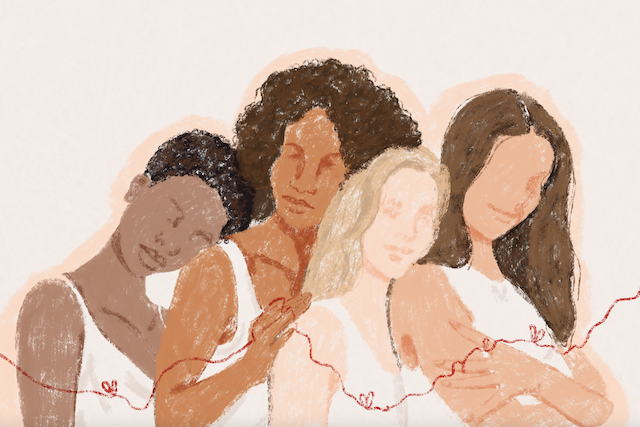
    In the past, I often felt like I didn’t belong in groups of women.

    Sometimes I felt like something was wrong with me, like I was othered in one way or another: too sporty, too quiet, too serious, too emotional, too dumb, too smart, too wild, too normal, too sexual, too prude.

    Other times, I felt like something was wrong with all of them. Girls’ nights and bachelorette parties? The screeching voices, the loud laughs, the mundane conversations about makeup, skin care routines, and lip injections? No thank you.

    I wanted so badly to belong but didn’t see a place for myself. I felt like I wasn’t doing the whole woman thing the right way. I found it easier to hang with the guys.

    But now? I have learned that nothing is wrong with me (or you), and hanging out with a group of women makes me feel all warm and fuzzy inside. 🙂

    What shifted?

    First, I stopped comparing myself to others.

    Those “toos” I mentioned above, and that so many of us feel, are usually a product of that ever so insidious trap of comparison. It’s a trap because we get stuck in a negative thought loop, smothered by jealousy, anxiety, and self-criticism, which ultimately causes a fissure of separation, between ourselves and others.

    If we use other people and external standards as a barometer, we will always find ourselves being “too” something, which makes for a very disruptive and tumultuous internal experience. For me, it means that I have spent many years feeling insecure and ungrounded in who I am. It means I often acted as a chameleon and changed my energy based on who I was around, so I could “fit in.”

    But now, I don’t do that. (Okay, I still do it sometimes, but way less often.) I have learned that there is no “right” way to be a woman, or a human. We are each unique individuals with our own personalities, desires, fears, and preferences, and the uniqueness of all of us makes the world so much more interesting and beautiful.

    Second, I shifted away from judgment and toward curiosity.

    During my young adult years, I was very judgmental. I went from thinking that something was wrong with me to thinking that I was better than all the other women. I thought women talked too much about surface level things and people. My ego started to create stories of separateness: me over here wanting to ponder existential questions and talk about emotions, and them over there who wanted to gossip, laugh too loudly, and talk about makeup and boys.

    Now, instead of judging the “surface level” conversations (which still occur), I am curious about them.

    Why do women spend so much time discussing our weight, clothing, waxing habits, and skin care rituals? Because we have been force-fed the belief that we are inadequate the way we are. We are told that we have to buy this or that product if we want to be beautiful. We are told we have to be thin if we want to be loved. So it’s no wonder we spend so much time thinking and talking about matters of physical appearance.

    By switching from judgment to curiosity, I have realized that such discussions are actually not surface level at all. They are reflective of deep desires to belong, to be loved, and to be accepted.

    Third, I demoted my ego.

    My ego told me that I was the only woman that felt othered. That I was unique in my feeling like I didn’t belong. That I was special in some way because I wanted to have “deeper” conversations. That is such BS!

    I have now learned that I was in no way unique in feeling like I didn’t belong. Most women, and people, yearn to peel back the layers and connect with one another in a  deep, rich way, but we find ourselves stuck in a performative role, trying to show up how society has told us to.

    Many of us have erected walls around our hearts, minds, and bodies to protect the vulnerable, raw, sensitive parts of us. To protect the parts of us that we learned weren’t safe to express or were unlikeable. But we want to let others in.

    Lastly, I also started listening to the sage advice from philosophers, religious leaders, and laypeople across centuries.

    I started heeding their wisdom, which can be summed up as: you have everything you need within you.

    I started to deepen my connection to myself, knowing that the problem I was experiencing, namely the feeling of being othered and not belonging, could only be solved by first turning inward. I’ve deepened my connection to myself through dance, breathwork, journaling, meditating, and playing. I have started to uncover who I am and who I want to be, versus trying to fit into a mold of what I think a woman, or a human, is supposed to be.

    In my journey of releasing comparison, igniting curiosity, demoting my ego, and turning inward, I have also learned that:

    You are not too anything.

    This does not mean that you are perfect, or that you have no opportunities to grow and expand. But it does mean that there is no “right” way to be, except the way that is true and safe for you.

    Often when people say you are “too ___,” it is a reflection of their own insecurities.

    “You are too emotional” might mean, “I have not learned to express my emotions, and your vulnerability makes me uncomfortable.” “You are too loud” might mean, “I am not fully expressing myself, and I am jealous of your ability to express yourself confidently.”

    You are not alone in your desire to belong.

    It is likely that what you are feeling, others have felt at some point. When you remember this, you are reminded that you are not alone. The journey of self-discovery eventually leads to a feeling of oneness, because we absolve the illusion of self and separateness and begin to see our connectedness, our shared fears and desires. You know how it goes, we’re all made of stardust, baby!

    When you start to express the truest parts of yourself, it’s an act of leadership.

    Because in doing so, you provide a permission slip for others to do the same. This doesn’t mean you expect everyone to express themselves in the same way as you, but rather that we all start to express the weird, unique, quirky, true parts of ourselves. And that is what the world needs more of.

    So, here’s to less judgment, more curiosity; less separateness, more connectedness; less fear, more love.
  • I Felt Like I Didn’t Belong: 5 Lessons from a Former Misfit

    I Felt Like I Didn’t Belong: 5 Lessons from a Former Misfit

    “I long, as does every human being, to be at home wherever I find myself.” ~Maya Angelou

    In my final year of high school, I had a horrible breakup. I was heavily attached to my girlfriend because, with her, for the first time in my life, I felt like I belonged. Growing up in Germany, of Arabic roots, made me feel like I belonged nowhere. I didn’t feel German nor Arabic.

    With her, I finally thought I had a place somewhere. So when this relationship ended, all I wanted was to escape. I hoped a change of location would solve my problems. So, after graduation, I packed my stuff, booked a one-way ticket, and fled to Australia.

    My early days in Australia were anything but idyllic. Arriving there, not knowing anyone and barely able to communicate in English, I felt lost like never before. During the first month, I was constantly battling self-doubt. It seemed as if this was the first time anyone had ever experienced the harshness that can accompany travel. I felt like a loser.

    Everybody around me seemed to enjoy their trips. They seemed to have found their place. Every conversation I had felt so awkward.

    I was deeply ashamed of my English, so I isolated myself. I wanted to go home, but after telling everybody I was planning to leave, I promised myself not to give up. But the truth was, again, like in Germany, I felt like a misfit. The sense of isolation I had felt back home was still with me. It was so alive. It was like living in a nightmarish loop—unable to escape my loneliness and alienation.

    Two months into my stay, I sat on a bench in Sydney, consuming junk food and battling the urge to give up. Nothing had changed. I felt out of place, had made no friends, and was utterly miserable.

    At that low point, I was reflecting on my time in Germany and I had a realization that, looking back at it now, changed my life: I had taken my problems with me. My issues were about more than just a specific location. They were within me. I was responsible for my misery, isolation, and inability to fit in. The problems I had left in Germany had taken a new form in Australia.

    This insight was crushing but made me stand up from this bench with a new sense of resolve.

    The following day I checked into a new hostel. I promised myself to keep trying, push myself to speak English, and make a conscious effort to form connections with fellow travelers. It wasn’t easy at first, but I became more comfortable speaking as time passed. I started to trust myself more. I began to make friends, people started asking me if I wanted to join them on trips, and people were interested in my past.

    Following my realization on this bench, this month was one of my life’s best. In this month, I made deep, lasting friendships that I still have to this day.

    Ultimately, I stayed in Australia for almost a year and had a great time. I left Germany and was homesick, and I left Australia with newly gained confidence and trust in myself. Since then, I’ve traveled to over twenty-five countries. It became my nature to go to new places, and I no longer have the same issues fitting into a new context.

    Also, I changed my relationship with Germany. Every time I go back, I embrace and like it. Ironically, the attempt to escape my roots formed a deeper connection to my German and Arabic origins. I smile when I look back. I was so ready to give up. I was at the lowest point of my life. One realization, one thought on this bench, changed the course of my life.

    Now I want to share with you the key lessons I learned from my time in Australia.

    1. Trust life.

    Life puts us in difficult situations that ultimately lead us to grow. My time in Australia was a gift, particularly those first two challenging months. They forced me to confront my internal struggles, the issues I had been unwilling to face. I believe that life knows what it is doing and is working for us, not against us. This holds true for me to this day.

    2. Take responsibility.

    In Germany, I had a habit of playing the victim, blaming my circumstances and culture clash for my unhappiness. While those issues were real, acknowledging that I was also a part of the problem was liberating. Understanding that I had the power to change my situation was the first step toward actual change.

    3. Be persistent.

    In Australia, I came close to giving up and returning home. Looking back, I realize that would have been a huge mistake. The best year of my life and experiences that changed the course of my life followed that initial struggle, reminding me that persisting through tough times can lead to beautiful outcomes.

    4. Hard times are necessary for growth.

    Those two months in Australia were some of the hardest in my life. The loneliness I felt was crushing. However, looking back, those challenging times were also when I grew the most. I developed resilience and a better understanding of myself, which I wouldn’t trade for anything.

    5. Be a blank sheet.

    One of the most powerful lessons I learned throughout my travels was the power of approaching each new situation like a blank sheet.

    For far too long, I allowed my past experiences and hurts to dictate my present and future. I was constantly recreating my past wherever I went, not giving my life story a chance to change or evolve. I carried heavy, invisible baggage of past failures, rejections, and loneliness that kept me rooted in a narrative no longer serving me.

    It wasn’t about forgetting or denying what had happened but not letting it control my present and future.

    Like a blank sheet, allow yourself to be open, to receive new experiences, change, and learn.

  • An Unexpected Place to Find Kindness: What Made Me Feel Like I Belong

    An Unexpected Place to Find Kindness: What Made Me Feel Like I Belong

    “Not all of us can do great things. But we can do small things with great love.” ~Mother Teresa

    Routines are important to me. I rely on certain things to bring me back home to myself; to feel clear and open in my mind, body, and heart.

    One of the activities that bring steadiness to my life is swimming. It’s one of my greatest pleasures. There is something magical to me about the feeling of water on my skin, the repetition of the arm strokes that calm my mind, the sound of my breath that relaxes my body, and the rays of sunlight that reflect off the water.

    I rely on swimming three mornings a week. I like to say it gets me back in my lane or it keeps me out of the others’ lanes.

    I showed up to my local pool several weeks ago—pool closed due to mechanical issues.

    It was just supposed to be for a few days. I told myself that it was a gift to give my body a rest from swimming. Over the next few days, I told myself that this time allowed me to help a loved one who needed extra care. But as more time passed, I couldn’t find a reason to find peace without swimming. I missed it.

    I found another pool a bit farther away from my home. Though I felt irritated that I had to go to another pool and create a new routine, I chose my love for swimming over any of the inconveniences.

    After my first swim, an employee ran over to me and said, “I’d like to introduce myself and welcome you to our pool. It’s wonderful to have more lap swimmers here.” We connected over our love for swimming.

    I left feeling a little more cheerful than I usually do after a swim, and I am already pretty cheerful after swimming.

    I came back the following week, and after finishing my swim was greeted by the water aerobics women. As I got out of the pool, they chatted with me about swimming and how they want to learn to do laps.

    Over the next few weeks, I began to notice that every time I left swimming, I was a bit more cheerful.

    One morning, as the aerobics women came into the pool, I noticed that they greeted each other with hugs and kisses (yes, in the pool at 9:00 a.m.).  I asked the lifeguard, “Does this always happen?” 

    He replied, “Sure does.”

    In the locker room women hum songs, tell me to have a blessed day, and chat with me about all sorts of things as I shower. I don’t know anyone personally, and yet they are undeniably kind and warm to me.

    Just this past week a woman belted out in the locker room I AM BEAUTIFUL. I couldn’t help but feel completely overjoyed at this women’s confidence and radiance.

    I have been noticing how I’ve been feeling after swimming, and I have become curious about what’s contributed to the fact I haven’t checked if my pool has reopened.

    It’s the women. It’s the kindness. It’s the singing. It’s the joyful greetings. It’s the curiosity.

    While I only know two women by name, they know even less about me and how the things they have been doing for many years have been bringing an extra dose of cheer into my life.

    It has not been easy for me living in a neighborhood that is known for intergenerational legacies of families living here. I didn’t come from this neighborhood. Even though I have been here for eighteen years, feeling like I fit in has been a private struggle that I don’t often share with others.

    In this pool, a short drive from my home, in another neighborhood, I have found a place that I need more of in my life. 

    We all want to find our people; we all want to belong.

    Sometimes we don’t actually know how much pain we hold until we are blessed with the one thing that has been missing—kindness.

    And with that kindness, the protection starts to soften and the hurts come to the surface. We realize that’s just what our heart was holding all of these years.

    In my mind, I’ve known the story of the past eighteen years of living in a place I don’t really feel like I fit.

    I’ve worked with the beliefs. I’ve taken responsibility for what is mine to learn, heal, and grow from. I’ve also come to accept that this was what life gave me and that even in not feeling like I belong, there have been tremendous gifts and blessings these past years.

    But it is also true that we need to give words to our truth. I want to belong. It is a human birthright to belong. We are designed to belong to groups of human beings.

    We see people through our own lens and make up stories about them that aren’t necessarily true. I am grateful that these women at the pool didn’t make up a story about me and instead treated me with kindness.

    They could have easily made up a story about me. They are black, and I am white. They know I am not from their neighborhood, but instead, they saw past what I looked like and opened their hearts to me. They sang to me in the shower, blessed my day with prayers, and wished me well for the rest of my day.

    None of us know the story of someone’s insides. None of us know how simple acts of kindness and inclusion can make someone feel like they belong.

    Sometimes the people that we least expect to make a difference in our lives do. We are all capable of this.

    We all live with a protected heart in some ways; none of us are free from hurts. If I hadn’t sat with the pain of not belonging and feeling disappointed in past relationships, my heart may have been impenetrable. I had to learn to be there for myself with kindness before I could allow others to be there for me. I think this is true for all of us.

    Sometimes the simple gesture of placing your hand on your heart and saying to yourself, “I am here for you” is a great act of kindness and allows the unexpected joys of life to be felt when you least expect them.

  • Why I Now Love That I’m Different After Hating It for Years

    Why I Now Love That I’m Different After Hating It for Years

    “Only recently have I realized that being different is not something you want to hide or squelch or suppress.” ~Amy Gerstler

    I grew up during the traditional times of the sixties and seventies. Dad went out to work and earned the family income, while Mom worked at home raising their children. We were a family of seven. My brother was the first-born and he was followed by four sisters. I was the middle child.

    I did not quite know where I belonged. I oscillated between my older two and younger two siblings, feeling like the third wheel no matter where I was.

    I was the one in my family that was “different.” I was uncomfortable in groups, emotionally sensitive, intolerant of loud noises, and did not find most jokes funny. Especially when the jokes were at the expense of someone else. Oftentimes that someone else was me.

    Yes, I was the proverbial black sheep. I stood on the fringes of my own family, a microcosm of the bigger world.

    Life felt hard and lonely. I felt isolated and misunderstood. Too frequently I wondered what was wrong with me and why I did not quite fit. Others appeared to be content with the status quo. I never was.  Others didn’t questions the inequities I saw in life. I did. Others did not seem to notice the suffering of others. I epitomized it.

    Being different did not exactly make me the popular one. In fact, quite the opposite. Who knew what to do with my awkwardness? I sure didn’t.

    As a result, I was depressed a good part of my life. That was not something that was identified or talked about then. Too often it still isn’t. A disconnected life and feelings of loneliness and isolation will lead to depression, among other things. 

    I hit my teens and did what too many do: I looked for ways to be comfortably numb. My choice was alcohol. It gave me an opportunity to “fit in” or at the very least, not care about the fact that I did not. I rebelled. I self-destructed. For years.

    As life will have it, I grew up, feeling my way in the dark, wondering when the lights would go on. I turned inward looking for the comfort I could not find from the world. I hid my pain and lostness. At times, I prayed that I would get cancer and die.

    A heroic exit was not to be my path.

    Do you know what I am talking about?

    Maybe you feel what I have felt. Maybe you know the pain of chronic isolation and what it means to be different in a culture that prefers sameness. Do you wonder if you will ever be okay? Do you wonder if you will ever fit?

    Well, let me tell you:

    First of all, you fit. You have always fit. You belong. You have always belonged. You are needed—more than you know. These are truisms.

    Others do not have to think you belong in order for you to know you do. Others do not have to treat you as insider in order for you to know you are.

    Knowing, intellectually, that you belong is one thing. Feeling like you belong, now that is an entirely different thing. That is an inside job. In other words, that is your work to do.

    So, I did what I had to do to bring change, in order to get the life I wanted. I stepped up to the challenges in my life, which came through my work world and my personal relationships.

    I often ran into conflict with authority figures, changing jobs frequently. I didn’t know how to let others close to me. I was afraid of being rejected, so I used anger and avoidance to distance those that mattered to me the most. I was not happy, content, or at peace. I felt that more often than not.

    So, I faced my pain and hurt instead of numbing it.

    As I got more honest with myself, I began to consider that maybe there was nothing wrong with me.  Maybe there was something wrong with the world or the system that wants to tell me there is something wrong with me.

    So, I began to view myself through different eyes. I began to make some noise. I got out of the bleachers and stepped into the ring. I chose to participate in life as I was, not as others thought I should be. I started to push up against the boundaries that others had set.

    Yes, I faced rejection. I dealt with disapproval. It was hard. Really hard. It hurt. I cried. I stomped my feet. I cried again. I gave myself permission to feel angry.

    In spite of the internal chaos, in spite of the hurt, in spite of my turmoil, I would do it all again.

    When we are trying to make changes, when we are owning our own lives, when we bump up against the expectations of others, it frequently gets messy before it gets better.

    DO IT ANYWAY! Because it does get better. For every person who rejects you, another will embrace you. But you can only meet those people if you first embrace yourself. Because you need to accept yourself to be able to put yourself out there.

    When you feel afraid to move forward, move anyway.

    When you want to quit because it feels too hard, rest. Do something nice for yourself. Then get back up and keep moving.

    There is light. Even when you can’t yet see it.

    There is hope. Even when you can’t find it.

    There is love. Even when you can’t feel it.

    Work at finding your voice by getting quiet and paying attention to your feelings and inner nudges. Learn to trust yourself by acknowledging that only you know what is true and best for you. Know your worth by recognizing your intrinsic value as a unique person with an abundance of admirable qualities.

    Start caring more about approving of yourself than waiting for others to approve of you. Own your life and take responsibility for your well-being and happiness. No one can do that for you.

    Figure out how to forgive yourself for the mistakes you will inevitably make. Learn how to love yourself more than anyone could ever love you.

    Accept yourself—the good, the bad, and the ugly. Then get about changing the ugly as best you can.

    This is what I have done. This is the hard work that brings transformation.

    In the process of all of this I made a phenomenal discovery…

    ME!!

    What a discovery! I have gifts to bring to the world. Gifts that will leave this world better than I found it.

    When I was younger, I didn’t like how sensitive I was to the energies around me, how I felt things to the core of my being, and how I hurt when I saw someone else hurting.

    Those around me seemed playful and fun, though, I could see the hurt in them. Life did not feel playful and fun to me. It felt serious. People were hurting. Why didn’t anyone other than me notice?

    I was hurting. Why didn’t anyone notice?

    I gravitated to the heavier side of life, fully identified with the suffering around me.

    I wanted to be anything other than what I was.

    I now understand these qualities to be empathy and intuition. Two things the world greatly needs.

    I learned to trust those qualities. They led me down a road I could never have imagined. I now have a thriving counseling practice, helping others to heal. I get to watch them discover their gifts. Better than that, I get to watch them go from hating who they are to loving and embracing who they are.

    Then they go out and find ways to help others do the same.

    But this story is not just about me. It is also about you.

    There is nothing wrong with you. You are amazing and beautiful, just as you are. Flaws and imperfections included.

    Don’t change yourself for a world that wants to tell you who you are.

    You tell the world who you are. Let’s change this place together and allow difference to be the norm, because our beauty is in our diversity.

    I invite you to take the journey inward to self-discovery. Then bring what you’ve learned and share it.

    Bring who you are and let’s change this world, one person at a time.

  • Let Other People See the Awesome Person You Are

    Let Other People See the Awesome Person You Are

    You Are Awesome

    “Sometimes I panic; what if nobody finds out who I am?” ~Billy Joel

    At home, you want to go out and be social. When you’re out being social, you want to go home and be alone.

    At home you feel free, joyful, and ambitious. You’re smart, funny and insightful. Out in the real world, you’re quiet, non-confrontational, and you struggle to connect with others.

    That person you remember from being home alone is a thousand miles away, and you feel like a shell of yourself.

    Does this sound like you? Why does this happen? Who are you really? How will anyone ever know how you feel on the inside?

    First, some good news: All of those wonderful thoughts you have about yourself? They’re true. How smart, funny, and attractive you are? Yes, yes, and yes. I’m not just blowing smoke. We all are amazing at our core, at our true essence.

    What about the negative thoughts? Are those true, too? Here’s more good news: No, those are misconceptions. Simply misunderstandings and wrong interpretations of life situations.

    You know, and I know, that the real you—you at your core—is awesome. If you feel compelled to read on, then this is ringing true for you. Good.

    For years in my teens and twenties, I felt this wonderful person inside me at all times. I was most able to connect with this person when I was alone. This made me an introvert, I suppose. But put me out with people or in a crowd, and I lost that person.

    He was nowhere to be found—hidden behind a plethora of uneasy thoughts and the desire to escape and be alone again.

    At parties, I was the guy who found a quiet spot and stayed there. Unless, however, I was drunk, which was the only way I let my guard down enough to let people see who I really was.

    And that’s exactly the key here—letting people see who you really are.

    As kids, we all did this quite easily. We had not yet learned to censor ourselves or hide our true feelings. We had not yet learned to fear for our well-being in social situations and cope with that by putting on masks or pretending to be things we’re not.

    I specifically remember as a teenager, that going into tenth grade, I made the firm decision to be someone I was not. I pretended to be more social, more outgoing, and more confident, but it was all an act.

    I felt like a fraud. It wasn’t based on true feelings of confidence and the desire to connect with others. It was based on not wanting to be socially ostracized or bullied. I did my best to imitate the behavior of others, and it was exhausting. I preferred to be alone.

    Due to the positive feedback I received from my peers, however, this new effort became an unconscious habit. I spent years and years automatically hiding who I really was, and giving people only a shell of what I am or how I think.

    Shockingly, many years later, I realized that nobody really knew me. And looking back, whose fault was that? Mine. I took my short-term survival tactic of not being myself and made it a lifestyle. It was a Band-Aid that I adopted as a permanent part of my skin.

    So how do we change this now? It’s a pattern so ingrained in ourselves that many of us aren’t even aware we do this. It’s just “normal.”

    So the first step is to become aware. Are you the same person out and about that you are at home? Do you want to be? Great, we’ve gotten that far.

    Next, what’s preventing that? The awesome person we feel like inside—what’s preventing us from letting others see that? The answer is our fears.

    What are fears? At their core, just thoughts. For example, social ostracism. It feels unsafe to be a social outcast, which is why many people seek to avoid it.

    So what if you change your thought about this? What if you began to think, “It’s okay and it’s safe not to fit in with certain groups”? When you change your thought about this, your fear will dissipate. Sometimes slowly, sometimes quickly.

    Once you reach a certain level of awareness, further thoughts and realizations will dawn on you as never before.

    You’ll realize that it’s emotionally painful to subject yourself to the company of people who won’t accept you for who you are. Shortly after that, you’ll come to understand that the awareness and pain are really first steps toward finding those who will accept and appreciate you.

    And it’s fine that some people won’t accept or appreciate you. That’s just life; nobody is perfect. It’s best to let that go and move on to better things.

    These new understandings will have a momentum all their own, and each one will transform your mind, piece by piece, to a new place and a new feeling.

    If you’re the kind of person that can change their mind wholeheartedly on a dime, you can move forward quickly.

    If you’re the kind of person who has to stick their toe in the pool first to gauge the temperature, then their knee, then their leg, it’ll take some time and trial and error for you to commit to changes in thought.

    But once you’ve changed your thought, once you’ve removed your fear about letting others get to know the real you, you’ve opened doors and windows to who you really are—that wonderful, witty, loveable person you’ve always known yourself to be.

    In time, the gap you feel between when you are alone versus when you are out and about with people will shrink. You’ll even consider thoughts like “maybe I’m not really an introvert,” as your desire to let people connect with the real you grows.

    As a bonus, you’ll make stronger, deeper connections with people, because the connections will be with the real you, not a shallow exterior you’ve held onto for so long.

    Many of your current relationships will change for the better, and you’ll begin other relationships anew. These bonds, and the newfound ability to express the real you and let others see it will increase your enjoyment of life and positively affect your experience of it. Your life will be forever better.

    You are awesome image via Shutterstock

  • How to Stop Trying to Fit In and Finally Belong

    How to Stop Trying to Fit In and Finally Belong

    Puzzle People

    “Perhaps home is not a place, but simply an irrevocable condition.” ~James Baldwin

    It’s normal, isn’t it?

    Wanting to be accepted. Longing to feel at home. Hoping for that reassuring up-nod from the universe that says, “You’re one of us. And you get to stay.”

    So you try to fit in wherever it feels right. You get the job everyone approves of. You marry the person you’re supposed to. You say yes most of the time. And you’re as good as you’re supposed to be.

    You’ve jumped through every hoop and worn all the right masks, but it seems that all your efforts still aren’t good enough. You’re sick of trying to fit in. You just want to feel like you belong the way you truly are.

    I know what it’s like to ache for belonging.

    After six years in a convent as a teenager, I decided it was time to try life on my own. But when I stepped off the plane back home in Memphis, I didn’t feel like I was “home” at all. I was a complete stranger. Nothing seemed to fit.

    I was no longer the girl of fourteen my parents had sent away. But I certainly wasn’t the competent woman in her twenties that I now appeared to be, either.

    The convent where I had spent my youth never thought to give me a transition plan. They didn’t give me medical coverage. Nor did they give me a housing allowance or an education voucher. All they gave me was an orange sweater and a pair of jeans that were too big for me. I set out and had to wing it all on my own.

    Nothing could prepare me to rejoin a world I had never lived in. But even though I was short on book smarts, I picked up pretty quickly on all I needed to know to fit in. I learned that people don’t like you using their stuff. I discovered that men like a woman who’s up for anything. And I found that I got prettier when I drank.

    Acting how I thought I had to be only left me cheated and mistreated, with no friends and way too many hangovers.

    All I wanted was for things to go back to the way they were. To land on something familiar. To get my bearings. To feel at home.

    I had a long way to go . . . but I finally got there. Not to the address I left when I was fourteen, but at home with myself, which is where I always belonged.

    What Does It Take to Truly Belong

    Everybody tries to fit in because they desperately want to feel at home wherever they are. But fitting in will never get you home. Fitting in is about trying to adapt to a world that’s not your own. You don’t belong there.

    Belonging is about inhabiting the world as the real you. And the hard reality is that you’ll never fit in where you don’t belong. Here’s what it actually takes to truly belong where you’re meant to be—even if you don’t seem to fit in anywhere.

    1. You have to rock the boat.

    For the longest time, I hid the fact that I’d been in a convent. It was a complete embarrassment to me. I thought I would never be accepted if I led off with, “Hi, I’m Anne. I was in a convent.” It was scary being the black sheep, so I kept it a secret.

    But living like my whole life never happened became exhausting for me. I finally just rocked the boat and talked about it.

    Nothing shocked me more than the reactions I got. People thought I was trying to convert them. Or worse, recruit them! They stopped using profanity every time they saw me. They retorted with stories about crusty, old nuns hitting them with rulers in school. One guy even told me, “You’ll never be nasty enough to be with me.”

    When I rocked the boat, some people who were on board fell out. Surprisingly, though, the people who loved me never went away. And at last I felt completely at home in my own skin.

    Trying to fit in only molds you into what you think other people want to see. Stop trying to force yourself into someone else’s skin. Only when you can truly be the person you enjoy being can you finally belong where you’re meant to be.

    2. You have to build your dreams, not someone else’s.

    My first job out of the convent was typesetting at a print shop for $7.25 an hour. I was ecstatic. But I quickly learned that career climbing the “right way” meant I had to make more money. So I settled for being an executive assistant, a biologist, an editor, a music teacher, an environmental educator, and a whole lot more besides. I was rich, but I wasn’t doing what I truly wanted to do.

    I love to write. And inspire. And empower people. I can get a salary anywhere, but I don’t feel at home unless I’m doing what I love.

    Fitting in makes you an expert at doing what other people want. Stop trying to be accepted where you’re not allowed to fulfill your own desires. Belonging is all about actualizing your potential. You will always belong where you can follow the dreams of your heart.

    3. You have to forget the “cool people” and find your people.

    I was a bit of a good-time girl when I got home from the convent. Not because I was having such a great time, but because I was trying to fit in with the ones who thought they were. They were the cool people, and the cool people needed me.

    I felt worthwhile when they needed me to be their arm candy. I felt accepted when they needed me to bring the party favors. And I felt necessary when they needed me to be the designated driver.

    Funny thing, though. They didn’t need me when I wanted to be alone. They didn’t need me when I hung out with insightful people. But more and more, the insightful people started feeling like my people. They didn’t want a thing from me. They didn’t need me.

    They already treated me like I was important and acceptable. They convinced me that I was already necessary and worthwhile. They simply wanted me to grow and thrive. And I felt right at home with them.

    When you try to fit in with everybody who wants a piece of you, you open the floodgates to drama and neediness and negativity. And that stuff consumes you. Stop hanging out with people who consume you. You belong where people support and nourish the better parts of you.

    4. You have to make “me first” your mantra.

    I started out as a crowd-pleaser. It was so much easier to follow along and tell people what they wanted to hear. I fit in best when I said, “You come first.” It was all about them—whatever they wanted to hear and whatever they wanted to do.

    But fitting in with the crowd only made me lose myself. I finally got tired of bending over backwards for everybody else. I got sick of putting myself last.

    I knew I had opinions. I knew I had a voice and my own preferences. I knew that I mattered. So I began living that way.

    Fitting in makes you lose yourself to please the crowd. Stop putting everyone else before you. Belonging means that you matter just as much as anybody else does. Only when you know that you count enough to come first will you finally feel at home.

    5. You have to know that you’re already okay.

    When I got home from the convent, dating was a nightmare. I felt like I had to keep moving forward just to keep pace with everybody, like I was in some kind of race I never signed up for.

    “You’ve got a boyfriend! When are you getting married?” So I got married.

    Then it was, “You’ve been married three whole months! When are you having kids?” So I tried to have kids. But I couldn’t. Then all I heard was, “When are you visiting your doctor again?”

    In reality, I was done. I wanted kids, but after six years of untreated health conditions I was unable to. And I was devastated by this. I felt like I should keep trying because everyone was pressuring me to. But living like everybody thought I should only made me believe that my life was empty.

    So I decided to fill myself up with what I wanted. I mentored kids in foster care. I tutored young adults in math and science. I ran a music program for mentally challenged high-schoolers. After a while, I didn’t even need to get pregnant. There was no need to run that race. My life was full. I already had the prize.

    When you try to fit in, you let imaginary standards measure when you’ve arrived. And you never, ever get there. Stop looking outside yourself to see if you’re pretty enough, smart enough, thin enough, or rich enough. You will always belong where you know that you already are enough.

    Time to Feel Completely at Home

    Want to know the truth about belonging?

    It takes courage to belong. It takes bravery to show up in your own skin.

    It’s easy to fit in. It’s easy to blend in and hide your outrageousness.

    And it’s also the easiest way to lose the precious parts of you.

    You deserve to be seen. You deserve to be heard. You deserve to be known for the real deal that you are.

    Stop taking the easy way out. Stop trying to fit in.

    The best place in life is where you’re already okay.

    Come home to you. It’s where you belong.

    Puzzle people image via Shutterstock

  • Why Fulfillment Comes from Being Yourself, and How to Be Okay with That

    Why Fulfillment Comes from Being Yourself, and How to Be Okay with That

    Happy with Yourself

    “To wish you are someone else is to waste the person you are.”  ~Sven Goran Eriksson

    I have been studying business and marketing for quite some time now, watching the most successful men and women very carefully and picking apart how they’ve achieved what they’ve achieved.

    I’ve read every book I can get my paws on and thought long and hard about why they have managed it and others just haven’t.

    I’ve also seen many businesses and online brands mimicking exactly what those super successful people are doing, and I’ve wondered why they are a mere shadow on the wall in comparison.

    I’ve realized one thing: The super-successful people are doing exactly the same things as the not so successful people.

    They use the same tools, blog about the same topics, and have the same personal development techniques. But they still do way better; they have more followers and fans that rave about their work and share it with everyone they know.

    And it’s purely because they are rocking it in their own way. They are being their honest selves.

    But how do they do that?!

    I have been tormented with being myself all my life, struggling with the idea of liking myself and who I am.

    I’ve been on a merry-go-round of trying to be someone or something that everyone will like. But I know that not everyone will like everything, so I’ve set myself an impossible task.

    I also know that self-love and acceptance is the key to everything I want. Not just success, but to be happy with who I am, at last.

    I often have this conversation with myself:

    Hey, I’m weird. I don’t feel like I fit in anywhere. I feel as if people will always judge me for doing what I want and being me and only me.

    What’s wrong with being me? I’m no good at being anyone else, so what’s the big deal? Well, maybe there isn’t a big deal?

    Am I making a big deal?

    Right, that’s it, I’m stopping this nonsense. I’m just going to be me…

    But who the hell is “me”?!

    Can I determine that by what I like? Or by my interests?

    Or is it pure and simple my mannerisms, the way I look and the things I say?

    Maybe it’s the way I think…?

    Then I’m looping. On that never ending cycle of question after question.

    And those questions never get answered.

    The problem is, it’s very difficult to know who you are and why you do things and where your crazy thought processes come from.

    It’s impossible to put yourself into a category, but even so, we’re constantly trying to categorize ourselves. Think of subcultures like goths or punks, and blogging tribes, and football teams. Everyone is trying to belong.

    You see, I don’t have the dialogue above with myself in an attempt to understand who I am, but to try to understand how I fit into this world.

    I want to understand how I can offer something to the world, make a difference, be liked by the people I meet and, ultimately, belong. Just like those super successful people, but not them—just myself.

    I’m not sure if human beings can ever really know themselves. We’re constantly evolving, growing, changing, especially people like us who are into personal development and enlightenment.

    We’re on fast-forward compared to people who don’t take much notice of developing themselves. So every few months we become a different person, who is the same person, with a lot more knowledge and different way of looking at the world.

    It’s actually pretty mind-blowing!

    We know that the beauty of ourselves is our individualism, our differences, and the quirks that only we have. But at the same time, we know that people are drawn to familiarity and like-mindedness. And this is where I personally get confused, because half the time I’m trying to be myself and the other half of the time I’m trying to fit in—or even worse, be someone who I’d like to be like!

    But it doesn’t serve us to be torn like this, and I find that the temptation of trying to fit in is actually my own insecurities sabotaging the possibilities of me being completely myself. Completely free of the constraints of conforming, free of being a reflection of someone else, free of acting out someone else’s story.

    Next time you look at someone successful or beautiful or passionate, and you have those inspired feelings of “Maybe I could be like that too?”, always remember that, yes, you can do what they do, but you can never be like them.

    You can do it all too. But you need to just keep being you.

    I’m reminding myself of this on a daily basis, trying my utmost to convince my pesky brain that it’s safe to be me. In fact, it’s the only way to be if I ever want to be truly happy.

    These are the things I am doing to keep on track with being me. They might not work for you, because you are you, but they could change everything:

    1. Get the Universe in on the plan.

    The first thing I did was stop asking the Universe what my life purpose was, whether I should go traveling or start saving for a mortgage, or if this business idea was the right one. And instead, I started asking it to let me know if I wasn’t being myself.

    I started to get little signs that reminded me that I wasn’t on the right path. And also big ones, like when my last business crumbled into nothingness. Yes, the Universe was serious about me being myself and not something I thought I should be!

    2. Be kinder to yourself.

    You may have heard this a million times, but honestly, it’s working. When my mind chatter goes spinning off into some cruel dialogue along the lines of “I’m not good enough,” I ask myself, “Would I say that to someone I love?’

    The answer is no, I would never say that to someone I love. I would say, “Darling, you’re doing just fine, you deserve happiness and love, and you are perfect just the way you are.”

    And all of sudden I chill out, I stop fretting, knowing that I have my own support in this.

    3. Remind yourself that someone is relying on you.

    There’s nothing like a bit of guilt to motivate you! But really, imagine just one person that needs you to just be you. One person that needs your talent so desperately that it will change their life, move them out of poverty into comfort or sadness into joy.

    By not being you, you won’t be on purpose, you won’t be sharing your gift, you won’t be changing those lives. This makes me dig deep and get real with myself, because someone is relying on me to be me!

    You don’t have to know who you are to be who you are; just do what makes you feel alive, live how you want to live, and don’t let the constraints of other people’s stories hinder you in any way.

    Today, and every day, I’m choosing to be myself. And I’m getting better at it.

    Photo by Scarleth Marie