Tag: behavior

  • Why We Often Fail When We Set Big Goals and What Actually Works

    Why We Often Fail When We Set Big Goals and What Actually Works

    “You do not rise to the level of your goals, you fall to the level of your systems.” ~James Clear

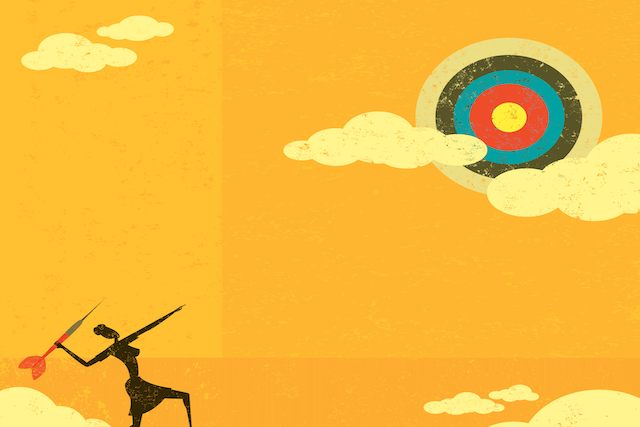
    If you pull up any popular motivational video today, you’ll probably hear things like “Set big goals!” and “Aim high and don’t stop until you get there!”

    After watching a video like this, you may get inspired and start mapping out your plan to leave the 99% in the dust.

    And typically, because you’re riding a wave of motivation, you’ll write out these monstrous, Mount-Everest-like goals. These goals paint a picture of your life that is so exciting that you can’t wait to wake up and get to work the next morning. But when you roll out of bed and take a look at the goals you set the day before, reality hits you like a truck.

    Instead of being motivated to take action, you feel a massive wall of internal resistance. You want to take action. You know you need to take action. But for some reason you just can’t force yourself to muster up the discipline necessary to make progress.

    So instead, you choose the path of least resistance. You retreat to the comfortable and the familiar, and then decide that you’re going to wait “just one more day.” One day turns into two, two days turn into weeks, and weeks turn into months.

    But luckily, time heals all wounds, and six months later you get another surge of motivation and try it all over again. This is where most people find themselves in life—stuck on the self-improvement hamster wheel.

    How do you stop this vicious cycle? What’s the best way to facilitate lifestyle changes that you actually stick to?

    How Big Goals Ruined My Life

    When I was a sophomore in high school, I had ambitions to become an NBA basketball player. Despite the fact that I was 5 feet 6 inches tall, had below average quickness, and could barely jump over a stack of books, I was determined to prove everyone wrong.

    At this point, I didn’t have my driver’s license yet, so my wonderful mother would get up at 4:30 a.m. and drive me to my school gym early enough to get up shots before class. To make a long story short, I was cut from the team a few months into my sophomore year, and my NBA aspirations died right then and there.

    When I was a freshman in college, my focus had shifted to day trading the stock market. Once again, I had complete confidence that I was going to turn day trading into a full-time income. And once again, I was wrong. The $1,000 I had deposited into my Robinhood account disappeared in about two months, leaving me with no financial flexibility to invest into my dream of becoming a full-time day trader.

    During my sophomore year of college, I made the biggest decision I had ever made in my life up to that point. Despite having good grades, I decided to drop out of school and start my own marketing agency. Let me tell you, that phone call with my parents is undoubtedly the most emotional conversation I’ve ever had in my life.

    I even distinctly remember my own cousin telling me, “I think that you’re going to regret this decision for the rest of your life.” Still, I was unbothered, because I knew in my heart that I needed to give this a shot. A month after telling my parents I wanted to drop out of school, I was on a flight back home to California.

    Yet again, I found myself in a familiar spot—just a kid following his heart with some colossal goals.

    Filled with passion and drive, I set myself a goal to build the agency to $50,000/month in revenue by the following year. To reach that goal, I committed to at least two hours per day of prospecting, and another two hours of educating myself on the real estate marketing industry.

    By now, I think you can see where this is going. For fifteen months, I worked at trying to achieve my goals, but the highest monthly revenue target I was able to achieve was a measly $6,000/month. Despite desperately wanting to taste wealth and success, I had failed yet again.

    It was at this point in my life where I really took a step back and engaged in deep reflection. After all, I had just been following the wisdom that successful people had been preaching for decades—set big goals and don’t stop working until you accomplish them.

    Was it me that was a failure or was it my system? Why is it that so many people including me continually set big goals that they never accomplish? Pondering these questions drove me to explore the world of self-development.

    The Power of Identity

    I had always been passionate about self-improvement, but I had never really delved into the science and research behind what actually facilitates true behavior change. My research eventually led me to reach two life-changing conclusions:

    • Setting big goals does more harm than good for people who want to change their lives.
    • True behavior change occurs when you commit to small, seemingly insignificant shifts in your daily behavior.

    After spending hundreds of hours combing through research on habits, behavior change, and neuroscience, I finally had the “aha” moment that shifted my entire perspective on life. The fatal problem with setting big goals is that they focus on the outcomes we want to achieve as opposed to the type of person we want to become.

    The most powerful force in the human body is the desire to be consistent with who we’ve been in the past. Behavior that is incongruent with the self will not last, which is why big goals are often so hard to accomplish.

    You may have a goal to build a million-dollar business, but if your identity is that of someone who procrastinates on important work, it’s unlikely you’re ever going to hit that goal. You may have a goal to lose weight, but if your identity is consistent with someone who eats fast food regularly and lives a sedentary lifestyle, you’ll continue to be pulled toward actions that sabotage your weight-loss goals.

    You may have some new goals, but you still haven’t changed who you are. I wanted to build a marketing agency even though I was the type of person who procrastinated and refused to get out of my comfort zone. It was the inability to change those underlying beliefs that ultimately led to my failure.

    How to Achieve Your Biggest Goals by Thinking Small

    If big goals aren’t the answer, then what is? The key is to focus on who you want to be as opposed to the outcomes you want to achieve. You need to become the type of person who can reach the standards you have set for yourself.

    Your identity emerges out of your daily habits. You don’t come out of the womb with a preset identity. Whoever you are right now is a direct result of the daily habits that you’ve developed up to this point.

    In order to start forming new beliefs about yourself, you need to start building new habits. The formula for changing your identity is a simple two-step process:

    • Figure out the type of person that you want to become
    • Commit to small changes that align with your ideal self

    First off, you have to decide what kind of person you want to be. When setting goals, most people are guided by the question “What do I want to achieve?” Instead, try asking yourself, “Who is the type of person that can get the kind of outcomes I want?”

    Instead of setting a goal to lose fifty pounds, ask yourself, “Who is the type of person that can lose fifty pounds?” Instead of setting a goal to build a million-dollar business, ask yourself, “Who is the type of person that can build a million-dollar business?”

    The beauty of focusing on identity change is that your success is no longer tied to arbitrary targets. Let’s say that you set a goal to lose fifty pounds in six months. As you pursue this goal, you start walking every day and improve your diet. At the end of six months, you step on the scale and you’ve lost thirty-seven pounds.

    Did you achieve your goal? Nope, you’re thirteen pounds short. However, what if your goal was simply to become a healthy individual? Did you achieve that goal? Absolutely!

    Once you’ve figured out what kind of person you want to become, the next step is to commit to small shifts in your daily behavior. Too often we convince ourselves that massive success requires massive action. This is the principle that guided my life for nineteen years.

    Through constant trial and error, I’ve realized that true behavior change is the product of small, incremental changes compounded over time. We tend to dismiss the effectiveness of small actions because they don’t make an immediate impact.

    If you walk for two minutes per day for a week, you’re not going to see the number on the scale move much. If you meditate for sixty seconds for a few days in a row, you’re not going to turn into the Dalai Lama. However, what you will do is to give your brain concrete evidence that you’re a different person.

    James Clear puts this beautifully when he says, “Every action you take is a vote for the type of person you want to become. No single instance will transform your beliefs, but as the votes build up, so does evidence of your new identity.”

    Once you’ve nailed down your desired identity, come up with a daily habit that you can perform no matter how you feel. When you set big goals, your brain tricks you into thinking that the present level of motivation you feel will carry over to when it’s time to take action. By focusing on shrinking your daily targets, you’re taking motivation and willpower out of the equation.

    Here’s a few practical examples of this concept in action:

    • Meditating for ten minutes per day becomes meditating for sixty seconds per day
    • Walking for thirty minutes per day becomes walking for two minutes per day
    • Reading for thirty minutes per day becomes reading one page
    • Journaling for fifteen minutes every night becomes writing one sentence
    • Writing 1,000 words per day becomes writing fifty words per day

    It really doesn’t matter how successful you are right now, all that matters is that you’re on the right path. Once these small habits are solidified into your daily life, you’ll have mastered the art of showing up and acting in alignment with your desired identity.

    Since your brain now has some new evidence, you’ll be able to stretch yourself and gradually aim higher. That’s the true power of small habits. The same way that money multiplies through compound interest, the positive effects of your habits multiply as they become a part of who you are.

    So, the next time you get motivated to change your life, forget setting huge goals. If you do this, the power of your identity will loom large over you and prevent you from taking action. Harness the power of small, incremental change.

    Have the courage to set the bar low enough and aim at targets that you can actually hit on a daily basis. Solidify this small habit into your life, and then do the same thing with another habit. And then another. And then another.

    Soon enough, you’ll become someone unrecognizable.

  • Create Lasting Habits: The 4 Psychological Triggers That Catalyze Change

    Create Lasting Habits: The 4 Psychological Triggers That Catalyze Change

    Man with Arms Raised Image

    “Things do not change; we change.” ~Henry David Thoreau

    The world knows no joy like an evangelist with an opening. My eyes lit up as I jumped into my sermon on the incredible power of lifestyle change.

    The year previous I had decided it was time to take charge of my health, and I had made some big changes.

    I transitioned to a whole food diet, put plants at the center of my plate, started meditating regularly, and began attending yoga classes multiple times a week.

    I was absolutely astounded at how the synergy of these three lifestyle changes completely transformed my quality of life.

    So when my friends began asking me to what I owed my newfound glow, I couldn’t wait to endow them with the key to lasting health, effortless weight loss, and inner peace.

    And so my lecture would begin. “It’s so simple! Just change your diet, start exercising, oh and don’t forget to meditate every day!”

    Can you guess how many people I converted? Not a one. My regretful interlocutor would begin to nervously shift their weight, looking for any opportunity to end the conversation.

    Finally, the realization made its way through my thick skull that everyone already knew that they should be eating right and exercising.

    The last thing they wanted was to listen to someone else preach the values of diet, meditation, and exercise—what they already knew that they should be doing.

    So I finally learned that knowledge isn’t enough to trigger a lifestyle change.

    Despite knowing full well the value of yoga, meditation, and eating veggies, few people are able to make and sustain such changes, especially with career obligations, social engagements, and the other demands of modern life.

    So I was left with a conundrum. What was it that had allowed me to make these changes? What was I missing in helping others to realize the same health benefits and increased quality of life?

    I became obsessed with answering these questions, and thus a quest was born. A few months later I packed up my life and moved to Arizona to work for a holistic healing center.

    I spent the next four years at the Tree of Life center in Patagonia, Arizona, where individuals are taught yoga, meditation, and a plant-based diet as a healing modality. I supported hundreds of people as they adopted the same lifestyle changes that I underwent, and the results have been powerful.

    But what I was most interested in exploring was not the effects of diet, yoga, and meditation, but rather understanding what allows individuals to make and sustain these changes in their lives.

    Why were some able to take these holistic health practices back into their busy everyday lives when they left the center? Why were some successful when others continued to struggle?

    I devoured every book on the science of behavior change that I could get my hands on, and had the incredible opportunity of applying the principles in a real life setting.

    The takeaway? Behavior change itself is a skill, and there are certain psychological triggers that we can employ to kickstart the process. Anyone can learn these triggers and cultivate the ability to make healthy changes that are sustainable and lasting.

    Here are the four best ways to catalyze change:

    1. Start small and celebrate success.

    Healthy habits are the bedrock of lasting and sustainable health. Why? Because once established, they no longer require willpower to maintain.

    But what is the best way to create a habit?

    Stanford psychologist BJ Fogg has pioneered an extremely effective behavior change method that he calls Tiny Habits.

    The premise? Start small and celebrate your successes.

    Want to cook more plant-based meals? Start with putting a recipe book out on the counter on Sundays.

    Want to start meditating? Start with just three breaths every time you sit down at the computer.

    These tiny actions may seem insignificant, but by starting small we remove the biggest barrier to change—simply getting started.

    Engineering (and celebrating) early success is key in reinforcing the creation of new habits and also motivates us to make bigger changes in the future.

    Tiny habits transform into big habits, which cascade into big life changes.

    2. Understand the motivation myth.

    The key to changing behavior is motivation, right? We need to be motivated to cook healthy food, to go to the gym, to wake up early and study.

    Not exactly.

    Motivation naturally waxes and wanes, and psychologists have found that trying to change how motivated you are at any given moment is hard. Really hard.

    The better bet is to use times of high motivation strategically.

    Everyone has periods of peak productivity, and the best way to leverage these times of high motivation is to do something that helps structure future behavior.

    Next time you find yourself having a super productive day, use that motivation to sign up for a weekly yoga class, invite an interested friend over to explore healthy cooking every Sunday, or plan a plant-based potluck.

    These are all examples of setting up future events that will help keep you on track. Using your existing motivation to create accountability and social support increases follow through.

    3. Get laser focused on one big win.

    The archnemesis of healthy change is a pernicious little devil called overwhelm.

    Take getting healthy for example: There are thousands of different dietary theories, conflicting health information, and more exercise programs than I can count.

    Should you be fasting one day a week? Eating a low-carb or low-fat diet? Doing yoga? Jumpstarting yourself with a cleanse? Doing three hours of cardio weekly? Eating plant-based meals? Weight training?

    The options are endless and analysis paralysis can easily set in.

    Focusing on one big win is about identifying what is going to give you the greatest result for the least amount of effort.

    For weight loss, a great “big win” is to focus on meals that are low in caloric density, i.e. plant-powered dishes which include a wide range of veggies, beans, grains, and greens.

    You can eat as much of these nourishing, delicious, hearty foods as you like and make sustainable progress toward your goal weight.

    Whatever your goal, find what gives you the biggest bang for your buck and ruthlessly cut back everything else.

    Simplicity empowers change.

    4. Learn one thing at a time.

    In their book Switch: How To Change Things When Change Is Hard, authors Chip and Dan Heath share some surprising truths about change.

    For me, the most interesting revelation is as follows: What looks like resistance is actually a lack of clarity.

    When taking up healthy habits, there is almost always a learning curve.

    We might go the gym, but we don’t really know how to work out.

    We want to cook healthier meals, but the recipe is full of exotic ingredients we’ve never heard of before.

    And we most often resist making these changes not because we are unmotivated, but because we don’t see a clear path forward. We don’t know the exact steps to take to begin eating better, exercising, or sitting down to meditate.

    The best way to reduce the resistance and get started? Break down the task in front of you into baby steps and learn one thing at a time.

    If you are interested in cooking healthier meals, first learn how to shop. Add a new-to-you ingredient to your list every time you go to the store.

    Once shopping is a breeze, then devote time to learning to cook up a few quick, easy, and delectable healthy recipes.

    Breaking down the learning curve into easy, manageable steps is one of the best ways to catalyze change.

    The most important takeaway here is the understanding that behavior change is a skill that can be learned and cultivated.

    There is no secret source of motivation, willpower, or discipline that some have and others don’t. Apply these psychological triggers and you’ll be well on your way to creating healthy habits that are sustainable and lasting.

    Man with arms raised image via Shutterstock

  • You’re Not Bad; You’re Crying Out for Help

    You’re Not Bad; You’re Crying Out for Help

    Help

    “A kind gesture can reach a wound that only compassion can heal.” ~Steve Maraboli

    My fourth grade teacher was named Mrs. King, and she was a no-nonsense, fairly stern presence who enforced the rules and kept us kids in line. I was a timid kid who wouldn’t have dared to break rules anyway, and I assumed that Mrs. King didn’t like any of us, especially not me.

    The only time we left Mrs. King’s classroom was to have our hour a week of “Music,” which meant trouping off to a downstairs room that contained a piano and a slightly manic woman who played us old folk songs to sing along with, like “Waltzing Matilda” and “Sixteen Tons.”

    One day in music class I transformed into a bad kid. Instead of quietly following the rules, I made cat noises during the songs. I poked other girls in the ribs. I loudly whispered forbidden things, like “Linda is a peepee head.”

    I don’t remember even wondering why this transformation had happened to me. It just happened.

    As we trouped back upstairs I felt defiant, but when I heard several of my classmates telling Mrs. King about my behavior, I began to deflate. “Ann was bad in music class,” one of them said. “She was meowing in the songs,” added another.

    “Ann,” said Mrs. King, “please come with me.”

    I was struck dumb with terror. Now I was going to discover what happened to bad kids. I didn’t know what it would be, but I was sure I wasn’t going to like it. Shaking, I followed Mrs. King out into the hall, and into the tiny teacher’s lounge. We sat down.

    “Ann,” she said. I didn’t dare look at her. My heart was pounding. What was she going to say about my misbehavior? What was my punishment going to be?

    The silence stretched on, and I realized she was waiting for me to look at her. I dared to peek at Mrs. King’s face, and I was astonished. I had never seen such compassion.

    She said, “I know your dog died…”

    It was true. A few weeks before, out on a walk with my beloved dog Trixie, I had let her off the leash, and she had been hit by a car when running across a street to rejoin me. My parents had quickly bought me another pet.

    There were no models in my family for allowing feelings to emerge. I remember being mystified when I saw my brother briefly weep for Trixie—and he hadn’t even been there when she was killed. I hadn’t been aware of feeling anything at all.

    In the teacher’s lounge with Mrs. King, under her kind gaze, my eyes filled up with tears. I nodded. Yes, my dog had died.

    “Maybe you would like to write a story about your dog. I know you like to write. Maybe you could give it a different ending if you want.”

    I did write that story, but even before I began, the shift had already happened. I had my self back. It was okay to feel sadness and shock.

    There was room in the world for my feelings, because someone with compassion had seen them.

    Having feelings in response to events is normal. When we can share those feelings with caring family and friends, it allows the feelings to go through a natural cycle of change.

    Understandings surface: “Oh, now I see what bothered me so much.” Our circle of support strengthens. After a while we feel refreshed, stronger, ready to go on.

    Many people, though, grow up, as I did, in a family and a culture where feelings are not welcome. Feelings are embarrassing, or they show we are weak, or they are something we “just don’t do” and nobody talks about.

    In some kinds of families, feelings are actually dangerous. “Stop crying or I’ll give you something to cry about.”

    When we repress and deny our feelings, we cut off a natural process of healing and self-understanding. When that avenue is closed, what is left to us is “acting out”—being “bad,” being depressed, addictive behavior of all kinds.

    Many of us deaden our feelings with unhealthy food, drugs and alcohol, video games, overwork. At some level we feel deeply out of balance, but we suppress that too.

    This can lead to a feeling of being inwardly at war, trying to stop whatever it is, feeling ashamed, yet finding ourselves still doing what we don’t want to do.

    What can change this is a process of bringing compassionate understanding to our warring parts, a process I call Inner Relationship Focusing.

    First, slow down. Pause and make contact with your body.

    Use this kind of language to describe the inner war: “Something in me wants to eat potato chips, and something in me says that that is disgusting.”

    Then say hello to each of the parts you have identified. “Hello, I know you are there.” (Notice how that already shifts how all this feels.)

    Next, assume, as Mrs. King did with me, that there is some life-serving reason why each part is behaving as it is.

    Lastly, ask each one: “What might you be wanting to help me with?” Wait for the answer to come from inside. When an answer comes, let it know you hear it. Don’t try to make it change. Change comes when something you feel is deeply heard with compassion.

    I am so grateful for all the ways that compassion shows up in my life. I have learned that every part of me is trying to save my life. And in bringing compassionate inner listening to my warring parts, I have healed from writer’s block, addictions, and social anxiety, to name just a few.

    And I never cease being grateful to Mrs. King, who showed me that day long ago that someone can look past outer “bad” behavior to the worthwhile person inside. A deep bow to you, Mrs. King.

    Helping hand image via Shutterstock